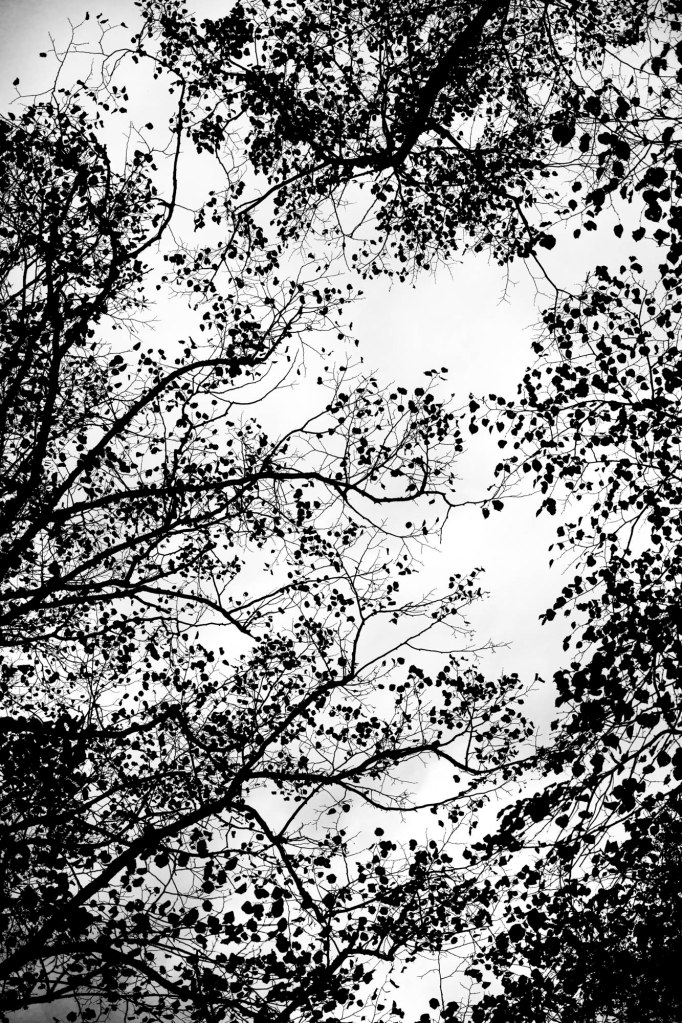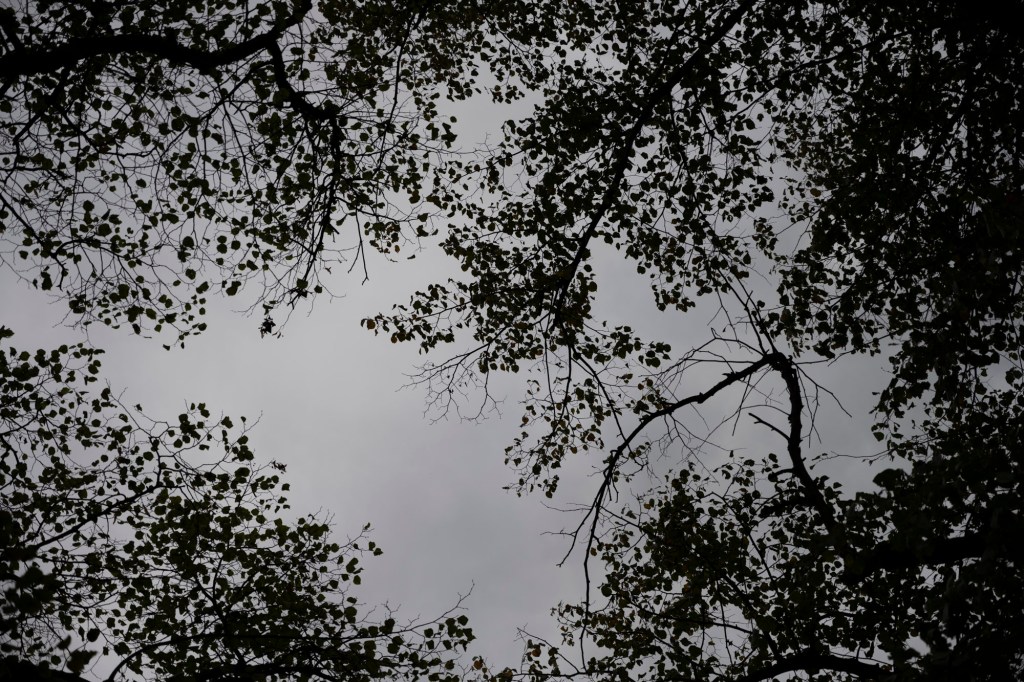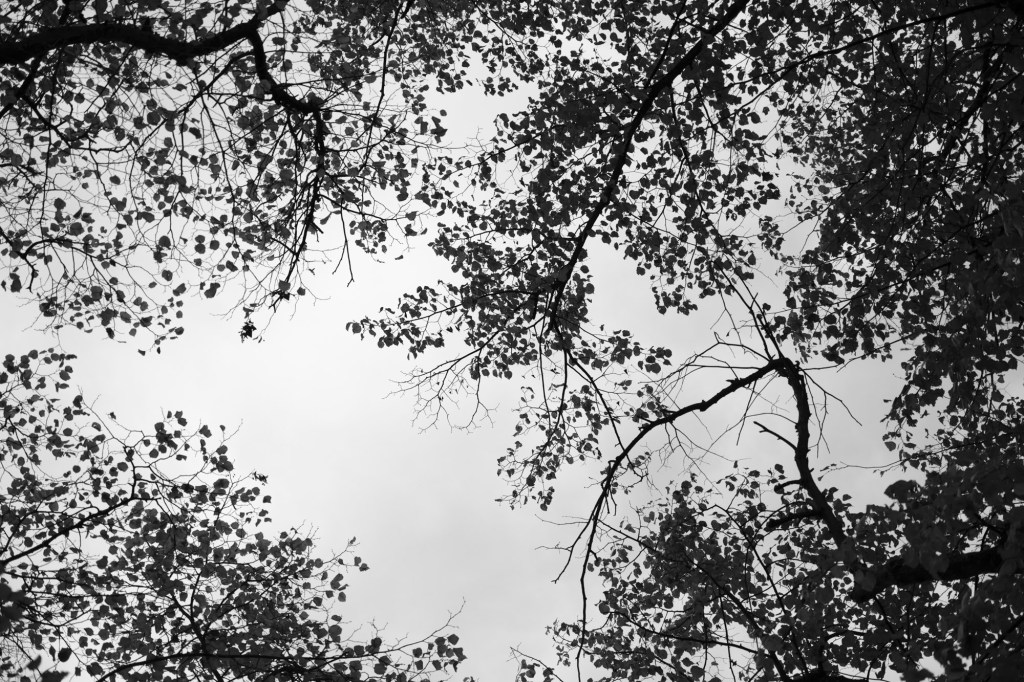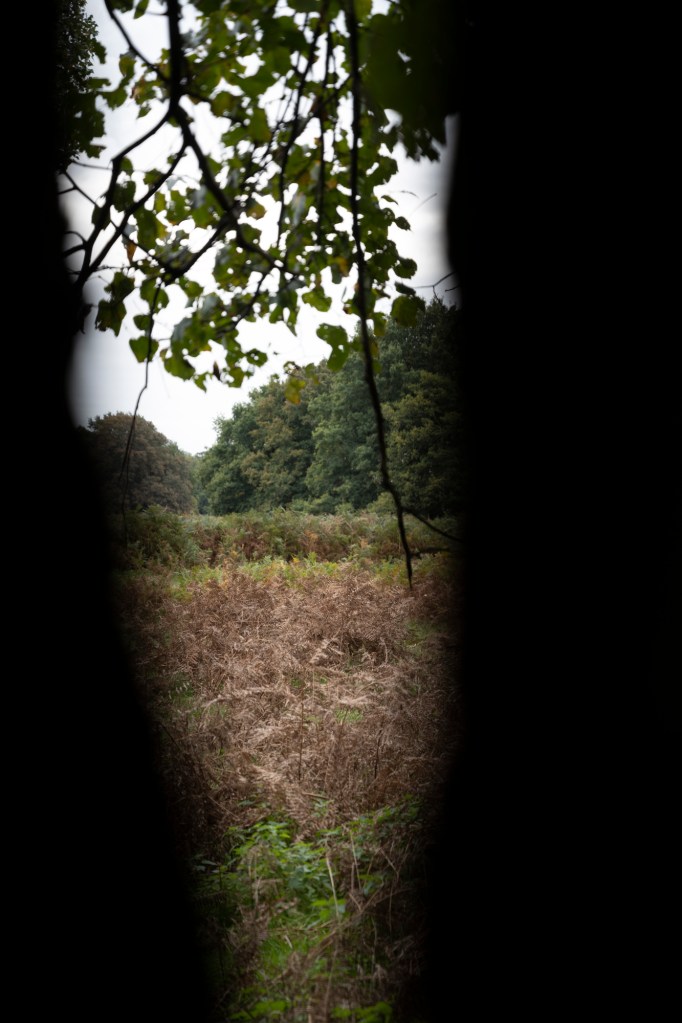
Categories
AGM62 Photography Research Project Stage 1 Posts

AGM62 1 to 1 Tutorial Feedback and Actions 21 October 2020

The focus of this one-to-one tutorial was to discuss with Åsa my initial concept and potential process. This was part of the concept-process-form paradigm that Åsa presented and the class talked about during the last group tutorial on 7 October 2020.

After two weeks of thinking about a potential concept and carrying out various research and taking images, it was a relief to be able to vocalise my thoughts, discuss my results so far then work out a focal point for this project.

The tutorial had to be via Microsoft Teams, but as most of my work so far had been via digital means I was able to present it to Åsa online. To start, I went through the blog posts that I had written. I was hoping this would give my tutor the opportunity to understand my line of thinking (which can be challenging sometimes, for both myself and others!).

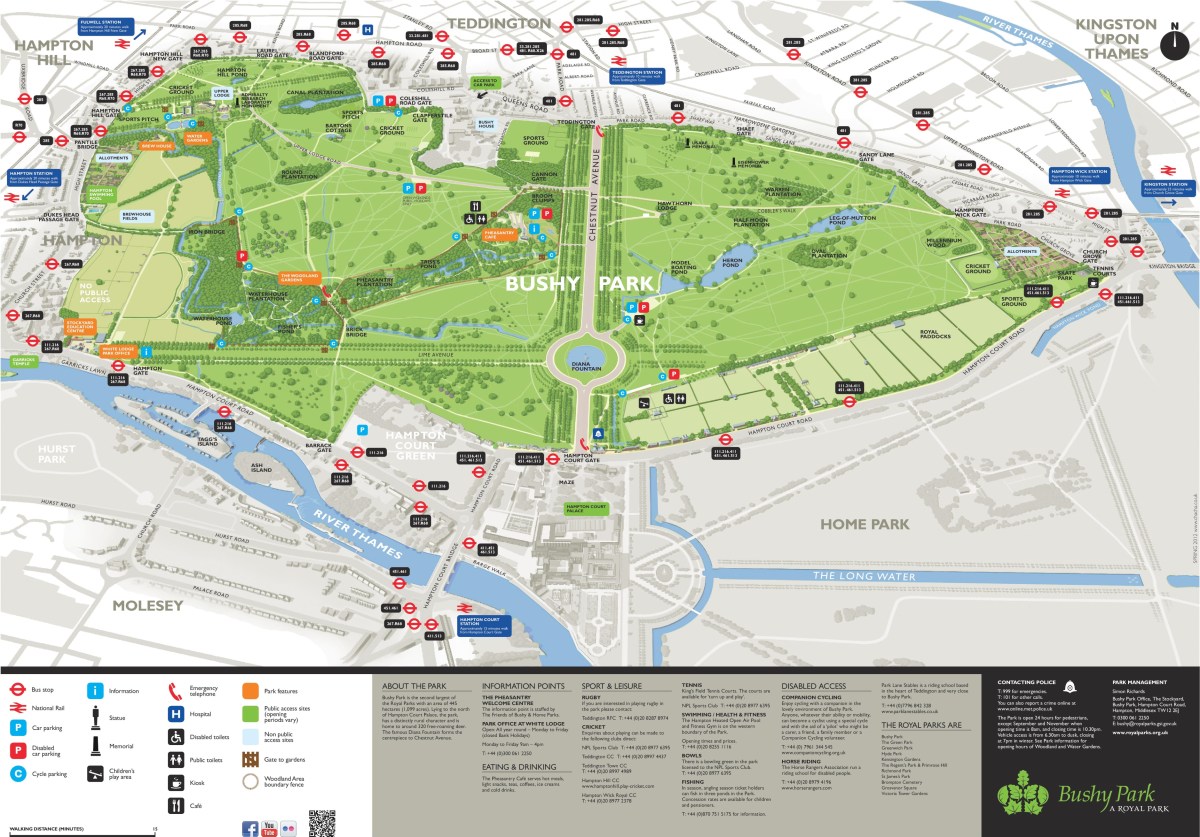
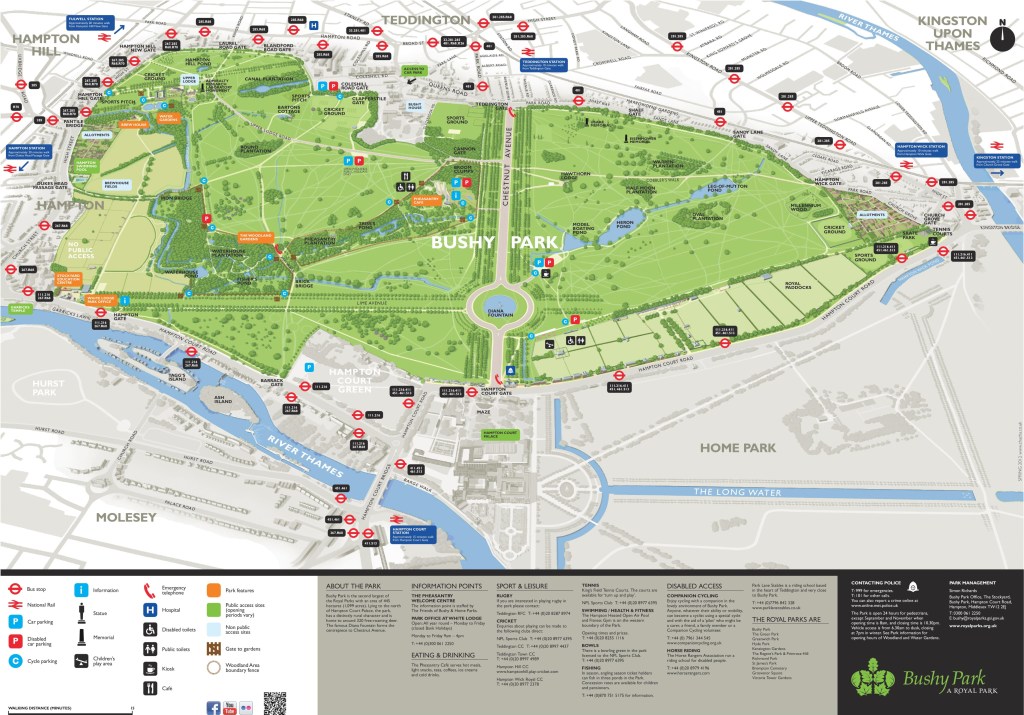
What did prove very useful was showing the map of Bushy Park to Åsa. I don’t think that both my tutor and classmates actually realised the size of the park when I’ve talked about it previously. At 1,099 acres, it is also the second largest one in London after Richmond Park. Also that it is a Special Site of Scientific Interest (SSSI) and has a rich history and heritage.

Feedback & Thoughts

I have to admit that I can’t recall exactly every details of our conversation, but these are the most pertinent points that struck a note with me.

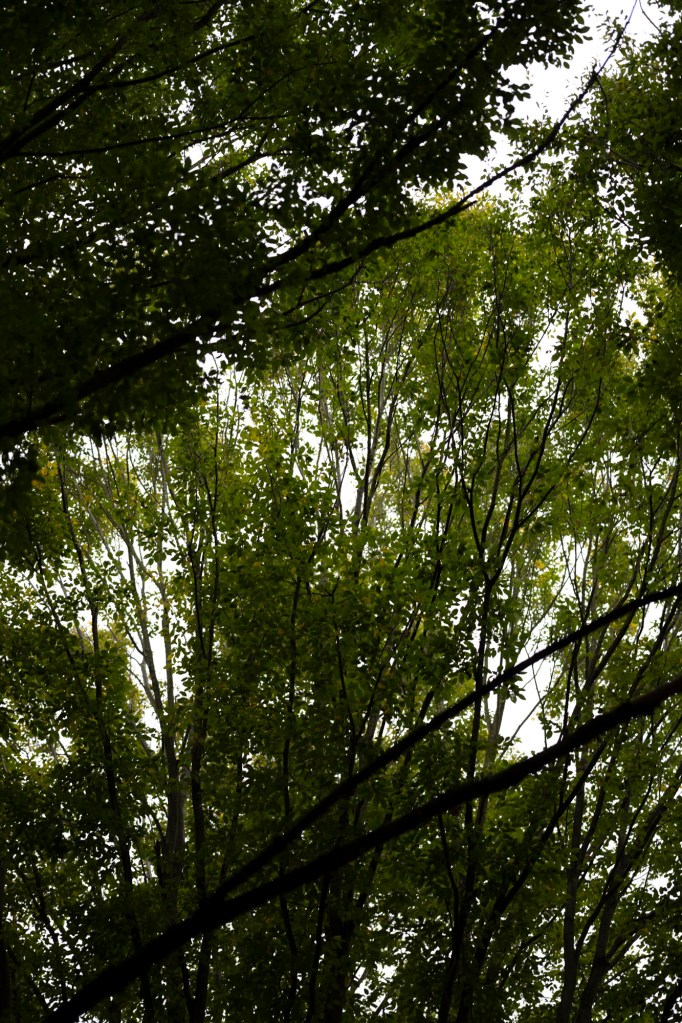
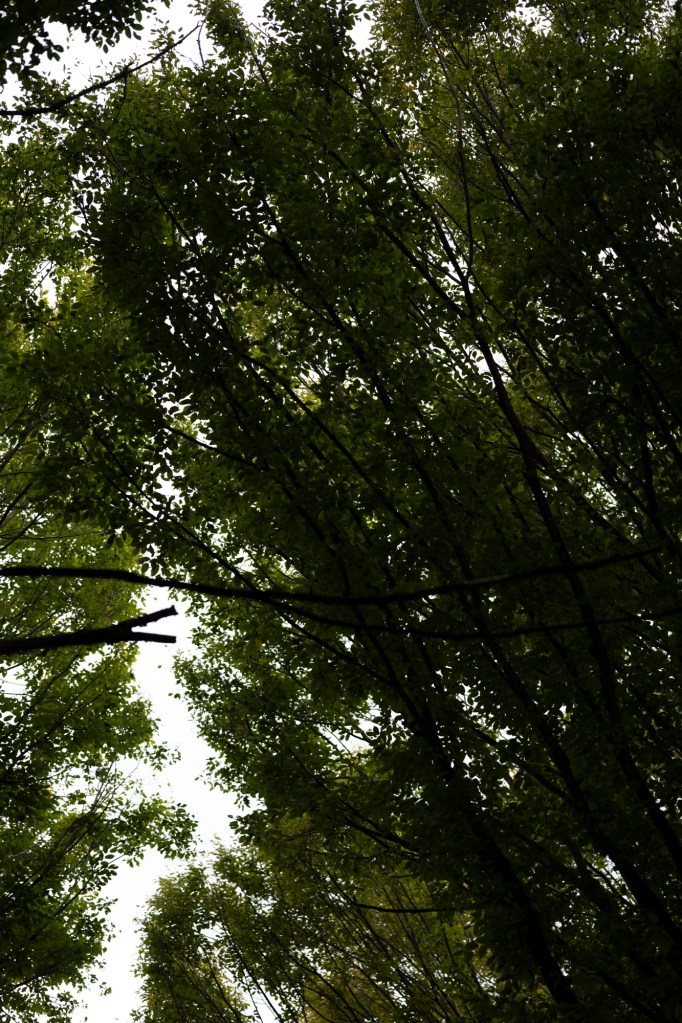
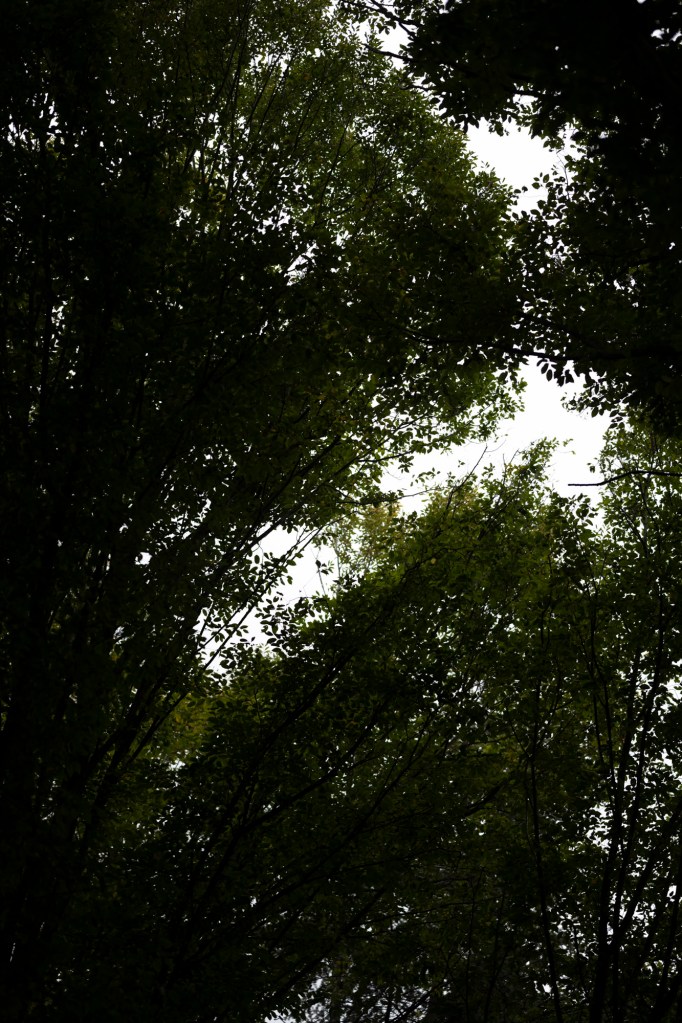
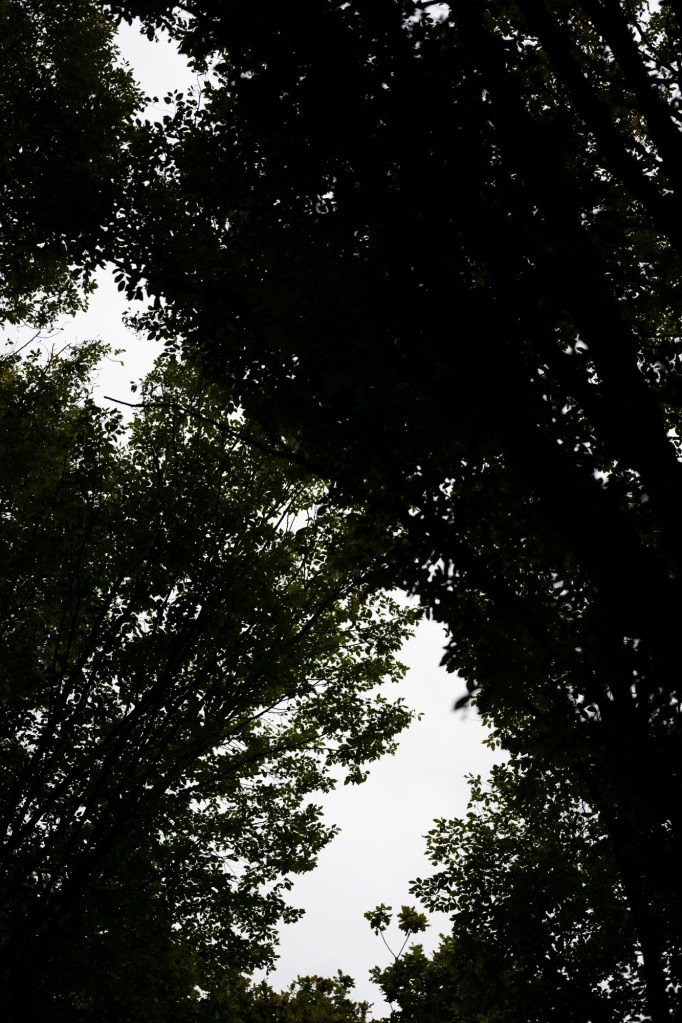
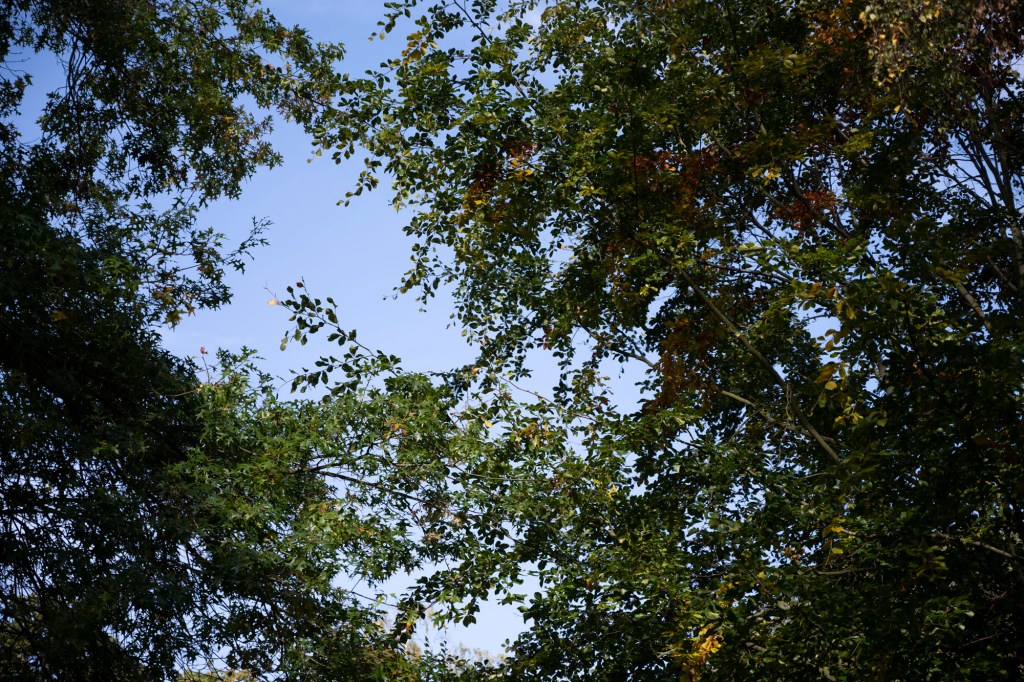
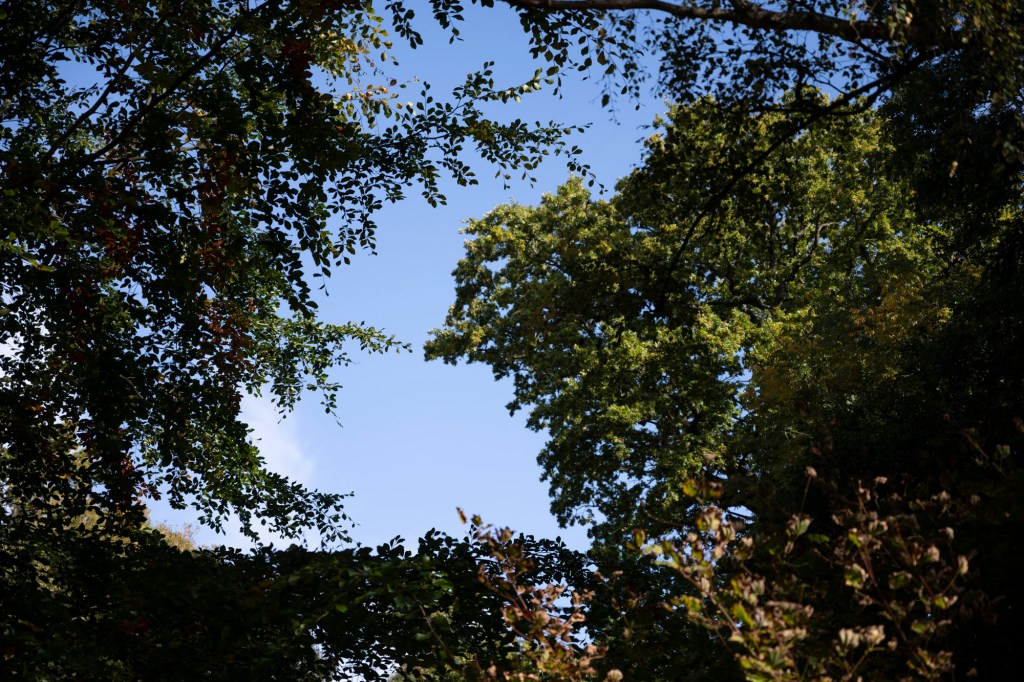
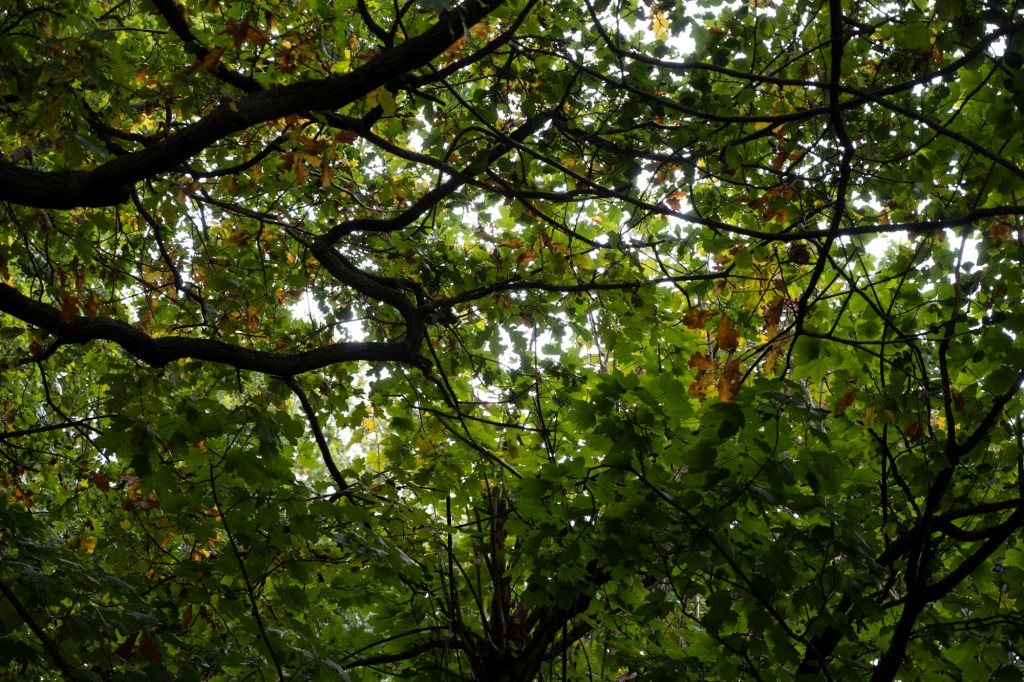
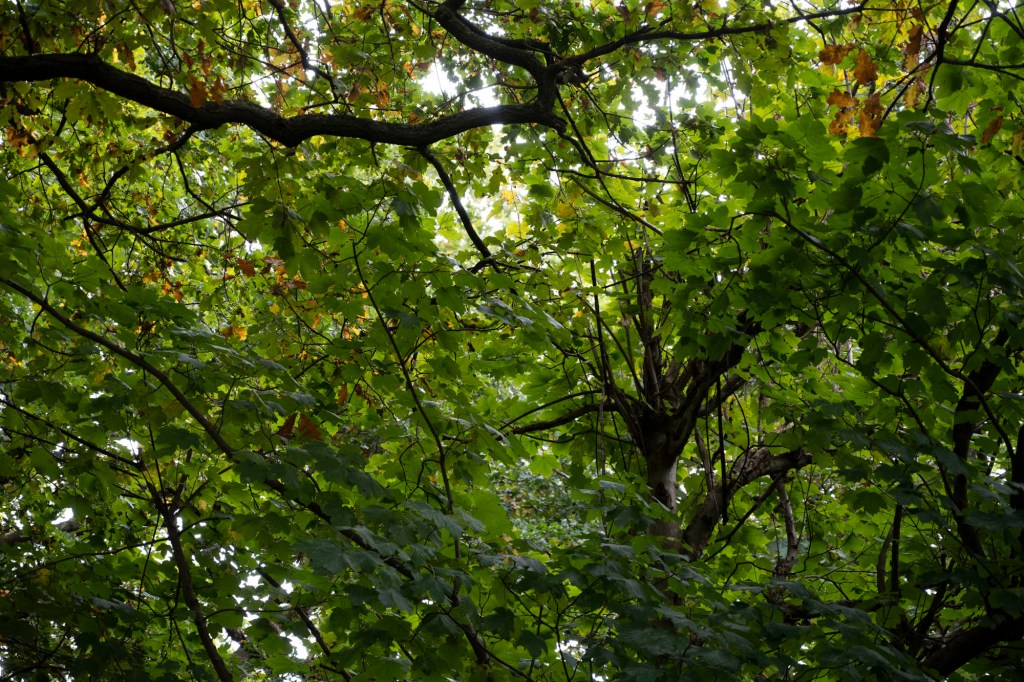
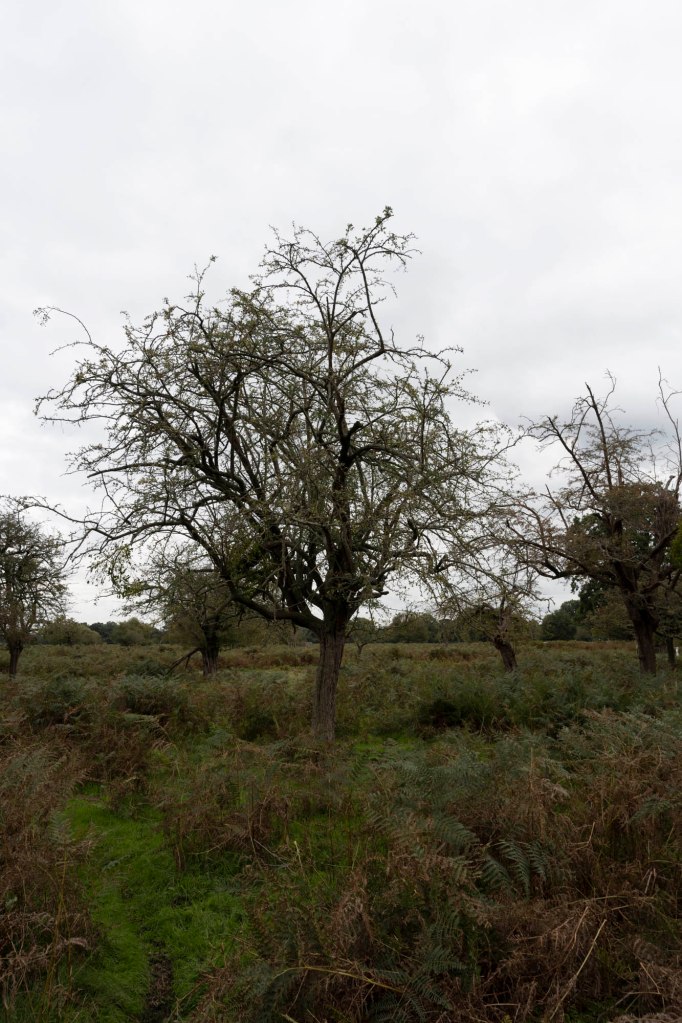
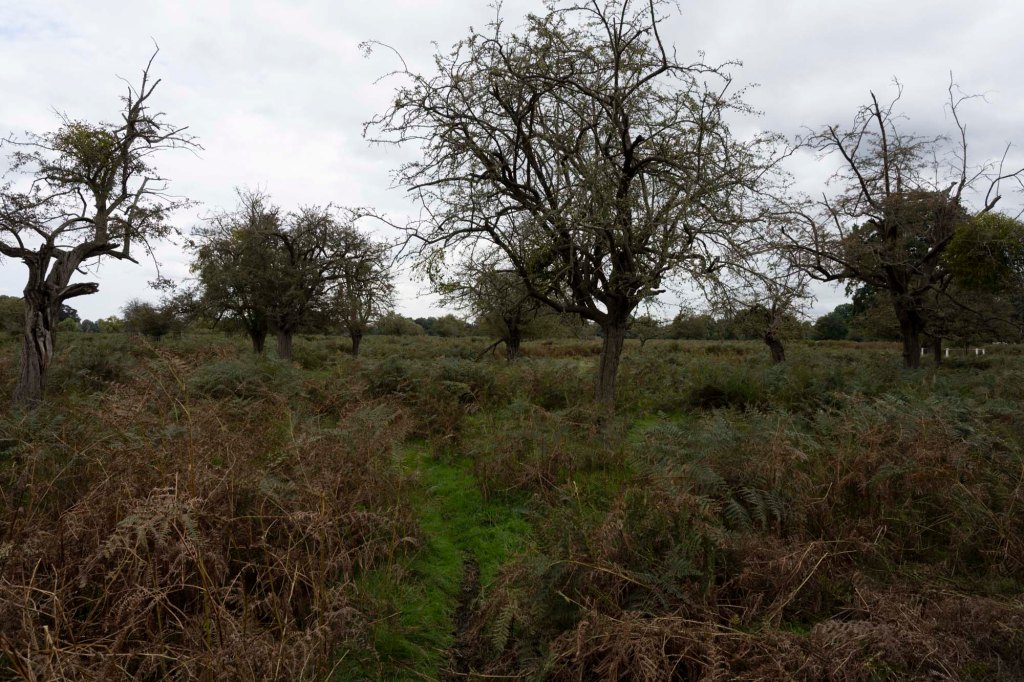
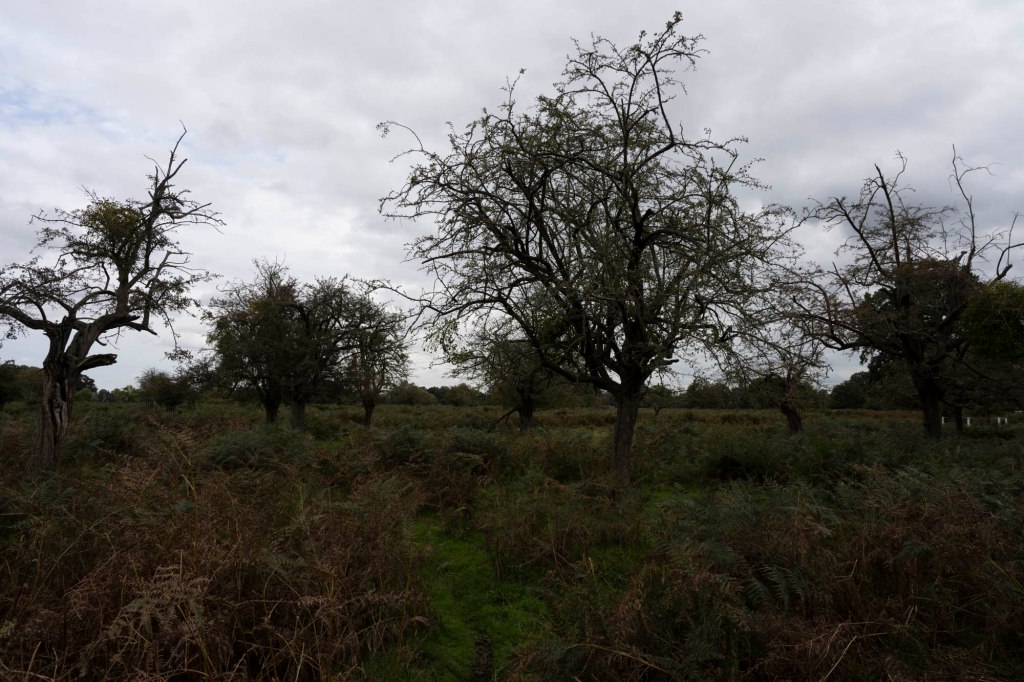
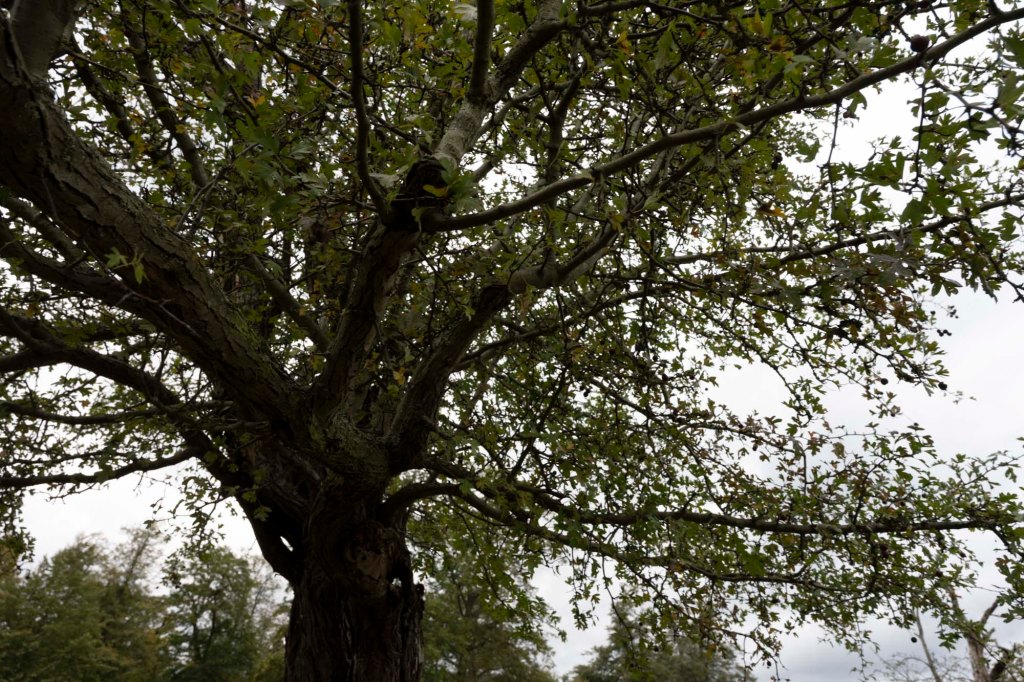
When I went through the Bushy Park images from 5, 9 and 16 October 2020, Åsa remarked that were different from my previous project’s images (AGM61 Moments of Eternity). The photos I had taken during the two research sessions were just ‘straight’ shots with no real specific intention and to be led by my instincts. This tends to be my method of working at the start of a project. One of my major influences is Minor White and I subscribe to his ‘hunter/gatherer’ approach to get the creative juices flowing. I also wanted to take a different approach to the previous work.

Åsa also highlighted the differing point-of-view on how I took the images:

  • Objective: the tree as an object in the landscape, but in a portrait style
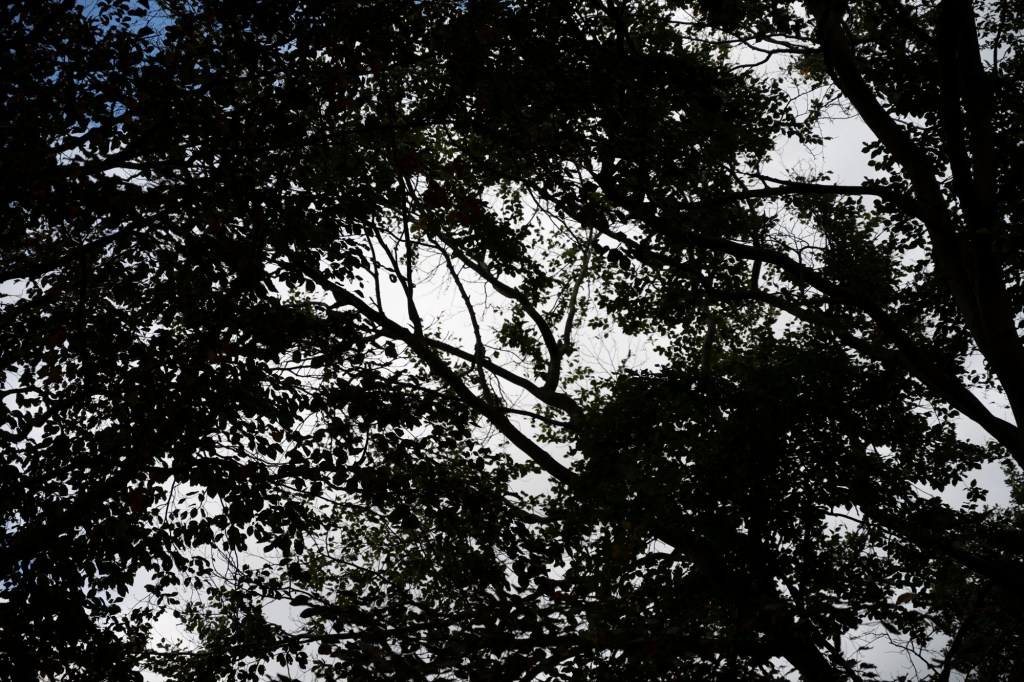
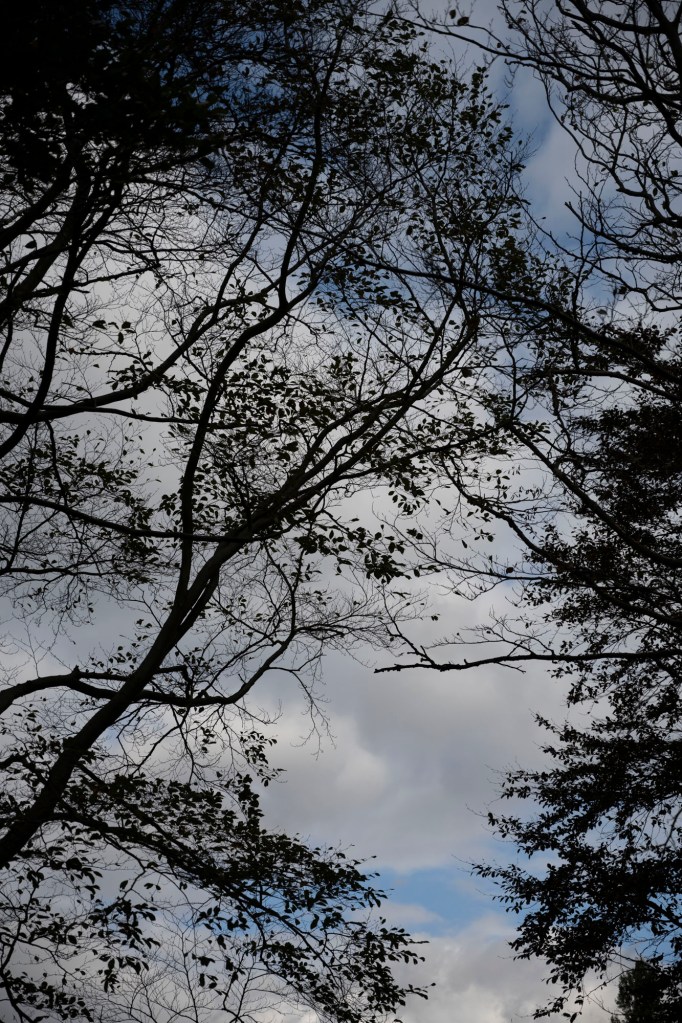
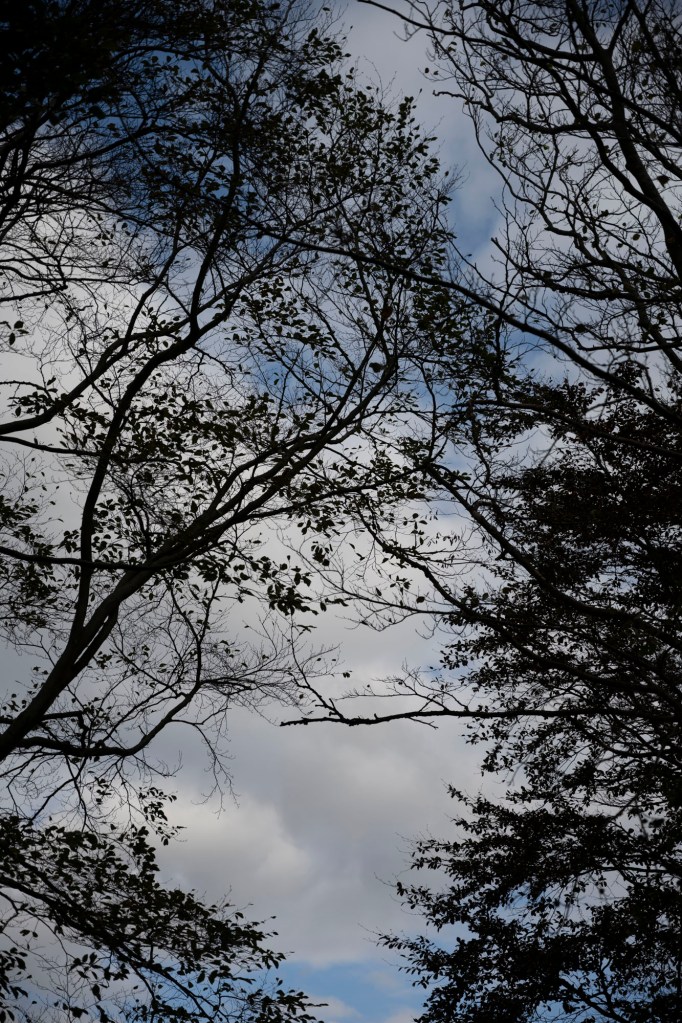
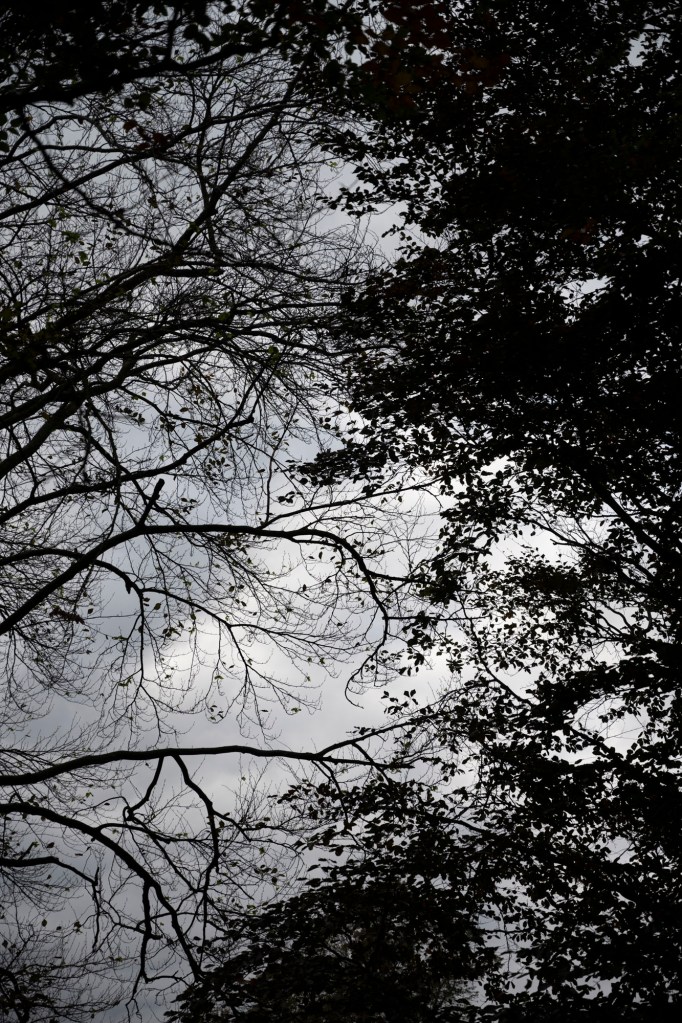
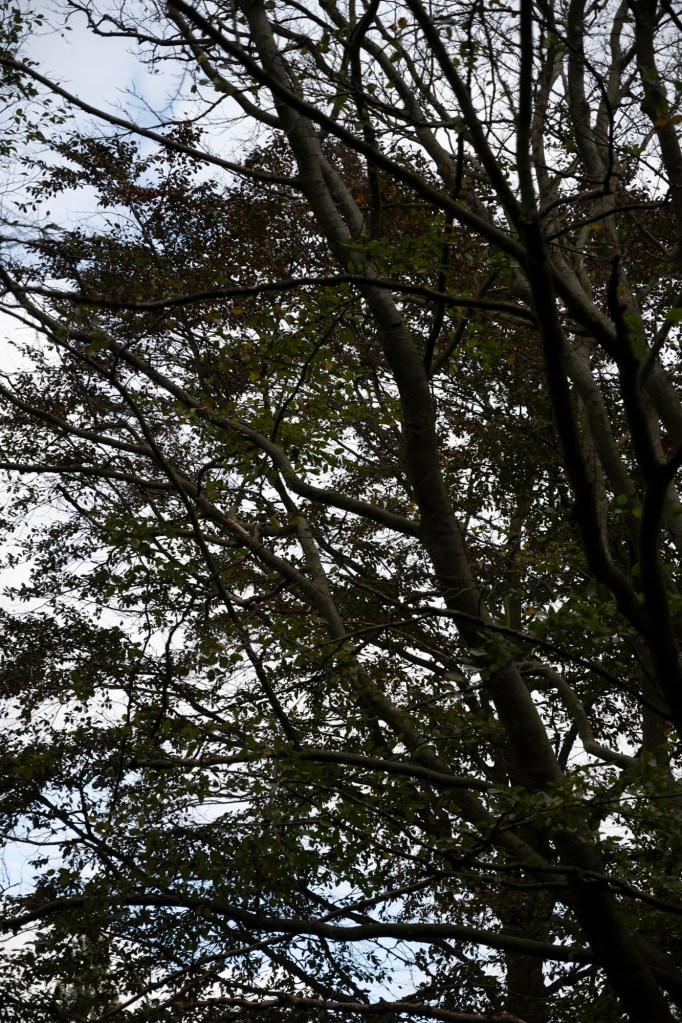
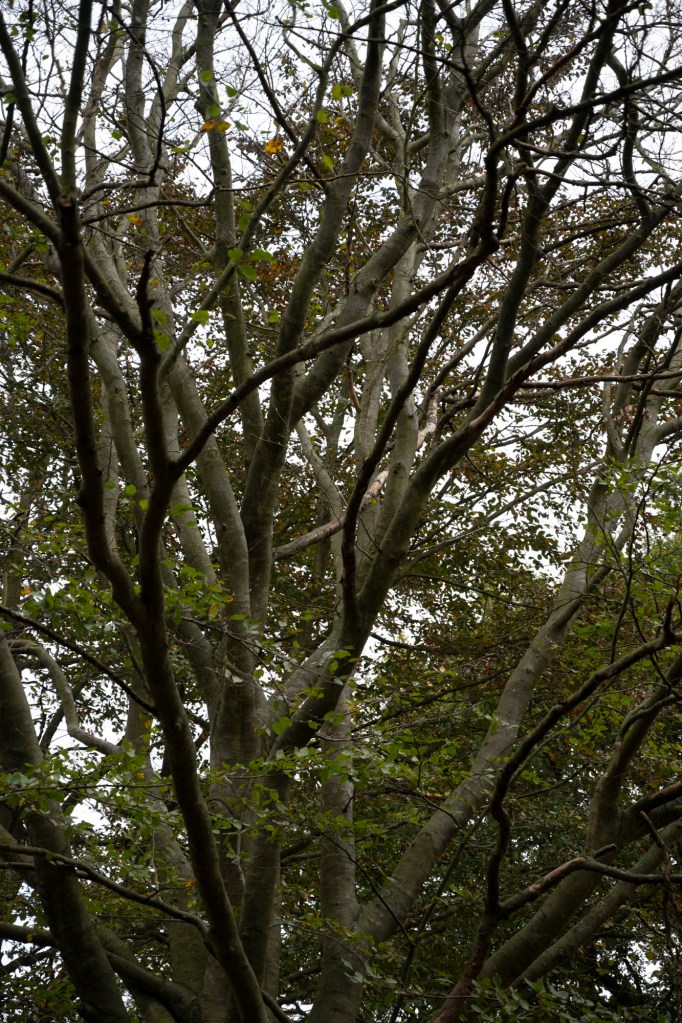
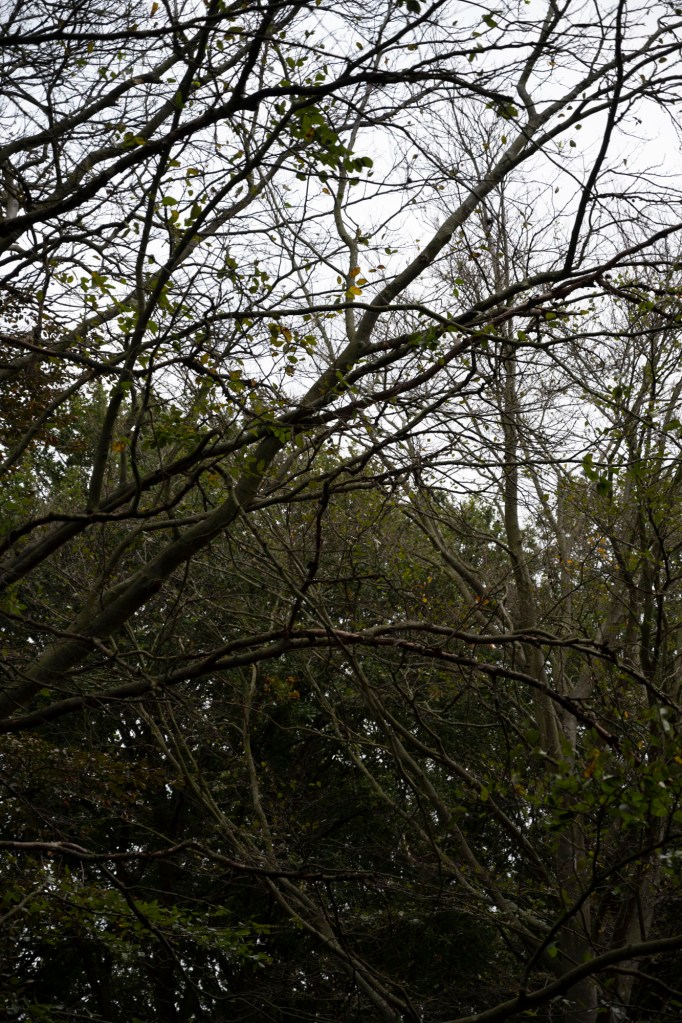
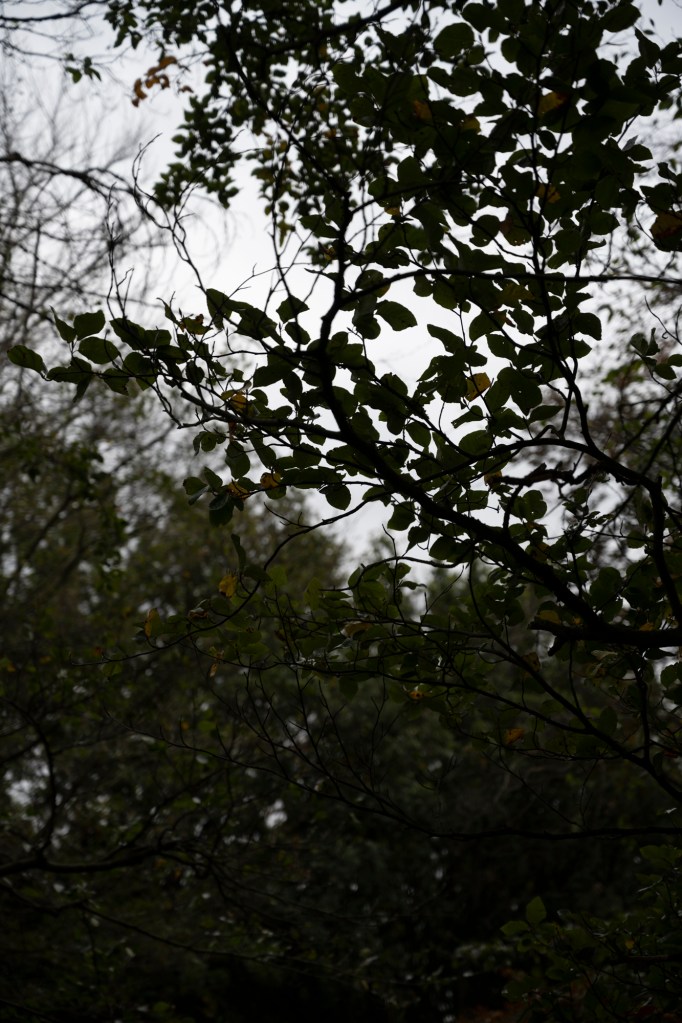
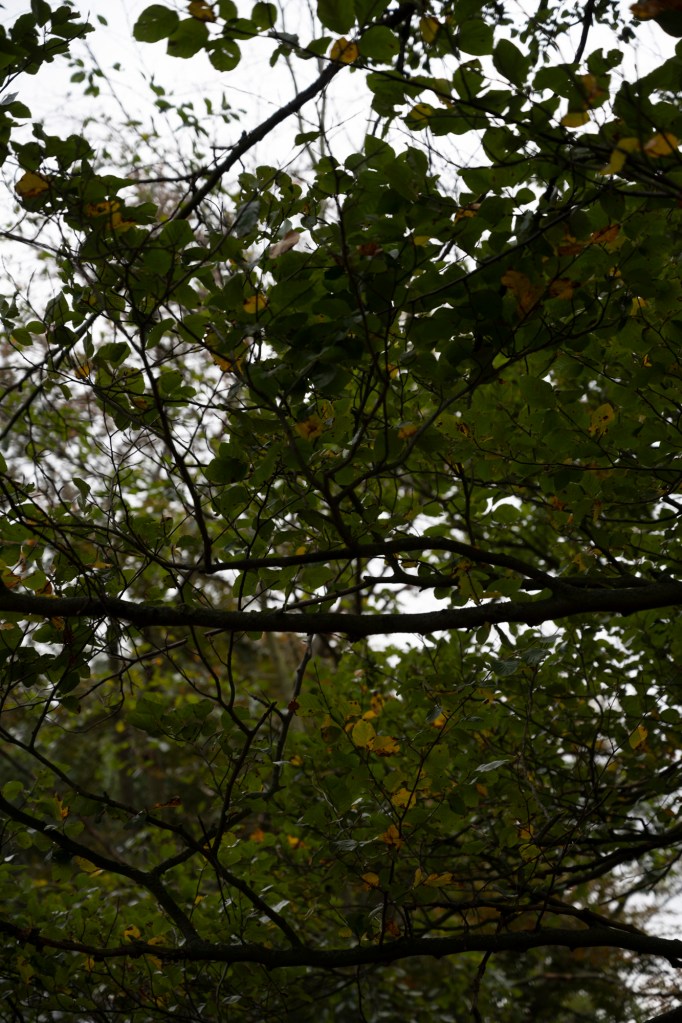
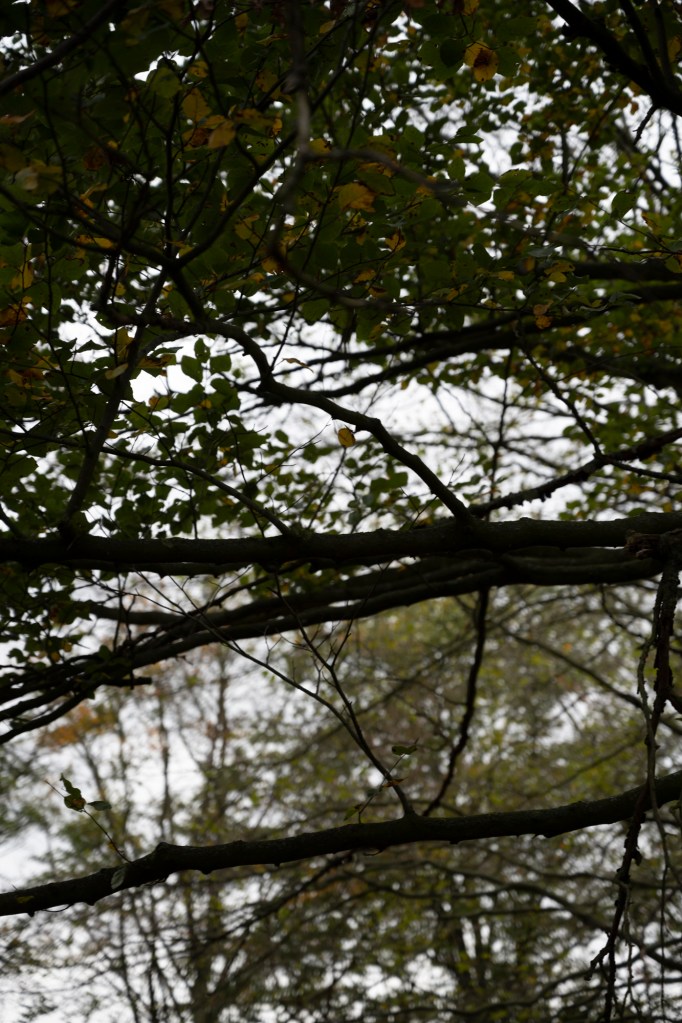
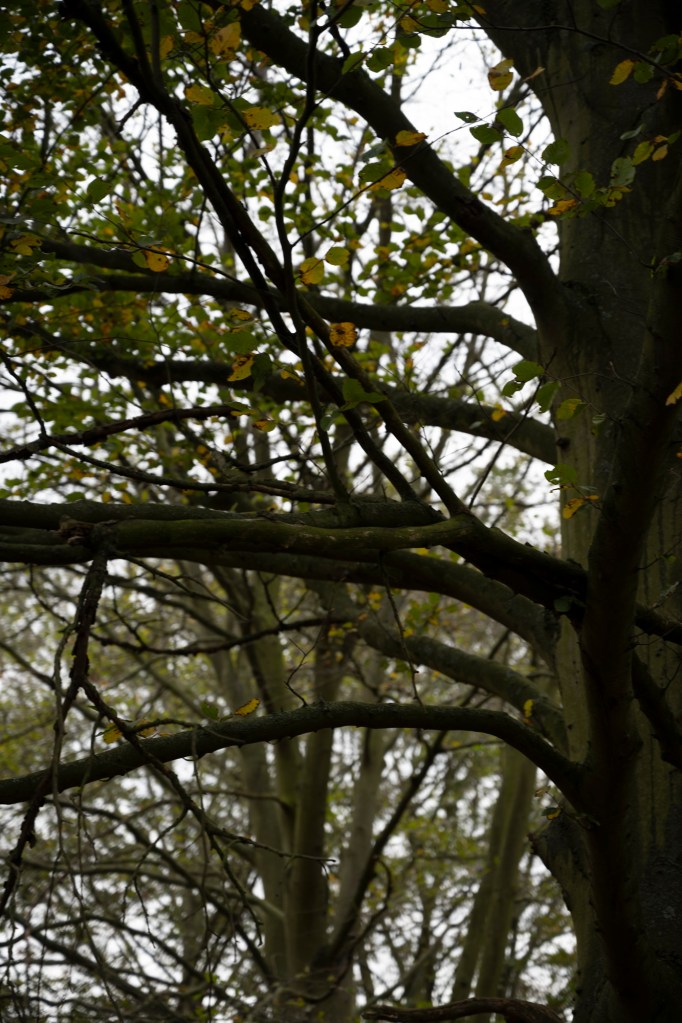
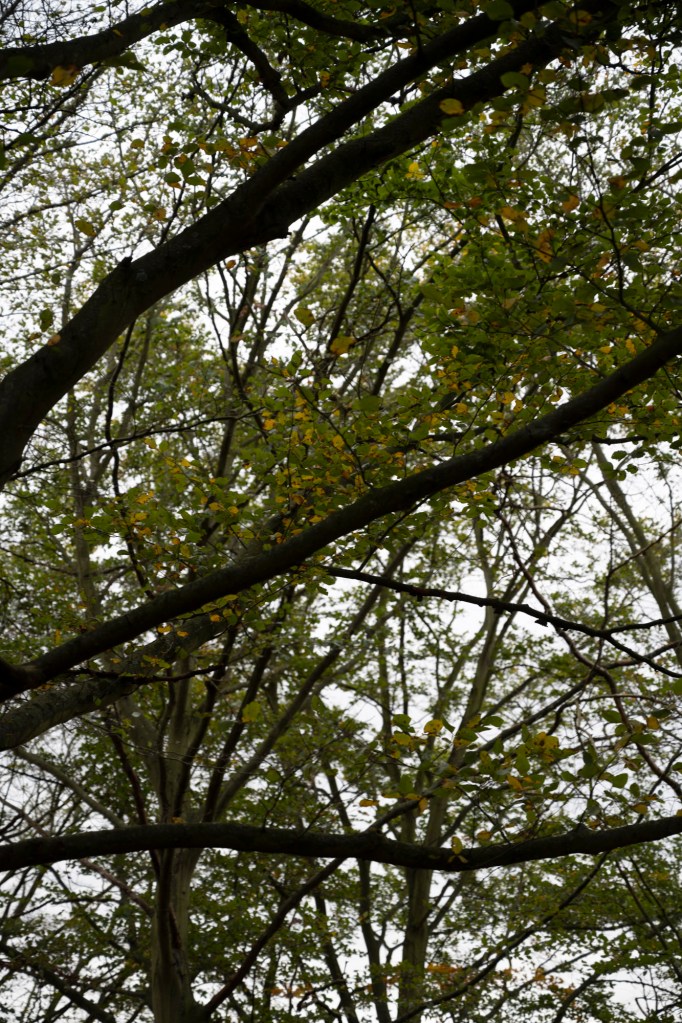
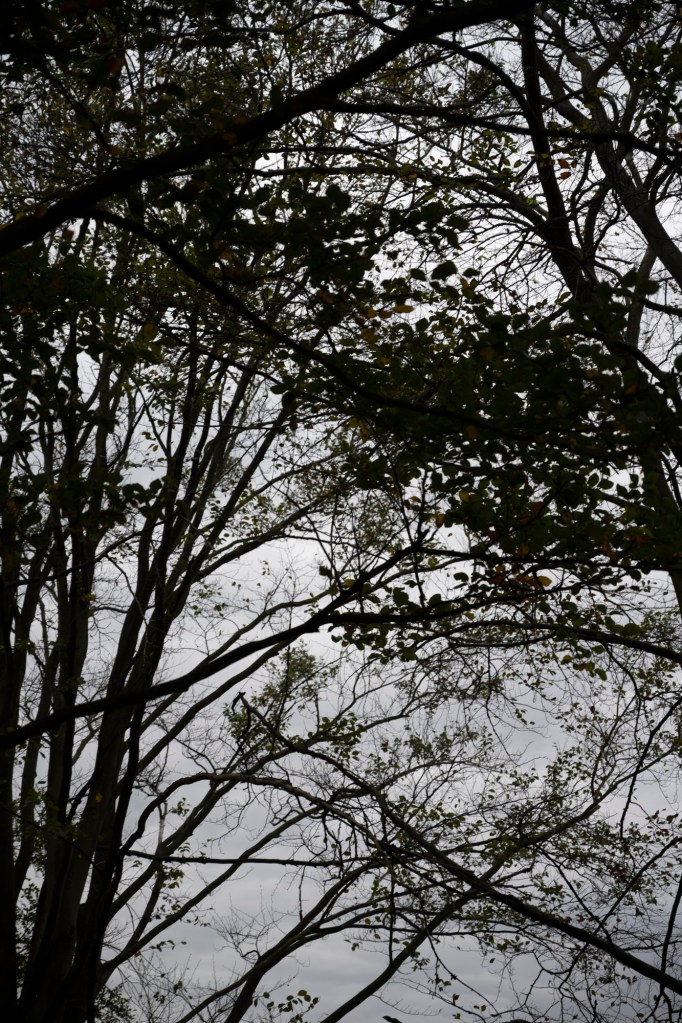
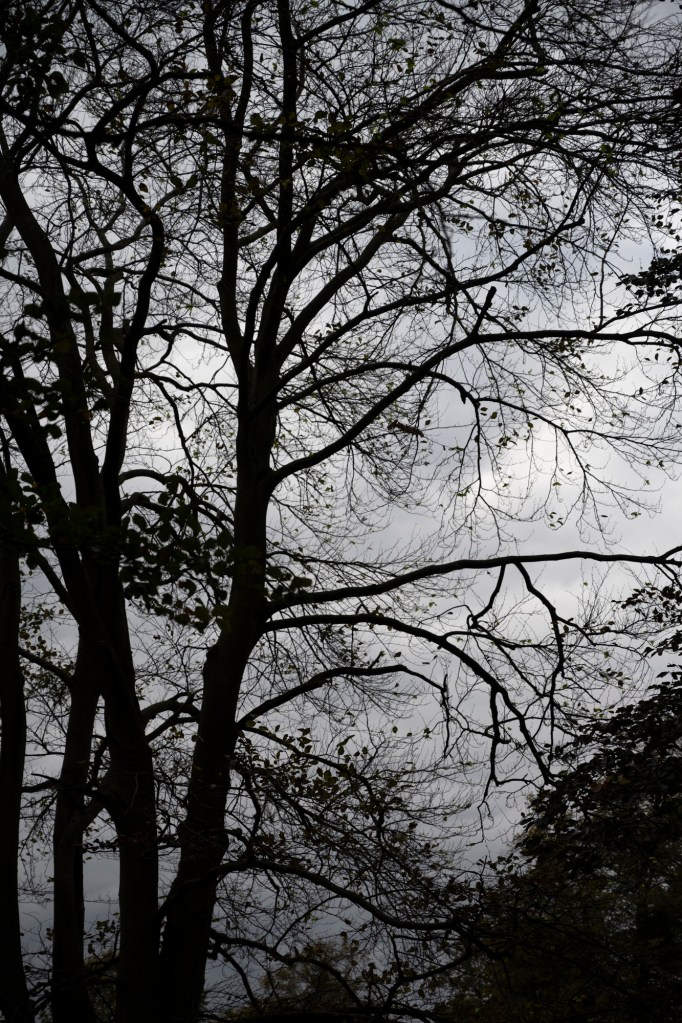
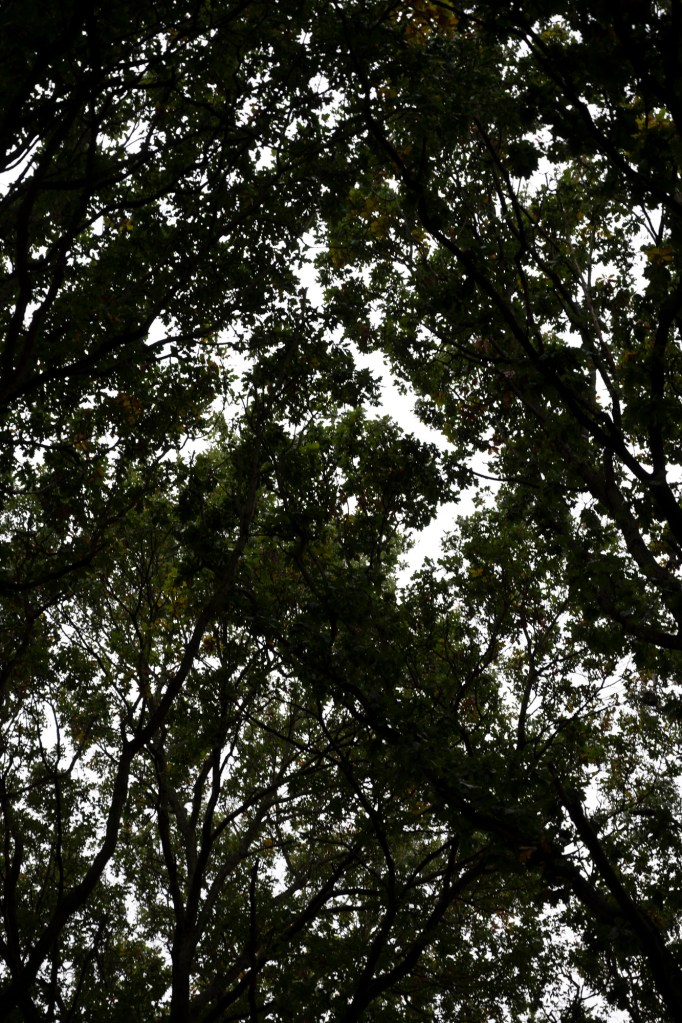
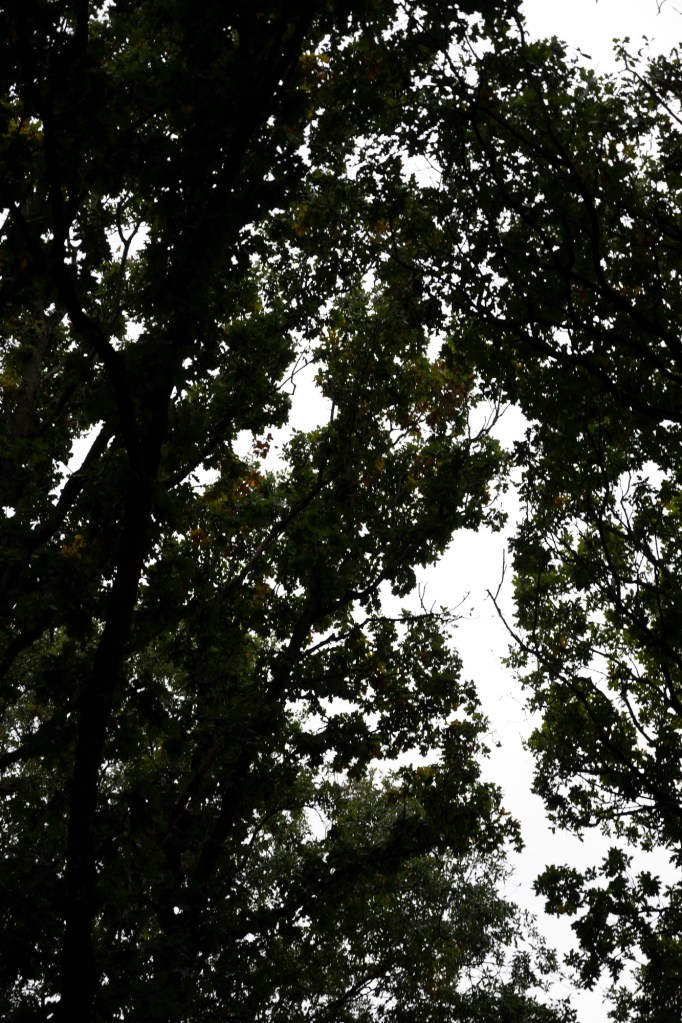
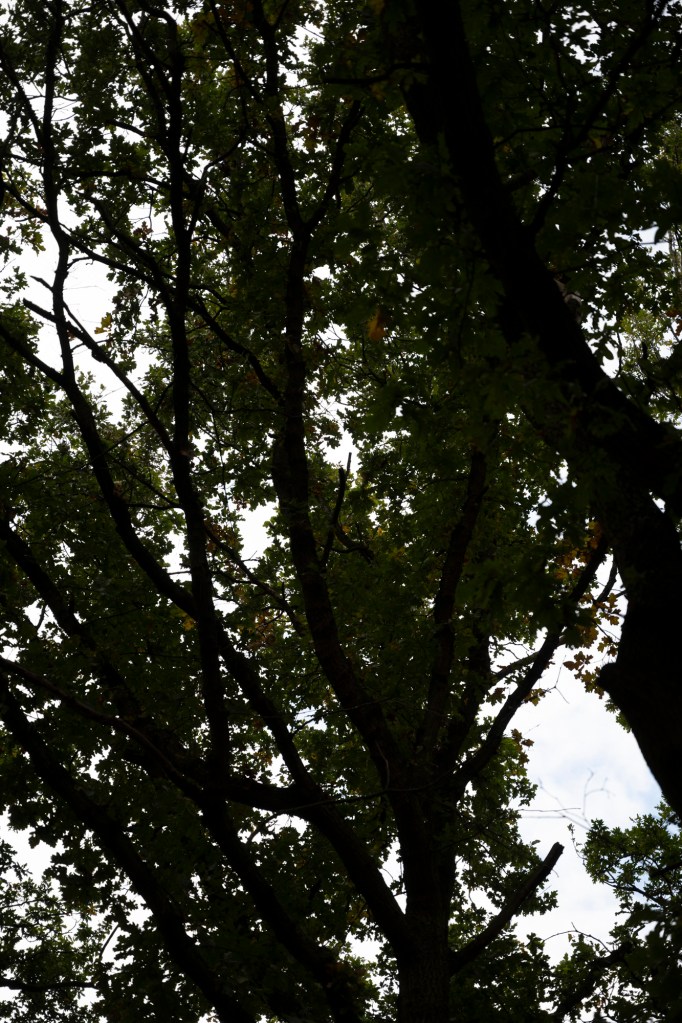
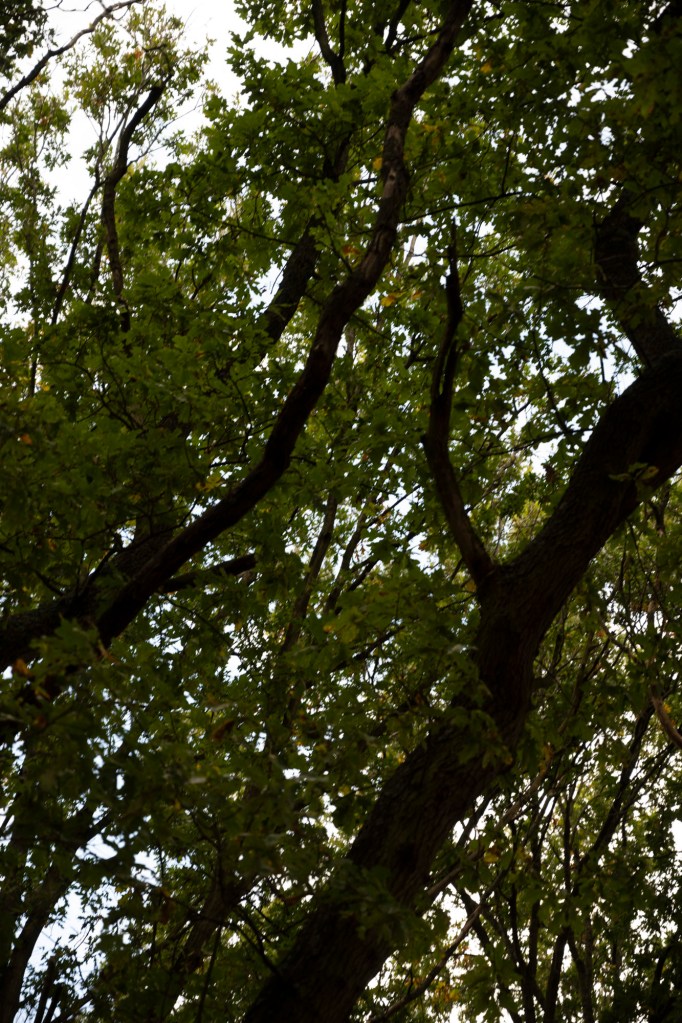
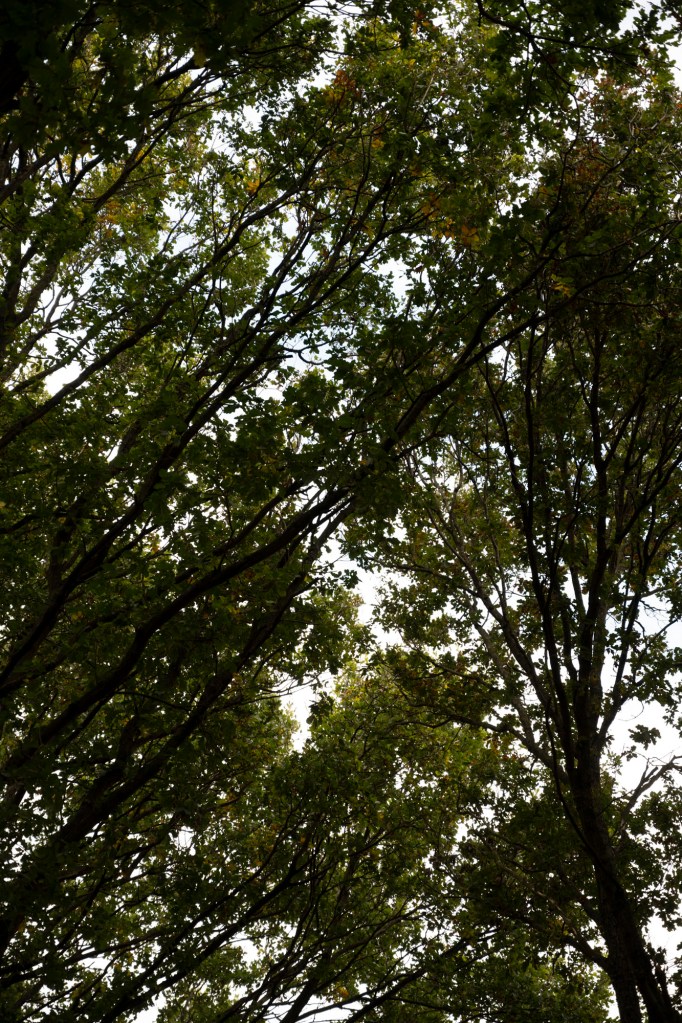
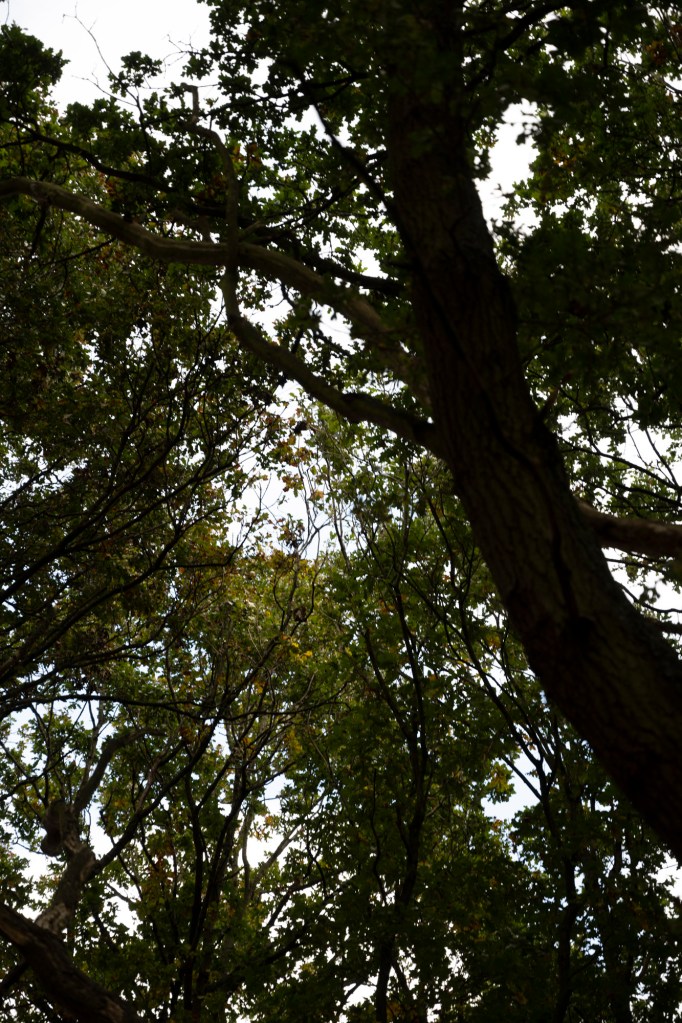
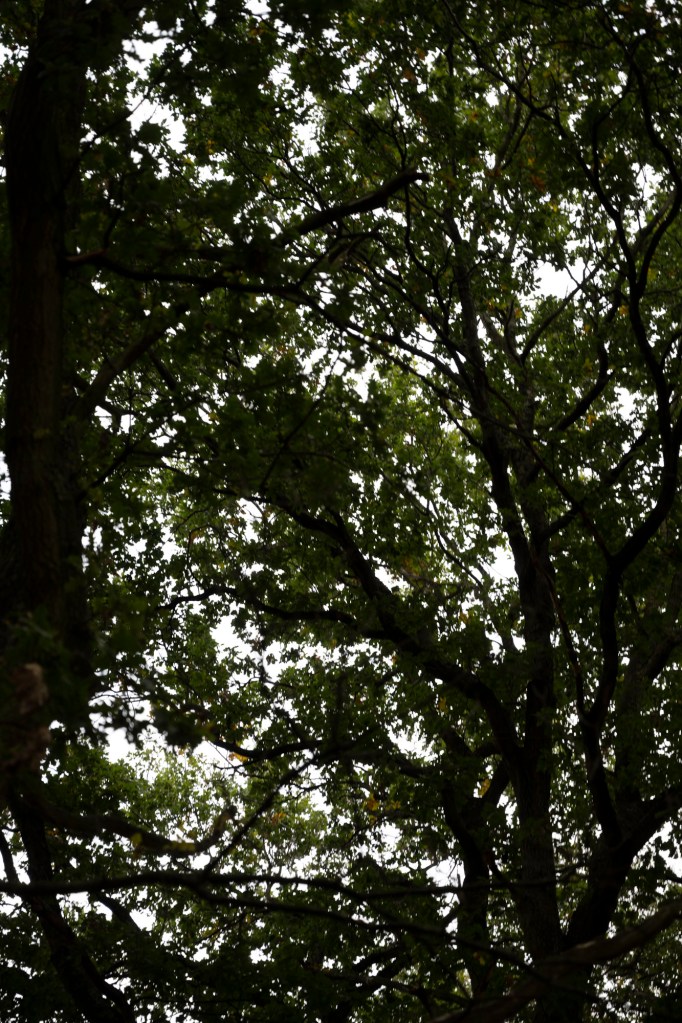
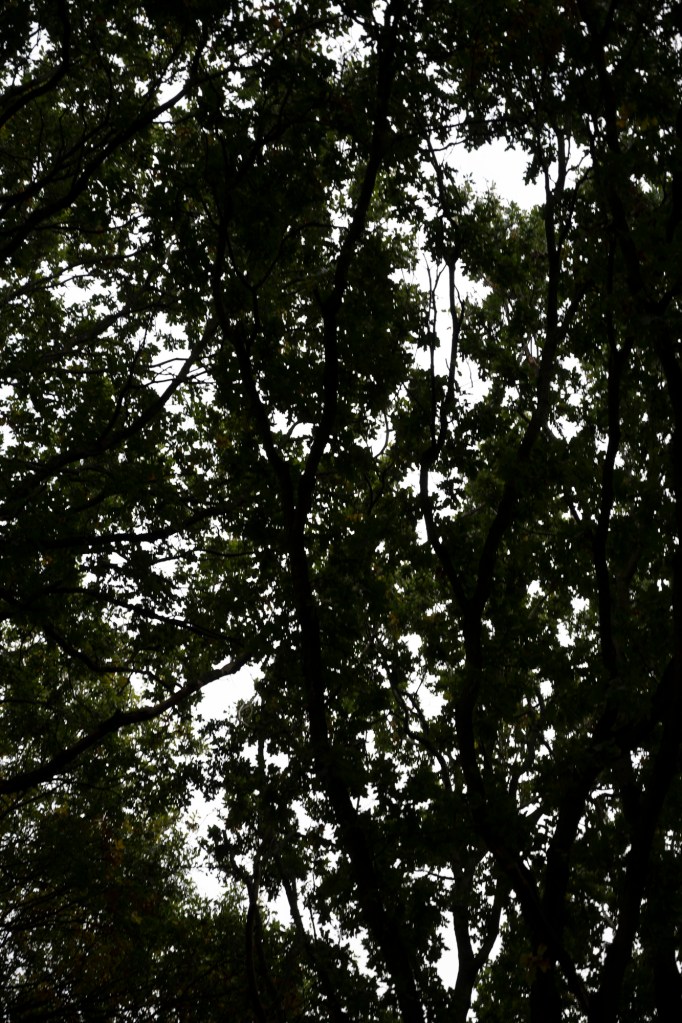
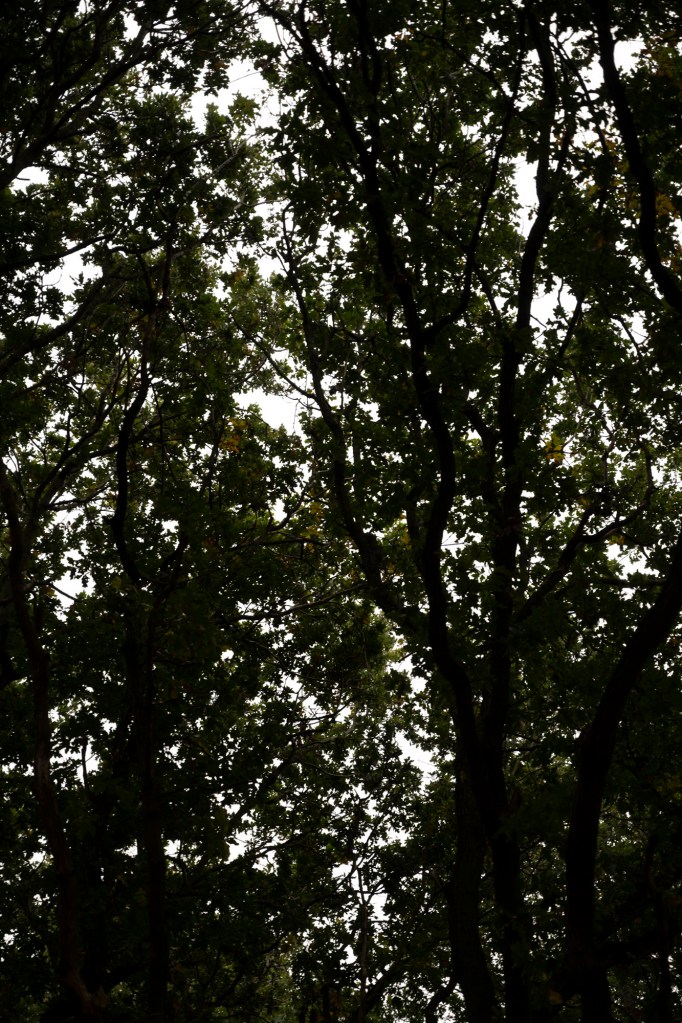
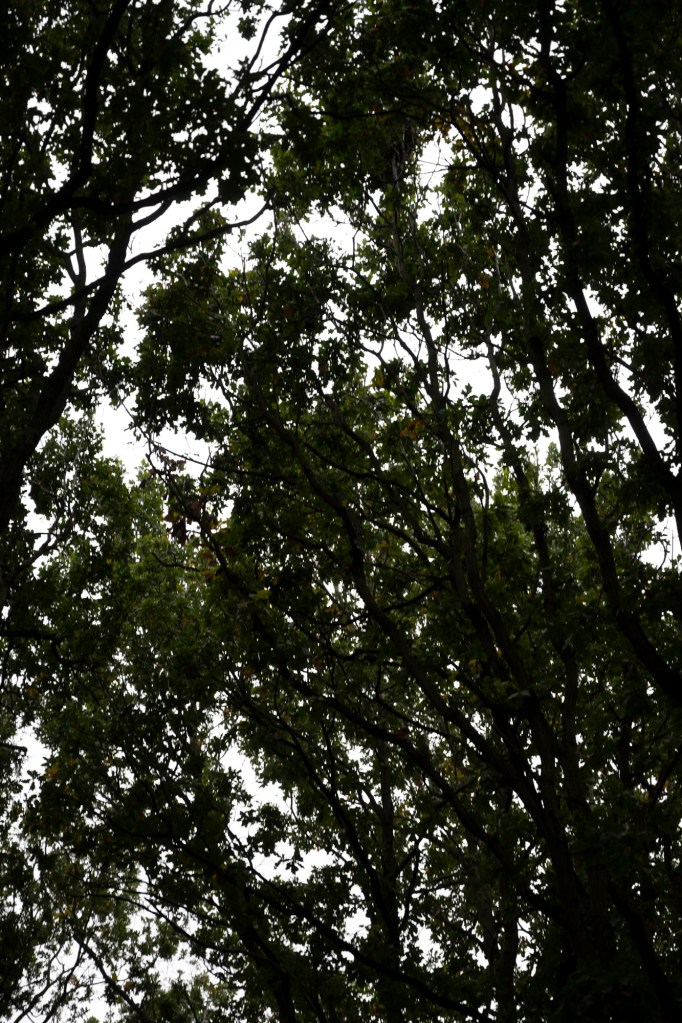
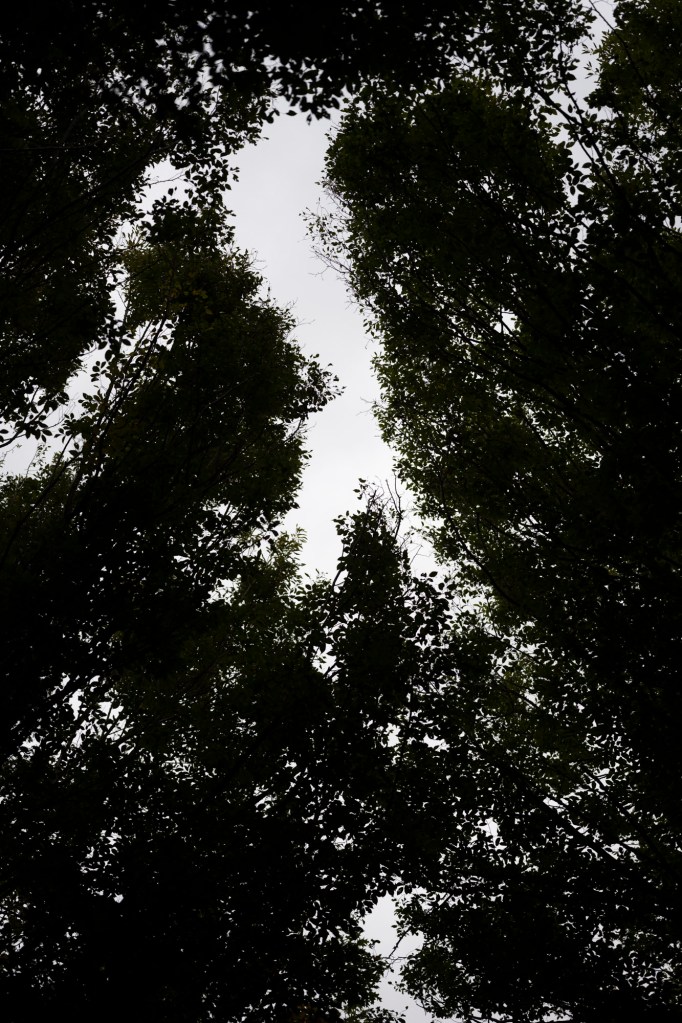
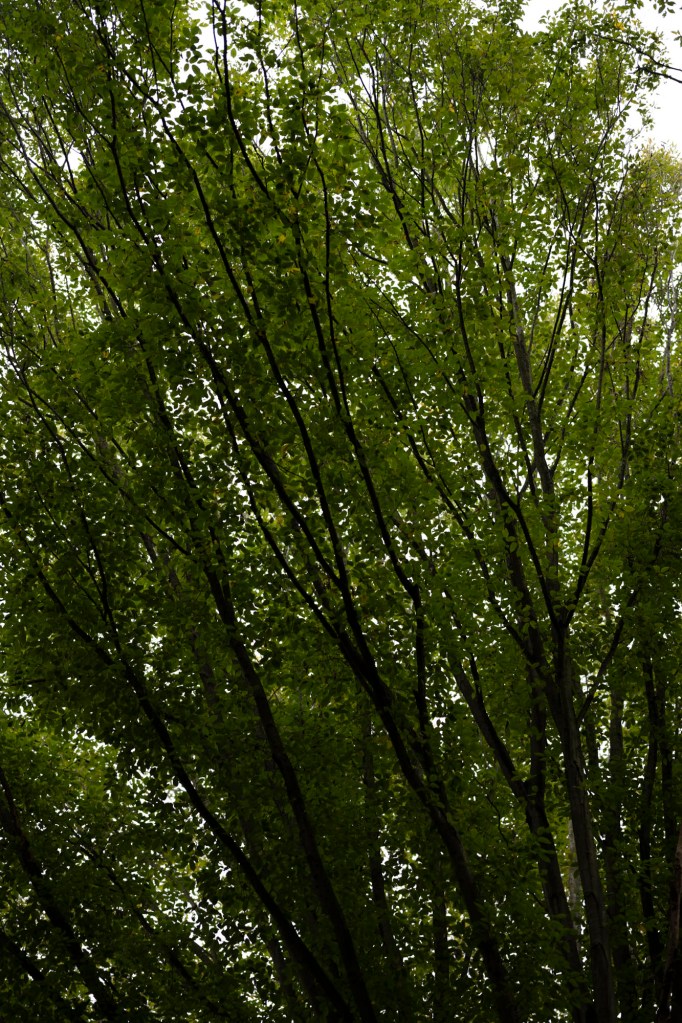
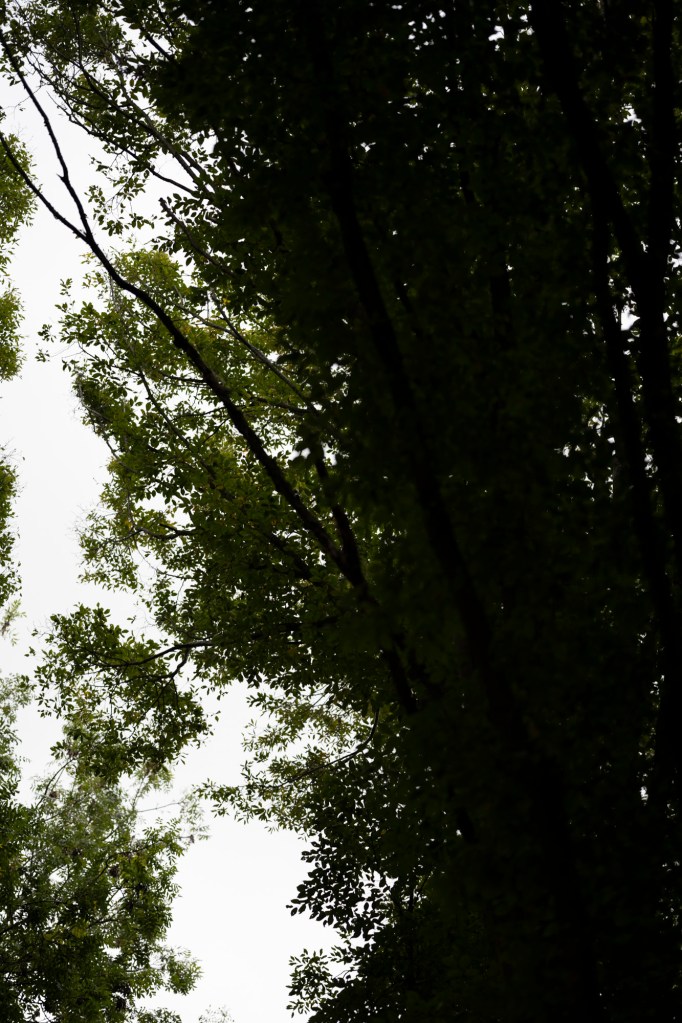
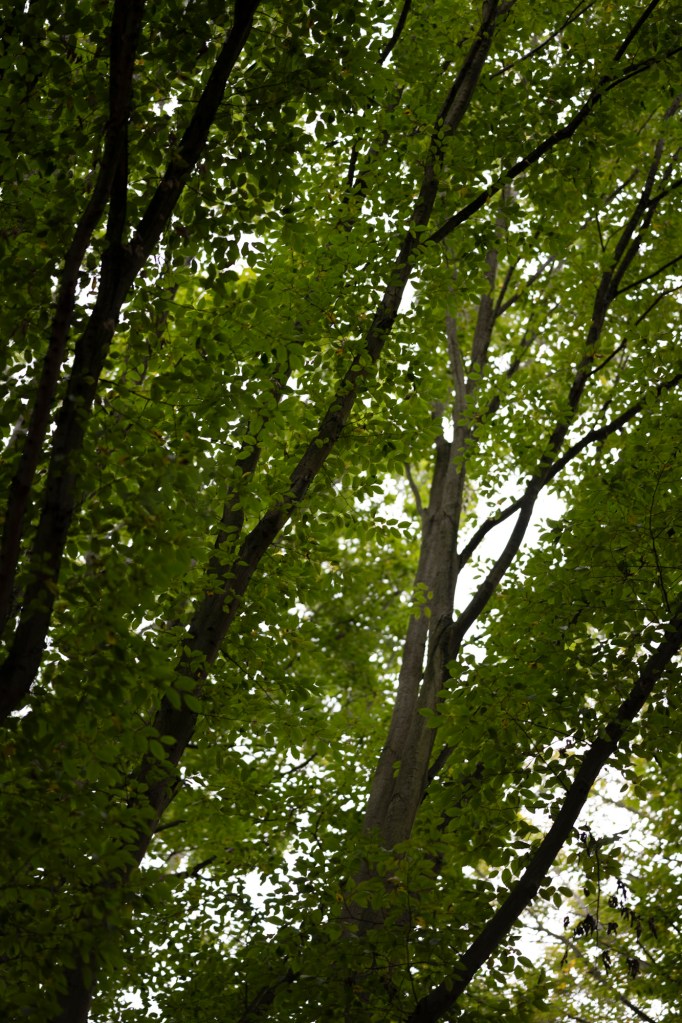
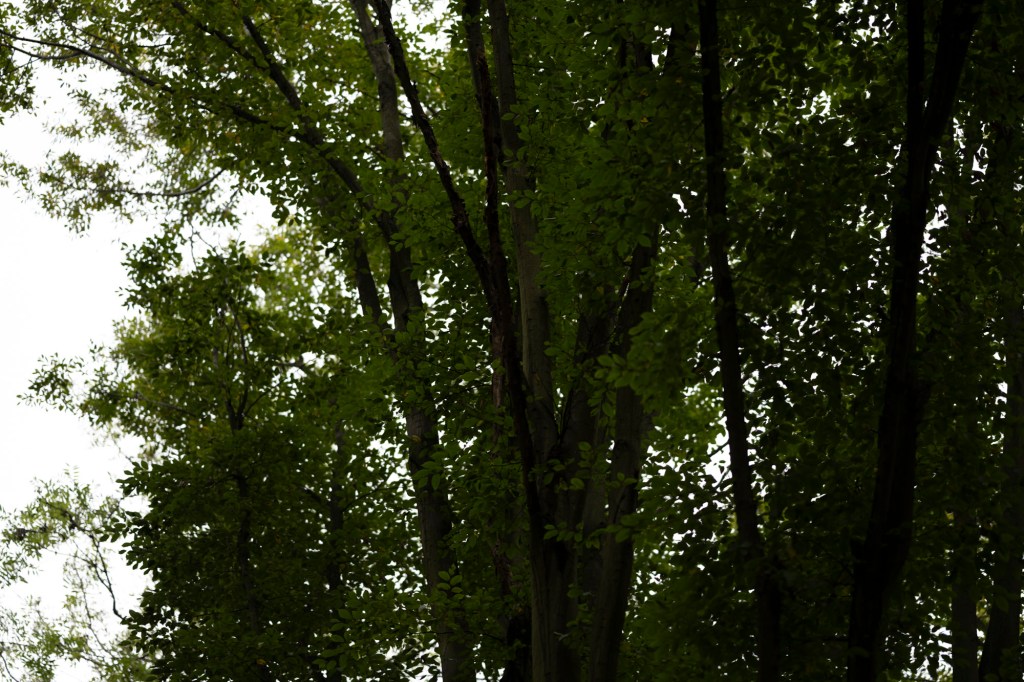
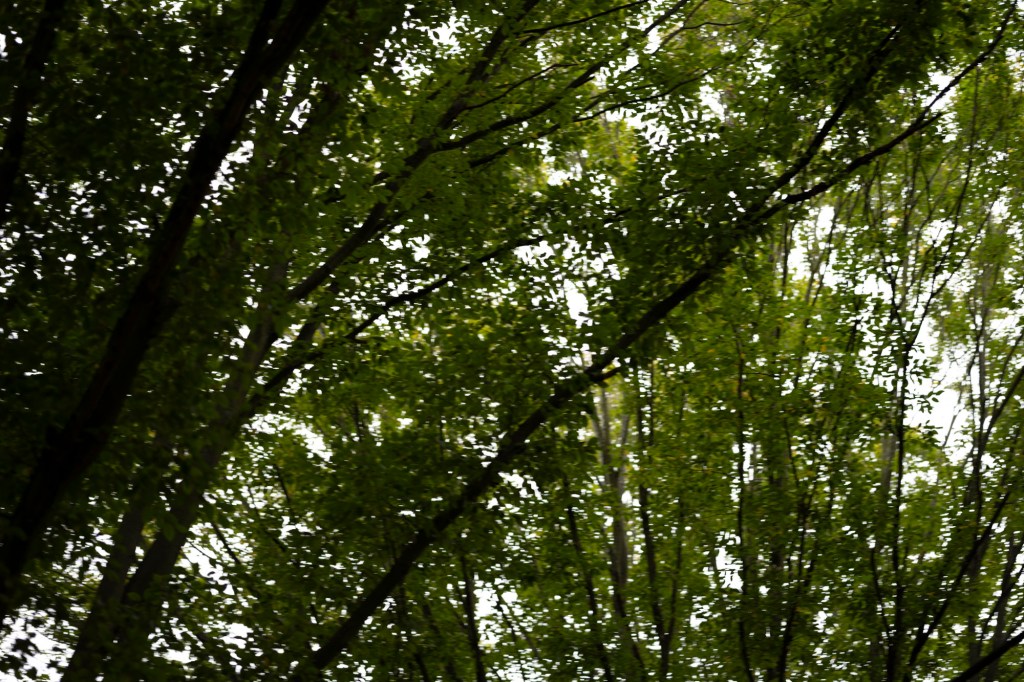
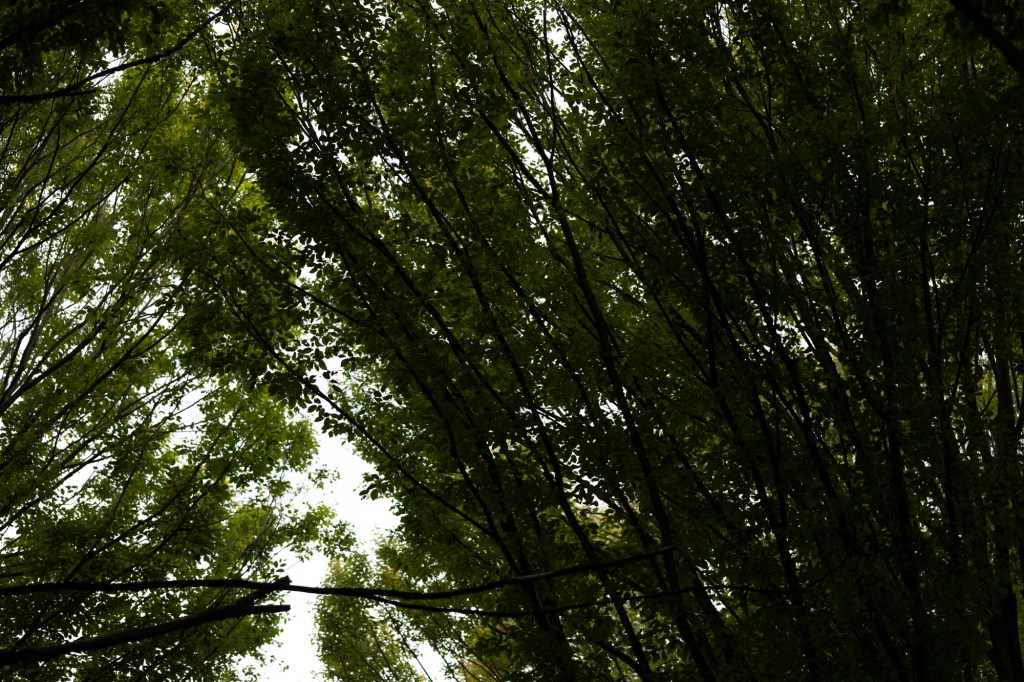
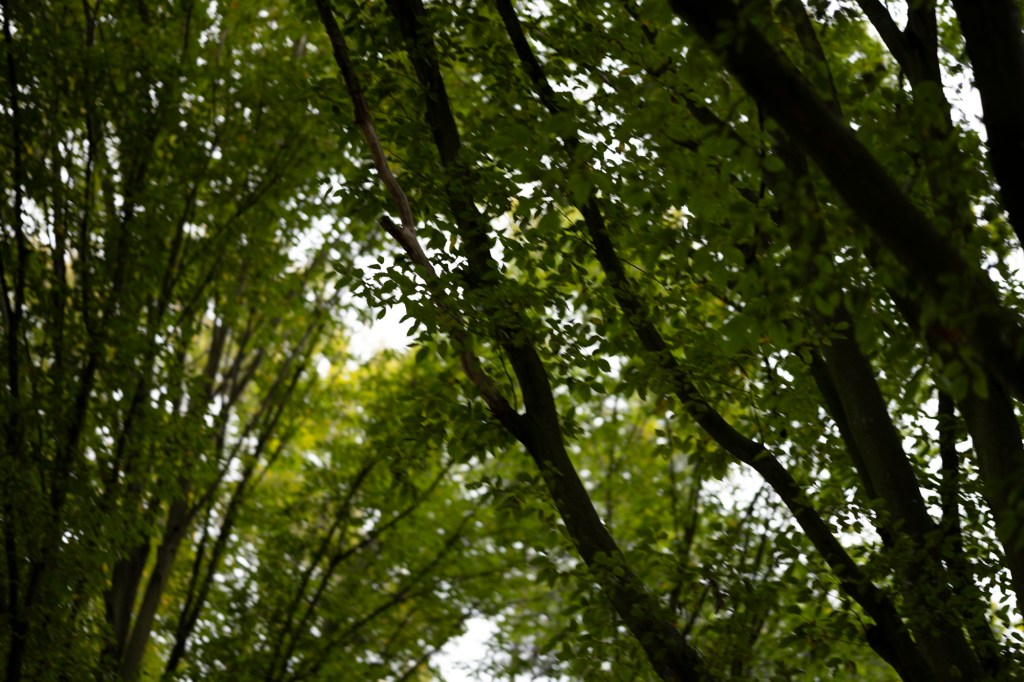
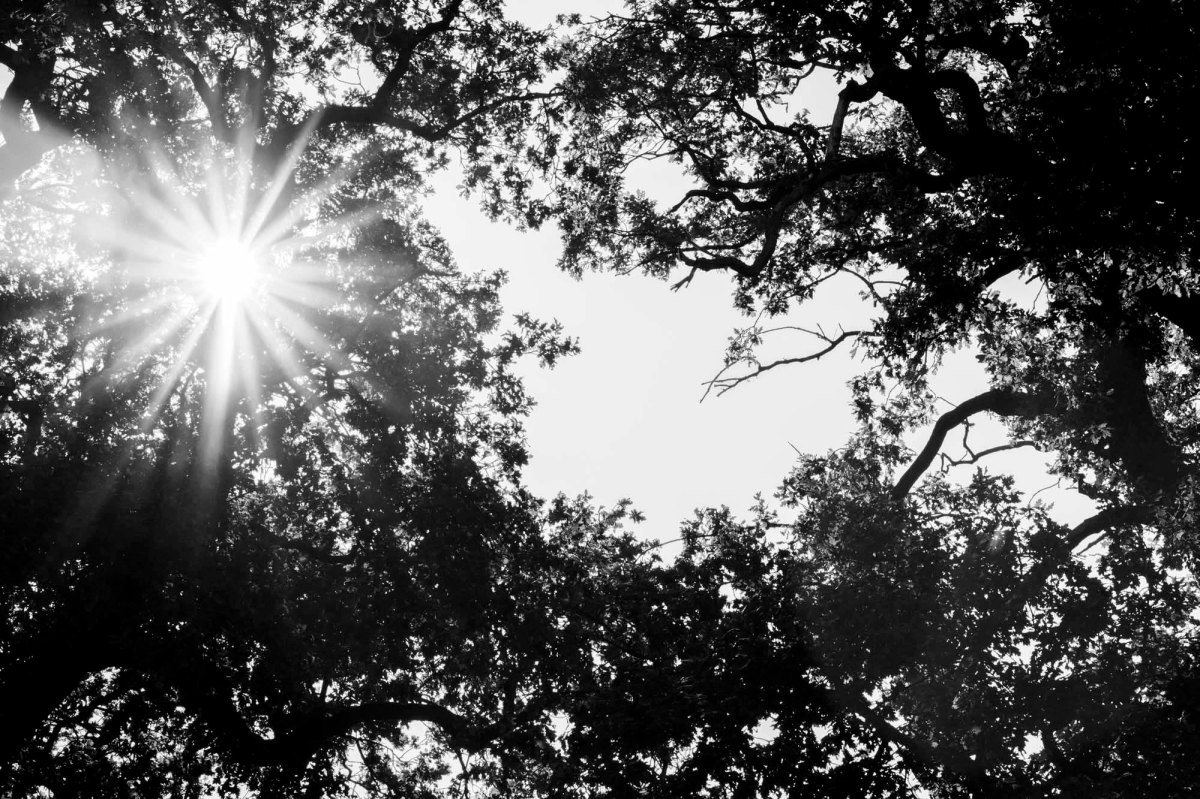
  • Subjective: close ups of details, looking up at the branches

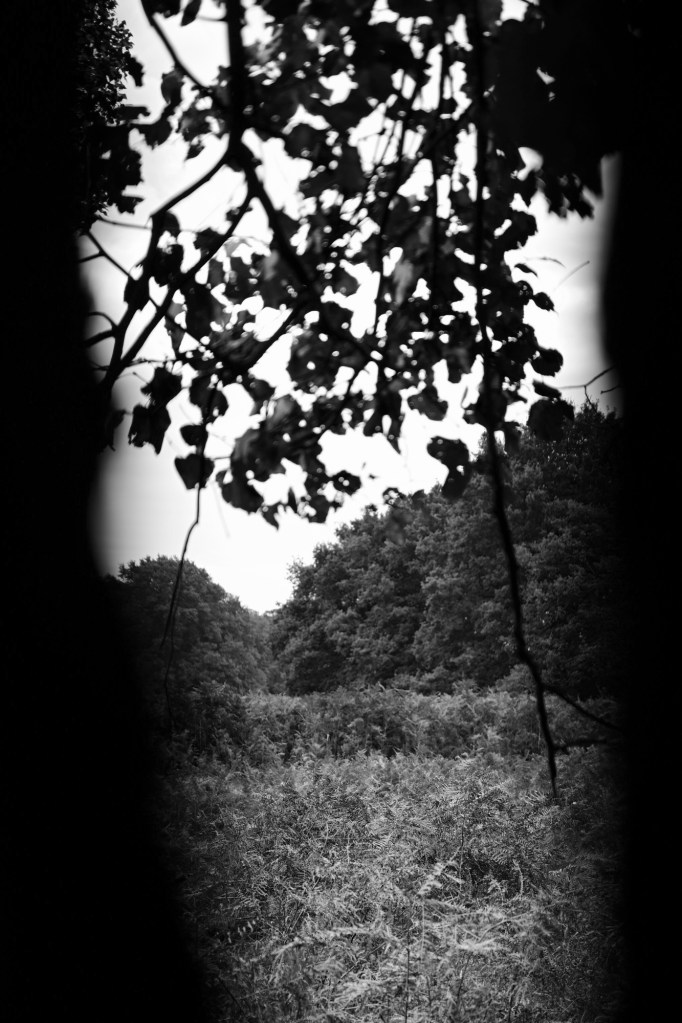
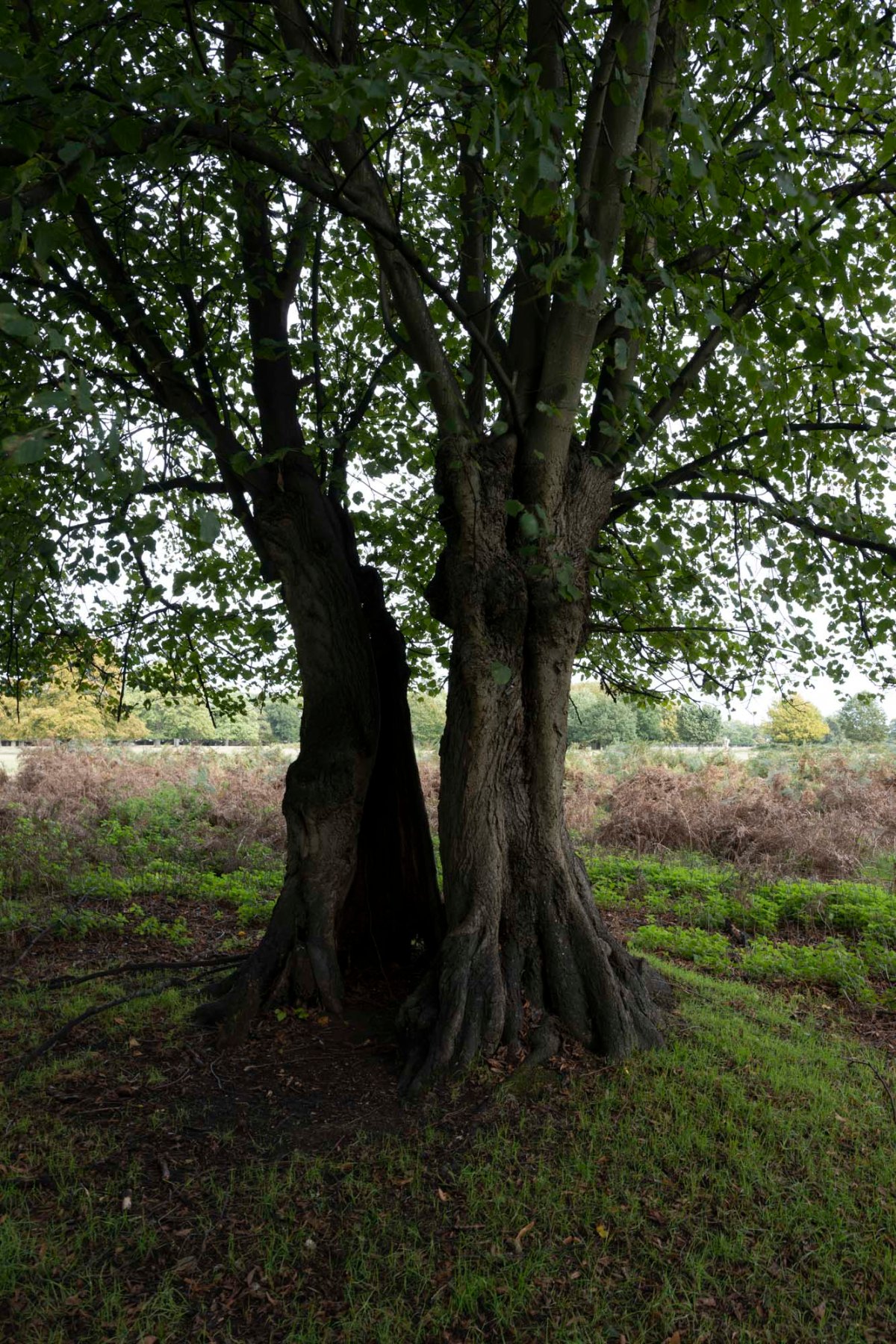
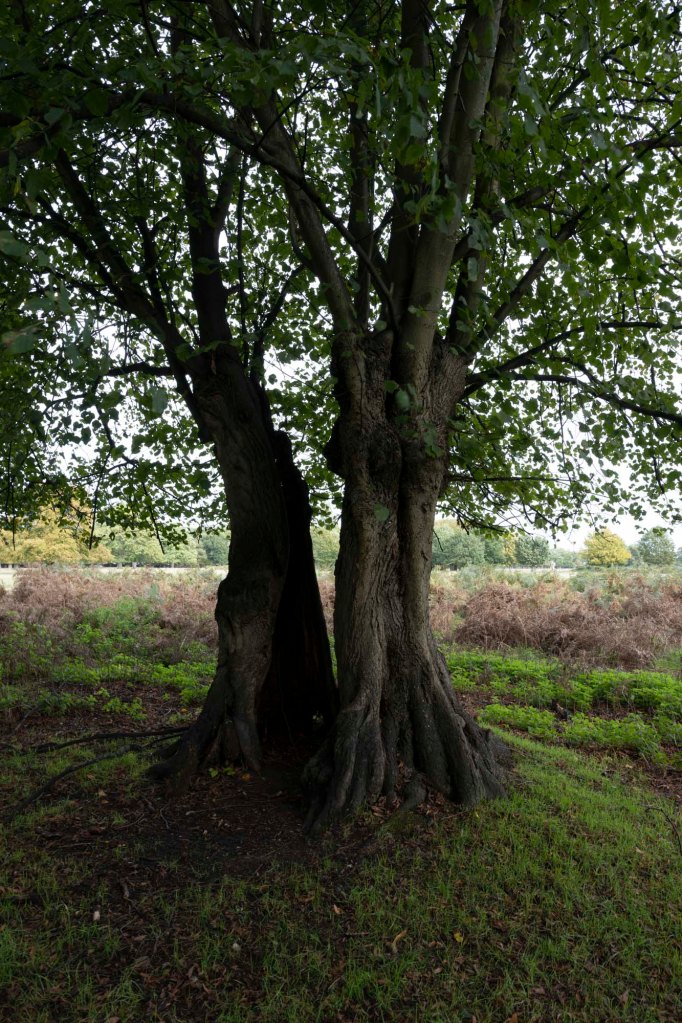
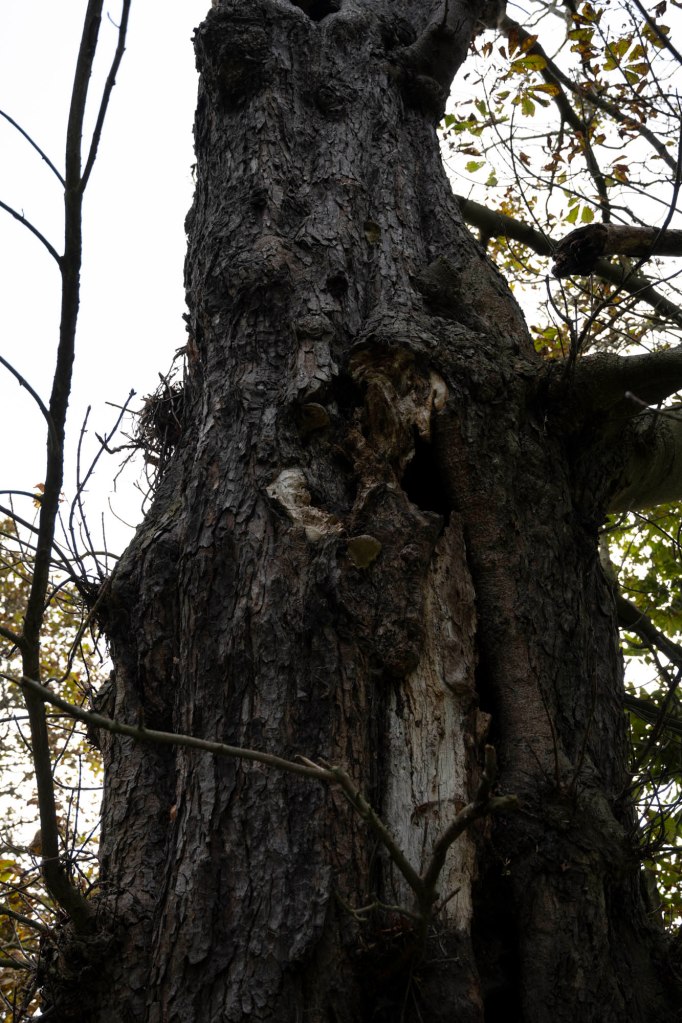
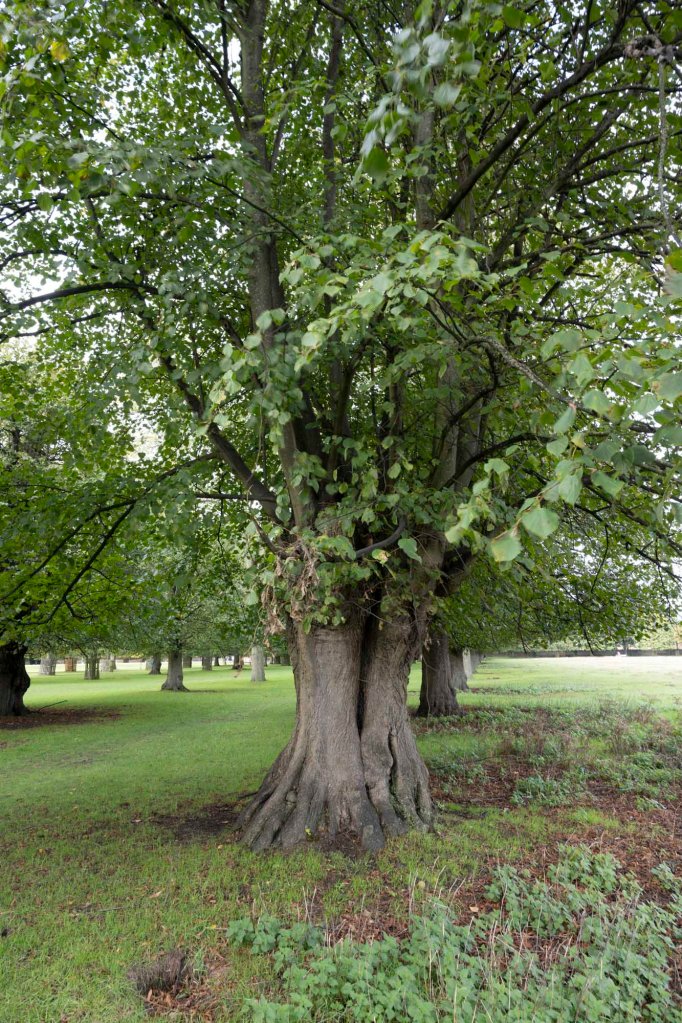
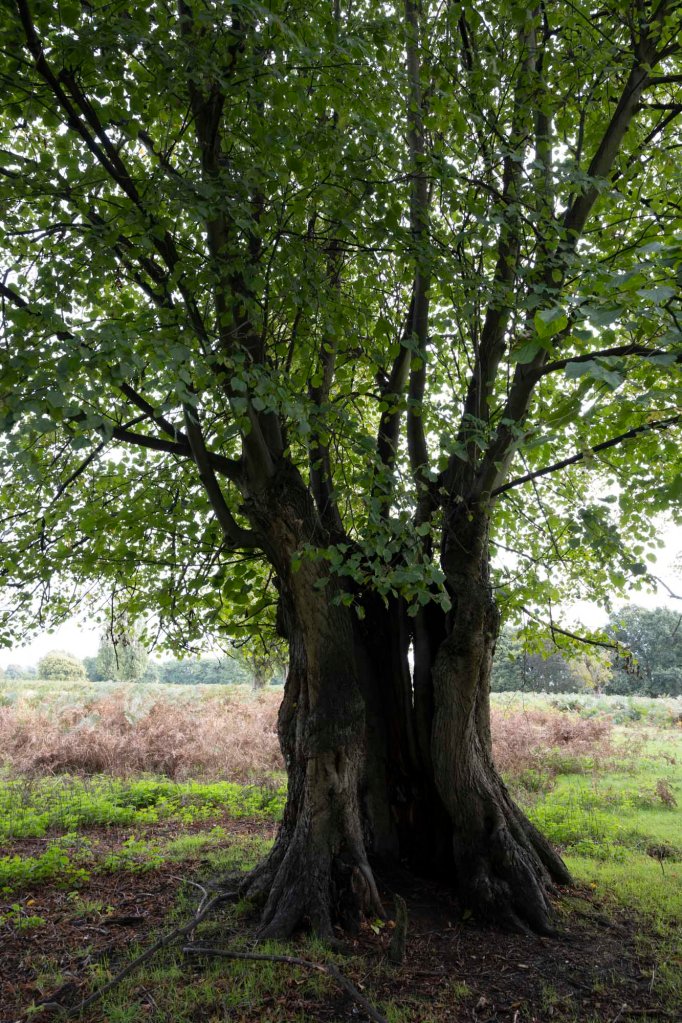
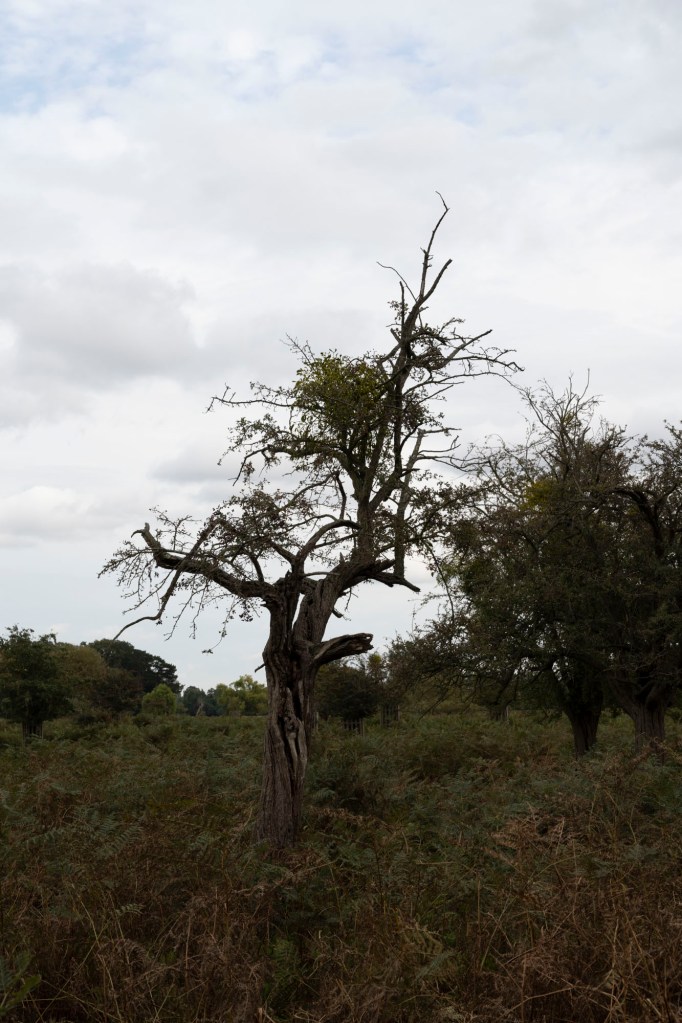
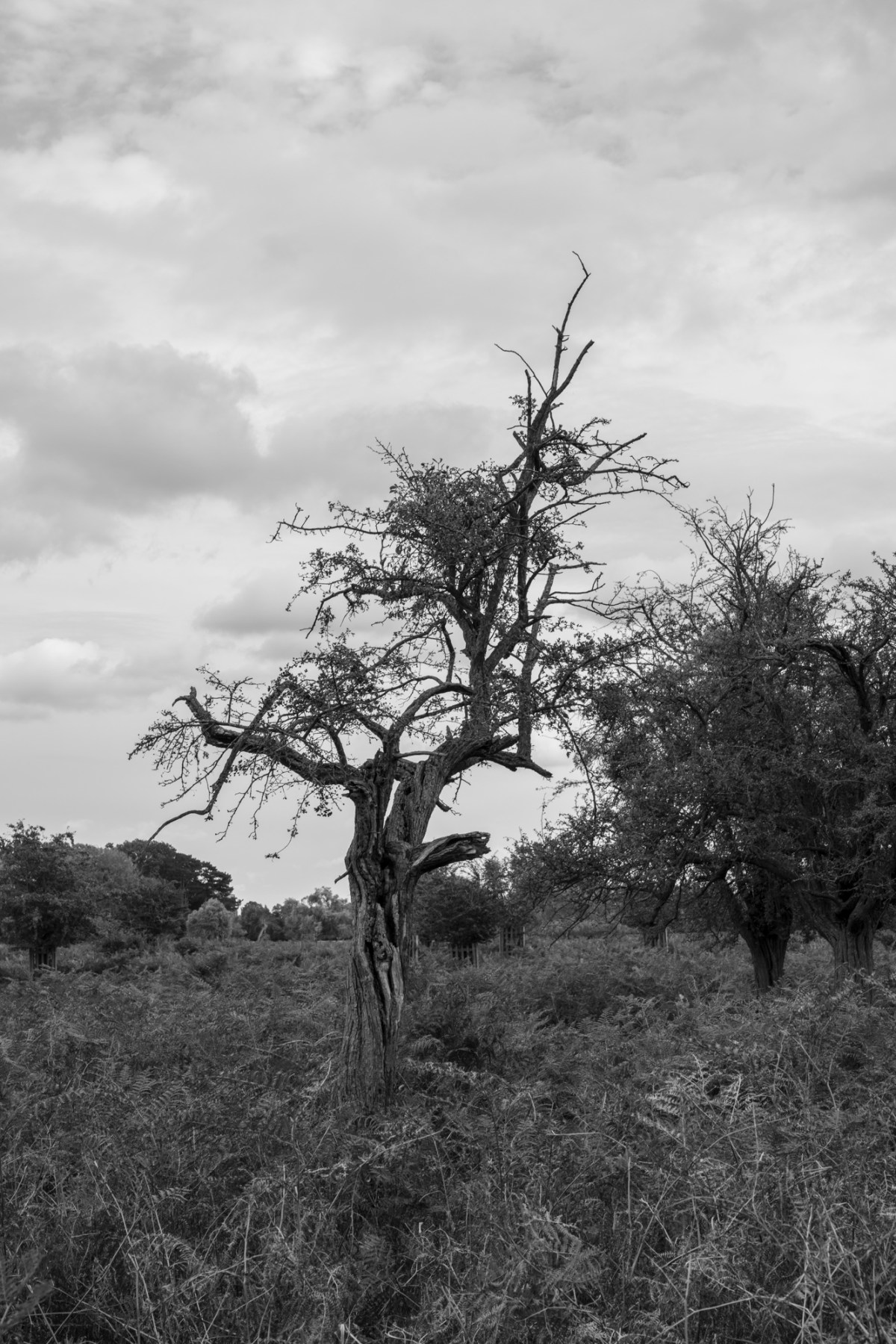
The main image that Åsa picked up on was that one of the hawthorns that I had converted to Black & White:
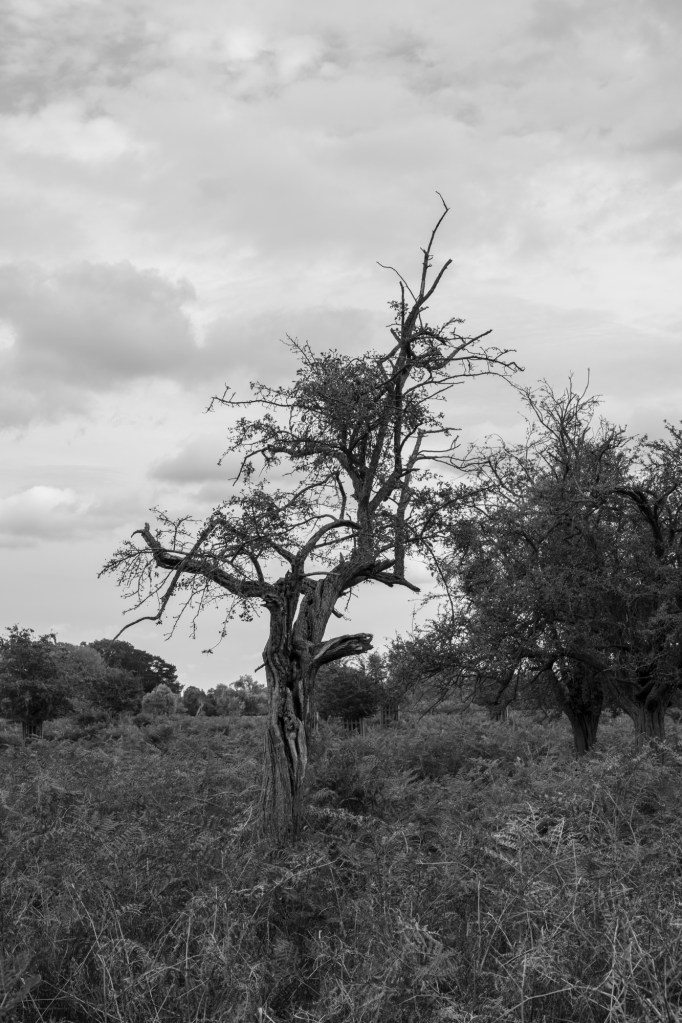
For Åsa, there was a very subtle approach to this image that was traditionally composed with the Black & White conversion bringing out textures and details. It also slowed down the reading of the image.

When I mentioned about the Ancient Tree Inventory and potentially mapping the hawthorn trees, Åsa brought up the work of Bernd and Hilla Becher and their objective images of water towers.
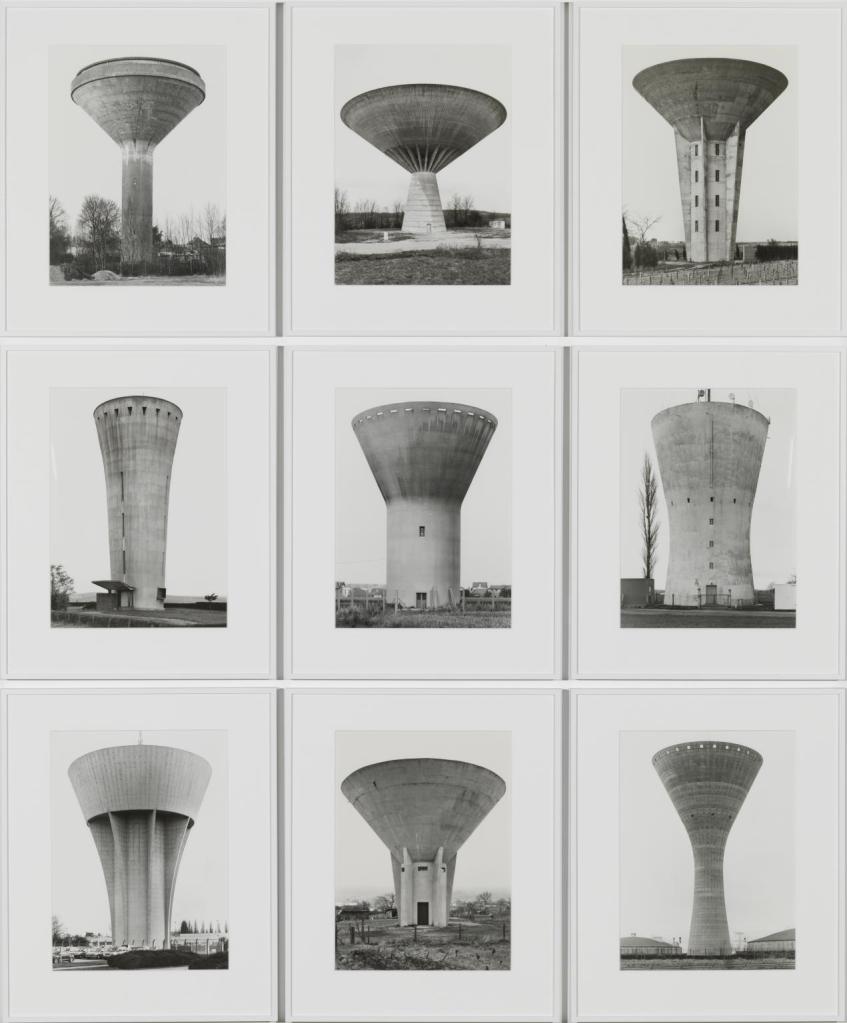
Water Towers 1972-2009 Bernd Becher and Hilla Becher 1931-2007, 1934-2015 Purchased with funds provided by Tate International Council, the Photography Acquisitions Committee, Tate Members and Tate Patrons 2015 http://www.tate.org.uk/art/work/P81238

On reflection, this is in contrast to Minor White’s subjective focus on details.
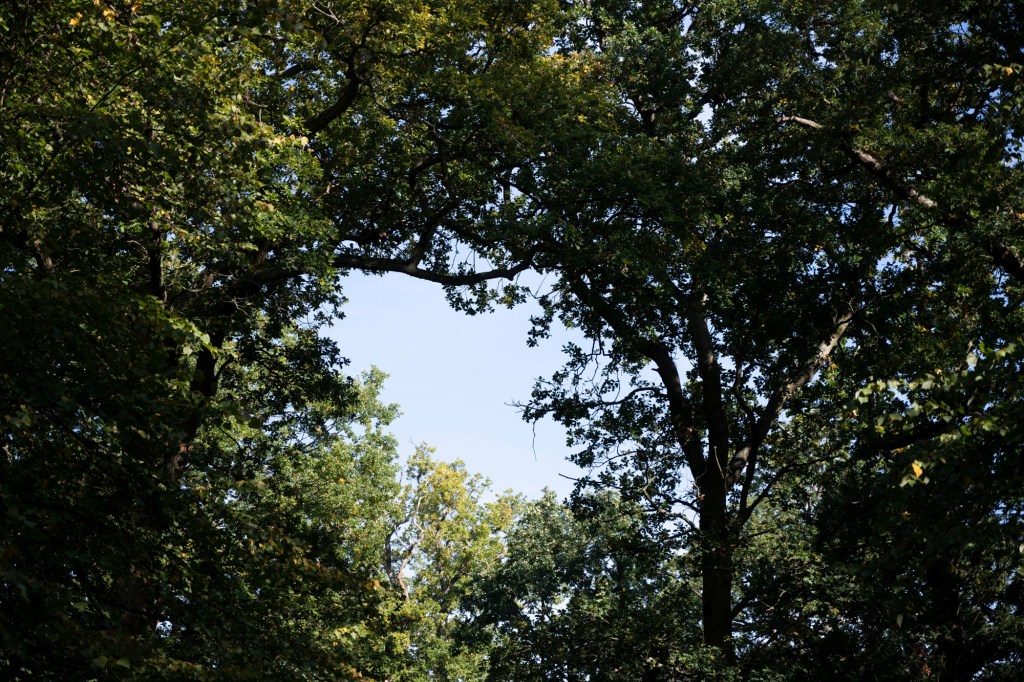
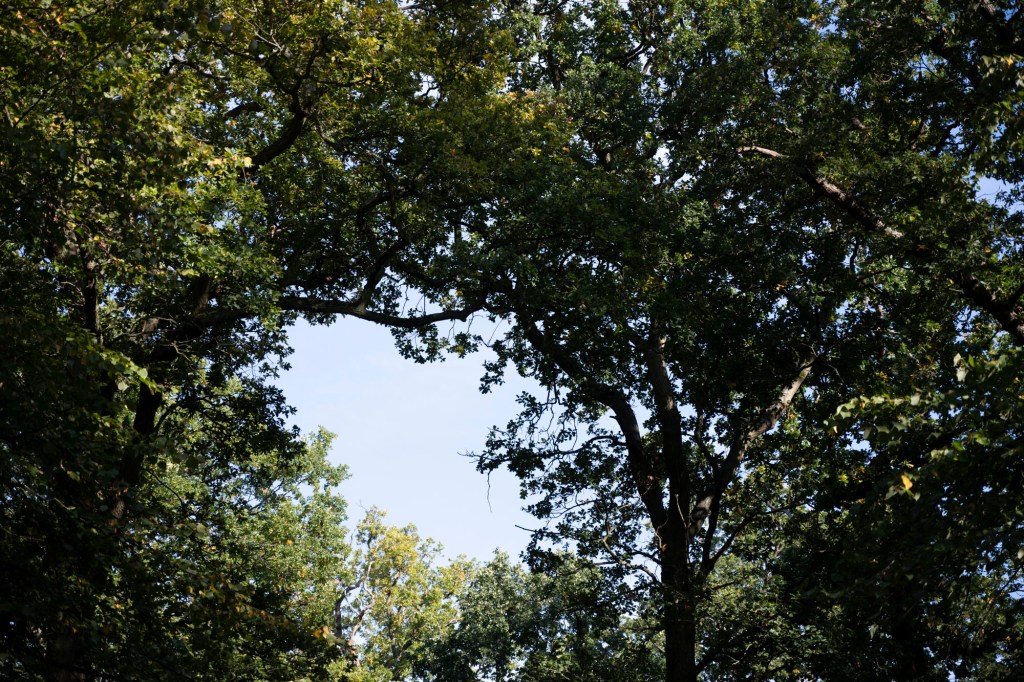
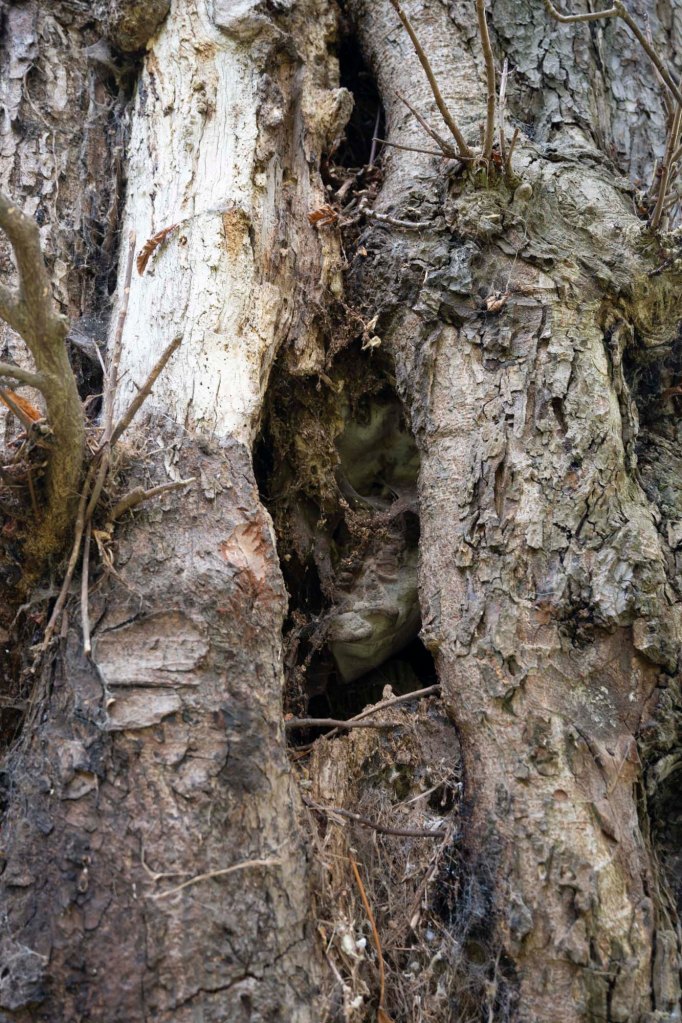
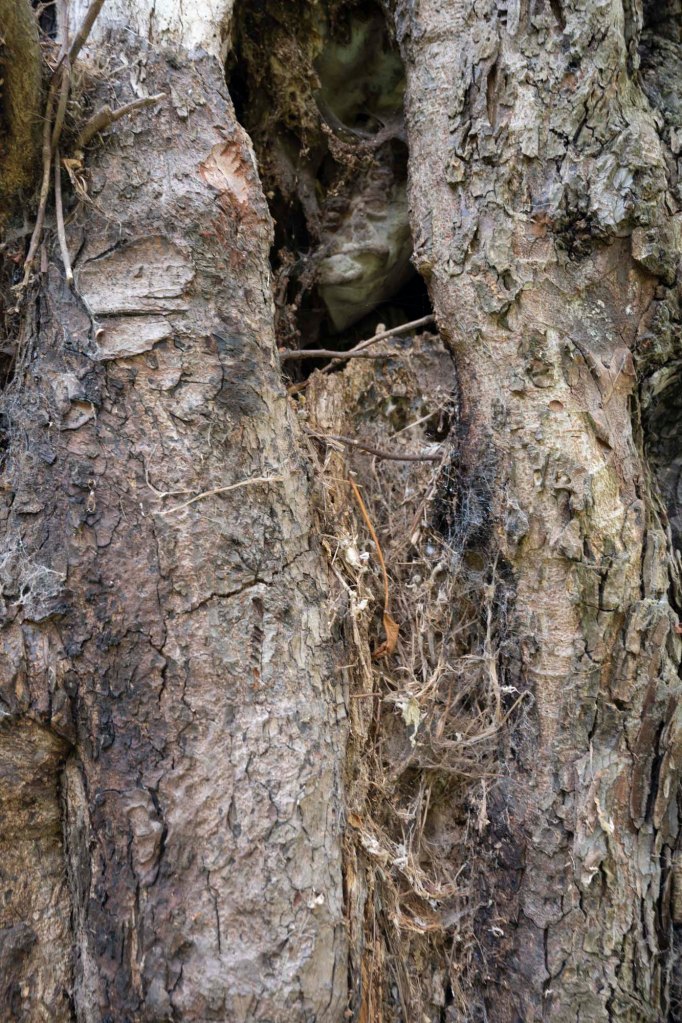
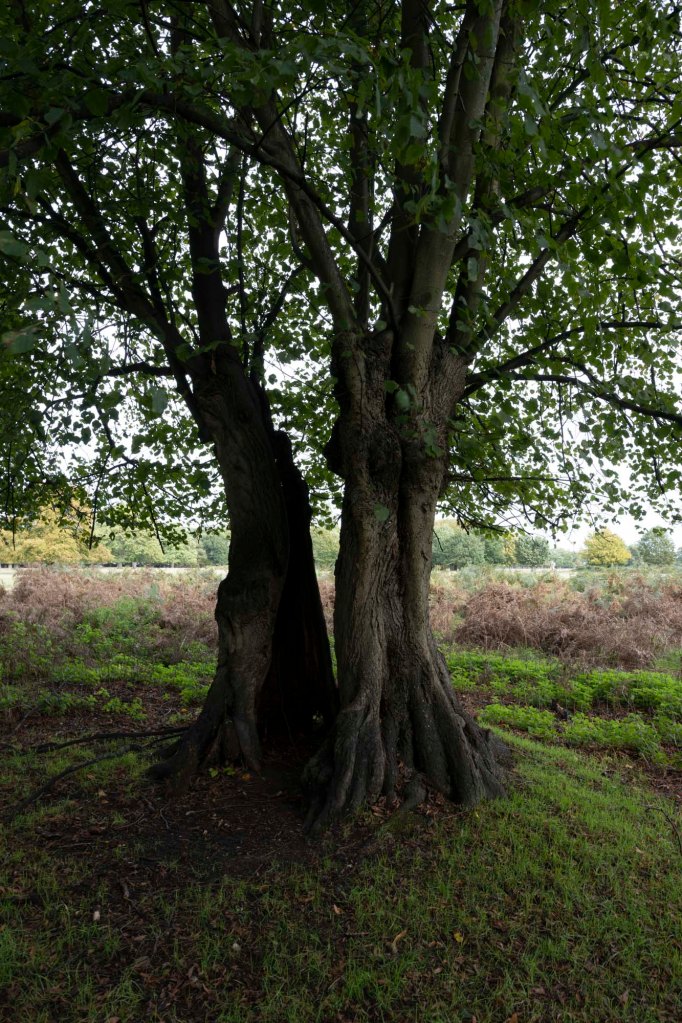
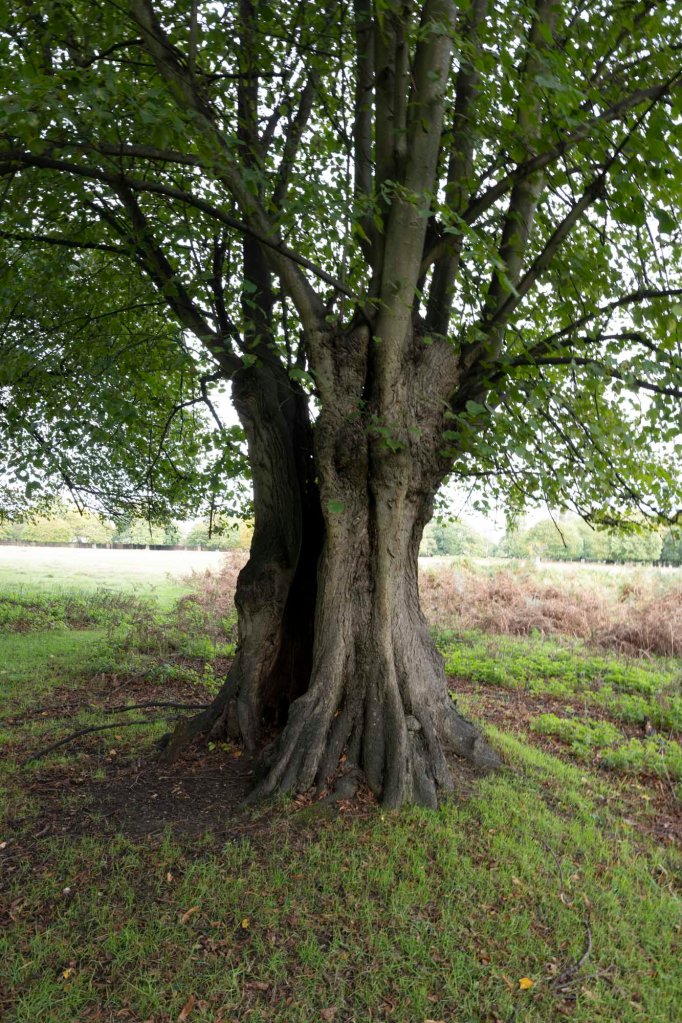
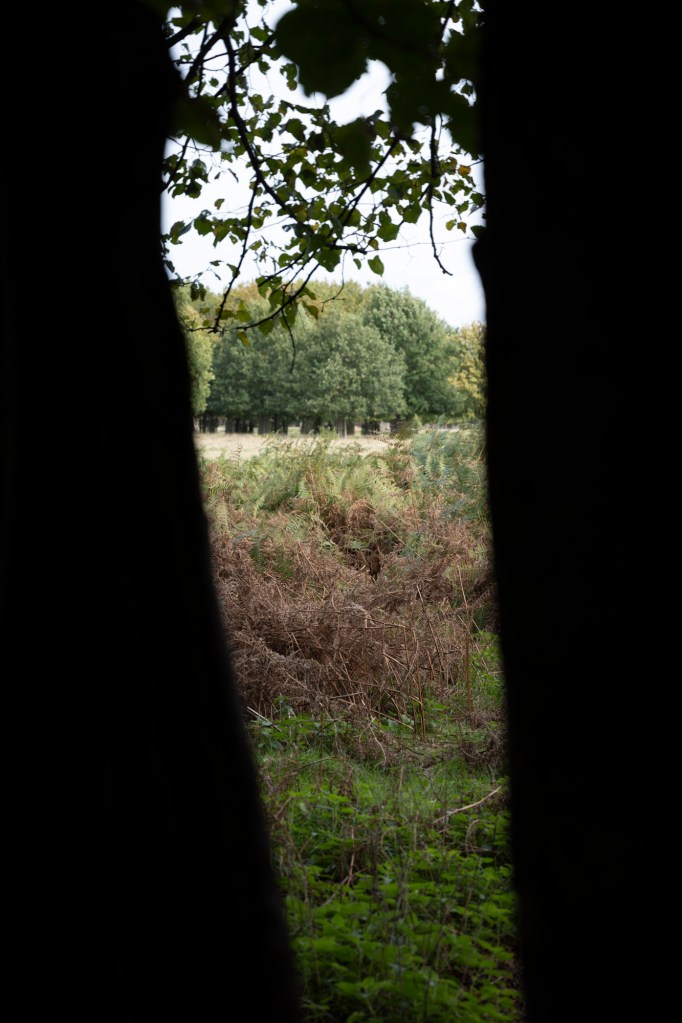
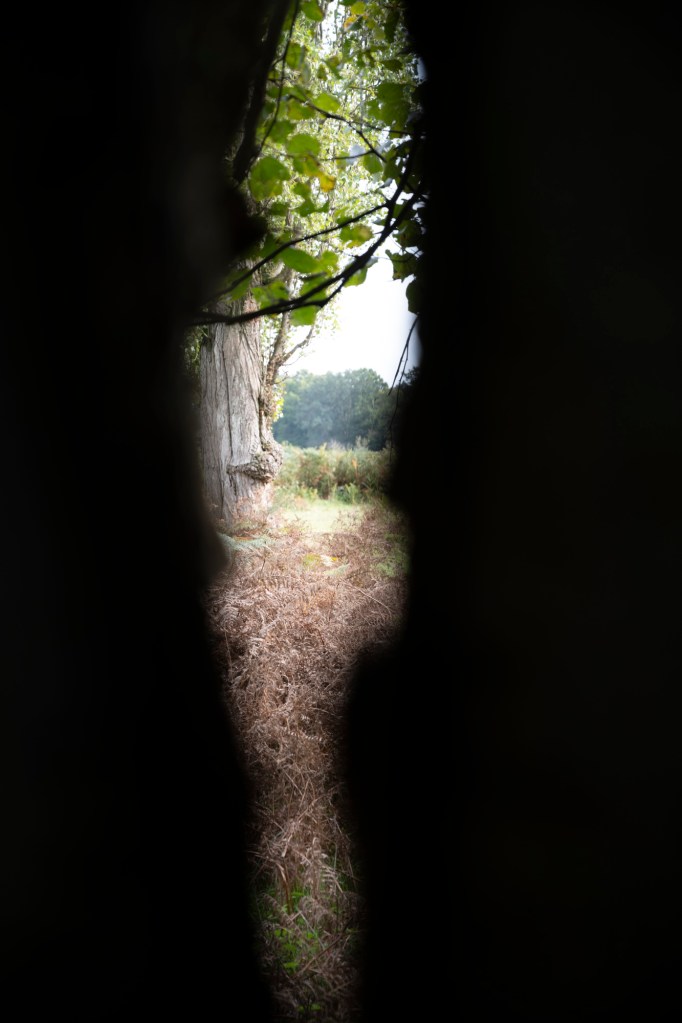
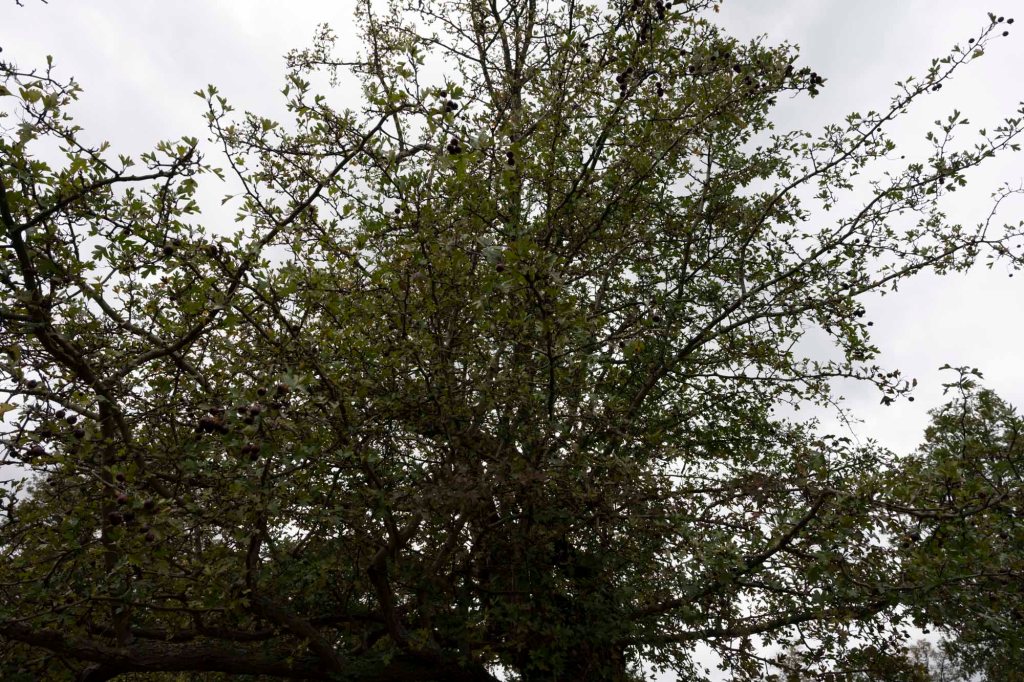
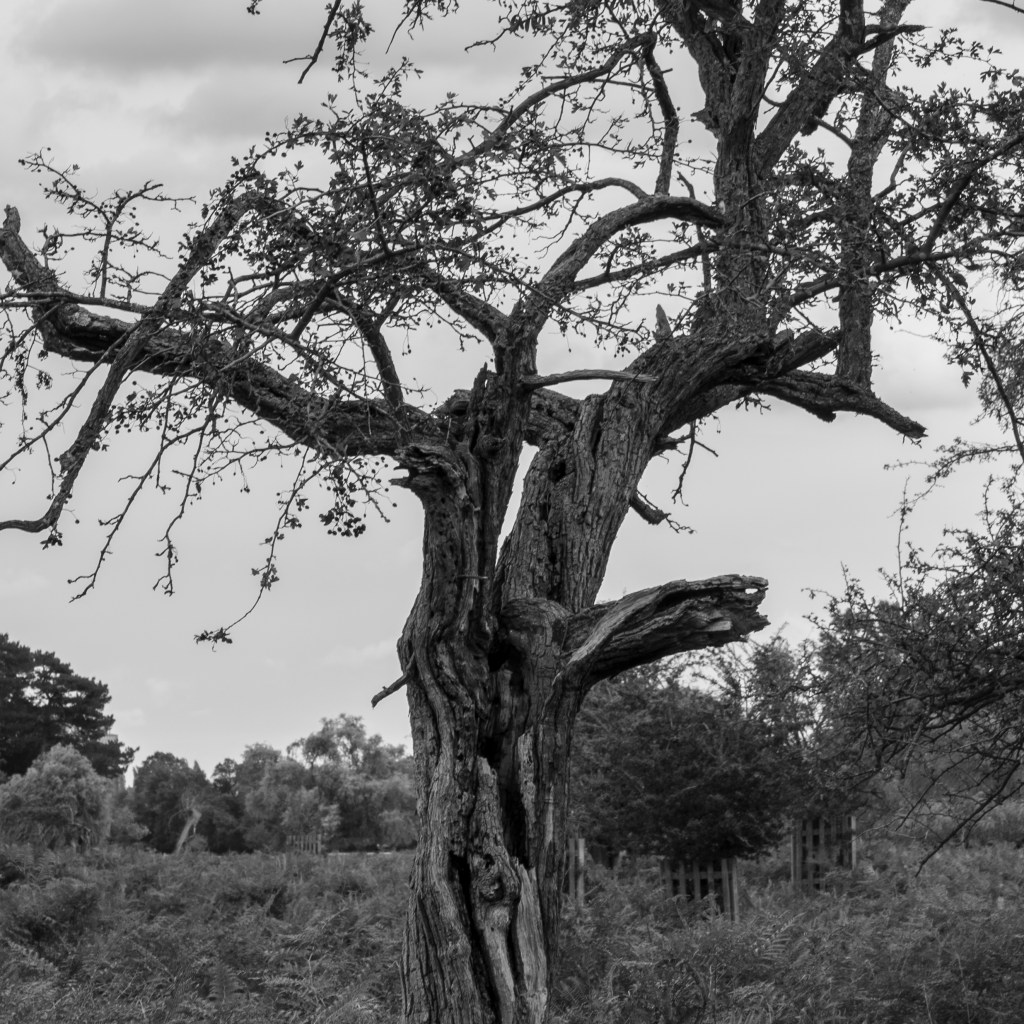
Åsa also picked up on the hole within the image. This is a particular feature of the hawthorns in Bushy Park and one that I personally find fascinating.
In relation to the concept of tree portraits, we both discussed how a tree doesn’t have a ‘front’ or ‘back’. This is something that came out of my AGM61 project, which resulted me in taking photos of trees on a 360 degree trajectory, with a shot at each 90 degree point.

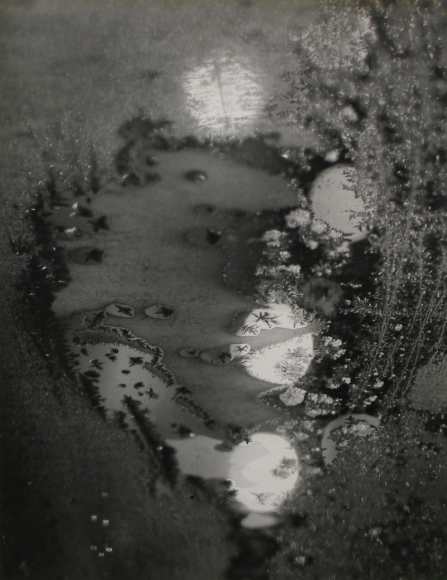
Åsa also brought my attention to a Finnish photographer, Riitta Päiväläinen.
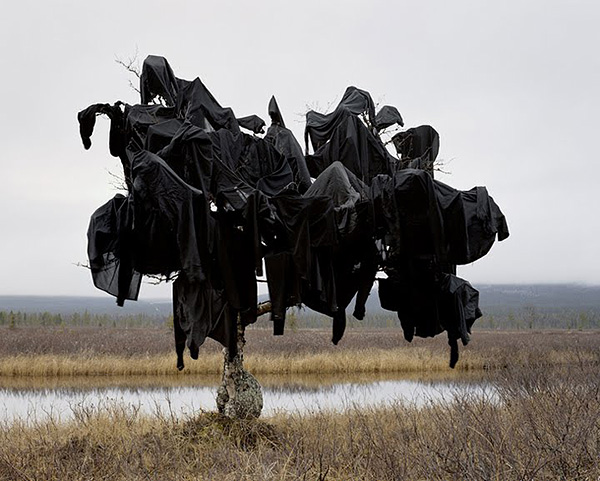
There is a very eerie aspect to her work involving trees and clothing props. I get a similar reaction when I look at the image of the hawthorn above.

Actions

The outcome of this tutorial and the result of me processing the feedback is as follows at this stage:

  • Focus on hawthorns in Bushy Park
  • Image shoots:
    • Objective shots of each tree (360)
    • Subjective shots of each tree (close ups)
    • Black & White conversion process – refine
    • What works – what doesn’t
  • Mapping the trees
  • Historical research
  • Photographer research
    • Bernd & Hilla Becher
    • Minor White
    • Riitta Päiväläinen

References

Atgetphotography.com. 2020. Minor White / Biography & Images – Atget Photography.Com / Videos Books & Quotes. [online] Available at: <https://www.atgetphotography.com/The-Photographers/Minor-White.html&gt; [Accessed 26 October 2020].
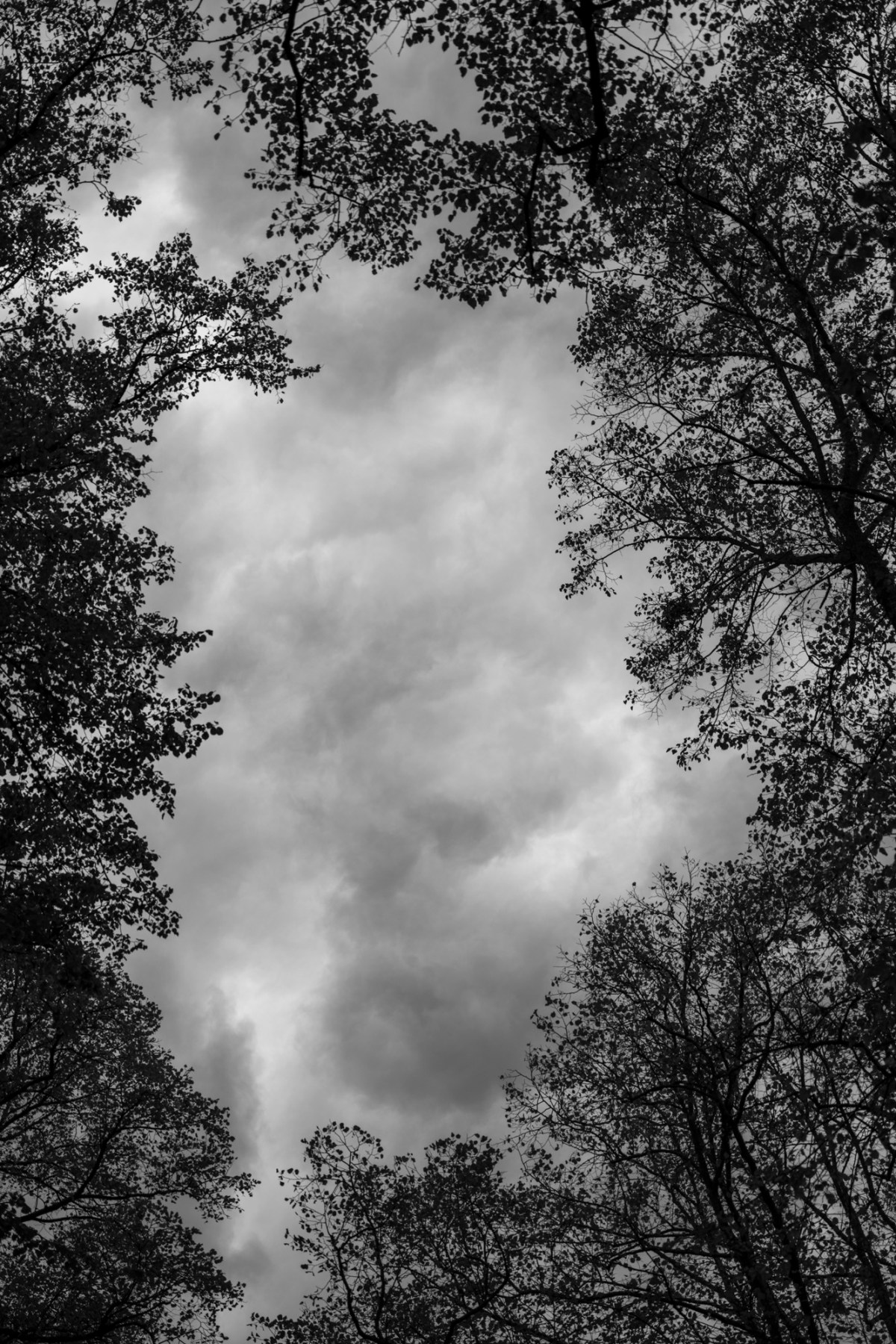
Riittapaivalainen.com. 2020. Riitta Päiväläinen. [online] Available at: <https://riittapaivalainen.com/htdocs/&gt; [Accessed 26 October 2020].
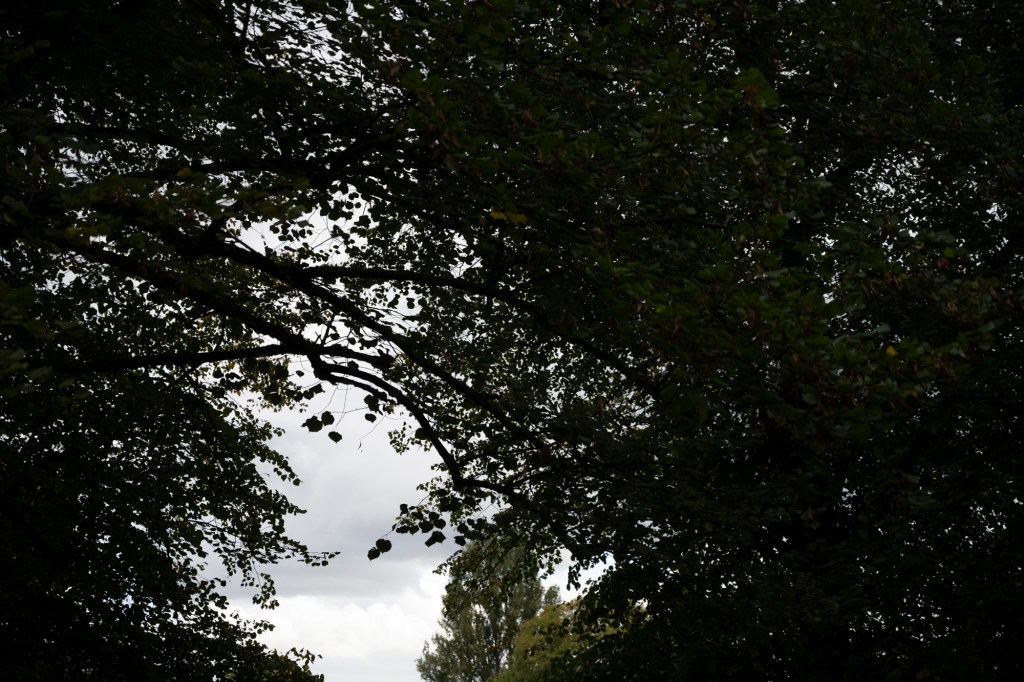
Tate. 2020. ‘Water Towers’, Bernd Becher And Hilla Becher, 1972–2009 | Tate. [online] Available at: <https://www.tate.org.uk/art/artworks/bernd-becher-and-hilla-becher-water-towers-p81238&gt; [Accessed 26 October 2020].
Categories
AGM62 Photography Research Project Stage 1 Posts

AGM62 Why Bushy Park 20 October 2020

Why London? Why Bushy Park?

This park has been a very strong influence in both my life and my photography and is very close to my heart. Every time I visit this place I realise and/or observe something new.

Bushy Park is one of London’s eight Royal Parks covering an area of 1,099 acres and is a Site of Scientific Interest.

What I realised recently is how the park is a mix of straight lines and chaos, formal and informal, cultivated and wild. When looking at the map, it appears to be a ‘blob’ of green on the outskirts of London.

While researching the history of the park, I looked at the Friends of Bushy Park website for further details. I have copied the following information for my reference in regard to this project and made notes of observations and areas for further research.

Bushy Park

Bushy Park extends over about 1,100 acres (445 hectares) of grassland to the north of Hampton Court Palace. The park measures 1.5km (nearly a mile) from north to south and 3km from east to west. There are ponds, streams and woodland gardens as well as sports pitches and a children’s playground.

Bushy Park is a Site of Special Scientific Interest (SSSI) for the rare invertebrates that live here in their habitats. This traditional deer park, with its bracken, rough grassland and plantations, is complemented by formal avenues of lime and chestnut trees.

The park has many notable features including the Diana Fountain, the Water Gardens, the large ponds, the Longford River and the Woodland Gardens.

Hunting Grounds:

Cardinal Wolsey began by enclosing farm land adjacent to the house when he took over Hampton Court and, when Henry VIII acquired the palace in 1529, the old oak fences were replaced by a high brick wall, traces of which can still be seen today.

The park was originally several distinct areas known as Hare Warren, Middle Park and Bushy Park, until the present boundaries were completed in 1620. The name “Bushy Park” was first recorded in 1604 and was probably a reference to the many hawthorn bushes. These were planted to protect the young oak trees which were being grown as timber for ships in the navy.*

In Tudor times the parks were important as hunting grounds – Henry VIII stocked them with deer and there were rabbits in abundance. After the royal palace at Richmond was destroyed by fire Hampton Court became increasingly important as a royal residence and the land now known as Bushy Park was the adjacent hunting ground. Henry, and later his daughter Elizabeth, both enjoyed riding and hunting here.

*This explains the presence of the hawthorn bushes – there are further details in Max Adam’s The Wisdom of Trees (pp. 174), which tells the ‘tree tale’ of this much-neglected small tree.

Adding Water

Further additions were made to the park in the seventeenth century. In 1622, during the reign of James I, an avenue of lime trees was planted which was to become the basis for the Chestnut Avenue.

The next monarch, Charles I, ordered a canal to be constructed to bring water to the palace gardens from the River Colne. Now known as the Longford River, this twelve-mile waterway flows through Bushy Park feeding the ponds and streams here before continuing its course to the grounds of Hampton Court Palace.

Even Oliver Cromwell, who took up residence in the palace during the Commonwealth period, enjoyed hunting in Bushy Park and arranged for the water supply to be extended to Heron and Leg of Mutton ponds to improve the fishing.

  • The waterways of Bushy Park are a tale of themselves. I met an engineer in Woodland Gardens who was trying to work out where all of these were. Apparently, Old Bert who had recorded these waterways had died and all of his paper records had been burnt.

A Grand Entrance

When Hampton Court was redesigned and extended in the reign of William and Mary, Christopher Wren planned that the lime avenue in Bushy Park should become the focus for a new grand entrance to the palace. A road was built through the park to the Lion Gate at Hampton Court and more limes and an avenue of horse chestnut trees planted.

Although Wren’s scheme for an imposing classical frontage to the palace never materialised, the unique avenue with its fountain was planted. The Diana fountain was first created for Somerset House and then moved to Hampton Court gardens before coming to Bushy.

A Park for the People

At the end of the eighteenth century the Duke of Clarence, later to become William IV, moved into Bushy House with his mistress, the celebrated actress Dora Jordan, where they brought up their family of ten illegitimate children. As Park Ranger, William used Bushy Park to boost his income and was responsible for felling many of the trees, including the Tudor oaks, and enclosing half the park for farmland.

When he became King William IV, he gave orders that there should be ‘free admission of the public… to the Park’. His wife Queen Adelaide continued to act as Park Ranger and to reside in Bushy House even after his death.

In Victorian times, when the rapidly growing population caused over-crowding in the city, the Royal Parks became important as London’s ‘lungs’ – green and peaceful places where people could stroll and picnic. Bushy became a popular place for outings on summer Sundays. Drinking water fountains were erected and coach loads of Londoners arrived for Sunday School picnics and works outings.

Chestnut Sunday

The horse chestnut trees in Chestnut Avenue bloom in the late spring. Every year, on the second Sunday in May, a celebration is held in the park known as Chestnut Sunday.

This tradition dates to Victorian times when thousands of people would flock to the park to see the ‘candles’ of chestnut blossom. Horse-drawn carriages would be driven along the avenue, bringing royalty and fashionable society to admire the trees and to be seen.

When the penny-farthing bicycle was invented, riders would meet to ride round Bushy Park – and in 1877 an American journal reported “the largest meeting of bicycle riders ever assembled” when some two thousand cyclists met at Hampton Court. With the introduction of the safety bicycle in 1885, an affordable means of transport meant that many more people could enjoy riding in Bushy Park.

World Wars

During the Great War, Canadian troops were stationed in Bushy Park and George V gave permission for Upper Lodge at Hampton Hill to become the King’s Canadian Hospital. Some areas of parkland were once again farmed, and allotments were set up at Hampton, Hampton Hill, and Teddington to help local people to grow their own food.

In the Second World War, Bushy Park was the headquarters of the US Eighth Army Air Force. It was called Camp Griffiss, after the first American USAAF officer to be killed in Europe. In 1944 General Eisenhower moved the Supreme Headquarters of the Allied Expeditionary Force (SHAEF) to Bushy Park where Operation Overlord, the invasion of Normandy, was planned.

Today the locations of the huts which formed Camp Griffiss have been recorded with plaques laid in the ground, together with a memorial plaque for USAAF personnel who served here. A flagpole and another plaque are placed at the location of Eisenhower’s office.

There are other aspects of WWII that I’ve already discovered, specifically in relation to the Water Gardens in Bushy Park. This was covered in my first NCFE Level 1 project:

jenniemeadows.wordpress.com/2015/12/03/manmadenatural/

Recent Times

In 1992 a totem pole was created by Norman Tait, a First Nation traditional carver, and presented to the park. It marks the connection between Canada and Bushy Park during World War I when a Canadian military hospital was established here. At the base of the pole is a carved Killerwhale, monarch of the sea, and at the top is an Eagle, monarch of the air.

ParkRun first began Bushy Park, in 2004. It has subsequently spread to many other parks and has become a global phenomenon.

The 2012 London Olympics cycle road race passed through Bushy Park.

Bushy Park was designated a Site of Special Scientific Interest (SSSI) for its rare invertebrate life and habitats in 2016.

References

Friends of Bushy and Home Park. 2020. [online] Available at: <https://ews-fbhp-dev.expertwebservices.co.uk/history-of-bushy-park/; [Accessed 19 October 2020].

Categories
AGM62 Photography Research Project Stage 1 Posts

AGM62 Tacita Dean Crowhurst II 2007 20 October 2020

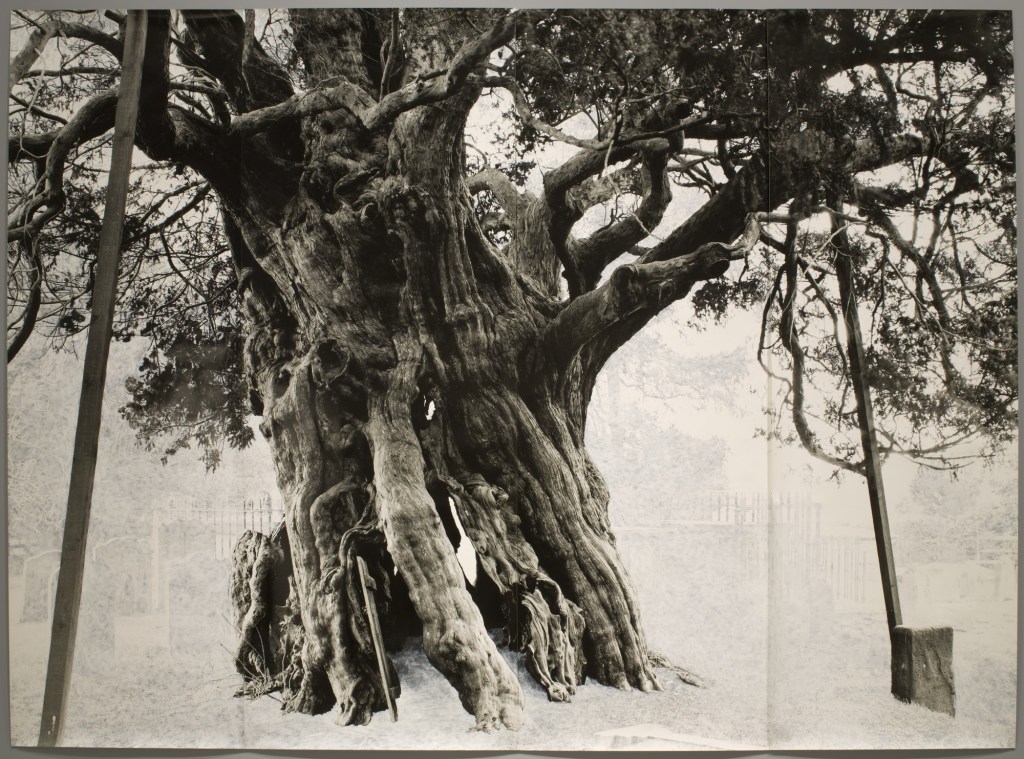
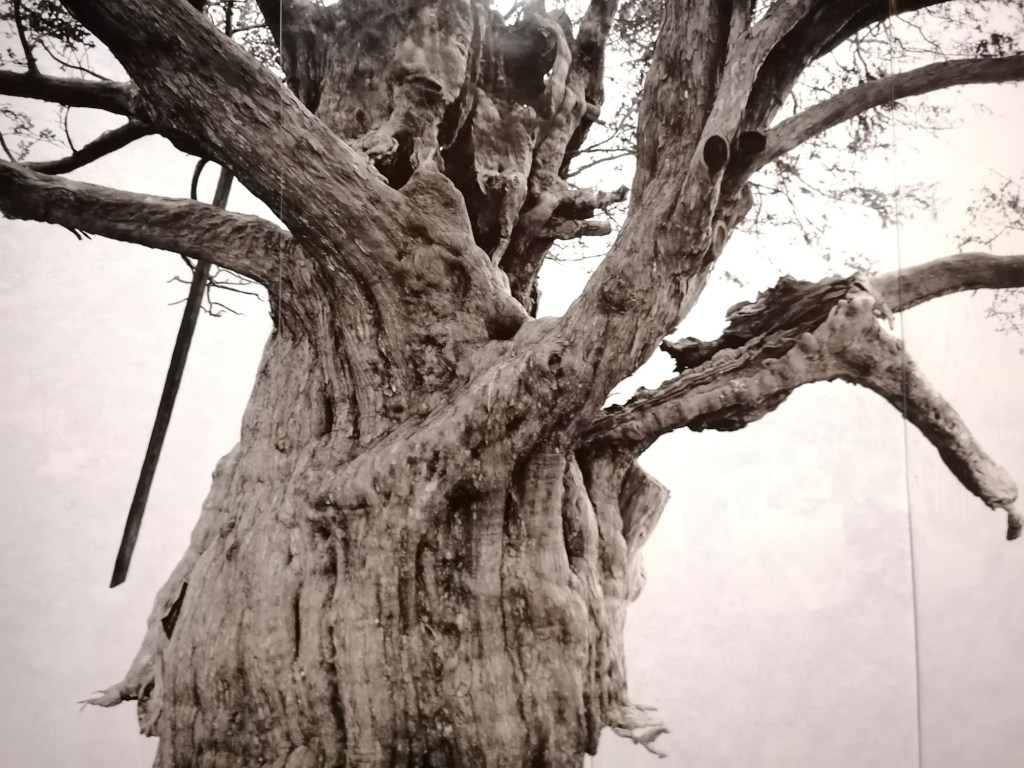
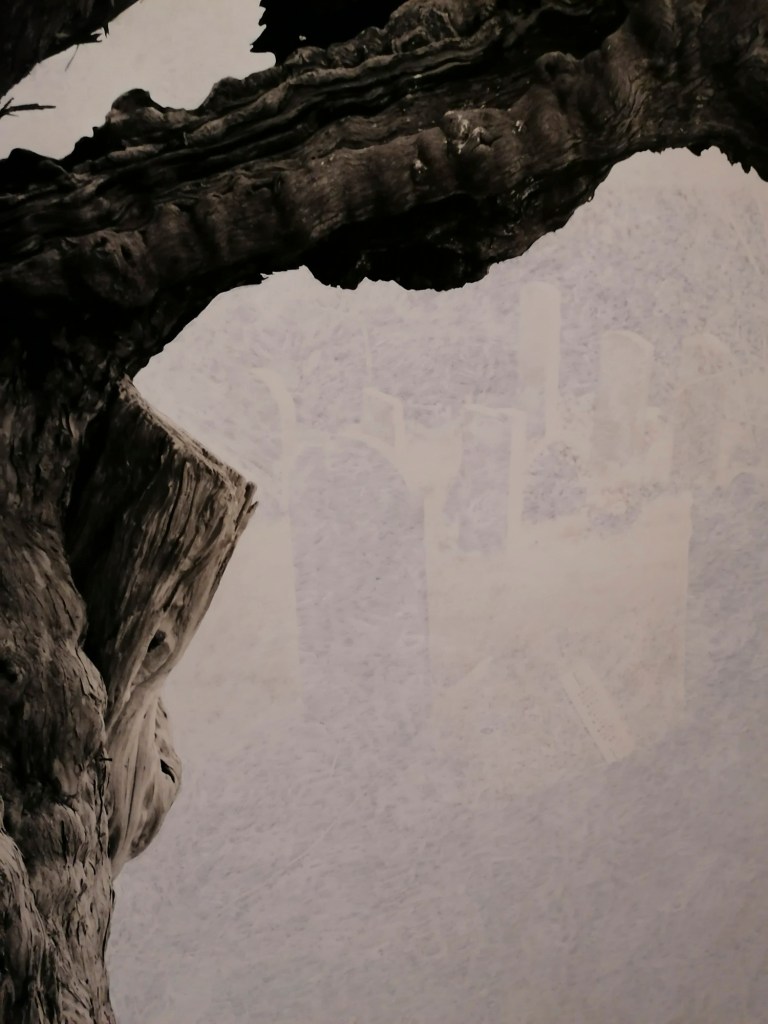
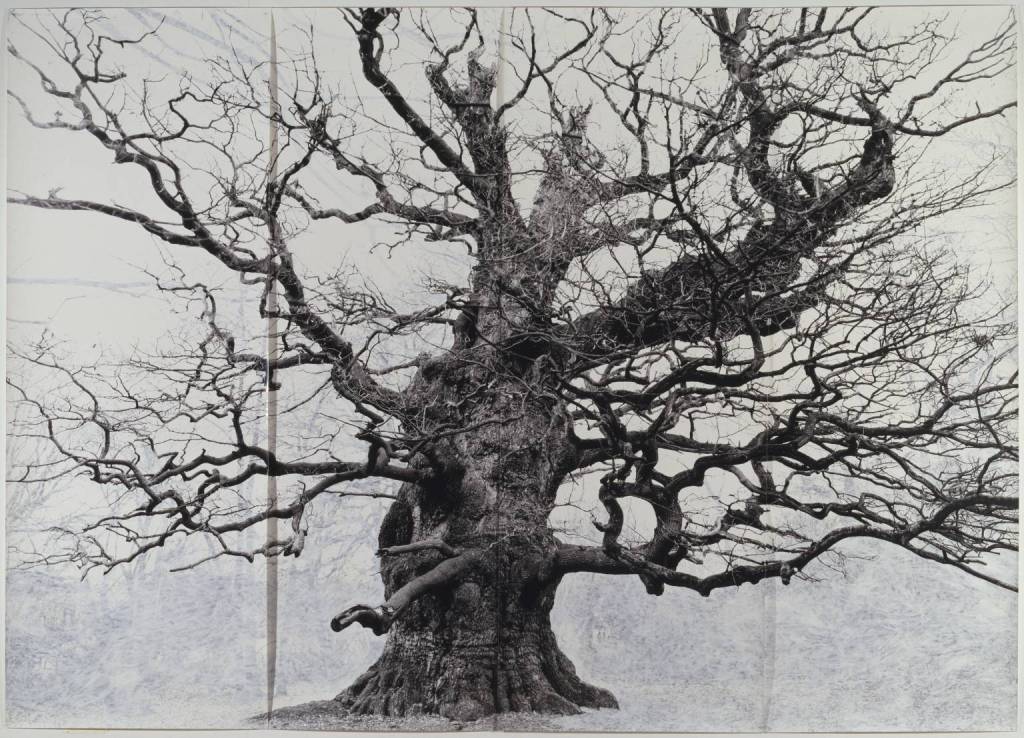
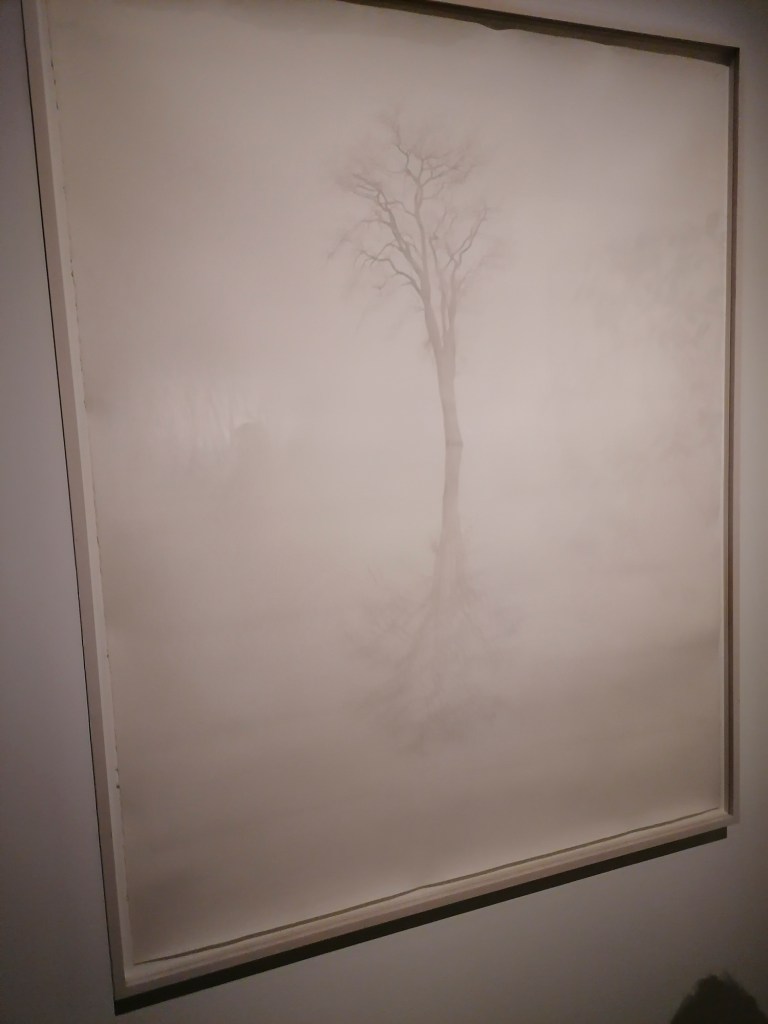
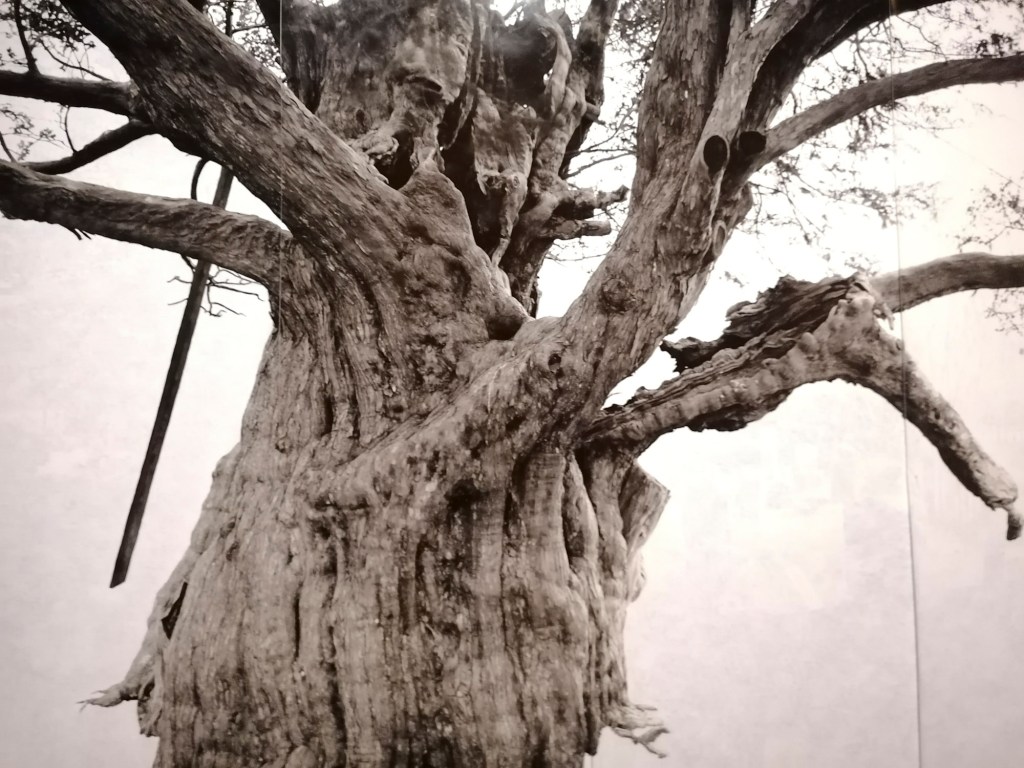
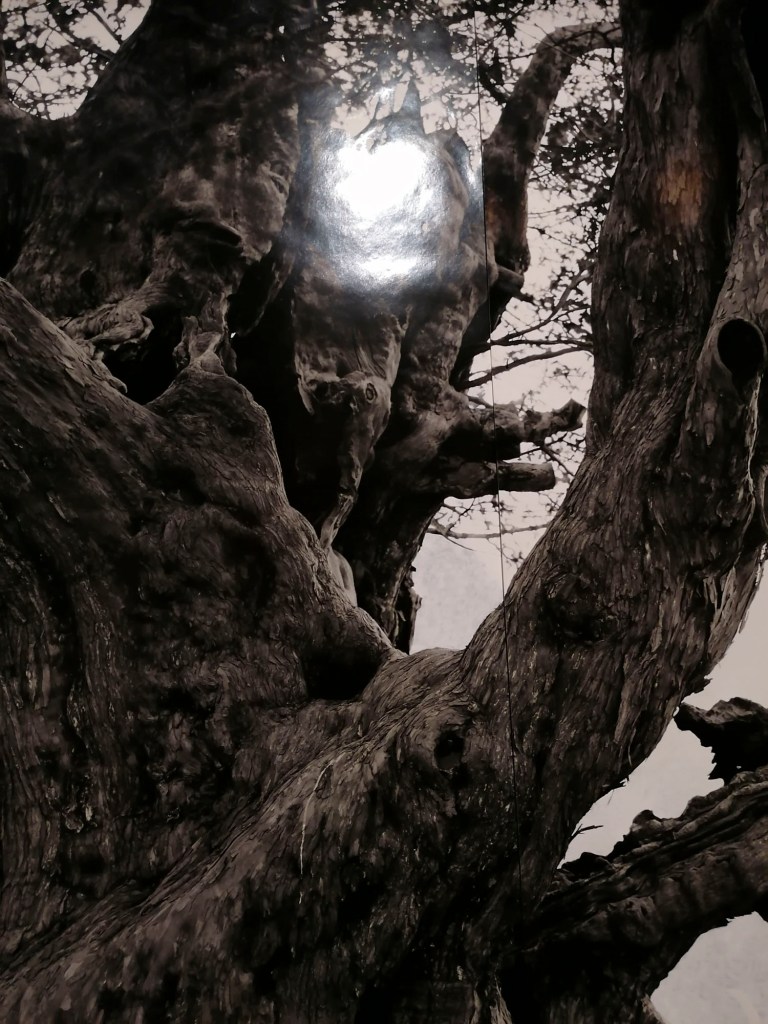
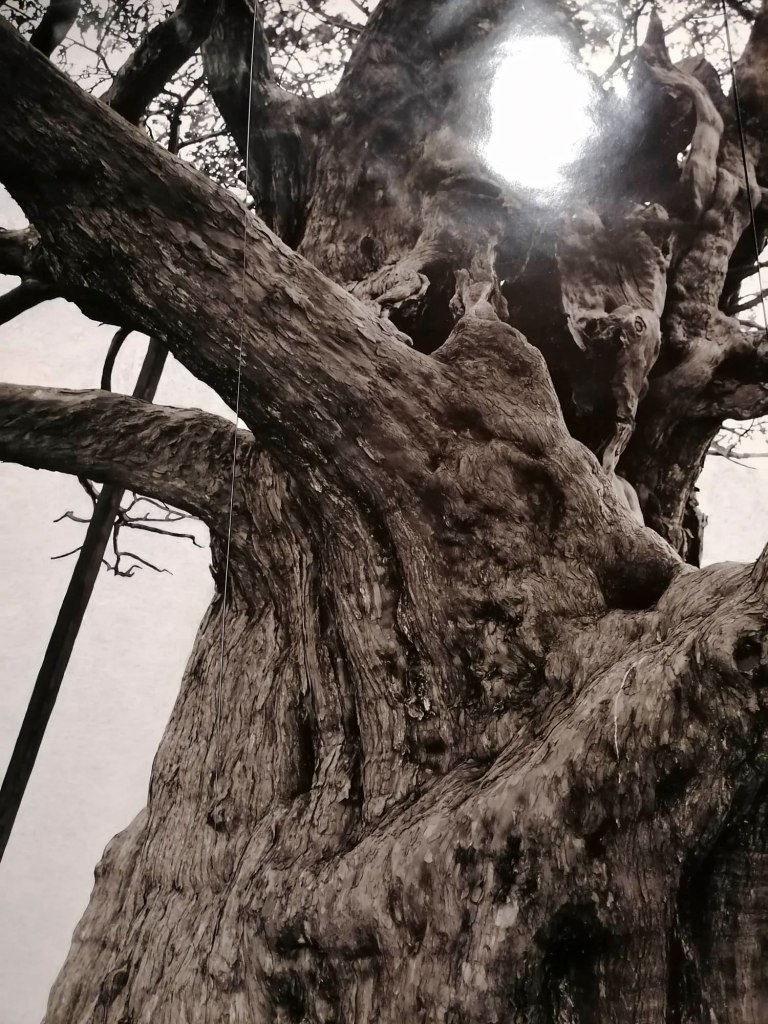
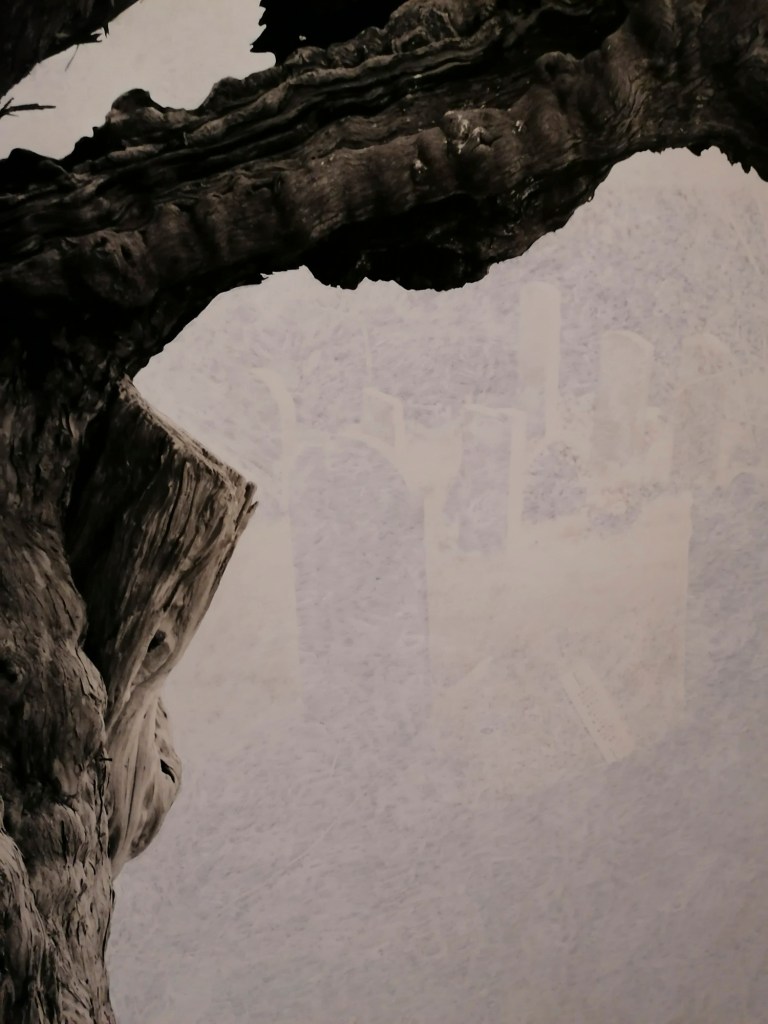
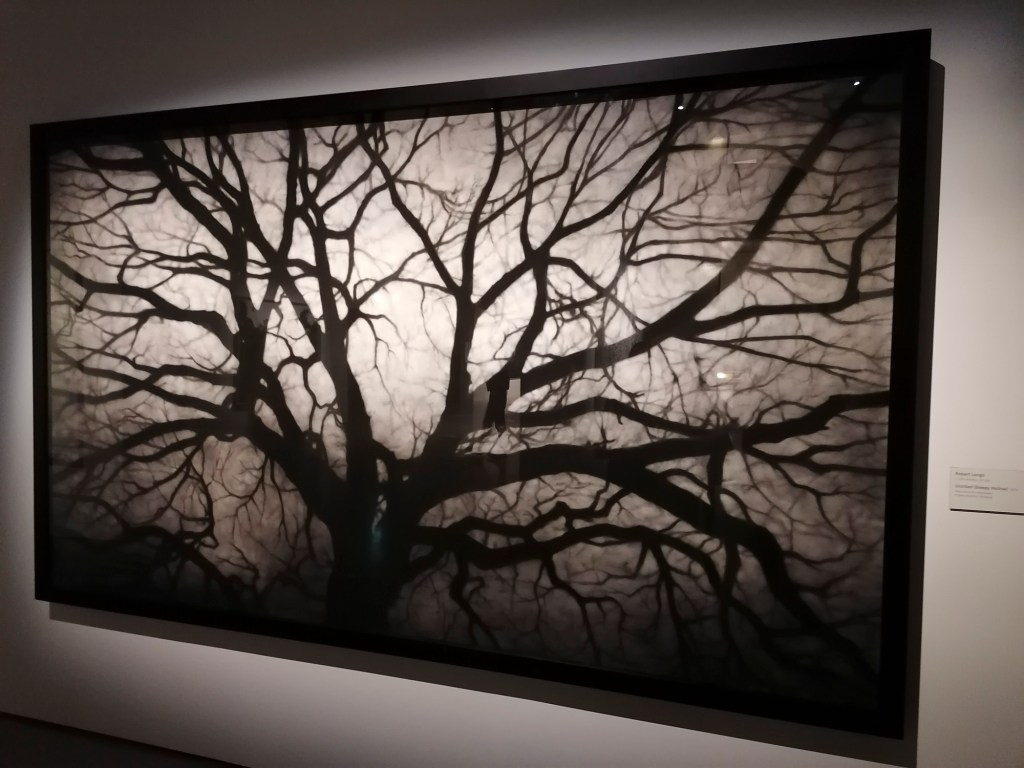
This haunting image of a yew tree is one of which I keep thinking about. The piece features a photograph of one of the oldest living trees in the UK. Called Crowhurst II (2007), it is one of a series of ‘painted trees’ that Dean began in 2005.

The piece is almost life size, printed on three pieces of photographic paper. The photograph has been painted with white gouache so the tree stands out from its surroundings. It is only when you get closer to the work that muted details of the graveyard in which the tree is situated can be seen.

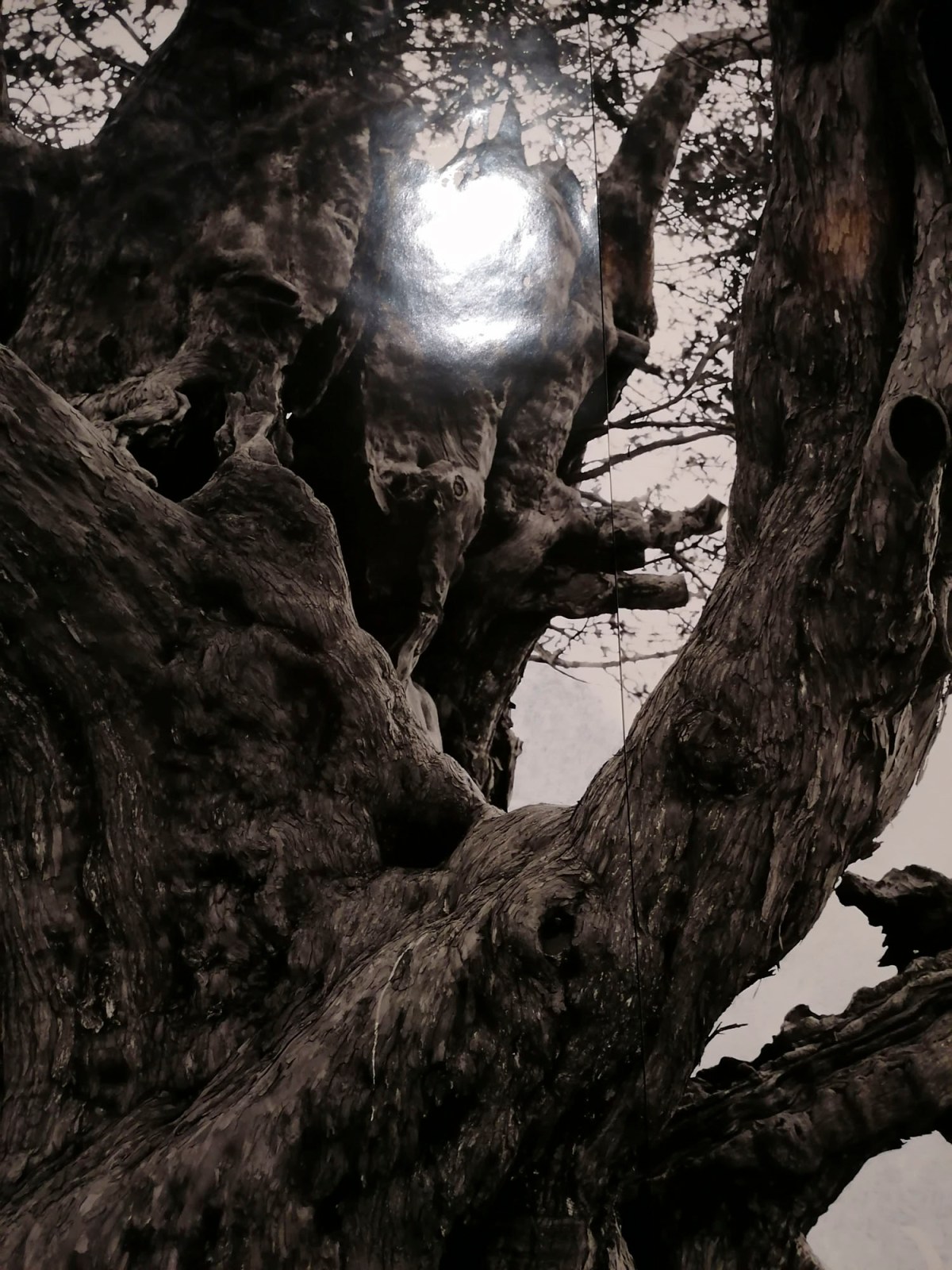
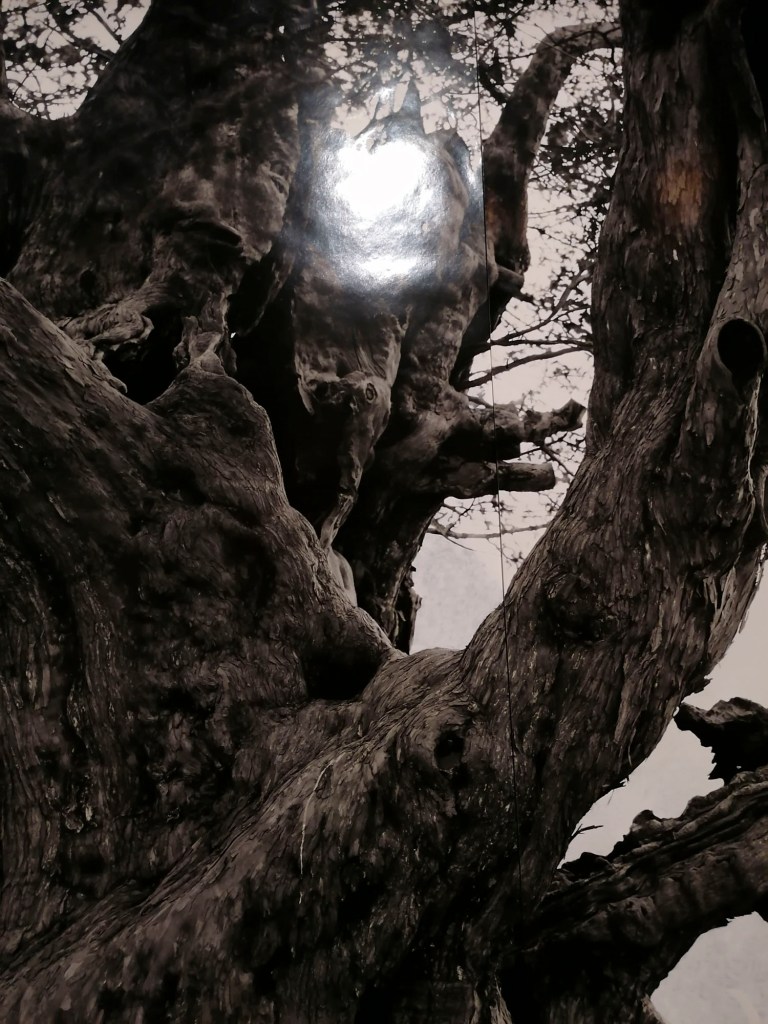
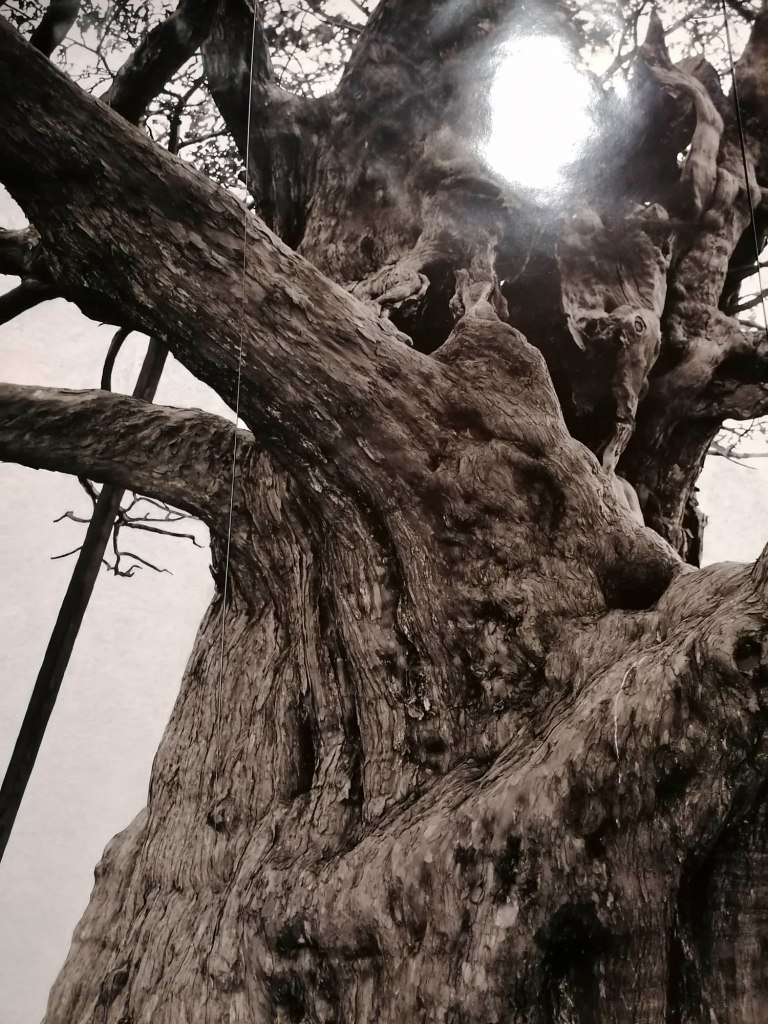
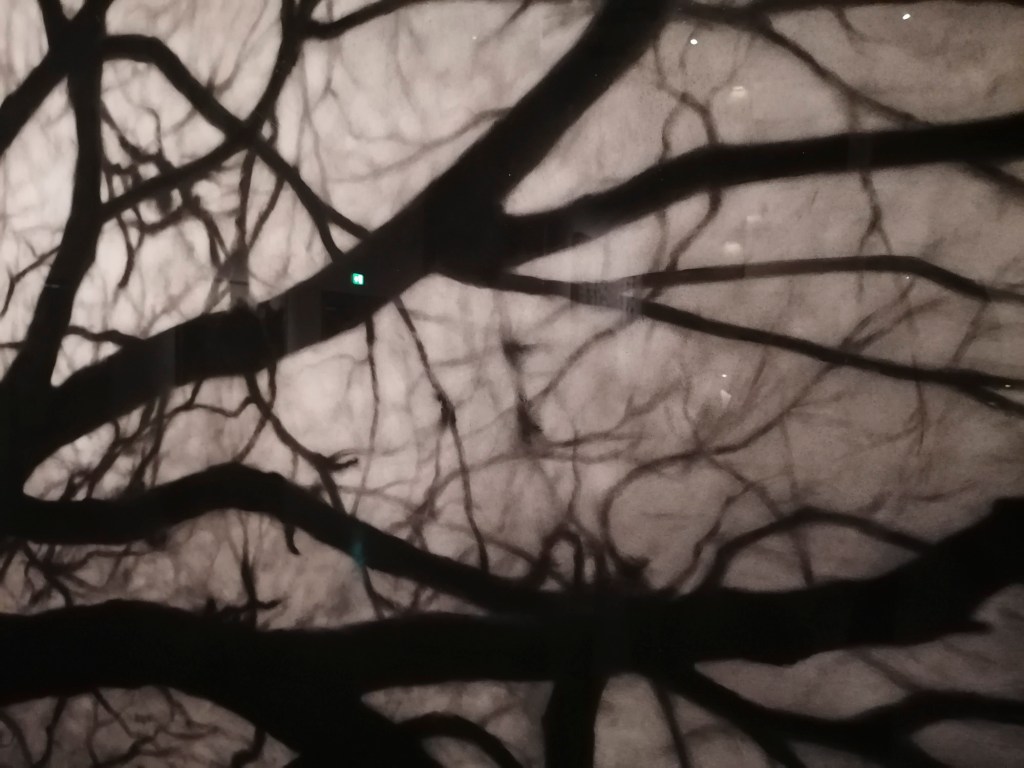
Another, probably totally unintentional effect, is that of the gallery lights reflecting on the surface of the paper.

These are smartphone images I took when at the gallery. It looks as if a full moon is appearing in the branches of the tree.

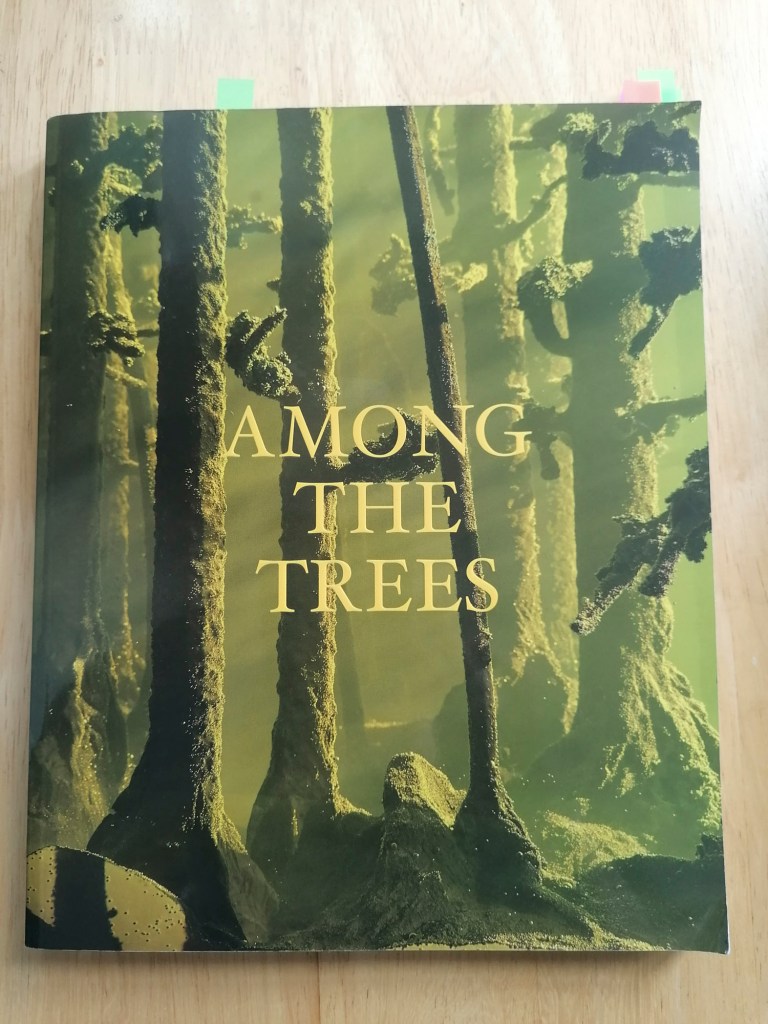
According the Among The Trees brochure, Dean was:

‘Prompted by her discovery of a collection of postcards of France’s forest of Fontainebleau while travelling in Japan. Dean began researching the oldest living trees in the UK. One, an 800-year old oak, stood not far from her childhood home in Kent. Another, the yew pictured above, shared its name with Donald Crowhurst, an ill-fated amateur sailor who entered a round-the-world yacht race in 1968, never to return.’

(Among The Trees. 2020 pp. 148)

Majesty 2006 Tacita Dean born 1965 Presented by Tate Members 2008 http://www.tate.org.uk/art/work/T12805

When digging further into Dean’s tree images, I came across this background information and quote on the Tate website:

‘Dean’s methodology is a combination of idea-driven research with an openness to chance, accident, coincidence and poetic associations which she allows to direct her processes. She has explained what drew her to ‘old and deformed trees’ in an interview with the novelist Jeffrey Eugenides:

I made a photograph for an edition for October magazine recently called Fontainebleau Postcard, and I had to phone them up to check the title, and it reminded me that I had found all these old postcards of The Forest of Fontainebleau when I was in Kitakyushu in Japan, and I remember thinking that’s so strange, why would they have so many postcards of Fontainebleau? And then I went onto the internet and I looked up the Forest of Fontainebleau, which lead me to the famous oak of Fontainebleau, which in turn led me to look up old oak trees and then the oldest of trees in England, the yew tree. Before I knew it, the tiny village where I grew up came up as the place where there once was a 1400-year old yew tree. I always need that tiny thread to get myself going.’

(Quoted in Jeffrey Eugenides, ‘Tacita Dean’, Bomb 95, spring 2006, http://www.bombsite.com/issues/95/articles/2801

(‘Majesty’, Tacita Dean, 2006 | Tate, 2020)

Dean’s methodology is similar to my own – find a thread and continue following.

The post also features information on the previous work of Dean’s that influenced these images:

‘In 2005, Dean created a series of Deformed Trees (reproduced Vischer and Friedli, pp.101–3), painting over the background, and sometimes also the foreground, of old black and white postcards depicting trees. The postcards came from a collection she had been acquiring from fleamarkets all over the world since the mid 1990s. The application of white onto a darker ground has its origin in Dean’s work with a series of drawings on blackboards initiated while she was a student at the Slade School of Fine Art in London (MA 1990–2). Her work Sixteen Blackboards – a grid of sixteen square photographs documenting the progression of imagery, including drawing, writing, collage and rubbing out on a single black panel (reproduced Vischer and Friedli, pp.56–65) – featured in the Slade’s 1992 postgraduate exhibition. Elements of this, developed further by such works as The Roaring Forties: Seven Boards in Seven Days 1997 (T07613) – a series of drawings in white chalk on seven actual blackboards – are the precursors of Majesty and the group of photographs to which it belongs. The large areas of white overpainting on the photographs echo the patches of white left on the blackboards after rubbing out the drawings and text inscribed with chalk.’

(‘Majesty’, Tacita Dean, 2006 | Tate, 2020)

References

Among The Trees. (2020). London: Hayward Gallery Publishing

Pointdironie.com. 2020. Le Point D’ironie – N°36 Tacita Dean. [online] Available at: <http://www.pointdironie.com/in/36/dean_en.php&gt; [Accessed 23 November 2020].

Tate. 2020. ‘Majesty’, Tacita Dean, 2006 | Tate. [online] Available at: <https://www.tate.org.uk/art/artworks/dean-majesty-t12805&gt; [Accessed 20 October 2020].

Categories
AGM62 Photography Research Project Stage 1 Posts

AGM62 Myoung Ho Lee 19 October 2020

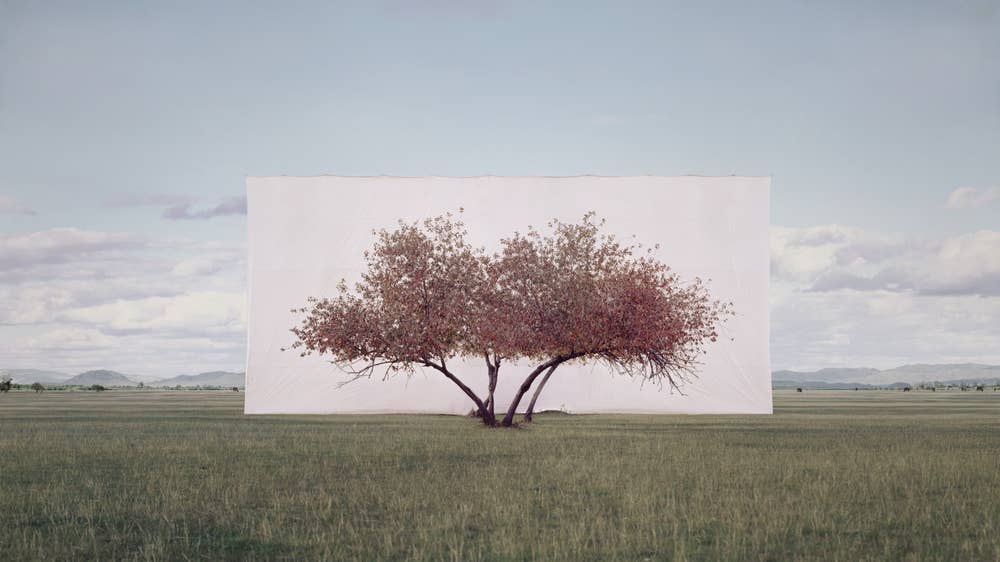
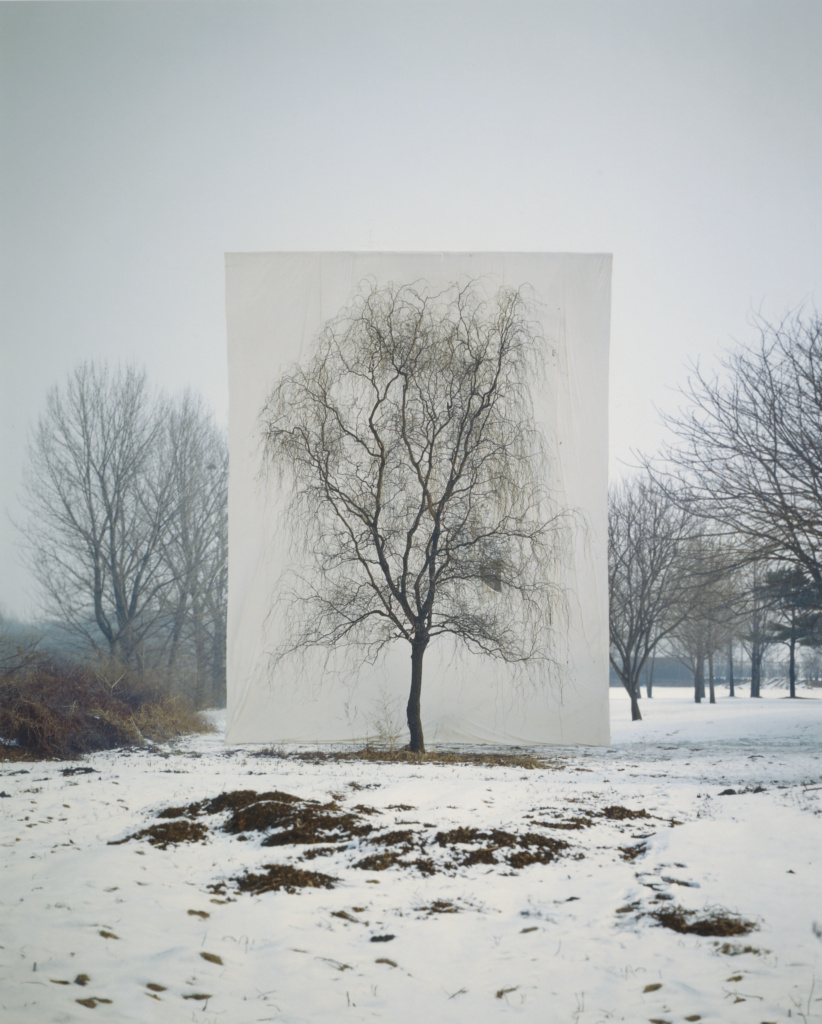
While reading David Campany’s recently published book, On Photographs, I came across a pertinent section in connection with trees and photography. Using the series entitled ‘Tree’ by the South Korean Photographer Myoung Ho Lee and one of the images as an example, Campany states that the series can be seen as:

‘A meditation upon the artificial terms and conventions by which photographic images can become knowledge.’

(Campany, D. 2020 pp. 116)

Figure 1: Myoung Ho Lee, Tree #3, 2006 – From The Series ‘Tree’, 2006-2012

Myong Ho Lee erected a giant white backdrop which Campany describes as:

‘Turning space into a stage upon which the tree presents itself (or performs itself ) for the camera. The framing is wide, allowing us to see not just the isolated tree but also the whole drama of its isolation.’

(Campany, D. 2020 pp. 116)

I had also seen another of Myoung Ho Lee’s Tree series at the Among The Trees exhibition when I visited back in September 2020.

Figure 1: Myoung Ho Lee, Tree #2, 2012 – From The Series ‘Tree’, 2006-2012

In the exhibition’s accompanying brochure, Myoung Ho Lee asserts:

‘It’s as if the tree unites all: the ground, the sky and man in between. In East Asian philosophy the universe breaks down into three parts: Chun-Ji-In. Chun means the sky, Ji means the ground and In means human. Since a tree connects all three, I feel very much that a tree is like a universe.’

(Myong Ho Lee. 2020 pp. 106)

The brochure also gave a brief background into Myong Ho Lee’s tree photography, which resonated with my own passion for this subject. As mentioned in his Artist Statement, Myoung Ho Lee:

‘Began photographing trees because they are ‘something you see everyday, but we often overlook them; we forget their value and just pass by.’ Since 2004 he has focused attention on individual trees in the landscape by treating them like studio portraits, dissociating them from their immediate context and spotlighting their true shapes and forms.’

(Rugoff, R, 2020. pp 155)

The statement continues to describe Myoung Ho Lee’s practice motivation:

‘Lee selects his subjects for their personalities and patiently observes them through different seasons and at varying times of the day before deciding how to portray them.’

(Rugoff, R, 2020. pp 155

Next, the method:

‘In a complex performance-like process involving heavy machinery and skilled production crews, he isolates a chosen tree from its background by installing an expanse of white canvas behind it. Though evidence of this elaborate mechanical intervention is removed during retouching, the backdrop retains traces of the hoisting operation.’

(Rugoff, R, 2020. pp 155

The method results with the image of the tree being framed ‘naturally’ by the tree’s actual habitat.

What I found interesting is comparing the way in which Campany uses Lee’s images of trees in relation to photography to Lee’s motivations. Lee is portraying trees in particular way (philosophically, sensually and metaphorically), while Campany is taking a more literal approach.

Campany states that:

‘Being a medium of specifics means photography is not well suited to generalities. A photograph can record the uniqueness of an object but it cannot designate the general category to which it might belong. What makes it useful in compiling an inventory makes it quite useless in defining the group.’

(Campany, D. 2020 pp. 116)

Campany continues with his stance in putting forward the example of images found in books to be used for identifying plants. Campany purports that although photography can record a specimen, but not the species, as each individual specimen is a variation of that species. Campany states that botanical identification is better served by drawing than by photography as:

‘The skill of a botanical illustrator is to look at several specimens and then produce an average. The average does not exist in reality but it is useful to have it.’

(Campany, D, 2020 pp. 116)

Campany takes his observations further by stating that:

‘Photographs of specimens are, of course, extremely useful in their own way. They show not the average or the ideal but the actuality. A photograph of a plant might be able to show an instance of mutation by which a deviation is made from the species average. It might be able to show the specific effects of the environment on that particular specimen.’

(Campany, D, 2020 pp. 116)

The most pertinent comment that Campany makes in relation to choosing Lee’s work is:

‘To ease study, a specimen is best isolated from its surroundings.’

(Campany, D, 2020 pp. 116)

But the point of Lee’s work is not to make study of a particular specimen easier through isolation – it is to make an individual tree ‘visible’ through isolation. It also is make the viewer contemplate and mediate on the concept of ‘tree’ as a single entity and not just part of the landscape.

I also questioned my own motivations for this project when comparing these two viewpoints. I realised that am not looking to create ‘literal’ interpretations of particular individual trees within Bushy Park. Although I have spent the past seven years taking photographs of many of the trees within the park, I’m not seeking the perfect ‘tree’ picture. There is more to consider about the ecology of this managed environment and how the trees are part of it. Also, how trees and their ecology are portrayed artistically within photography.

References

Campany, D. (2020). On Photographs. London: Thames & Hudson Ltd.

Rugoff, R., Among The Trees. (2020). London: Hayward Gallery Publishing.

Categories
AGM62 Photography Research Project Stage 1 Posts

AGM62 Bushy Park 16 October 2020

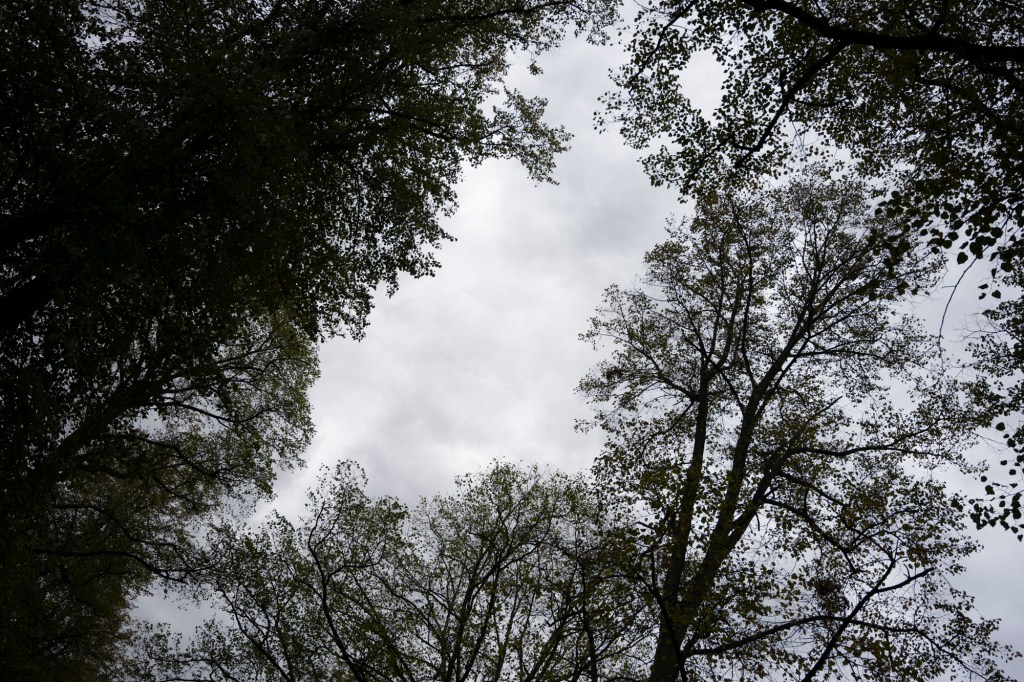
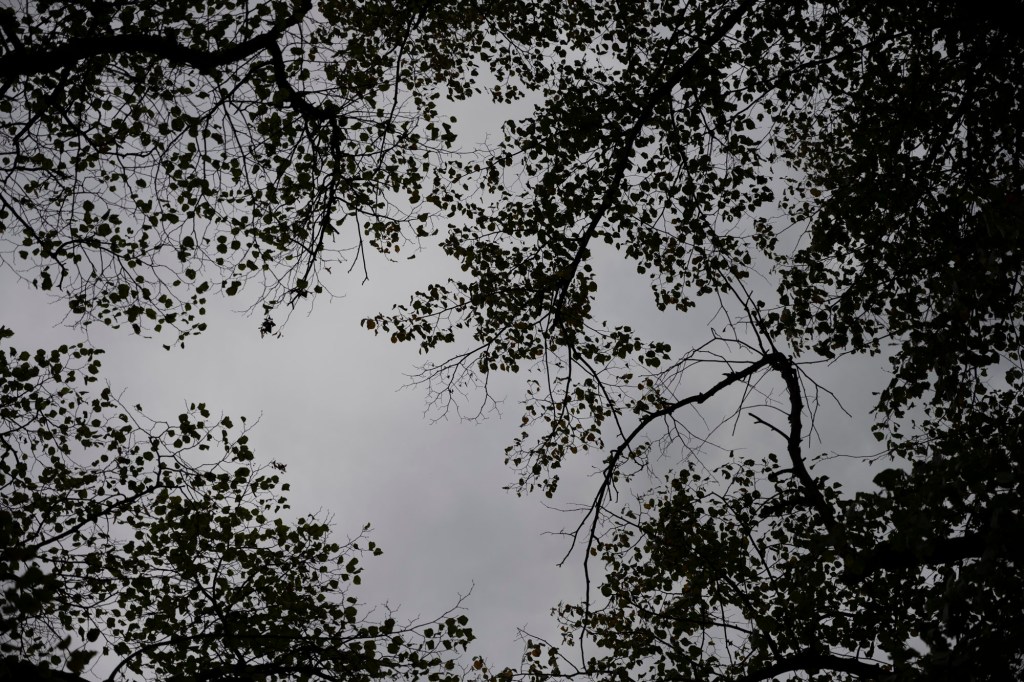
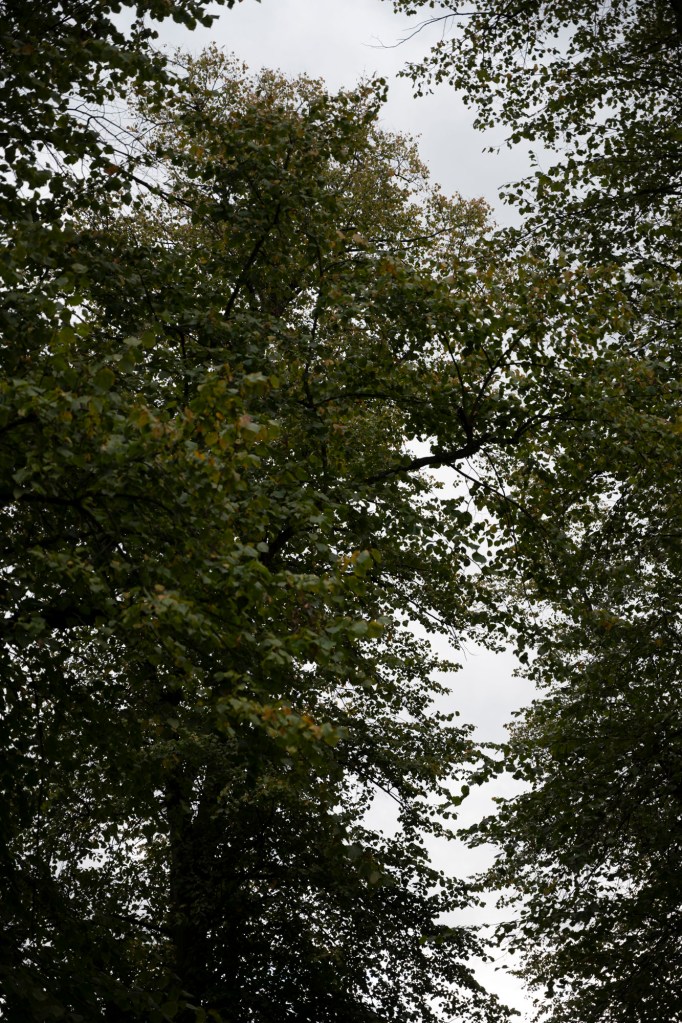
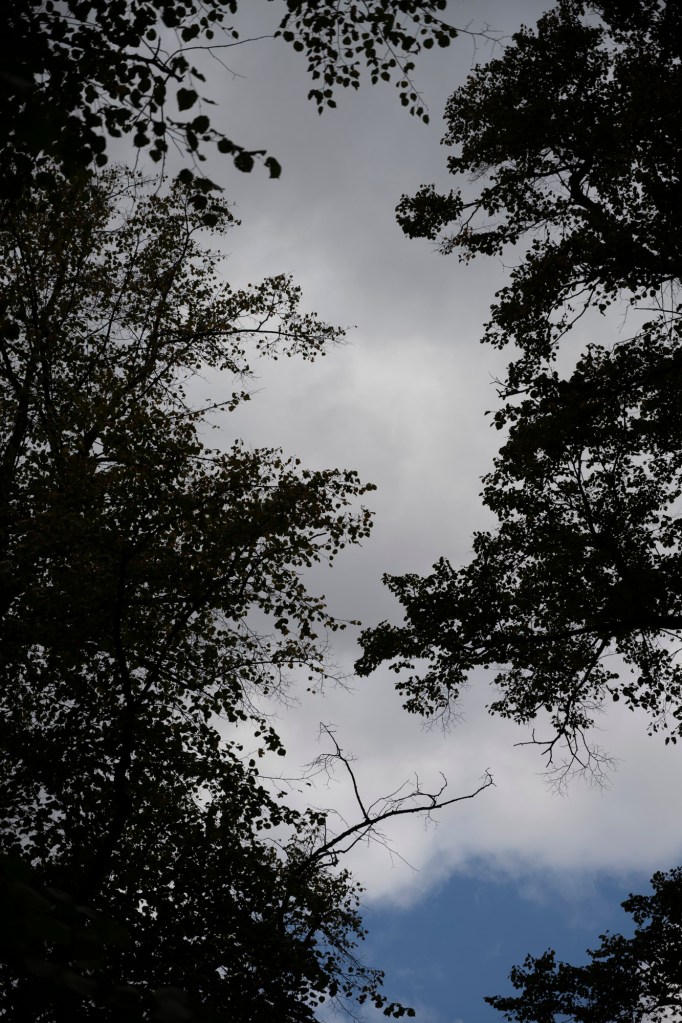
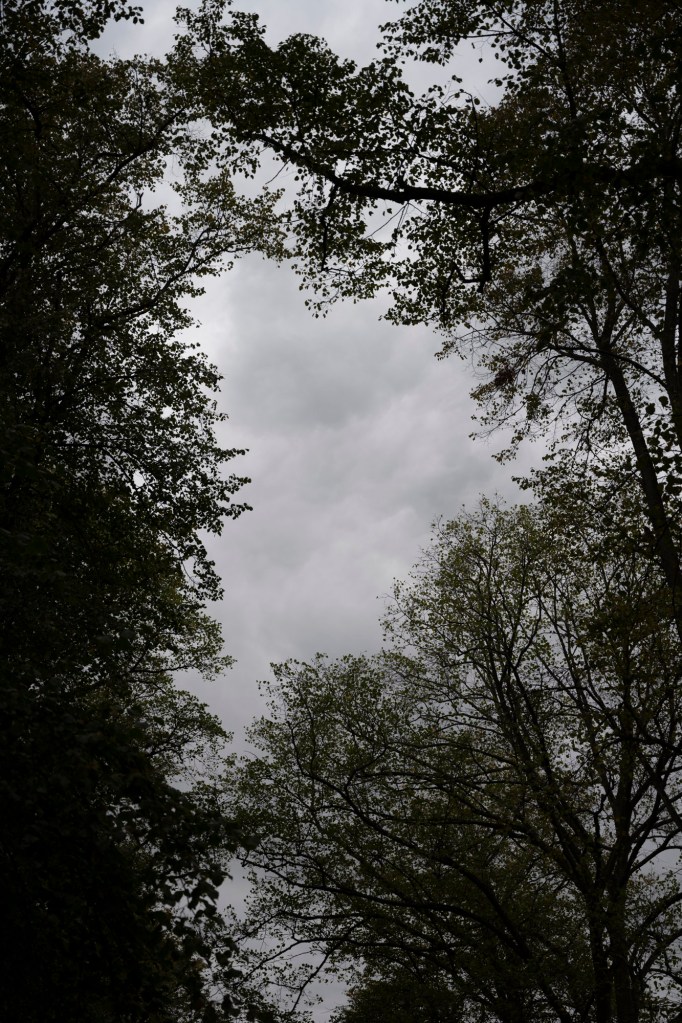
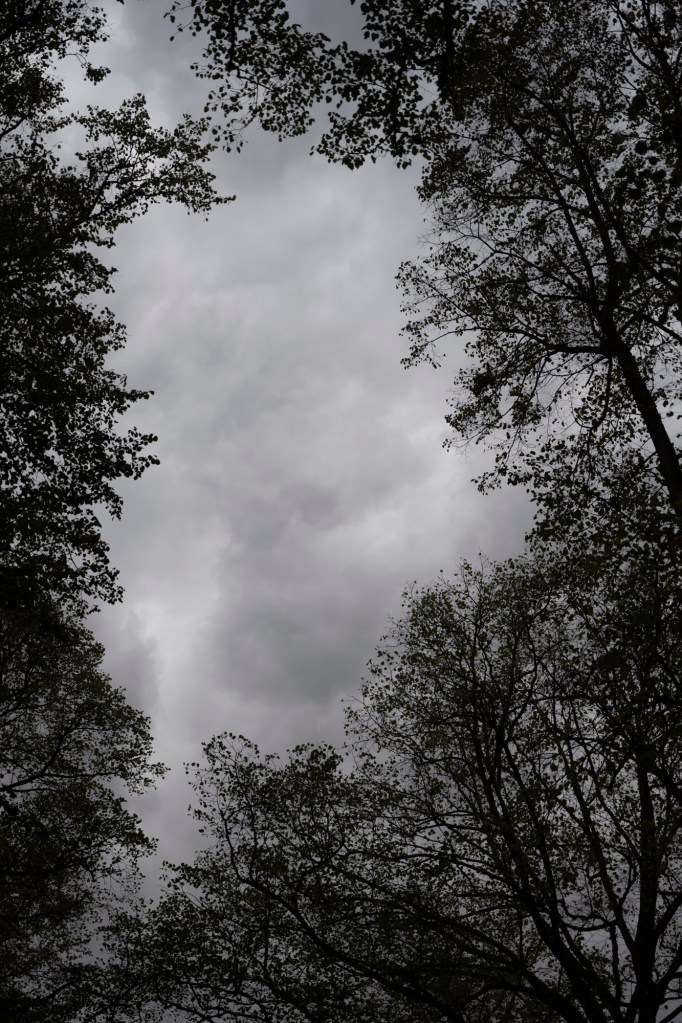
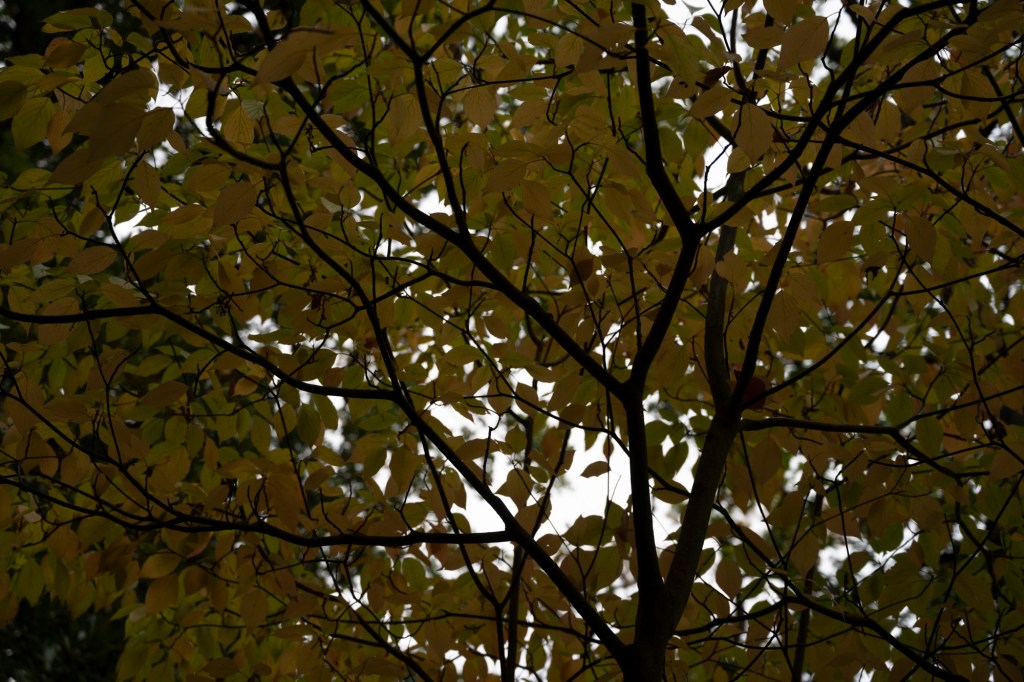
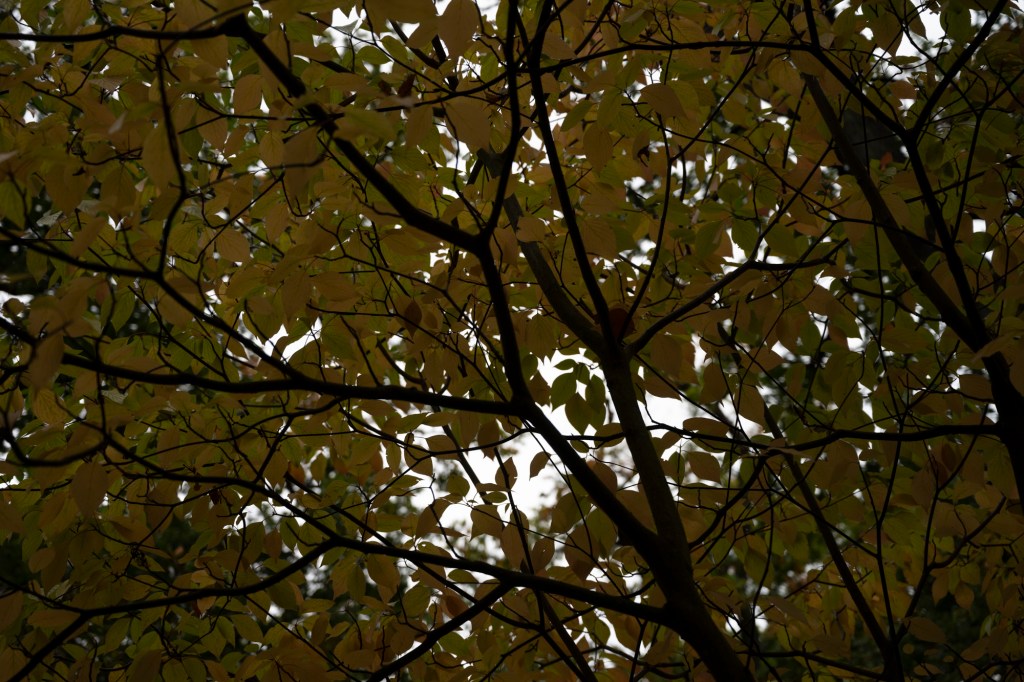
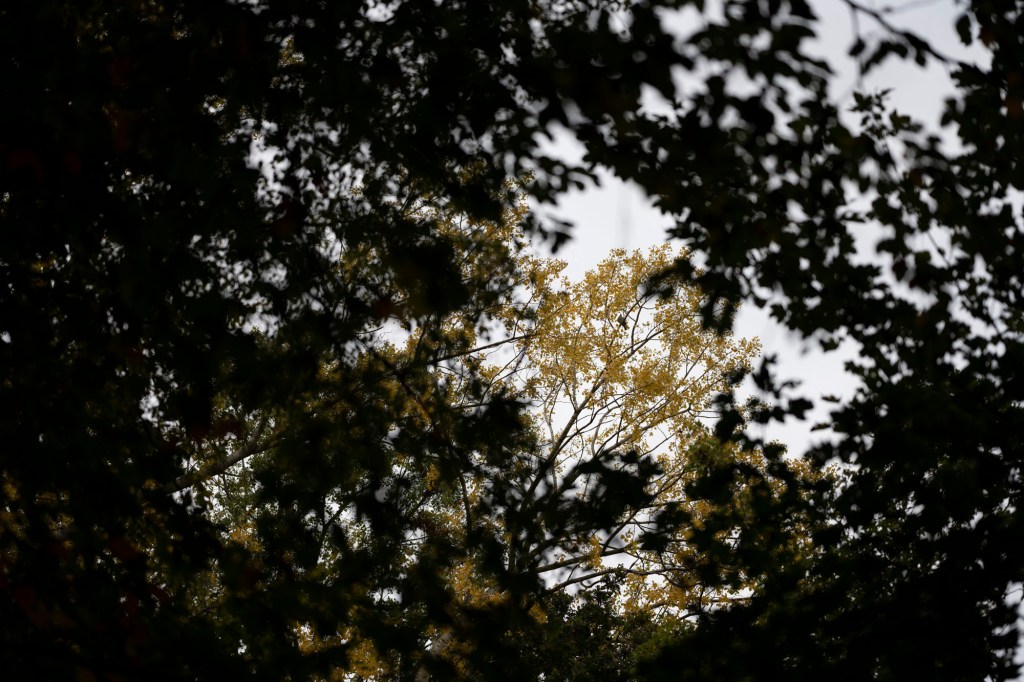
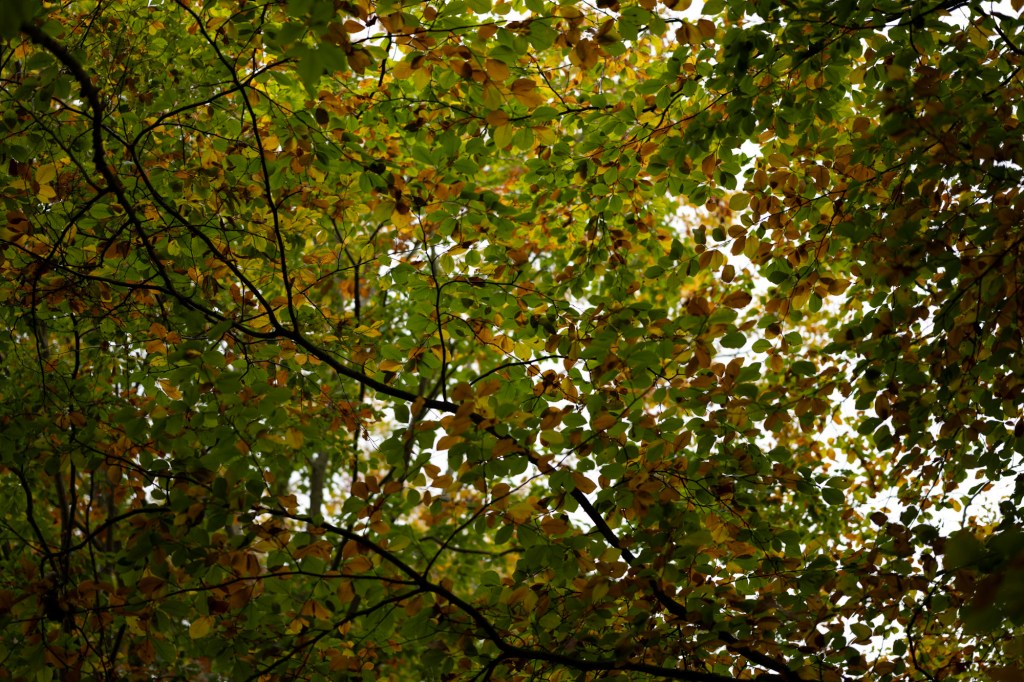
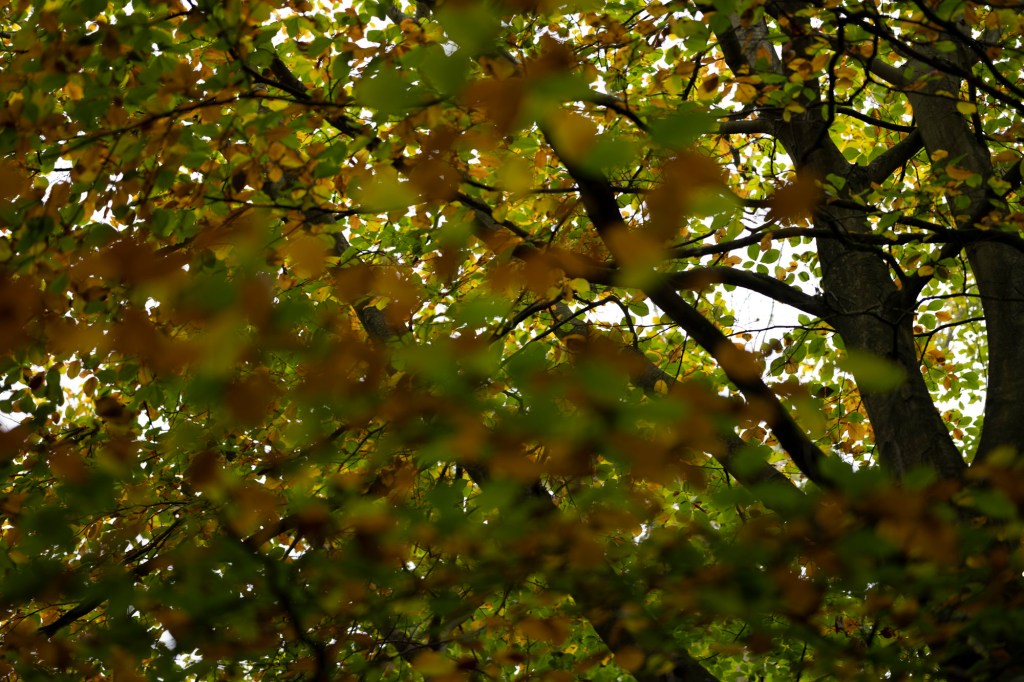
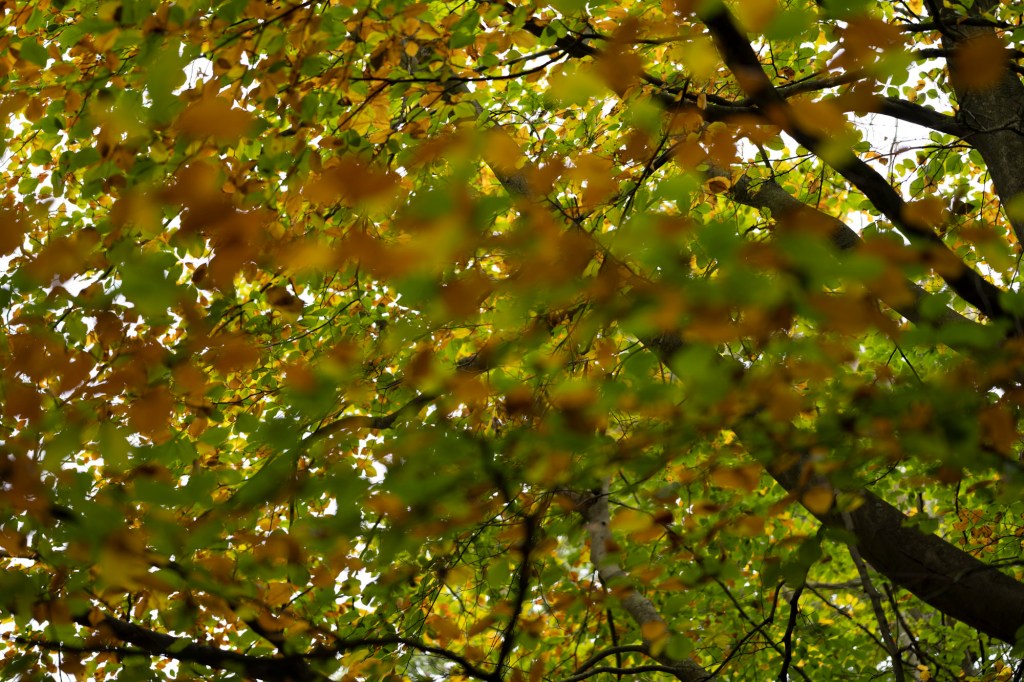
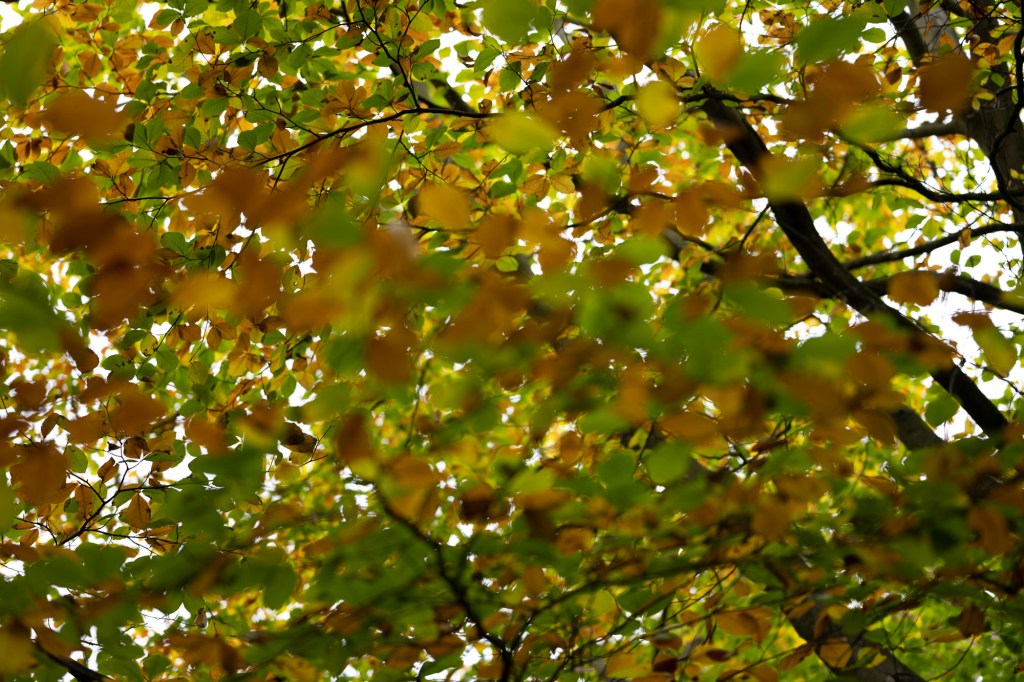
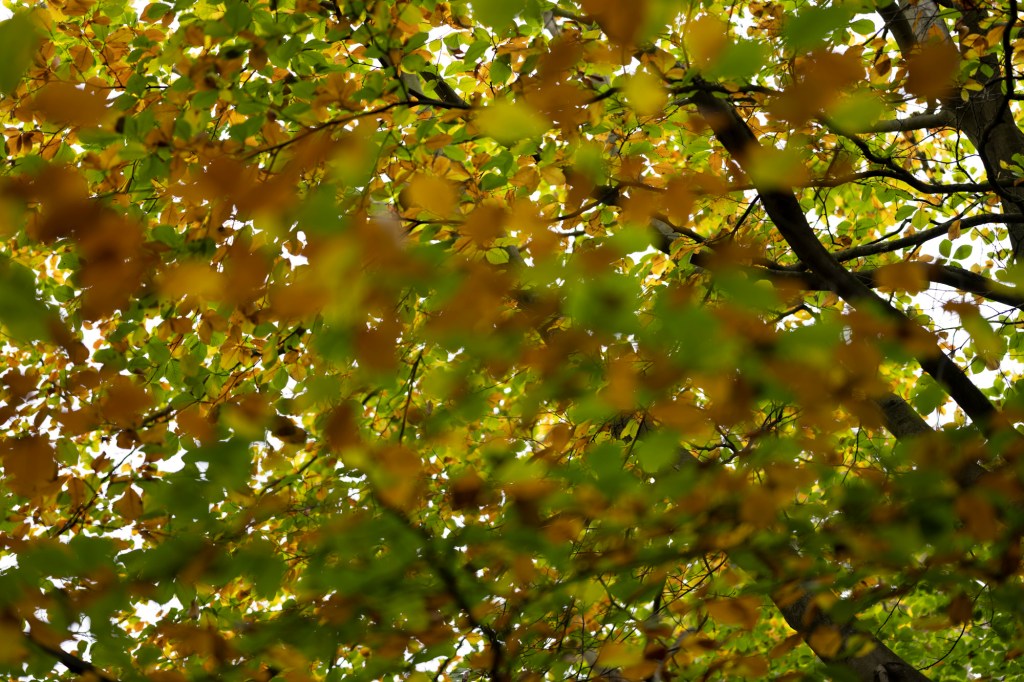
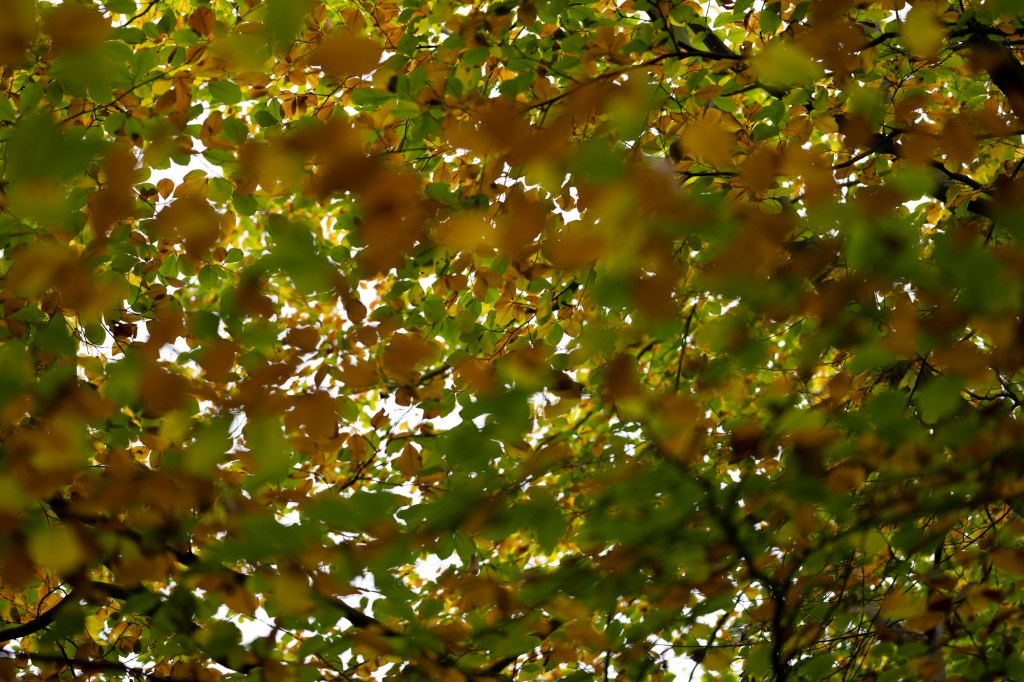
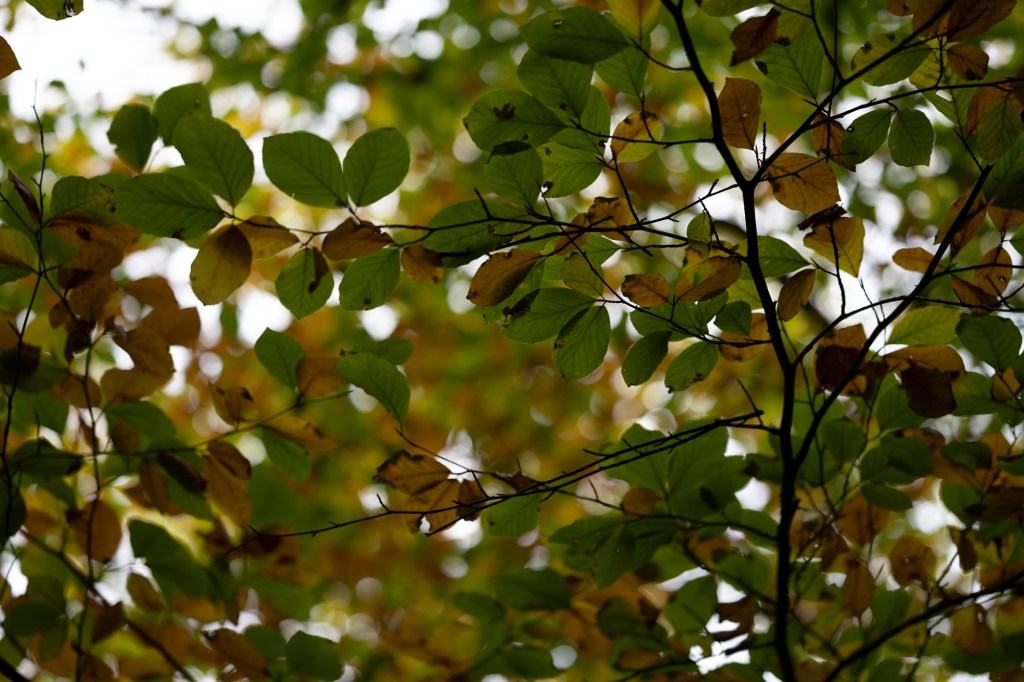
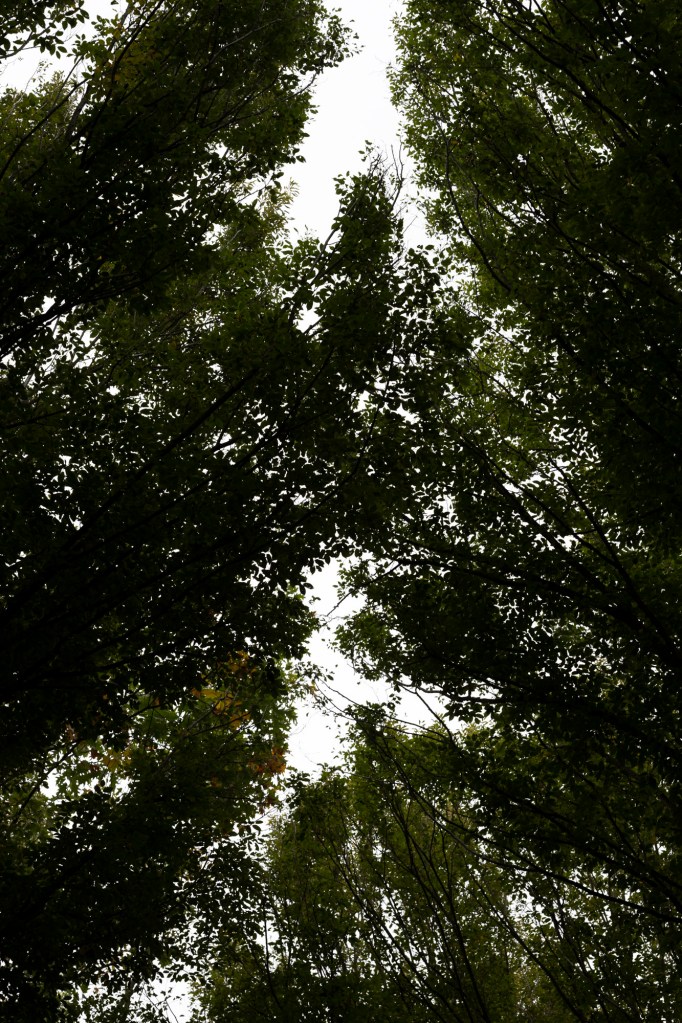
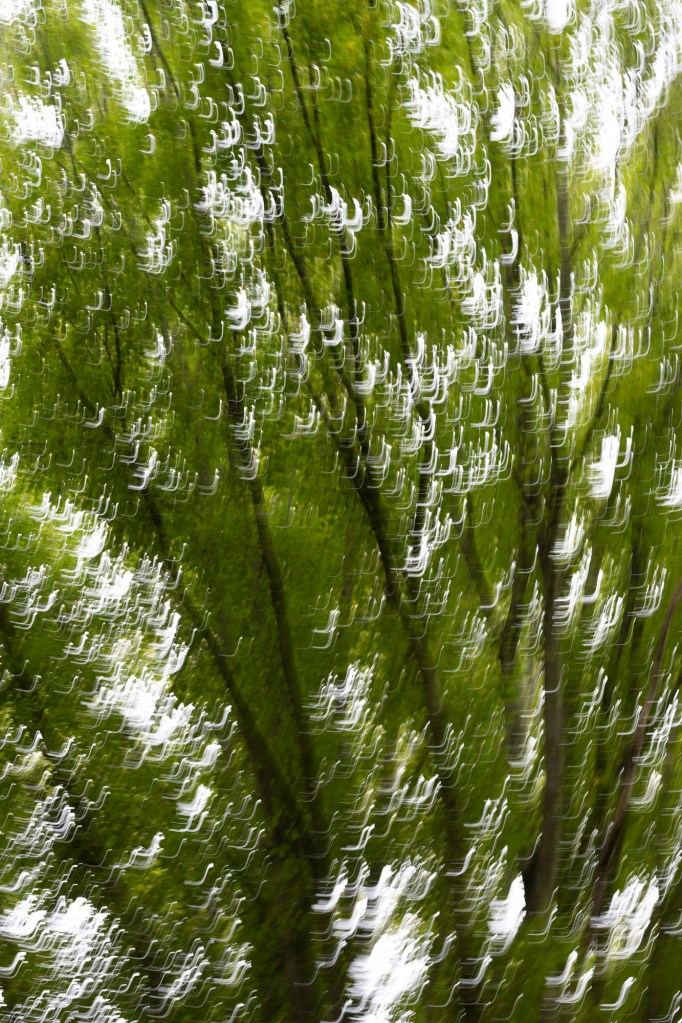
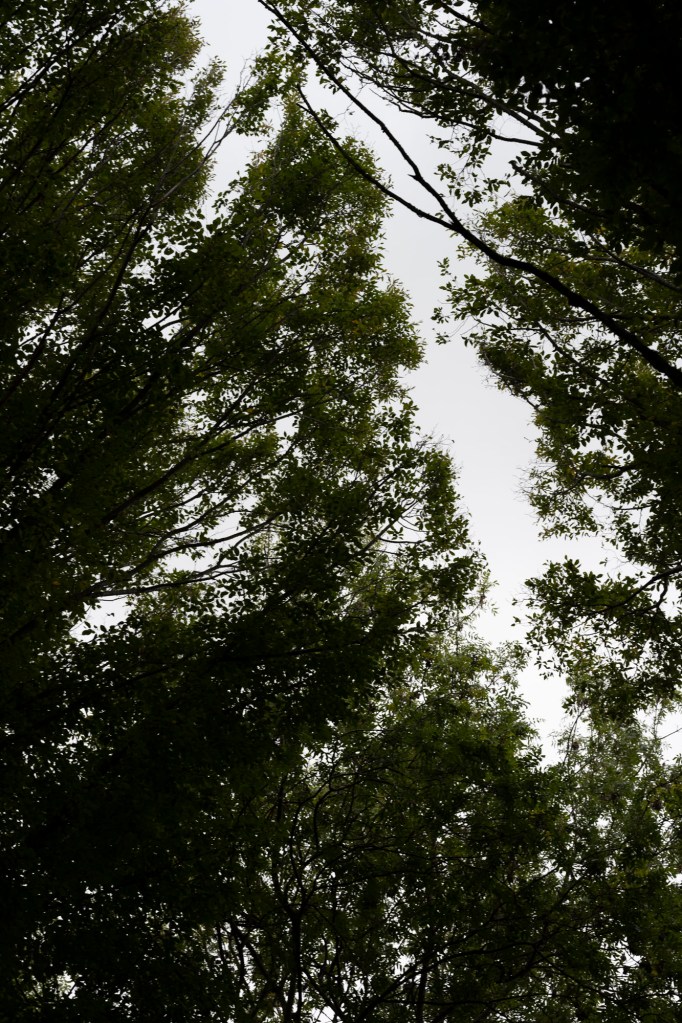
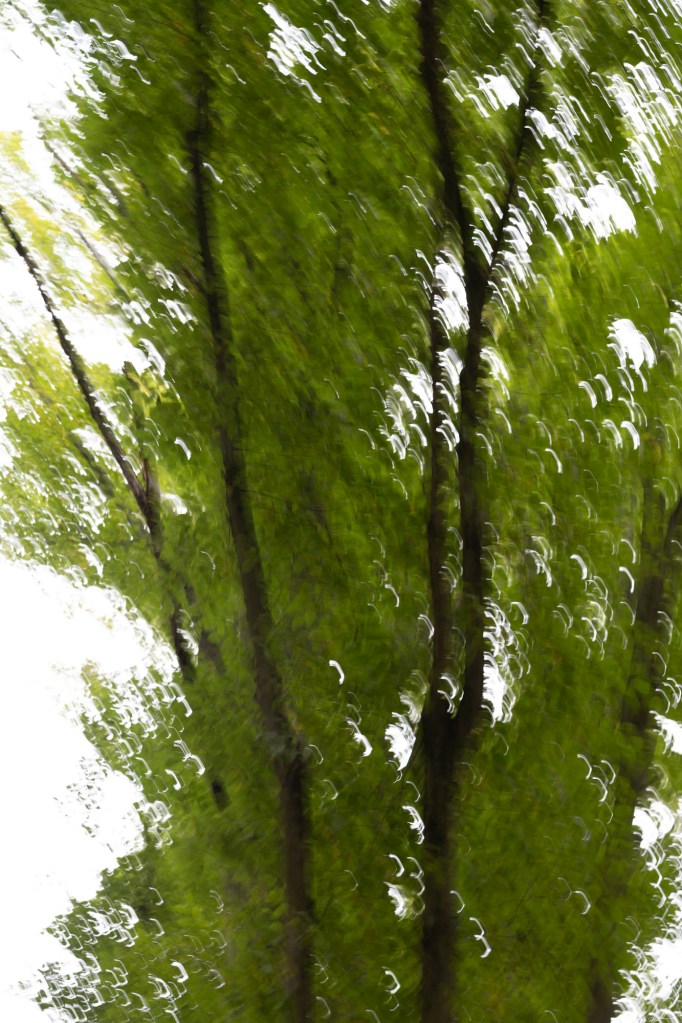
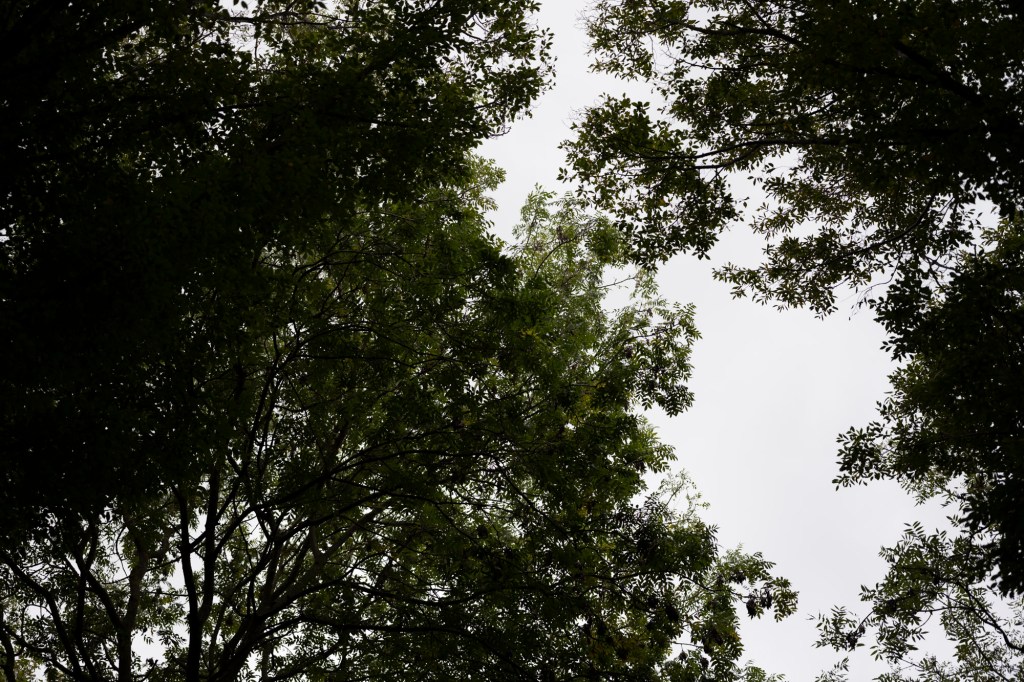
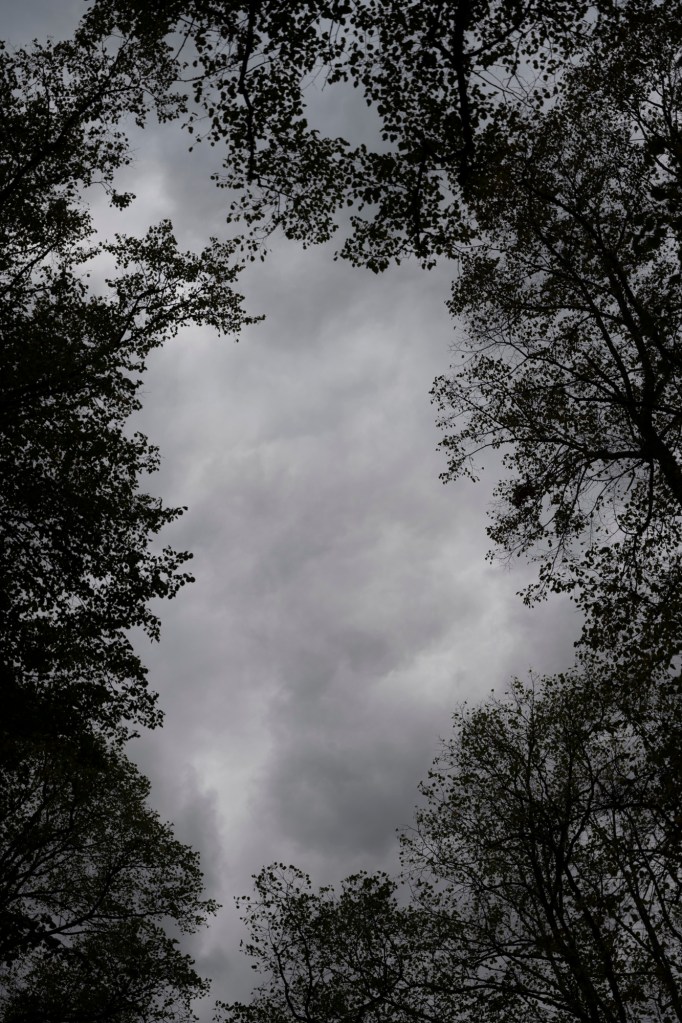
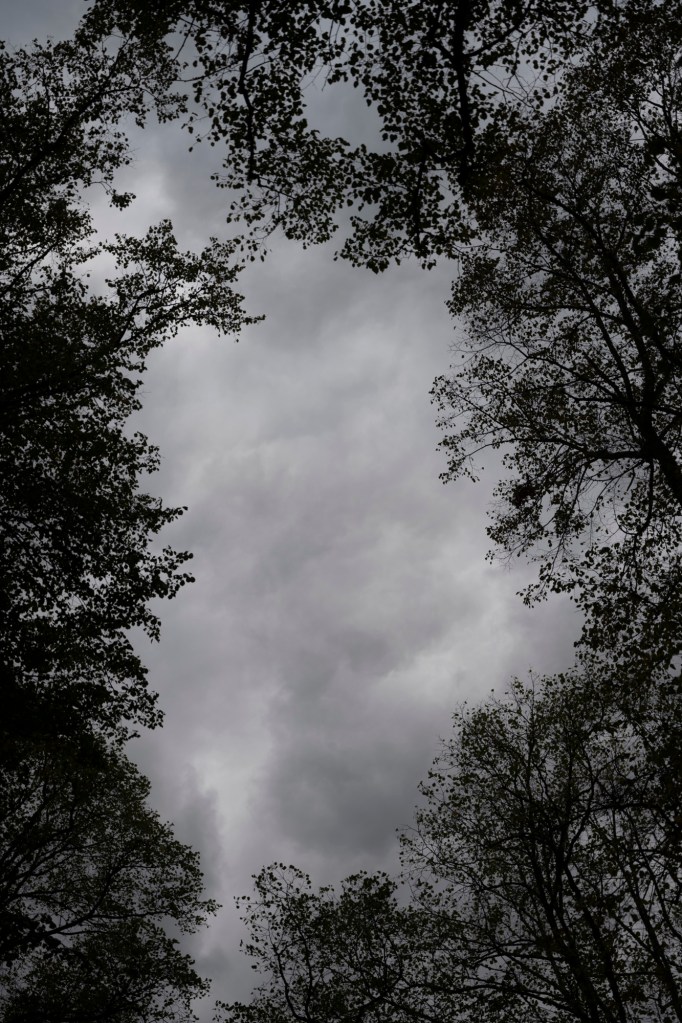
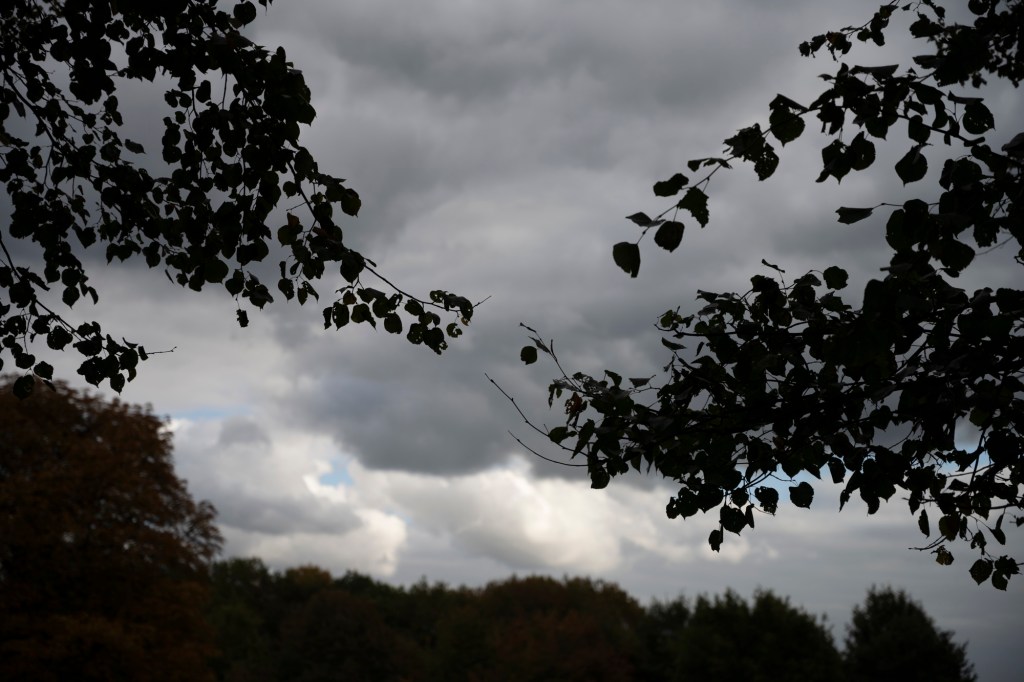
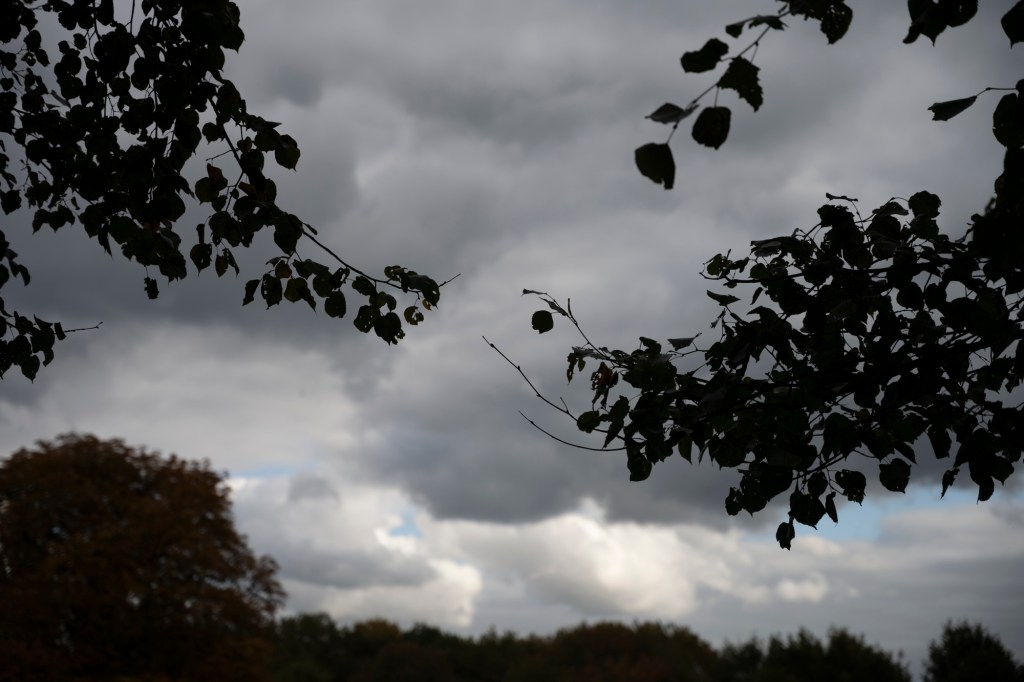
With the words ‘take more photographs’ ringing in my ears, it was back to the park. My intention was to take shots of the trees with the sunlight shining through the Autumn colours. However, I was thwarted by the clouds and a grey sky. As a result, I resorted to focusing on observations and sub-conscious feelings.

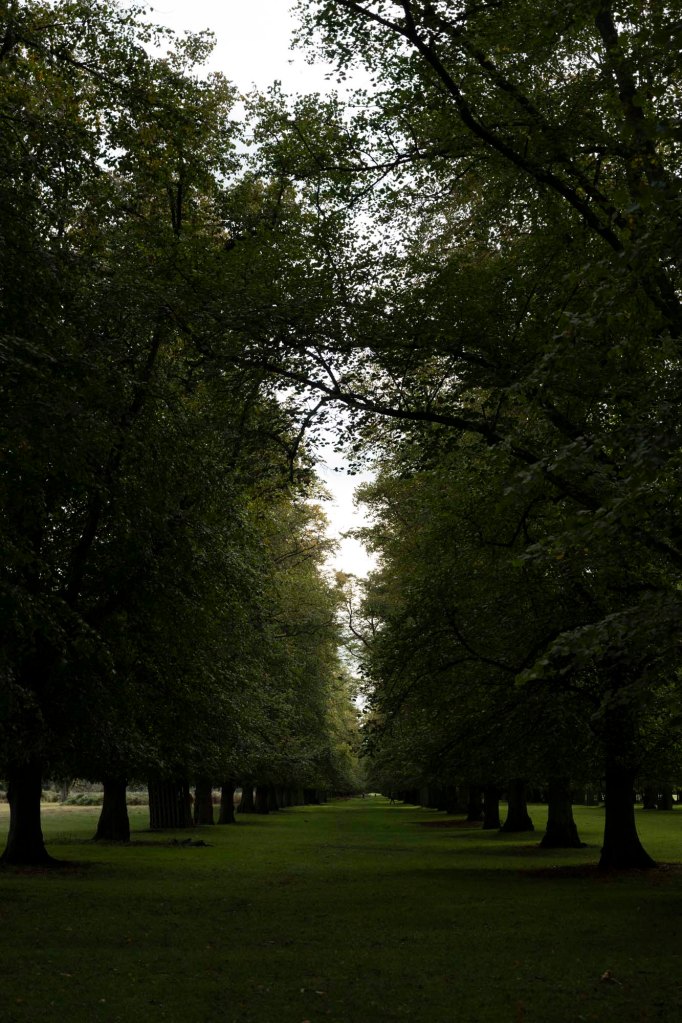
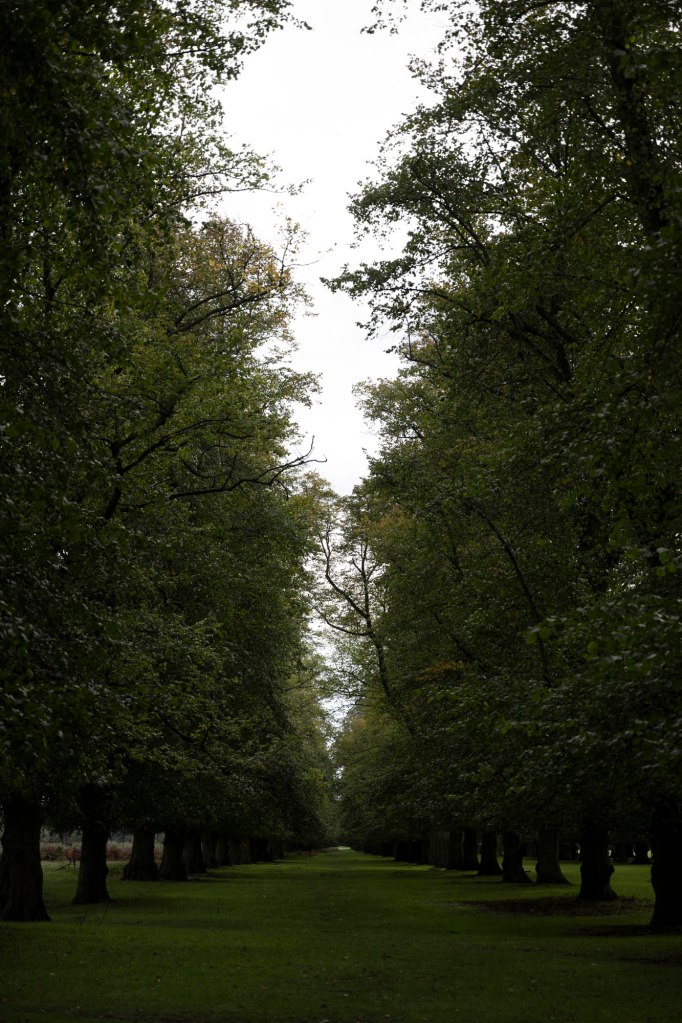
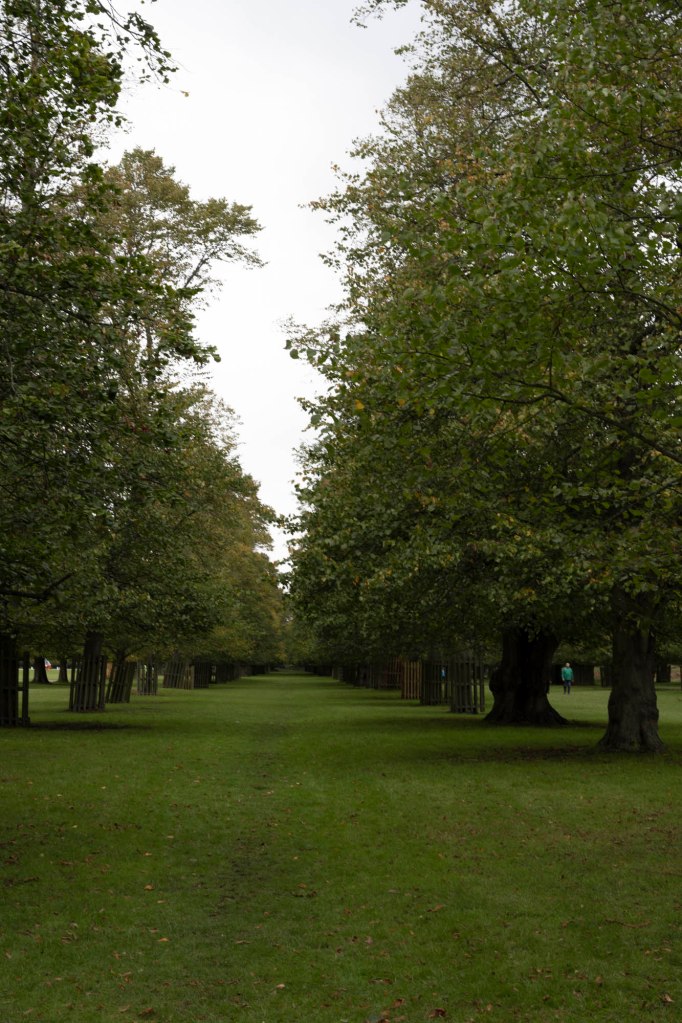
My first stop was Chestnut Avenue.

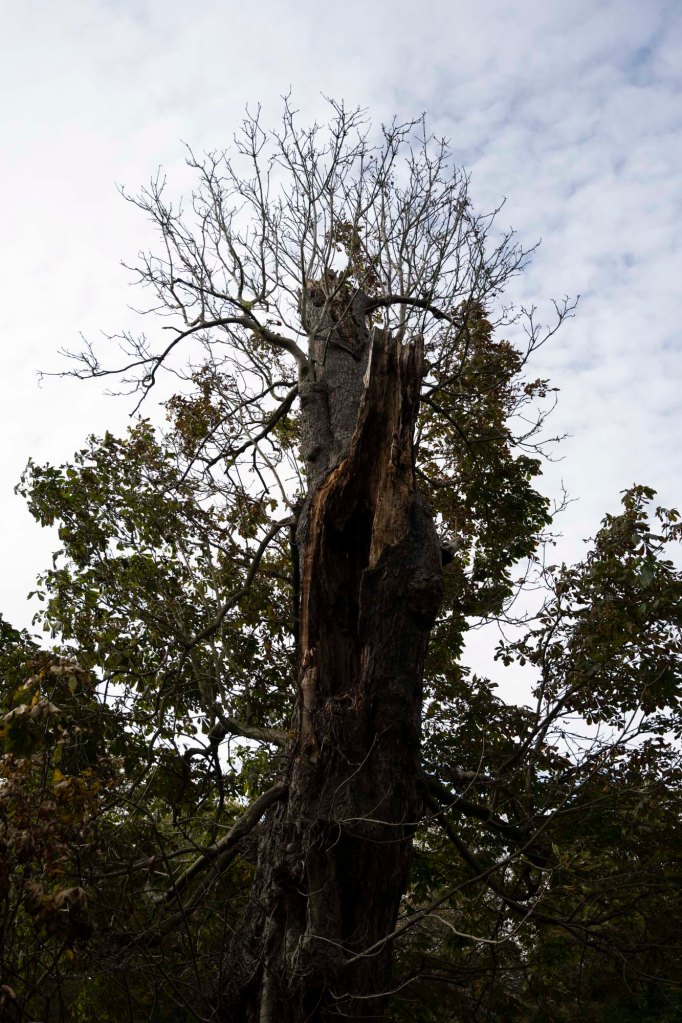
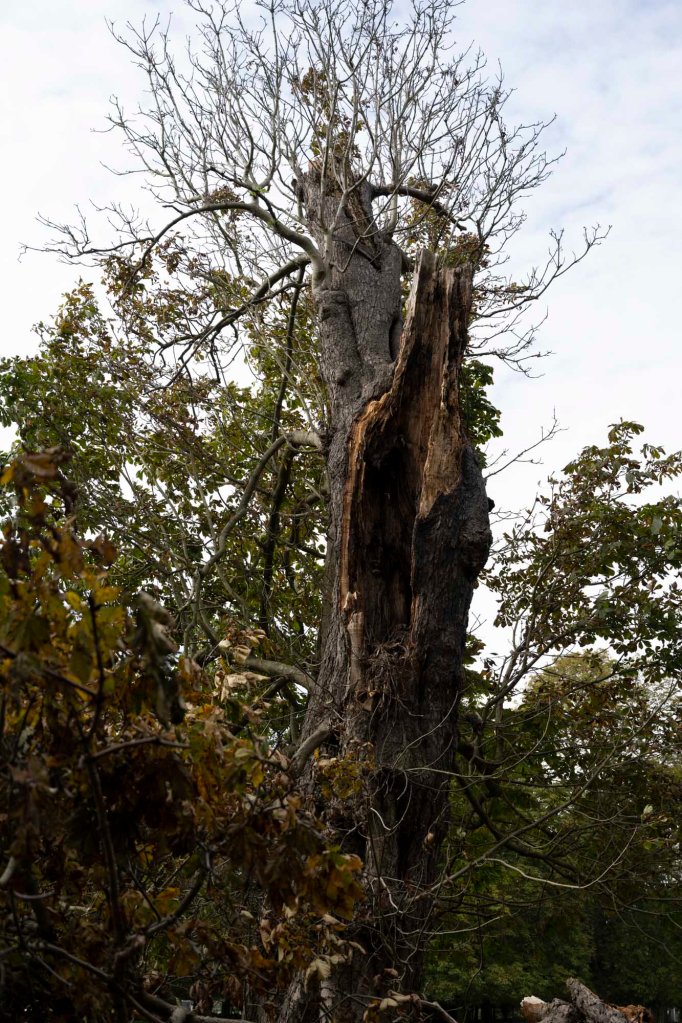
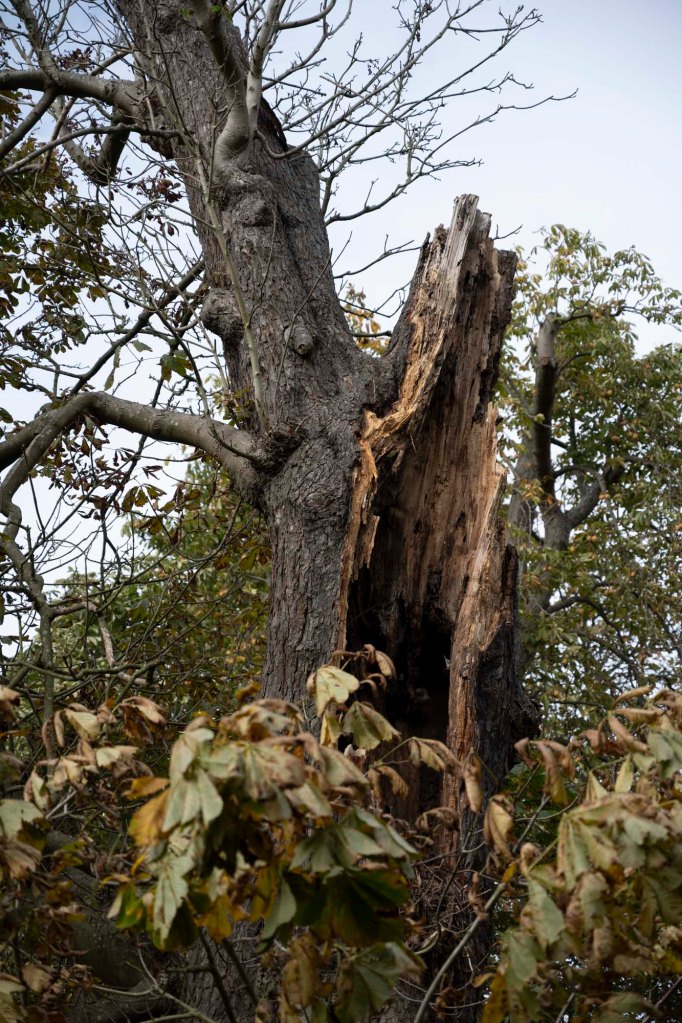
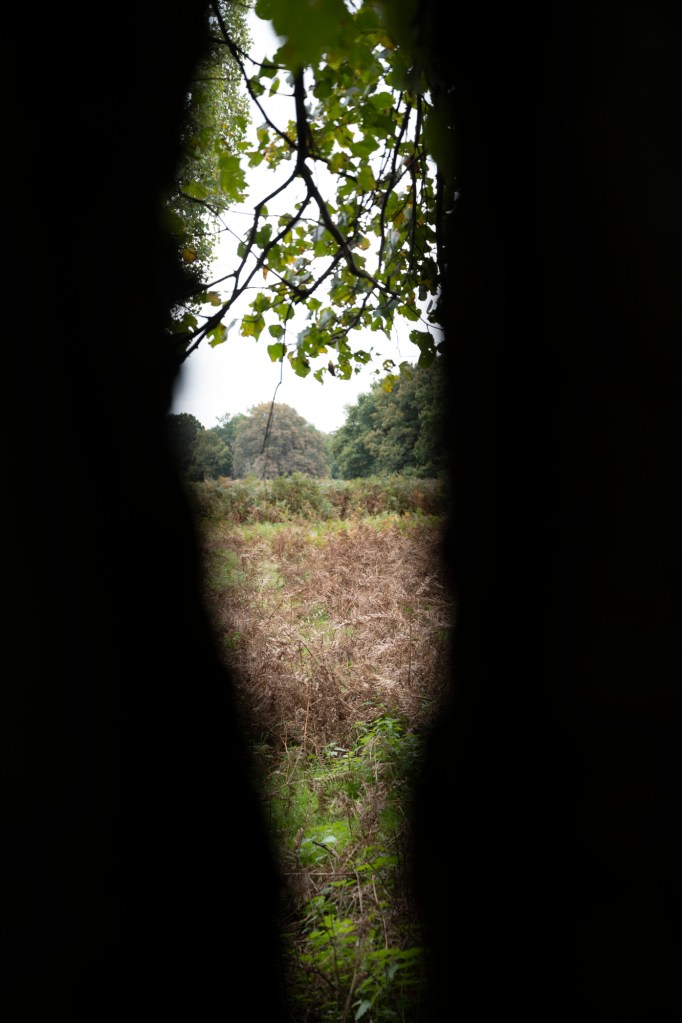
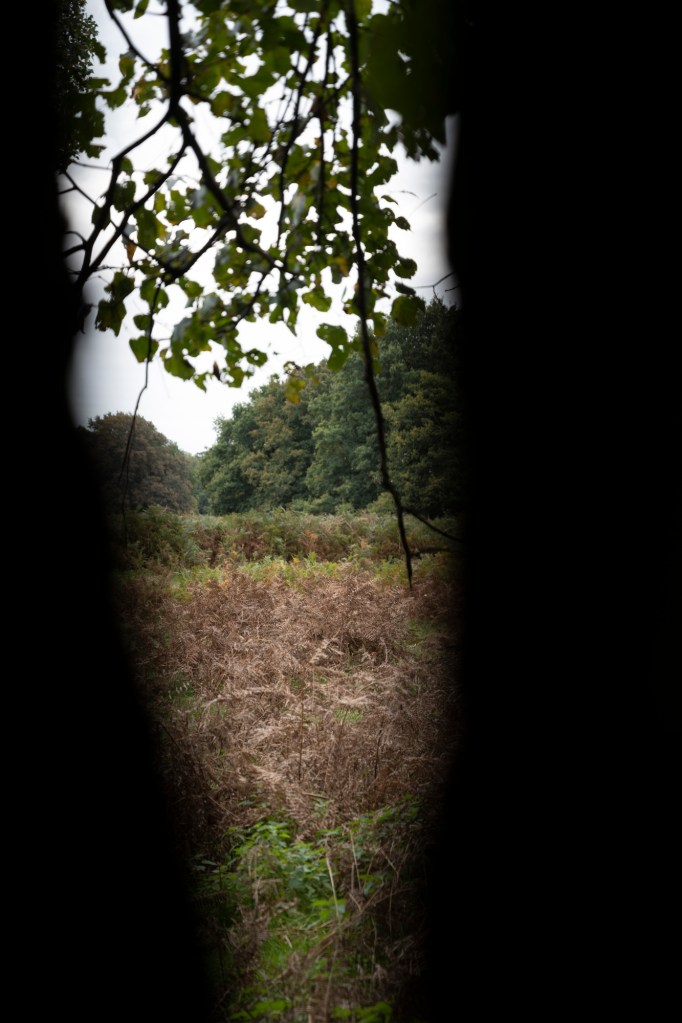
I then stopped to take some further images through the Split tree:

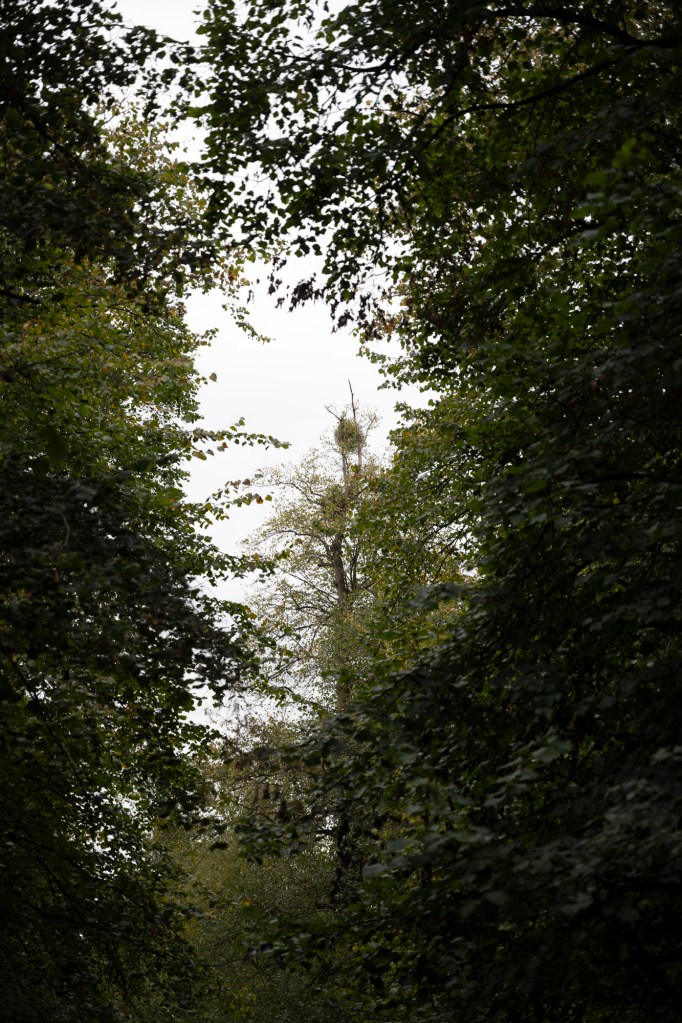
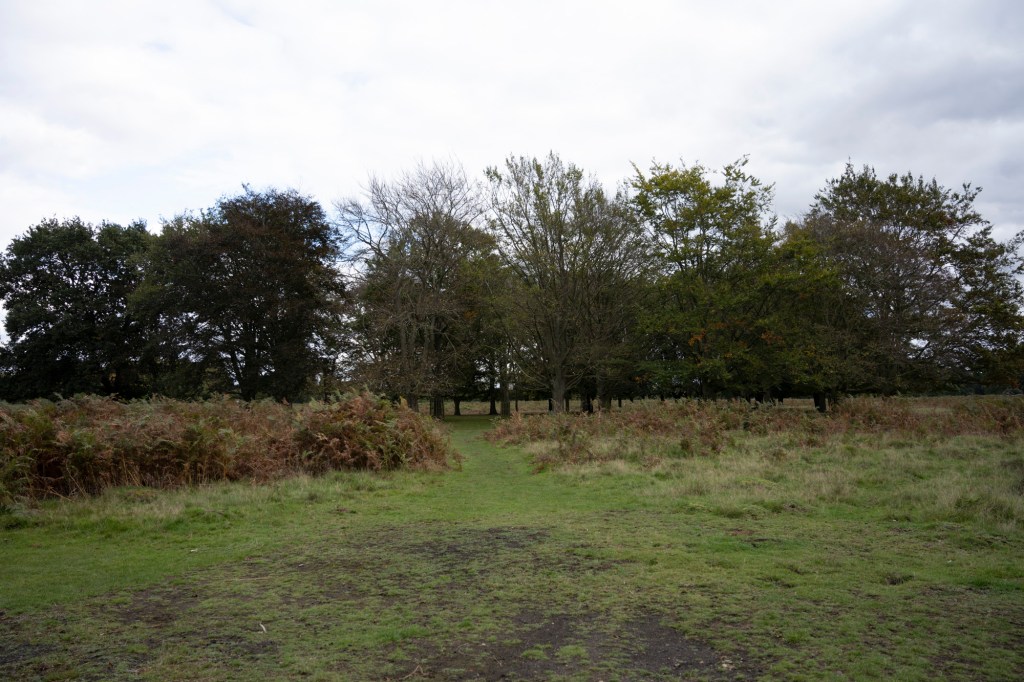
Instead of heading to Woodland Gardens, I then took a detour to a copse that I only explored recently.

This is how it looks from the inside (smartphone shot).

I was using my 24mm-70mm lens at this stage and took some initial shots at 53mm.

I then set the lens at 70mm.

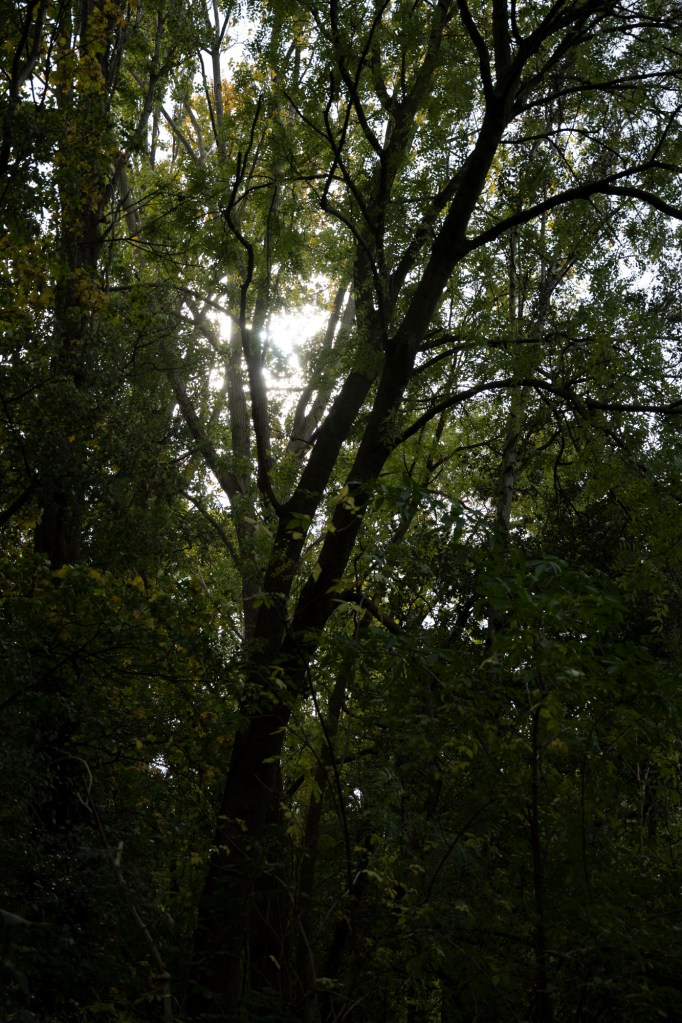
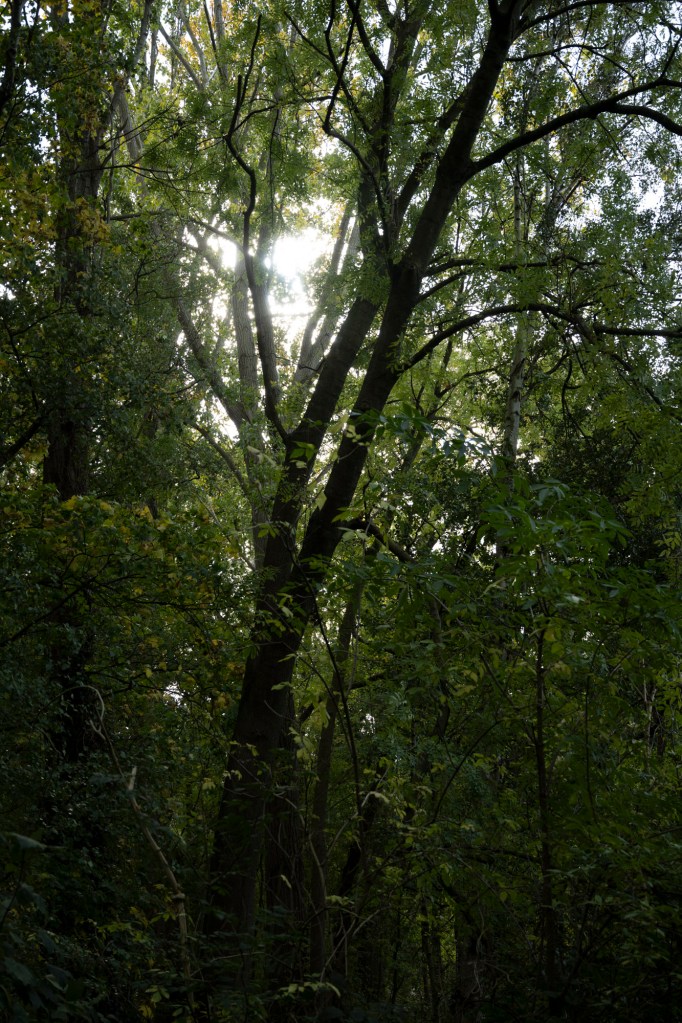
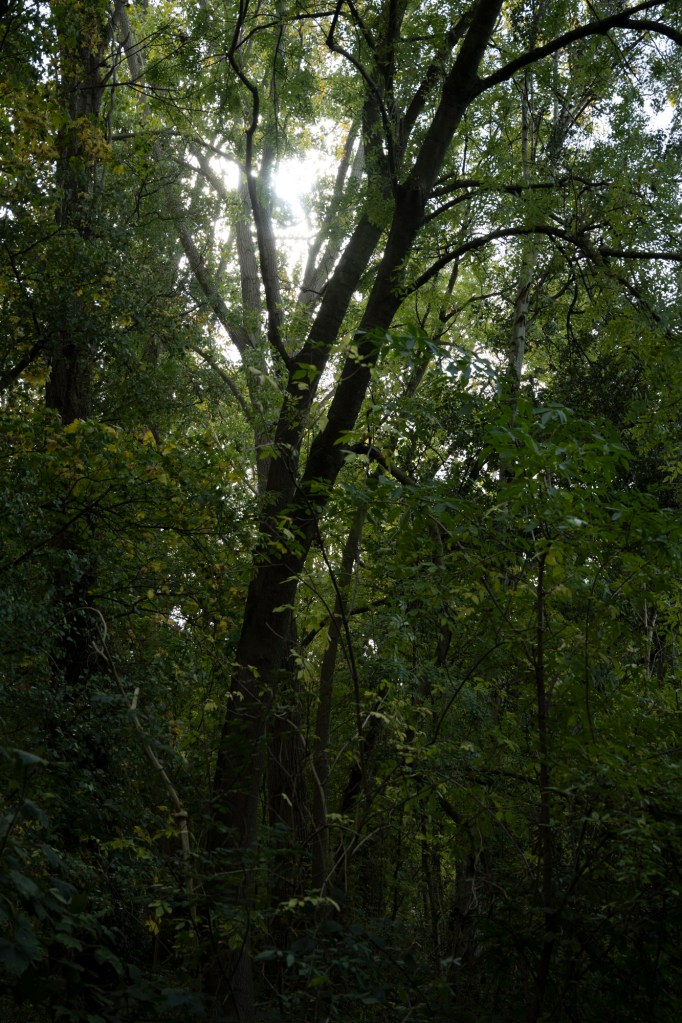
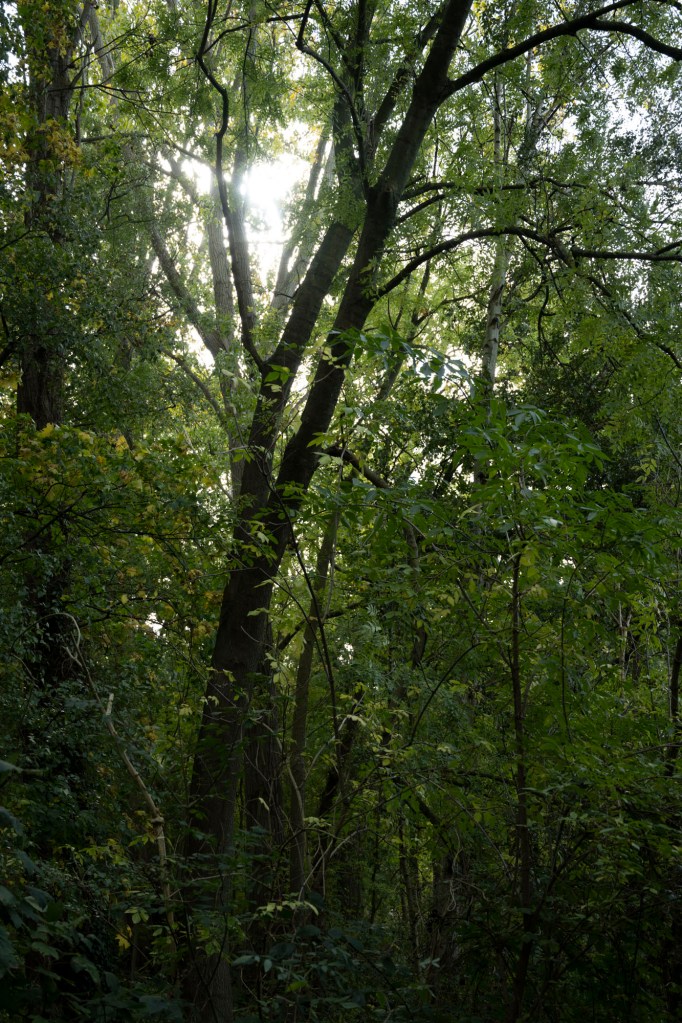
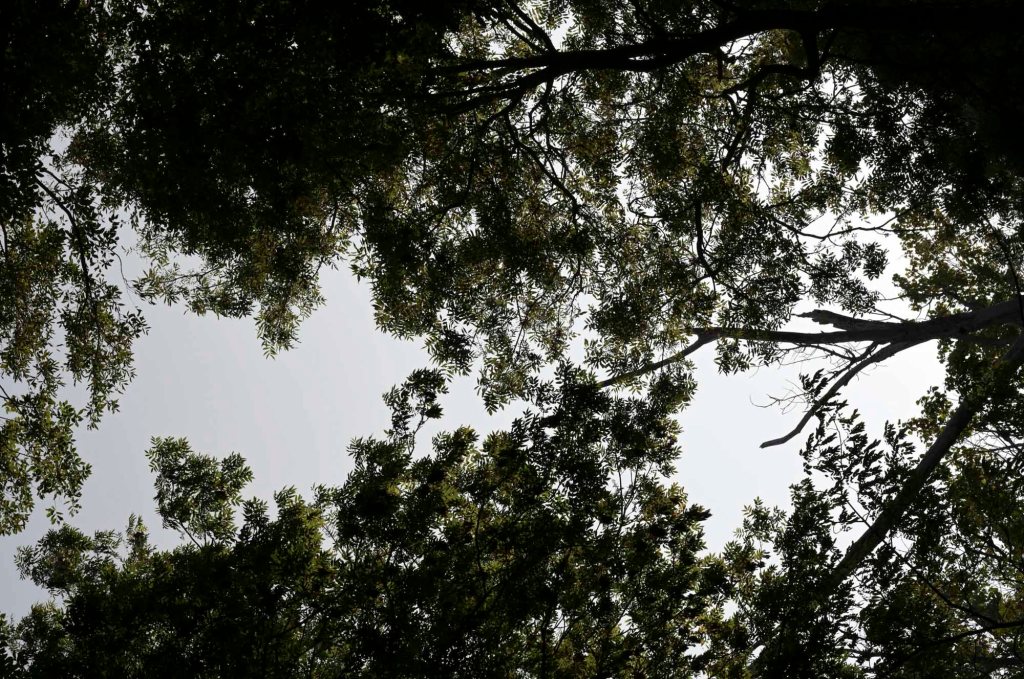
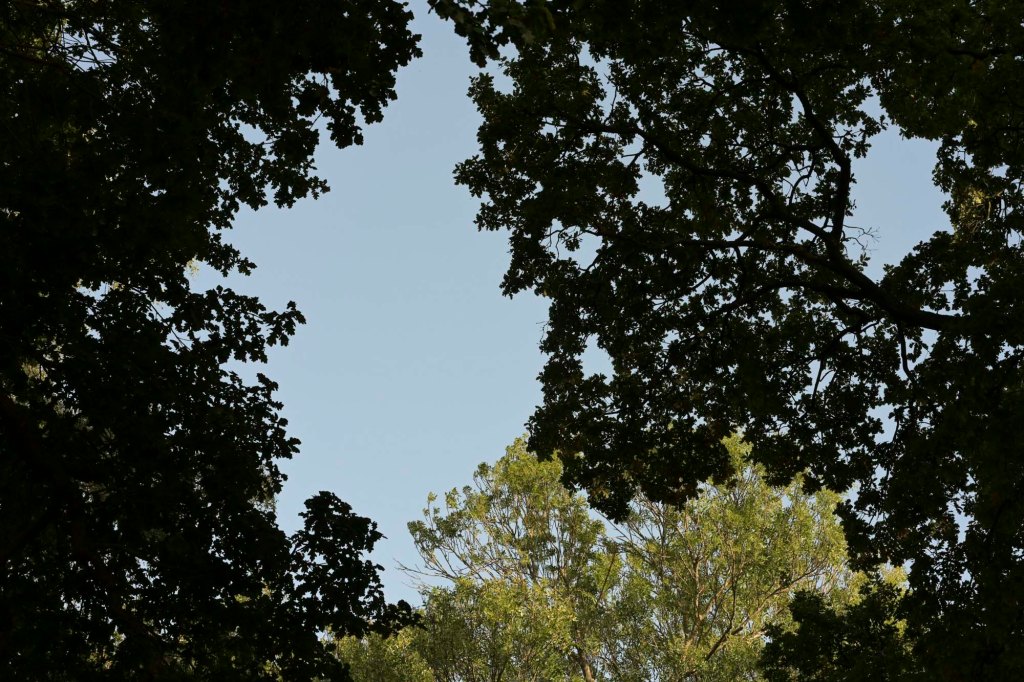
I then had an idea. What would it look it if I stood in the middle of the copse and took a series of images on the ’round’. I took two sets of these in two different locations using the 70mm lens setting.

Set 1

Set 2

I then walked towards Woodland Gardens, but before entering I took a couple of shots of these trees

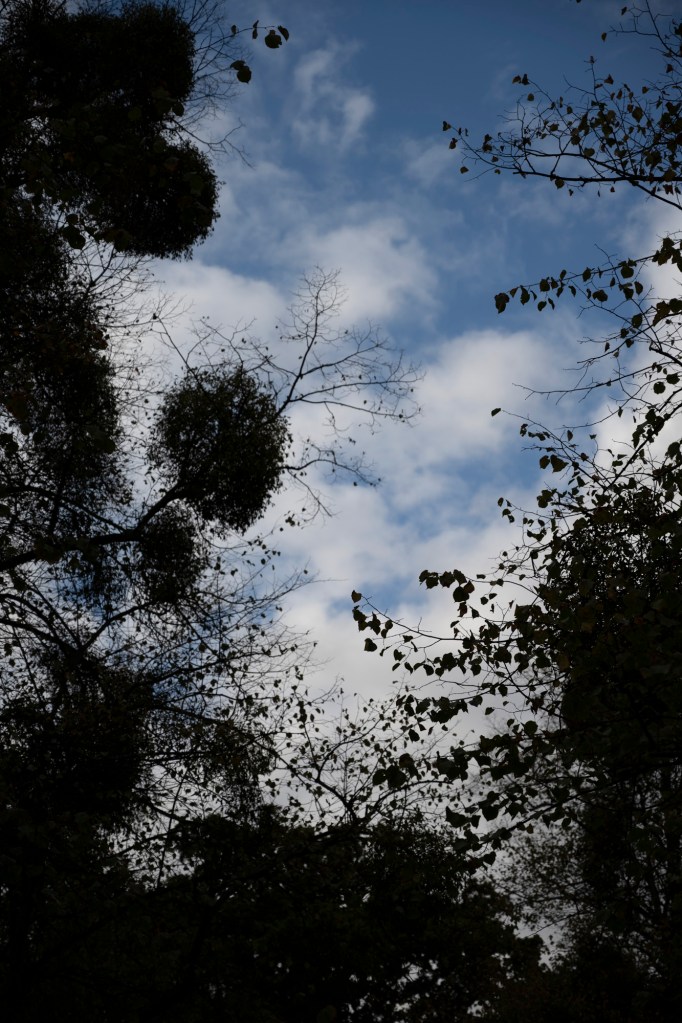
According to the Royal Parks’ website, Bushy Park is one of the best sites in London for mistletoe. This parasitic plant is rare or absent in the the other Royal Parks and it grows very well on Limes and Hawthorns.

Woodland Gardens – Pheasantry Plantation

After a flask of hot tea and some ginger biscuits, I contemplated the park while sitting in this location.

I made some notes:

Bushy Park:

  • Logical, but not logical
  • Boundary – straight lines and curves
  • Lines of trees
  • Circles of trees
  • Plantations – SSSI (Special Sites of Scientific Interest)
  • Taking shots ‘in the round’ – what happens when images are in line?
  • B&W vs. Colour
  • Leaves vs. Branches
  • Space in between

After this meditation, I continued my walk through the gardens.

Nothing particularly exciting, but nice to capture the Autumn colours.

Woodland Gardens – The Waterhouse Plantation

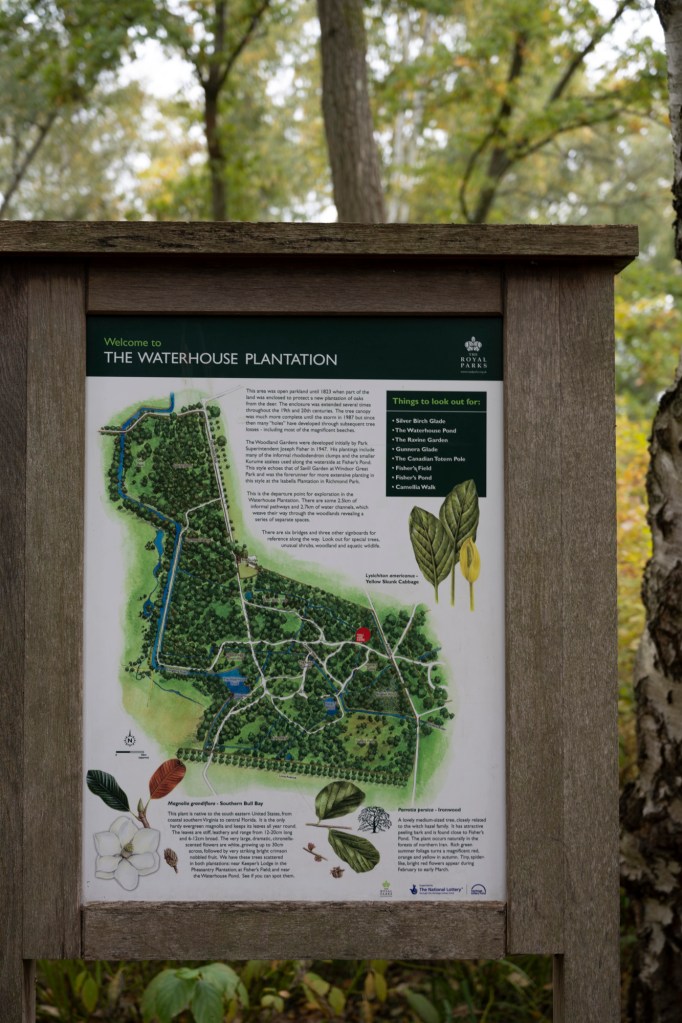
I then visited The Waterhouse Plantation. On entering, I took shot of the map, which gives further details of the different areas of the plantation.

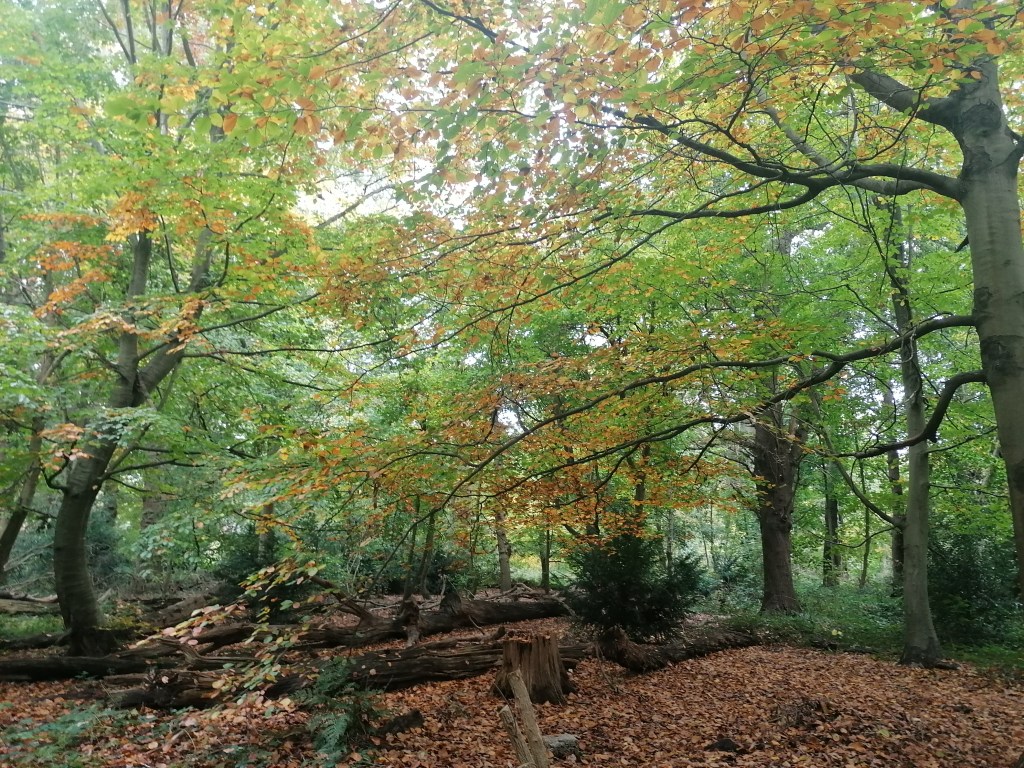
This is a smartphone shot of the area I focused on. I changed the lens to the 85mm as I wanted to try a different perspective.

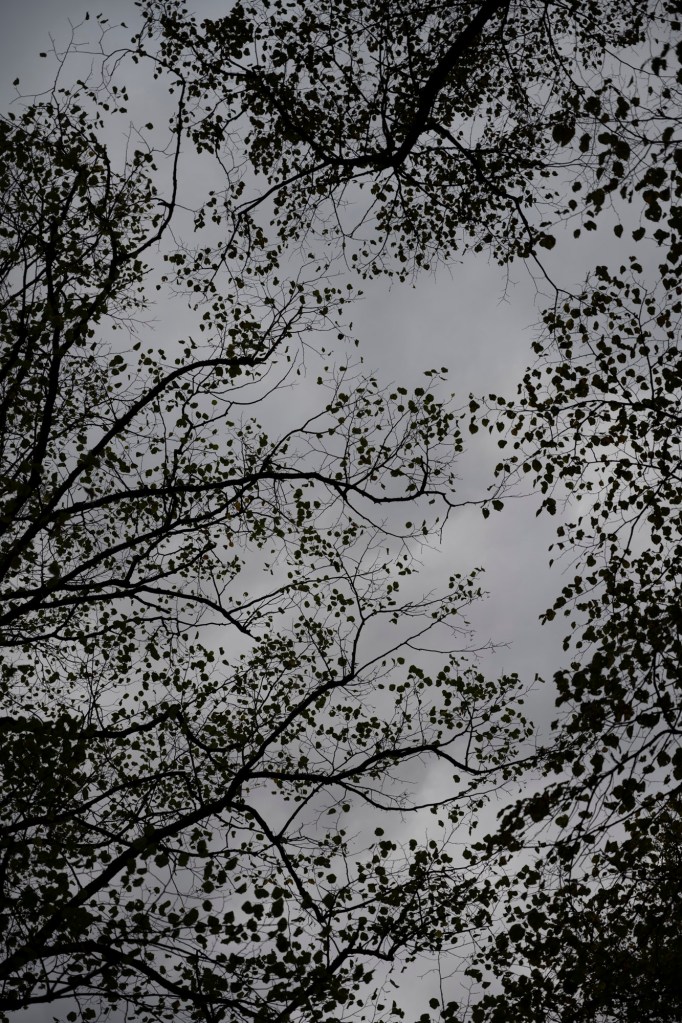
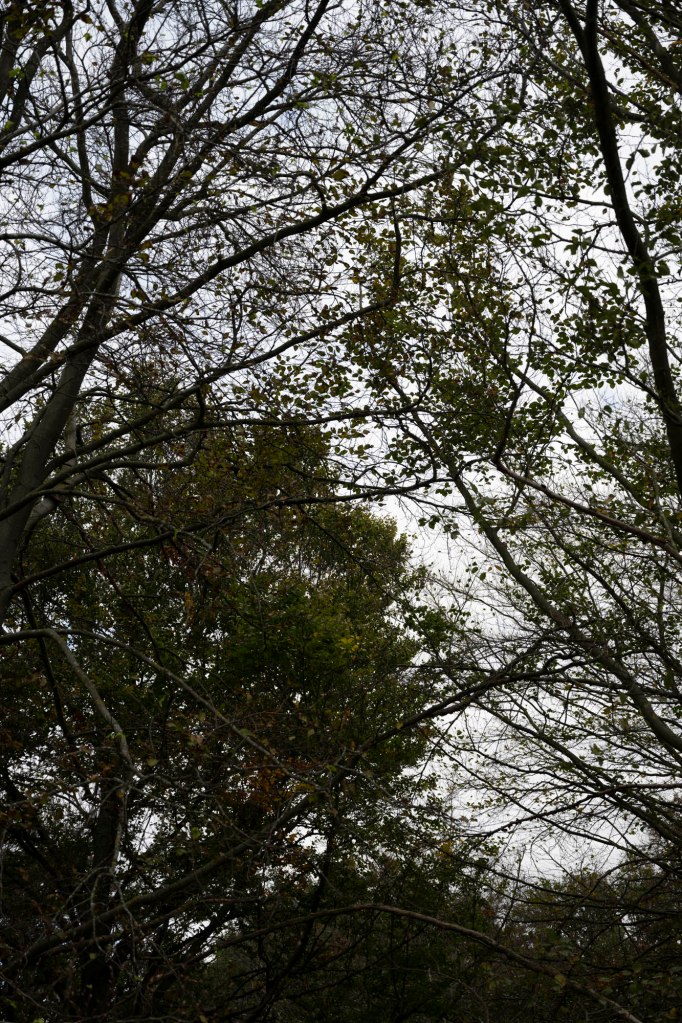
While looking up, I noticed one tree that stood out from the surrounding ones.

I then captured some of the Autumn leaves close up on a lower tree.

The next two captures that caught my eye.

My next stop was the Hornbeam Avenue, another of my favourite spots. I then took three sequences ‘on the round’.

Hornbeam ‘On The Round’ Set 1

Hornbeam ‘On The Round’ Set 2

Hornbeam ‘On The Round’ Set 3

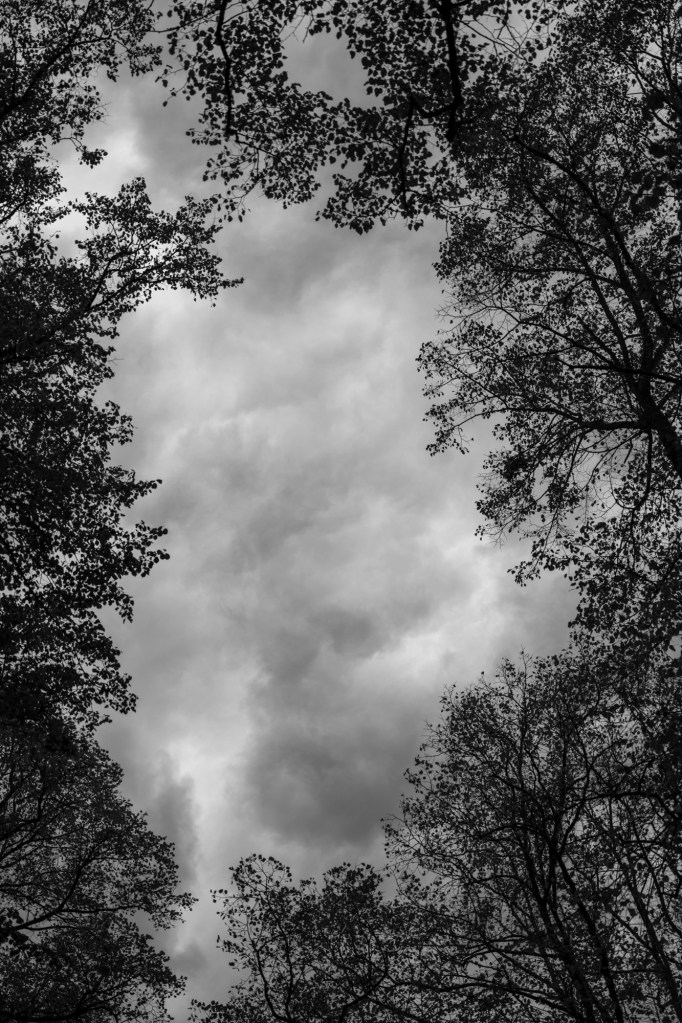
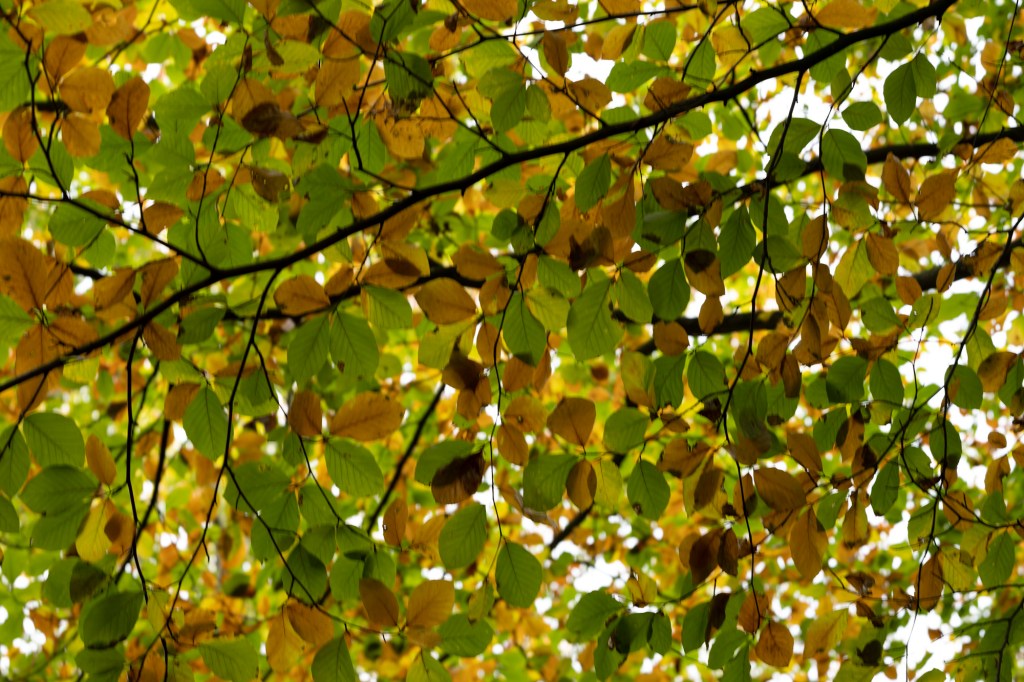
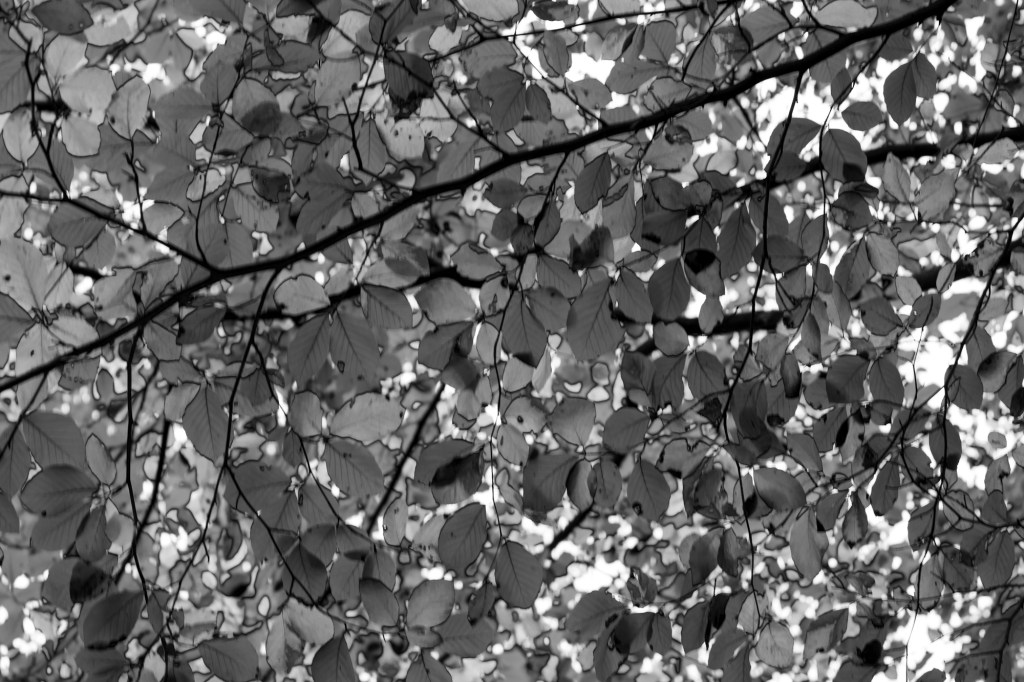
After processing the images, I created a few Black & White conversions. The originals are on the left, B&W on the right:

Chestnut Avenue

Split Tree

Autumn Leaves – The Waterhouse Plantation

References:

Rhs.org.uk. 2020. Mistletoe. [online] Available at: <https://www.rhs.org.uk/advice/profile?pid=134&gt; [Accessed 18 October 2020].

The Royal Parks. 2020. Trees. [online] Available at: <https://www.royalparks.org.uk/parks/bushy-park/things-to-see-and-do/flora-and-fauna/trees&gt; [Accessed 18 October 2020].

Categories
AGM62 Photography Research Project Stage 1 Posts

AGM62 Bushy Park 9 October 2020

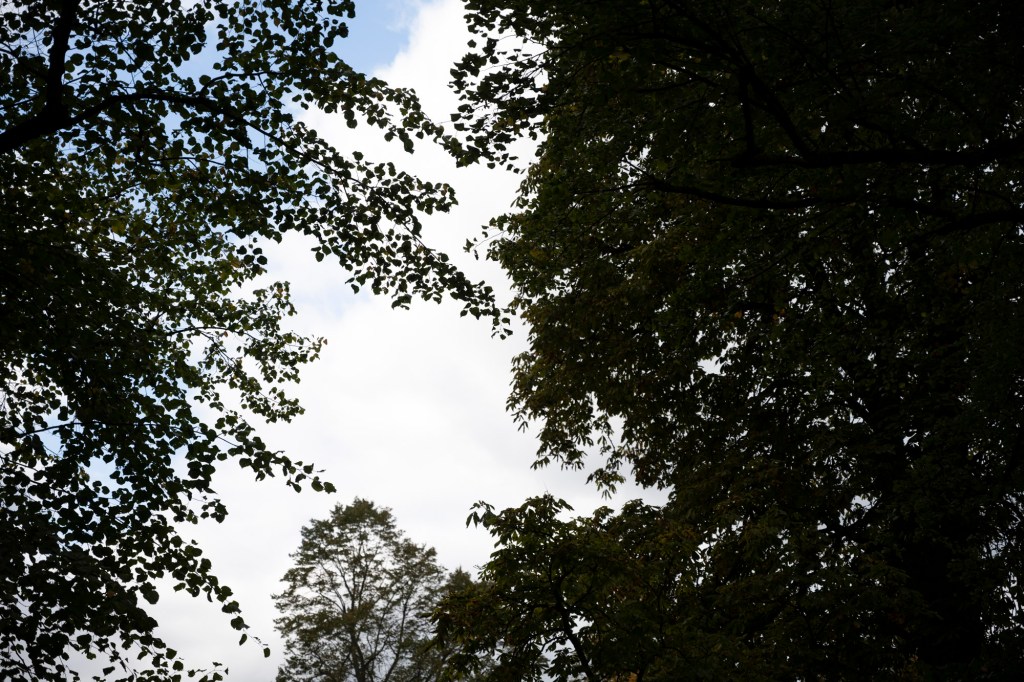
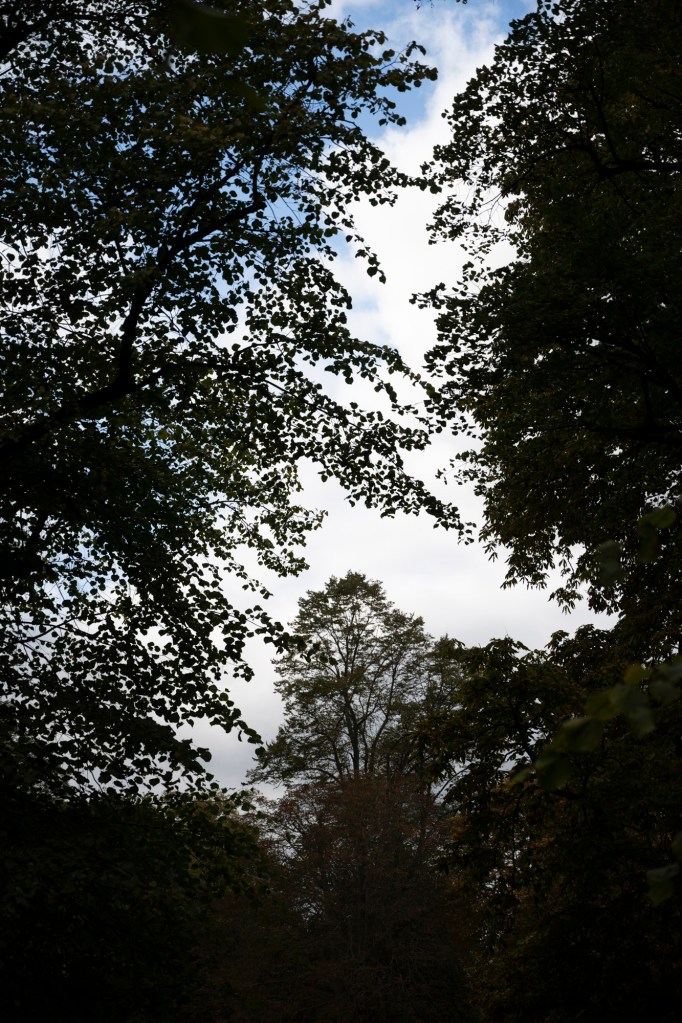
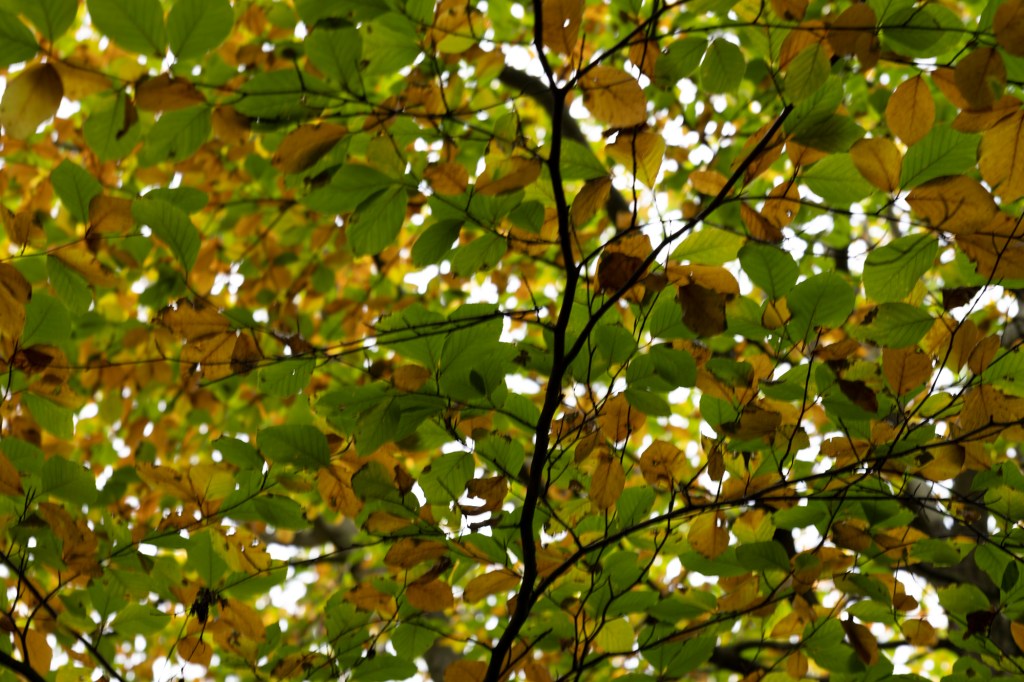
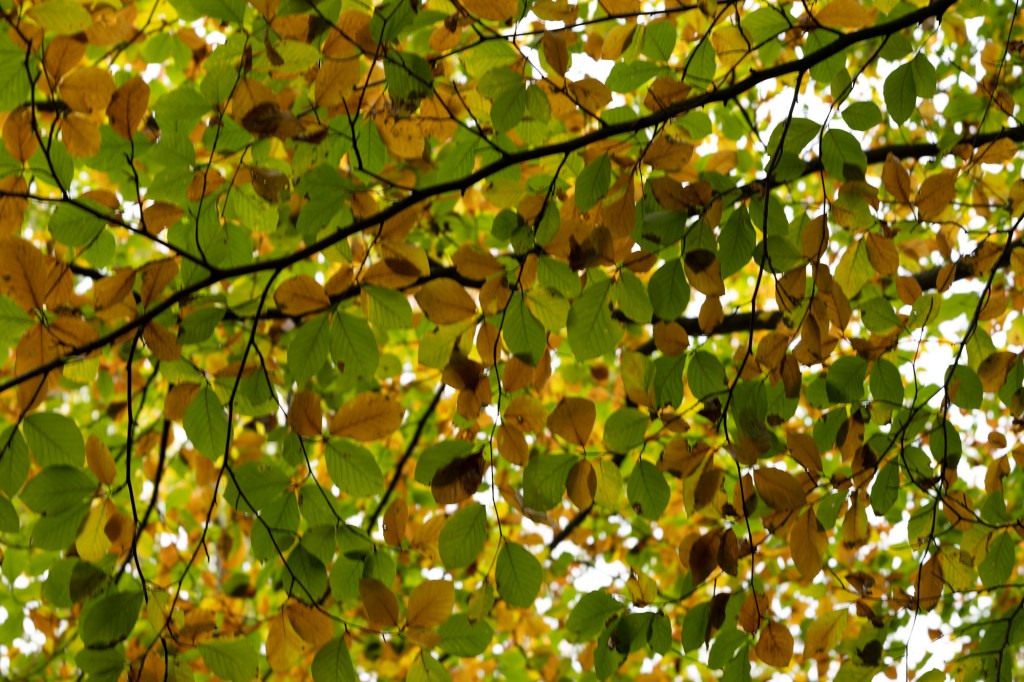
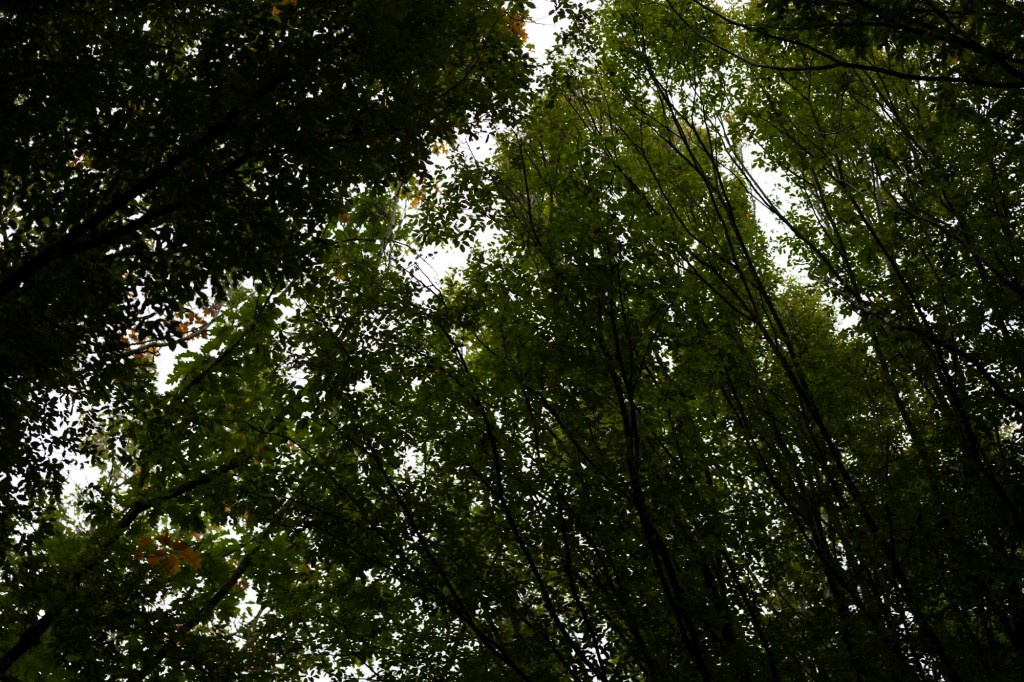
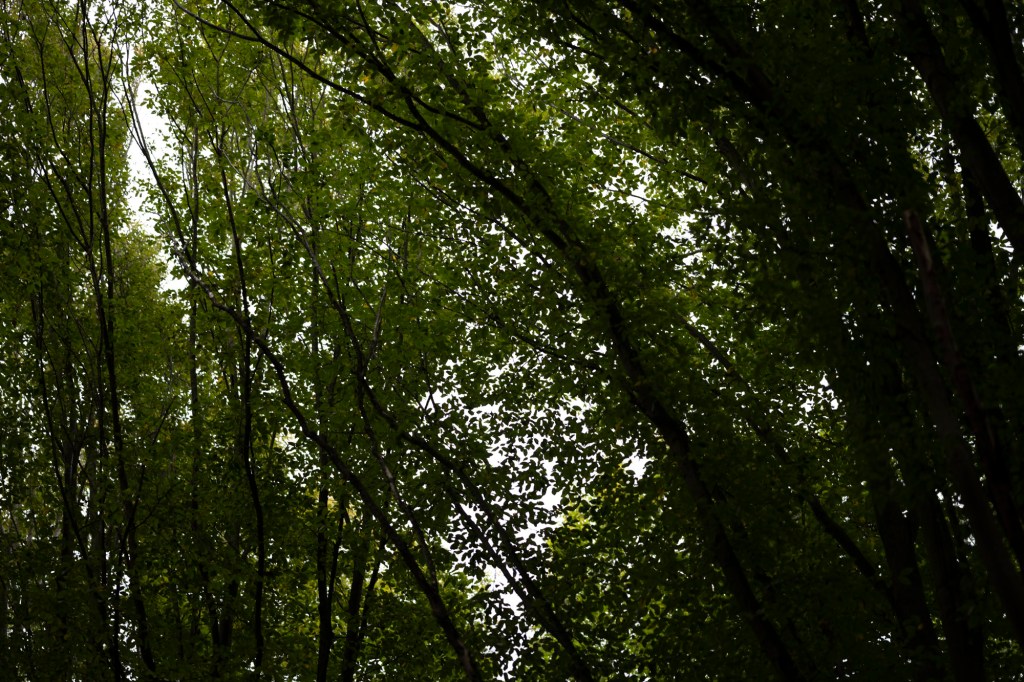
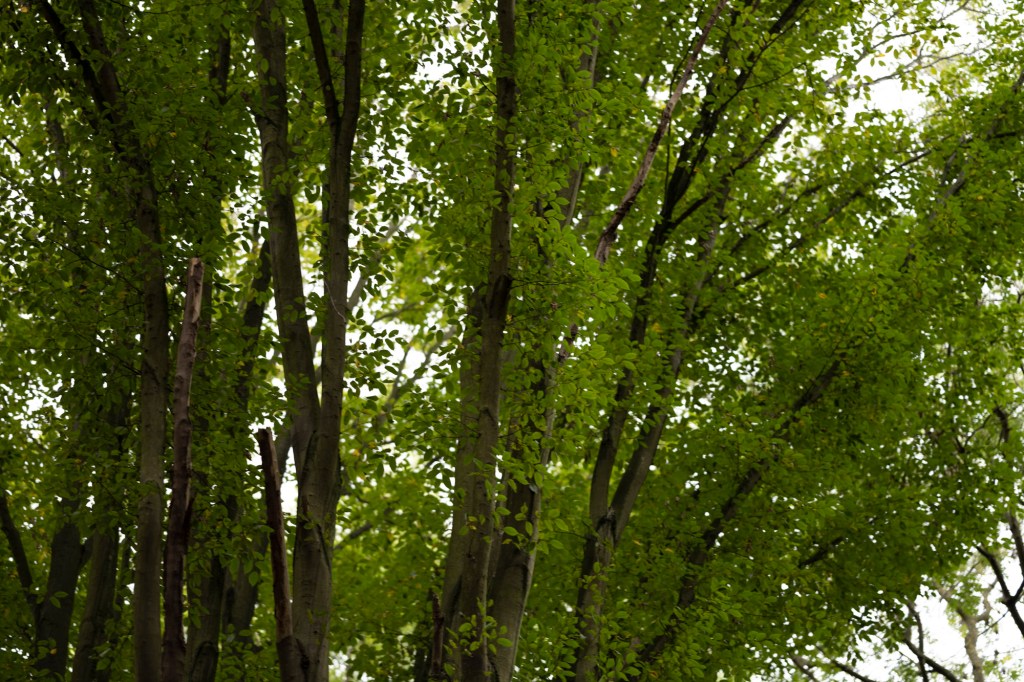
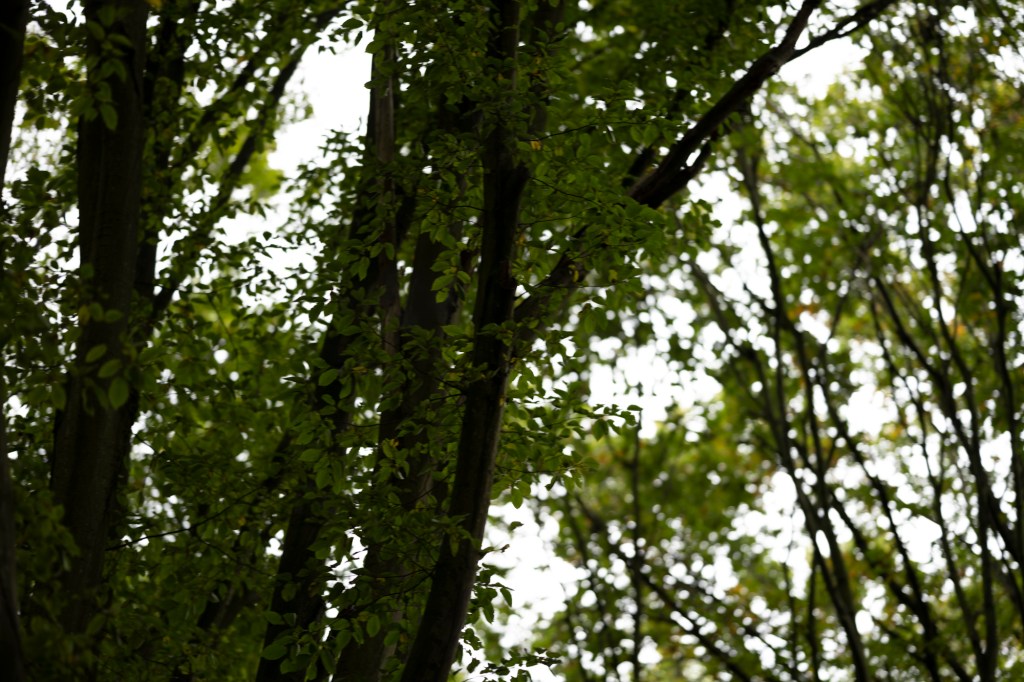
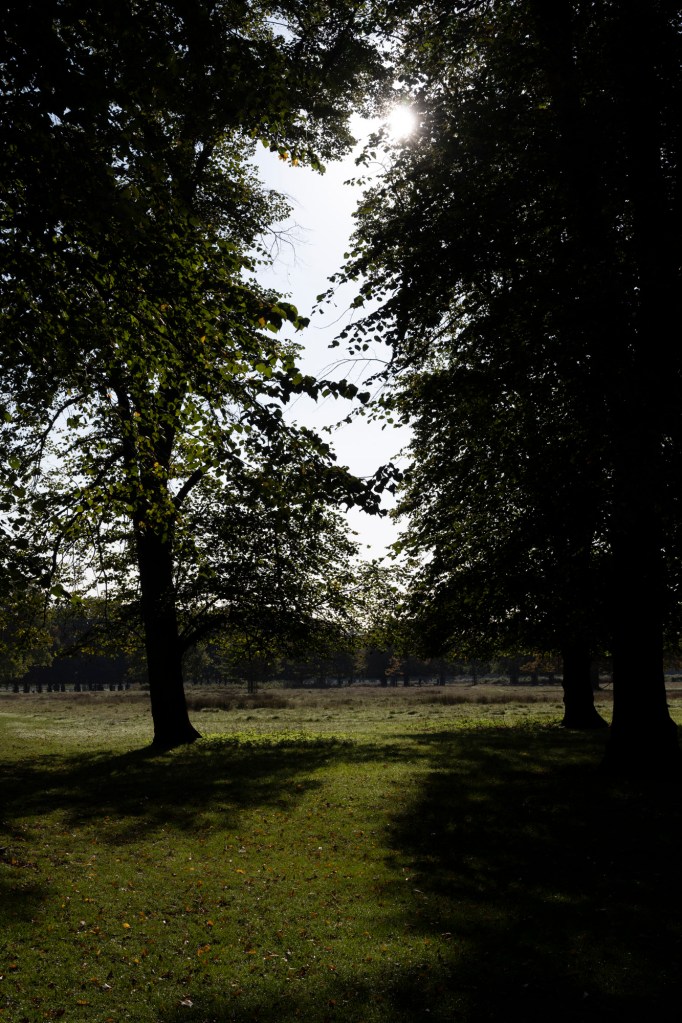
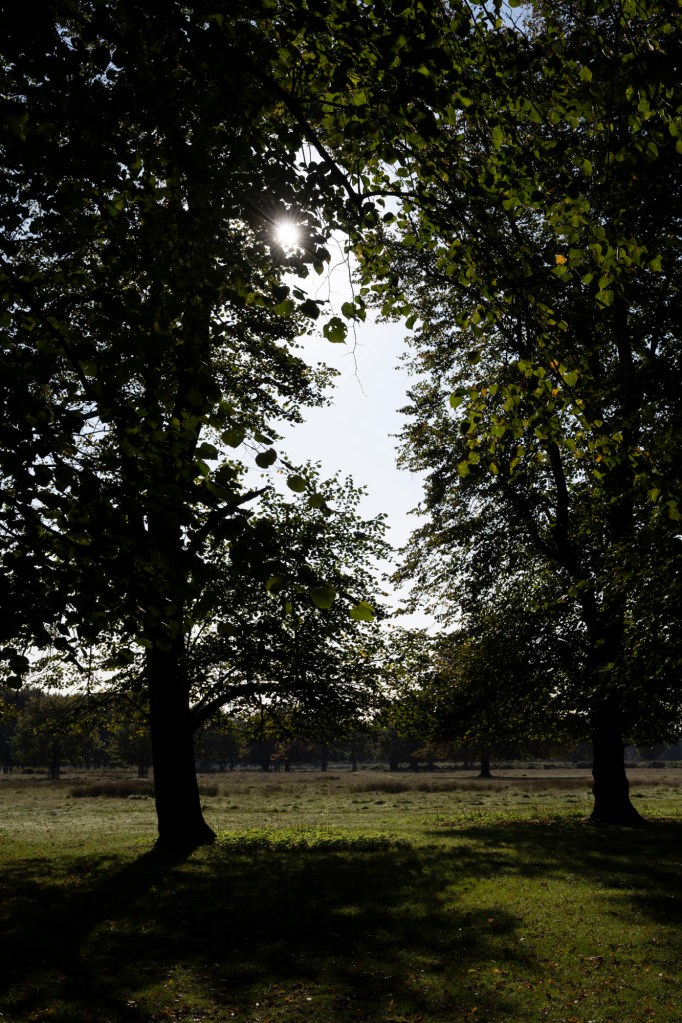
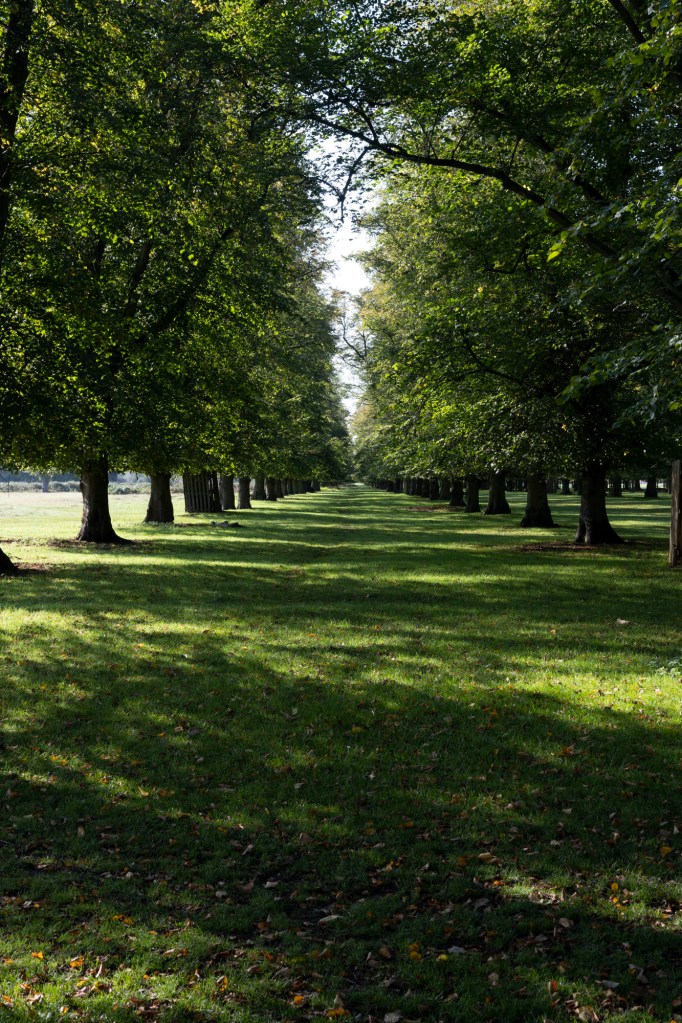
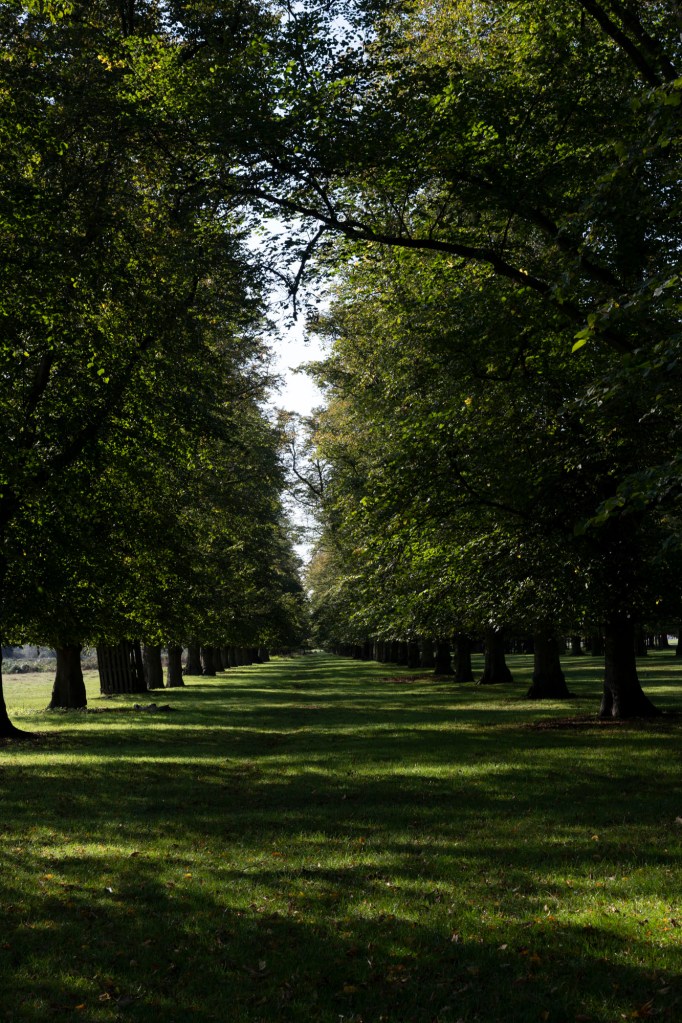
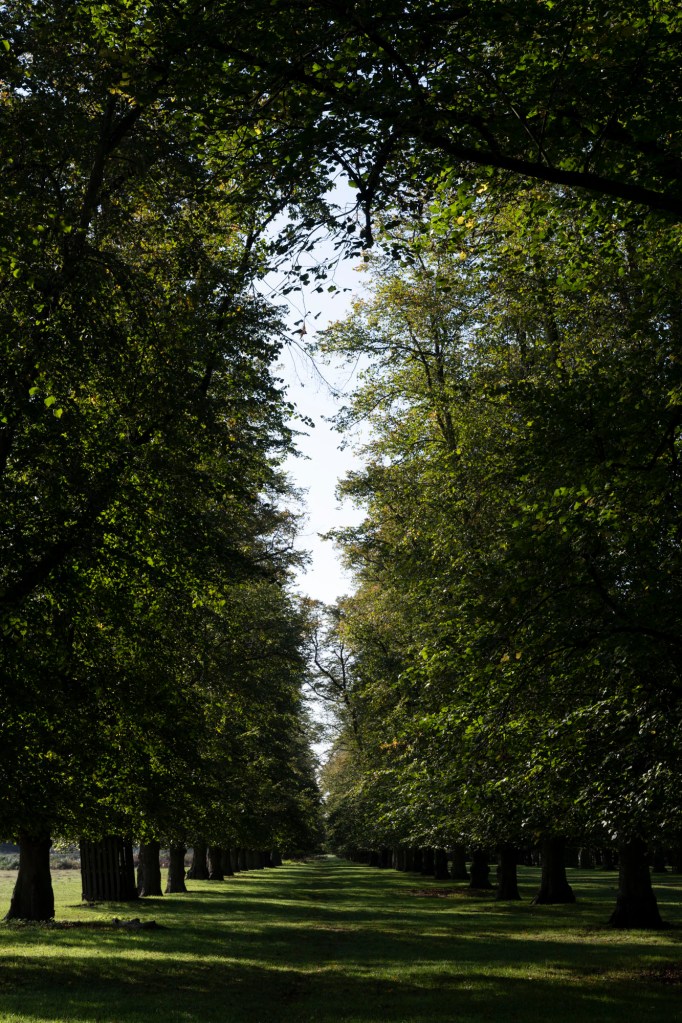
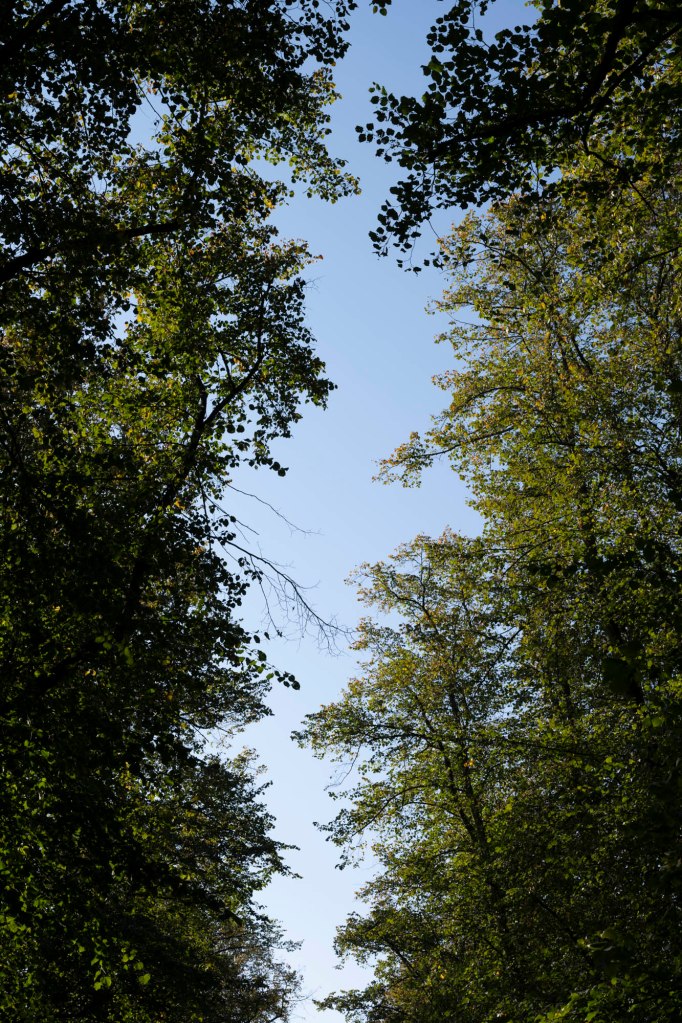
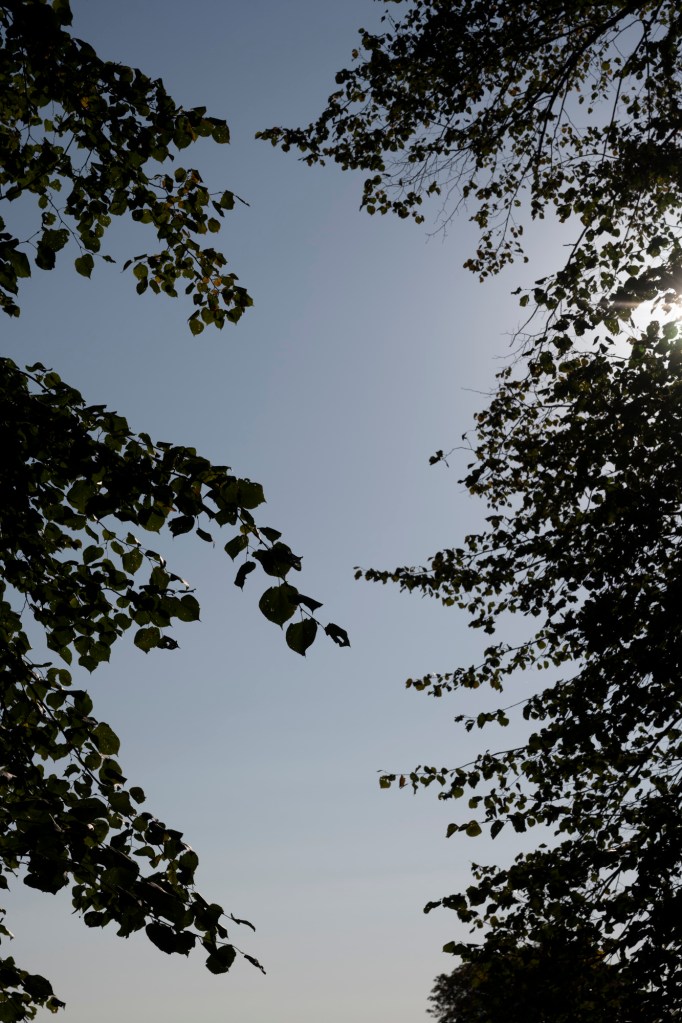
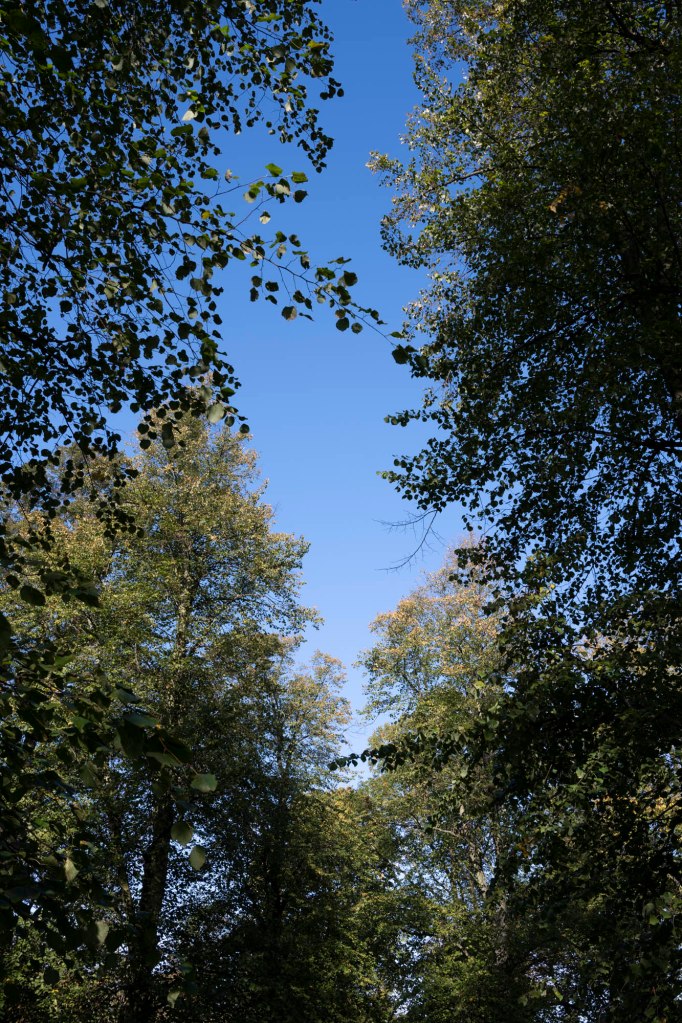
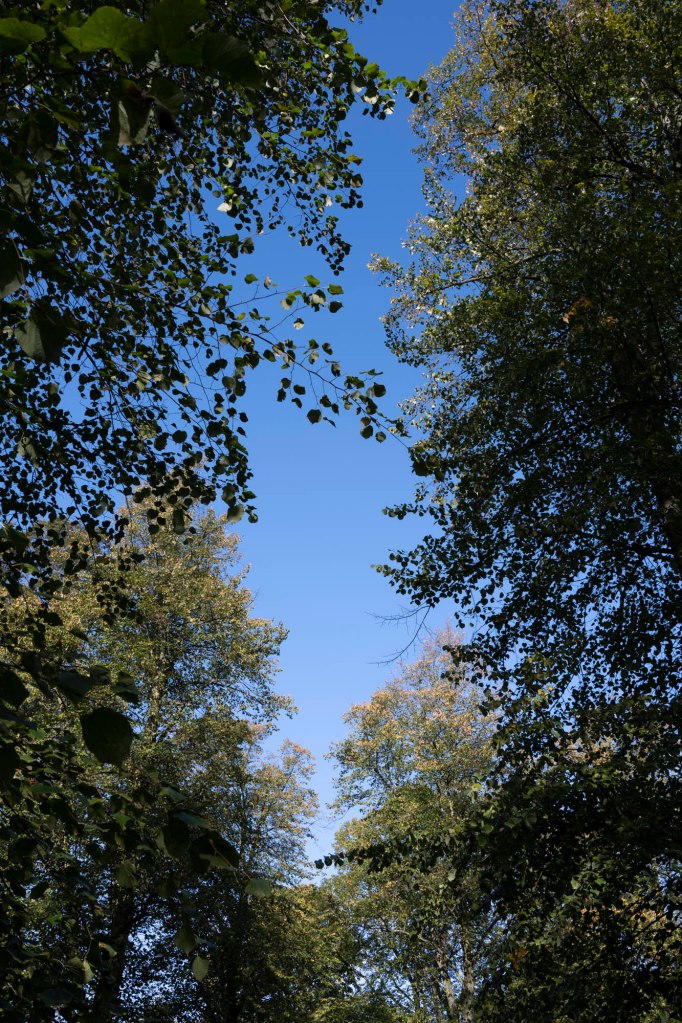
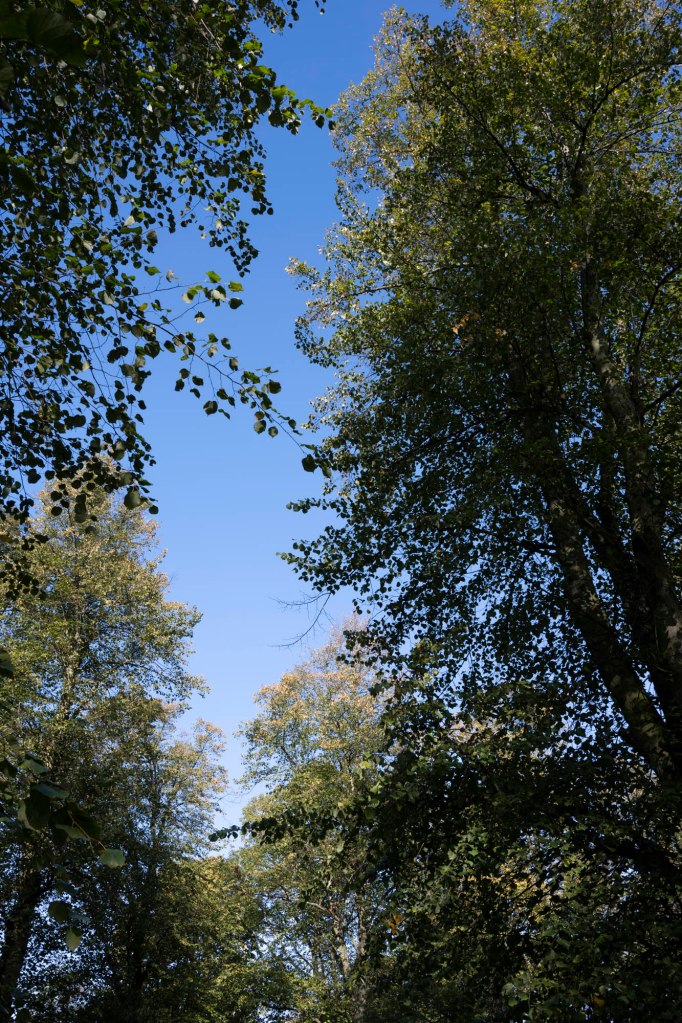
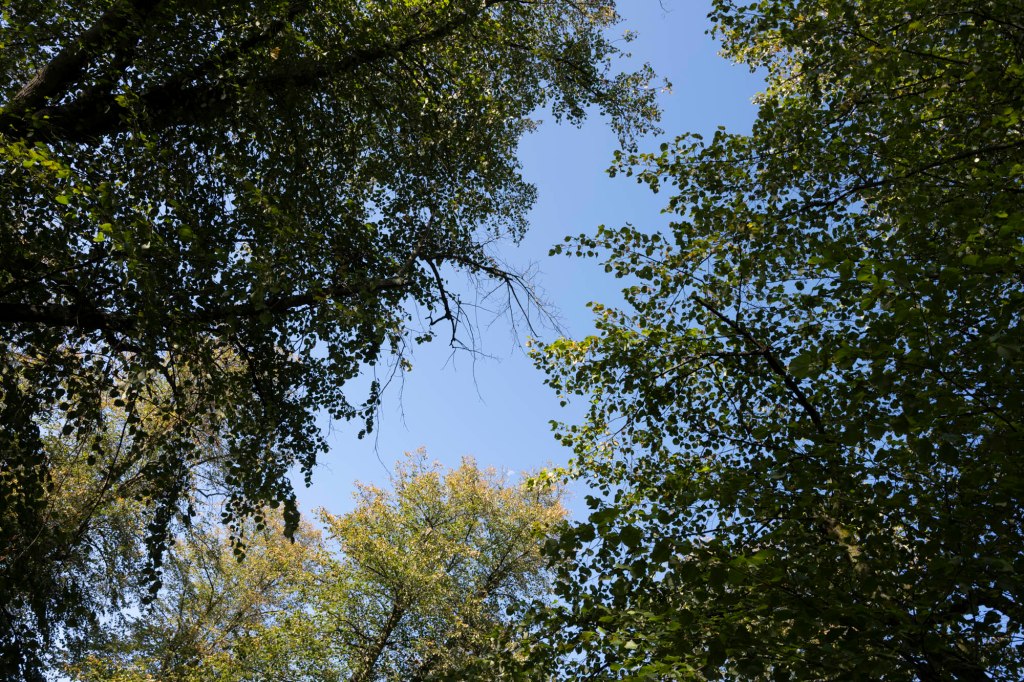
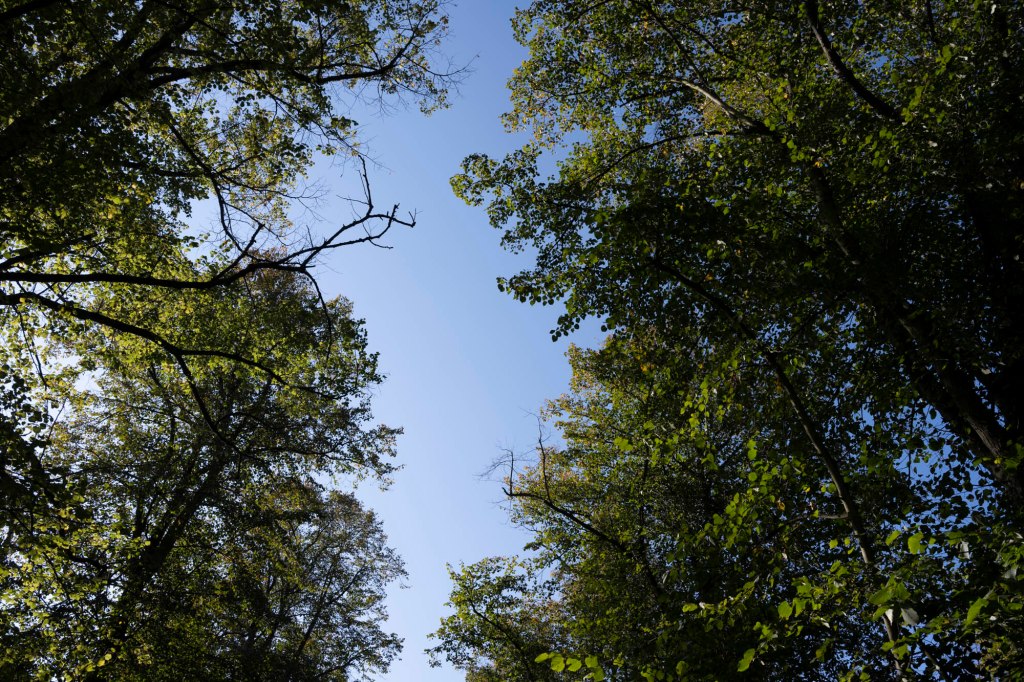
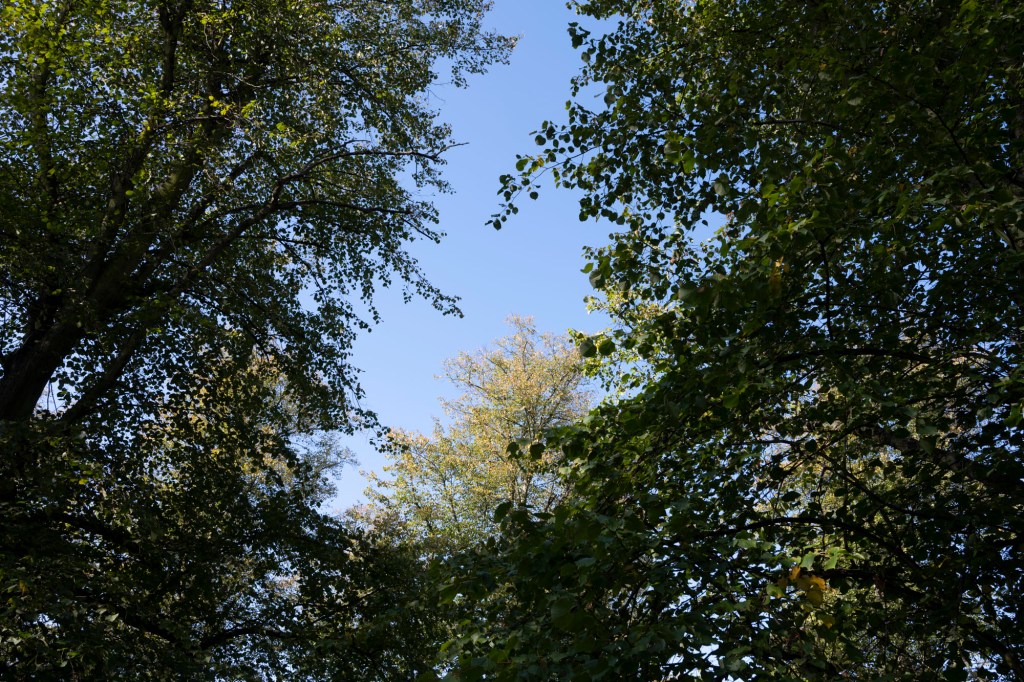
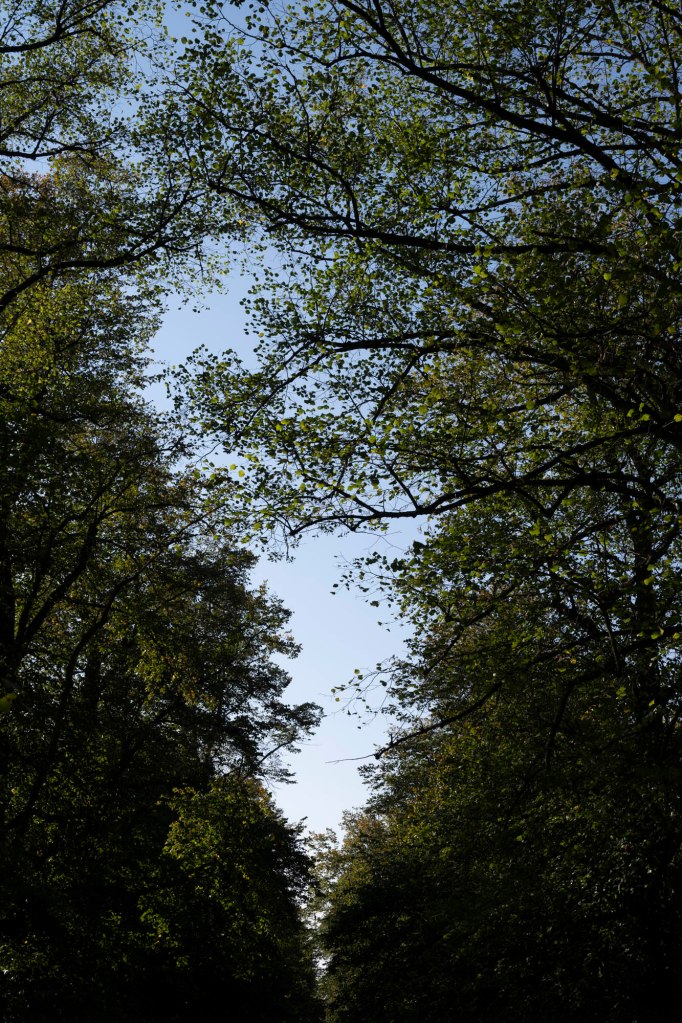
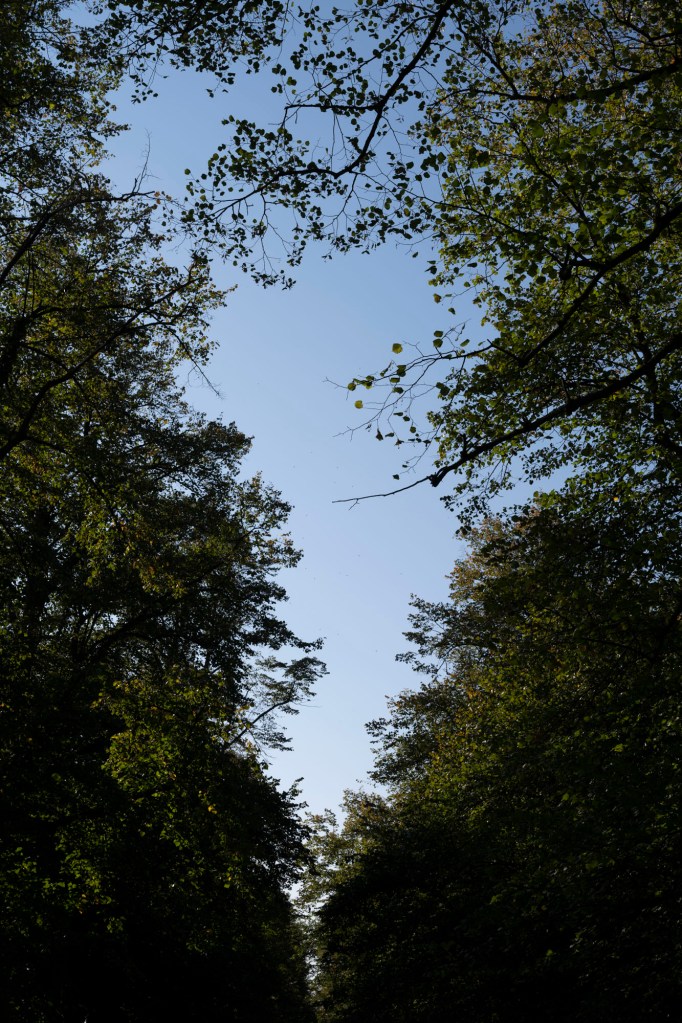
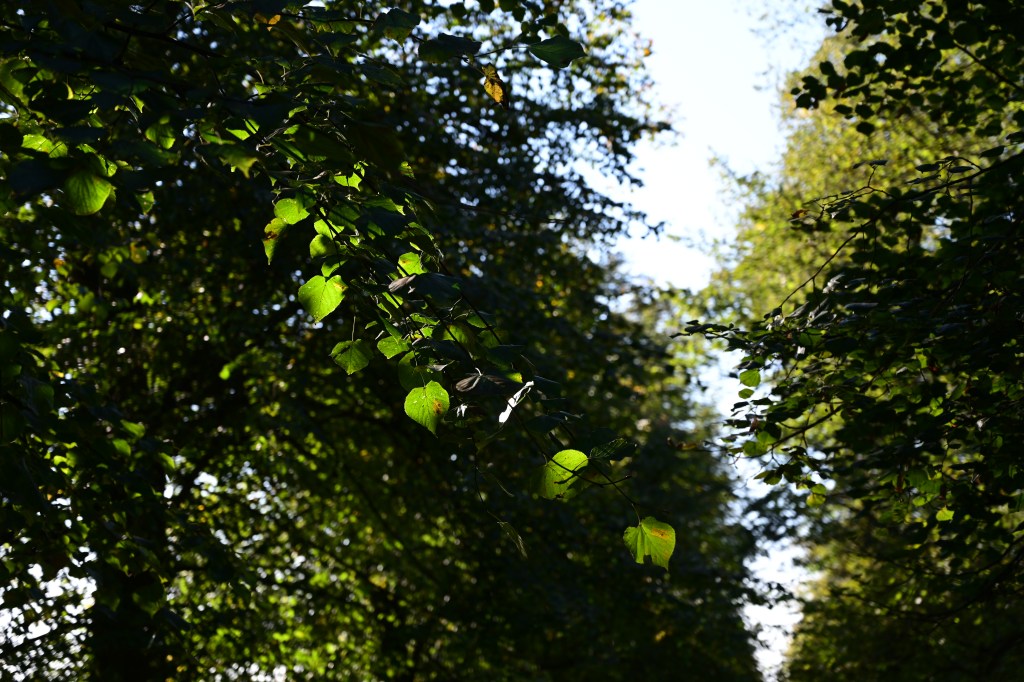
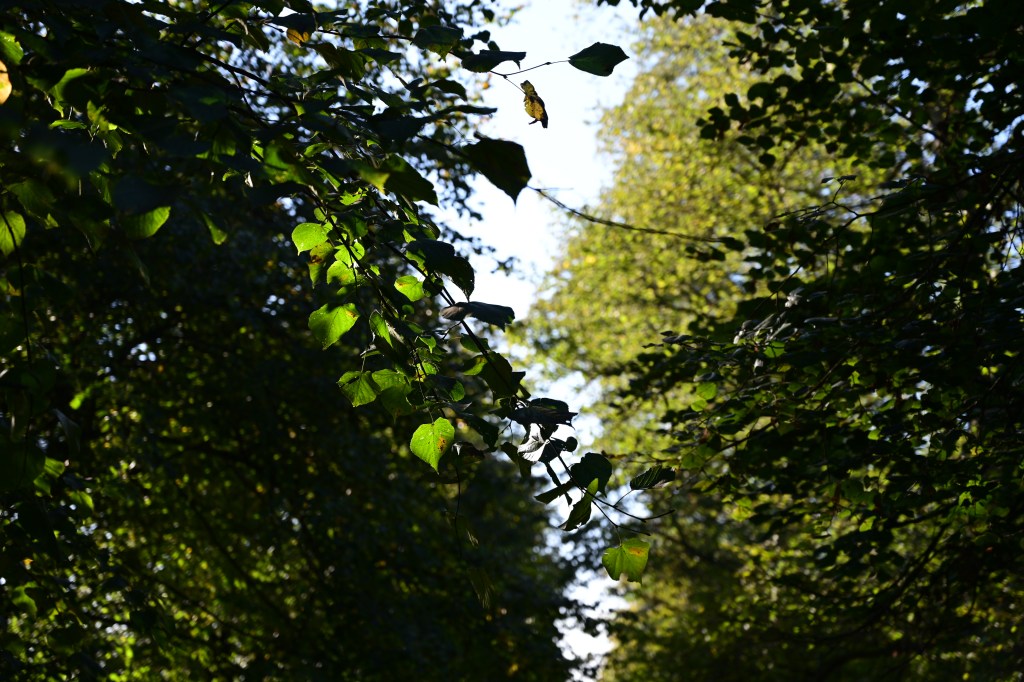
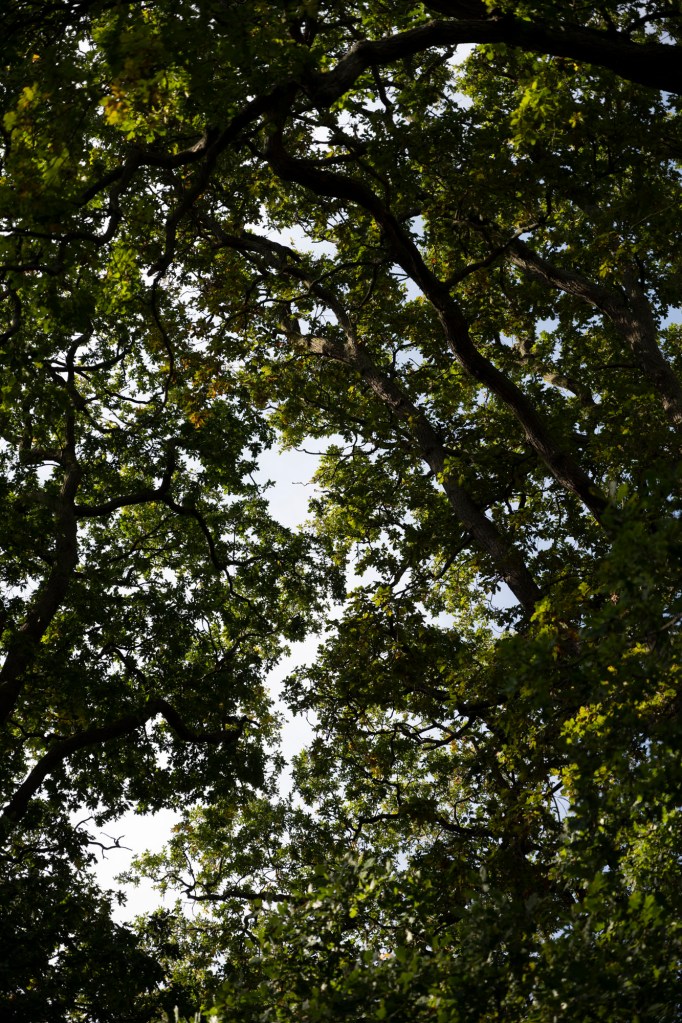
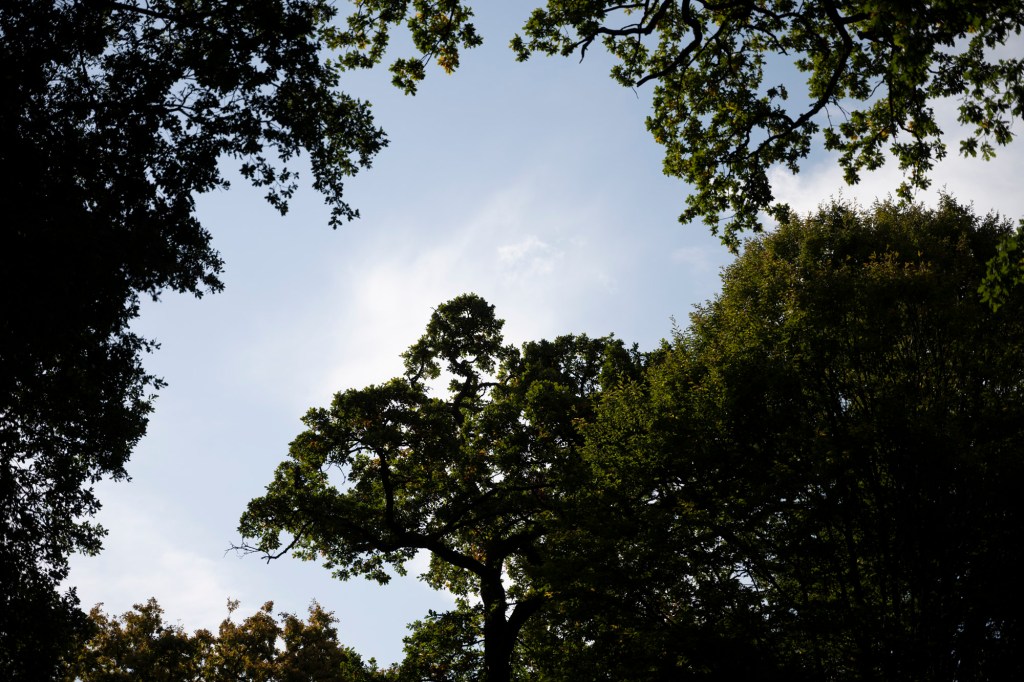
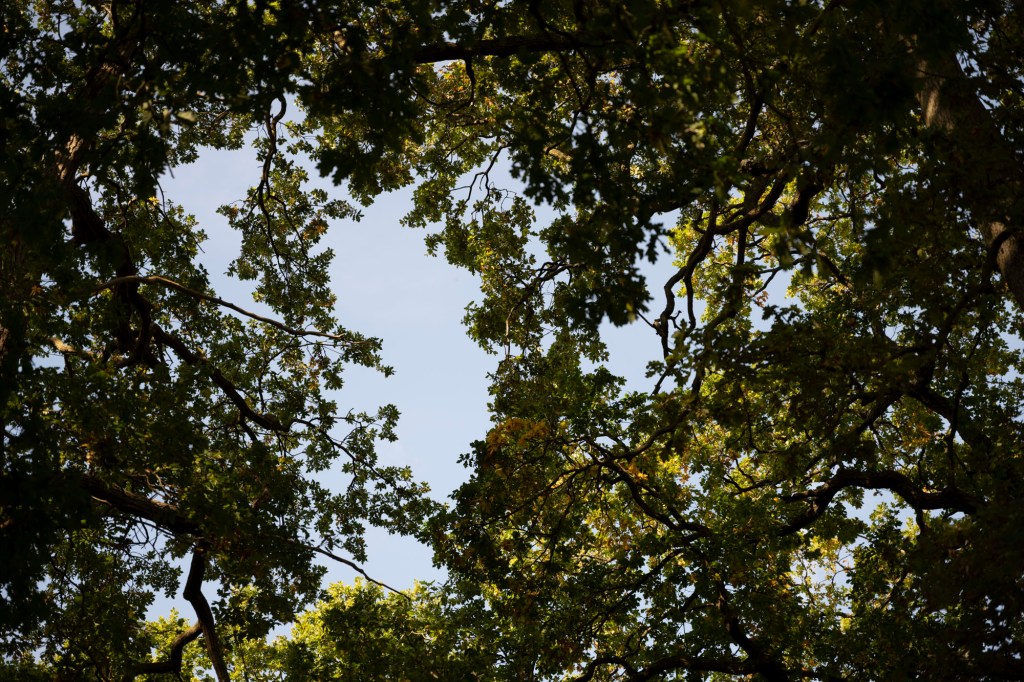
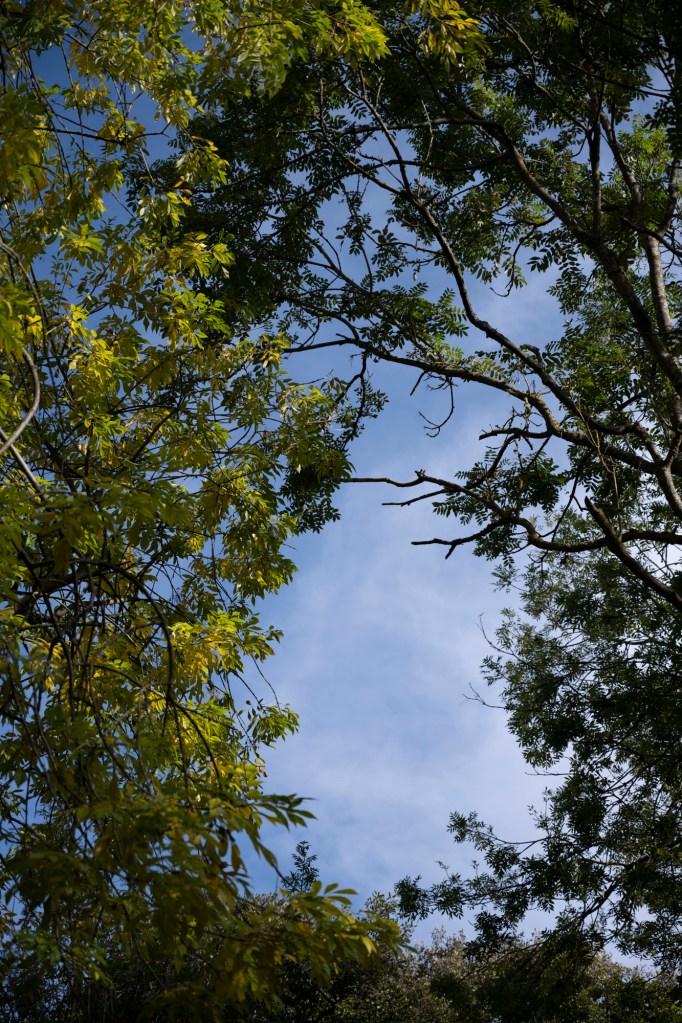
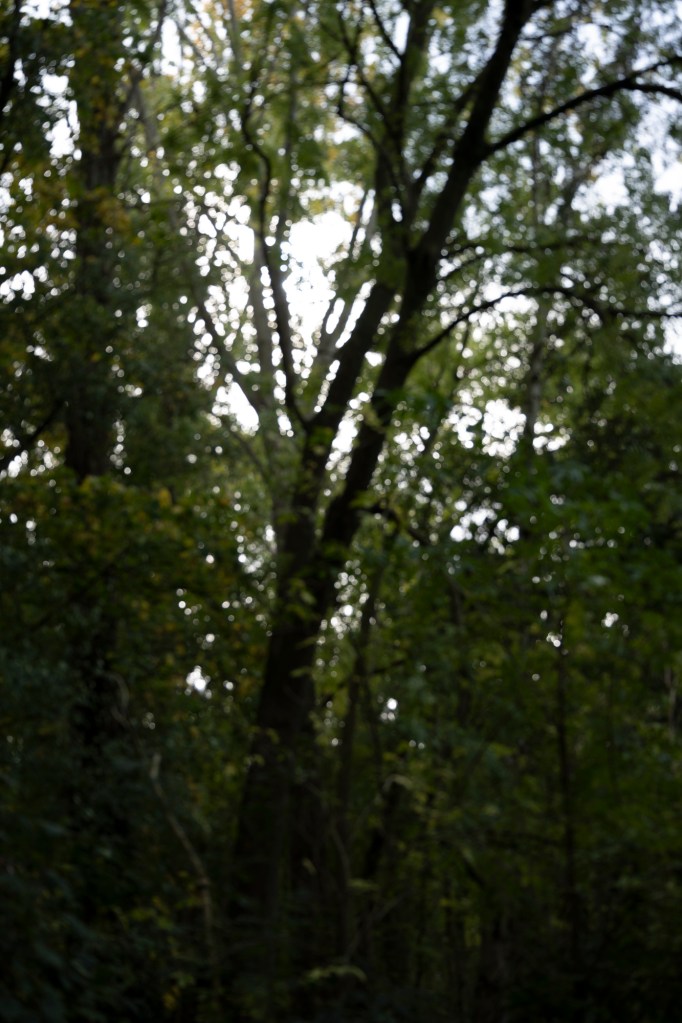
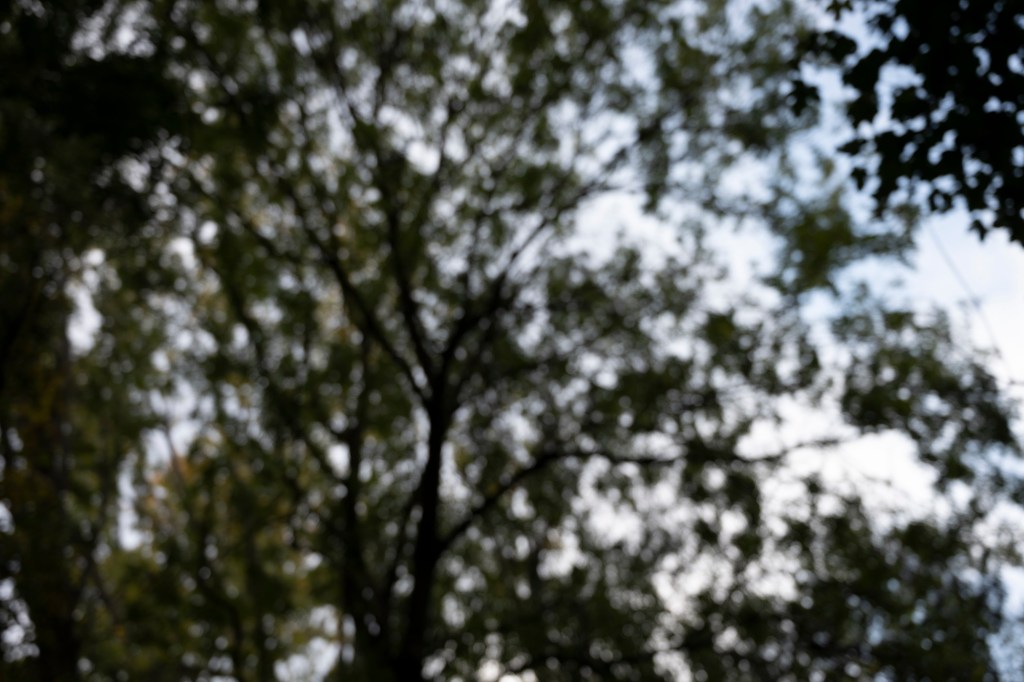
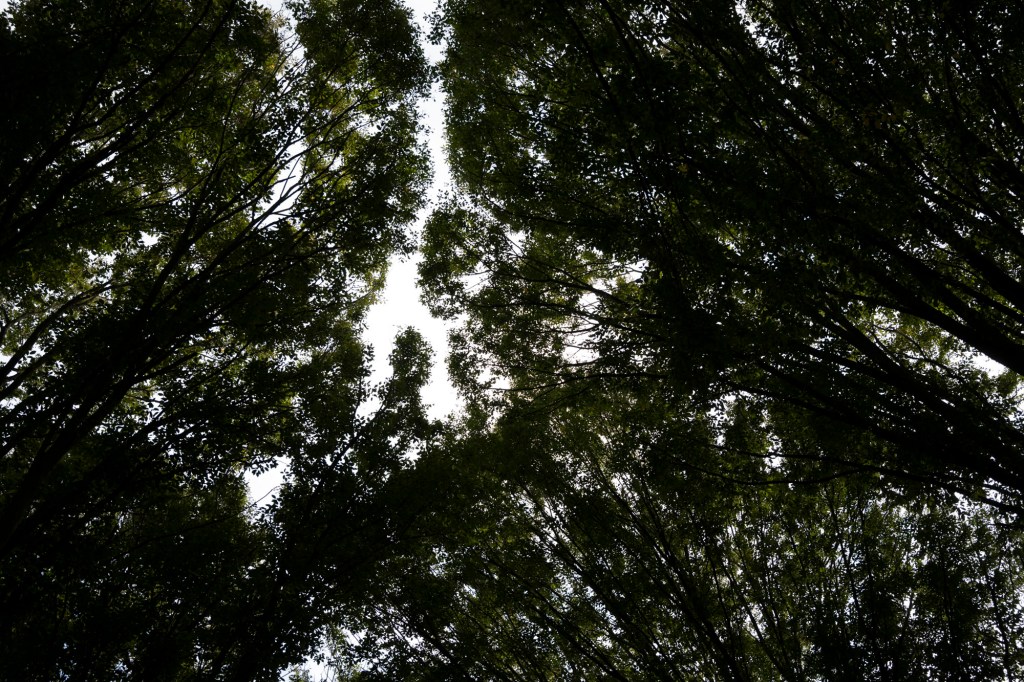
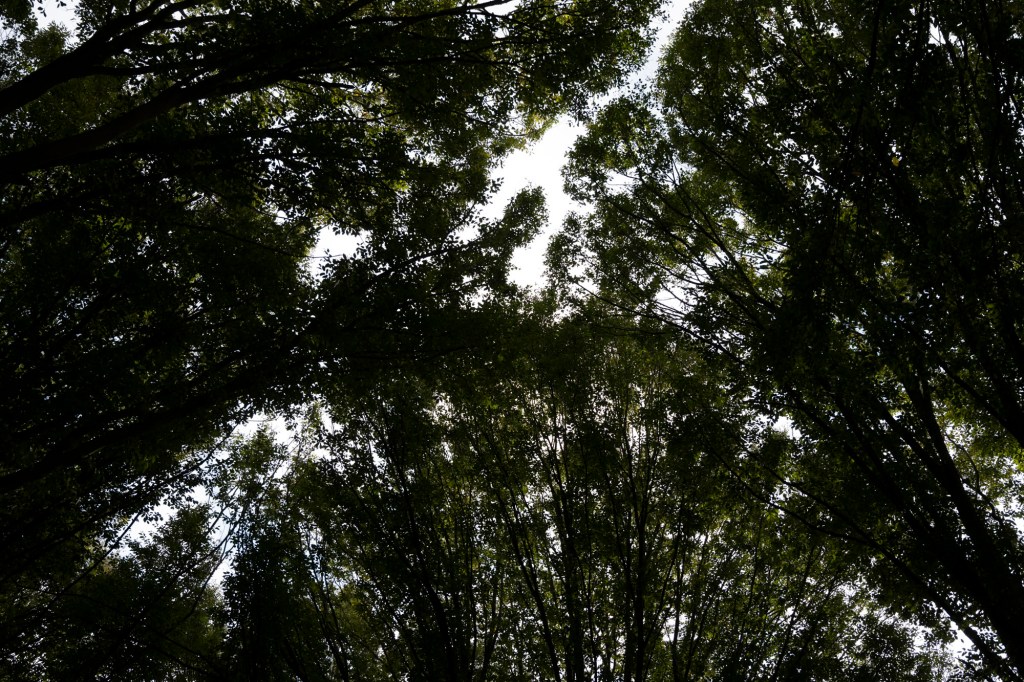
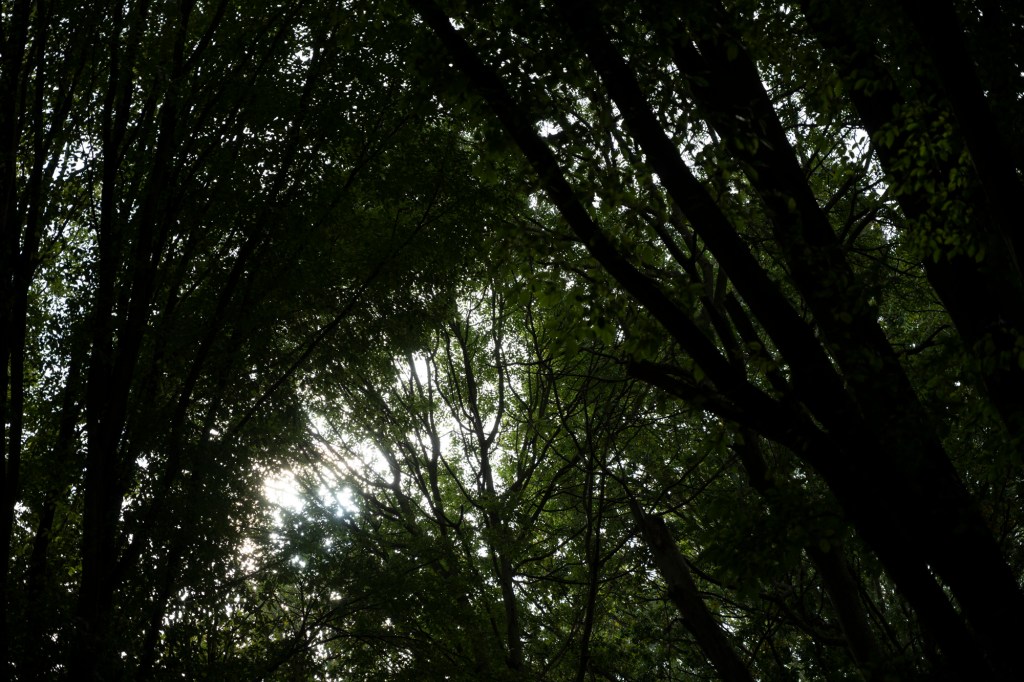
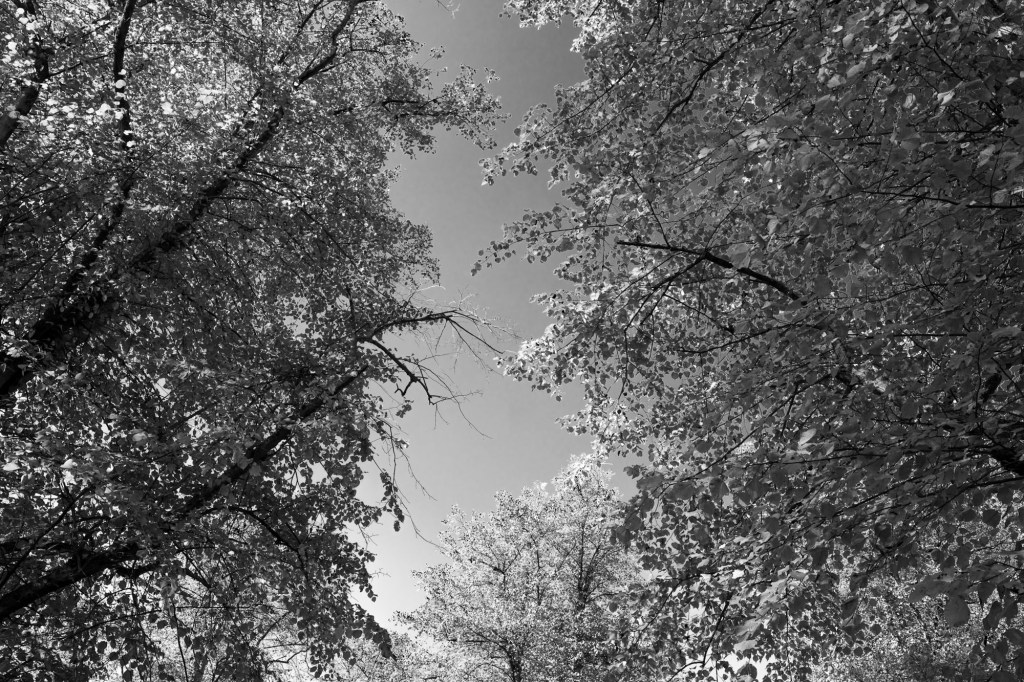
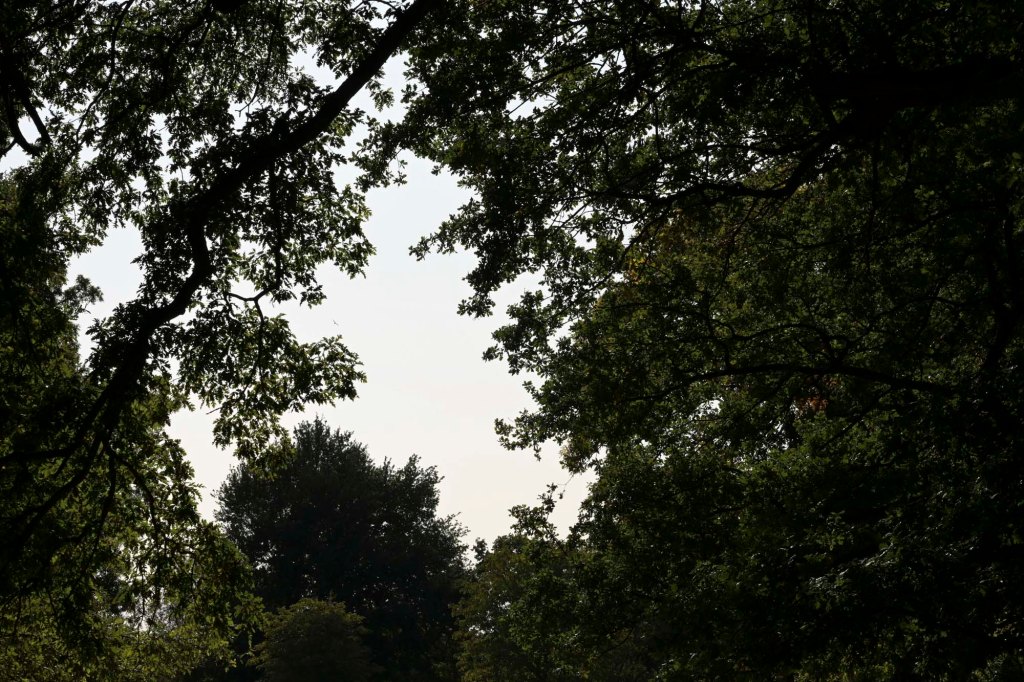
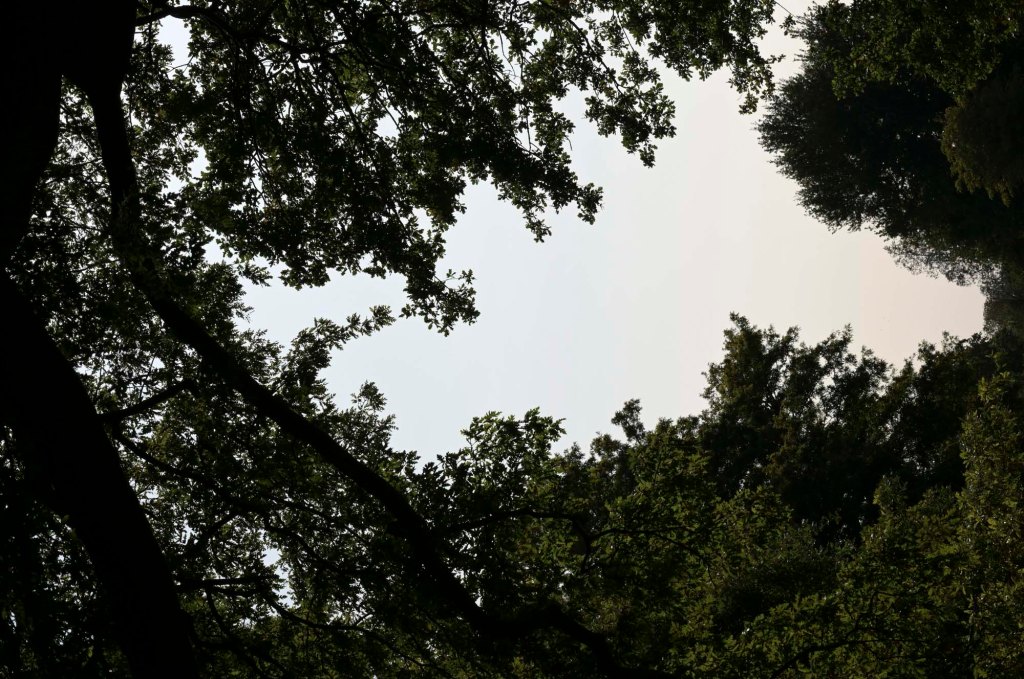
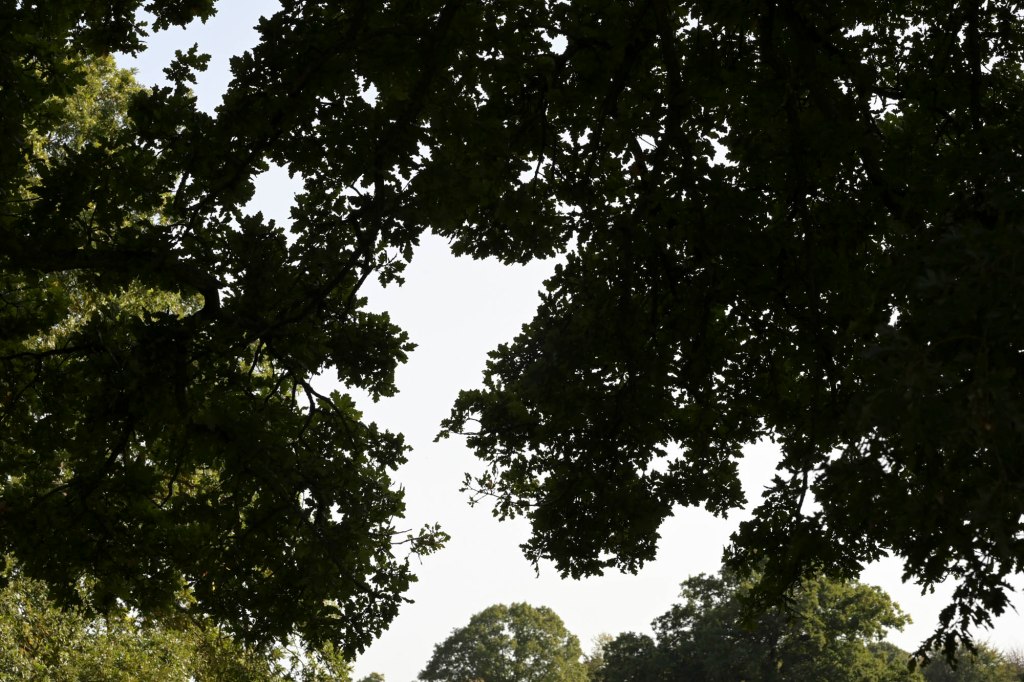
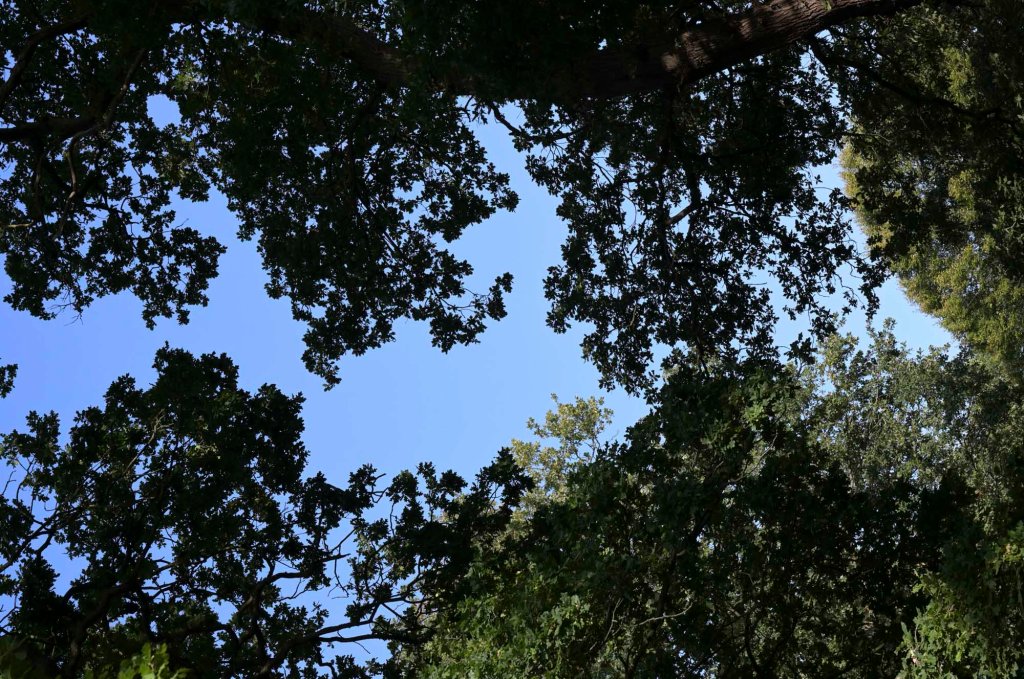
The plan for this session was to focus on ‘the space between’. The sky was clear and the sun shining, so I wanted to check where the light was and how it affected both the trees and resulting images.

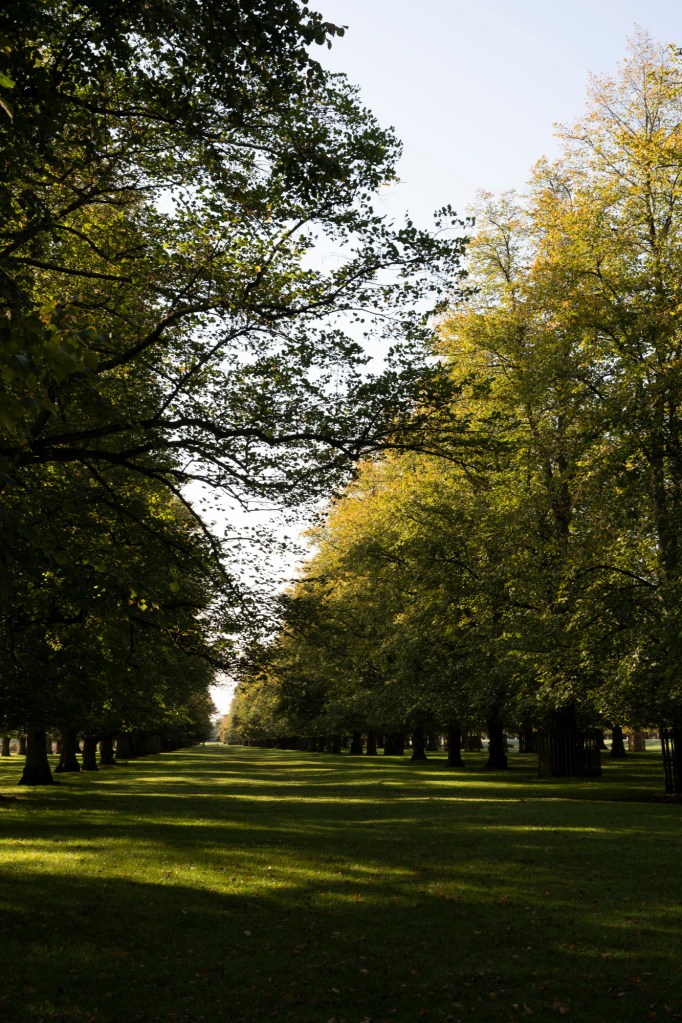
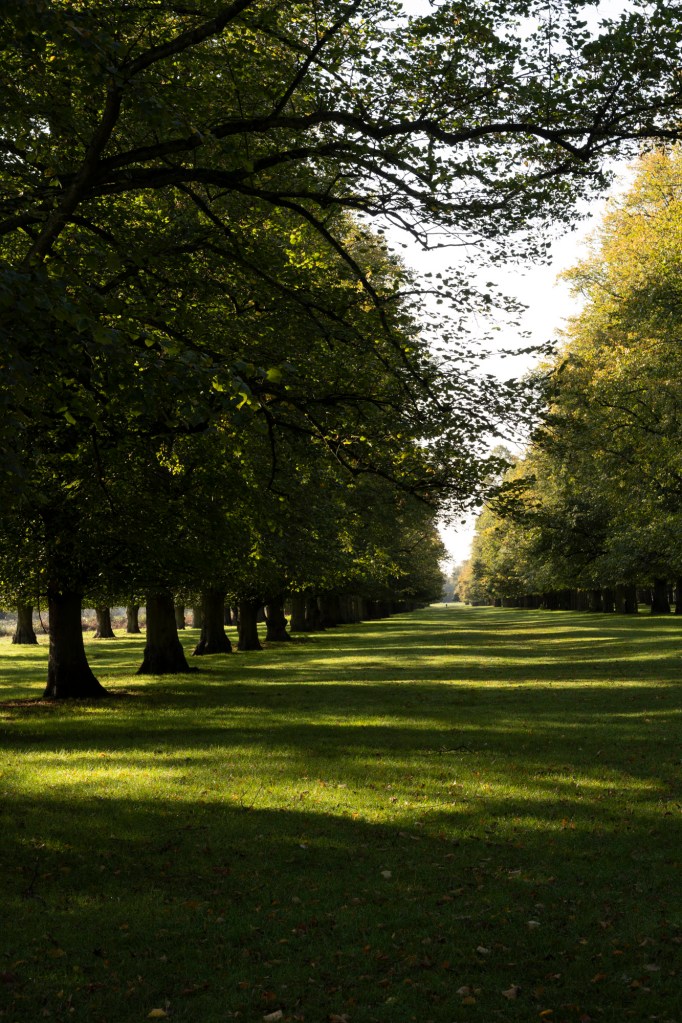
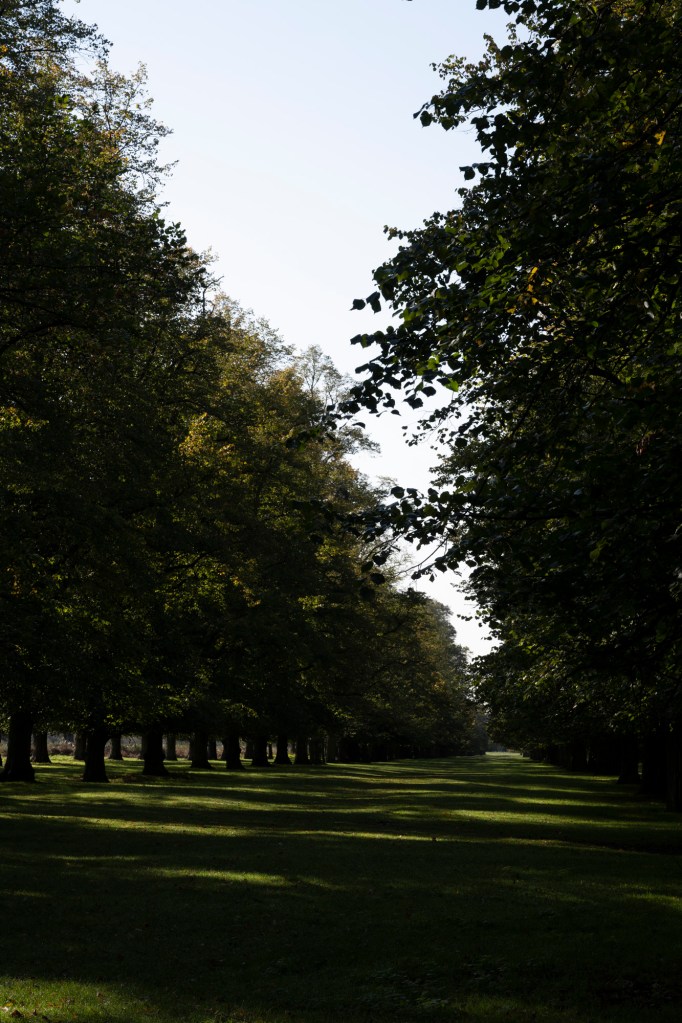
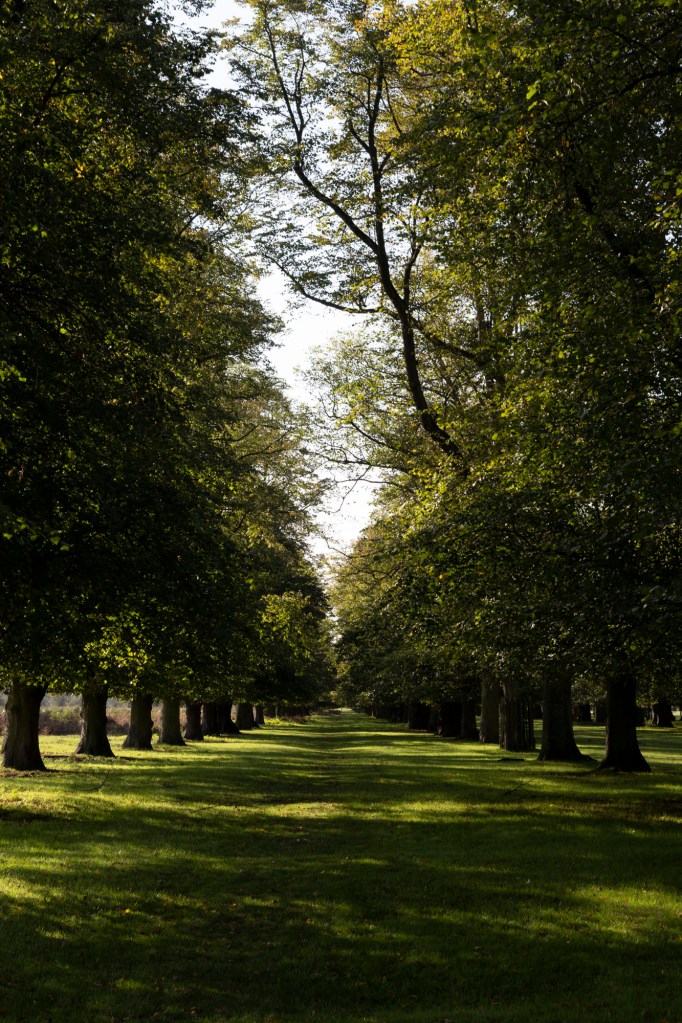
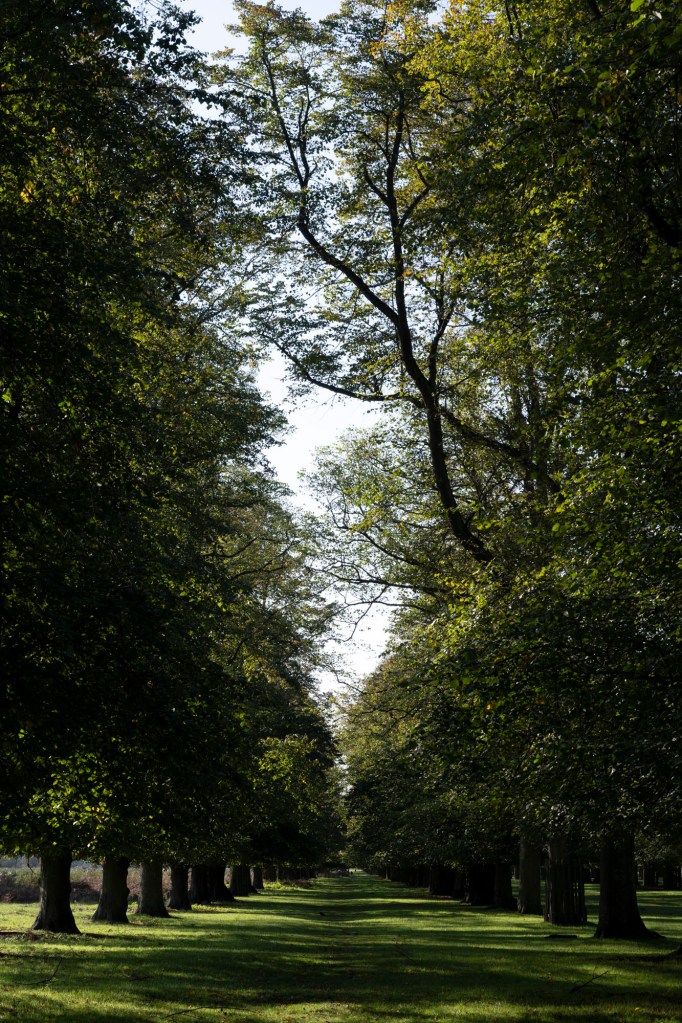
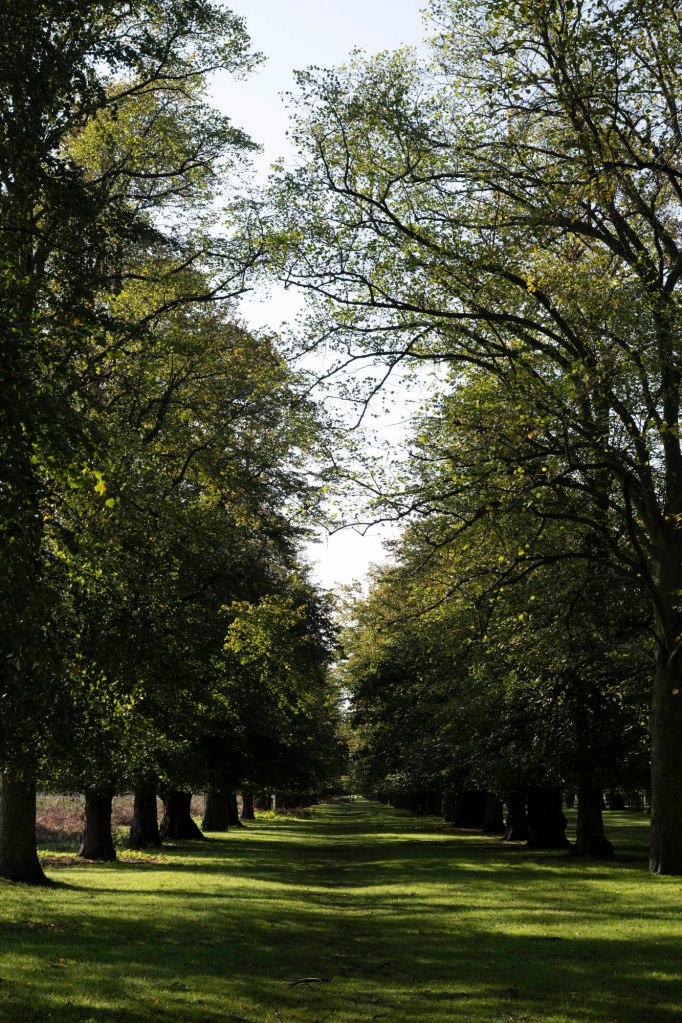
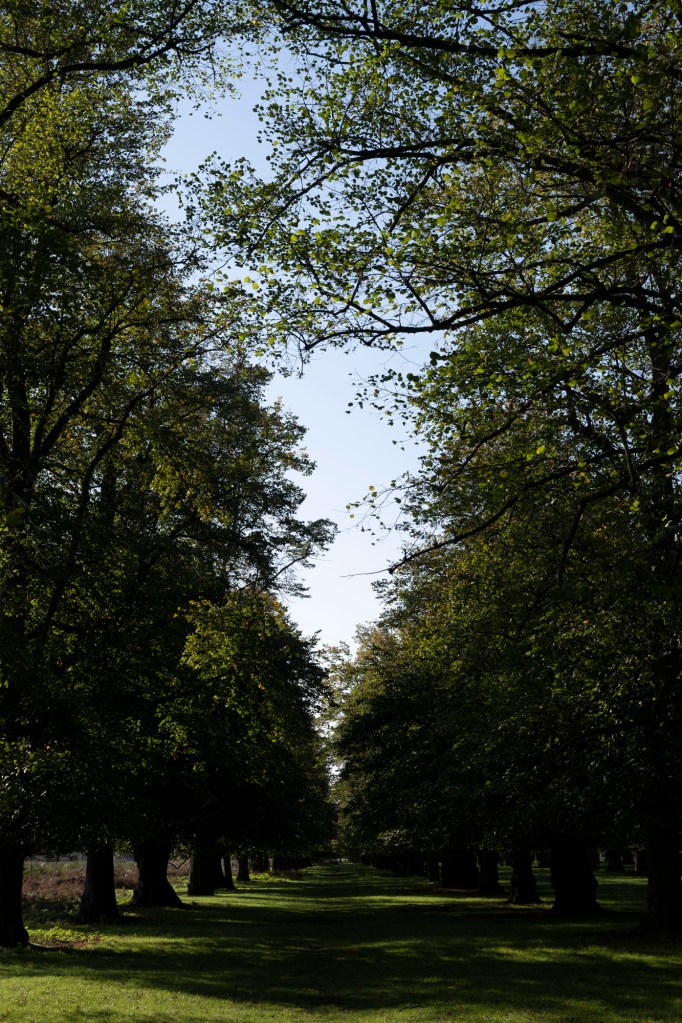
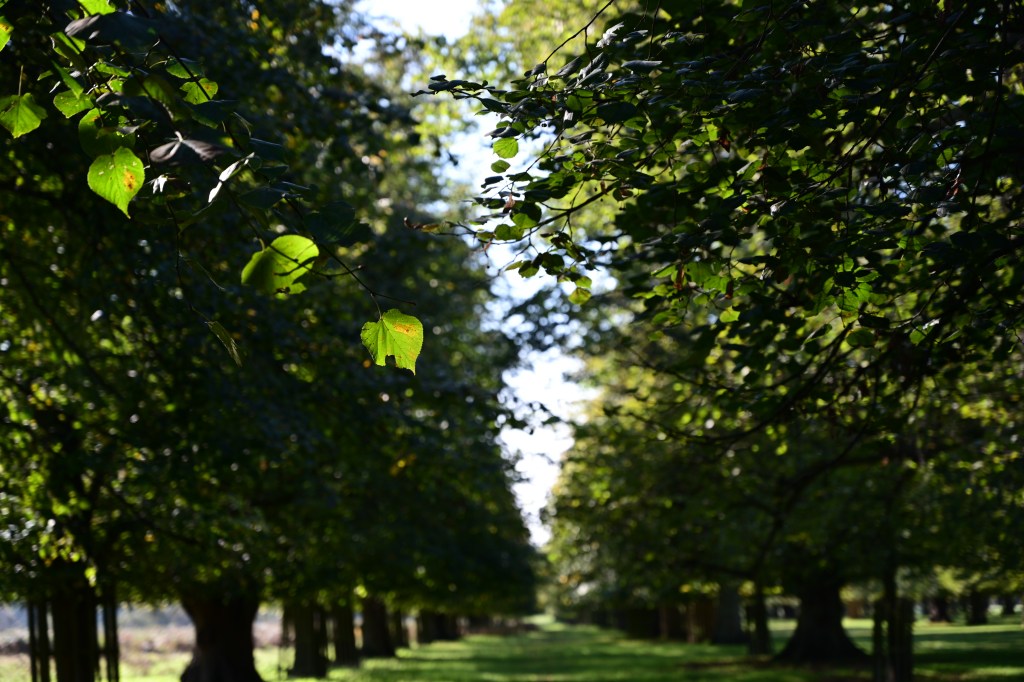
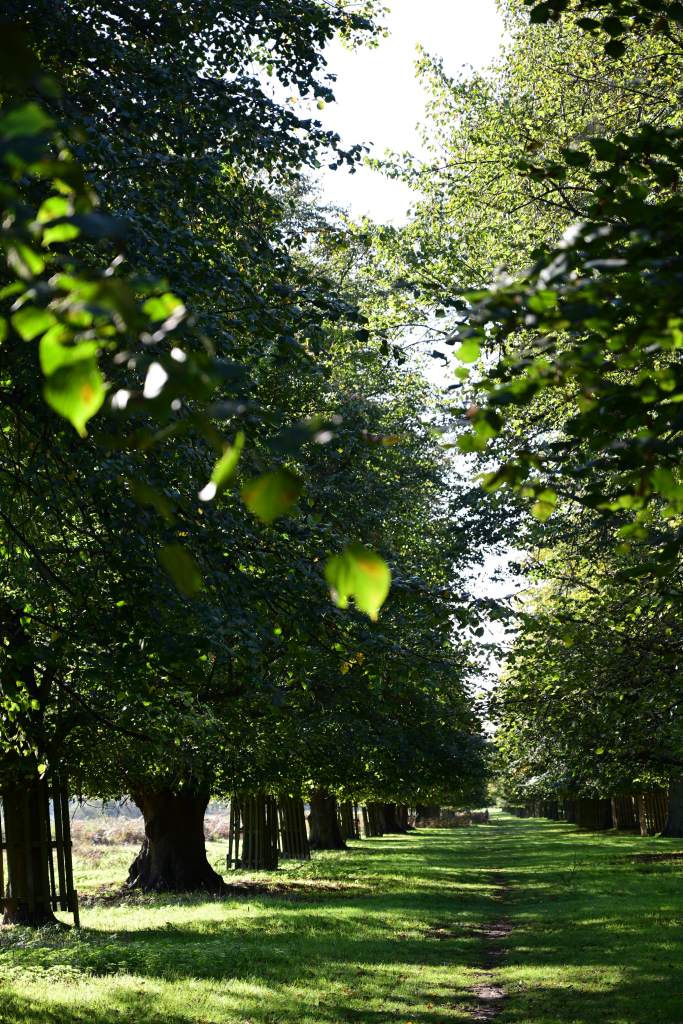
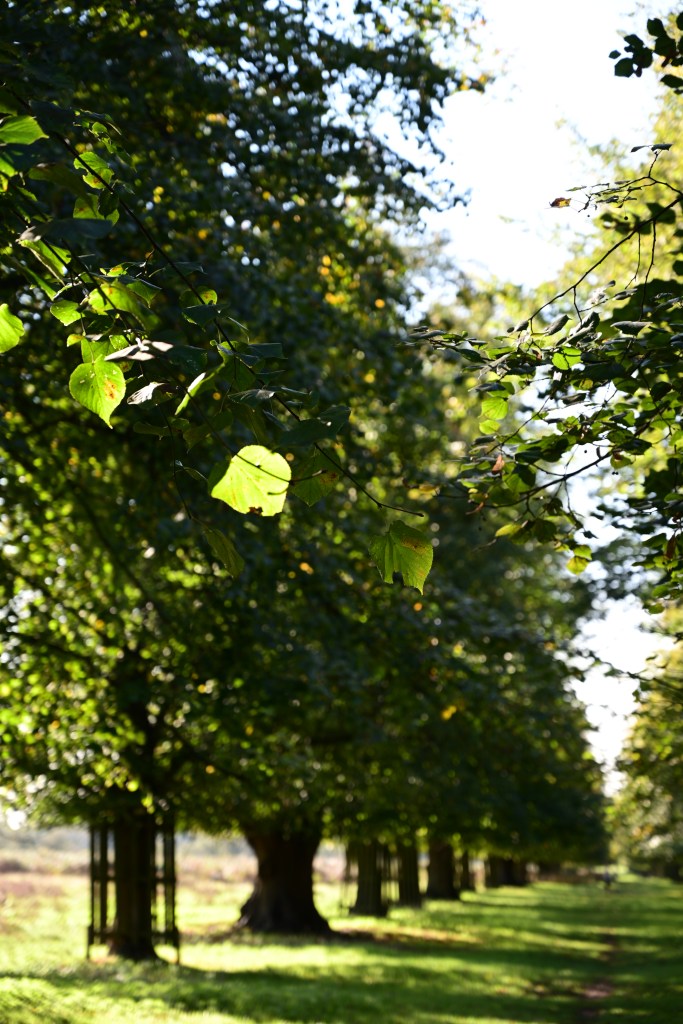
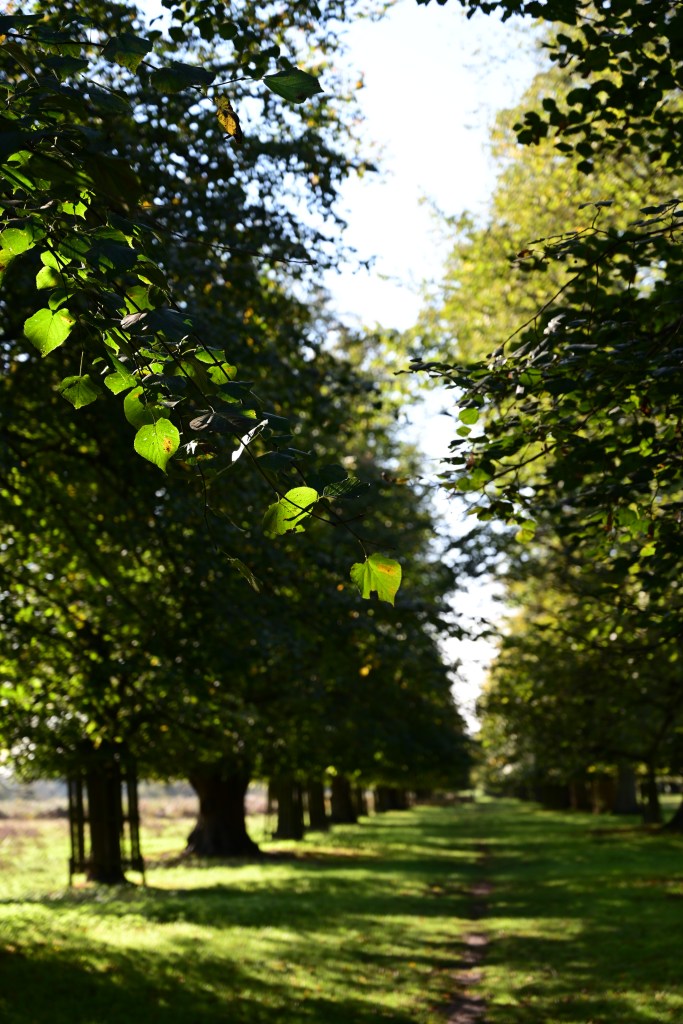
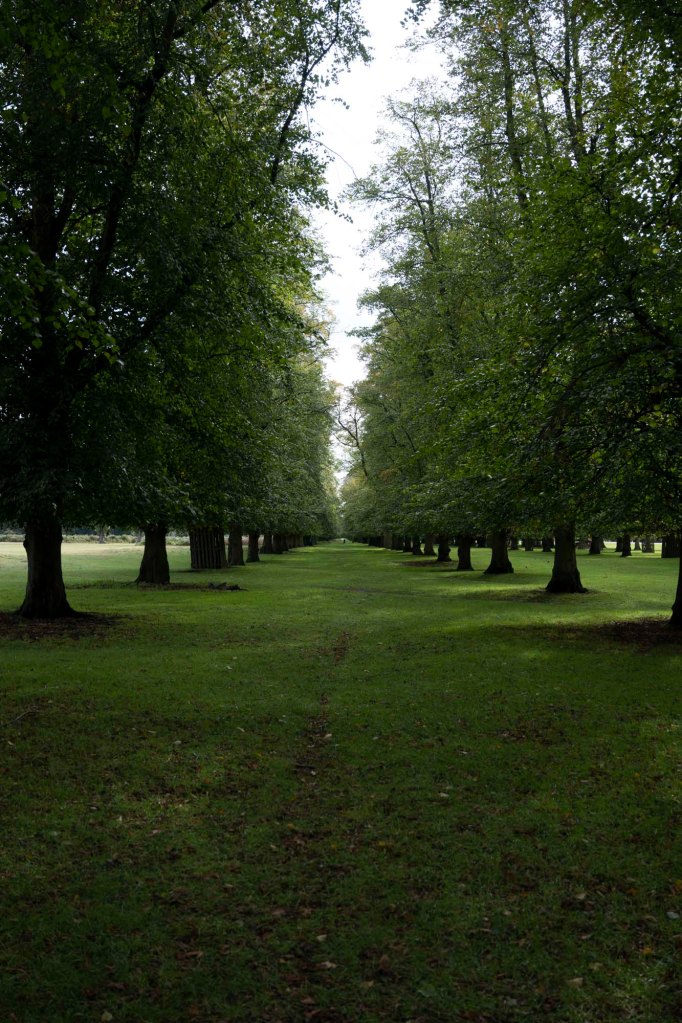
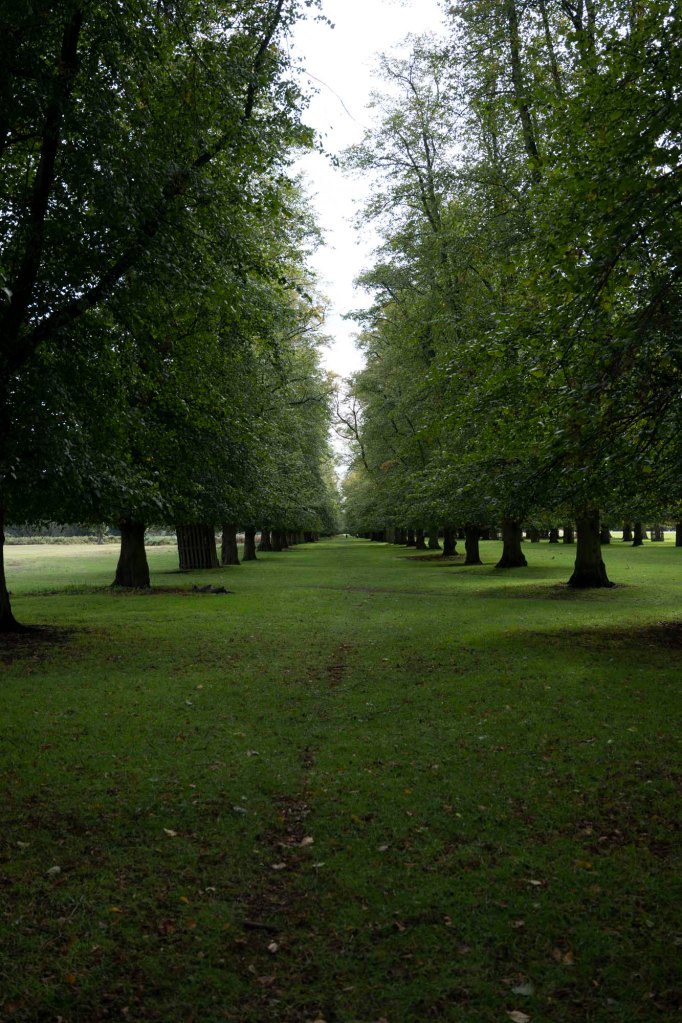
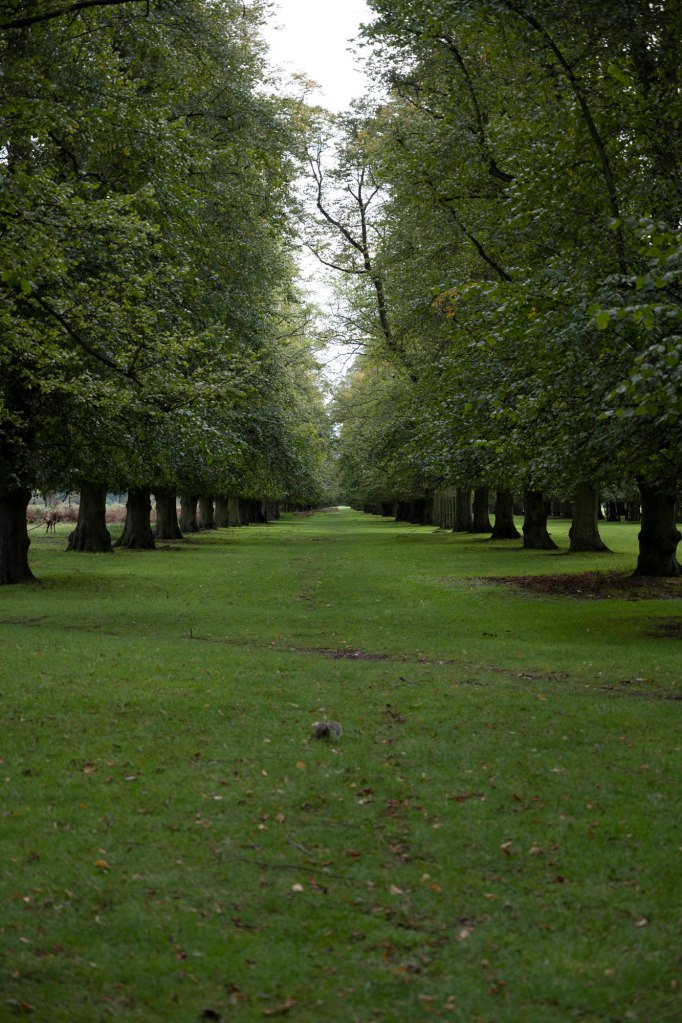
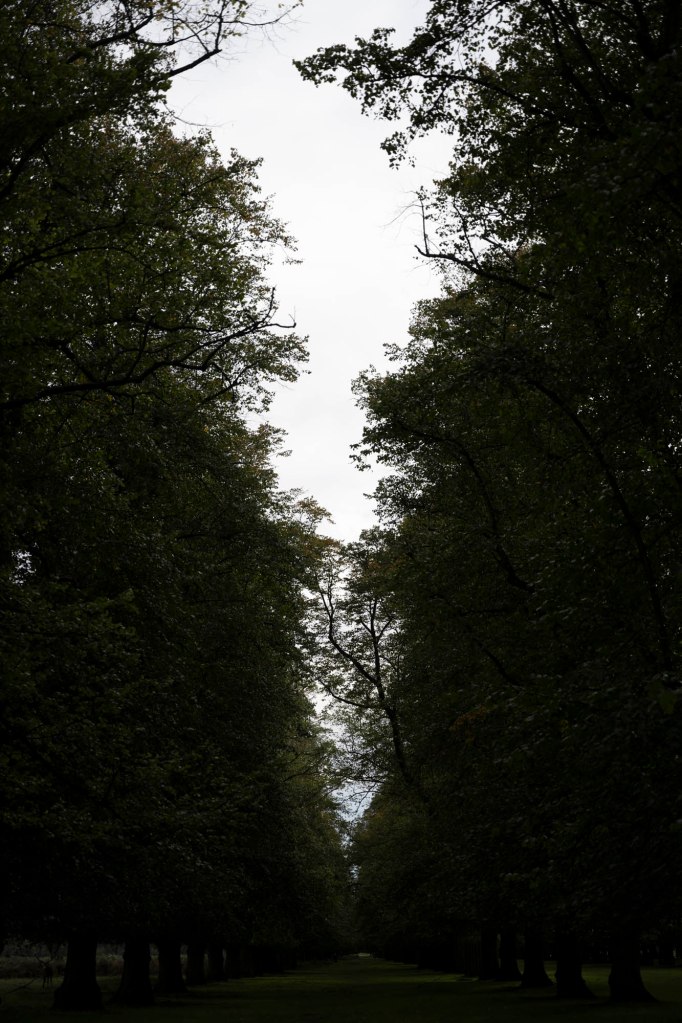
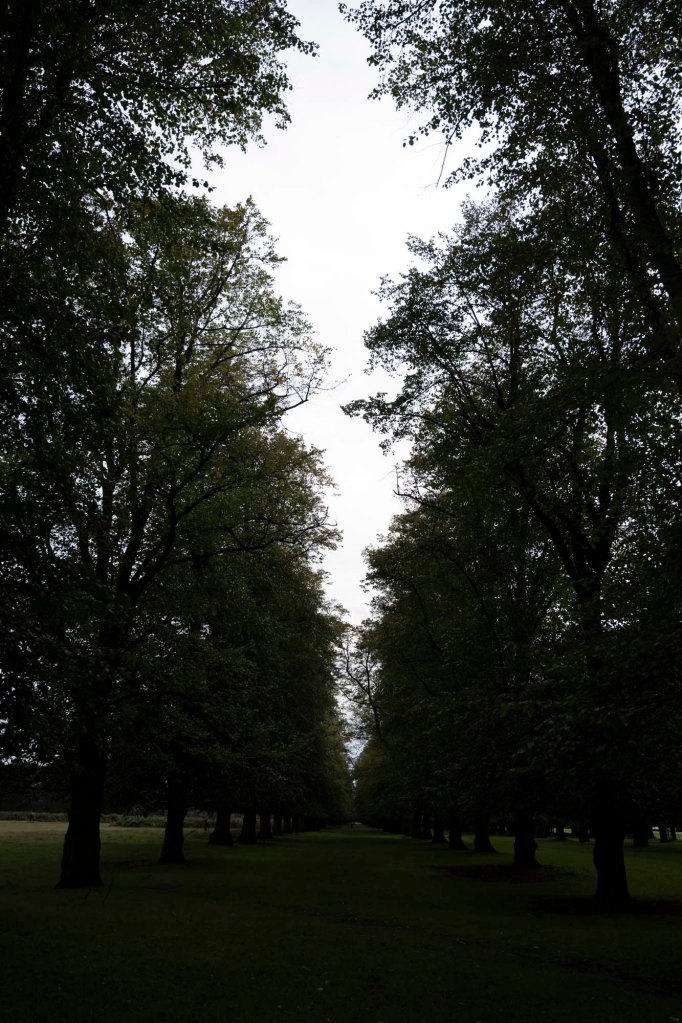
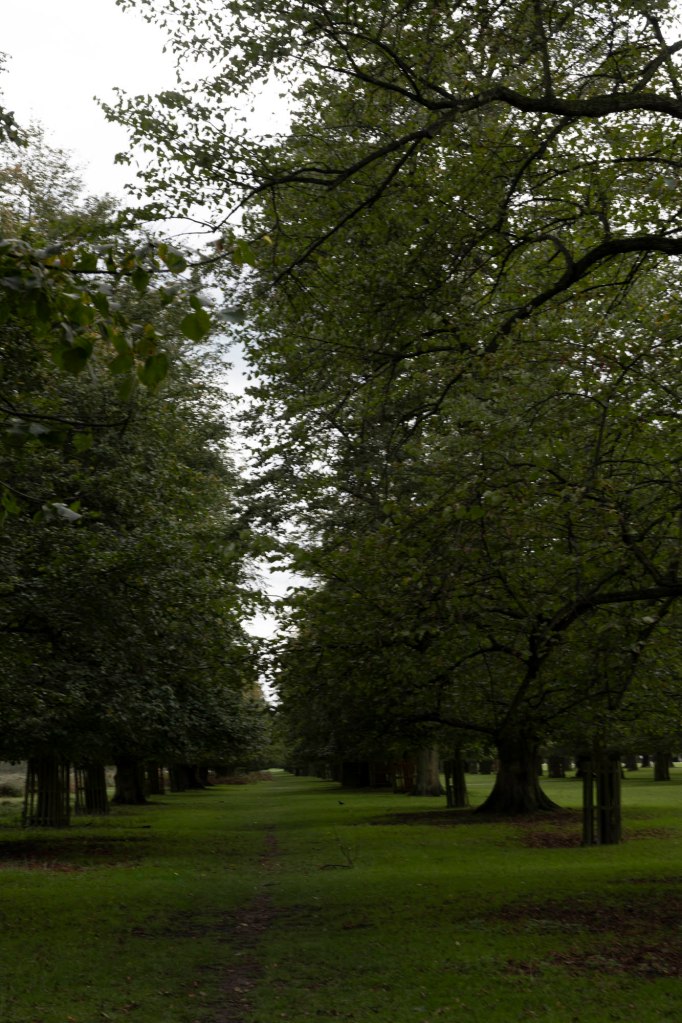
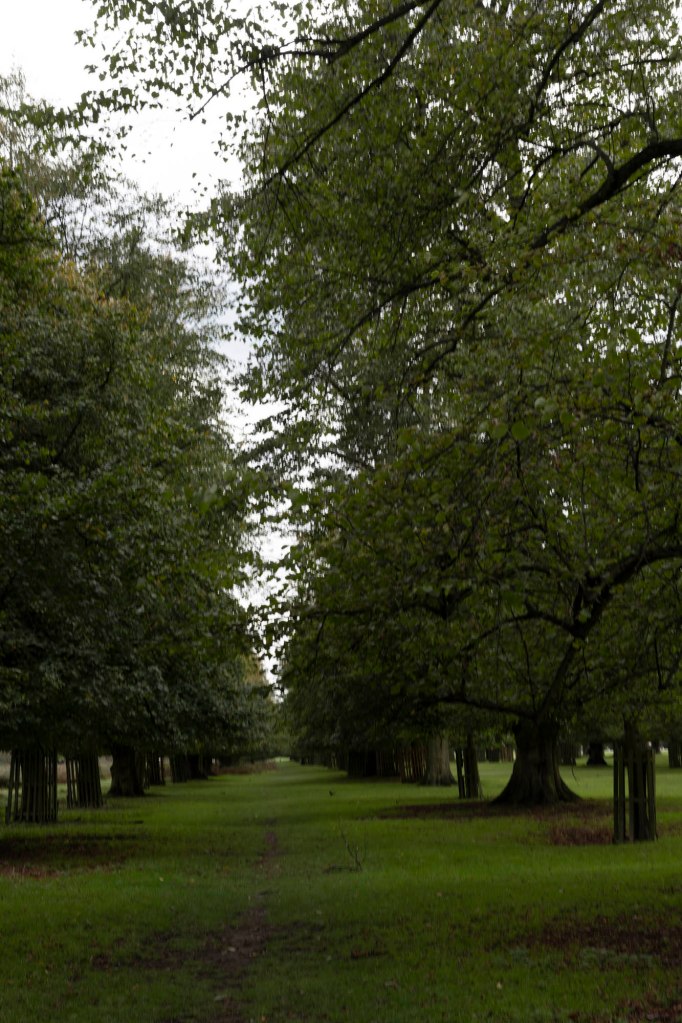
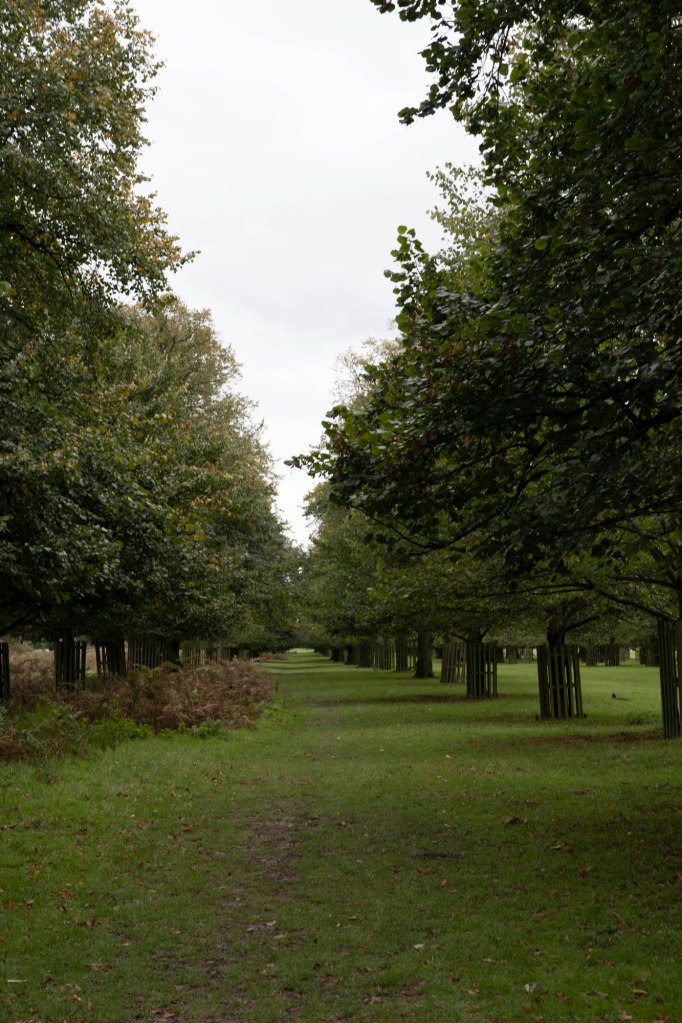
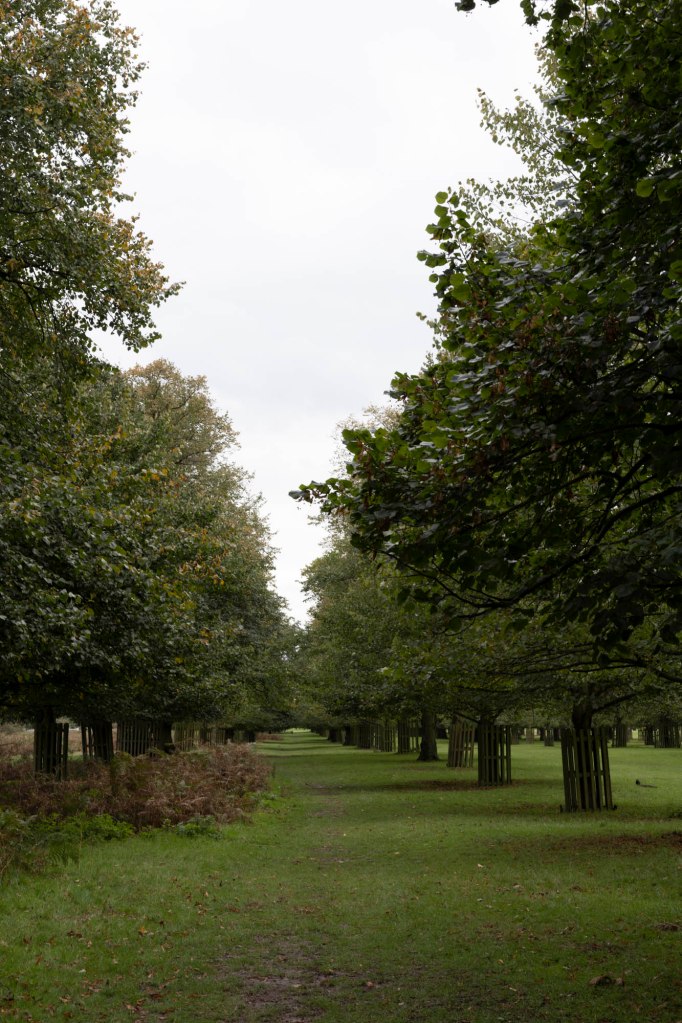
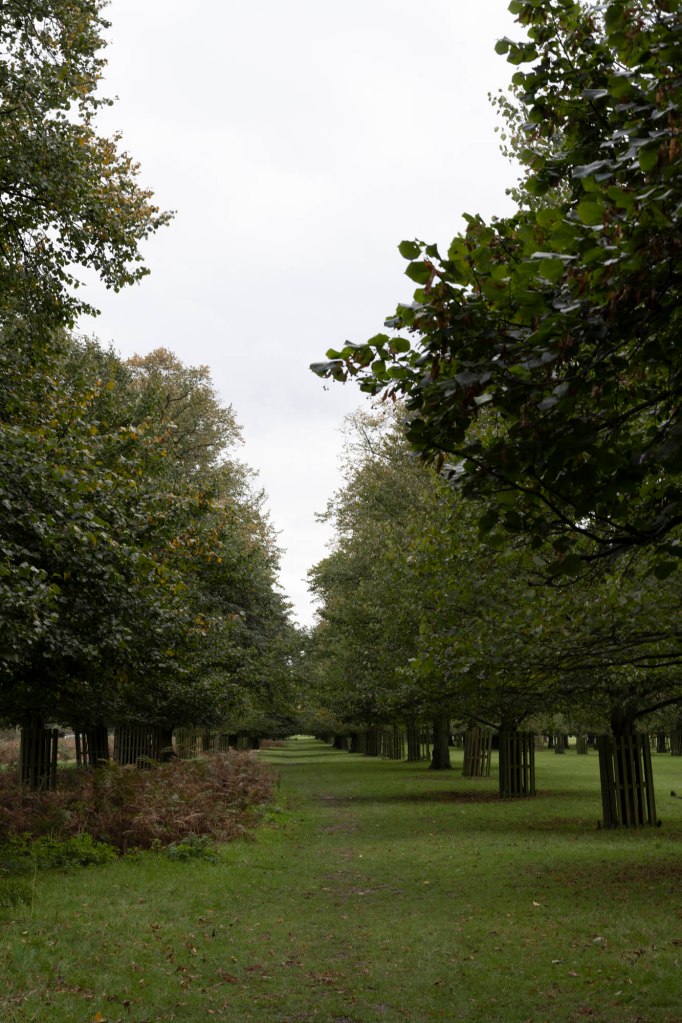
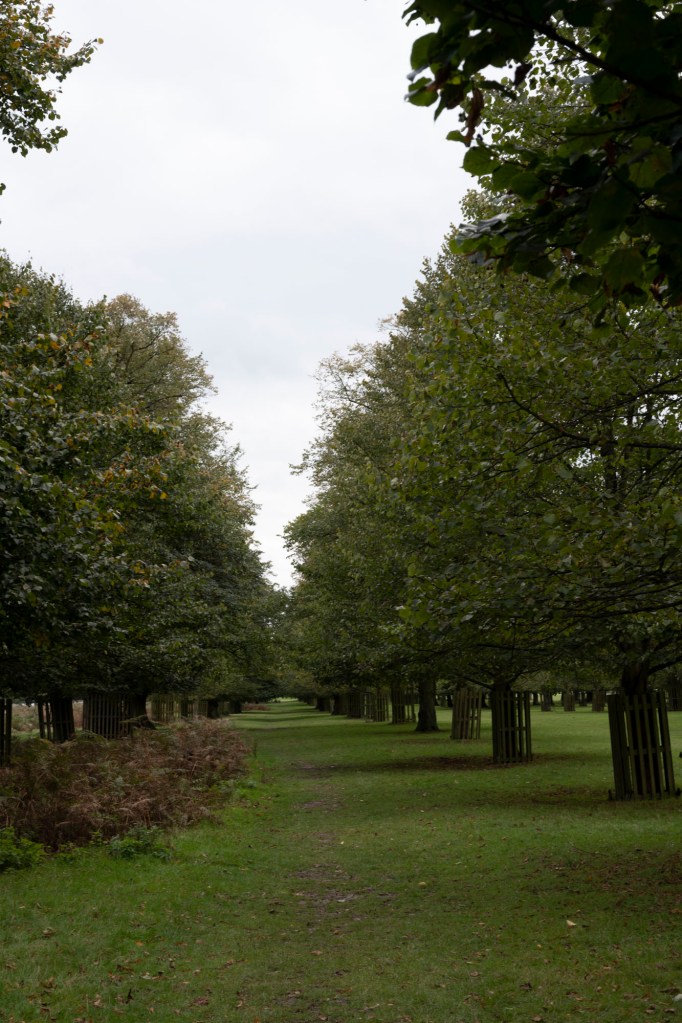
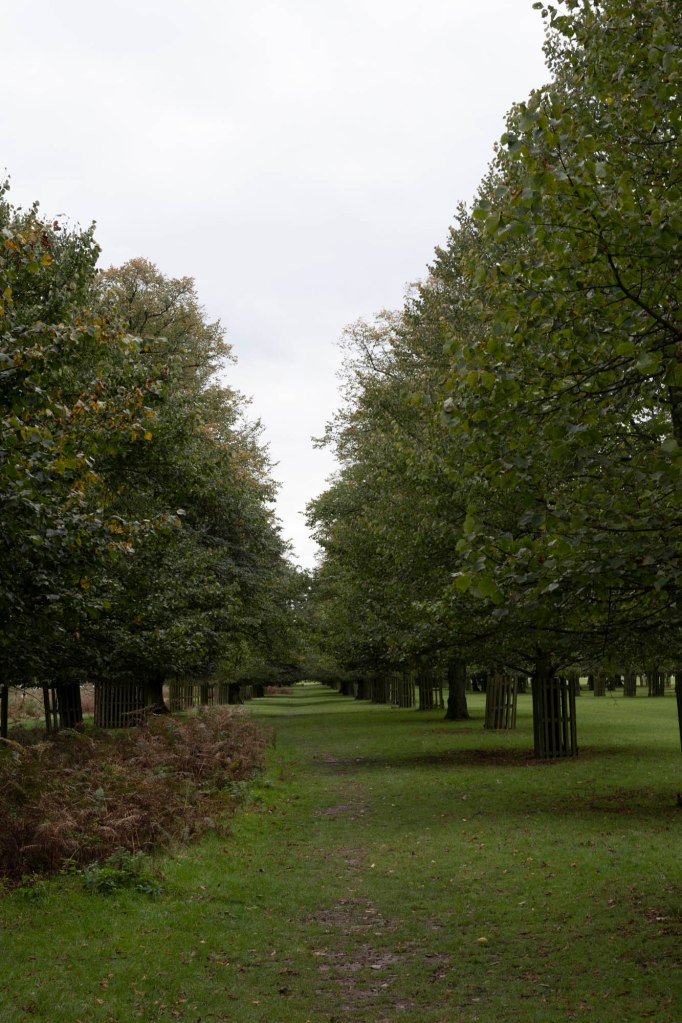
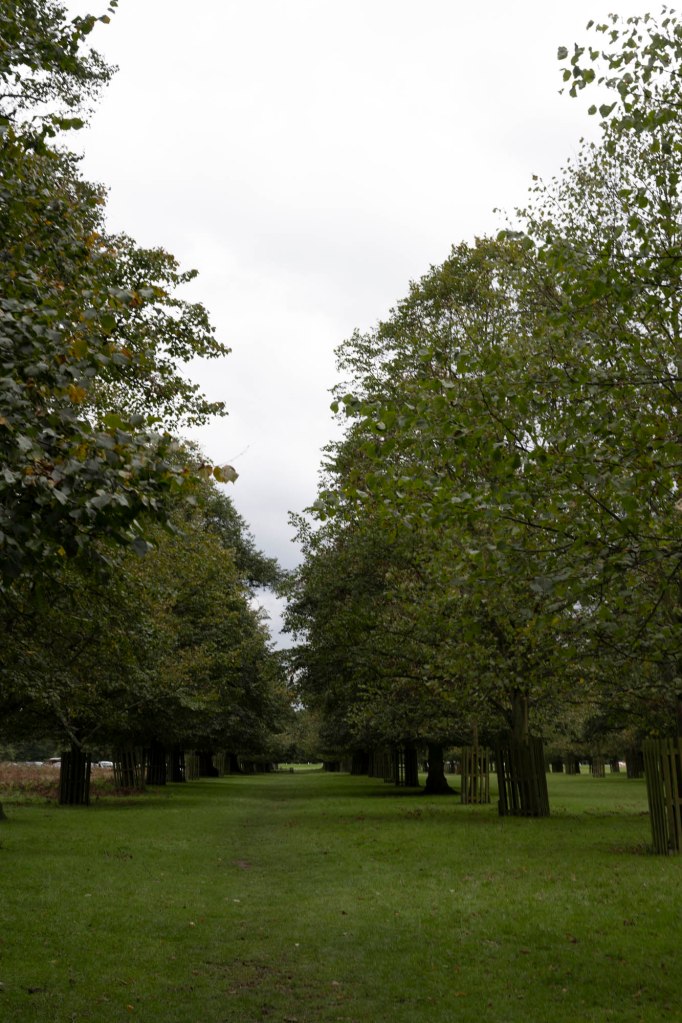
I arrived at the park at 10.15am and initially focused on the Tree Avenue, taking images from different perspectives and focal lengths. I had taken my 24mm-70mm zoom lens for this purpose.

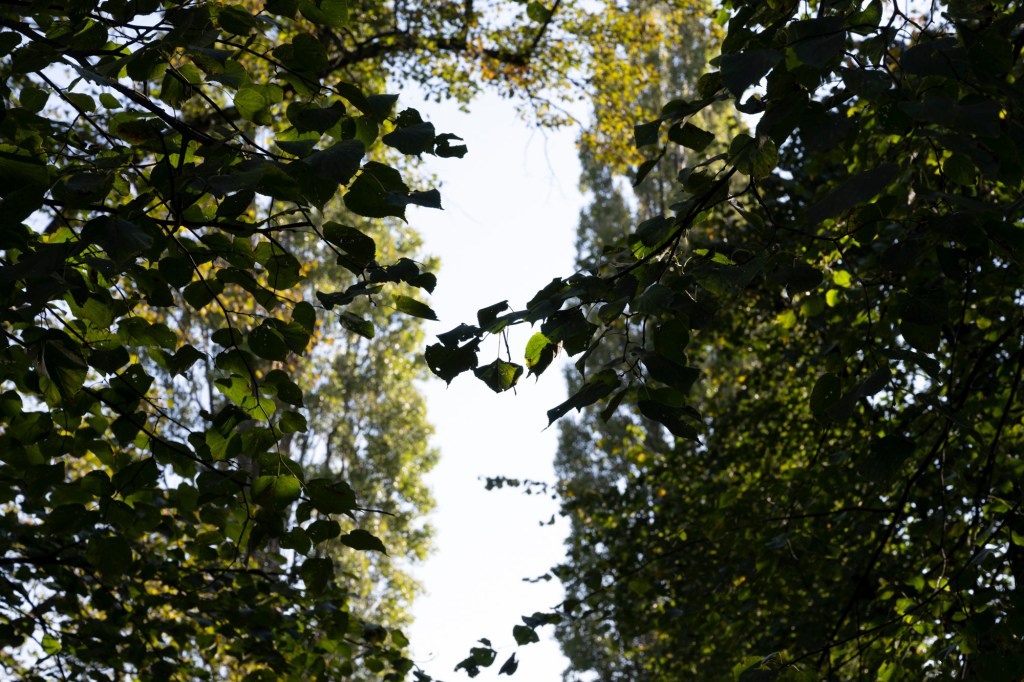
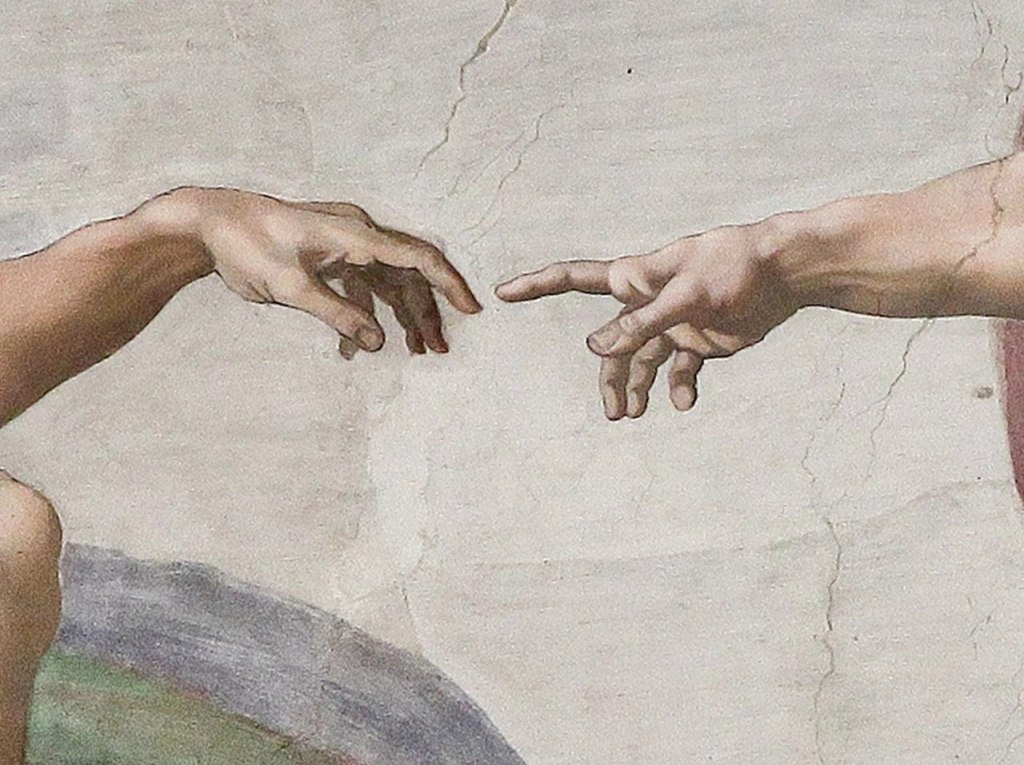
While taking photos, I noticed there were certain viewpoints that reminded me of Michelangelo’s Creation of Adam. This is where the leaves from adjacent trees would reach and just about touch.

I then started to experiment with depth of field, focusing on the leaves in the foreground.

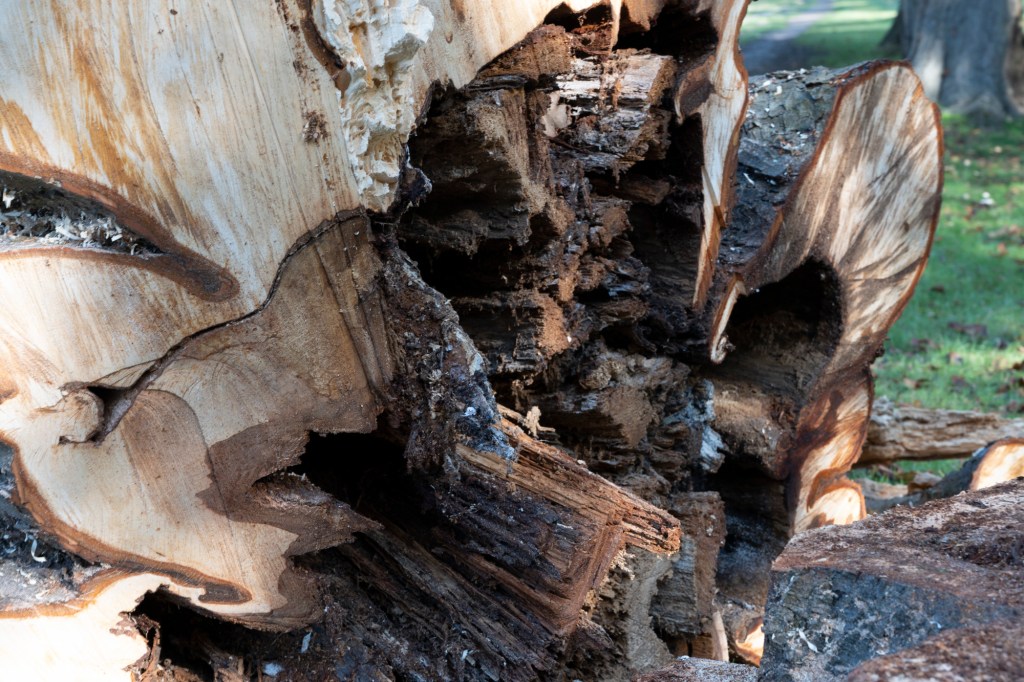
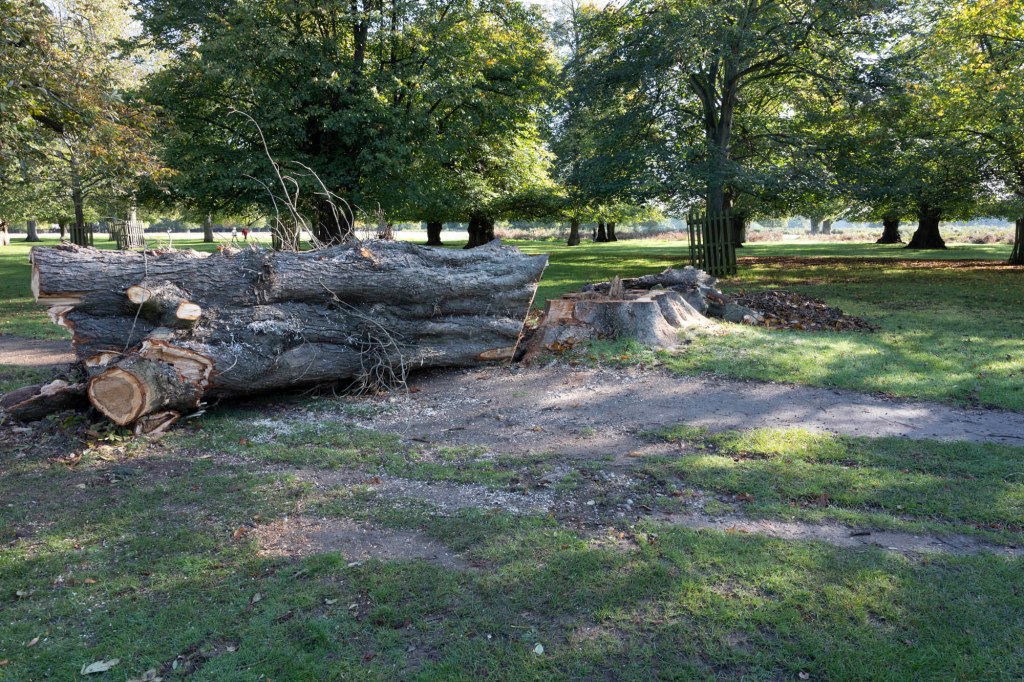
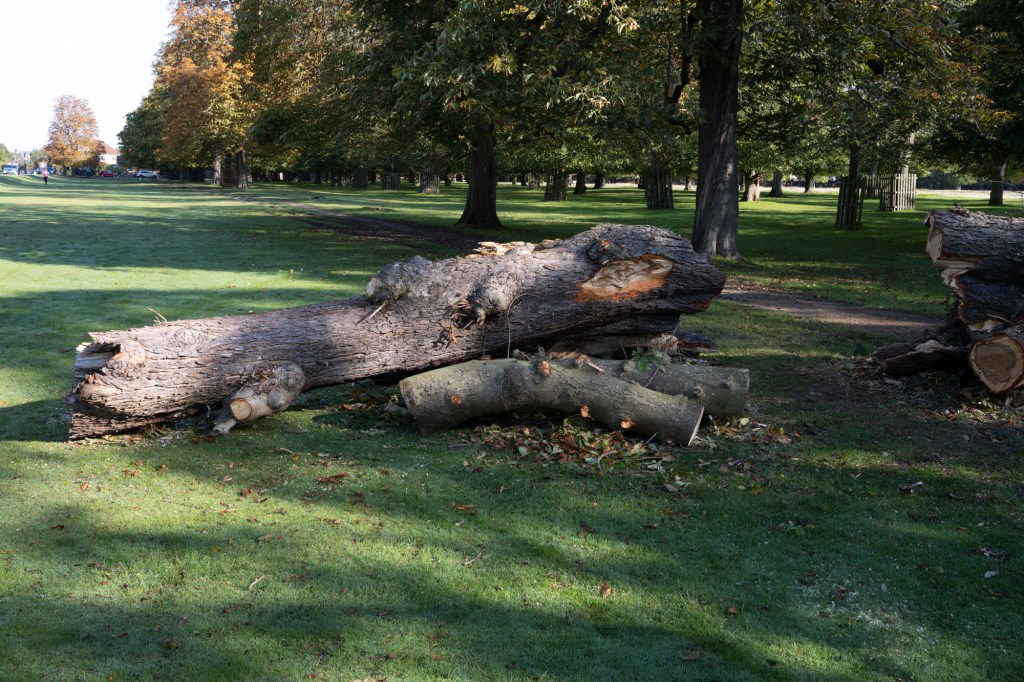
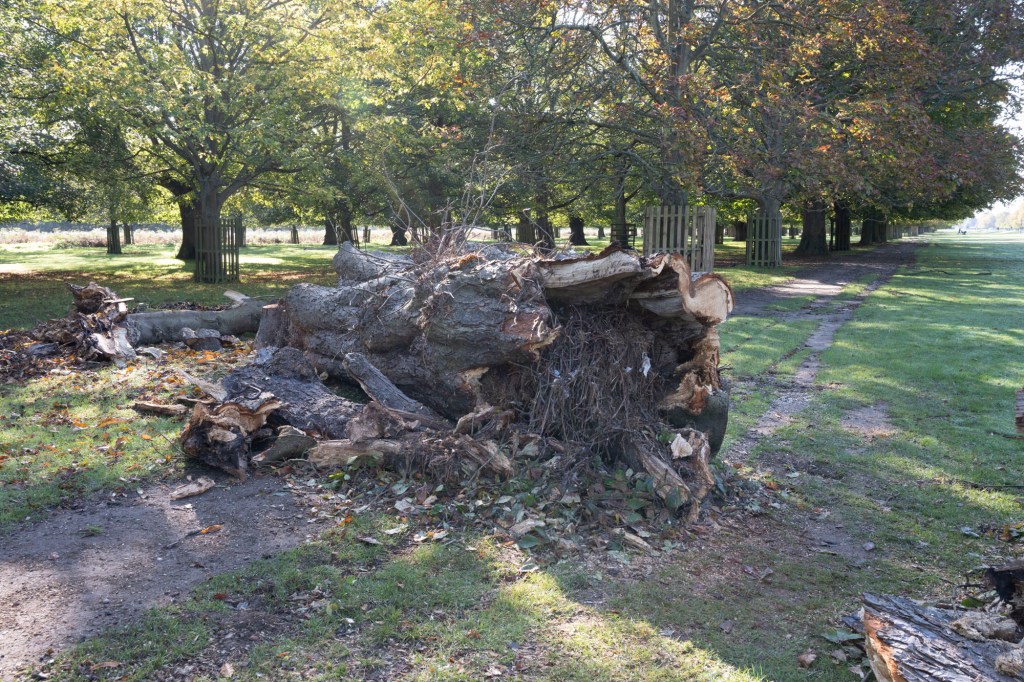
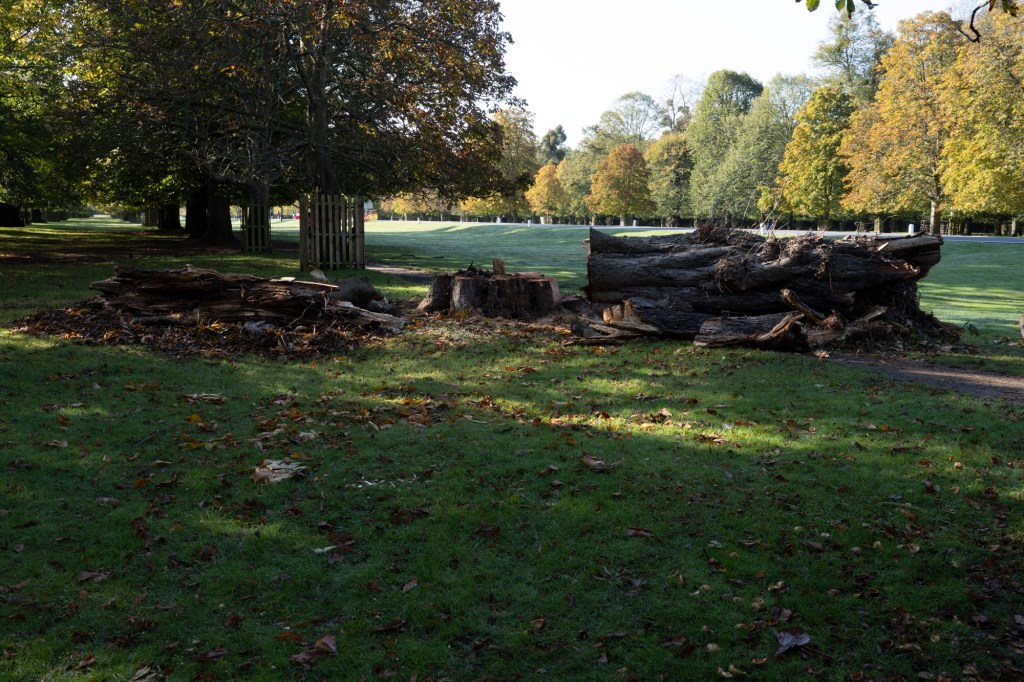
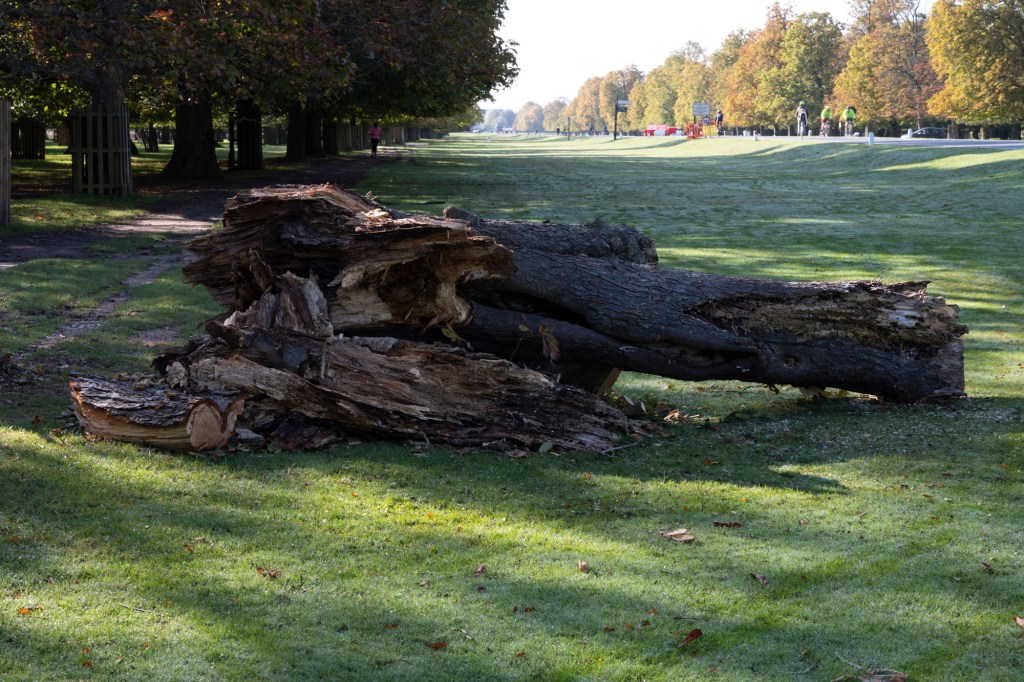
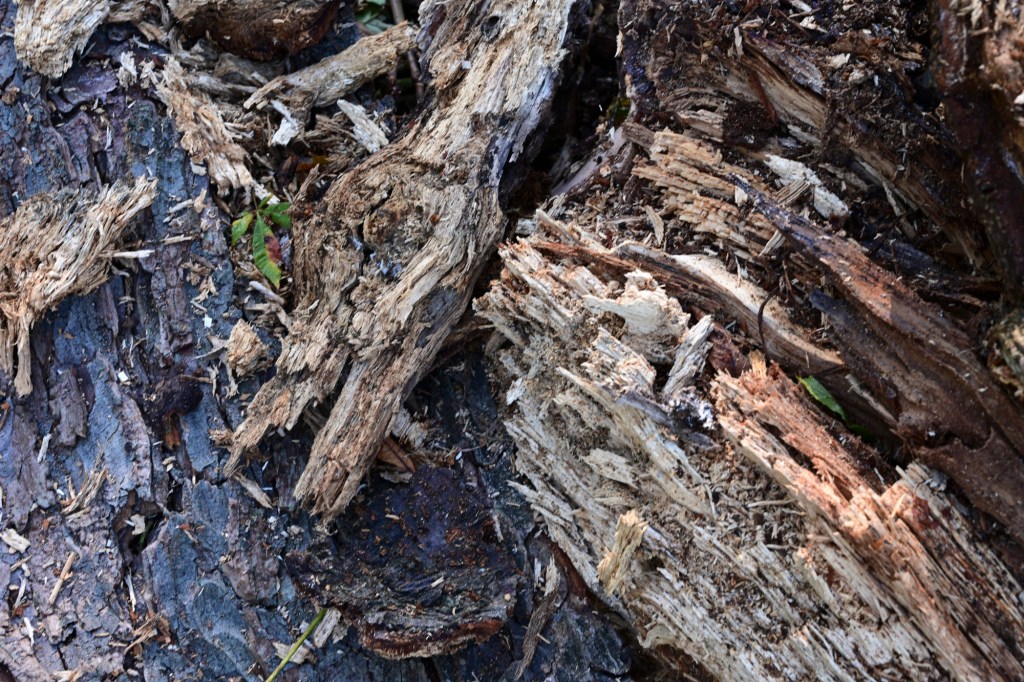
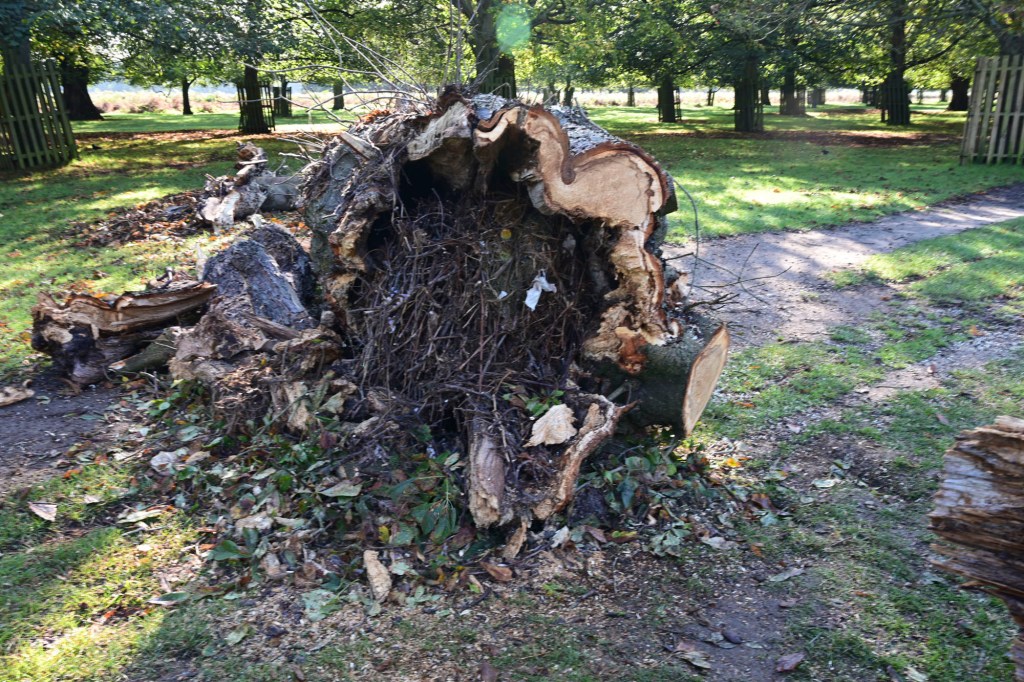
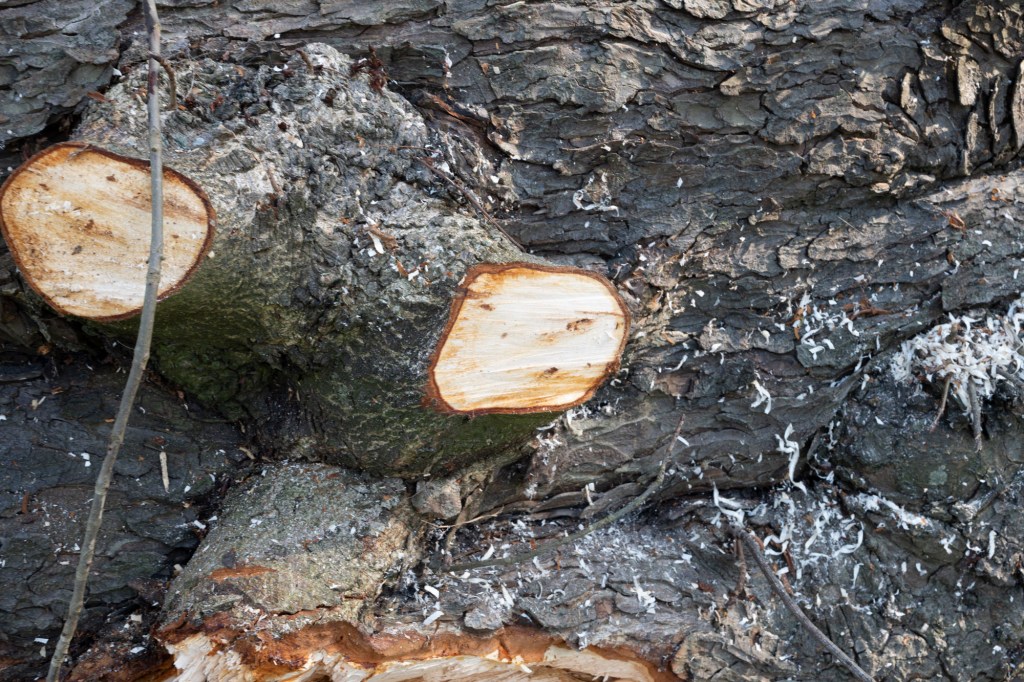
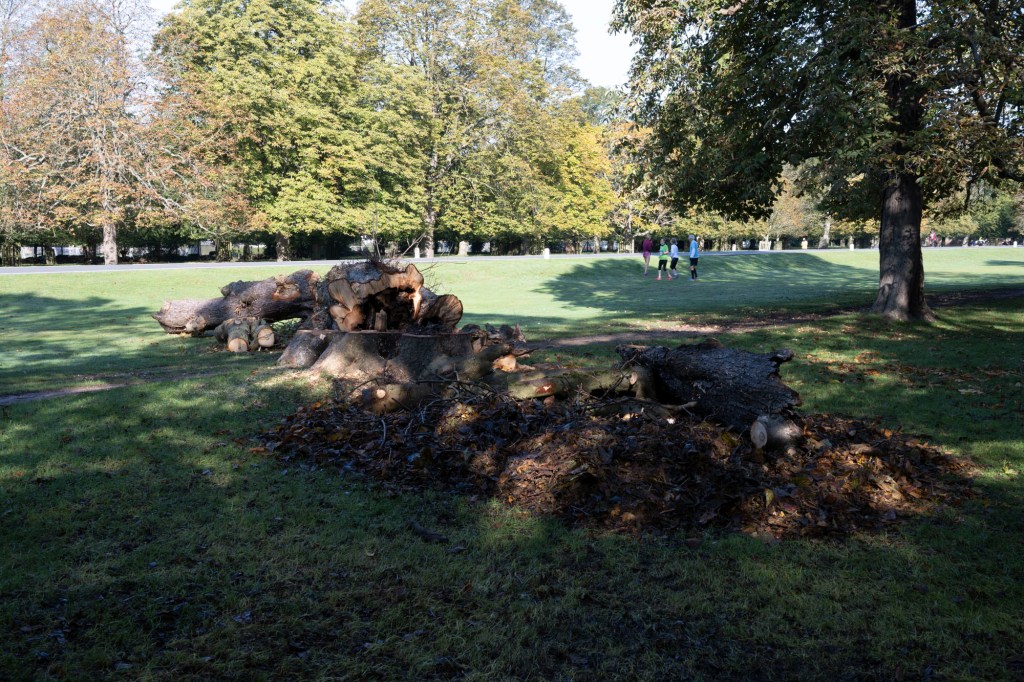
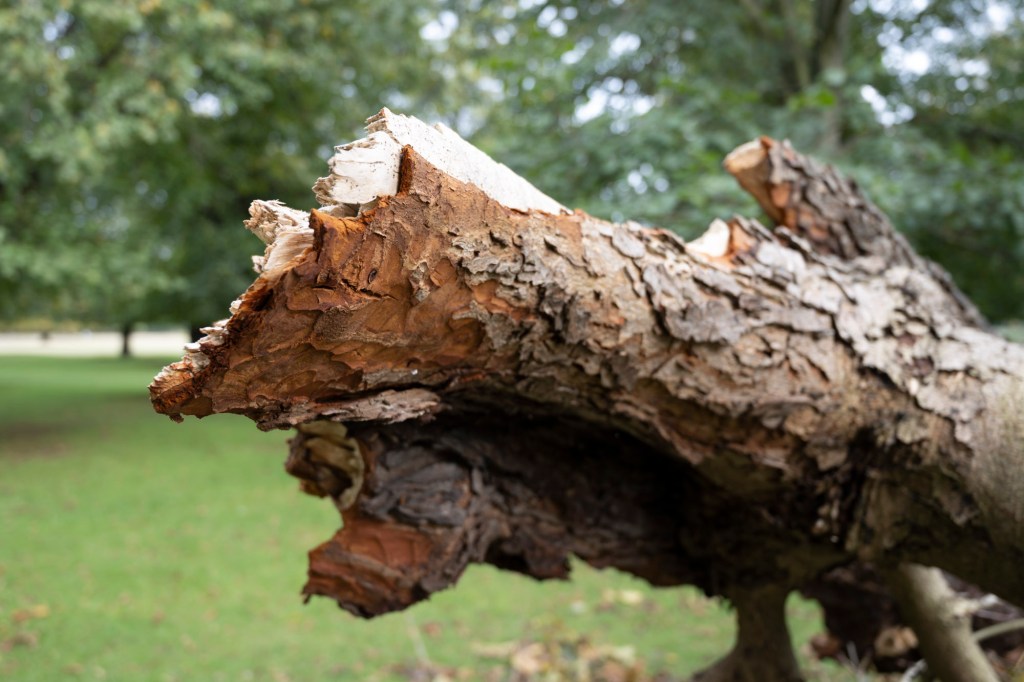
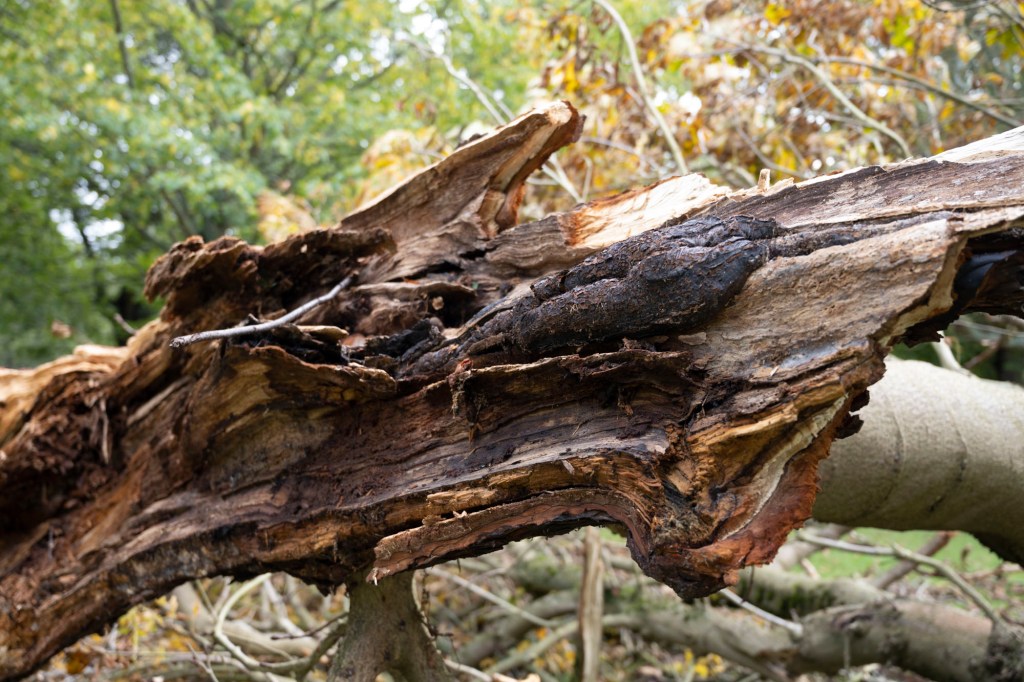
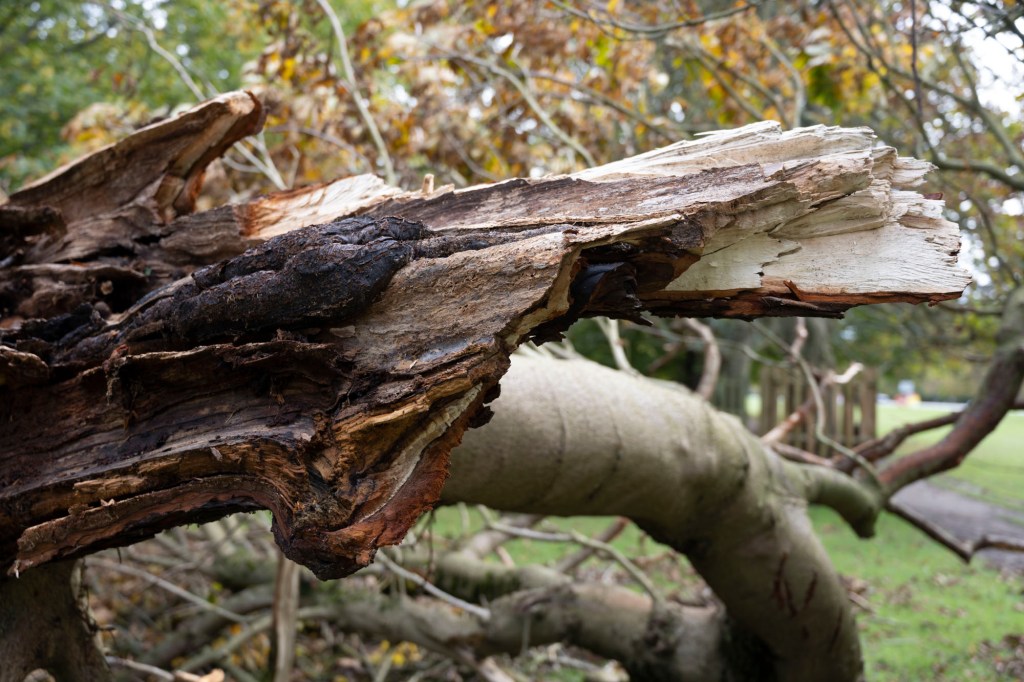
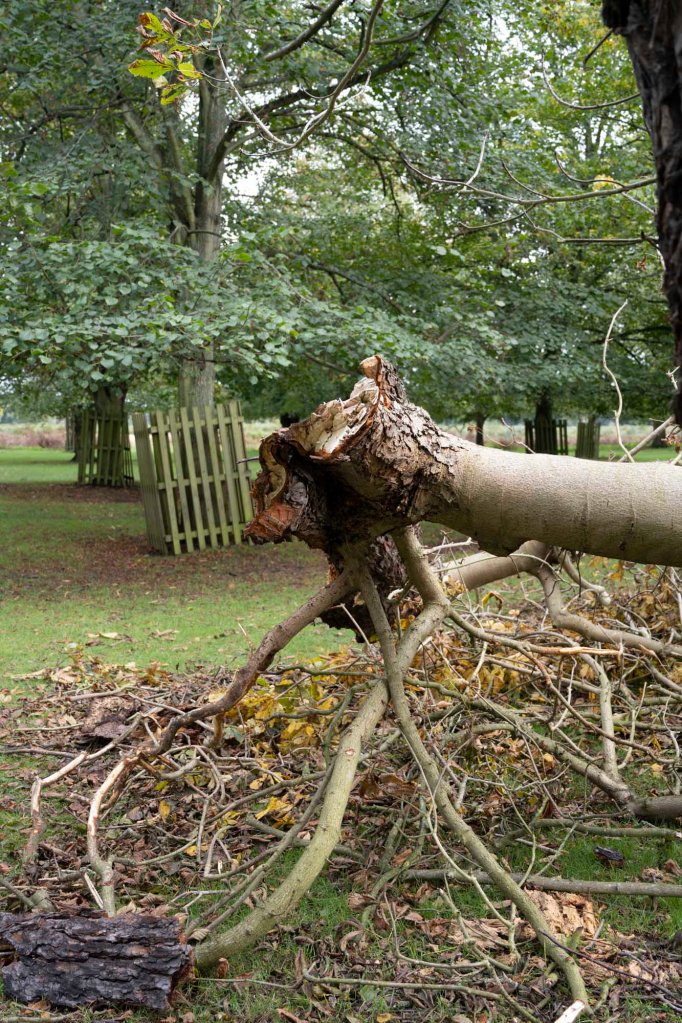
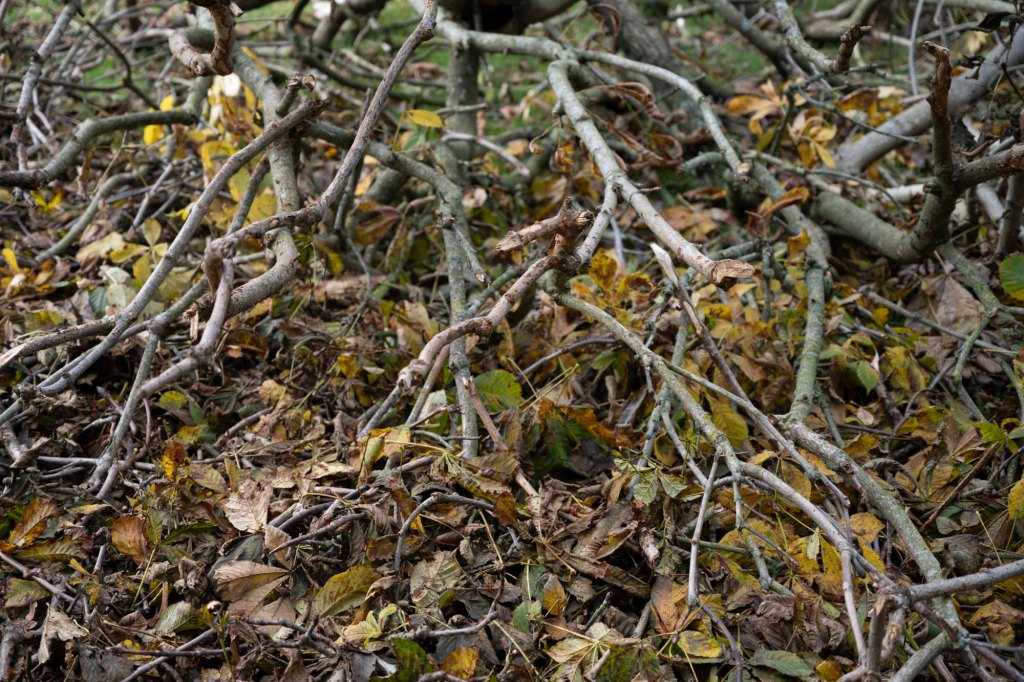
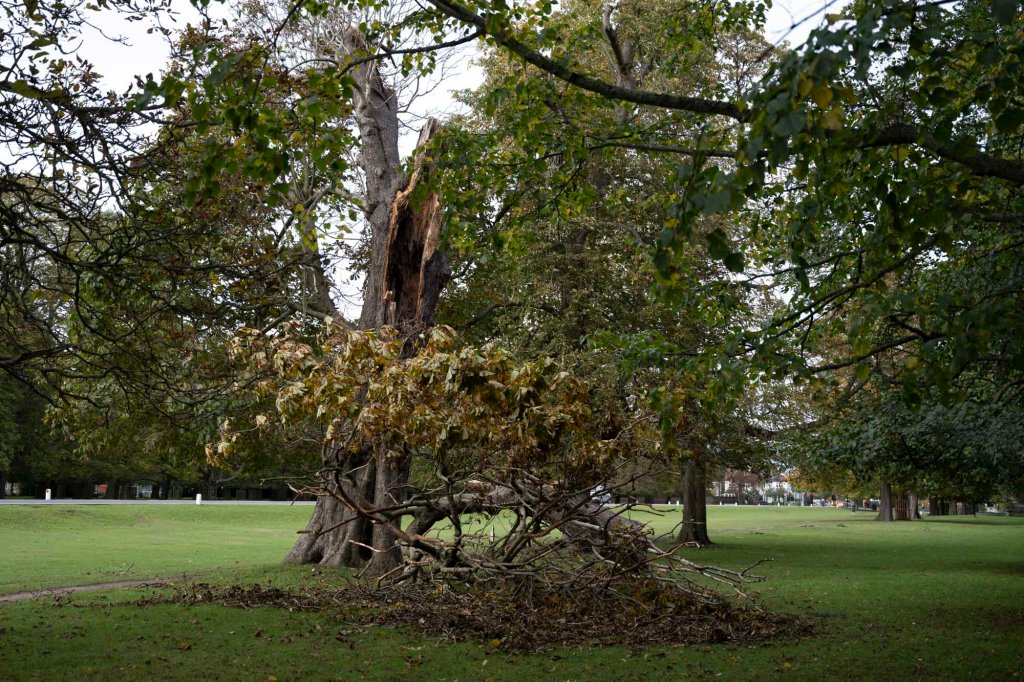
I then realised that the tree which had split and fallen during my last visit had been totally felled and sliced apart. This reminded me that things are always changing in this park and, if you spot it, shoot it.

In order to find a contrast with the Tree Avenue, I then went to the Woodland Gardens. This area of the park is split into two distinct areas, the Pheasantry Plantation and Water House Plantation. There is also a patch between these two areas with its own concentration of trees. Each of these areas has their own distinctive characters.

Pheasantry Plantation

The Space Between

Water House Plantation

While taking photos, I played with the focus.

While walking in the Water House Plantation, I contemplated the differences between this part of Bushy Park and the Tree Avenue. The majority of the gaps between trees were more chaotic and less organised in these gardens than the formal and evenly spaced avenue. As both are managed, could there be a particular reason for this? Something to research further.

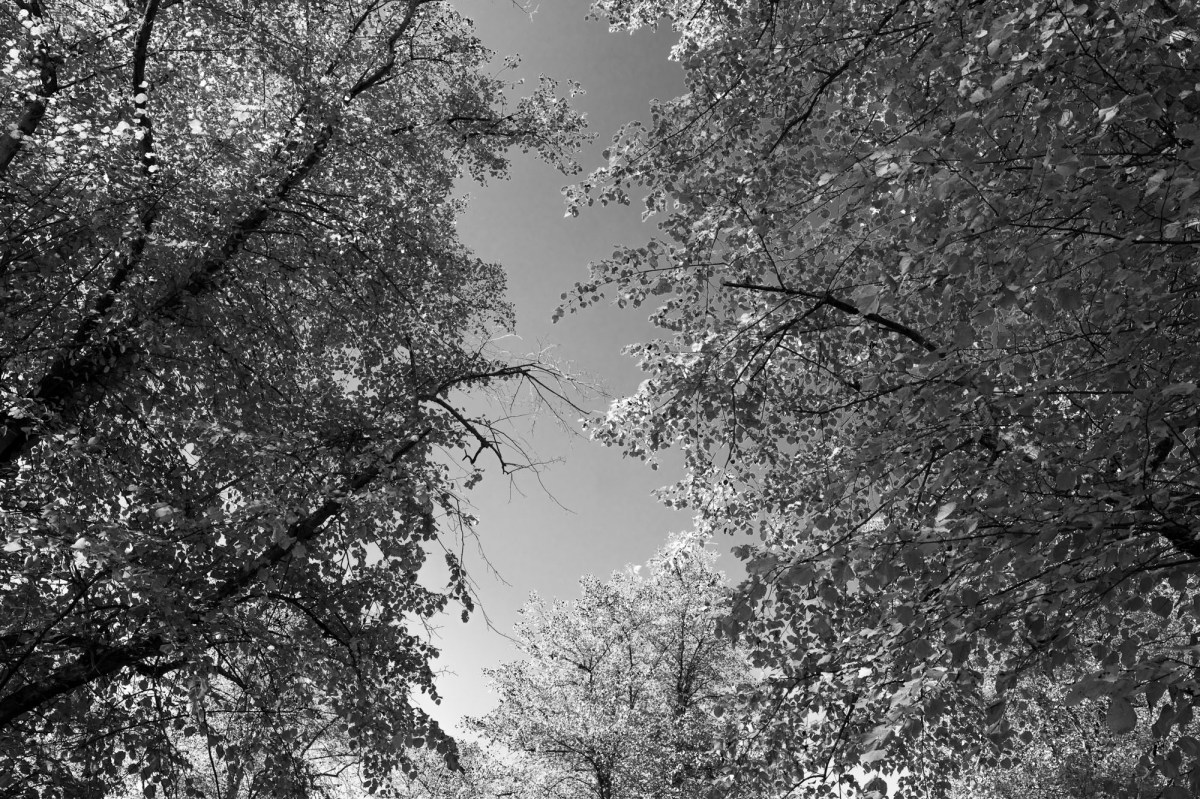
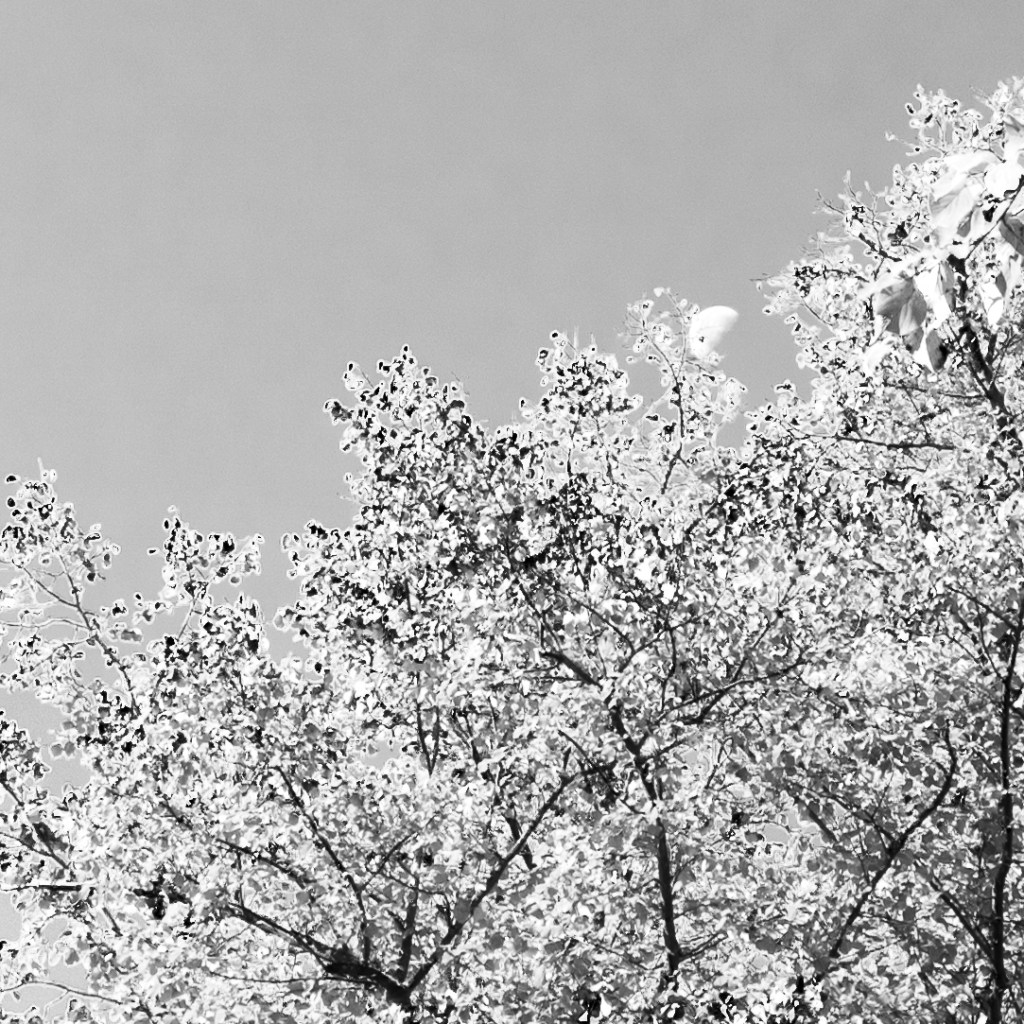
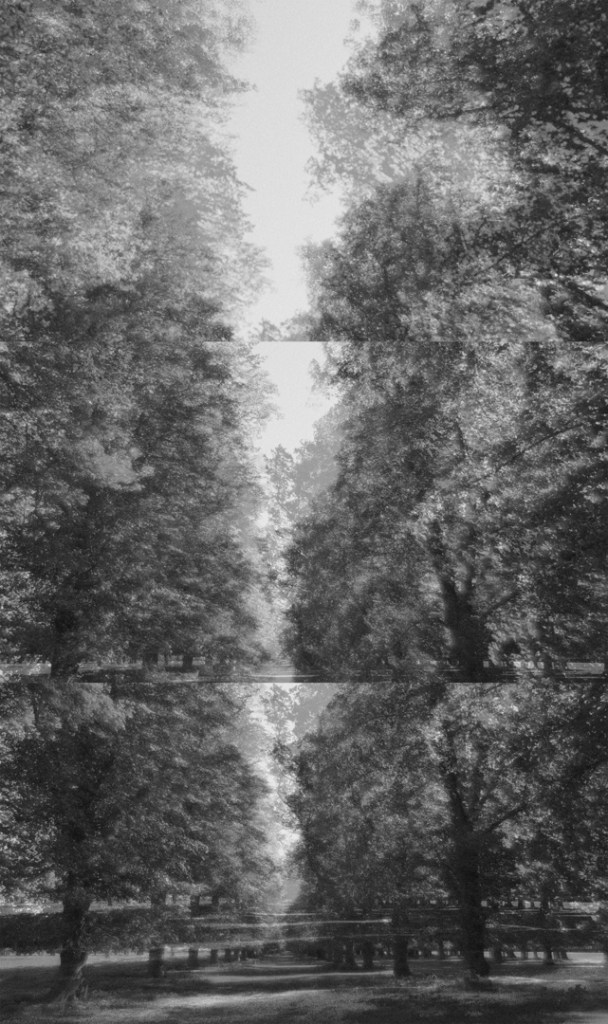
At this stage of the project, I hadn’t had the time to view and analyse the results in great detail. What I did do, however, is the following Black & White conversion of one of the Tree Avenue images.

This conversion reminded me of, to a certain extent, and infrared shot.

When looking closer, I noticed a particular detail.

More to contemplate, more to explore.

Categories
AGM62 Photography Research Project Stage 1 Posts

AGM62 Group Tutorial Feedback and Action 7 October 2020

On this day, my classmates and I had a group tutorial. This gave us the opportunity to meet everyone at one time and in one place for the first time in seven months. It also was when we all ‘formally’ met our module tutor, Dr Åsa Johannesson, who is a Senior Lecturer in Photography at University of Brighton.

In preparation for the tutorial, each student had to come with ideas, photographs and/or research materials. This was in order to:

  • Focus on our ideas and interests
  • Explore further how process, materials and presentation can support these
  • Look at, potentially, how these three aspects could take a lead in the unfolding of our work

There would also be a recap by Åsa of the module specs at the beginning of the session, including the module aims of:

  • identify a field of practice-based research and experimentation and initiate a related photographic project
  • provide opportunities to present practice work formally and engage in critique
  • develop appropriate technical skills

Overall, it was great to see the other students’ work while giving and receiving feedback. Over the last few months, it was like working in a complete vacuum and I found it difficult not being able to get out of the ‘bubble’ (both physical and metaphorical) in which I had retreated. It was also refreshing to have a new tutor who could give a different viewpoint on familiar subjects.

One aspect I picked up on was Åsa’s outlining the differences between Ontology and Epistemology.

Within Philosophy, Ontology is the branch of metaphysics dealing with the nature of being and a set of concepts and categories in a subject area or domain that shows their properties and the relations between them.

Epistemology is the theory of knowledge, especially with regard to its methods, validity, and scope, and the distinction between justified belief and opinion.

Åsa also highlighted the aspect of the shift within academia from a human-centric perspective to a non-human one (Post-Humanism). This something I could potentially research in relation to trees – by taking an ontological standpoint, I could examine and portray trees from their ‘point-of-view’, rather than my epistemological impression of them. I hope that I got that aspect correct, as when looking at this briefly online, there’s a lot of to explore and understand further.

When it came to presenting my ideas and recent photographs, I prepared two posts that focused on particular project passions and potential progressions:

https://jenniemeadowsma.photo.blog/2020/10/06/agm62-project-passions-and-future-directions-30-september-2020/

AGM62 Potential Progressions 6 October 2020

The following is more a set of ‘notes’ in order to capture my thoughts on and impressions of the images and the relation of the feedback I received along with other ideas.

When presenting the images, the main thoughts I had was how the park, although full of ‘nature’, was a man-made construct. It is also managed in such a way to create an environment to ensure the ‘nature’ continued.

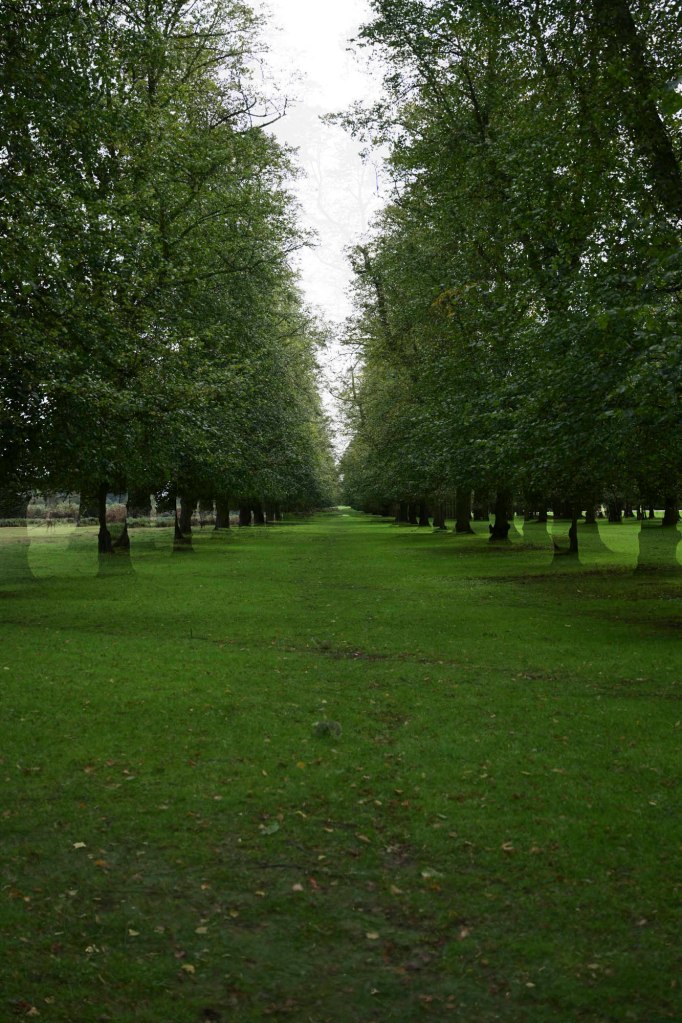
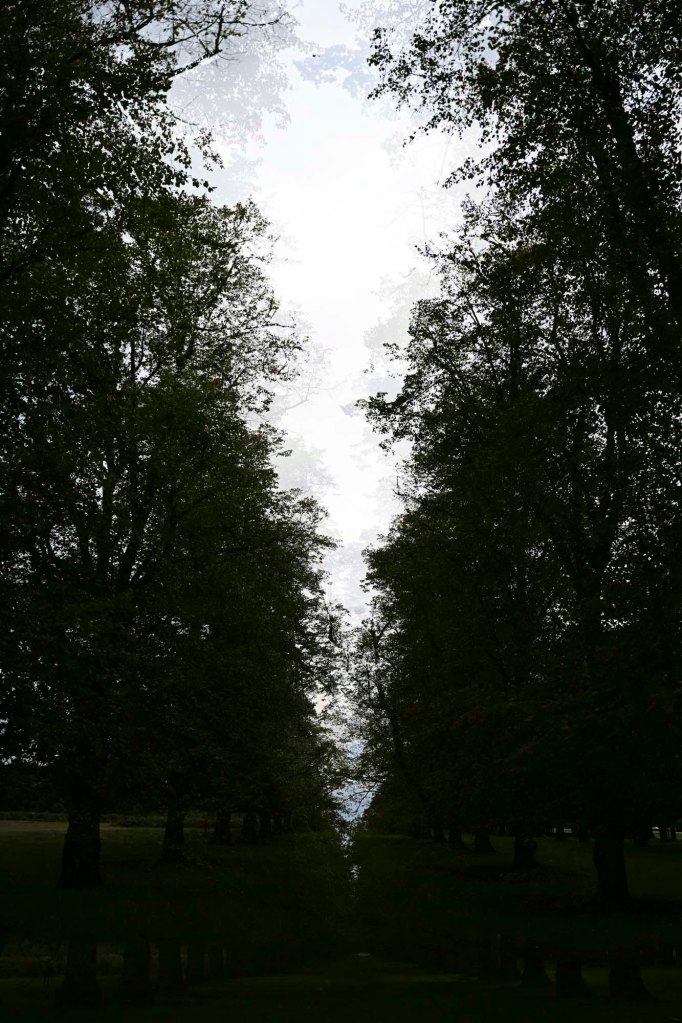
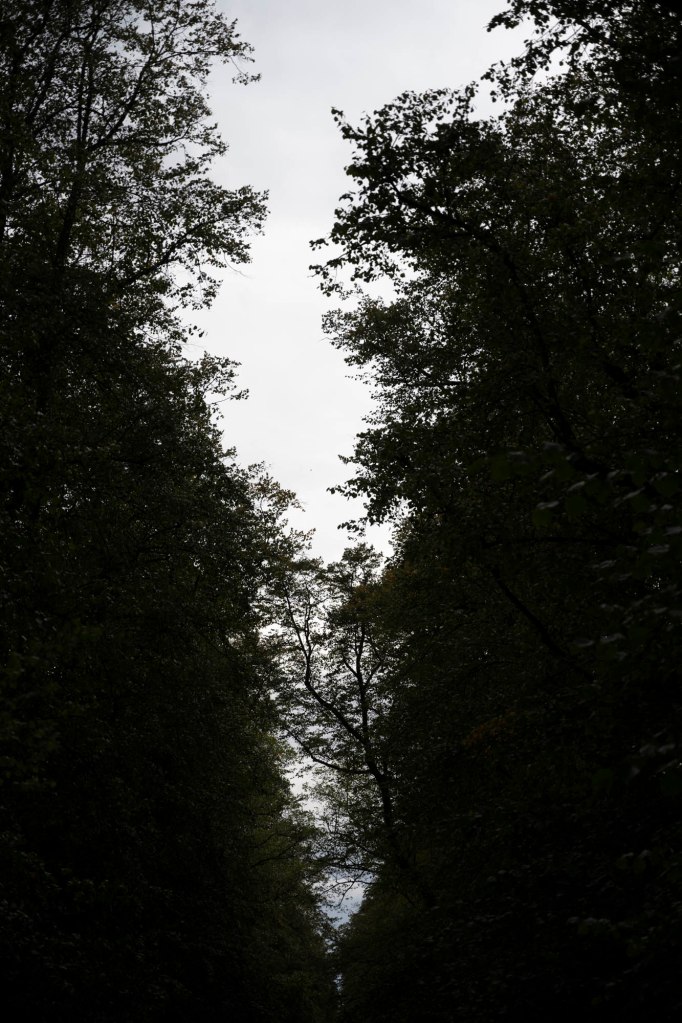
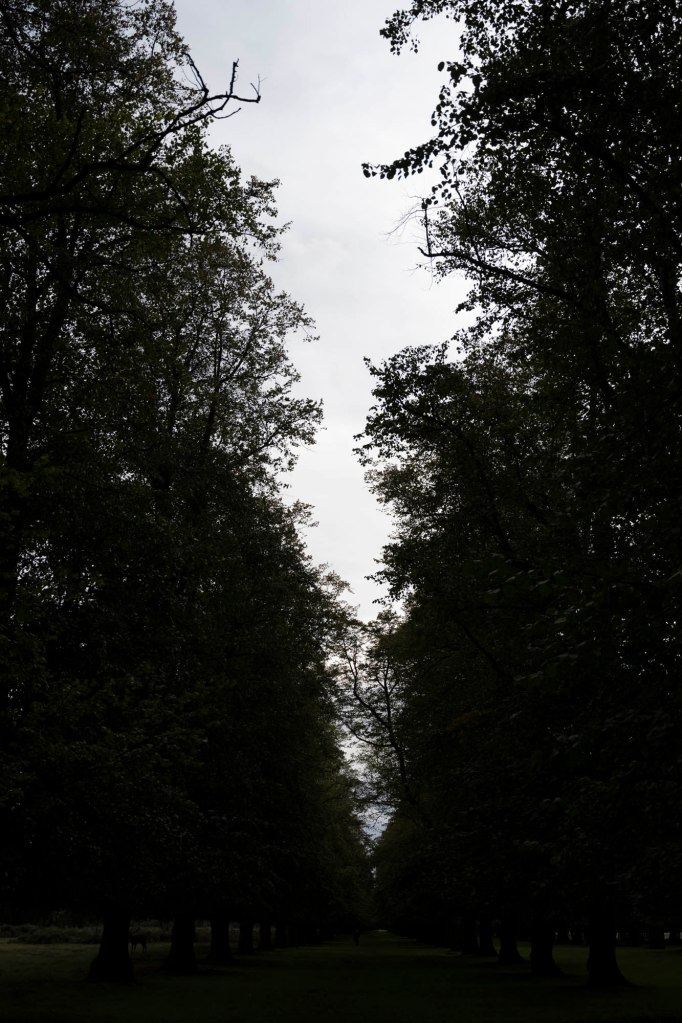
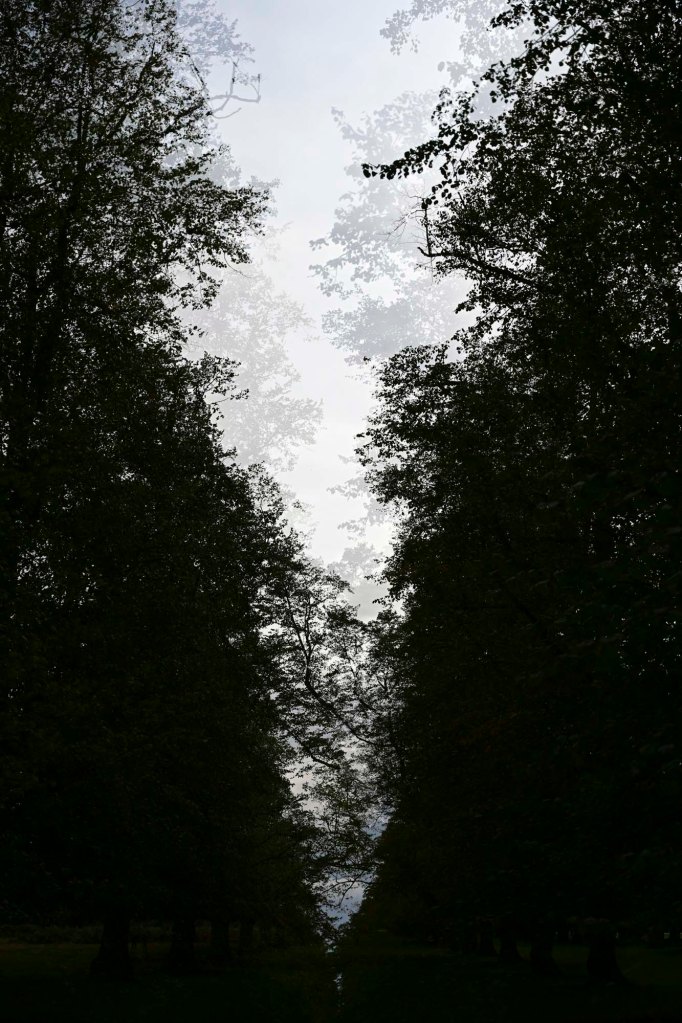
I also noticed how when the images of the Avenue were combined, they created something visual that jumped out at me.

When discussing the Split images, Abi mentioned the theme of split trees in literature, specifically in Jane Eyre by Charlotte Brontë.

Again, the relationship between the individual trees and the space in between came up.

Other thoughts was the location of London. When asked ‘why London’ by my classmate, Es, I answered ‘I have lived in this city all of my life – this is my environment’. With this project, I will be showing a different side to the city and have regular access to my subject. Also, it’s a place in which I love being. As I said to the class, it feels like I’m ‘hugged’ every time I visit this park.

The main aspect that Åsa brought into focus in relation to the project was that of critical ecology. The initial name mentioned was Tim Morton. Åsa also sent the following suggestions of readings regarding critical ecologies:

  • Tim Morton – Ecologist
    • Timothy Morton is Rita Shea Guffey Chair in English at Rice University. He has collaborated with Björk, Olafur Eliasson, Jennifer Walshe, Haim Steinbach, and Pharrell Williams. He is the author of Humankind: Solidarity with Nonhuman People (Verso, 2017), Dark Ecology: For a Logic of Future Coexistence (Columbia, 2016), Nothing: Three Inquiries in Buddhism (Chicago, 2015), Hyperobjects: Philosophy and Ecology after the End of the World (Minnesota, 2013), Realist Magic: Objects, Ontology, Causality (Open Humanities, 2013), The Ecological Thought (Harvard, 2010), Ecology without Nature (Harvard, 2007), eight other books and 200 essays on philosophy, ecology, literature, music, art, architecture, design and food. In 2014 Morton gave the Wellek Lectures in Theory. Blog: http://www.ecologywithoutnature.blogspot.com. Twitter: @the_eco_thought
  • Anna Tsing – The Mushroom at the End of the World
    • Matsutake is the most valuable mushroom in the world–and a weed that grows in human-disturbed forests across the northern hemisphere. Through its ability to nurture trees, matsutake helps forests to grow in daunting places. It is also an edible delicacy in Japan, where it sometimes commands astronomical prices. In all its contradictions, matsutake offers insights into areas far beyond just mushrooms and addresses a crucial question: what manages to live in the ruins we have made? A tale of diversity within our damaged landscapes, The Mushroom at the End of the World follows one of the strangest commodity chains of our times to explore the unexpected corners of capitalism. Here, we witness the varied and peculiar worlds of matsutake commerce: the worlds of Japanese gourmets, capitalist traders, Hmong jungle fighters, industrial forests, Yi Chinese goat herders, Finnish nature guides, and more. These companions also lead us into fungal ecologies and forest histories to better understand the promise of cohabitation in a time of massive human destruction. By investigating one of the world’s most sought-after fungi, The Mushroom at the End of the World presents an original examination into the relation between capitalist destruction and collaborative survival within multispecies landscapes, the prerequisite for continuing life on earth.
  • Tim Morton – The Ecological Thought
    • In this passionate, lucid, and surprising book, Timothy Morton argues that all forms of life are connected in a vast, entangling mesh. This interconnectedness penetrates all dimensions of life. No being, construct, or object can exist independently from the ecological entanglement, Morton contends, nor does “Nature” exist as an entity separate from the uglier or more synthetic elements of life. Realizing this interconnectedness is what Morton calls the ecological thought. In three concise chapters, Morton investigates the profound philosophical, political, and aesthetic implications of the fact that all life forms are interconnected. As a work of environmental philosophy and theory, The Ecological Thought explores an emerging awareness of ecological reality in an age of global warming. Using Darwin and contemporary discoveries in life sciences as root texts, Morton describes a mesh of deeply interconnected life forms-intimate, strange, and lacking fixed identity. A “prequel” to his Ecology without Nature: Rethinking Environmental Aesthetics (Harvard, 2007), The Ecological Thought is an engaged and accessible work that will challenge the thinking of readers in disciplines ranging from critical theory to Romanticism to cultural geography. (2020)

  • Kathryn Yusoff – A Billion Black Anthropocene or None
    • Rewriting the \u201corigin stories\u201d of the Anthropocene No geology is neutral, writes Kathryn Yusoff. Tracing the color line of the Anthropocene, A Billion Black Anthropocenes or None examines how the grammar of geology is foundational to establishing the extractive economies of subjective life and the earth under colonialism and slavery. Yusoff initiates a transdisciplinary conversation between feminist black theory, geography, and the earth sciences, addressing the politics of the Anthropocene within the context of race, materiality, deep time, and the afterlives of geology. Forerunners is a thought-in-process series of breakthrough digital works. Written between fresh ideas and finished books, Forerunners draws on scholarly work initiated in notable blogs, social media, conference plenaries, journal articles, and the synergy of academic exchange. This is gray literature publishing: where intense thinking, change, and speculation take place in scholarship. (2020)
  • Richard Powers – Overstory (fiction)
    • An artist inherits a hundred years of photographic portraits, all of the same doomed American chestnut. A hard-partying undergraduate in the late 1980s electrocutes herself, dies, and is sent back into life by creatures of air and light. A hearing- and speech-impaired scientist discovers that trees are communicating with one another. An Air Force crewmember in the Vietnam War is shot out of the sky, then saved by falling into a banyan. This is the story of these and five other strangers, each summoned in different ways by the natural world, who are brought together in a last stand to save it from catastrophe. (2020)
  • Wahida Khandker – Process Metaphysics and Mutative Life
    • This book provides a survey of key process-philosophical approaches that, in conversation with selected concepts across the biological and physical sciences, help us to think about living processes, or ‘lived time,’ at different scales of functioning. The first part is written from an opening perspective on the question of the differing scales of analysis provided by Alfred North Whitehead. In particular, his interest in questions arising from the quantum mechanical reconciliation with classical mechanics informs the first two chapters that address problematic categorisations of life as variously ‘despotic,’ ‘invasive,’ or as primitive (in the radically more-than-human case of micro-organisms), whose potential recategorisation relies on our willingness to acknowledge changes in value depending on the scaleat which we view them. The second part of the book concerns methodologies, in the light of works by Henri Bergson, whose intertwining concerns with epistemology and ontology in his theories of mind and life serve as a model for a process philosophy of biology. The chapters focus on techniques used across philosophy and the sciences to visualise processes that are otherwise unavailable to us due to the limitations of our perceptual faculties, no matter how sophisticated the tools for analysis, from microscopes to telescopes, have become. This book concludes with a consideration of the relations between parts and wholes in process, panpsychist, and ecological terms. It revisits the question of ecological balance and the place of human activities in relation to it, with reference to works of Charles Hartshorne and William James. (2020)
  • Bruno Latour – Pandora’s Hope
    • A scientist friend asked Bruno Latour point-blank: “Do you believe in reality?” Taken aback by this strange query, Latour offers his meticulous response in Pandora’s Hope. It is a remarkable argument for understanding the reality of science in practical terms. In this book Latour, identified by Richard Rorty as the new “bete noire of the science worshipers,” gives us his most philosophically informed book since Science in Action. Through case studies of scientists in the Amazon analyzing soil and in Pasteur’s lab studying the fermentation of lactic acid, he shows us the myriad steps by which events in the material world are transformed into items of scientific knowledge. Through many examples in the world of technology, we see how the material and human worlds come together and are reciprocally transformed in this process. Why, Latour asks, did the idea of an independent reality, free of human interaction, emerge in the first place? His answer to this question, harking back to the debates between Might and Right narrated by Plato, points to the real stakes in the so-called science wars: the perplexed submission of ordinary people before the warring forces of claimants to the ultimate truth. (2020)

  • Artists:
    • Rachel Pimm: https://rachelpimmwork.tumblr.com/
      • B. 1984 Harare Zimbabwe, Lives and works London
      • Rachel Pimm is a research based artist whose work studies the narratives of transforming surfaces, environments, ecologies and ecosystems and their politics and materialities. These often take the point of view of plants, minerals, worms, forces, elements or industrial processes.
      • Pronouns are: they/ them/ theirs (Tumblr, 2020)
    • Epha Roe: https://research.brighton.ac.uk/en/persons/epha-roe
      • Epha Roe is an artist / researcher whose interests broadly cover theories of landscape, place and agency. They are currently working on their practice-based PhD on building a photographic, historical and theoretical exploration of ancient oak trees in England that form part of the Tree Council’s 2002 list of ‘Great British Trees’. In brief, this project aims to investigate through photography and critical analysis, the role that ancient oak trees play in constructing ideas of place, particularly in relation to notions of heritage and agency. Asking the questions: why are particular trees considered as heritage? how are heritage practices carried out and managed within the natural environment? and how does natural phenomena conceived as heritage ‘push-back’ against those practices? (Epha Roe, 2020)

  • Goldsmith’s research hub and MA:
    • https://criticalecologies.gold.ac.uk/
      • The issue of climate change and environmental transformation is clearly one of the most significant challenges we face today. What is at stake in the ecological crises of the 21st century that raises specific questions and areas of concern for the arts, humanities, and cultural production? Who and what suffers or benefits from these crises and through what legal, economic, and political structures? How can we represent and narrate multi-scalar and multi-temporal phenomena to plan for and respond to uncertain futures? An era looms for which we have no clear template. The Critical Ecologies research stream tackles questions of global warming, environmental justice, colonial dispossession, climate migration, nuclear cultures, media geology and e-waste from an arts and humanities perspective that takes scientific research and practices seriously. (Critical Ecologies, 2020)
      • https://www.gold.ac.uk/pg/ma-art-ecology/
        • The MA Art & Ecology is a fifteen-month studio-based post-graduate programme for emerging artists who want to engage in meaningful and transformative ways with the most pressing ecological questions of our time. This is a unique programme located in the urban environment of South East London that seeks to develop new ways in which contemporary art practice can make interventions in a wide range of ecological contexts and extend the ways in which ecology is understood. During this MA we support artists to develop art practices in diverse sites and scales dedicated to imagining and shaping liveable futures.
        • Link art, ecology and social justice
        • The MA invites artists to develop innovative art projects grounded in rigorous artistic research and a profound understanding of how ecological challenges such as climate breakdown, pollution, and biodiversity loss are inseparable from questions of social justice. Alongside media including painting, sculpture, printmaking, installation, performance, art writing, textiles, digital media and video, this course supports artists who engage with forms of practice such as food production, sustainable data, citizen and expert science, re-wilding, inter-species care and co-dependence, somatic work, and ritual. (MA Art & Ecology, 2020)

The actions required as a result of this particular tutorial was to research and read up on the suggestions on this list in addition to taking further photographs. This would be in preparation for my 1-1 tutorial on Wednesday 22 October at 11 am in Brighton.

References

Amazon.co.uk. 2020. [online] Available at: <https://www.amazon.co.uk/gp/product/0691178321/ref=ox_sc_act_title_2?smid=A3P5ROKL5A1OLE&psc=1&gt; [Accessed 16 October 2020].
Amazon.co.uk. 2020. [online] Available at: <https://www.amazon.co.uk/Billion-Black-Anthropocenes-None-Forerunners/dp/1517907535/ref=sr_1_1?dchild=1&keywords=Kathryn+Yusoff+%E2%80%93+A+Billion+Black+Anthropocene+or+None&qid=1602839894&sr=8-1&gt; [Accessed 16 October 2020].
Amazon.co.uk. 2020. [online] Available at: <https://www.amazon.co.uk/Ecological-Thought-Timothy-Morton/dp/0674064224/ref=sr_1_fkmr1_1?dchild=1&keywords=tom+morton+%E2%80%93+the+ecological+thought&qid=1602839654&sr=8-1-fkmr1&gt; [Accessed 16 October 2020].
Amazon.co.uk. 2020. [online] Available at: <https://www.amazon.co.uk/Overstory-Shortlisted-Booker-Prize-2018/dp/1784708240/ref=sr_1_1?crid=2XG1SVORFKU12&dchild=1&keywords=the+overstory+richard+powers+paperback&qid=1602840071&sprefix=the+overstory+rich%2Caps%2C148&sr=8-1&gt; [Accessed 16 October 2020].
Amazon.co.uk. 2020. [online] Available at: <https://www.amazon.co.uk/Pandoras-Hope-Reality-Science-Studies/dp/067465336X/ref=sr_1_1?dchild=1&keywords=Bruno+Latour+%E2%80%93+Pandora%E2%80%99s+Hope&qid=1602840680&sr=8-1&gt; [Accessed 16 October 2020].
Amazon.co.uk. 2020. [online]. Available at: https://www.amazon.co.uk/Process-Metaphysics-Mutative-Life-Perspectives/dp/3030430472/ref=sr_1_1?dchild=1&keywords=Wahida+Khandker+%E2%80%93+Process+Metaphysics+and+Mutative+Life&qid=1602840244&quartzVehicle=45-608&replacementKeywords=wahida+khandker+%E2%80%93+process+metaphysics+and+mutative&sr=8-1.

Critical Ecologies. 2020. Critical Ecologies. [online] Available at: <https://criticalecologies.gold.ac.uk/&gt; [Accessed 16 October 2020].
Goldsmiths, University of London. 2020. MA Art & Ecology. [online] Available at: <https://www.gold.ac.uk/pg/ma-art-ecology/&gt; [Accessed 16 October 2020].
The University of Brighton. 2020. Epha Roe. [online] Available at: <https://research.brighton.ac.uk/en/persons/epha-roe&gt; [Accessed 16 October 2020].
Tumblr. 2020. Tumblr. [online] Available at: <https://rachelpimmwork.tumblr.com/info&gt; [Accessed 16 October 2020].
Categories
AGM62 Photography Research Project Stage 1 Posts

AGM62 Potential Progressions 6 October 2020

Mind the Gap

During the summer of 2020, it was quite clear that my fascination with both trees and Bushy Park had not waned. One aspect that kept coming back to me was a comment that my classmate, Abi, had made in regard to one of the Moments of Eternity images.

Moments of Eternity II

Abi had observed the space between the trees. This reminded of me when I took drawing classes when we were encouraged to draw the space in between objects, rather than try to draw the objects themselves.

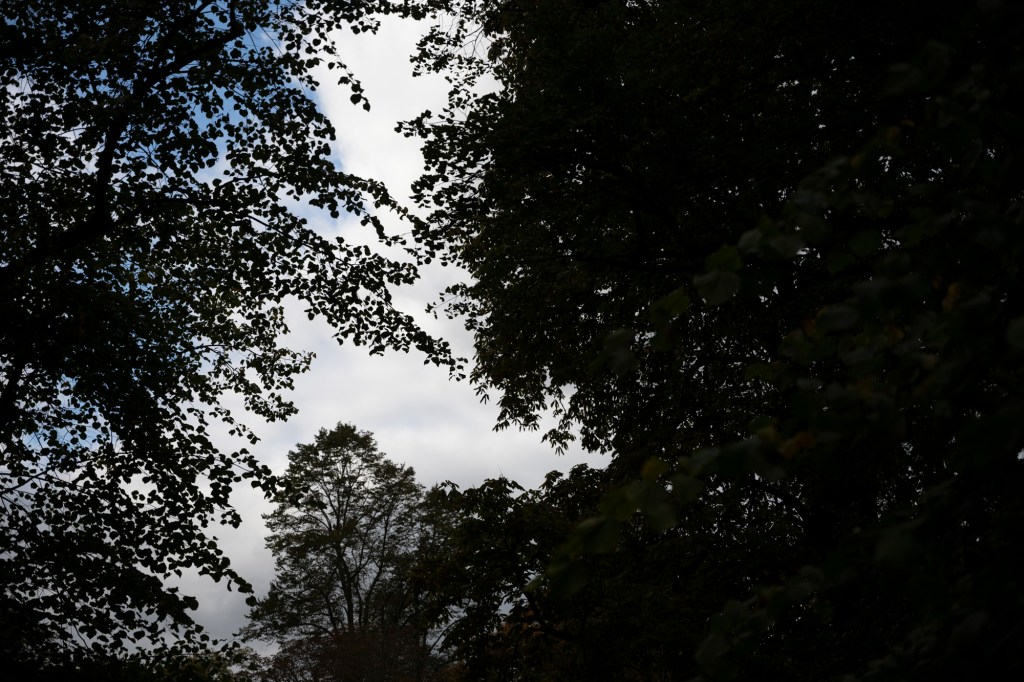
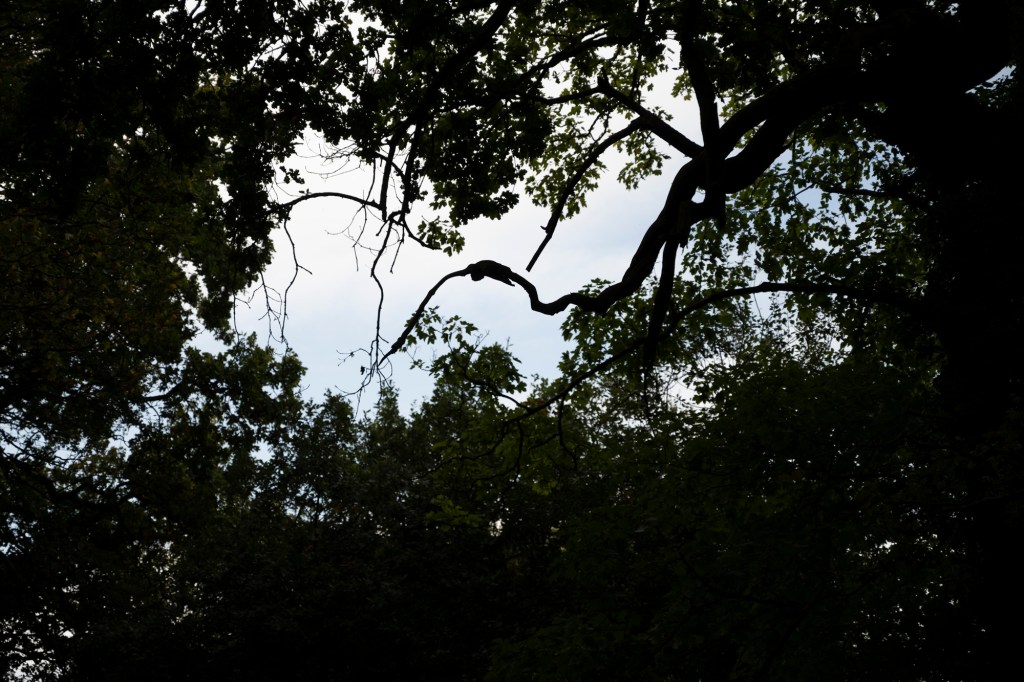
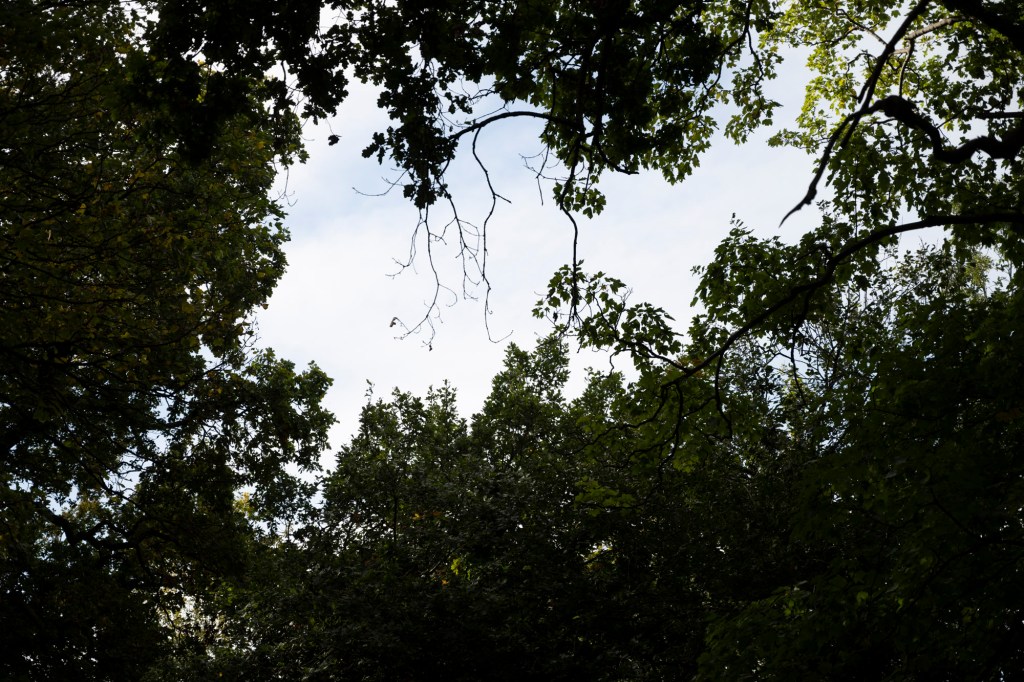
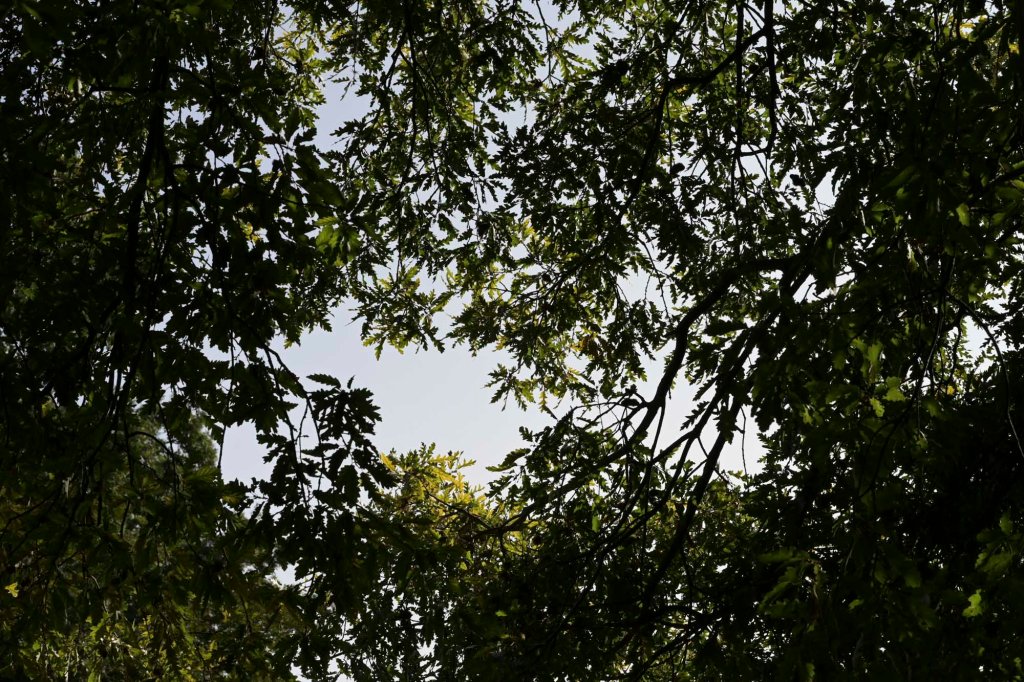
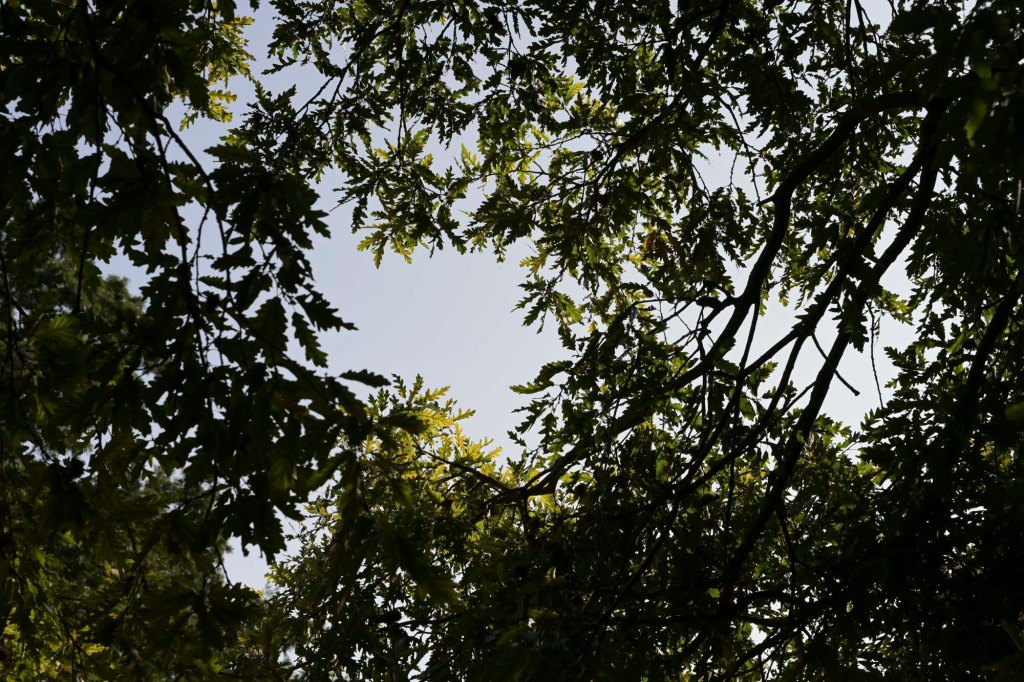
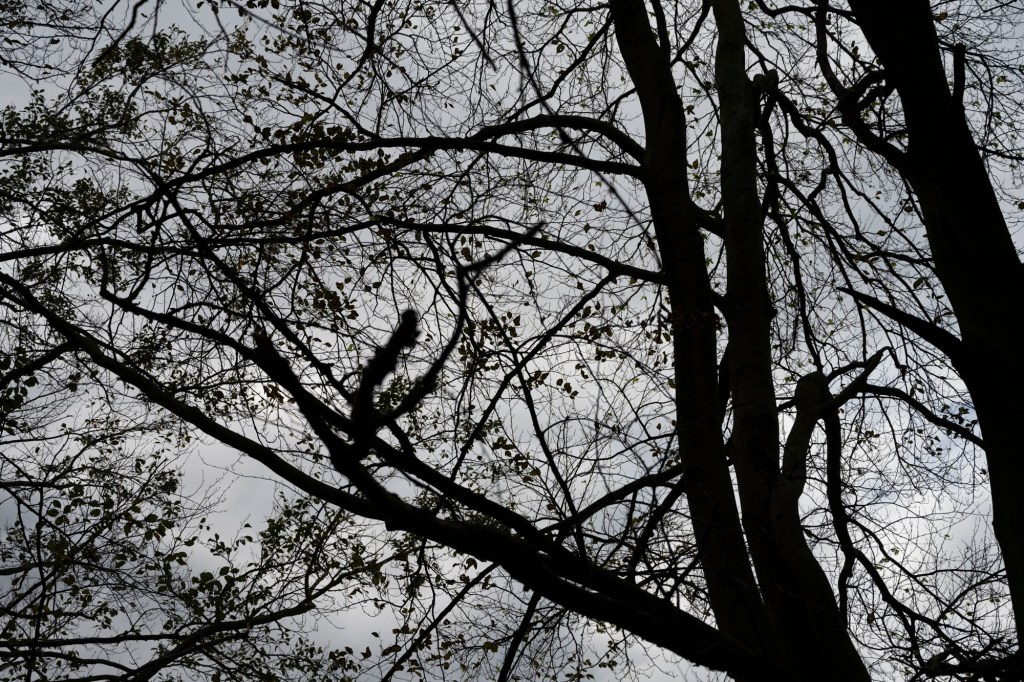
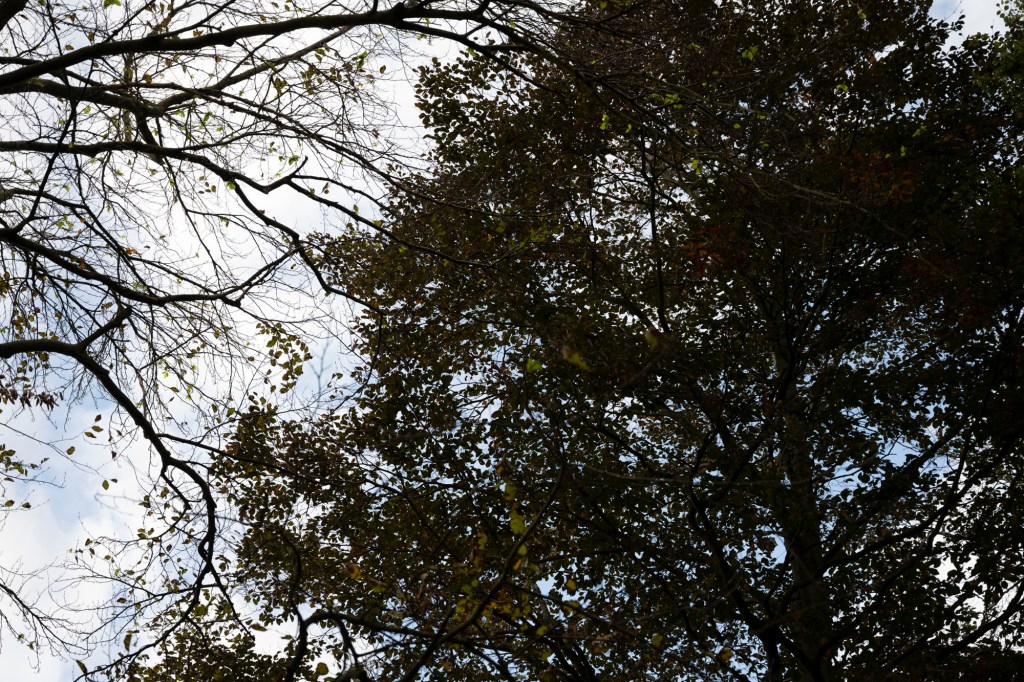
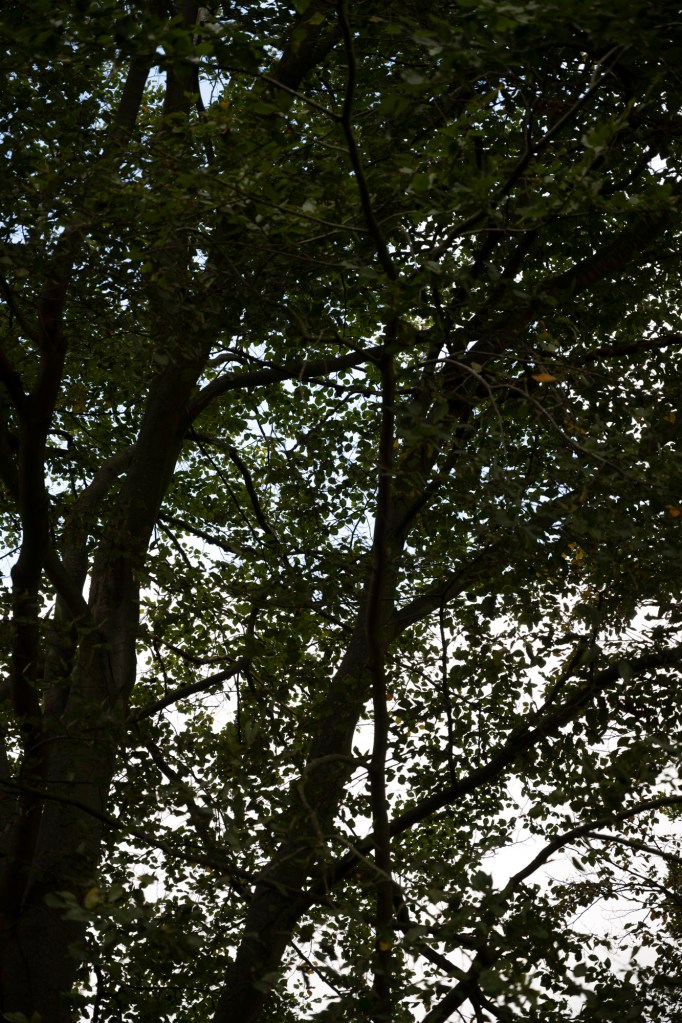
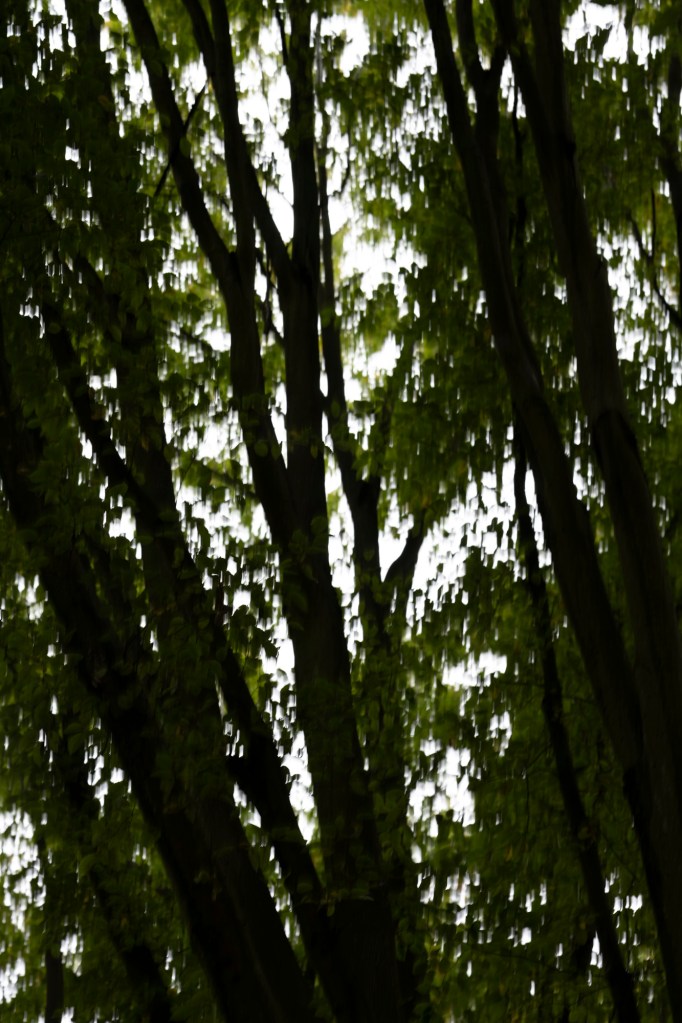
On 17 September 2020, I took my camera to the park with the intention of looking at the spaces between leaves rather than the trees themselves. This is a selection of shots from that session:

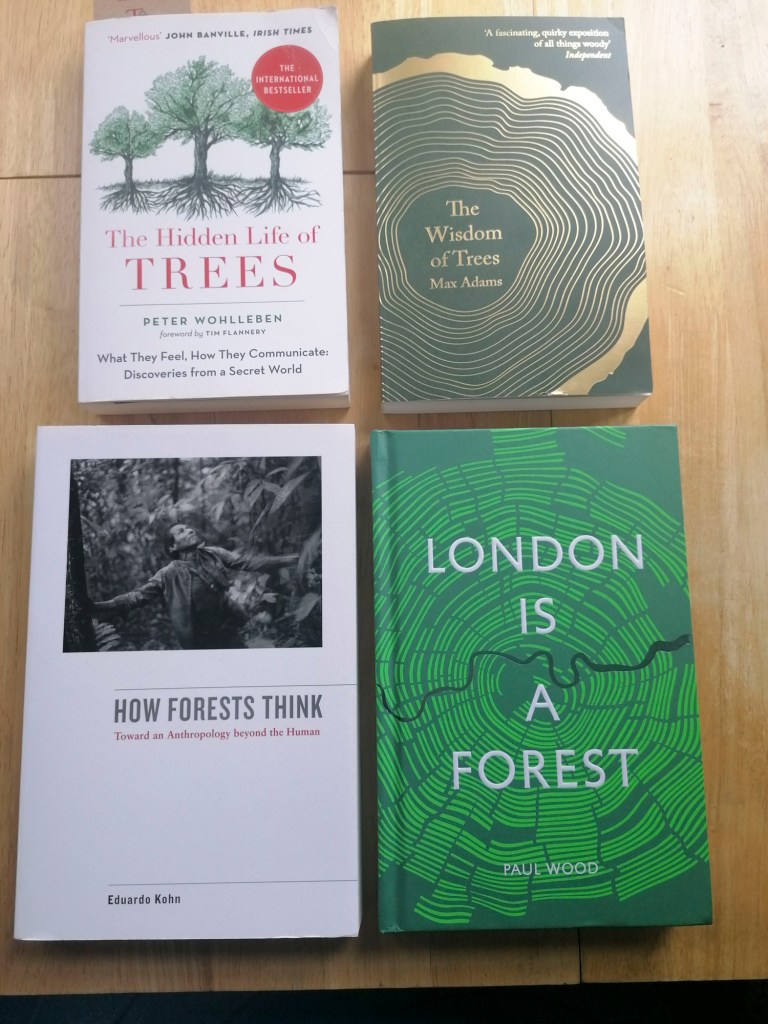
This concept of looking at the gaps is reflected in The Hidden Life of Trees by Peter Wohlleben, who observed that

‘The average tree grows its branches out until it encounters the branch tips of a neighbouring of the the same height. It doesn’t grow any wider because the air and better light in this space are already taken. However, it heavily reinforces the branches it has extended, so you get the impression that there’s quite a shoving match going on up there. But a pair of true friends is careful right from the outset not to grow overly thick branches in each other’s direction. The trees don’t want to take anything away from each other, and so they develop sturdy branches only at the outer edges of their crowns, that is to say, only in the direction of “non-friends” Such partners are often so tightly connected at the roots that sometimes they even die together.’

(Whohlleben, P. 2017 pp. 5)

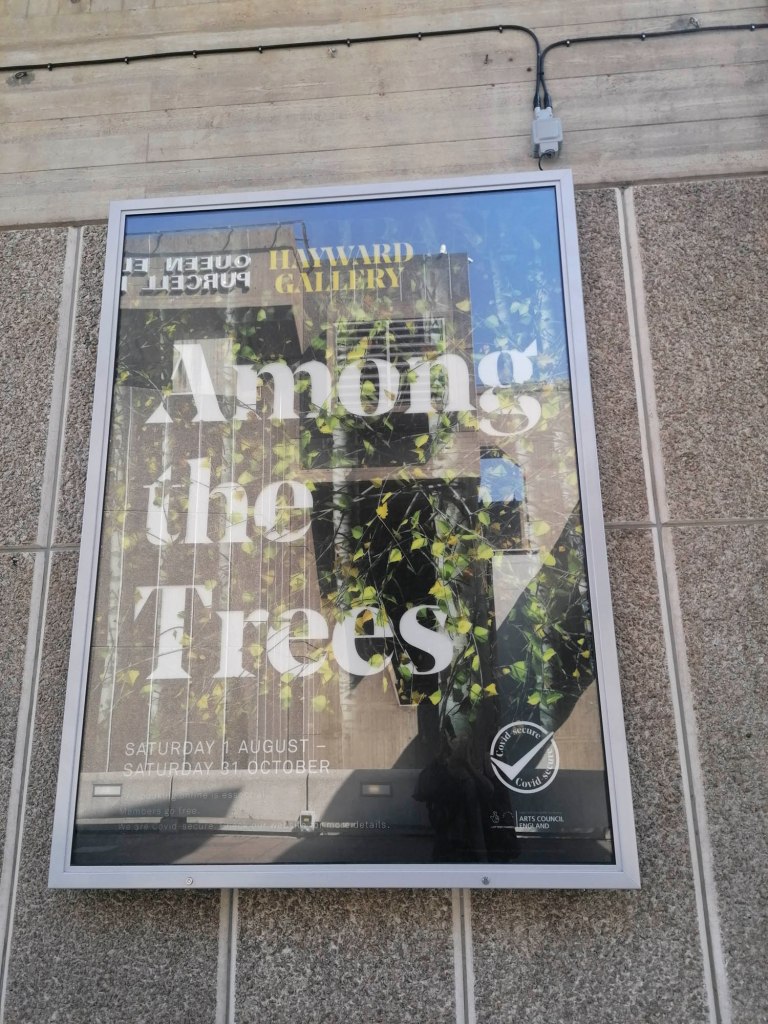
Among the Trees

The day previous to taking these images, I visited the exhibition, Among The Trees, at the Hayward Gallery. This exhibition had been given an extension from its original dates that were affected by lockdown and is open until 31 October 2020.

This had also sparked my thoughts about the gaps between branches:

In hindsight, two other exhibits also had an influence on my thoughts at this stage:

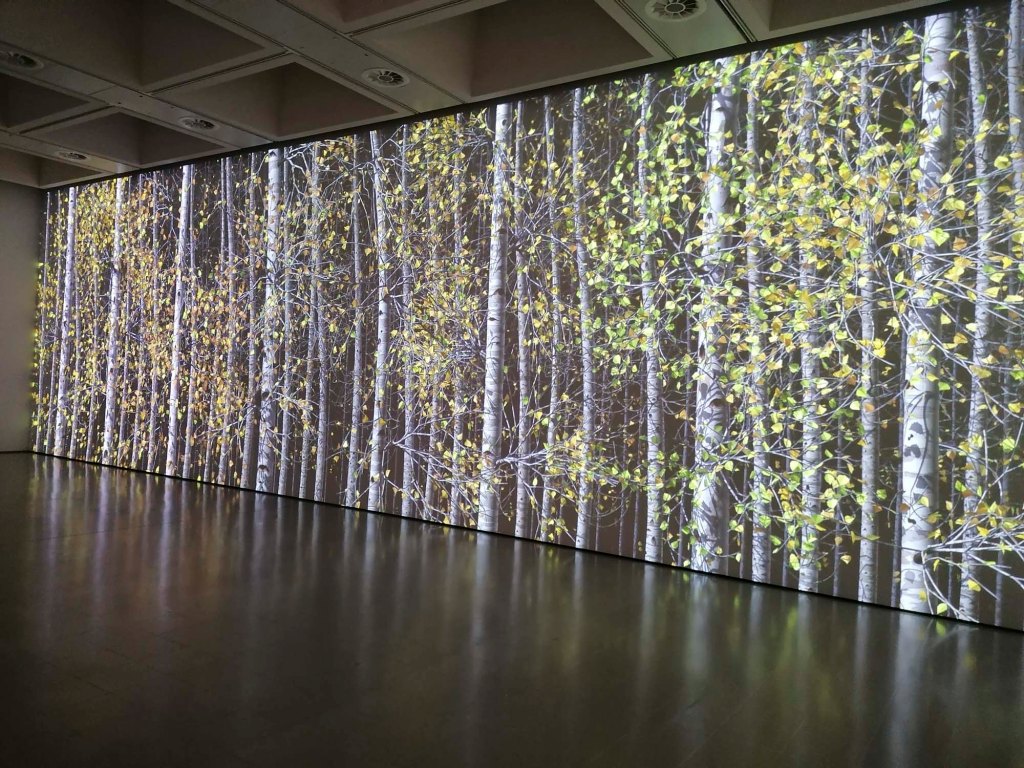
Jennifer Steinkamp – Blind Eye, 1, 2018

Blind Eye is a computer-generated animated piece that allows the viewer to experience the change of seasons in the featured trees. The projection is set within a separate room within the gallery and gives an impression of full immersion.

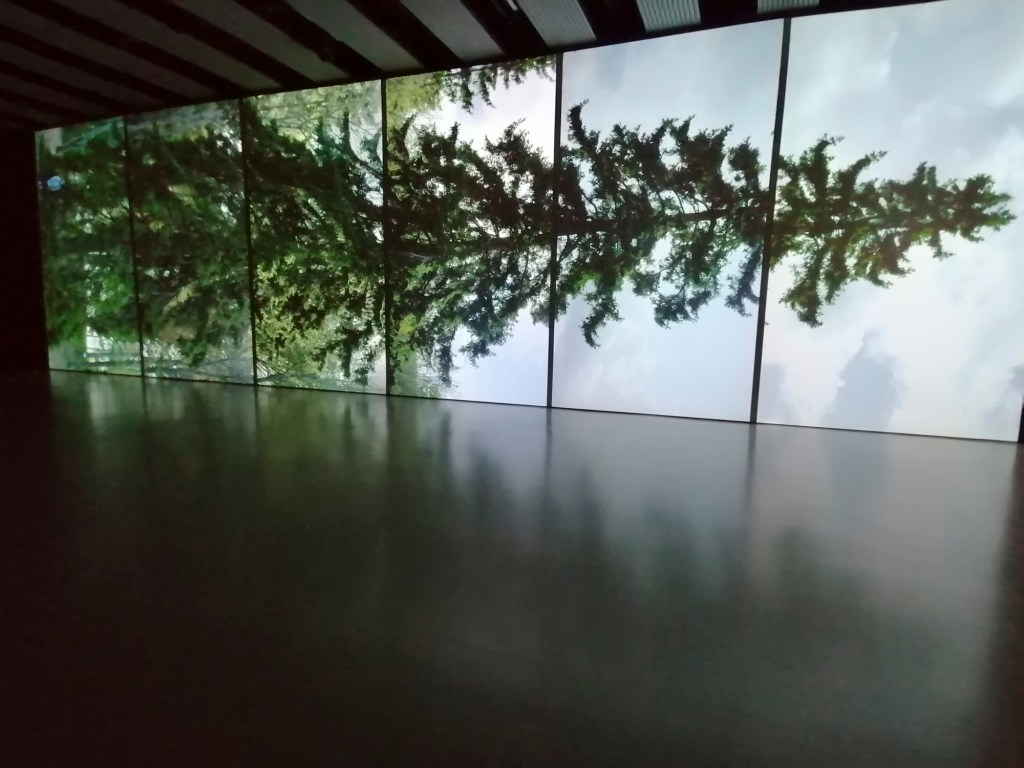
Eija-Liisa Ahtila – Horizontal – Vaakasuora, 2011

This installation features six filmed projections of different sections of the same tree.

‘Soon it became clear how difficult it is to really portray a tall trees because of the size of the film image – its aspect ratio… I want(ed) to somehow make visible to limits, or edges, of human perception and to try to show the idea introduced by Jakob von Uexkull – of the simultaneous existence of different worlds, different times and spaces.’

Ahtilia, E.L. 2020 pp. ? Among The Trees Exhibition Brochure

I realise now that they had a bearing on my experimentation for my Moments of Eternity images.

While at the Among the Trees exhibition, I bought a selection of books that I added to my current tree collection:

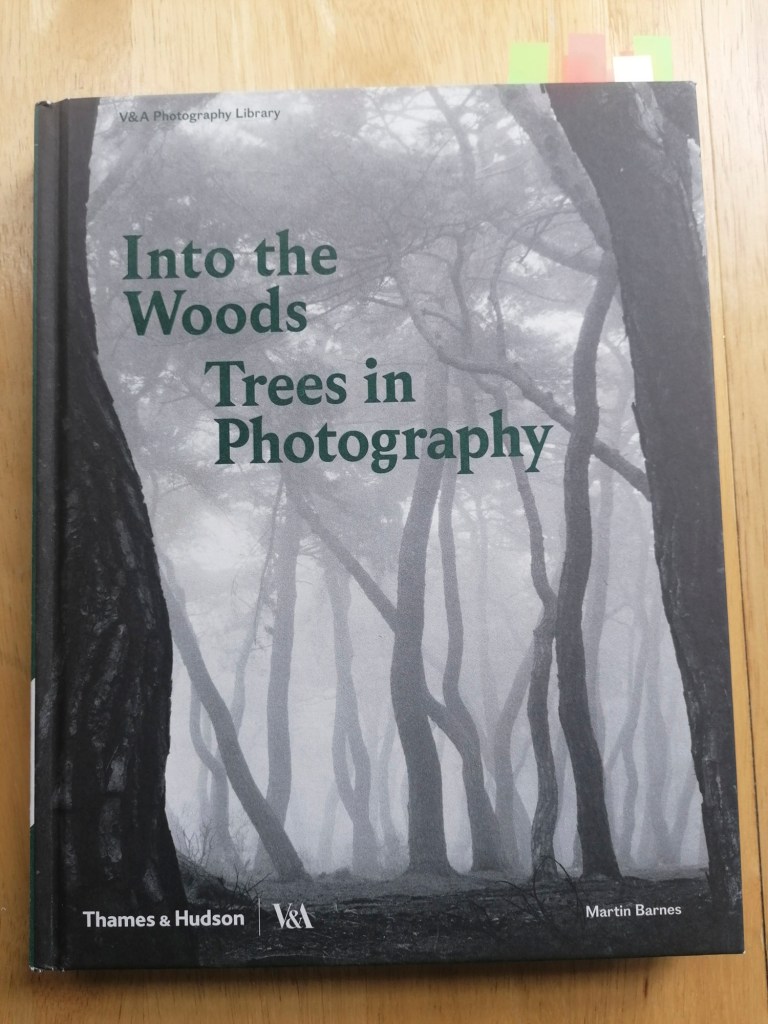
Into The Woods

This was an exhibition of tree photographs from the Victoria and Albert Museum’s archives held in there 2017. I did visit the exhibition at the time, but had not seen or read the connected book. This gave a more detailed grounding of how trees have been depicted within photography.

In the introduction, Martin Barnes, Senior Curator, Photographs at the V&A made two pertinent points:

Many of the photographs during the 19th century showed trees without foliage. This, Barnes explains, was:

‘Probably due to the result of aesthetic choice combined with practical necessity: long exposures were typical, meaning that leaves blowing in the wind would result in them appearing undesirably blurred. Such softness and blur was, however, embraced as a deliberate visual aesthetic by photographers devoted the ‘pictorialist style that was fashionable from the later 1880s and well into the early twentieth century. Pictorialists combined soft focus, inspired by Impressionist and Aesthetic Movement painting, with pared-down aesthetics, attenuated forms and flat patterning borrowed from Japanese prints.’

The style signalled artistic and poetic intent, as distinct from more technically precise photographs that were associated with science or commerce.

‘In the mid-to late twentieth century, the harder-edged style of modernism largely supplanted pictorialism – Paul Strand and Albert Renger-Patzsch, who favoured a return to sharp focus and an implied clarity of thinking and perception’.

Barnes, M. 2019, pp. 10

One other observation that Barnes makes is the use of, or lack of, colour within tree photography:

The most obvious visual shift is the change from monochrome photography to the introduction in 1907 or the first practicable colour process, autochrome. Thereafter, depicting trees in colour or monochrome became a deliberate choice. However, the focus on line, form, texture and detail that monochrome instantly provides – in a subject complex even without colour – has meant that this type of photography appears dominant in its history.’

Barnes, M. 2019, pp. 11

It is also interesting to note that Barnes states:

‘One are in which colour and monochrome photographs are on more equal footing is when trees are depicted in Winter, especially in snow. Strong colours are muted, contrast is heightened, and a kind of otherworldly visual silence falls.’

Barnes, M. 2019, pp. 11

Bushy Park 5 October 2020

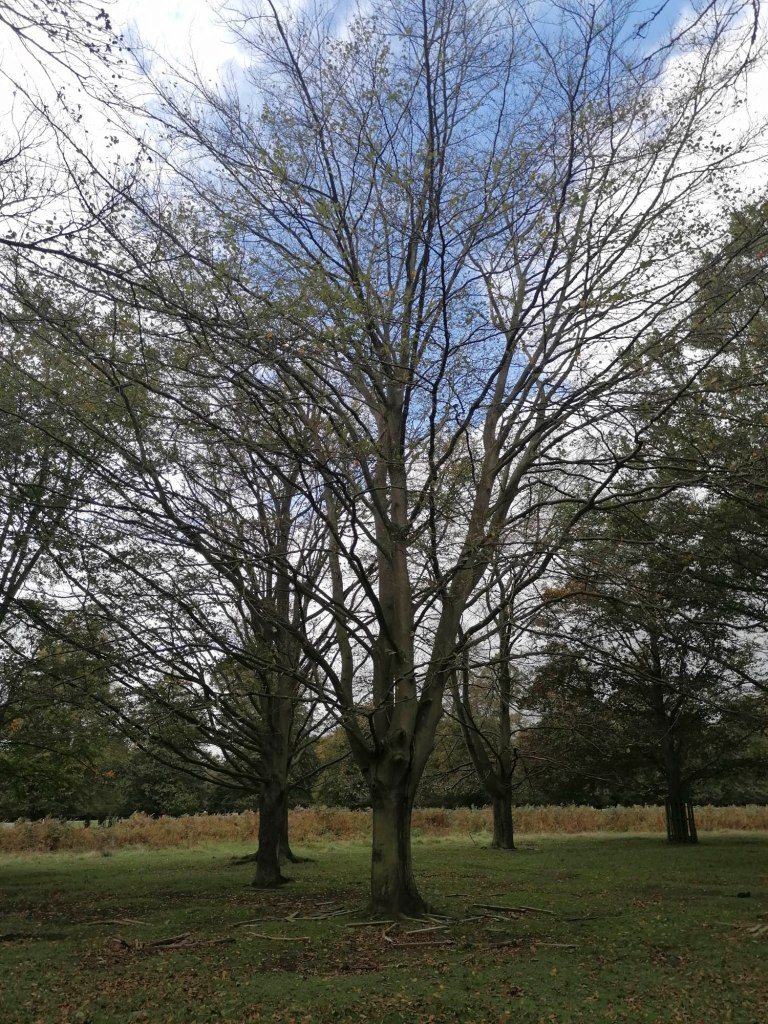
Tree Avenue

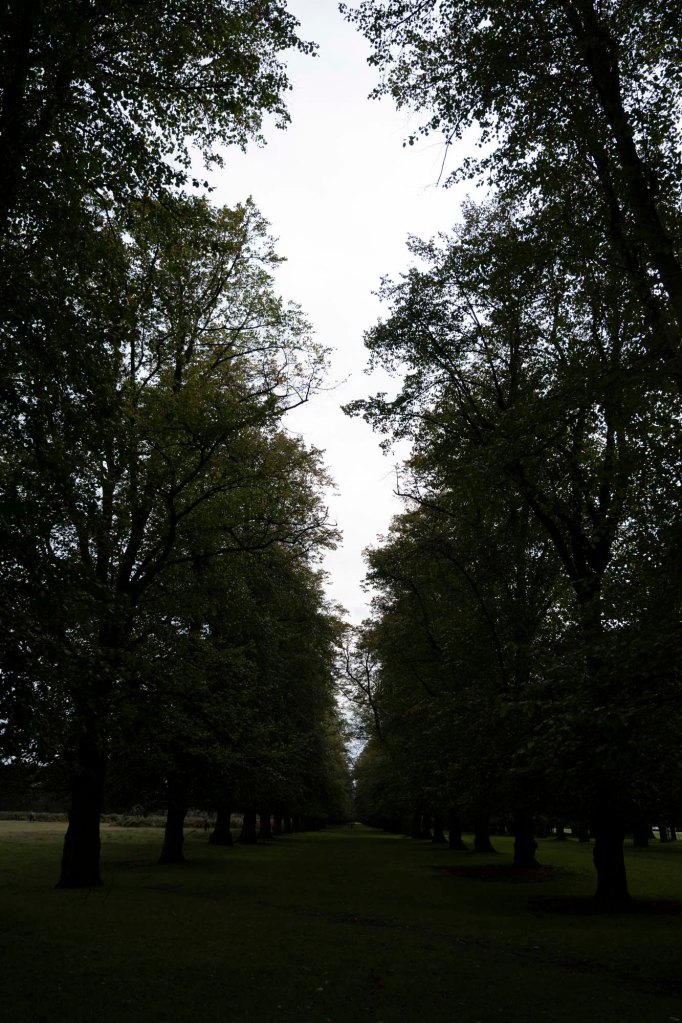
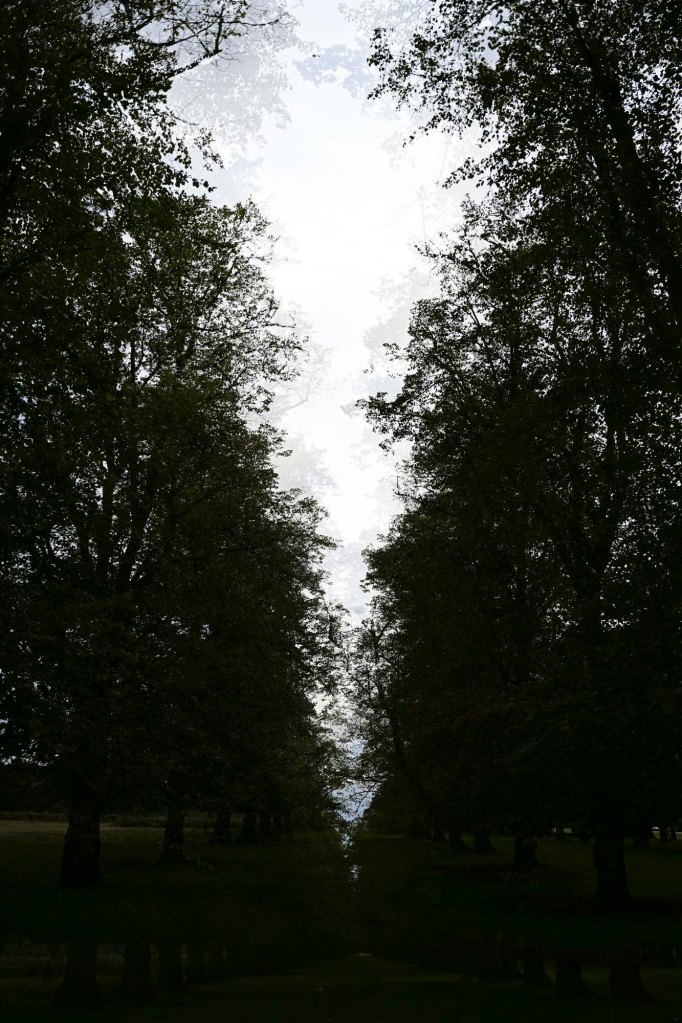
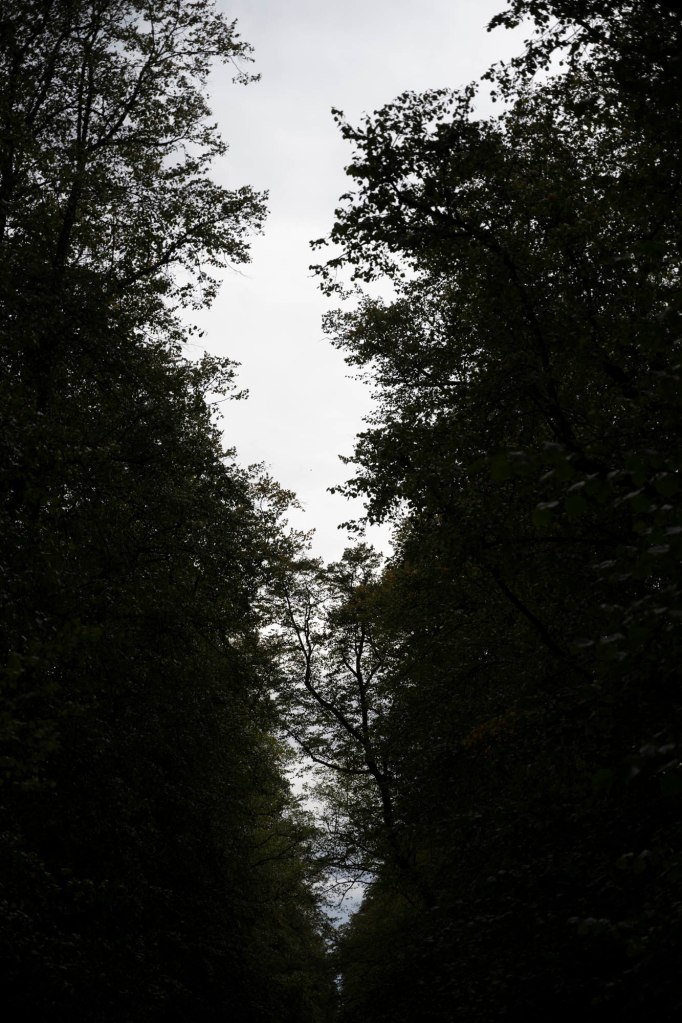
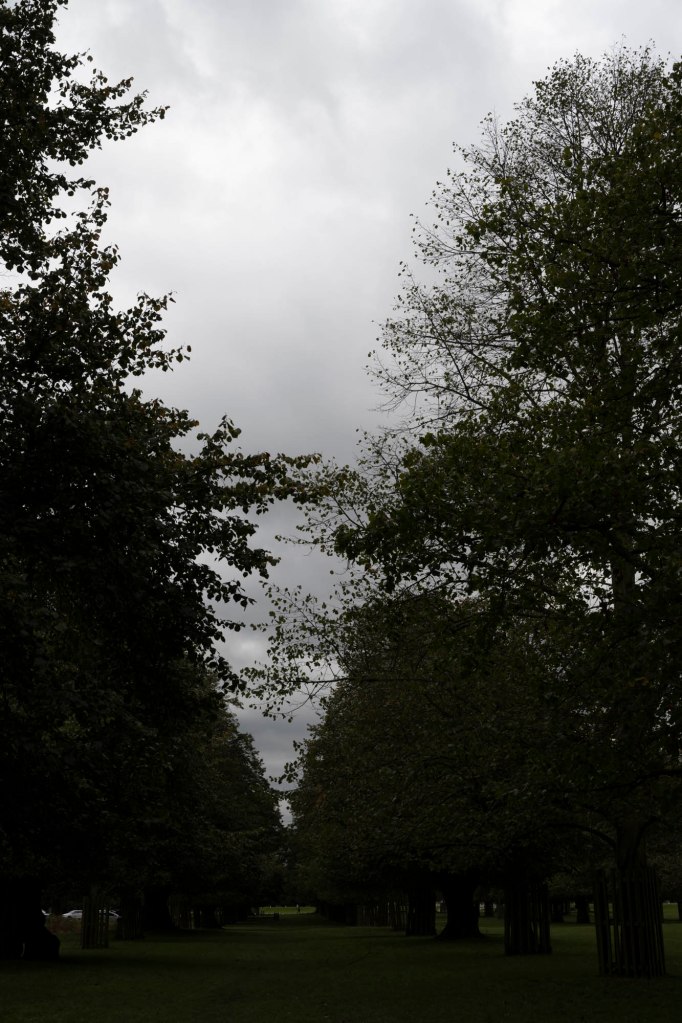
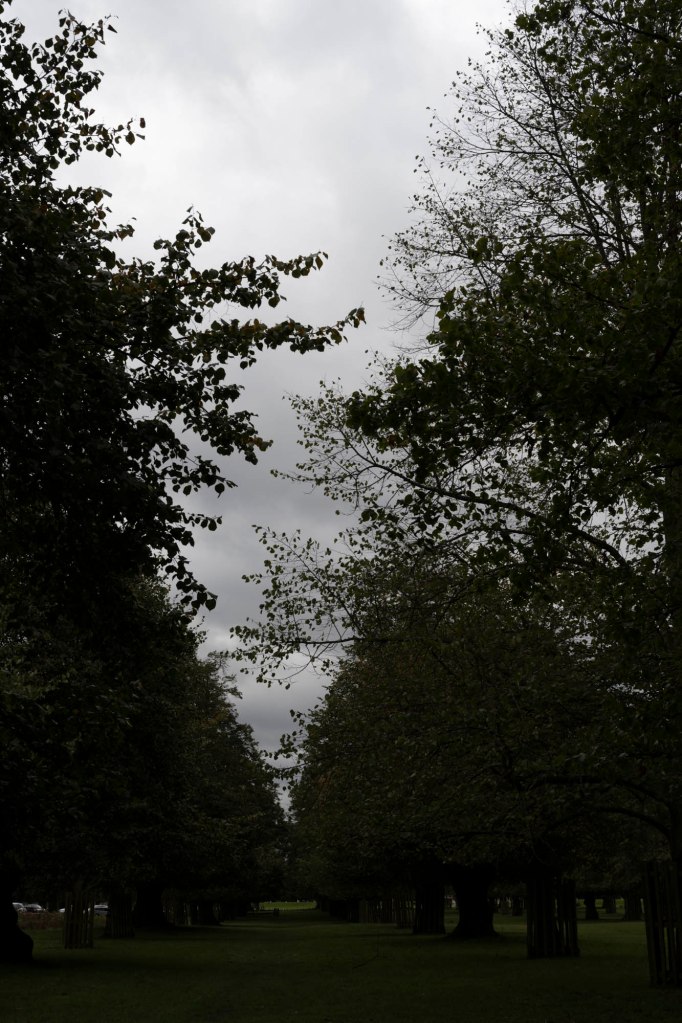
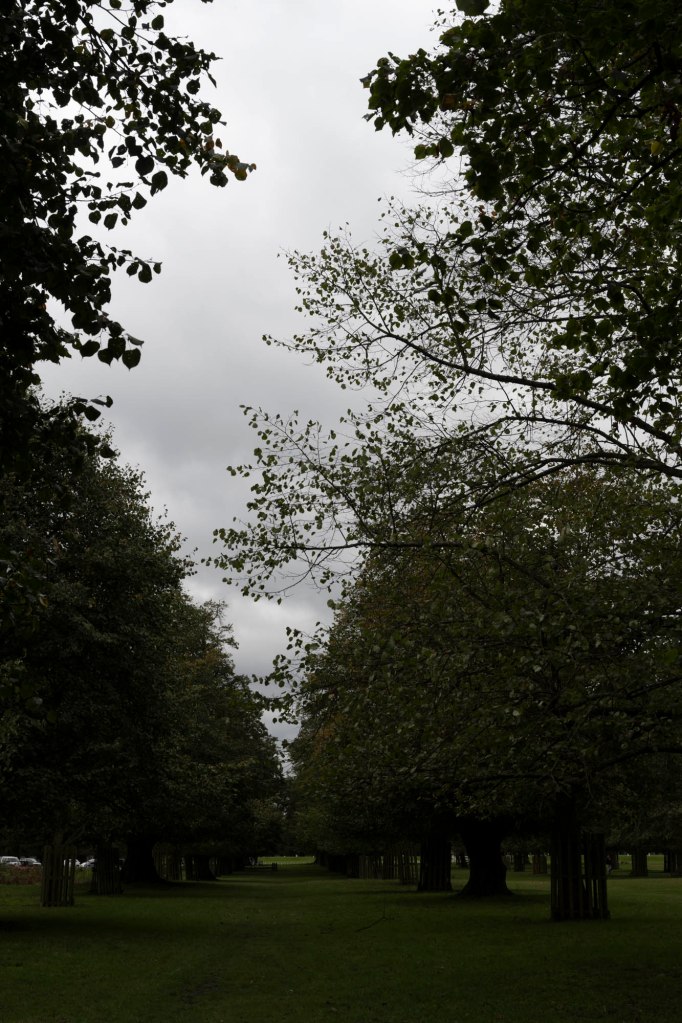
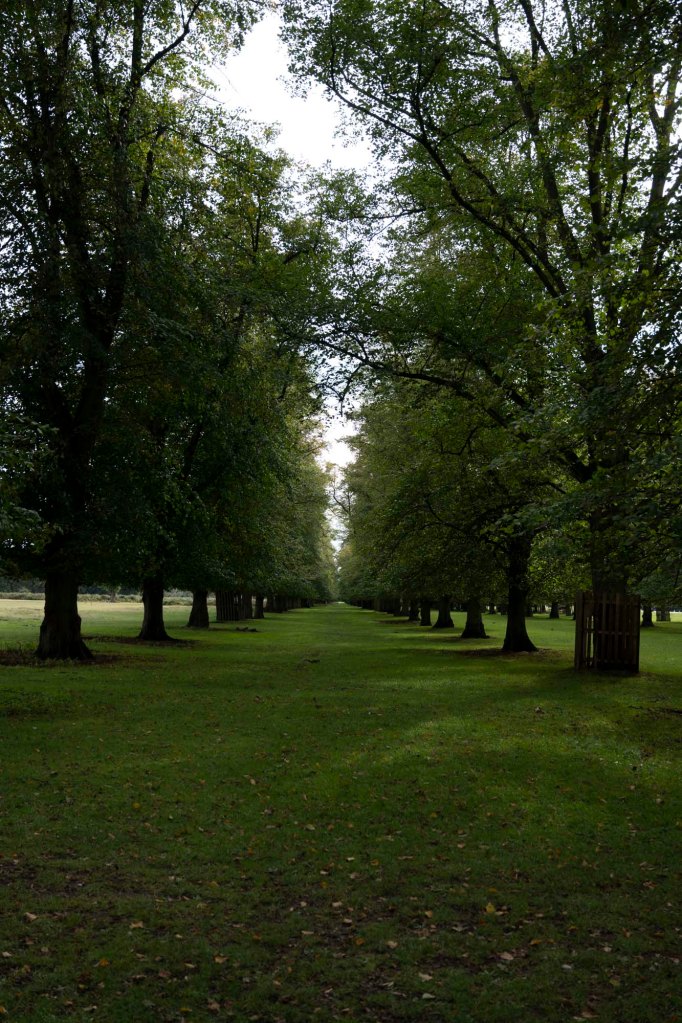
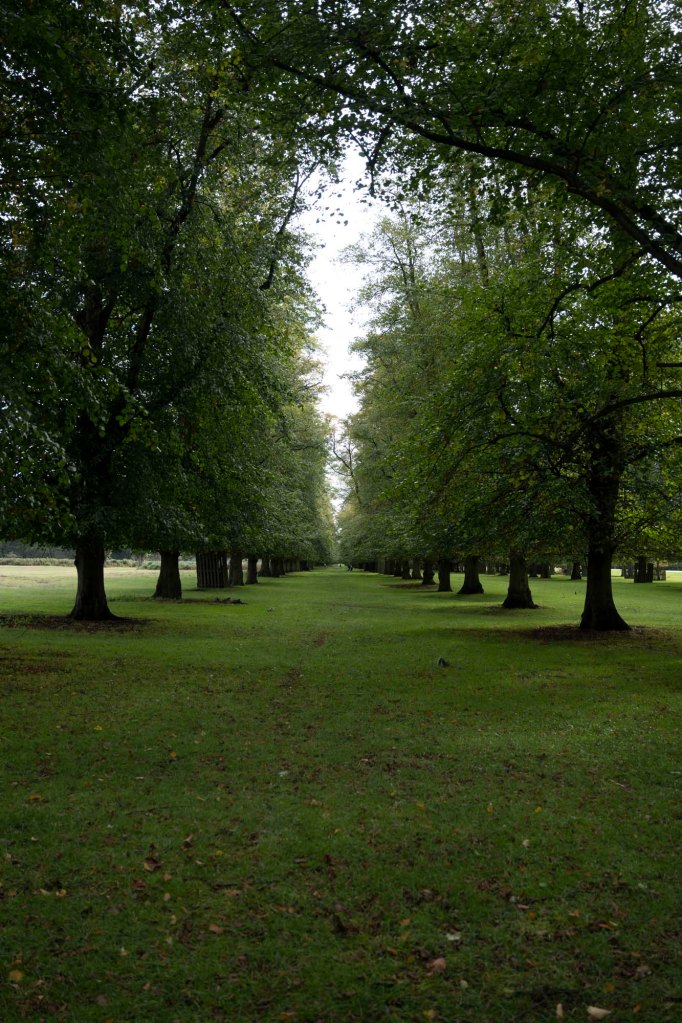
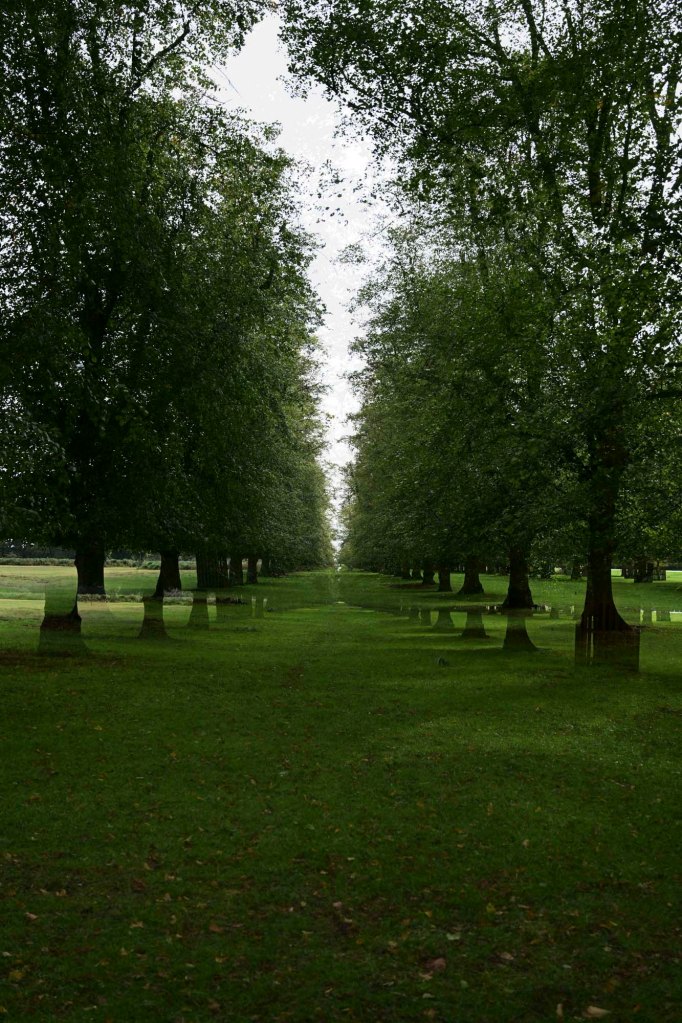
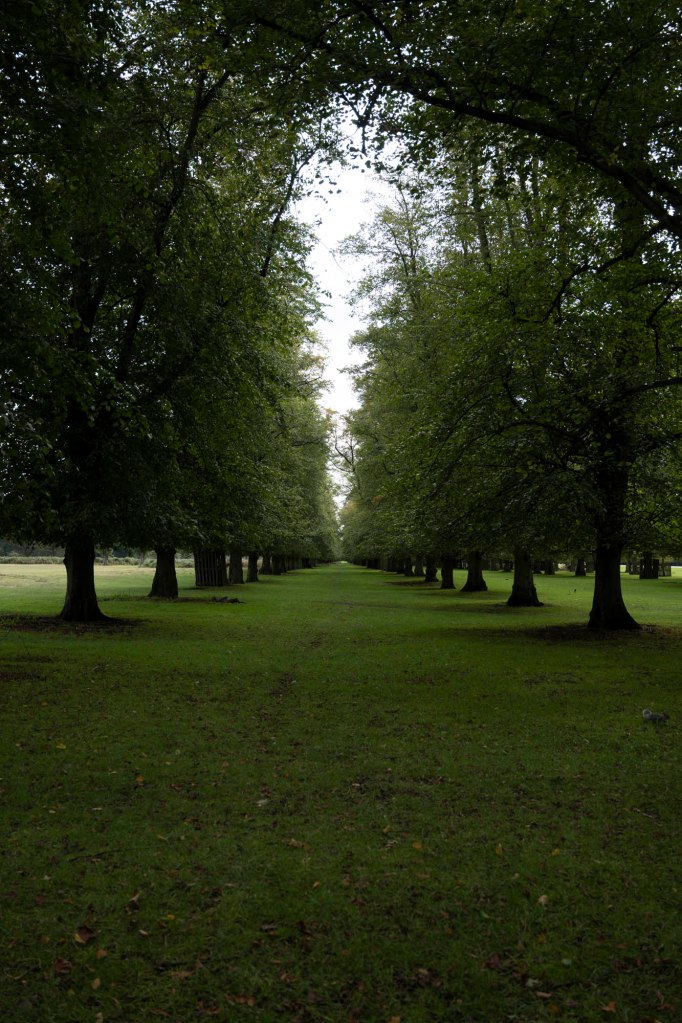
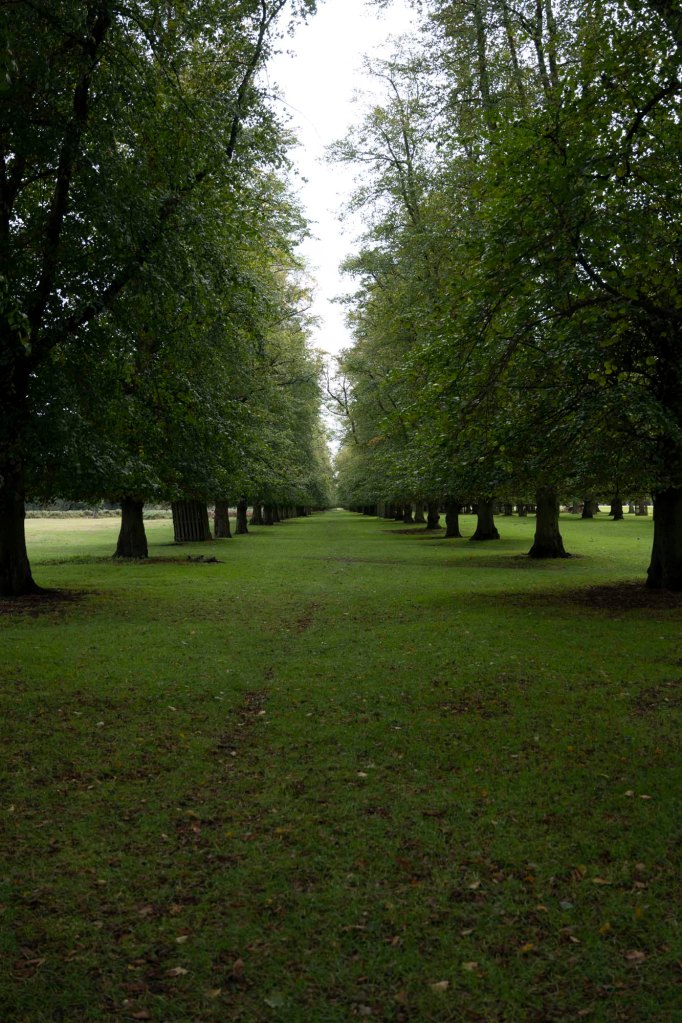
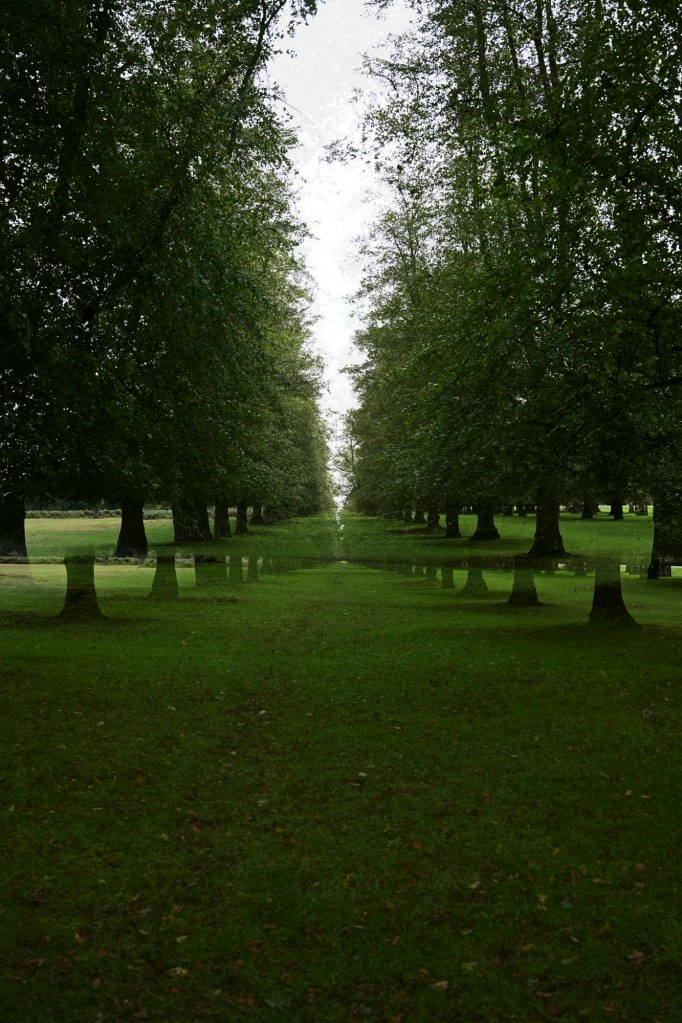
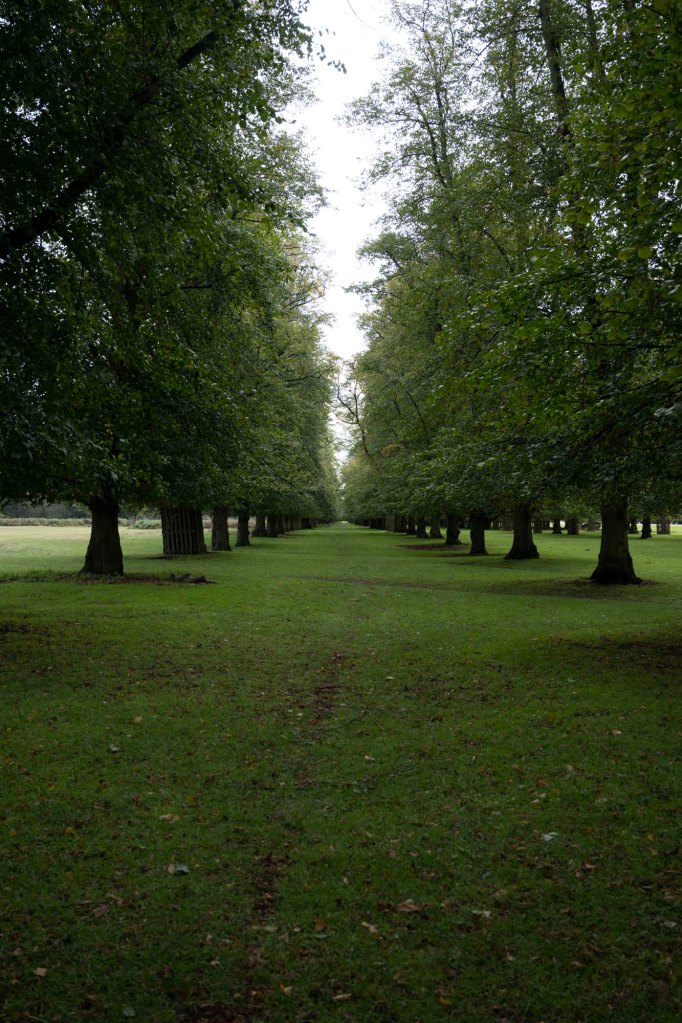
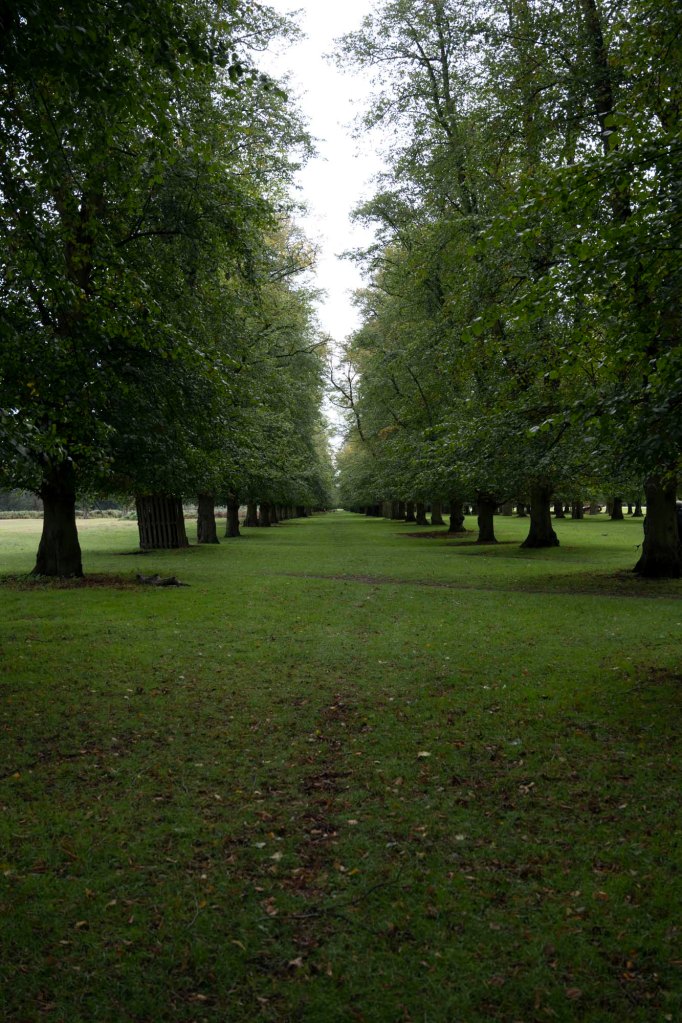
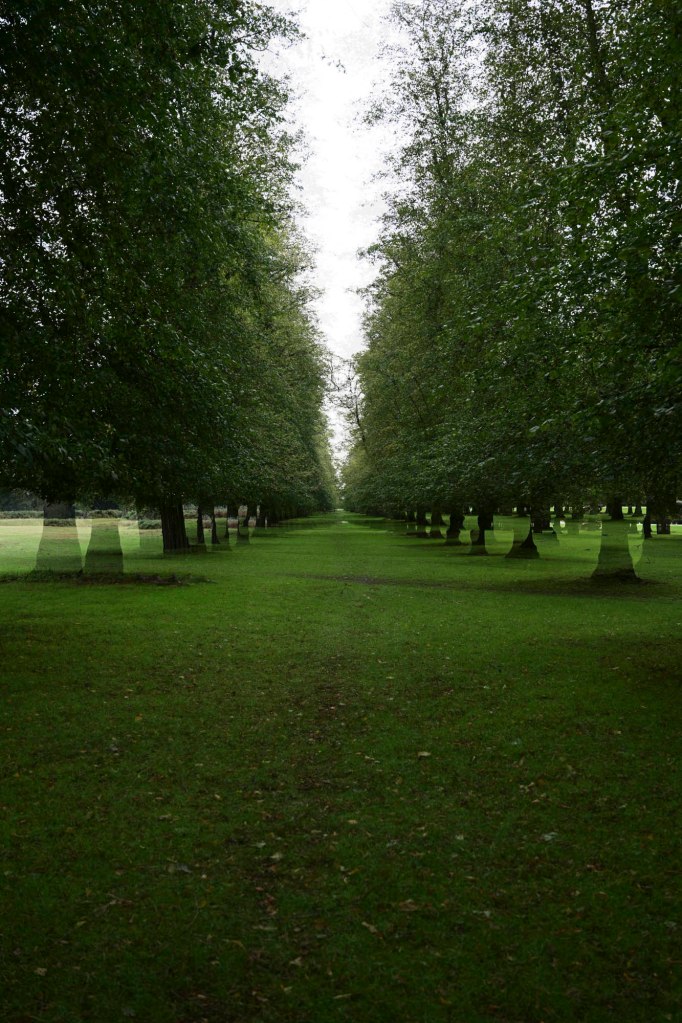
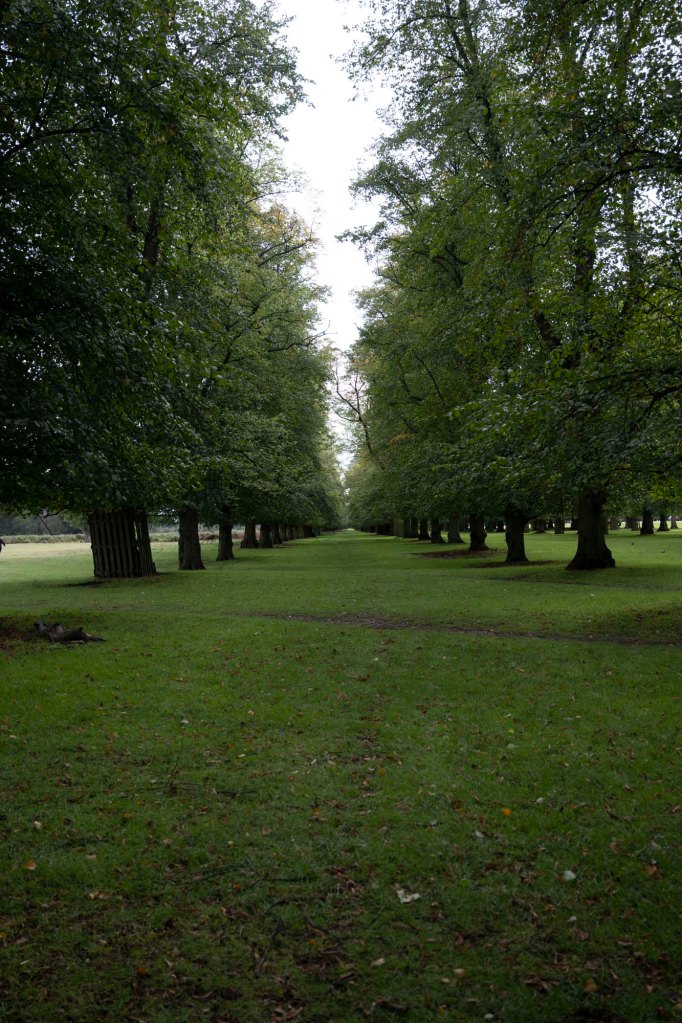
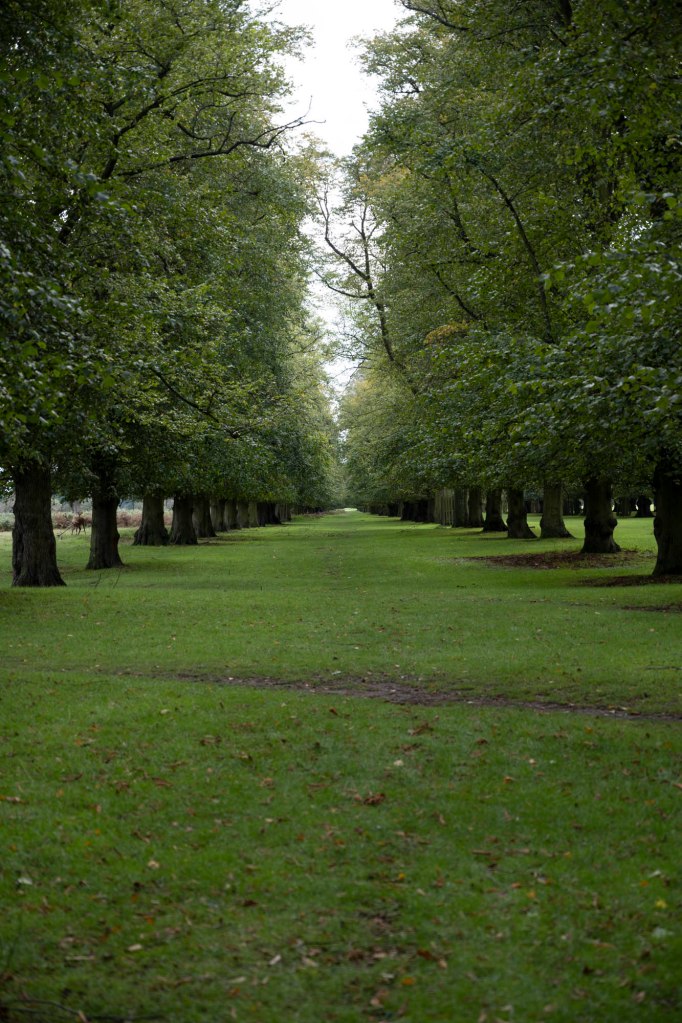
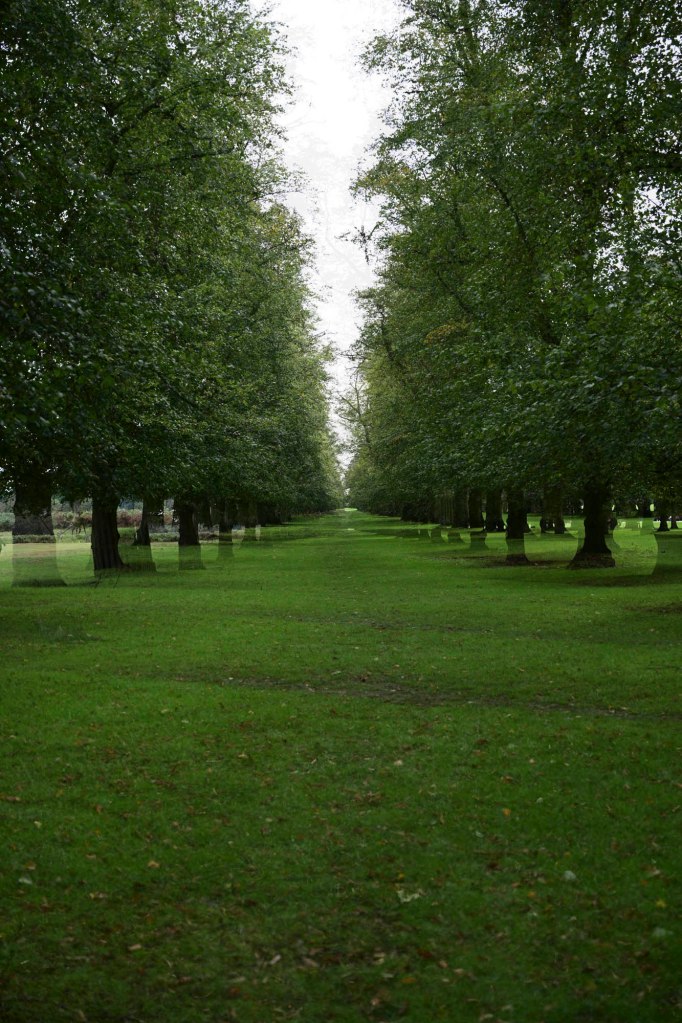
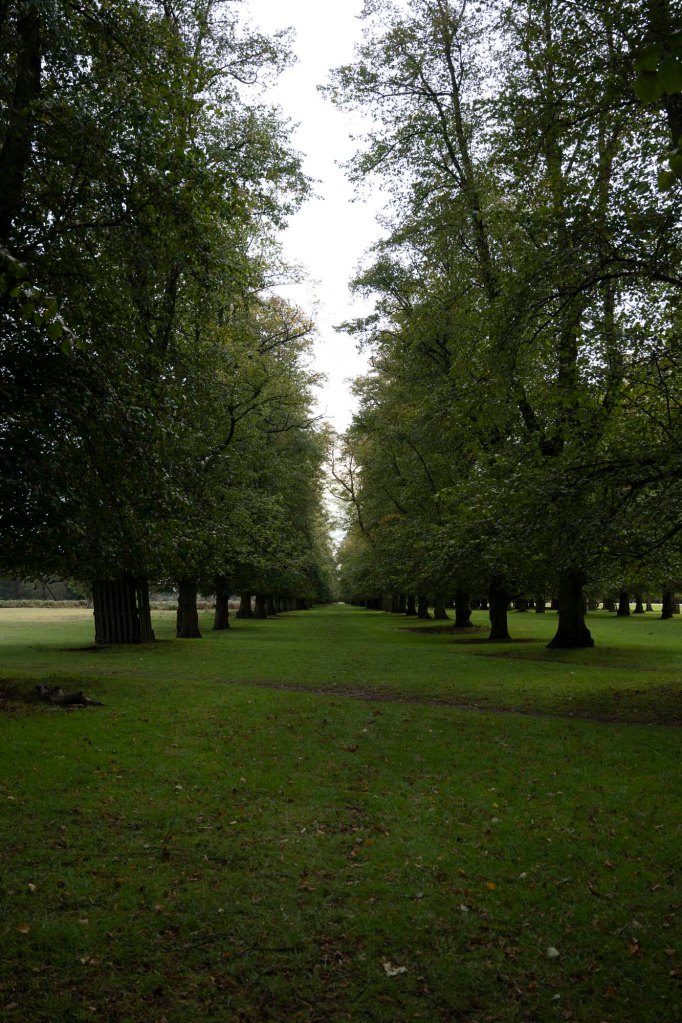
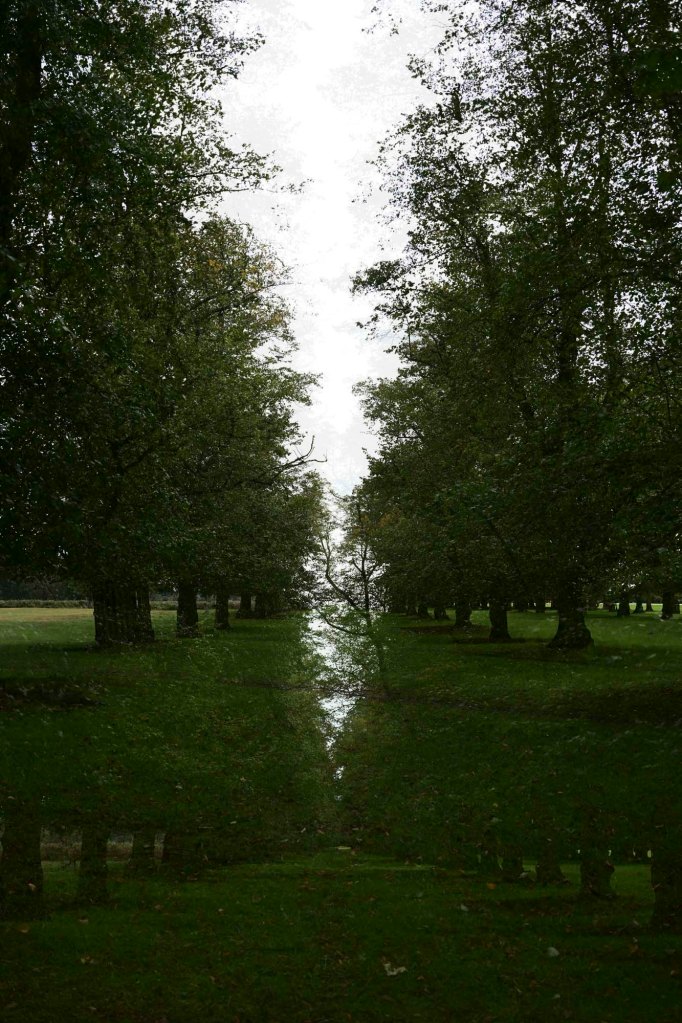
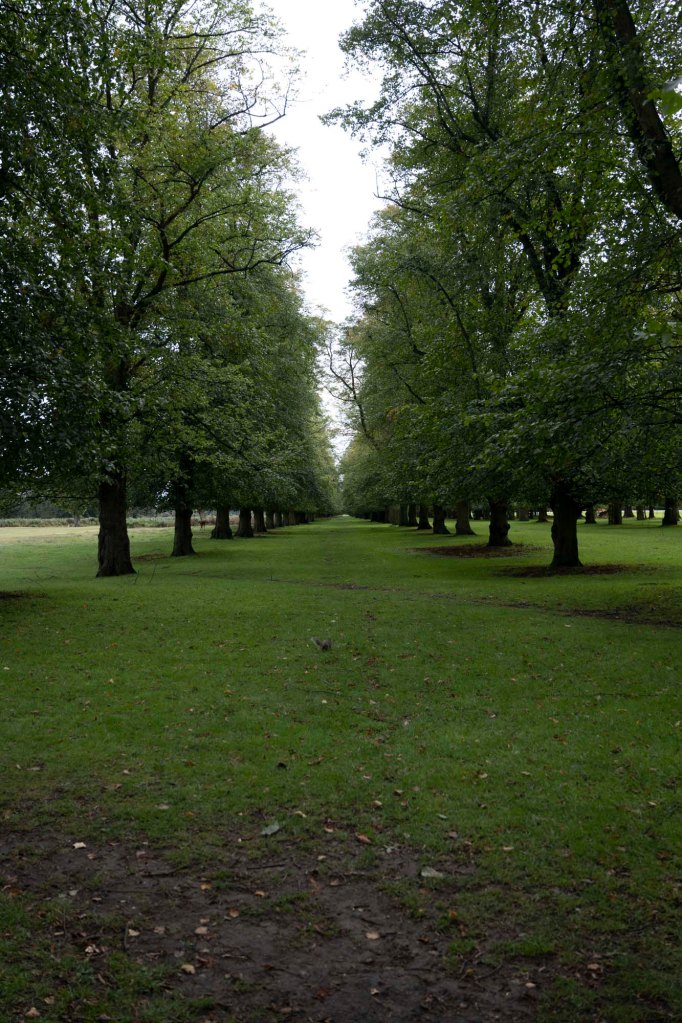
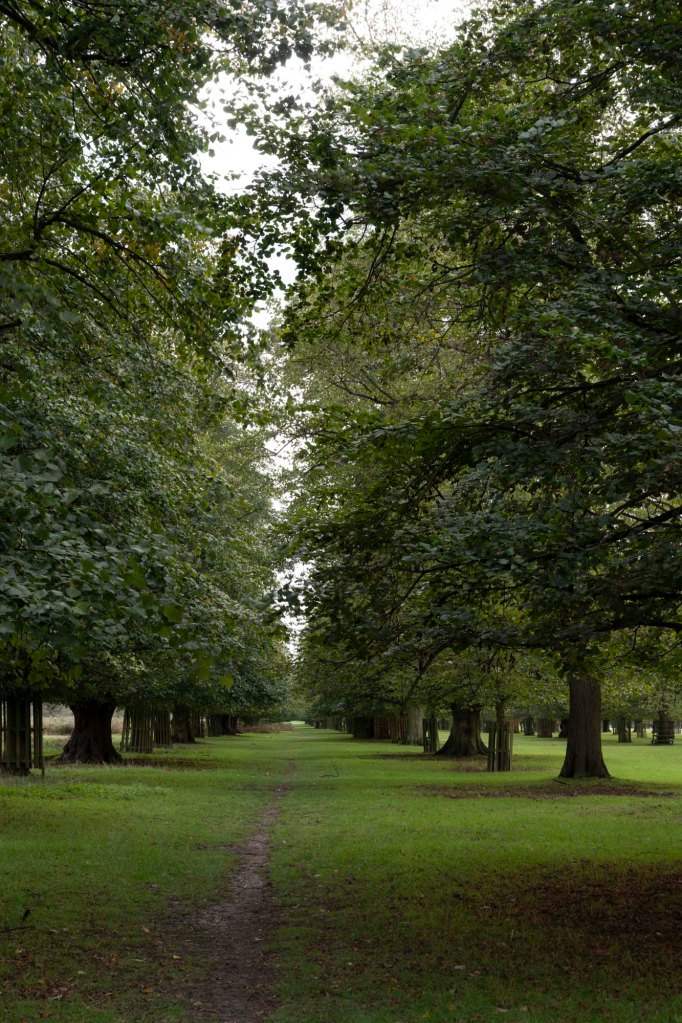
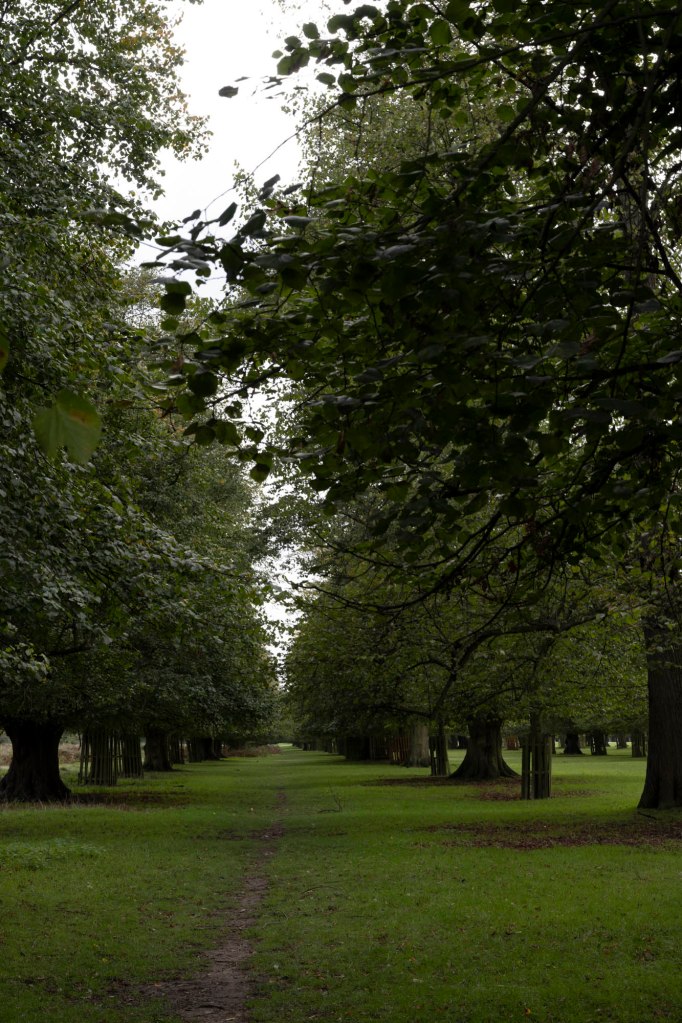
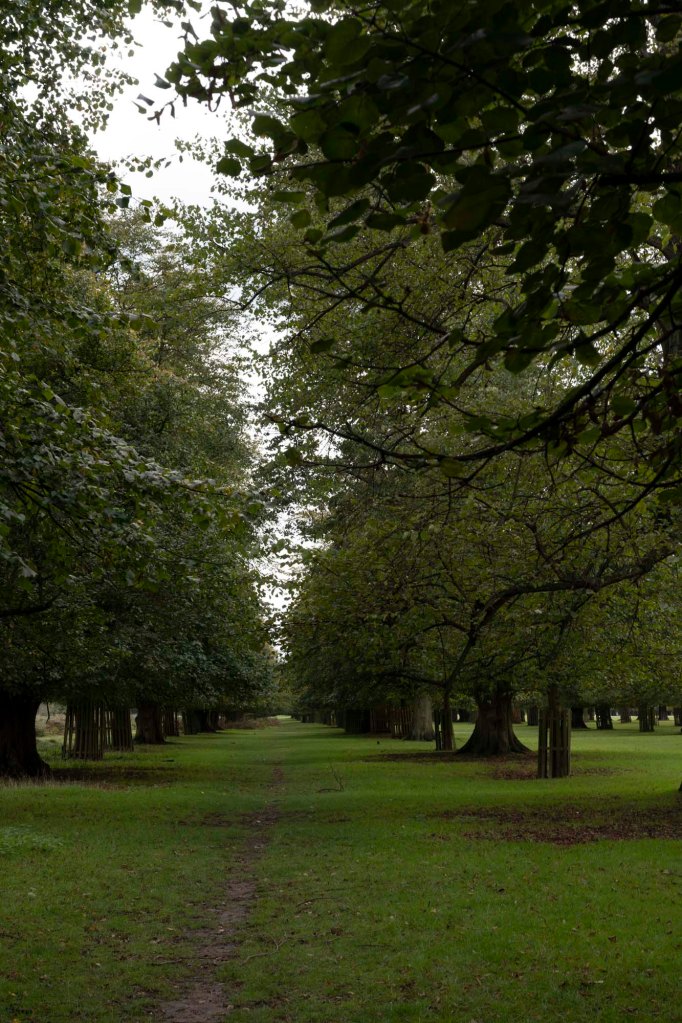
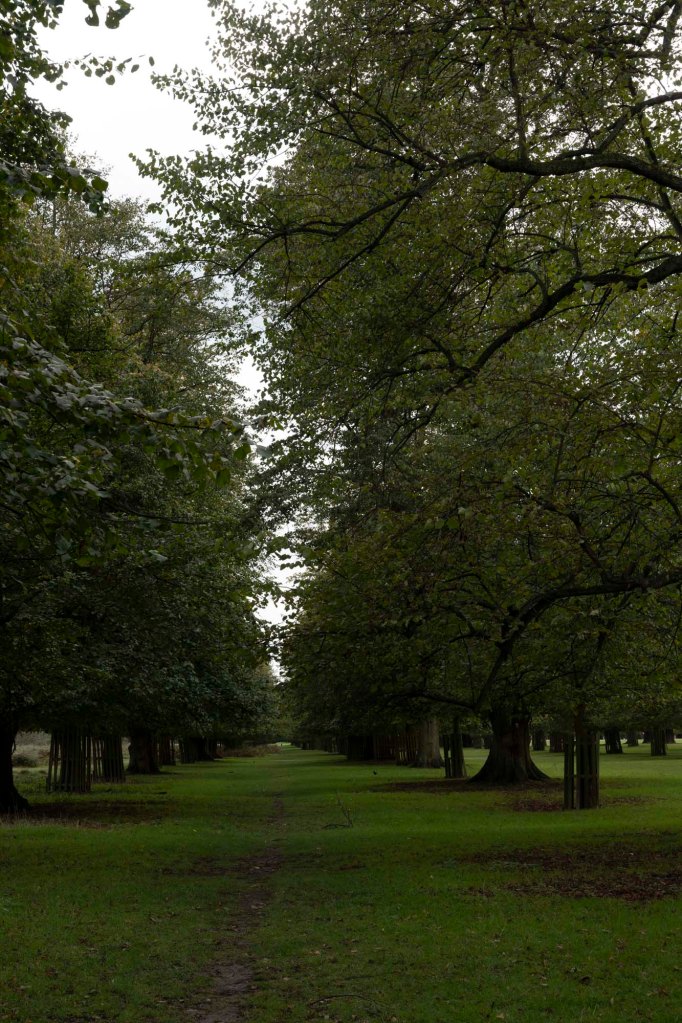
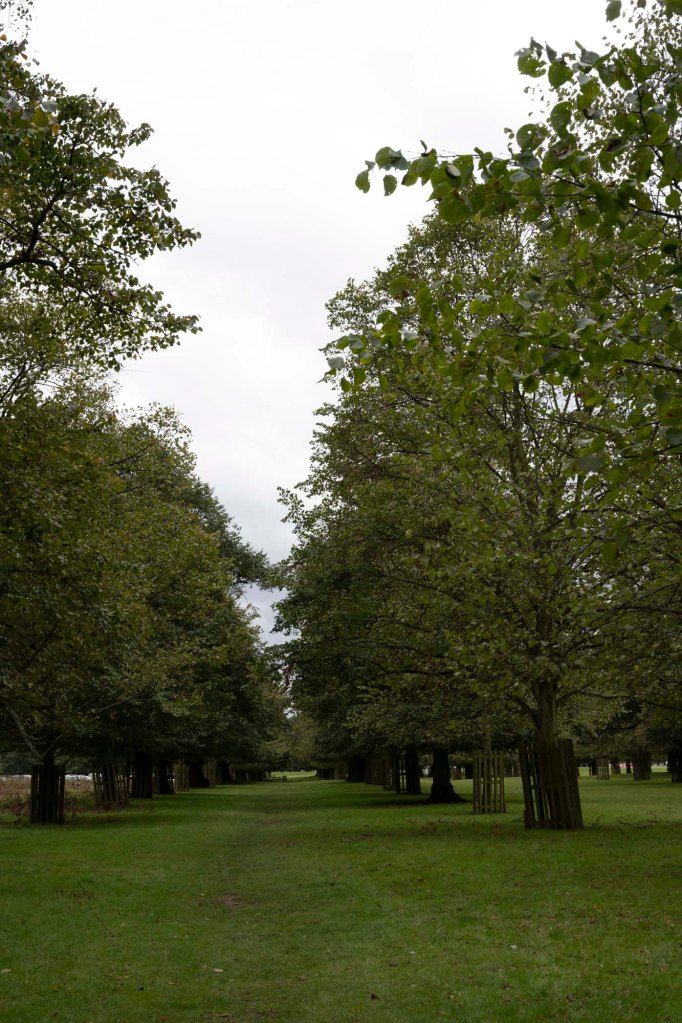
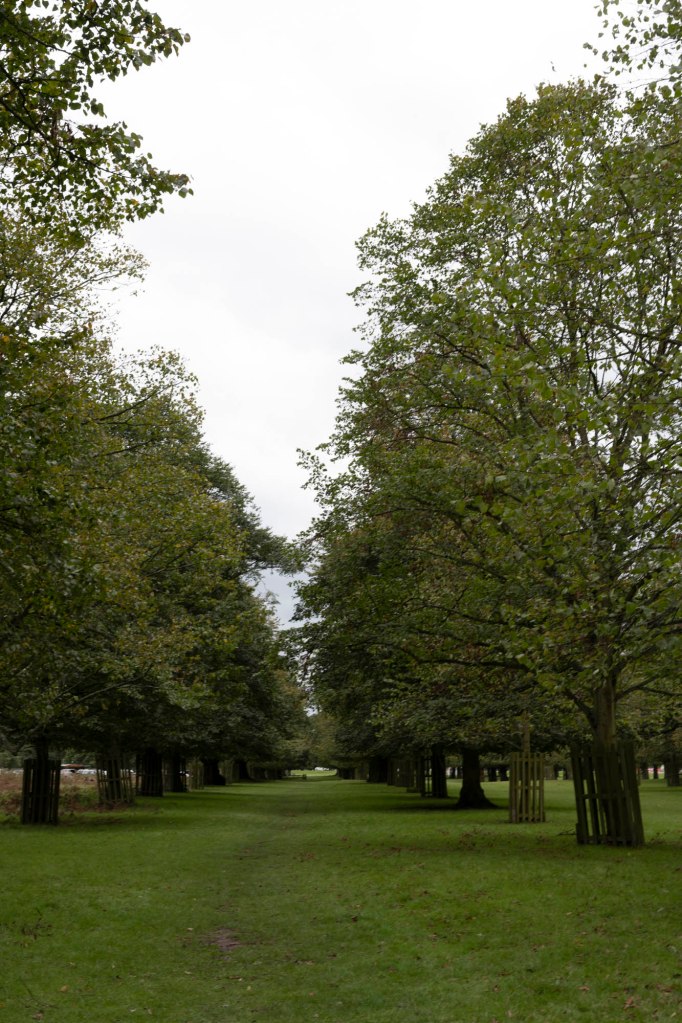
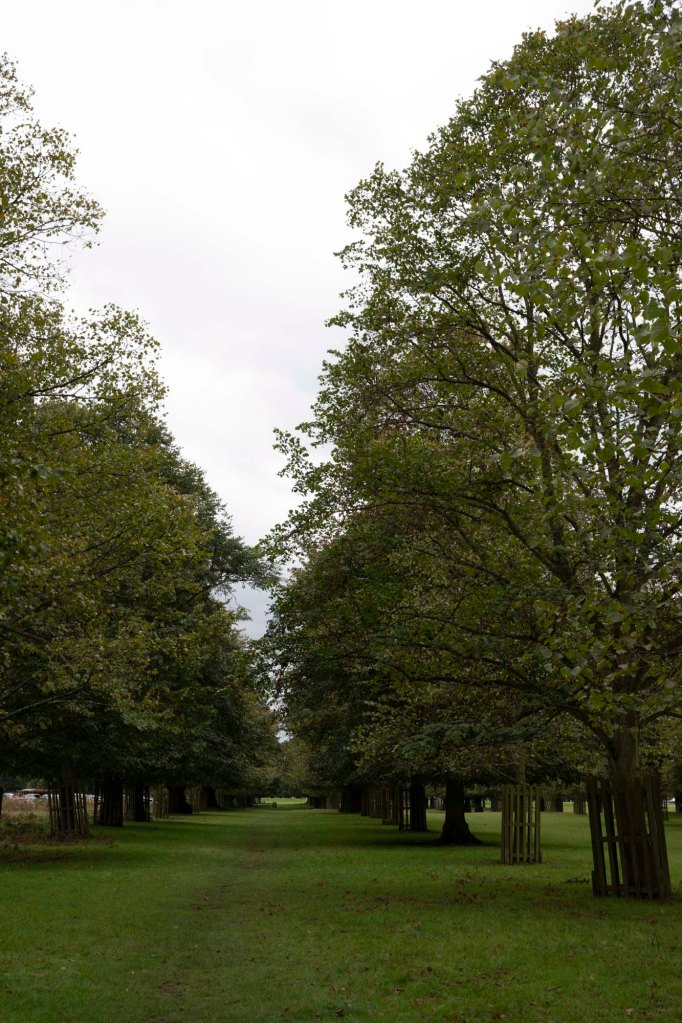
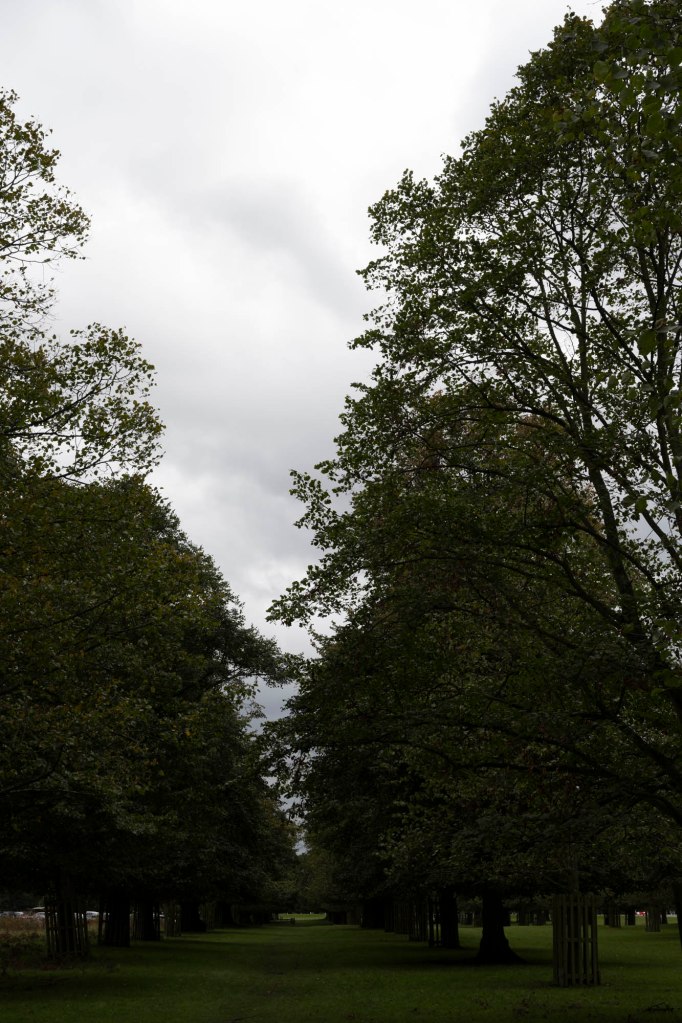
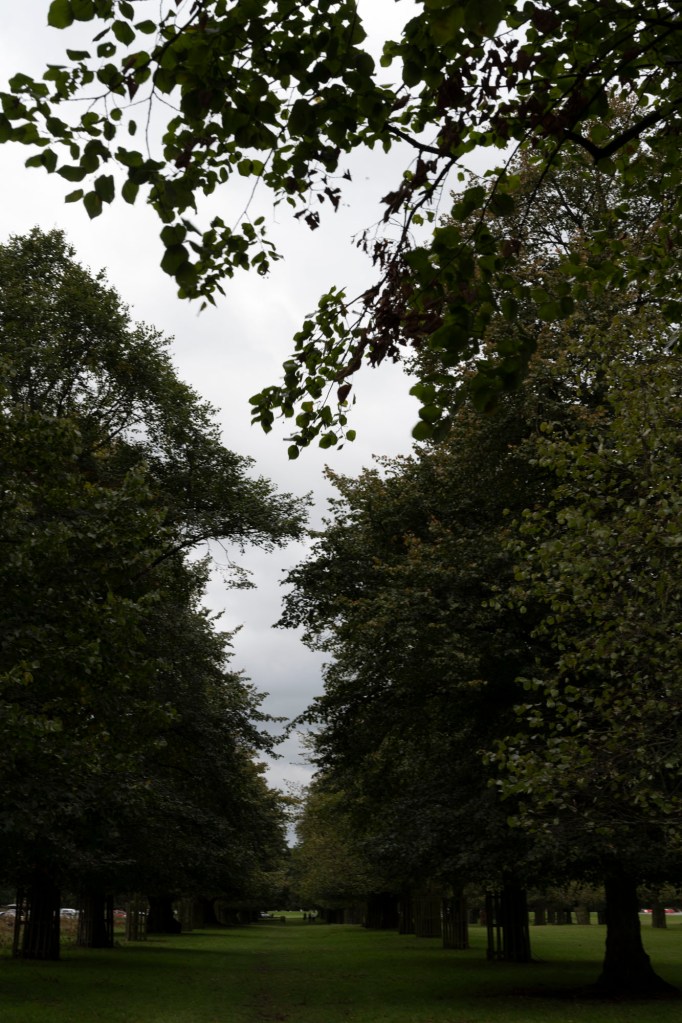
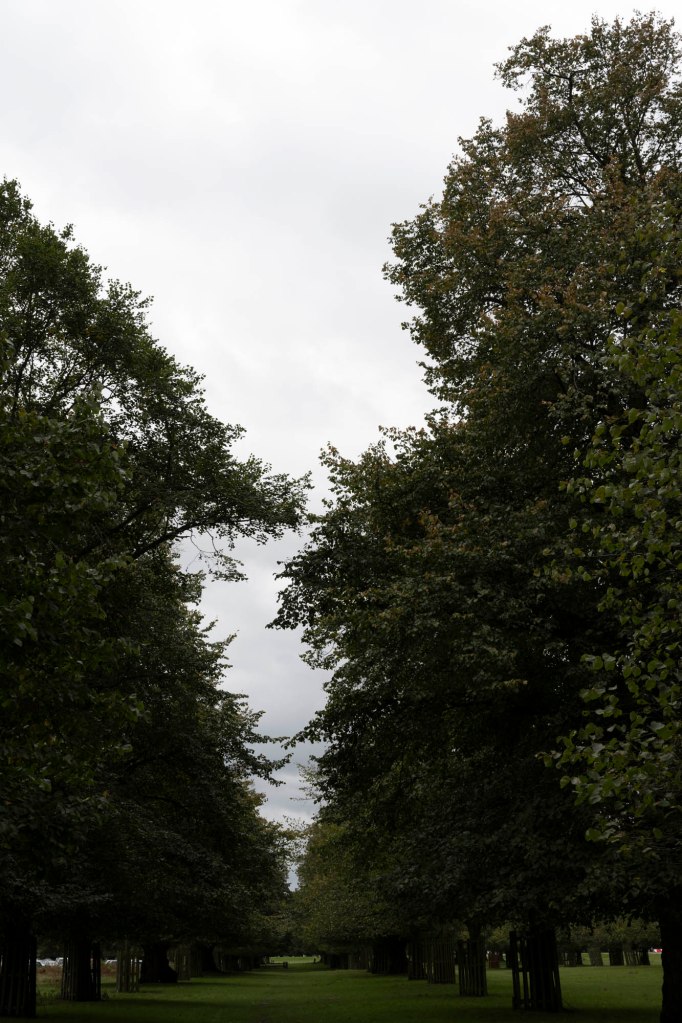
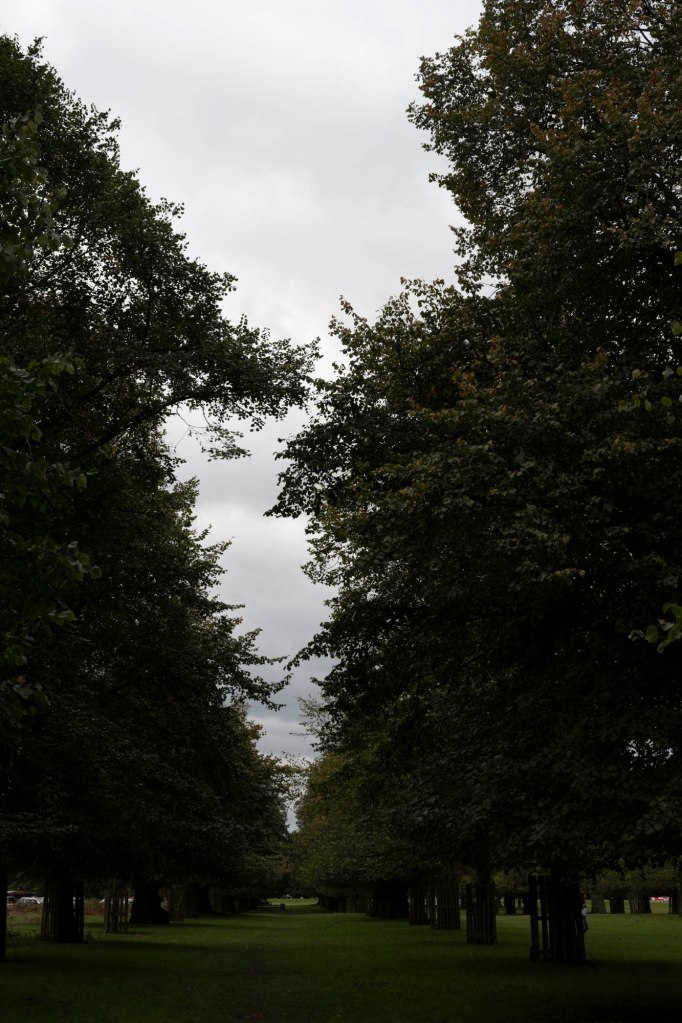
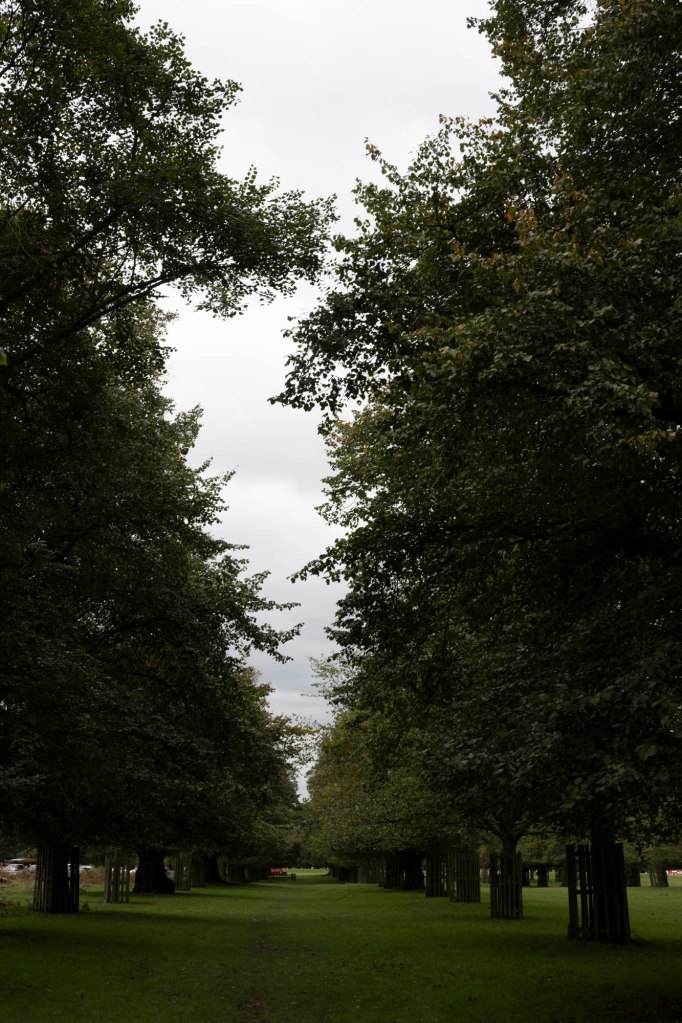
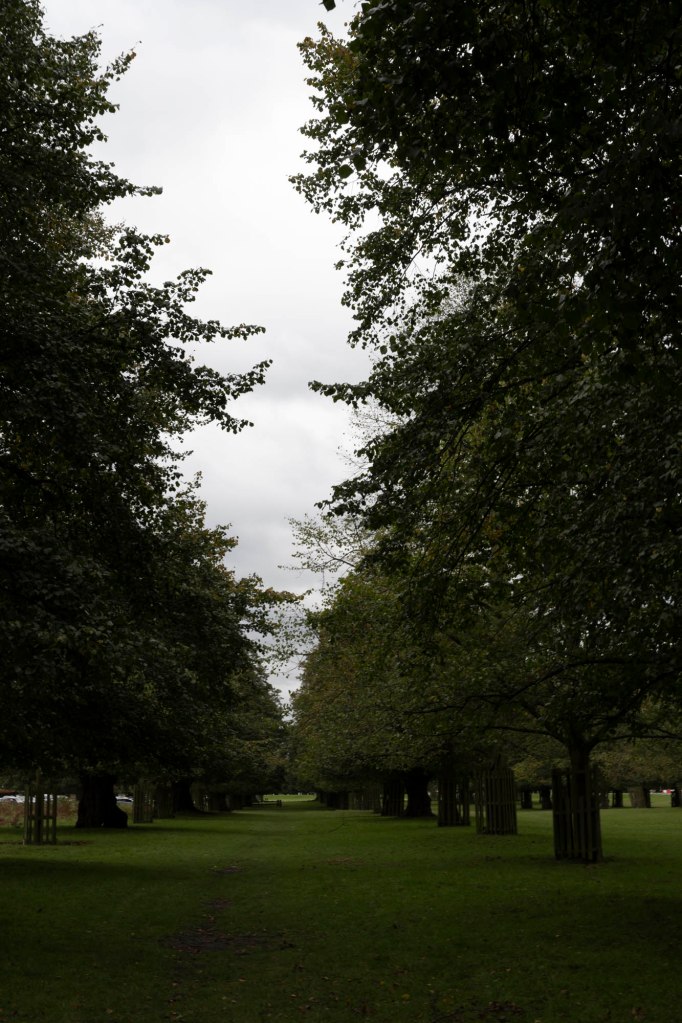
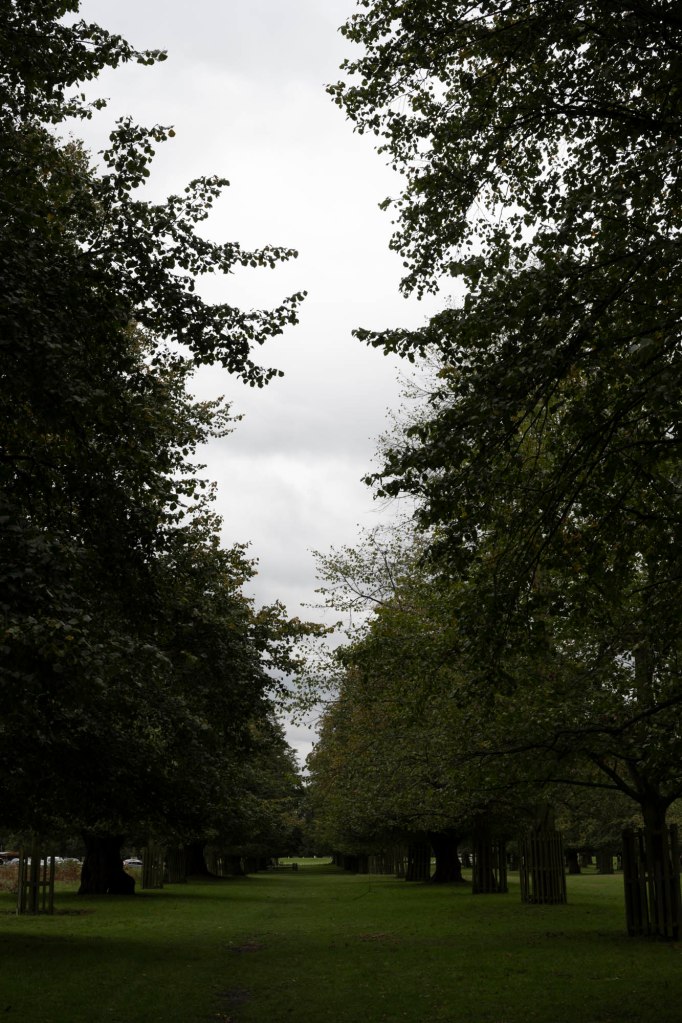
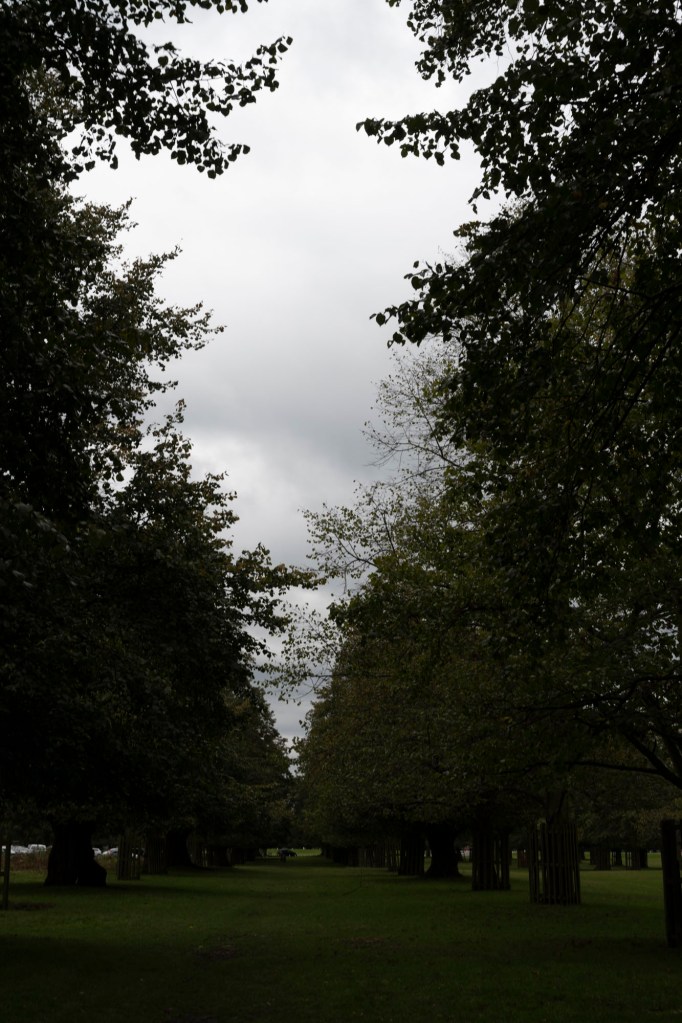
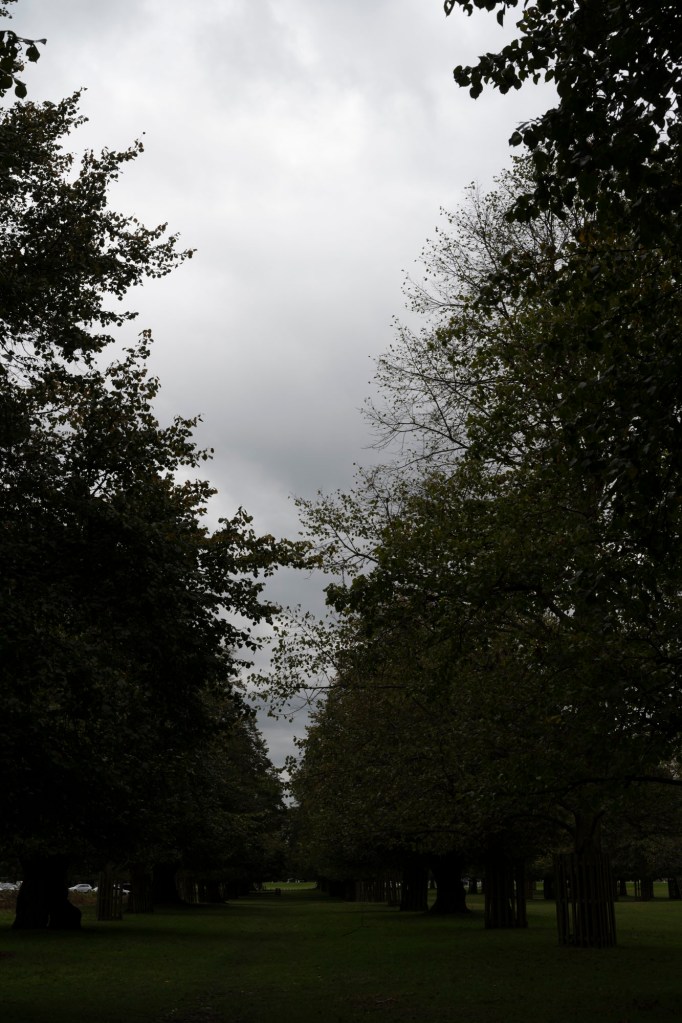
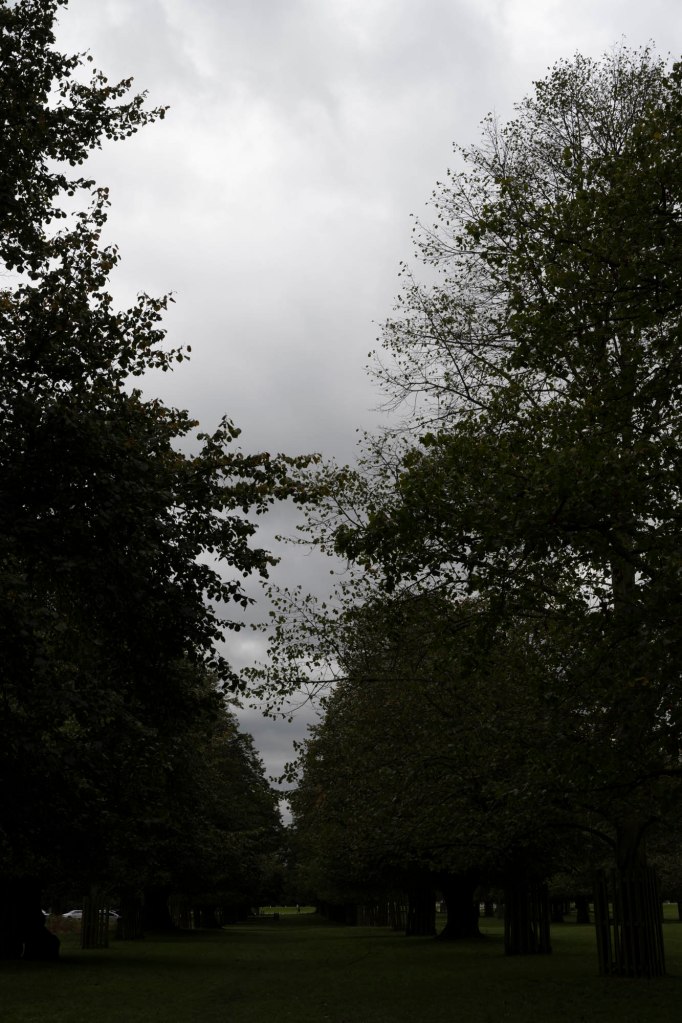
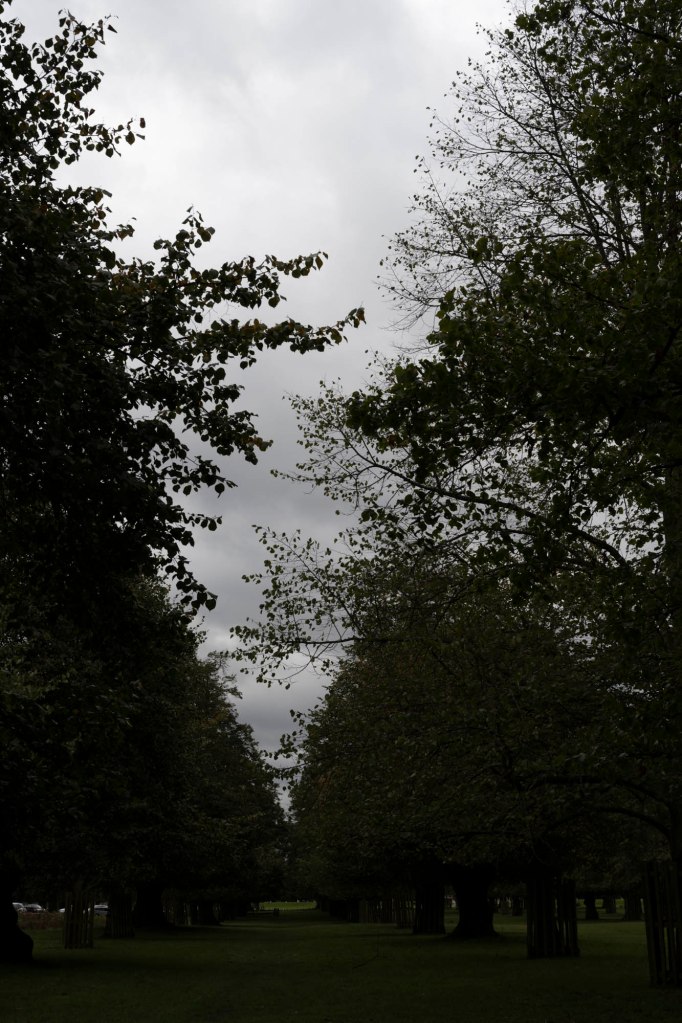
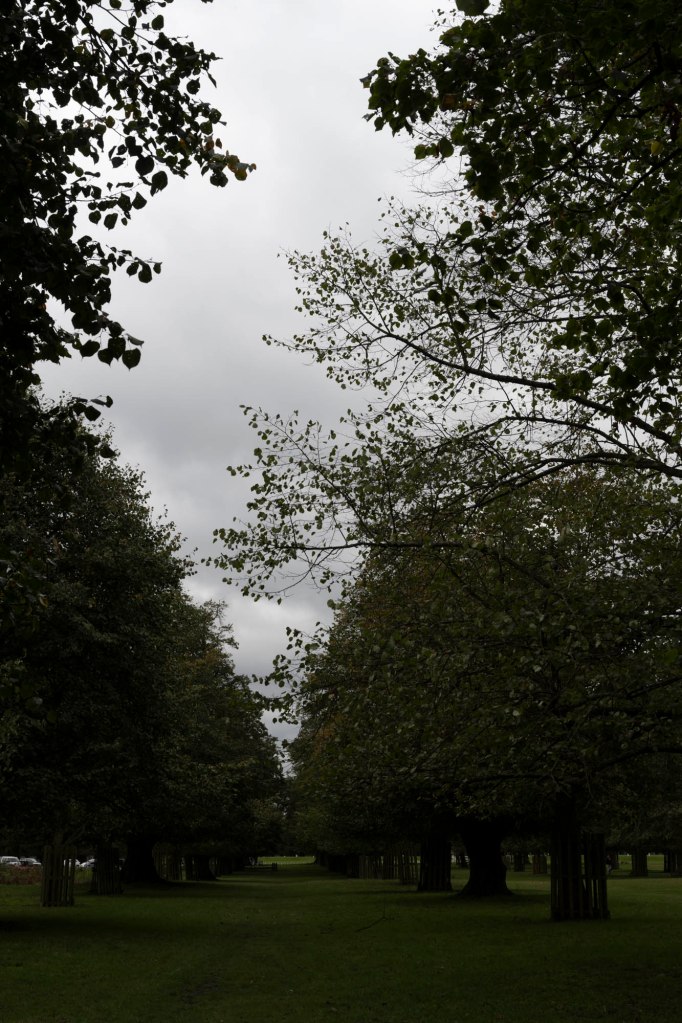
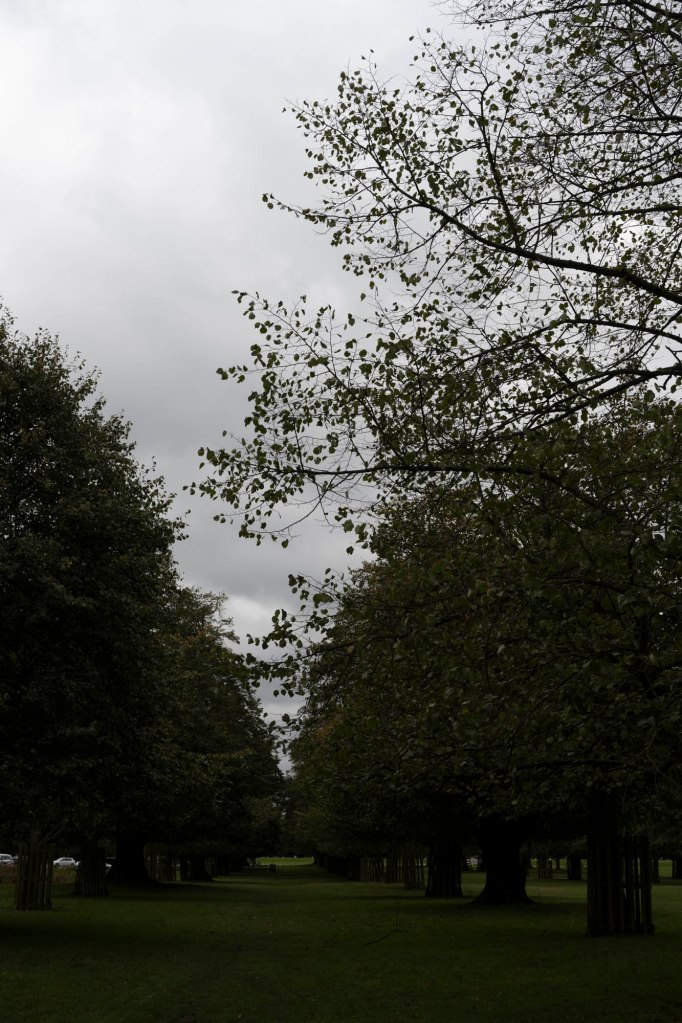
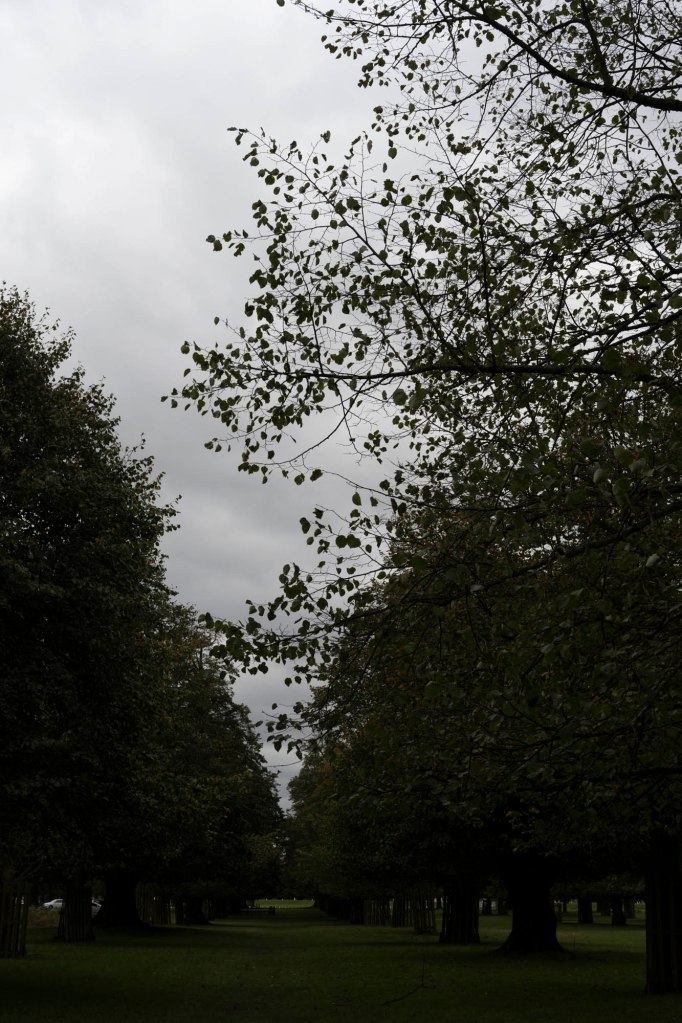
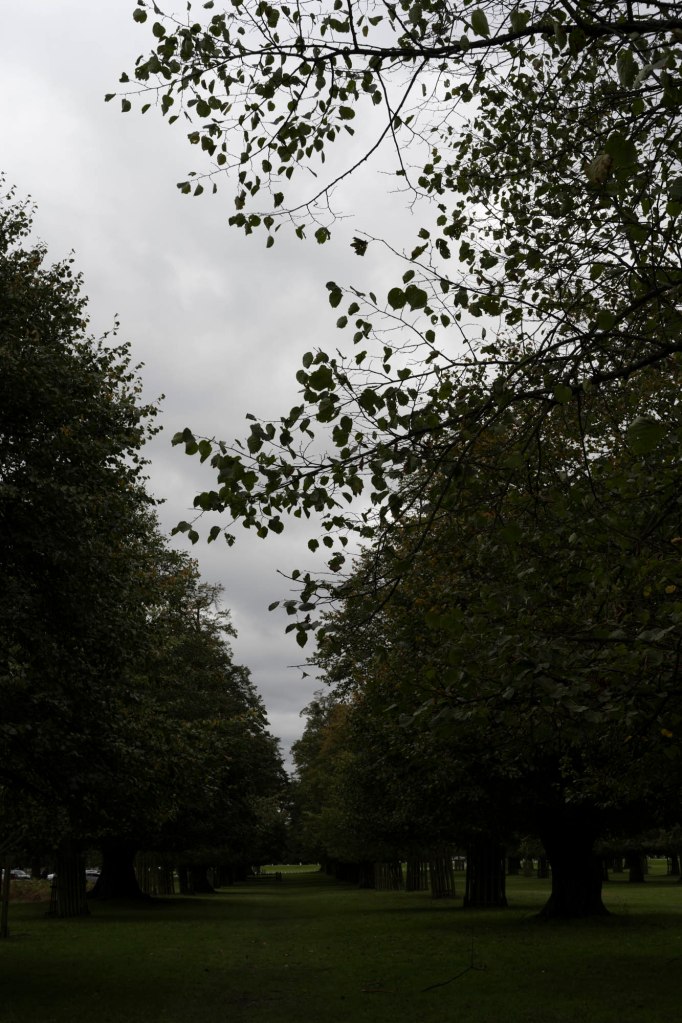
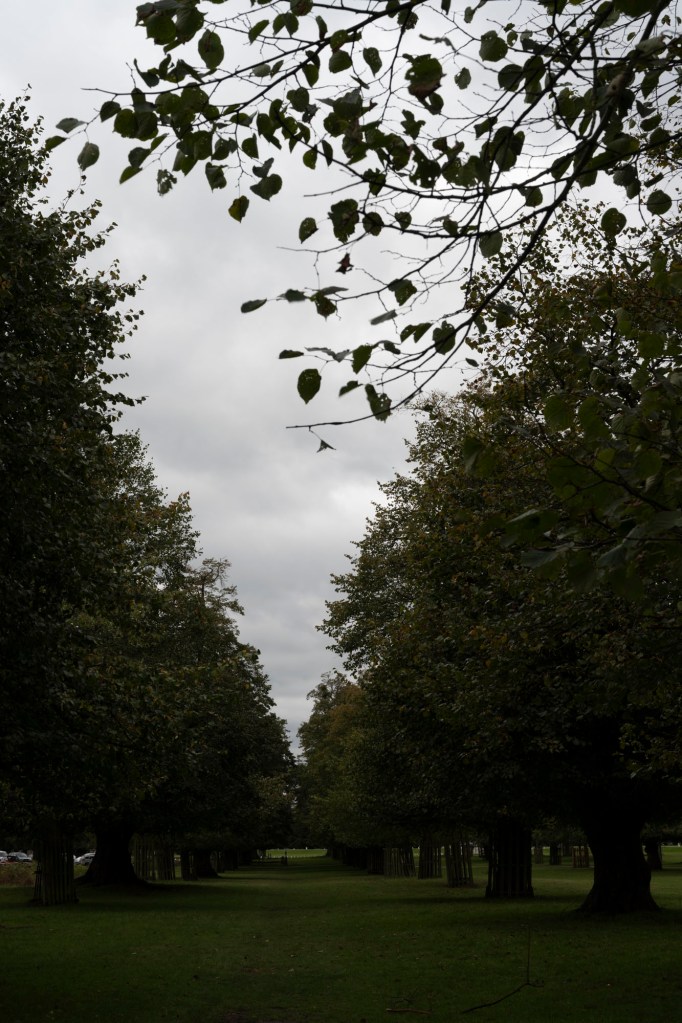
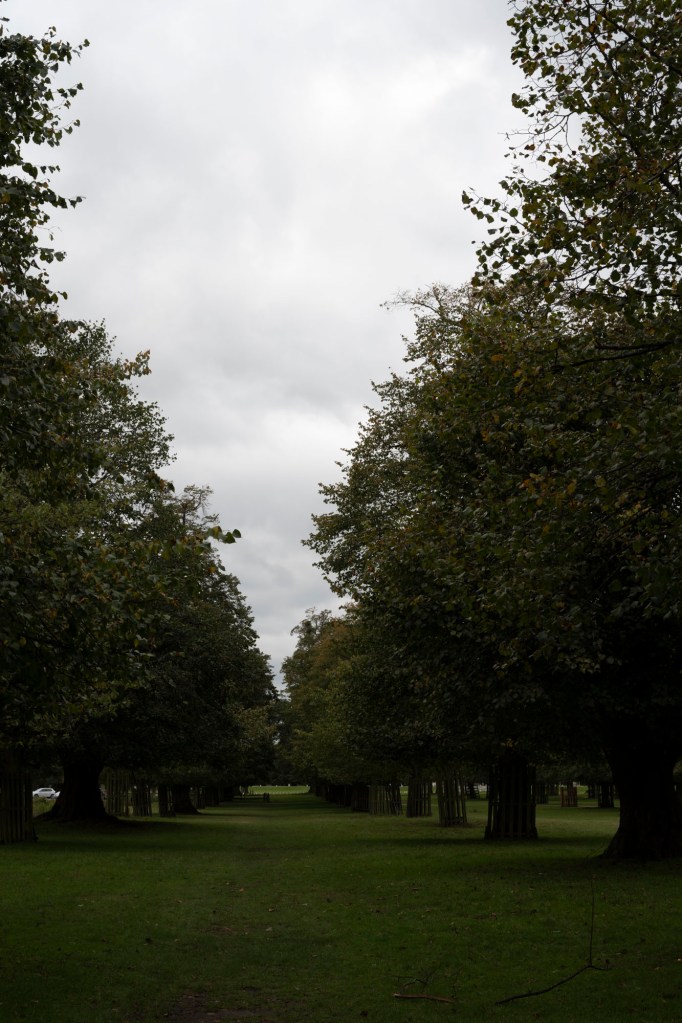
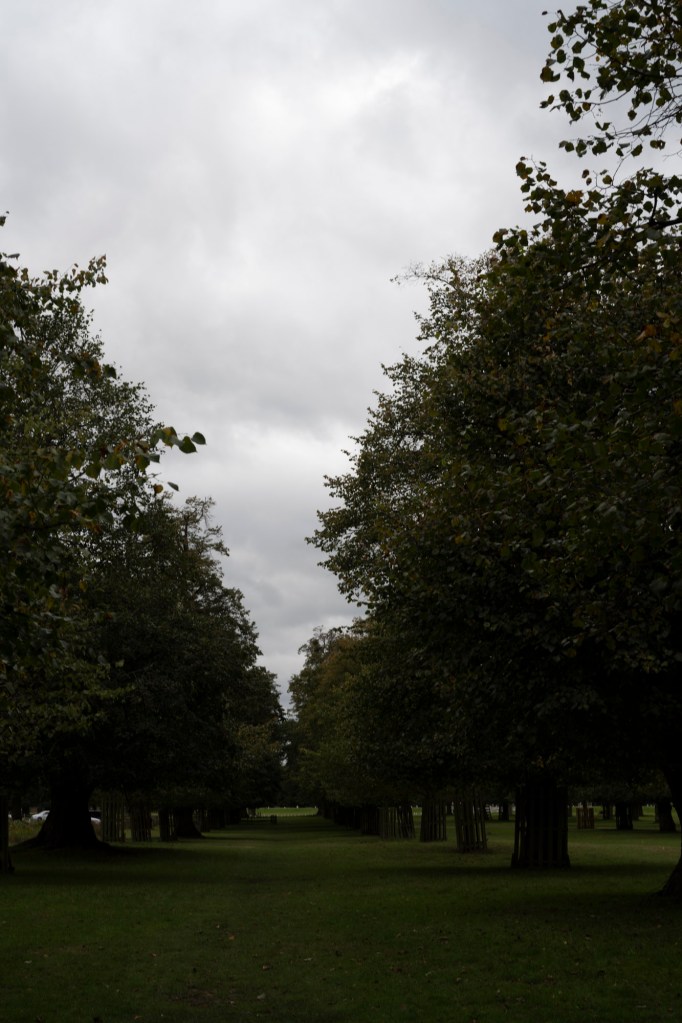
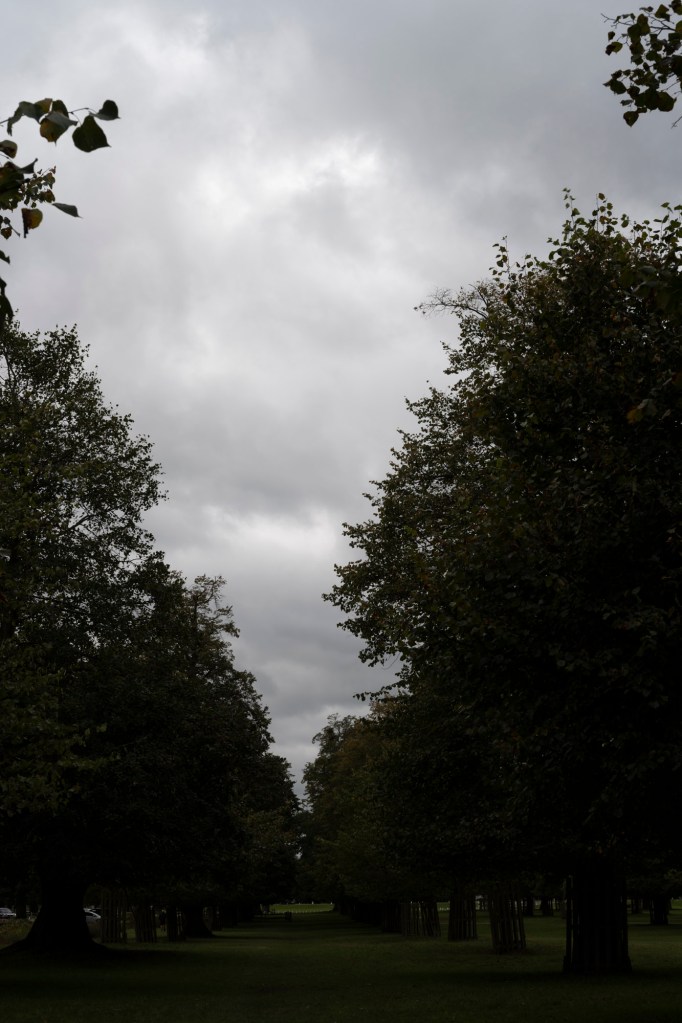
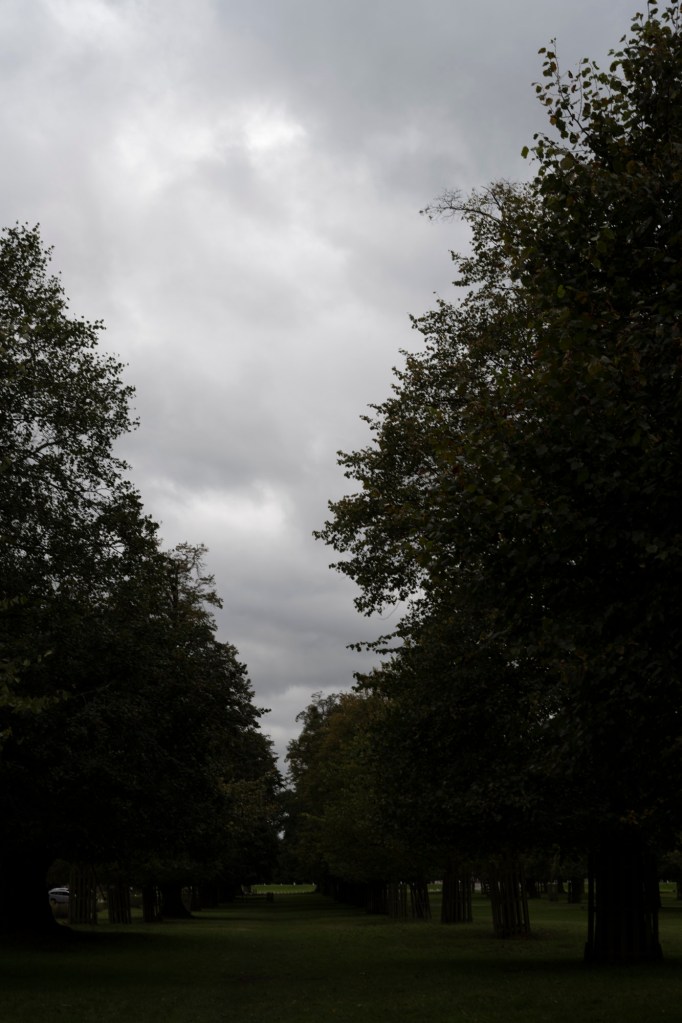
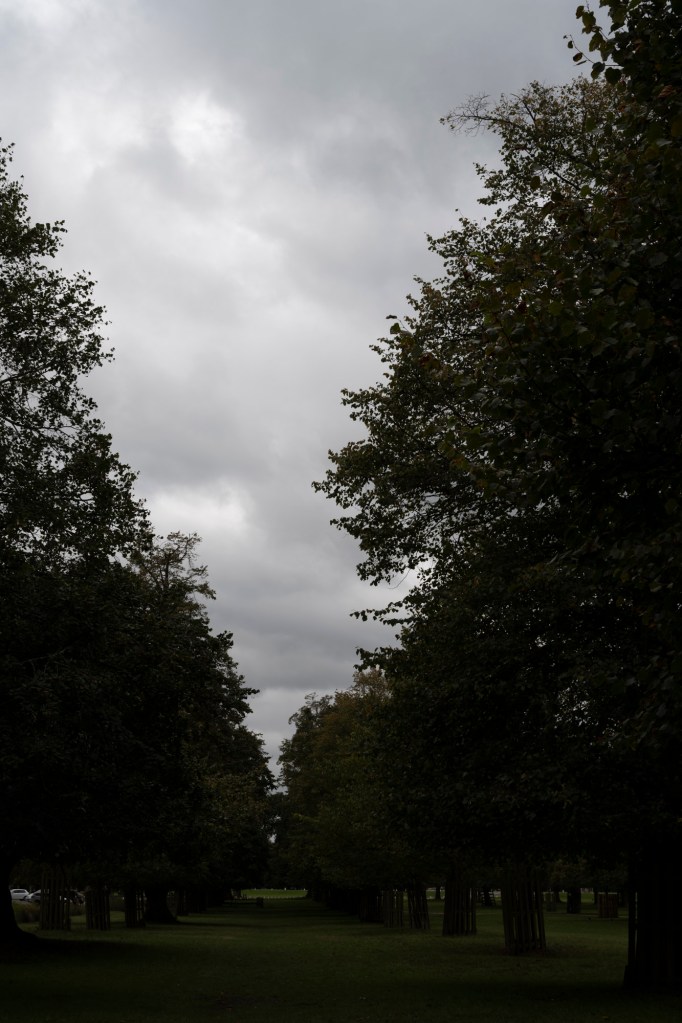
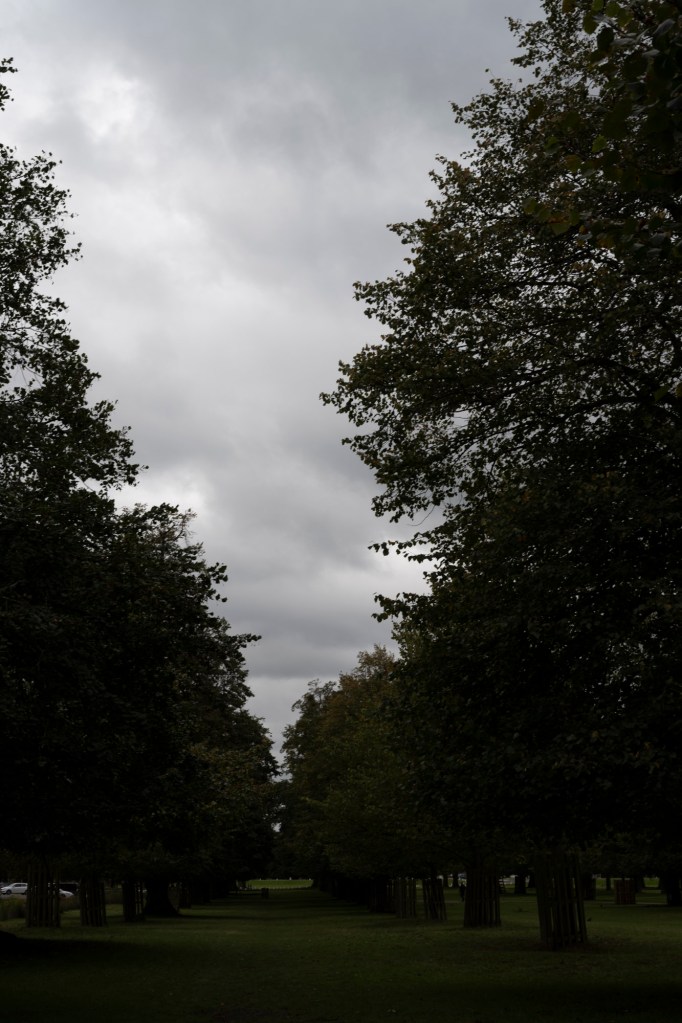
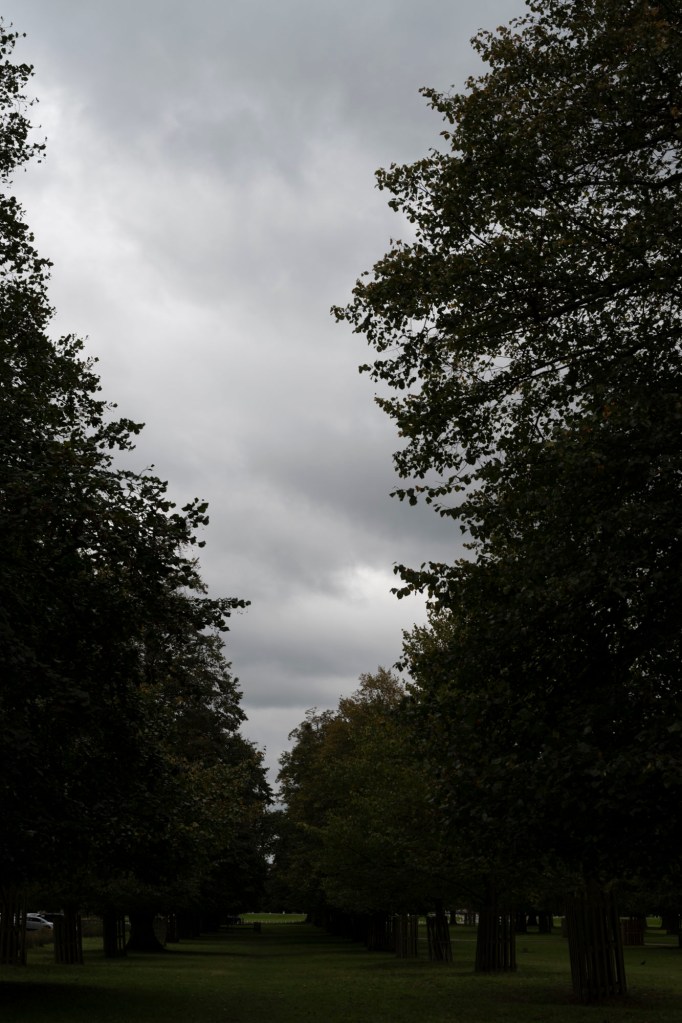
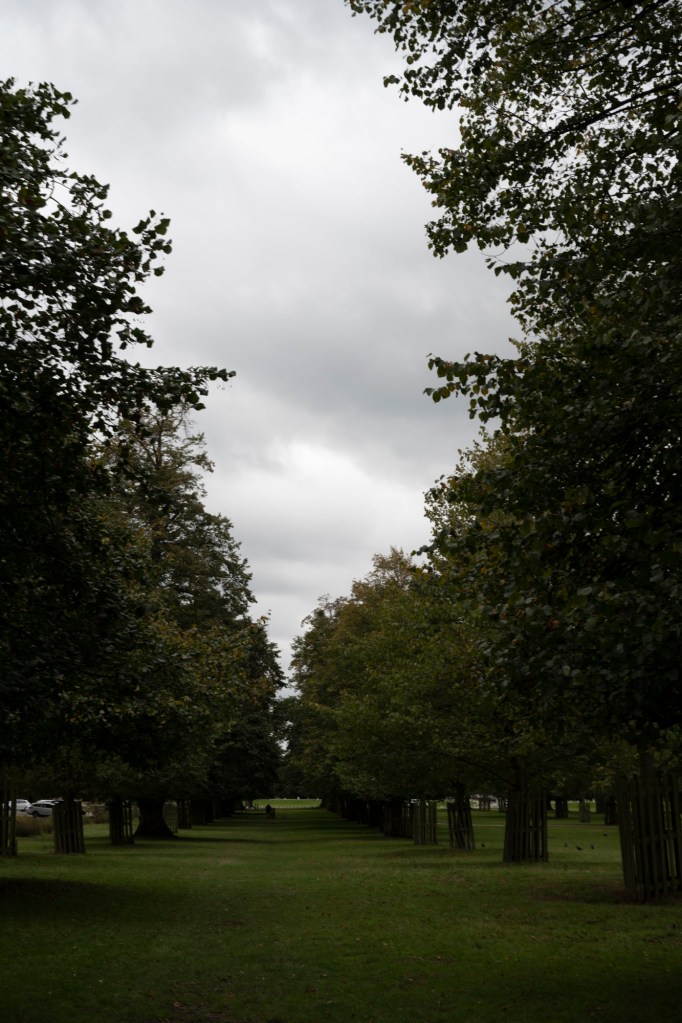
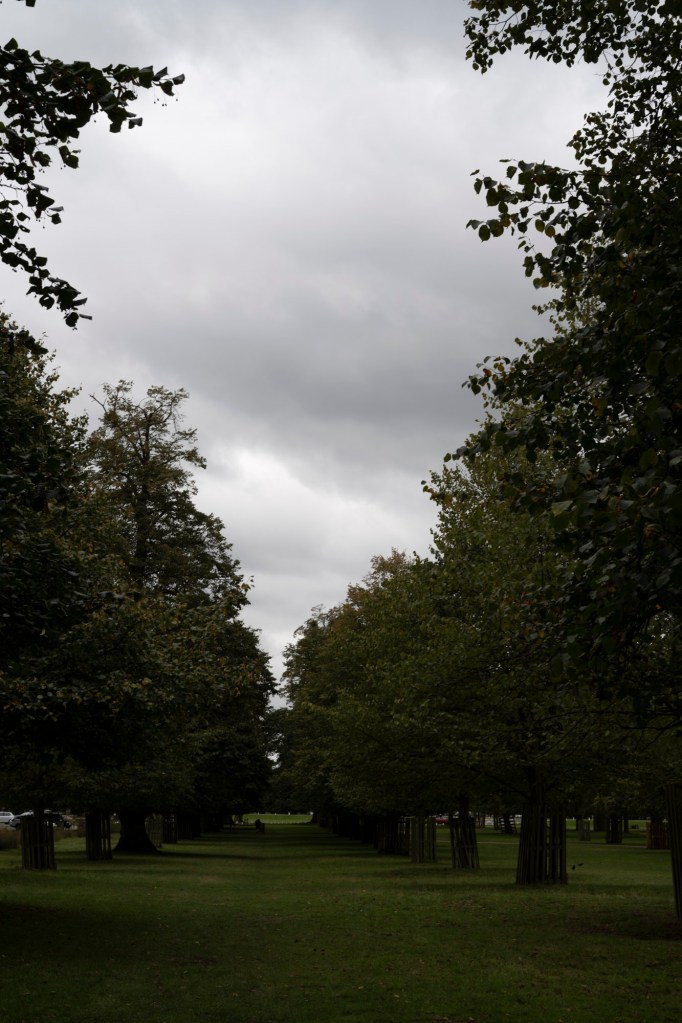
I went back to the park with the intention of revisiting the avenue of Lime trees between Teddington Gate and the Diana Fountain. I was taking a shot then walking five paces and taking another. I also tried a couple of multiple exposure shots to see what they would look like.

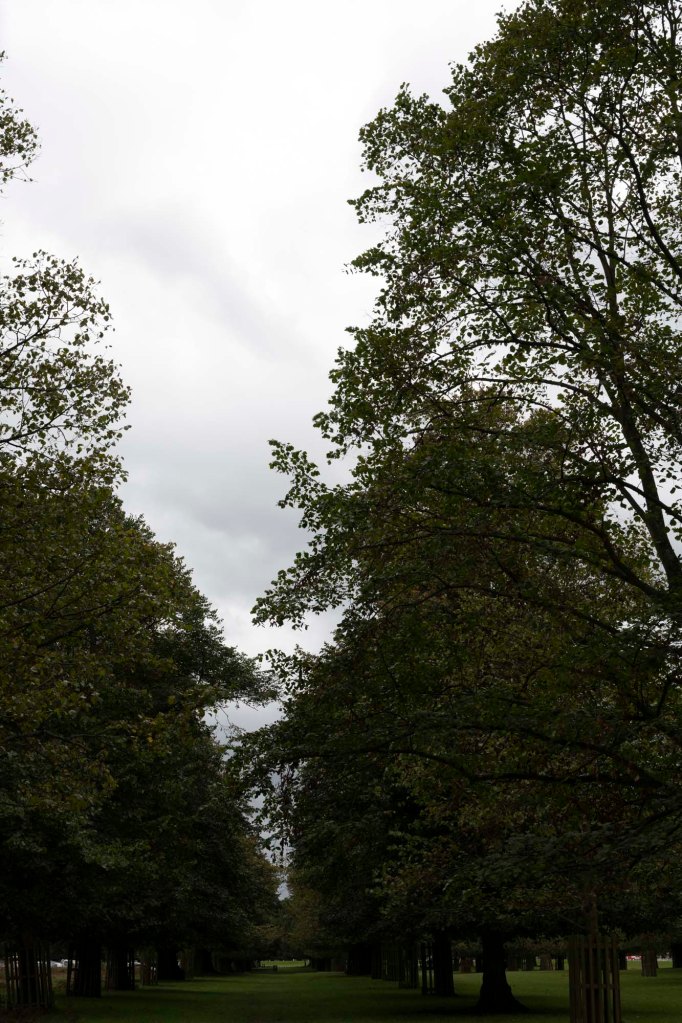
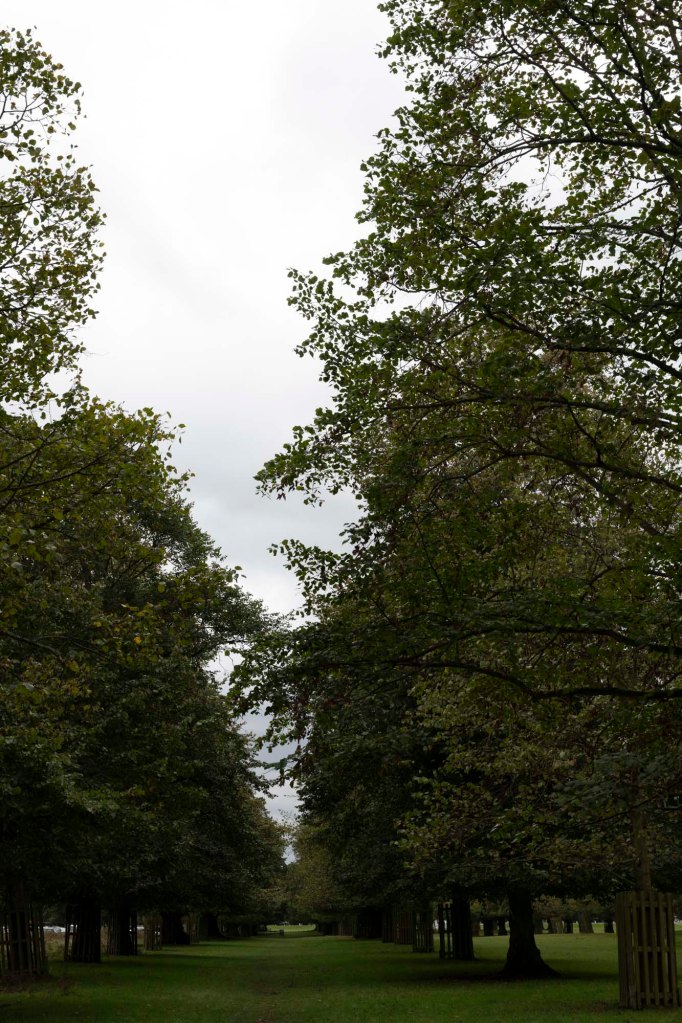
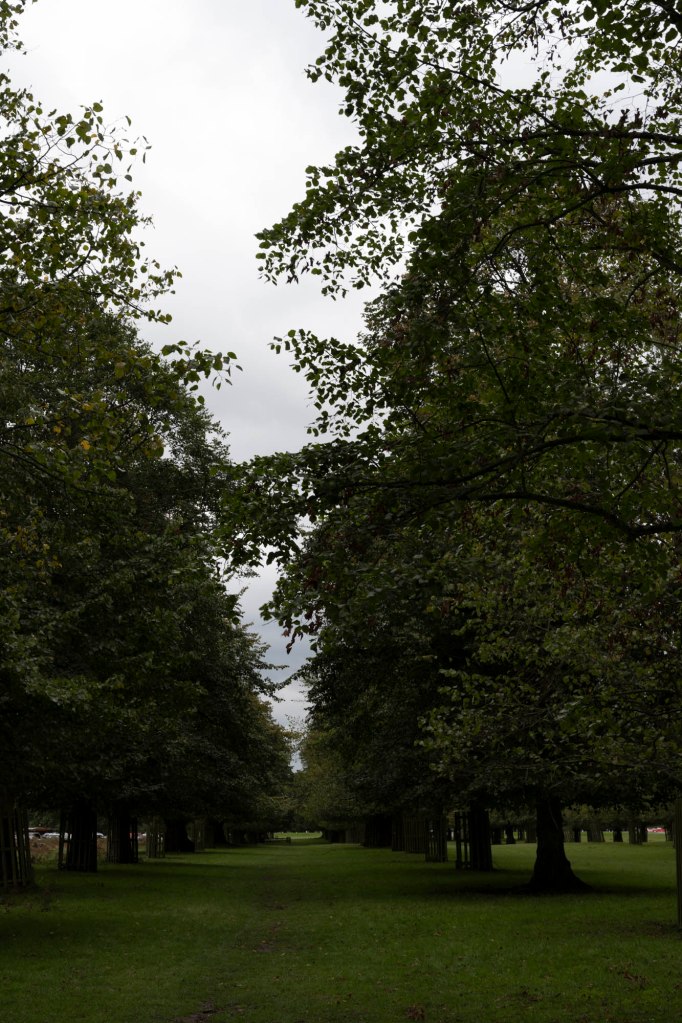
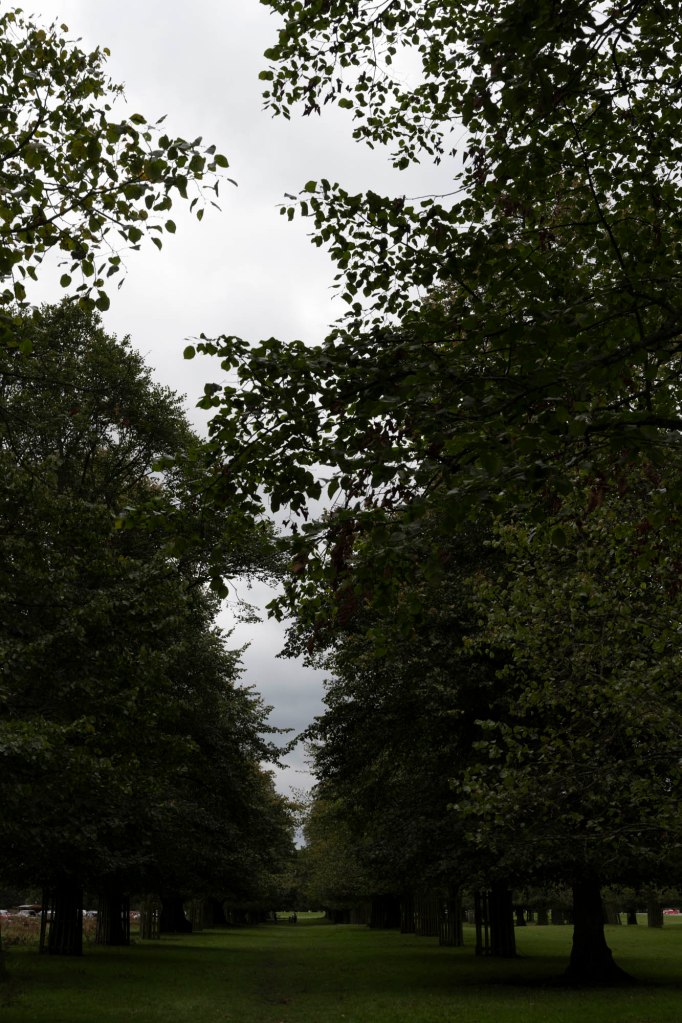
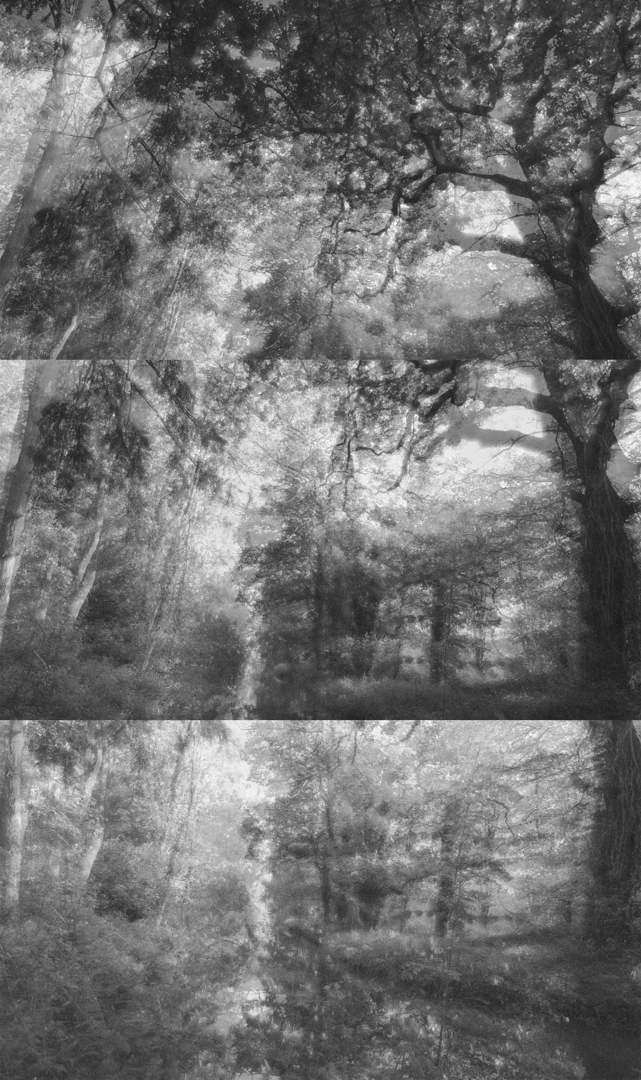
What I found interesting when looking at the images in a grid formation is how the half trees make a whole one. The other thought is to produce a time/hyper-lapse piece walking through the avenue. This could be done over the forthcoming seasons, showing the trees in the various states during autumn, winter, spring and summer.

Fallen Hero

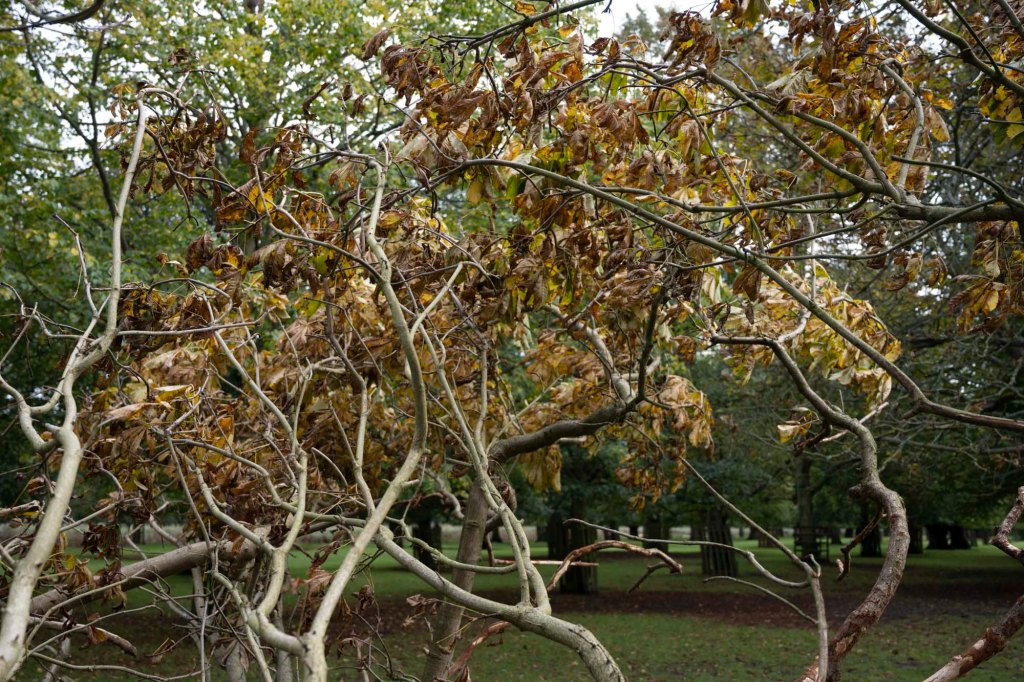
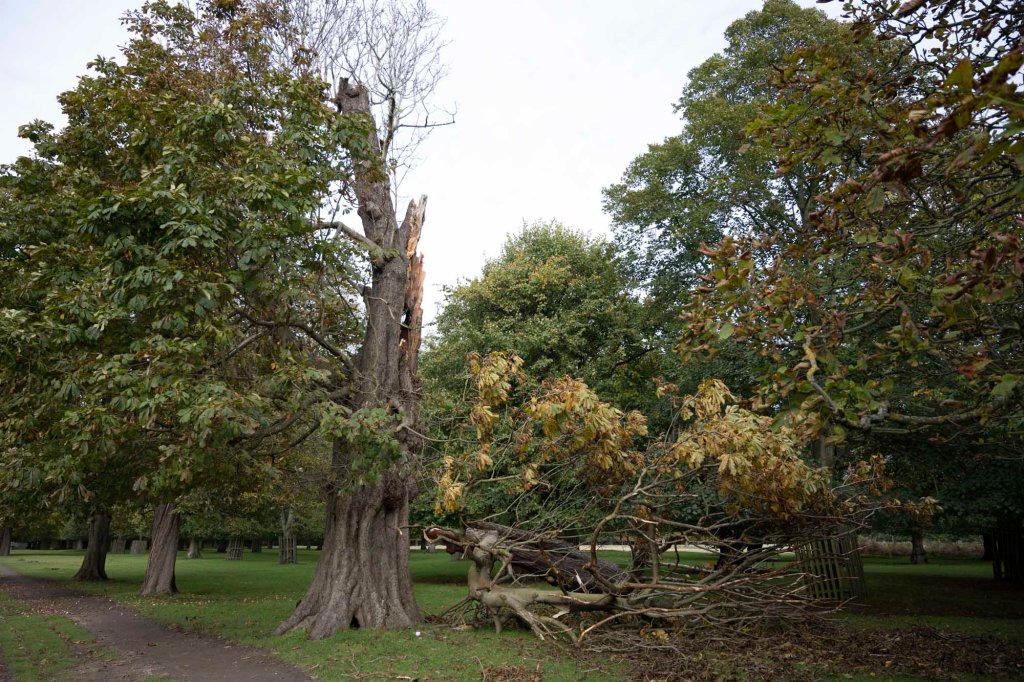
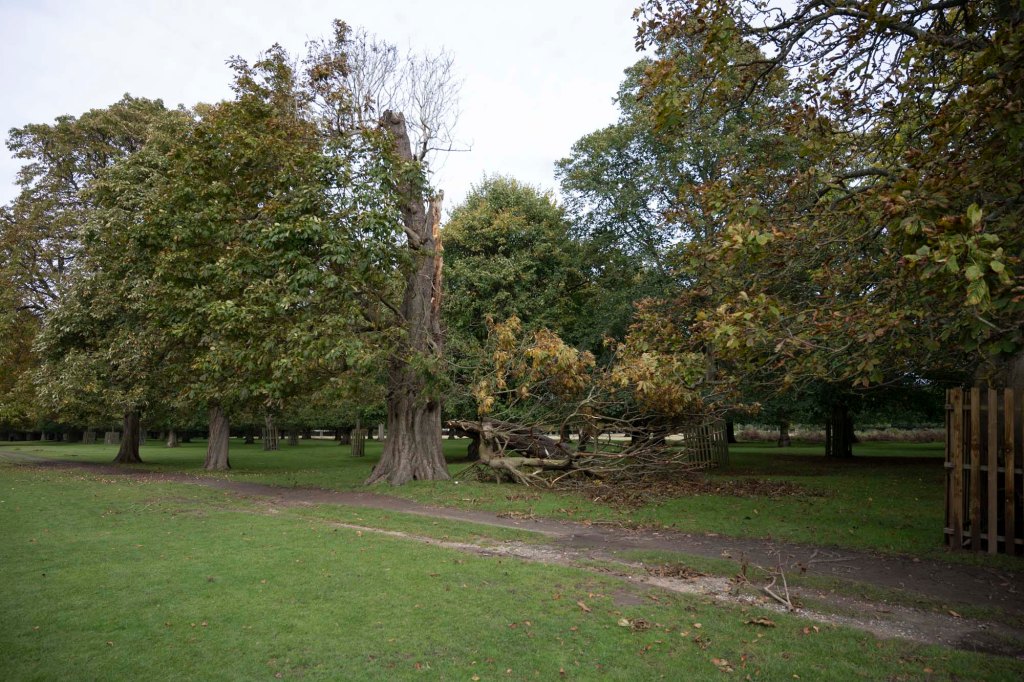
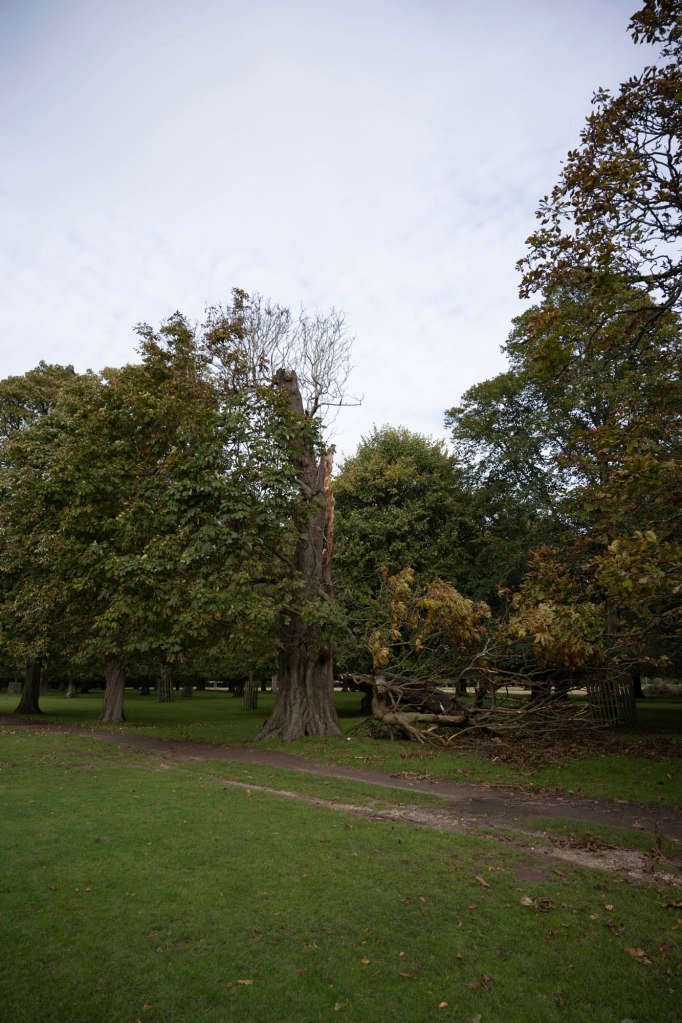
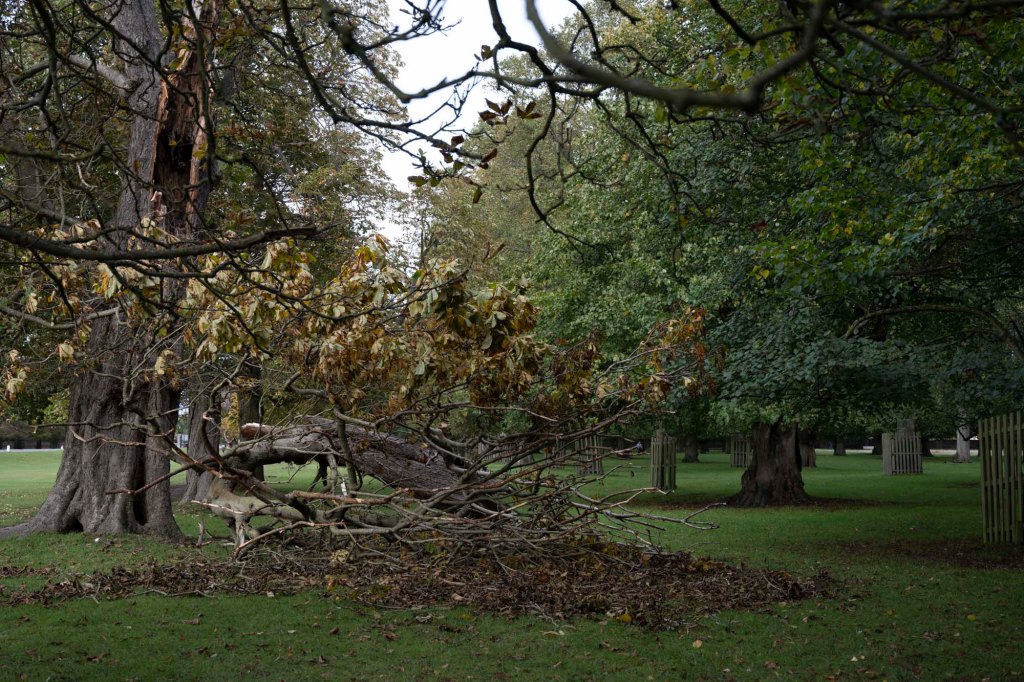
One of the trees along the avenue had lost one of its major sections during the storm on Saturday 3 October.

Split

This was another tree that caught my eye. On initial viewing, it looks like one big tree:

But when you go to the other side, it’s apparent that it must have ‘split’ at some time during its lifetime.

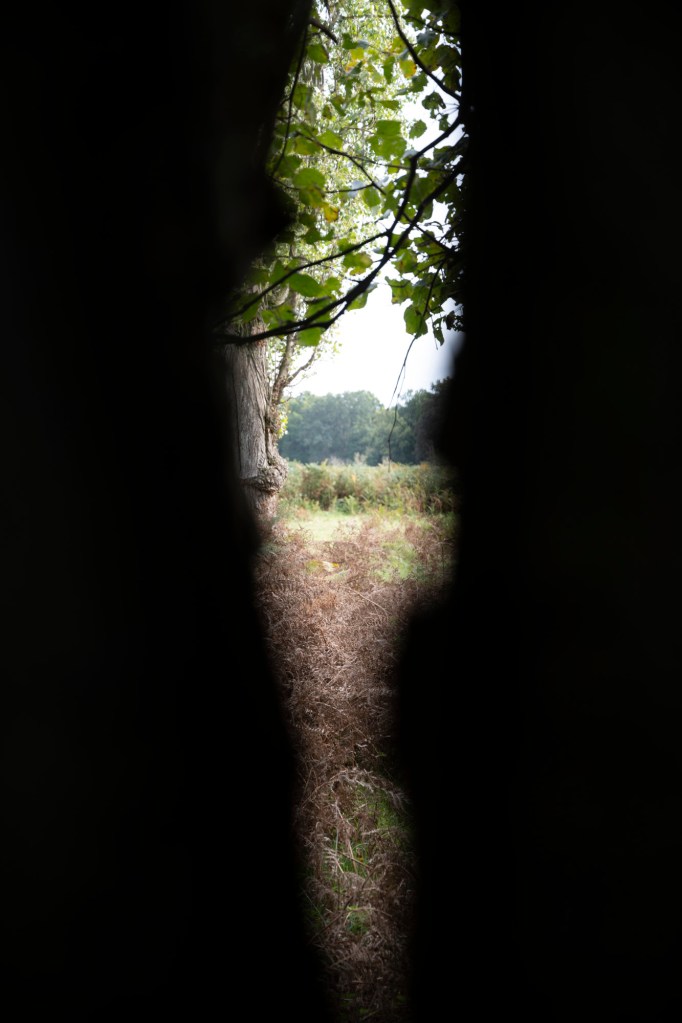
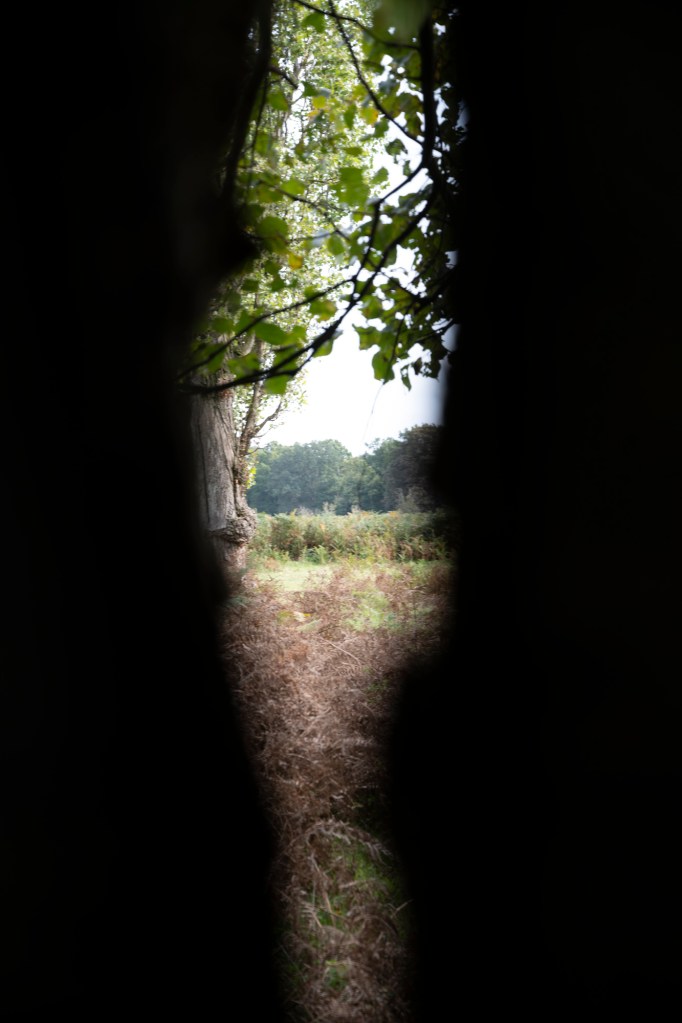
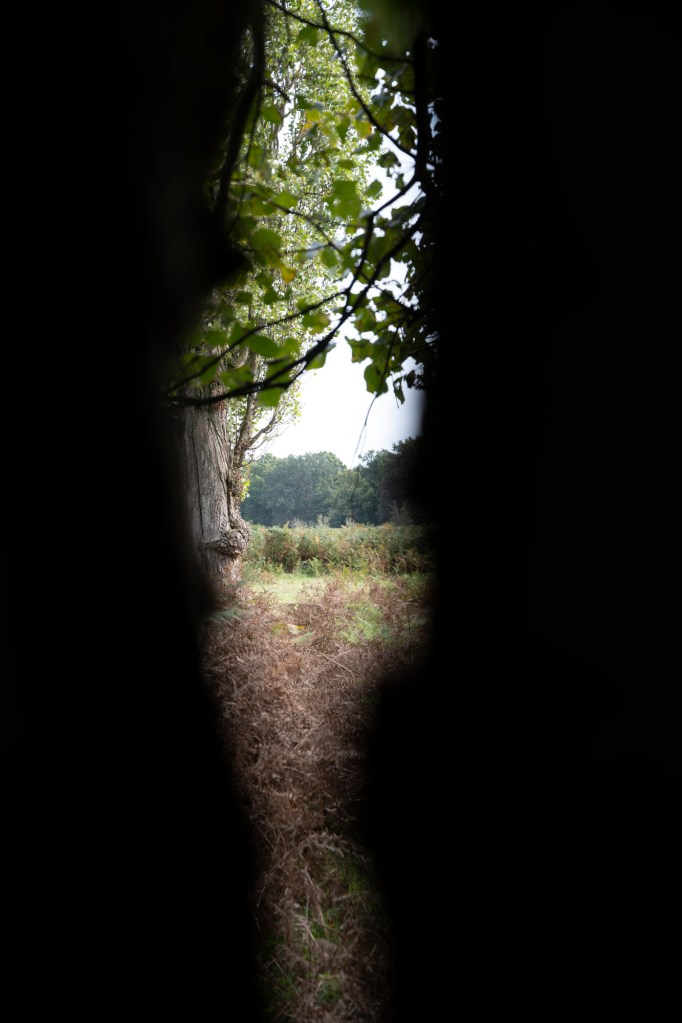
I also took some shots through the ‘split’:

Hawthorns

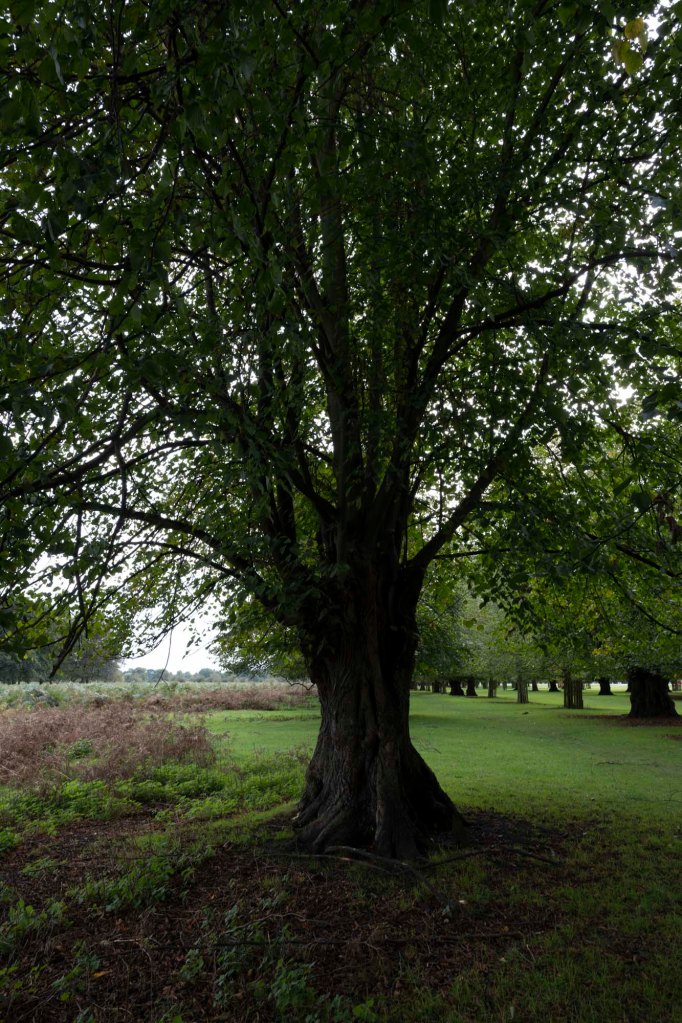
These spiky trees are also a feature of the park. I’m not sure if they’re relevant to this particular project, but I’ve always had a fascination with this hardy tree. They remind me of wizend wise women. Very often, they will have two sections of trunk that intertwine with each other, leaving a gap in between.

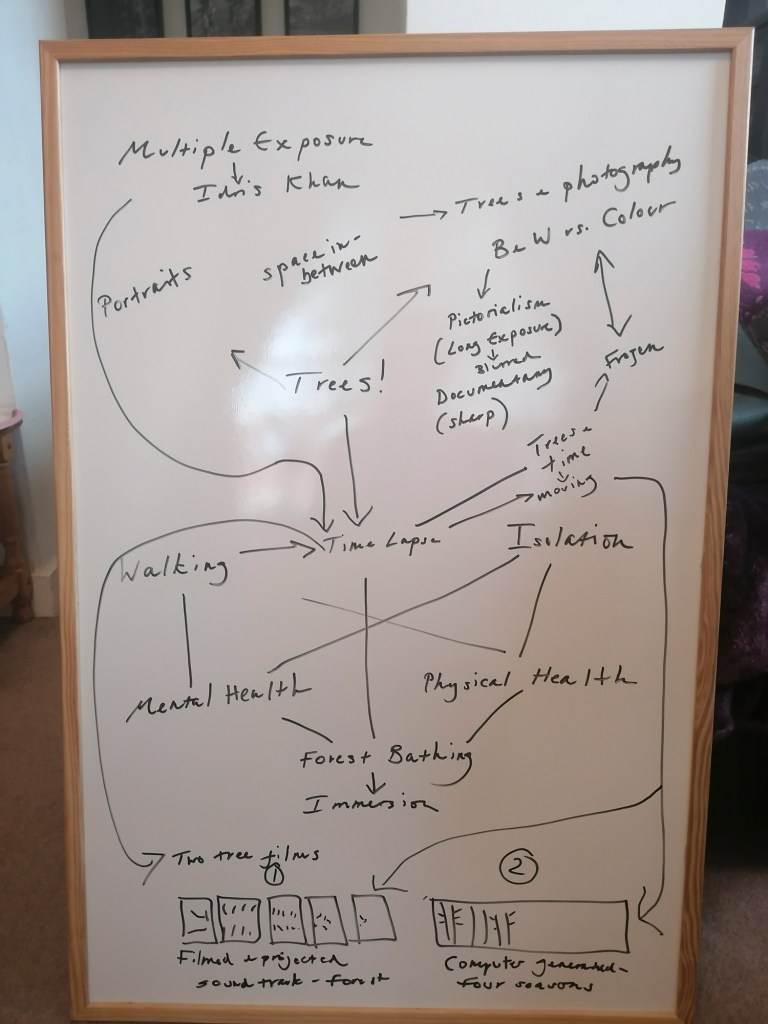
With this in mind, I noted down the following mind map.

This, along with my ideas, research and images will be presented and discussed with the group during a tutorial session on 7 October 2020.

References

Ahtilia, E.L. 2020, Rugoff, R. and Mues, M., 2020. Among The Trees. Hayward Gallery Publishing.

Rugoff, R., The Age of Trees (2020), Rugoff, R. and Mues, M., 2020. Among The Trees. Hayward Gallery Publishing.

Southbank Centre. 2020. Among The Trees. [online] Available at: <https://www.southbankcentre.co.uk/whats-on/exhibitions/hayward-gallery-art/among-the-trees&gt; [Accessed 26 April 2020].
Wohlleben, P. 2017. The Hidden Life of Trees. William Collins, London.
Categories
AGM62 Photography Research Project Stage 1 Posts

AGM62 Project Passions and Future Directions 30 September 2020

Included in my introductory presentation, for today’s session, I wrote two lists outlining the areas that are important to me, both personally and as a photographer:

Project Passions:

  • Trees – their relevance and importance to being ‘human’
  • Being outside of four walls
  • Walking, cycling, observing
  • Immersion in and connecting with nature
  • Impact on both my physical and mental health

Future Directions:

  • Observations as the seasons change (Autumn & Winter)
  • How do these changes affect the montage effect?
  • Pushing and refining the technique further
  • Trees as a portrait subject, not just ‘part of the landscape’
  • Exploring ‘montage of subject’
  • Constructed environment – trees among urbanity
  • Trees and time

These are all elements that I can’t ignore and am sure they will have a strong influence on my future work for this and future modules.

Categories
AGM62 Photography Research Project Stage 1 Posts

AGM62 Introductory Presentation and AGM61 Feedback 30 September 2020

In preparation for the first session of the module, I had to prepare a short presentation of up to five minutes. I could, for example, briefly present my work for Research and Experimentation, your Dissertation, or anything else you are working on currently.

For this presentation, I decided to focus on my body of work produced for the AGM61 Research & Experimentation. Since completing and submitting the work in June 2020, I had time to consider the project as a whole, especially in light of the marking feedback I received. The following presentation shows the submitted body of work, my interpretation of the feedback and future progression of the project for this module.

Feedback: Comments & Advice

The following are areas I need to take into consideration while carrying out the necessary work for AGM62 Photography Research Project Stage 1.

Creative Experimentation:

  • Deepen the overall exploration by further refining the image-making process
  • Deepen how initial imagery is transformed through the process of working
  • Explore the conceptual and critical relationships between trees and photography

Technical Realisation:

  • Focus on how applied technique relates to overall aesthetic coherence
  • Further refine picture construction through montage technique

Contextual Understanding:

  • Give greater definition to visual examples of other photographers’ and artists’ work
  • Explore key references further:
    • Paul Nash (trees and landscape – pictorial style)
    • Eileen Agar (surrealist – Black & White tree photography)
    • Idris Khan (layering and photography)
  • Place future projects into a clearer and more coherent context
  • Explore the contextual framework for practice with a narrower focus and greater depth

Critical Awareness:

  • Montage in art and photography: explore and demonstrate further engagement with related ideas about subject representation
  • Concentrate and focus more on:
    • Identifying underlying principles of practice
    • Relating these principles about subjects in the work as fully as possible
Design a site like this with WordPress.com
Get started