On this day, I carried out two separate interval timer shooting sessions in the garden.
The first interval timer shoot was in the morning focusing on the pond’s water feature. While I was waiting for the sun to get into the right position, I set up the camera on the tripod and took some test shots to get the best composition.
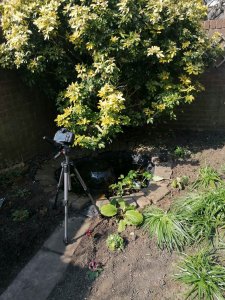
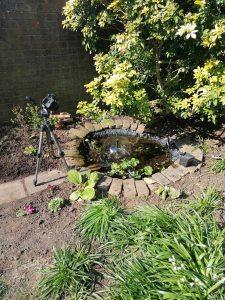
I started the session at 10.30, again using a four-second interval for 200 shots, finishing at 12.34. This resulted in 1800 individual images. Again, to give an impression of the movement captured during the session, this is a sequence of one image after every 100 shots. I also under-exposed the images to give room in editing.
The second interval timer shooting session was in the afternoon.
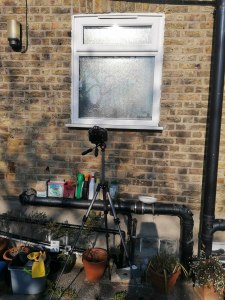
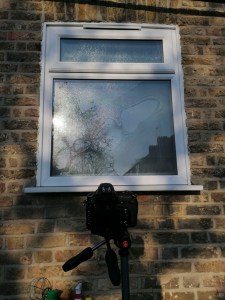
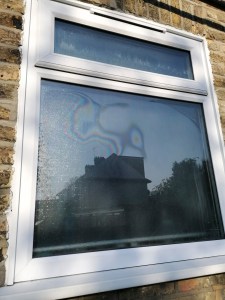
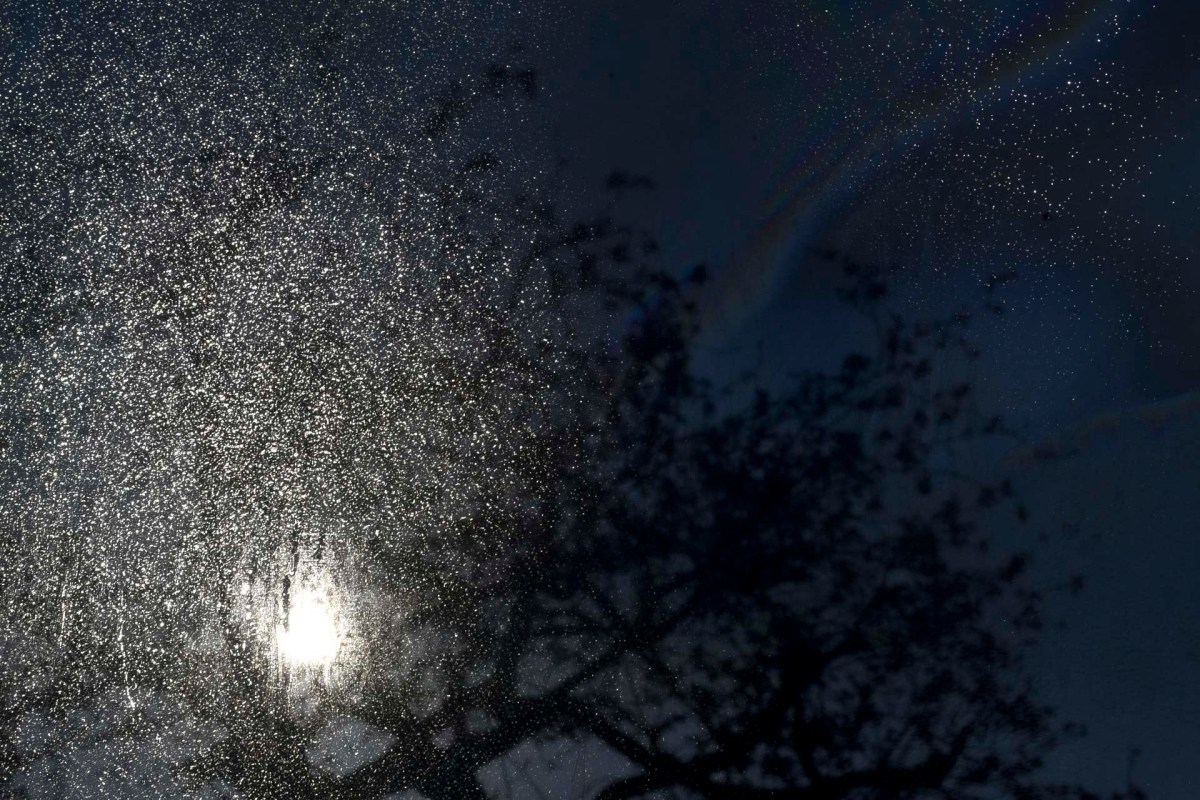
What I found even more interesting about this particular subject was the iridescent effect on the window. It wasn’t on the outside surface of the window, but in between the two layers of double glazing.
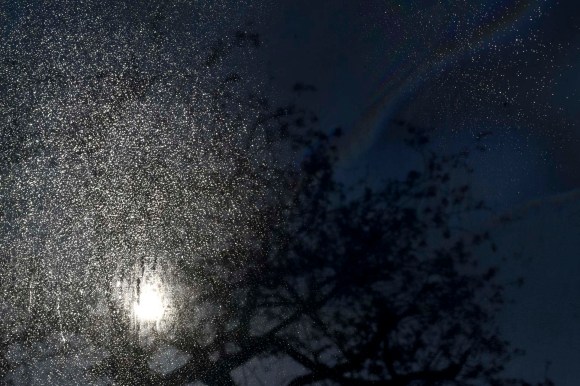
At first, I just focused on the sun’s reflection which gave a ‘galaxy’ effect. This started at 15.43 and finished at 16.01, which resulted in a total of 281 shots.
When looking at the window, I noticed that the iridescent effect was changing over time and that the heat of the sun was causing this to happen. In addition to this observation, I started to change the focal point of some of the shots to see what it would do to those images. I started this from 16.01, finishing at 16.50. A total of 715 images were taken using this technique.
All of the original 715 shots were taken on a 2:3 ratio, but this resulted in some lens aberration. As the majority of time-lapse films have to be in a 16:9 format anyway, I cropped all of these images so that any unwanted, edge-of-frame details were removed. The following is a sequence of images to give a visual concept of the details and movement captured during the session.
When I started to process the images from this day and the one before, I realised that I was rapidly running out of storage. I could do some basic editing, as seen in the image below.
My strategy was to order an external hard drive and wait for its arrival before processing the files to their full potential.
 Jennie Meadows MA Photography