At this time, I wasn’t sure exactly how to progress my body of work for Stage 2. I had a few ideas, but nothing had quite settled. There was only one thing to do, which was visit the park with the camera.
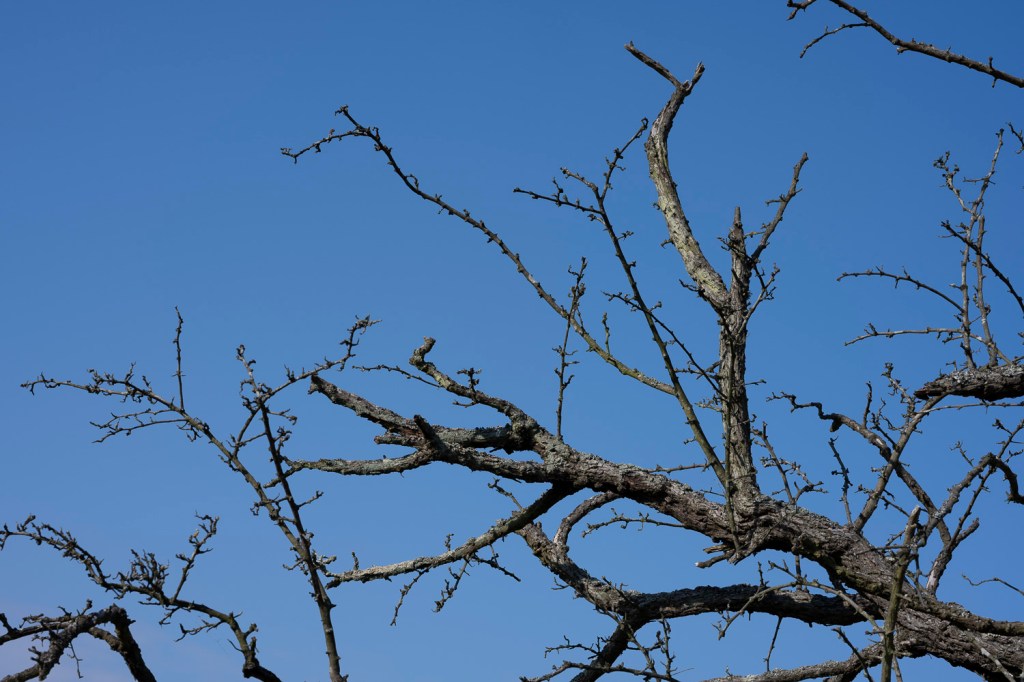
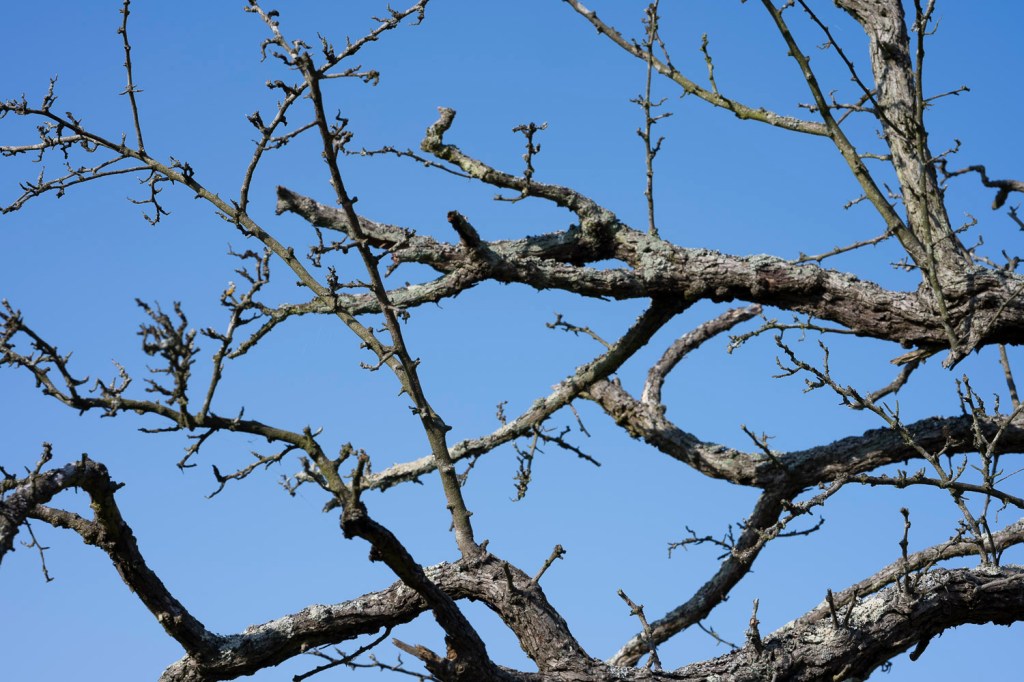
Once I arrived in the park, I first visited the tree I had experimented with back in February.
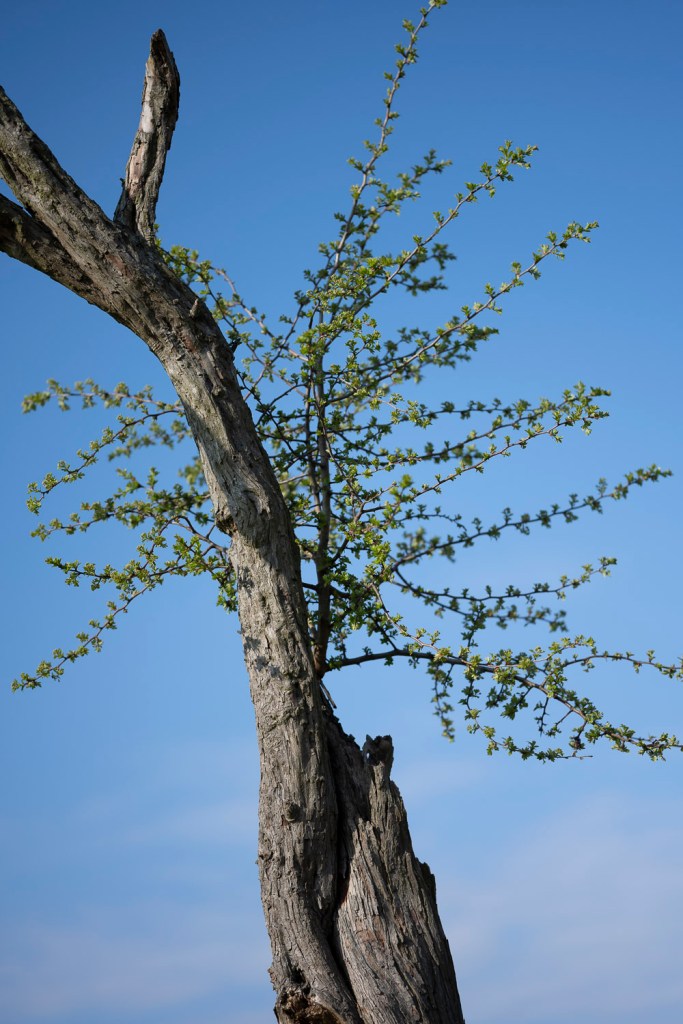
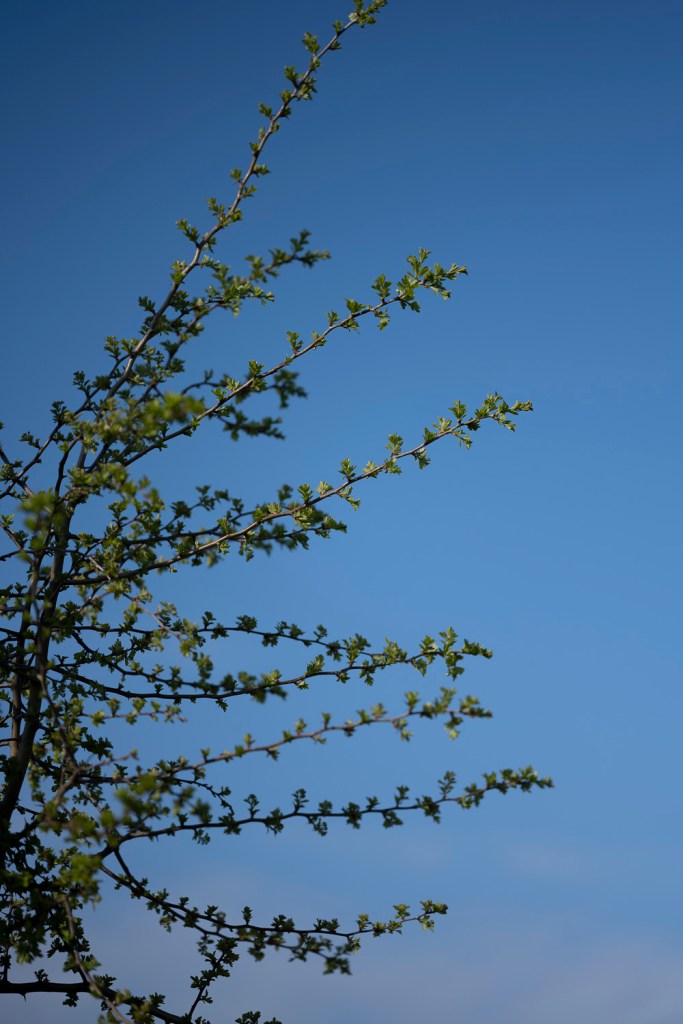
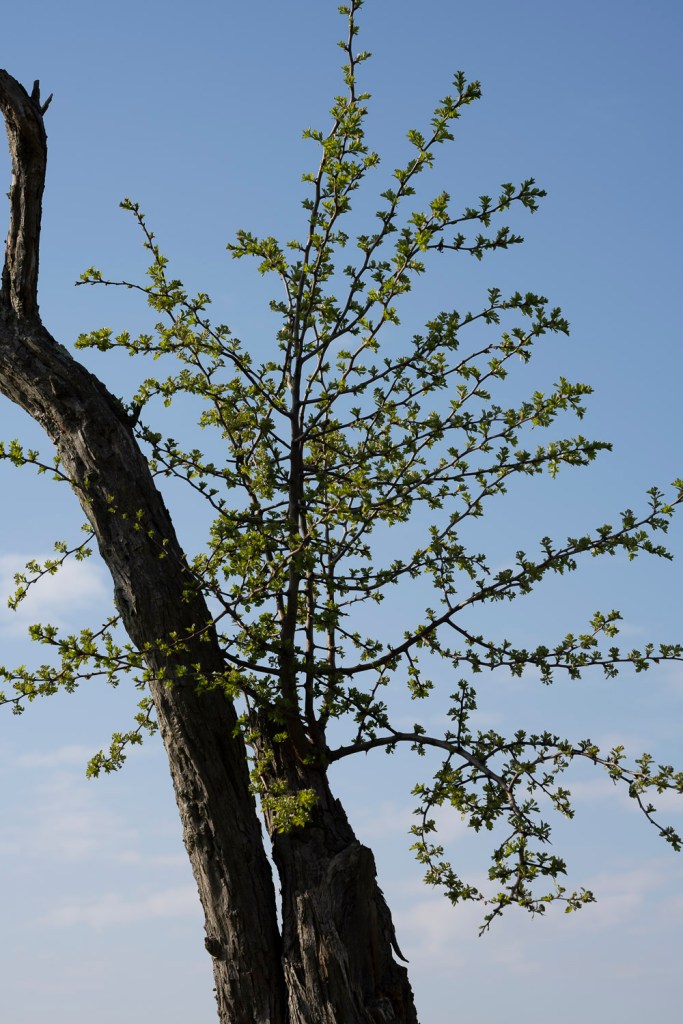
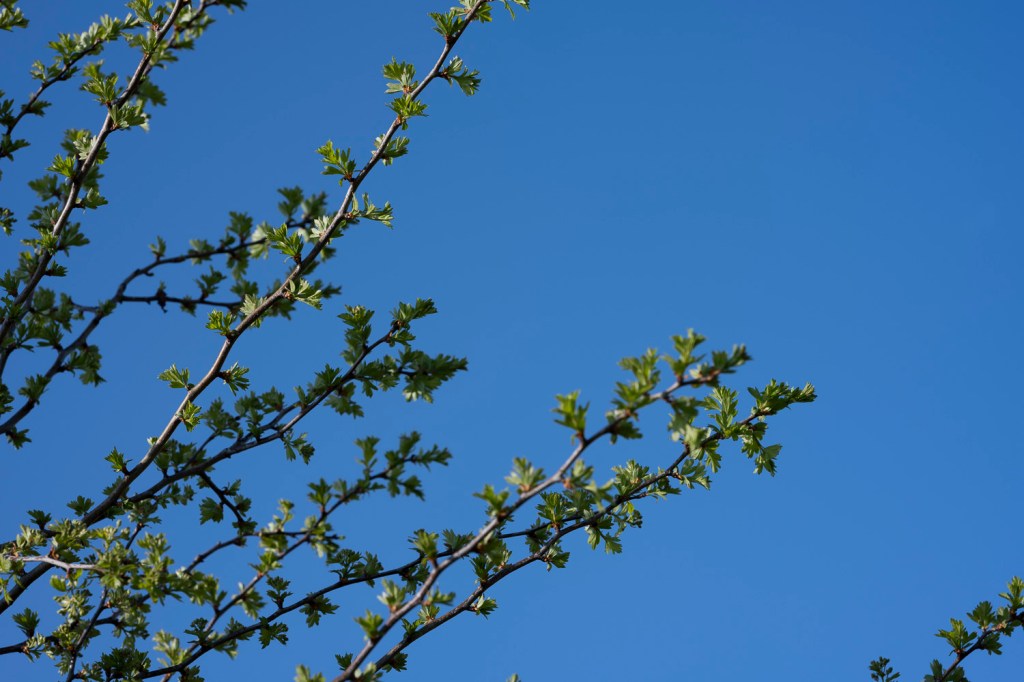
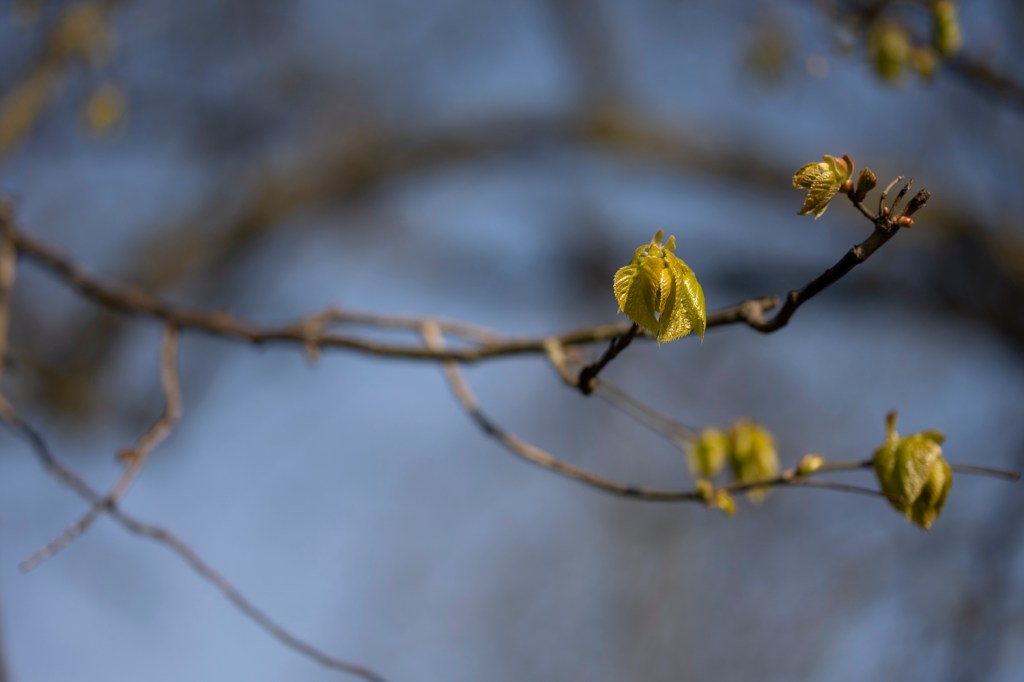
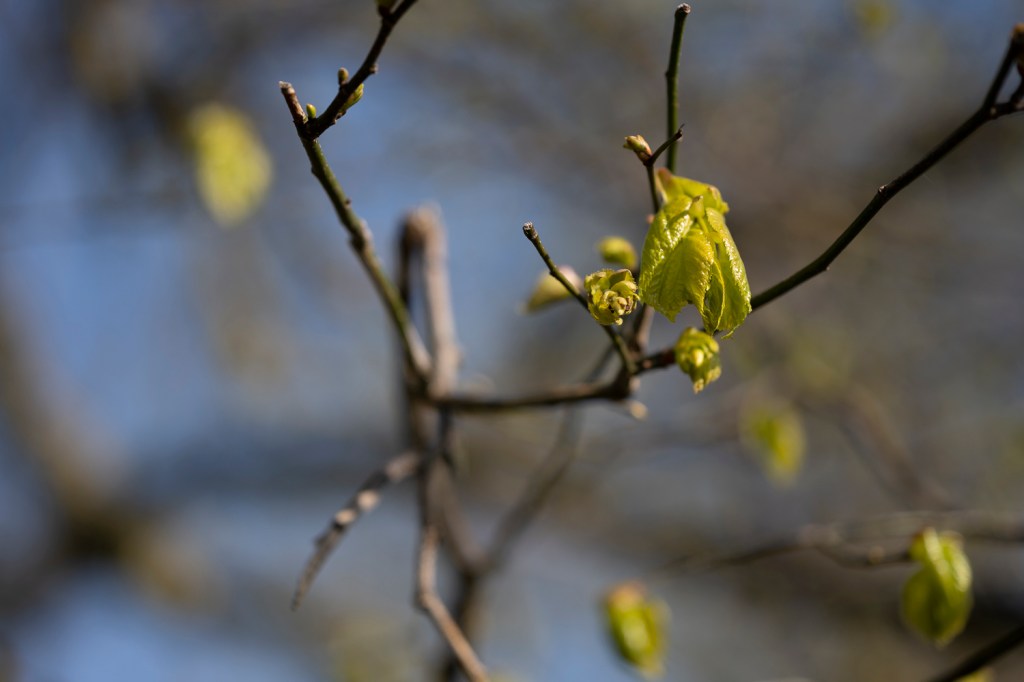
The main difference this time was that it had now started to grow leaves.
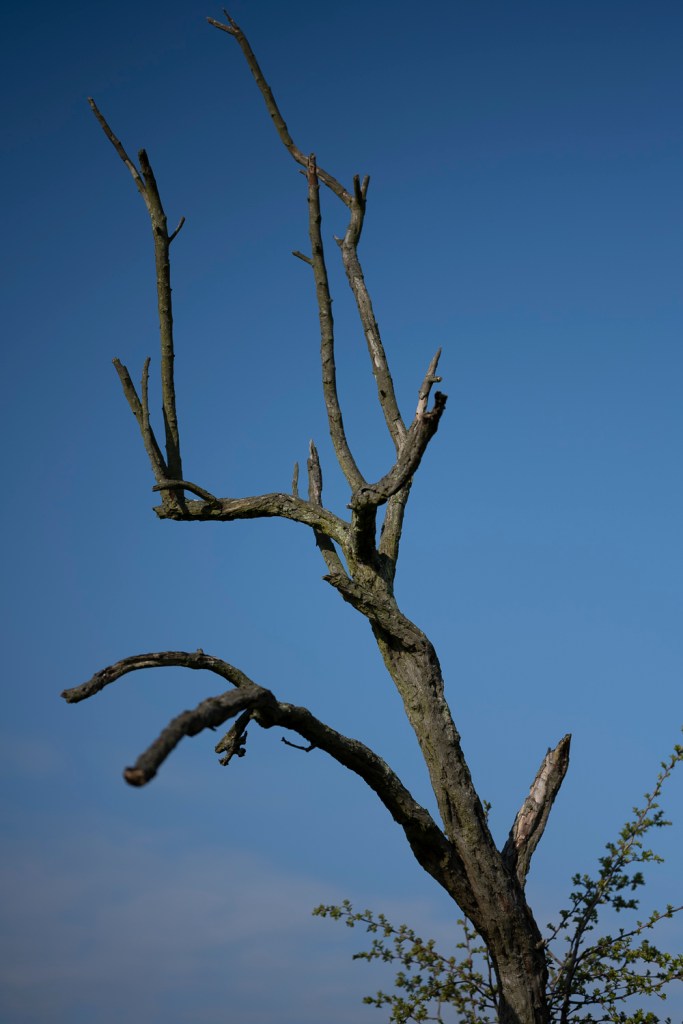
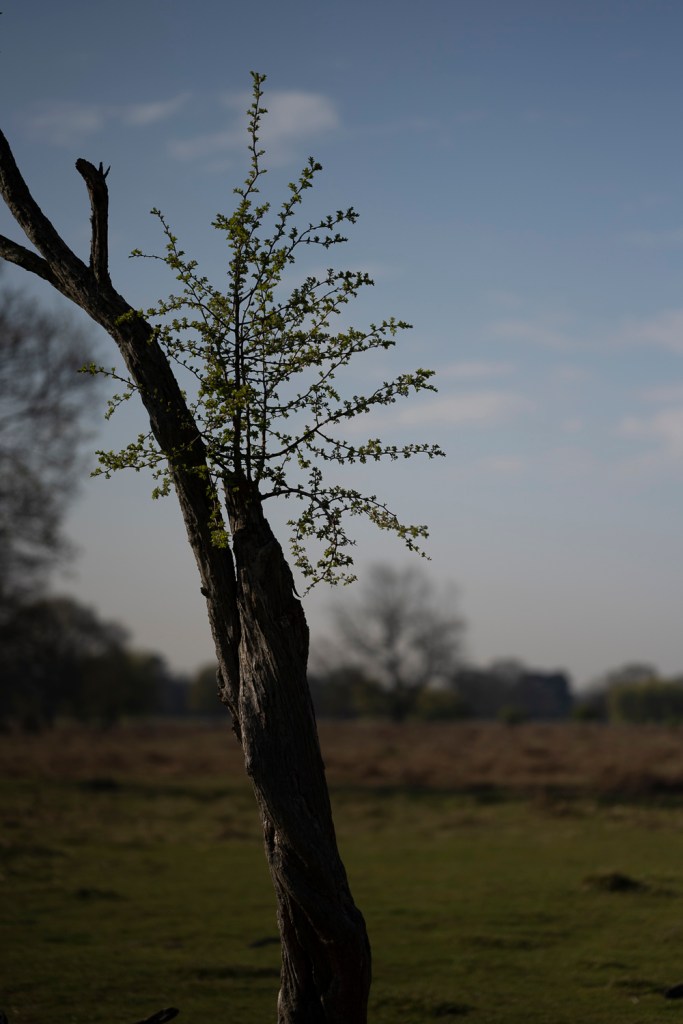
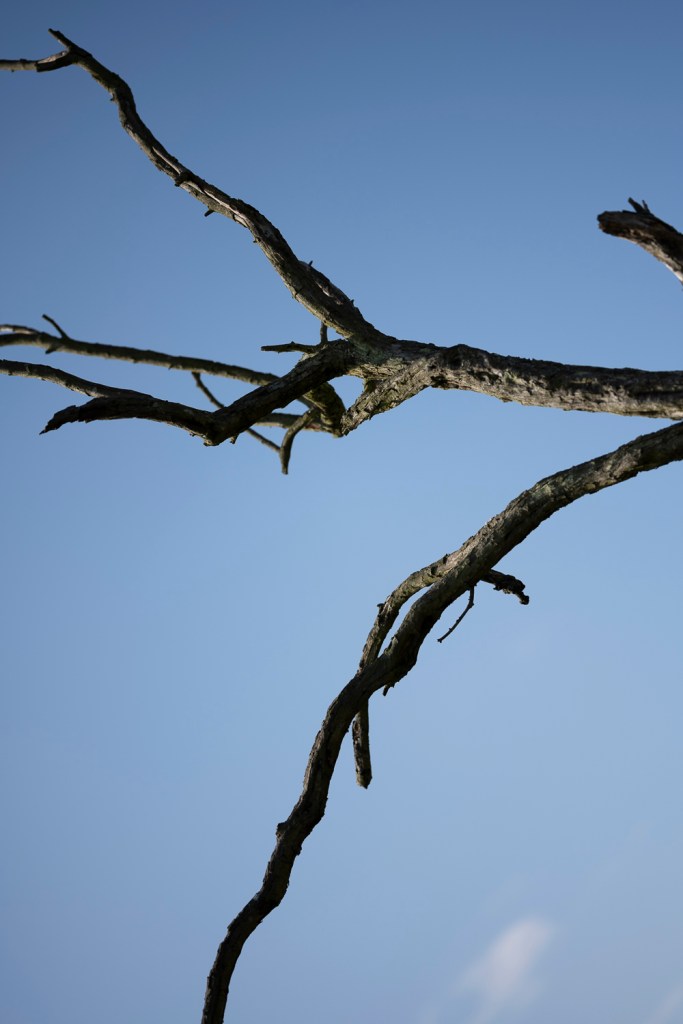
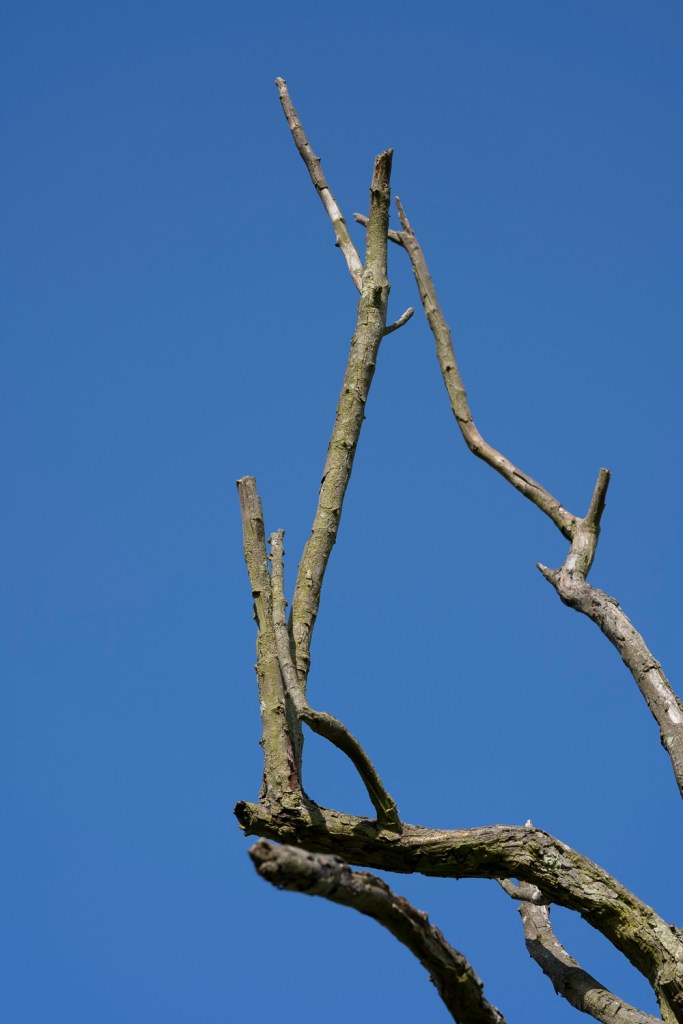
What was interesting to observe is that only half of the tree was in leaf. There was one side which was still bare.
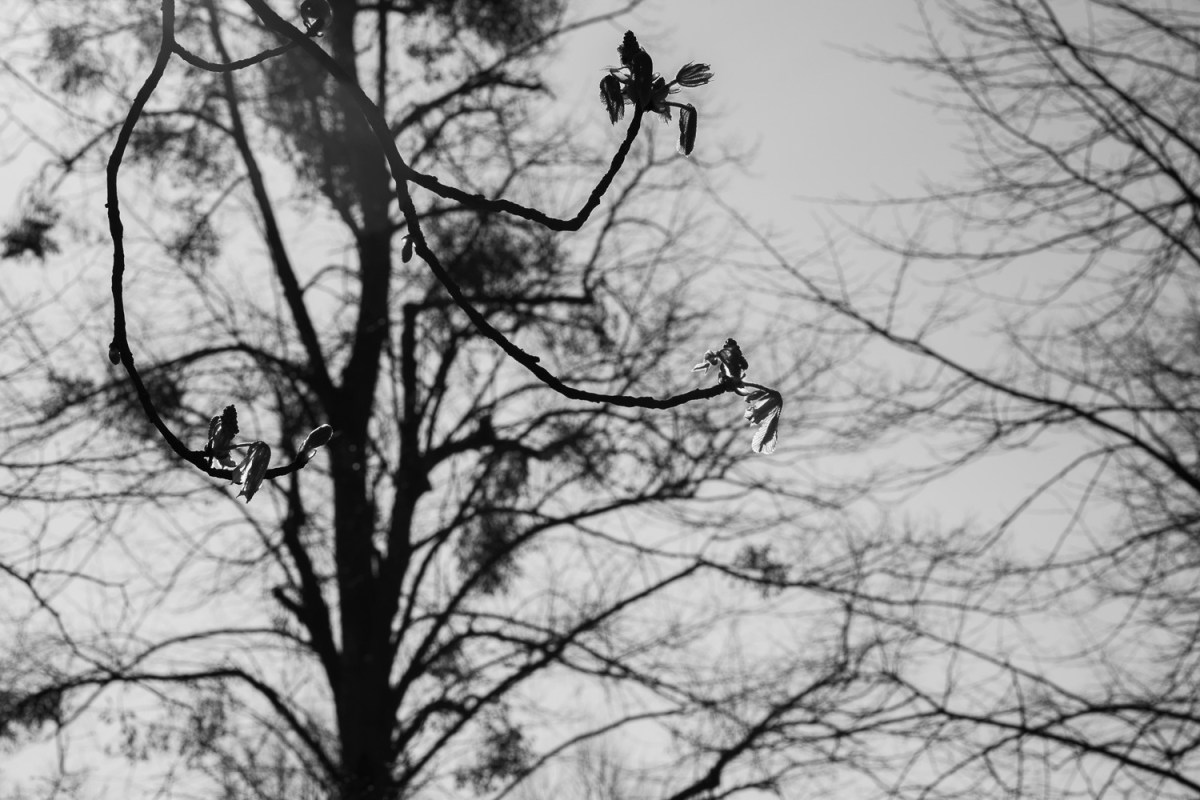
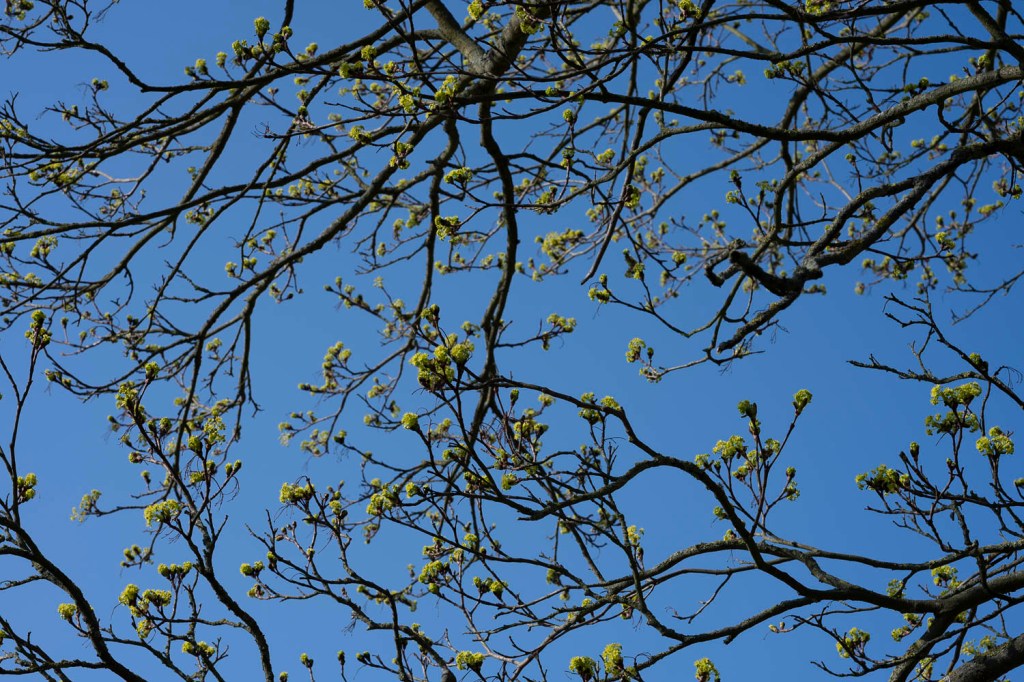
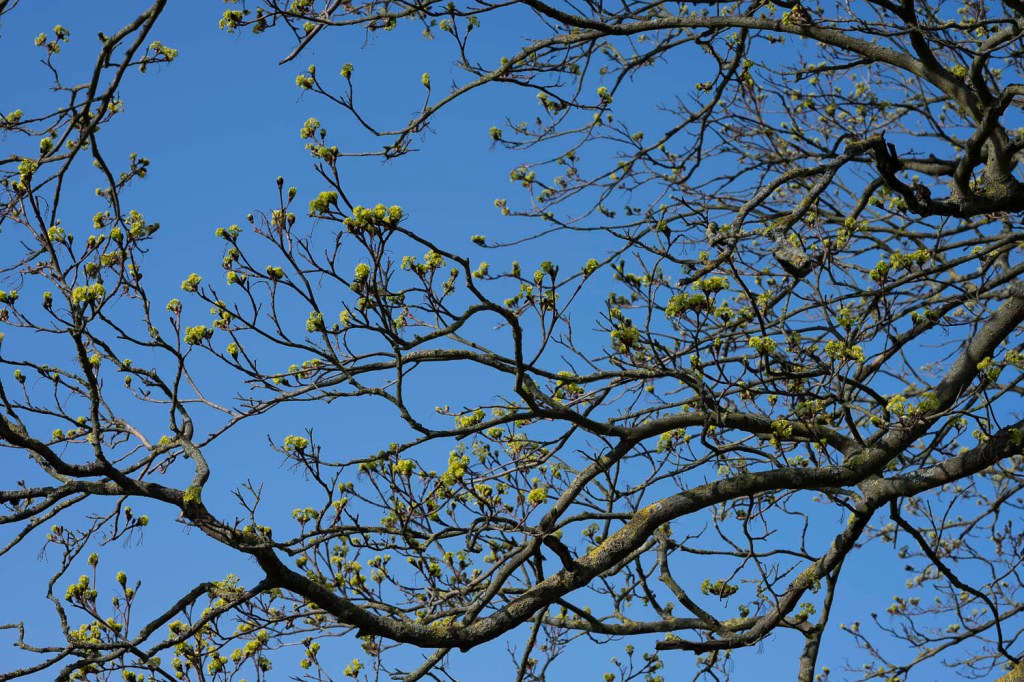
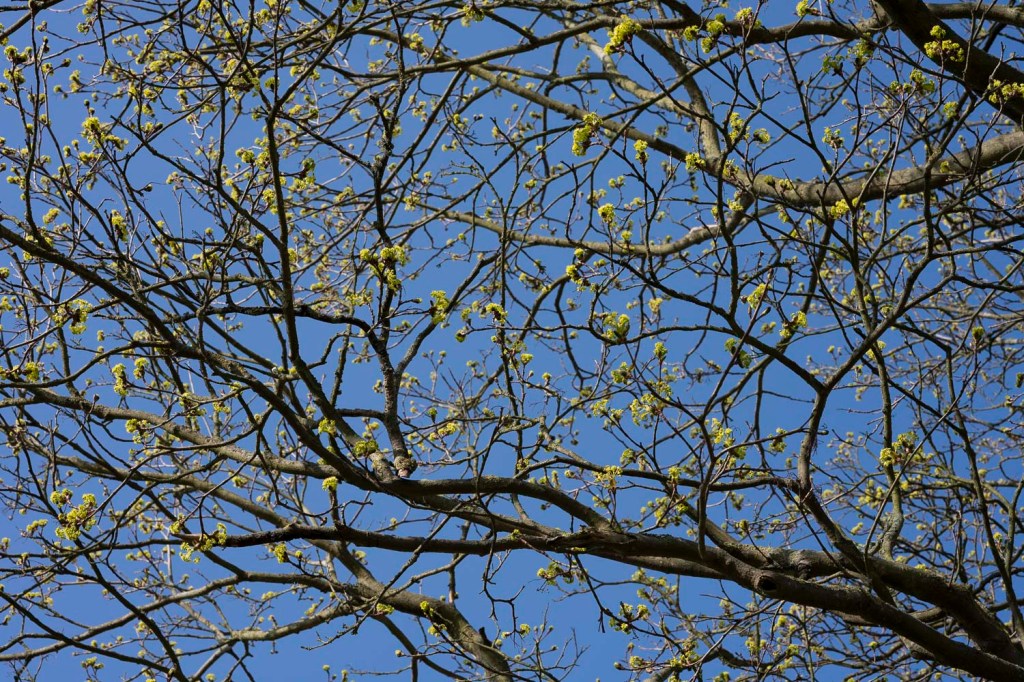
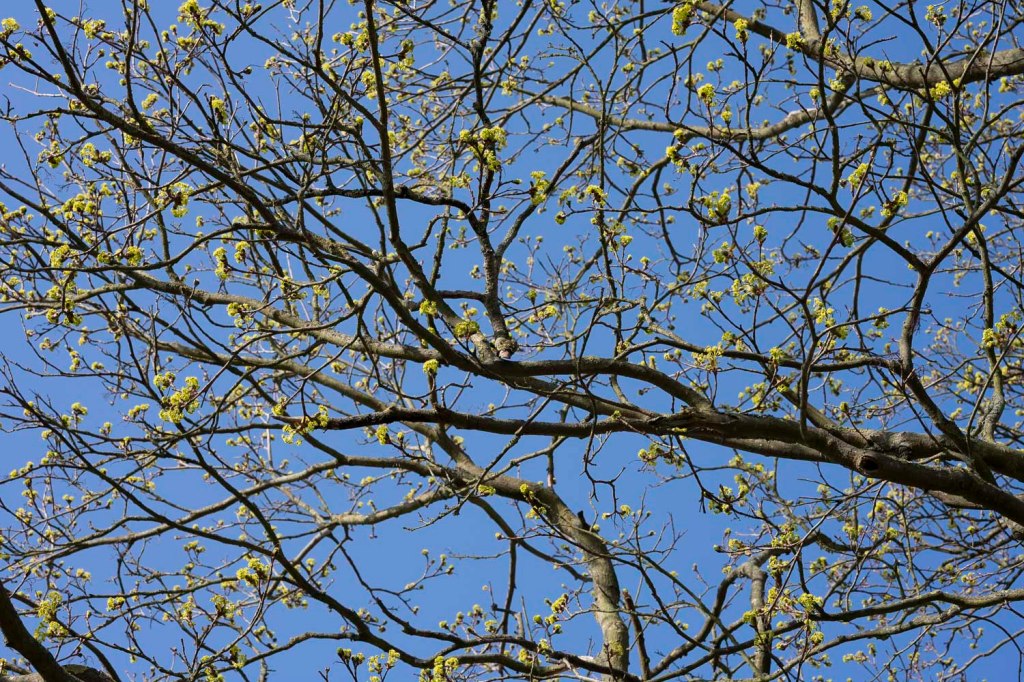
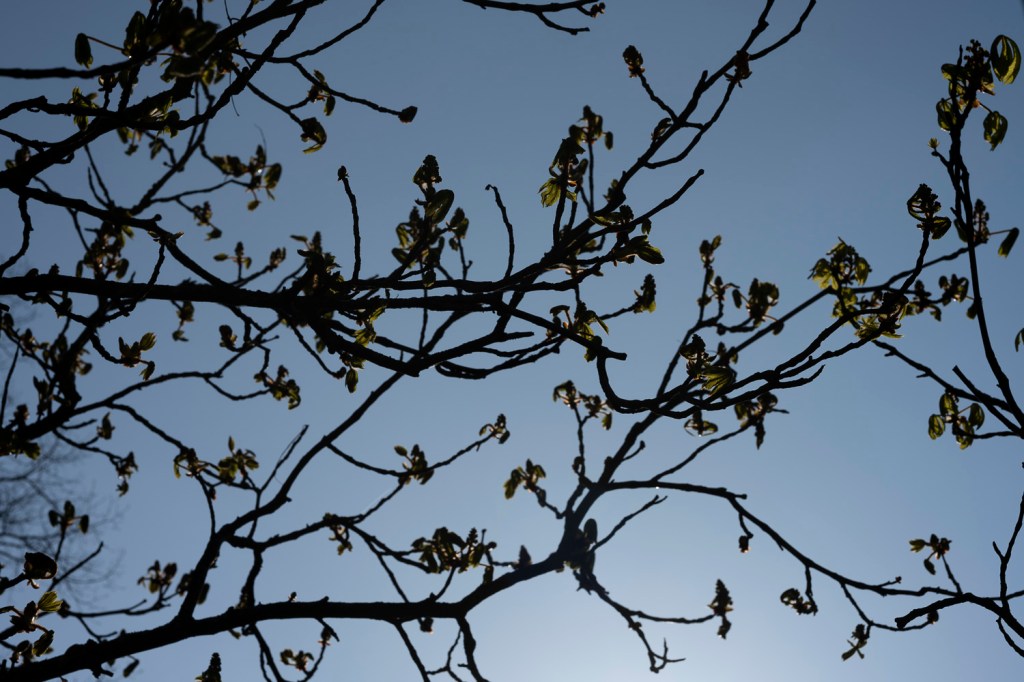
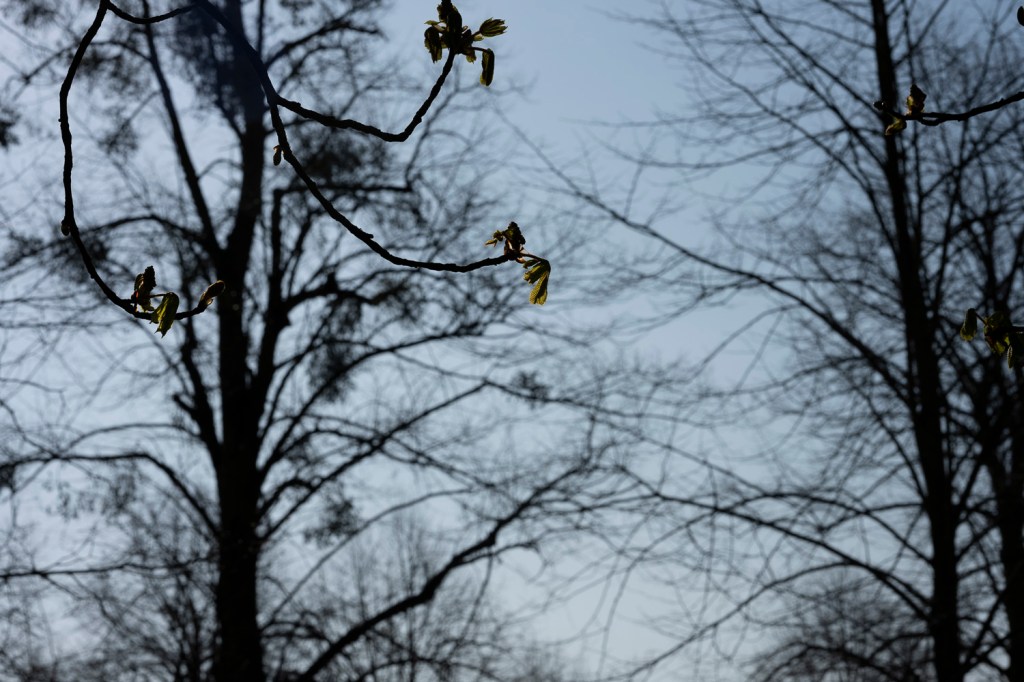
I then took some close ups of the branches with the budding leaves. These will need further experimentation.
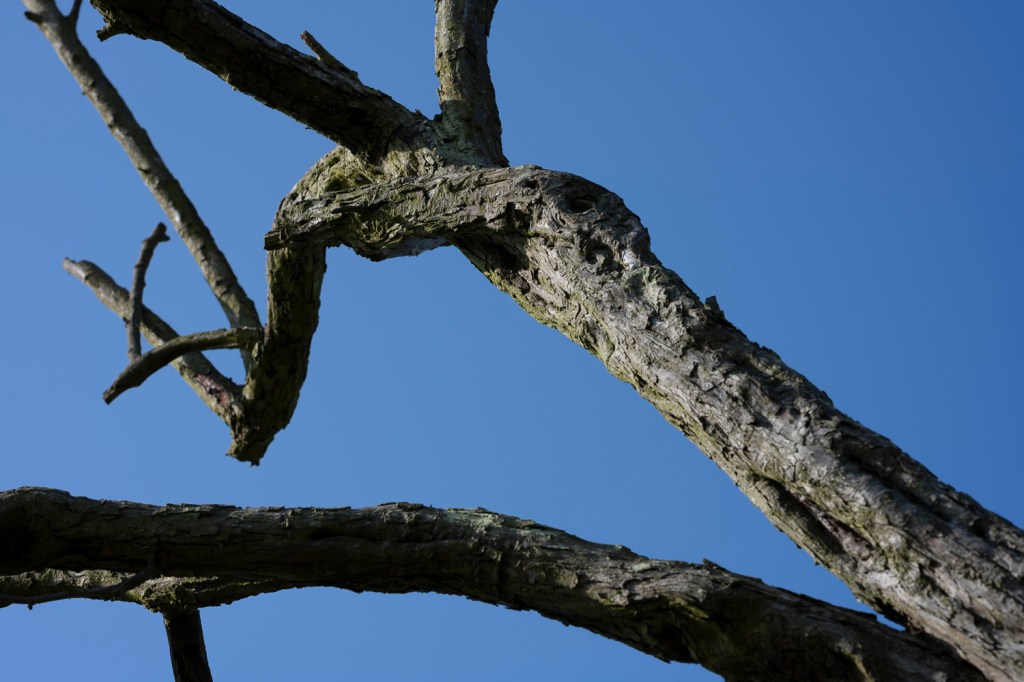
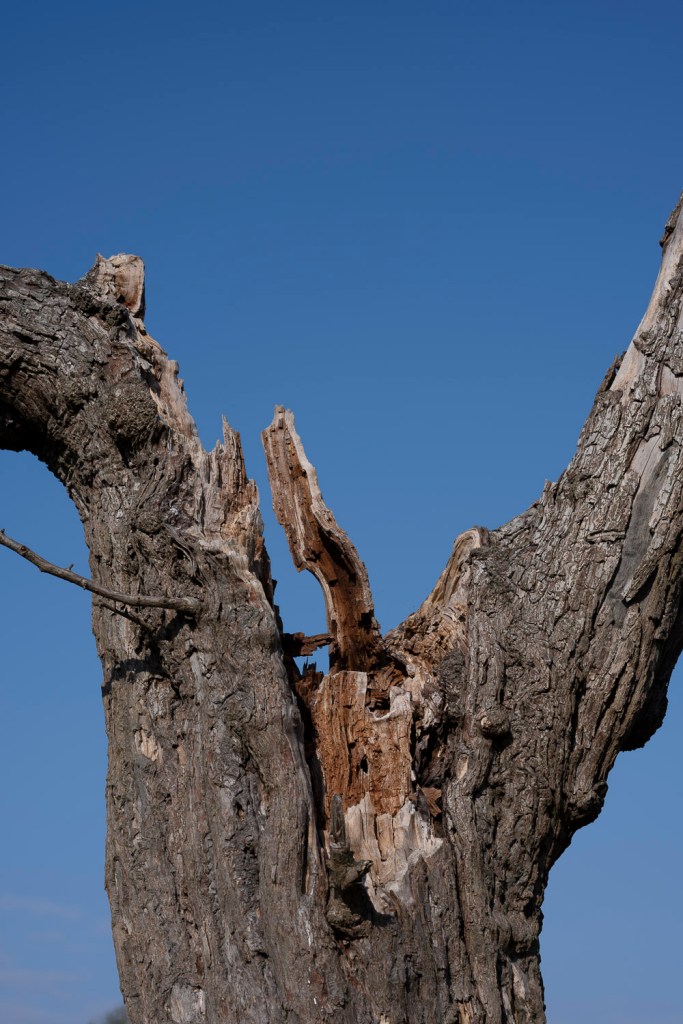
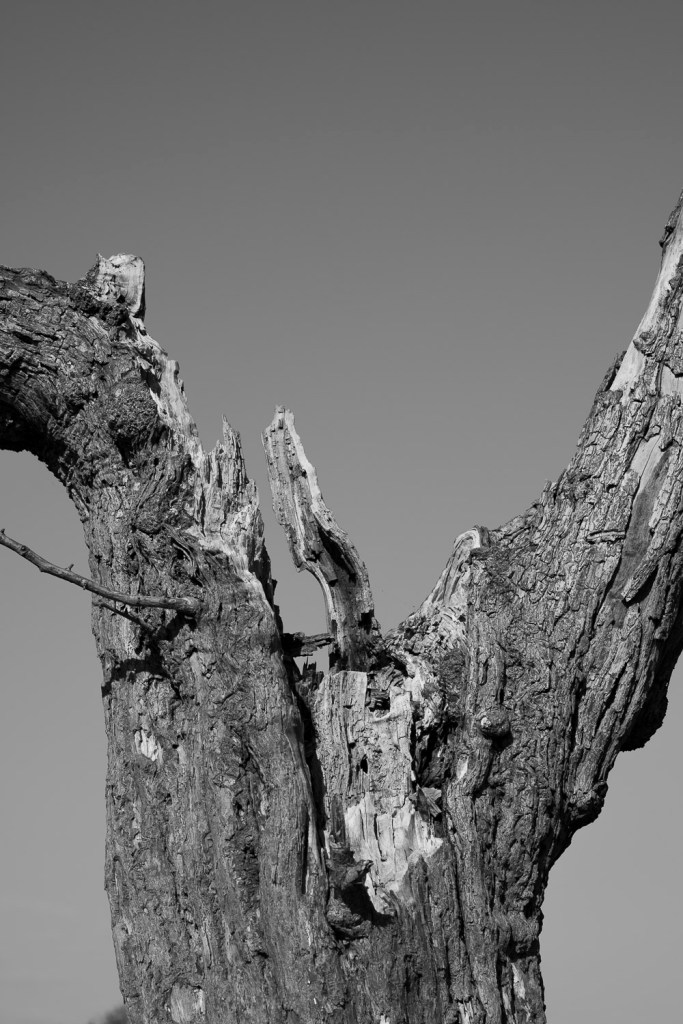
One part of the tree that caught my eye was the top of the trunk before the branches split. I was really struck by the details.
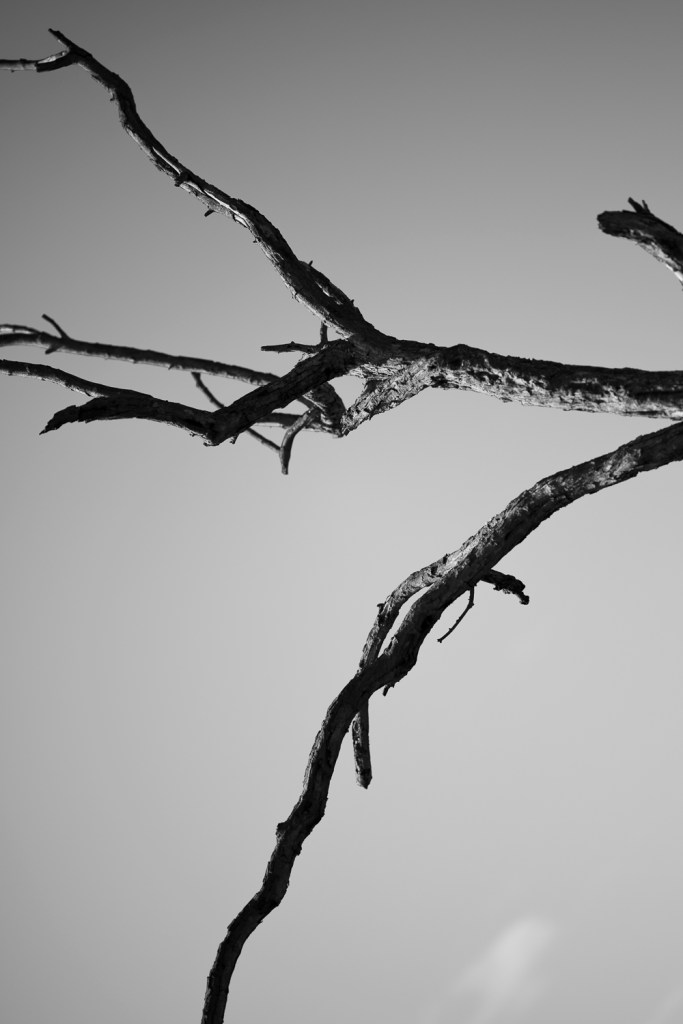
After looking at these images when I arrived home, I created the following Black & White conversions.
When looking at the two images together, it struck me how they ‘flowed’ together. Maybe returning to the concept of building a tree with different elements was viable.
I continued through the part and was starting to realise that the hawthorns weren’t quite ready for their show of blossom. This would be at least two more weeks before any hint of pink could be seen.
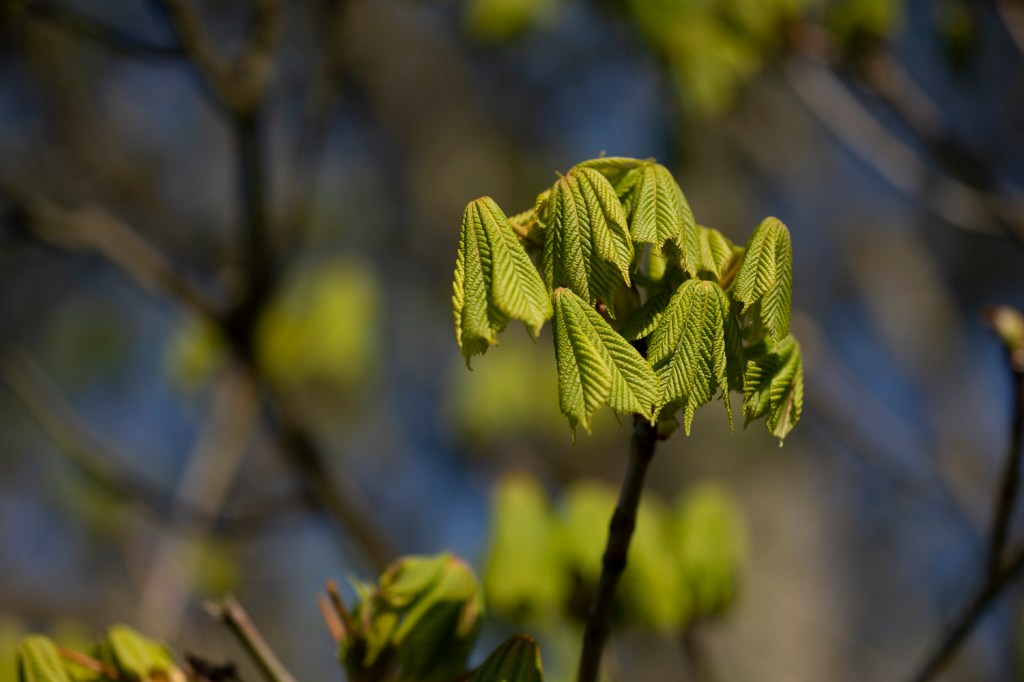
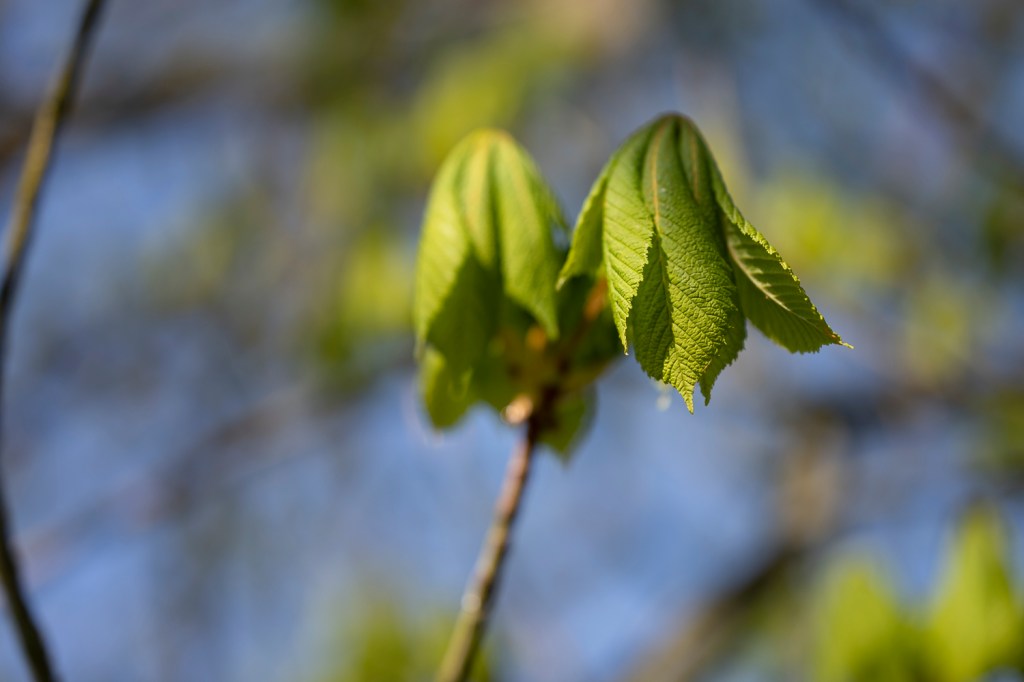
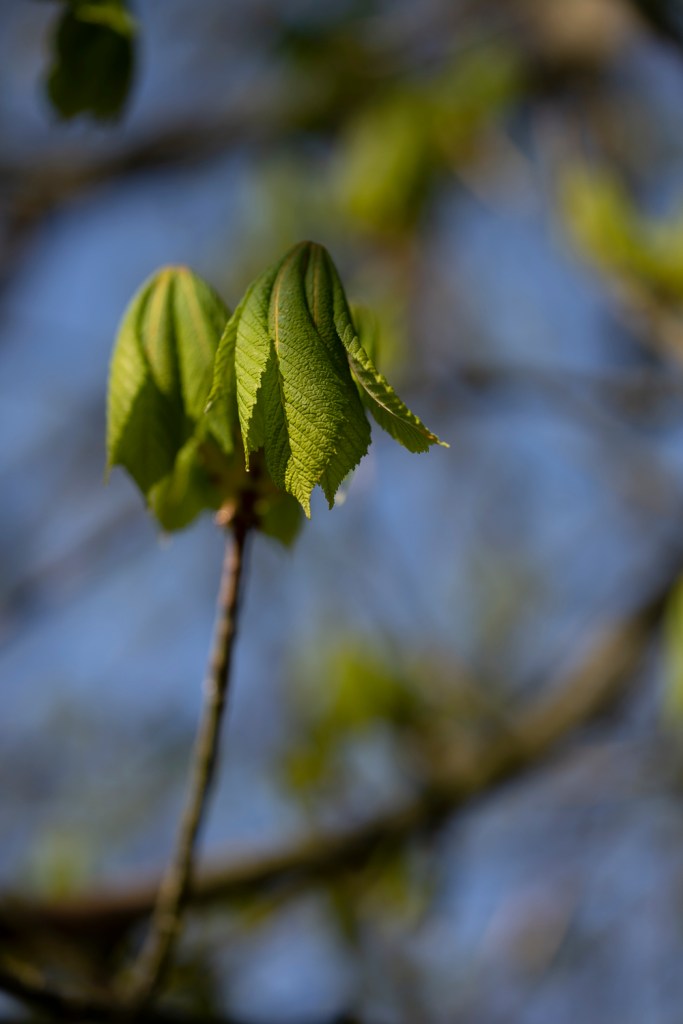
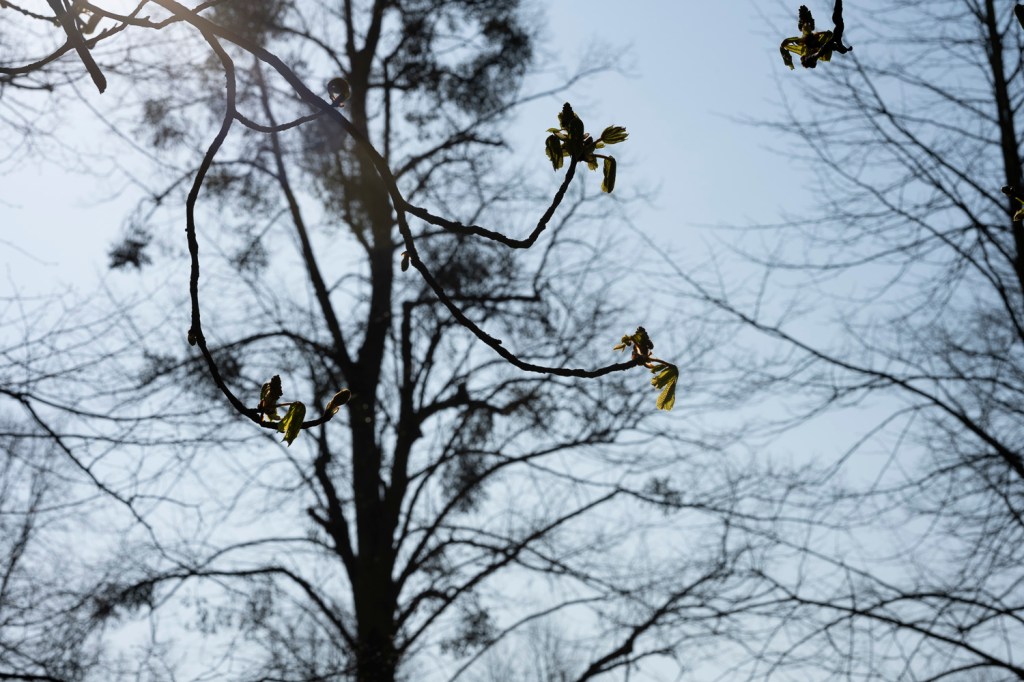
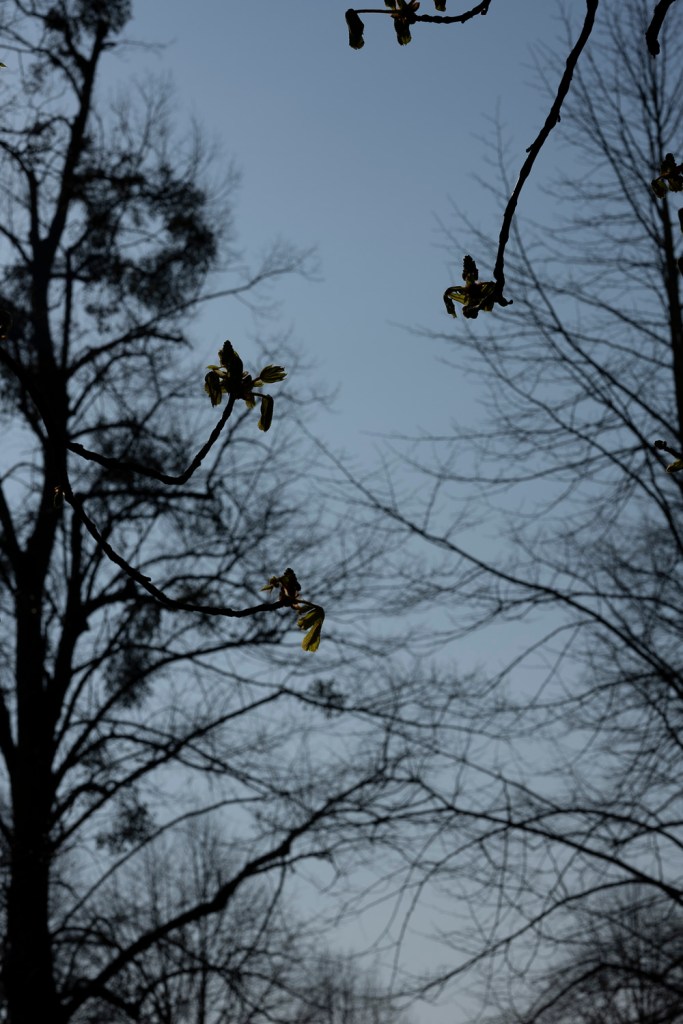
What I had started noticing instead was how the leaves of these Horse Chestnut trees while they were growing from their buds. They looked so frail and fragile, like a baby animal.
I then took the following images of the Horse Chestnuts with the Lime trees behind. The Limes had yet to start growing their leaves, so give an interesting backdrop.
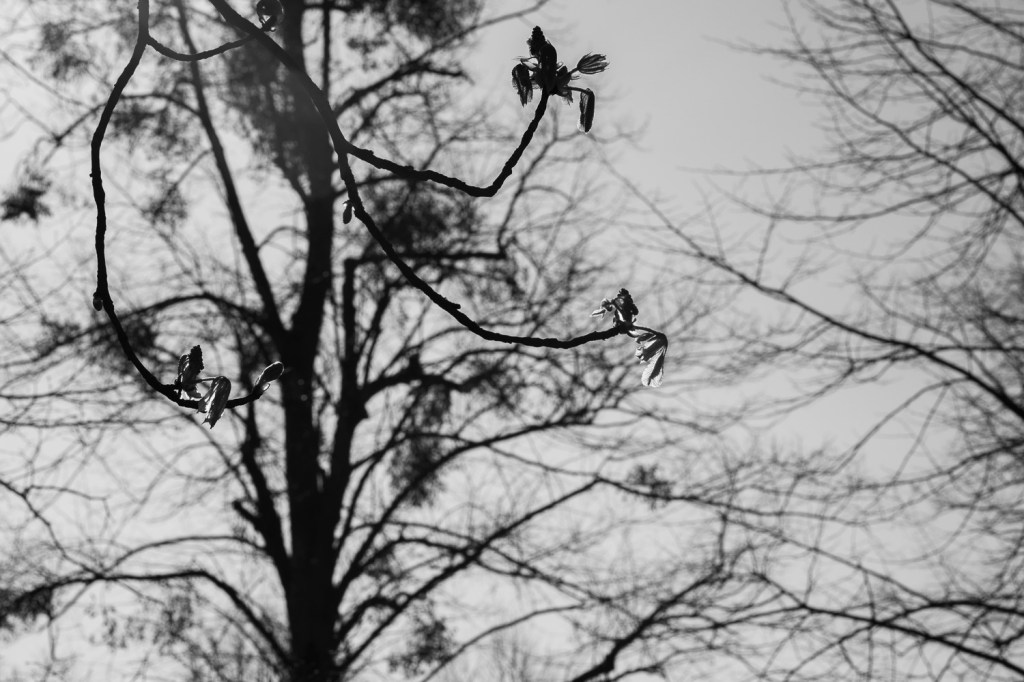
I tried the following Black & White conversion with a compositional crop to compare with the original colour image.
One concept I have considered for the Stage 2 project is taking photographs of the Hawthorns during the Spring. This is when the trees will be covered in blossom.
This thought also coincided with this reference to trees in art:
‘Often, in paintings depicting episodes of the Passion and Resurrection of Christ, one sees images of a desiccated tree and a tree in bloom, indicating the opposition between redemption and sin. The simultaneous presence of the two trees may also allude to the opposition between Church and Synagogue and more generally between good and evil.’
(Impelluso, L. 2004. pp. 16)
Lorenzo Lotto, Allegory of Virtue and Vice, 1505
I also noticed a similarity between the above painting and one of my initial Hawthorn images.
References
Impelluso, L. 2004. Nature and Its Symbols. Los Angeles, California: Getty Publications.
The challenge I faced with photography was that the instantaneous static viewpoint, provided by the camera’s lens and shutter, didn’t represent the continuous flow of the act of looking. It seemed as if the still photograph had been held back to the level of the dictionary; the single word. It was the visual equivalent of overlooking the potential to link words to convey ideas and meaning. I couldn’t accept the notion of an isolated, decisive moment being capable of encapsulating our experience of life.
(Myles, N. 2020)
With this quote reverberating round my head, it was time to relook at what I was attempting to achieve. It seemed I had spent a lot of time and energy researching trees and how to photograph them in the best way possible. However, this project isn’t about getting the perfect tree image. It’s about practice-based research, which requires EXPERIMENTATION!
When I looked at the images I’d created so far, I was very happy with the progress I had made technically. I was now taking a different approach to tree photography compared to the one I used in the AGM60 Research & Experimentation module. What was missing at this stage in the images was the element that made them distinctly ‘Jennie Meadows’. I also felt that I wasn’t being ‘creative’.
Editing and experimenting with images digitally is integral to my work. Why not now?
The fact that I hadn’t started this process for the current project was strongly sparked by the work and words of Noel Myles. Why should my images be restricted to one view point?
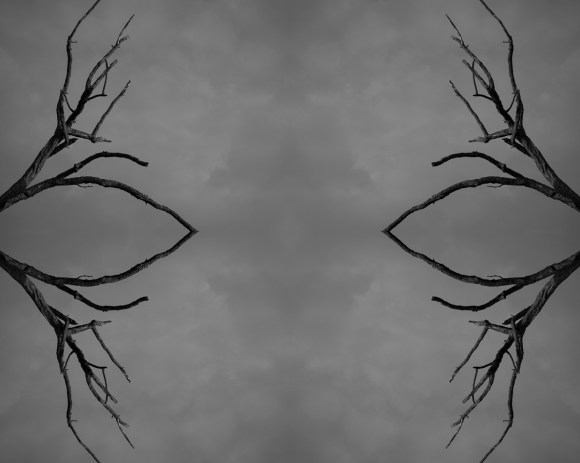
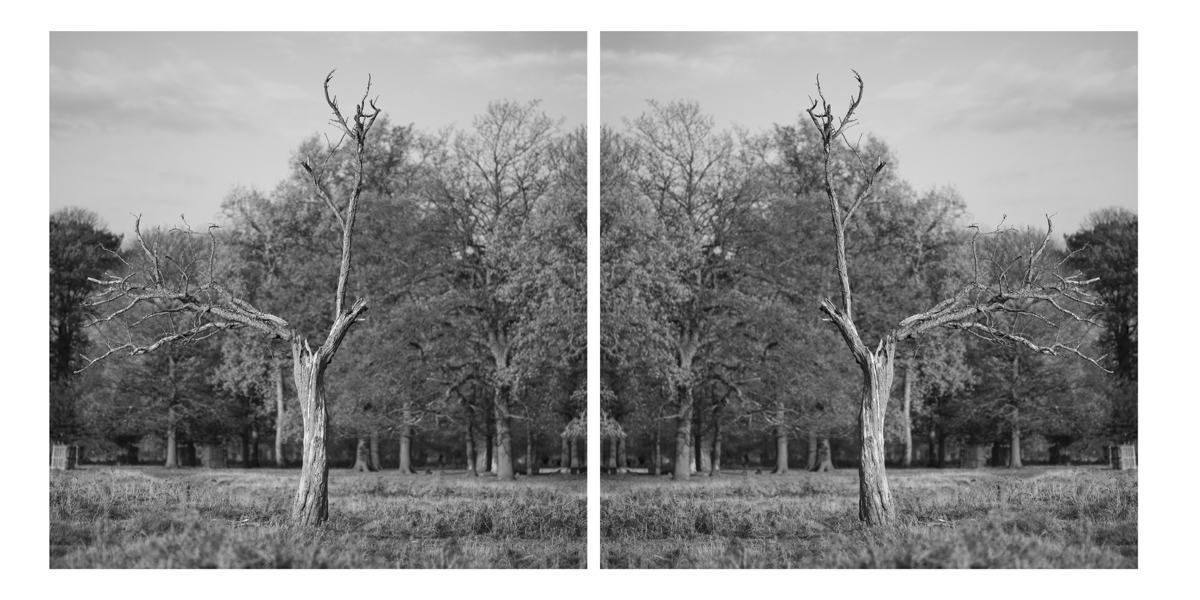
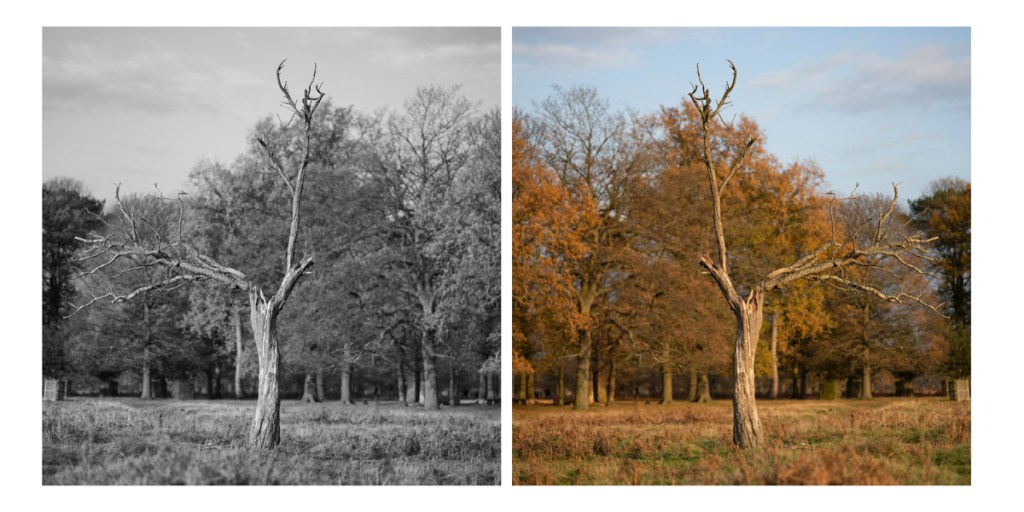
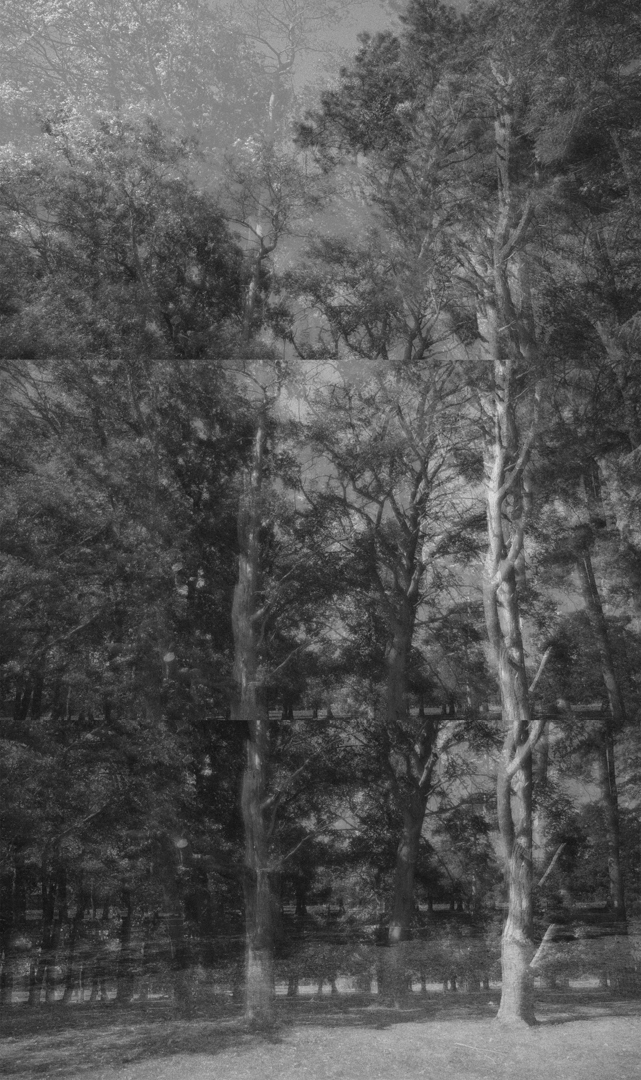
My first experiment involved a Black & White conversion of the following image.
Next, I flipped the image 180 degrees.
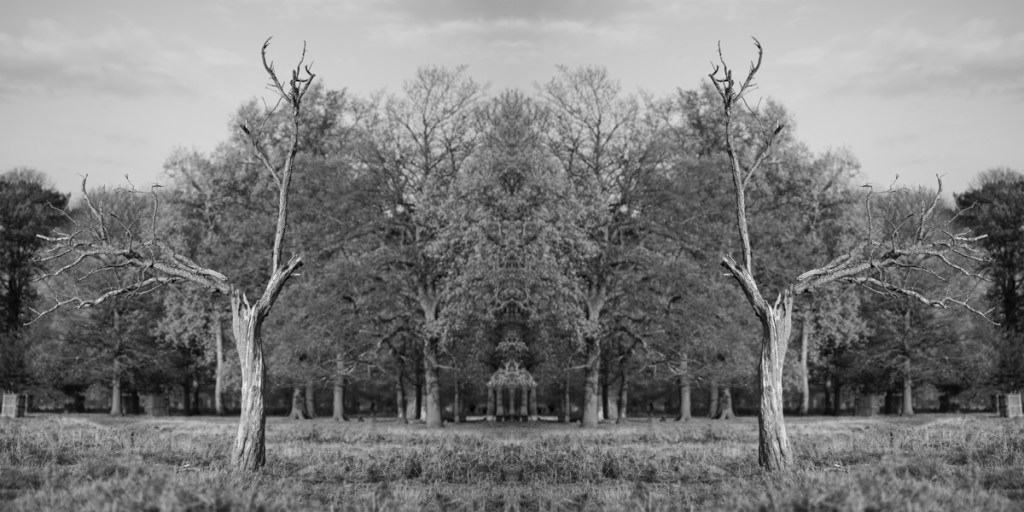
I then combined to two images in Adobe Photoshop.
I wasn’t sure about the two images connecting. I thought the middle section may be two distracting. So I also created a version with a small between them. I also tried a third version showing one in Black & White and the other in colour.
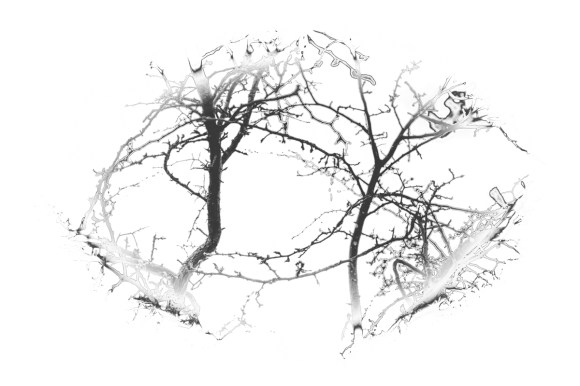
Something was starting to evolve. Further experimentation was required. My classmate, Mark, suggested putting the two trees together. I planned to do so later that day.
On Wednesday 25 November, the Group Tutorial went ahead as scheduled. This was held following social distancing protocol within a University classroom. As all teaching would be online from 2 December, this would be the last in-person session of 2020.
The first aspect covered was the 1-1 tutorials due to be held on Wednesday 16 December. These would consist of 30 minutes via MS Teams. The aim of the session would be to present then discuss the current project, specially in regards to scope, the current status and any concerns.
The next session after this would be the Group Tutorial on Wednesday 20 January 2021 with the Final Review and submission of work on Wednesday 27 January 2021. At the time of writing, the Final Review is to be held at the University of Brighton and the Body of Work presented in its physical form. The required Research Dossier (in relation to Task 2 for this module) is to be submitted electronically via ‘My Studies’ on the same day.
One of these Task 2 submissions is a proposal for module AGM62, which should be a springboard to how the work will be taken forward. Our tutor, Åsa, gave a brief idea of what information should be included and how it should be written and will be sending a more-detailed template via email soon.
Åsa also went over the module course book and reiterated the key requirements and learning outcomes. The essence of this module is to absorb oneself in the intent of practice-based research. To make progress in the module, and as a photographer in general, it is key to value and appreciate the practice of ‘making’.
The key phrases Åsa said were ‘return and return’, plus ‘EXPLORE!’ (appropriately, of course).
Åsa also encouraged us to ask:
What is my photographic practice?
What will I show?
How will I show?
How will I talk about it?
What are the parameters of my inquiry?
How do I want to develop particular photographic techniques?
In addition, Åsa advised the class, at this stage of the project, to:
Take an explorative approach to our way of working
Continue making
Reflect on works – and what doesn’t
With regards to the Research Dossier, it would be useful to include ‘Sub Works’. These are pieces that haven’t been included in the final Body of Work, but could constitute a separate body or springboard for an alternative direction.
My first reaction to this advice was to think about my own inquiry:
How does digital photography relate to the images of trees?
This was sparked by my thoughts about the reciprocal relationship between photographer, equipment and subject. This will have to be explored further.
Image Feedback
During the tutorial, I presented some of the images on the large Promethean screen. I realised that during the Interim Review, the details within the images could not be seen when showing the smaller prints together. This helped in showing the details.
I also showed these following images as group to illicit a response. However, when I looked at the group, I realised that I didn’t want to create a ‘showcase’ of digital photography techniques.
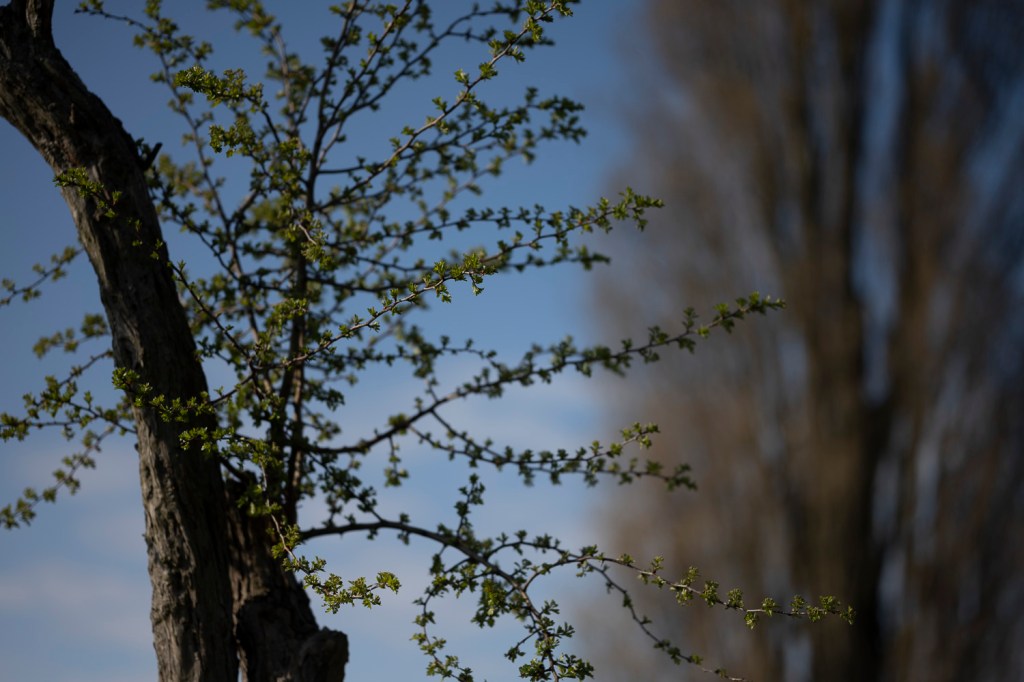
One image that garnered a good response was this one. This was taken with the 35mm lens at F1.8, which resulted in blurring the background more, making the hawthorn stand out.
Again, the subject of using the Speedlight as a fill-in flash was worth pursuing. This will show the trees in detail, rather than silhouette (especially when shooting into the sun).
In general, the response was to refine my technique and focus on whittling down the images to create a cohesive body of work.
Actions
The action I need to take first is to take a ‘step back’ in light of the questions above. It is up to me to make the inquiry of what it is I am actually doing, process my answers then take action.
This has to come from the question:
How does my use of digital photography relate to my images of hawthorn trees?
Once I have a better idea of doing this, going forward I will:
Focus on formulating then using a particular technique and work flow
Strengthen the concept
Extend and develop my use of equipment, specifically:
Tripod
Speedlight Flash
Filters
Experimenting with Depth of Field (making the tree stand out from its environment)
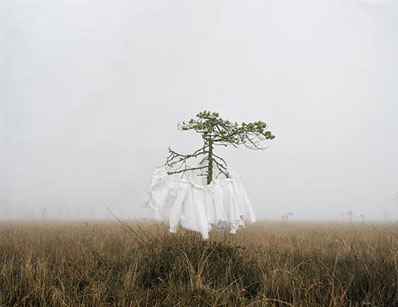
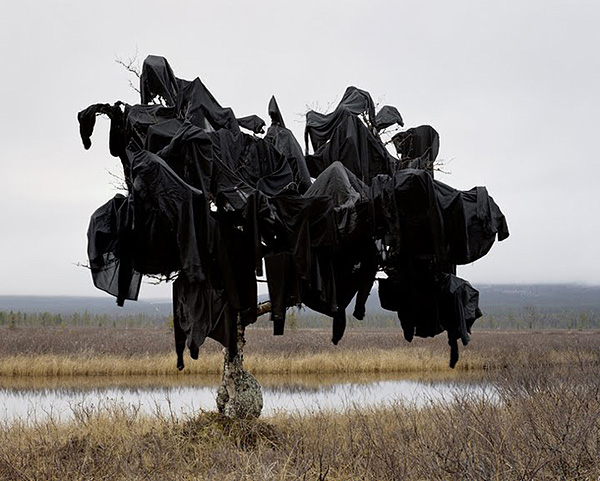
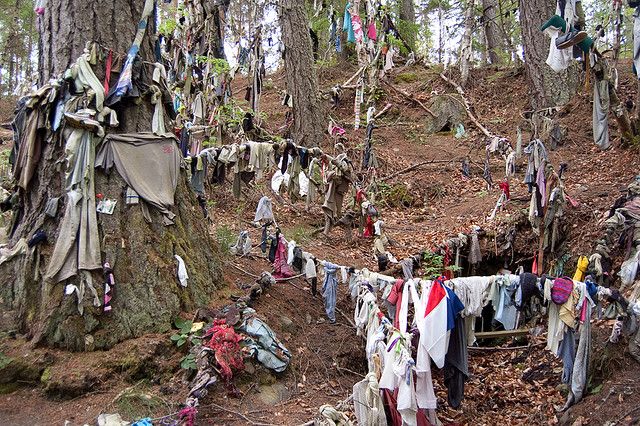
Riitta Päiväläinen is a Finnish photographer who, according to her website:
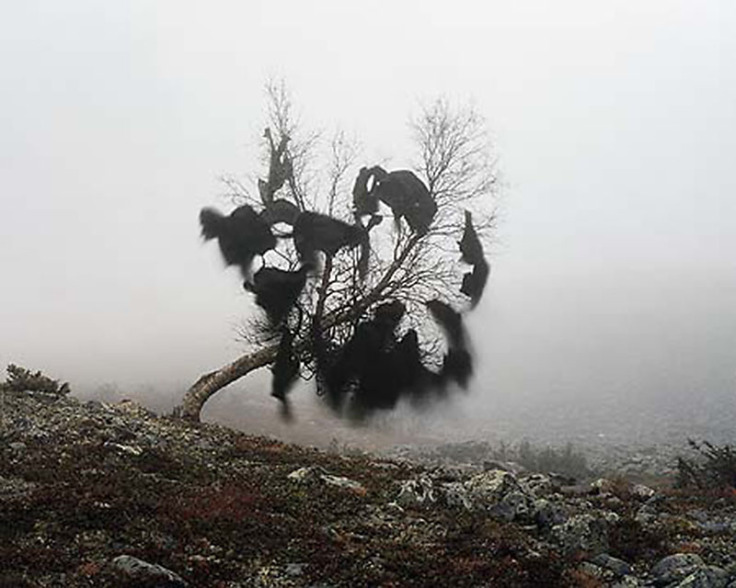
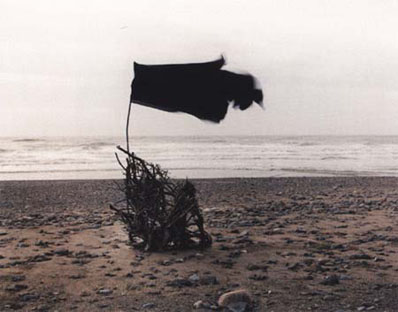
‘Is known for her temporary site-specific installations in nature, consisting of second-hand clothing and flea market fabrics. Her main interest has been “the unwritten history” – the history that you cannot find in library books, official files or archives, but can be felt in the rip of a coat or in the arm worn thin on an armchair.’
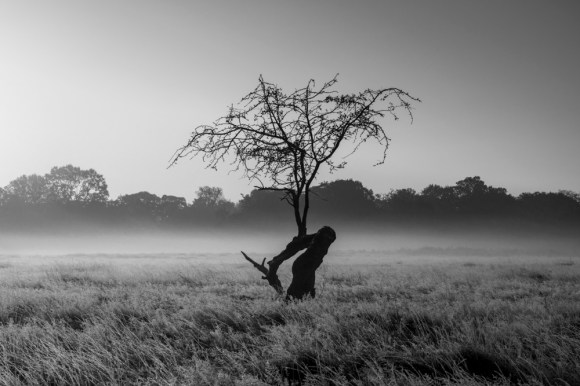
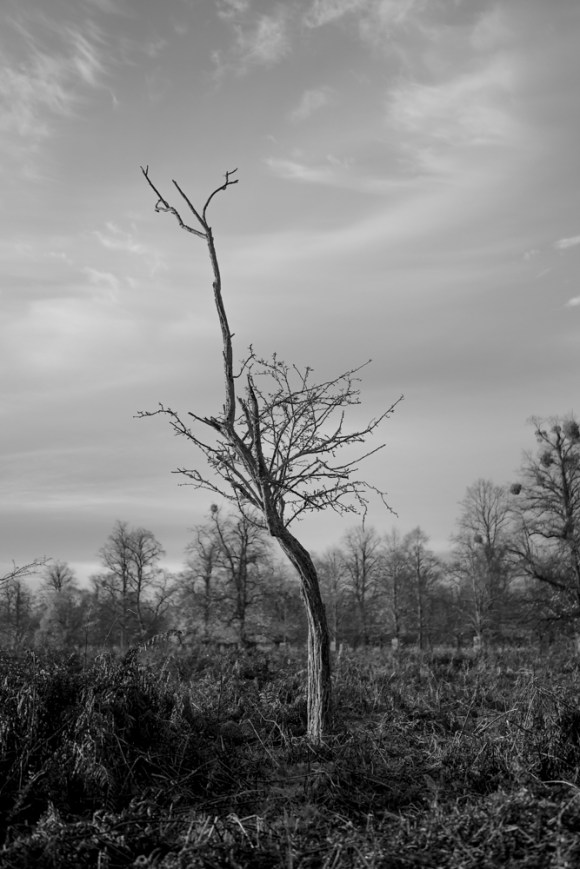
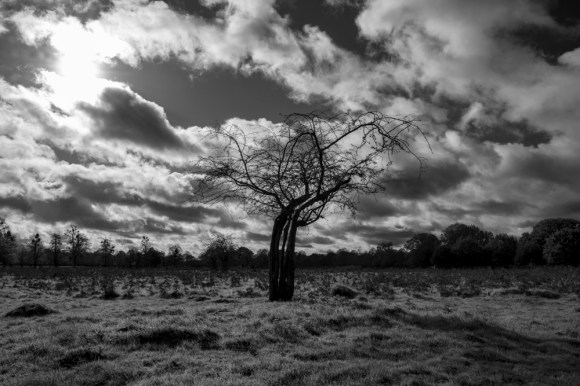
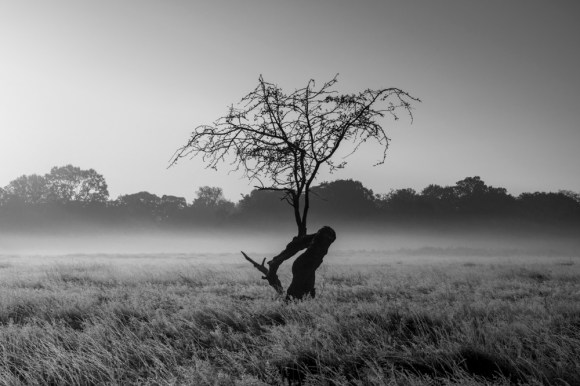
I was introduced to Päiväläinen’s photographic work during a 1-1 tutorial with our tutor, Åsa. When I looked at Päiväläinen’s images, I was quite struck by their haunting nature. As I wrote previously, there is a very eerie aspect to her work involving trees and clothing props. I get a similar reaction when I look at my images of hawthorns.
These particular images are visually similar to the ones in which I’ve focused on the three compositional elements:
Sky
Tree
Ground
Päiväläinen’s method is described as follows:
‘She creates site-specific sculptures utilizing second-hand clothing from flea markets and thrift shops as found objects, and then records the fleeting sculptures with suburb color photographs. Her work is similar in emotion content to that of the British sculpture Andy Goldsworthy. In contrast to Goldsworthy’s utilisation of the found natural materials of stone, rock and sticks, Paivalainen introduces a man-made element that speaks both directly and indirectly to the presence of humanity.’
(Stockdale, 2020)
For Päiväläinen:
‘The used clothes are symbols and evidence of the past, unknown people and their stories, memories and dreams. These symbols are installed in the natural landscape, in which there is no other presence of mankind, creating an abstract interplay and dialog between mankind and nature. The clothing is arranged either in familiar shapes or abstract patterns within the landscape, although she will sometime extract these sculptures out of this natural context.’
(Stockdale, 2020)
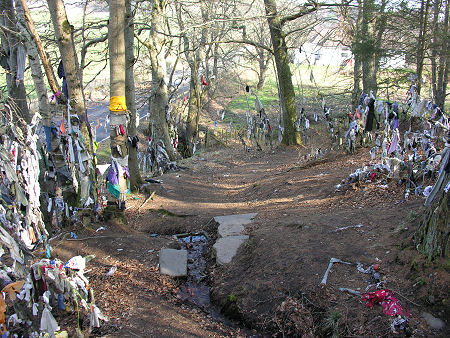
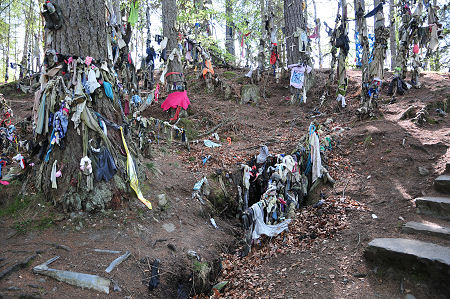
Päiväläinen’s trees also reminds me of the trees near to Clootie/Cloutie wells:
The Clootie Well is a rather weird remnant of an ancient tradition once commonly found in Scotland and Ireland, of holy wells to which pilgrims would come and make offerings, usually in the hope of having an illness cured. The tradition dates far back into pre-Christian times, to the practice of leaving votive offerings to the local spirits or gods in wells and springs. With the arrival of Christianity, the practice was simply adopted to the new circumstances.’
(info@undiscoveredscotland.co.uk, 2020)
When I looked at Päiväläinen’s work in more detail, two things came to mind in relation to my project. Firstly, my particular methodology of photography doesn’t involve physically adding to or changing my subject matter. For me, the tree itself is enough.
Secondly, the mood of the images plus the reactions and emotions they evoke are an exceptionally important element.
After my successful photo session on 4 November 2020, I was quite enthused to return to the park to catch more hawthorns in similar weather conditions. As the forecast was for cold and mist first thing on 6 November, I could not miss out on this opportunity.
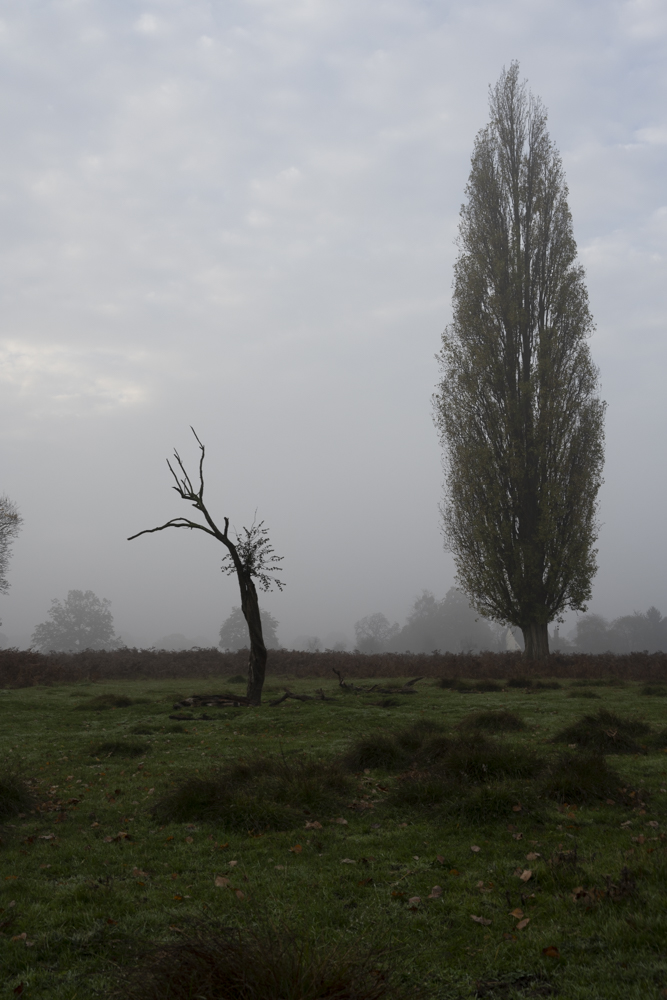
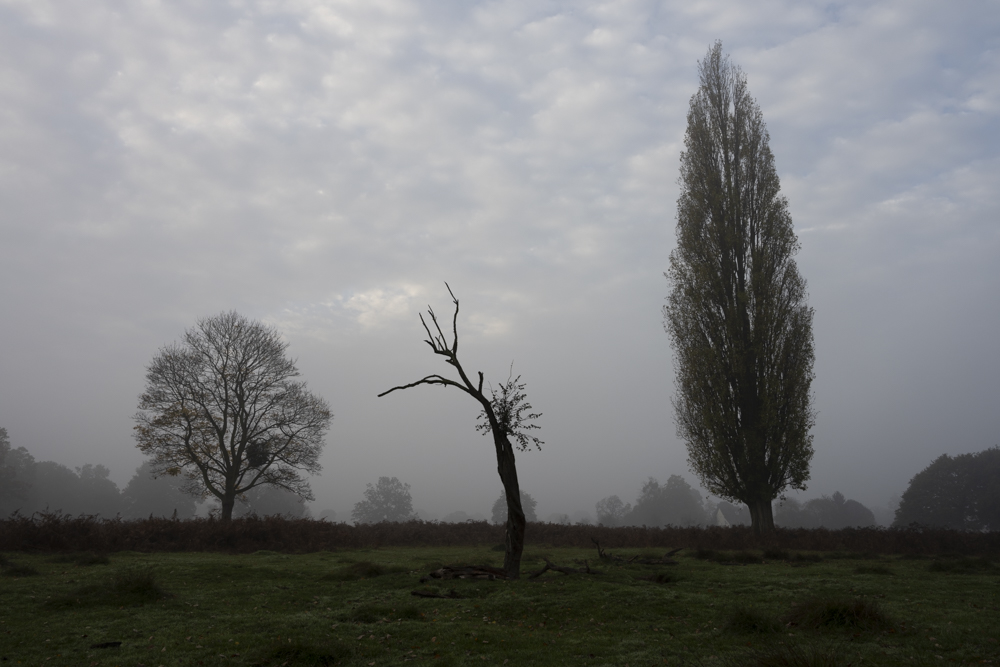
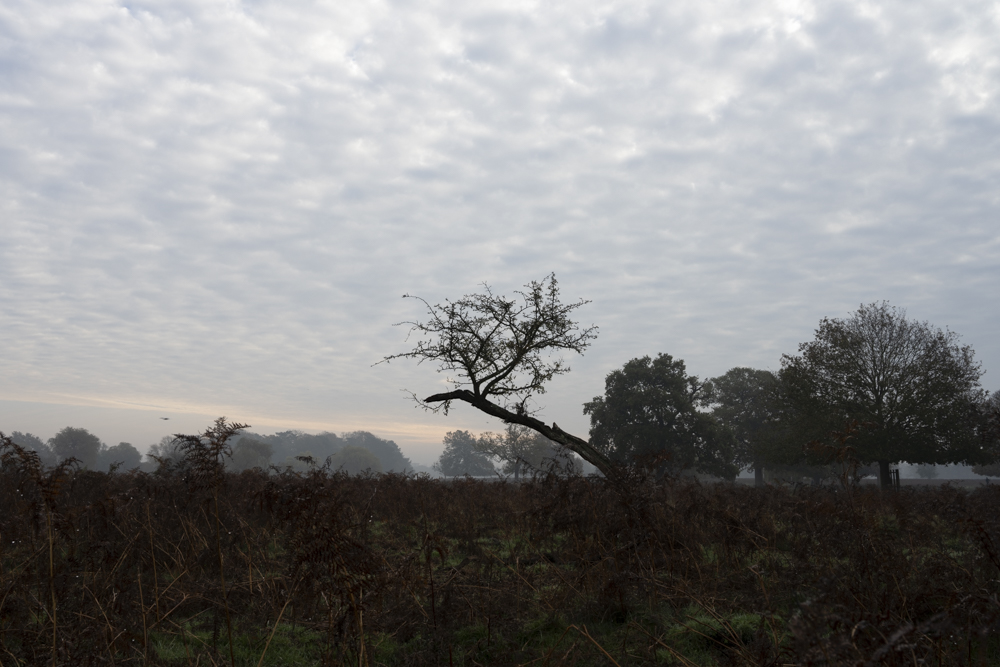
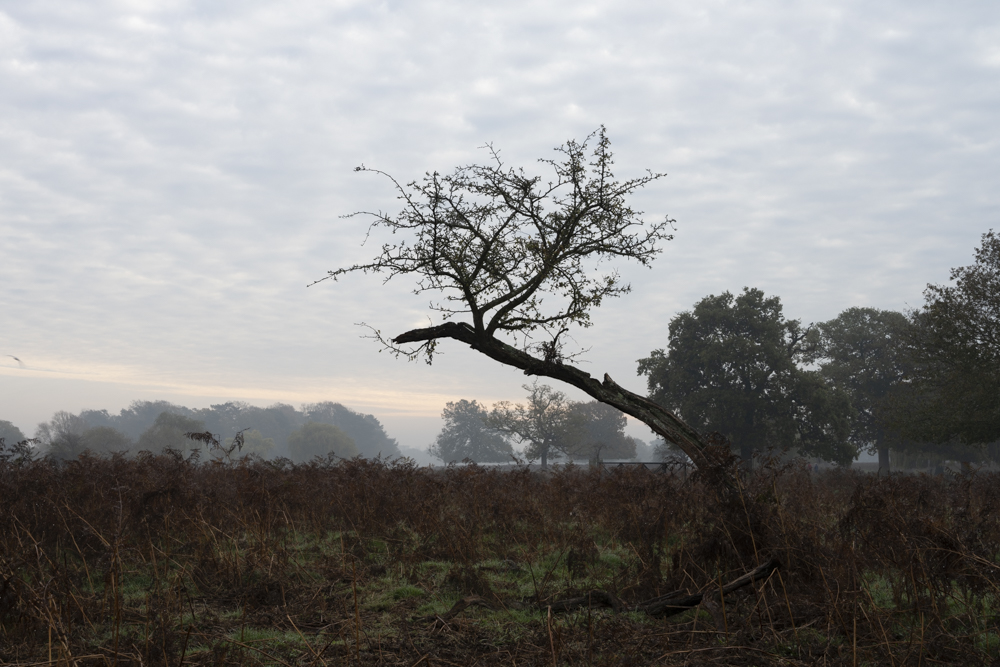
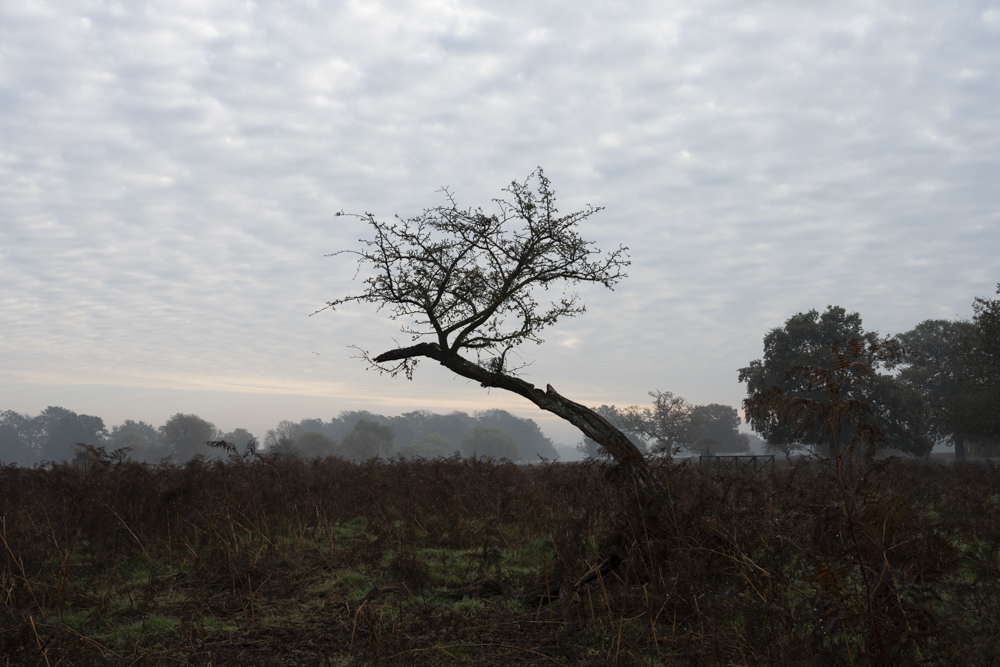
Unfortunately, despite it being quite chilly, the air was a touch too humid to have the ‘diamond’ effect on the trees and grass. Nonetheless, I discovered three new hawthorns and took the following images.
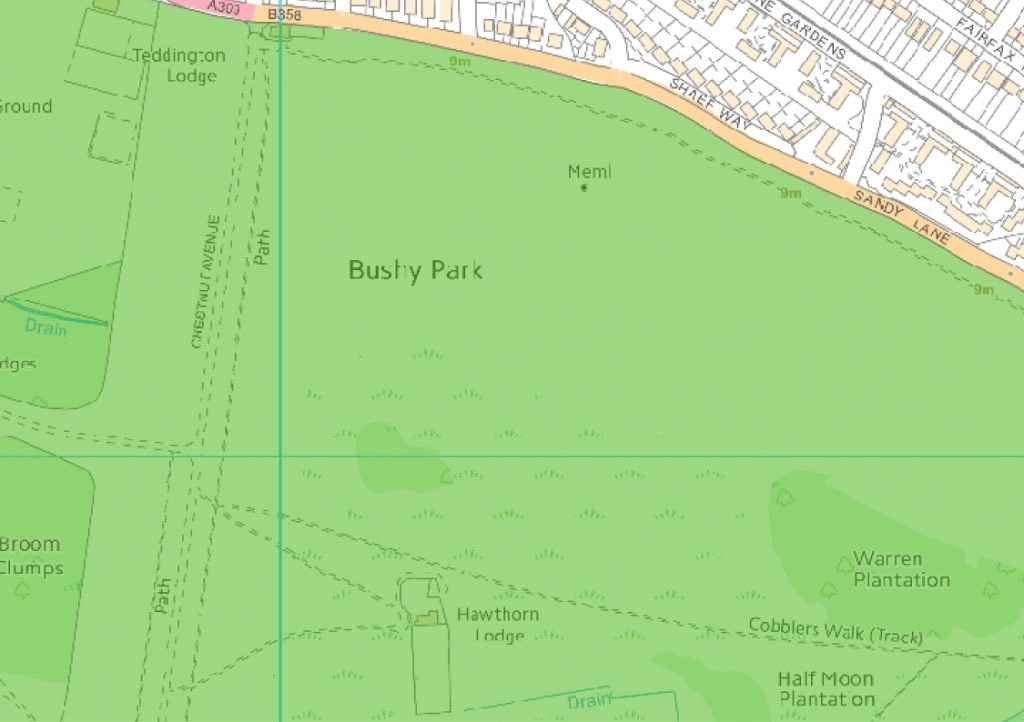
The area of Bushy Park I focused on was the patch on the left of Chestnut Avenue at the Teddington Gate.
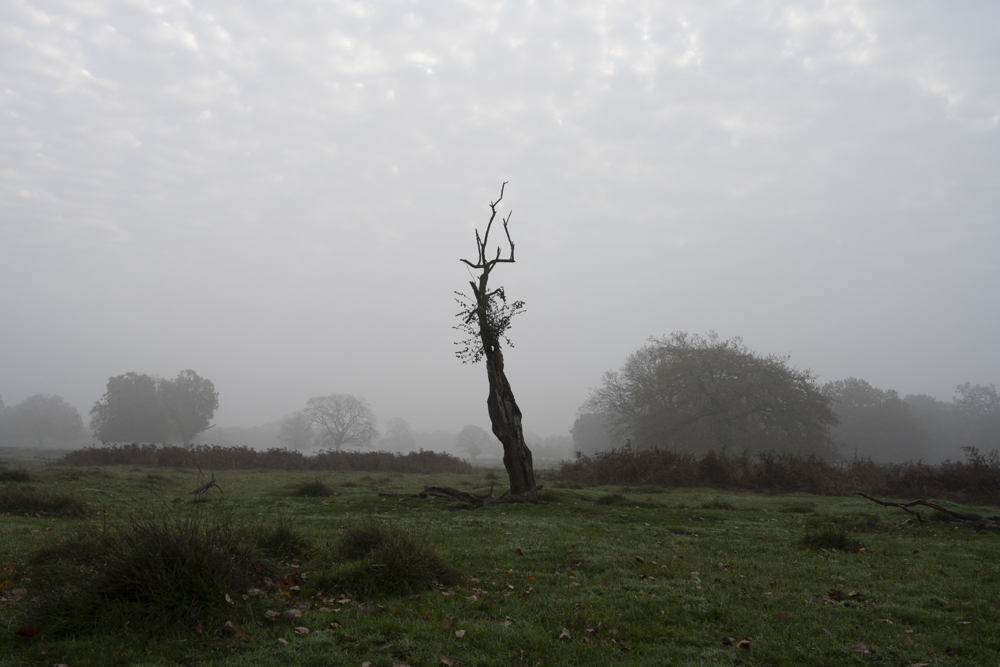
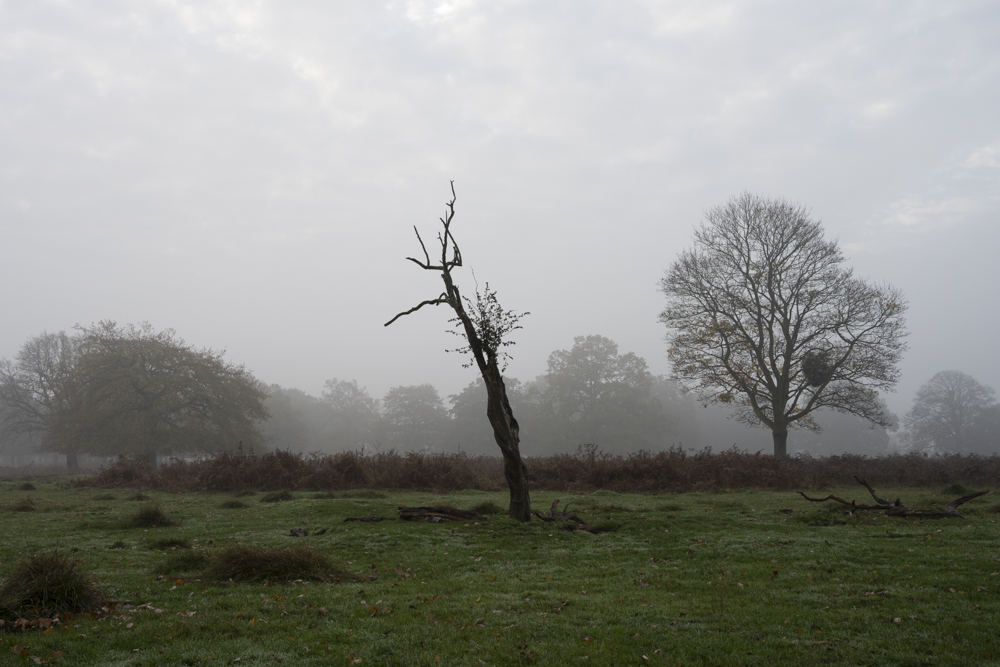
Tree 1
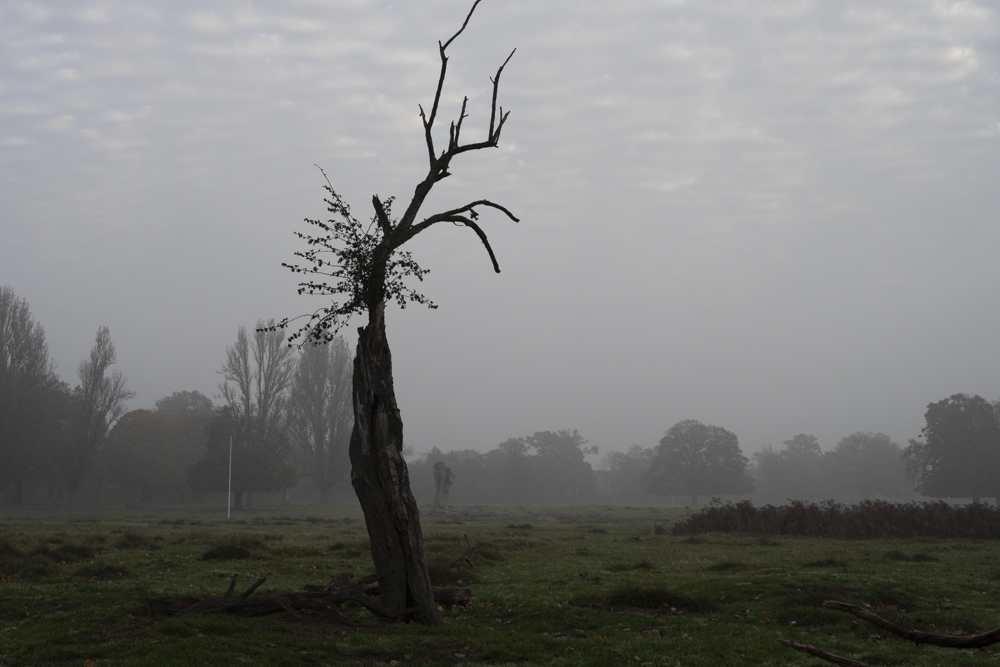
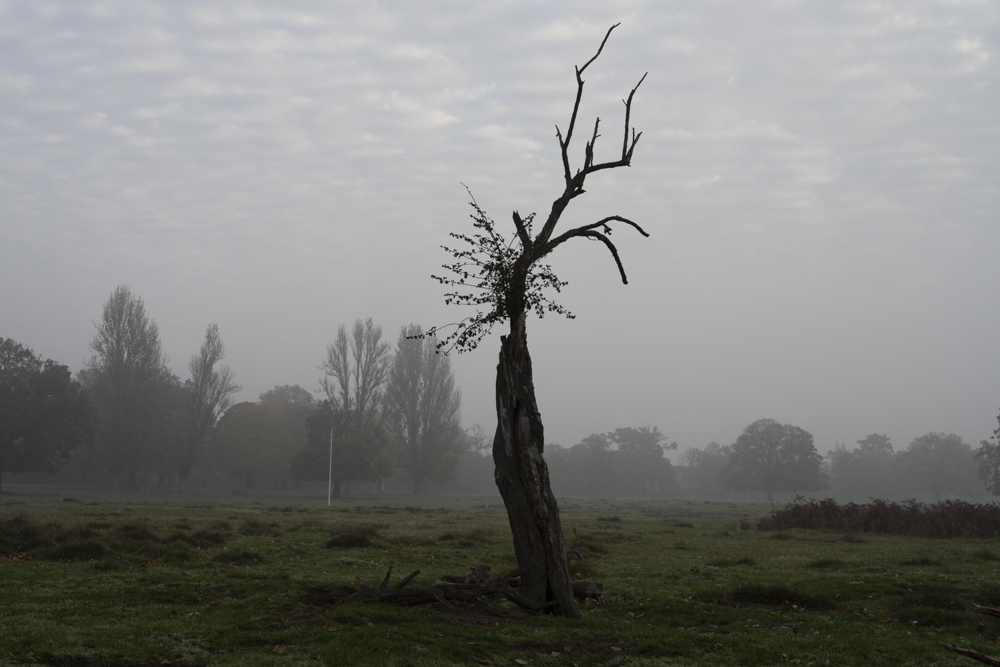
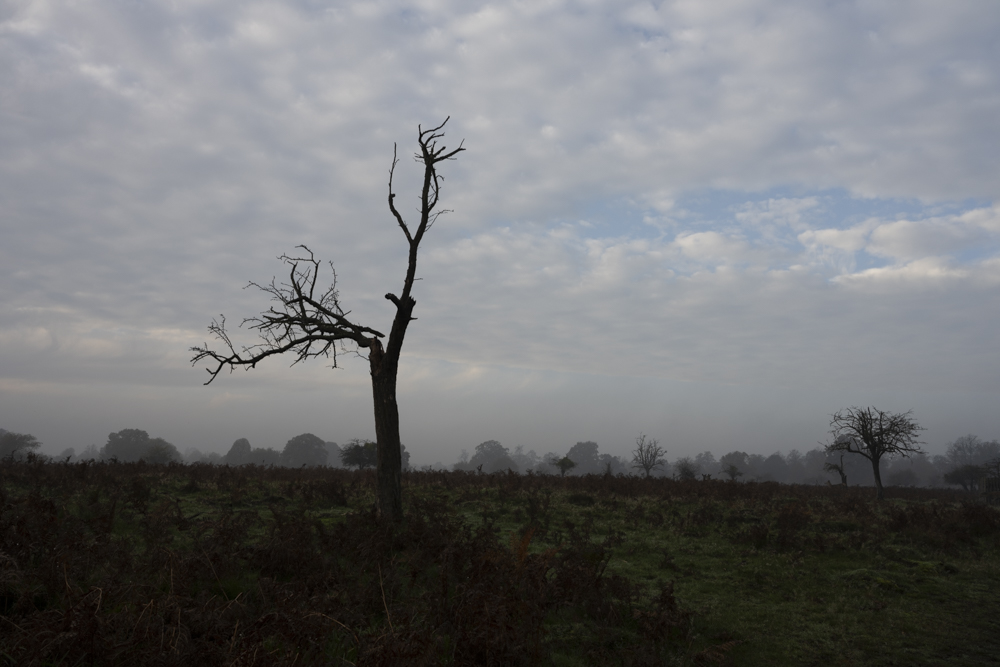
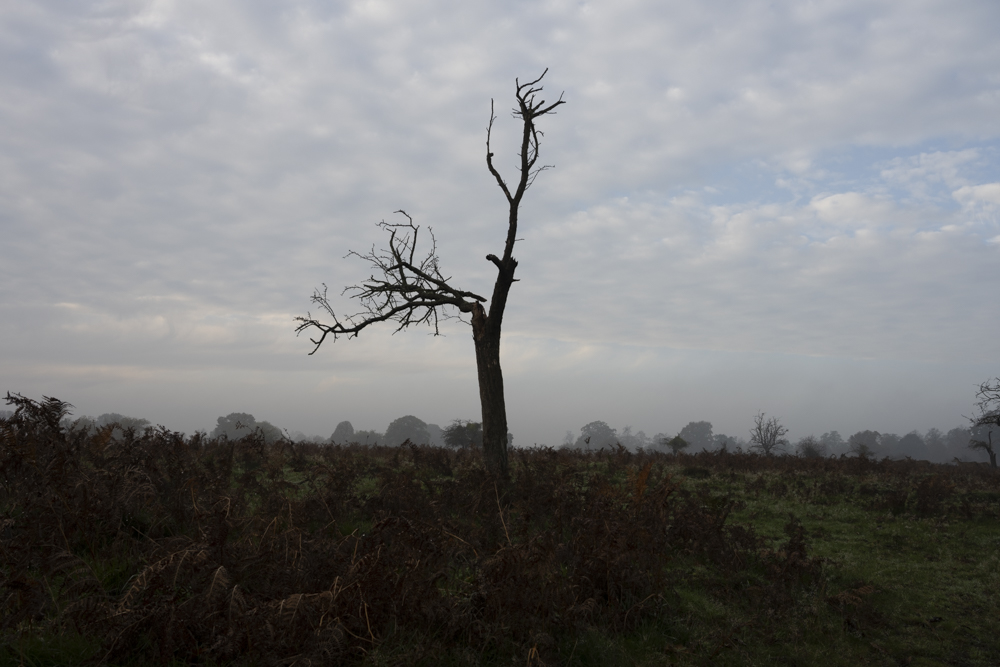
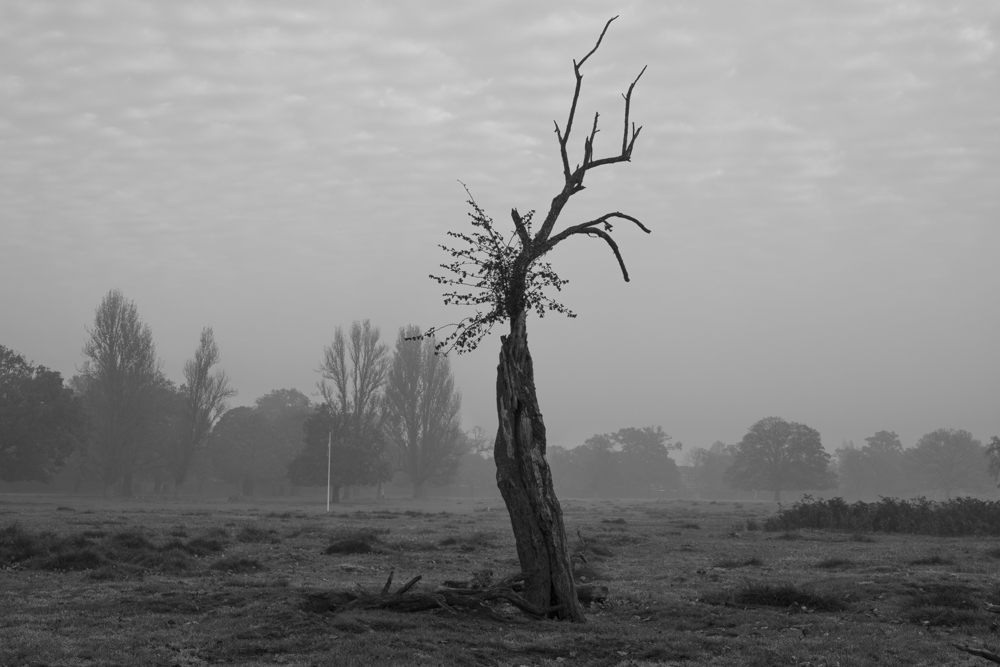
The first tree I photographed is by itself. I tried shooting different angles around the tree and including different elements in the background.
The white pole that can be seen in the background in the fifth and sixth images marks the SHAEF Memorial. This is the location where General Eisenhower planned Operation Overlord, the code name of the D-Day landings in Normandy during WWII (1939-45). On 5 March 1944 General Eisenhower moved SHAEF (Supreme Headquarters Allied Expeditionary Forces) from Grosvenor Square in London to Camp Griffiss, a large US base in Bushy Park.
According to the Royal Parks website, Eisenhower is said to have relaxed by sketching the pine trees that he could see from his office window. Also, it states that the final buildings of Camp Griffiss were removed in 1963 but there are still signs of the camp, including brackets in trees that held telephone wires.
In hindsight, these closer shots remind me of broken wires.
Tree 2
I continued to walk through the park around the back of Hawthorn Lodge and around to the Diana Fountain car park. There were quite a few deer around that patch, which reduced my potential shooting opportunities. At the time of writing, I couldn’t recall exactly which tree this was, but I will need to revisit this speciment.
Tree 3
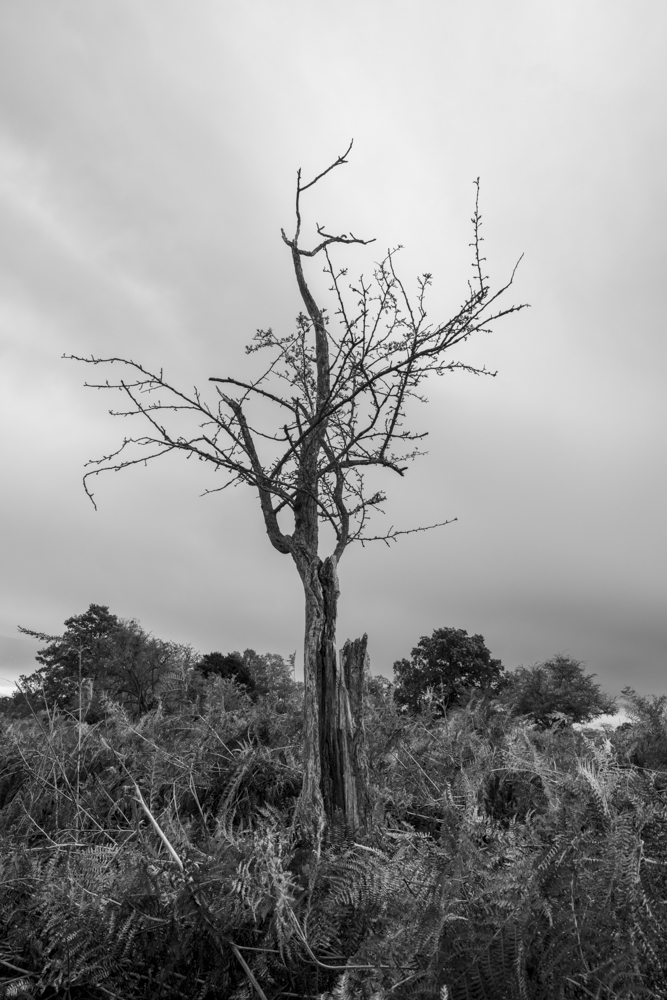
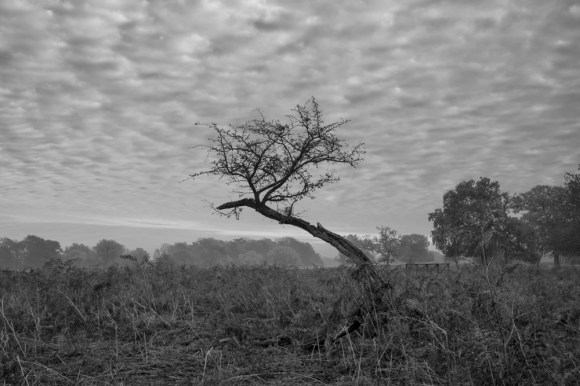
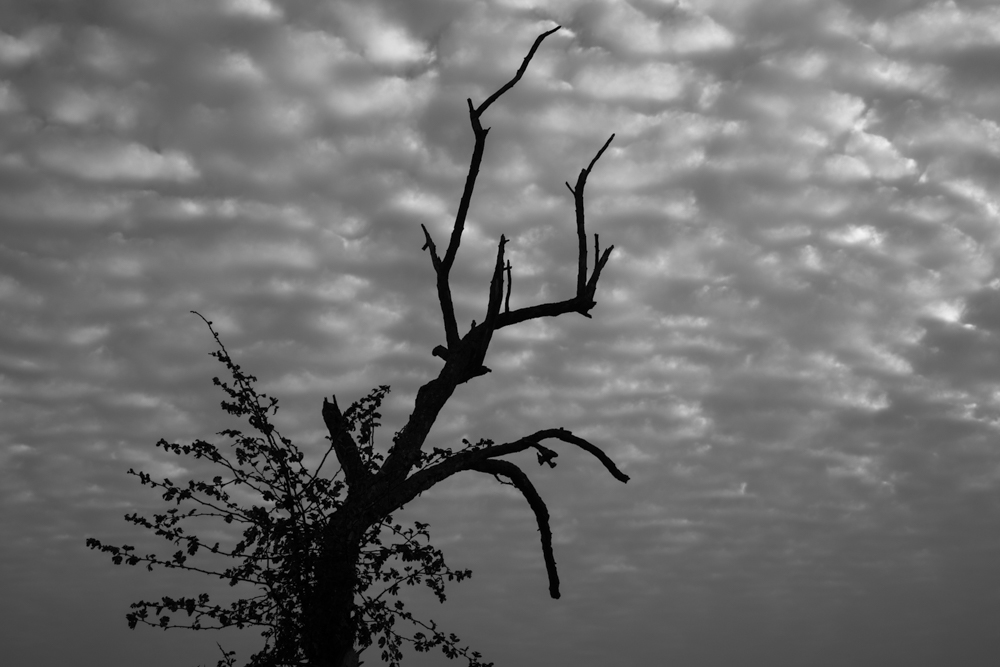
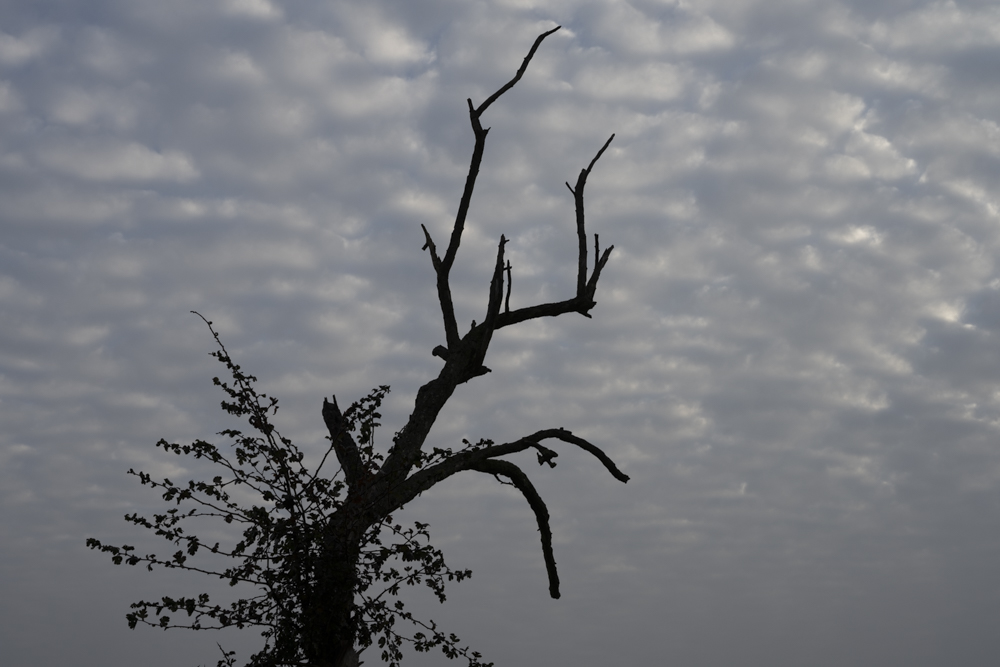
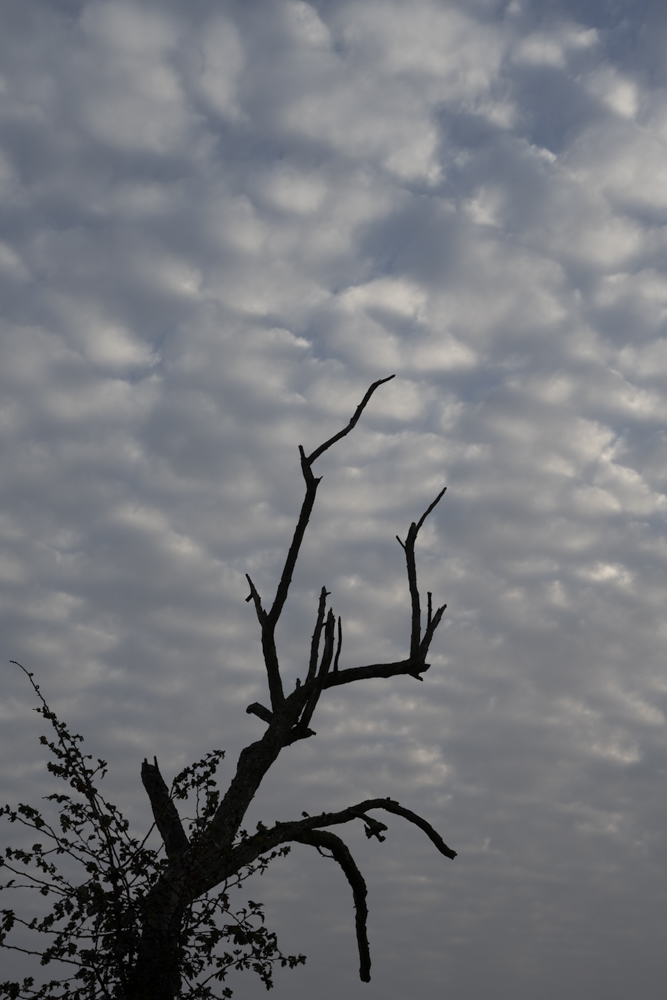
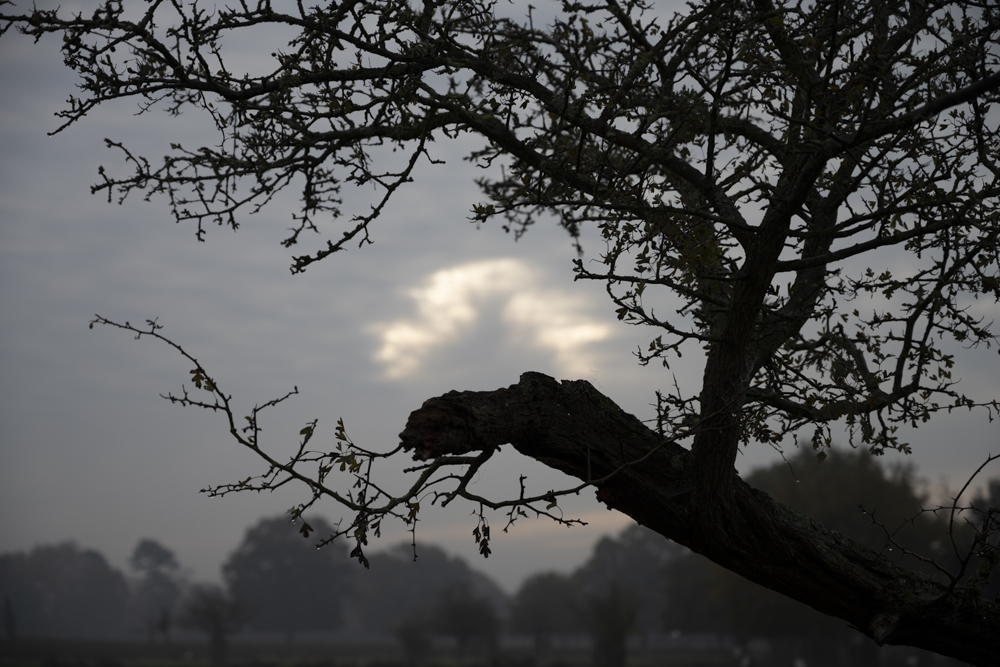
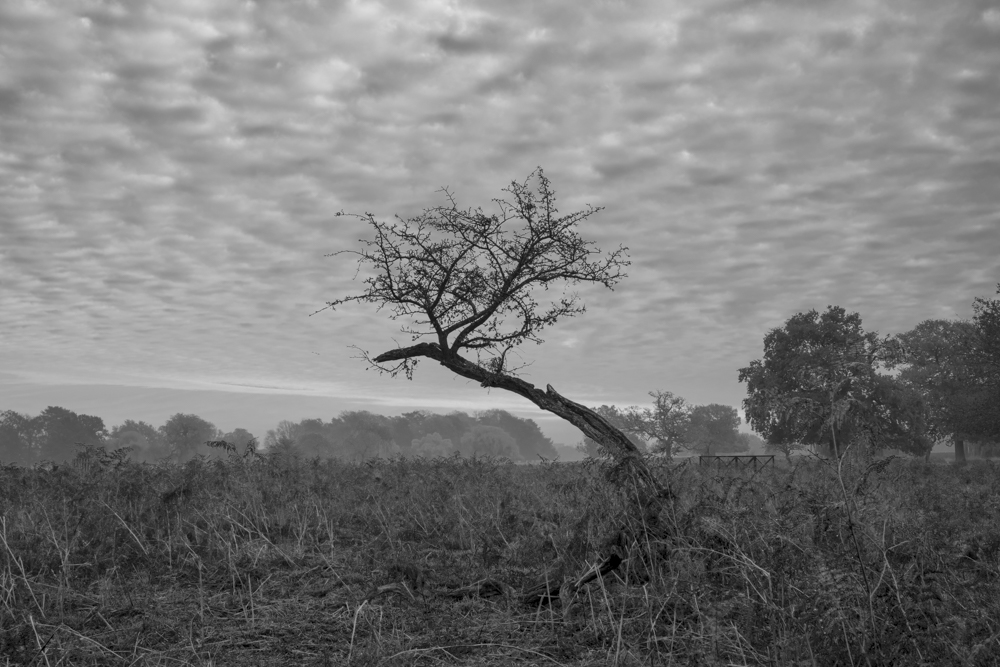
The third and final tree that I focused on was near to the main hawthorn patch near to the Diana car park. I really liked the texture of the sky in relation to this tree.
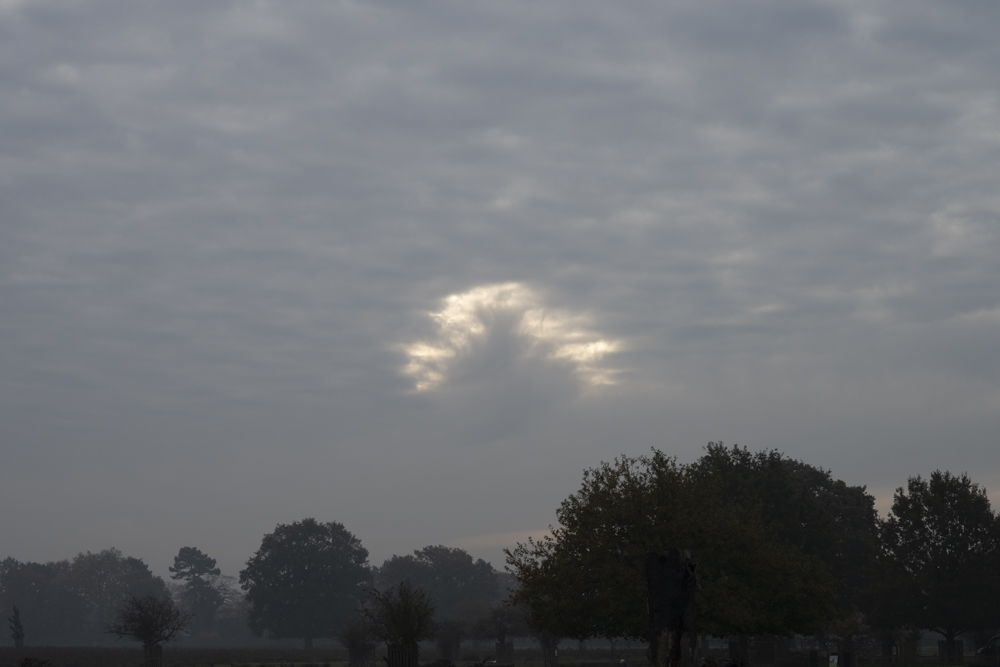
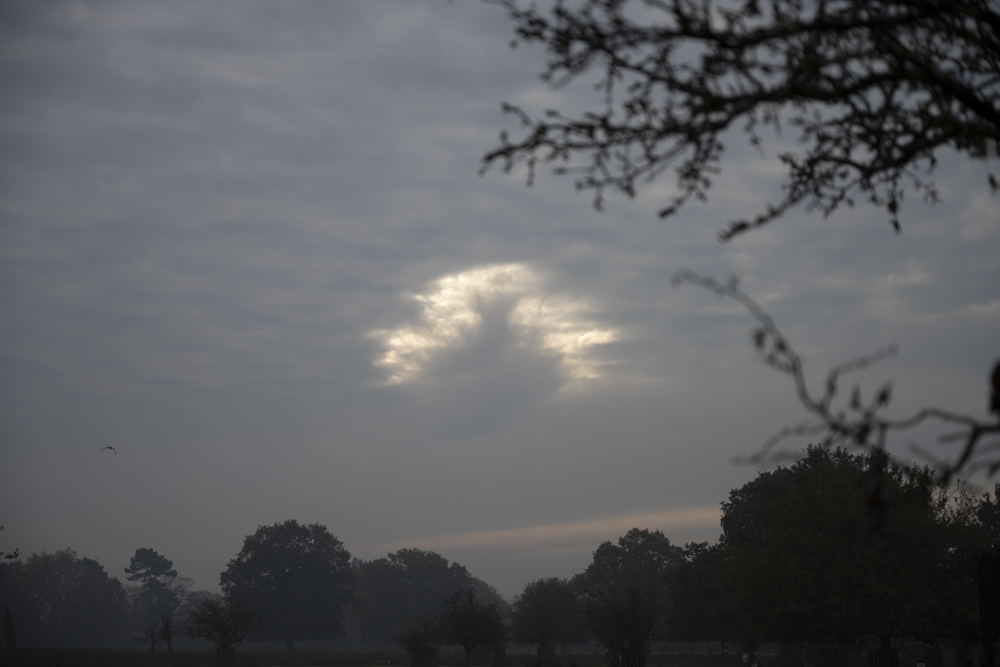
I also noticed this mesmerising cloud formation where I think the cloud was starting to shine through. I couldn’t quite get the angle or shot I wanted, but this is certainly an aspect I need to look out for with future images.
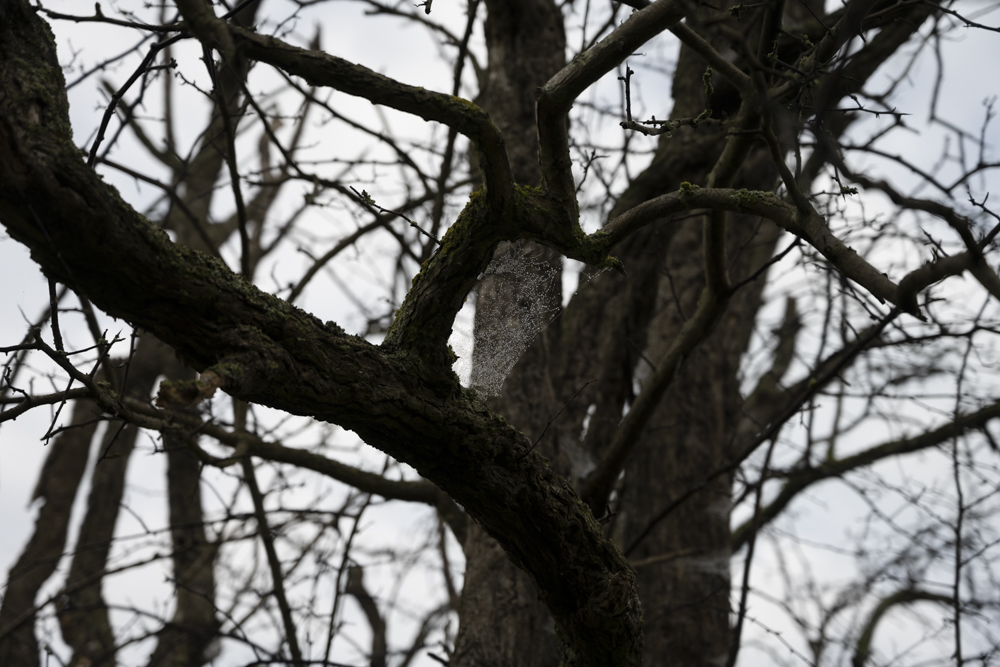
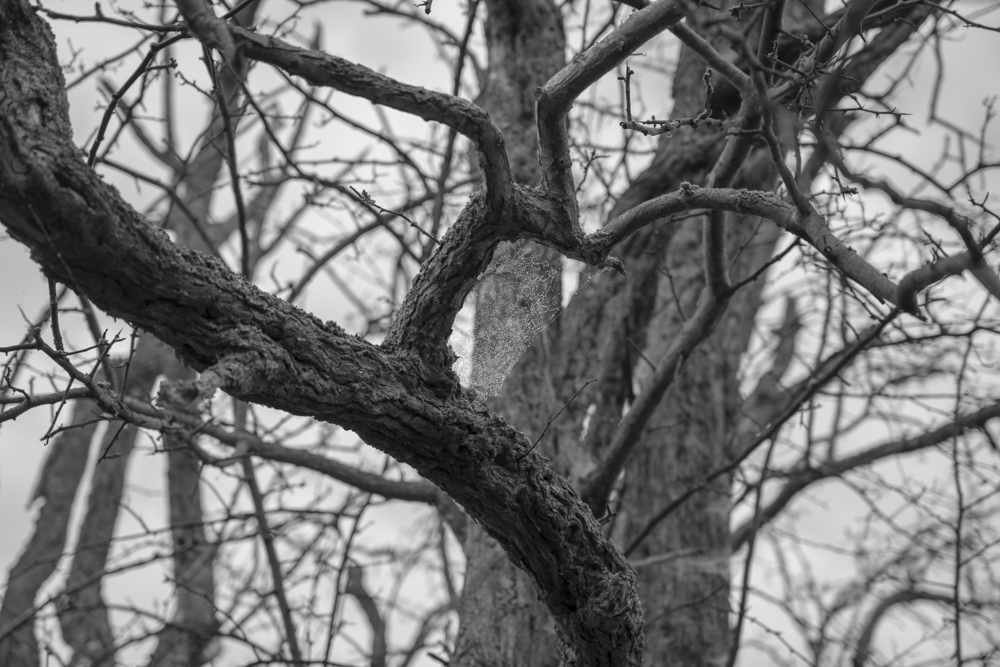
When looking closer at this tree, I noticed a spider’s web coated in water droplets. Evidence of the insects who rely on the hawthorns within Bushy Park.
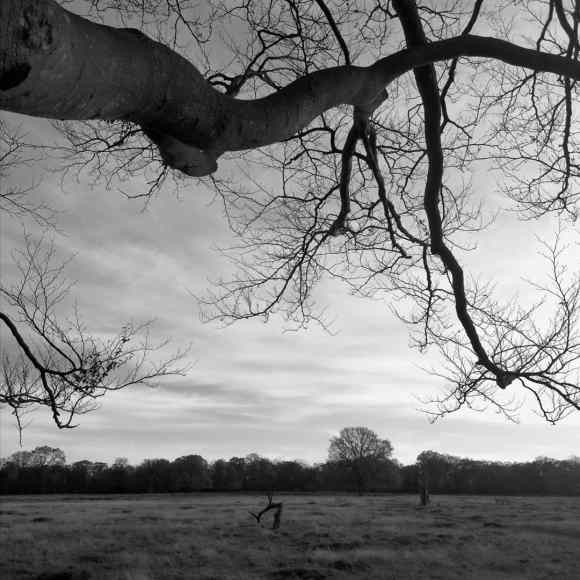
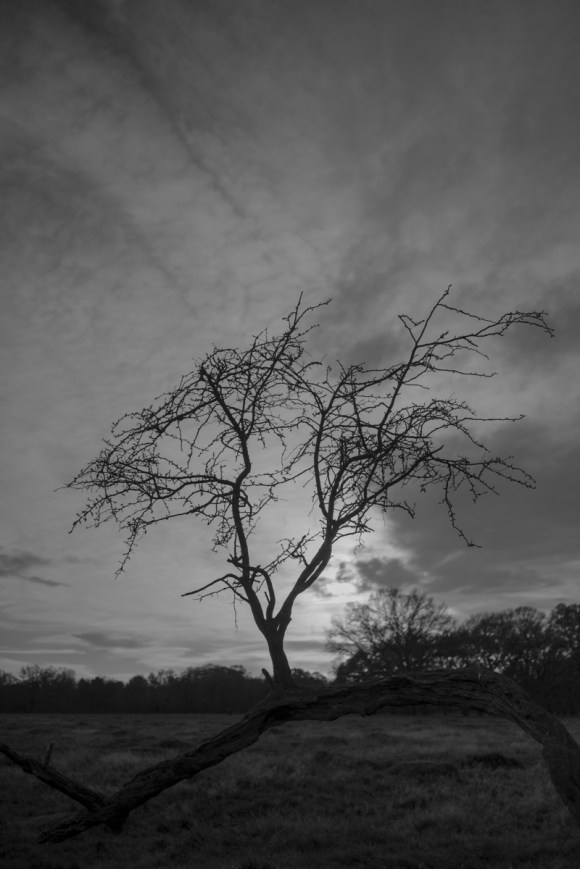
Later that day, I created a selection of Black & White conversions.
At this stage of the project, it was now time to review the images taken so far. I also had to process how my research and the visual resources/artworks could influence my work going forwards.
For Assessment Task 1 of this module, I had to produce a Body of Photographic Work submitted in an appropriate form. For example, a portfolio of prints, an installation, a projection or otherwise. This had to be accompanied by an Artist Statement of 200 words.
The purpose of this Body of Photographic work was to fulfil Learning Outcomes 1 & 2. This was to:
Plan, develop, research, and document an extended body of experimental work.
Acquire and apply appropriate technical skills as defined by my photographic practice.
This is a PDF of the document that I submitted on 9 June 2020:
A requirement of Assessment Task 1 was to write an Artist Statement of 200 words. This was to accompany the Body of Photographic Work.
The following is the submitted Artist Statement:
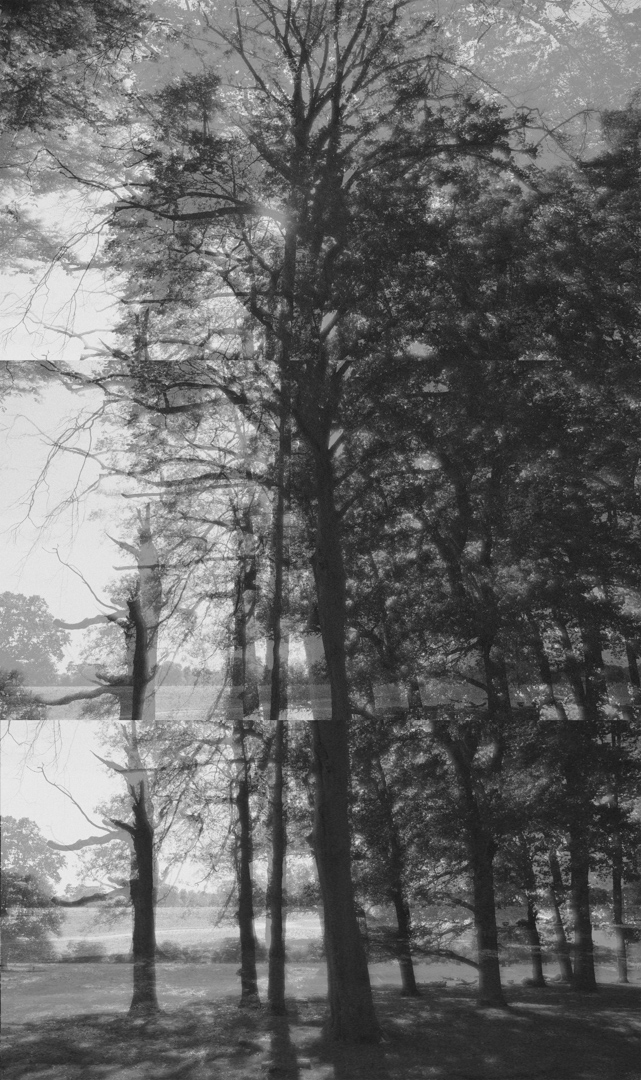
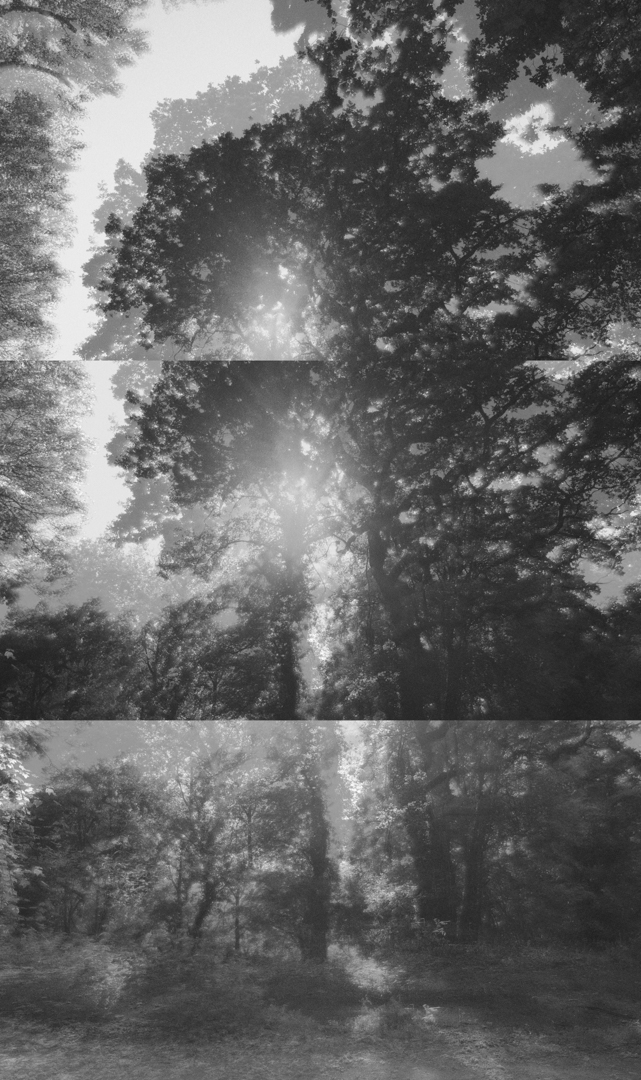
In a time of self-isolation and social distancing, Moments of Eternity encapsulates the disconnected connections between individuals. As with trees, there is an invisible network of communication that enables society to continue working together. These ethereal and surreal images also signify how the ‘normal’ has shifted and viewed in a different way. They also convey the uncertainty of what the new ‘normal’ will be.
Captured between 29 April and 21 May 2020, the series was created from photographs of trees during my walks in Bushy Park. This was inspired by carrying out the government’s instruction of taking outdoor exercise by myself each day. I could combine my daily stroll with photography. I also realised the importance the park played in relation to my mental and physical health. Bushy Park had been my place of refuge several times over the past five years. I had rediscovered this beautiful and ever-changing location and able to reconnect with nature.
Unable to access and use analogue photographic equipment and facilities, I made use of the digital technology available to me. By emulating and combining two analogue printing techniques, I created images that could not be reproduced in a darkroom.
For Assessment Task 2 of this module, I had to produce a formal and critically reflective Research Dossier of 3-4,000 words that supports my Body of Photographic Work.
This was to include:
Documentation and reflective critical evaluation of the creative process undertaken during the module.
A critical analysis of a set of visual references that demonstrate an appropriate context for the Body of Photographic Work.
A critical analysis of a set of historical and theoretical references that support the development of the Body of Photographic Work.
A bibliography and list of research resources.
The purpose of the document was to fulfil Learning Outcomes 3 & 4 and that I could demonstrate:
a clear understanding of the ideas, issues, and different visual contexts underpinning my own photographic practice.
a critical awareness of historical and contemporary debates around research-based photographic practice.
This is a PDF of the document that I submitted on 9 June 2020:




 Jennie Meadows MA Photography