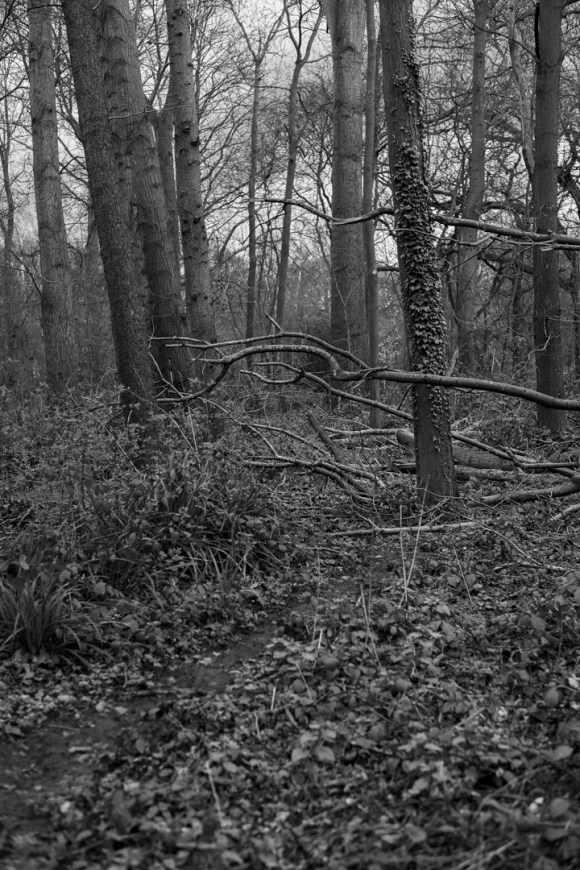
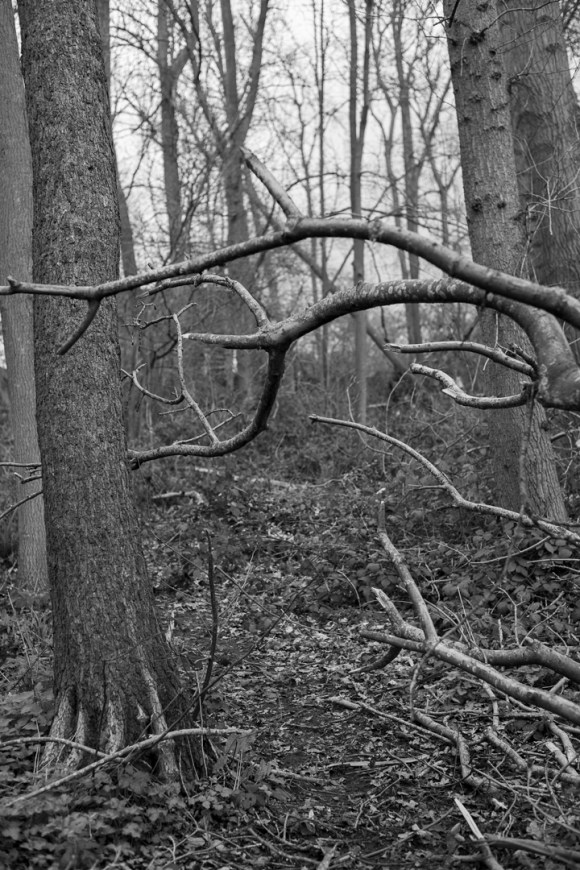
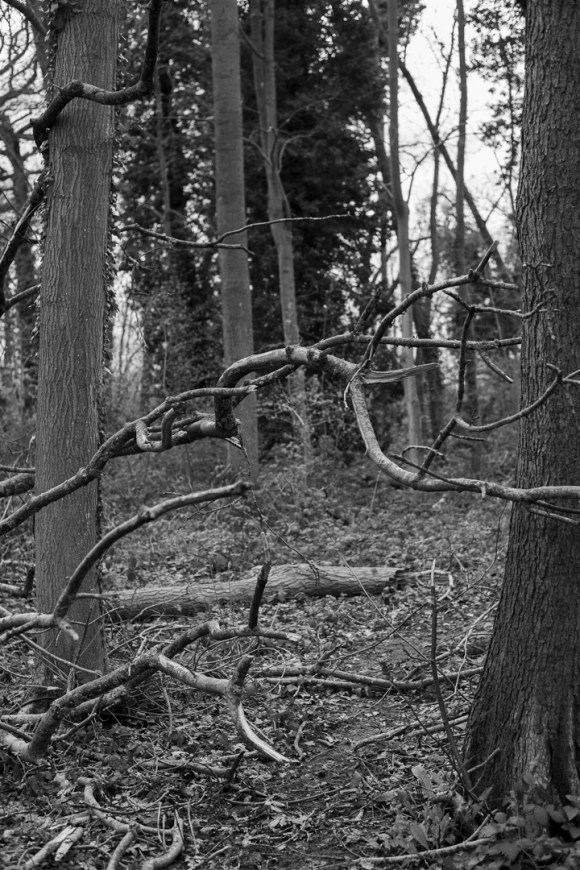
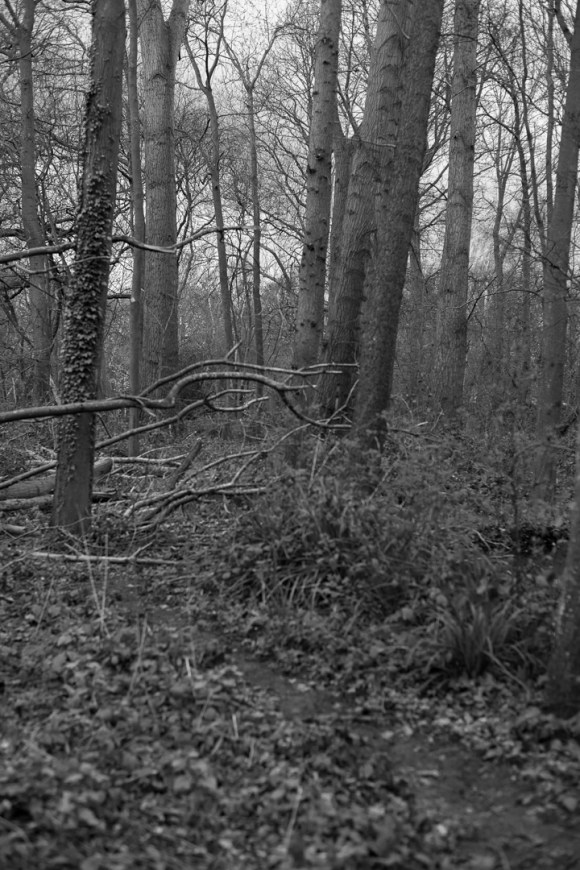
After my trip to the park on 29 April, I decided to try a different area in the park on Sunday 3 May. The location I chose to visit was between Hampton Wick Gate and Teddington Gate. I had to get to Hampton Wick that day in order to return a parcel so I thought it a good way to combine both tasks. My plan was to walk via the street to this destination then return through the park.
Unfortunately, by the time I arrived at the parcel drop off point, I had missed the cut-off time. This meant I had to carry an additional item with me, so it would make it slightly more awkward to manage my equipment. I had recently sourced and bought a suitable backpack that would make it easier and much more comfortable to walk with and carry my camera. Having to hold this bag was a small, but a significant issue that would have to be worked around. There was also the potential for me to put it down while I was taking photos and totally forgetting about it.
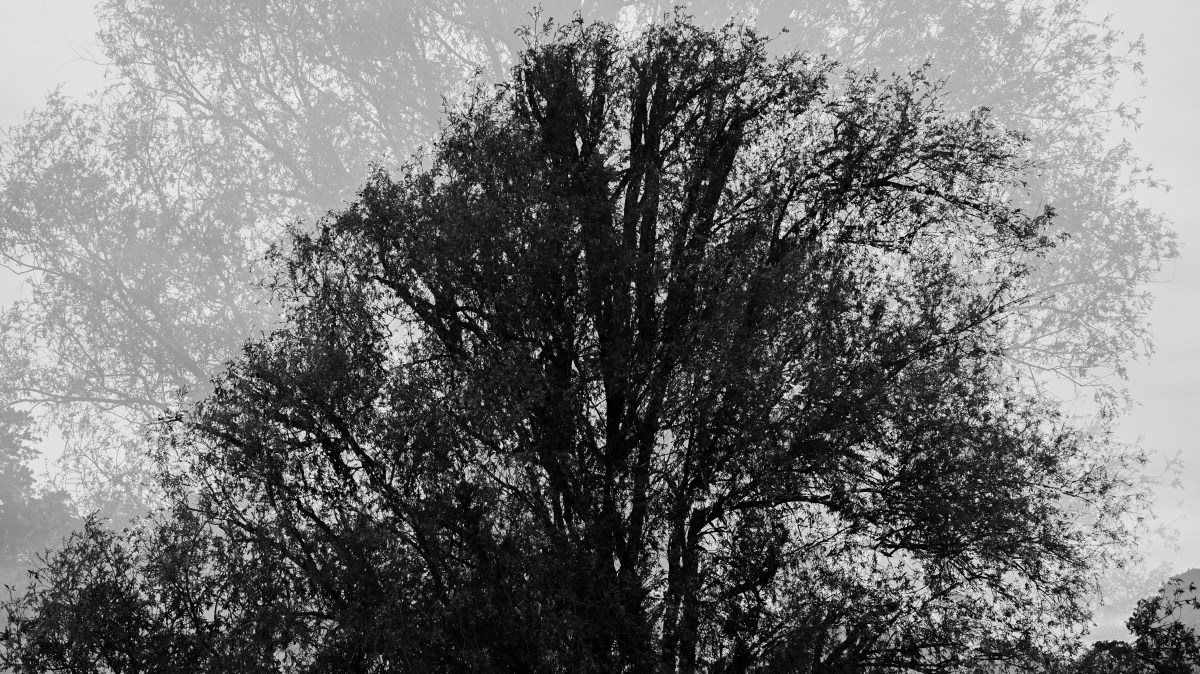
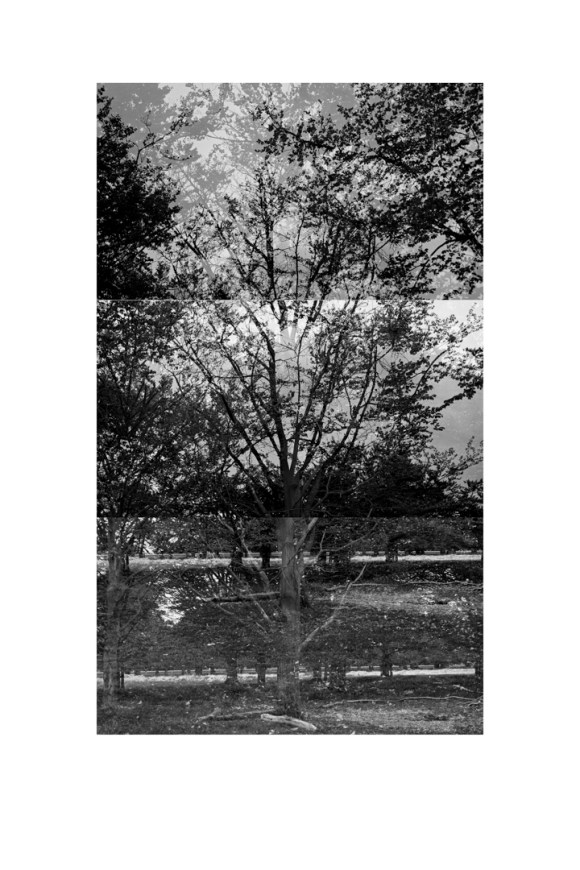
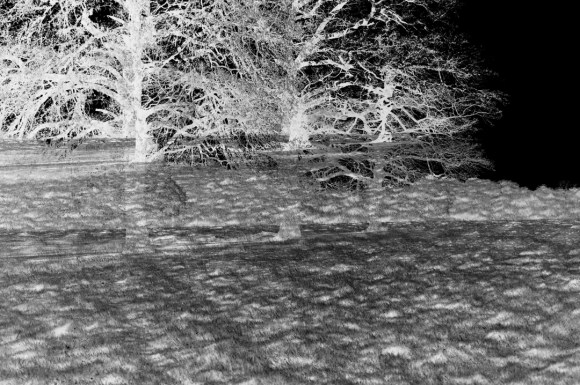
There were two other challenges on this day. Firstly, the light was very dull and flat. Secondly, despite the dreary conditions, the park was very busy, This meant taking the initial base and horizon line shot without people was almost impossible. I also wasn’t able to use the four-angle sets of shots that I tried on 29 April. Nevertheless, it was worth continuing with my plan to see what results could be achieved.
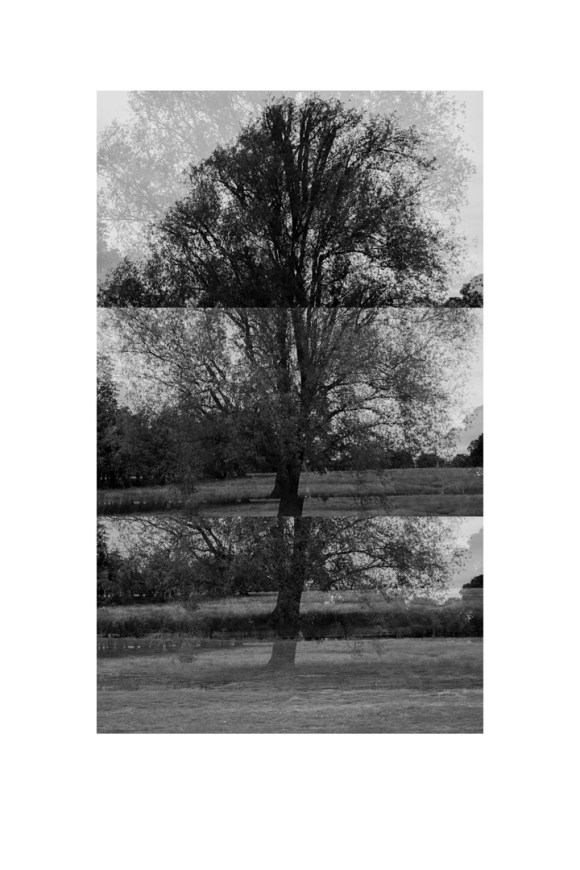
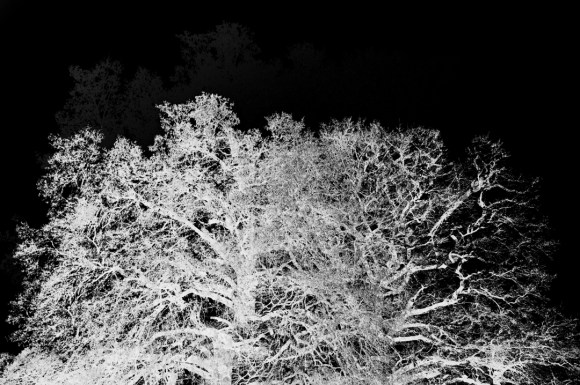
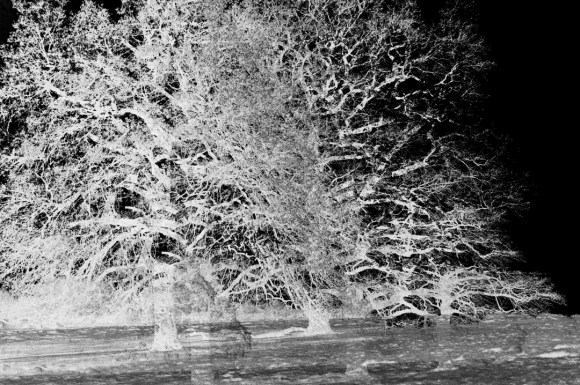
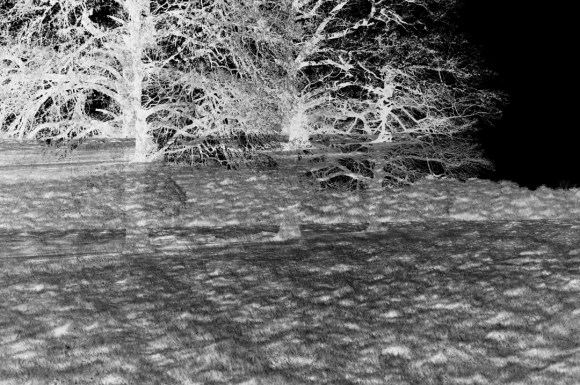
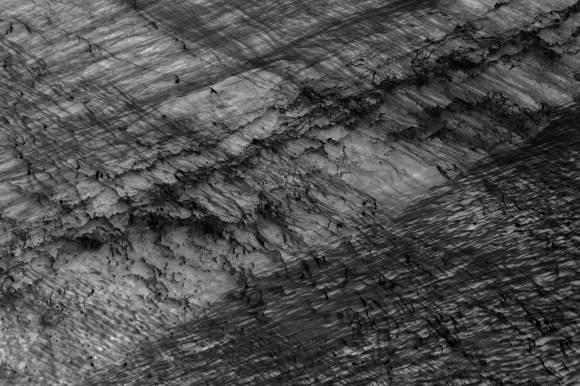
One major aspect was changing the image ratio from 2:3 to 16:9. This was to see how it changed the composition. As this project was like to be shown digitally, I thought it would be interesting to use a screen ratio instead of what I normally use.
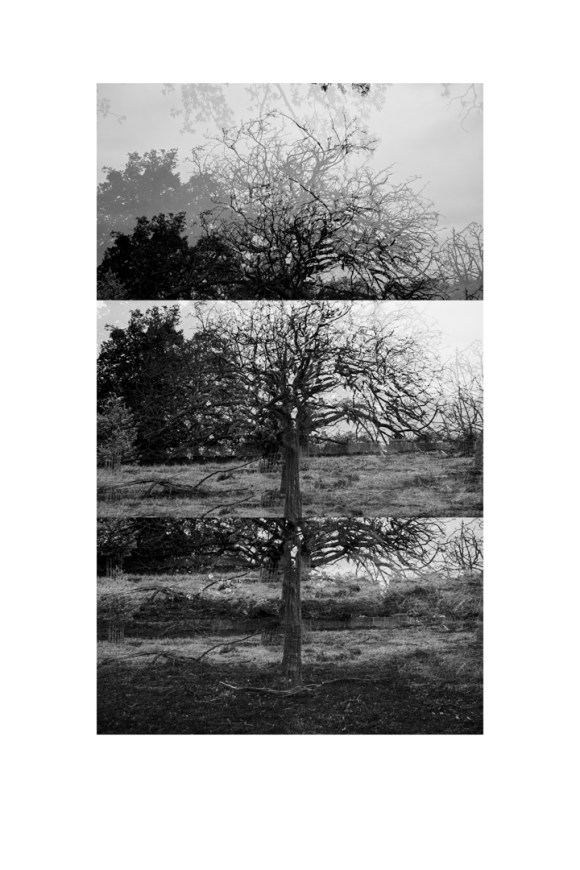
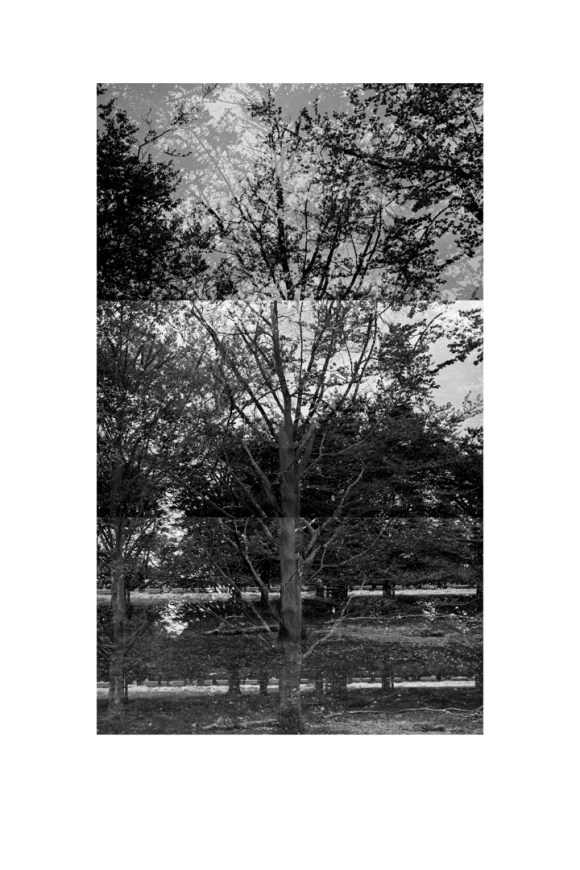
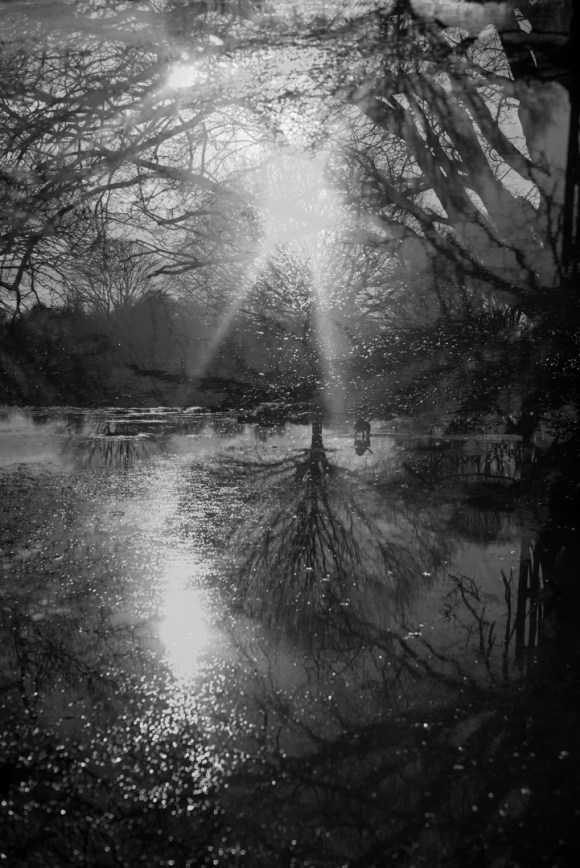
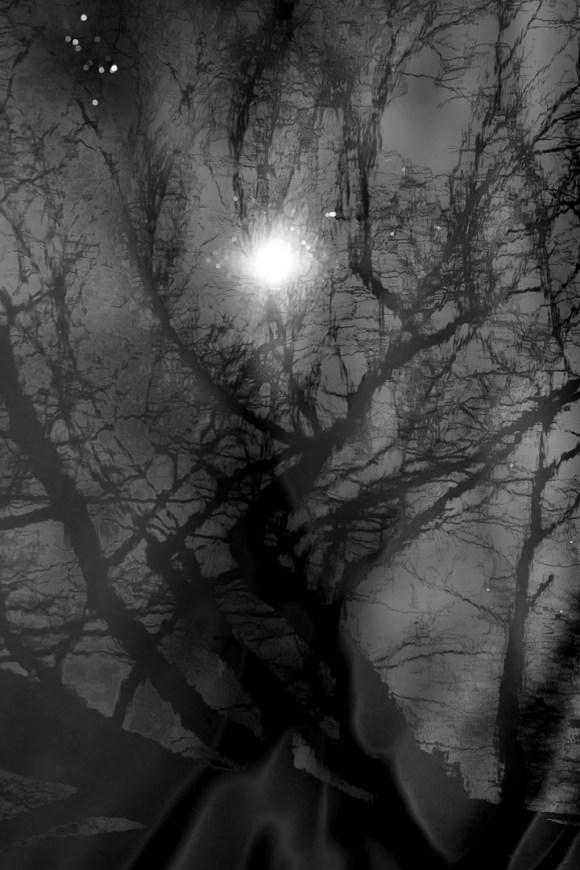
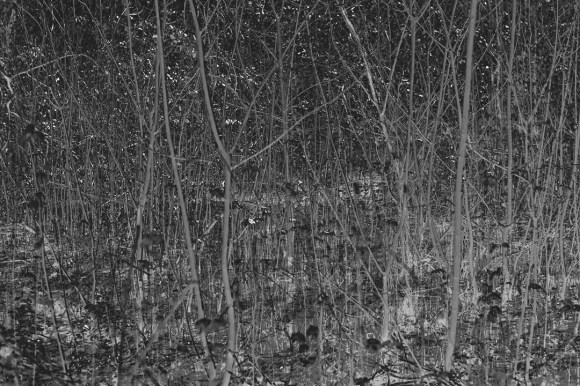
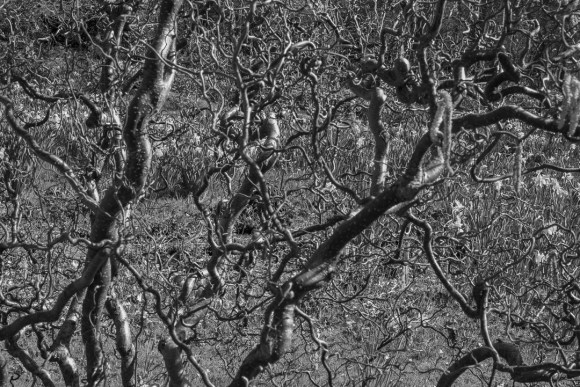
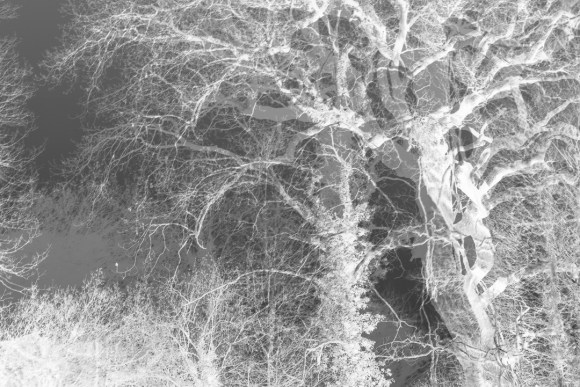
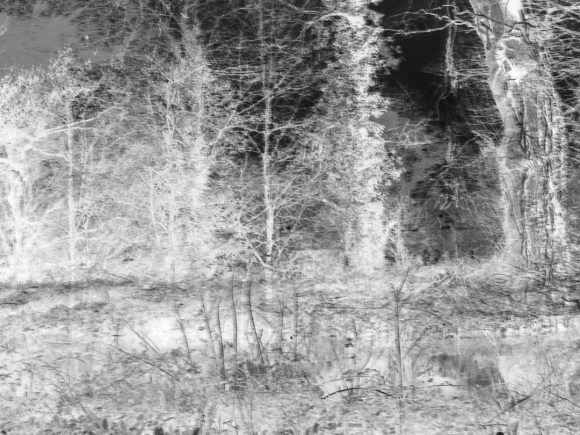
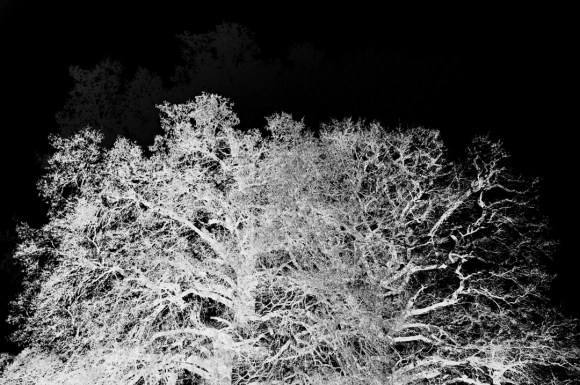
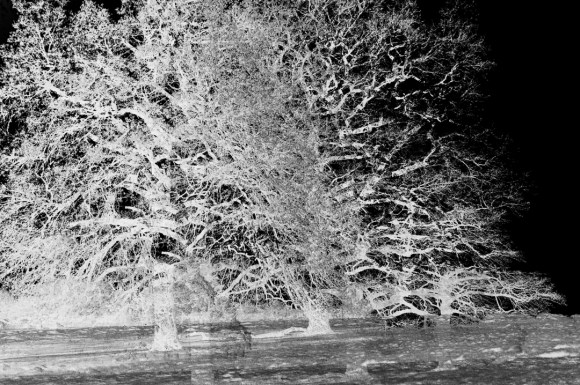
These are the results:
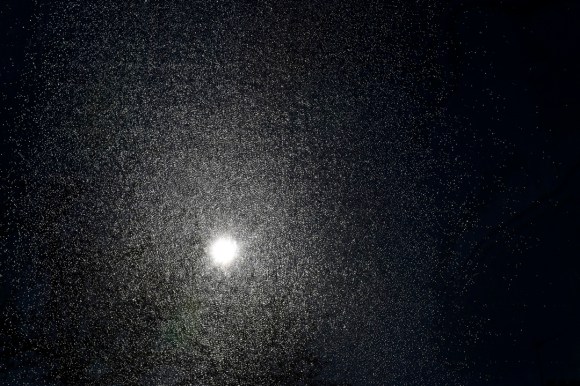
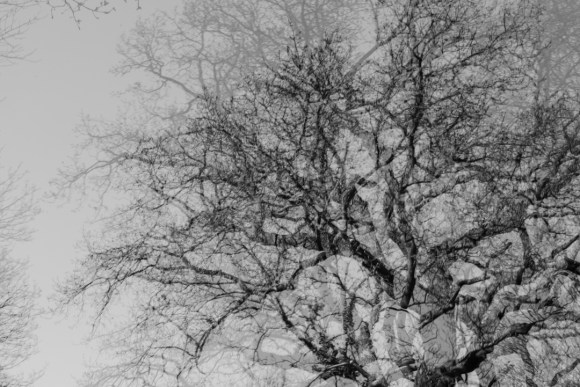
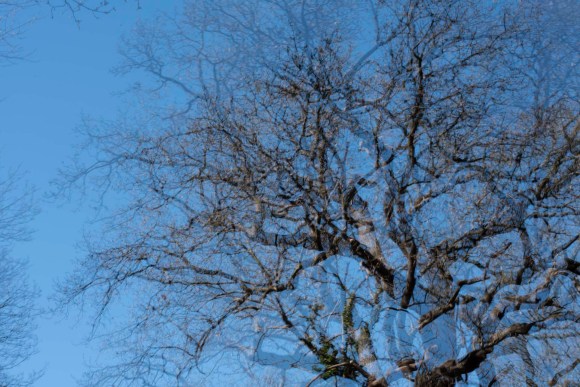
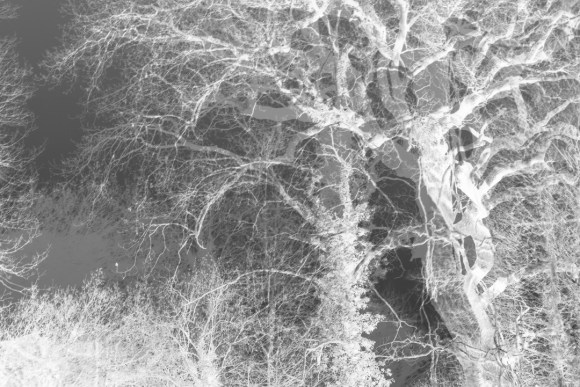
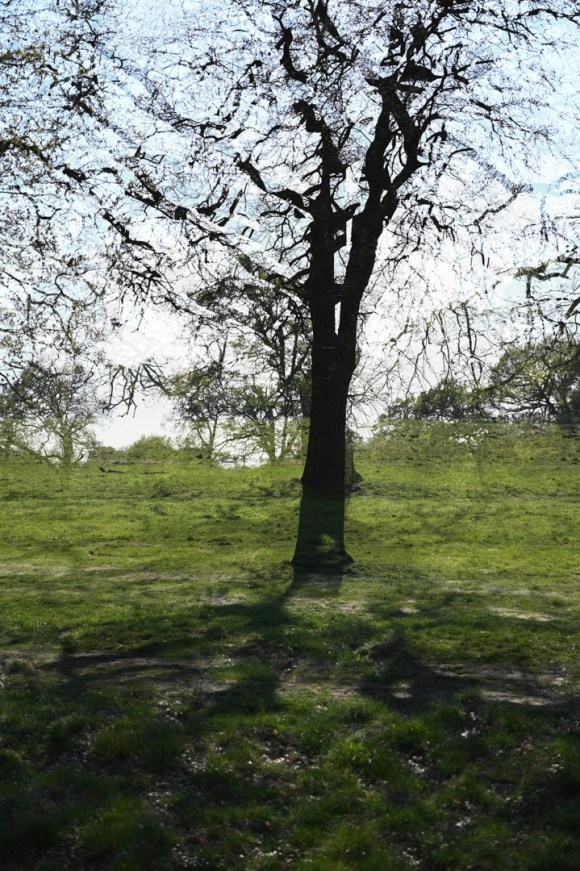
Tree 1 – 3 May 2020
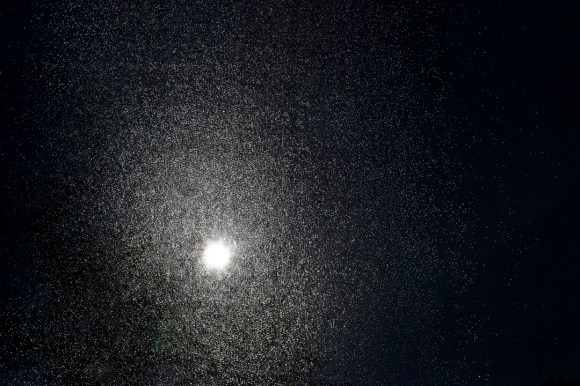
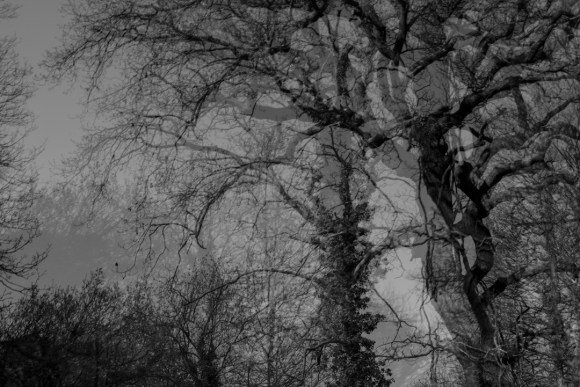
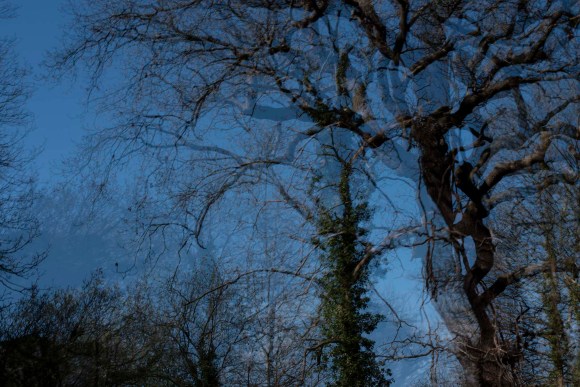
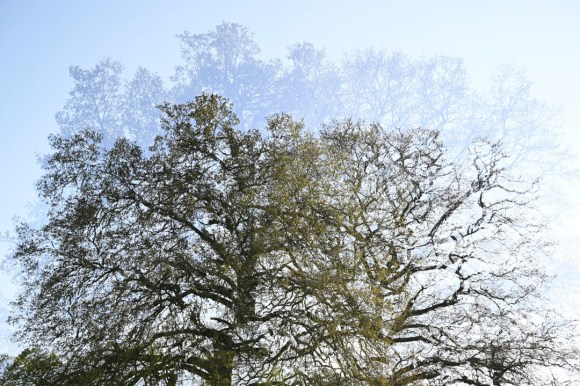
Tree 1a – 3 May 2020
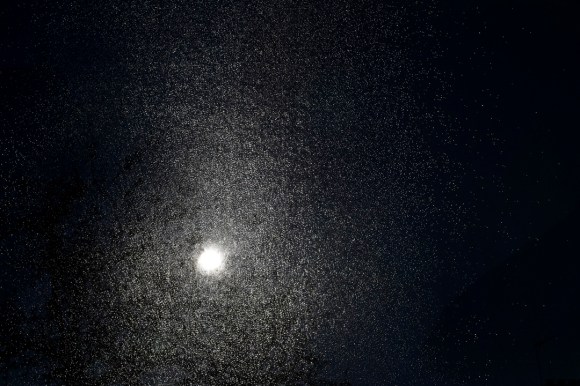
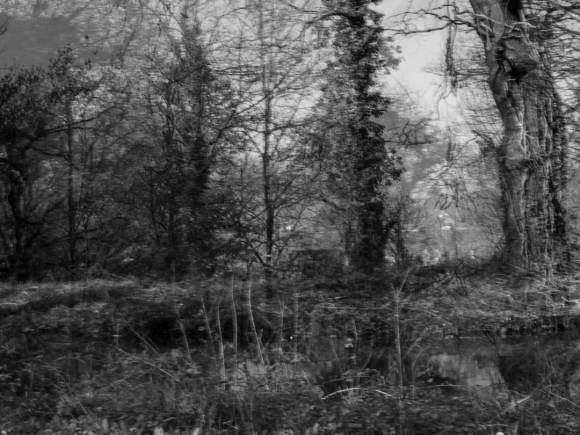
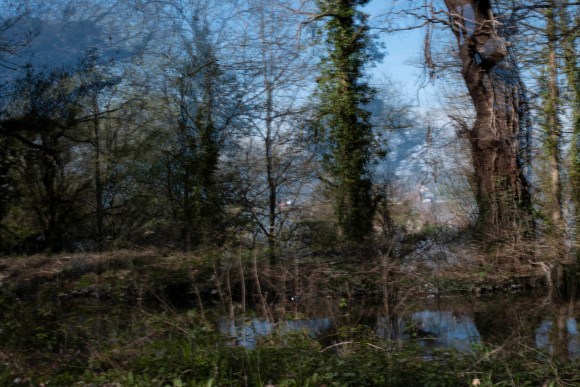
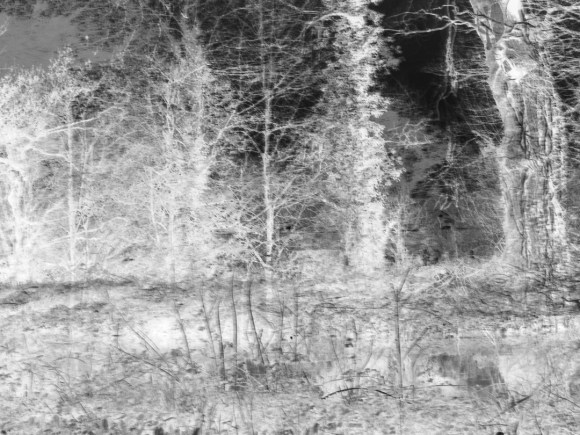
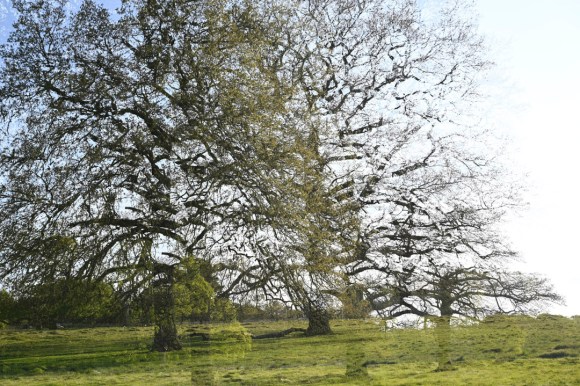
Tree 2 – 3 May 2020
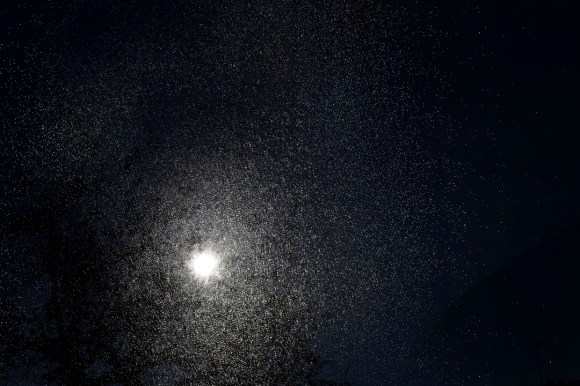
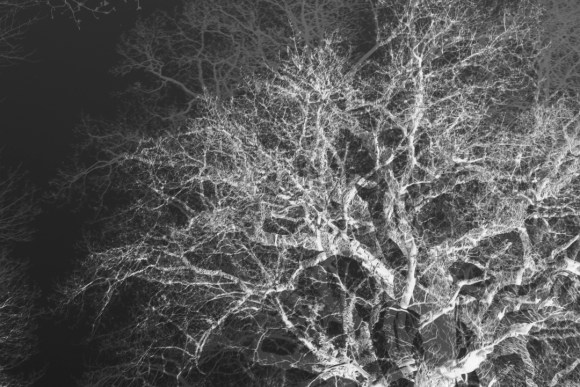
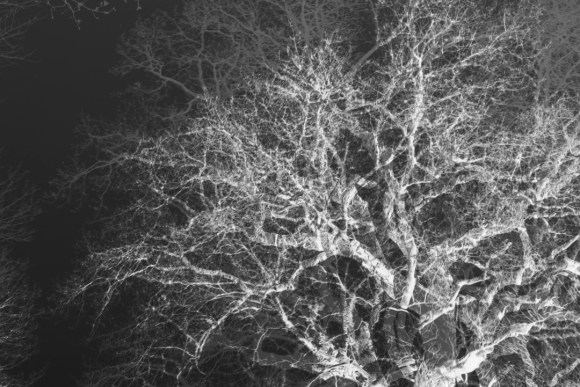
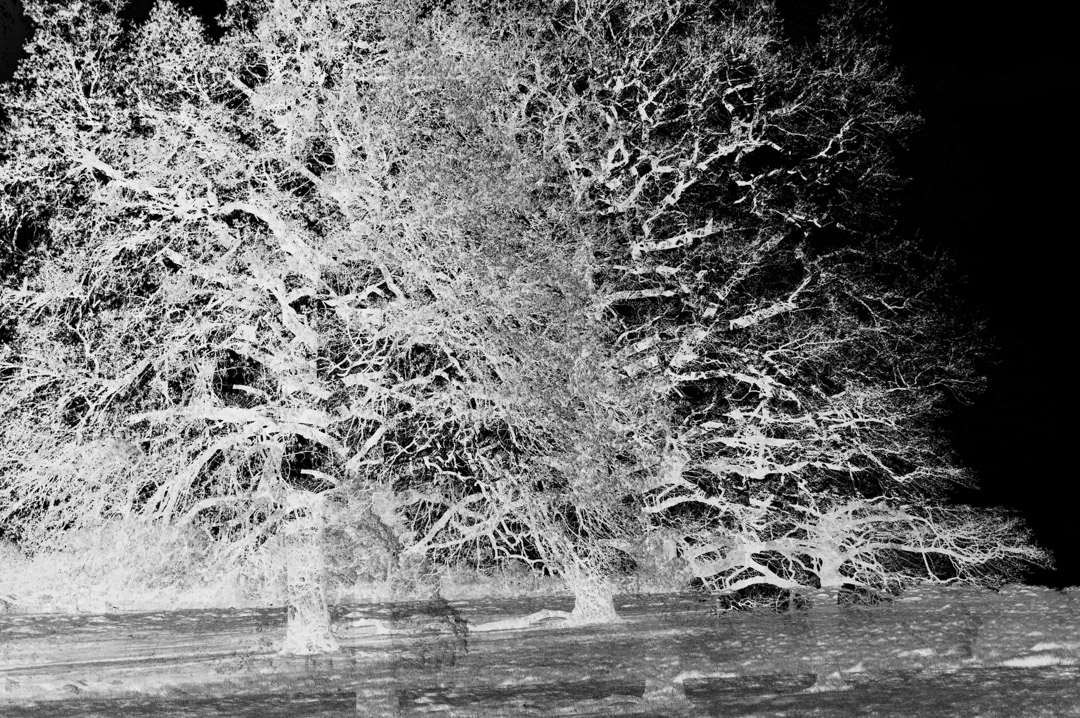
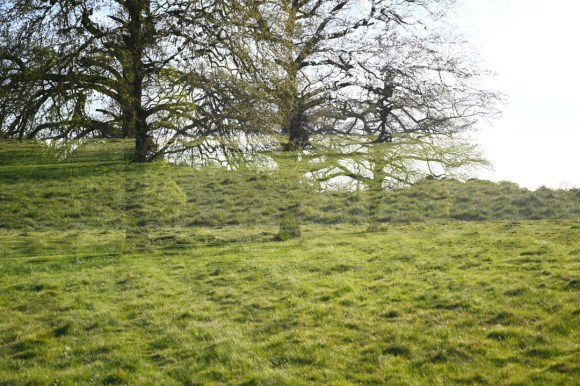
Tree 3 – 3 May 2020
Looking at these after processing, I realised that I Tree 2 and Tree 3 above were of the same tree, but two different sets of shots. One aspect of which to take note.
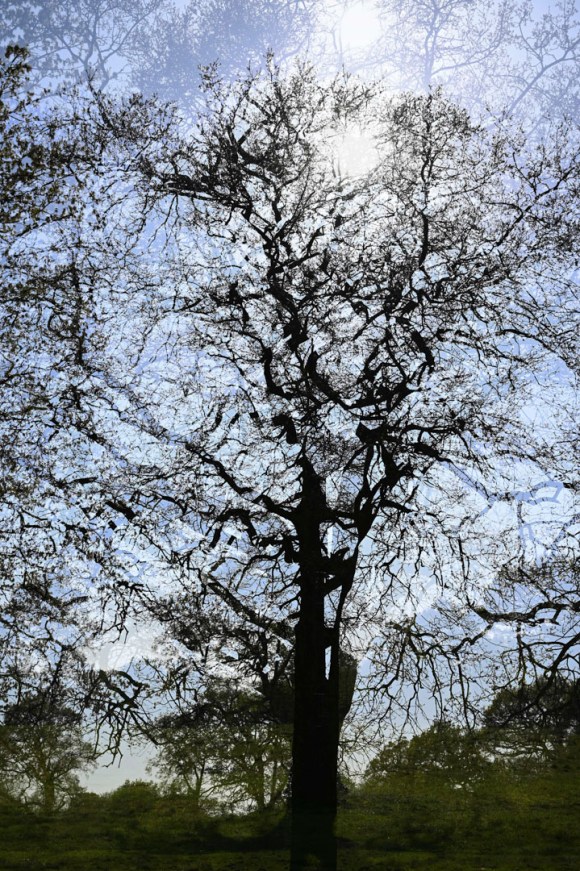
This is how the four complete images look side-by-side:
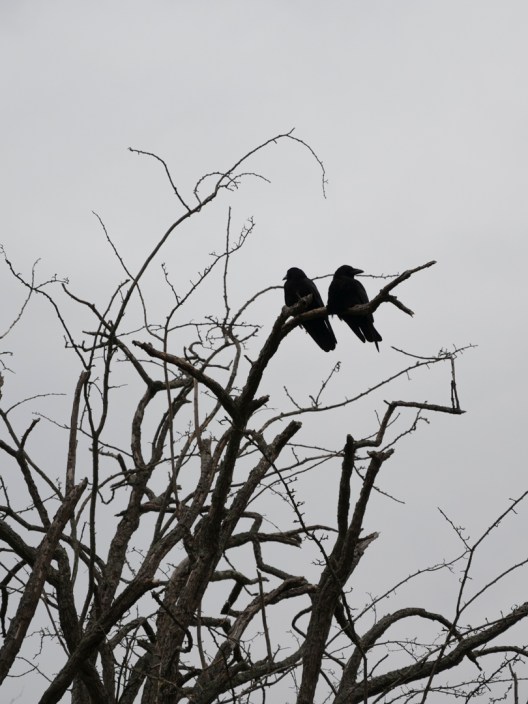
While in the park, I also caught this corvid couple.
Currently being written in preparation for 28 April 2020!
A further task for the seminar on 28 April 2020 was to give special emphasis to a reference I had selected, the Among The Trees exhibition. This reference would be then discussed among the group during the seminar with regards to my project.
For this task, I had to choose between two options to complete it. The choice was between conducting a short interview/conversation with someone who is in some way connected to this reference and writing a short (400-500 word) reflective review of this exhibition.
This reflective review could also be of resources related to the reference, including:
gallery talks
interviews
an article
online conversations/talks/events
For this task, I chose the latter. As I wasn’t able to visit this in person, I used the available online resources to write the following. Fortunately, on the website was a virtual tour of the exhibition presented and narrated by Ralph Rugof – Director, Hayward Gallery.
During this virtual tour, Rugof explains how the interlacing network of branches
The interlacing network of branches,
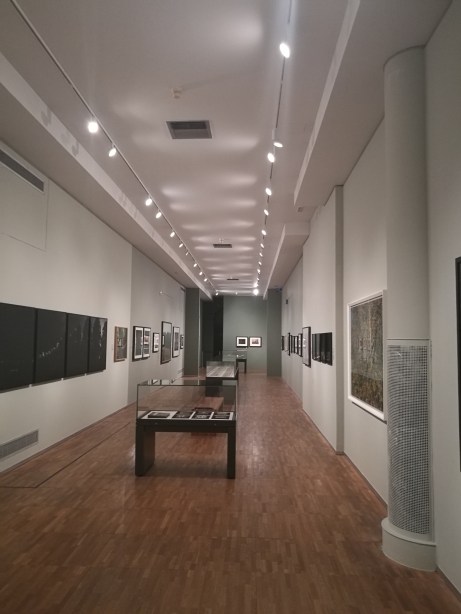
Among The Trees was held in the Hayward Gallery at the Southbank Centre in London from 4 March to 17 May 2020. It was one of the exhibitions that I had scheduled to visit, but this was now impossible due to the government restrictions due to the COVID-19 pandemic.
The overarching concept of this exhibition was to explore humanity’s relationship with trees and forests. According to the exhibition’s website page, Among The Trees:
Transports us around the world – from Colombian rainforests and remote Japanese islands to olive orchards in Israel and a 9,550-year-old spruce in Sweden. By drawing attention to the beauty, scale and complexity of trees and forests, the 38 artists in this exhibition turn our vision of the natural world on its head, inviting us to see it with new eyes.
Whether exploring the way that trees – with lifespans much longer than our own – challenge how we think about time, or revealing how they are intimately entangled with human affairs, these artists enliven and expand our appreciation of these remarkable organisms.
The artists whose work was being exhibited were:
Robert Adams, Eija-Liisa Ahtila, Yto Barrada, Johanna Calle, Gillian Carnegie, Tacita Dean, Peter Doig, Jimmie Durham, Kirsten Everberg, Anya Gallaccio, Simryn Gill, Rodney Graham, Shi Guowei, Hugh Hayden, Eva Jospin, Kazuo Kadonaga, William Kentridge, Toba Khedoori, Luisa Lambri, Myoung Ho Lee, Zoe Leonard, Robert Longo, Sally Mann, Steve McQueen, Jean-Luc Mylayne, Mariele Neudecker, Virginia Overton, Roxy Paine, Giuseppe Penone, Abel Rodríguez, Ugo Rondinone, George Shaw, Robert Smithson, Jennifer Steinkamp, Thomas Struth, Rachel Sussman, Pascale Marthine Tayou, Jeff Wall.
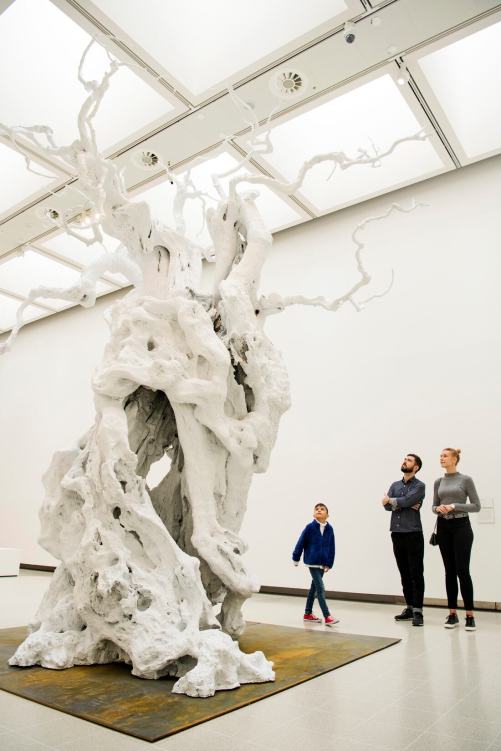
As I’ve written in a previous post, I have already seen the work of Ugo Rondione. This was the sculpture cast from a 2,000-year-old olive tree.
This is how it looks within the gallery setting (taken from the exhibition’s website).
While
4 MAR – 17 MAY 2020
By turns poetic, adventurous and thought-provoking, this group exhibition explores our relationship with trees and forests.
Alongside sculptures and installations, drawings, paintings and photographs, there are artworks that celebrate the soaring scale of trees. These include a monumental sculpture cast from a 2,000-year-old olive tree by Ugo Rondinone; a cinematic portrait of a 30-metre-high spruce tree by Eija-Liisa Ahtila; and a vast forest of trees constructed entirely from cardboard by Eva Jospin.
At a time when the destruction of the world’s forests is accelerating at a record pace, Among the Trees vividly highlights the indispensable role that trees play in our lives and imaginations.
Featured artists
R
The exhibition is kindly supported by the Swiss Arts Council Pro Helvetia.
In this short video, Hayward Gallery Curatorial Assistant Marie-Charlotte Carrier explores one of the themes of our Among the Trees exhibition – the way that trees, with lifespans so much longer than our own, challenge the way that we think about time, and put our human lives in perspective.
Trees have this really special way of making us feel small. They make us realise how short lived we are as a species, compared to these giants who have been on this earth for thousands and thousands of years. They create a different sense of time.
The second task I had to complete for the seminar on 28 April was to bring a historical reference within the field of photography/art. Again, this was to assist in discussing the contextualisation of my project and in relation to photographic issues and debates.
Again, I had to present this reference to the group and explain how this historical reference has informed my project so far and have helped propel it forwards.
The historical reference I chose for this task was the Victoria & Albert Museum’s (V&A) exhibition, Into The Woods. This was held at the museum from 18 November 2017 to 22 April 2018 and was the first display of photography after the refurbishment of the gallery dedicated to the medium.
Trees were among the first photographic subjects collected by the V&A as a learning resource for artists and designers. The museum has acquired, and continues to do so, ‘photographs of trees in various contexts: within landscapes and forests, as lone subjects, in relationship to humans, in rural and urban settings, and as symbols of cultural significance.’ (V&A · Into the Woods – about the display, 2020)
The display explored the diverse representation of trees in photography, with works by 40 photographers, including Paul Strand, Robert Adams and Henri Cartier-Bresson. There were many images that were just sublime in their portrayal of trees. Many of these I realise now are pertinent to my current project. The following is a combination of the notes I made after visiting this exhibition in 2017 and my new observations.
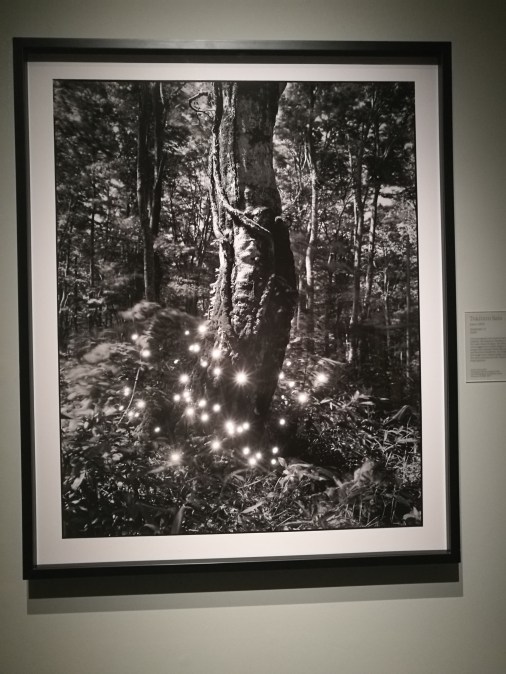
Tokihiro Sato (B. 1957) – Hakkoda #2 (2009)
The first work I encountered when entering the gallery was a piece by Japanese photographer Tokihiro Sato.
In this work from 2009, Sato created the bright spots in the image by using a mirror to reflect the sun’s rays back into the camera during a long exposure. Sato’s intention behind this image was to represent the ancient origins of the Japanese people, representing both masculine strength and female sensitivity.’ (Hakkoda #2 | Sato, Tokihiro | V&A Search the Collections, 2020)
Alvin Coburn Langdon (1882 – 1966) – City Hall New York (1912)
This night-time image of an urban tree uses the New York electric street lighting to great effect. With the trees in silhouette against the glow, the lights in the windows beyond are like illuminated leaves. In comparison with Sato’s image above, the use of light within the image again gives the tree an ethereal and magical appearance.
Ansel Adams (1902 – 1984) – Aspens, North Colorado 1958)
For me, this image has both a beautiful simplicity and sublime use of lighting and tones. Having revisited it for this task, it was a prompt to explore this aspect further with my own images. There is a real feeling of delicacy captured and I made a note to apply this deft touch to my own work.
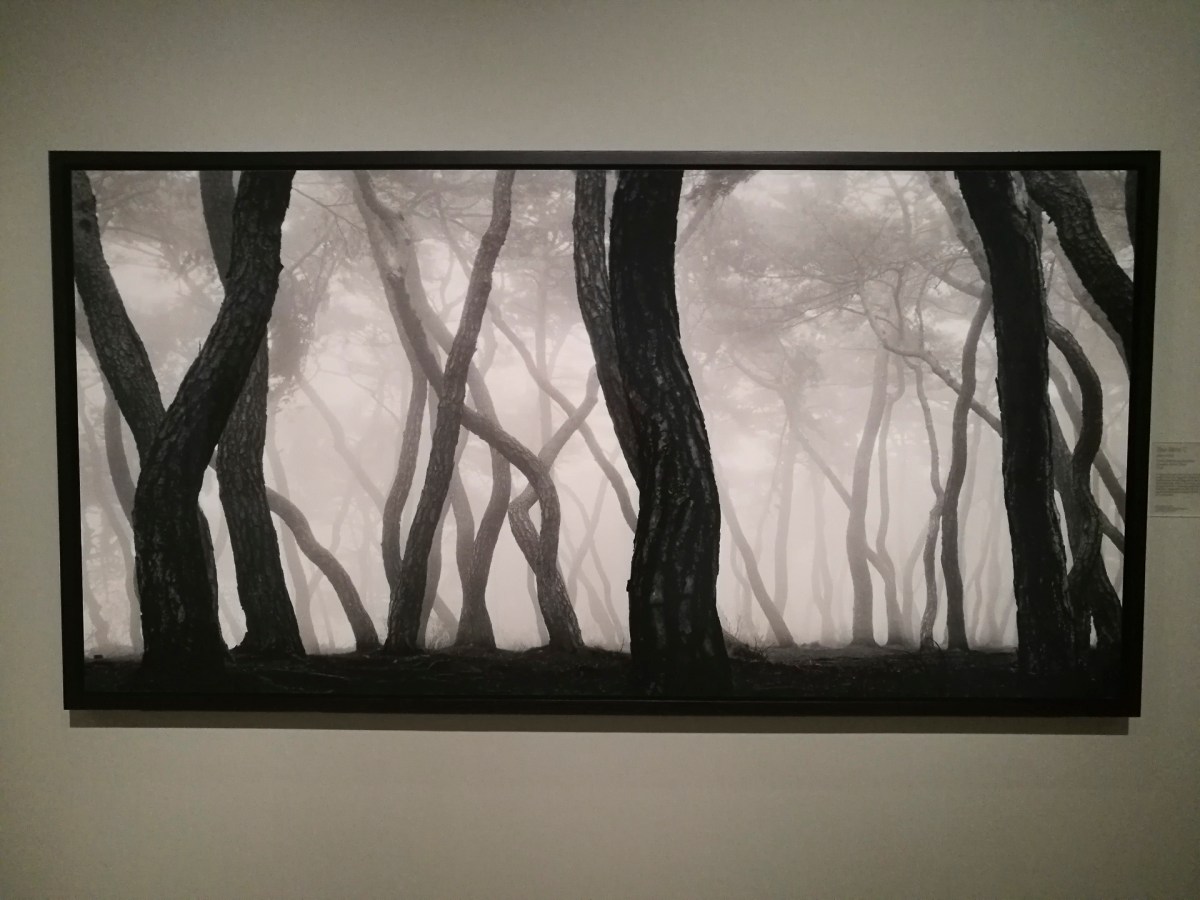
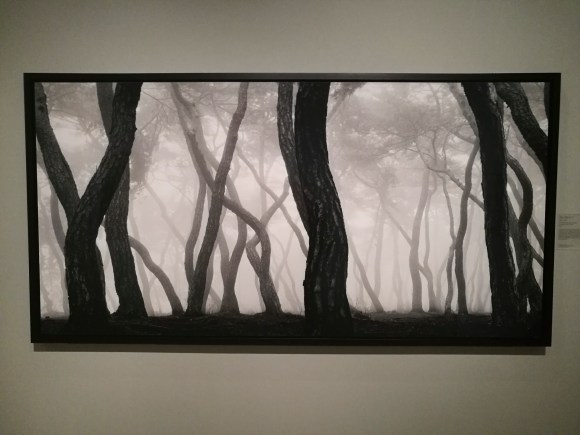
Bae Bien-U (B. 1960) – SNM-012H (2014)
Bien-U’s specific interest in pine forests stems from his quest for a Korean identity as an artist in a post-war, dictatorial period. For him, the pine tree embodies the same qualities that characterise Korean people: ‘eagerness, perseverance through years of conflict, and spirituality’.
This piece is part of Bien-U’s Sonamu’ (Pine Tree) series, which the V&A outlines in the following:
The pine tree is an age-old subject that carries various meanings in Korea. During the Joseon Dynasty (1391-1910), it was associated with literati culture, epitomising dignity, integrity, and longevity. Its trunk was used to build palaces and temples, its branches to decorate the house of a new-born, its needles, bark and pollen to prepare ceremonial dishes, and its ashes to make ink cakes. In the Three Kingdoms period (57BC-668), the pine tree was believed to be a divine being accompanying the soul of the deceased to heaven, or a messenger delivering one’s wishes to the gods. The departed was therefore buried in a pinewood coffin, and pine trees were planted nearby the tomb.
The trees, for me, in Bushy Park have become part of my own existence. I have become aware of starting to recognise particular ‘characters’ These ‘individuals’ may not be as culturally significant as those pines in Korea, but I feel their presence in my own existence.
Benjamin Brecknell Turner (1815-1894) – Causeway, Head of the Lake, Loseley Park (1852-4)
Causeway, Head of the Lake, Loseley Park (1852-4) Negative
Causeway, Head of the Lake, Loseley Park (1852-4) Positive
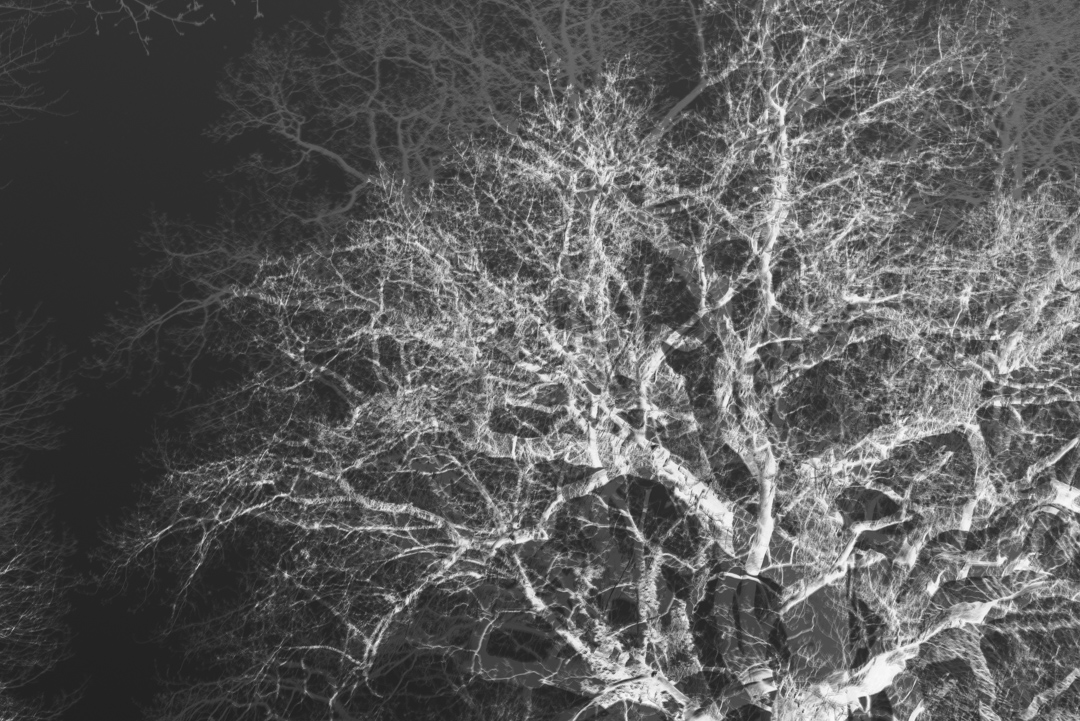
Further images which I realise now were influential my current project were these by Benjamin Brecknell Turner. Turner began practising photography in 1848 using the ‘calotype’ or paper negative process patented by William Henry Fox Talbot. When I saw Turner’s photographic impression of the Lime Trees in Loseley Park, the negative and its corresponding positive print were shown together. By comparing these two versions of the same science, this reveals the dynamic patterns, including those of the branches. This influence is evident in my own reversal of black and white in my recent images of the trees of Busy Park.
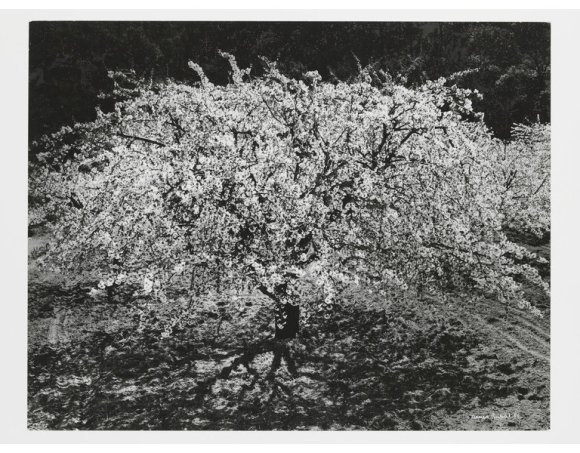
Denis Brihat (B. 1928) – Cherry Tree in Blossom (1985)
Brihat’s capture of this Cherry Tree is an example of this photographer’s intense engagement with nature and an example of his experimentation since the late 1960s with mordançage. This is a photographic process using metal toning and etching techniques that give the original image a shimmering appearance. Again the aspect of the image reacting with environmental light is something that I have been exploring over the last five years.
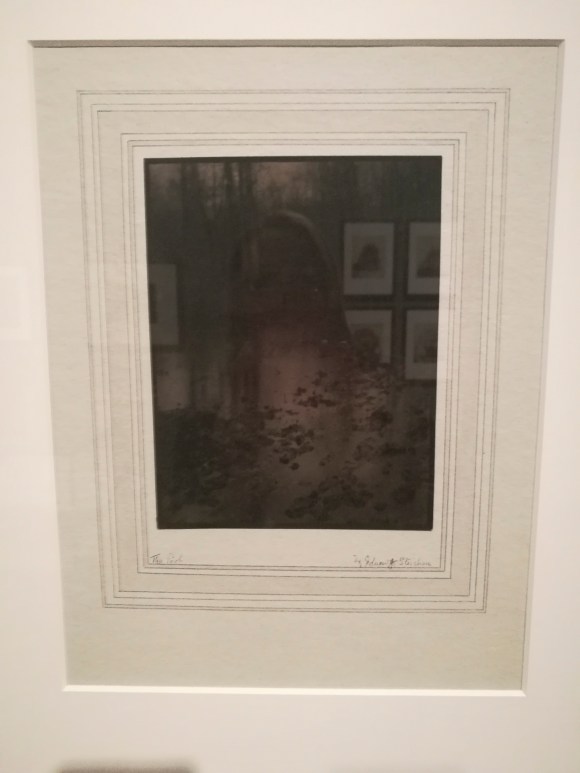
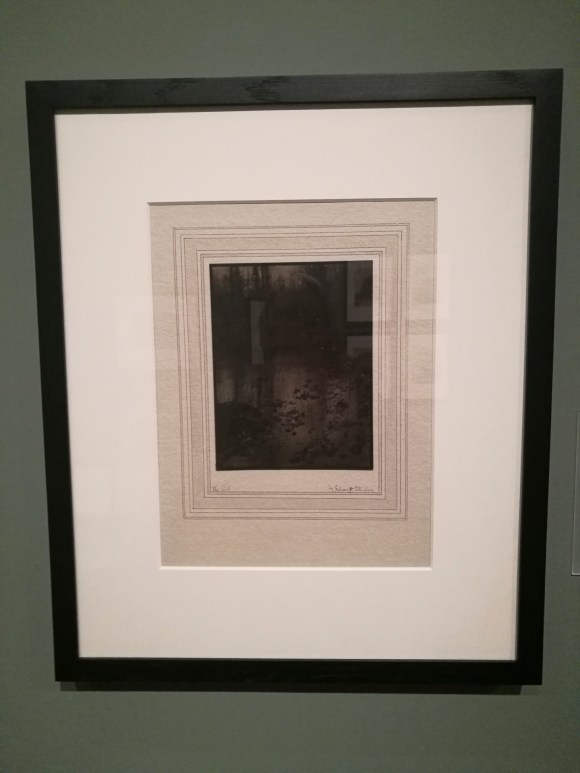
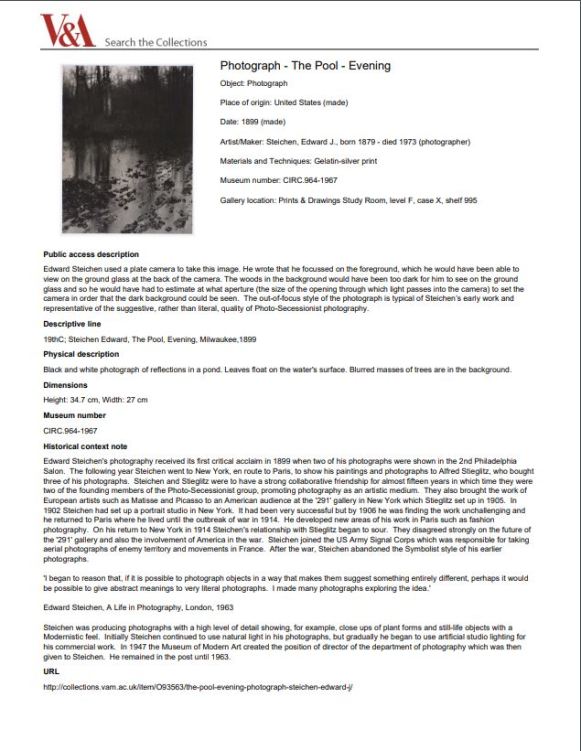
Edward J Steichen (1879- 1973) – The Pool 1899
Edward J Steichen The Pool 1
Edward J Steichen The Pool 2
The plaque accompanying this image in the gallery stated:
With soft focus and fine printing, Steichen was able to transform this muddy woodland scene into a haunting tonal study almost like a musical composition. One version was subtitled ‘A Symphony to a Race and to a Soul’. Twilight and water merge the real world with its darkening reflection.’
According to the additional information for this image provided on the by the V&A website states ‘The out-of-focus style of the photograph is typical of Steichen’s early work and representative of the suggestive, rather than literal, quality of Photo-Secessionist photography.’ What I discovered when researching these images on the V&A website is that each one has a related webpage and PDF outlining all the relevant details. An essential and most-welcome resource.
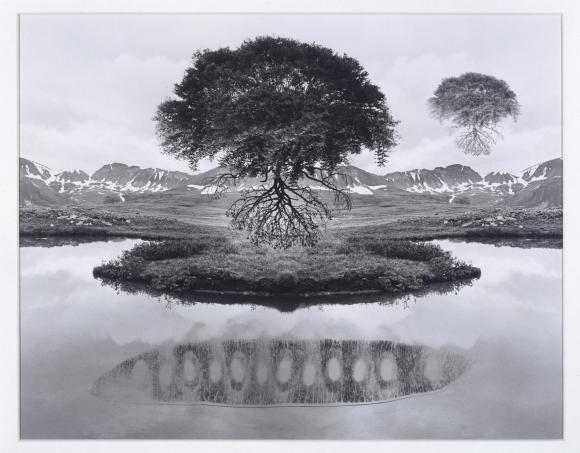
Jerry Uelsmann (B. 1934) – Untitled (1969)
Copyright – Victoria & Albert Museum
Uelsmann created this image in the darkroom using multiple negatives to make his prints. This innovative photographer is notorious for his surreal compositions and fantasy scenes that often incorporate trees. This use of multiple exposure exchoes my attempts to achieve a similar effect digitally.
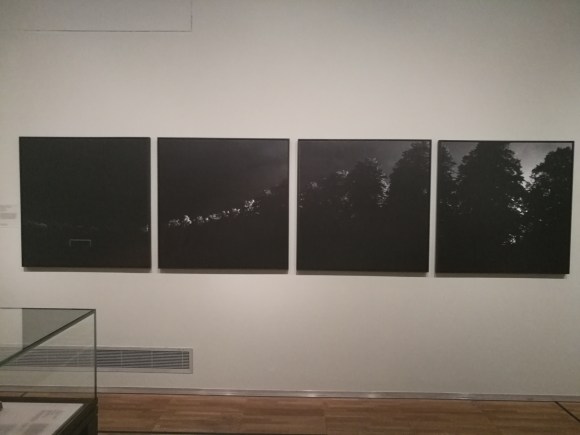
Sophy Rickett (B. 1970) – Playing Fields (1995)
Rickett used a panoramic line of four separate photographs. According to the details on the V&A website:
The focus of the atmospheric nocturnal landscape lies beyond the line of trees, obscured from view. The source of the bright light is unknown and a touch unnerving. An expanse of black that fills the middle ground becomes an illusory, unfathomable space, heavy with the ambiguity of landscapes at night and the imagined sound of wind in the foliage.
When revisiting this series, I saw the similarity with my recent concept of having the selected images from an interval timer sequence and the multiple-exposure shots of the trees.
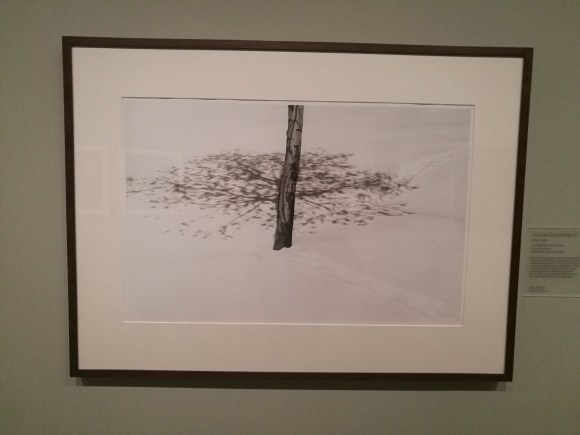
Abbas Kiarostami (1940-2016) – Untitled (1978-2003)
This silver-gelatin print is one of the series that Kiarostami took during long, solitary walks which allowed this filmmaker and photographer to become immersed in nature. According to the additional information on this series, the images:
Reveal the concentrated vision of the artist exploring the repeated motif of trees in snow. Shadows and snowdrifts contribute to the breakdown of a sense of scale and perspective. An atmosphere of solitude and meditation is evoked. The images become the equivalent of emotional states and the trees almost human, echoing the saying of the Islamic mystic Muhyiddin Ibn ‘Arabi (born 1165 – died 1240): ‘the tree is the sister of man’.
This is reminiscent of my own long, solitary walks through Bushy Park which enabled me to become immersed in nature.
What I found reassuring when revisiting this exhibition is that I am not alone with my own tree obsession. These intriguing and multiple subjects are worthy of photographic study and each and every photographer can bring their own particular interpretation of these beautiful beings.
During the scheduled session for 28 April, I had to discuss the contextualisation of my project, both specifically in relation to relevant photographic issues and debates (both contemporary and historical) and in relation to fields outside of photography.
To prepare for this session and the purposes of discussion, I had to complete three tasks. This involved bringing a triple set of references that I felt was integral to my own work.
The first of these references had to be a contemporary one within the field of photography/art. For this task, I chose the exhibition, Among The Trees. This was being shown at the Hayward Gallery at the Southbank Centre, London from 4 March to 17 May 2020.
Unfortunately, I was unable to go to the exhibition itself while it was on. Fortunately, there was a whole wealth of information on the Southbank Centre’s website that I could refer to. This included virtual tours, interviews with artists, and podcasts. I also ordered the exhibition catalogue and was waiting for it to be delivered at the time of writing this post. The expected arrival date was between 2 and 6 May 2020.
During the session, I had to be prepared to present this contemporary reference to the group. I also had to explain how Among The Trees had informed my project so far and helped to propel it forwards.
A further task was to give special emphasis to one of the three references and I have selected Among The Trees for this purpose. I had two choices in how to do this. The first choice was to conduct a short interview/conversation with someone who is in some way connected to Among The Trees. The second choice was to write a short (400-500 word) reflective review of an exhibition, gallery-talk, interview, film, novel, article, online conversation/talk/event, etc. related to this contemporary reference for the purposes of discussion amongst the group.
I chose the latter option, the result of which can be read here:
With a large number of images captured and a strong concept in place, it was time to get some of these printed. Having checked online, I was relieved to see that my ‘go-to’ print bureau, DS Colour Labs, was taking orders. This bureau is my first choice when I need a batch of test prints. The prices are very reasonable, the prints are of a professional standard and they have a swift turnaround.
On DS Colour Labs’ website, they stated that they had closed their retail store and production unit on 24 March due to the current government restrictions. They had to have some time to discuss how/if they could continue to operate safely within the government guidelines, while still providing a service to their customers. Fortunately, they made the decision to reopen their production facility on Thursday 26 March with limited operating hours. It was reassuring to know that the safety of their staff and the photographic community is paramount.
DS Colour Labs were following official advice and they were taking every necessary precaution. These measures included operating as a one/two-person team (Managing Director and Production Manager) to ensure social distancing, not using public transport to travel to and from the workplace and keeping strict hygiene practices at all times. As a result, they were able to keep a basic level of production running in the print lab (Standard Photographic Prints up to 18″x12″). Any customer service inquiries were to carried out via email only, which cannot be done remotely.
Reassured that they were keeping safe in this difficult time, I spent 22 April going through images, referring to my blog posts then editing and preparing images to print. I decided to go for 12″ x 8″ lustre C-Type prints – this size is big enough to see details and how images work together. This also helps control costs as they are 65p (inc. VAT) each. I chose lustre as I prefer this finish to the shiny gloss surface.
Having gone through the images, I grouped them in the following formations and either edited the original colour version or converted them to Black & White.
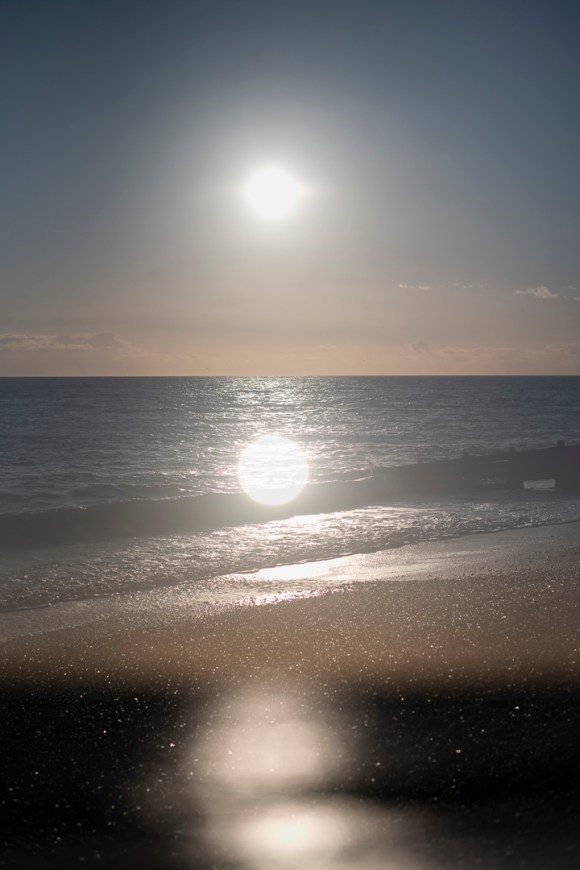
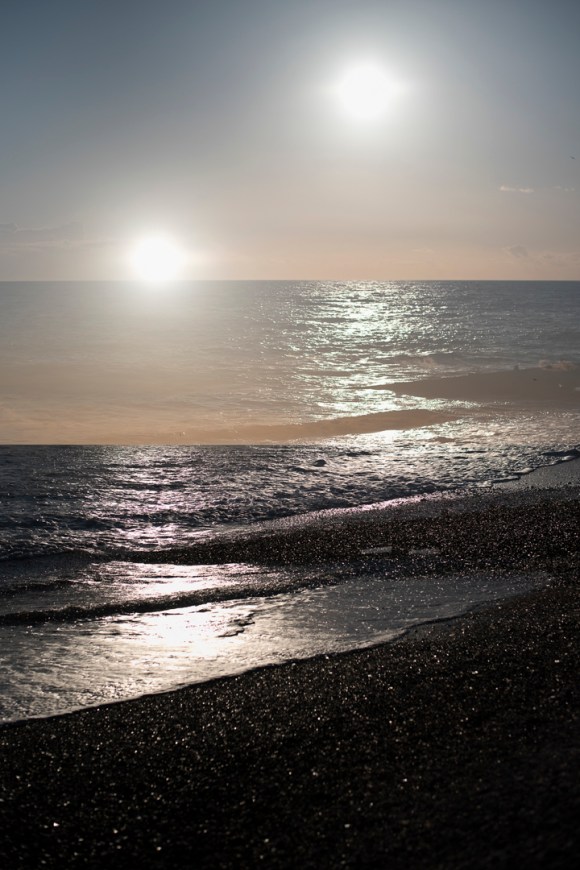
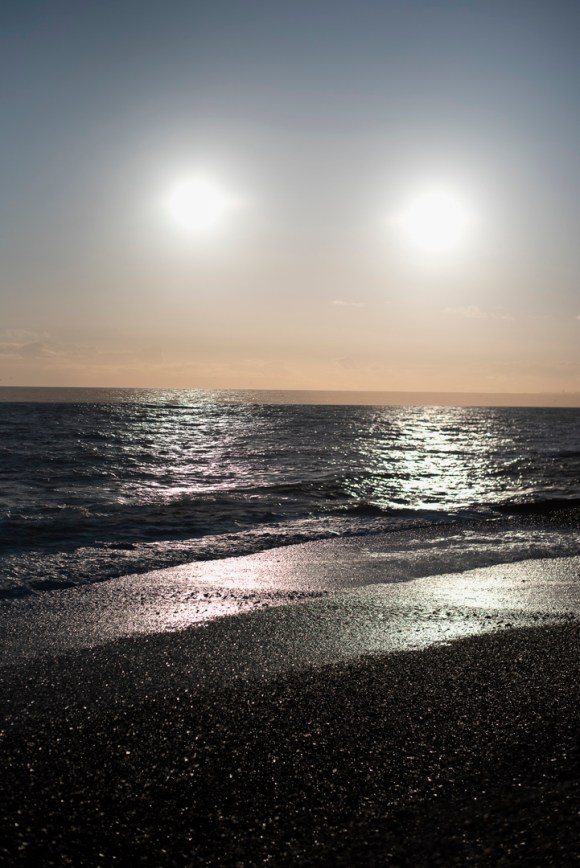
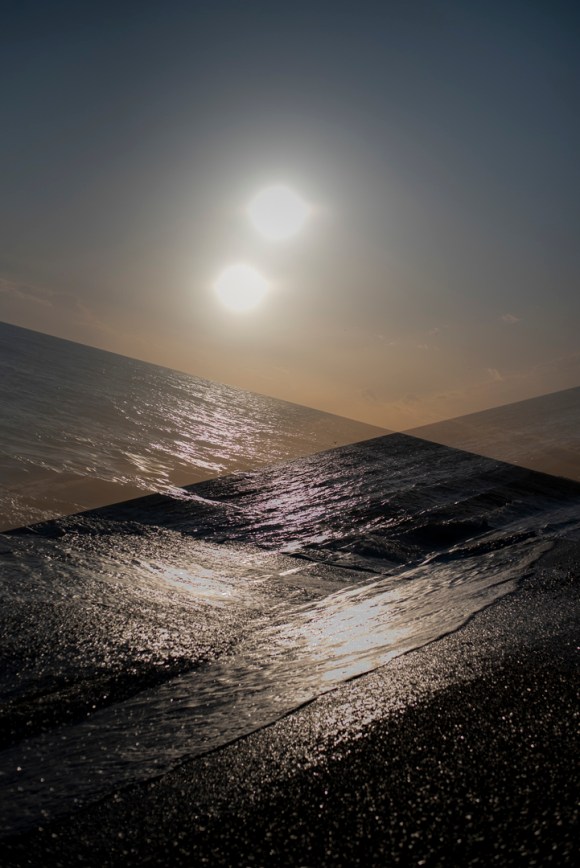
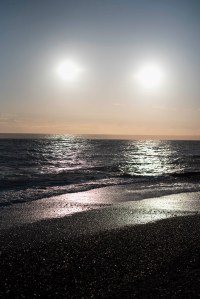
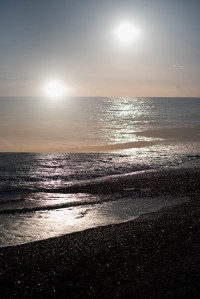
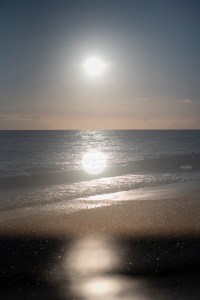
I also made the decision to call the following double-exposure sun images ‘Lost Horizons’. This was due to these being the last images I took of this view in Brighton before lockdown and the massive shift in the world as we knew it. It also resonates as being the unsure future we were experiencing at that time.
I also tried these two images in Black & White.
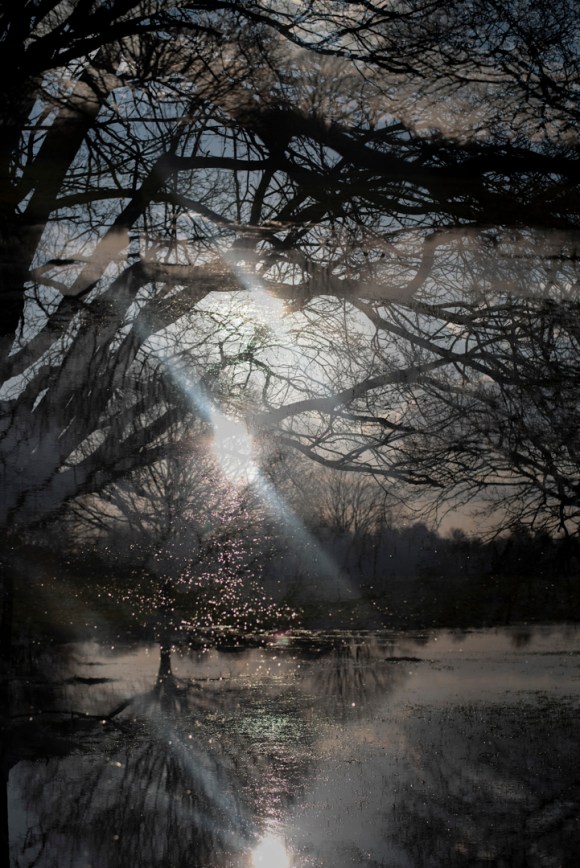
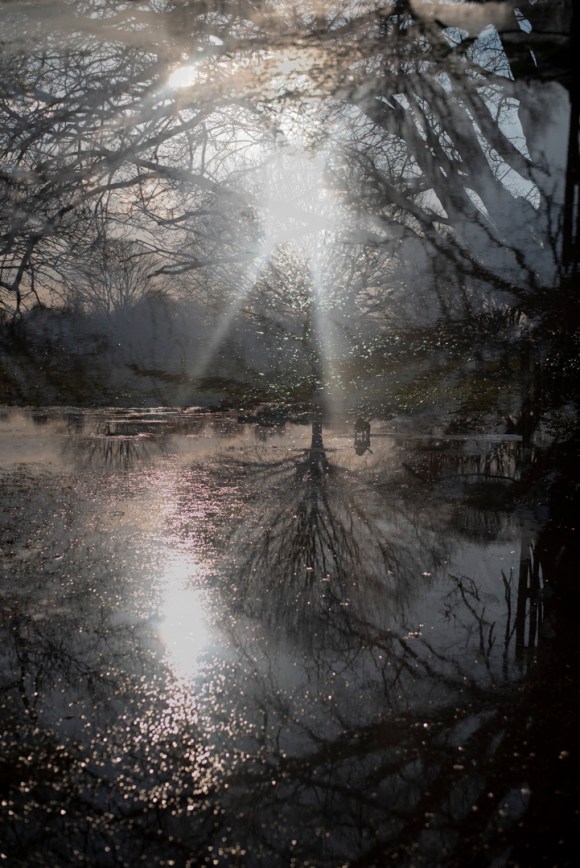
I then chose the following images from Bushy Park taken on 6 March before the lockdown was confirmed. Again, double-exposures with a similar tone to the images above. These would also come under the Lost Horizons category. It was like looking at a world about to change with no certainty to what was actually occurring.
While writing this post, I also noted the following combination.
The next images for print were taken on 16 and 20 March. Still before lockdown, but there was a feeling of the inevitable blocks on the horizon.
These two images would be grouped with this set taken on 20 March. An allegory of a blocked path with no clear direction.
The following images would come under the main title of ‘Moments of Eternity.’ These were taken after the lockdown started on 23 March and represent that experience of feeling that this situation will last forever.
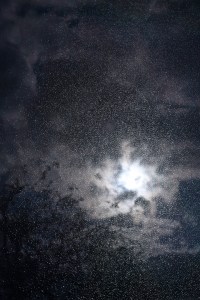
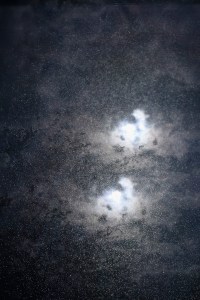
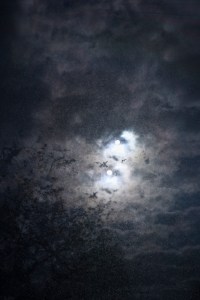
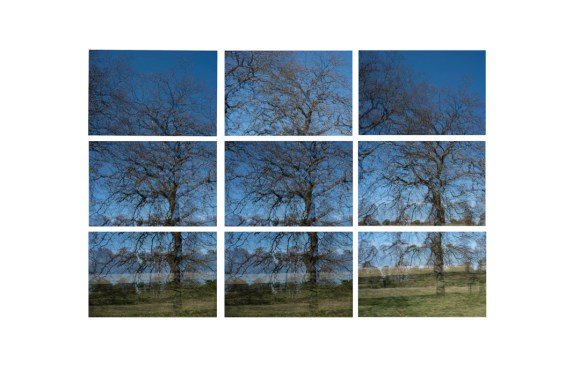
The first set of images under this title were from the interval-timer shoots taken in my garden during my period of self-isolation. My initial intention for these images was to use them as a time-lapse piece. However, since I started experimenting with the grids, I wanted to try using the format with the images from these sessions. I took nine images from each of the sequences. The first one I’ve called ‘Moon’ was a total of 281 shots, so I selected one every 30 images to create this grid.
The second grid is called ‘Tree’, which was a total of 715 shots. As such, the nine images of the grid would be from one every 80 shots.
Having looked at the images set out on this blog post, I wasn’t sure if it would work with the selection I had chosen. I made a note to keep this in mind once I received the prints. One consideration is combining the two sequences together and selecting a sequential grid from the total images.
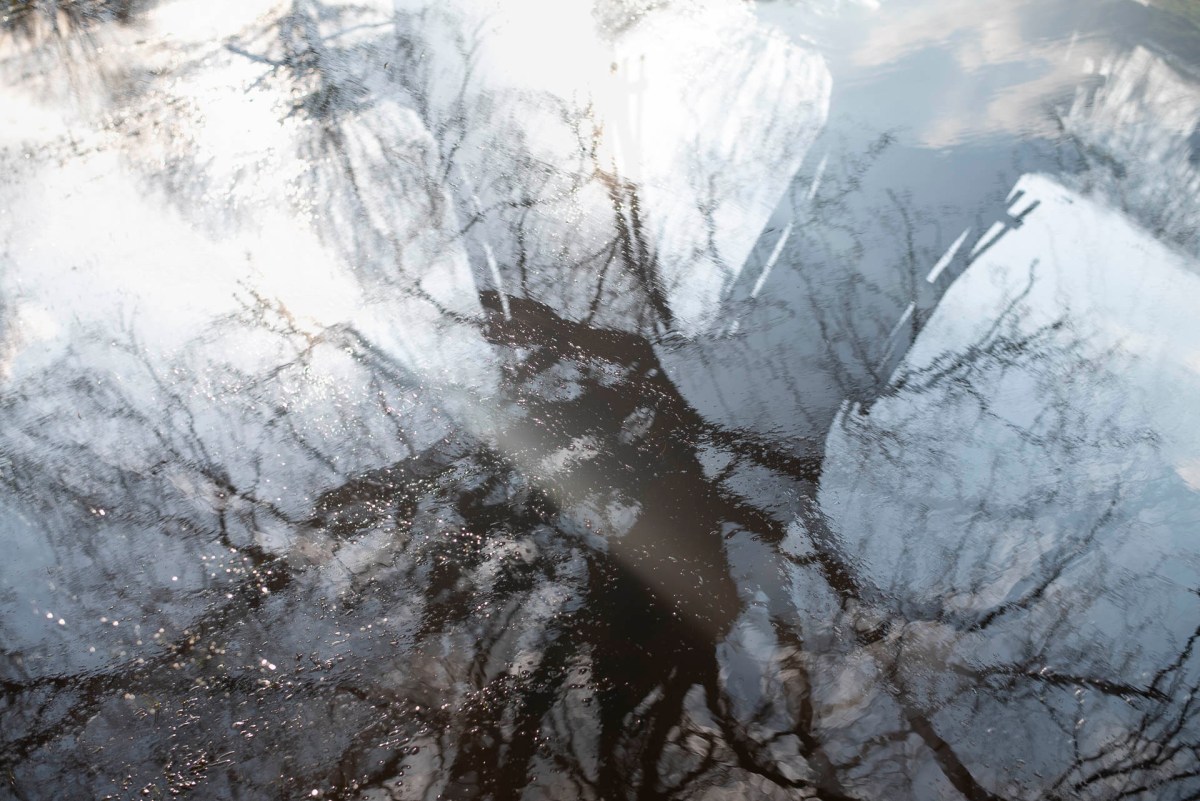
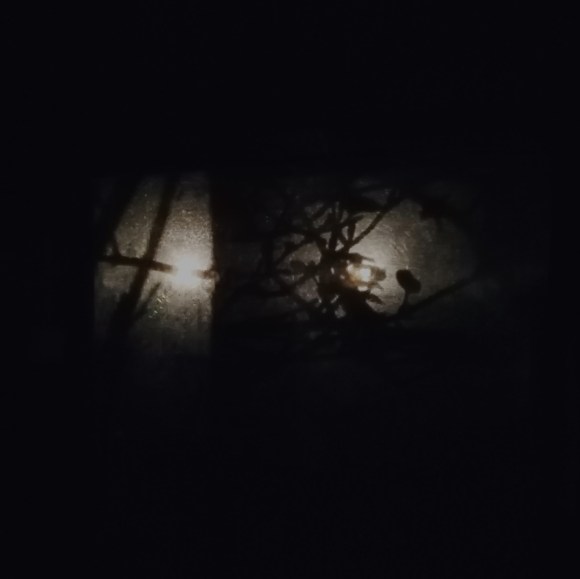
Next, I edited a selection of the portrait shots taken on 31 March of the window reflection. These were a result of the feedback received on the same day during the online tutorial.
My final selection for editing and printing was the images taken in Bushy Park after my period of self-isolation ended. Again, these would come under the title ‘Moments of Eternity’. These were inspired by an altered view and perception of the world post-23 March 2020 and the Zoom grid.
After writing this post, it dawned on me as to how productive I had been during this bizarre time. Having the time and energy to focus on my work combined with being able to rest and process what I was doing definitely had its benefits.
The next step in the process was to wait for the prints to arrive then discuss these and my concept with my class. I also had to revisit my initial inspirations and references then prepare for the next online tutorial on 28 April,
On April 14th, I set out to the park to find suitable trees to photograph in the grid style using the double-exposure method. This was prompted after my visit there on 10 April and looking at the resulting shots. It was a gloriously sunny late afternoon, so it was a wonderful way to get my daily exercise.
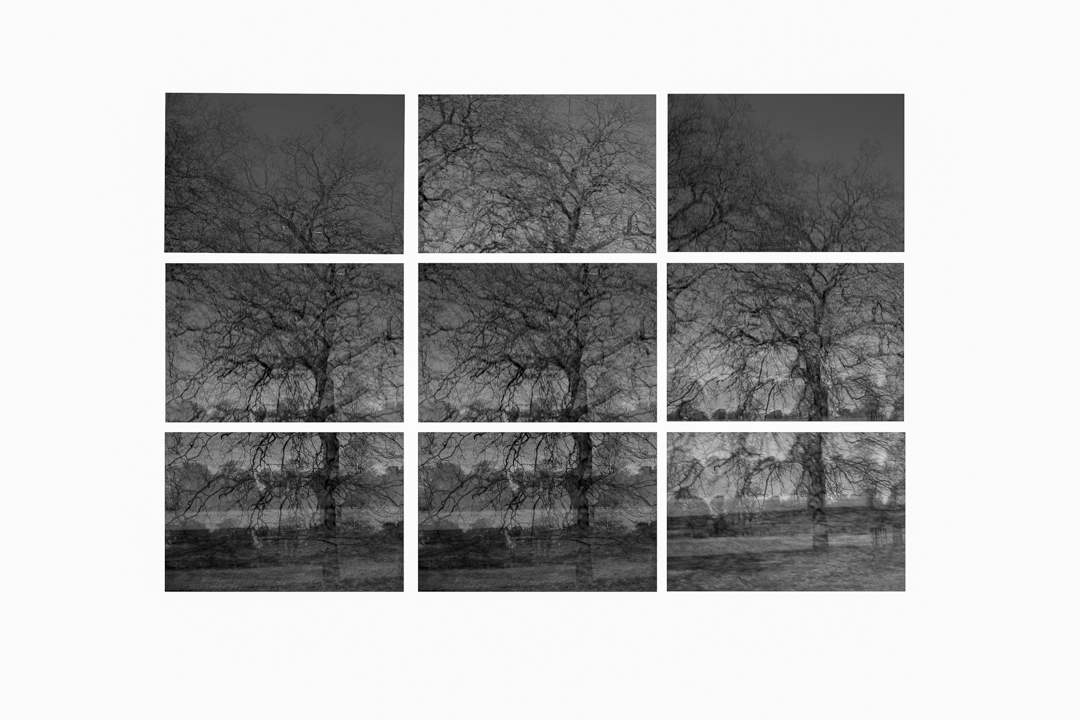
I took several shots and these were the two sequences that, on initial examination, looked the most visually effective when put combined.
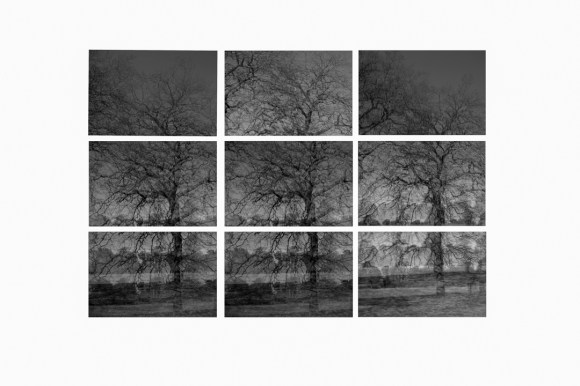
I then tried a negative, Black & White edit. This is the result.
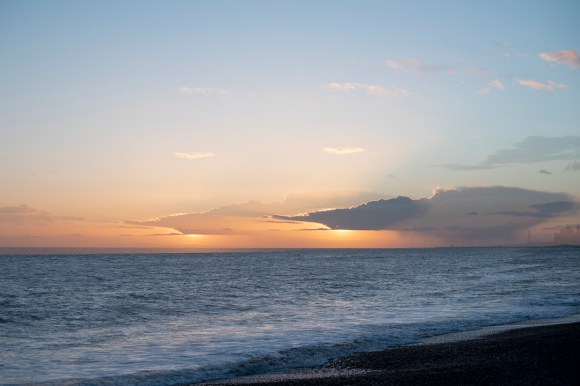
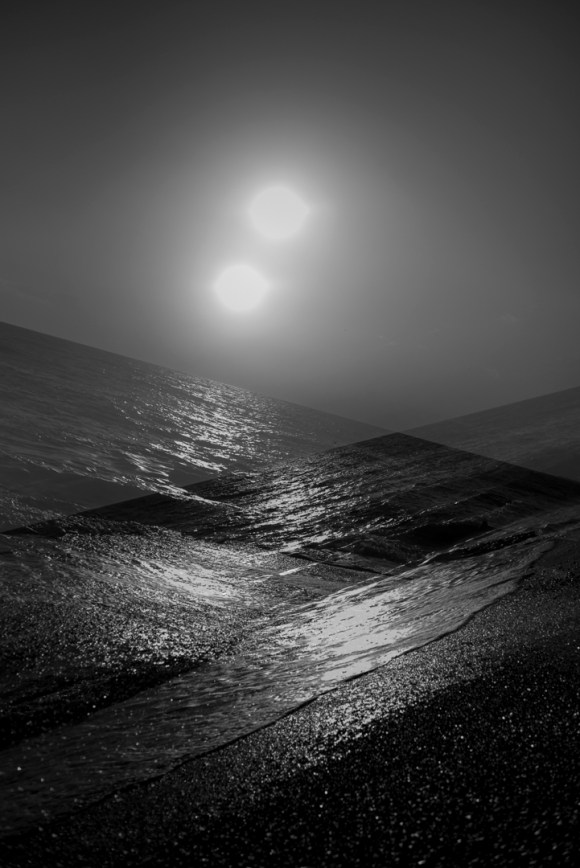
The technique is similar to the one I used with for this image of the waves on Brighton beach.
On this day, I carried out two separate interval timer shooting sessions in the garden.
The first interval timer shoot was in the morning focusing on the pond’s water feature. While I was waiting for the sun to get into the right position, I set up the camera on the tripod and took some test shots to get the best composition.
I started the session at 10.30, again using a four-second interval for 200 shots, finishing at 12.34. This resulted in 1800 individual images. Again, to give an impression of the movement captured during the session, this is a sequence of one image after every 100 shots. I also under-exposed the images to give room in editing.
This slideshow requires JavaScript.
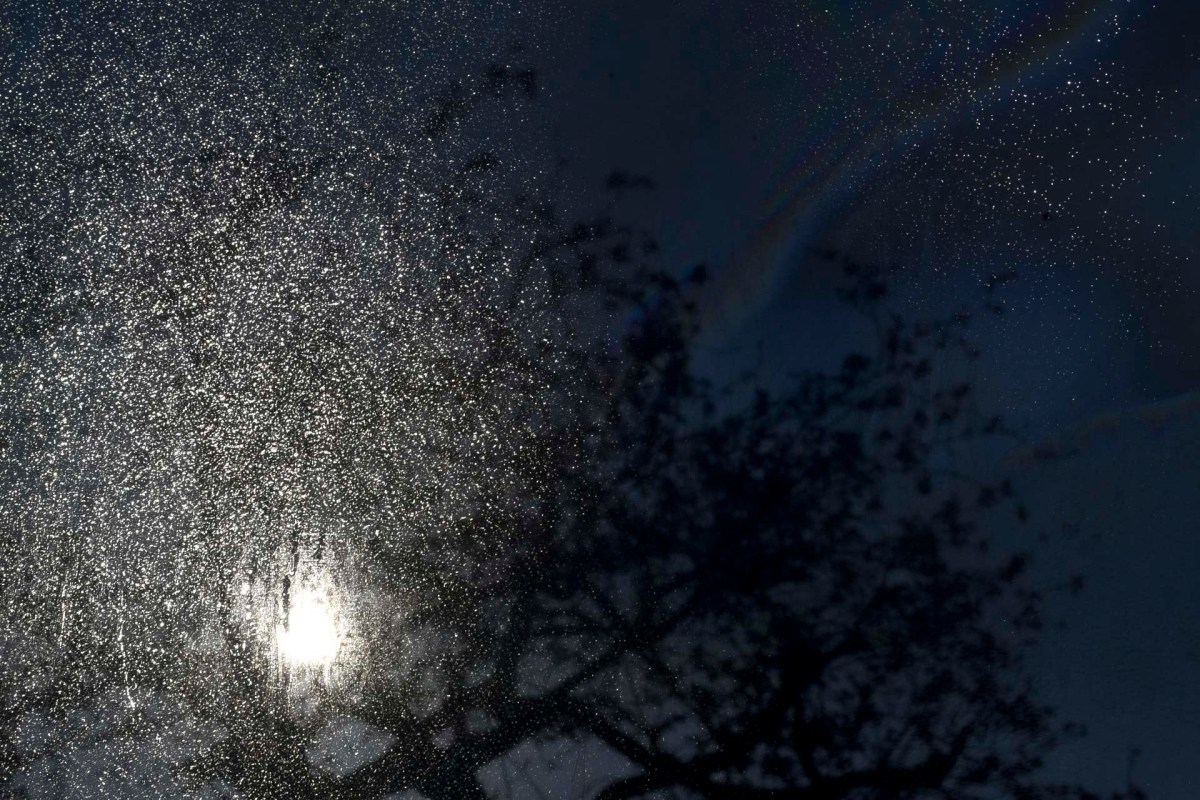
The second interval timer shooting session was in the afternoon.
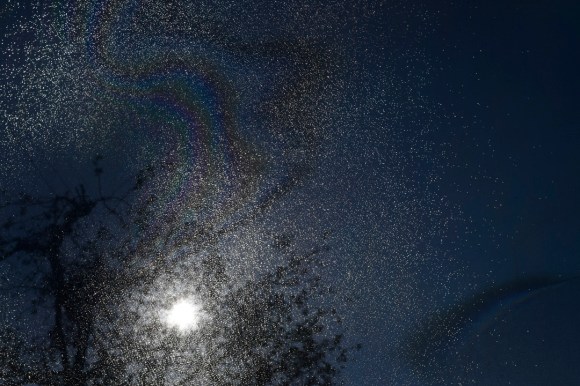
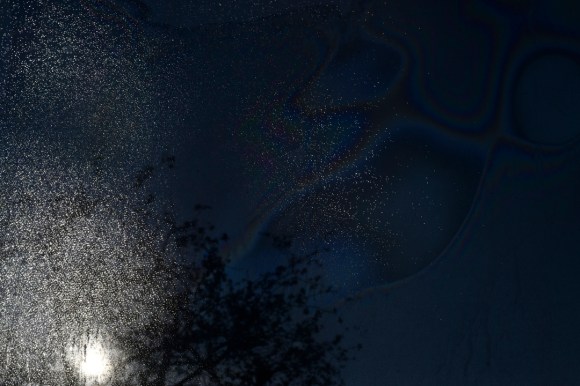
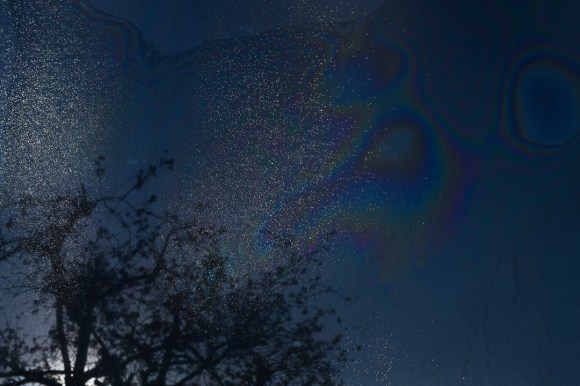
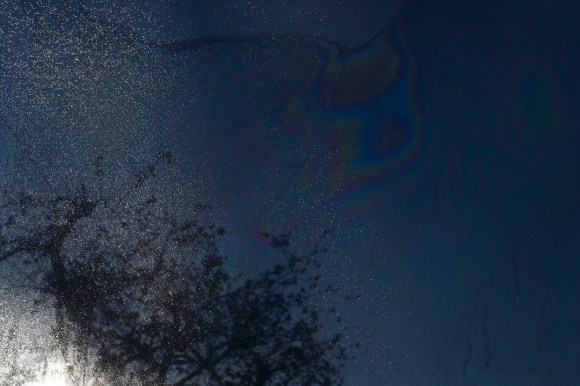
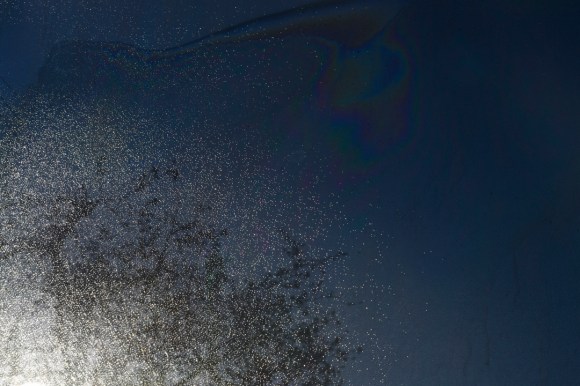
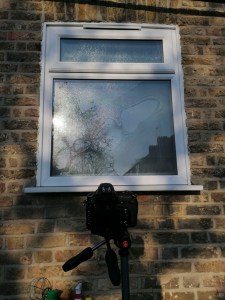
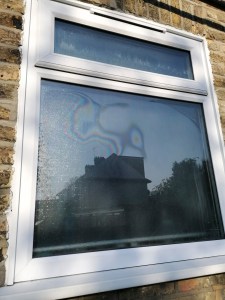
What I found even more interesting about this particular subject was the iridescent effect on the window. It wasn’t on the outside surface of the window, but in between the two layers of double glazing.
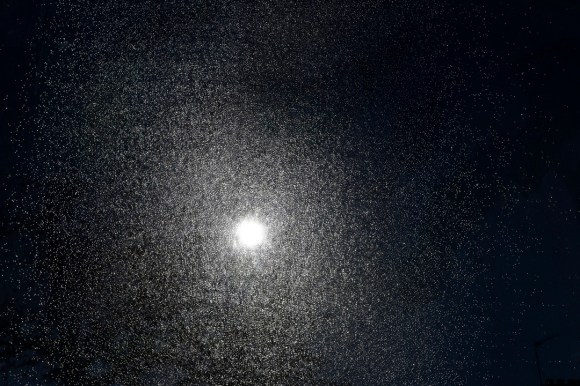
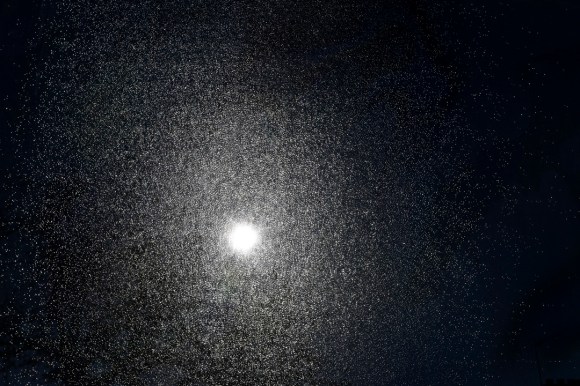
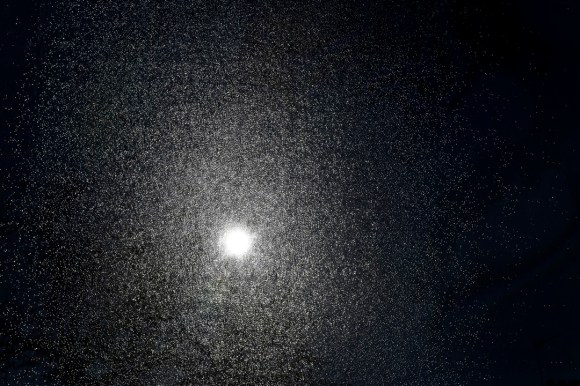
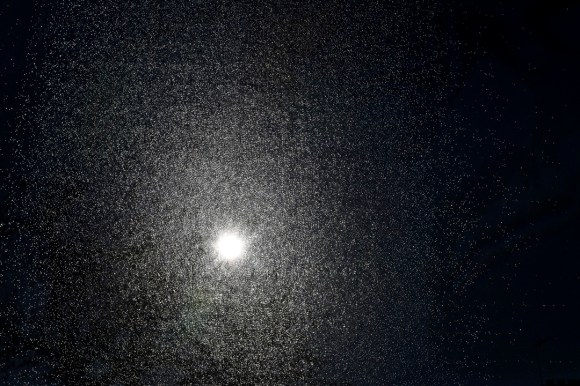
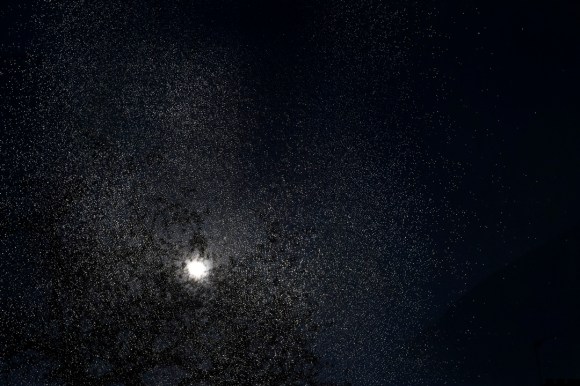
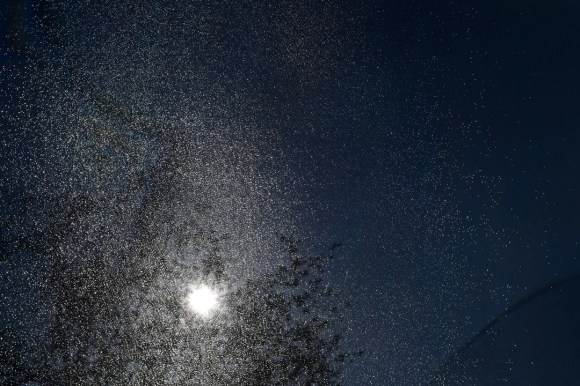
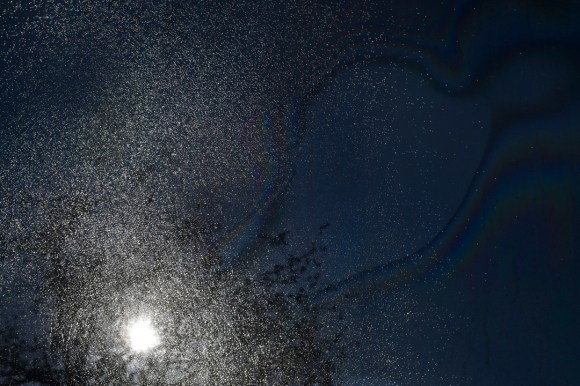
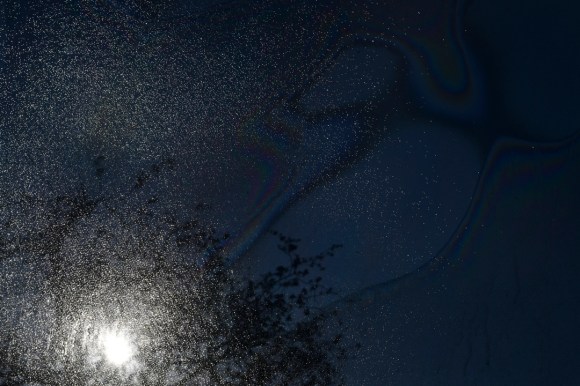
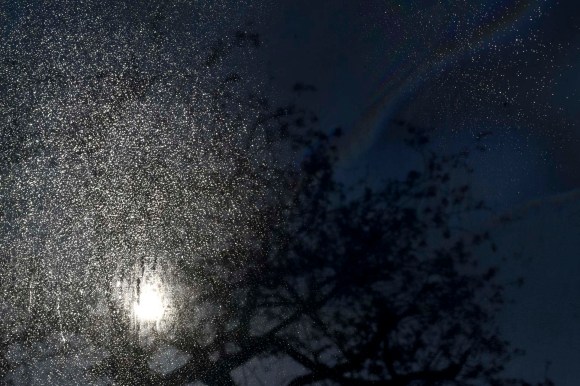
At first, I just focused on the sun’s reflection which gave a ‘galaxy’ effect. This started at 15.43 and finished at 16.01, which resulted in a total of 281 shots.
This slideshow requires JavaScript.
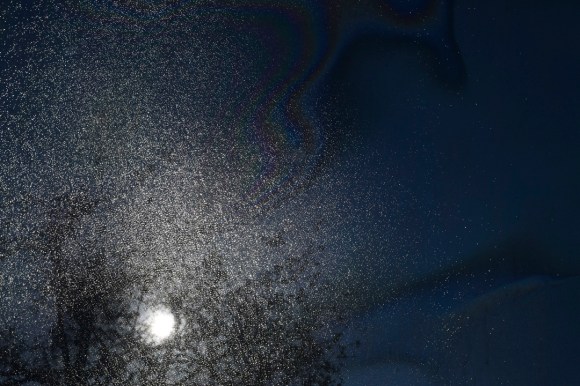
When looking at the window, I noticed that the iridescent effect was changing over time and that the heat of the sun was causing this to happen. In addition to this observation, I started to change the focal point of some of the shots to see what it would do to those images. I started this from 16.01, finishing at 16.50. A total of 715 images were taken using this technique.
All of the original 715 shots were taken on a 2:3 ratio, but this resulted in some lens aberration. As the majority of time-lapse films have to be in a 16:9 format anyway, I cropped all of these images so that any unwanted, edge-of-frame details were removed. The following is a sequence of images to give a visual concept of the details and movement captured during the session.
This slideshow requires JavaScript.
When I started to process the images from this day and the one before, I realised that I was rapidly running out of storage. I could do some basic editing, as seen in the image below.
My strategy was to order an external hard drive and wait for its arrival before processing the files to their full potential.
While waiting for the focus of this project to sharpen, there were two things I needed to do. First, start taking photos. Second, get refamiliarised with my DSLR camera.
21 February 2020 – Richmond Park
These images were captured during a walk from Kingston Gate to Richmond Gate, following the lower path. The last time I made this walk was at least five years ago. I used to spend a lot of time running and along this path, so it was interesting experiencing the environment at a slower pace. This enabled me to spot the following tree formation.
It seemed to resemble a pterodactyl. This reminded me of a dragon I spotted in the same park back in 2014.
This was at the very early stages of my photographic work and I was experimenting with an open-source photo editing software, Irfan View. The original image was taken with my mobile phone while out on a bike ride. The latter was inspired by the solarisation technique famously attributed to the surrealist photographer Lee Miller and a technique used extensively by Man Ray.
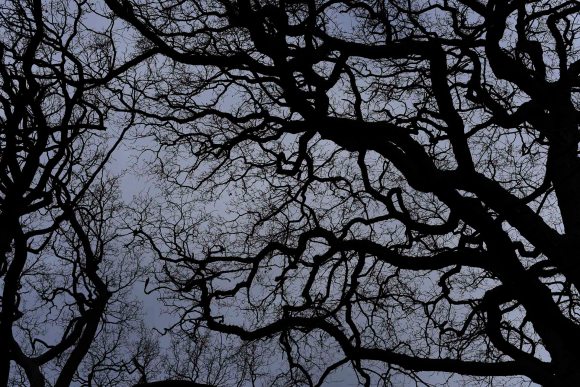
The sky in the park that day was dull pewter which gave a very haunting effect when looking up through the trees.
1 March 2020
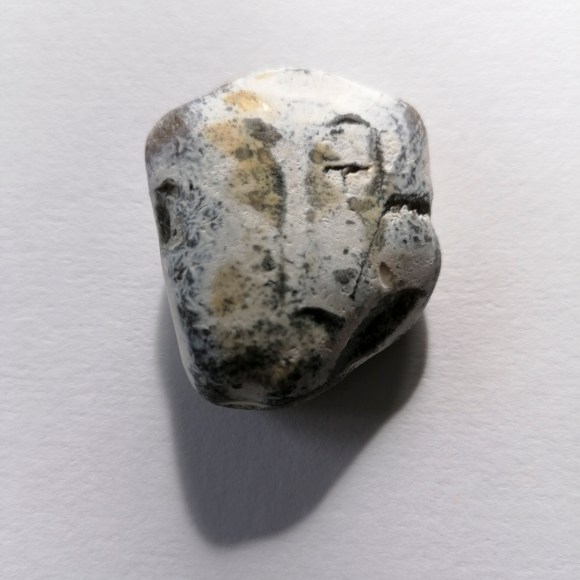
While sitting on Brighton beach, a particular rock caught my eye.
I could see various faces on the rock’s surface depending on the part on which part I focused. Interestingly, when I posted the image on Instagram, a comment was made by Paul Kenny (a photographer whose work I greatly admire): Modigliani.
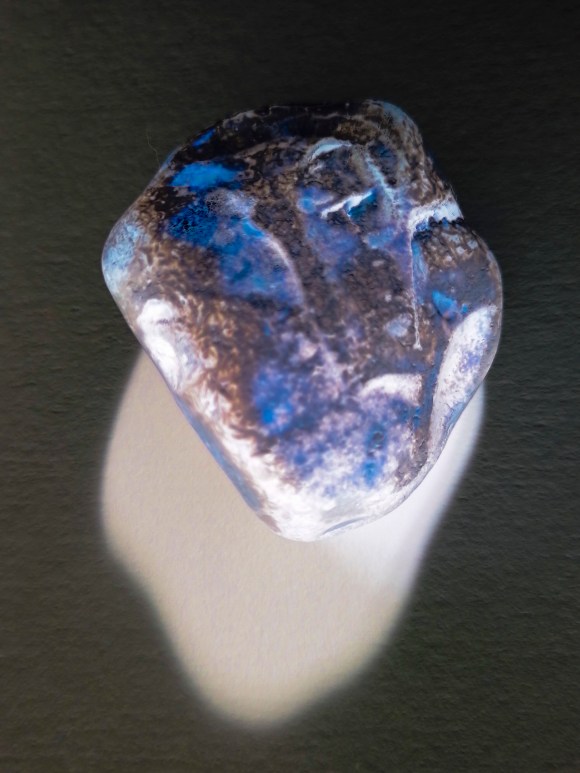
I also carried out a quick experiment using my colour negative technique.
1 March 2020 – Cuckmere Haven & East Dean Village
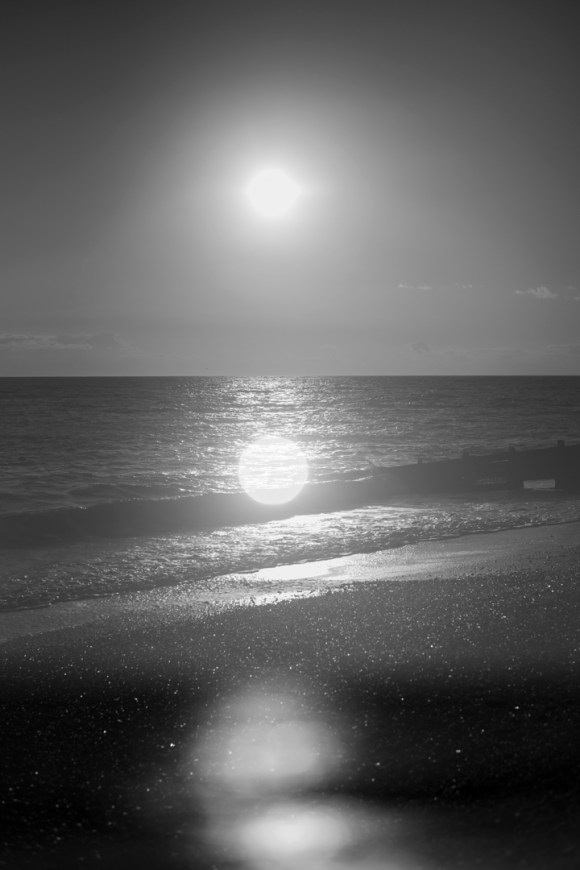
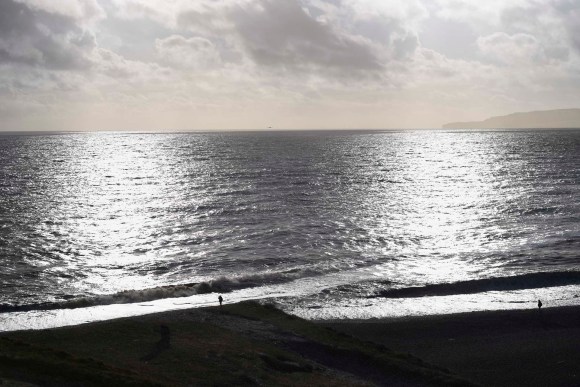
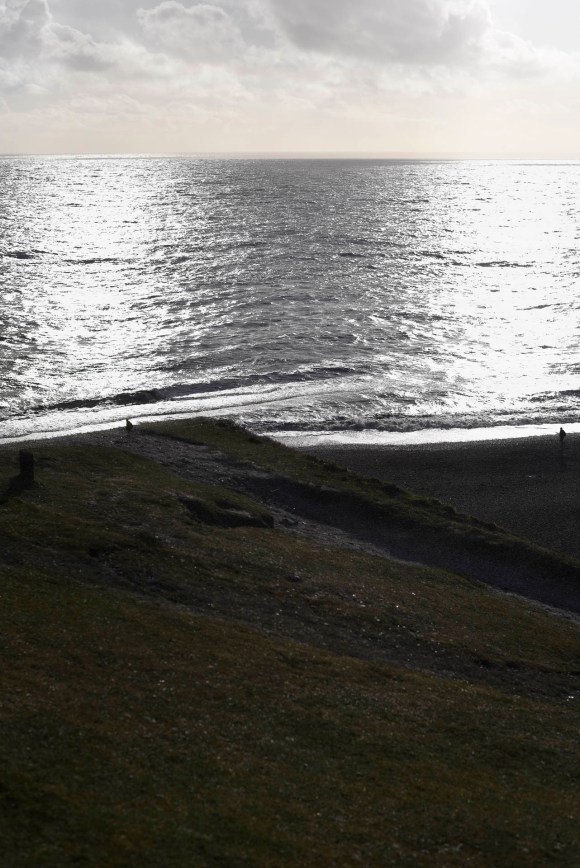
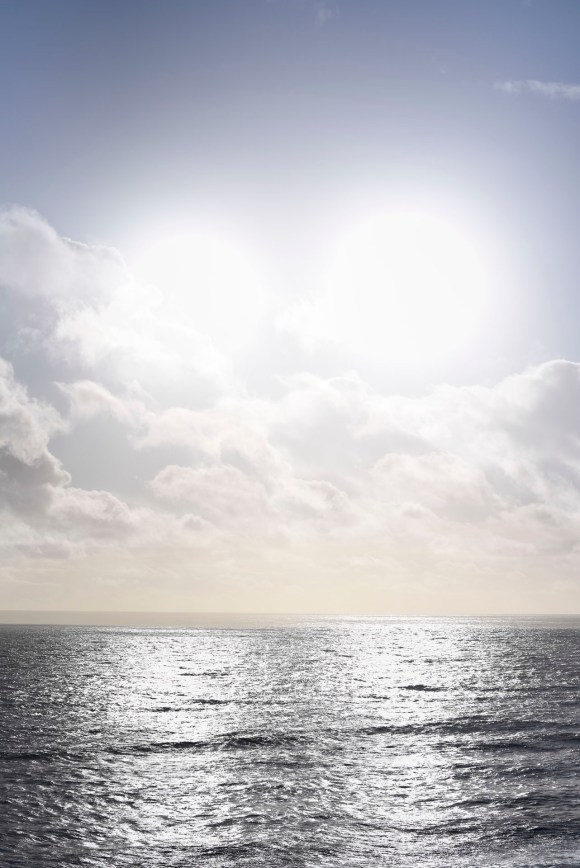
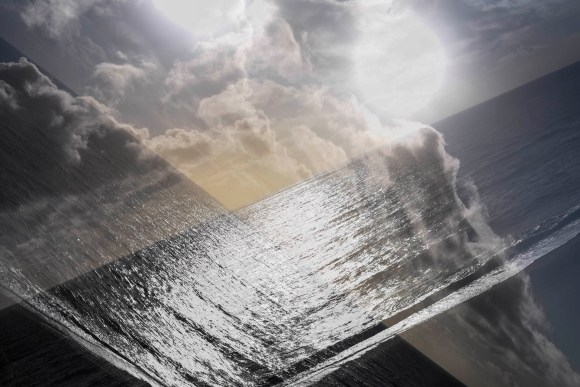
On a beautiful sunny, and very windy, afternoon, I visited Cuckmere Haven with my partner. This is one of my favourite spots near to Brighton and I have been there many times. The sunlight was quite harsh and there were lots of specular highlights on the waves. I knew that if I did take any photos, even with a polarising filter, the images wouldn’t be anything special. This is when I remembered the multiple exposure function on my Nikon D750. I had recently read a feature on the subject, so it seemed a good time to experiment. My previous work involving this technique was carried out using Adobe Photoshop, not with the camera on location.
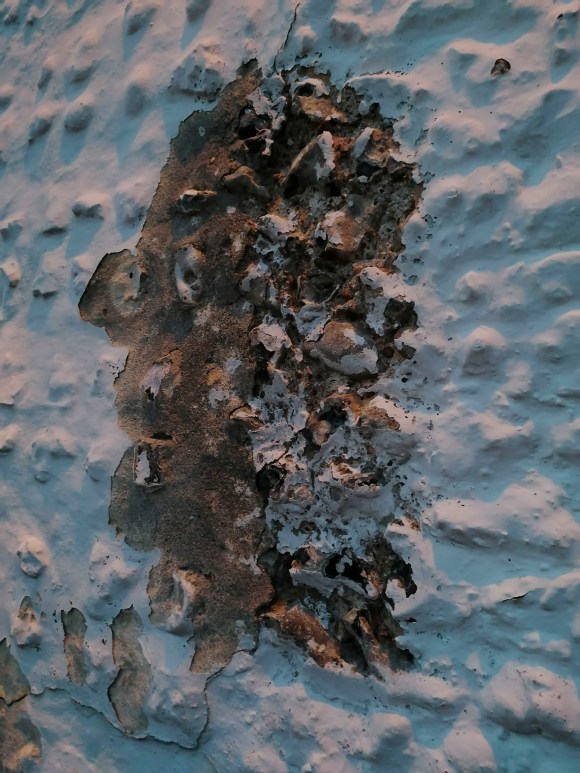
After a walk along the cliffs, we made our way to the village of East Dean. While sitting outside the Tiger Inn enjoying a well-earned drink, I spotted this on the wall outside.
This reminded me of a profile of an 18th-Century man resplendent in a wig from that time. While waiting for the bus, I noticed the light coming through the window in the shelter nearby.
2 March 2020 – Brighton Beach Double Exposure
Inspired by my trip to Cuckmere, I continued experimenting with the double-exposure function.
3 March 2020 – Brighton Beach Double Exposure
The light wasn’t as good as the previous evening but it was still worth capturing these shots.
Bushy Park Friday 6th March
After a morning visiting the British Surrealism exhibition at Dulwich Picture Gallery, I was again inspired to go to Bushy Park to see what I could find.
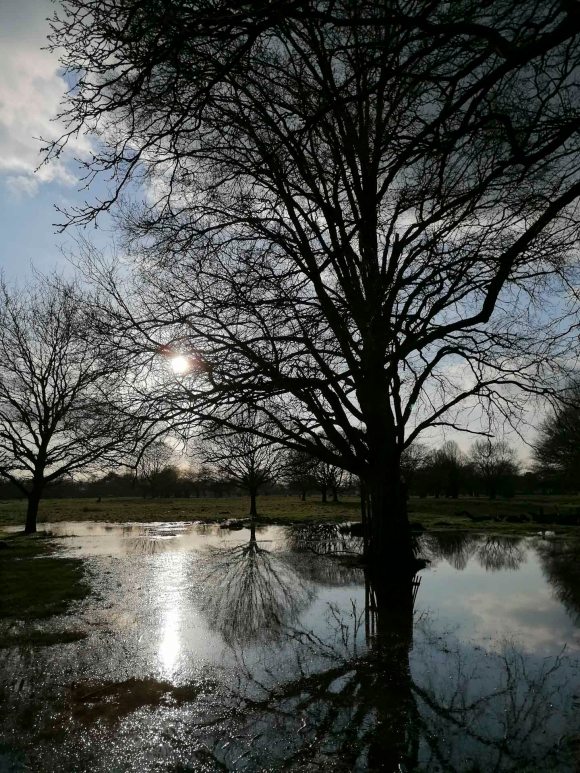
The recent rain had made a particular area extremely water-logged, so I was able to capture this image with my mobile phone.
It gave this image a very dreamy and surreal feeling. I also took the following double exposures using my DSLR camera.
For the seminar on Tuesday 17th March, the class was tasked to identify a current exhibition, upcoming artist-talk or event or potential interviewee that each student felt was pertinent to their own project. We would then need to bring to the session a short summary of the chosen influence. I had to be prepared to discuss how I think that I could engage with this in a way that makes it specifically useful, productive and relevant to my own research and practice.
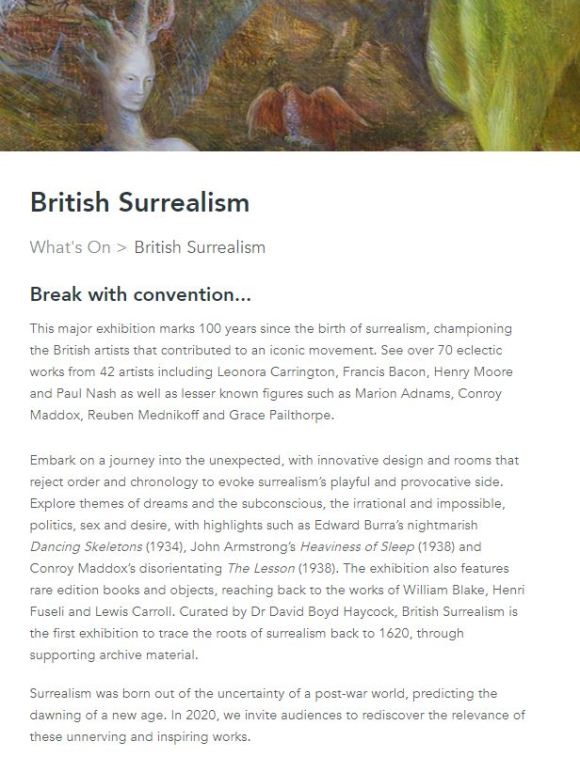
As I had started on a particular line of research focusing on surrealism, I was pleased to discover that the Dulwich Picture Library was currently holding a relevant exhibition. According to the gallery’s website (shown below), this major exhibition marked 100 years since the birth of surrealism, championing the British artists that contributed to an iconic movement.
As stated, the exhibition ‘features over 70 eclectic works from 42 artists including Leonora Carrington, Francis Bacon, Henry Moore, and Paul Nash.’ This is alongside pieces from lesser-known figures such as Marion Adnams, Conroy Maddox, Reuben Mednikoff and Grace Pailthorpe.
On the website, the exhibition invites and entices the visitor to ’embark on a journey into the unexpected, with innovative design and rooms that reject order and chronology to evoke surrealism’s playful and provocative side.’ Themes that will be explored are ‘dreams and the subconscious, the irrational and impossible, politics, sex and desire’.
With my interest piqued, I set off for my visit on Friday 6th March. I have to admit (somewhat shamefully) that I hadn’t visited this gallery previously and was quite looking forward to the experience.
The following isn’t a critical examination of the exhibition, but a record of my observations and how these could contribute to enhancing my Body of Work for this module and future projects.
The gallery itself is a beautiful building that was opened in 1817 and the world’s first gallery designed to display art for the public. The permanent displays feature a range of masterpieces by revered artists such as Gainsborough, Murillo, Canaletto, and Rembrandt. When wandering around the various rooms, it’s like being in a box of organic dark chocolates. The paintings on show bathed in natural light combined with the heady smell of the oil paint give the space a real sensory experience.
Before entering the surrealism exhibition, there was one painting that caught my eye.
The fact that each flower was painted at a different time, creating a non-existent bouquet, triggered a potential line of inquiry. Something to be considered?
However, as the purpose and focus of my visit was the British Surrealism exhibition, I made a pact with myself to return to the gallery another day in order to appreciate this space as it should be.
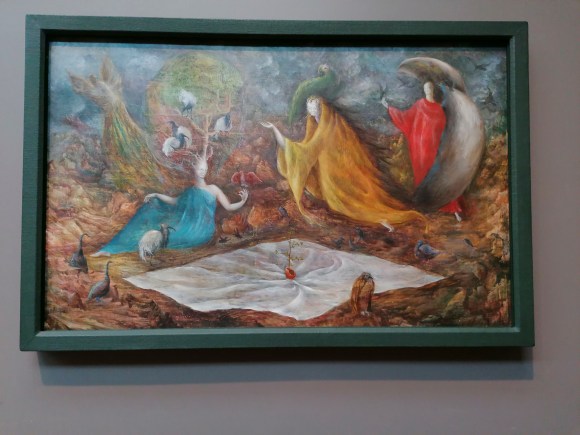
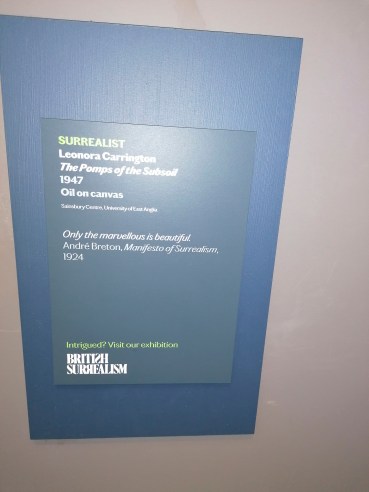
Before entering the exhibition itself, the visitor is teased by one of the more well-known surrealist paintings, The Pomps of the Subsoil by Lenora Carrington.
The Pomps of the Subsoil by Leonora Carrington, 1947. Oil on canvas, 58.5 x 93 cm
This painting depicts three figures surrounded by various bird-like creatures. There is a very dream-like feel to the painting – it does not appear ‘solid’ in comparison to the masterpieces in oil surrounding it. I suppose this could be thought of as a juxtaposition in itself, one of the main tenets of surrealism. When looking closer, the ‘birds’ have an ethereal, ghostly and translucent appearance.
The Pomps of the Subsoil by Leonora Carrington, 1947. Oil on canvas, 58.5 x 93 cm Detail 1
The Pomps of the Subsoil by Leonora Carrington, 1947. Oil on canvas, 58.5 x 93 cm Detail 2
The accompanying plate gave just enough of a teasing taste of what was to come.
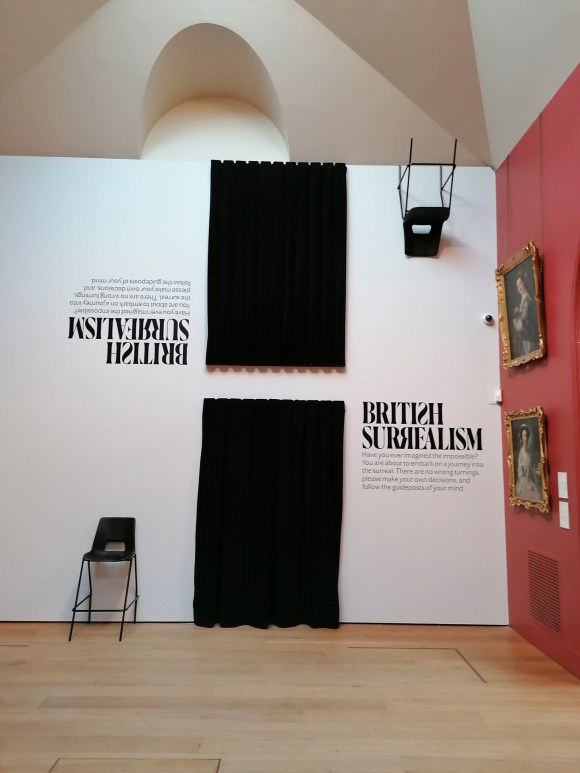
The entrance to the exhibition itself was indeed surreal.
Ironically, I had already tried to access the exhibition via the exit. Maybe I should have started there?
I then entered into the first room via the black velvet curtain. To verify, it was the one closest to the floor. I think a staircase leading up to the one above may have been taking one surrealist twist too far.
As with the majority of exhibitions I’ve attended during my studies, there were the obligatory (and essential) wall explanations. These gave succinct introductions to aspects of surrealism explained in plain English. Very helpful for future reference.
British Surrealism Room Info 1
British Surrealism Room Info 2
British Surrealism Room Info 3
British Surrealism Room Info 4
British Surrealism Room Info 5
British Surrealism Room Info 6
British Surrealism Room Info 7
The work on display was quite varied.
rbt
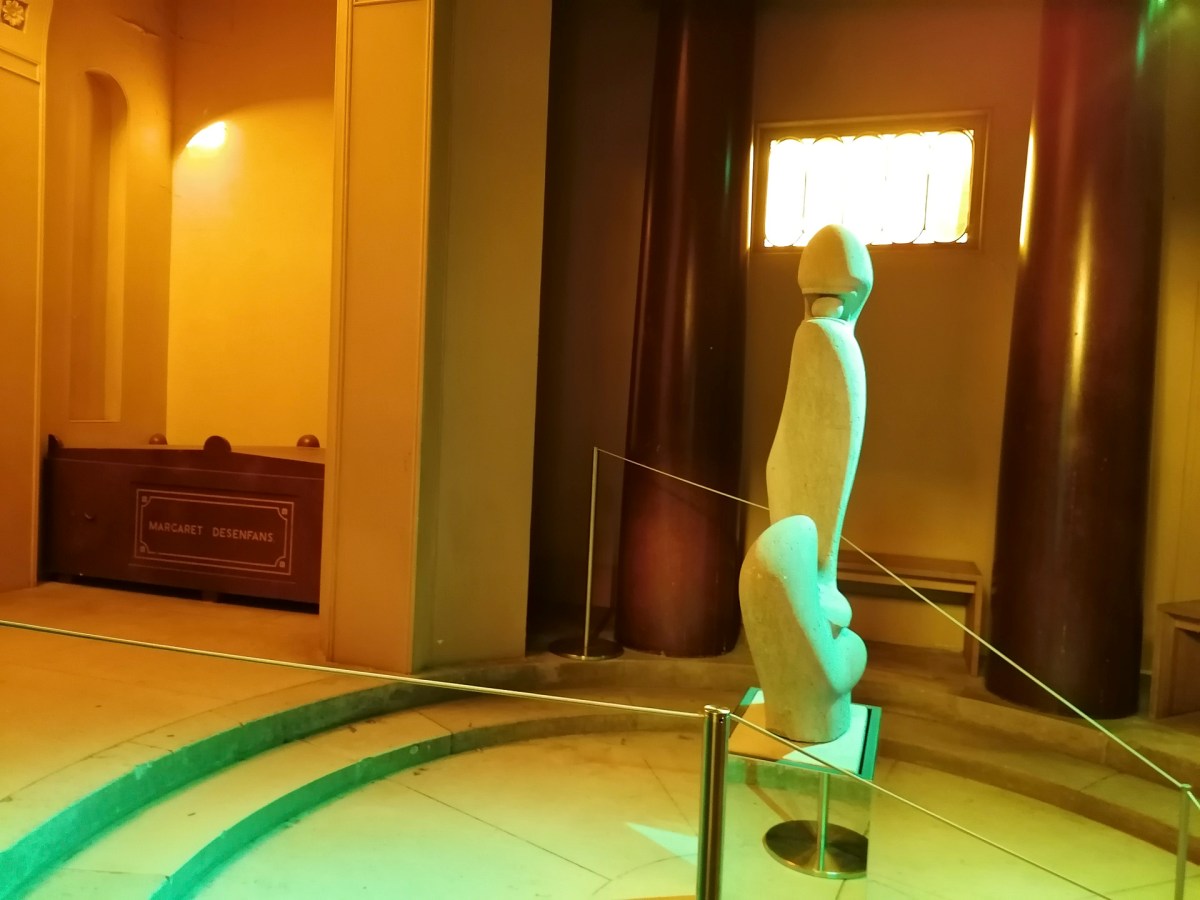
The piece of work that I took my time appreciating was F.E. McWilliam’s sculpture ‘Spanish Head (1938-39 Hopton Wood Stone).
This beguiling statue was placed in the Mausoleum within the gallery and bathed in an eery green light.
There were also prints and paintings that were considered to have influenced the surrealist art movement.
This slideshow requires JavaScript.
I had hoped that there would be more photography included in this exhibition. Whether it was due to a lack of British surrealist photography available or the fact that this gallery focuses on non-photographic art, I wasn’t sure at this stage. The only one on display was taken by Roland Penrose (husband of American photographer, Lee Miller).
Four Women Asleep, Lambe Creek, Cornwall, England 1937 Modern C-type exhibition print
This photograph features four of the key women connected to surrealism. Going from left to right, this depicts Lee Miller; the Guadelopian model Adrienne Fidelin; the English artist Leonara Carrington; and the French artist and performer Nusch Éluard.
With the above in mind, my next step was to extrapolate what makes this exhibition specifically useful, productive and relevant to my own research and practice.

















 Jennie Meadows MA Photography