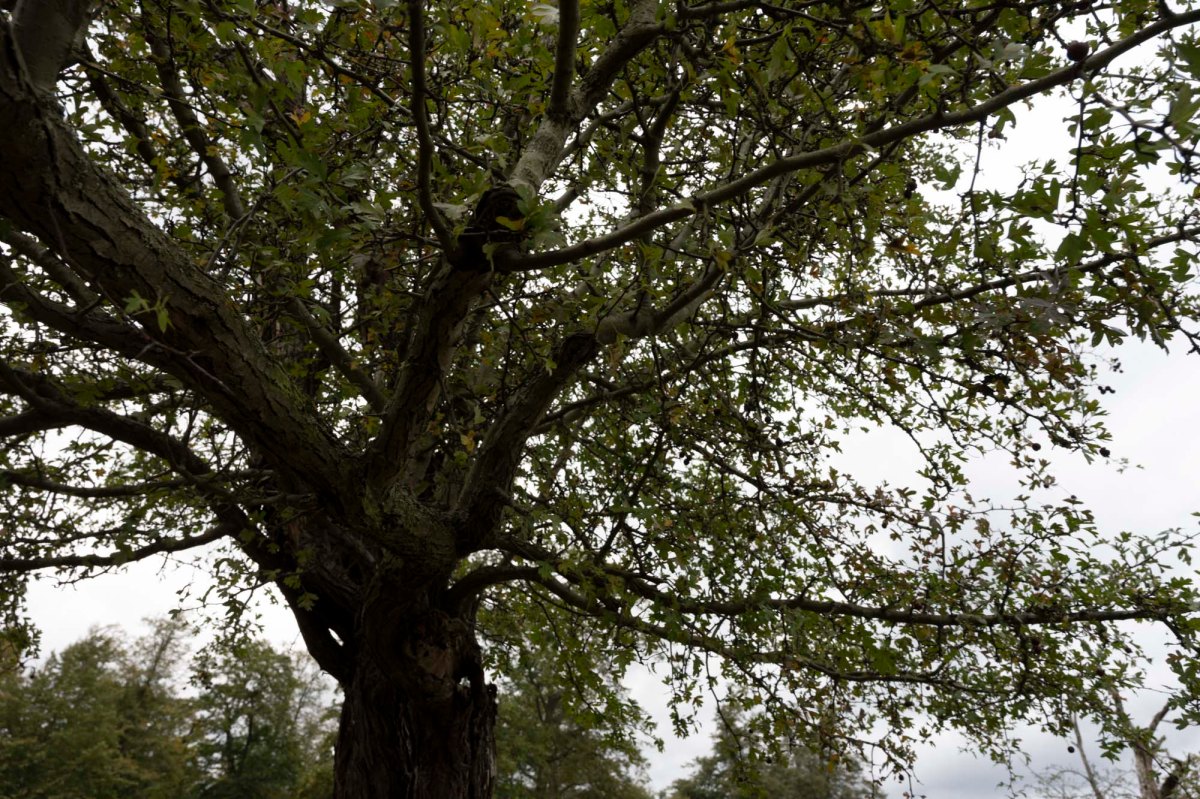
‘The hawthorn, like a grumpy old teacher, reminds us that a prickly personality may hide unexpected virtues.’
(Adams, M. 2018 pp. 178)
‘It is easy to neglect the humble hawthorn, to pass it by unnoticed, until it explodes with creamy blossom in May. Historically, it is one of our most important species: for shelter and defence, for wayside sustenance and as a marker for boundaries and travellers.’
(Adams, M. 2018 pp. 176)
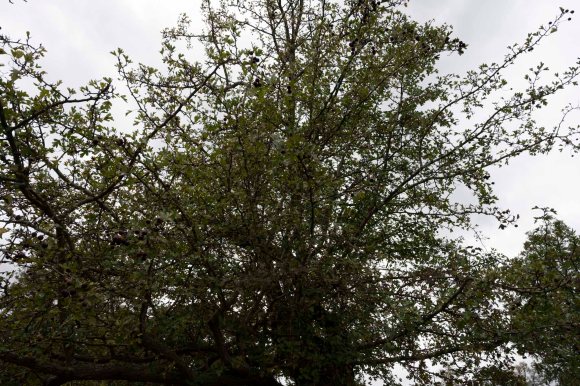
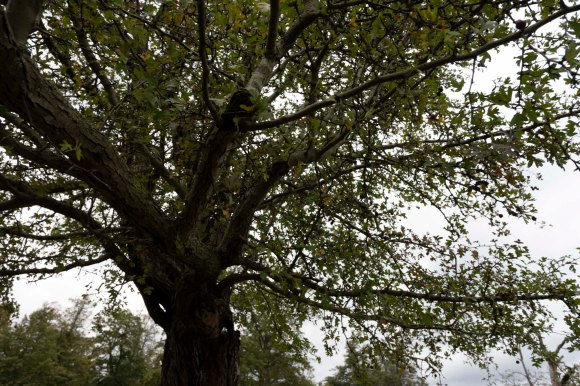
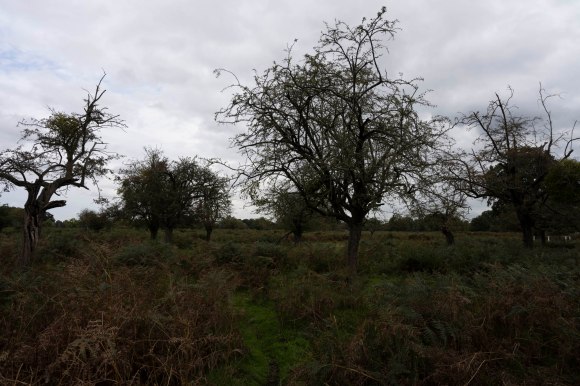
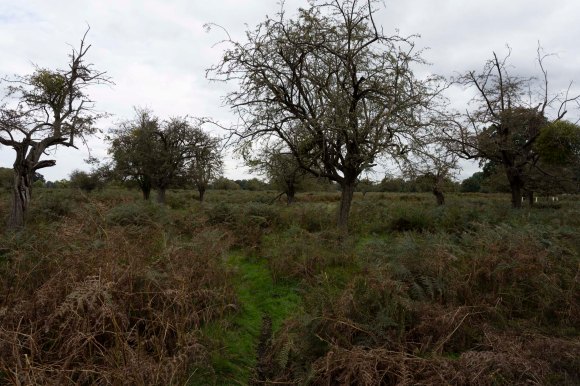
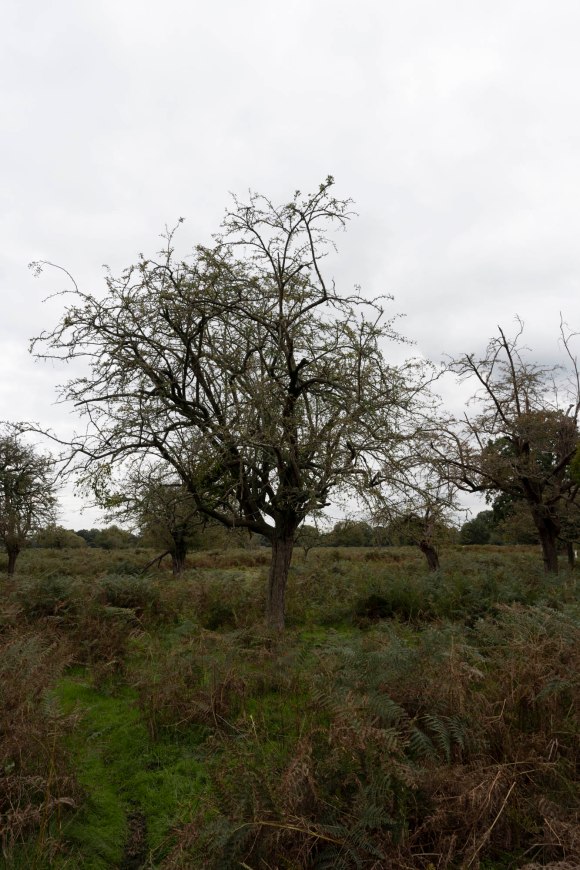
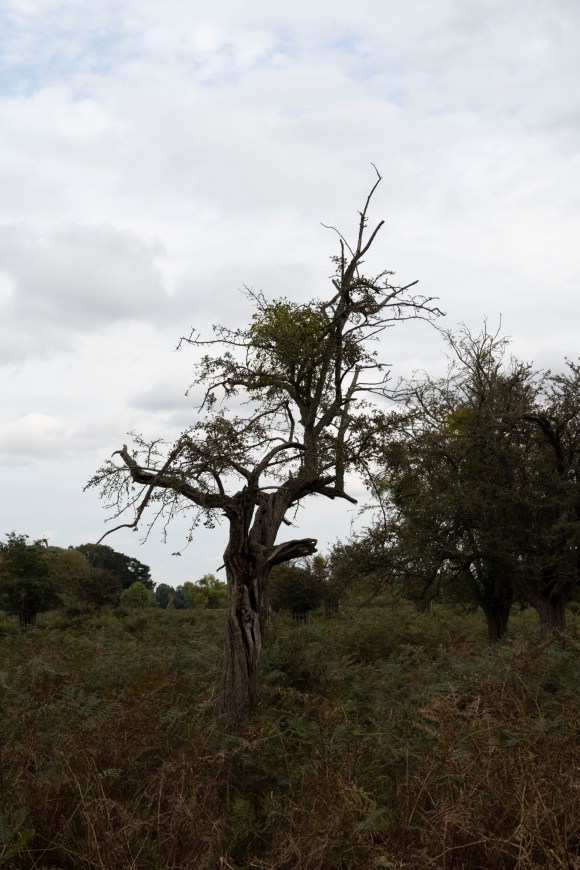
One type of tree that has always fascinated me is the hawthorn. As I wrote in my blog post on 6 October, I liken them to ‘wizend wise women.’ As for their relevance to Bushy Park, I was unaware until I re-read details of the park on the Friends of Bushy and Home Parks’ website.
‘The name “Bushy Park” was first recorded in 1604 and was probably a reference to the many hawthorn bushes. These were planted to protect the young oak trees which were being grown as timber for ships in the navy.’
This was an ‘aha!’ moment. Especially in light of what I had read in The Wisdom of Trees by Max Adams. I had come across this delightful tome while visiting the Hayward Gallery shop after experiencing the Among the Trees exhibition. In this book, Adams tells various tales of trees, including that of the hawthorn. So I can read and understand the information given within this tale, I’ve broken down the paragraphs and sentences in order to sift out gems of inspiration.
The Hawthorn
Hawthorn (Crataegus monogna) is a much-neglected small tree, which we are used to seeing in hedges that it’s easy to ignore. Our ancestors had a higher opinion of it: the hawthorn is the most frequently mentioned tree in ancient charters and boundary surveys, and it is a common element in place-names.
(Adams, M. 2018 pp. 174-5)
The flowers and leaves, when picked fresh, are known as “bread and cheese” and have long been a wayfarer’s springtime snack.
(Adams, M. 2018 pp. 175)
Hawthorn’s creamy white blossoms emerge any time from late April onwards, an in autumn the unmistakable rich red berries are an equally classic seasonal marker.
(Adams, M. 2018 pp. 175)
Hawthorn is the tree equivalent of rugged highland sheep or cattle breeds: it is very tough and can withstand the sort of weather that has most of us running for shelter and a warm fire.
(Adams, M. 2018 pp. 175)
The wood is hard to work, and because hawthorn, like yew, grows in multiple trunks, it is rarely used for anything other than firewood.
(Adams, M. 2018 pp. 175)
It is hard to say when humans first realised that they could cultivate hawthorn as a defensive barrier; but in the period of the Parliamentary enclosure of land, some two-hundred-thousand of ‘quickset’ hedges were planted across Britain.
(Adams, M. 2018 pp. 175)
Hawthorn remains a popular and biologically important hedge species.
(Adams, M. 2018 pp. 175)
One should at this point say something about the art of laying hedges, which is still practised in Britain and Ireland. The principle in this highly skilled off-shoot of the woodsman’s art is to thicken and strengthen a hedge, prolonging its life and ensuring any gaps through which livestock might (and they will) escape are closed. The trick is to half-coppice the shoot of the hawthorn, blackthorn, hazel, beach or hornbeam – they are the most common hedging species. A downwards cut into the side of the stem weakens it so that it can be bent at an angle in line with the direction of the hedge but above the horizontal. There needs to be enough heartwood, sapwood and bark left for the stem to survive and send up new shoots the next year. Every couple of yards a vertical stake, cut and trimmed into the ground within the hedge, and more spare shoots, brashed from the main one, woven between the cut stems and the stakes, creating a hybrid between living hedge and fence.
More information on hedgelaying: http://www.hedgelaying.org.uk
(Adams, M. 2018 pp. 175-7)
Hawthorn’s blossom known as May flowers (hence ‘May-day’ and ‘Maypoles’, neither of them named after the month), used to induce a superstitious fear about it being brought into one’s home. It was thought to presage a death in the household. Why? A fishy chemical called ‘triethylamine’, released as the blossom fades, is the smell of dead body (and, incidentally, of human sperm).
(Adams, M. 2018 pp. 177-8)
The flowers also contain a small amount of digitalin, the chemical present in foxgloves, which in high doses is extremely poisonous but which is used as a therapeutic cardiac treatment.
(Adams, M. 2018 pp. 178)
During autumn cows browse on the tree’s small bright red berries and their astringent properties are regarded as a traditional therapy for mastitis.
(Adams, M. 2018 pp. 178)
References
Adams, M. (2018). The Wisdom of Trees. London: Head of Zeus Ltd.
Friends of Bushy and Home Park. 2020. [online] Available at: <https://ews-fbhp-dev.expertwebservices.co.uk/history-of-bushy-park/; [Accessed 19 October 2020].
 Jennie Meadows MA Photography