On Wednesday 28 October, the class had a group tutorial as scheduled. The session was carried out via Microsoft Teams due to our tutor’s requirement to self isolate at that time.
After three weeks of working in my own isolation, it was great to see everyone’s progress and show my own concepts and process so far.
The concept of the hawthorn in connection to Bushy Park was well-received and garnered two useful suggestions by my classmate, Sofia:
Jean Luc Brouard’s tree portraits for a different perspective
A later, similar project by Simon Roberts
Sofia also stated that she thought the hawthorn connection to the history of the park was a good place to maybe focus the project. This thought was also seconded by another of my classmates, Abi.
As I had already made that decision to focus on the hawthorns before they made the feedback, I knew that I was progressing in the correct direction at this stage of the project. Our tutor, Åsa, mentioned that it was a good way of creating a case study that could be used as a model for future projects.
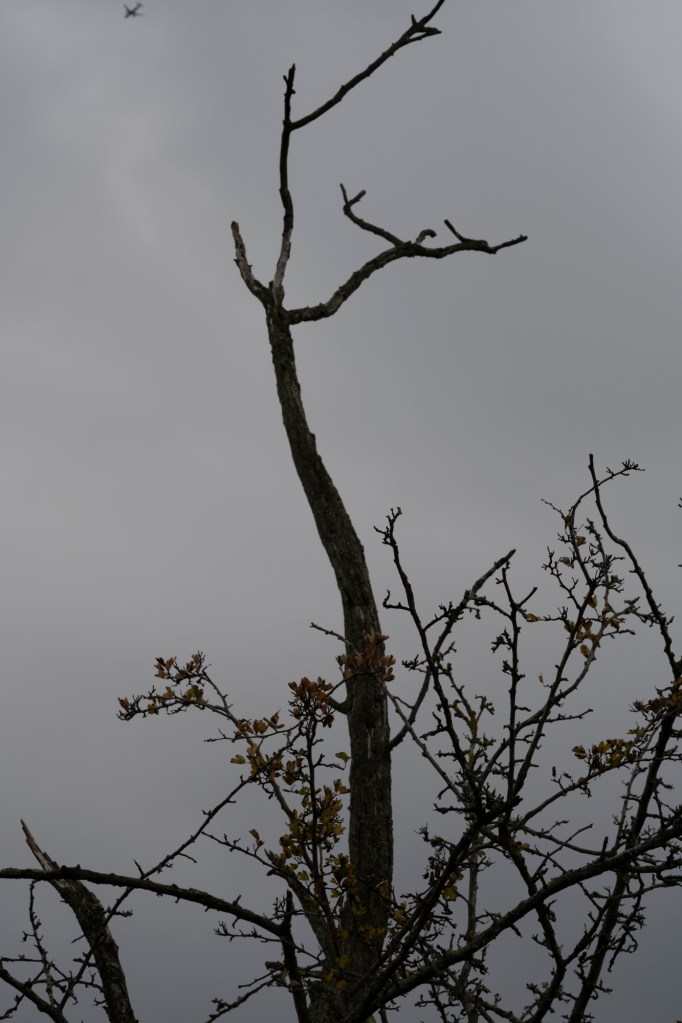
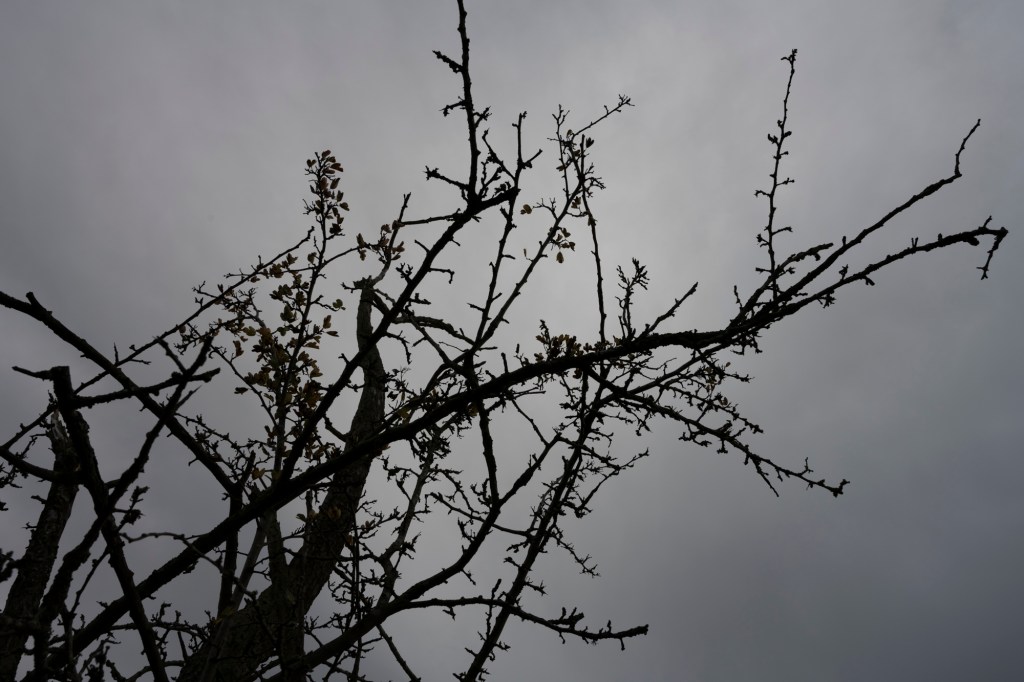
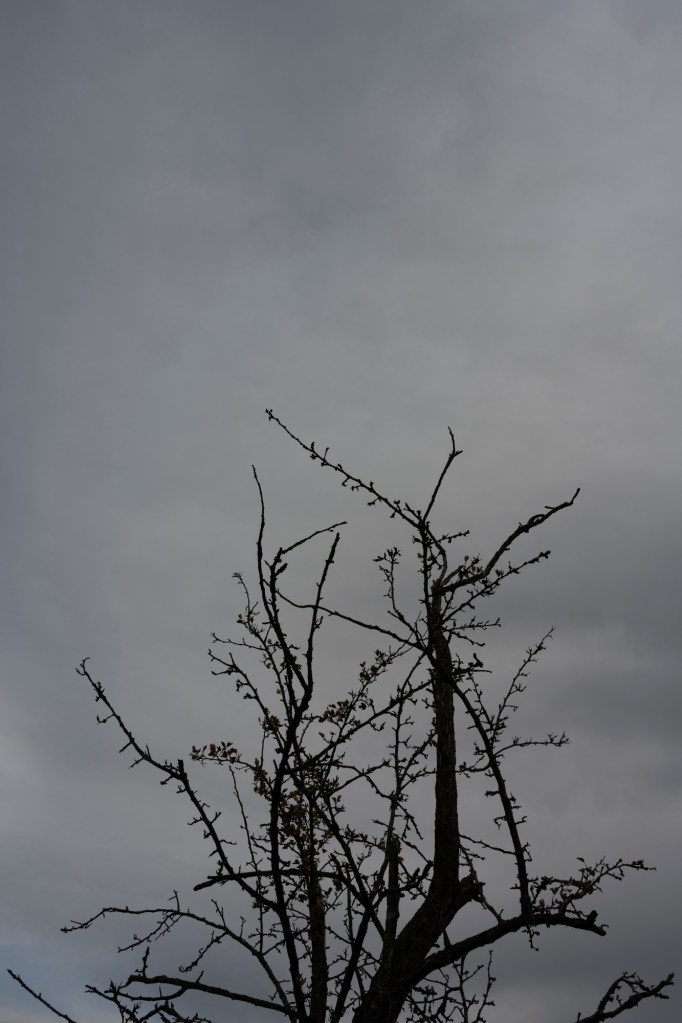
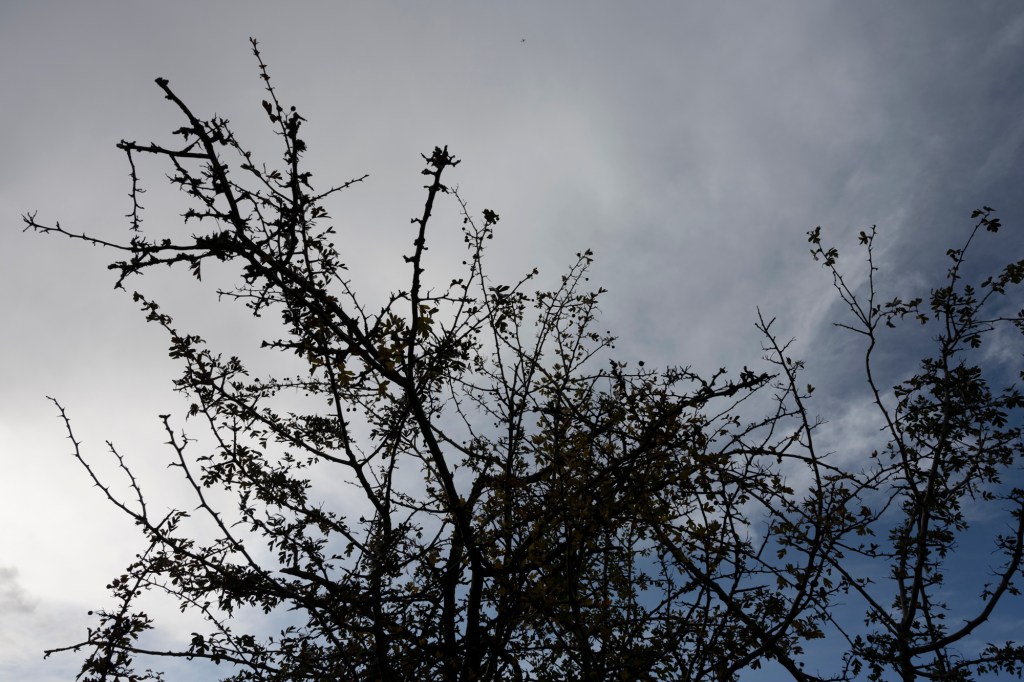
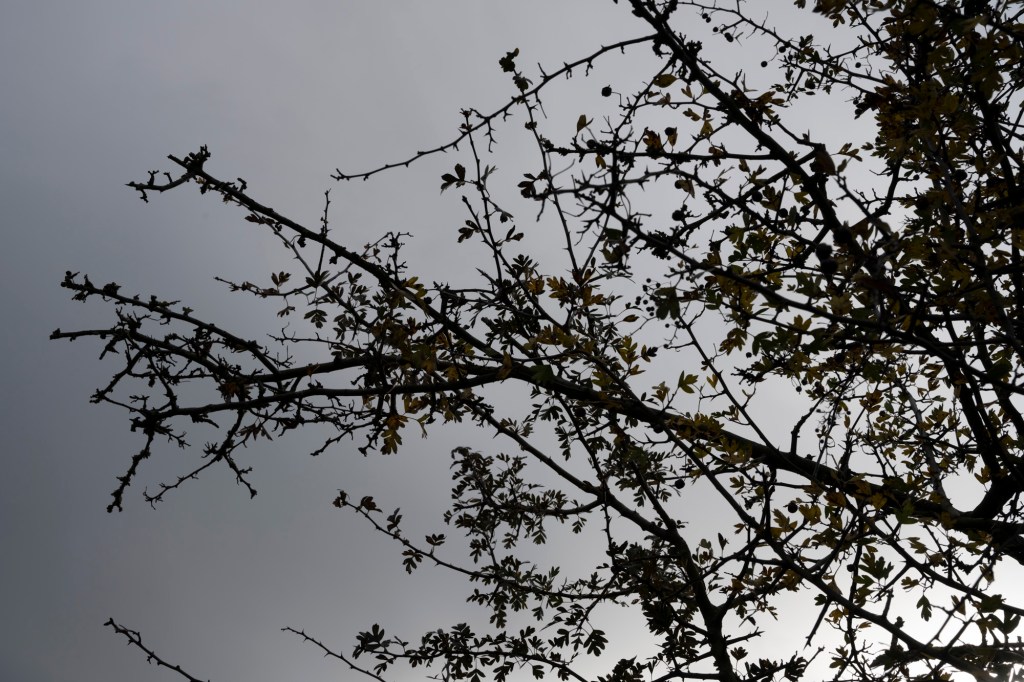
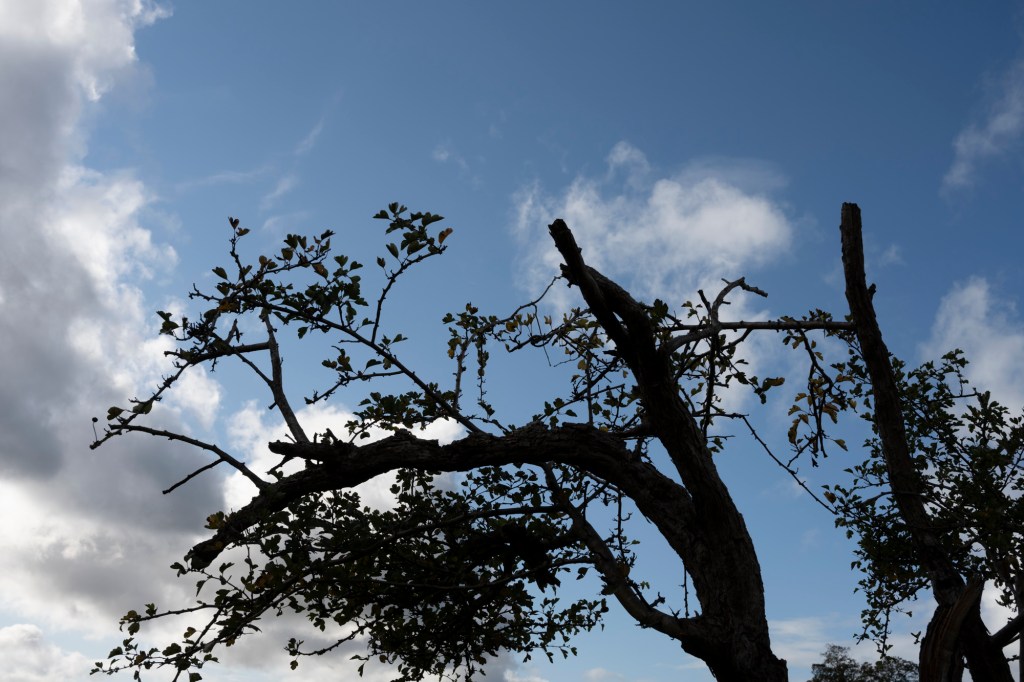
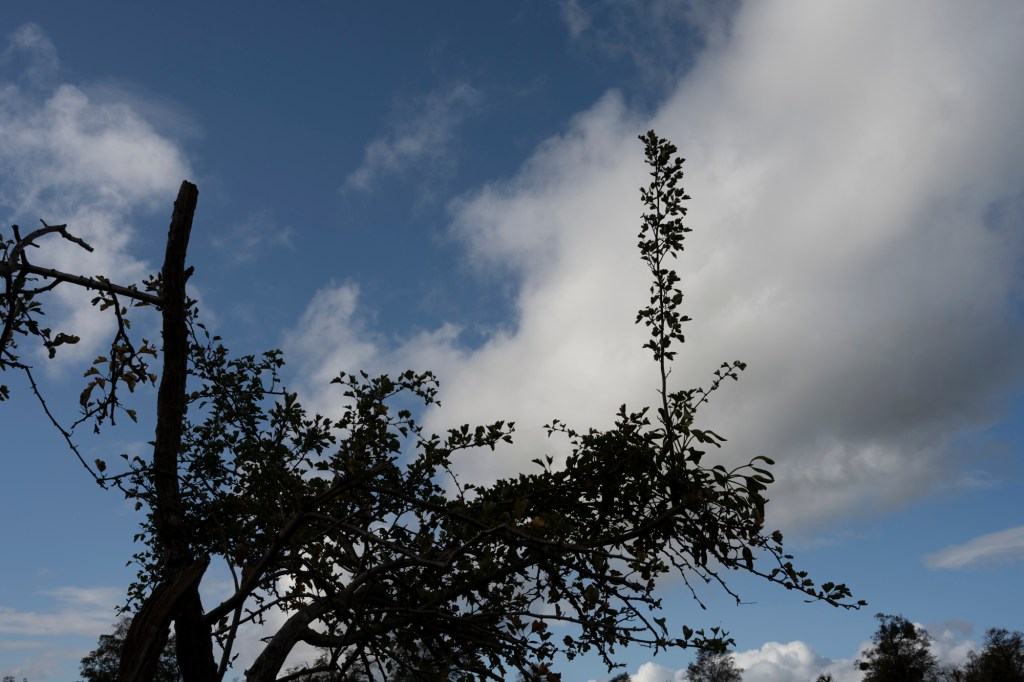
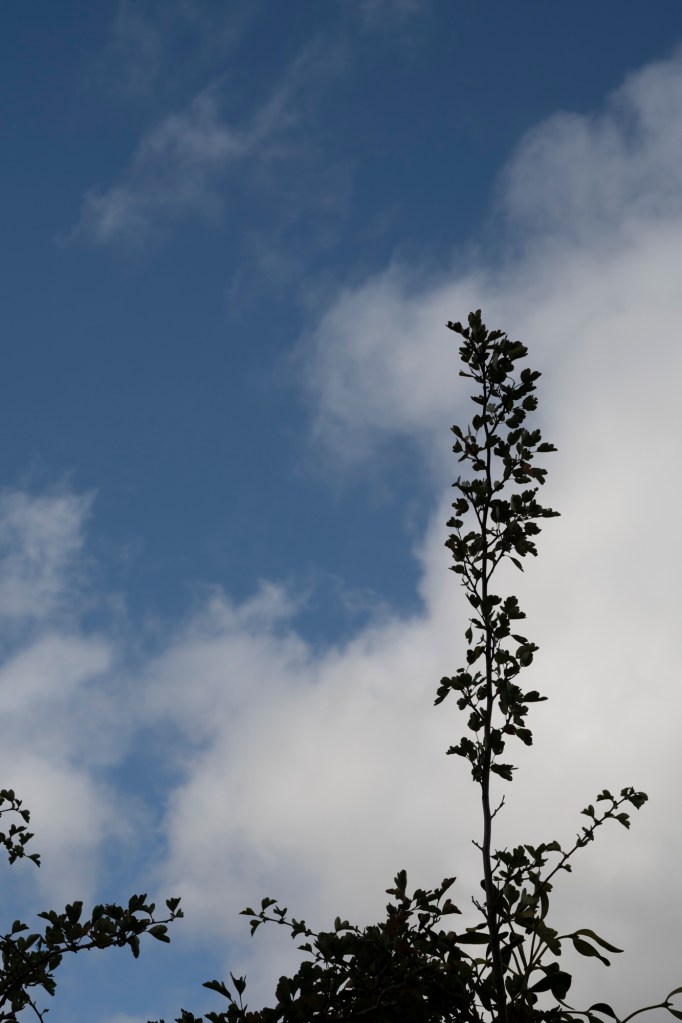
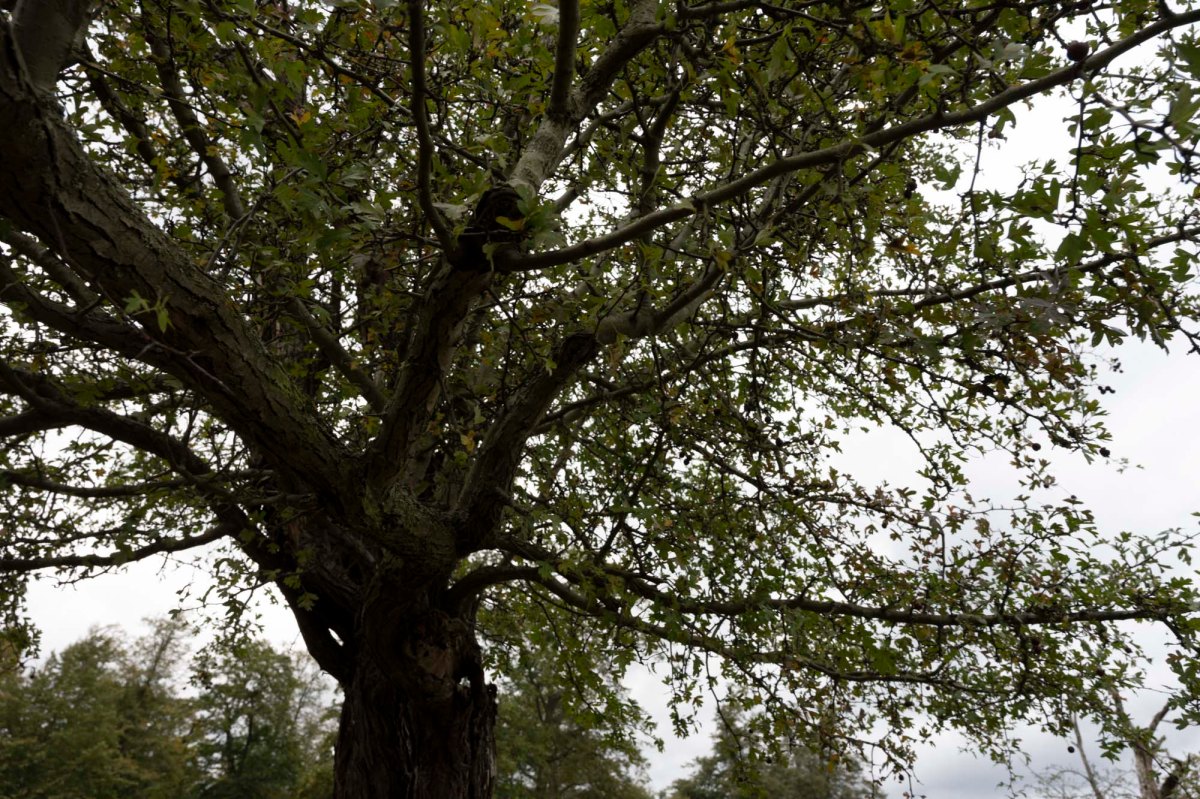
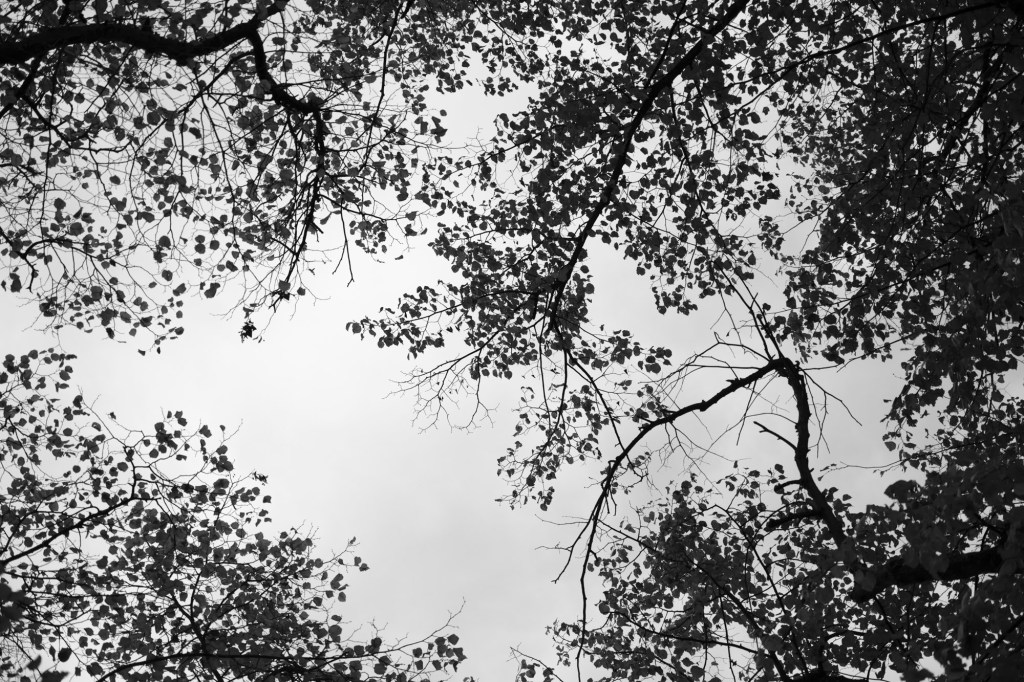
Åsa, also made a comment about the angle of perspective of the shots and the difference they made to the images. I definitely should continue to take photos of the hawthorns from a lower point-of-view as this makes the tree appear ‘larger than life’ and more significant in relation to its environment.
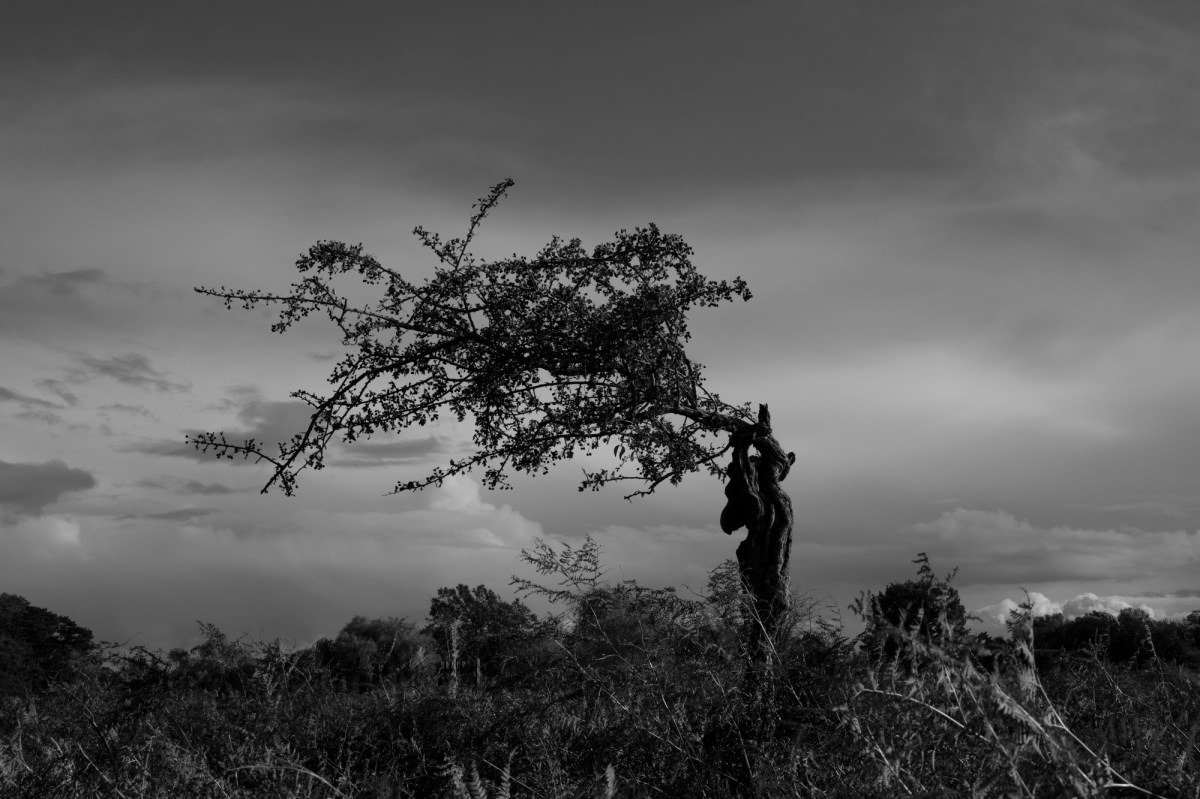
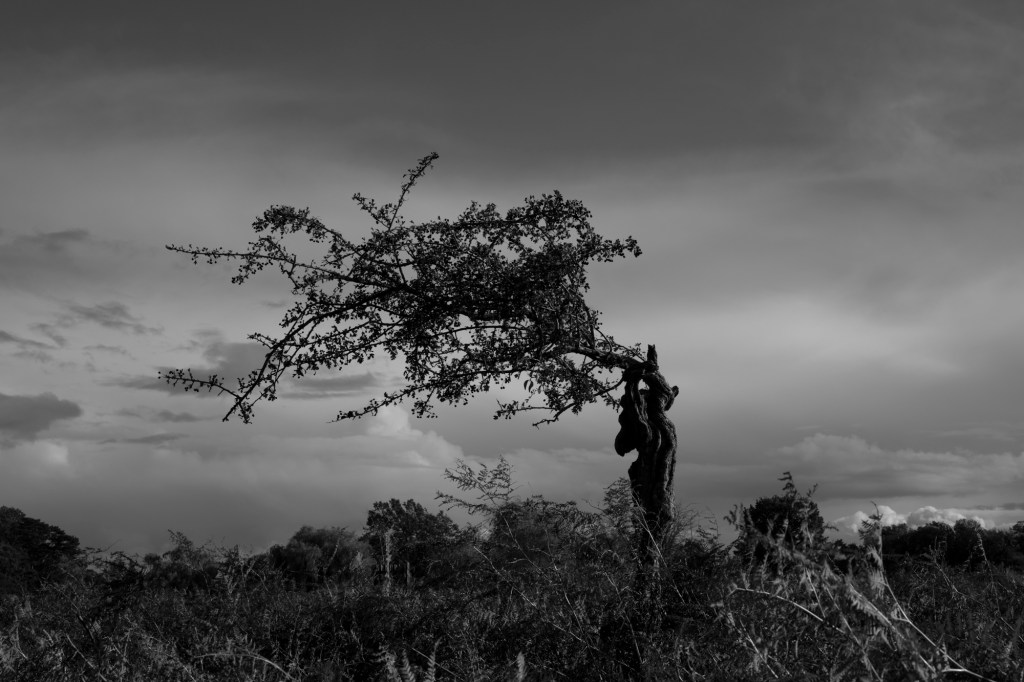
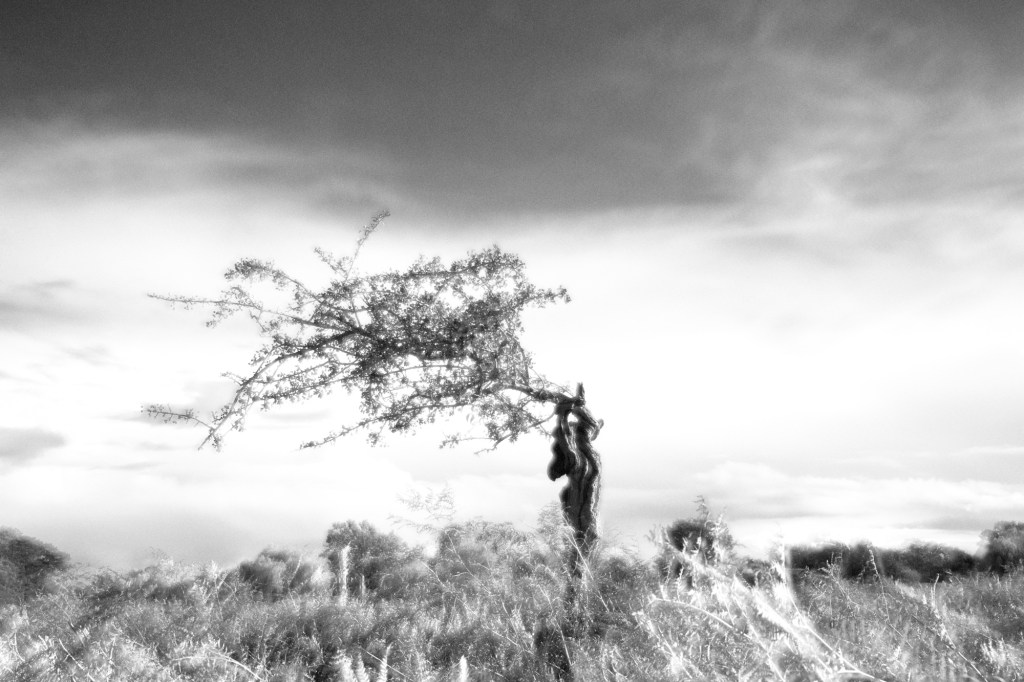
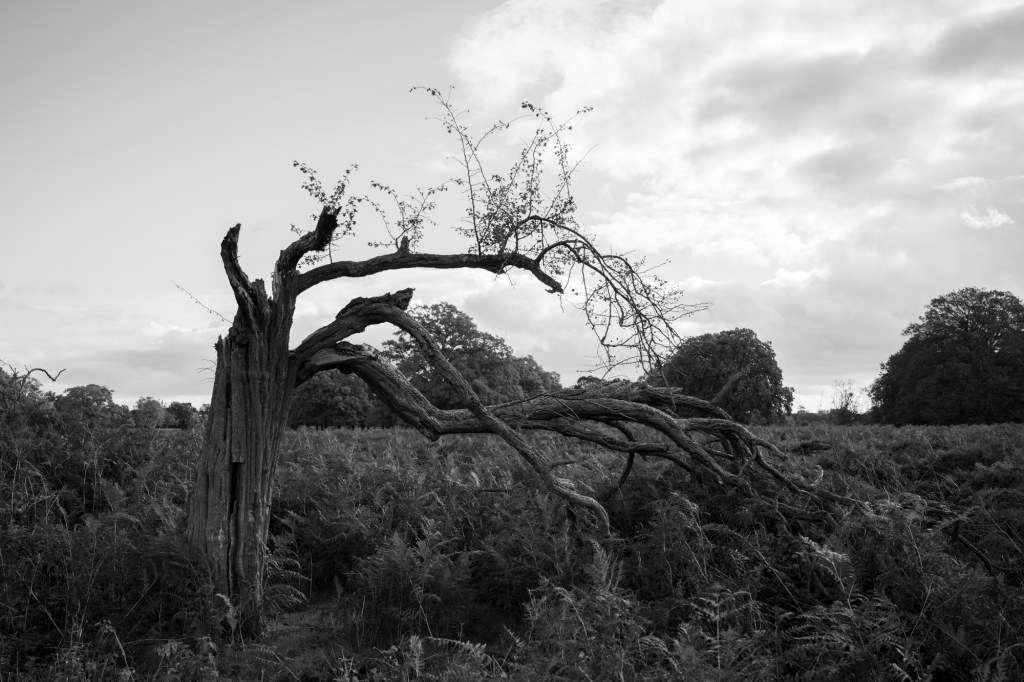
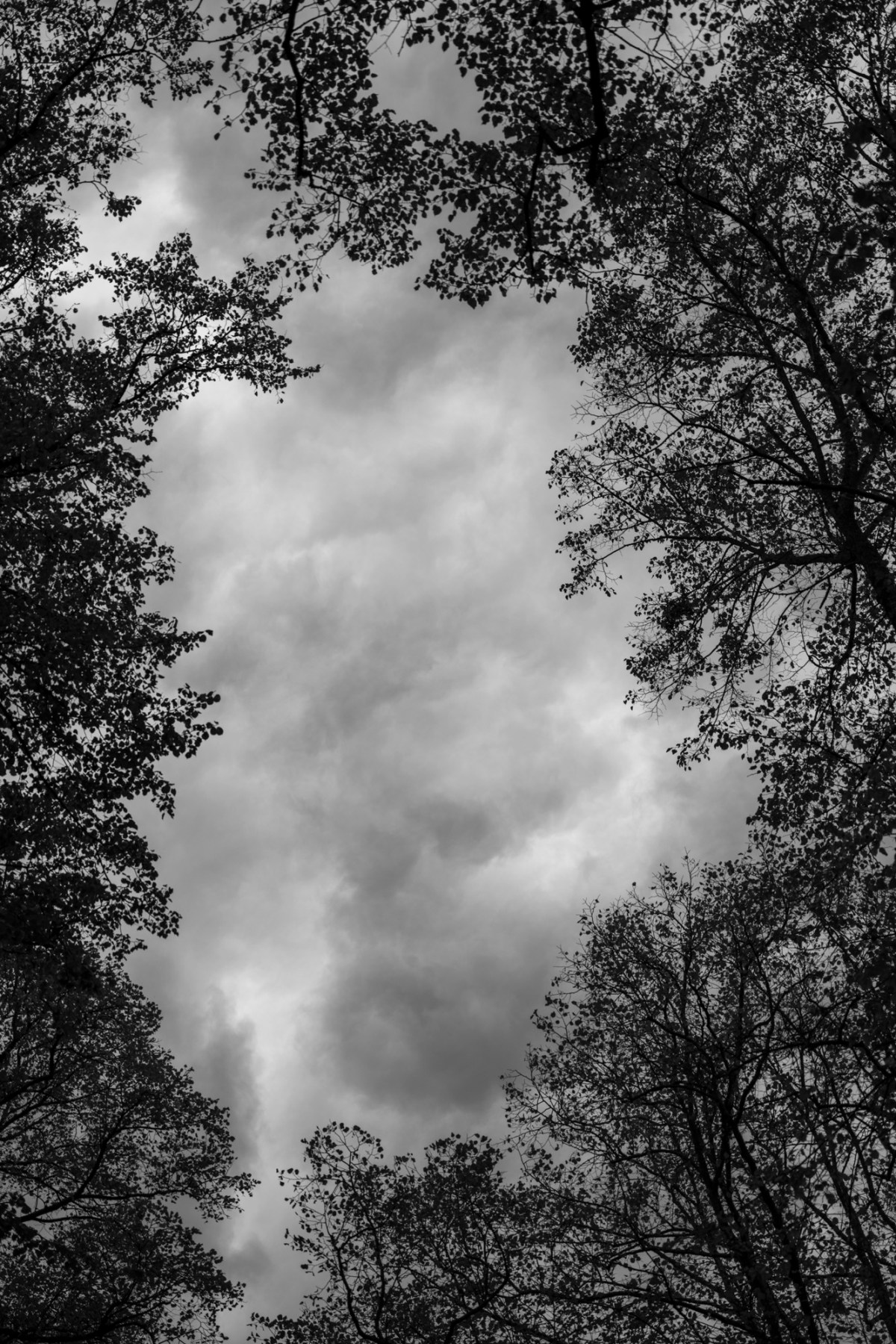
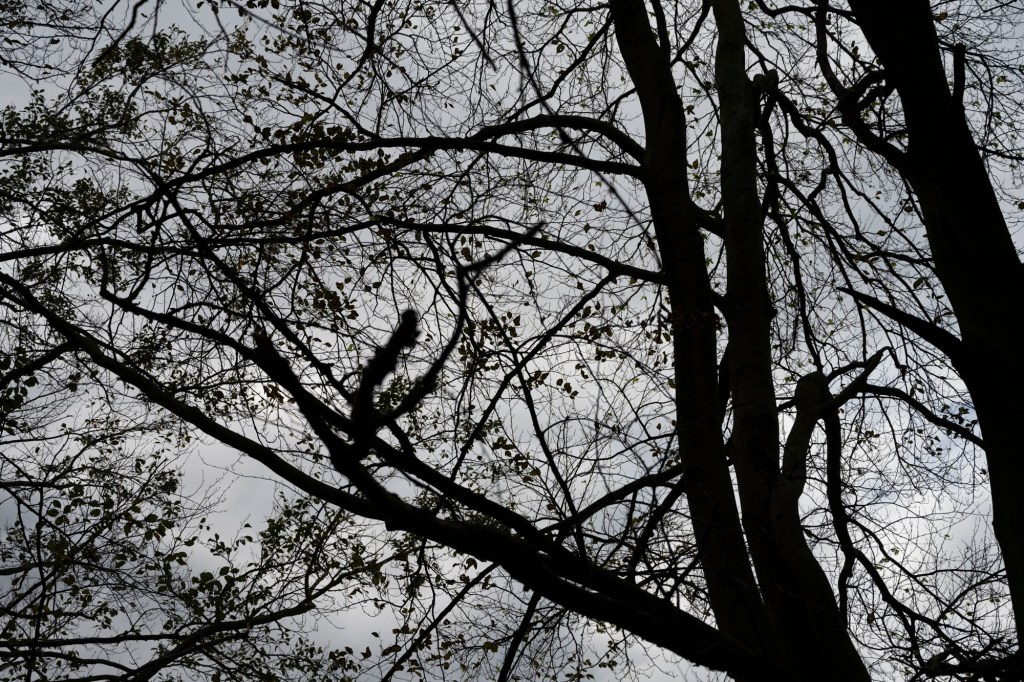
The other aspect that Åsa mentioned was the Black & White conversions of the images. I agreed that having the images in monochrome highlight the details of the trees better than in colour.
The resulting actions I will be taking between now and the Interim Review on 18 November 2020 are to:
Continue with my research in regards to hawthorns (folklore, ecology, the environment, Bushy Park, etc.)
Take further photographs of particular trees
Refine the Black & White conversion technique
Produce a series of test prints to see what works and what doesn’t
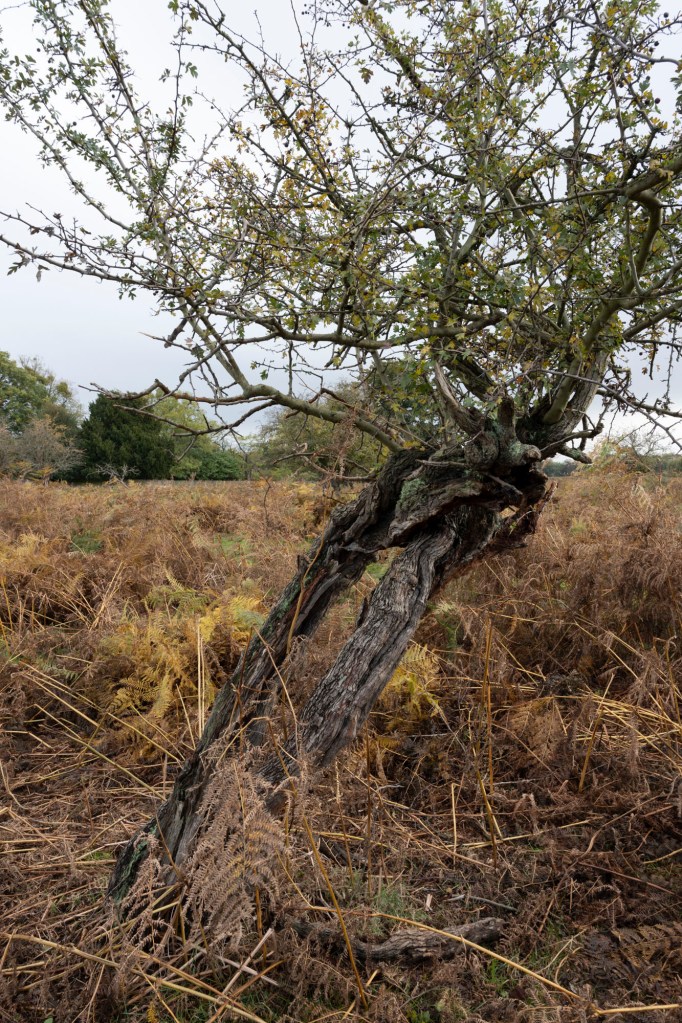
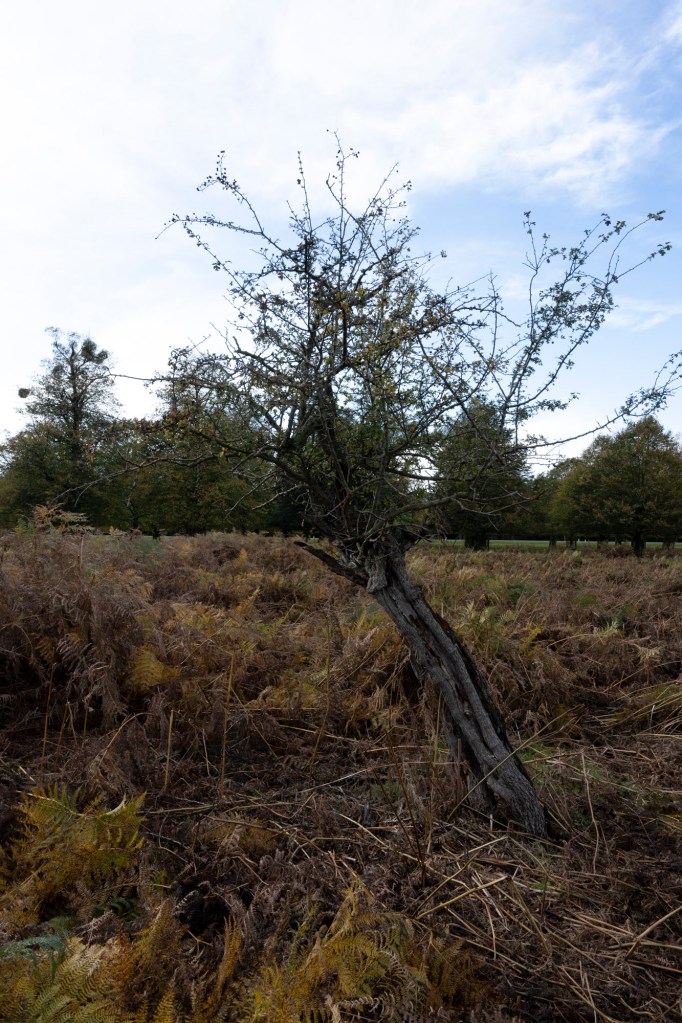
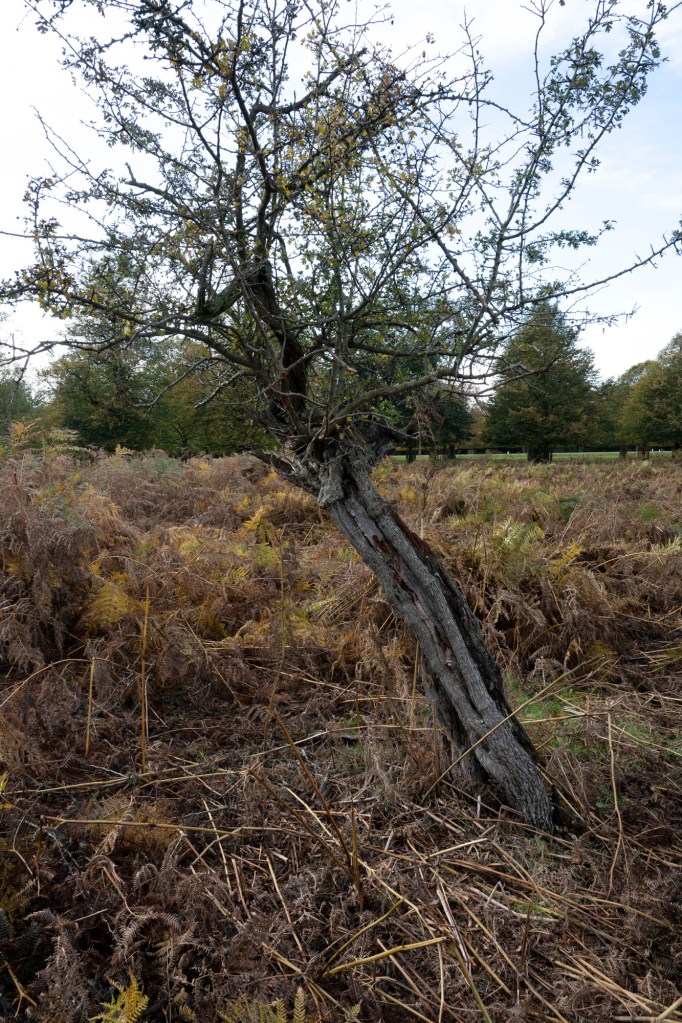
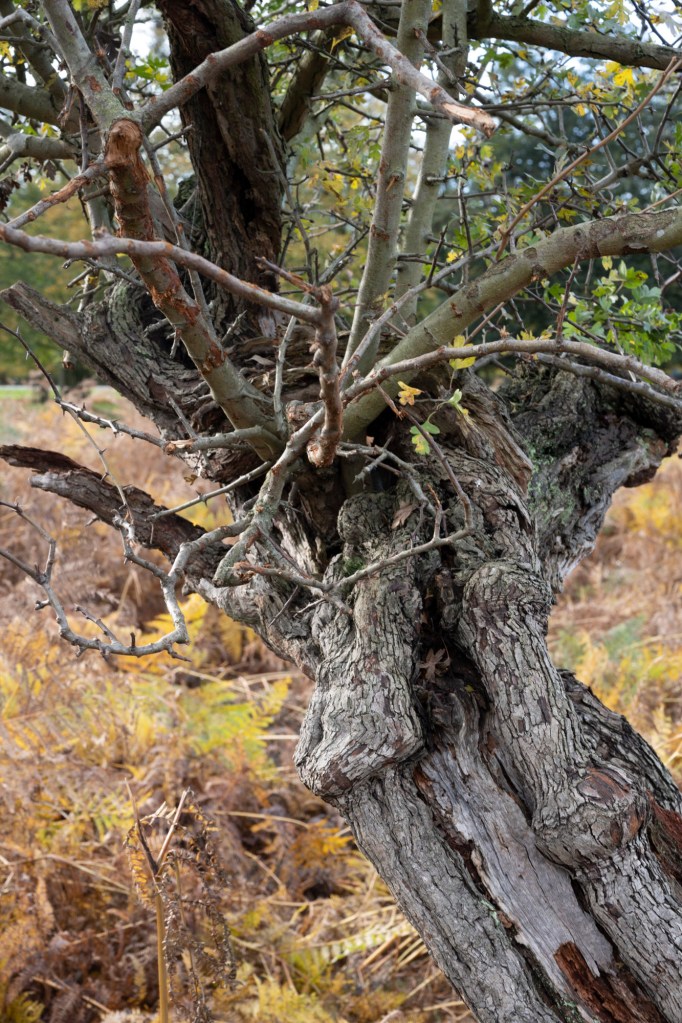
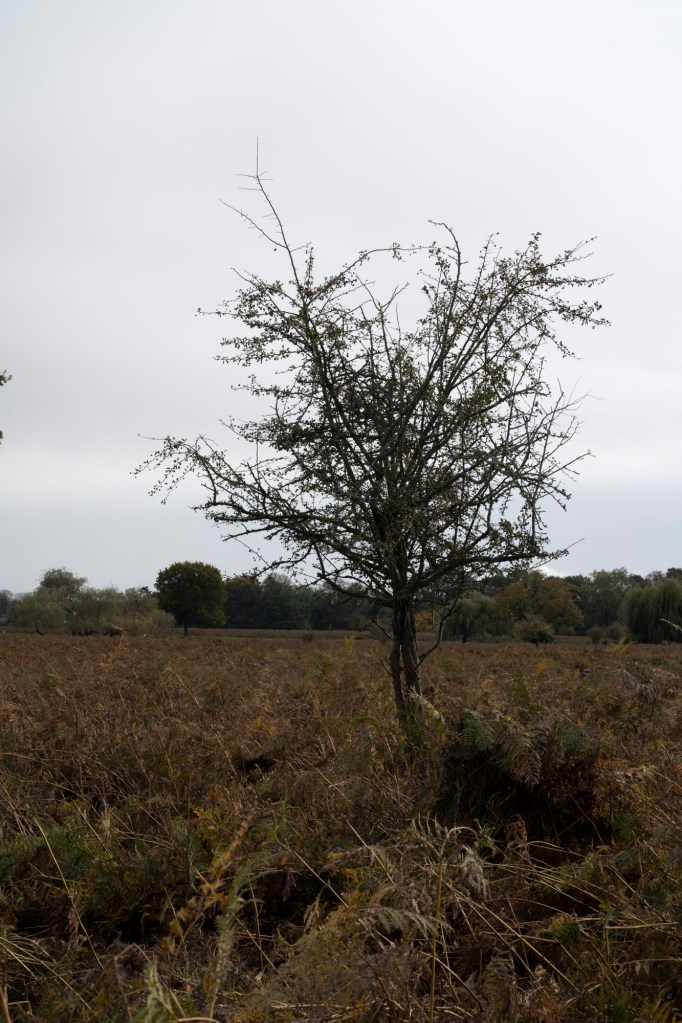
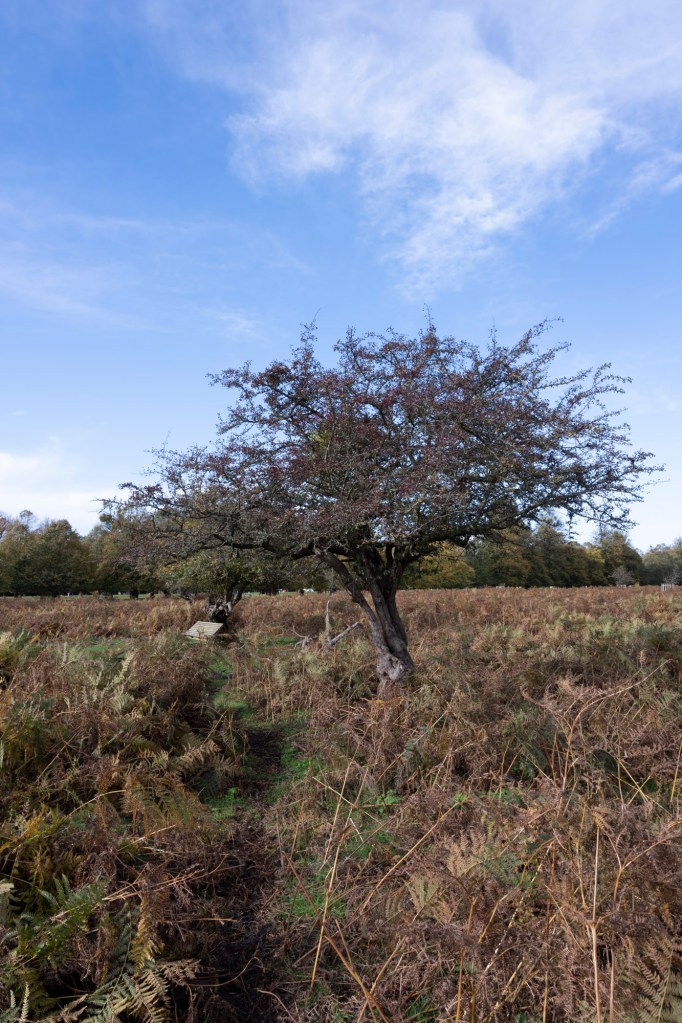
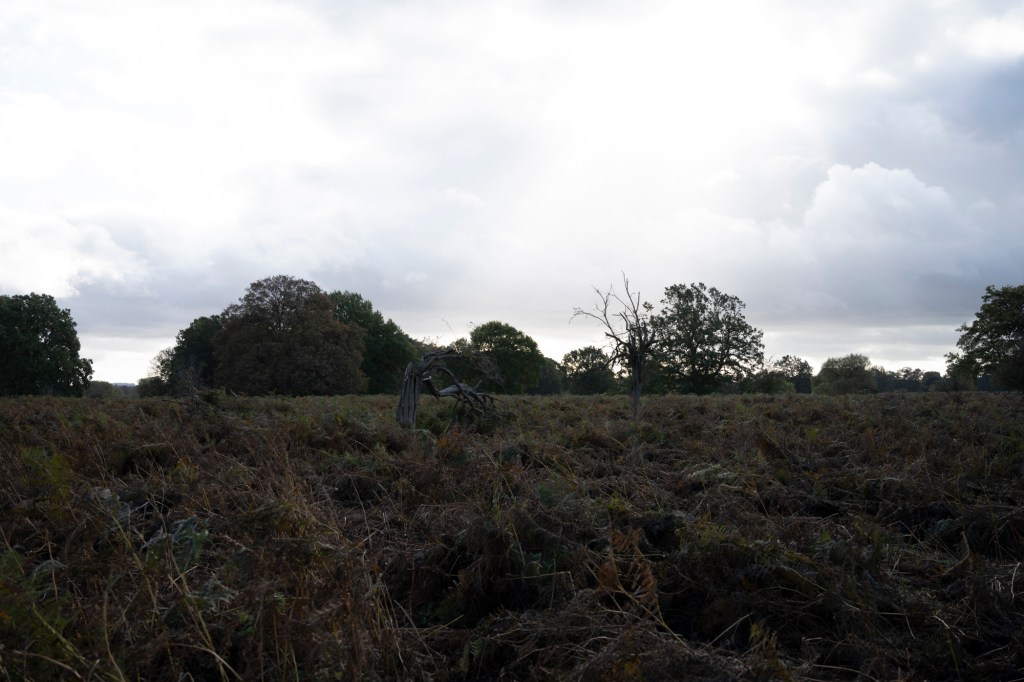
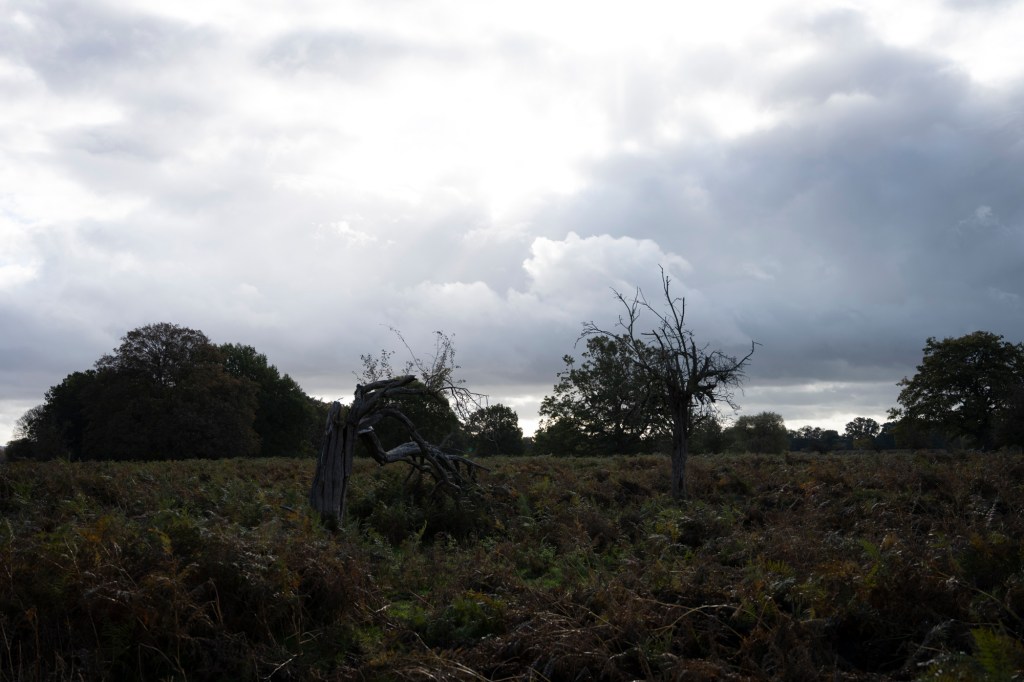
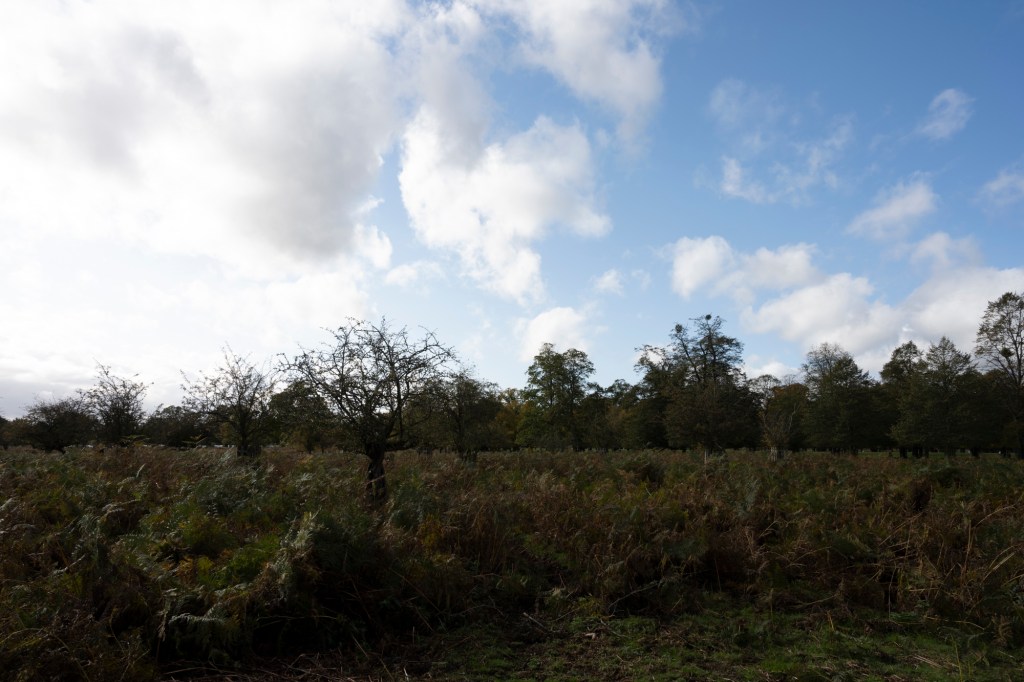
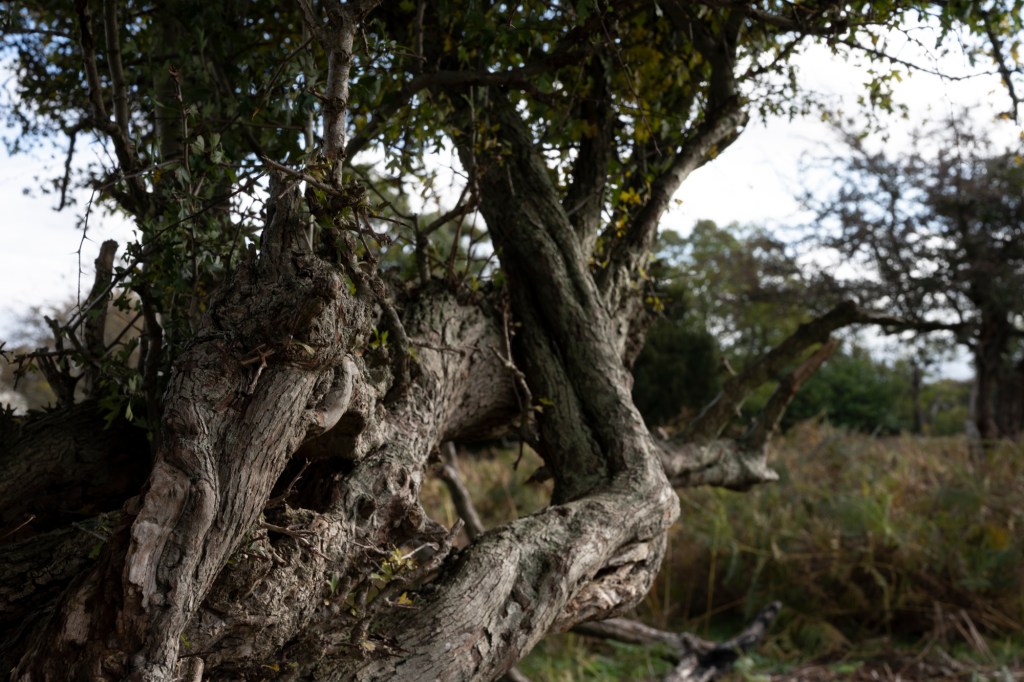
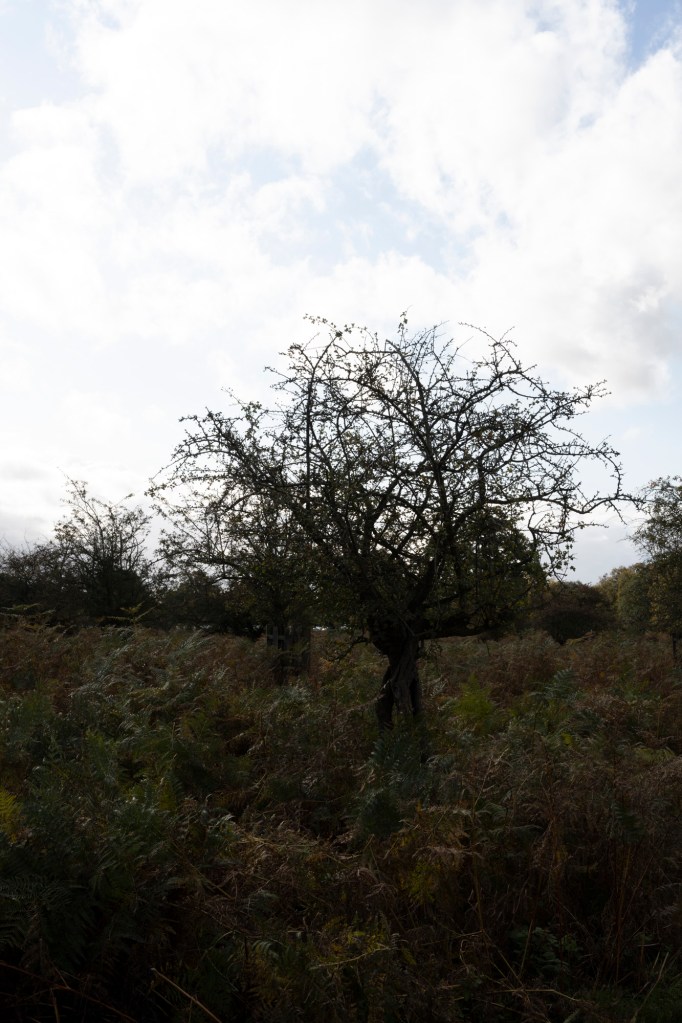
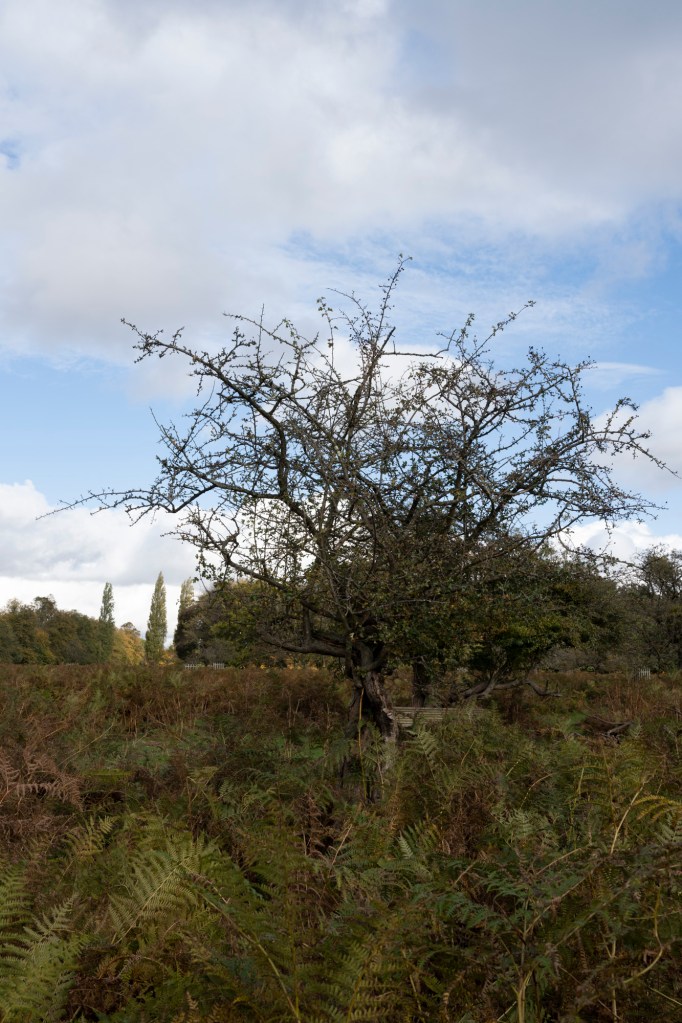
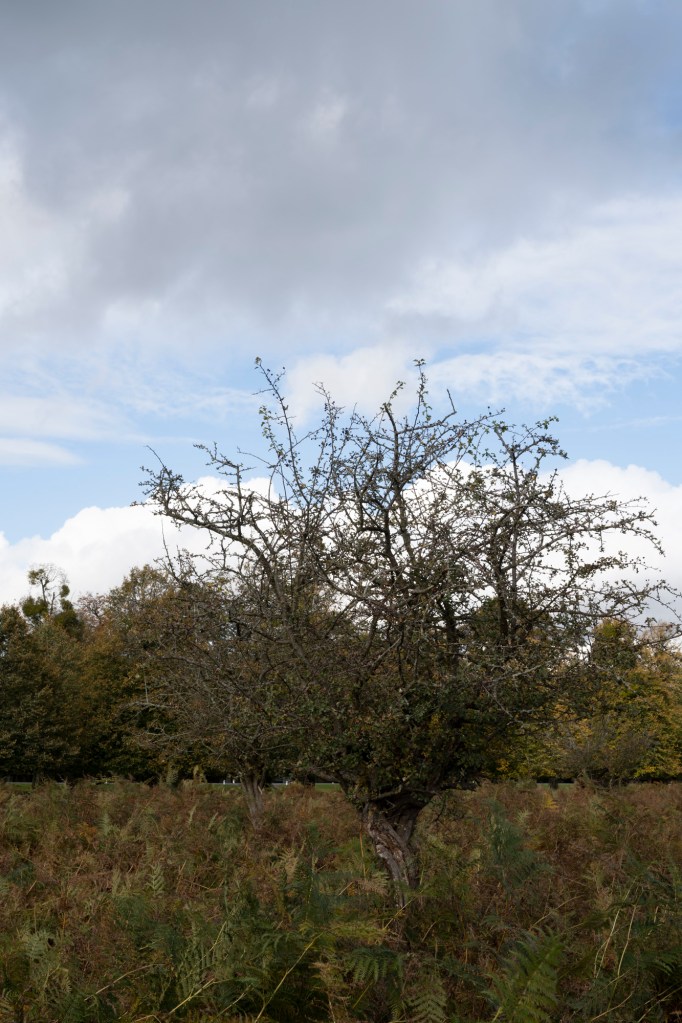
After my shoot on 22 October, I was starting to get a better idea of the patch of hawthorn trees next to the eponymous lodge. As I had only focused on four of the trees, I wanted to take a closer look at some of the others.
Another issue that influenced my photographic decisions during this particular shoot was the presence of the deer within the ferns. Bushy Park is currently home to approximately 320 of these animals and their grazing is essential to maintaining the park’s grasslands. This activity creates more variation in structure and plant diversity and does not damage the anthills, which add further diversity and character to the grassland, unlike cutting the vegetation.
At this time of year during the rutting season, the deer can potentially attack humans and it is recommended that people stay at least 50 meters away from them while in the park. This is something I always adhere while in the park regardless of what I’m doing. As such, I couldn’t go near the other trees that I had photographed three days’ previously, so I focused on the following specimens.
Tree One
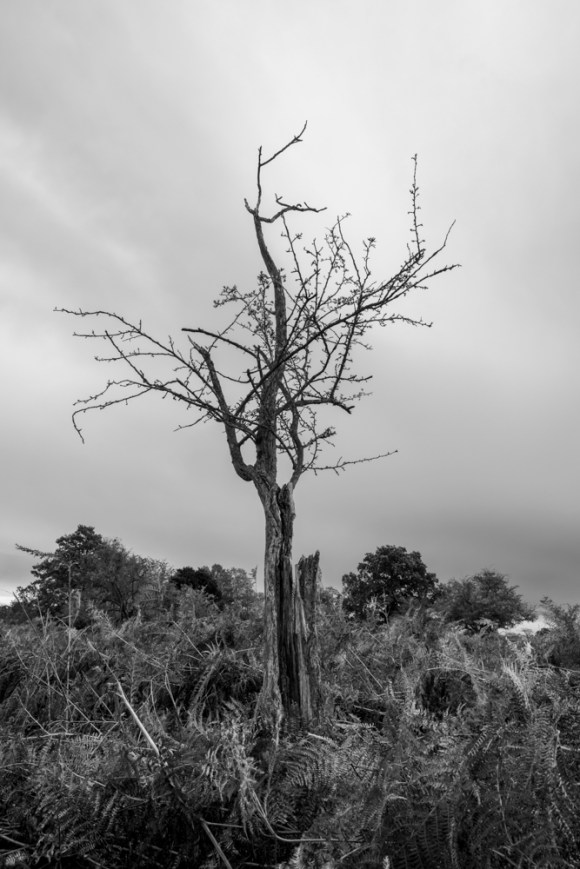
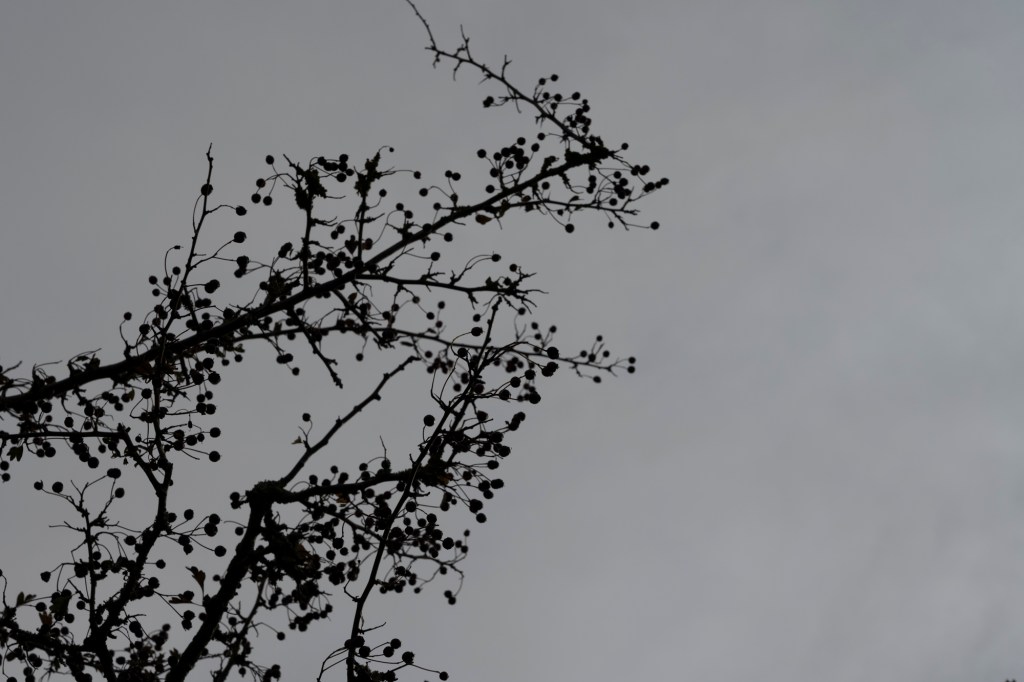
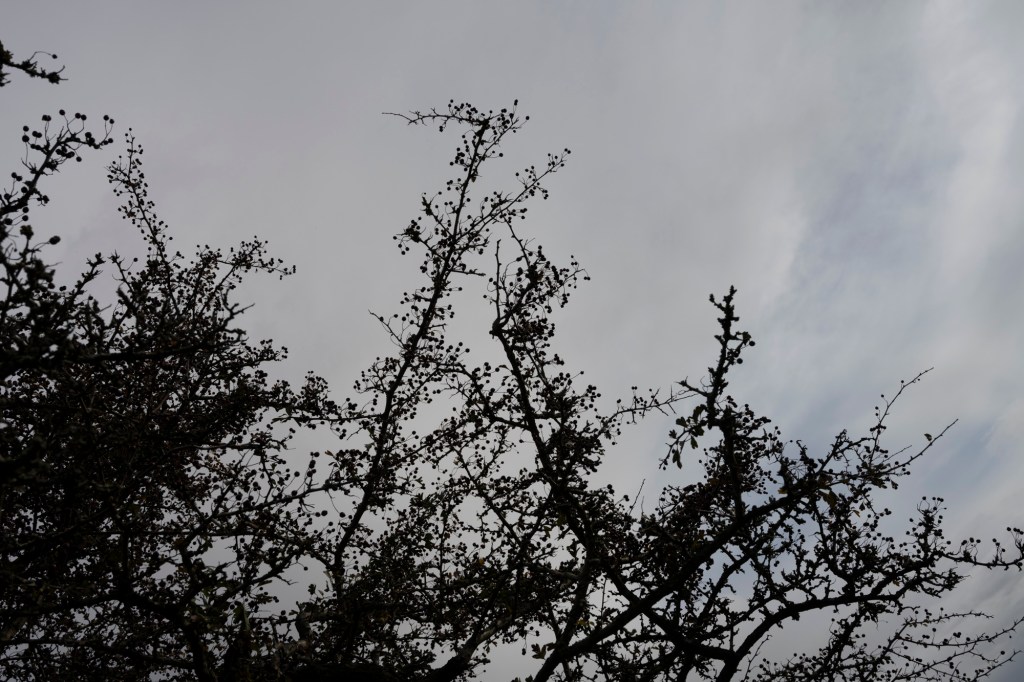
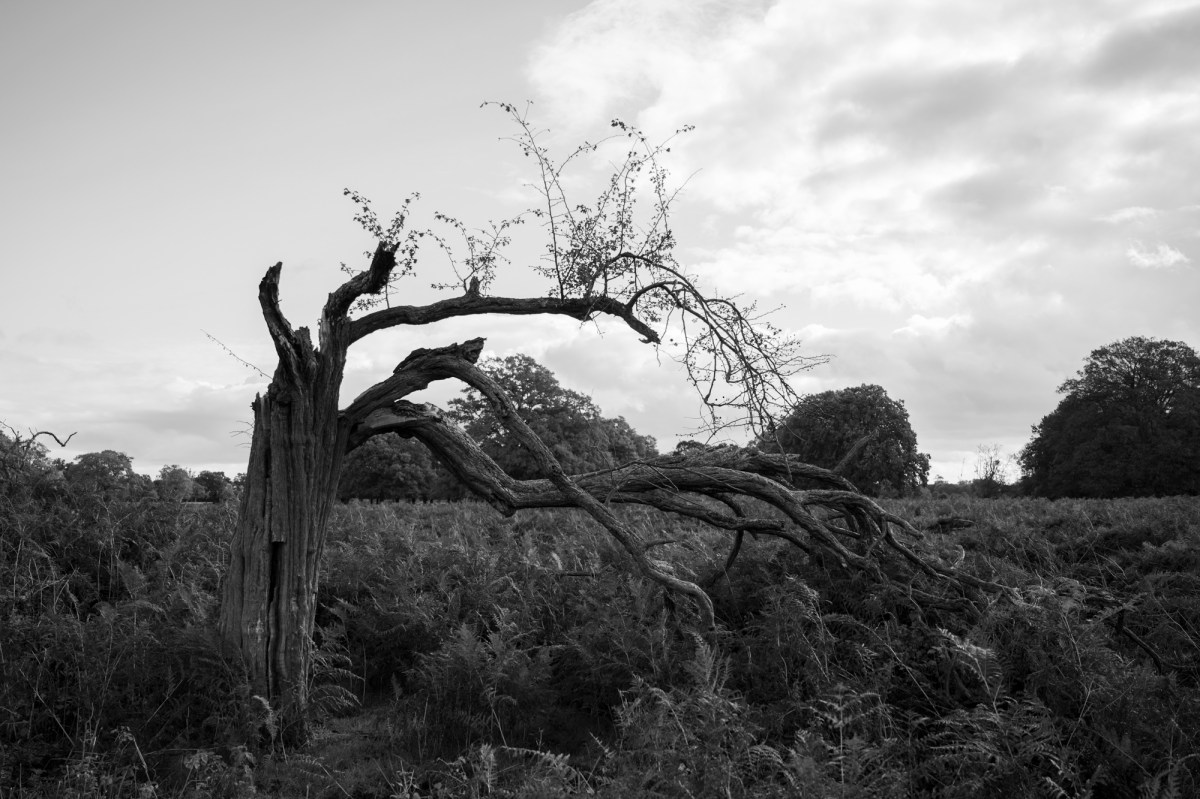
This is an initial Black & White conversion of the whole hawthorn.
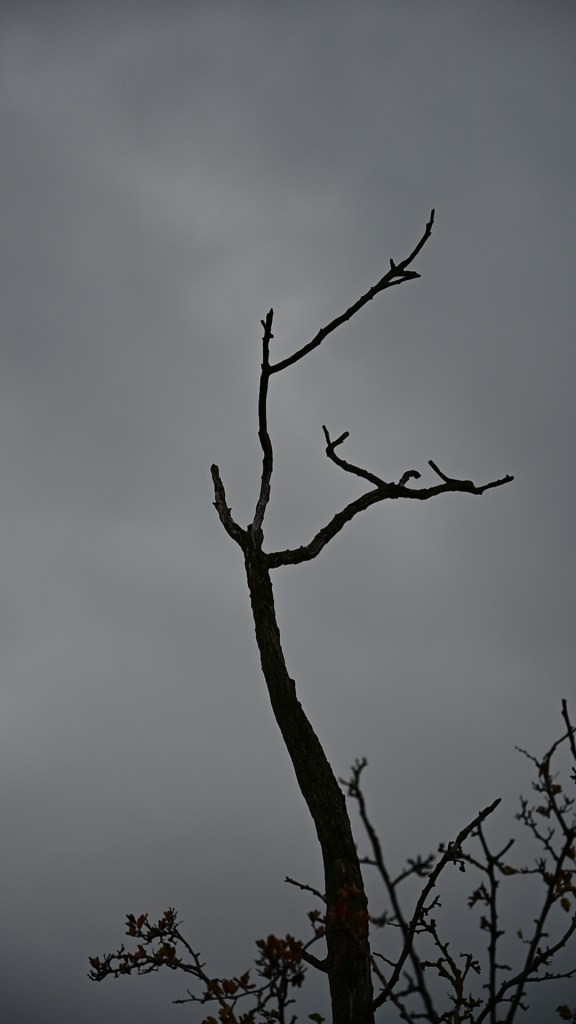
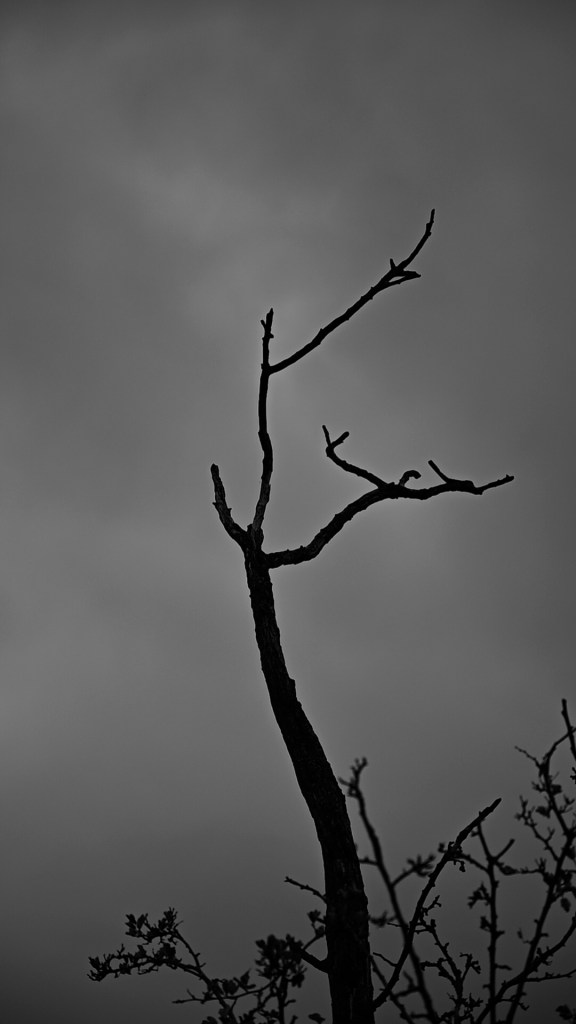
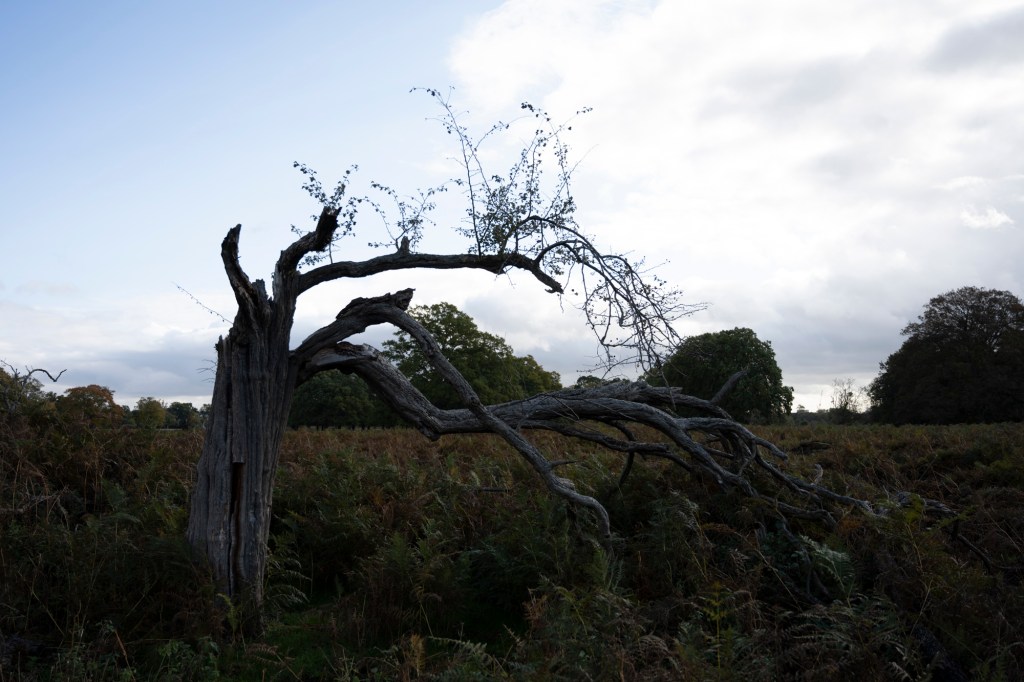
The following image also stood out for me. Unfortunately, my camera had only recorded a low-res jpg and not the accompanying RAW file of the image. Annoying, as I particularly liked the composition. I also created a Black & White version of this image. The original one is on the left, the conversion on the right.
Tree Two
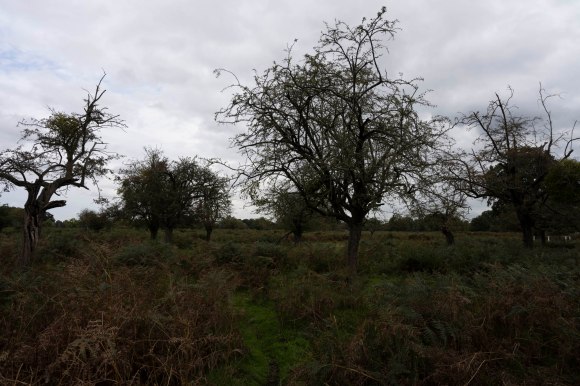
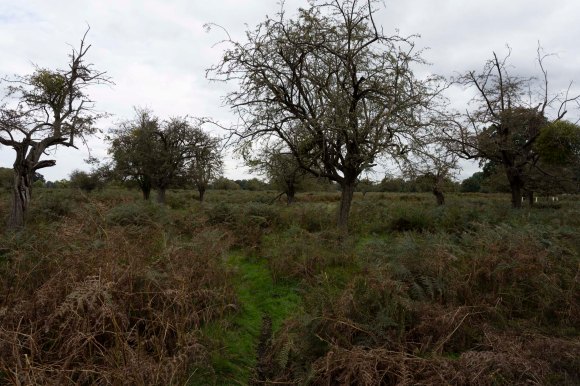
This was a very interesting subject – when looking at the resulting images they look as if they’ve been manipulated, giving the illusion of the background being part of the tree.
Tree Three
Tree Four
Tree Five
Tree Six
Tree Seven
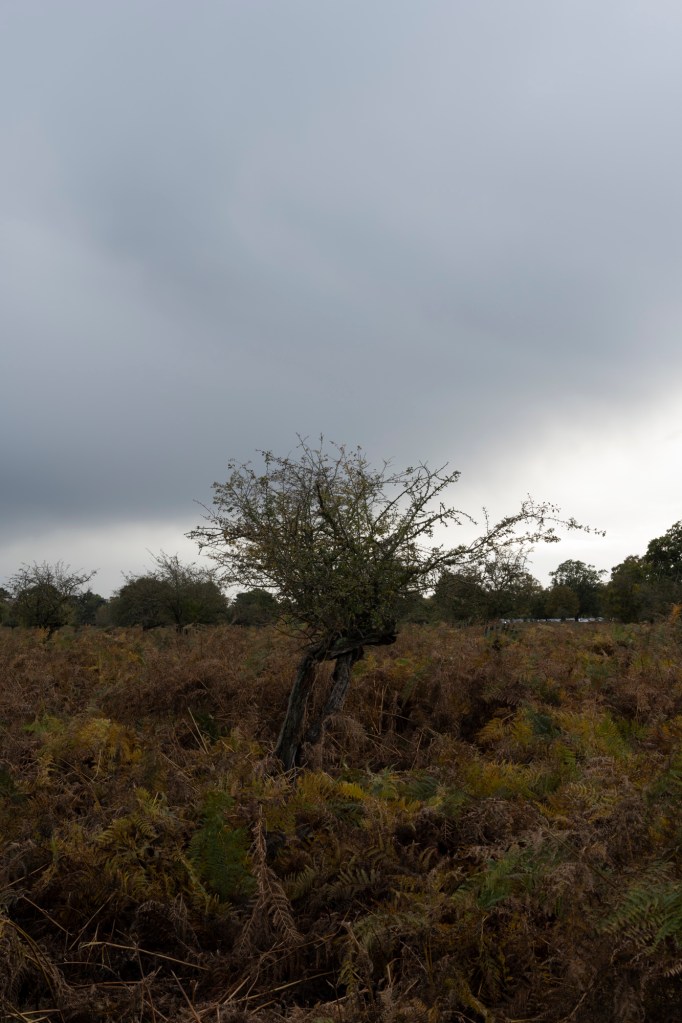
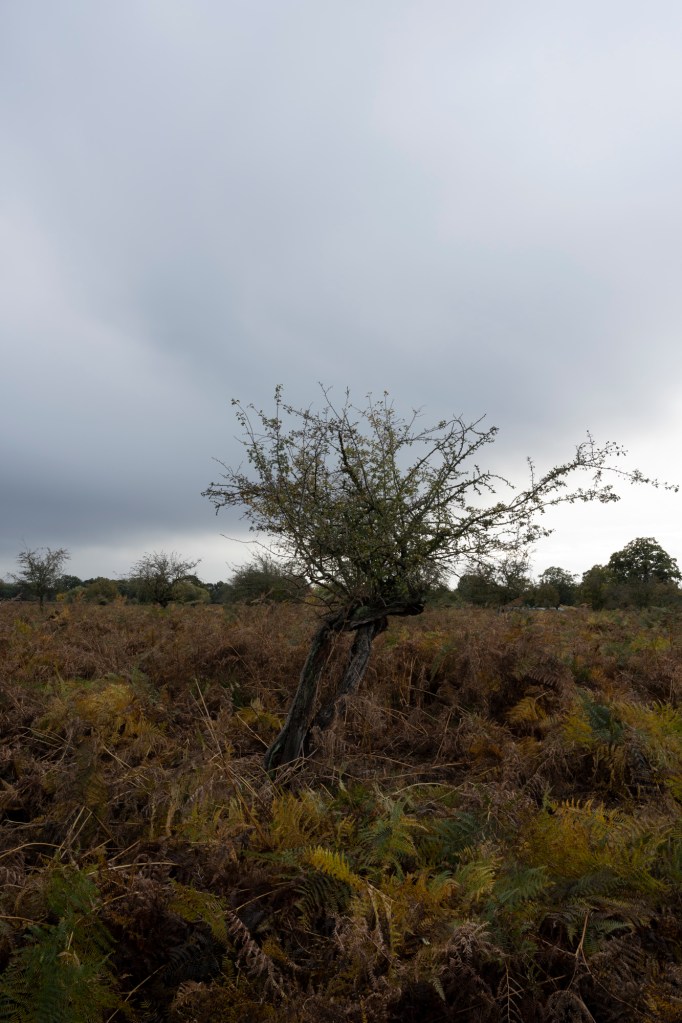
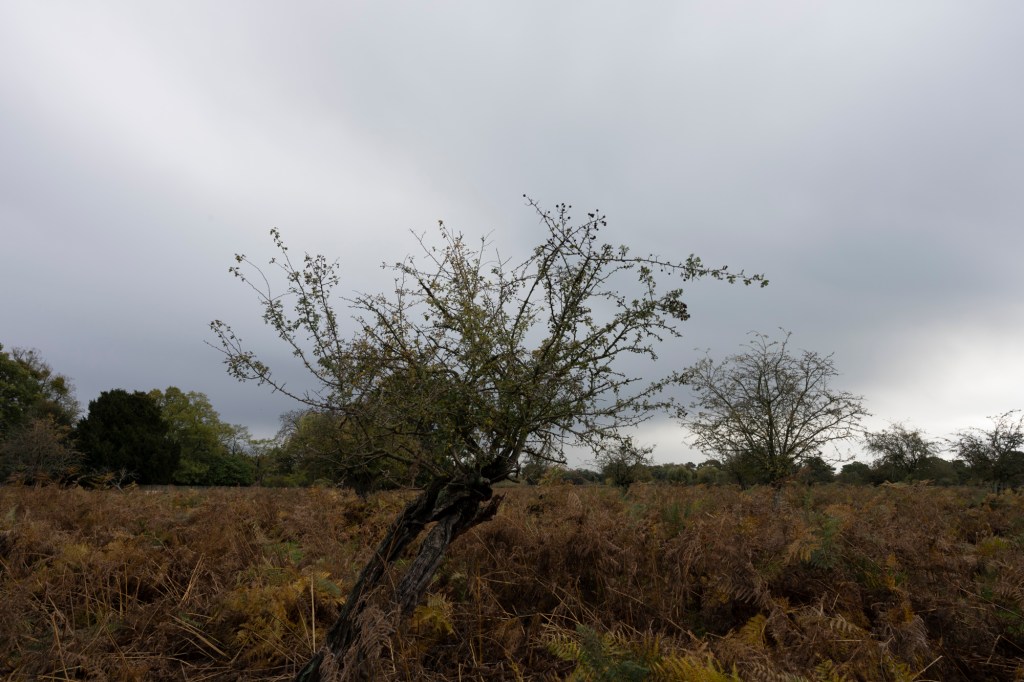
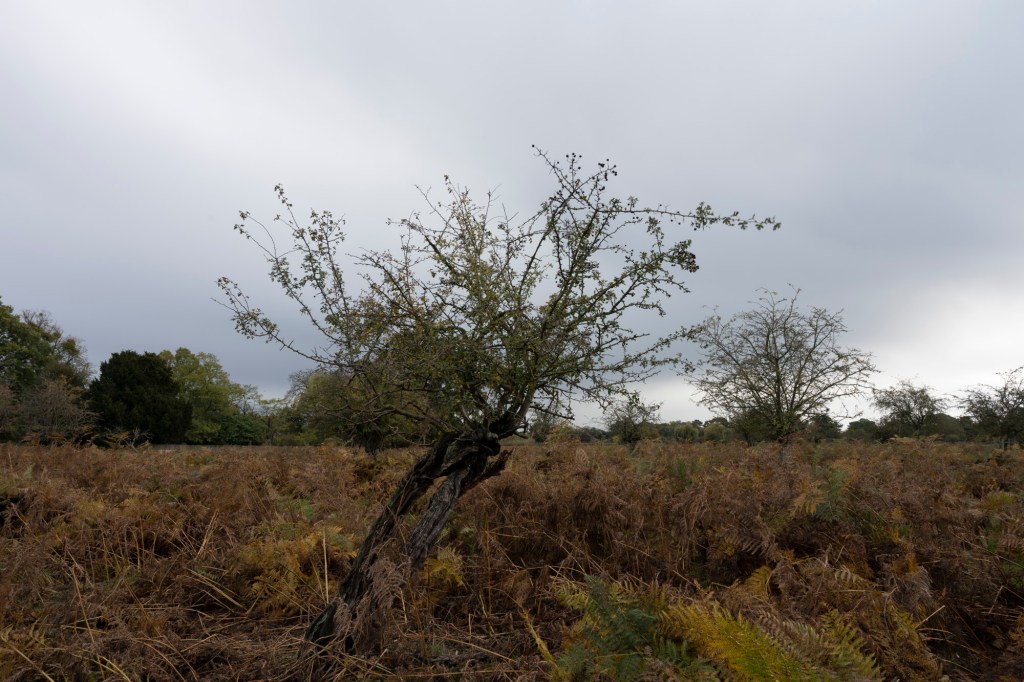
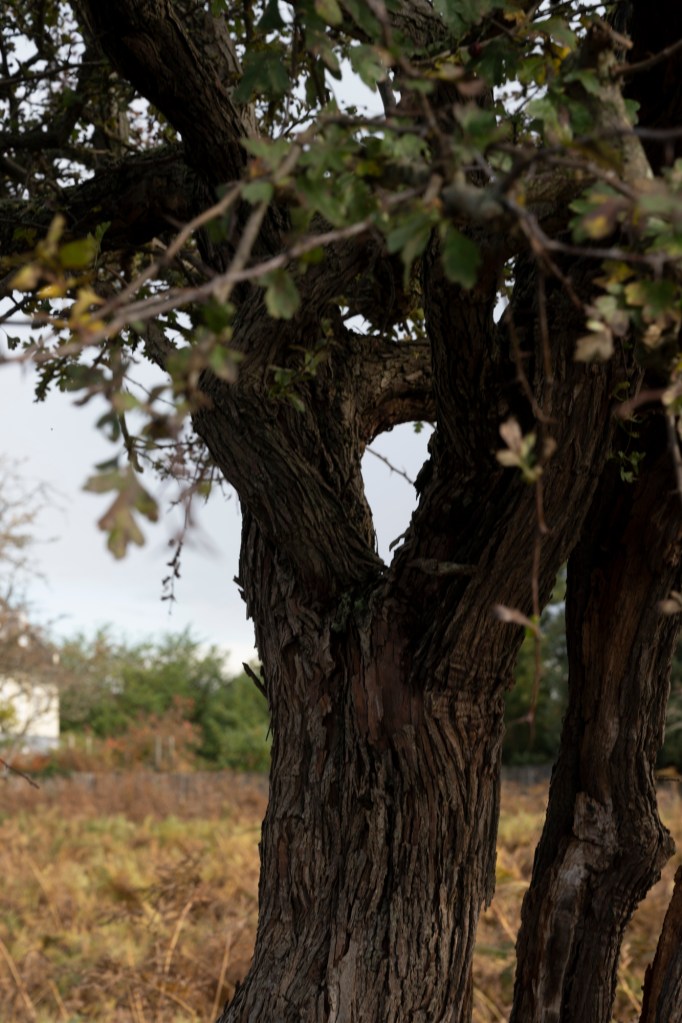
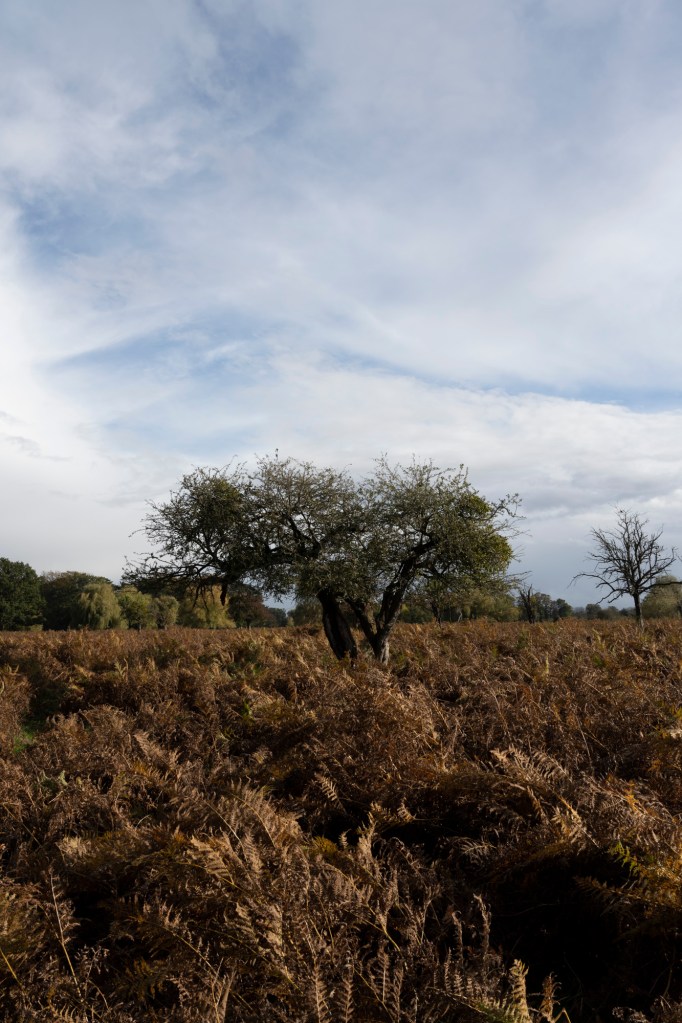
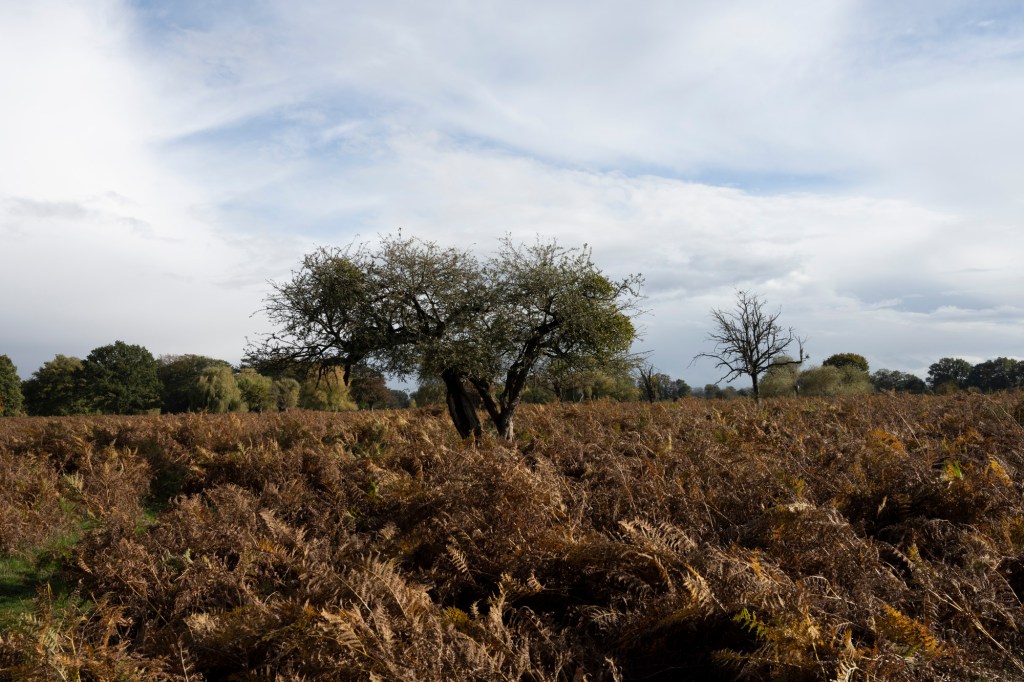
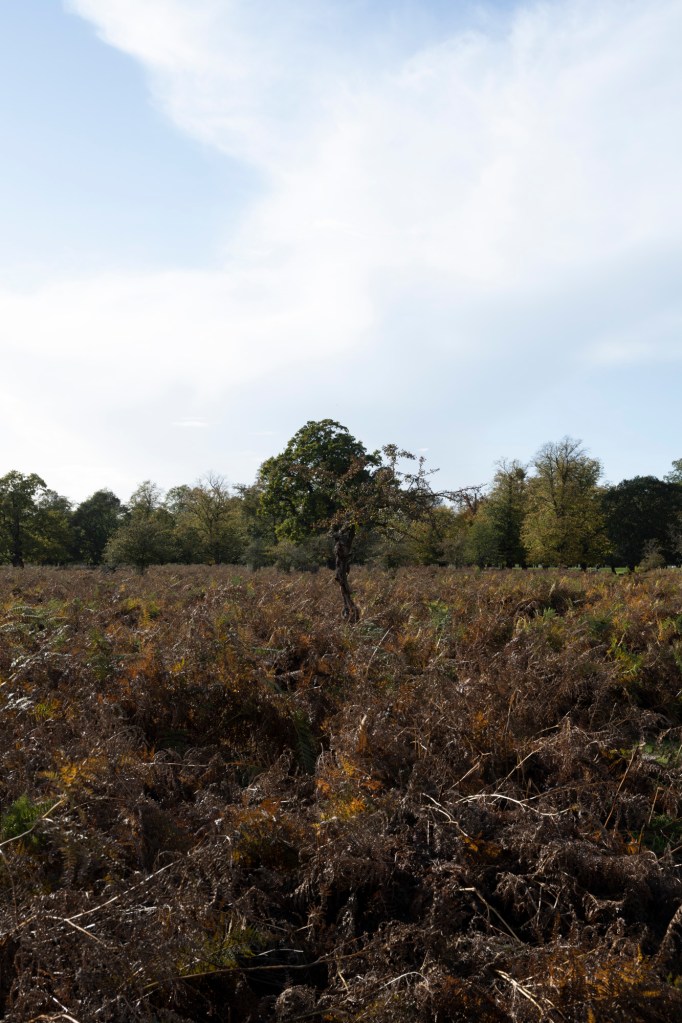
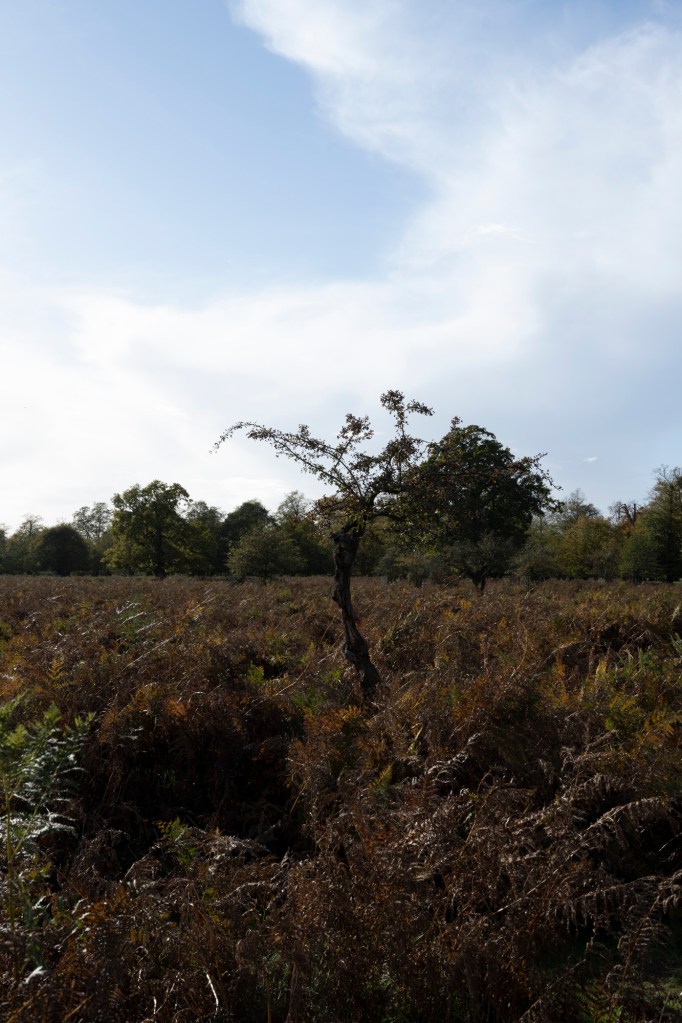
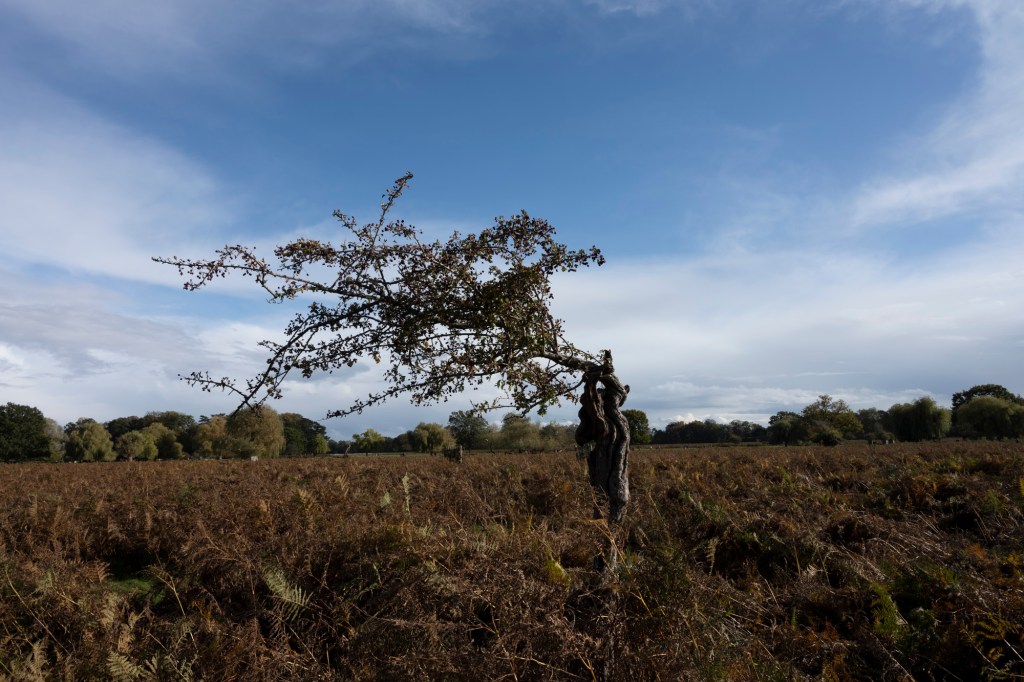
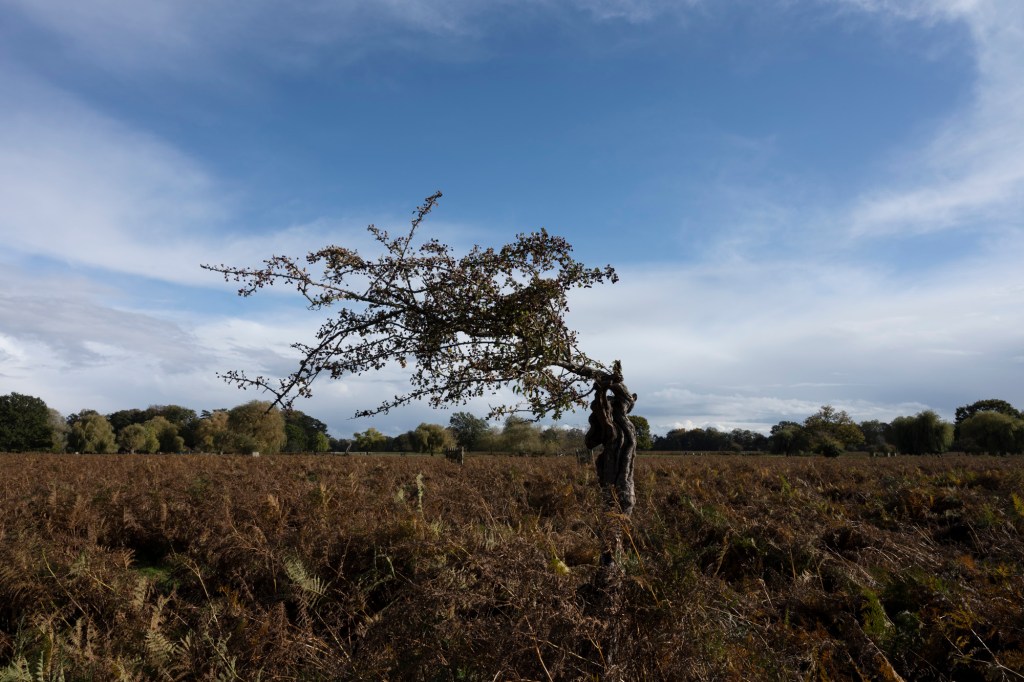
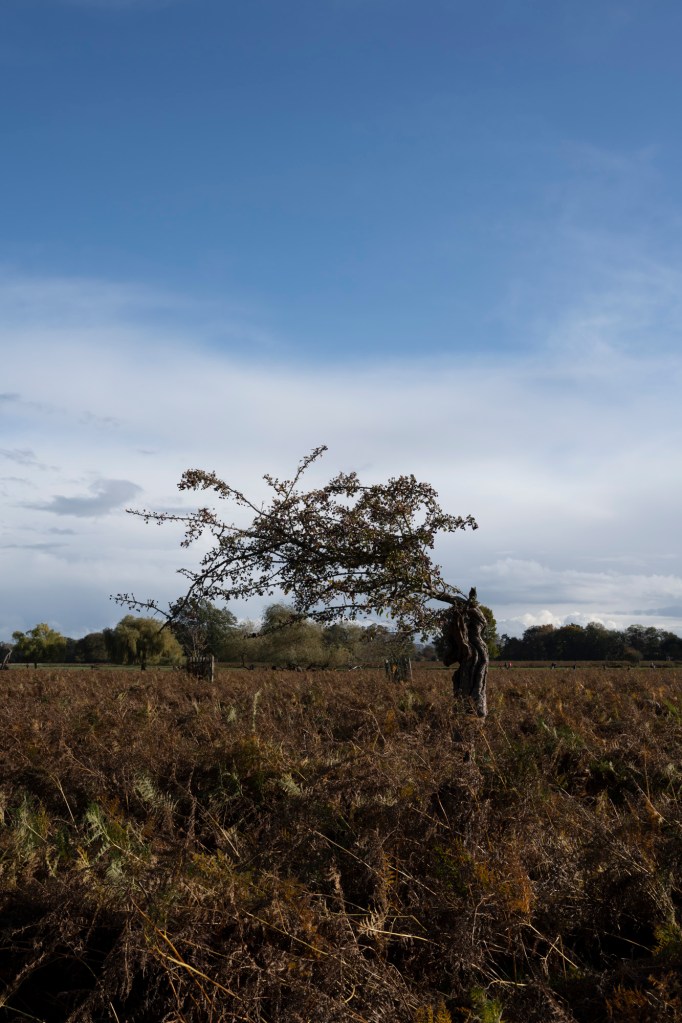
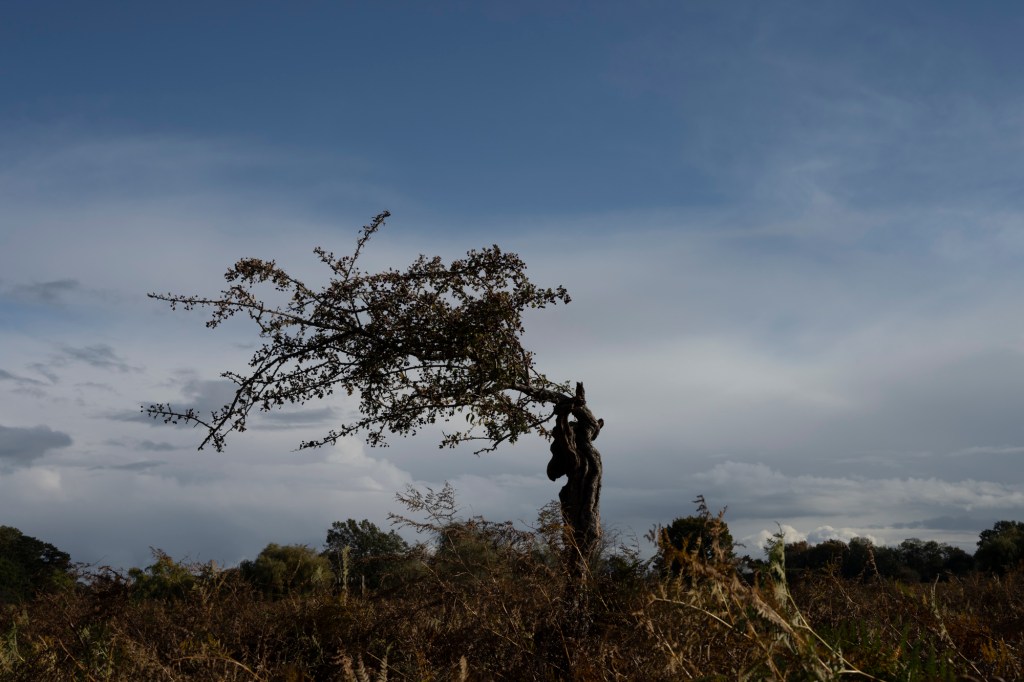
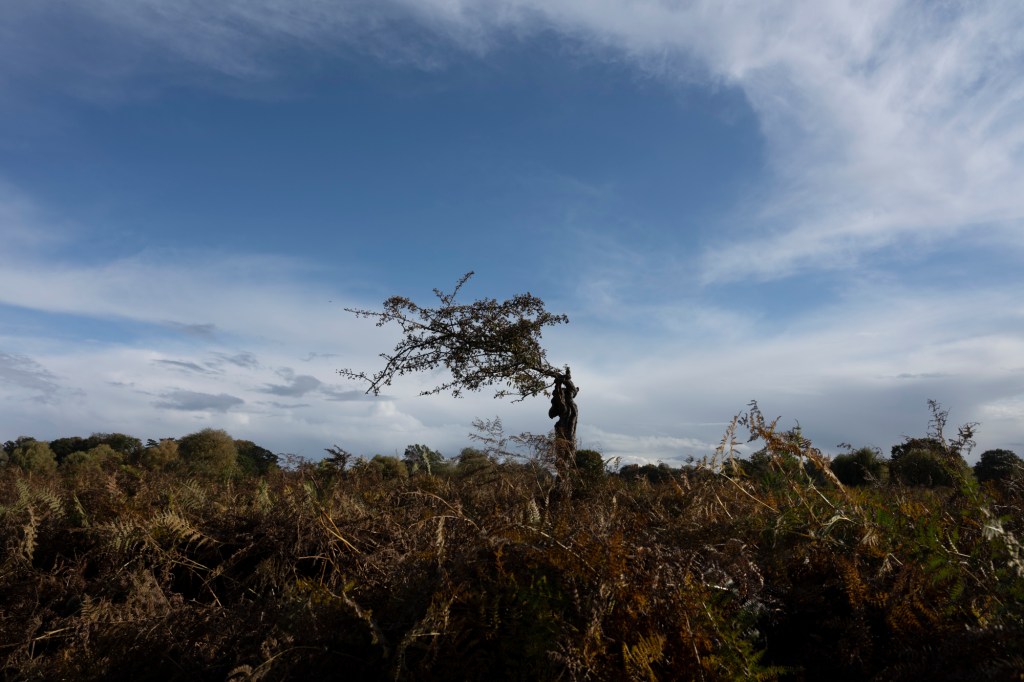
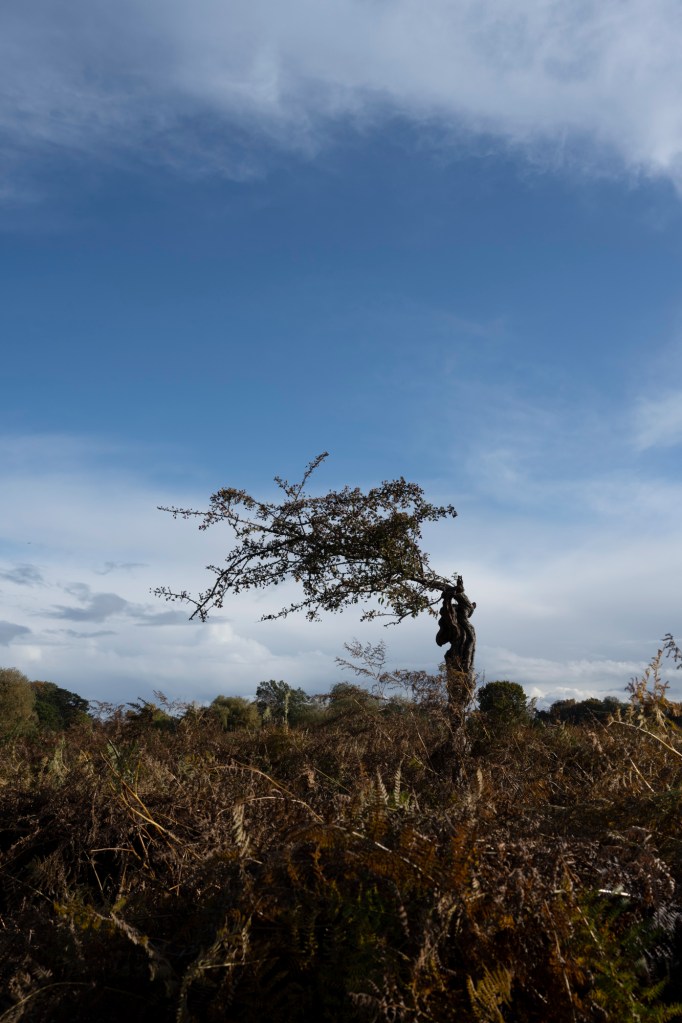
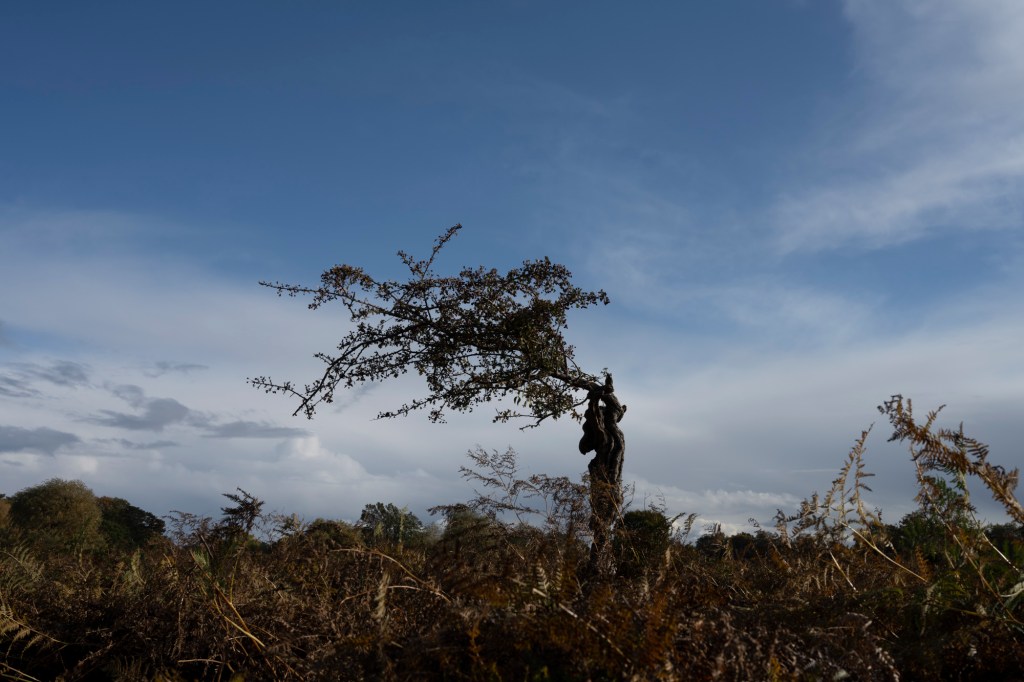
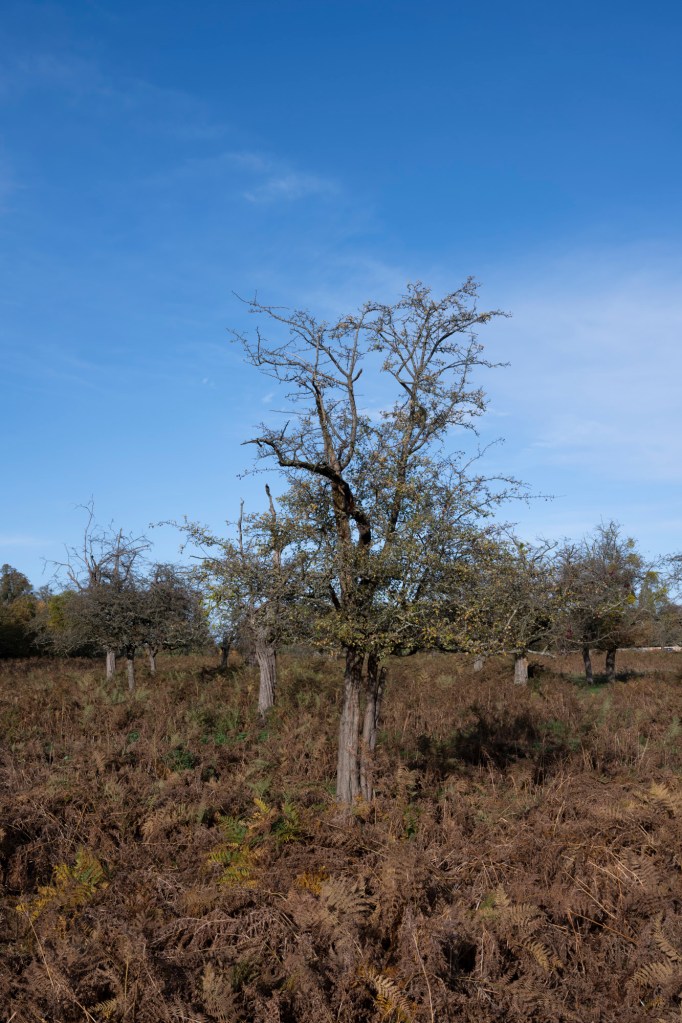
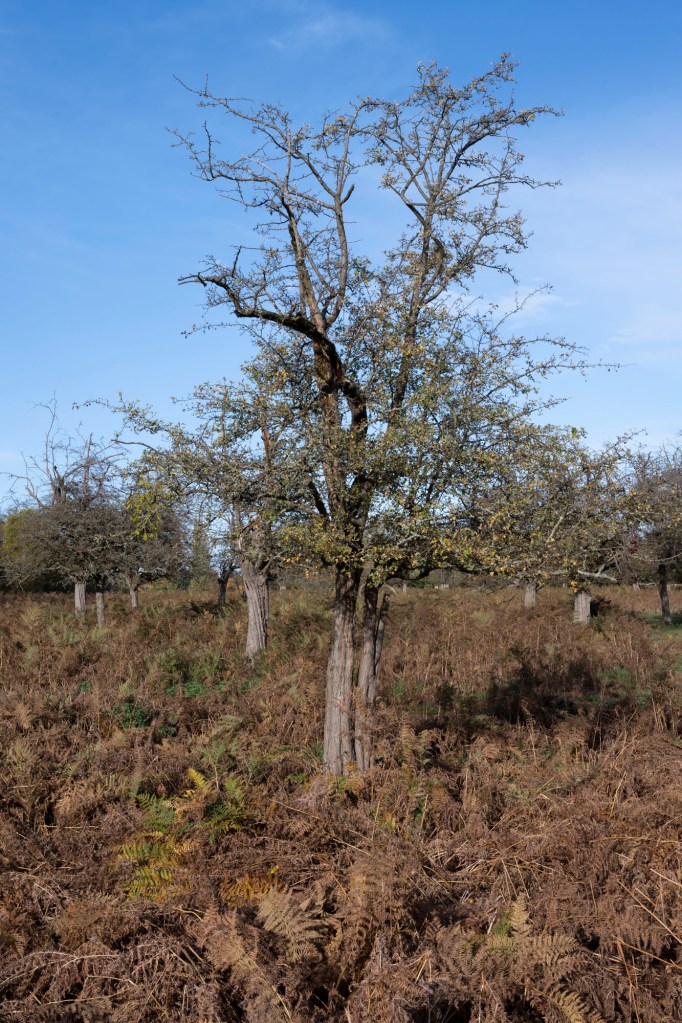
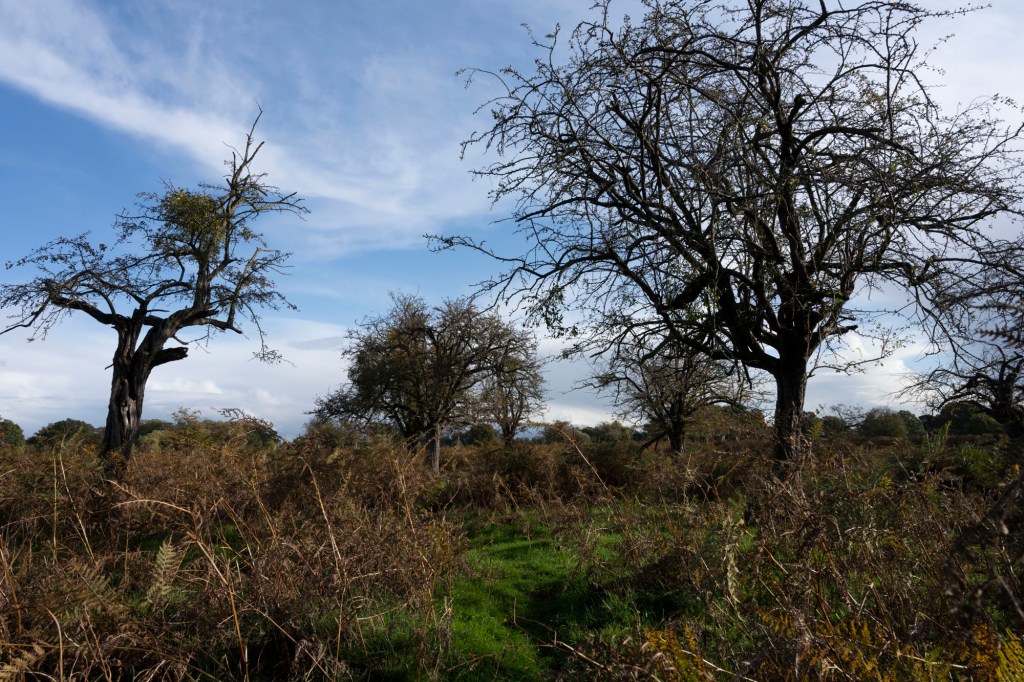
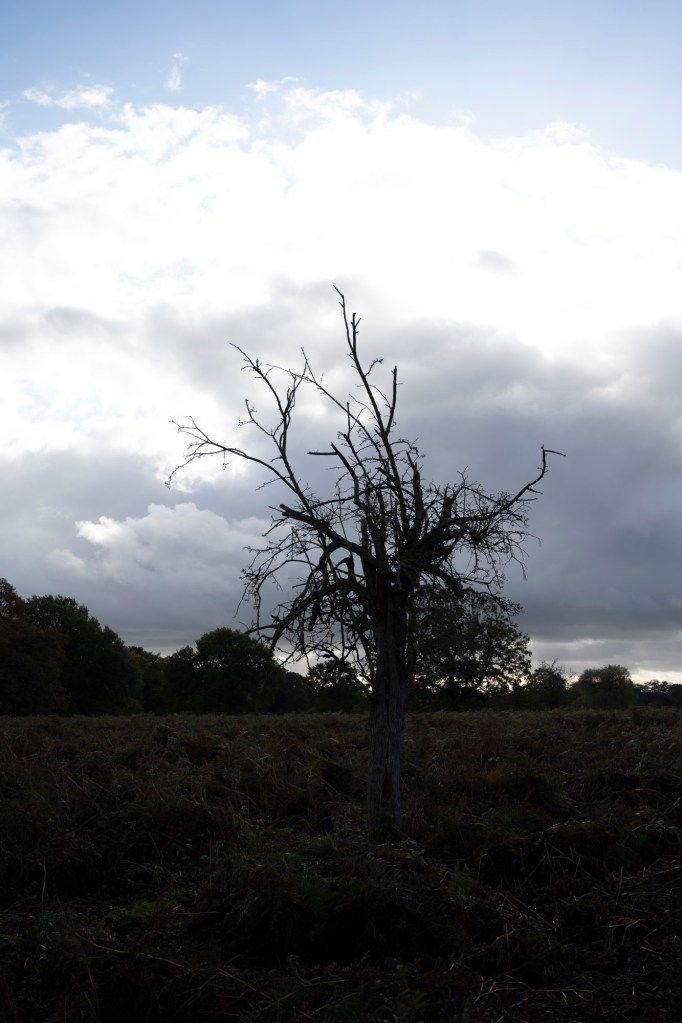
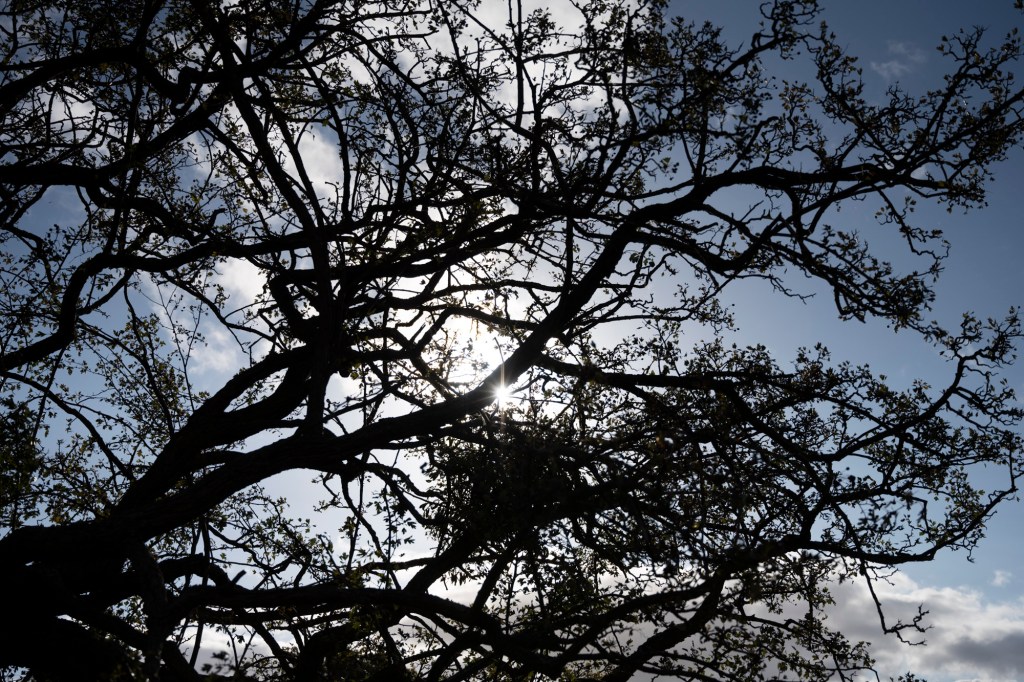
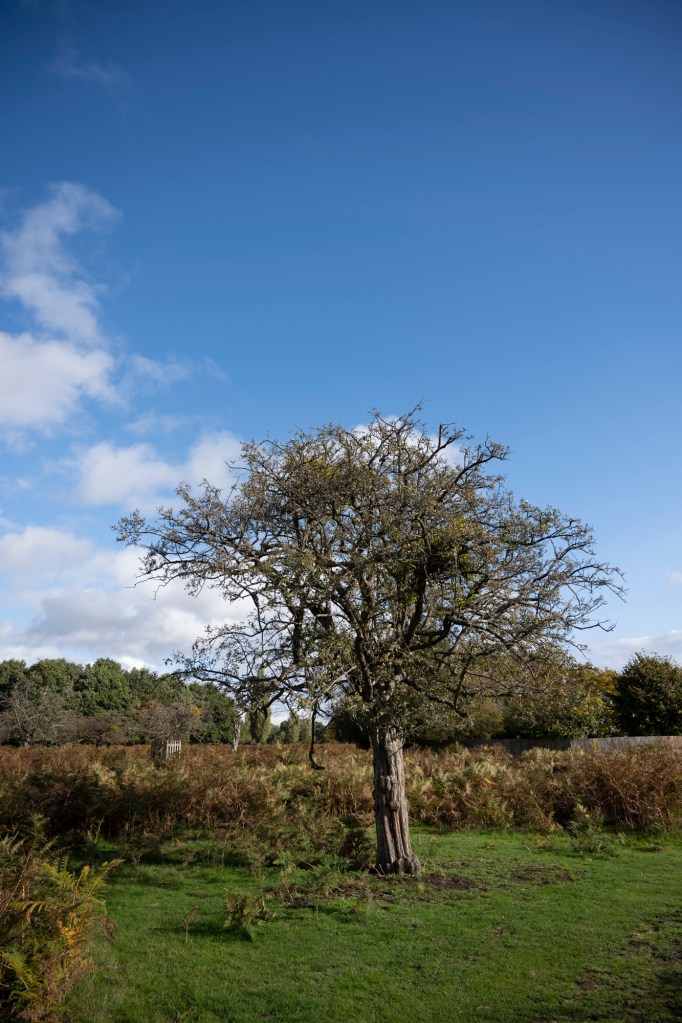
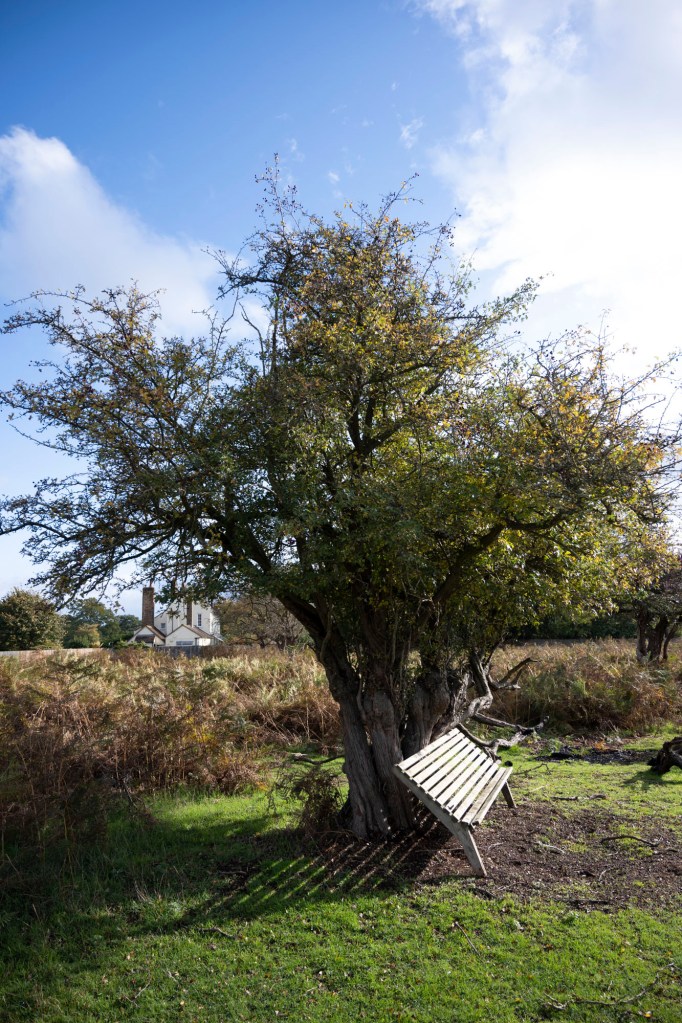
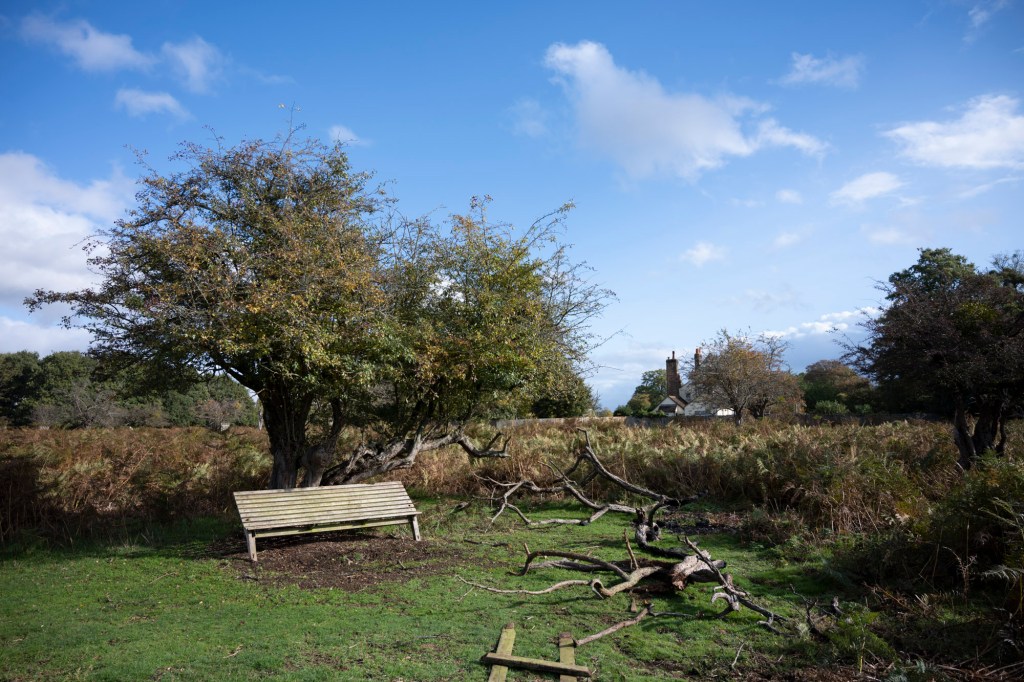
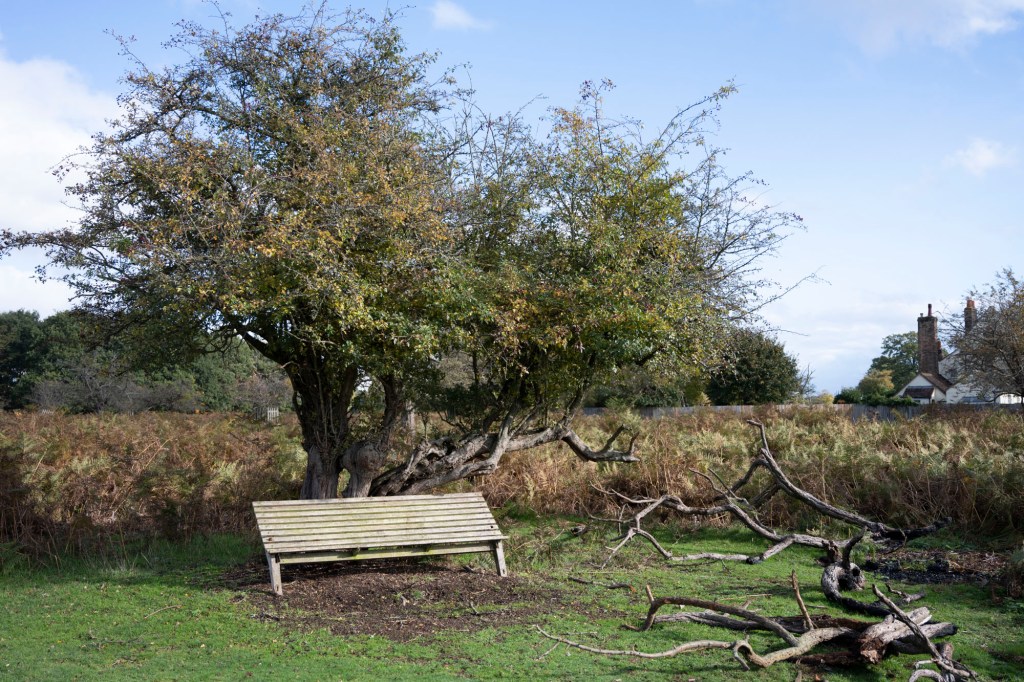
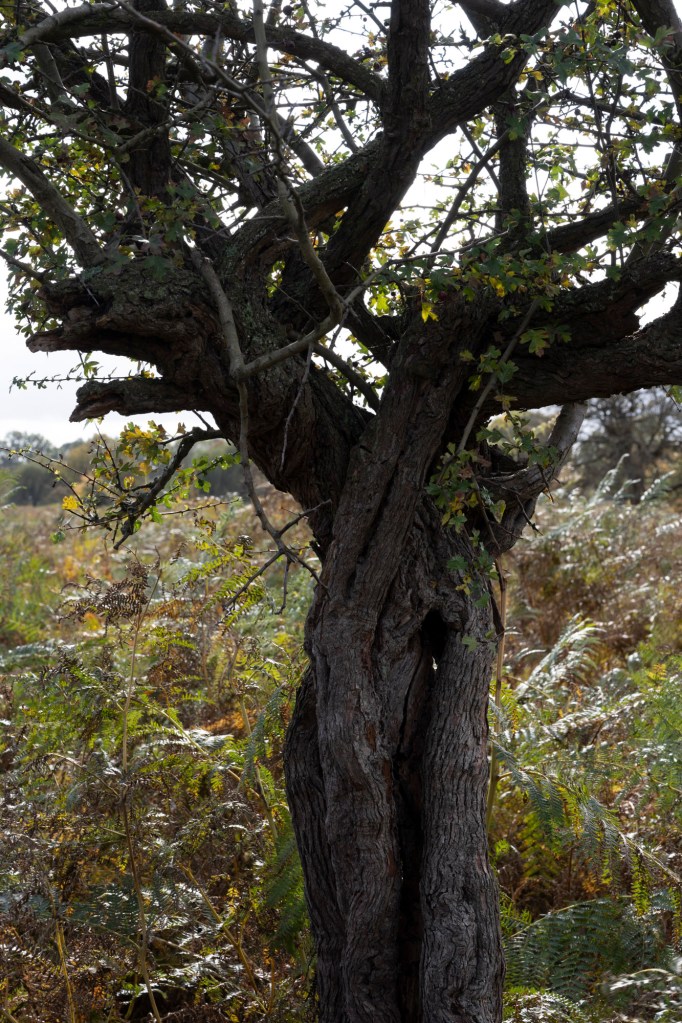
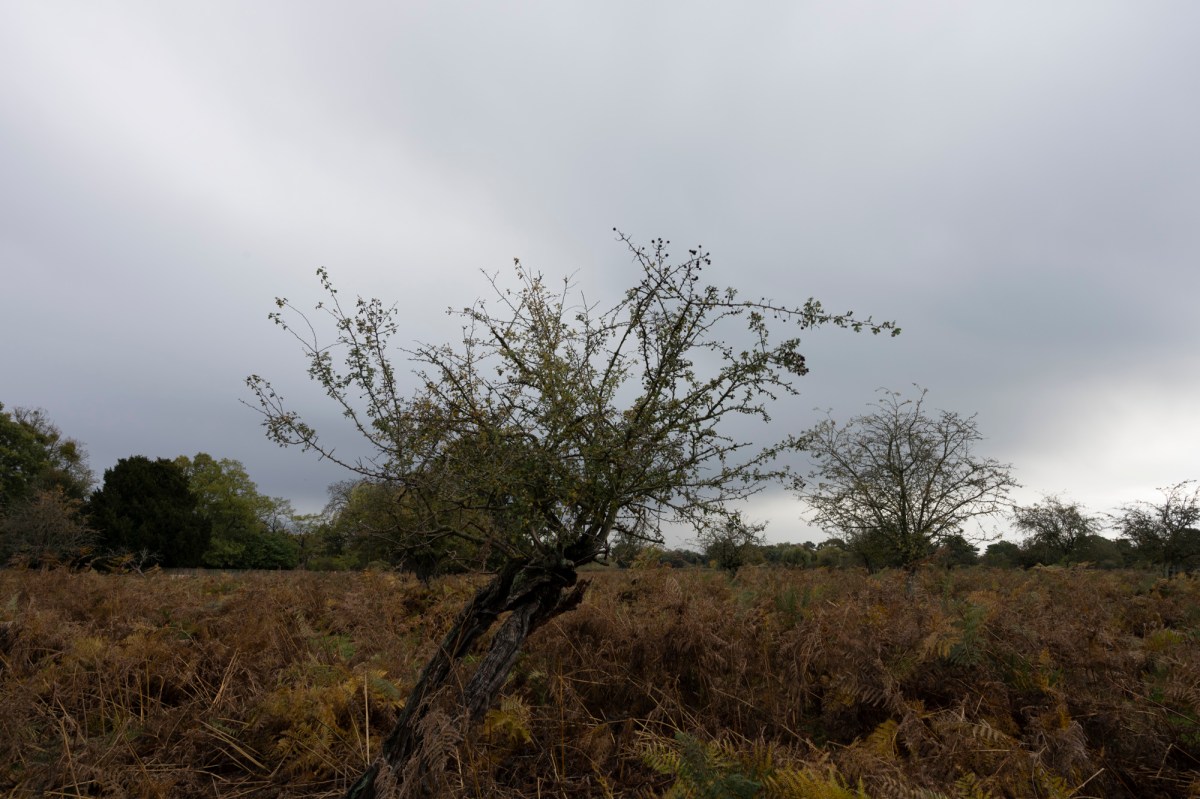
This tree really made an impression on me. On approach, this hawthorn looks initially like this.
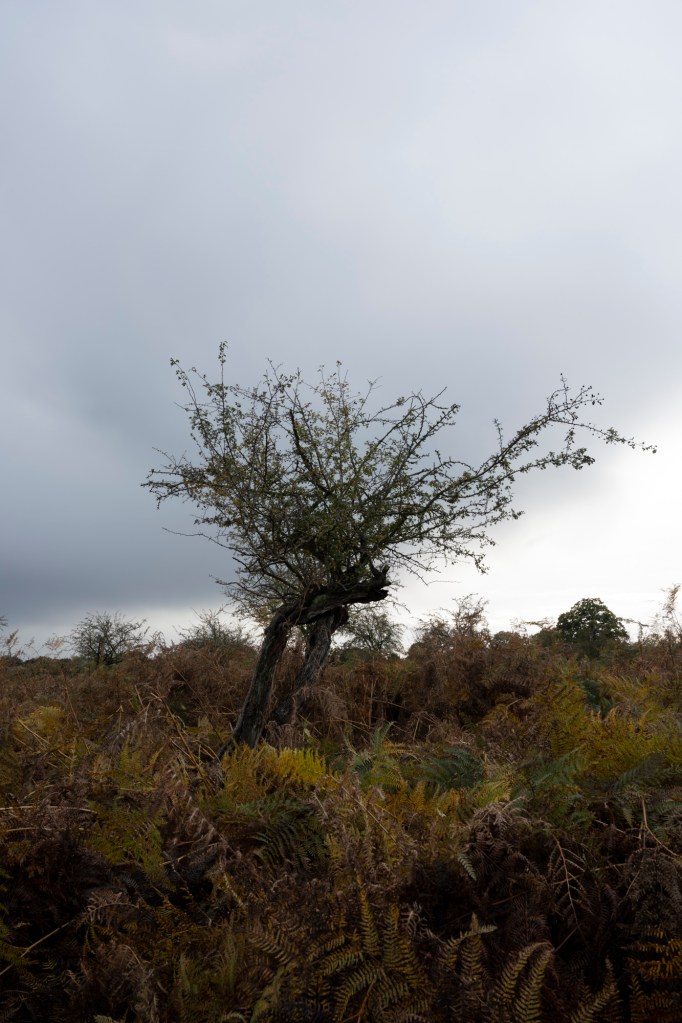
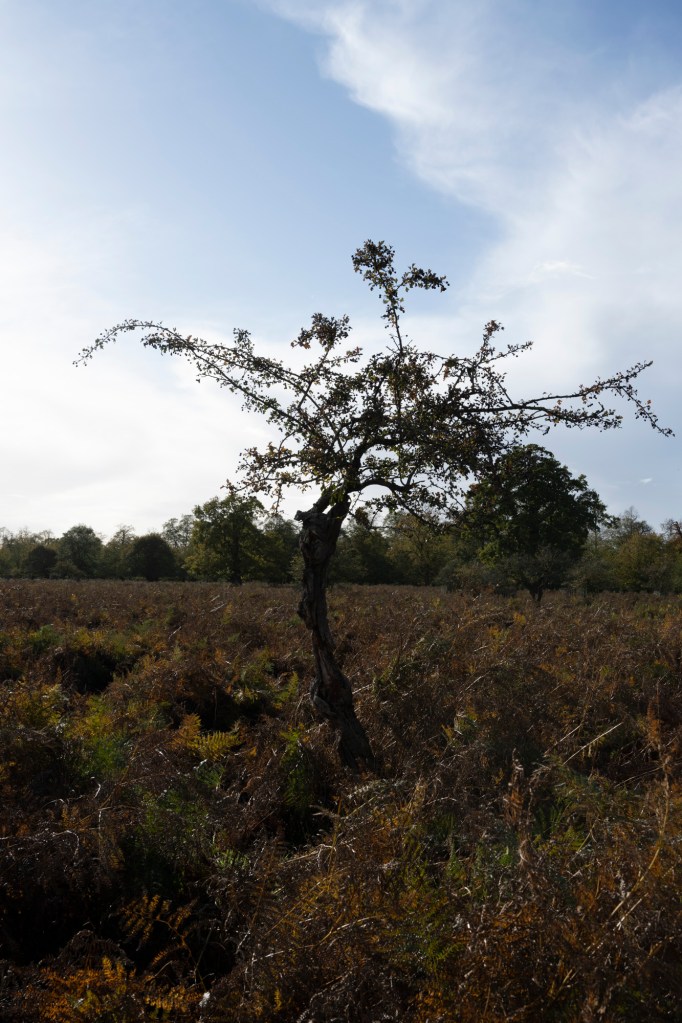
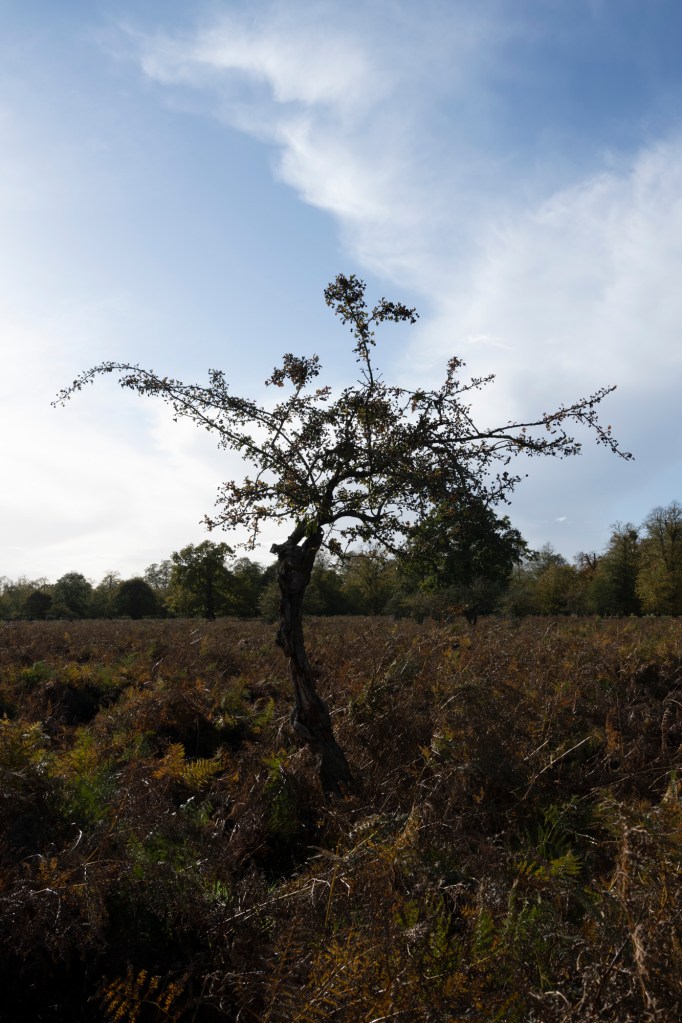
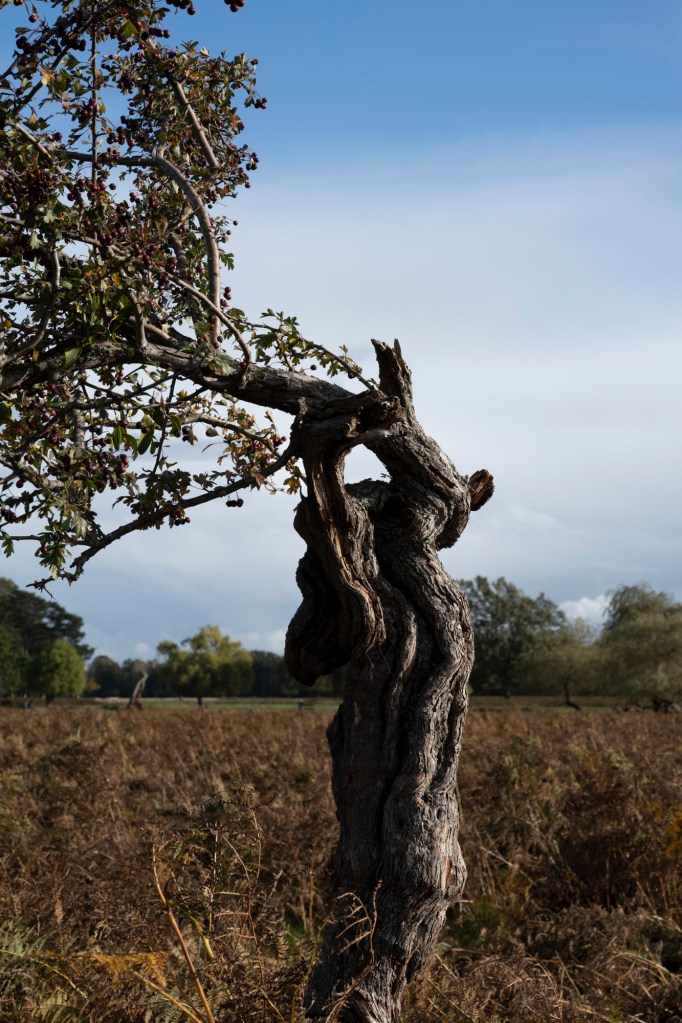
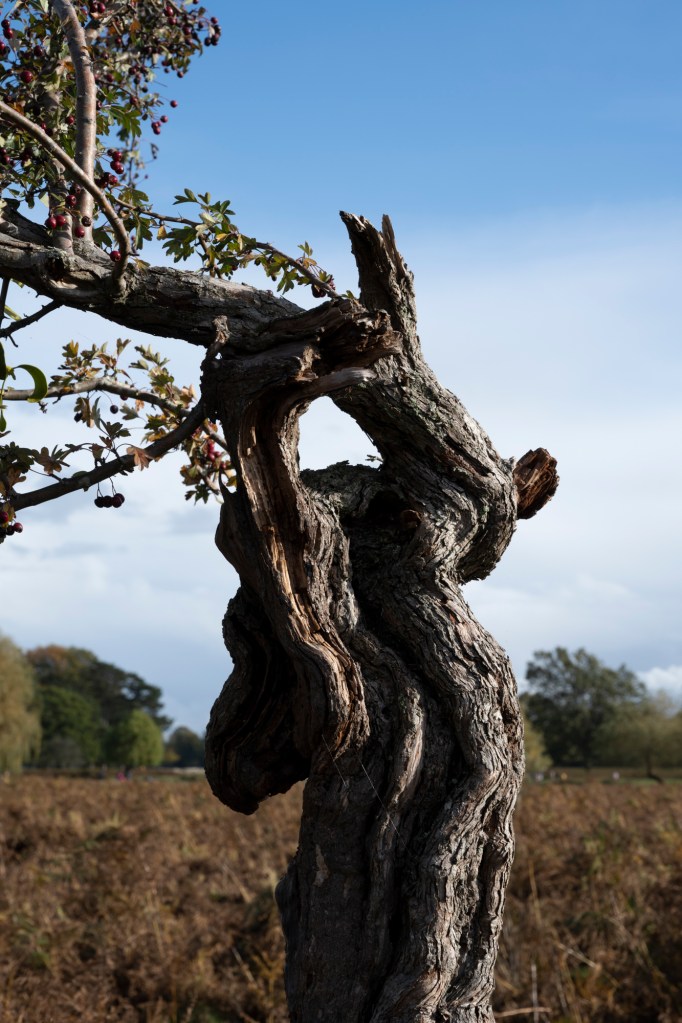
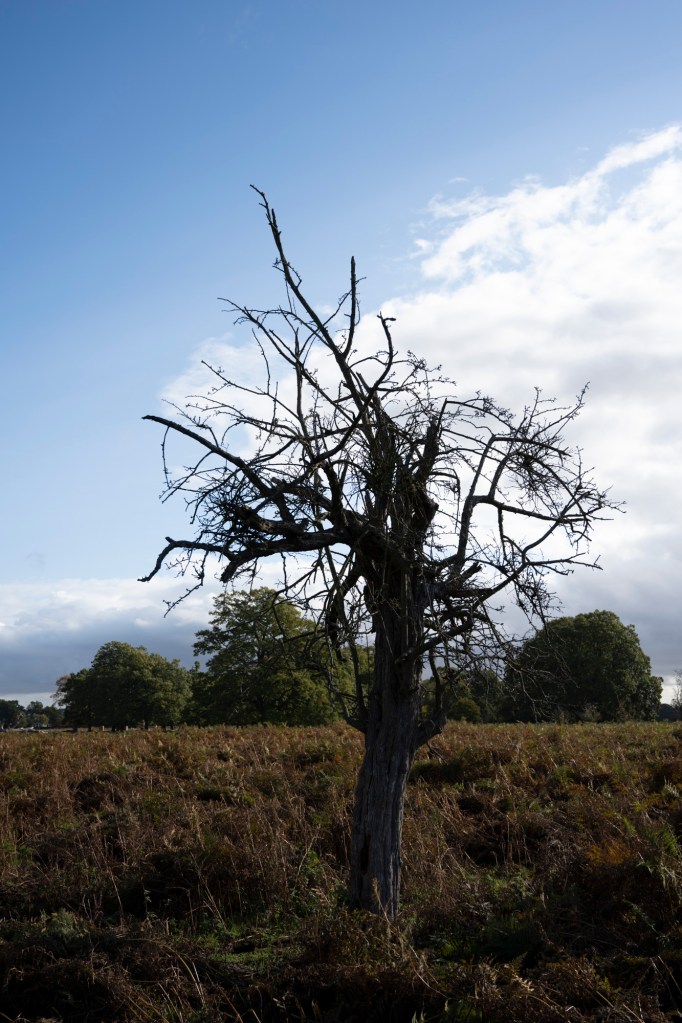
However, seen at other angles, something quite magical happens.
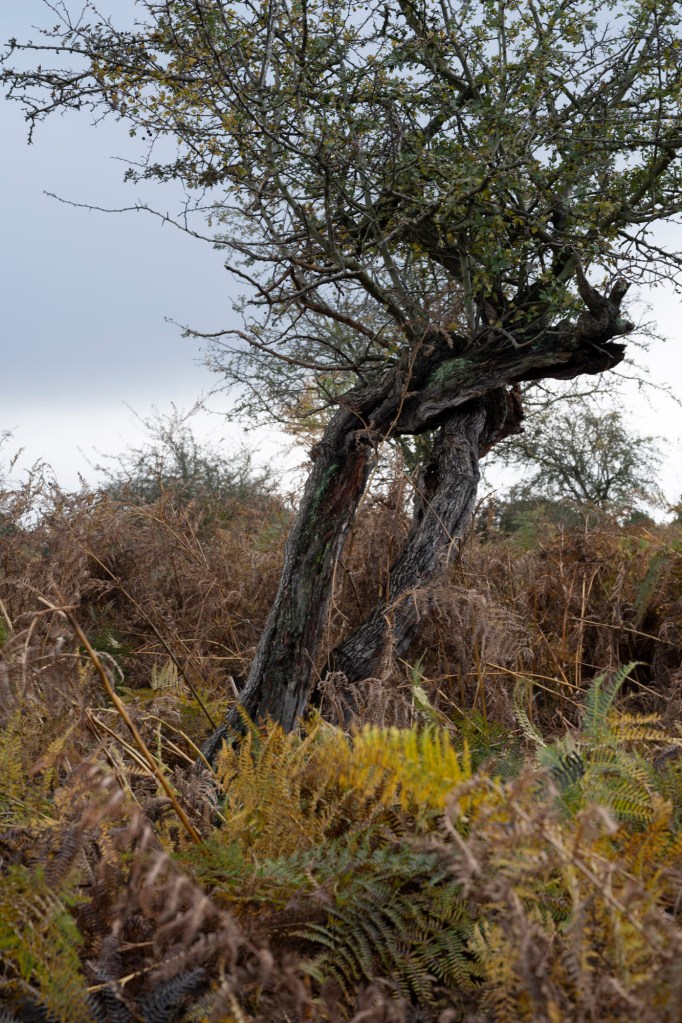
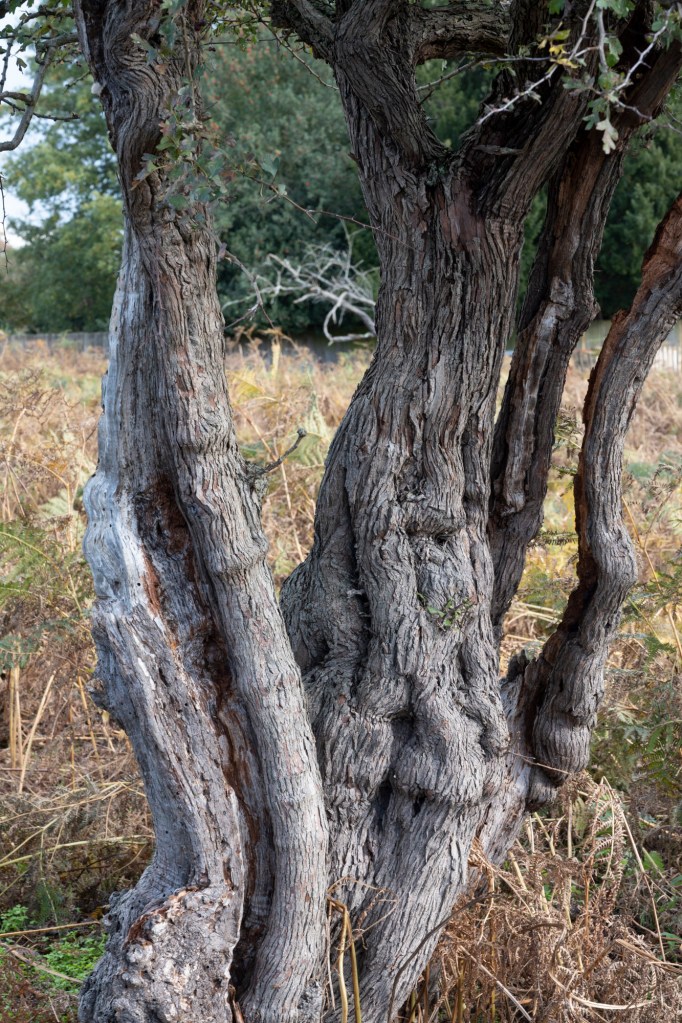
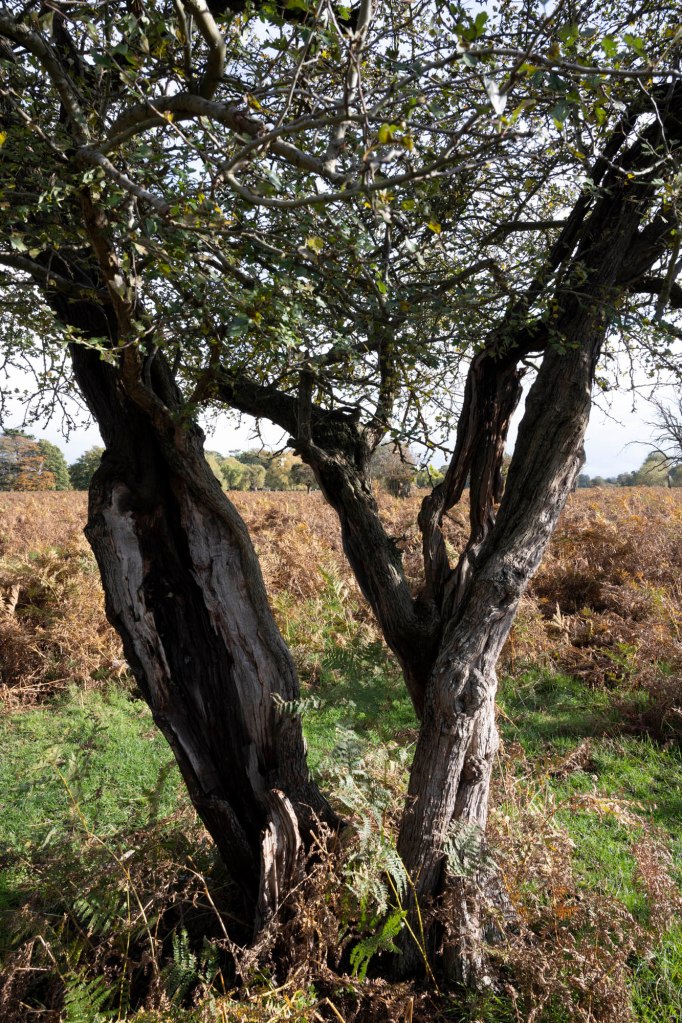
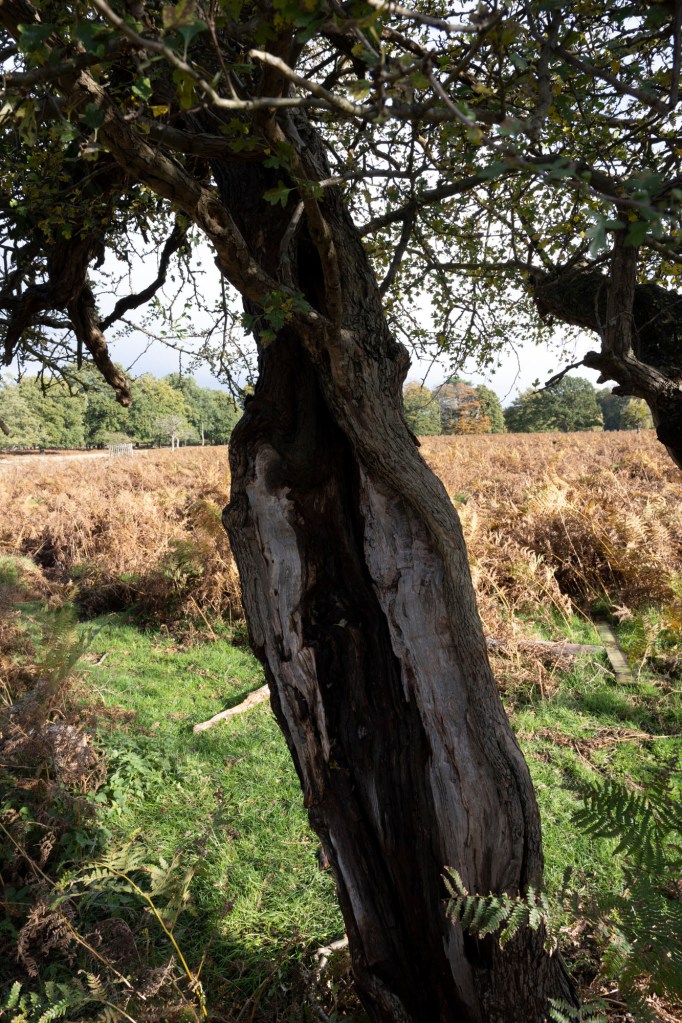
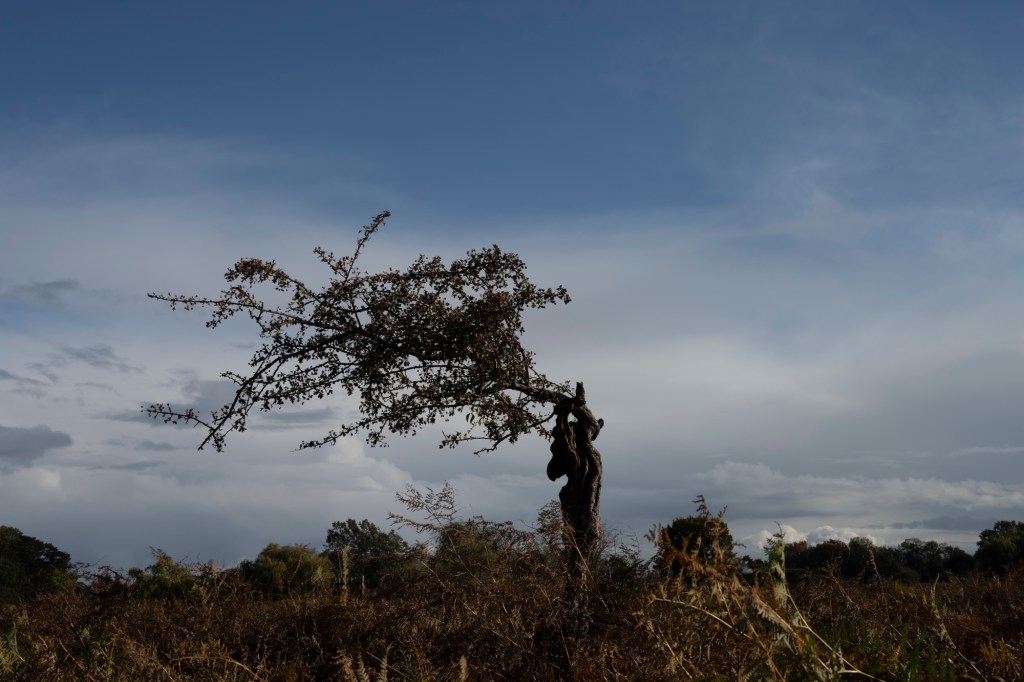
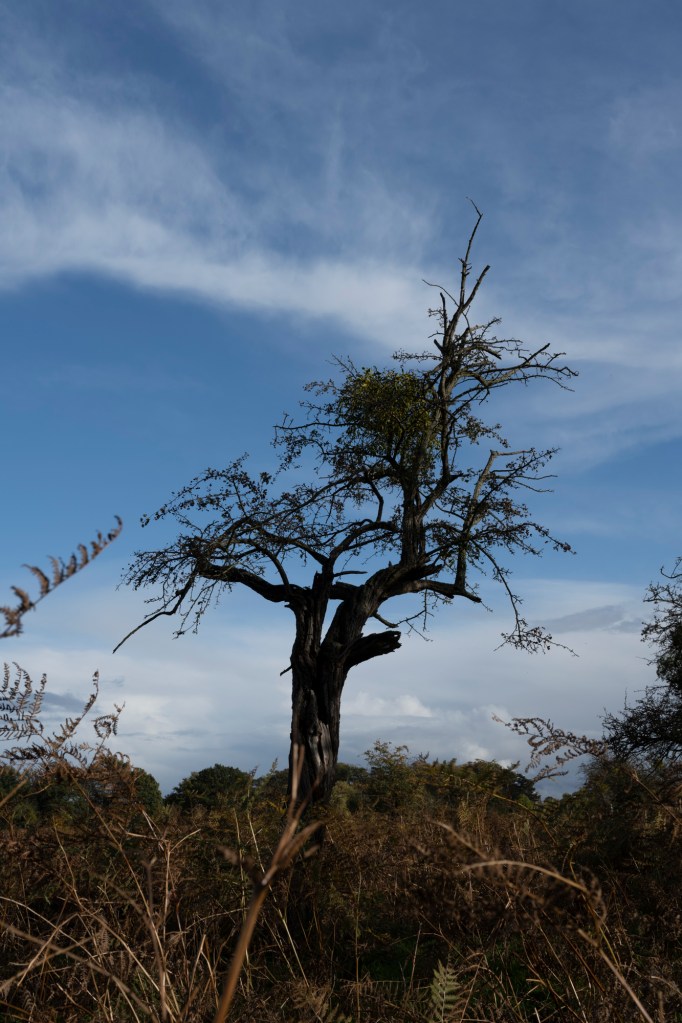
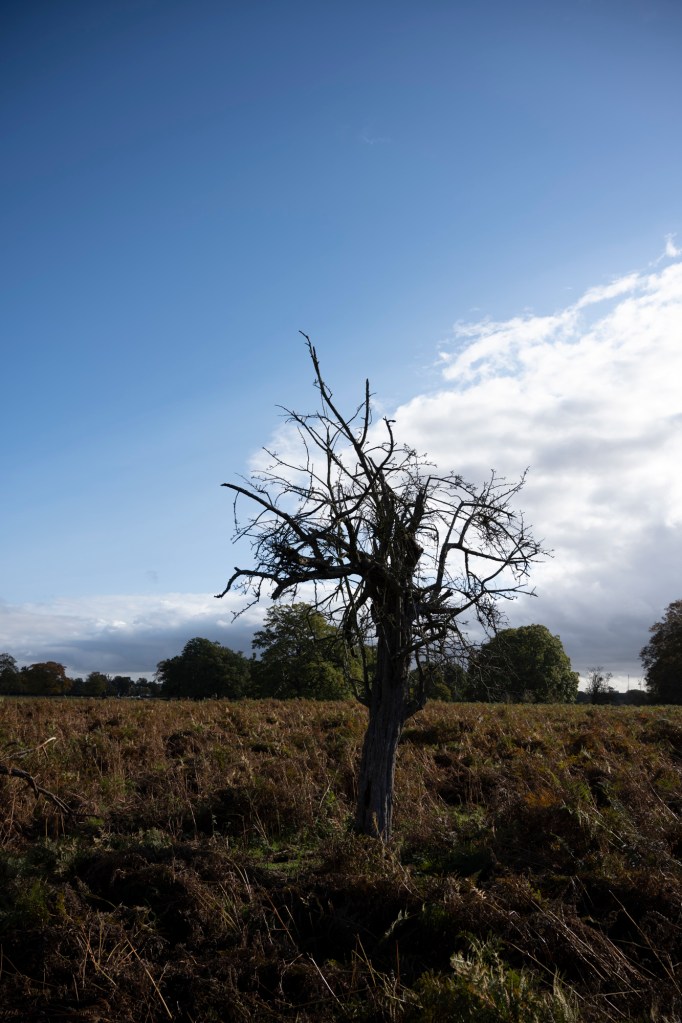
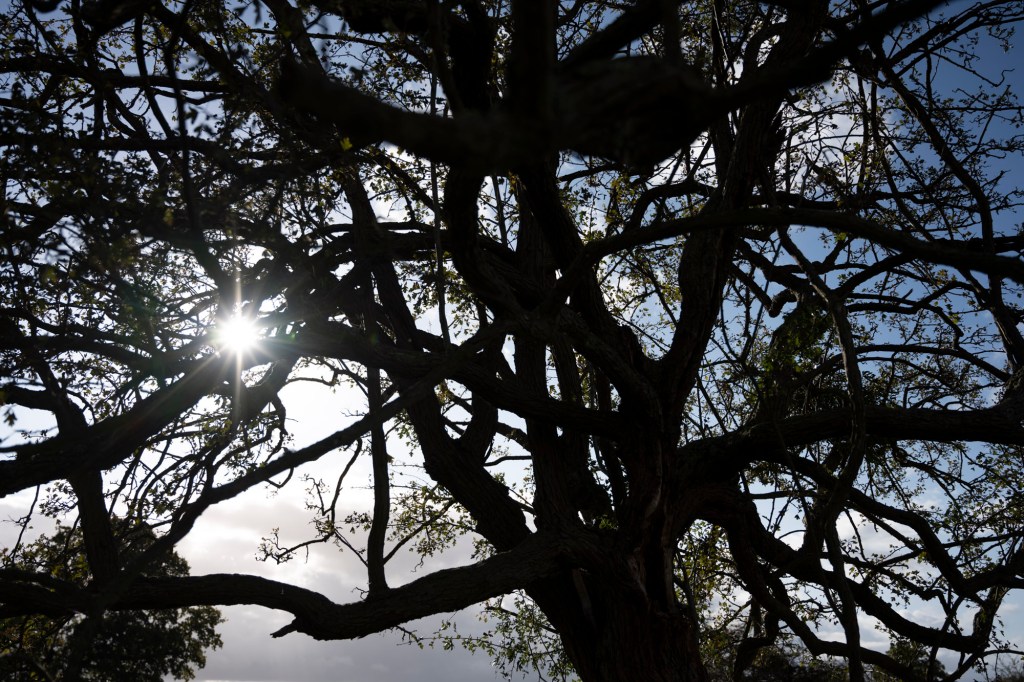
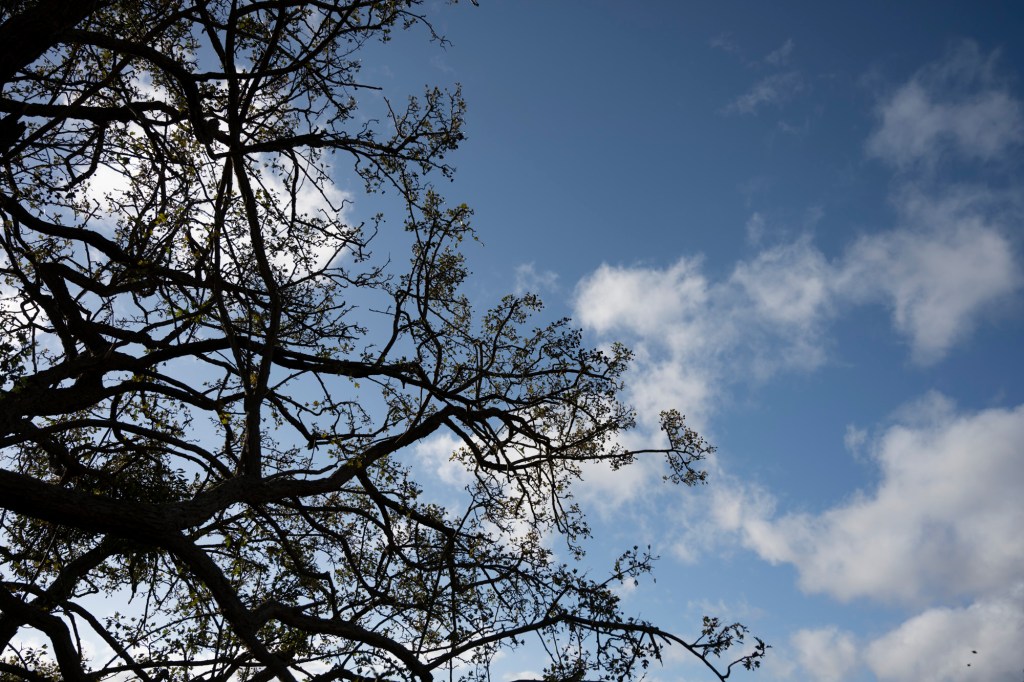
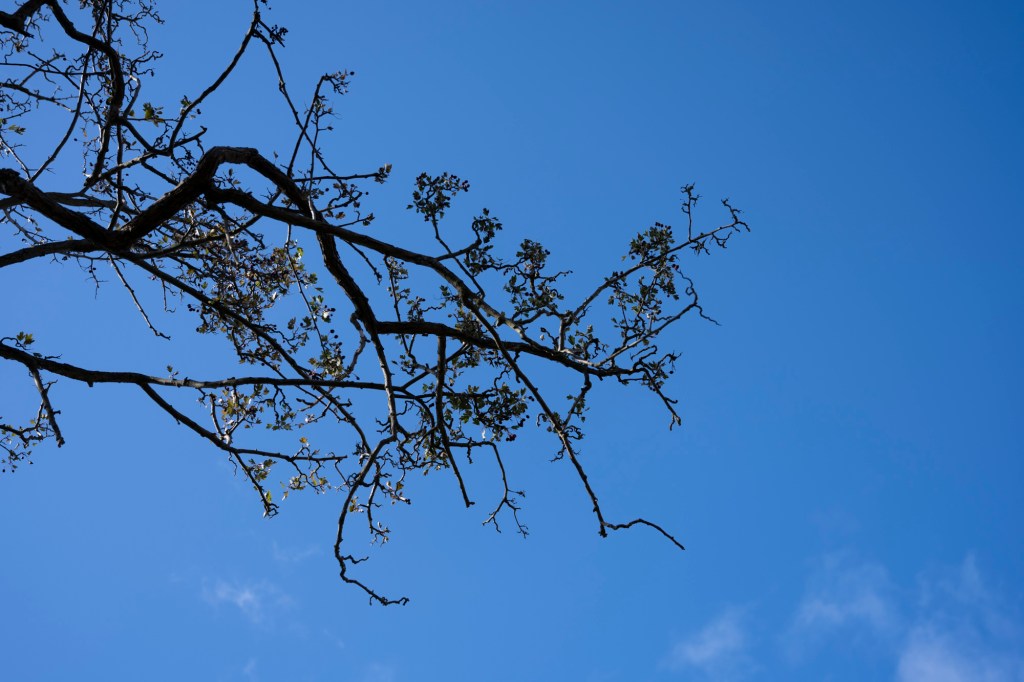
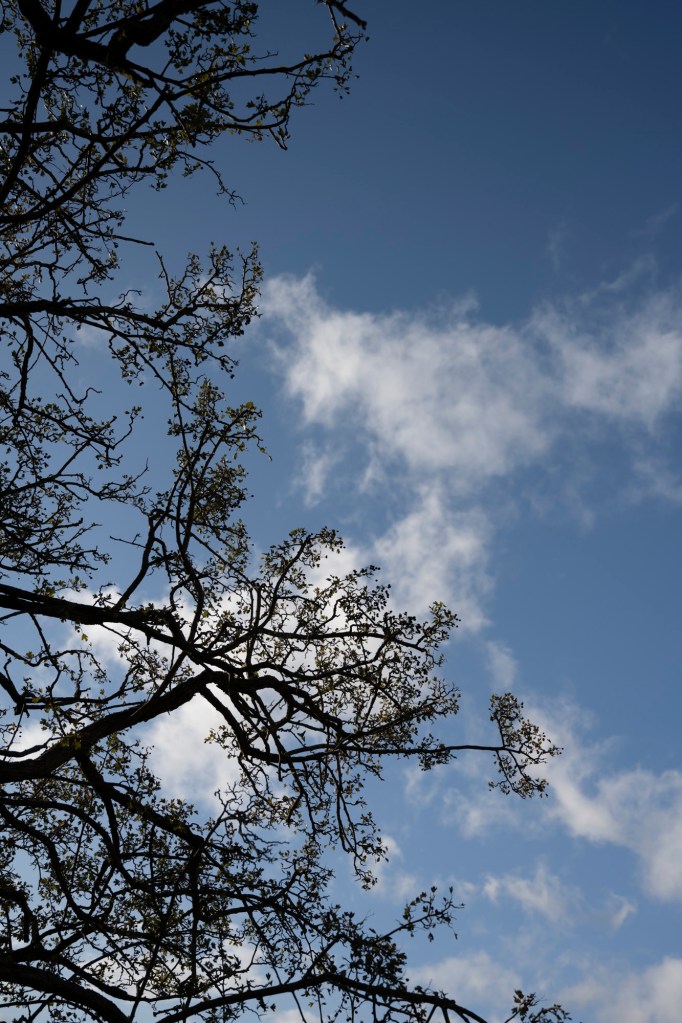
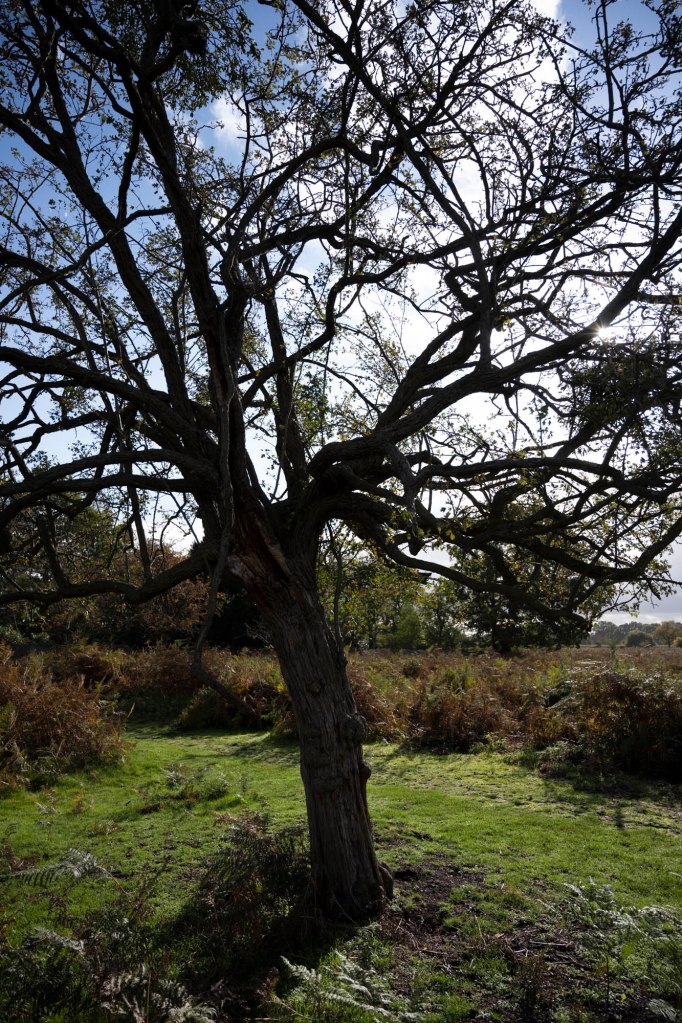
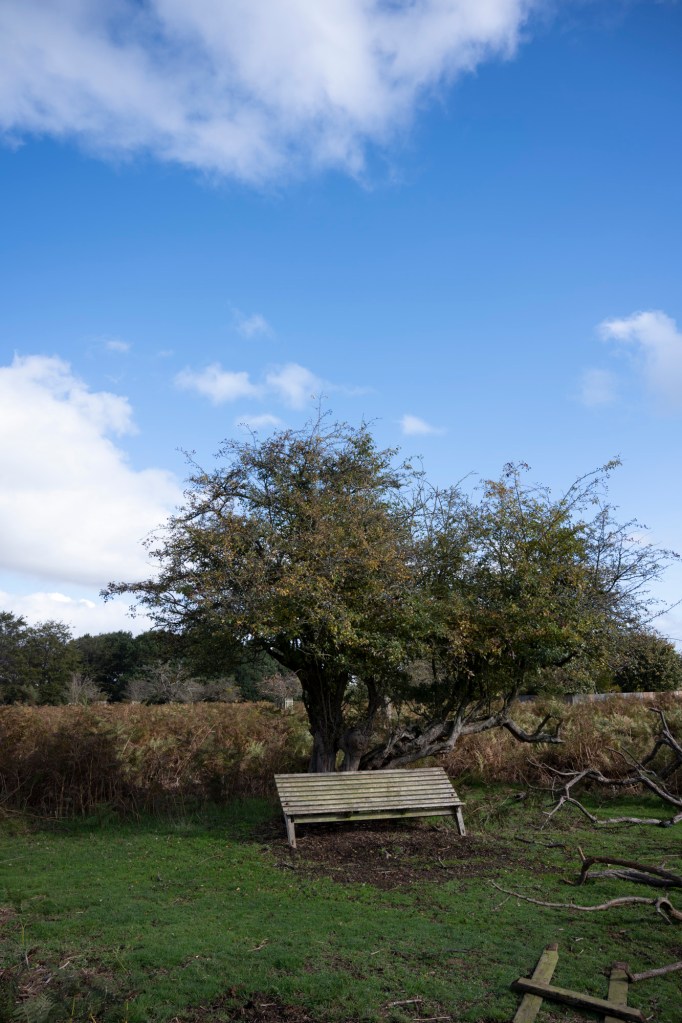
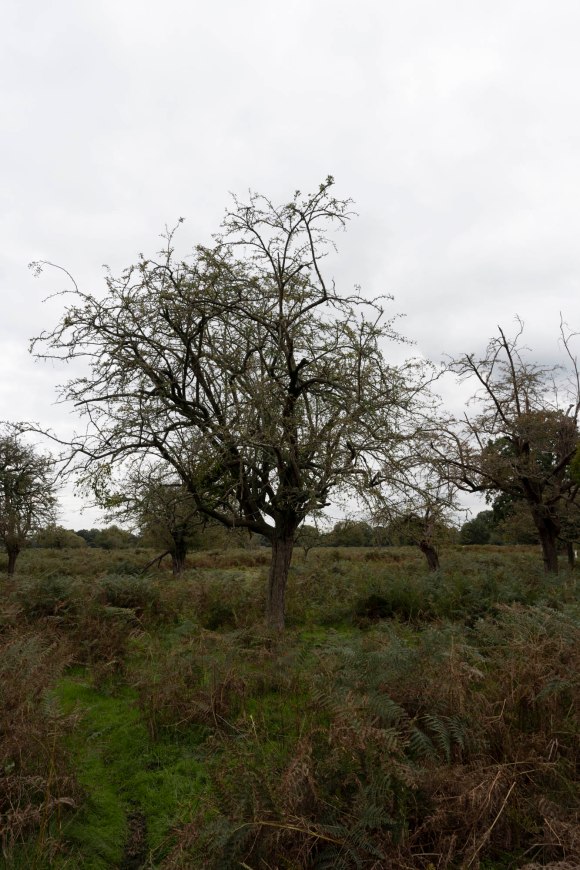
I also tried photographing from a lower angle, crouching down rather than standing to take a shot.
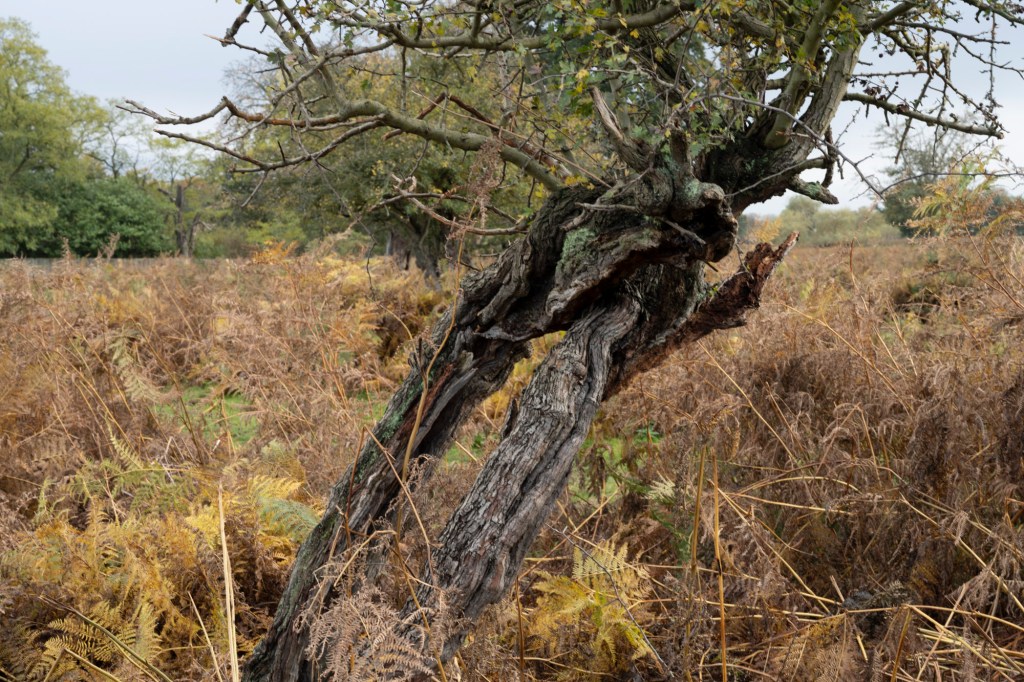
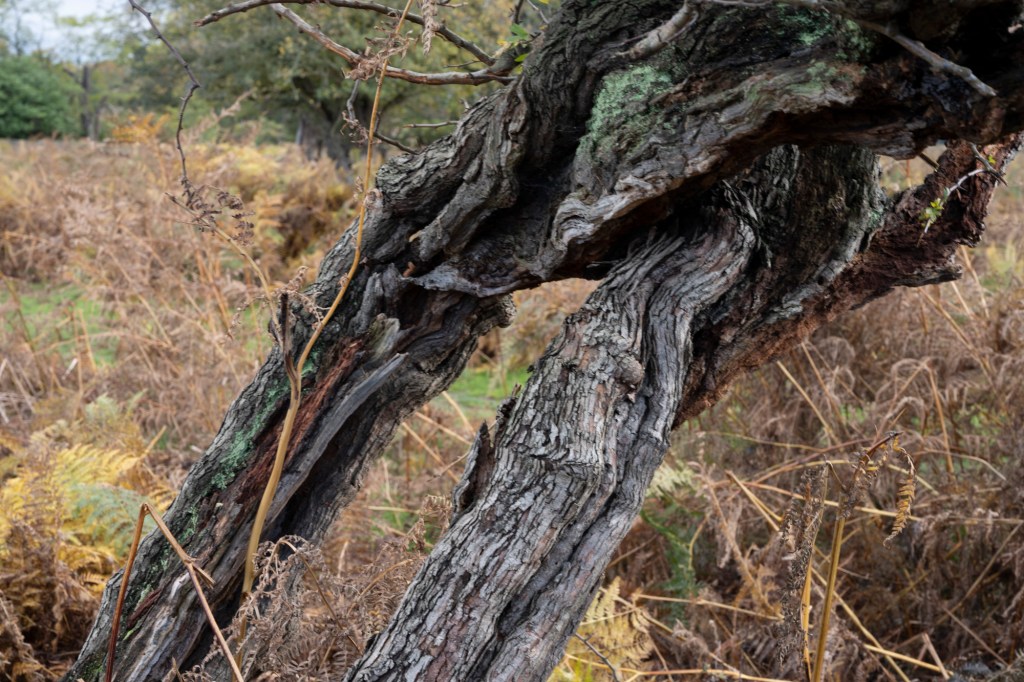
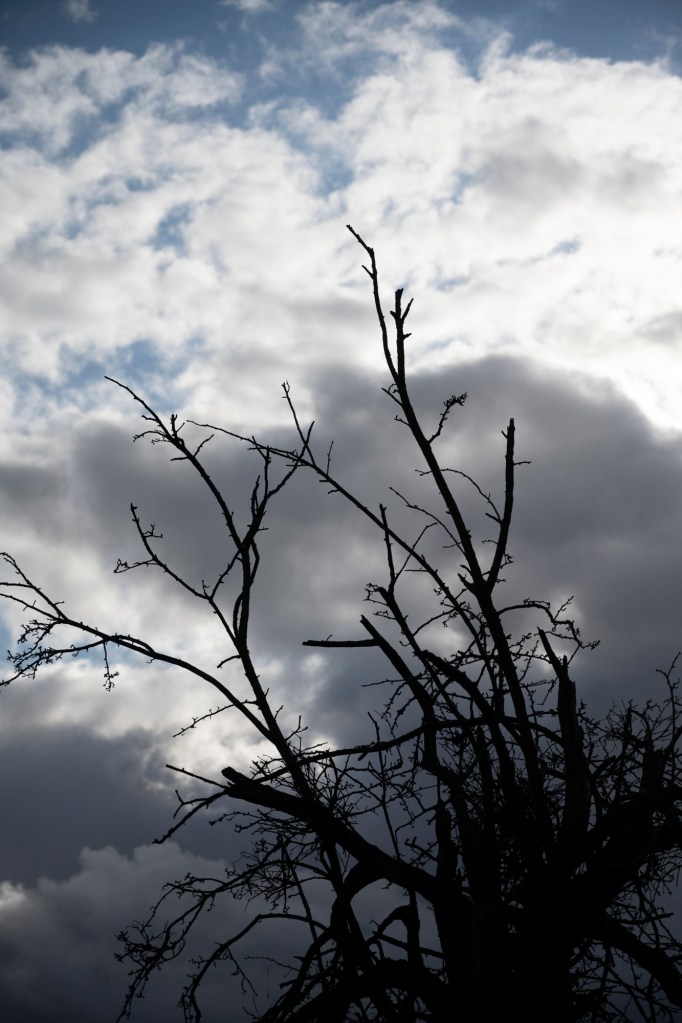
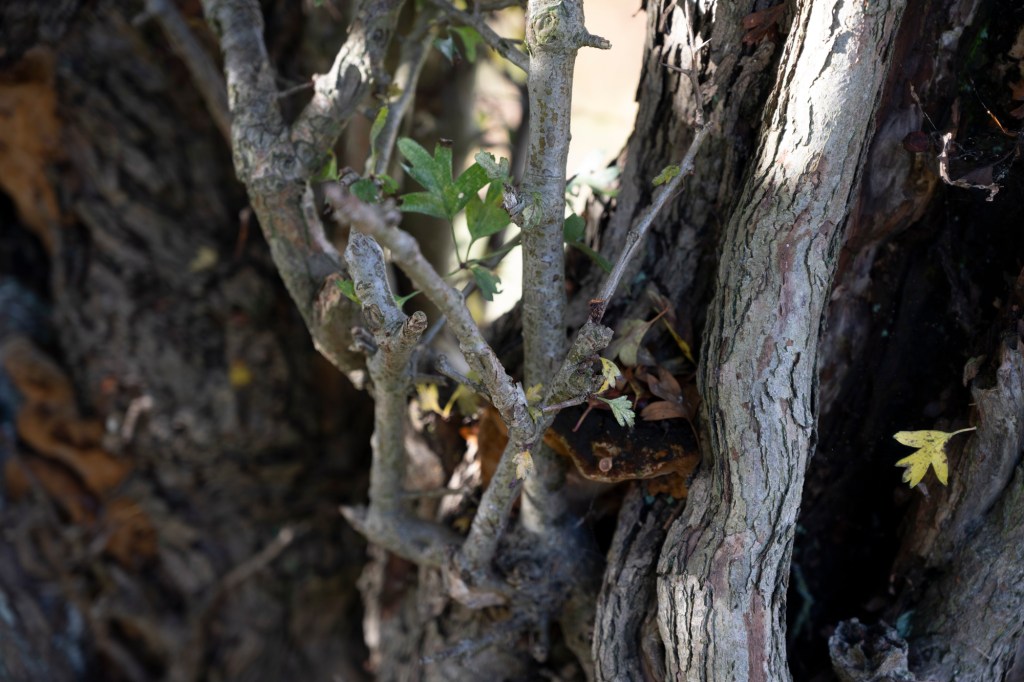
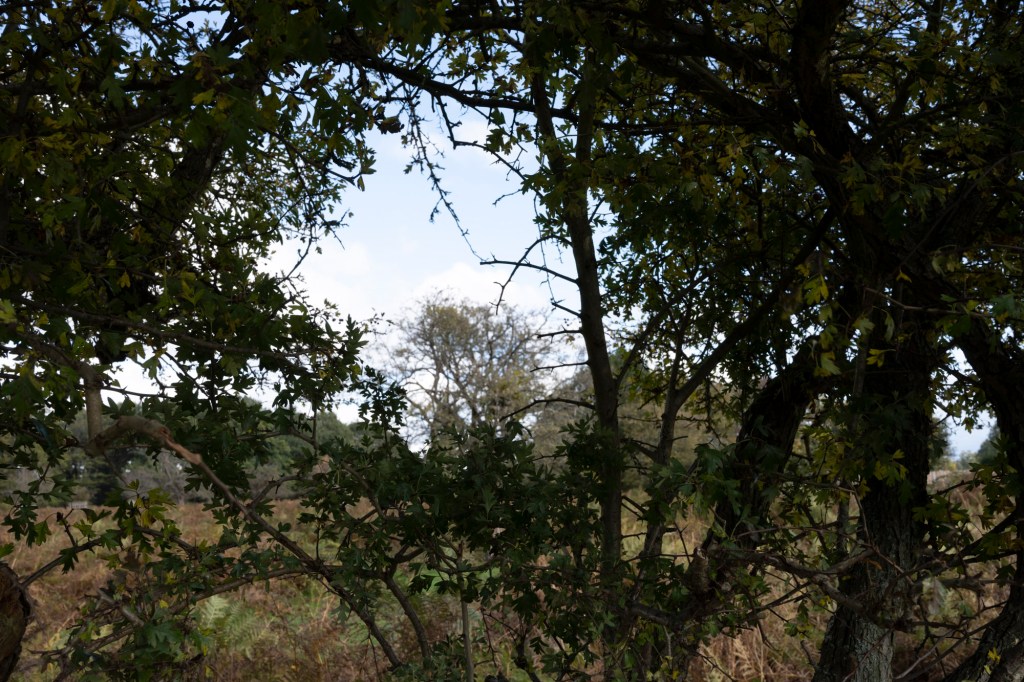
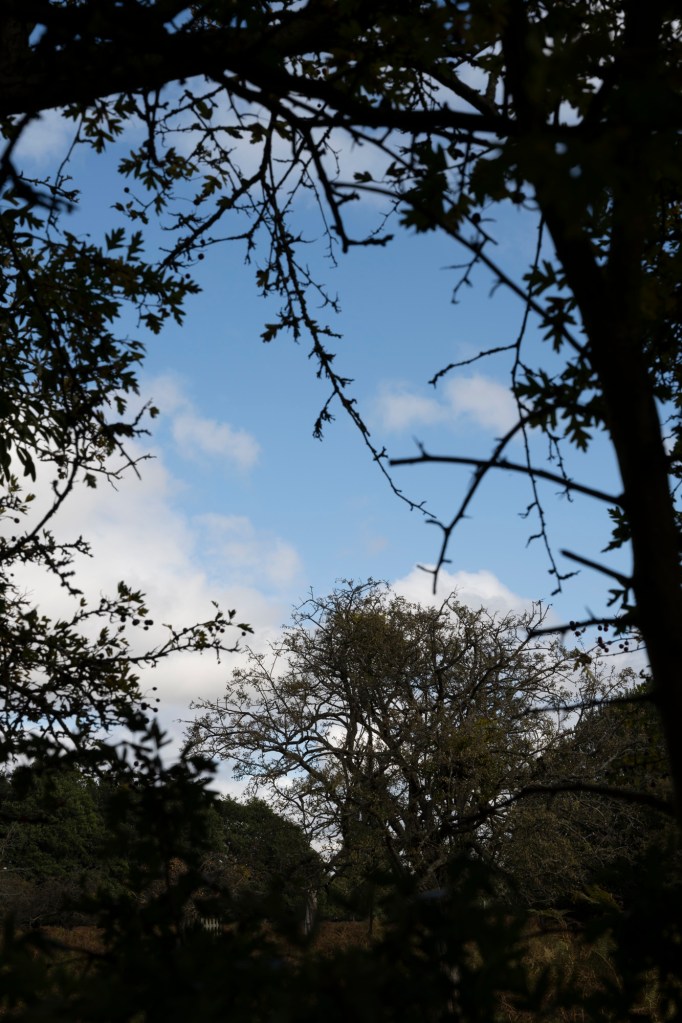
I then took some more close ups at a different angle.
The following is one of the shots of this tree on the left and the Black & White conversion with a slight crop in the middle and a version using my digital infra red recipe on the right.
Tree Eight
Tree Nine
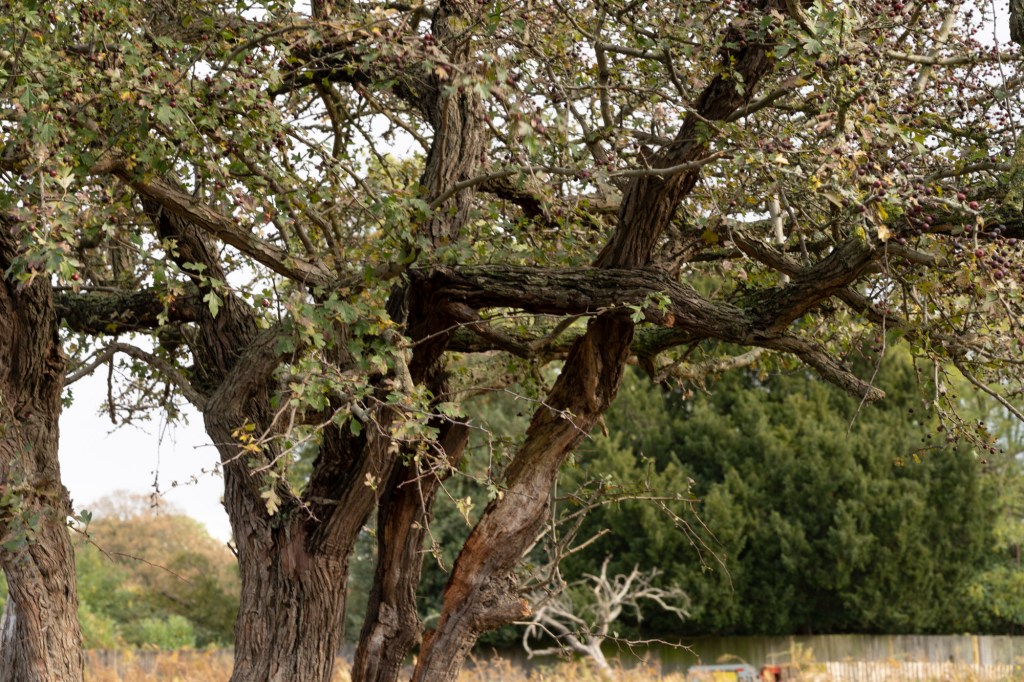
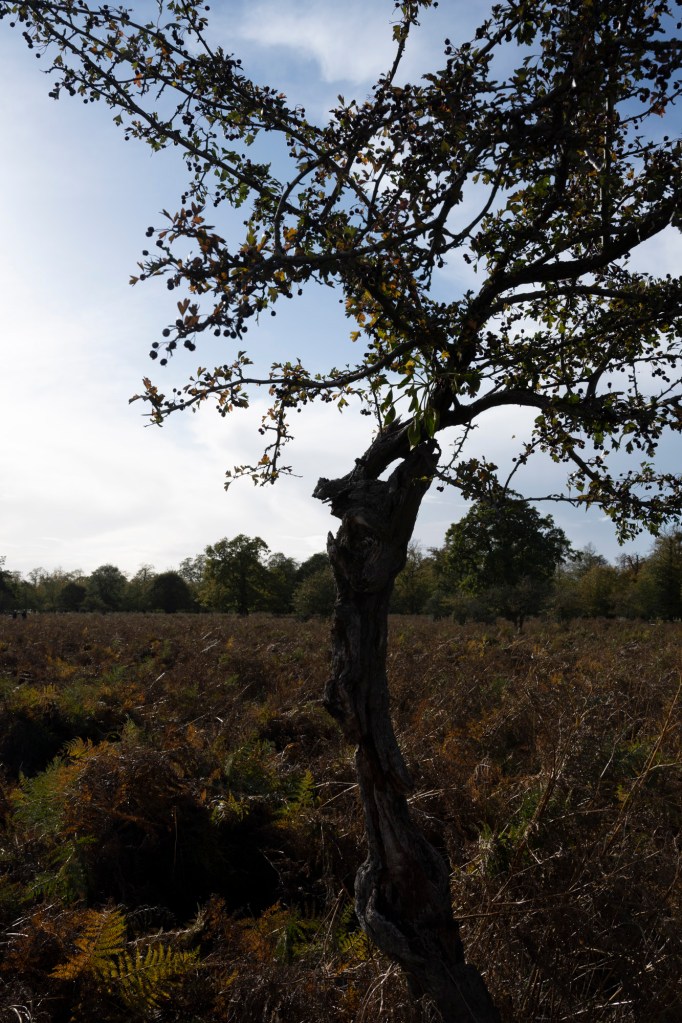
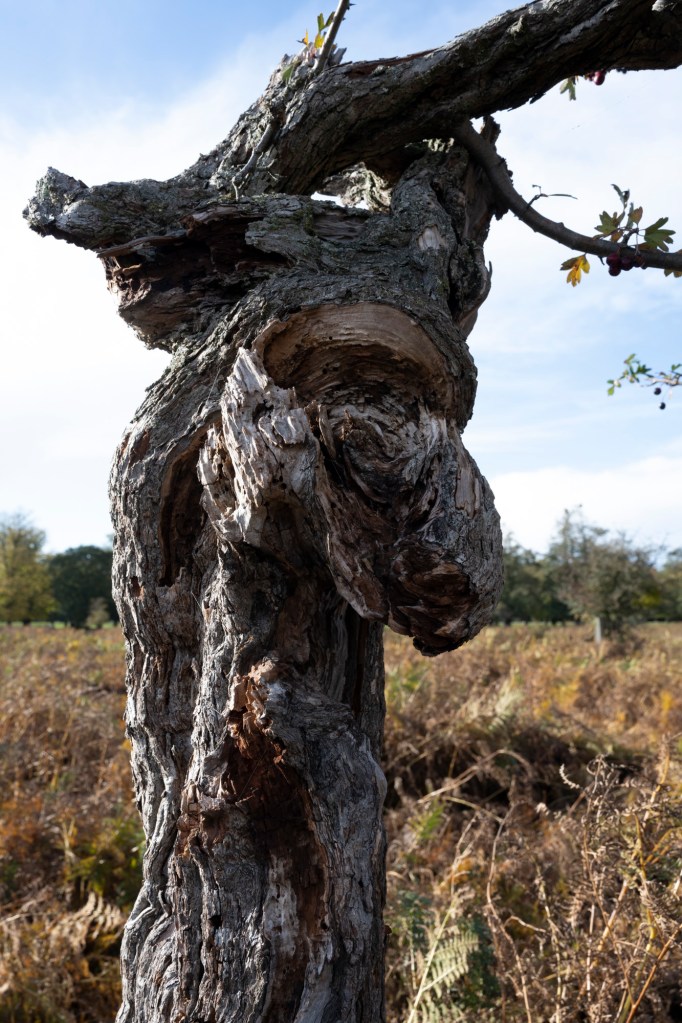
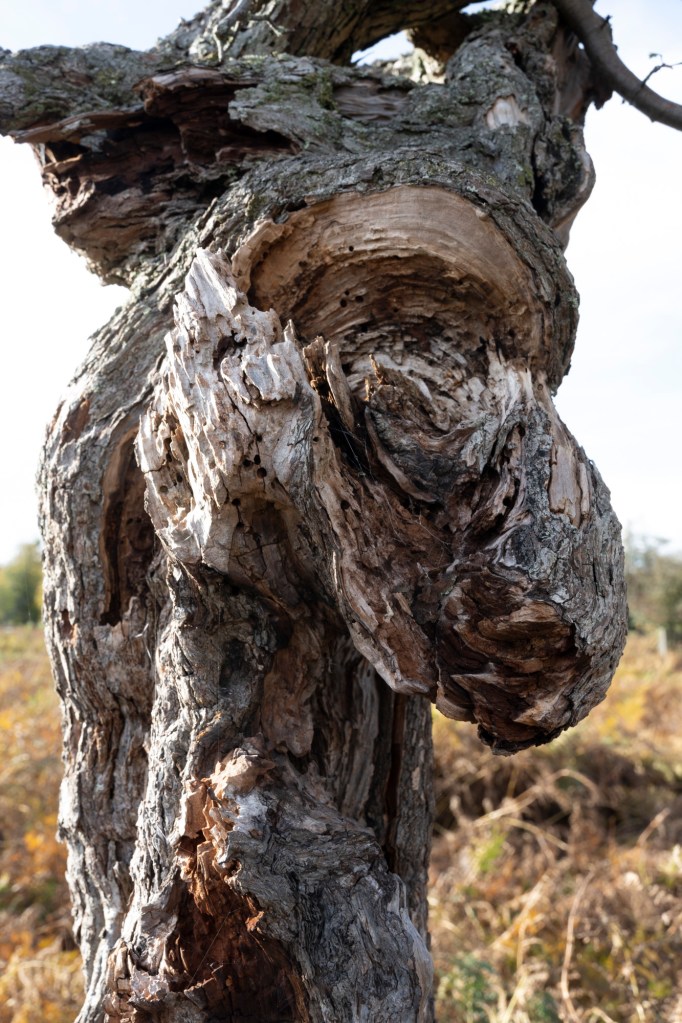
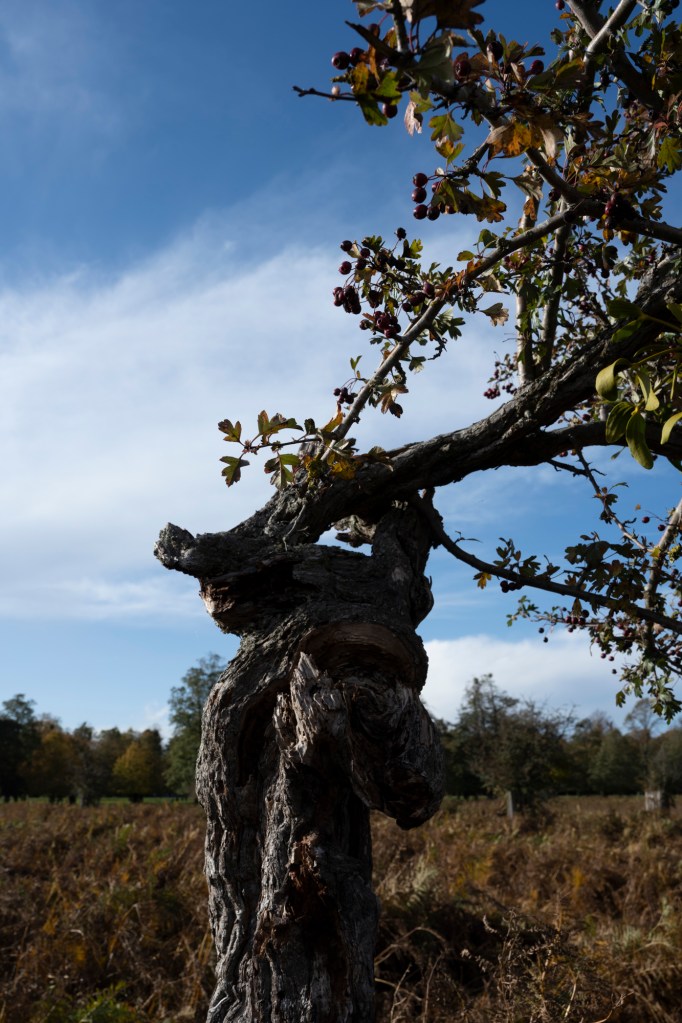
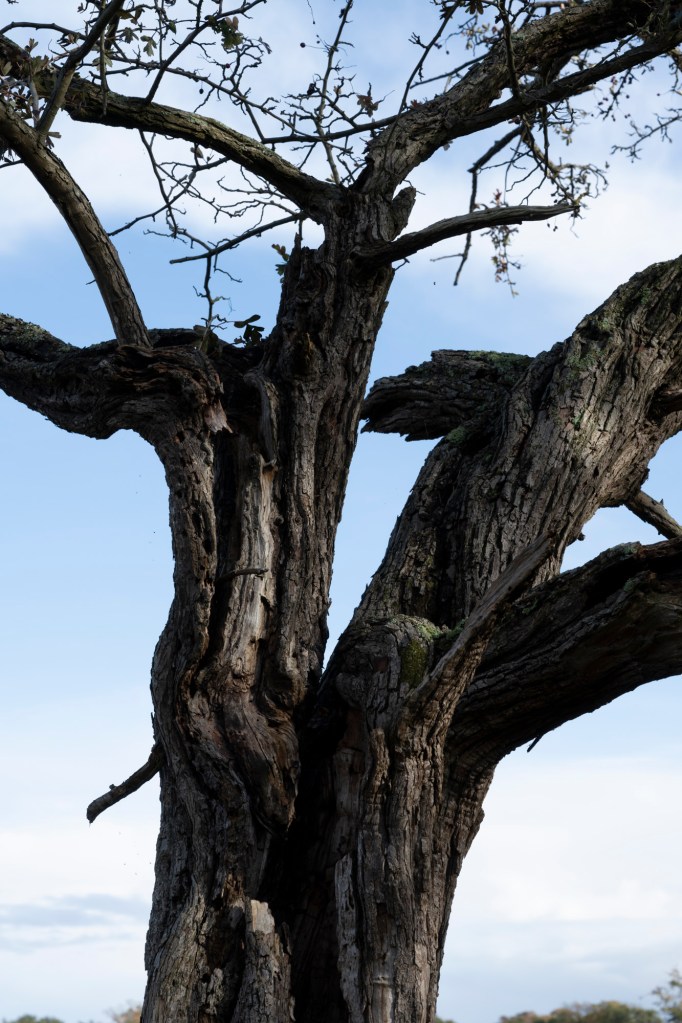
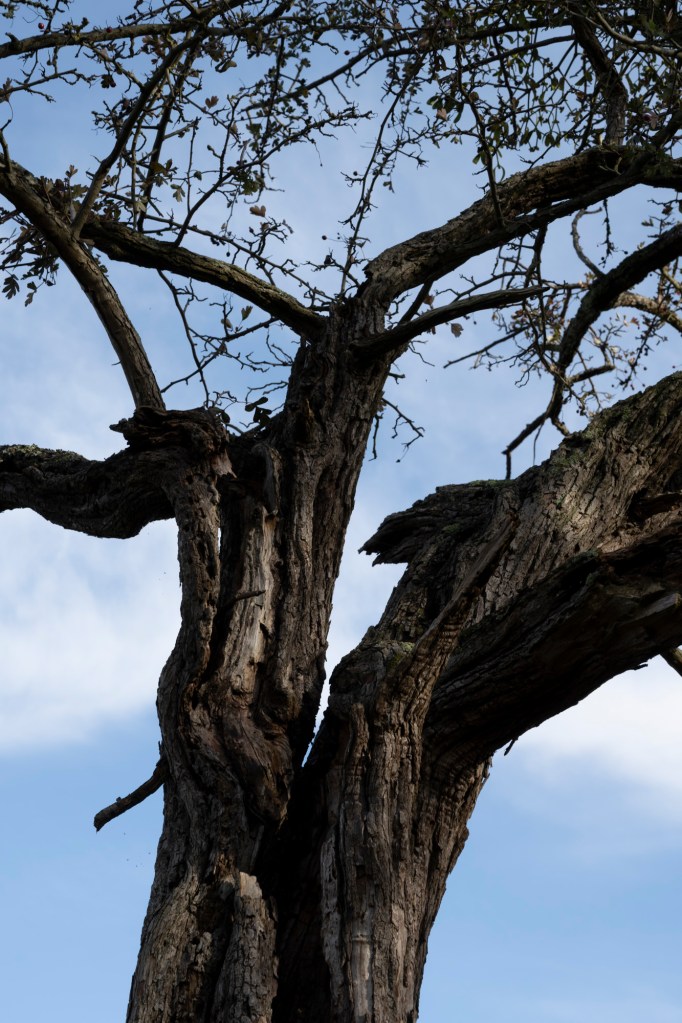
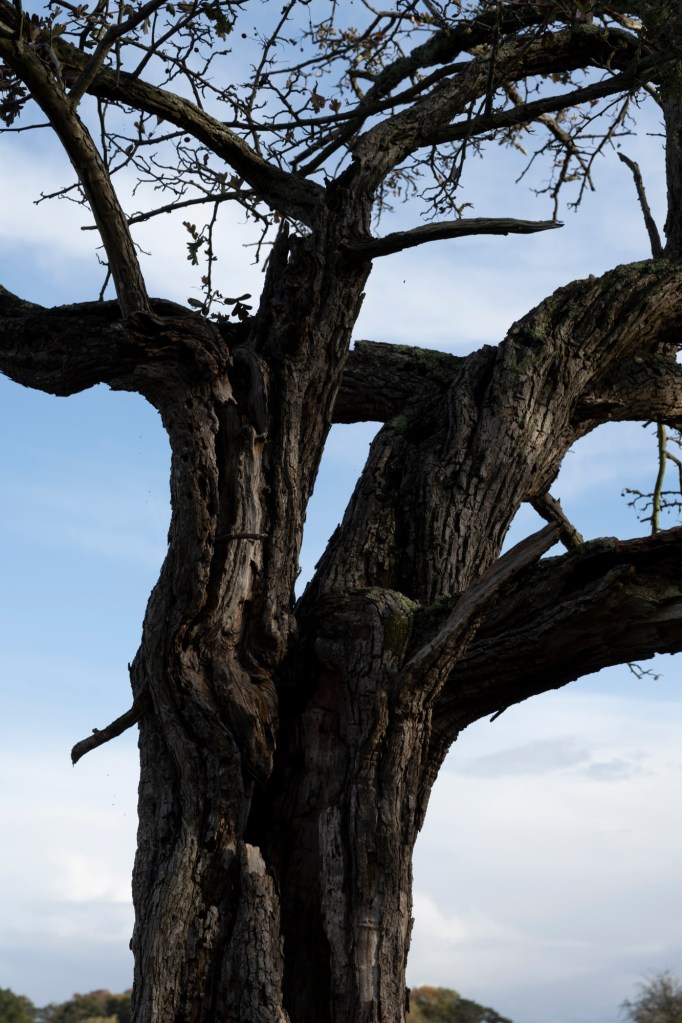
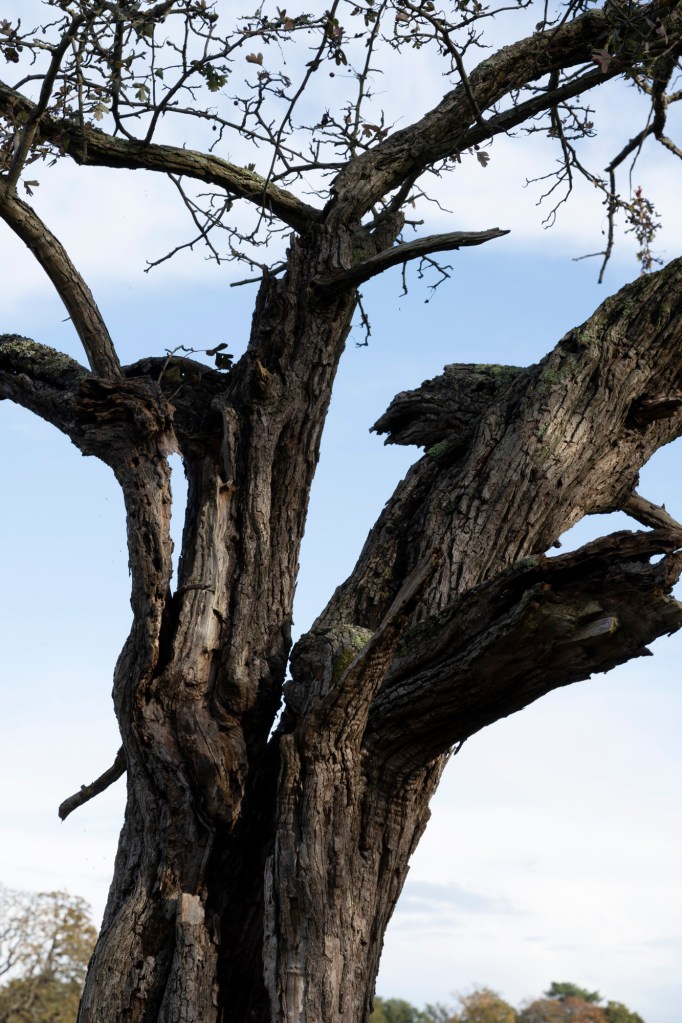
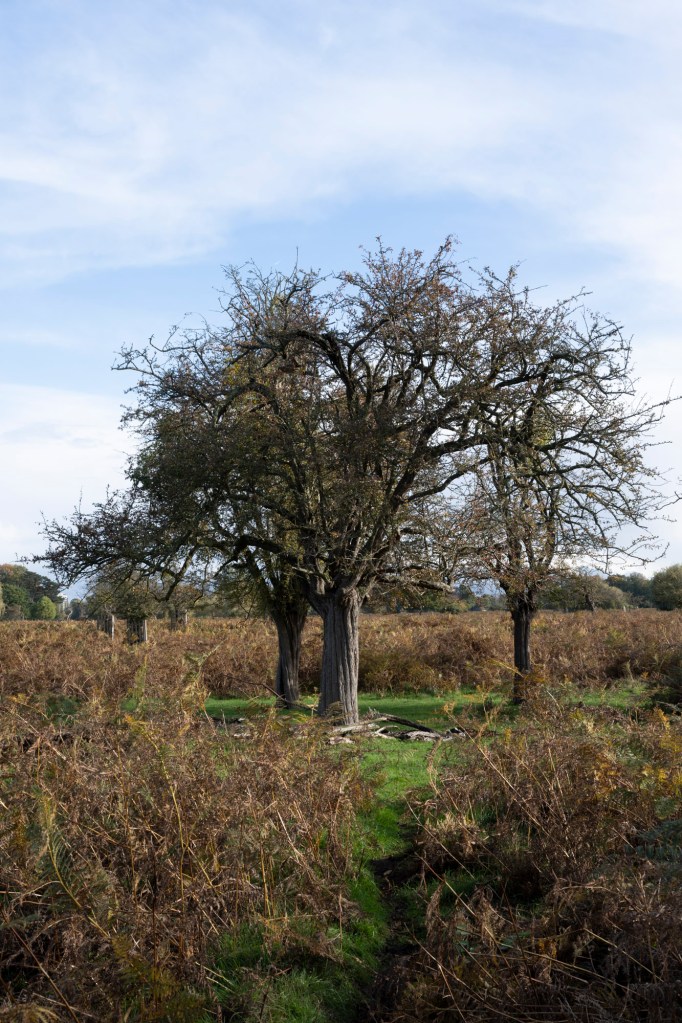
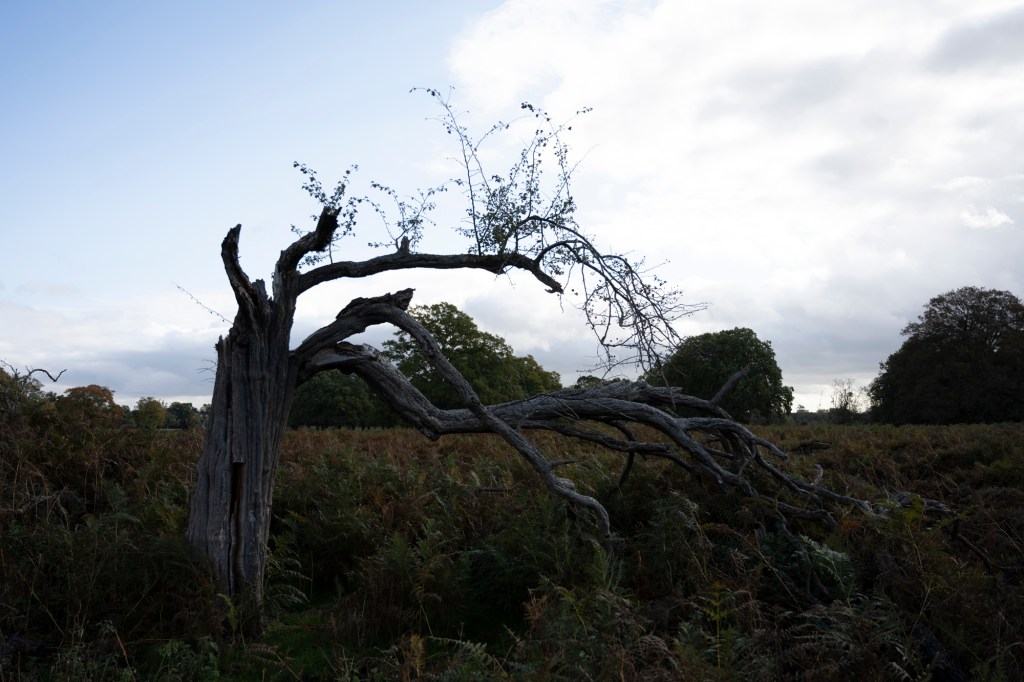
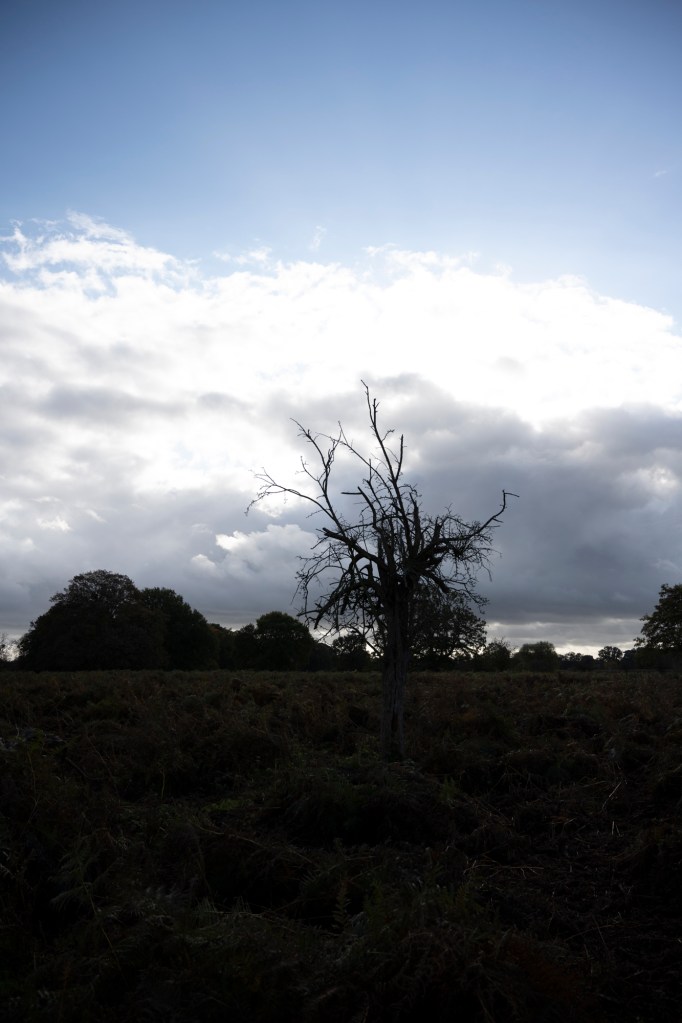
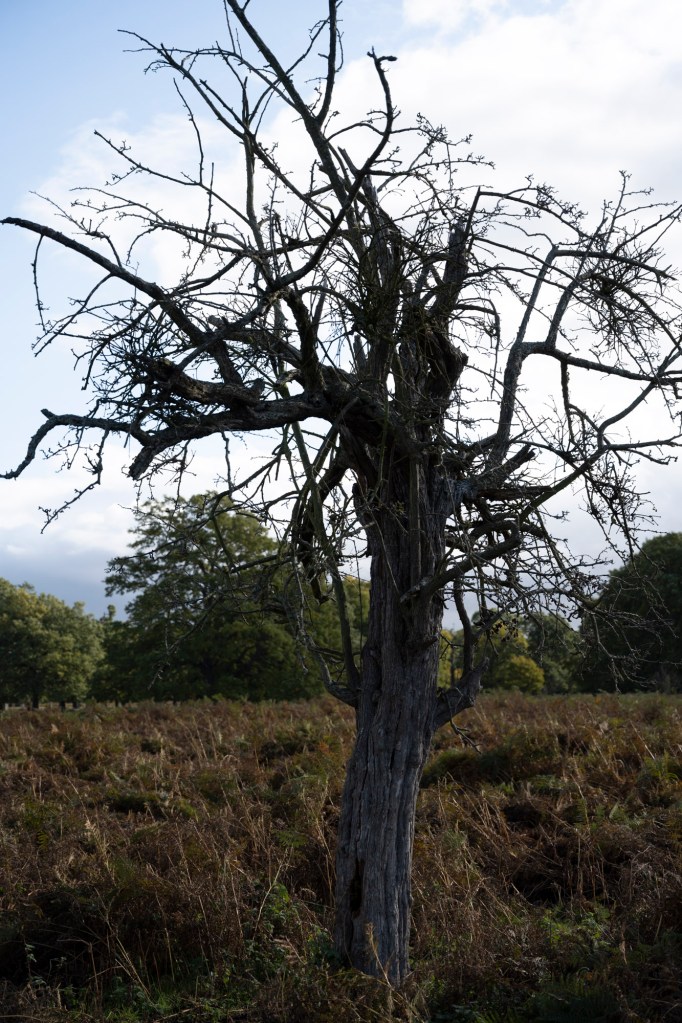
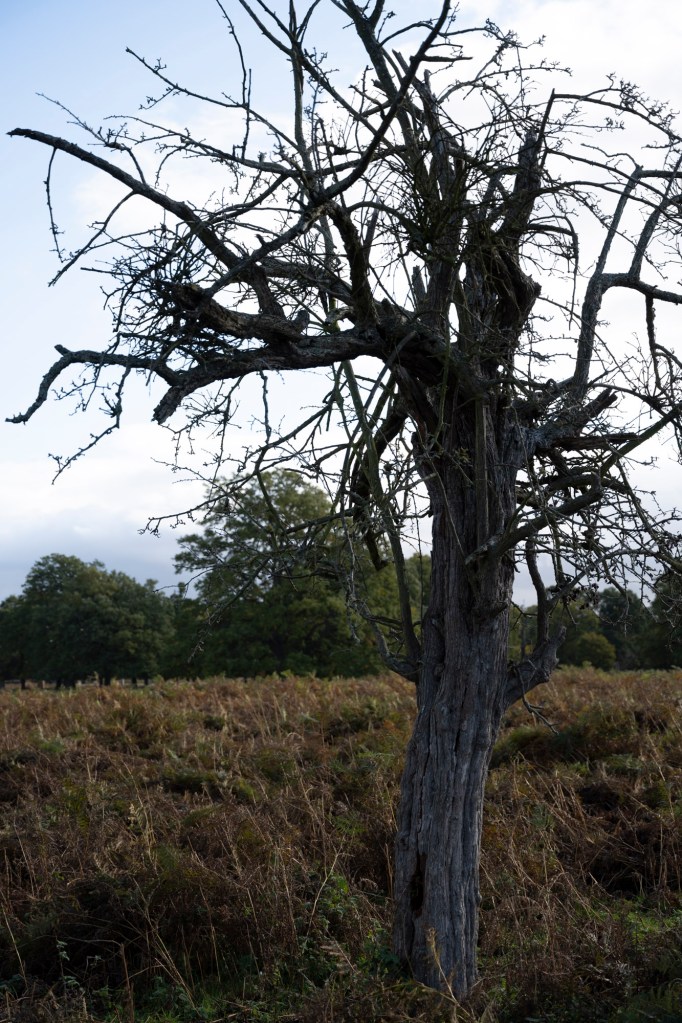
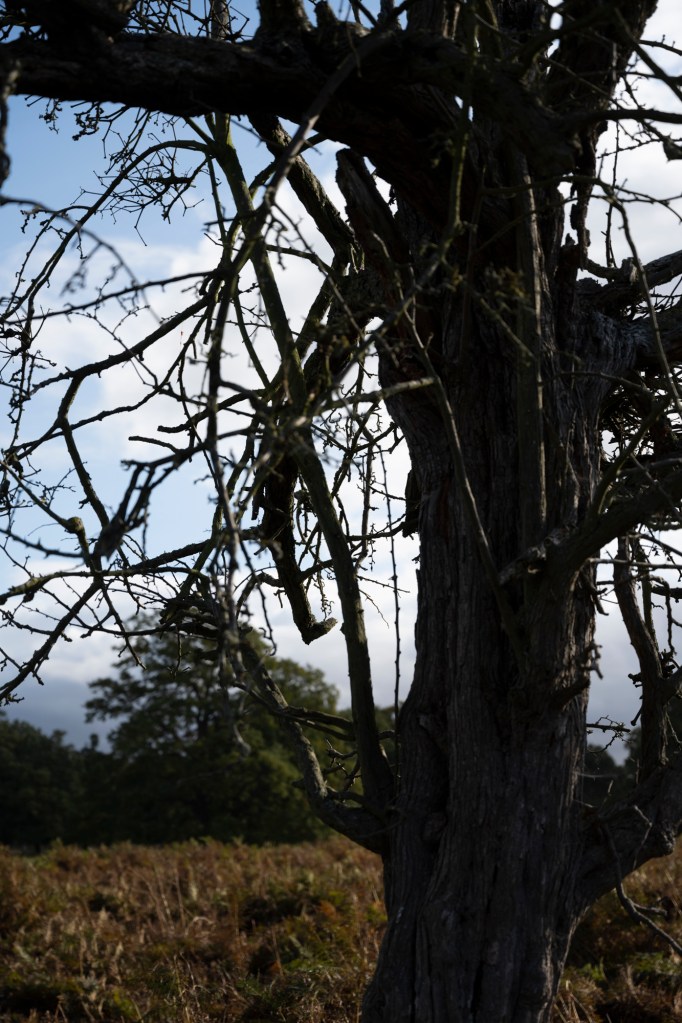
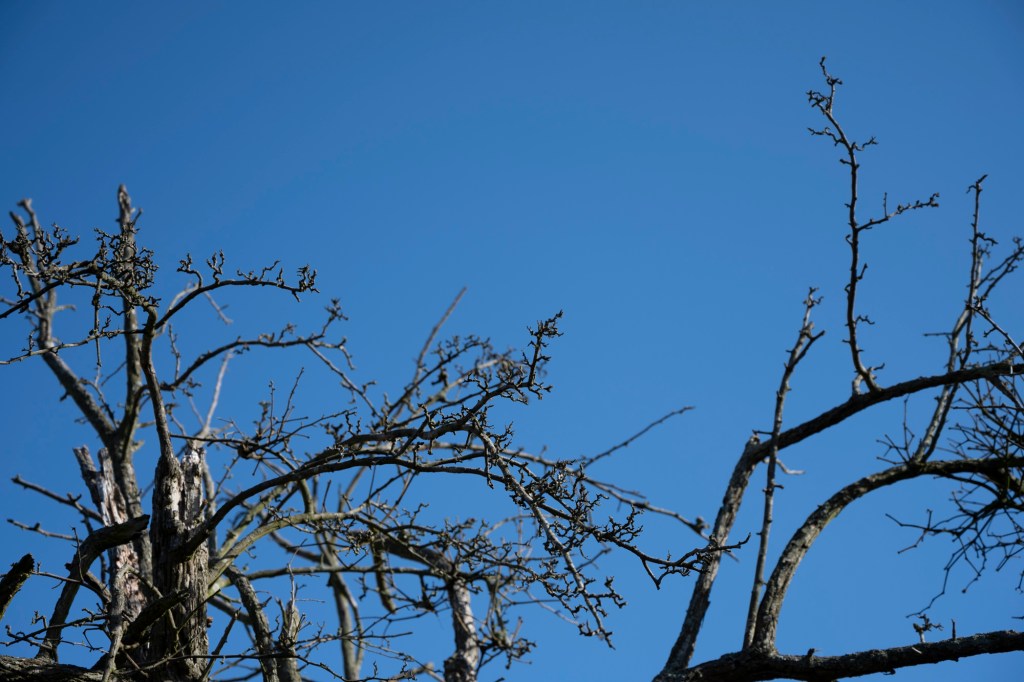
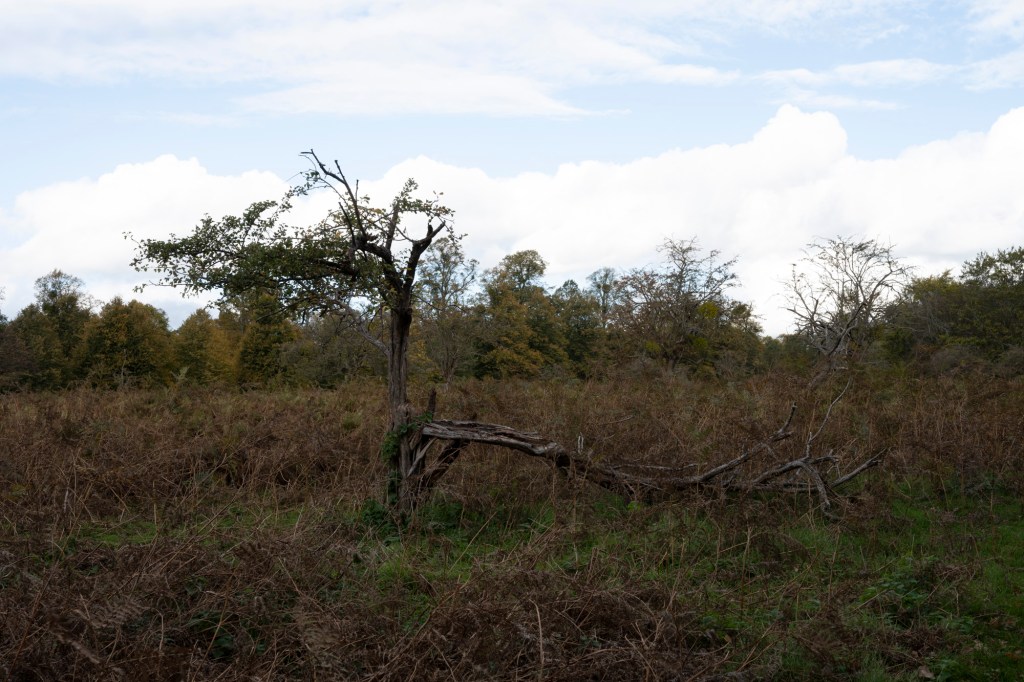
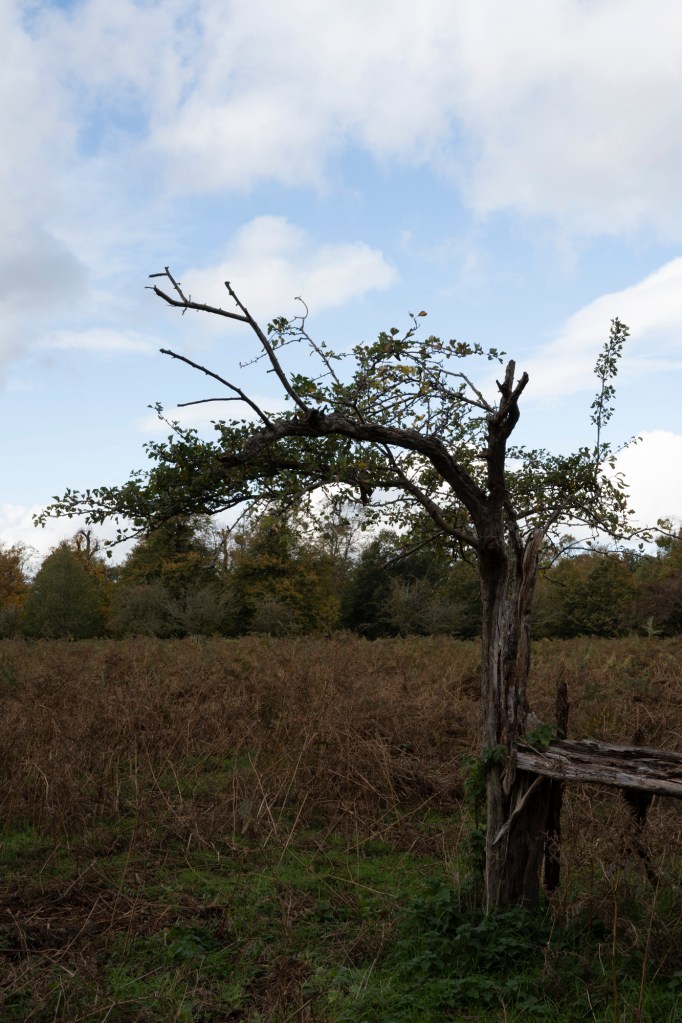
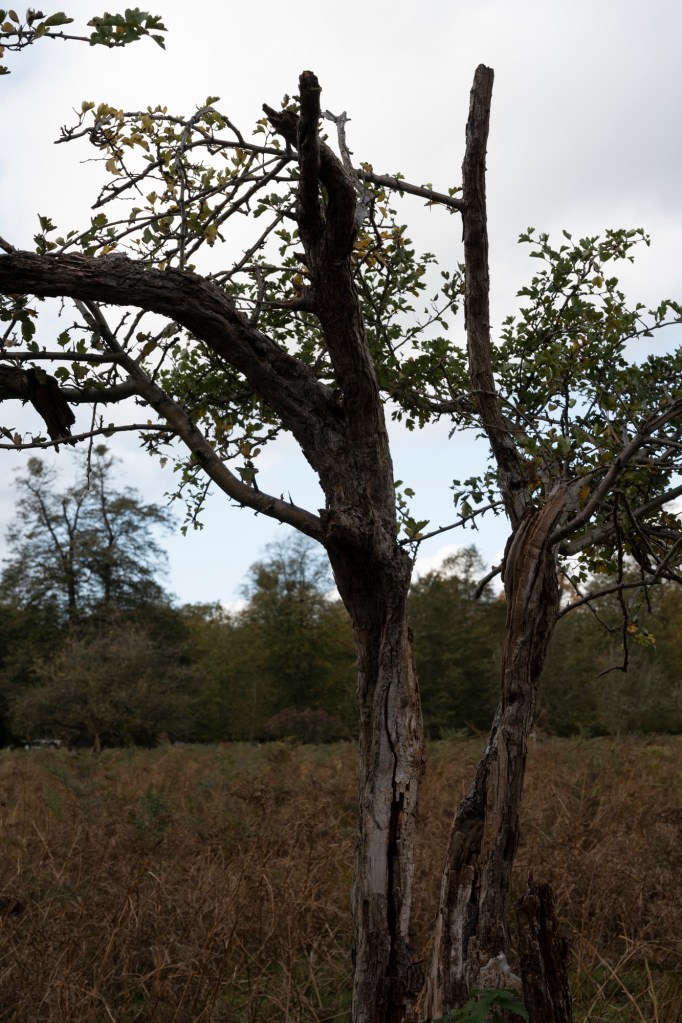
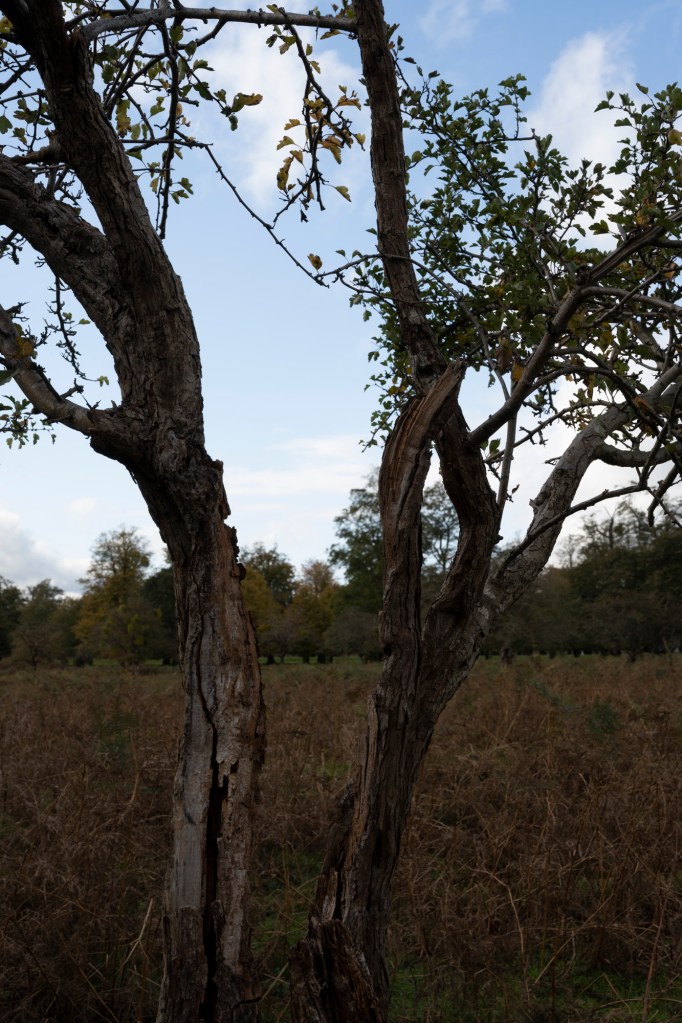
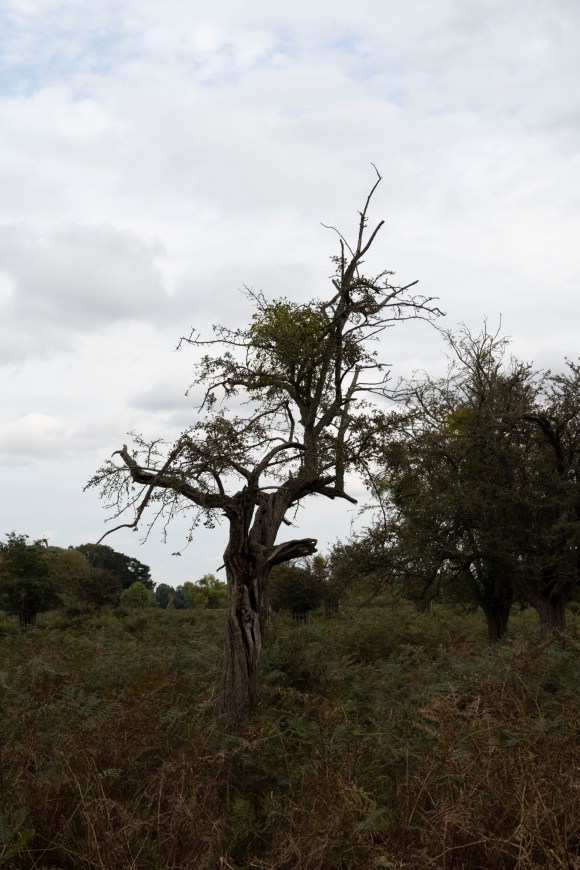
The final individual hawthorn I focused on is the one I nicknamed ‘Hawthorn Harlot’. I had to admit, it took a while to remember where it was as it looked completely different approached from an alternative angle. When I eventually did re-discover this individual, I took the following shots.
Hawthorn Copse
By now, I was quite tired so my last two shots were of the copse of which the harlot is part.
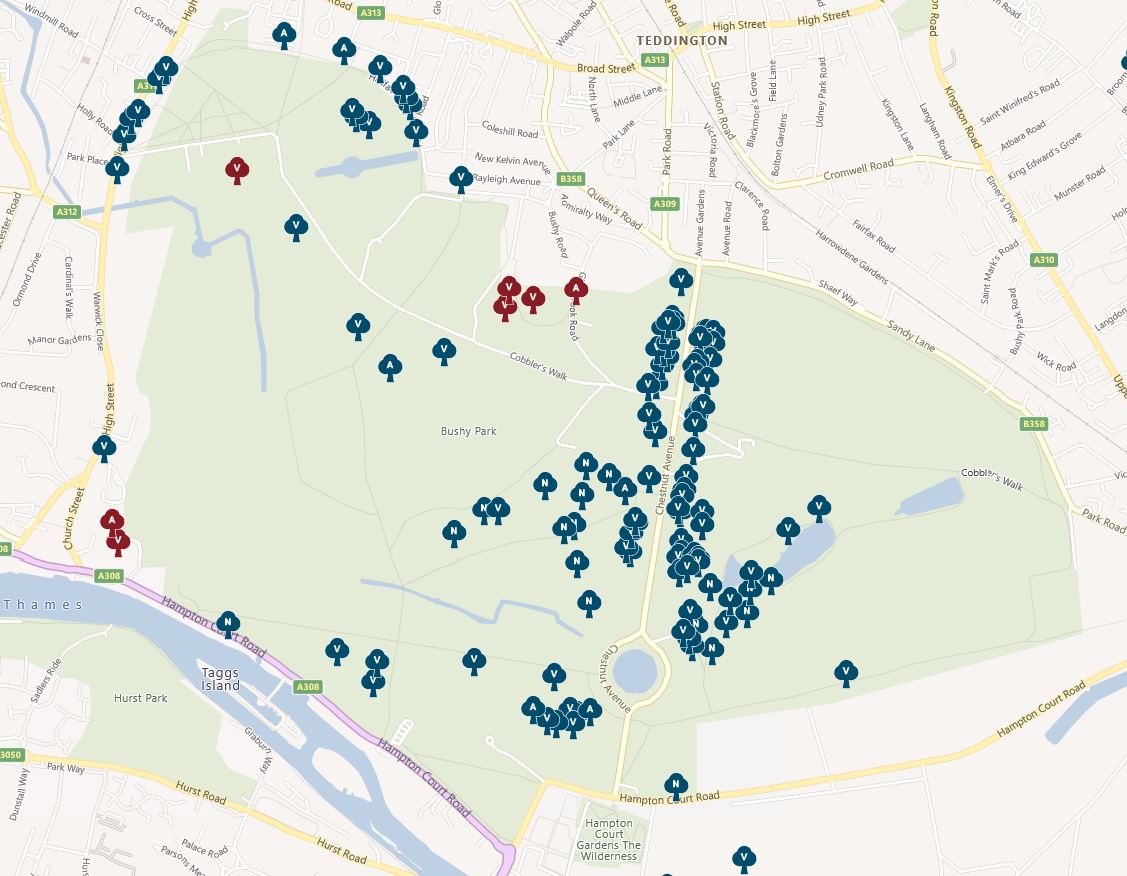
What did come out of this session was that I needed record the co-ordinates of each tree so I could start mapping them. Unfortunately, my camera doesn’t have a GPS option, so I need to take a photo of each one using my smartphone to capture these details. I have done a bit of research and there is an app called Nikon SnapBridge that can potentially add the co-ordinates of each image. Otherwise, I will have to manually add the co-ordinates to the metadata of each file so I can keep track of which image relates to each tree.
Another consideration is the use of filters to enhance the image before converting to Black & White. The camera itself has various white balance settings, which could also influence the conversion outcome.
The third and final consideration is the ferns. I know that these will totally disappear in approximately a month’s time. This means the trees will look different again, especially as they will have lost their by then.
On Thursday 22 October, I visited Bushy Park with the intention of taking a closer look at hawthorns. My plan was to enter via Teddington Gate and take another look at the trees I had shot on 5 October.
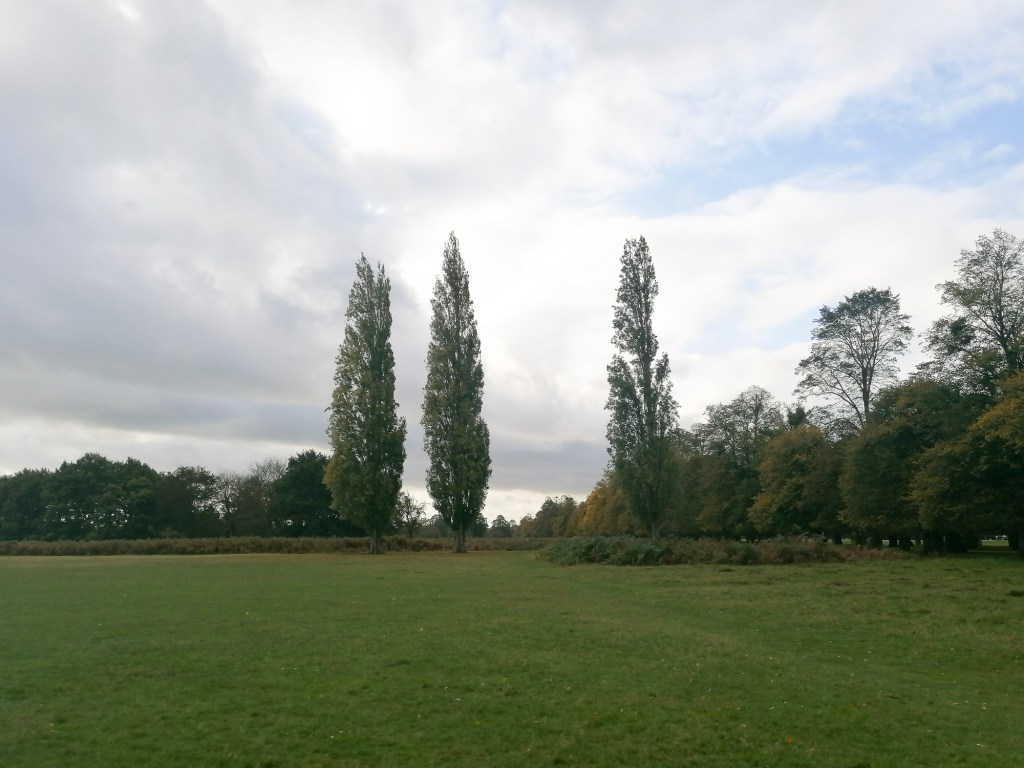
When I came into the park, I was distracted by three trees that I thought could be hornbeams – they look similar to the ones in the avenue in the Waterhouse Plantation in Woodland Gardens.
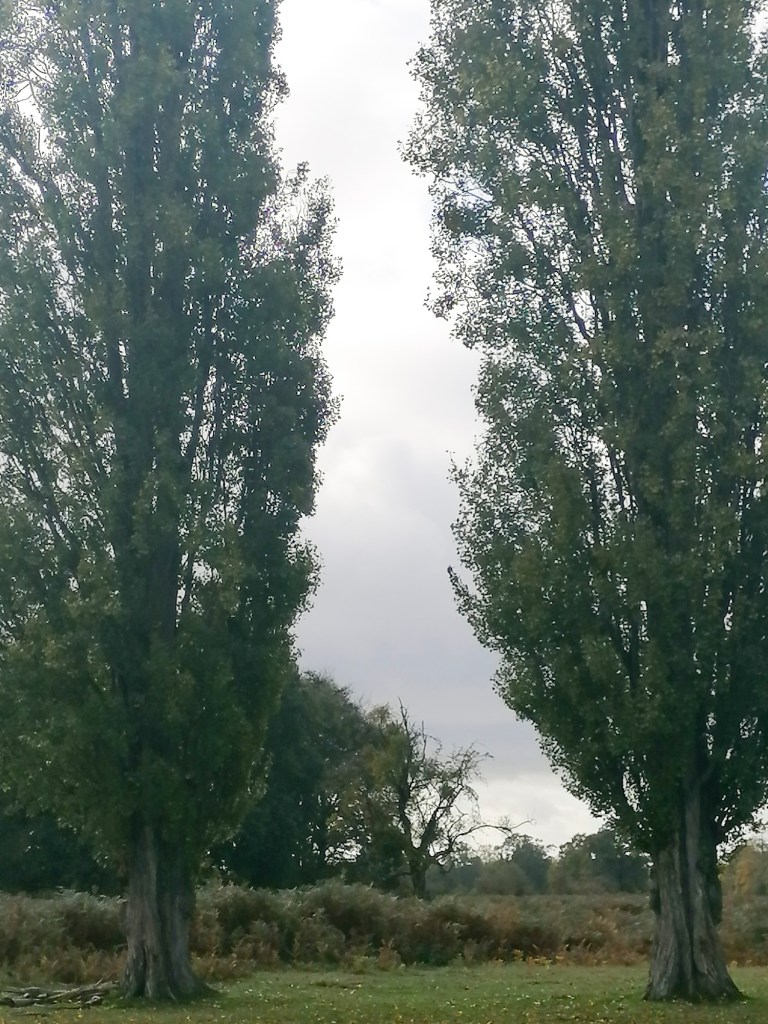
These three ‘sisters’ have always got my attention when coming into the park through Teddington Gate or walking through the park from Hampton Wick Gate. As I approached the trees, I realised that I could see a hawthorn branches coming out of the ferns between the two trees on the left. I took the above image with the smartphone and walked towards them.
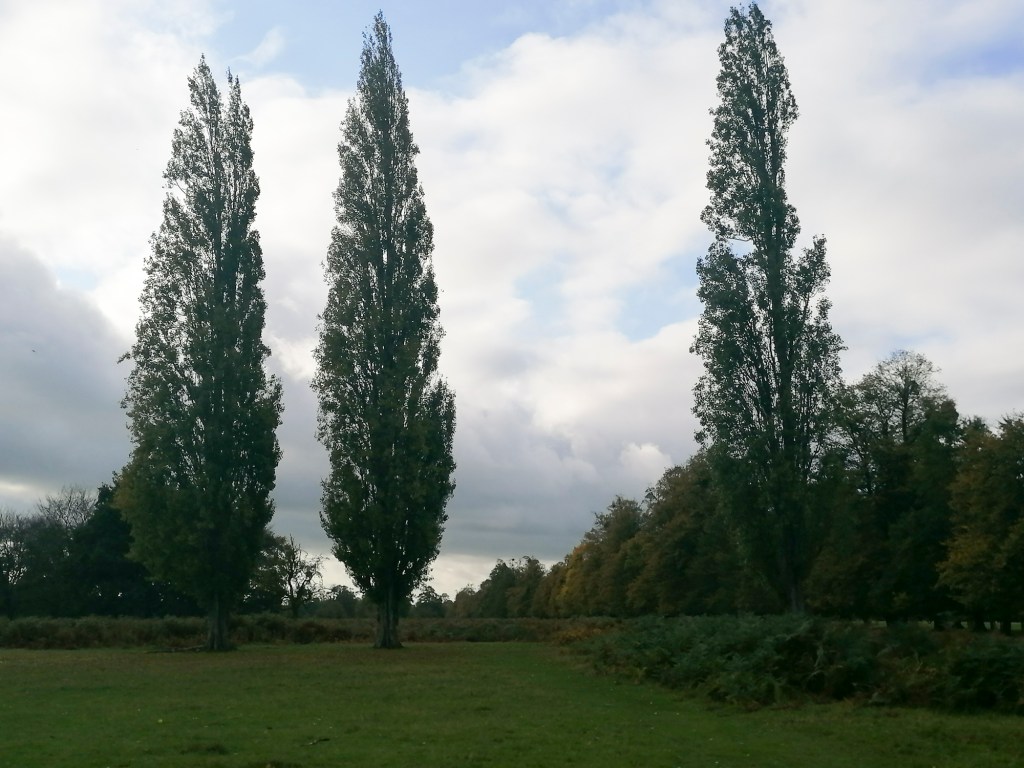
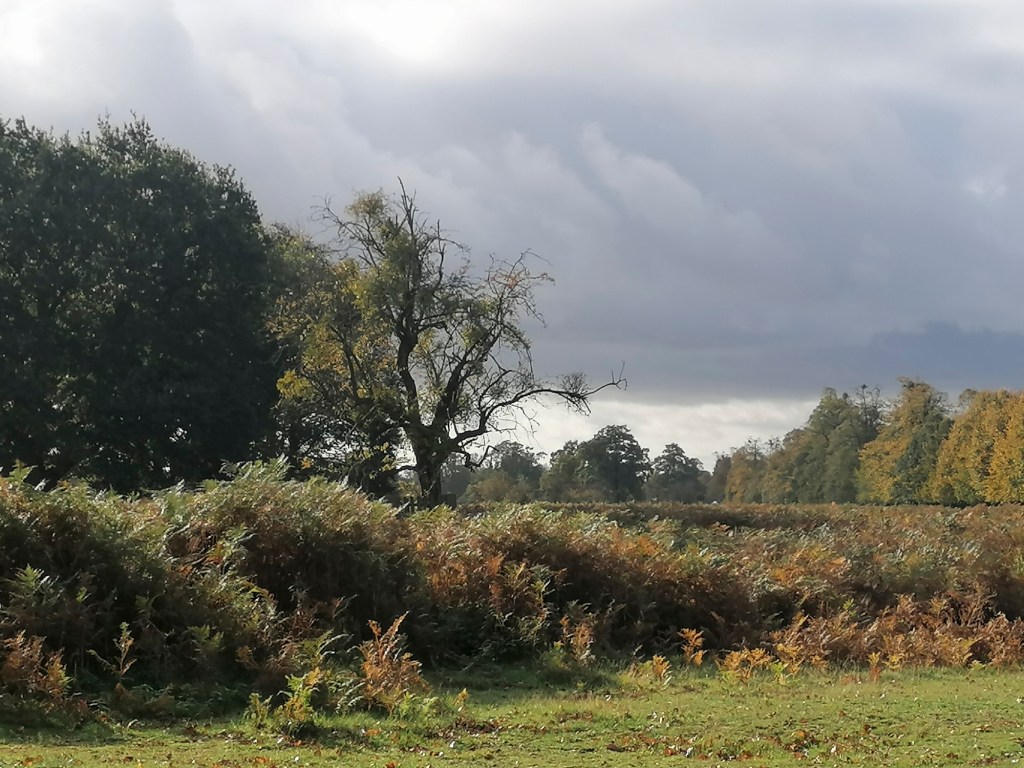
As I gradually got closer, it was interesting to see how my perspective of the hawthorn changed as I got closer to it, especially in relation the much-taller trees.
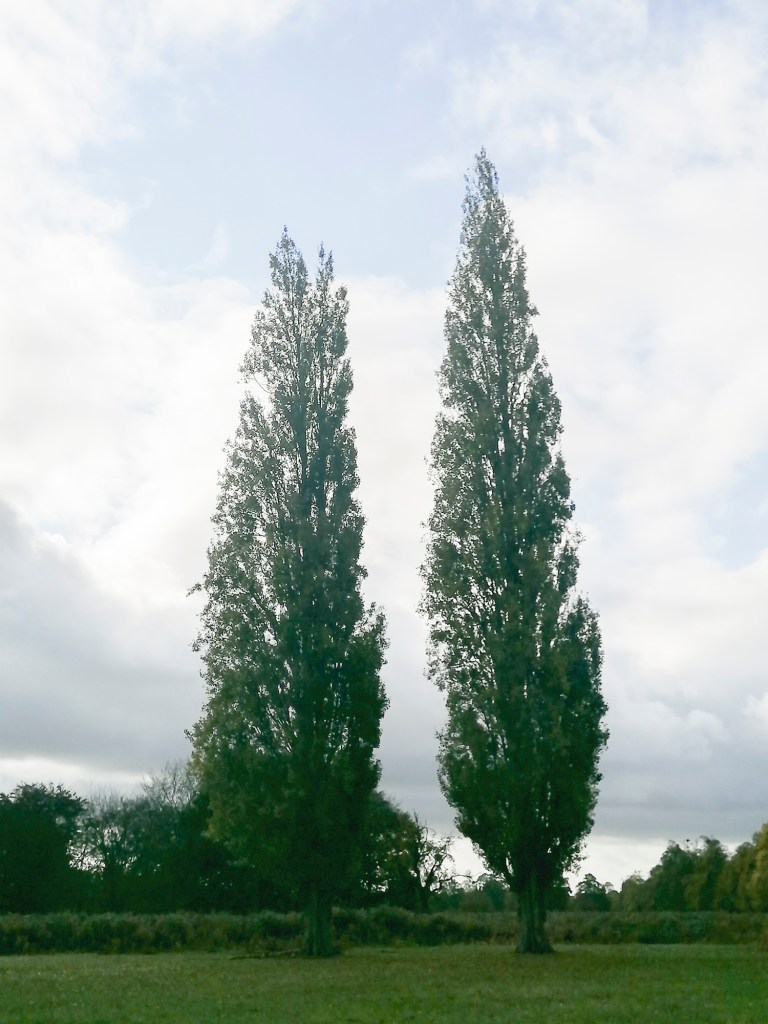
When I arrived at the edge of the ferns and walked beyond the two tall trees, this was the perspective.
Note to self – the perception of a tree can change drastically depending on its surroundings.
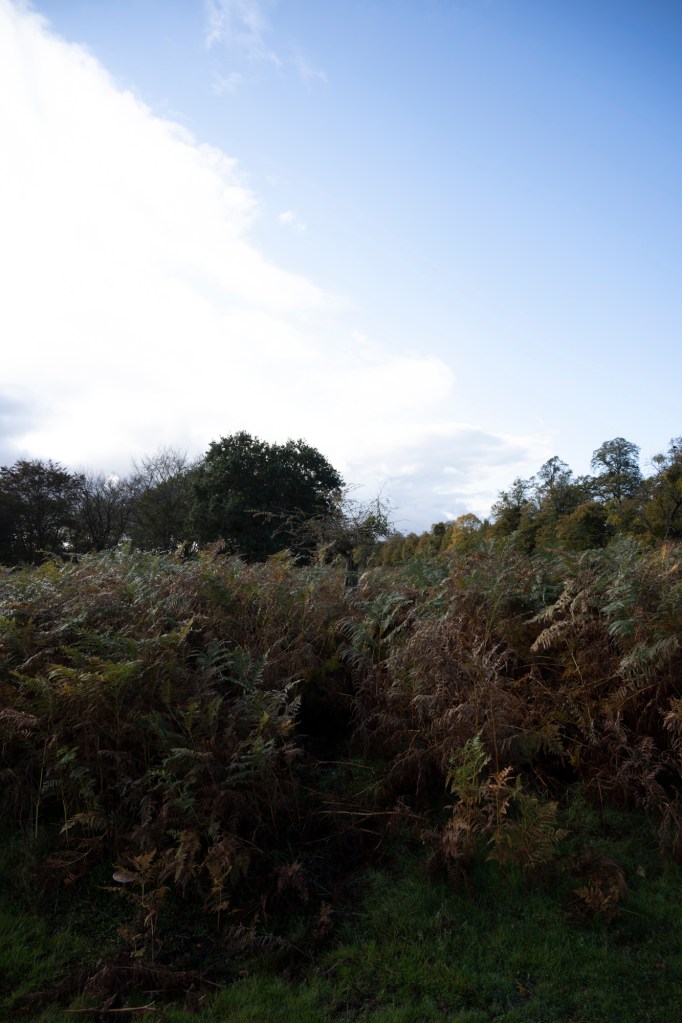
At this stage, I started using the digital camera, as shown in the images below. Please note these have not been edited, unless stated.
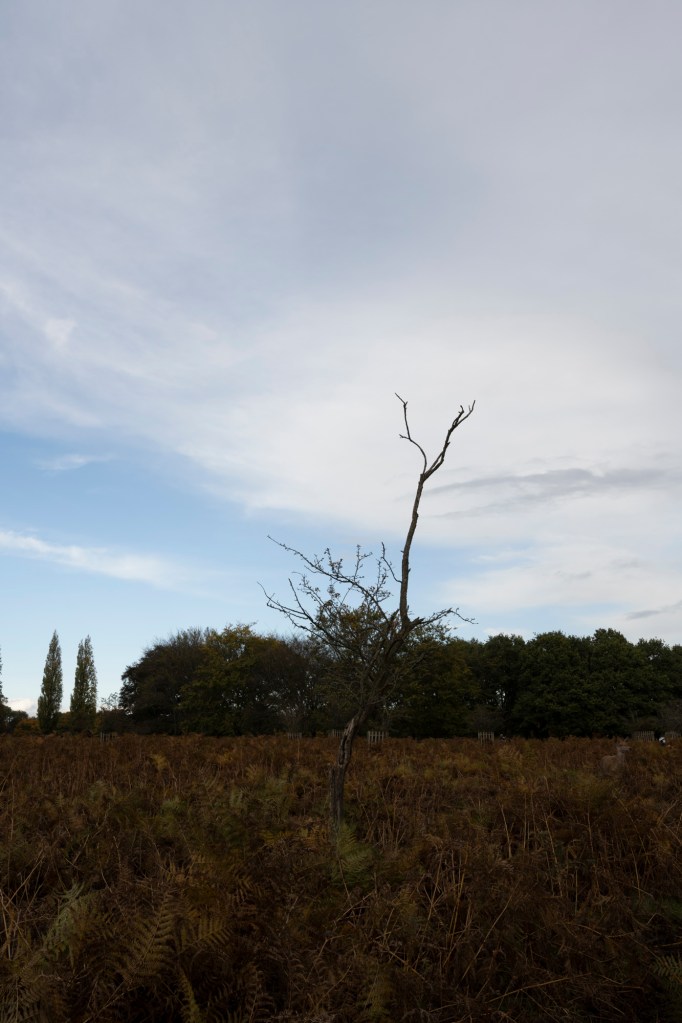
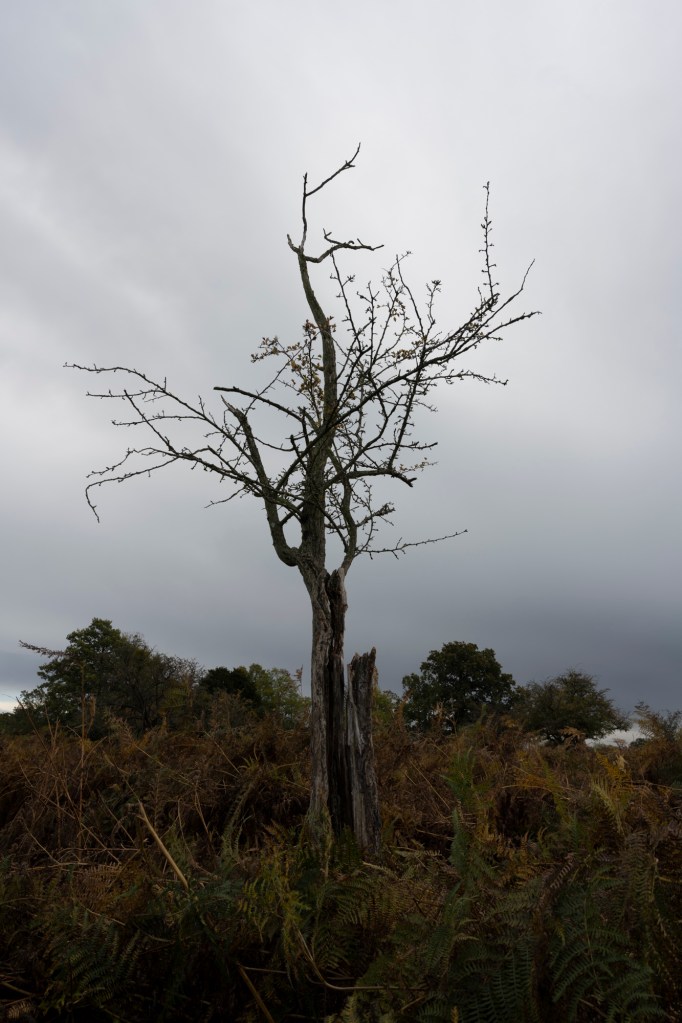
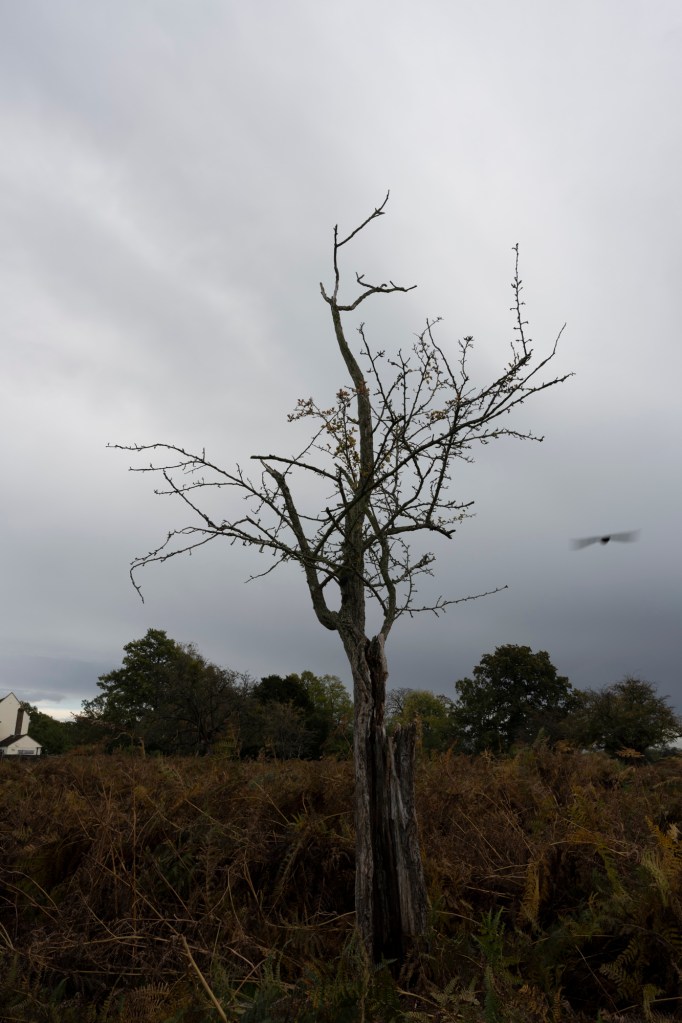
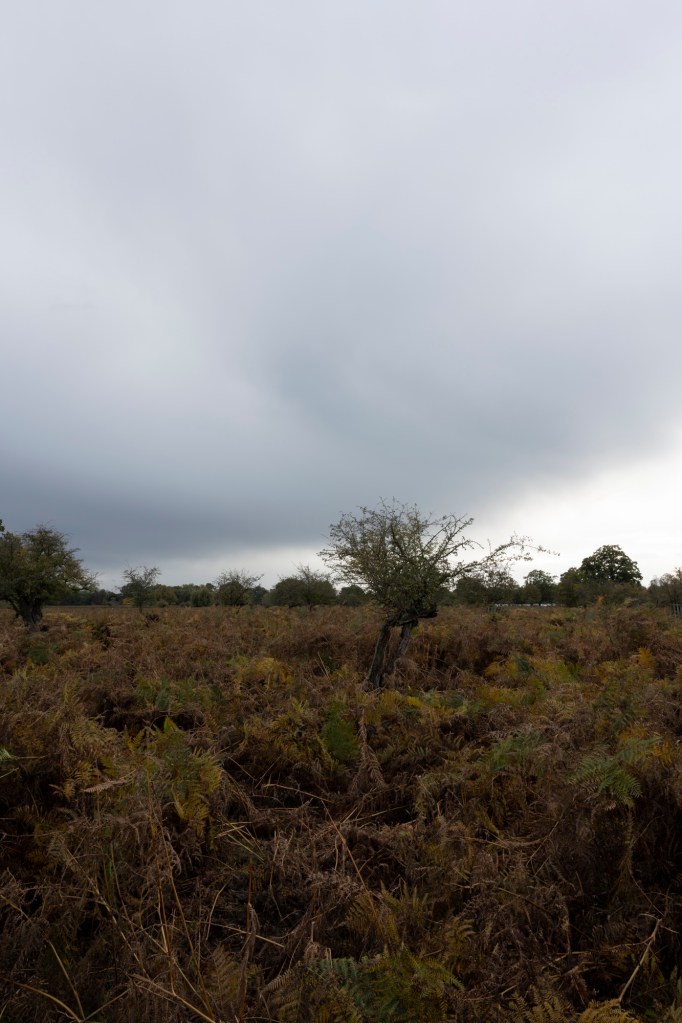
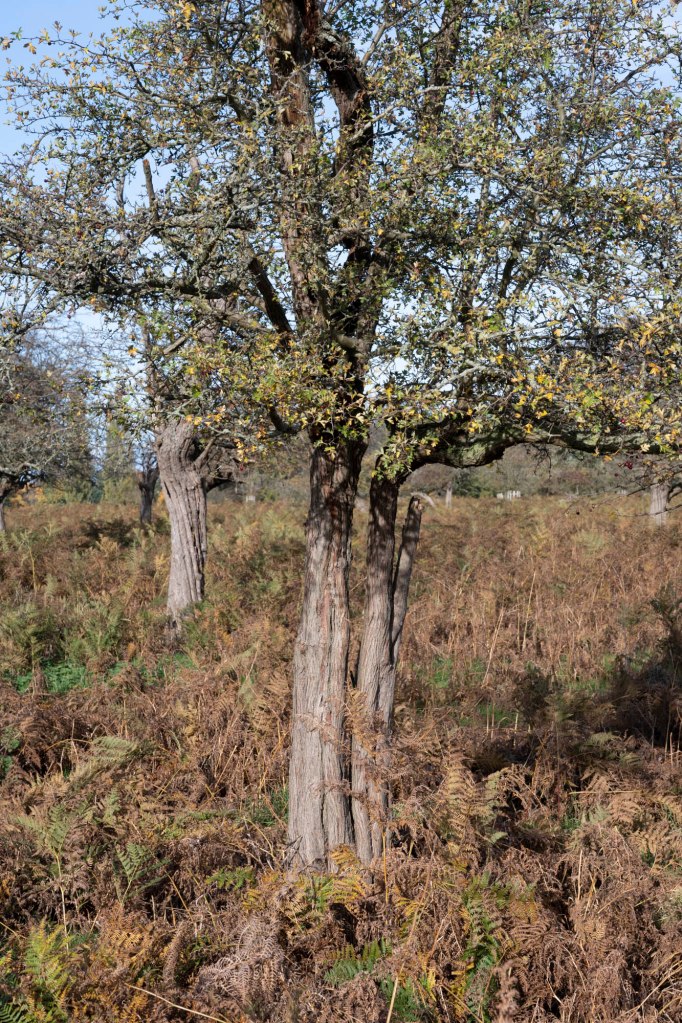
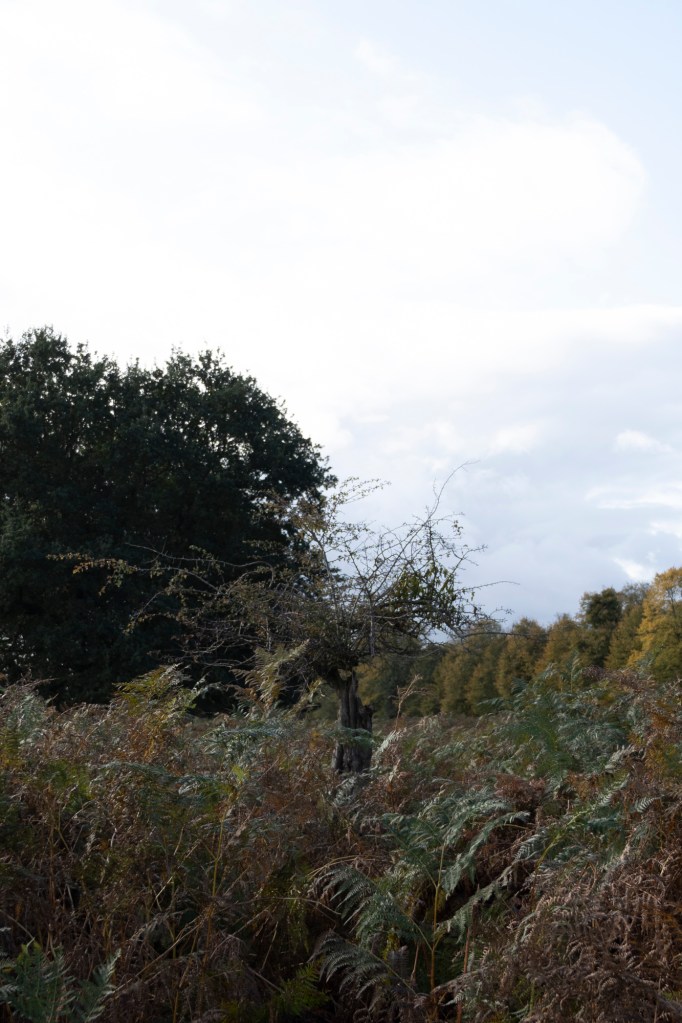
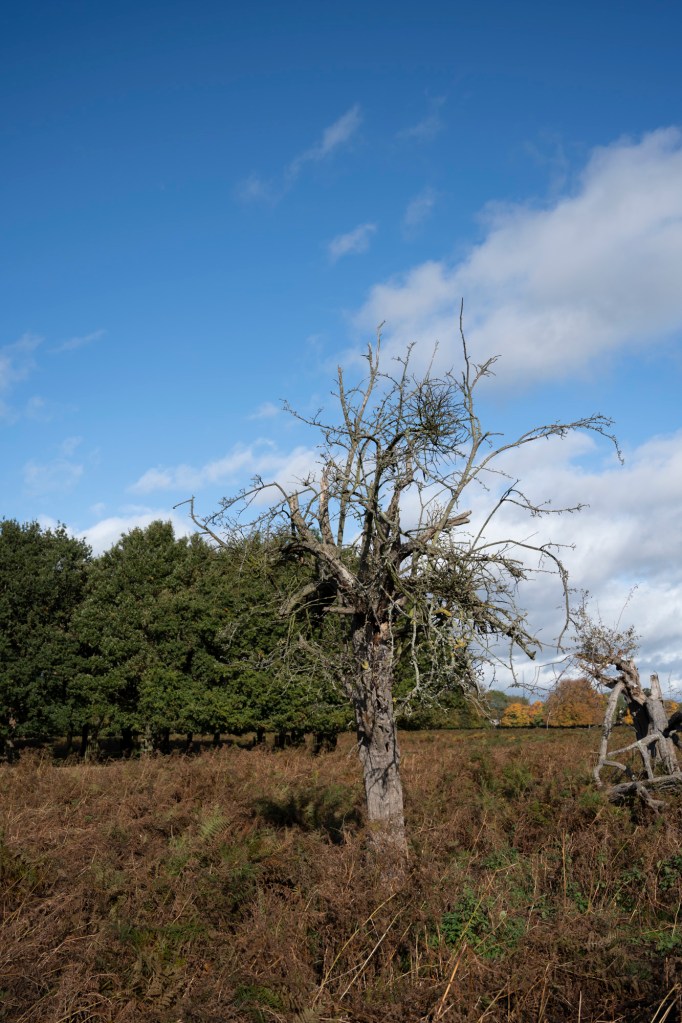
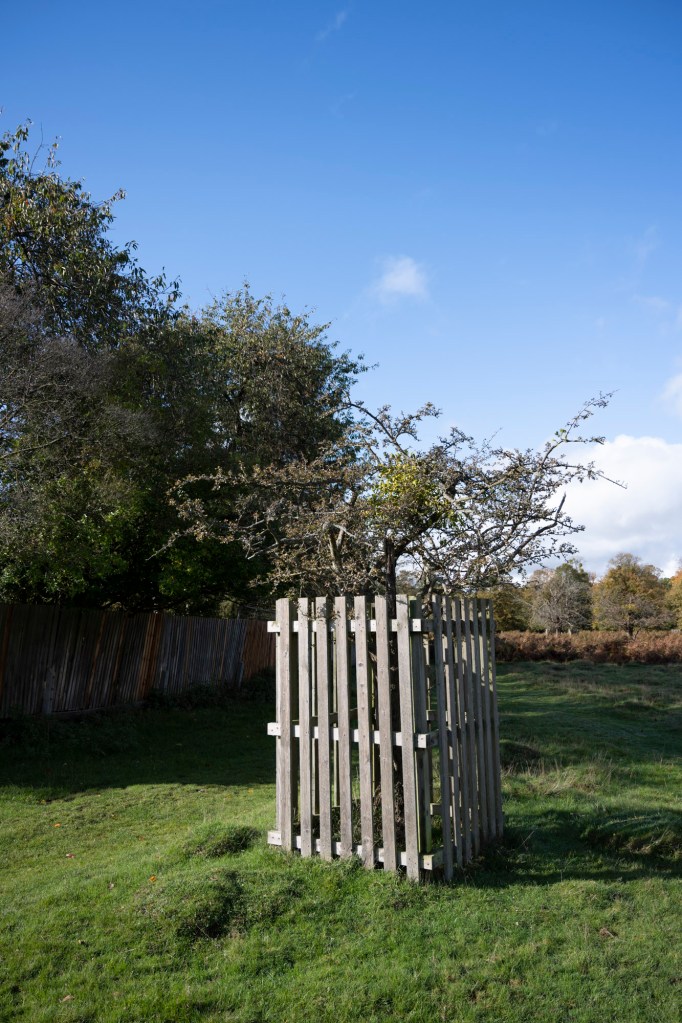
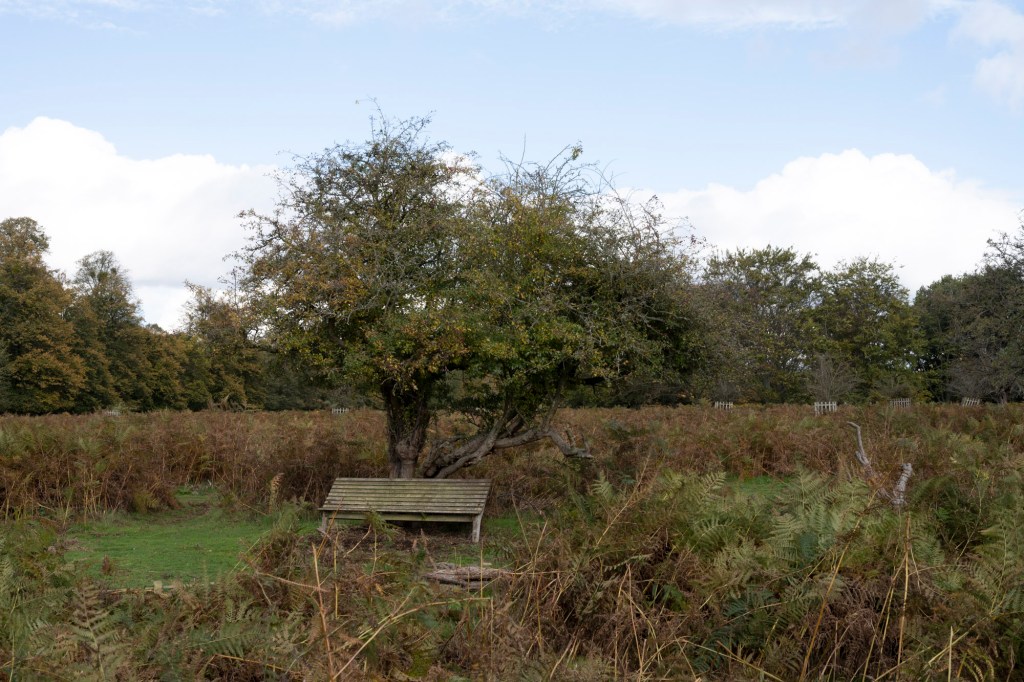
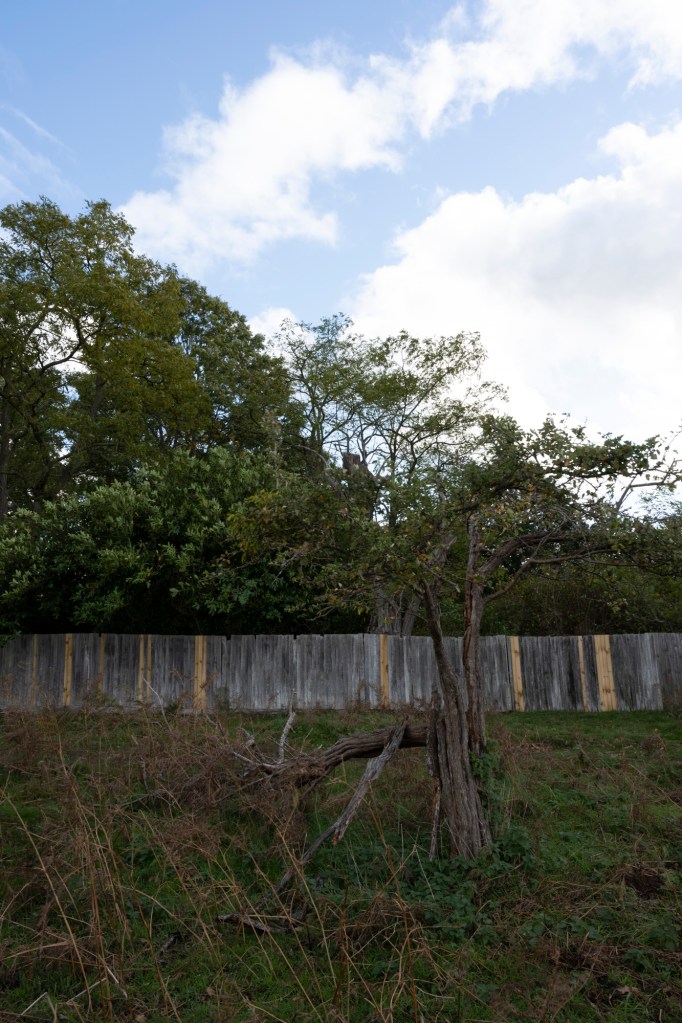
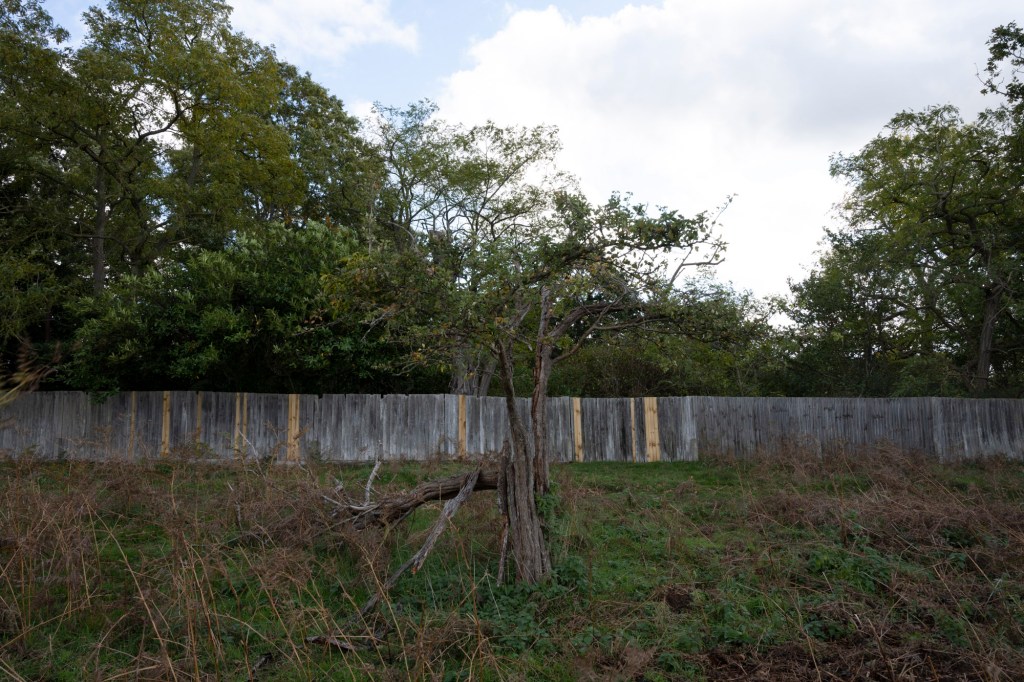
When I looked closer at this tree, I realised that the tree above has a fenced surround (to protect it from the deer). As I wanted to focus on hawthorns in their ‘naked’ form I looked for another example nearby. I could just about make out this one among the ferns. The image on the left is the original, the one on the right, a cropped version.
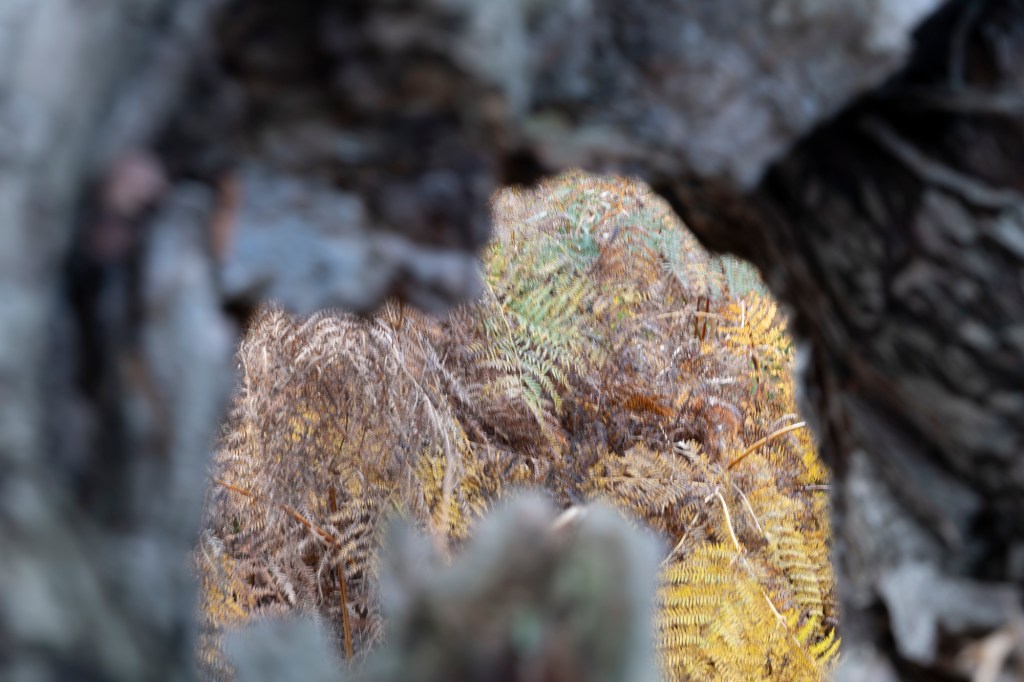
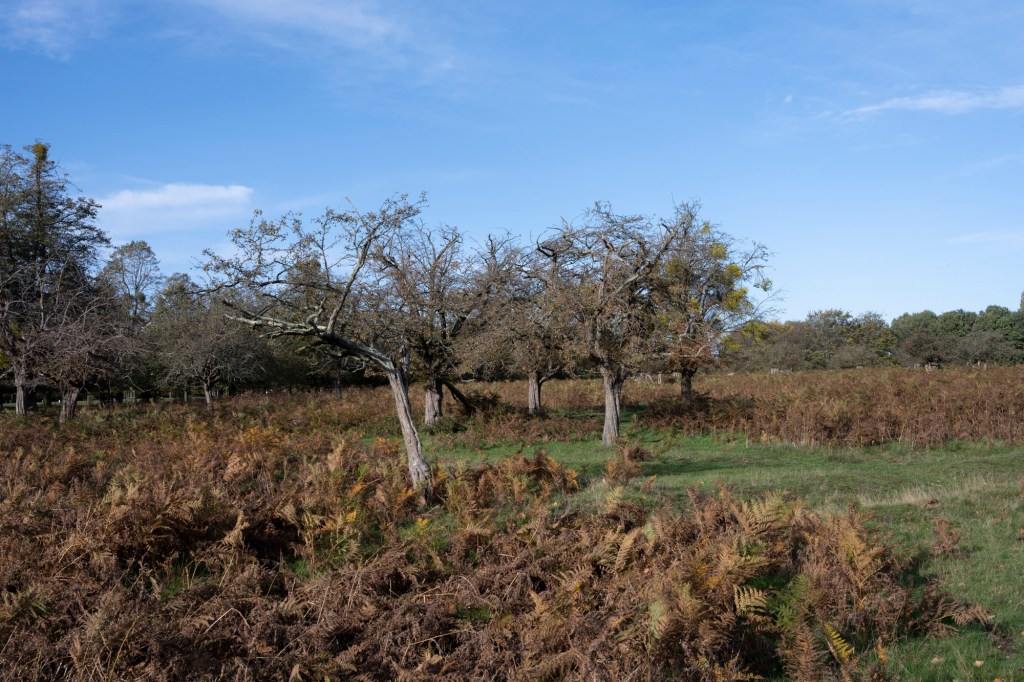
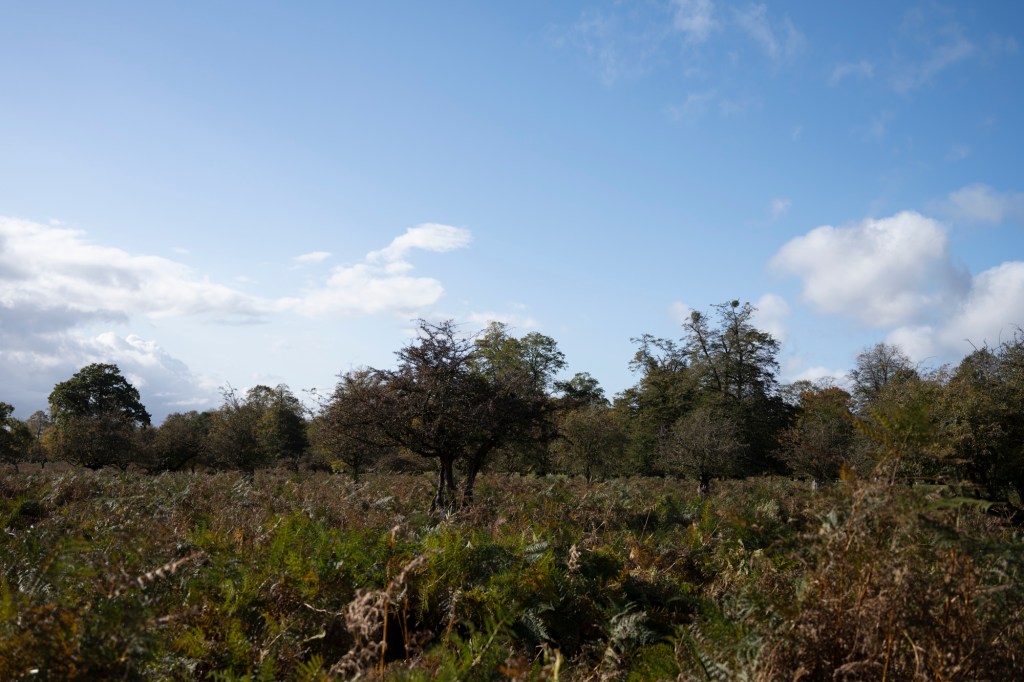
The ferns are one of the features of Bushy Park, which contributes to how the environment changes during the seasons. The above was taken during autumn, when the verdant green ferns of the summer start turning orange. Very soon, with the onset of winter, they will turn into a dark brown mulch then disappear from the landscape. When this happens, the hidden features (and swamped hawthorns) are fully revealed. The whole process starts again in spring, when small fronds start to appear, gradually turning into a bracken forest by July. Each time this happens, it always amazes me how different the park looks and feels depending on the season.
I also took the following shots when I walked to other side of the two hawthorns and into the copse where I had previously taken photos on 16 October. When I looked behind me, both hawthorns disappeared into the ferns once more.
I then walked to the other side of this copse as I had spotted these two hawthorns.
As I got closer, I took a shot of the hawthorn on the left.
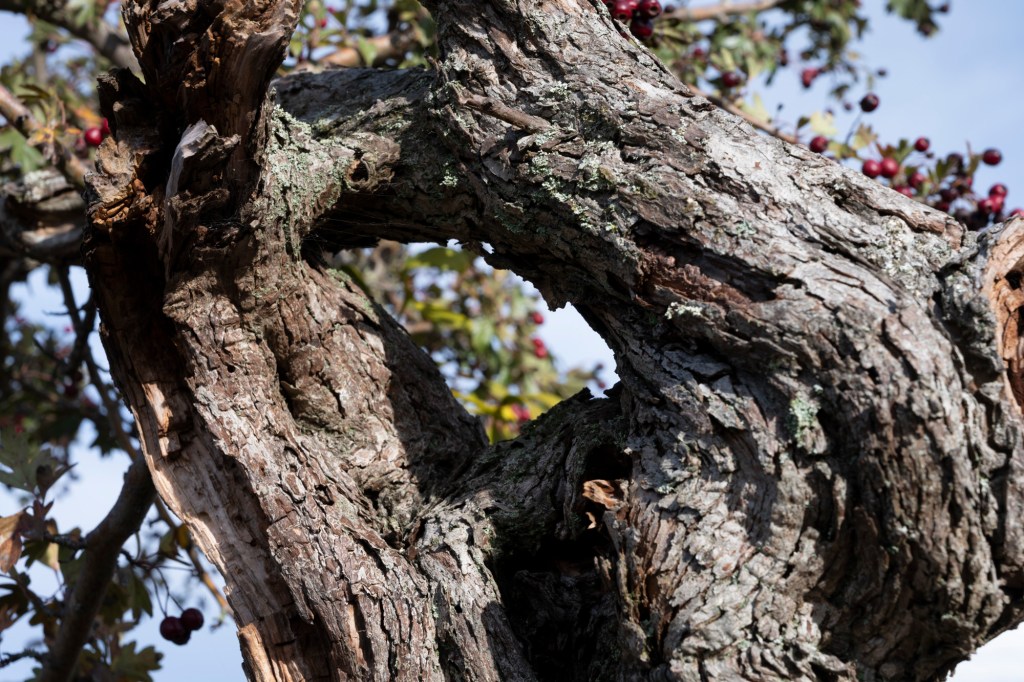
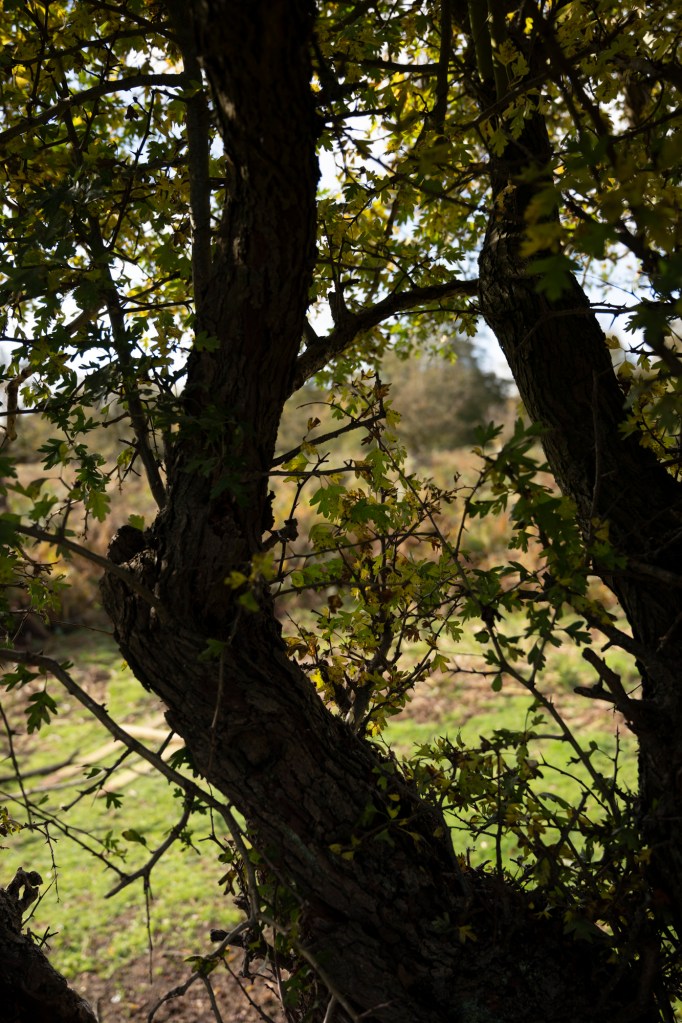
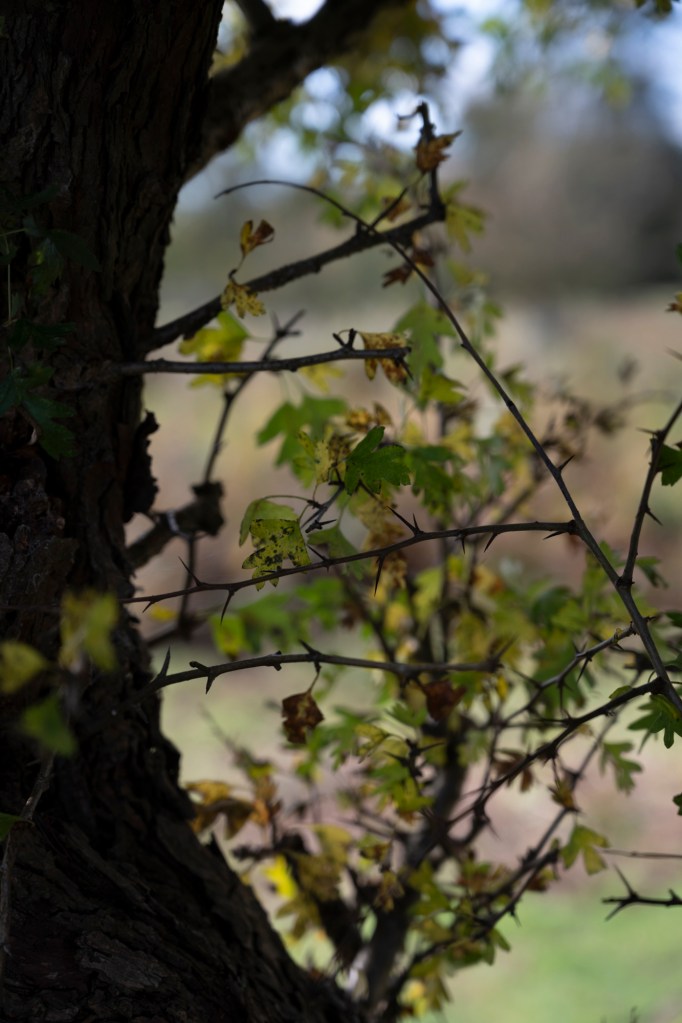
I then focused on the hawthorn on right, taking shots around the tree and focusing on some details.
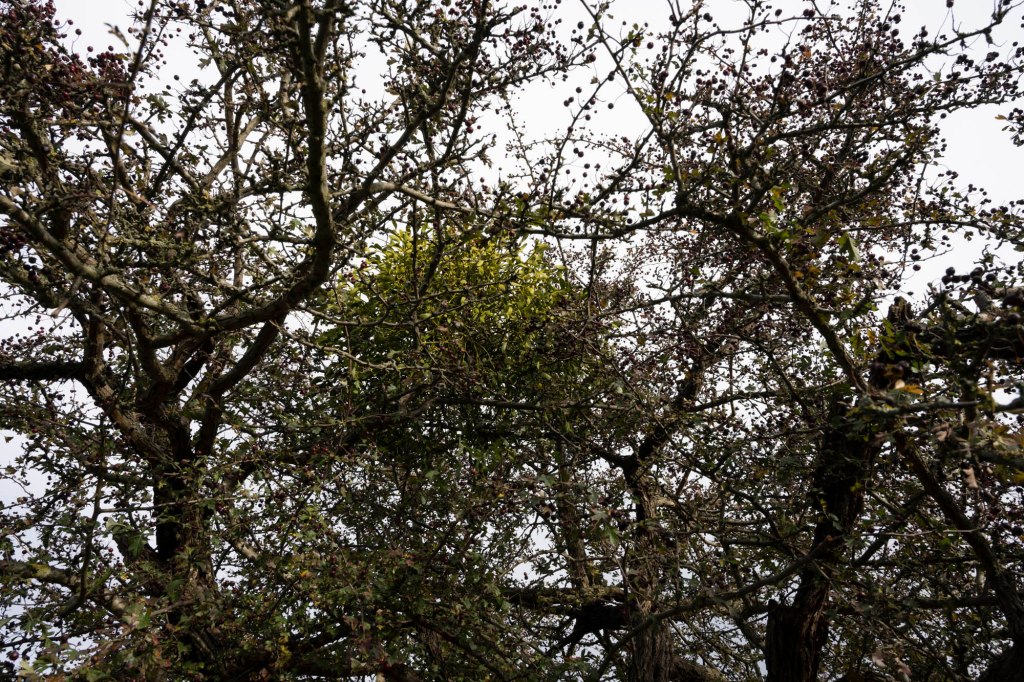
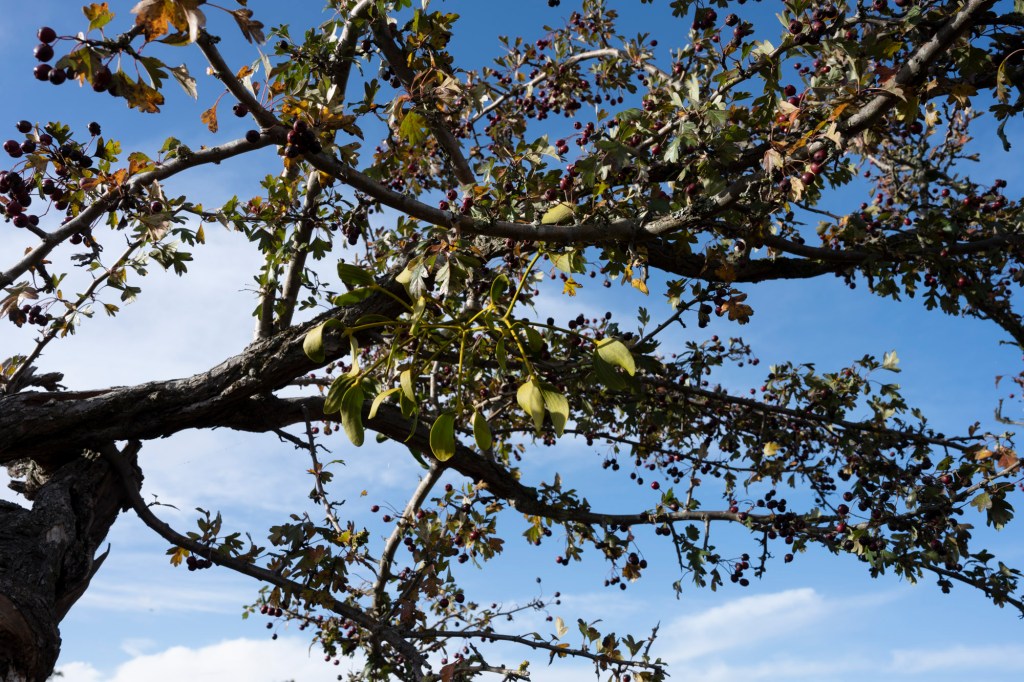
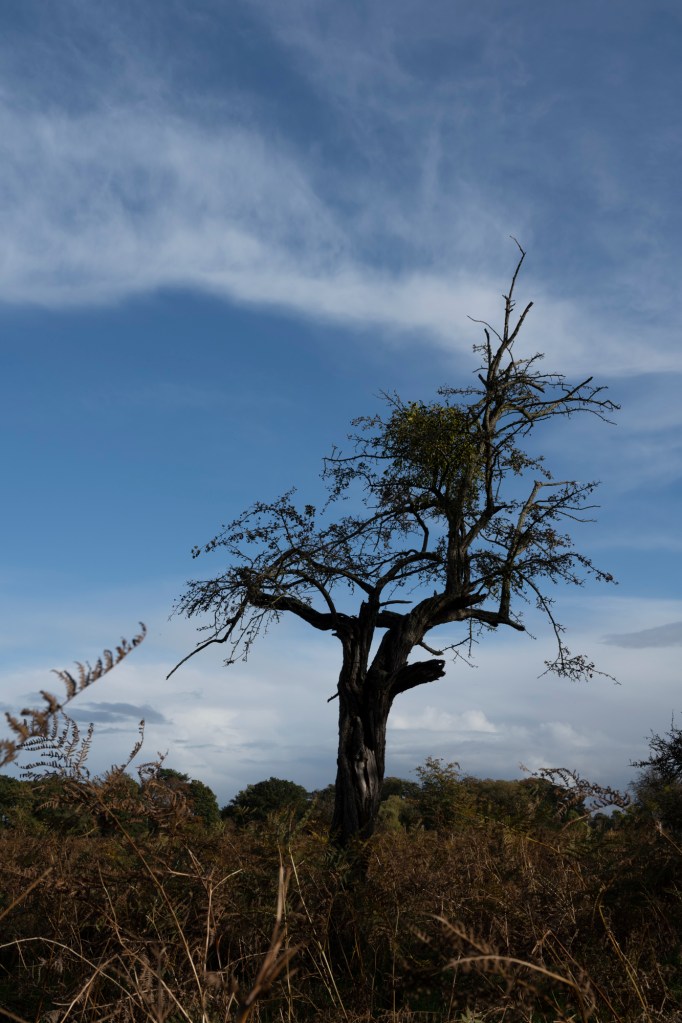
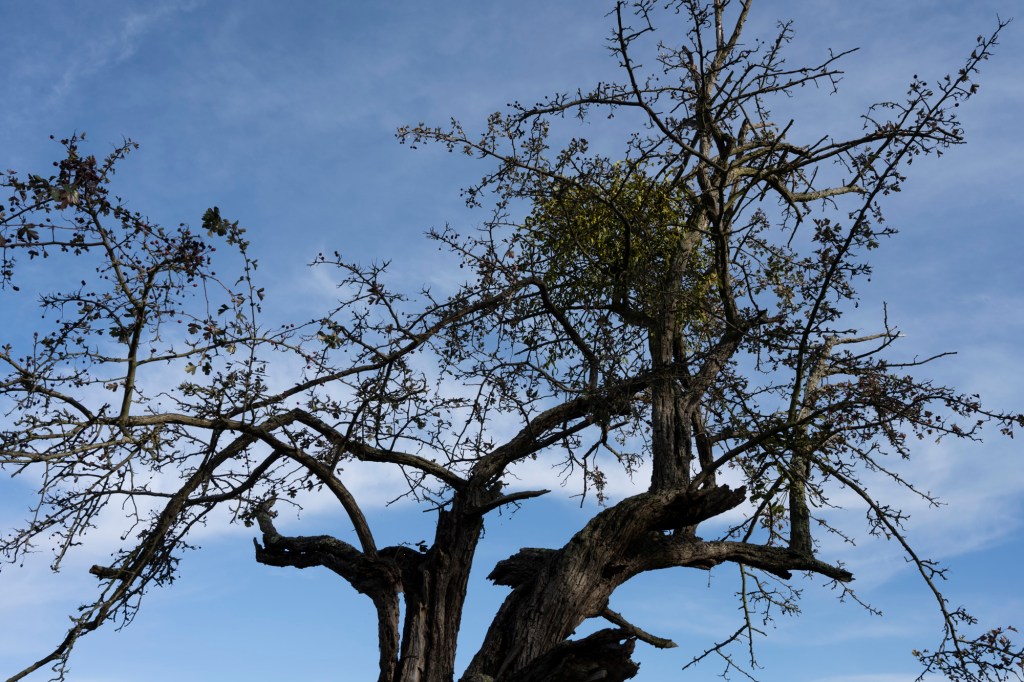
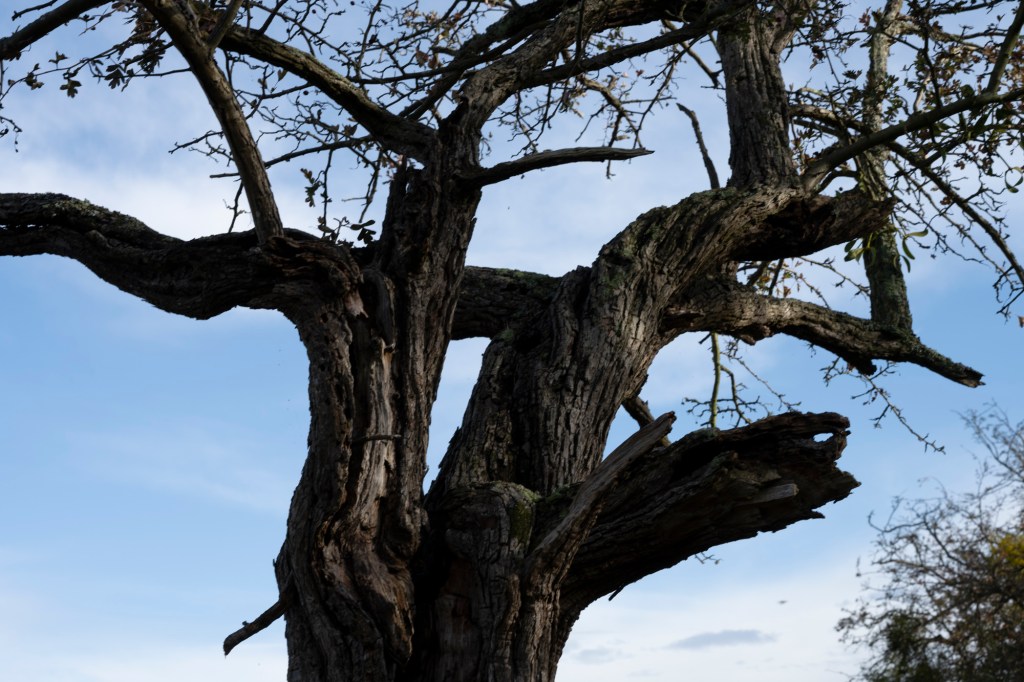
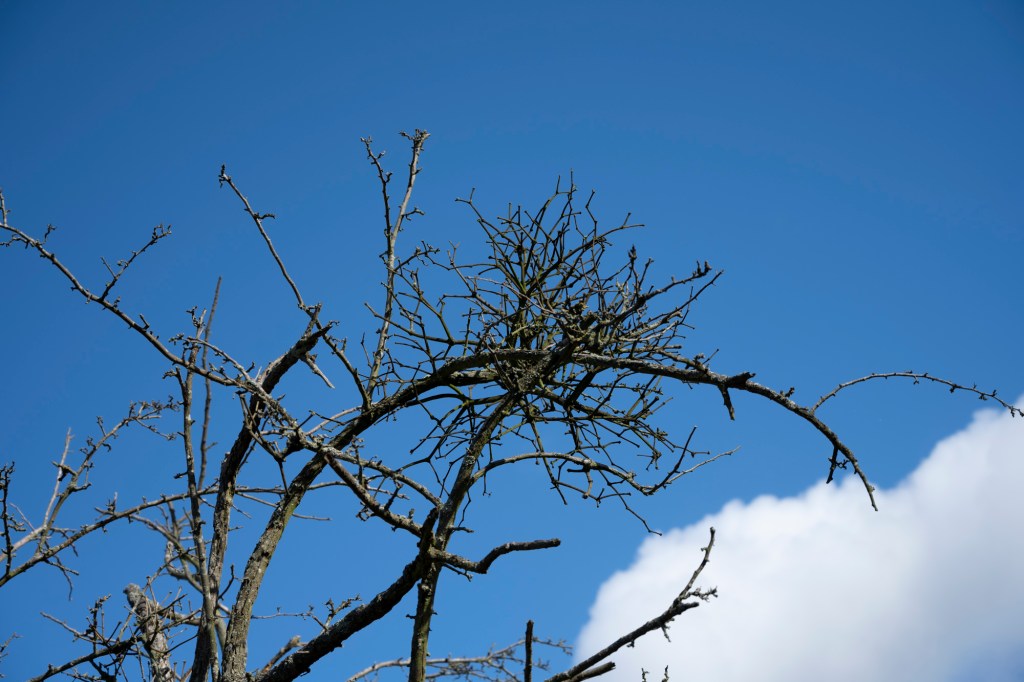
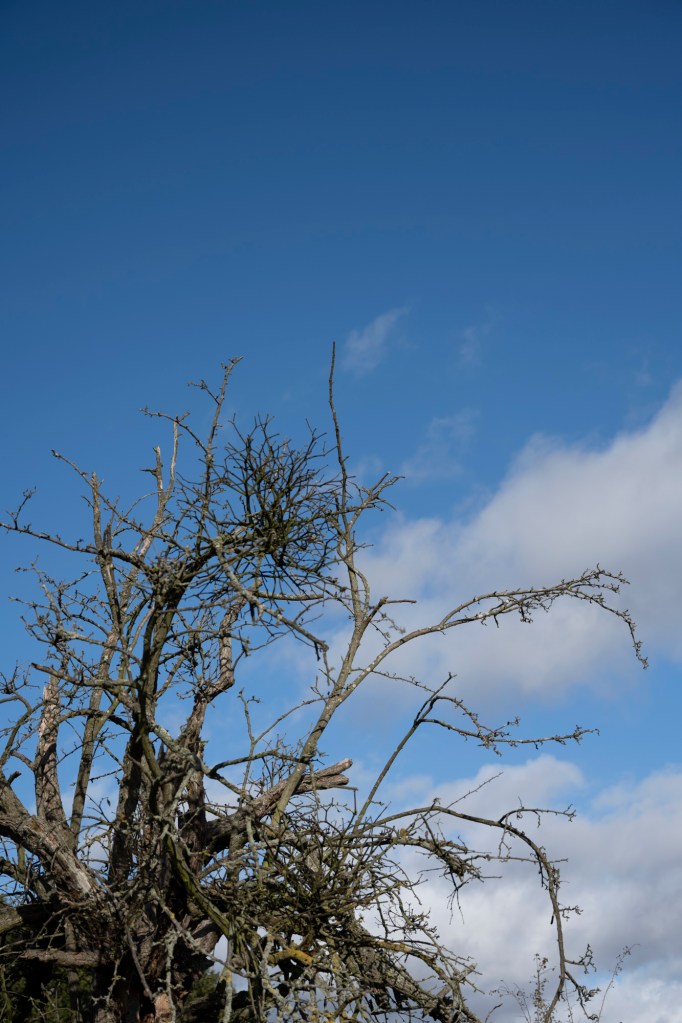
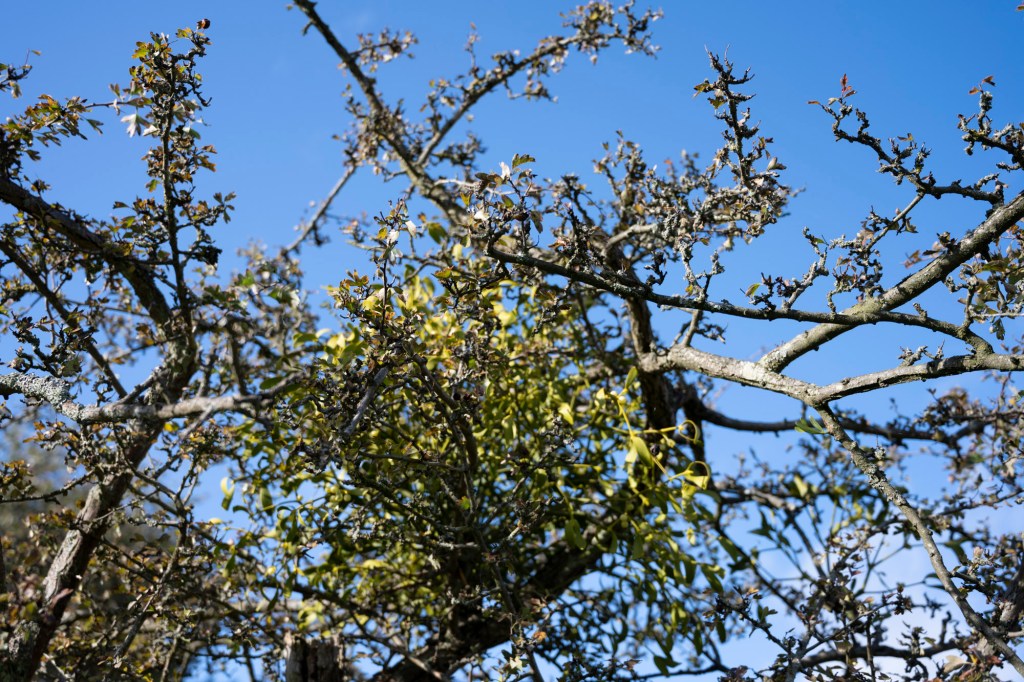
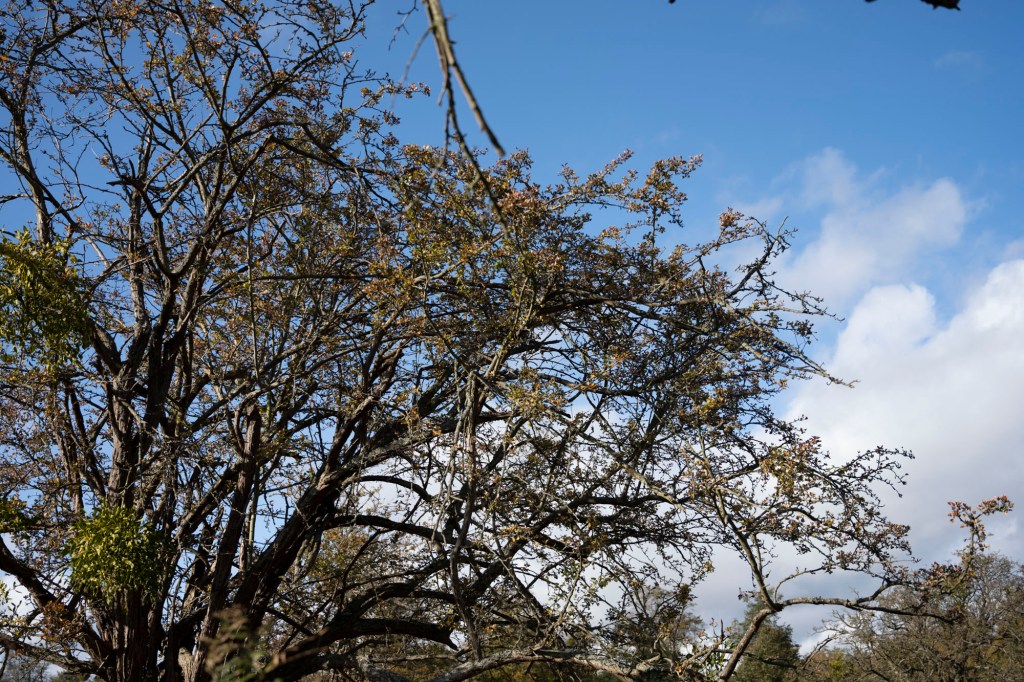
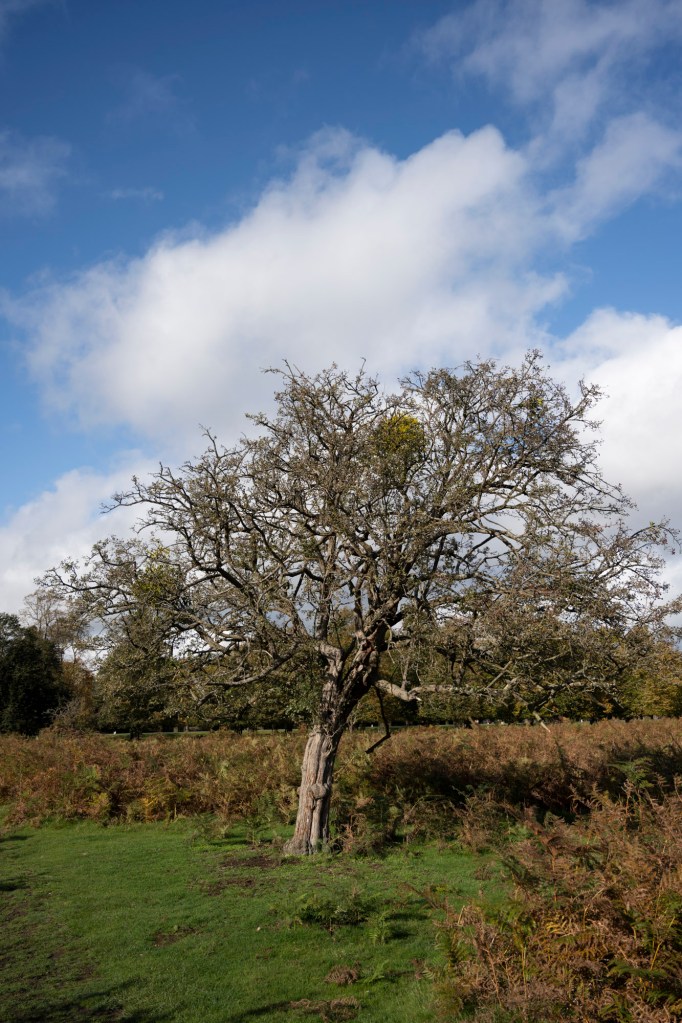
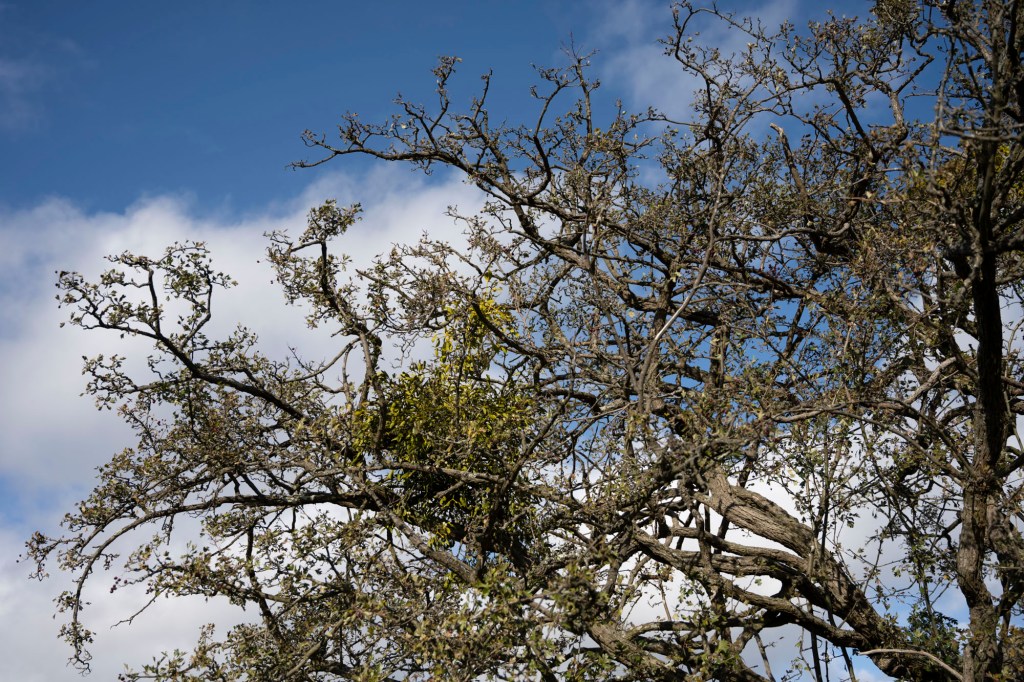
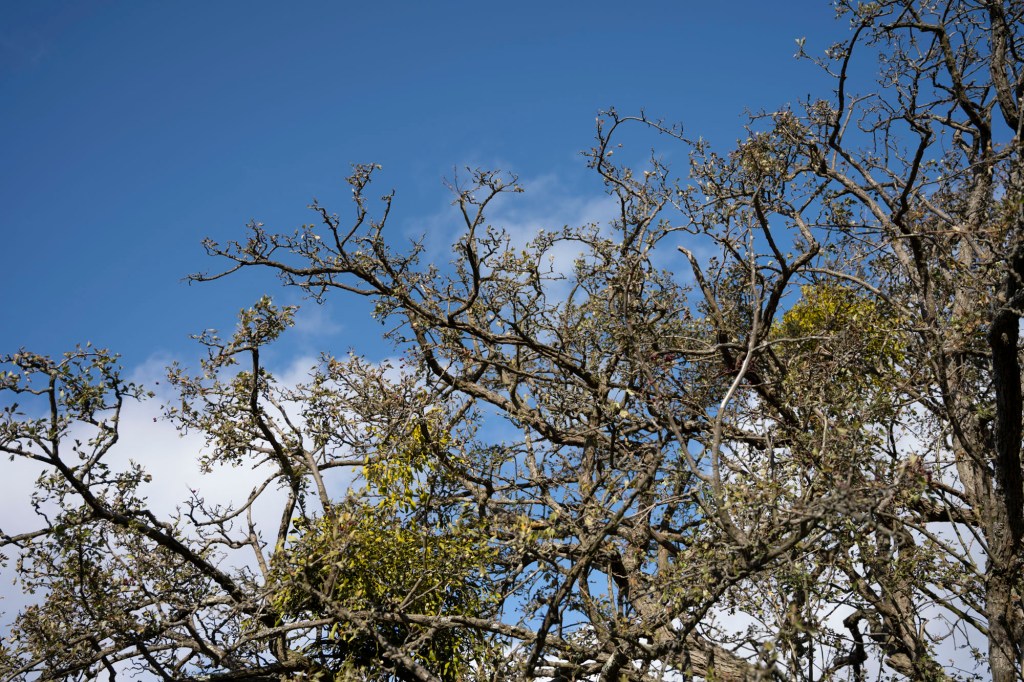
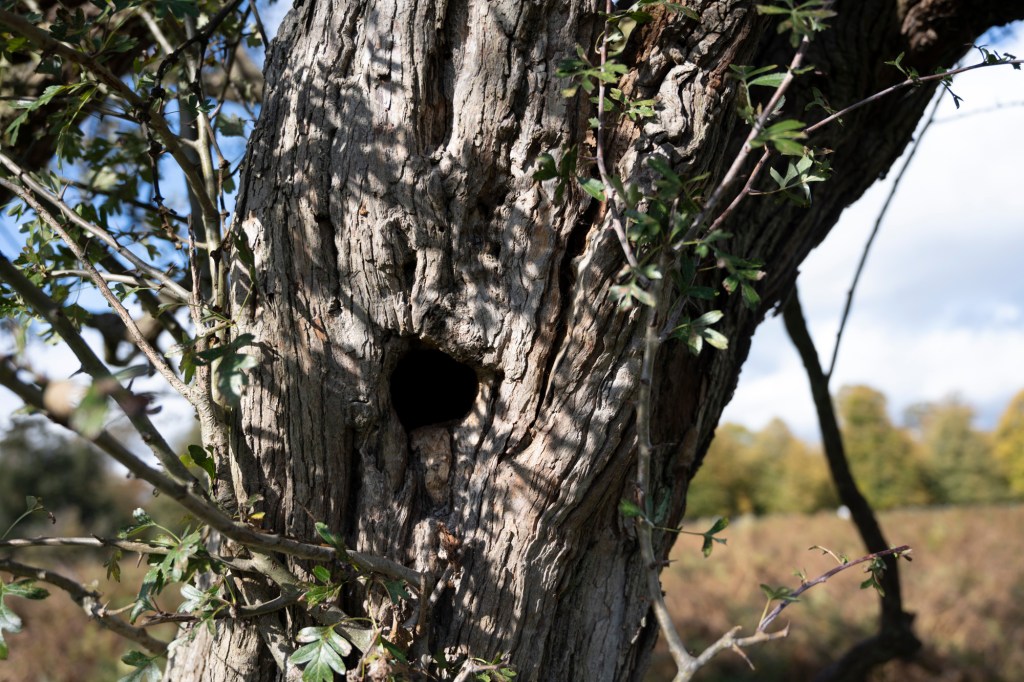
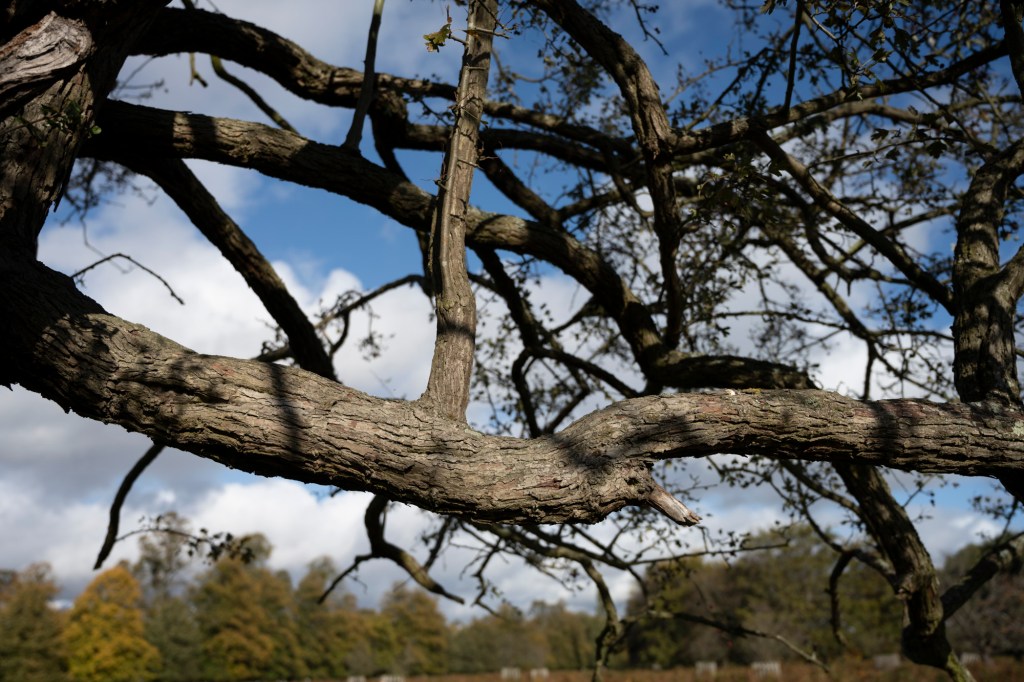
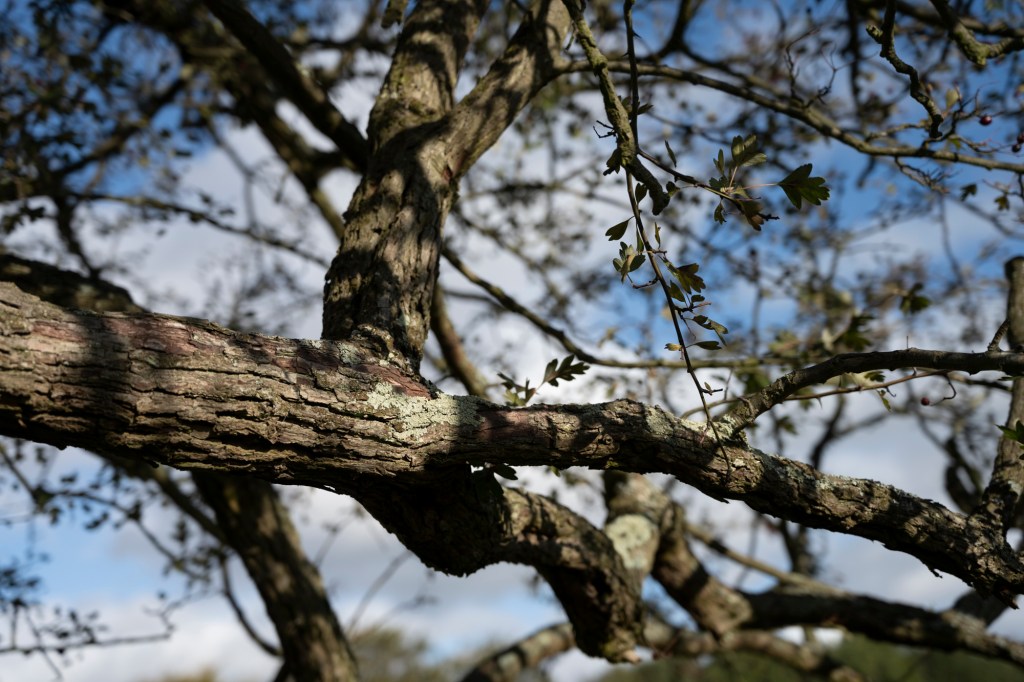
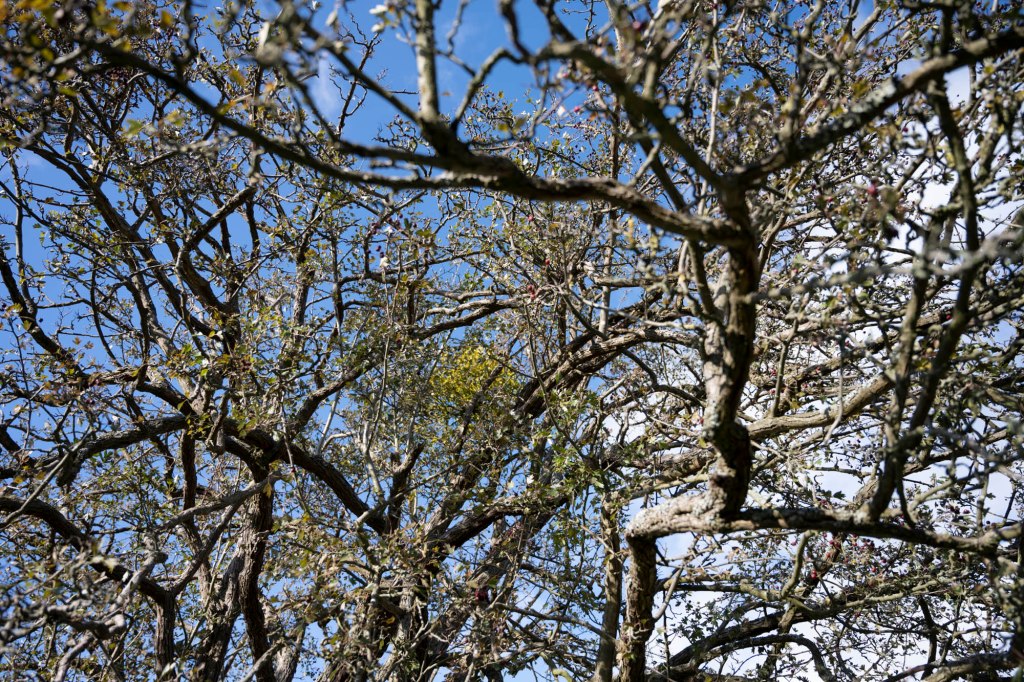
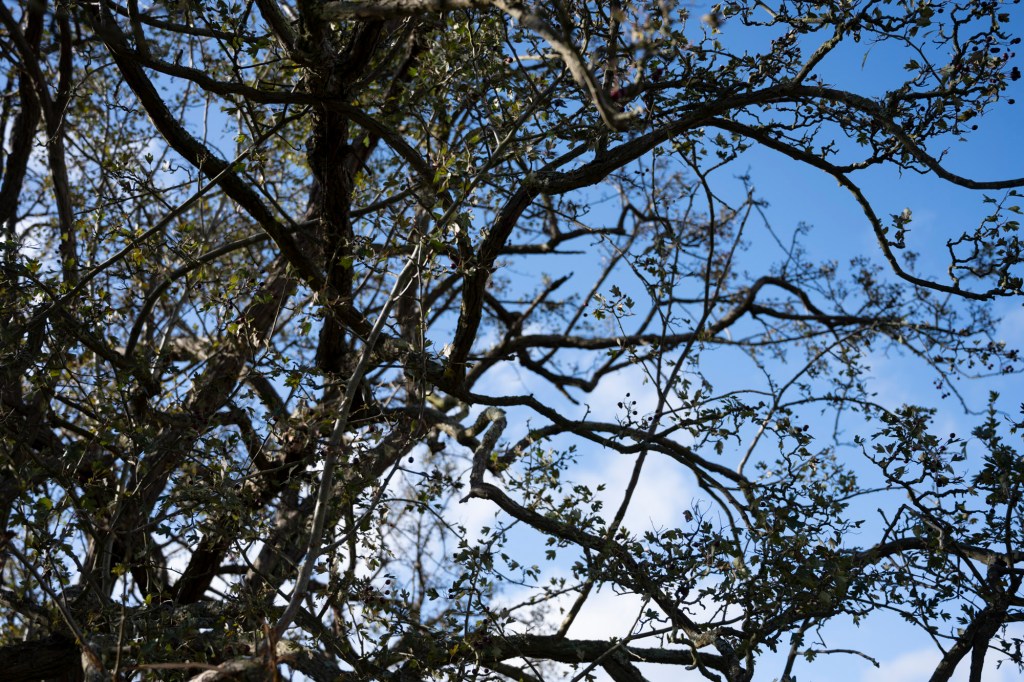
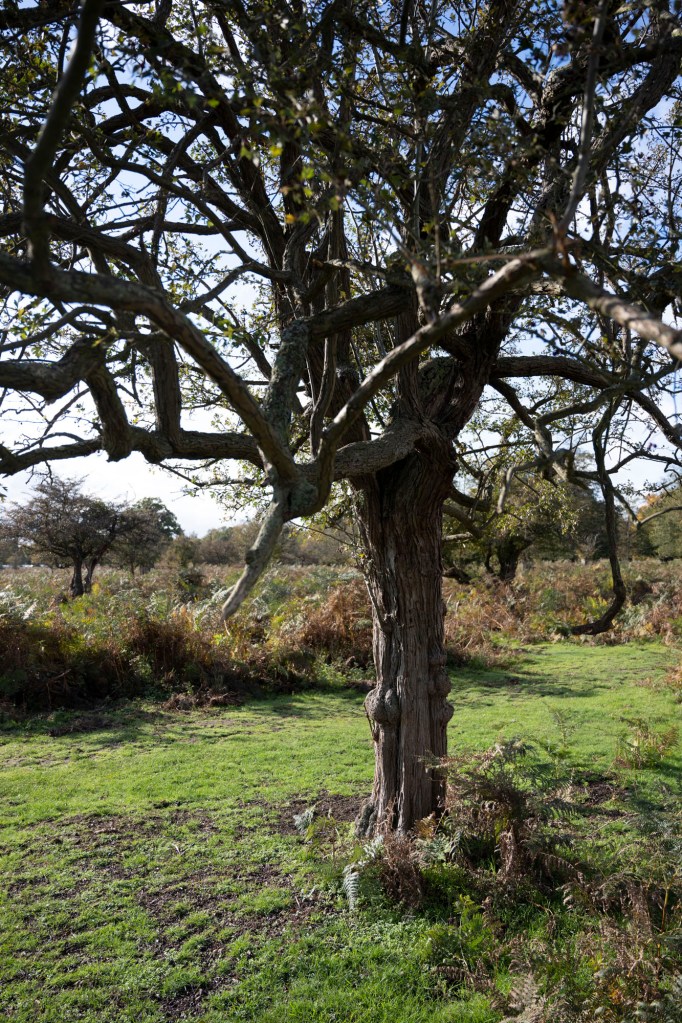
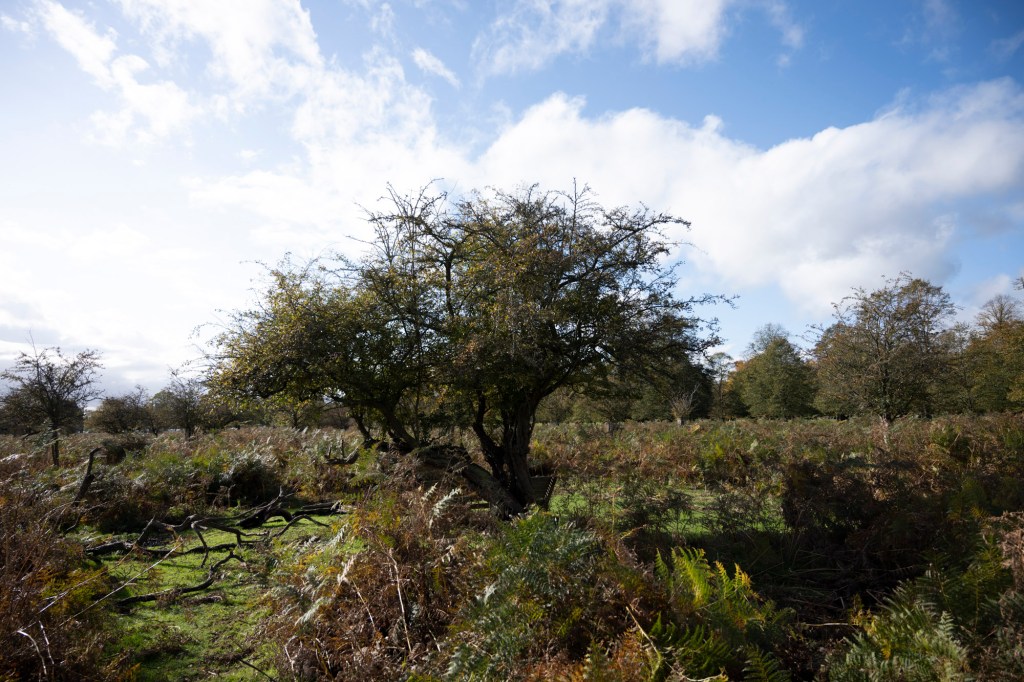
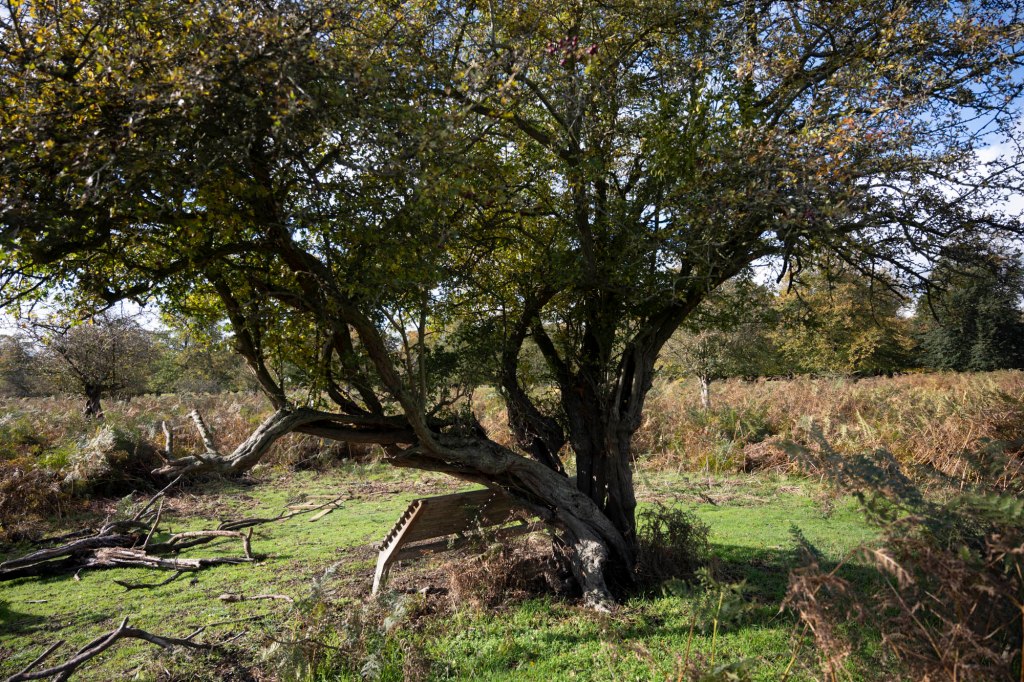
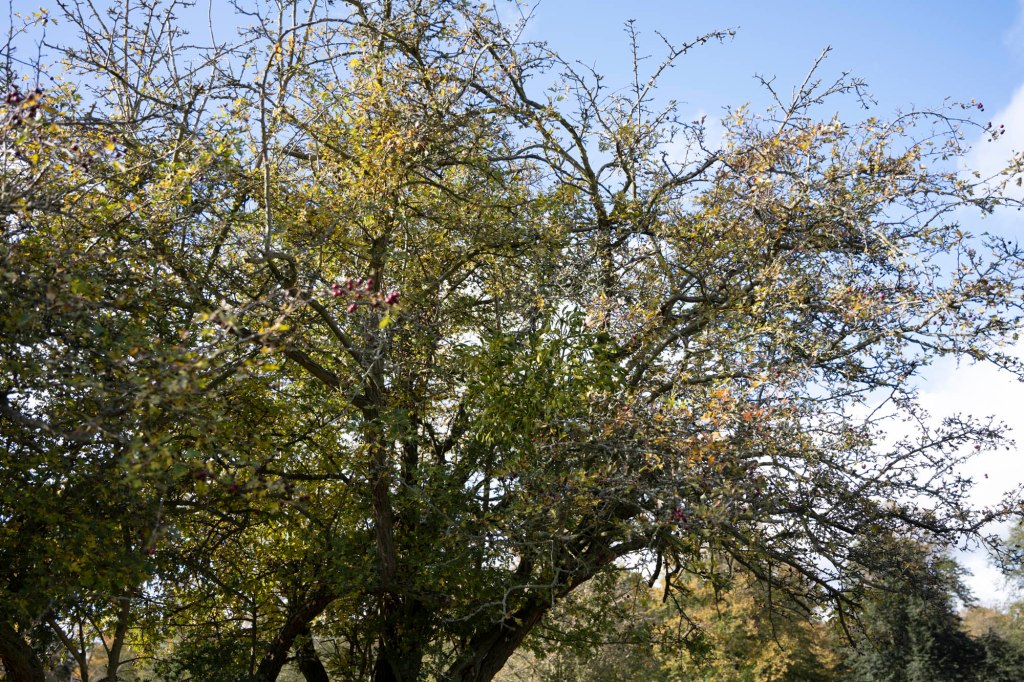
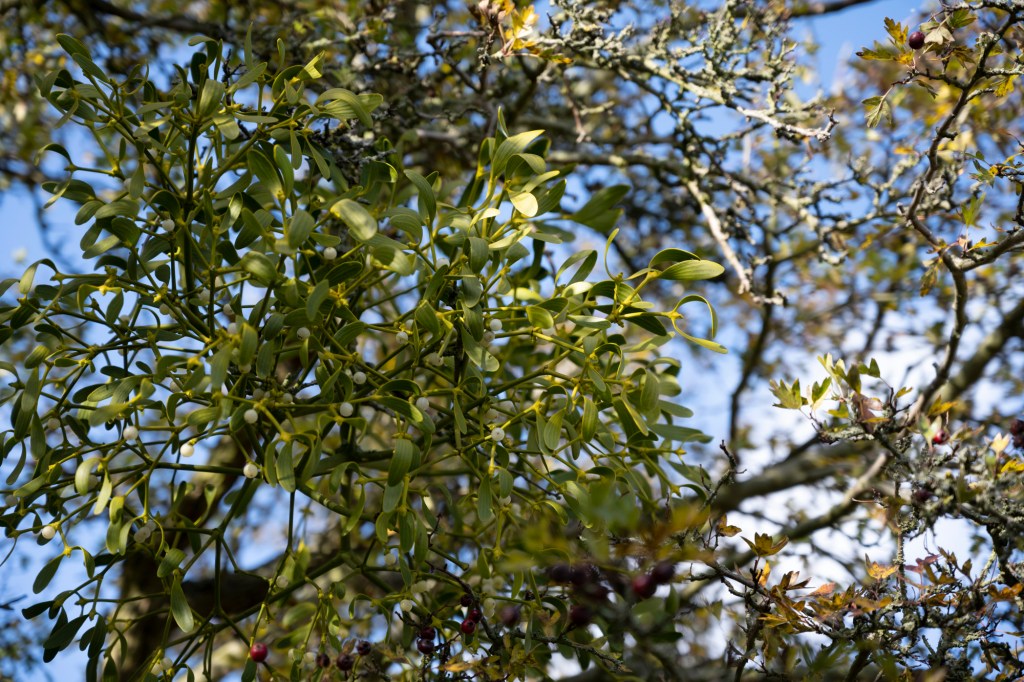
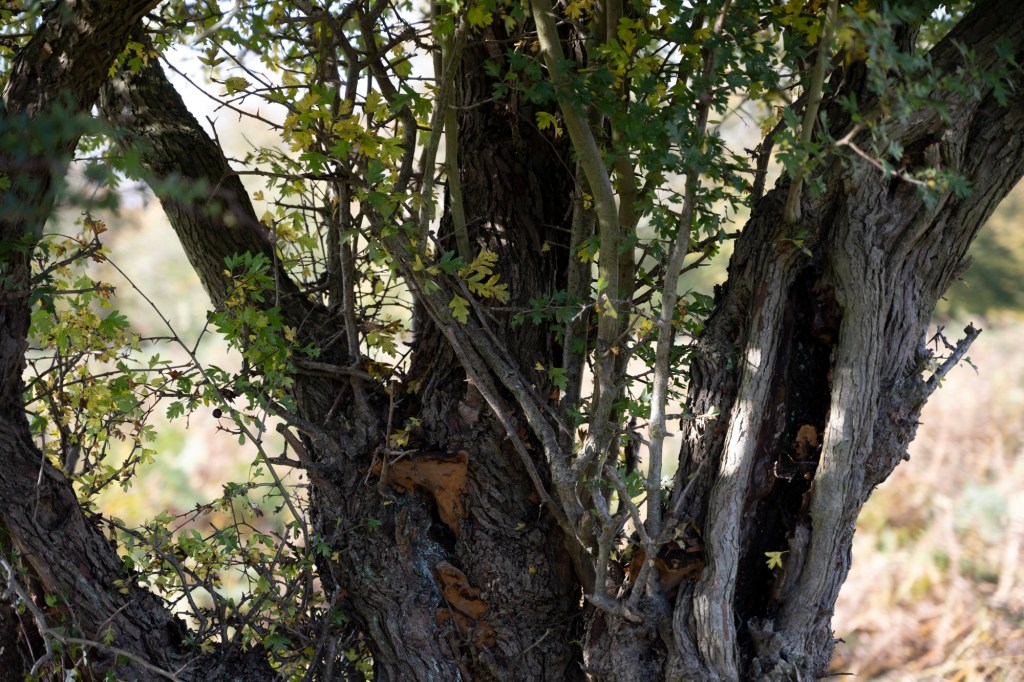
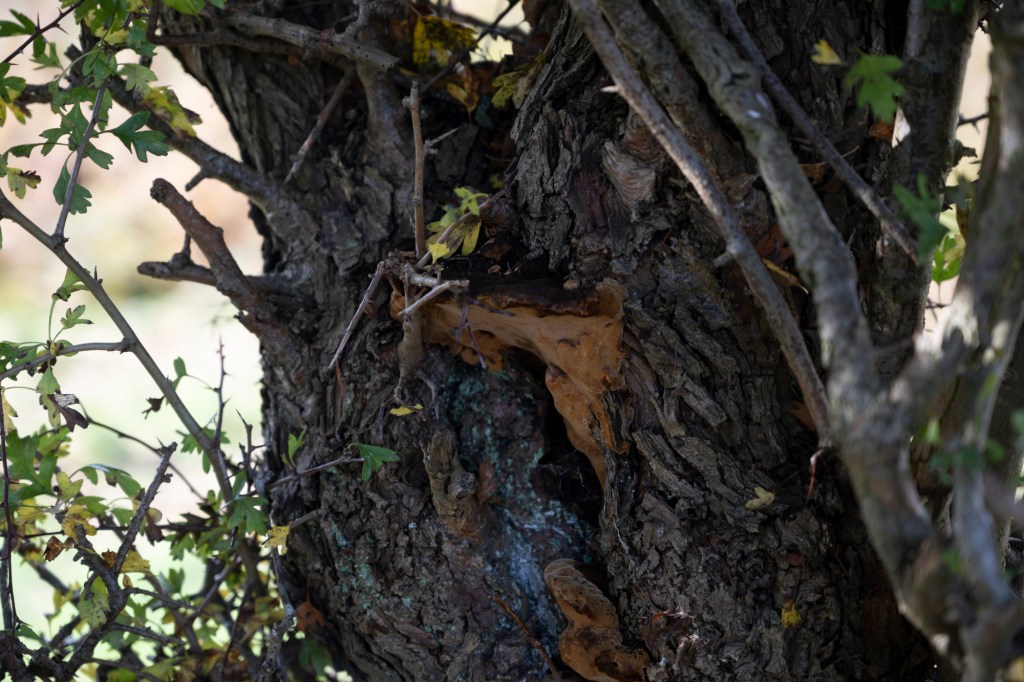
I then walked towards a house that is situated nearby, tellingly called Hawthorn Lodge. Next to the surrounding fence was another protected hawthorn. I took photos of this particular specimen, as it featured mistletoe within its branches. I know that this is the sign of an Ancient tree, but it seemed to contradict the full definition. This is something that I may need to revisit.
While continuing around the perimeter fence of Hawthorn Lodge, I then realised why this building got it’s name.
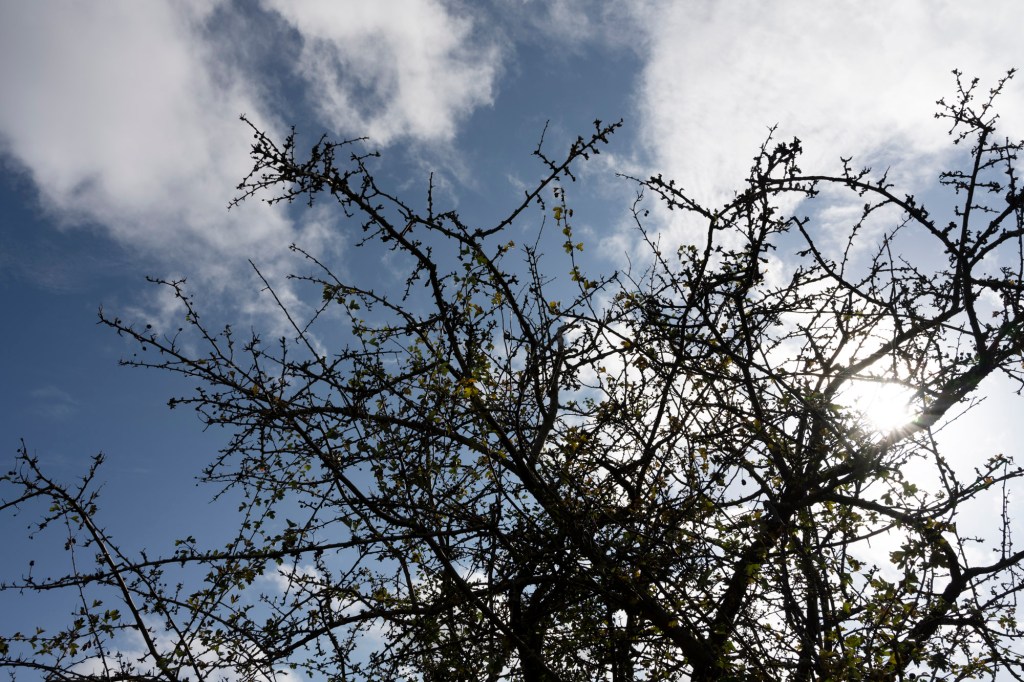
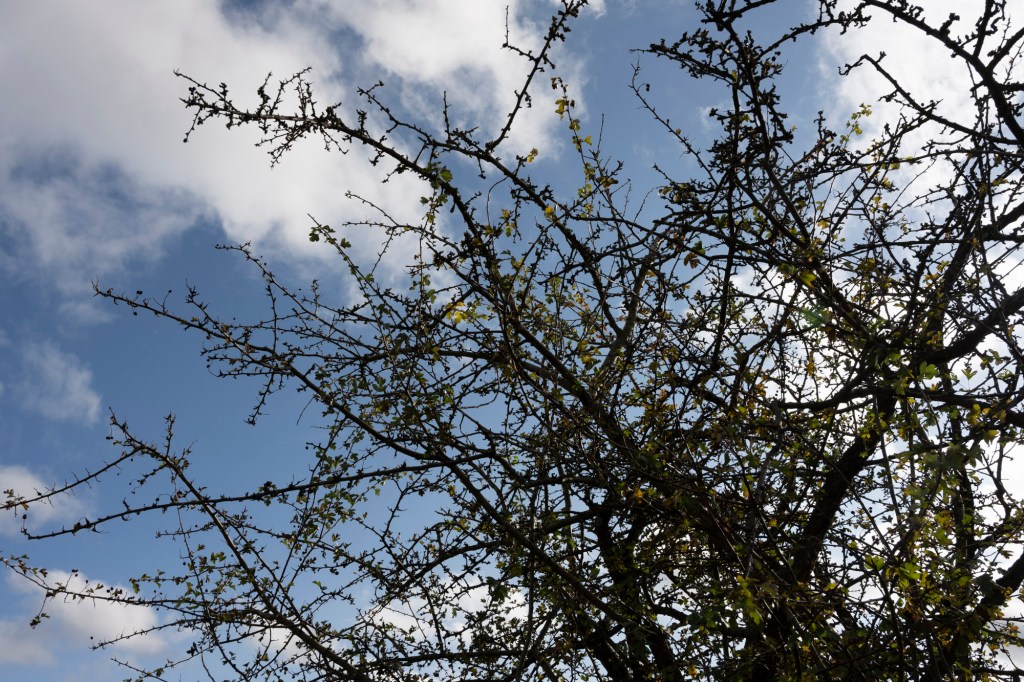
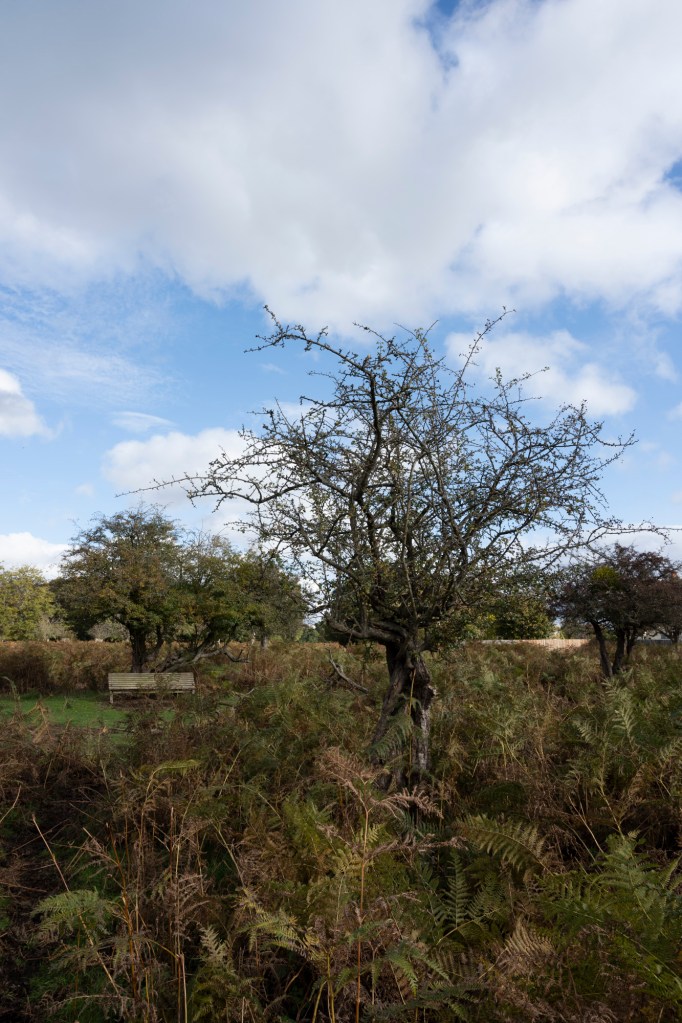
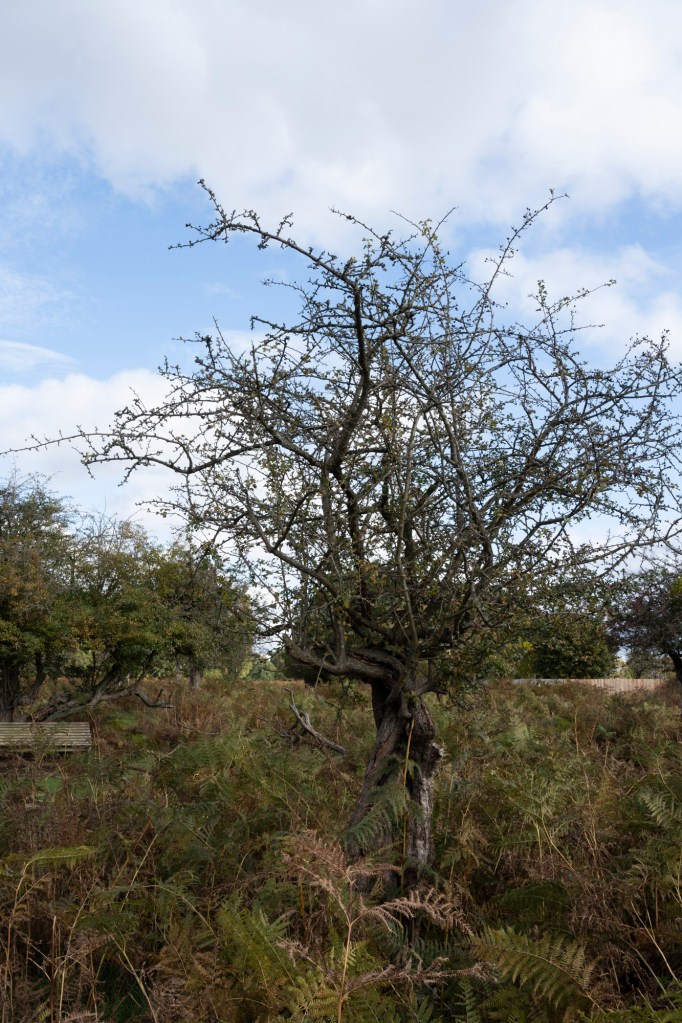
There was a whole grove of hawthorn trees. While taking this in, I thought the best approach was to focus on just four trees.
Tree One
Before I started taking photos, I measured the trunk of the tree. It was 125cms. In theory, it fitted the criteria of an Ancient tree as it also featured other aspects connected to a tree of this age (before completing this post, I had looked up signs of an Ancient hawthorn tree utilising this criteria in relation to this project, but not sure exactly how at this stage!).
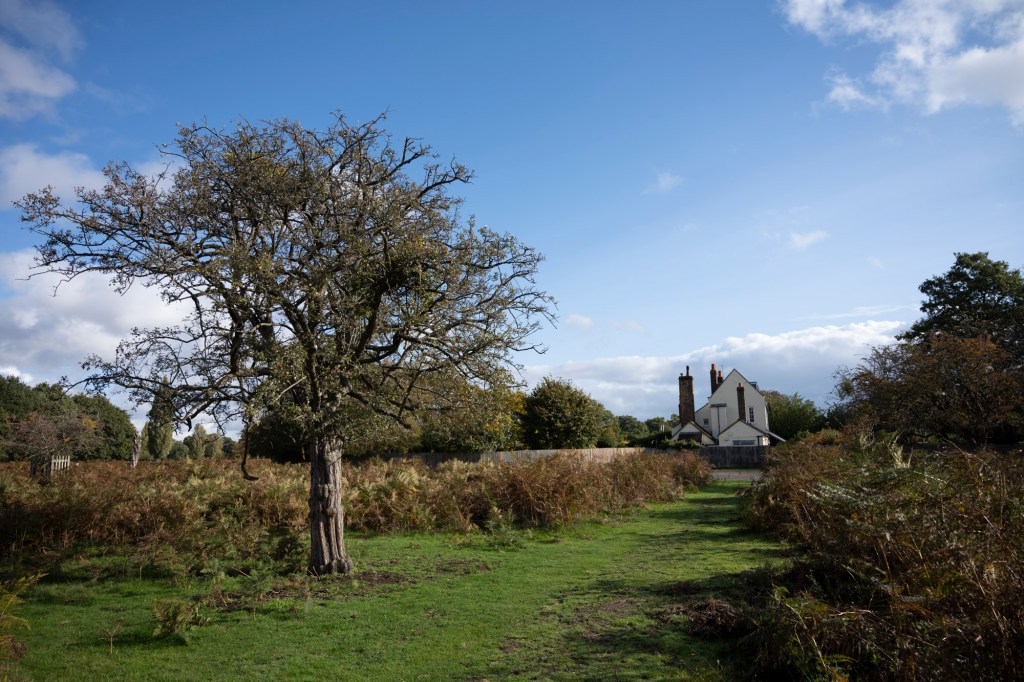
This last image is how this tree looks like in relation to Hawthorn Lodge.
Tree Two
Tree Three
Tree Four
By this stage, I realised that I would need to process the shots I had taken, both on the PC and mentally. I was also curious as to why these trees were planted in this particular – these were just four of the ones I could see in proximity of Hawthorn Lodge. As they were no where near any oak trees, it wouldn’t be to protect them. Also, they were not in lines, so couldn’t be part of a barrier or hedging system. This, and the history of Hawthorn Lodge would require further investigation.
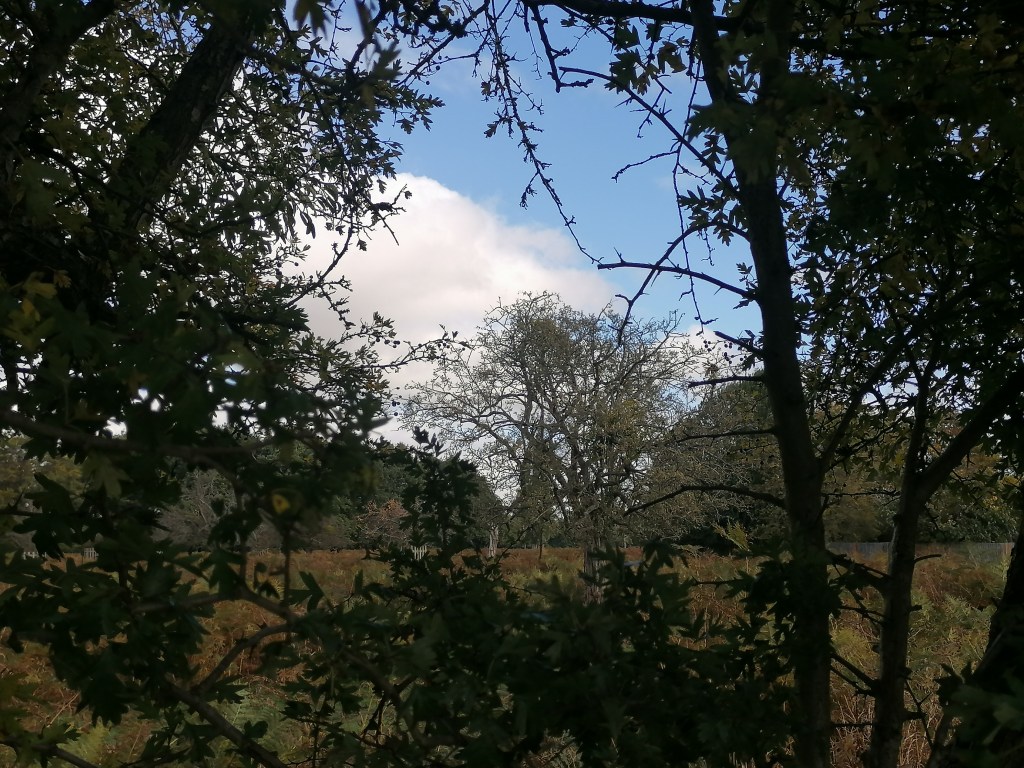
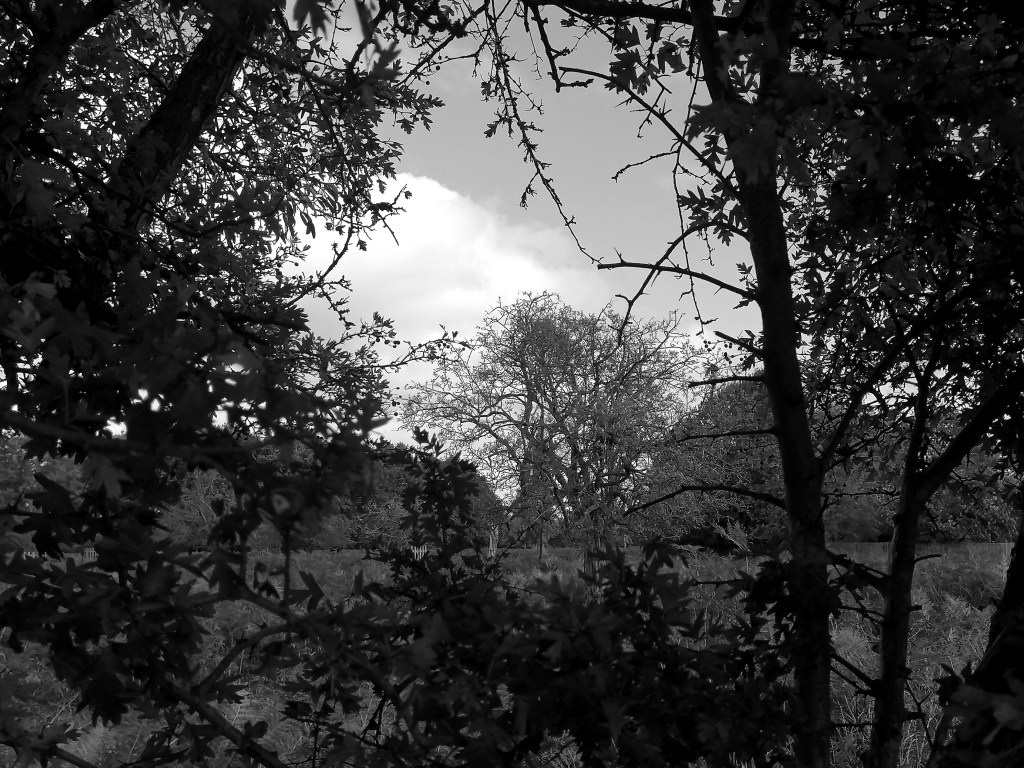
Later that day, I created a Black & White shot I had took of Tree Two with the smartphone.
I then tried a Black & White conversion of one of this example.
What I learned by taking these images is that there is lots more work to be done. Also, I’ve really appreciated how it’s made me slow down in my methodology. As with the photos, there is detail and depth to be discovered in all aspects of this project.
If I was to focus on hawthorns for this project, I would need to know exactly what I was looking for and whether it was ancient, veteran or noble.
The following is taken from the Woodland Trust’s species guide to hawthorn, as outlined on their website:
Hawthorn (Crataegus monogyna) is one of our two native hawthorns. The rare Midland hawthorn (Crataegus laevigata) is confined to ancient woodland in central England but more frequently seen everywhere in its cultivated forms in urban areas, parks and gardens.
Distribution
Throughout the UK.
Typical location
Hedgerows, fields and woodland.
Age
Hawthorn may be able to live for 400 years, although 250 may be more typical on many sites.
All hawthorn will be ancient from 225 years onwards, although many will have ancient characteristics from around 175 years.
Typically a veteran hawthorn will be 100-200 years of age and a notable hawthorn may be 50-150 years old.
Size
Hawthorn can grow up to 2.5m plus in girth.
Record all hawthorn more than 1.5m.
Consider recording all hawthorn with any ancient characteristics more than 1.25m.
It’s important to rely on characteristics rather than size, which is an unreliable indication of age. Most ancient hawthorn will be greater than 1.5m in girth but many hawthorn within woodland, or if historically managed as a pollard, may be no more than 1.25m in girth.
Ancient characteristics
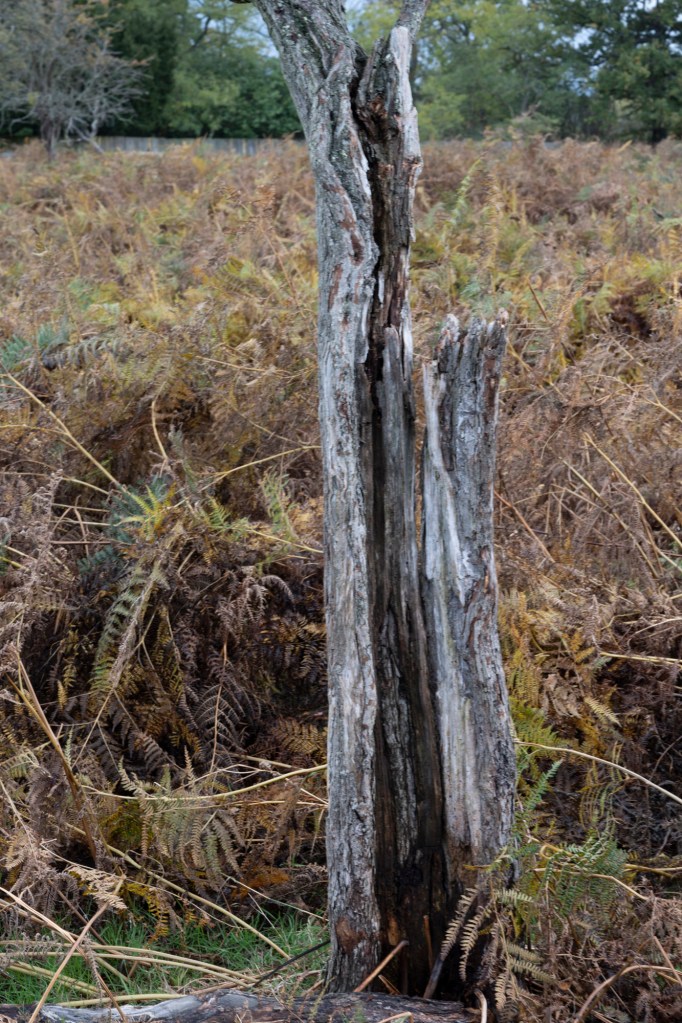
Major trunk cavities or progressive hollowing
Decay holes
Physical damage to trunk
Bark loss
Large quantities of dead wood in the canopy
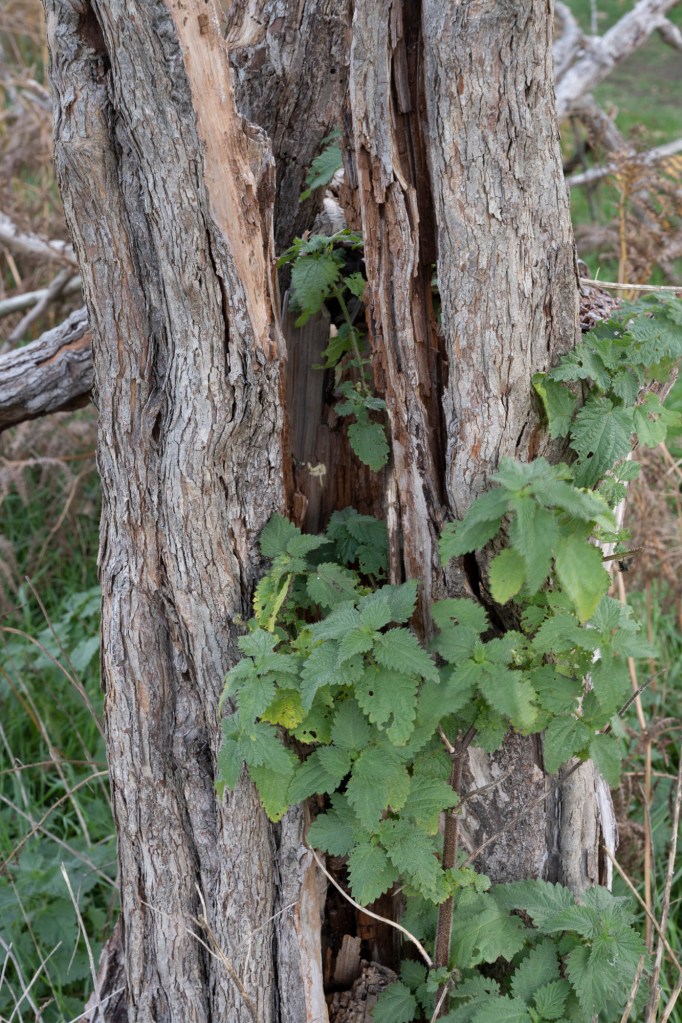
Crevices in the bark, under branches or on the root plate, sheltered from direct rainfall
Set up by the Ancient Tree Forum, the Woodland Trust and the Tree Register, the Ancient Tree Inventory is a mapped record of more than 160,000 ancient or old trees within the UK.
The aim of this inventory is to help protect and care for these extraordinary beings that link us mere mortals with our history, culture and ecology.
According to Woodland Trust’s website, the inventory has three categories of trees:
Ancient
Veteran
Notable
I have copied the following information from Woodland Trust’s website as my guide for reference.
Ancient trees
An ancient tree is in the third and final stage of its life. How old an ancient tree is depends on the species. Some species can live longer than others with yews, oaks and sweet chestnuts topping the age charts at over 1000 years.
What is an ancient tree?
How old an ancient tree is depends on the species. Some species can live longer than others with yews, oaks and sweet chestnuts topping the age charts at over 1000 years. Other species, including birch and willow, live shorter lives.
A tree is defined as ancient if it is
In the third or final stage of its life (this stage can go on for decades or centuries)
Old relative to others of the same species
Interesting biologically, aesthetically or culturally because of its great age
What do ancient trees look like?
Ancient trees don’t always look the same, depending on the species and where it grows. But in general, there are several ancient characteristics and the more a tree has the older it’s likely to be.
Key Features:
Crown that is reduced in size and height
Large girth in comparison to other trees of the same species
Hollow trunk which may have one or more openings to the outside
Stag-headed appearance (look for dead, bare, antler-like branches in the crown)
Fruit bodies of heart-rot fungi growing on the trunk
Cavities on trunk and branches, running sap or pools of water forming in hollows
Rougher or more creviced bark
An ‘old’ look with lots of character
Aerial roots growing down into the decaying trunk
Veteran trees
A veteran tree will have some of the features found on an ancient tree, but won’t have the great age. Although they’re not as old as ancient trees, they’re still incredibly important.
What is a veteran tree?
Ancient trees are veteran trees, but not all veteran trees are old enough to be ancient.
Veteran trees are survivors that have developed some of the features found on ancient trees. However, veteran trees are usually only in their second or mature stage of life.
There may be signs of decay, fungal fruiting bodies or dead wood, these features may start to appear in the mature stage and also in traditional pollards.
Although veteran trees aren’t as old or complex as ancient trees, they still provide holes, cavities and crevices which are especially important for wildlife.
Notable trees
Notable trees are usually mature trees which may stand out in the local environment because they are large in comparison with other trees around them.
They don’t have any obvious veteran characteristics, but may be taller than ancients and fatter than some veterans.
In parts of the UK, where trees are less common, a tree may be relatively small and young but notable because it is significant in its local environment.
Notable trees are usually worthy of recognition and can be potential, next generation veteran trees.
Lost trees
These are trees which have already been recorded, but are later discovered to have been cut down, blown over, collapsed, or otherwise removed, leaving no more than a low stump.
A new tree record can’t be added as a lost tree, although it can be recorded as a remnant e.g. stump. The Ancient Tree Inventory will use this information to assess the rate of recent loss of our ancient trees.
A tree originally recorded as a standing dead ancient tree remains this until it’s cut down or is removed; it can then be updated to a lost tree.
If known, the loss will need to be reported then included with the entry.
‘The hawthorn, like a grumpy old teacher, reminds us that a prickly personality may hide unexpected virtues.’
(Adams, M. 2018 pp. 178)
‘It is easy to neglect the humble hawthorn, to pass it by unnoticed, until it explodes with creamy blossom in May. Historically, it is one of our most important species: for shelter and defence, for wayside sustenance and as a marker for boundaries and travellers.’
(Adams, M. 2018 pp. 176)
One type of tree that has always fascinated me is the hawthorn. As I wrote in my blog post on 6 October, I liken them to ‘wizend wise women.’ As for their relevance to Bushy Park, I was unaware until I re-read details of the park on the Friends of Bushy and Home Parks’ website.
‘The name “Bushy Park” was first recorded in 1604 and was probably a reference to the many hawthorn bushes. These were planted to protect the young oak trees which were being grown as timber for ships in the navy.’
This was an ‘aha!’ moment. Especially in light of what I had read in The Wisdom of Trees by Max Adams. I had come across this delightful tome while visiting the Hayward Gallery shop after experiencing the Among the Trees exhibition. In this book, Adams tells various tales of trees, including that of the hawthorn. So I can read and understand the information given within this tale, I’ve broken down the paragraphs and sentences in order to sift out gems of inspiration.
The Hawthorn
Hawthorn (Crataegus monogna) is a much-neglected small tree, which we are used to seeing in hedges that it’s easy to ignore. Our ancestors had a higher opinion of it: the hawthorn is the most frequently mentioned tree in ancient charters and boundary surveys, and it is a common element in place-names.
(Adams, M. 2018 pp. 174-5)
The flowers and leaves, when picked fresh, are known as “bread and cheese” and have long been a wayfarer’s springtime snack.
(Adams, M. 2018 pp. 175)
Hawthorn’s creamy white blossoms emerge any time from late April onwards, an in autumn the unmistakable rich red berries are an equally classic seasonal marker.
(Adams, M. 2018 pp. 175)
Hawthorn is the tree equivalent of rugged highland sheep or cattle breeds: it is very tough and can withstand the sort of weather that has most of us running for shelter and a warm fire.
(Adams, M. 2018 pp. 175)
The wood is hard to work, and because hawthorn, like yew, grows in multiple trunks, it is rarely used for anything other than firewood.
(Adams, M. 2018 pp. 175)
It is hard to say when humans first realised that they could cultivate hawthorn as a defensive barrier; but in the period of the Parliamentary enclosure of land, some two-hundred-thousand of ‘quickset’ hedges were planted across Britain.
(Adams, M. 2018 pp. 175)
Hawthorn remains a popular and biologically important hedge species.
(Adams, M. 2018 pp. 175)
One should at this point say something about the art of laying hedges, which is still practised in Britain and Ireland. The principle in this highly skilled off-shoot of the woodsman’s art is to thicken and strengthen a hedge, prolonging its life and ensuring any gaps through which livestock might (and they will) escape are closed. The trick is to half-coppice the shoot of the hawthorn, blackthorn, hazel, beach or hornbeam – they are the most common hedging species. A downwards cut into the side of the stem weakens it so that it can be bent at an angle in line with the direction of the hedge but above the horizontal. There needs to be enough heartwood, sapwood and bark left for the stem to survive and send up new shoots the next year. Every couple of yards a vertical stake, cut and trimmed into the ground within the hedge, and more spare shoots, brashed from the main one, woven between the cut stems and the stakes, creating a hybrid between living hedge and fence.
Hawthorn’s blossom known as May flowers (hence ‘May-day’ and ‘Maypoles’, neither of them named after the month), used to induce a superstitious fear about it being brought into one’s home. It was thought to presage a death in the household. Why? A fishy chemical called ‘triethylamine’, released as the blossom fades, is the smell of dead body (and, incidentally, of human sperm).
(Adams, M. 2018 pp. 177-8)
The flowers also contain a small amount of digitalin, the chemical present in foxgloves, which in high doses is extremely poisonous but which is used as a therapeutic cardiac treatment.
(Adams, M. 2018 pp. 178)
During autumn cows browse on the tree’s small bright red berries and their astringent properties are regarded as a traditional therapy for mastitis.
(Adams, M. 2018 pp. 178)
References
Adams, M. (2018). The Wisdom of Trees. London: Head of Zeus Ltd.
This park has been a very strong influence in both my life and my photography and is very close to my heart. Every time I visit this place I realise and/or observe something new.
Bushy Park is one of London’s eight Royal Parks covering an area of 1,099 acres and is a Site of Scientific Interest.
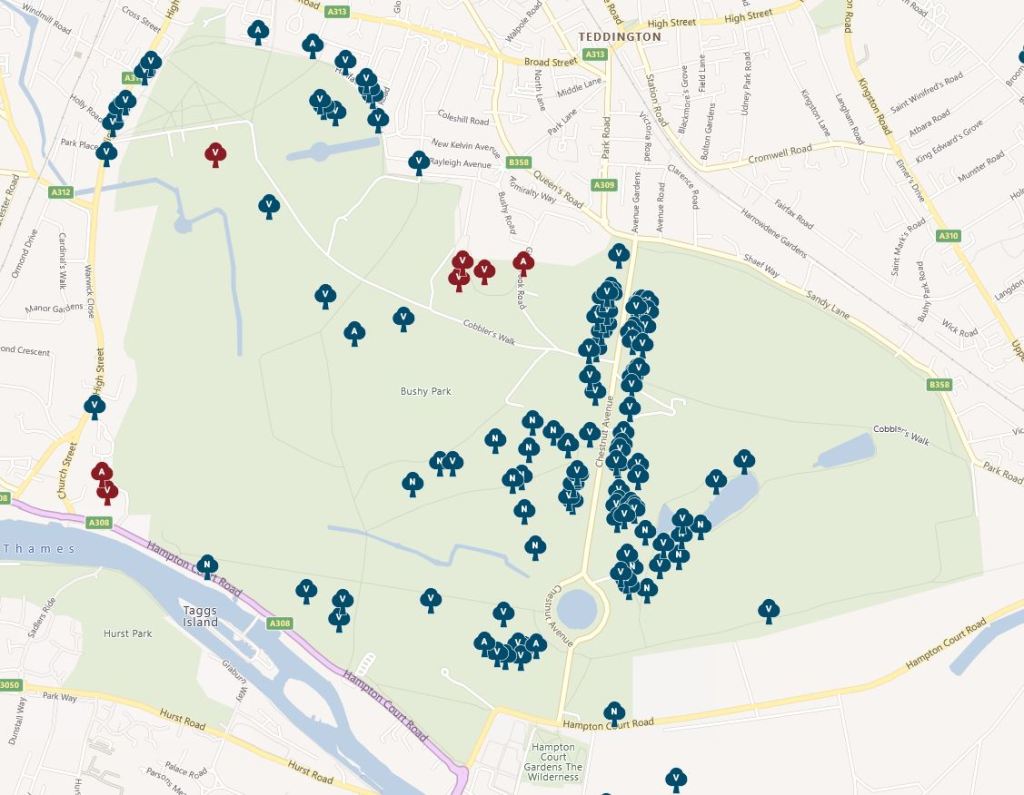
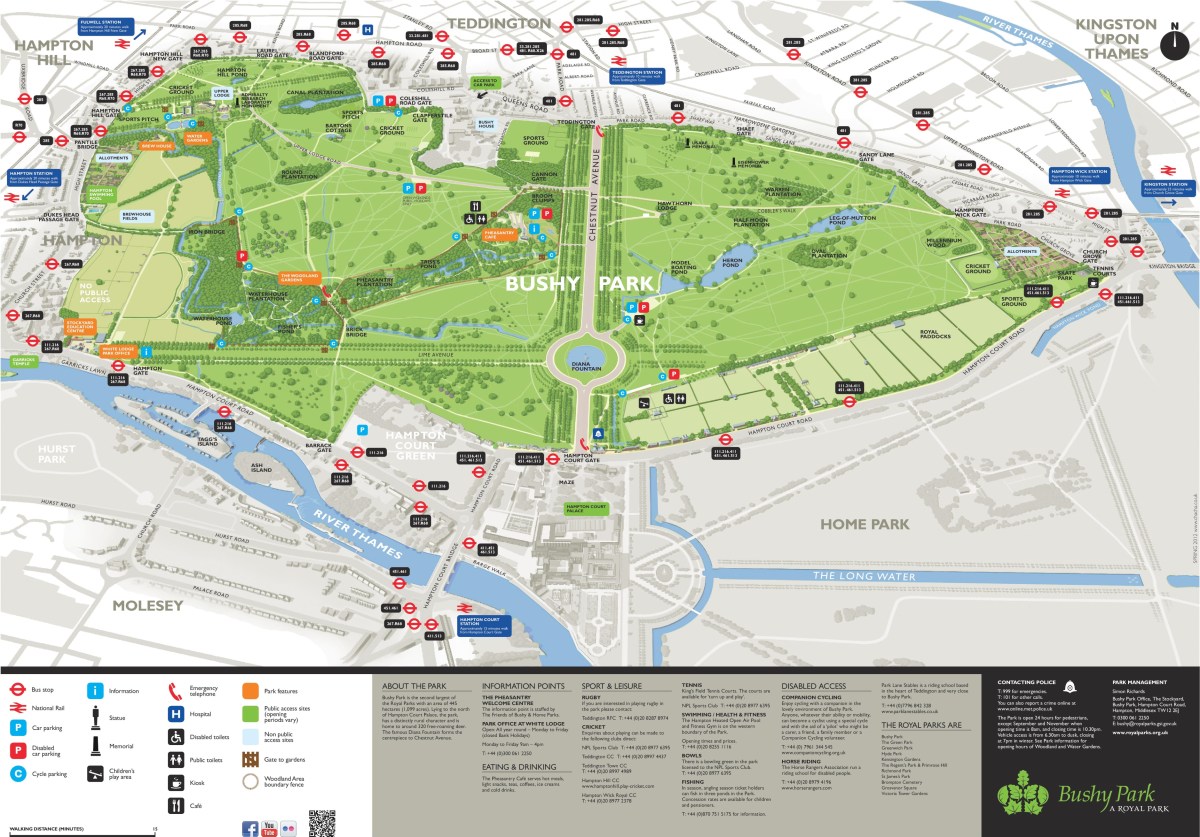
What I realised recently is how the park is a mix of straight lines and chaos, formal and informal, cultivated and wild. When looking at the map, it appears to be a ‘blob’ of green on the outskirts of London.
While researching the history of the park, I looked at the Friends of Bushy Park website for further details. I have copied the following information for my reference in regard to this project and made notes of observations and areas for further research.
Bushy Park
Bushy Park extends over about 1,100 acres (445 hectares) of grassland to the north of Hampton Court Palace. The park measures 1.5km (nearly a mile) from north to south and 3km from east to west. There are ponds, streams and woodland gardens as well as sports pitches and a children’s playground.
Bushy Park is a Site of Special Scientific Interest (SSSI) for the rare invertebrates that live here in their habitats. This traditional deer park, with its bracken, rough grassland and plantations, is complemented by formal avenues of lime and chestnut trees.
The park has many notable features including the Diana Fountain, the Water Gardens, the large ponds, the Longford River and the Woodland Gardens.
Hunting Grounds:
Cardinal Wolsey began by enclosing farm land adjacent to the house when he took over Hampton Court and, when Henry VIII acquired the palace in 1529, the old oak fences were replaced by a high brick wall, traces of which can still be seen today.
The park was originally several distinct areas known as Hare Warren, Middle Park and Bushy Park, until the present boundaries were completed in 1620. The name “Bushy Park” was first recorded in 1604 and was probably a reference to the many hawthorn bushes. These were planted to protect the young oak trees which were being grown as timber for ships in the navy.*
In Tudor times the parks were important as hunting grounds – Henry VIII stocked them with deer and there were rabbits in abundance. After the royal palace at Richmond was destroyed by fire Hampton Court became increasingly important as a royal residence and the land now known as Bushy Park was the adjacent hunting ground. Henry, and later his daughter Elizabeth, both enjoyed riding and hunting here.
*This explains the presence of the hawthorn bushes – there are further details in Max Adam’s The Wisdom of Trees (pp. 174), which tells the ‘tree tale’ of this much-neglected small tree.
Adding Water
Further additions were made to the park in the seventeenth century. In 1622, during the reign of James I, an avenue of lime trees was planted which was to become the basis for the Chestnut Avenue.
The next monarch, Charles I, ordered a canal to be constructed to bring water to the palace gardens from the River Colne. Now known as the Longford River, this twelve-mile waterway flows through Bushy Park feeding the ponds and streams here before continuing its course to the grounds of Hampton Court Palace.
Even Oliver Cromwell, who took up residence in the palace during the Commonwealth period, enjoyed hunting in Bushy Park and arranged for the water supply to be extended to Heron and Leg of Mutton ponds to improve the fishing.
The waterways of Bushy Park are a tale of themselves. I met an engineer in Woodland Gardens who was trying to work out where all of these were. Apparently, Old Bert who had recorded these waterways had died and all of his paper records had been burnt.
A Grand Entrance
When Hampton Court was redesigned and extended in the reign of William and Mary, Christopher Wren planned that the lime avenue in Bushy Park should become the focus for a new grand entrance to the palace. A road was built through the park to the Lion Gate at Hampton Court and more limes and an avenue of horse chestnut trees planted.
Although Wren’s scheme for an imposing classical frontage to the palace never materialised, the unique avenue with its fountain was planted. The Diana fountain was first created for Somerset House and then moved to Hampton Court gardens before coming to Bushy.
A Park for the People
At the end of the eighteenth century the Duke of Clarence, later to become William IV, moved into Bushy House with his mistress, the celebrated actress Dora Jordan, where they brought up their family of ten illegitimate children. As Park Ranger, William used Bushy Park to boost his income and was responsible for felling many of the trees, including the Tudor oaks, and enclosing half the park for farmland.
When he became King William IV, he gave orders that there should be ‘free admission of the public… to the Park’. His wife Queen Adelaide continued to act as Park Ranger and to reside in Bushy House even after his death.
In Victorian times, when the rapidly growing population caused over-crowding in the city, the Royal Parks became important as London’s ‘lungs’ – green and peaceful places where people could stroll and picnic. Bushy became a popular place for outings on summer Sundays. Drinking water fountains were erected and coach loads of Londoners arrived for Sunday School picnics and works outings.
Chestnut Sunday
The horse chestnut trees in Chestnut Avenue bloom in the late spring. Every year, on the second Sunday in May, a celebration is held in the park known as Chestnut Sunday.
This tradition dates to Victorian times when thousands of people would flock to the park to see the ‘candles’ of chestnut blossom. Horse-drawn carriages would be driven along the avenue, bringing royalty and fashionable society to admire the trees and to be seen.
When the penny-farthing bicycle was invented, riders would meet to ride round Bushy Park – and in 1877 an American journal reported “the largest meeting of bicycle riders ever assembled” when some two thousand cyclists met at Hampton Court. With the introduction of the safety bicycle in 1885, an affordable means of transport meant that many more people could enjoy riding in Bushy Park.
World Wars
During the Great War, Canadian troops were stationed in Bushy Park and George V gave permission for Upper Lodge at Hampton Hill to become the King’s Canadian Hospital. Some areas of parkland were once again farmed, and allotments were set up at Hampton, Hampton Hill, and Teddington to help local people to grow their own food.
In the Second World War, Bushy Park was the headquarters of the US Eighth Army Air Force. It was called Camp Griffiss, after the first American USAAF officer to be killed in Europe. In 1944 General Eisenhower moved the Supreme Headquarters of the Allied Expeditionary Force (SHAEF) to Bushy Park where Operation Overlord, the invasion of Normandy, was planned.
Today the locations of the huts which formed Camp Griffiss have been recorded with plaques laid in the ground, together with a memorial plaque for USAAF personnel who served here. A flagpole and another plaque are placed at the location of Eisenhower’s office.
There are other aspects of WWII that I’ve already discovered, specifically in relation to the Water Gardens in Bushy Park. This was covered in my first NCFE Level 1 project:
In 1992 a totem pole was created by Norman Tait, a First Nation traditional carver, and presented to the park. It marks the connection between Canada and Bushy Park during World War I when a Canadian military hospital was established here. At the base of the pole is a carved Killerwhale, monarch of the sea, and at the top is an Eagle, monarch of the air.
ParkRun first began Bushy Park, in 2004. It has subsequently spread to many other parks and has become a global phenomenon.
The 2012 London Olympics cycle road race passed through Bushy Park.
Bushy Park was designated a Site of Special Scientific Interest (SSSI) for its rare invertebrate life and habitats in 2016.
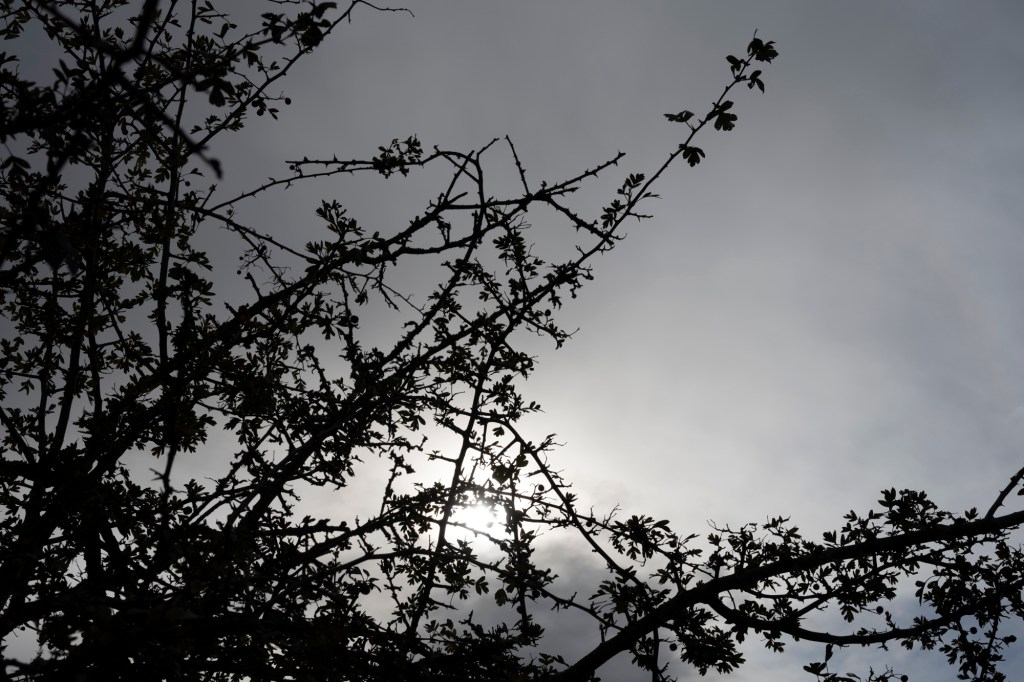
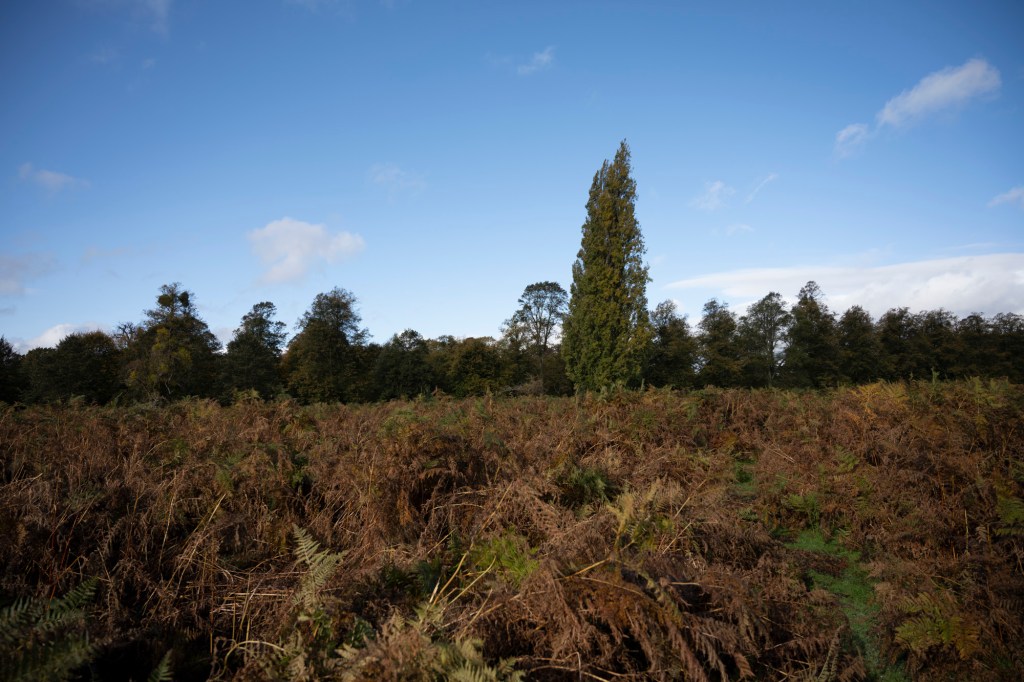
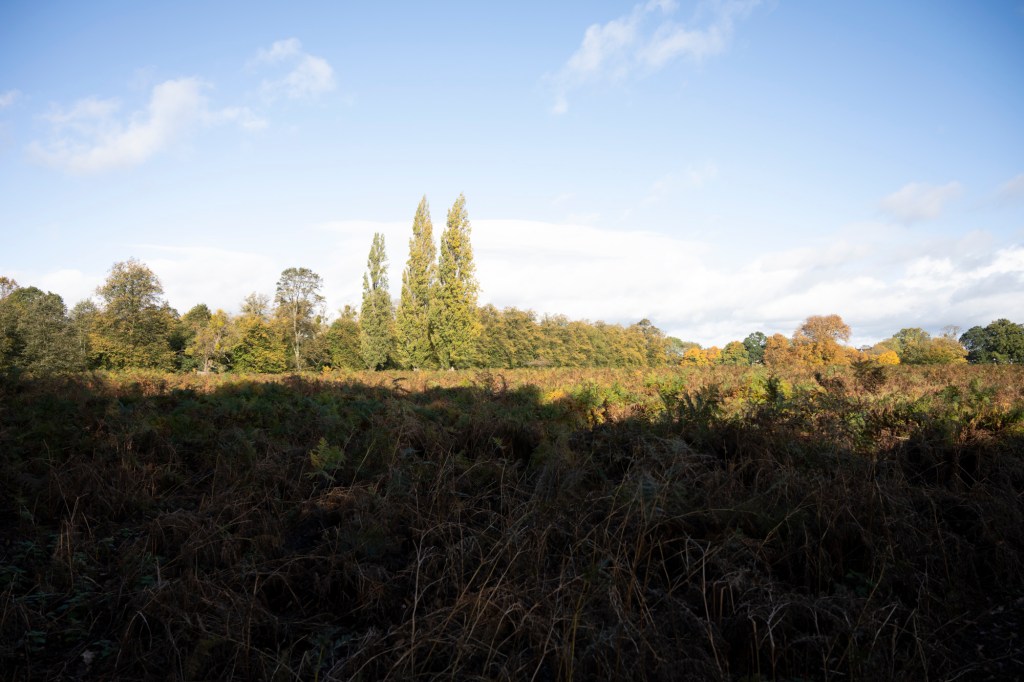
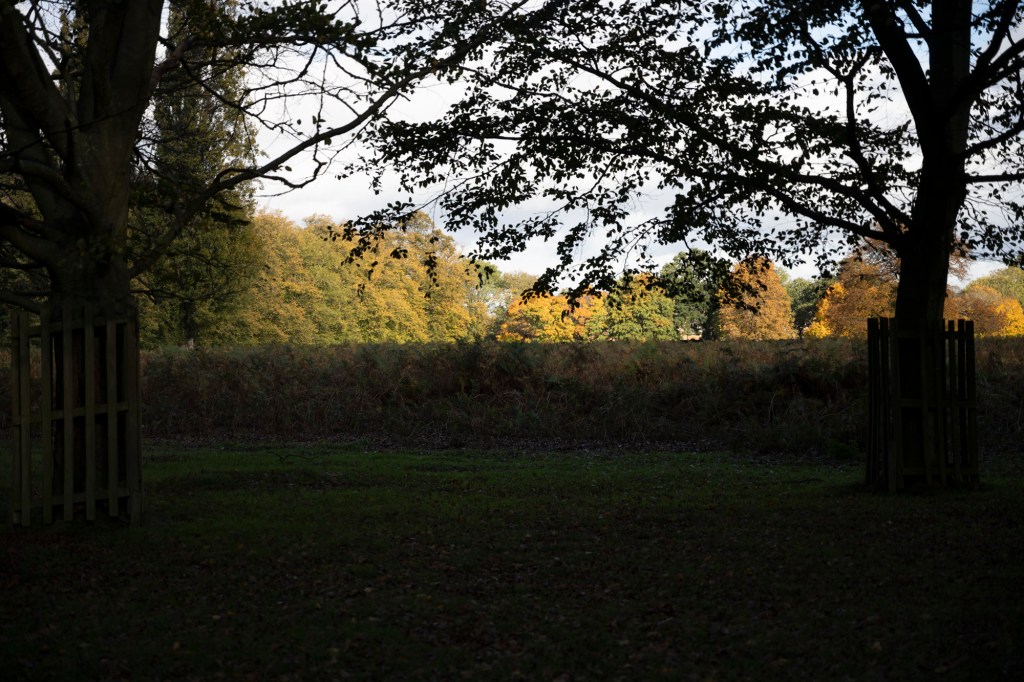
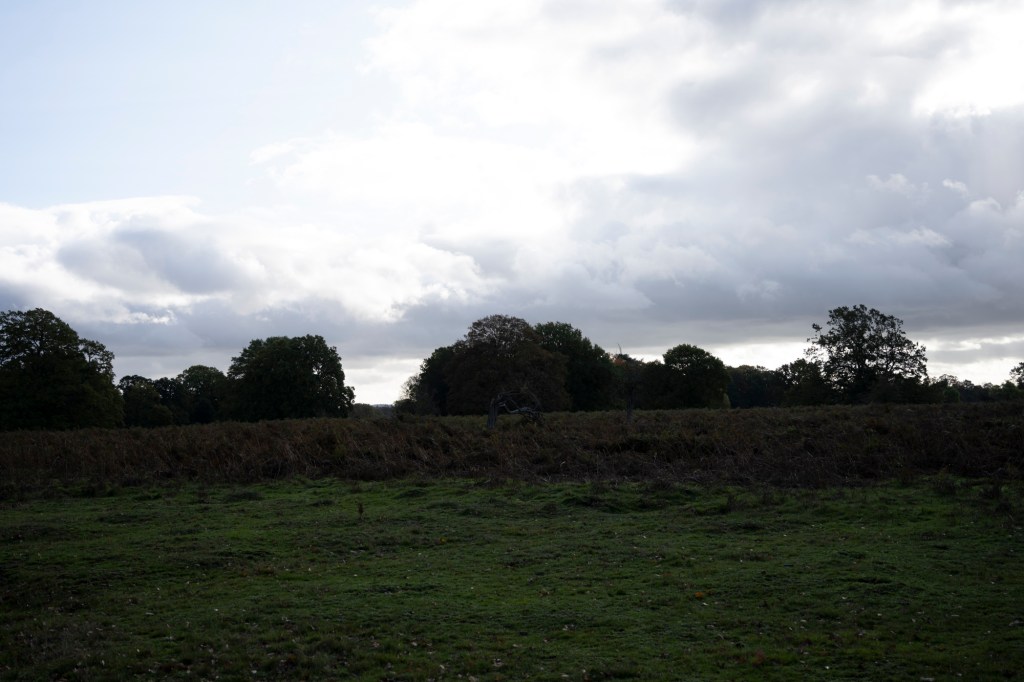
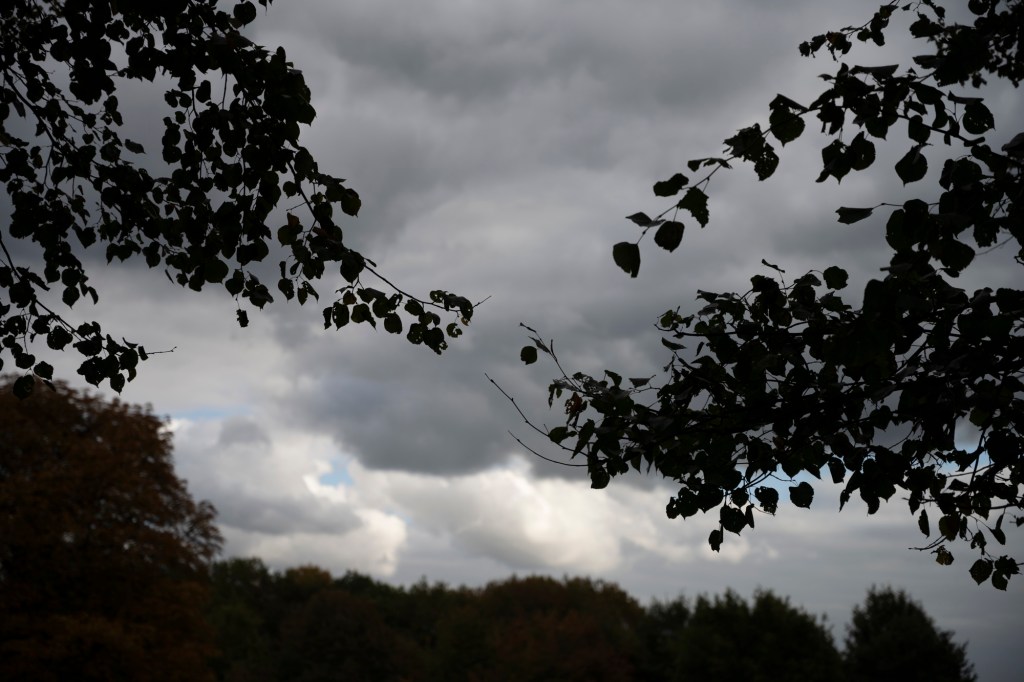
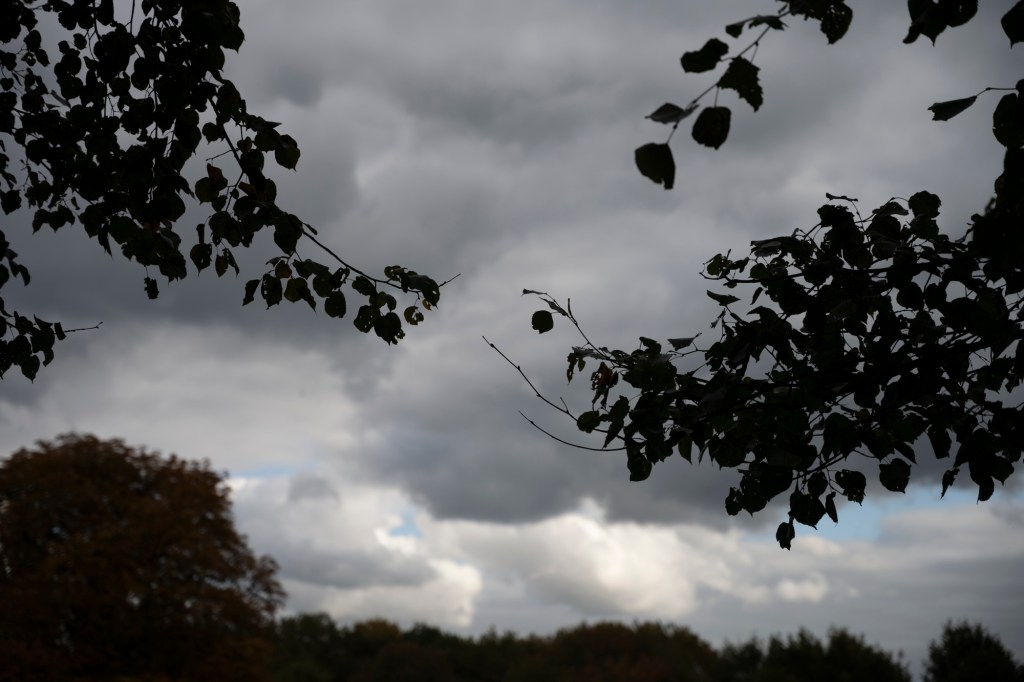
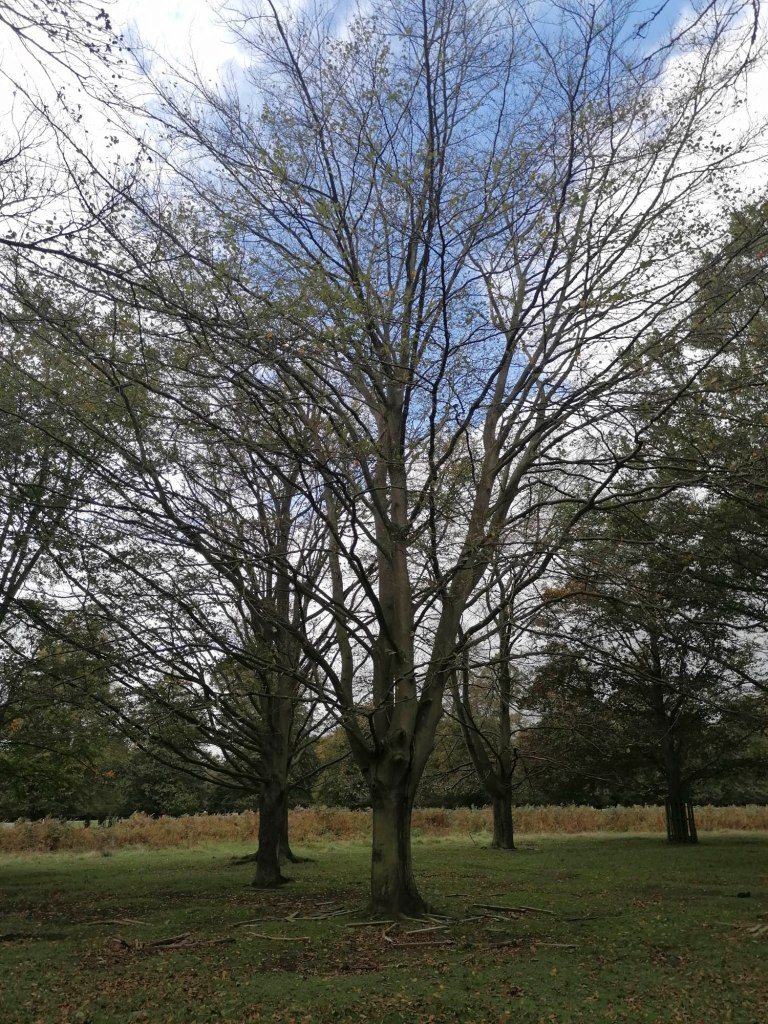
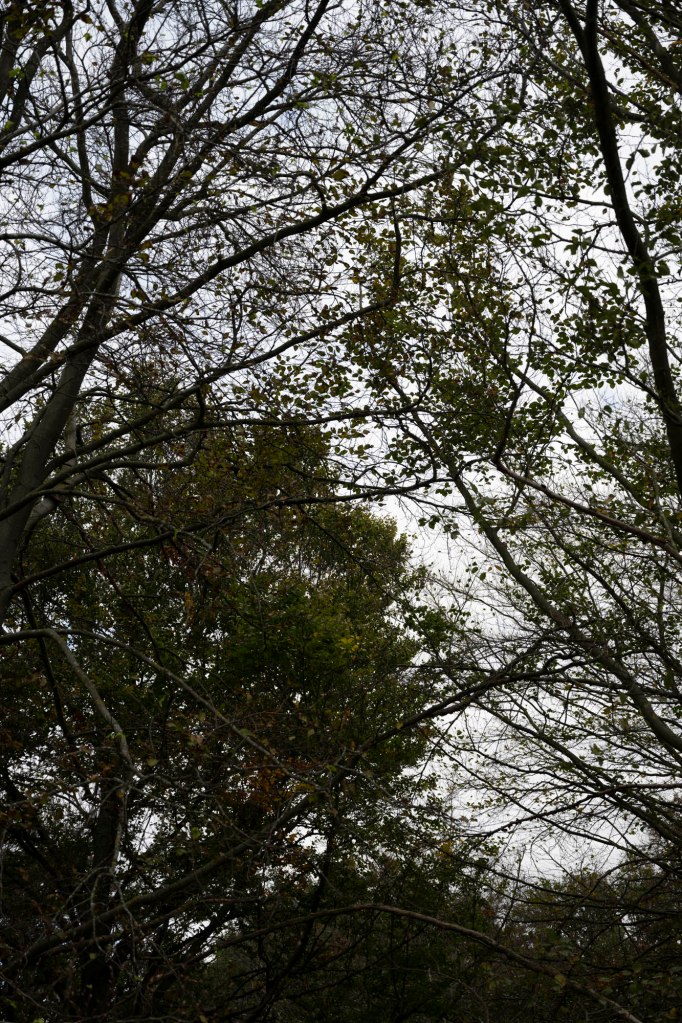
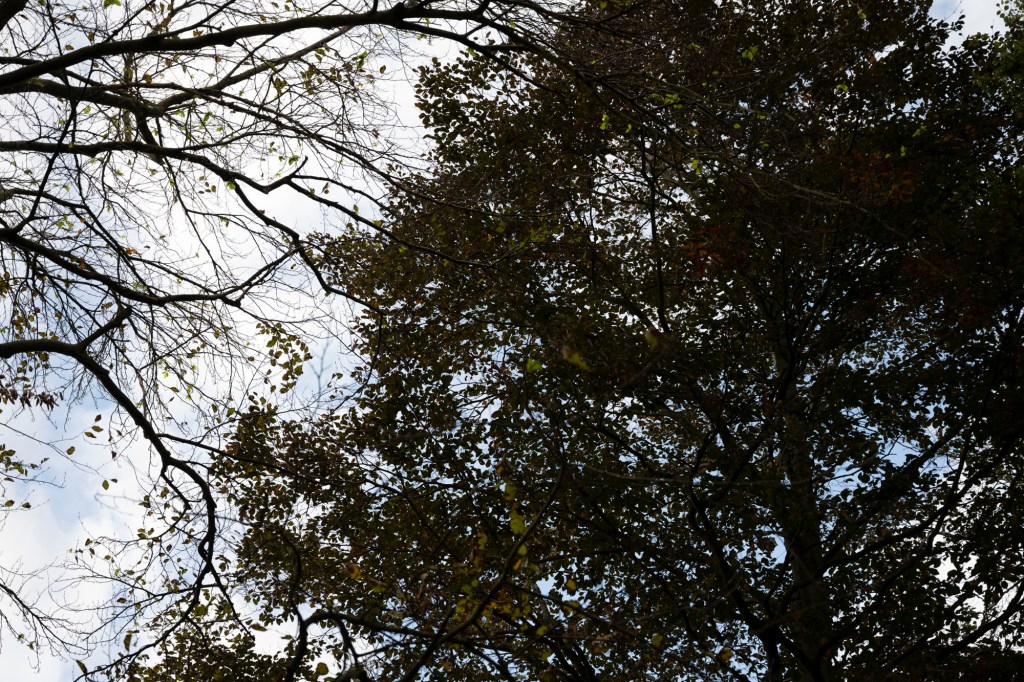
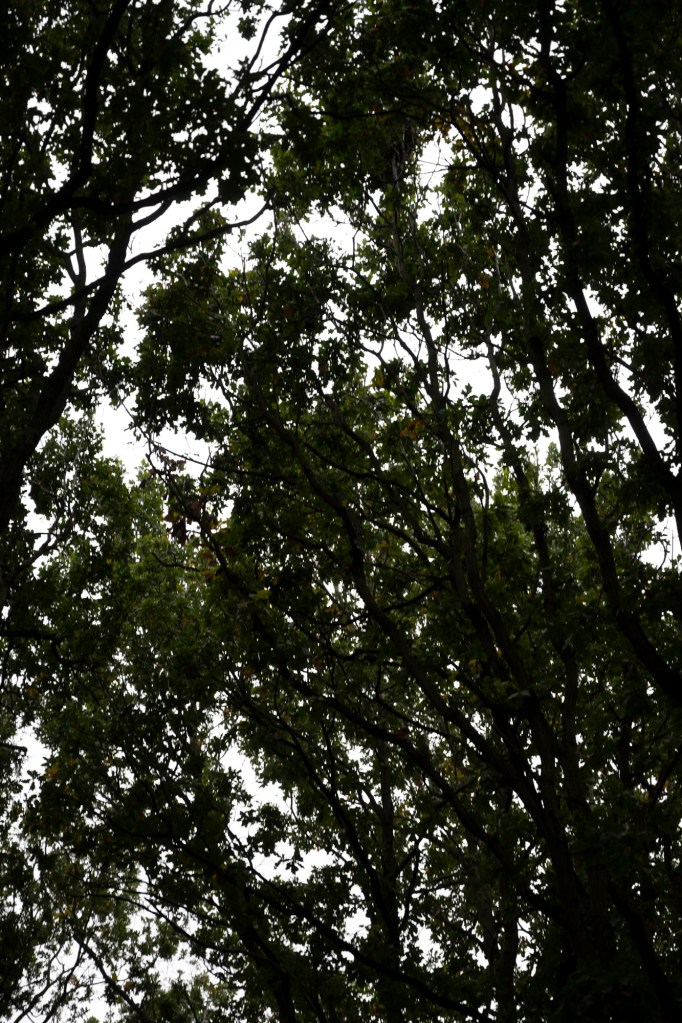
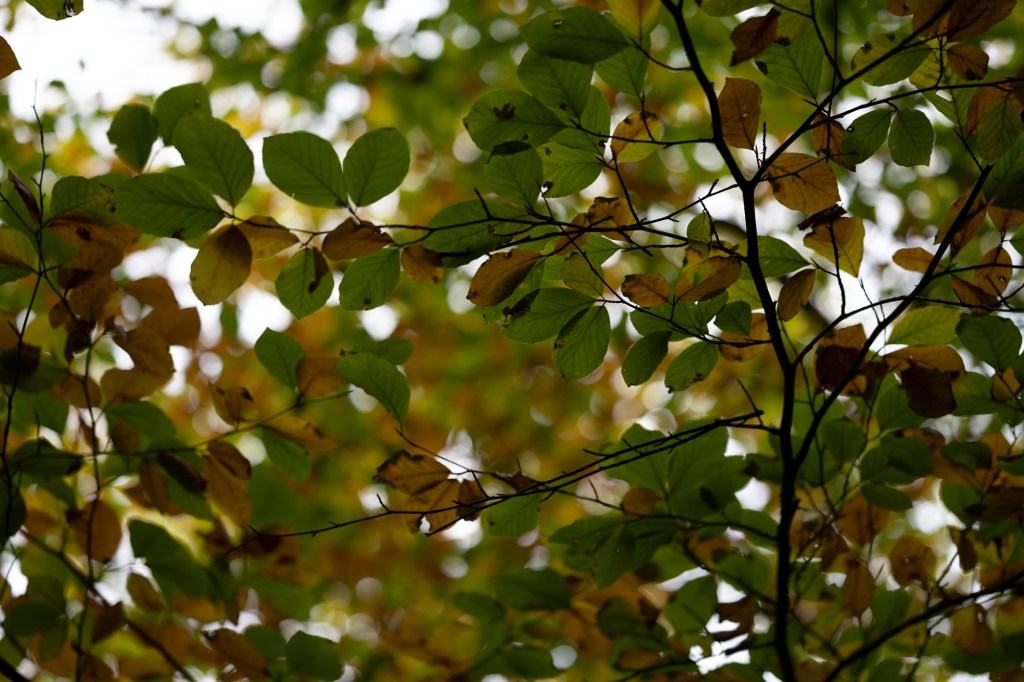
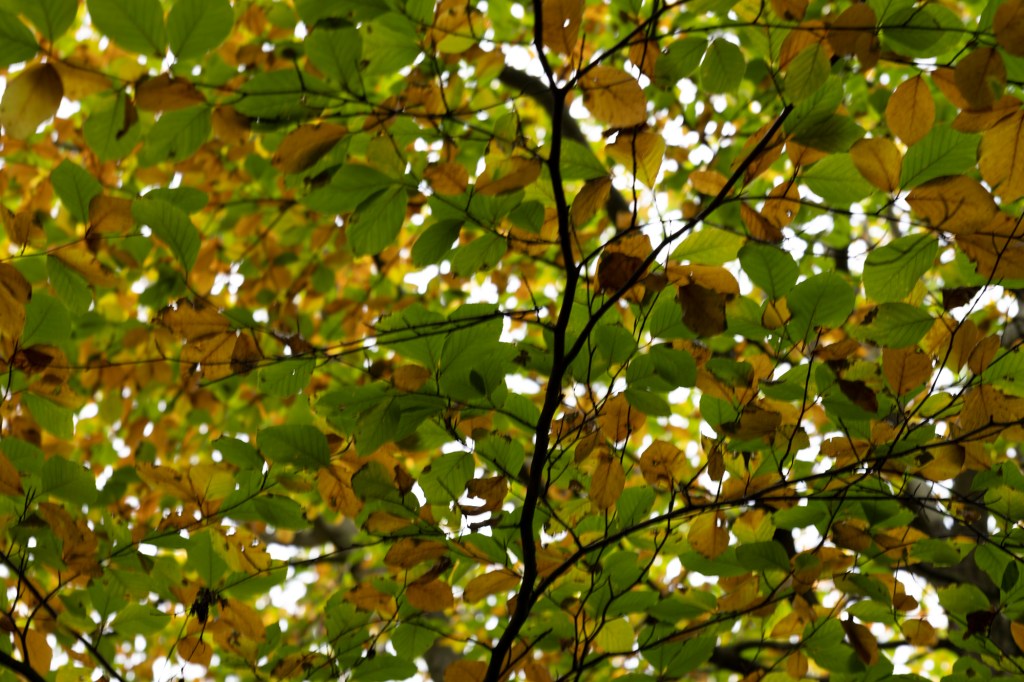
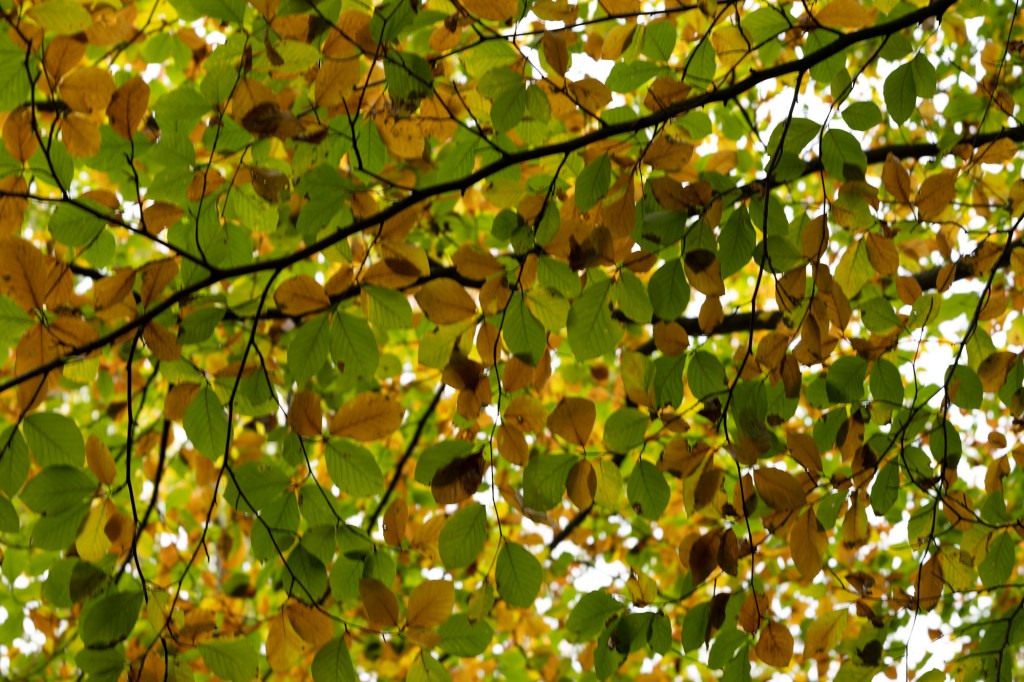
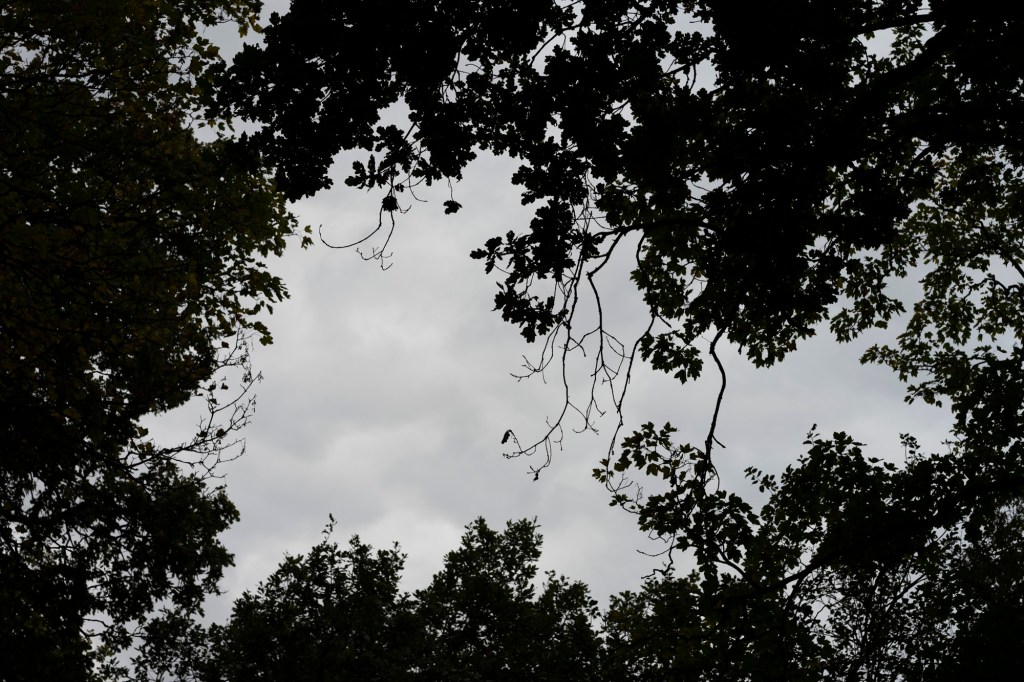
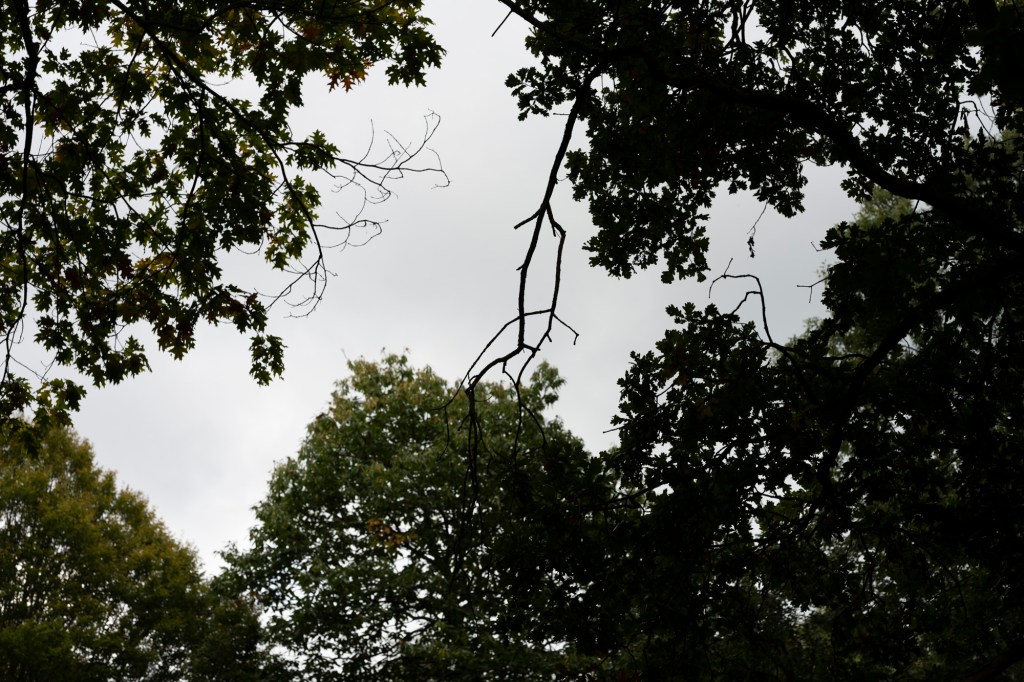
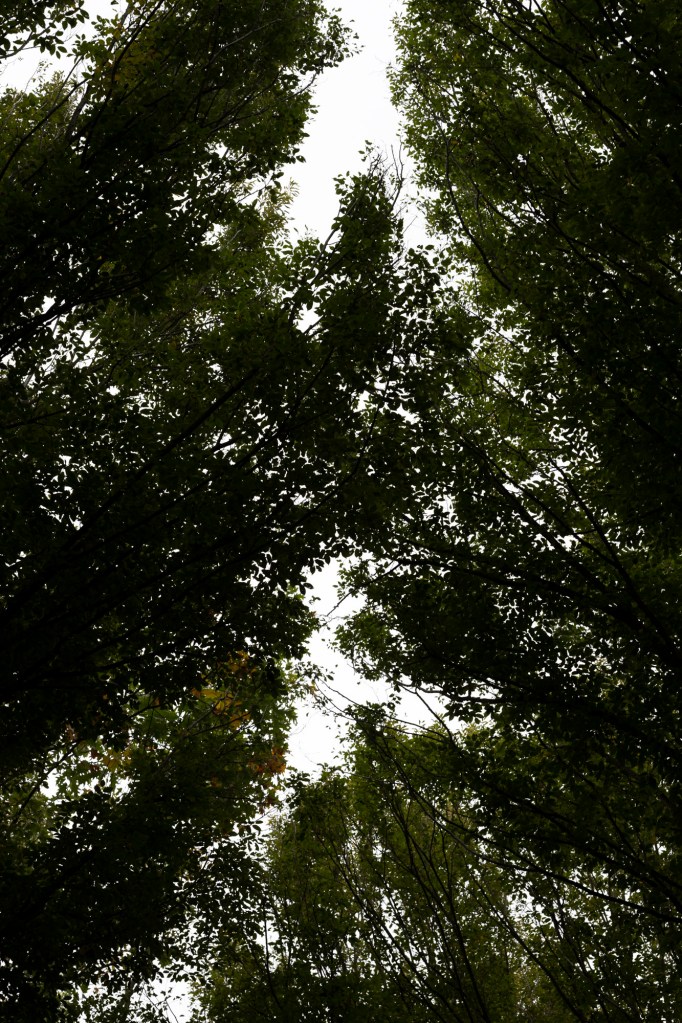
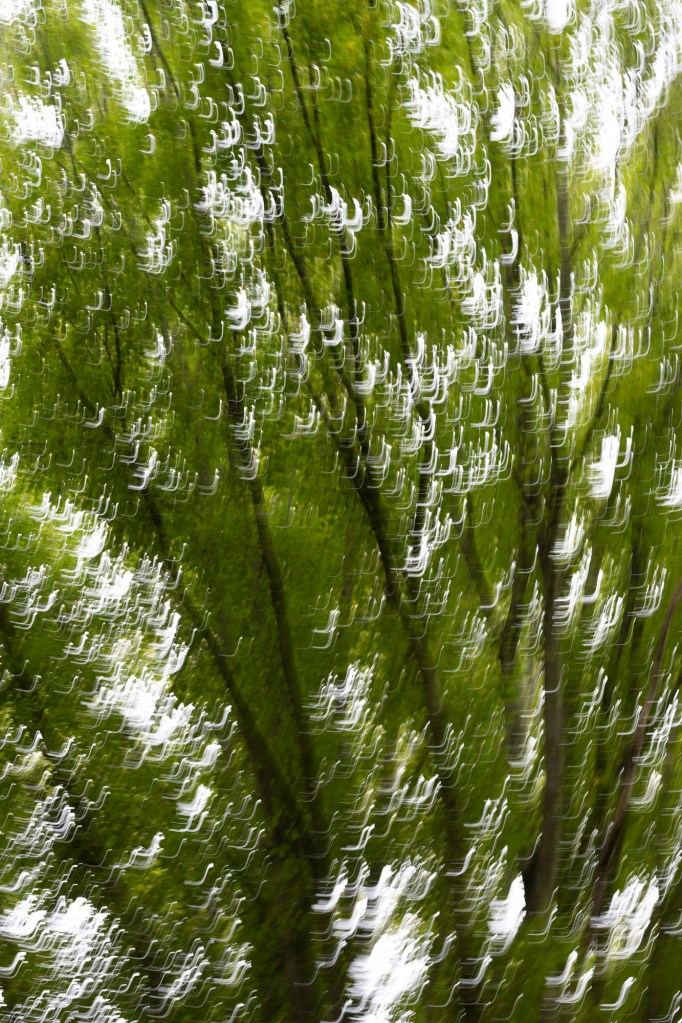
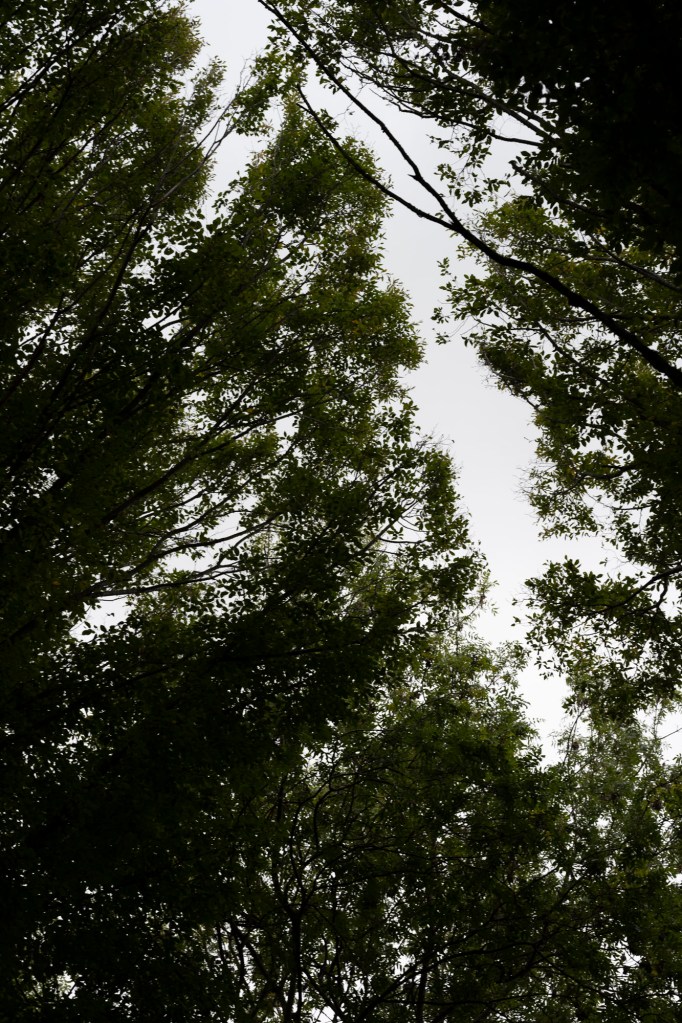
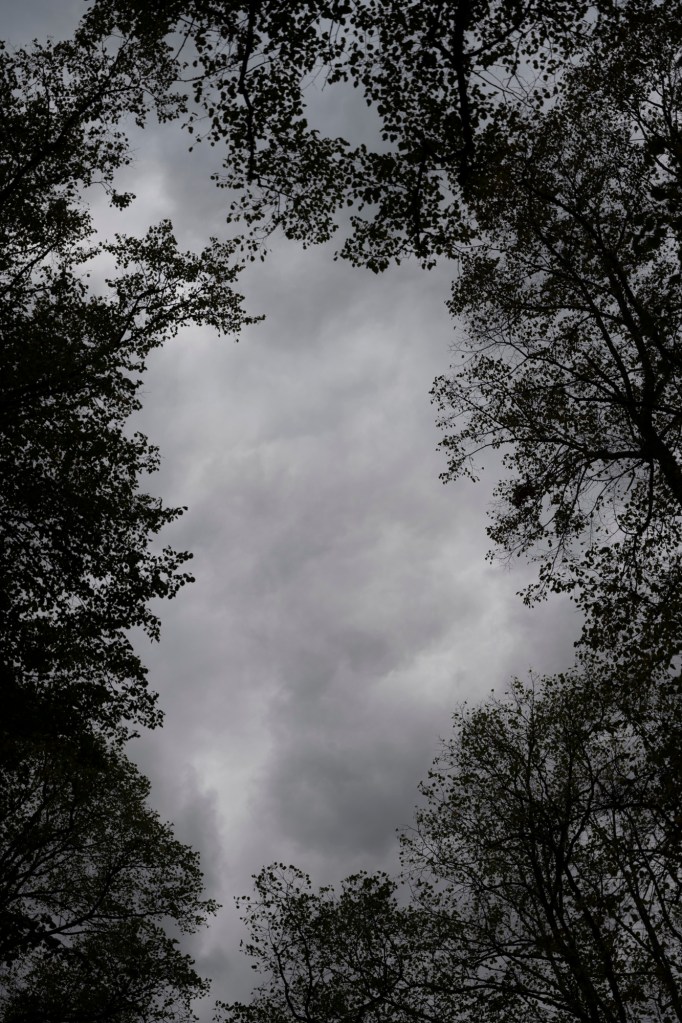
With the words ‘take more photographs’ ringing in my ears, it was back to the park. My intention was to take shots of the trees with the sunlight shining through the Autumn colours. However, I was thwarted by the clouds and a grey sky. As a result, I resorted to focusing on observations and sub-conscious feelings.
My first stop was Chestnut Avenue.
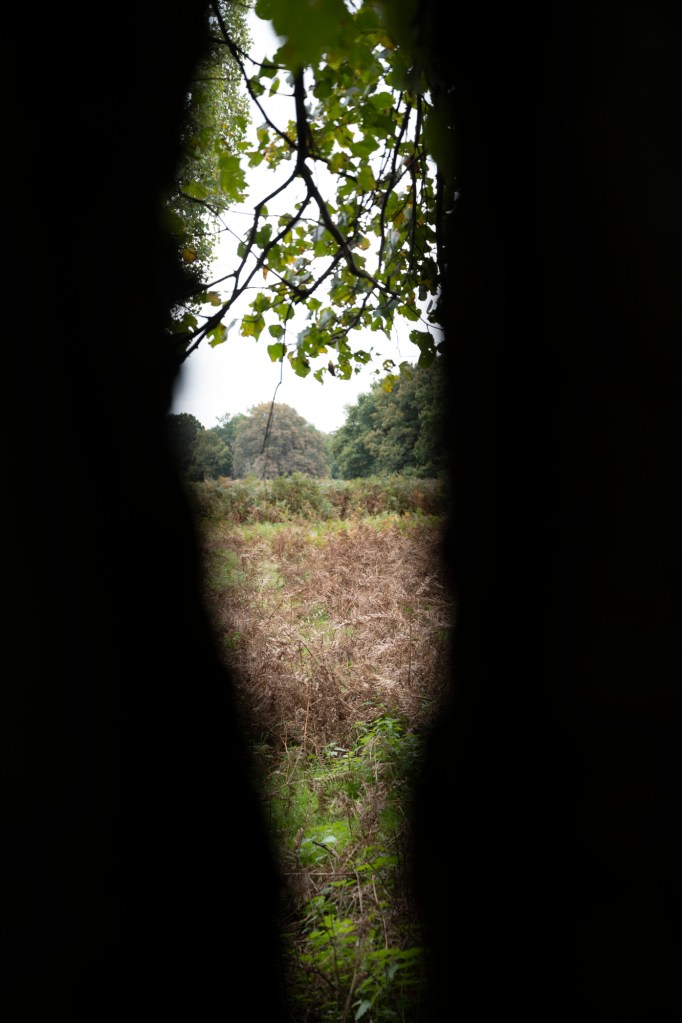
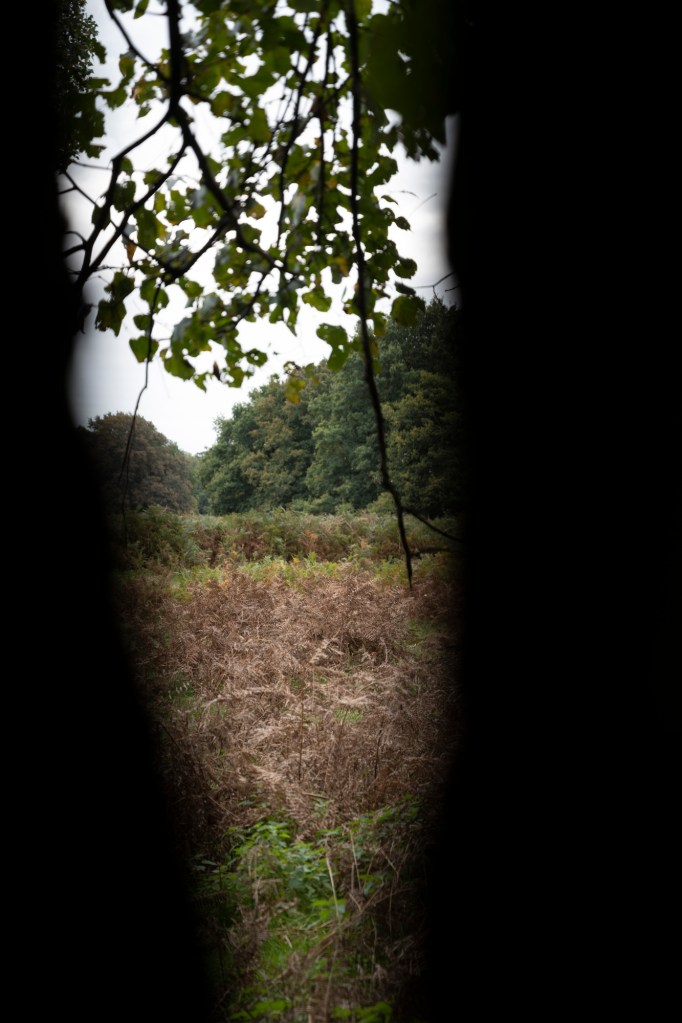
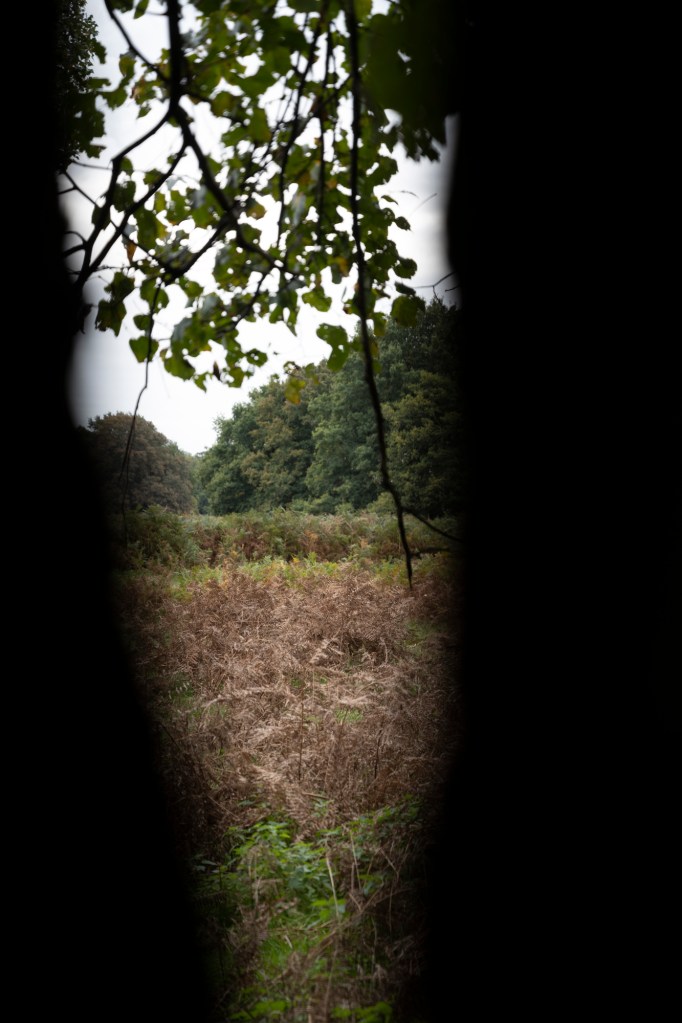
I then stopped to take some further images through the Split tree:
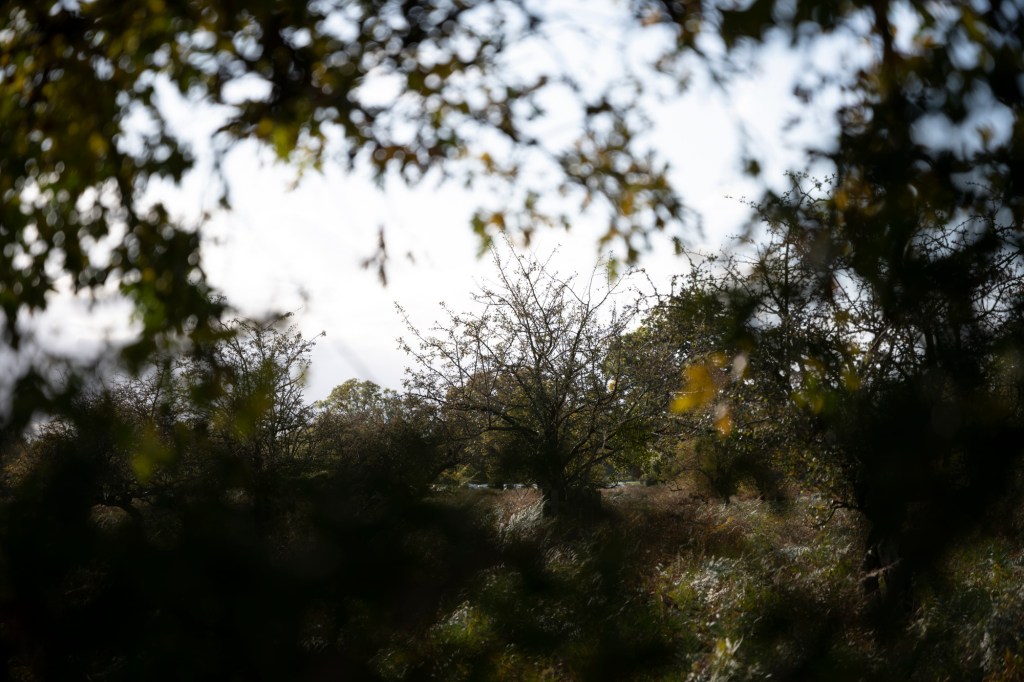
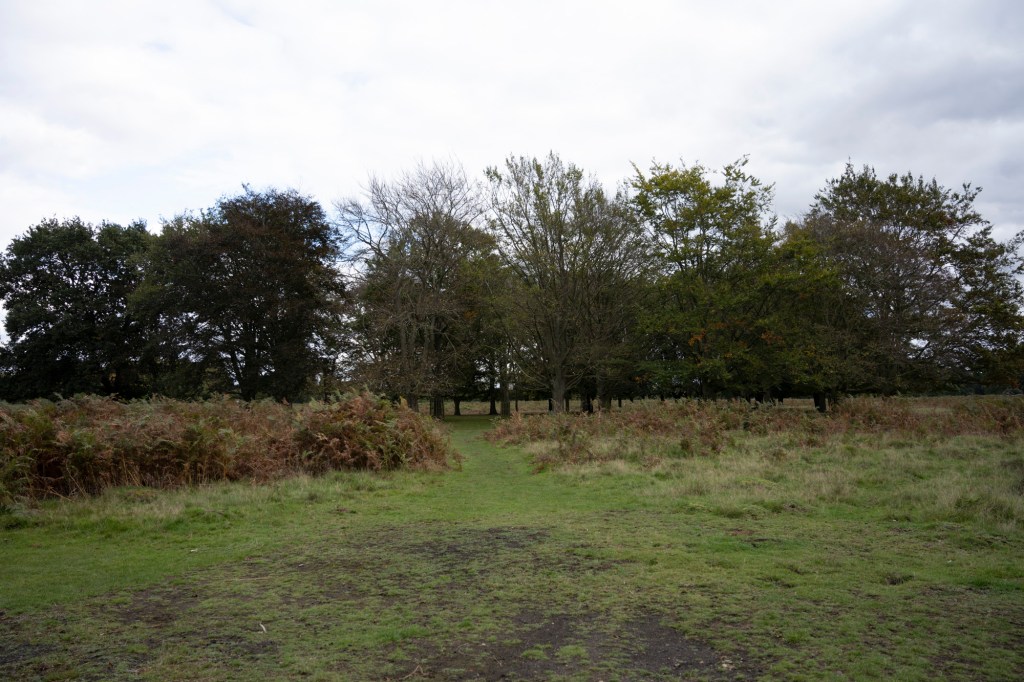
Instead of heading to Woodland Gardens, I then took a detour to a copse that I only explored recently.
This is how it looks from the inside (smartphone shot).
I was using my 24mm-70mm lens at this stage and took some initial shots at 53mm.
I then set the lens at 70mm.
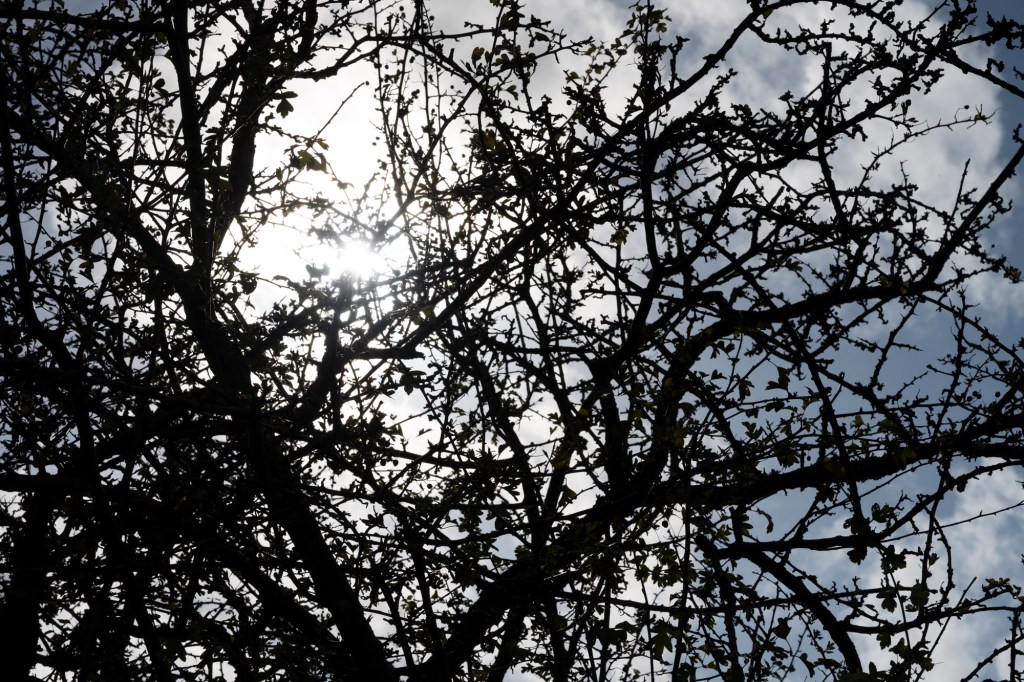
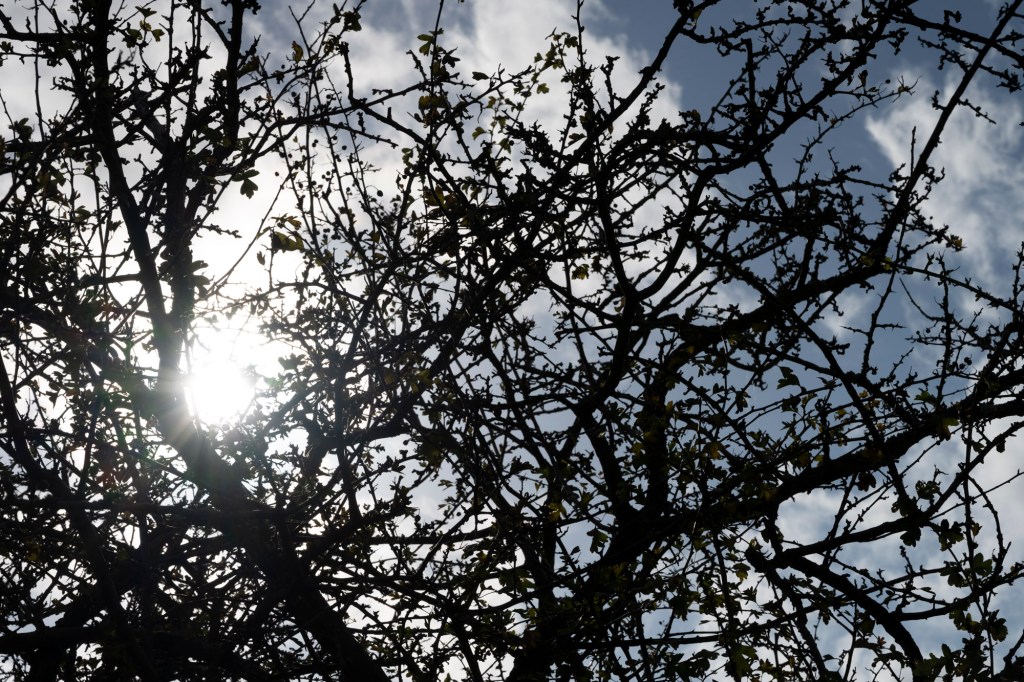
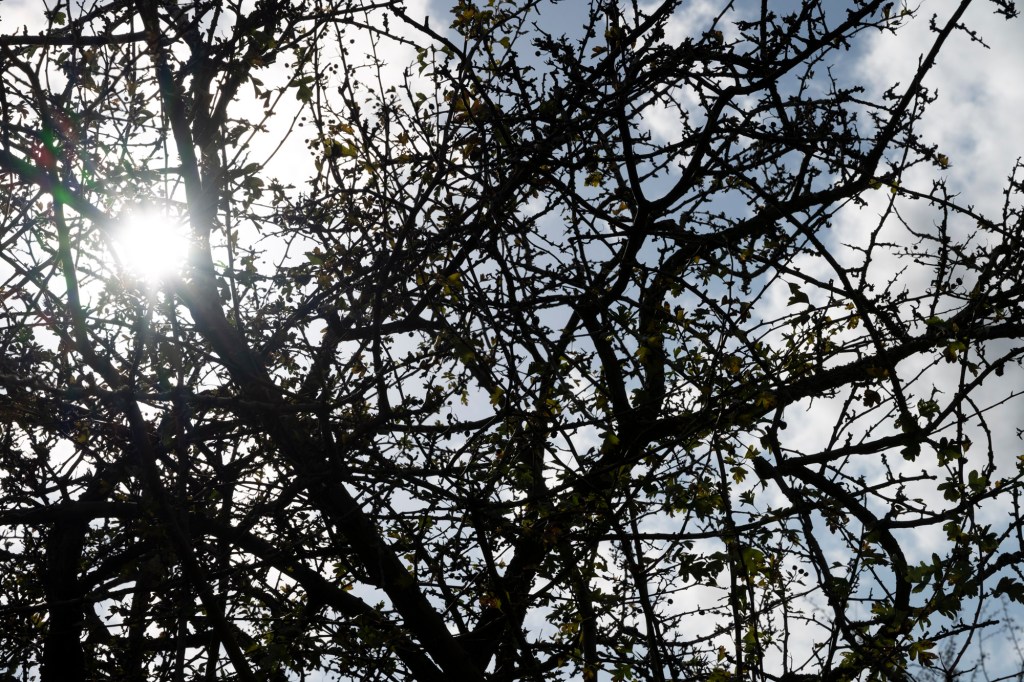
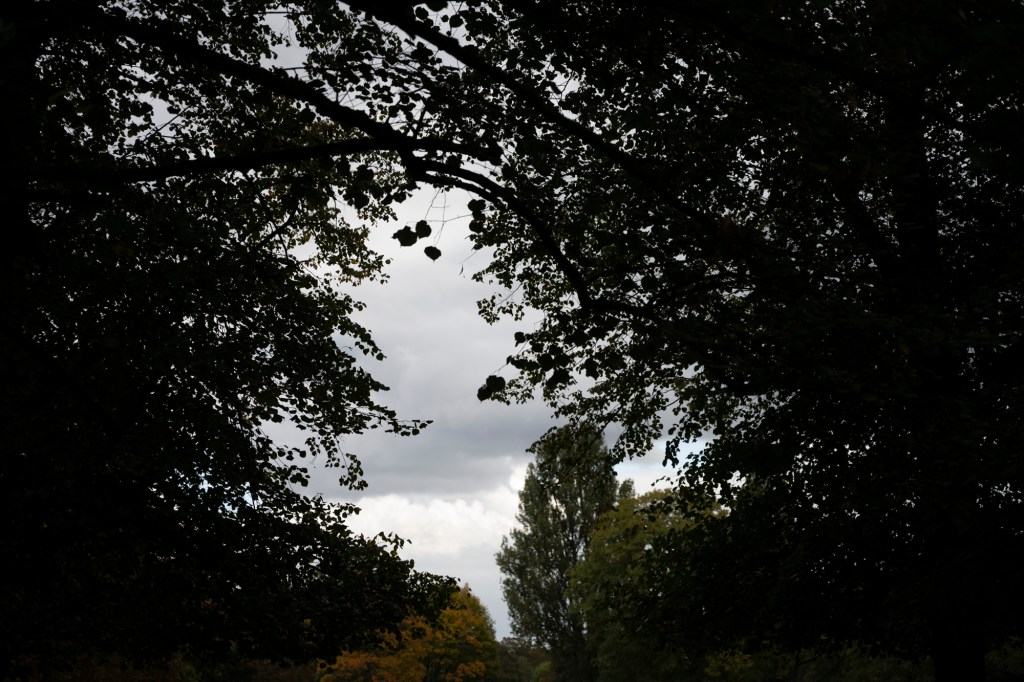
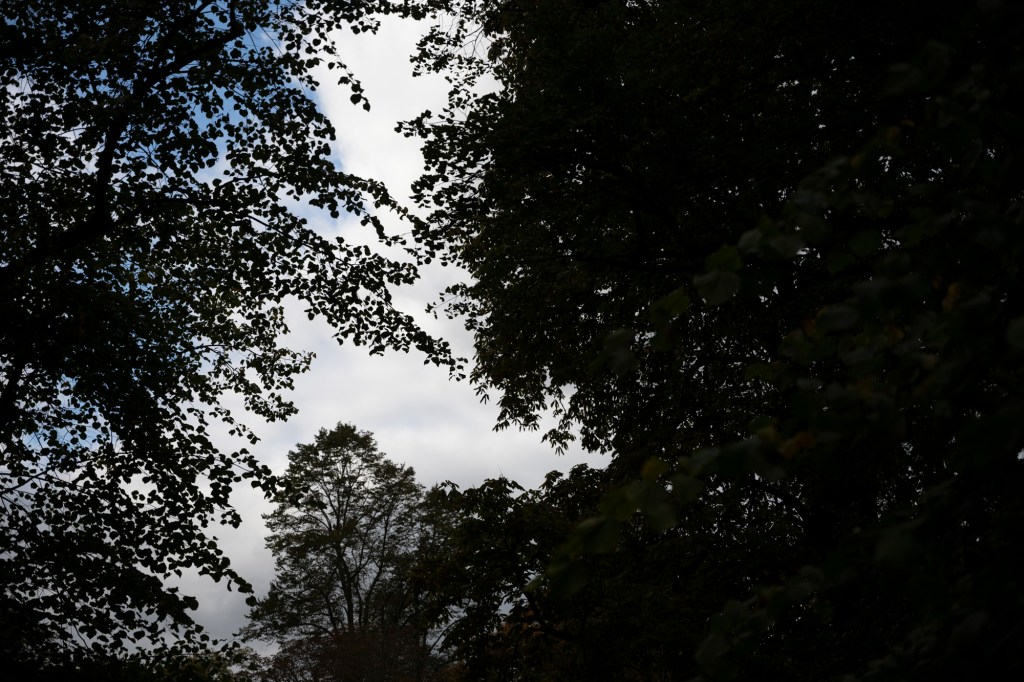
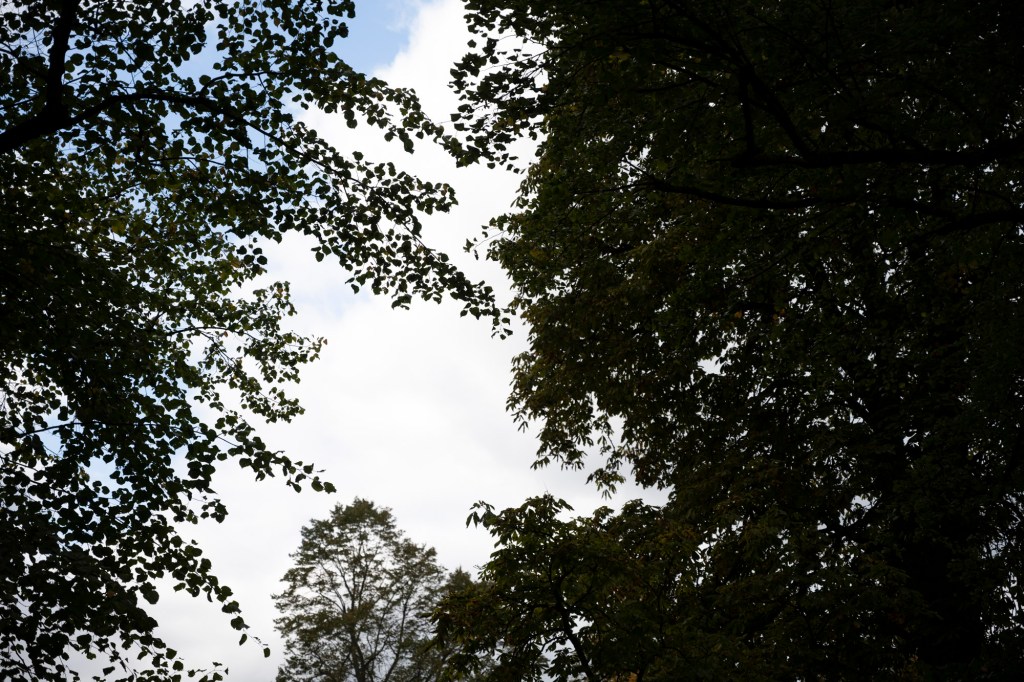
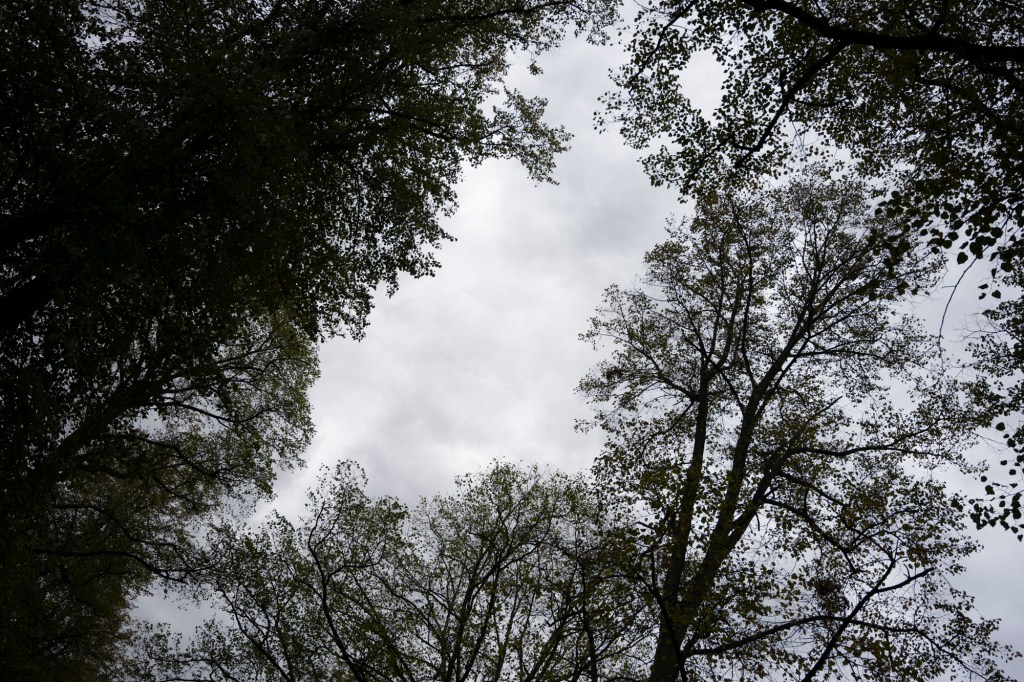
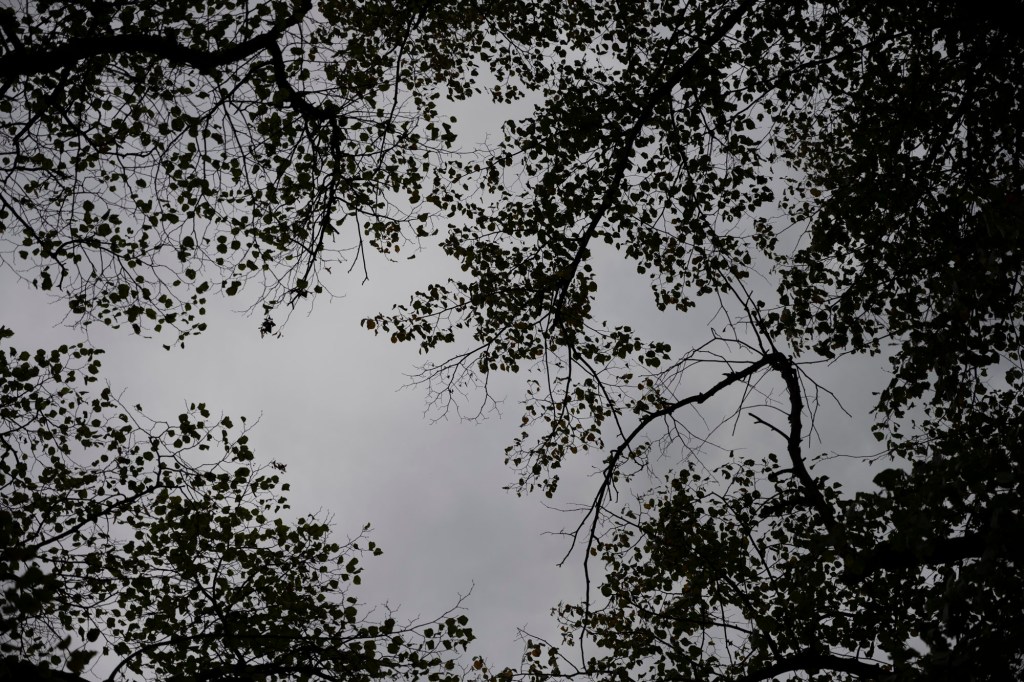
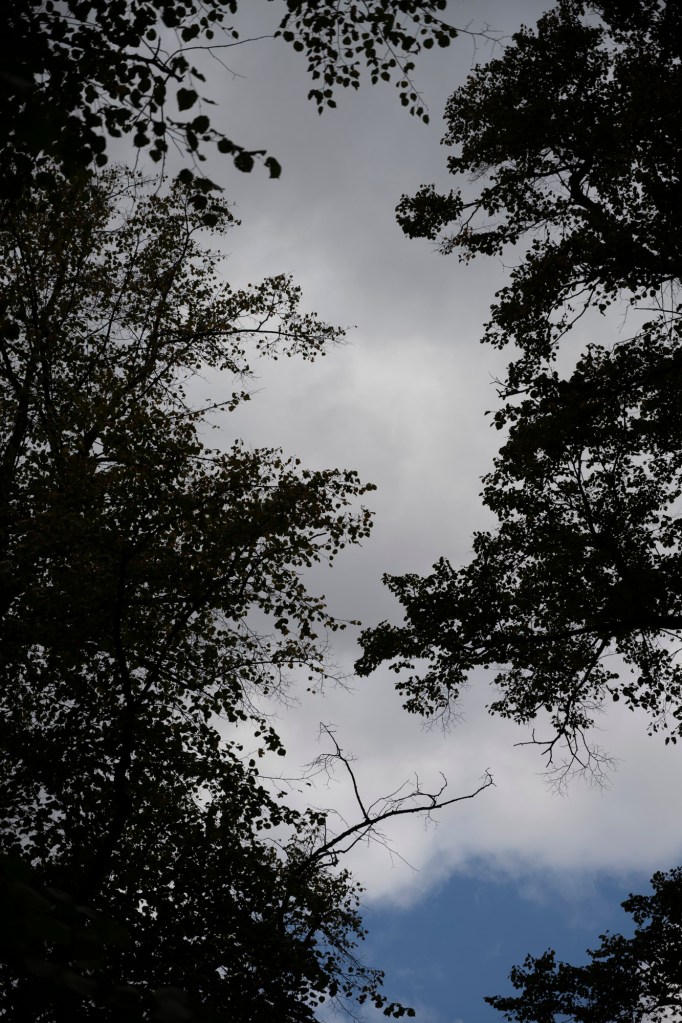
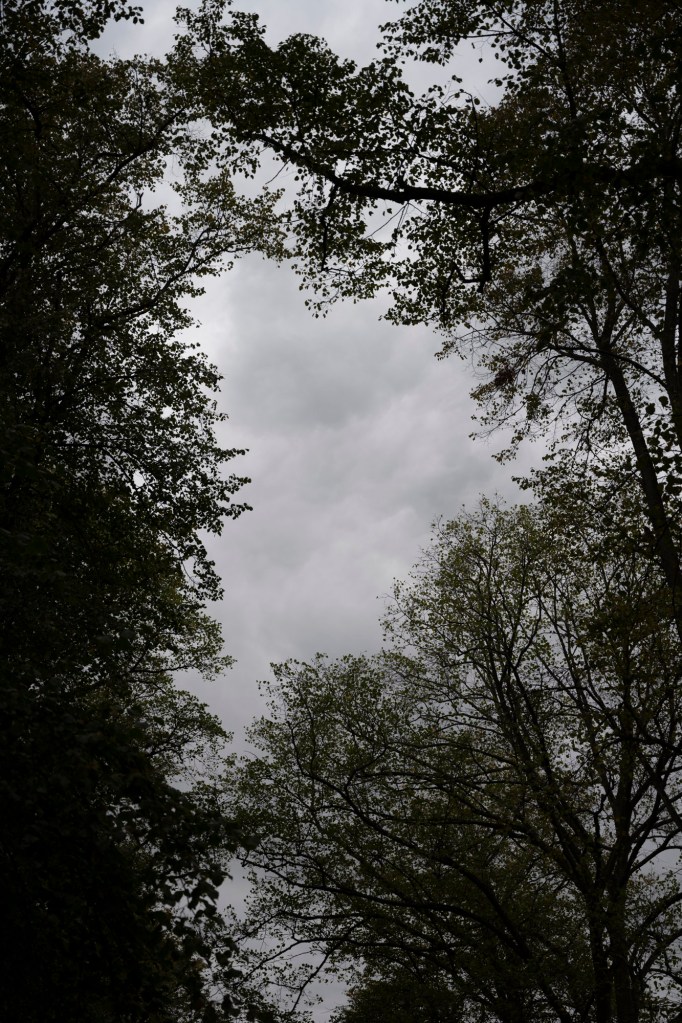
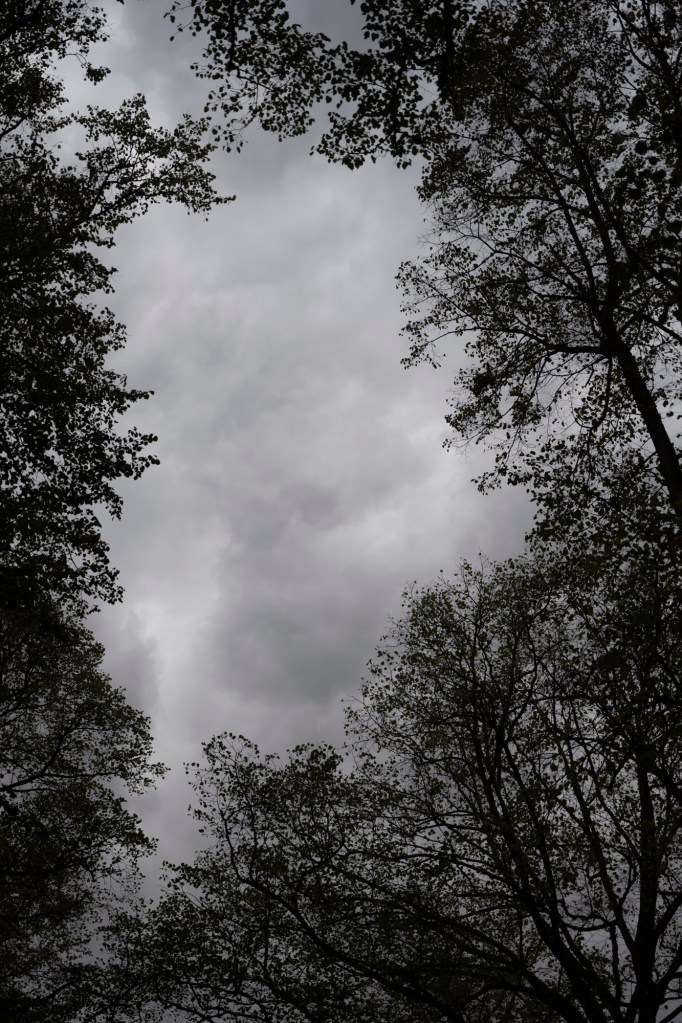
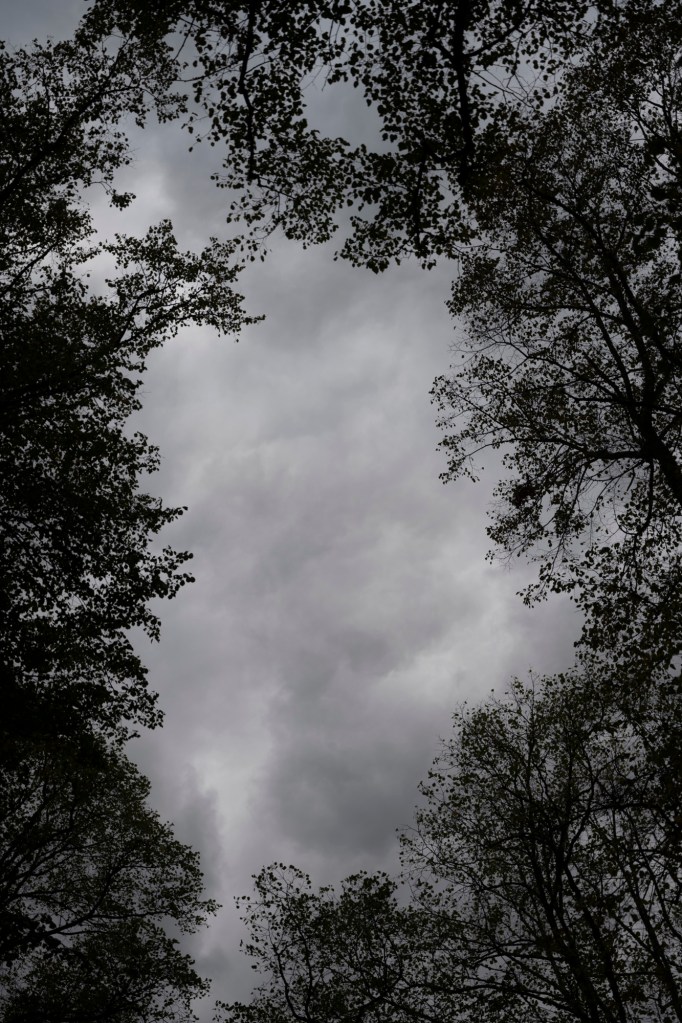
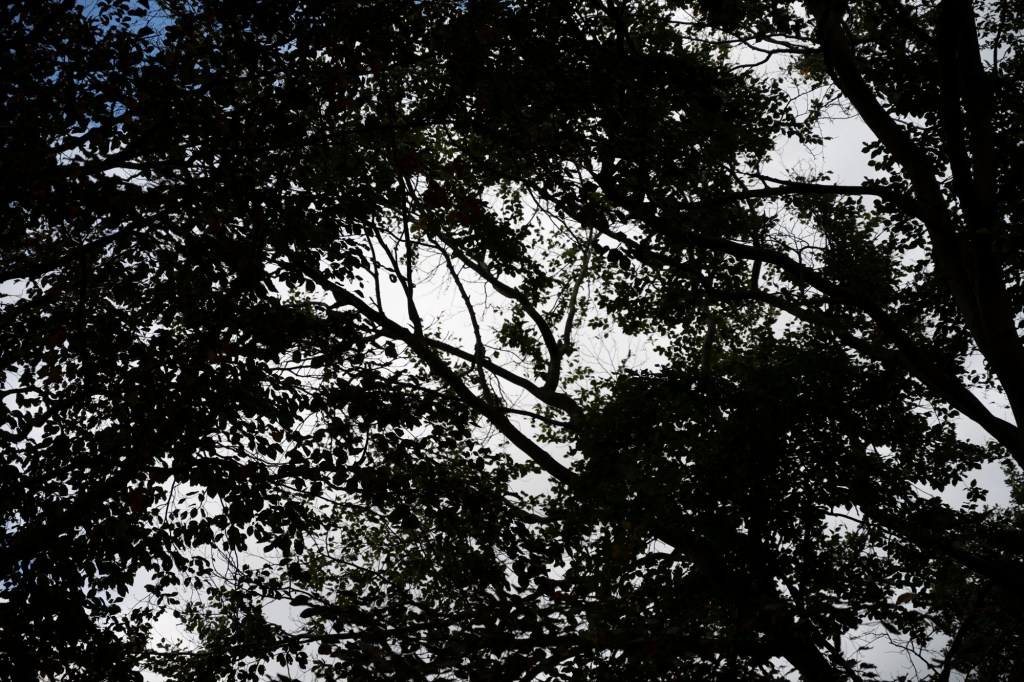
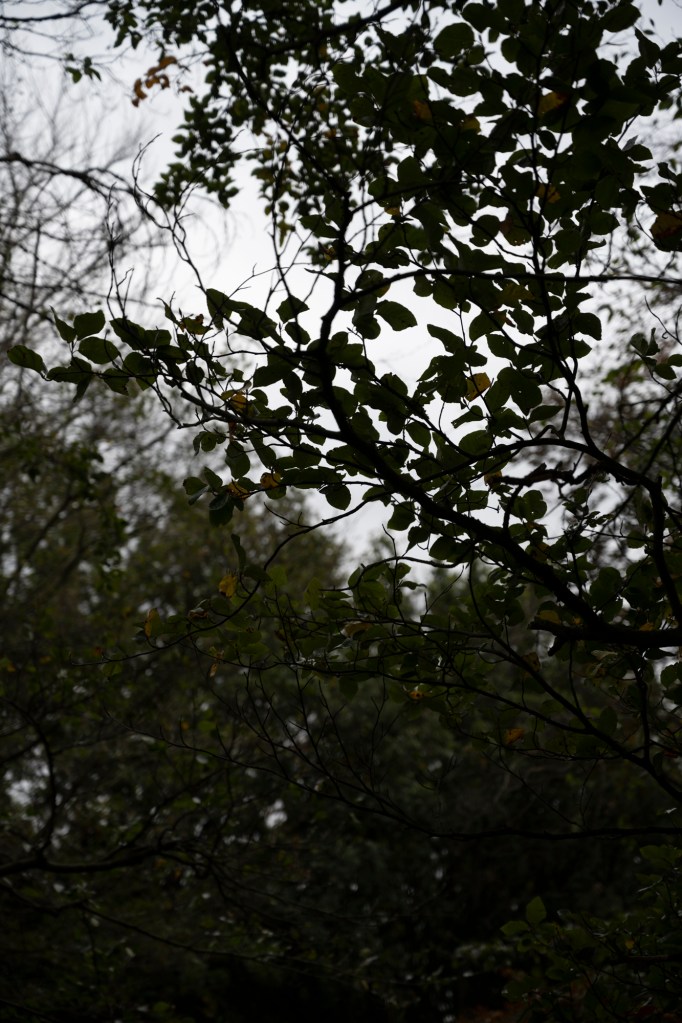
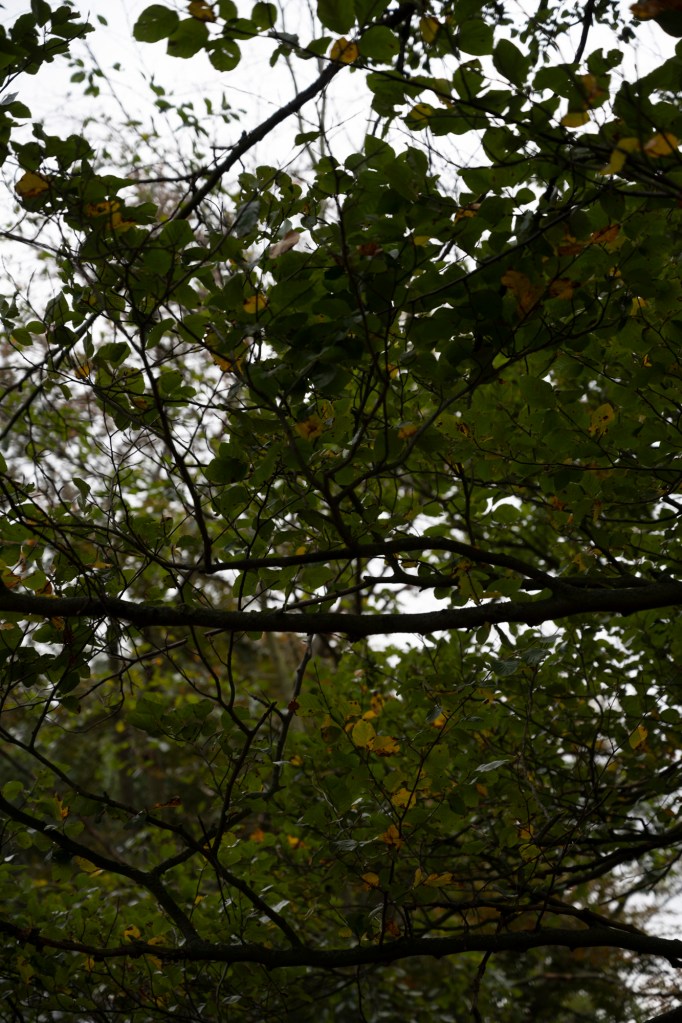
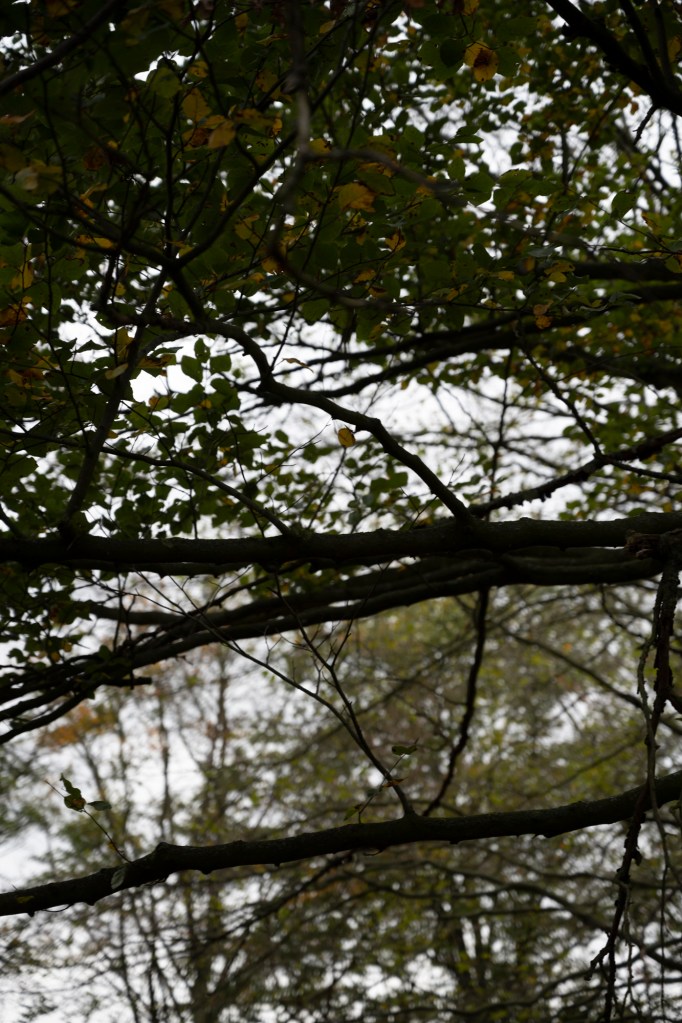
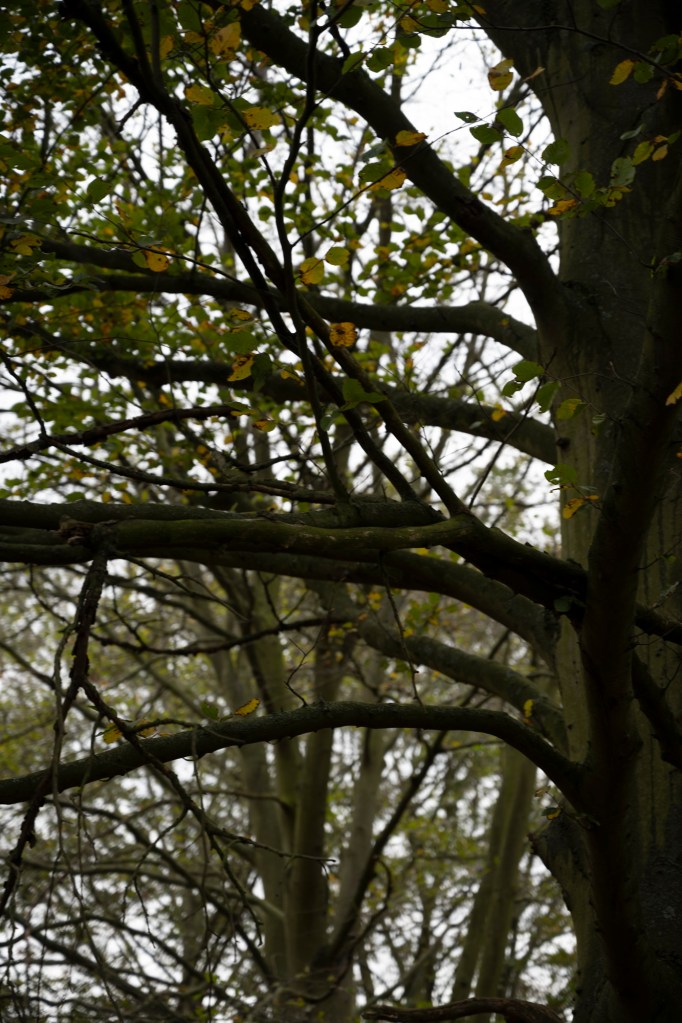
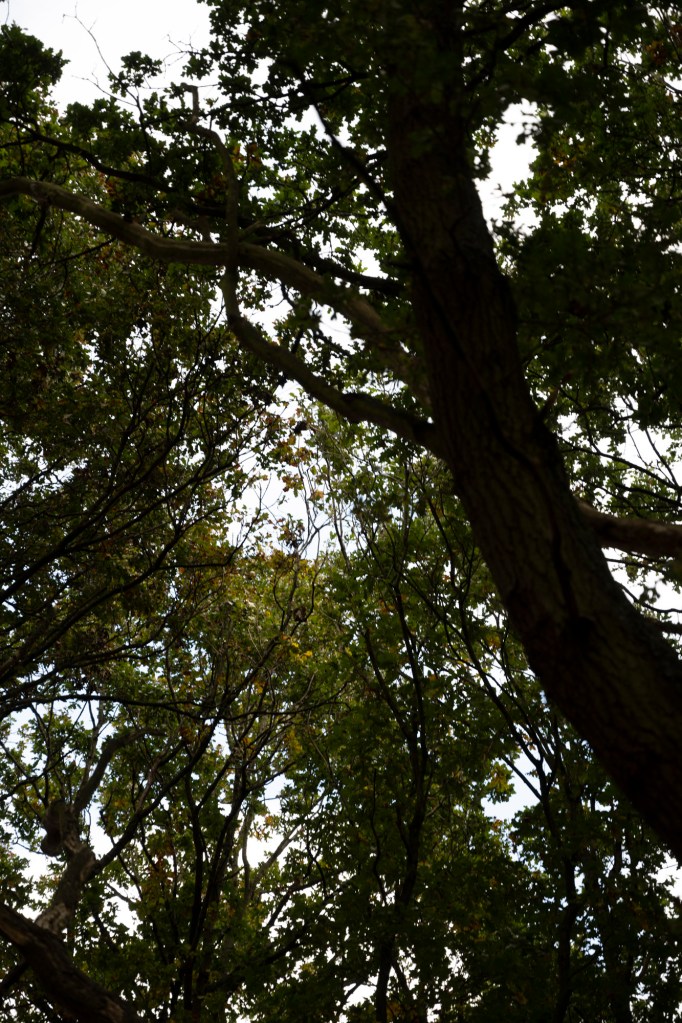
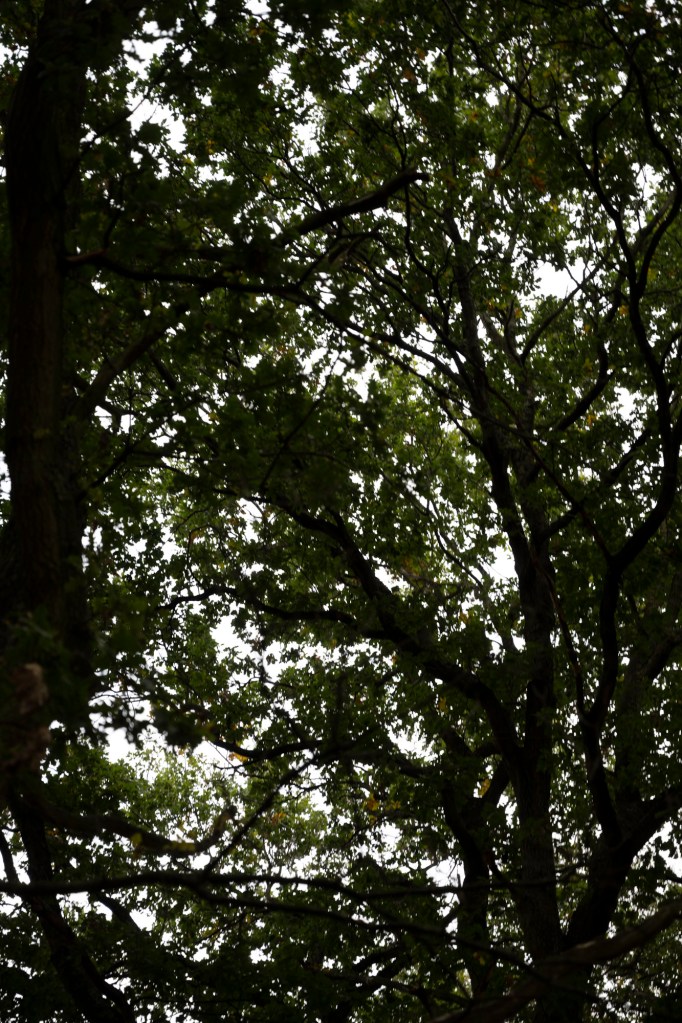
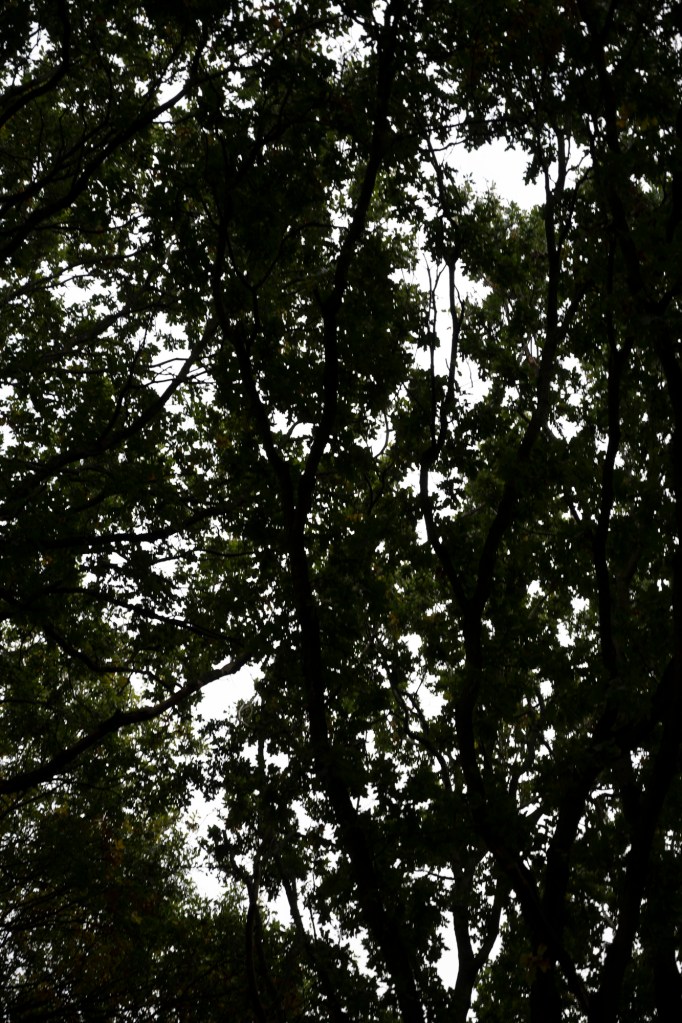
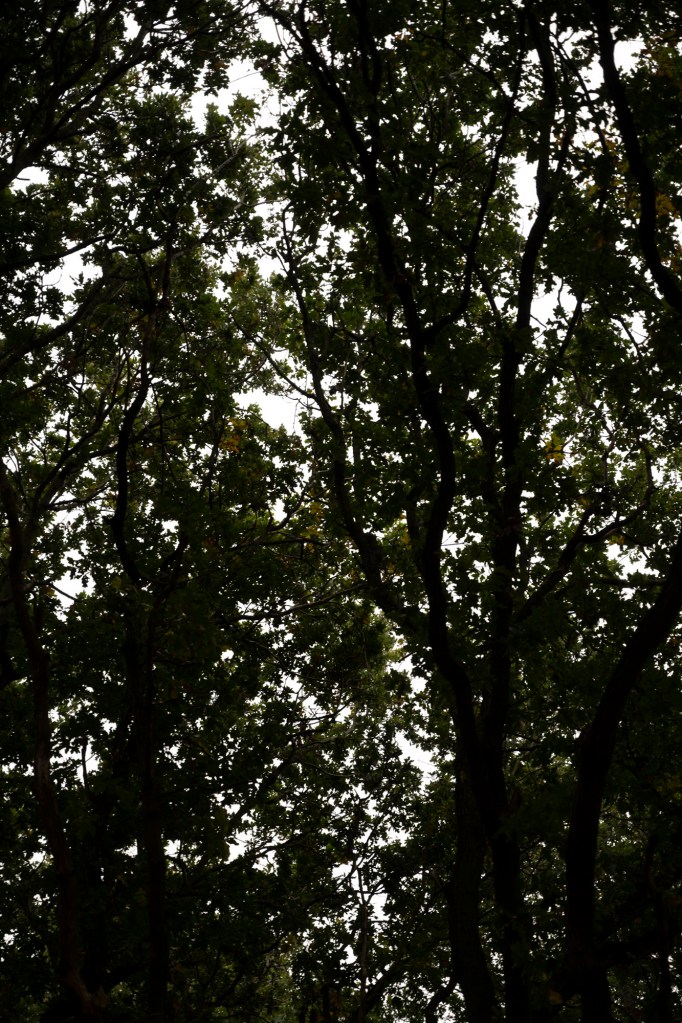
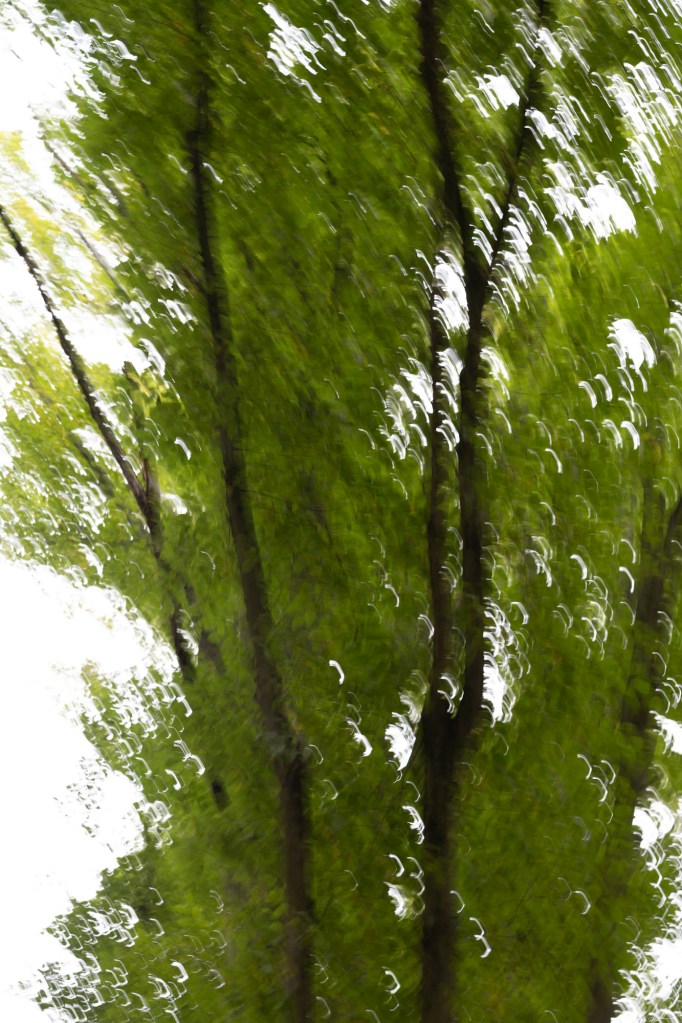
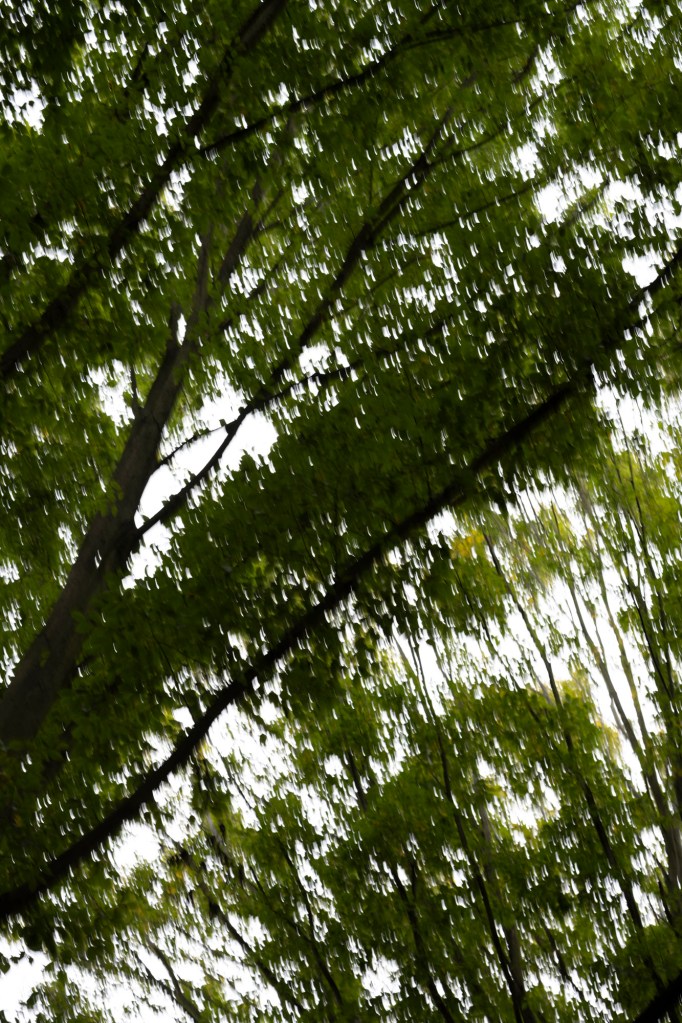
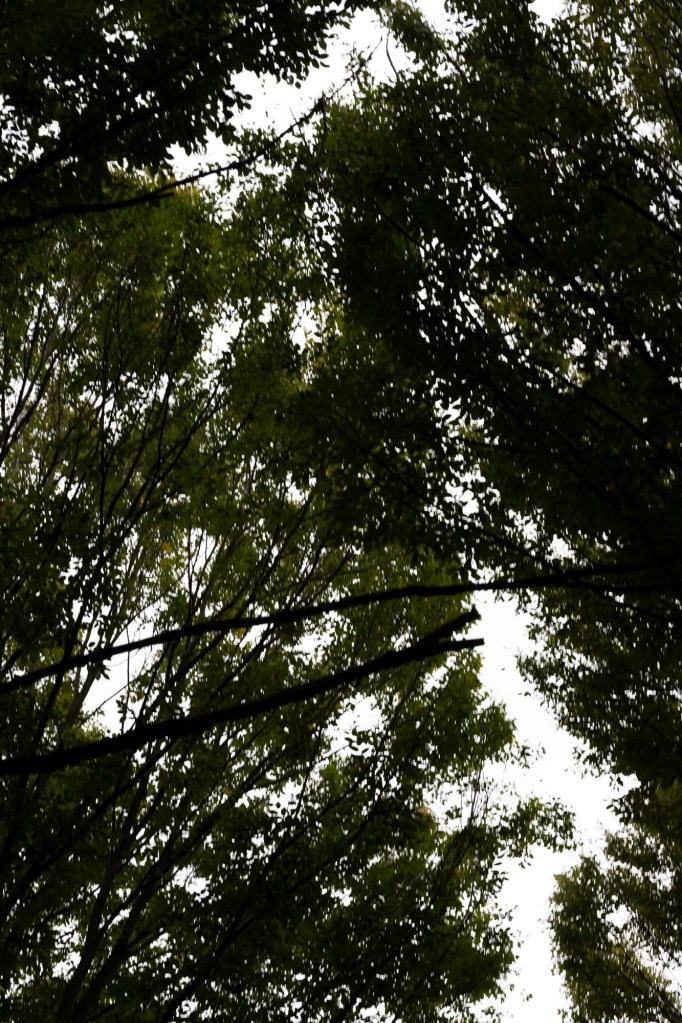
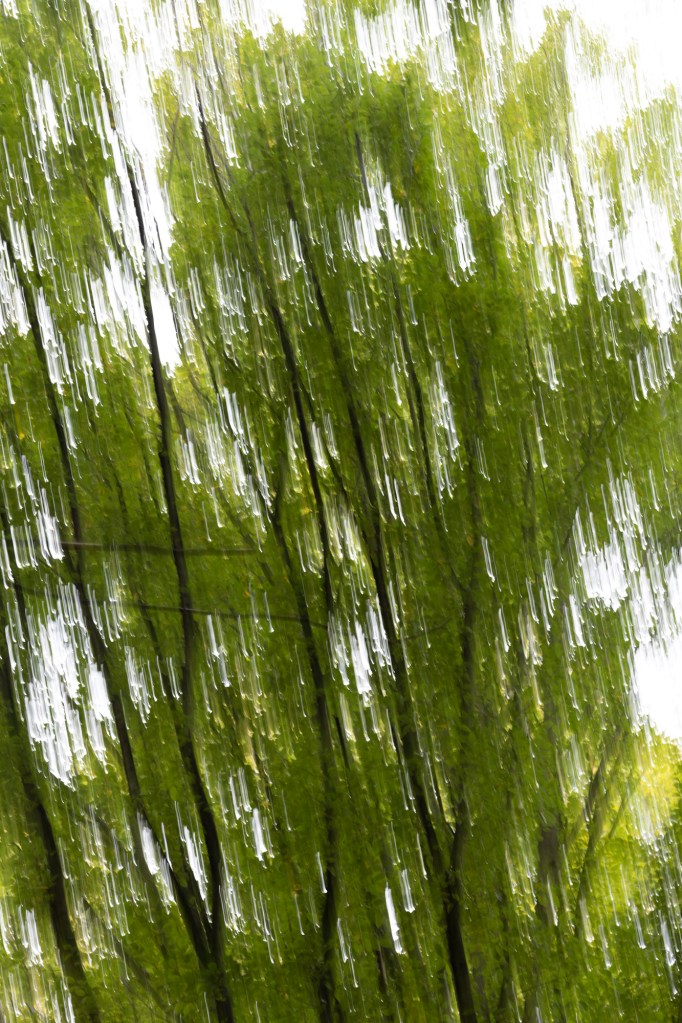
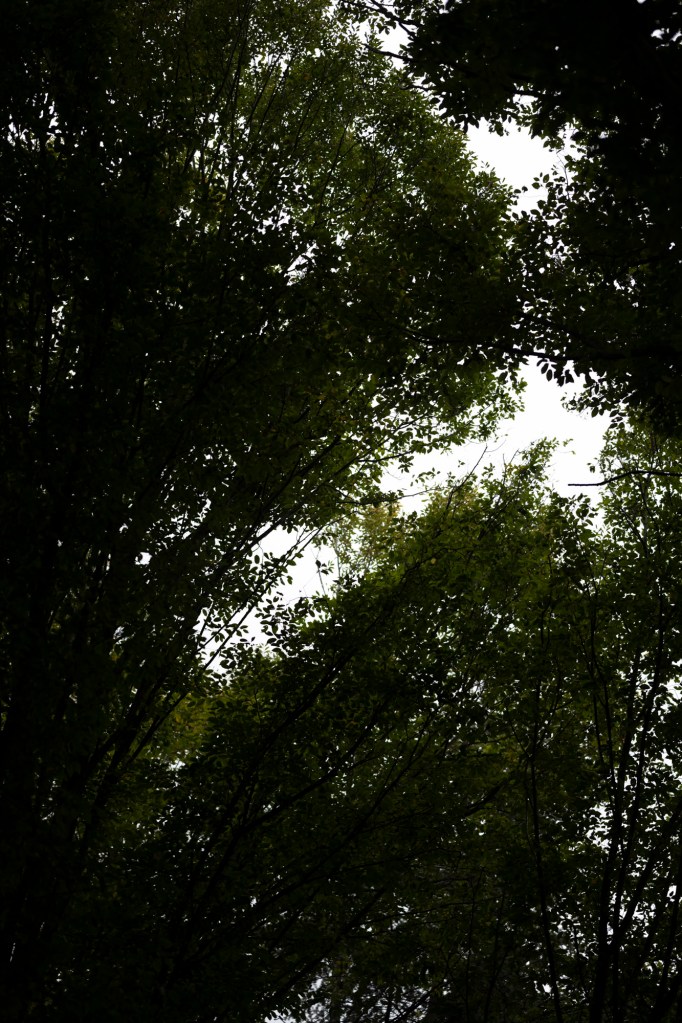
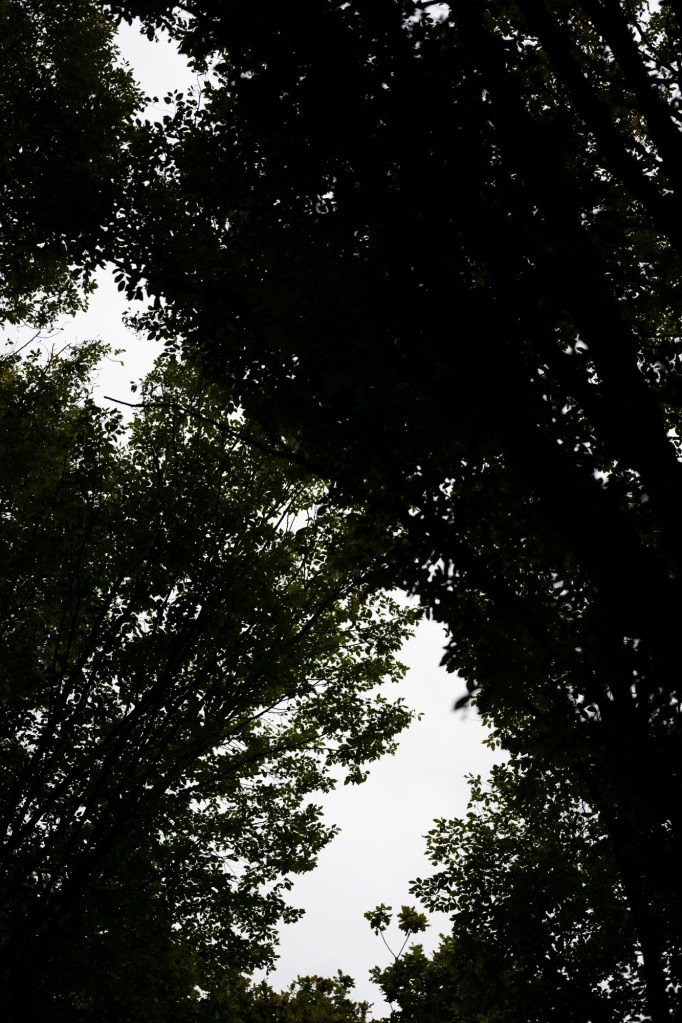
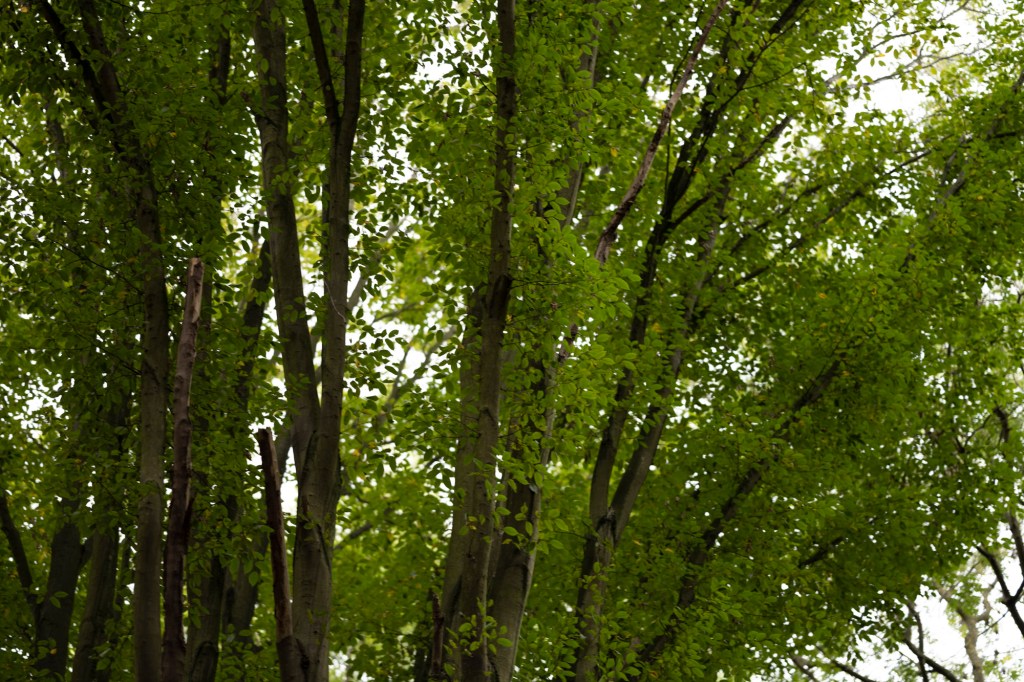
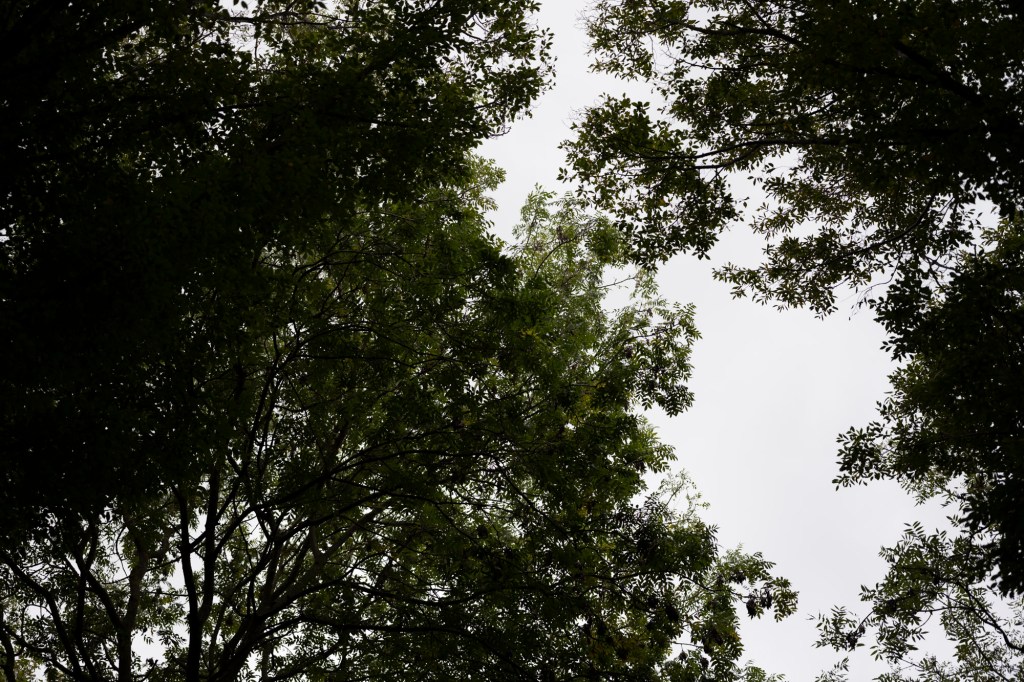
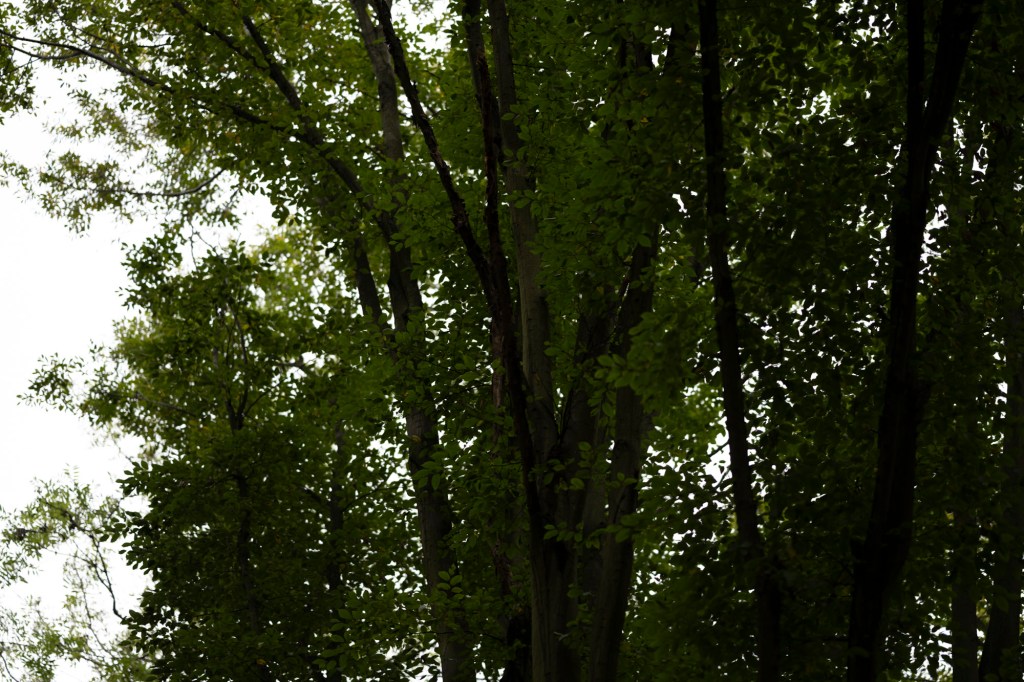
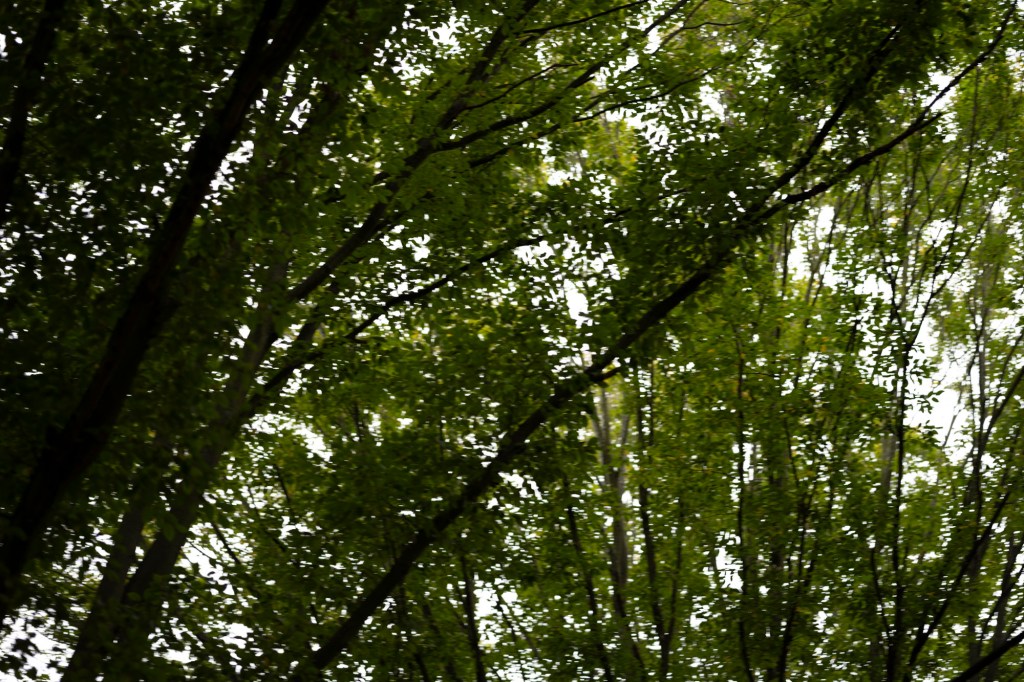
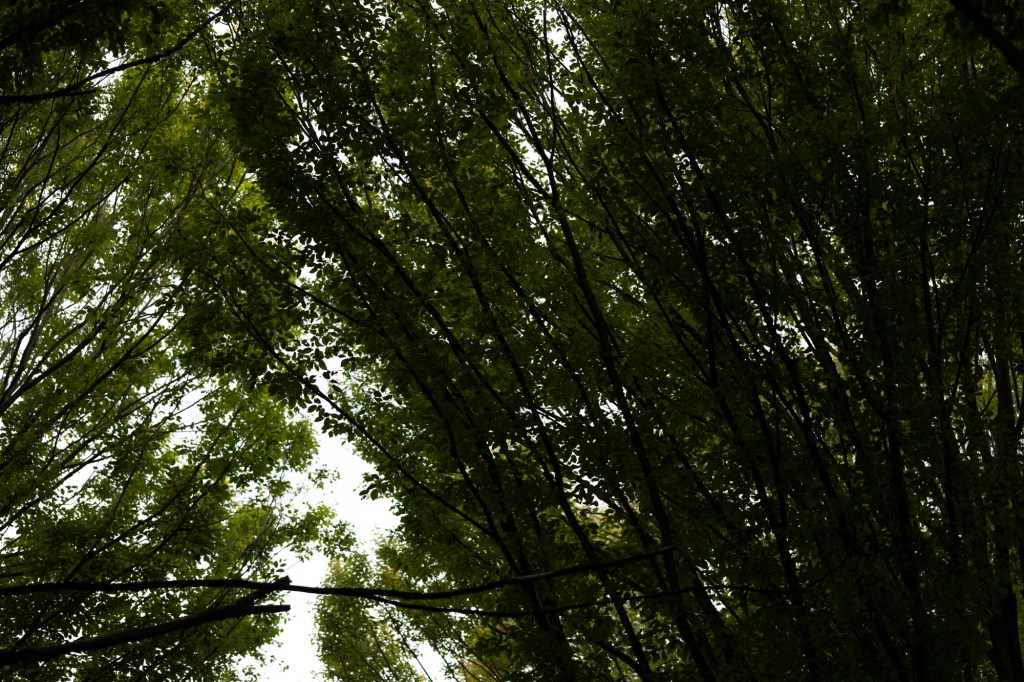
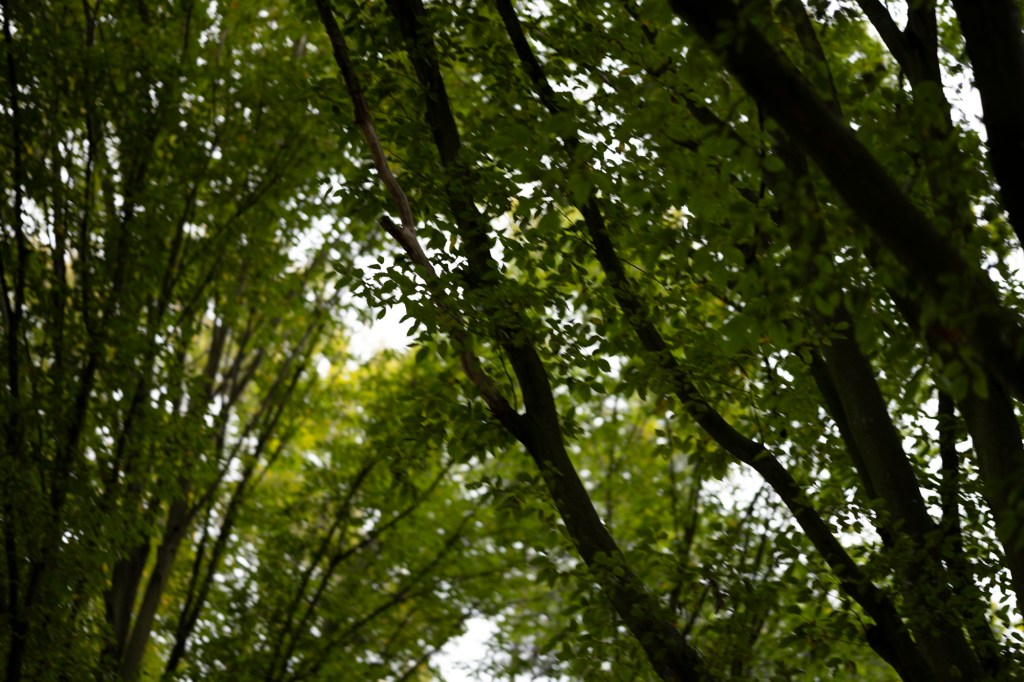
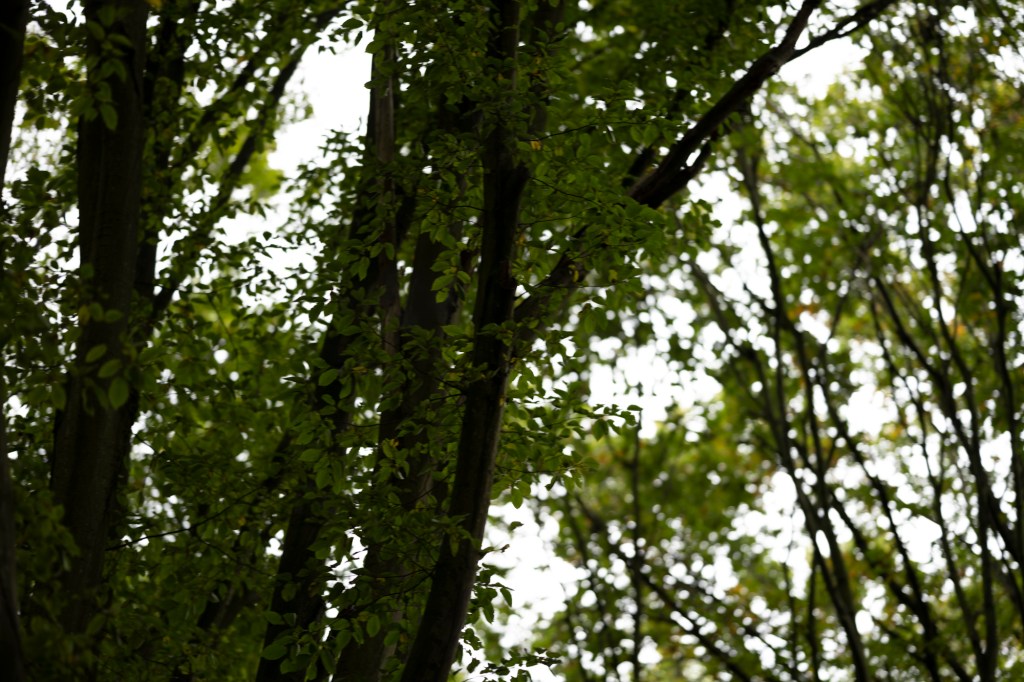
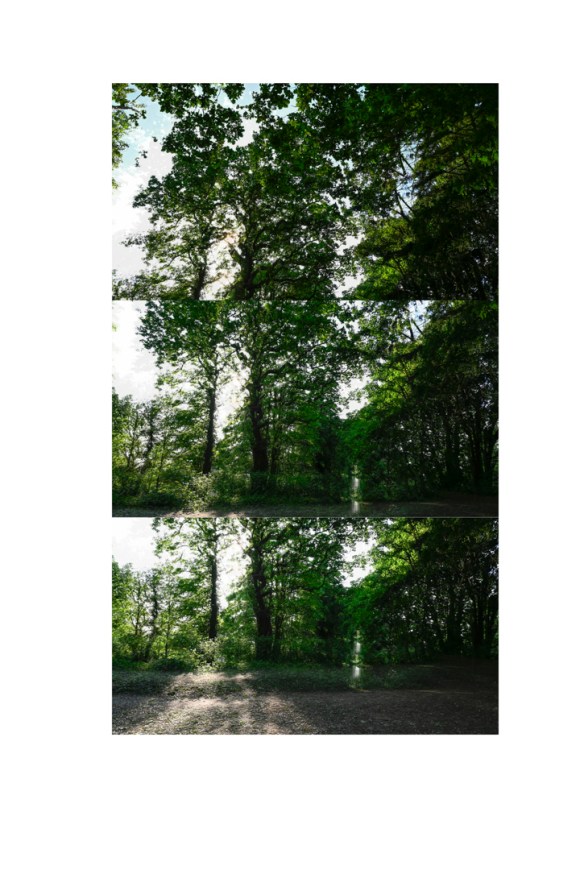
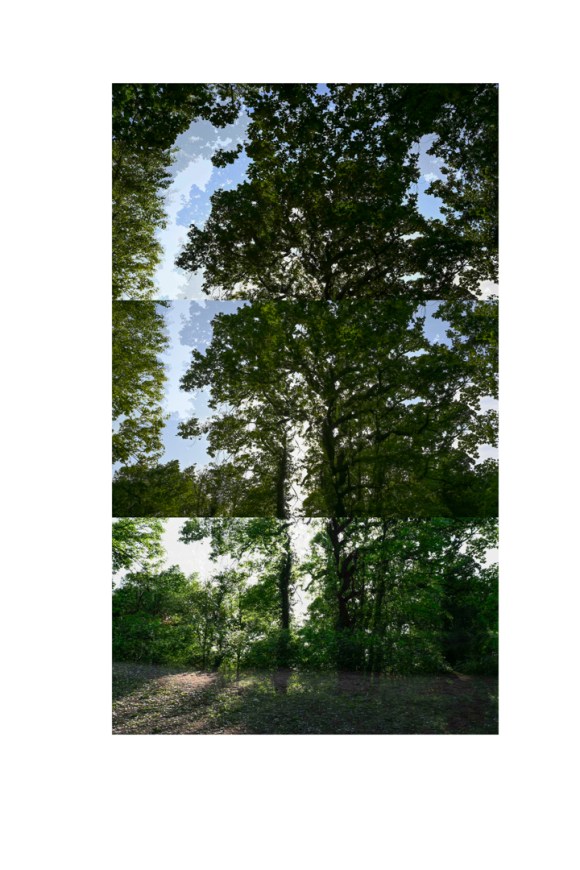
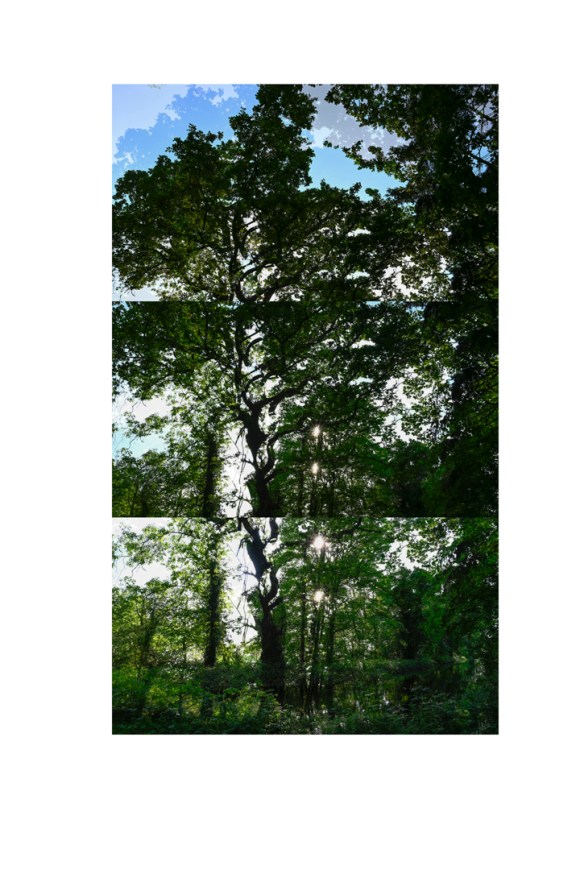
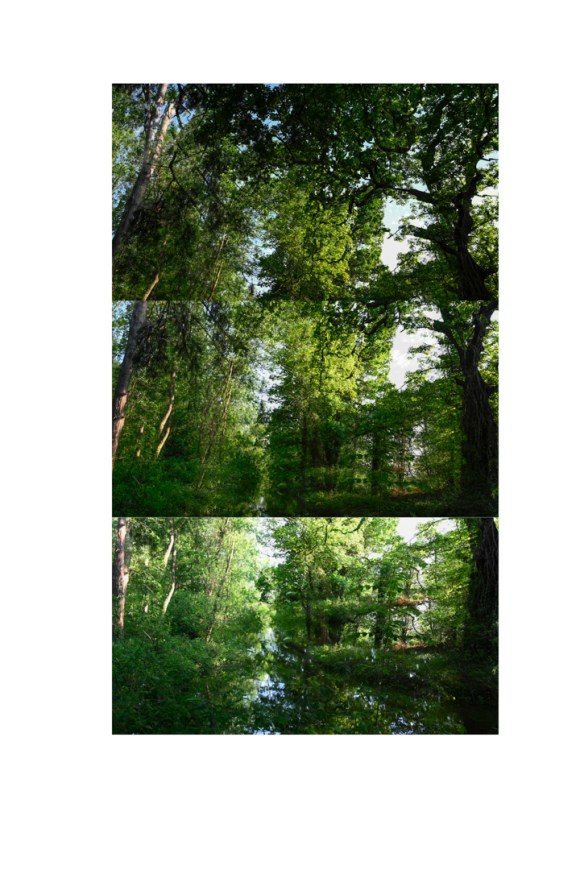
I then had an idea. What would it look it if I stood in the middle of the copse and took a series of images on the ’round’. I took two sets of these in two different locations using the 70mm lens setting.
Set 1
Set 2
I then walked towards Woodland Gardens, but before entering I took a couple of shots of these trees
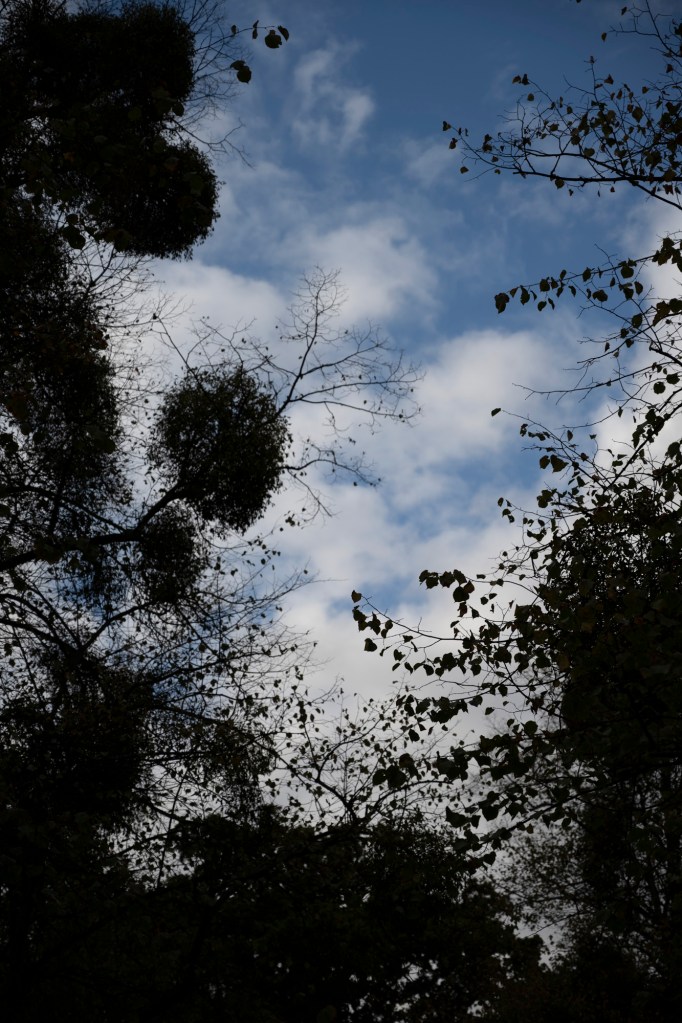
According to the Royal Parks’ website, Bushy Park is one of the best sites in London for mistletoe. This parasitic plant is rare or absent in the the other Royal Parks and it grows very well on Limes and Hawthorns.
Woodland Gardens – Pheasantry Plantation
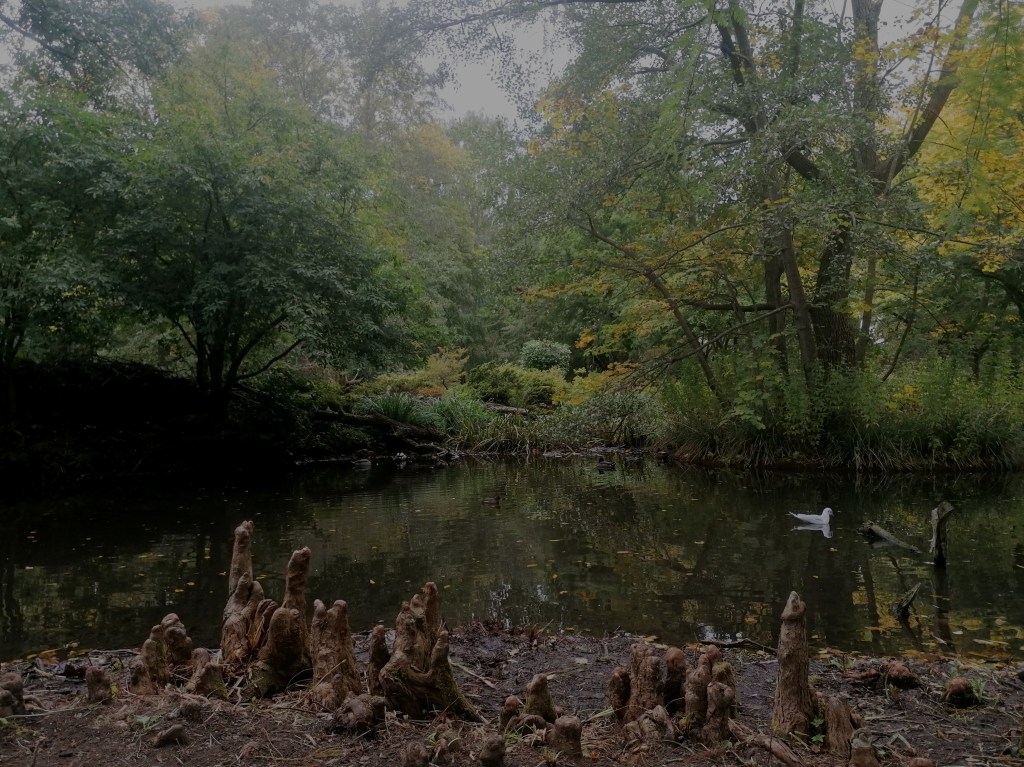
After a flask of hot tea and some ginger biscuits, I contemplated the park while sitting in this location.
I made some notes:
Bushy Park:
Logical, but not logical
Boundary – straight lines and curves
Lines of trees
Circles of trees
Plantations – SSSI (Special Sites of Scientific Interest)
Taking shots ‘in the round’ – what happens when images are in line?
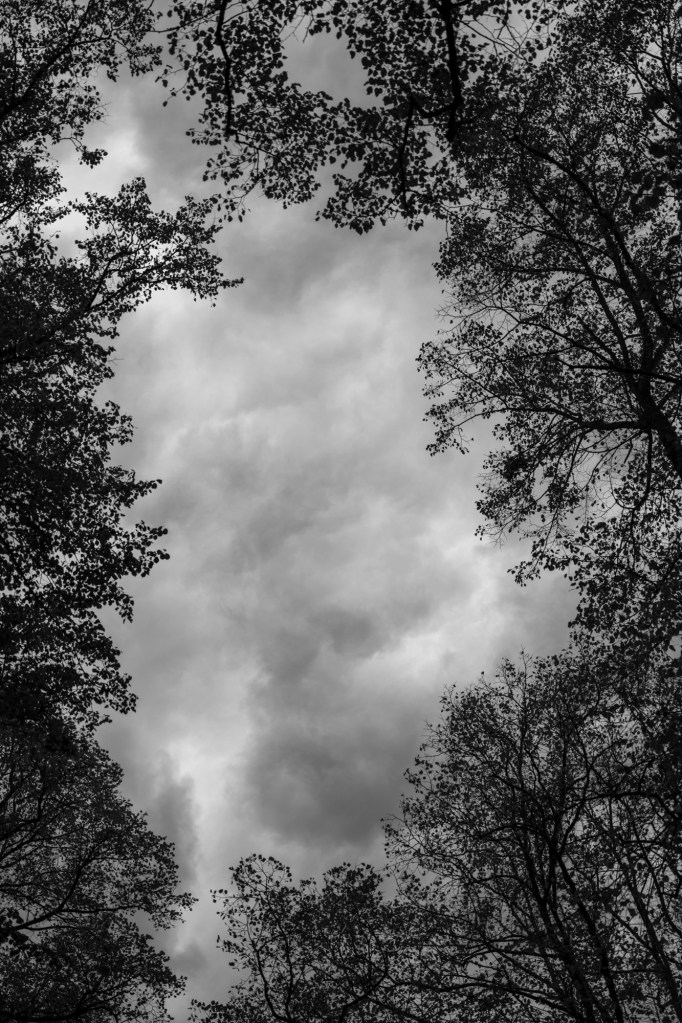
B&W vs. Colour
Leaves vs. Branches
Space in between
After this meditation, I continued my walk through the gardens.
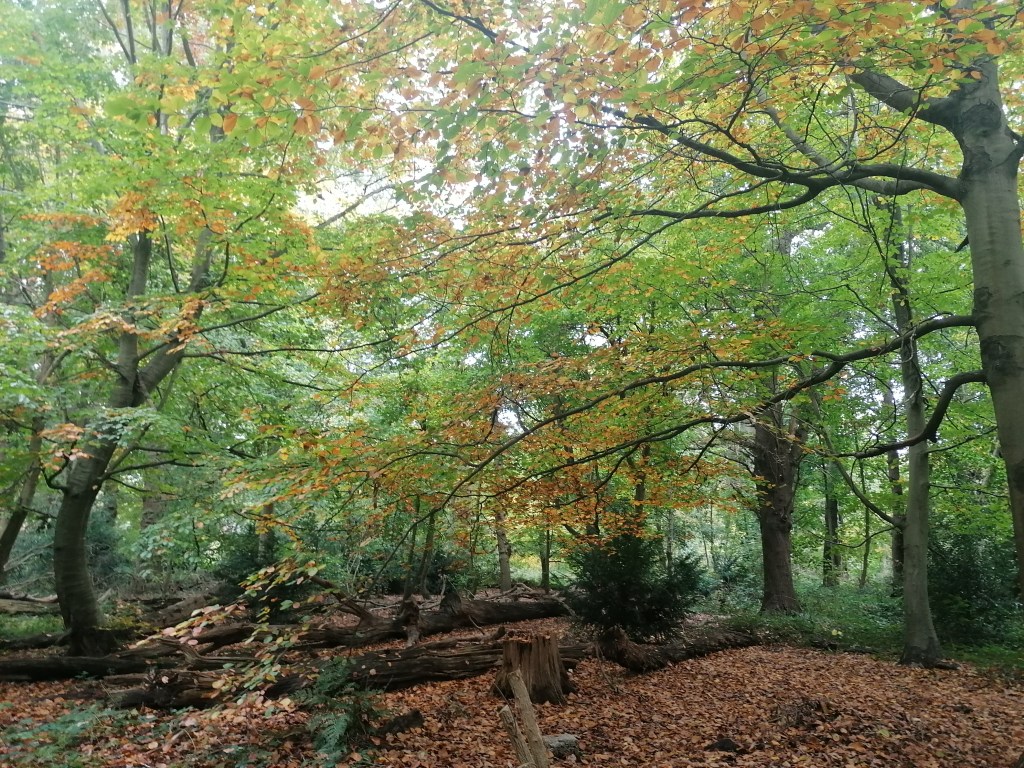
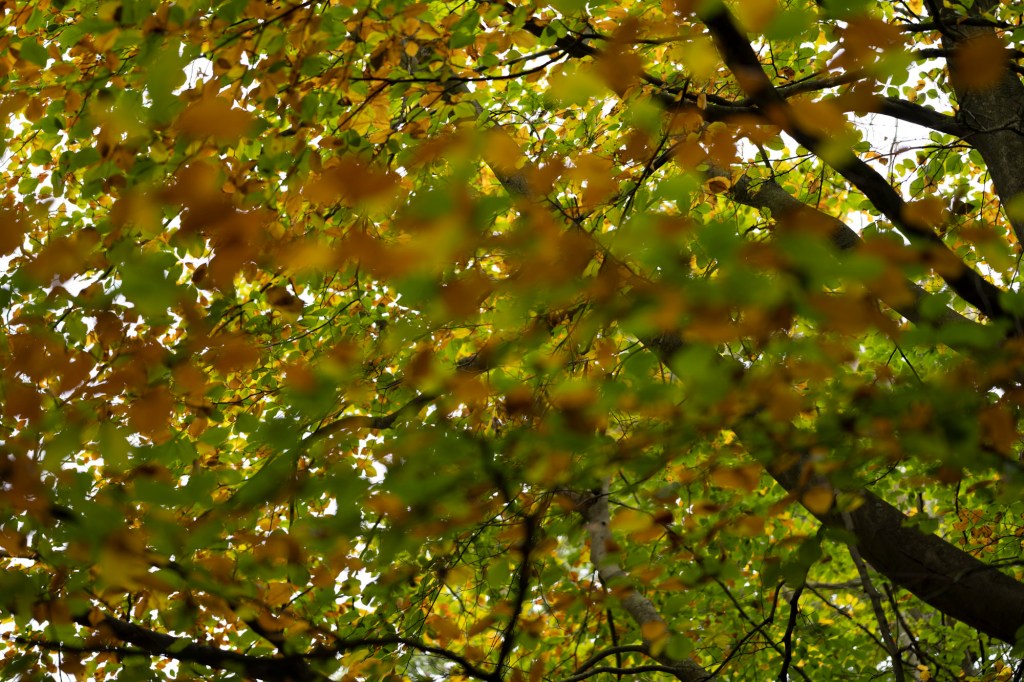
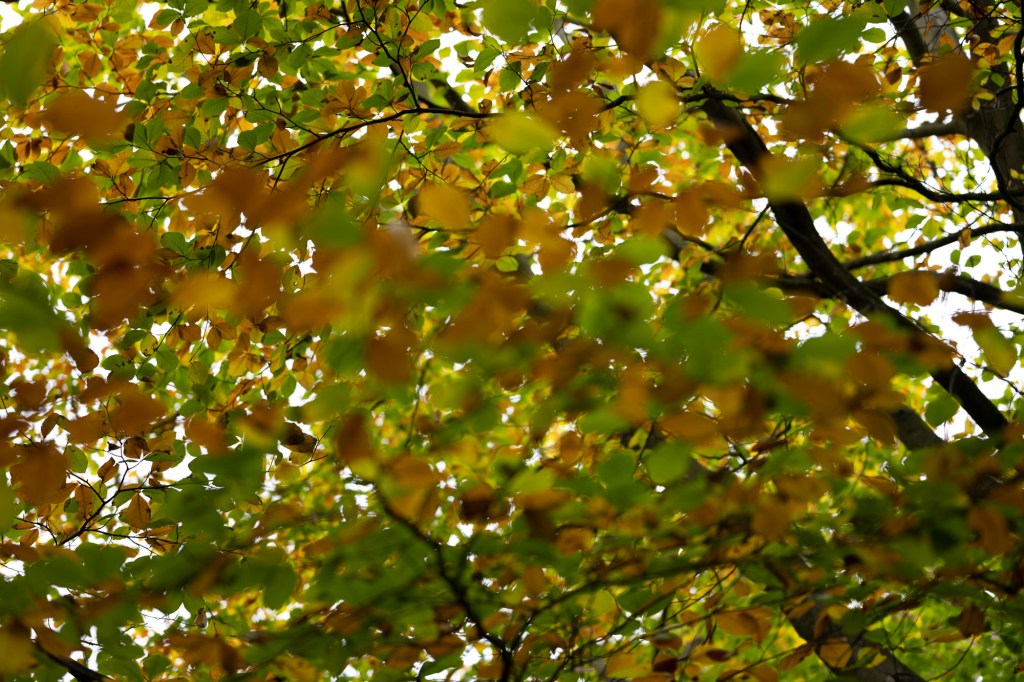
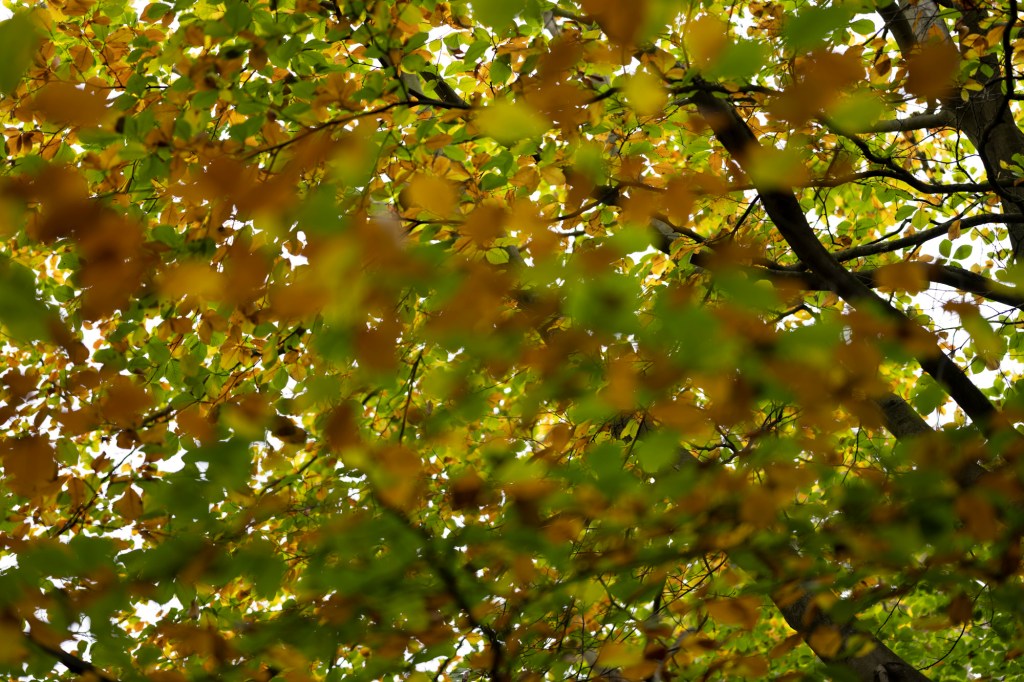
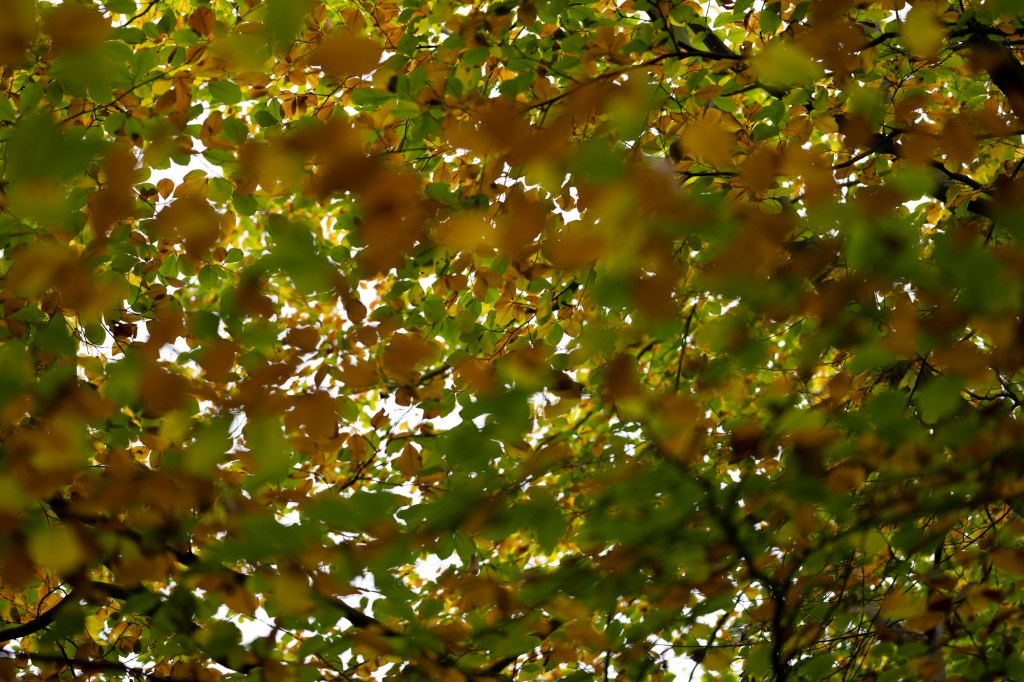
Nothing particularly exciting, but nice to capture the Autumn colours.
Woodland Gardens – The Waterhouse Plantation
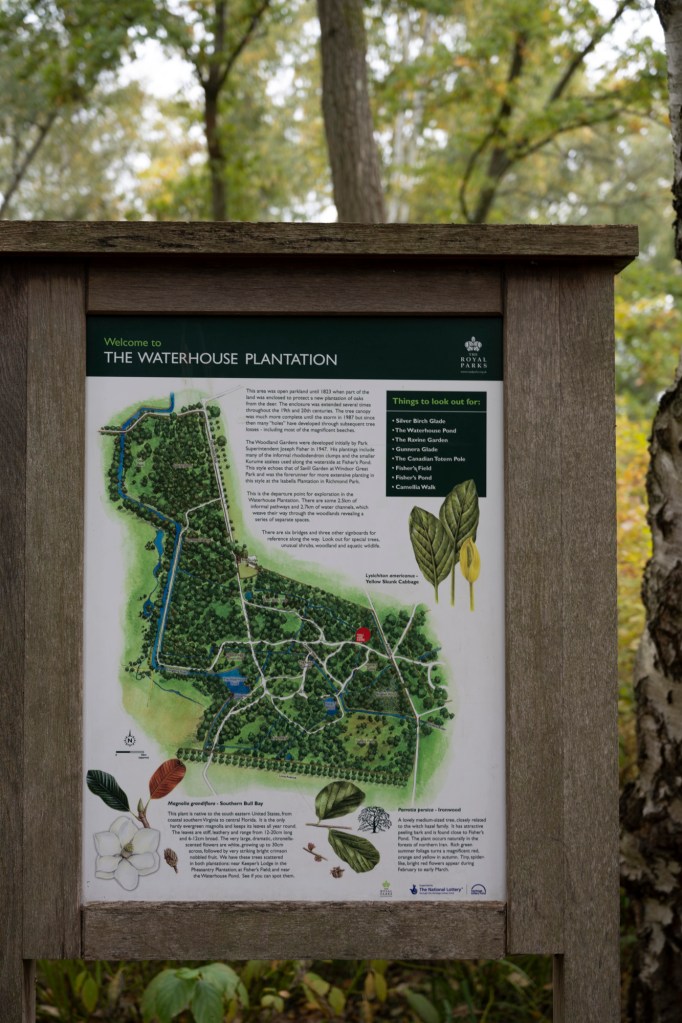
I then visited The Waterhouse Plantation. On entering, I took shot of the map, which gives further details of the different areas of the plantation.
This is a smartphone shot of the area I focused on. I changed the lens to the 85mm as I wanted to try a different perspective.
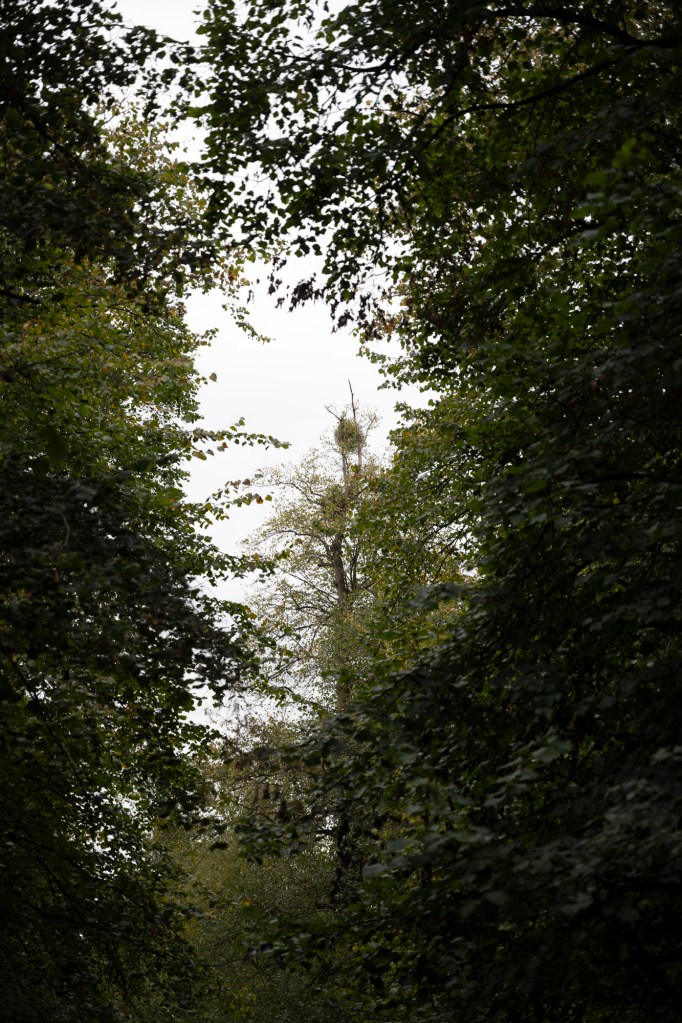
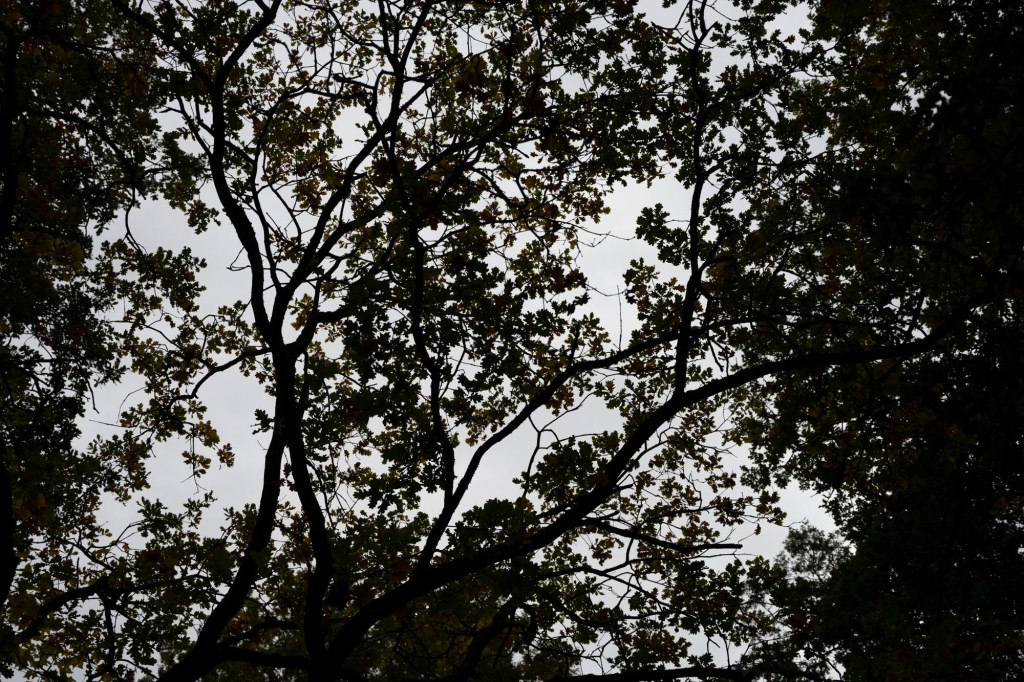
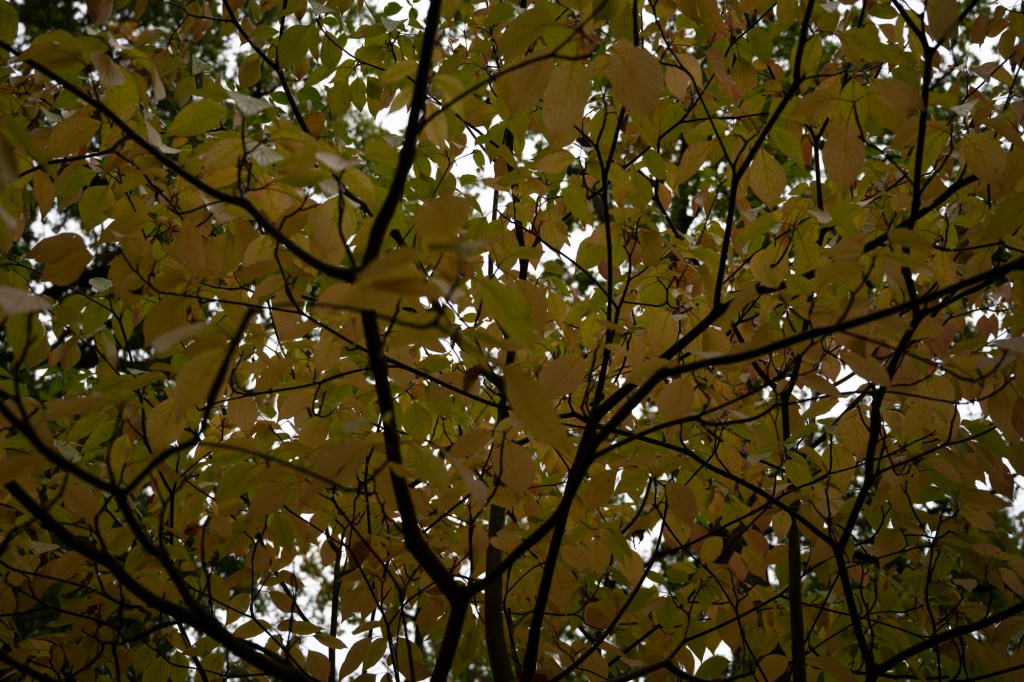
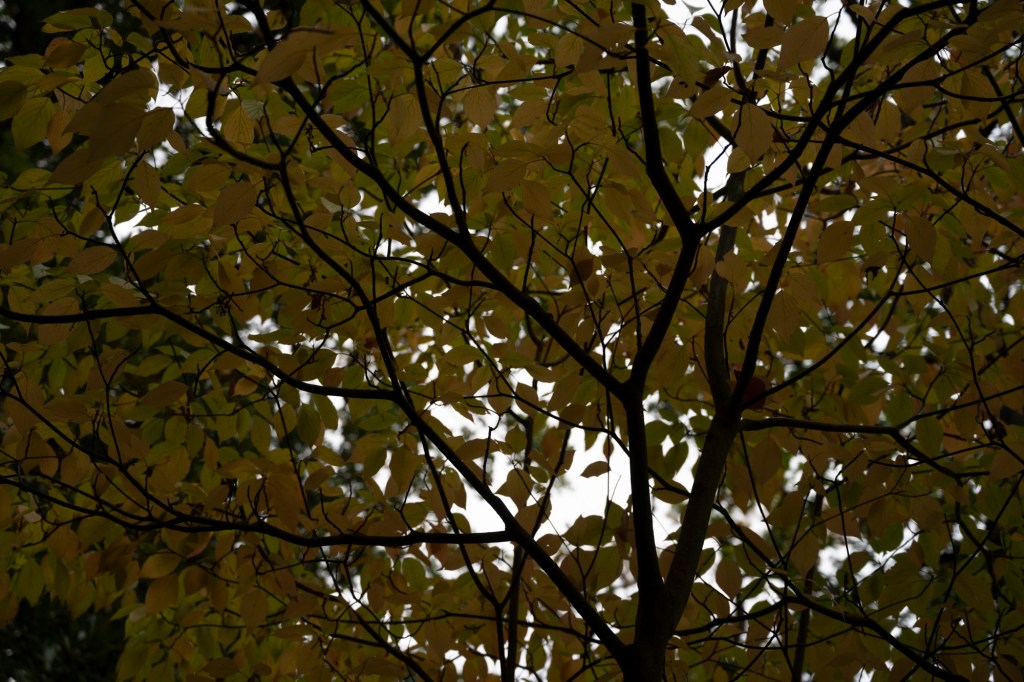
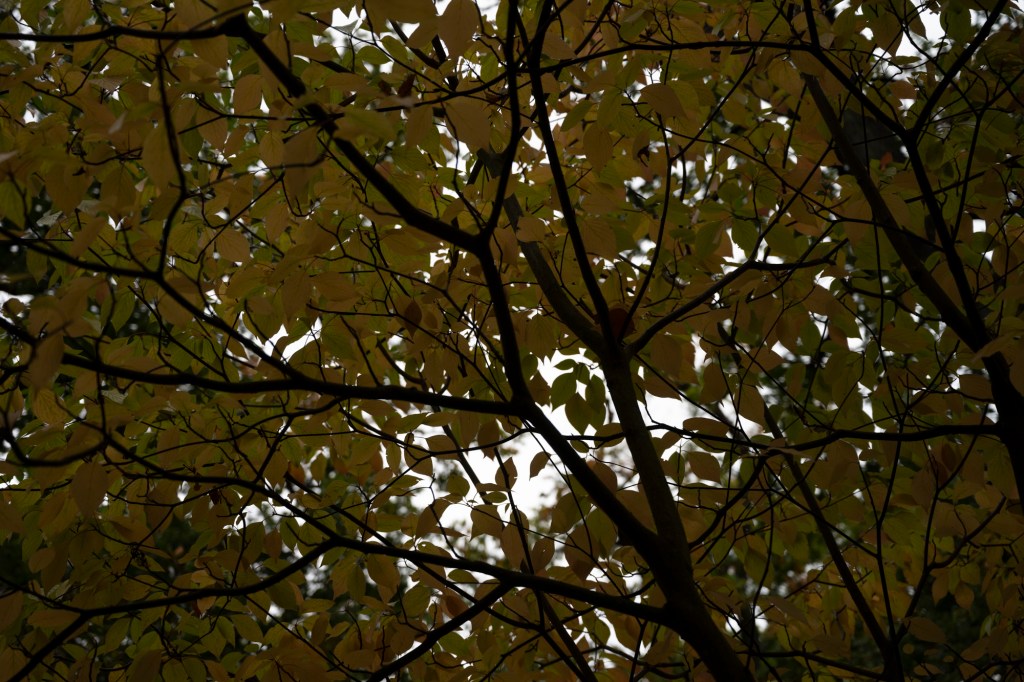
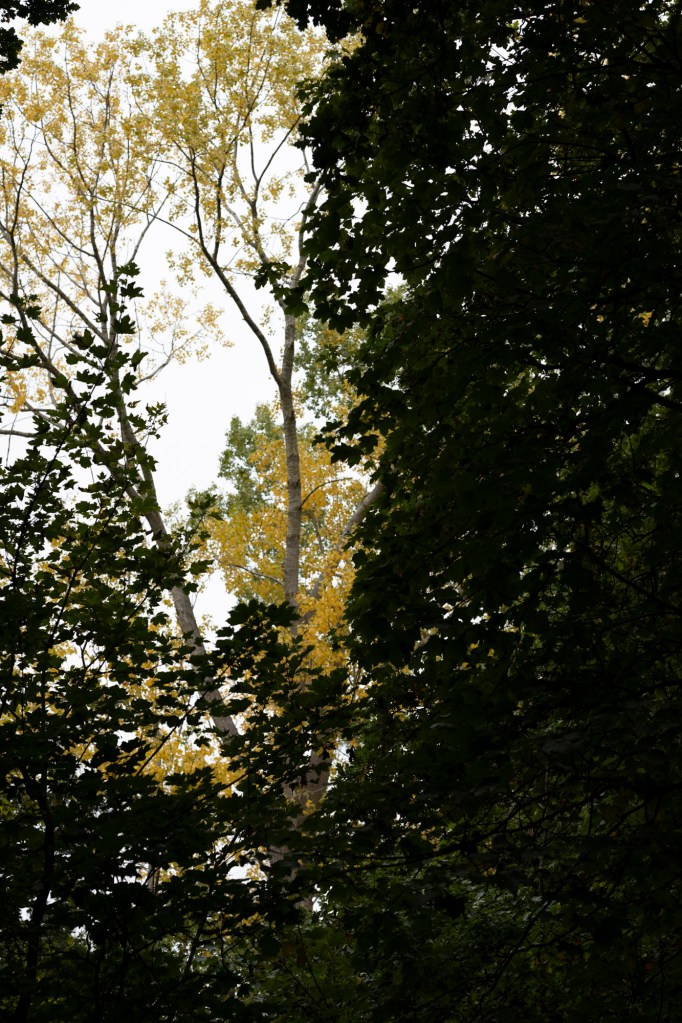
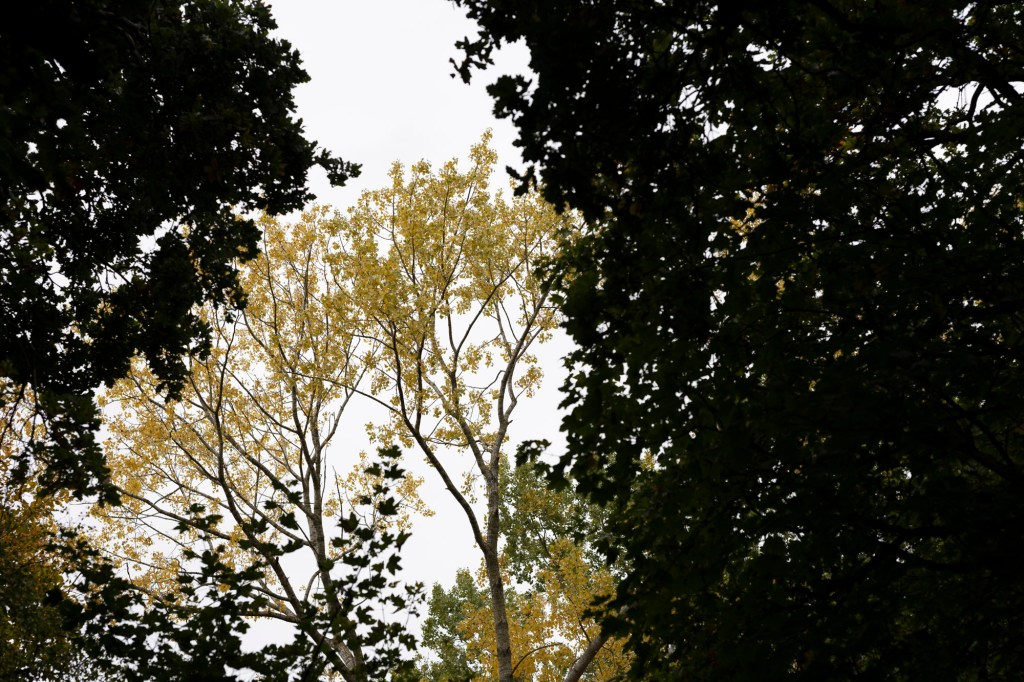
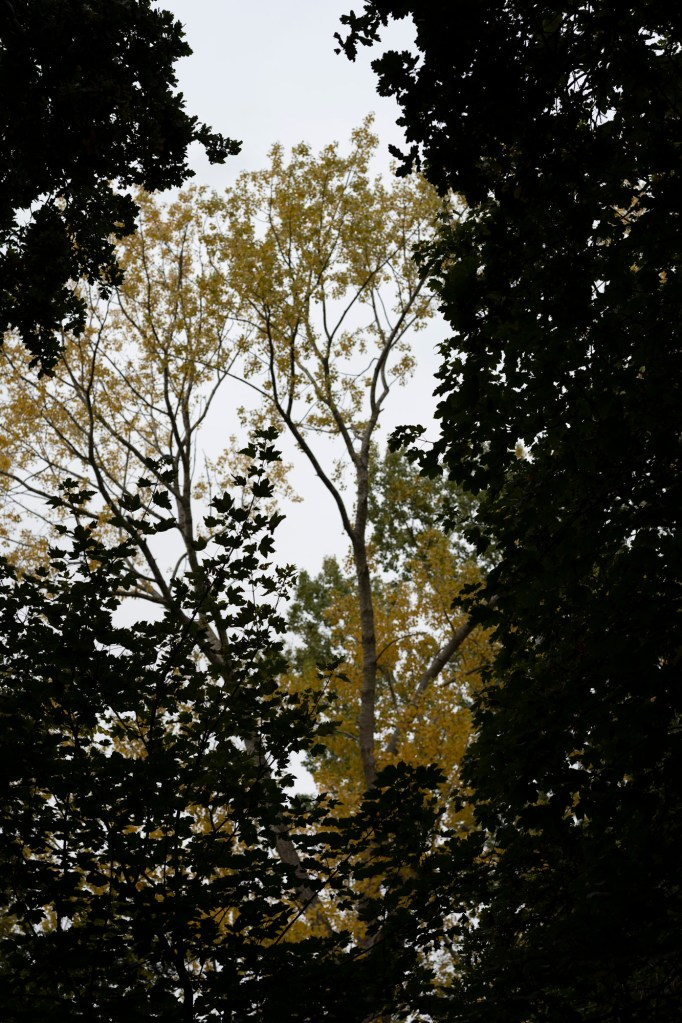
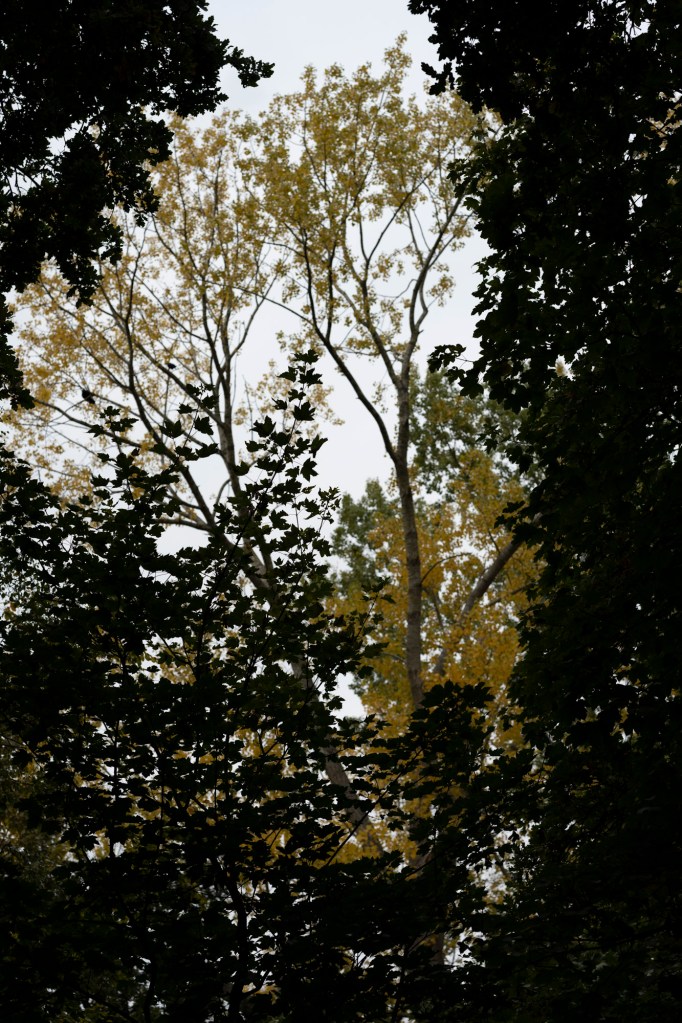
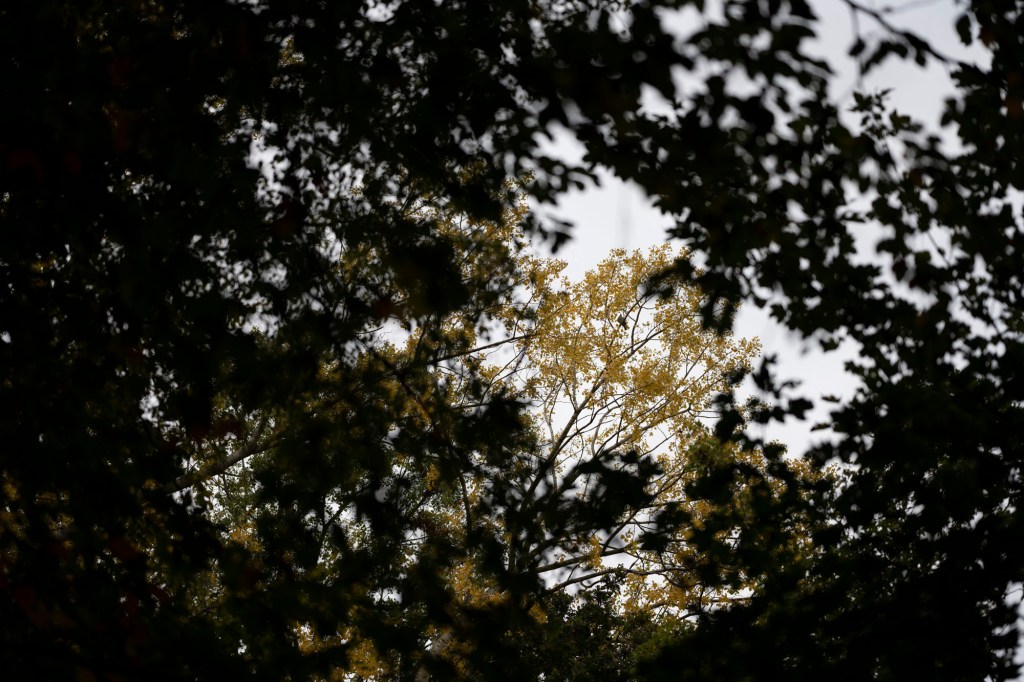
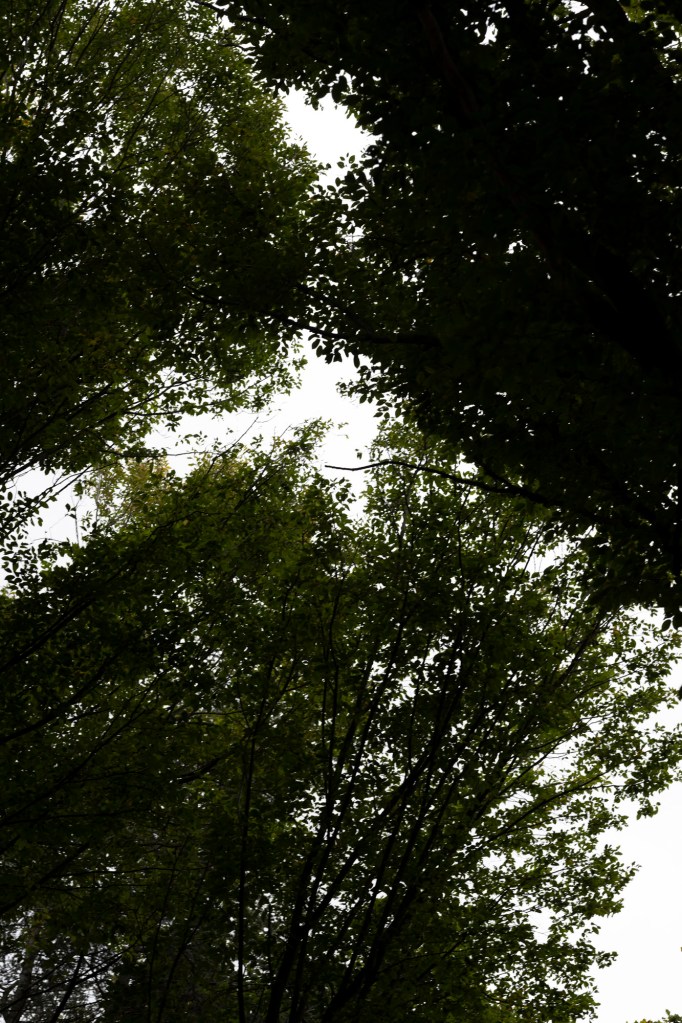
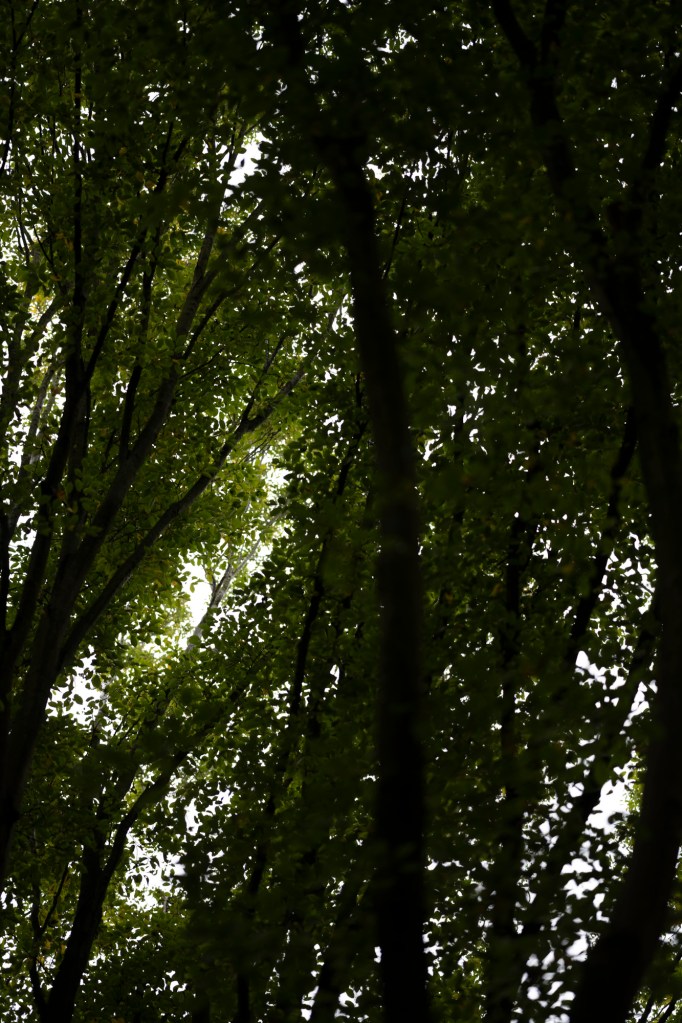
While looking up, I noticed one tree that stood out from the surrounding ones.
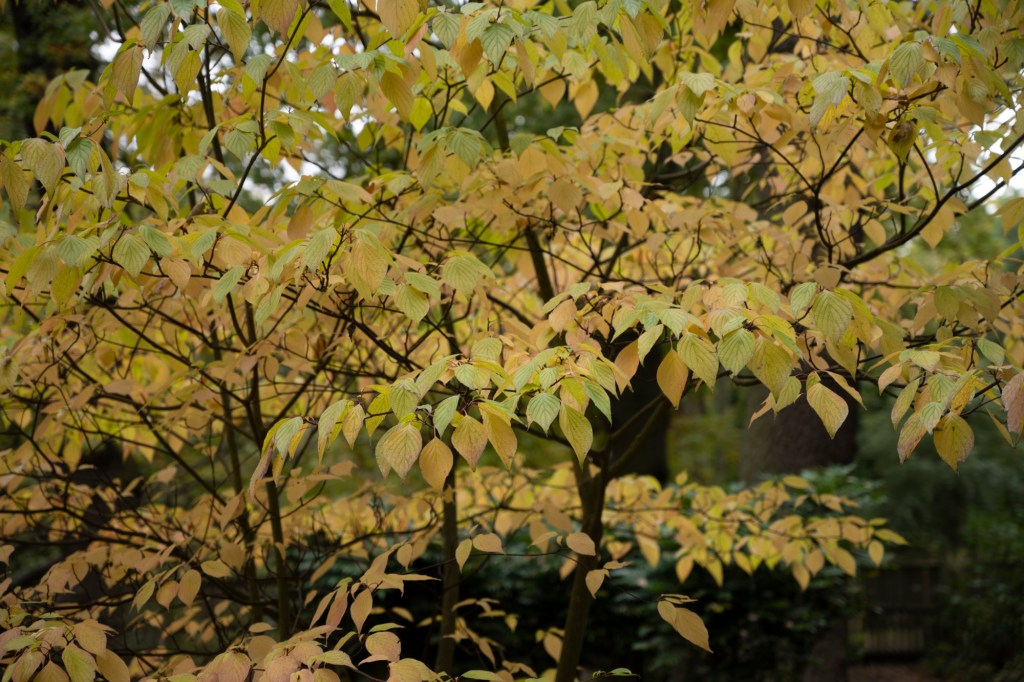
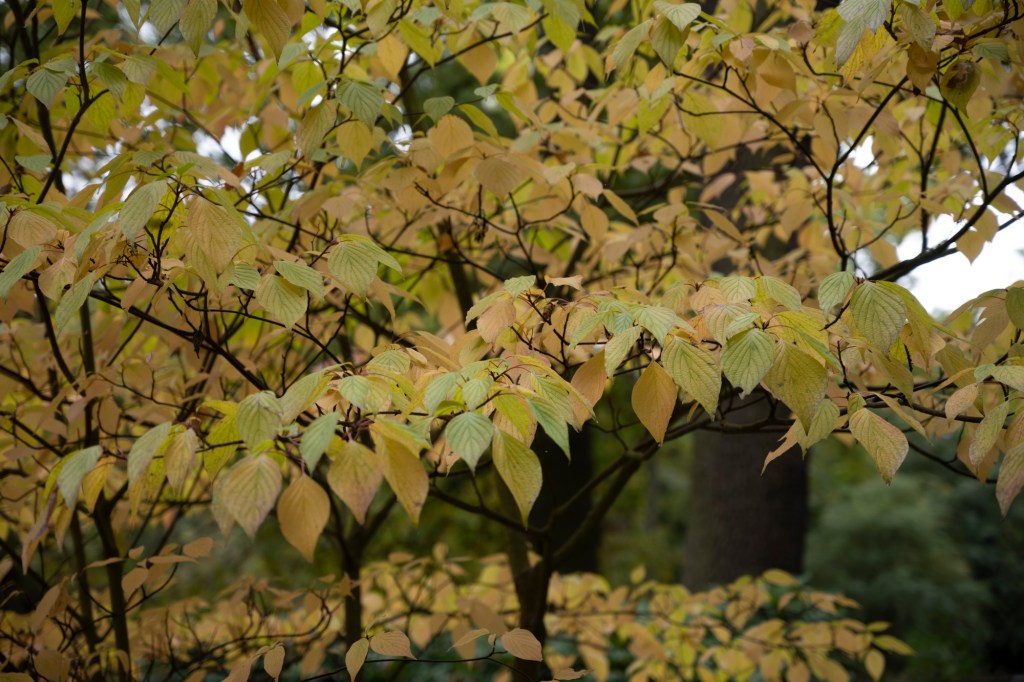
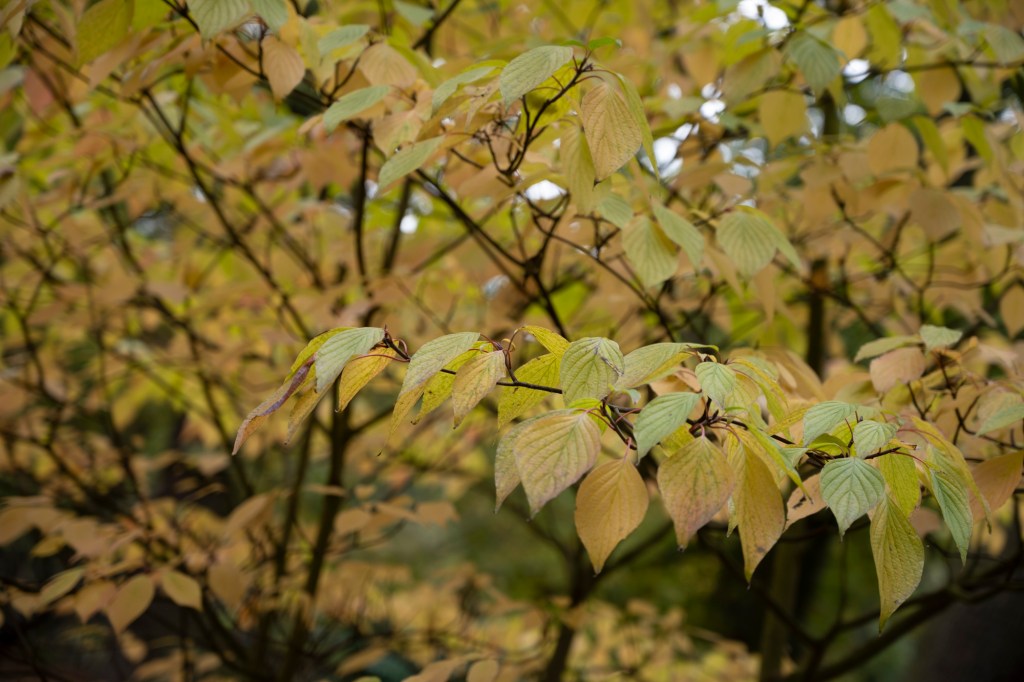
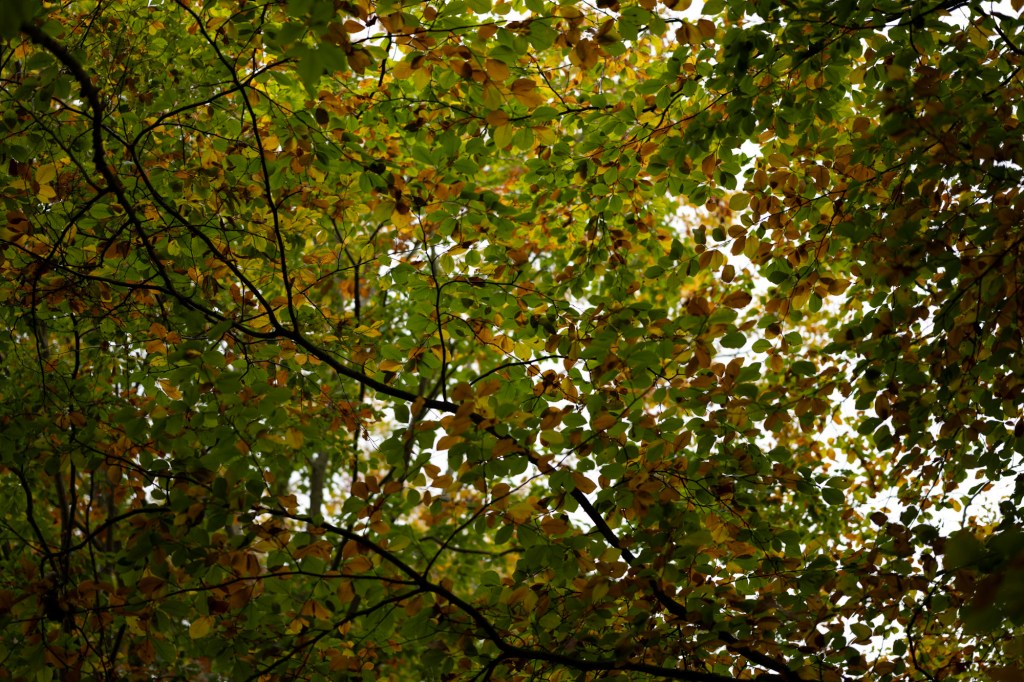
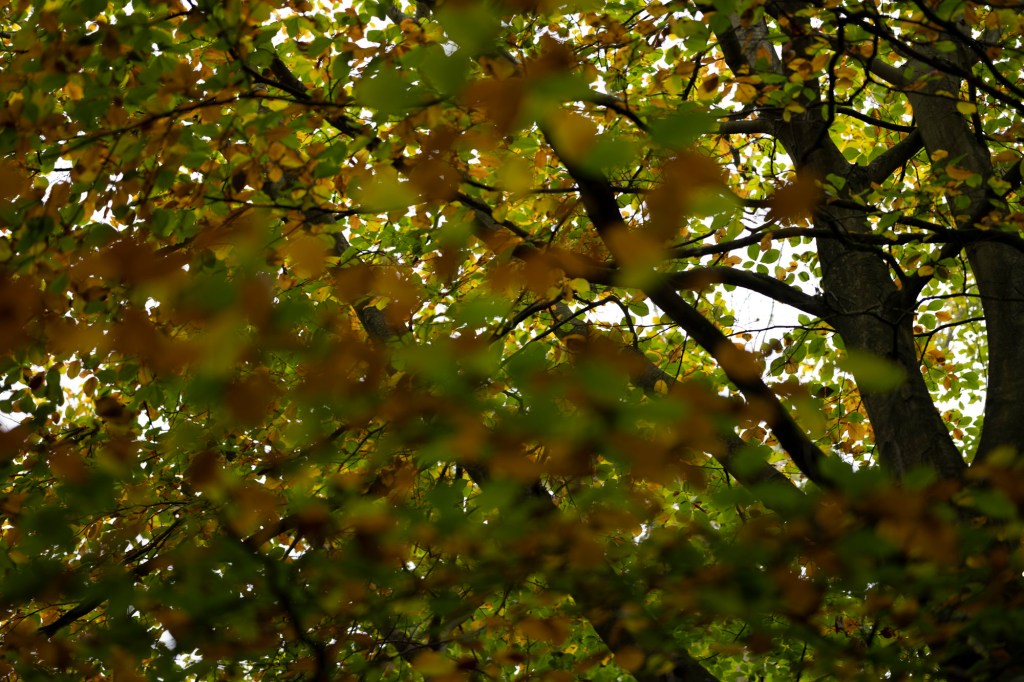
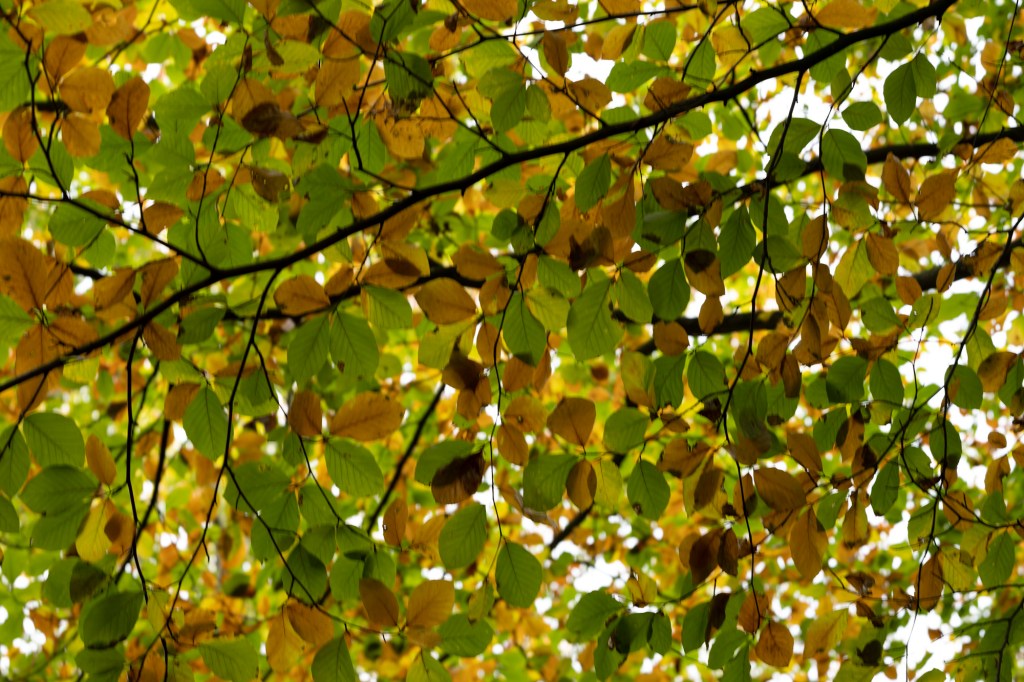
I then captured some of the Autumn leaves close up on a lower tree.
The next two captures that caught my eye.
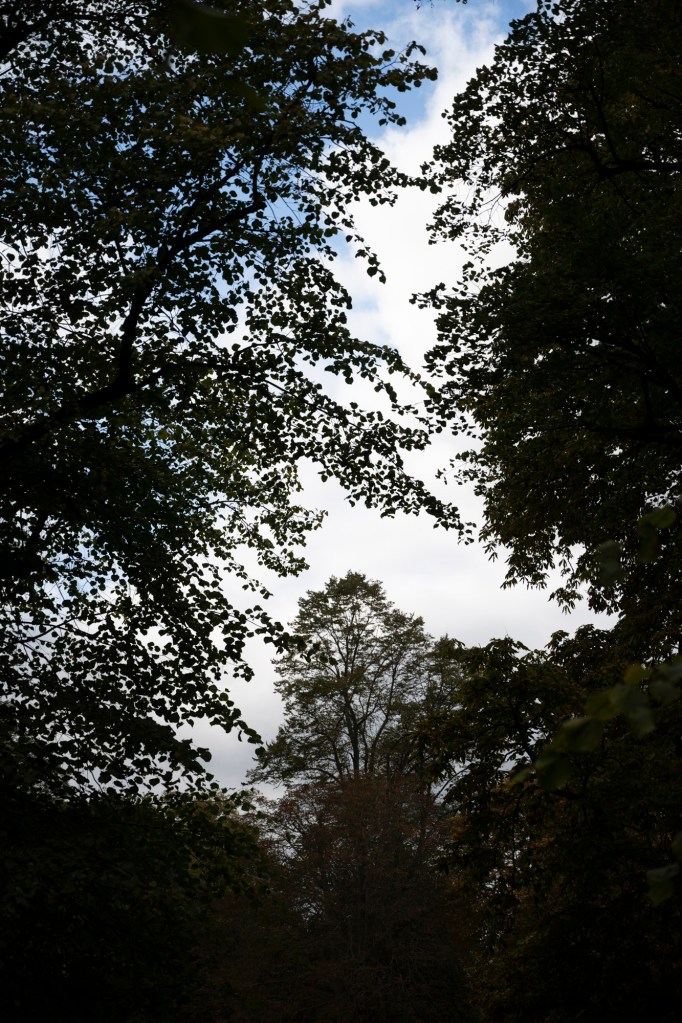
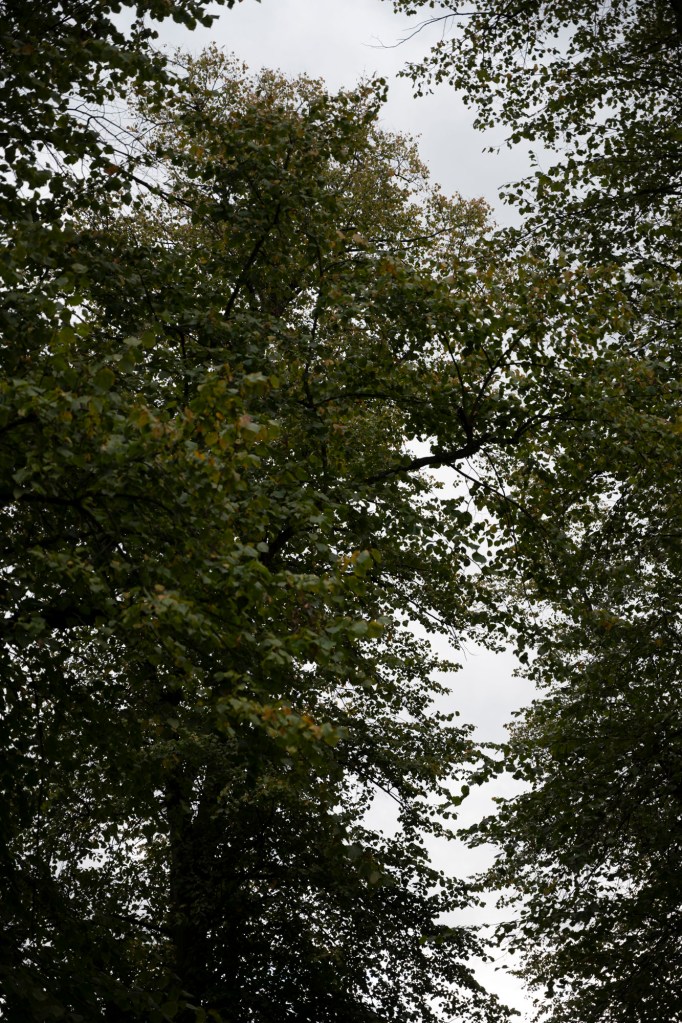
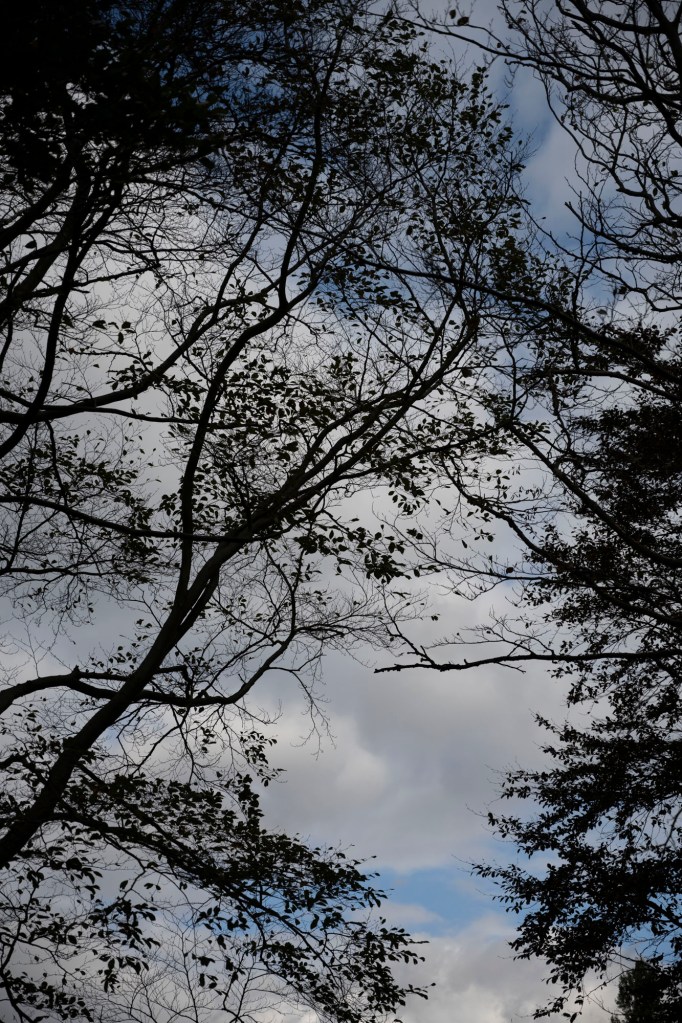
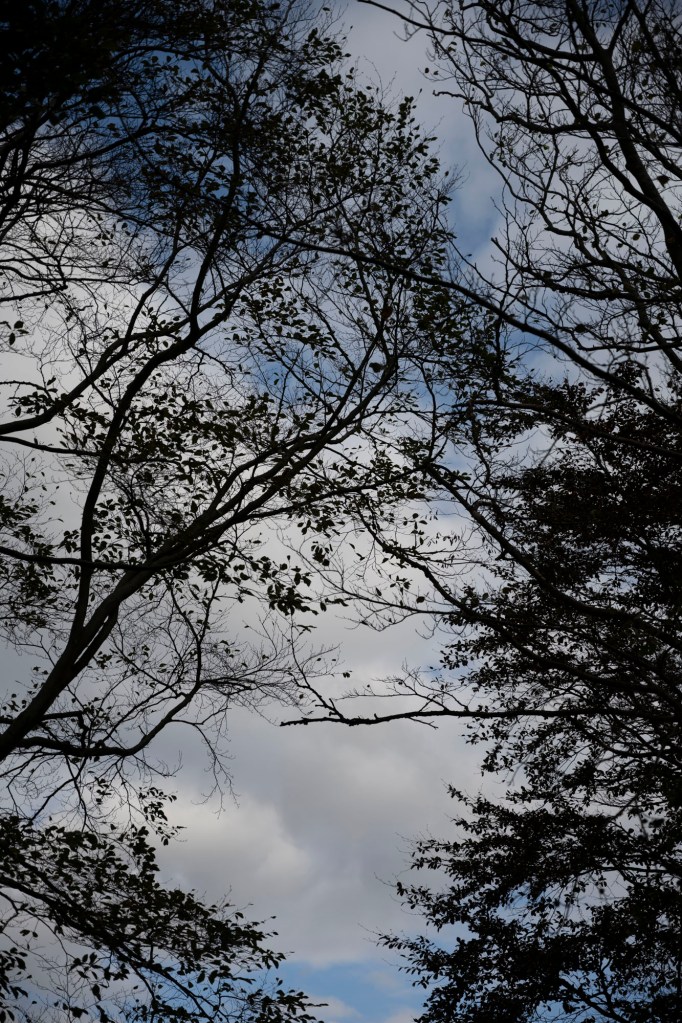
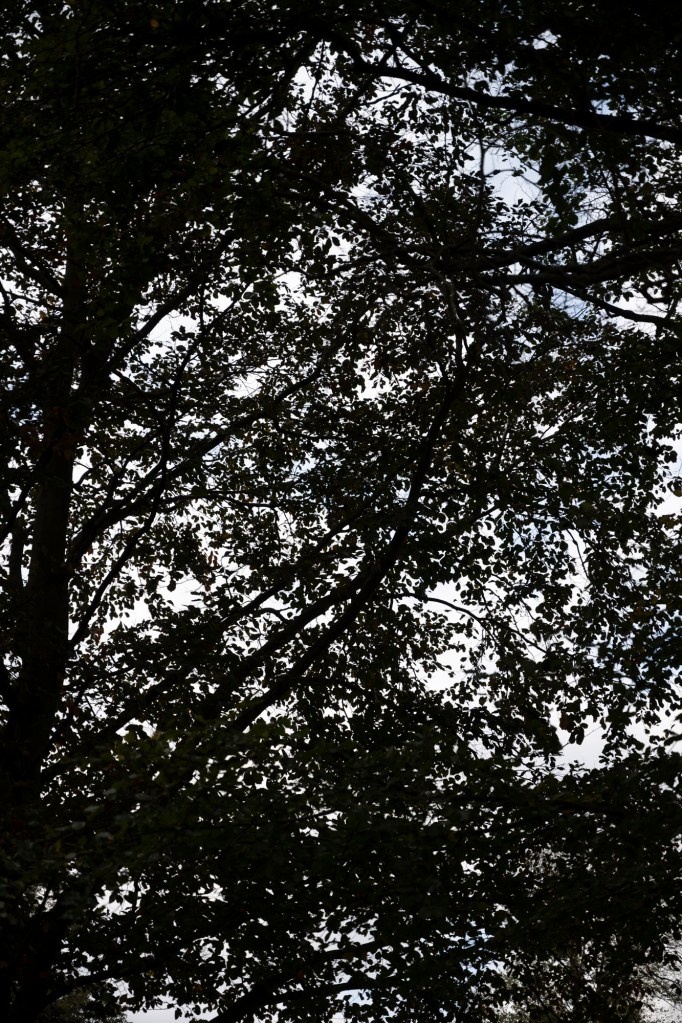
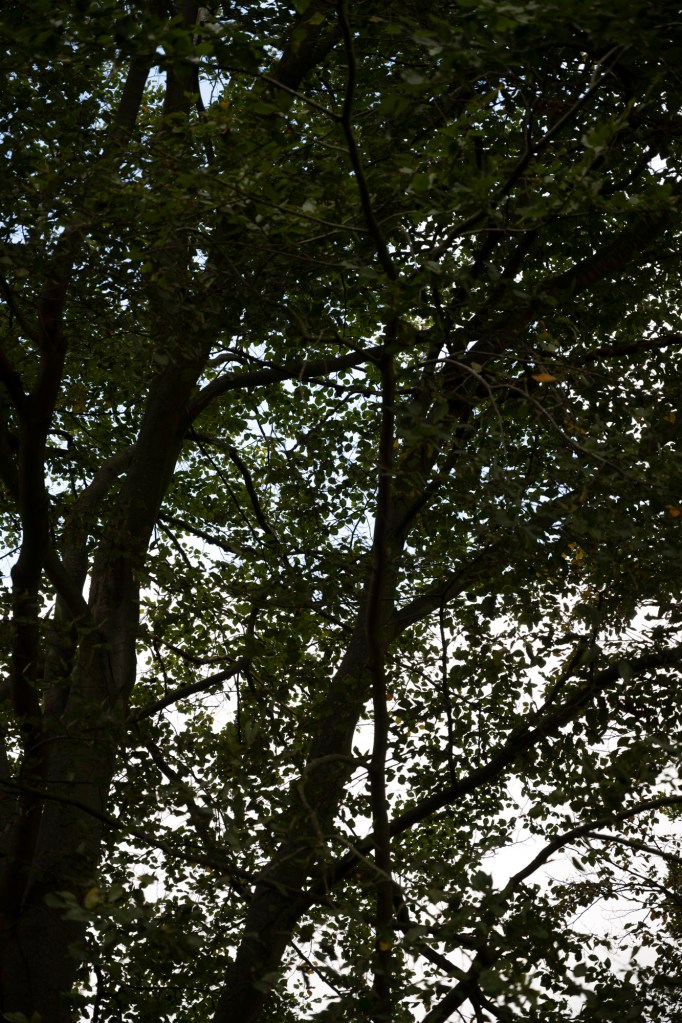
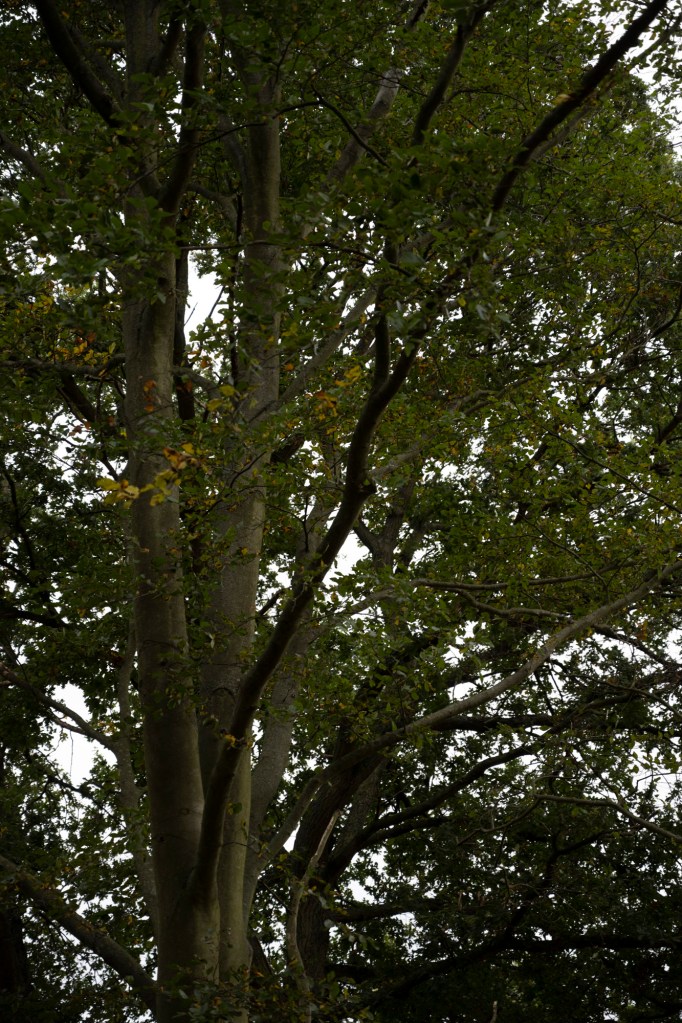
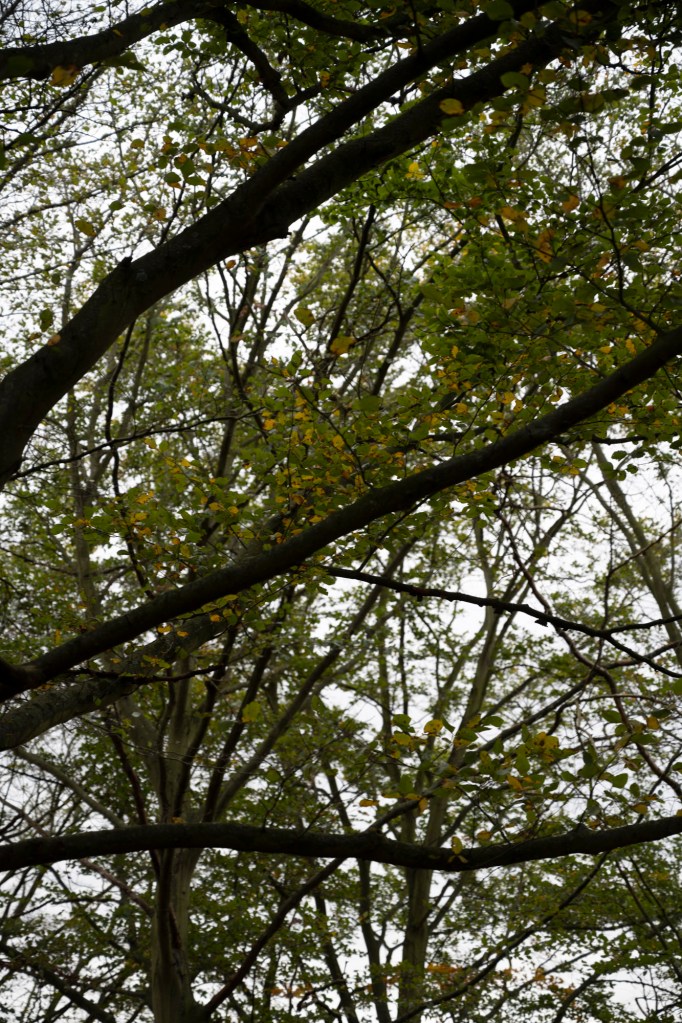
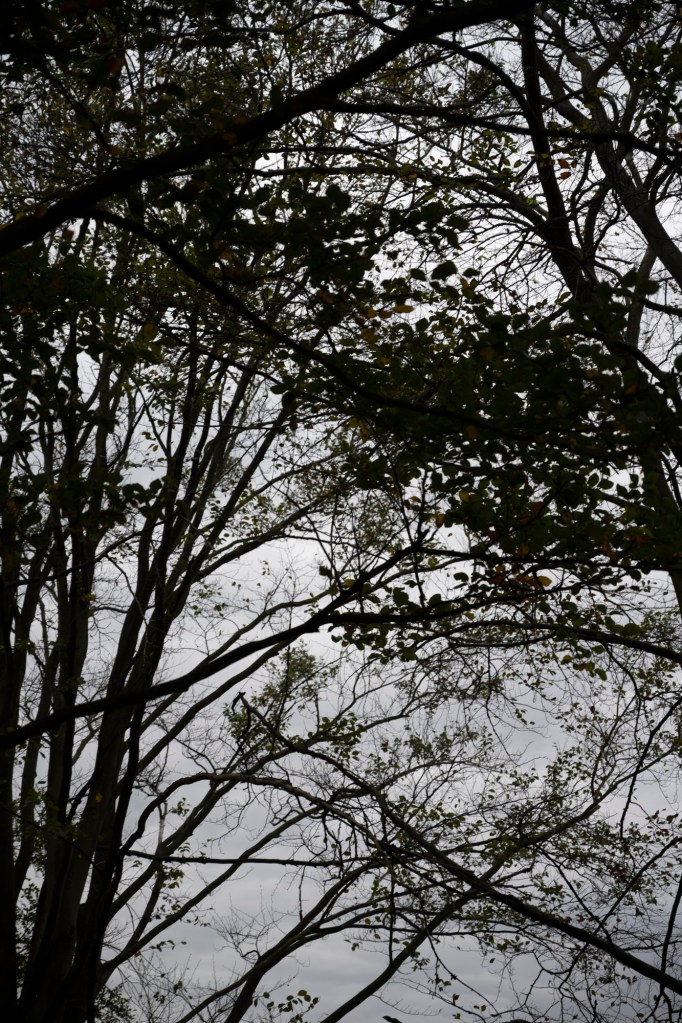
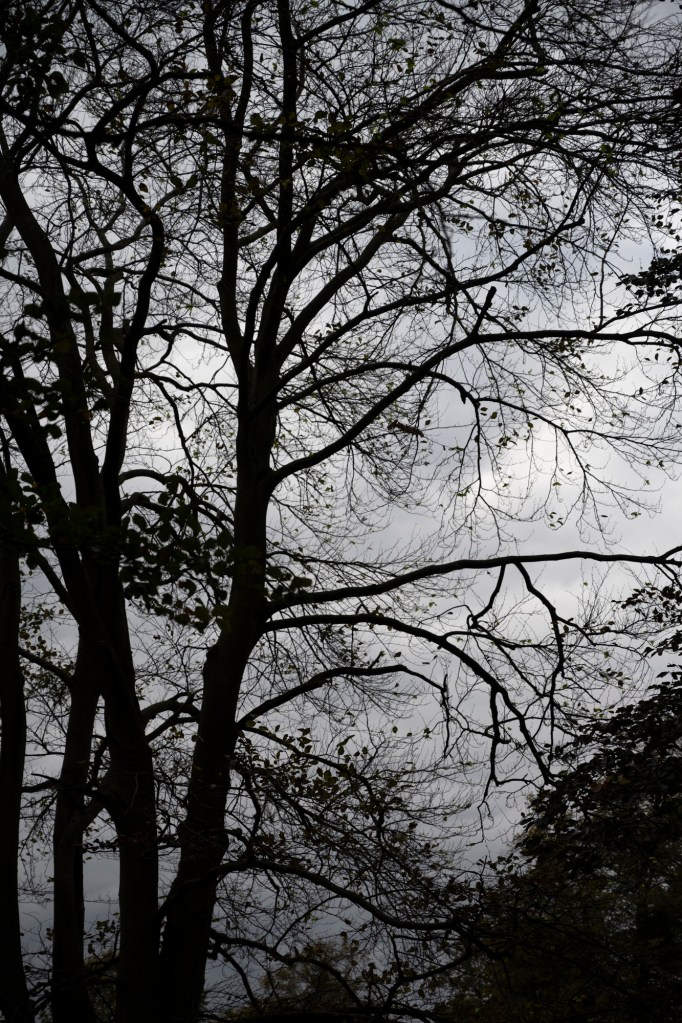
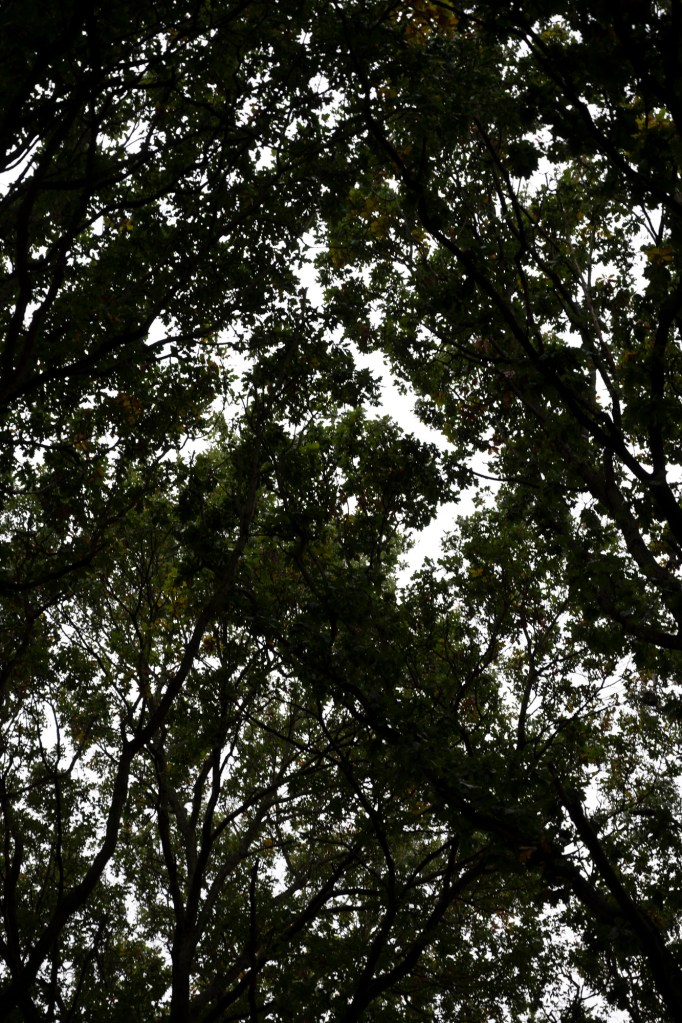
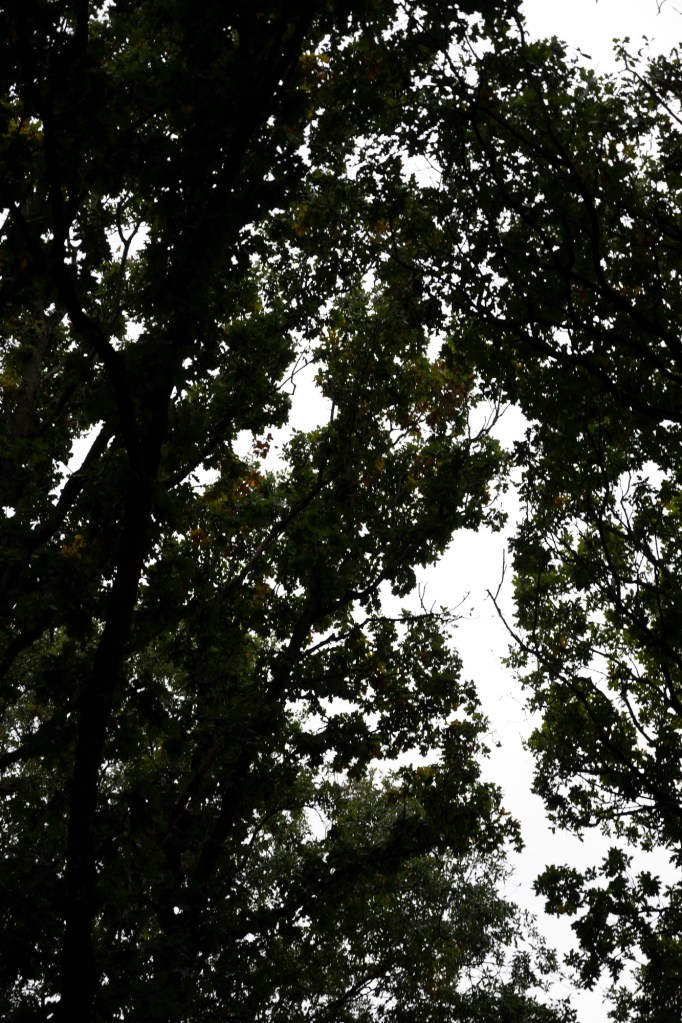
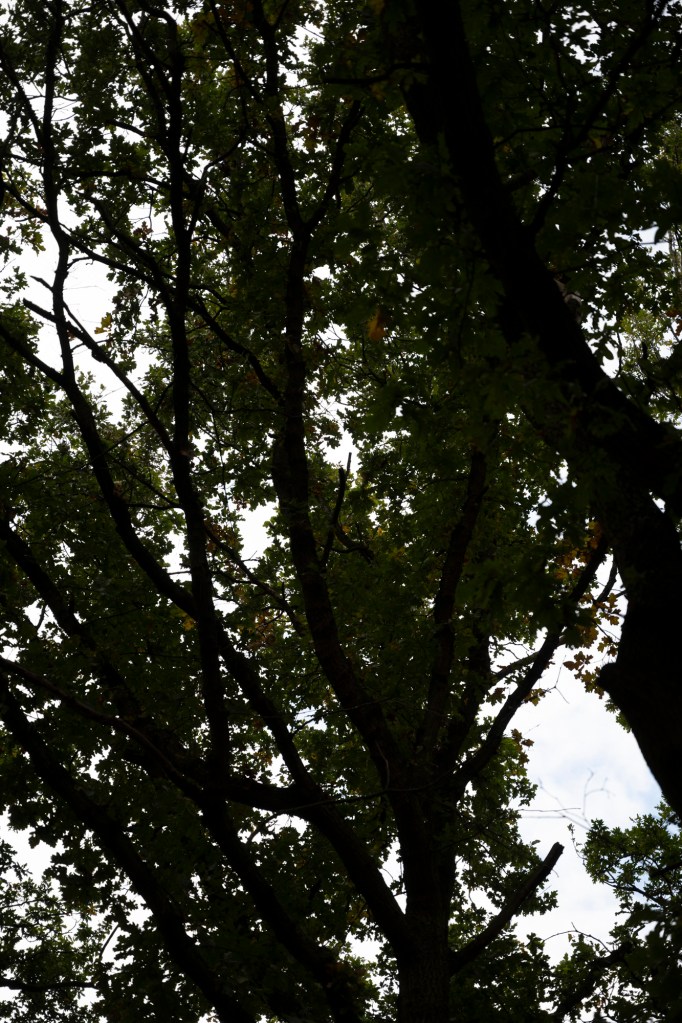
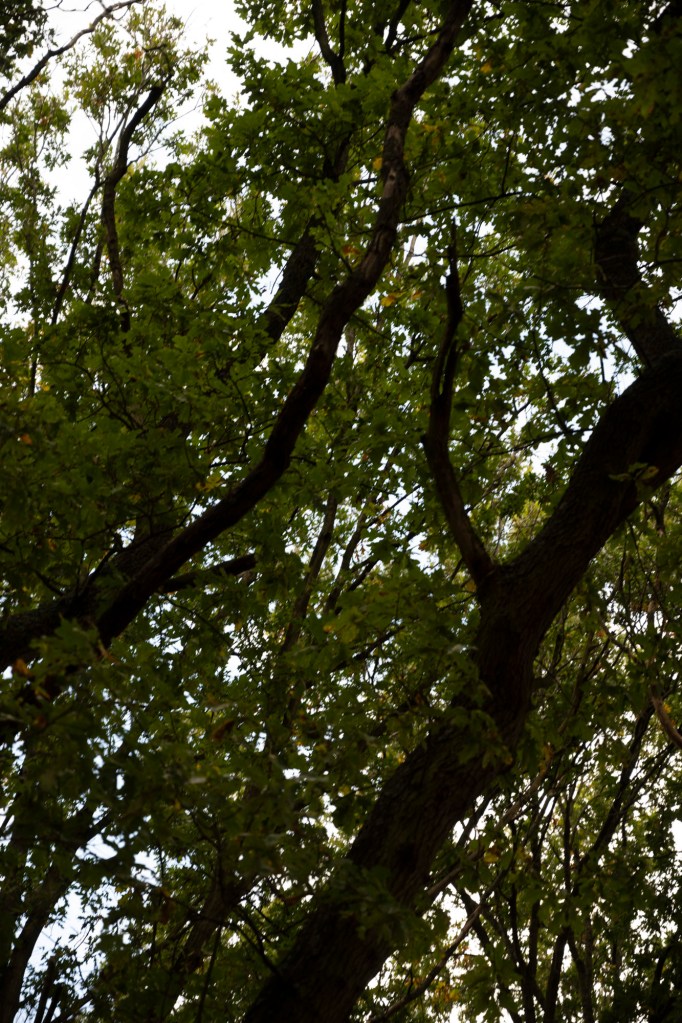
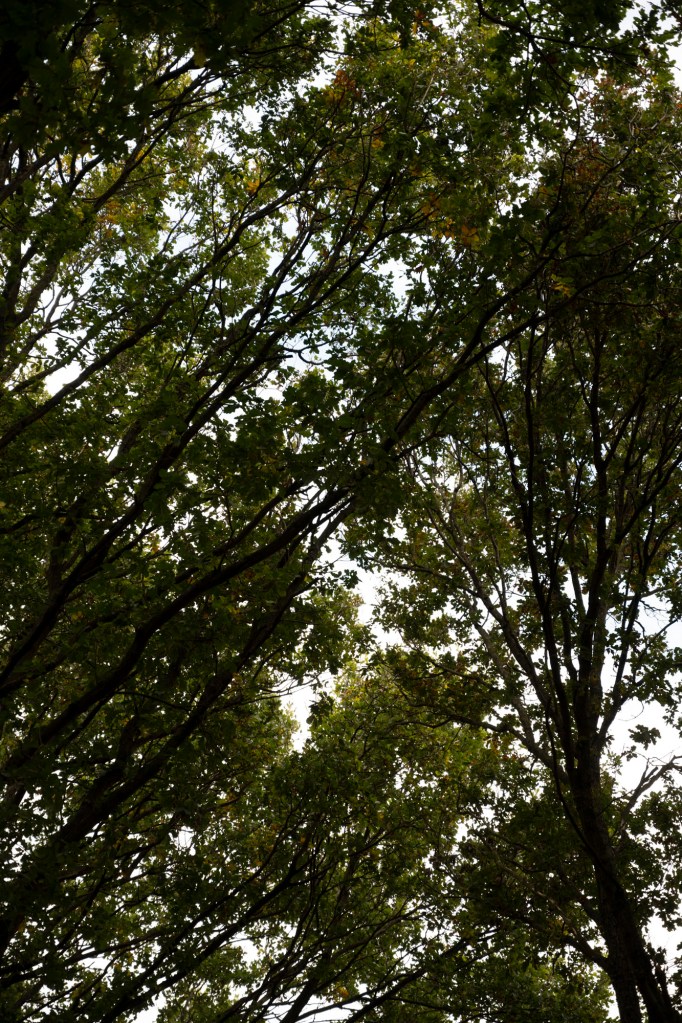
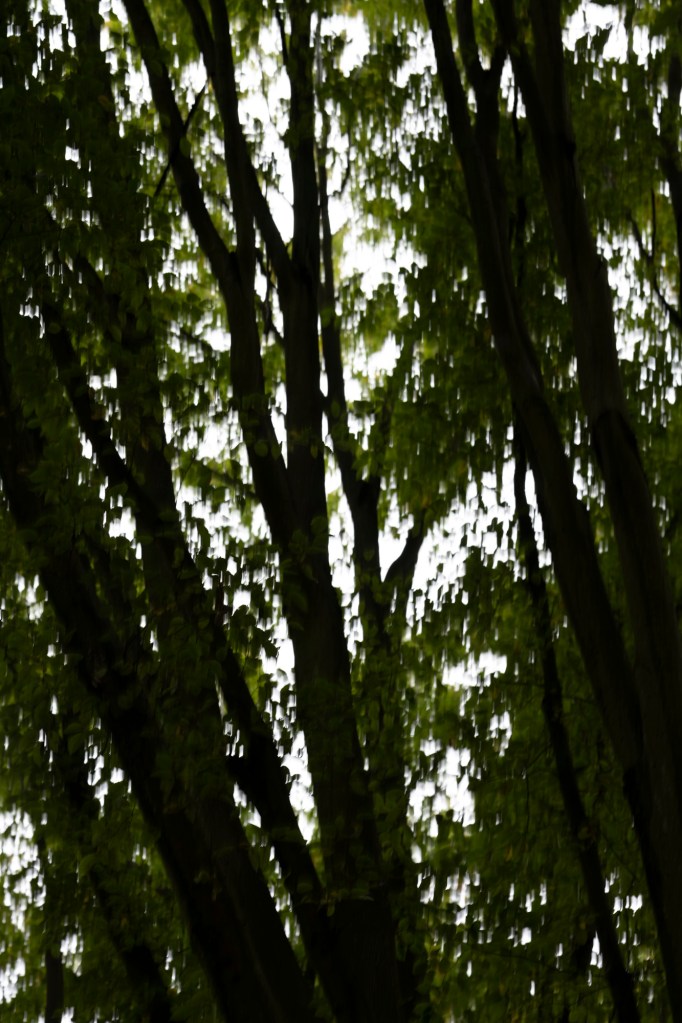
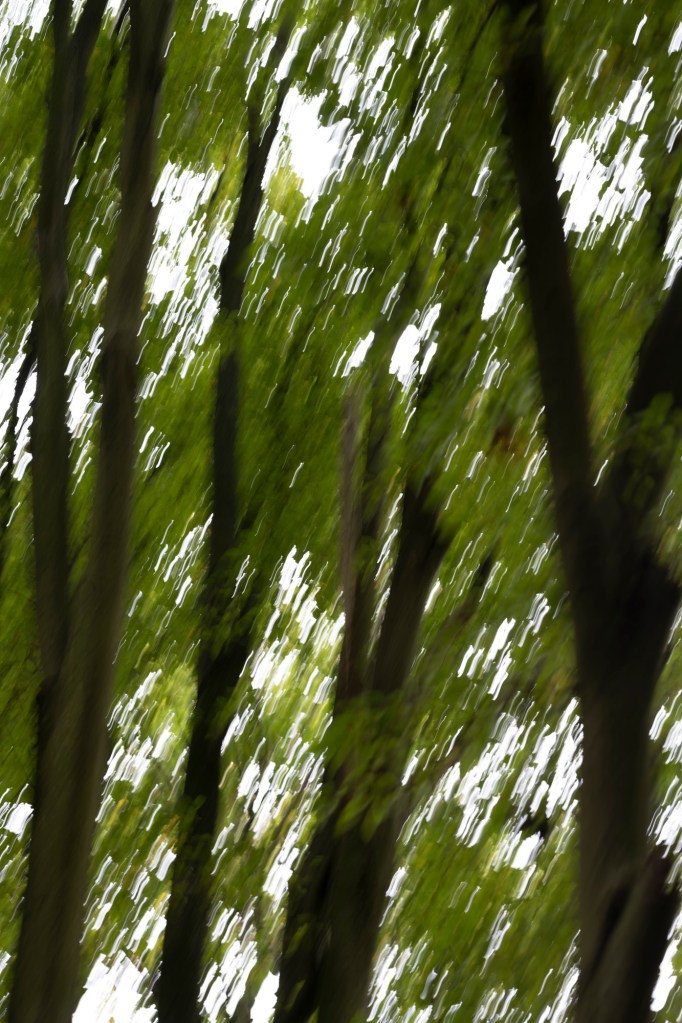
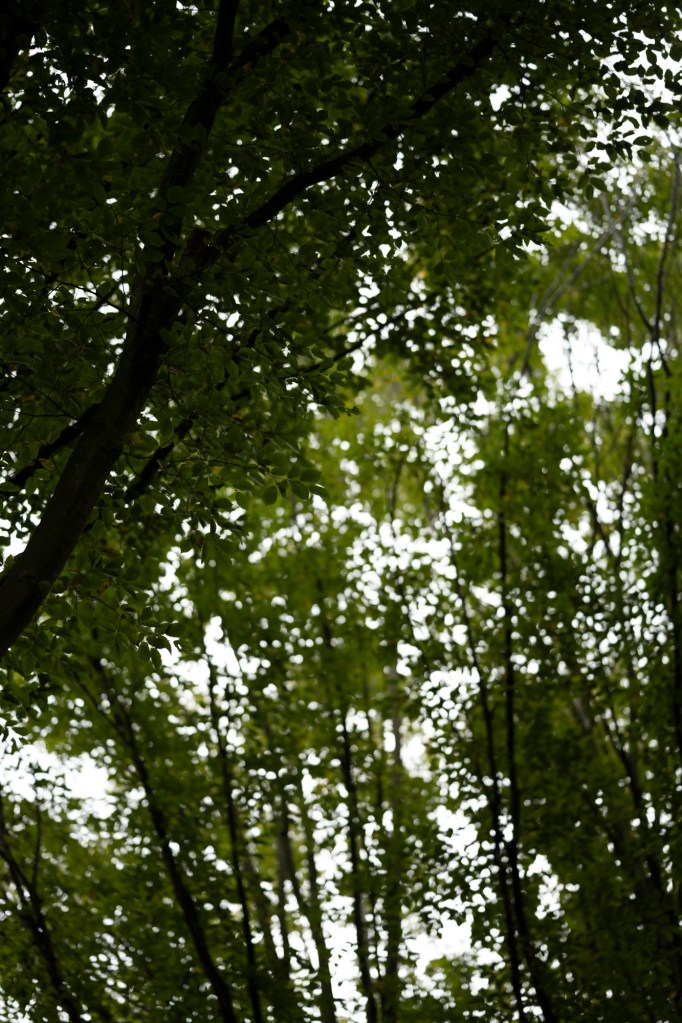
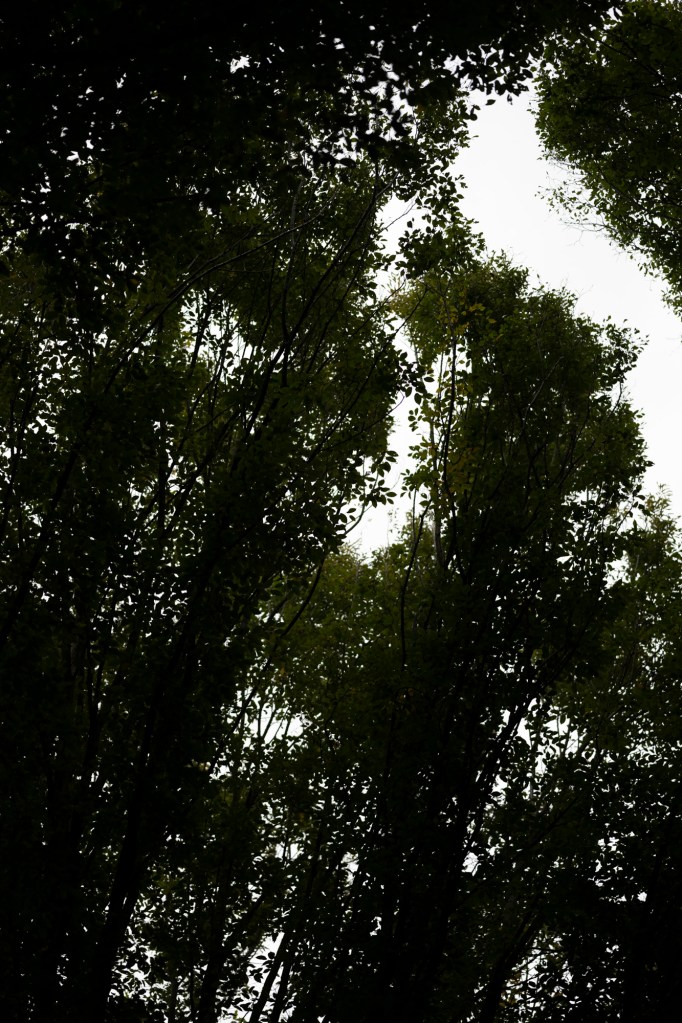
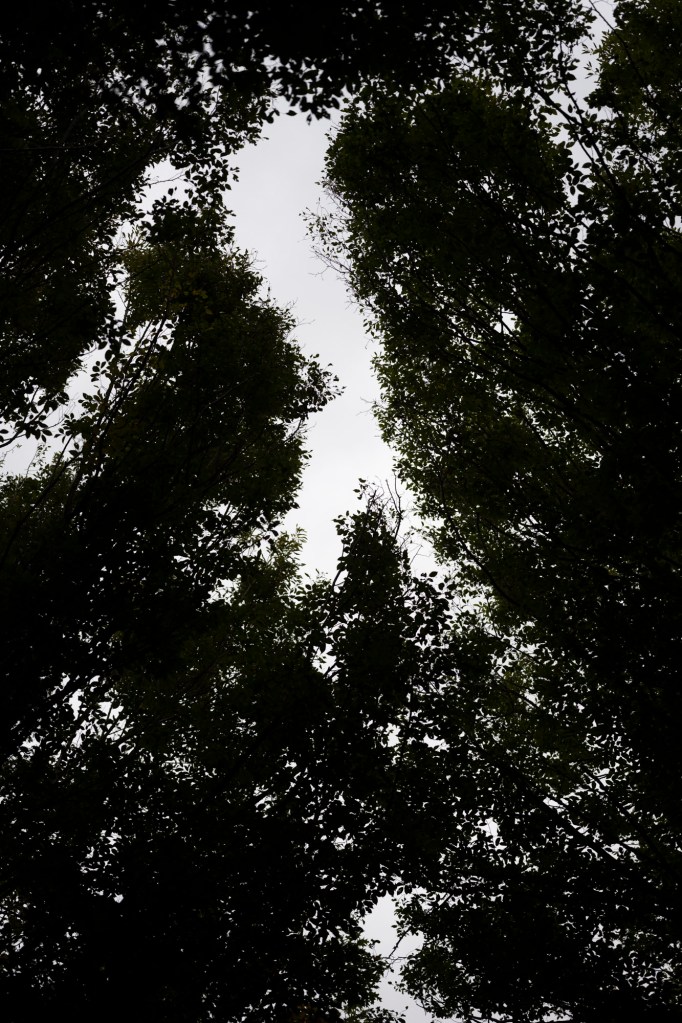
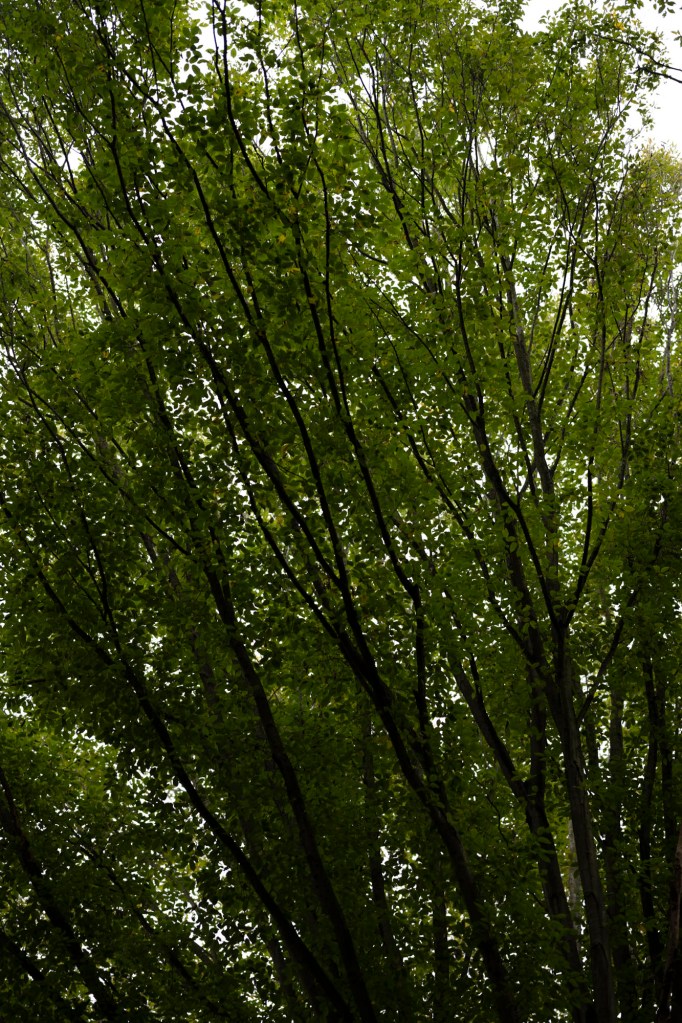
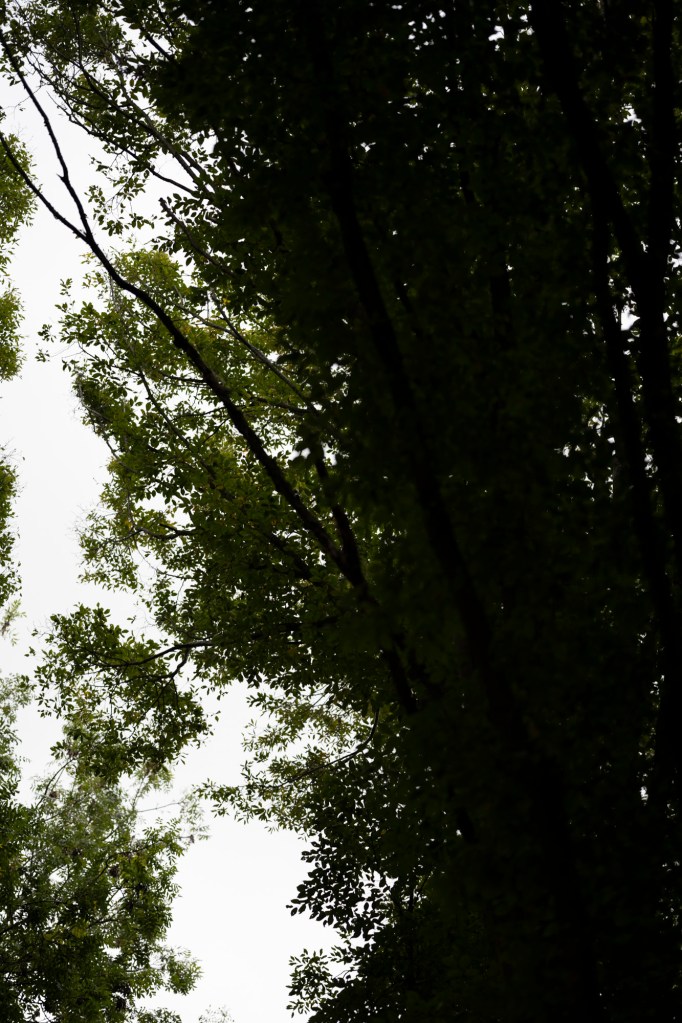
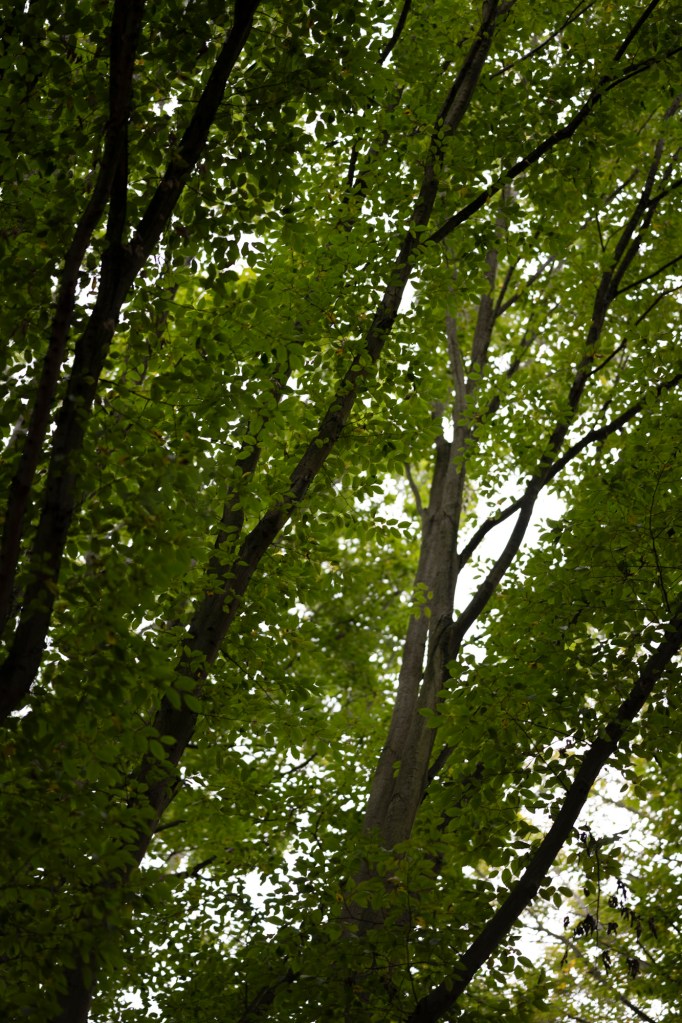
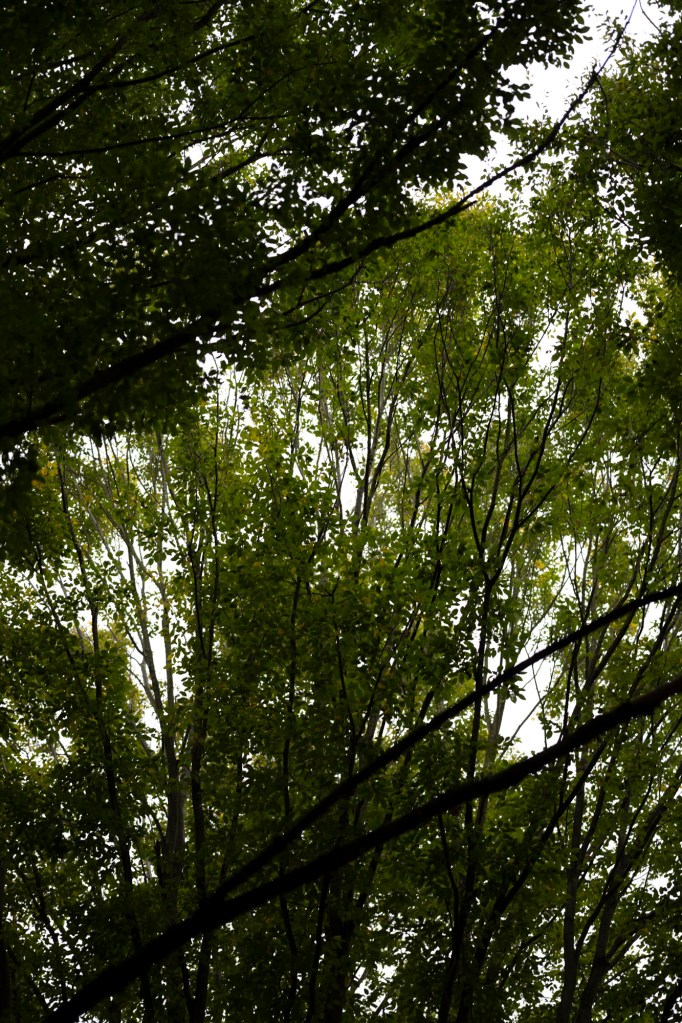
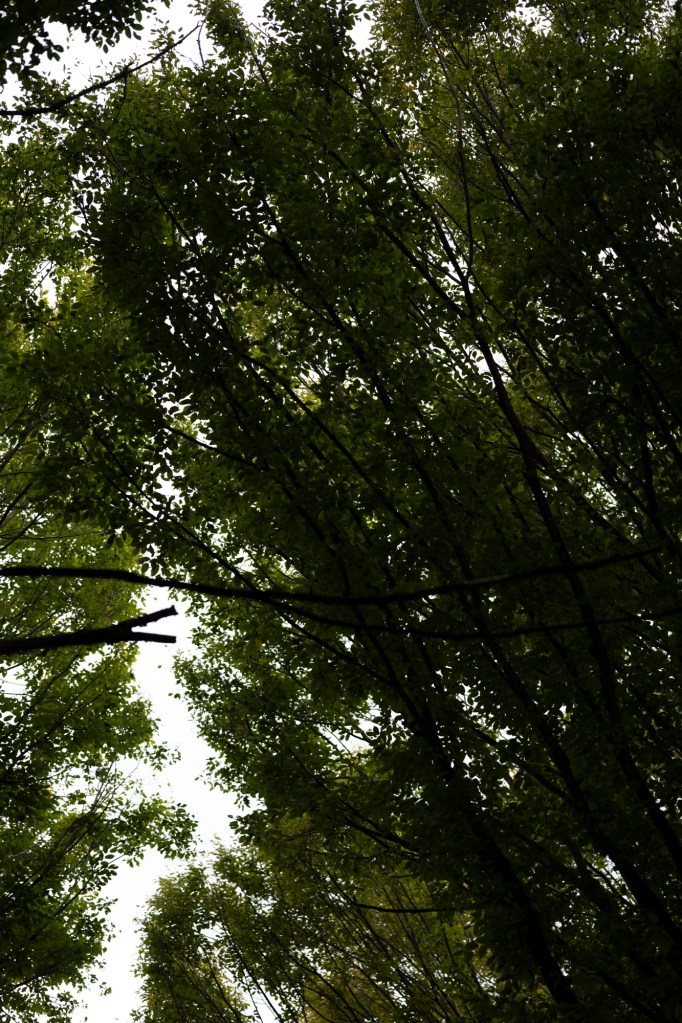
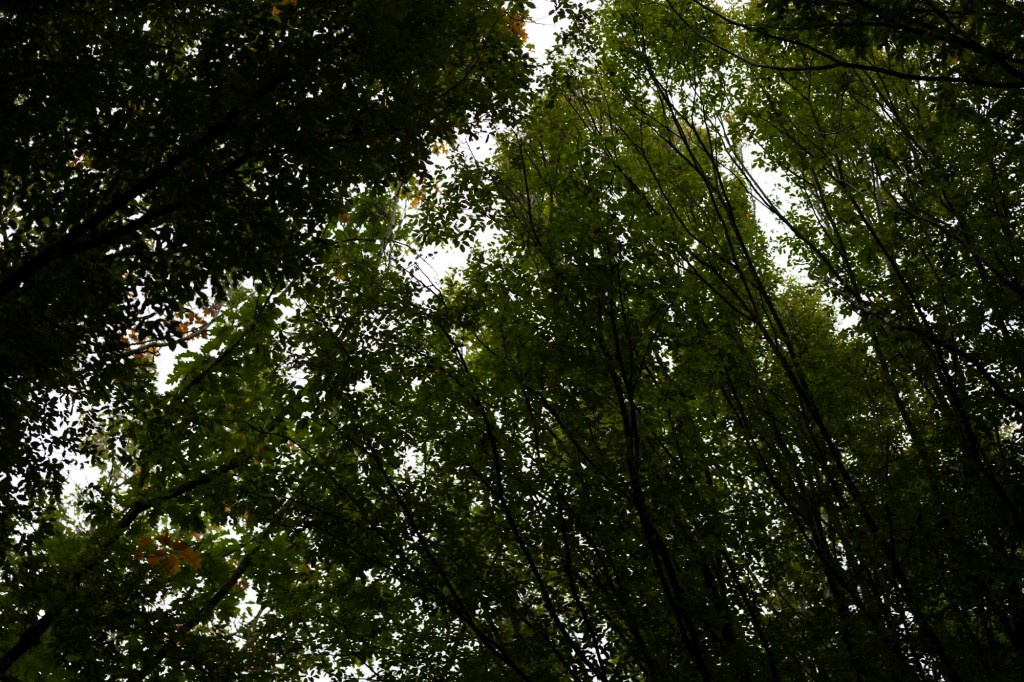
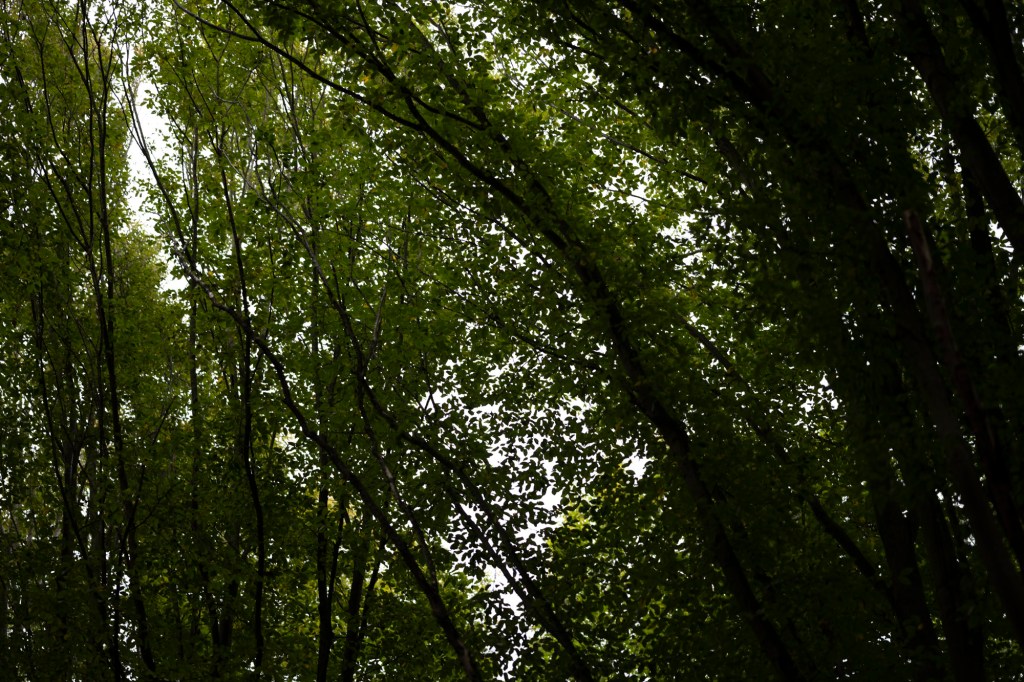
My next stop was the Hornbeam Avenue, another of my favourite spots. I then took three sequences ‘on the round’.
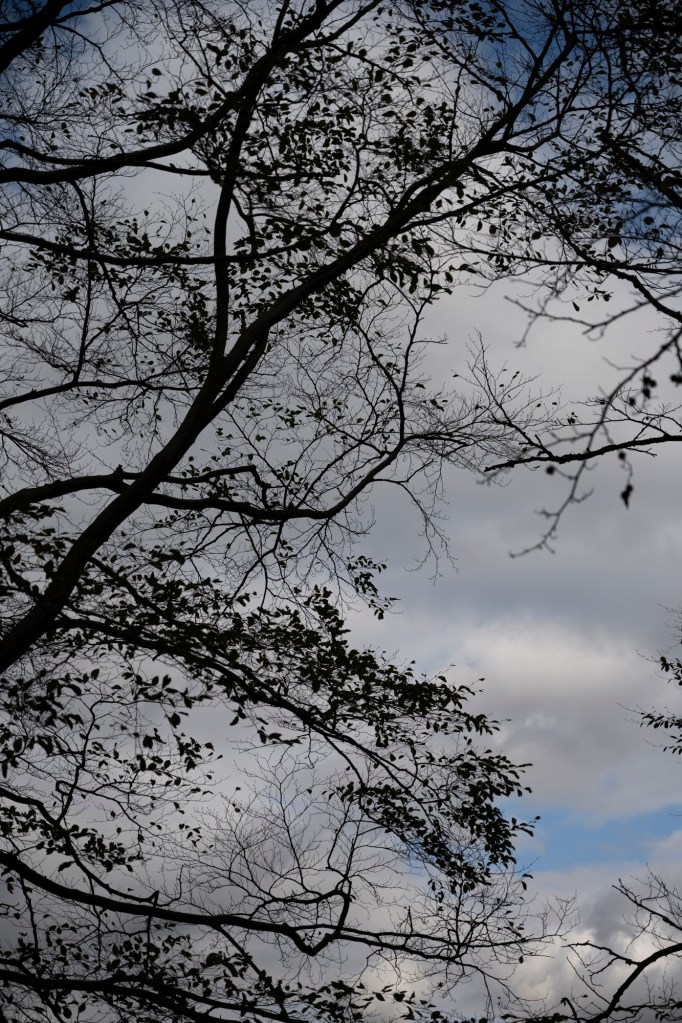
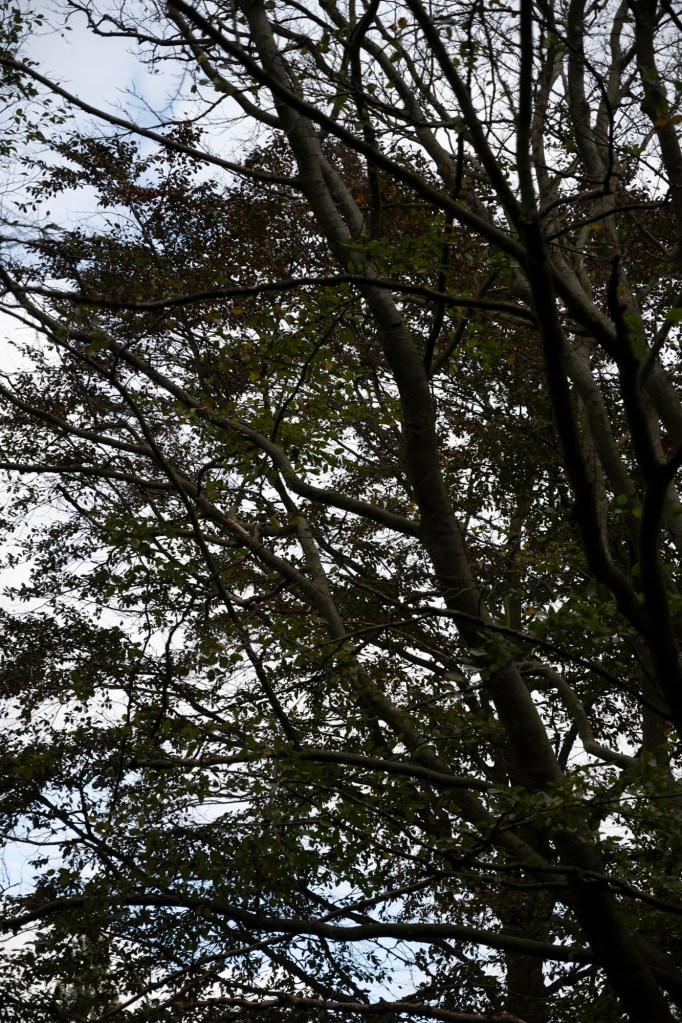
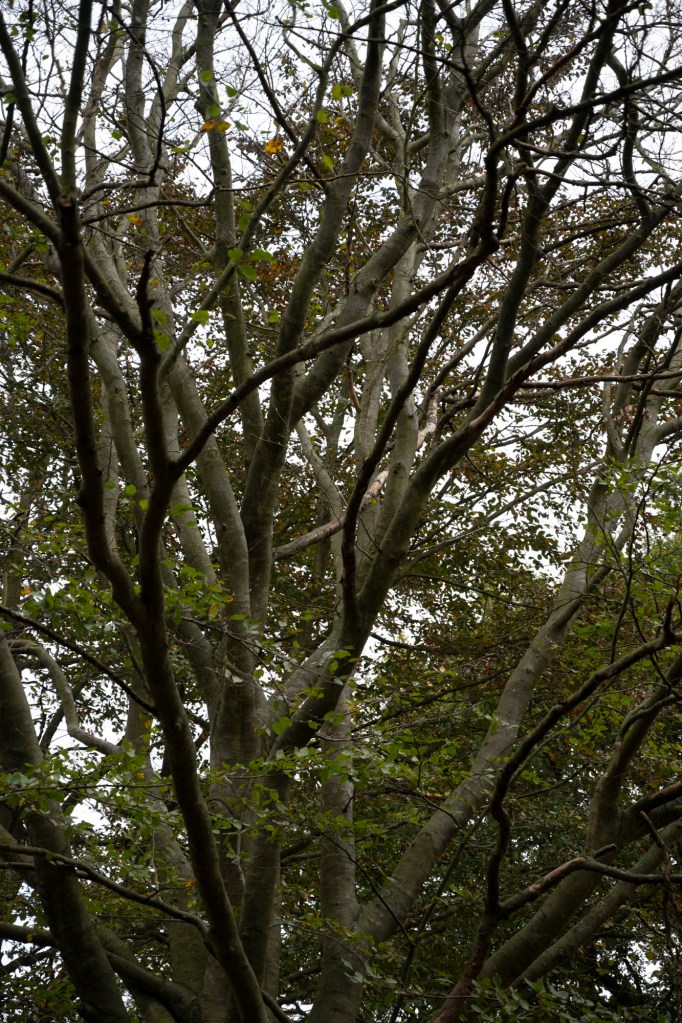
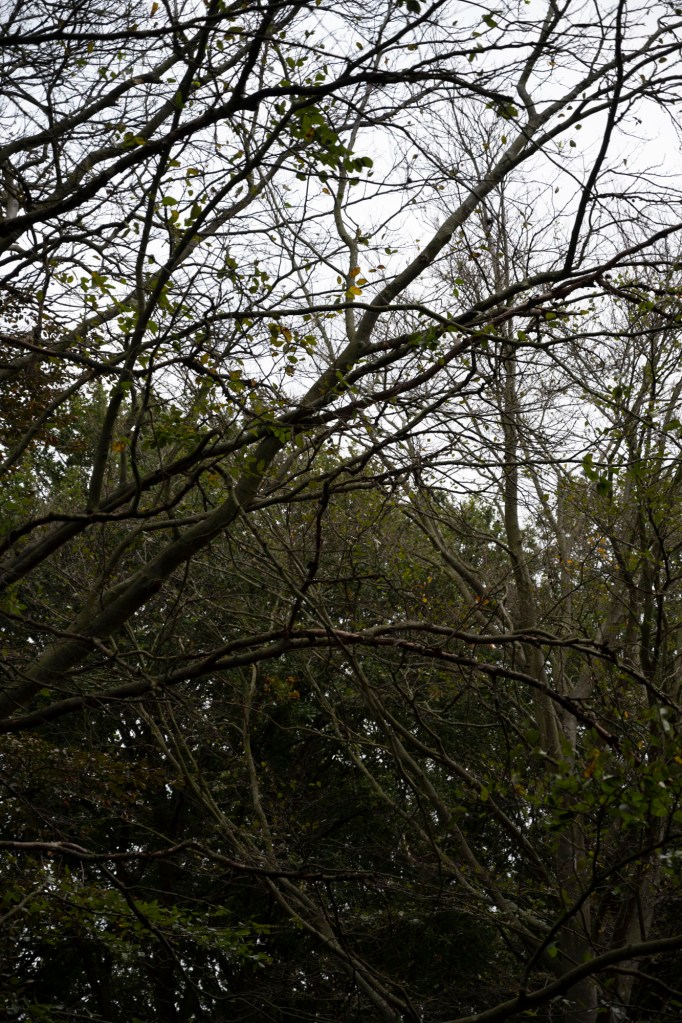
Hornbeam ‘On The Round’ Set 1
Hornbeam ‘On The Round’ Set 2
Hornbeam ‘On The Round’ Set 3
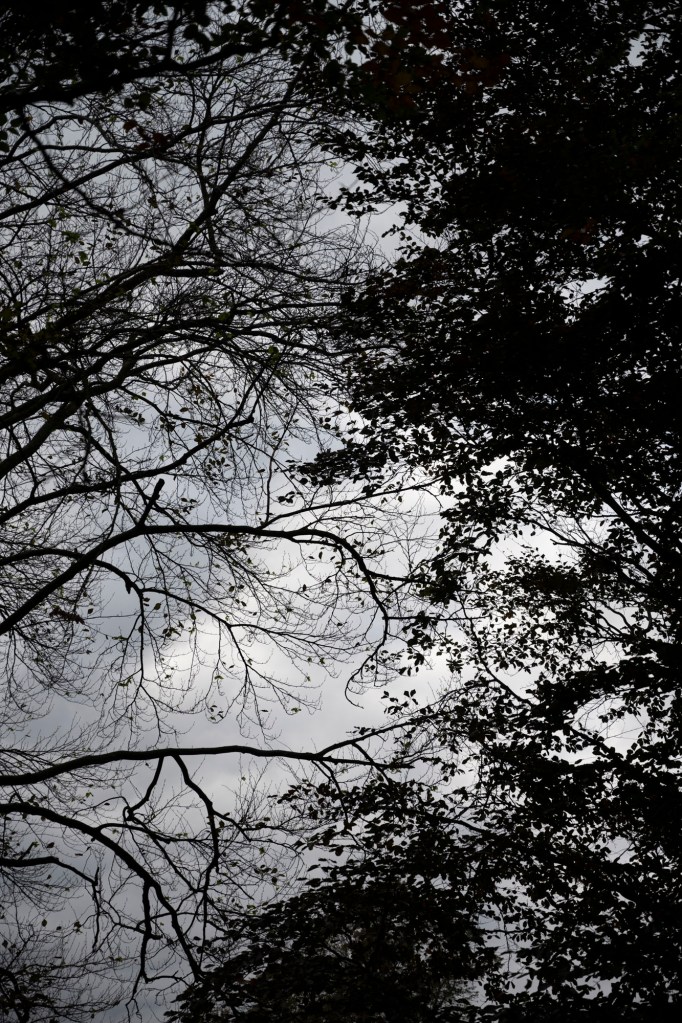
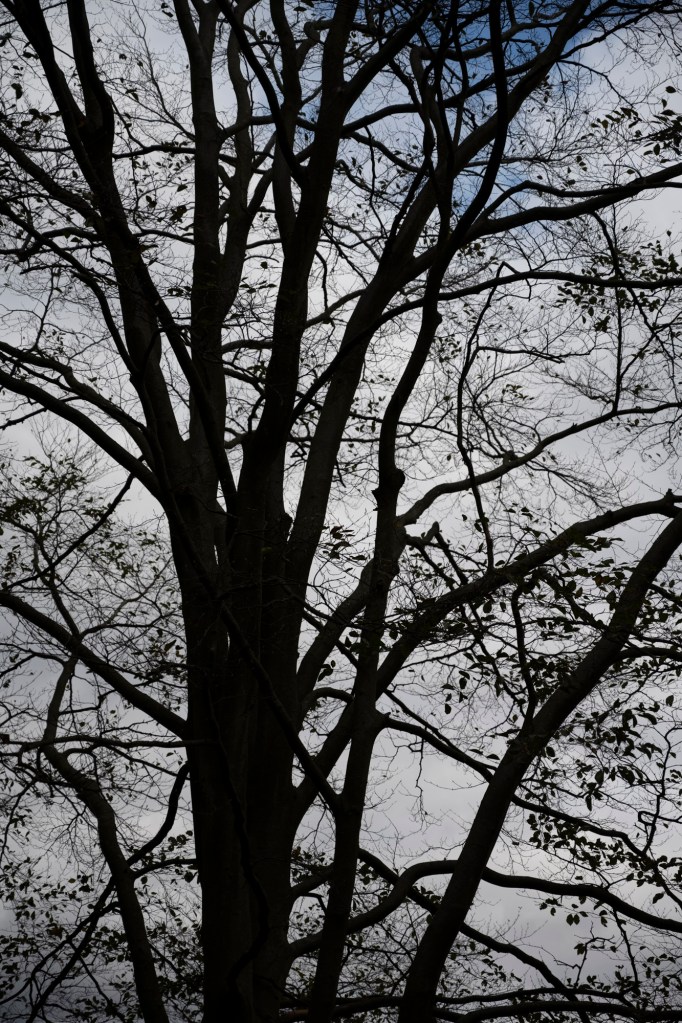
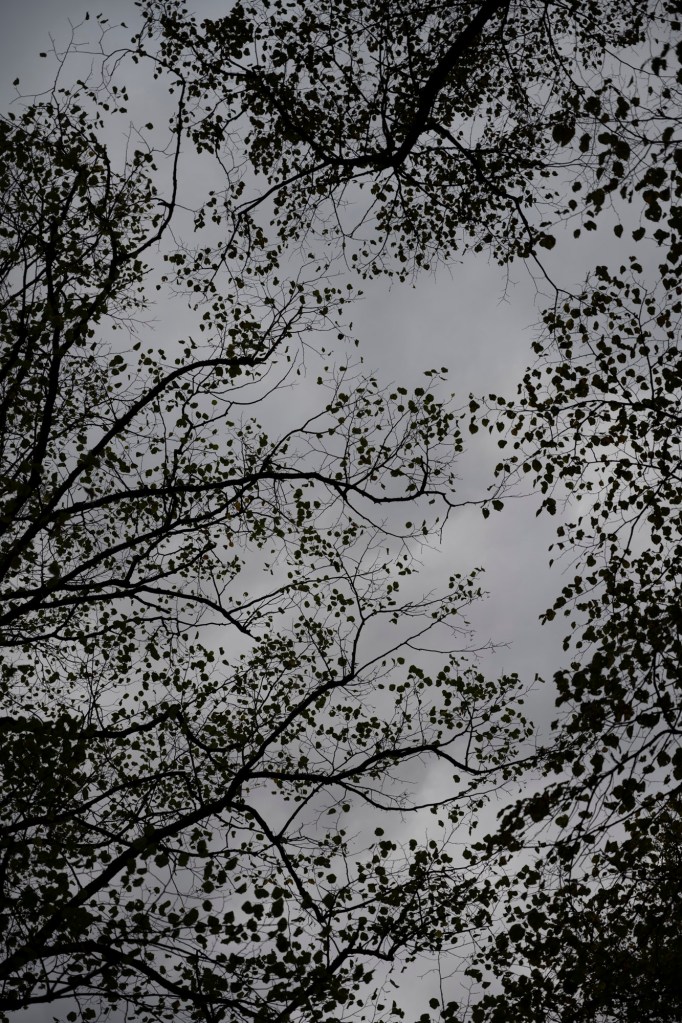
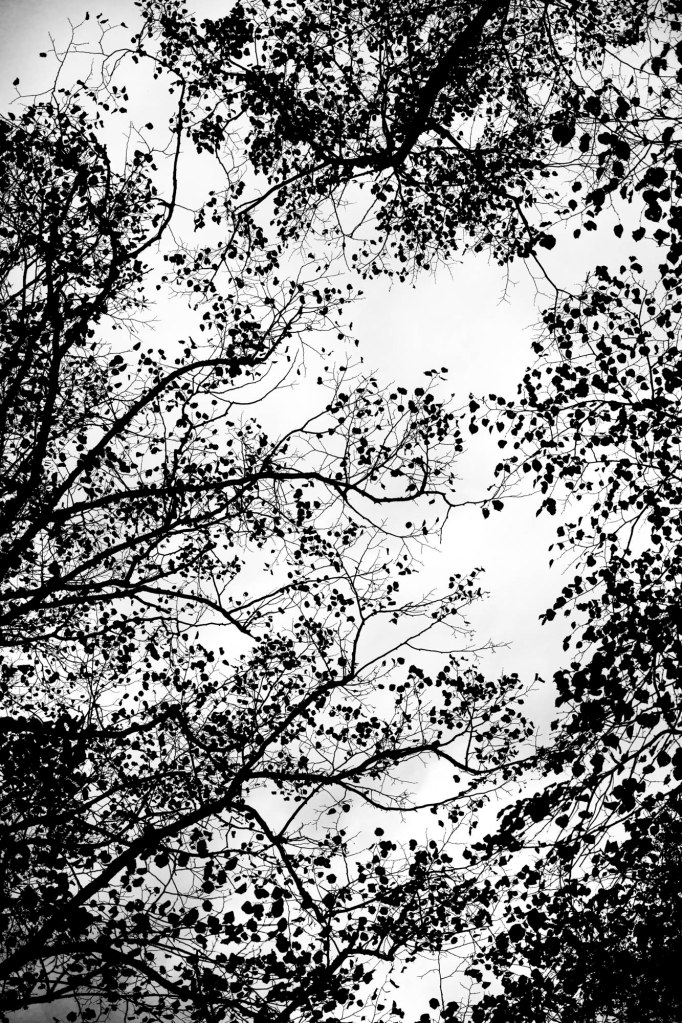
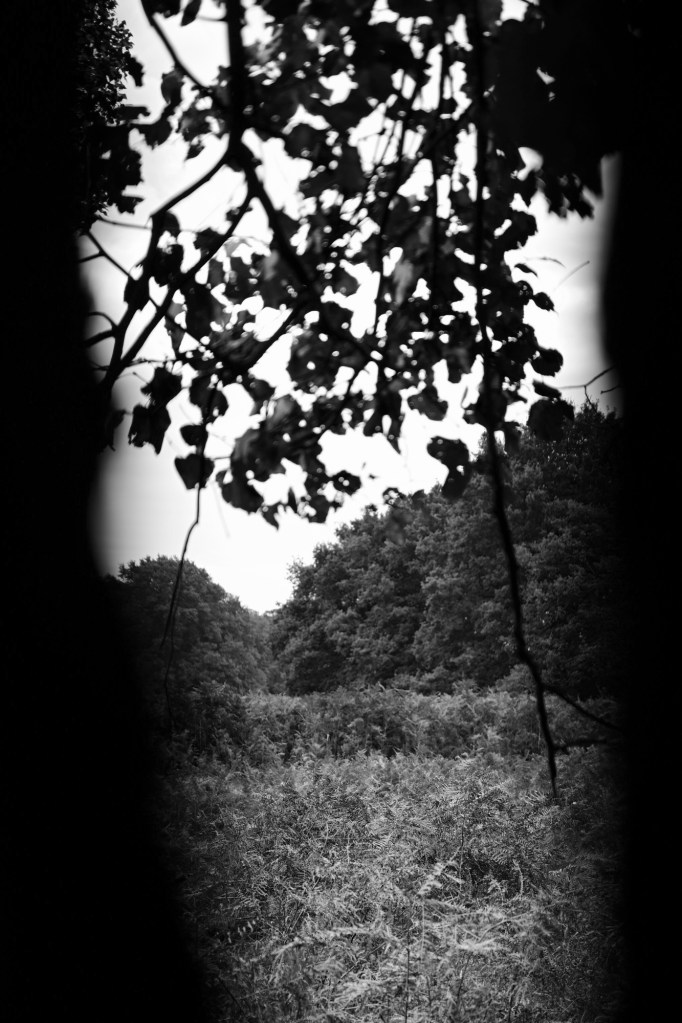
After processing the images, I created a few Black & White conversions. The originals are on the left, B&W on the right:
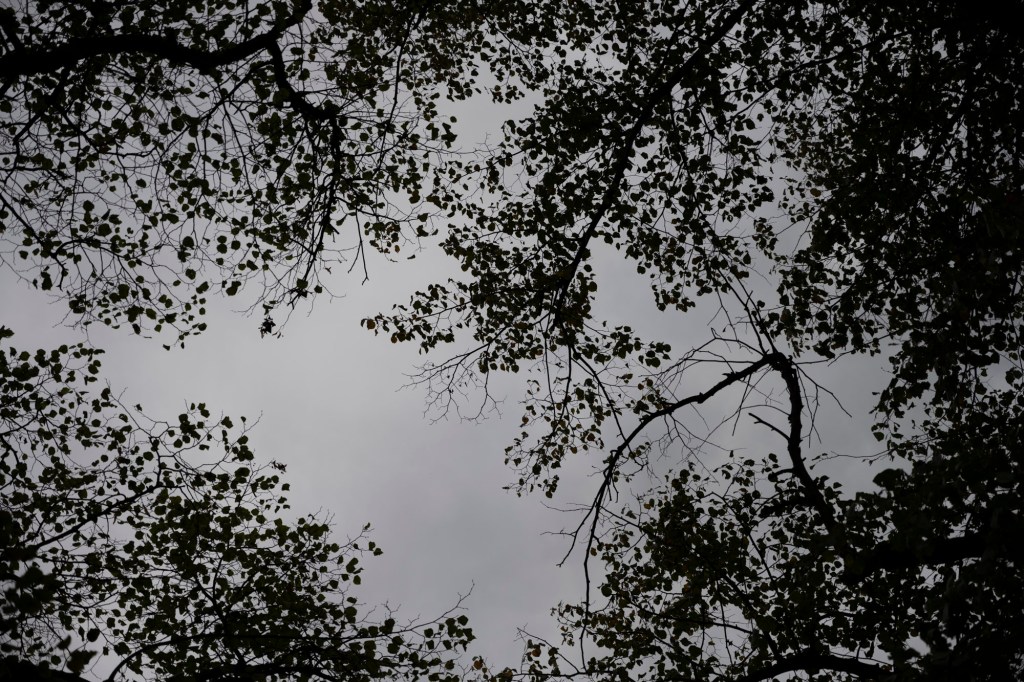
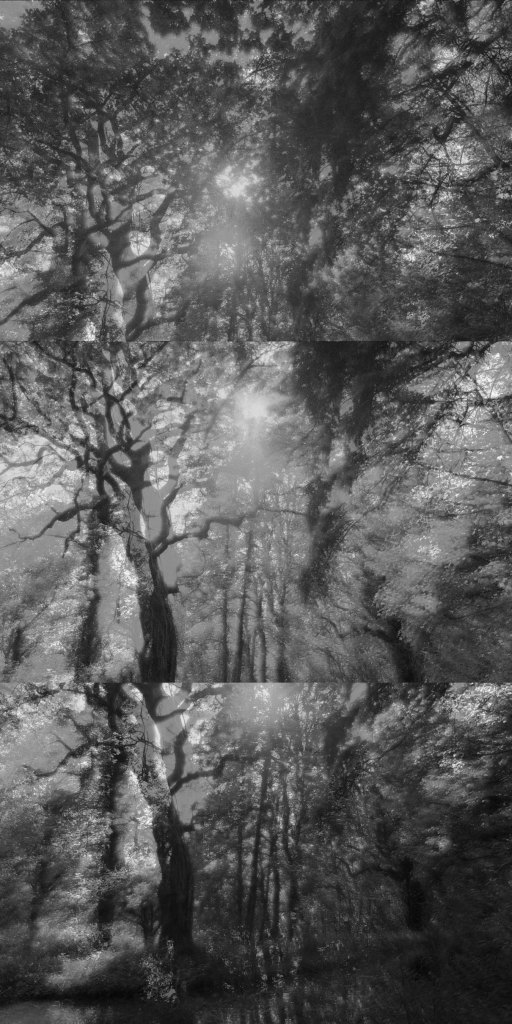
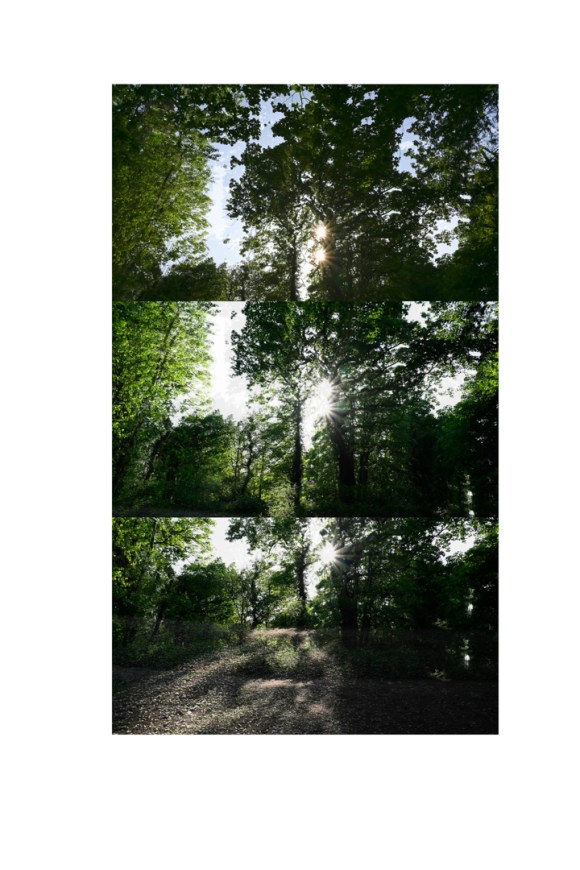
Having edited the images shot at a ratio of 2:3, I revisited the ones taken at 16:9. As a result of this, I cropped the images from the previous experiment.
When comparing, it seemed to me that the 16:9 format worked better in column form.
2:3 Ratio
16:9 Ratio
It would also mean being able to select my final images from those that were shot using this ratio rather than having to take further photos at 2:3.
My first consideration in relation to this decision was time. With only two days to go before submitting my final images, I should focus on the strongest images taken so far rather than going out and making new ones.
The second consideration was the ethos behind this project – images taken during the time of lockdown and self-isolation. With the Government gradually easing the restrictions, it would go against the grain of what I was trying to achieve.
The third, and final consideration, was that of the 1 June 2020, people would be allowed to exercise outside in groups of up to six people (as long as they were practising the two-metre social distancing). Combined with the current sunny and very warm weather, this would be mean much more people in the park. This, in turn, would restrict my shot potentials.
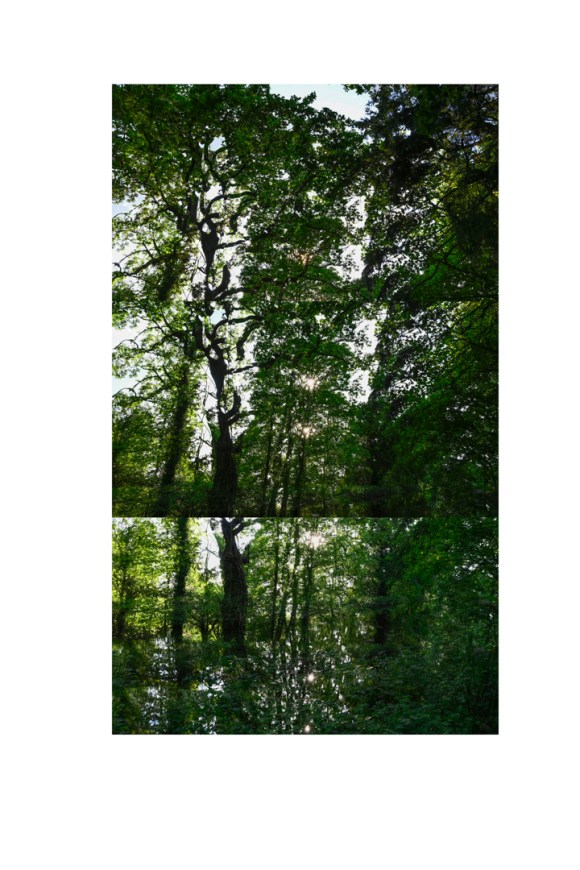
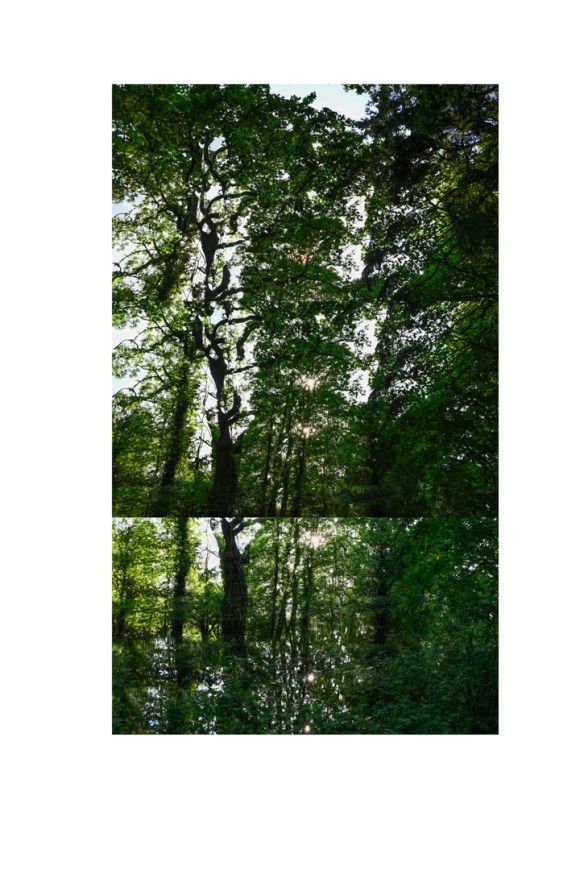
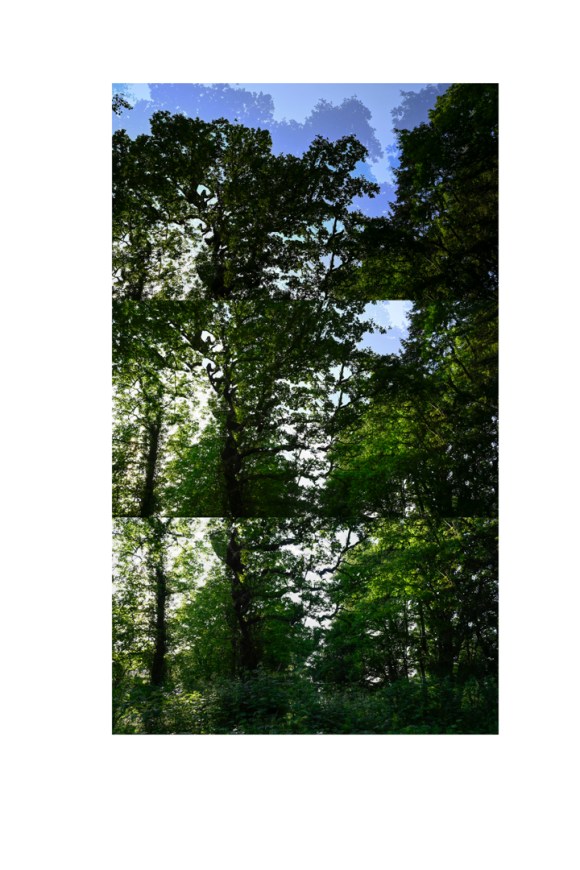
After my session on 5 May, I wanted to take a more measured approach. My intention was to use the tripod rather than holding the camera. This, in theory, would line up the shots more accurately. Also, it would enable me to operate the camera differently. By using the tripod, I would be able to use and angle the camera’s ‘live view’ screen to see the composition better. Using the viewfinder means scrunching my face up and using just one eye to see the potential shot on a tiny screen. Using this feature on the camera is a lot more comfortable and productive for me.
The location I chose was the Woodland Gardens in Bushy Park. I wanted to try my new technique at a place I know well. As with the rest of the park, it was thriving and full of colour.


 Jennie Meadows MA Photography