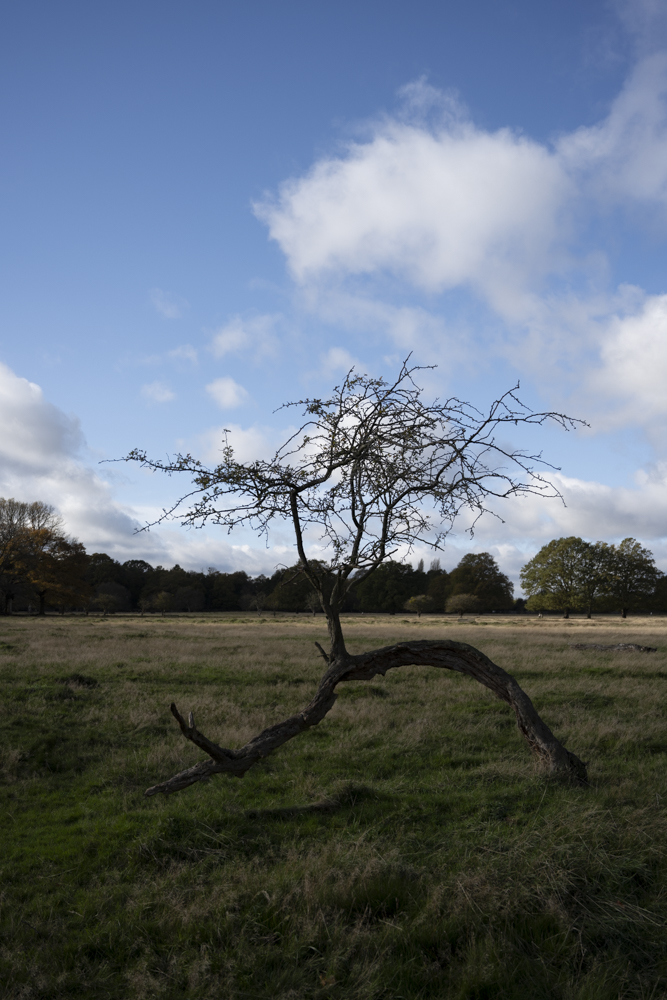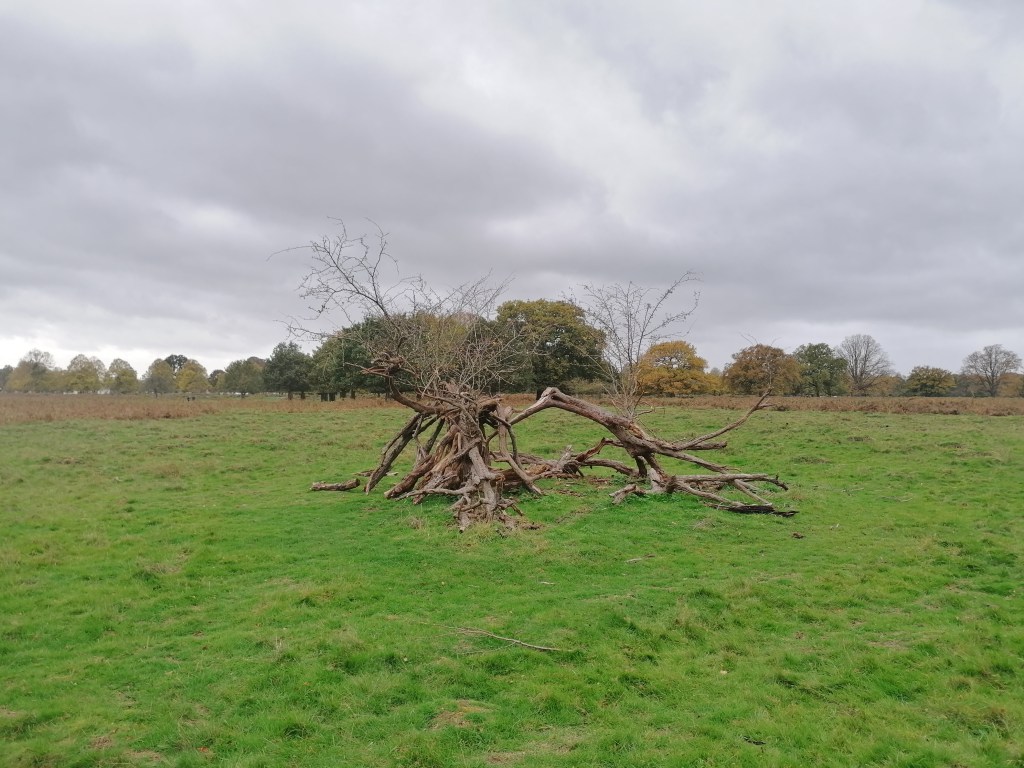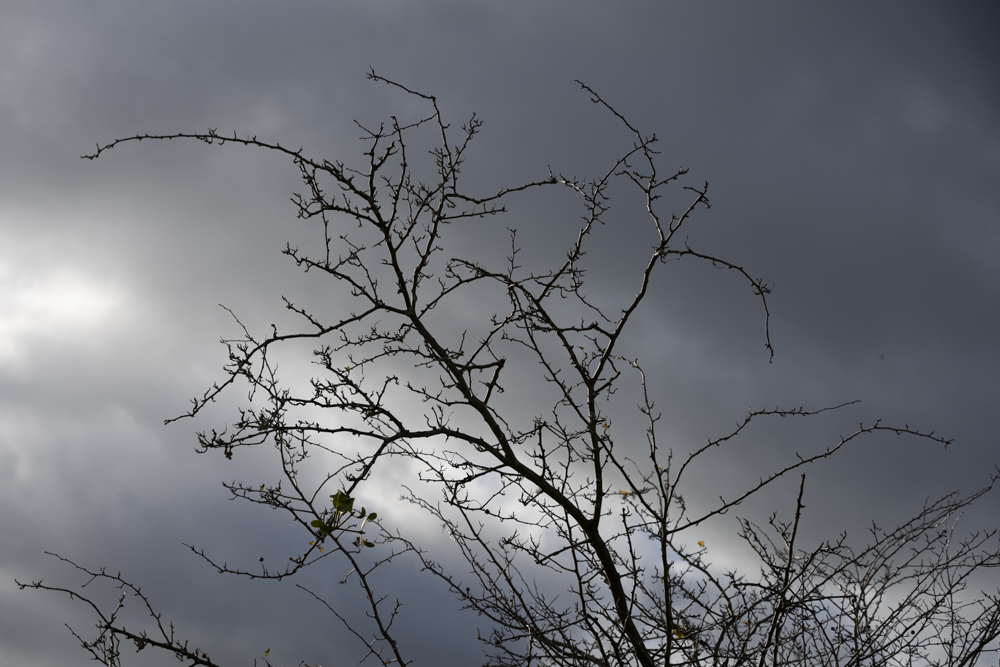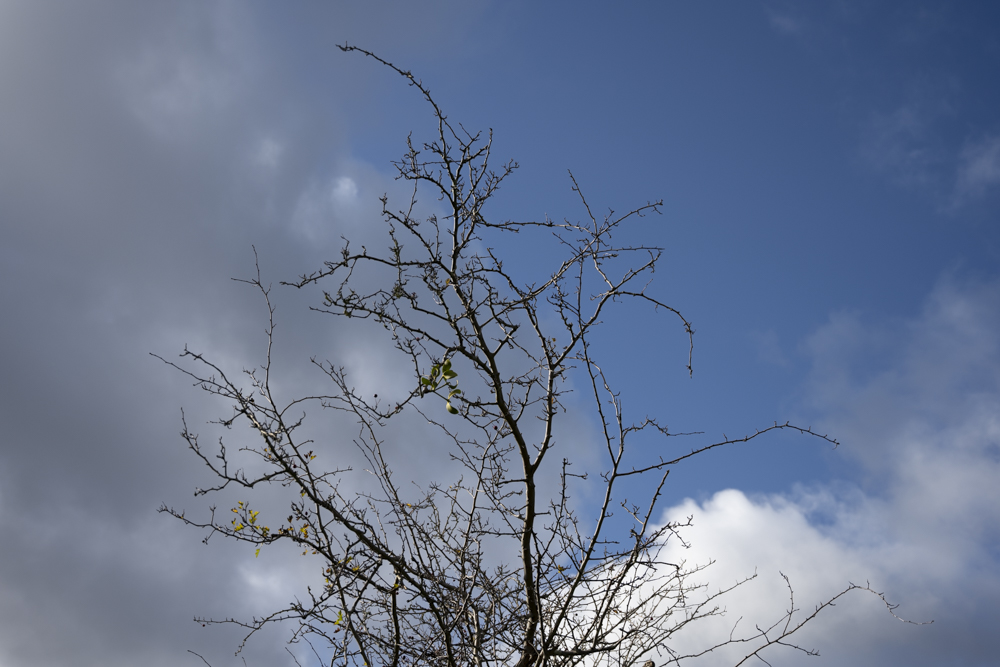
Categories
AGM62 Photography Research Project Stage 1 Posts

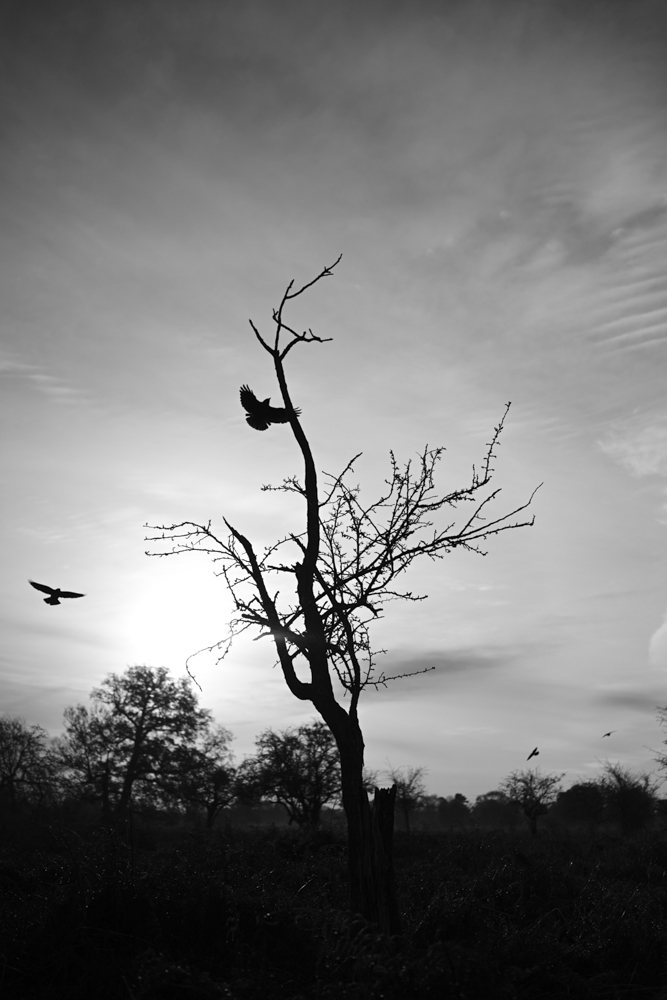
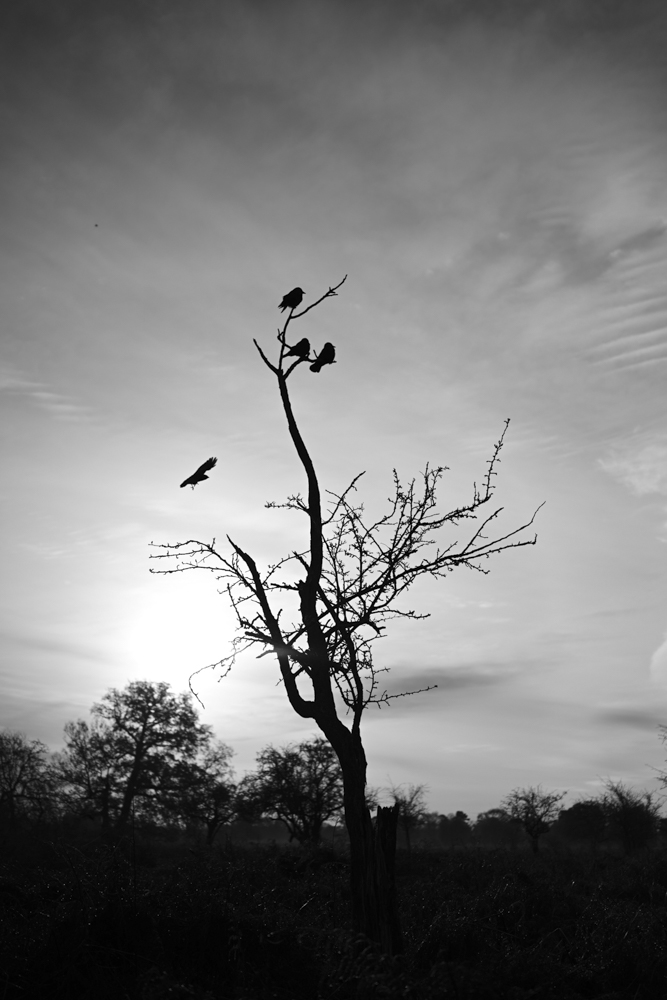
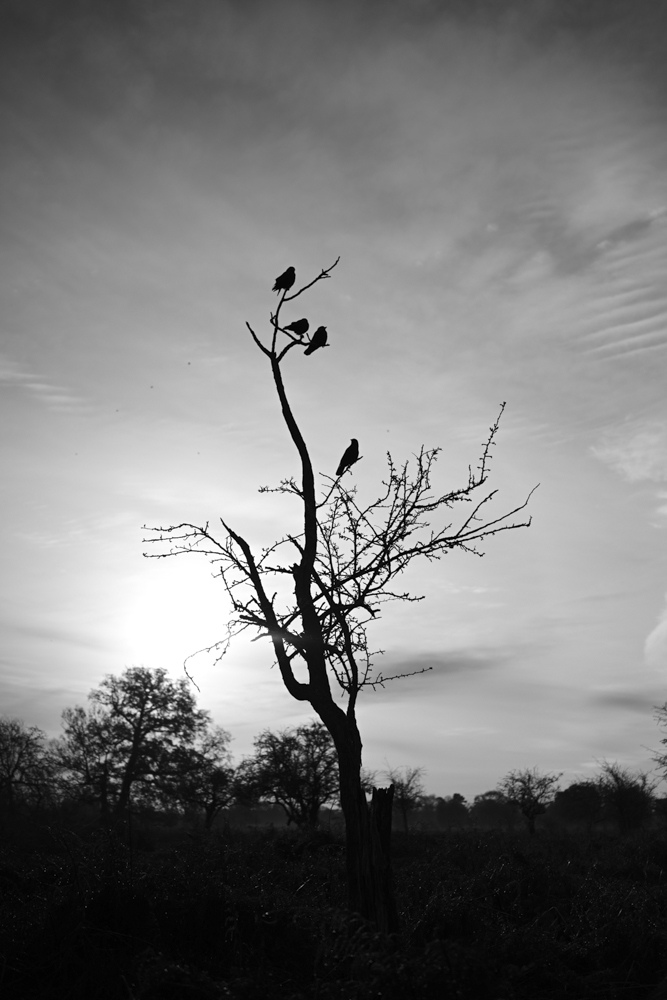
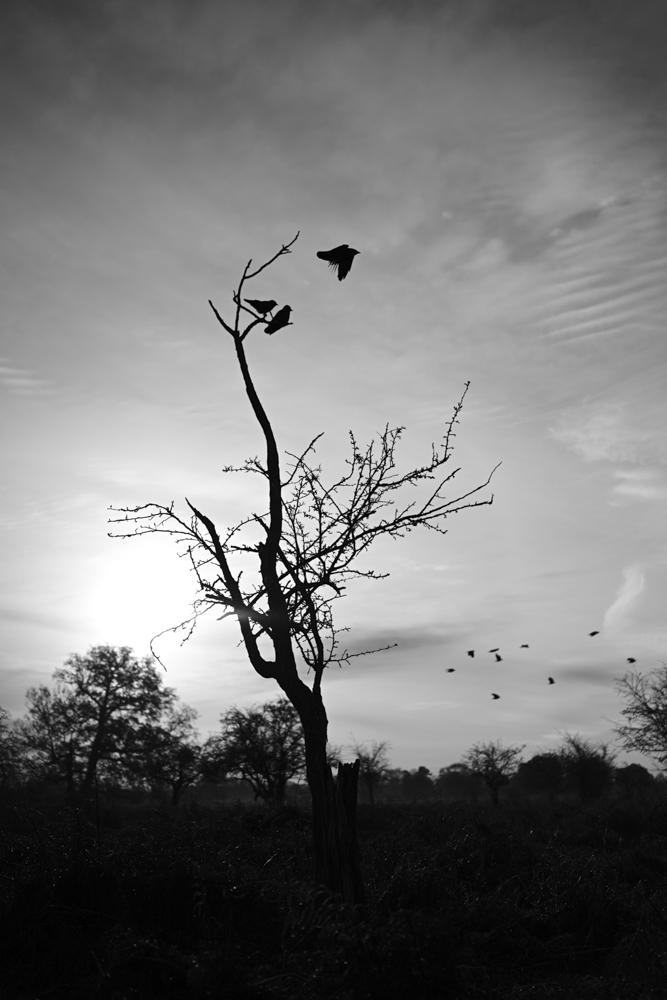
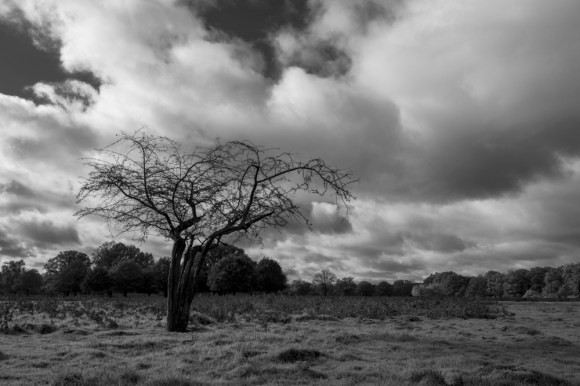
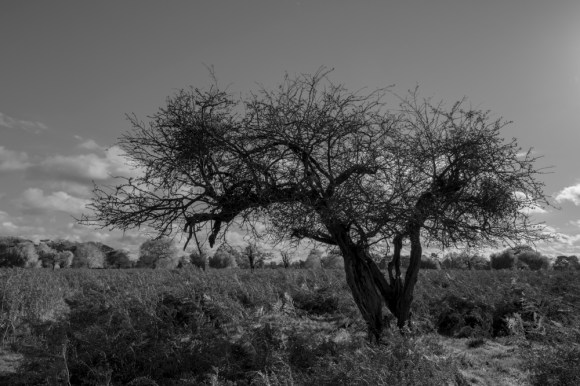
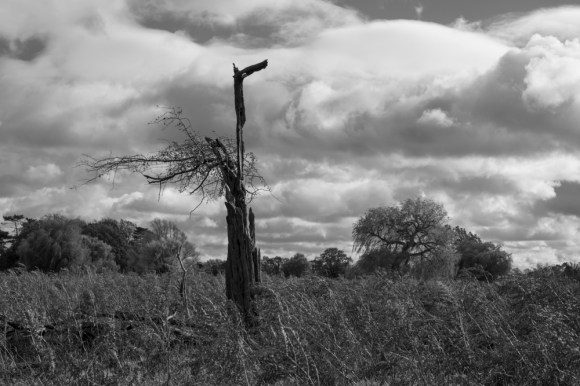
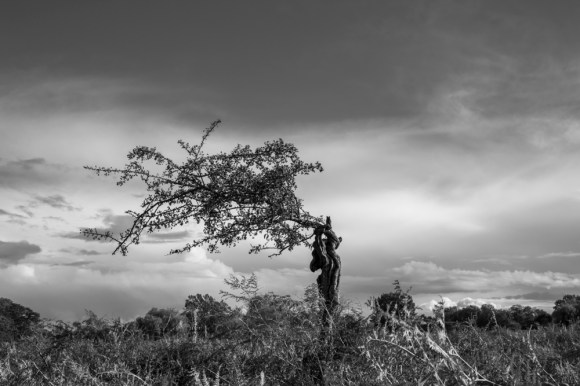
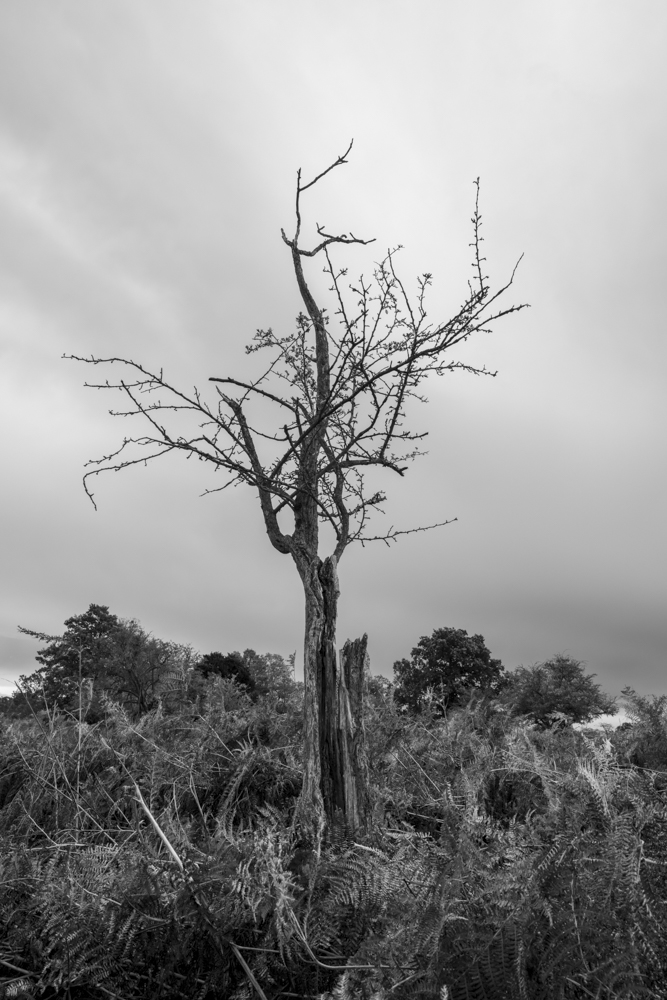
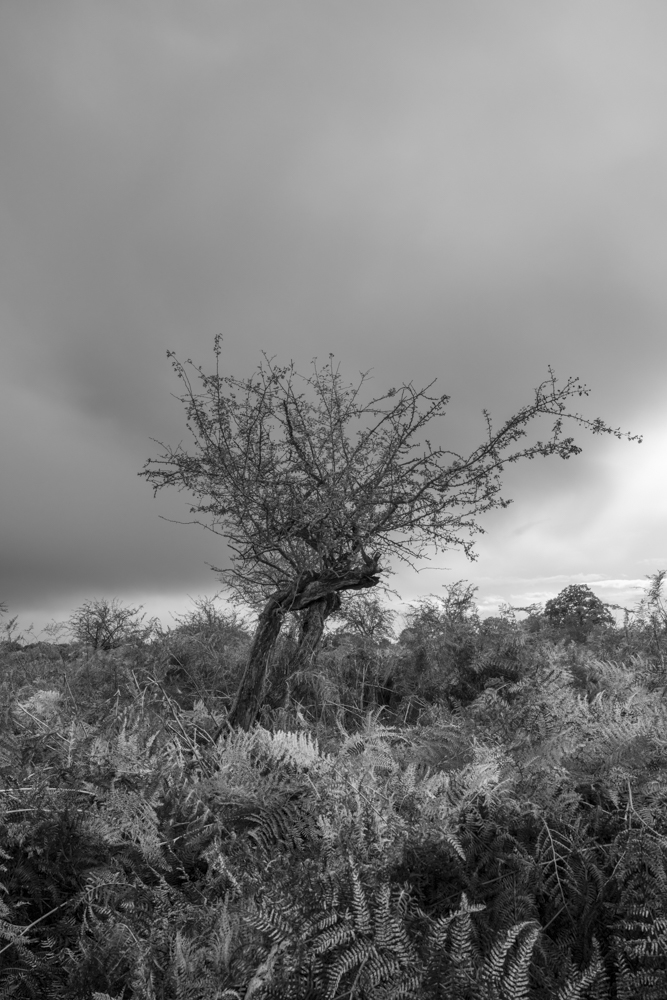
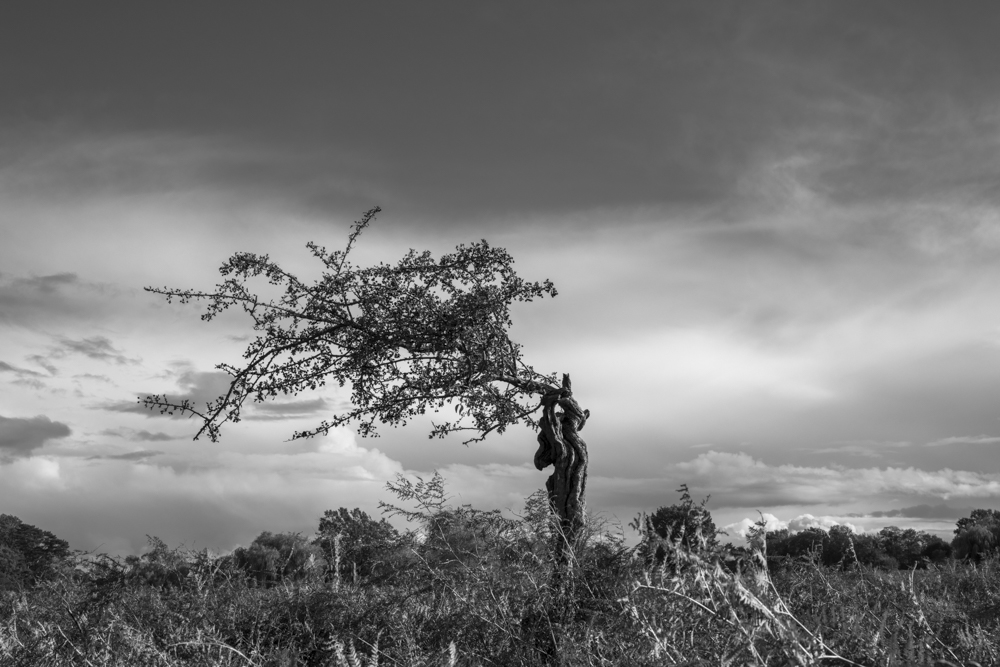
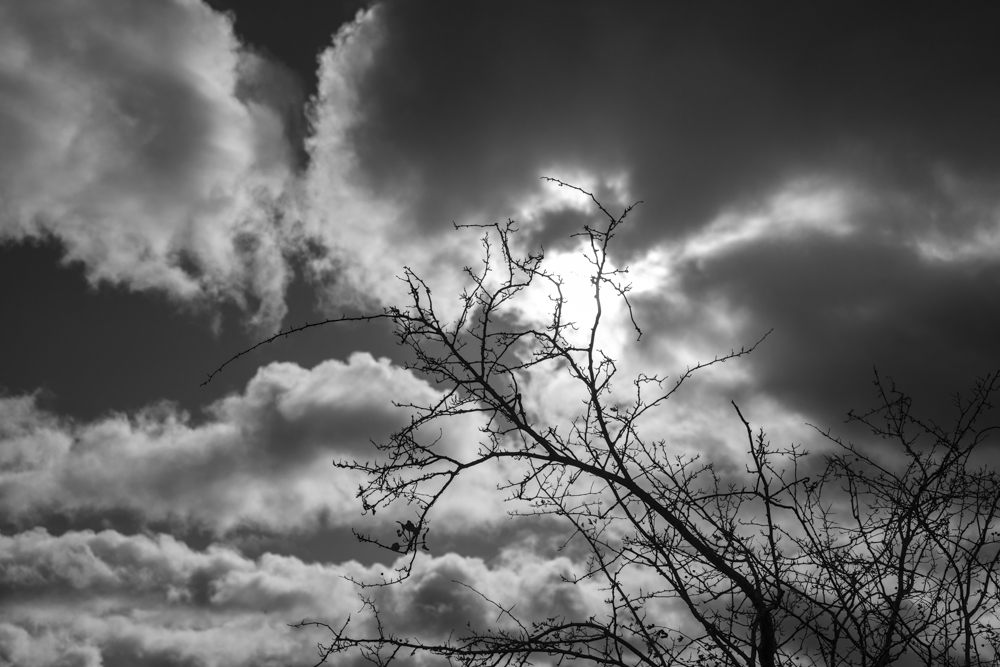
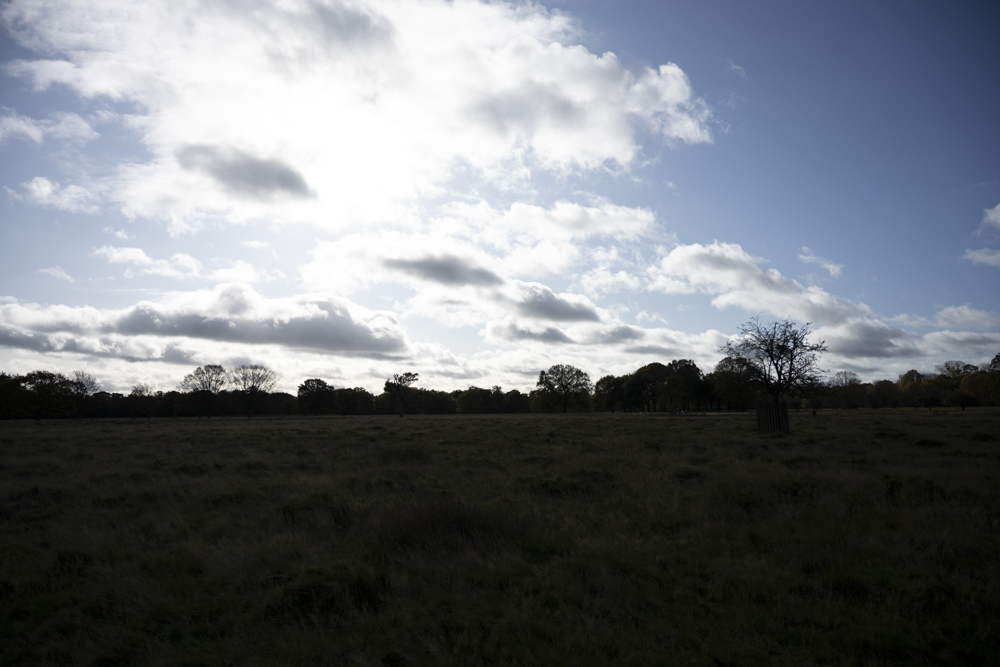
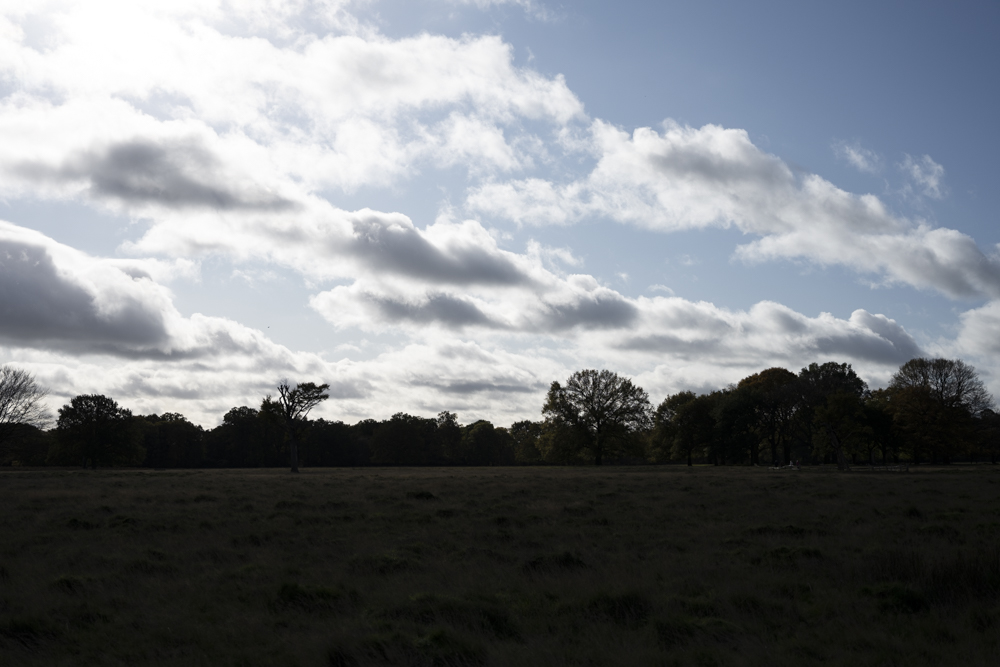
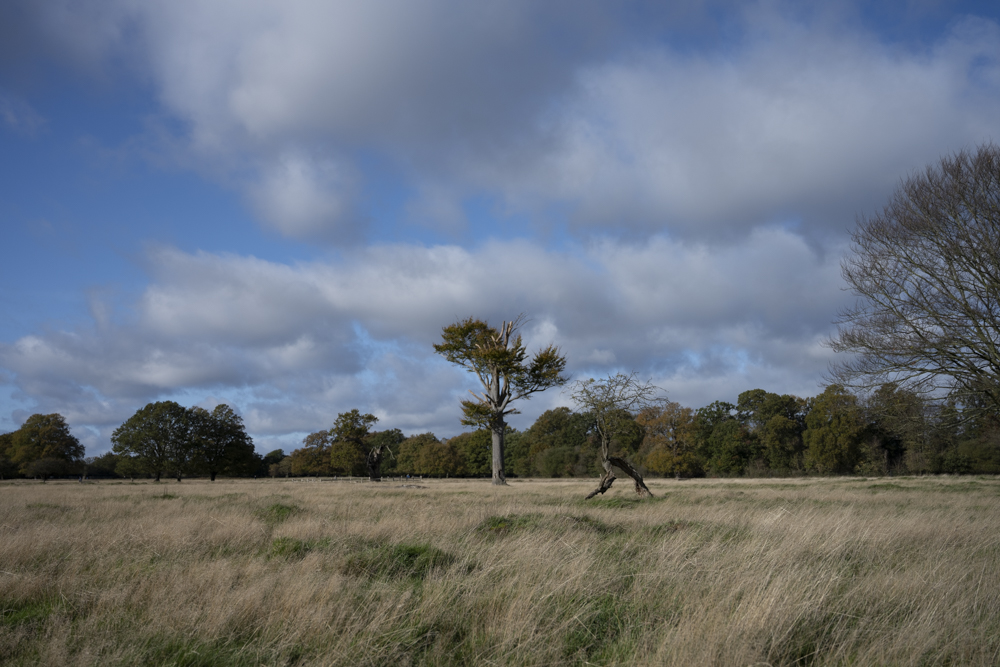
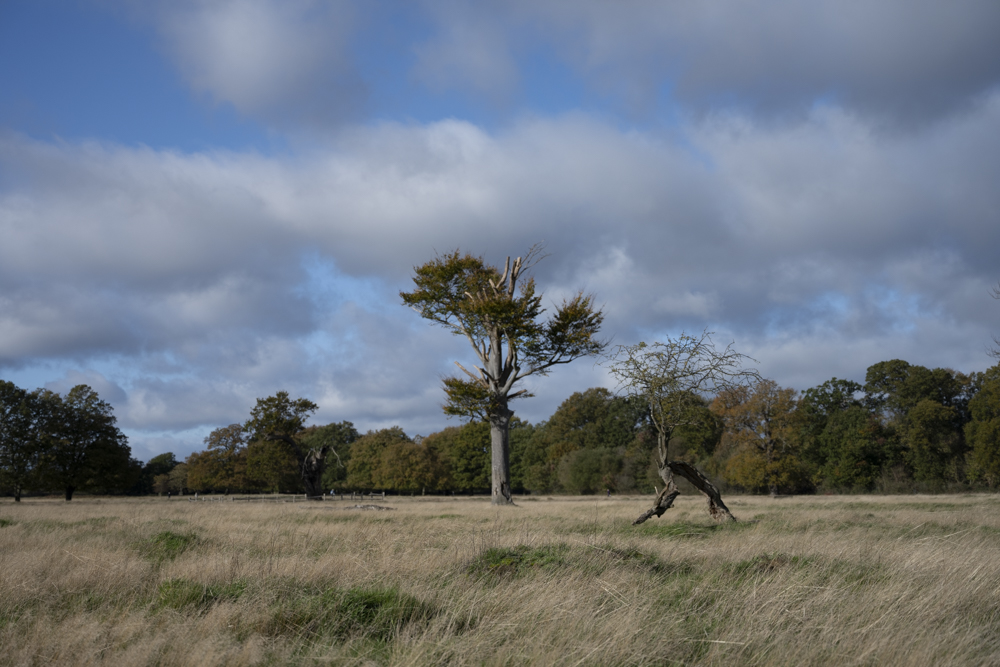
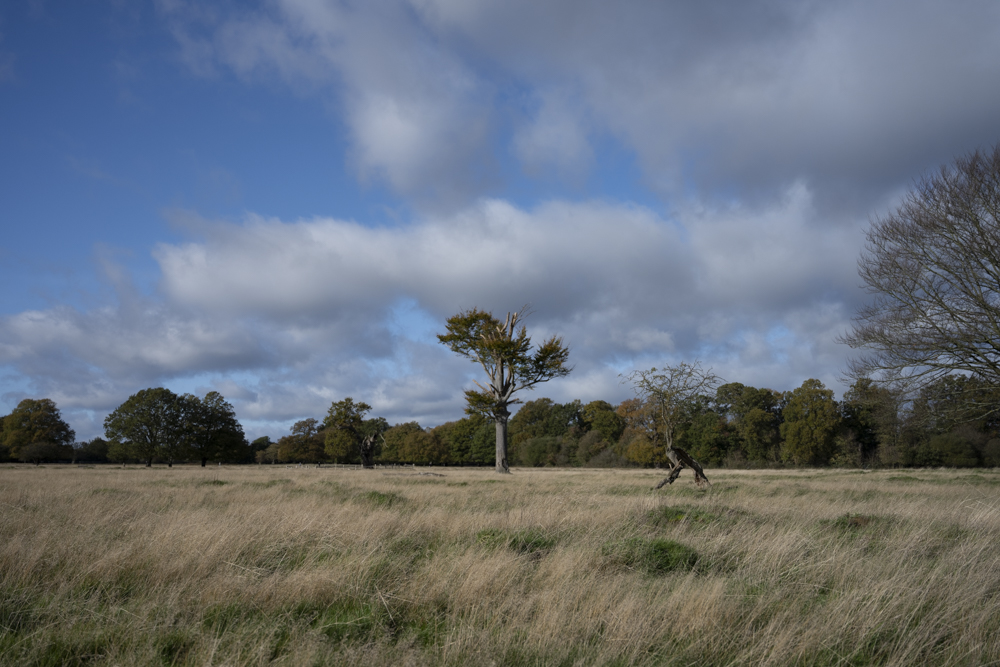
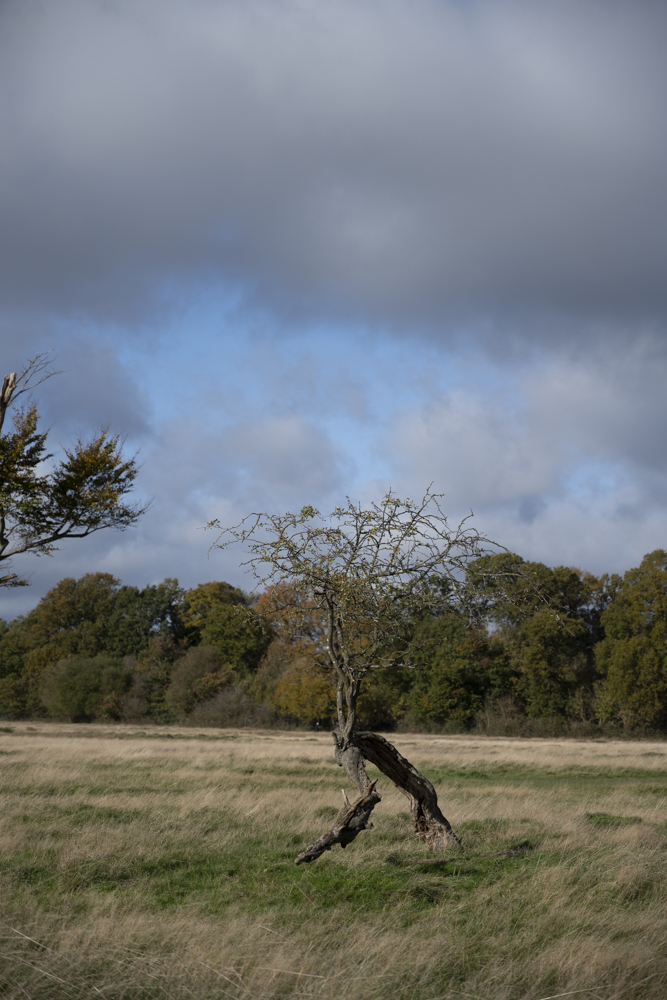
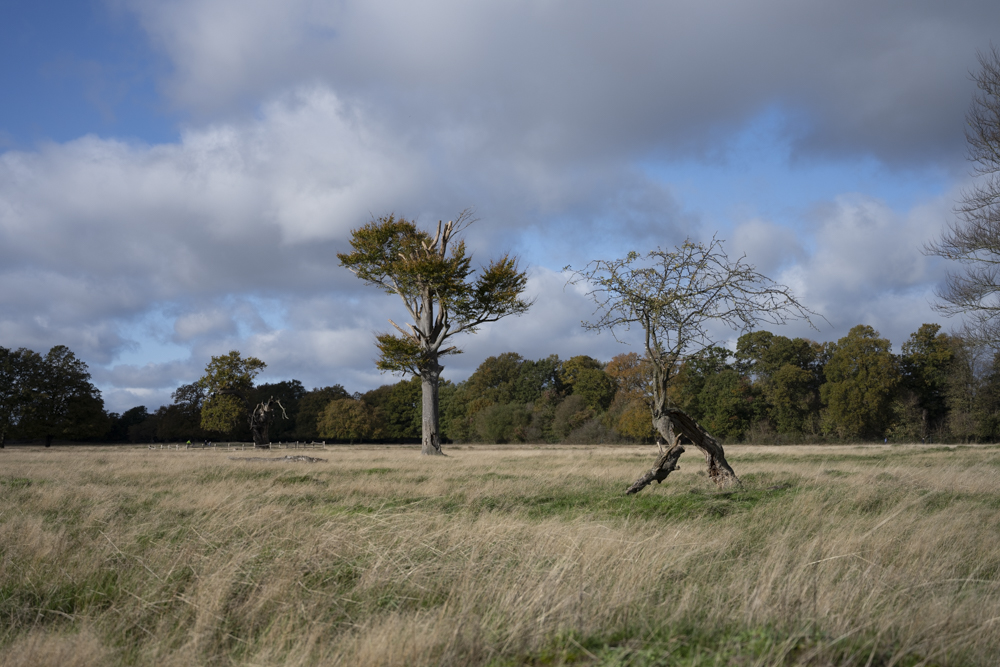
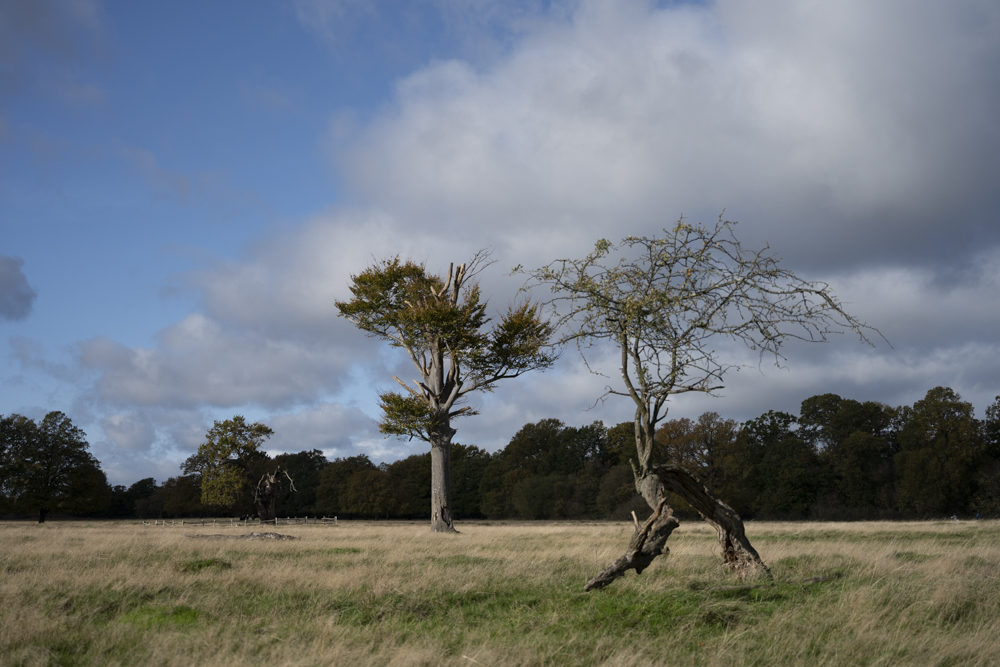
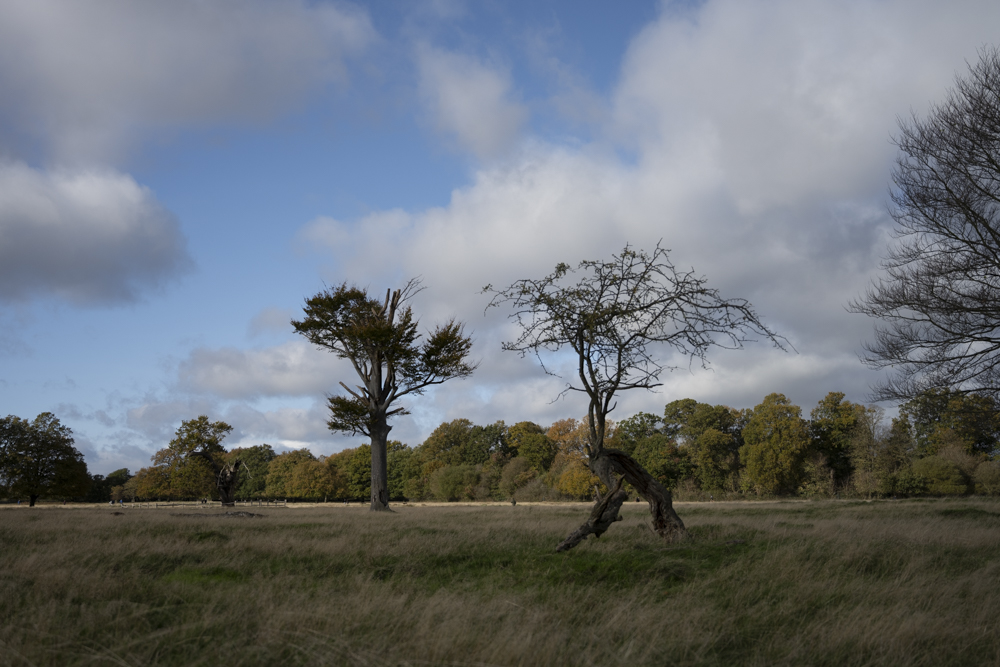
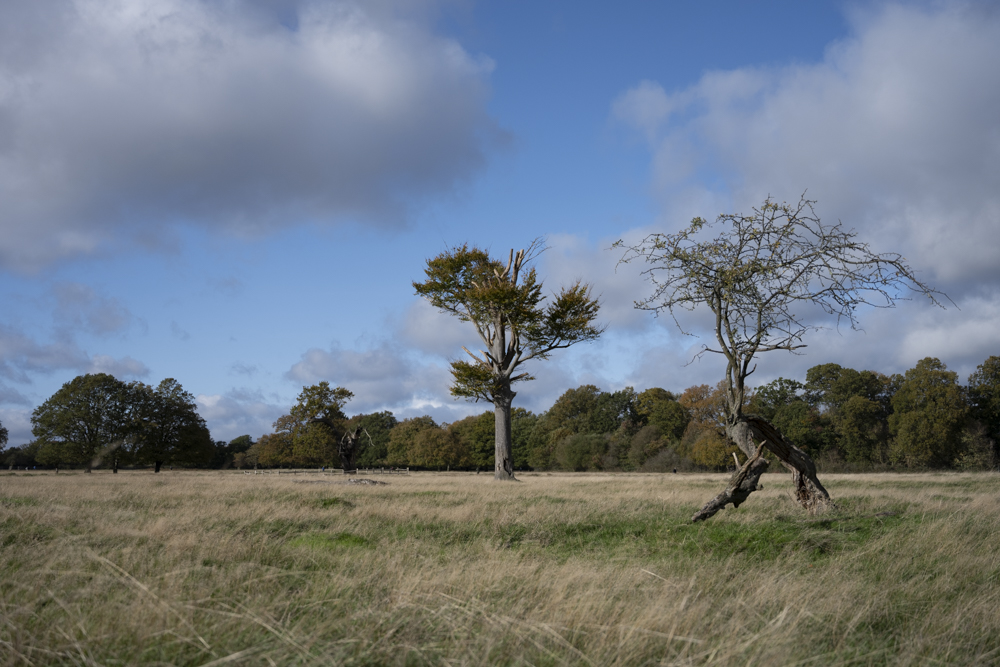
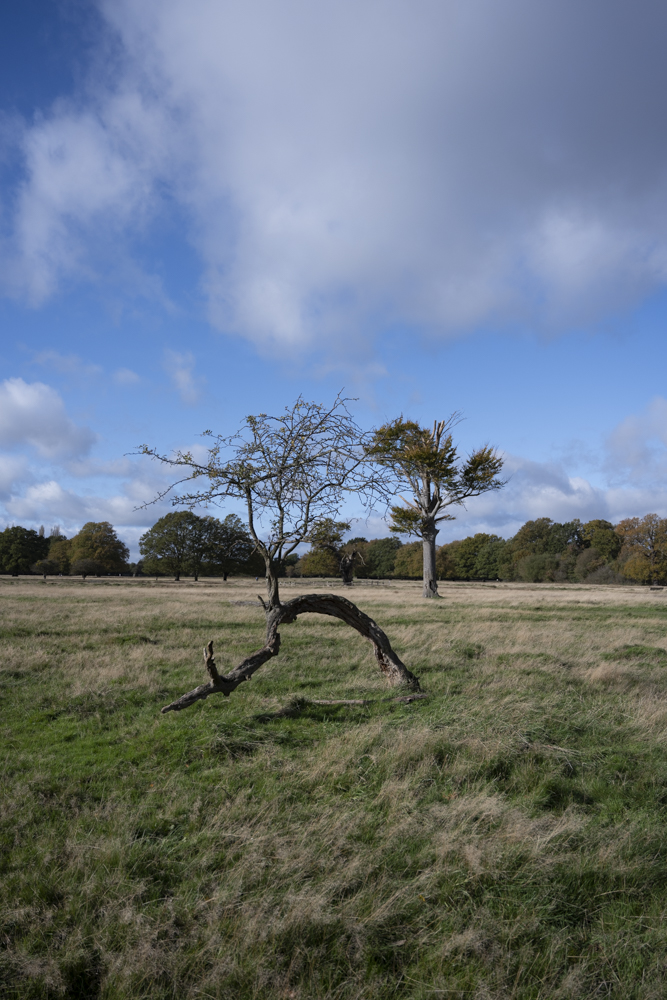
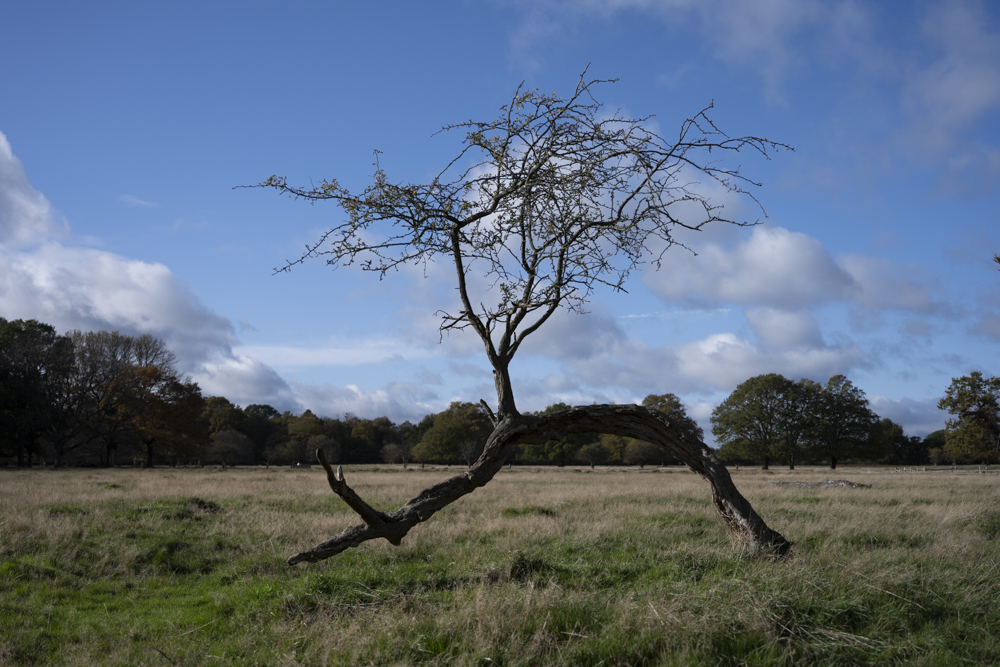
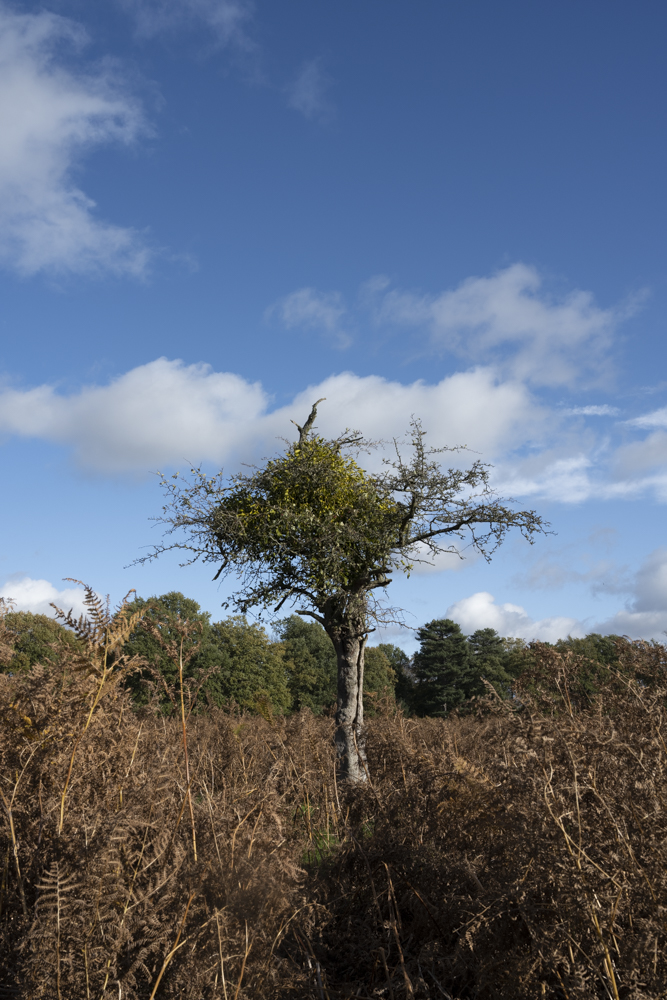
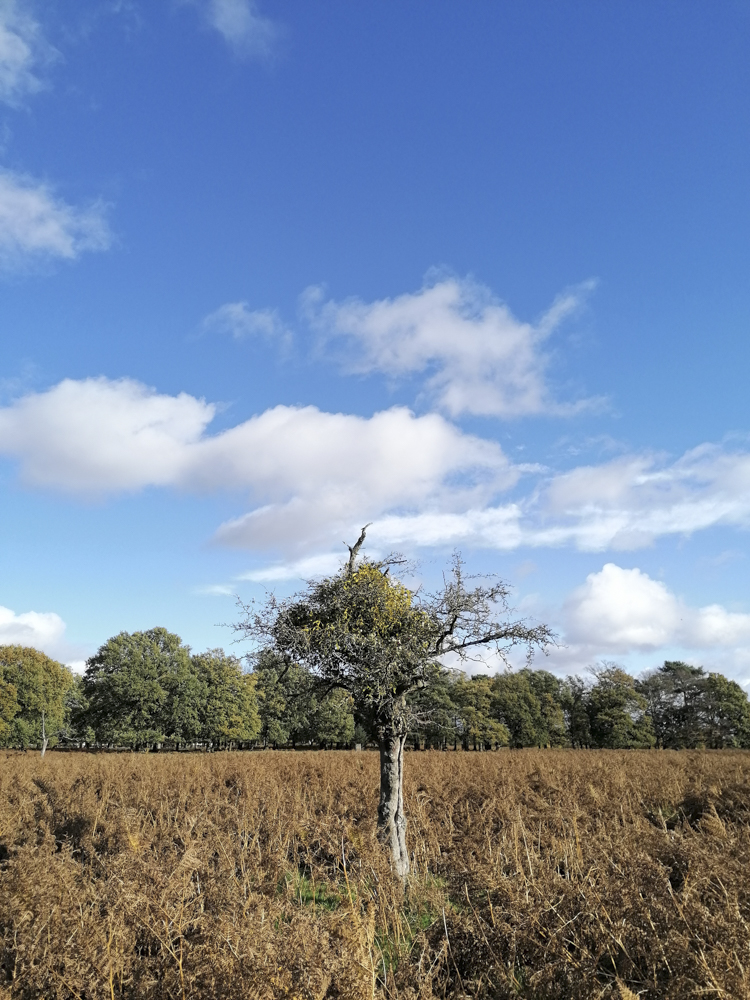
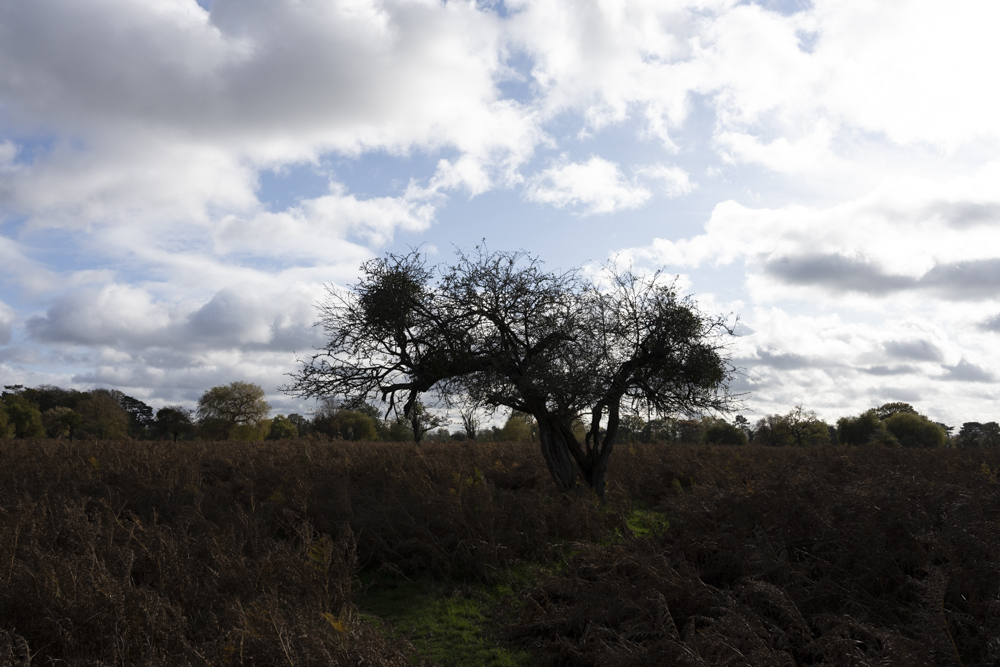
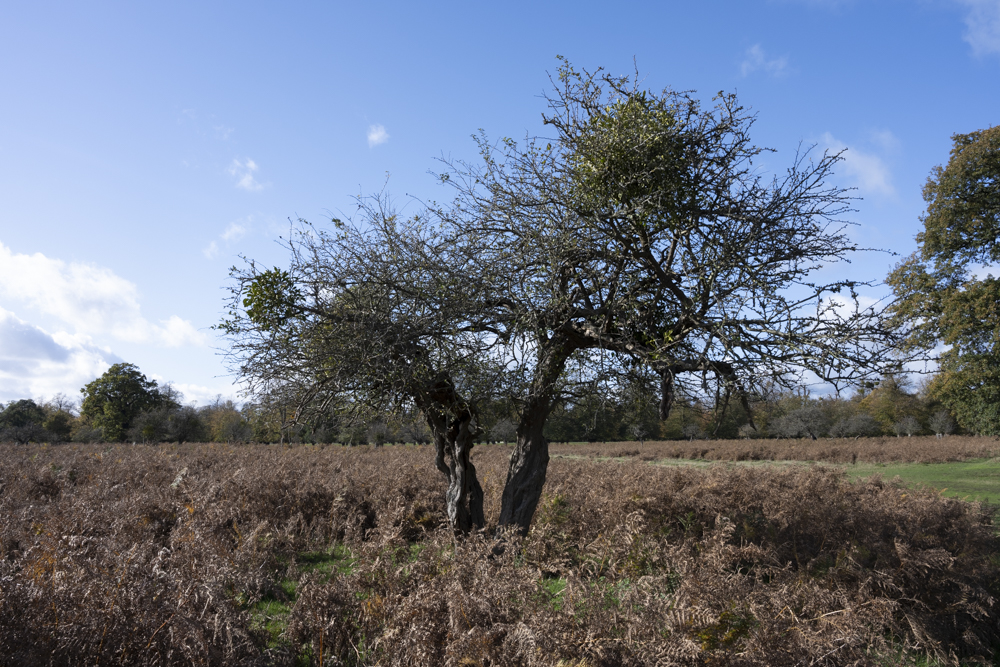
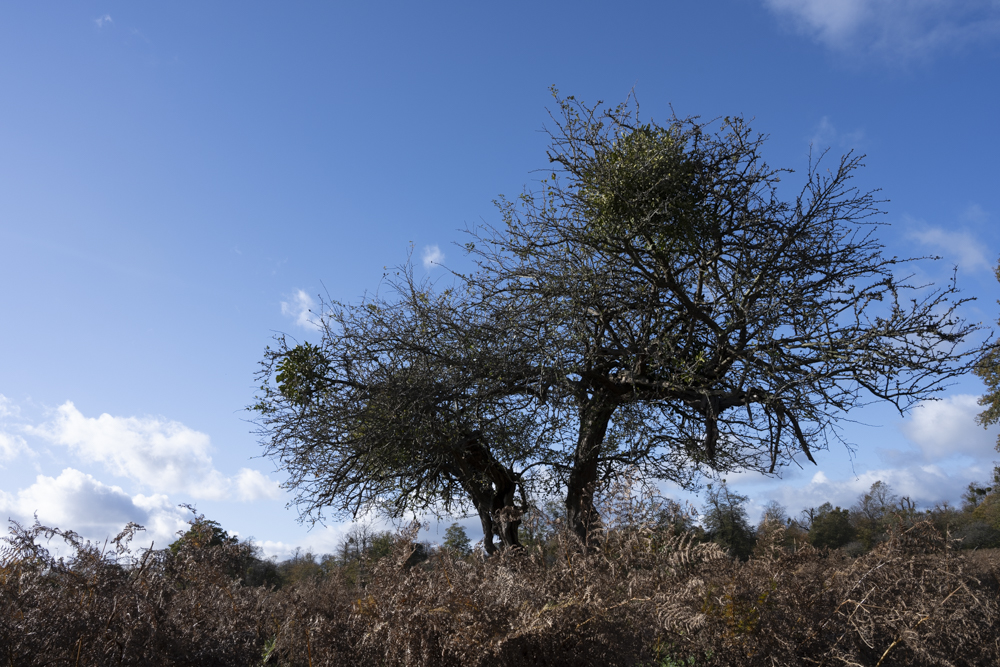
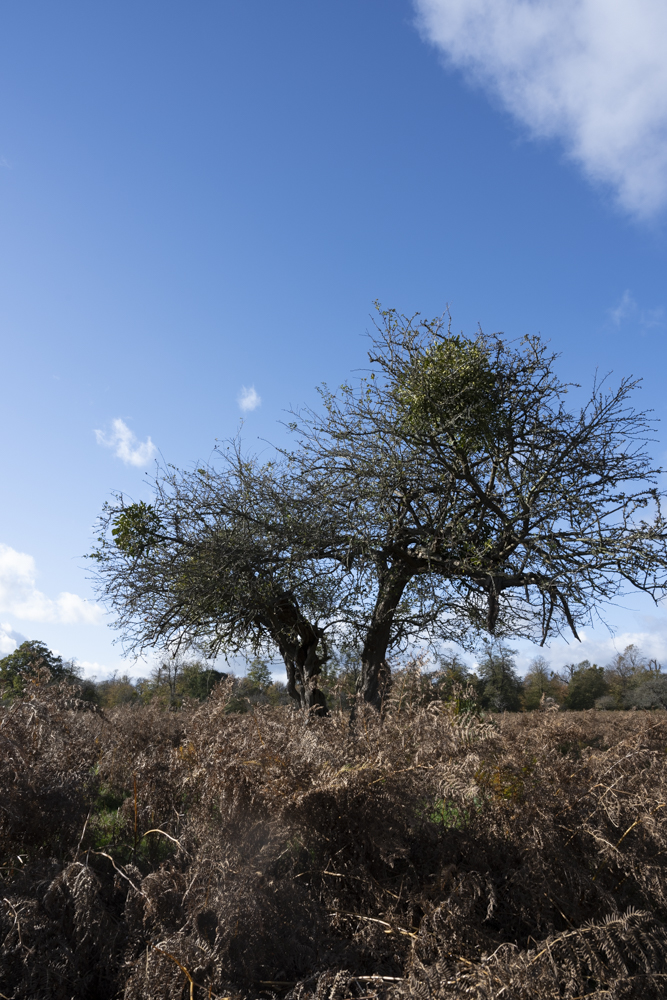
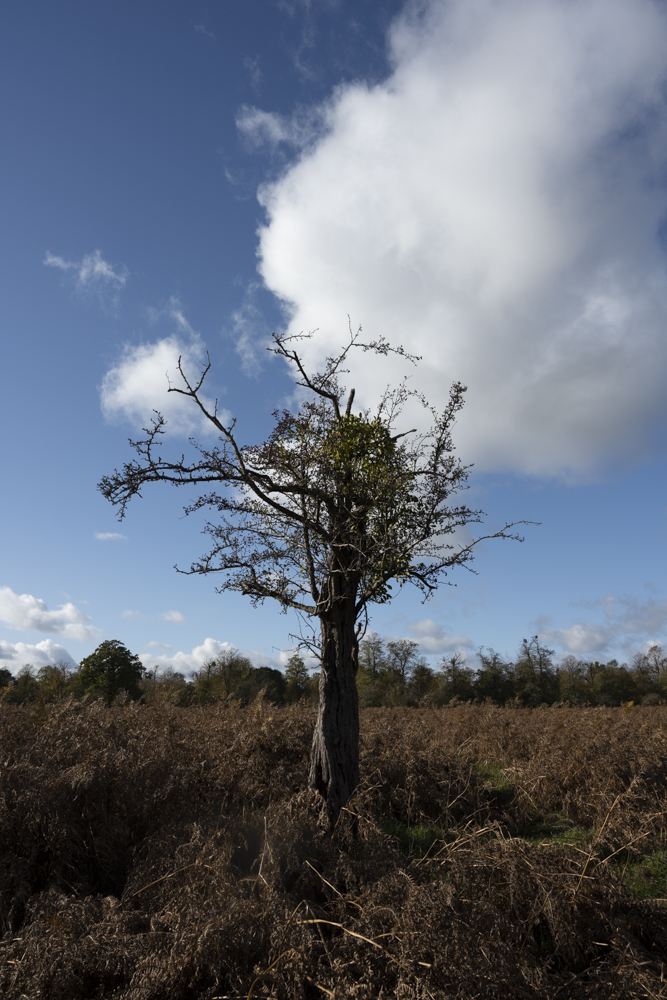
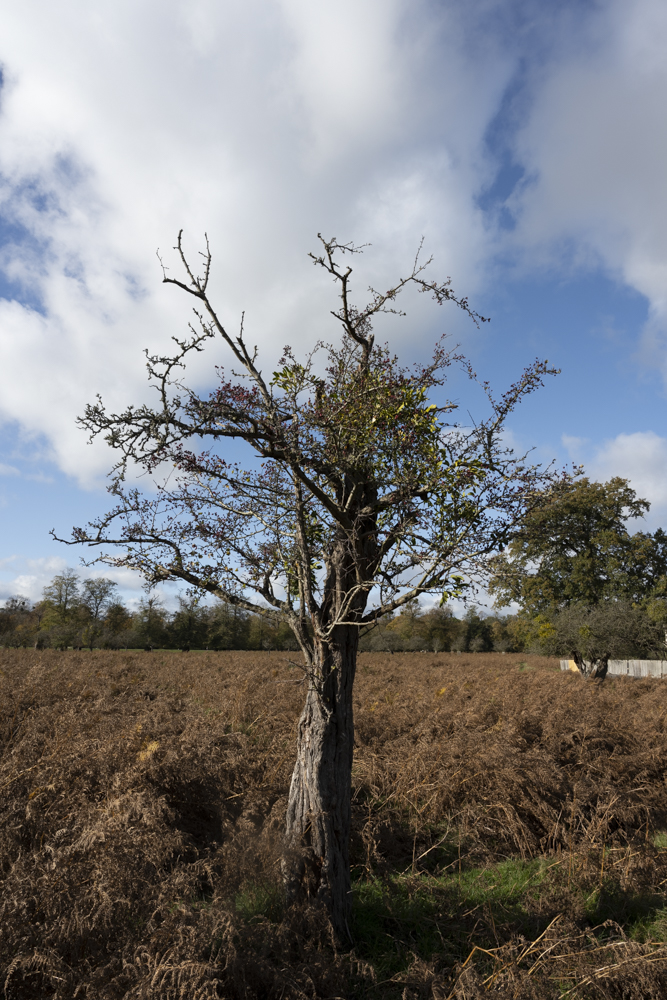
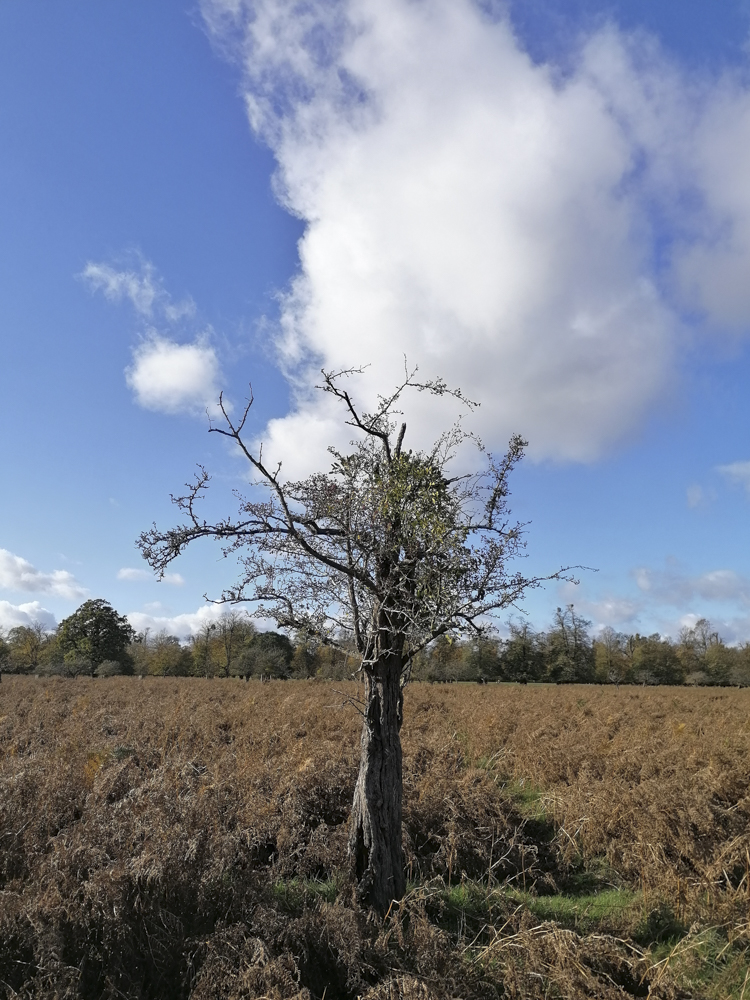
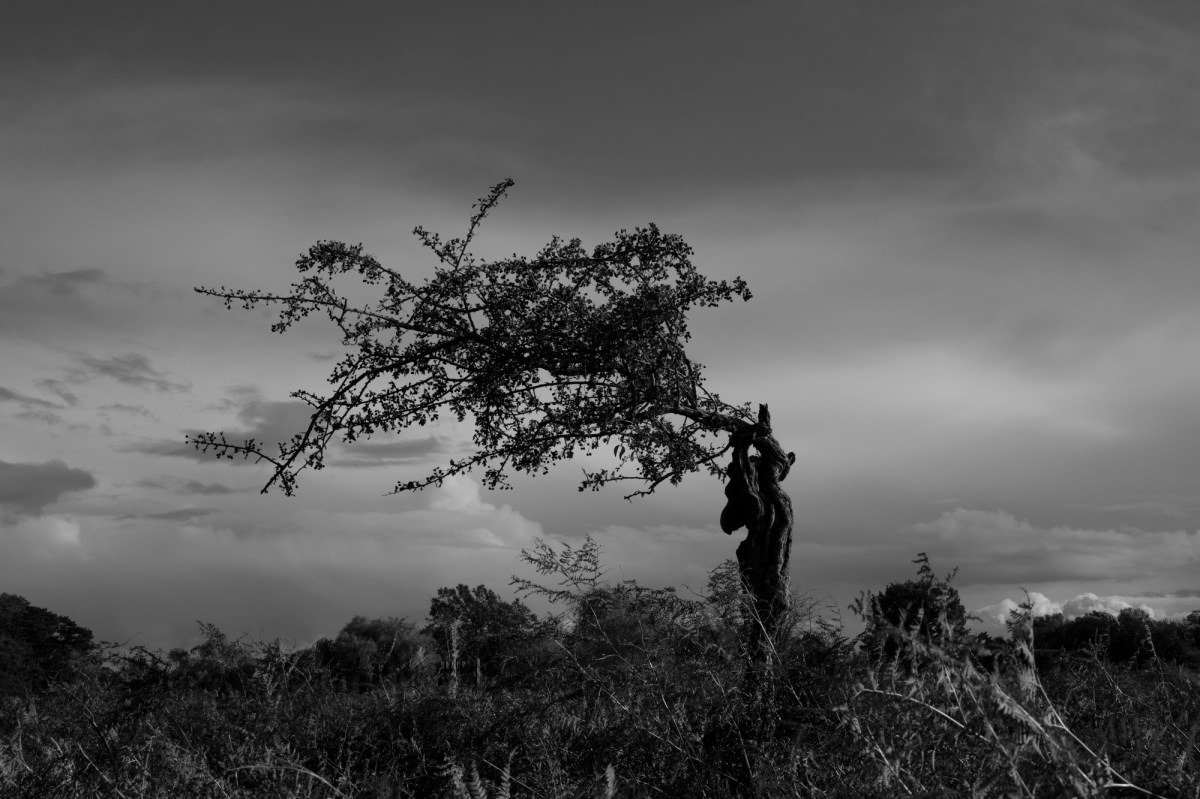
AGM62 Bushy Park Hawthorns 20 November 2020

“The definition of insanity is doing the same thing over and over again, but expecting different results.”

Albert Einstein

When stuck in a photographic rut these wise words always come to mind. After the Interim Review, I took the received advice on board and decided to tackle on some key aspects that were mentioned during the session.

The strongest element which I took on board is that is time to focus on producing strong and coherent images. Up until this point I had carried out a high amount of in-depth background research and had produced a range of initial photographs. I now had to take a different tack by refining and improving my technical techniques and narrowing down my subject matter.

With regards to my use of equipment, I had been using my digital mirror-less camera with a 24mm-70mm lens. This was in order to try out different focal lengths to see which distance gave the best results. However, it only goes down to F4, so if I wanted to focus on the tree itself and create a less-obstrusive background by creating a shallower depth of field, I would need to use either my 35mm or 85mm, which goes to F1.8.

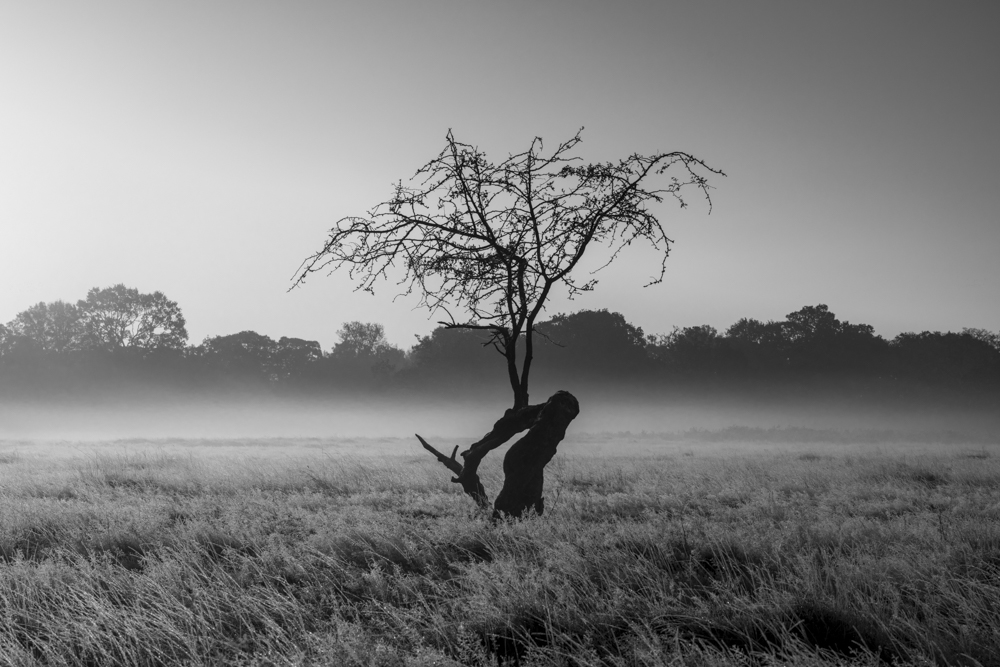
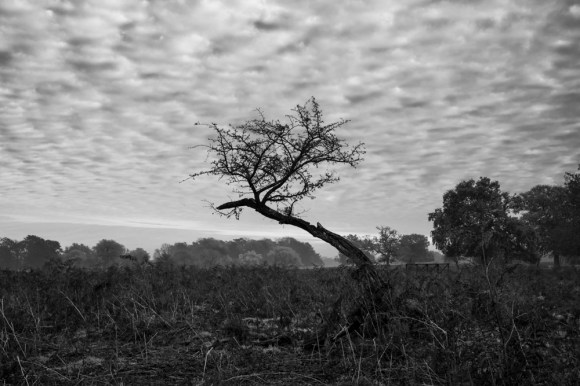
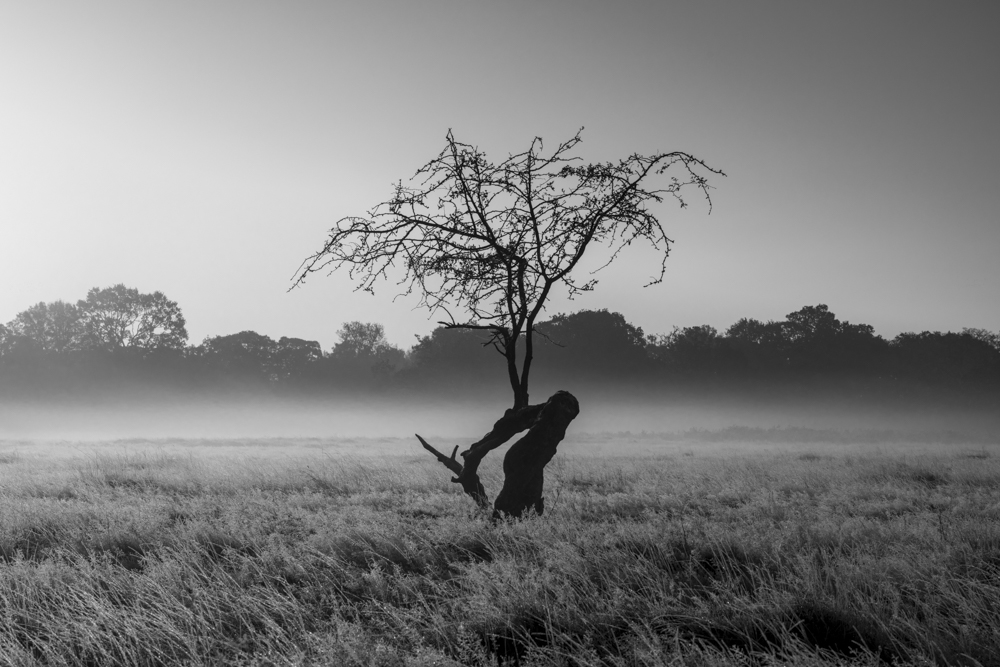
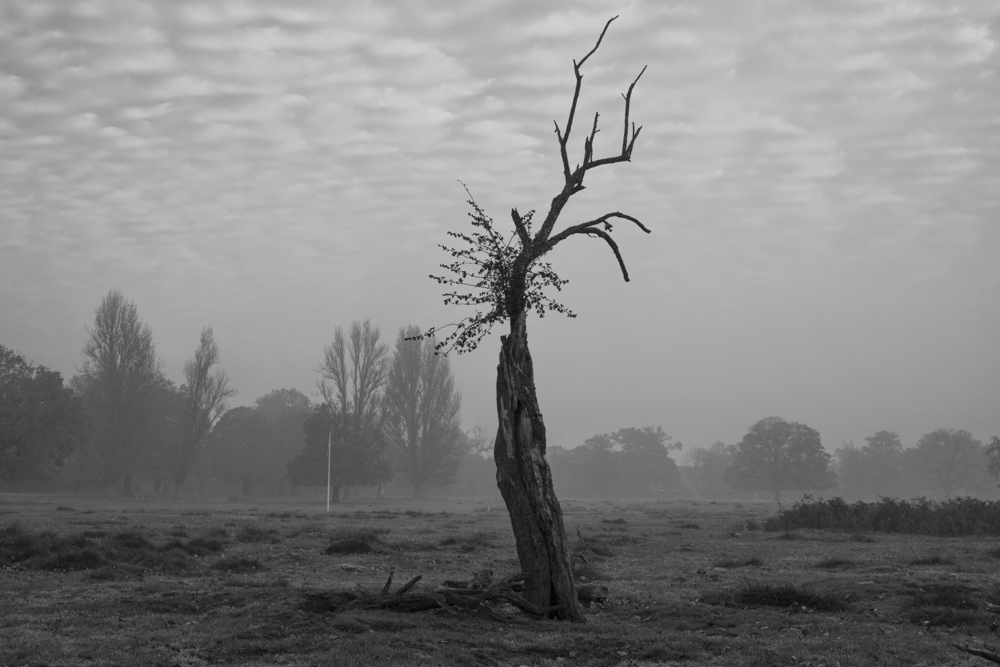
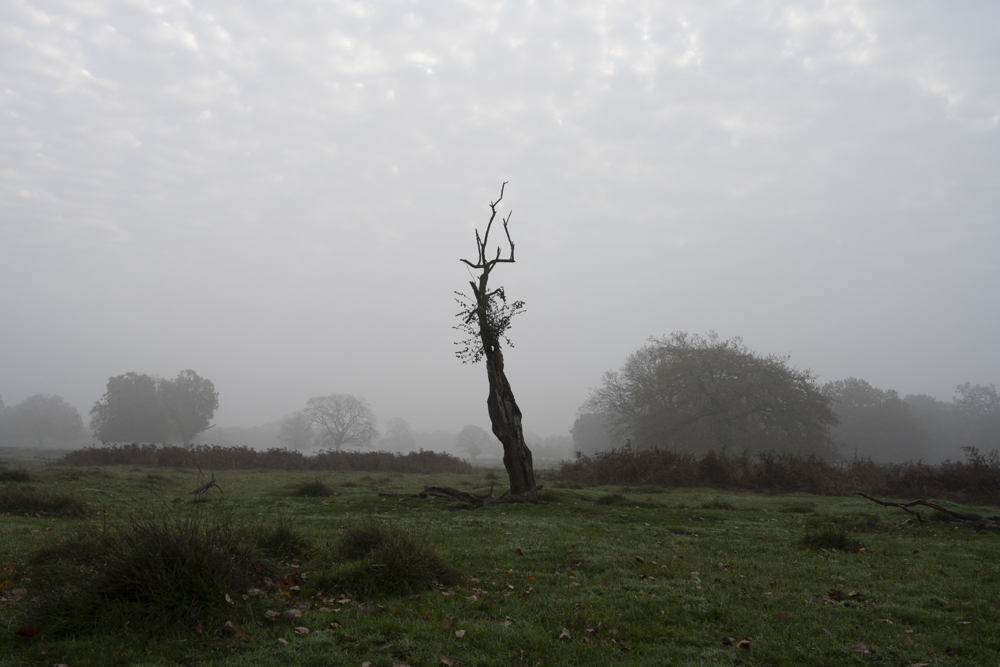
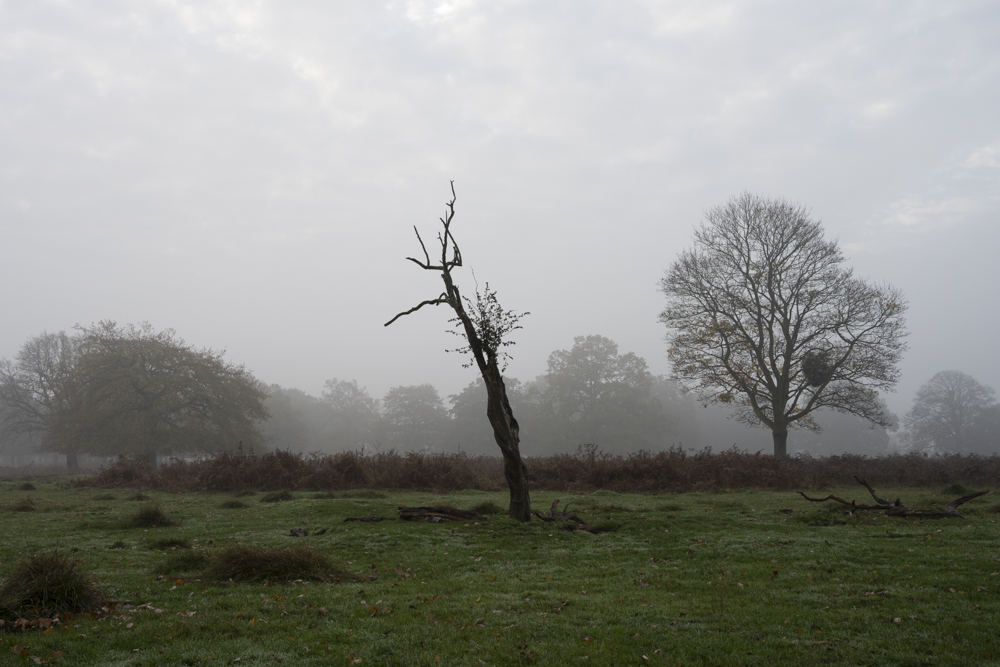
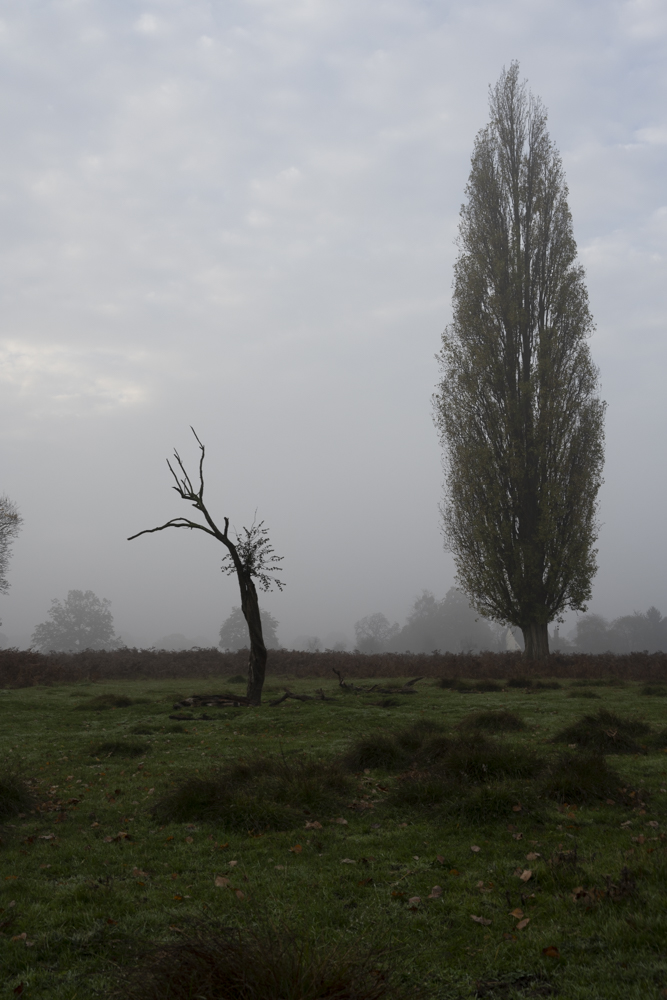
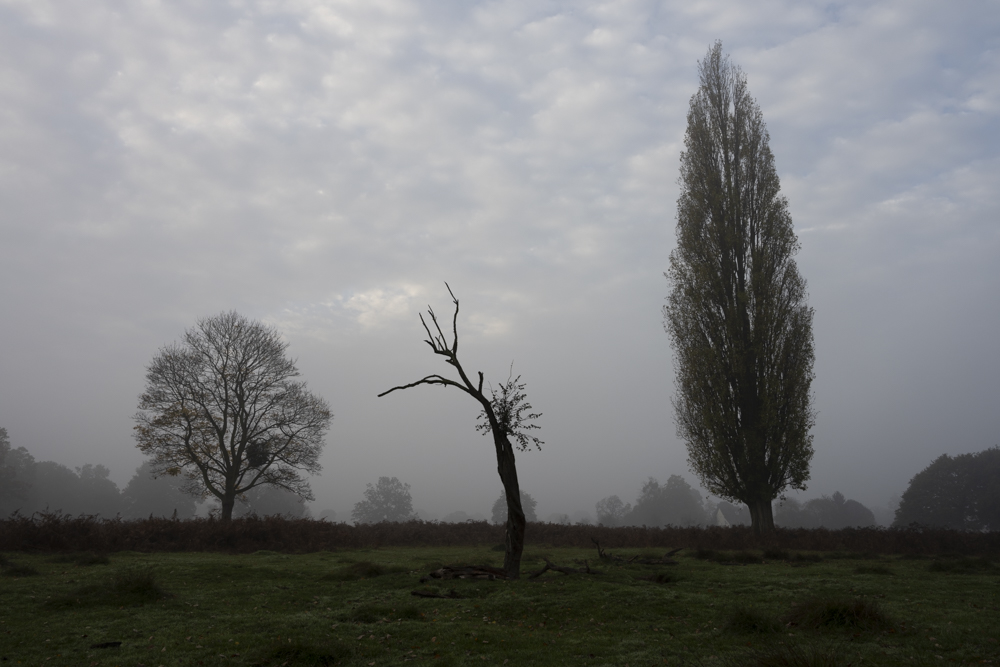
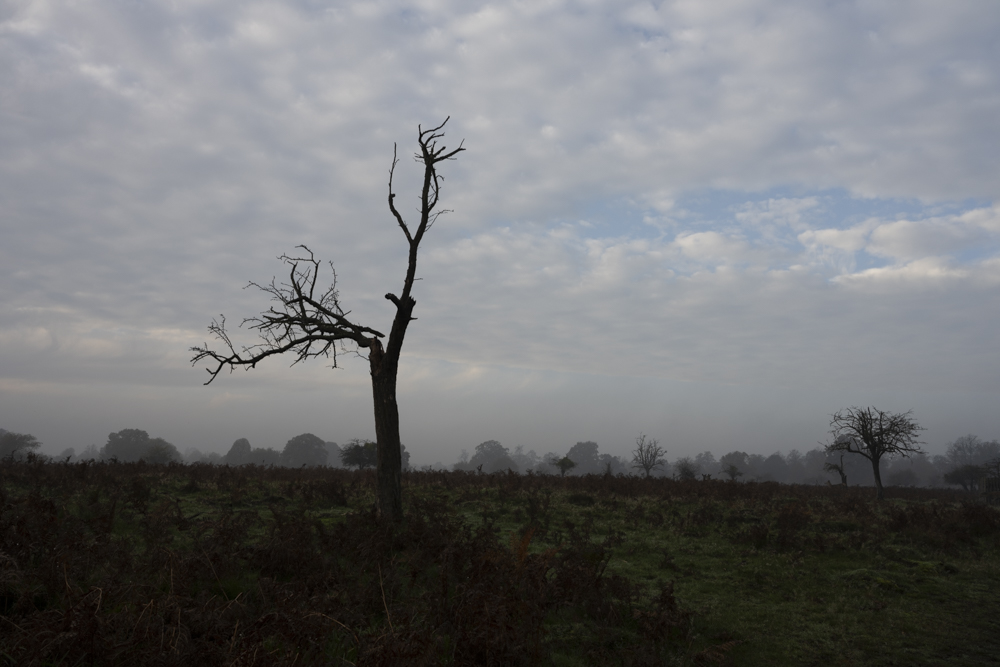
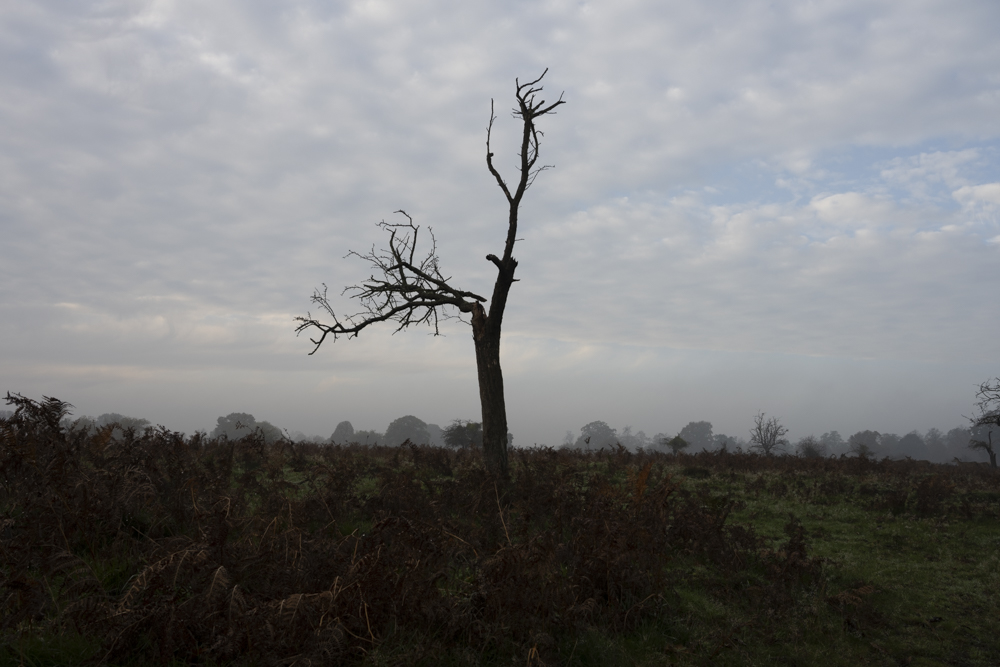
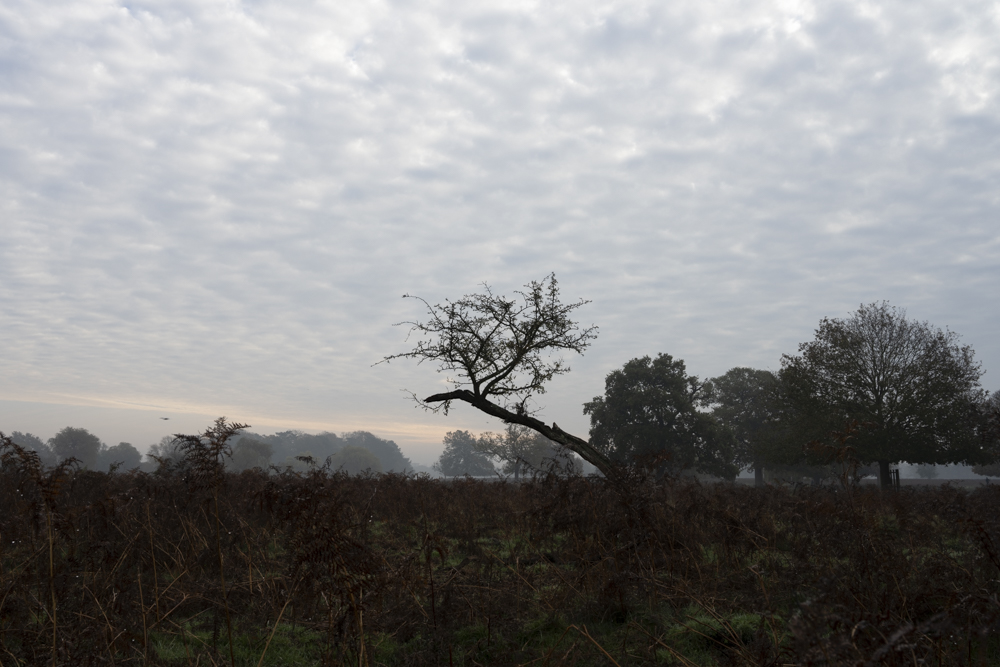
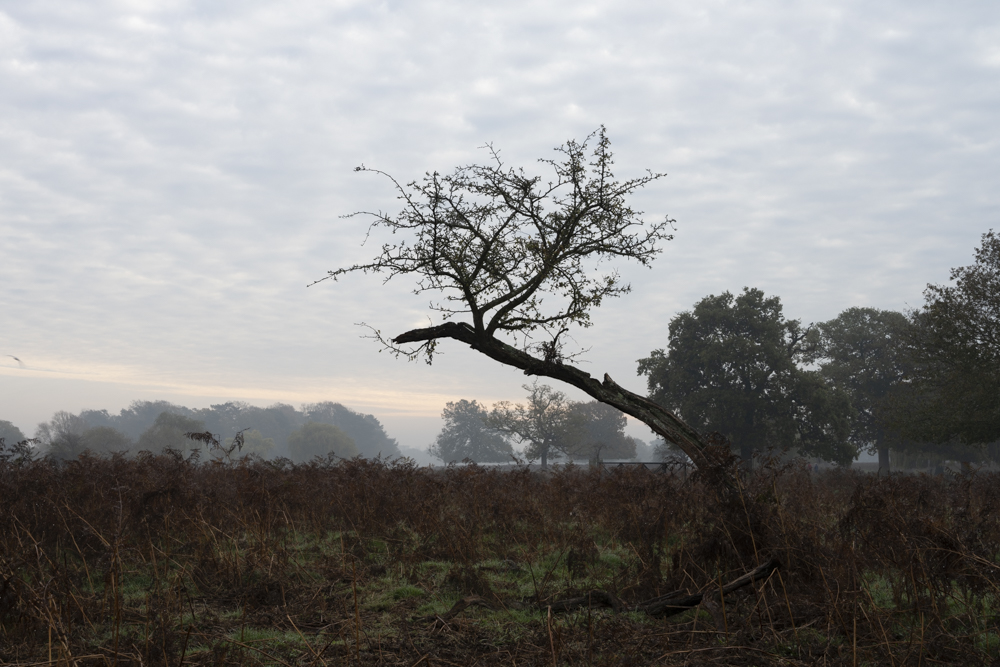
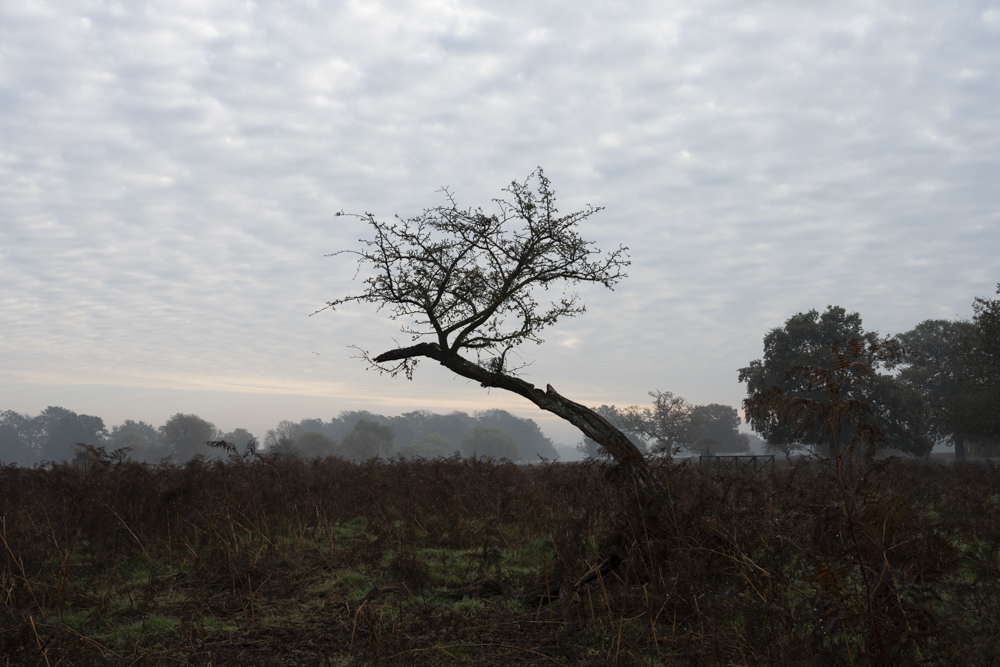
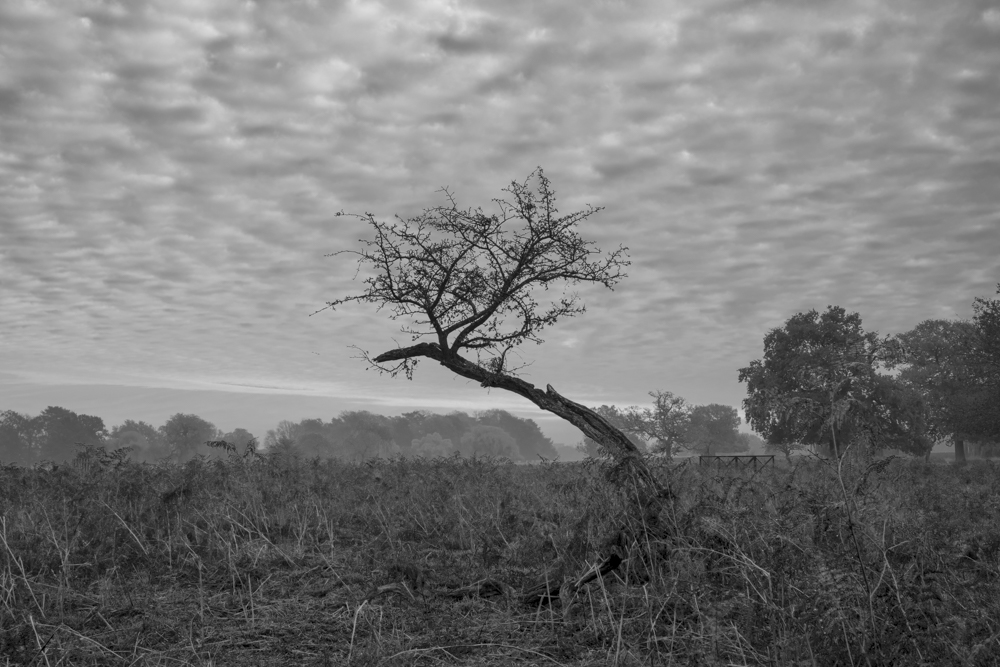
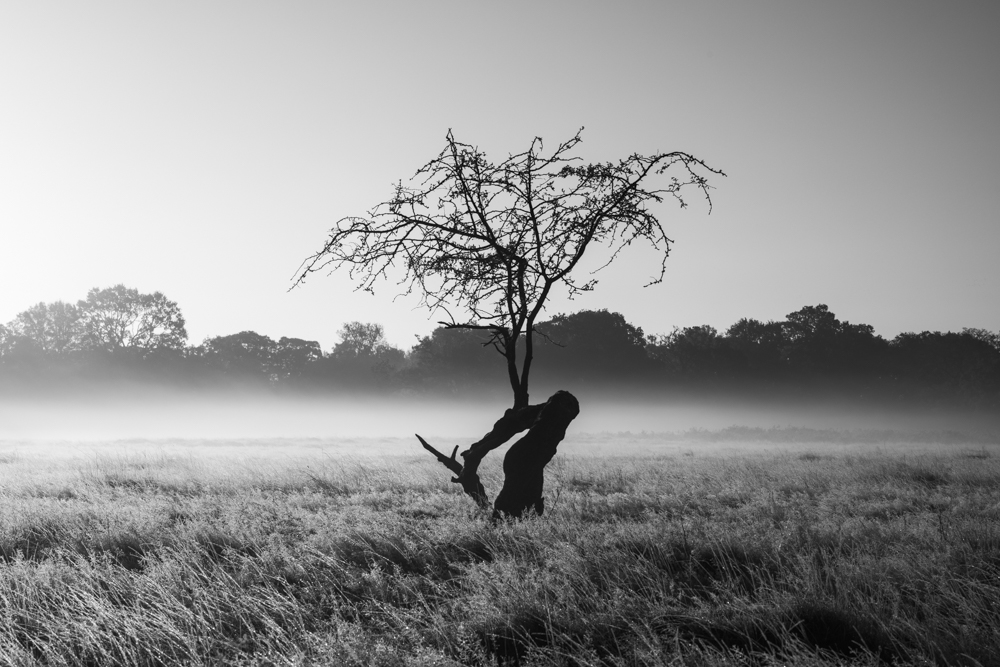
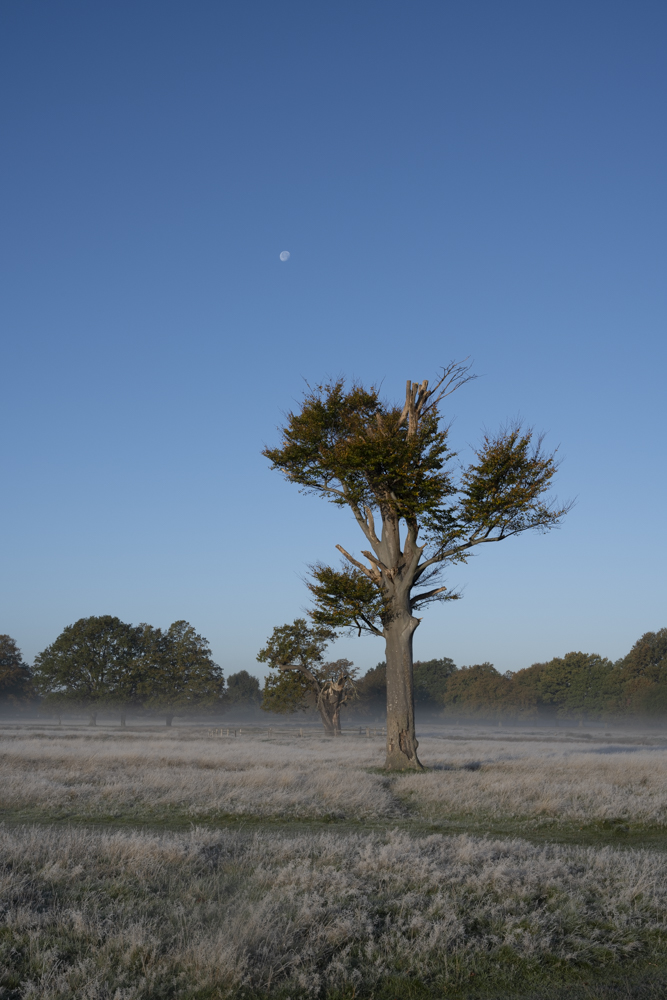
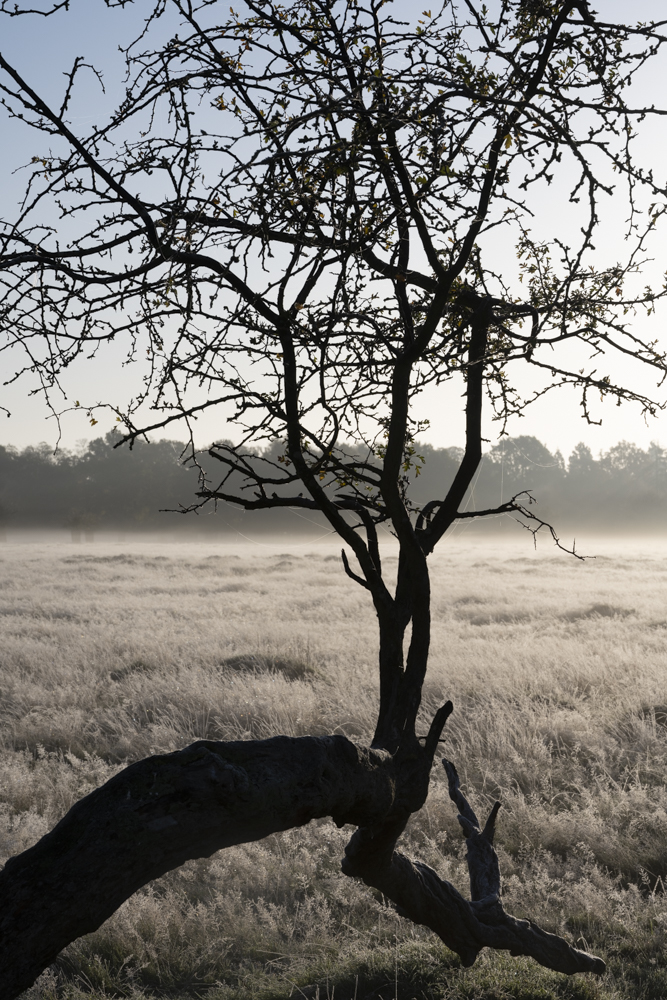
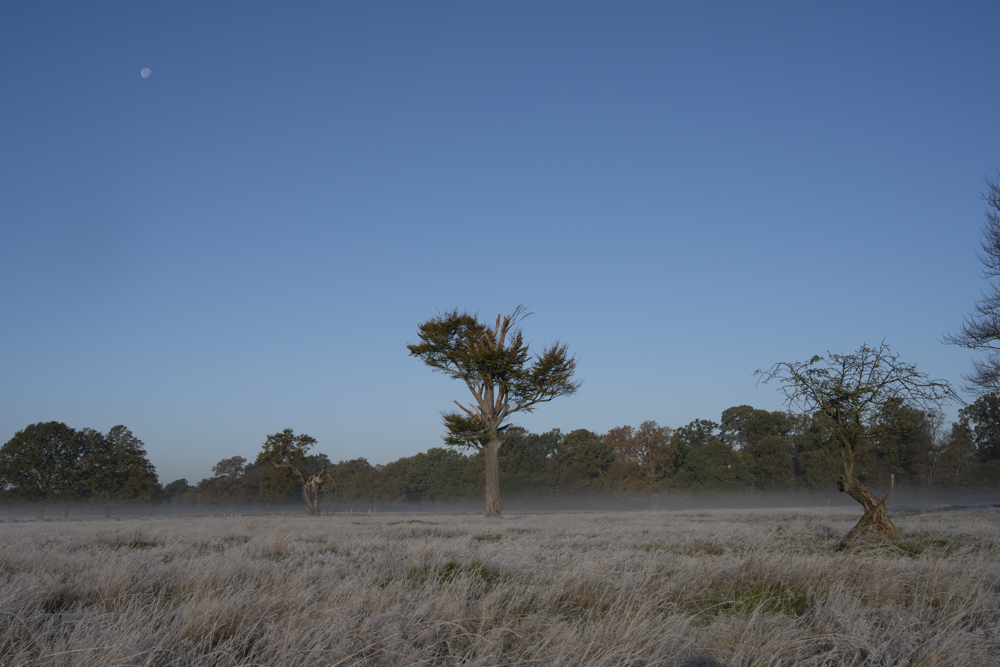
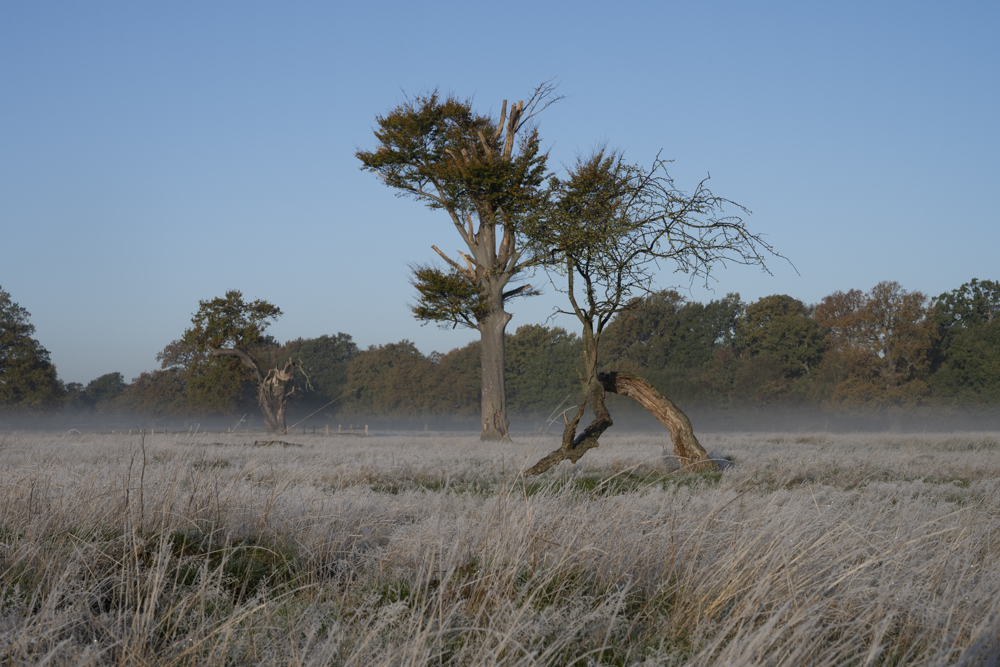
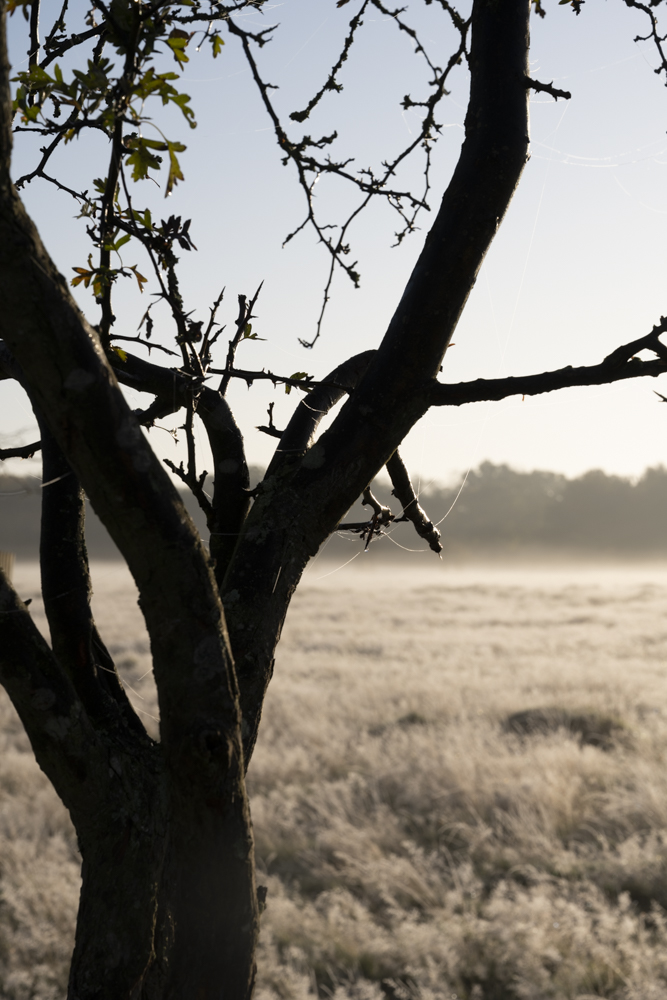
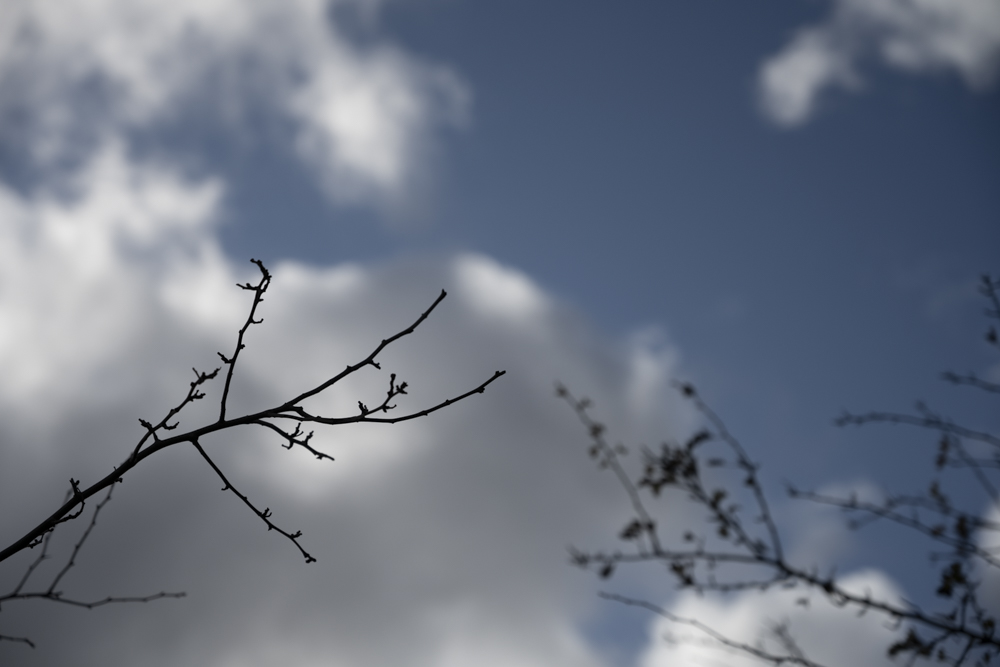
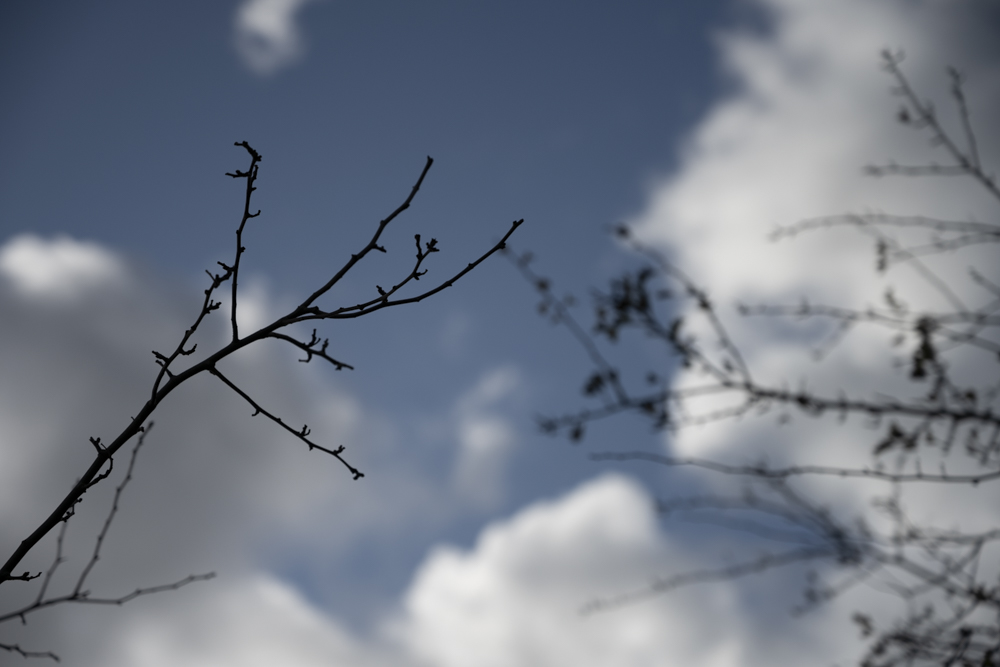
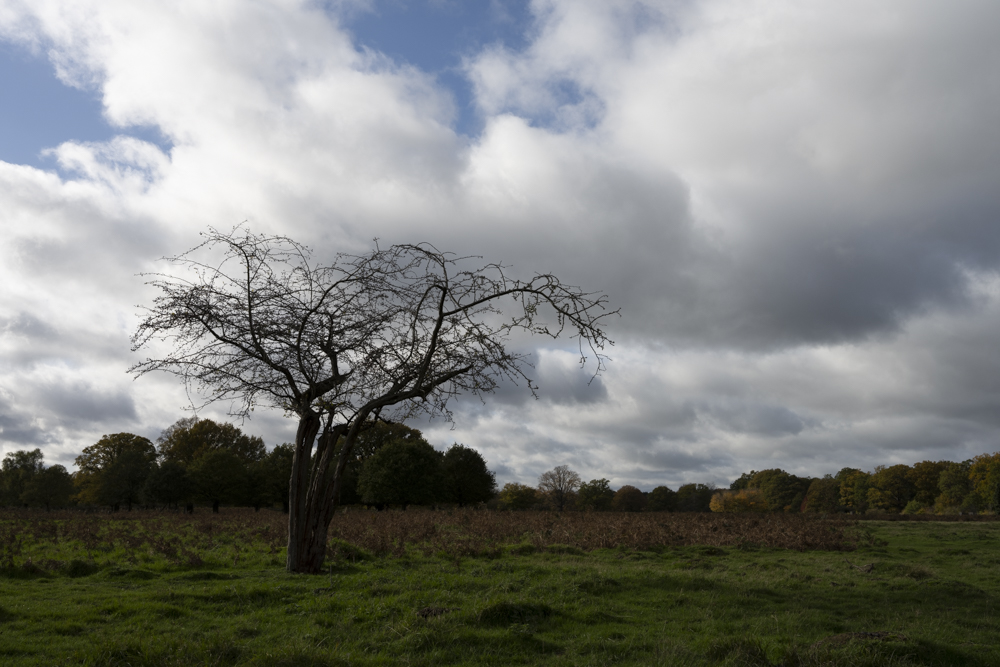
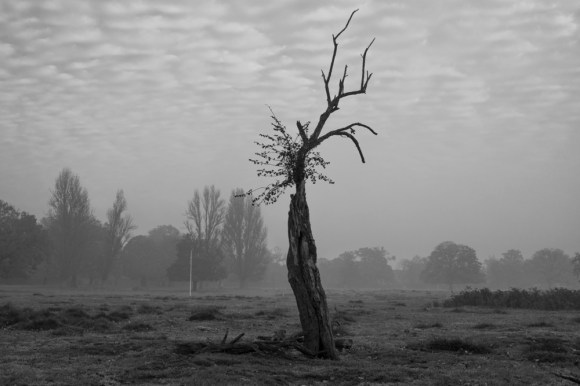
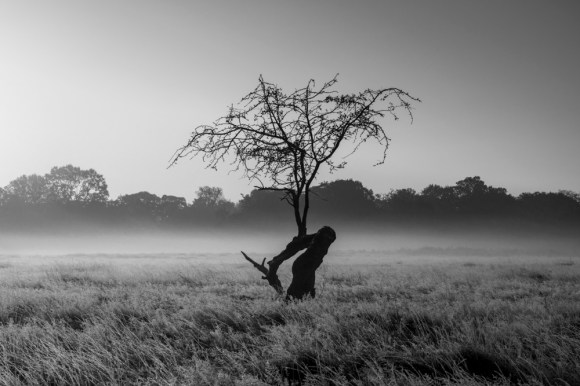
The following image, taken with at 53.21mm at F4, was pointed out as having this effect, which was mainly due to the misty conditions.
The other aspect was the conversion of the original colour images to Black & White. This was sparked by my classmate, Mark, who is also a purely digital photographer. Mark is now focusing on Waverley Abbey for his project and is also carrying out Black & White conversions. While talking about his images, Mark mentioned the Zone method (initially formulated by Ansel Adams). This approach to taking digital images then converting them to Black & White has to be carried out in a different way to analogue – expose for the highlights, not the shadows. When recovering ‘information’ in a digital image, the ‘blown’ highlights (pure white) cannot be restored. The darker areas can be made lighter in order to reveal the details. In analogue, it is the opposite.

While looking online for more information about this aspect, I came across a very useful article by Spencer Cox.

Complete Guide to Black and White Photography

Cox states in the opening sentence:

‘The art of black and white photography is surprisingly difficult to master. You can’t just slap a “noir” filter on your images and call it a day!’

(Cox, S. 2020)

Over the past seven years, I have been converting images to Black & White digitally and have certainly developed my particular methods. I am in complete agreement with Cox on his instructions and would never even consider whacking on a filter to create a particular effect. The conversion needs a subtle touch and a keen eye to achieve the best results.

One other recommendation that stood out was using the camera settings to take the shot in Black & White. When shooting in RAW, the file will retain the colour, but the monochrome version will appear on the screen. On that piece of advice, I set my camera to capture a RAW version and a low-quality JPG. This means I have both the original colour file that can be converted to Black & White utilising all of the available information and have a monochrome reference for editing.

Cox’s article is extremely useful and I will be taking his advice on board as this project progresses.

The other aspect was getting to know my camera better. This article by Nasim Mansurov was very informative. 

Recommended Nikon Z7 Settings

By following Mansurov’s suggestions, I reset my camera to see how it would make a difference.

With this information in mind and the suggested changes made, I visited the park.

Tree One

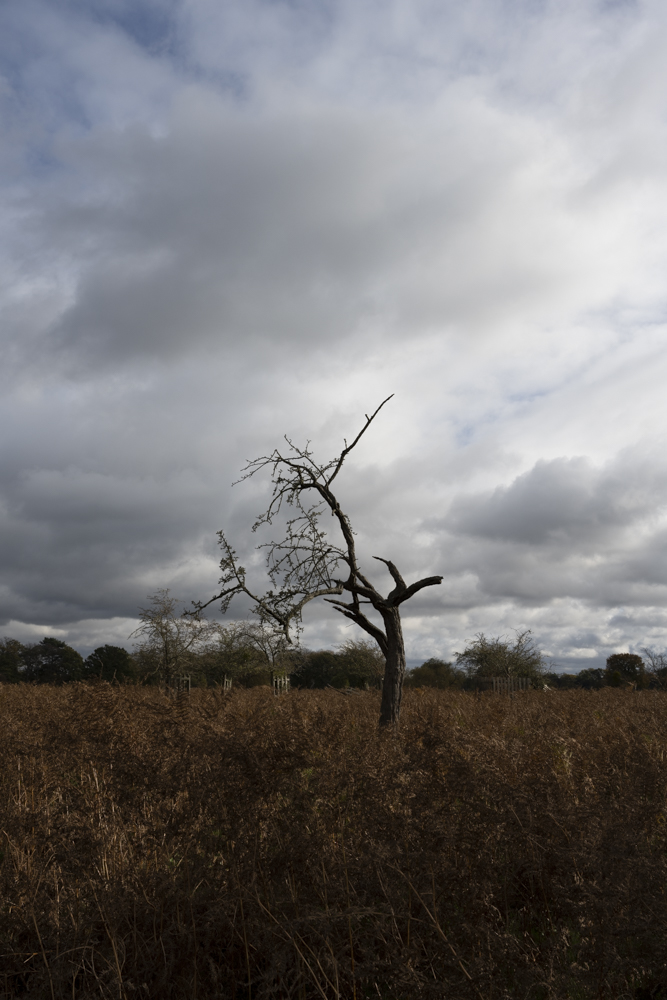
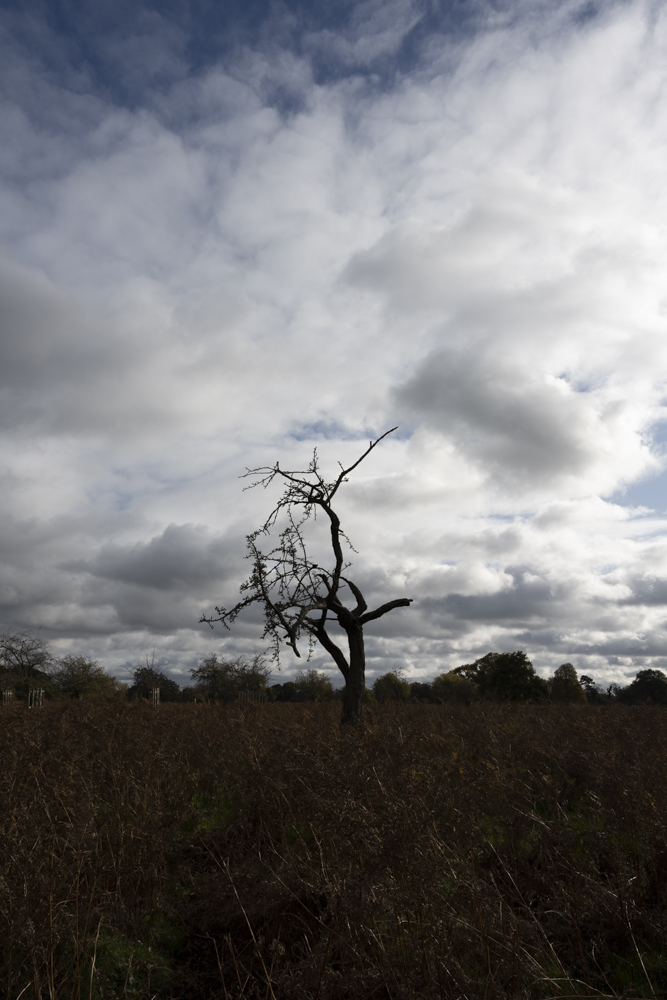
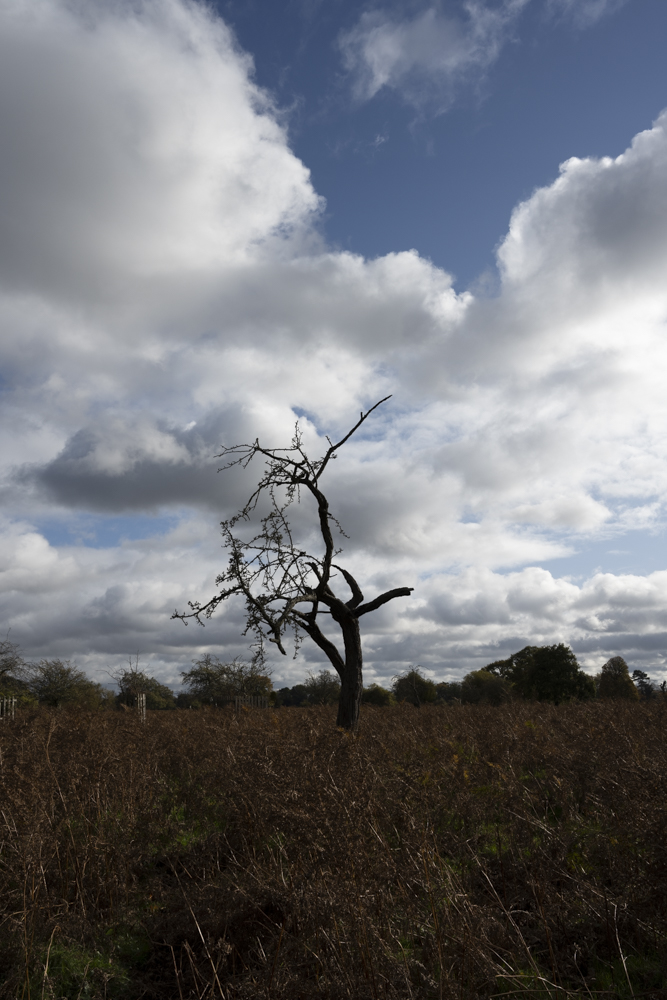
The first hawthorn I revisited was the one that had elicted the best response.
35mm Shots

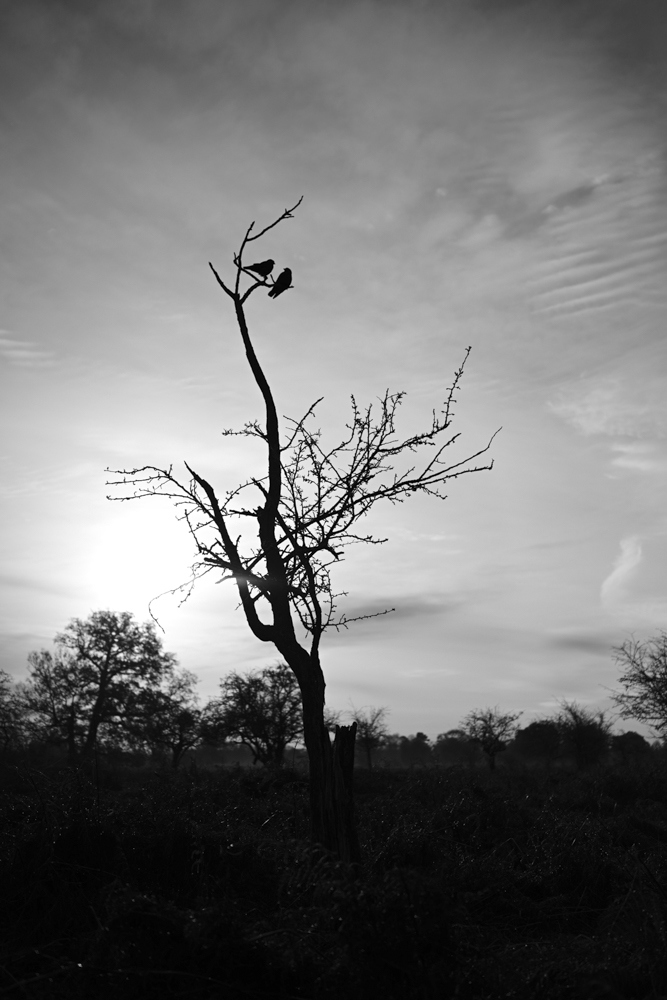
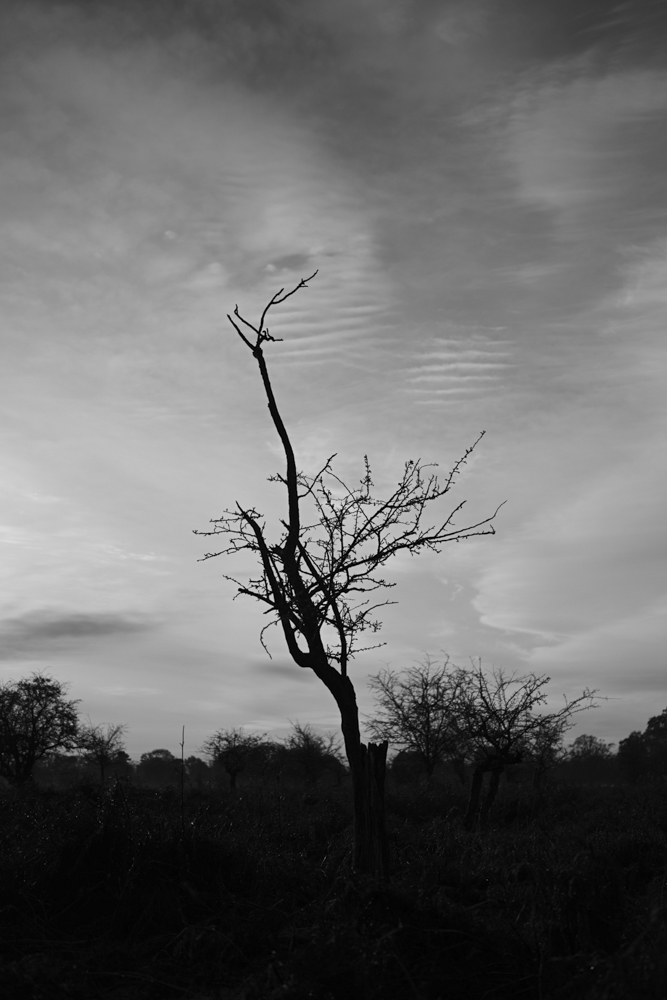
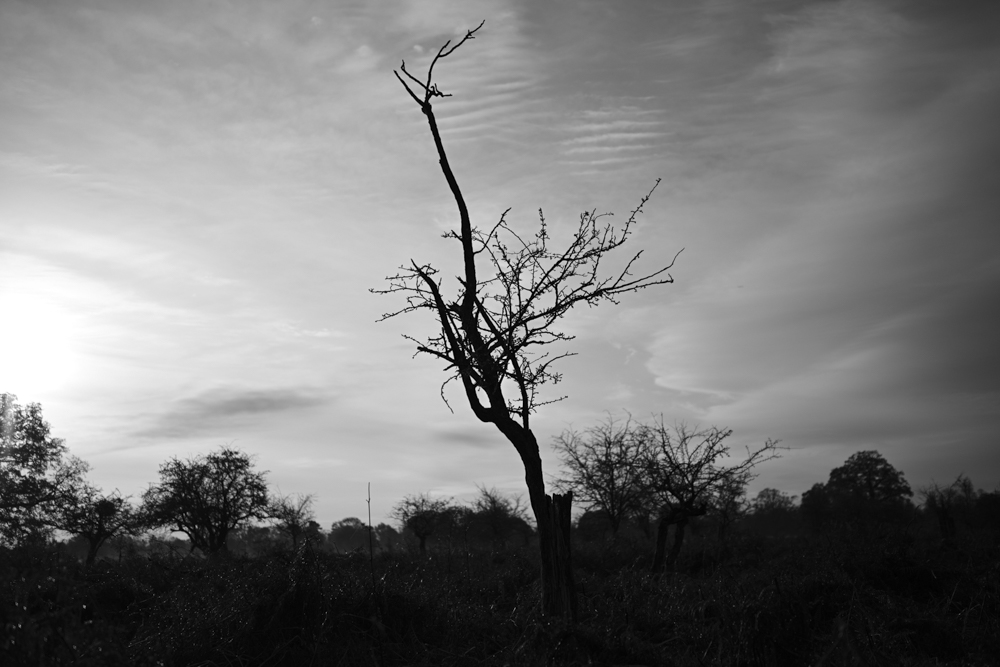
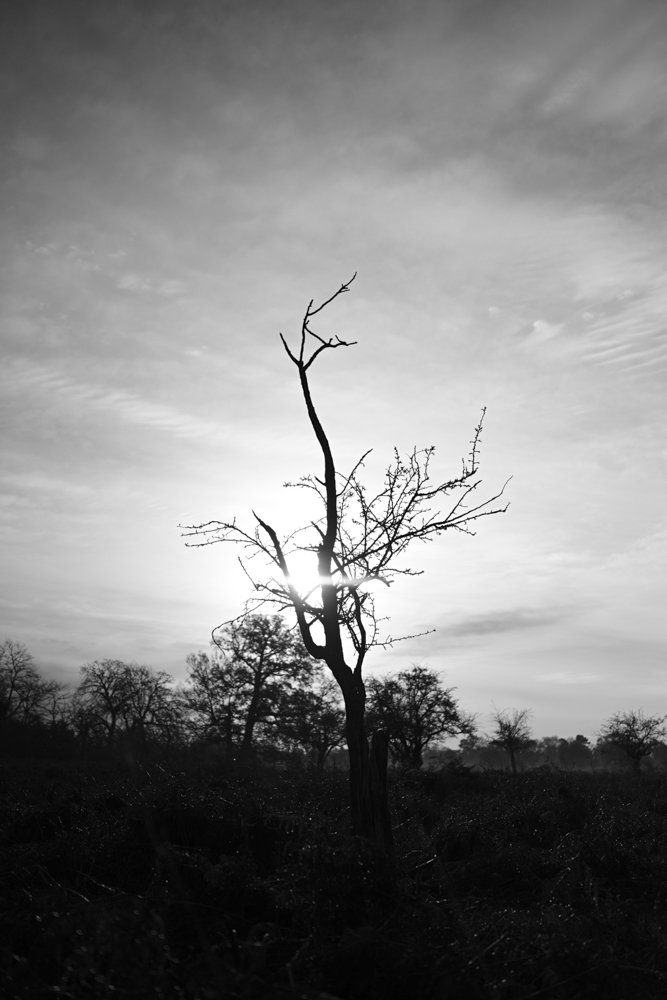
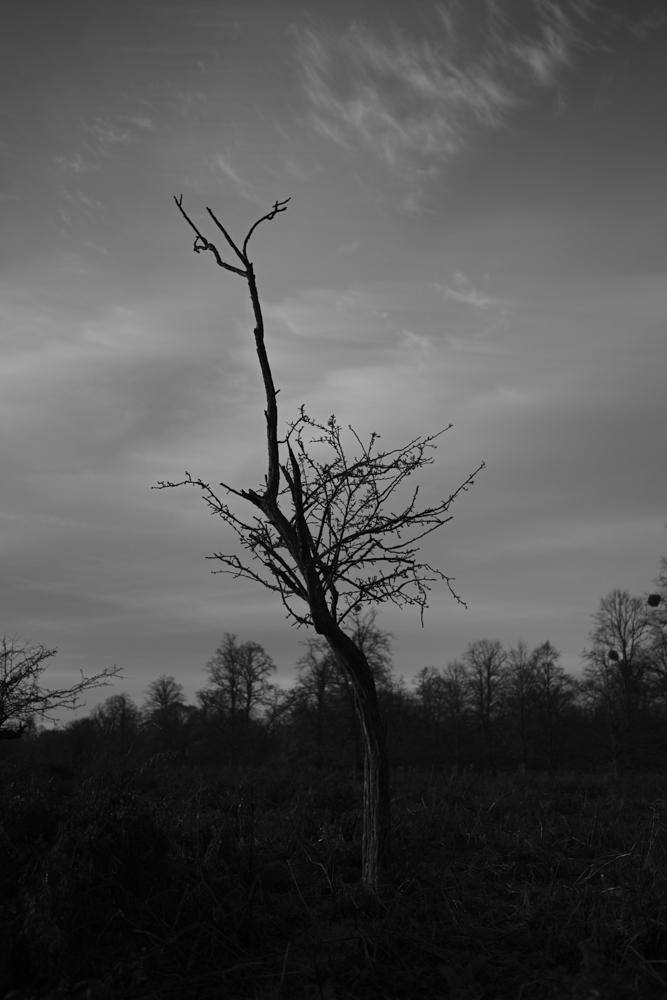
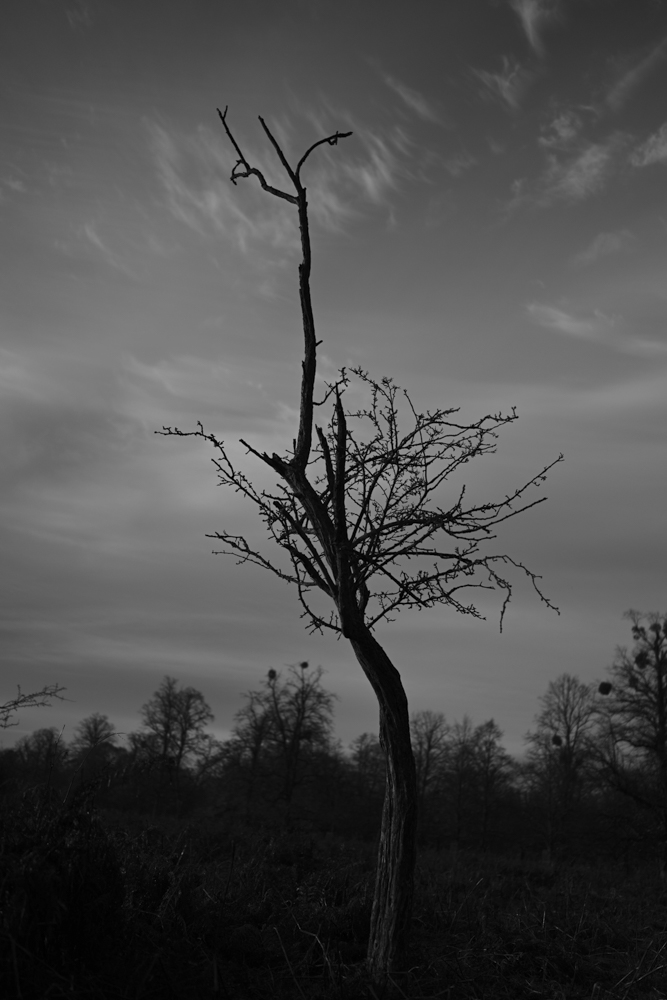
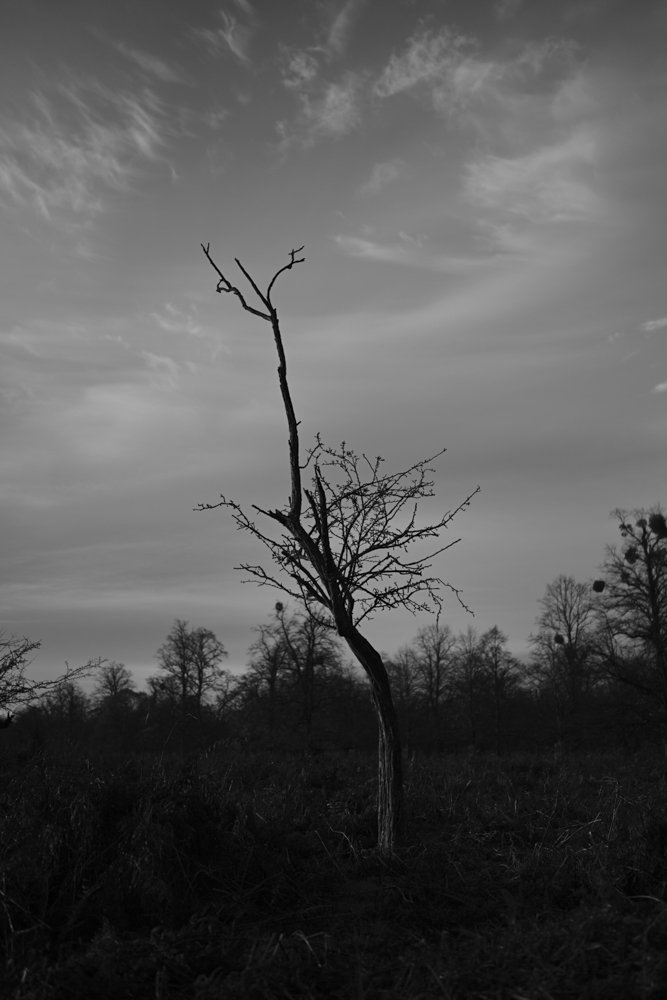
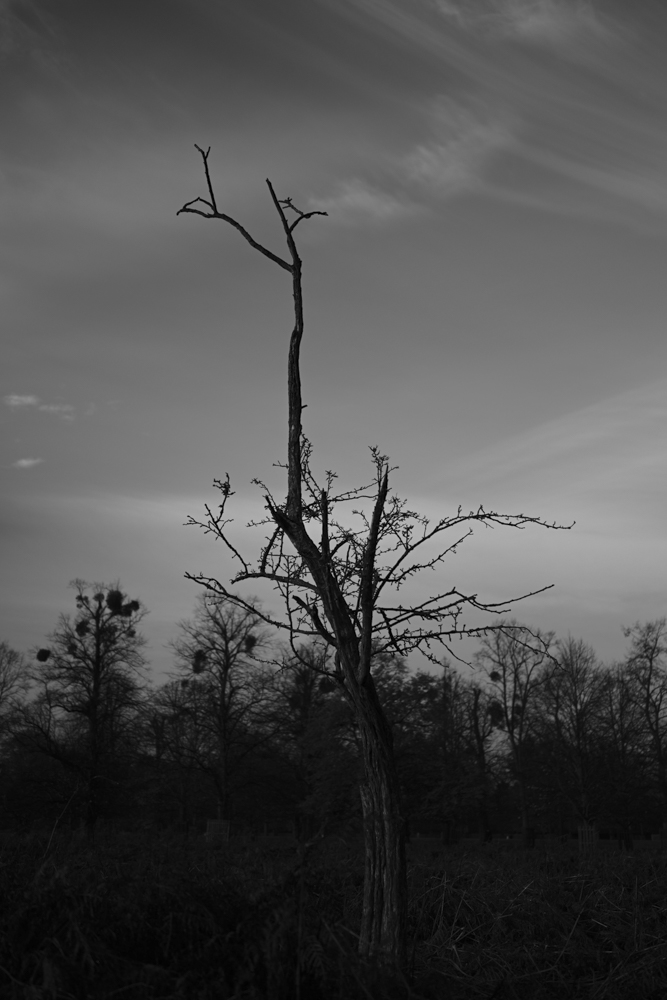
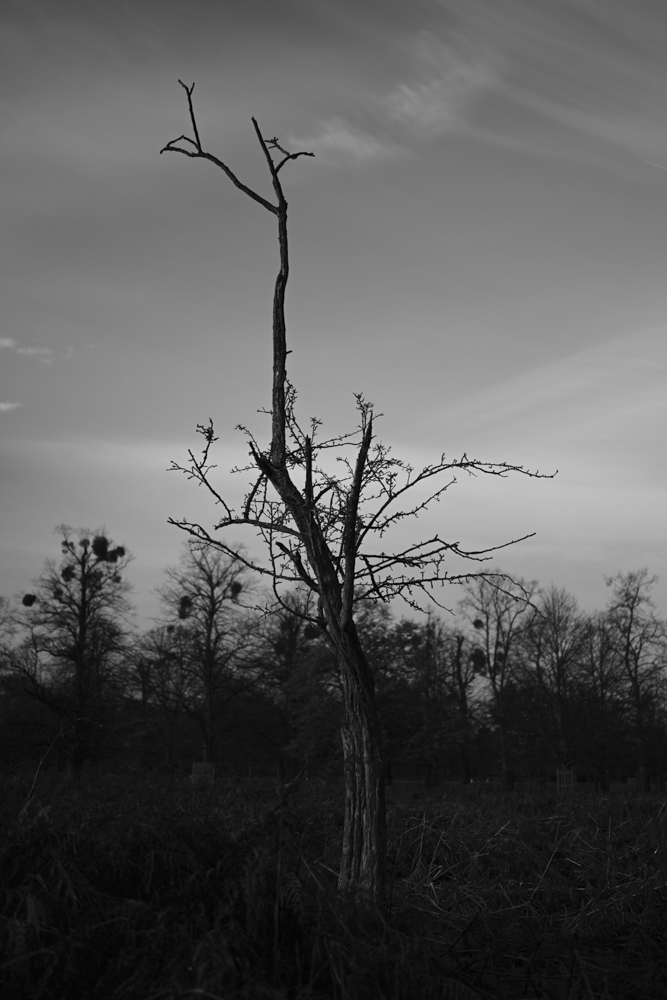
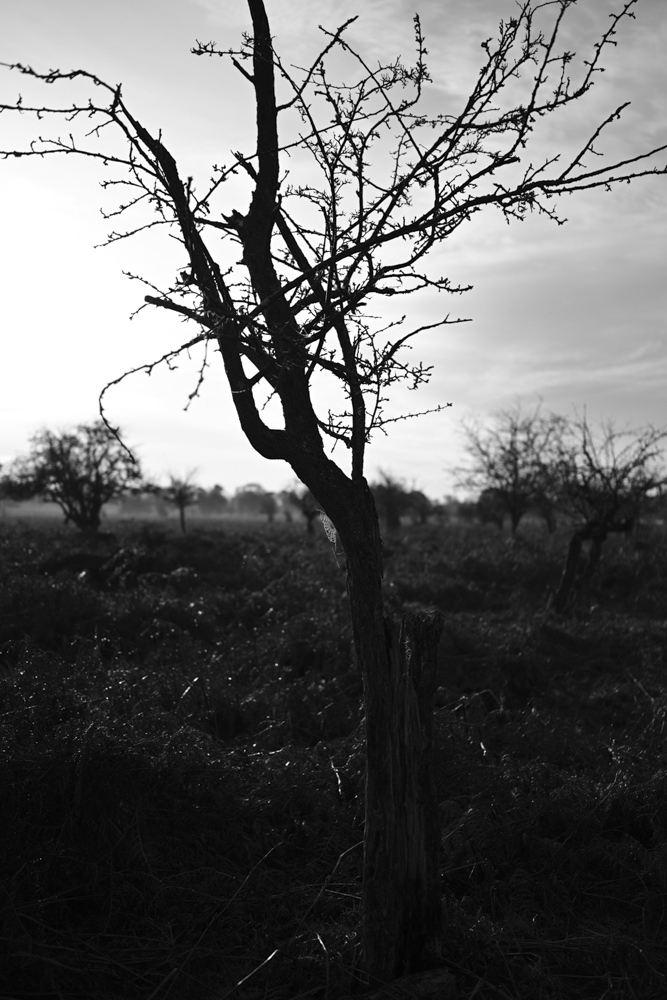
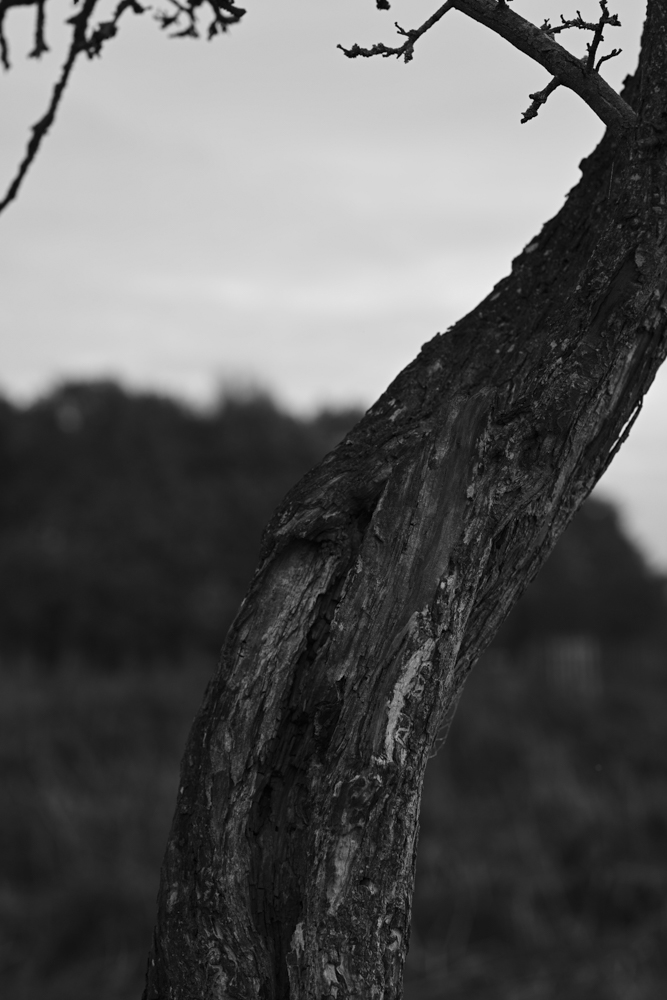
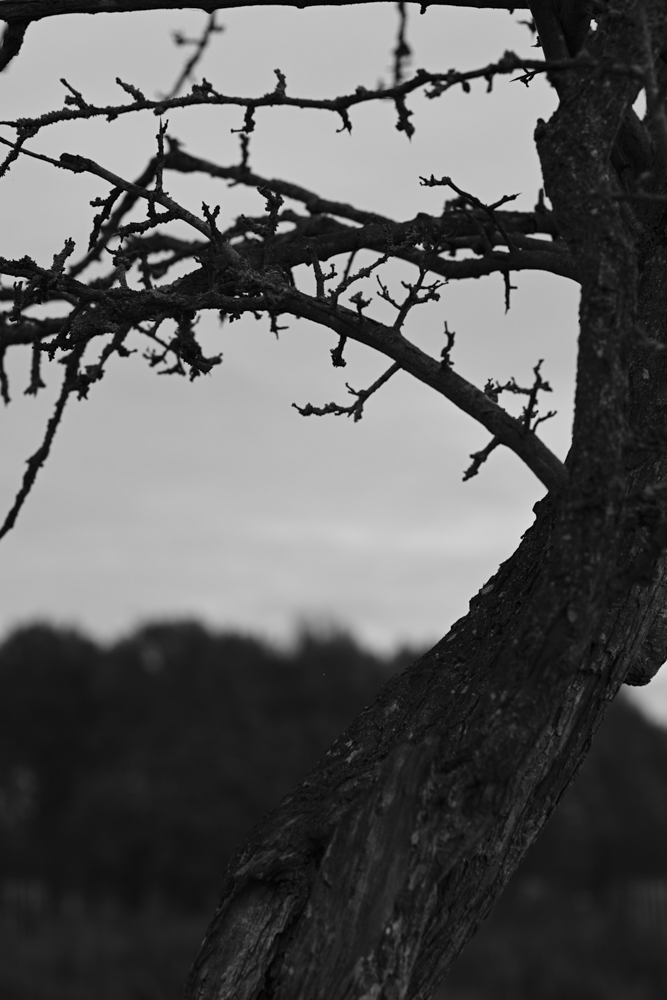
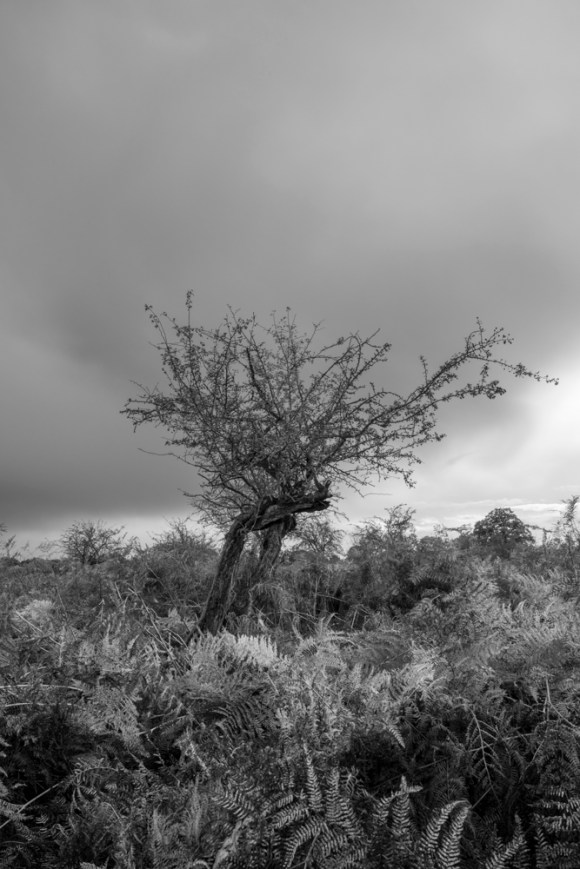
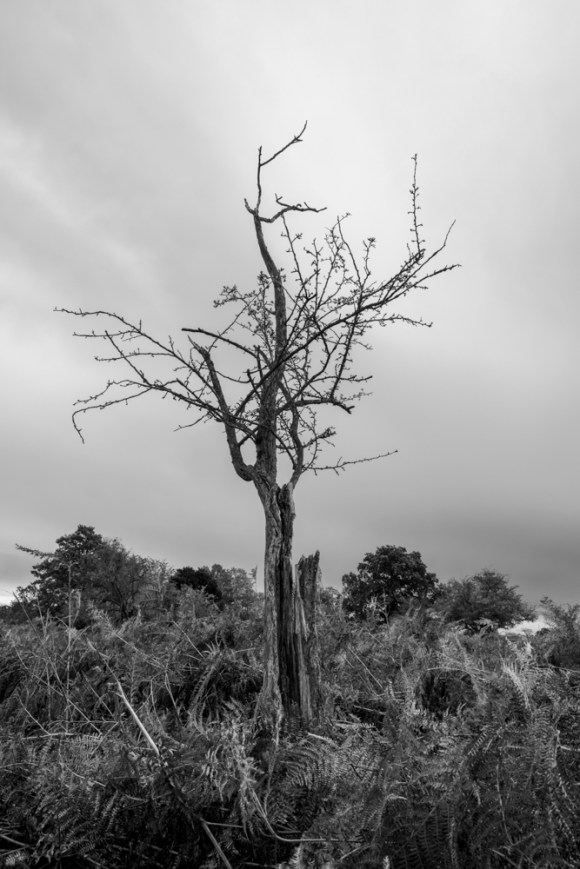
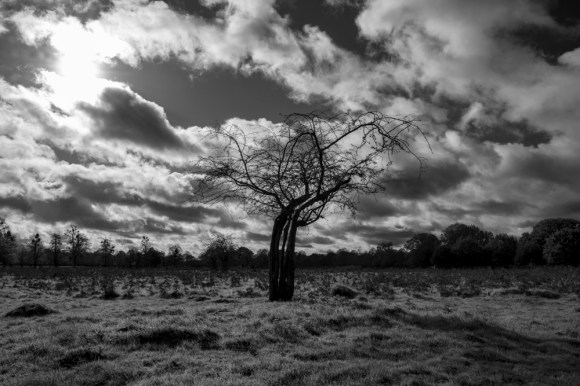
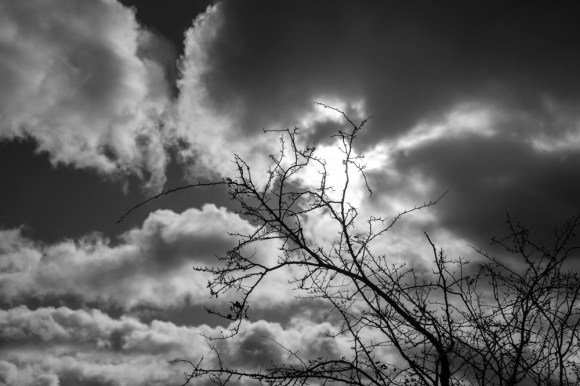
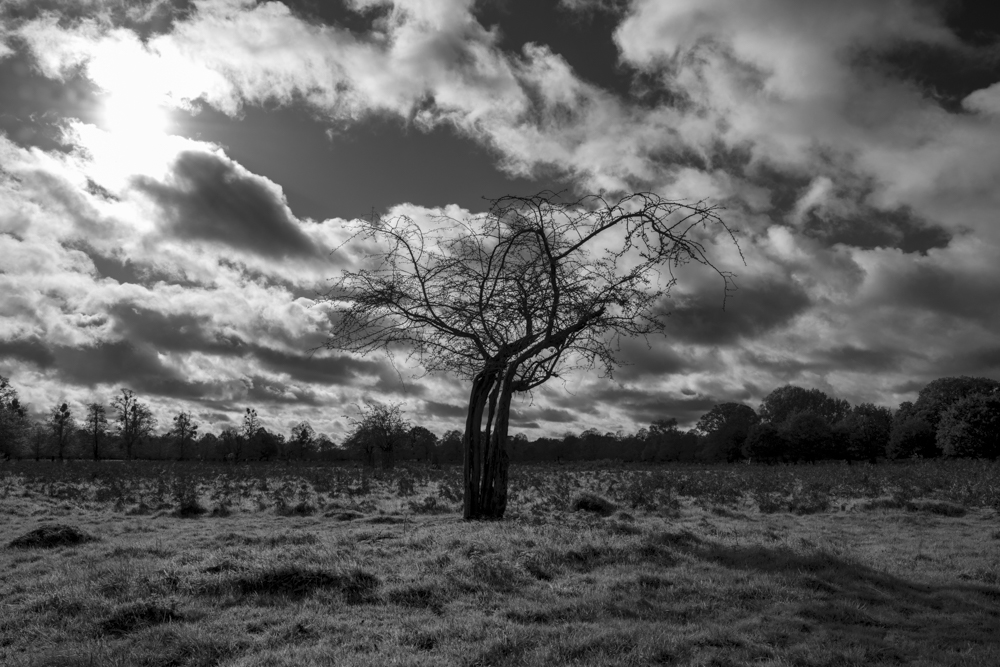
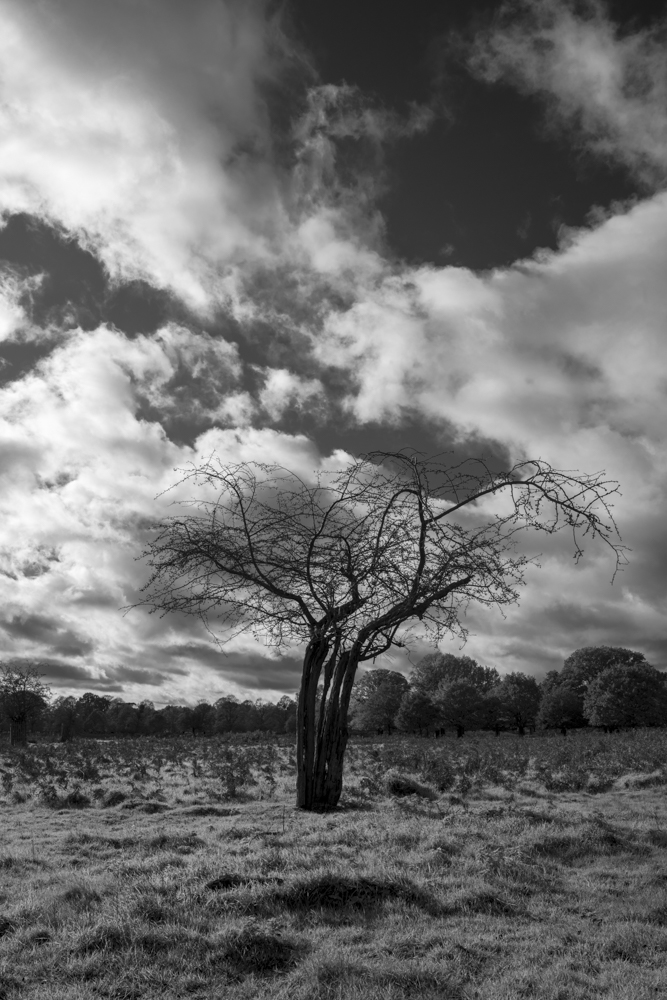
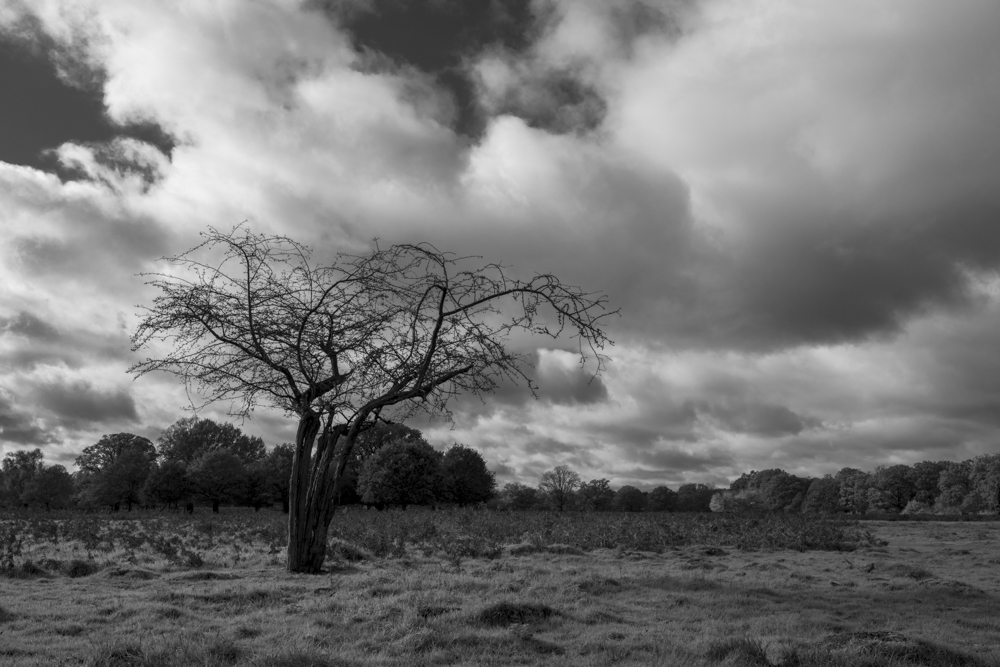
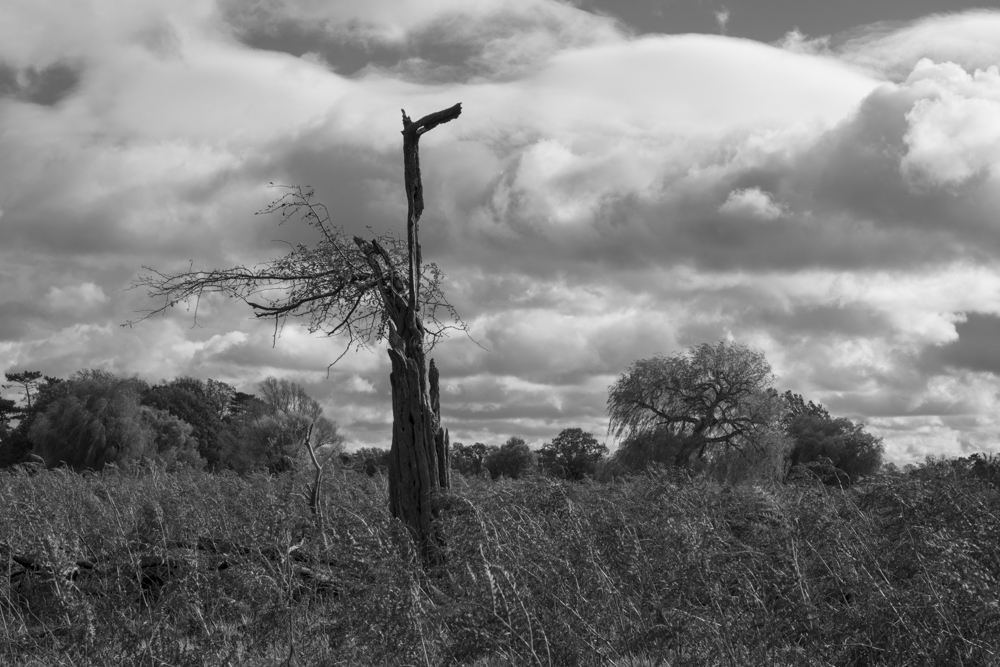
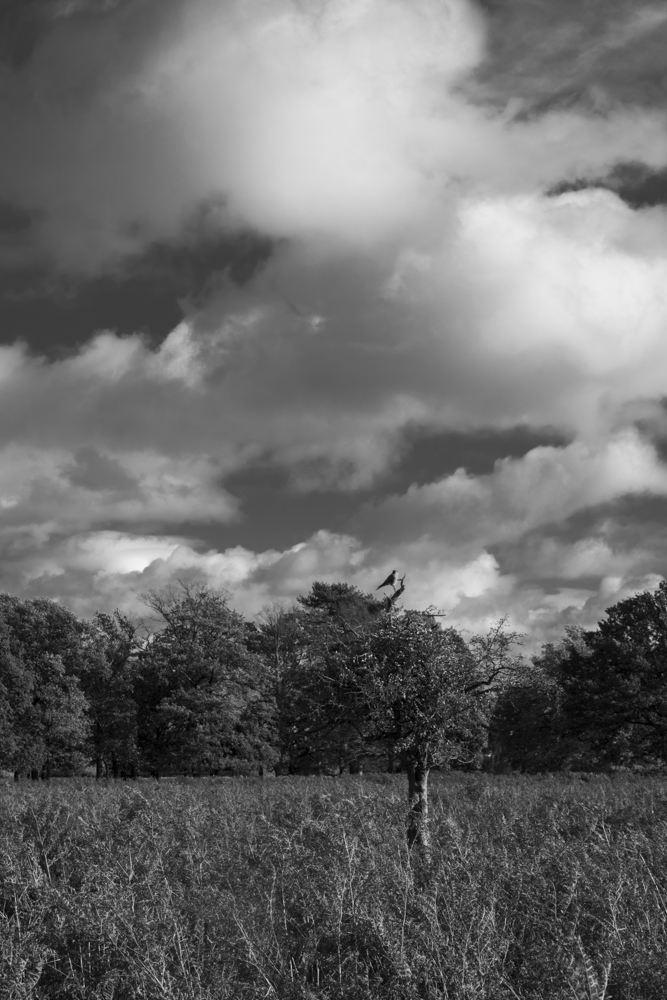
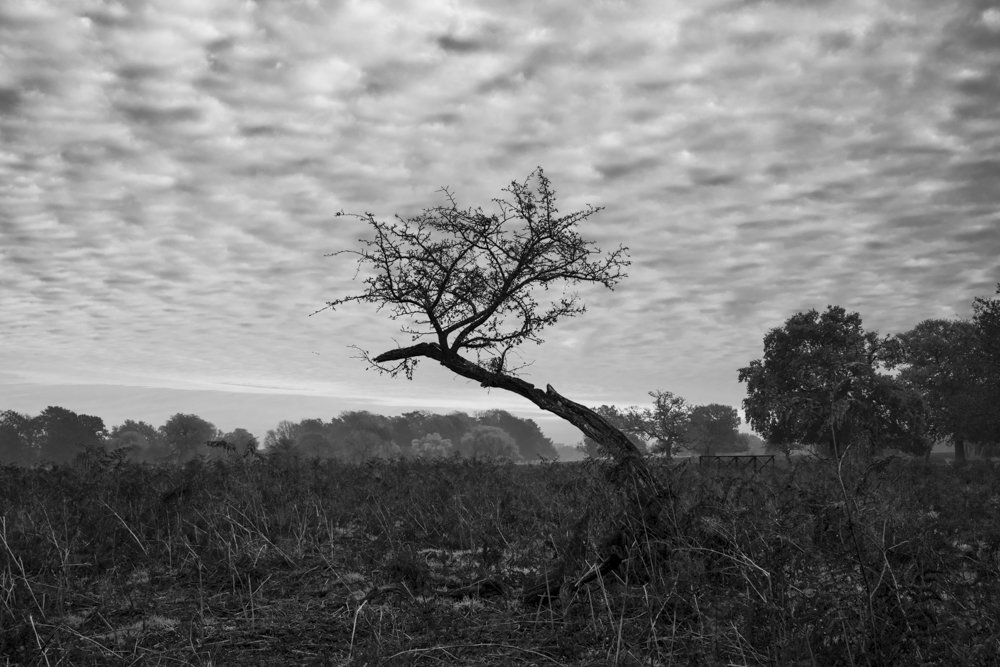
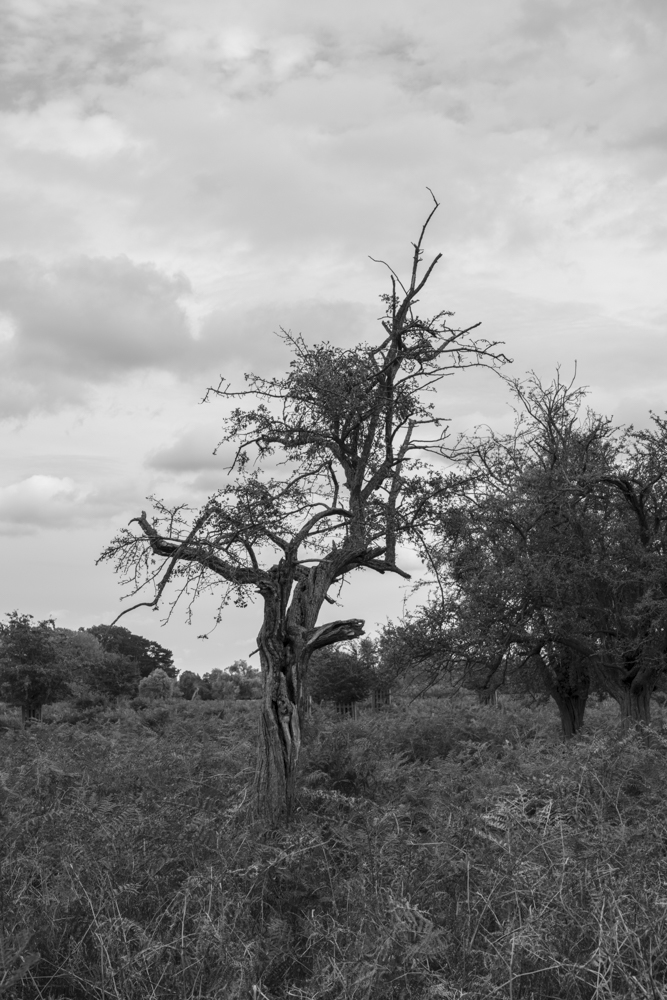
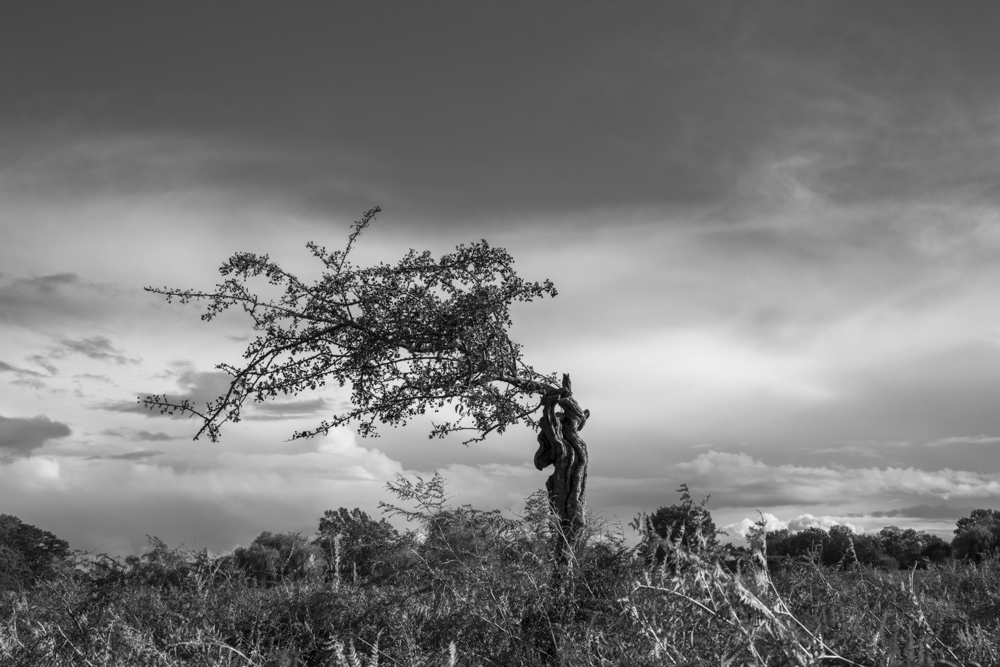
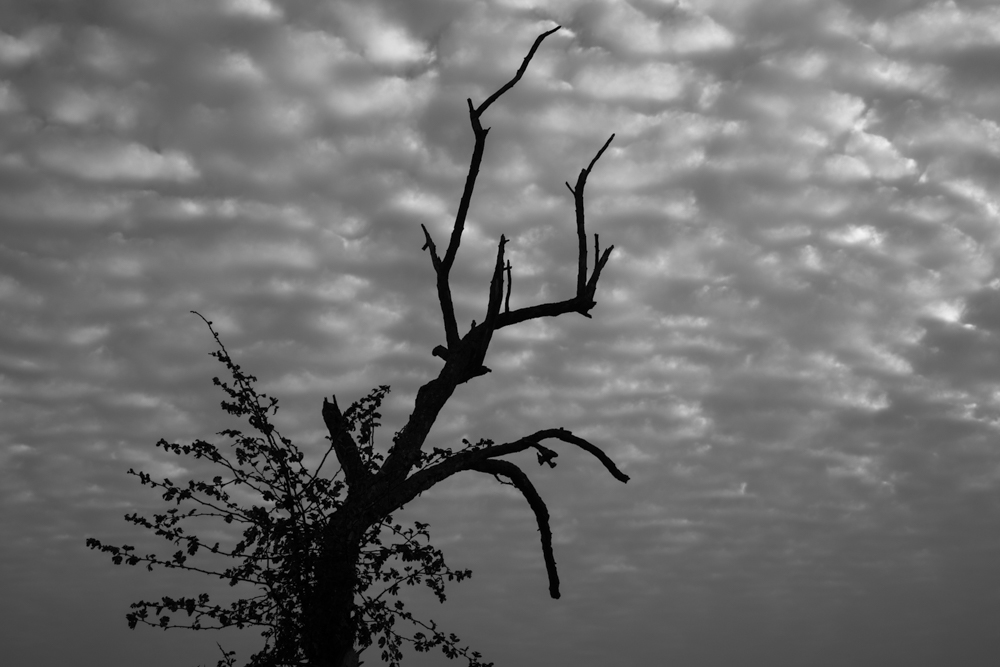
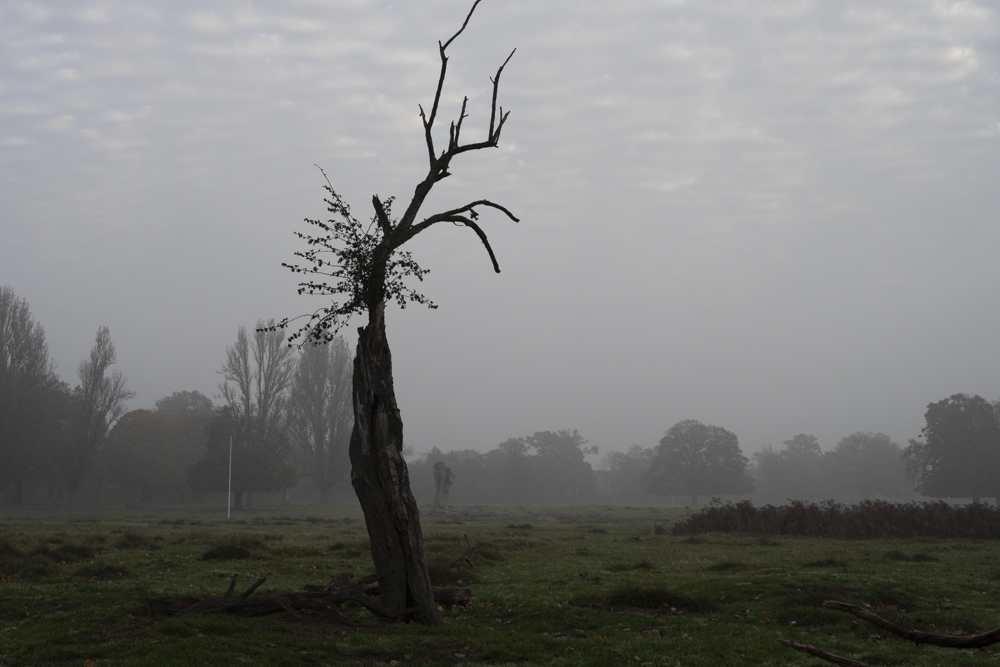
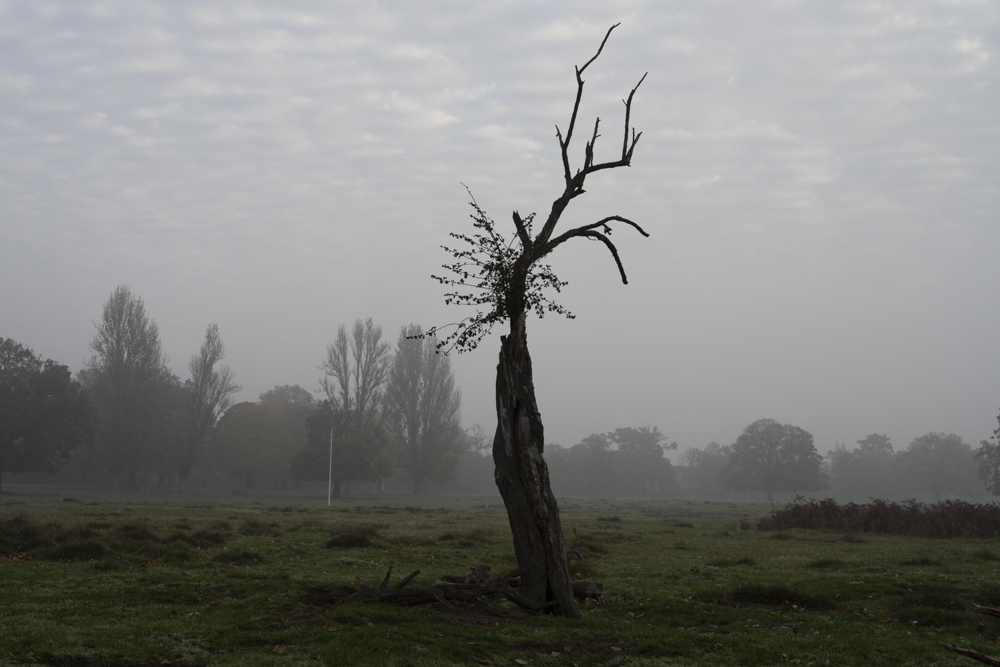
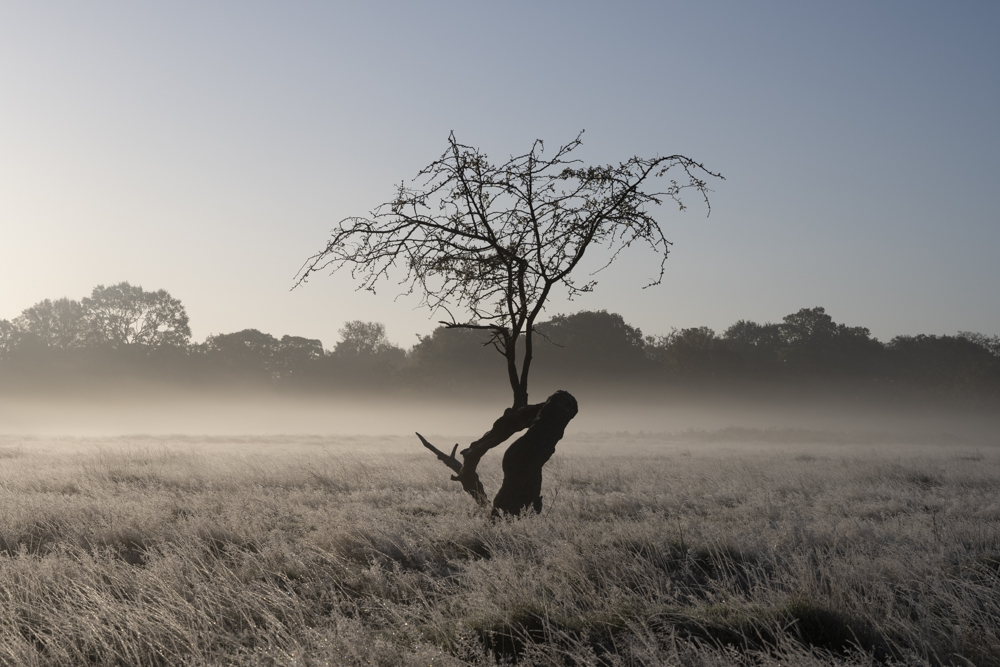
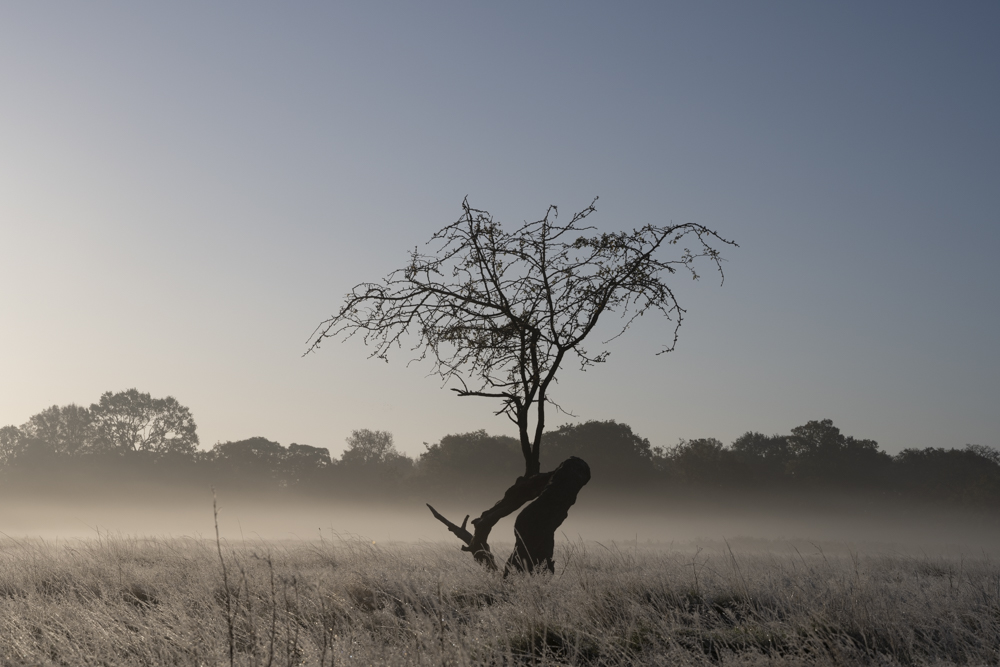
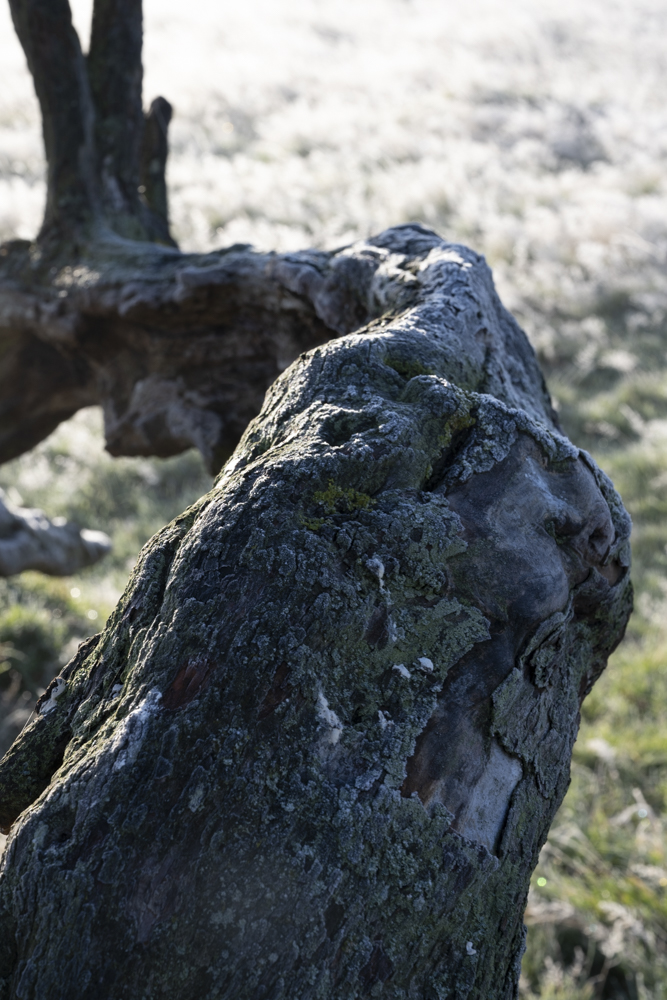
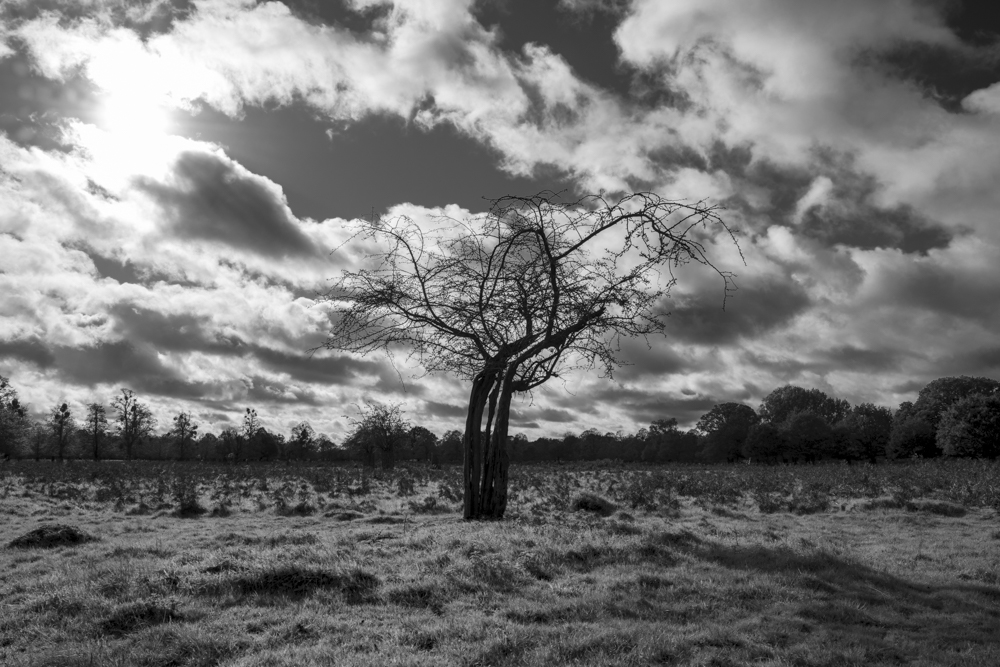
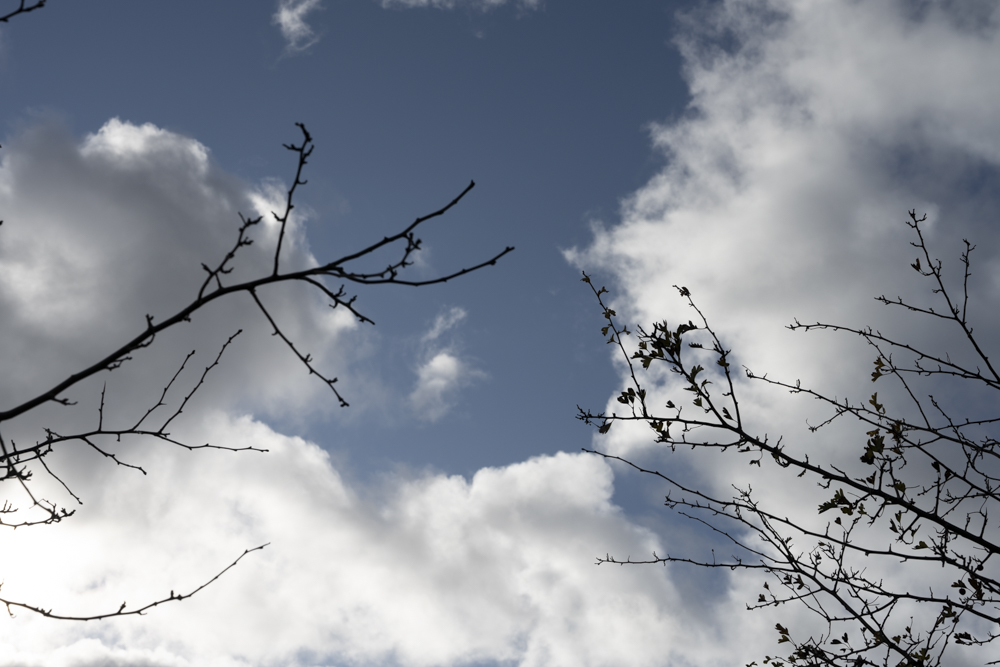
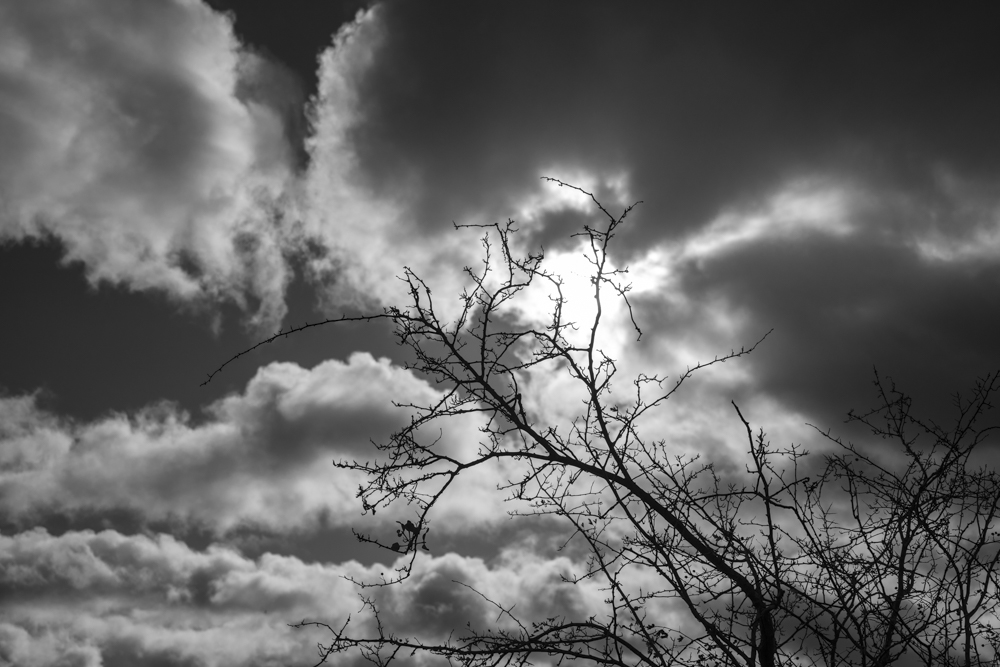
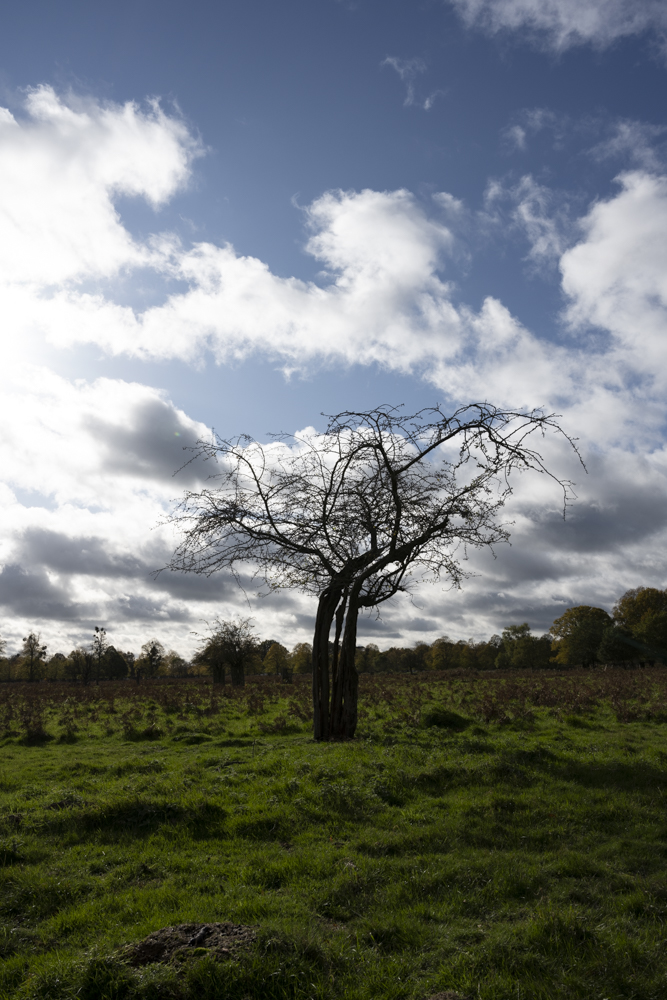
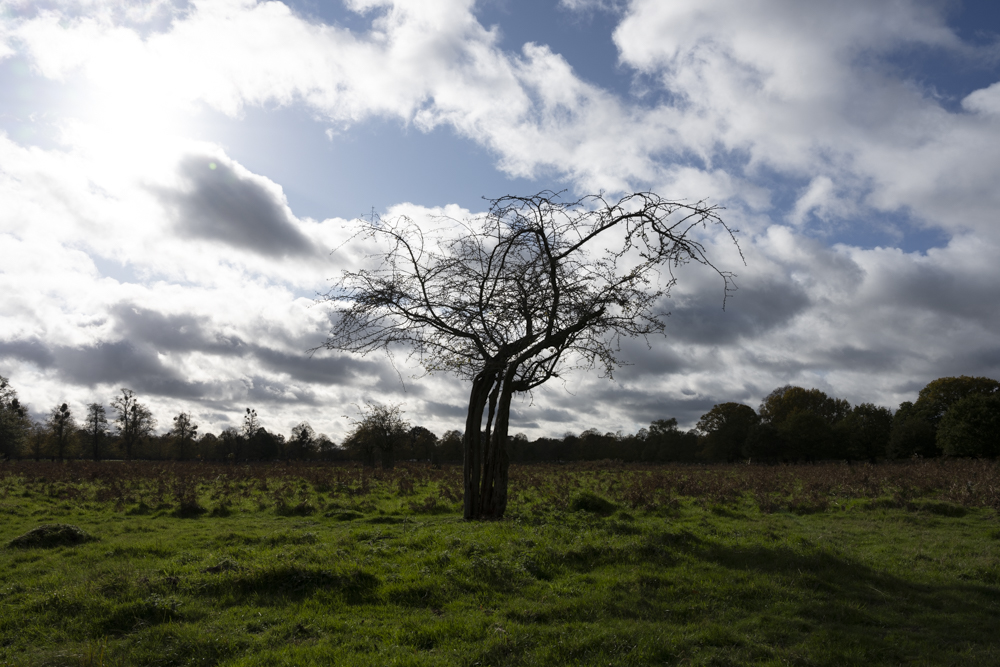
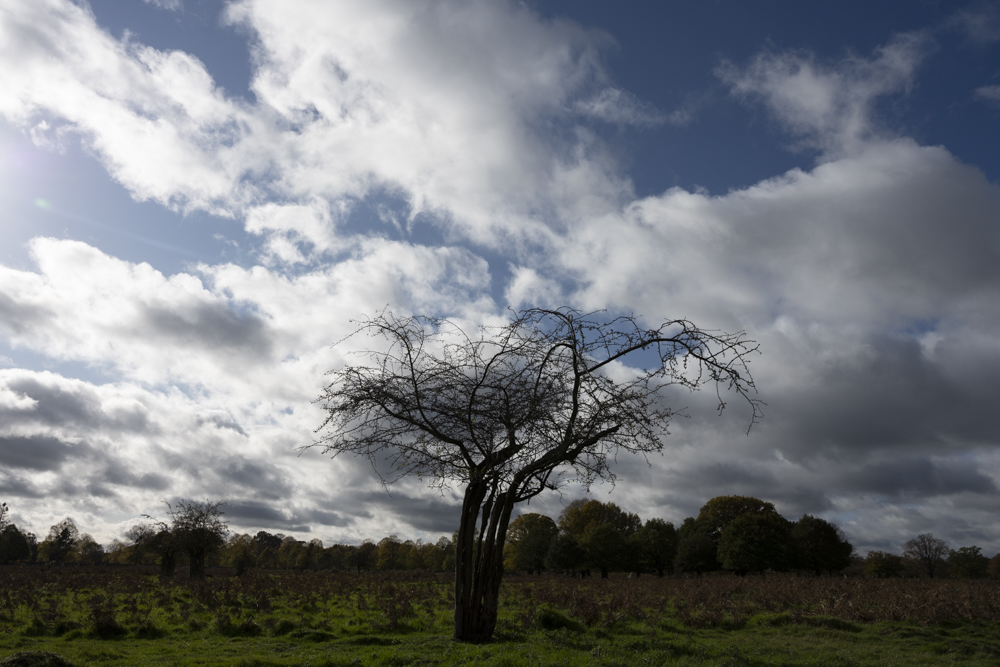
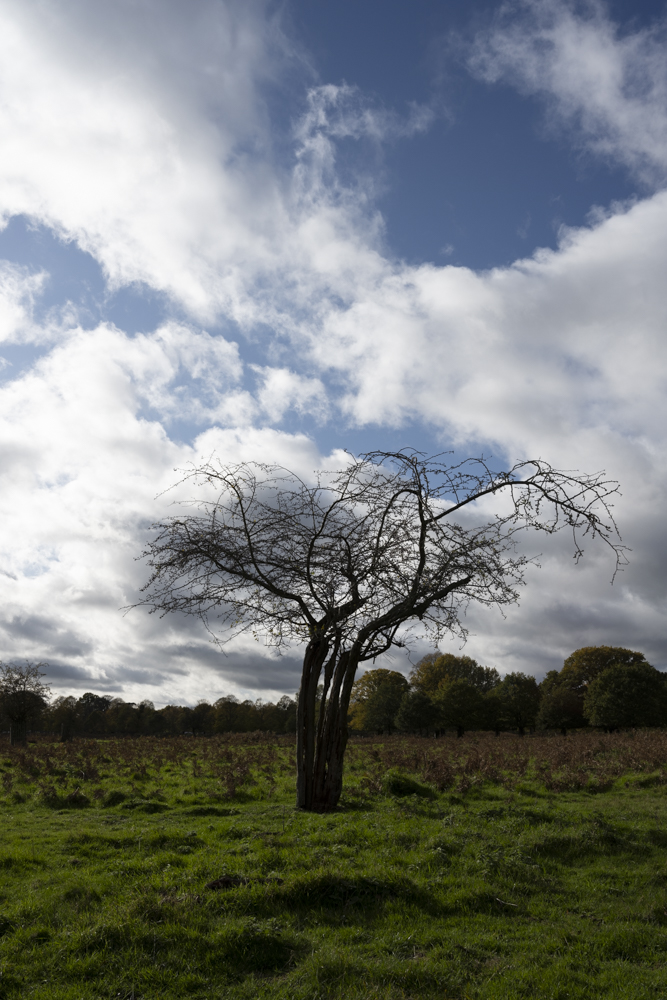
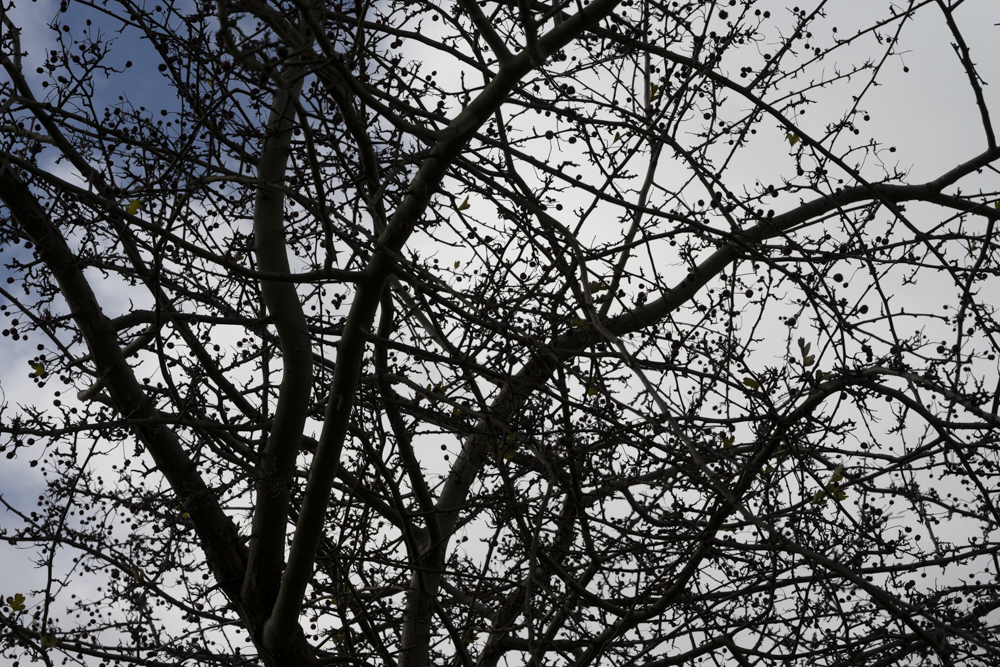
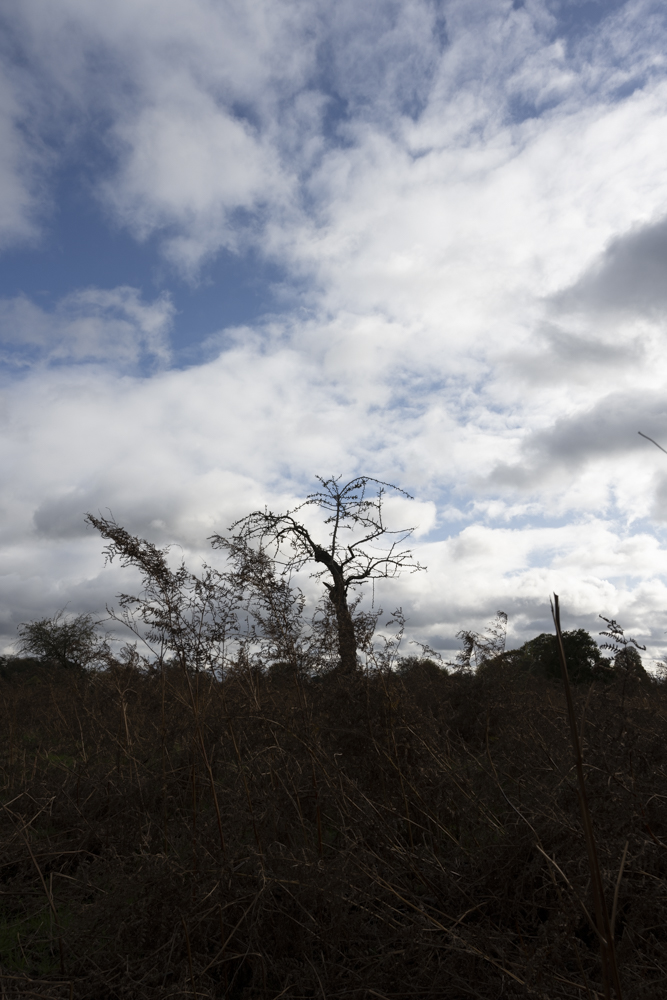
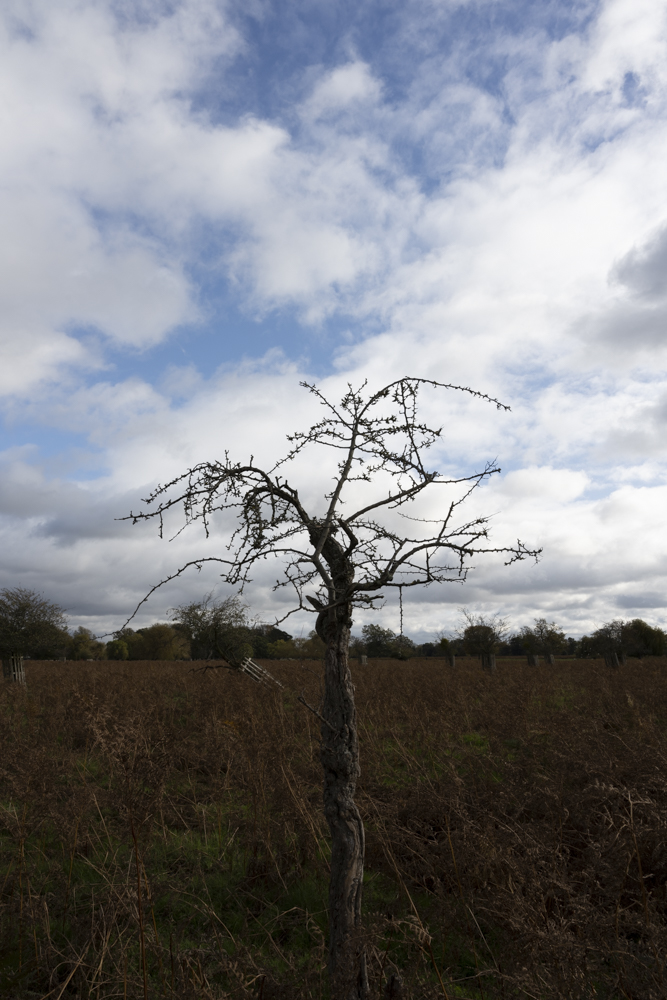
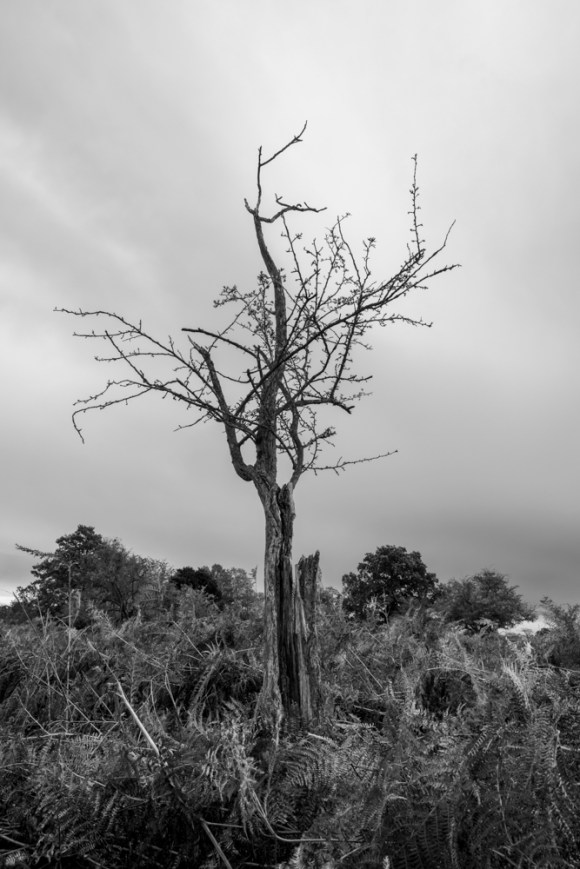
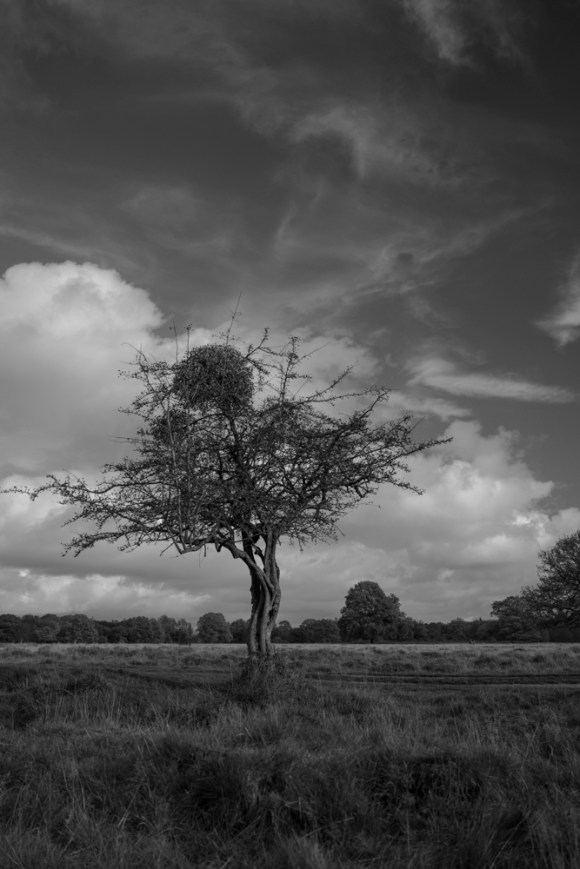
I first tried the 35mm lens. The sunlight was trying to pierce its way through the clouds and I noticed how the light exposed the texture on the side of the hawthorn. The following shots were taken using F1.8 and are the Black & White JPGs converted by the camera. These were shot in Aperture Priority, but with an exposure compensation of -0.67 in order not to blow the highlights.
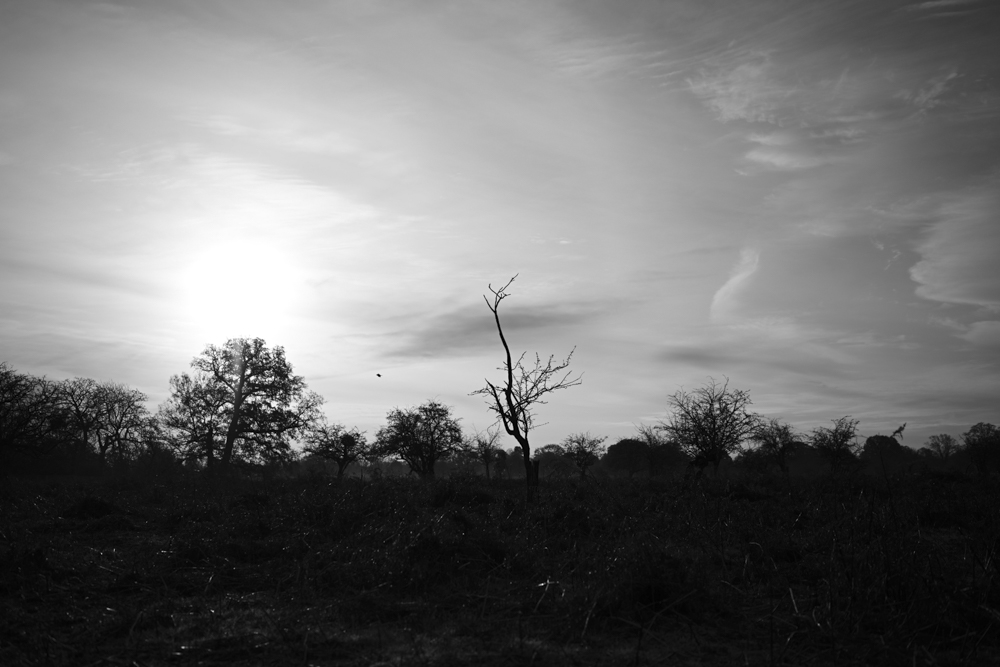
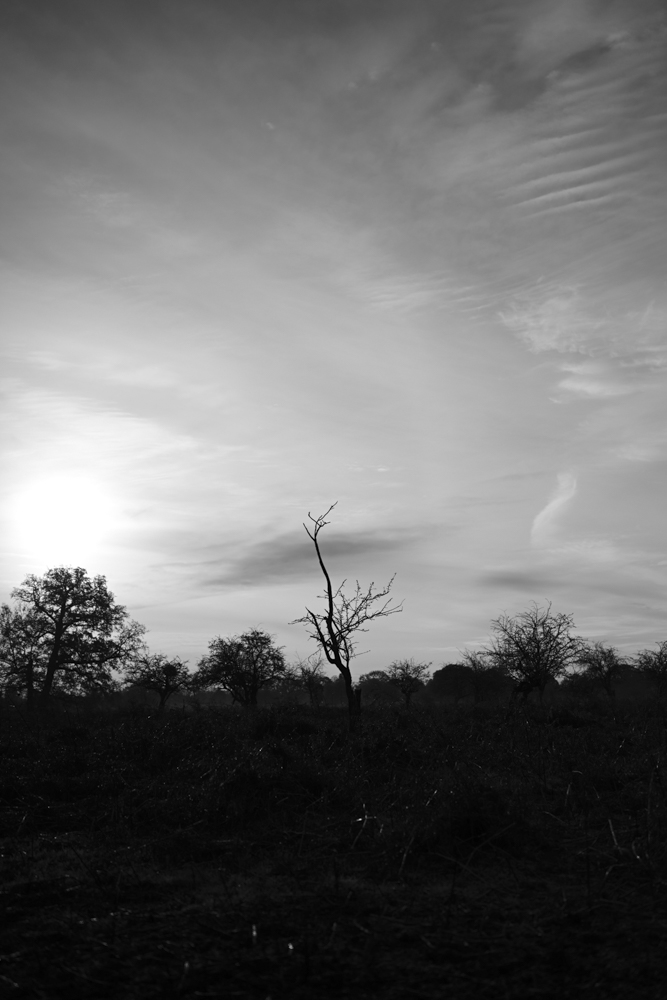
When initially looking at the resulting images, I chose this one to edit using my usual Camera Raw method. When I looked closer at this image, I could see the noticeable difference between the sharpness of the tree and the majority of the foreground in comparison to the out-of-focus background. I was not sure about this effect at this stage. It would have to be investigated further by placing the camera on a tripod then changing the settings. This would enable me to compare results and work out the optimum effect.
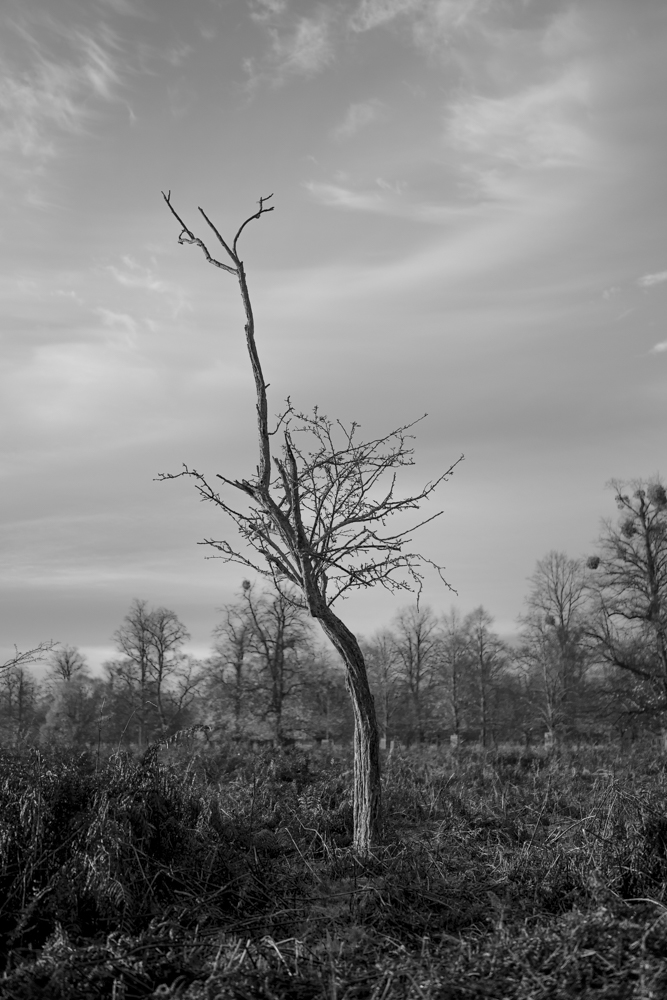
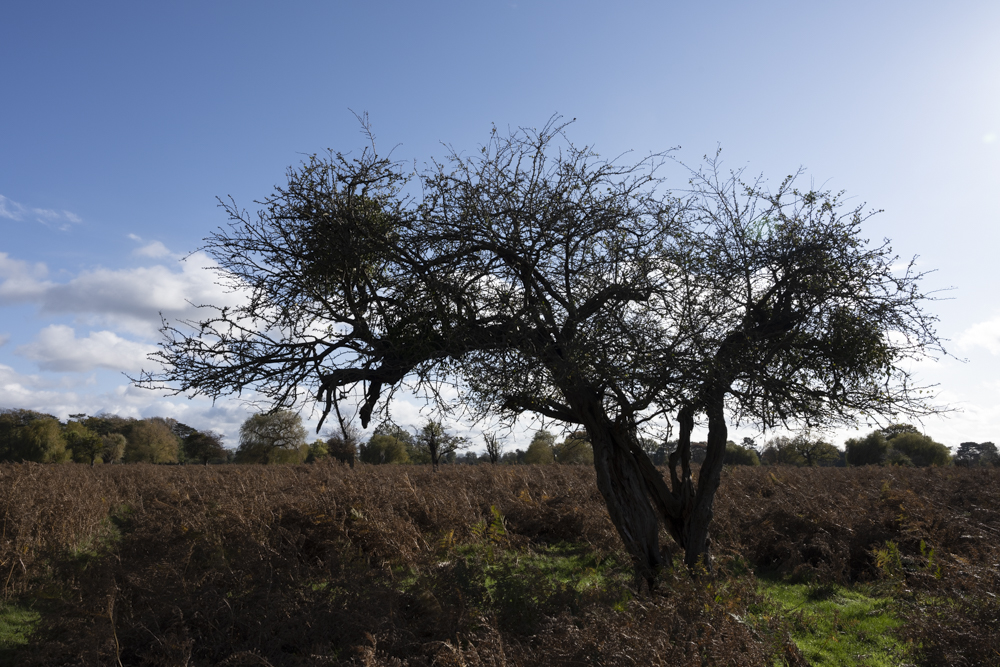
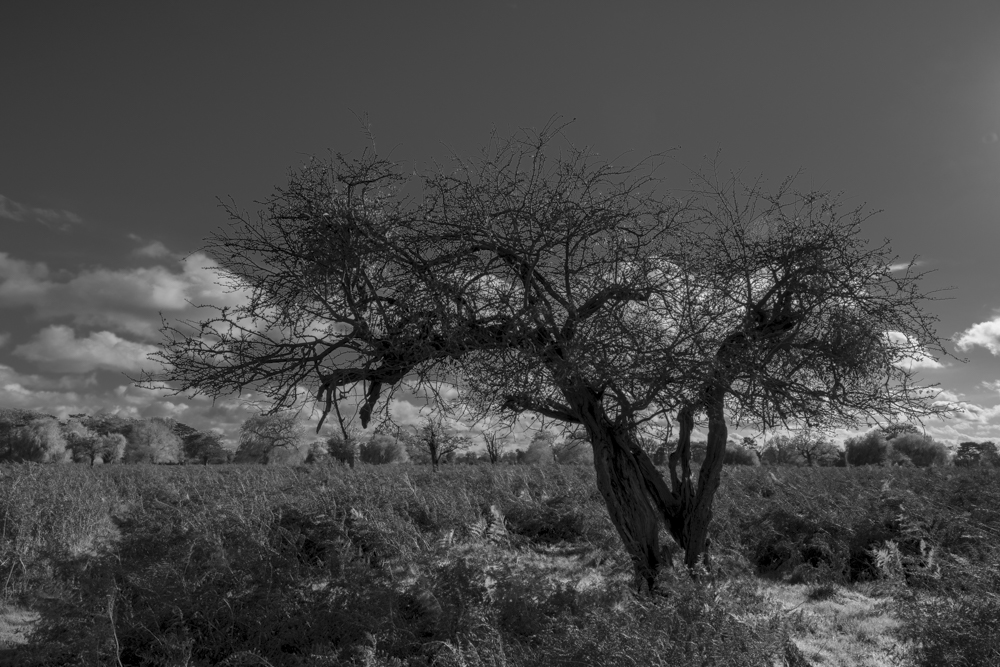
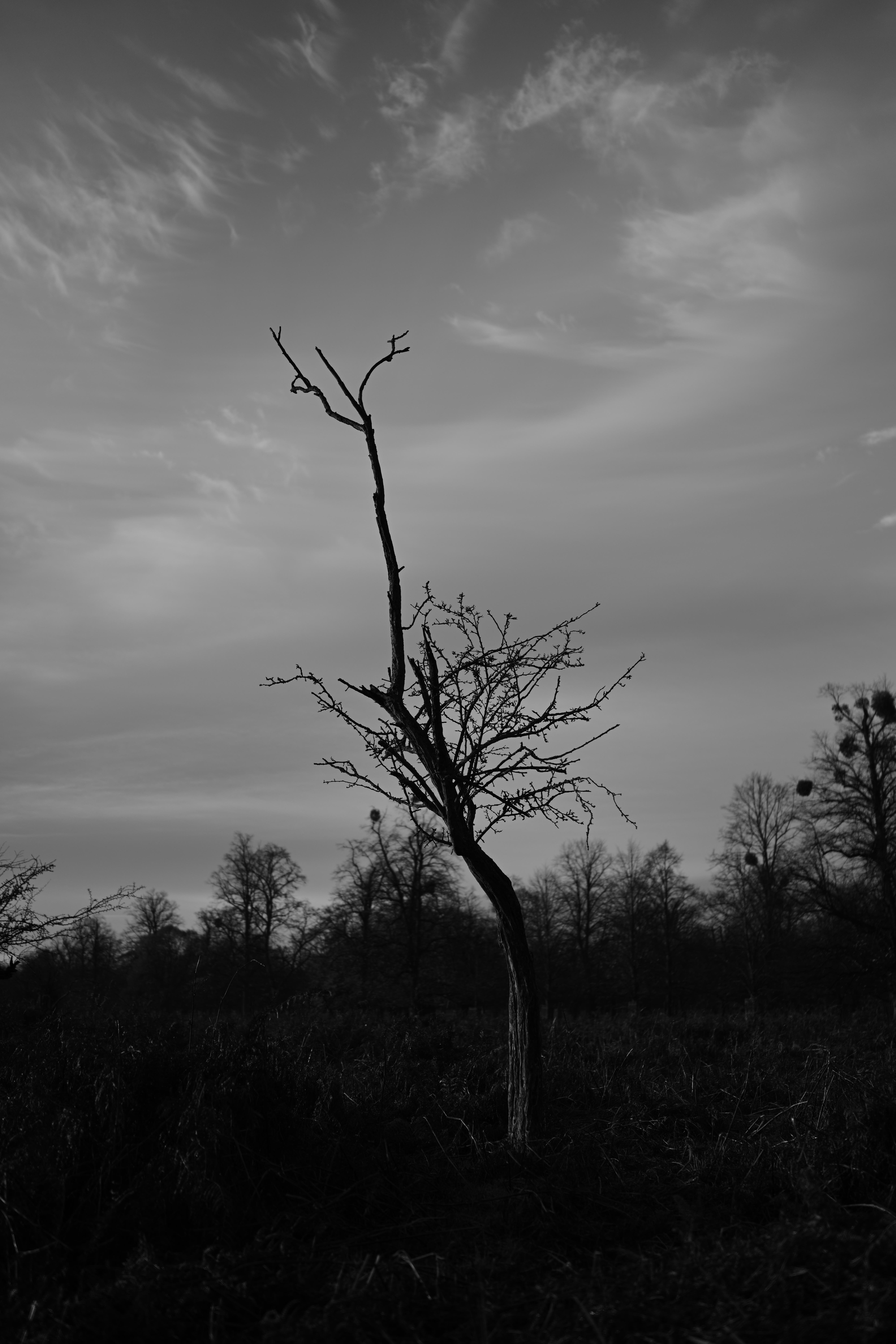
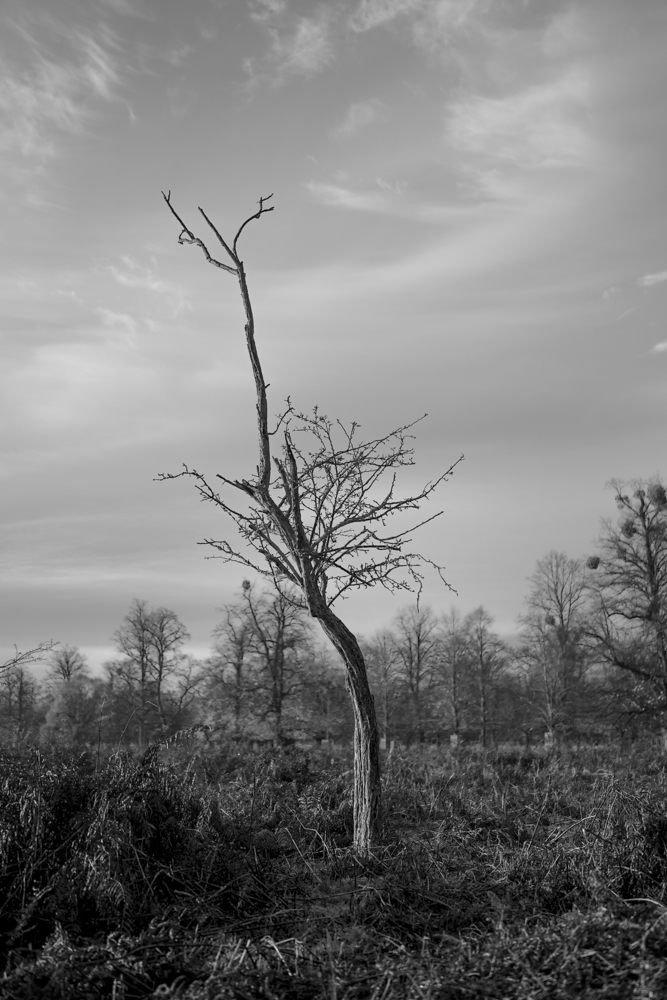
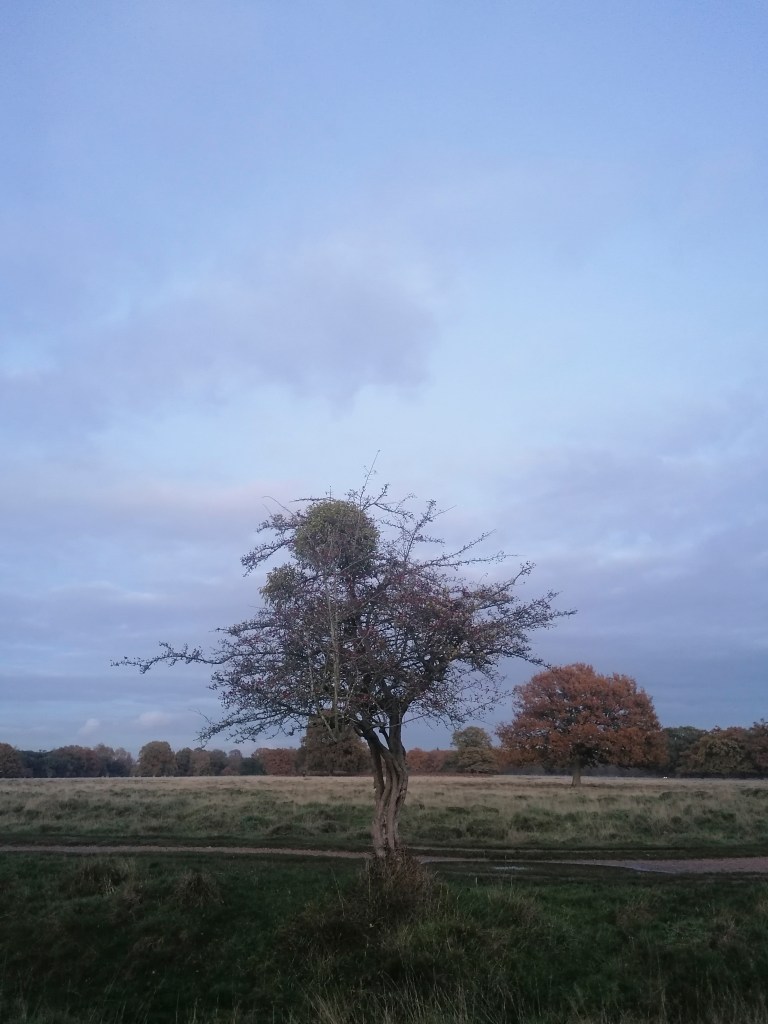
These are the Black & White JPG and converted RAW file images for comparison.
85mm Shots

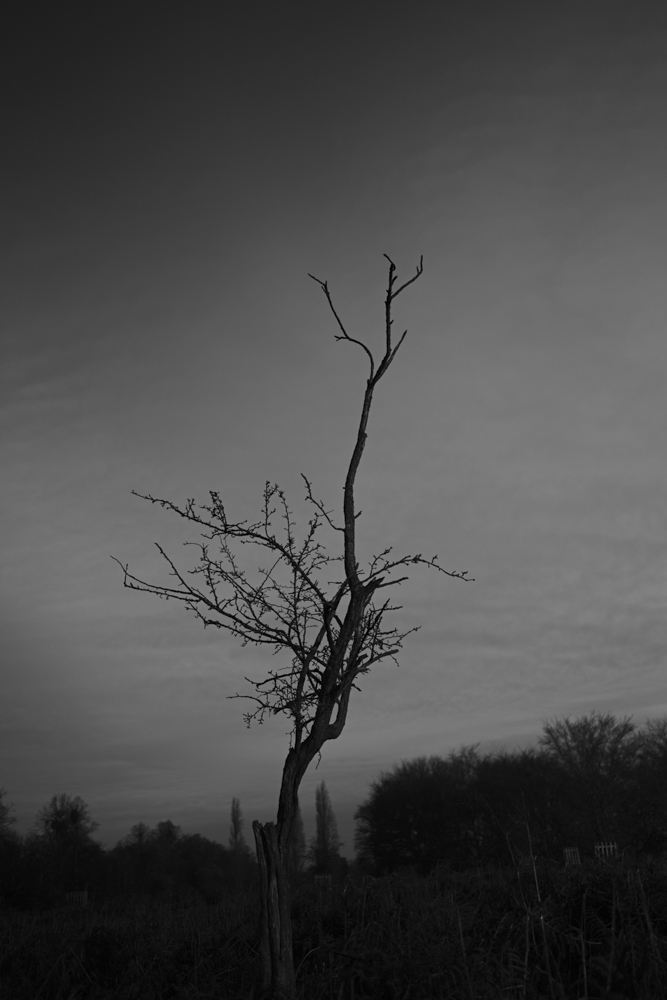
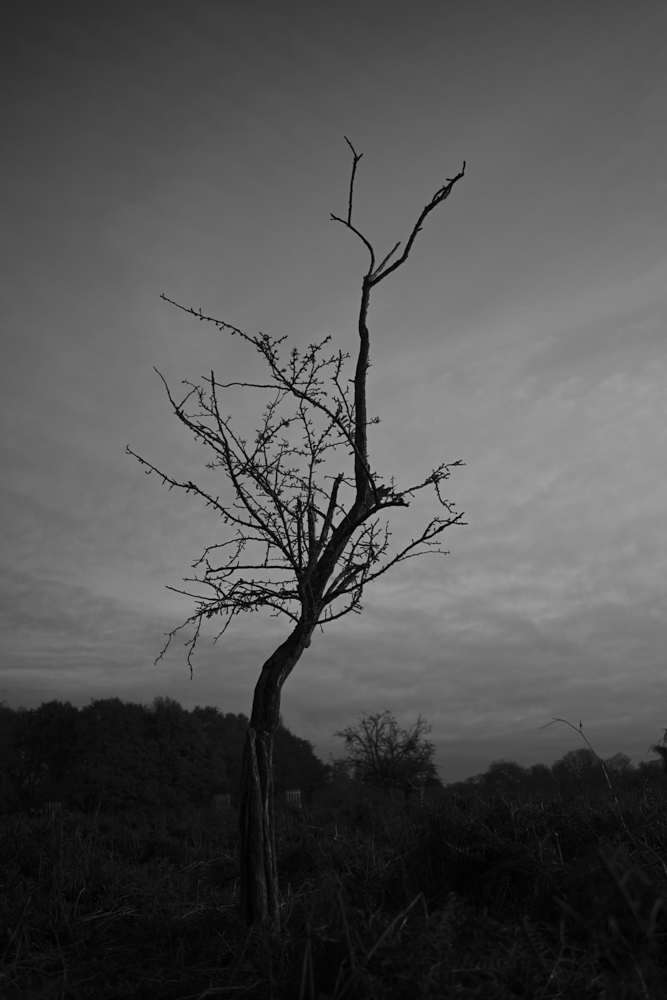
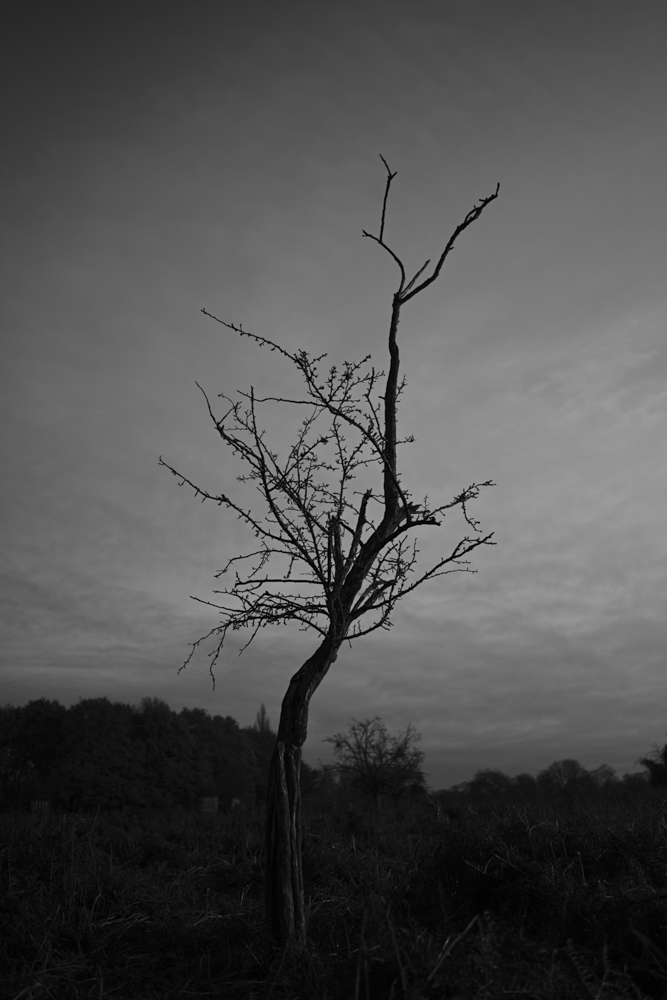
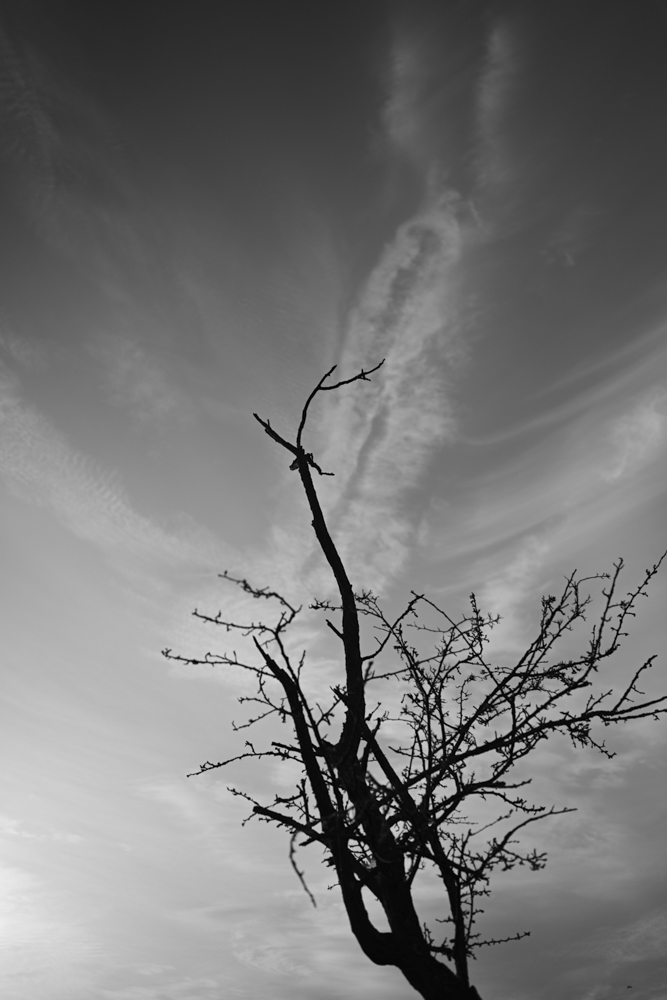
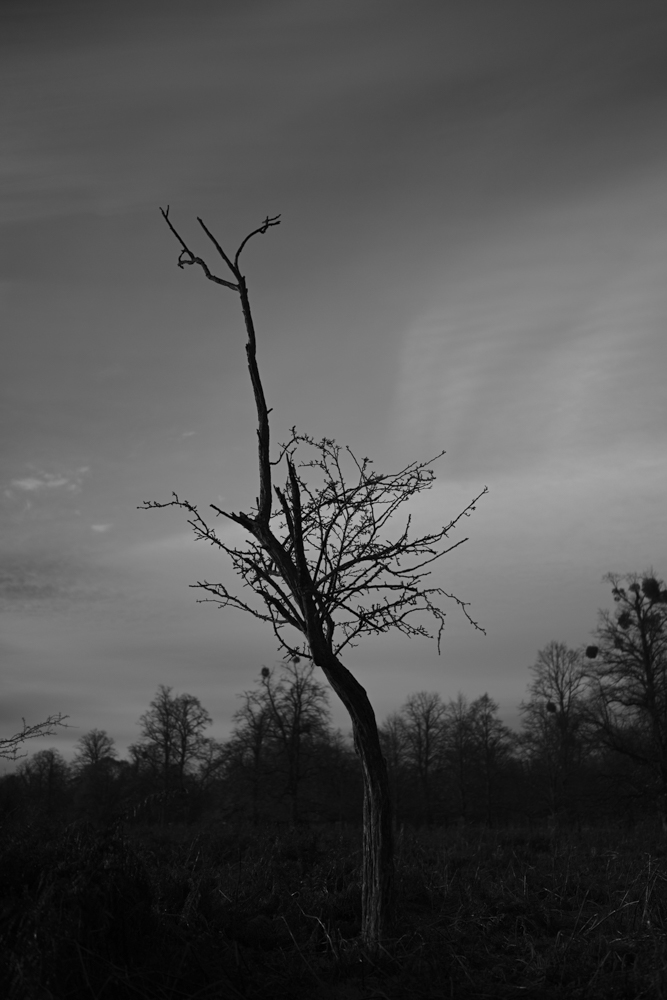
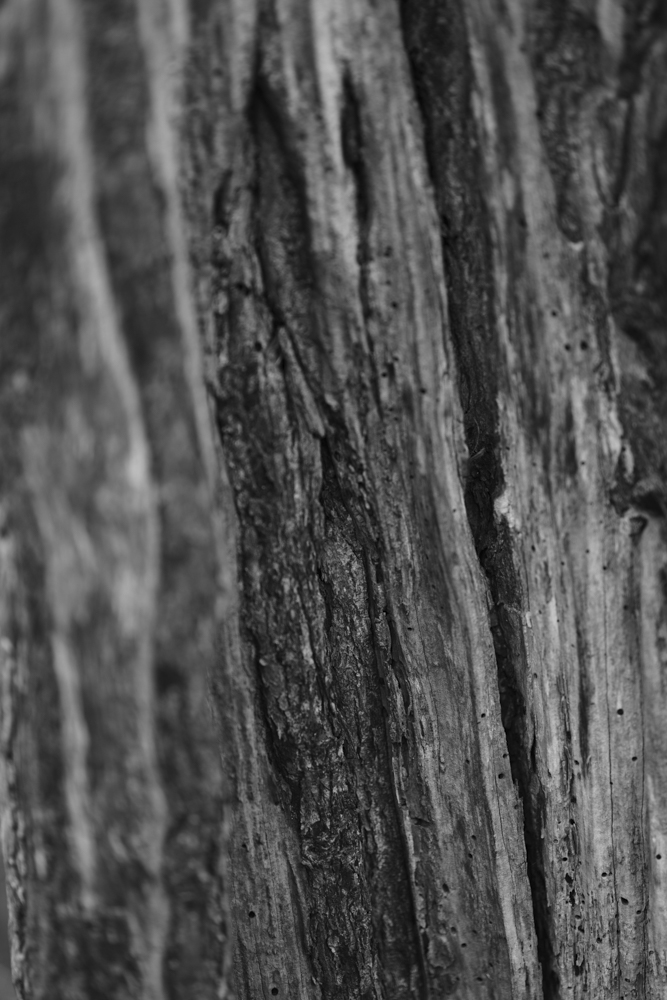
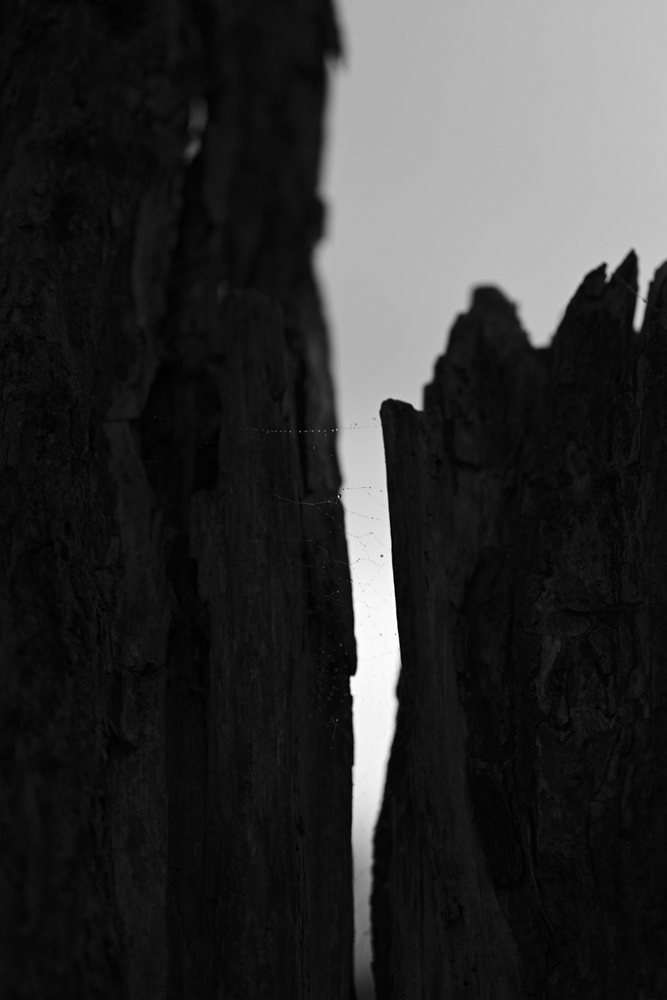
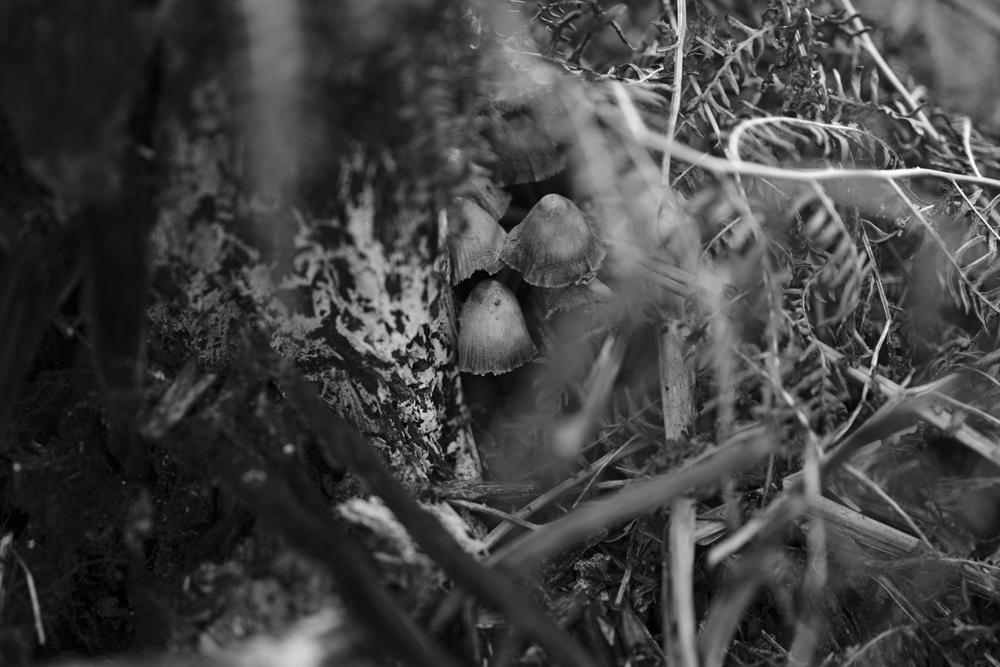
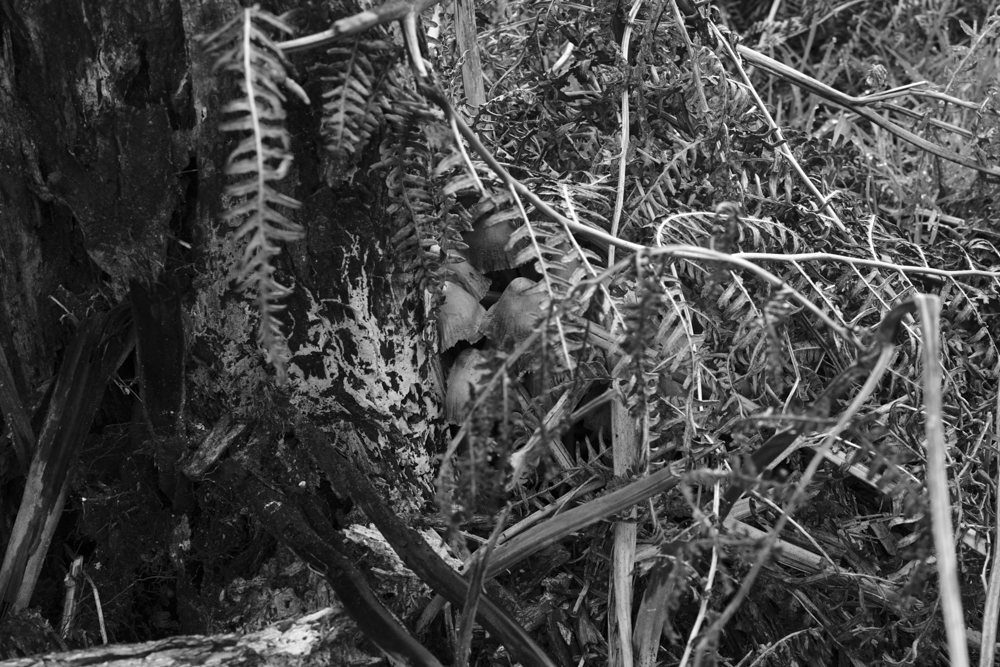
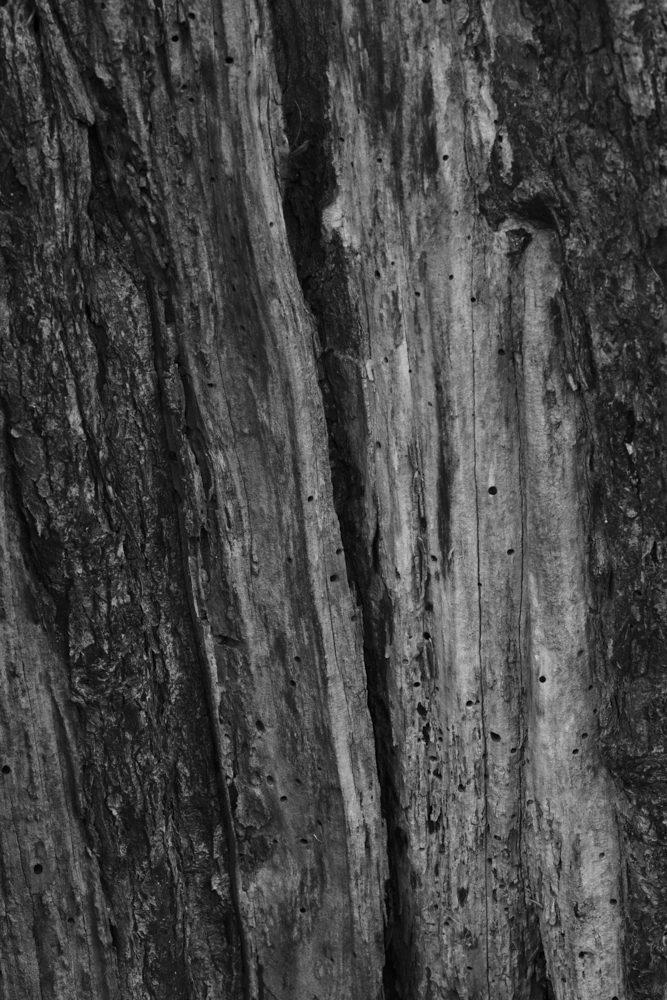
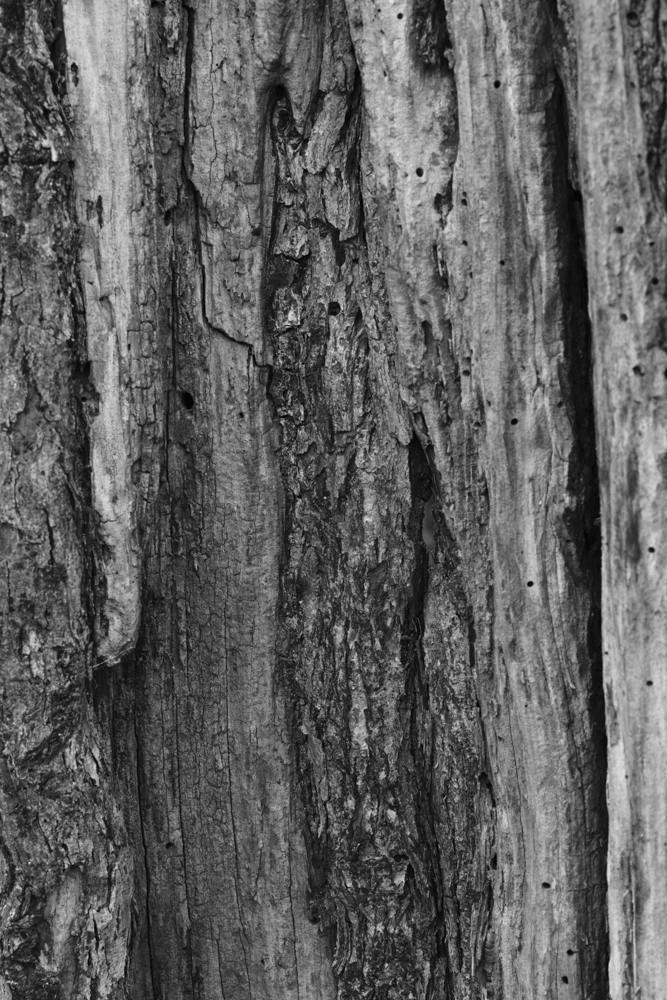
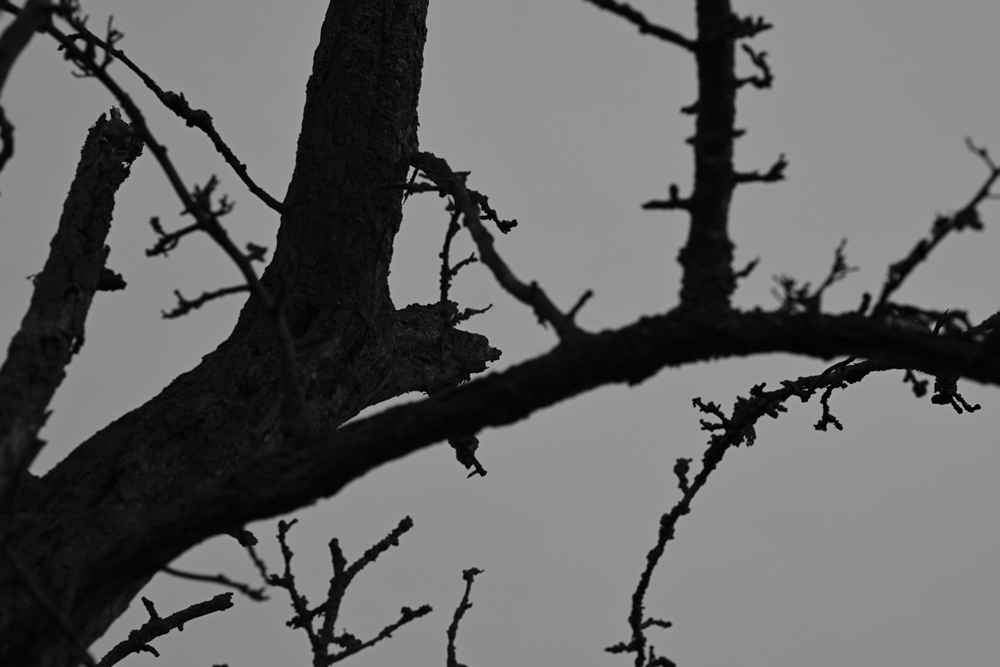
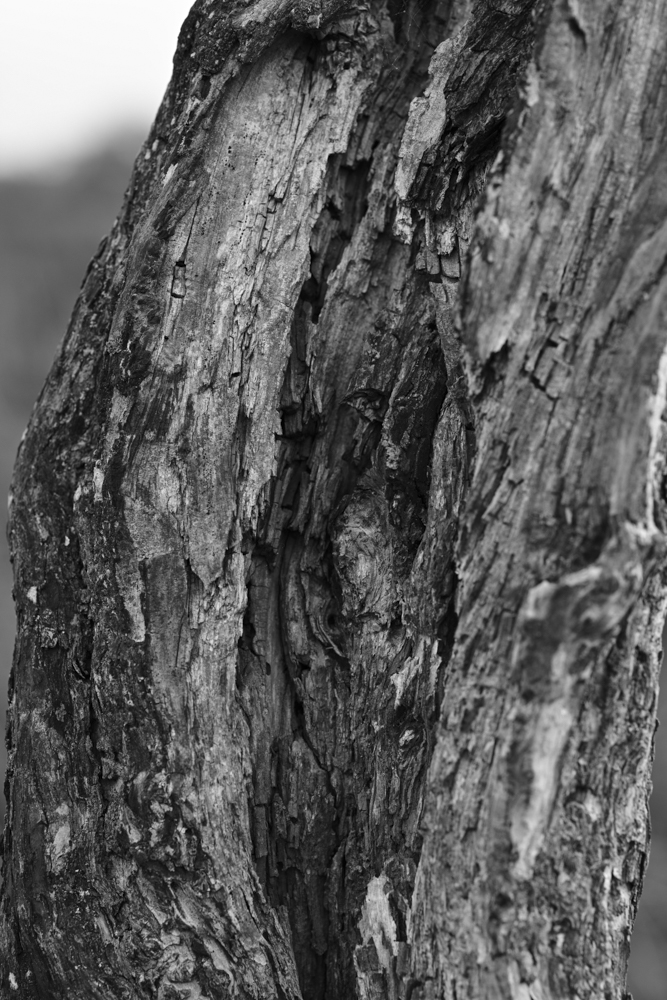
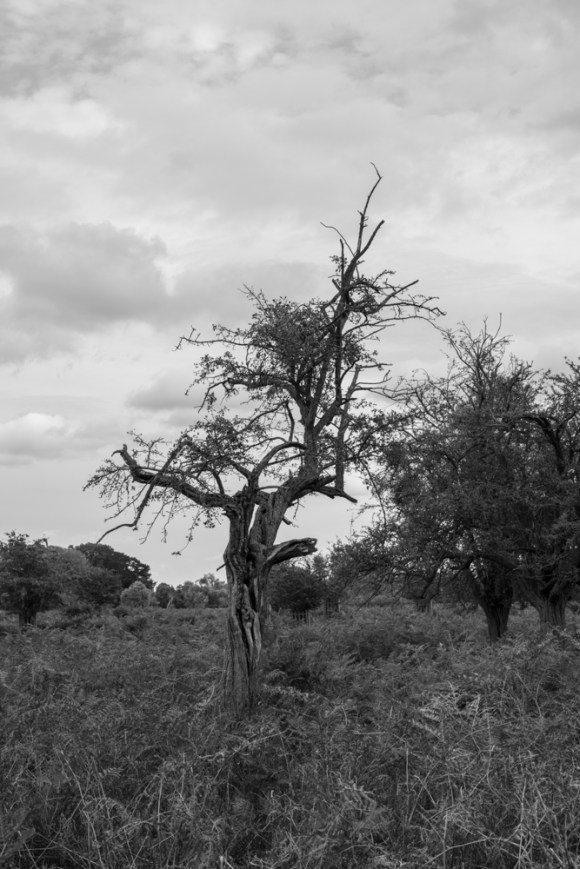
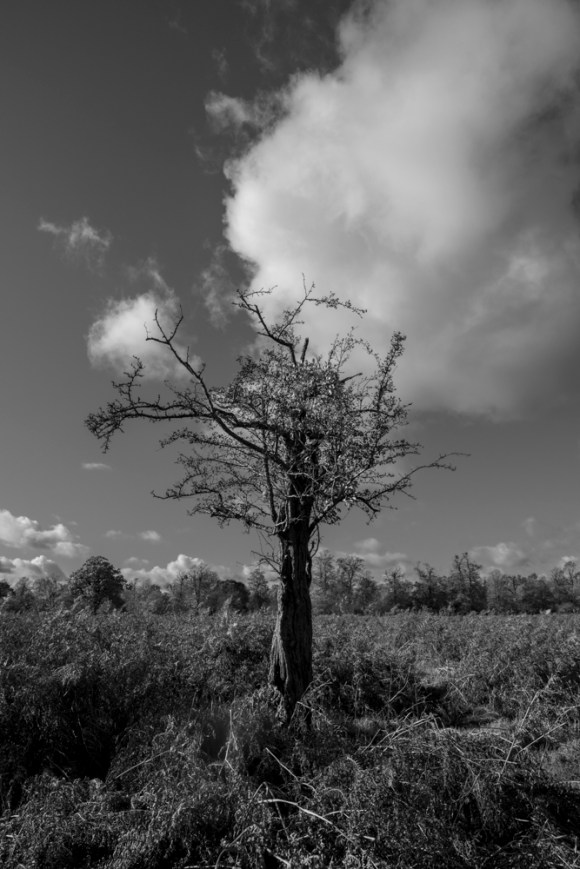
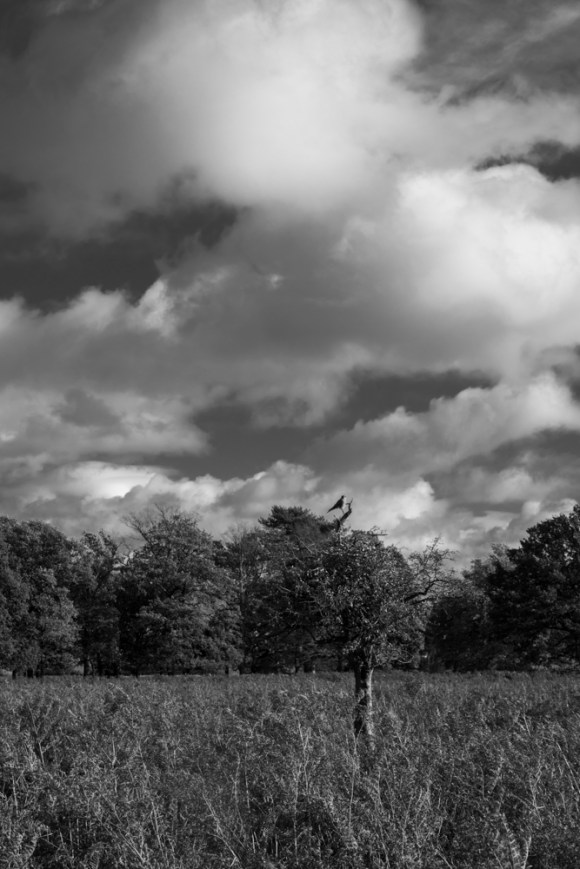
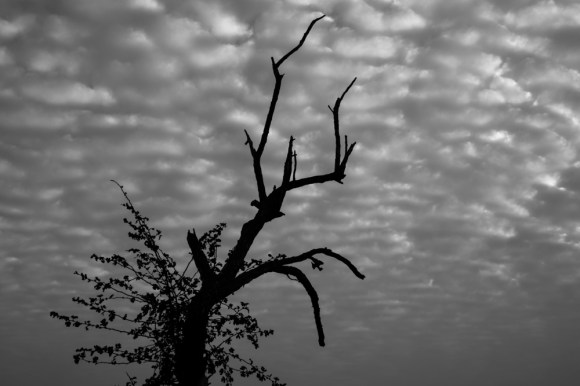
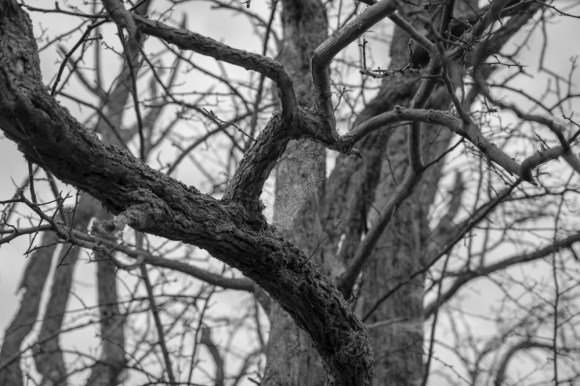
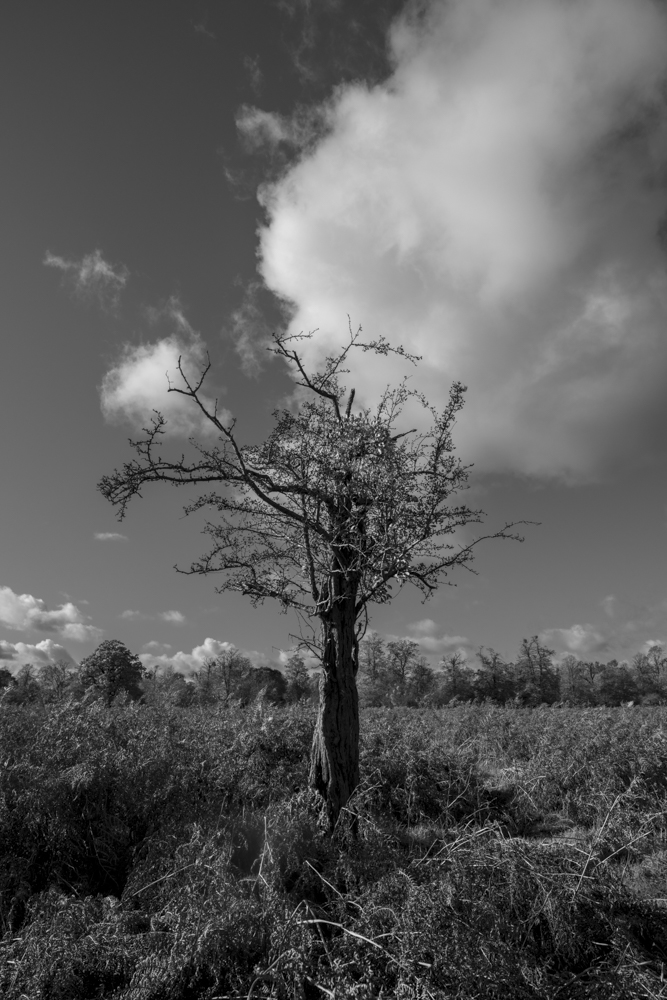
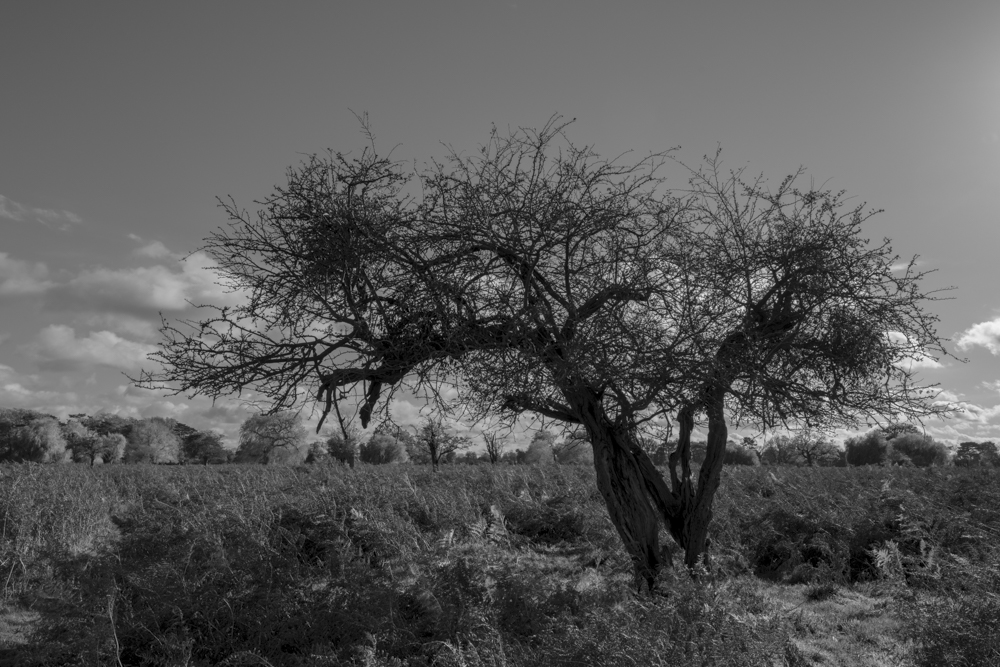
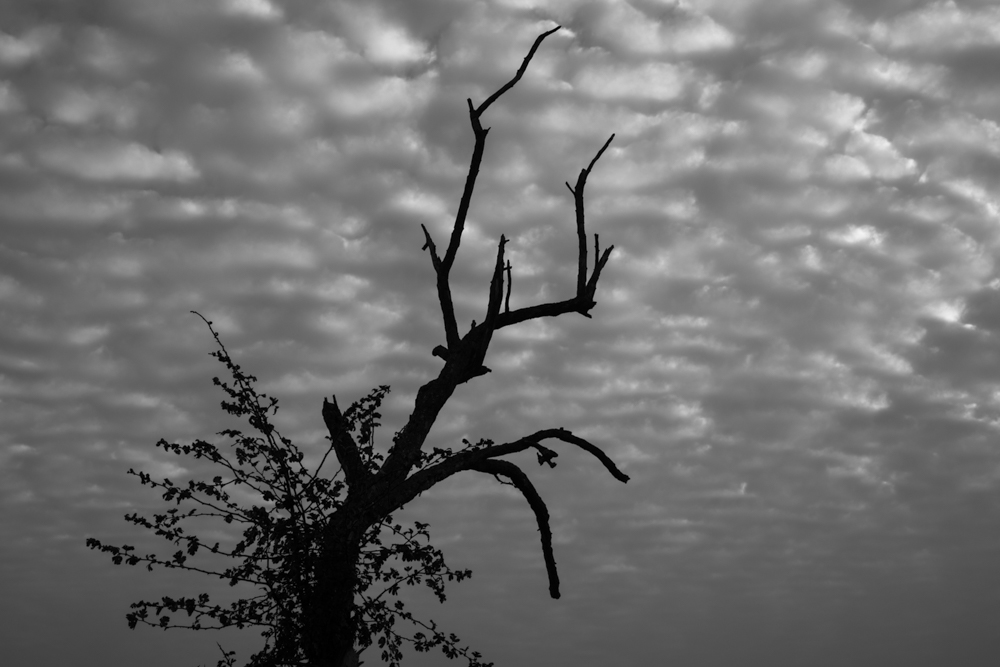
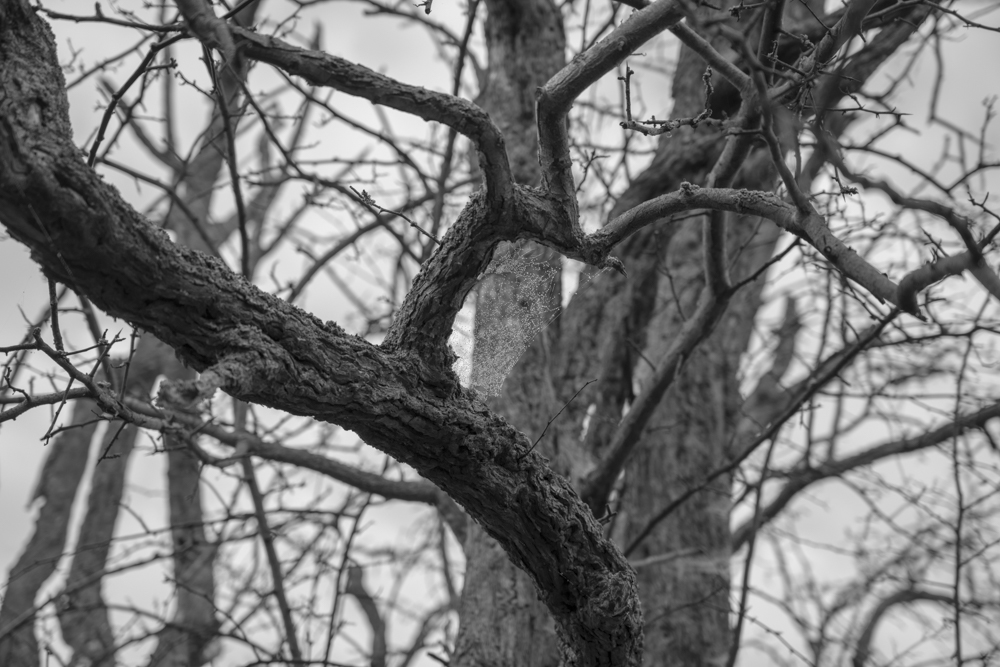
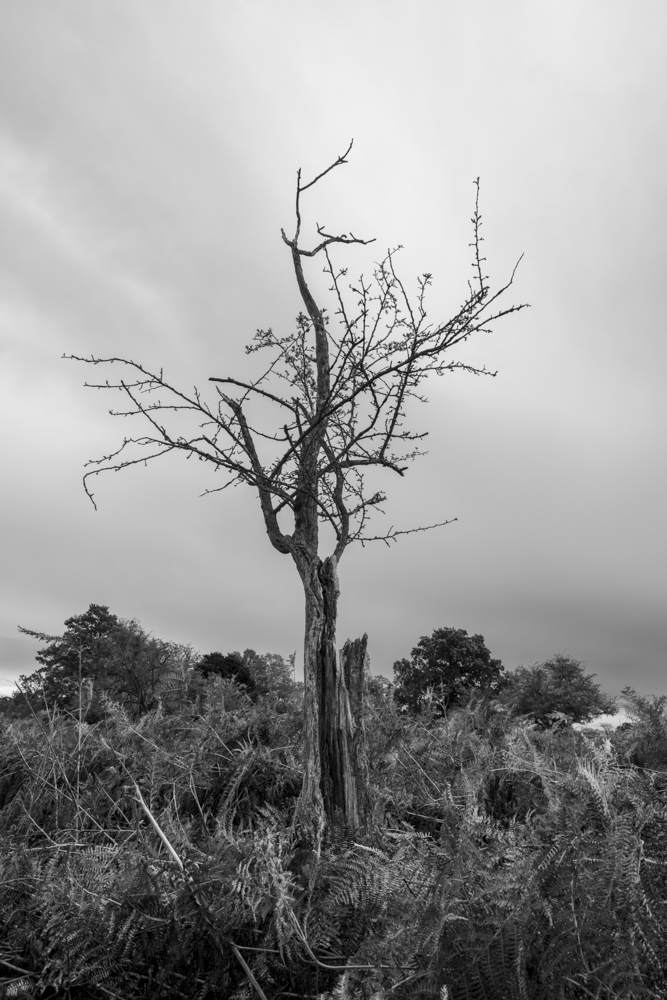
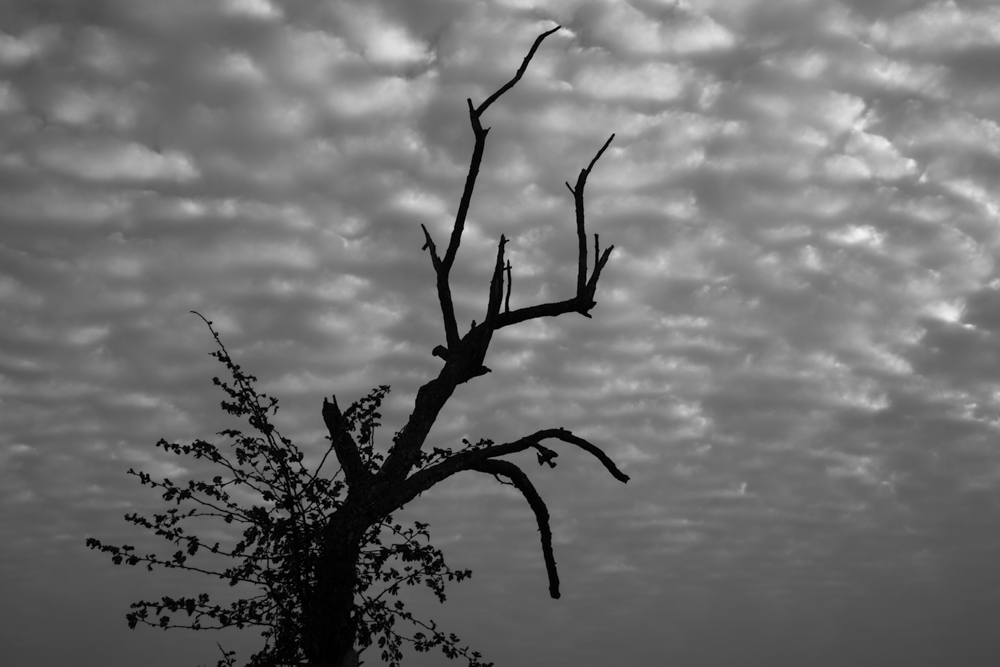
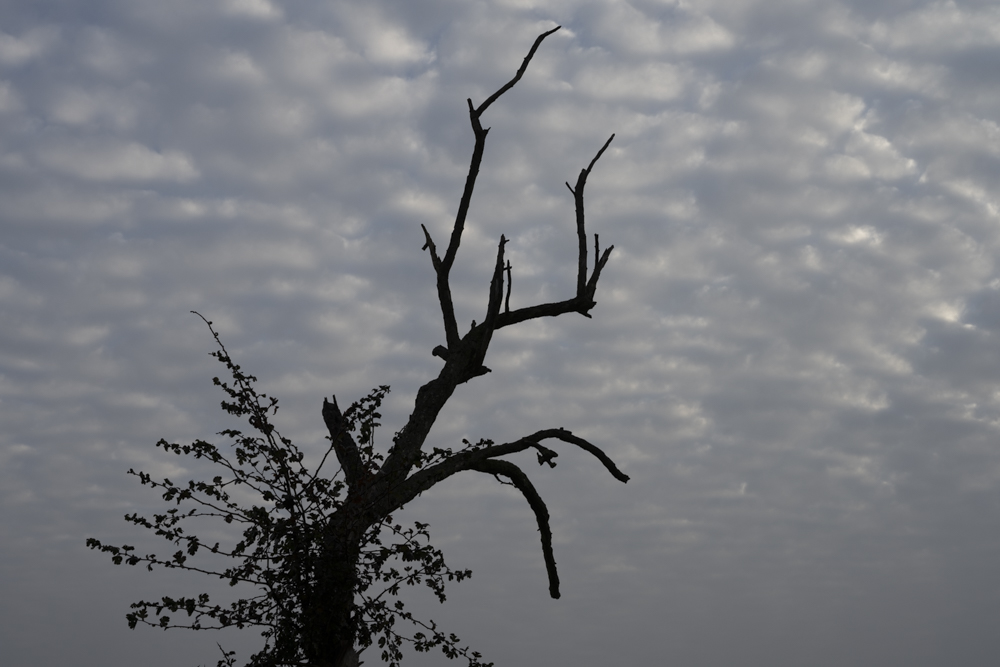
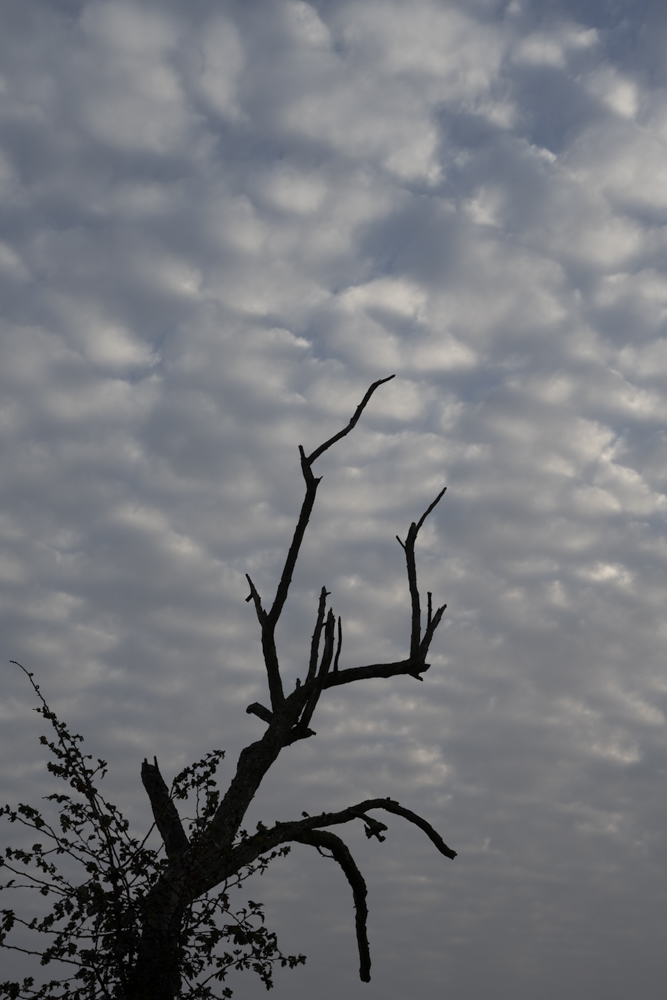
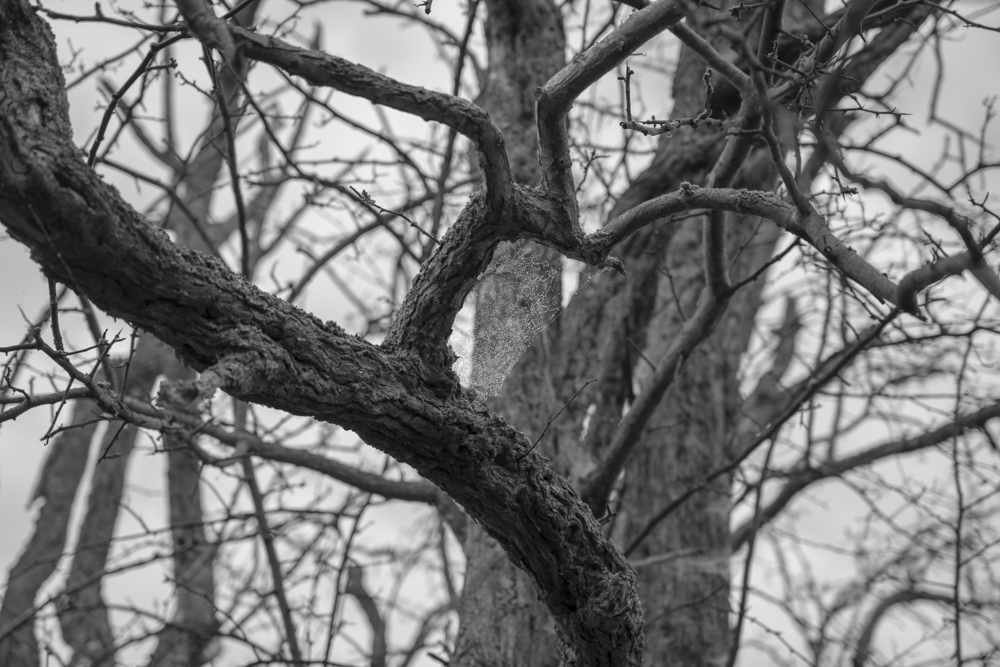
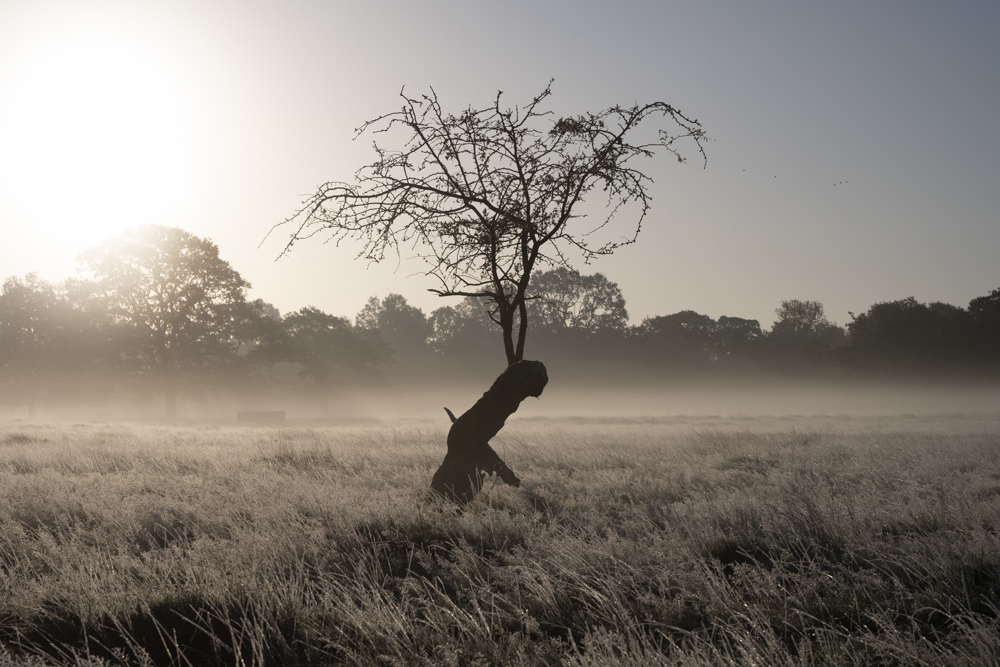
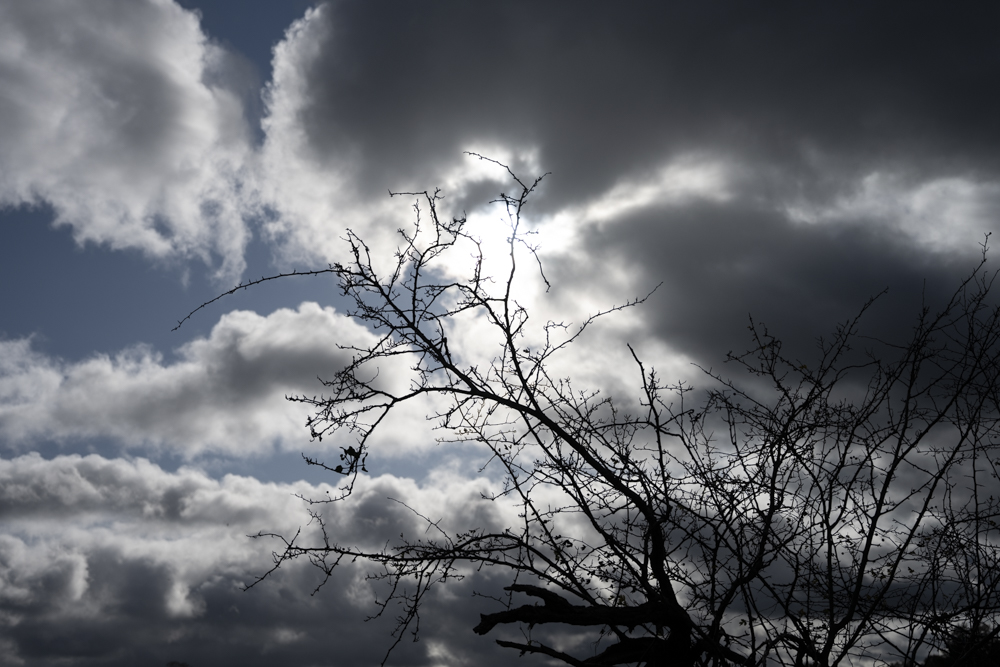
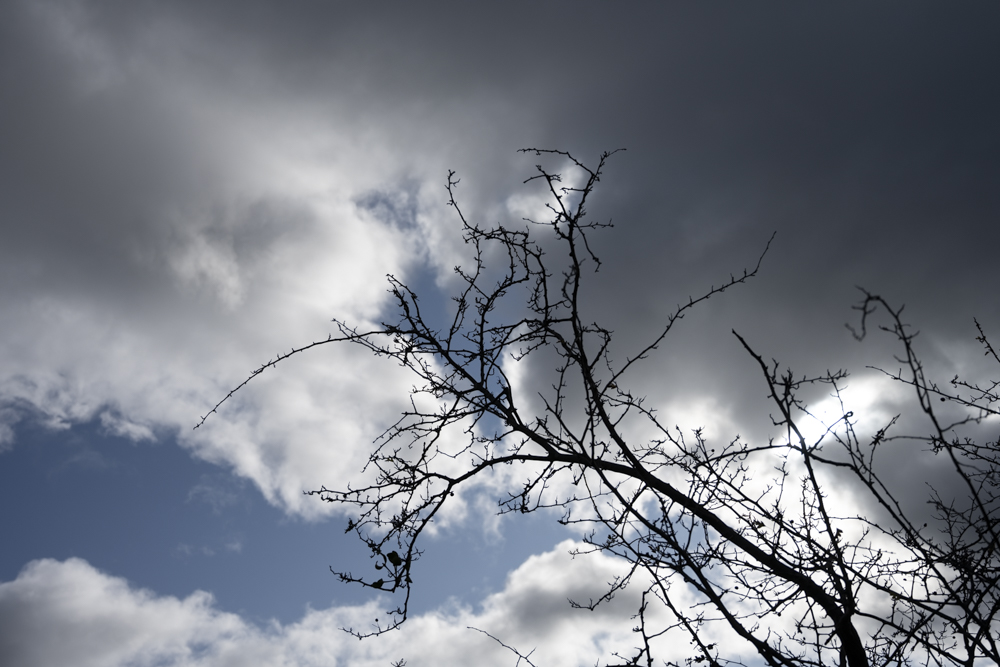
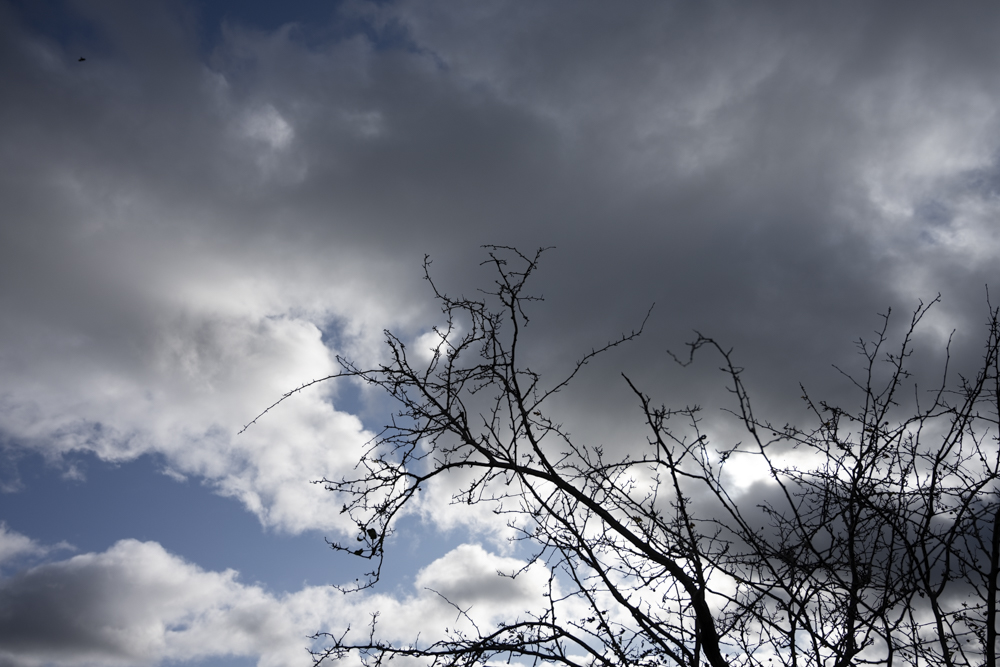
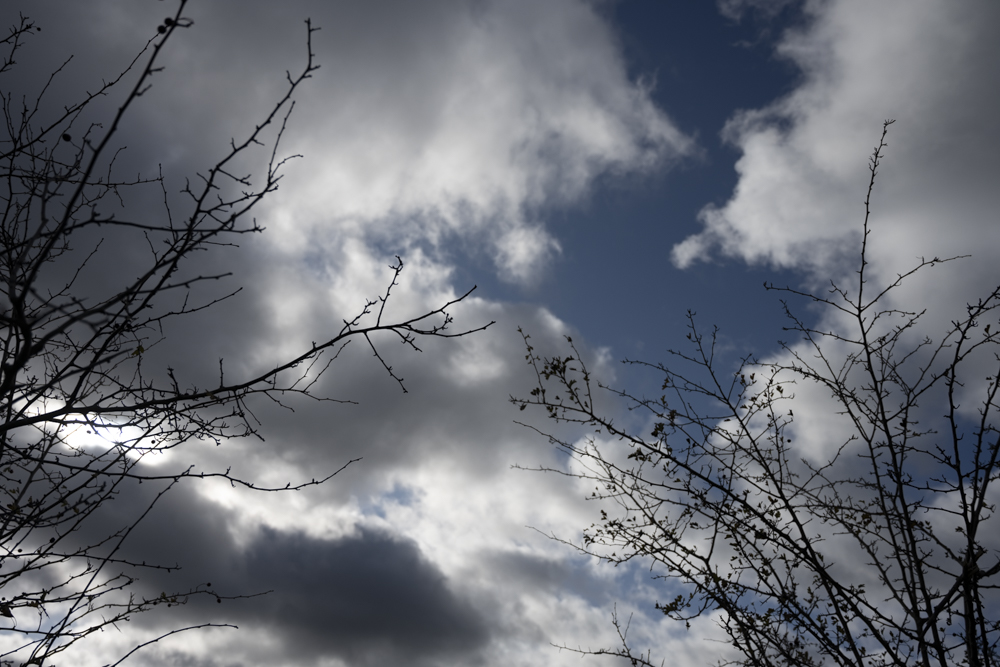
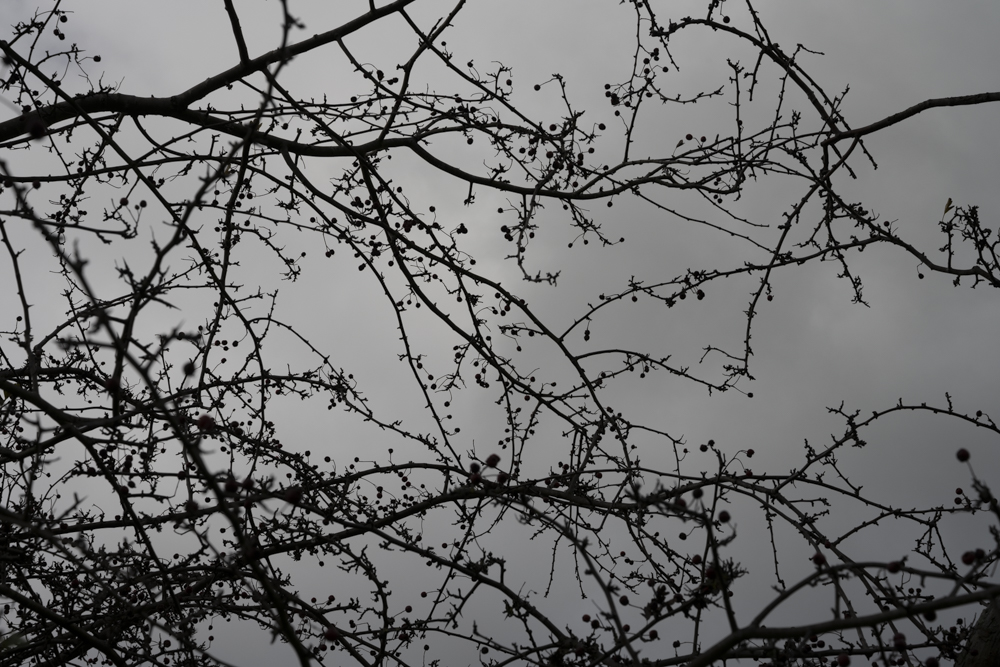
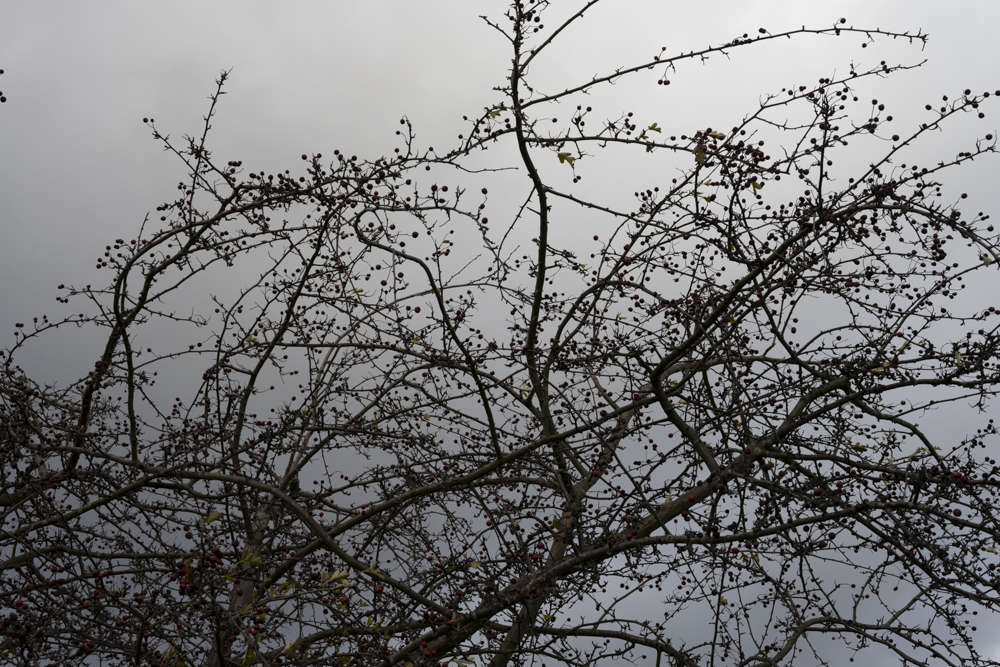
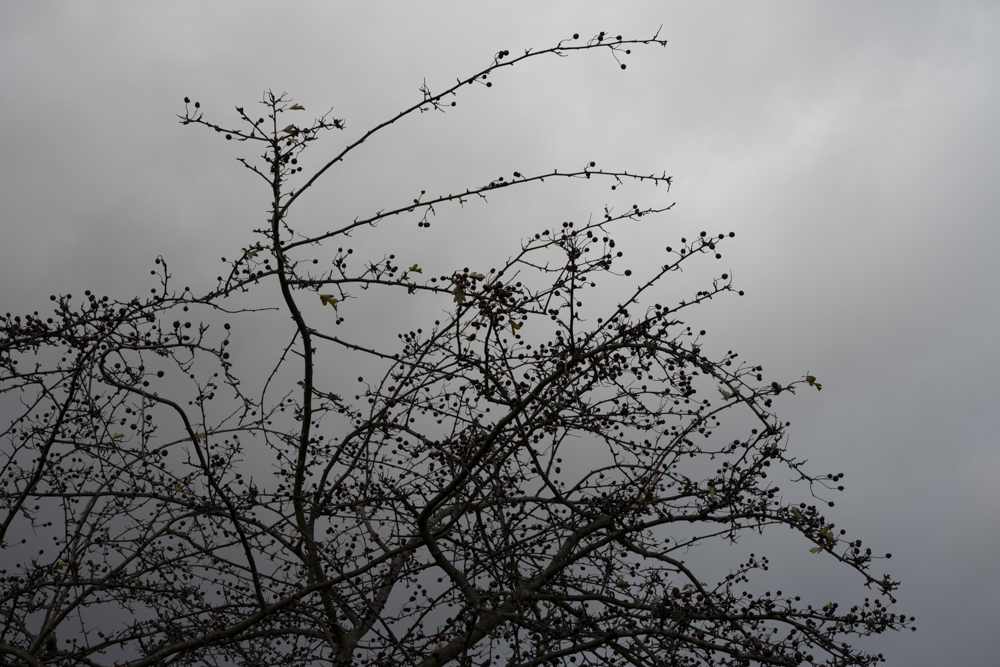
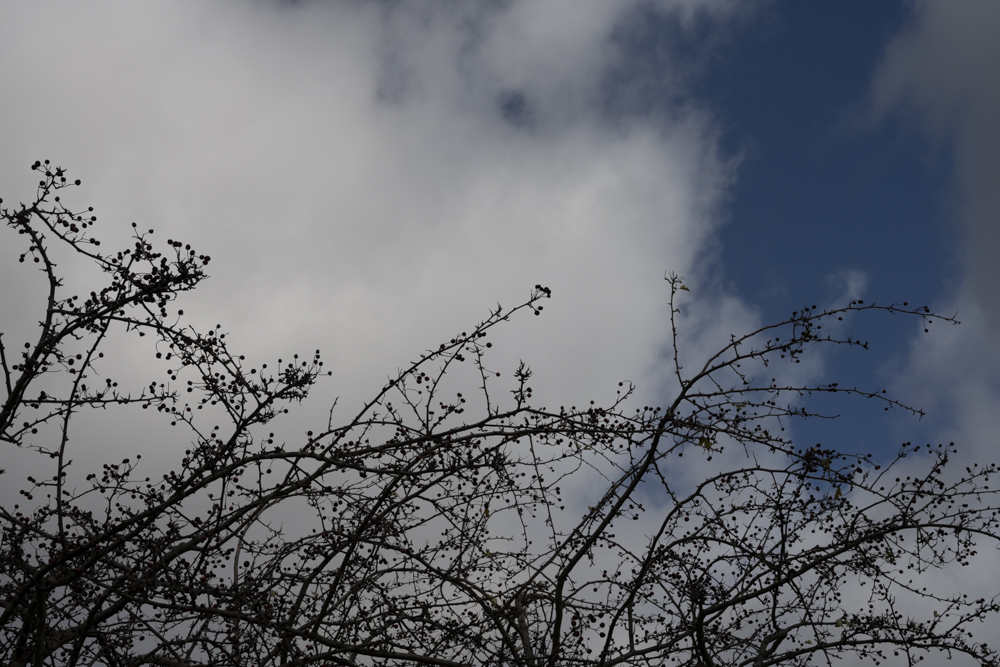
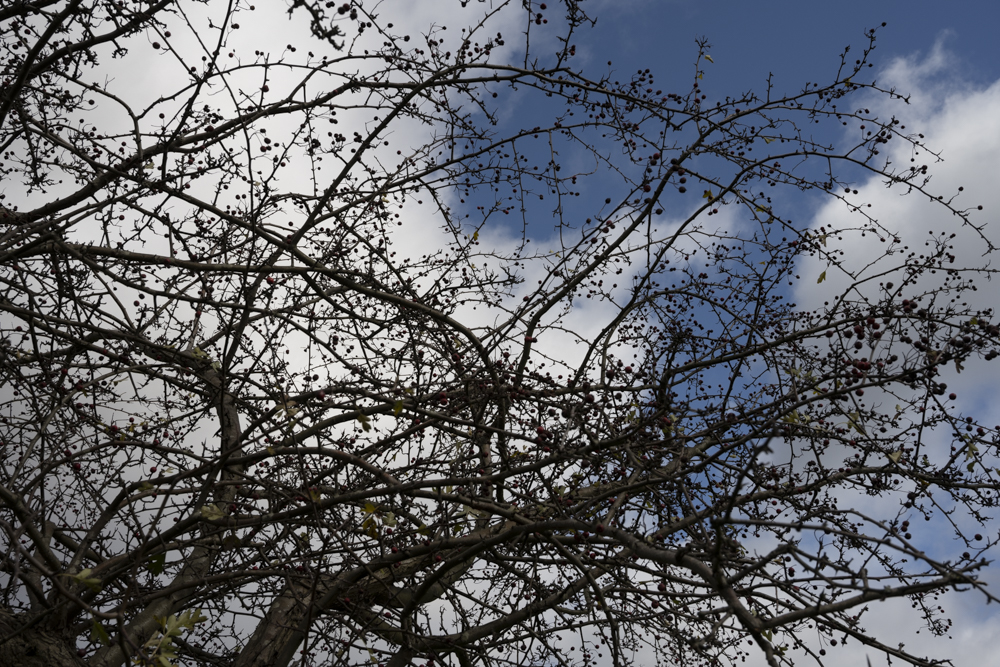
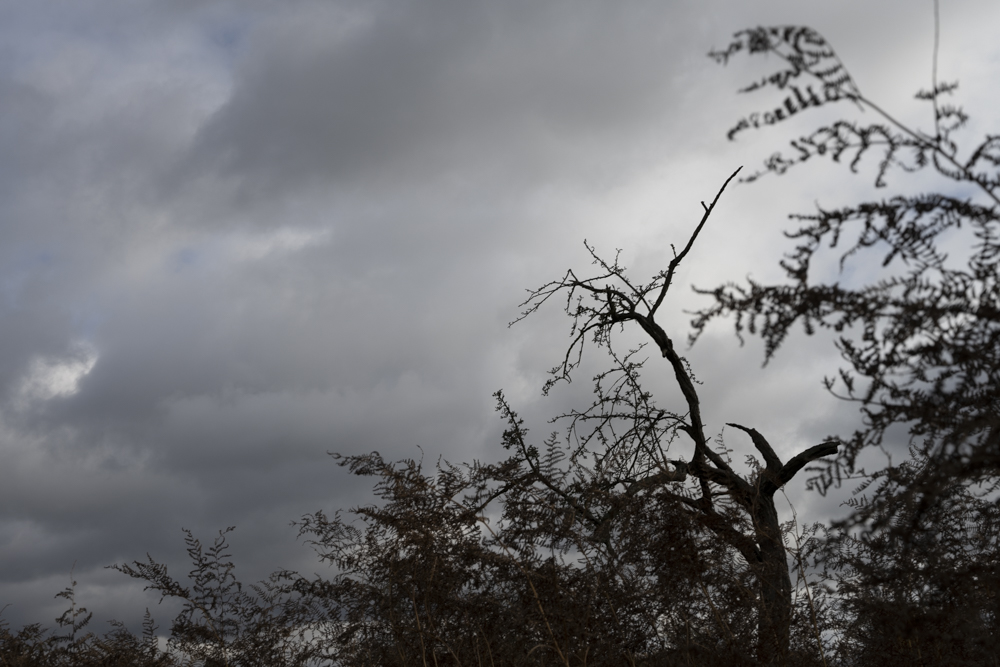
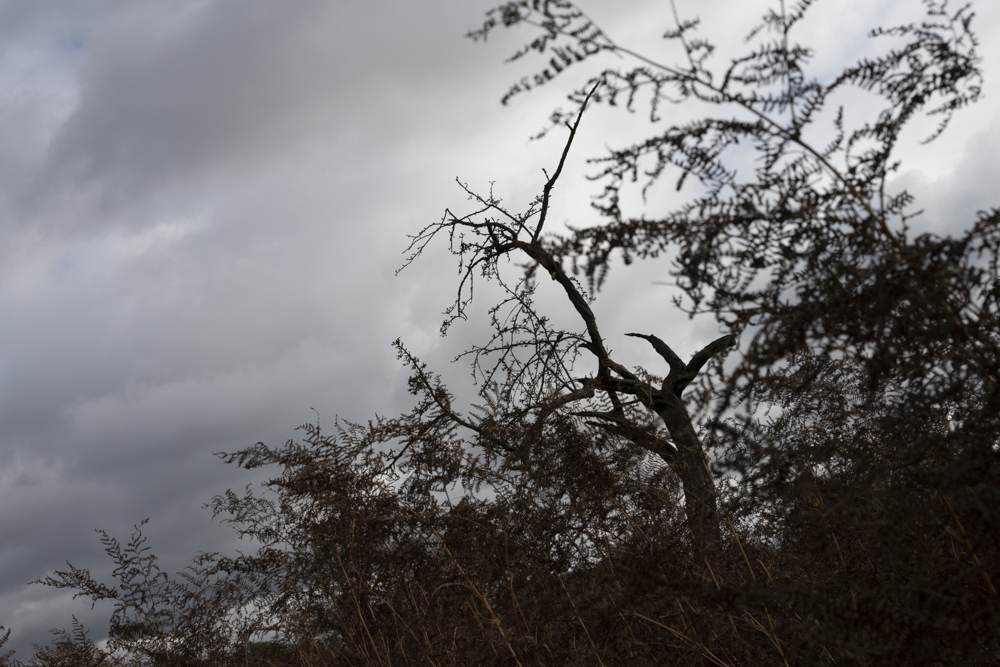
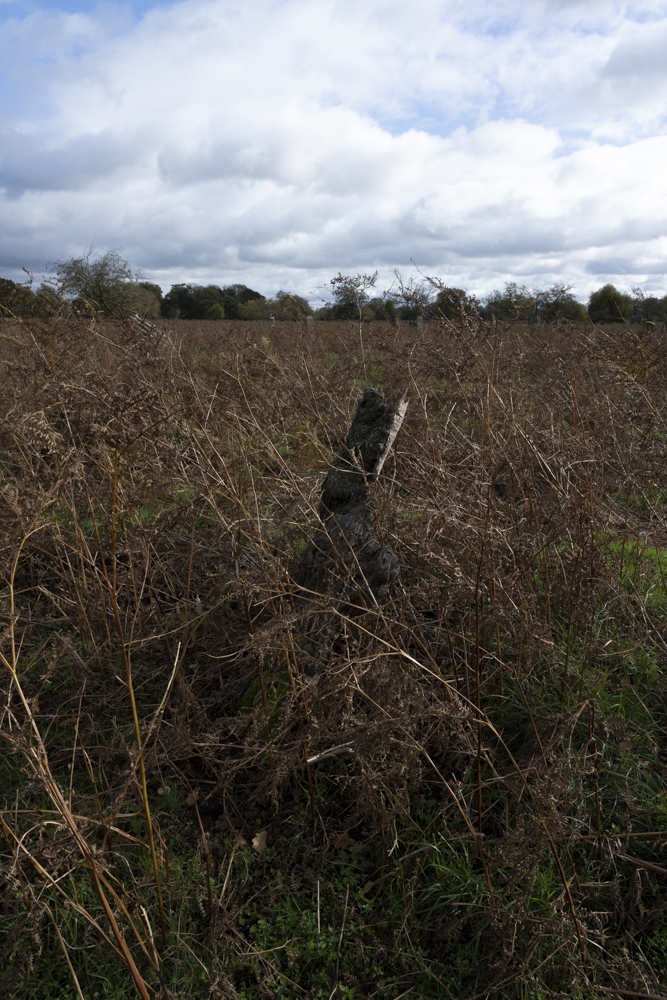
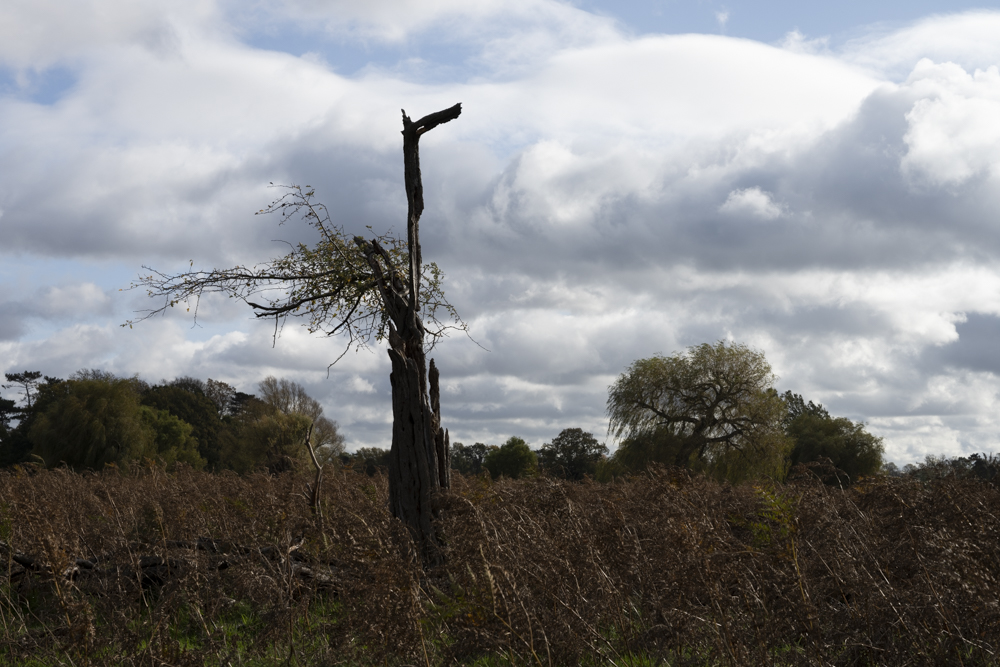
I then tried the 85mm lens. I wanted to get some close-up and abstract images of this tree. The reason behind this is that it was suggested I focus on just one particular hawthorn for this project. I wanted to know how the different angles and proximity of the lens could change the viewer’s perspective of an individual tree. Again, these are the Black & White JPGs created by the camera.
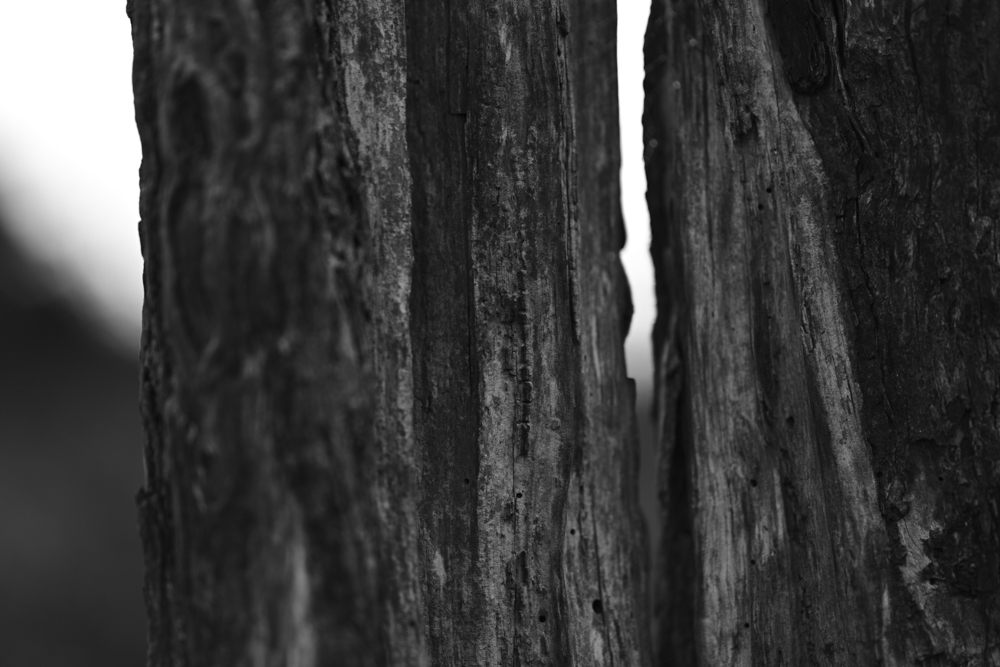
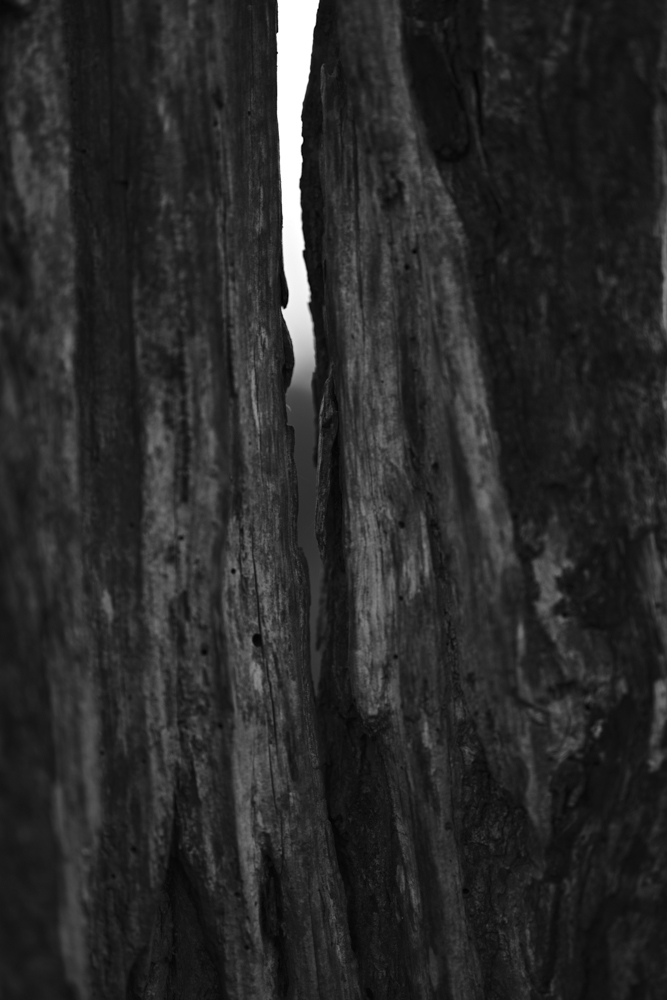
I created the following Black & White conversion to see the results.
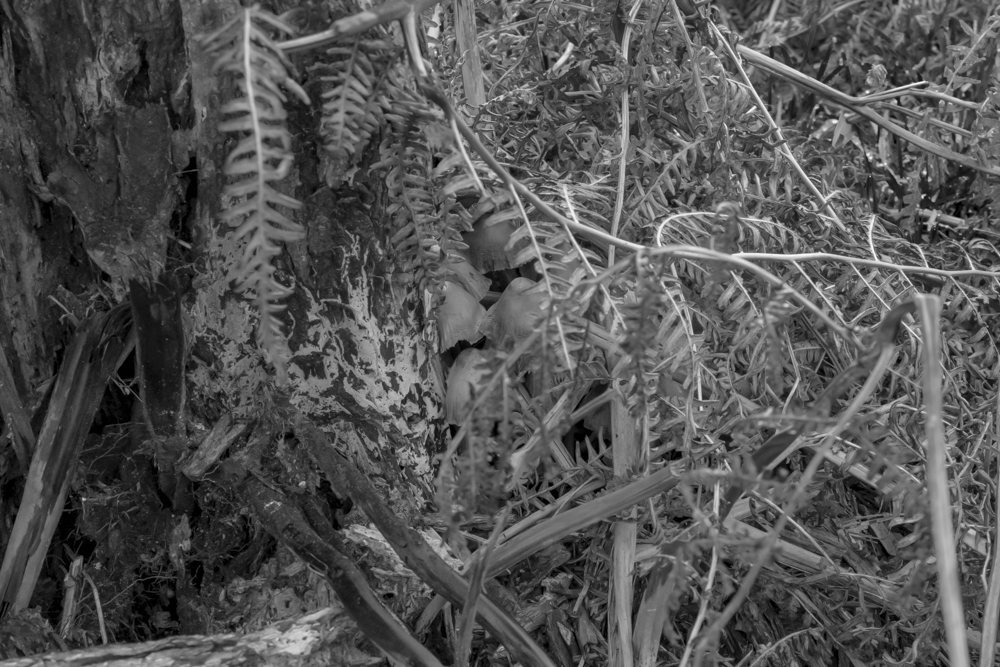
Again, these are the Black & White JPG and converted RAW file images for comparison.
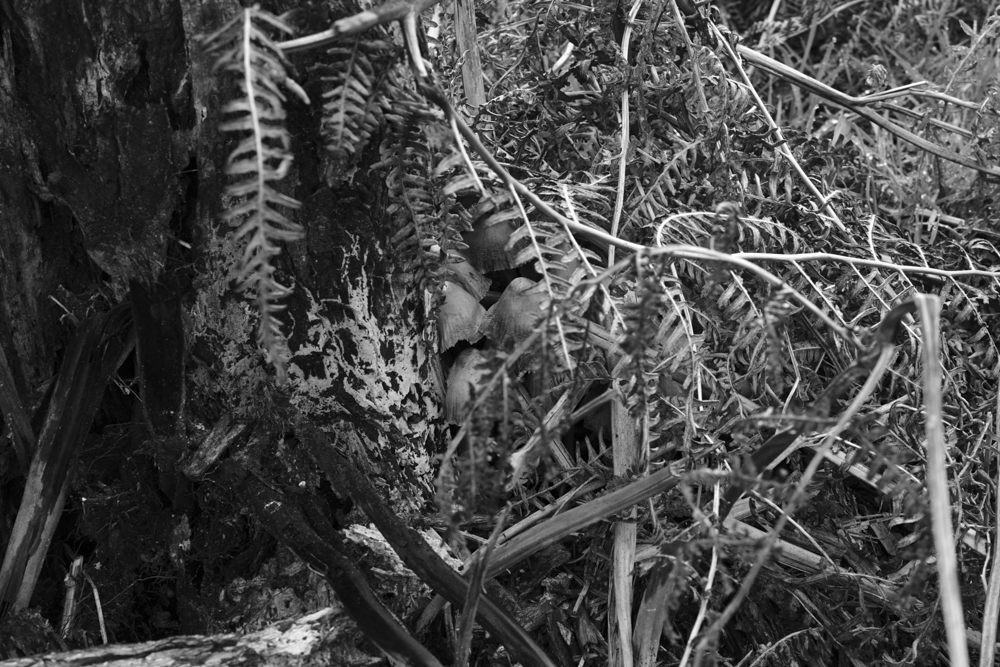
In reflection, different results were created by different methods. My aim for this exercise was to try something new and this was certainly achieved.

References

Cox, S., 2020. Complete Guide To Black And White Photography. [online] Photography Life. Available at: <https://photographylife.com/black-and-white-photography&gt; [Accessed 20 November 2020].
Mansurov, N., 2020. Recommended Nikon Z7 Settings. [online] Photography Life. Available at: <https://photographylife.com/recommended-nikon-z7-settings&gt; [Accessed 20 November 2020].
Categories
AGM62 Photography Research Project Stage 1 Posts

AGM62 Interim Review Presentation 17 November 2020

In order to showcase what I have researched, collated, and produced so far for the Interim Review, I will have to present:

  • Work-in-progress: considered rough edits of my project to date. If I feel that including contextualised research would be beneficial, I will bring these materials as well.
  • A short project statement: I will be asked to succinctly introduce the project’s underpinning concept and reflecting on my decision making so far in terms of production.

The aim of the mid review is to make possible a critical and safe space where project ideas are articulated in relation to the production (techniques, materials etc). Each student will receive formative, verbal, feedback from tutors (Fergus and Åsa). It is important that I show a broader selection of my work, in order to enable a productive discussion with peers and tutors, for example to do with potential edit and sequencing.

There will be walls and tables for me to present prints. There will also be a screen available for me to use if I have work that is not yet printed.

I will present the following:

Project Statement

Invisible Trees: The Hidden Hawthorns of Bushy Park

My project will focus on the hawthorn trees of Bushy Park. Since starting this line of inquiry, I have discovered that the hawthorn is integral to human history, medicine, religion, culture, mythology, and the environment. I have also looked deeper in the history of Bushy Park and how it is strongly connected with the hawthorn. By focusing on a particular tree within a constricted environment, my intention is to photographically reveal the hidden ‘identities’ of the hawthorns in Bushy Park.

There were two main decisions behind choosing this particular location. Firstly, due to the current lock-down restrictions, it is close to my home and can be reached by foot or bike. The nature of this project means I will need to visit and study my subjects on a regular basis and in different weather conditions. I can also combine outdoor exercise with my photography. Secondly, it is an environment that, although I know well, also recognise there is scope to discover it further both through research and photographically.

My initial plan was to map these trees for the purpose of adding them to the Ancient Tree Inventory. The majority of hawthorns in Bushy Park fit the particular criteria of ‘ancient’, ‘veteran’ or ‘important’, as outlined by the Woodland Trust. As far as I am aware, none of these hawthorn have been recorded and my work could help in this endevour.

With regards to production so far, I have used a mirrorless digital camera for this project in combination with a selection of lenses (24mm-70mm, 35mm and 85mm). I have been converting the original colour images to Black & White. The reason for this choice is that it enables the details and shapes of the trees to be seen. I also purposefully chose to not take images that are usually associated with Bushy Park or hawthorn trees.

My composition choice is to create a portrait of each tree, abstracting it from its environment. I have taken these following shots from a low angle. By doing so, it makes the tree appear much bigger than in reality.

At this stage of the project, I have printed a selection of rough edits on as C-prints on matt paper. My final substrate will be decided on at a later date.

Work In Progress

Edited and Printed Images

In addition to these ‘objective’ portraits, I have taken subjective shots of the trees.

Print Combinations

Un-Printed Rough Edits

Polarising Filter Results

Typology Test

I will also be able to present other unprinted images on screen, if required, and in context with the review.

Contextualised Research

Photographers/Artists

  • Tacita Dean
  • Simon Roberts
  • Minor White
  • Bernd and Hilla Becher
  • Riitta Päiväläinen
  • Jean-Luc Brouard
  • Terry Evans
  • Myoung Ho Lee
  • Rachel Talibart
  • Aubrey Beardsley

I will present the relevant blog posts covering the above, if requested.

In addition, I will present and discuss the following books:

Adams, M. (2018). The Wisdom of Trees. London: Head of Zeus Ltd.

Barnes, M., 2019. Into The Woods. London: Thames & Hudson.

Vaughn, B. (2015). Hawthorn – The Tree That Has Nourished, Healed, And Inspired Through The Ages. New Haven & London: Yale University Press.

Categories
AGM62 Photography Research Project Stage 1 Posts

AGM62 Minor White 16 November 2020

‘The secret, the catch, and power lies in being able to use the forms and shapes of objects in front of the camera for their expressive-evocative qualities. Or to say this in another way, in practice Equivalency is the ability to use the visual world as the plastic material for the photographer’s expressive purposes’.

(White, M. 1963 pp. 17-21)

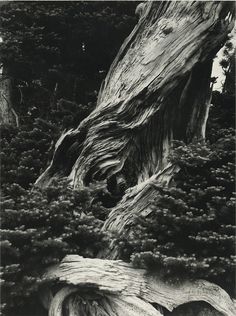
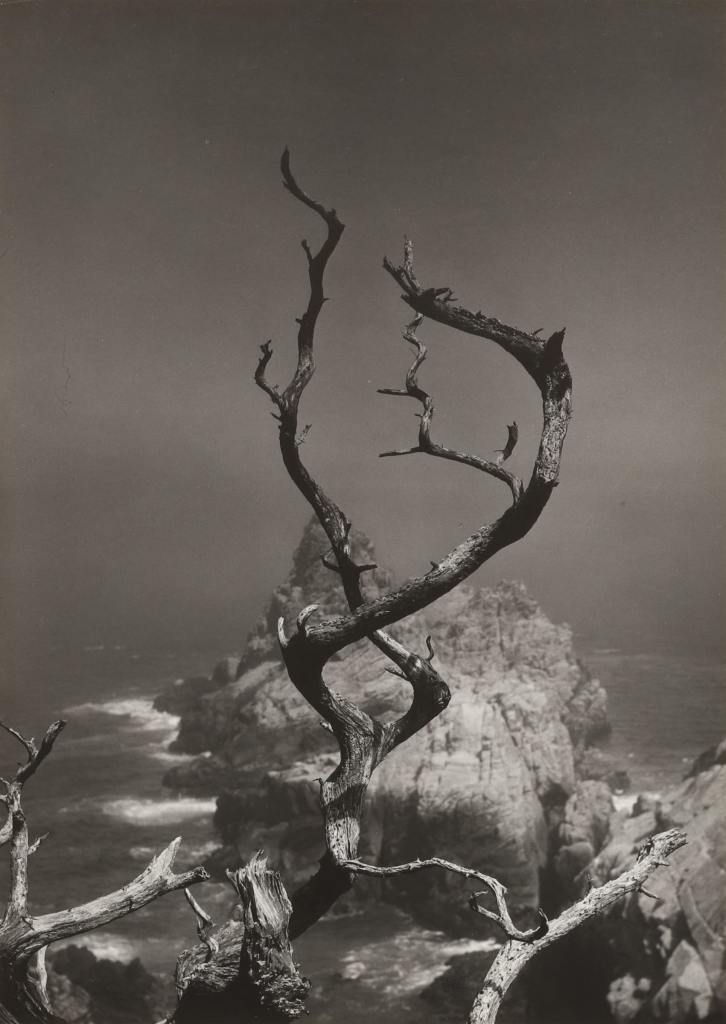
Minor White (1908-1976) was an American photographer and was known for his meticulous black-and-white prints of landscapes, architecture, and men. White’s approach was also influenced by spiritualism and zen. When first introduced to White’s work during my initial photographic studies, I was entranced by his abstract, close-up observations of trees and other natural phenomena.

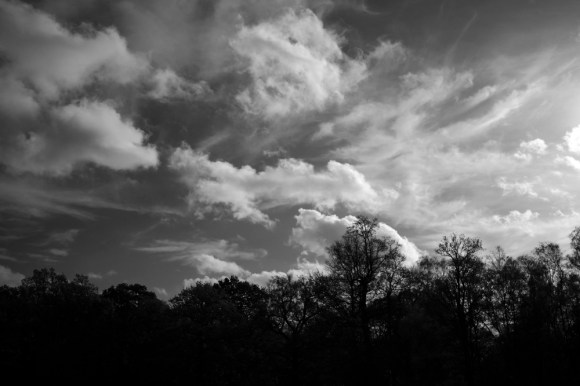
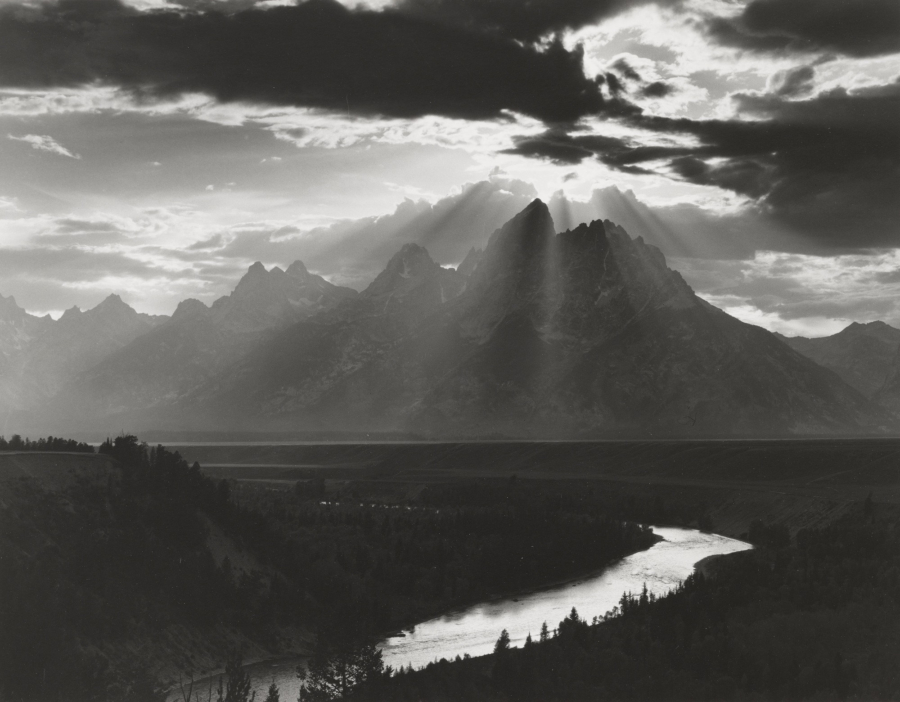
When looking at White’s images in relation to this current project, I also noticed a similarity to his use of clouds within a composition.

While carrying out my research on White, I came across an article by Katherine Phipps called Creating Better Compositions: Landscape Lessons from Minor White. This succinctly written article gave me an insight to White’s work of which I was previously unaware.

‘White took photographs of a variety of subjects, weaving narratives in the way he arranged these pictures of earth, light, shadow, bodies, skies, shapes. What is particularly notable about White’s work, perhaps where its true power lies, is the way that he orders the images and combines them with text that show us the underlying interconnectedness of many facets of the natural work, as well as the human world, for that matter.’

(Creating Better Compositions: Landscape Lessons from Minor White (Premium), 2020)

What struck a major chord with me in this article was the headline ‘Choose equipment that serves you’. Phipps uses these words to highlight how White used particular methods resulting in his signature style. This made me contemplate my own use of equipment and photographic methodology.

Phipps continues to highlight the specificity of White’s use of his equipment to create his stunning images:

‘Minor White sought to shoot majestic views of the world, which when combined with extremely macro views of his experience that he noticed, would weave a story about something magical. He chose his equipment very specifically, and in fact used it in a very specific way to create his dramatic landscapes.’

(Creating Better Compositions: Landscape Lessons from Minor White (Premium), 2020)

Phipps then continues to outline his particular method, specifically infrared:

‘For his landscape pictures, White chose to shoot infrared large format sheet film, which darkened the skies and brightened the planes of the earth, allowing White to create photographs that were full of otherworldly drama. In addition to light on the visible spectrum, infrared film is sensitive to wavelengths near the thermal range, creating large, detailed negatives which showed a world that was different than what is visible to the naked eye.’

(Creating Better Compositions: Landscape Lessons from Minor White (Premium), 2020)

I didn’t realise that this is how White took these images – I had used a digital infrared editing technique in my Moments of Eternity project for Unit AGM60. At the time of writing this post, I was also working on a particular shooting/editing method in order to create a similar dramatic effect.

The other aspect of White’s work I needed to consider is his sequencing of images. This was brought to my attention in the book Minor White: Manifestations of the Spirit by Paul Martineau. This tome was issued in connection with the exhibition of the same name held at the J. Paul Getty Museum from 8 July to 19 October 2014.

According to Martineau, ‘White described his sequences as being like a “cinema of stills” and called on the viewer to be an active participant in experiencing the varied moods and associations that came to the fore while moving from one photograph to the next’. (Martineau, P. 2014 pp. 10).

Martineau also states:

‘Over the course of his career, White created over one hundred sequences, series, and portfolios. Viewers of his sequences must not only read each individual image in relation to adjacent images but also consider all of the images in the highly structured grouping as the complete expression of an idea.’

(Martineau, P. 2014 pp. 10)

While writing this post, I realised that there was more of a connection of my work with that of White’s. I was more than aware of how much more I could learn and discover from this exceptional visionary.

References:

Artnet.com. 2020. Minor White | Artnet. [online] Available at: <http://www.artnet.com/artists/minor-white/&gt; [Accessed 16 November 2020].

The awakened eye. 2020. Equivalence: The Perennial Trend. [online] Available at: <https://theawakenedeye.com/pages/equivalence-the-perennial-trend/&gt; [Accessed 16 November 2020].

La Noir Image. 2020. Creating Better Compositions: Landscape Lessons From Minor White (Premium). [online] Available at: <https://lanoirimage.com/creating-better-compositions-landscape-lessons-from-minor-white/&gt; [Accessed 16 November 2020].

Martineau, P., 2014. Minor White: Manifestations of the Spirit. Los Angeles (Calif.): J. Paul Getty Museum.

White, M. 1963. Equivalence: The Perennial Trend, PSA Journal 29, no. 7 (1963) pp. 17-21.

Categories
AGM62 Photography Research Project Stage 1 Posts

AGM62 Test Prints Initial Thoughts 14 November 2020

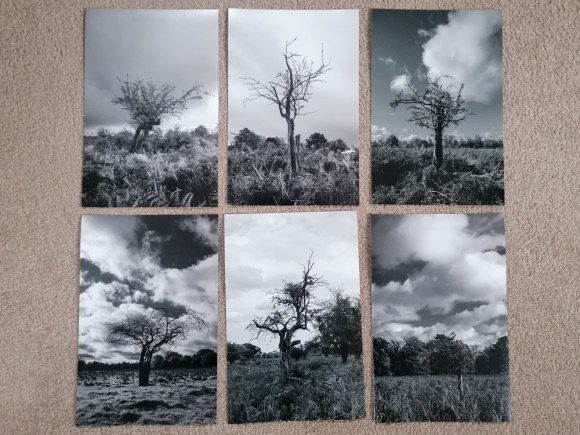
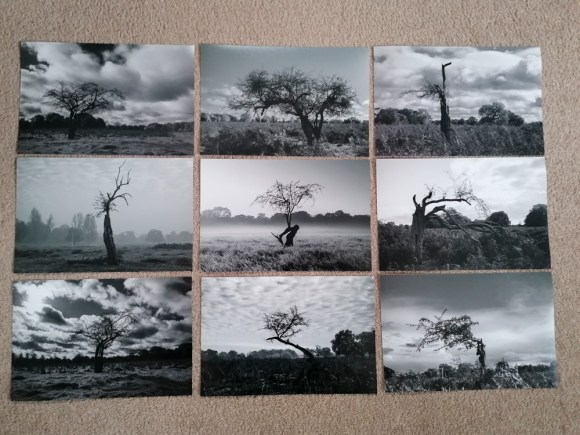
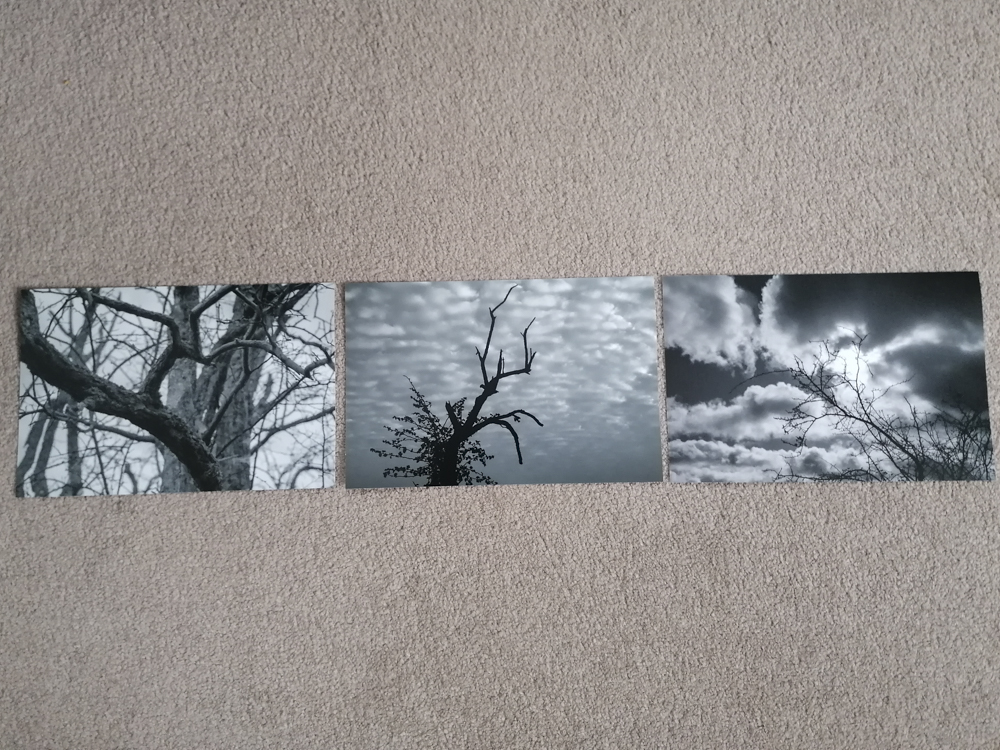
After placing my order with DS Colour Labs, I received my prints within a couple of days. In my experience, I always find this stage of the project very enlightening. By looking at the prints and not at the screen-based images, there are always aspects to take into further consideration. It is an invaluable part of the learning and project-progression process.

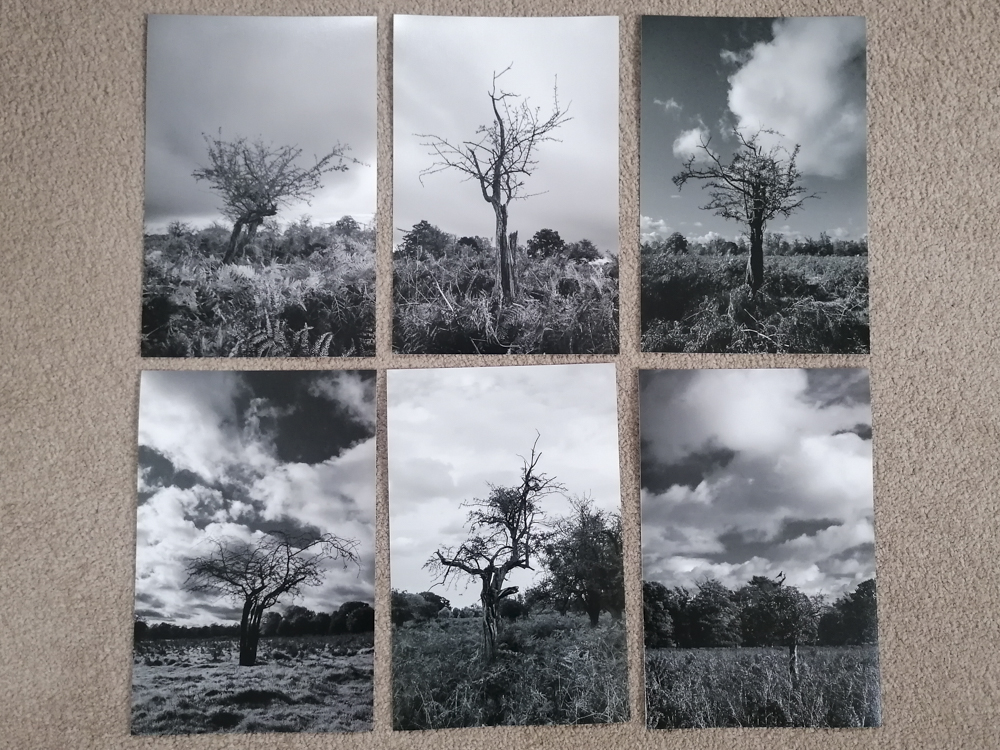
In order to get a better idea of possible sequencing, I laid out the 6″ x 9″ prints on the living room floor and took the following smartphone shots.

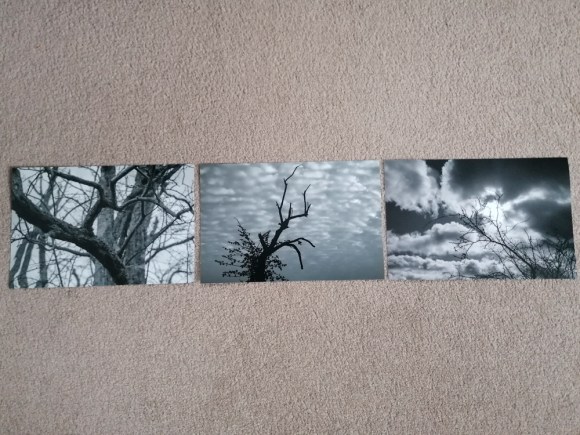
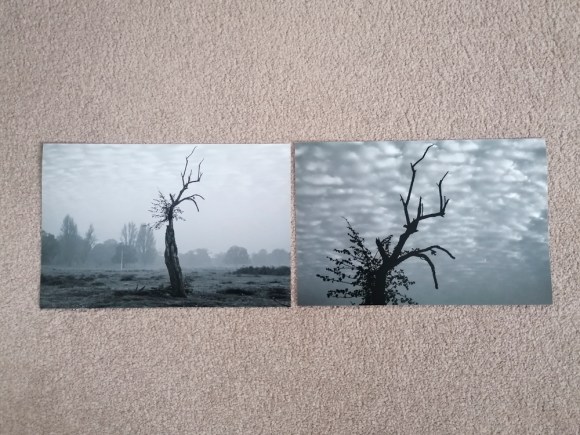
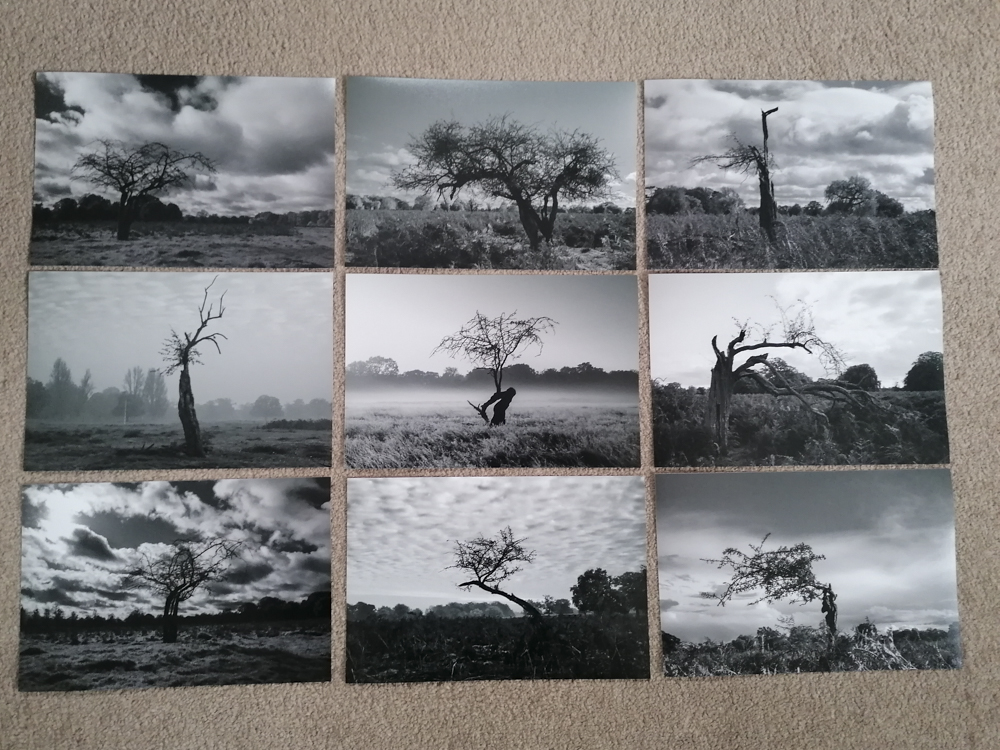
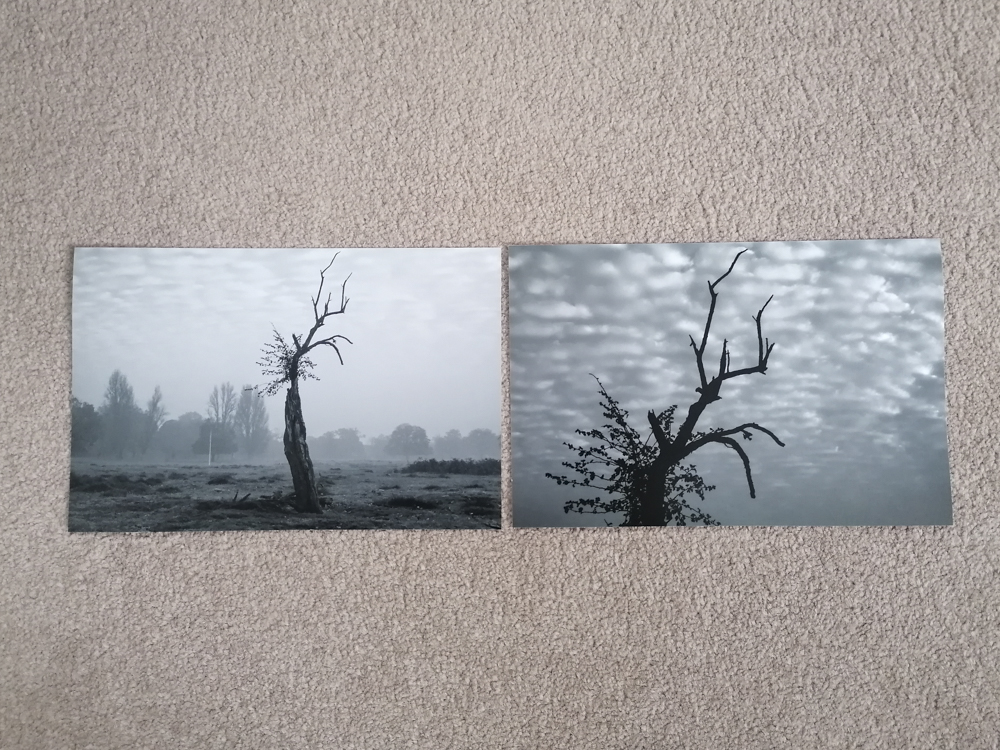
I also tried this aspect.

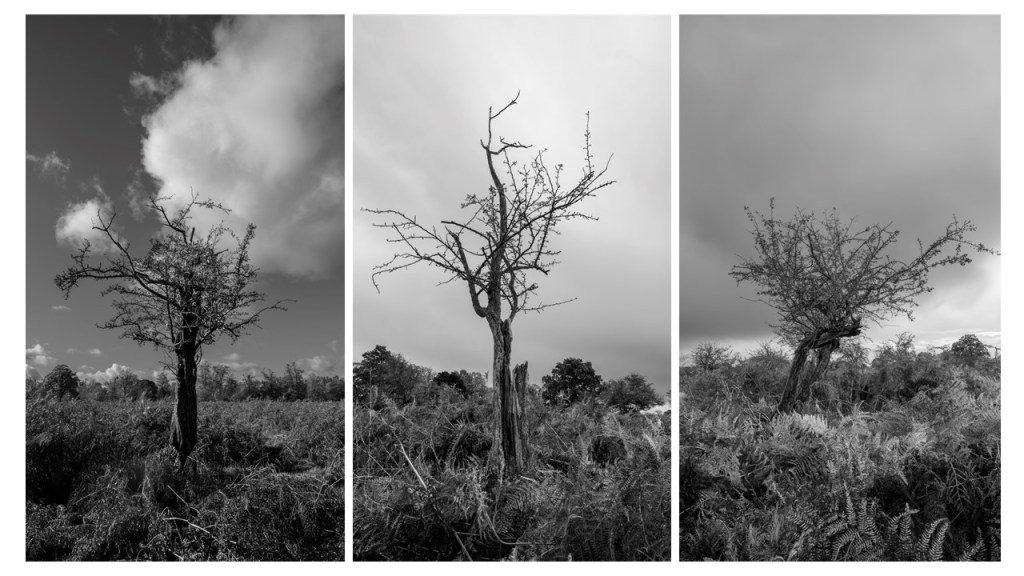
One thought that kept tickling my mind was combining a big image of a one tree and present it with smaller, close-ups of the same tree. Something that could be discussed in the forthcoming Interim Review.

Categories
AGM62 Photography Research Project Stage 1 Posts

AGM62 Bushy Park Hawthorns 10 November 2020

After a day of being in front of the PC processing images, I had to escape the four walls of home. As usual, Bushy Park was my choice of walk. When I entered the park, the sun was already quite low in the sky. Despite the darkening conditions, the park was still bathed in a dull light and the mist was starting to form.

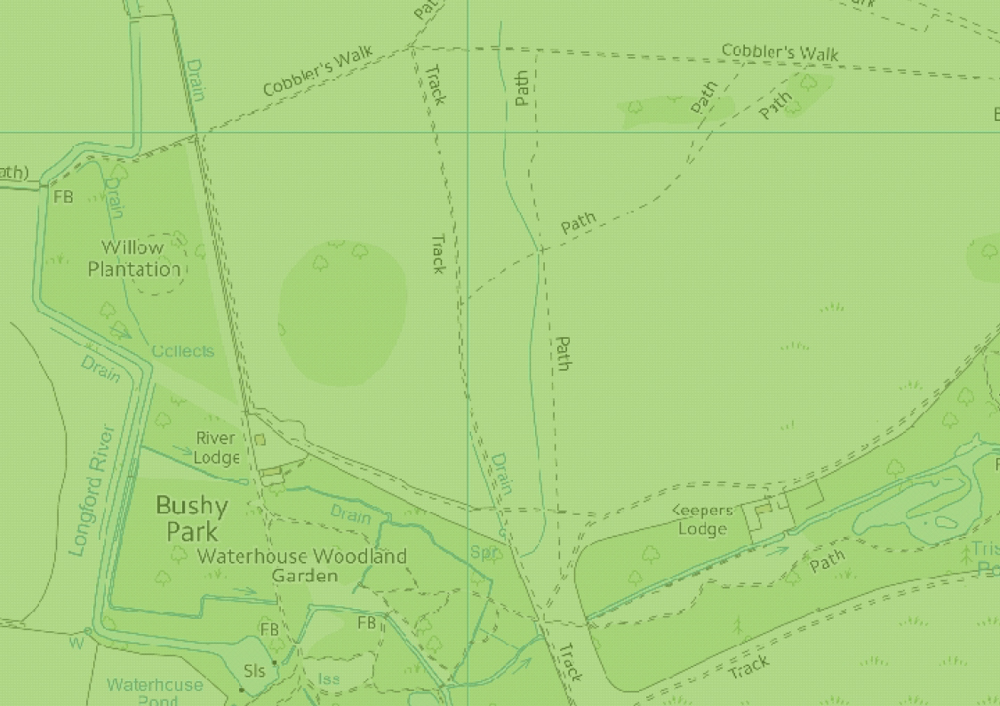
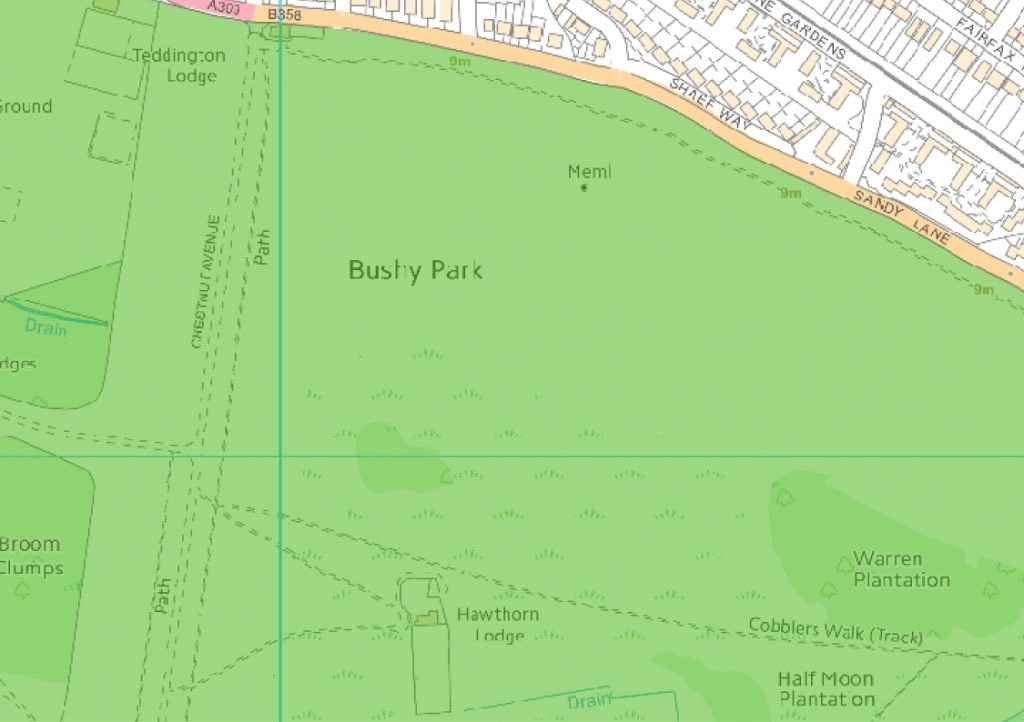
Part of my route involved walking along the track between Cobbler’s Walk and the gap between the two Woodland Garden plantations. Along this track is a line of hawthorns that I have not photographed or noted yet.

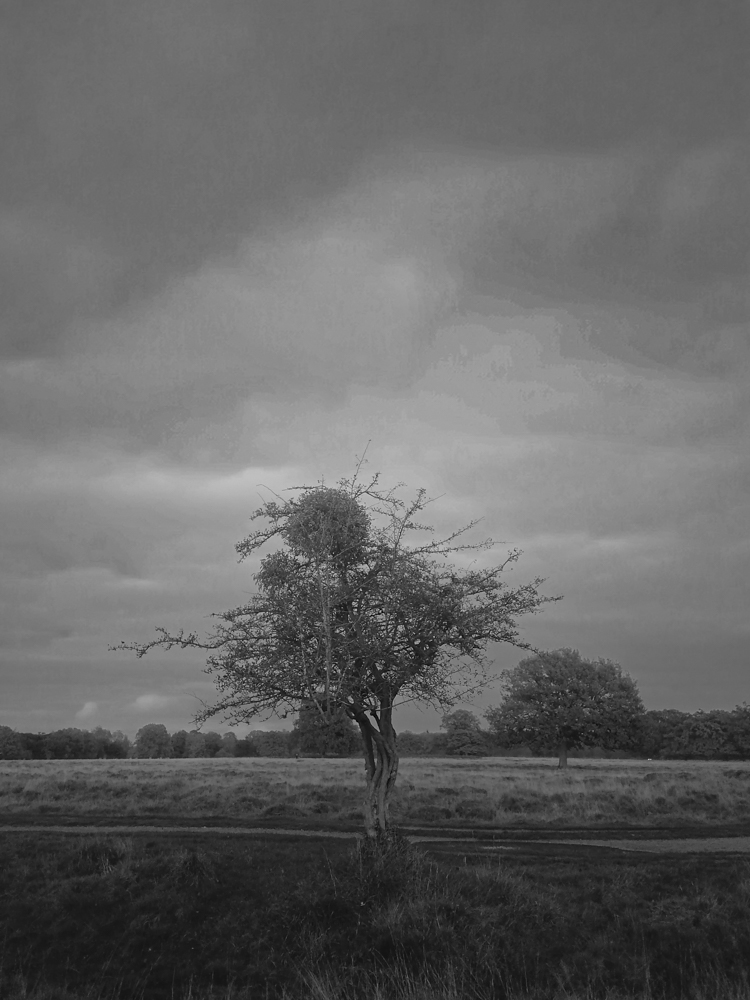
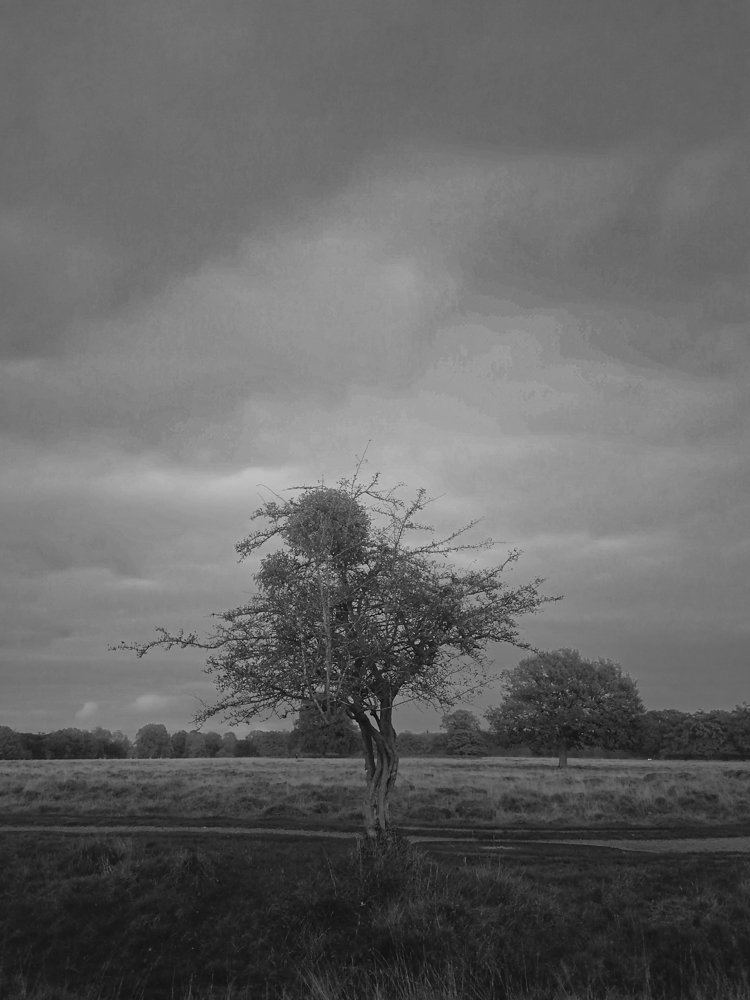
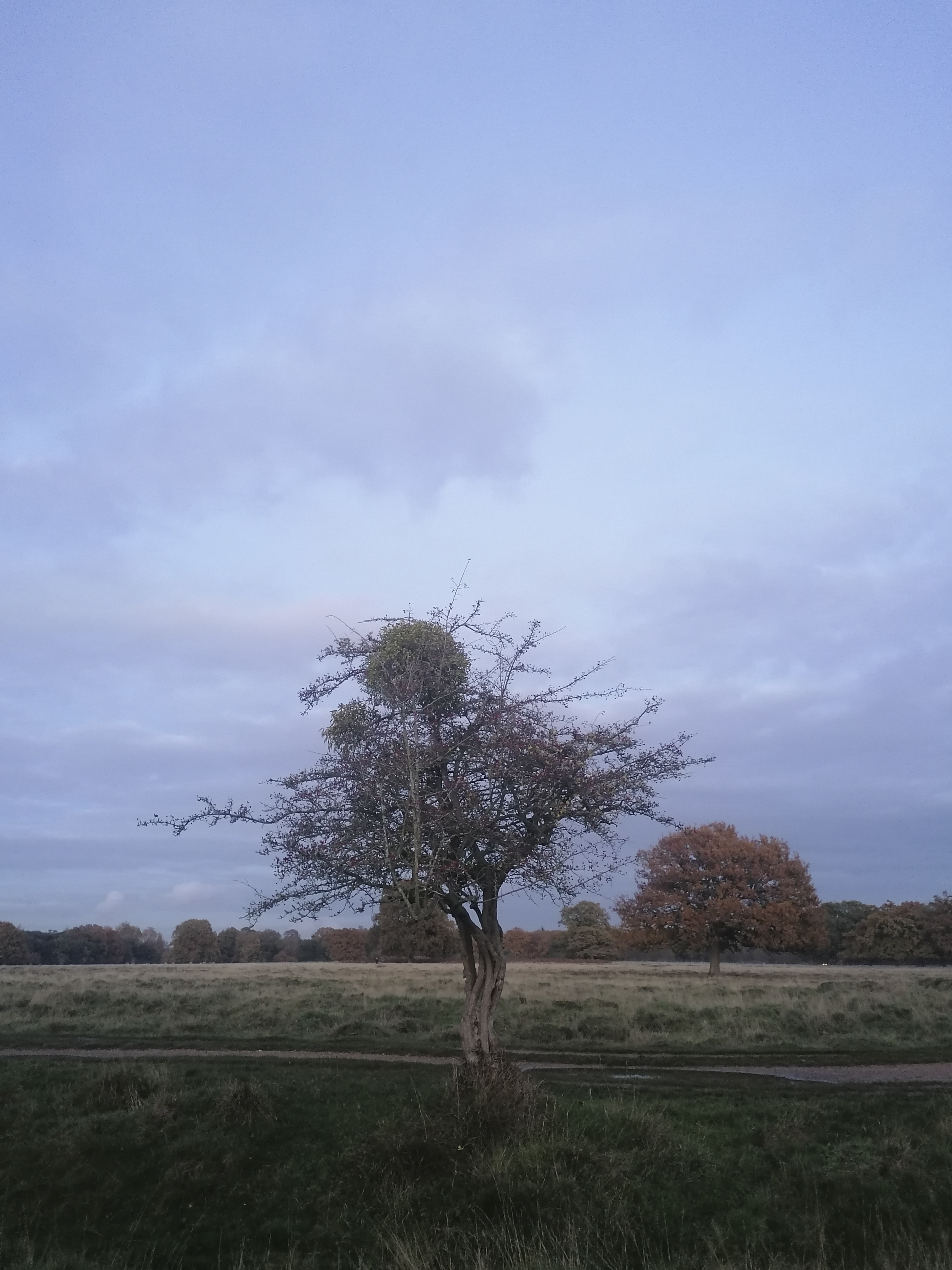
When looking closer at these hawthorns, the majority along this path would fit the criteria of ‘Ancient’. As the light wasn’t great and I was only armed with my smartphone, I only took the one image. This is the last hawthorn at the end of the track.

In order to tie in with the other images, I created the following Black & White conversion.

A quick comparison.

Looking at the map and thinking about this particular row of trees really did pique my interest. This path runs parallel to Macclesfield Walk running along the edge of the Willow Plantation. What was this boundary line planted for and why?

Categories
AGM62 Photography Research Project Stage 1 Posts

AGM62 Printed Images 10 November 2020

In preparation for the Interim Review on 18 November 2020, I wanted to present a selection of images produced so far. At at the time of writing, the review would be going ahead at University of Brighton (in line with Government guidelines). So I could receive the most comprehensible feedback from my tutors and classmates, I would need to print these images. In my experience, there are always differences between what is seen on screen and the printed version, so I knew it be a worthwhile exercise.

These are the 18 images I chose to have printed at 6″ x 9″ (C-Type on lustre paper). I ordered the prints online from DS Colour Labs, who provide great quality with a quick turnaround at an affordable price.

I also ordered the following prints at 12″ x 18″ in order to take a closer look at the details.

It will be quite interesting to see how they look as printed pieces and how they could function as a Body of Work.

Categories
AGM62 Photography Research Project Stage 1 Posts

AGM62 Bushy Park Hawthorns 6 November 2020

After my successful photo session on 4 November 2020, I was quite enthused to return to the park to catch more hawthorns in similar weather conditions. As the forecast was for cold and mist first thing on 6 November, I could not miss out on this opportunity.

Unfortunately, despite it being quite chilly, the air was a touch too humid to have the ‘diamond’ effect on the trees and grass. Nonetheless, I discovered three new hawthorns and took the following images.

The area of Bushy Park I focused on was the patch on the left of Chestnut Avenue at the Teddington Gate.

Tree 1

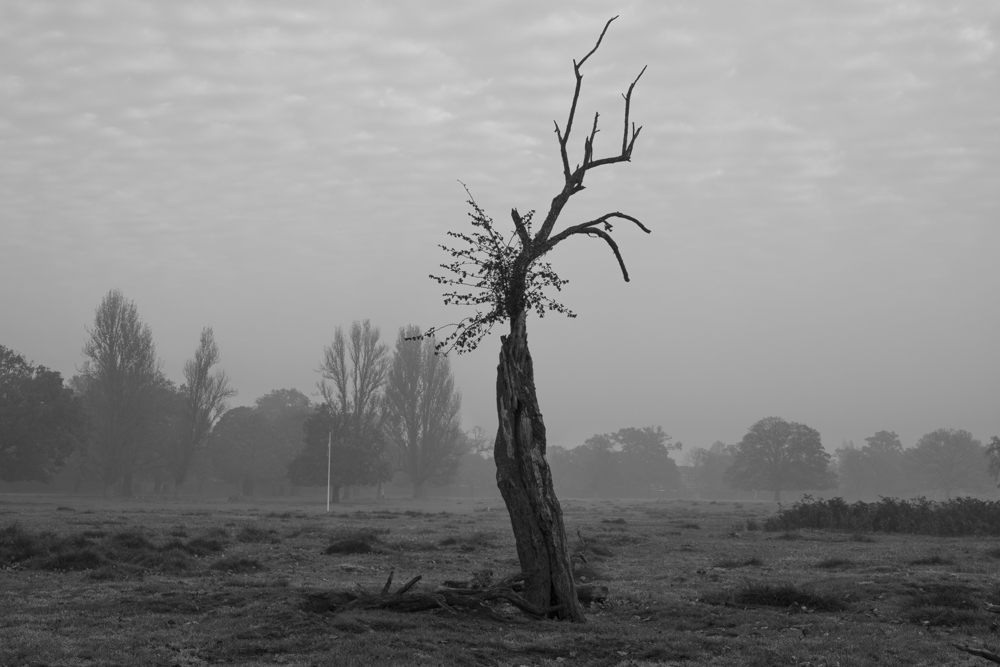
The first tree I photographed is by itself. I tried shooting different angles around the tree and including different elements in the background.

The white pole that can be seen in the background in the fifth and sixth images marks the SHAEF Memorial. This is the location where General Eisenhower planned Operation Overlord, the code name of the D-Day landings in Normandy during WWII (1939-45). On 5 March 1944 General Eisenhower moved SHAEF (Supreme Headquarters Allied Expeditionary Forces) from Grosvenor Square in London to Camp Griffiss, a large US base in Bushy Park.

According to the Royal Parks website, Eisenhower is said to have relaxed by sketching the pine trees that he could see from his office window. Also, it states that the final buildings of Camp Griffiss were removed in 1963 but there are still signs of the camp, including brackets in trees that held telephone wires.

In hindsight, these closer shots remind me of broken wires.

Tree 2

I continued to walk through the park around the back of Hawthorn Lodge and around to the Diana Fountain car park. There were quite a few deer around that patch, which reduced my potential shooting opportunities. At the time of writing, I couldn’t recall exactly which tree this was, but I will need to revisit this speciment.

Tree 3

The third and final tree that I focused on was near to the main hawthorn patch near to the Diana car park. I really liked the texture of the sky in relation to this tree.

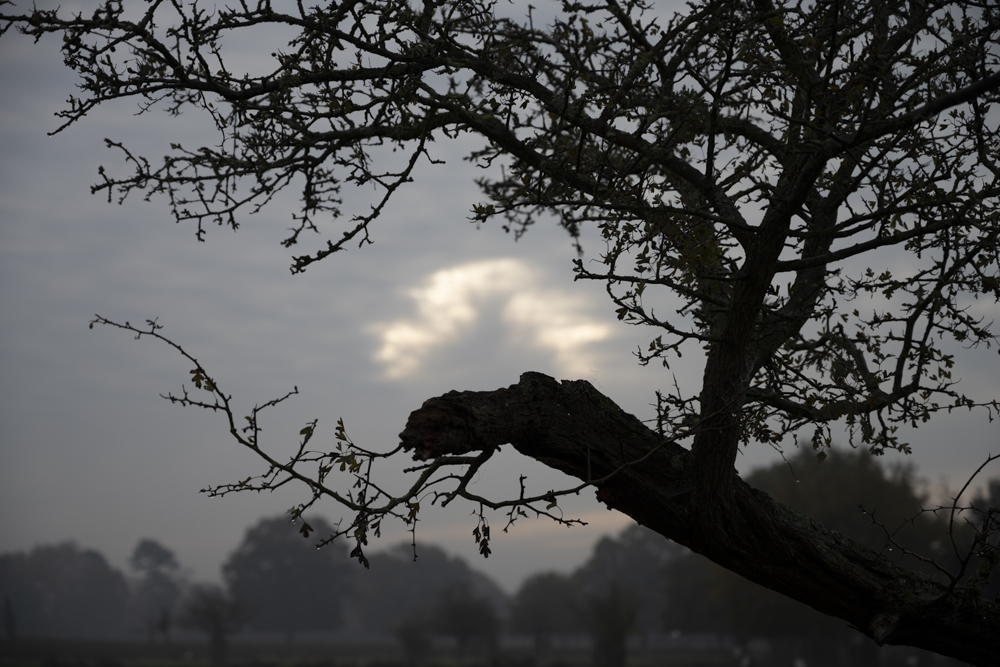
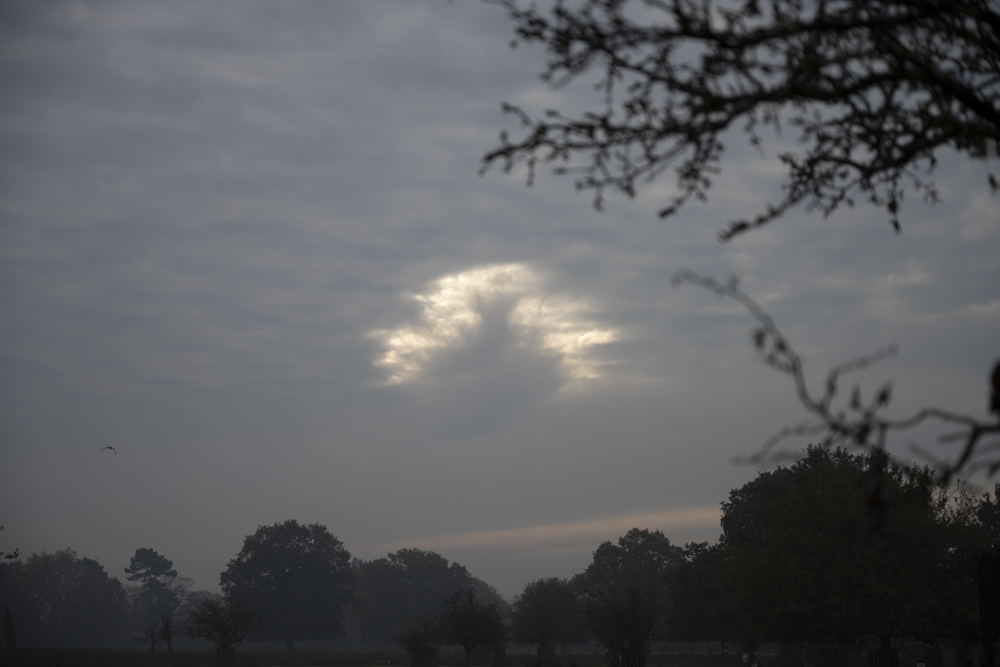
I also noticed this mesmerising cloud formation where I think the cloud was starting to shine through. I couldn’t quite get the angle or shot I wanted, but this is certainly an aspect I need to look out for with future images.

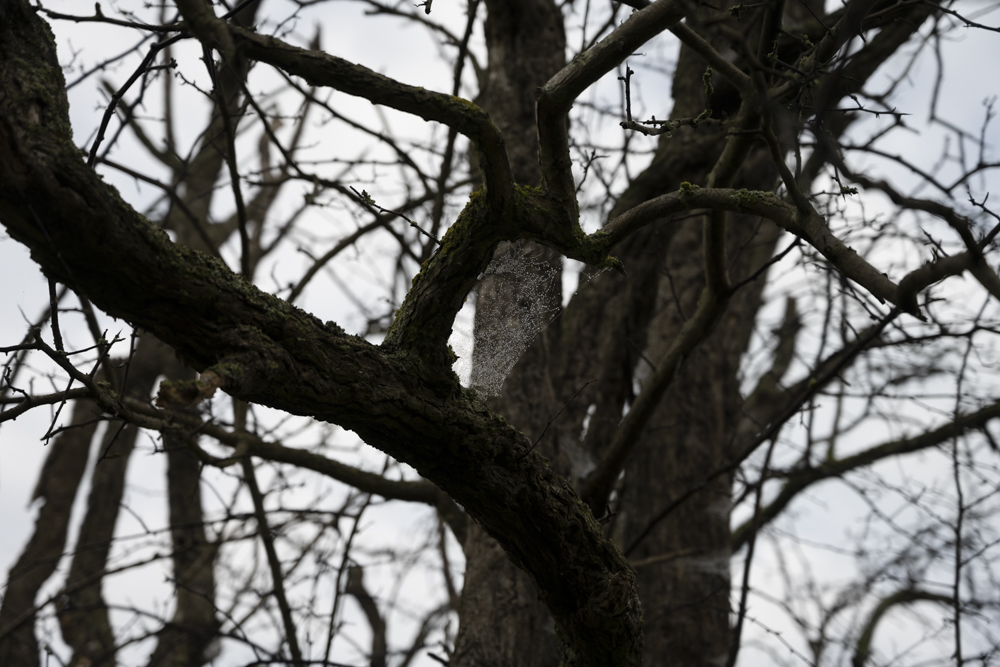
When looking closer at this tree, I noticed a spider’s web coated in water droplets. Evidence of the insects who rely on the hawthorns within Bushy Park.

Later that day, I created a selection of Black & White conversions.

At this stage of the project, it was now time to review the images taken so far. I also had to process how my research and the visual resources/artworks could influence my work going forwards.

References

The Royal Parks. 2020. Monuments In Bushy Park. [online] Available at: <https://www.royalparks.org.uk/media-centre/factsheets-on-the-royal-parks/monuments/monuments-in-bushy-park#memorial&gt; [Accessed 10 November 2020].
Categories
AGM62 Photography Research Project Stage 1 Posts

AGM62 Bushy Park Hawthorns 4 November 2020

The forecast for the morning of 4 November was sunshine and a chilly temperature of 2 centigrade. After waking up very early and looking out of the bedroom window, this forecast was confirmed by the twinkling cover of frost on the cars parked outside. These have to be my most favourite conditions in which to visit Bushy Park, so there was only one thing to do. Wrap up warm and grab the camera.
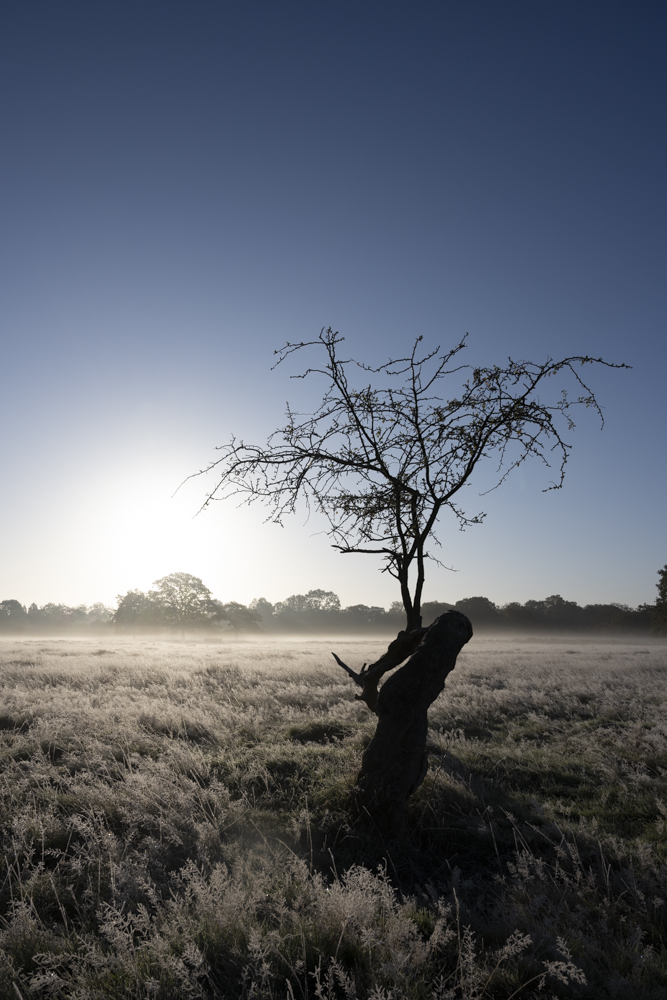
The park looked absolutely magical.

After the previous day’s shoot, I again returned to the first tree I visited. This time, I photographed it on the approach. The sun was much lower in the sky and highlighted the mist.

After returning home, I converted one shot to Black & White.

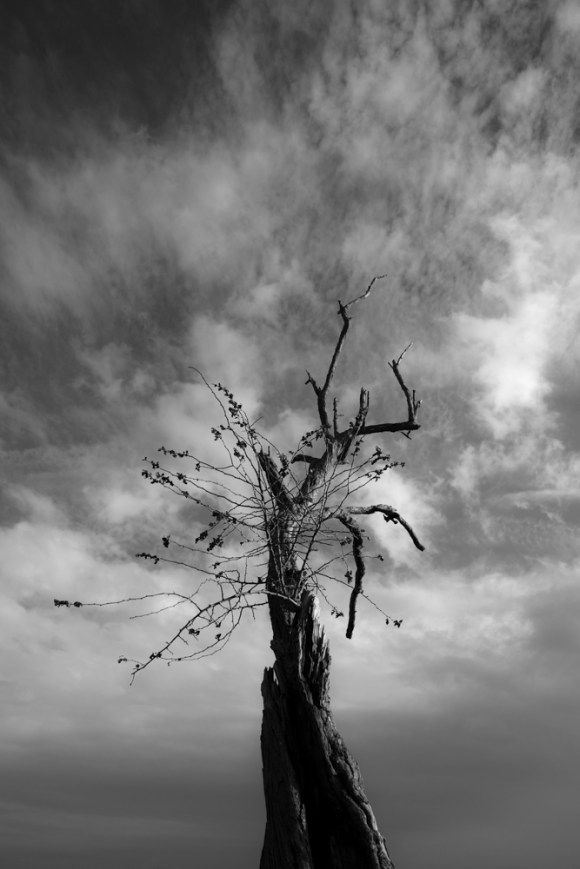
When I first looked at this one in detail, I could see a dragon’s head on the left of the tree. Then, when I showed this image to a friend, the said they could see the Grim Reaper on the right with a scythe on the left. Another person gave the following feedback “Very powerful image… so many ways to read/see it!”

At this stage of the project, certain themes and image similarities were starting to make themselves obvious. It was now time to process what these could be and return to the research aspect.

Categories
AGM62 Photography Research Project Stage 1 Posts

AGM62 Bushy Park Hawthorns 3 November 2020

After my hawthorn recce on 1 November, I went to Bushy Park with my main camera to take further photographs of the trees I had recorded.

I started the shoot at approximately 11.50 and the sun was quite strong and high in the sky at this time of day. My intention was to walk the route I had followed on the 1 November, but in reverse.

Tree 1

The first hawthorn I experimented with was the one photographed last on 1 November (Tree 11). It was a bit frustrating as the sunlight was quite harsh. I thought the bark would have been darker, having rained the day before. Despite this, the wood was quite bleached by the light.

Another frustrating factor was the walkers in the background – there was a lot of waiting for what seemed to be a clear shot. Additionally, getting a low enough angle was quite taxing on my legs. It was also difficult to see the image through the viewfinder or on the screen on the back of the camera due to the harsh light. What I need to experiment with next is the tripod and a sun hood for the screen. Ideally, I would use a 7″ external monitor which can be attached to the camera via the accessory shoe. I should also use the virtual horizon indicator on the display to ensure I have a straight line through the image.

These are the resulting images pre-editing.

Tree 2

I then walked through Woodland Gardens to the area on the other side. This is Tree 2 from 1 November.

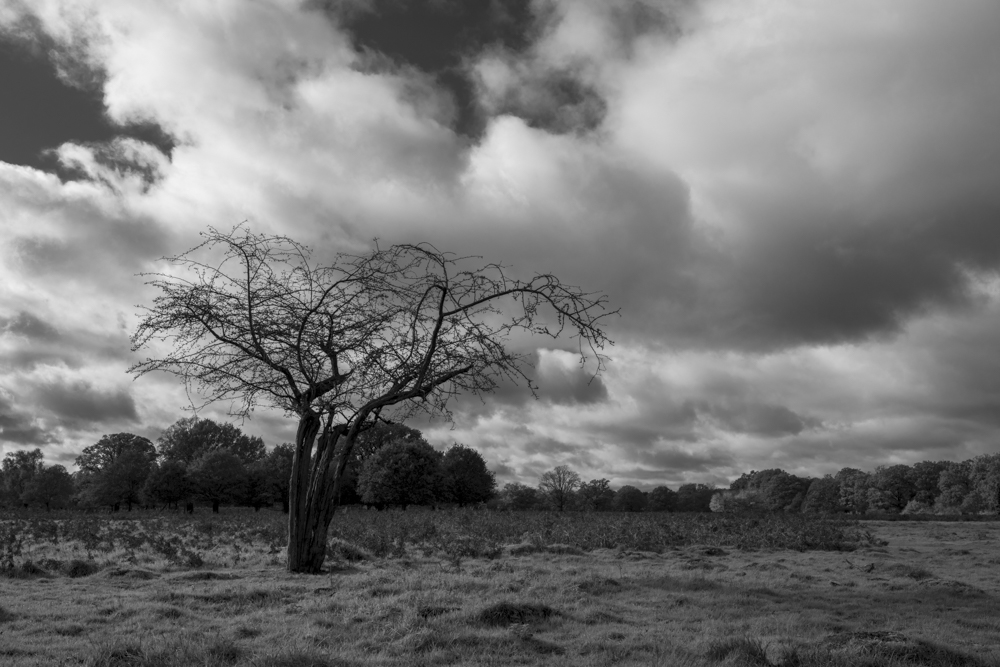
The aspect I focused on was the branches against the sky. I also created a Black & White conversion of this shot. I particularly liked the dramatic nature of the sky and how the branches frame and follow the lines of the clouds.

Tree 3

With this particular hawthorn, I tried both portrait and landscape-orientated shots and tried some close ups.

While editing, I thought this was the shot that looked the strongest out of these and carried out a Black & White conversion.

I then walked to the grove in the vicinity of Hawthorn Lodge

Tree 4

This is a tree I hadn’t photographed before. It is in the area near to Hawthorn Lodge. I quite liked this hawthorn’s stance. However, after looking at these shots, I think this should be reshot to get the optimum angle and orientiation.

Tree 5

Again, another new hawthorn. This could also be reshot to get the best angle.

Tree 6

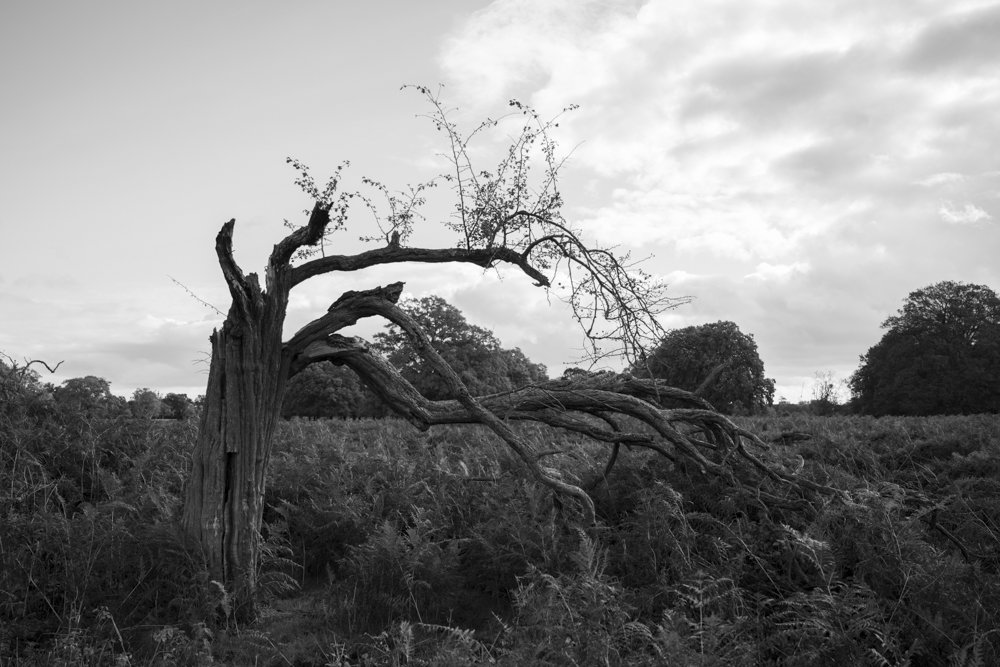
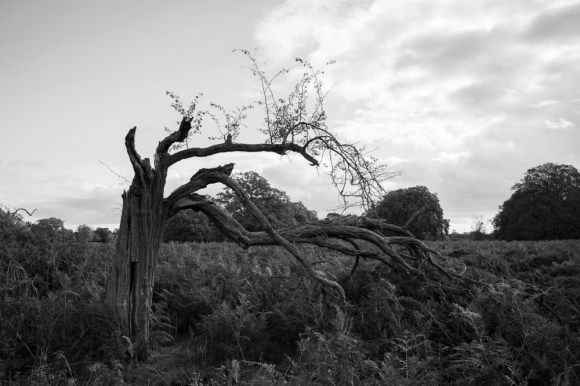
A record of a hawthorn that has clearly been cut down. It will be interesting to see what is fully revealed once the ferns disappear for the winter.

Tree 7

Again, another interesting hawthorn that needs further investigation.

Tree 8

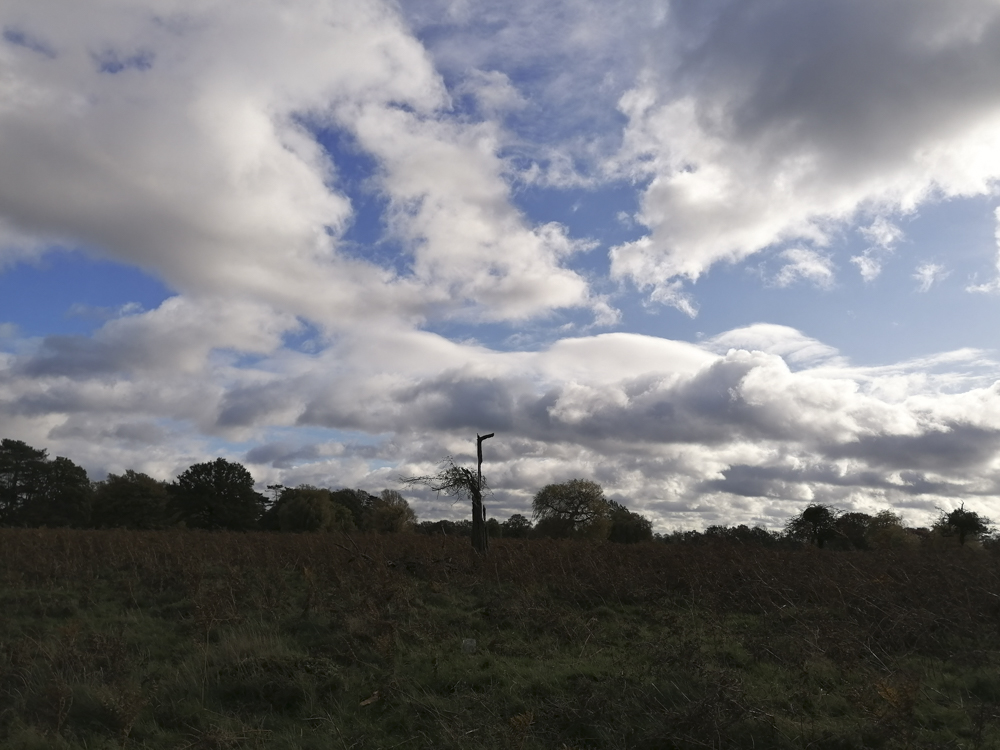
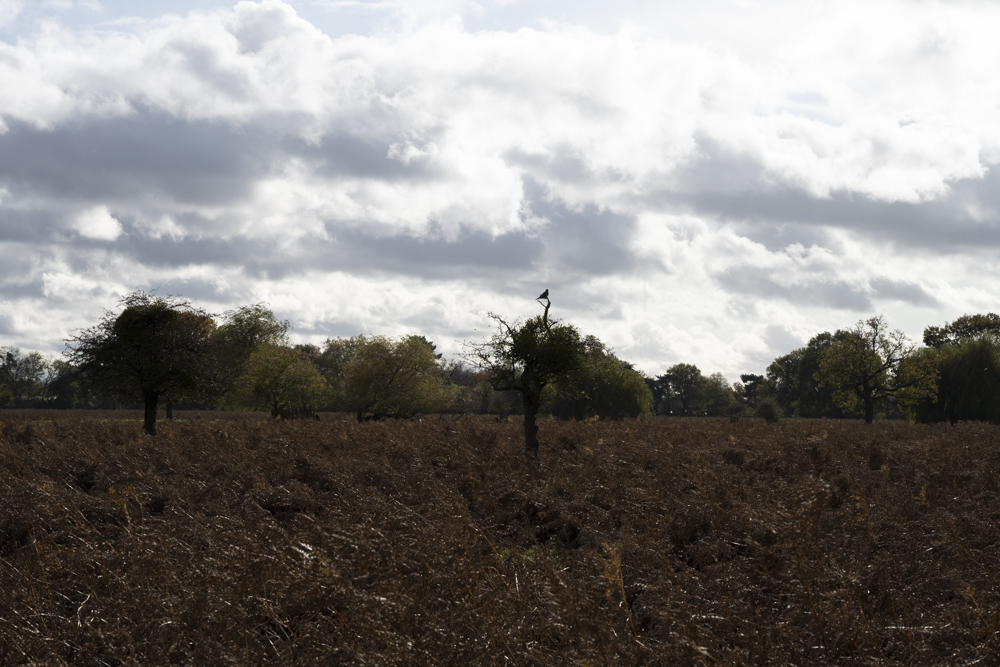
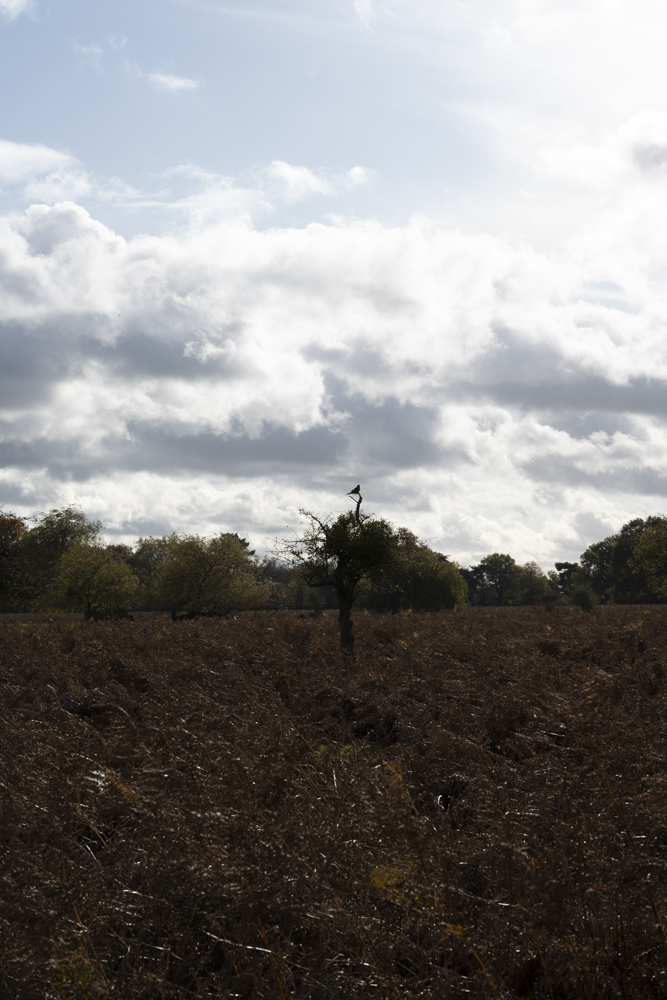
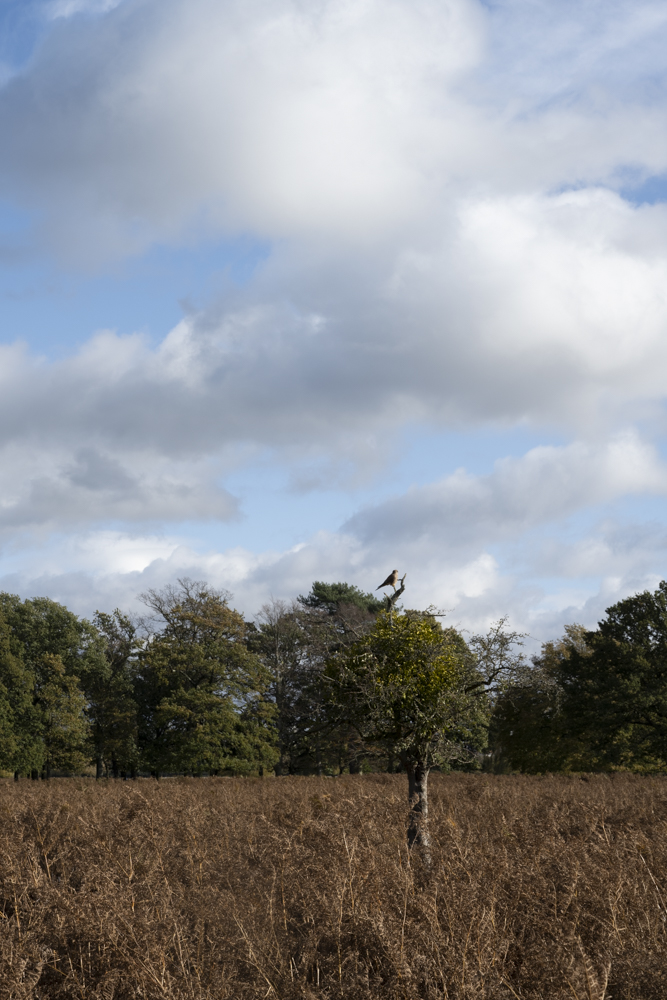
By now I was starting to tire – I’m beginning to realise that to make the most of my energy and get the best shots is to focus on one or two trees per visit. However, I perked up when I saw a couple of sparrow hawks flying around this tree and was quite chuffed to capture it on this hawthorn.

Tree 9

Again, another hawthorn to be revisited, especially after looking at the Black & White conversion below.

Tree 10

Last, but not least, this particular character. I was definitely running out of steam at this stage.

Looking back at these images, there definitely seems to be a theme starting to appear. The horizontal shots are very strong and give quite a powerful impression. A factor to be considered in further detail.

Categories
AGM62 Photography Research Project Stage 1 Posts

AGM62 Group Tutorial Feedback and Actions 28 October 2020

On Wednesday 28 October, the class had a group tutorial as scheduled. The session was carried out via Microsoft Teams due to our tutor’s requirement to self isolate at that time.

After three weeks of working in my own isolation, it was great to see everyone’s progress and show my own concepts and process so far.

The concept of the hawthorn in connection to Bushy Park was well-received and garnered two useful suggestions by my classmate, Sofia:

  • Jean Luc Brouard’s tree portraits for a different perspective
  • A later, similar project by Simon Roberts

Sofia also stated that she thought the hawthorn connection to the history of the park was a good place to maybe focus the project. This thought was also seconded by another of my classmates, Abi.

As I had already made that decision to focus on the hawthorns before they made the feedback, I knew that I was progressing in the correct direction at this stage of the project. Our tutor, Åsa, mentioned that it was a good way of creating a case study that could be used as a model for future projects.

Åsa, also made a comment about the angle of perspective of the shots and the difference they made to the images. I definitely should continue to take photos of the hawthorns from a lower point-of-view as this makes the tree appear ‘larger than life’ and more significant in relation to its environment.

The other aspect that Åsa mentioned was the Black & White conversions of the images. I agreed that having the images in monochrome highlight the details of the trees better than in colour.

The resulting actions I will be taking between now and the Interim Review on 18 November 2020 are to:

  • Continue with my research in regards to hawthorns (folklore, ecology, the environment, Bushy Park, etc.)
  • Take further photographs of particular trees
  • Refine the Black & White conversion technique
  • Produce a series of test prints to see what works and what doesn’t
Design a site like this with WordPress.com
Get started