Categories
AGM62 Photography Research Project Stage 1 Posts

AGM62 Minor White 16 November 2020

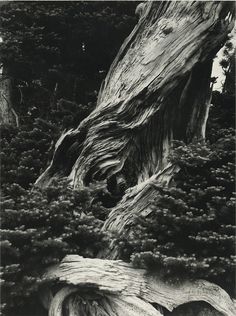
‘The secret, the catch, and power lies in being able to use the forms and shapes of objects in front of the camera for their expressive-evocative qualities. Or to say this in another way, in practice Equivalency is the ability to use the visual world as the plastic material for the photographer’s expressive purposes’.

(White, M. 1963 pp. 17-21)

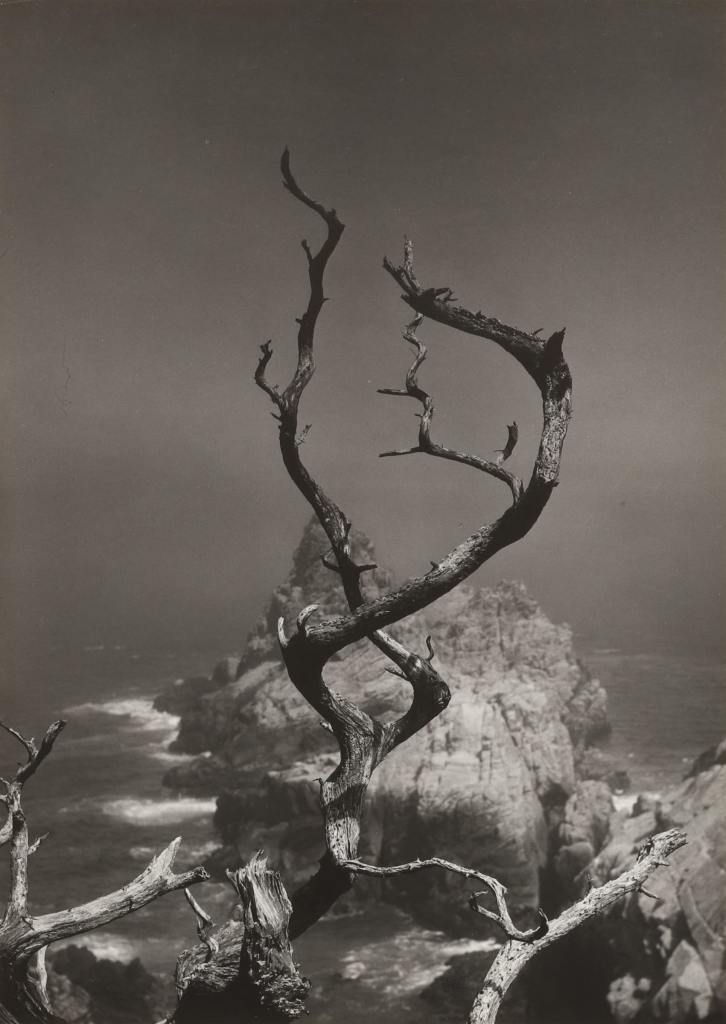
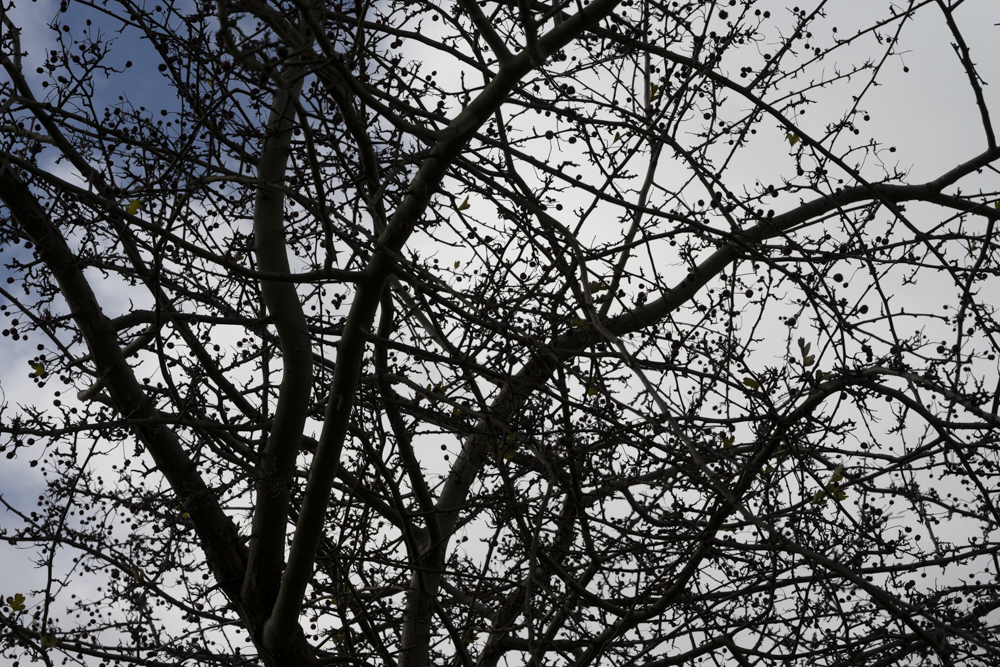
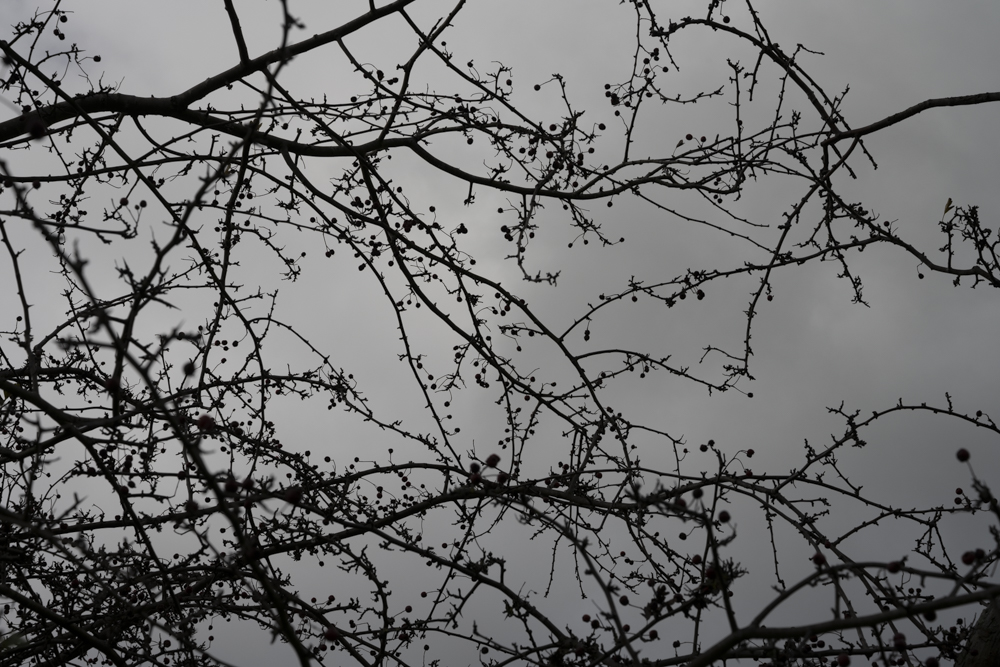
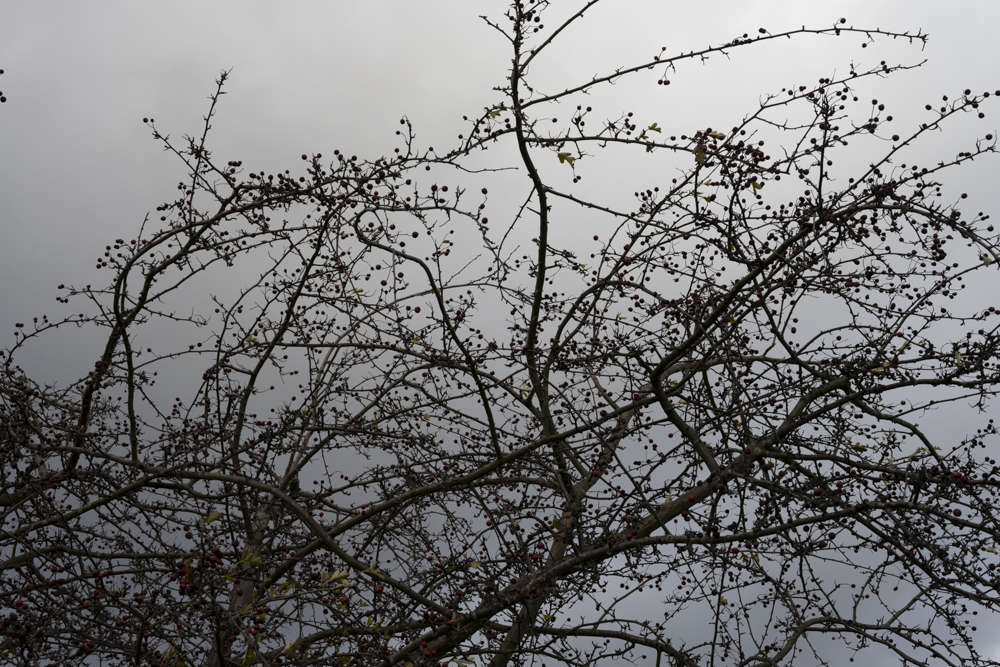
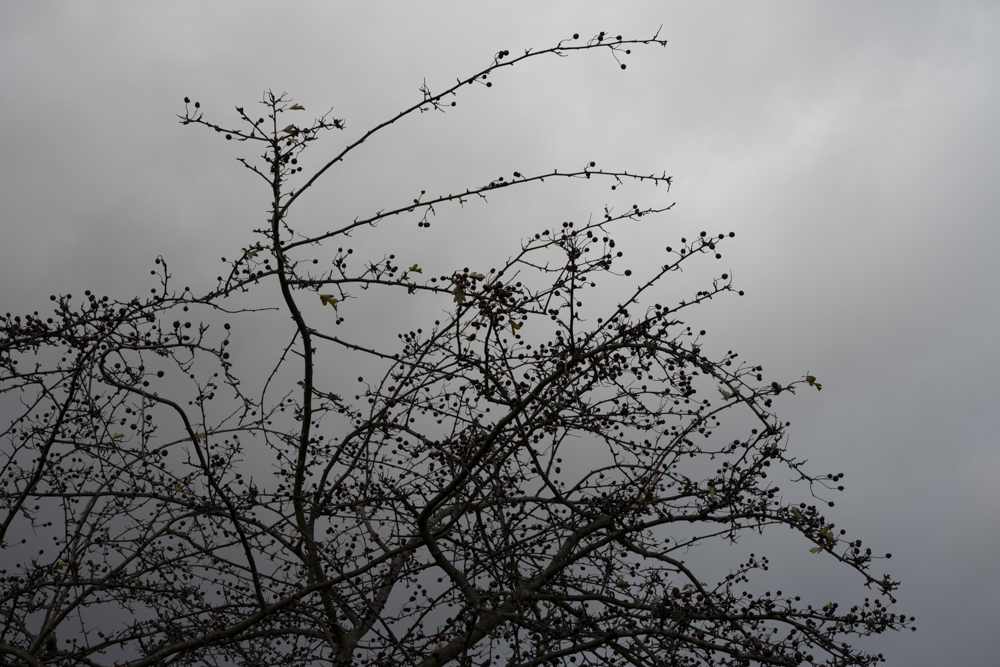
Minor White (1908-1976) was an American photographer and was known for his meticulous black-and-white prints of landscapes, architecture, and men. White’s approach was also influenced by spiritualism and zen. When first introduced to White’s work during my initial photographic studies, I was entranced by his abstract, close-up observations of trees and other natural phenomena.

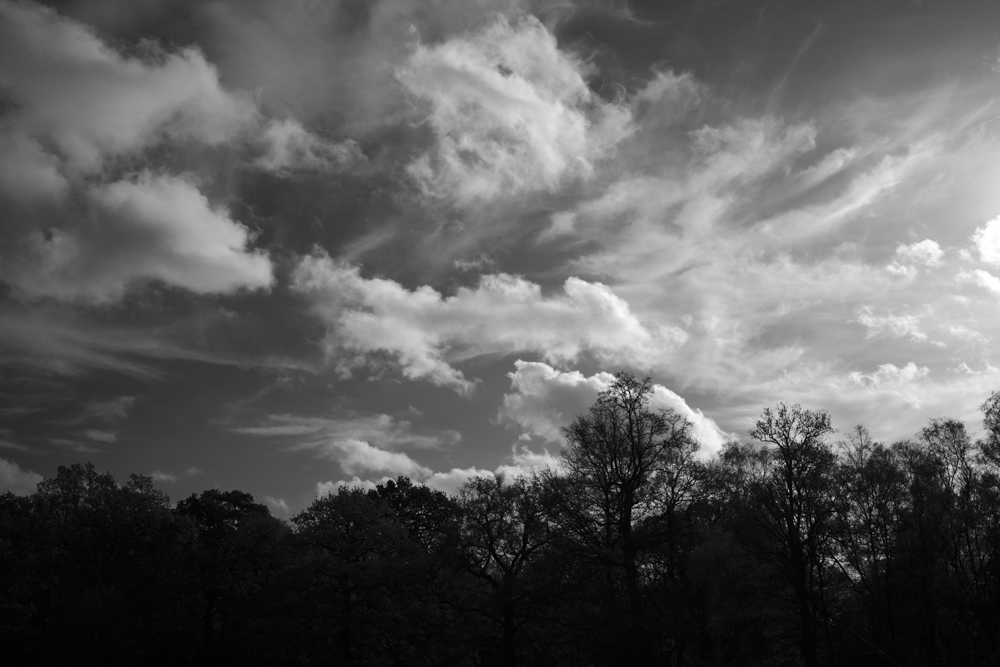
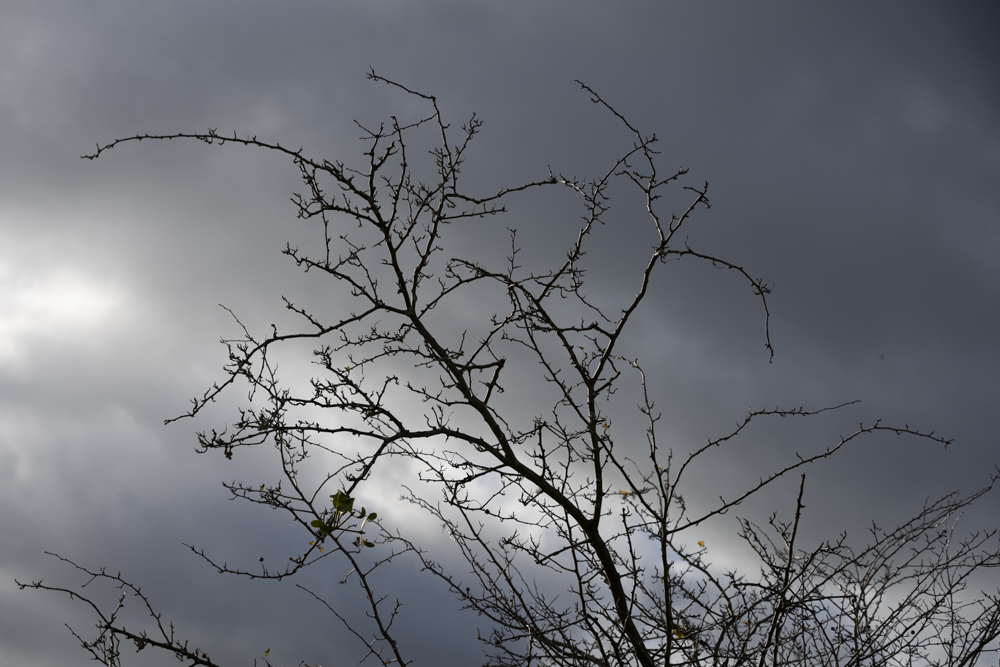
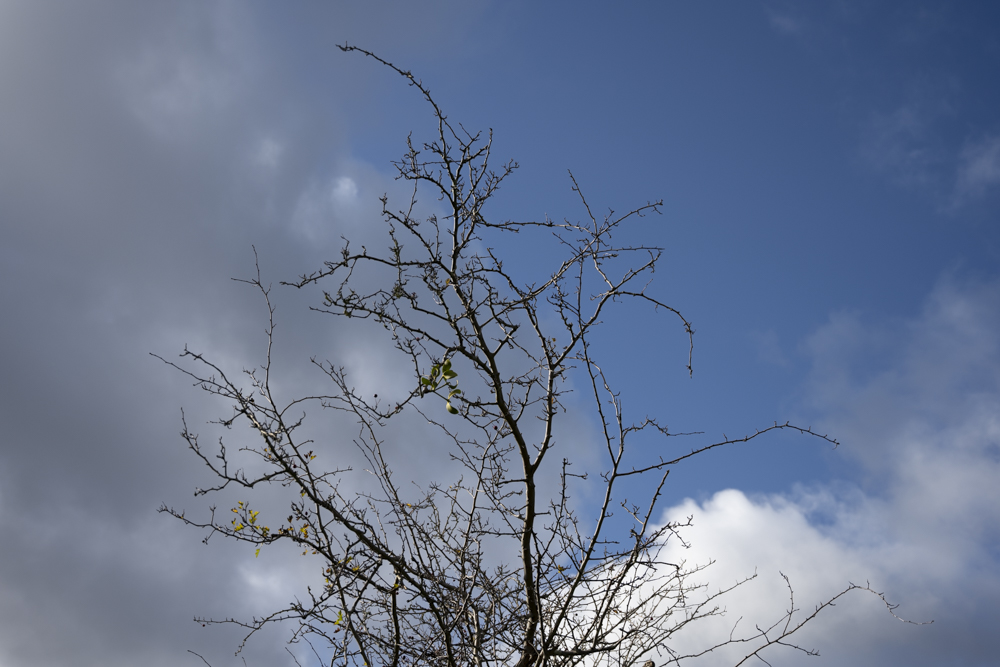
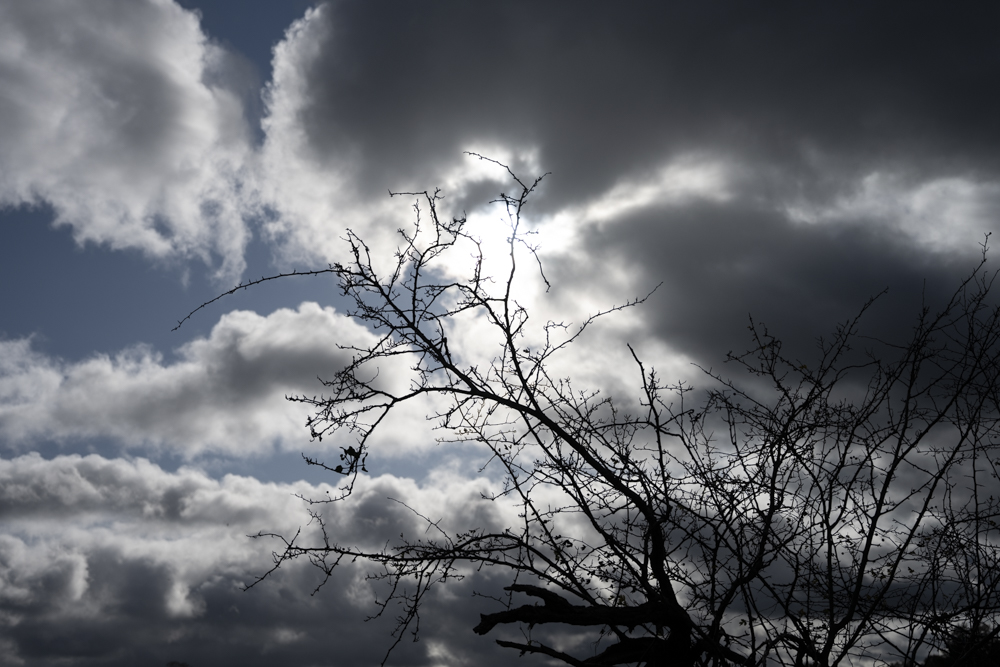
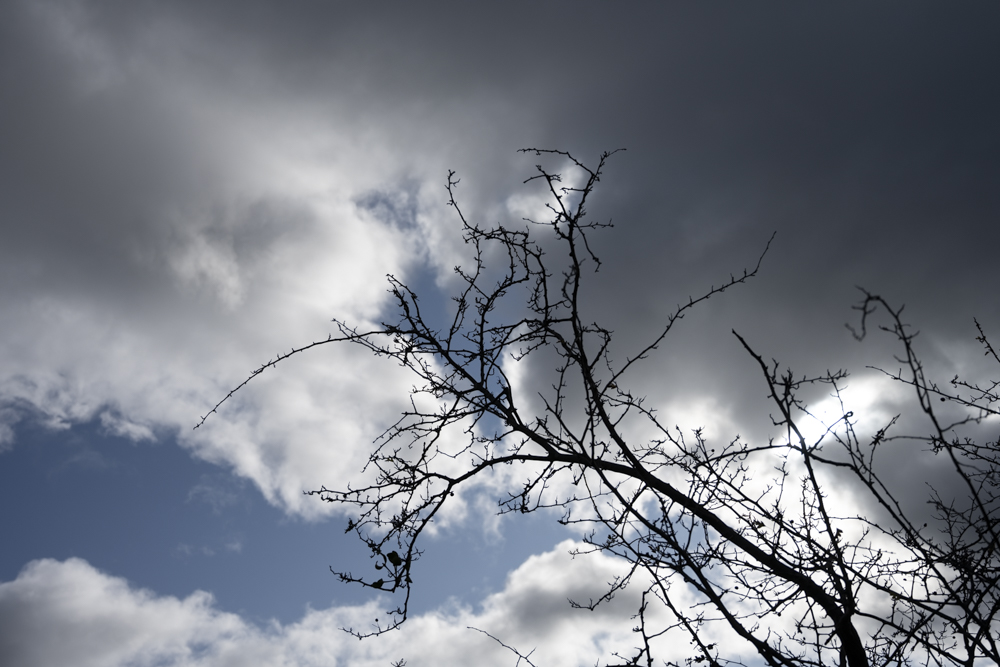
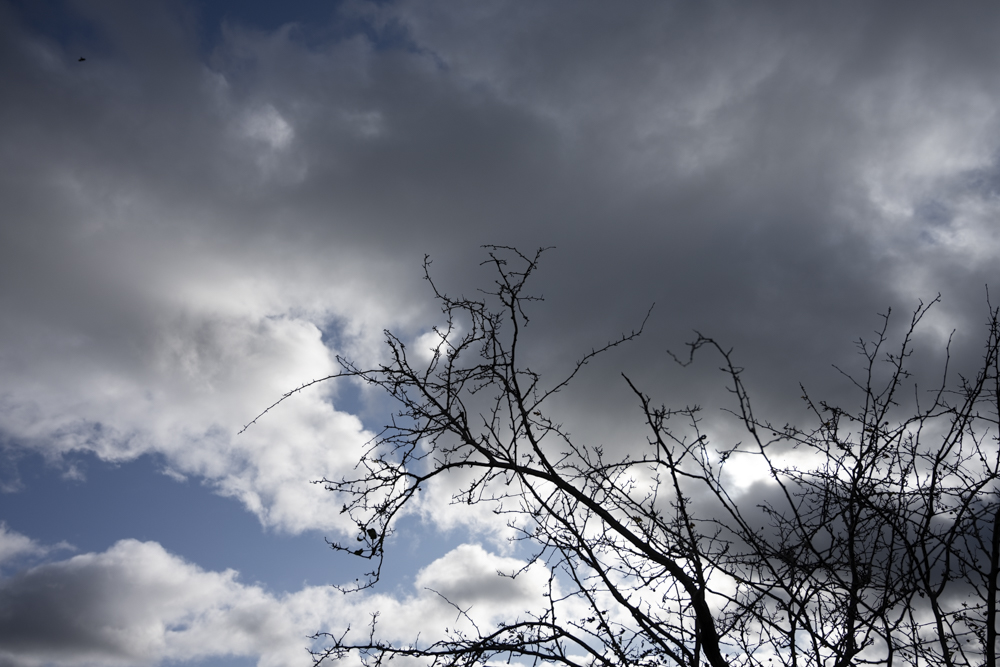
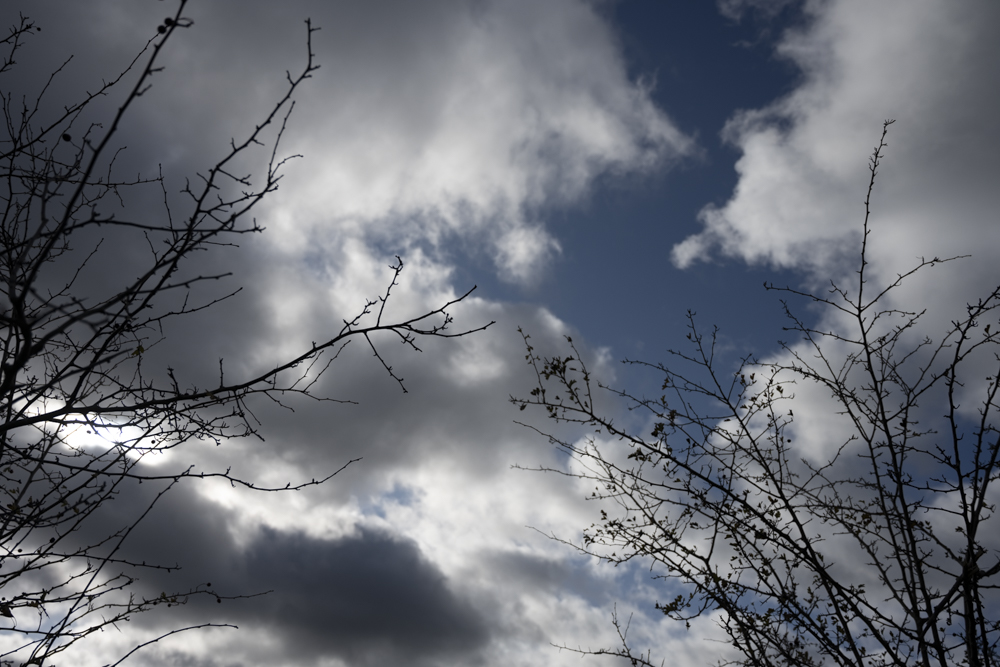
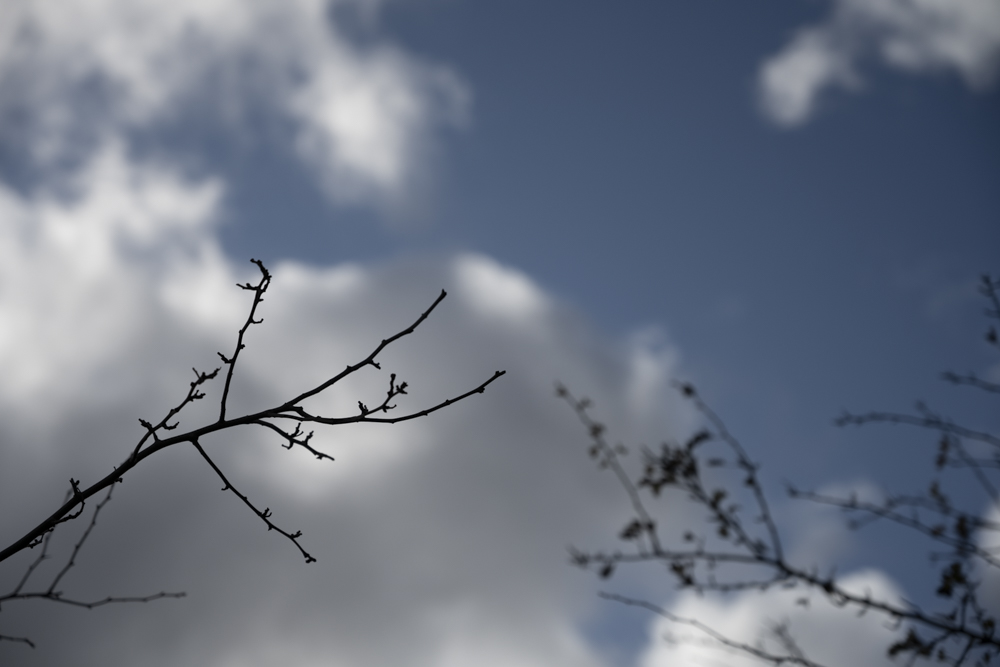
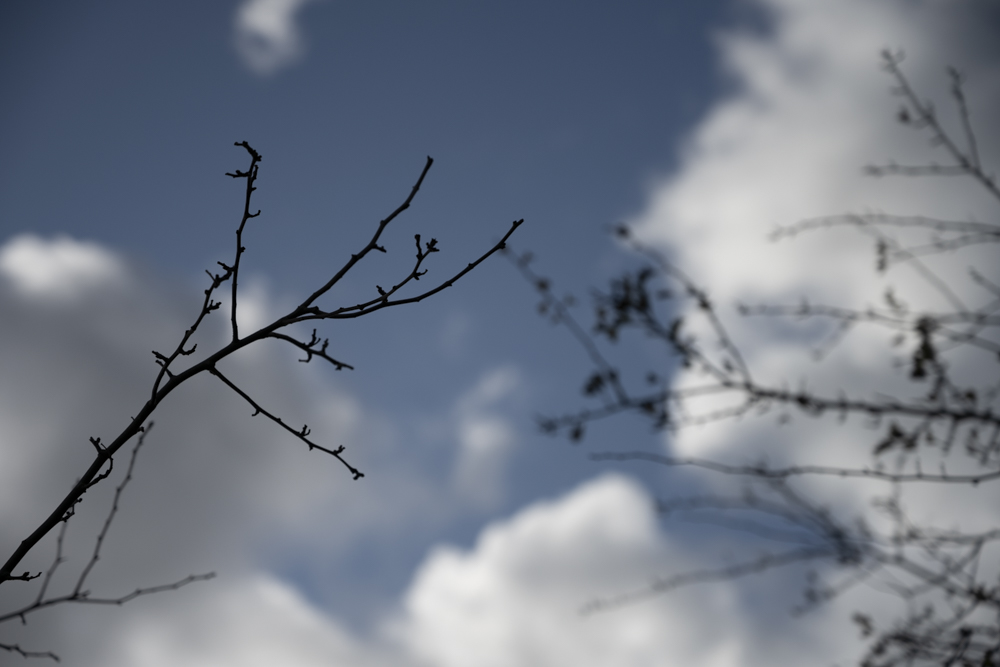
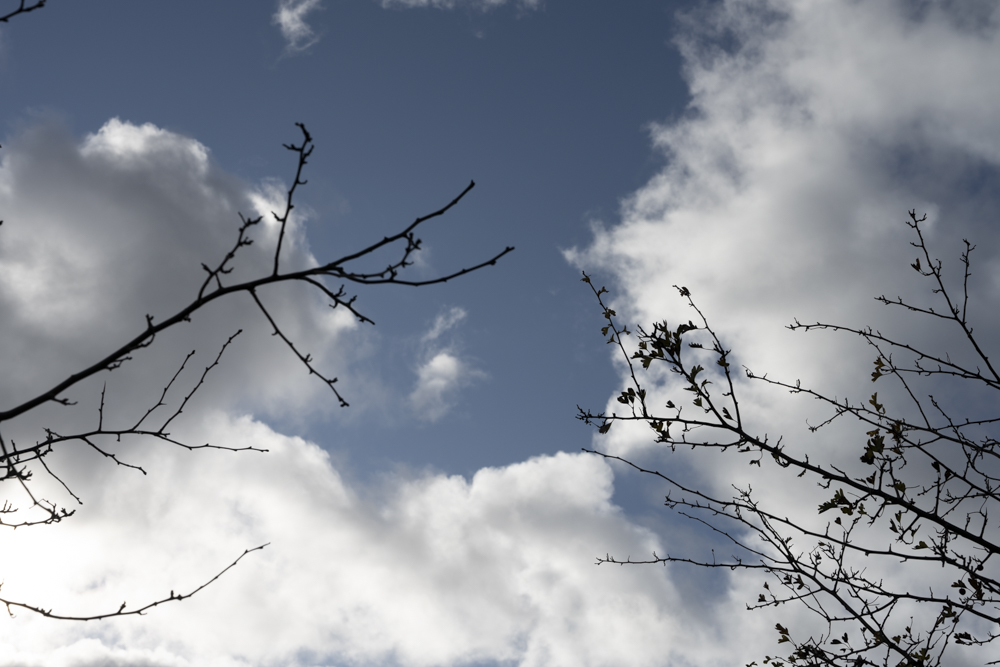
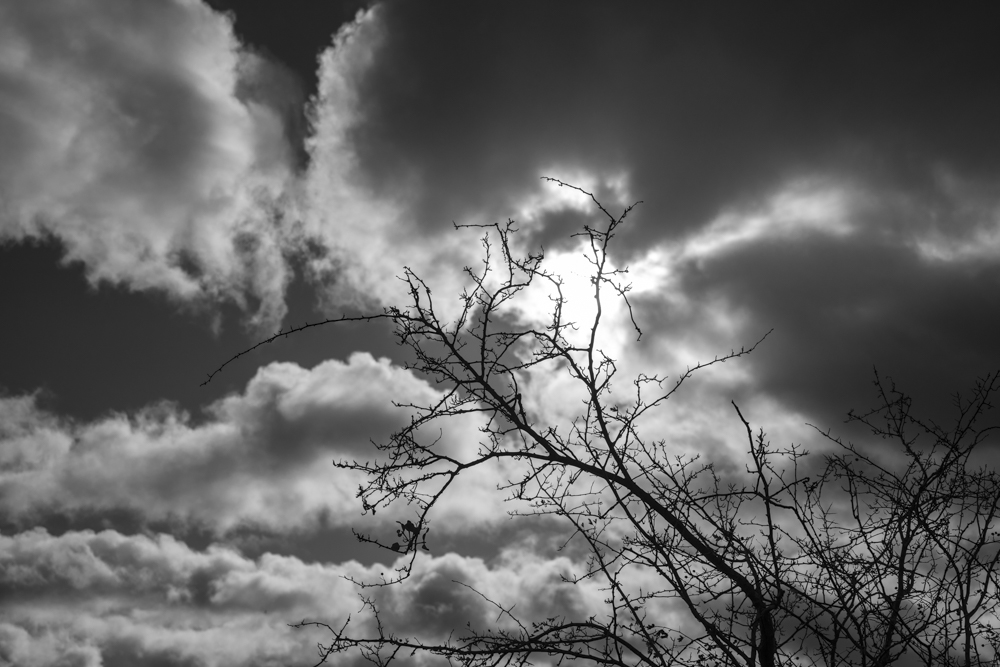
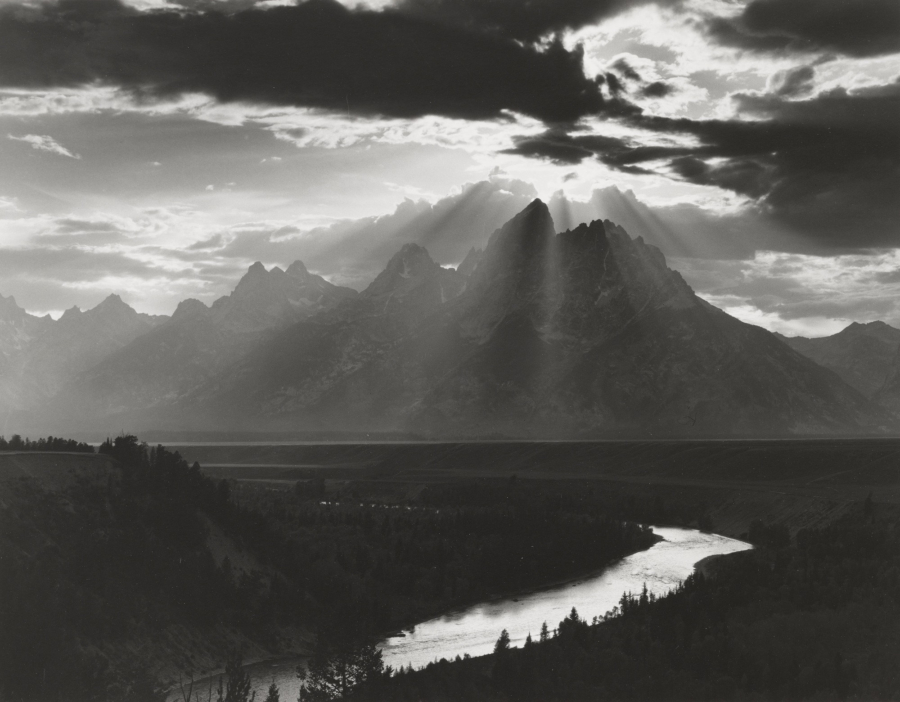
When looking at White’s images in relation to this current project, I also noticed a similarity to his use of clouds within a composition.

While carrying out my research on White, I came across an article by Katherine Phipps called Creating Better Compositions: Landscape Lessons from Minor White. This succinctly written article gave me an insight to White’s work of which I was previously unaware.

‘White took photographs of a variety of subjects, weaving narratives in the way he arranged these pictures of earth, light, shadow, bodies, skies, shapes. What is particularly notable about White’s work, perhaps where its true power lies, is the way that he orders the images and combines them with text that show us the underlying interconnectedness of many facets of the natural work, as well as the human world, for that matter.’

(Creating Better Compositions: Landscape Lessons from Minor White (Premium), 2020)

What struck a major chord with me in this article was the headline ‘Choose equipment that serves you’. Phipps uses these words to highlight how White used particular methods resulting in his signature style. This made me contemplate my own use of equipment and photographic methodology.

Phipps continues to highlight the specificity of White’s use of his equipment to create his stunning images:

‘Minor White sought to shoot majestic views of the world, which when combined with extremely macro views of his experience that he noticed, would weave a story about something magical. He chose his equipment very specifically, and in fact used it in a very specific way to create his dramatic landscapes.’

(Creating Better Compositions: Landscape Lessons from Minor White (Premium), 2020)

Phipps then continues to outline his particular method, specifically infrared:

‘For his landscape pictures, White chose to shoot infrared large format sheet film, which darkened the skies and brightened the planes of the earth, allowing White to create photographs that were full of otherworldly drama. In addition to light on the visible spectrum, infrared film is sensitive to wavelengths near the thermal range, creating large, detailed negatives which showed a world that was different than what is visible to the naked eye.’

(Creating Better Compositions: Landscape Lessons from Minor White (Premium), 2020)

I didn’t realise that this is how White took these images – I had used a digital infrared editing technique in my Moments of Eternity project for Unit AGM60. At the time of writing this post, I was also working on a particular shooting/editing method in order to create a similar dramatic effect.

The other aspect of White’s work I needed to consider is his sequencing of images. This was brought to my attention in the book Minor White: Manifestations of the Spirit by Paul Martineau. This tome was issued in connection with the exhibition of the same name held at the J. Paul Getty Museum from 8 July to 19 October 2014.

According to Martineau, ‘White described his sequences as being like a “cinema of stills” and called on the viewer to be an active participant in experiencing the varied moods and associations that came to the fore while moving from one photograph to the next’. (Martineau, P. 2014 pp. 10).

Martineau also states:

‘Over the course of his career, White created over one hundred sequences, series, and portfolios. Viewers of his sequences must not only read each individual image in relation to adjacent images but also consider all of the images in the highly structured grouping as the complete expression of an idea.’

(Martineau, P. 2014 pp. 10)

While writing this post, I realised that there was more of a connection of my work with that of White’s. I was more than aware of how much more I could learn and discover from this exceptional visionary.

References:

Artnet.com. 2020. Minor White | Artnet. [online] Available at: <http://www.artnet.com/artists/minor-white/&gt; [Accessed 16 November 2020].

The awakened eye. 2020. Equivalence: The Perennial Trend. [online] Available at: <https://theawakenedeye.com/pages/equivalence-the-perennial-trend/&gt; [Accessed 16 November 2020].

La Noir Image. 2020. Creating Better Compositions: Landscape Lessons From Minor White (Premium). [online] Available at: <https://lanoirimage.com/creating-better-compositions-landscape-lessons-from-minor-white/&gt; [Accessed 16 November 2020].

Martineau, P., 2014. Minor White: Manifestations of the Spirit. Los Angeles (Calif.): J. Paul Getty Museum.

White, M. 1963. Equivalence: The Perennial Trend, PSA Journal 29, no. 7 (1963) pp. 17-21.
Categories
AGM62 Photography Research Project Stage 1 Posts

AGM62 Bushy Park Hawthorns 15 November 2020

With a forecast of sun and cloud, it seemed a good day for a walk in Bushy Park. Also, I knew that I would be stuck in front of the PC over the following two days to prepare for the Interim Review so stroll in the fresh air would be good for both body and soul.
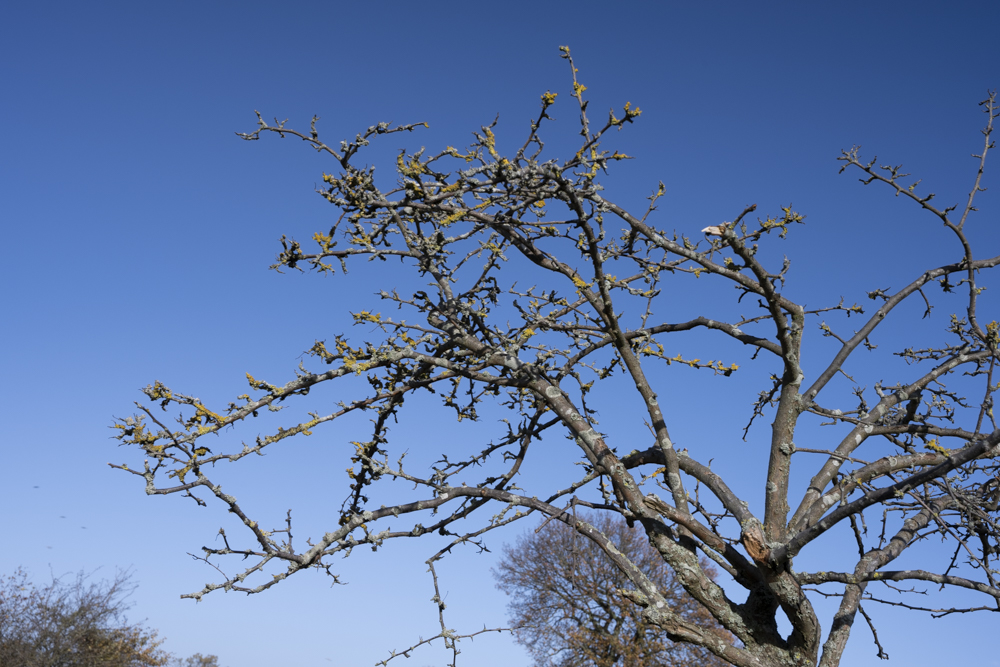
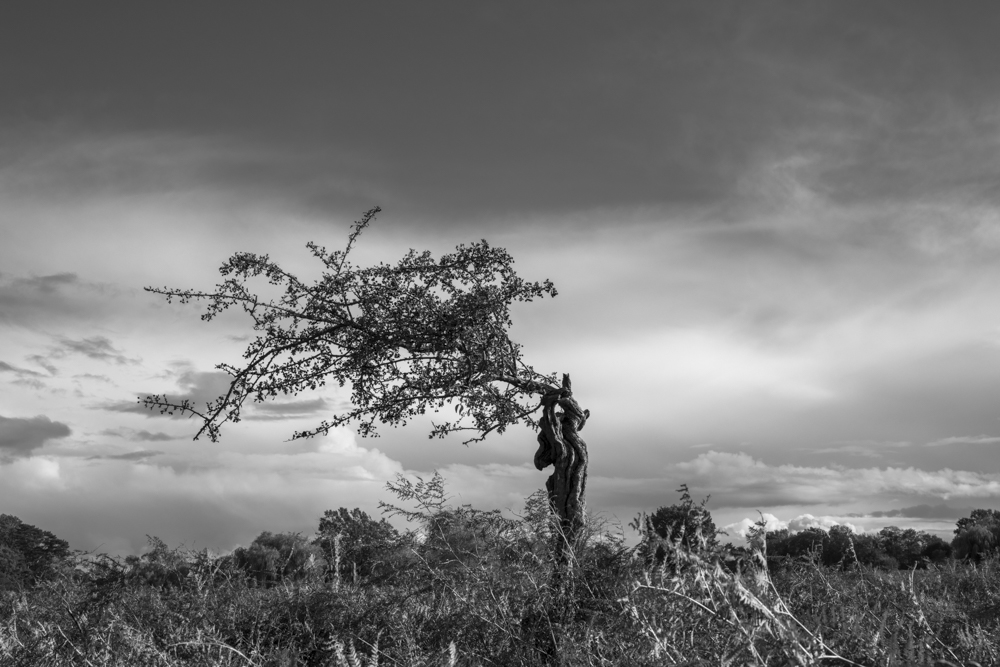
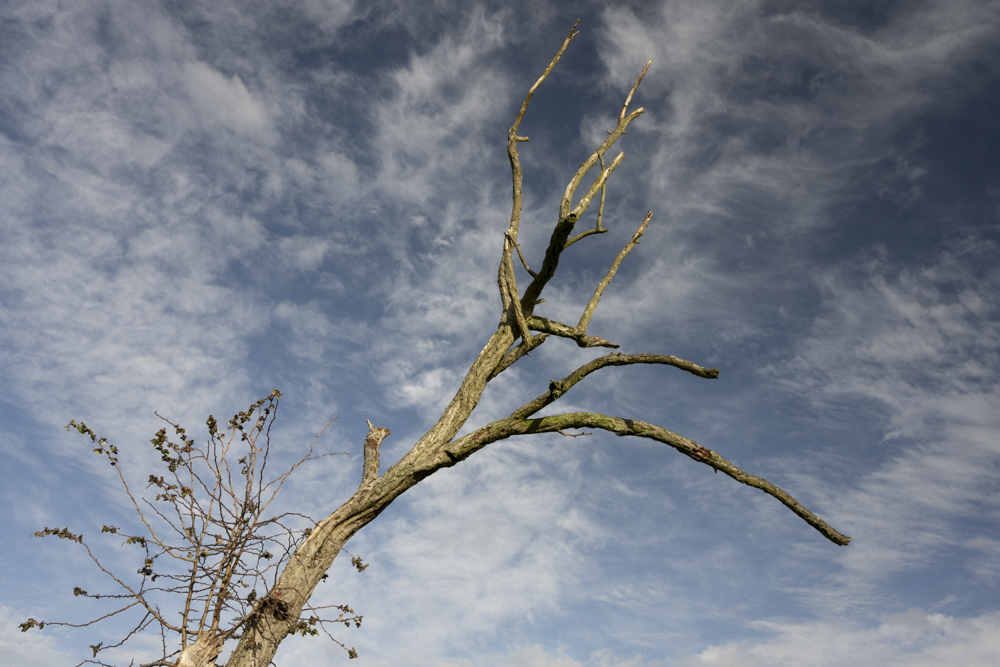
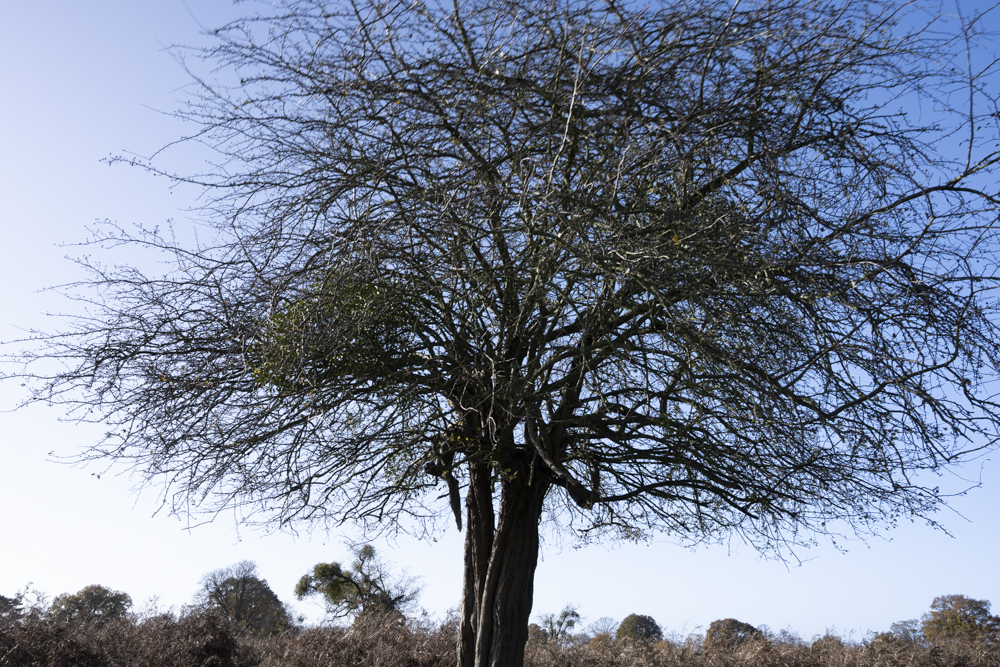
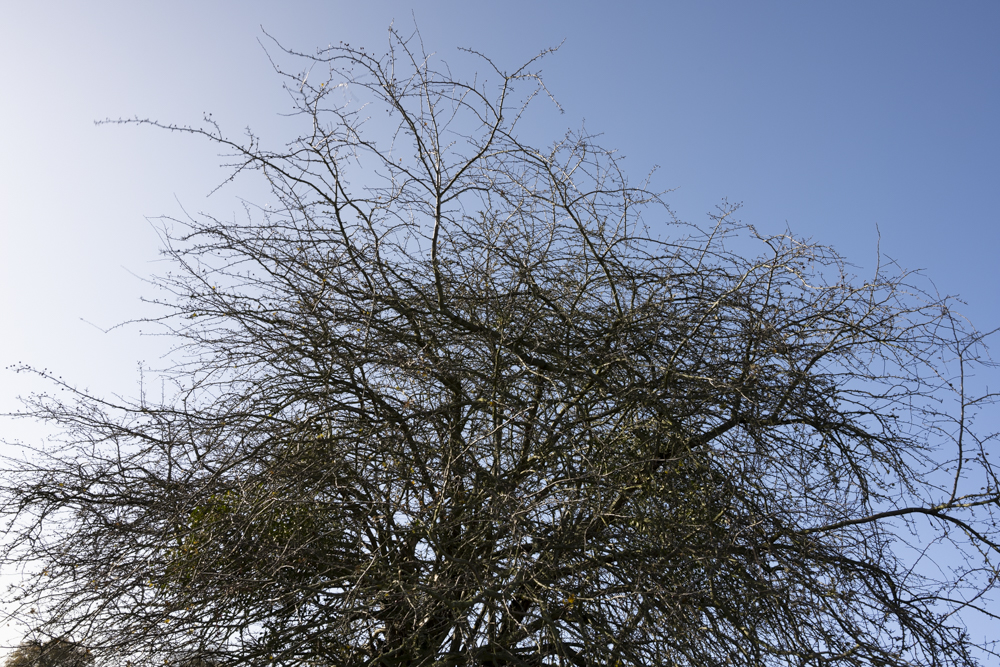
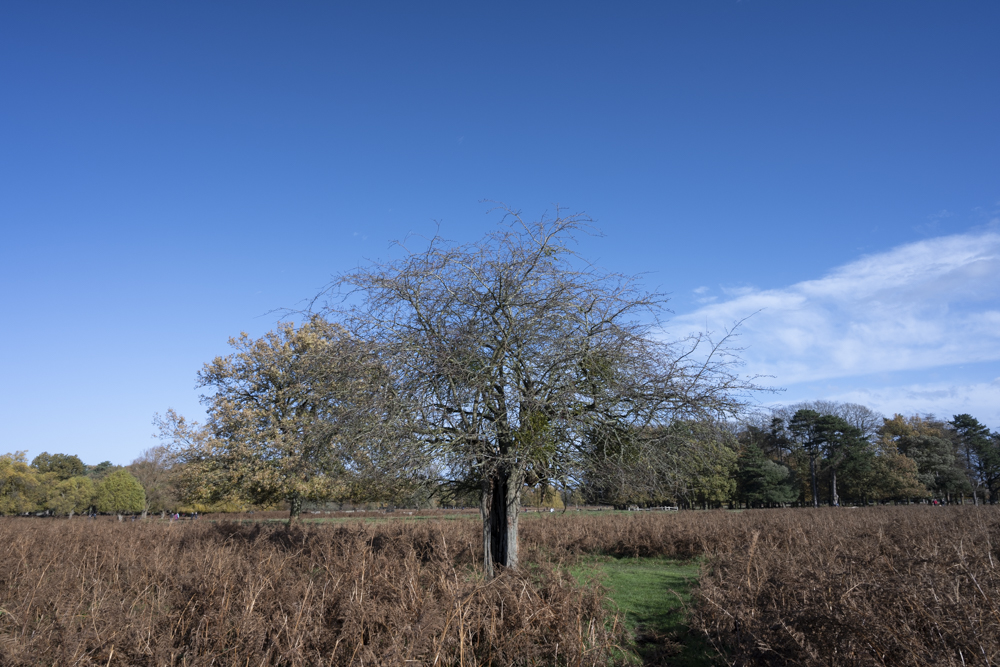
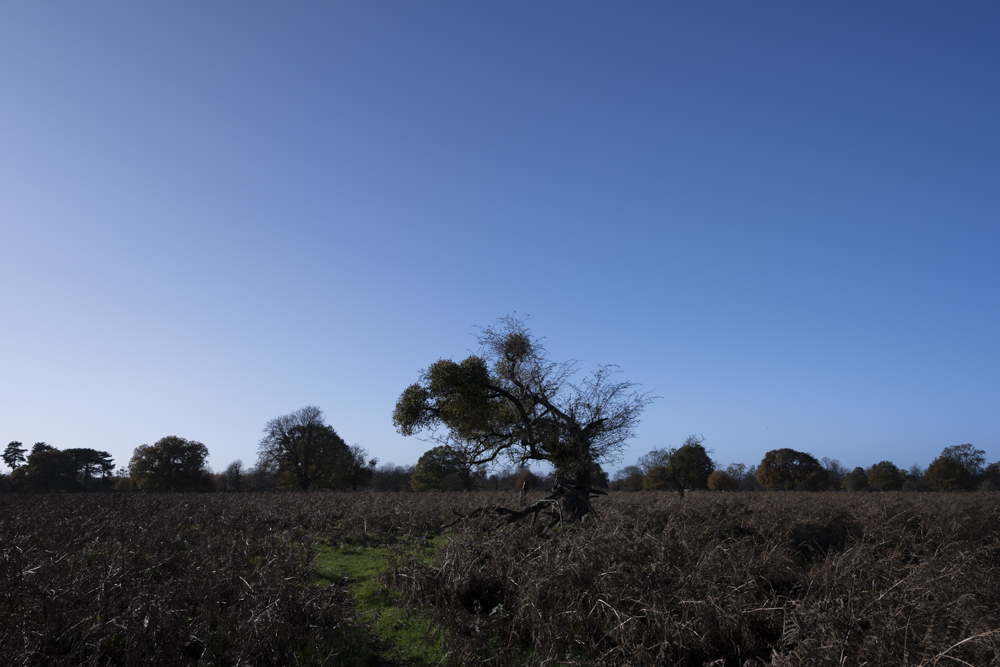
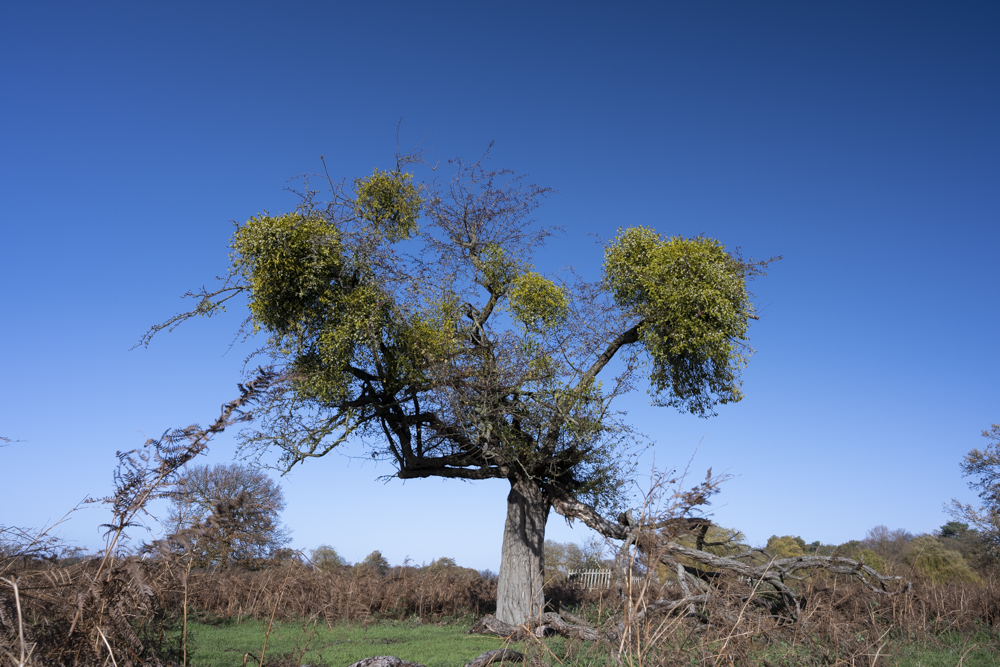
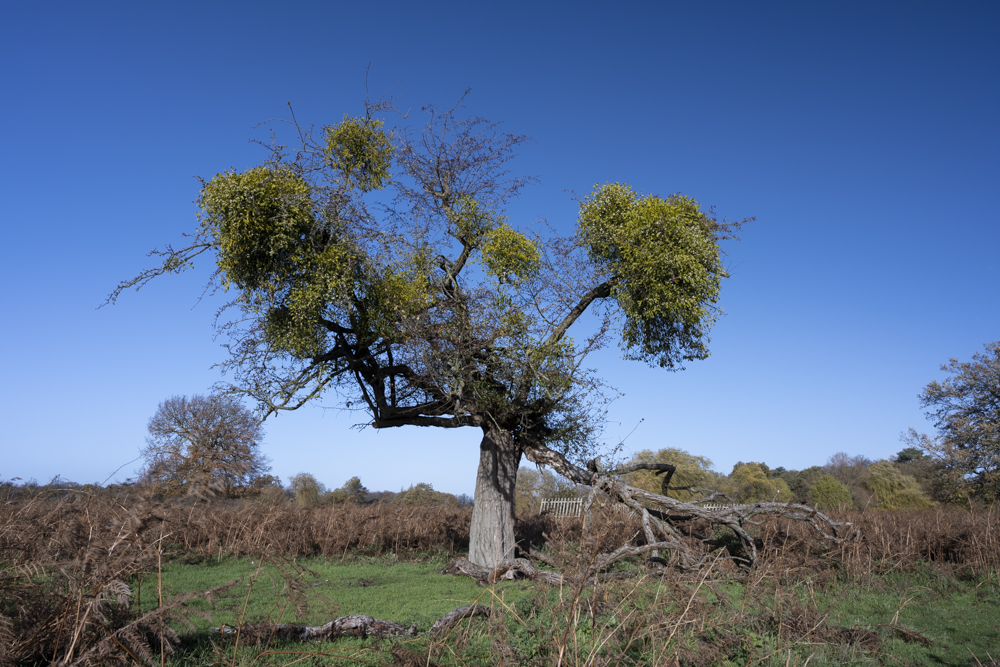
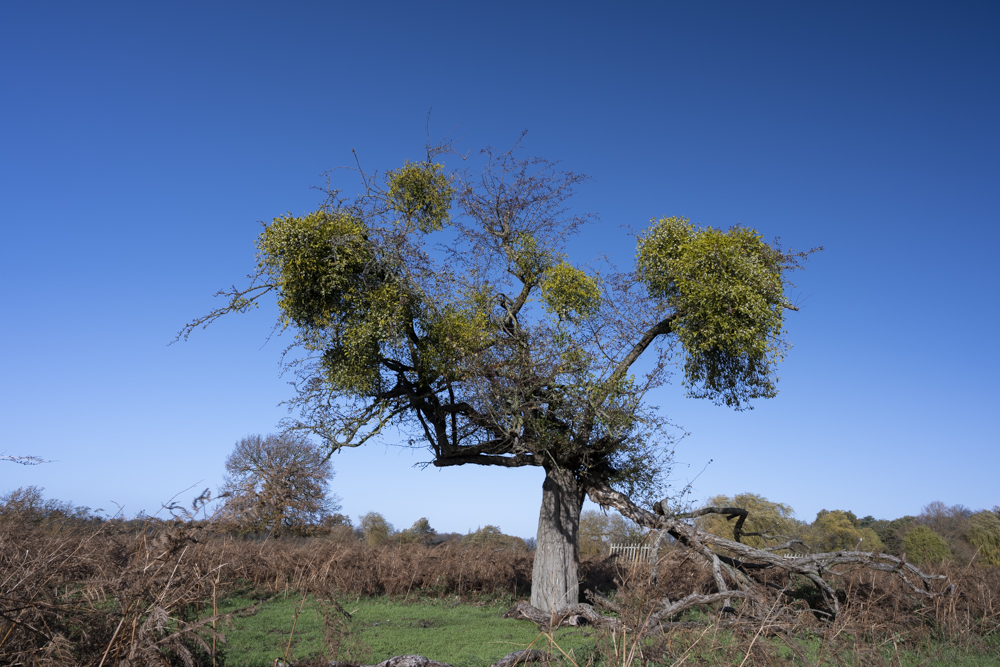
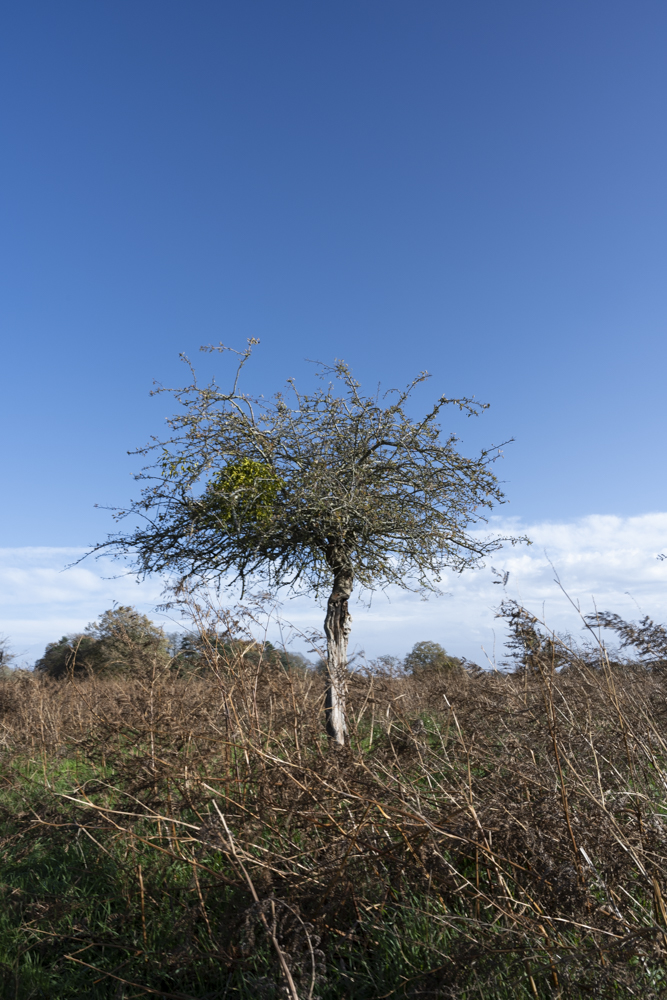
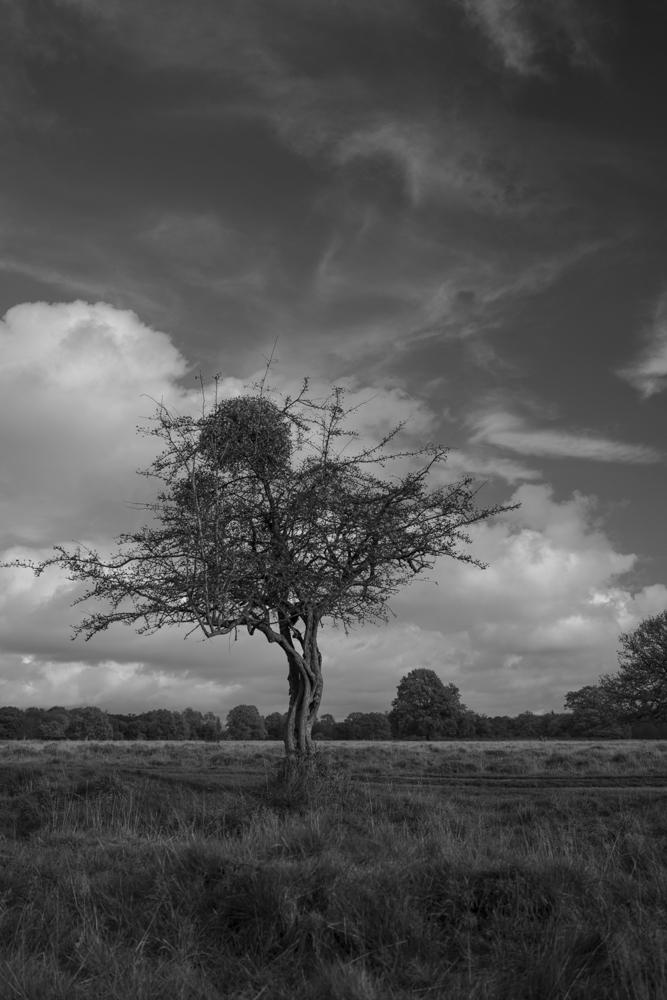
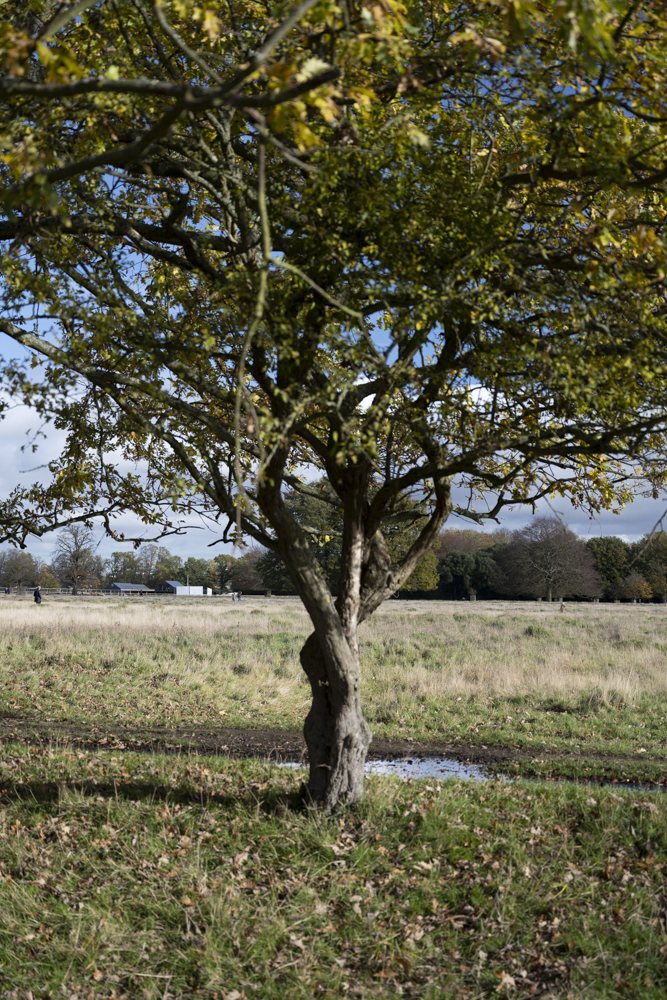
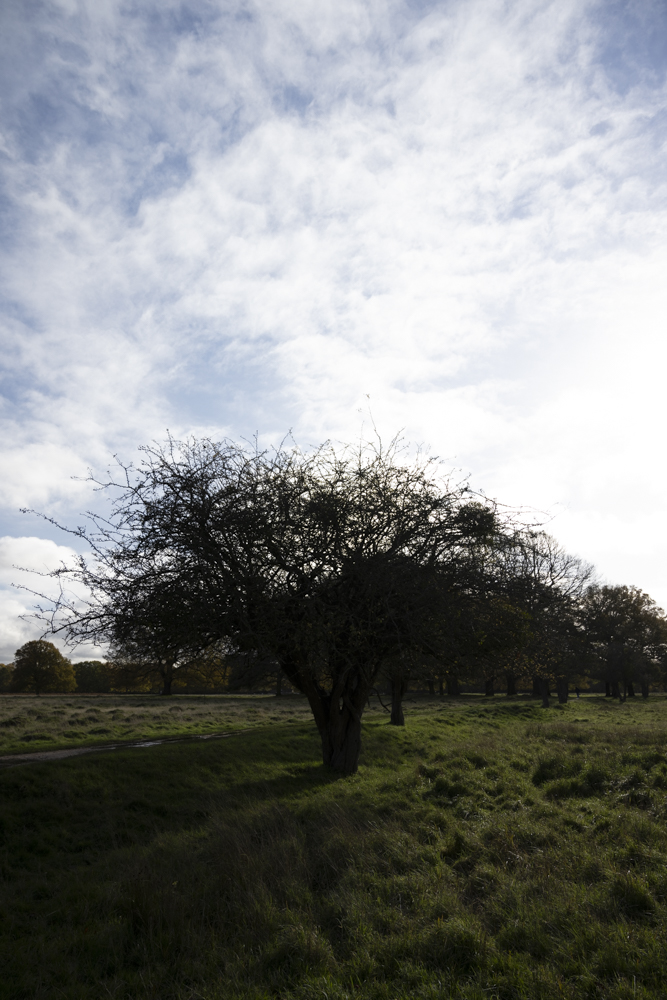
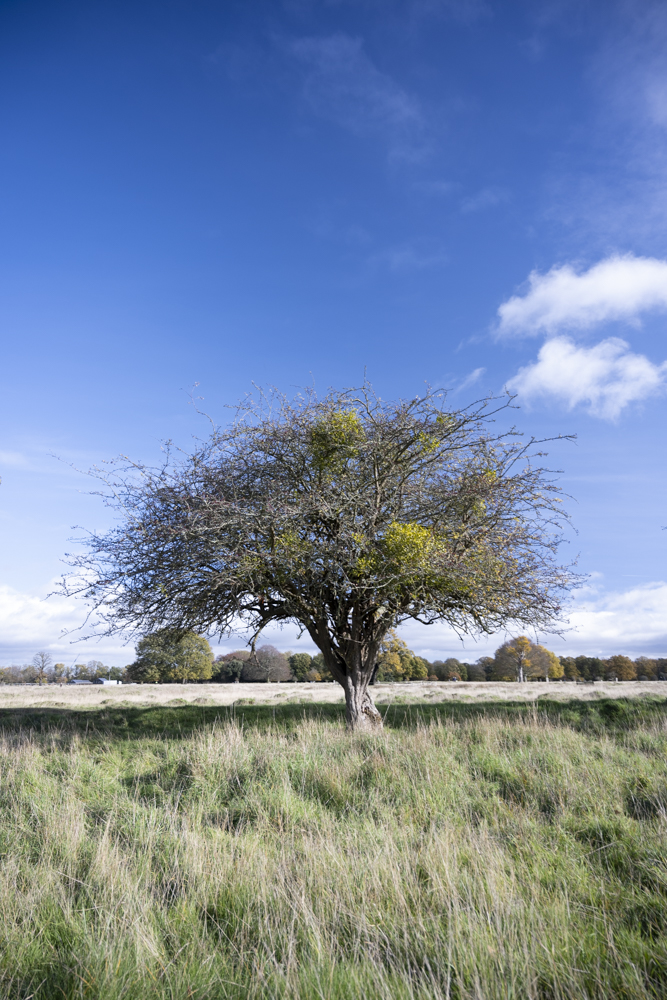
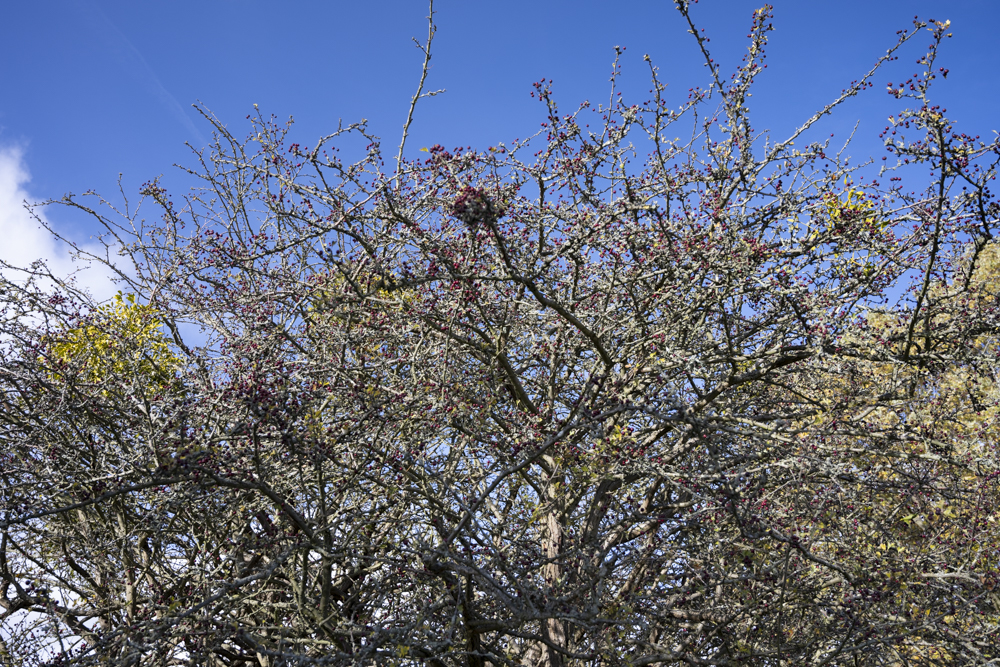
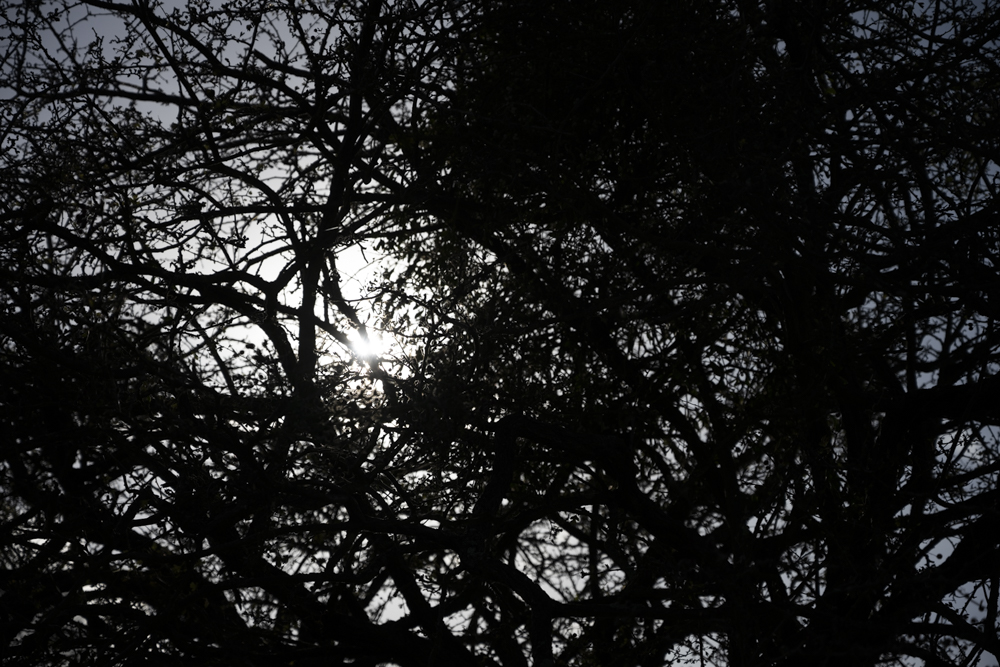
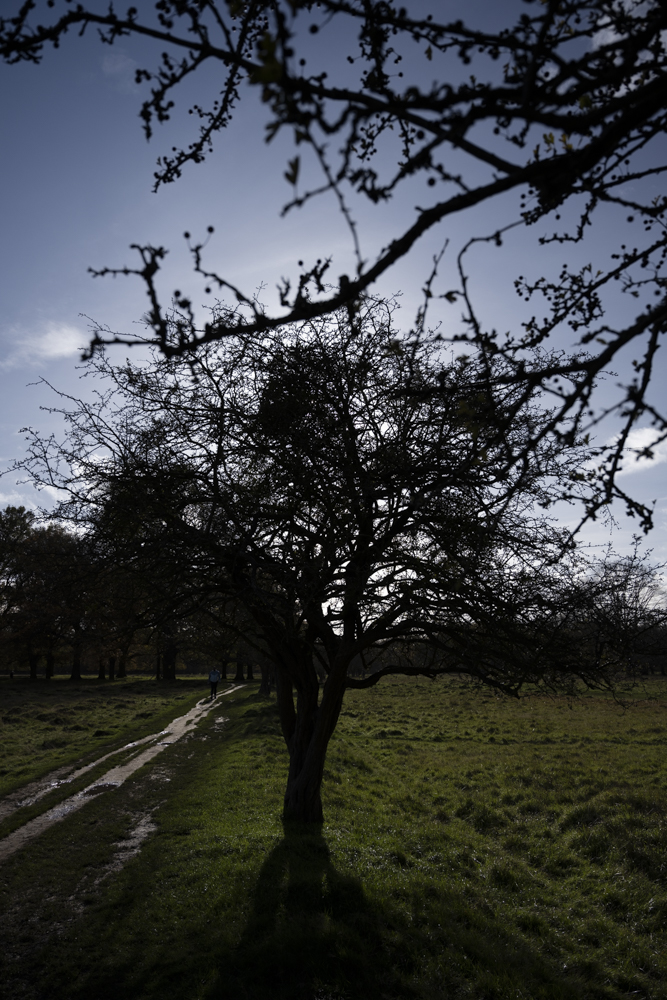
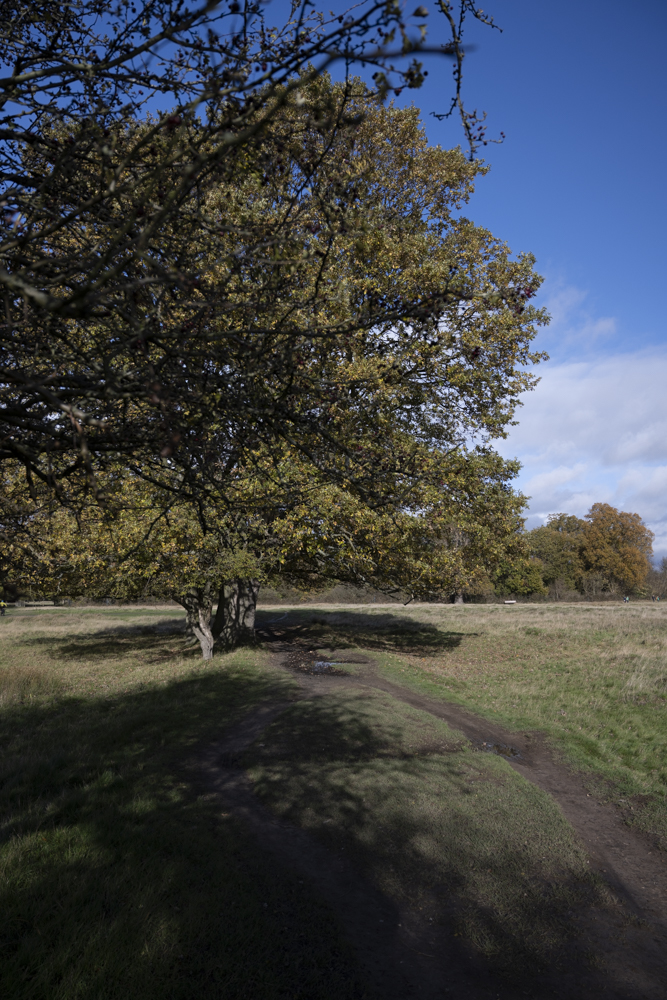
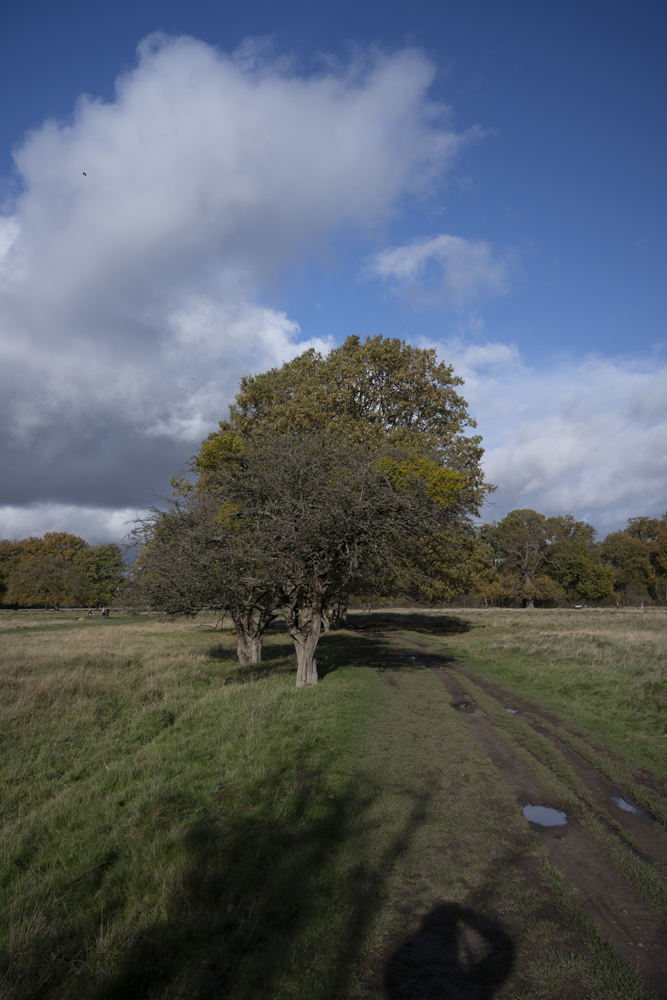
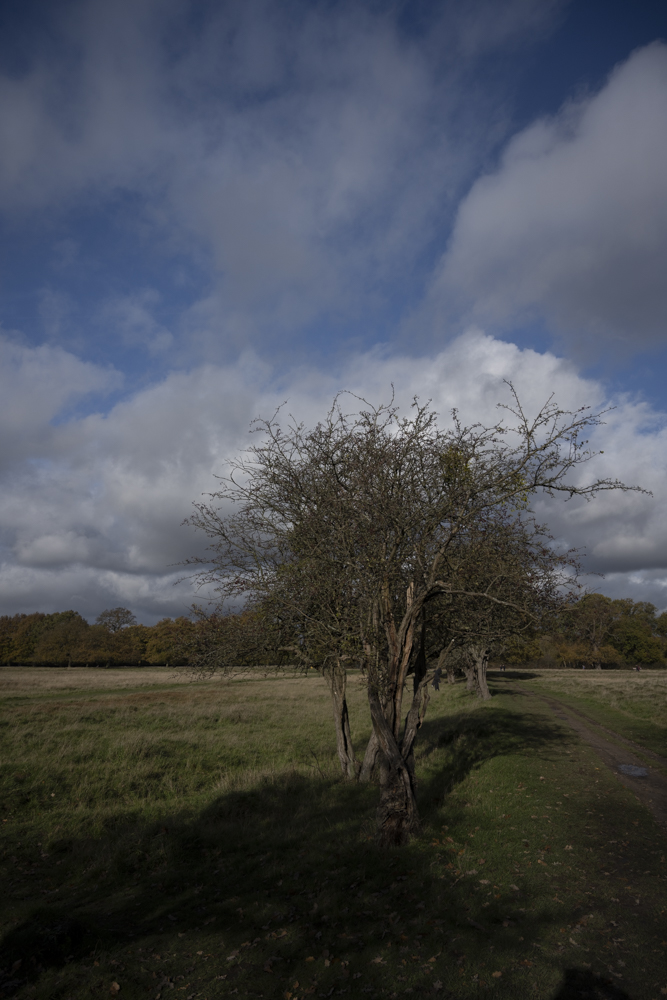
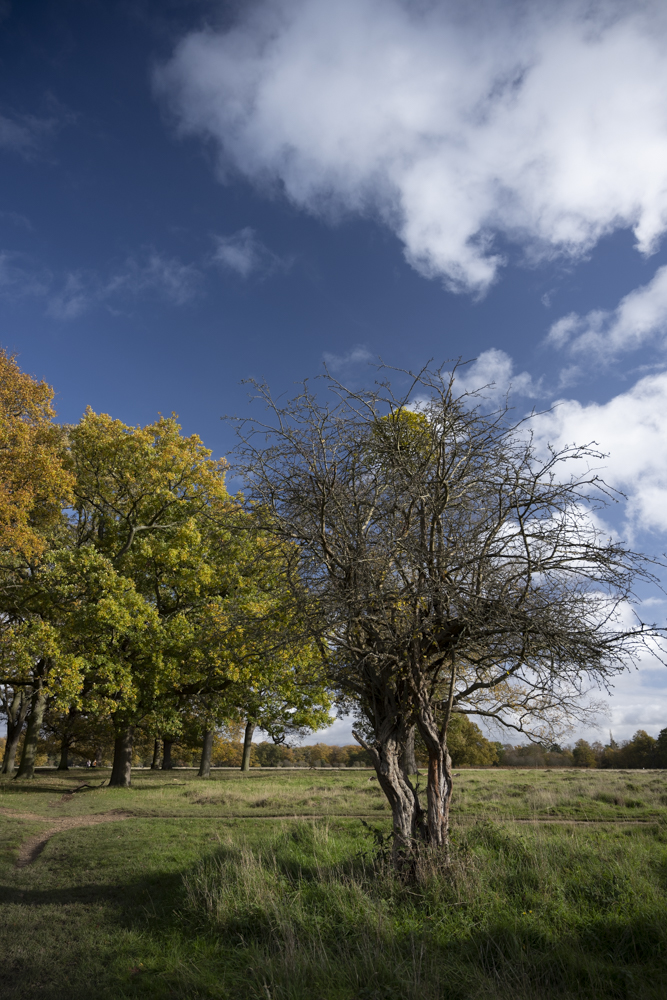
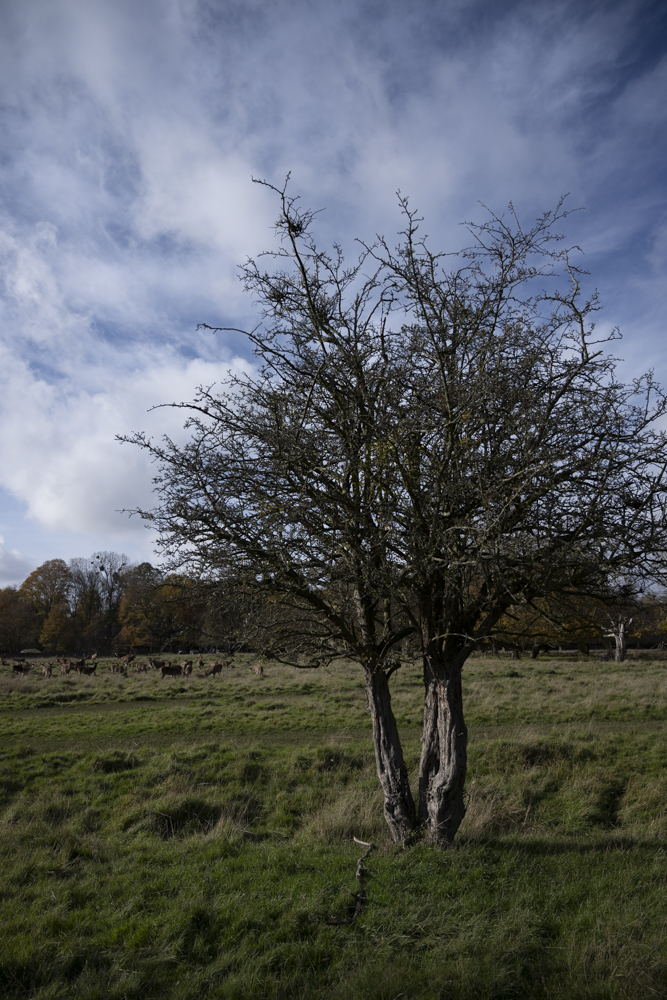
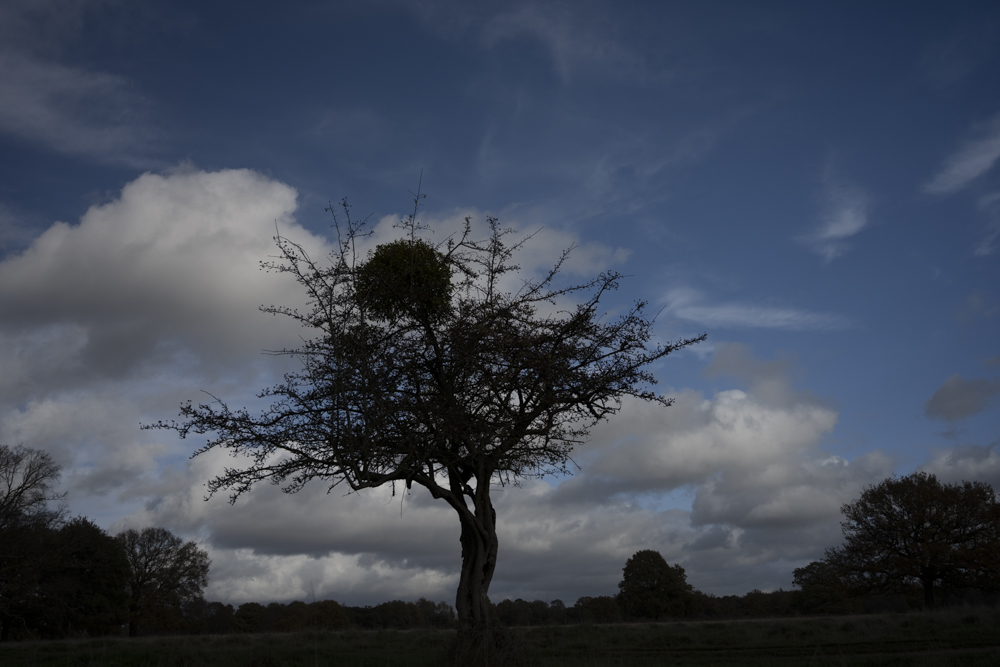
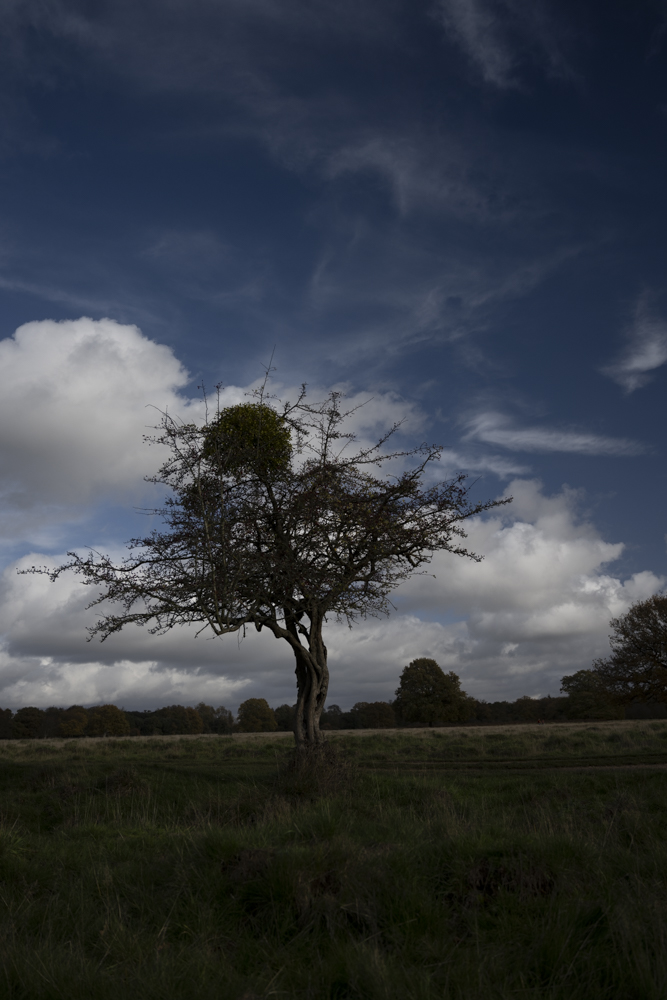
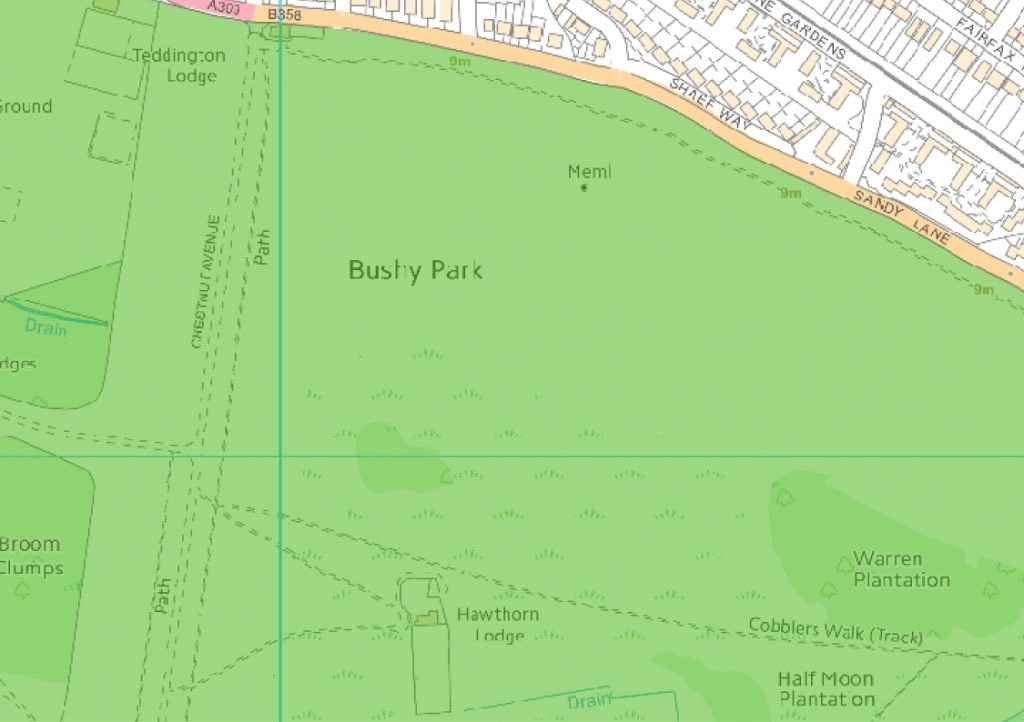
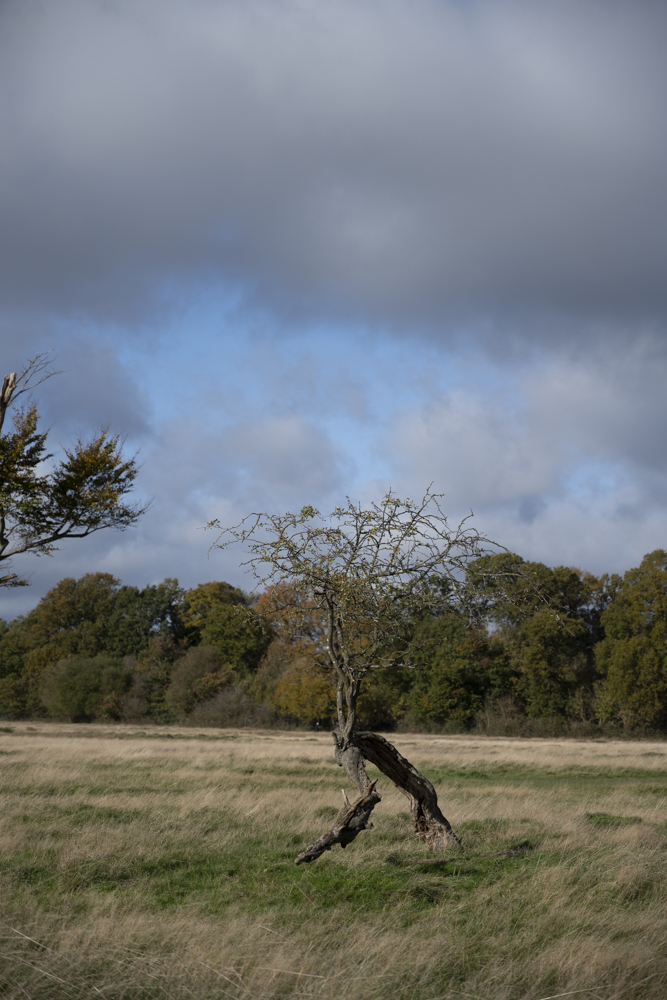
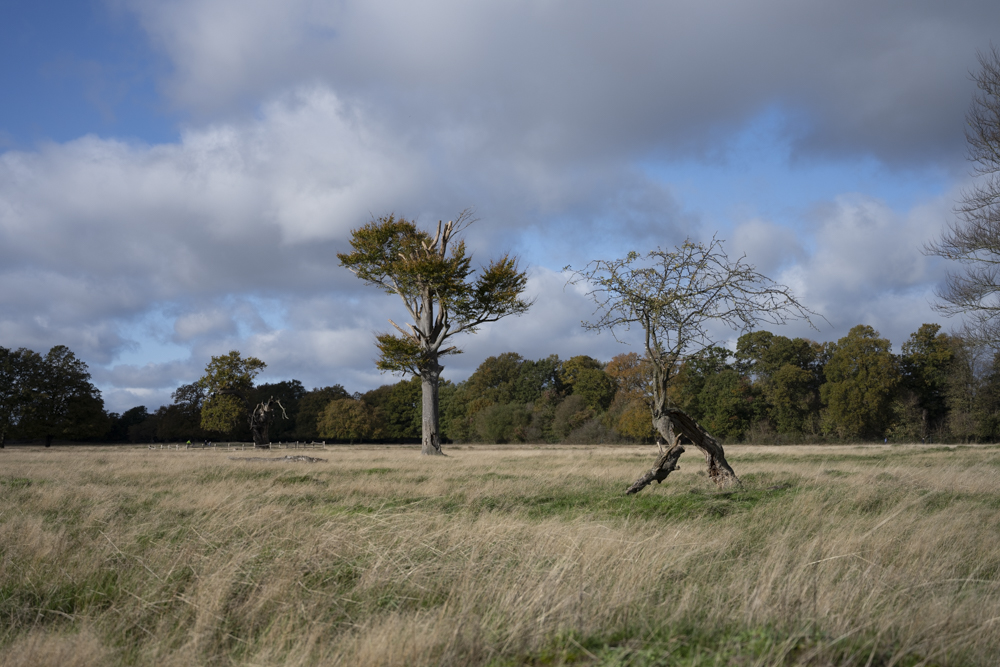
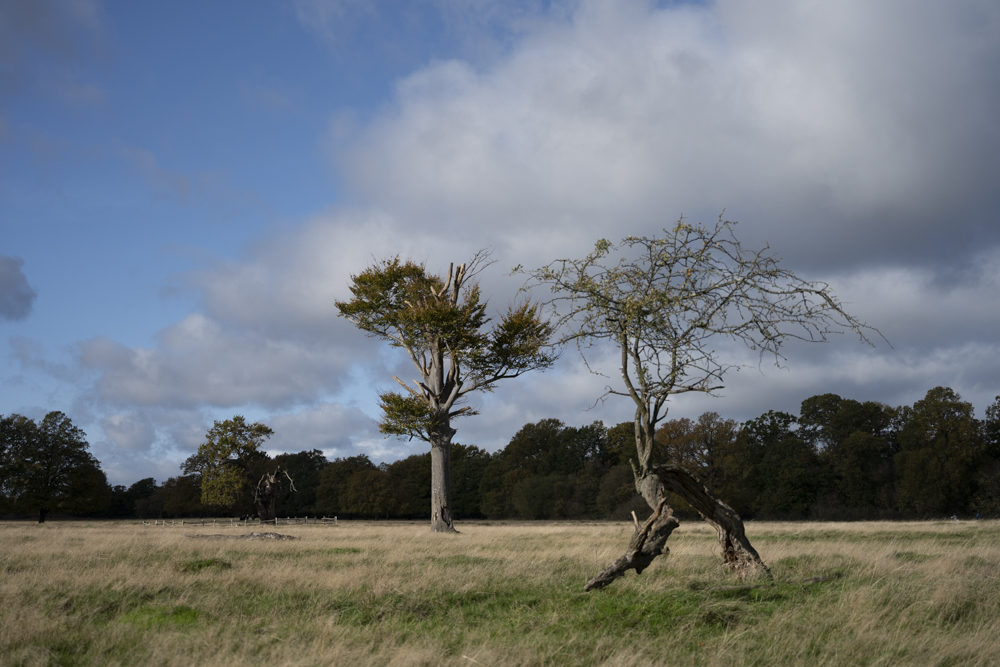
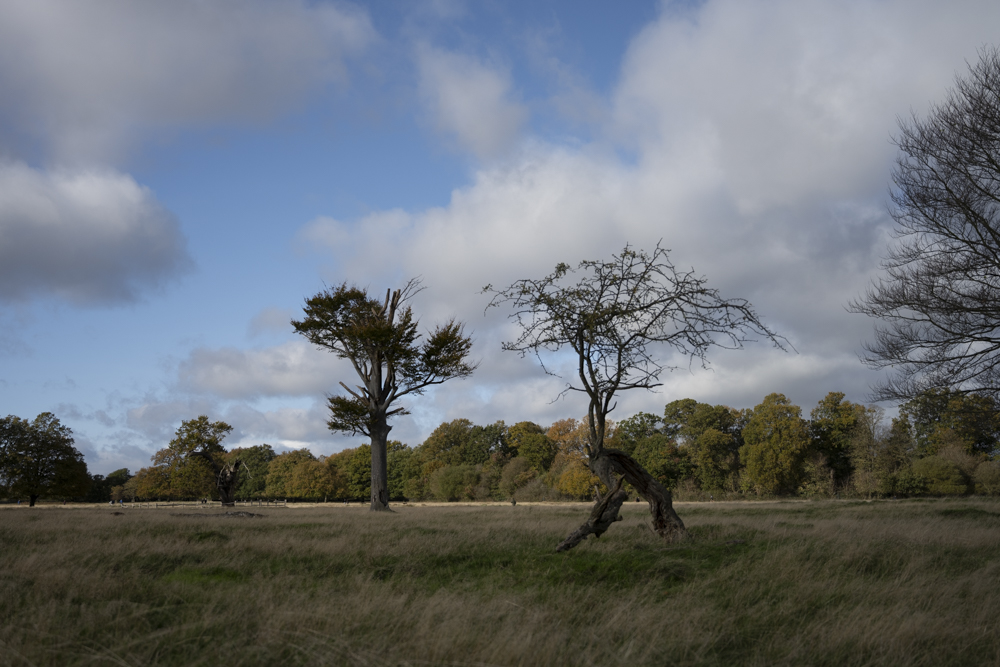
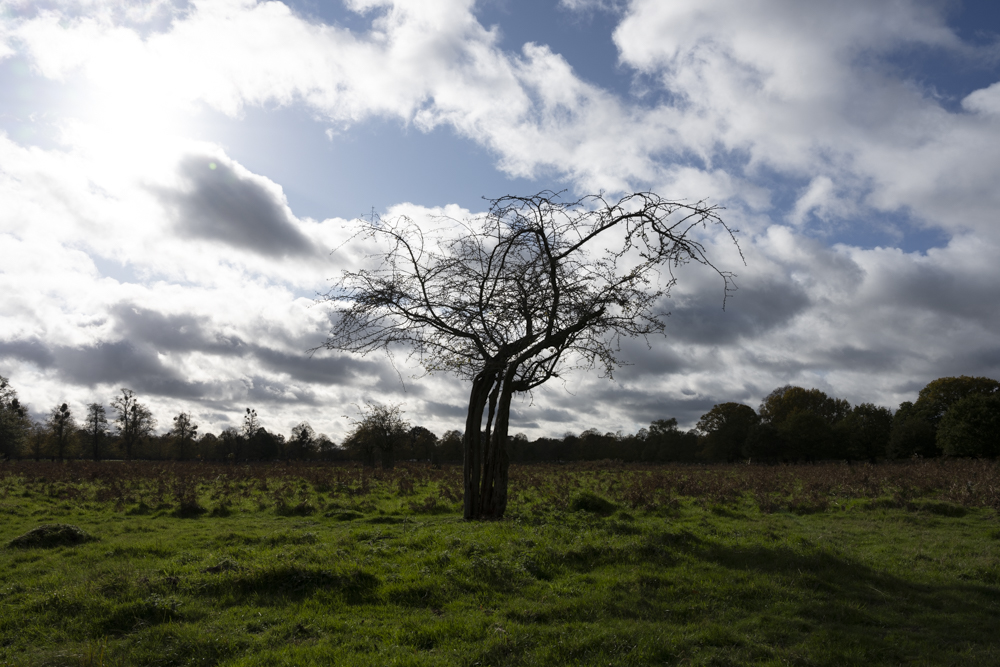
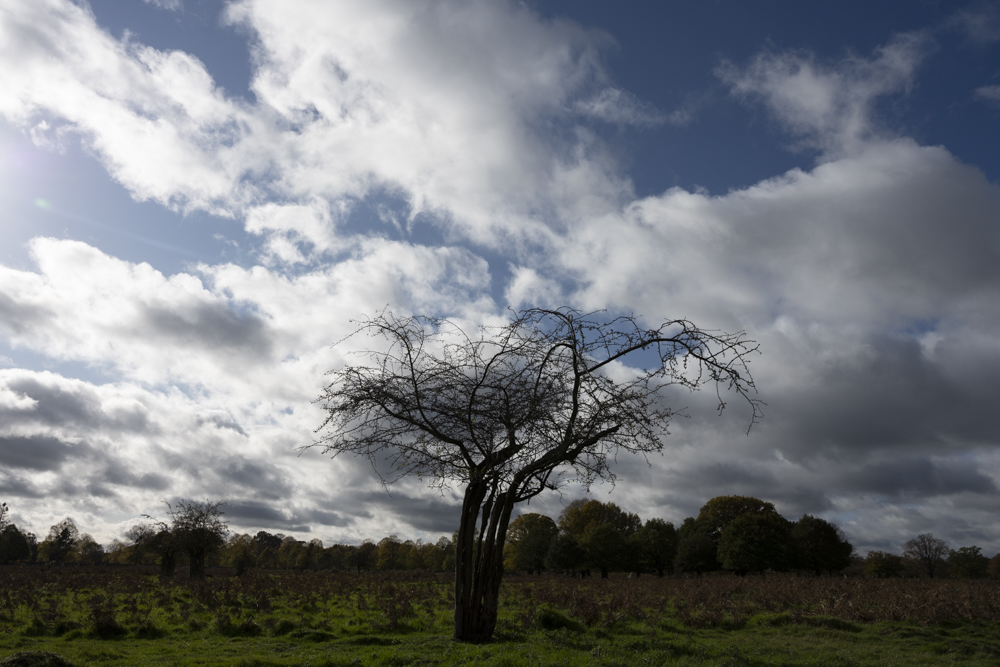
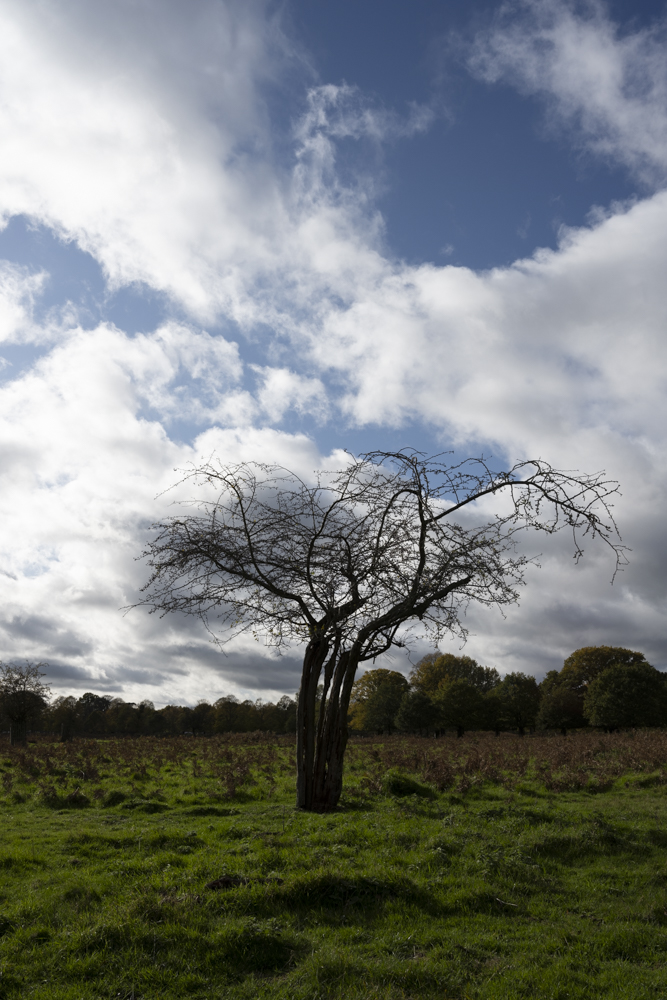
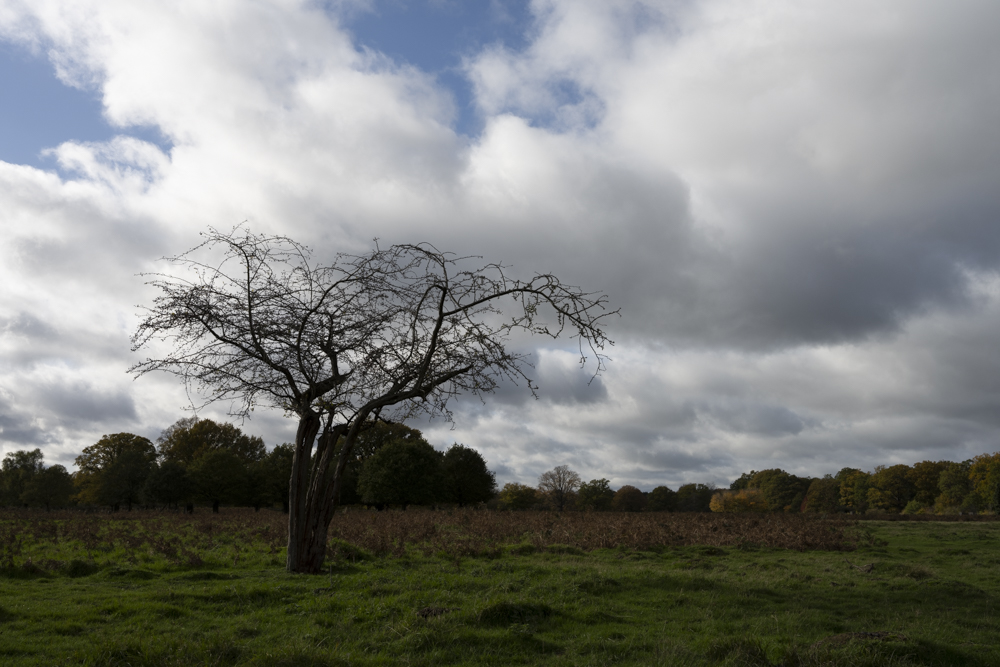
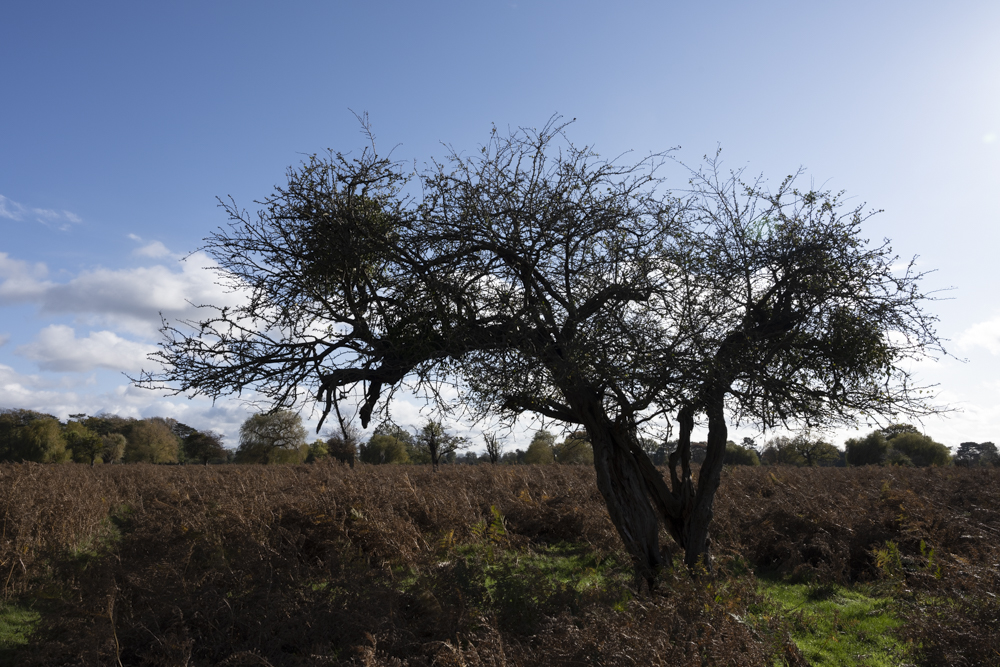
My first stop was to revisit the hawthorn nearest to the Shaef Memorial. The following were taken with the digital camera using the polarising filter.

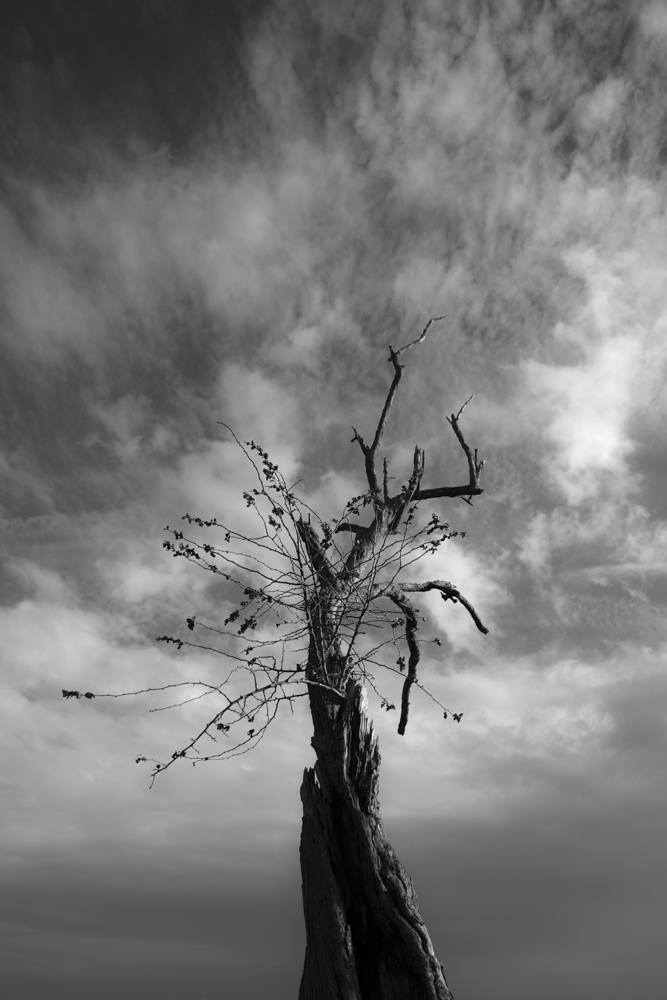
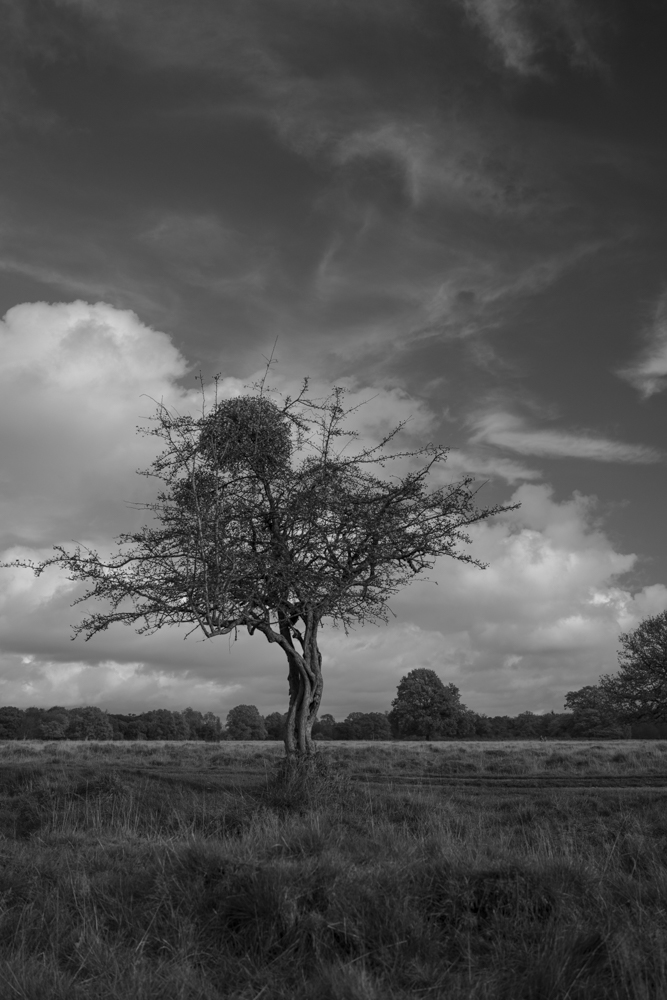
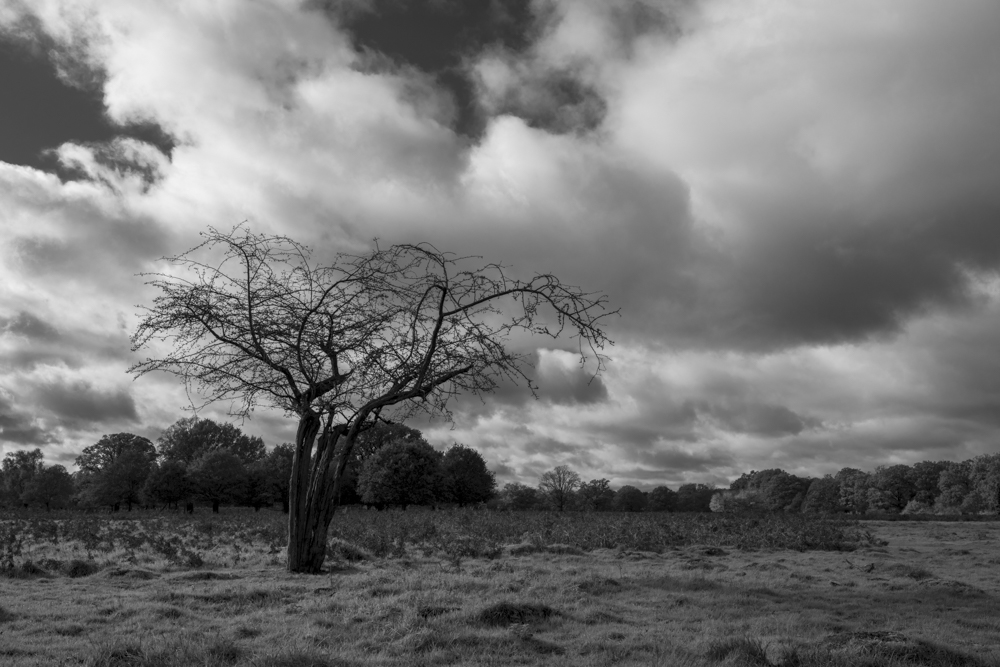
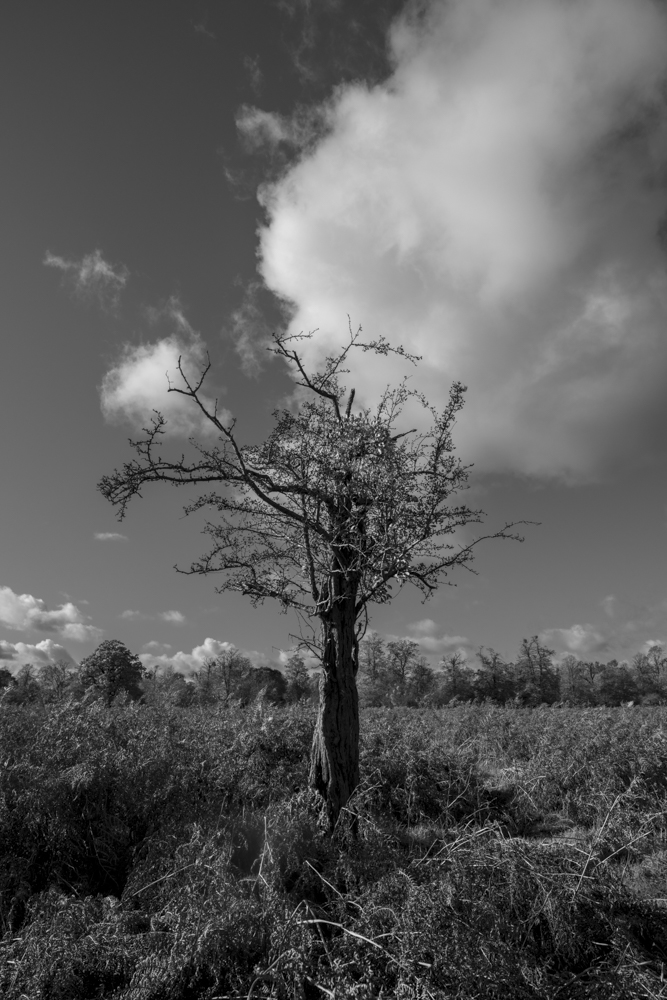
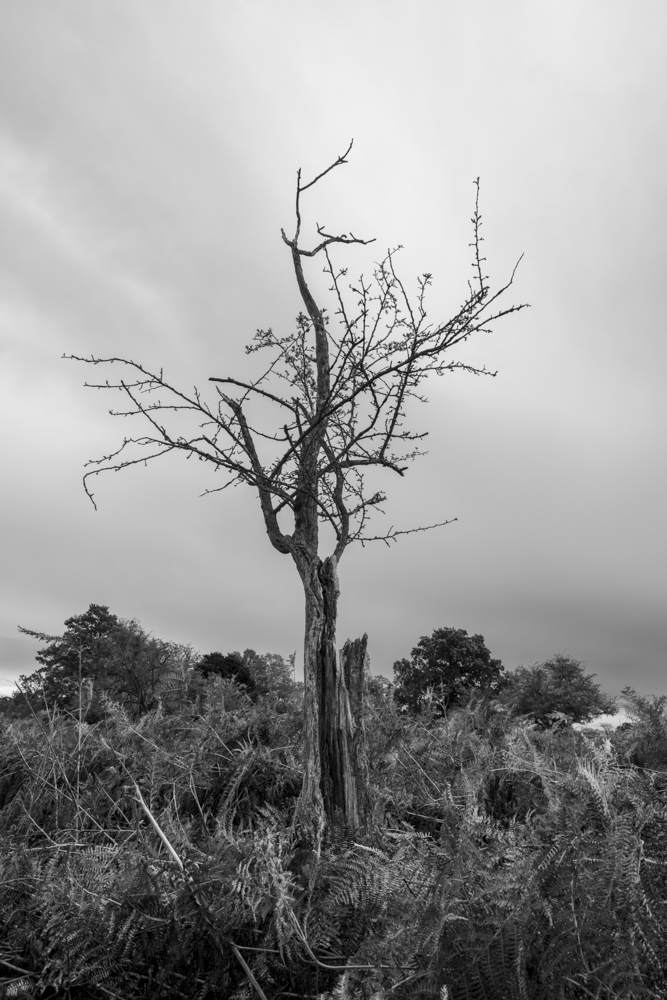
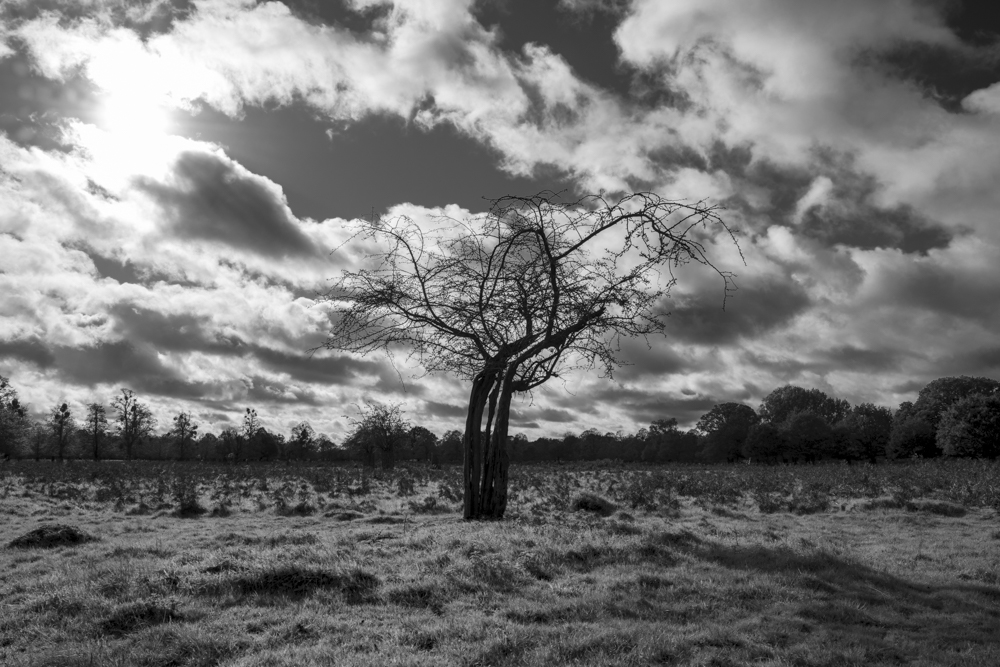
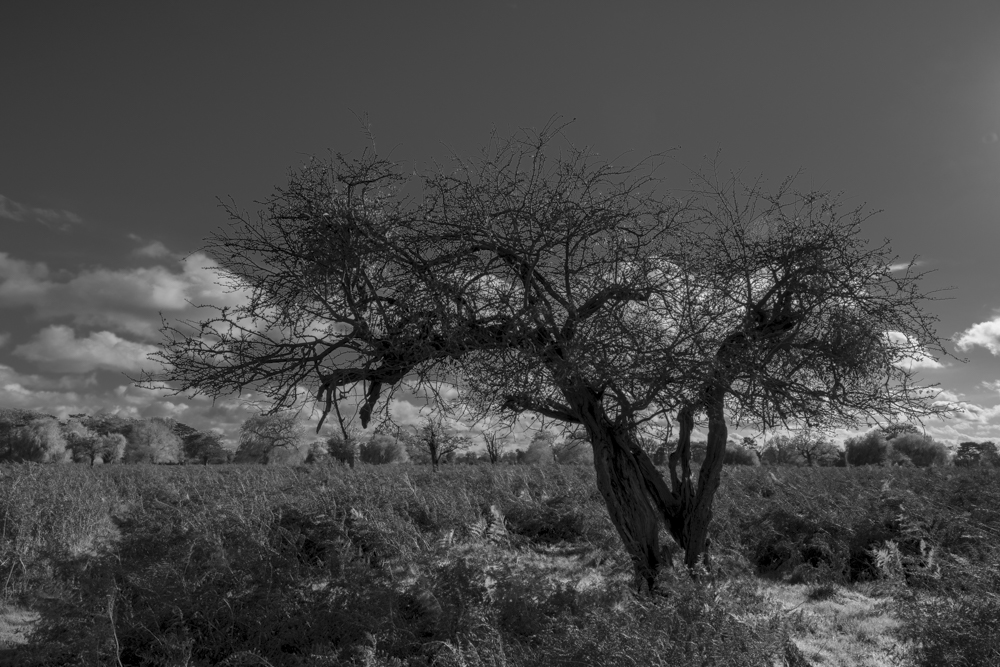
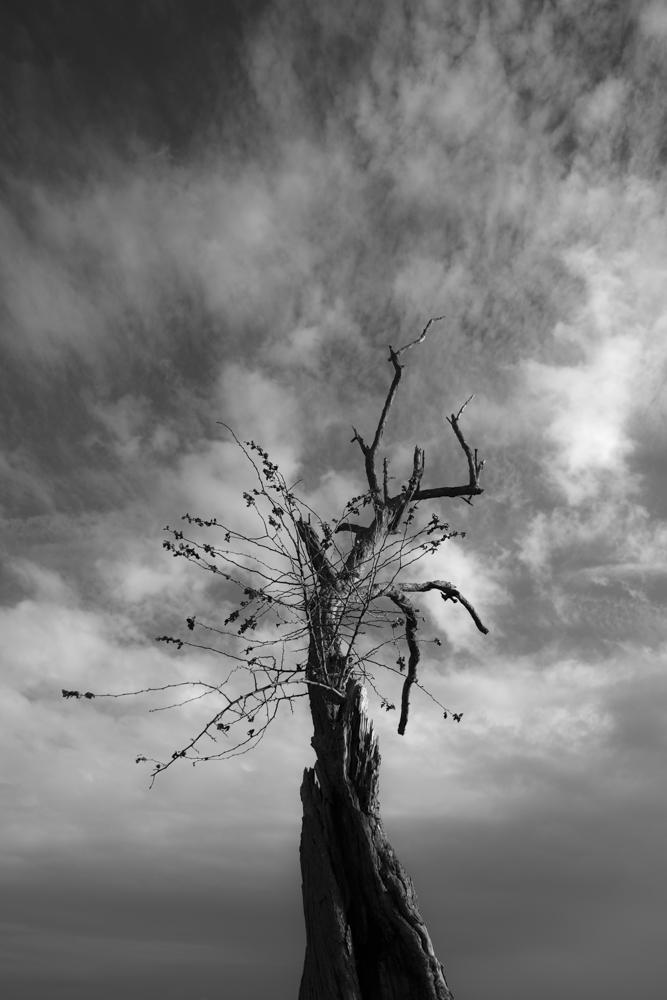
This is a Black & White conversion of this tree that was taken from a very low angle. Very brooding and dramatic.

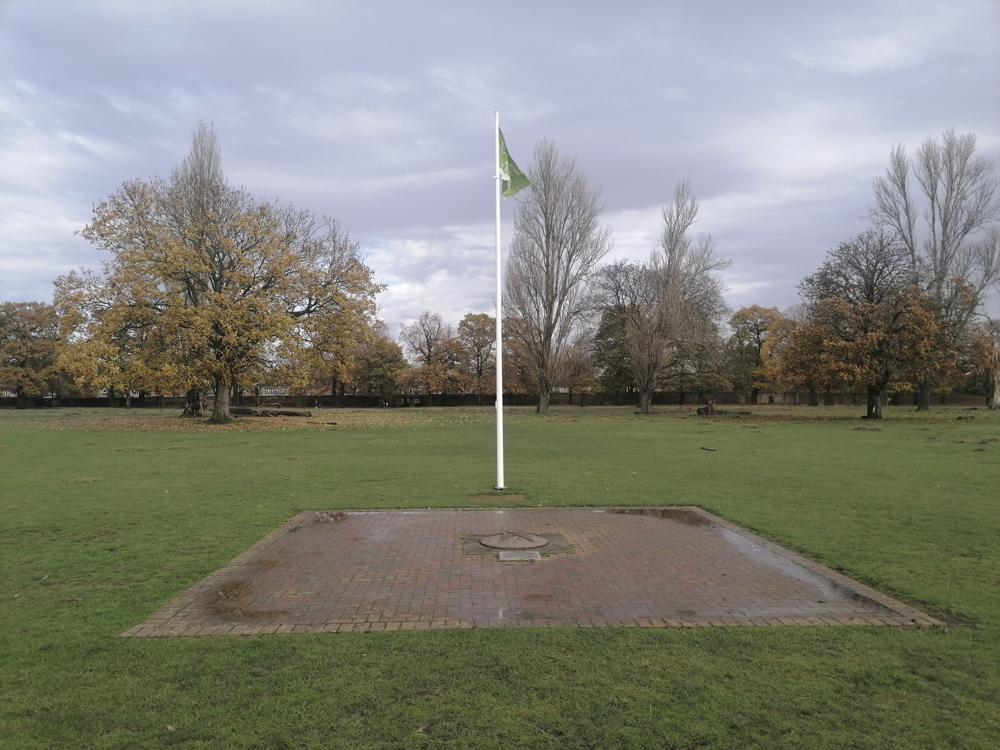
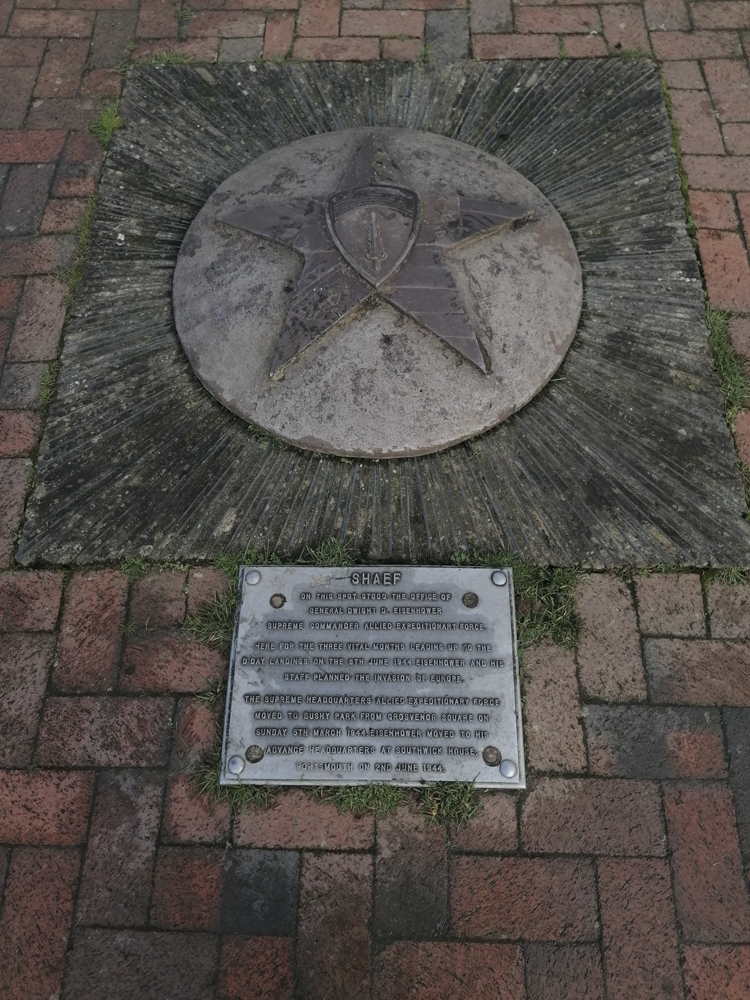
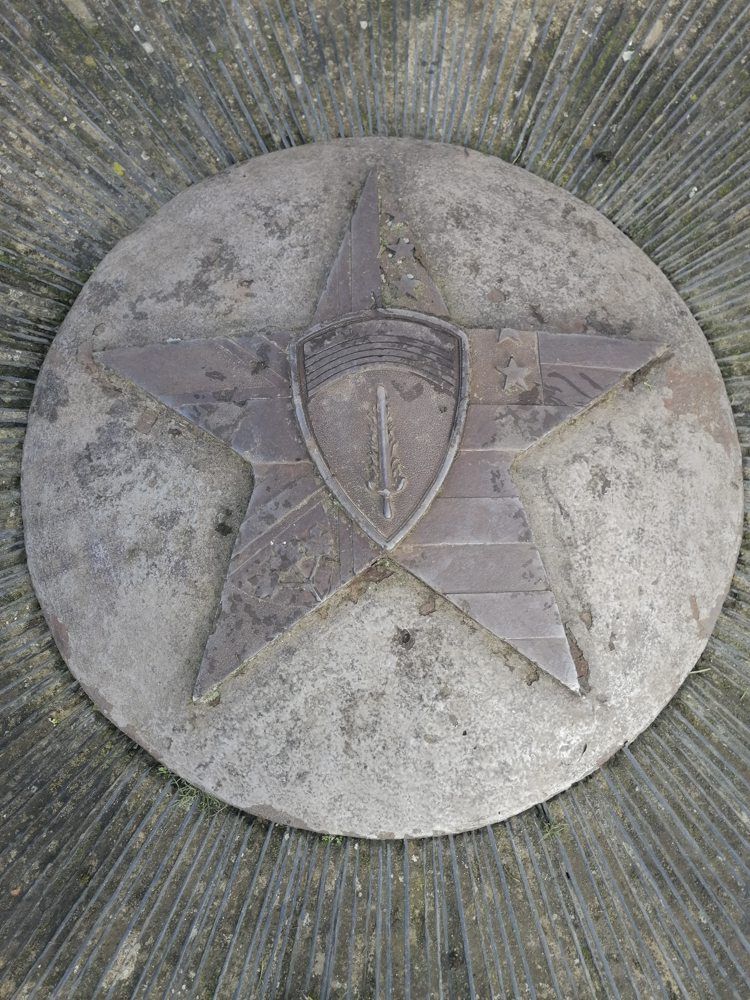
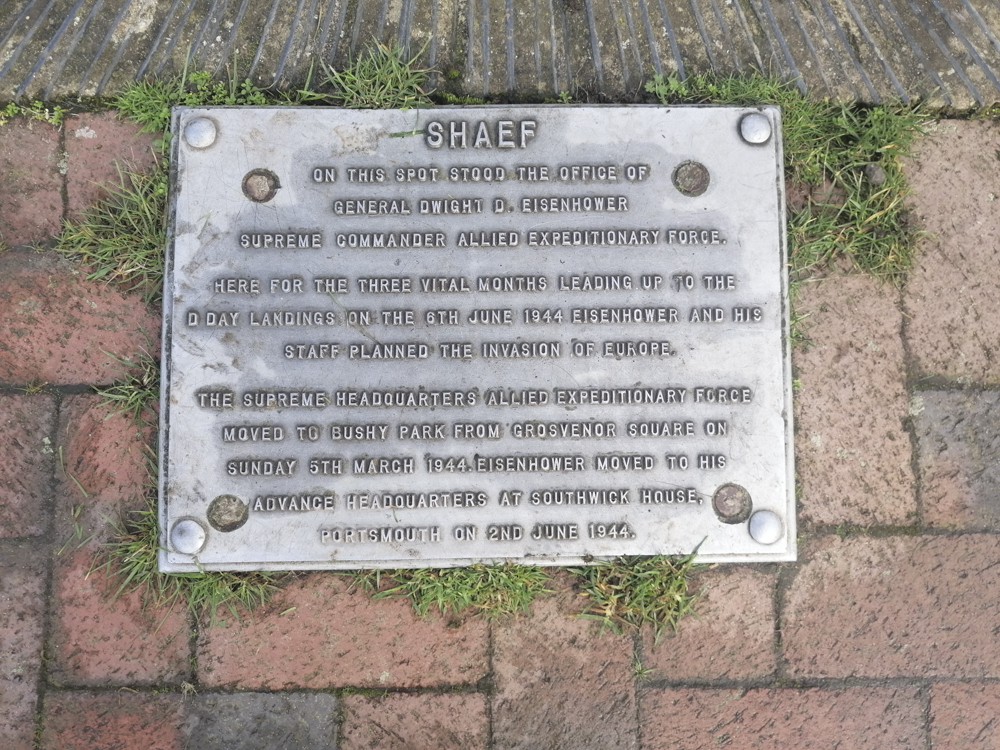
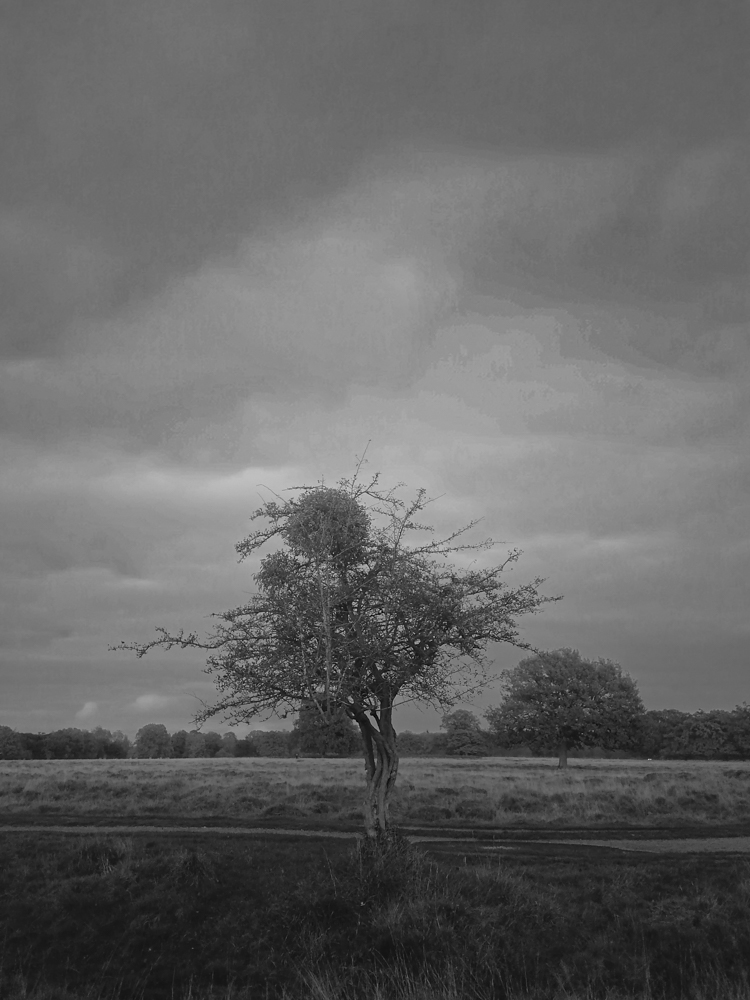
I also took these images of the Shaef Memorial with the smartphone.

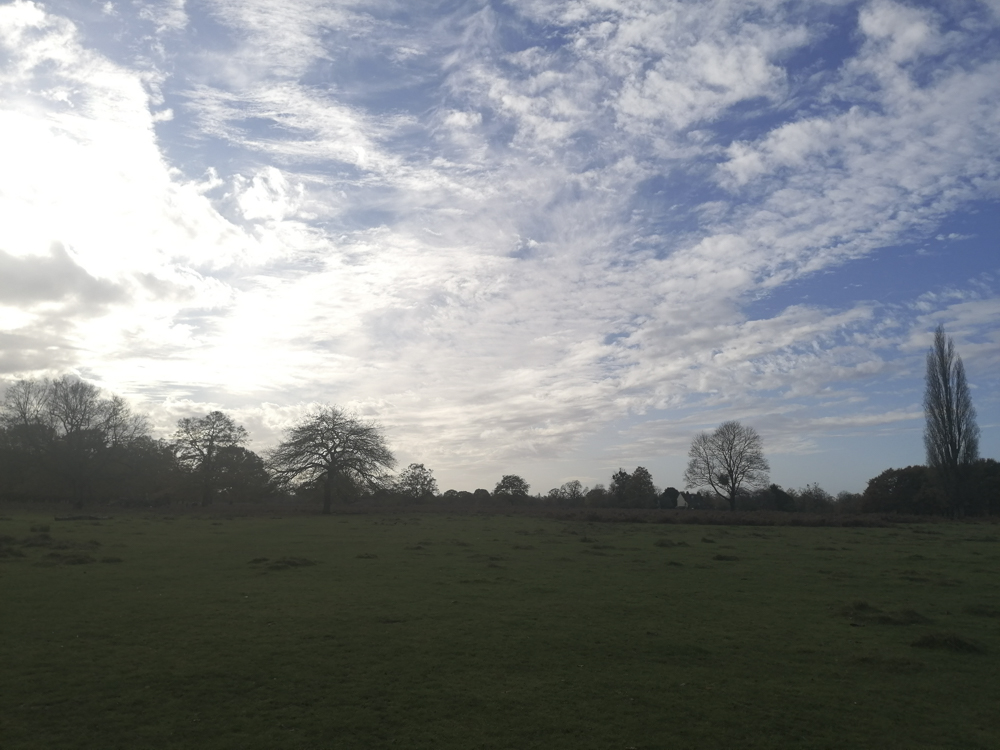
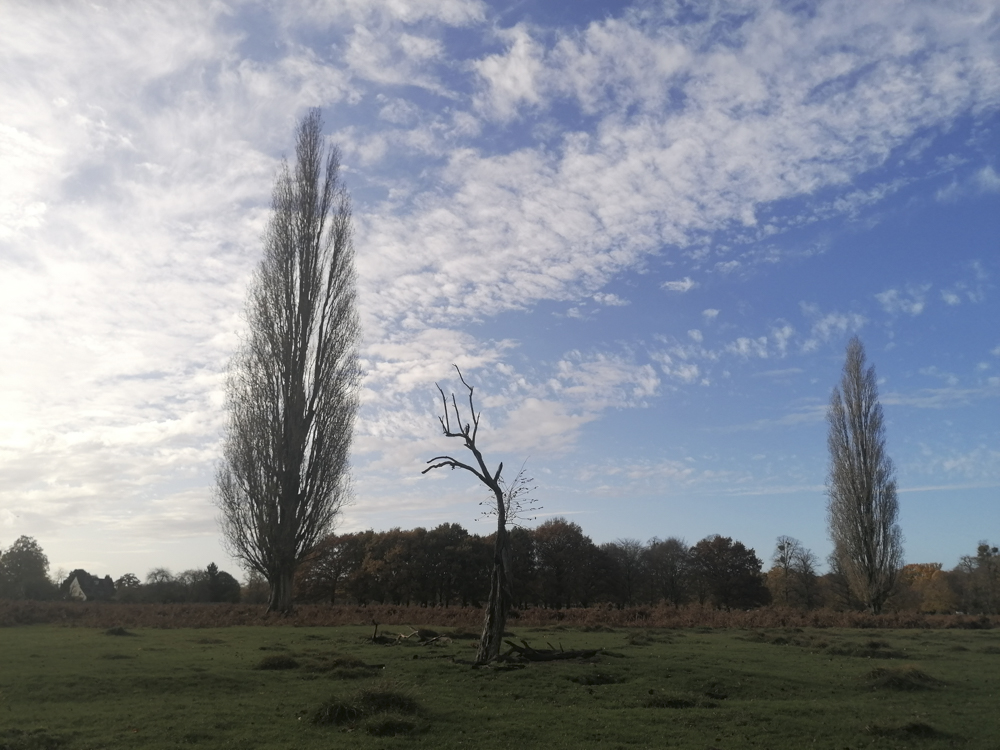
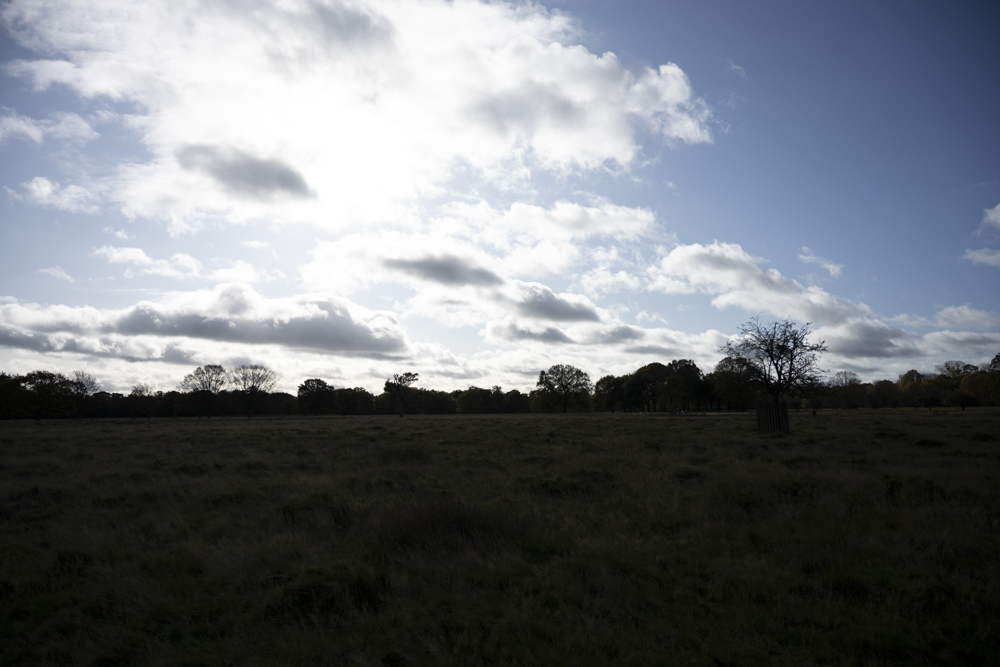
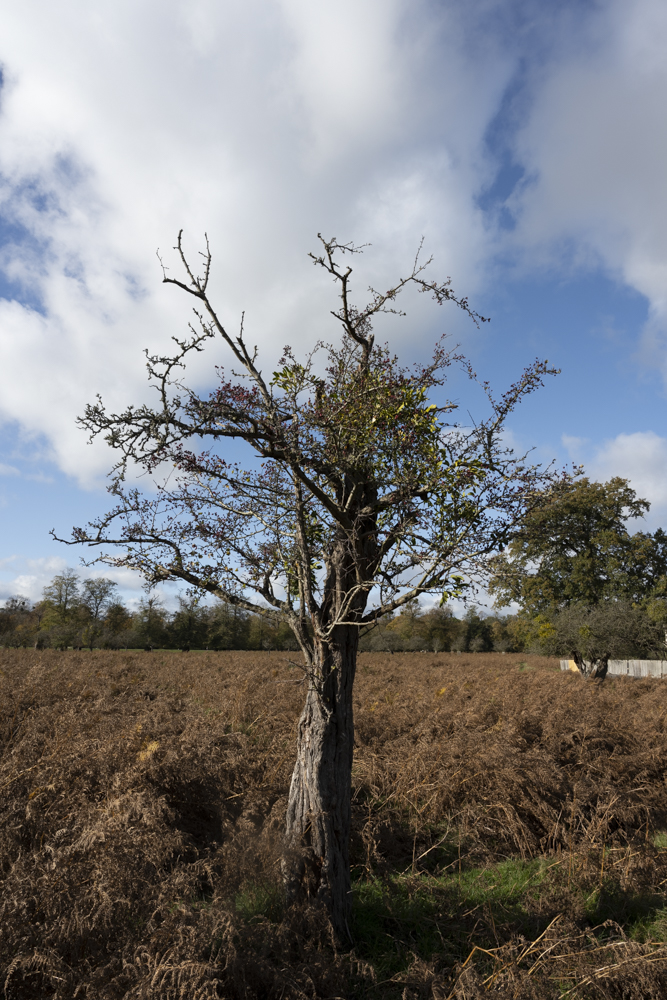
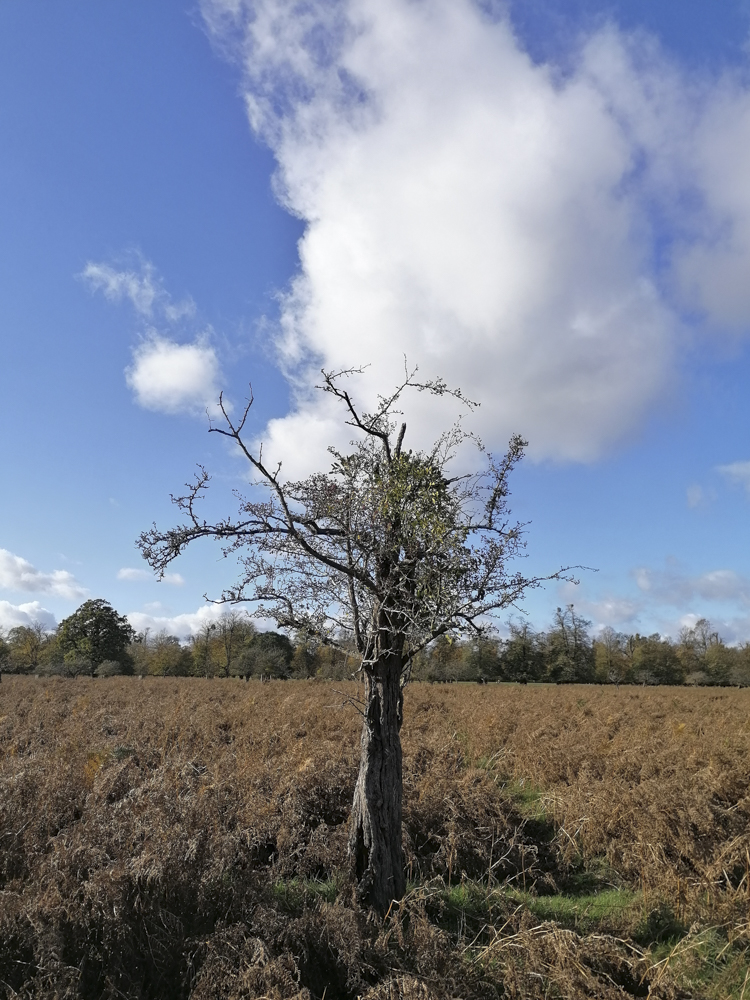
While standing one the memoiral, I took these two images which (in theory) would be the same view from Eisenhower’s Bushy Park office.

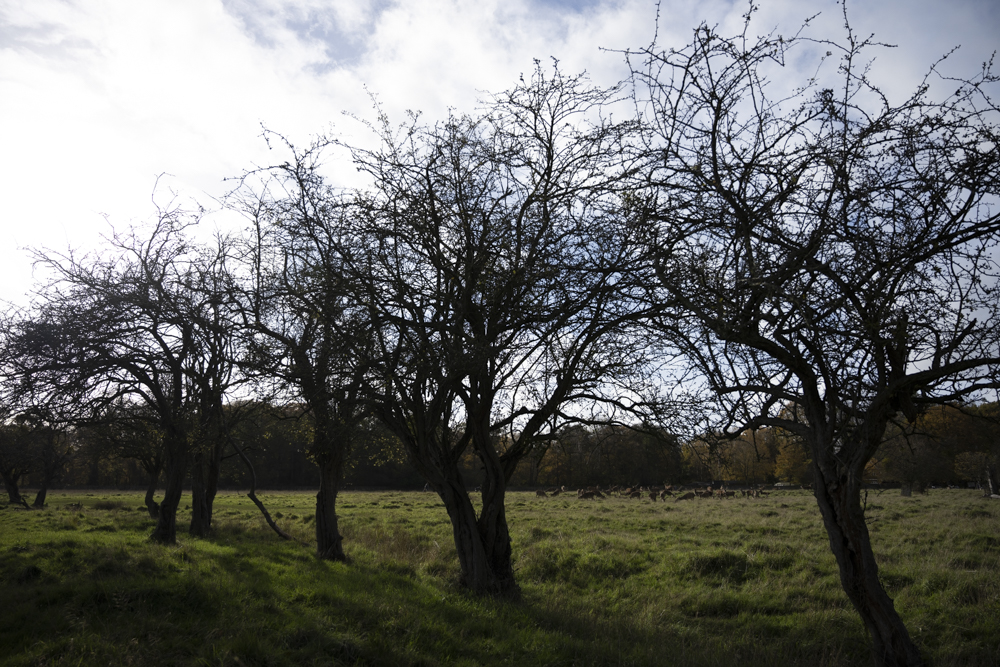
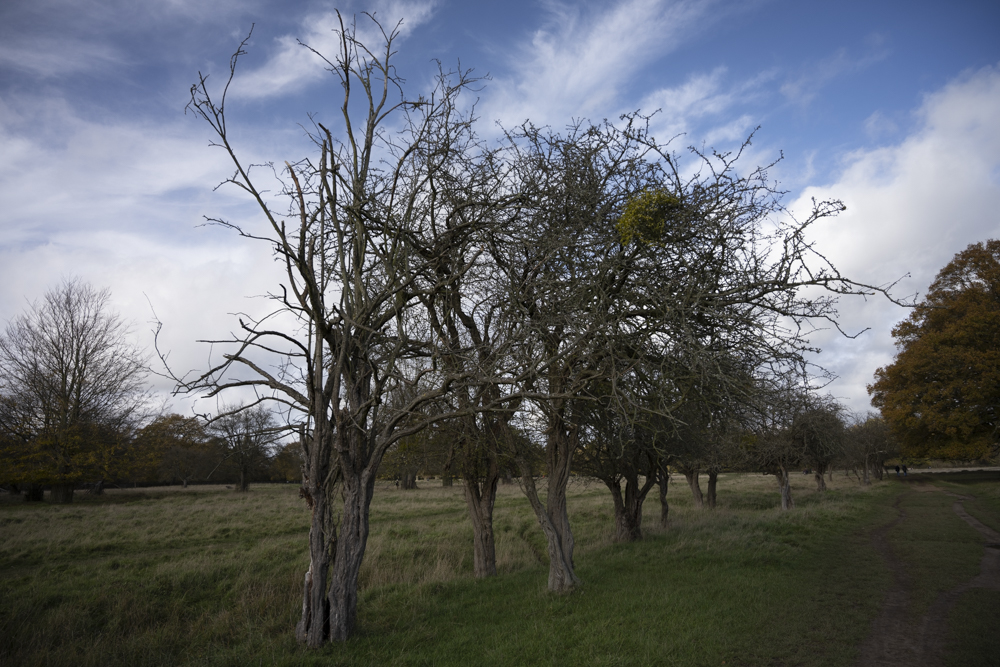
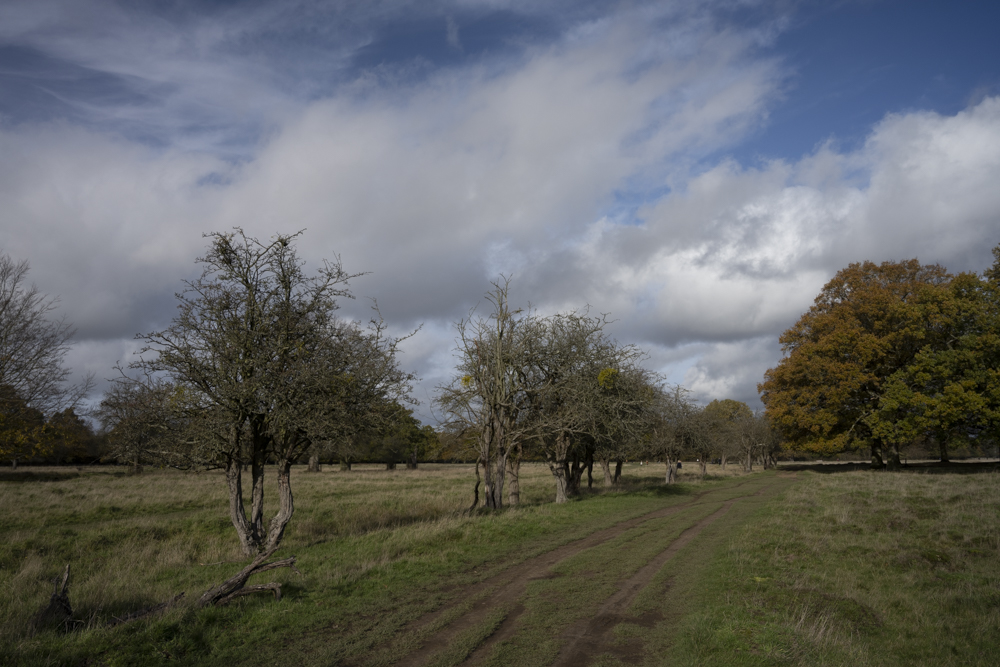
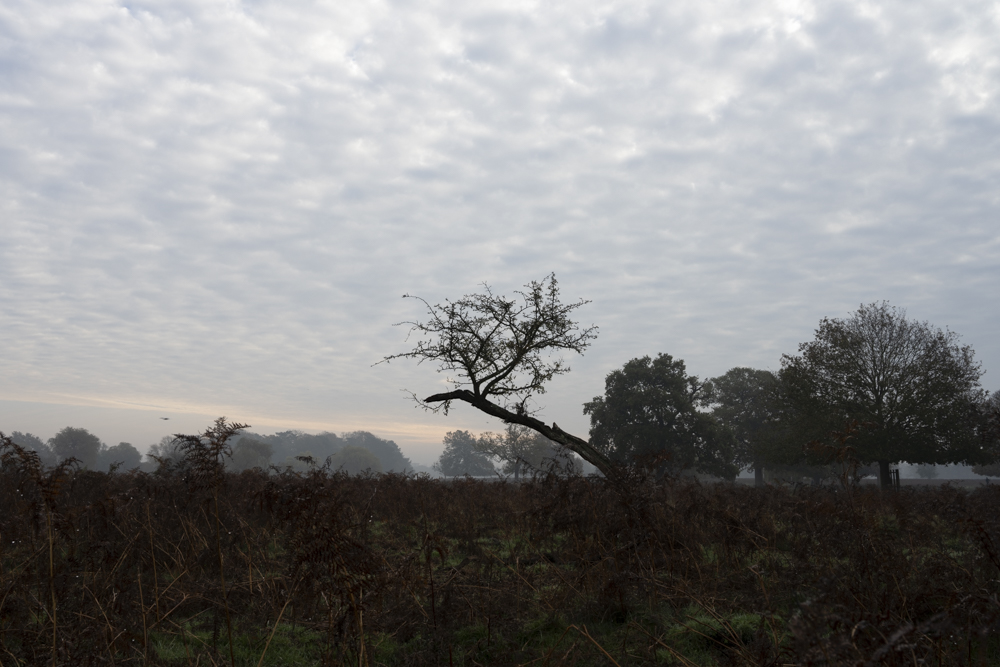
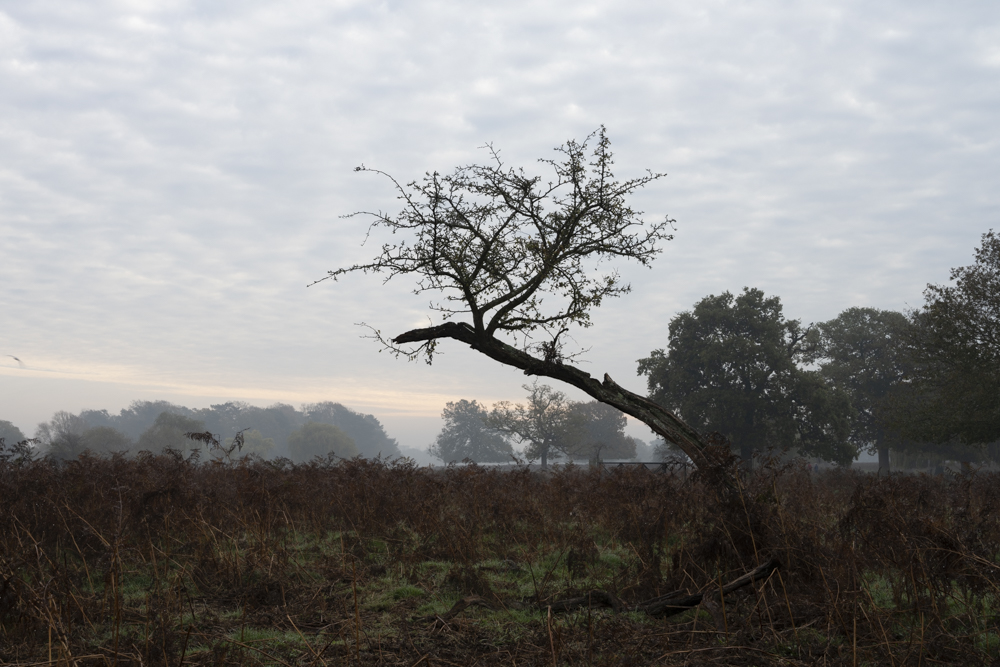
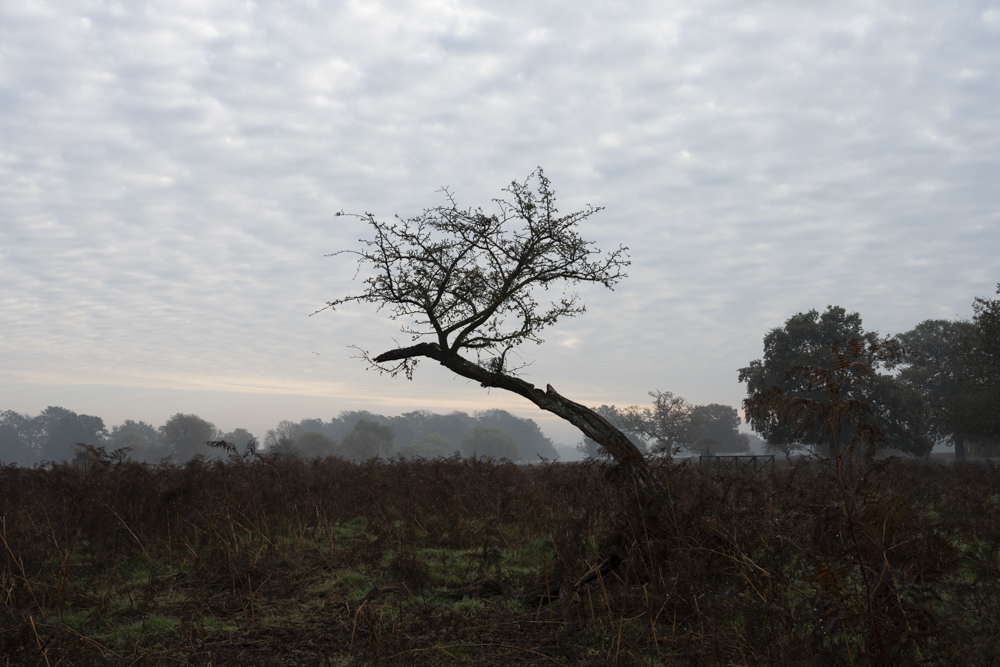
I continued walking through the park and decided to focus on this section. There are quite a few hawthorns in this patch.

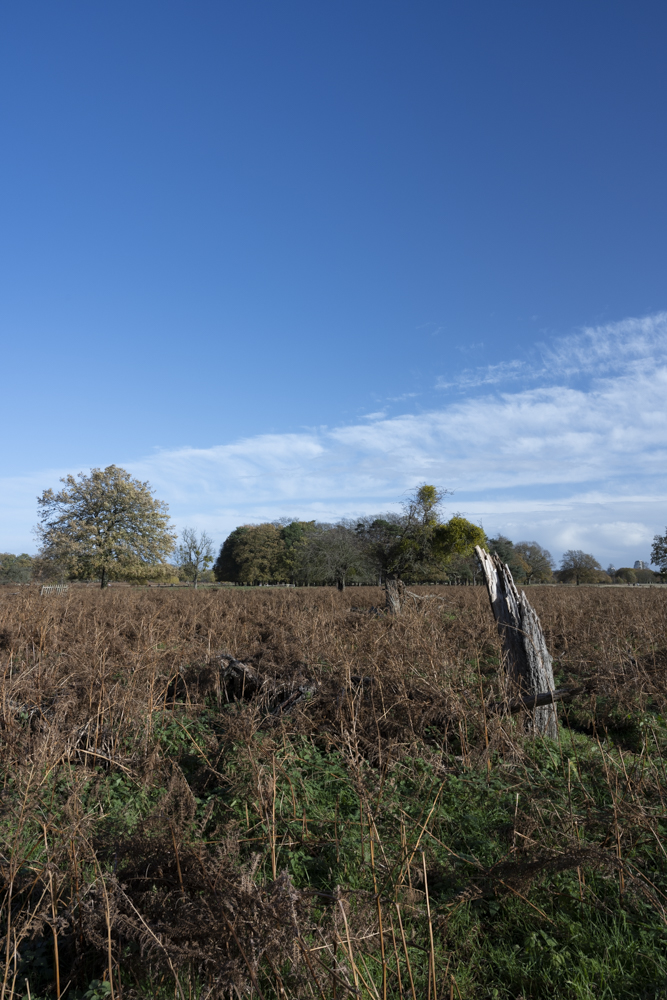
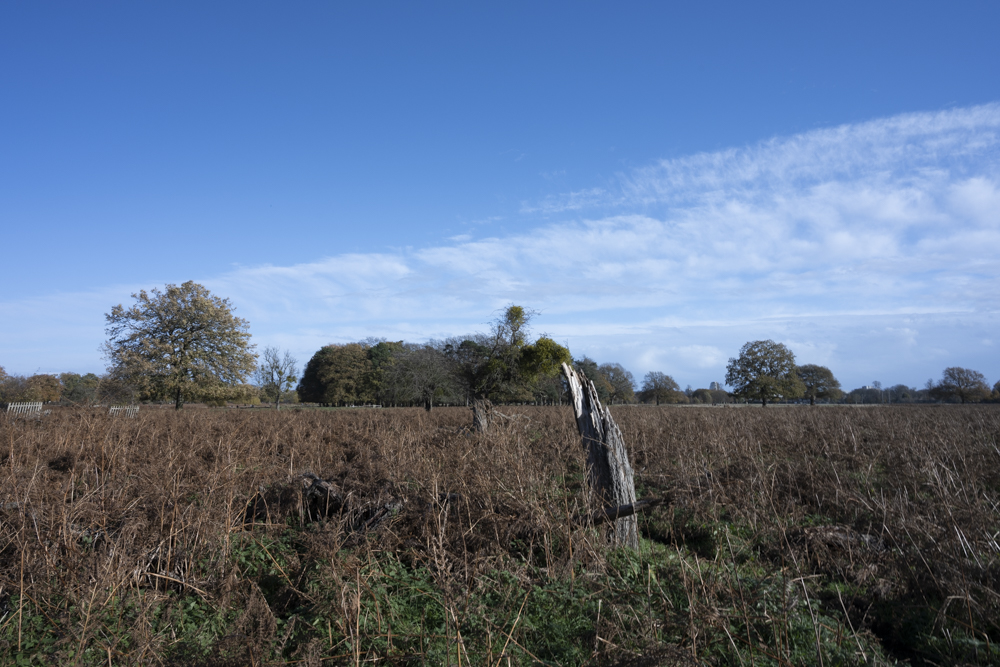
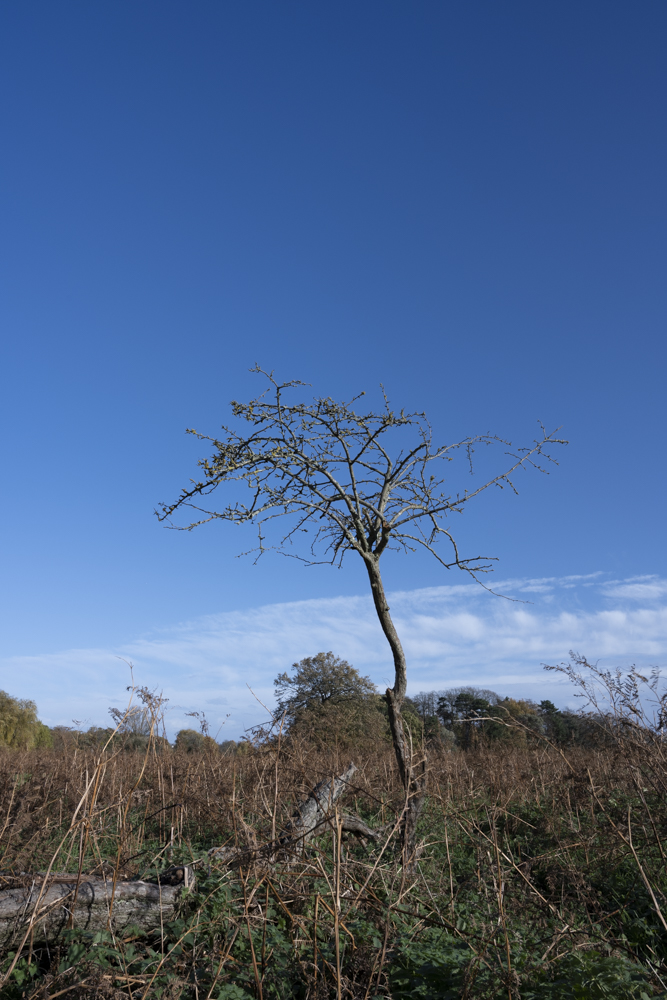
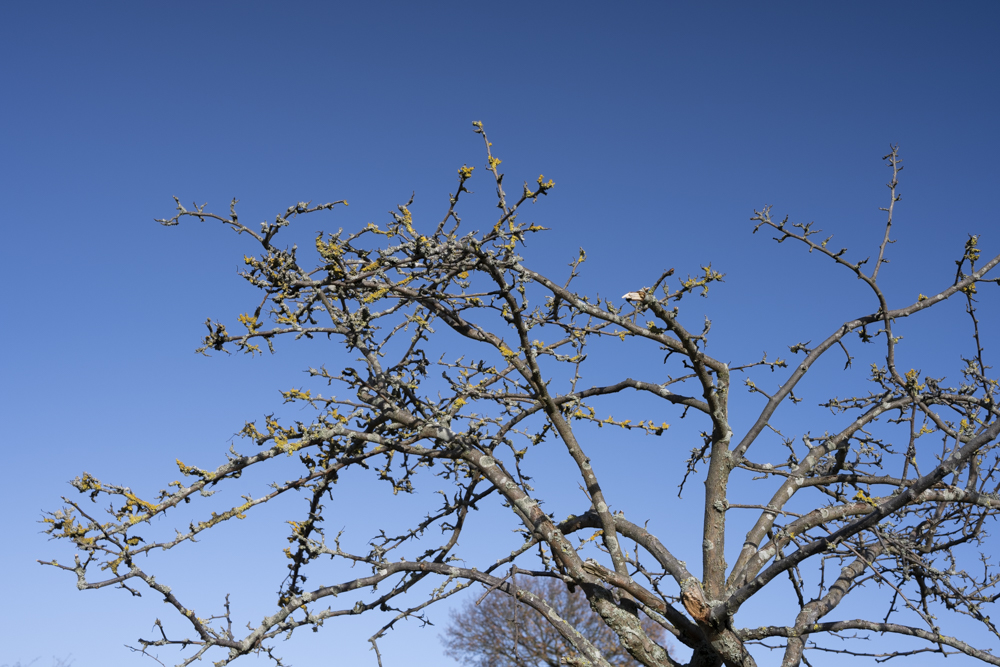
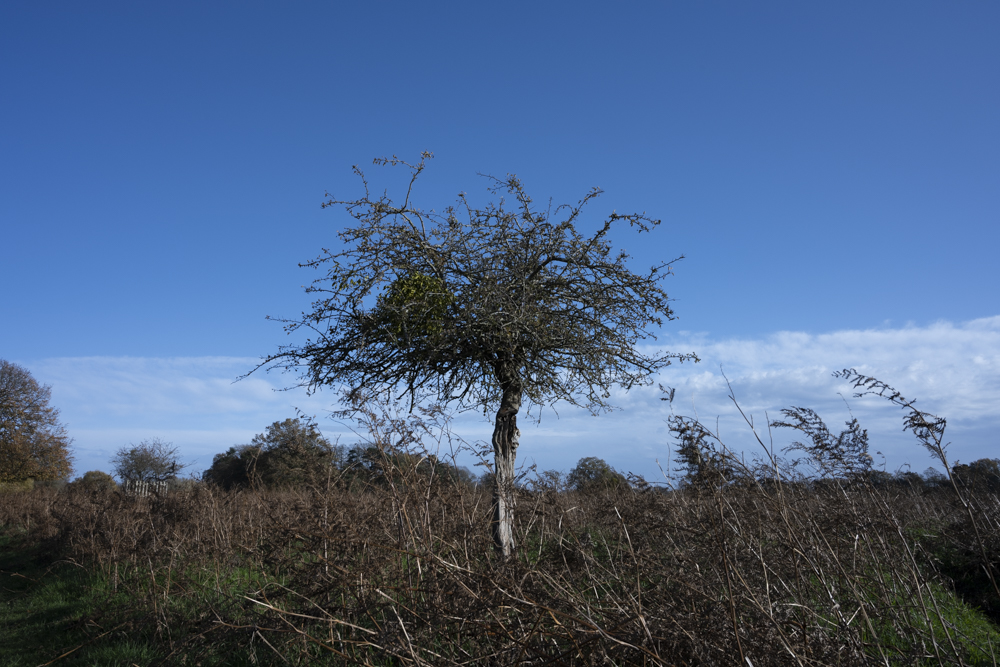
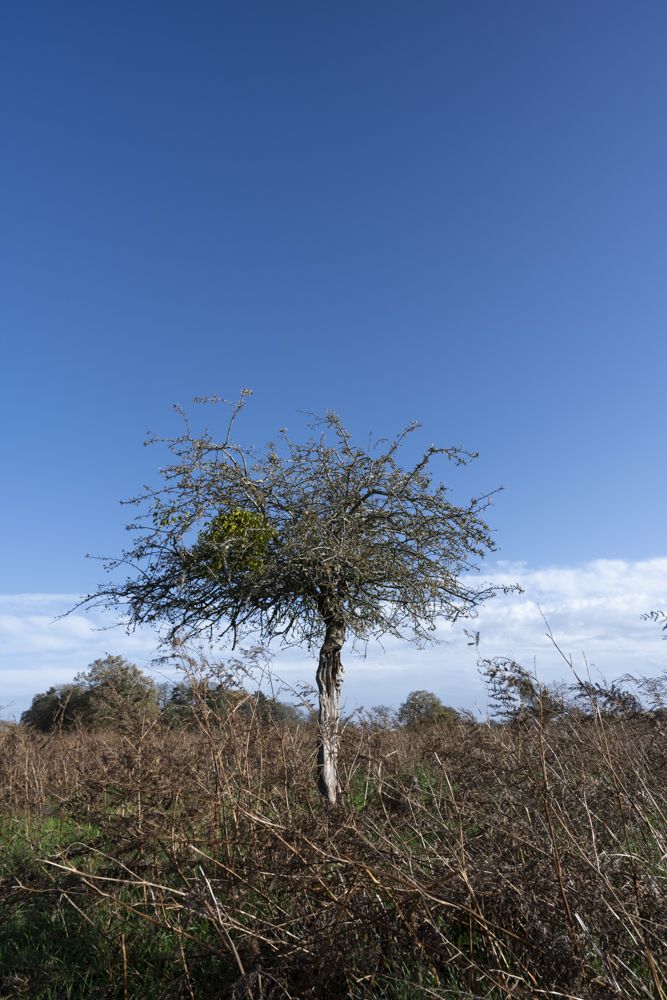
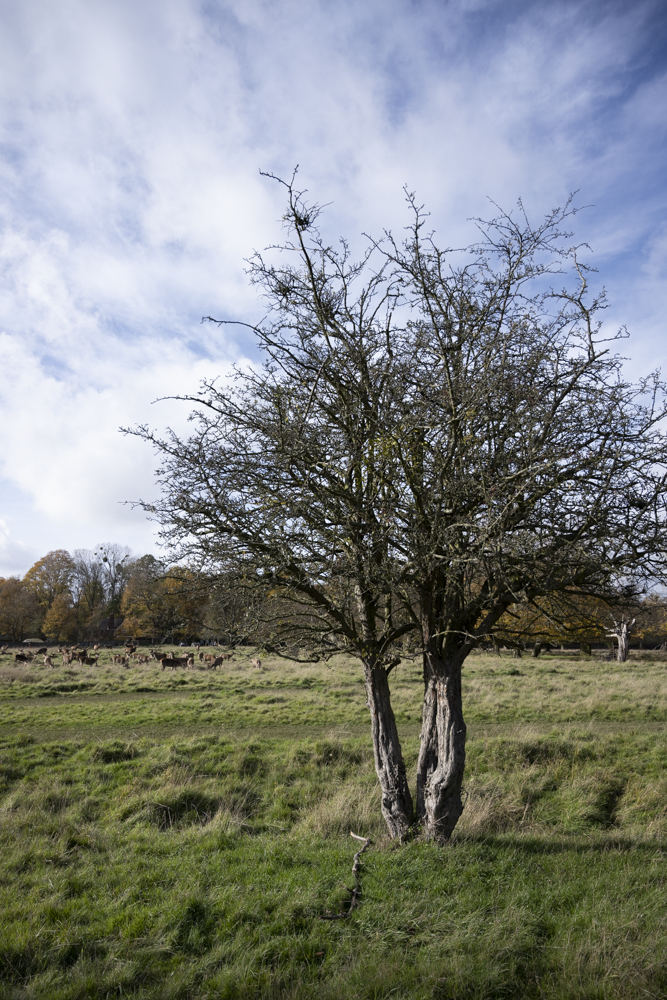
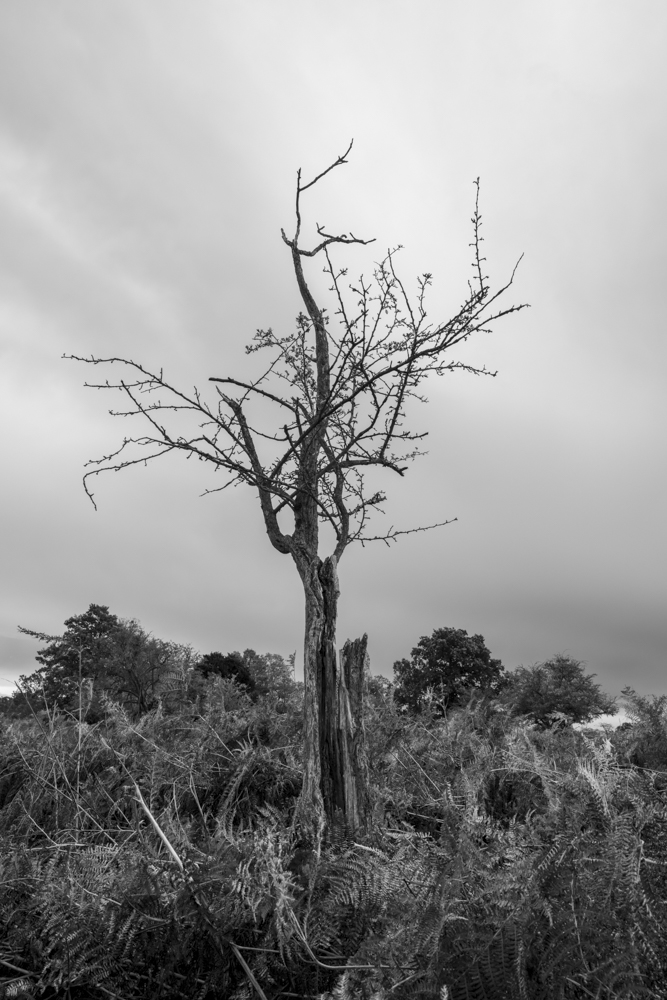
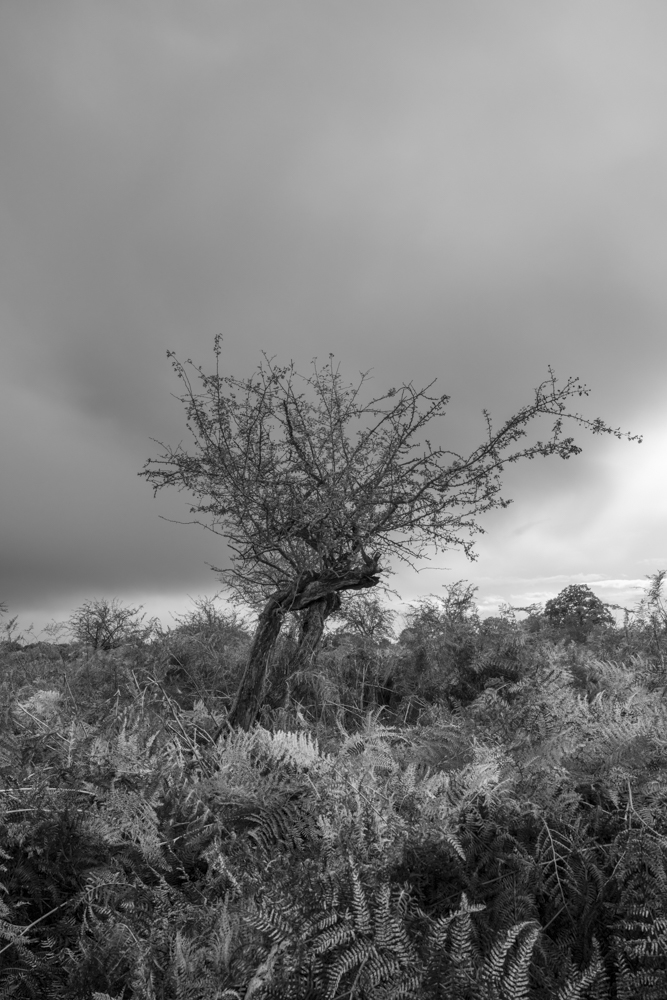
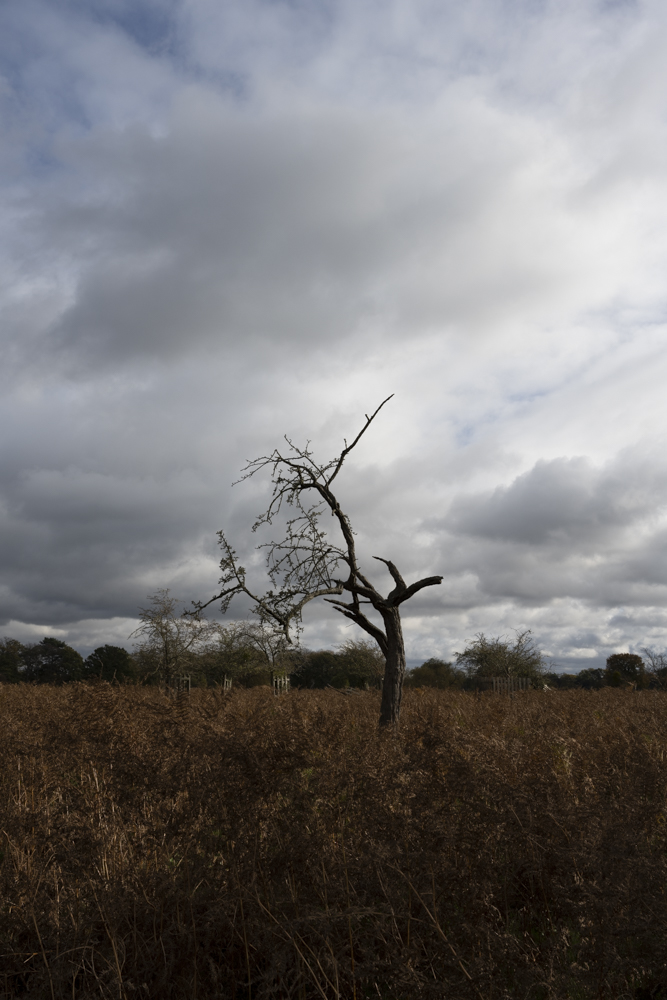
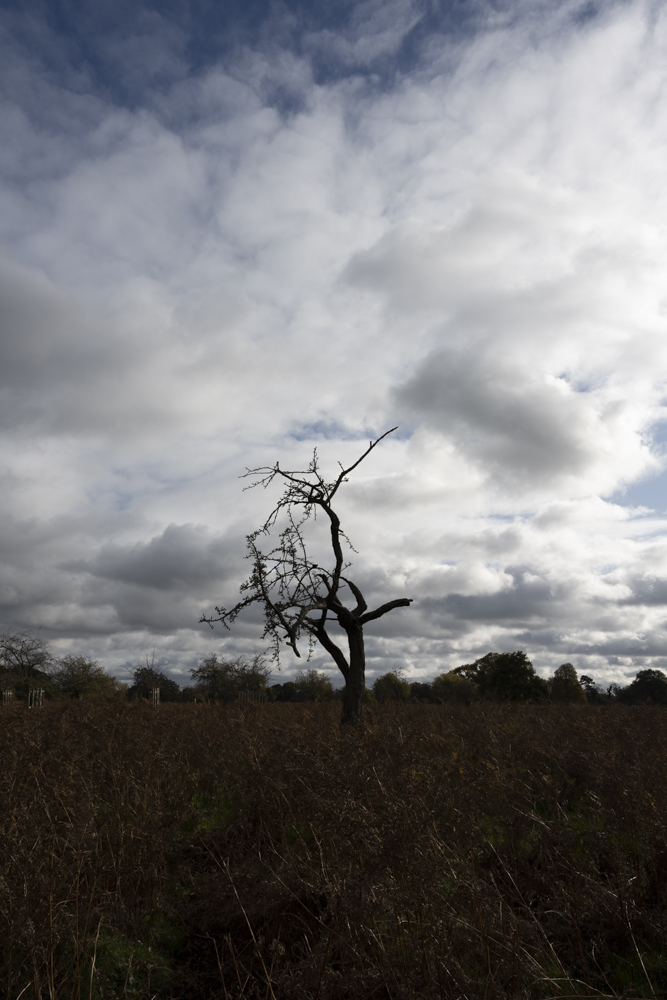
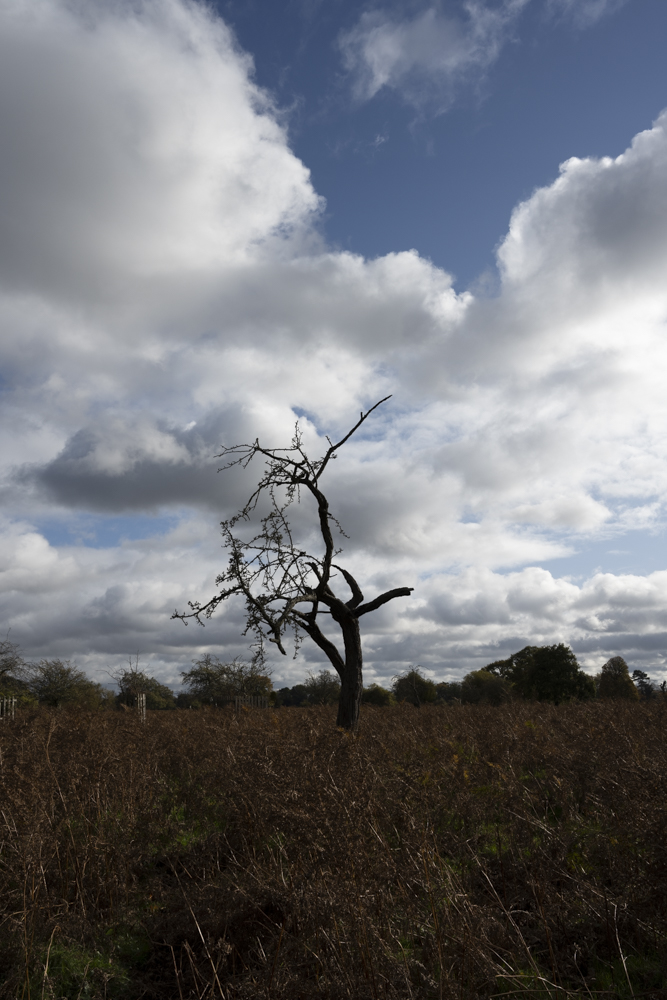
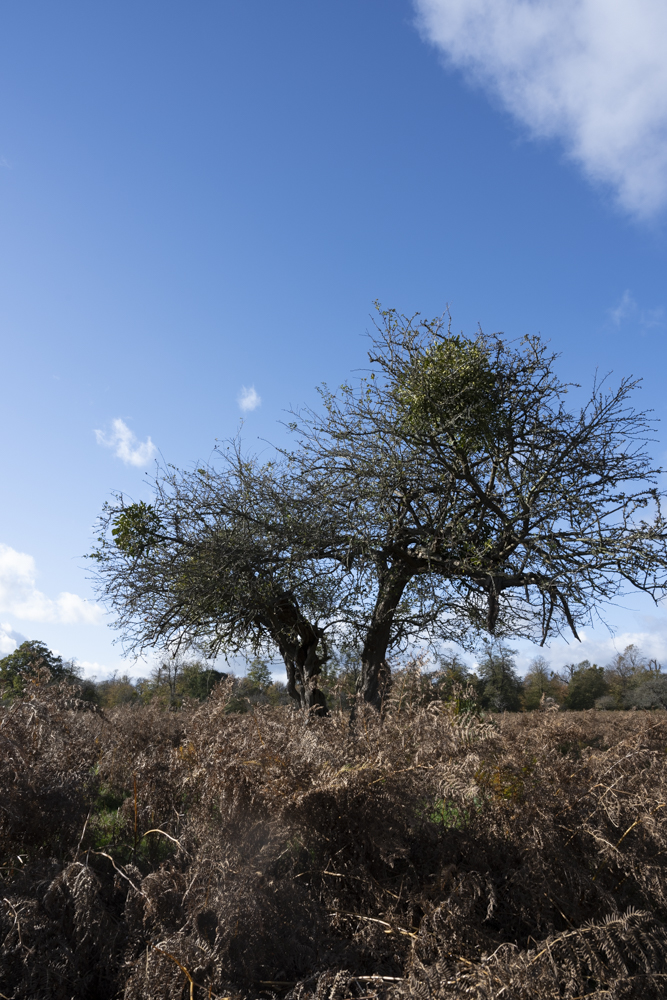
The following are shots of some of the trees that caught my eye. I don’t think these images will make the final cut, but I will need to re-photograph once the ferns have gone and in a different light.

Tree One

Tree Two

When looking back at these trees, I realised that they were planted in a row.

Tree Four

Tree Five

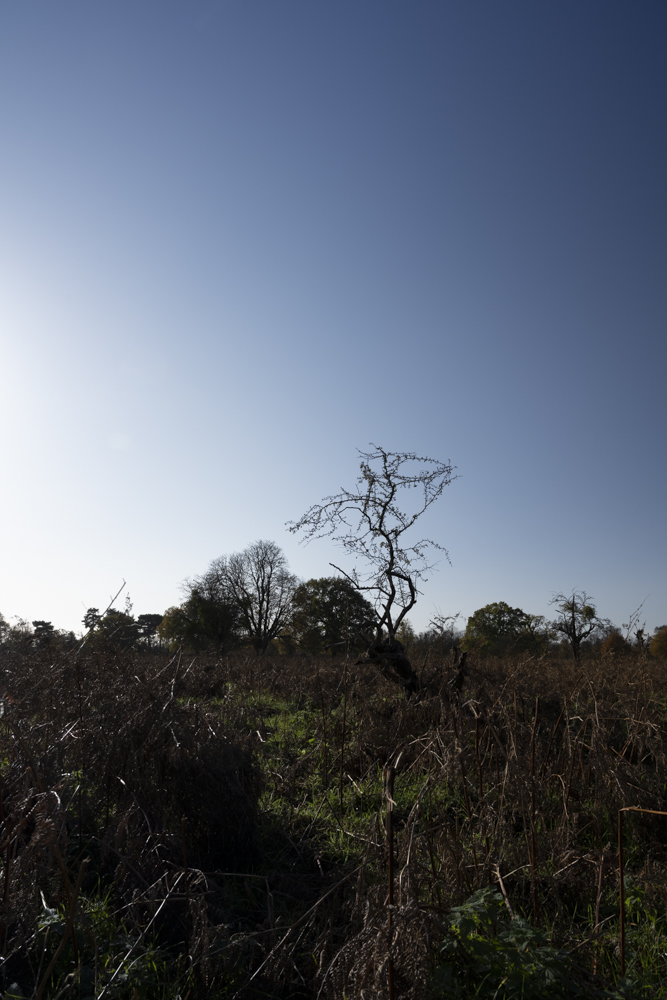
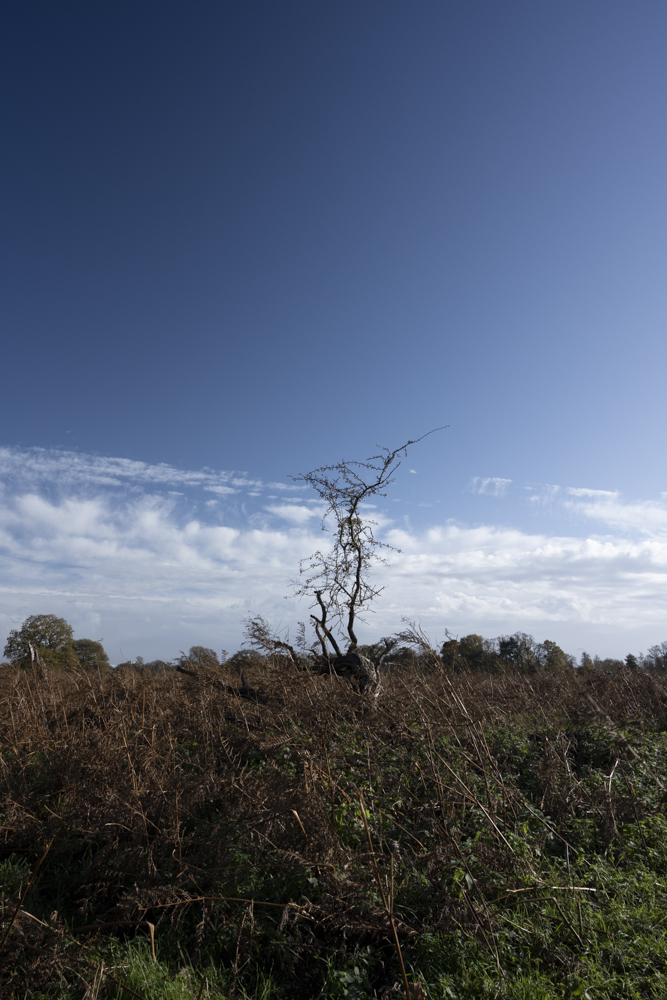
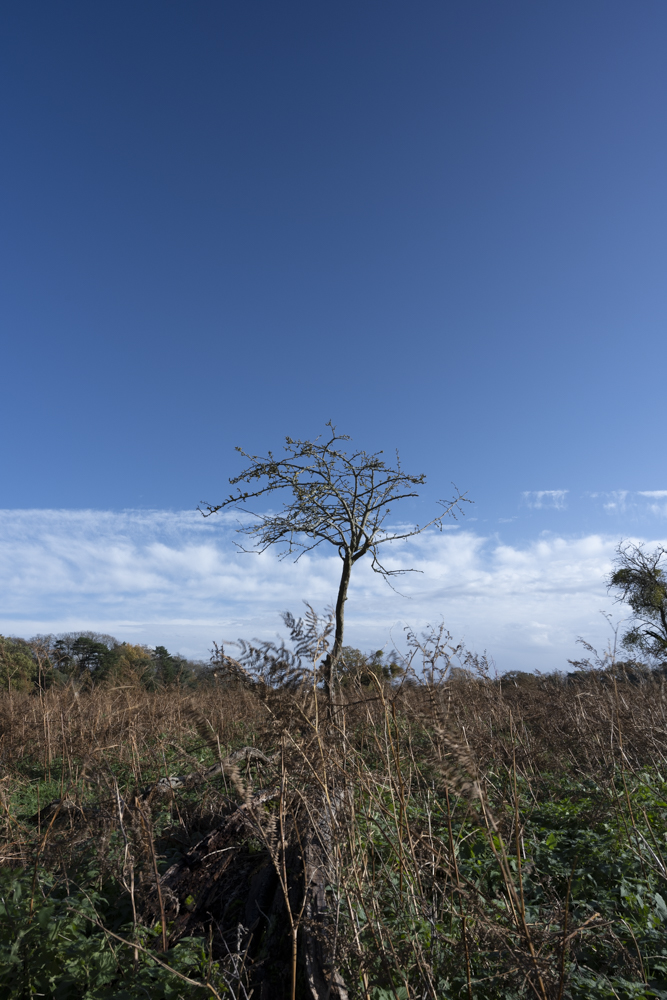
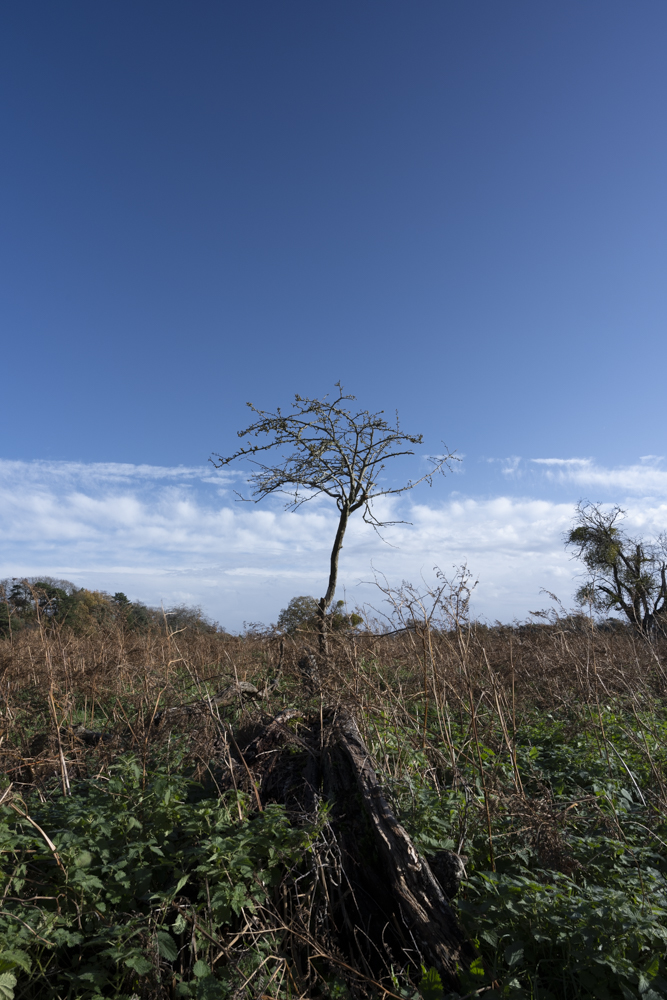
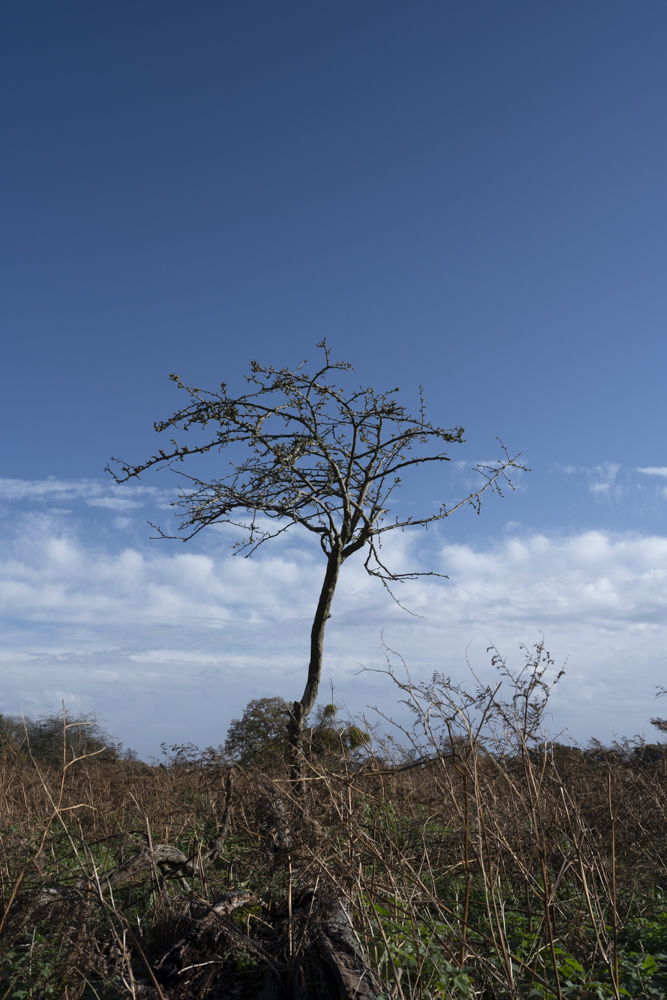
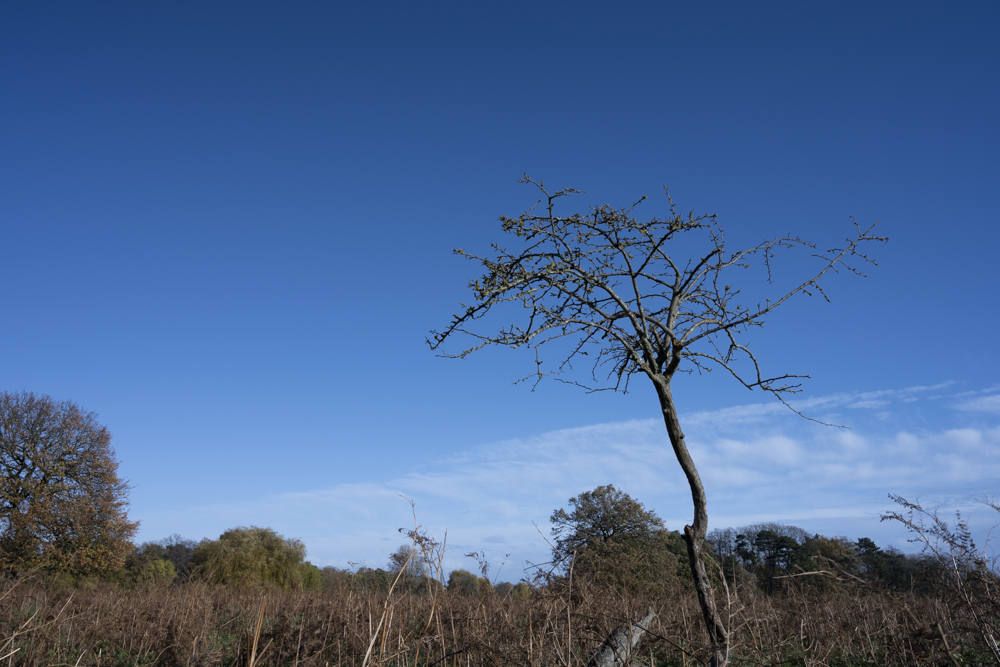
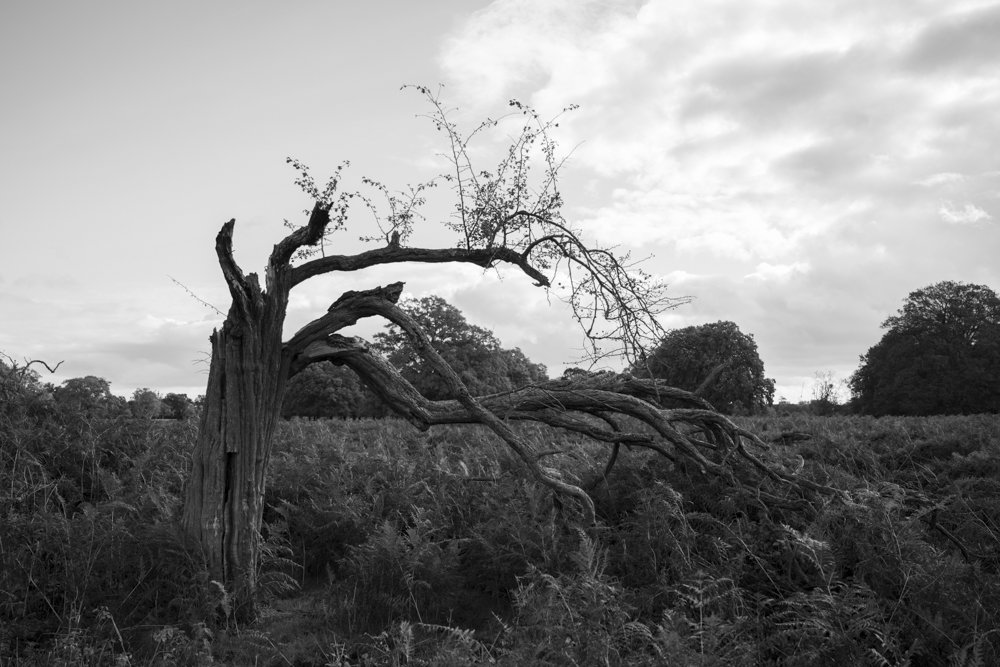
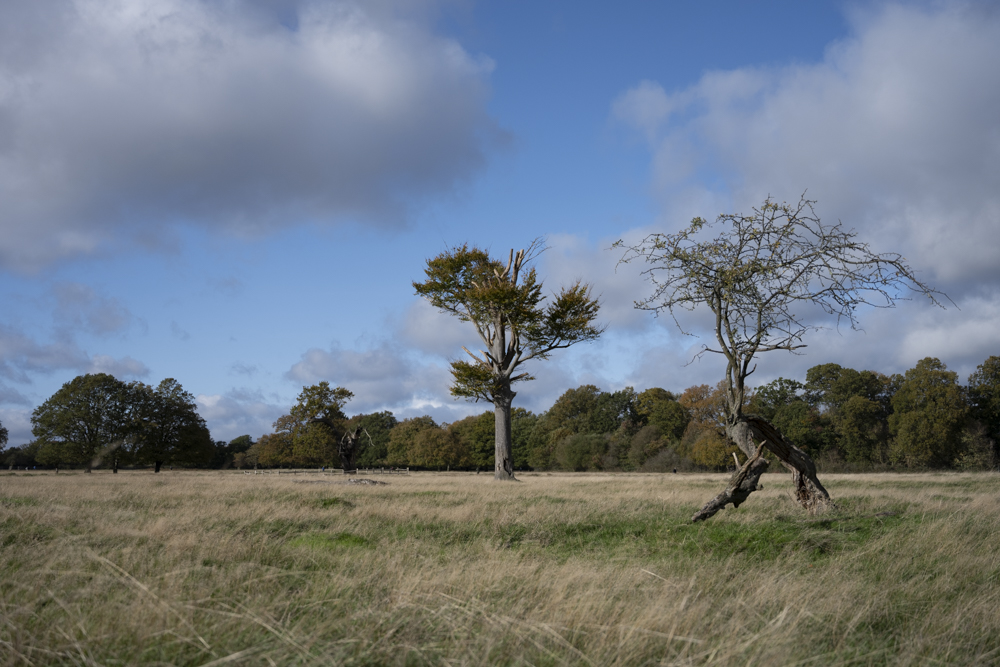
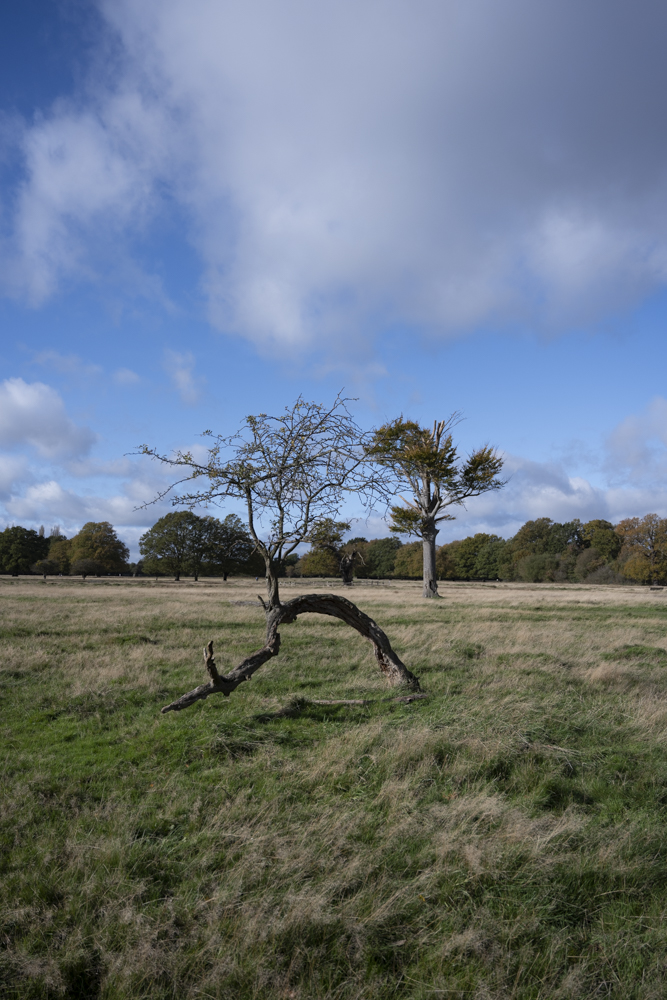
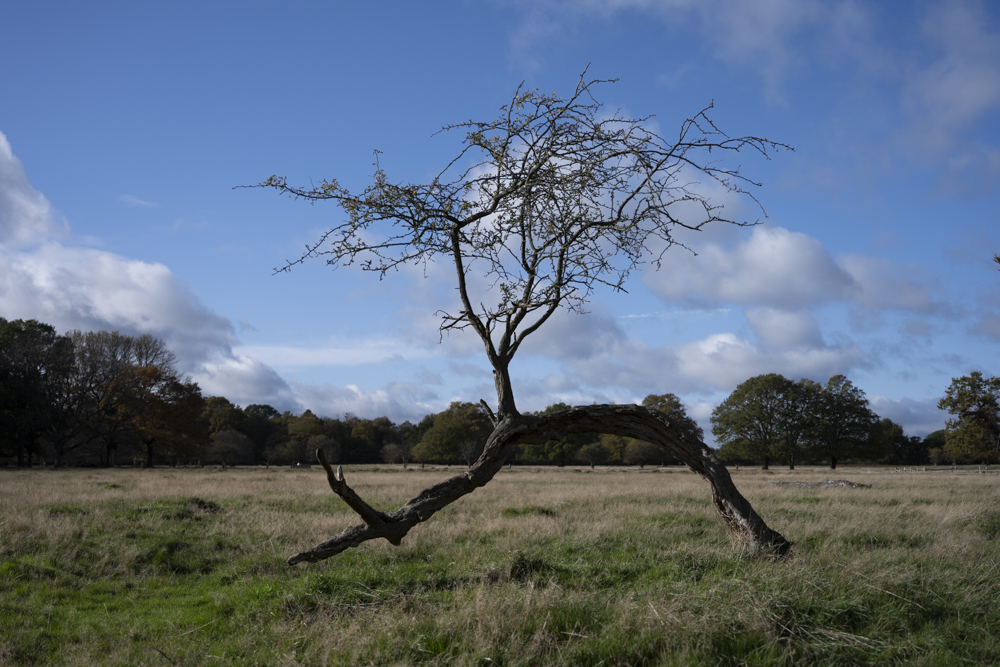
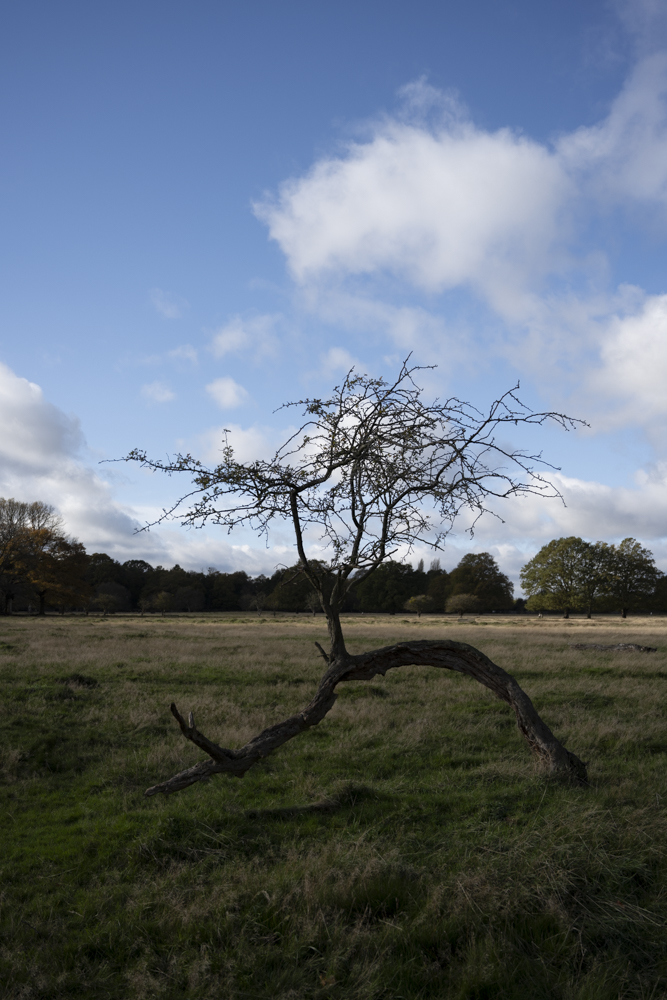
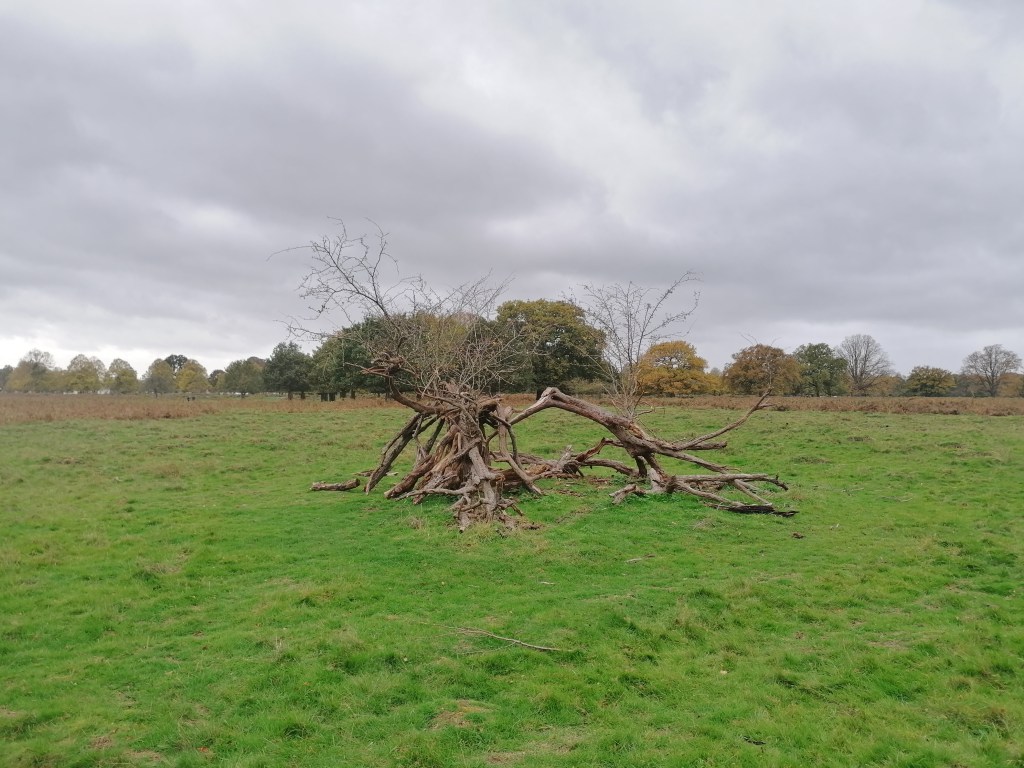
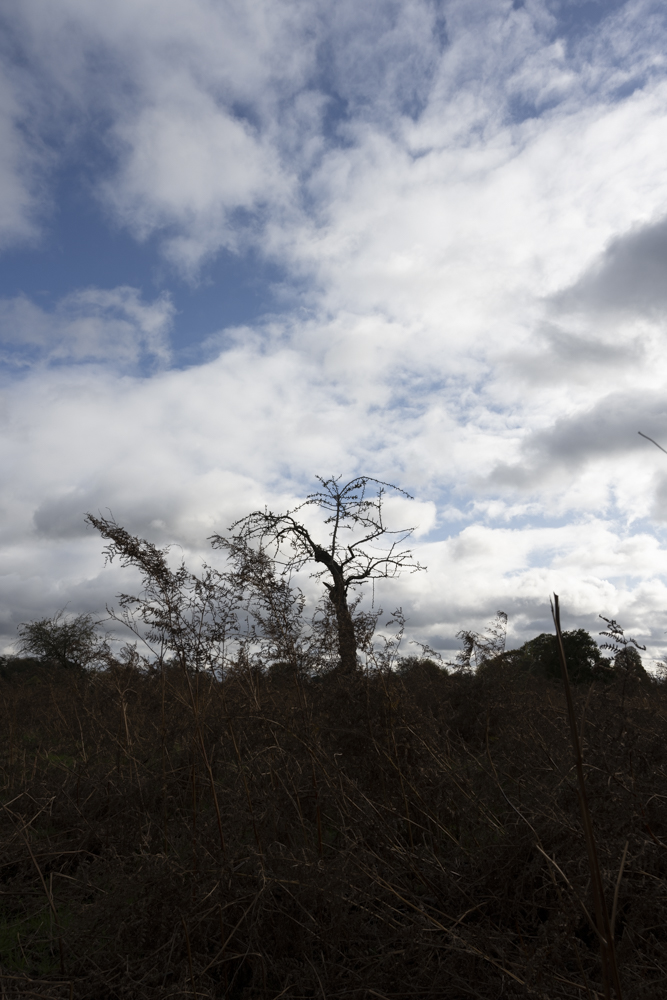
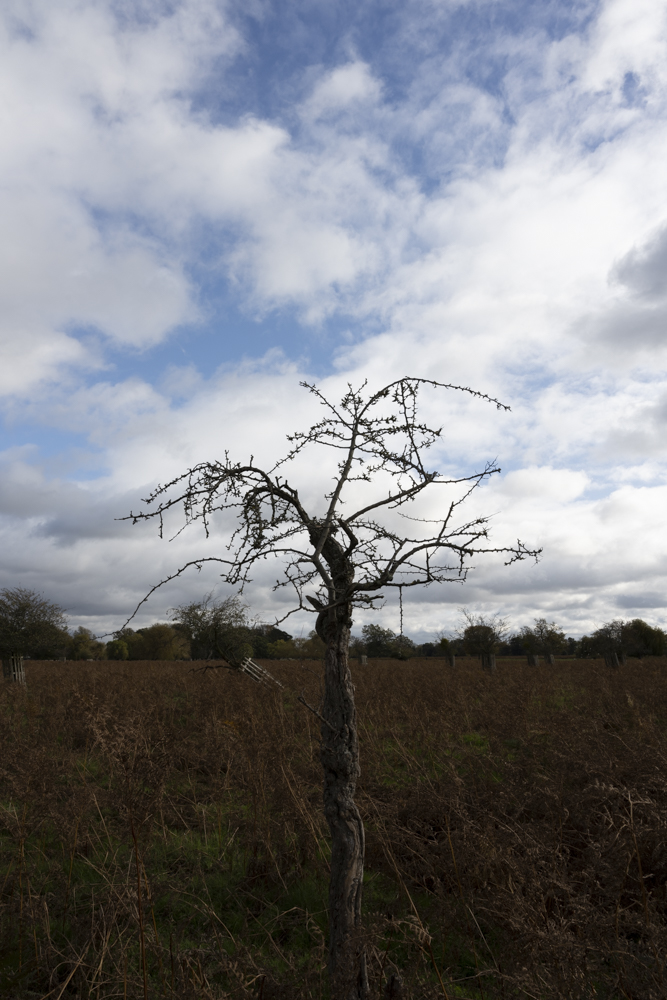
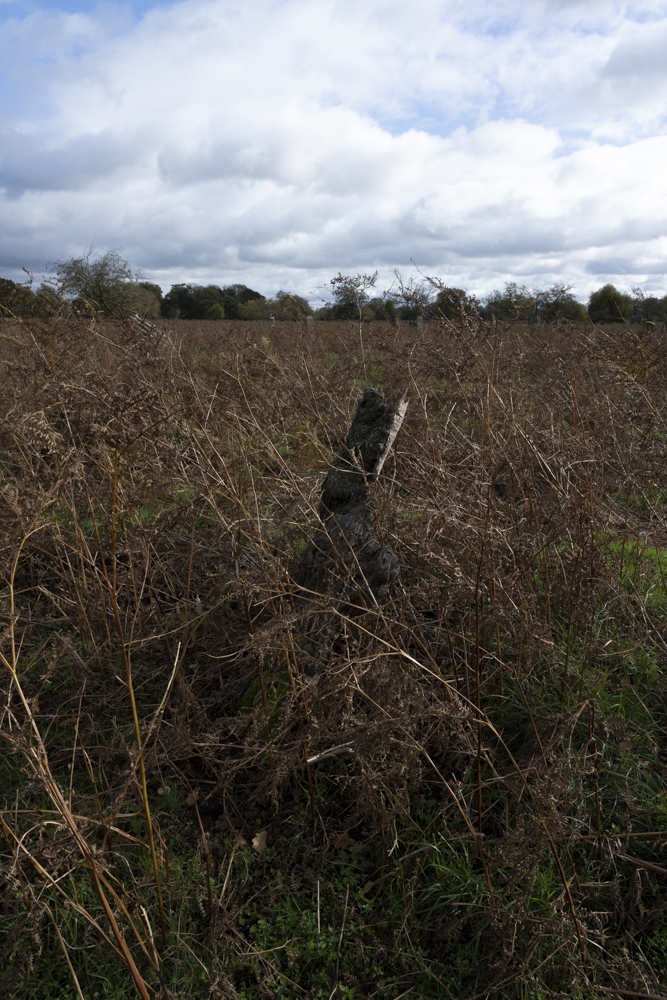
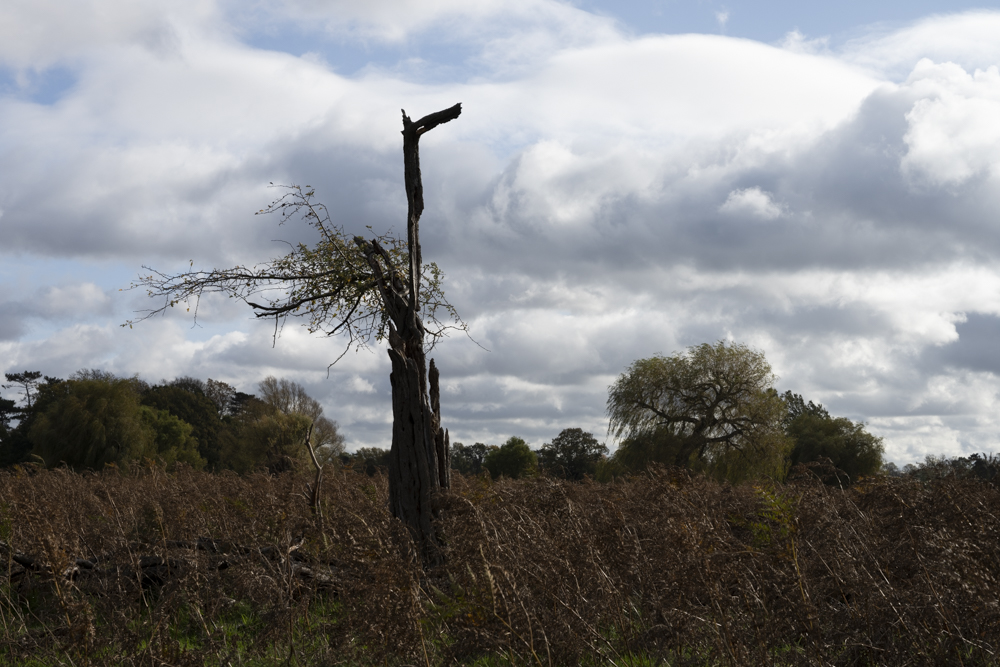
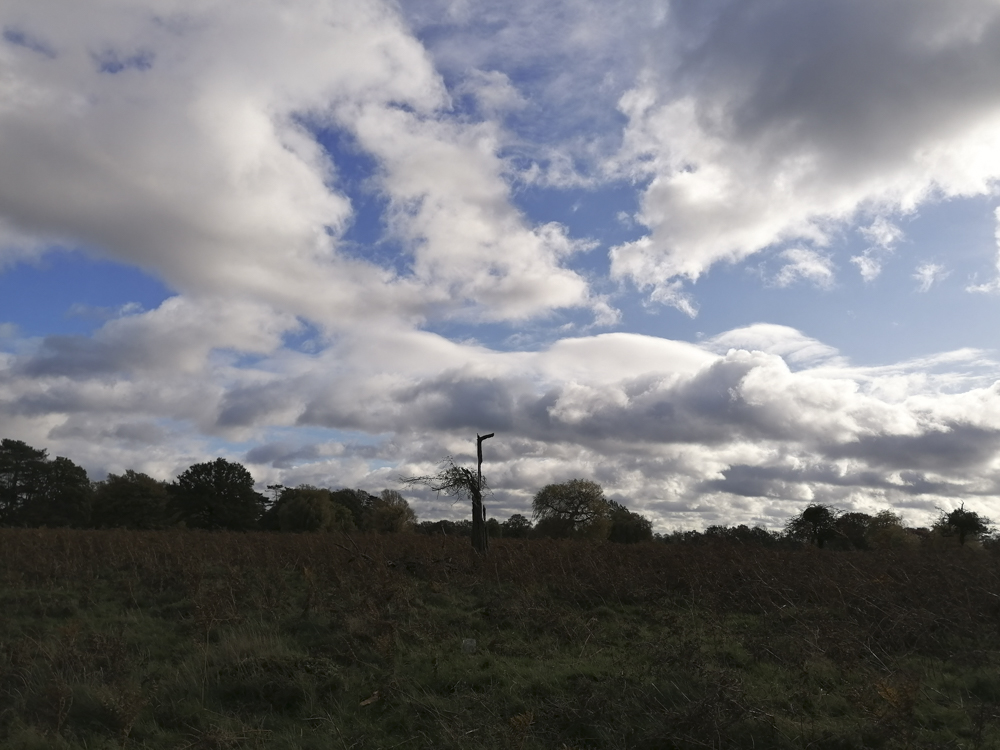
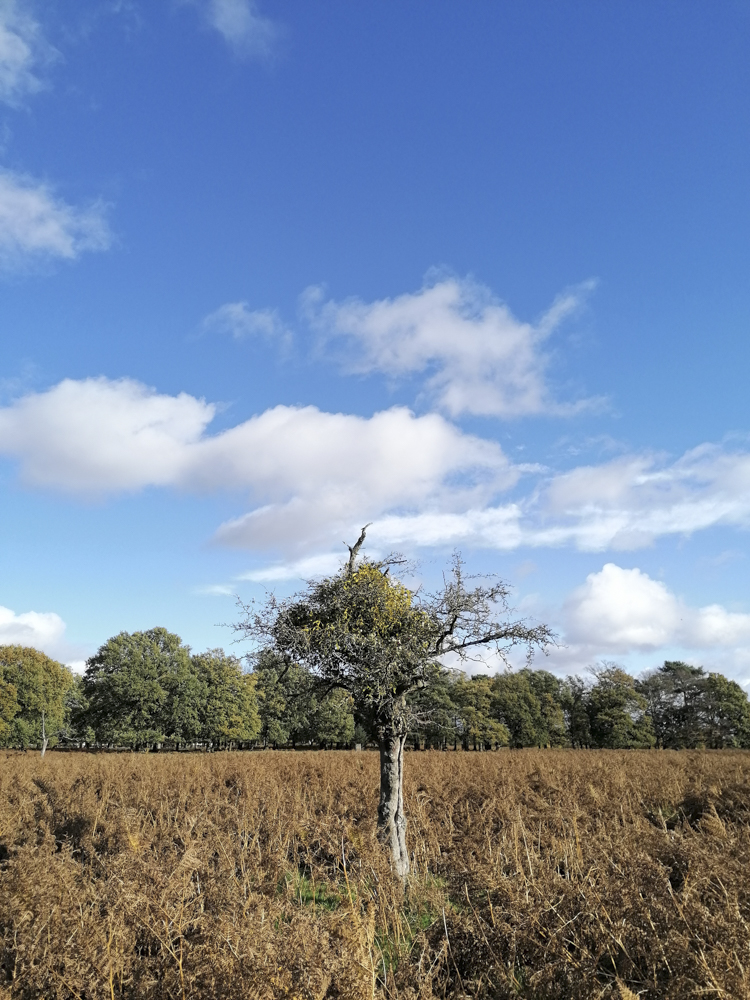
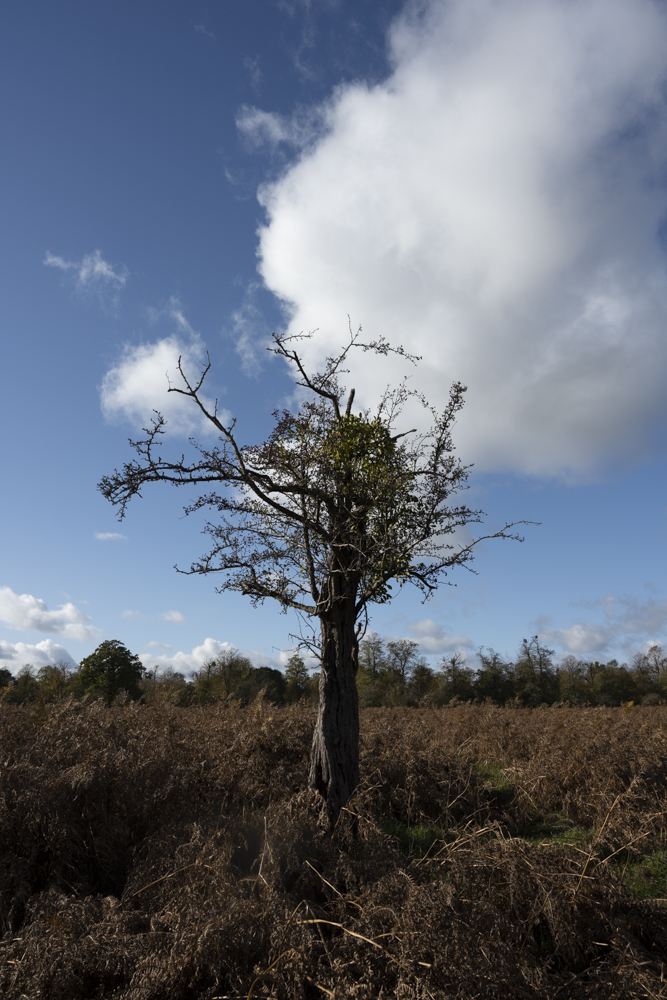
On first glance, this tree looks like a small hawthorn peeking out the ferns. The trunk of the tree is actually lying on the ground the ‘tree’ that can be seen is one of its branches reaching for the sky.

Tree Six

Categories
AGM62 Photography Research Project Stage 1 Posts

AGM62 Test Prints Initial Thoughts 14 November 2020

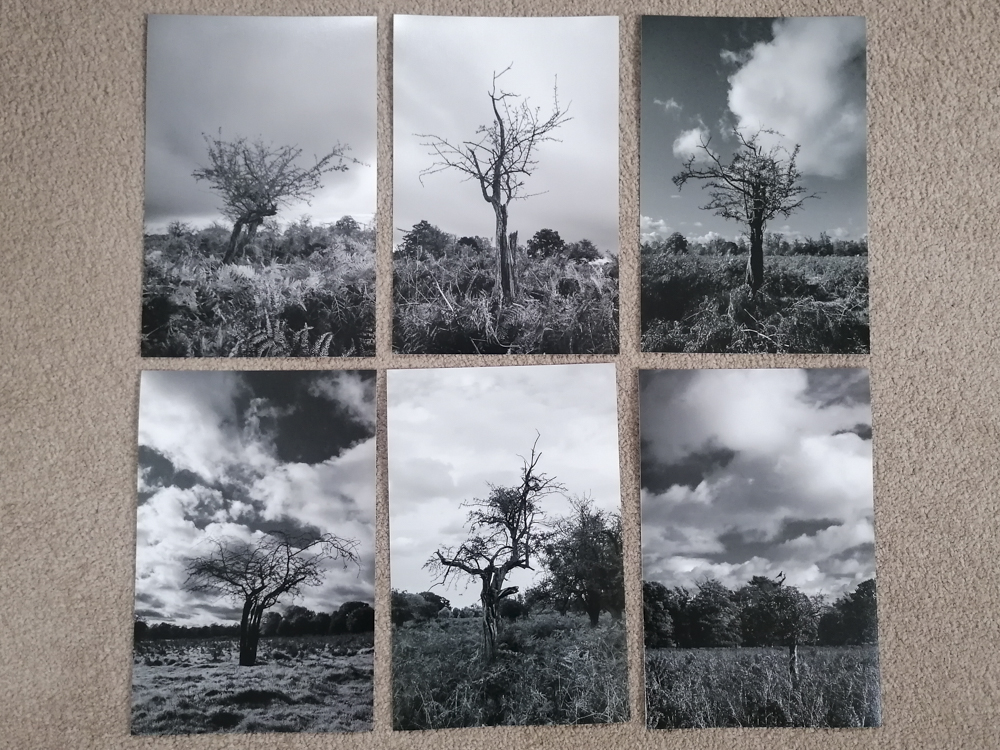
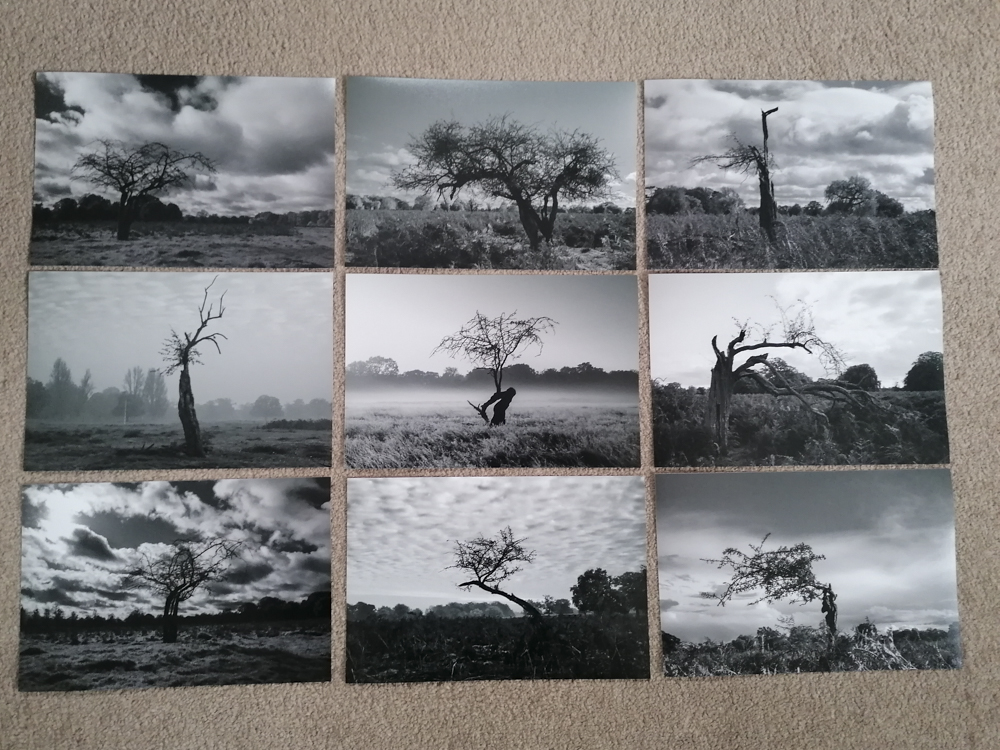
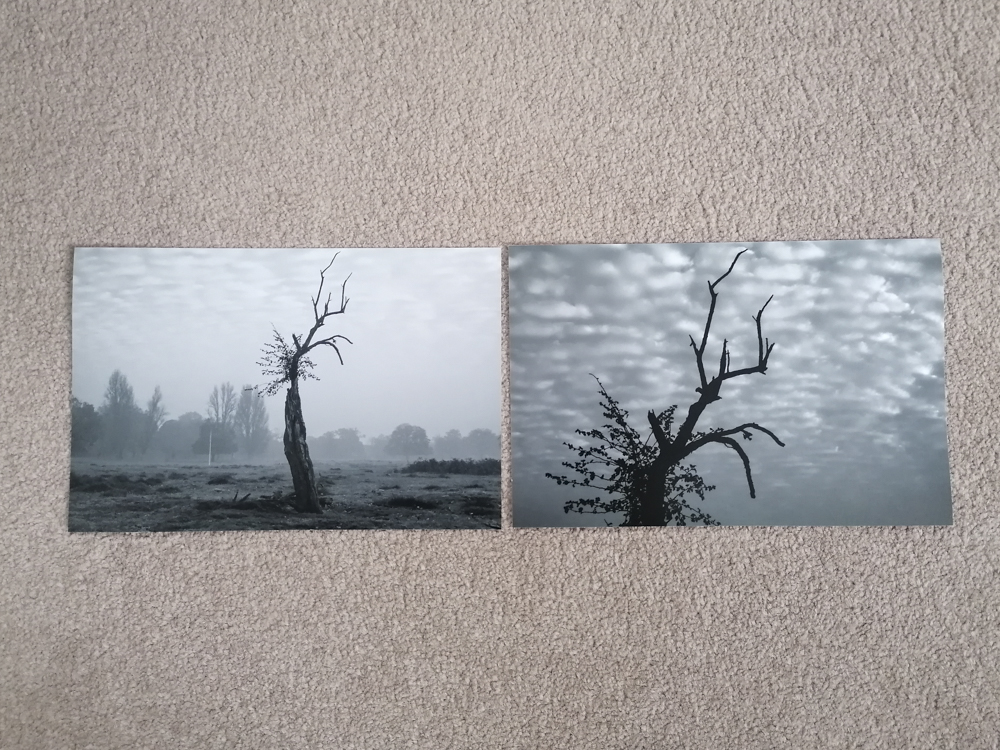
After placing my order with DS Colour Labs, I received my prints within a couple of days. In my experience, I always find this stage of the project very enlightening. By looking at the prints and not at the screen-based images, there are always aspects to take into further consideration. It is an invaluable part of the learning and project-progression process.

In order to get a better idea of possible sequencing, I laid out the 6″ x 9″ prints on the living room floor and took the following smartphone shots.

I also tried this aspect.

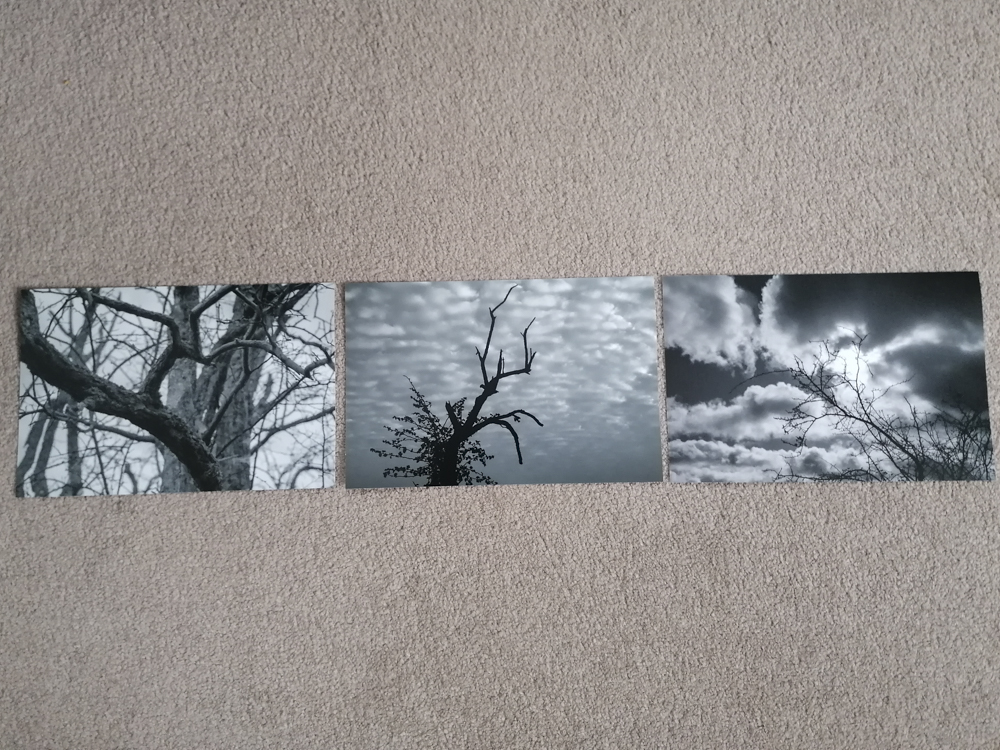
One thought that kept tickling my mind was combining a big image of a one tree and present it with smaller, close-ups of the same tree. Something that could be discussed in the forthcoming Interim Review.

Categories
AGM62 Photography Research Project Stage 1 Posts

AGM62 Bushy Park Hawthorns 12 November 2020

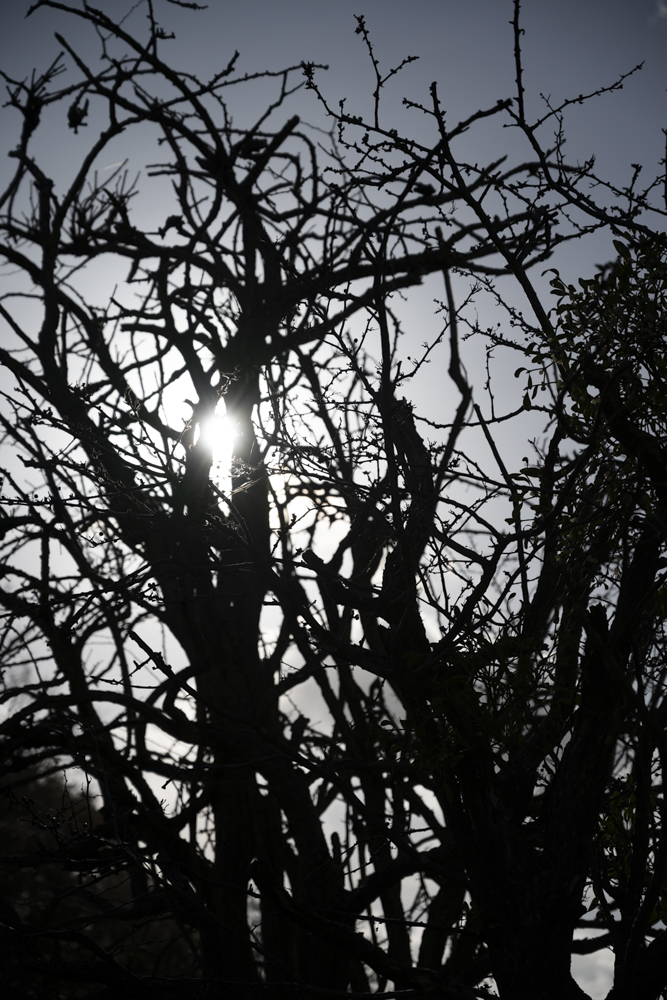
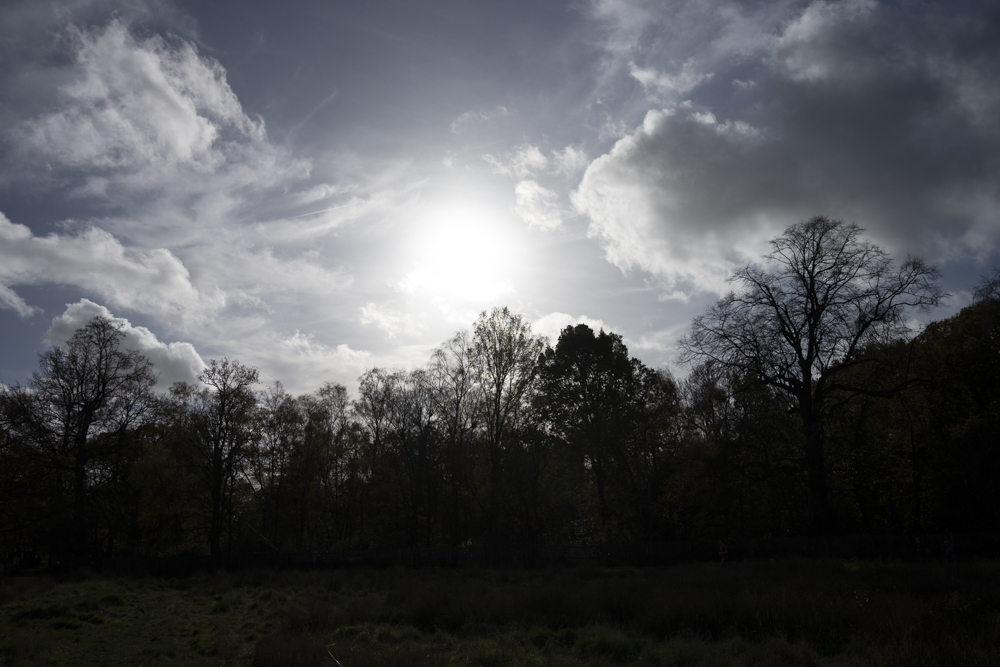
When reflecting on both my subject matter and images so far, I realised that advancement in regards to the technical aspect had been neglected. This revelation came to me when looking at a cloudy sky on 9 November 2020. The sun was trying to break through a bank of clouds and I noticed a ‘sun dog’. Also known as a parhelion, this visual phenomenon is a bright spot in the sky appearing at the side of the sun. Similar to a rainbow, it is formed by refraction of sunlight through ice crystals high in the atmosphere. This was made more defined when looking through my polarised sunglasses. Additionally, the sun looked a like a full moon when looking through these lenses.

This prompted me to dig out my polarising filter and set myself the task of using this on my next Bushy Park visit. On the morning of 12 November, the sky was a mix on sunshine and clouds, so it was the perfect opportunity to try something different. I also wanted to revisit the line of hawthorns I looked at on the 10 November. These trees had sparked a new line of enquiry and I wanted to investigate them further.

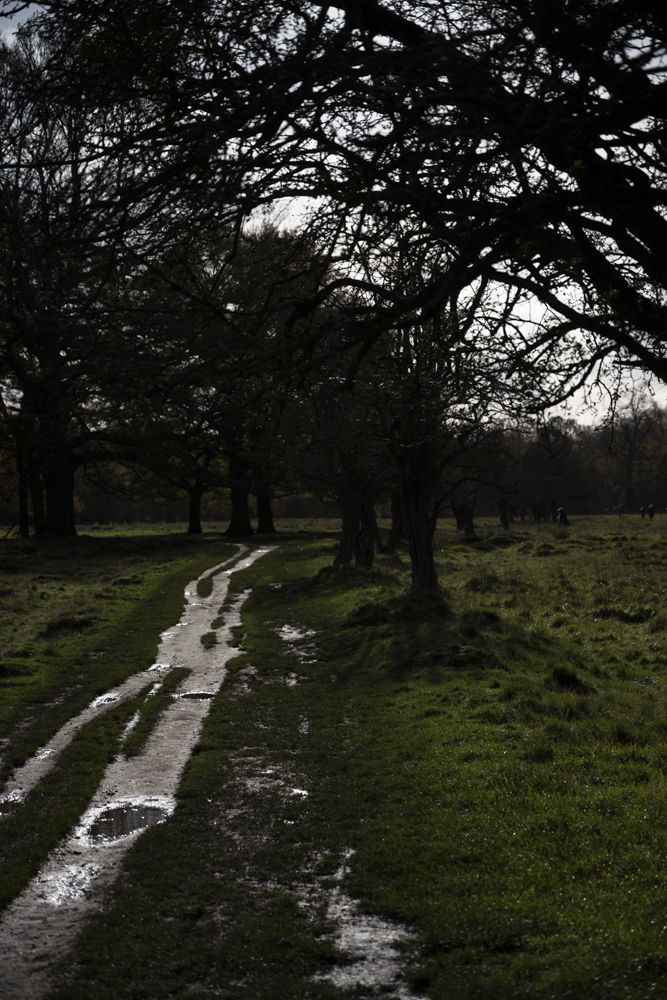
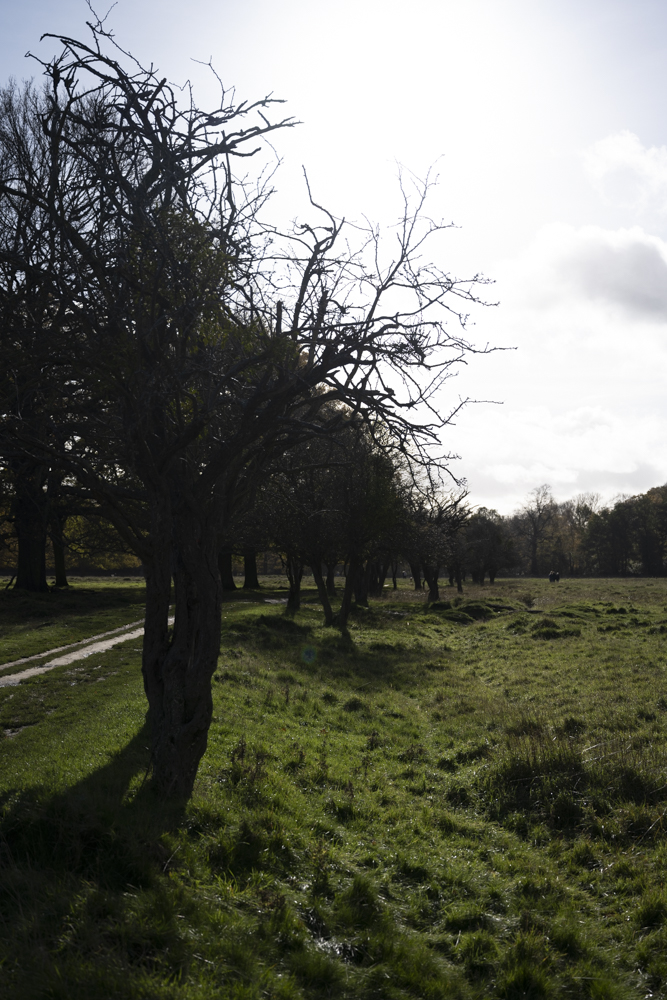
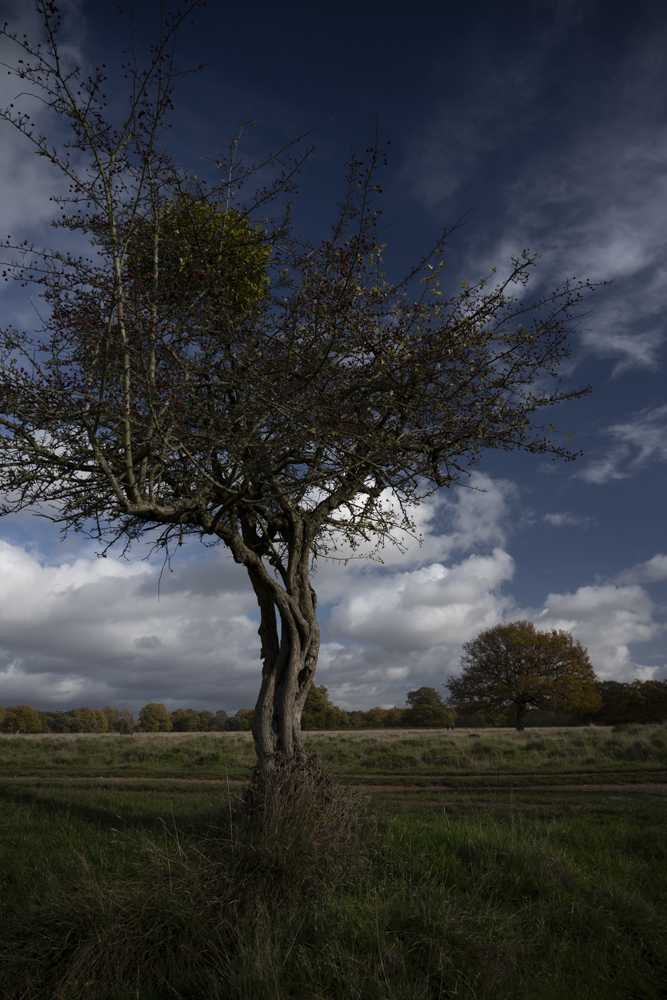
Unfortunately, the light was quite harsh and the park was very busy with people taking their daily exercise, but it was good to try something new. In addition to the polarising filter, I underexposed the majority of these shots so that it would enable them to be edited and not ‘blown out’ in this type of light conditions.

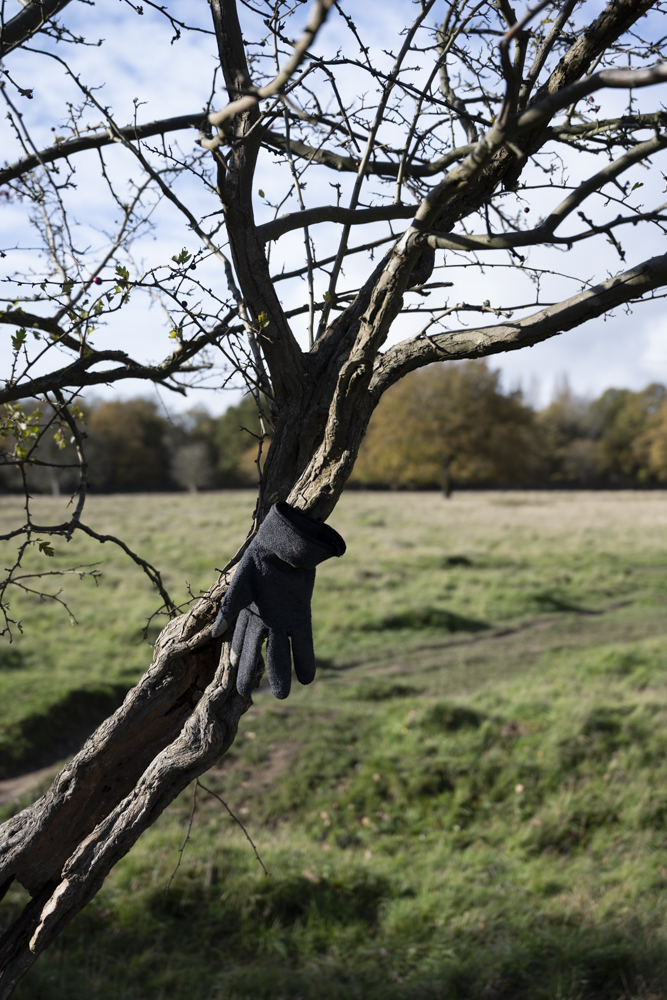
What I did notice that a glove had been placed on one of the hawthorns.

This reminded me of the tradition of the tying of pieces of cloth to trees, including hawthorns as a healing ritual (Clootie/Cloutie Tree). This is one aspect of hawthorn mythology I need to look into closer.

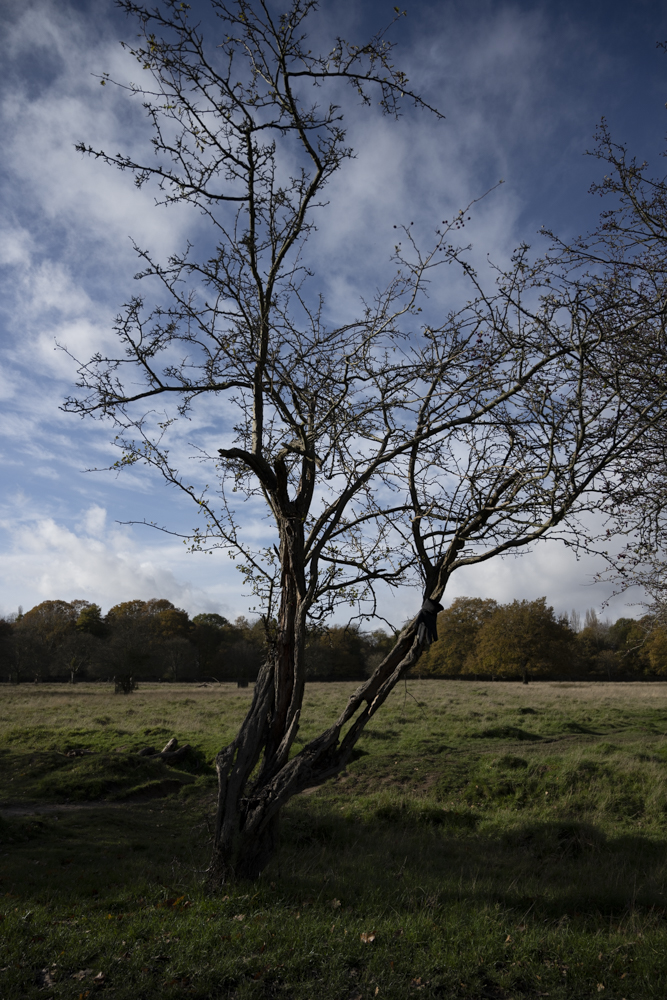
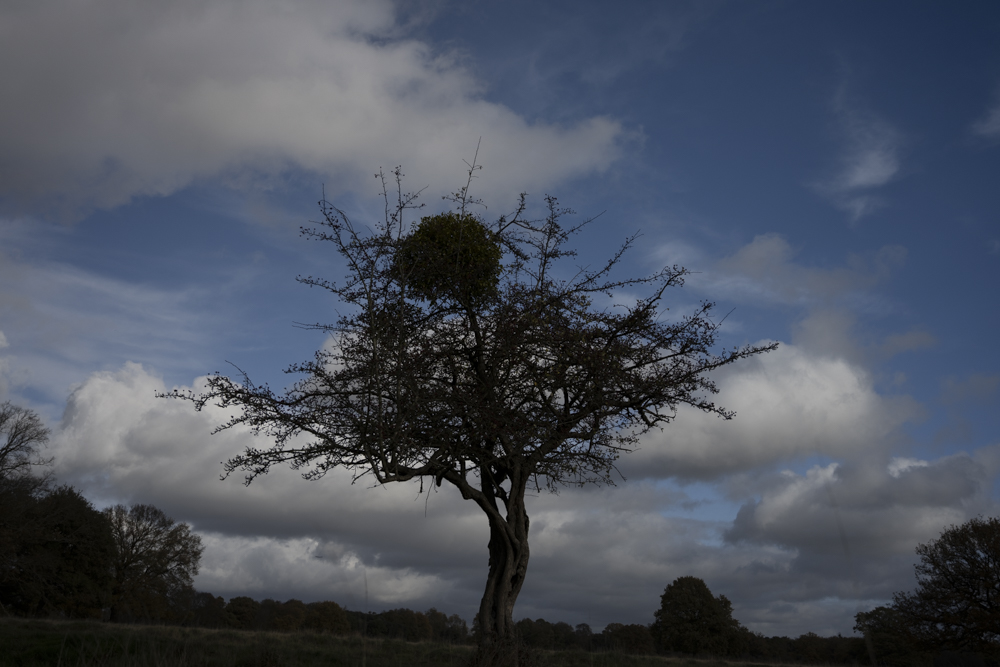
I continued along the line of trees until I came to the last one. What I did find difficult was seeing the viewing screen on the camera. In order to make the tree appear larger than it is, I have to hold the camera quite low down. Also, there is quite a strong reflection from the sunlight.

The Black & White conversion.

The image on the left is the smartphone image I took on 10 November which can now be compared with the shot above (taken with the digital camera using the polarising filter).

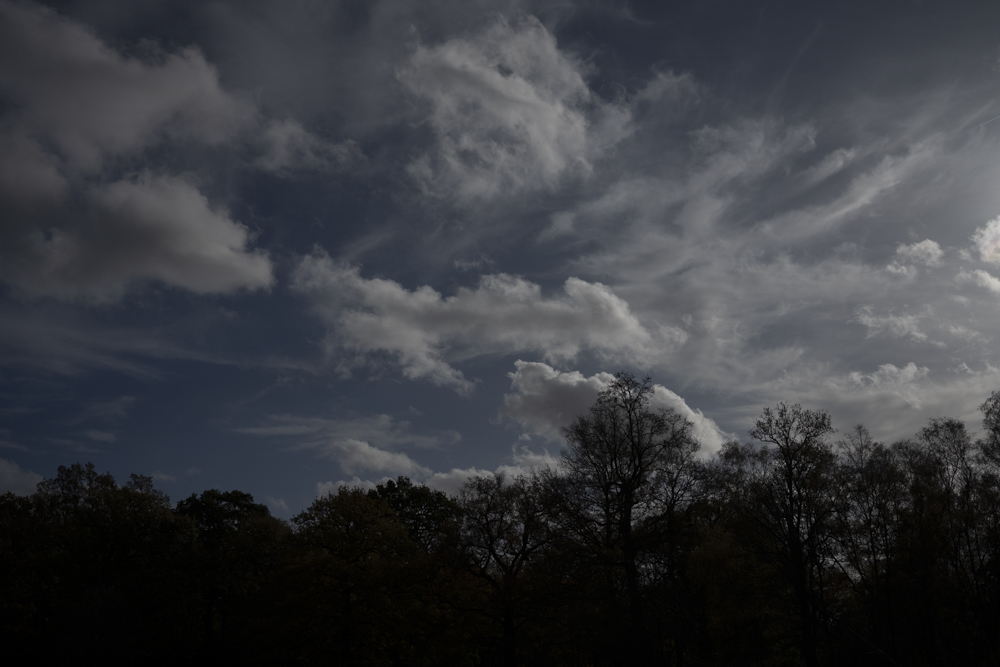
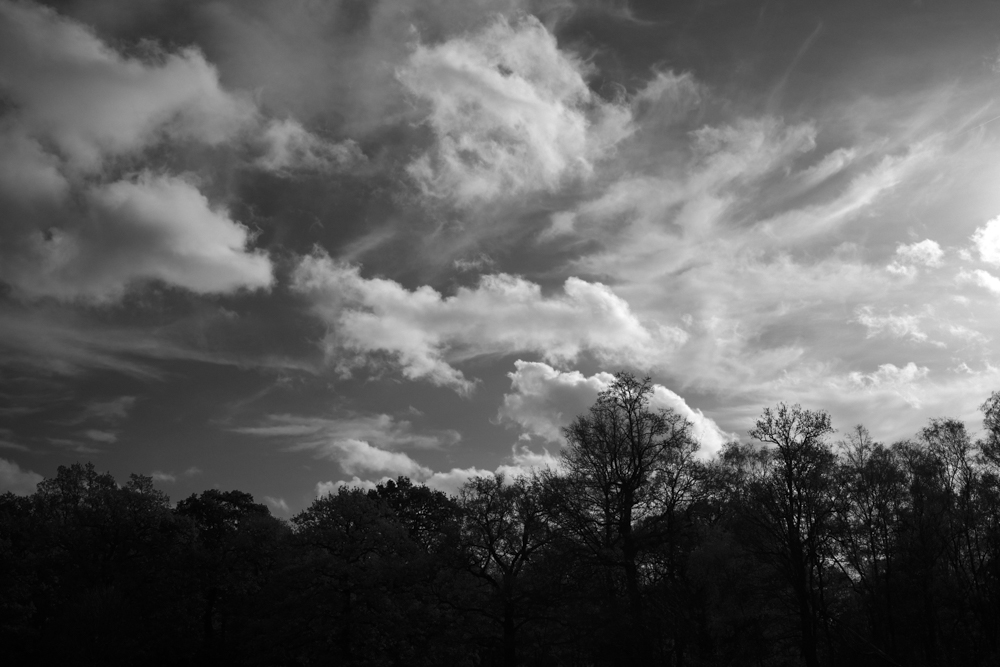
After taking the hawthorn shots, I turned my attention to the dramatic sky.

Very dramatic.

The ‘before’ and ‘after’.

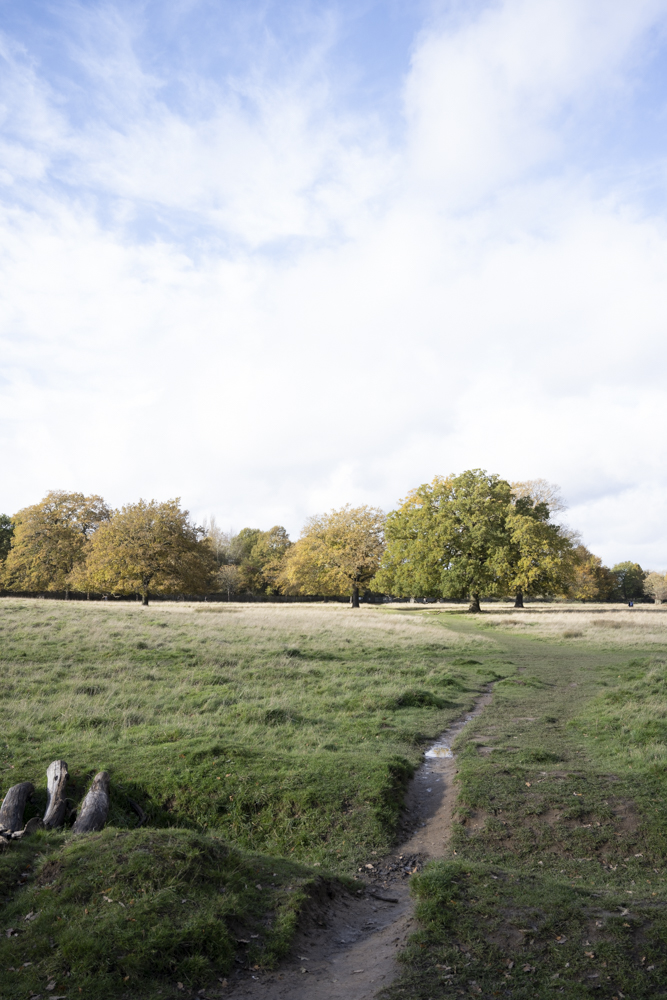
After I took the last photos, I noticed one of the many volunteers who maintain the Woodland Gardens in Bushy Park. He was clearing out a water channel that had become blocked. I realised that it was coming from the direction of the ditch that the hawthorns were planted along. When I asked him where the water was coming from, he said there was a spring that flows into the gardens. Would this spring be connected to the line of hawthorns in any way?

While chatting, he also mentioned a book called Bushy Park: Royals, Rangers and Rogues by Kathy White. Apparently, White is/was a local who wrote this book in 1997 about the history of the park. Hopefully, it will give me further insight into the place, especially the history before it became enclosed in the 17th century. I searched for and ordered this book on my return home.

References

Atlas Obscura. 2020. Clootie Wells: Where The Trees Are Weighed Down In Rotting Rags. [online] Available at: <https://www.atlasobscura.com/articles/clootie-wells-where-the-trees-are-weighed-down-in-rotting-rags&gt; [Accessed 15 November 2020].

Categories
AGM62 Photography Research Project Stage 1 Posts

AGM62 Bushy Park Hawthorns 10 November 2020

After a day of being in front of the PC processing images, I had to escape the four walls of home. As usual, Bushy Park was my choice of walk. When I entered the park, the sun was already quite low in the sky. Despite the darkening conditions, the park was still bathed in a dull light and the mist was starting to form.

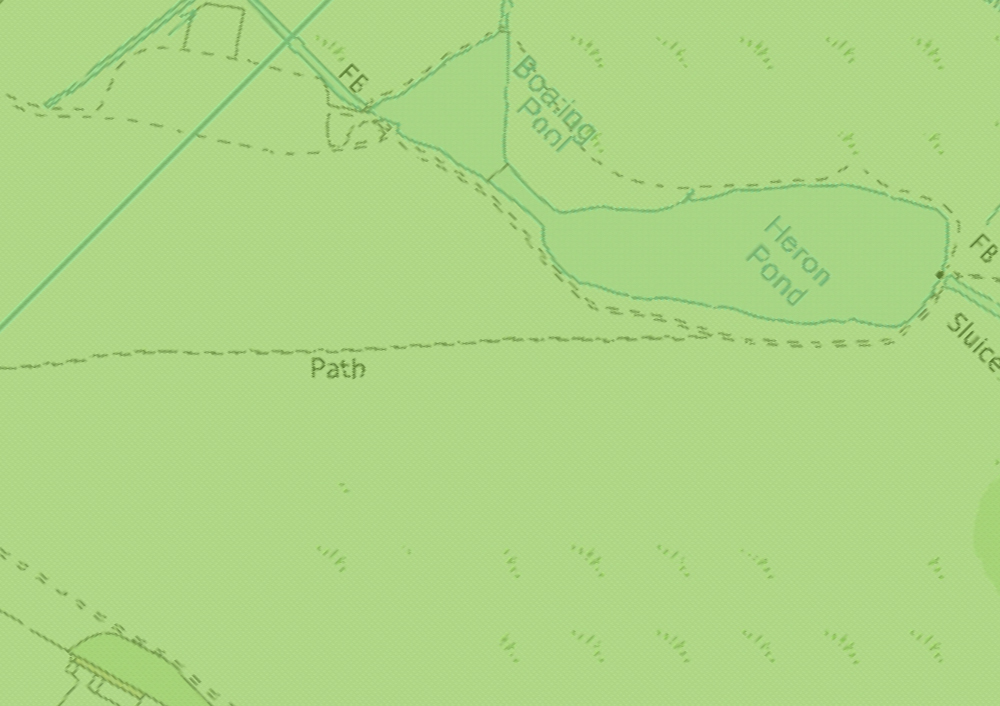
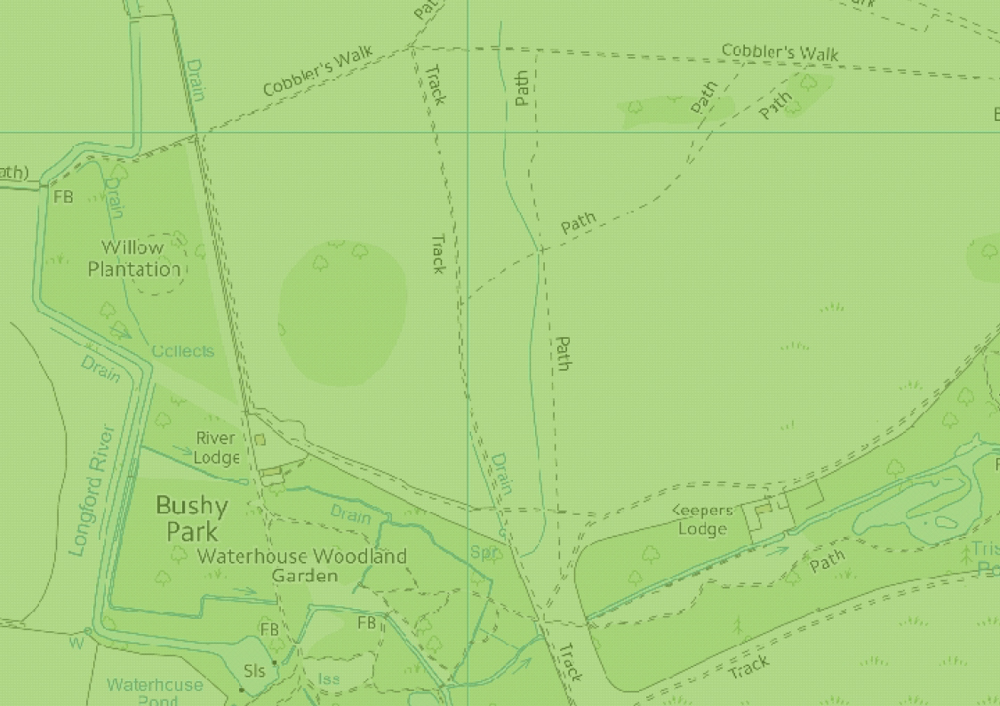
Part of my route involved walking along the track between Cobbler’s Walk and the gap between the two Woodland Garden plantations. Along this track is a line of hawthorns that I have not photographed or noted yet.

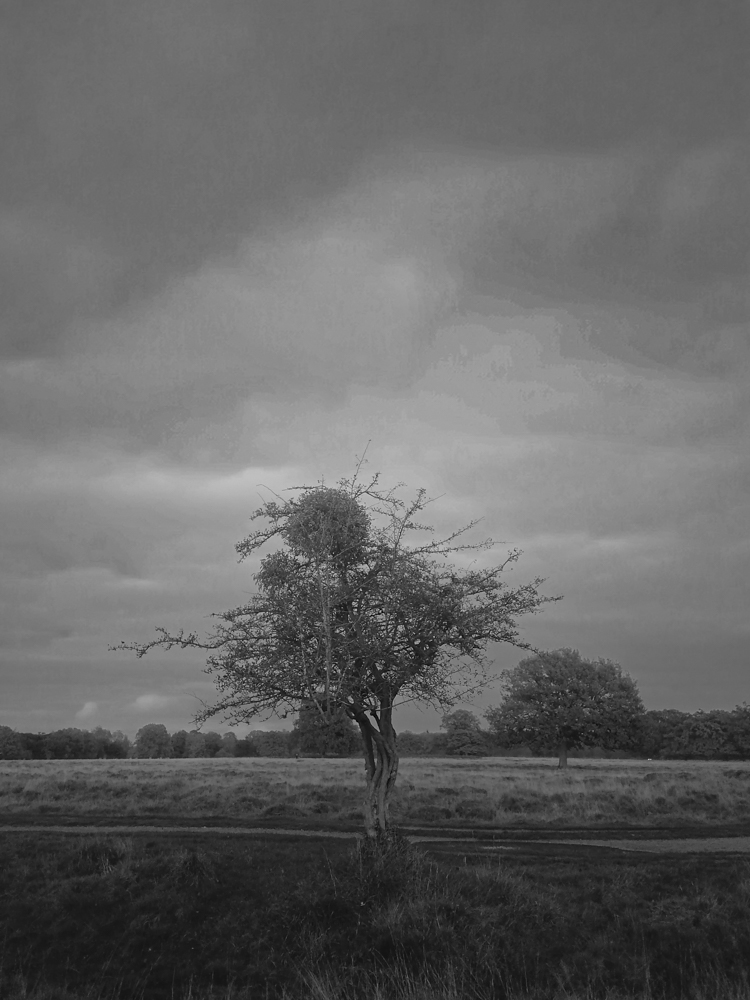
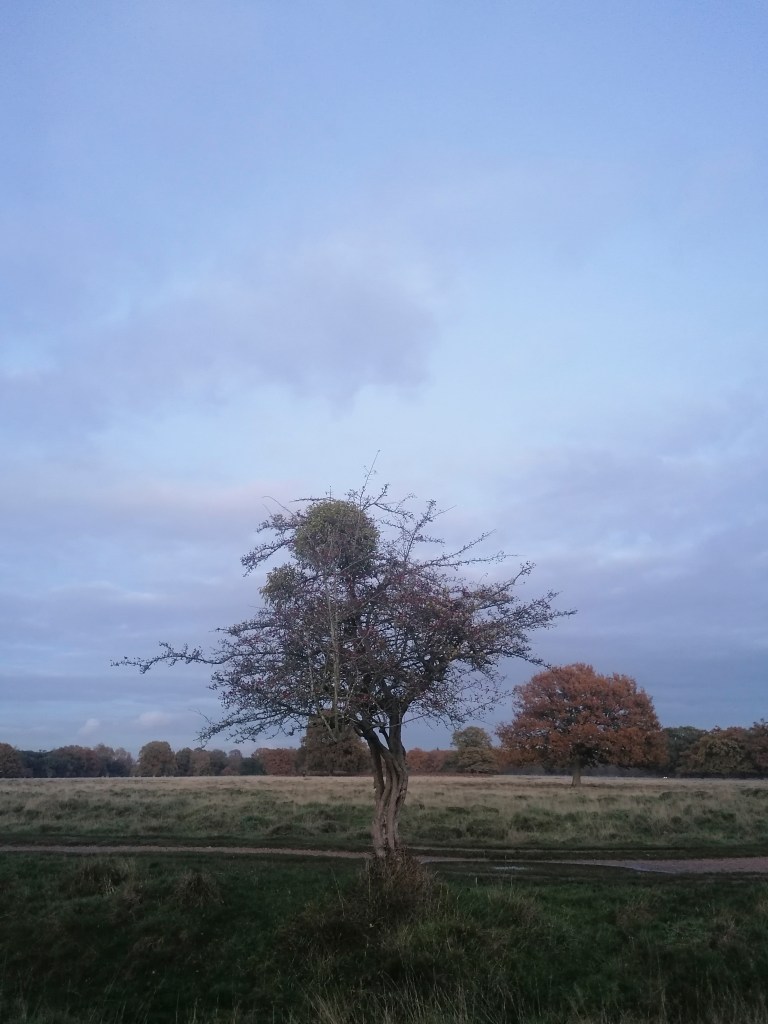
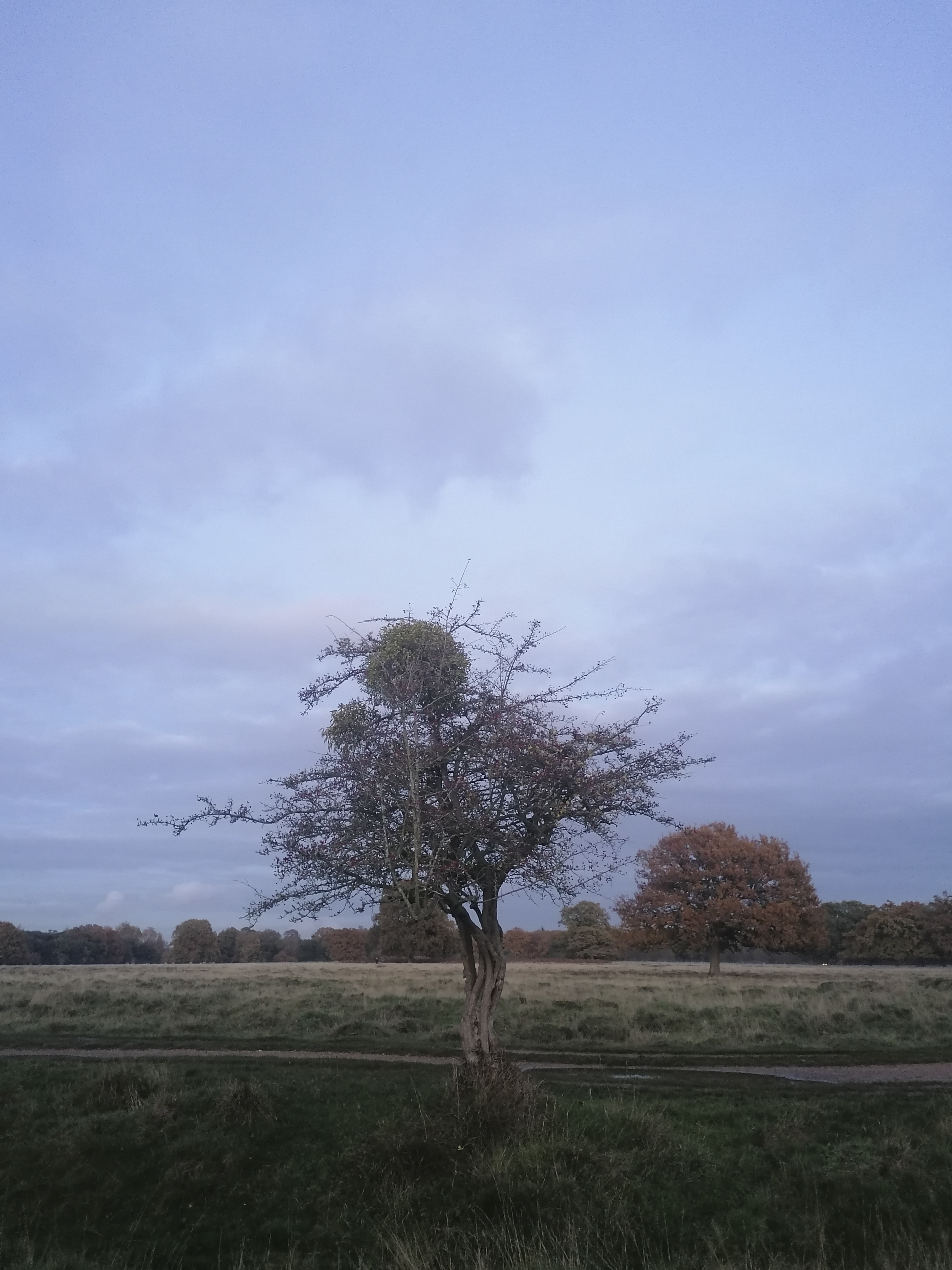
When looking closer at these hawthorns, the majority along this path would fit the criteria of ‘Ancient’. As the light wasn’t great and I was only armed with my smartphone, I only took the one image. This is the last hawthorn at the end of the track.

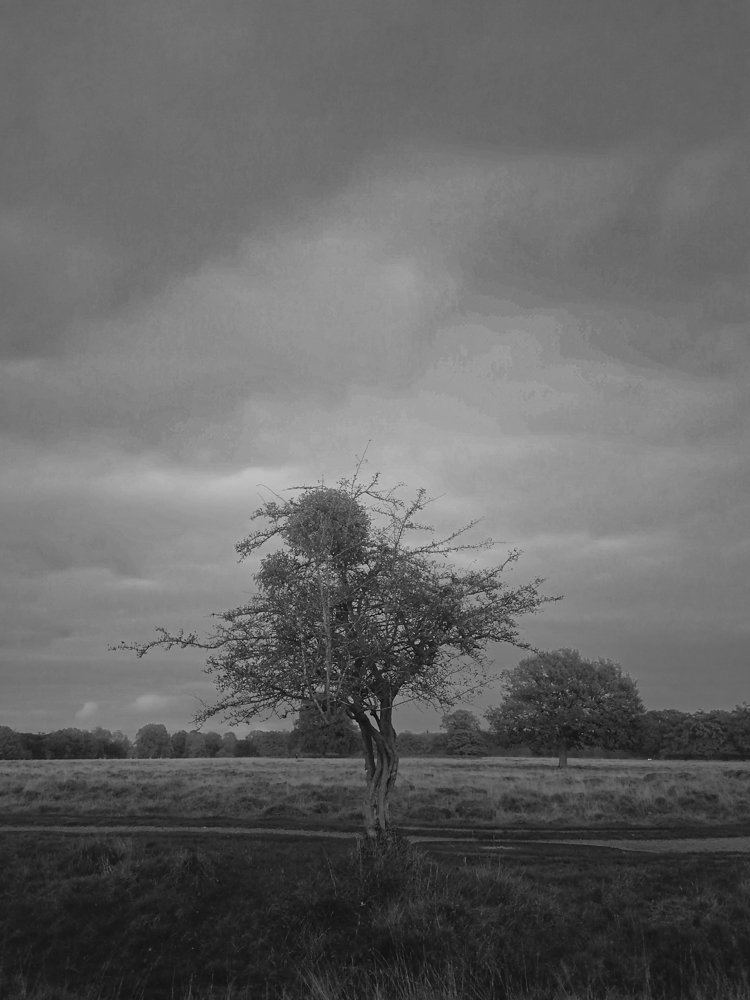
In order to tie in with the other images, I created the following Black & White conversion.

A quick comparison.

Looking at the map and thinking about this particular row of trees really did pique my interest. This path runs parallel to Macclesfield Walk running along the edge of the Willow Plantation. What was this boundary line planted for and why?

Categories
AGM62 Photography Research Project Stage 1 Posts

AGM62 Printed Images 10 November 2020

In preparation for the Interim Review on 18 November 2020, I wanted to present a selection of images produced so far. At at the time of writing, the review would be going ahead at University of Brighton (in line with Government guidelines). So I could receive the most comprehensible feedback from my tutors and classmates, I would need to print these images. In my experience, there are always differences between what is seen on screen and the printed version, so I knew it be a worthwhile exercise.

These are the 18 images I chose to have printed at 6″ x 9″ (C-Type on lustre paper). I ordered the prints online from DS Colour Labs, who provide great quality with a quick turnaround at an affordable price.

I also ordered the following prints at 12″ x 18″ in order to take a closer look at the details.

It will be quite interesting to see how they look as printed pieces and how they could function as a Body of Work.

Categories
AGM62 Photography Research Project Stage 1 Posts

AGM62 Bushy Park Hawthorns 6 November 2020

After my successful photo session on 4 November 2020, I was quite enthused to return to the park to catch more hawthorns in similar weather conditions. As the forecast was for cold and mist first thing on 6 November, I could not miss out on this opportunity.

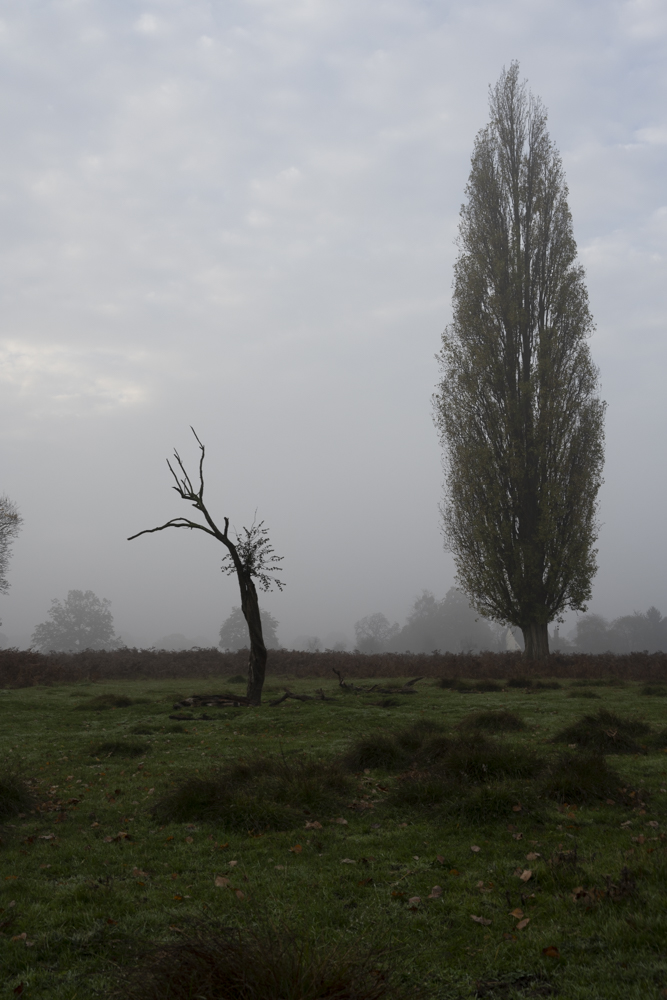
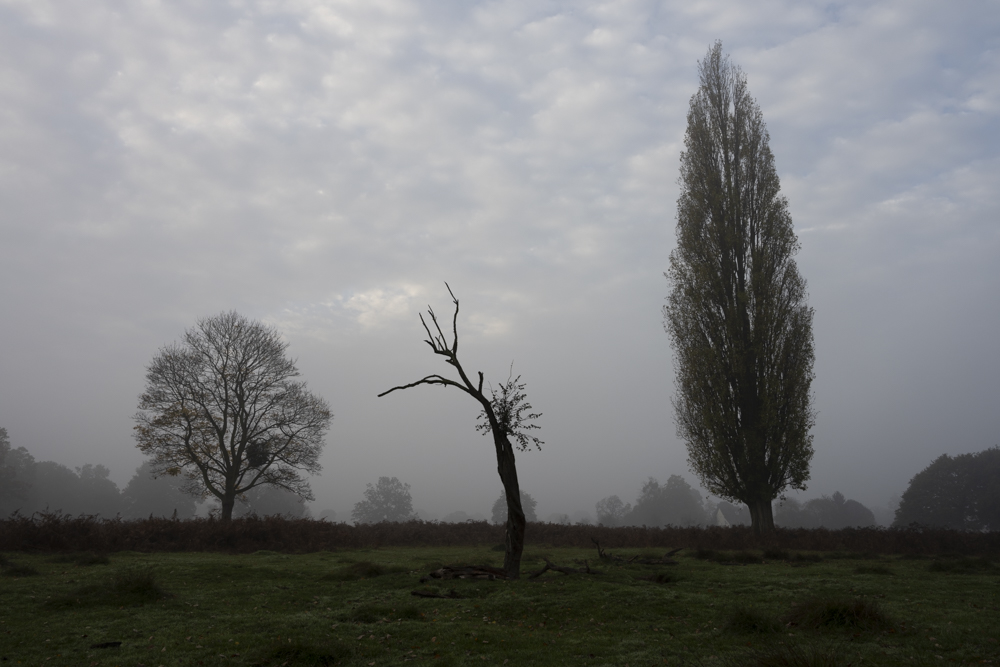
Unfortunately, despite it being quite chilly, the air was a touch too humid to have the ‘diamond’ effect on the trees and grass. Nonetheless, I discovered three new hawthorns and took the following images.

The area of Bushy Park I focused on was the patch on the left of Chestnut Avenue at the Teddington Gate.

Tree 1

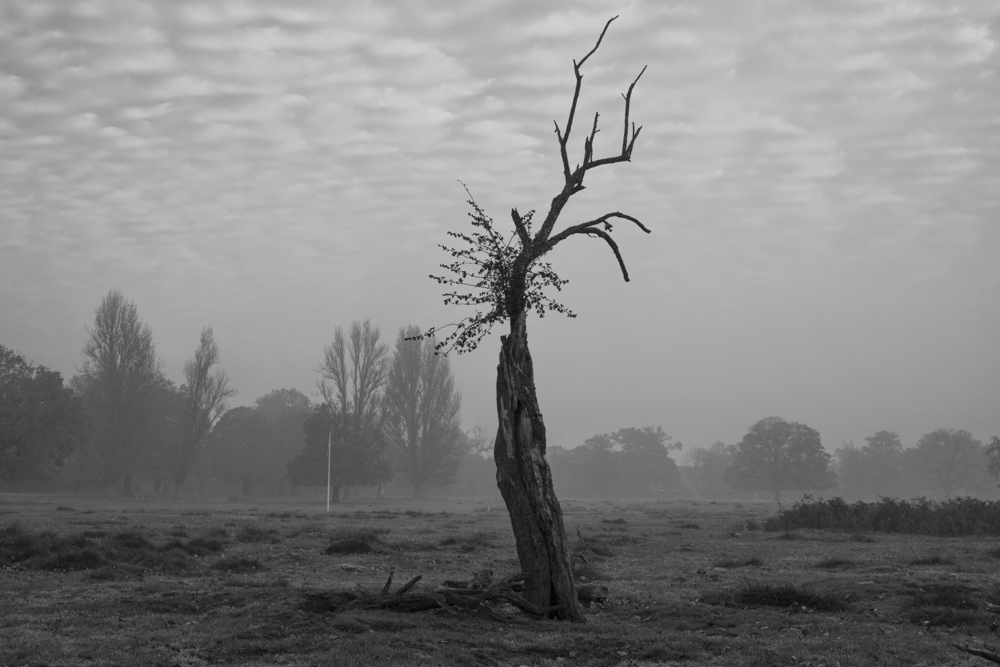
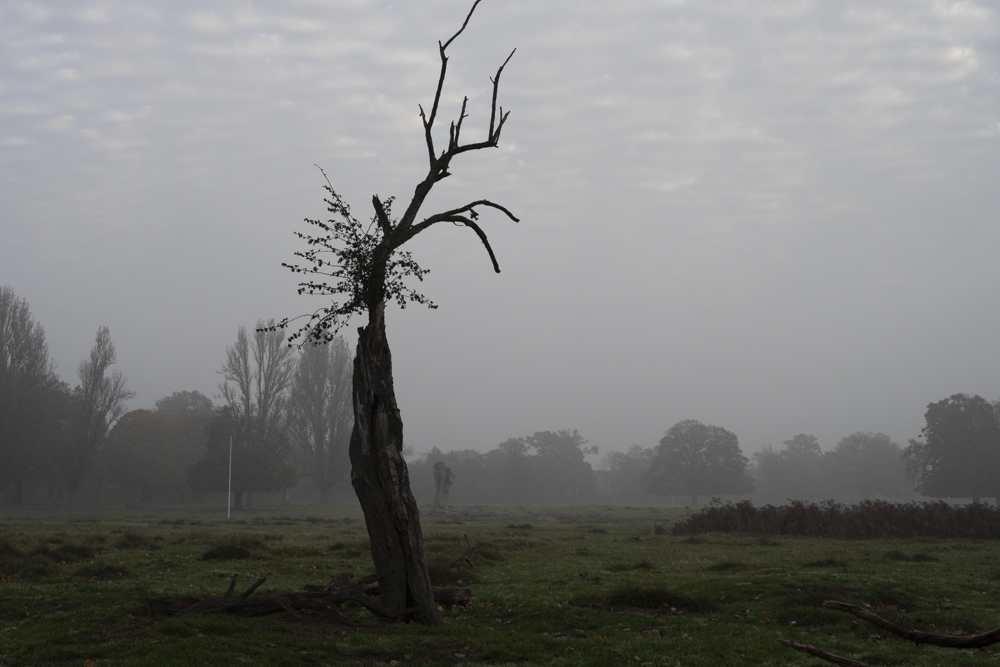
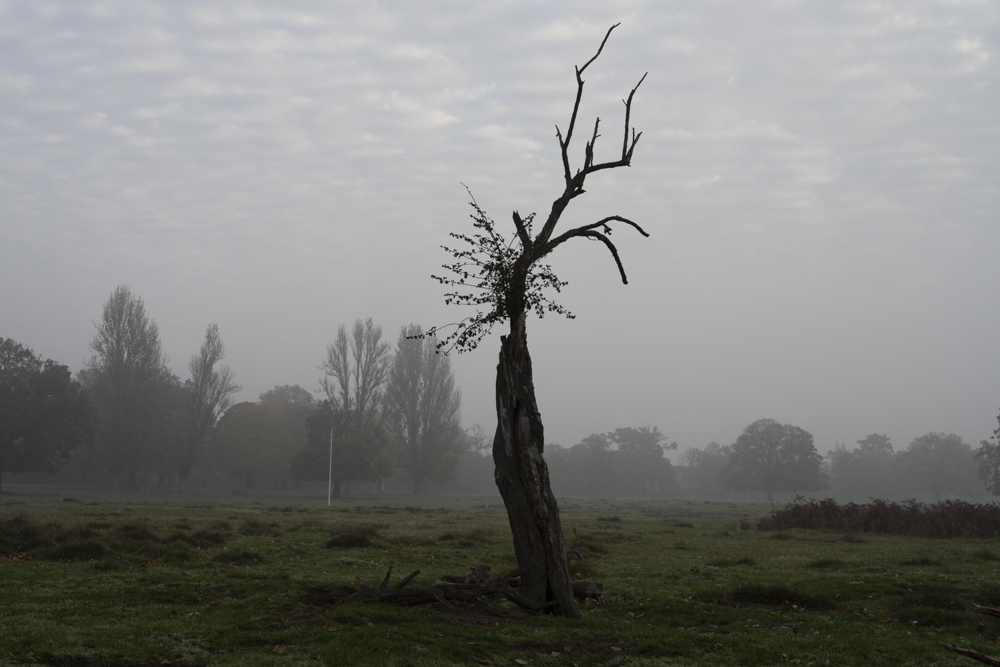
The first tree I photographed is by itself. I tried shooting different angles around the tree and including different elements in the background.

The white pole that can be seen in the background in the fifth and sixth images marks the SHAEF Memorial. This is the location where General Eisenhower planned Operation Overlord, the code name of the D-Day landings in Normandy during WWII (1939-45). On 5 March 1944 General Eisenhower moved SHAEF (Supreme Headquarters Allied Expeditionary Forces) from Grosvenor Square in London to Camp Griffiss, a large US base in Bushy Park.

According to the Royal Parks website, Eisenhower is said to have relaxed by sketching the pine trees that he could see from his office window. Also, it states that the final buildings of Camp Griffiss were removed in 1963 but there are still signs of the camp, including brackets in trees that held telephone wires.

In hindsight, these closer shots remind me of broken wires.

Tree 2

I continued to walk through the park around the back of Hawthorn Lodge and around to the Diana Fountain car park. There were quite a few deer around that patch, which reduced my potential shooting opportunities. At the time of writing, I couldn’t recall exactly which tree this was, but I will need to revisit this speciment.

Tree 3

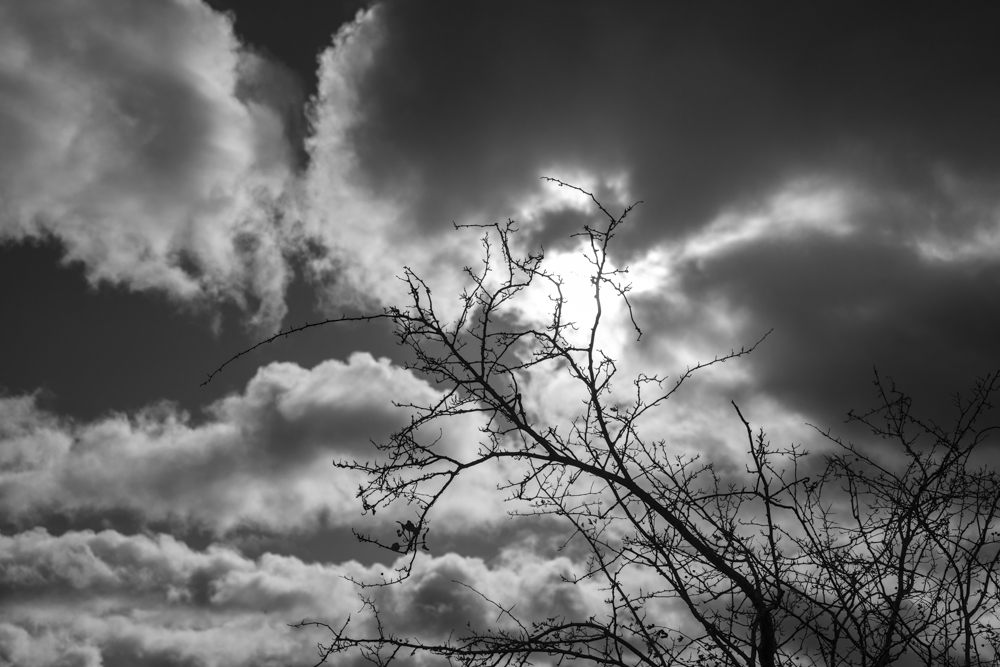
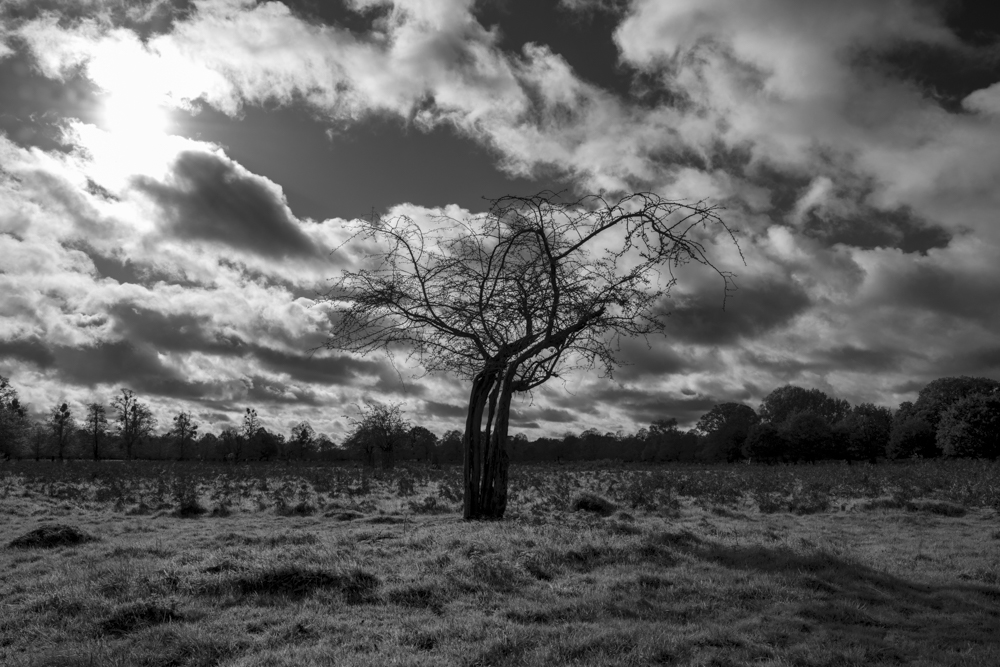
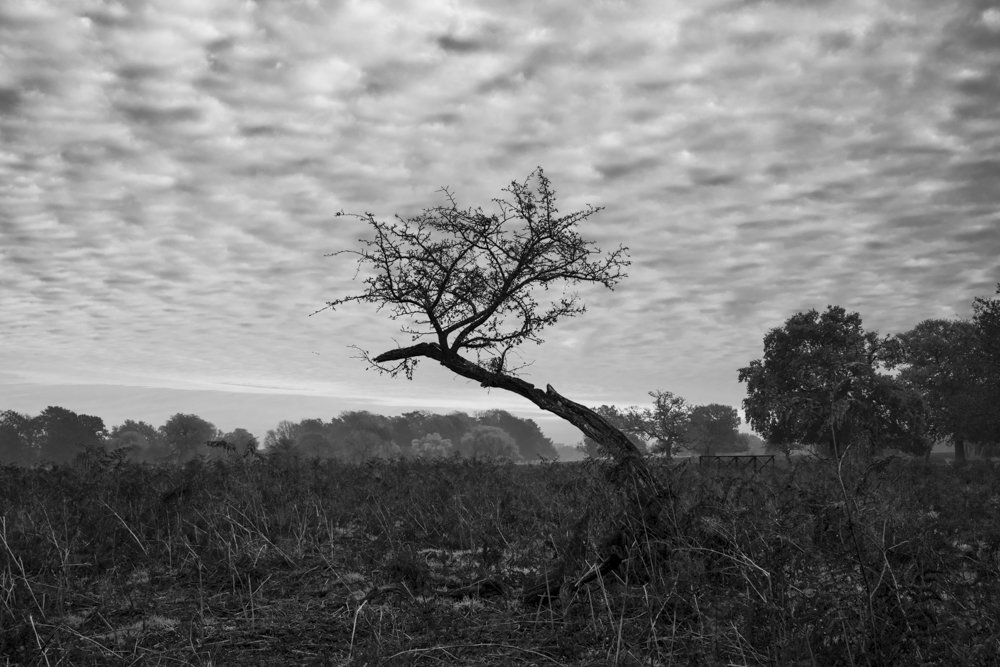
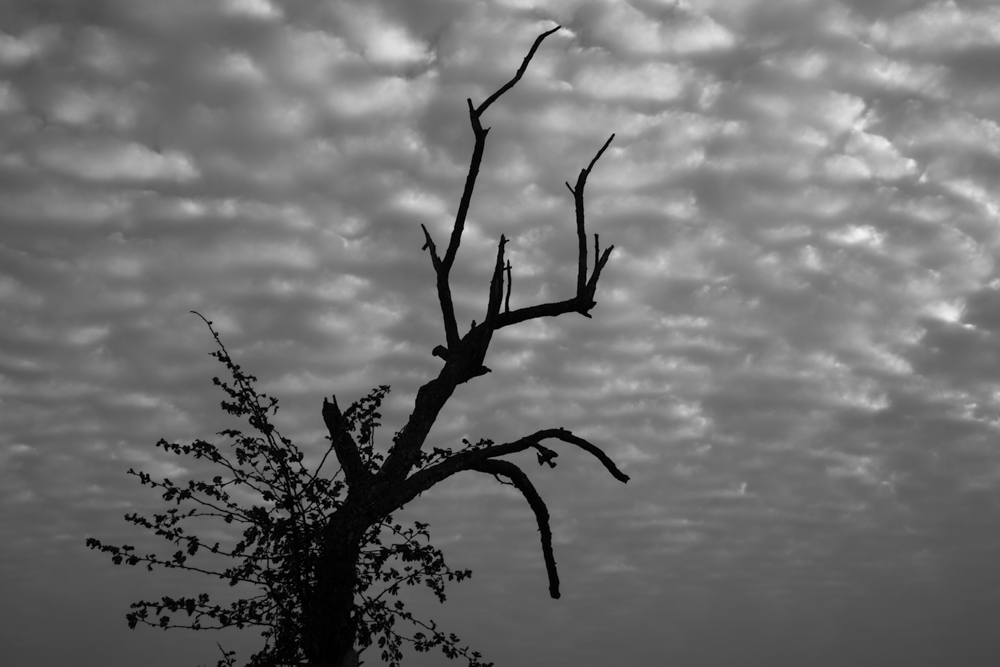
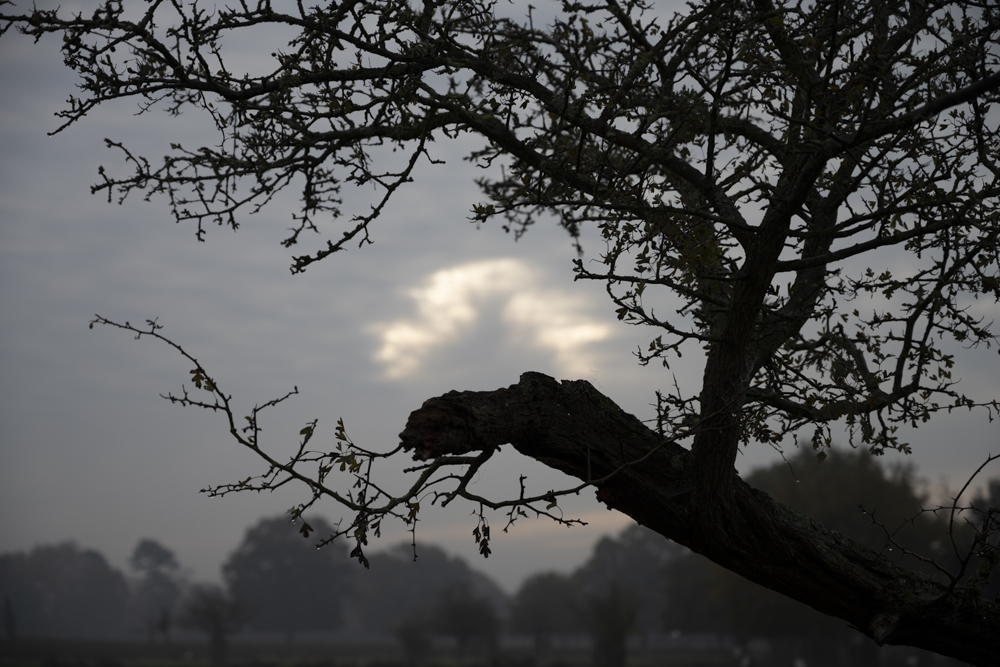
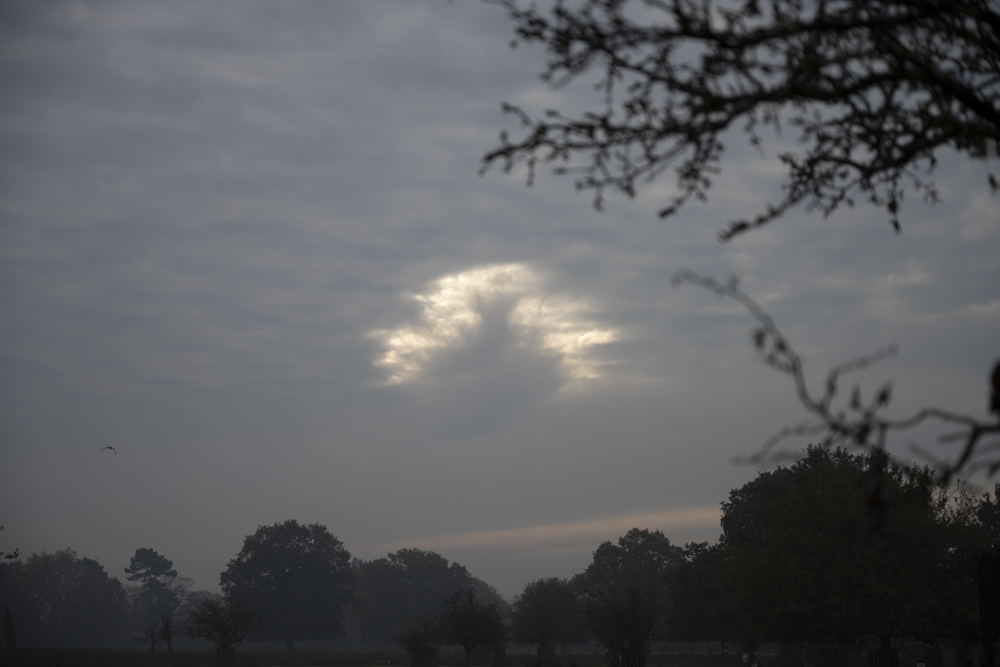
The third and final tree that I focused on was near to the main hawthorn patch near to the Diana car park. I really liked the texture of the sky in relation to this tree.

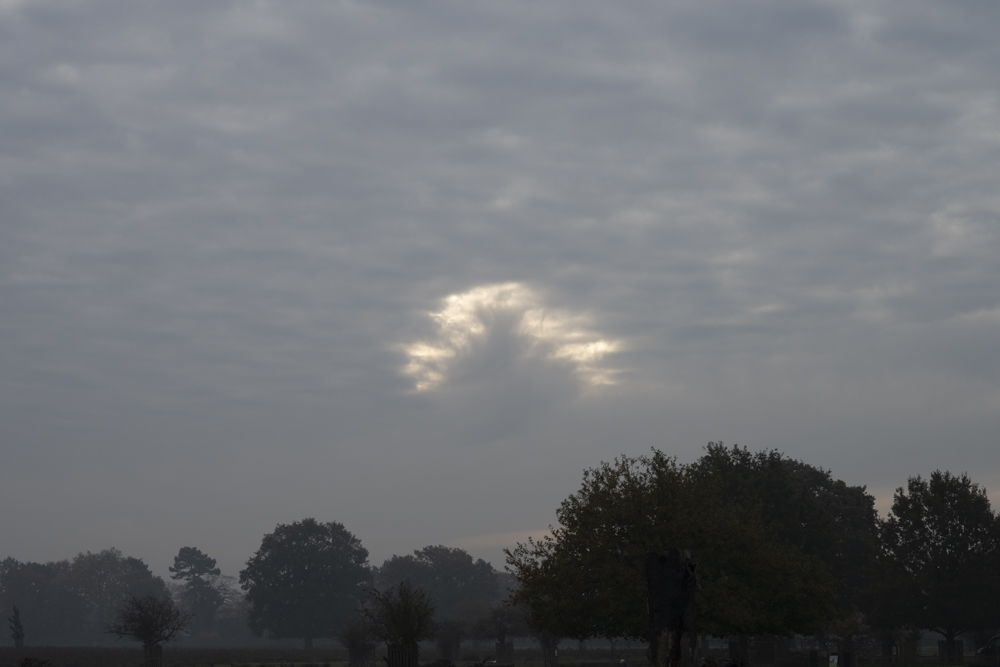
I also noticed this mesmerising cloud formation where I think the cloud was starting to shine through. I couldn’t quite get the angle or shot I wanted, but this is certainly an aspect I need to look out for with future images.

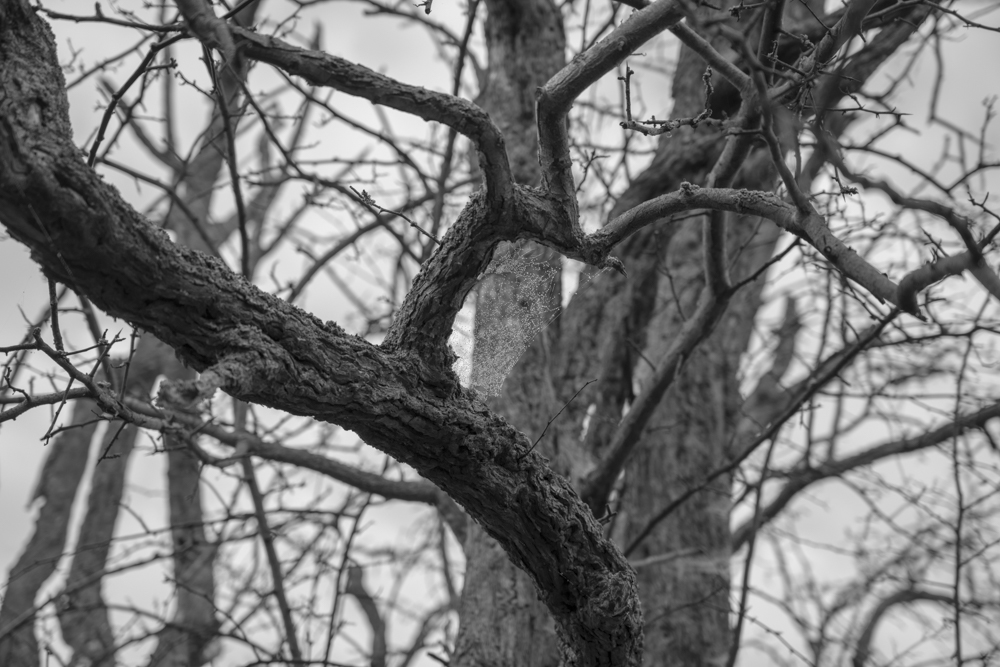
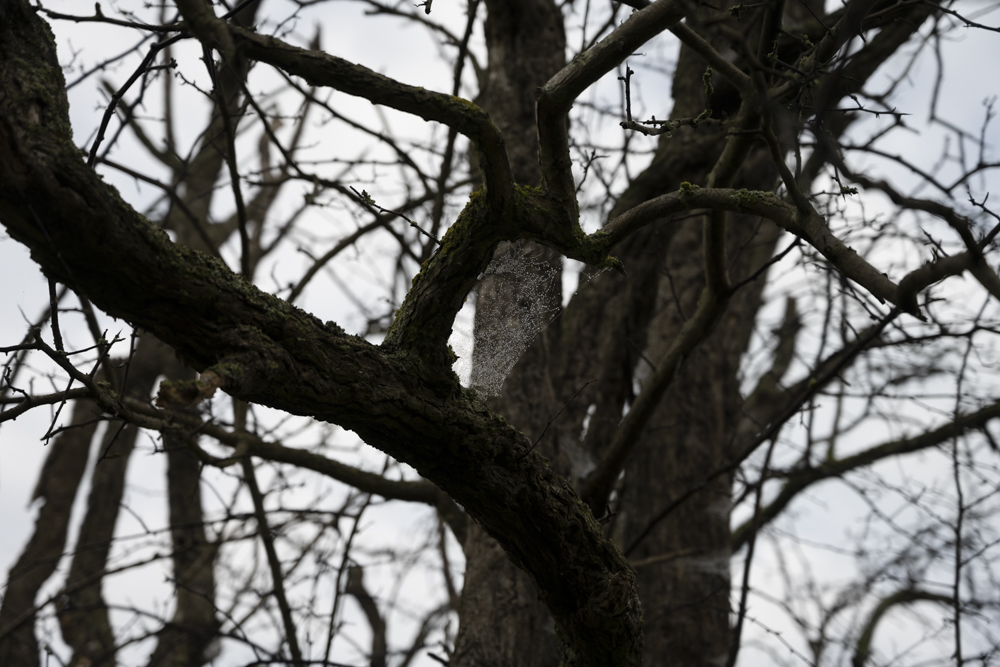
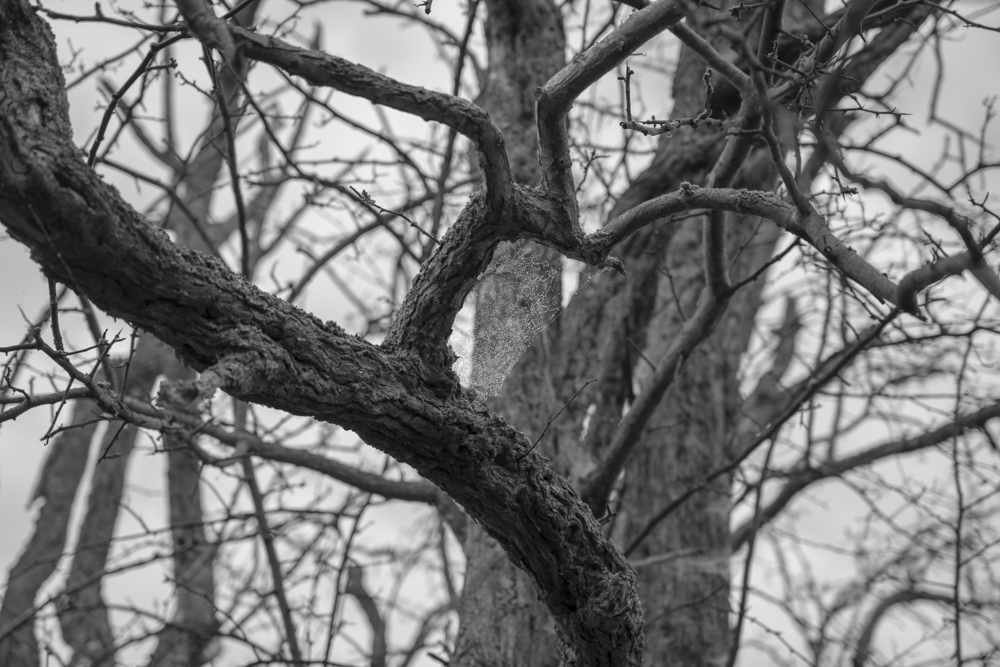
When looking closer at this tree, I noticed a spider’s web coated in water droplets. Evidence of the insects who rely on the hawthorns within Bushy Park.

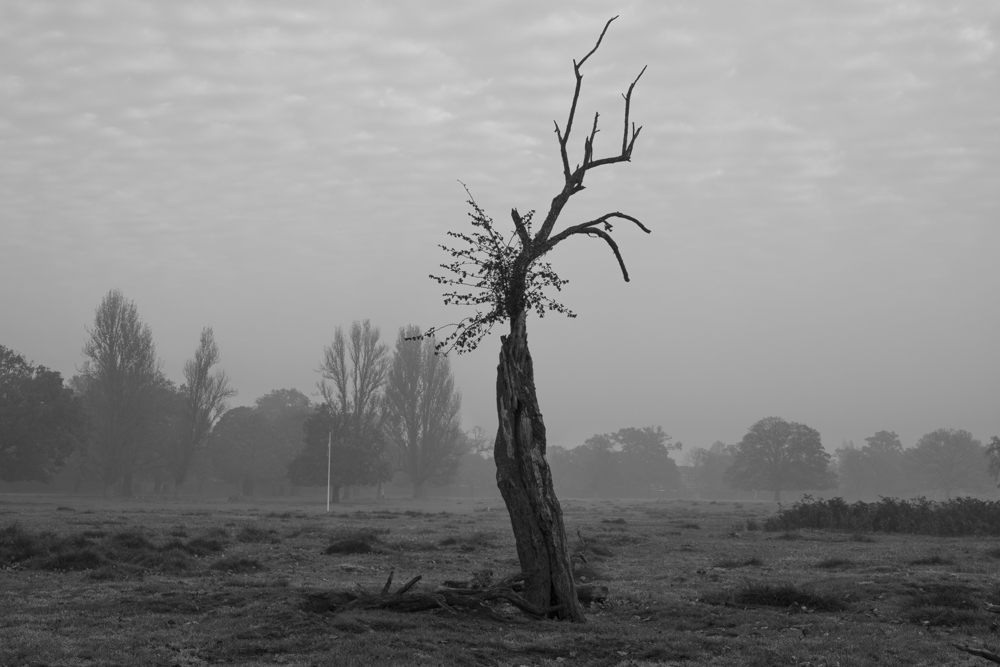
Later that day, I created a selection of Black & White conversions.

At this stage of the project, it was now time to review the images taken so far. I also had to process how my research and the visual resources/artworks could influence my work going forwards.

References

The Royal Parks. 2020. Monuments In Bushy Park. [online] Available at: <https://www.royalparks.org.uk/media-centre/factsheets-on-the-royal-parks/monuments/monuments-in-bushy-park#memorial&gt; [Accessed 10 November 2020].

Categories
AGM62 Photography Research Project Stage 1 Posts

AGM62 Jean-Luc Brouard 5 November 2020

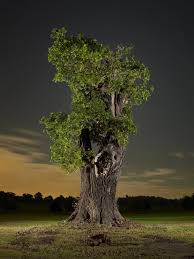
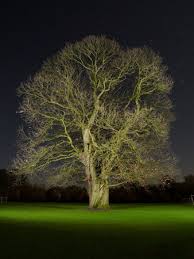
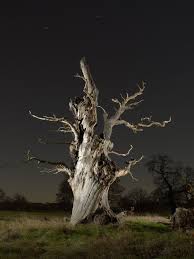
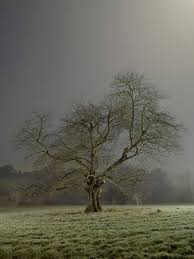
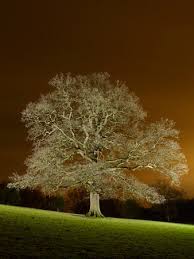
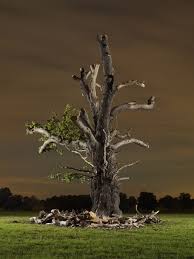
During the Group Tutorial on 28 October, my classsmate Sofia suggested I look at the work of Jean-Luc Brouard. This Brighton-based photographer has created a series of night-time tree portraits called Nocturnal Arboreal.

According to Brouard’s website, when not working on commissions, Jean-Luc relaxes by shooting personal projects, the latest of which sees him trekking across the countryside at night for the on-going series.

These well-observed and beautiful images showcase the photographer’s control of light and are quite stunning. The use of long exposure shows an exceptional level of photographic skill. I don’t know whether I would use a similar technique or style for this particular project, but it is great to see the work of an individual who has an equal passion for photographing trees.

Reference

Jeanlucbrouard.com. 2020. Freelance Photographer, Brighton, Sussex, UK : Photography By Jean-Luc Brouard : Photography Gallery: Personal. [online] Available at: <https://www.jeanlucbrouard.com/&gt; [Accessed 5 November 2020].

Categories
AGM62 Photography Research Project Stage 1 Posts

AGM62 Bushy Park Hawthorns 4 November 2020

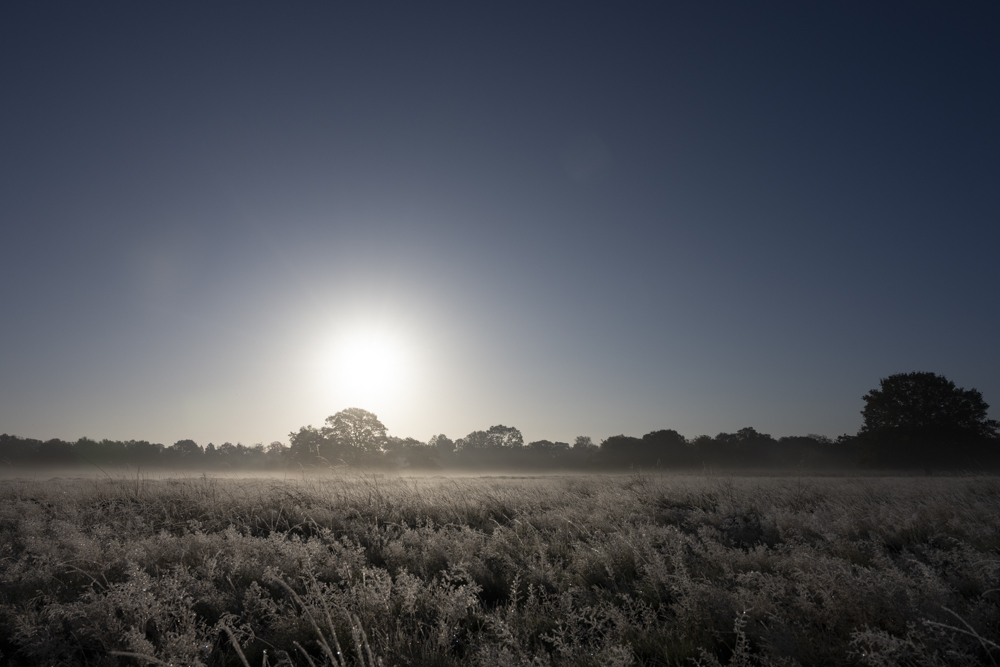
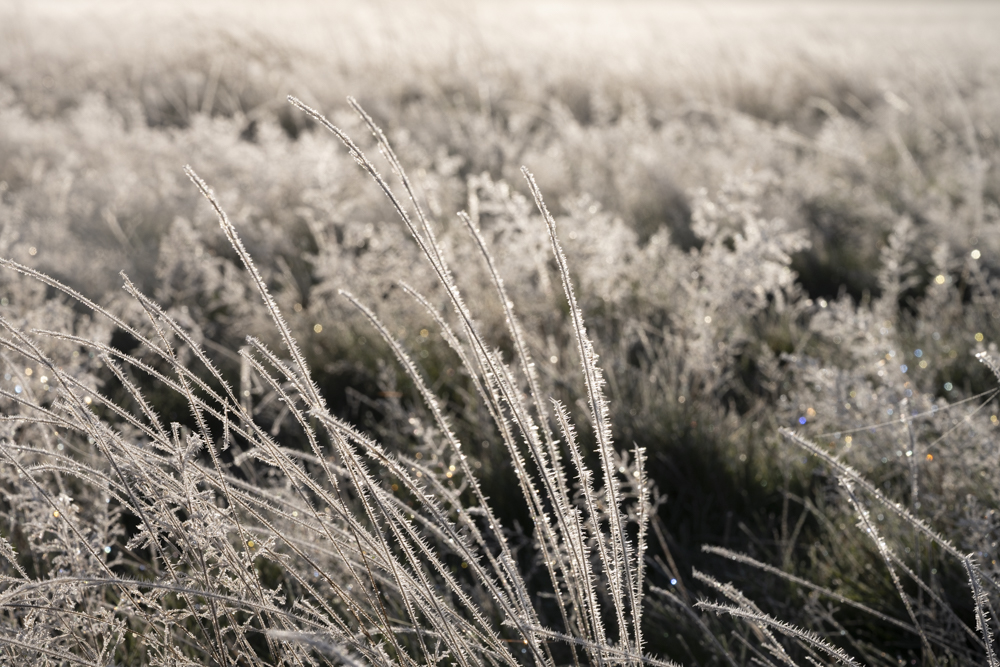
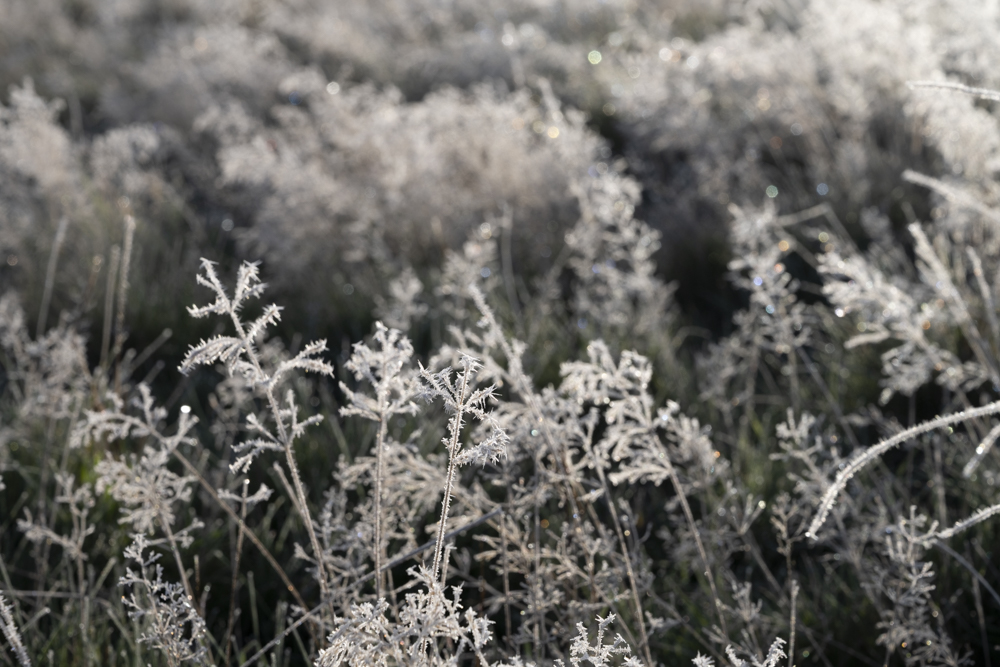
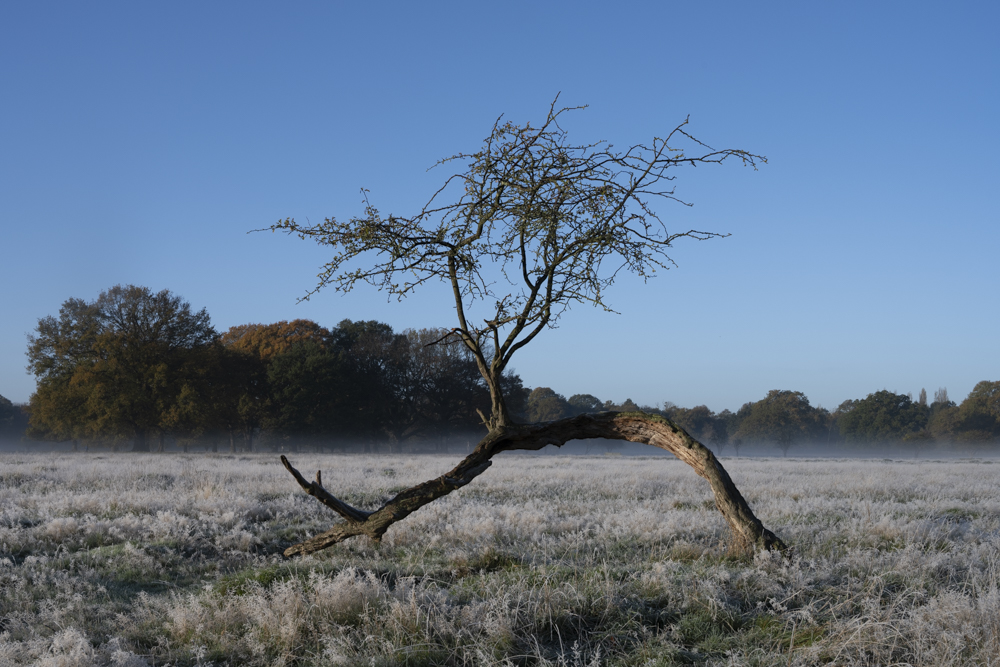
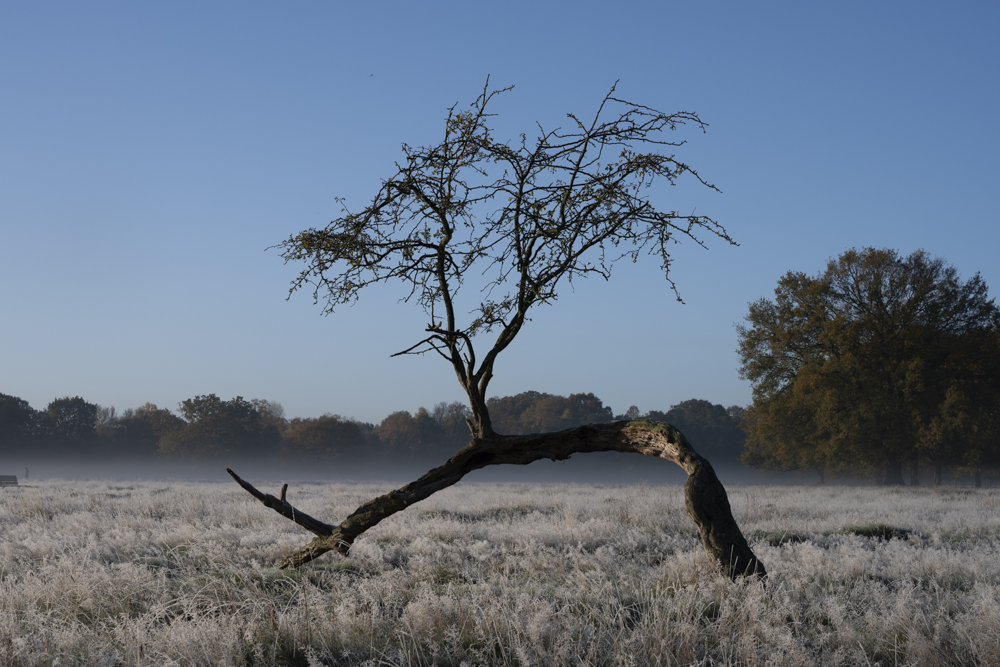
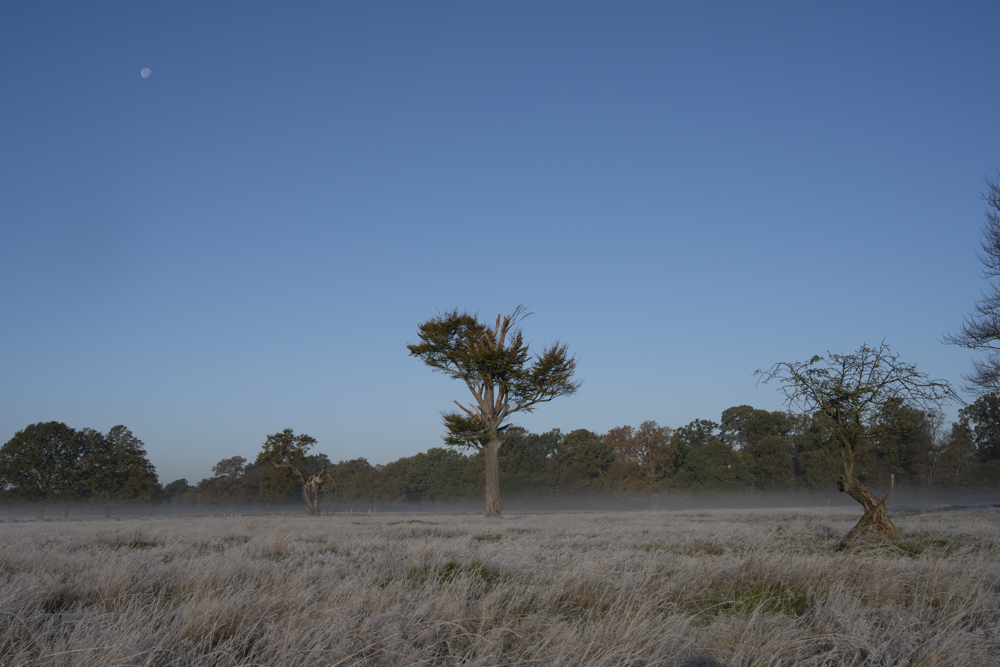
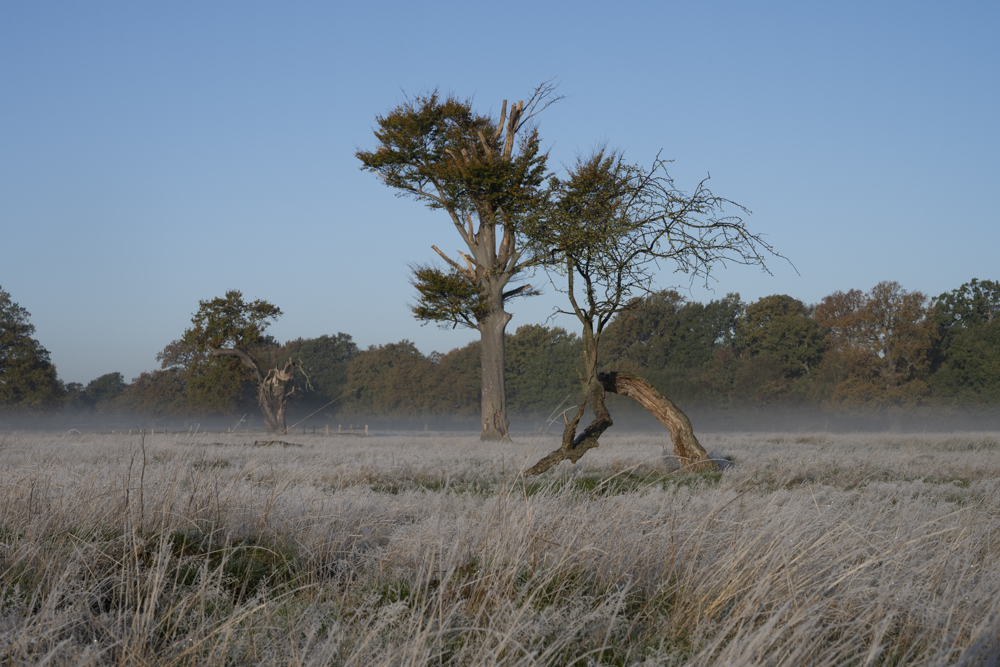
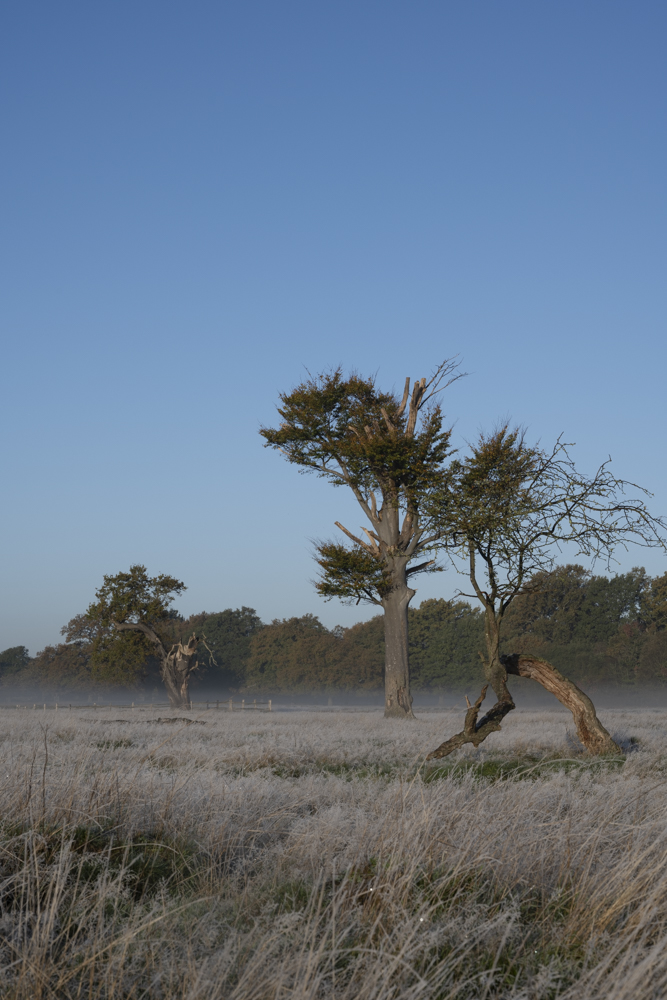
The forecast for the morning of 4 November was sunshine and a chilly temperature of 2 centigrade. After waking up very early and looking out of the bedroom window, this forecast was confirmed by the twinkling cover of frost on the cars parked outside. These have to be my most favourite conditions in which to visit Bushy Park, so there was only one thing to do. Wrap up warm and grab the camera.

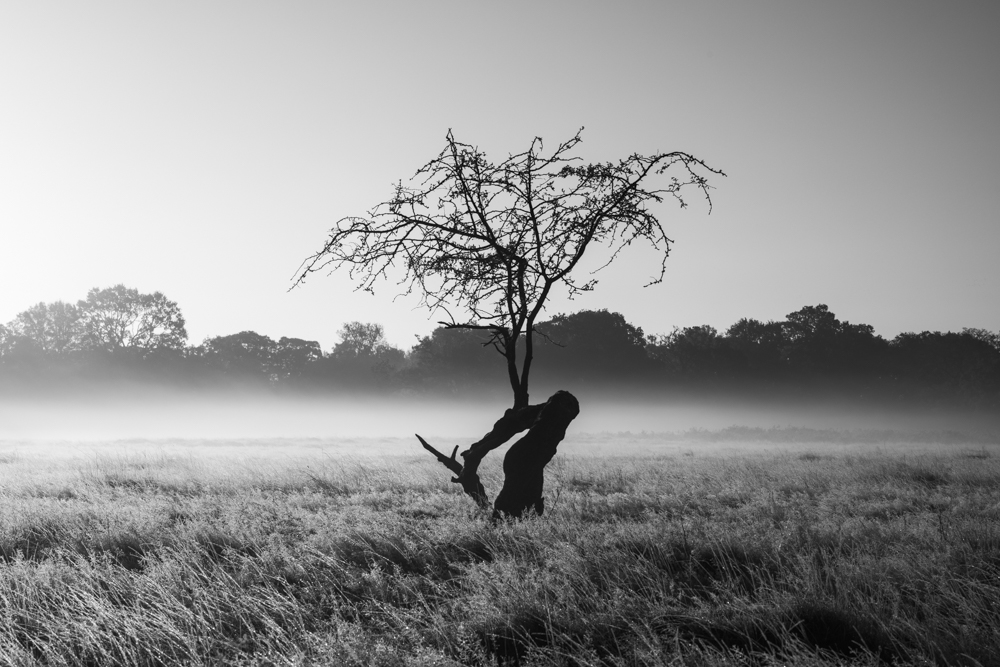
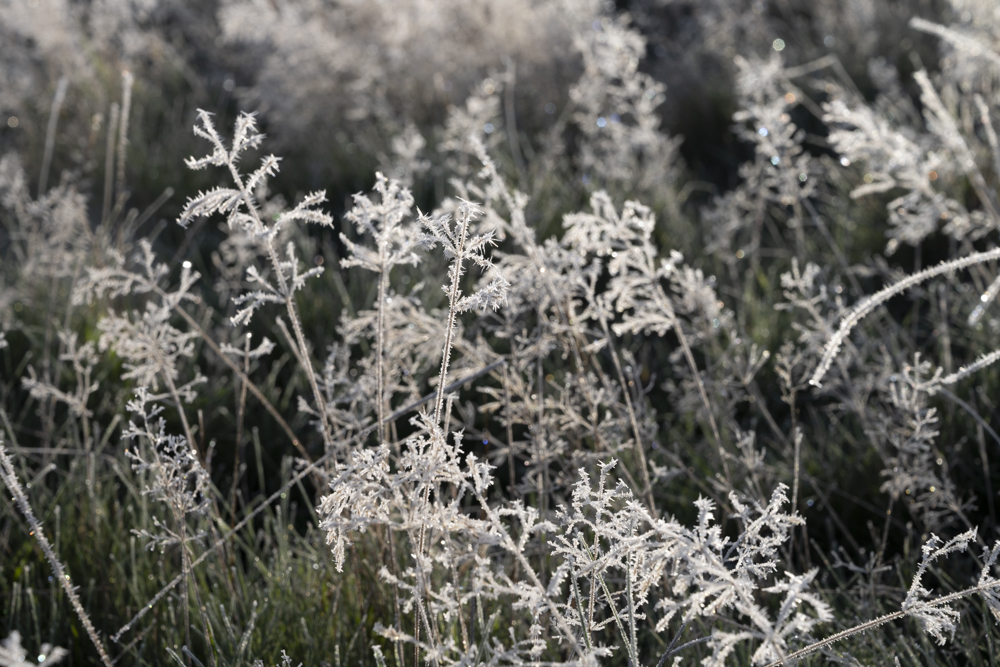
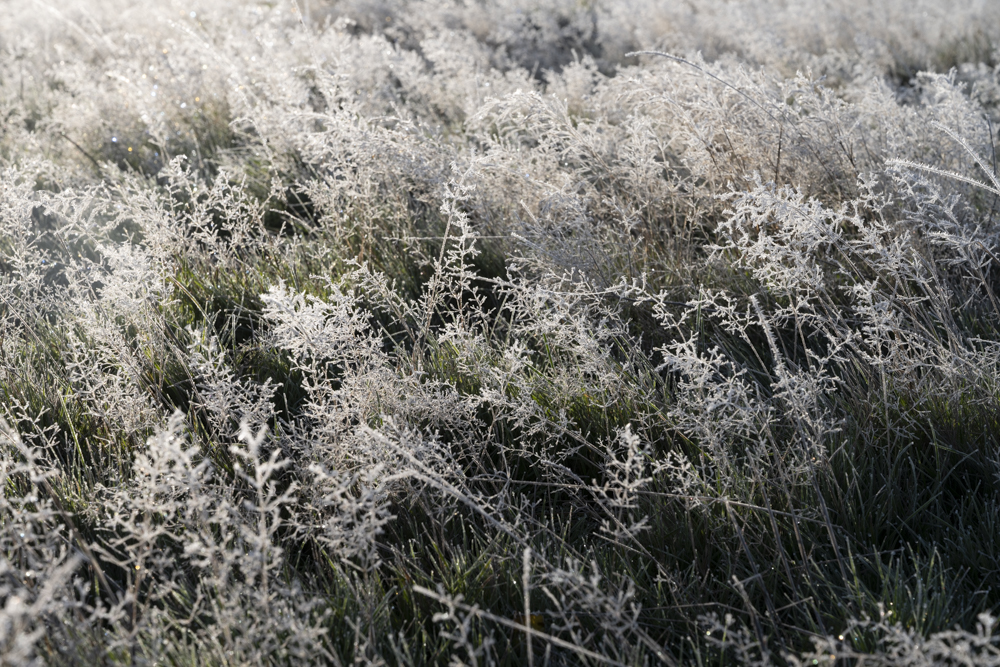
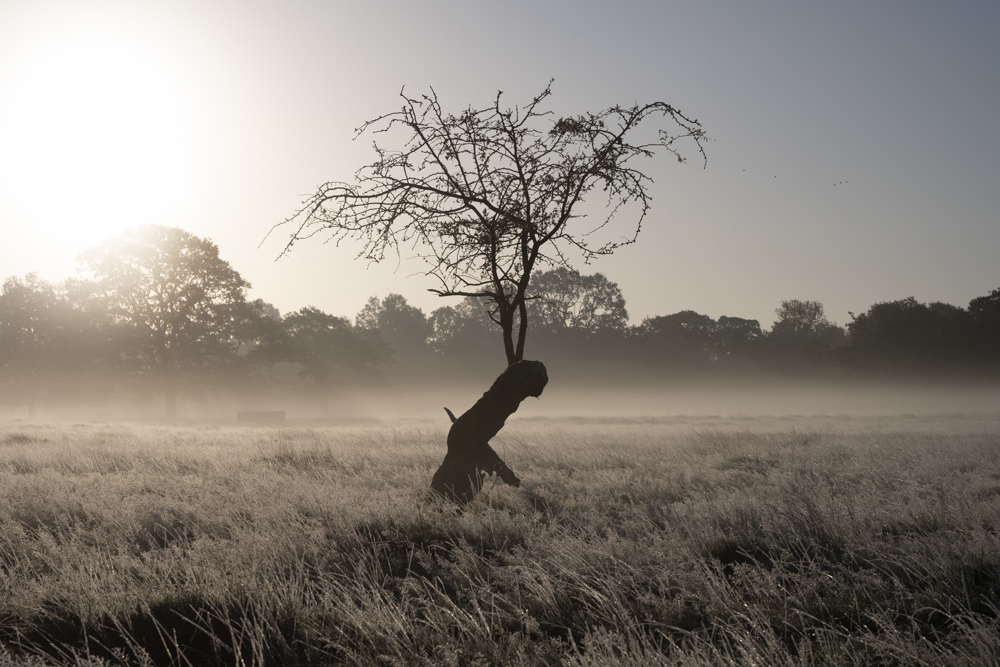
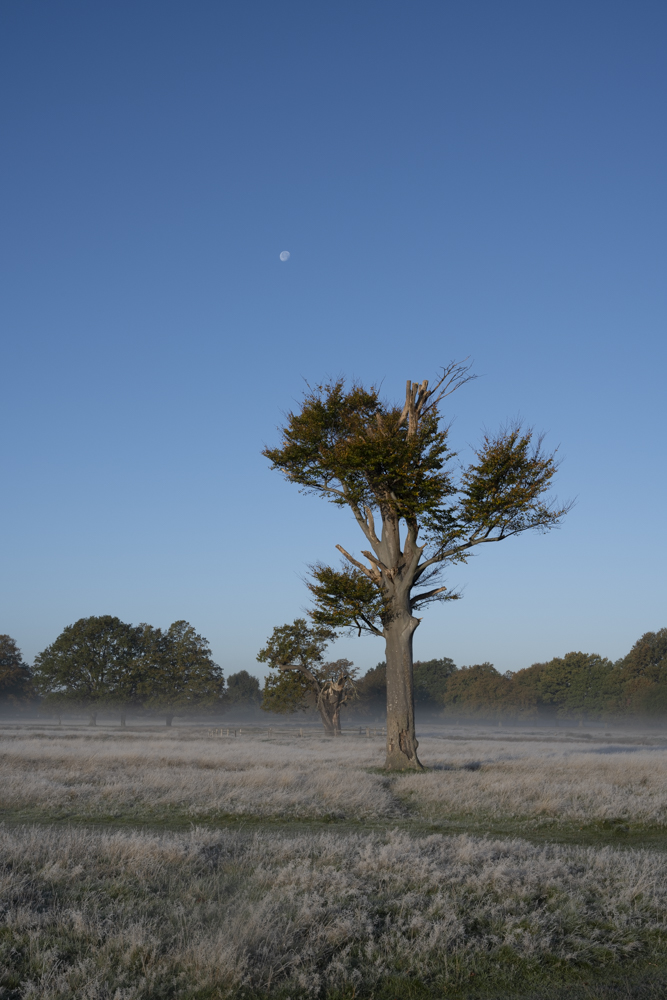
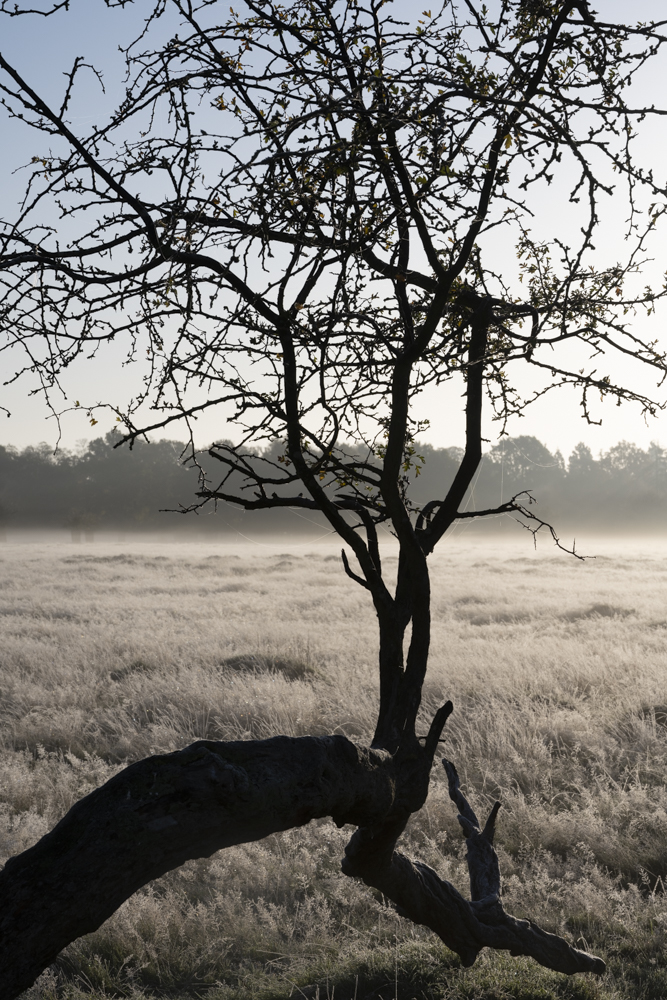
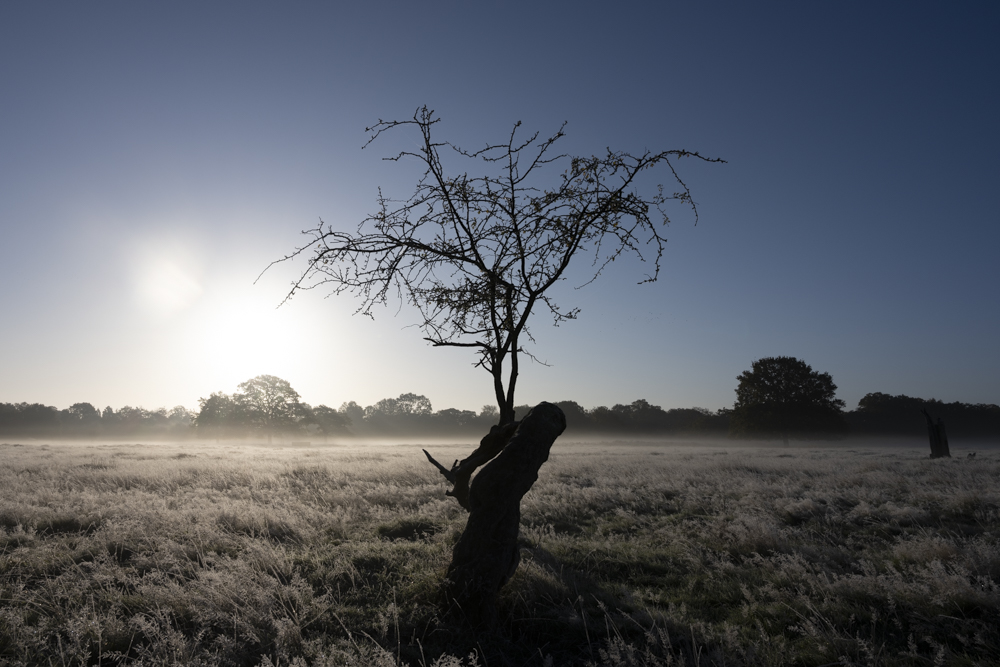
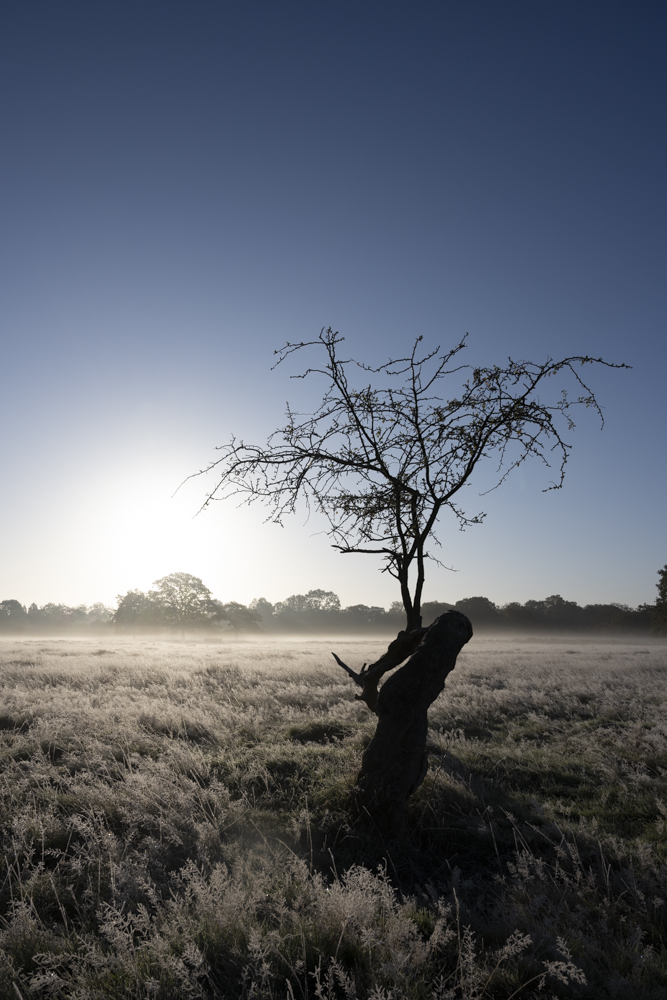
The park looked absolutely magical.

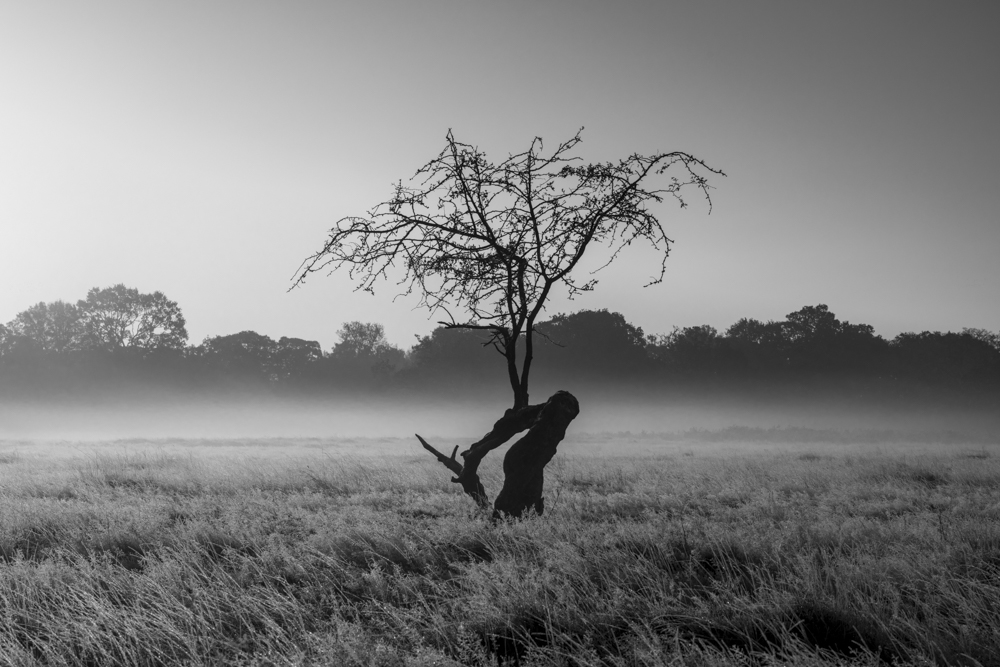
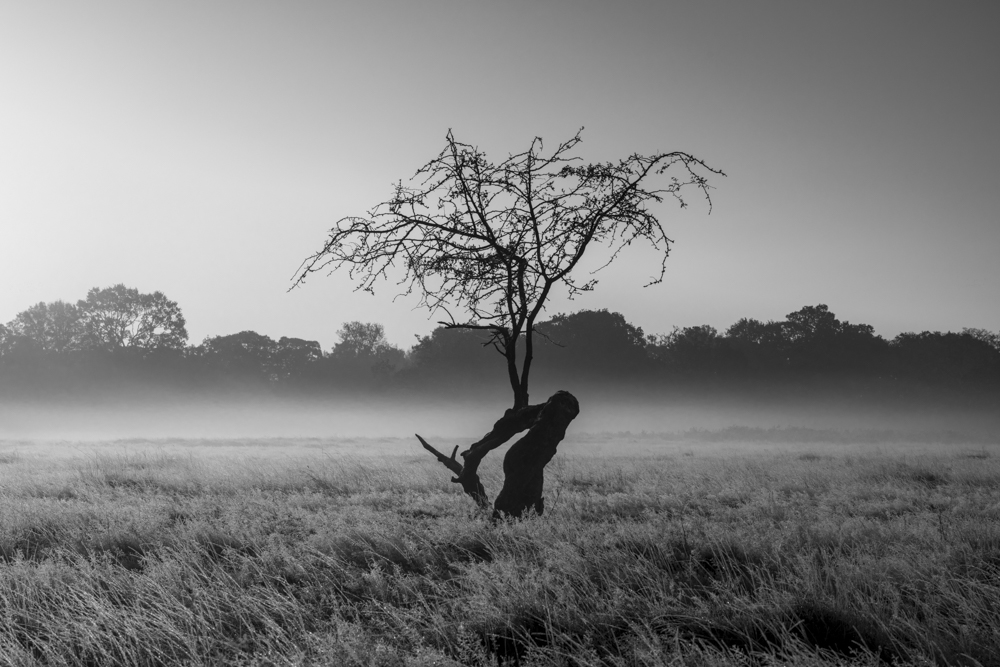
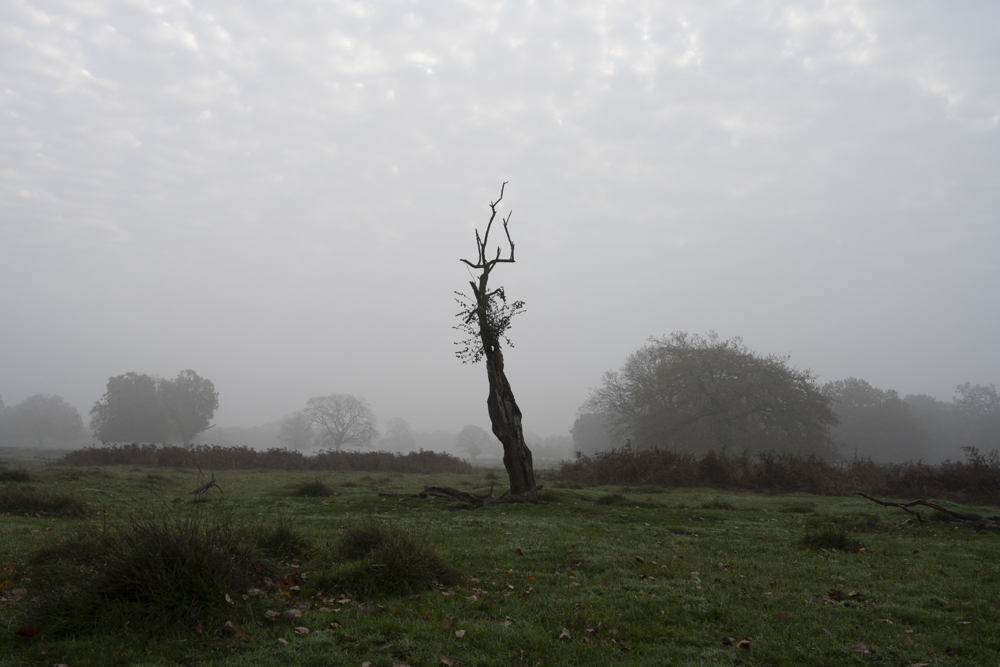
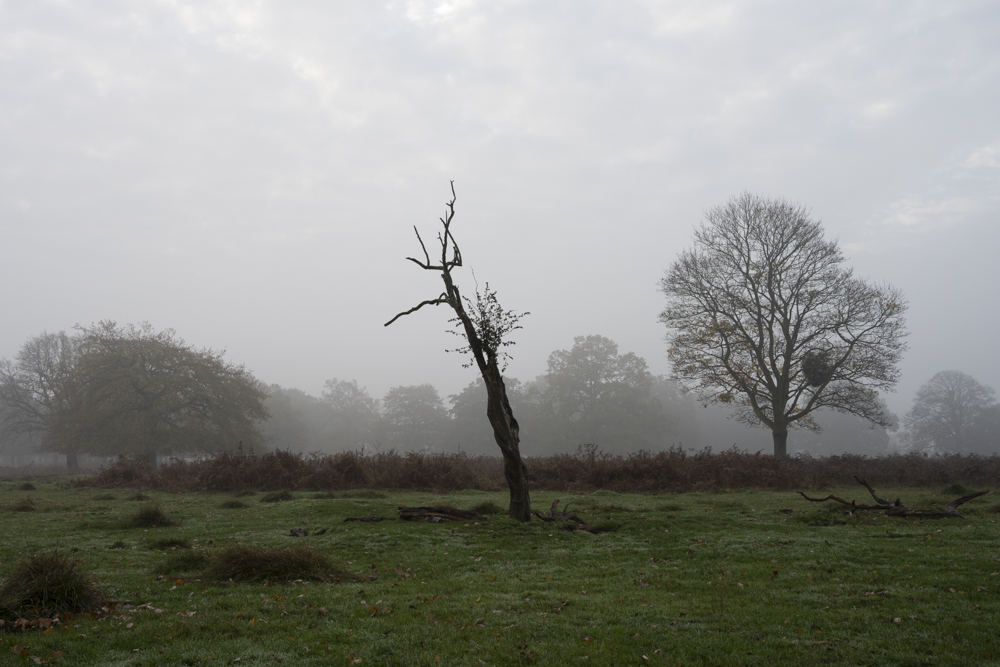
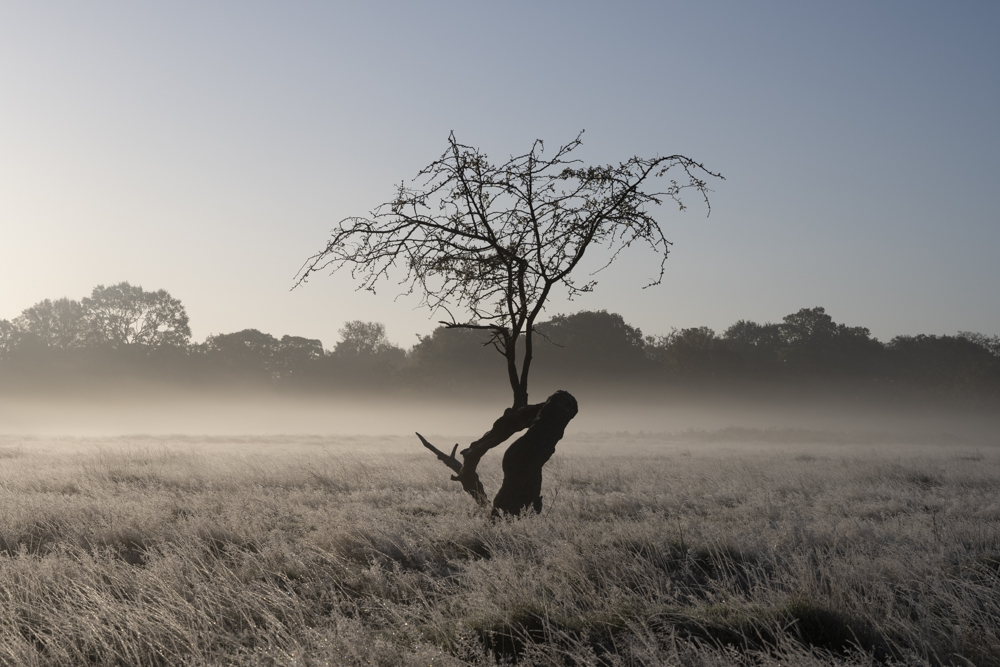
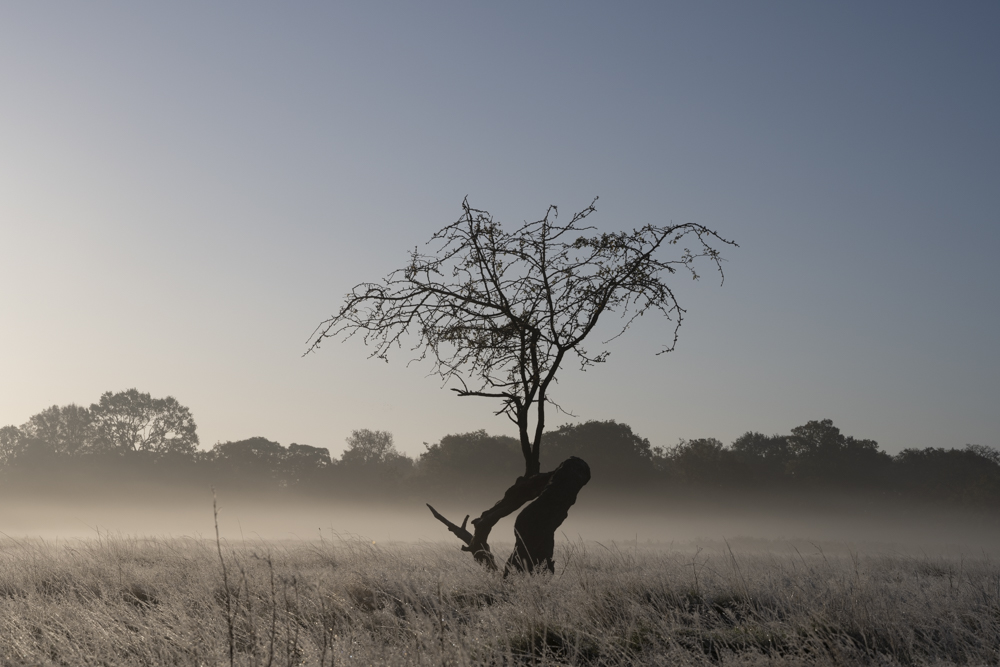
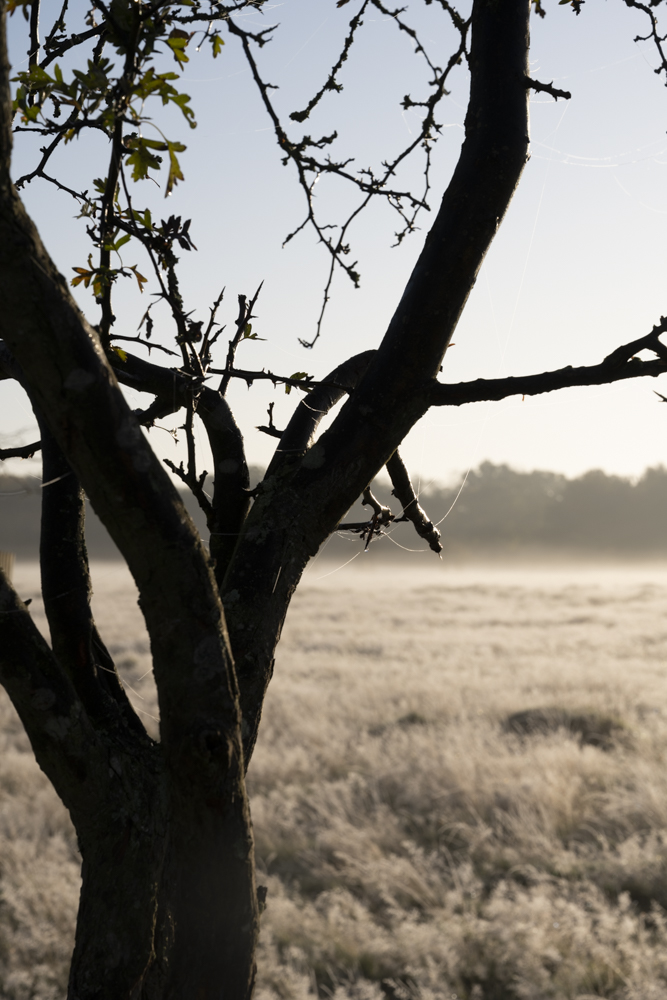
After the previous day’s shoot, I again returned to the first tree I visited. This time, I photographed it on the approach. The sun was much lower in the sky and highlighted the mist.

After returning home, I converted one shot to Black & White.

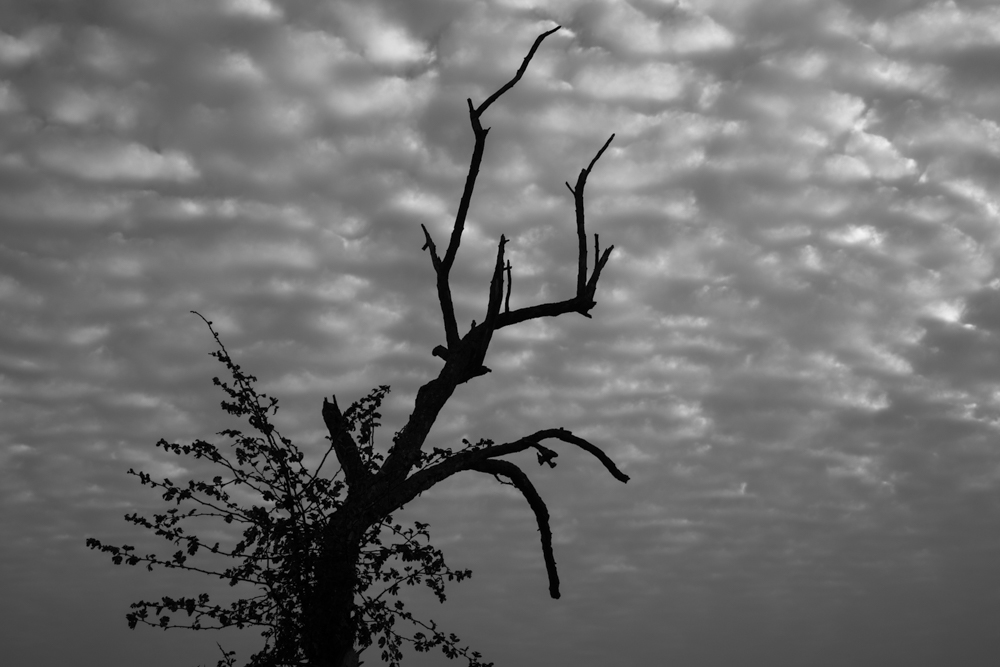
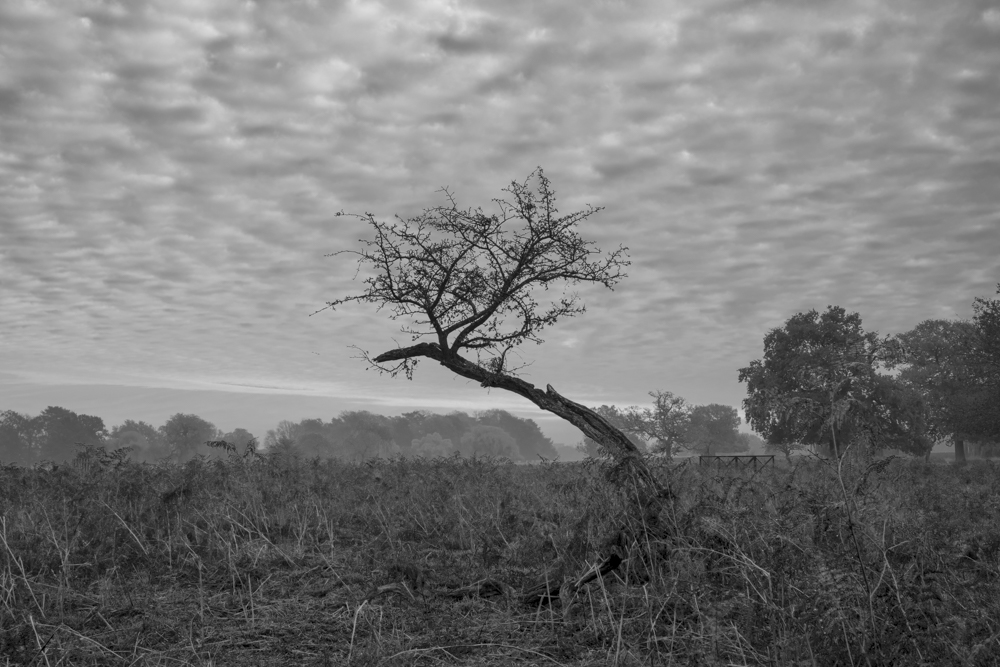
When I first looked at this one in detail, I could see a dragon’s head on the left of the tree. Then, when I showed this image to a friend, the said they could see the Grim Reaper on the right with a scythe on the left. Another person gave the following feedback “Very powerful image… so many ways to read/see it!”

At this stage of the project, certain themes and image similarities were starting to make themselves obvious. It was now time to process what these could be and return to the research aspect.

Categories
AGM62 Photography Research Project Stage 1 Posts

AGM62 Bushy Park Hawthorns 3 November 2020

After my hawthorn recce on 1 November, I went to Bushy Park with my main camera to take further photographs of the trees I had recorded.

I started the shoot at approximately 11.50 and the sun was quite strong and high in the sky at this time of day. My intention was to walk the route I had followed on the 1 November, but in reverse.

Tree 1

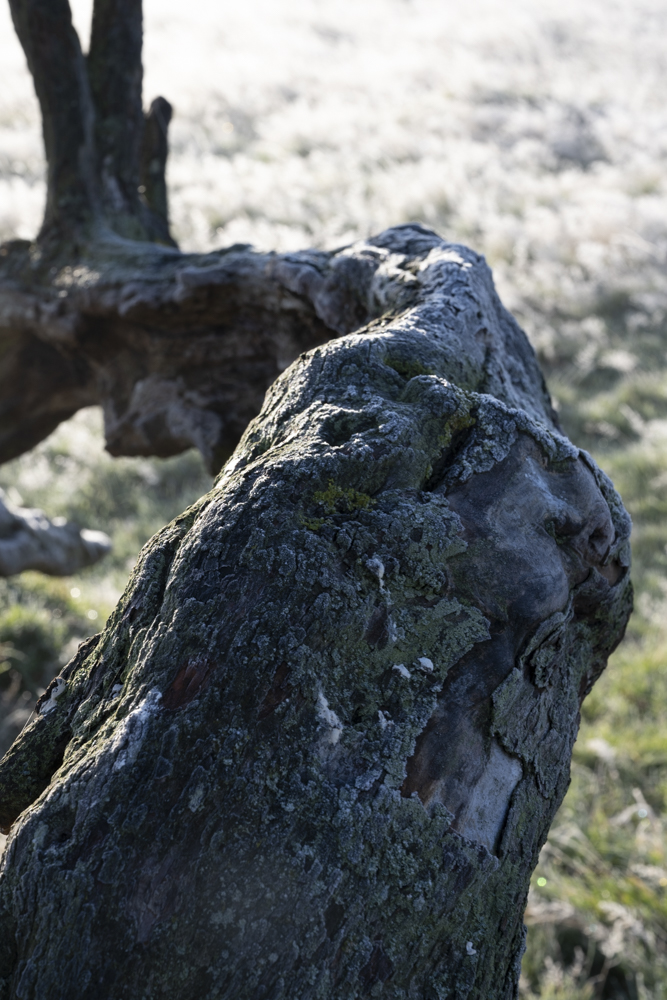
The first hawthorn I experimented with was the one photographed last on 1 November (Tree 11). It was a bit frustrating as the sunlight was quite harsh. I thought the bark would have been darker, having rained the day before. Despite this, the wood was quite bleached by the light.

Another frustrating factor was the walkers in the background – there was a lot of waiting for what seemed to be a clear shot. Additionally, getting a low enough angle was quite taxing on my legs. It was also difficult to see the image through the viewfinder or on the screen on the back of the camera due to the harsh light. What I need to experiment with next is the tripod and a sun hood for the screen. Ideally, I would use a 7″ external monitor which can be attached to the camera via the accessory shoe. I should also use the virtual horizon indicator on the display to ensure I have a straight line through the image.

These are the resulting images pre-editing.

Tree 2

I then walked through Woodland Gardens to the area on the other side. This is Tree 2 from 1 November.

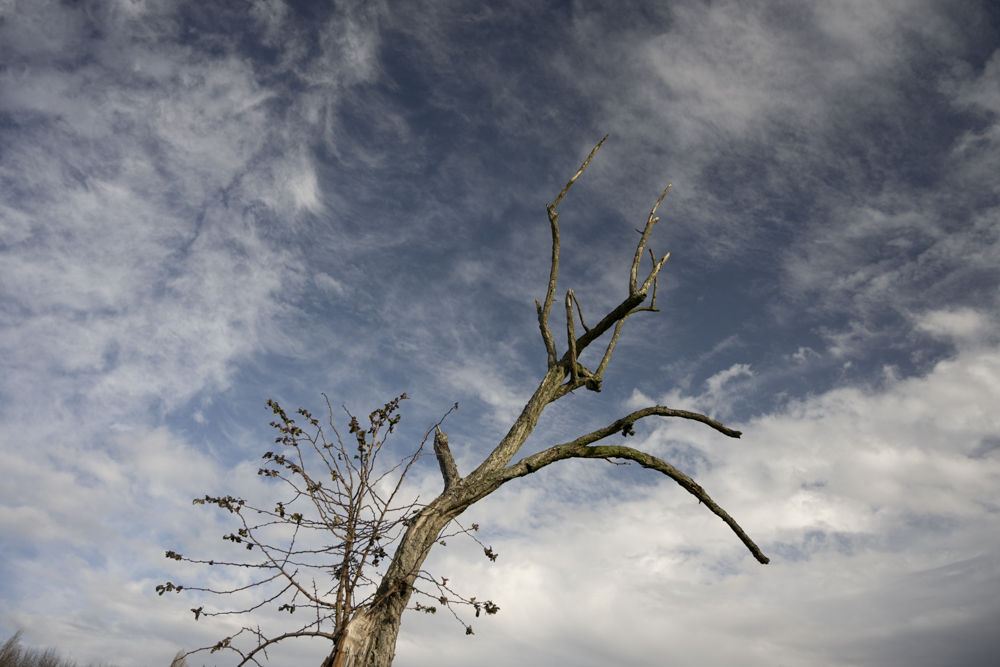
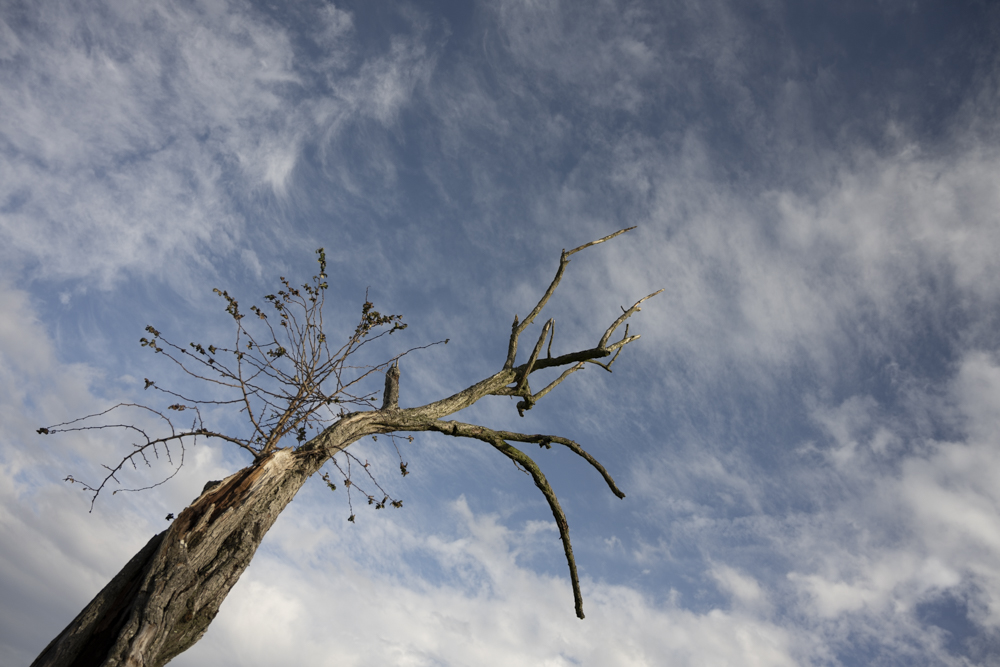
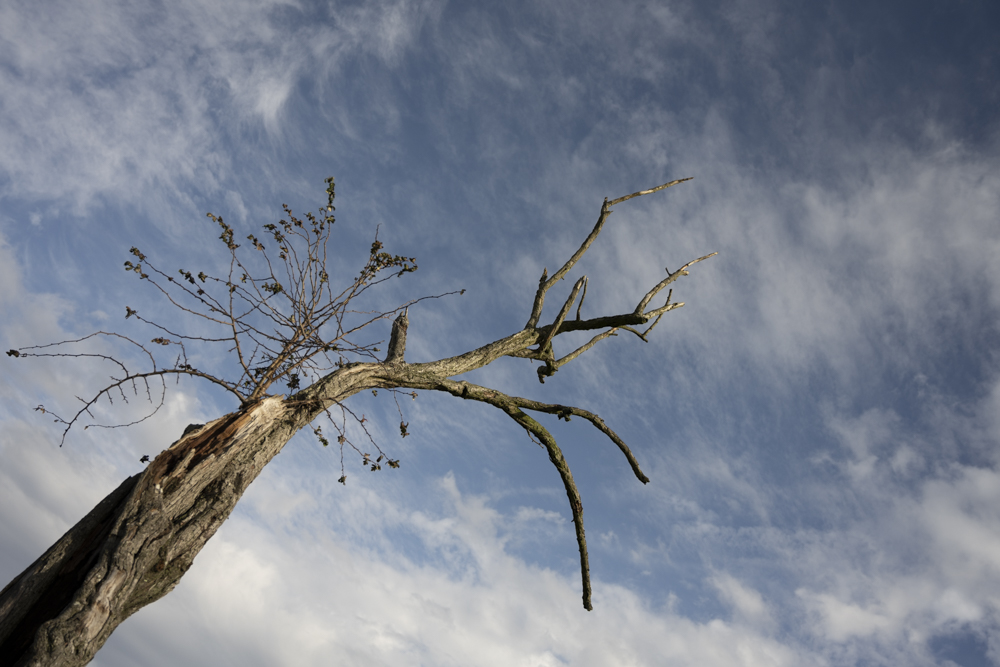
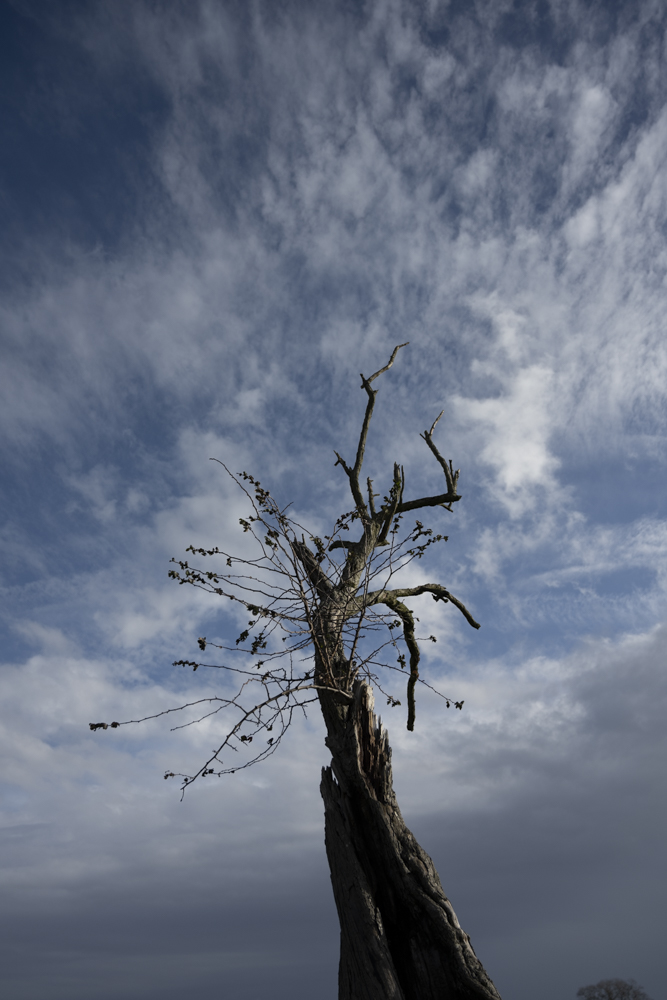
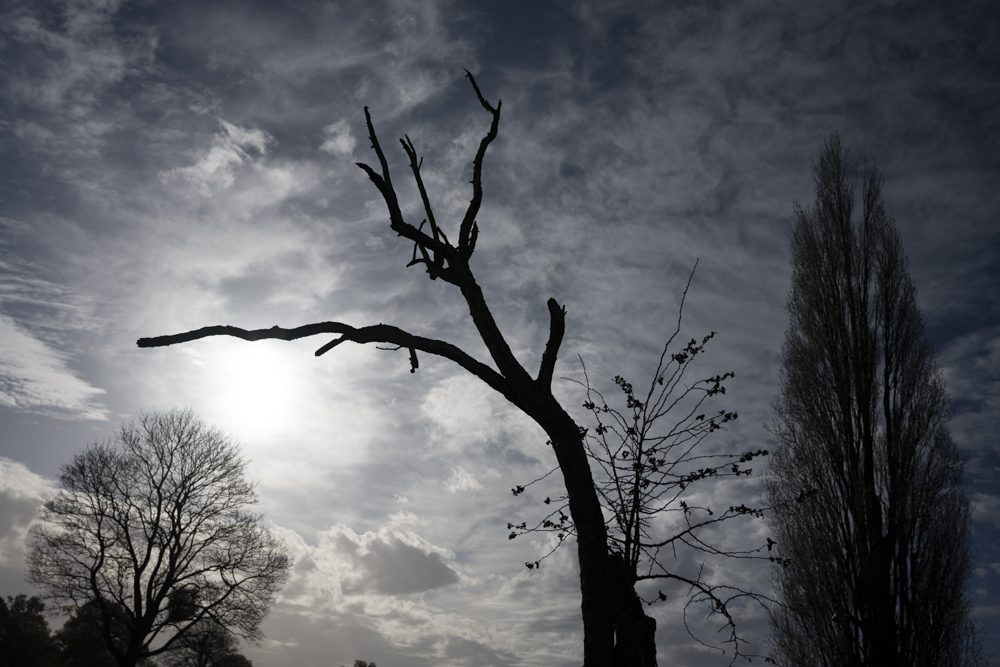
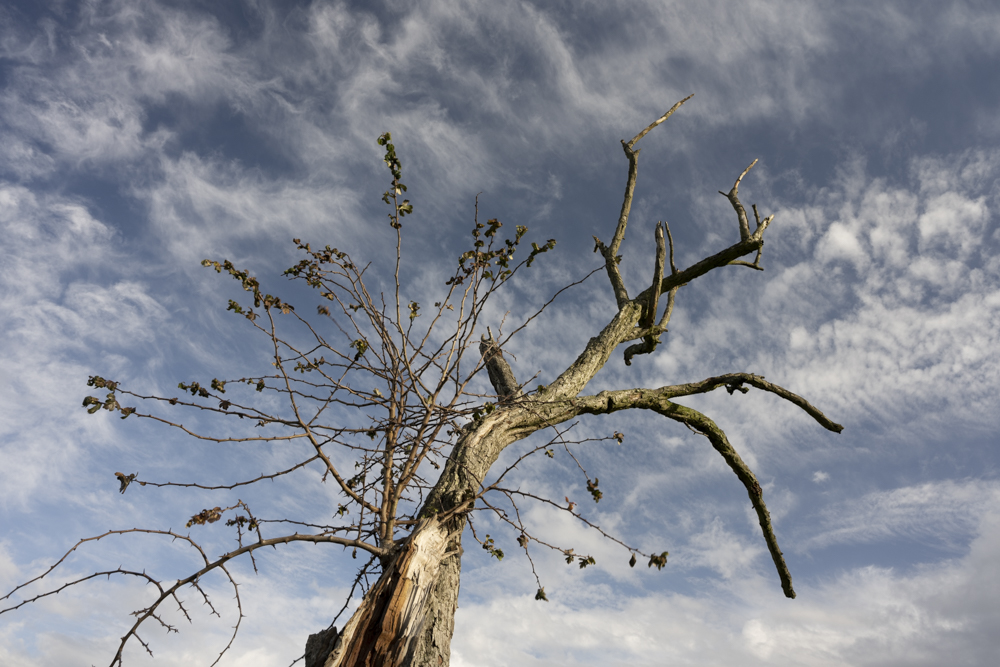
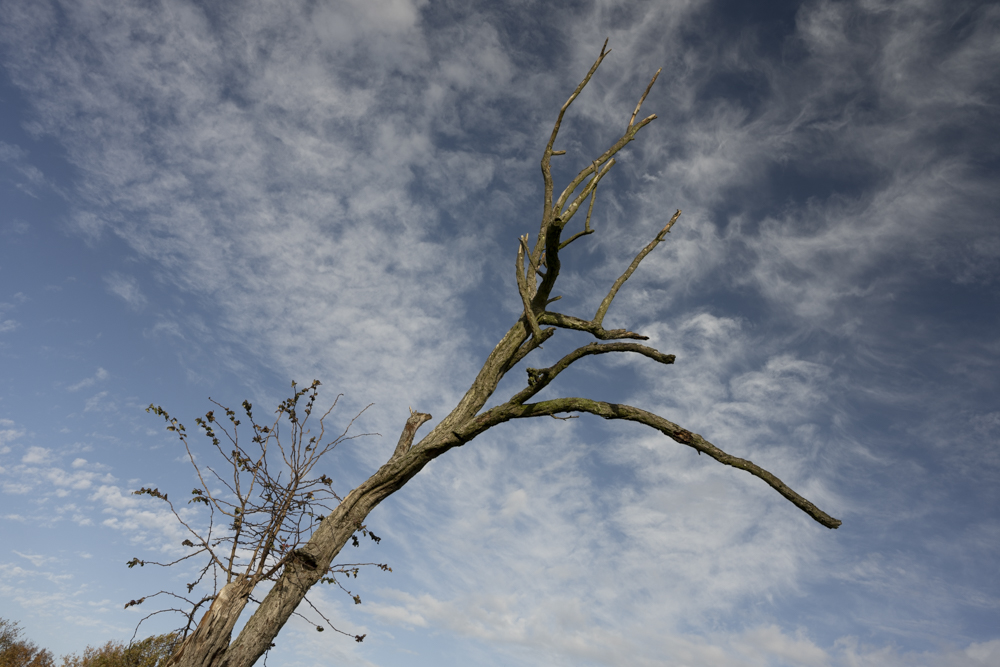
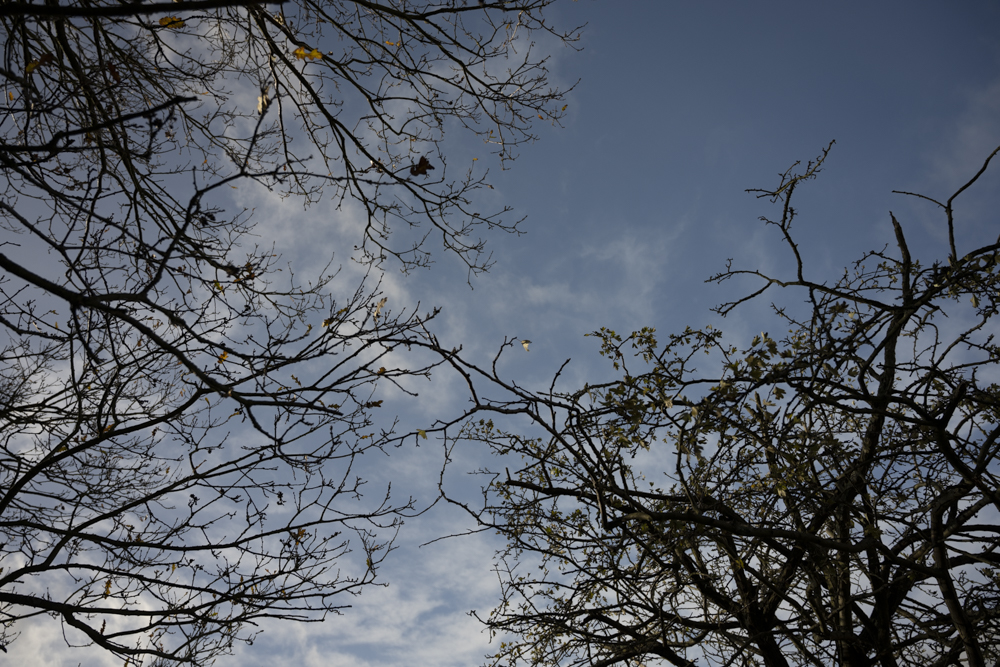
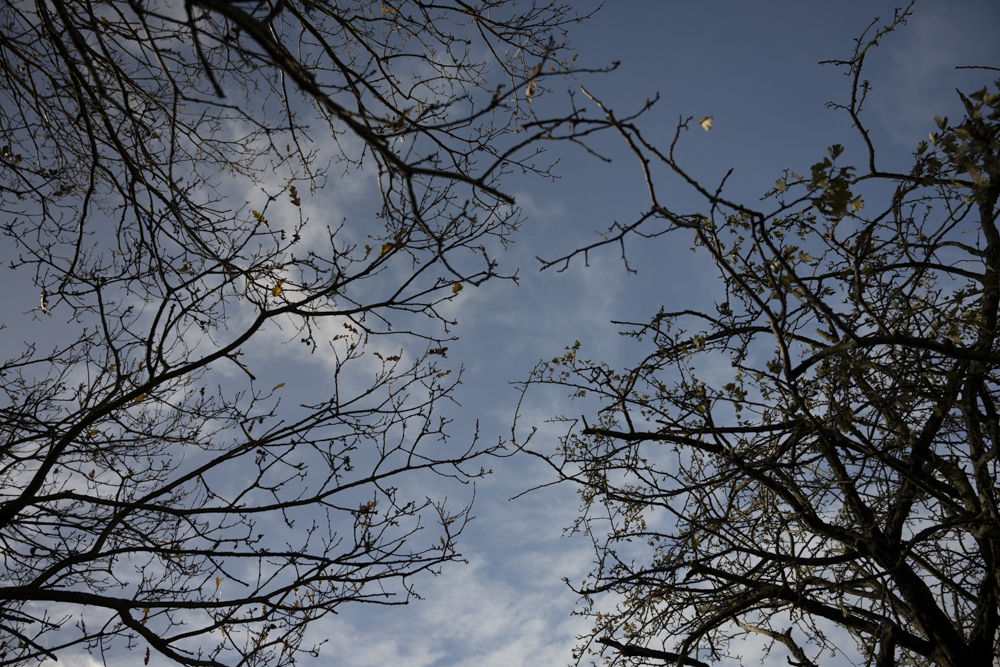
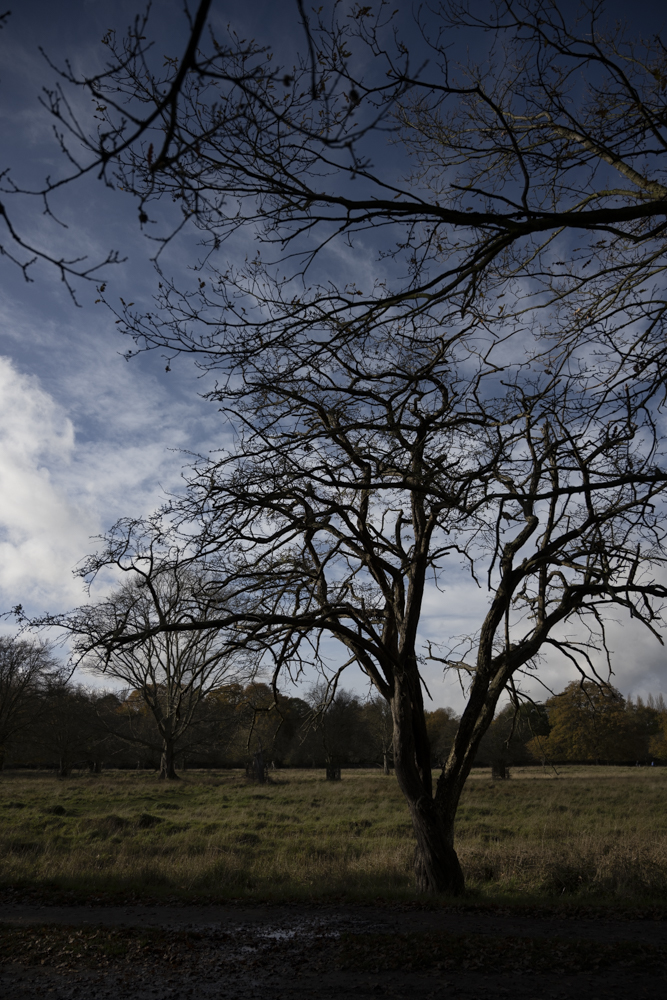
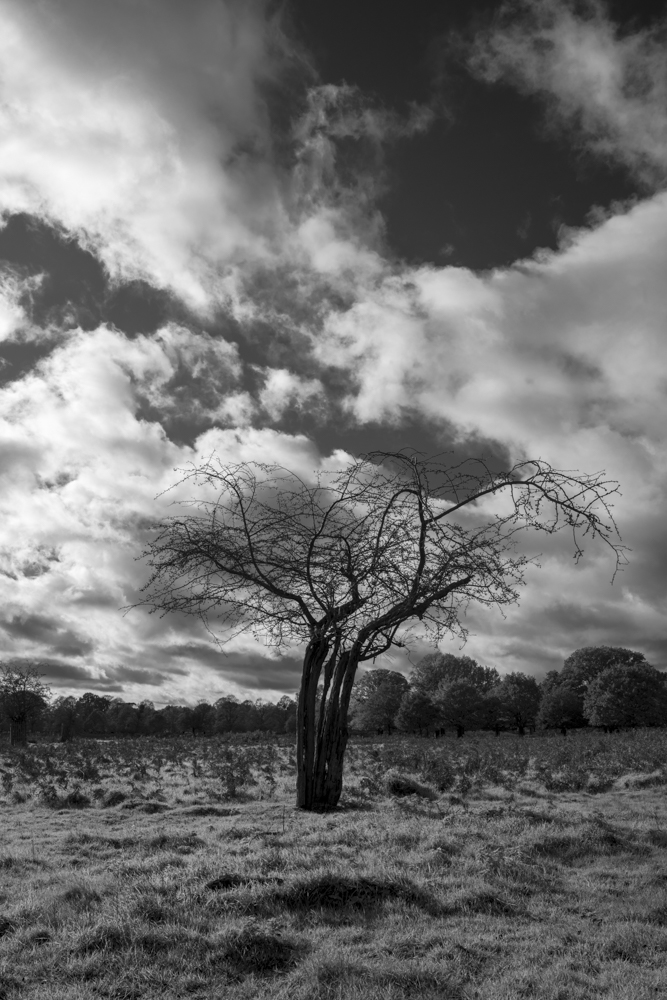
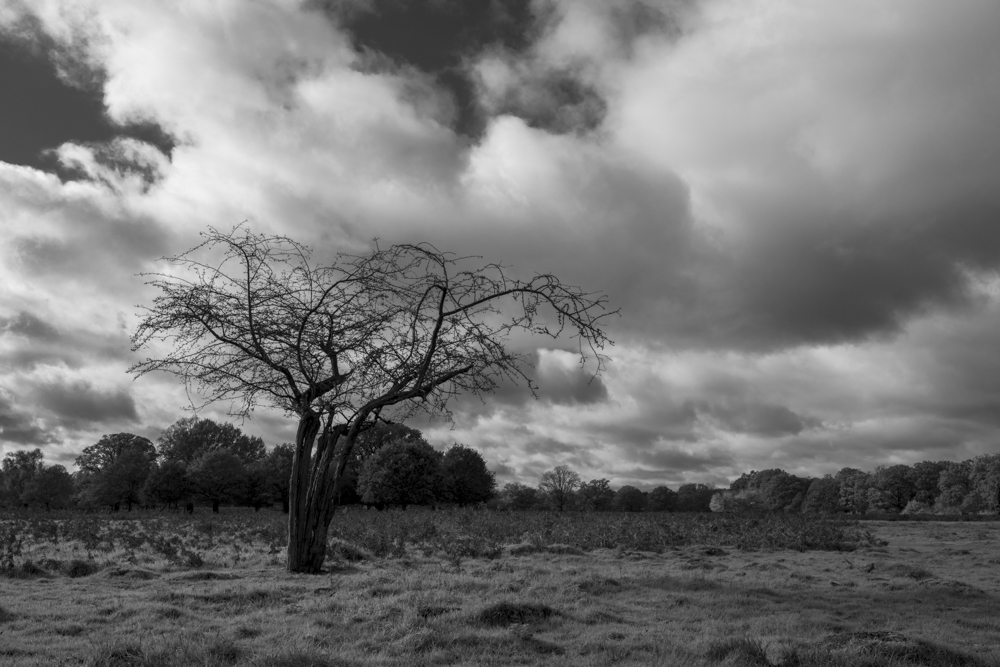
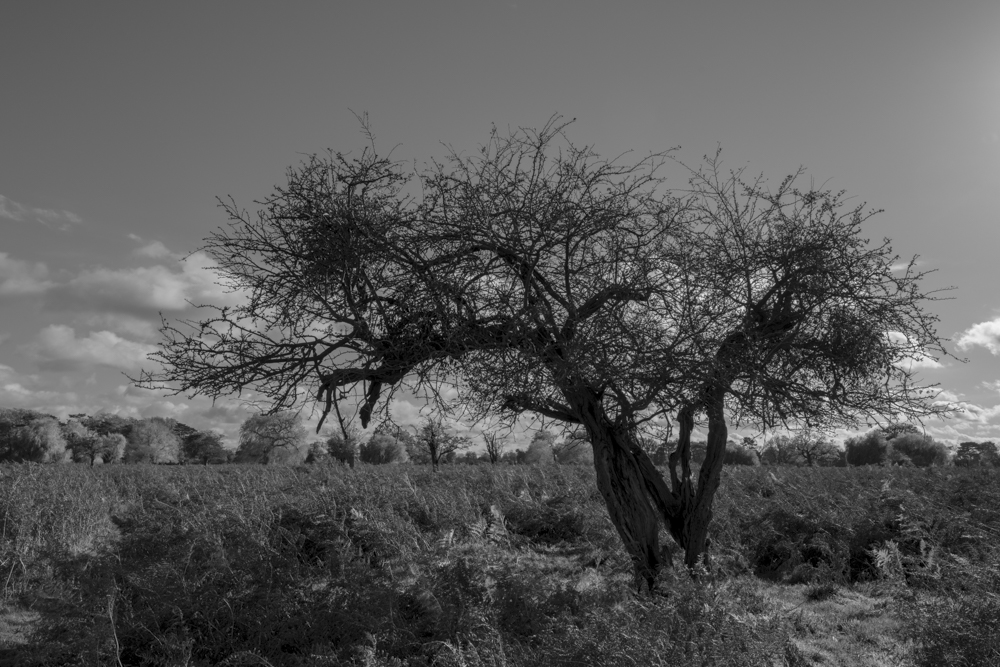
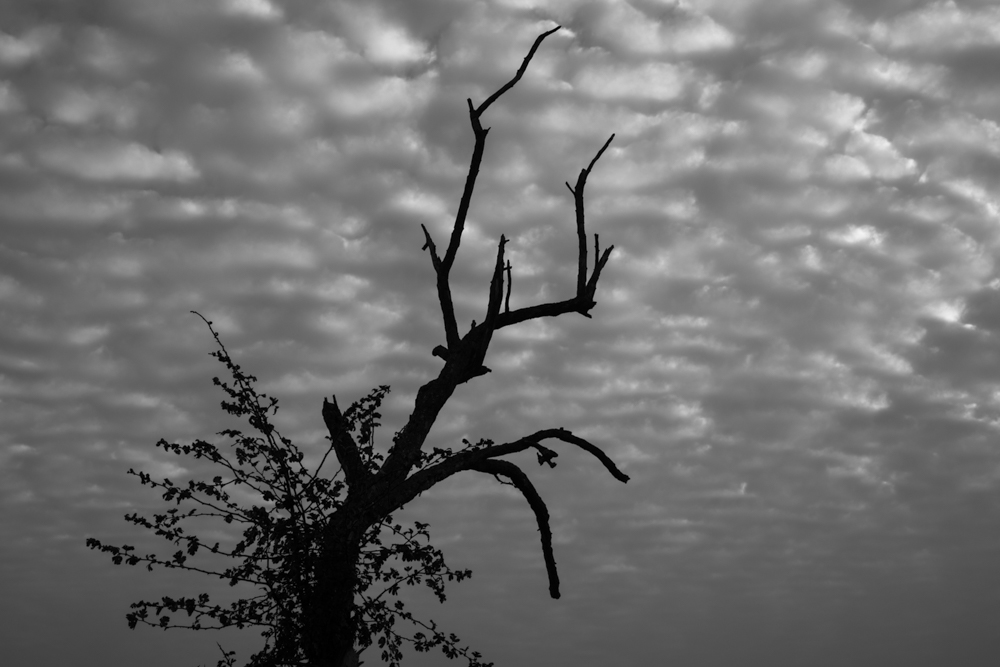
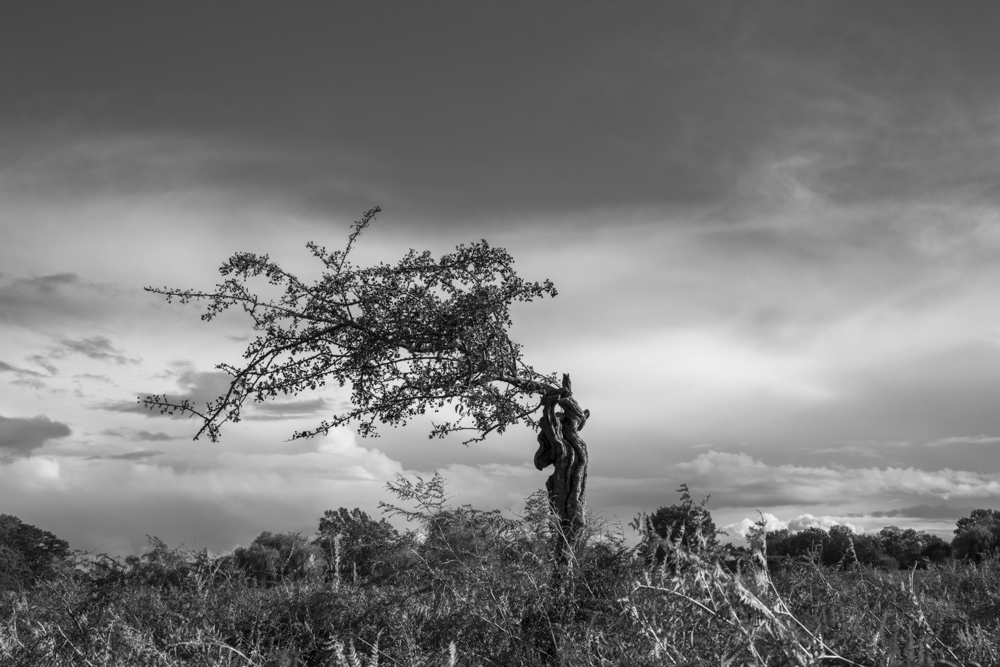
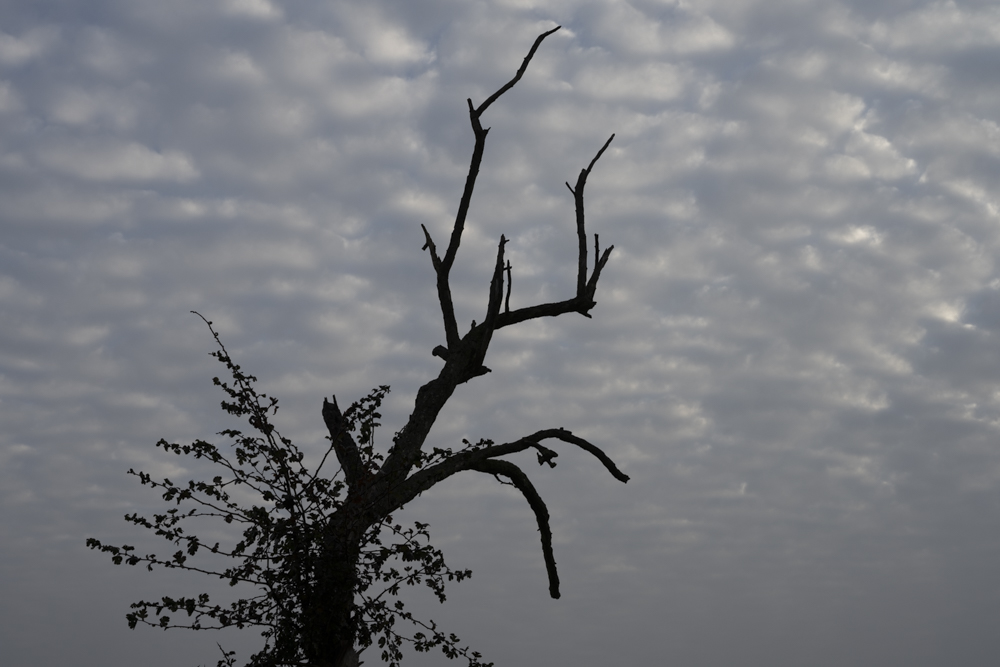
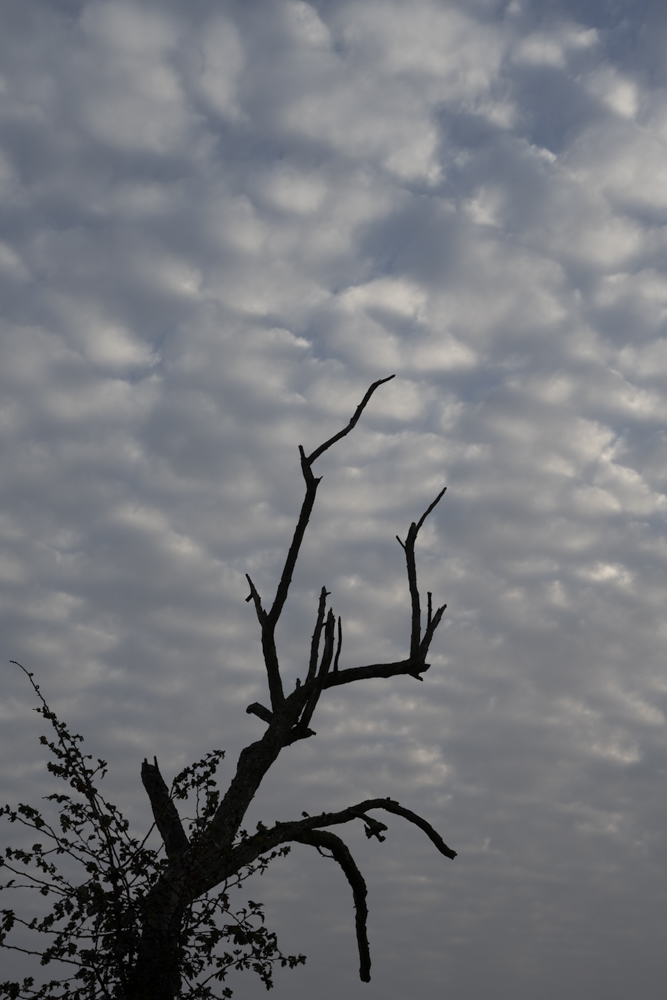
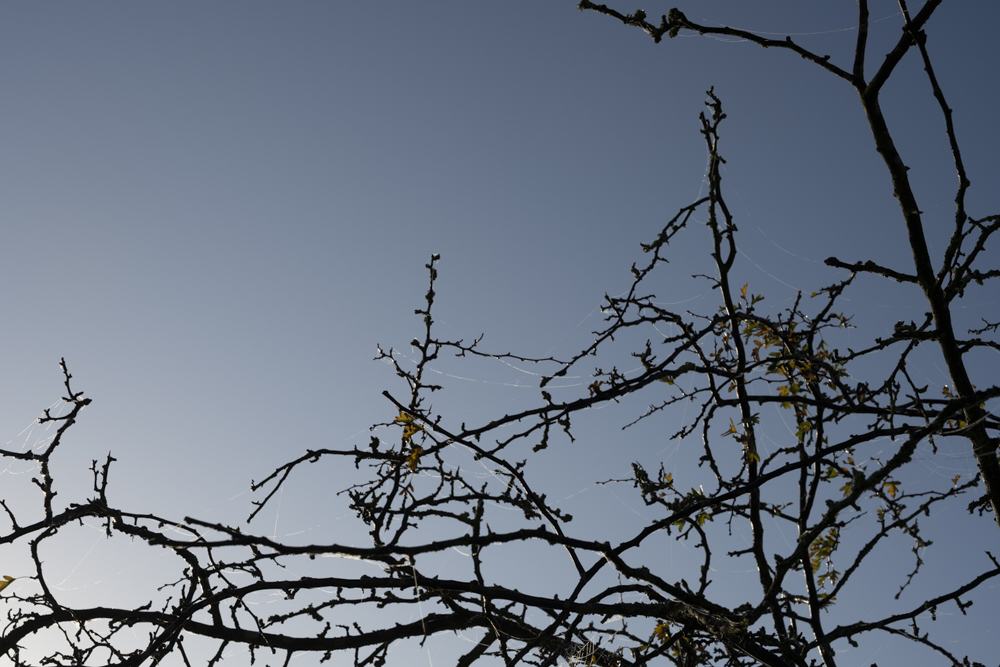
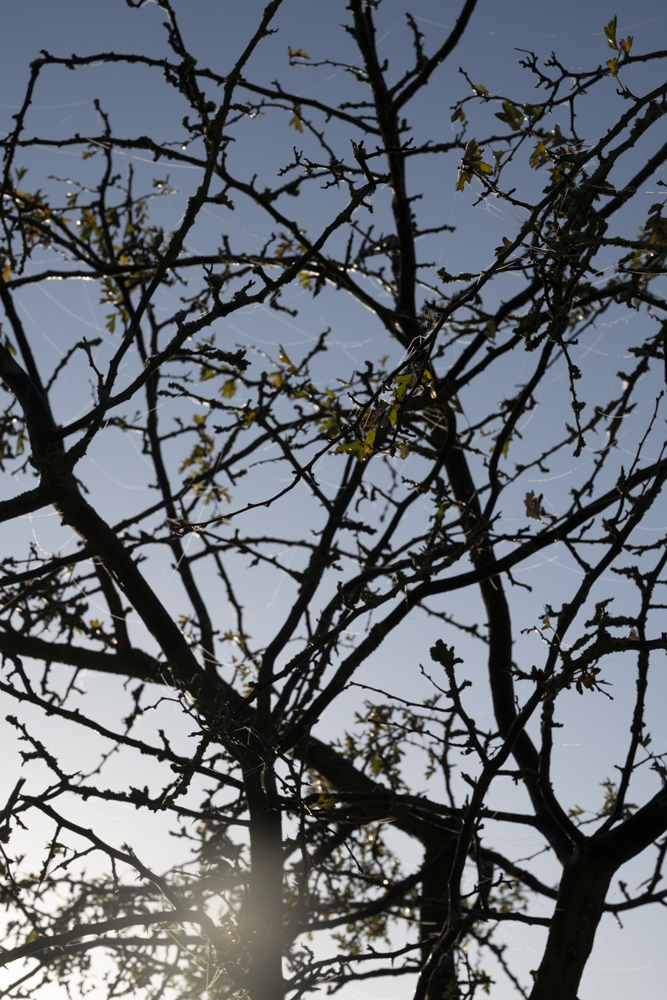
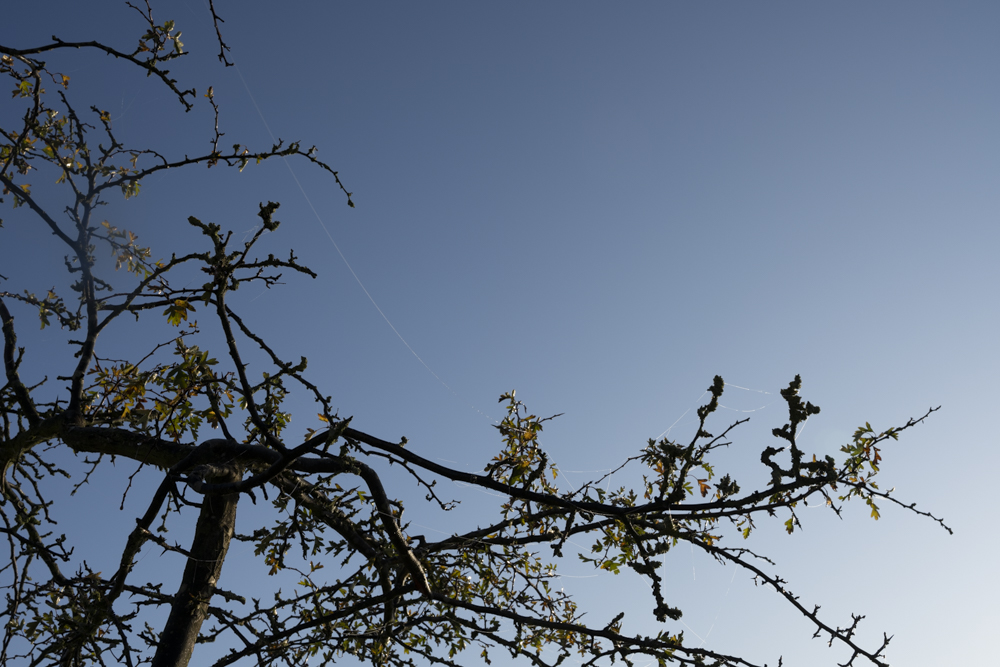
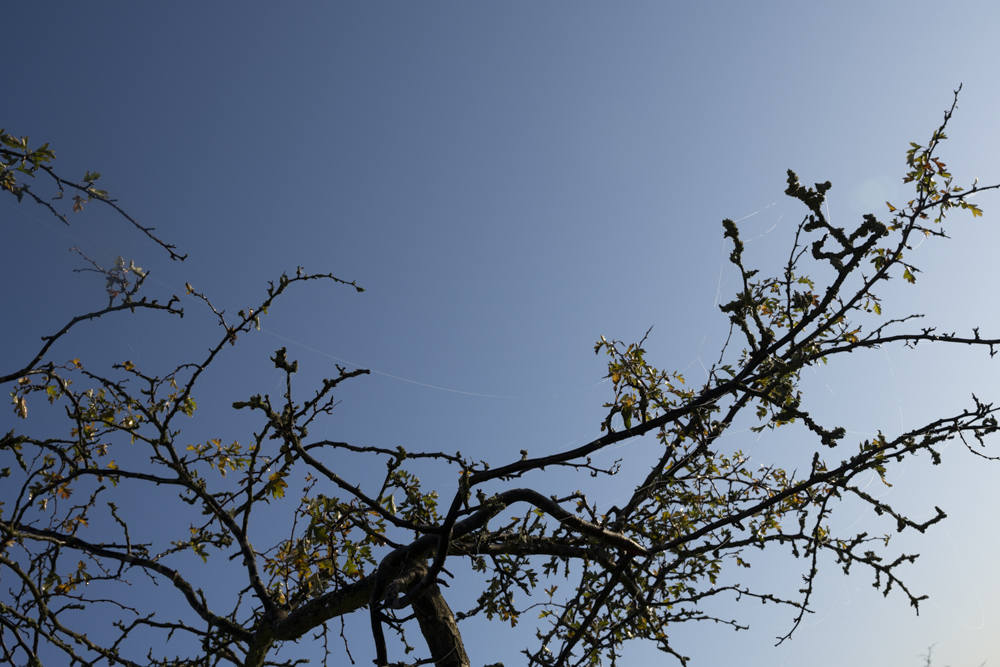
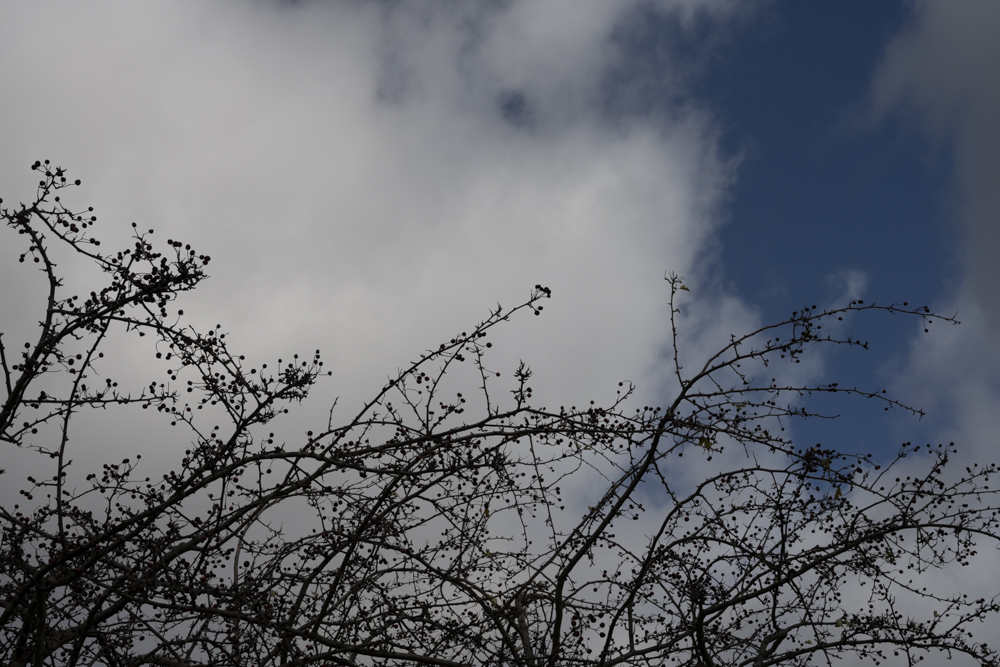
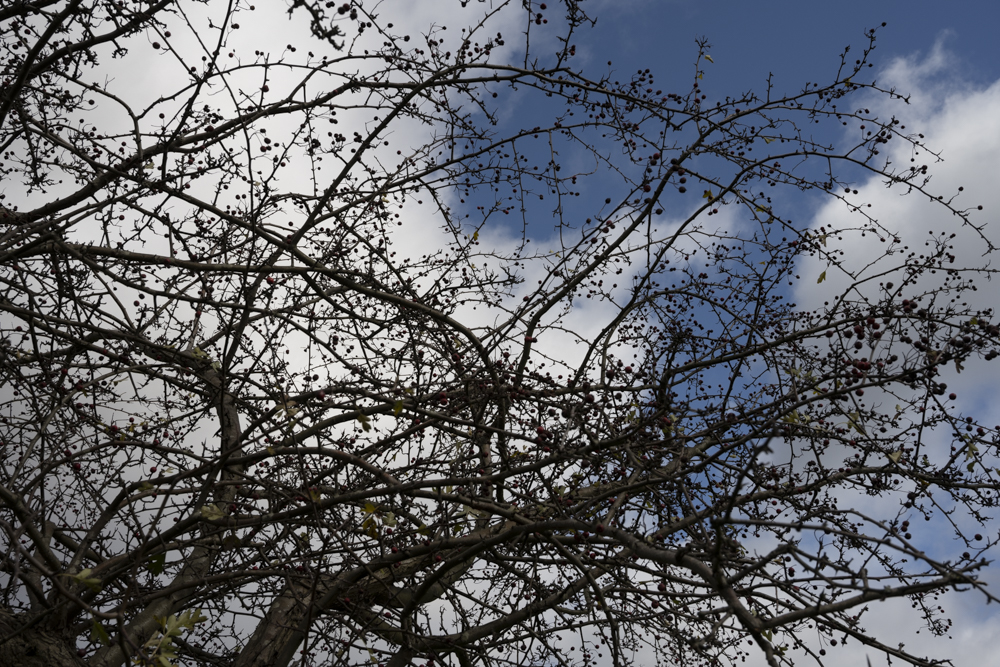
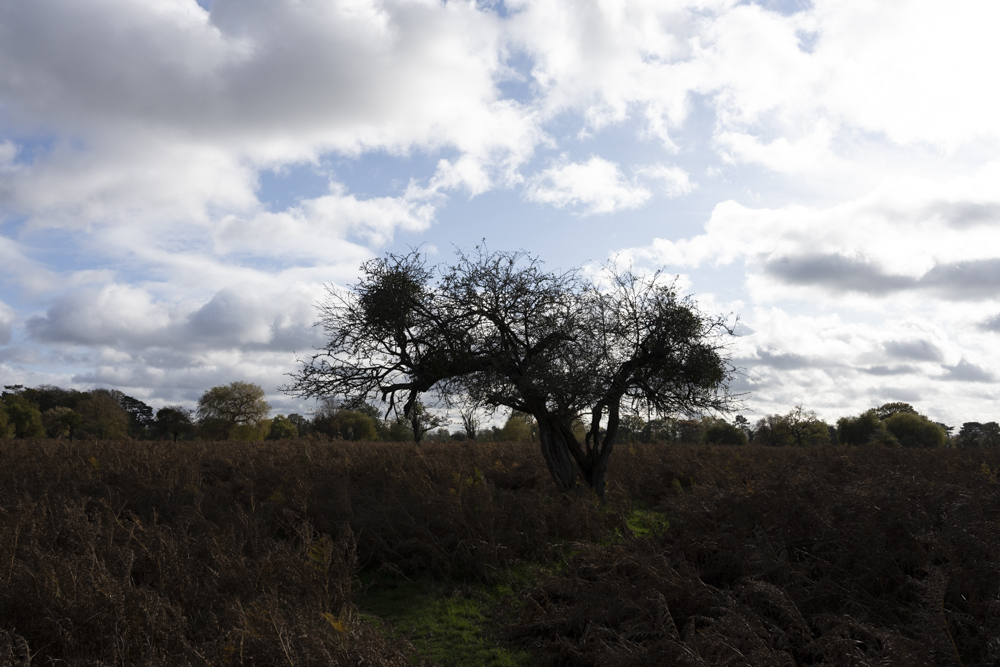
The aspect I focused on was the branches against the sky. I also created a Black & White conversion of this shot. I particularly liked the dramatic nature of the sky and how the branches frame and follow the lines of the clouds.

Tree 3

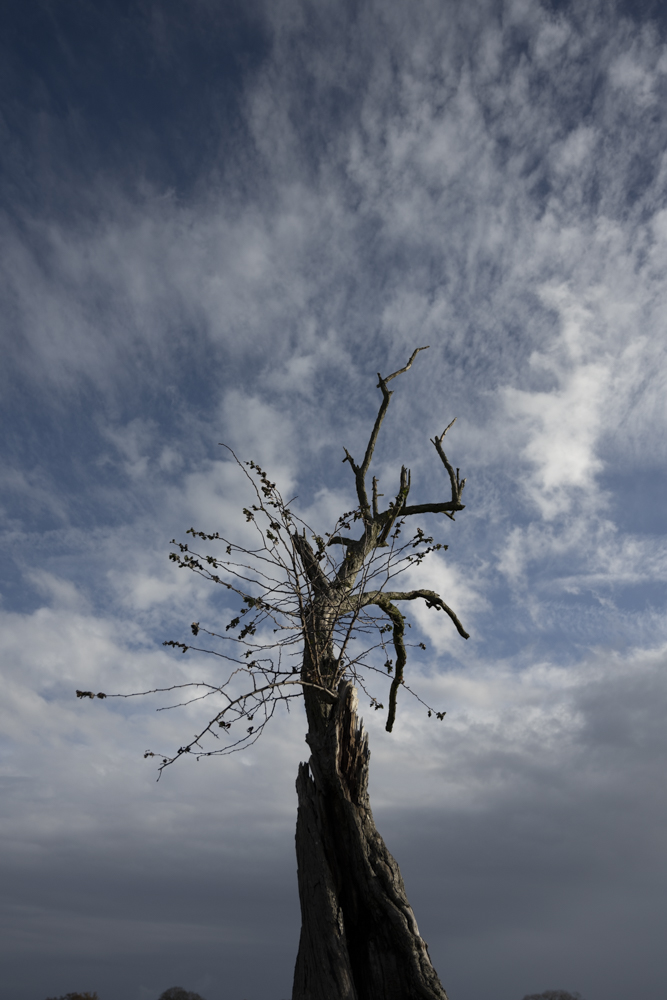
With this particular hawthorn, I tried both portrait and landscape-orientated shots and tried some close ups.

While editing, I thought this was the shot that looked the strongest out of these and carried out a Black & White conversion.

I then walked to the grove in the vicinity of Hawthorn Lodge

Tree 4

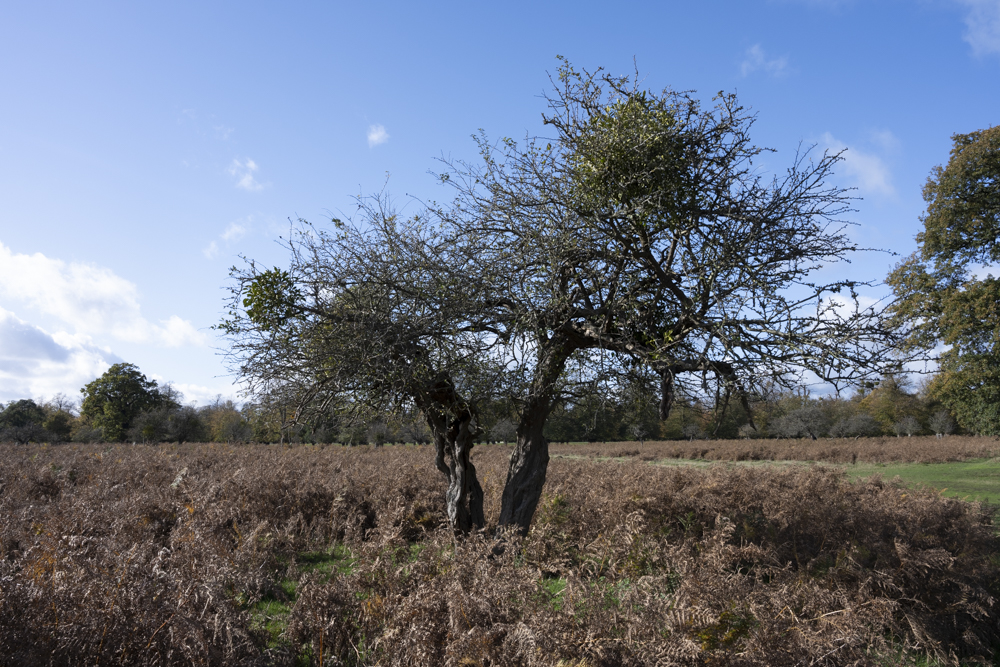
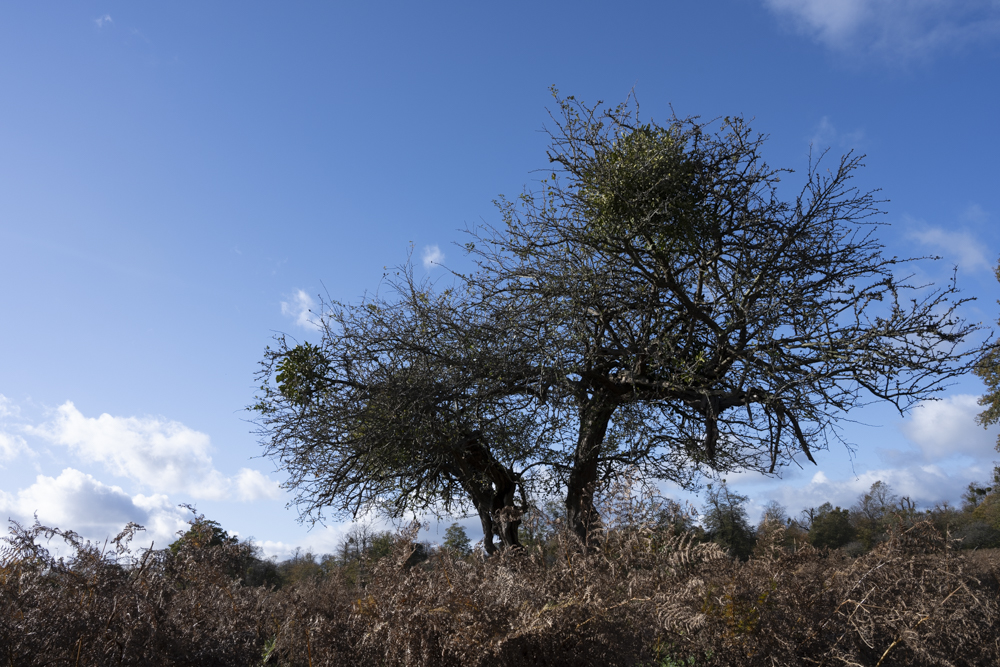
This is a tree I hadn’t photographed before. It is in the area near to Hawthorn Lodge. I quite liked this hawthorn’s stance. However, after looking at these shots, I think this should be reshot to get the optimum angle and orientiation.

Tree 5

Again, another new hawthorn. This could also be reshot to get the best angle.

Tree 6

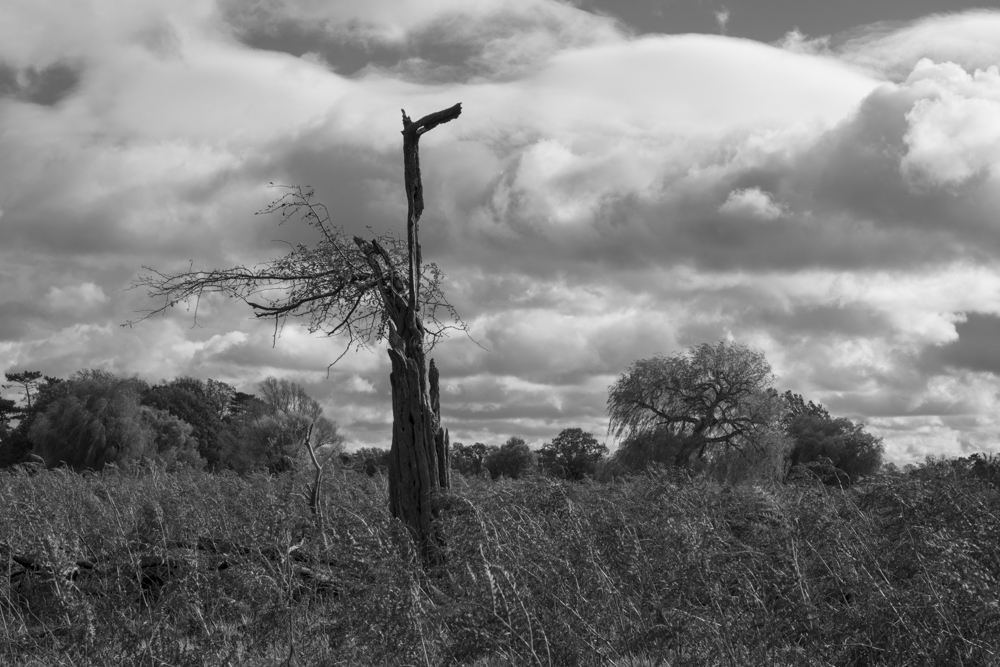
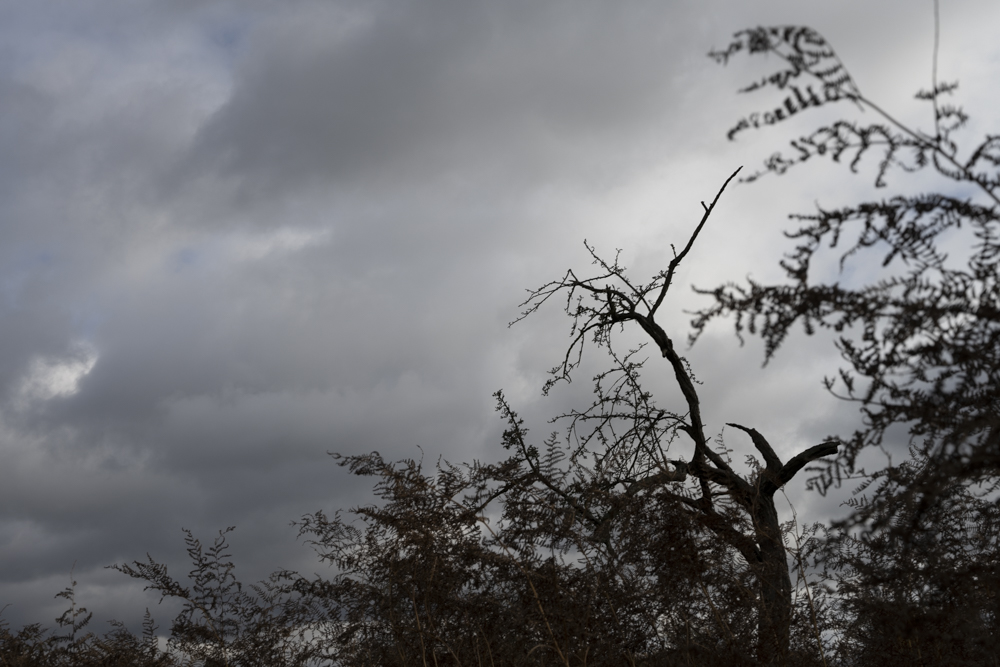
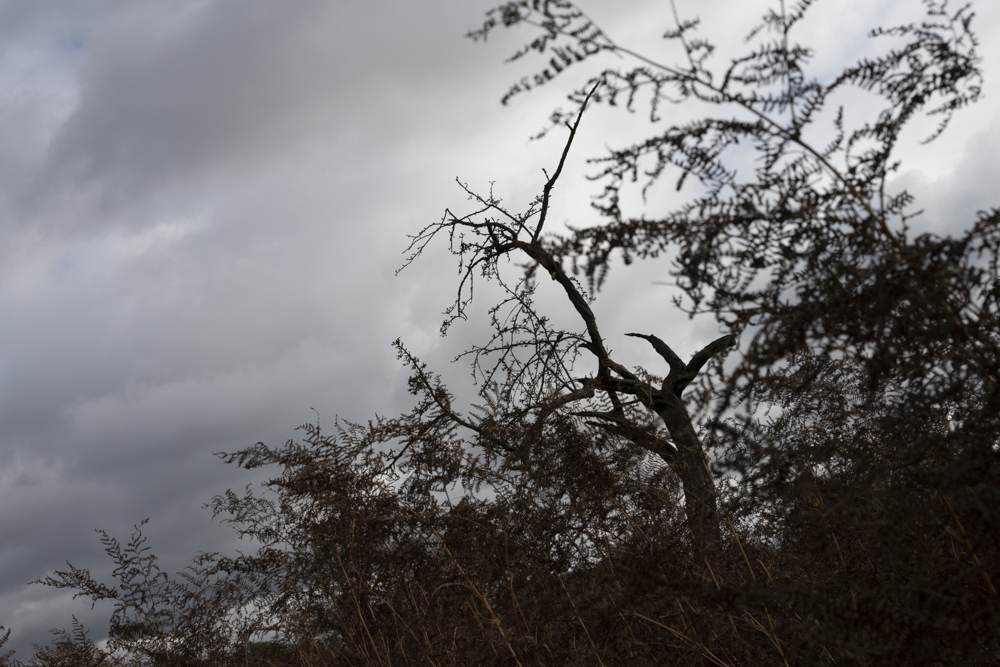
A record of a hawthorn that has clearly been cut down. It will be interesting to see what is fully revealed once the ferns disappear for the winter.

Tree 7

Again, another interesting hawthorn that needs further investigation.

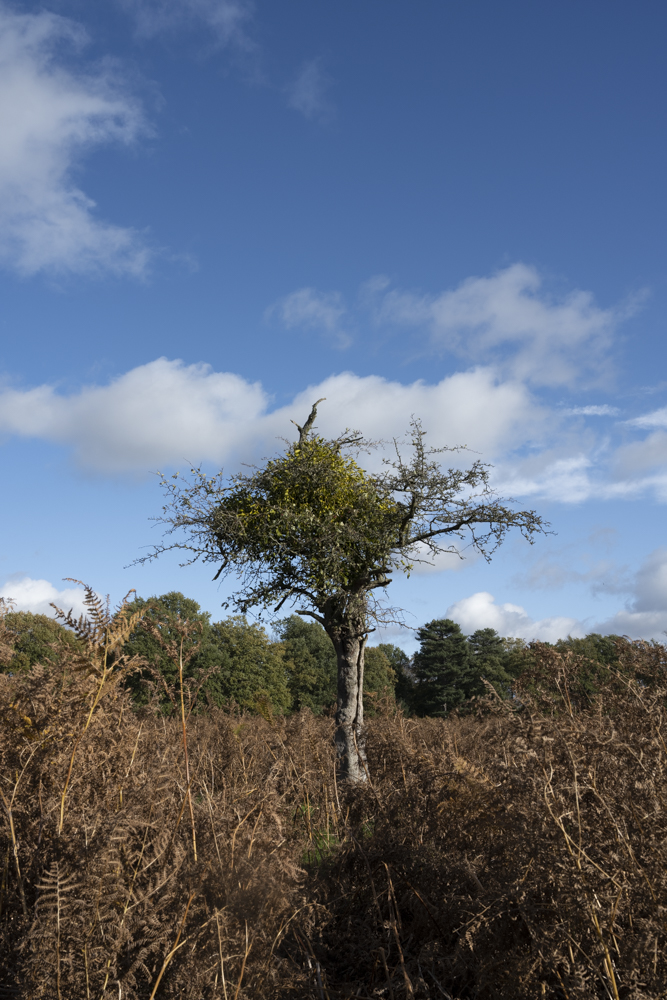
Tree 8

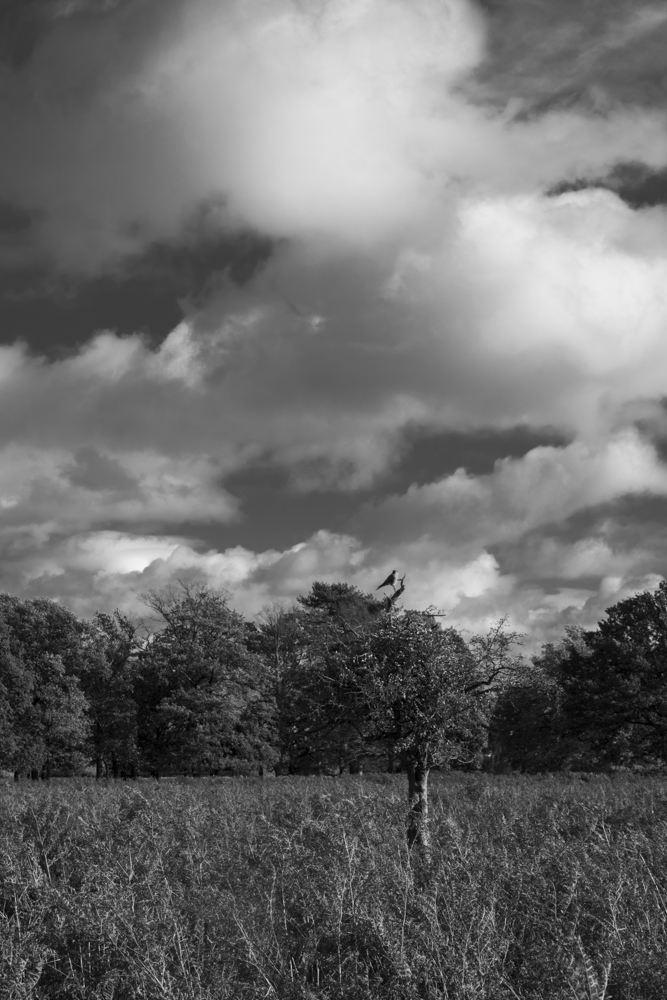
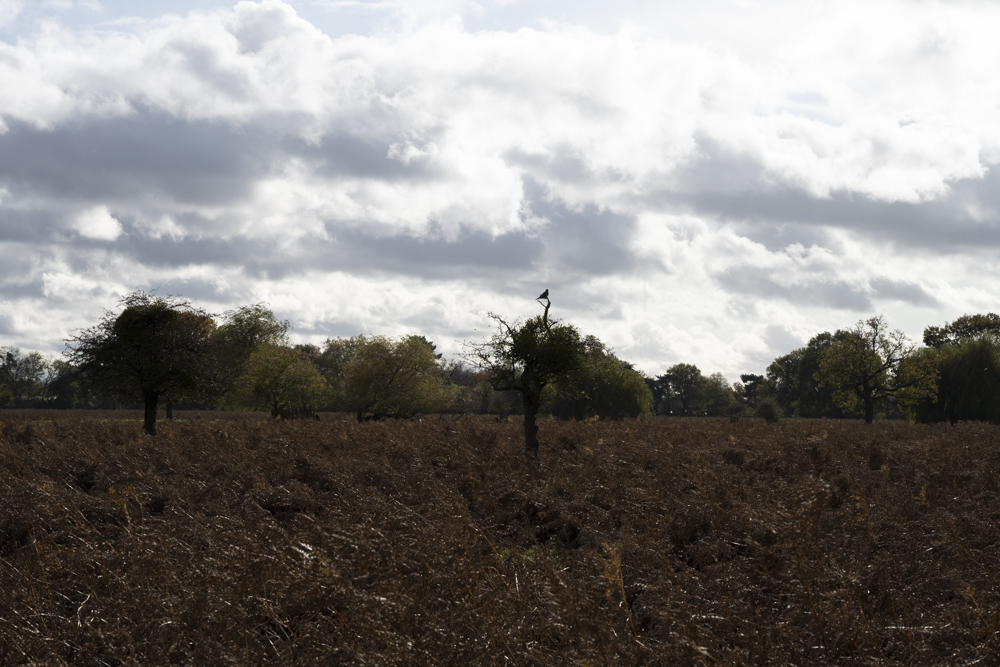
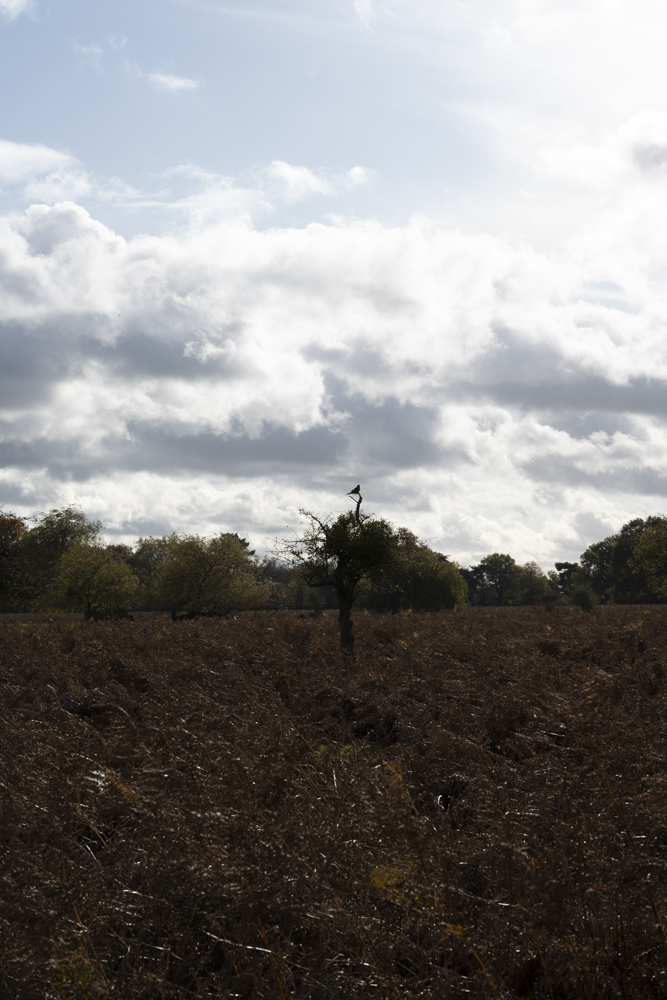
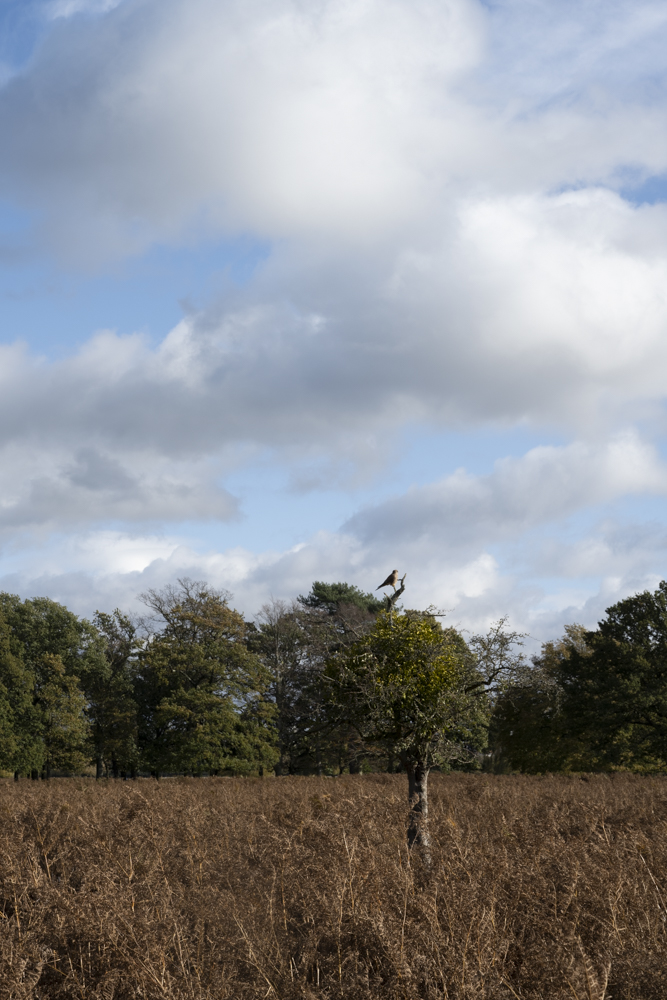
By now I was starting to tire – I’m beginning to realise that to make the most of my energy and get the best shots is to focus on one or two trees per visit. However, I perked up when I saw a couple of sparrow hawks flying around this tree and was quite chuffed to capture it on this hawthorn.

Tree 9

Again, another hawthorn to be revisited, especially after looking at the Black & White conversion below.

Tree 10

Last, but not least, this particular character. I was definitely running out of steam at this stage.

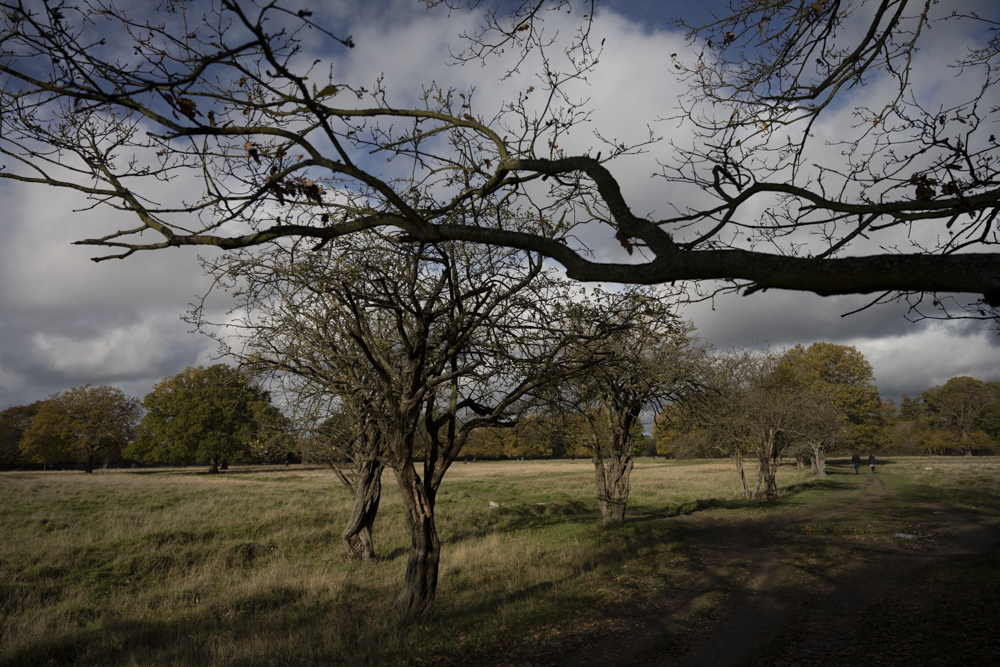
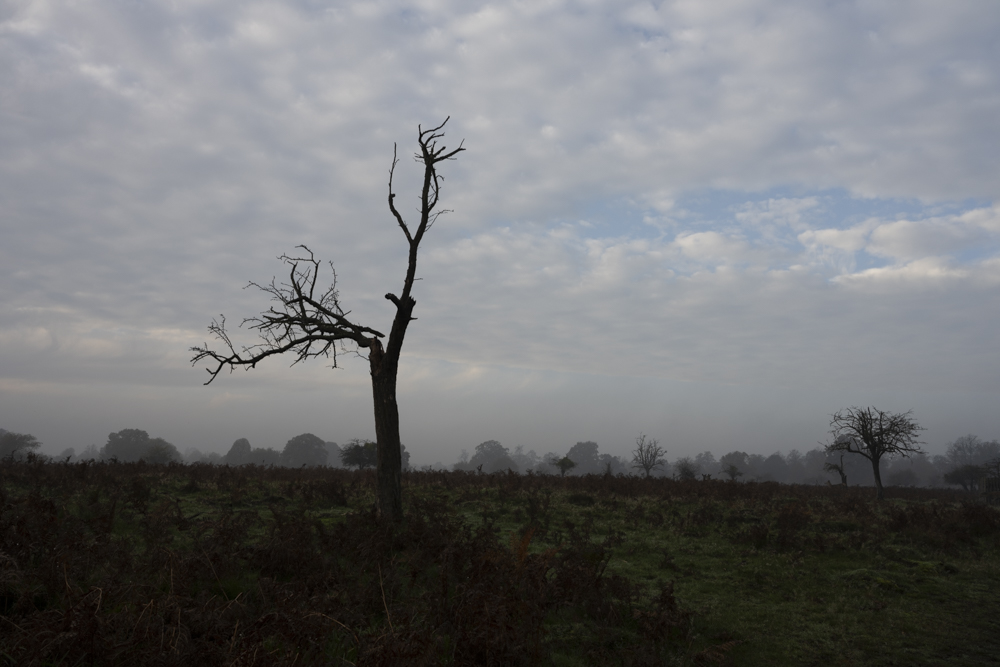
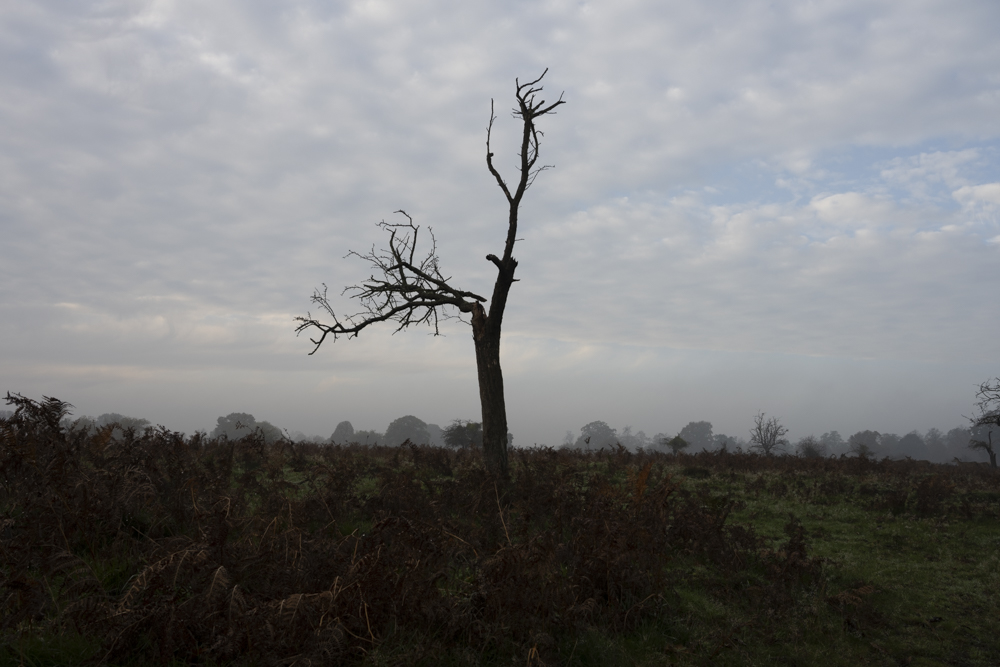
Looking back at these images, there definitely seems to be a theme starting to appear. The horizontal shots are very strong and give quite a powerful impression. A factor to be considered in further detail.

Design a site like this with WordPress.com
Get started