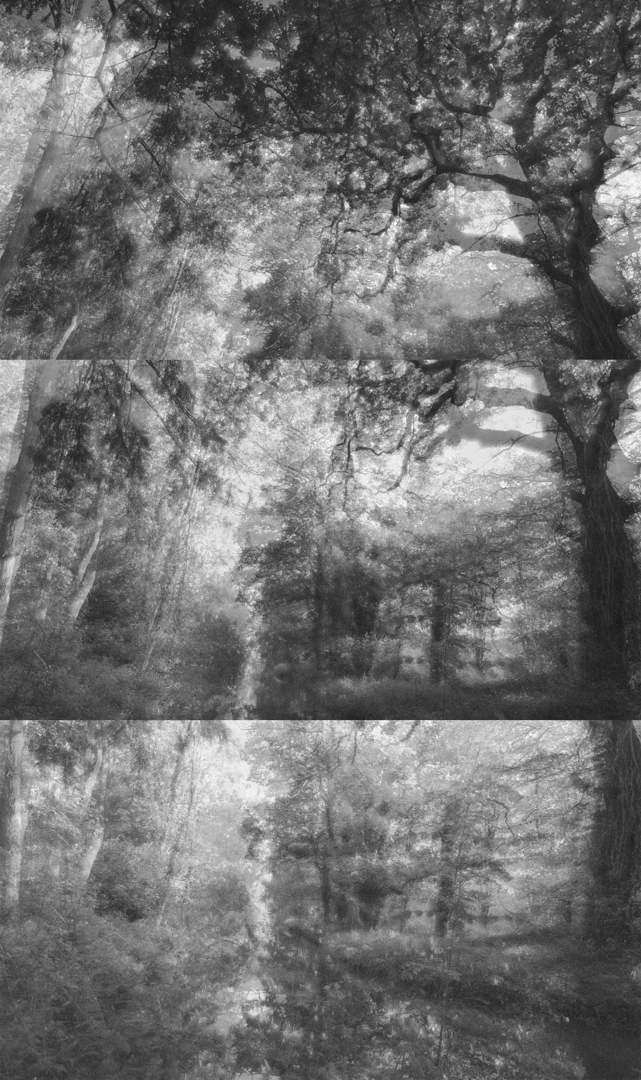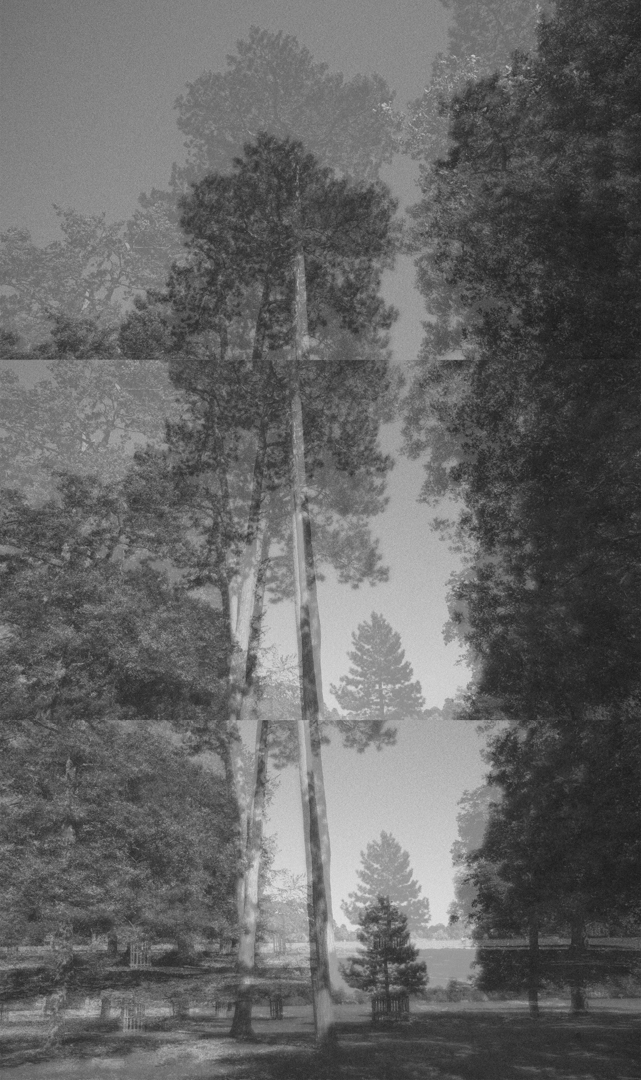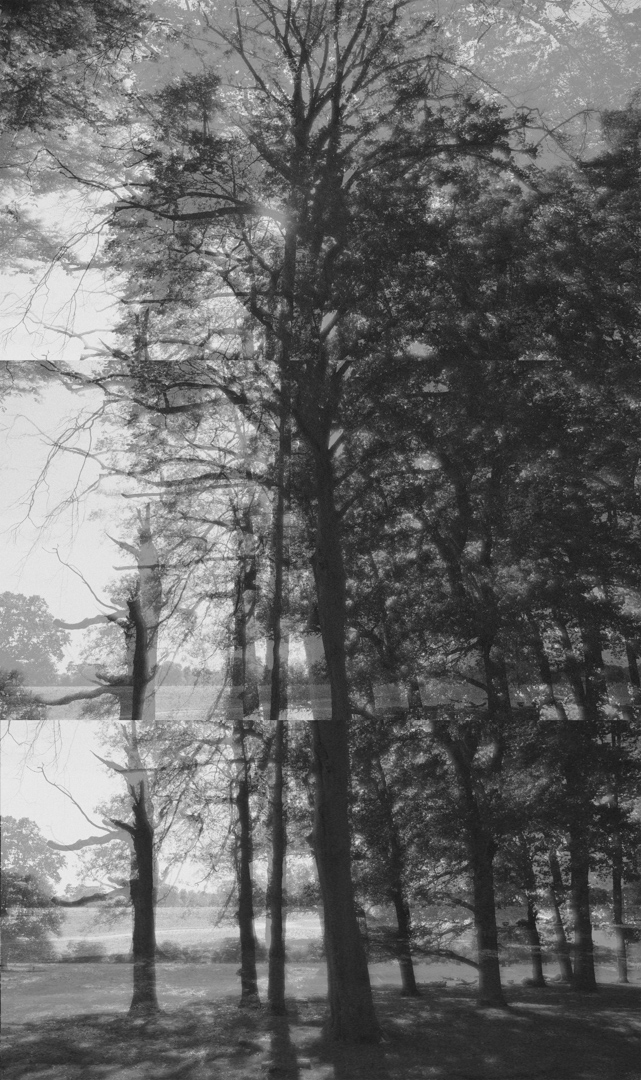
Categories
AGM62 Photography Research Project Stage 1 Posts

AGM62 Group Tutorial Feedback and Action 7 October 2020

On this day, my classmates and I had a group tutorial. This gave us the opportunity to meet everyone at one time and in one place for the first time in seven months. It also was when we all ‘formally’ met our module tutor, Dr Åsa Johannesson, who is a Senior Lecturer in Photography at University of Brighton.

In preparation for the tutorial, each student had to come with ideas, photographs and/or research materials. This was in order to:

  • Focus on our ideas and interests
  • Explore further how process, materials and presentation can support these
  • Look at, potentially, how these three aspects could take a lead in the unfolding of our work

There would also be a recap by Åsa of the module specs at the beginning of the session, including the module aims of:

  • identify a field of practice-based research and experimentation and initiate a related photographic project
  • provide opportunities to present practice work formally and engage in critique
  • develop appropriate technical skills

Overall, it was great to see the other students’ work while giving and receiving feedback. Over the last few months, it was like working in a complete vacuum and I found it difficult not being able to get out of the ‘bubble’ (both physical and metaphorical) in which I had retreated. It was also refreshing to have a new tutor who could give a different viewpoint on familiar subjects.

One aspect I picked up on was Åsa’s outlining the differences between Ontology and Epistemology.

Within Philosophy, Ontology is the branch of metaphysics dealing with the nature of being and a set of concepts and categories in a subject area or domain that shows their properties and the relations between them.

Epistemology is the theory of knowledge, especially with regard to its methods, validity, and scope, and the distinction between justified belief and opinion.

Åsa also highlighted the aspect of the shift within academia from a human-centric perspective to a non-human one (Post-Humanism). This something I could potentially research in relation to trees – by taking an ontological standpoint, I could examine and portray trees from their ‘point-of-view’, rather than my epistemological impression of them. I hope that I got that aspect correct, as when looking at this briefly online, there’s a lot of to explore and understand further.

When it came to presenting my ideas and recent photographs, I prepared two posts that focused on particular project passions and potential progressions:

https://jenniemeadowsma.photo.blog/2020/10/06/agm62-project-passions-and-future-directions-30-september-2020/

AGM62 Potential Progressions 6 October 2020

The following is more a set of ‘notes’ in order to capture my thoughts on and impressions of the images and the relation of the feedback I received along with other ideas.

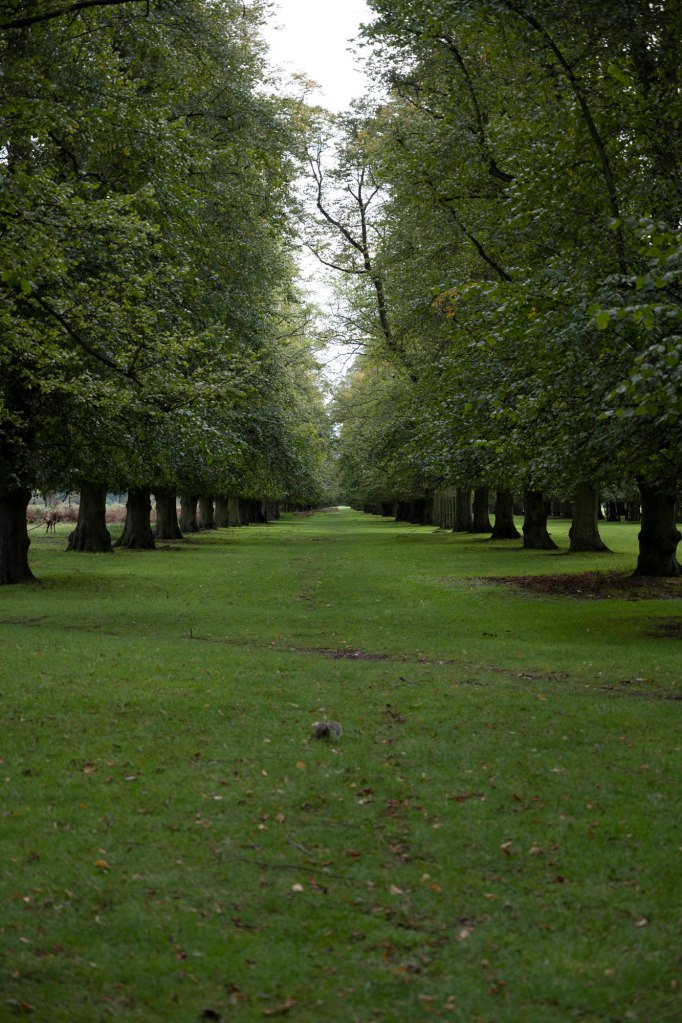
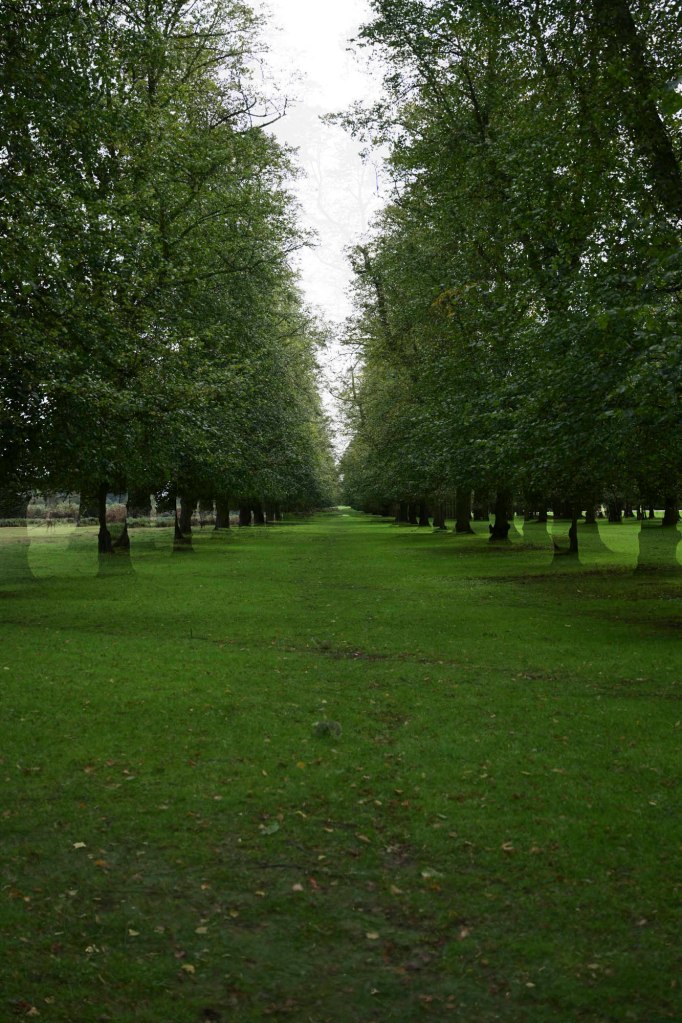
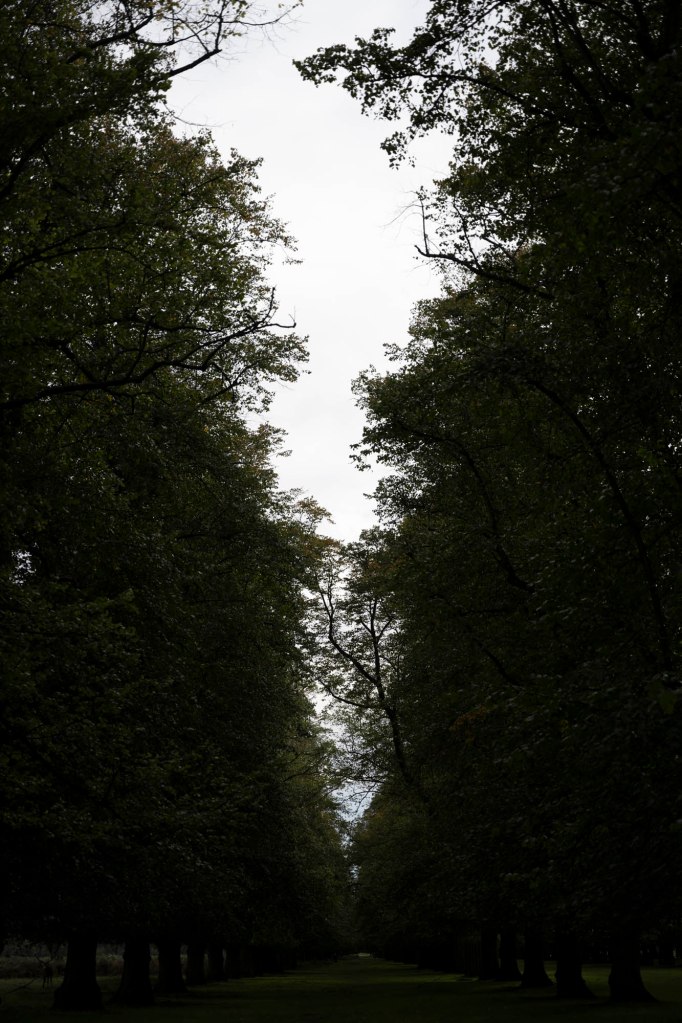
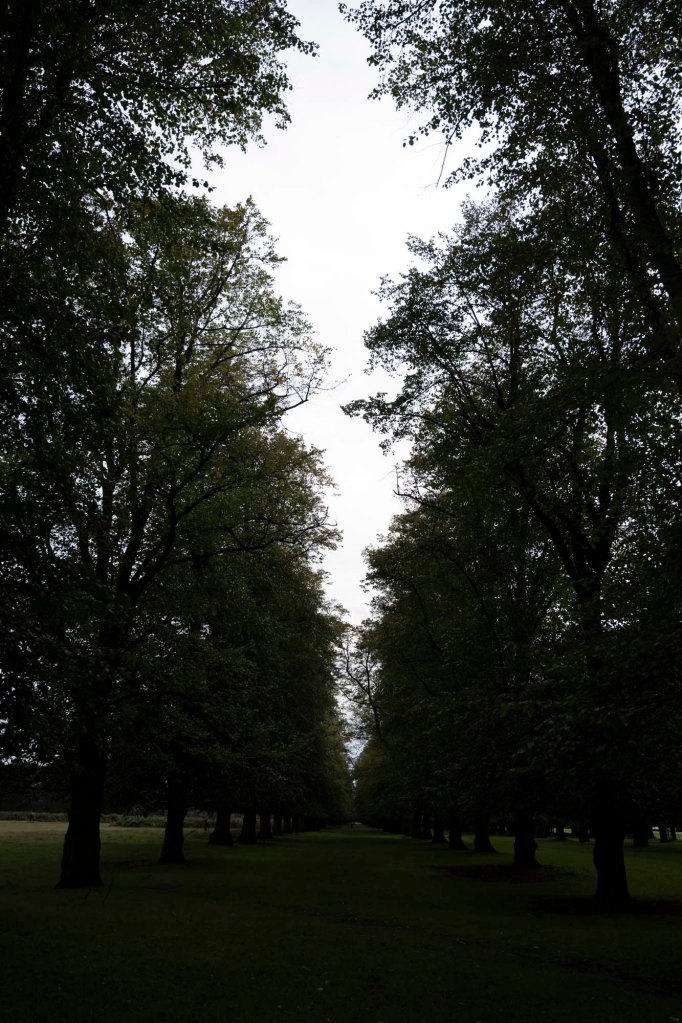
When presenting the images, the main thoughts I had was how the park, although full of ‘nature’, was a man-made construct. It is also managed in such a way to create an environment to ensure the ‘nature’ continued.

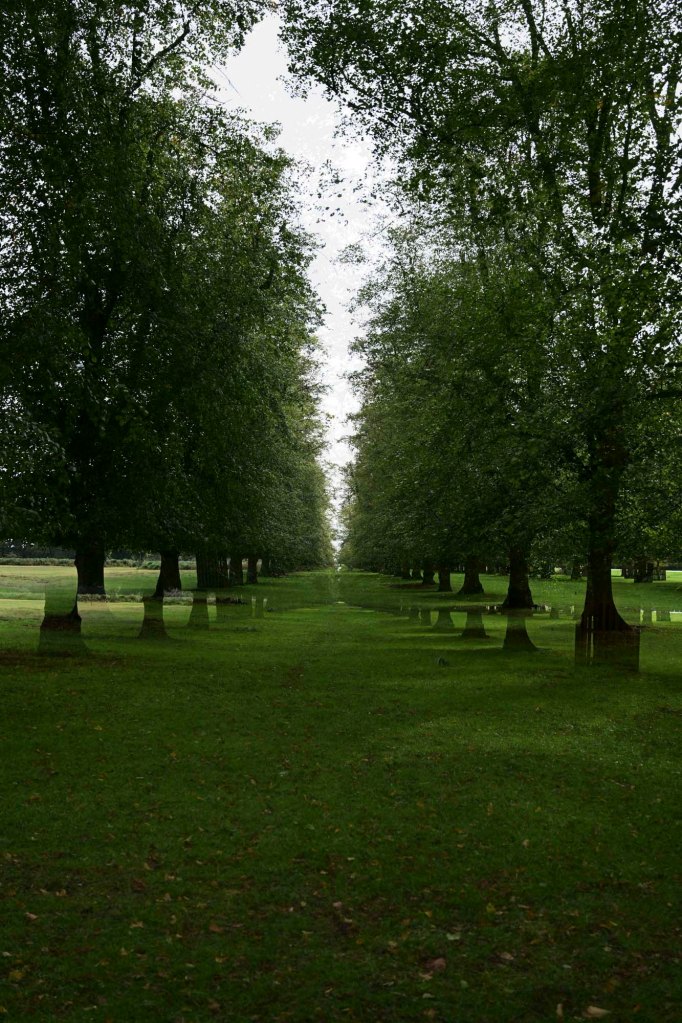
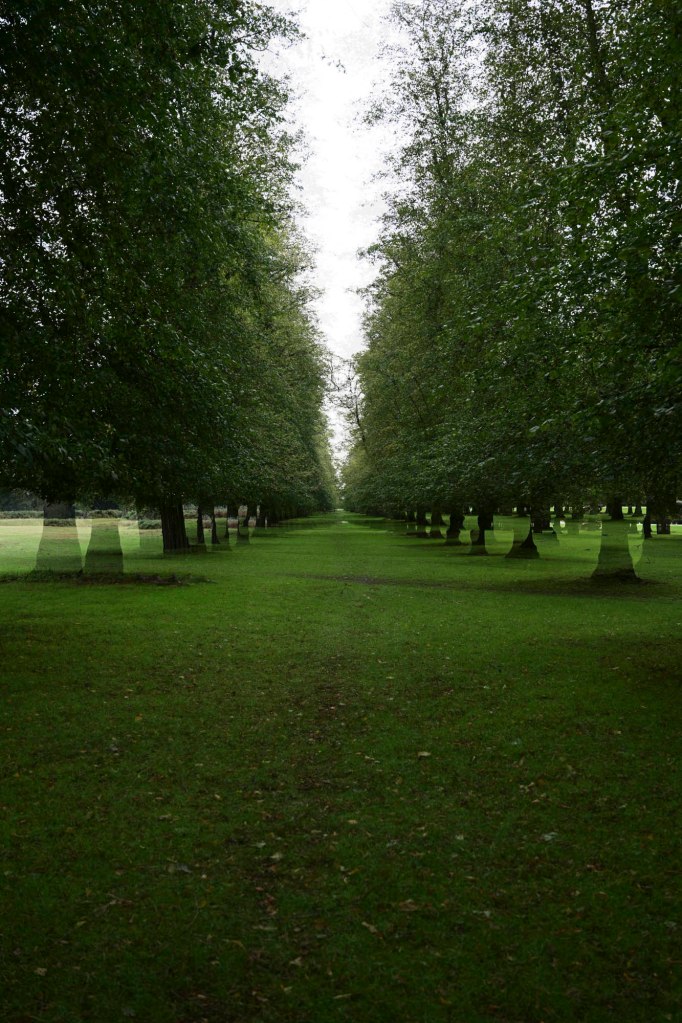
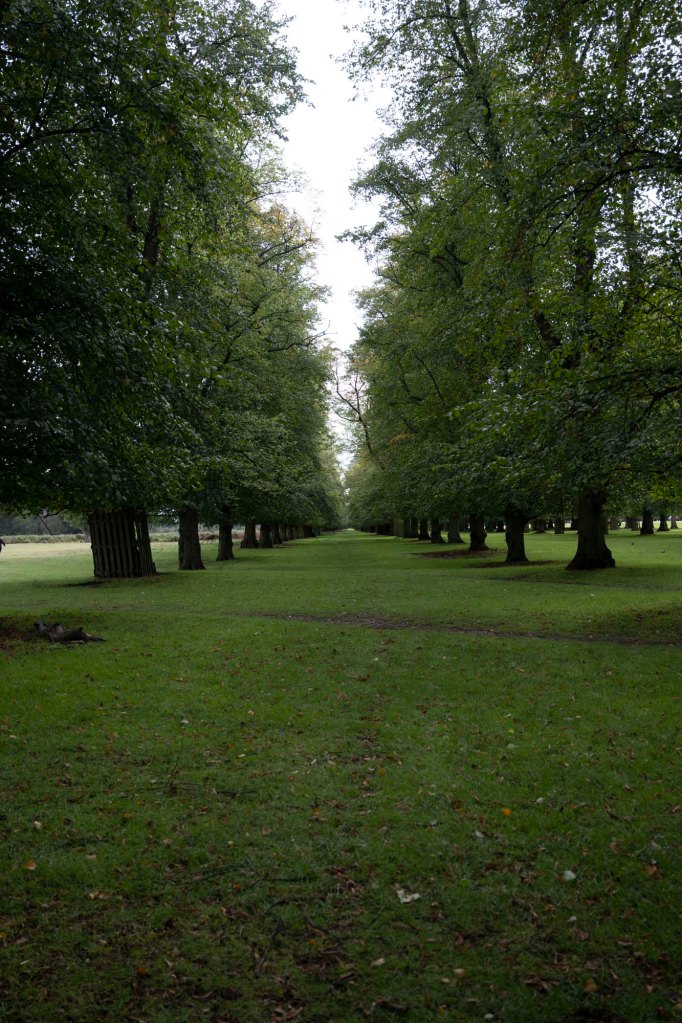
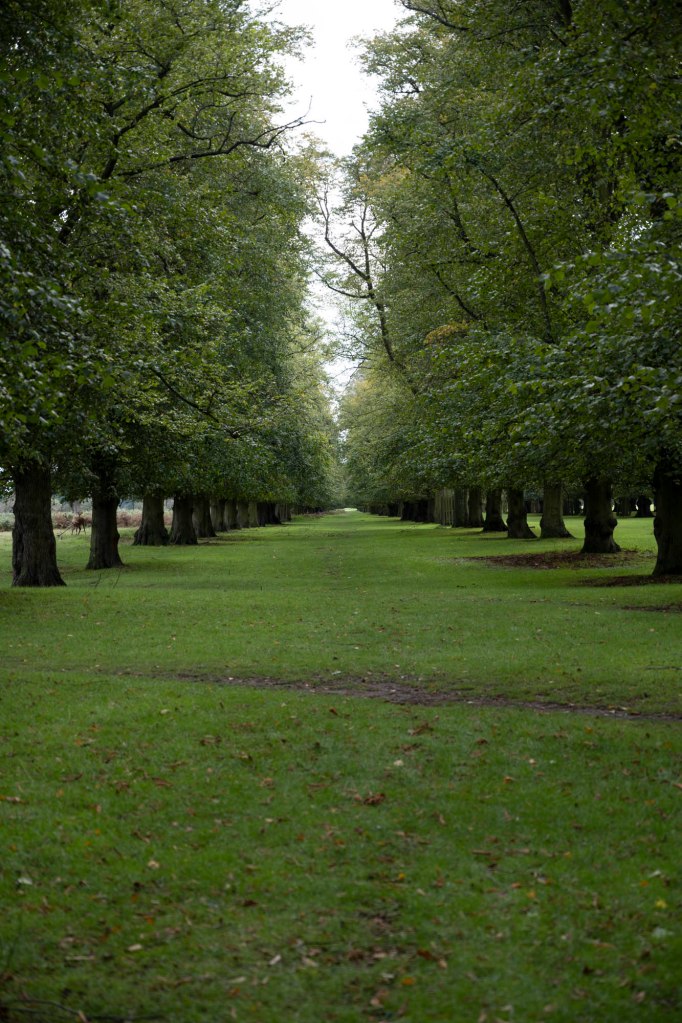
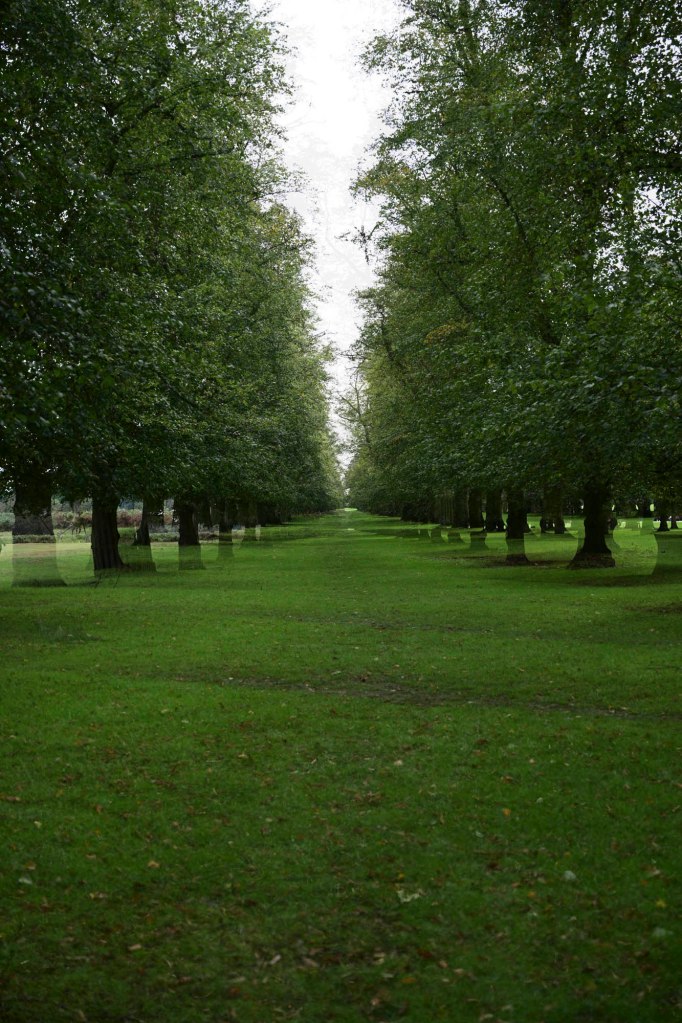
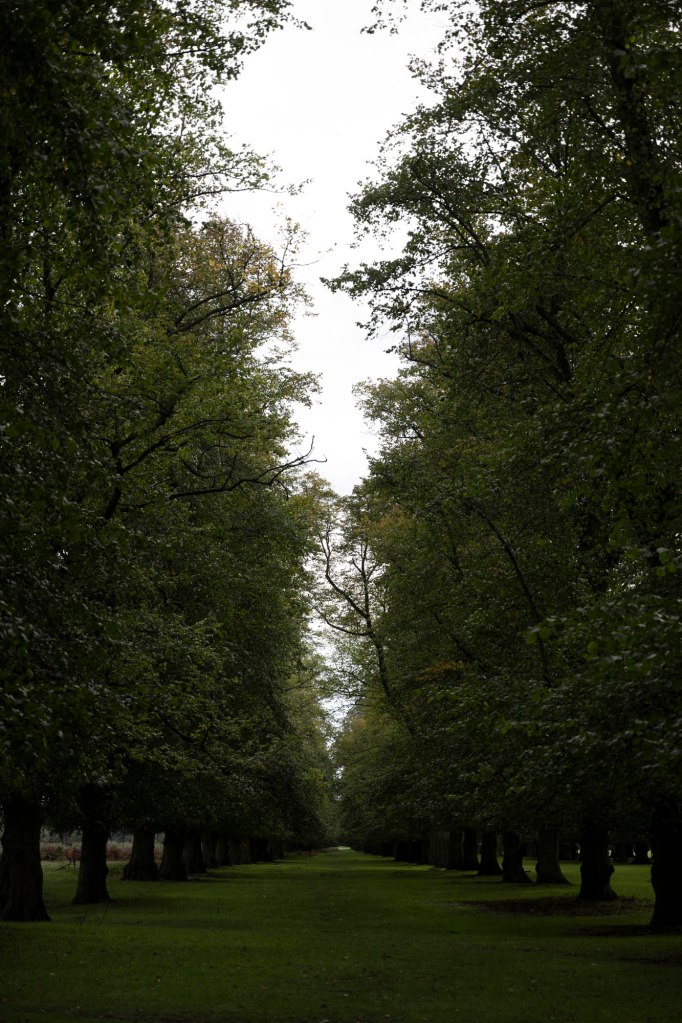
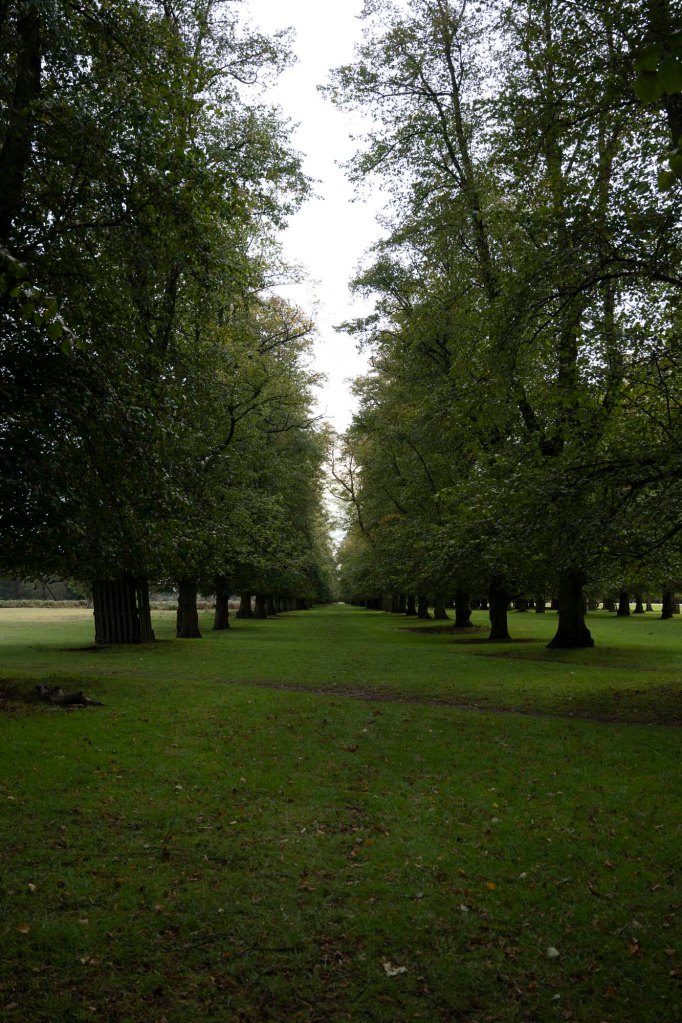
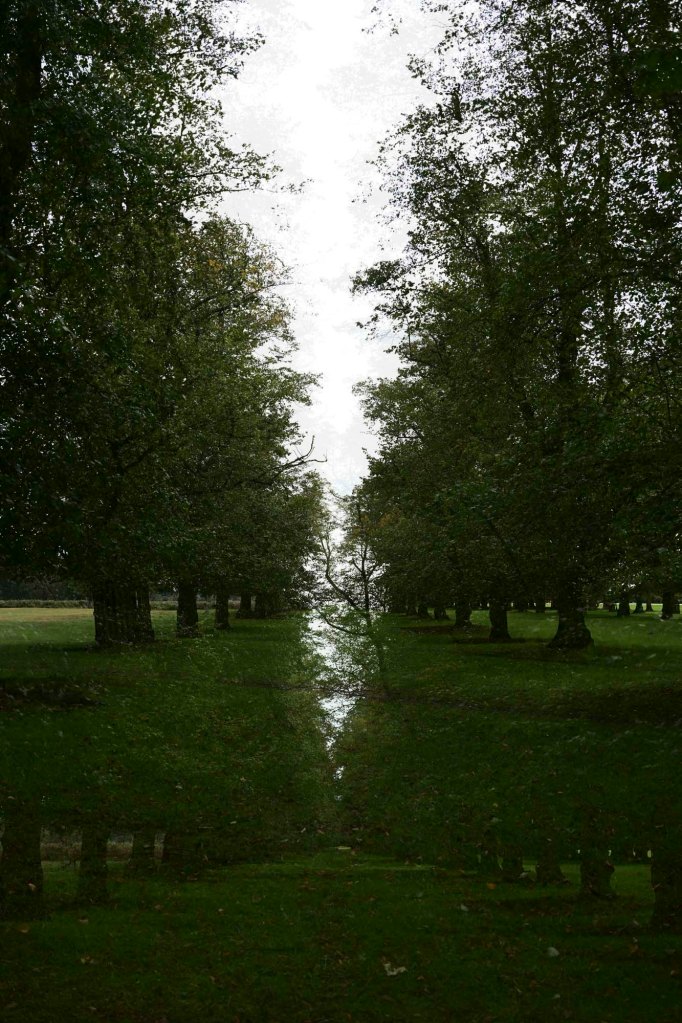
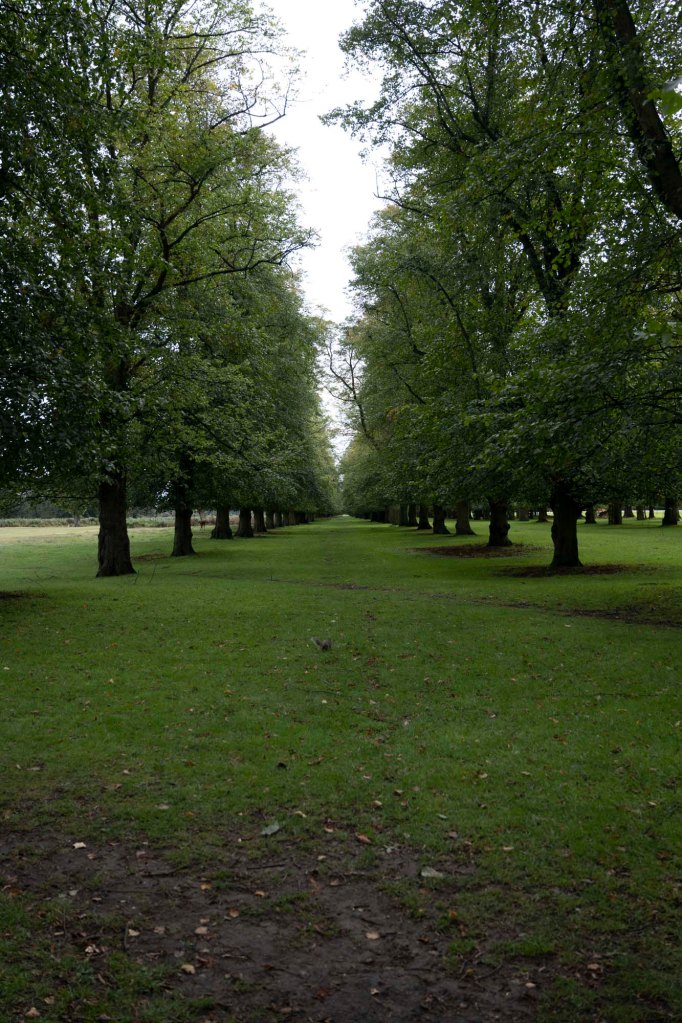
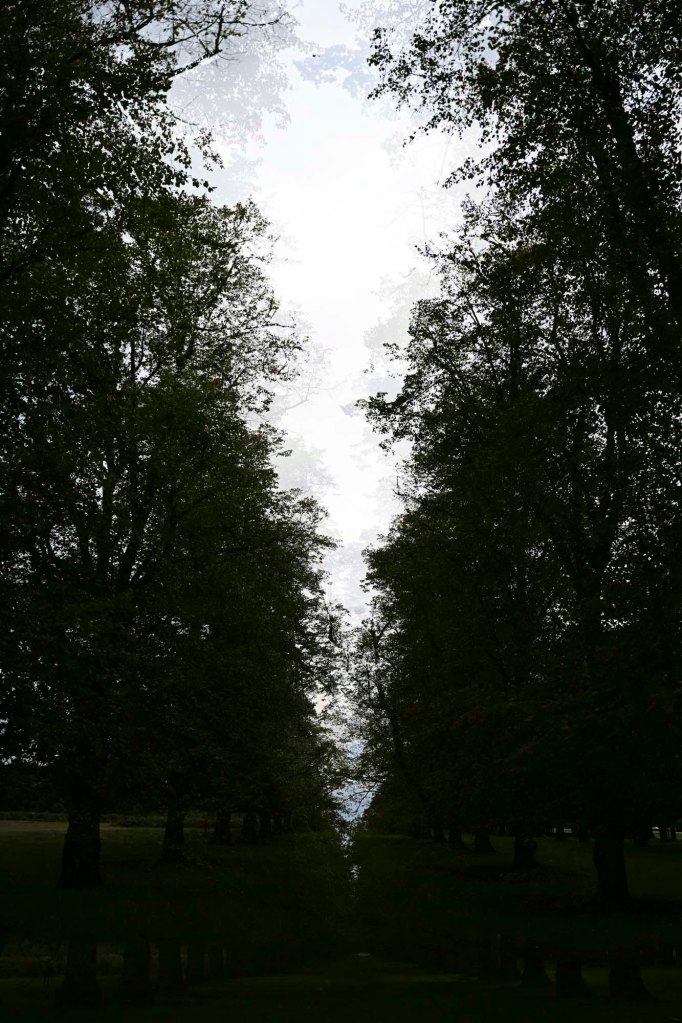
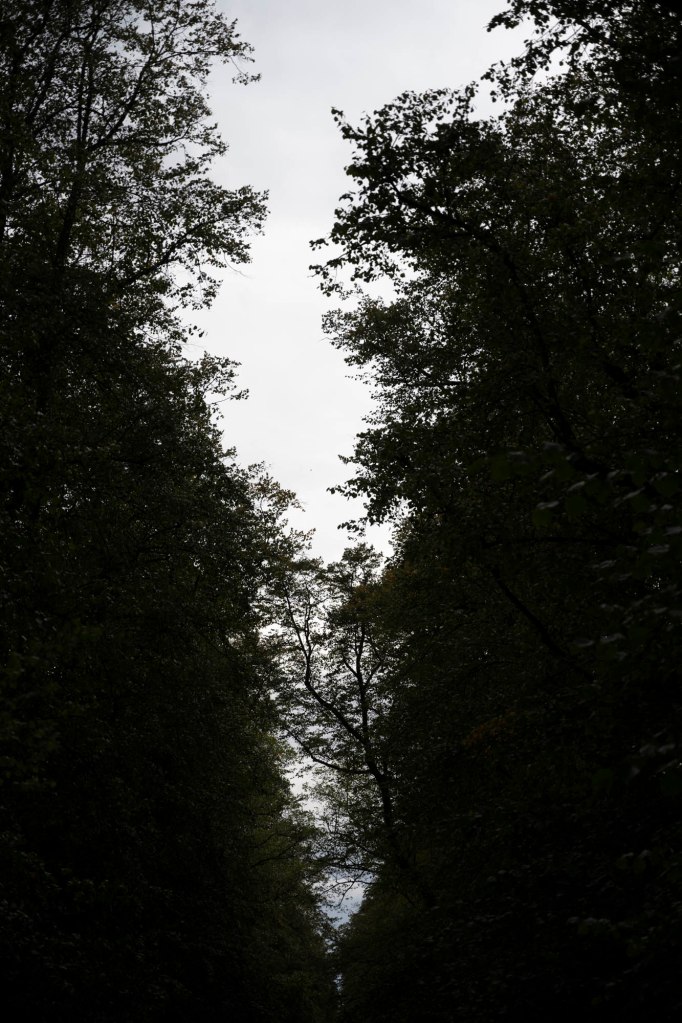
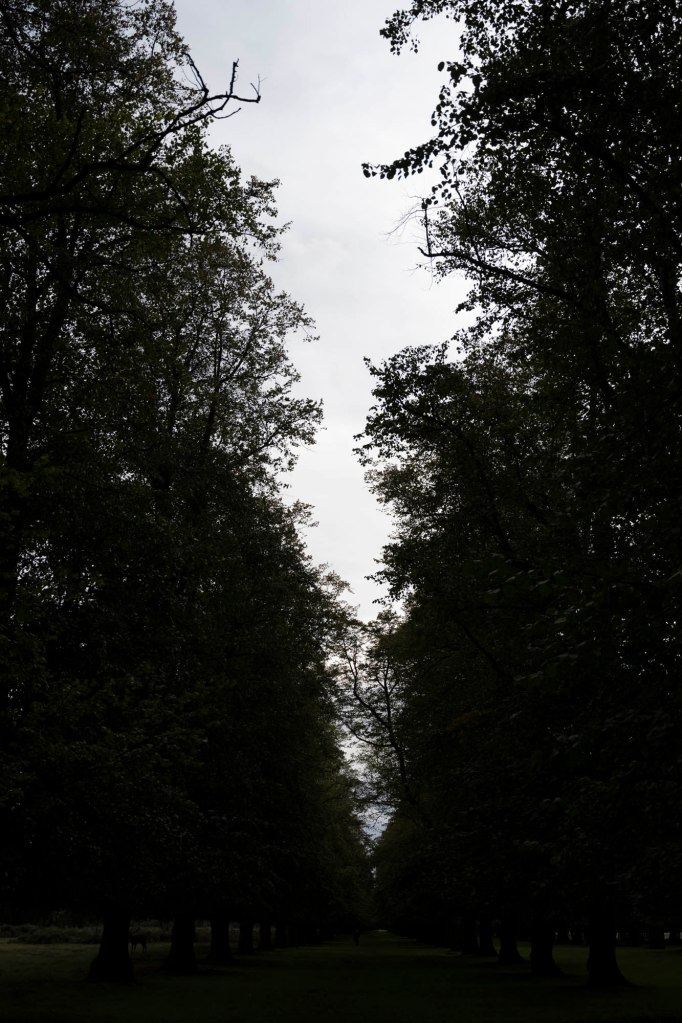
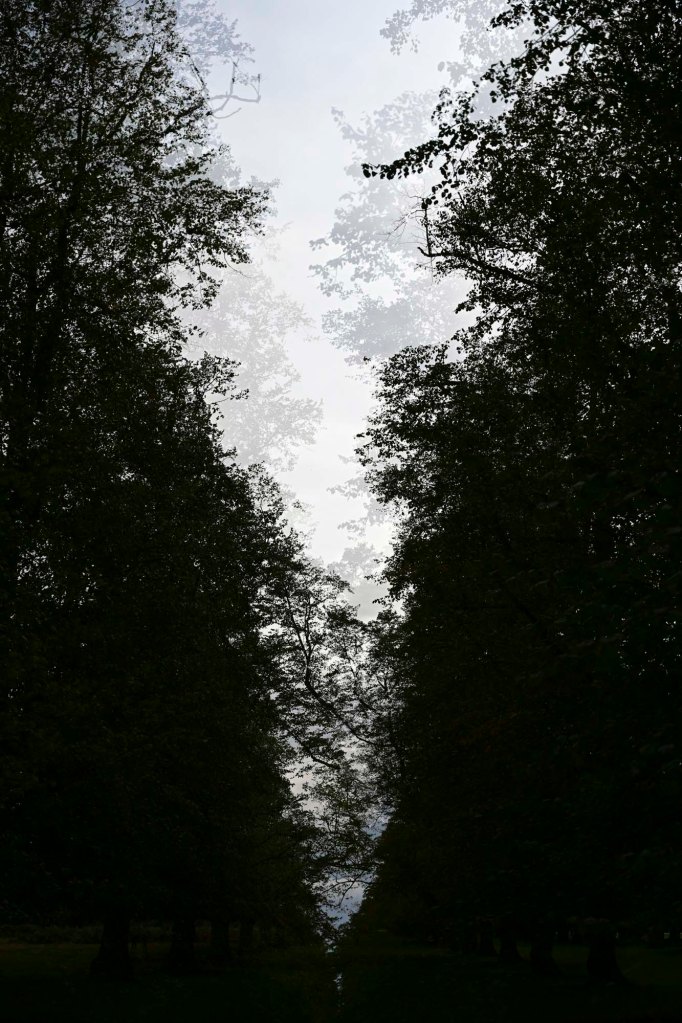
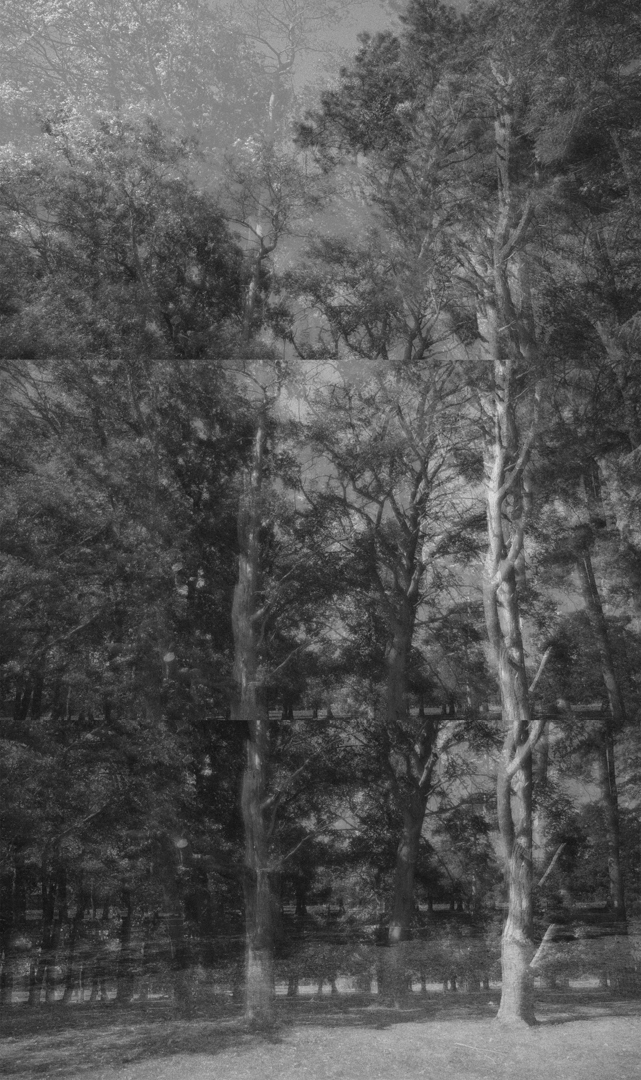
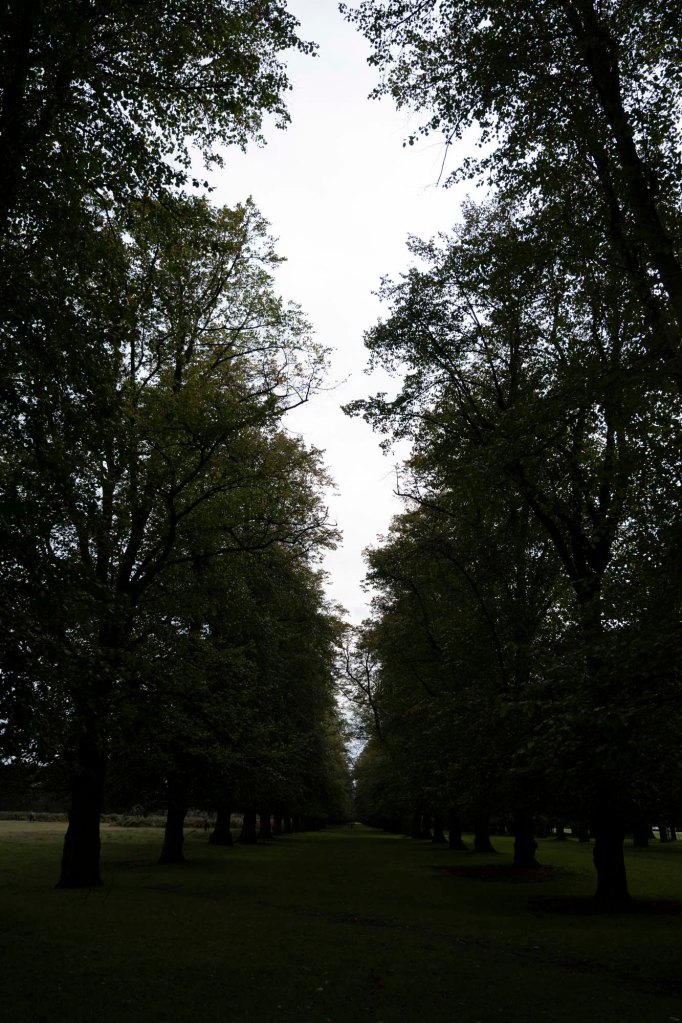
I also noticed how when the images of the Avenue were combined, they created something visual that jumped out at me.
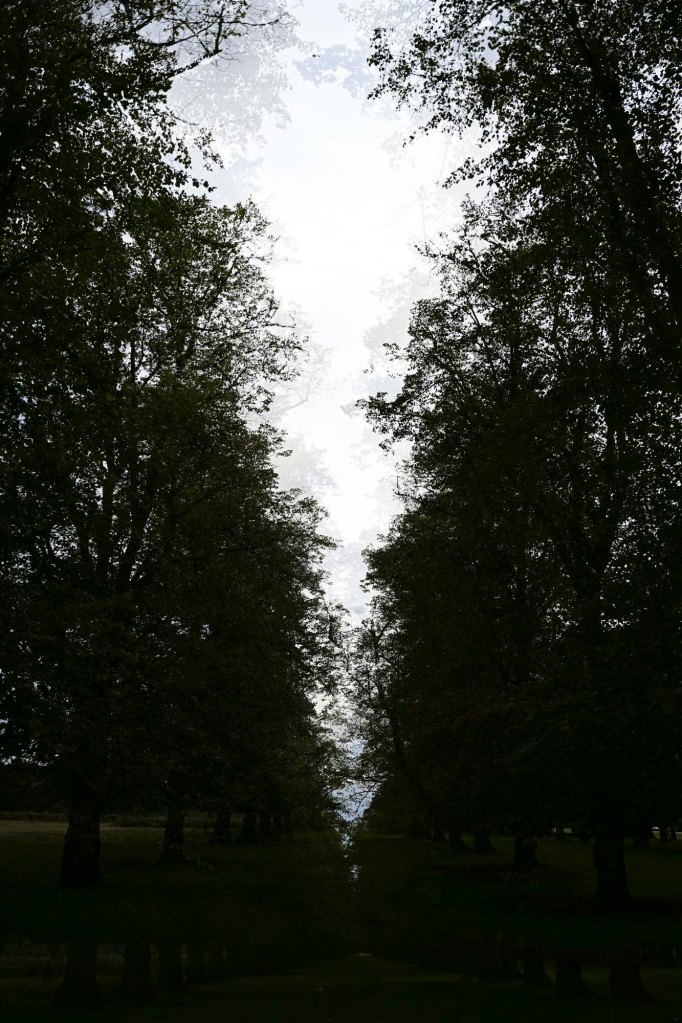
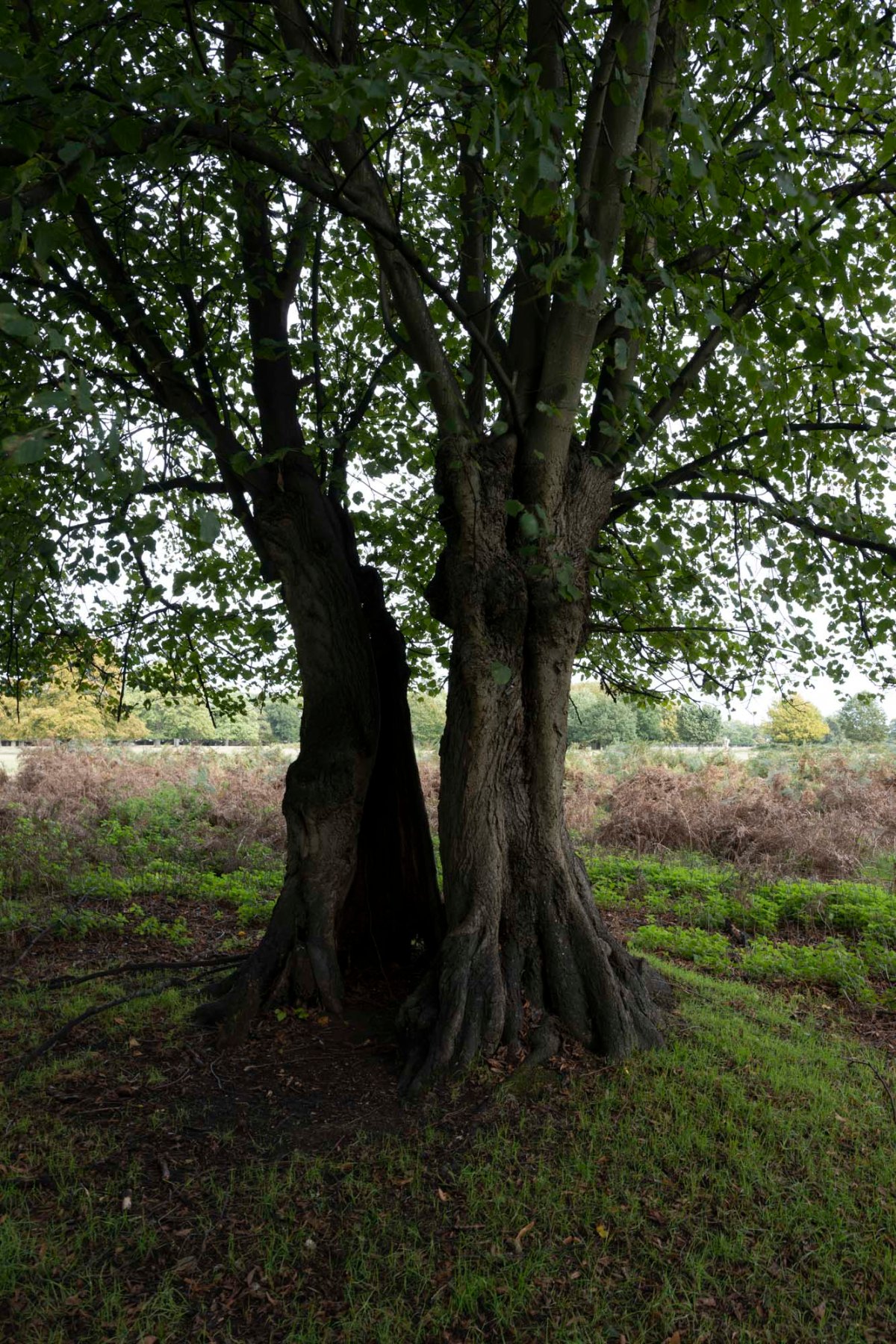
When discussing the Split images, Abi mentioned the theme of split trees in literature, specifically in Jane Eyre by Charlotte Brontë.
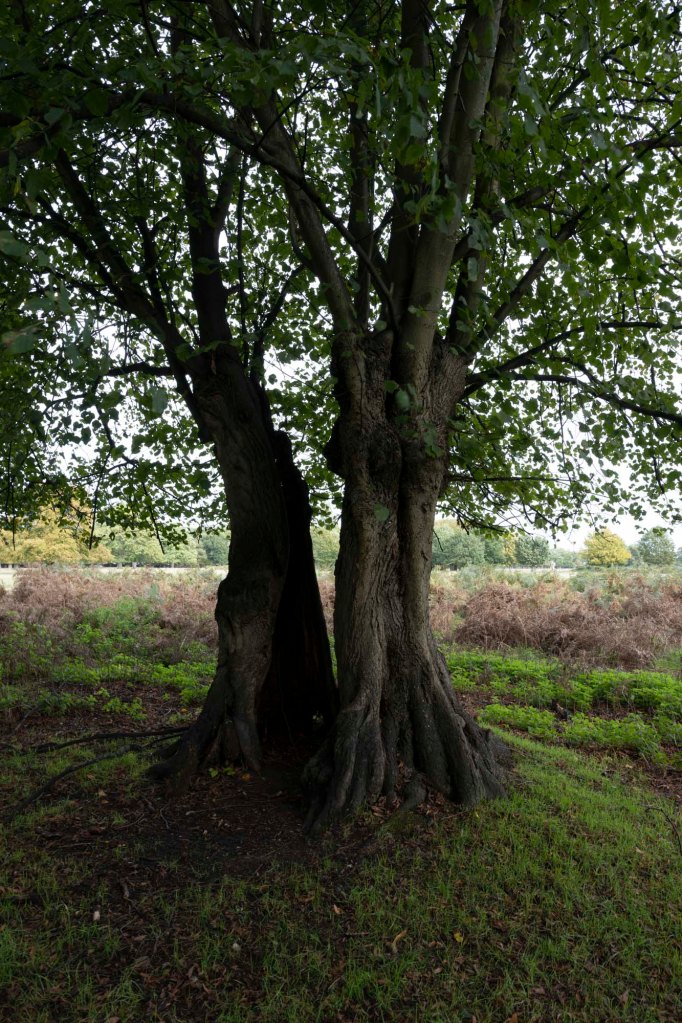
Again, the relationship between the individual trees and the space in between came up.

Other thoughts was the location of London. When asked ‘why London’ by my classmate, Es, I answered ‘I have lived in this city all of my life – this is my environment’. With this project, I will be showing a different side to the city and have regular access to my subject. Also, it’s a place in which I love being. As I said to the class, it feels like I’m ‘hugged’ every time I visit this park.

The main aspect that Åsa brought into focus in relation to the project was that of critical ecology. The initial name mentioned was Tim Morton. Åsa also sent the following suggestions of readings regarding critical ecologies:

  • Tim Morton – Ecologist
    • Timothy Morton is Rita Shea Guffey Chair in English at Rice University. He has collaborated with Björk, Olafur Eliasson, Jennifer Walshe, Haim Steinbach, and Pharrell Williams. He is the author of Humankind: Solidarity with Nonhuman People (Verso, 2017), Dark Ecology: For a Logic of Future Coexistence (Columbia, 2016), Nothing: Three Inquiries in Buddhism (Chicago, 2015), Hyperobjects: Philosophy and Ecology after the End of the World (Minnesota, 2013), Realist Magic: Objects, Ontology, Causality (Open Humanities, 2013), The Ecological Thought (Harvard, 2010), Ecology without Nature (Harvard, 2007), eight other books and 200 essays on philosophy, ecology, literature, music, art, architecture, design and food. In 2014 Morton gave the Wellek Lectures in Theory. Blog: http://www.ecologywithoutnature.blogspot.com. Twitter: @the_eco_thought
  • Anna Tsing – The Mushroom at the End of the World
    • Matsutake is the most valuable mushroom in the world–and a weed that grows in human-disturbed forests across the northern hemisphere. Through its ability to nurture trees, matsutake helps forests to grow in daunting places. It is also an edible delicacy in Japan, where it sometimes commands astronomical prices. In all its contradictions, matsutake offers insights into areas far beyond just mushrooms and addresses a crucial question: what manages to live in the ruins we have made? A tale of diversity within our damaged landscapes, The Mushroom at the End of the World follows one of the strangest commodity chains of our times to explore the unexpected corners of capitalism. Here, we witness the varied and peculiar worlds of matsutake commerce: the worlds of Japanese gourmets, capitalist traders, Hmong jungle fighters, industrial forests, Yi Chinese goat herders, Finnish nature guides, and more. These companions also lead us into fungal ecologies and forest histories to better understand the promise of cohabitation in a time of massive human destruction. By investigating one of the world’s most sought-after fungi, The Mushroom at the End of the World presents an original examination into the relation between capitalist destruction and collaborative survival within multispecies landscapes, the prerequisite for continuing life on earth.
  • Tim Morton – The Ecological Thought
    • In this passionate, lucid, and surprising book, Timothy Morton argues that all forms of life are connected in a vast, entangling mesh. This interconnectedness penetrates all dimensions of life. No being, construct, or object can exist independently from the ecological entanglement, Morton contends, nor does “Nature” exist as an entity separate from the uglier or more synthetic elements of life. Realizing this interconnectedness is what Morton calls the ecological thought. In three concise chapters, Morton investigates the profound philosophical, political, and aesthetic implications of the fact that all life forms are interconnected. As a work of environmental philosophy and theory, The Ecological Thought explores an emerging awareness of ecological reality in an age of global warming. Using Darwin and contemporary discoveries in life sciences as root texts, Morton describes a mesh of deeply interconnected life forms-intimate, strange, and lacking fixed identity. A “prequel” to his Ecology without Nature: Rethinking Environmental Aesthetics (Harvard, 2007), The Ecological Thought is an engaged and accessible work that will challenge the thinking of readers in disciplines ranging from critical theory to Romanticism to cultural geography. (2020)

  • Kathryn Yusoff – A Billion Black Anthropocene or None
    • Rewriting the \u201corigin stories\u201d of the Anthropocene No geology is neutral, writes Kathryn Yusoff. Tracing the color line of the Anthropocene, A Billion Black Anthropocenes or None examines how the grammar of geology is foundational to establishing the extractive economies of subjective life and the earth under colonialism and slavery. Yusoff initiates a transdisciplinary conversation between feminist black theory, geography, and the earth sciences, addressing the politics of the Anthropocene within the context of race, materiality, deep time, and the afterlives of geology. Forerunners is a thought-in-process series of breakthrough digital works. Written between fresh ideas and finished books, Forerunners draws on scholarly work initiated in notable blogs, social media, conference plenaries, journal articles, and the synergy of academic exchange. This is gray literature publishing: where intense thinking, change, and speculation take place in scholarship. (2020)
  • Richard Powers – Overstory (fiction)
    • An artist inherits a hundred years of photographic portraits, all of the same doomed American chestnut. A hard-partying undergraduate in the late 1980s electrocutes herself, dies, and is sent back into life by creatures of air and light. A hearing- and speech-impaired scientist discovers that trees are communicating with one another. An Air Force crewmember in the Vietnam War is shot out of the sky, then saved by falling into a banyan. This is the story of these and five other strangers, each summoned in different ways by the natural world, who are brought together in a last stand to save it from catastrophe. (2020)
  • Wahida Khandker – Process Metaphysics and Mutative Life
    • This book provides a survey of key process-philosophical approaches that, in conversation with selected concepts across the biological and physical sciences, help us to think about living processes, or ‘lived time,’ at different scales of functioning. The first part is written from an opening perspective on the question of the differing scales of analysis provided by Alfred North Whitehead. In particular, his interest in questions arising from the quantum mechanical reconciliation with classical mechanics informs the first two chapters that address problematic categorisations of life as variously ‘despotic,’ ‘invasive,’ or as primitive (in the radically more-than-human case of micro-organisms), whose potential recategorisation relies on our willingness to acknowledge changes in value depending on the scaleat which we view them. The second part of the book concerns methodologies, in the light of works by Henri Bergson, whose intertwining concerns with epistemology and ontology in his theories of mind and life serve as a model for a process philosophy of biology. The chapters focus on techniques used across philosophy and the sciences to visualise processes that are otherwise unavailable to us due to the limitations of our perceptual faculties, no matter how sophisticated the tools for analysis, from microscopes to telescopes, have become. This book concludes with a consideration of the relations between parts and wholes in process, panpsychist, and ecological terms. It revisits the question of ecological balance and the place of human activities in relation to it, with reference to works of Charles Hartshorne and William James. (2020)
  • Bruno Latour – Pandora’s Hope
    • A scientist friend asked Bruno Latour point-blank: “Do you believe in reality?” Taken aback by this strange query, Latour offers his meticulous response in Pandora’s Hope. It is a remarkable argument for understanding the reality of science in practical terms. In this book Latour, identified by Richard Rorty as the new “bete noire of the science worshipers,” gives us his most philosophically informed book since Science in Action. Through case studies of scientists in the Amazon analyzing soil and in Pasteur’s lab studying the fermentation of lactic acid, he shows us the myriad steps by which events in the material world are transformed into items of scientific knowledge. Through many examples in the world of technology, we see how the material and human worlds come together and are reciprocally transformed in this process. Why, Latour asks, did the idea of an independent reality, free of human interaction, emerge in the first place? His answer to this question, harking back to the debates between Might and Right narrated by Plato, points to the real stakes in the so-called science wars: the perplexed submission of ordinary people before the warring forces of claimants to the ultimate truth. (2020)

  • Artists:
    • Rachel Pimm: https://rachelpimmwork.tumblr.com/
      • B. 1984 Harare Zimbabwe, Lives and works London
      • Rachel Pimm is a research based artist whose work studies the narratives of transforming surfaces, environments, ecologies and ecosystems and their politics and materialities. These often take the point of view of plants, minerals, worms, forces, elements or industrial processes.
      • Pronouns are: they/ them/ theirs (Tumblr, 2020)
    • Epha Roe: https://research.brighton.ac.uk/en/persons/epha-roe
      • Epha Roe is an artist / researcher whose interests broadly cover theories of landscape, place and agency. They are currently working on their practice-based PhD on building a photographic, historical and theoretical exploration of ancient oak trees in England that form part of the Tree Council’s 2002 list of ‘Great British Trees’. In brief, this project aims to investigate through photography and critical analysis, the role that ancient oak trees play in constructing ideas of place, particularly in relation to notions of heritage and agency. Asking the questions: why are particular trees considered as heritage? how are heritage practices carried out and managed within the natural environment? and how does natural phenomena conceived as heritage ‘push-back’ against those practices? (Epha Roe, 2020)

  • Goldsmith’s research hub and MA:
    • https://criticalecologies.gold.ac.uk/
      • The issue of climate change and environmental transformation is clearly one of the most significant challenges we face today. What is at stake in the ecological crises of the 21st century that raises specific questions and areas of concern for the arts, humanities, and cultural production? Who and what suffers or benefits from these crises and through what legal, economic, and political structures? How can we represent and narrate multi-scalar and multi-temporal phenomena to plan for and respond to uncertain futures? An era looms for which we have no clear template. The Critical Ecologies research stream tackles questions of global warming, environmental justice, colonial dispossession, climate migration, nuclear cultures, media geology and e-waste from an arts and humanities perspective that takes scientific research and practices seriously. (Critical Ecologies, 2020)
      • https://www.gold.ac.uk/pg/ma-art-ecology/
        • The MA Art & Ecology is a fifteen-month studio-based post-graduate programme for emerging artists who want to engage in meaningful and transformative ways with the most pressing ecological questions of our time. This is a unique programme located in the urban environment of South East London that seeks to develop new ways in which contemporary art practice can make interventions in a wide range of ecological contexts and extend the ways in which ecology is understood. During this MA we support artists to develop art practices in diverse sites and scales dedicated to imagining and shaping liveable futures.
        • Link art, ecology and social justice
        • The MA invites artists to develop innovative art projects grounded in rigorous artistic research and a profound understanding of how ecological challenges such as climate breakdown, pollution, and biodiversity loss are inseparable from questions of social justice. Alongside media including painting, sculpture, printmaking, installation, performance, art writing, textiles, digital media and video, this course supports artists who engage with forms of practice such as food production, sustainable data, citizen and expert science, re-wilding, inter-species care and co-dependence, somatic work, and ritual. (MA Art & Ecology, 2020)

The actions required as a result of this particular tutorial was to research and read up on the suggestions on this list in addition to taking further photographs. This would be in preparation for my 1-1 tutorial on Wednesday 22 October at 11 am in Brighton.

References

Amazon.co.uk. 2020. [online] Available at: <https://www.amazon.co.uk/gp/product/0691178321/ref=ox_sc_act_title_2?smid=A3P5ROKL5A1OLE&psc=1&gt; [Accessed 16 October 2020].
Amazon.co.uk. 2020. [online] Available at: <https://www.amazon.co.uk/Billion-Black-Anthropocenes-None-Forerunners/dp/1517907535/ref=sr_1_1?dchild=1&keywords=Kathryn+Yusoff+%E2%80%93+A+Billion+Black+Anthropocene+or+None&qid=1602839894&sr=8-1&gt; [Accessed 16 October 2020].
Amazon.co.uk. 2020. [online] Available at: <https://www.amazon.co.uk/Ecological-Thought-Timothy-Morton/dp/0674064224/ref=sr_1_fkmr1_1?dchild=1&keywords=tom+morton+%E2%80%93+the+ecological+thought&qid=1602839654&sr=8-1-fkmr1&gt; [Accessed 16 October 2020].
Amazon.co.uk. 2020. [online] Available at: <https://www.amazon.co.uk/Overstory-Shortlisted-Booker-Prize-2018/dp/1784708240/ref=sr_1_1?crid=2XG1SVORFKU12&dchild=1&keywords=the+overstory+richard+powers+paperback&qid=1602840071&sprefix=the+overstory+rich%2Caps%2C148&sr=8-1&gt; [Accessed 16 October 2020].
Amazon.co.uk. 2020. [online] Available at: <https://www.amazon.co.uk/Pandoras-Hope-Reality-Science-Studies/dp/067465336X/ref=sr_1_1?dchild=1&keywords=Bruno+Latour+%E2%80%93+Pandora%E2%80%99s+Hope&qid=1602840680&sr=8-1&gt; [Accessed 16 October 2020].
Amazon.co.uk. 2020. [online]. Available at: https://www.amazon.co.uk/Process-Metaphysics-Mutative-Life-Perspectives/dp/3030430472/ref=sr_1_1?dchild=1&keywords=Wahida+Khandker+%E2%80%93+Process+Metaphysics+and+Mutative+Life&qid=1602840244&quartzVehicle=45-608&replacementKeywords=wahida+khandker+%E2%80%93+process+metaphysics+and+mutative&sr=8-1.

Critical Ecologies. 2020. Critical Ecologies. [online] Available at: <https://criticalecologies.gold.ac.uk/&gt; [Accessed 16 October 2020].
Goldsmiths, University of London. 2020. MA Art & Ecology. [online] Available at: <https://www.gold.ac.uk/pg/ma-art-ecology/&gt; [Accessed 16 October 2020].
The University of Brighton. 2020. Epha Roe. [online] Available at: <https://research.brighton.ac.uk/en/persons/epha-roe&gt; [Accessed 16 October 2020].
Tumblr. 2020. Tumblr. [online] Available at: <https://rachelpimmwork.tumblr.com/info&gt; [Accessed 16 October 2020].
Categories
AGM62 Photography Research Project Stage 1 Posts

AGM62 Potential Progressions 6 October 2020

Mind the Gap

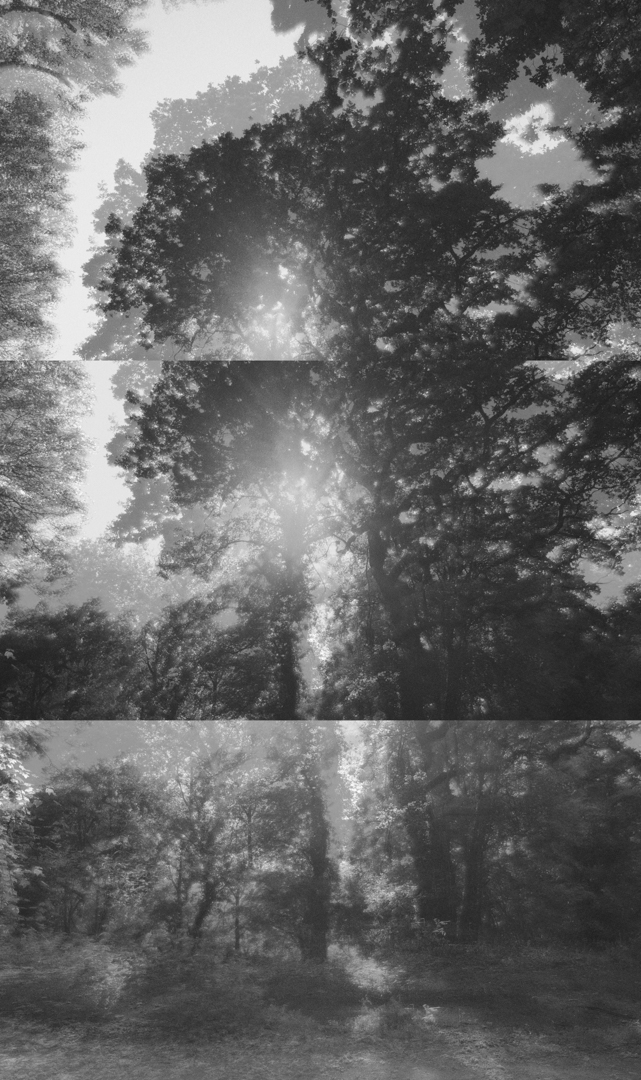
During the summer of 2020, it was quite clear that my fascination with both trees and Bushy Park had not waned. One aspect that kept coming back to me was a comment that my classmate, Abi, had made in regard to one of the Moments of Eternity images.

Moments of Eternity II

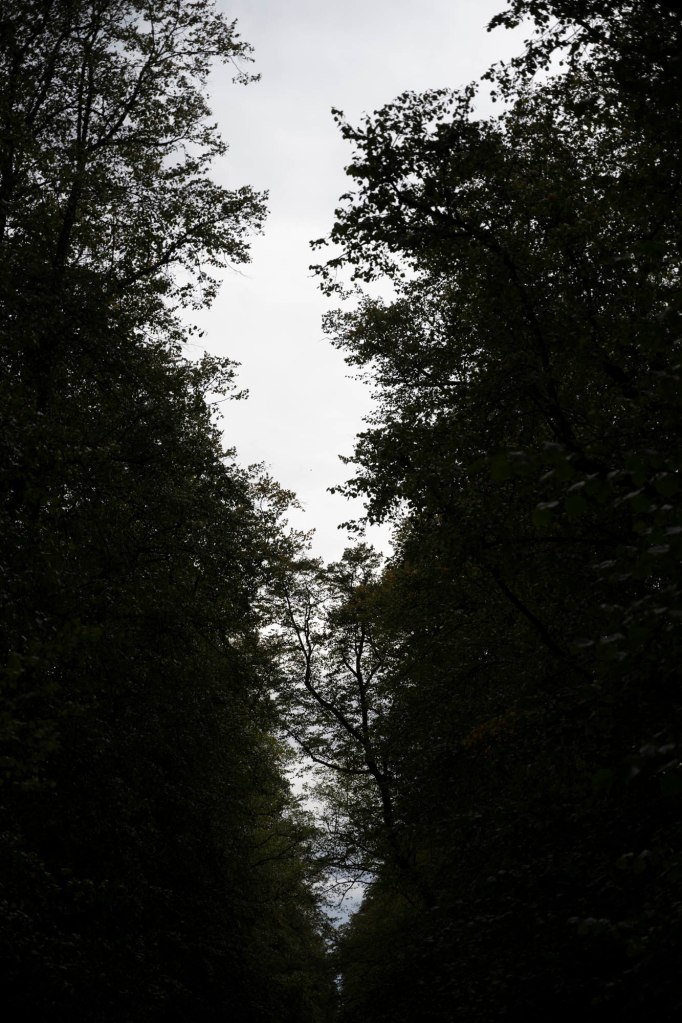
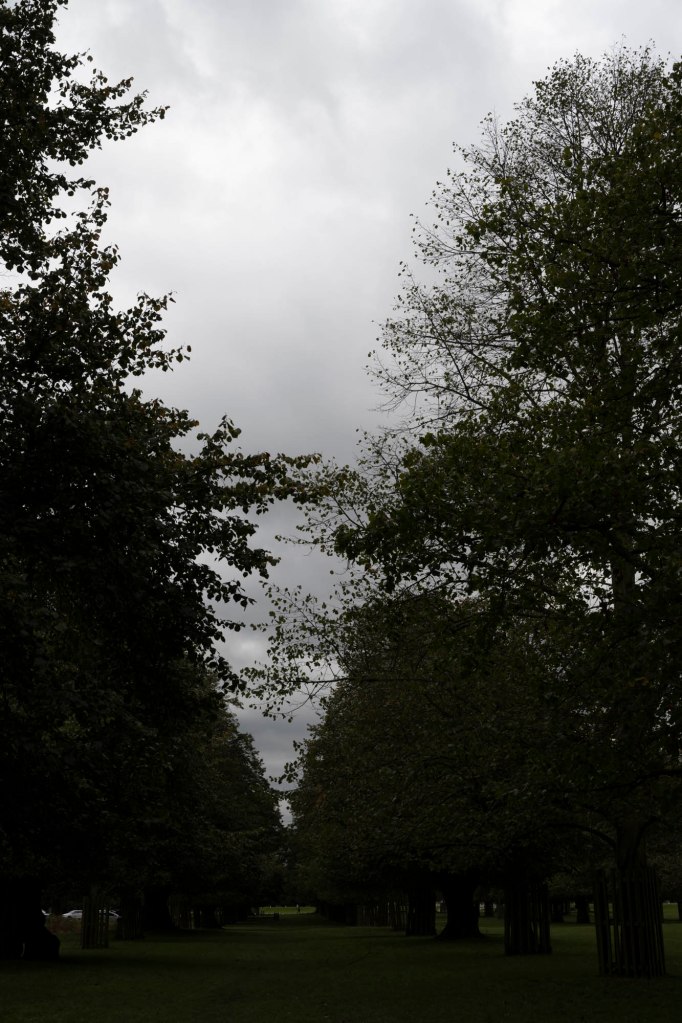
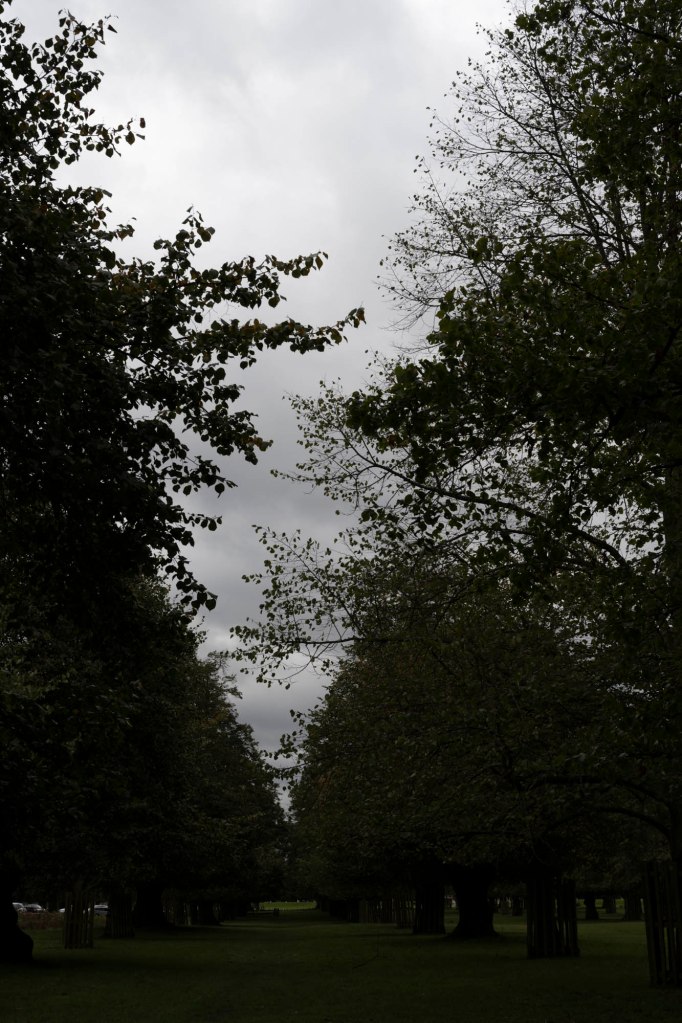
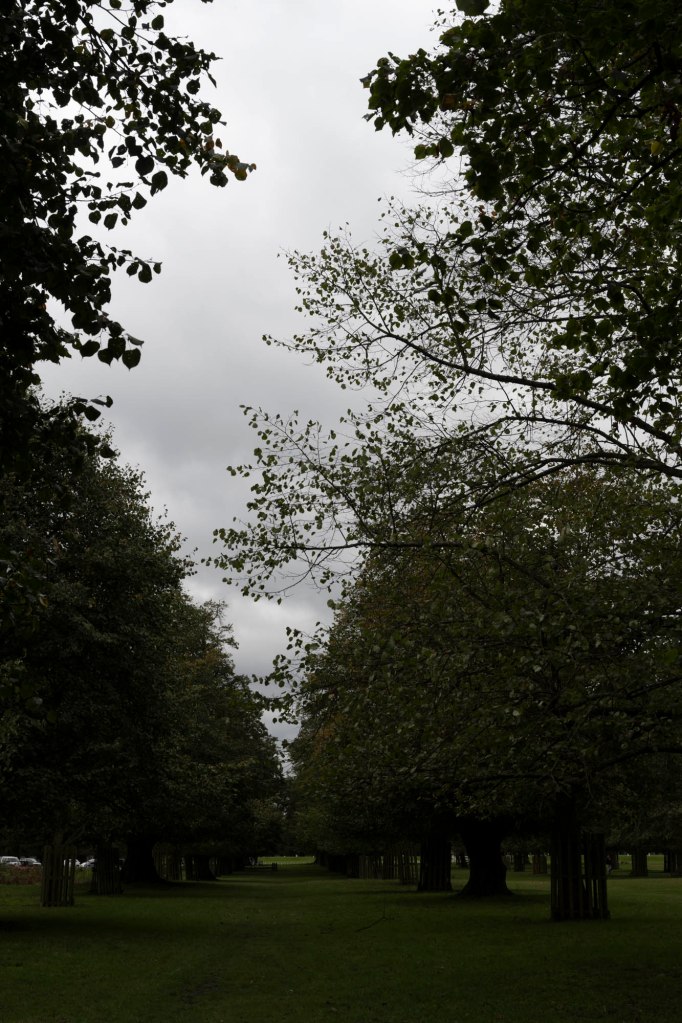
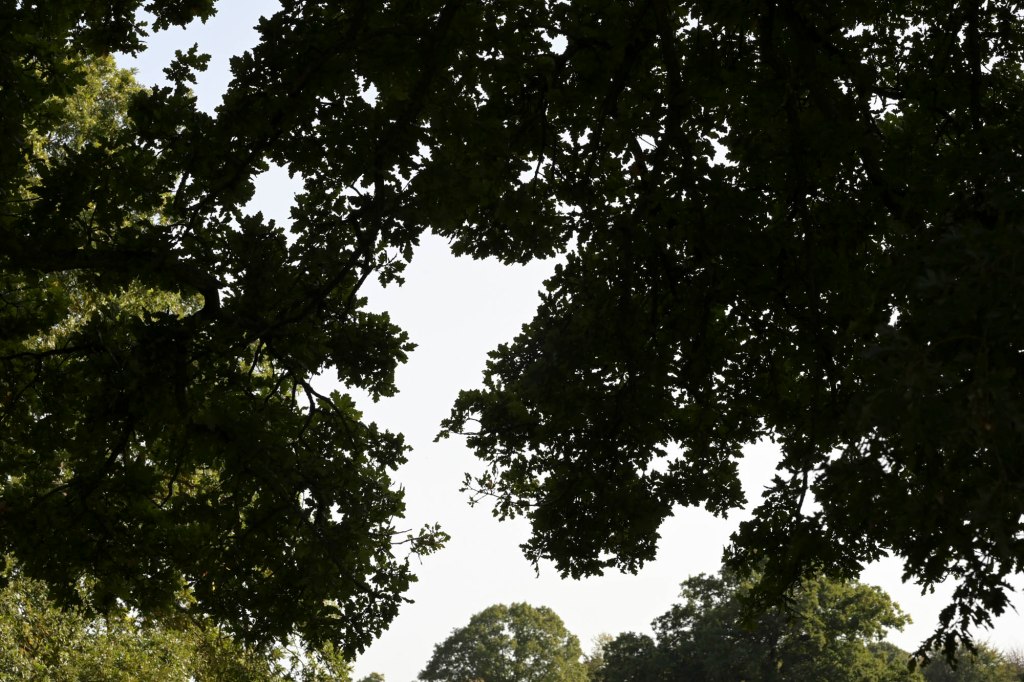
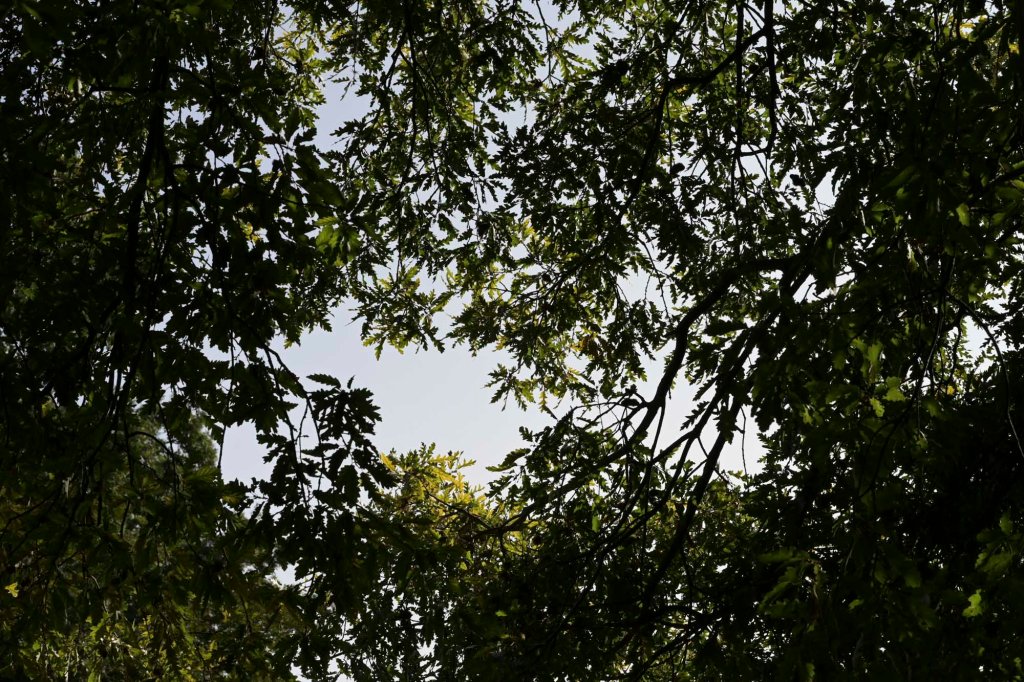
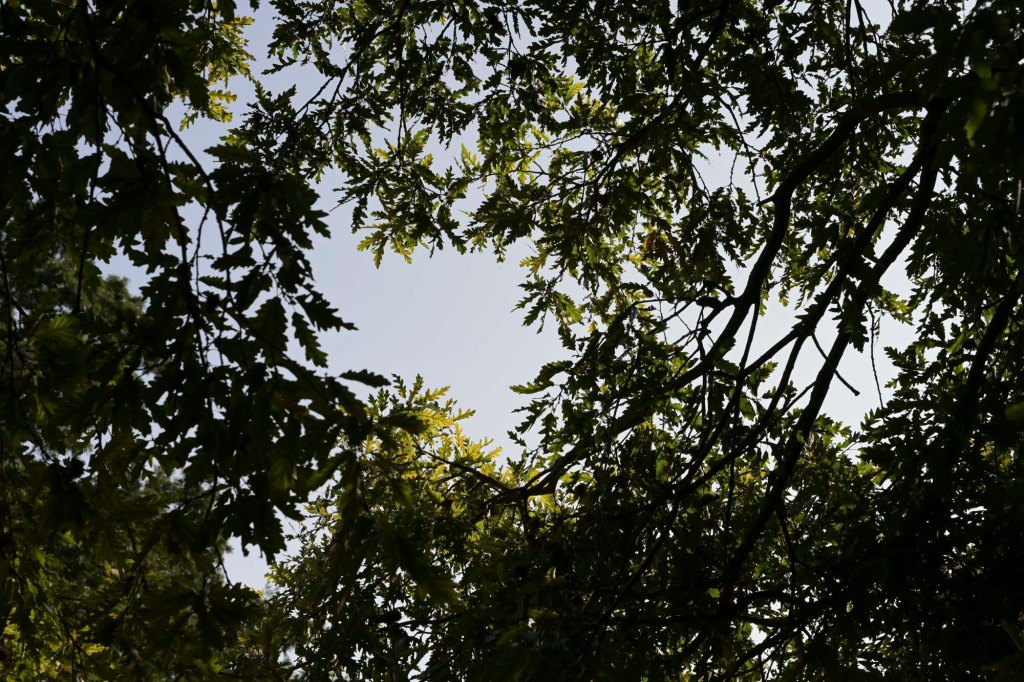
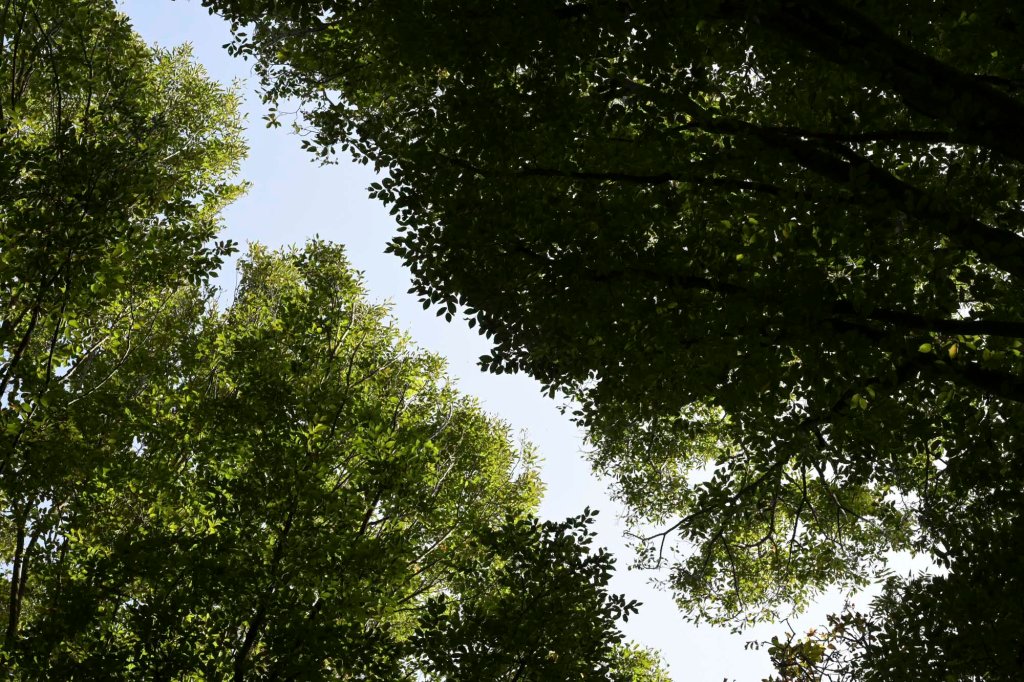
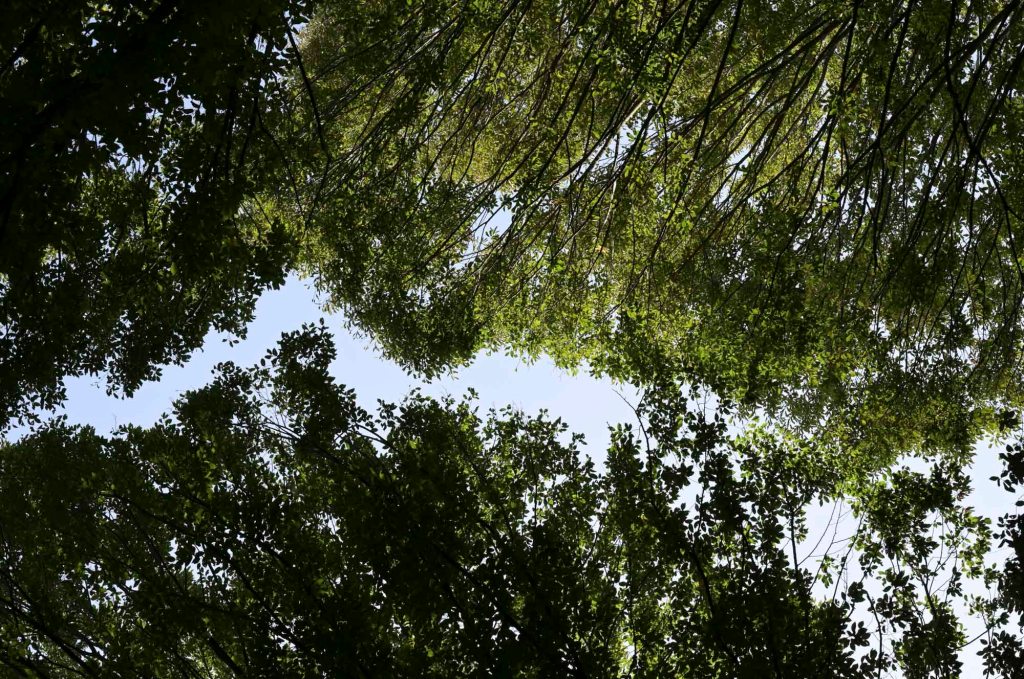
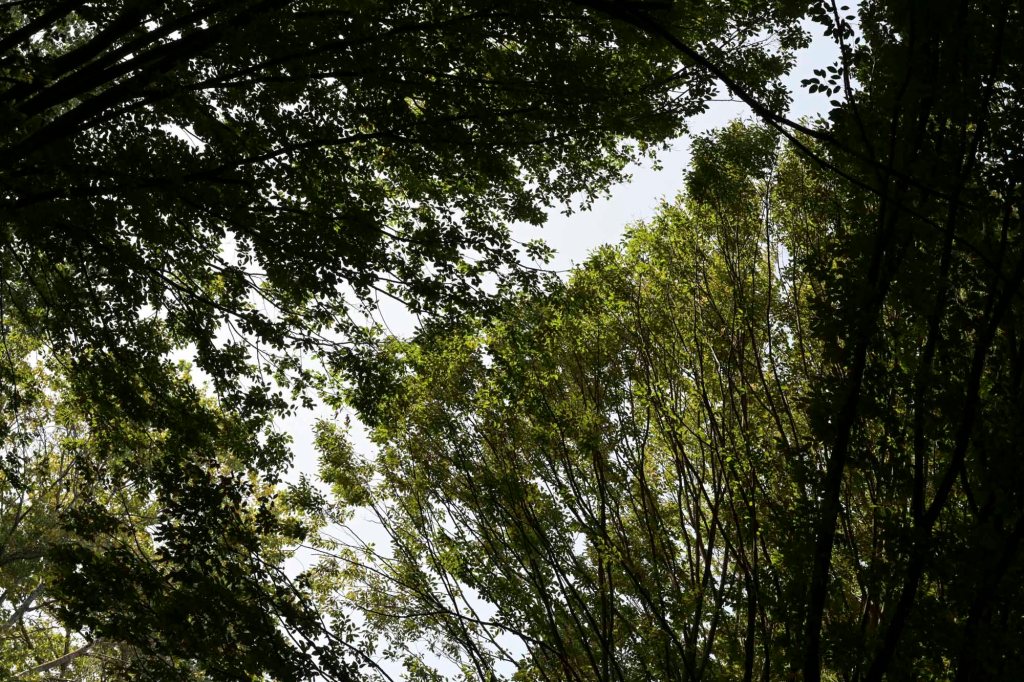
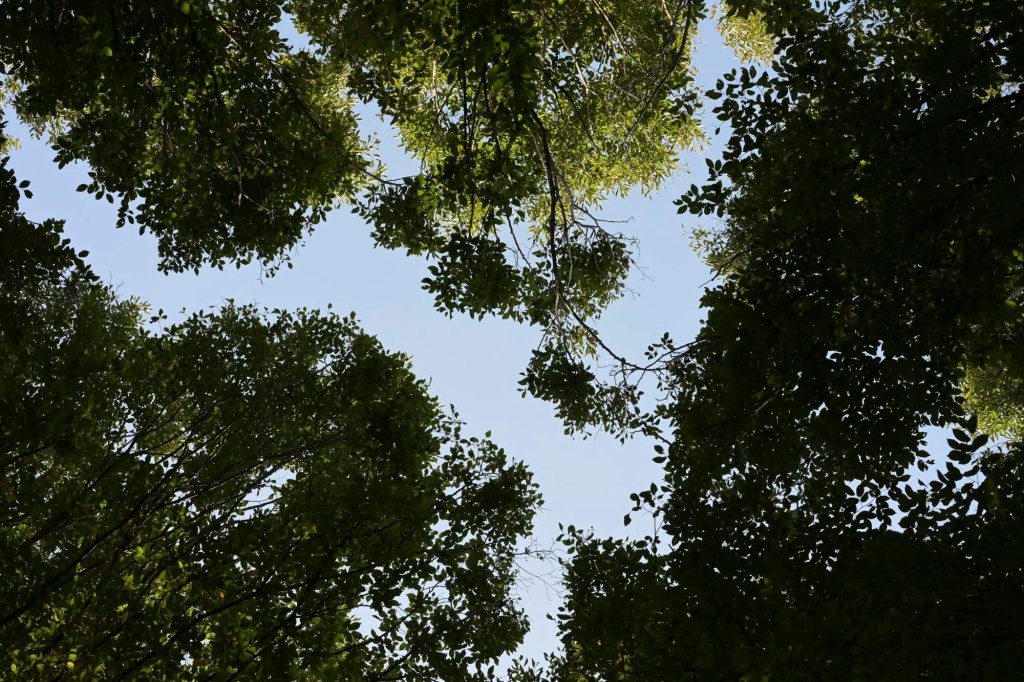
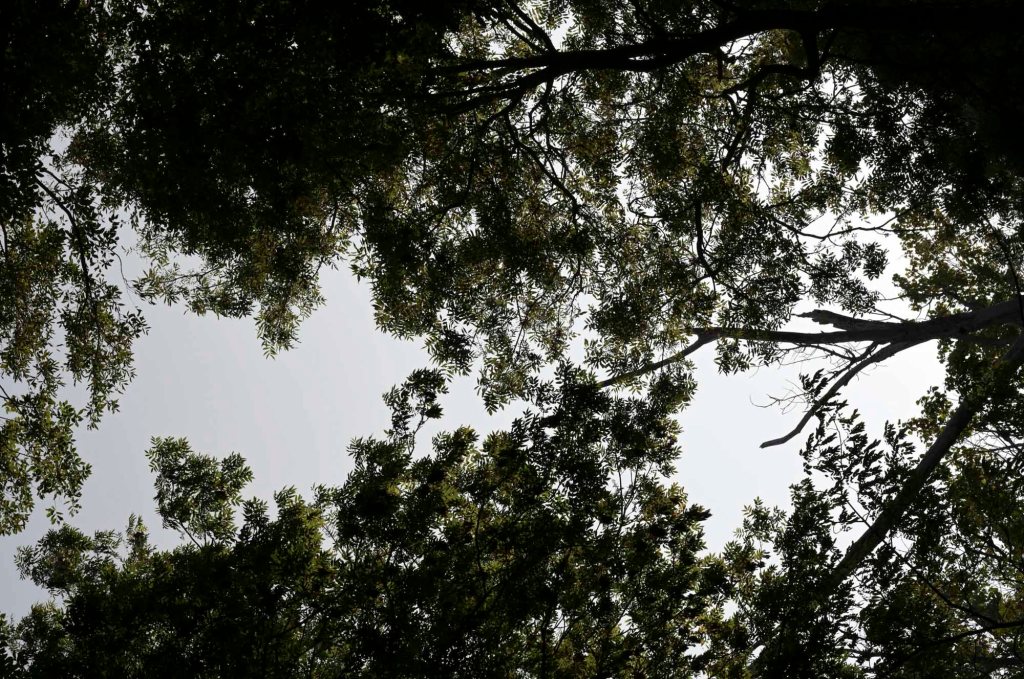
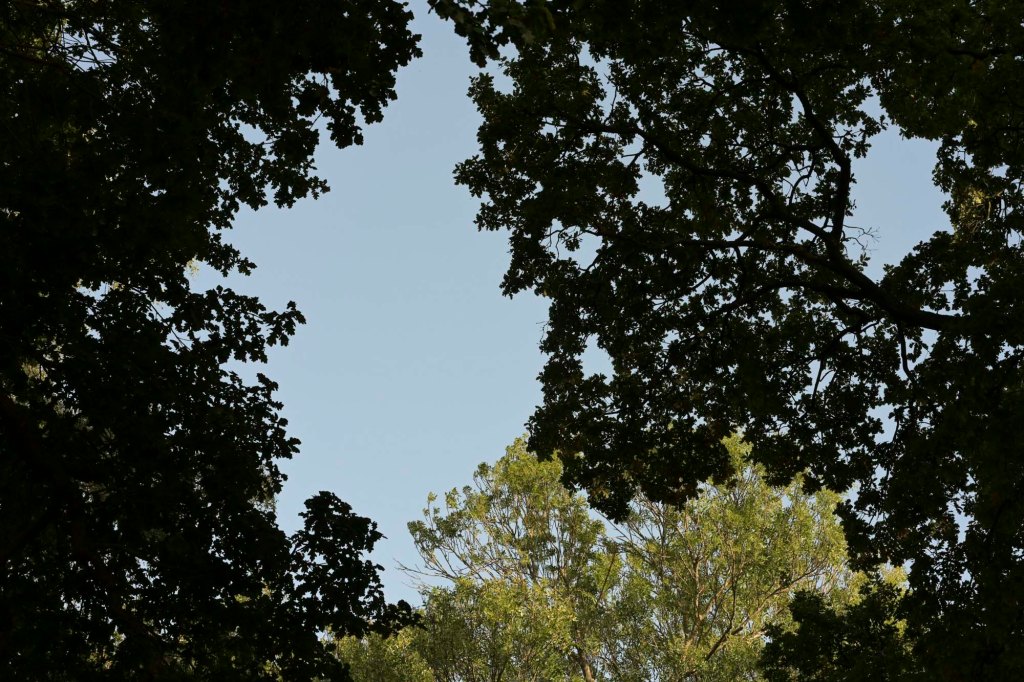
Abi had observed the space between the trees. This reminded of me when I took drawing classes when we were encouraged to draw the space in between objects, rather than try to draw the objects themselves.

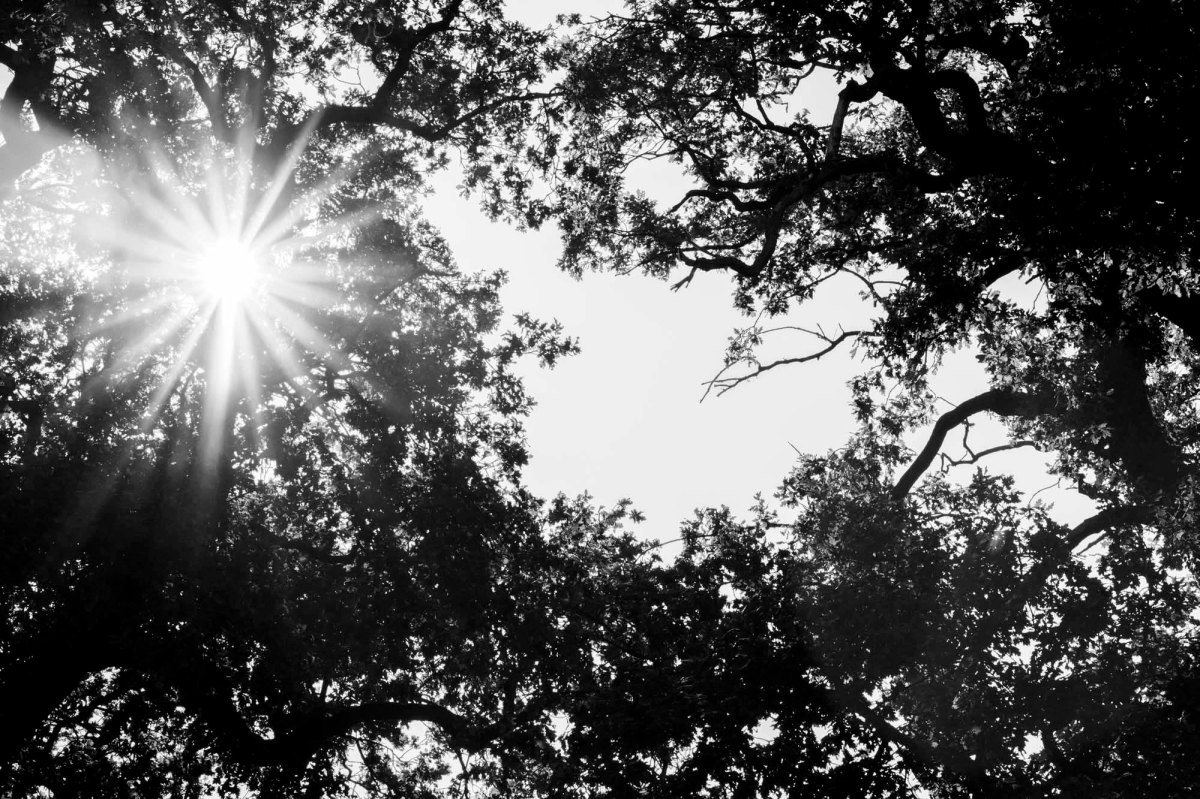
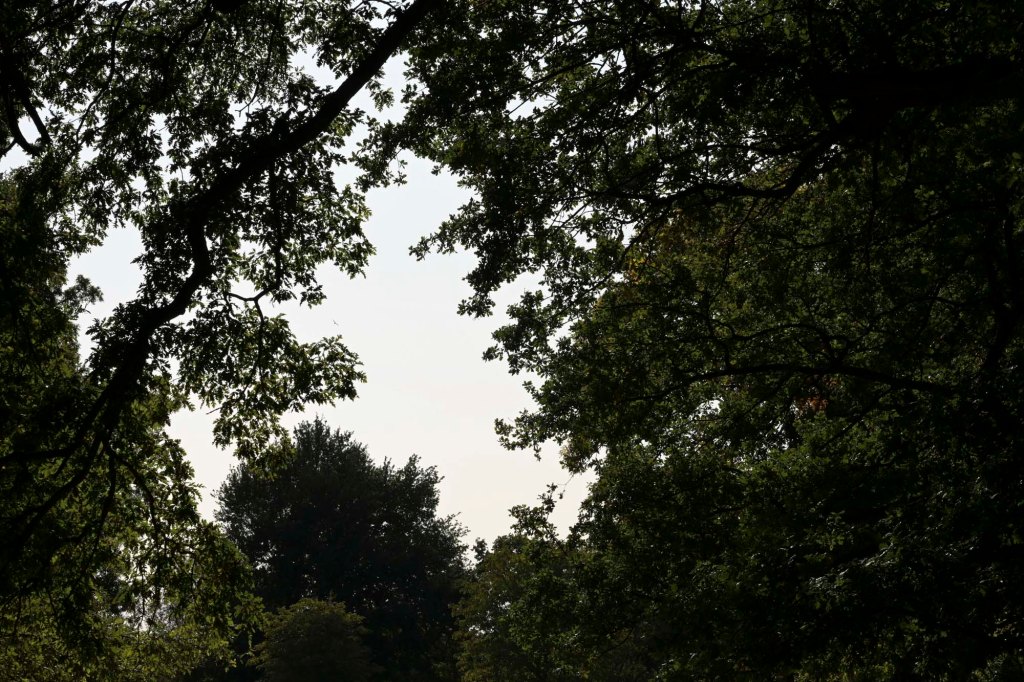
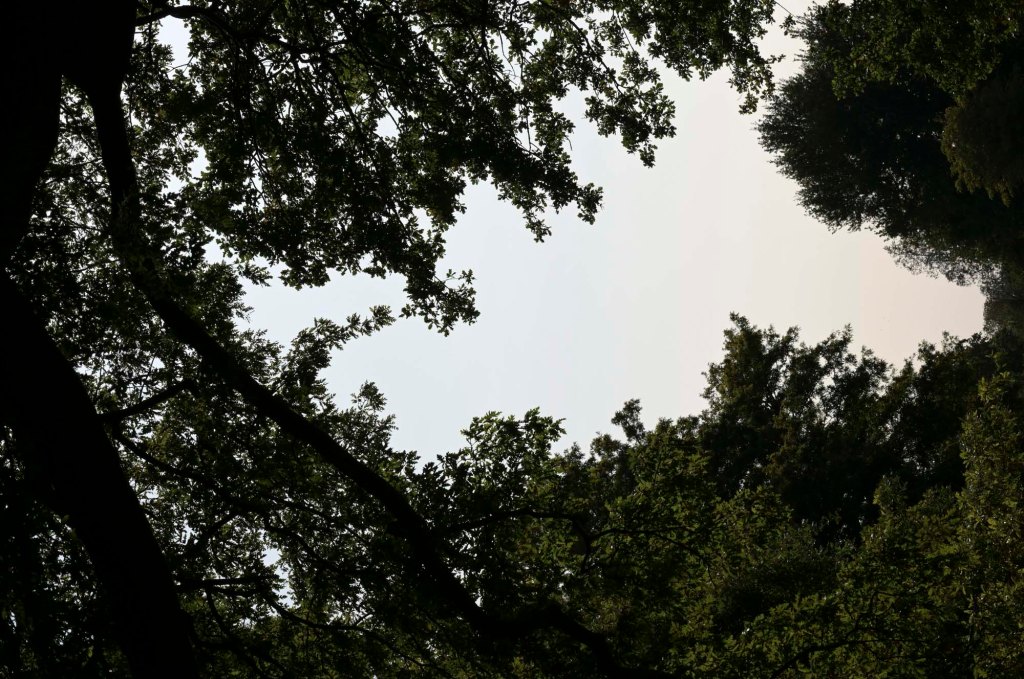
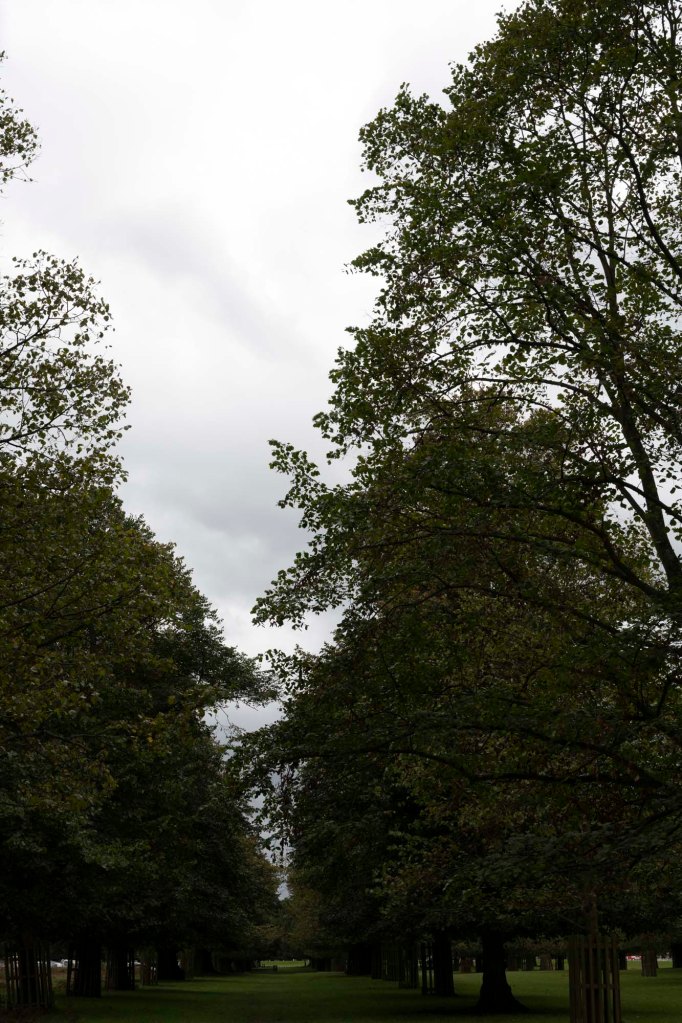
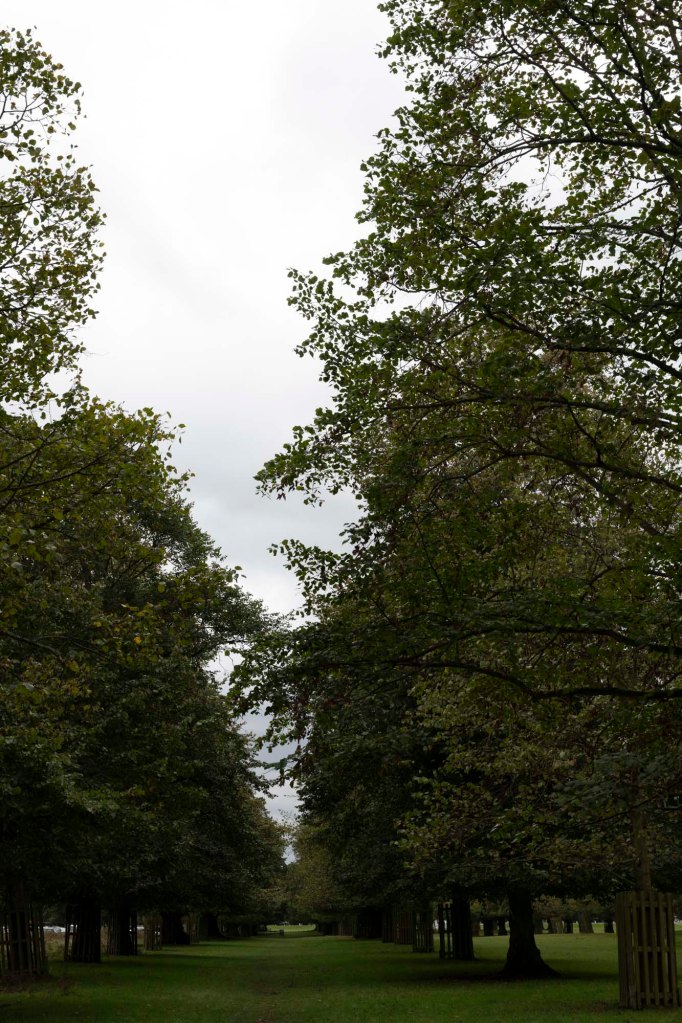
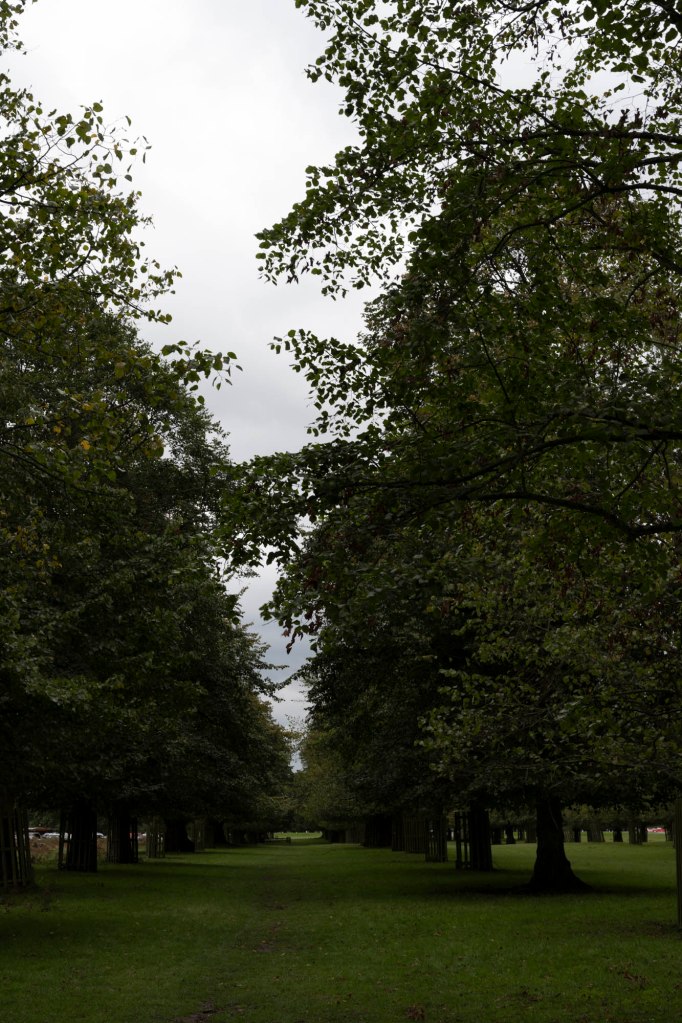
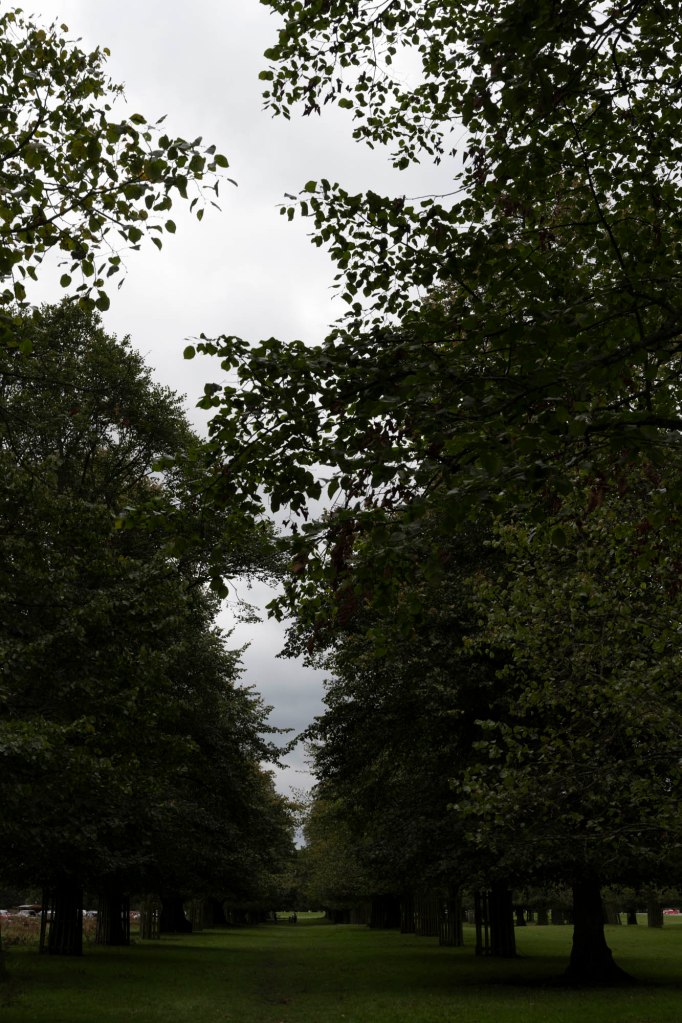
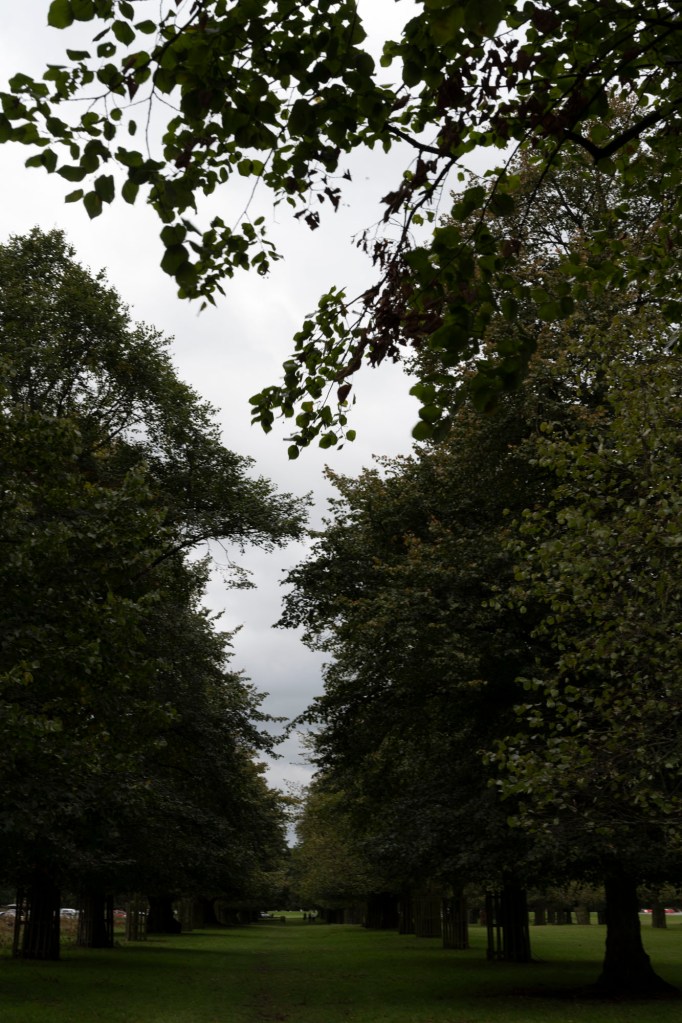
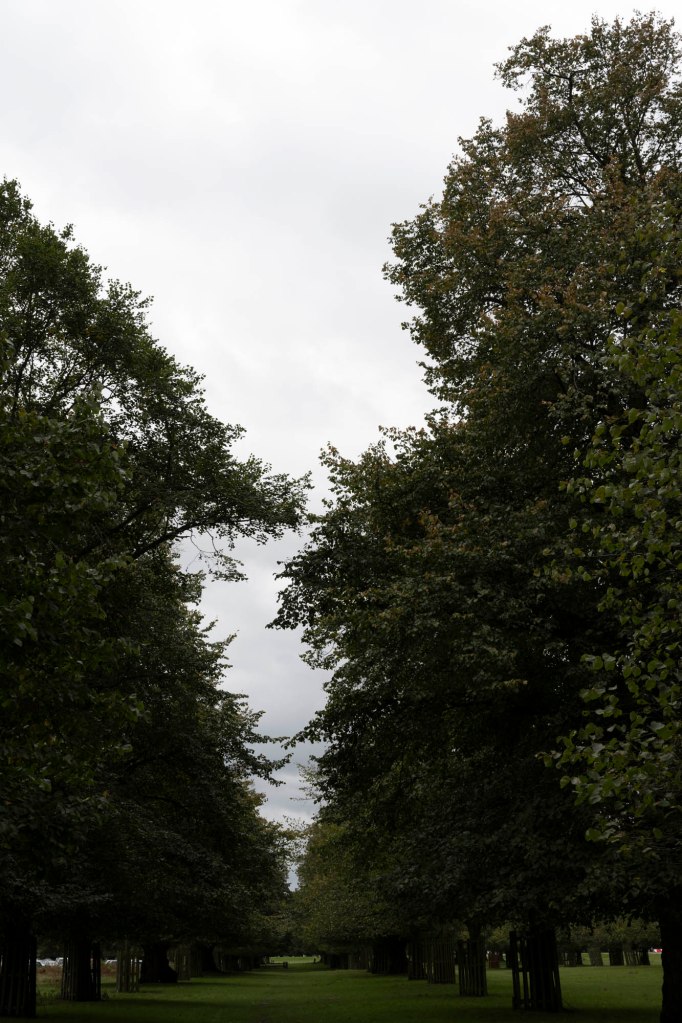
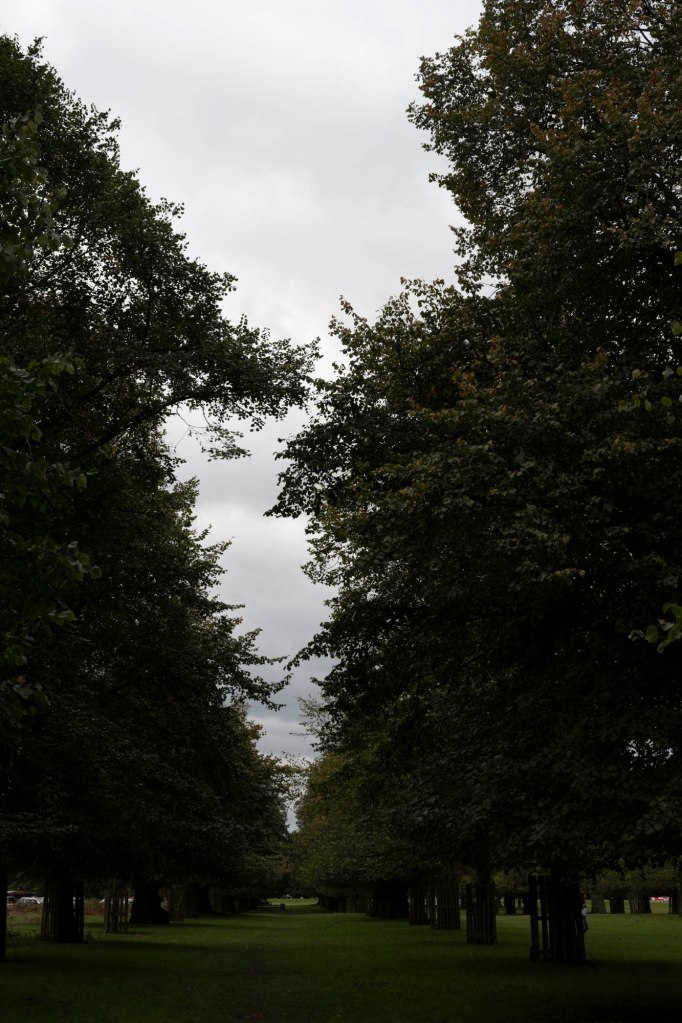
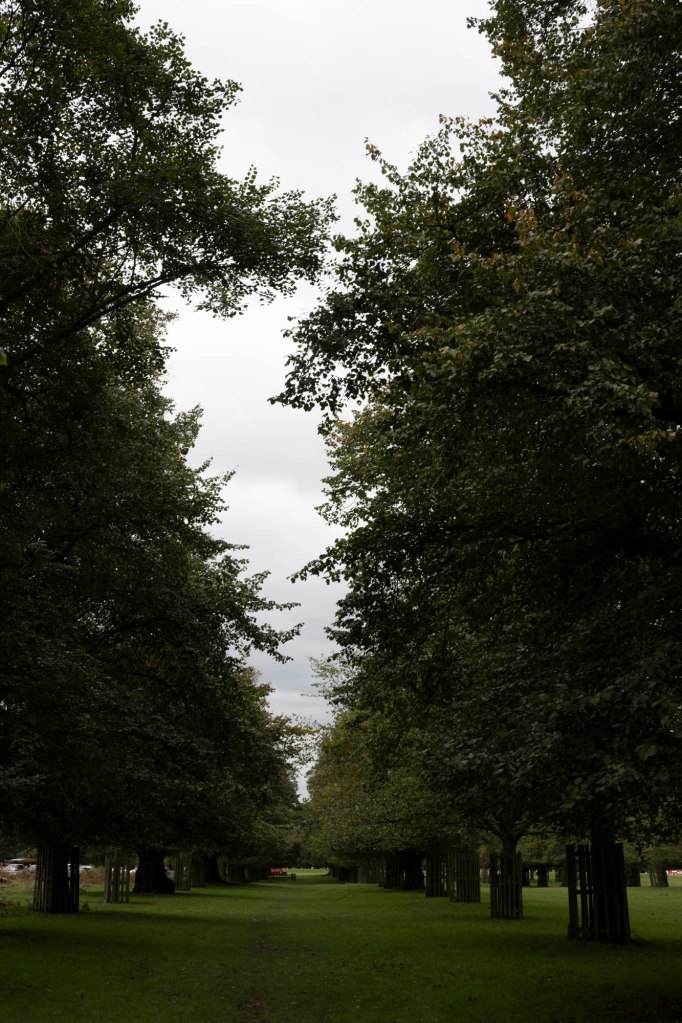
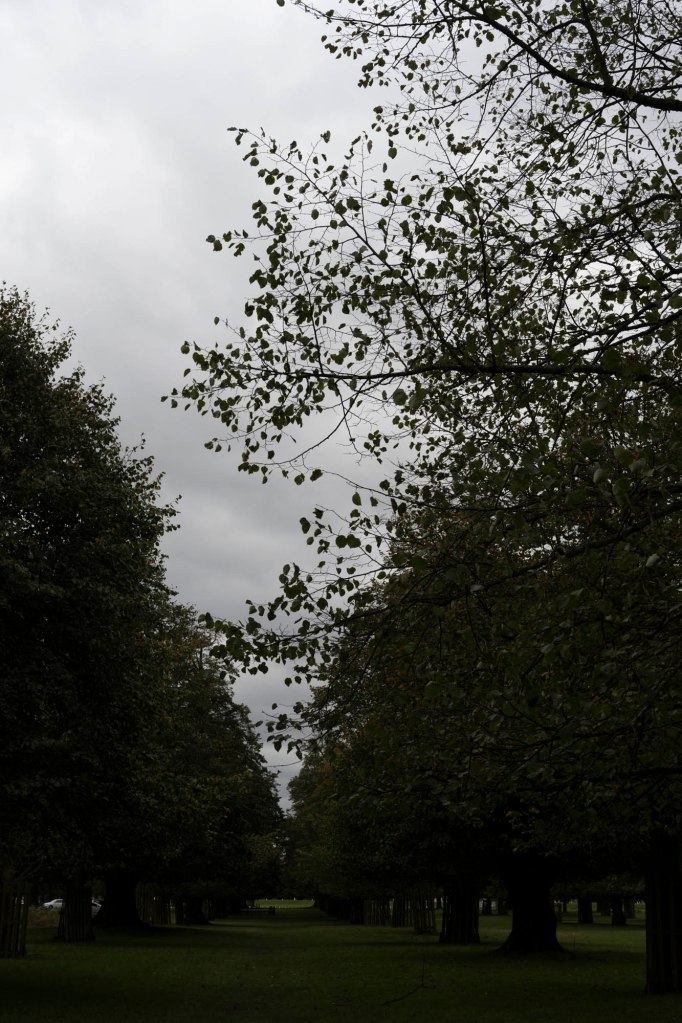
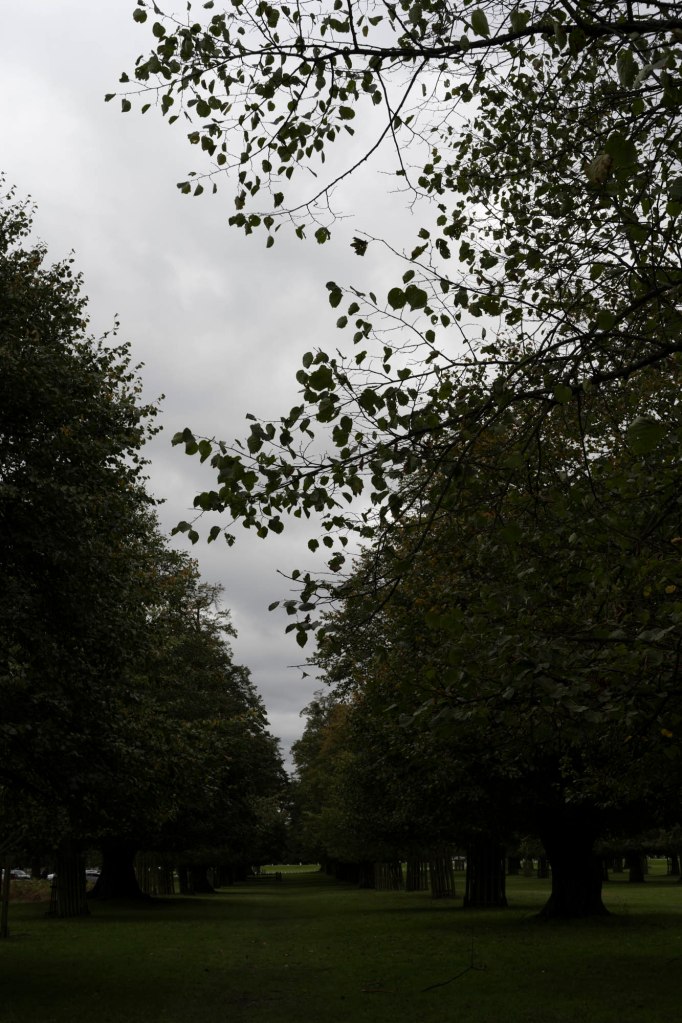
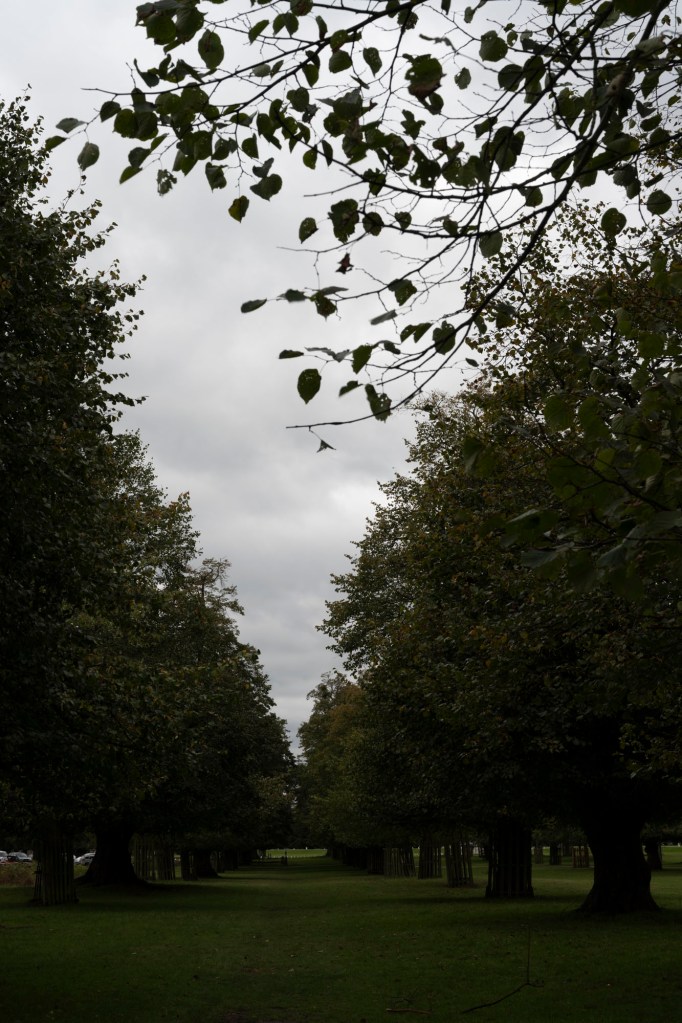
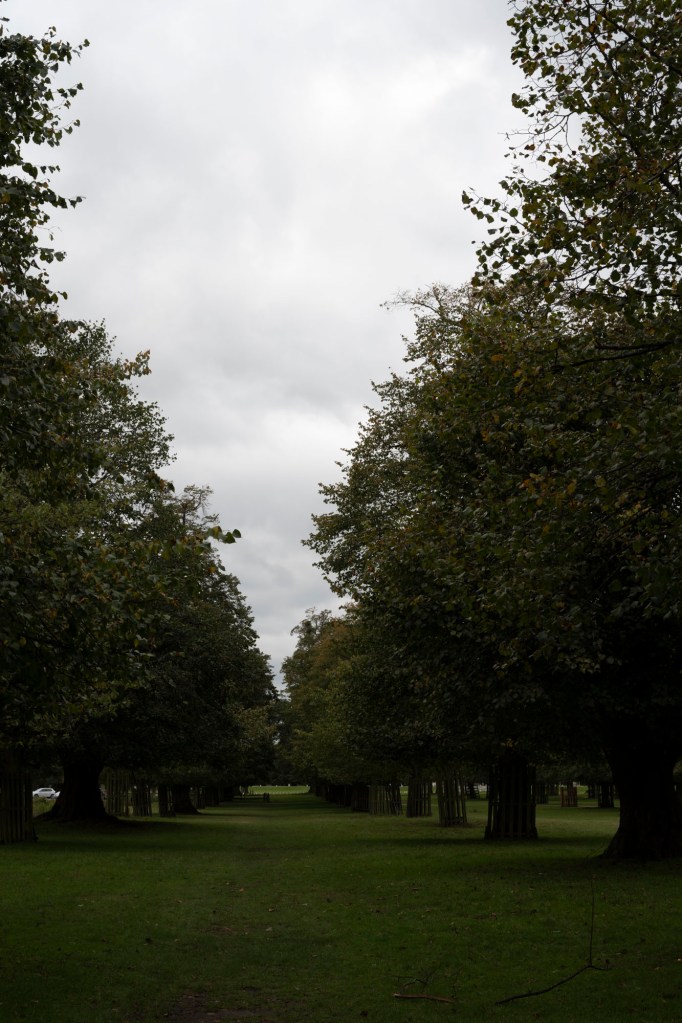
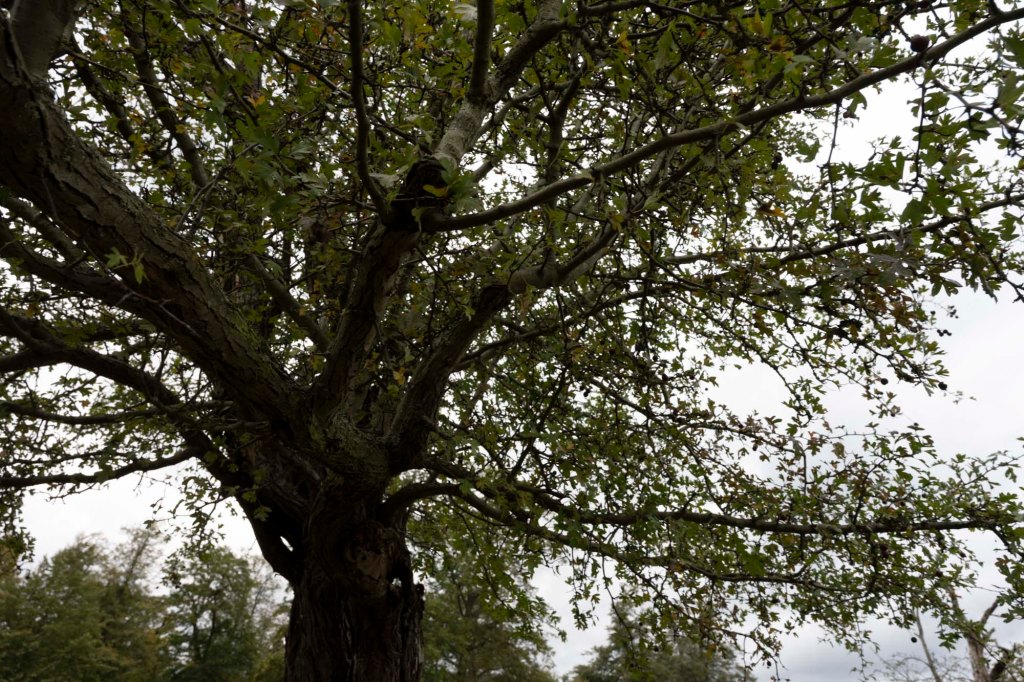
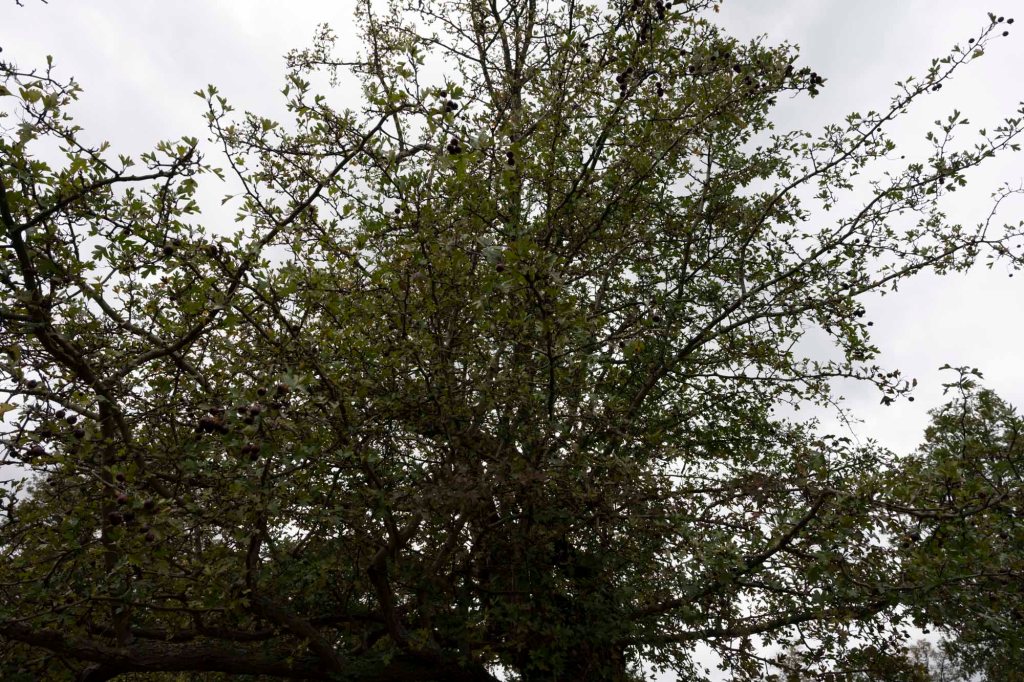
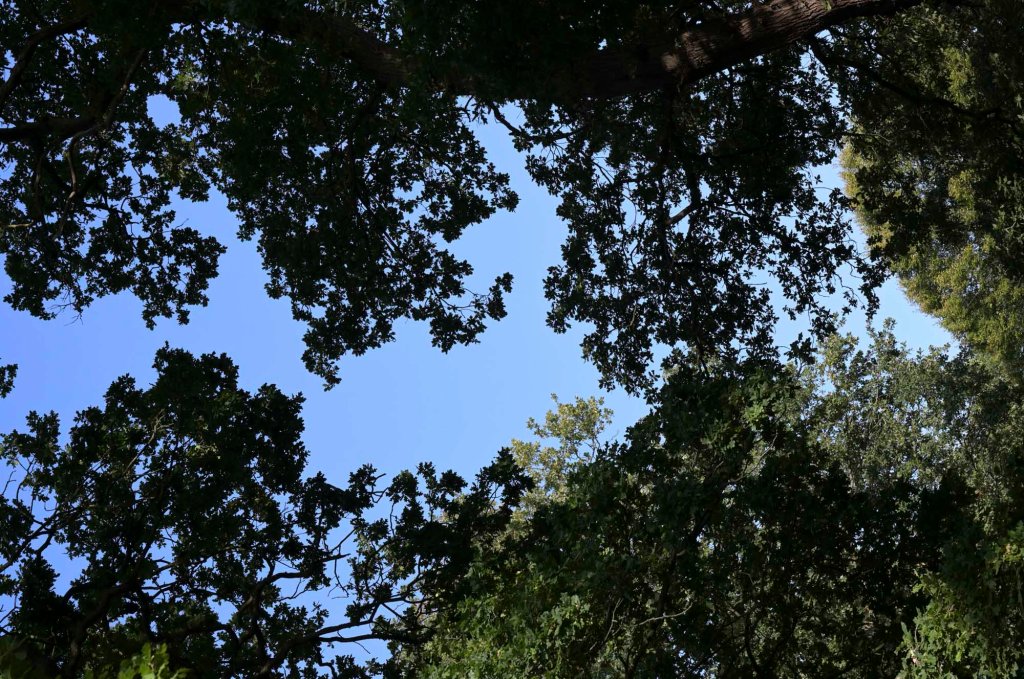
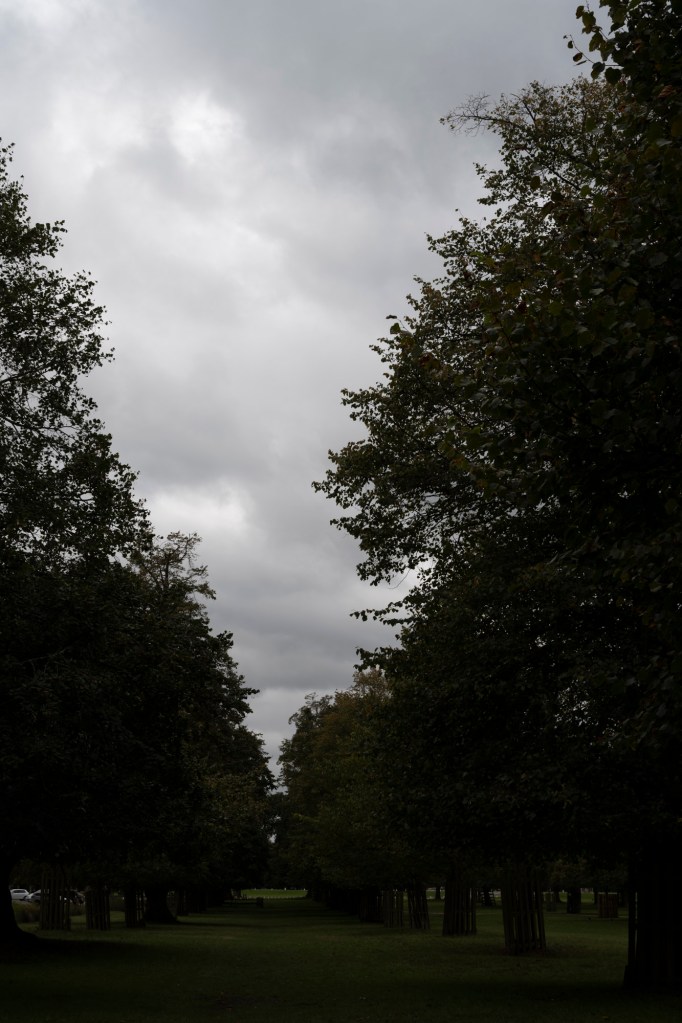
On 17 September 2020, I took my camera to the park with the intention of looking at the spaces between leaves rather than the trees themselves. This is a selection of shots from that session:

This concept of looking at the gaps is reflected in The Hidden Life of Trees by Peter Wohlleben, who observed that

‘The average tree grows its branches out until it encounters the branch tips of a neighbouring of the the same height. It doesn’t grow any wider because the air and better light in this space are already taken. However, it heavily reinforces the branches it has extended, so you get the impression that there’s quite a shoving match going on up there. But a pair of true friends is careful right from the outset not to grow overly thick branches in each other’s direction. The trees don’t want to take anything away from each other, and so they develop sturdy branches only at the outer edges of their crowns, that is to say, only in the direction of “non-friends” Such partners are often so tightly connected at the roots that sometimes they even die together.’

(Whohlleben, P. 2017 pp. 5)

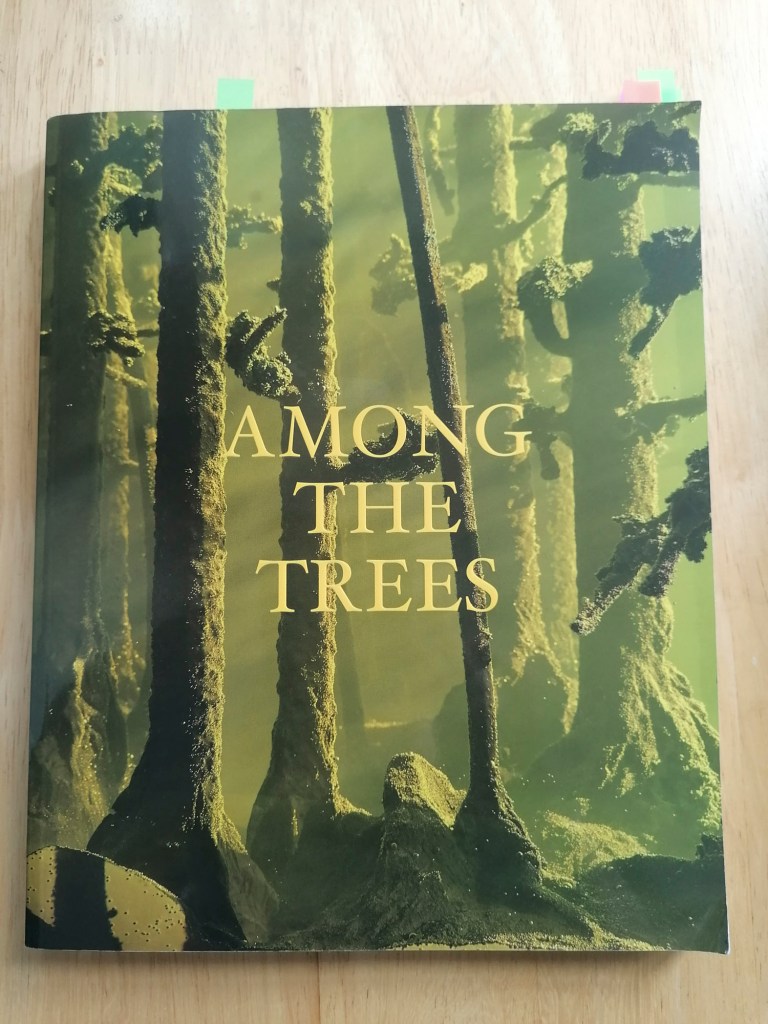
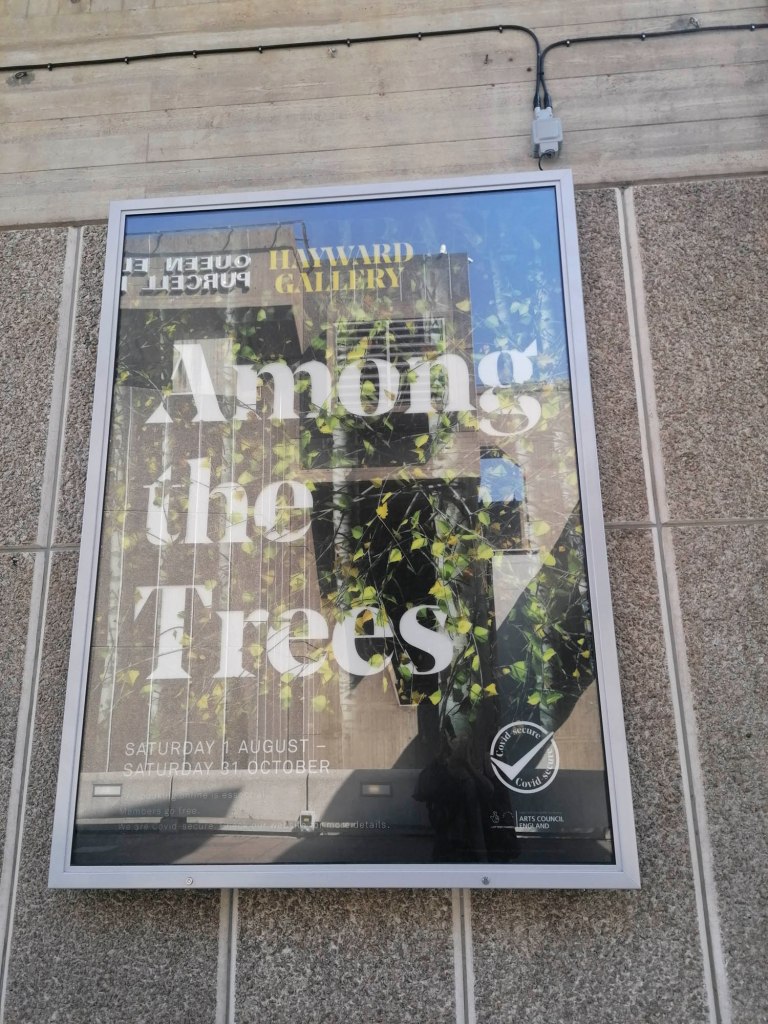
Among the Trees

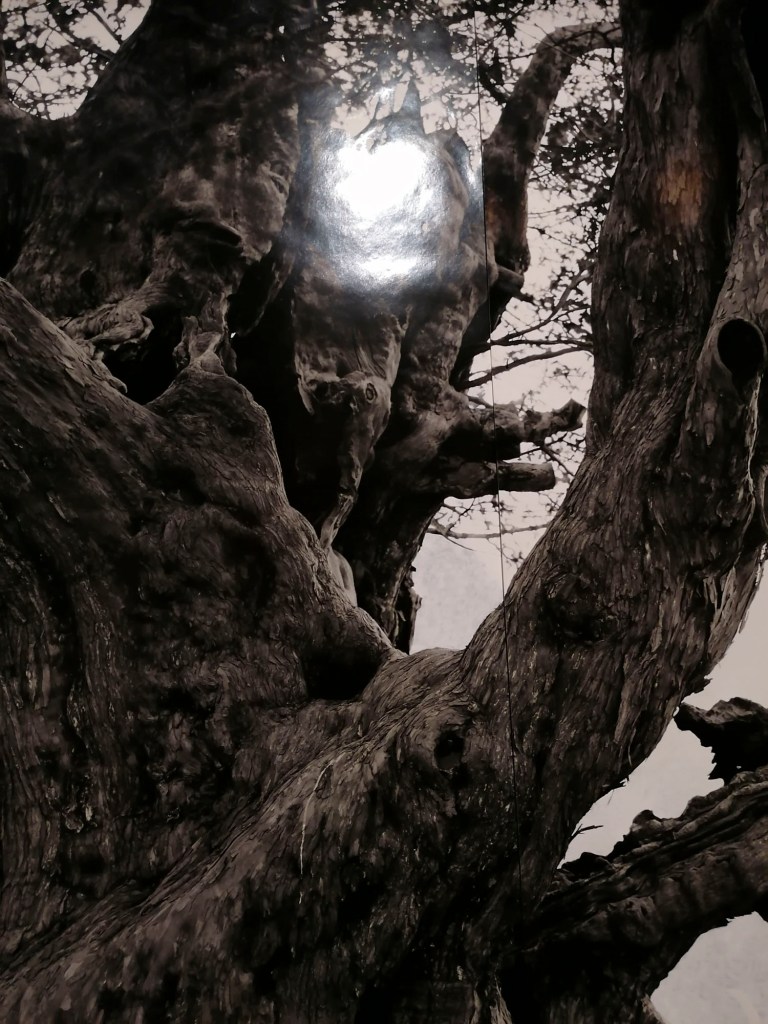
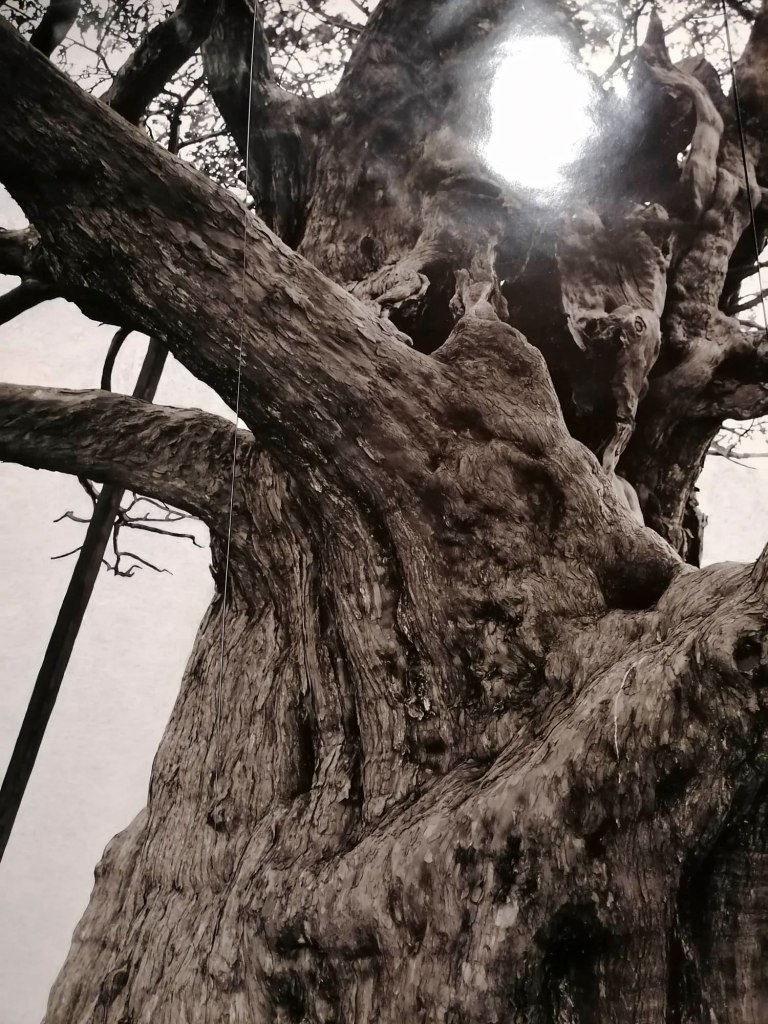
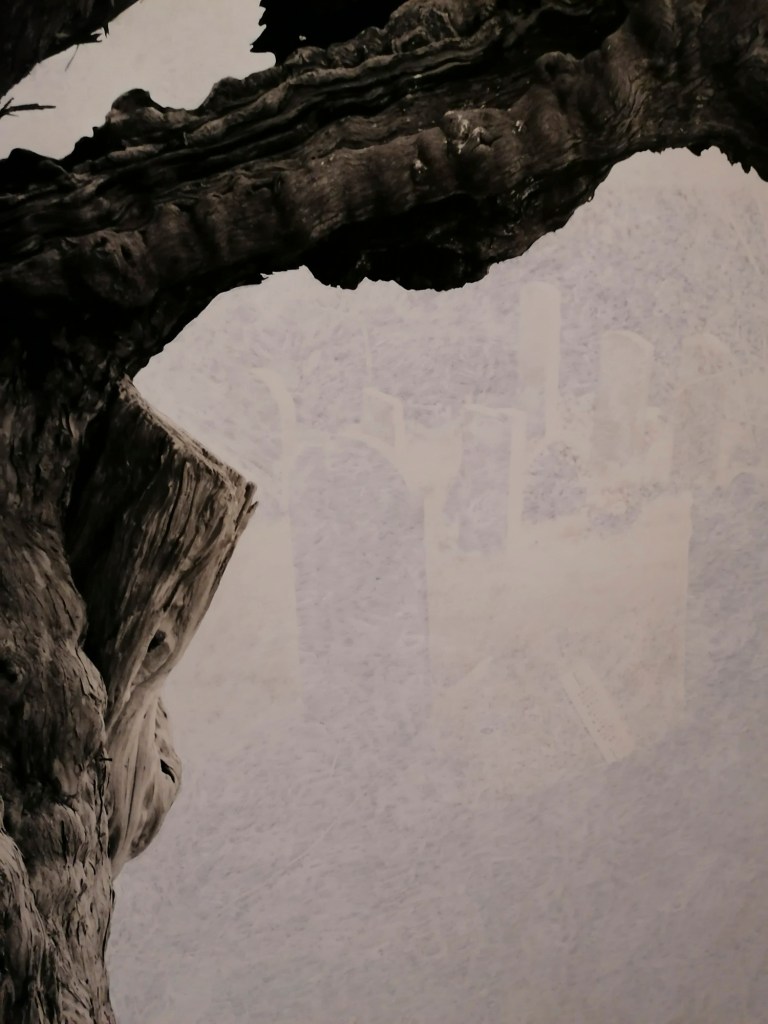
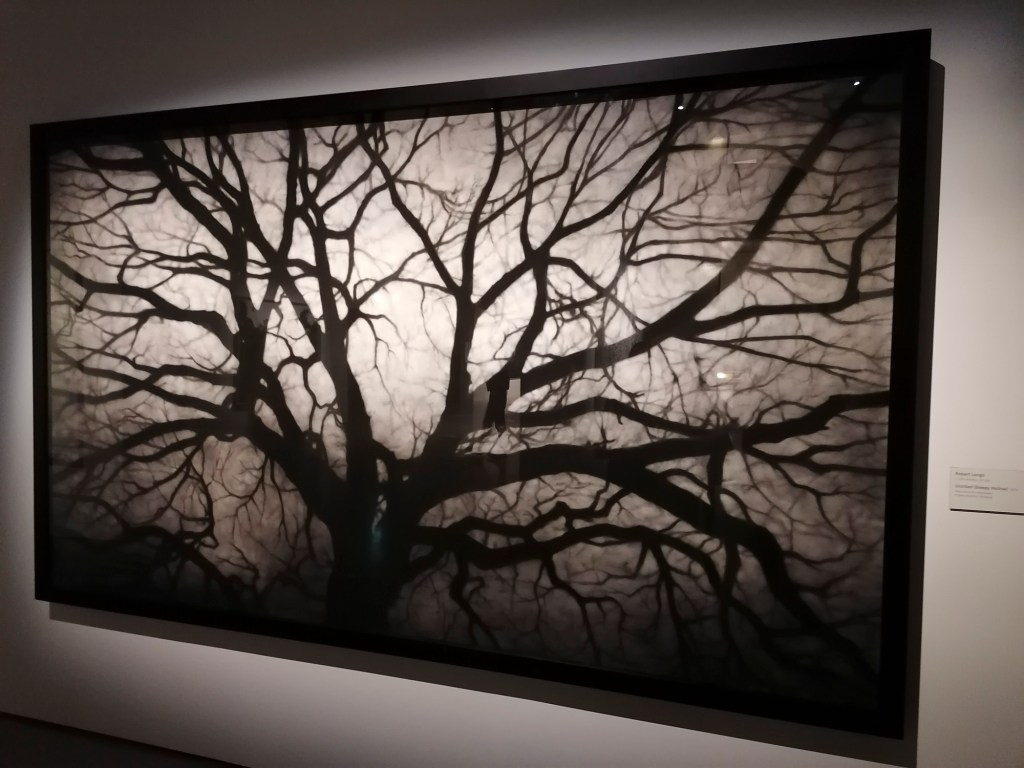
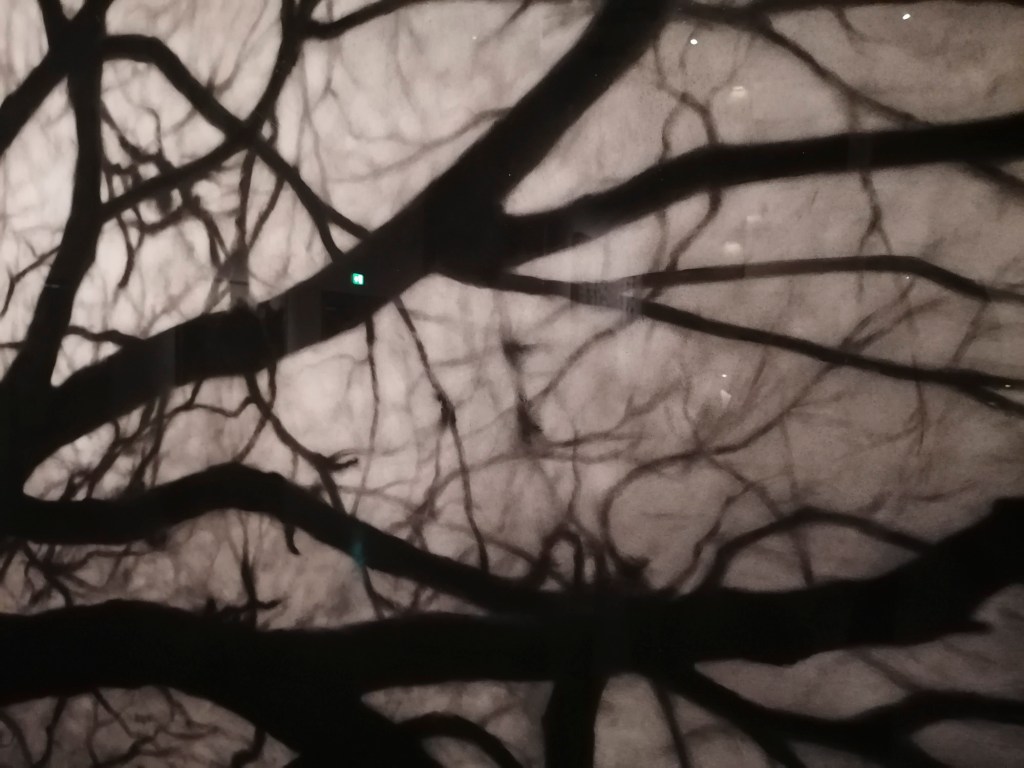
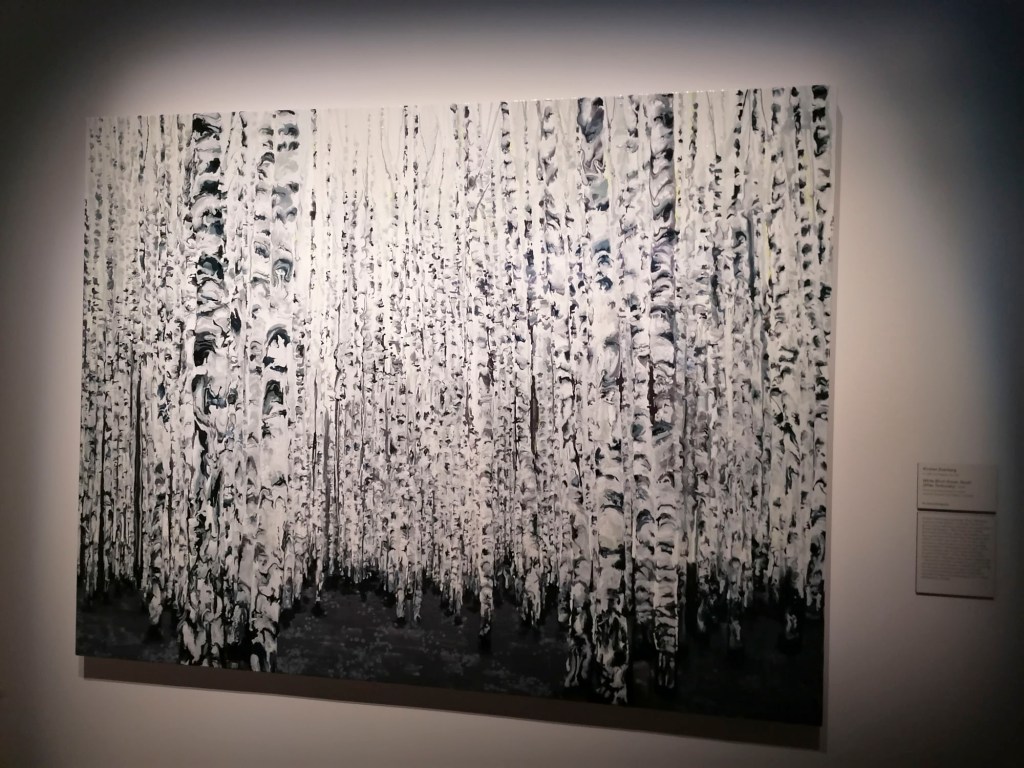
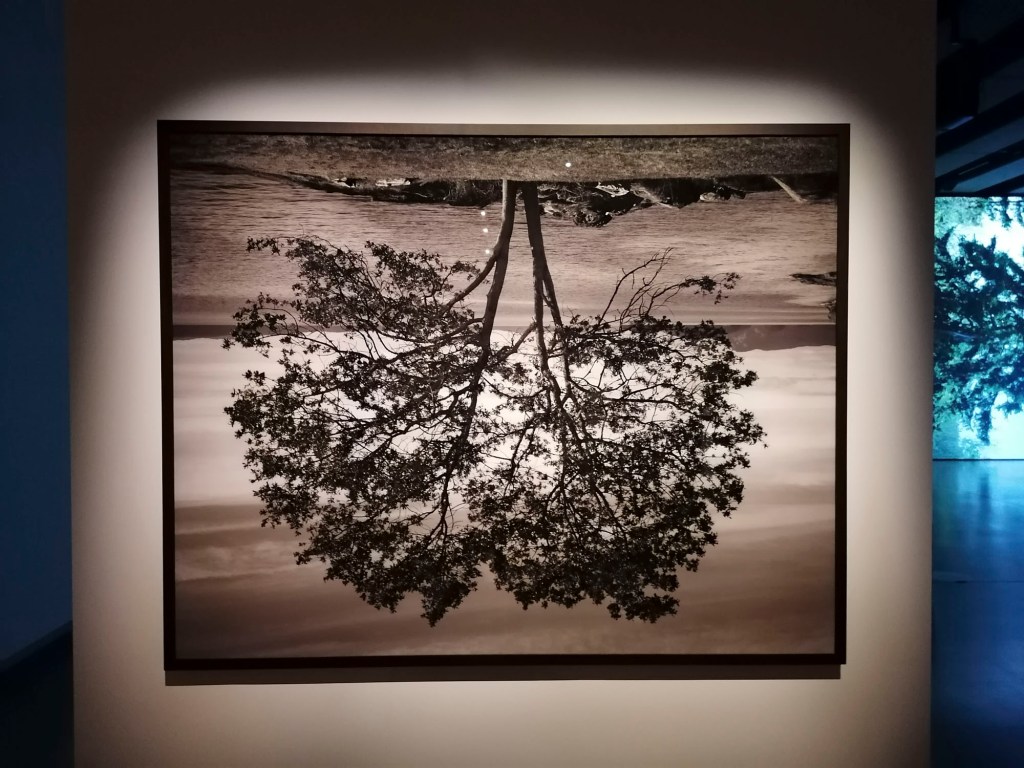
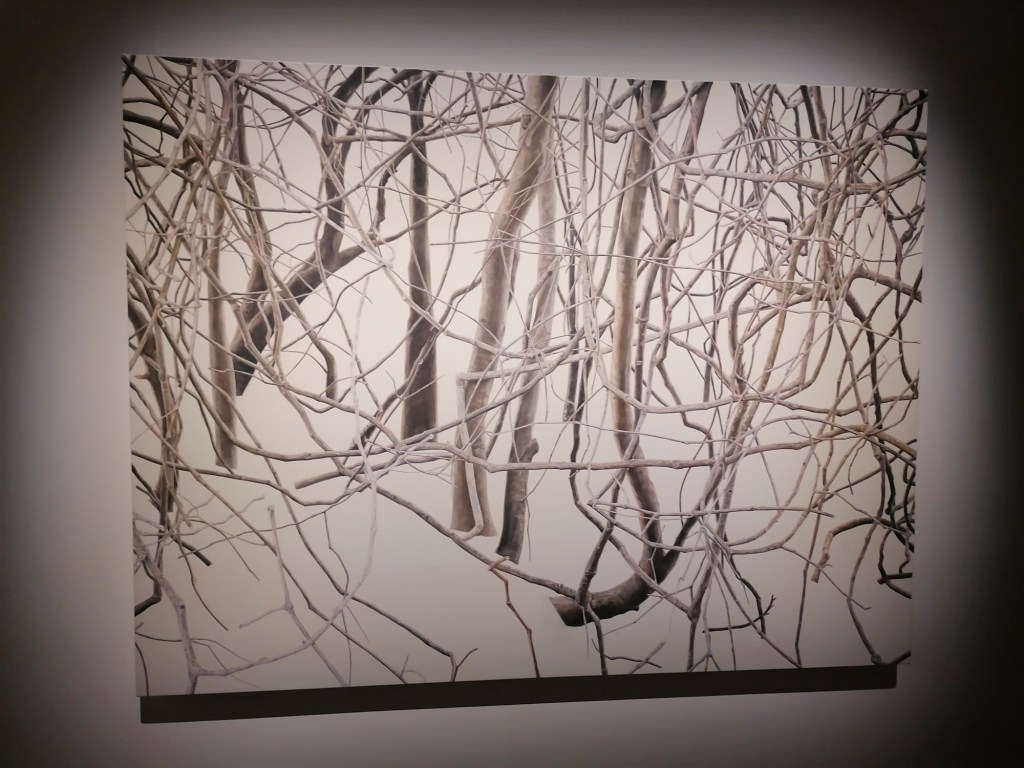
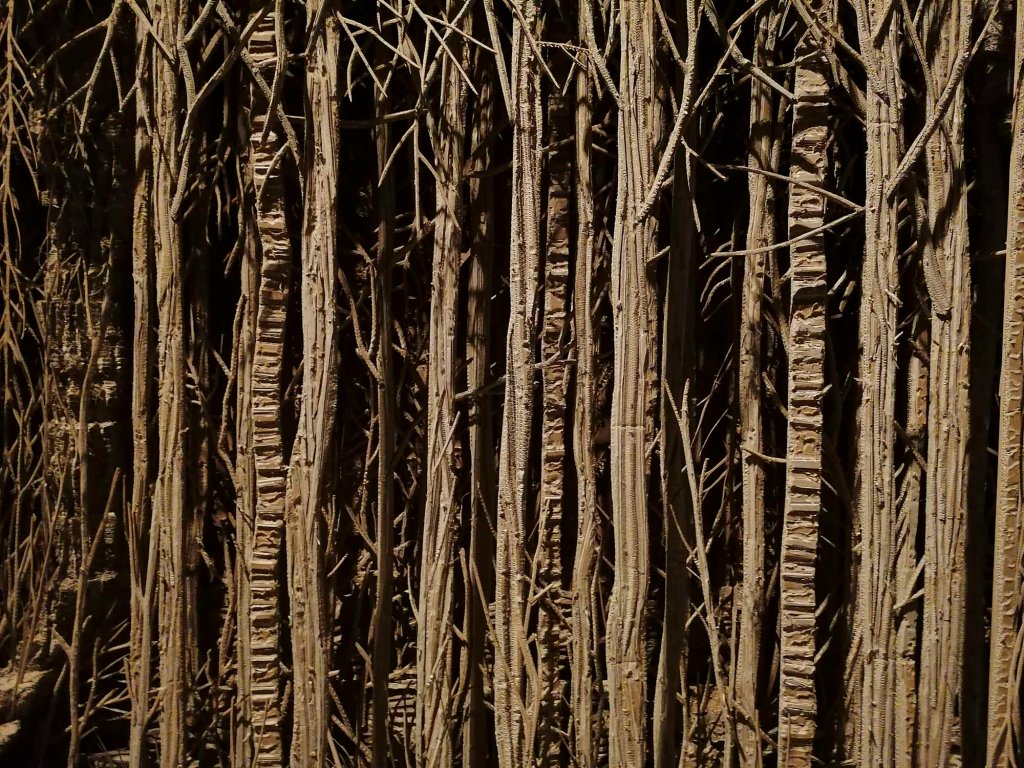
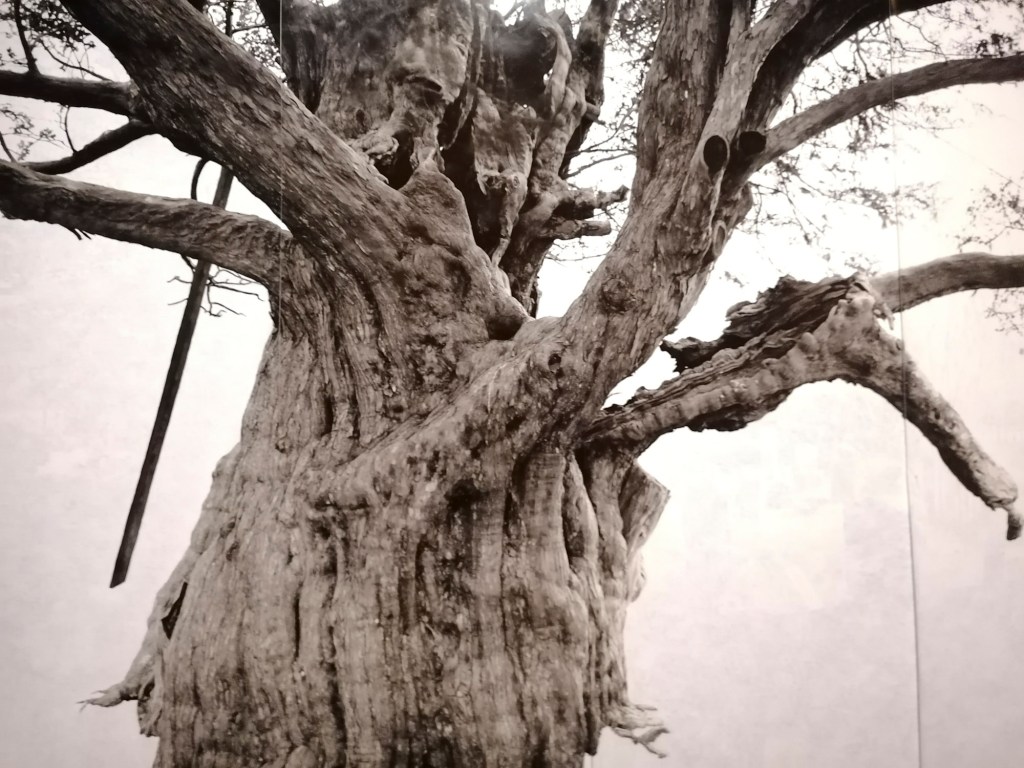
The day previous to taking these images, I visited the exhibition, Among The Trees, at the Hayward Gallery. This exhibition had been given an extension from its original dates that were affected by lockdown and is open until 31 October 2020.

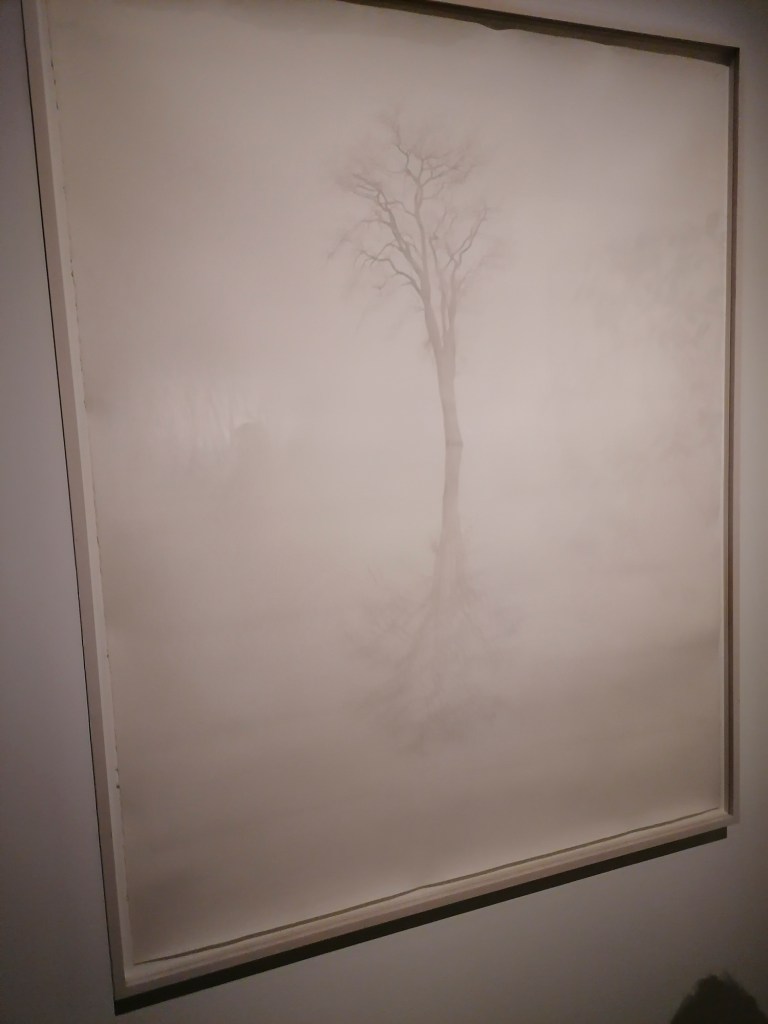
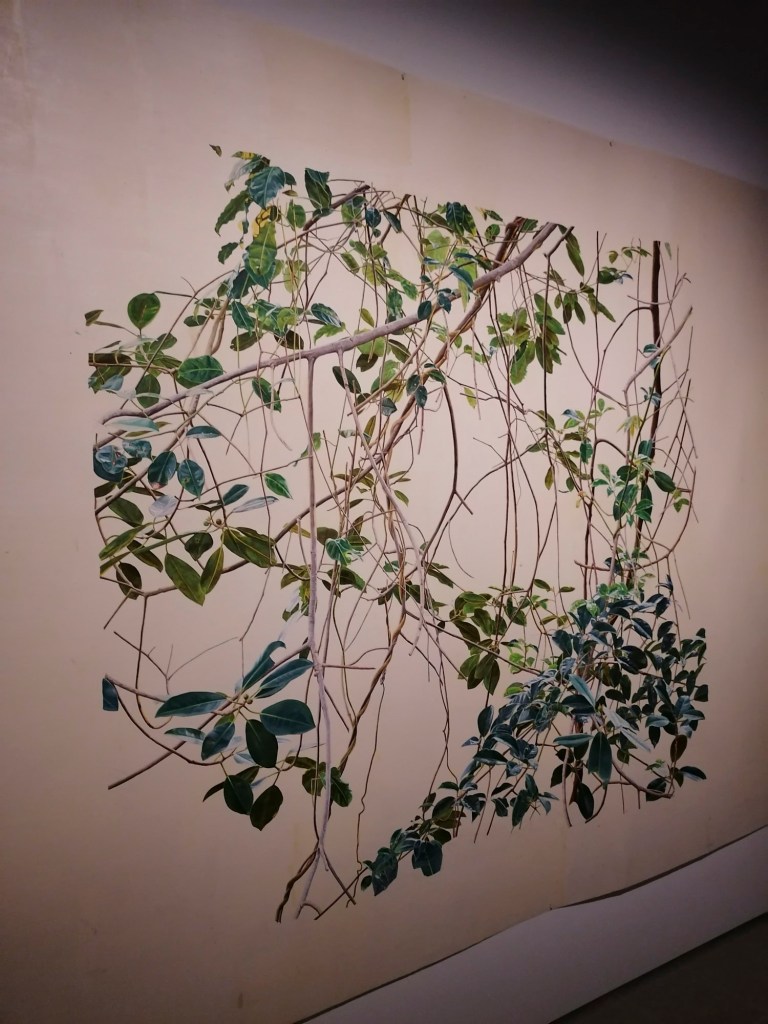
This had also sparked my thoughts about the gaps between branches:

In hindsight, two other exhibits also had an influence on my thoughts at this stage:

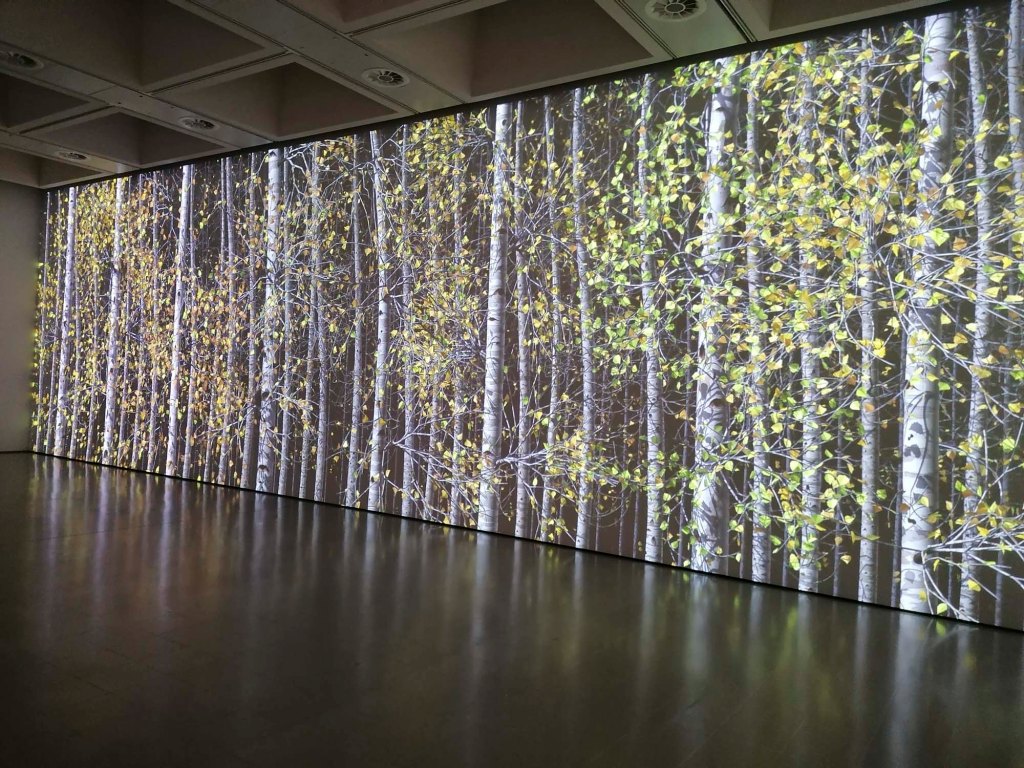
Jennifer Steinkamp – Blind Eye, 1, 2018

Blind Eye is a computer-generated animated piece that allows the viewer to experience the change of seasons in the featured trees. The projection is set within a separate room within the gallery and gives an impression of full immersion.

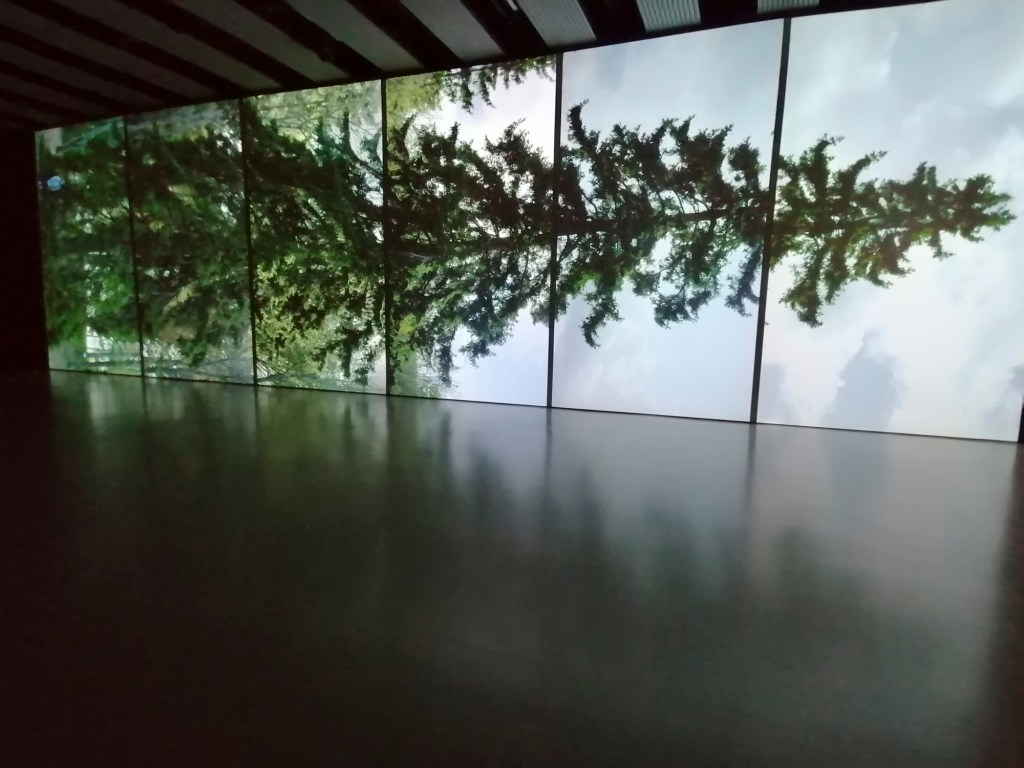
Eija-Liisa Ahtila – Horizontal – Vaakasuora, 2011

This installation features six filmed projections of different sections of the same tree.

‘Soon it became clear how difficult it is to really portray a tall trees because of the size of the film image – its aspect ratio… I want(ed) to somehow make visible to limits, or edges, of human perception and to try to show the idea introduced by Jakob von Uexkull – of the simultaneous existence of different worlds, different times and spaces.’

Ahtilia, E.L. 2020 pp. ? Among The Trees Exhibition Brochure

I realise now that they had a bearing on my experimentation for my Moments of Eternity images.

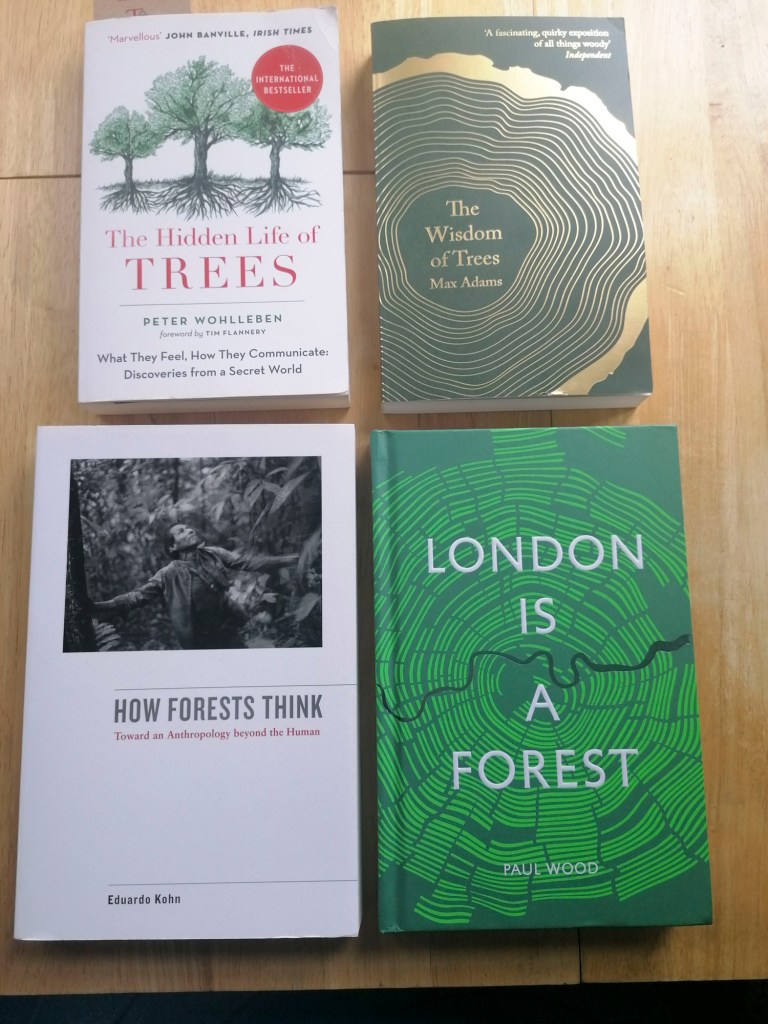
While at the Among the Trees exhibition, I bought a selection of books that I added to my current tree collection:

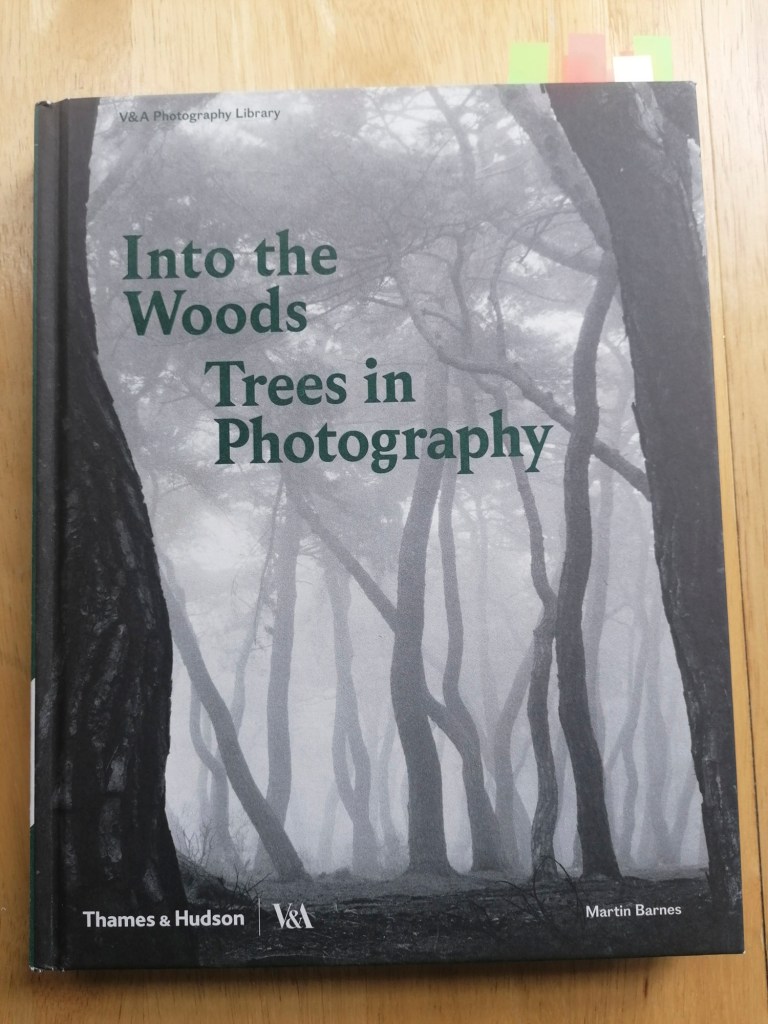
Into The Woods

This was an exhibition of tree photographs from the Victoria and Albert Museum’s archives held in there 2017. I did visit the exhibition at the time, but had not seen or read the connected book. This gave a more detailed grounding of how trees have been depicted within photography.

In the introduction, Martin Barnes, Senior Curator, Photographs at the V&A made two pertinent points:

Many of the photographs during the 19th century showed trees without foliage. This, Barnes explains, was:

‘Probably due to the result of aesthetic choice combined with practical necessity: long exposures were typical, meaning that leaves blowing in the wind would result in them appearing undesirably blurred. Such softness and blur was, however, embraced as a deliberate visual aesthetic by photographers devoted the ‘pictorialist style that was fashionable from the later 1880s and well into the early twentieth century. Pictorialists combined soft focus, inspired by Impressionist and Aesthetic Movement painting, with pared-down aesthetics, attenuated forms and flat patterning borrowed from Japanese prints.’

The style signalled artistic and poetic intent, as distinct from more technically precise photographs that were associated with science or commerce.

‘In the mid-to late twentieth century, the harder-edged style of modernism largely supplanted pictorialism – Paul Strand and Albert Renger-Patzsch, who favoured a return to sharp focus and an implied clarity of thinking and perception’.

Barnes, M. 2019, pp. 10

One other observation that Barnes makes is the use of, or lack of, colour within tree photography:

The most obvious visual shift is the change from monochrome photography to the introduction in 1907 or the first practicable colour process, autochrome. Thereafter, depicting trees in colour or monochrome became a deliberate choice. However, the focus on line, form, texture and detail that monochrome instantly provides – in a subject complex even without colour – has meant that this type of photography appears dominant in its history.’

Barnes, M. 2019, pp. 11

It is also interesting to note that Barnes states:

‘One are in which colour and monochrome photographs are on more equal footing is when trees are depicted in Winter, especially in snow. Strong colours are muted, contrast is heightened, and a kind of otherworldly visual silence falls.’

Barnes, M. 2019, pp. 11

Bushy Park 5 October 2020

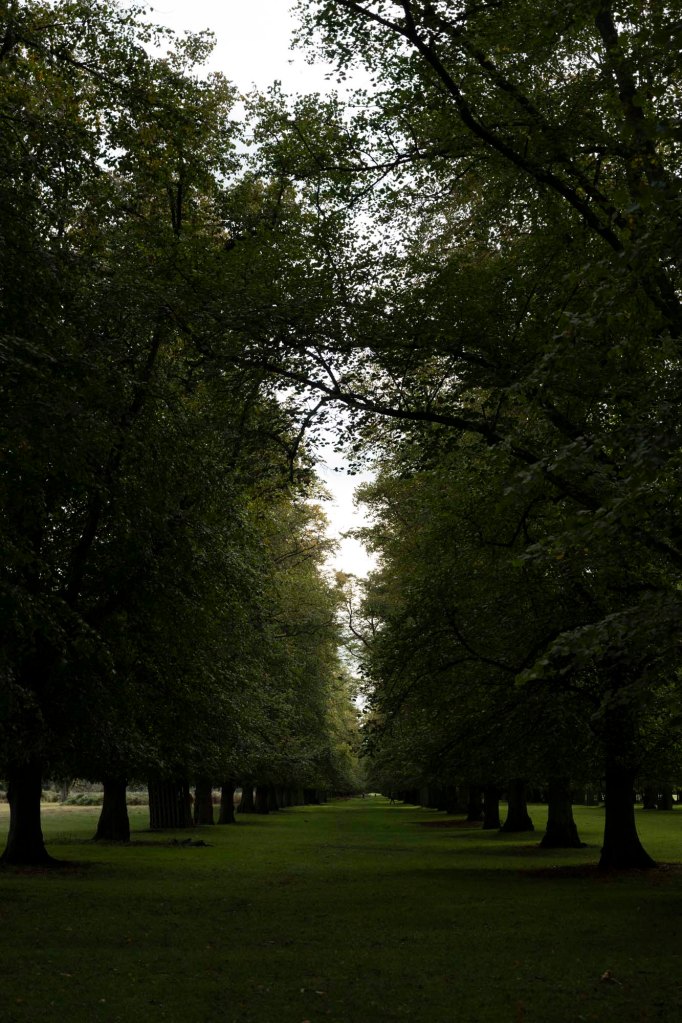
Tree Avenue

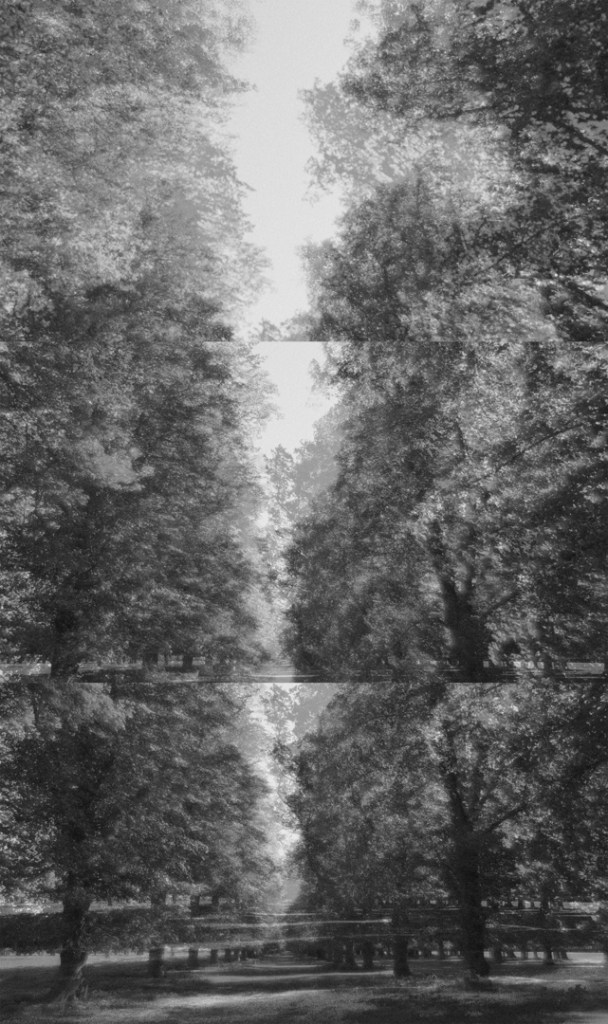
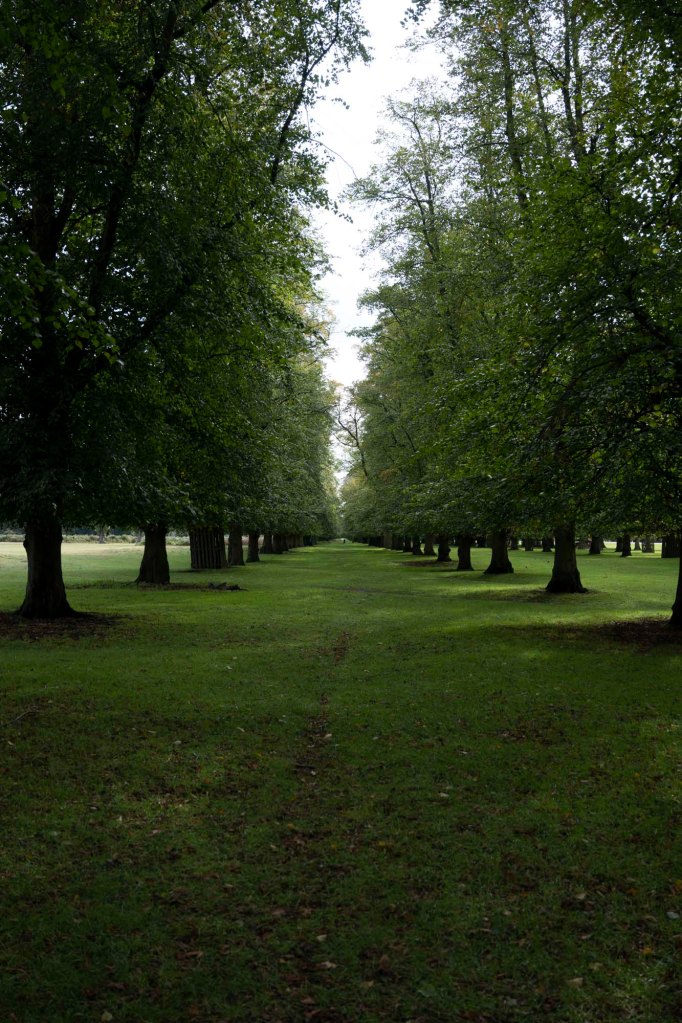
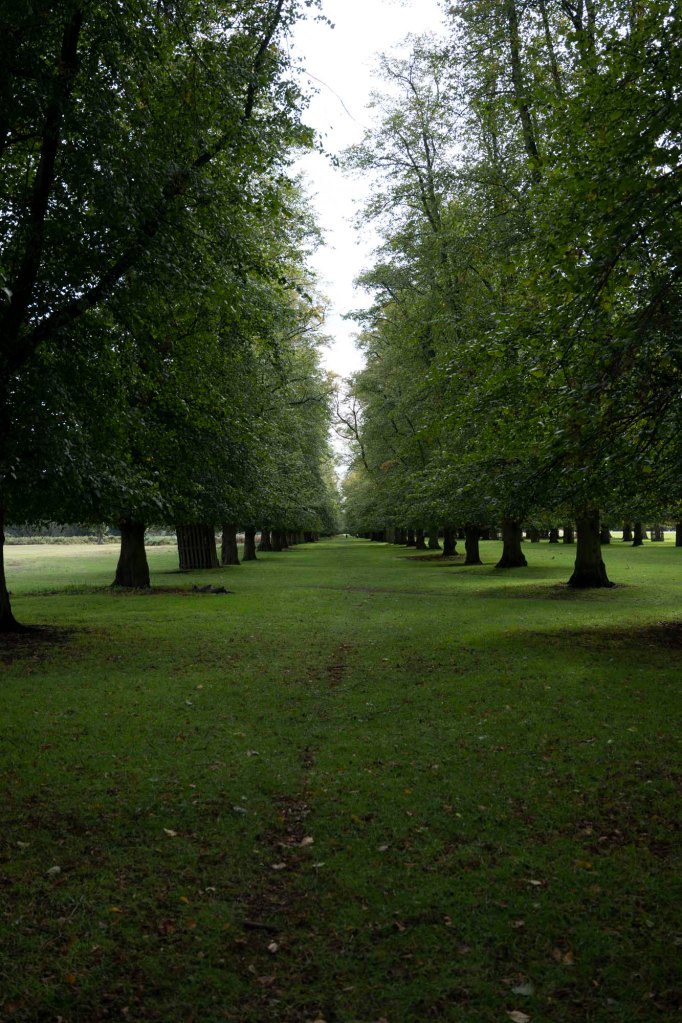
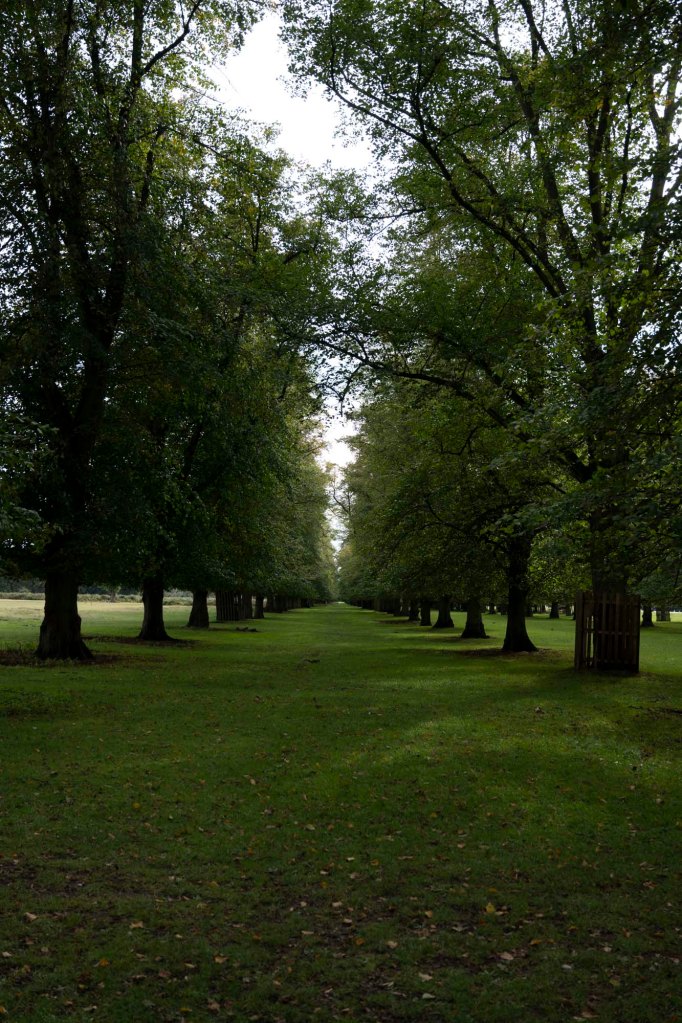
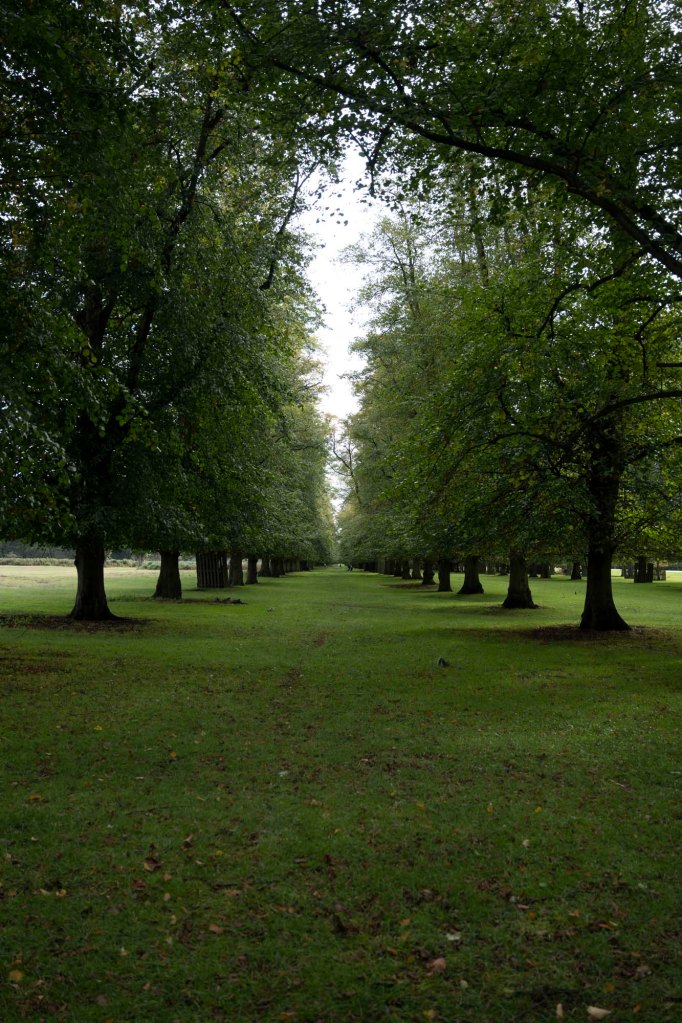
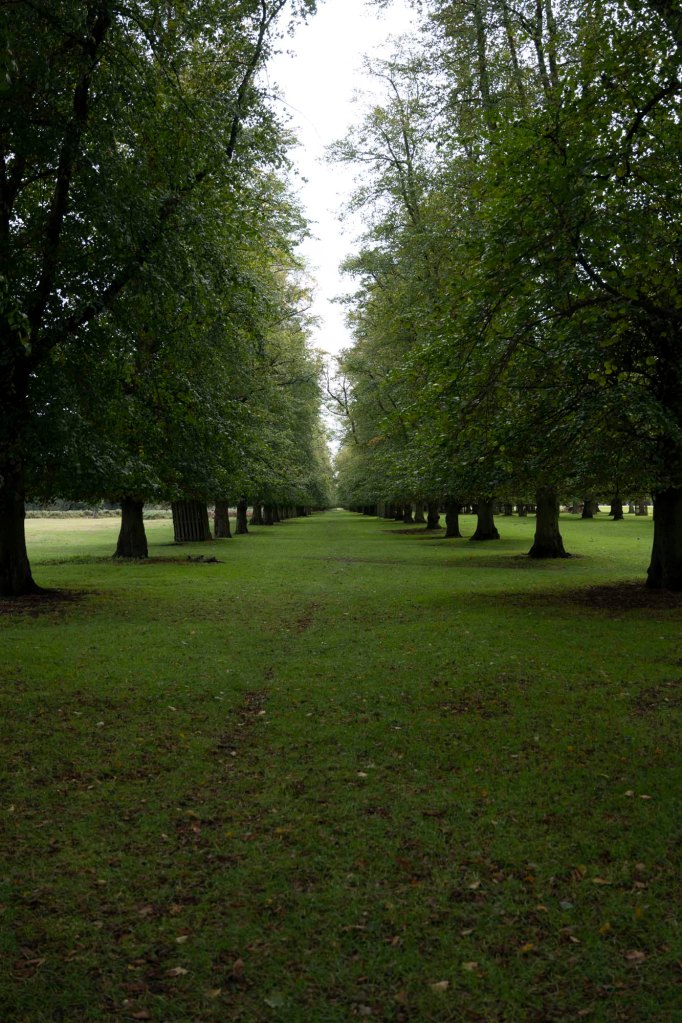
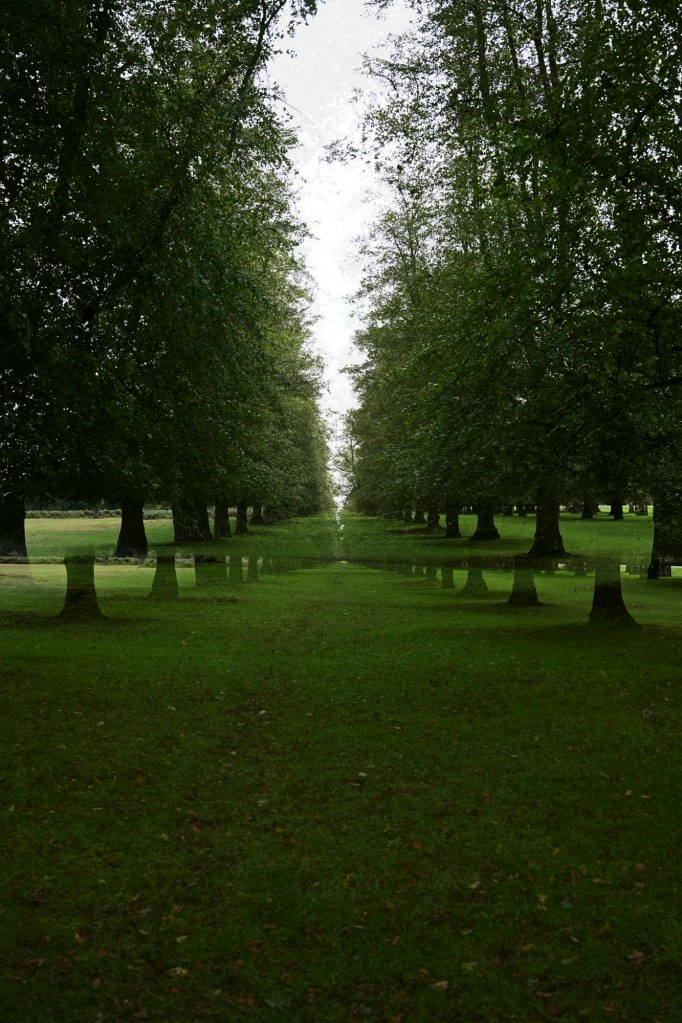
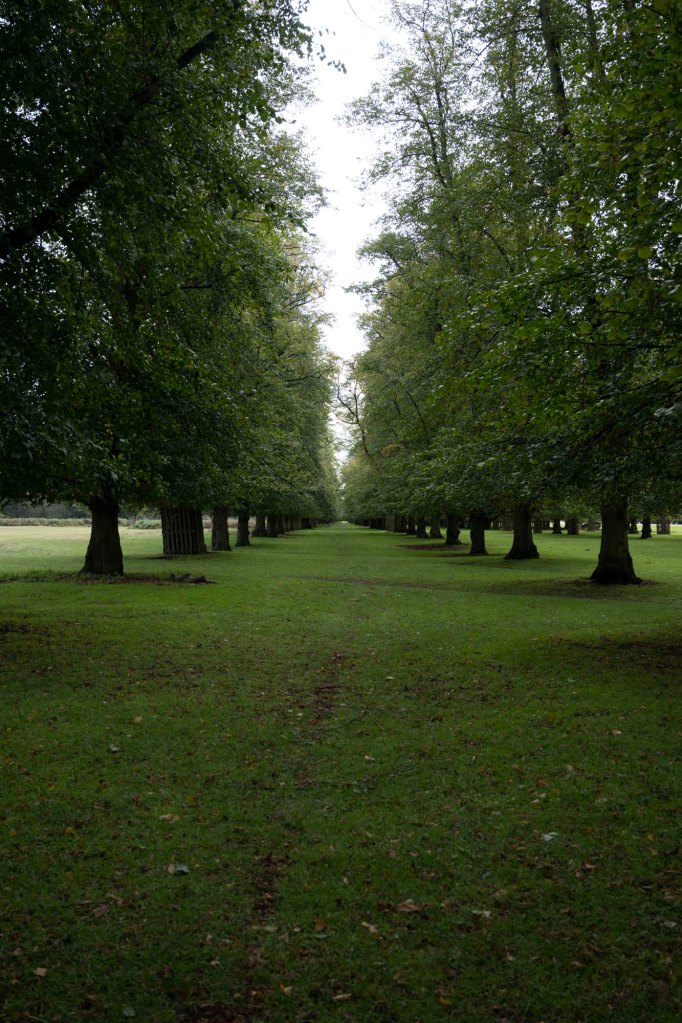
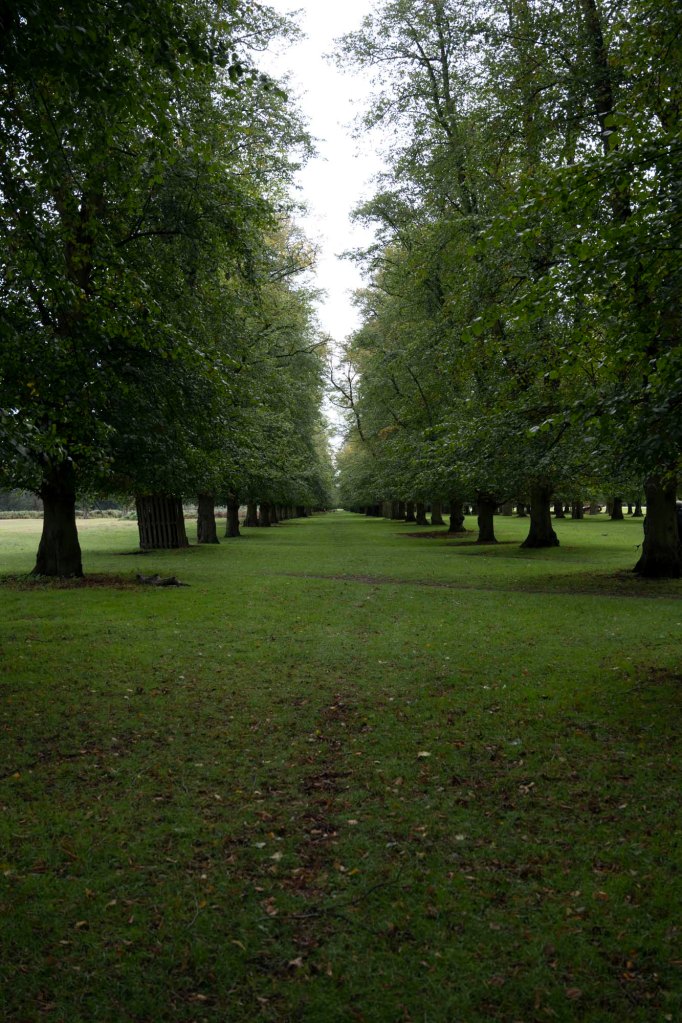
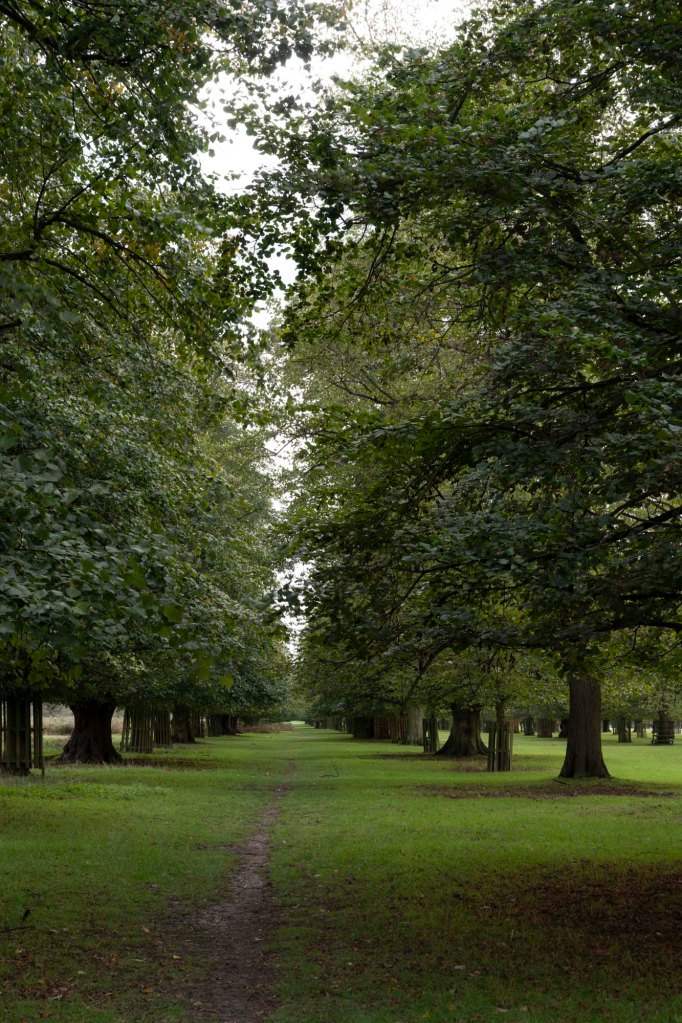
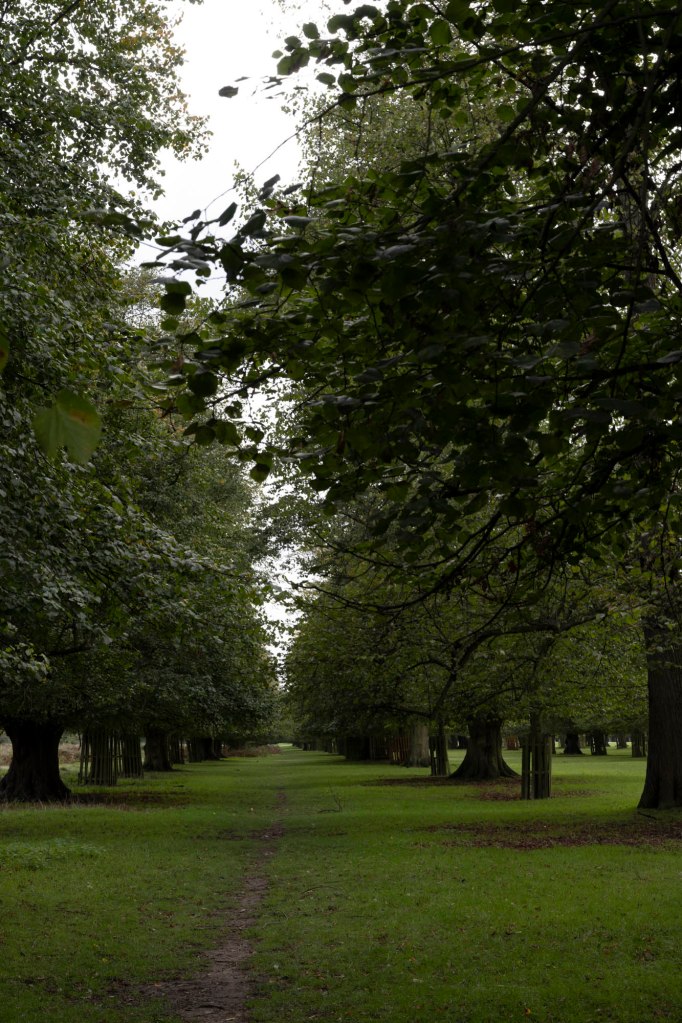
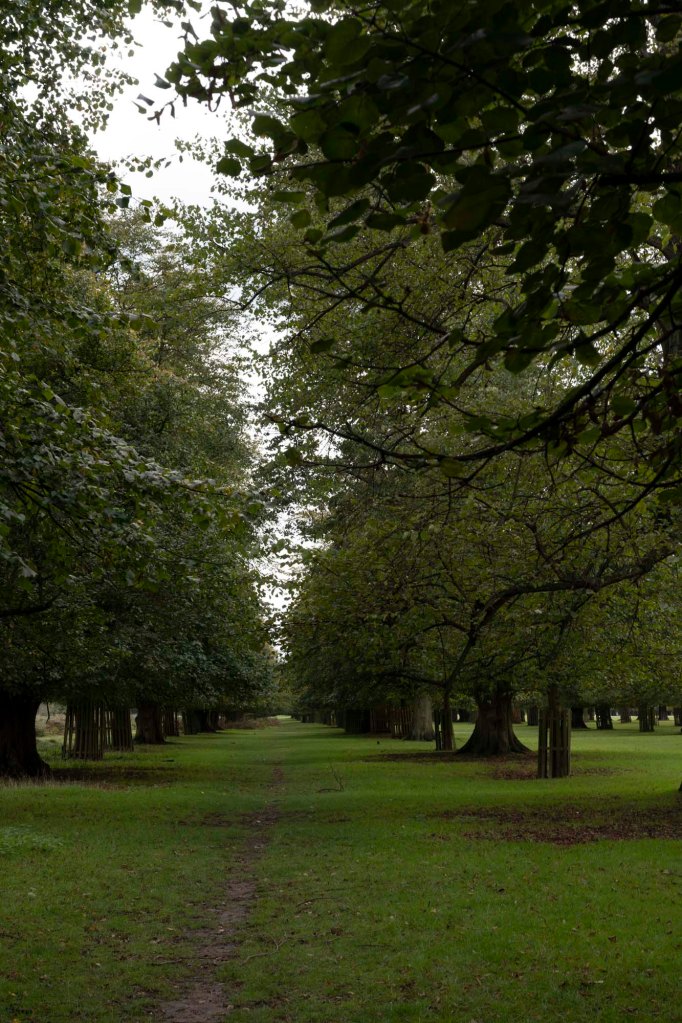
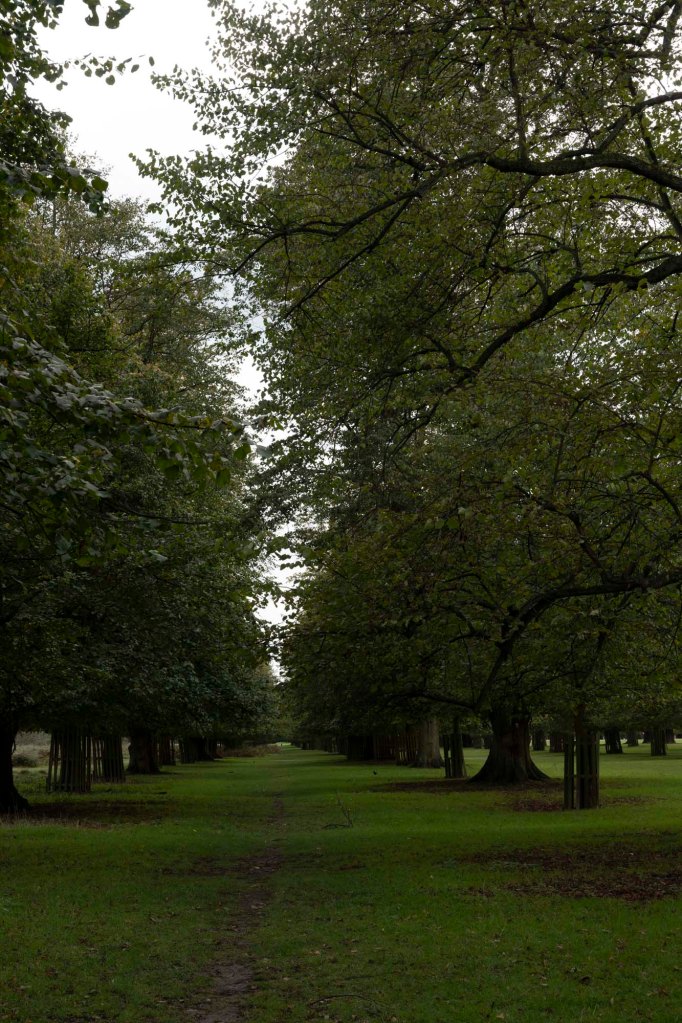
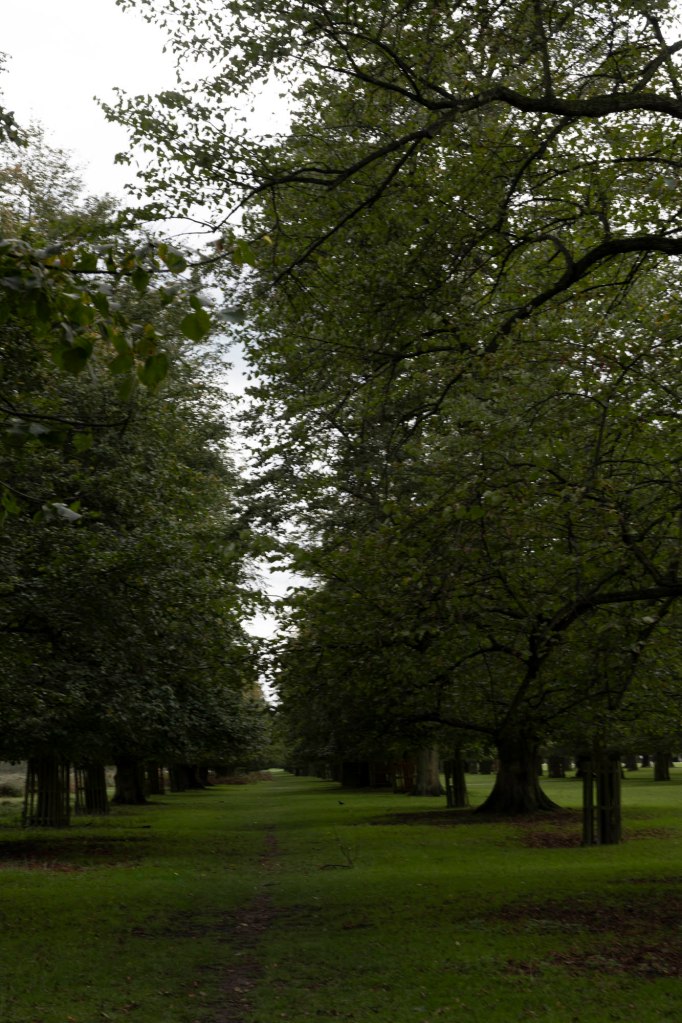
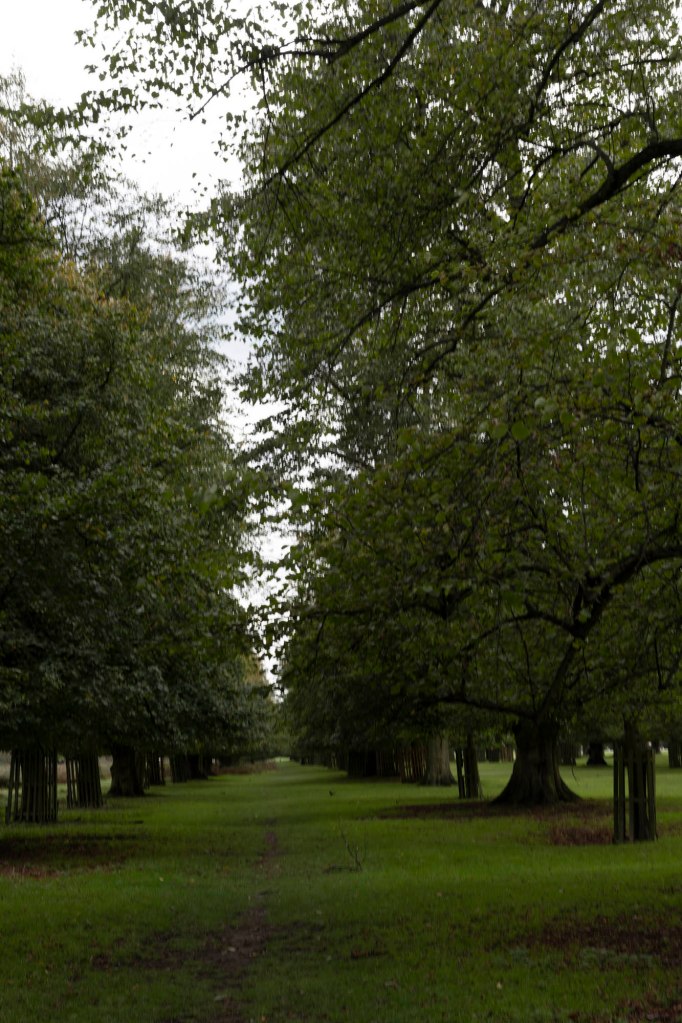
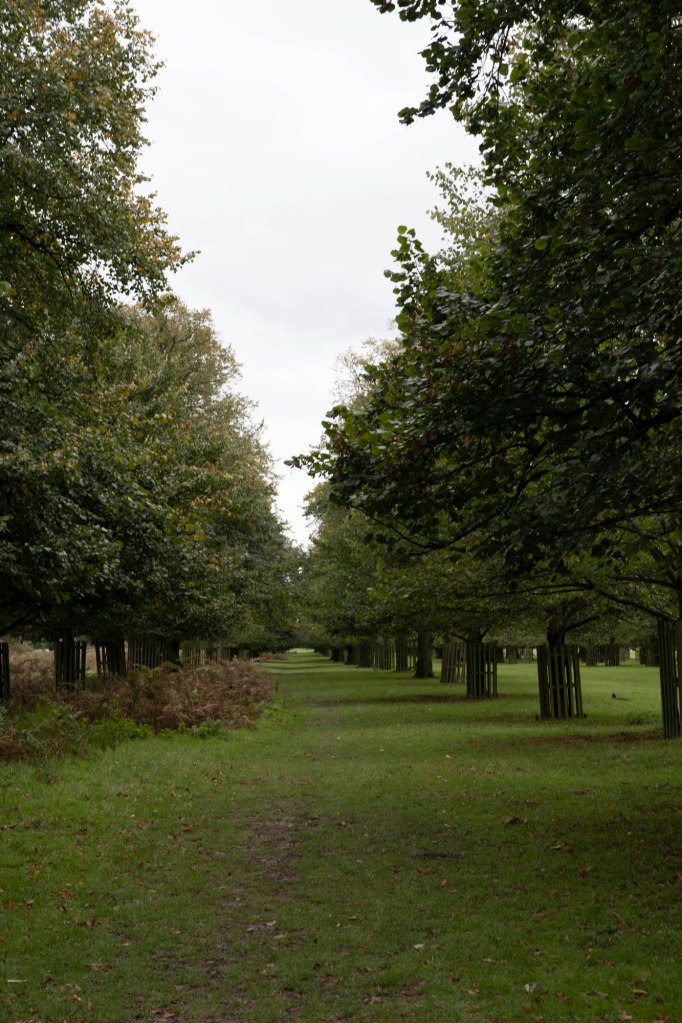
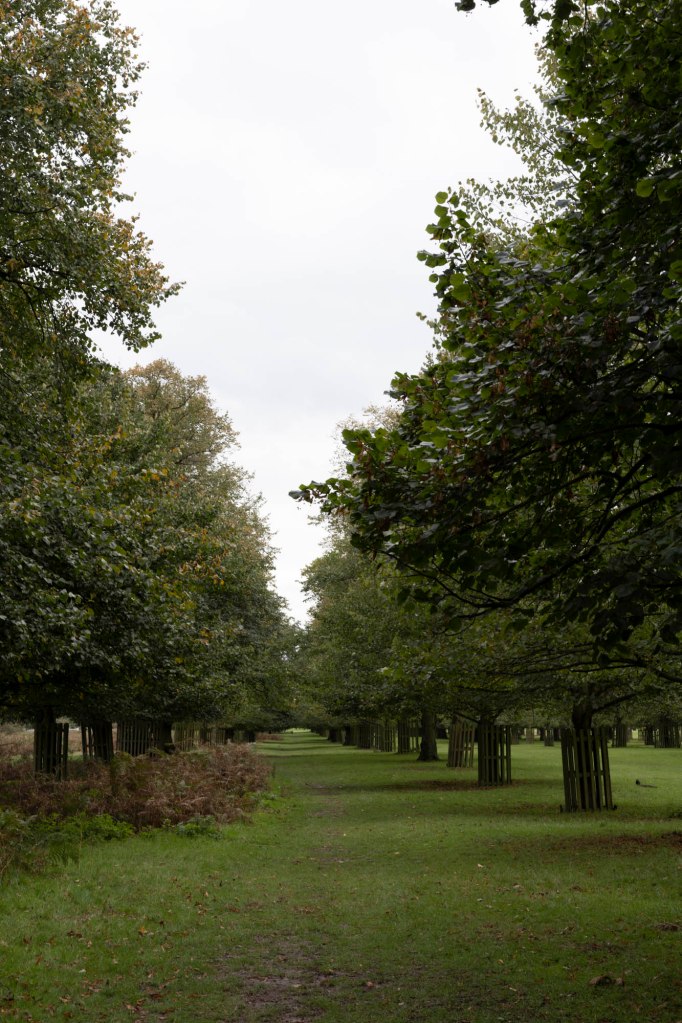
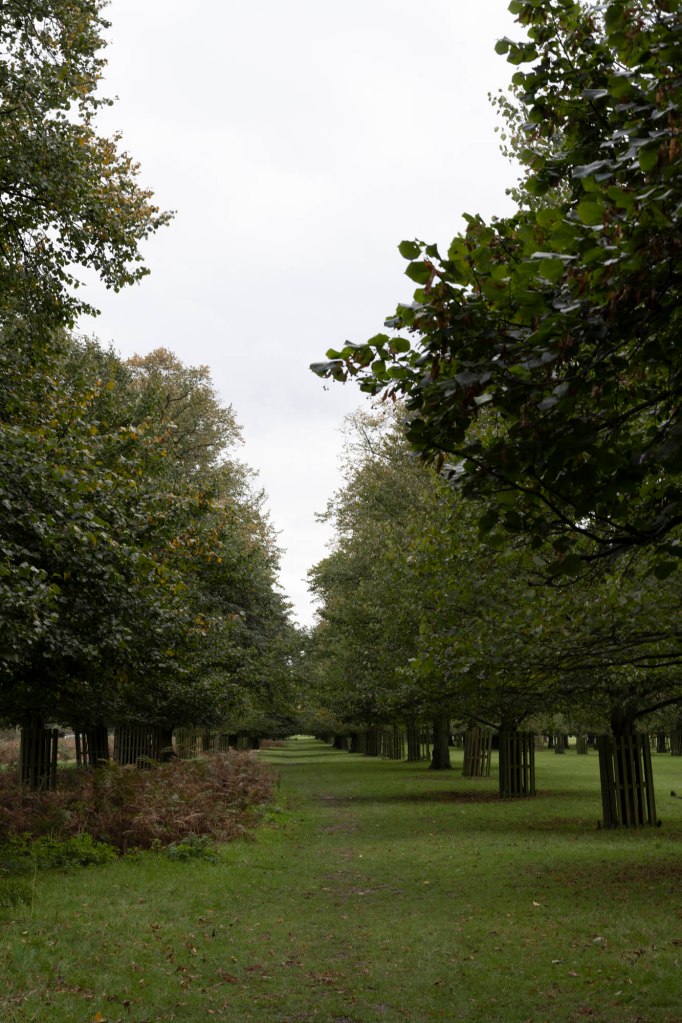
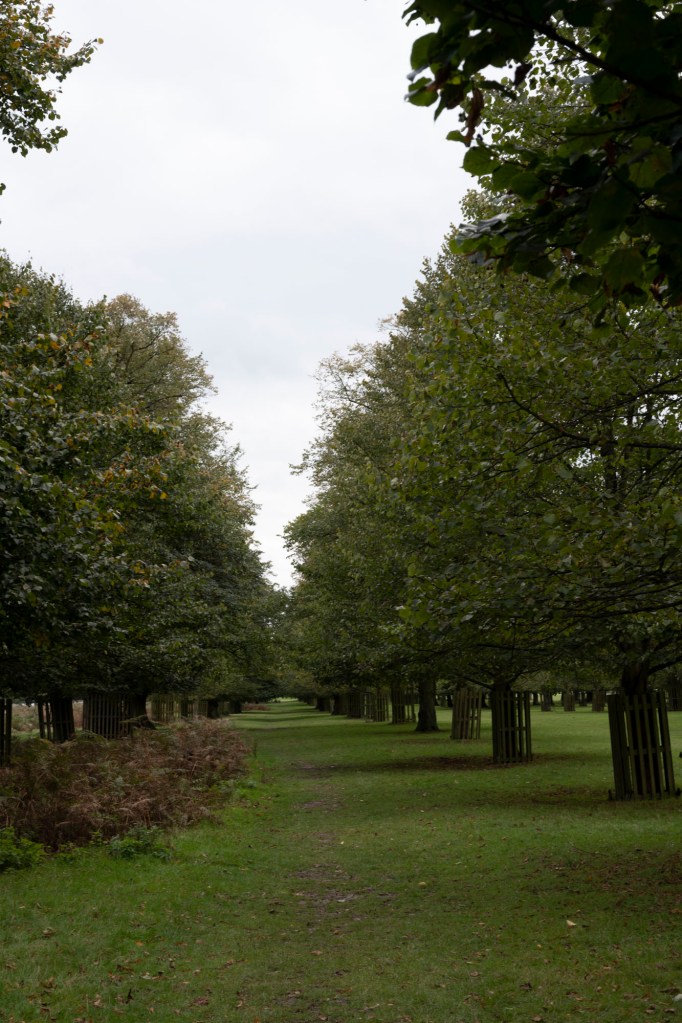
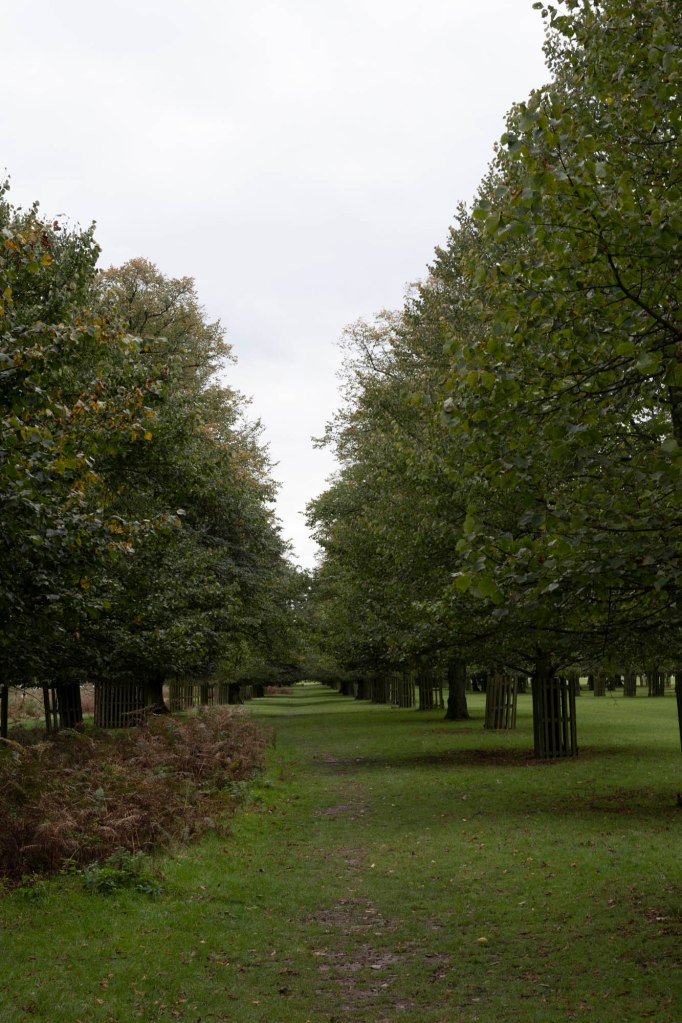
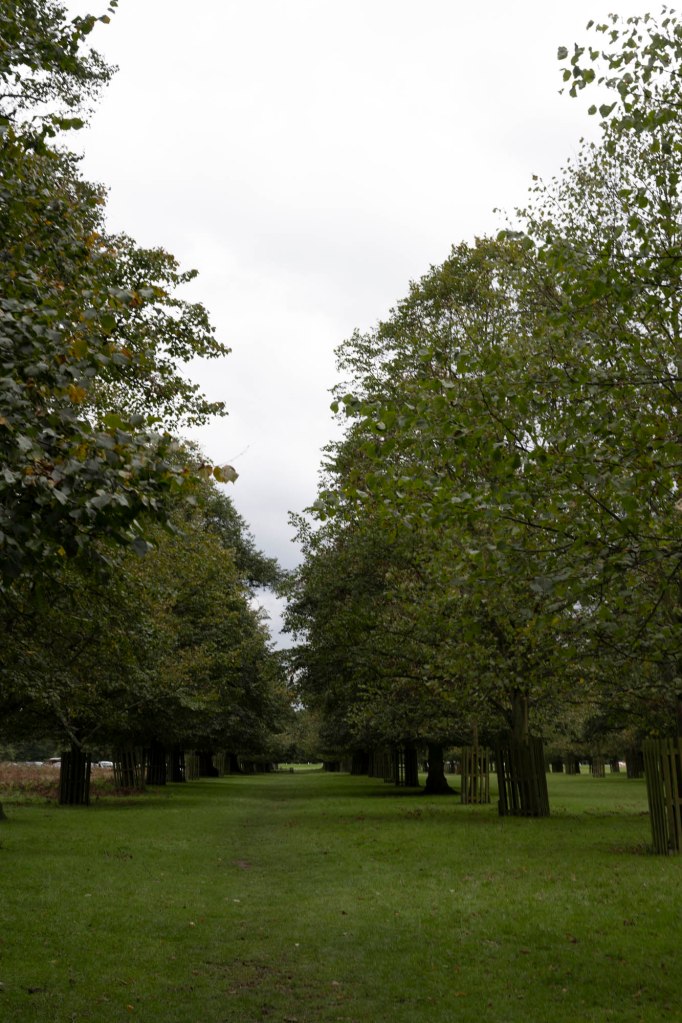
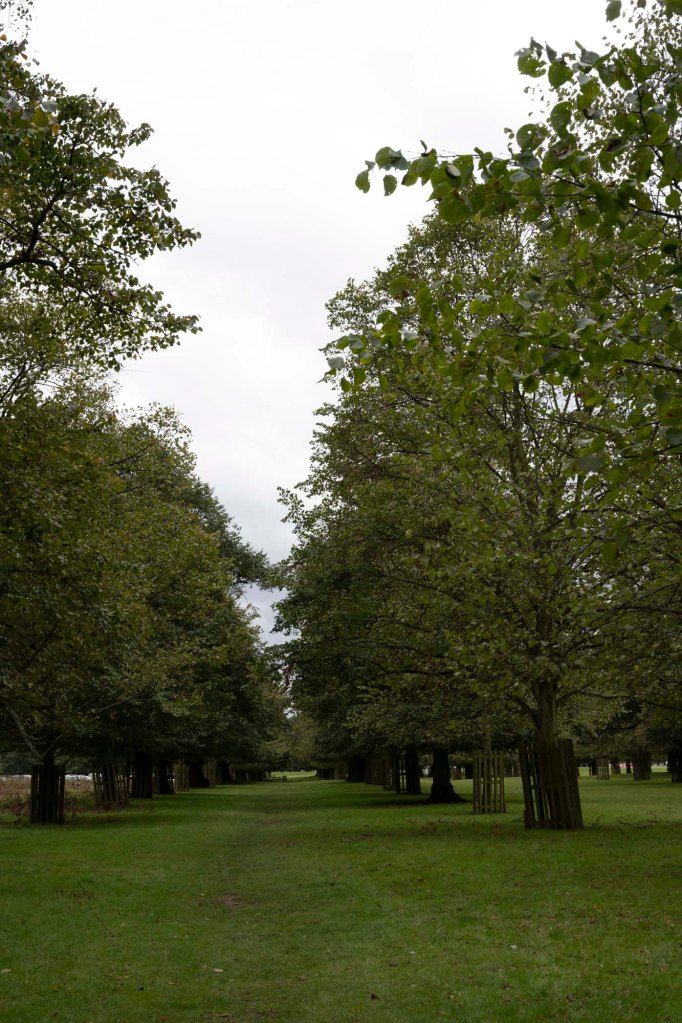
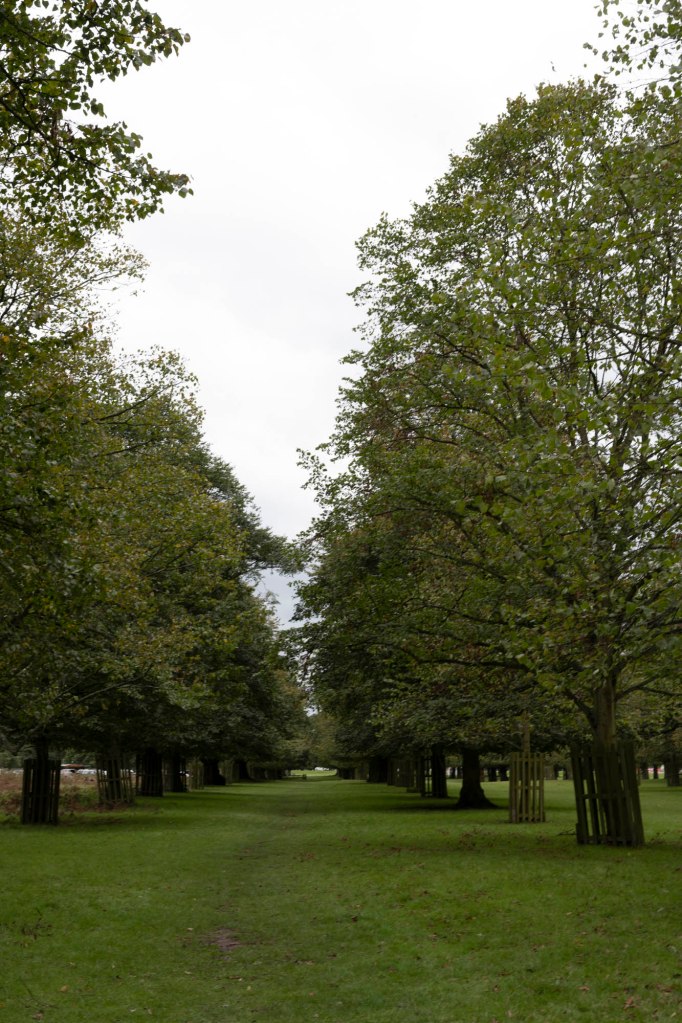
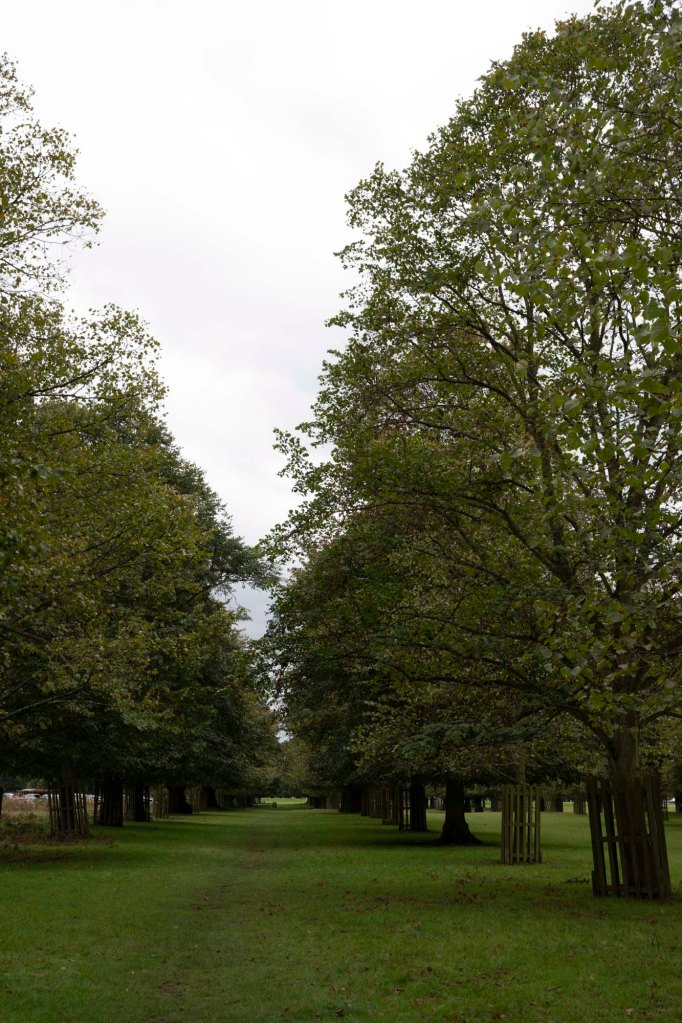
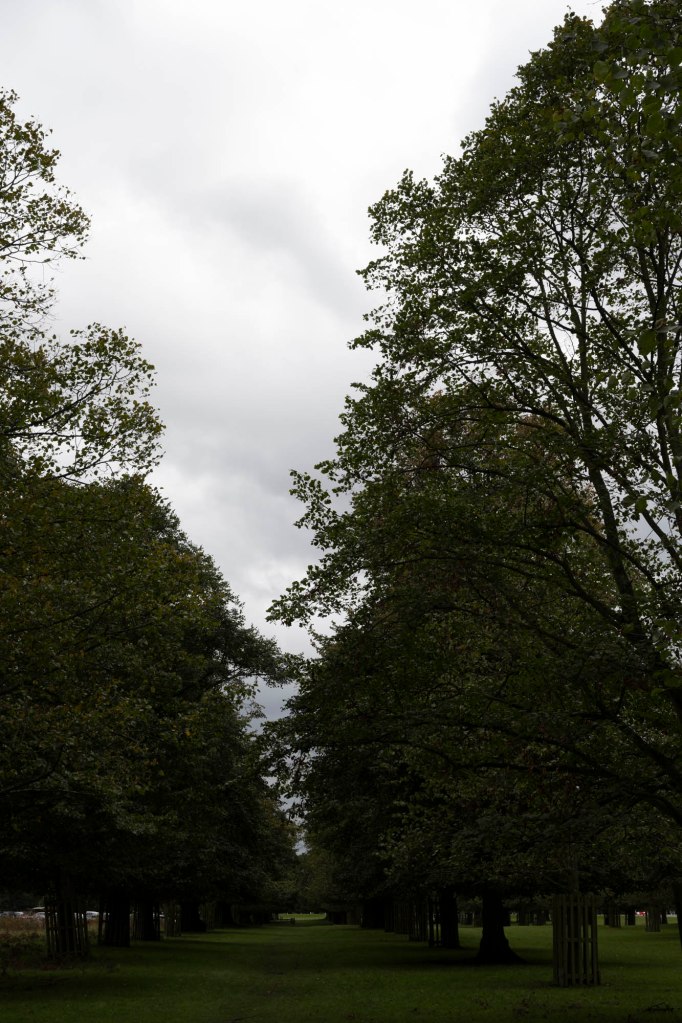
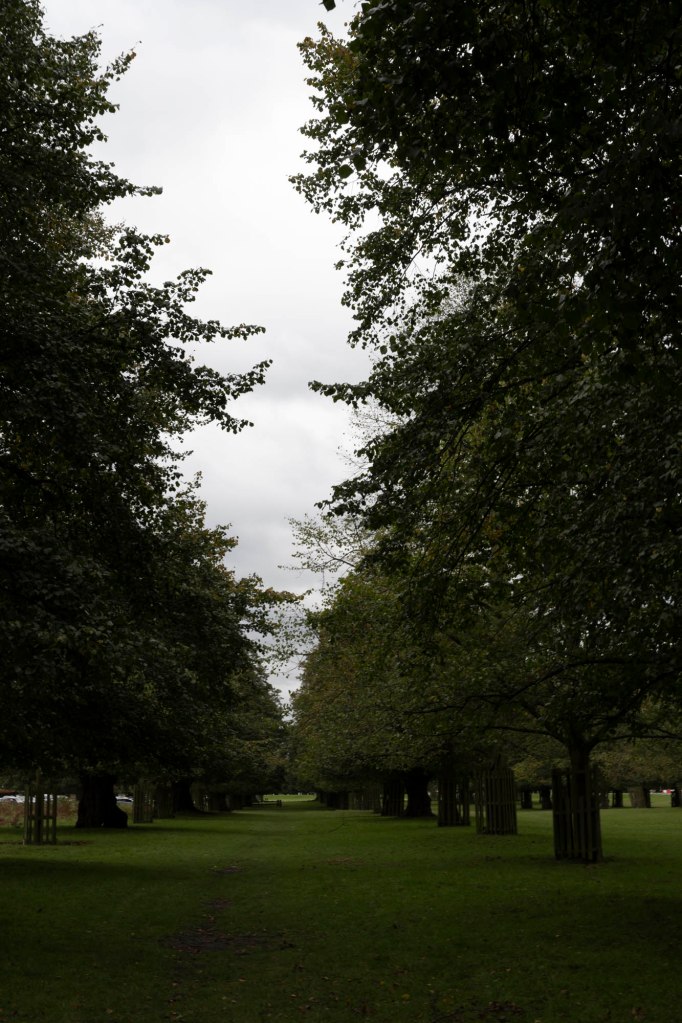
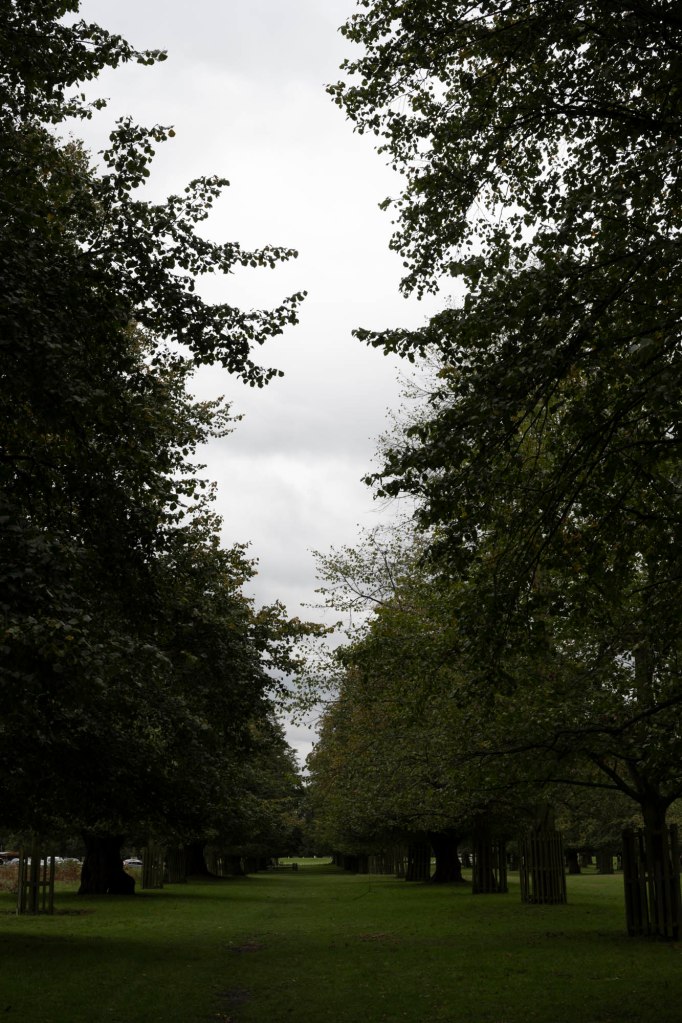
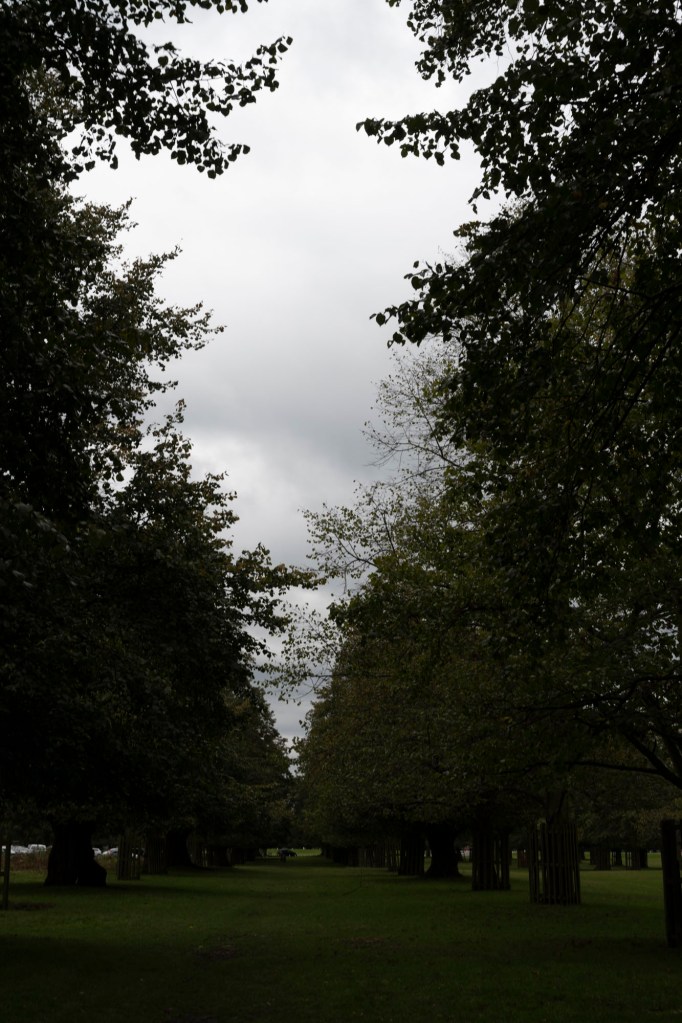
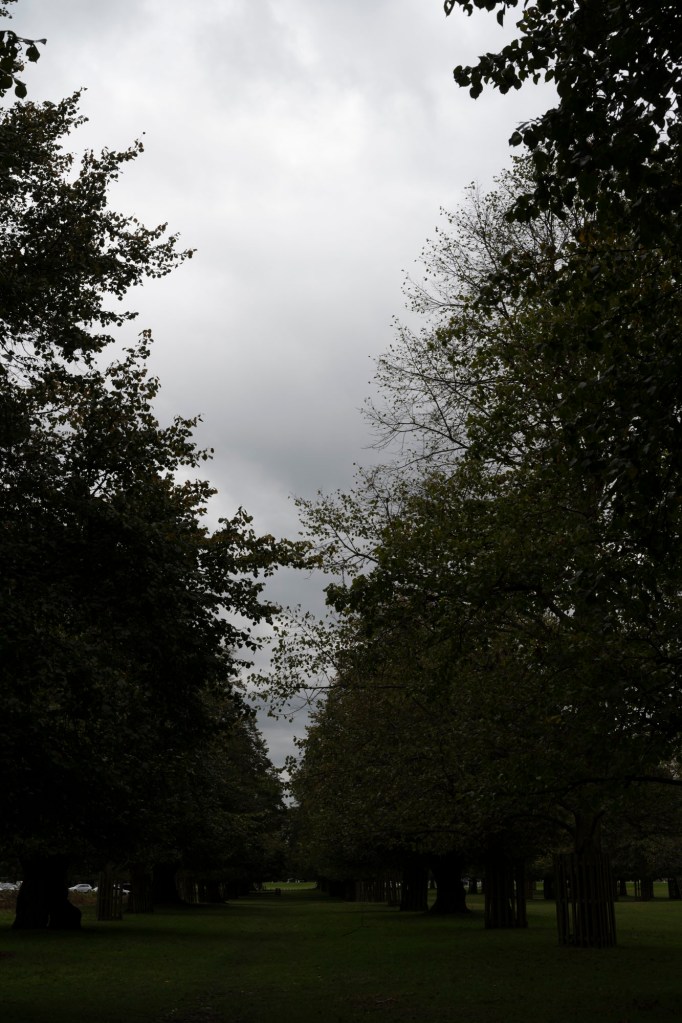
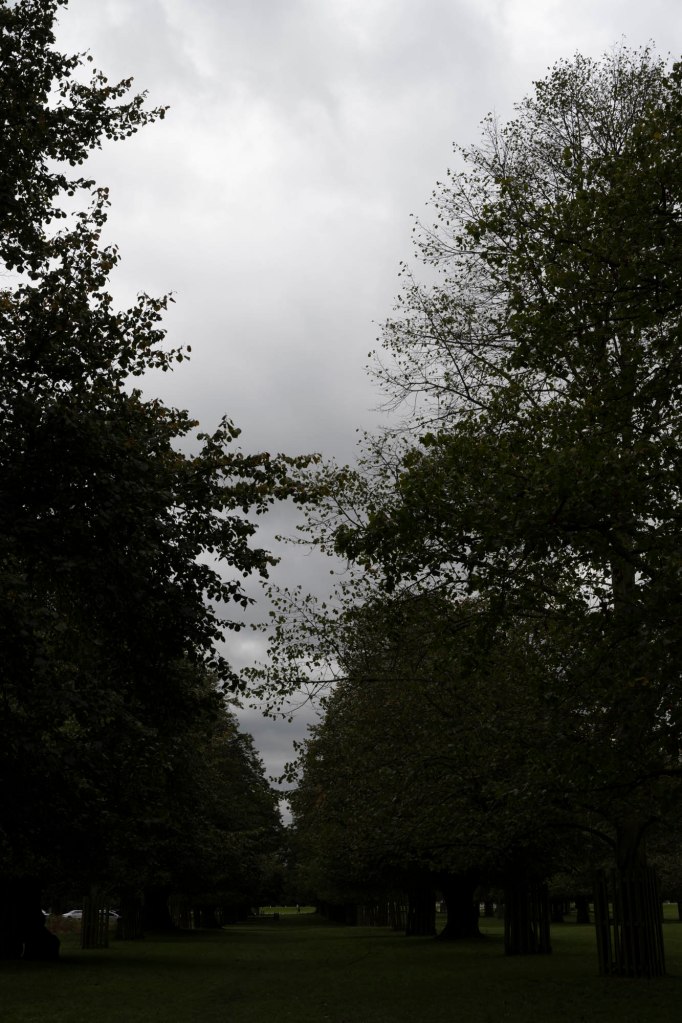
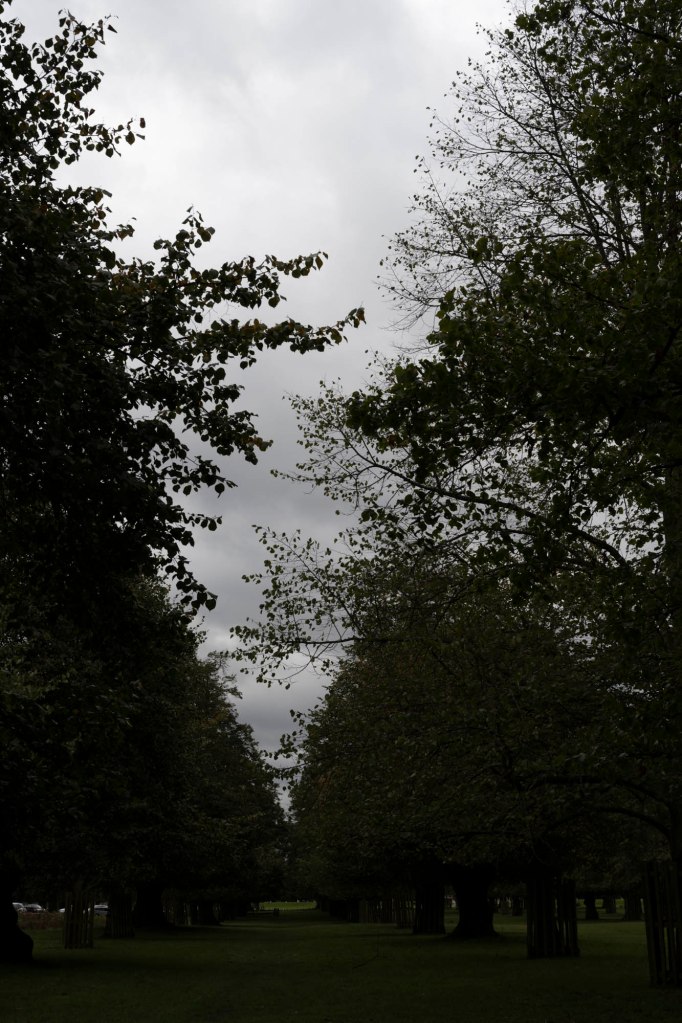
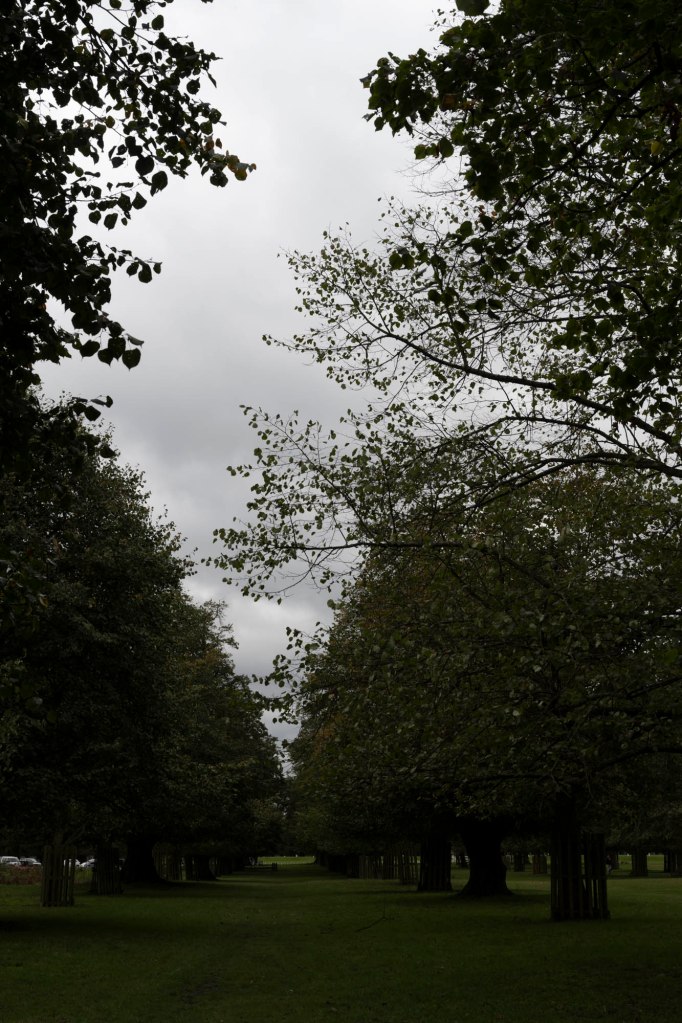
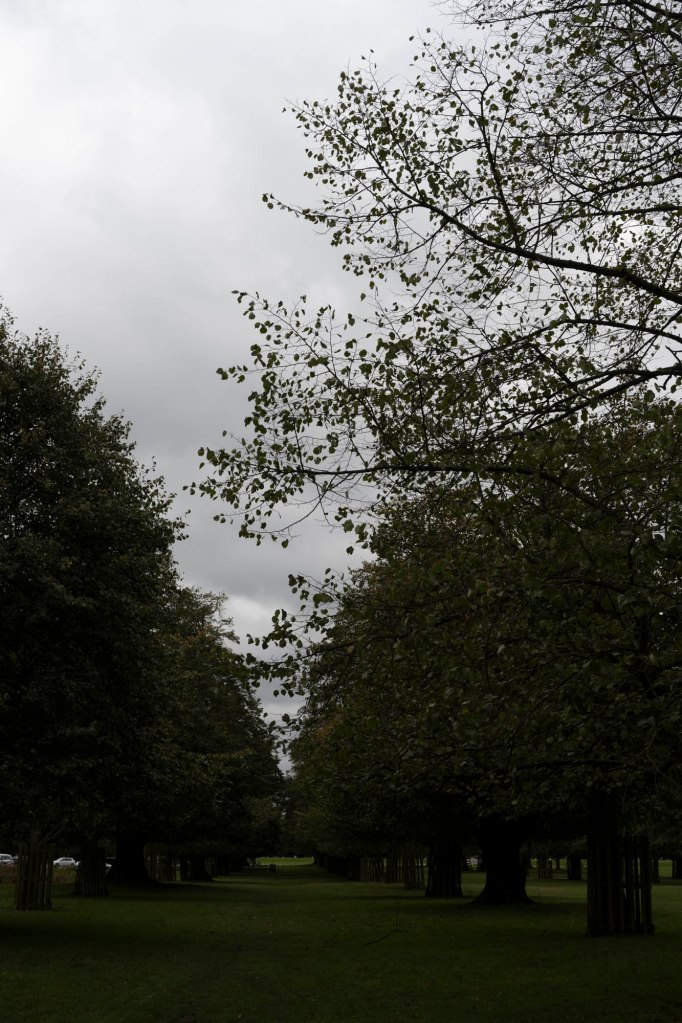
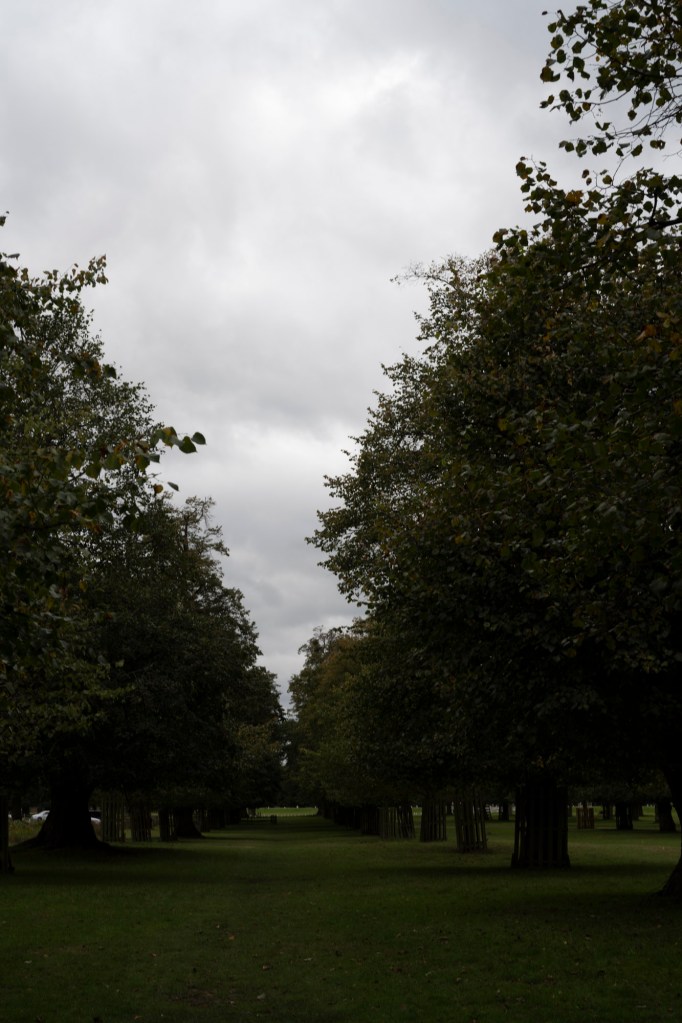
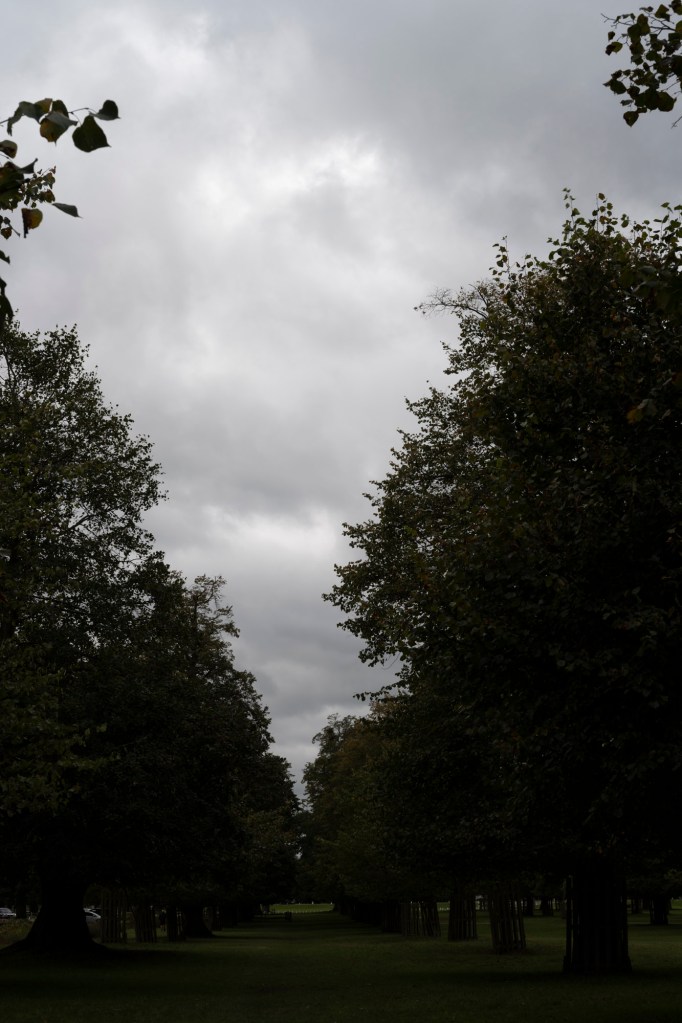
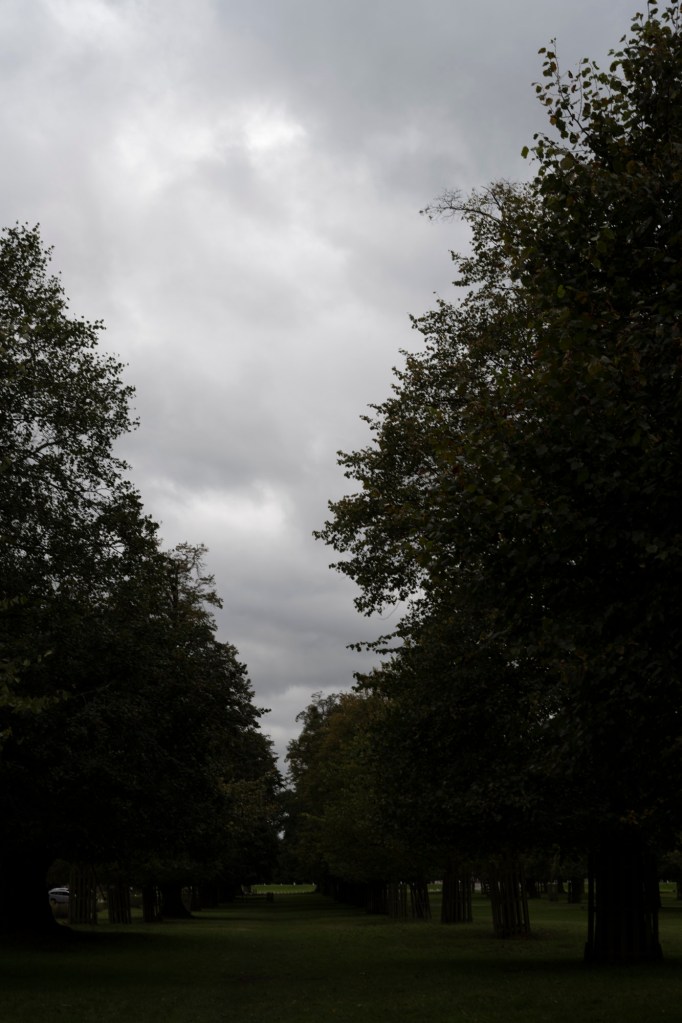
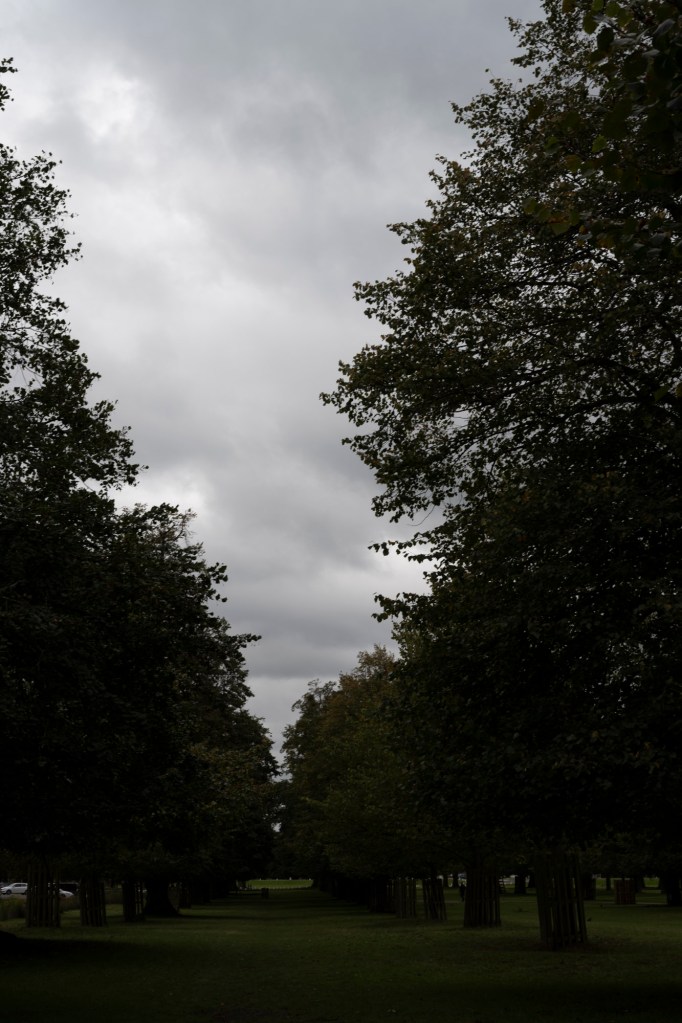
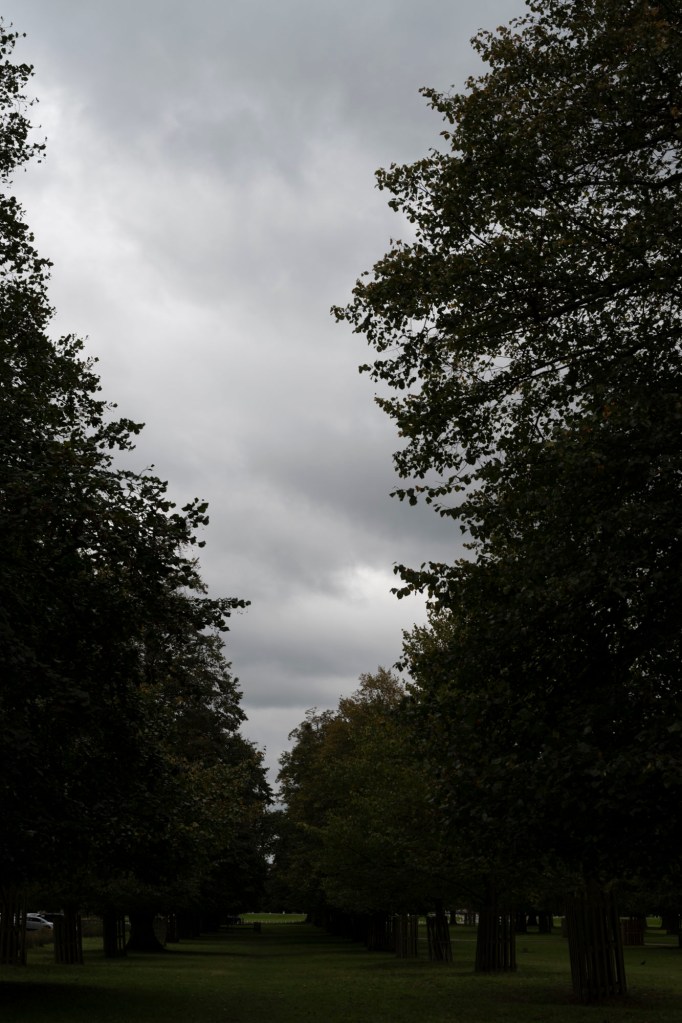
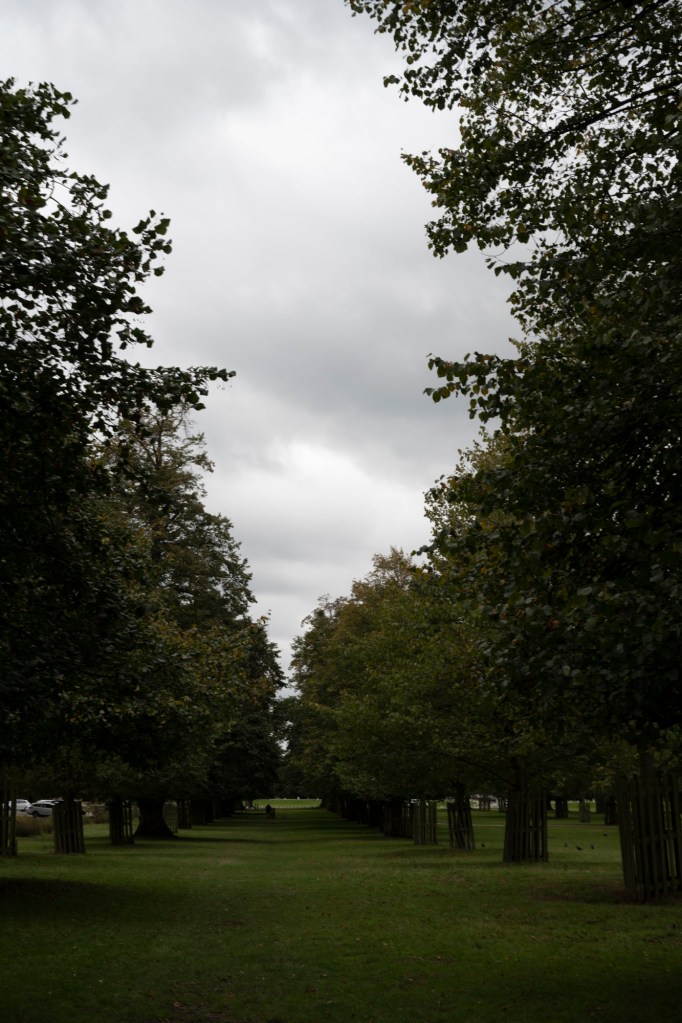
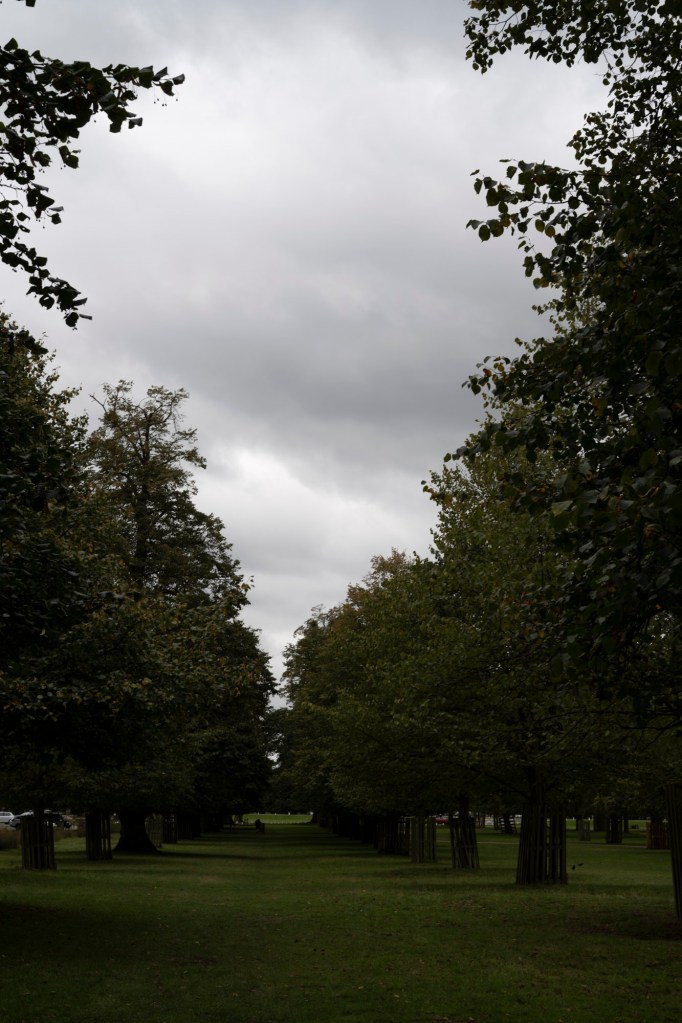
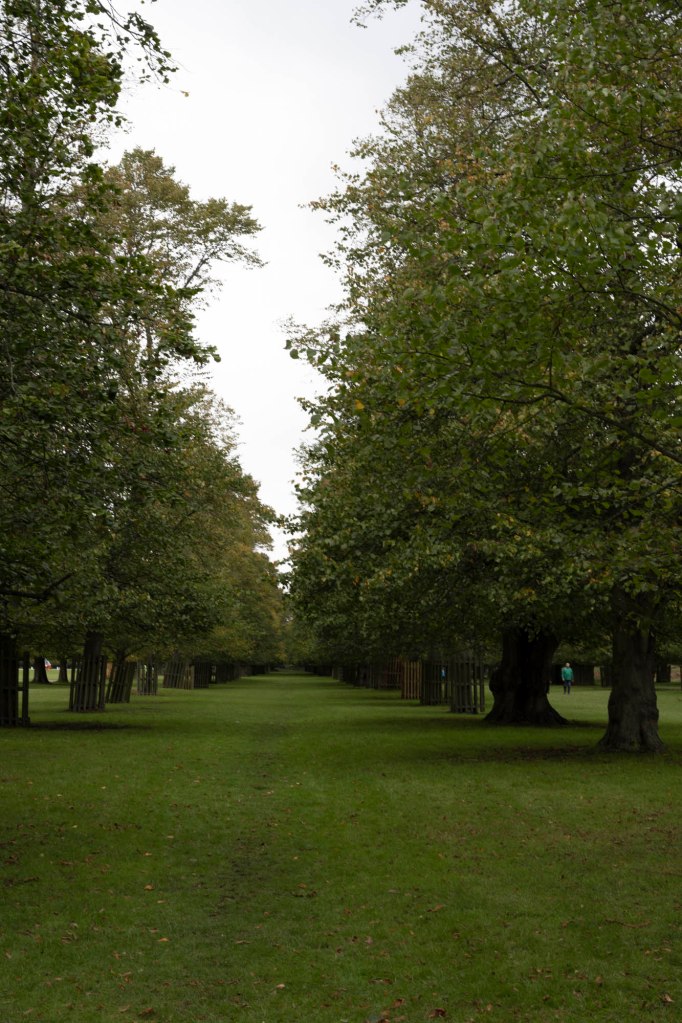
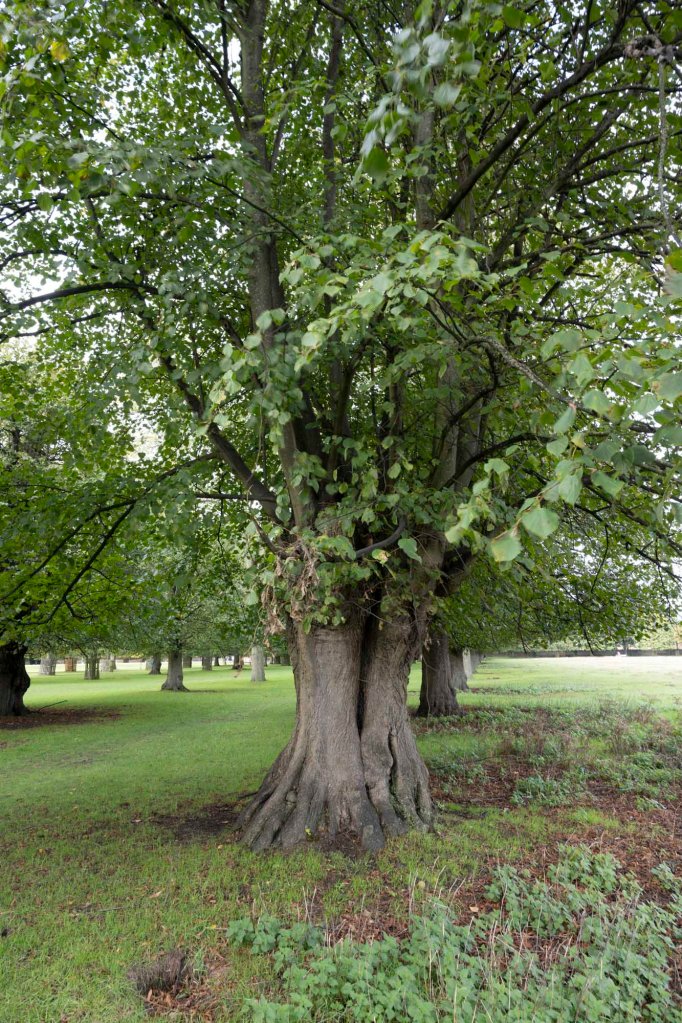
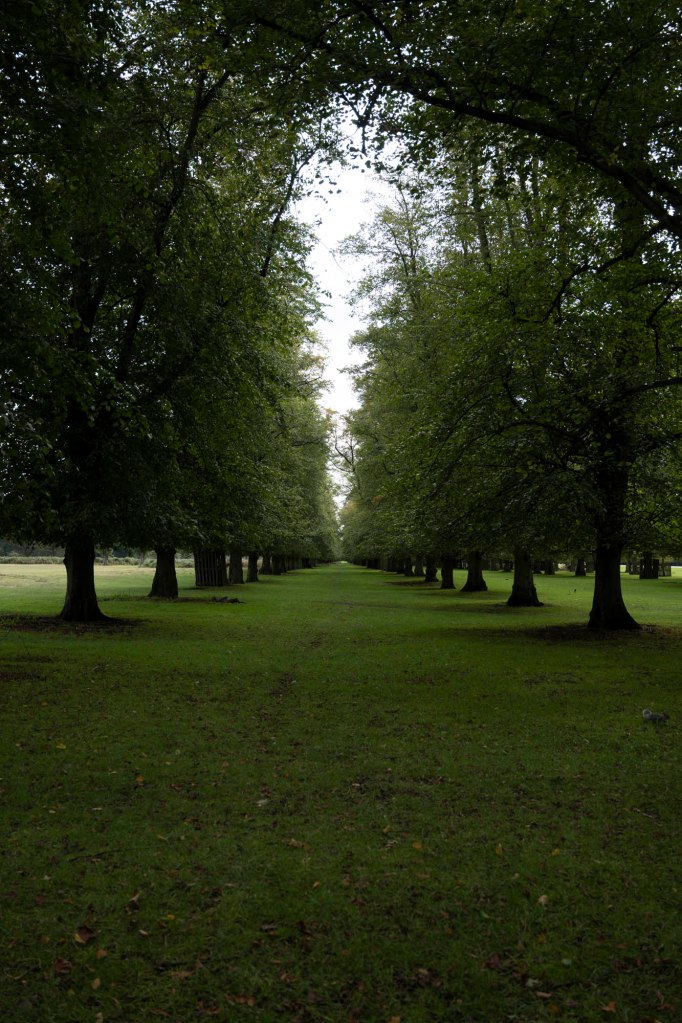
I went back to the park with the intention of revisiting the avenue of Lime trees between Teddington Gate and the Diana Fountain. I was taking a shot then walking five paces and taking another. I also tried a couple of multiple exposure shots to see what they would look like.

What I found interesting when looking at the images in a grid formation is how the half trees make a whole one. The other thought is to produce a time/hyper-lapse piece walking through the avenue. This could be done over the forthcoming seasons, showing the trees in the various states during autumn, winter, spring and summer.

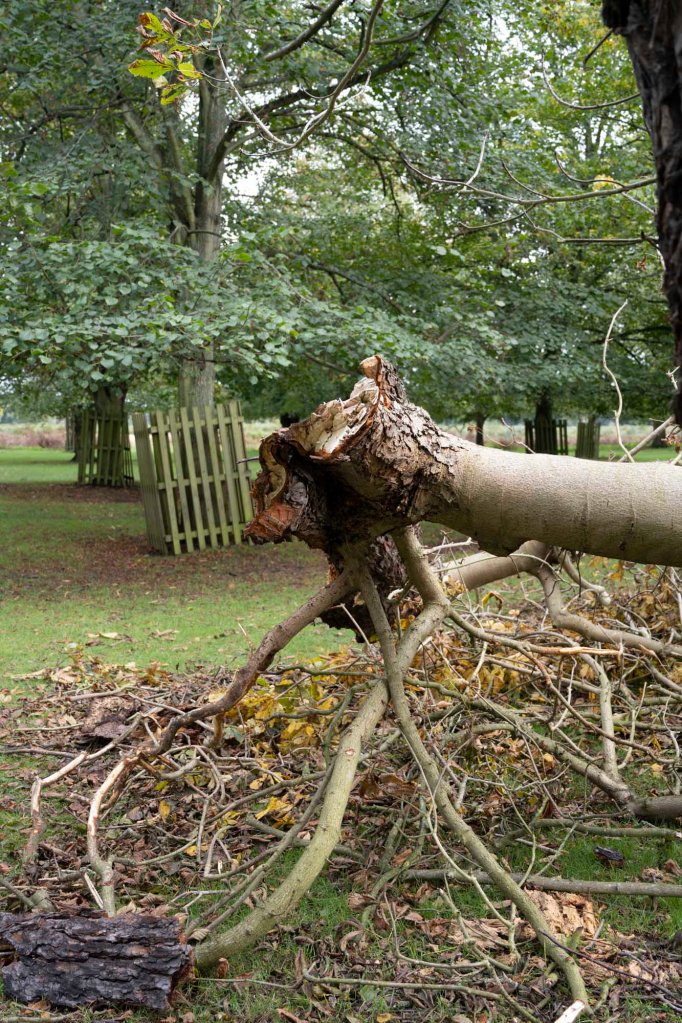
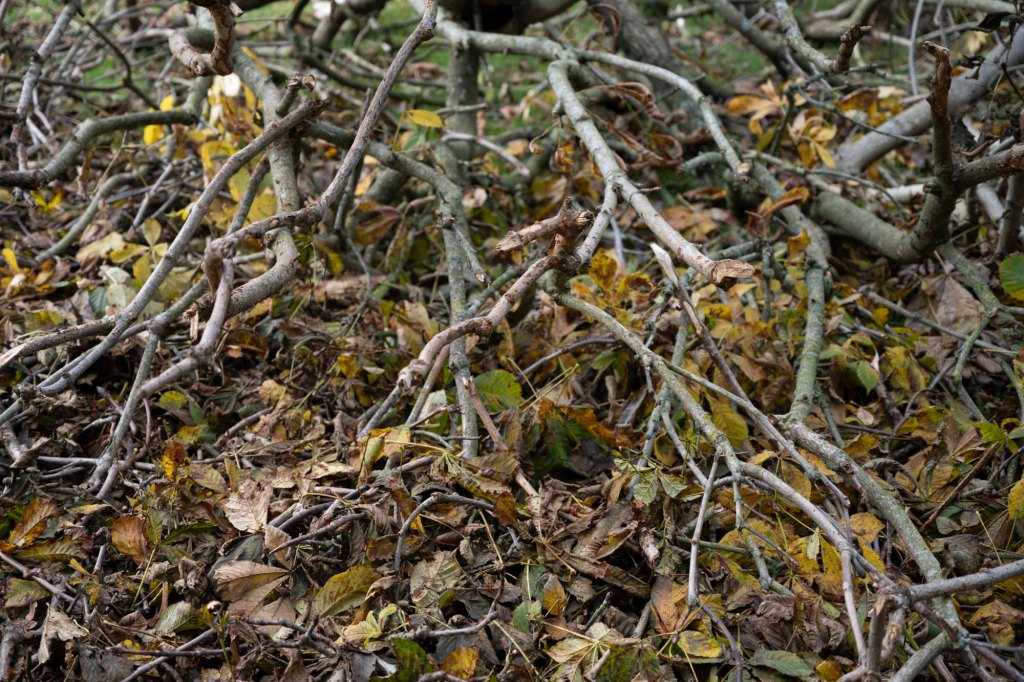
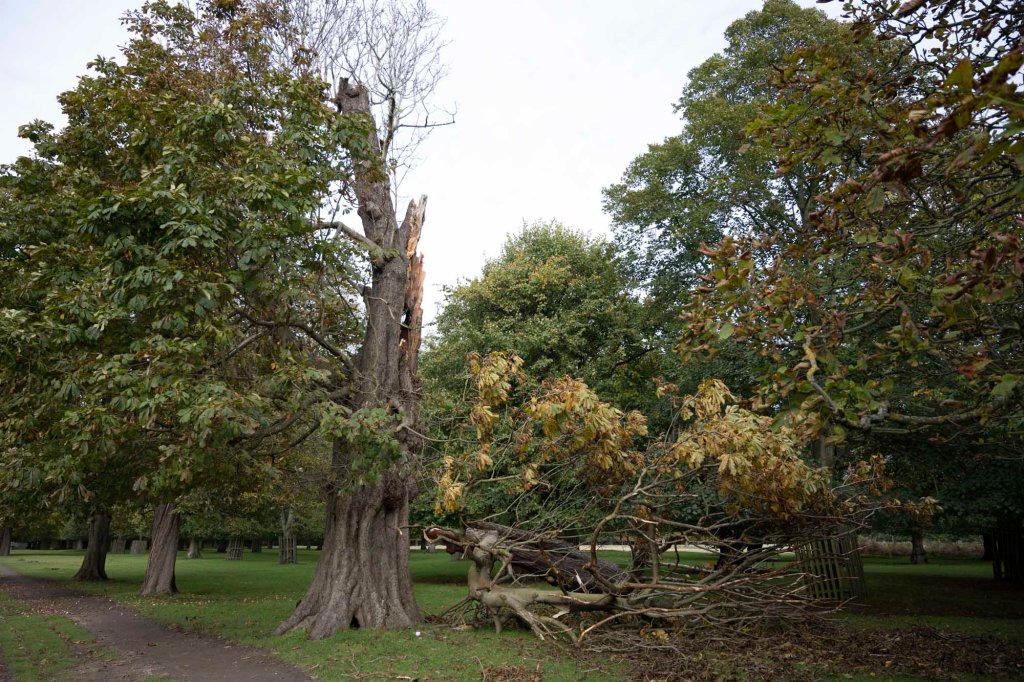
Fallen Hero

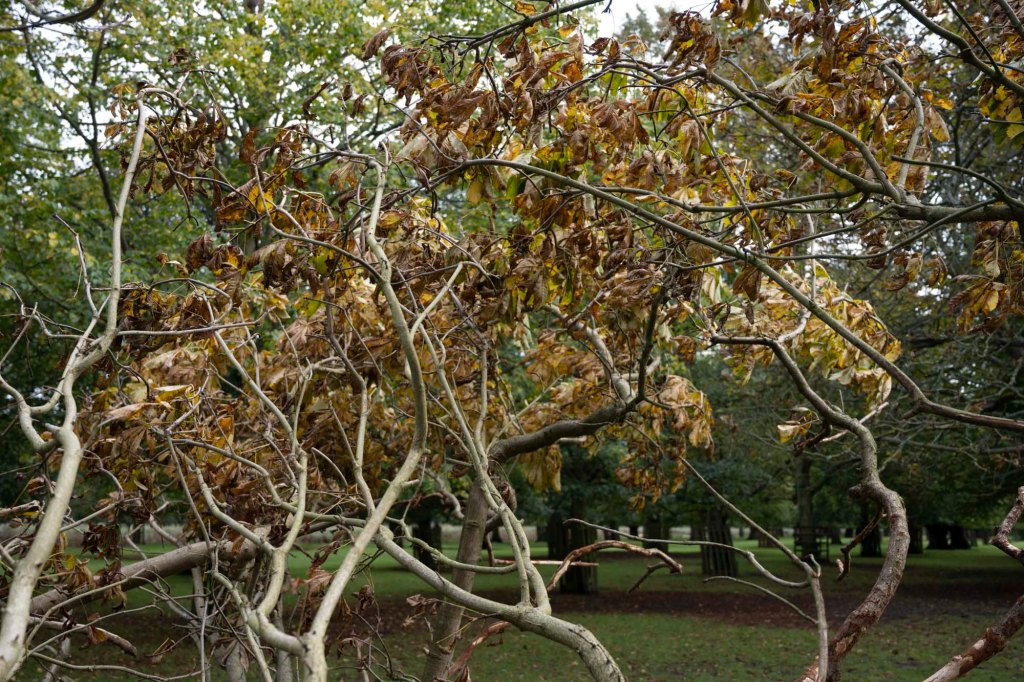
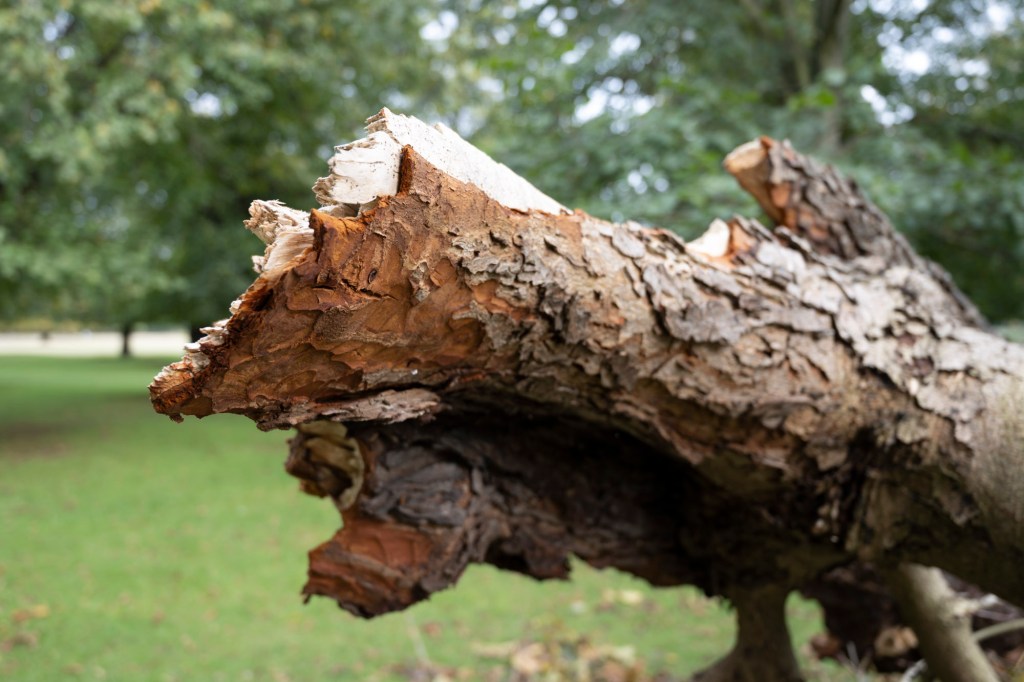
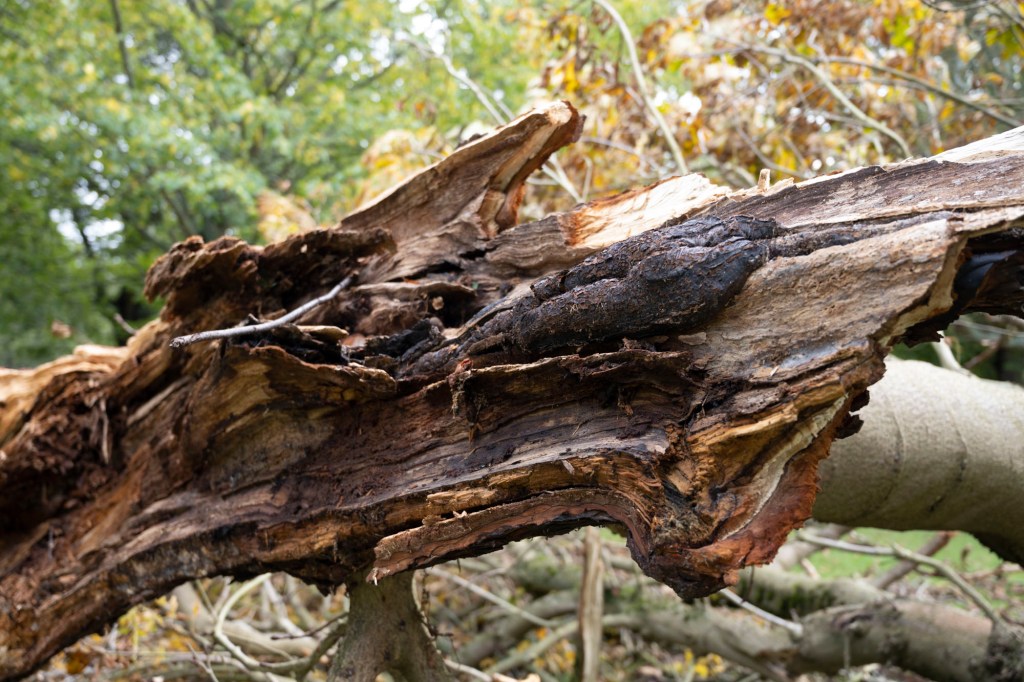
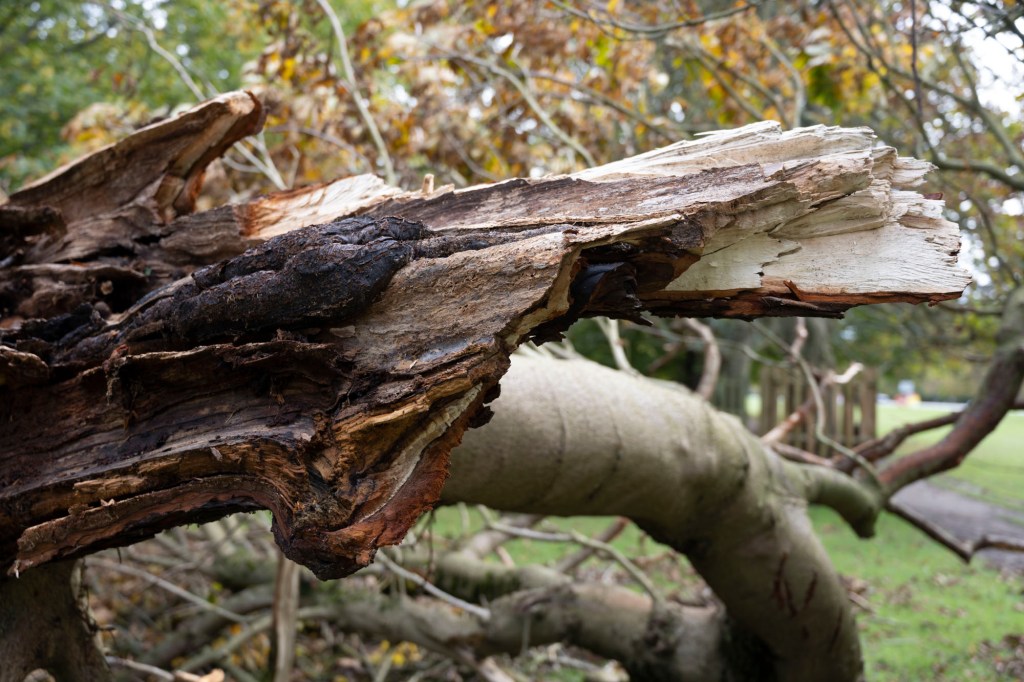
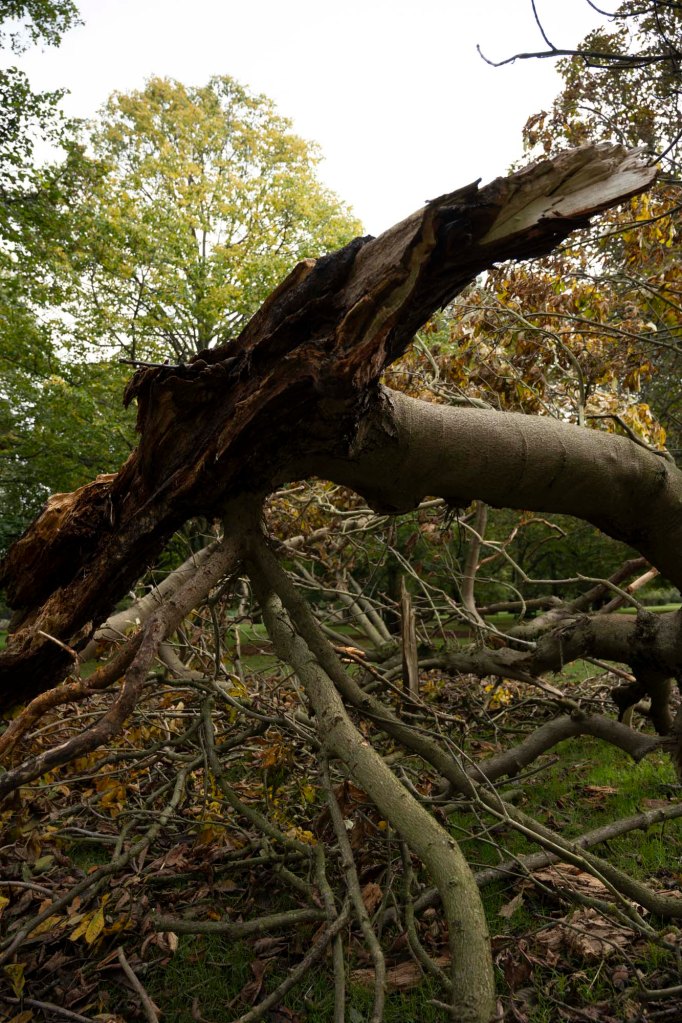
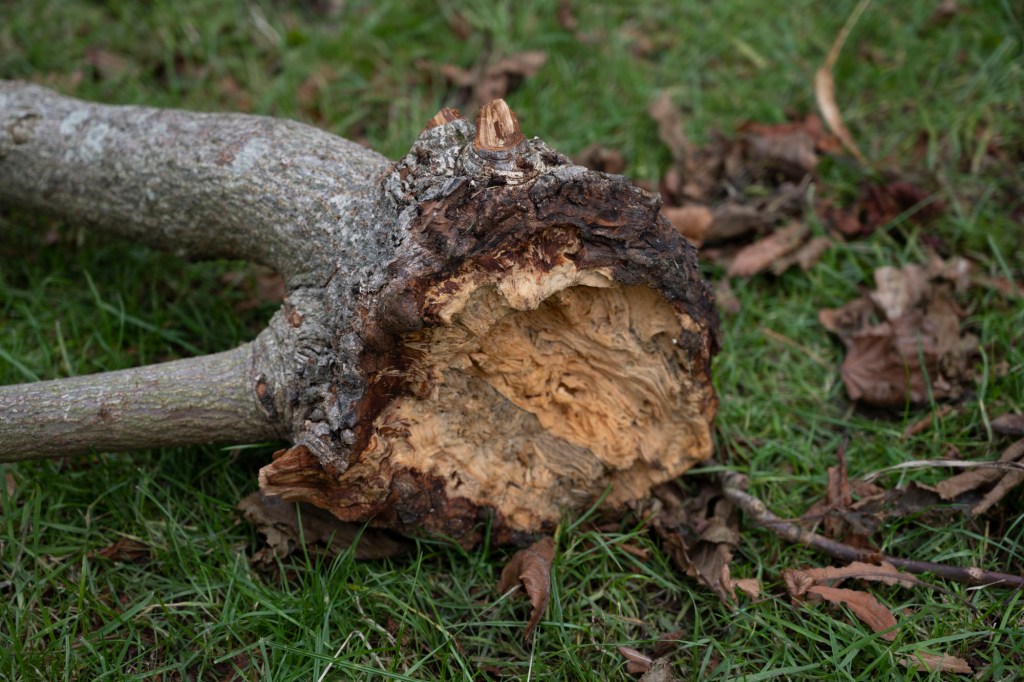
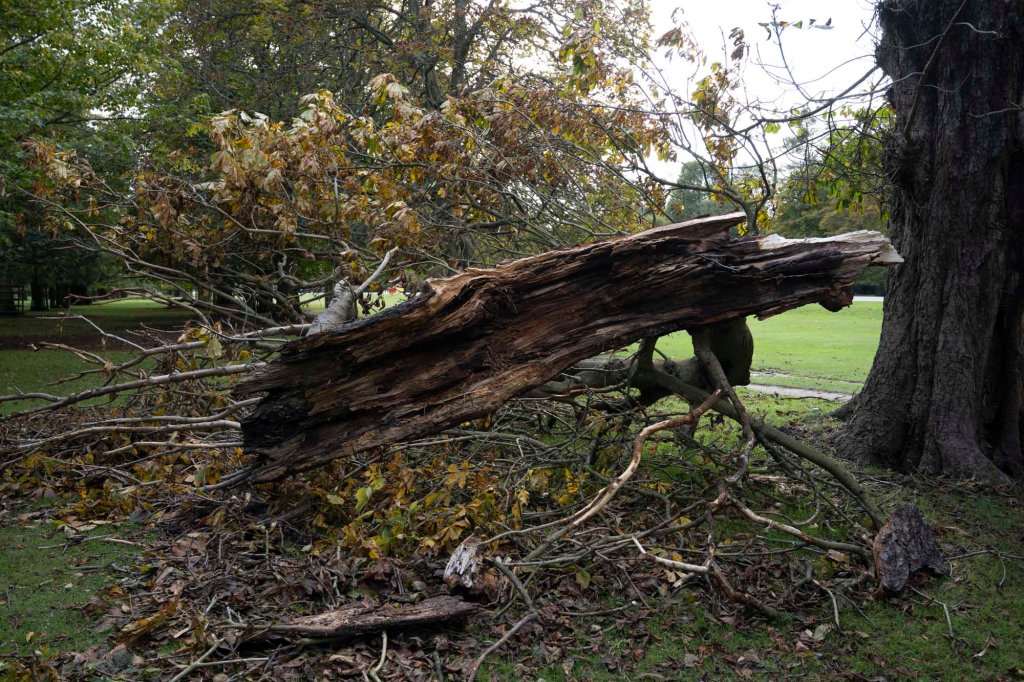
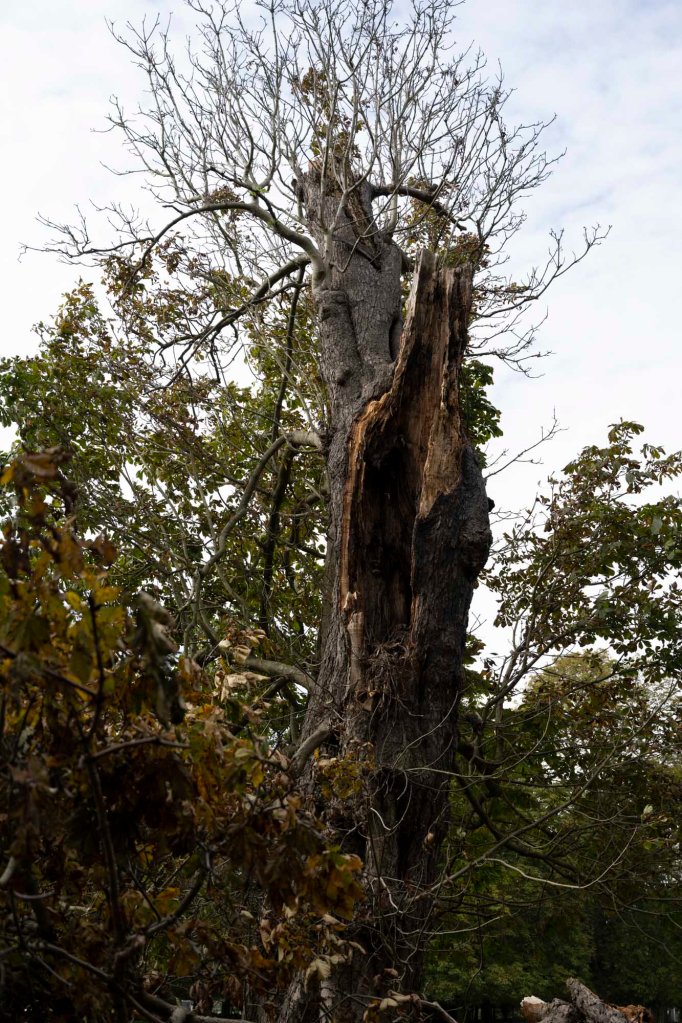
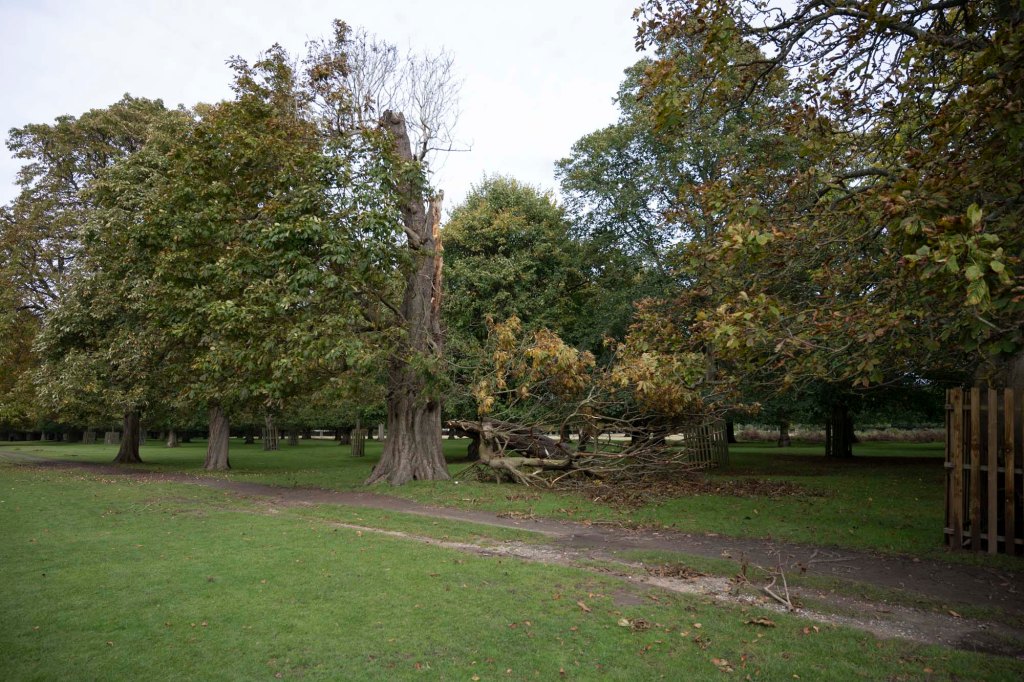
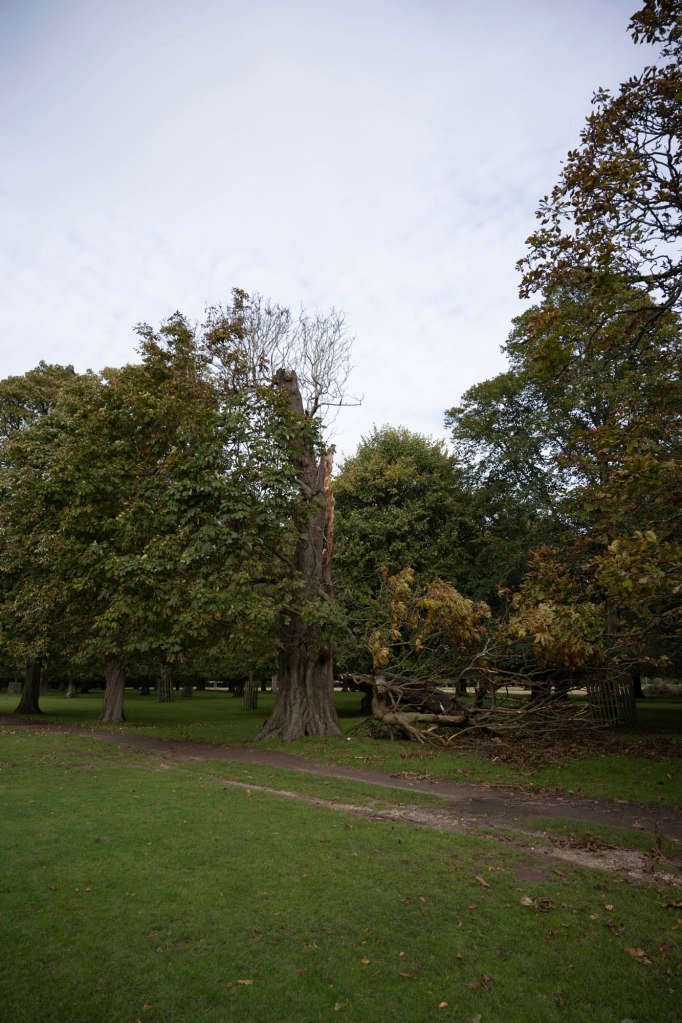
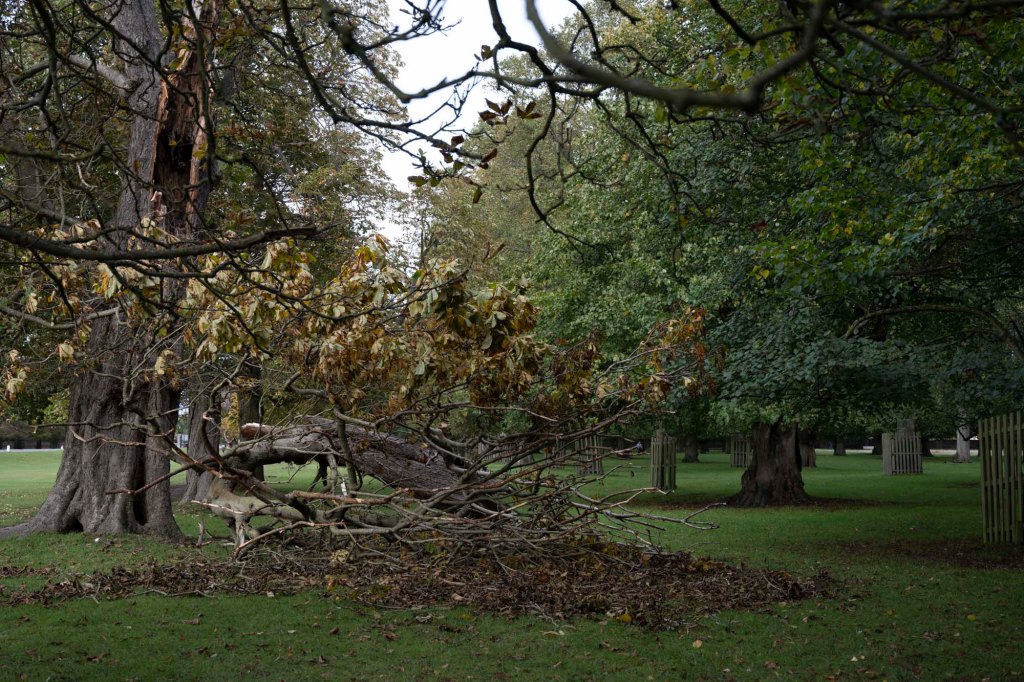
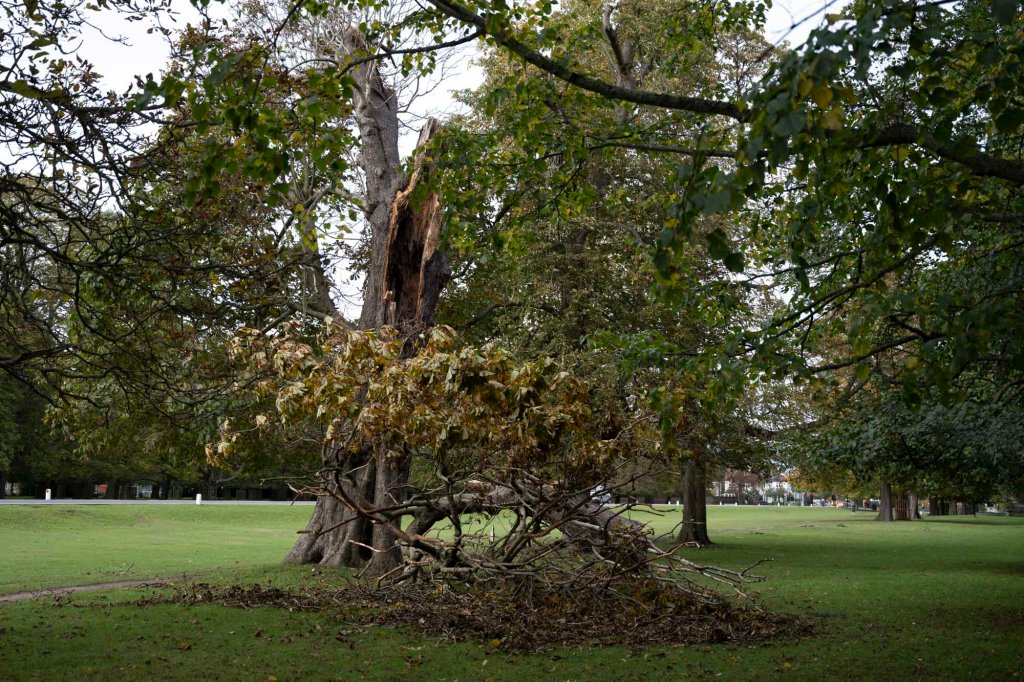
One of the trees along the avenue had lost one of its major sections during the storm on Saturday 3 October.

Split

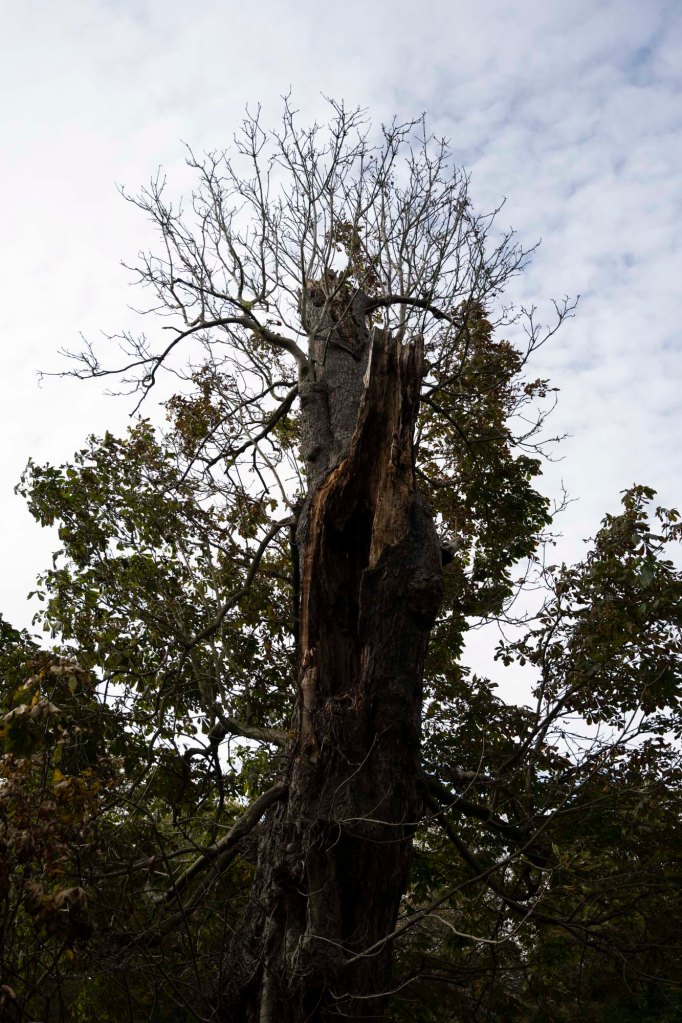
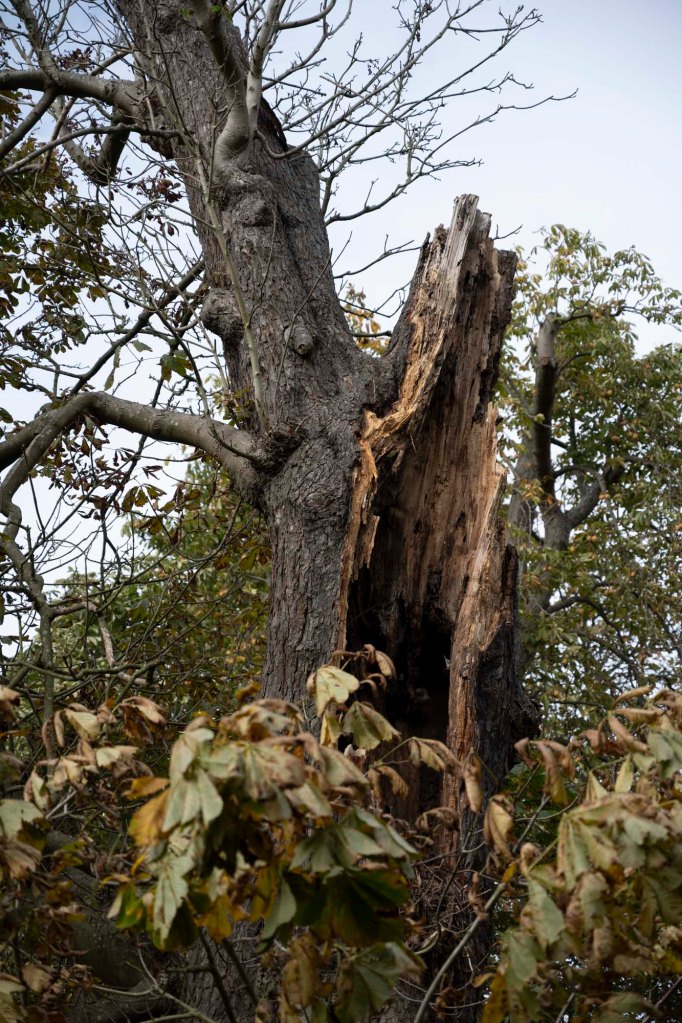
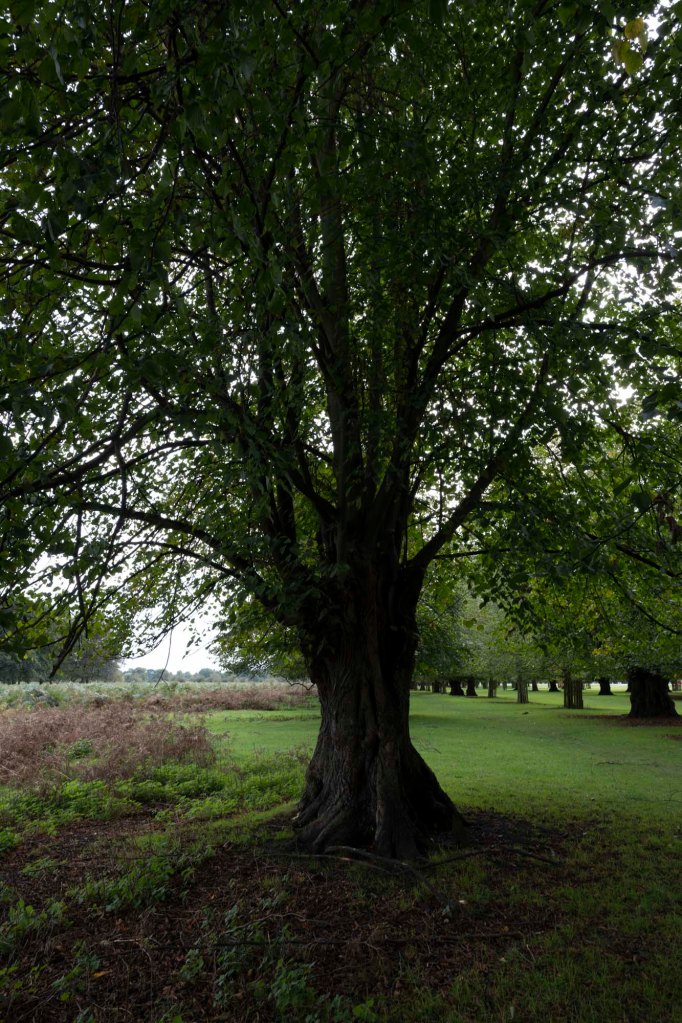
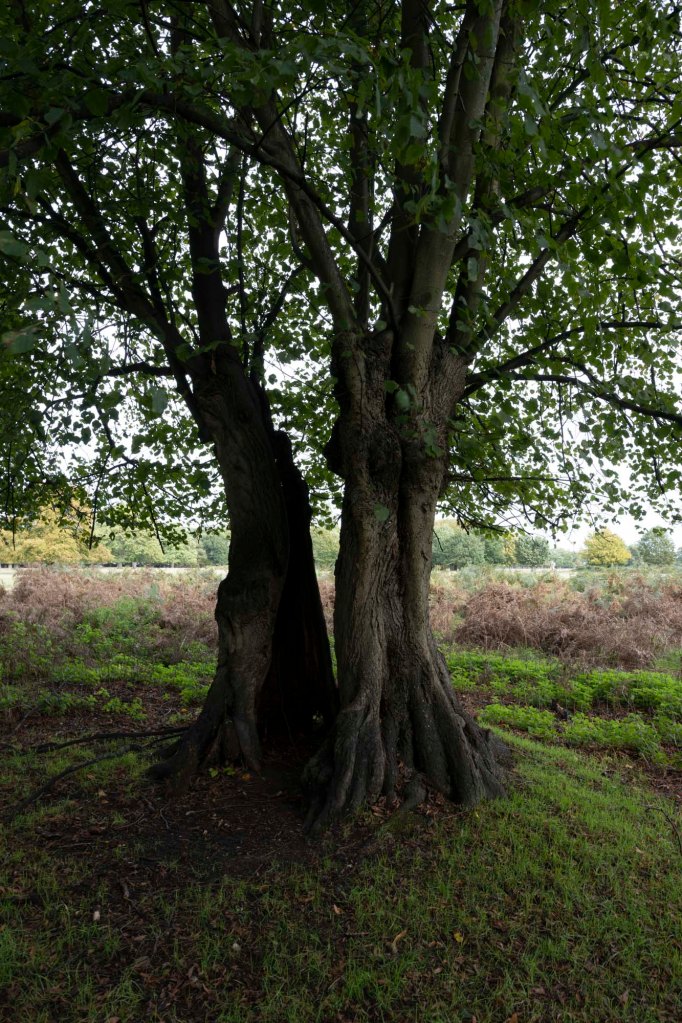
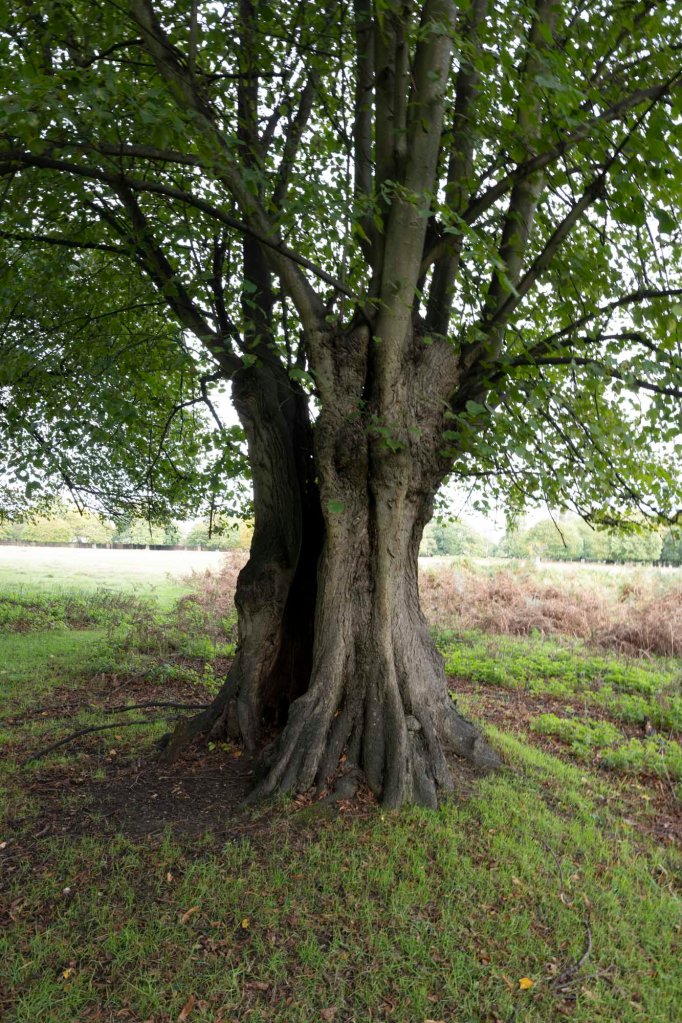
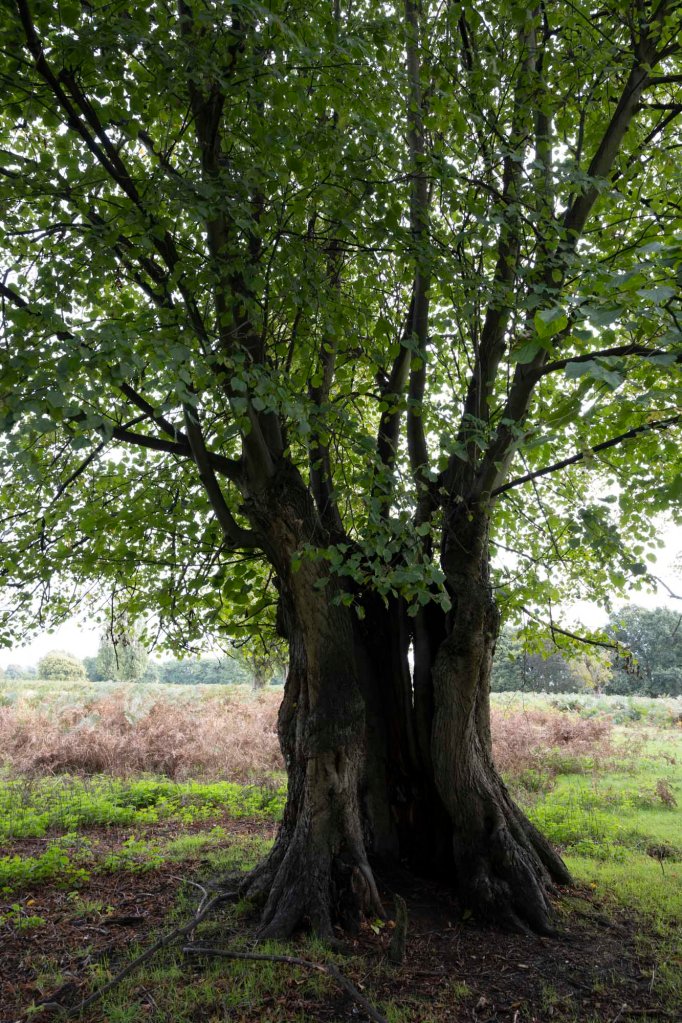
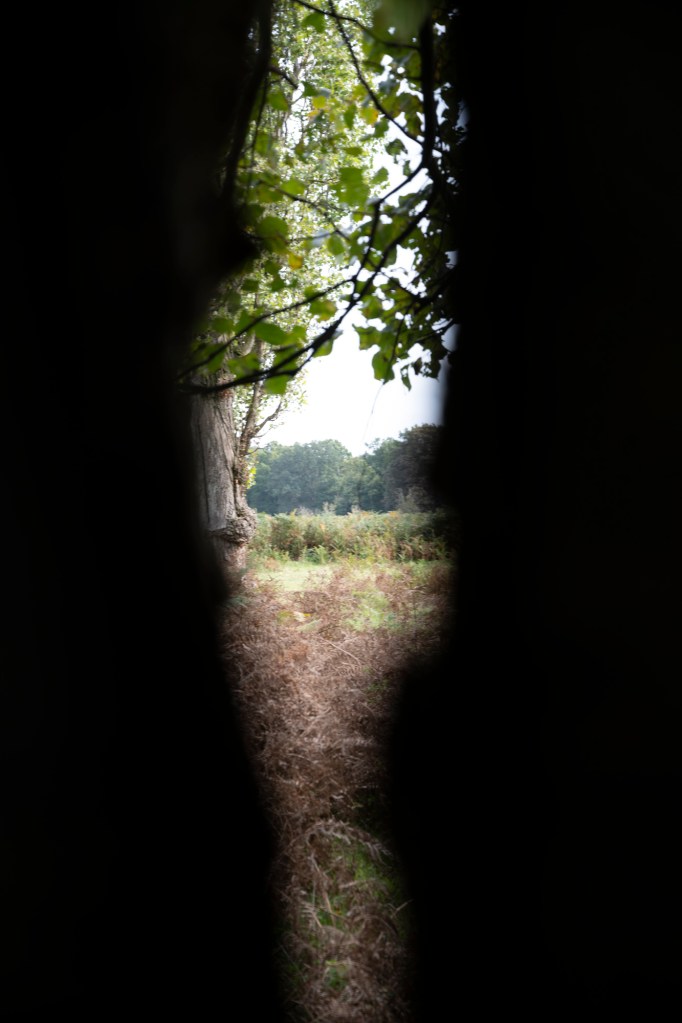
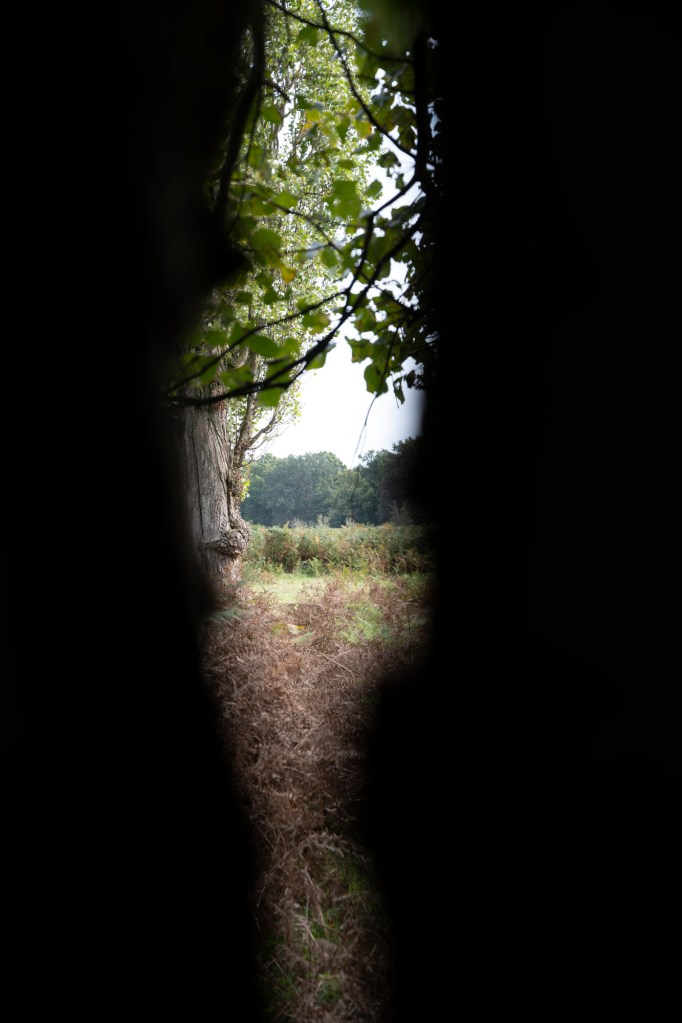
This was another tree that caught my eye. On initial viewing, it looks like one big tree:

But when you go to the other side, it’s apparent that it must have ‘split’ at some time during its lifetime.

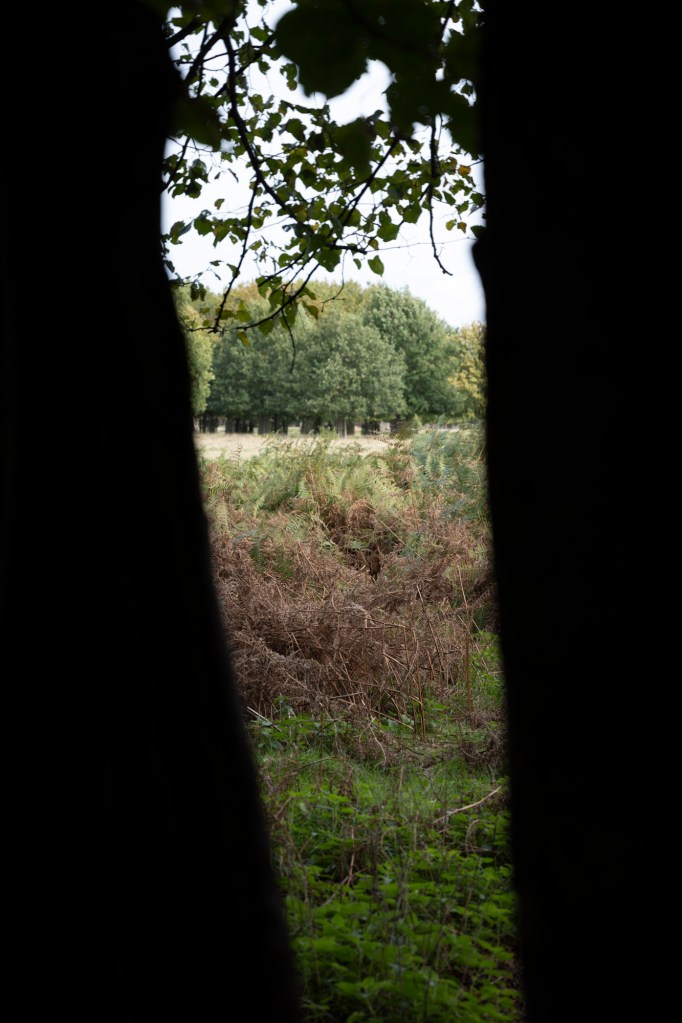
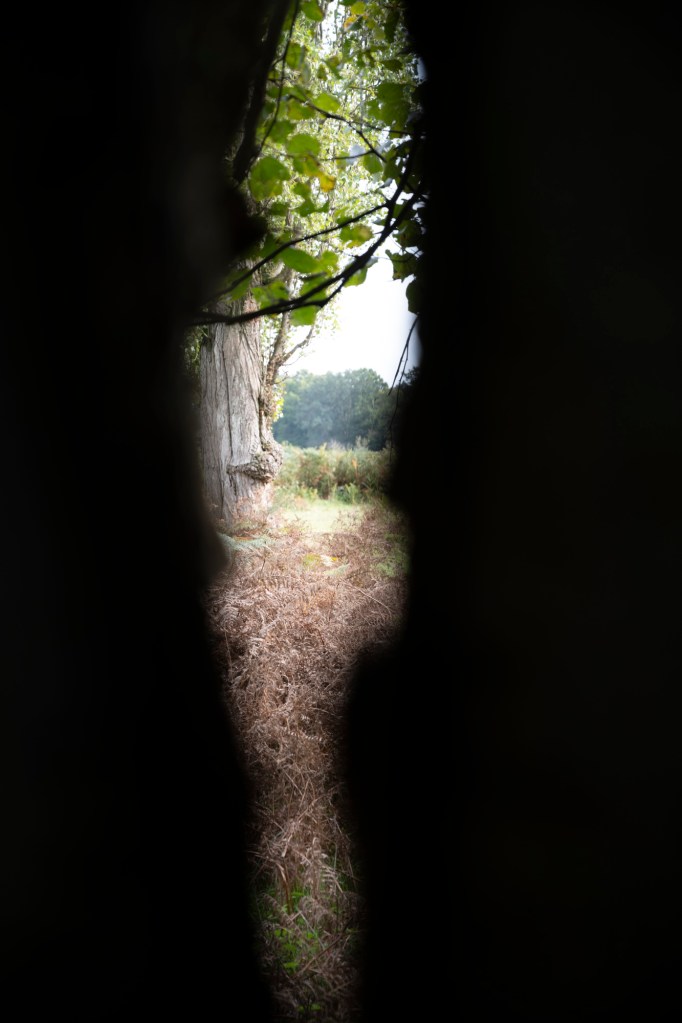
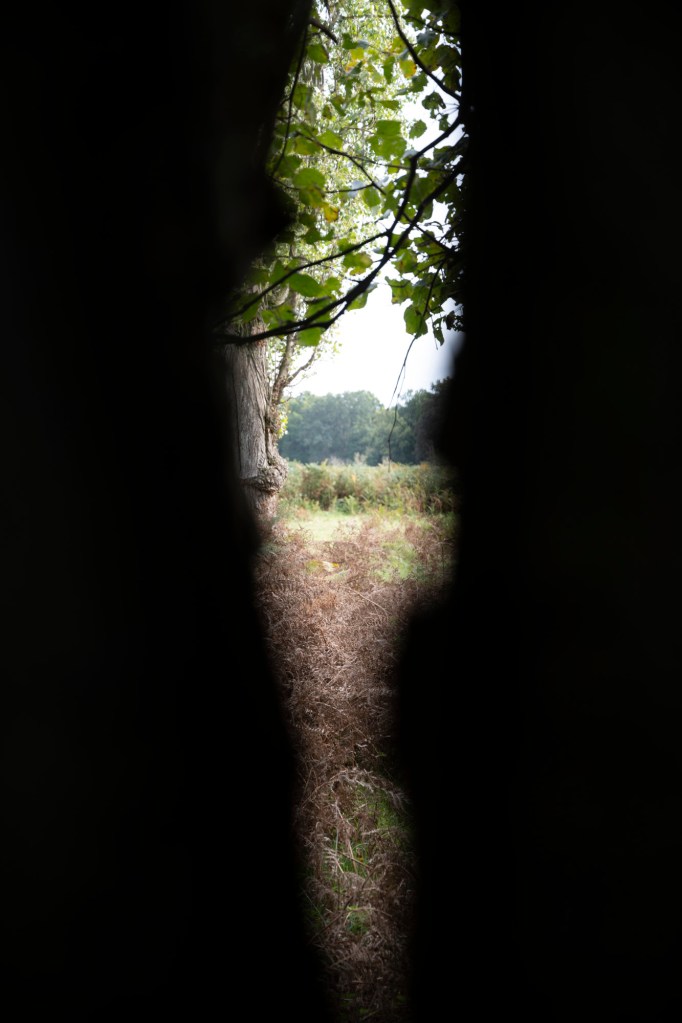
I also took some shots through the ‘split’:

Hawthorns

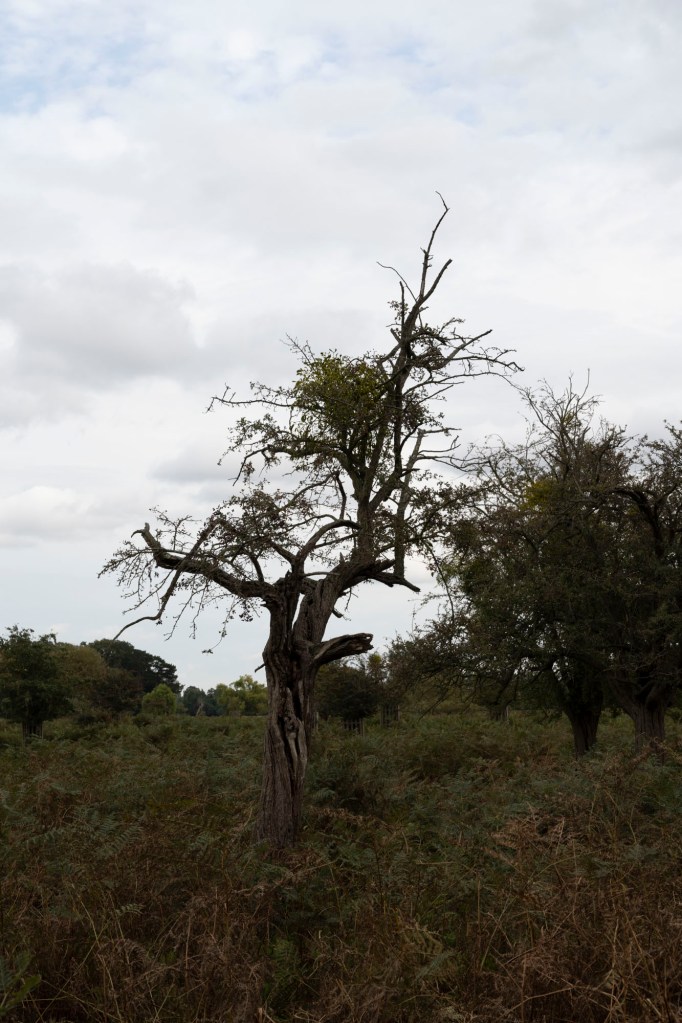
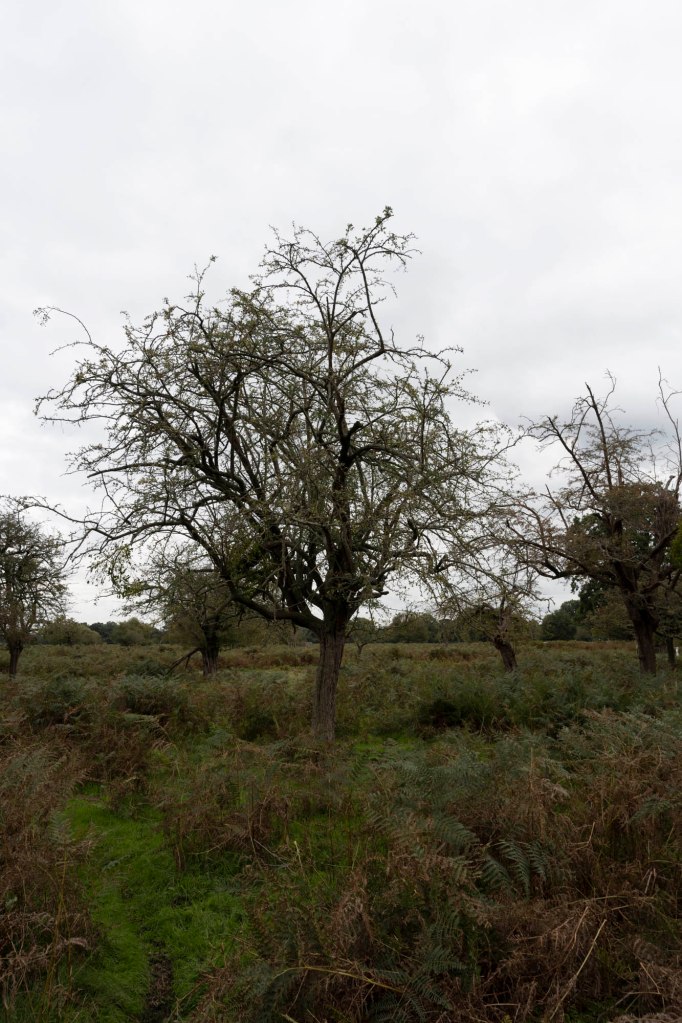
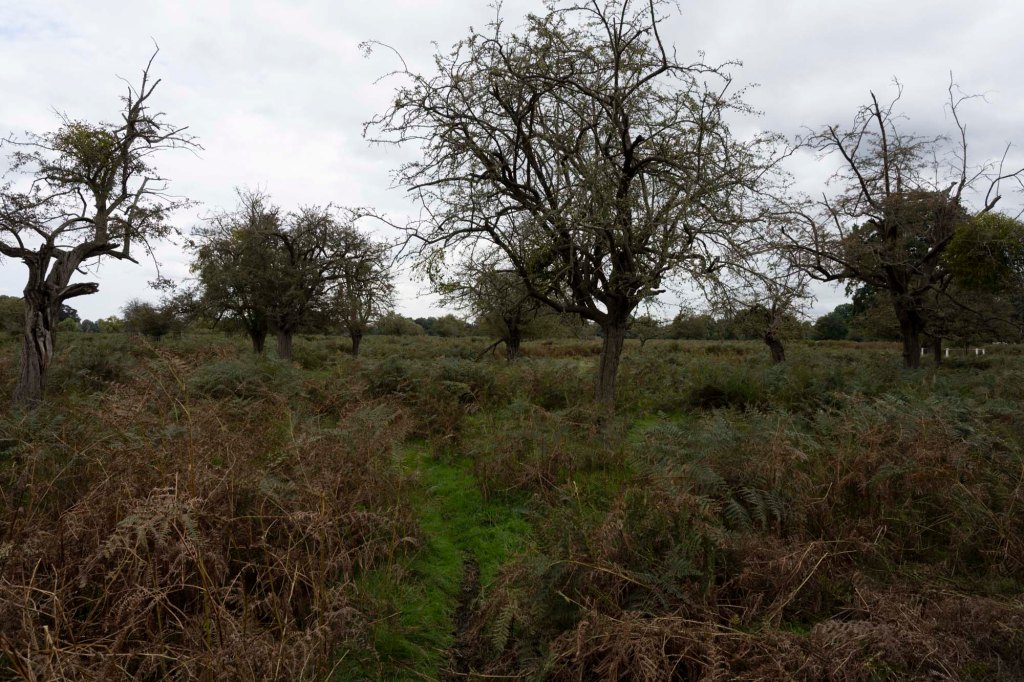
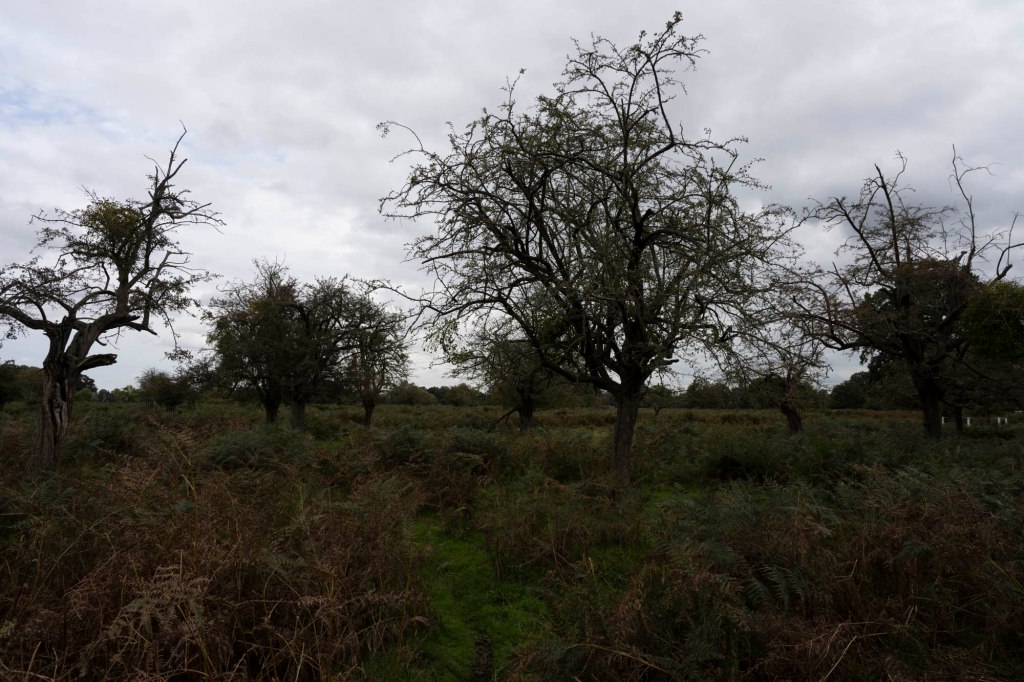
These spiky trees are also a feature of the park. I’m not sure if they’re relevant to this particular project, but I’ve always had a fascination with this hardy tree. They remind me of wizend wise women. Very often, they will have two sections of trunk that intertwine with each other, leaving a gap in between.

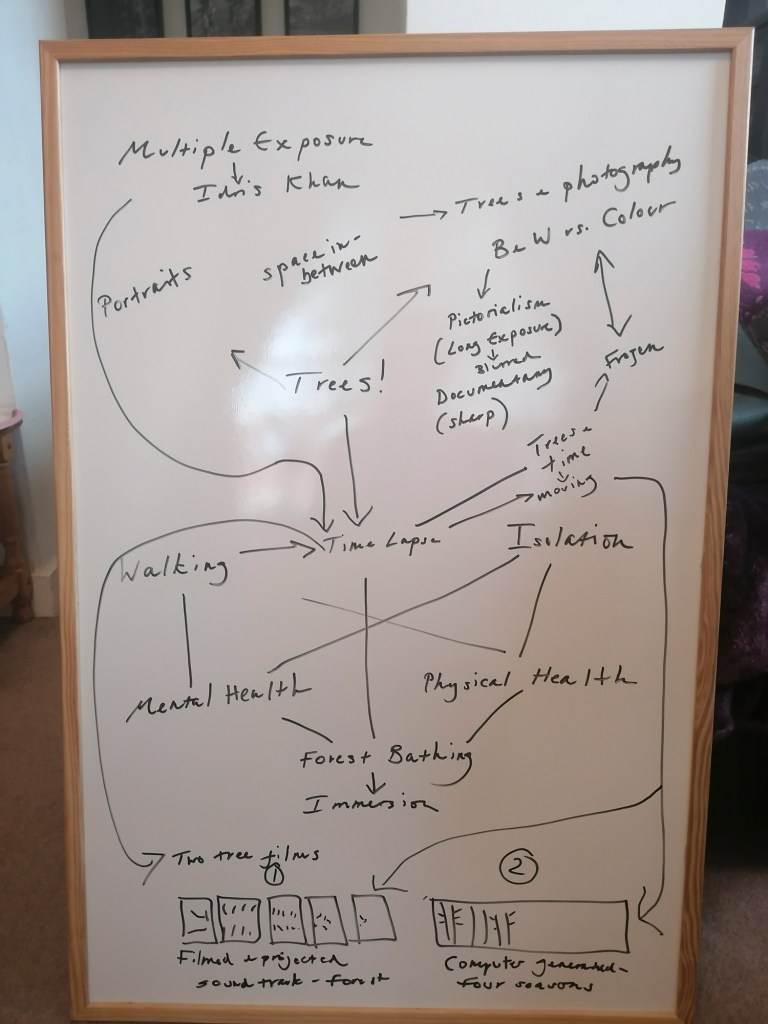
With this in mind, I noted down the following mind map.

This, along with my ideas, research and images will be presented and discussed with the group during a tutorial session on 7 October 2020.

References

Ahtilia, E.L. 2020, Rugoff, R. and Mues, M., 2020. Among The Trees. Hayward Gallery Publishing.

Rugoff, R., The Age of Trees (2020), Rugoff, R. and Mues, M., 2020. Among The Trees. Hayward Gallery Publishing.

Southbank Centre. 2020. Among The Trees. [online] Available at: <https://www.southbankcentre.co.uk/whats-on/exhibitions/hayward-gallery-art/among-the-trees&gt; [Accessed 26 April 2020].
Wohlleben, P. 2017. The Hidden Life of Trees. William Collins, London.
Categories
AGM62 Photography Research Project Stage 1 Posts

AGM62 Project Passions and Future Directions 30 September 2020

Included in my introductory presentation, for today’s session, I wrote two lists outlining the areas that are important to me, both personally and as a photographer:

Project Passions:

  • Trees – their relevance and importance to being ‘human’
  • Being outside of four walls
  • Walking, cycling, observing
  • Immersion in and connecting with nature
  • Impact on both my physical and mental health

Future Directions:

  • Observations as the seasons change (Autumn & Winter)
  • How do these changes affect the montage effect?
  • Pushing and refining the technique further
  • Trees as a portrait subject, not just ‘part of the landscape’
  • Exploring ‘montage of subject’
  • Constructed environment – trees among urbanity
  • Trees and time

These are all elements that I can’t ignore and am sure they will have a strong influence on my future work for this and future modules.

Categories
AGM62 Photography Research Project Stage 1 Posts

AGM62 Introductory Presentation and AGM61 Feedback 30 September 2020

In preparation for the first session of the module, I had to prepare a short presentation of up to five minutes. I could, for example, briefly present my work for Research and Experimentation, your Dissertation, or anything else you are working on currently.

For this presentation, I decided to focus on my body of work produced for the AGM61 Research & Experimentation. Since completing and submitting the work in June 2020, I had time to consider the project as a whole, especially in light of the marking feedback I received. The following presentation shows the submitted body of work, my interpretation of the feedback and future progression of the project for this module.

Feedback: Comments & Advice

The following are areas I need to take into consideration while carrying out the necessary work for AGM62 Photography Research Project Stage 1.

Creative Experimentation:

  • Deepen the overall exploration by further refining the image-making process
  • Deepen how initial imagery is transformed through the process of working
  • Explore the conceptual and critical relationships between trees and photography

Technical Realisation:

  • Focus on how applied technique relates to overall aesthetic coherence
  • Further refine picture construction through montage technique

Contextual Understanding:

  • Give greater definition to visual examples of other photographers’ and artists’ work
  • Explore key references further:
    • Paul Nash (trees and landscape – pictorial style)
    • Eileen Agar (surrealist – Black & White tree photography)
    • Idris Khan (layering and photography)
  • Place future projects into a clearer and more coherent context
  • Explore the contextual framework for practice with a narrower focus and greater depth

Critical Awareness:

  • Montage in art and photography: explore and demonstrate further engagement with related ideas about subject representation
  • Concentrate and focus more on:
    • Identifying underlying principles of practice
    • Relating these principles about subjects in the work as fully as possible
Categories
AGM62 Photography Research Project Stage 1 Module Details

AGM62 Photography Research Project Stage 1 Module Schedule

Weekly Schedule – as of 10 October 2020

Week 10: 30 September 2020 (MS Teams Remote Session @4pm)

Introduction to the module and presentations to new students

Week 11: 7 October 2020 (Edward Street, Brighton @10am)

Group Tutorial (AM) Visiting Speaker – Remote (PM)

Week 12: 14 October 2020 (Teddington)

Tutorials Group A (Independent Study for me)

Week 13: 21 October 2020 (Edward Street, Brighton @11am to 12 noon)

Tutorials Group B* (1 Hour)

Week 14: 28 October 2020 (Edward Street, Brighton @10am)

Group Tutorial

Week 15: 4 November 2020 (Teddington)

Independent Practice/Study

Week 16: 11 November 2020 (Location & Schedule TBC)

Study Trip – London Galleries

Week 17: 18 November 2020 (Edward Street, Brighton @10am)

Interim Review (AM) Visiting Speaker (PM)

Week 18: 25 November 2020 (Edward Street, Brighton @10am)

Group Tutorial

Week 19: 2 December 2020 (Teddington)

Independent Practice/Study

Week 20: 9 December 2020 (MS Teams Remote Session @2pm)

Visiting Speaker – Remote (PM)

Week 21: 16 December 2020 (MS Teams Remote Session TIME TBC)

1-1 Tutorials

Week 22: 23 December 2020

Winter Break

Week 23: 30 December 2020

Winter Break

Week 24: 6 January 2021

Winter Break

Week 25: 13 January 2021 (Teddington)

Independent Practice/Study

Week 26: 20 January 2021 (Edward Street, Brighton @10am)

Group Tutorial

Week 27: 27 January 2021 (Edward Street, Brighton @10am)

Final Review – Submission of Work for Assessment

Week 28: 3 February 2021 (Edward Street, Brighton Time TBC)

Feedback and Forward Planning Tutorials

Categories
AGM62 Photography Research Project Stage 1 Module Details

AGM62 Photography Research Project Stage 1 Module Specification

Description:

This module represents the beginning stages of my independent practice-based research project.

I will identify an area of investigation, research it and begin a process of experimentation and critical reflection through practice-led independent study and peer learning, supported by group critique and individual tutorials.

The module involves a mid-review and final review, resulting in an initial body of work for assessment.

Module Aims:

This module aims to:

  • Enable me to identify a field of practice-based research and experimentation and initiate a related photographic project
  • Provide me opportunities to present my practice work formally and engage in critique
  • Develop my appropriate technical skills

Learning Outcomes:

On successful completion of the module, I will be able to:

  1. Demonstrate an understanding of the issues and principles underpinning my photographic practice in a clear-written proposal supported by research (LO1)
  2. Initiate and produce an extended body of experimental work (LO2)
  3. Demonstrate the technical skills necessary to advance my practice (LO3)
  4. Demonstrate skills in the verbal articulation of my practice (LO4)

Content:

This module represents the beginning stages of my independent practice-based research project. This is understood as a sustained enquiry into a particular theme, issue or form of photographic practice.

Contemporary aesthetic, social or cultural issues including ones relating to politics, identity and the environment will be encouraged. I will:

  • Begin to establish the parameters of my enquiry
  • Develop a research dossier
  • Develop a clear-written proposal
  • Initiate an experimental process leading to the production of an initial body of work

This module leads up to the presentation of an initial body of work presented formally for critique at a Final Review, supported by a detailed research dossier (Part 1).

Teaching and Learning Activities:

I will be allocated a tutor and meet with them at regular intervals throughout the semester, either in a group or individually, in order to develop the body of work.

Technical advice and support will be available as appropriate.

An interim review of work in progress offering formative assessment will take place in the middle of the semester.

I will be supported in developing formal presentation skills.

The module will be supported by visiting lectures and a gallery visit.

The module will end with a final review involving a formal presentation by students.

Face-to-face learning:

  • Introduction to the module
  • Lectures
  • Tutorials
  • Workshops
  • Mid review
  • Final review

Online learning:

Studentcentral: e.g. study material, emails, use of internet searches, formative assessment etc. electronic management of assessment (e-submission and written e-feedback)

Grade Centre

Online videos: e.g. Tate Shots, You Tube, BOB, Arts Council, Contemporary Art Society, Art 21, etc.

Online library: reading materials (journal articles, e-books, etc.)

Flipped classroom: independent study tasks online, followed up in tutorial groups.

Allocation of Study Hours:

Scheduled: 35

Guided Independent Study: 165

Total Study Hours: 200

Details of Assessment:

Task 1: Submission of a body of photographic work

To be produced in an appropriate form, e.g. display of prints, portfolio, gallery installation, projection.

LO2, LO3, LO4 (80%)

Task 2: Research Dossier Stage 1

  • A written project proposal for Photography Research Project Stage 2 (1,000 words)
  • An initial bibliography and list of research resources
  • An annotated portfolio of visual resources/artworks, etc.

LO1 (20%)

The volume of the portfolio is to be agreed in consultation with my module tutor. The framework for its content is determined through formative assessment, while the independent study hours of the module will be indicative of my effort.

Credit Value: 20 credits

Categories
AGM60 Research & Development Posts

AGM60 Words of Eternity

During one of the tutorials, I remember Xavier suggesting writing down my thoughts and feelings while working on this project.

While contemplating the final images, I composed the following poem:


Moments of Eternity

Uncertainty, anxiety, lost horizons;

Dis-location, isolation, reconnection;

Strange screens and familiar faces;

Same times and same places;

Slow down, tune in;

Reduce the din;

Together, but apart;

A part in time;

With a beginning and, yet, no end.


This could either be used in accompanying the work and/or the Artist Statement. I also thought of using each line next to each image (nine images, nine lines). This poem was also included in the submitted presentation of my final images.

Categories
AGM60 Research & Development Posts

AGM60 Final Body of Photographic Work 9 June 2020

For Assessment Task 1 of this module, I had to produce a Body of Photographic Work submitted in an appropriate form. For example, a portfolio of prints, an installation, a projection or otherwise. This had to be accompanied by an Artist Statement of 200 words.

The purpose of this Body of Photographic work was to fulfil Learning Outcomes 1 & 2. This was to:

  • Plan, develop, research, and document an extended body of experimental work.
  • Acquire and apply appropriate technical skills as defined by my photographic practice.


This is a PDF of the document that I submitted on 9 June 2020:

AGM60 Research and Experimentation Final Images Jennie Meadows 19821184 9 June 2020

Categories
AGM60 Research & Experimentation Posts

AGM60 Artist Statement 9 June 2020

A requirement of Assessment Task 1 was to write an Artist Statement of 200 words. This was to accompany the Body of Photographic Work.

The following is the submitted Artist Statement:

In a time of self-isolation and social distancing, Moments of Eternity encapsulates the disconnected connections between individuals. As with trees, there is an invisible network of communication that enables society to continue working together. These ethereal and surreal images also signify how the ‘normal’ has shifted and viewed in a different way. They also convey the uncertainty of what the new ‘normal’ will be.

Captured between 29 April and 21 May 2020, the series was created from photographs of trees during my walks in Bushy Park. This was inspired by carrying out the government’s instruction of taking outdoor exercise by myself each day. I could combine my daily stroll with photography. I also realised the importance the park played in relation to my mental and physical health. Bushy Park had been my place of refuge several times over the past five years. I had rediscovered this beautiful and ever-changing location and able to reconnect with nature.

Unable to access and use analogue photographic equipment and facilities, I made use of the digital technology available to me. By emulating and combining two analogue printing techniques, I created images that could not be reproduced in a darkroom.

Categories
AGM60 Research & Development Posts

AGM60 Final Research Dossier 9 June 2020

For Assessment Task 2 of this module, I had to produce a formal and critically reflective Research Dossier of 3-4,000 words that supports my Body of Photographic Work.

This was to include:

    • Documentation and reflective critical evaluation of the creative process undertaken during the module.
    • A critical analysis of a set of visual references that demonstrate an appropriate context for the Body of Photographic Work.
    • A critical analysis of a set of historical and theoretical references that support the development of the Body of Photographic Work.
    • A bibliography and list of research resources.


The purpose of the document was to fulfil Learning Outcomes 3 & 4 and that I could demonstrate:

  • a clear understanding of the ideas, issues, and different visual contexts underpinning my own photographic practice.
  • a critical awareness of historical and contemporary debates around research-based photographic practice.


This is a PDF of the document that I submitted on 9 June 2020:

AGM60 Research and Experimentation Research Dossier Jennie Meadows 19821184 9 June 2020

Design a site like this with WordPress.com
Get started