Categories
AGM62 Photography Research Project Stage 1 Posts

AGM62 Tacita Dean Crowhurst II 2007 20 October 2020

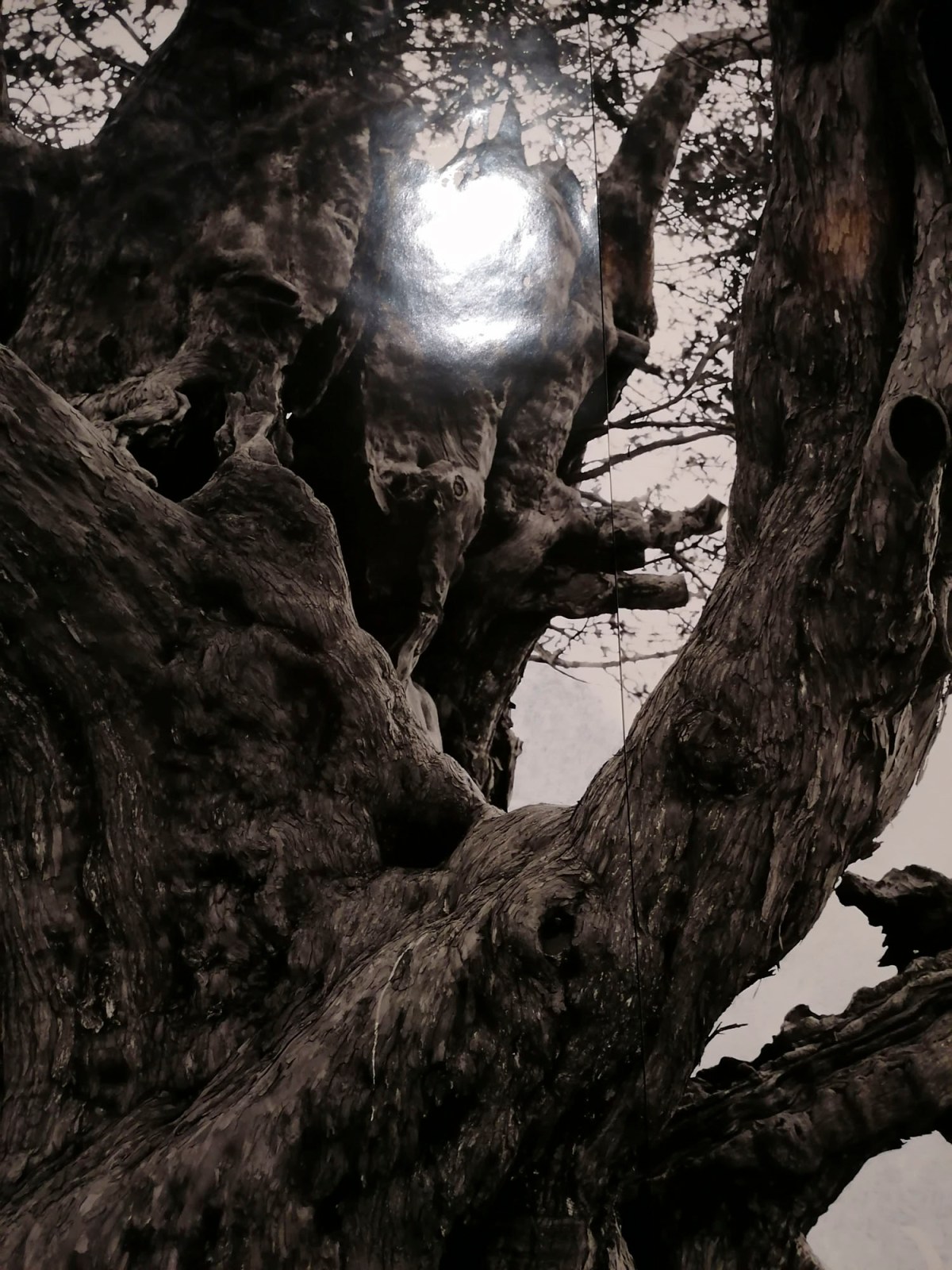
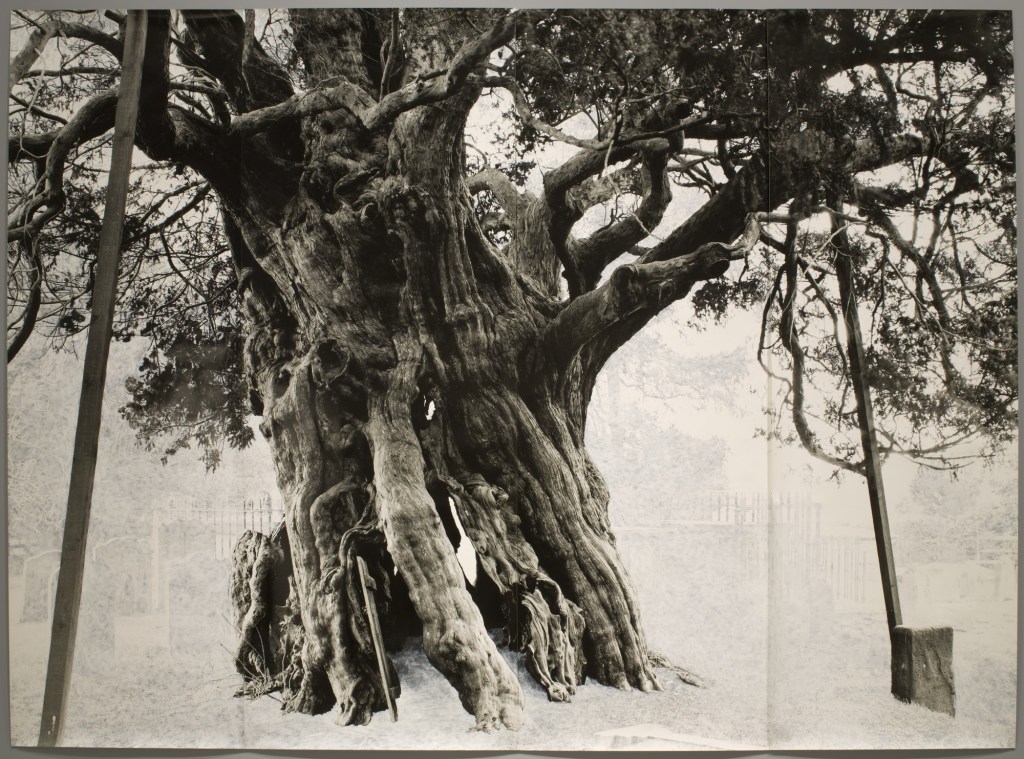
This haunting image of a yew tree is one of which I keep thinking about. The piece features a photograph of one of the oldest living trees in the UK. Called Crowhurst II (2007), it is one of a series of ‘painted trees’ that Dean began in 2005.

The piece is almost life size, printed on three pieces of photographic paper. The photograph has been painted with white gouache so the tree stands out from its surroundings. It is only when you get closer to the work that muted details of the graveyard in which the tree is situated can be seen.
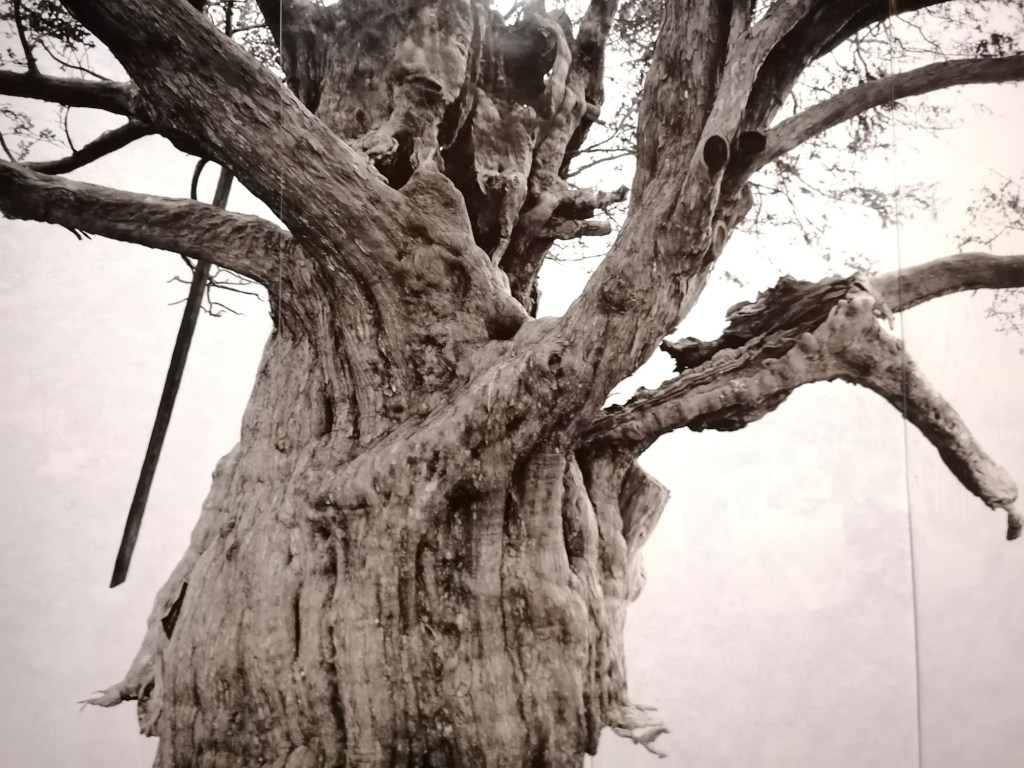
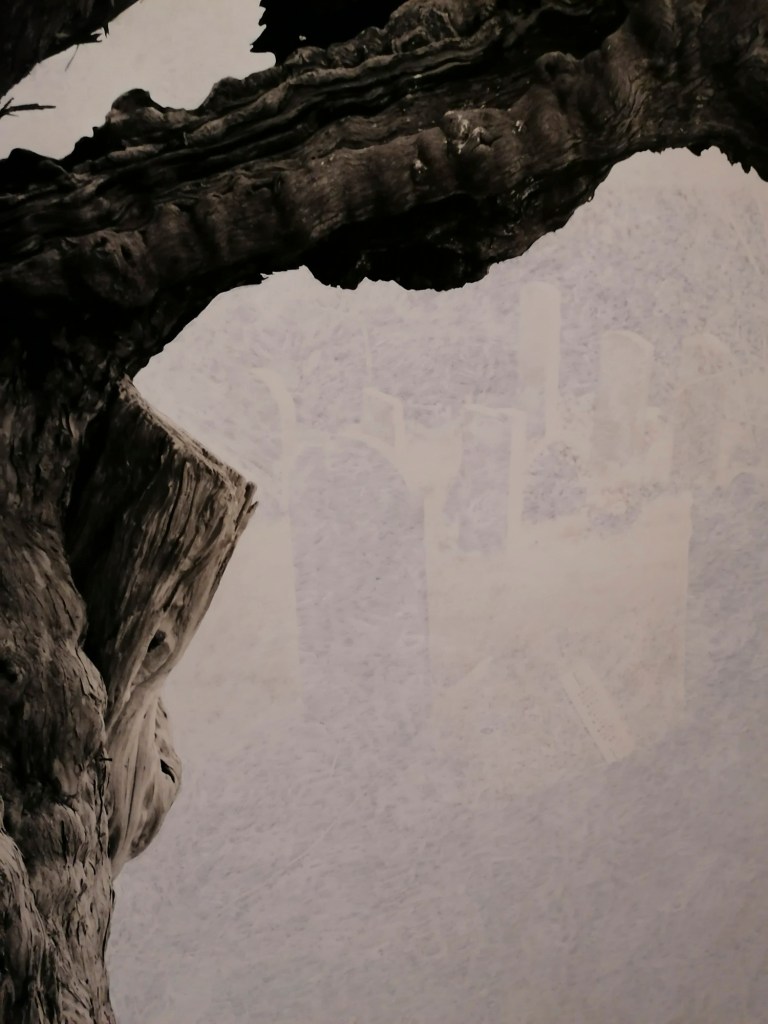
Another, probably totally unintentional effect, is that of the gallery lights reflecting on the surface of the paper.
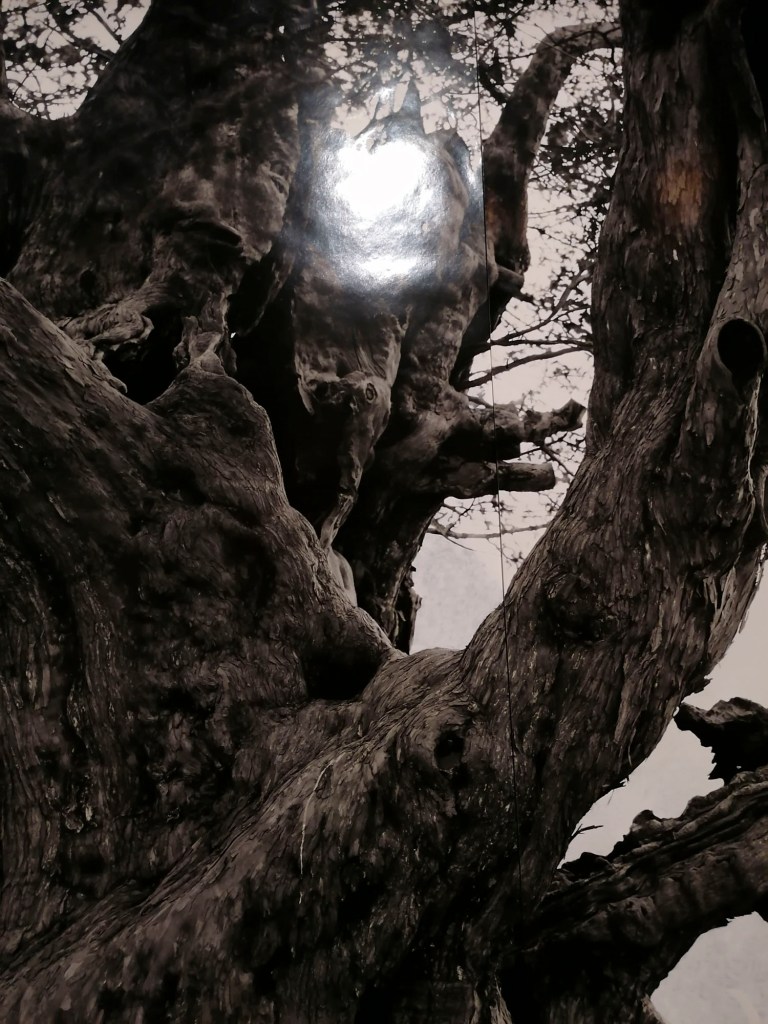
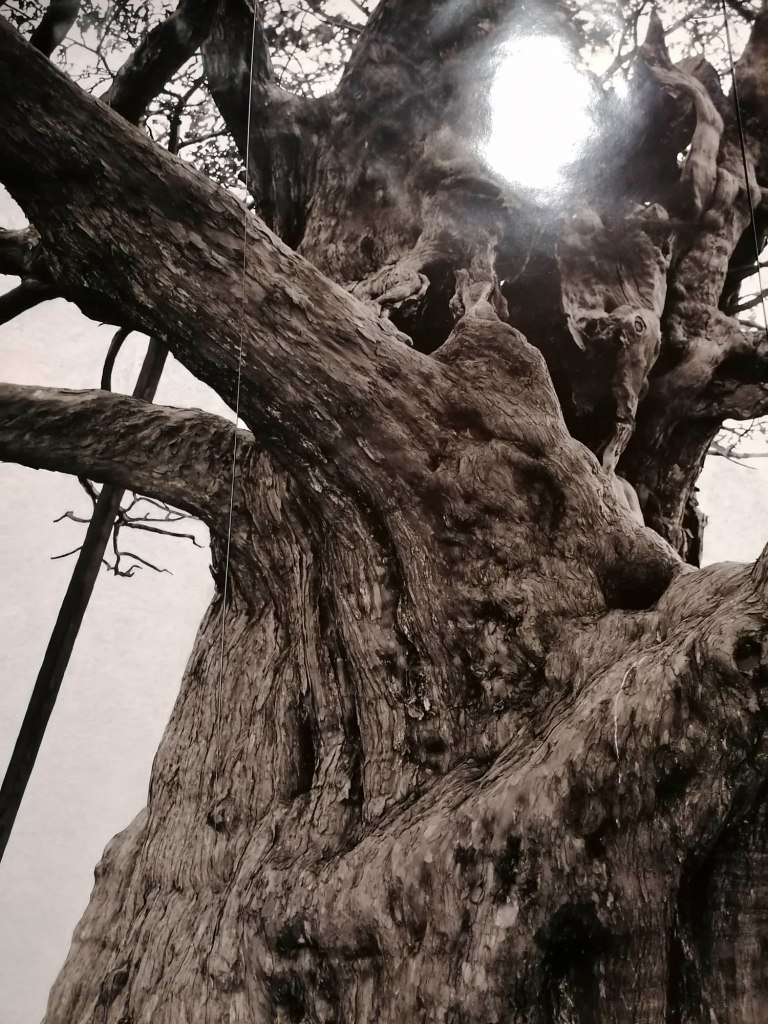
These are smartphone images I took when at the gallery. It looks as if a full moon is appearing in the branches of the tree.

According the Among The Trees brochure, Dean was:

‘Prompted by her discovery of a collection of postcards of France’s forest of Fontainebleau while travelling in Japan. Dean began researching the oldest living trees in the UK. One, an 800-year old oak, stood not far from her childhood home in Kent. Another, the yew pictured above, shared its name with Donald Crowhurst, an ill-fated amateur sailor who entered a round-the-world yacht race in 1968, never to return.’

(Among The Trees. 2020 pp. 148)
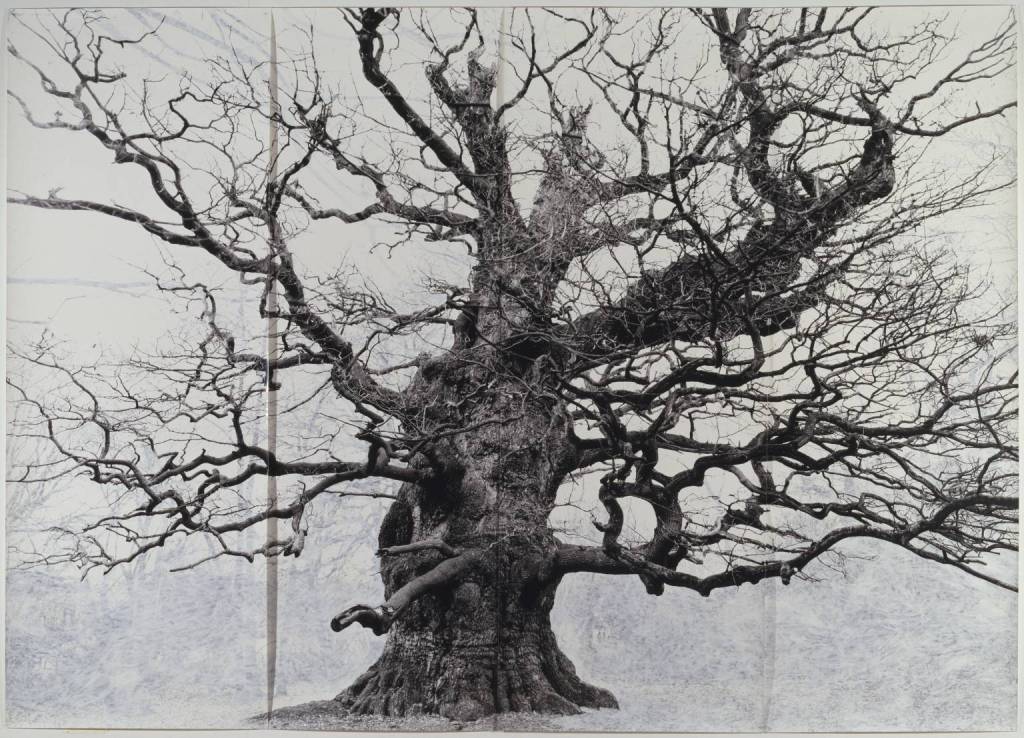
Majesty 2006 Tacita Dean born 1965 Presented by Tate Members 2008 http://www.tate.org.uk/art/work/T12805

When digging further into Dean’s tree images, I came across this background information and quote on the Tate website:

‘Dean’s methodology is a combination of idea-driven research with an openness to chance, accident, coincidence and poetic associations which she allows to direct her processes. She has explained what drew her to ‘old and deformed trees’ in an interview with the novelist Jeffrey Eugenides:

I made a photograph for an edition for October magazine recently called Fontainebleau Postcard, and I had to phone them up to check the title, and it reminded me that I had found all these old postcards of The Forest of Fontainebleau when I was in Kitakyushu in Japan, and I remember thinking that’s so strange, why would they have so many postcards of Fontainebleau? And then I went onto the internet and I looked up the Forest of Fontainebleau, which lead me to the famous oak of Fontainebleau, which in turn led me to look up old oak trees and then the oldest of trees in England, the yew tree. Before I knew it, the tiny village where I grew up came up as the place where there once was a 1400-year old yew tree. I always need that tiny thread to get myself going.’

(Quoted in Jeffrey Eugenides, ‘Tacita Dean’, Bomb 95, spring 2006, http://www.bombsite.com/issues/95/articles/2801

(‘Majesty’, Tacita Dean, 2006 | Tate, 2020)

Dean’s methodology is similar to my own – find a thread and continue following.

The post also features information on the previous work of Dean’s that influenced these images:

‘In 2005, Dean created a series of Deformed Trees (reproduced Vischer and Friedli, pp.101–3), painting over the background, and sometimes also the foreground, of old black and white postcards depicting trees. The postcards came from a collection she had been acquiring from fleamarkets all over the world since the mid 1990s. The application of white onto a darker ground has its origin in Dean’s work with a series of drawings on blackboards initiated while she was a student at the Slade School of Fine Art in London (MA 1990–2). Her work Sixteen Blackboards – a grid of sixteen square photographs documenting the progression of imagery, including drawing, writing, collage and rubbing out on a single black panel (reproduced Vischer and Friedli, pp.56–65) – featured in the Slade’s 1992 postgraduate exhibition. Elements of this, developed further by such works as The Roaring Forties: Seven Boards in Seven Days 1997 (T07613) – a series of drawings in white chalk on seven actual blackboards – are the precursors of Majesty and the group of photographs to which it belongs. The large areas of white overpainting on the photographs echo the patches of white left on the blackboards after rubbing out the drawings and text inscribed with chalk.’

(‘Majesty’, Tacita Dean, 2006 | Tate, 2020)

References

Among The Trees. (2020). London: Hayward Gallery Publishing

Pointdironie.com. 2020. Le Point D’ironie – N°36 Tacita Dean. [online] Available at: <http://www.pointdironie.com/in/36/dean_en.php&gt; [Accessed 23 November 2020].

Tate. 2020. ‘Majesty’, Tacita Dean, 2006 | Tate. [online] Available at: <https://www.tate.org.uk/art/artworks/dean-majesty-t12805&gt; [Accessed 20 October 2020].

Categories
AGM60 Research & Experimentation Posts

AGM60 Feedback from Seminar 28 April 2020

After four weeks of spring break, the class and tutors had an online seminar from 10am to 1pm.

During the seminar myself and my fellow students presented the results of their projects so far and discussed the contextualisation of our projects. This was both specifically in relation to relevant photographic issues and debates (both contemporary and historical) and in relation to fields outside of photography. Each of us also explained how their chosen references had informed their projects and helped to propel it forwards.

This was a very positive session and great to see everybody’s work and get a better understanding of the ethos and concepts behind it. It was also a relief to get some feedback from my contemporaries and tutors. Having worked in my own ‘bubble’ for since 31 March, it was affirming that my work wasn’t in vain and I was on the right track.

To help further my research, the following areas of research and experimentation were suggested and I will be exploring these further:


Subject Matter

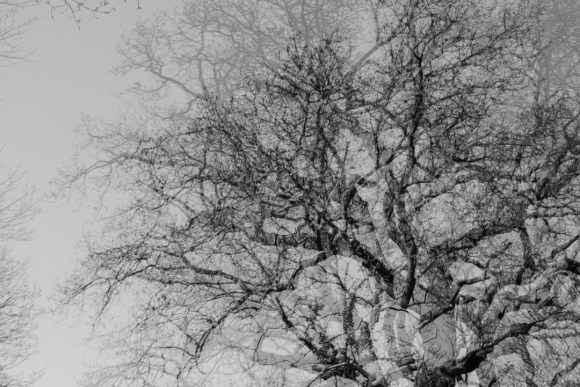
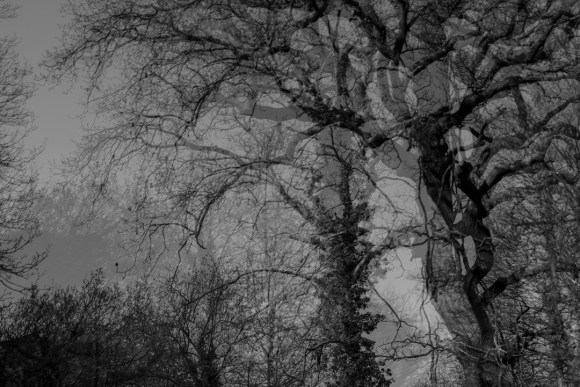
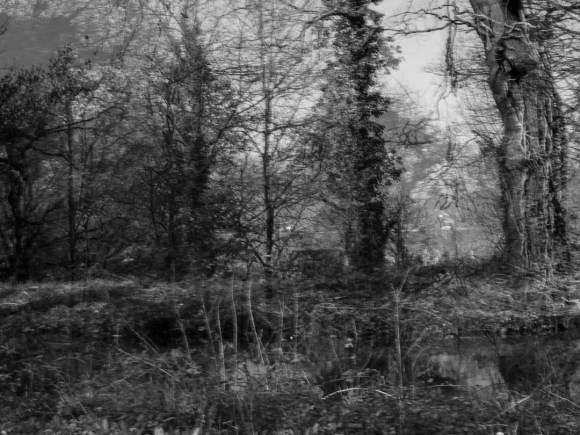
With regard to what I presented, the images and concepts that elicited the best and strongest response was that of the multiple exposure shots of the trees.

These, combined with the references I also presented, were confirmed to be a solid foundation from which to expand my research and experimentation.

Technically, I knew I then had to refine my approach in both taking the images and the editing process. The images need to be captured with a more sophisticated and polished methodology and approach. For example, using a tripod rather than taking shots ‘freehand’. I also need to investigate and make the most of my camera’s multiple-exposure mode.

Other areas of expansion were:


Simon Roberts

Fergus (module tutor) suggested looking at the work of the artist-photographer, Simon Roberts (https://www.simoncroberts.com/). Roberts had an exhibition at Pallant House in Chichester from 29 June to 13 October 2019.

Called ‘Inscapes’, this is a series of photographic, video and sound-based landscape studies that questions how connected are we to our local landscapes and how can an essence of a place be captured? There was more to explore online through the Pallant House’s website: https://pallant.org.uk/whats-on/simon-roberts-inscapes/.

The influence behind Roberts’ work was the paintings of British artist, Ivon Hitchens. Another lead to follow: https://www.tate.org.uk/art/artists/ivon-hitchens-1291

There was a particular journal piece recommended by both Fergus and Sofia: The Magic in the Mundane. I made a note that it was available on both the University of Brighton online library and on the Tate website, but couldn’t initially find it. At the time of writing, I sent an email to the group to see if they could point me in the right direction.


The Camden Group

Another reference was The Camden Group who introduced Post-Impressionism to Britain, inspired by the work of van Gough and Gaugin on the continent. According to Sofia, the painters in this group used to regularly go to the local London parks and paint. Apprently, one of these individual’s demise was through tuberculosis from being out in the rain while doing so.

https://www.tate.org.uk/whats-on/tate-britain/exhibition/modern-painters-camden-town-group

https://www.tate.org.uk/whats-on/tate-britain/exhibition/modern-painters-camden-town-group

https://www.tate.org.uk/context-comment/audio/lives-and-letters-camden-town-group


Helen Sear

Another artist reference recommended by Fergus was Helen Sear: https://www.helensear.com/. After looking at Sear’s website, I realised that I had seen her work before. It is very beautiful and some images are absolutely exquisite. I will be researching Sear’s work and methodology further to see how it resonates and can inform my own practice.


Martin Seeds

Again, this was another photographer recommended by Fergus and, again, another photographer whose work I was previously aware.

https://martinseeds.com/

Having looked at Seeds website, his body of work ‘Assembly’ is one to look at in more detail: https://martinseeds.com/assembly


Tacita Dean – Majesty

One element of the tree grids that was brought up was removing the ‘white space’ between the connecting images and presenting them as ‘flush’. Abi suggested looking at Tacita Dean’s work, Majesty.

https://www.tate.org.uk/art/artworks/dean-majesty-t12805

In addition, I will be looking at Dean’s work with regards to trees and the way she presents large-scale pieces. This was marked as a research source before the seminar and on my list of ‘things-to-do’.


Robert Smithson – Incidents of Mirror

This name and work were also mentioned by Fergus. On first glimpse, it again seemed very relevant and I will look into this in more detail.

Yucatan Mirror Displacements (1–9)


Presentation

In addition to not having spaces between the individual images, their final size came into question. Xavier mentioned the possible issues of having large single images printed. I know from both research and experience that with the quality of RAW and the resulting TIFF files for printing these images will be of high resolution. At 6000 x 4000 pixels, this means a single printed image could be 20″ x 13.3″ if printed at 300 dpi. I also know that a high quality image can be printed at a lower resolution (around 240dpi), which would mean an image printed at 25″ x 16.6″.

There are also other print methods that can produce work on a large scale without losing integrity and I will have to check with my go-to print bureaus to see what is (and/or isn’t) possible. I will also have to research various printing substrates and framing/hanging options with both price and practicality in mind.


Content and Composition

A very pertinent observation of Fergus is how, although the individual images of the tree are shot in ‘landscape’, when combined they create a ‘portrait’ composition. This lead to the direction of tree portraits. This line of enquiry and research could bring into question how is an individual tree portrayed through the conventions of portrait photography rather than those of landscape. At this stage in the project, further exploration and experimentation is essential.


Books

Xavier recommended How Forests Think: Toward an Anthropology Beyond The Human by Edward Kohn. I ordered the book on 29 April and waiting for its arrival at the time of writing this post.

This book explores the concept of the tree as a non-human sentient being – something I believe in myself. It will be interesting to see how Kohn approaches this subject.

The other book I need to read in more detail is The Hidden Life of Trees by Peter Wohlleben. I originally discovered this tome when it was first published in 2016 and have had the intention to read it since. Luckily, my flatmate ordered a copy after I told him about it, so I have no excuse not to, now!


Paper

The final reference I was given was the paper The Discourse of Perspective in the Twentieth Century: Panofsky, Damisch, Lacan by Margaret Iversen. This was thought to be of use by Fergus and Sofia. I downloaded and printed this paper with the intention of reading it in relation to this project.

The Discourse of Perspective in the Twentieth Century: Panofsky, Damisch, Lacan
Author(s): Margaret Iversen
Source: Oxford Art Journal, Vol. 28, No. 2 (2005), pp. 193-202
Published by: Oxford University Press
Stable URL: https://www.jstor.org/stable/4500016

As I knew it would be, this seminar and the resulting information was an essential and inspiring part of the process. I was very appreciative of every snippet shared and felt more informed and confident in how everything was progressing.


Design a site like this with WordPress.com
Get started