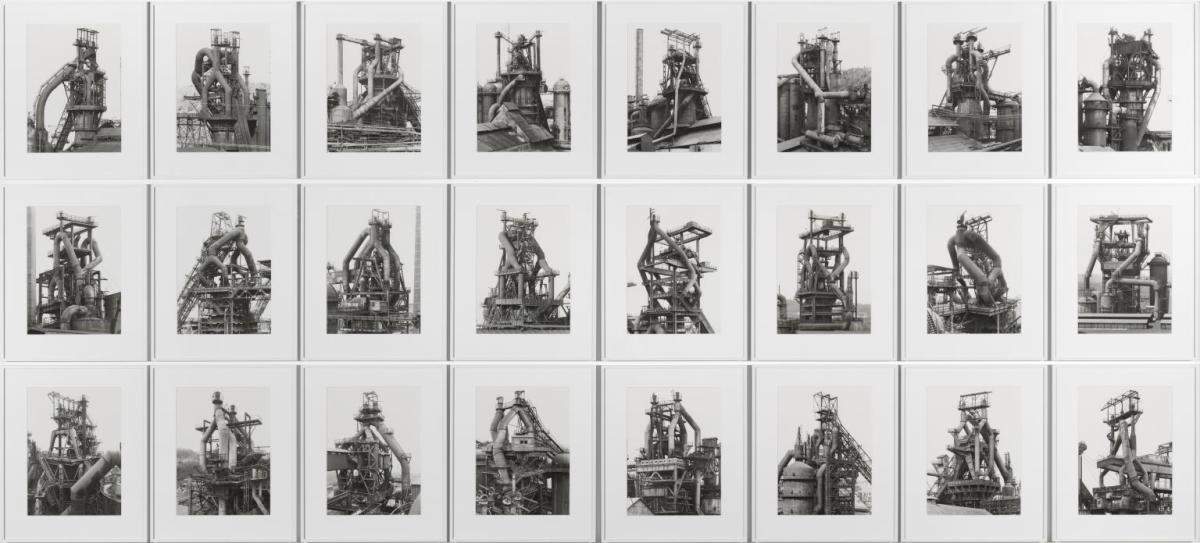
When considering my current project in relation to either an objective or subjective viewpoint, the work of Bernd and Hilla Becher exemplify the former.
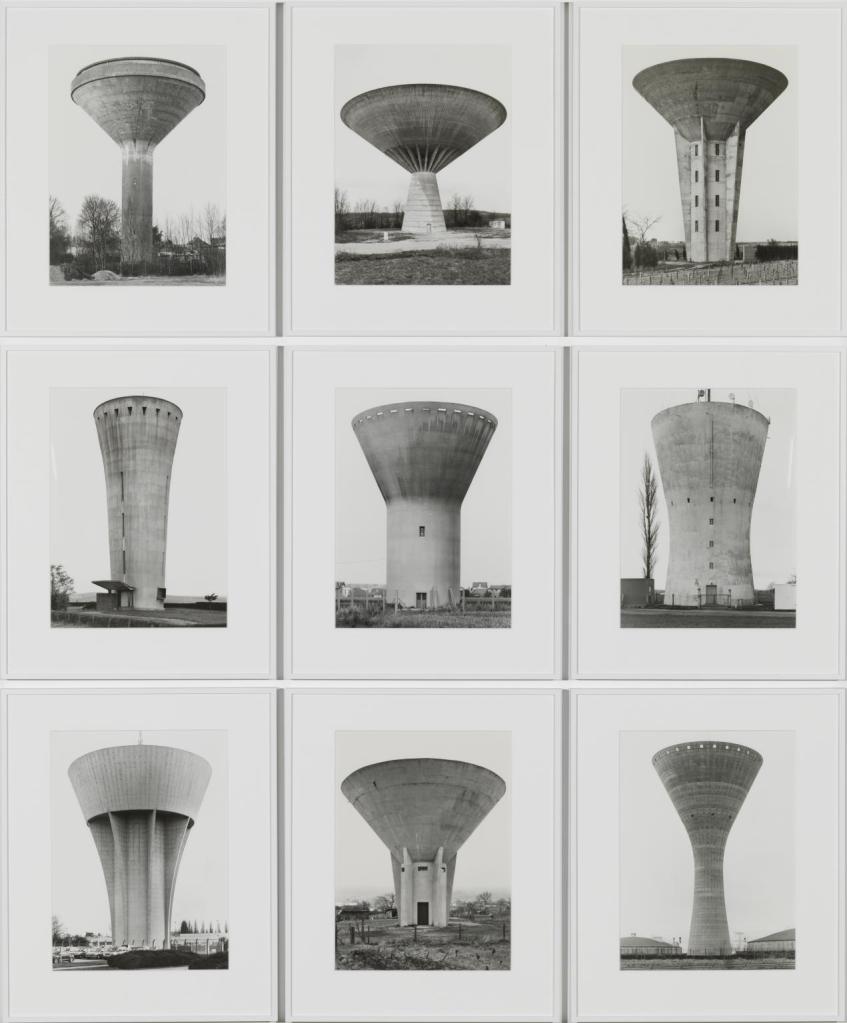
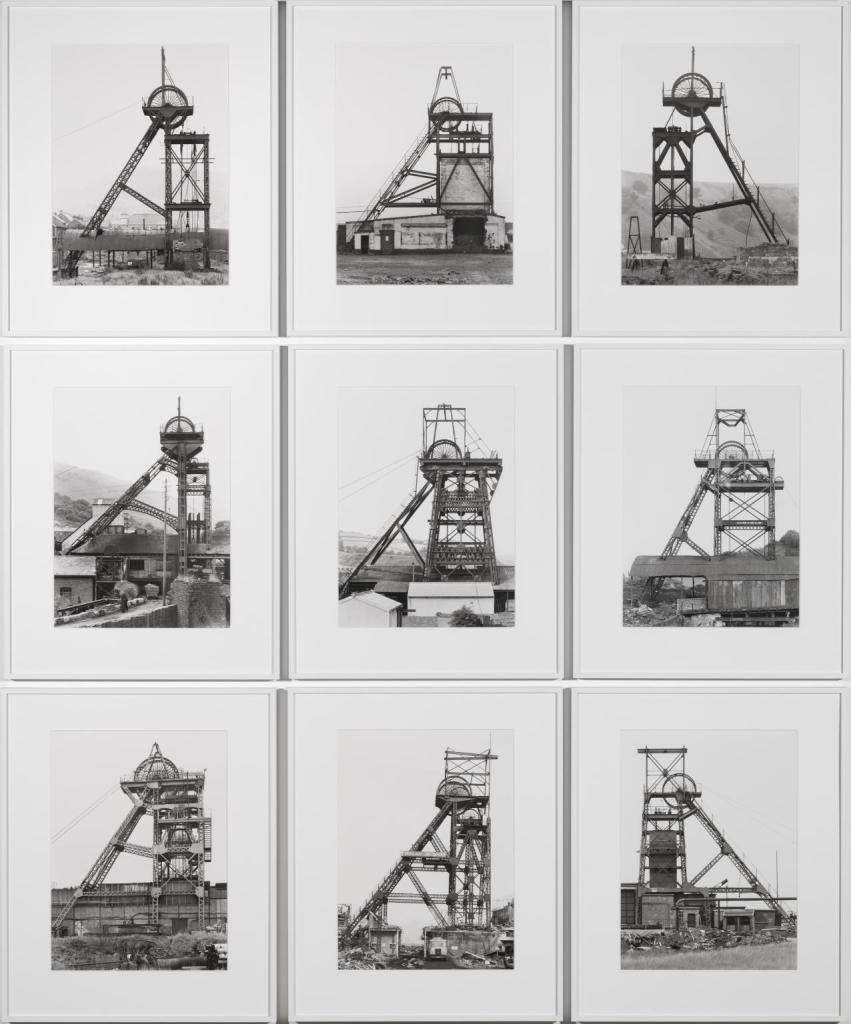
The particular collection of the Becher’s work is held by the Tate and was purchased with funds provided by Tate International Council, the Photography Acquisitions Committee, Tate Members and Tate Patrons in 2015. These nine gelatin silver print photographs were taken by Bernd and Hilla Becher over a period of more than thirty years and printed in 2013 under the supervision of Hilla Becher.
According to the Tate website, these particular prints are arranged in three rows of three. Although they exist in an edition of five, the grouping and sequencing of the images in this particular work is unique and was determined by Hilla Becher. The photographs are typical of the Bechers’ work and show different examples of a specific type of industrial architecture.
The Becher’s work epitomises the concept of photographic typology, which can be defined as:
‘A single photograph or more commonly a body of photographic work, that shares a high level of consistency. This consistency is usually found within the subjects, environment, photographic process, and presentation or direction of the subject. The creation of a typology is likely to be employed for one of two intentions. To enable objective comparison of subjects that share similar visual characteristics, or to create a relationship between subjects that share no obvious visual relationship.
(Lewis. P. Can the photographic typology be defined?, 2020)
As with Minor White, they had a particularly meticulous approach to their photography.
‘To achieve the ‘perfect chain’ described by the Bechers, each photograph was produced following exactly the same setup, using a large-format camera positioned to capture the form from one of three distinct perspectives (as a detail, in the context of its surroundings, or in its entirety) so as to take up the whole frame of the picture.’
(‘Water Towers’, Bernd Becher and Hilla Becher, 1972–2009 | Tate, 2020)
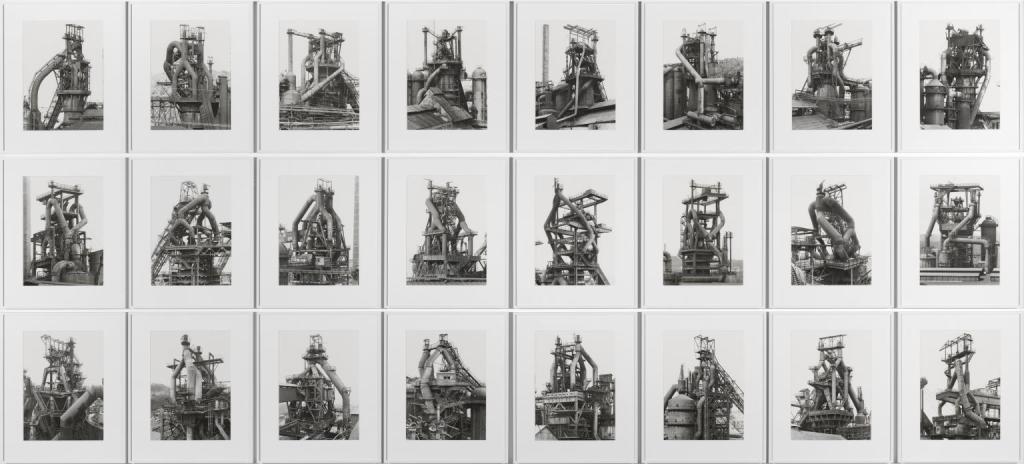
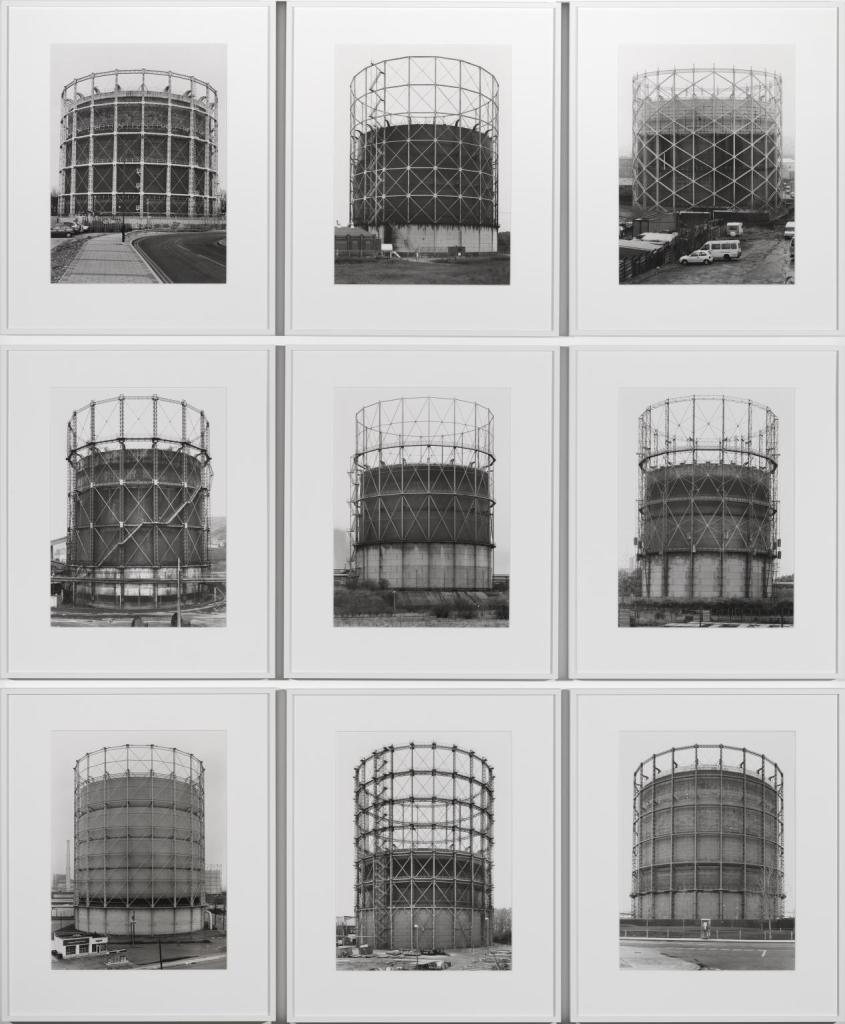
In addition to water towers, the Bechers created a number of similar ‘typologies’ of industrial architecture, including Gas Tanks 1965–2009, Blast Furnaces 1969–95, and Winding Towers (Britain) 1966–97.
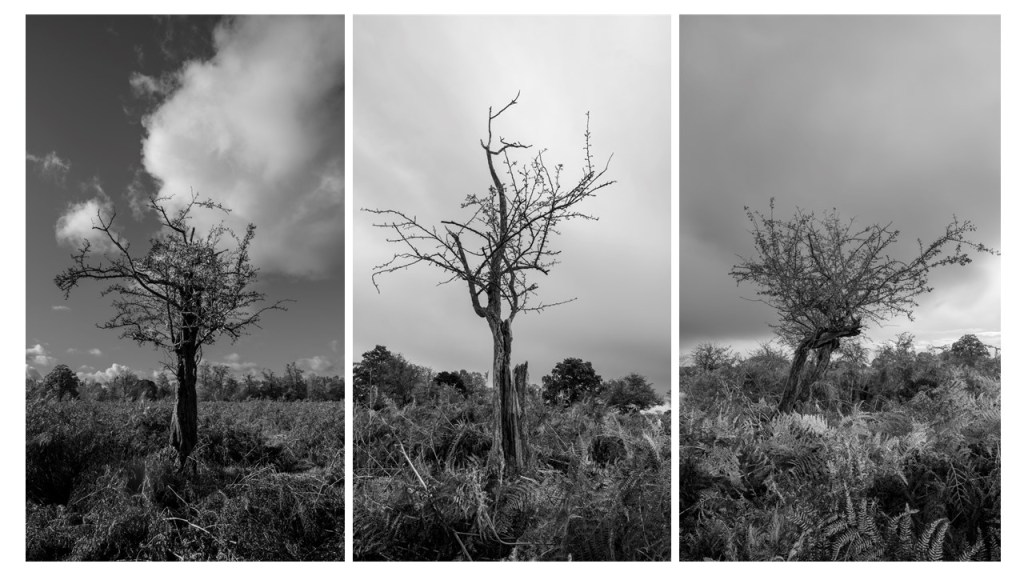
When comparing my methodology with that of the Bechers, I can see a similarity. I am beginning to use a predetermined set of parameters when photographing each hawthorn (both landscape and portrait orientation). This includes composition, the point of view and weather conditions. I am also editing my images so that they look similar in tone and ‘mood’. In retrospect, I am creating a photographic typology of a particular tree in a set environment.
References
Medium. 2020. Can The Photographic Typology Be Defined?. [online] Available at: <https://medium.com/@pdtv/can-the-photographic-typology-be-defined-bfa38d5699f3#:~:text=A%20photographic%20typology%20is%20a,or%20direction%20of%20the%20subject.> [Accessed 16 November 2020].
Tate. 2020. ‘Gas Tanks’, Bernd Becher And Hilla Becher, 1965–2009 | Tate. [online] Available at: <https://www.tate.org.uk/art/artworks/bernd-becher-and-hilla-becher-gas-tanks-p81237> [Accessed 16 November 2020].
Tate. 2020. ‘Water Towers’, Bernd Becher And Hilla Becher, 1972–2009 | Tate. [online] Available at: <https://www.tate.org.uk/art/artworks/bernd-becher-and-hilla-becher-water-towers-p81238> [Accessed 16 November 2020].
 Jennie Meadows MA Photography