After my shoot on 29 October, I wanted to explore a different section of Bushy Park where I knew there were hawthorns. I also wanted to combine this session with a long walk in order to take my mind off the previous day’s announcement regarding the forthcoming four-week lock-down.
While on my walk, I was aware of being thankful that I took this development into consideration in relation to the project for this module. I am extremely fortunate to be able to leave the house for exercise and carry out work that I can’t do at home. The circumstances are very similar to earlier in the year – it worked then and it will work now.
In preparation in working out the different areas within Bushy Park and the hawthorns in each part, I searched for a map online. In doing this, I came across the Historic England website and discovered I could download an Ordnance Survey map. This will be very helpful in my mission to locate the trees.
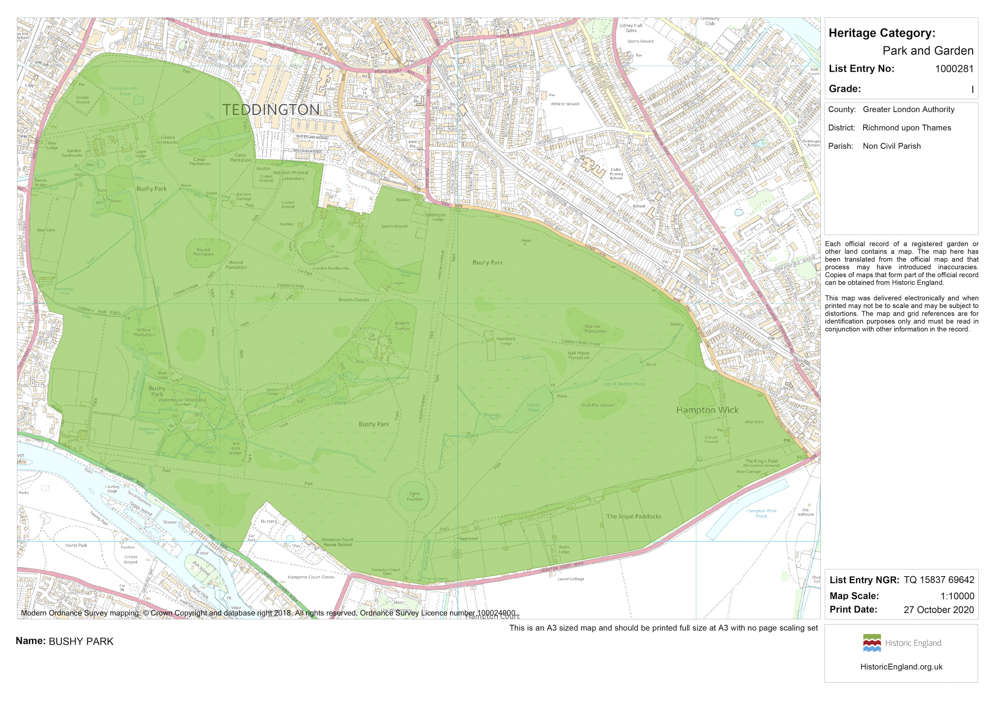
The area in which I focused covered the area between the border of the Pheasantry Plantation in the Woodland Gardens, the channel of water on the bottom, left-hand side of the map and the track to the right.
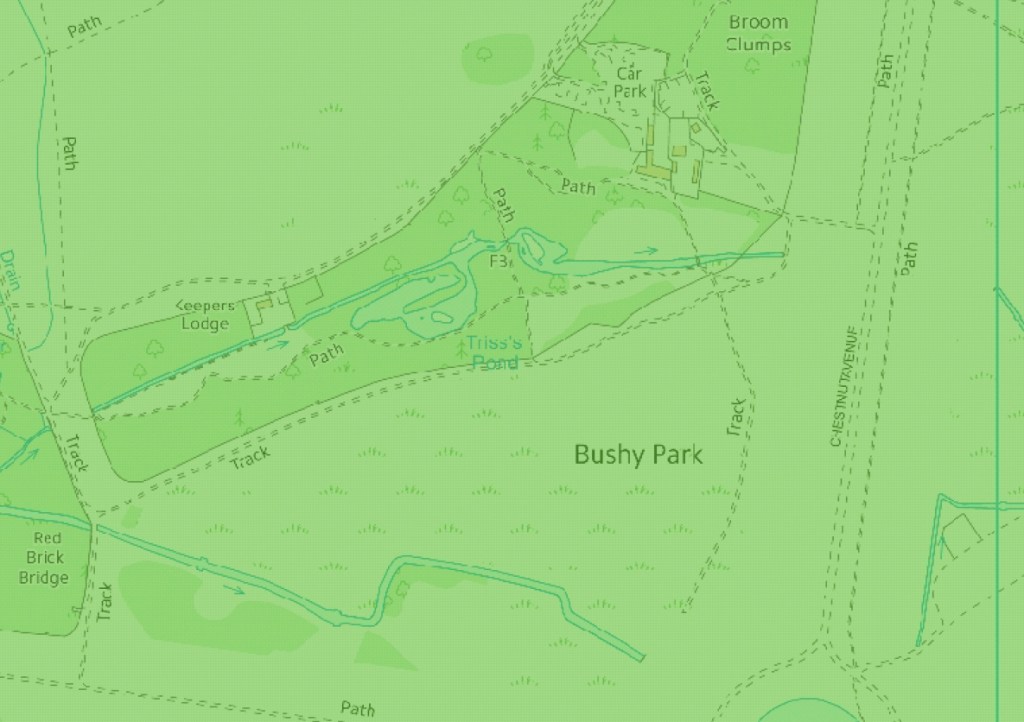
I took the following images using my smartphone as I wanted to travel light and nimble. Also, rain and strong winds were forecast and I did not want to risk my main camera being damaged.
Tree 1
The first tree is on the corner near to where the two tracks converge. The paths can be seen in the first image.
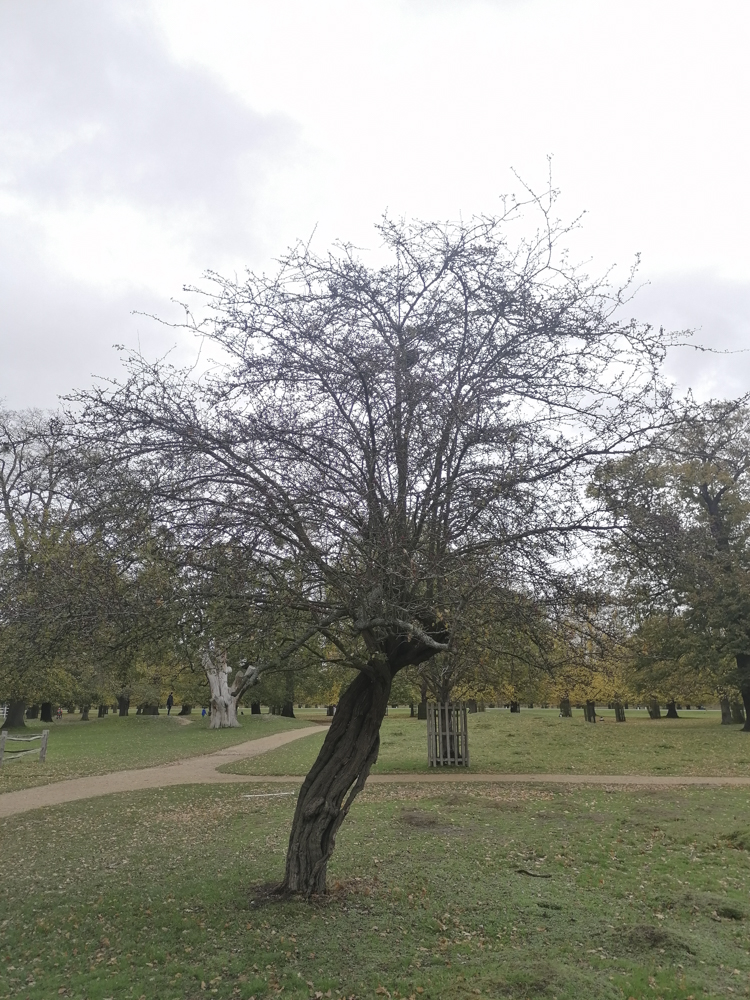
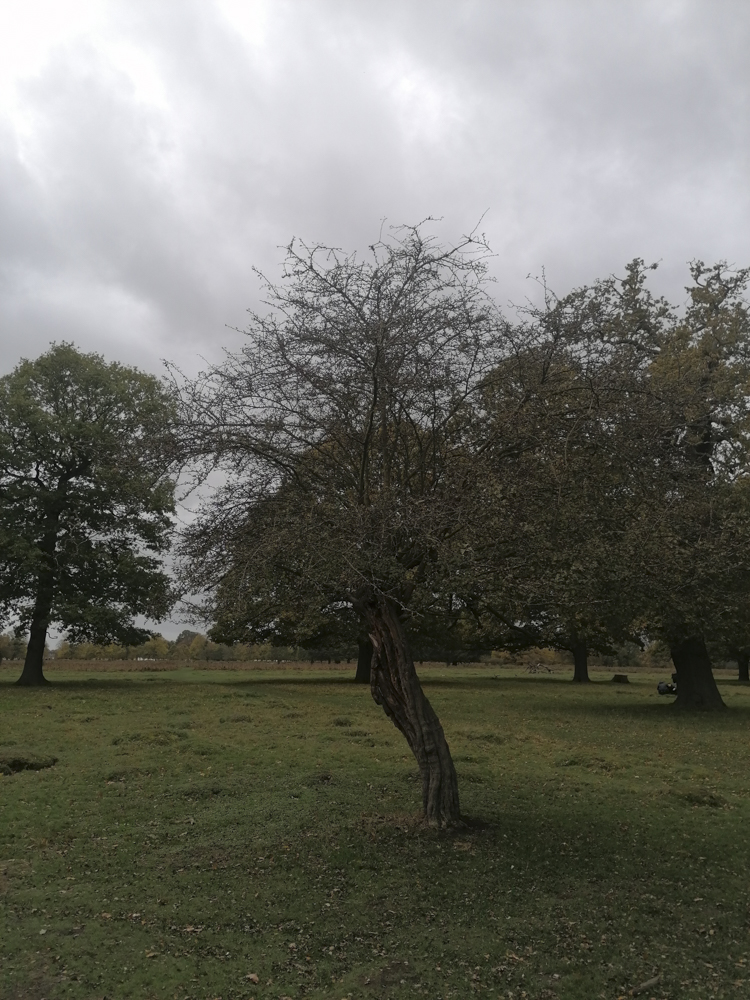
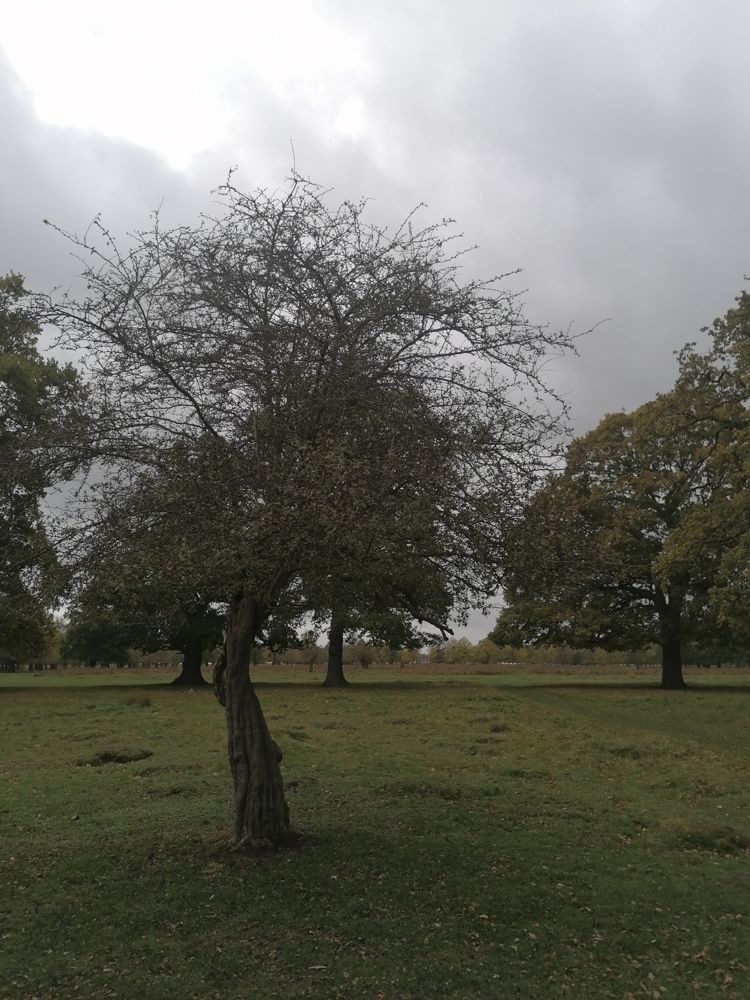
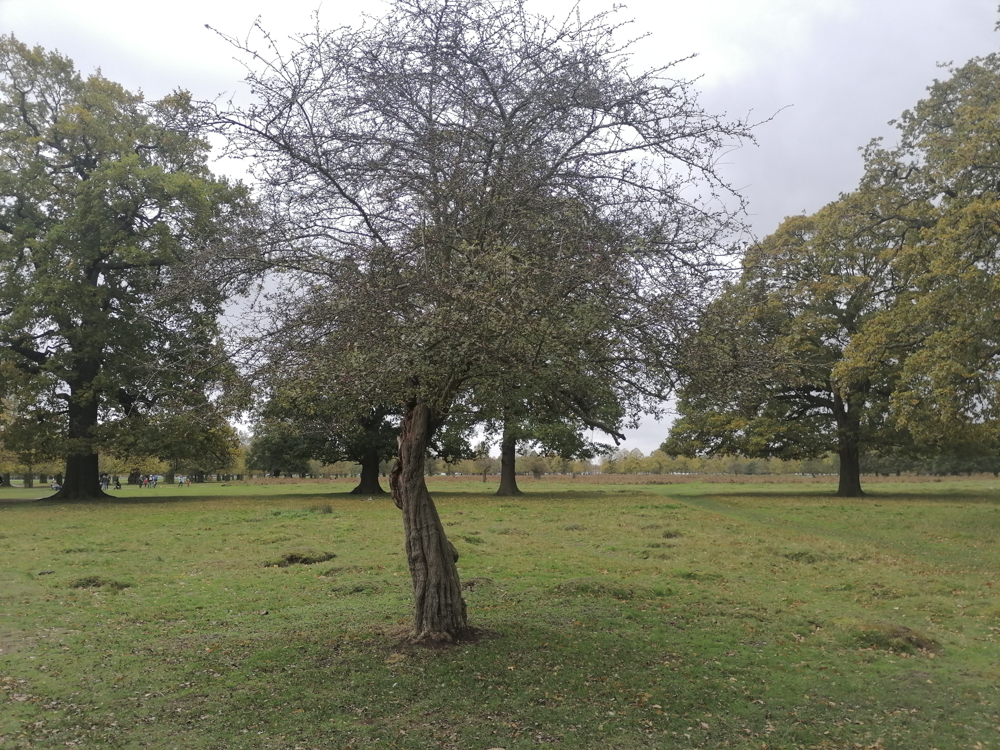
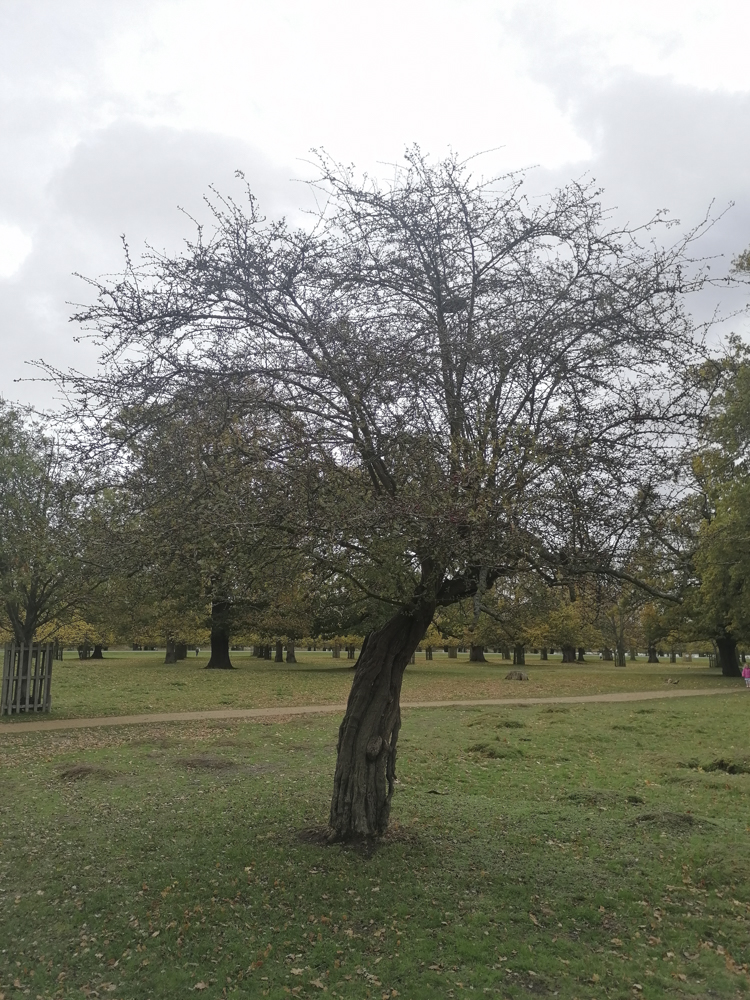
What struck me when looking at the images was how this hawthorn looks in relation to the oaks. For me, it looks like the oaks are protecting the hawthorn and not the other way round. There is a slight gap in the trunk, which also adds to the character.
Tree 2
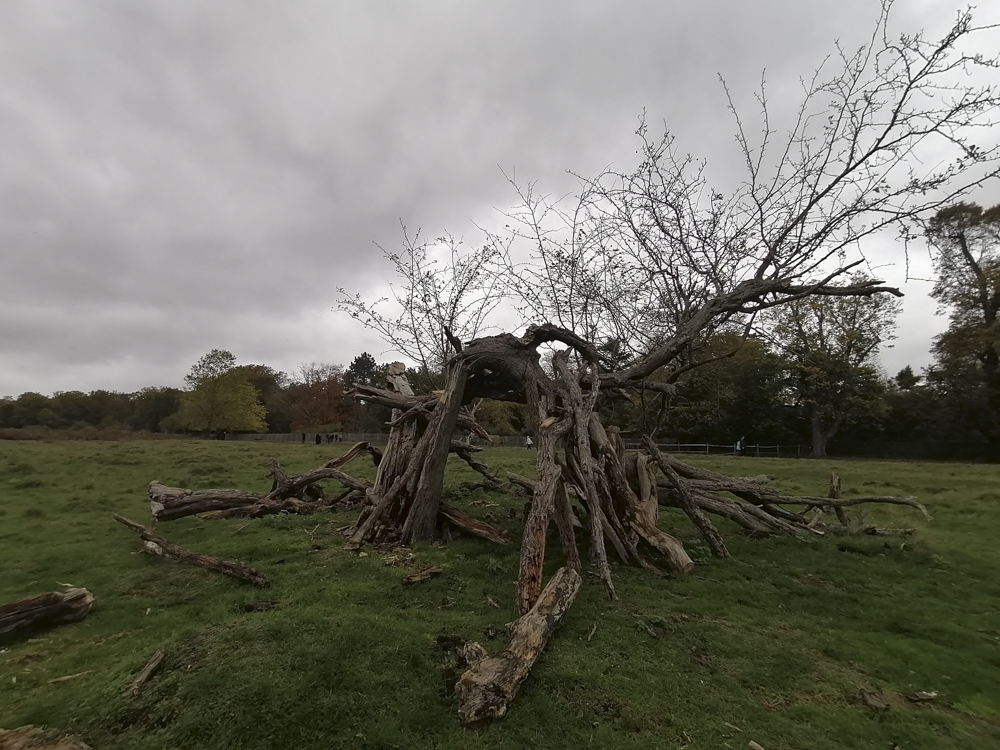
This particular hawthorn is quite spectacular. When looking at this specimen from a distance, it is quite difficult to work out which bit which. That includes the trunk/s, branches and new growth. It has the appearance of being both dead and alive, which I have discovered is quite common with ancient hawthorns.
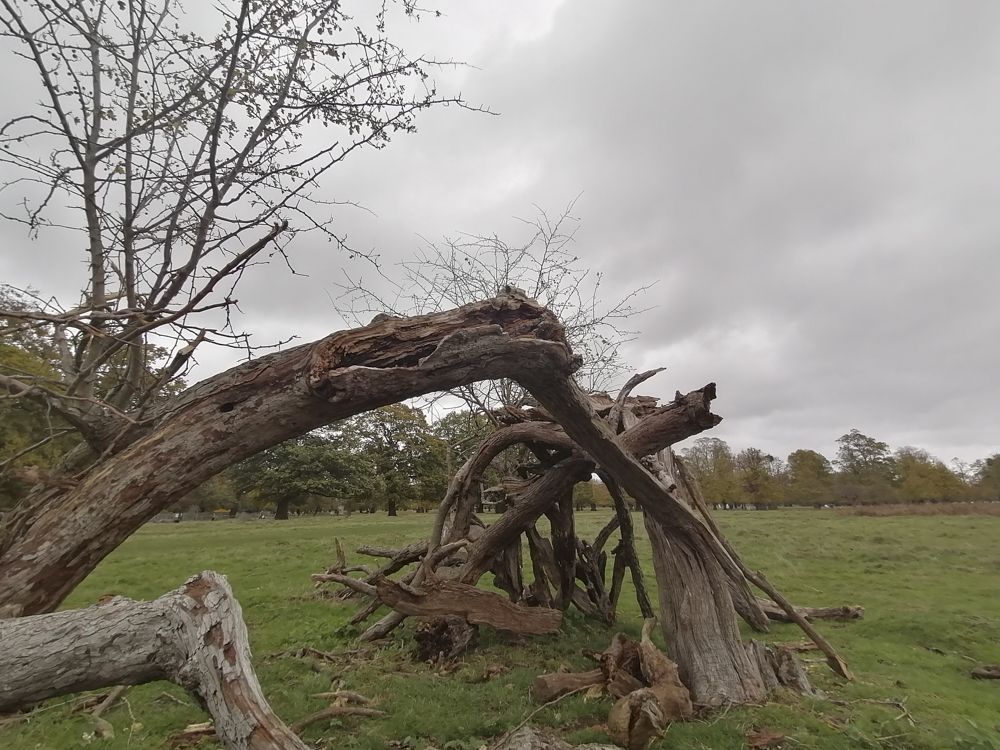
Tree 3
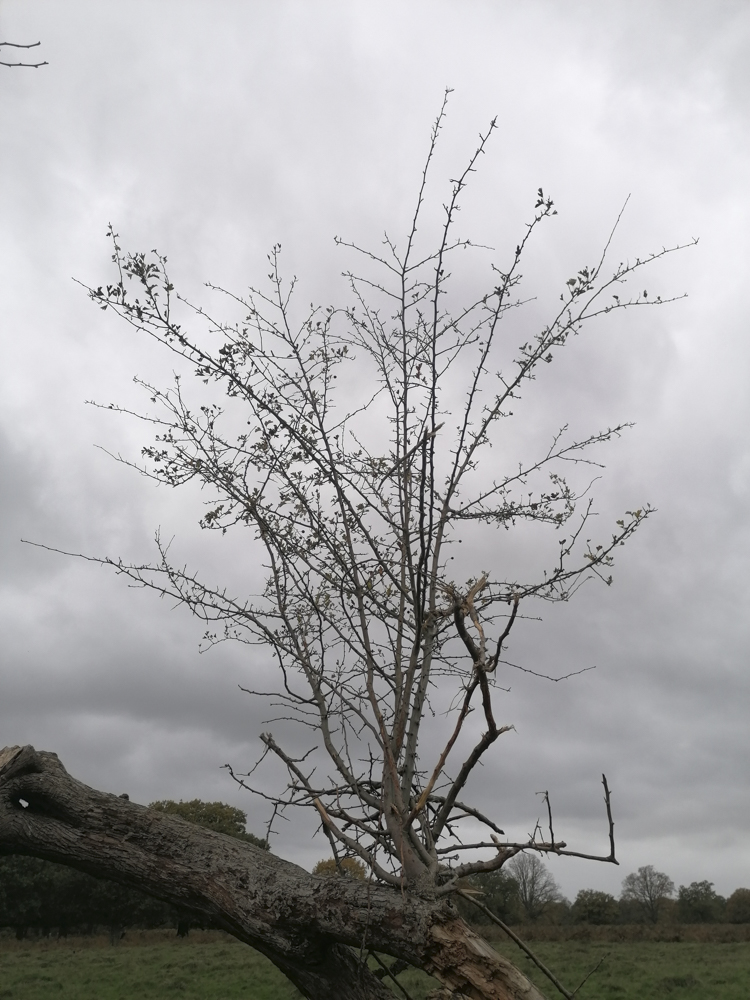
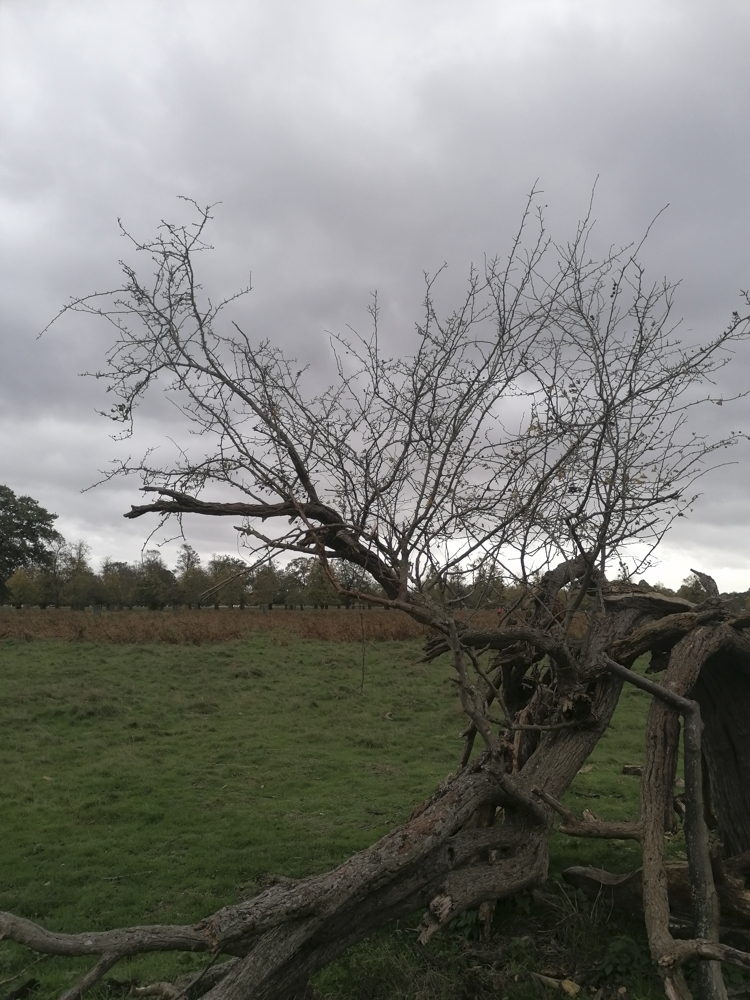
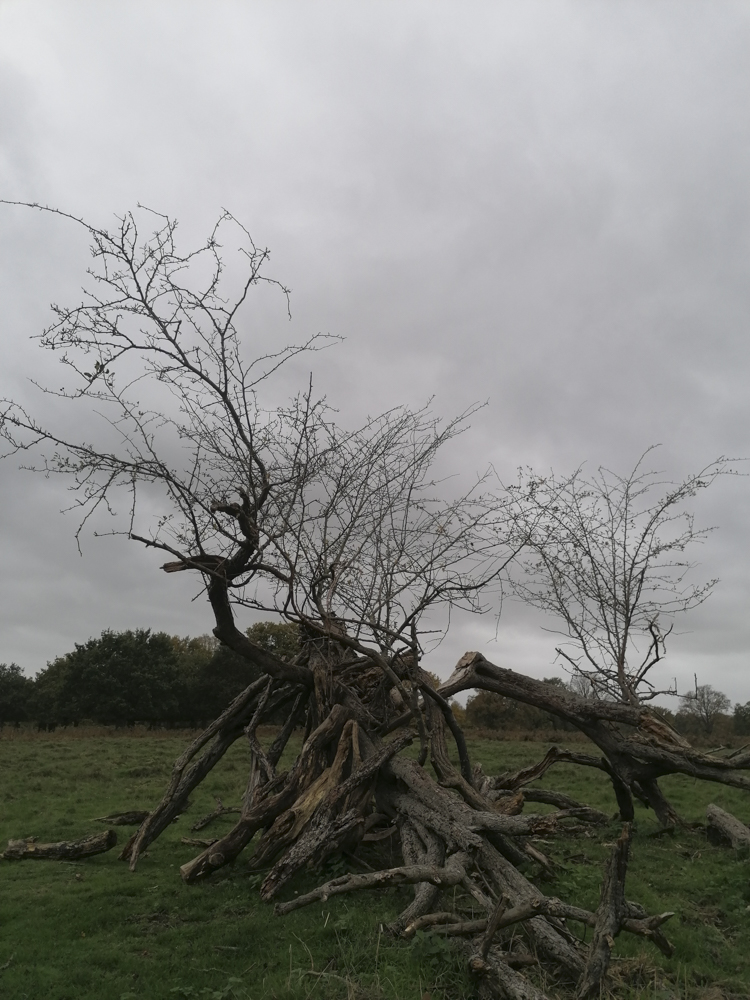
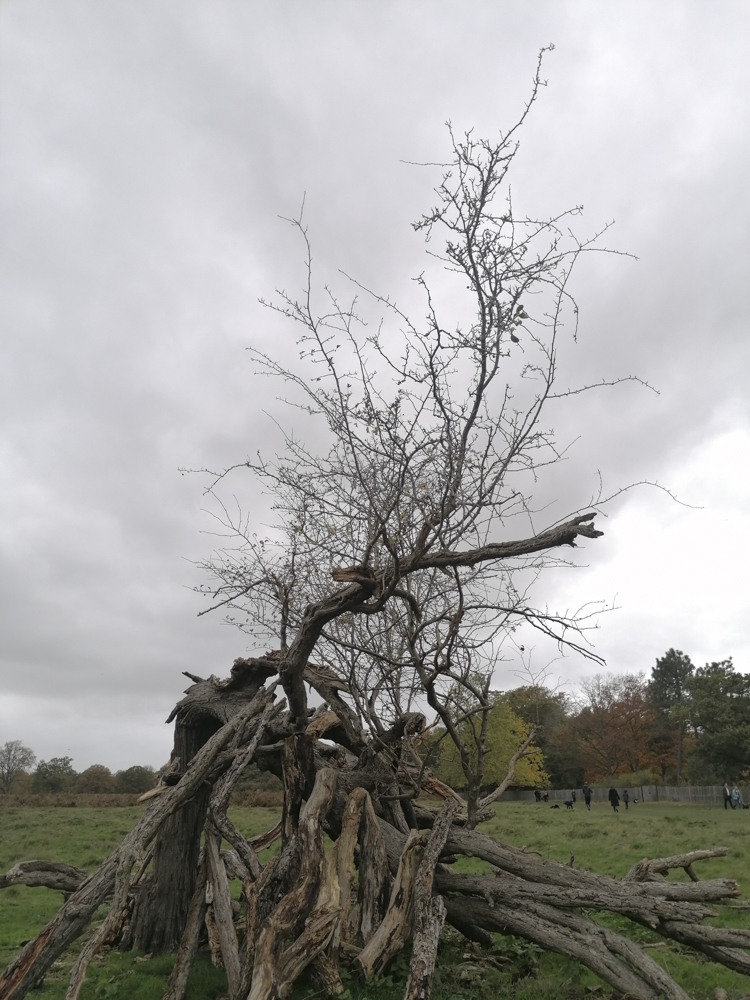
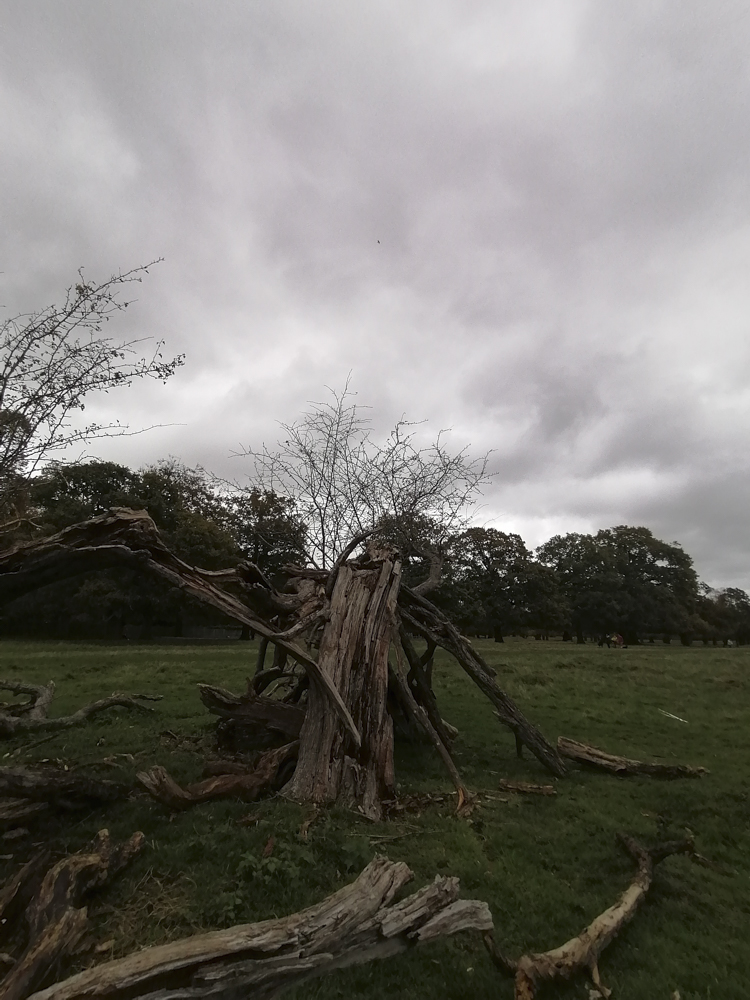
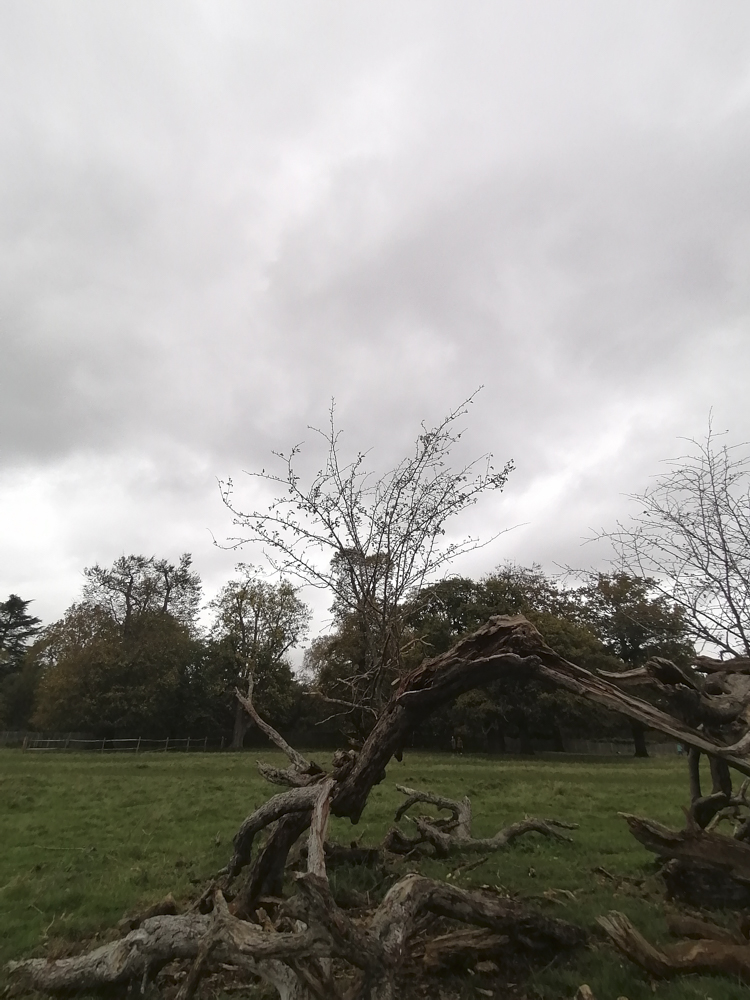
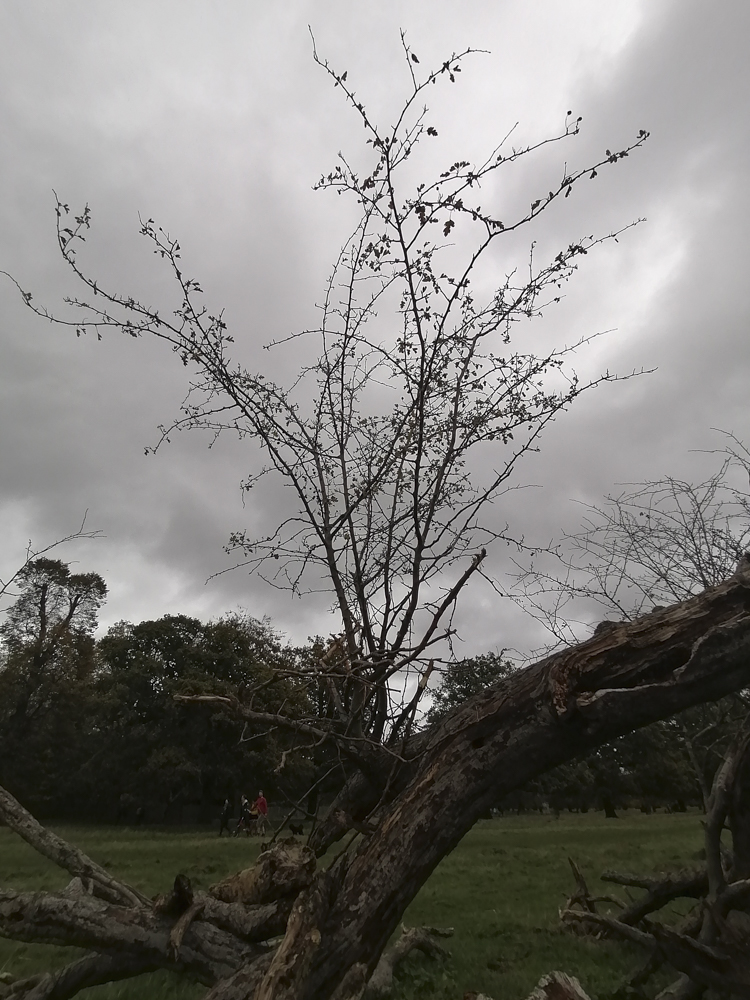
This tree has a very interesting trunk which seems to be split into four. When taking photographs from different angles, it appears to be a completely different tree in each shot.
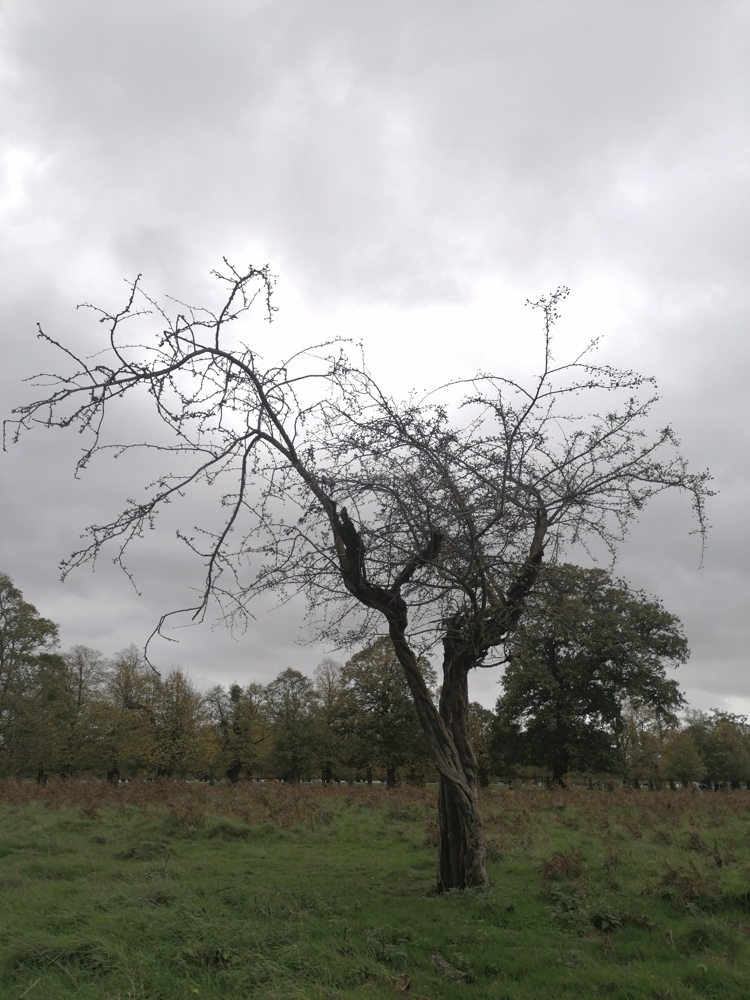
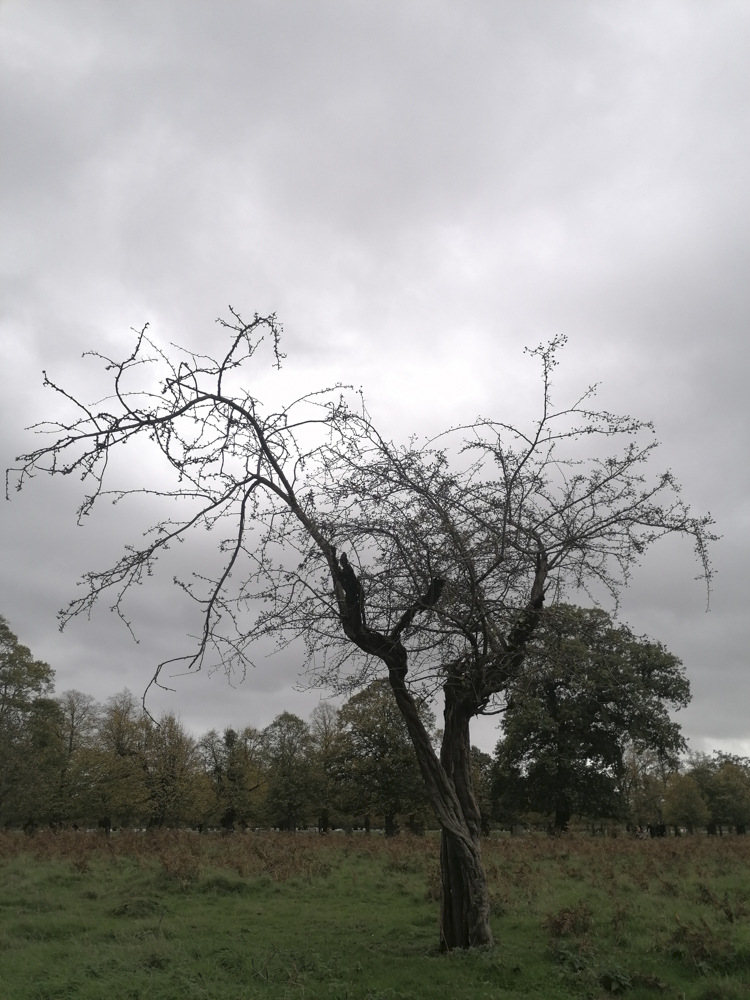
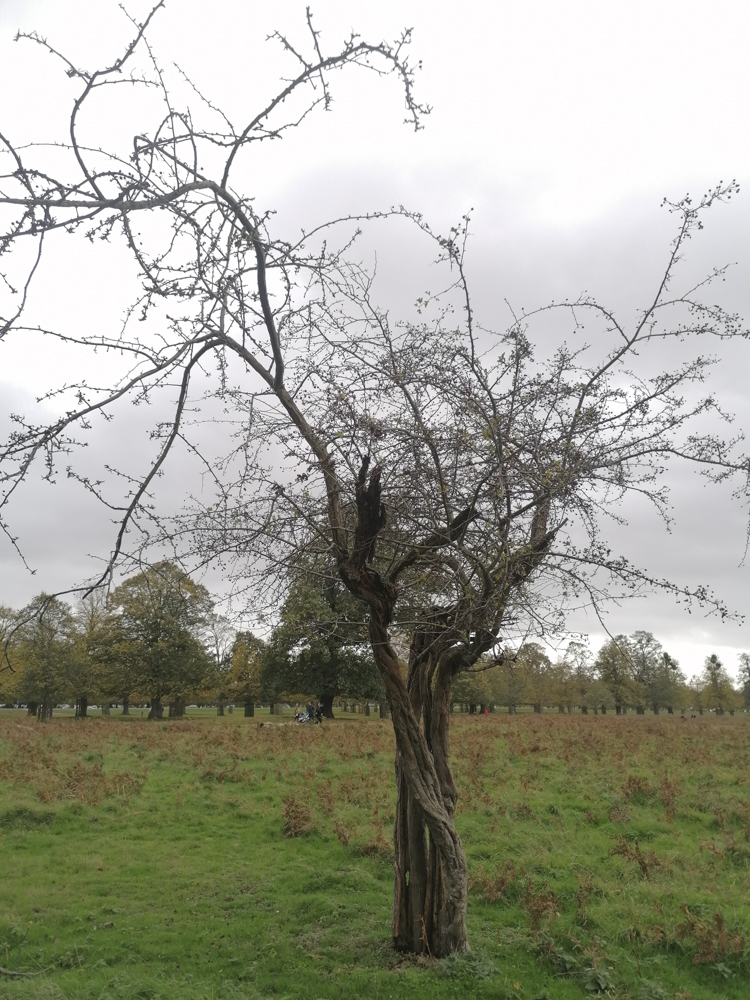
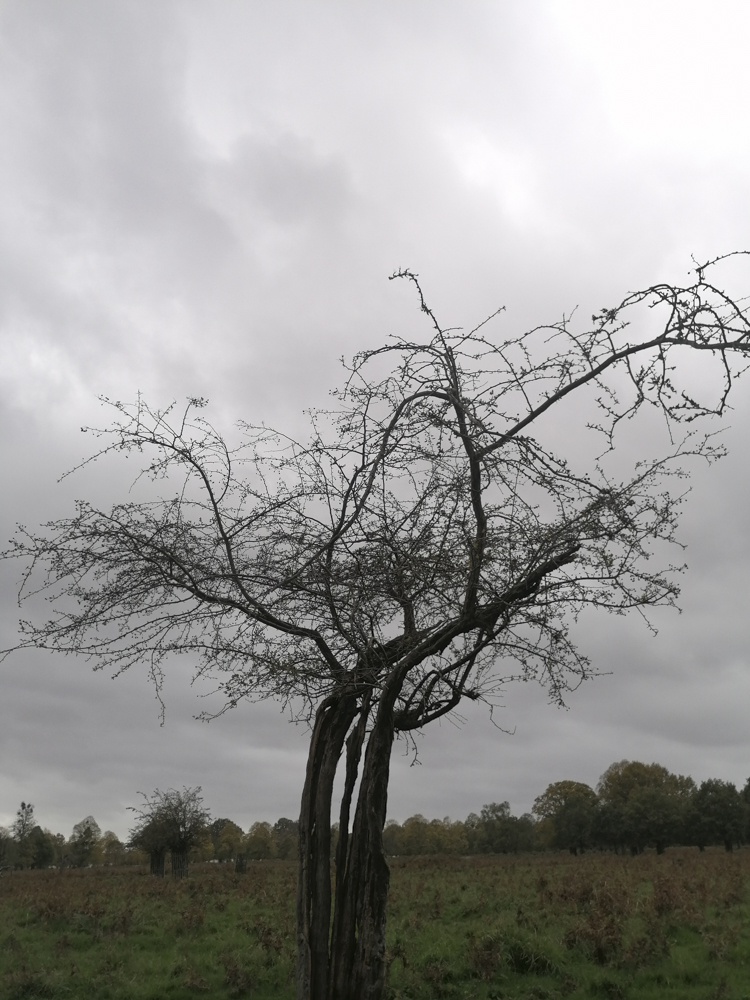
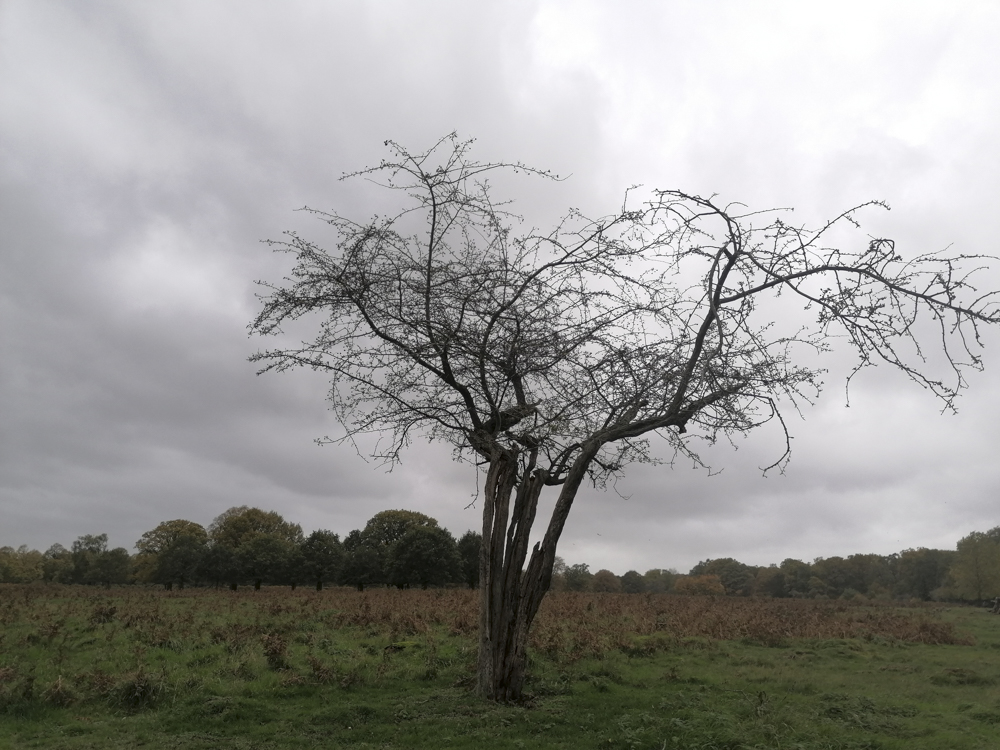
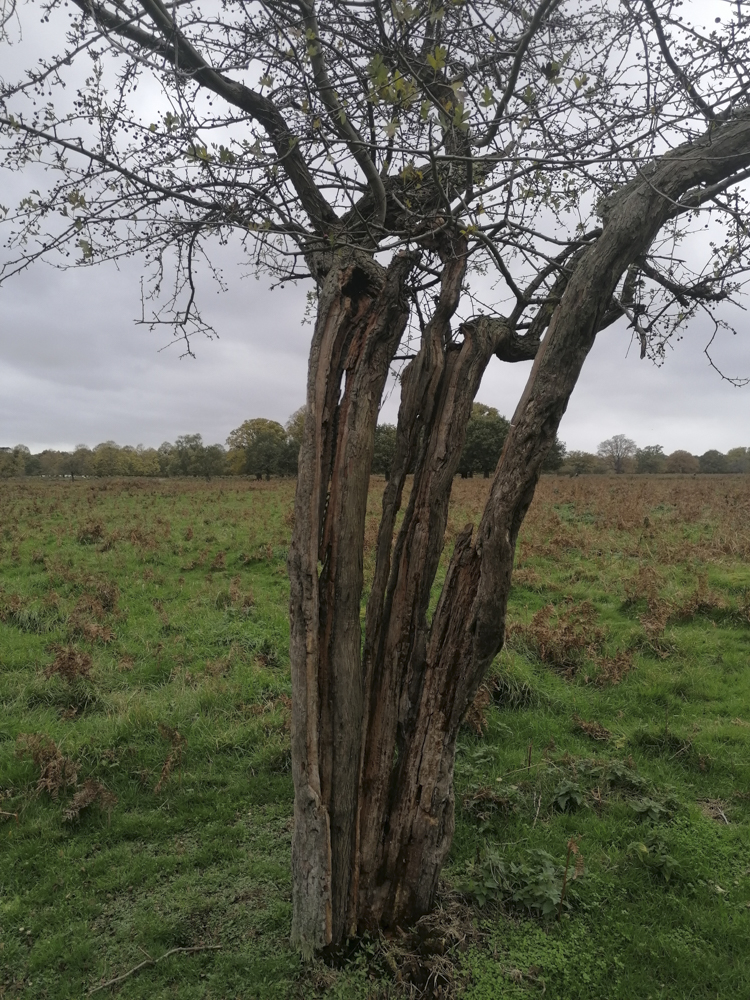
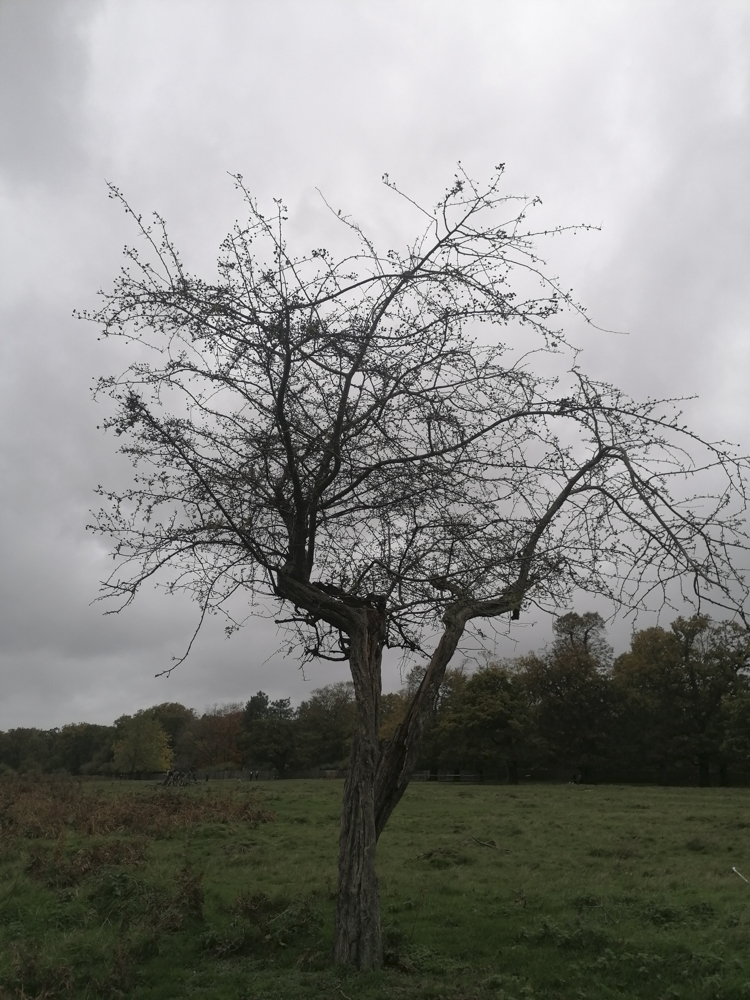
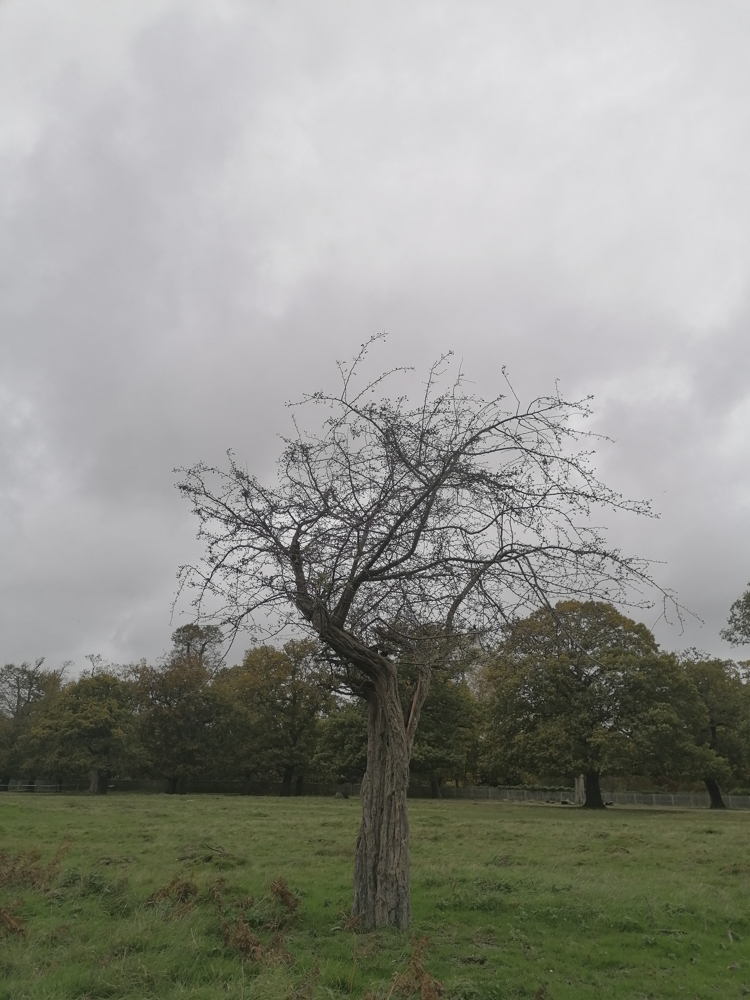
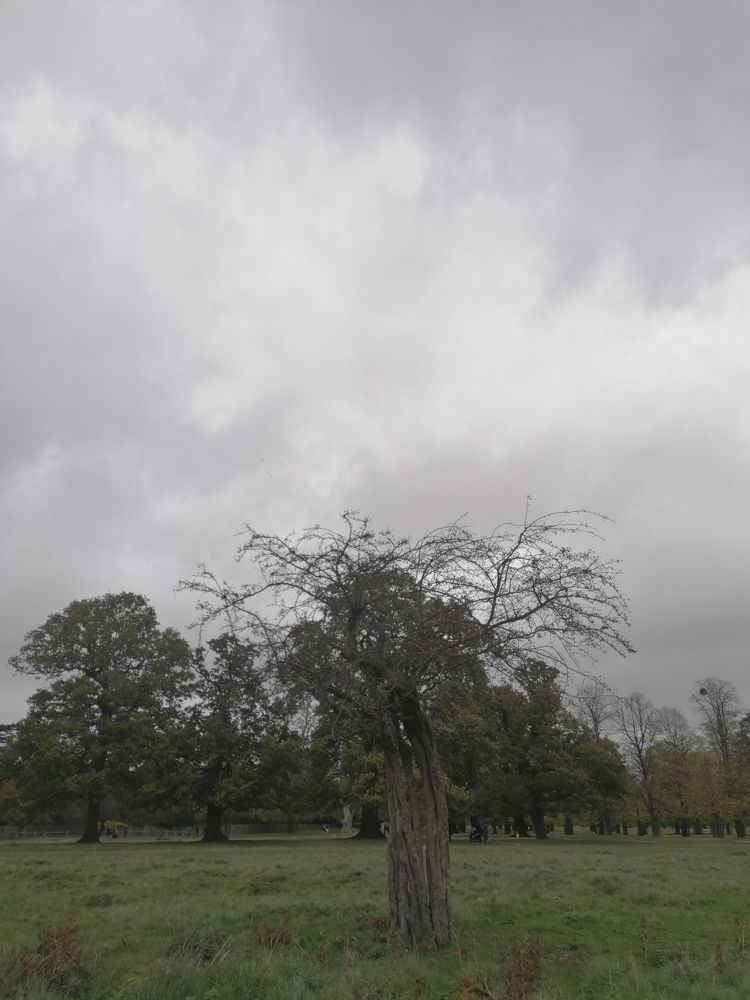
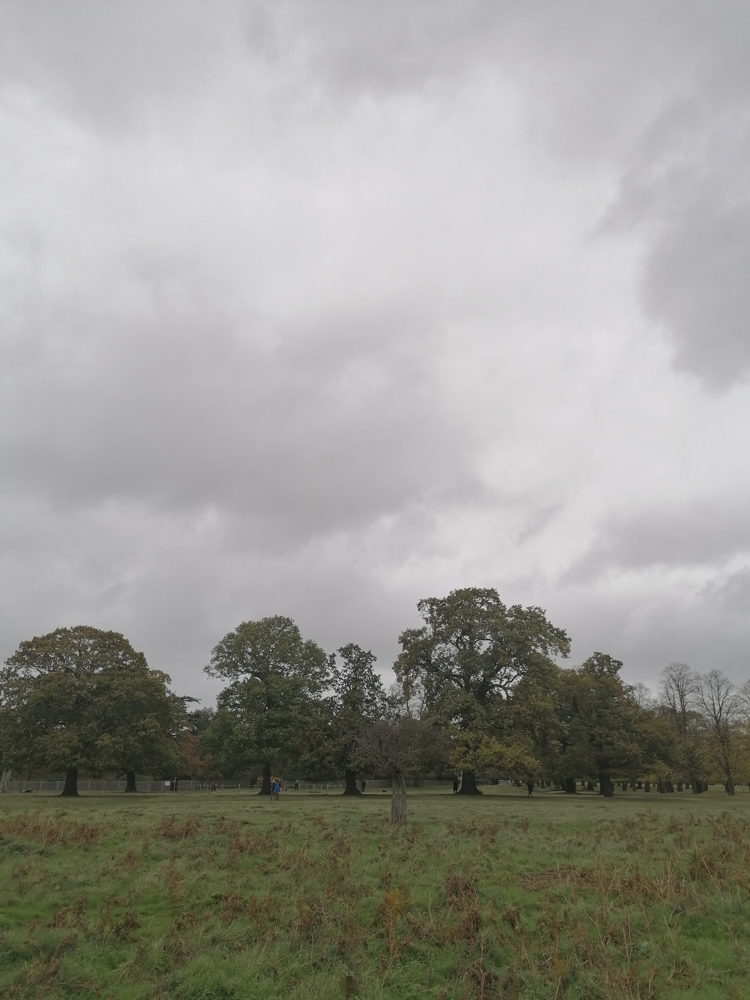
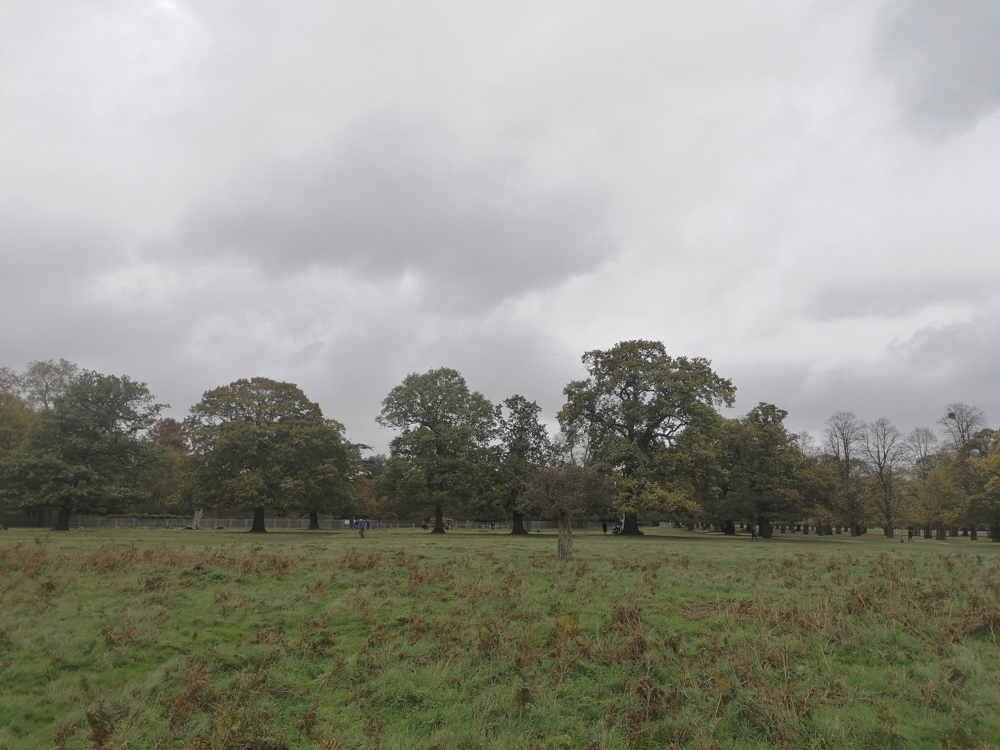
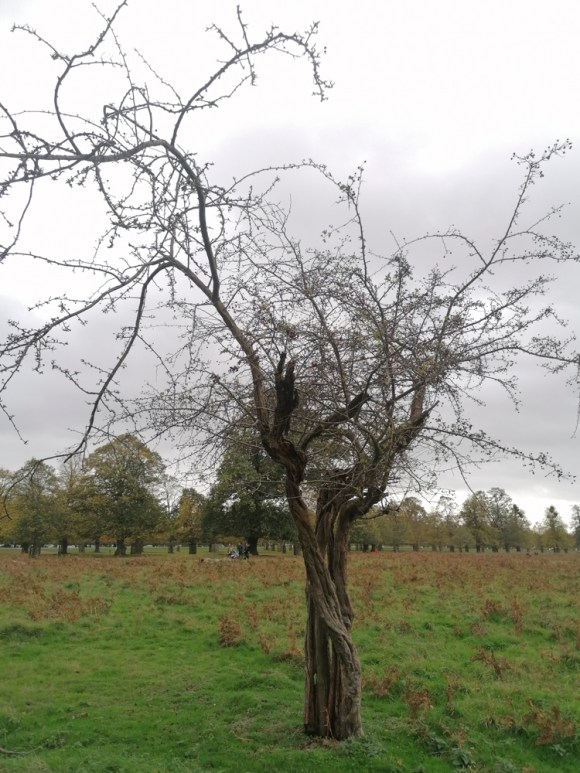
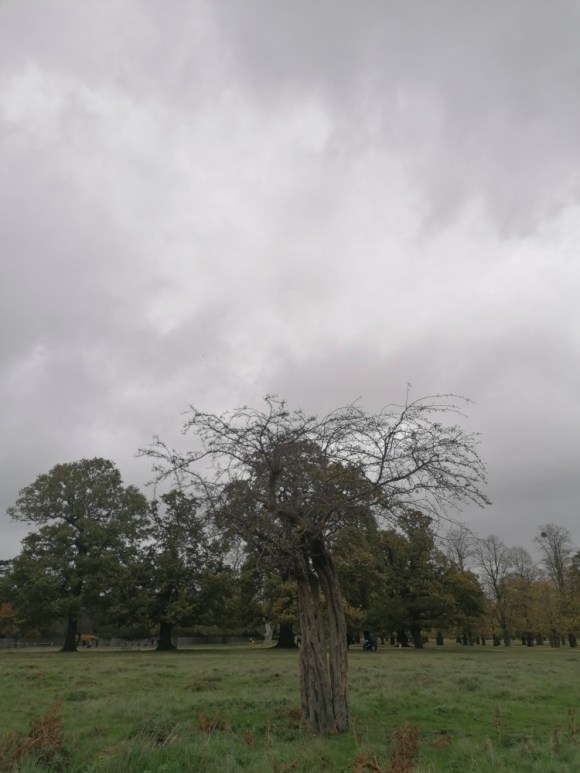
What also intrigued me was how the tree appeared differently depending on the angle and perspective of the shot.
Trees 4, 5 & 6
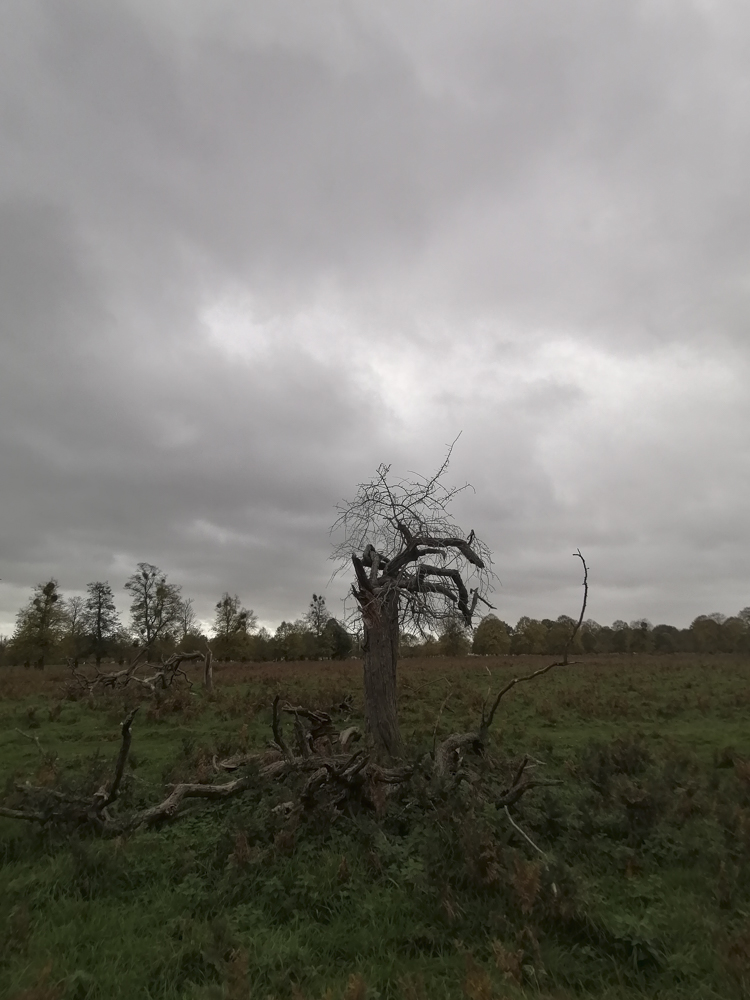
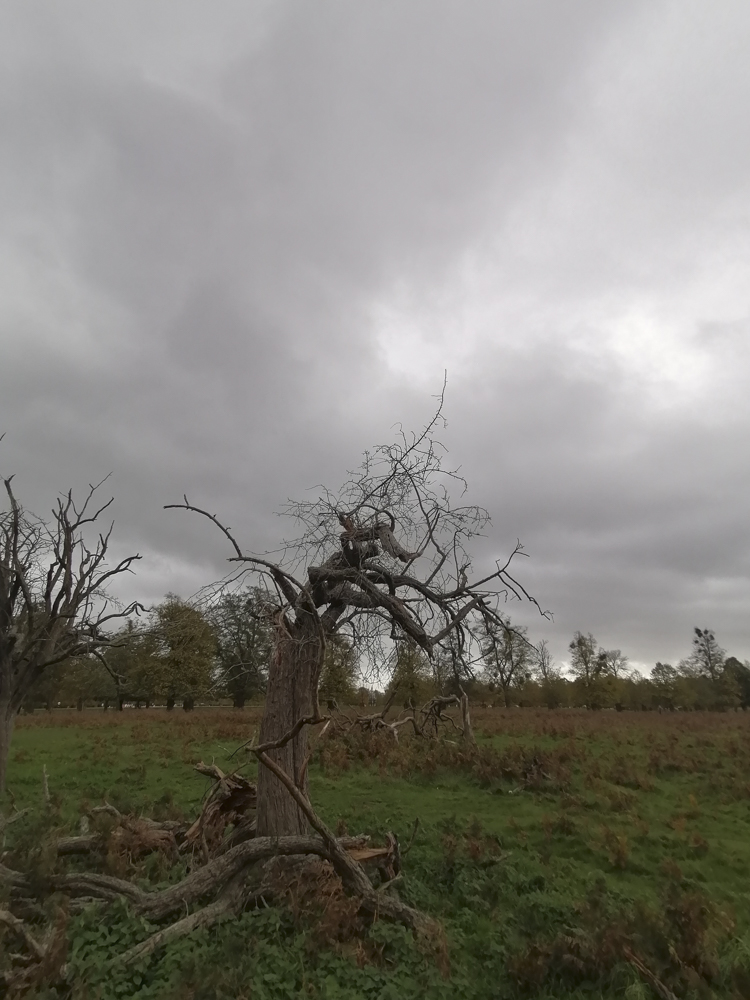
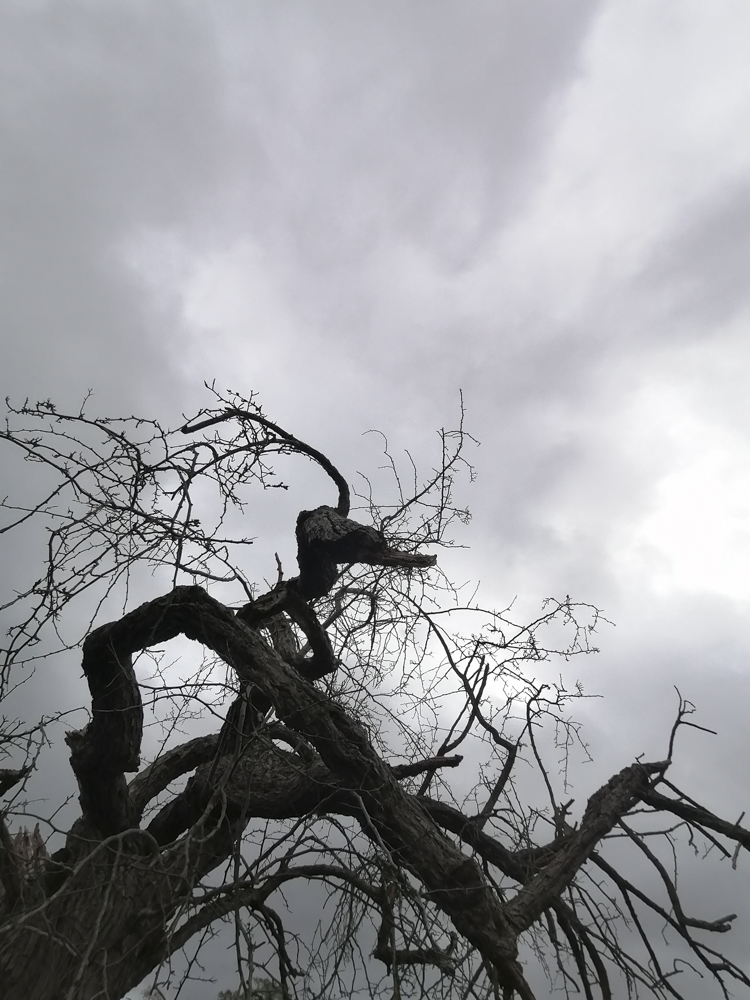
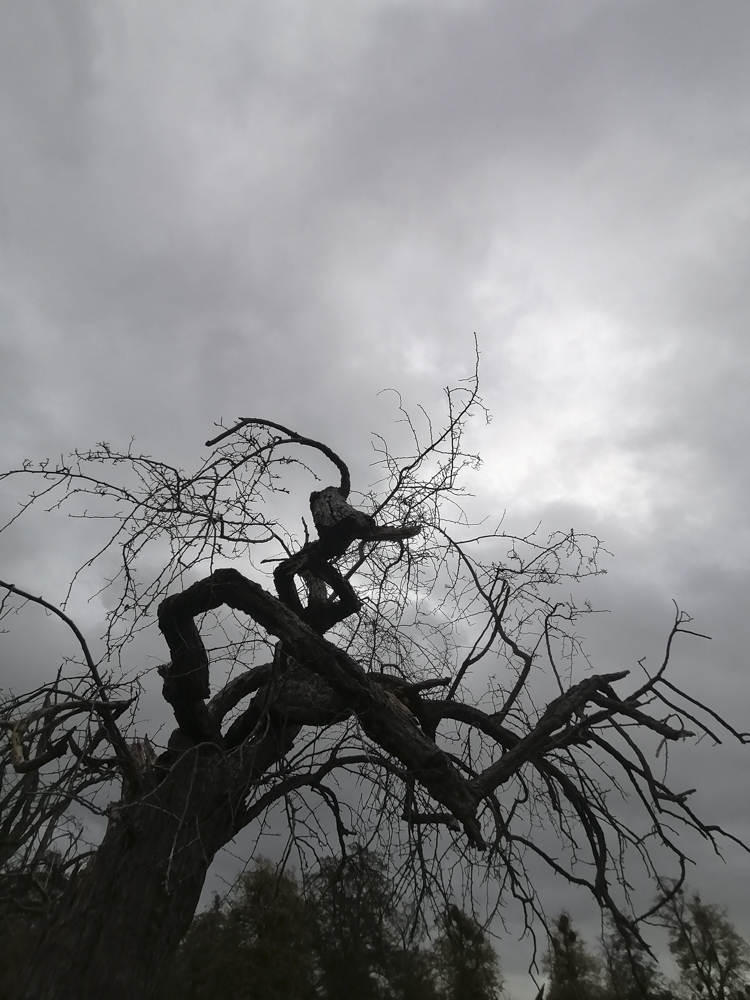
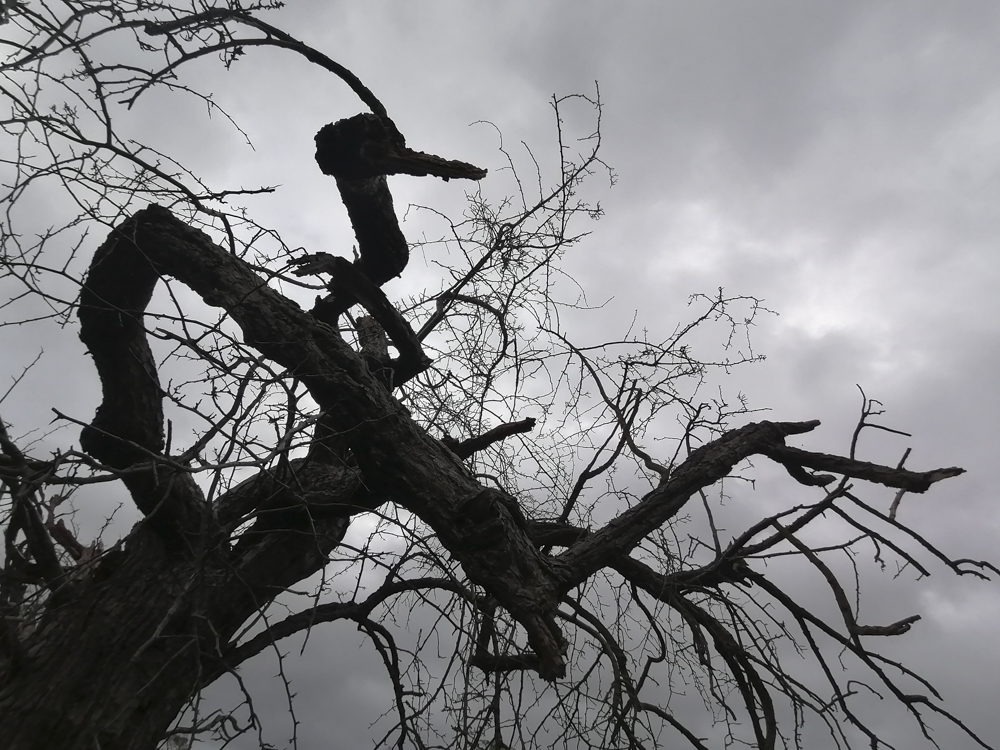
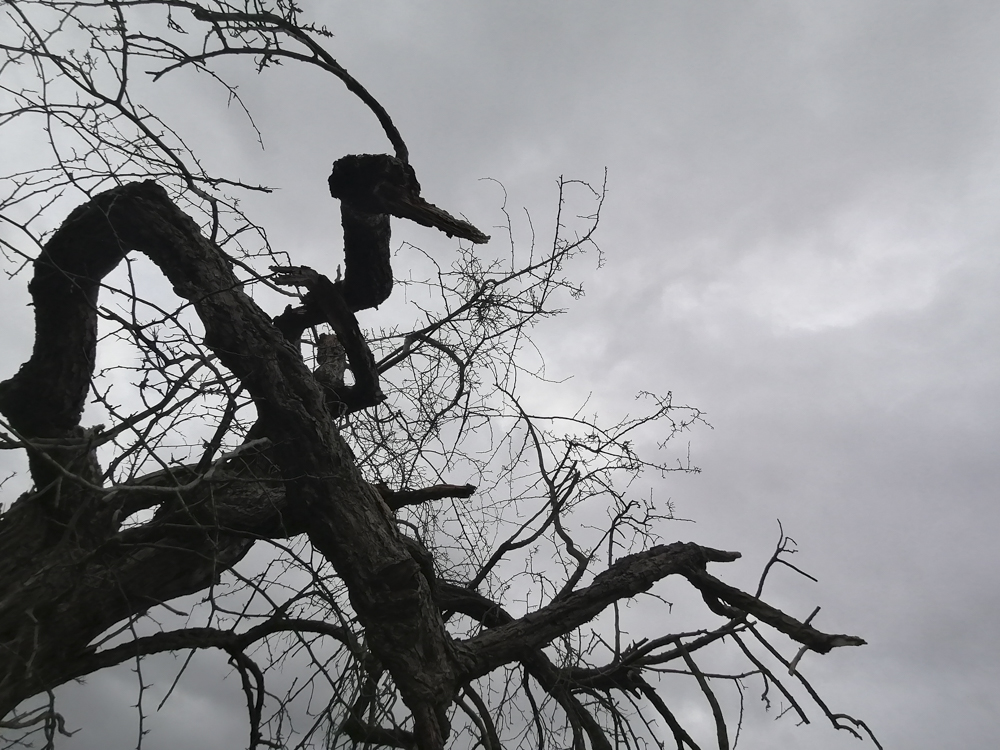
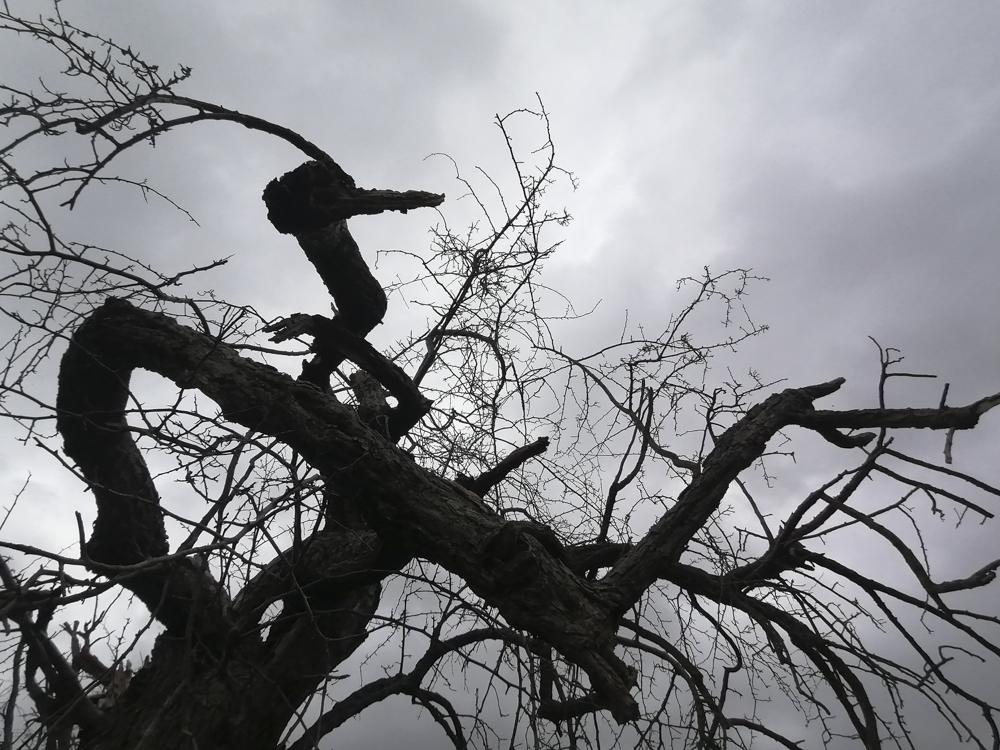
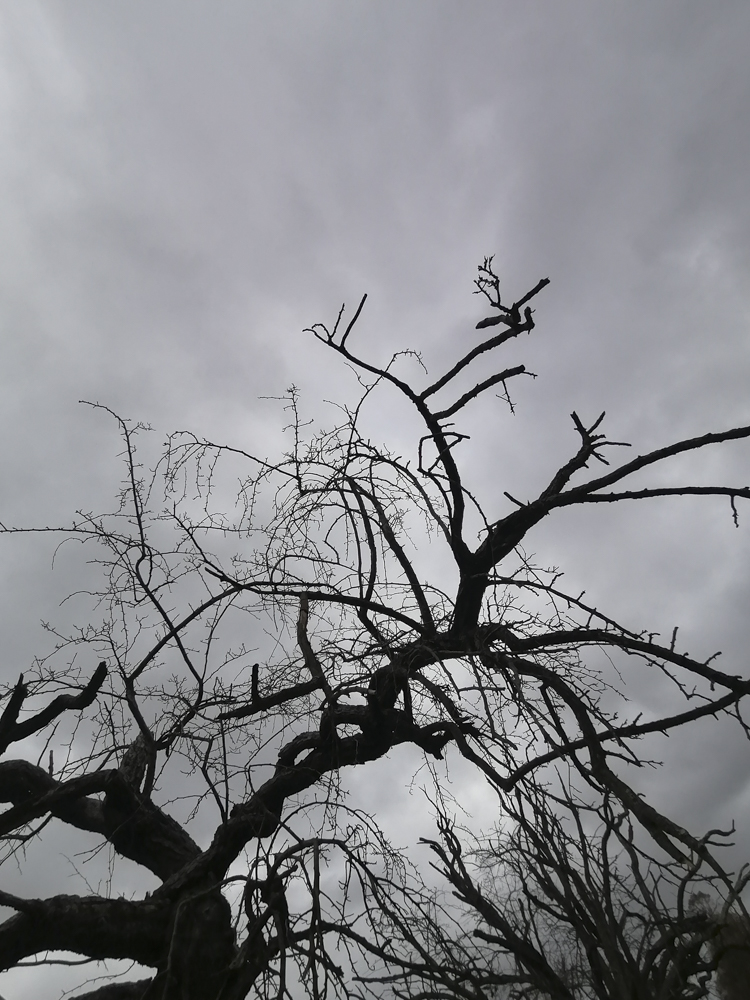
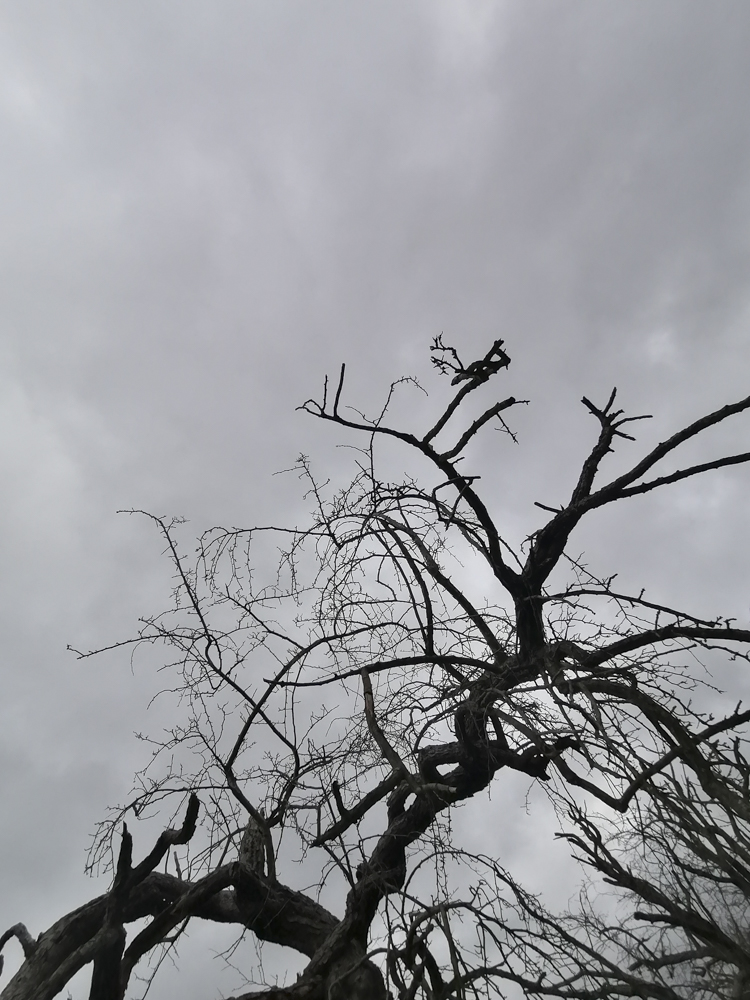
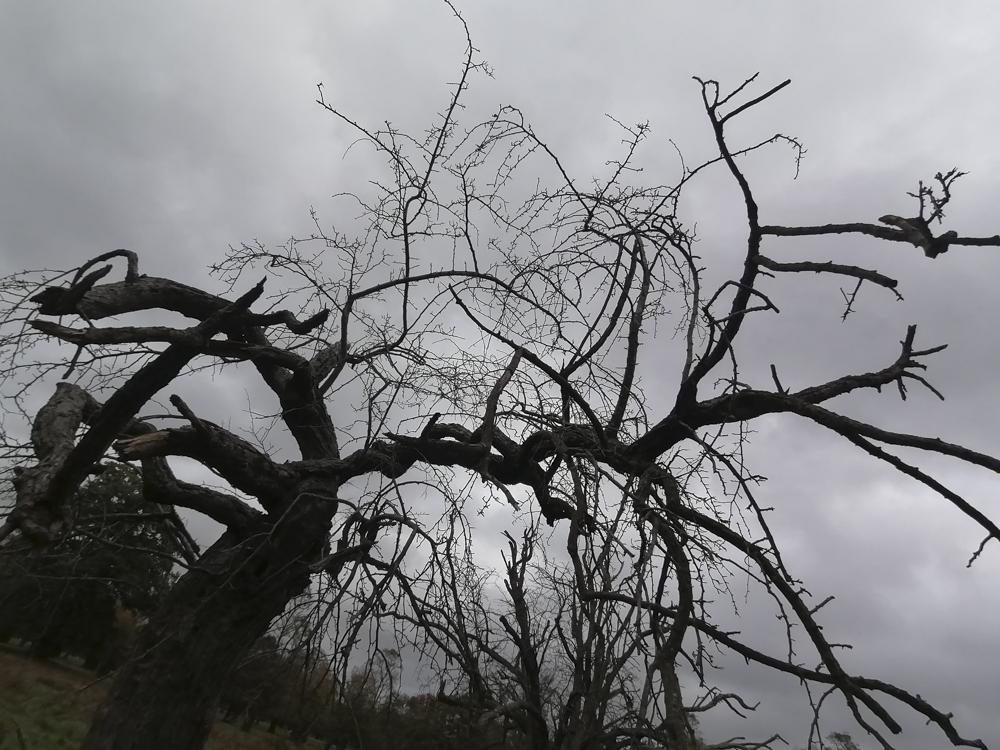
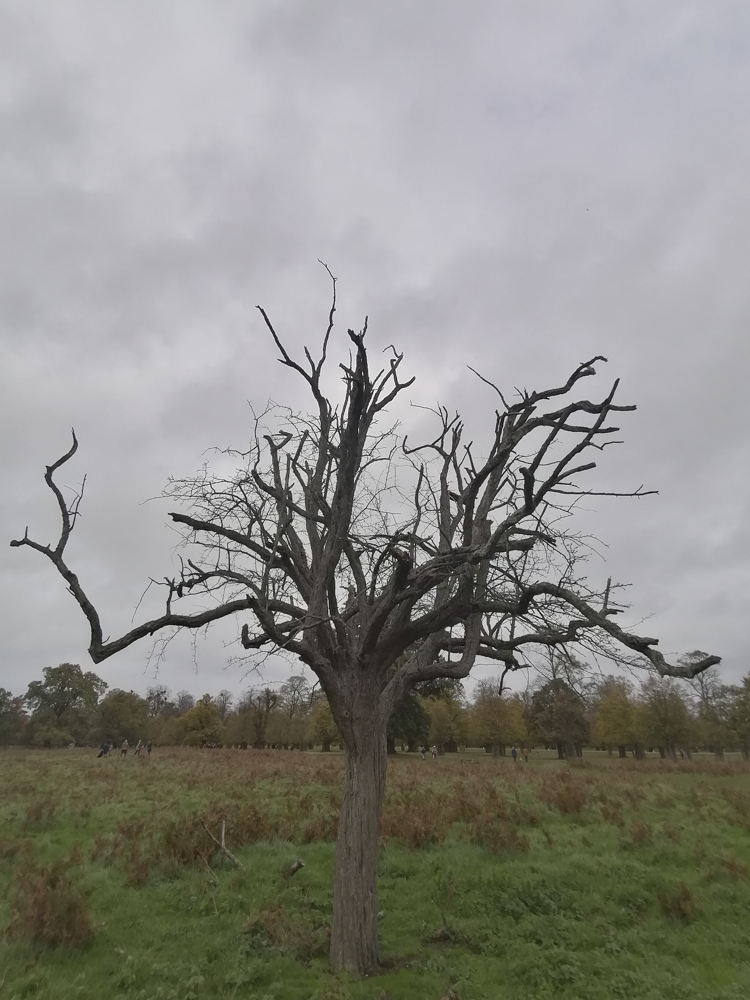
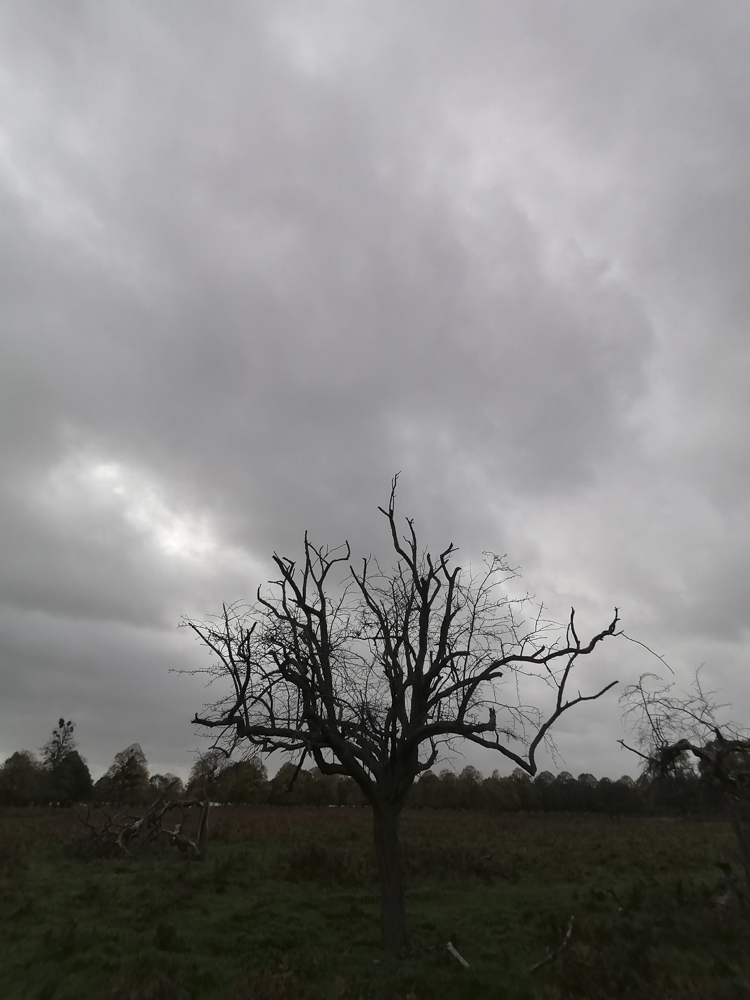
These are three hawthorns that are quite close together. Again, all with their unique features.
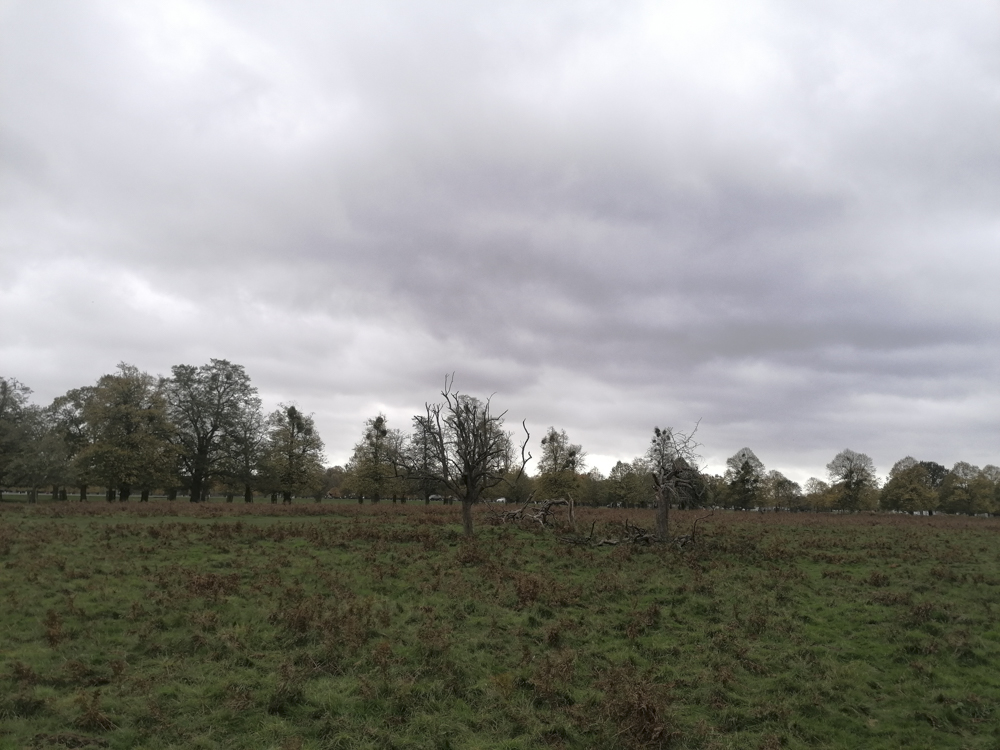
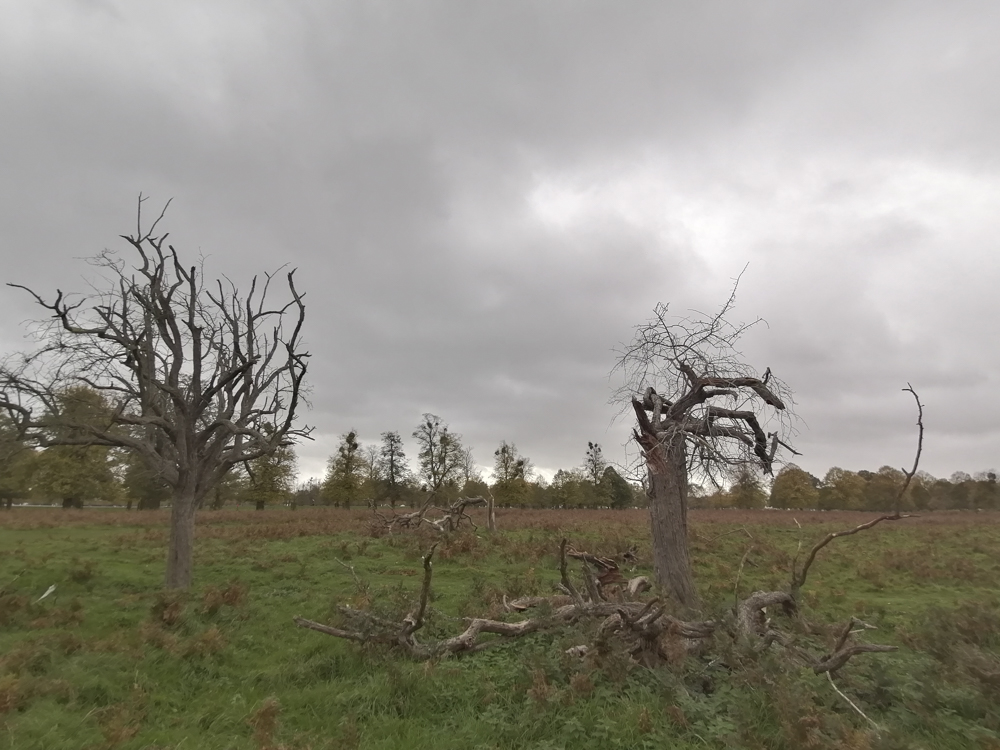
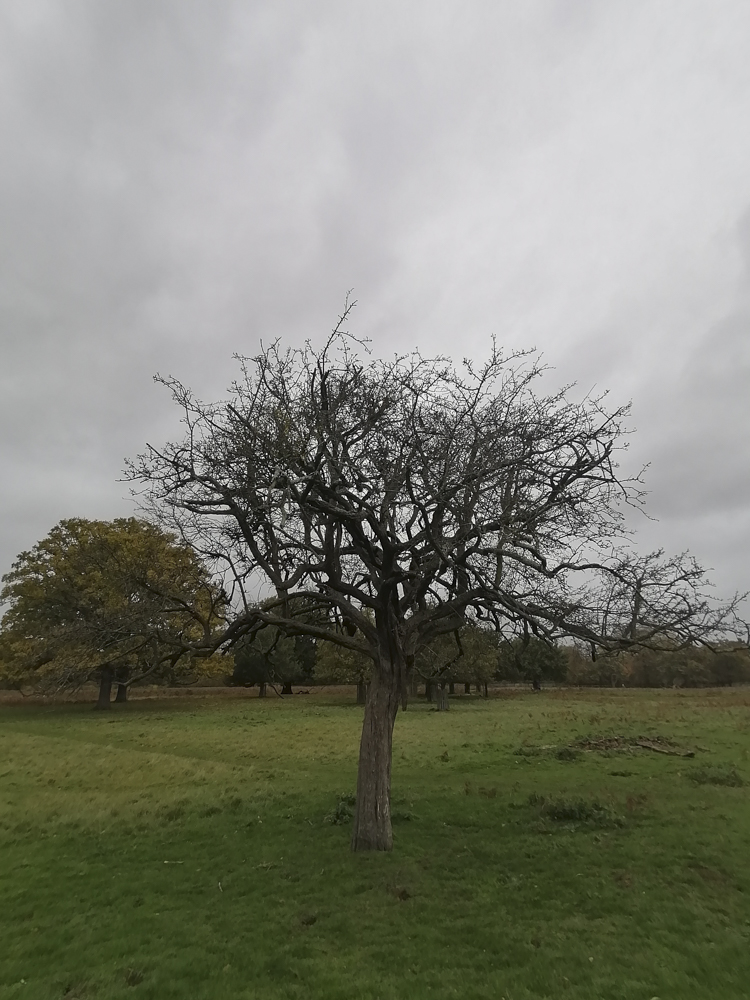
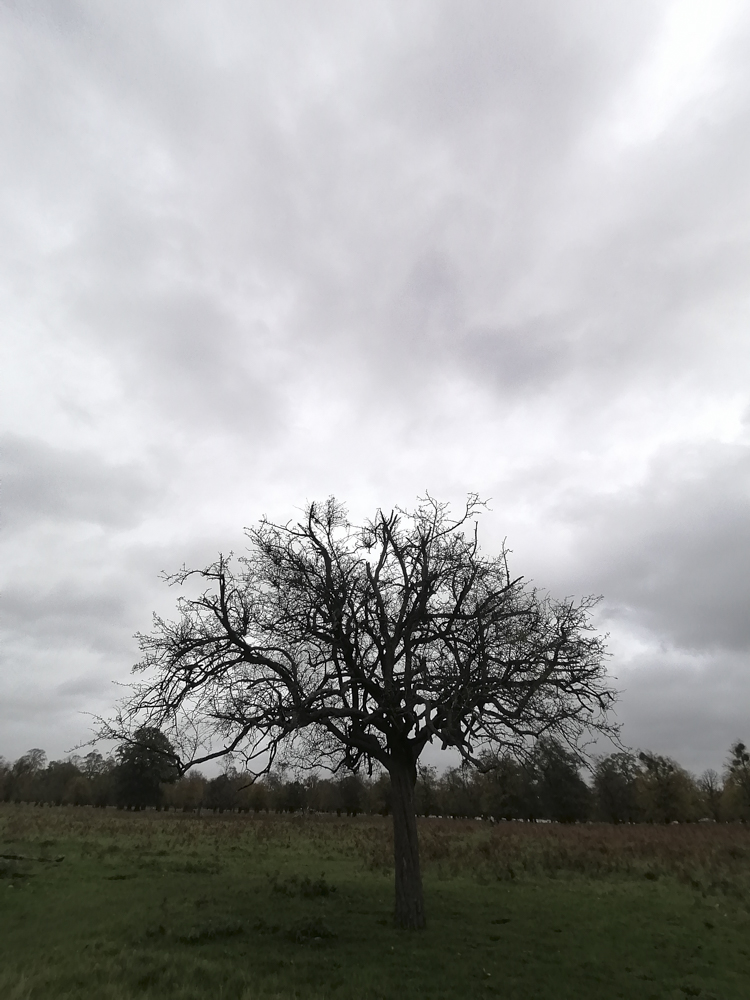
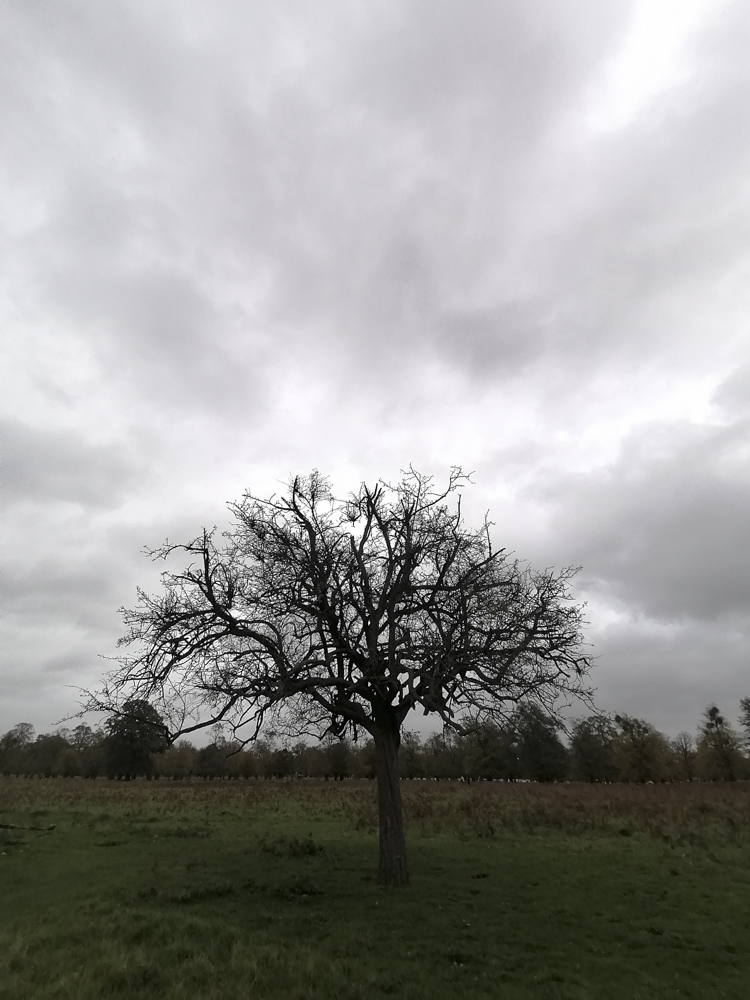
Tree 7
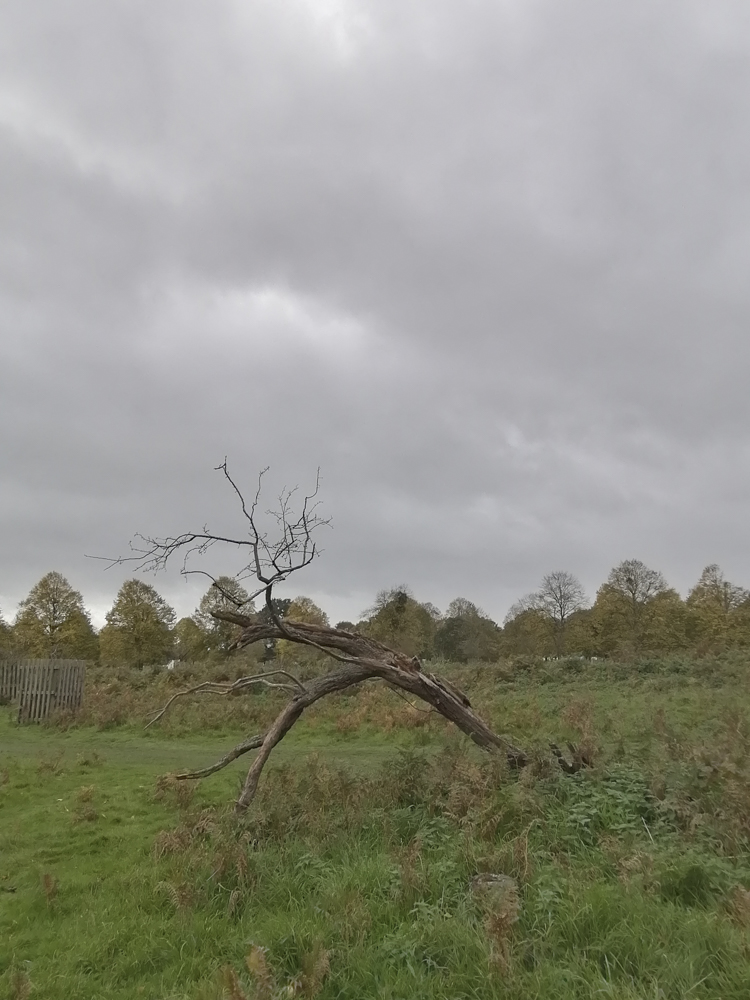
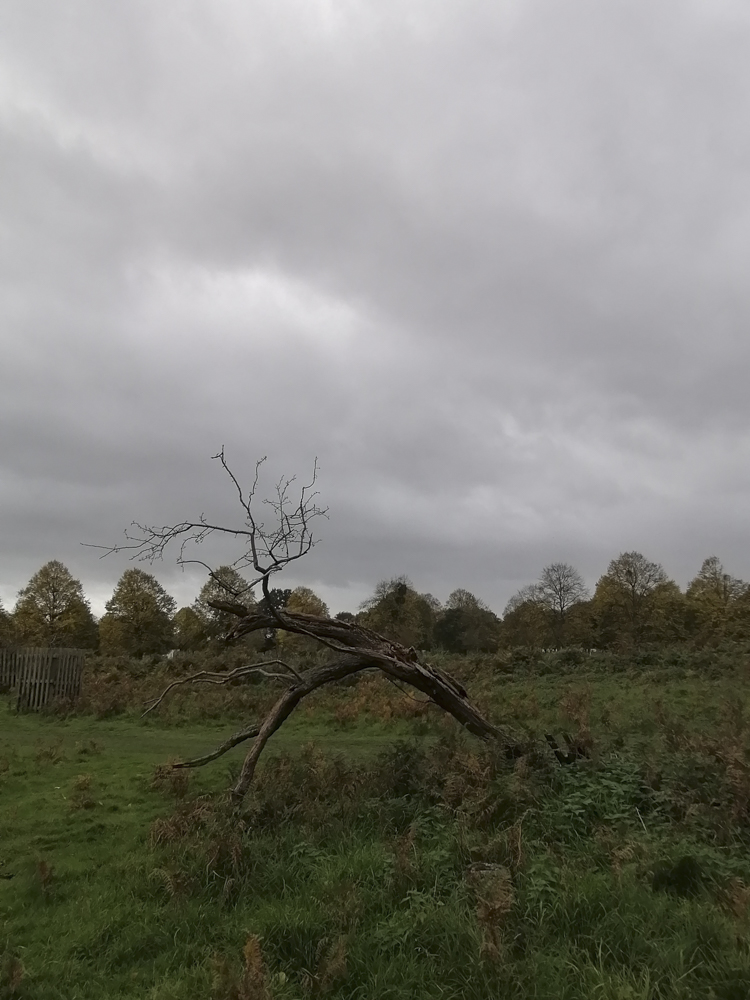
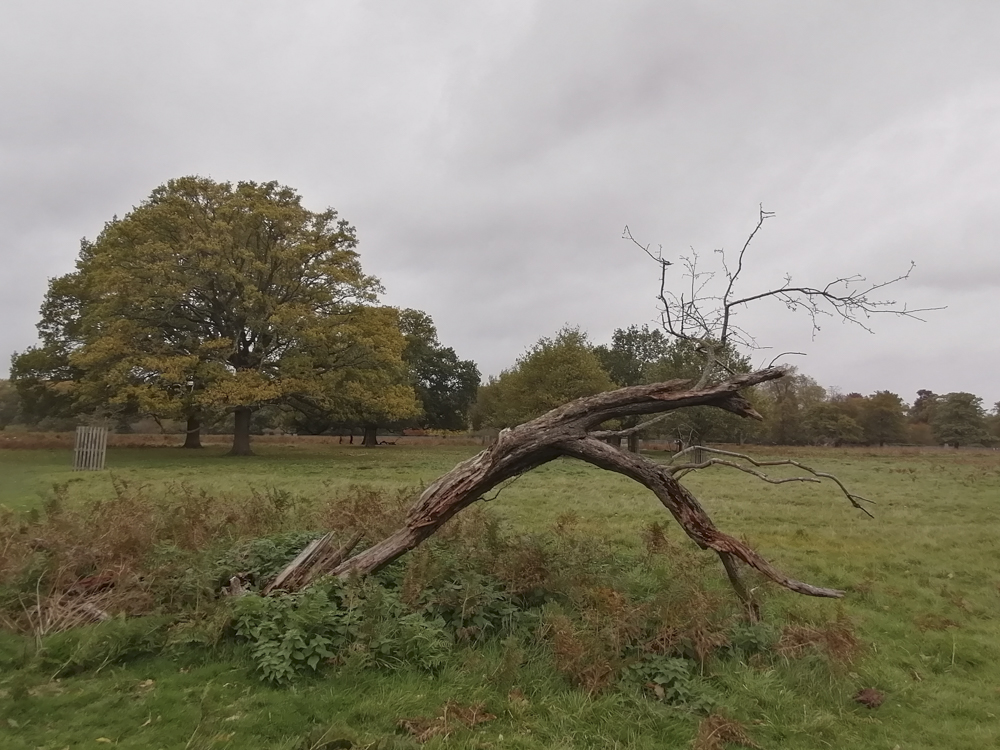
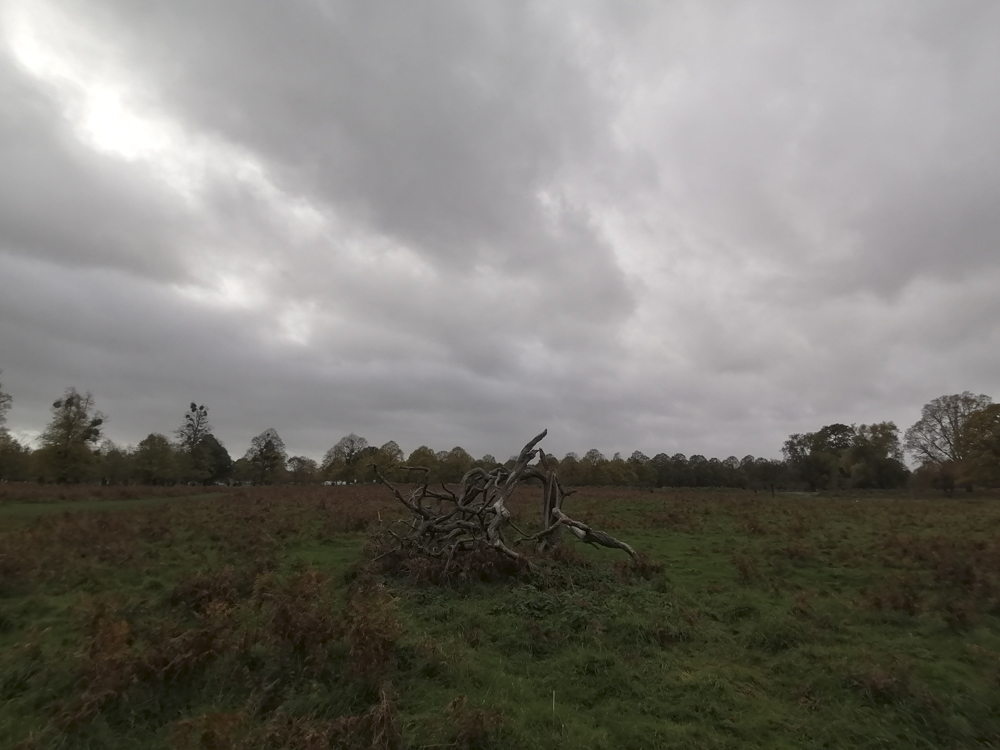
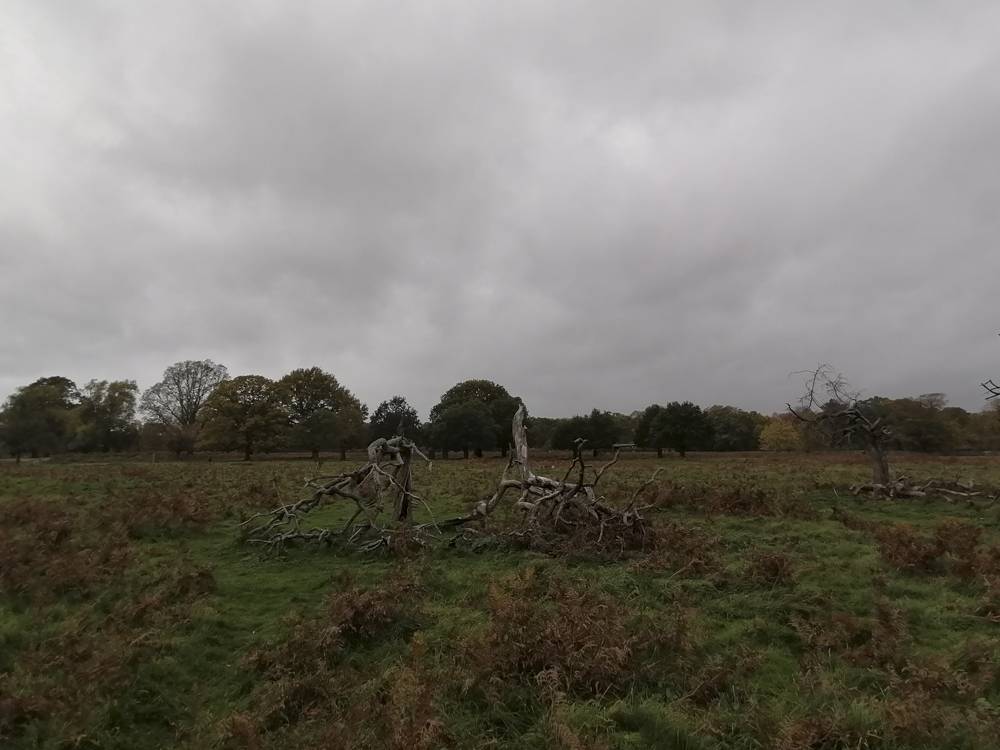
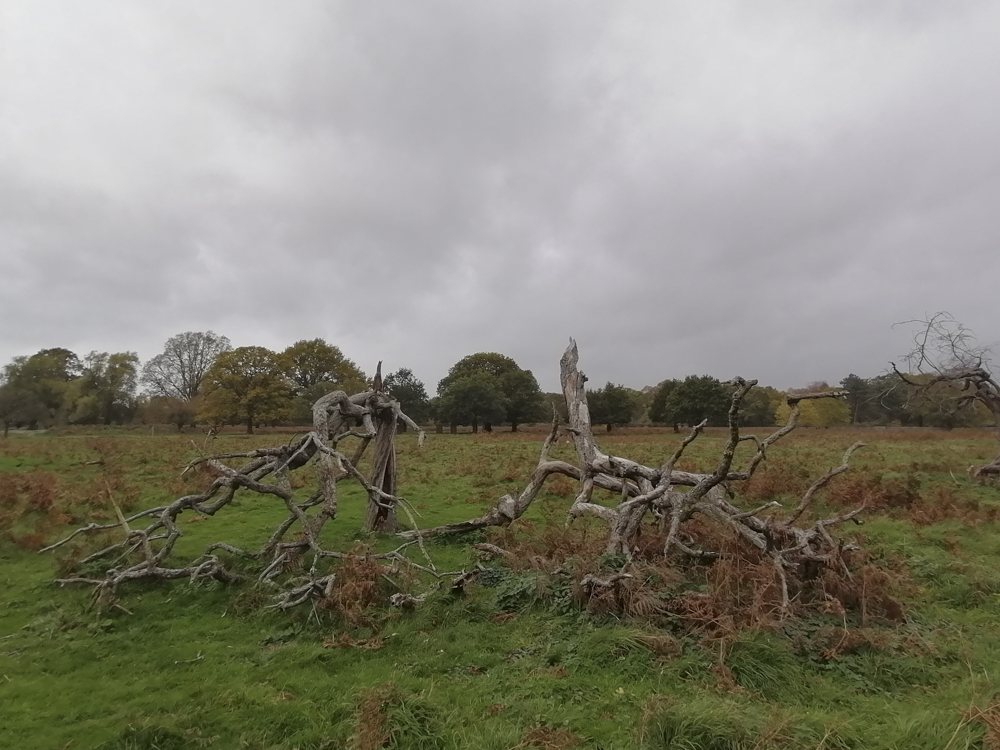
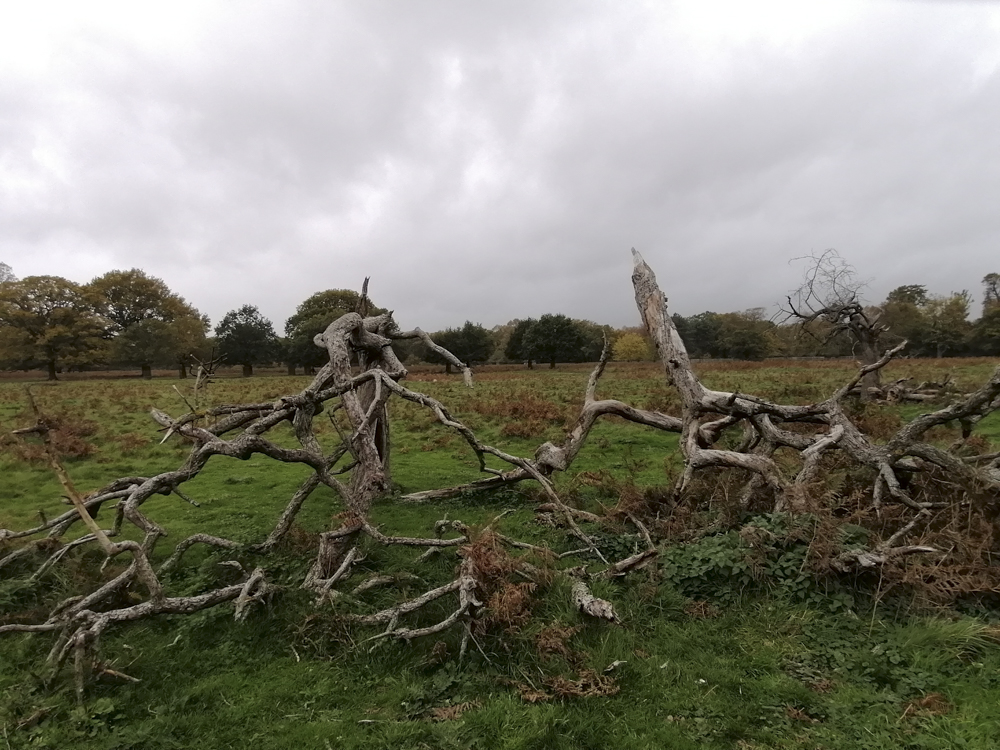
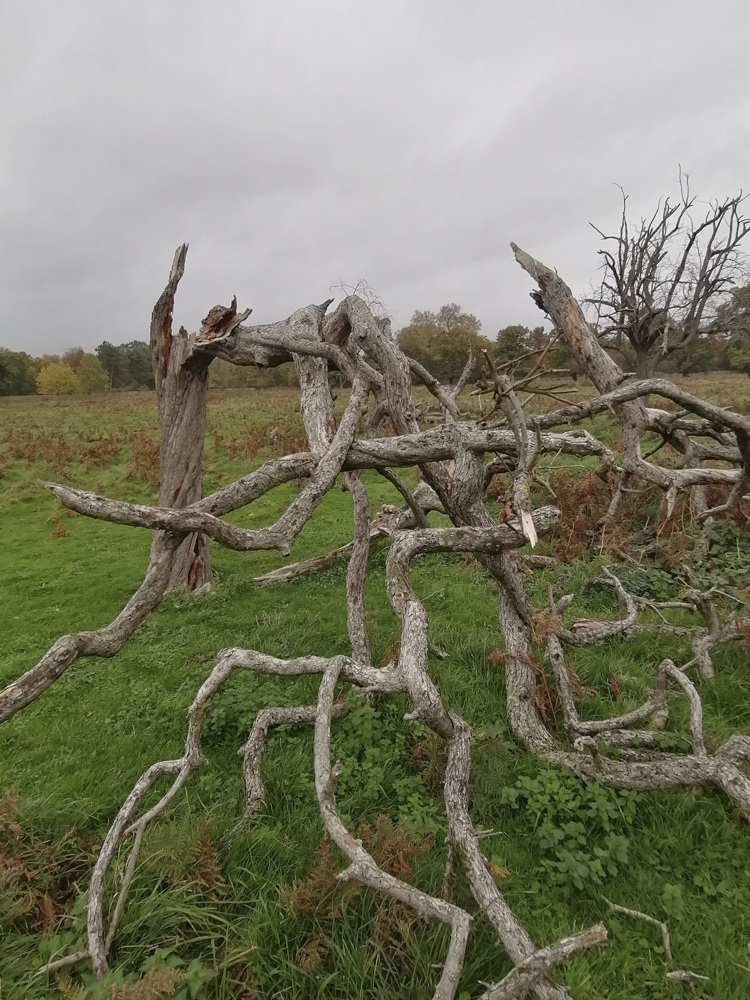
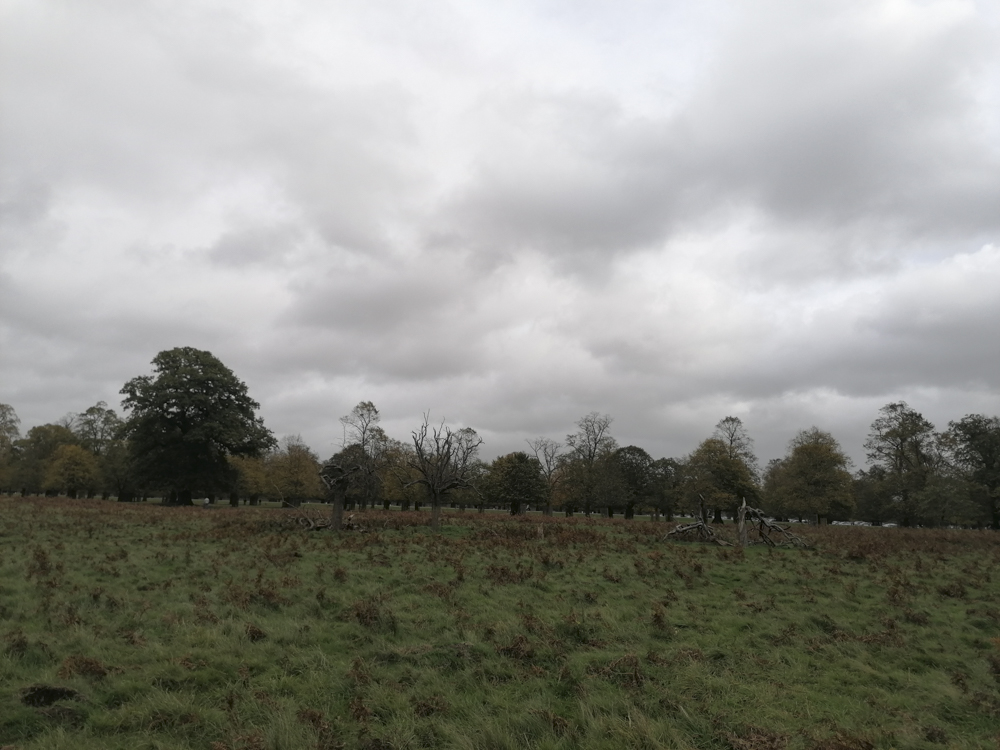
This hawthorn does appear to be dead, but I’m sure it is full of insect life.
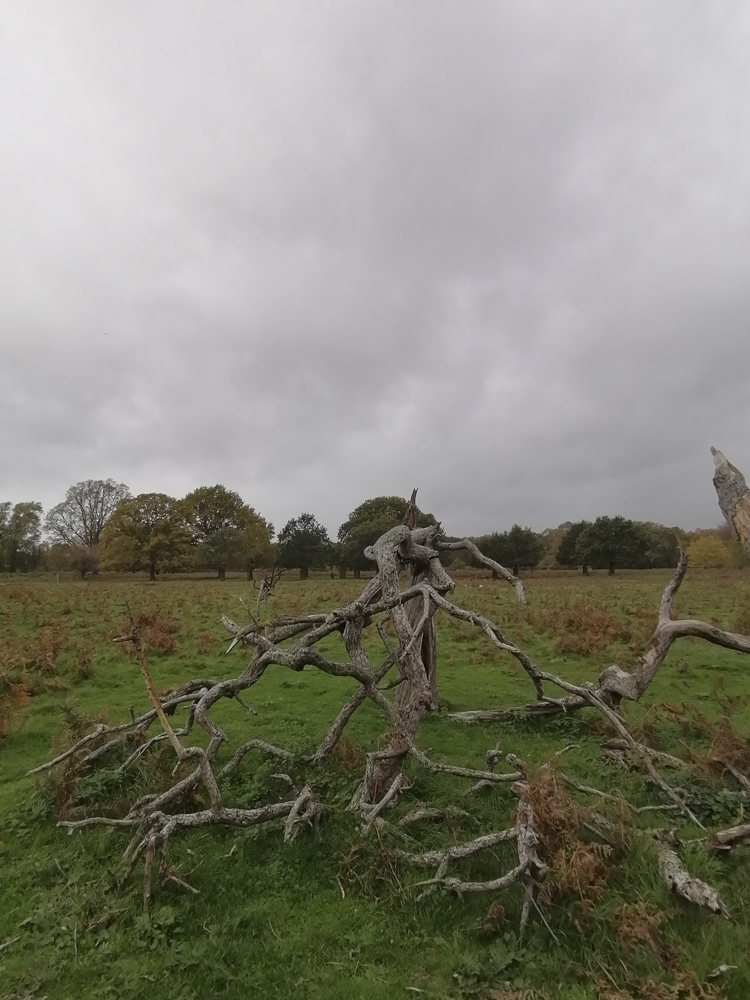
Tree 8
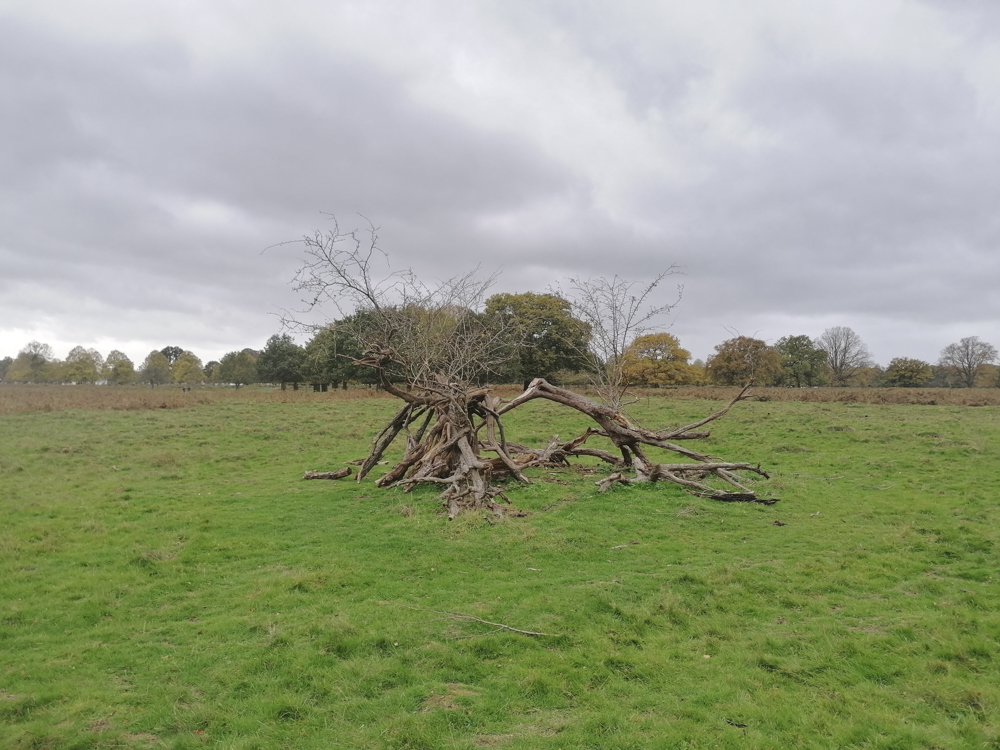
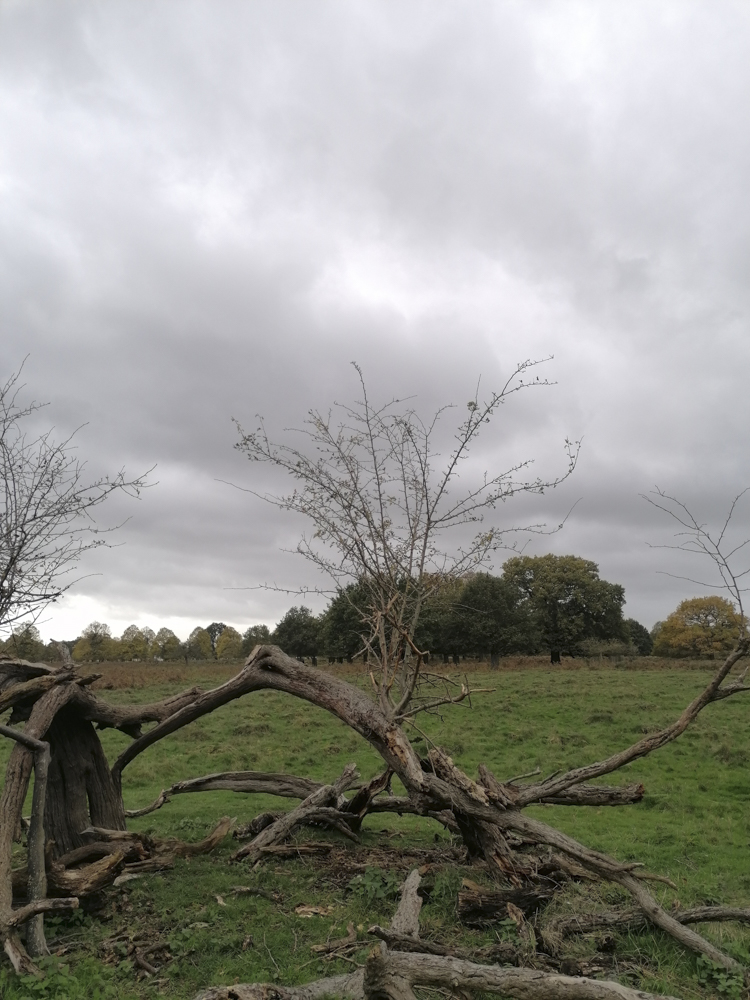
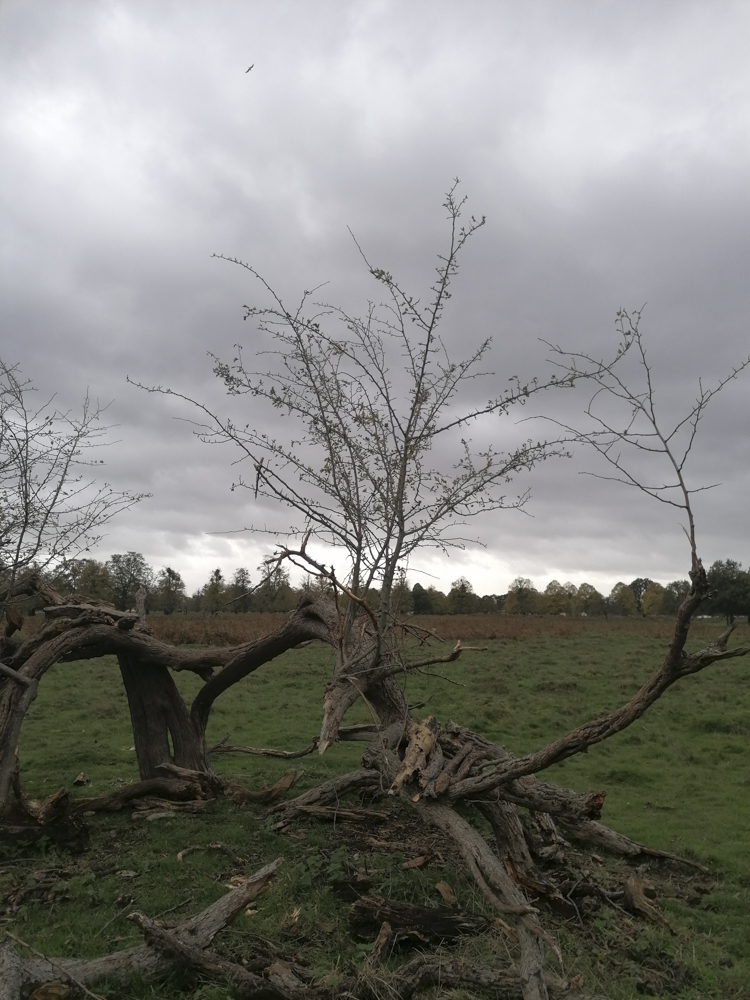
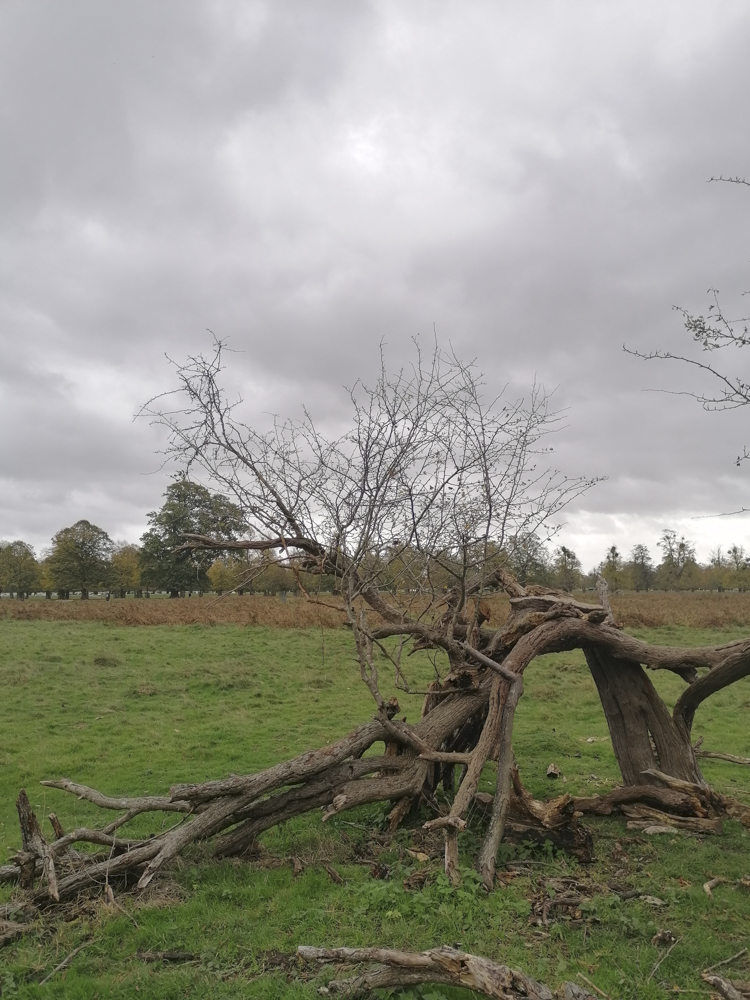
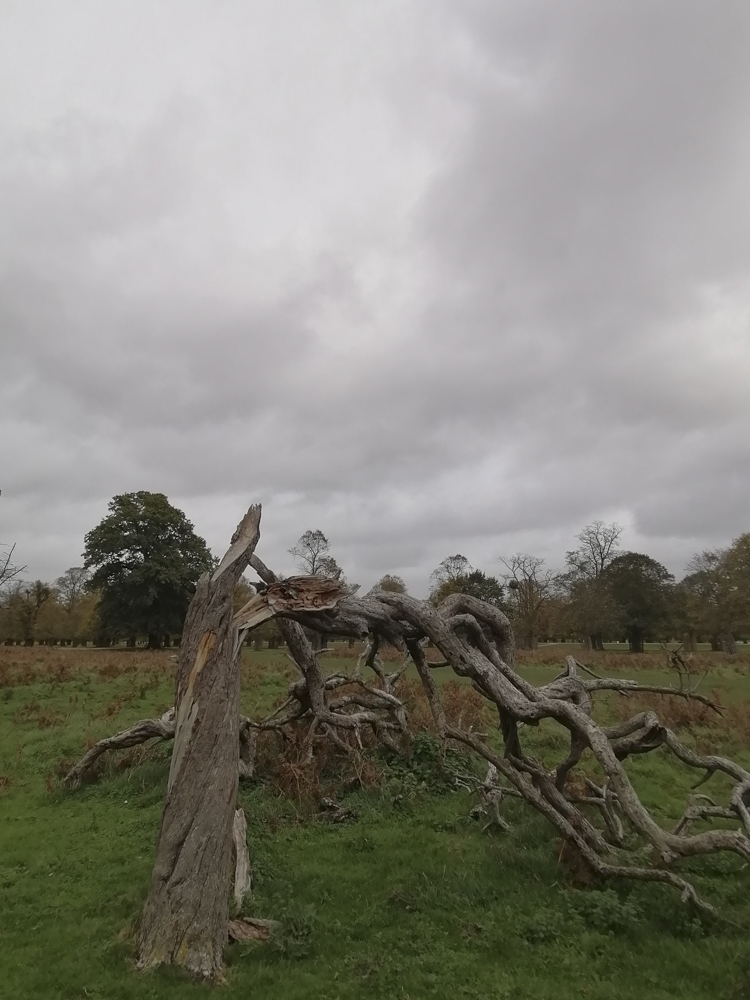
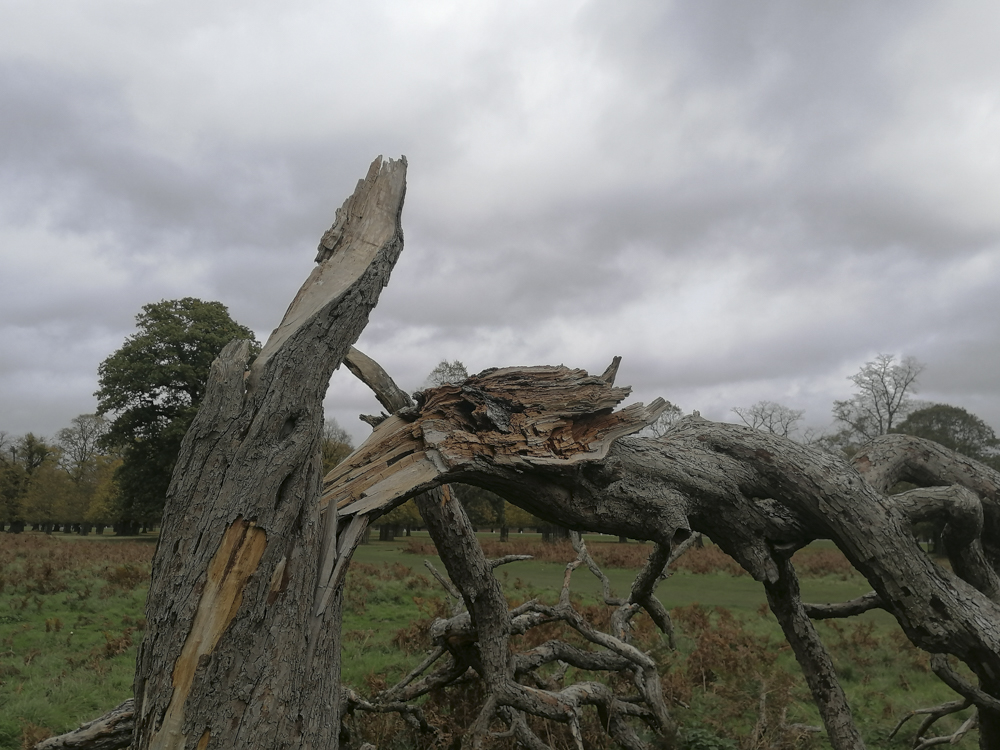
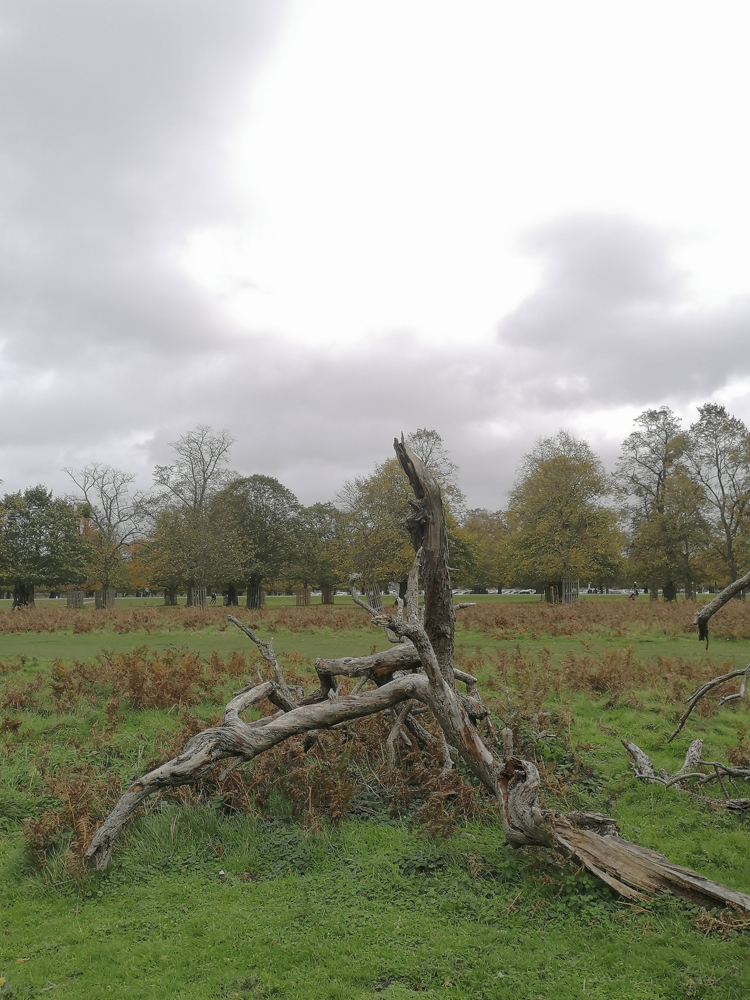
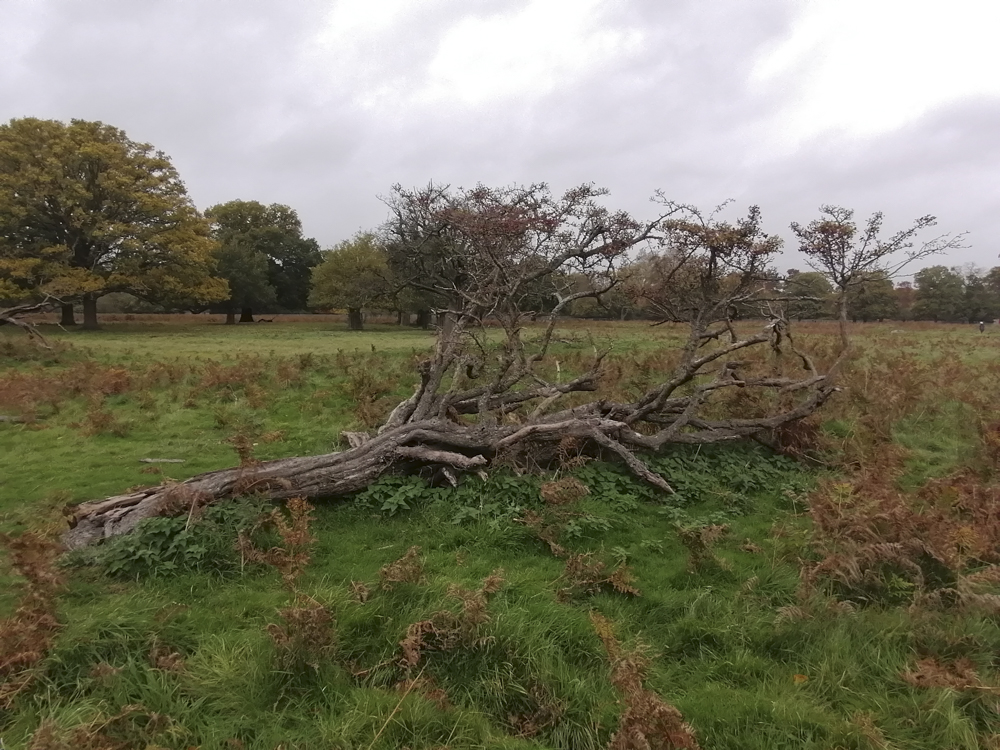
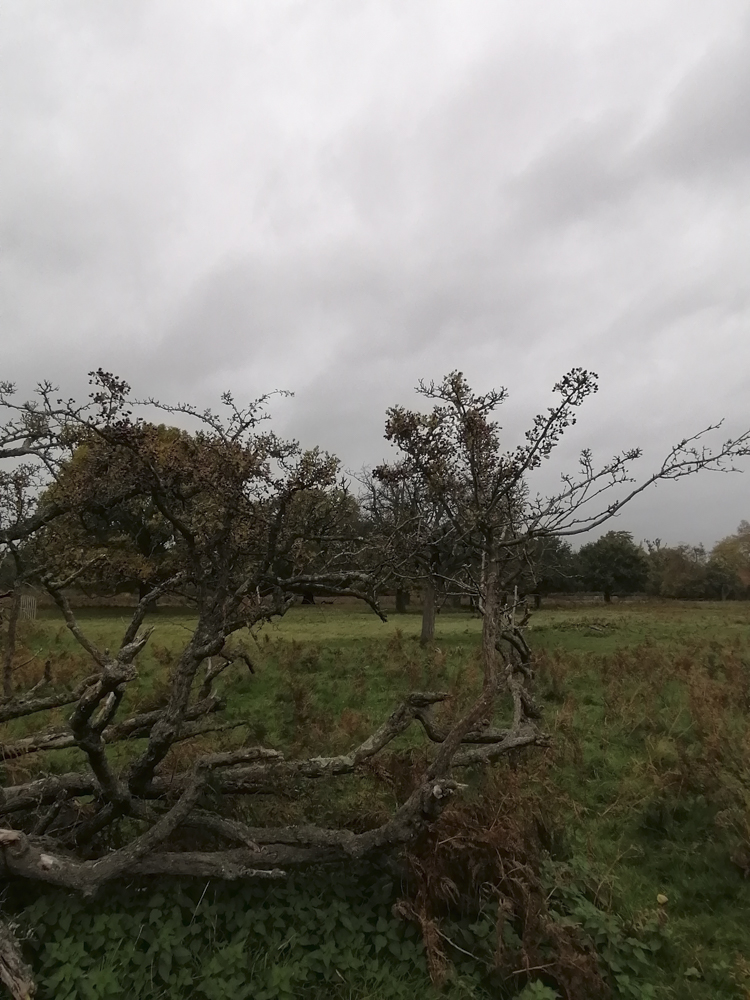
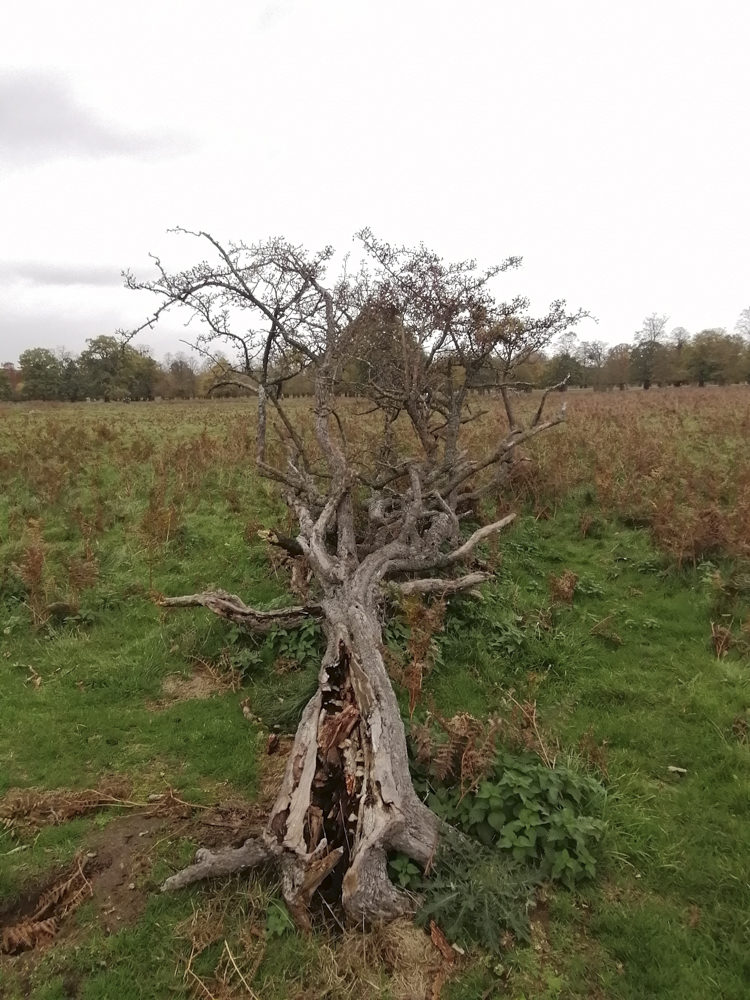
Another very interesting hawthorn. Despite it being horizontal on the ground, it is very much alive. The open trunk features mushrooms and has certainly been taken advantage of by insects. What I noticed was how the tree almost appears ‘upright’ when a shot is taken from a particular angle, as seen in the last of these images.
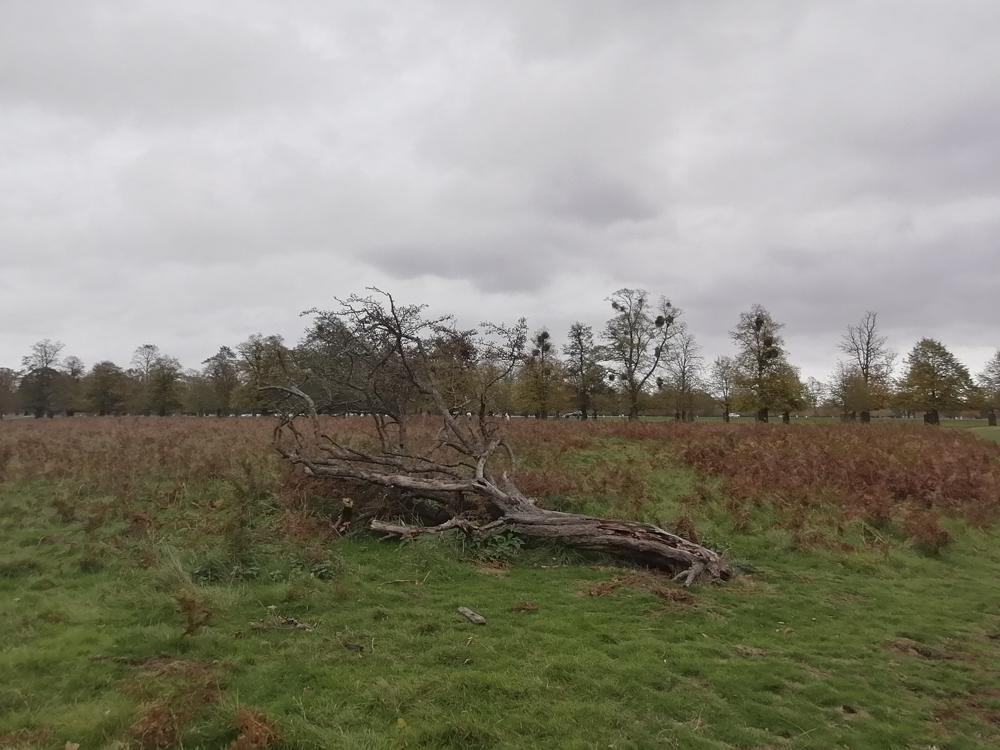
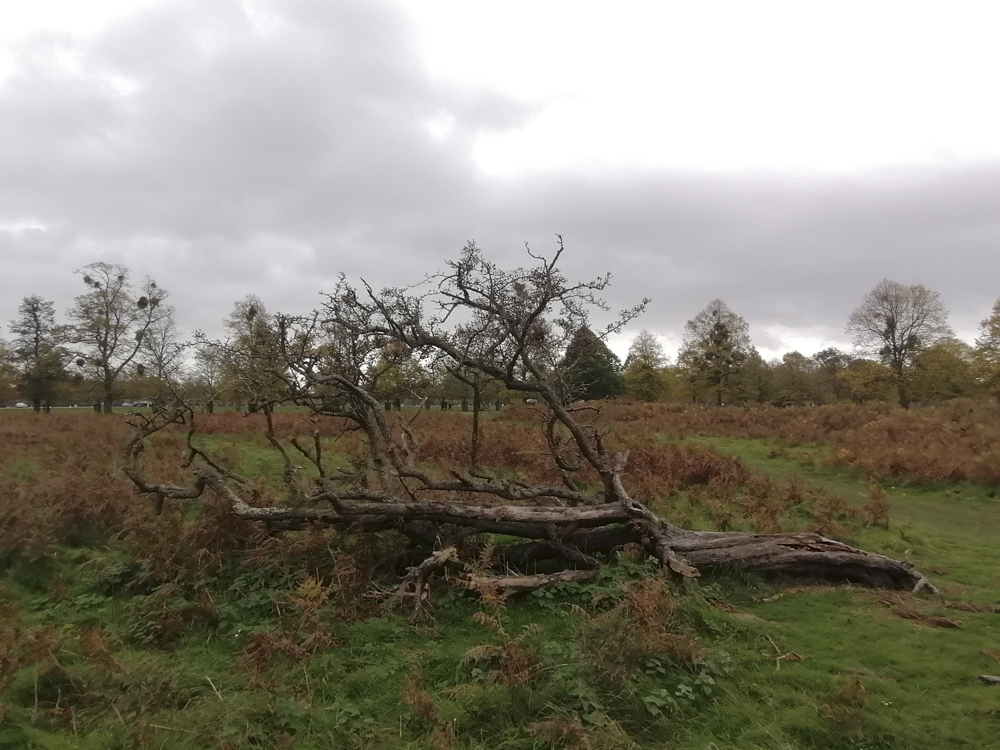
Tree 9
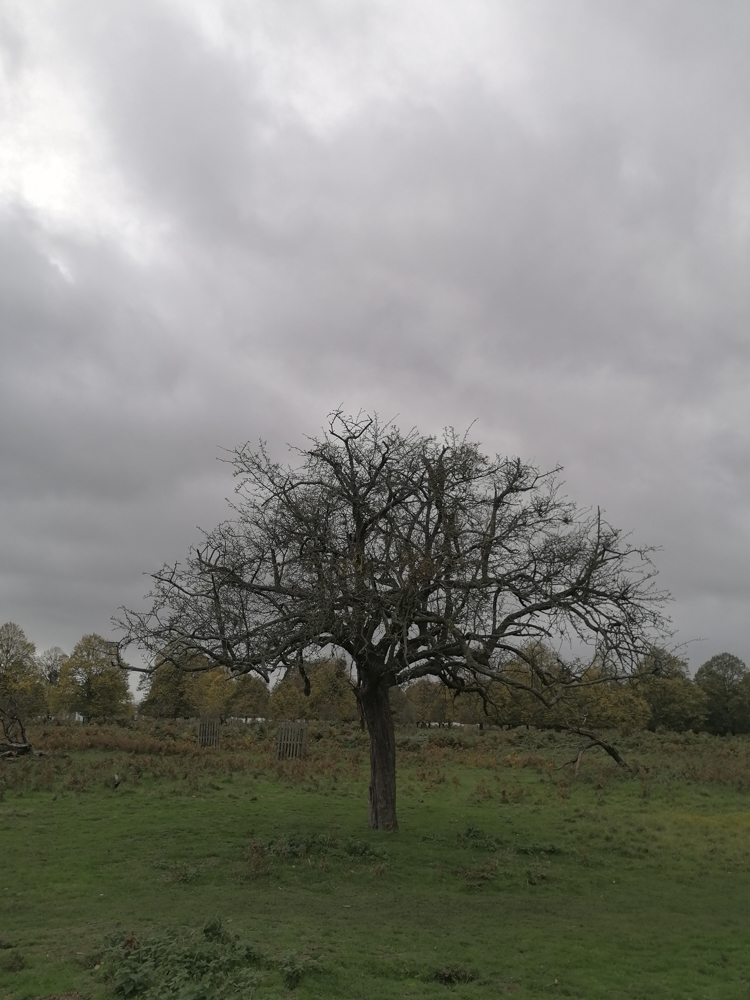
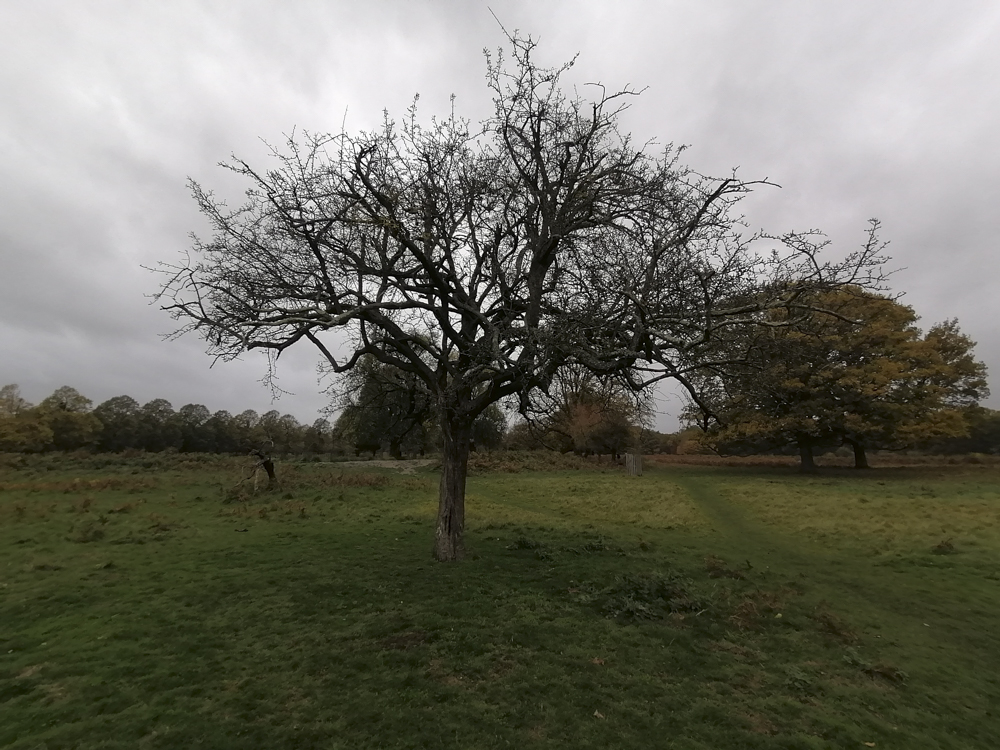
This hawthorn is near to the small channel of water. It does look more ‘traditional’ than the other hawthorns, but I’m sure there are qualities that could be brought out when taking a closer look on another day.
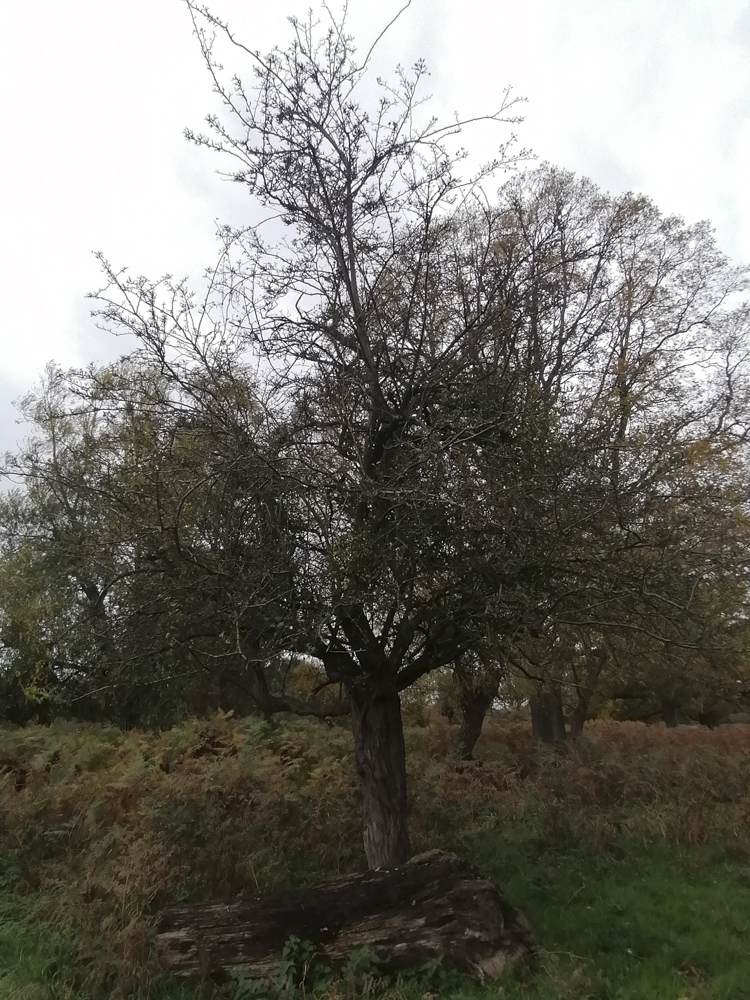
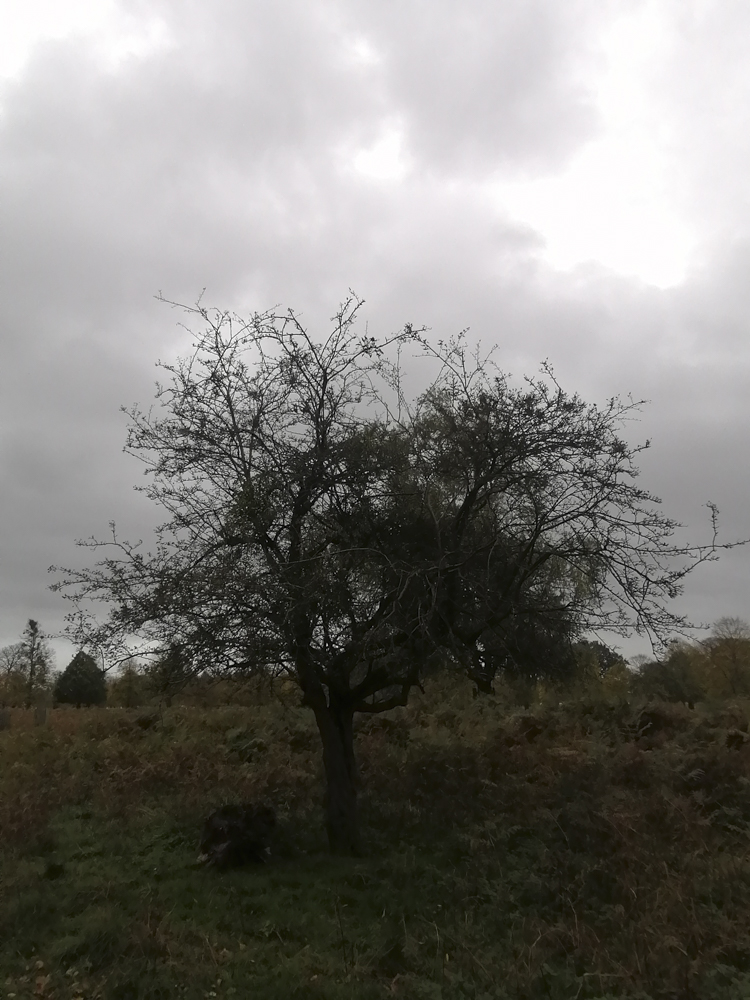
Tree 10
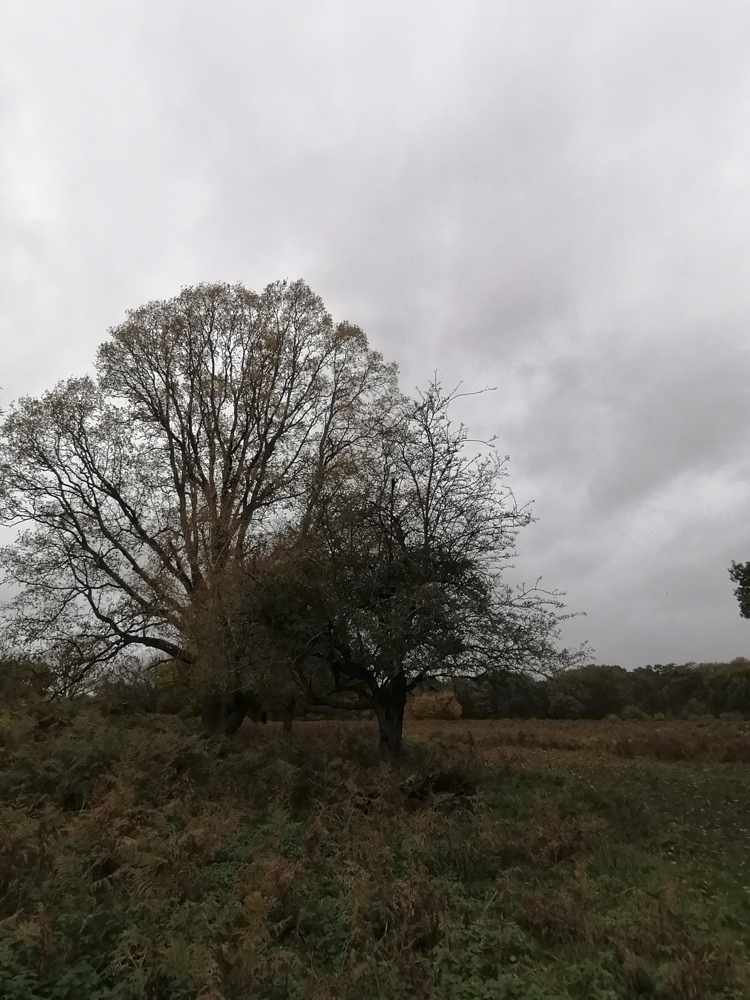
This solitary hawthorn is halfway between the water channel and the fence running along the border of the Pheasantry Plantation. This one has lots of character and I need to take further images.
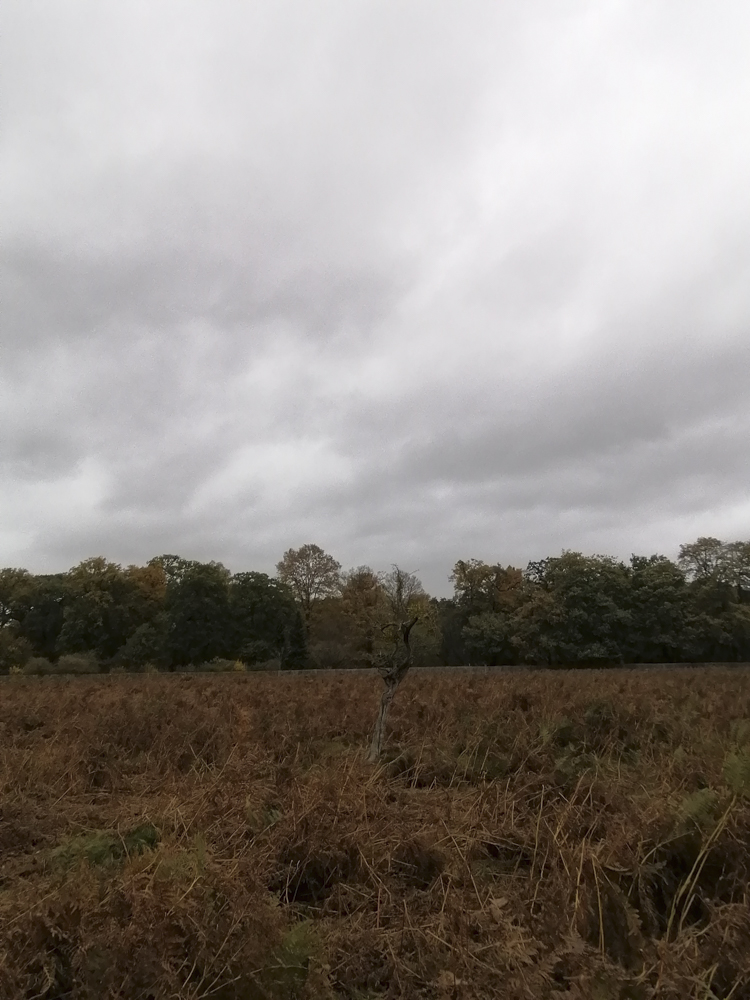
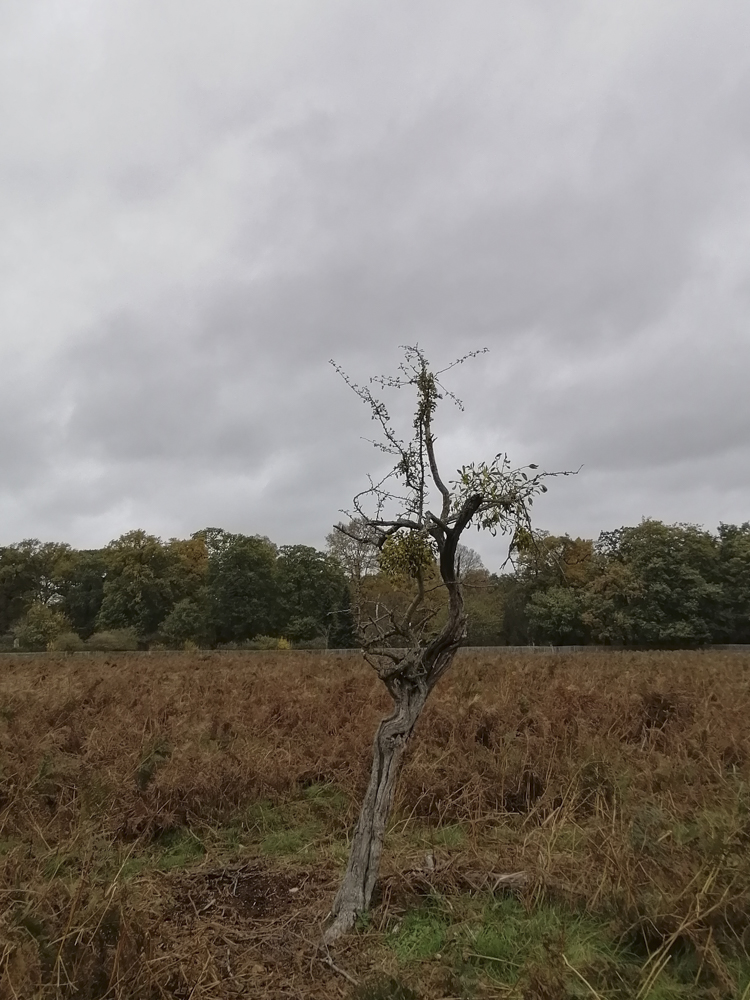
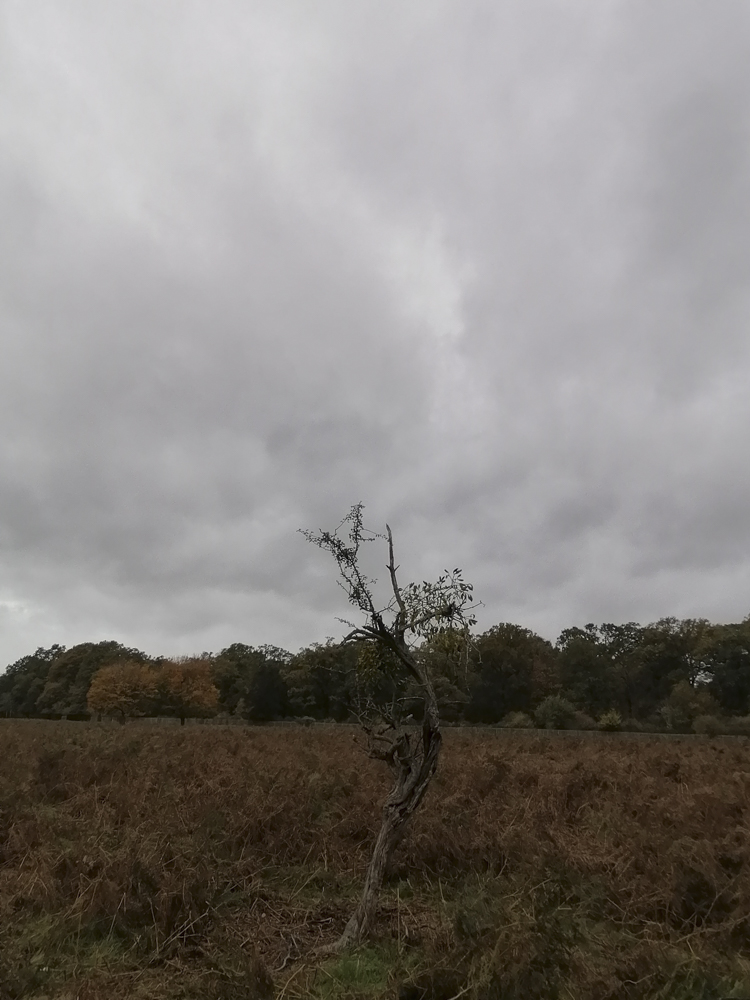
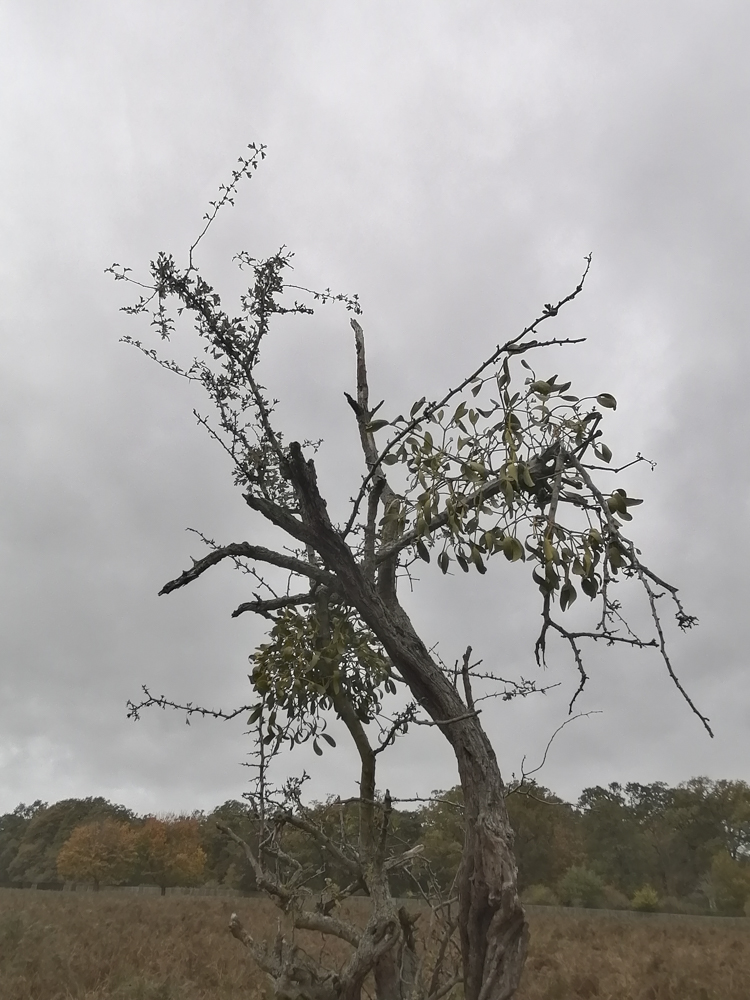
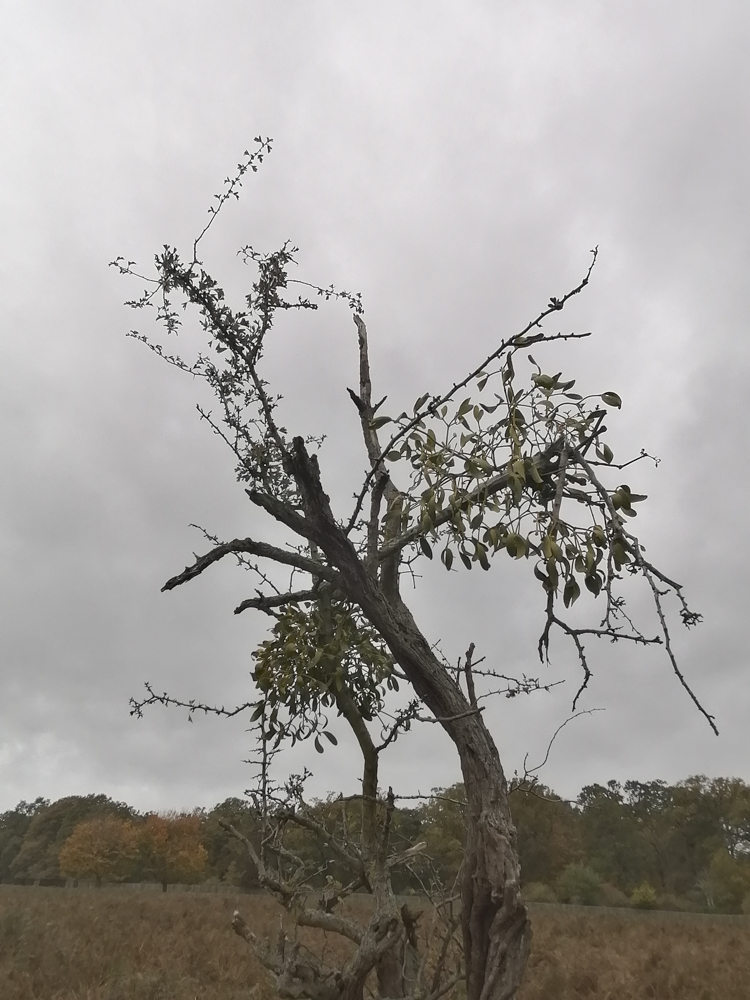
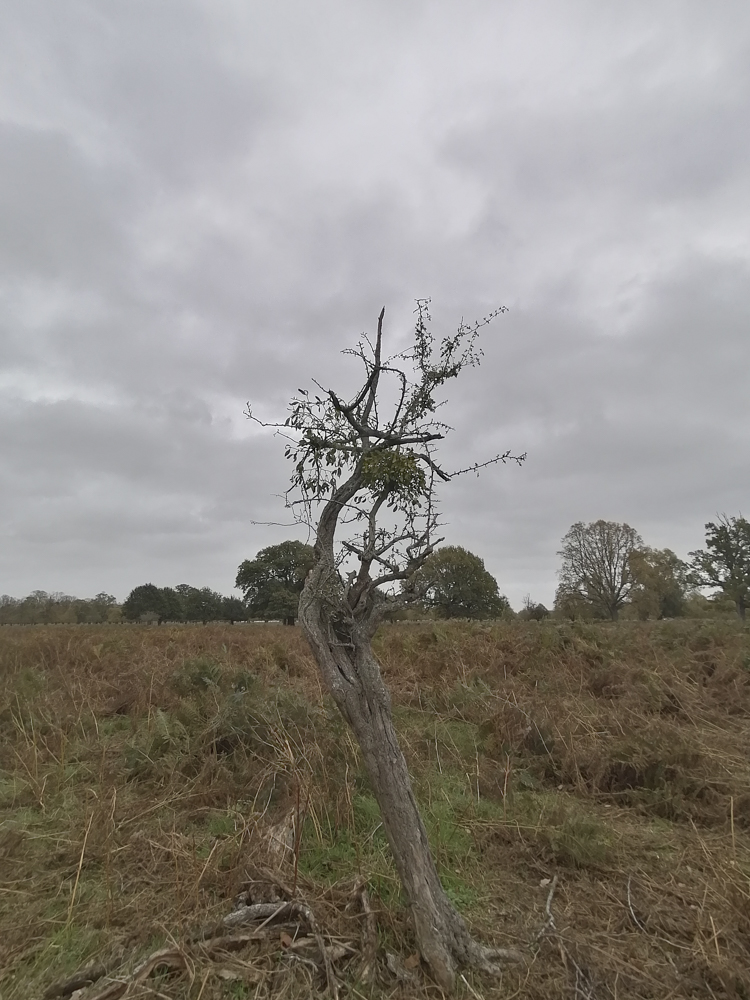
By now I was getting tired and needed a comfort break. After a quick pit stop in the Pheasantry Cafe, I continued through the park on the other side of the Woodland Gardens.

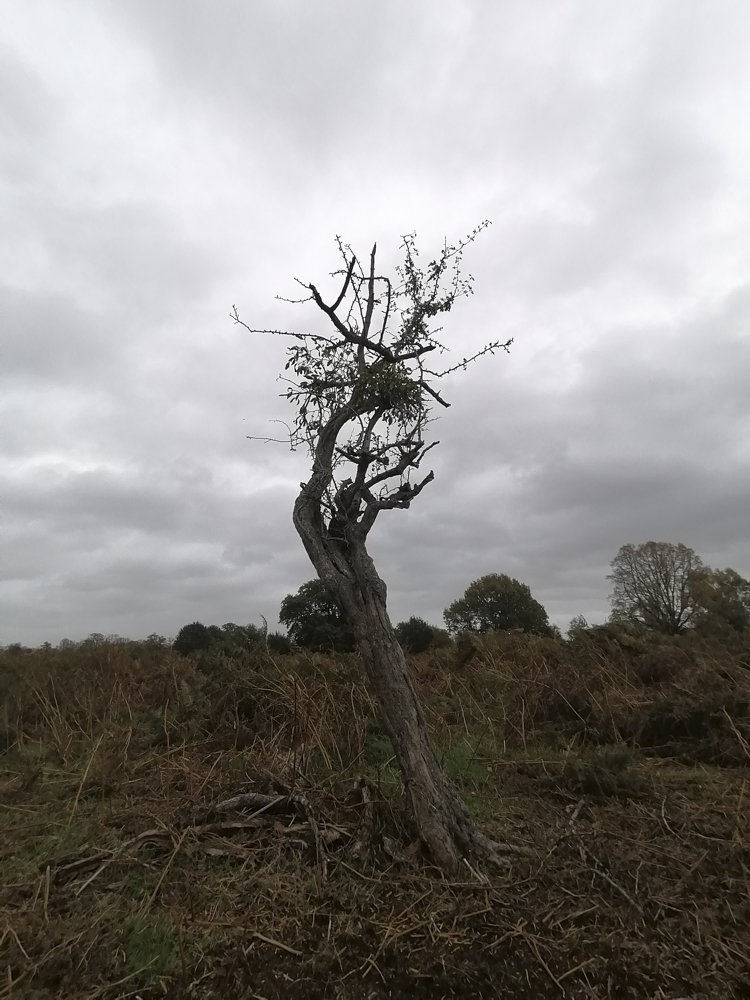
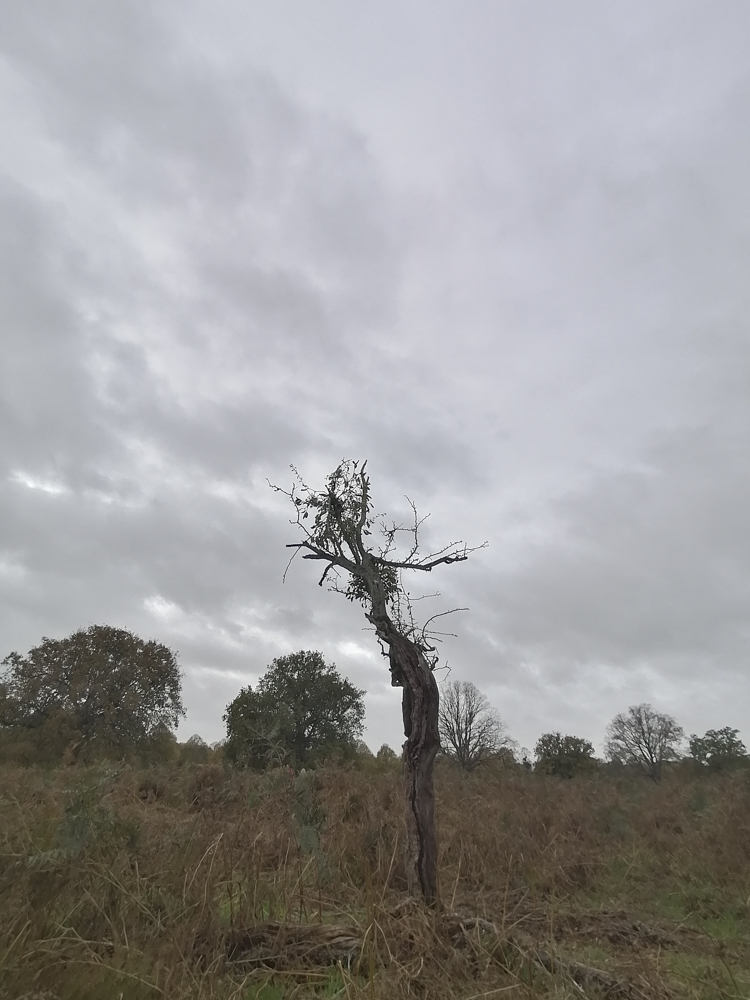
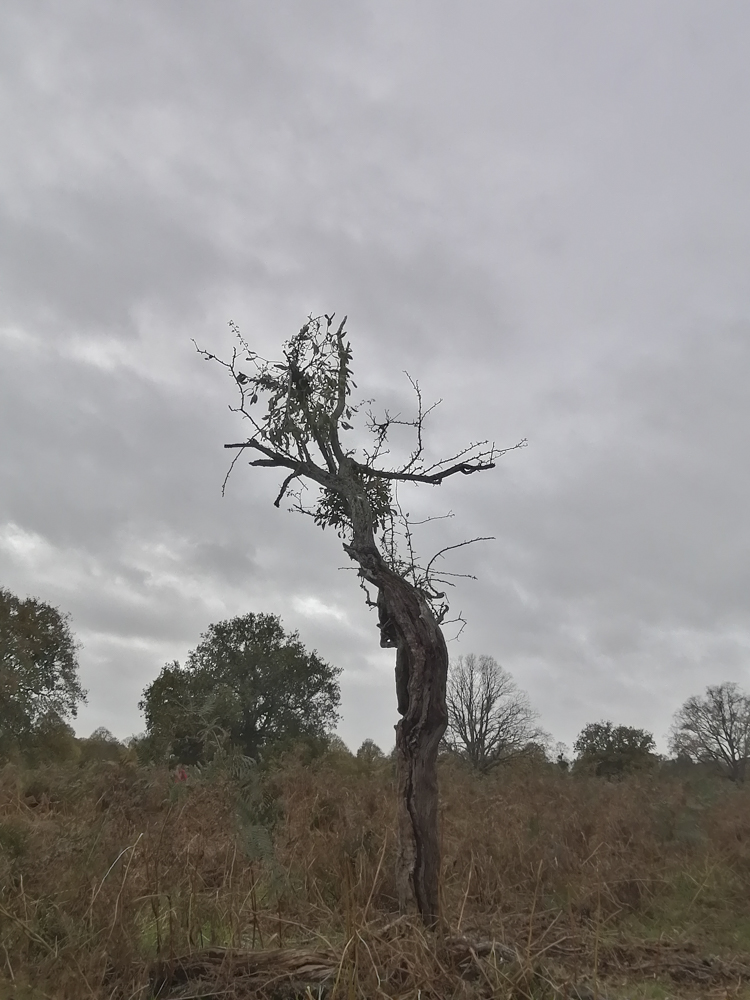
While walking across this patch, I noticed this following tree. The trunk is bent right over and does not touch the ground.
Tree 11
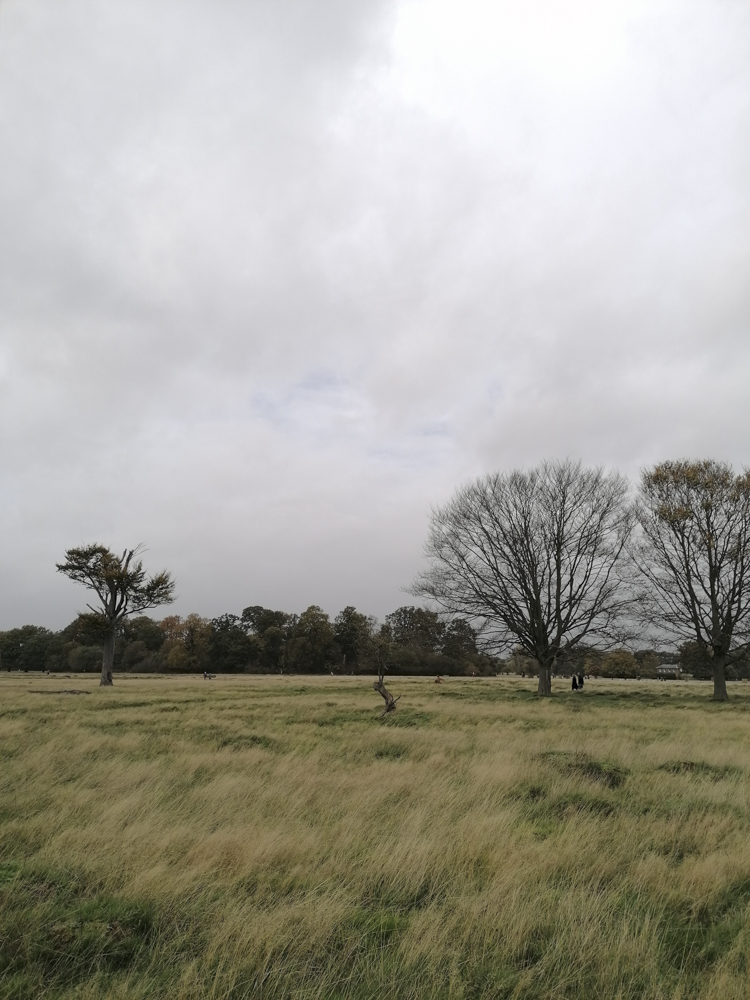
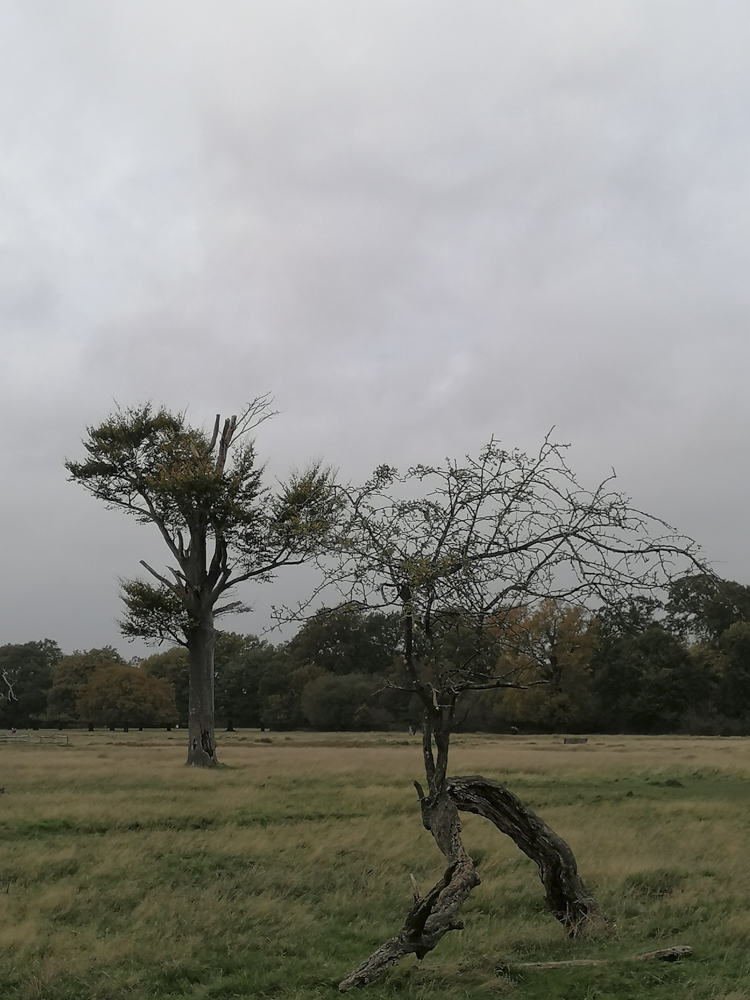
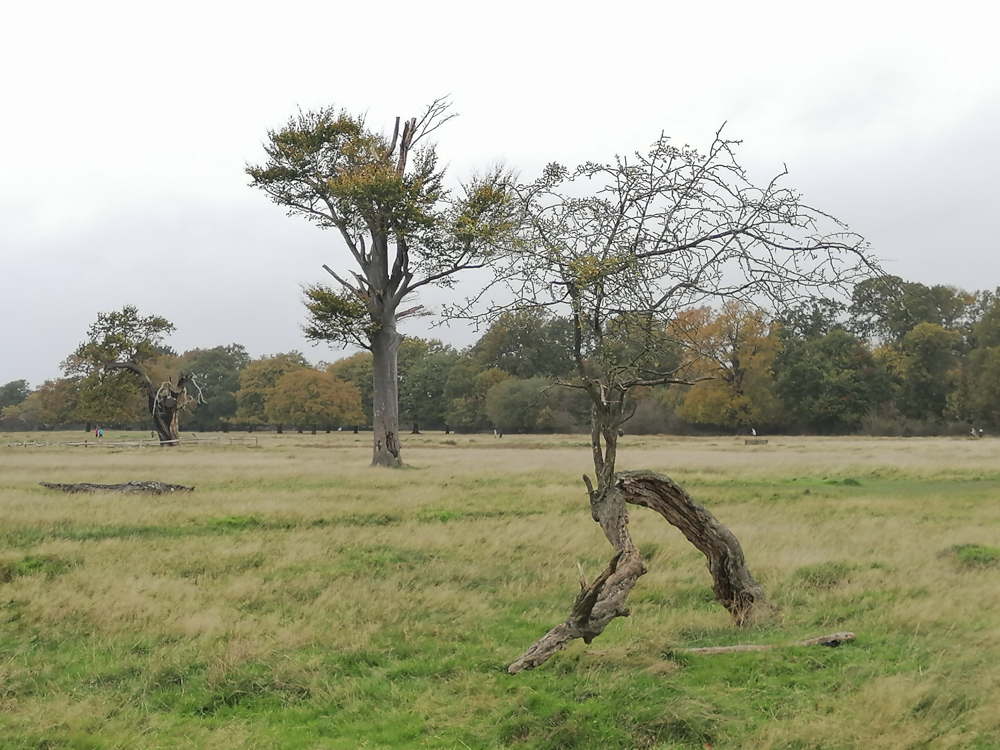
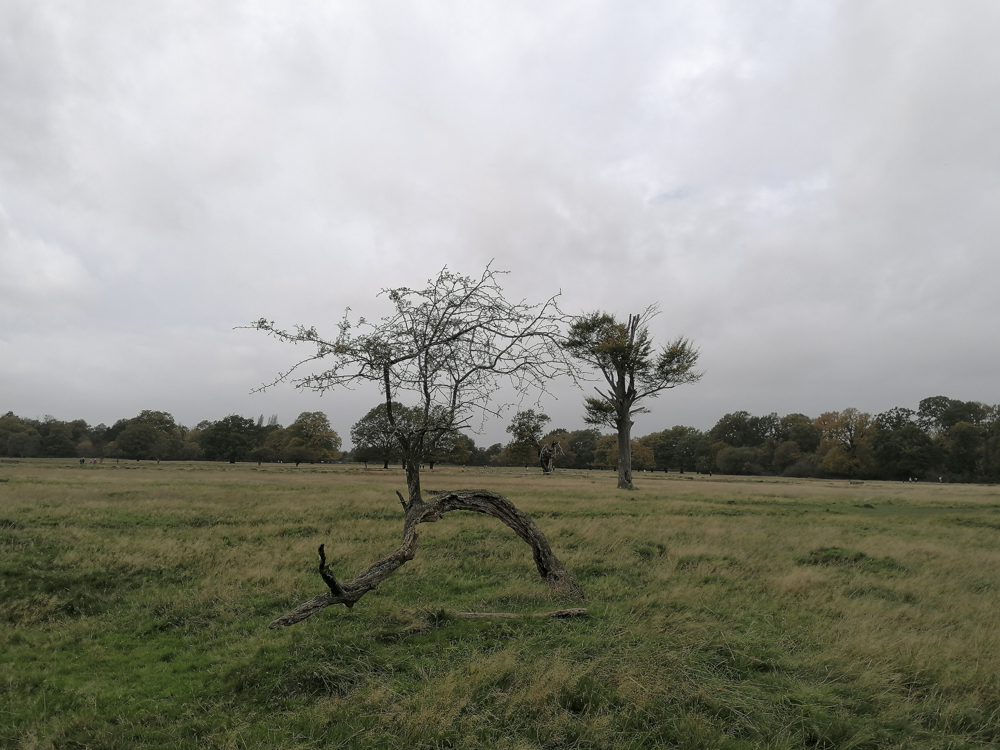
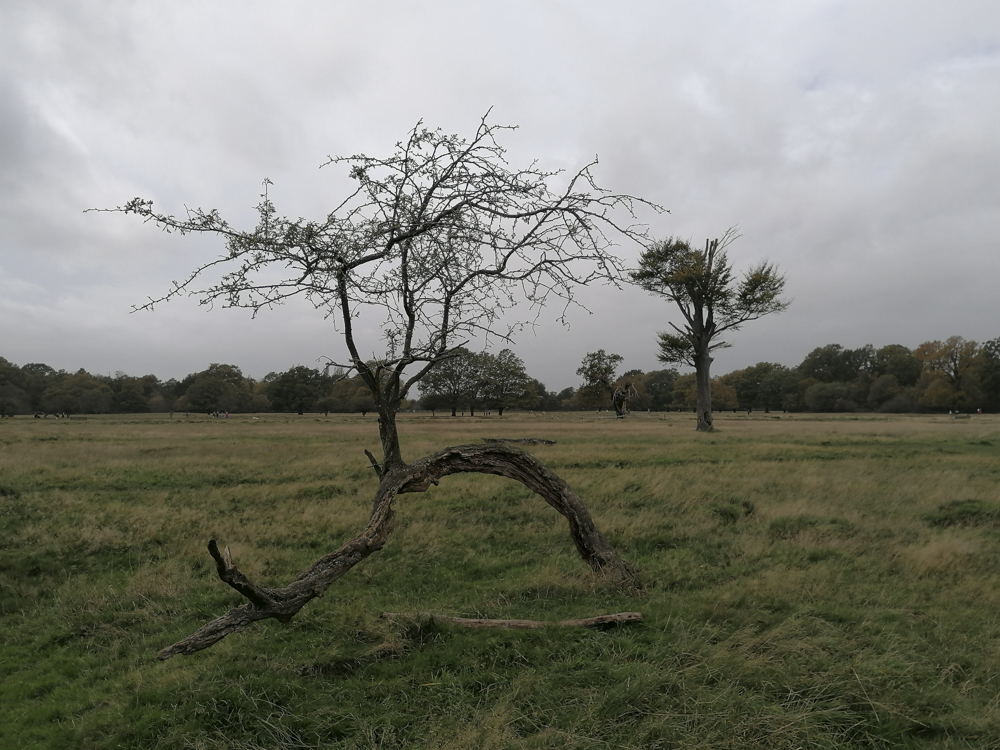
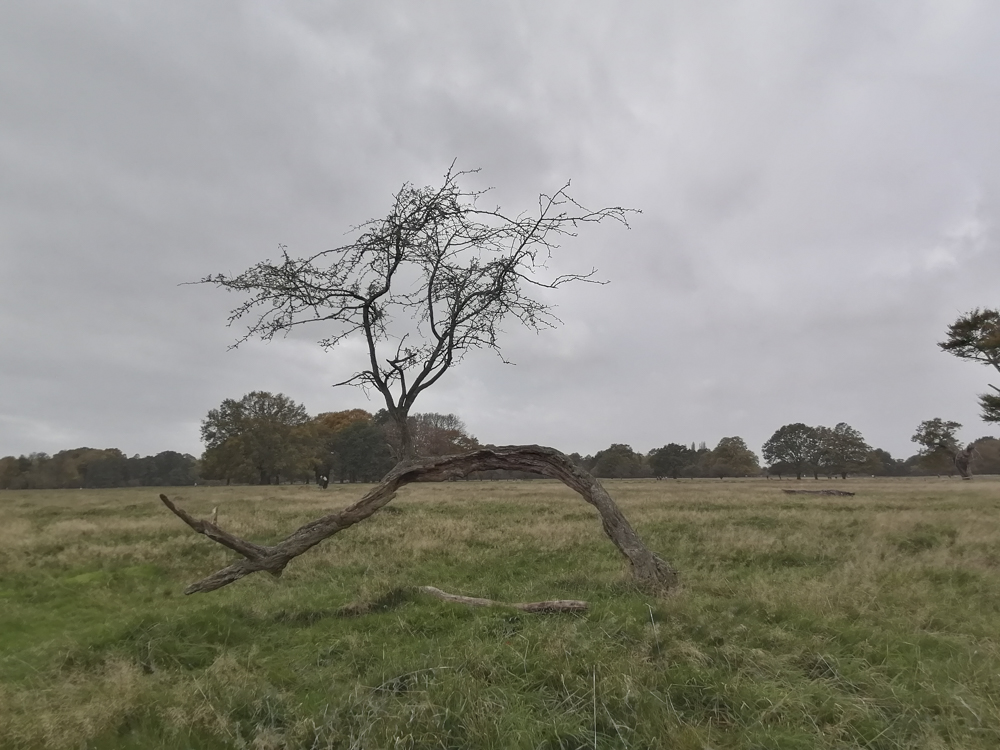
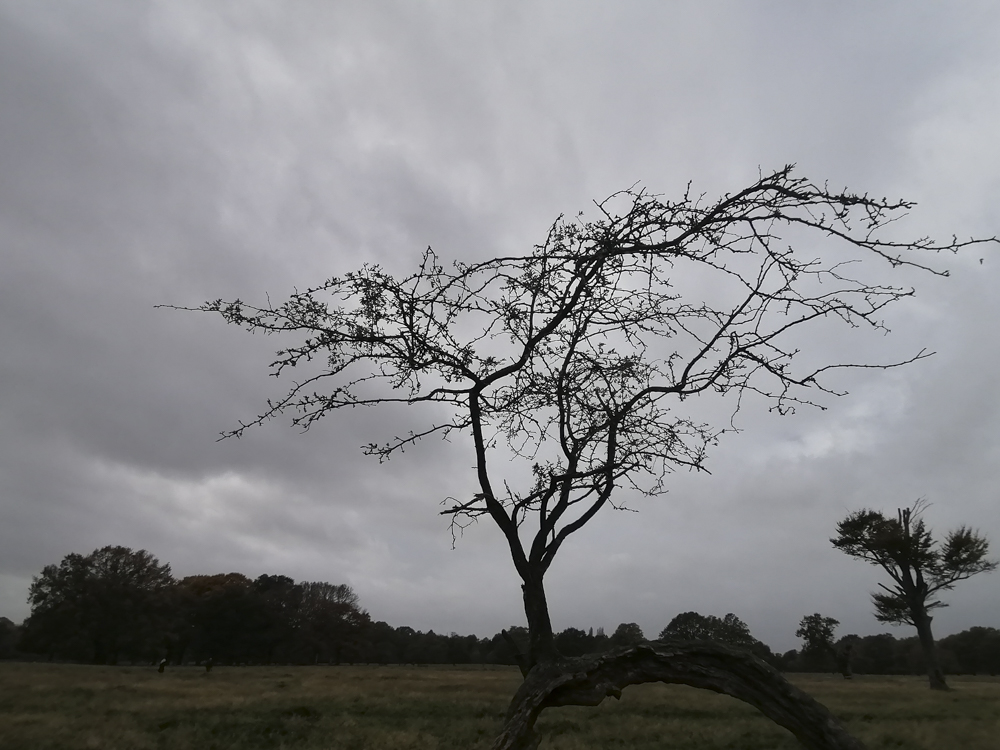
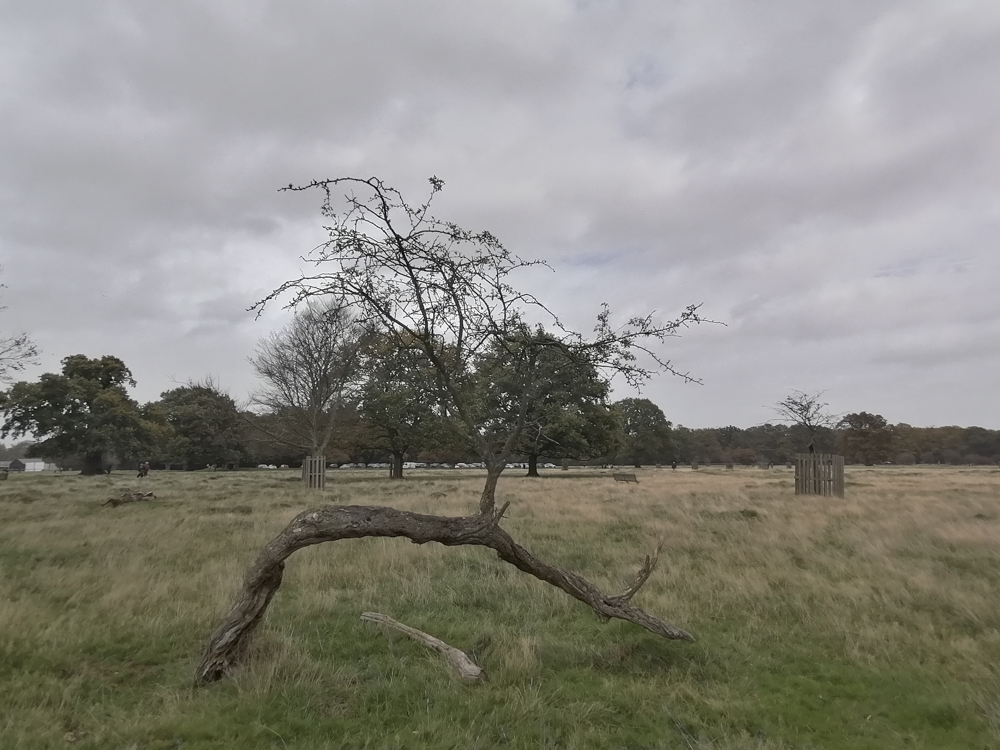
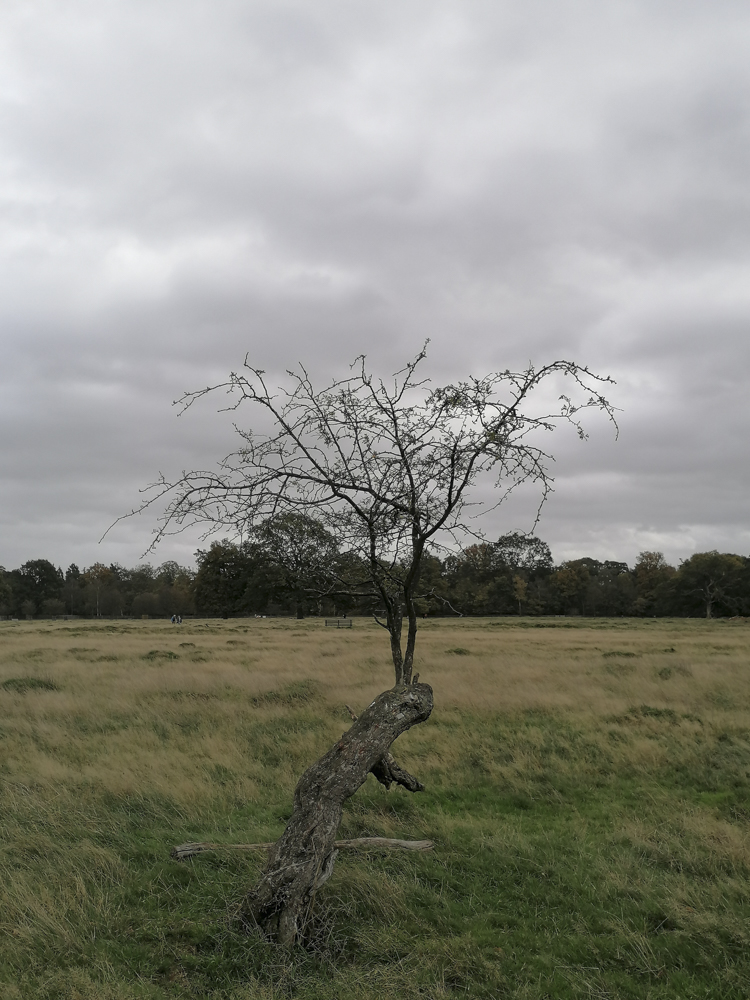
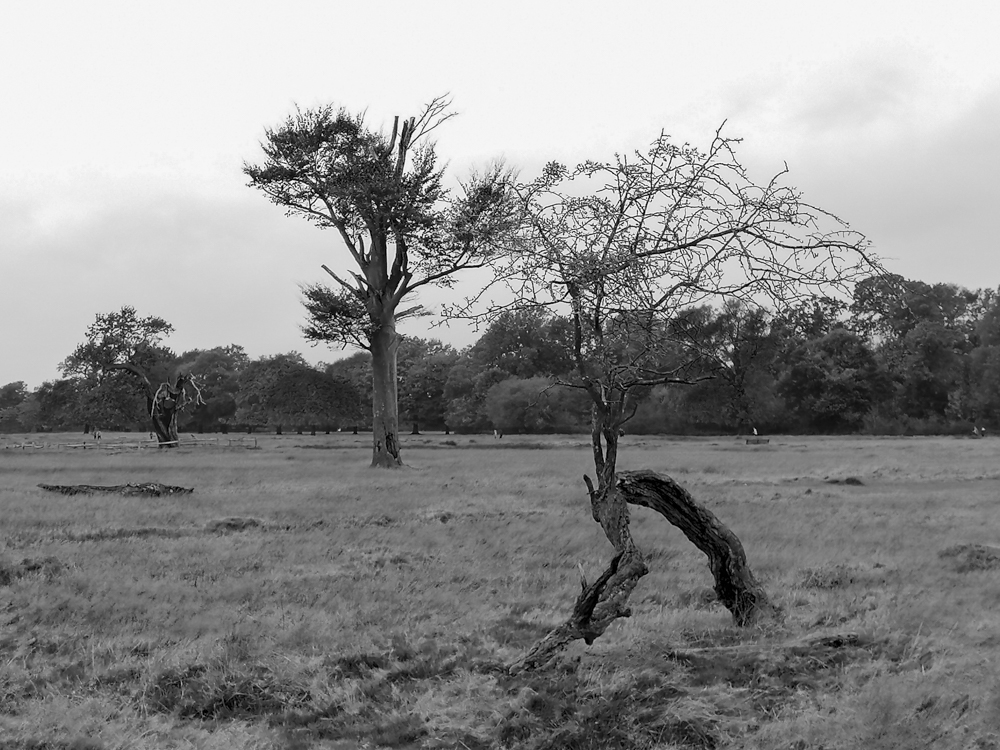
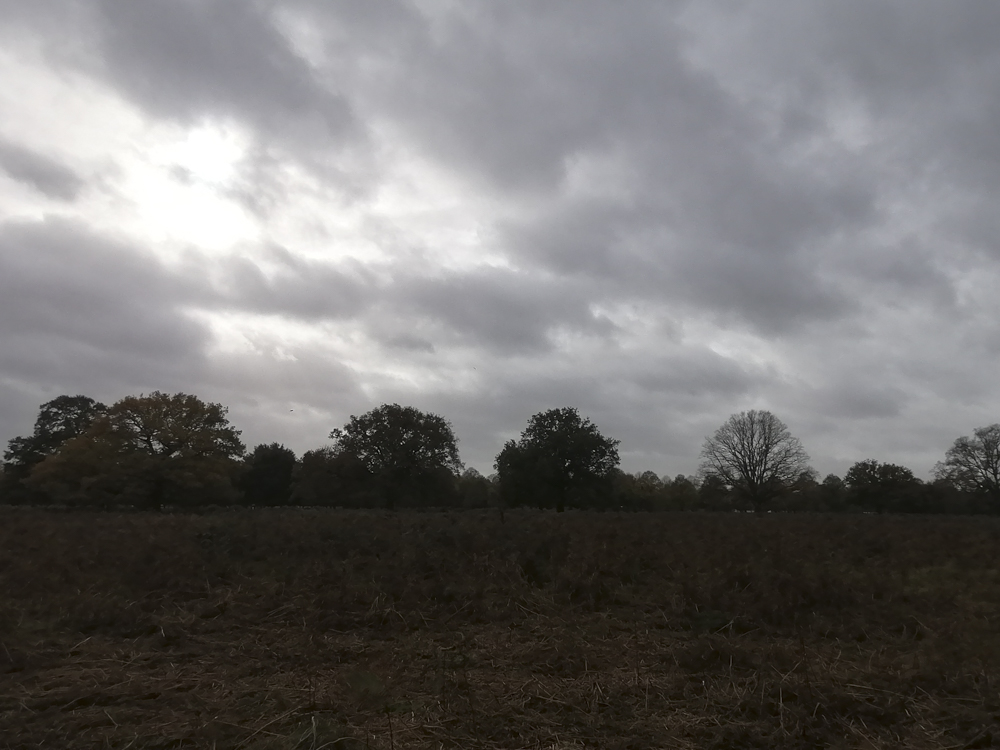
When looking at the images at home, I notice how this hawthorn looked in relation to two other nearby trees. The one on the far left was struck by lightening and is a fabulous example of how trees can survive despite a traumatic event. The one in the middle is another interesting mix of ‘dead & alive’. I had photographed it during the last winter and it appeared totally dead. I then noticed again during the summer and realised it very much alive. When put in line with the hawthorn, I thought it made a very interesting and intriguing composition – especially when converted to Black & White).
References
Historicengland.org.uk. 2020. BUSHY PARK, Richmond Upon Thames – 1000281 | Historic England. [online] Available at: <https://historicengland.org.uk/listing/the-list/list-entry/1000281> [Accessed 27 October 2020].
 Jennie Meadows MA Photography