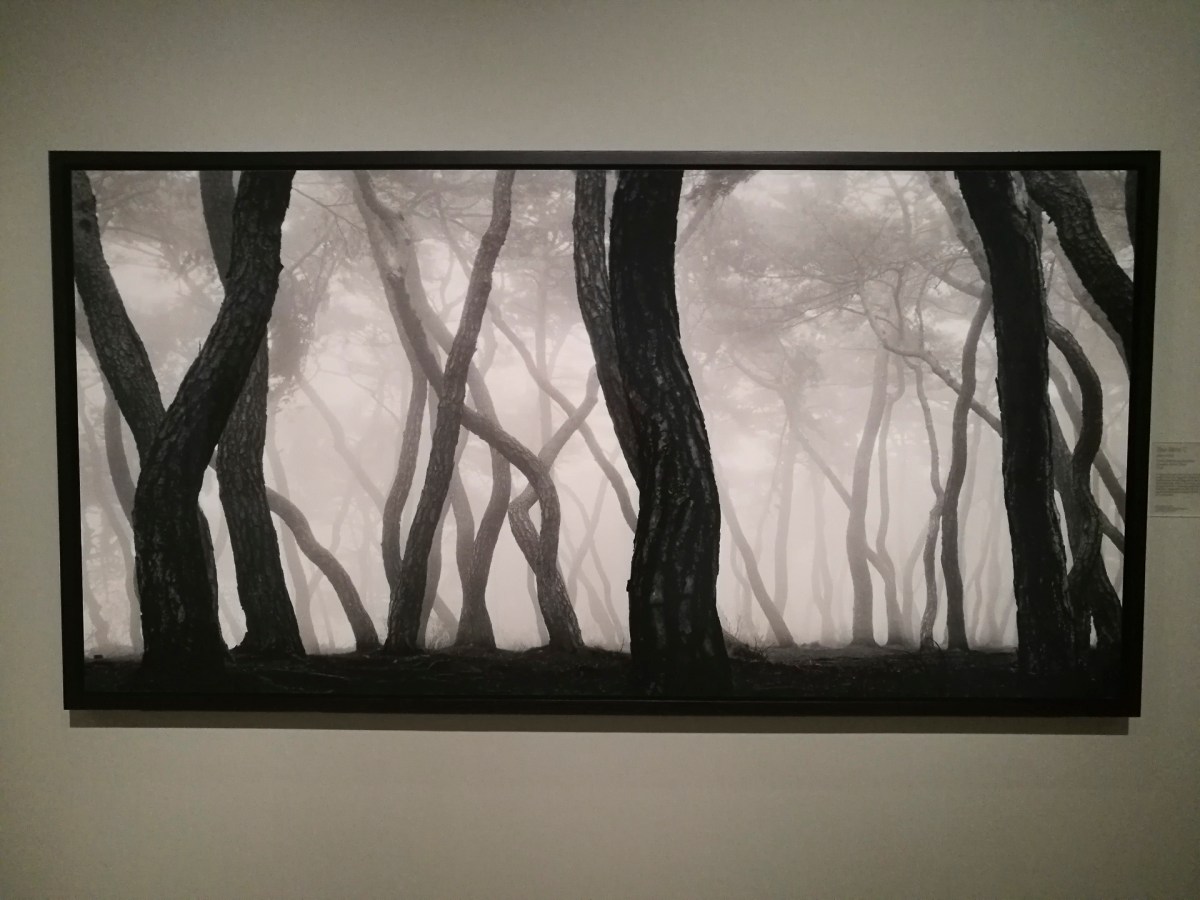
The second task I had to complete for the seminar on 28 April was to bring a historical reference within the field of photography/art. Again, this was to assist in discussing the contextualisation of my project and in relation to photographic issues and debates.
Again, I had to present this reference to the group and explain how this historical reference has informed my project so far and have helped propel it forwards.
The historical reference I chose for this task was the Victoria & Albert Museum’s (V&A) exhibition, Into The Woods. This was held at the museum from 18 November 2017 to 22 April 2018 and was the first display of photography after the refurbishment of the gallery dedicated to the medium.
Trees were among the first photographic subjects collected by the V&A as a learning resource for artists and designers. The museum has acquired, and continues to do so, ‘photographs of trees in various contexts: within landscapes and forests, as lone subjects, in relationship to humans, in rural and urban settings, and as symbols of cultural significance.’ (V&A · Into the Woods – about the display, 2020)
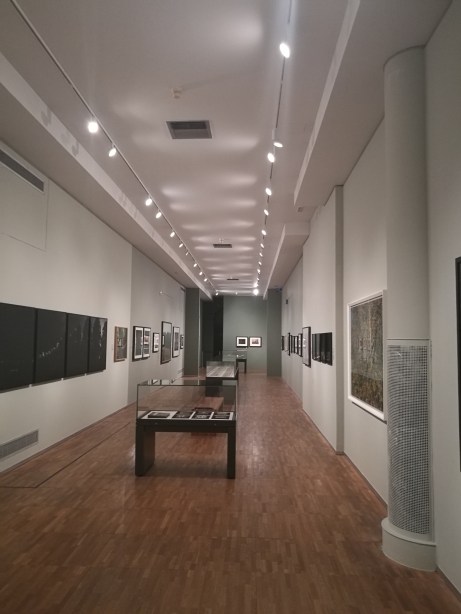
The display explored the diverse representation of trees in photography, with works by 40 photographers, including Paul Strand, Robert Adams and Henri Cartier-Bresson. There were many images that were just sublime in their portrayal of trees. Many of these I realise now are pertinent to my current project. The following is a combination of the notes I made after visiting this exhibition in 2017 and my new observations.
Tokihiro Sato (B. 1957) – Hakkoda #2 (2009)
The first work I encountered when entering the gallery was a piece by Japanese photographer Tokihiro Sato.
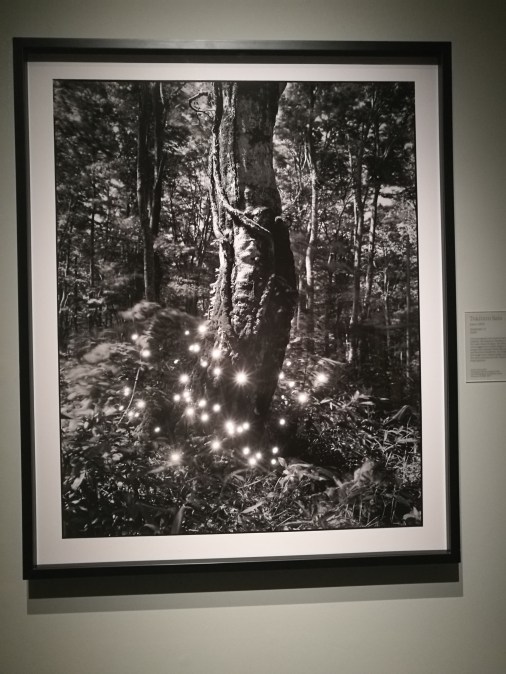
In this work from 2009, Sato created the bright spots in the image by using a mirror to reflect the sun’s rays back into the camera during a long exposure. Sato’s intention behind this image was to represent the ancient origins of the Japanese people, representing both masculine strength and female sensitivity.’ (Hakkoda #2 | Sato, Tokihiro | V&A Search the Collections, 2020)
Alvin Coburn Langdon (1882 – 1966) – City Hall New York (1912)

This night-time image of an urban tree uses the New York electric street lighting to great effect. With the trees in silhouette against the glow, the lights in the windows beyond are like illuminated leaves. In comparison with Sato’s image above, the use of light within the image again gives the tree an ethereal and magical appearance.
Ansel Adams (1902 – 1984) – Aspens, North Colorado 1958)

For me, this image has both a beautiful simplicity and sublime use of lighting and tones. Having revisited it for this task, it was a prompt to explore this aspect further with my own images. There is a real feeling of delicacy captured and I made a note to apply this deft touch to my own work.
Bae Bien-U (B. 1960) – SNM-012H (2014)
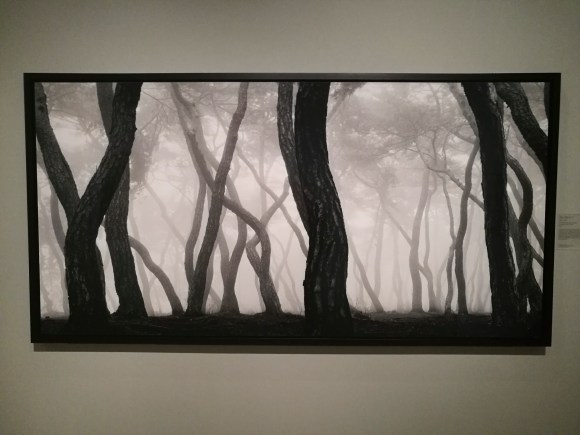
Bien-U’s specific interest in pine forests stems from his quest for a Korean identity as an artist in a post-war, dictatorial period. For him, the pine tree embodies the same qualities that characterise Korean people: ‘eagerness, perseverance through years of conflict, and spirituality’.
This piece is part of Bien-U’s Sonamu’ (Pine Tree) series, which the V&A outlines in the following:
The pine tree is an age-old subject that carries various meanings in Korea. During the Joseon Dynasty (1391-1910), it was associated with literati culture, epitomising dignity, integrity, and longevity. Its trunk was used to build palaces and temples, its branches to decorate the house of a new-born, its needles, bark and pollen to prepare ceremonial dishes, and its ashes to make ink cakes. In the Three Kingdoms period (57BC-668), the pine tree was believed to be a divine being accompanying the soul of the deceased to heaven, or a messenger delivering one’s wishes to the gods. The departed was therefore buried in a pinewood coffin, and pine trees were planted nearby the tomb.
The trees, for me, in Bushy Park have become part of my own existence. I have become aware of starting to recognise particular ‘characters’ These ‘individuals’ may not be as culturally significant as those pines in Korea, but I feel their presence in my own existence.
Benjamin Brecknell Turner (1815-1894) – Causeway, Head of the Lake, Loseley Park (1852-4)


Further images which I realise now were influential my current project were these by Benjamin Brecknell Turner. Turner began practising photography in 1848 using the ‘calotype’ or paper negative process patented by William Henry Fox Talbot. When I saw Turner’s photographic impression of the Lime Trees in Loseley Park, the negative and its corresponding positive print were shown together. By comparing these two versions of the same science, this reveals the dynamic patterns, including those of the branches. This influence is evident in my own reversal of black and white in my recent images of the trees of Busy Park.
Denis Brihat (B. 1928) – Cherry Tree in Blossom (1985)
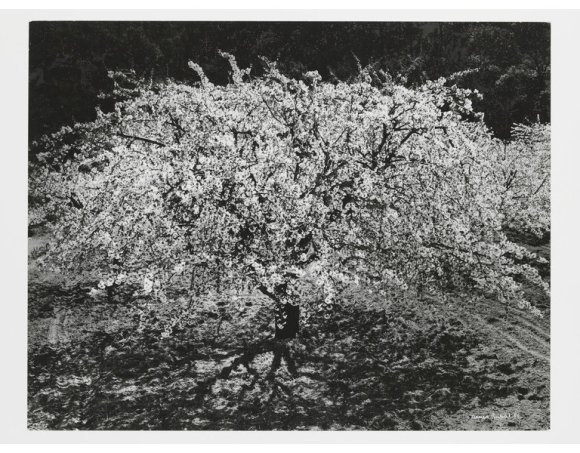
Brihat’s capture of this Cherry Tree is an example of this photographer’s intense engagement with nature and an example of his experimentation since the late 1960s with mordançage. This is a photographic process using metal toning and etching techniques that give the original image a shimmering appearance. Again the aspect of the image reacting with environmental light is something that I have been exploring over the last five years.
Edward J Steichen (1879- 1973) – The Pool 1899
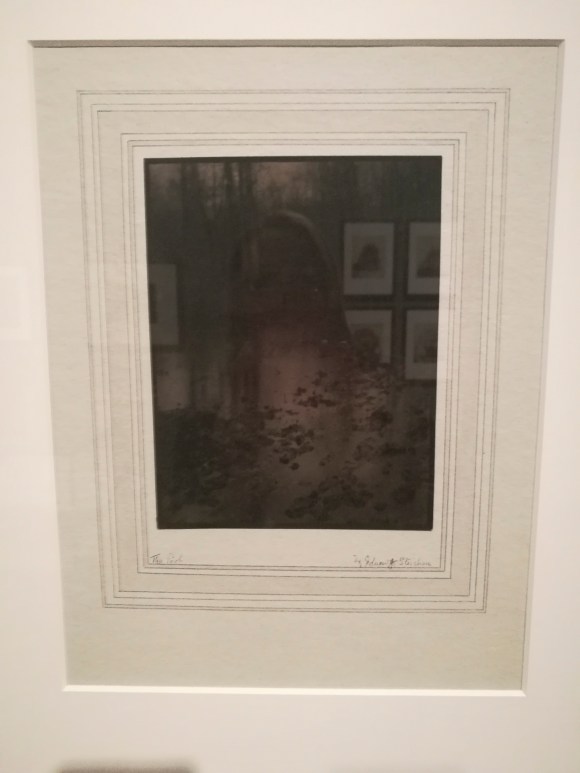
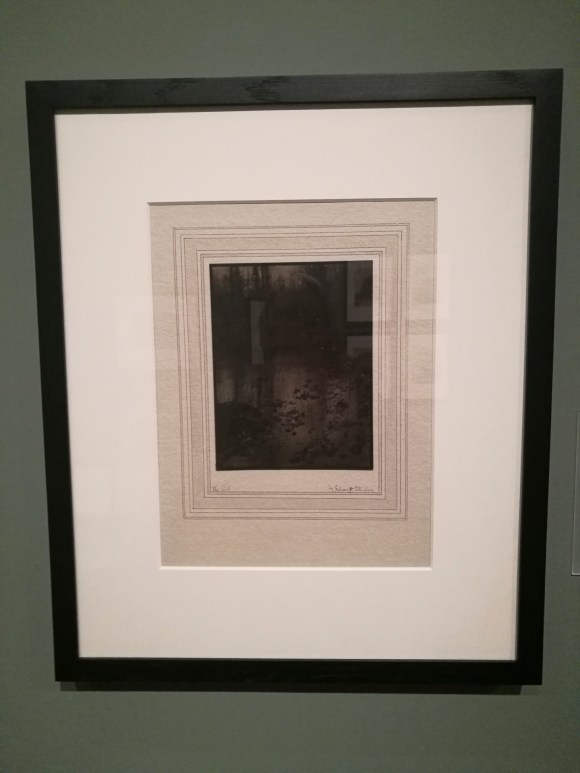
The plaque accompanying this image in the gallery stated:
With soft focus and fine printing, Steichen was able to transform this muddy woodland scene into a haunting tonal study almost like a musical composition. One version was subtitled ‘A Symphony to a Race and to a Soul’. Twilight and water merge the real world with its darkening reflection.’
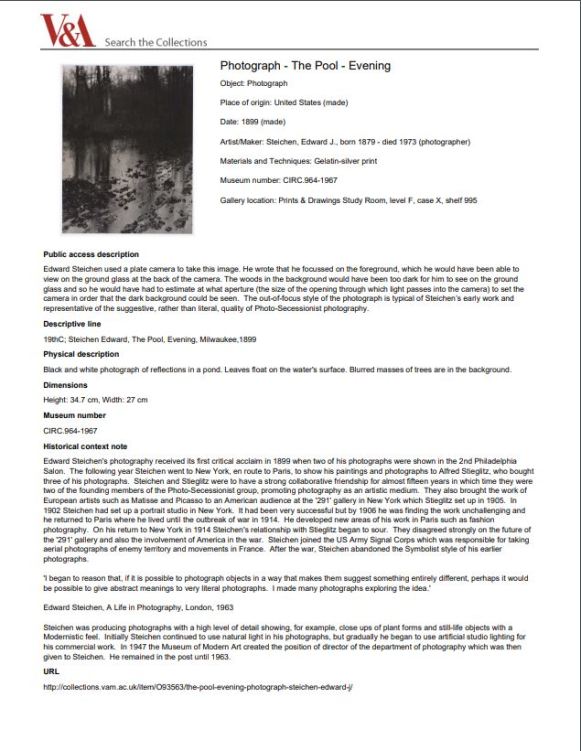
According to the additional information for this image provided on the by the V&A website states ‘The out-of-focus style of the photograph is typical of Steichen’s early work and representative of the suggestive, rather than literal, quality of Photo-Secessionist photography.’ What I discovered when researching these images on the V&A website is that each one has a related webpage and PDF outlining all the relevant details. An essential and most-welcome resource.
Jerry Uelsmann (B. 1934) – Untitled (1969)
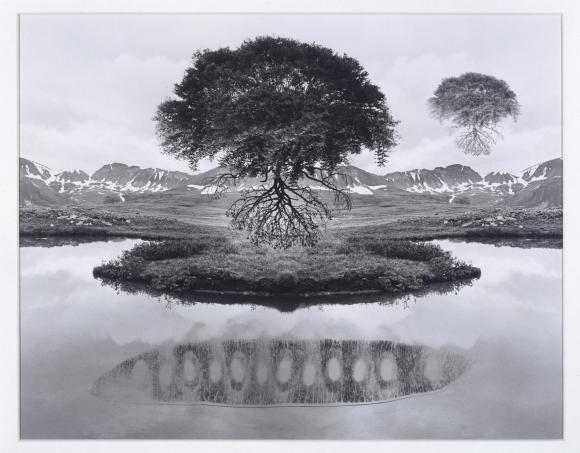
Uelsmann created this image in the darkroom using multiple negatives to make his prints. This innovative photographer is notorious for his surreal compositions and fantasy scenes that often incorporate trees. This use of multiple exposure exchoes my attempts to achieve a similar effect digitally.
Sophy Rickett (B. 1970) – Playing Fields (1995)
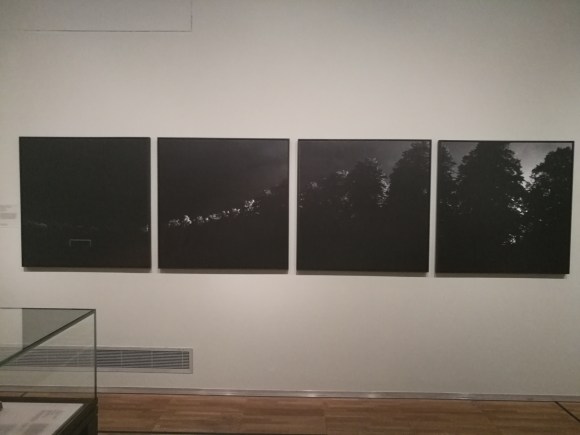
Rickett used a panoramic line of four separate photographs. According to the details on the V&A website:
The focus of the atmospheric nocturnal landscape lies beyond the line of trees, obscured from view. The source of the bright light is unknown and a touch unnerving. An expanse of black that fills the middle ground becomes an illusory, unfathomable space, heavy with the ambiguity of landscapes at night and the imagined sound of wind in the foliage.
When revisiting this series, I saw the similarity with my recent concept of having the selected images from an interval timer sequence and the multiple-exposure shots of the trees.
Abbas Kiarostami (1940-2016) – Untitled (1978-2003)
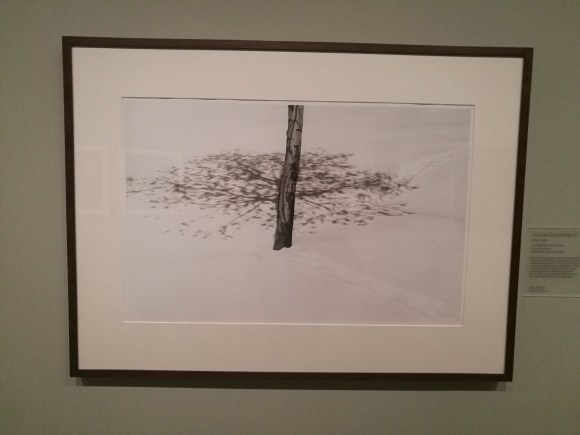
This silver-gelatin print is one of the series that Kiarostami took during long, solitary walks which allowed this filmmaker and photographer to become immersed in nature. According to the additional information on this series, the images:
Reveal the concentrated vision of the artist exploring the repeated motif of trees in snow. Shadows and snowdrifts contribute to the breakdown of a sense of scale and perspective. An atmosphere of solitude and meditation is evoked. The images become the equivalent of emotional states and the trees almost human, echoing the saying of the Islamic mystic Muhyiddin Ibn ‘Arabi (born 1165 – died 1240): ‘the tree is the sister of man’.
This is reminiscent of my own long, solitary walks through Bushy Park which enabled me to become immersed in nature.
What I found reassuring when revisiting this exhibition is that I am not alone with my own tree obsession. These intriguing and multiple subjects are worthy of photographic study and each and every photographer can bring their own particular interpretation of these beautiful beings.
References
Collections.vam.ac.uk. 2020. Aspens, Northern New Mexico | | V&A Search The Collections. [online] Available at: <http://collections.vam.ac.uk/item/O82747/aspens-northern-new-mexico-photograph-none/> [Accessed 26 April 2020].
Collections.vam.ac.uk. 2020. Causeway, Head Of The Lake, Loseley Park | Turner, Benjamin Brecknell | V&A Search The Collections. [online] Available at: <http://collections.vam.ac.uk/item/O1407963/causeway-head-of-the-lake-photograph-turner-benjamin-brecknell/> [Accessed 26 April 2020].
Collections.vam.ac.uk. 2020. Cherry Tree In Blossom | Brihat, Denis (Mr) | V&A Search The Collections. [online] Available at: <http://collections.vam.ac.uk/item/O1248815/cherry-tree-in-blossom-photograph-brihat-denis-mr/> [Accessed 27 April 2020].
Collections.vam.ac.uk. 2020. City Hall, New York | Coburn, Alvin Langdon | V&A Search The Collections. [online] Available at: <http://collections.vam.ac.uk/item/O1396862/city-hall-new-york-photographs-coburn-alvin-langdon/> [Accessed 26 April 2020].
Collections.vam.ac.uk. 2020. Hakkoda #2 | Sato, Tokihiro | V&A Search The Collections. [online] Available at: <http://collections.vam.ac.uk/item/O1399006/hakkoda-2-photographs-sato-tokihiro/> [Accessed 26 April 2020].
Collections.vam.ac.uk. 2020. The Pool – Evening | Steichen, Edward J. | V&A Search The Collections. [online] Available at: <http://collections.vam.ac.uk/item/O93563/the-pool-evening-photograph-steichen-edward-j/> [Accessed 27 April 2020].
Collections.vam.ac.uk. 2020. Untitled | Uelsmann, Jerry | V&A Search The Collections. [online] Available at: <http://collections.vam.ac.uk/item/O1101894/untitled-photograph-uelsmann-jerry/> [Accessed 27 April 2020].
Victoria and Albert Museum. 2020. V&A · Into The Woods – About The Display. [online] Available at: <https://www.vam.ac.uk/articles/into-the-woods-about-the-display> [Accessed 26 April 2020].
 Jennie Meadows MA Photography