As I was still waiting for the prints to arrive and feeling a bit restless, I took a walk in Bushy Park. My main aim for the visit was to clear my head. The second was to try a few things out.
The previous day I had been looking at camera settings and using an Atomos Ninja V viewing monitor on the camera. Frustratingly, this monitor is better suited for shooting video rather than stills. However, it will be a useful tool for future projects. It is exceptionally good extracting high-res stills from the video footage recorded using the monitor. As it can record in ProRes RAW, this means the still has more range for colour correction. Something to explore in the future.
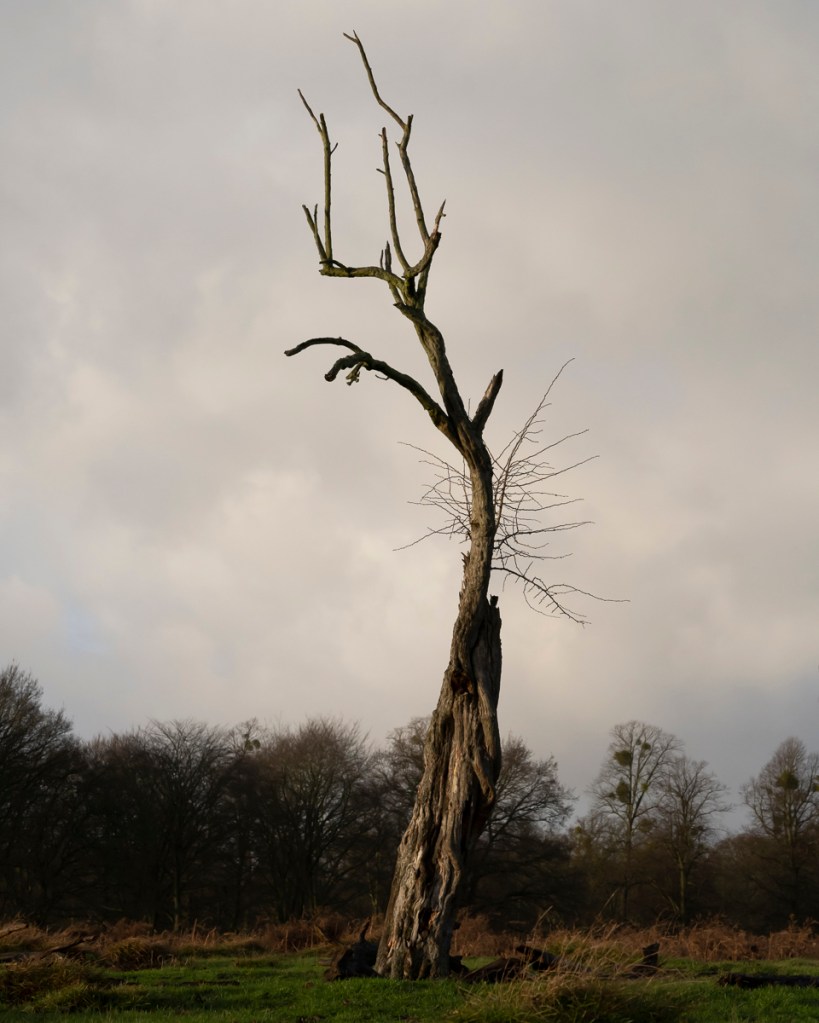
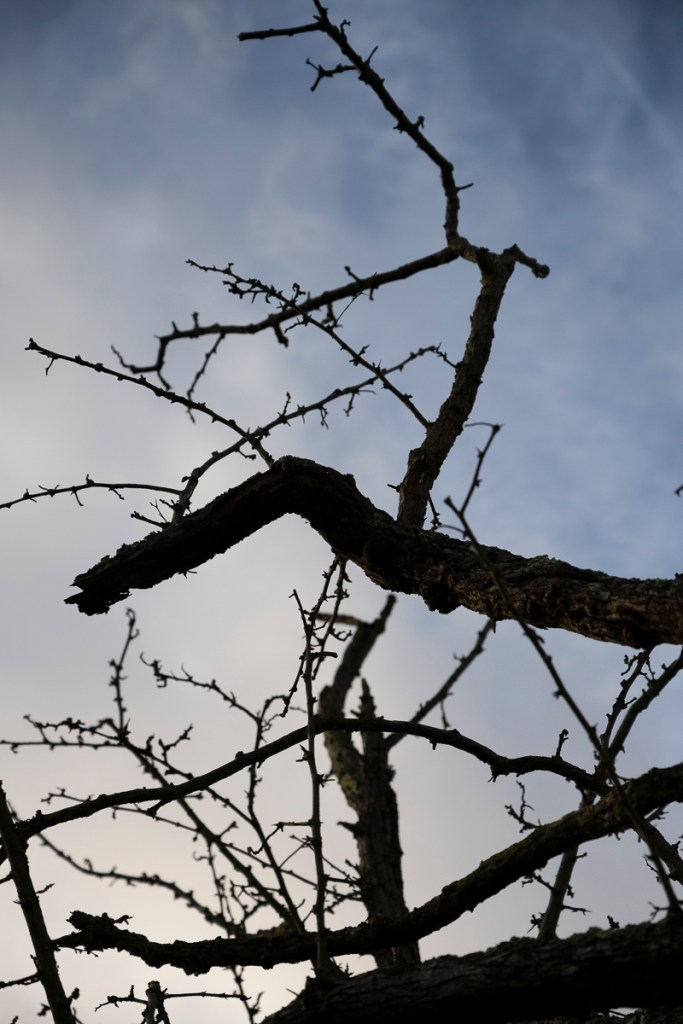
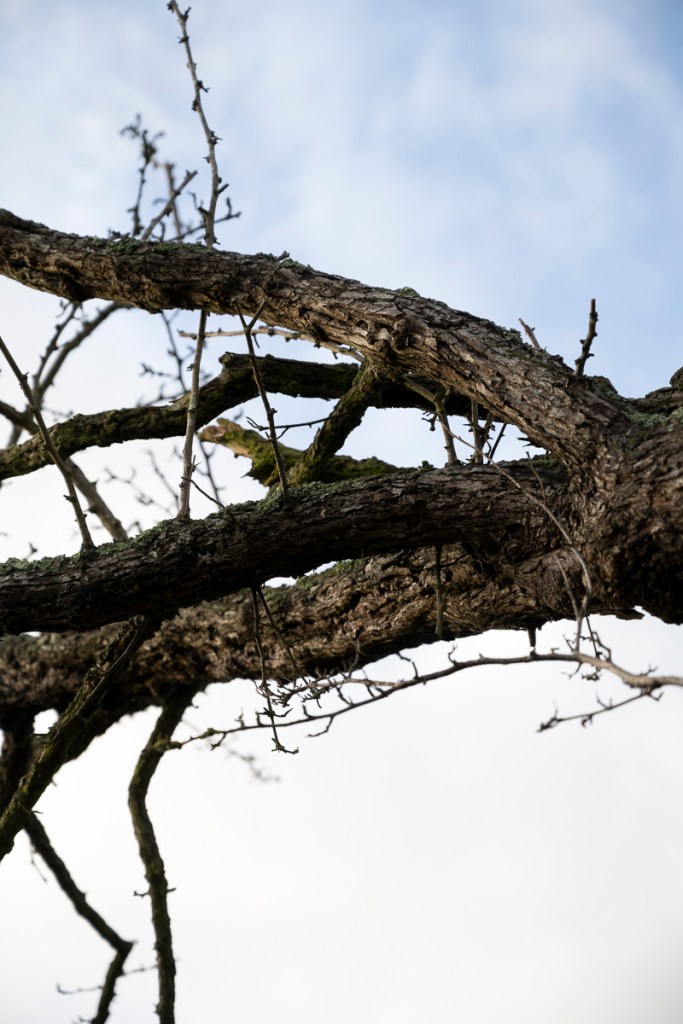
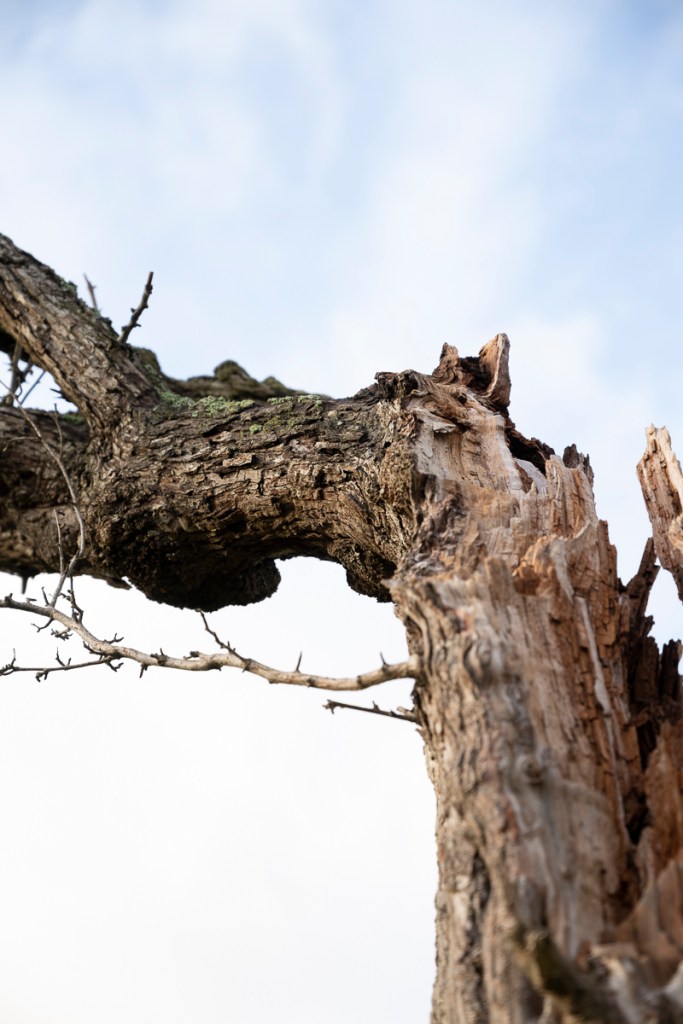
My first port of call was the tree I now call “Crazy Larry”. I still can’t get the light quite correctly on this one.
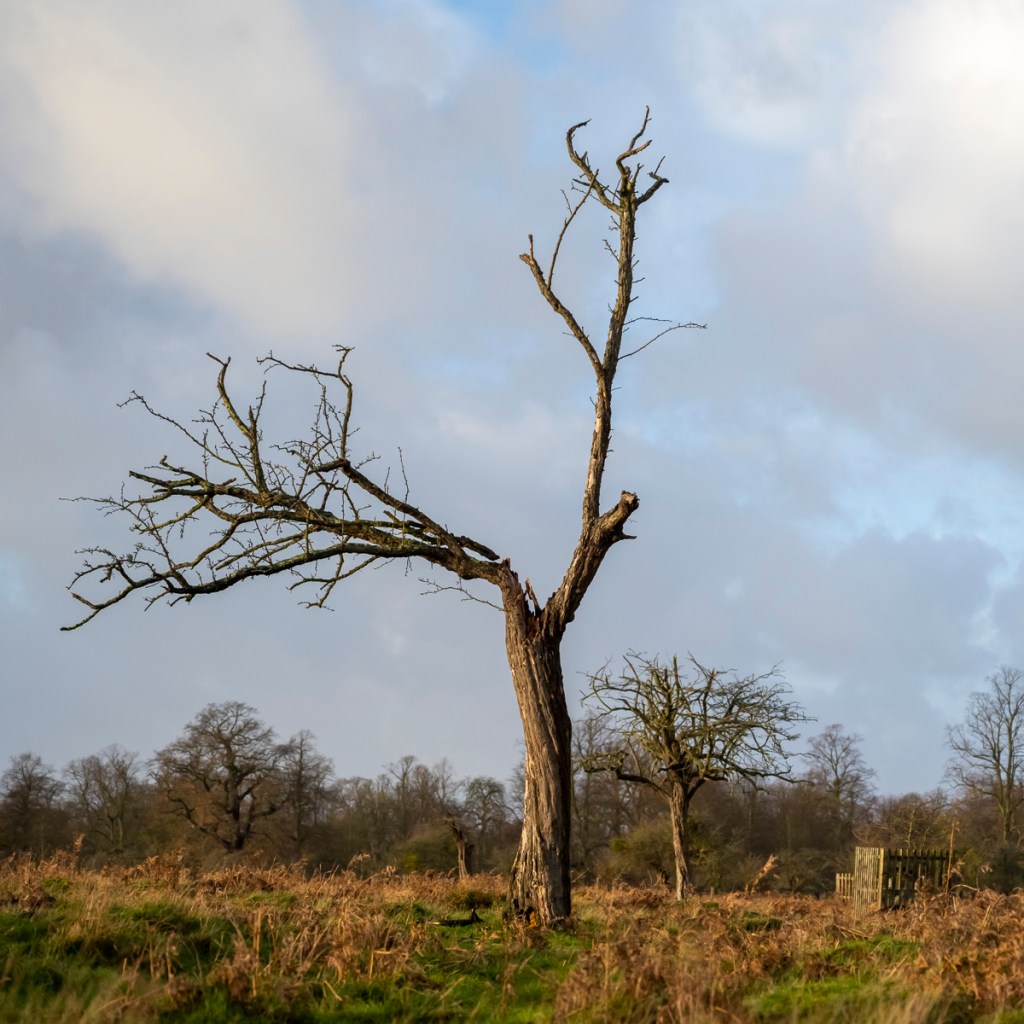
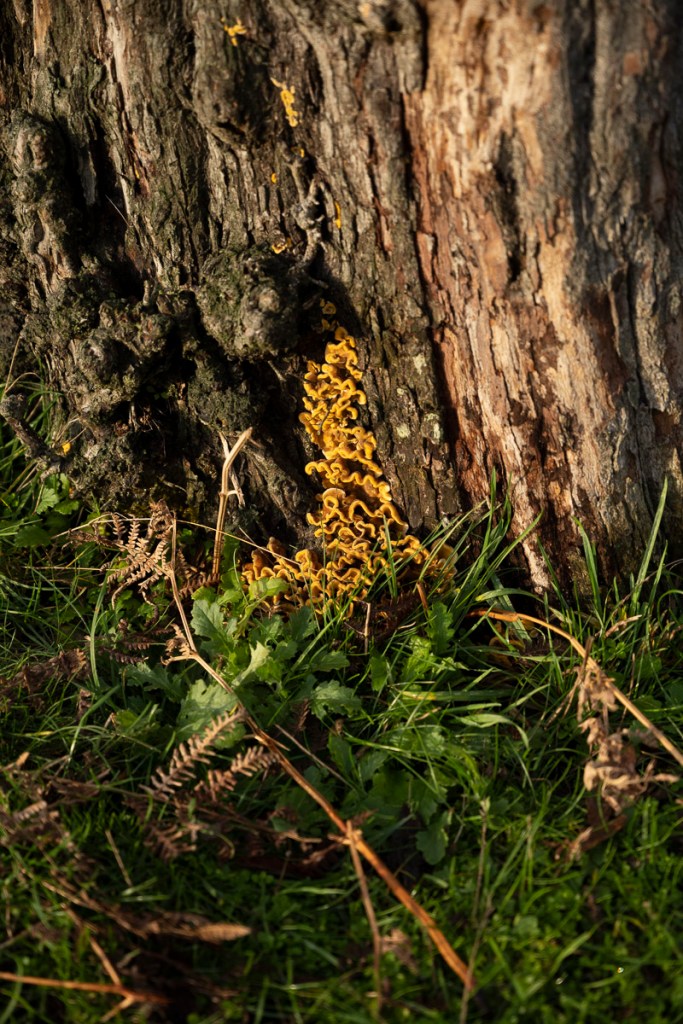
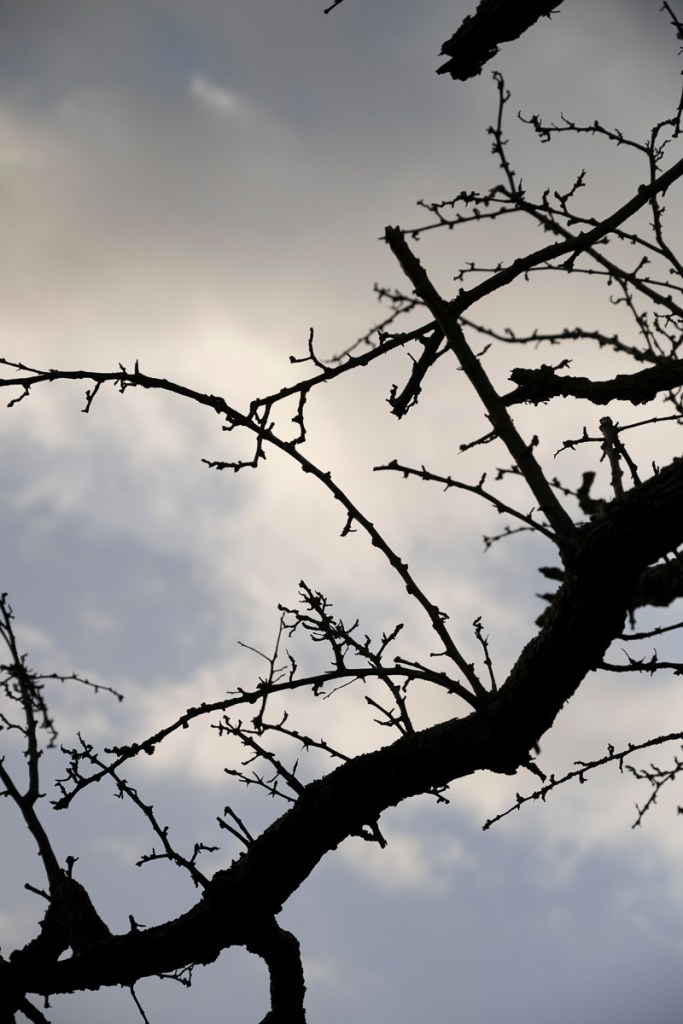
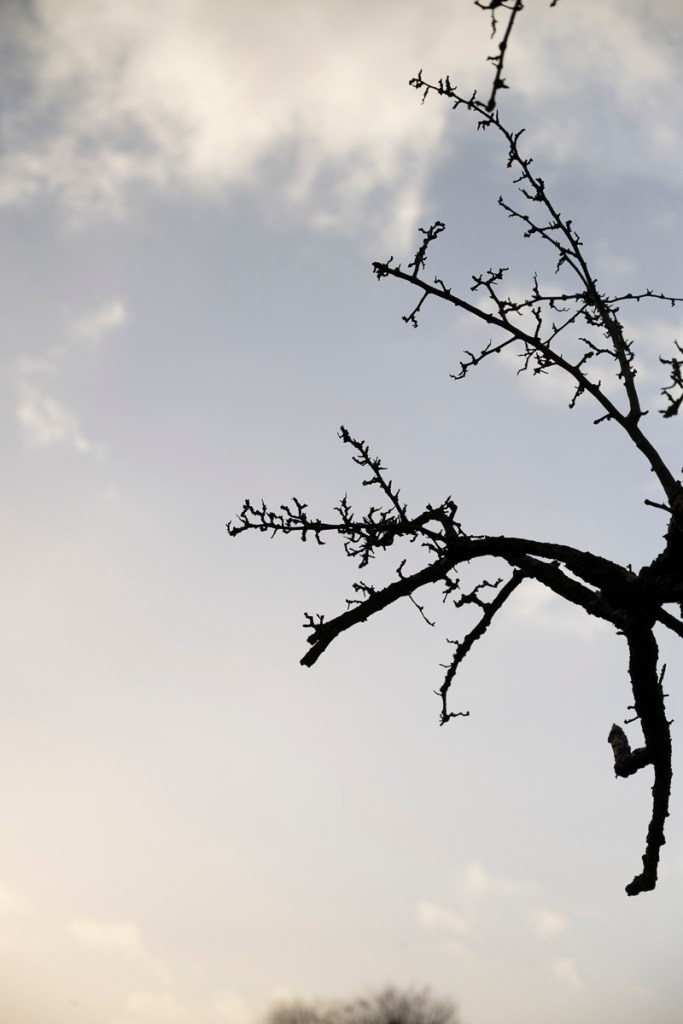
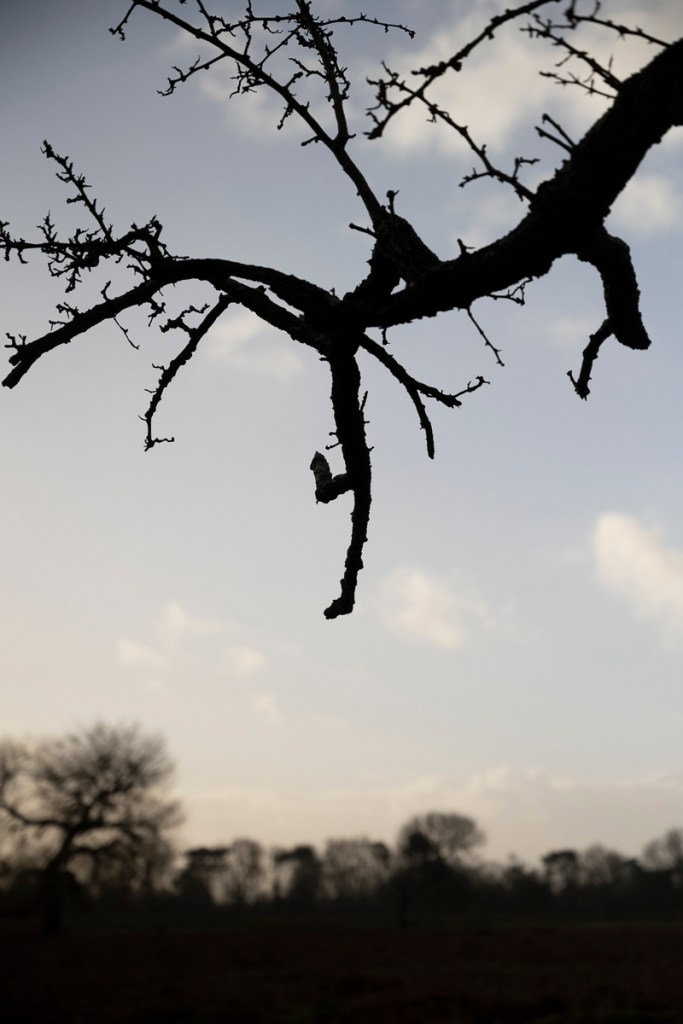
Next I returned to this, as yet, un-named, tree.
I then took a shot from the opposite side.
These are the two images together.
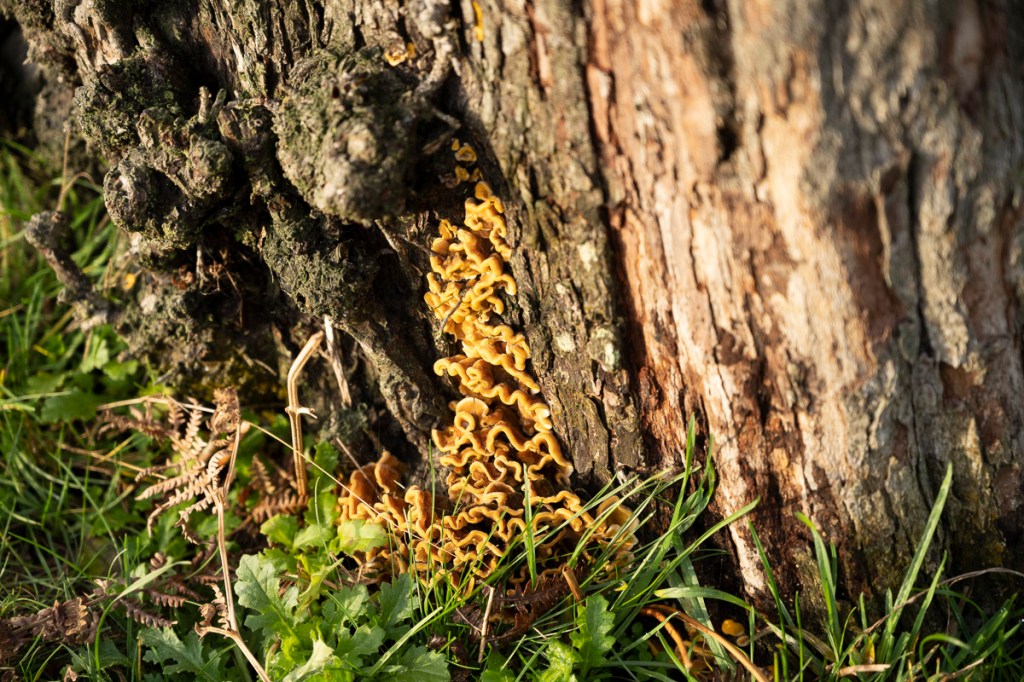
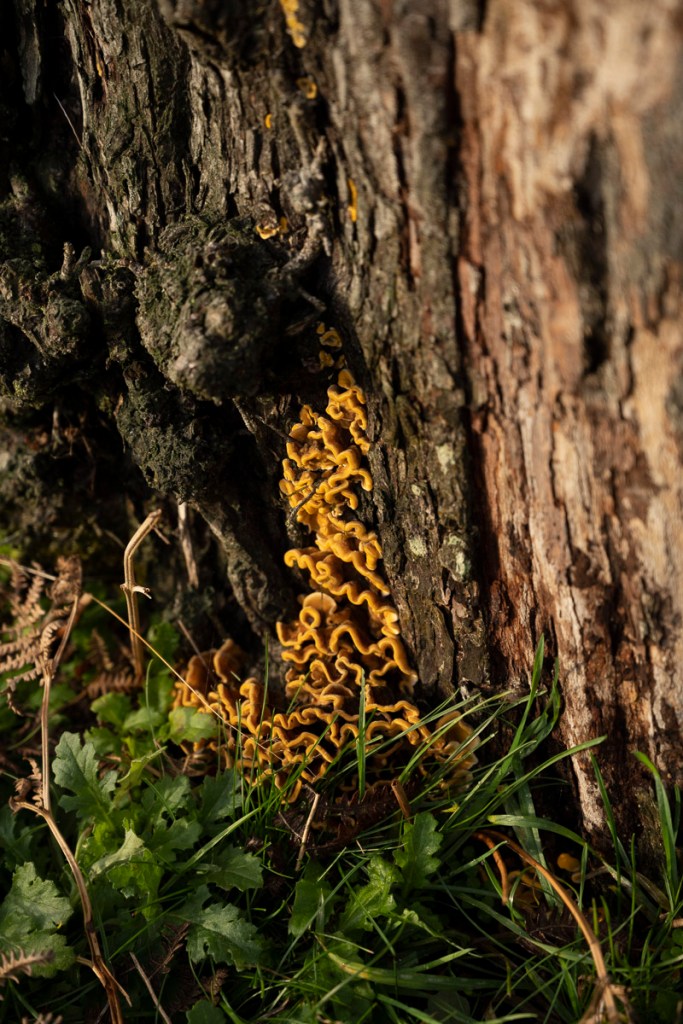
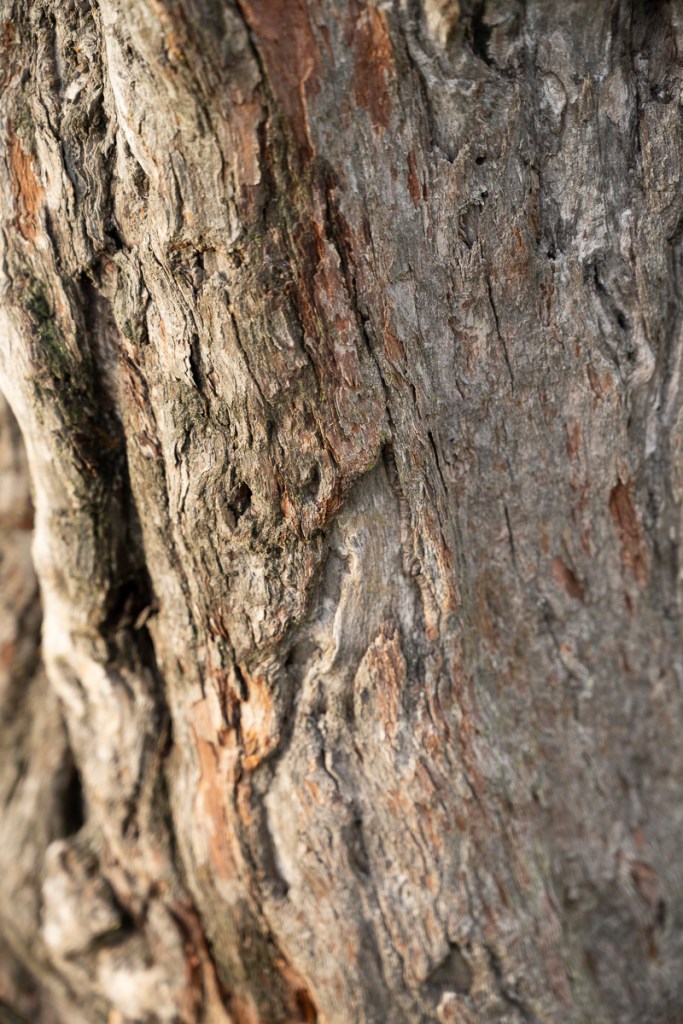
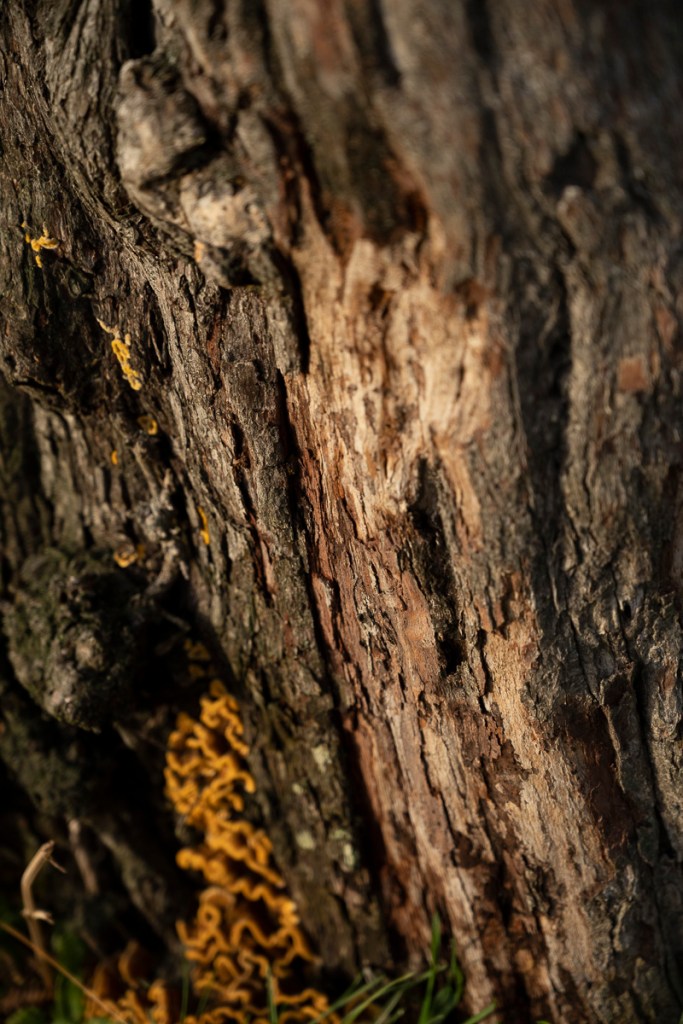
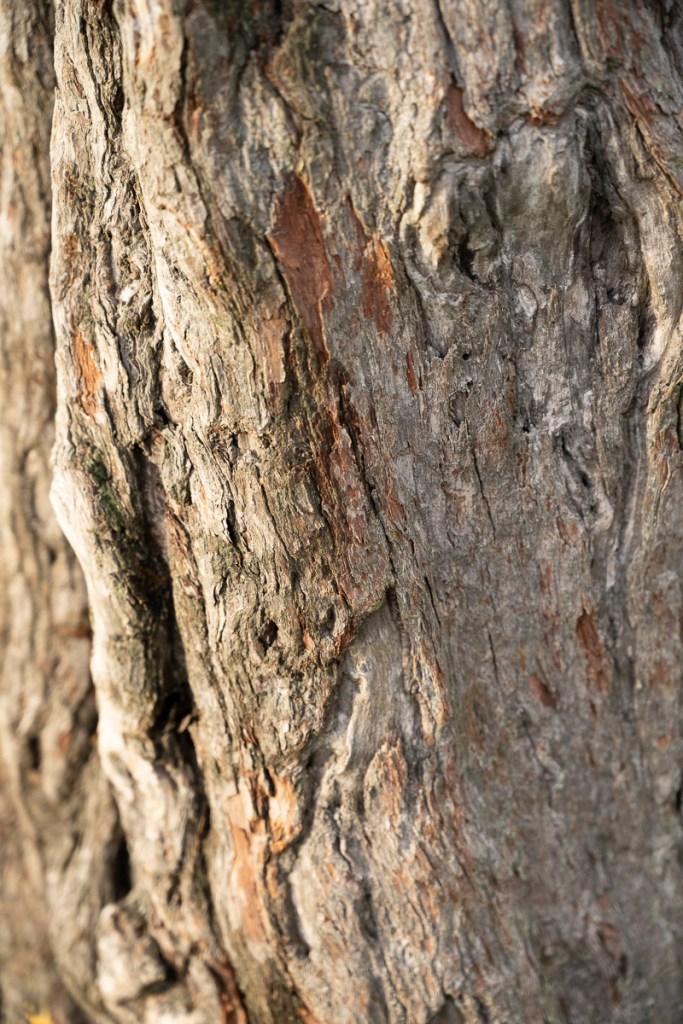
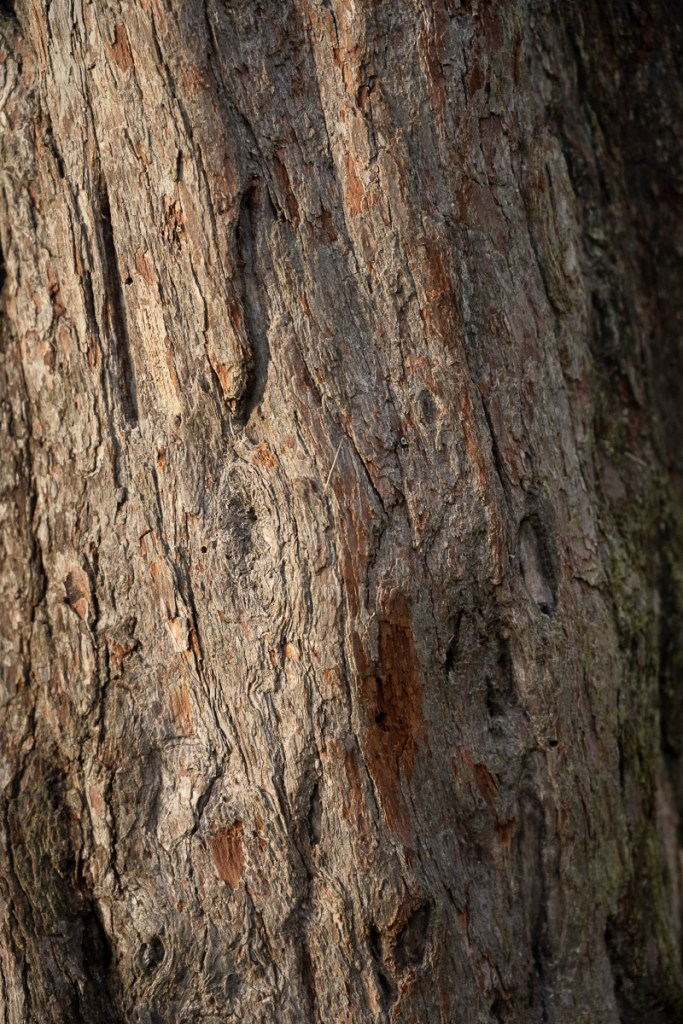
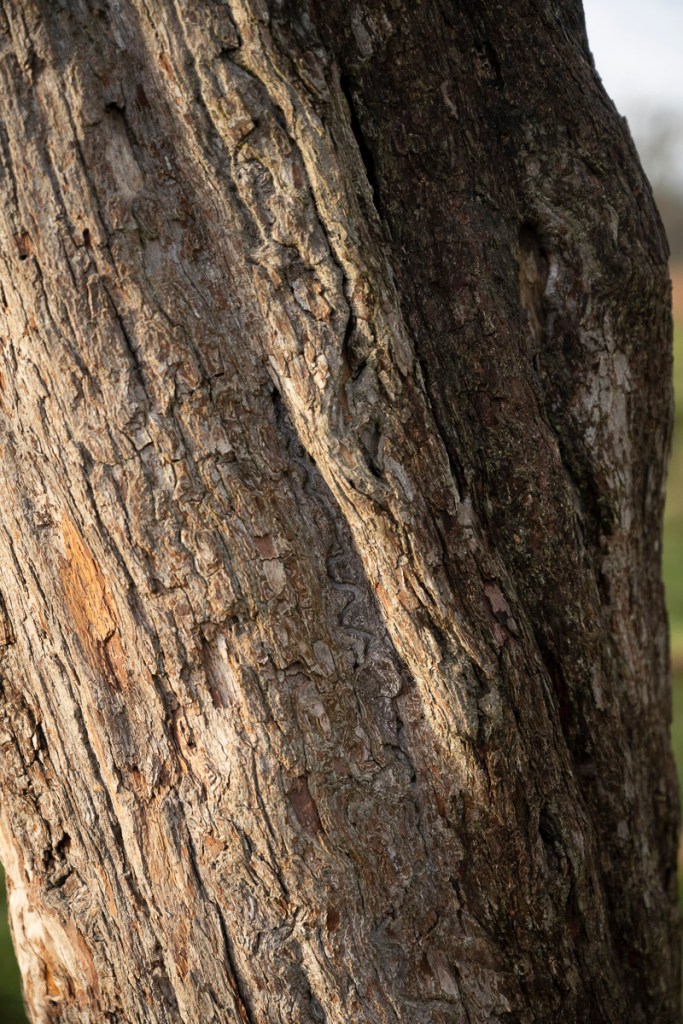
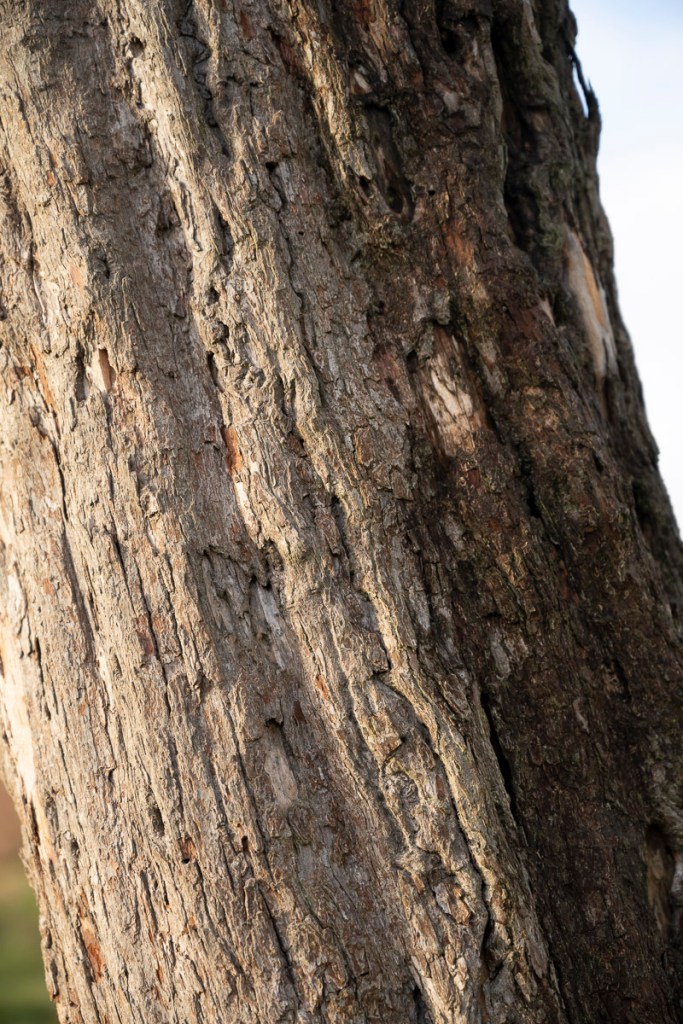
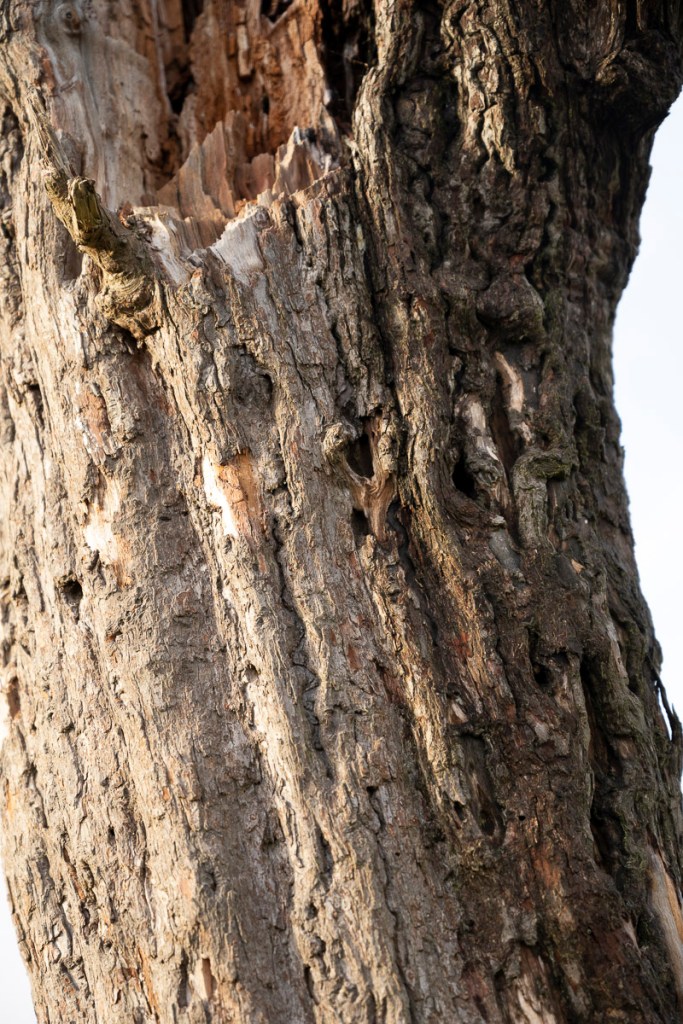
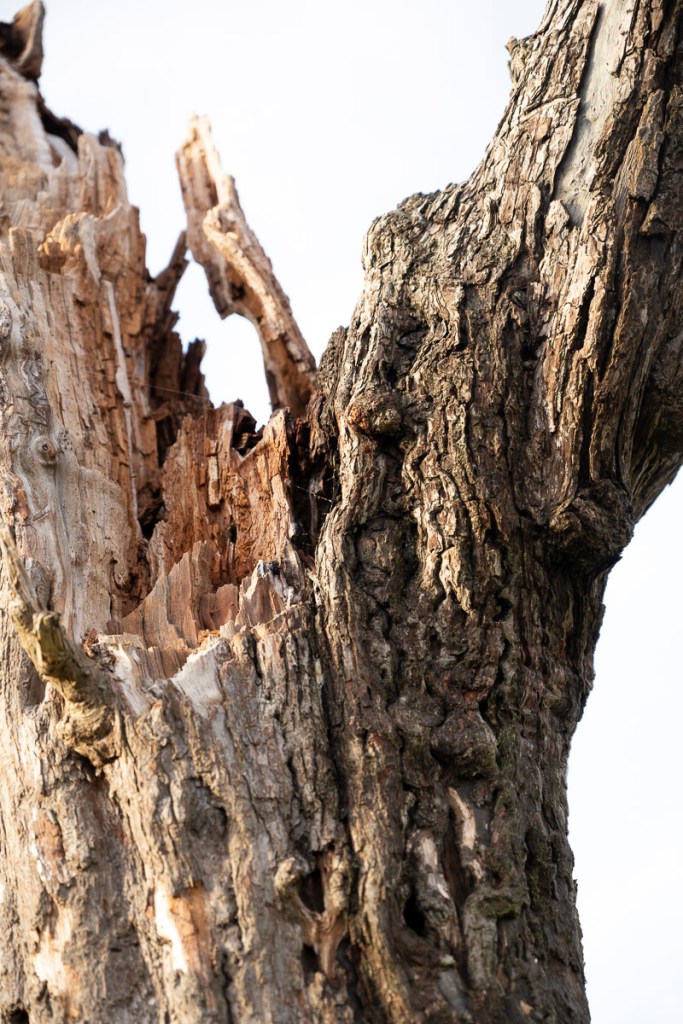
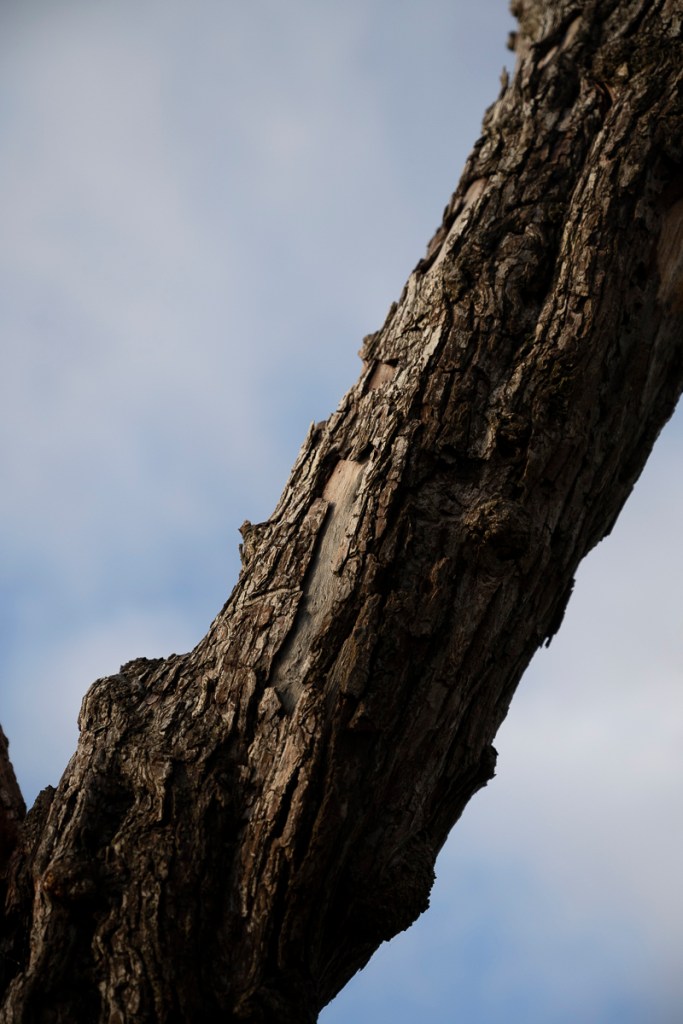
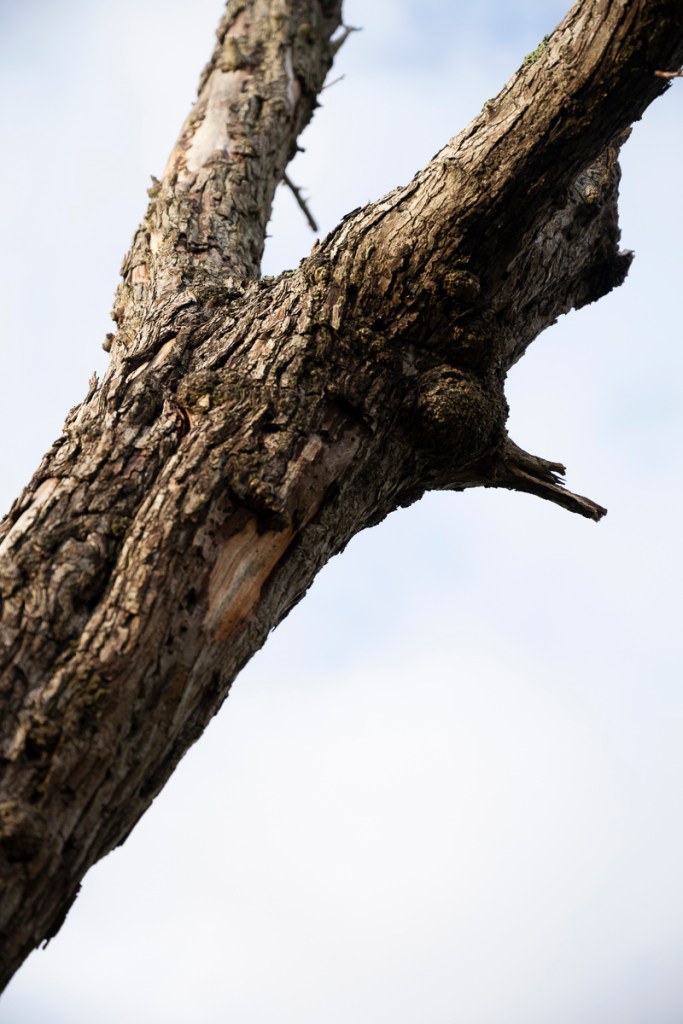
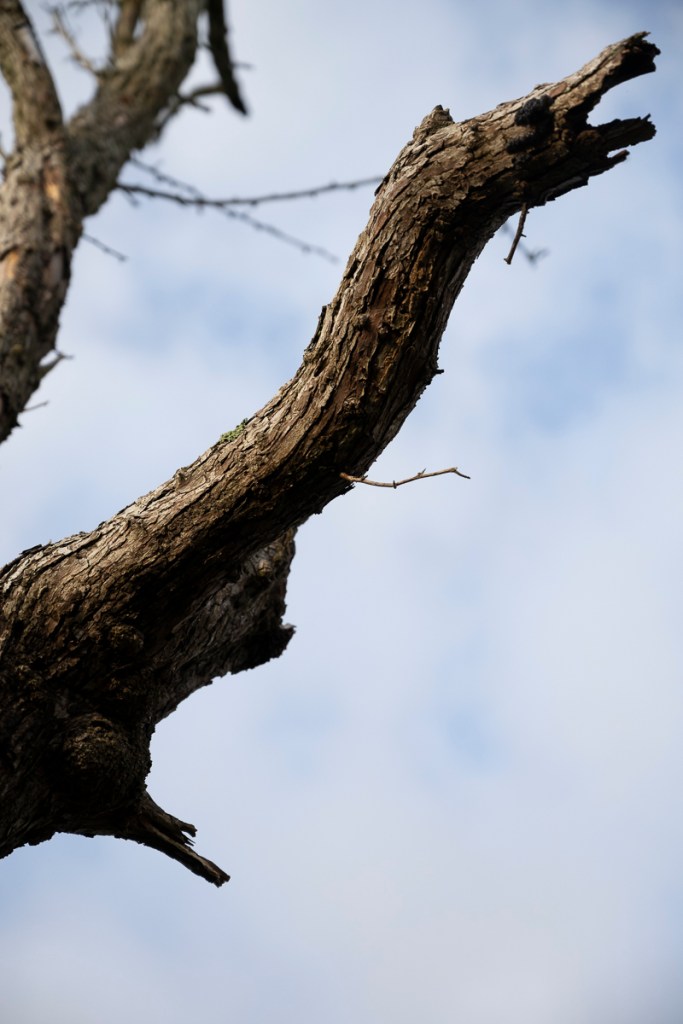
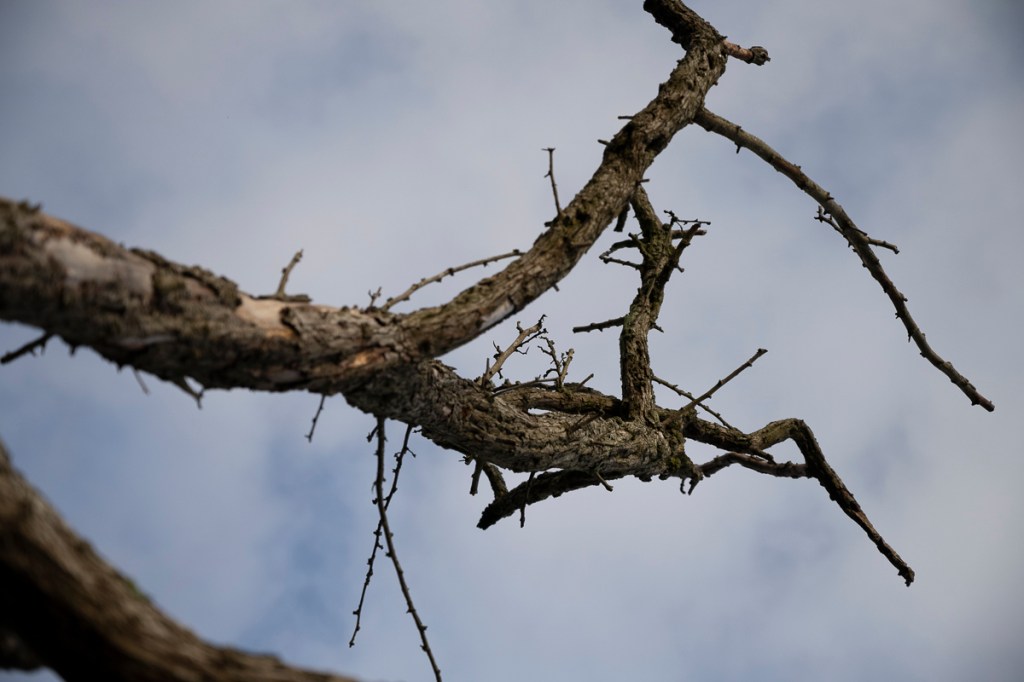
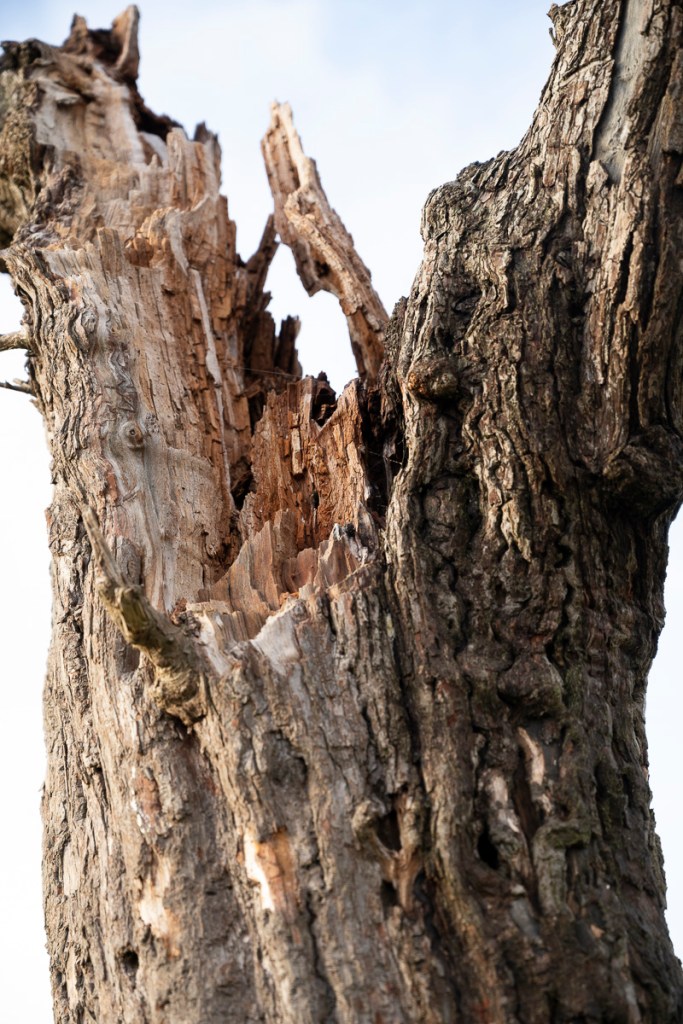
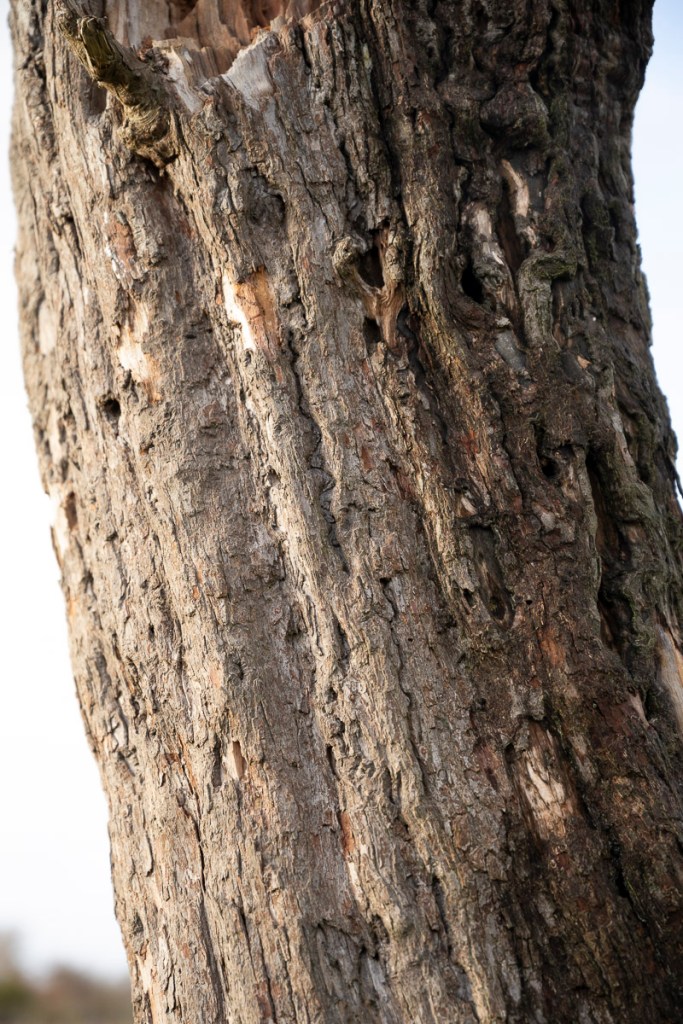
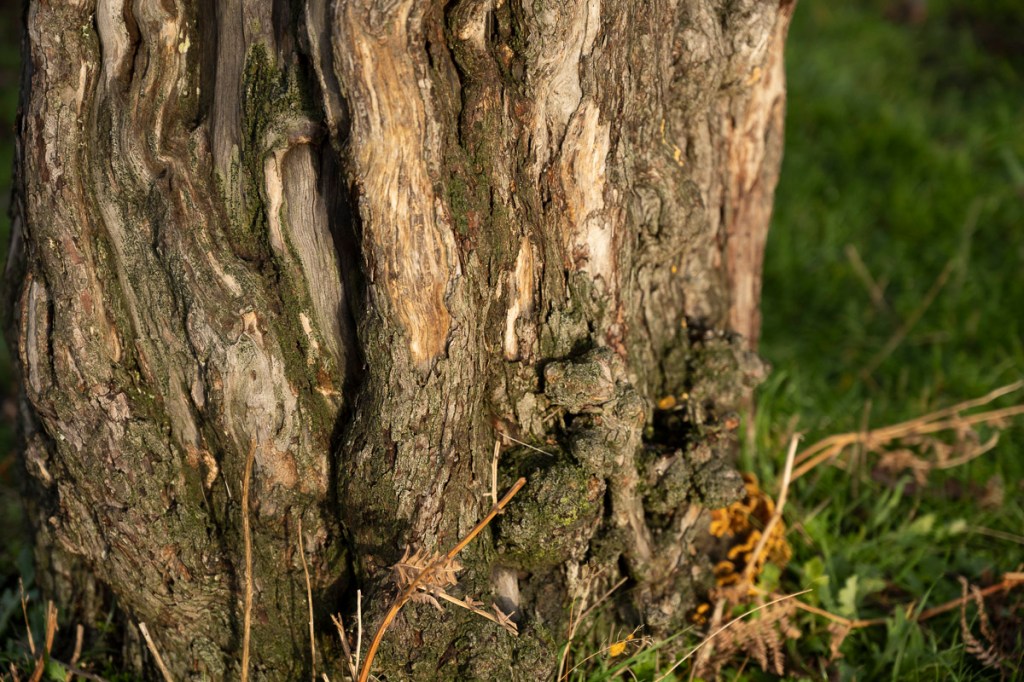
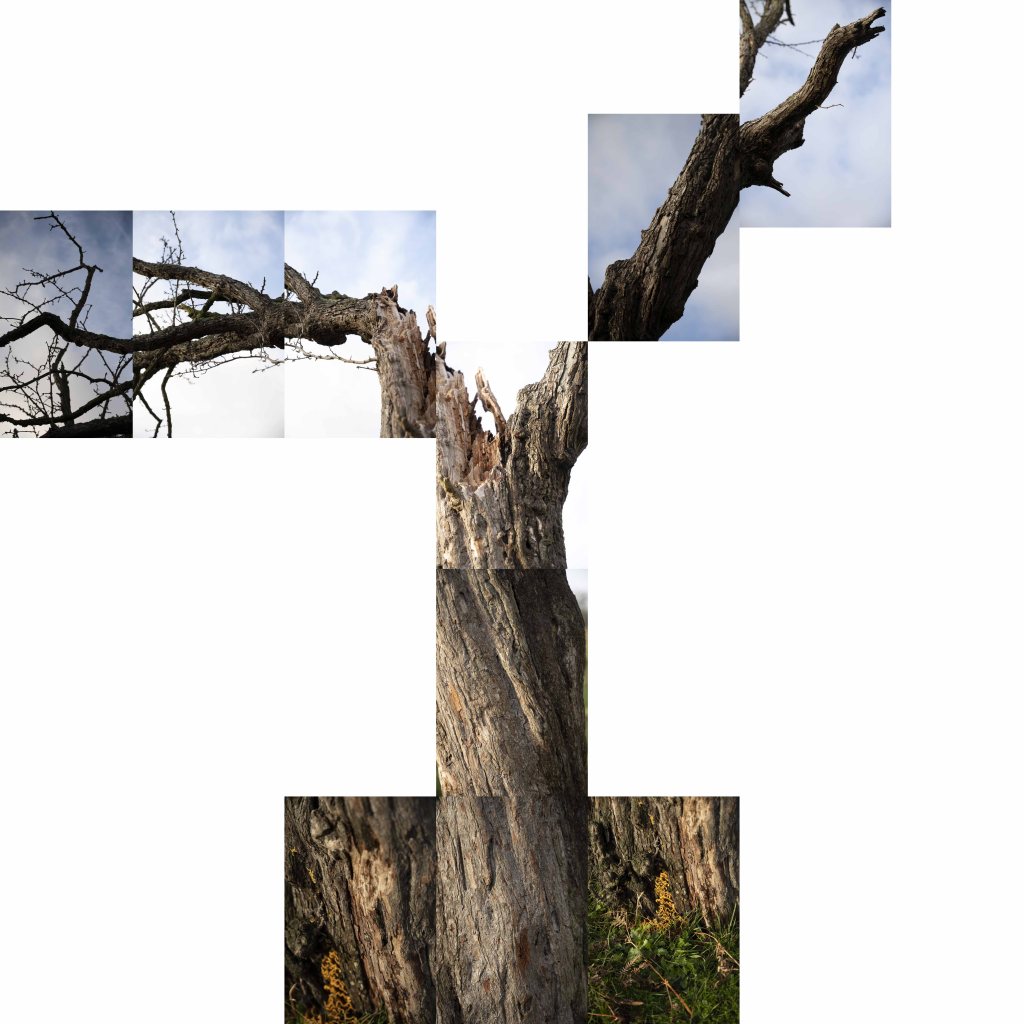
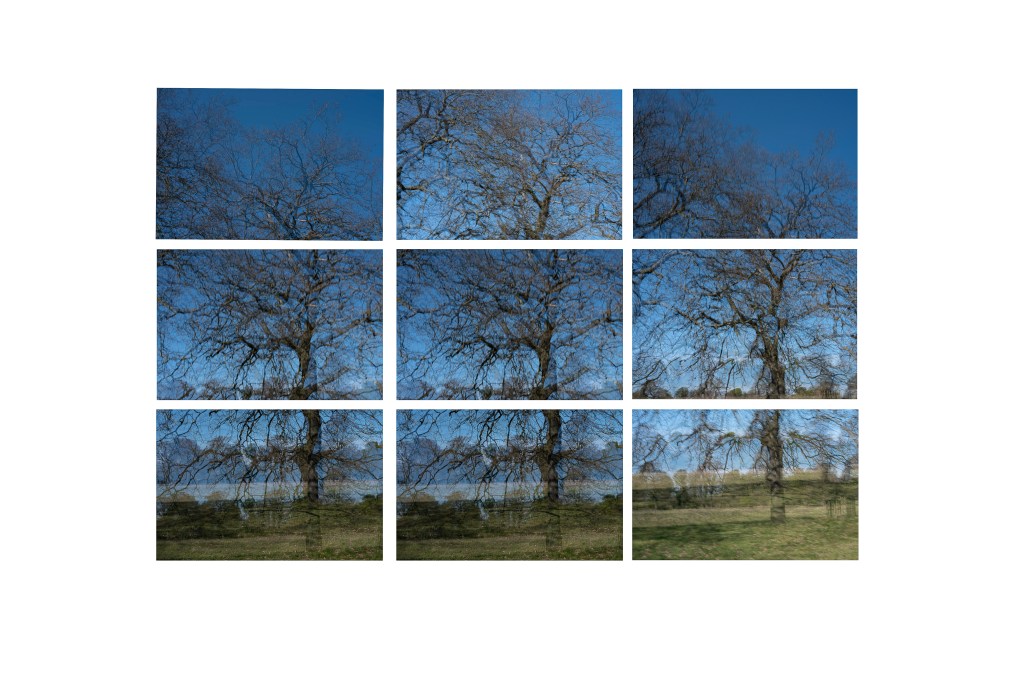
Next, I took close up shots from the same standing position. The thought behind this was to piece the images together in Adobe Photoshop to see if I could create a cohesive compound image.
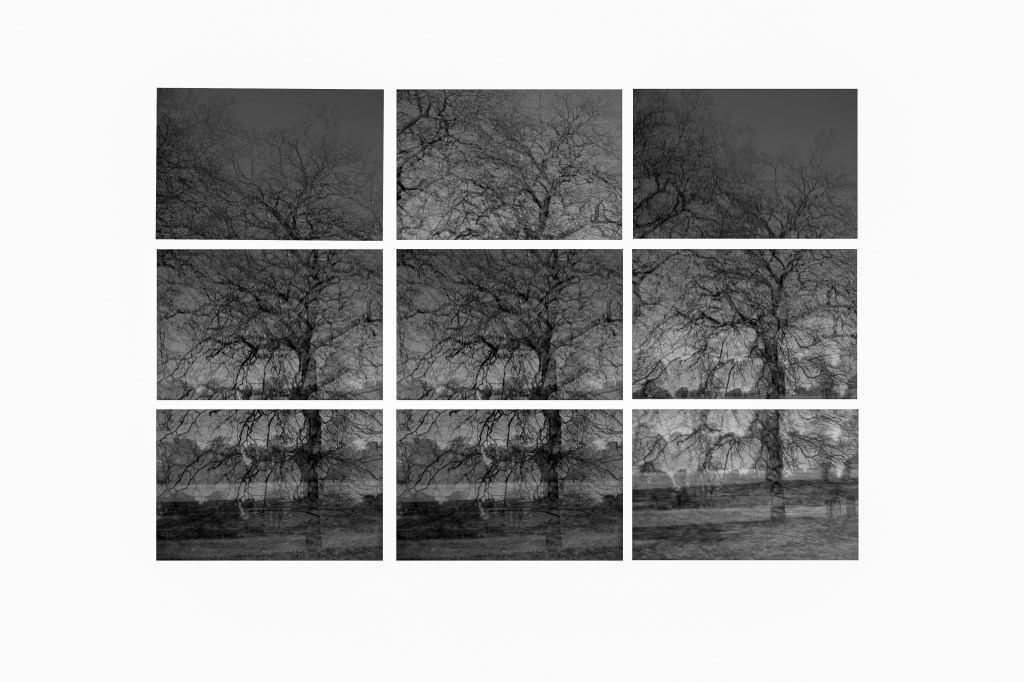
This was my initial result. Definitely still needs work.
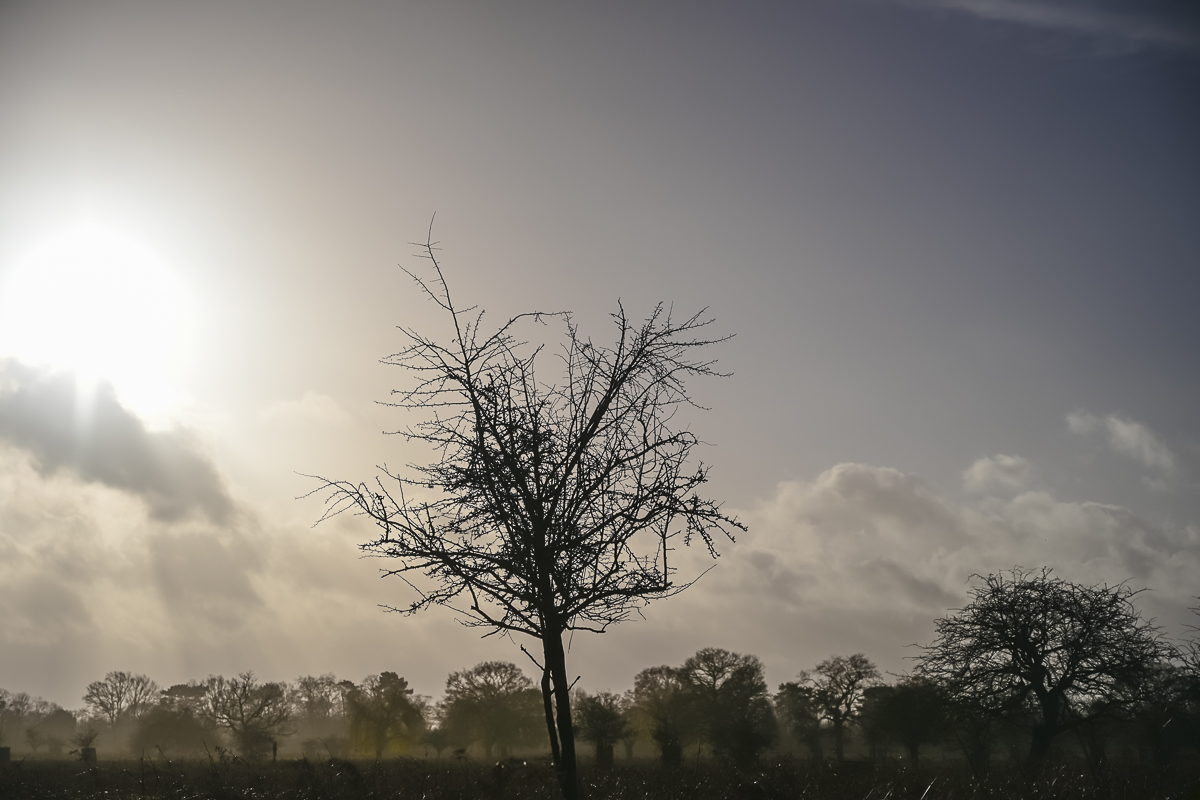
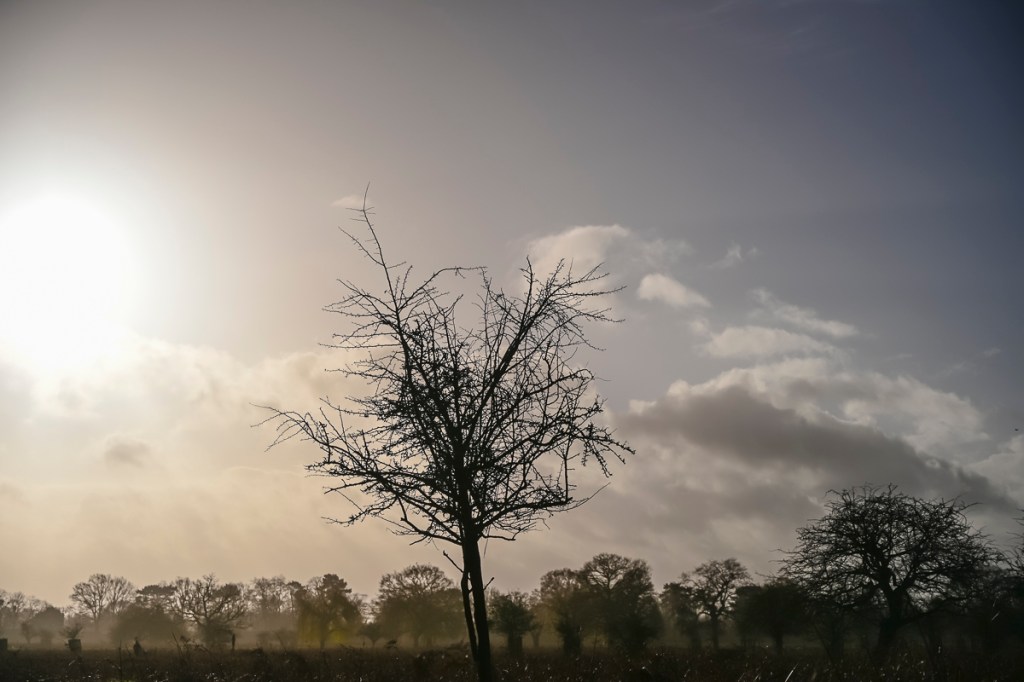
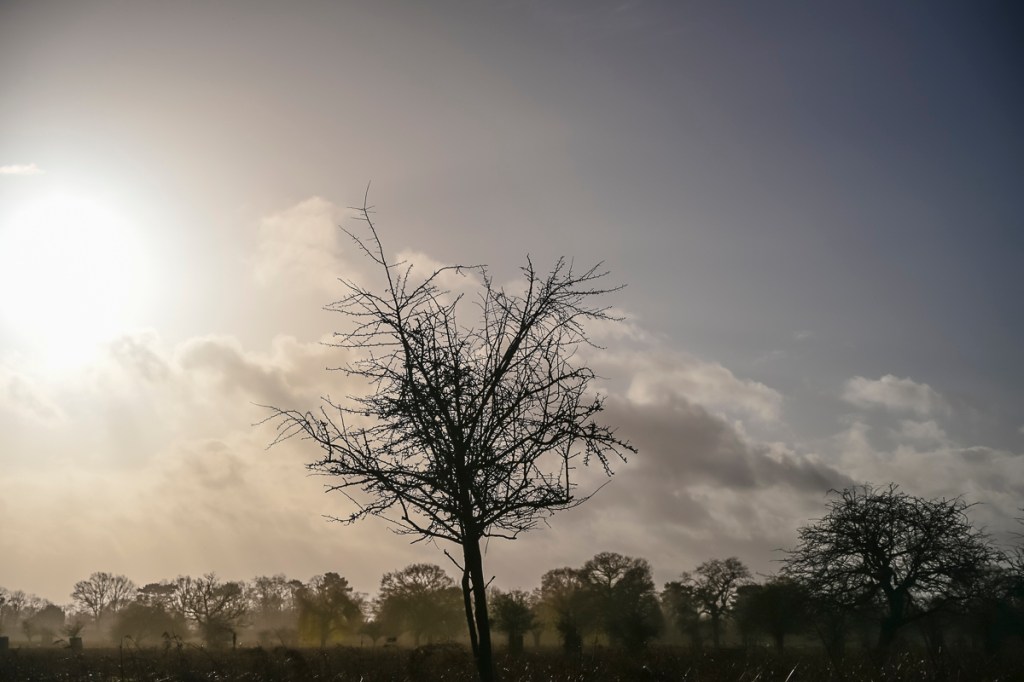
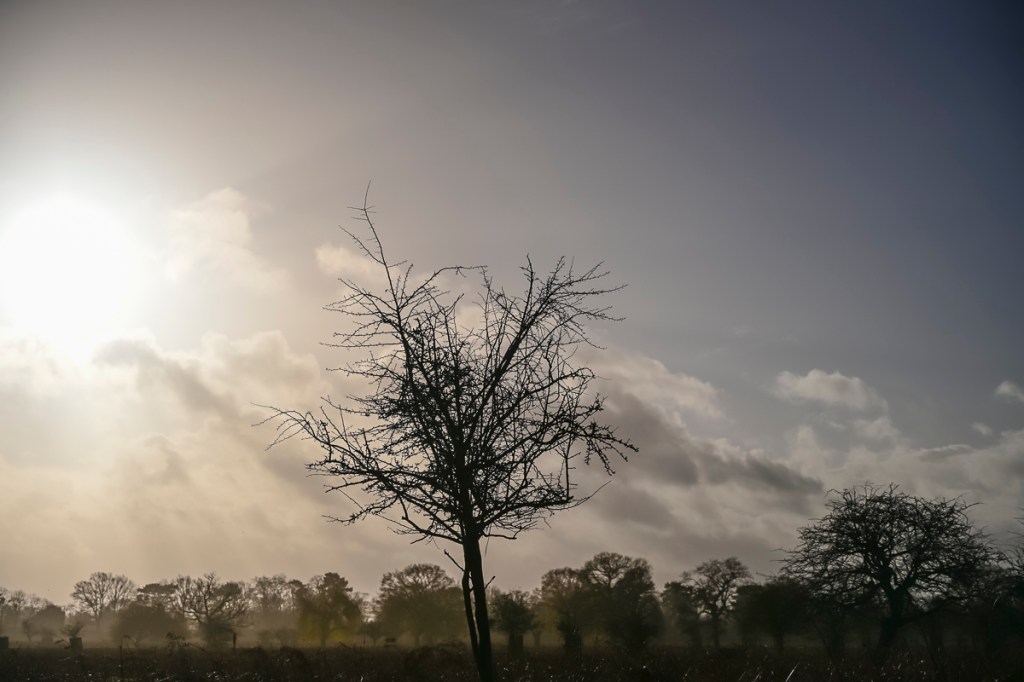
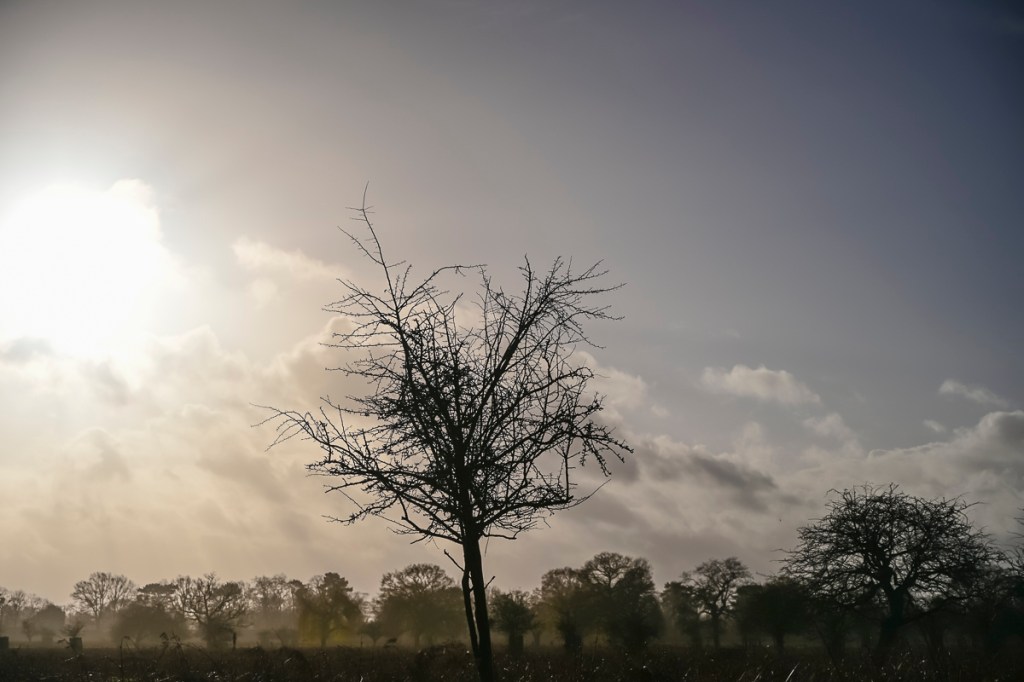
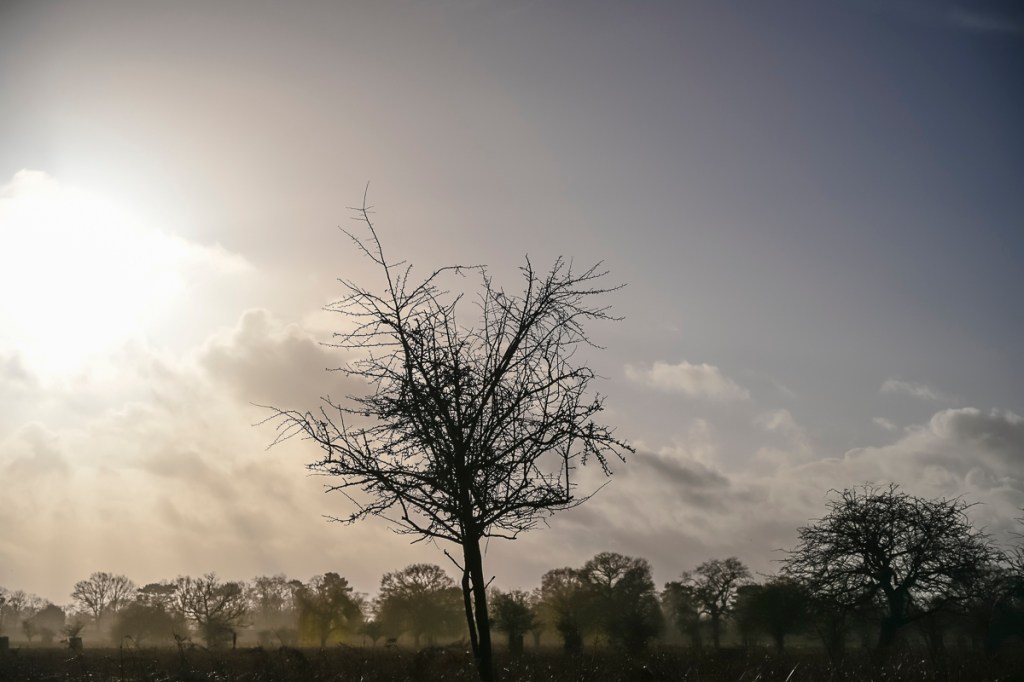
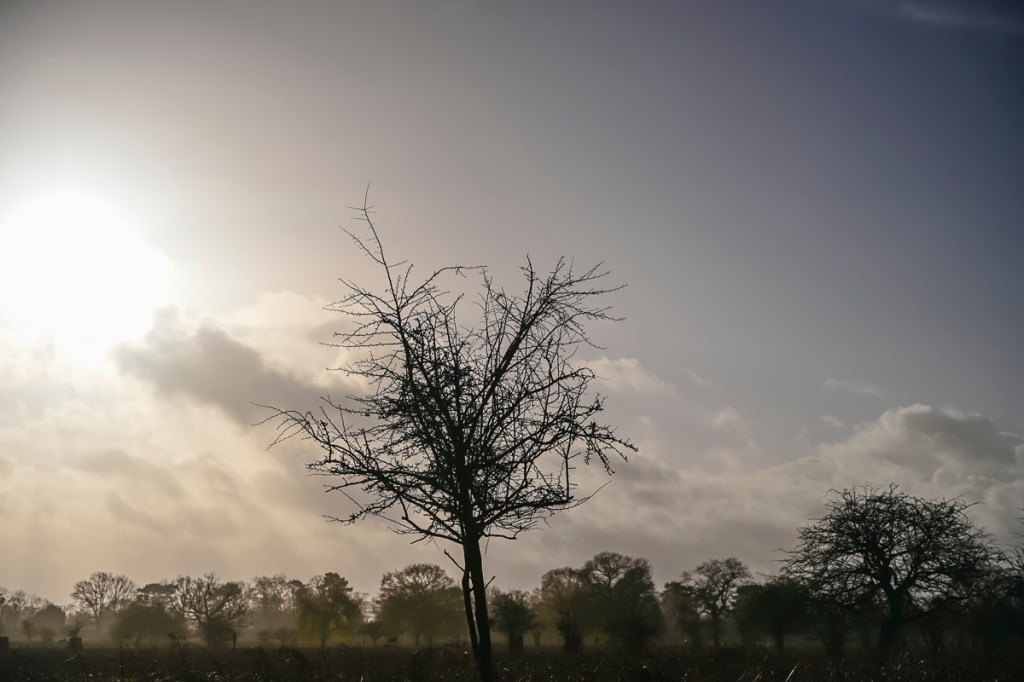
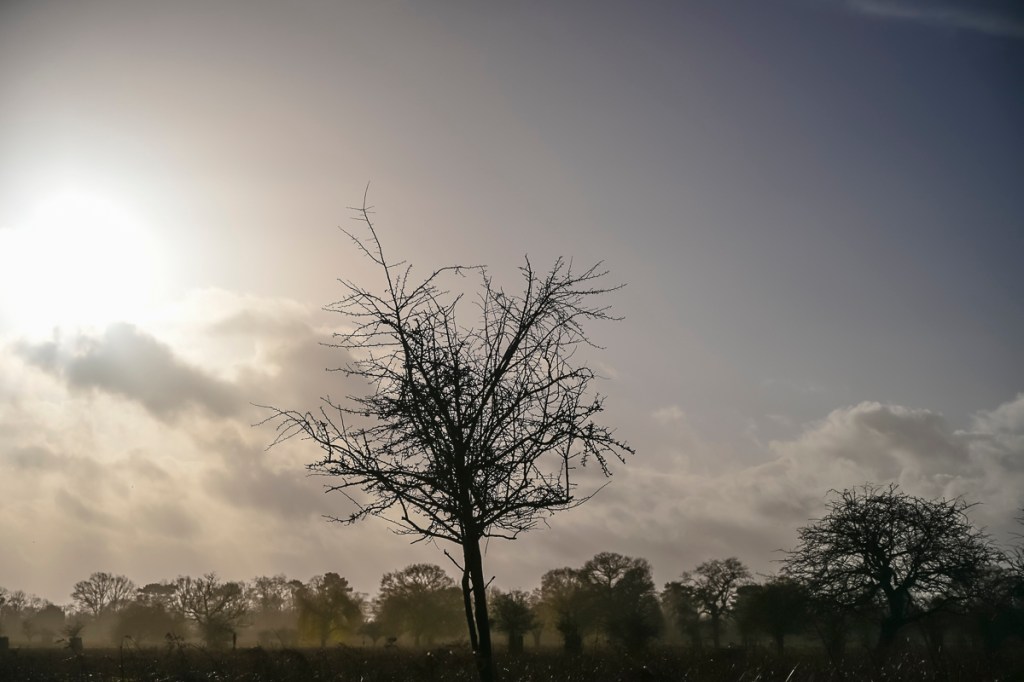
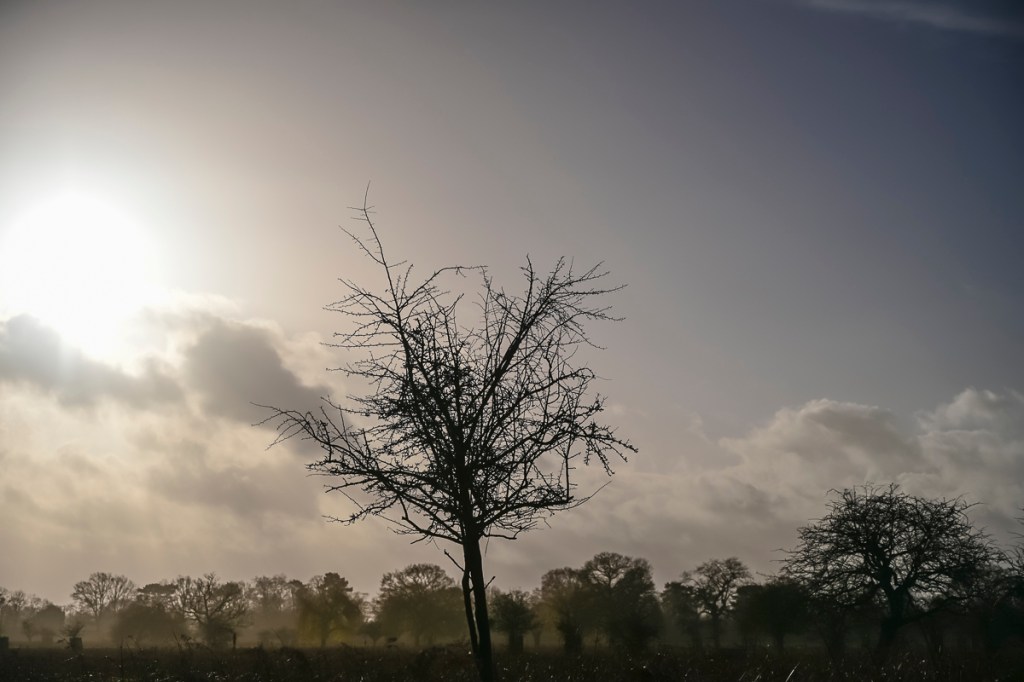
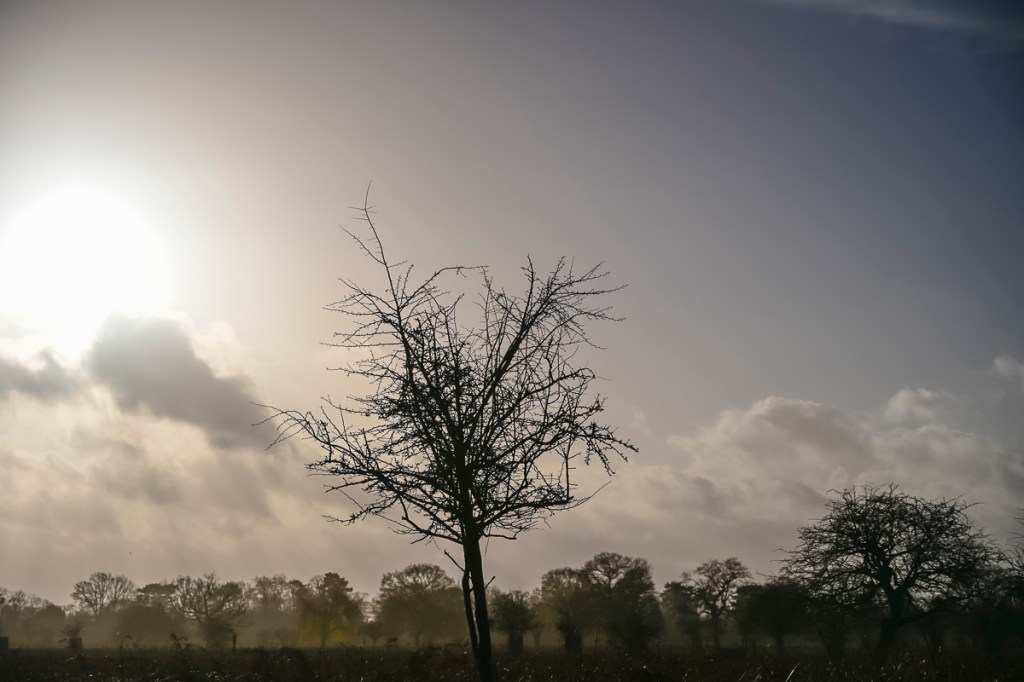
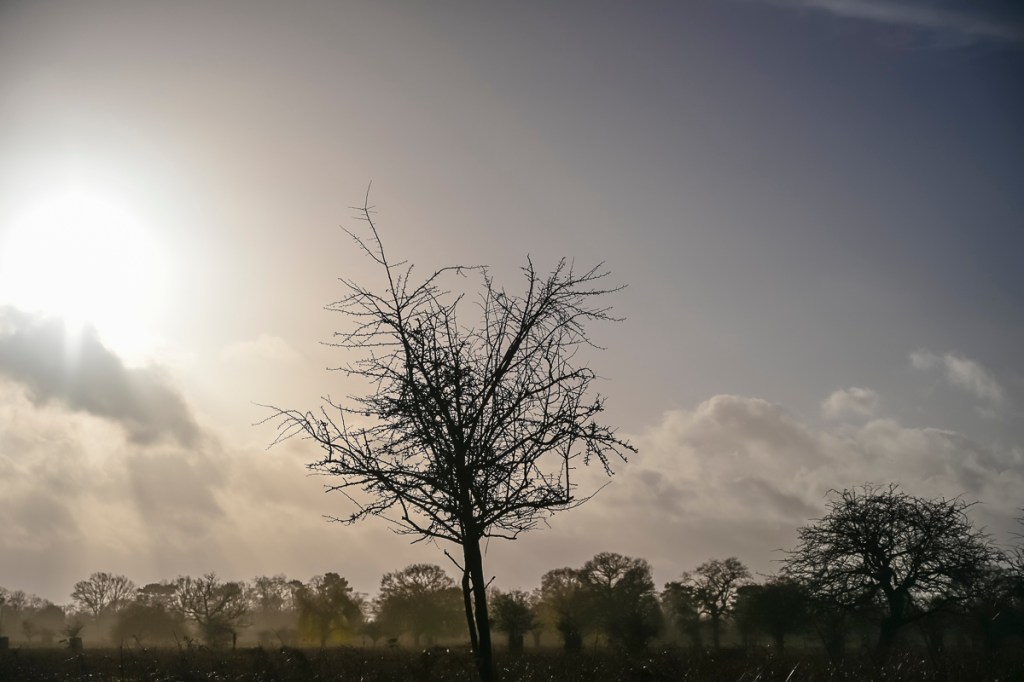
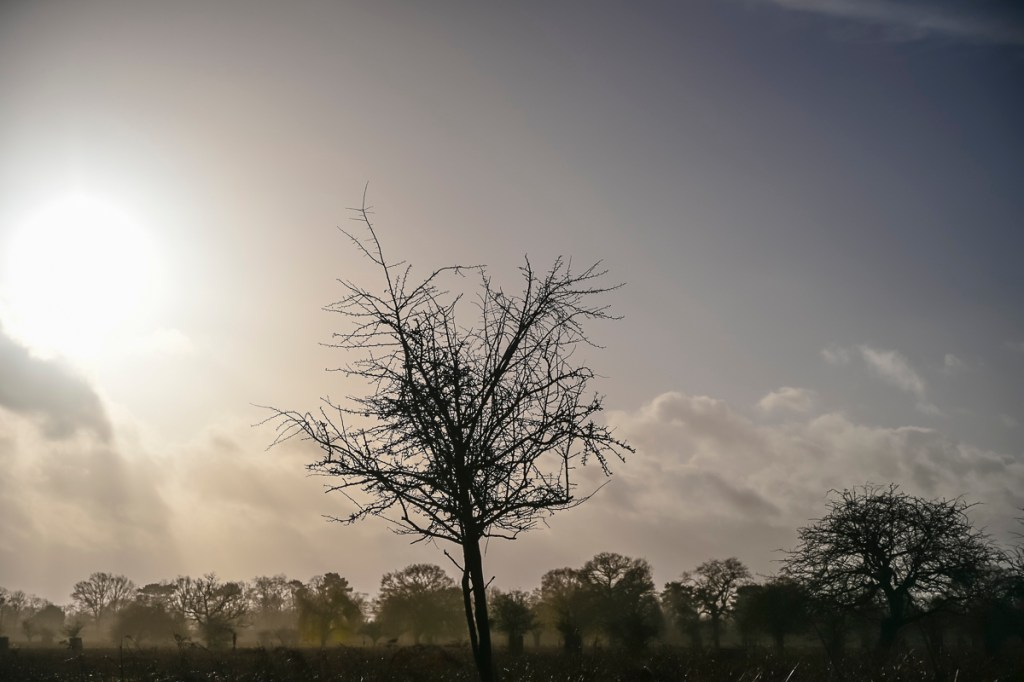
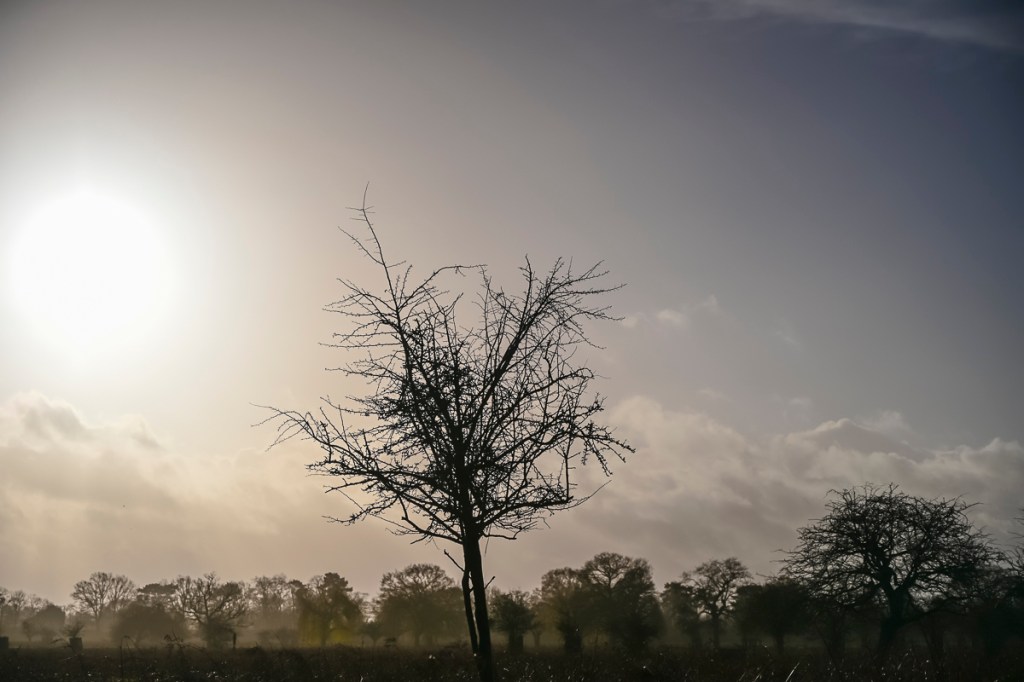
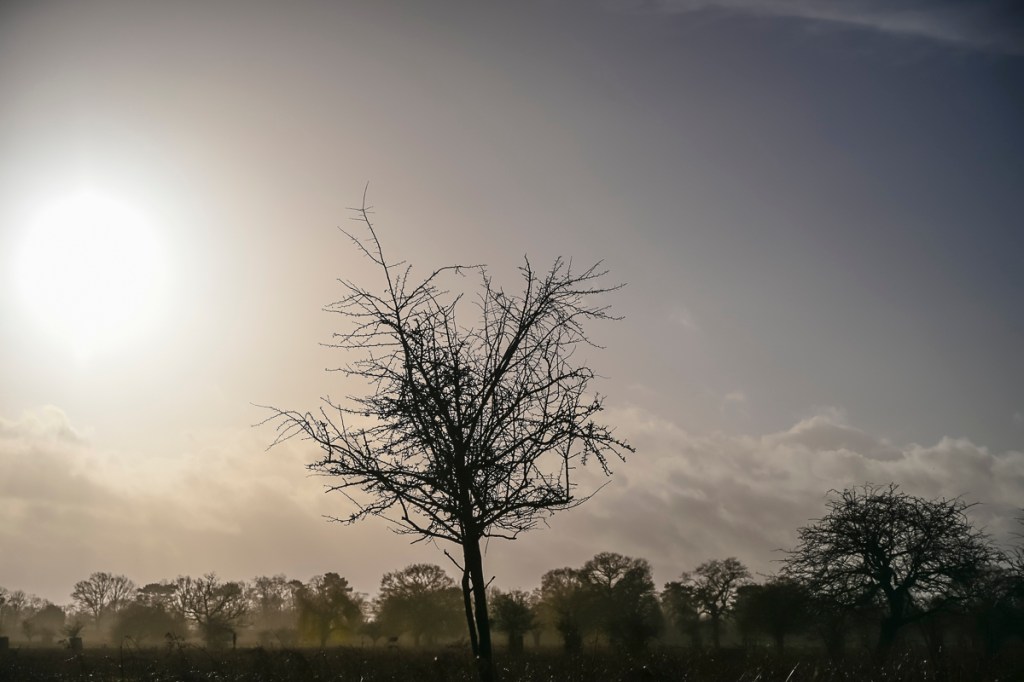
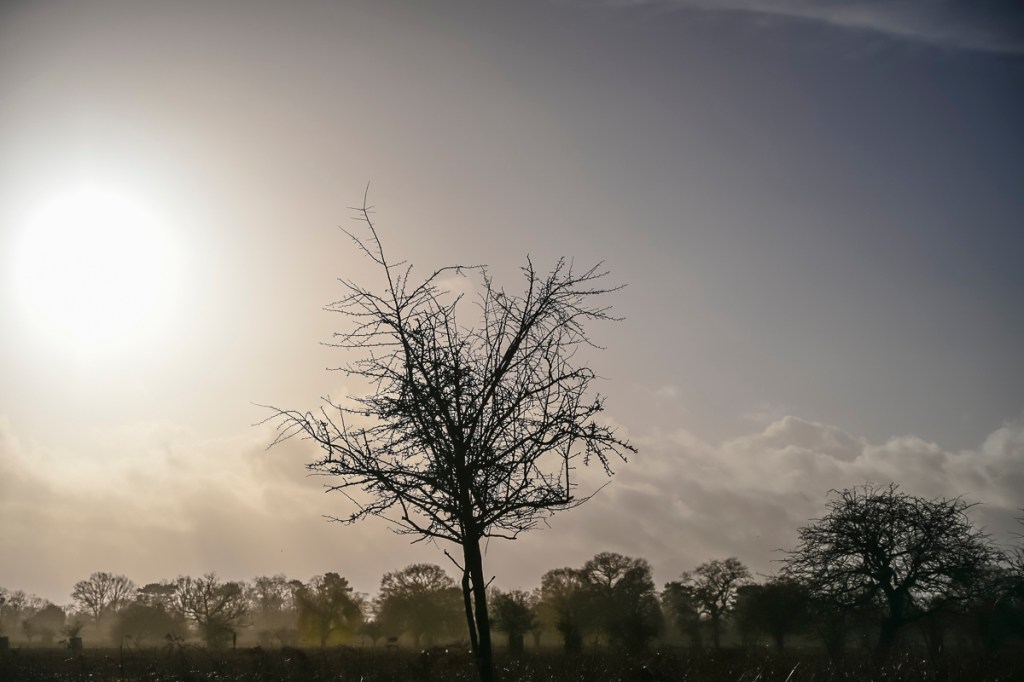
I also wanted to carry out a couple of interval timer shoots with the a hawthorn as the centre piece. The sky was cloudy and the wind was blowing them across at a steady pace, so this could work well.
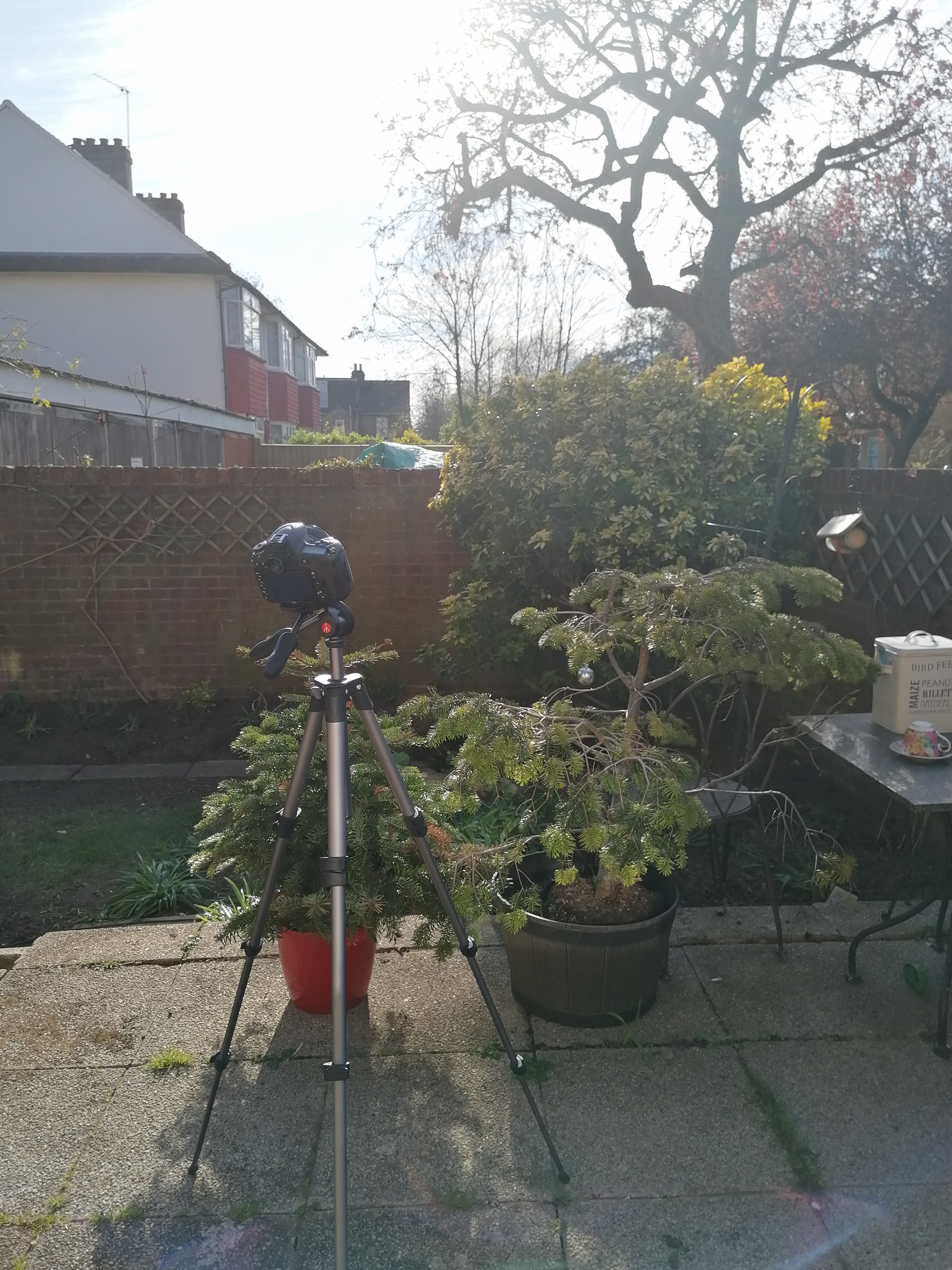
These following shots were recorded as JPEG Fine files and taken at 3 second intervals. I used the tripod so there wouldn’t be any movement with the camera. The tripod was at quite a low level. In order to work out the composition, I used the Nikon Snap Bridge app on my phone. This was ok, but it seemed I still had to use the camera to set up and activate the interval timer sequence. This is something I should have practiced at home first.
I also tried to set an Adobe Premier file to create a time-lapse. Then I realised it’s been a year since I last did this. Time to return to my notes to jog my memory on the method.
As for the subject of time, this concept in relation to trees was starting to bubble.
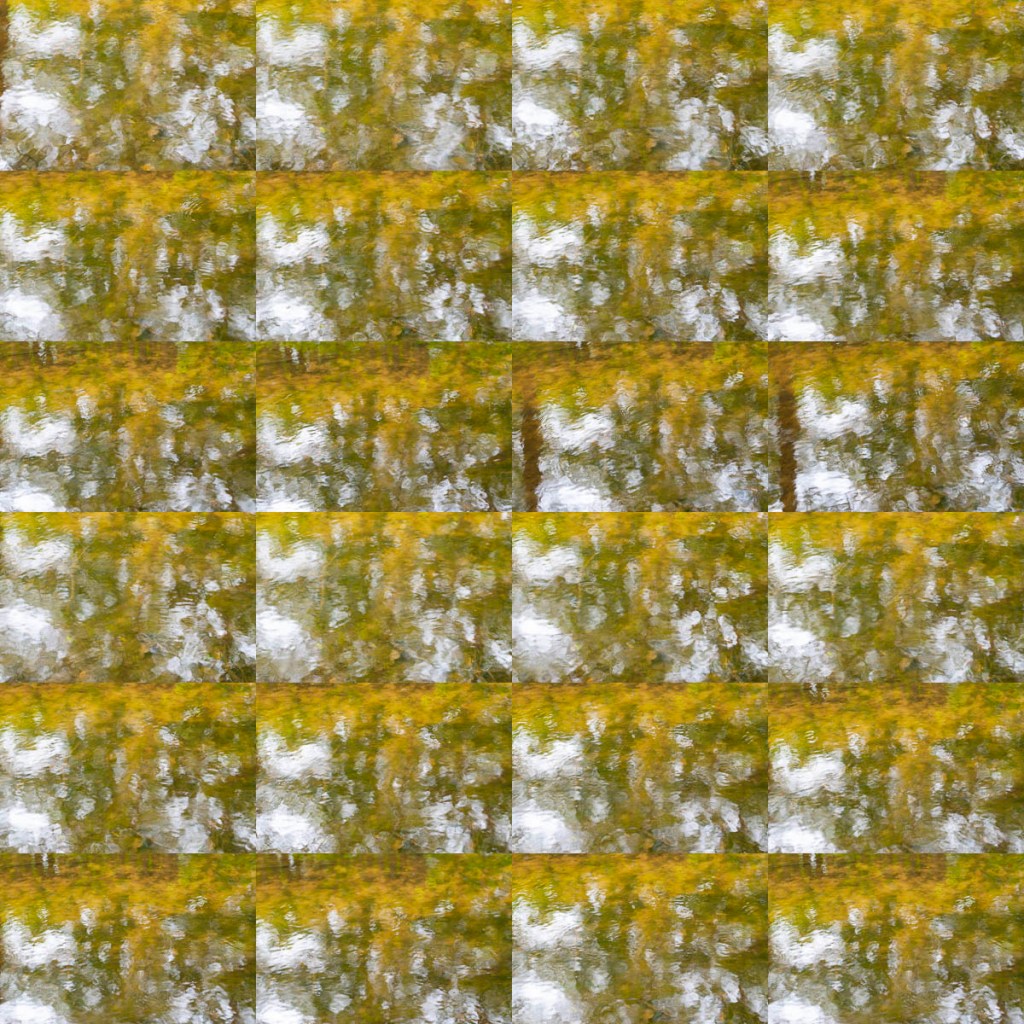
While waiting for the test prints to arrive from DS Labs, I thought I would try something different. Inspired by the photographic collage technique and methods of Noel Myles, I created the following compound image.
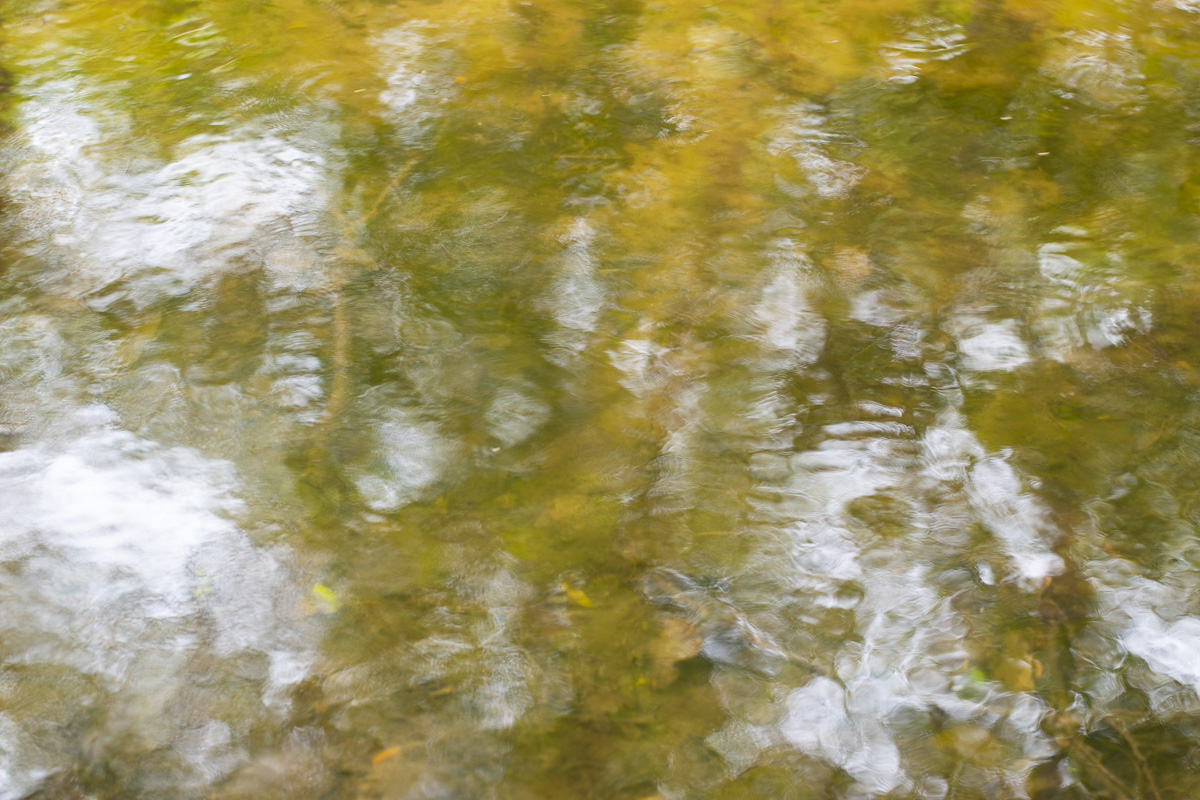
These are images taken in May 2017 when I first started experimenting with interval timer shooting and timelapse photography. The piece is comprised of 24 individual images that I’ve combined using Adobe Photoshop. The subject is the Longford River, which flows through Bushy Park. They were taken on a particular stretch of the river where the sun hits the water at a certain of day, creating the most hypnotising reflections.
This piece was inspired by Myles’ similar obsession to mine of going repeatedly to the same place and taking extreme amounts of images. This is a thread that runs through my own practice and the basis of the majority of my work. I was always criticised by my classmates at Richmond School of Art of ‘taking too many shots’. At the time, I took this a negative aspect, but now I realise it’s how I work.
I also realised that I had tried something similar during the AGM60 Research & Experimentation module.
On this day, I carried out two separate interval timer shooting sessions in the garden.
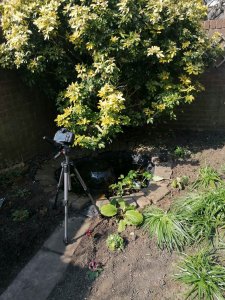
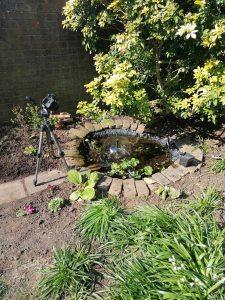
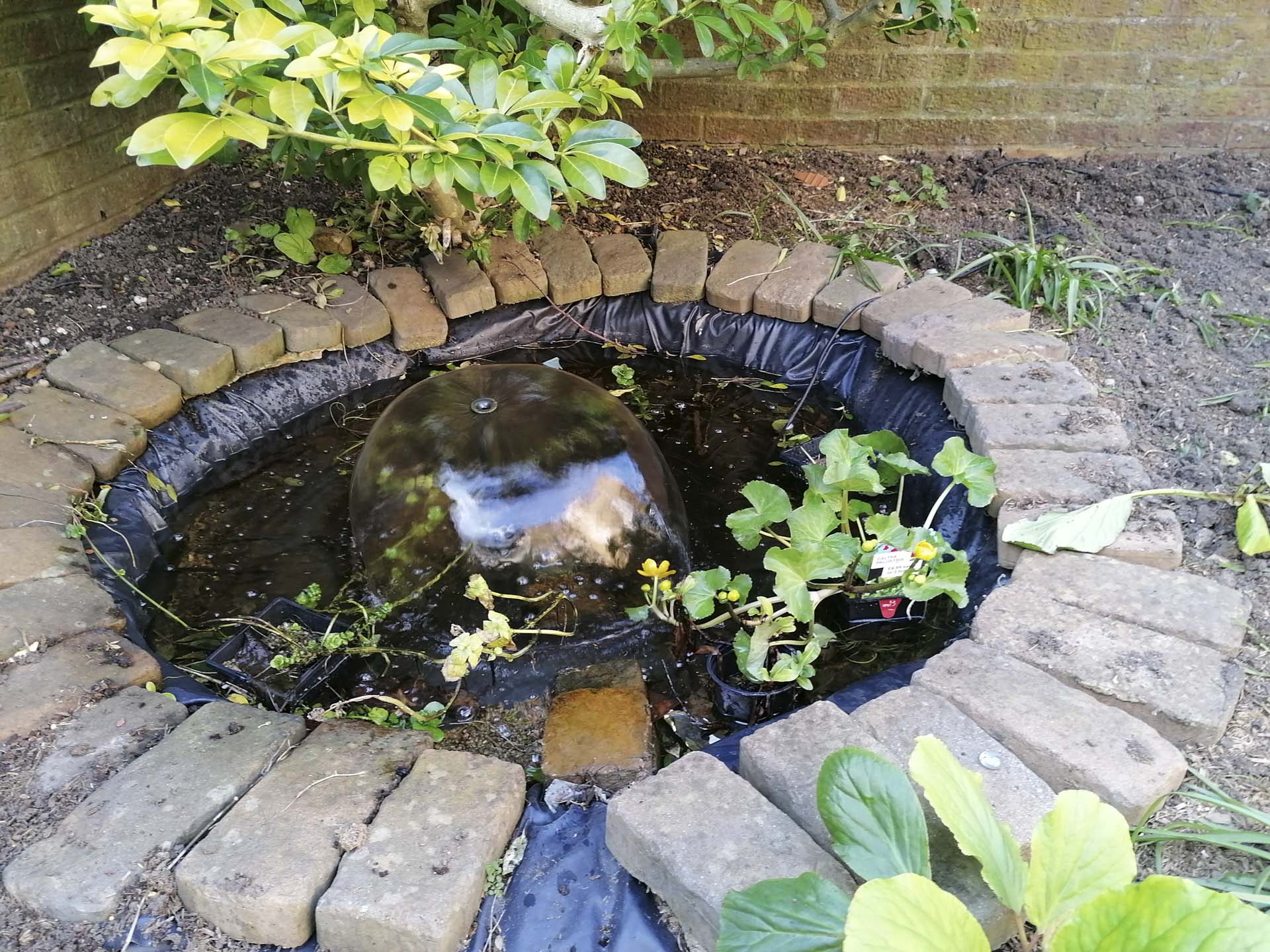
The first interval timer shoot was in the morning focusing on the pond’s water feature. While I was waiting for the sun to get into the right position, I set up the camera on the tripod and took some test shots to get the best composition.
I started the session at 10.30, again using a four-second interval for 200 shots, finishing at 12.34. This resulted in 1800 individual images. Again, to give an impression of the movement captured during the session, this is a sequence of one image after every 100 shots. I also under-exposed the images to give room in editing.
This slideshow requires JavaScript.
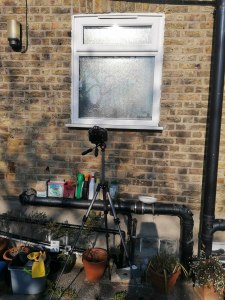
The second interval timer shooting session was in the afternoon.
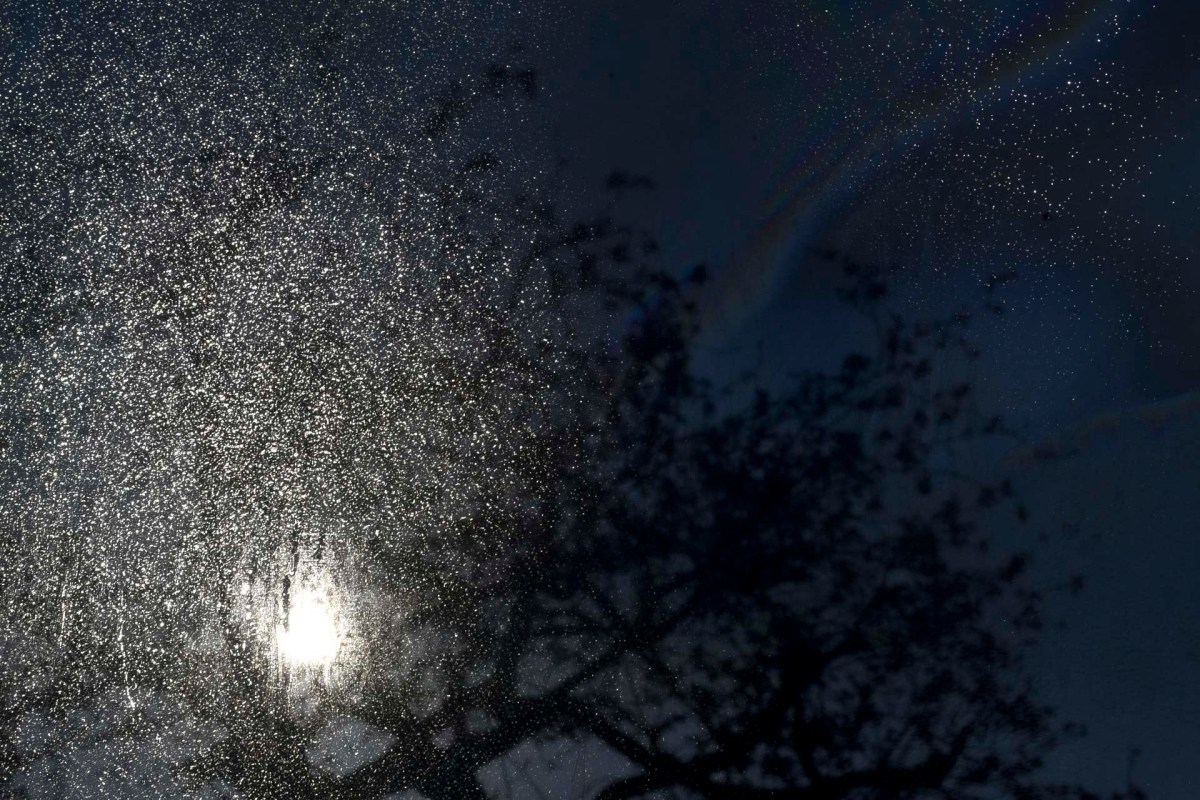
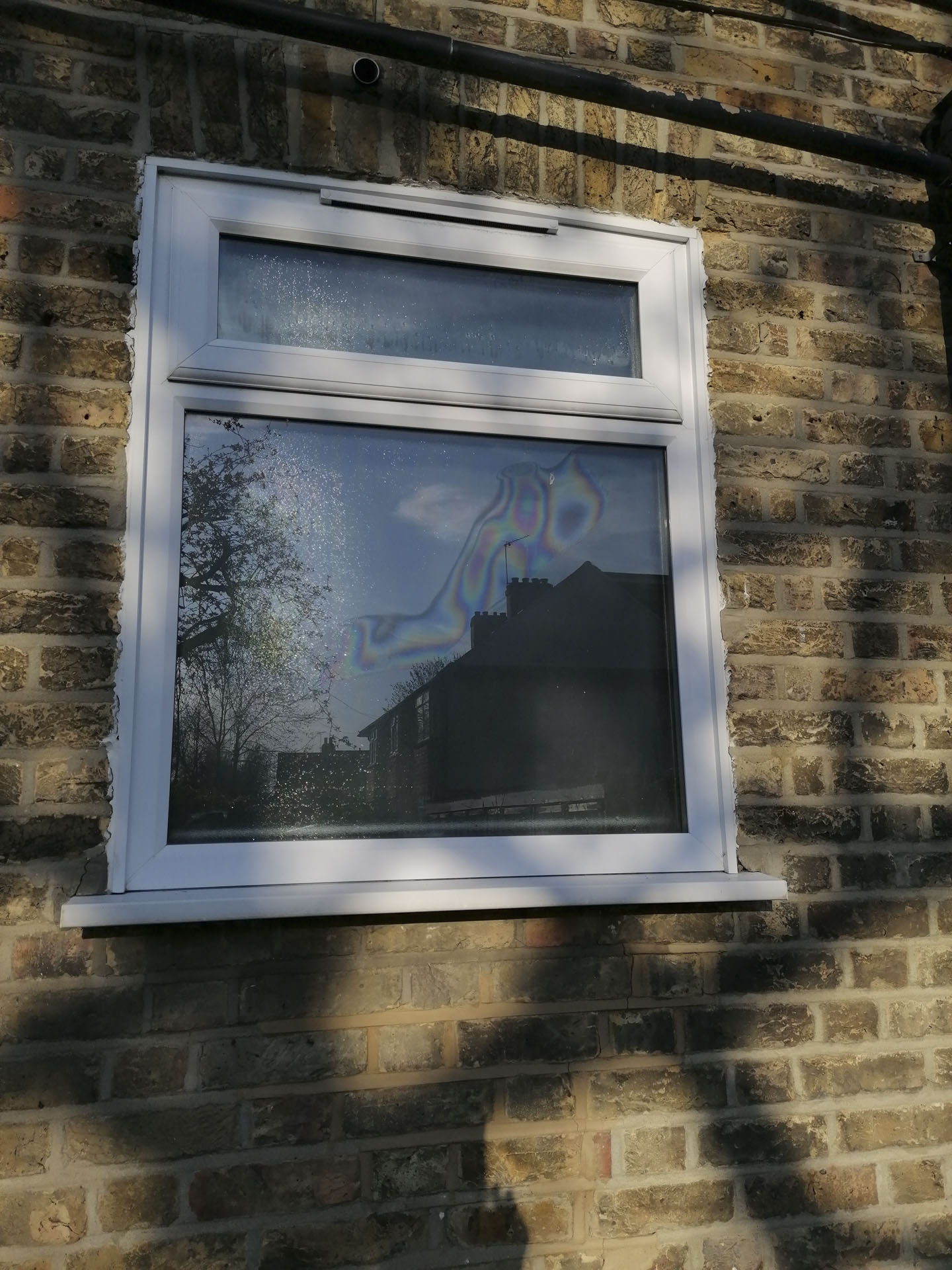
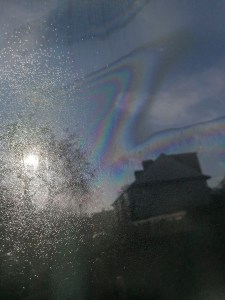
What I found even more interesting about this particular subject was the iridescent effect on the window. It wasn’t on the outside surface of the window, but in between the two layers of double glazing.
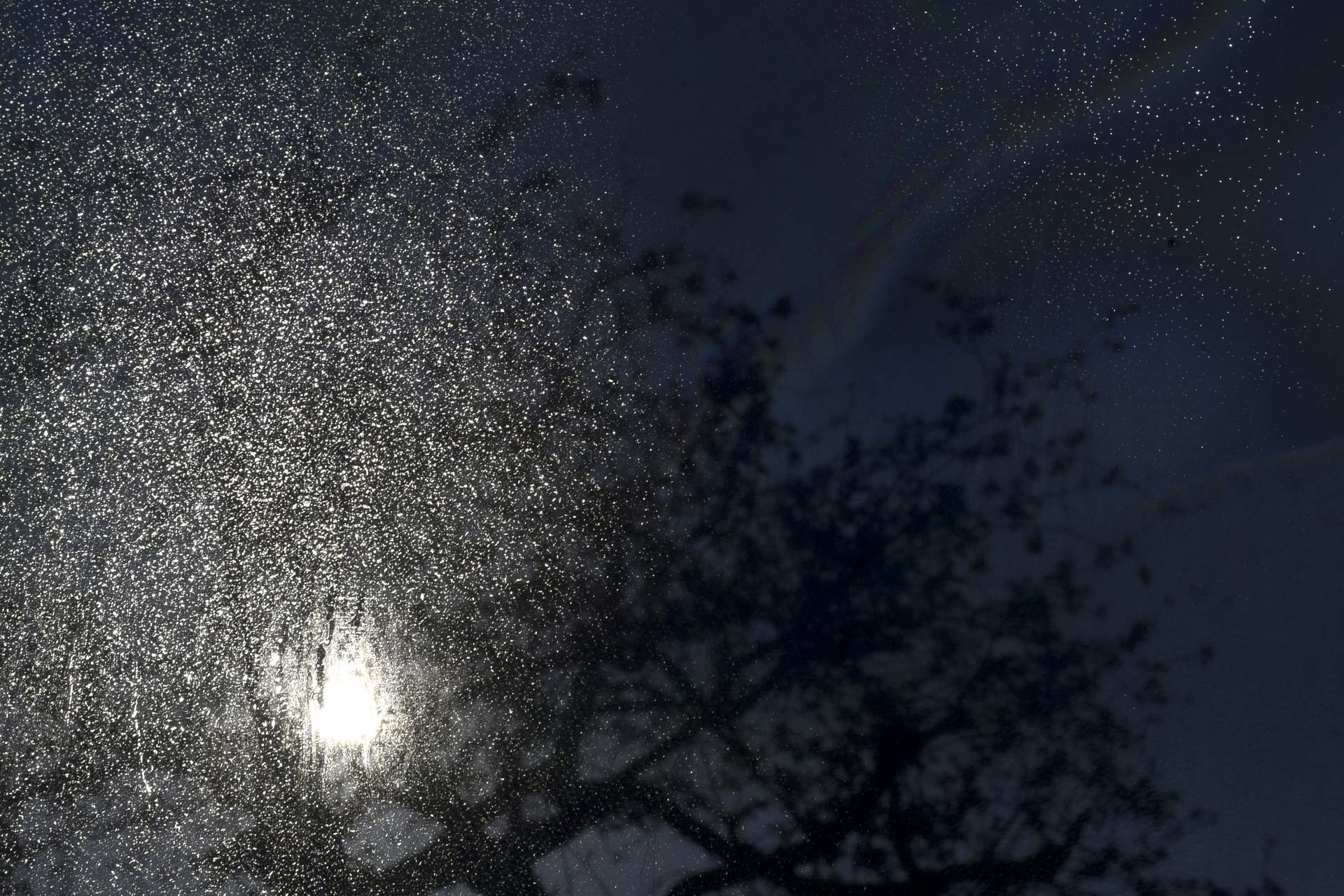
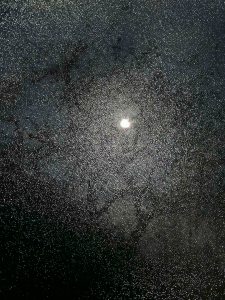
At first, I just focused on the sun’s reflection which gave a ‘galaxy’ effect. This started at 15.43 and finished at 16.01, which resulted in a total of 281 shots.
This slideshow requires JavaScript.
When looking at the window, I noticed that the iridescent effect was changing over time and that the heat of the sun was causing this to happen. In addition to this observation, I started to change the focal point of some of the shots to see what it would do to those images. I started this from 16.01, finishing at 16.50. A total of 715 images were taken using this technique.
All of the original 715 shots were taken on a 2:3 ratio, but this resulted in some lens aberration. As the majority of time-lapse films have to be in a 16:9 format anyway, I cropped all of these images so that any unwanted, edge-of-frame details were removed. The following is a sequence of images to give a visual concept of the details and movement captured during the session.
This slideshow requires JavaScript.
When I started to process the images from this day and the one before, I realised that I was rapidly running out of storage. I could do some basic editing, as seen in the image below.
My strategy was to order an external hard drive and wait for its arrival before processing the files to their full potential.
I wasn’t feeling my best on this day and, having to self isolate, wasn’t able to venture far from home. This gave me the opportunity to explore new photographic captures – my garden.
Until two months prior, the garden where I live had been neglected. I live in a flat in a converted house and wasn’t responsible for this space in the property. This was impacted by the fact my neighbour wouldn’t allow any of the other residents to make any changes or carry out any improvements to the area. Unfortunately, due to health and time reasons, this person hadn’t done any work on this space for quite a while and the garden was looking a bit like an abandoned urban space.
An additional factor to me not appreciating this space on my doorstep is that I didn’t have the time or inclination to do so. The patio part of the garden is the main thoroughfare when going into the entrance of the house. Since I moved into my flat in 2016, this area was just a 16-foot path from the street to the door. During this time, it was just the path between the street and home.
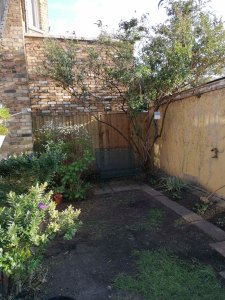
In January this year, the garden was transformed with weeds being dug, unruly bushes being cut back and new seedlings planted.
One major improvement was to the small pond in the corner of the garden, which had a water feature installed.
What I did observe is how the sunlight was flooding into this area of the garden, specifically in how it lit up the water feature. The following images were taken with my DSLR at 11.20am.
I also took these images during my initial observations.
I wasn’t feeling too inspired, but then my flatmate, Luki, mentioned that he noticed the sunlight shining through the tree during the afternoon. Luki is a yoga/pilates instructor plus a personal trainer. Due to the restrictions on non-essential business being open plus the challenge of social distancing, Luki was no longer able to train at his gym, so was now doing this in the garden. This also gave him the time and opportunity to appreciate his domestic outside space.
Luki’s comment sparked me to carry out an interval time shoot later that day. The intention behind this session was to capture the sun coming through the leaves, the movement of the leaves, passing clouds and any other occurrences. With interval timer shoots, there is always the chance of something unexpected happening – either good or bad!
I set up the camera on the patio facing the tree. The intervals were set at four seconds for 200 shots. Long enough to capture a sequence, but short enough if I had to stop or if there were any technical issues. As I’ve discovered with previous shoots, four seconds is enough to give enough time between shots to record movement.
As there was a 10-minute period while the camera was doing its job, I took this window of time to make observations and take photos with my smartphone.
While looking around the garden, I remembered one of my photography edicts. When focusing on a subject, especially in an outside location, look behind you.
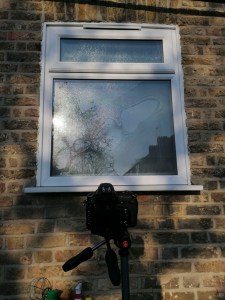
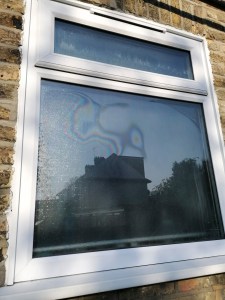
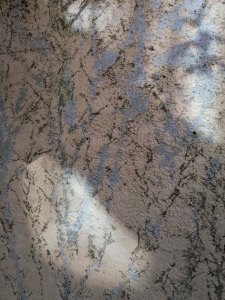
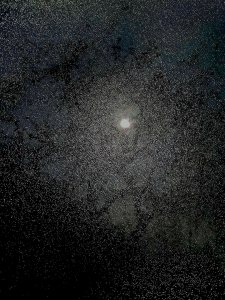
When I did this, I observed the reflection of the sunlight in my neighbour’s bathroom window. This piece of glass has a stippled effect that comes to life when the light hits it.
Bathroom Window Reflection 1
Bathroom Window Reflection 2
Bathroom Window Reflection 3
It gave the eerie effect of moonlight in a magical forest. I realised that this could be something quite special. As such, my plan for the following day would be to carry out an interval timer shoot of this phenomenon at a similar time.
The interval timer shoot itself was from, according to the information on my files, 15.06 to 17.09. During the shoot, 1,800 images were taken.
The following is a sequence of one image after every 100 shots to give an idea of the movement captured.
This slideshow requires JavaScript.
Very interesting results. Definitely worth the effort.
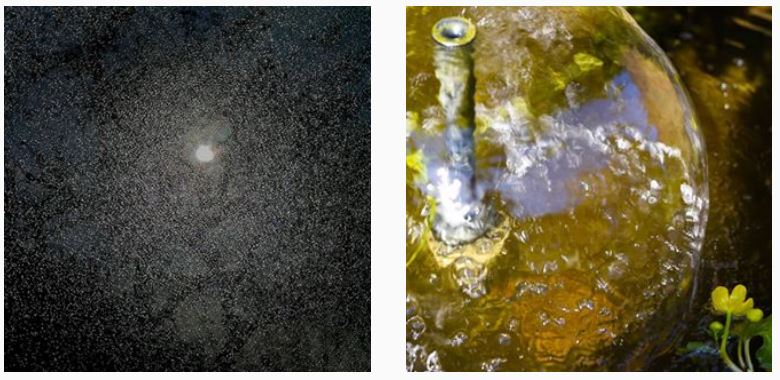
Later that day, I edited one of the images from the pond, saturating the colours.
I also put two of the images onto my Instagram account.
When looking at these both together, it looked as if I had captured both the starry sky and Earth in my garden. The universe is nearer than you can imagine, especially when you have the time to notice it.
Visions of the Temporal Metropolis: Exploring Photography, Time and the City
‘Creating an image means to actualise the inhuman vision of the camera, presenting us with an image of time that confronts us with a perception we have and could never have.’
(Emerling, J. 2012 pp. 167)
This essay aims to explore how time has been used to depict cities photographically. With this subject being a potentially extensive area of academic research, this exploration will be through looking at a select number of images, including one of the first photographic images and contemporary photographic practice, then applying various key theoretical debates concerning these depictions.
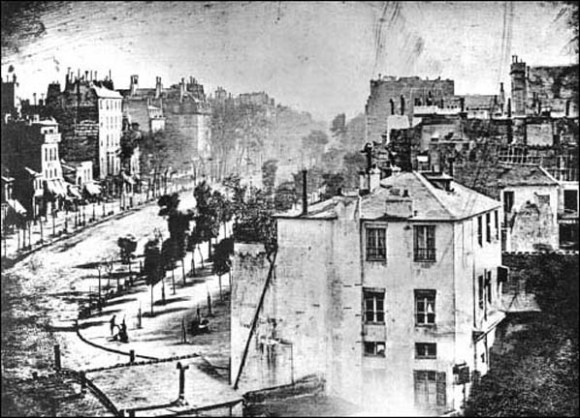
One of the earliest photographic images recording a city is Louis Daguerre’s (1787-1851) Boulevard du Temple (Figure 1). Taken in Paris in 1839, this ground-breaking daguerreotype is celebrated as the first known instance of human beings captured in a photograph.
Figure 1: Louis Daguerre, Boulevard du Temple, 1839, Daguerreotype
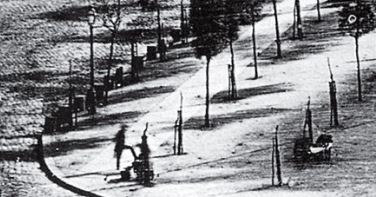
Not only is it the first photographic image of people, but it is also concurrently one of the first depictions of a city. This photograph shows an apparently deserted Paris. The perception with which the viewer is confronted is a place inhabited only by the shoeshine person and their customer (Figure 2).
Figure 2: Louis Daguerre, Boulevard du Temple, 1839, Daguerreotype
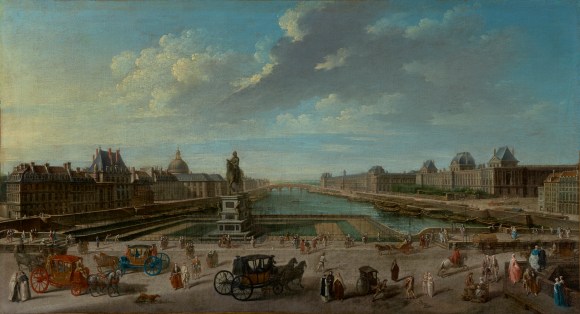
If one was looking at this Parisian street in 1839, it most certainly would have been a bustling vista with horse-drawn carriages and people moving at a metropolitan pace. When comparing Daguerre’s depiction of Paris with that of Jean-Baptiste Raguenet’s (1715-1793) oil painting of 1763 (Figure 3), this is the more-likely scene and the perception that most people would have of Paris of the late 18th/early 19th Century.
Figure 3: Jean-Baptiste Raguene (1715 – 1793), A View of Paris from the Pont Neuf, 1763, Oil on canvas
The lack of subjects in Daguerre’s image is due to them moving too fast to be recorded by this method of photography. The initial daguerreotype process involved a long exposure of a silver-plated sheet of copper for several minutes before being developed and fixing the image using chemicals. Only those subjects who stayed still enough were captured by the camera’s ‘inhuman vision’. This image illustrates how time can change one’s perception of the subject, in this case, a city, within a photograph. It can also be said that, once the technique is described, it then becomes clear that it is, in fact, an image of a fast-paced environment. If other people and the horse-drawn carriages were to be present in the image, they would have been moving slowly or not at all.
Time is integral to photography. One of the key reciprocal elements involved in taking a photograph is the duration at which the shutter is open. This duration will either freeze time in an instant (snapshot) or show movement within an image (time exposure). In general, the shorter the exposure time, the sharper the image. Paradoxically, a longer exposure does not automatically result in a greater blur. If the exposure is longer than the composition’s moving elements, these elements will not be visible, as shown in Daguerre’s image. This is not the only self-contradiction within photography, as Belgian theorist, Thierry de Duve analyses in his 1978 critical discourse ‘Time exposure and the Snapshot: the photograph as paradox’.
Within this work, de Duve labels ‘snapshot’ and ‘time exposure’ as ‘two opposite attitudes in our perceptual and libidinal apprehension of the photograph’. (de Duve, T. 1978, pp. 113). The paradox, as du Duve concludes, occurs as these opposing attitudes co-exist to a greater or lesser extent in every photograph and can be identified. This is reflective of the author, J. Scott-Fitzgerald’s tenet that ‘first-rate intelligence is the ability to hold two opposed ideas in mind at the same time and still retain the ability to function.’ (Scott-Fitzgerald, J. 1936). One could re-phrase this by stating that a photograph can hold two opposed depictions of time and still function as a readable image.
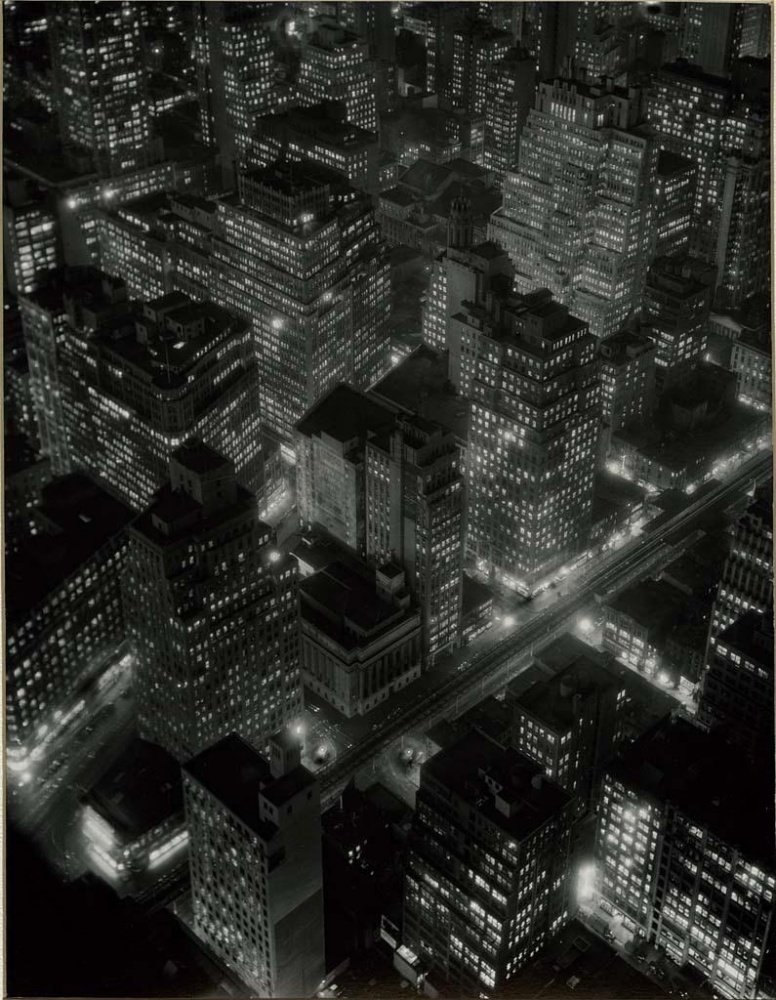
A later photographic image of a city that shares this paradox is Berenice Abbott’s (1898-1991) ‘Night View’ (1932) portraying New York (Figure 4). At first the first look, this image appears to be a snapshot. There are no obvious moving elements. However, when looking closer, it does have specific visual qualities associated with the ‘picture-like’ photograph, which du Duve terms as ‘time-exposure’ The photograph was taken between 4:30 p.m. and 5 p.m. on 20th December 1932 with a calculated exposure of 15 minutes. The image captures that time during dusk when the sky goes dark and office lights become visible.
In an article discussing this image by Shannon Perich (Associate Curator of the Photographic History Collection at the Smithsonian’s National Museum of American History), Perich describes the visible trends in Abbott’s work as having the modernist tendency which puts the image into perspective in the time it was taken and represented the emerging of the modern New York and new lifestyles that came with it. By using a long exposure, the ‘inhuman’ camera represents what Perich terms ‘the technical achievements and modern urban architecture of the 1930s’ North America, plus a change in the way of working.’ (Perich, S. 2010).
For me, this is one of the most poetic images of New York, capturing the city in a very pictorial fashion. The image softens the city, smooth its hard edges and frenetic energy. It is an example of du Deve’s observation that the ‘aesthetic ideal of time exposure is thus a slight out-of-focus’ and that ‘the blurred surroundings that belonged to the 19th-century style of photo-portrait act as a metaphor for the fading in time’.
By using this time-exposure technique, Abbott has given a temporality to the image by re-creating a chiaroscuro effect. As du Duve states, it does this by ‘loosening the fabric of time and allowing the viewer to travel through the image’. (du Duve, T. 1978, pp. 121). This sensation can be experienced when looking closely at Abbott’s image.
Figure 4: Night View [New York at night, Empire State Building, 350 Fifth Ave., West Side, 34th and 33rd streets], 1932 Berenice Abbott/Courtesy of the Smithsonian Institution)
To paraphrase du Duve, this is a photograph that endeavours to regain some of the features through which painting traditionally enacts time, creating a painterly illusion of depth by blurring its margins and overall grain.
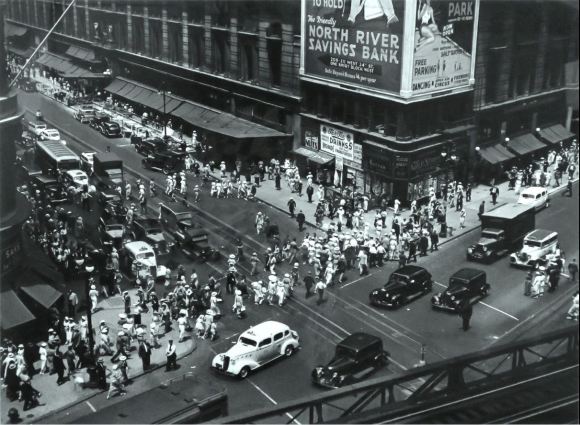
In contrast to the above long-exposure image, many of Abbott’s photographs of New York are what de Duve considers to be instantaneous snapshots, ‘petrified analogues that steal life.’ (de Duve, T. 1978, pp. 114). One of these images, taken in Manhattan in 1936, shows the frozen postures of individuals and vehicles (Figure 5). Captured from a similar viewpoint as Daguerre’s image of Paris, this ‘snapshot’ image gives the perception of New York one would expect during the 1930s. The sidewalks are full of people walking with purpose and direction while roads are filled with a selection of vehicles. This presents a further paradox within photography. By freezing an impossible posture and an unperformed movement, it presents an unresolved alternative. By not showing what happens before and after the camera has taken this image, de Duve would argue that the image is disconnected from its temporal context. There is no real knowing what happened before or after that captured moment. Would there be further traffic or people within the scene, or would it be just as deserted as Daguerre’s long-exposure image of Paris?
Figure 5: Berenice Abbott, Herald Square, 34th and Broadway, Manhattan, July 16, 1936, Gelatin silver print
As discussed, the perception of a city can be different depending on the length of exposure. For de Duve, this is either through a singular event or by making the event form itself in the image. However, there is an alternative way of perceiving the time and the city through photographs: time-lapse photography. This technique involves taking a series of photographic images at set intervals during a total time then processing them in sequence to create a film.
Traditionally, the camera is static, capturing the images in a tableau style from the same point and perspective. This photographic technique is a way of recording then changing the passing of time. For example, it can speed up a process such as a plant growing or celestial objects moving across the sky. Historically, the technique was primarily used to record and document nature.
One of the original pioneers of time-lapse photography was Arthur Clarence Pillsbury (1870-1946), an American photographer who held a government photographic concession in Yosemite National Park from 1906 to 1927. In 1912 he started taking motion pictures of the wildflowers of the Sierra. Pillsbury writes that he had:
‘conceived the idea of making the individual pictures in the film at one or two-second intervals and at once my pictures of the cliffs sprang into life, the clouds went drifting by and their shadows on the cliffs added to the lifelike appearance.’
(Acpillsburyfoundation.org, 2018)
Time-lapse has a further key element: automation, which enhances the camera’s inhuman vision. Carrying out an interval timer shoot enables the capture of the subjects’ movement with an unconscious observation. The camera can do what the human eye is not capable of as Walter Benjamin (1892-1940) states:
‘Evidently, a different nature opens itself to the camera than opens to the naked eye—if only because an unconsciously penetrated space is substituted for a space consciously explored by man.’
(Benjamin, W. 2008, pp. 16)
It is the opposite of Henri Cartier-Bresson’s (1908-2004) contemplation of the ‘decisive moment’ when taking a photograph:
‘Sometimes it happens that you stall, delay, wait for something to happen. Sometimes you have the feeling that here are all the makings of a picture – except for one thing that seems to be missing. But what one thing?’
(Cartier-Bresson, H. 1952, pp. 45)
During an interval-timed shoot, the camera does not wait for something to happen – the device slavishly takes a shot at the programmed interval for the set time. The camera doesn’t, as Cartier-Bresson suggests one should, pause for someone to walk into its range of view before operating the shutter. As such, the images from this technique become a succession of unposed snapshots. These snapshots are then put in a filmic format with each image usually showing for 1/25 of a second. This resulting film is a contraction of time and a change in perception. For example, if a camera takes one shot every second for 25 shots, this will cover a period of 4 minutes and 10 seconds. When processed, the time-lapse sequence will then be one-second long. When watched, there is the perception of both what is happening and what has happened, but only for that one second.
In approximately 1880, the introduction of gelatin-silver bromide plates made possible snapshots with an exposure time of 1/25 of a second. This resulted in ‘reorienting photography toward the instantaneous, those moments of time or of movement that were not necessarily available to the naked eye.’ (Doane, M.A., 2006, pp. 25). Time-lapse presents a series of snapshot moments, ones that cannot be seen without the camera’s observation, in filmic form. This is contrary to Carlo Rim’s (1902-3 – 1989) rumination on photography concerning film. Rim proposes that film consists of a succession of posed snapshots. The French film screenwriter, producer, and director continues:
‘and it only rarely gives us the illusion of the unexpected and the rare. Ninety films out of a hundred are merely interminable poses. One doesn’t premeditate a photograph like a murder or work of art.’
(Rim, C. 1930, pp. 41)
When using time-lapse to record temporality within the city, the resulting imagery is usually unexpected and rare. Attempting to premeditate what is captured in each shot during a timed, interval shooting session is nigh on impossible. By capturing the city and re-presenting in this way, the viewer is again confronted with a new perception, both real and imagined.
The first major commercial usage of time-lapse showing time in a city was within the feature film, ‘Koyaanisqatsi’ (1982). According to the director, Godfrey Reggio, the film is:
‘an apocalyptic vision of the collision of two different worlds – urban life and technology versus the environment.’
(Reggio, G. 2018)
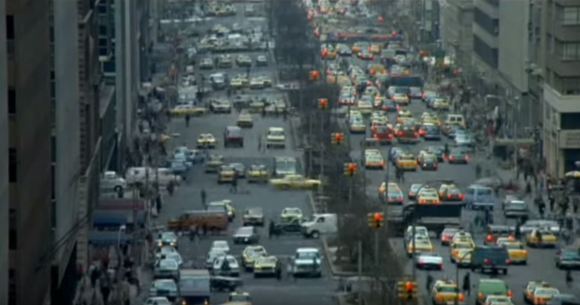
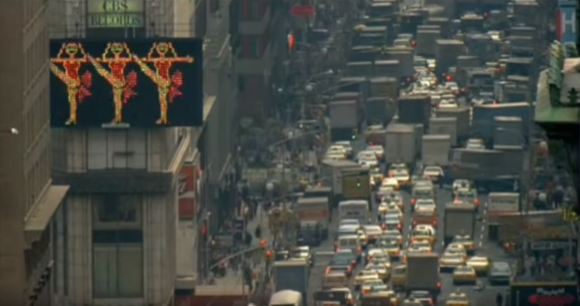
By using this technique within the film, combining the solid stillness of the buildings and architecture with the flows of traffic and people, Reggio reveals the frenetic pace of city life (Figures 6 & 7). In this film there are several time-lapse sequences shown as one shot per frame running at 1/25. As such, these sequences contract the occurrence of the original event, speeding up time and giving the perception of the city being a hive of relentless activity. This reflects Emerling’s statement that:
‘A photograph… does not give a simple image of time as a tense. It gives us an aspect of time as duration, as a contraction or a dilation in time.’
(Emerling, J.2012, pp. 170)
Figure 6: Still from Koyaanisqatsi (Dir: Reggio, G. 1982)
Figure 7: Still from Koyaanisqatsi (Dir: Reggio, G. 1982)
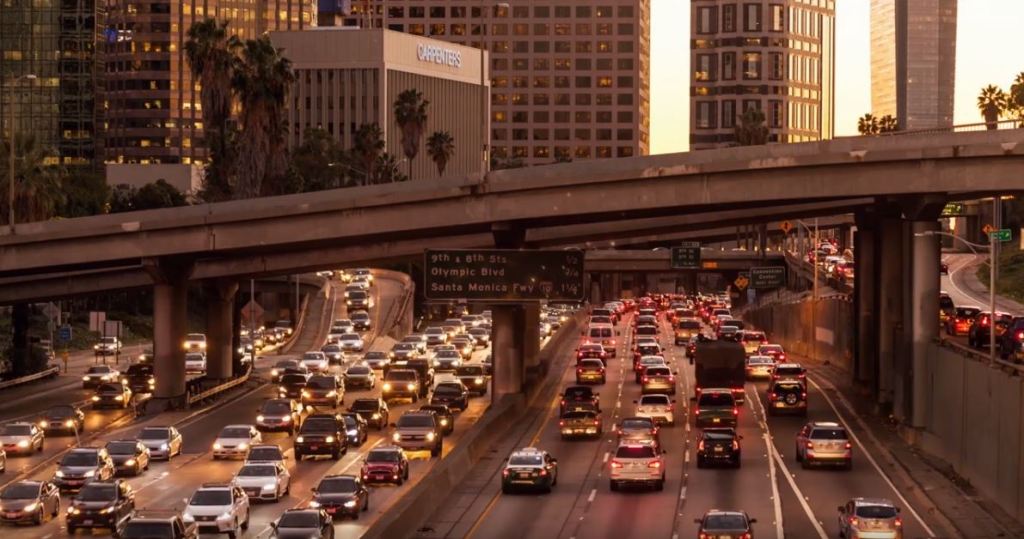
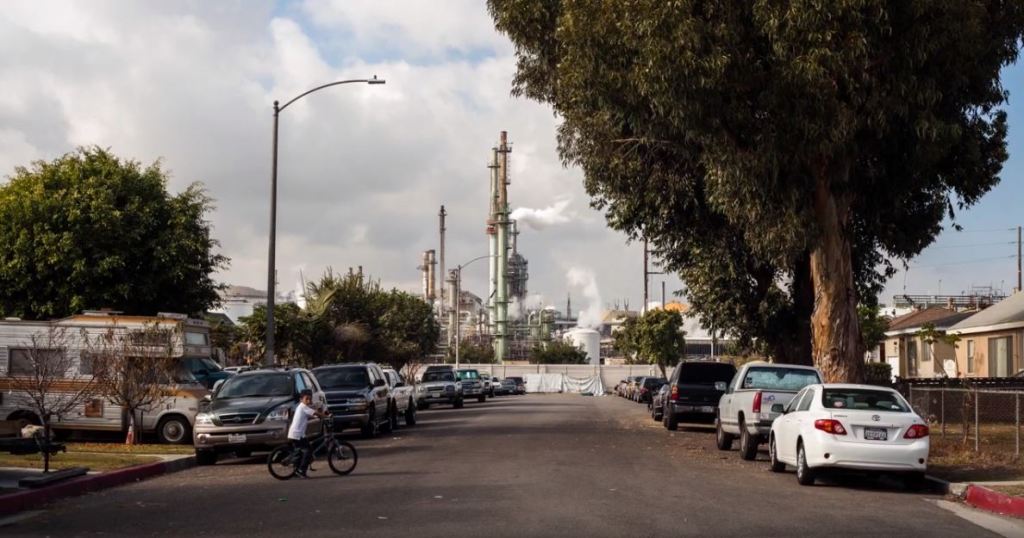
A more recent example of a city being depicted through time-lapse photography is the experimental documentary ‘Communion Los Angeles’ (2018). This dystopian vision of the present is a collaborative piece by Peter Bo Rappmund (b. 1979) and Adam R. Levine (b. 1978). Rappmund is an artist who has produced various feature-length documentaries using time-lapse: Psychohydrography, (2010), Tectonics (2012) and Topophilia (2015). These documentaries highlighted various environmental issues including the effects of human interference on the ecology. Levine is a film and video artist whose work has utilised time-lapse and according to his website, ‘focuses on hidden histories, vernacular practices and the cityscape’ (Levine, A.R. 2020). The documentary explores the 35-mile length of California’s Route 110, part of which goes through the metropolitan area of Los Angeles. By focusing on this road, it gives the not-so-pleasant perception of this city being overtaken by cars.
Figure 8: Still from Communion Los Angeles (Dirs: Rappmund, P. & Levine, A.R. 2018)
Figure 9: Still from Communion Los Angeles (Dirs: Rappmund, P. & Levine, A.R. 2018)
Through their use of time-lapse photography, Rappmund, Levine and Reggio record and show details of the city in a different time span from reality giving alternative views of the Metropolis. The overall perception of both films, which confront the viewer, is that the city is a negative and detrimental space and place.
Despite this similarity in perception, ‘Communion Los Angeles’ uses photography to portray the passing of time differently to ‘Koyaanisqatsi’. Instead of speeding up time, the documentary slows it down. ‘Communion Los Angeles’ comprises a series of still photographs taken by a DSLR camera then put together digitally to make an animation. Each image is on screen for more than the usual 1/25 frame rate. As such, it enables the viewer to see the image for longer, giving the perception of time dilating. By using this method, Rappmund and Levine had more control over the moving imagery, allowing these photographers to manipulate the presentation of time. This is in opposition to Cartier-Bresson’s suggestion that a photographer, unlike a writer, doesn’t have time to reflect. Instead, a writer can ‘accept and reject, accept again; and before committing his thoughts to paper’. This method of photography enables the photographer to ‘tie the several relevant elements together’. (Cartier-Bresson, H. 1952, pp. 44-45).
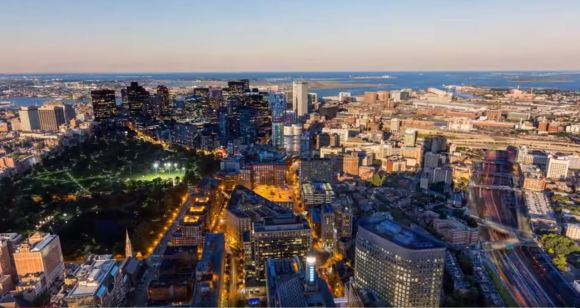
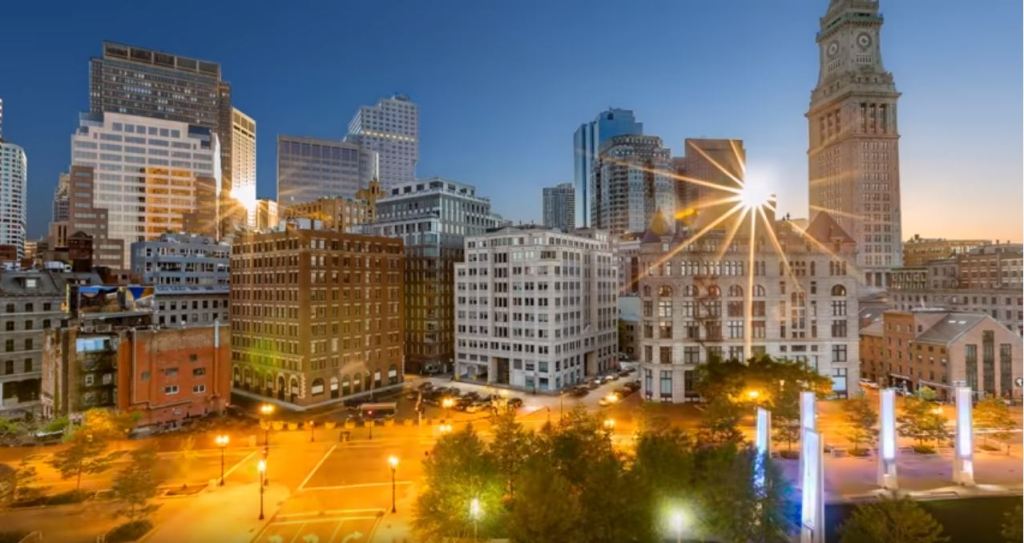
So far, the meta-theme of the time-lapse examples discussed is one of single temporal linearity. There is a complicit acceptance that the truth is unfolding before the viewer’s eyes in one particular time frame during each sequence. But what happens if different images taken at different times are combined? One photographer who has taken time-lapse to a new level is Julian Tryba. In 2014, Tryba produced a film called ‘Boston Layer-Lapse’, an innovative piece using time-lapse combining multiple sequences shot at various times of the day and night. The sequences were then edited together to create what Tryba terms as a visual time dilation effect he has named ‘Layer-Lapse’. On the accompanying notes to this film, Tryba states:
‘Traditional time-lapses are constrained by the idea that there is a single universal clock. In the spirit of Einstein’s relativity theory, Layer-Lapses assign distinct clocks to any number of objects or regions in a scene. Each of these clocks may start at any point in time, and tick at any rate’.
(Tryba, J. 2014)
The resulting piece shows a range of mesmerising location scenes within the city of Boston. Each sequence has elements of the differing times at which the original images were shot. These were then digitally edited using layer masks to hide or show selected segments of each image.
Figure 10: Still from Boston Layer-Lapse (Dir. Tryba, J. 2014)
When looking at the still in Figure 10, evidence of the different times of day are visible. For example, the lights in the park at the middle left of the image plus the buildings at the bottom middle are on. These elements appear to be in darkness. In contrast, sunlight and shadows can be seen on the right-hand side of the image.
Figure 11: Still from Boston Layer-Lapse (Dir. Tryba, J. 2014)
Within the still shown in Figure 11, the sun and its reflection are visible, but the lower half of the image was shot during the night. The result of this effect gives a warped temporal perception of this city.
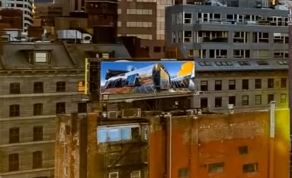
The temporal perception is warped further as one of the scenes (Figure 12) before the one in Figure 11 also contains this element showing on the billboard at the middle, left-hand side of the screen (Figure 13).
Figure 12: Detail of Still from Boston Layer-Lapse (Dir. Tryba, J. 2014)
Figure 13: Still from Boston Layer-Lapse (Dir. Tryba, J. 2014)
There is a further temporal contraction of time within this film running alongside the one affecting the visual time dilation effect. The images were shot over a period of 100 hours and then edited over a period of 350 hours resulting in a film with a run time of two minutes and 48 seconds. It is the equivalent of seeing a six-hour block of time simultaneously. The camera has again been used to create images of a city that would be impossible if one were witnessing every moment as it happened when it happened. It cannot be seen in the ‘now’, as Emerling states:
‘An image is a line of time… A photograph, a writing with light, is always too late to record anything as it is. It always gives us something as it was, never as it is.’
(Emerling, J. 2012 pp. 167)
The visual time dilation is not the only perception within ‘Boston Layer-Lapse’. In contrast to the dystopian vision of the city within ‘Koyaanisqatsi’ and ‘Communion Los Angeles’, ‘Boston Layer-Lapse’ shows a utopia-like Metropolis. The streets are busy with cars and people, but this film gives an overall impression that this is a functioning city without tension.
As explored above, this piece has looked at how photographs of the city can be considered an image of time created by the camera. Through using technology combined with the inhuman and unconscious vision, time itself can either be shown as contracted or dilated. This, in turn, affects how cities can be depicted photographically, including pictorial, portrait-like images of time-exposure and sharp snapshots. These depictions can also be shown as either a frenetic, polluting dystopia or a graceful and beauteous utopia.
To summarise, time combined with the inhuman vision of the camera results in different perceptions of a city. By looking at examples from one of the ground-breaking images of photography to one of the latest digital manipulations of visual time, it becomes apparent that the way in which the city is experienced as a visual phenomenon is not fixed. It is also a combination of the unconscious observation of the camera and the curation of the photographer. The questions raised by this combination is how existing images can be re-examined and how future photographic work can be curated and created.
In conclusion, what emerges from exploring the topic of photography, time and the city is the revelation of the potential scope for further investigation. There has been extensive research and musings on the relationship of time and photography to many subjects, which could not be addressed in the scope of this work. By focusing on a particular subject in connection to this relationship, it gives a specific range to extend this discourse within contemporary photographic debates. With the emergence of new technologies, combined with the convergence of existing ones, further investigation regarding the discourse of photography and time concerning the city plus additional categories is required.
Benjamin, W. (2008). The Work of Art in the Age of Mechanical Reproduction. London: Penguin Books.
Campany, D. (2019). Safety in Numbness: Some remarks on the problems of ‘Late Photography’ – David Campany. [online] David Campany. Available at: https://davidcampany.com/safety-in-numbness/ [Accessed 27th January 2020].
Campany, D., Stillness, (2008), Bell, A. and Traub, C. (2015). Vision anew. Oakland, Calif: Univers of California Press.
Cartier-Bresson, H., Images a la Sauvette, (1952). Campany, D. (2007). The Cinematic. London: Whitechapel.
De Duve, T., ‘Time Exposure and the Snapshot: The Photograph as Paradox’, (1978). October No. 5 Summer.
Douane, M. A., Real Time: Instantaneity and the Photographic Imagery, Green, D. and Lowry, J. (2006). Stillness and time. Brighton: Photoworks / Photoforum.
Emerling, J., Photography History and Theory, (2012). Routledge.
Laguna Art Museum. (2012). Peter Bo Rappmund Psychohydrography, 2010. Available from: https://www.youtube.com/ watch?v=e5mAdg8WwWk [Accessed 5th December 2019].
Levine, A.R. (2020). About — Adam R. Levine. [online] Available at: http://www.adamrlevine.com/bio [Accessed 13th January 2020].
Rim, C., De I’instantané, (1st September 1930), L’Art vivant, no 137 (Paris), trans, Robert Erich Wolf, ‘On the Snapshot’, in Christopher Phillips, ed., (1989) Photography in the Modern Era: European Documents and Critical Writings, 1913-1940 (New York: The Metropolitan Museum of Art), 37-40 in Campany, D. (2007). The Cinematic. London: Whitechapel.







 Jennie Meadows MA Photography