Categories
AGM62 Photography Research Project Stage 1 Posts

AGM62 Myoung Ho Lee 19 October 2020

While reading David Campany’s recently published book, On Photographs, I came across a pertinent section in connection with trees and photography. Using the series entitled ‘Tree’ by the South Korean Photographer Myoung Ho Lee and one of the images as an example, Campany states that the series can be seen as:

‘A meditation upon the artificial terms and conventions by which photographic images can become knowledge.’

(Campany, D. 2020 pp. 116)
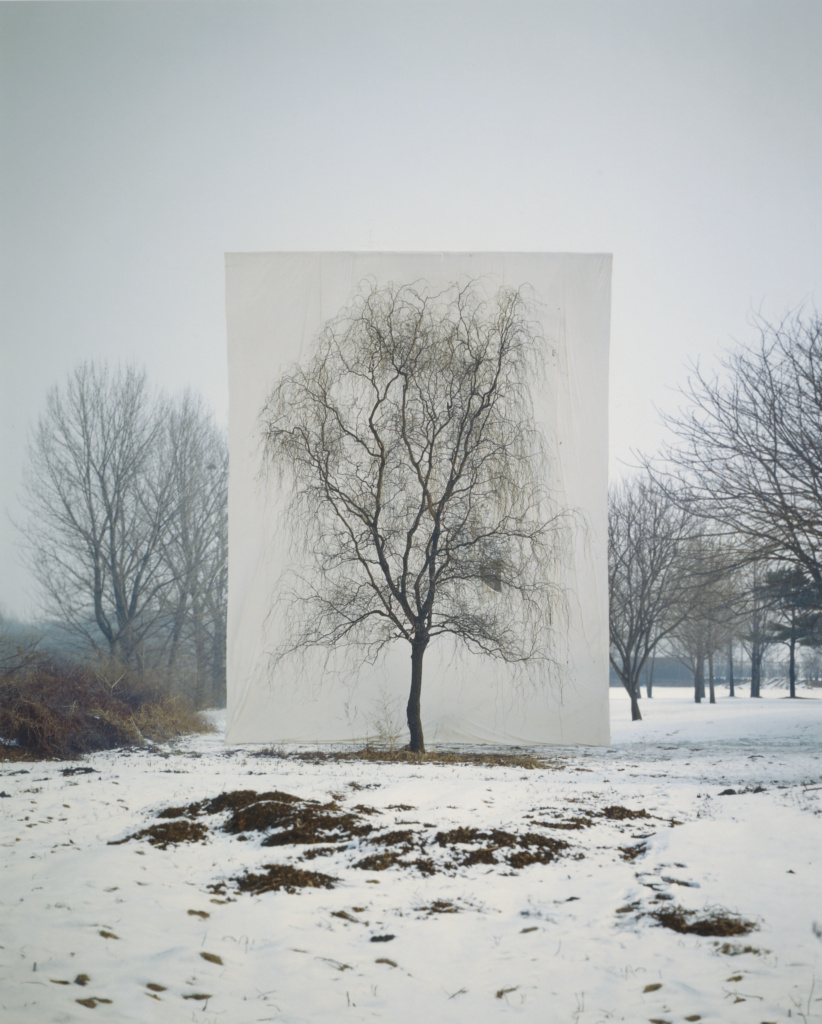
Figure 1: Myoung Ho Lee, Tree #3, 2006 – From The Series ‘Tree’, 2006-2012

Myong Ho Lee erected a giant white backdrop which Campany describes as:

‘Turning space into a stage upon which the tree presents itself (or performs itself ) for the camera. The framing is wide, allowing us to see not just the isolated tree but also the whole drama of its isolation.’

(Campany, D. 2020 pp. 116)

I had also seen another of Myoung Ho Lee’s Tree series at the Among The Trees exhibition when I visited back in September 2020.
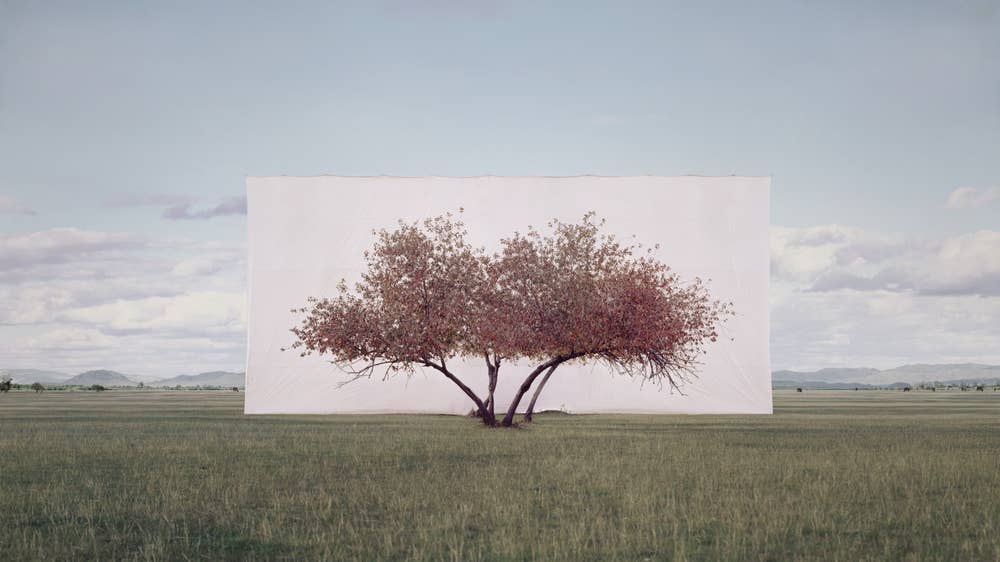
Figure 1: Myoung Ho Lee, Tree #2, 2012 – From The Series ‘Tree’, 2006-2012

In the exhibition’s accompanying brochure, Myoung Ho Lee asserts:

‘It’s as if the tree unites all: the ground, the sky and man in between. In East Asian philosophy the universe breaks down into three parts: Chun-Ji-In. Chun means the sky, Ji means the ground and In means human. Since a tree connects all three, I feel very much that a tree is like a universe.’

(Myong Ho Lee. 2020 pp. 106)

The brochure also gave a brief background into Myong Ho Lee’s tree photography, which resonated with my own passion for this subject. As mentioned in his Artist Statement, Myoung Ho Lee:

‘Began photographing trees because they are ‘something you see everyday, but we often overlook them; we forget their value and just pass by.’ Since 2004 he has focused attention on individual trees in the landscape by treating them like studio portraits, dissociating them from their immediate context and spotlighting their true shapes and forms.’

(Rugoff, R, 2020. pp 155)

The statement continues to describe Myoung Ho Lee’s practice motivation:

‘Lee selects his subjects for their personalities and patiently observes them through different seasons and at varying times of the day before deciding how to portray them.’

(Rugoff, R, 2020. pp 155

Next, the method:

‘In a complex performance-like process involving heavy machinery and skilled production crews, he isolates a chosen tree from its background by installing an expanse of white canvas behind it. Though evidence of this elaborate mechanical intervention is removed during retouching, the backdrop retains traces of the hoisting operation.’

(Rugoff, R, 2020. pp 155

The method results with the image of the tree being framed ‘naturally’ by the tree’s actual habitat.

What I found interesting is comparing the way in which Campany uses Lee’s images of trees in relation to photography to Lee’s motivations. Lee is portraying trees in particular way (philosophically, sensually and metaphorically), while Campany is taking a more literal approach.

Campany states that:

‘Being a medium of specifics means photography is not well suited to generalities. A photograph can record the uniqueness of an object but it cannot designate the general category to which it might belong. What makes it useful in compiling an inventory makes it quite useless in defining the group.’

(Campany, D. 2020 pp. 116)

Campany continues with his stance in putting forward the example of images found in books to be used for identifying plants. Campany purports that although photography can record a specimen, but not the species, as each individual specimen is a variation of that species. Campany states that botanical identification is better served by drawing than by photography as:

‘The skill of a botanical illustrator is to look at several specimens and then produce an average. The average does not exist in reality but it is useful to have it.’

(Campany, D, 2020 pp. 116)

Campany takes his observations further by stating that:

‘Photographs of specimens are, of course, extremely useful in their own way. They show not the average or the ideal but the actuality. A photograph of a plant might be able to show an instance of mutation by which a deviation is made from the species average. It might be able to show the specific effects of the environment on that particular specimen.’

(Campany, D, 2020 pp. 116)

The most pertinent comment that Campany makes in relation to choosing Lee’s work is:

‘To ease study, a specimen is best isolated from its surroundings.’

(Campany, D, 2020 pp. 116)

But the point of Lee’s work is not to make study of a particular specimen easier through isolation – it is to make an individual tree ‘visible’ through isolation. It also is make the viewer contemplate and mediate on the concept of ‘tree’ as a single entity and not just part of the landscape.

I also questioned my own motivations for this project when comparing these two viewpoints. I realised that am not looking to create ‘literal’ interpretations of particular individual trees within Bushy Park. Although I have spent the past seven years taking photographs of many of the trees within the park, I’m not seeking the perfect ‘tree’ picture. There is more to consider about the ecology of this managed environment and how the trees are part of it. Also, how trees and their ecology are portrayed artistically within photography.

References

Campany, D. (2020). On Photographs. London: Thames & Hudson Ltd.

Rugoff, R., Among The Trees. (2020). London: Hayward Gallery Publishing.
Categories
AGM60 Research & Development Posts

AGM60 Reading of The Age of Trees – Ralph Rugoff 12 May 2020

As mentioned previously, one of the main influences behind this current project is the exhibition Among The Trees at the Hayward Gallery. As I wasn’t able to attend this in person, I bought the exhibition catalogue to have a better idea of the curation ethos and the concepts involved.

Included within the catalogue is an essay named The Age of Trees, written by Ralph Rugoff (Director, Hayward Gallery). I read this piece on the morning of 12 May 2020 and discovered a wealth of information in relation to the work I was currently producing.

After a couple of weeks focusing on images (including production, editing, etc.), it was the perfect input for me to explore the concepts behind what I was actually doing. For example, Rugoff starts off this piece by outlining the universal importance of trees. This includes aspects such as social, cultural, mythological, historical, religious, iconical, and medical. Rugoff continues to highlight trees’ importance in our language, specifically stating how:

‘in our everyday phrases we find reflections of our long-standing connection with arboreal life: we speak of having roots, of activities bearing fruit, of branches of government.’

(Rugoff, R. 2012 pp. 10)


Rugoff continues to describe how:

‘we also make use of dendritic structures as a model for thought and decision-making, including for artificial intelligence’.

(Rugoff, R. 2020 pp. 10)


This is similar to my concept of the trees shot in sections, not whole, then combined. This then reverses the dendritic model by applying the concept of people appearing on screens separately but together. My images of trees for this project are a metaphorical representation of how we are currently living our lives.

After this introduction to the concept of ‘trees’. Rugoff continues with his thoughts on the tree’s apparent relegation to the background throughout much of Western art history over the past 500 years. At the time of the initial writing of this post, I was still processing the points made in this piece and the work that was referenced. As such, I will be revisiting the certain aspects that resonated with me in regards to this particular project.


References

Rugoff, R., The Age of Trees (2020), Rugoff, R. and Mues, M., 2020. Among The Trees. Hayward Gallery Publishing.

Categories
AGM60 Research & Experimentation Posts

AGM60 Reflective Review for Seminar 28 April 2020

Currently being written in preparation for 28 April 2020!

A further task for the seminar on 28 April 2020 was to give special emphasis to a reference I had selected, the Among The Trees exhibition. This reference would be then discussed among the group during the seminar with regards to my project.

For this task, I had to choose between two options to complete it. The choice was between conducting a short interview/conversation with someone who is in some way connected to this reference and writing a short (400-500 word) reflective review of this exhibition.

This reflective review could also be of resources related to the reference, including:

  • gallery talks
  • interviews
  • an article
  • online conversations/talks/events


For this task, I chose the latter. As I wasn’t able to visit this in person, I used the available online resources to write the following. Fortunately, on the website was a virtual tour of the exhibition presented and narrated by Ralph Rugof – Director, Hayward Gallery.


During this virtual tour, Rugof explains how the interlacing network of branches

The interlacing network of branches,

Among The Trees was held in the Hayward Gallery at the Southbank Centre in London from 4 March to 17 May 2020. It was one of the exhibitions that I had scheduled to visit, but this was now impossible due to the government restrictions due to the COVID-19 pandemic.

The overarching concept of this exhibition was to explore humanity’s relationship with trees and forests. According to the exhibition’s website page, Among The Trees:

Transports us around the world – from Colombian rainforests and remote Japanese islands to olive orchards in Israel and a 9,550-year-old spruce in Sweden. By drawing attention to the beauty, scale and complexity of trees and forests, the 38 artists in this exhibition turn our vision of the natural world on its head, inviting us to see it with new eyes.

Whether exploring the way that trees – with lifespans much longer than our own – challenge how we think about time, or revealing how they are intimately entangled with human affairs, these artists enliven and expand our appreciation of these remarkable organisms.

The artists whose work was being exhibited were:

Robert Adams, Eija-Liisa Ahtila, Yto Barrada, Johanna Calle, Gillian Carnegie, Tacita Dean, Peter Doig, Jimmie Durham, Kirsten Everberg, Anya Gallaccio, Simryn Gill, Rodney Graham, Shi Guowei, Hugh Hayden, Eva Jospin, Kazuo Kadonaga, William Kentridge, Toba Khedoori, Luisa Lambri, Myoung Ho Lee, Zoe Leonard, Robert Longo, Sally Mann, Steve McQueen, Jean-Luc Mylayne, Mariele Neudecker, Virginia Overton, Roxy Paine, Giuseppe Penone, Abel Rodríguez, Ugo Rondinone, George Shaw, Robert Smithson, Jennifer Steinkamp, Thomas Struth, Rachel Sussman, Pascale Marthine Tayou, Jeff Wall.

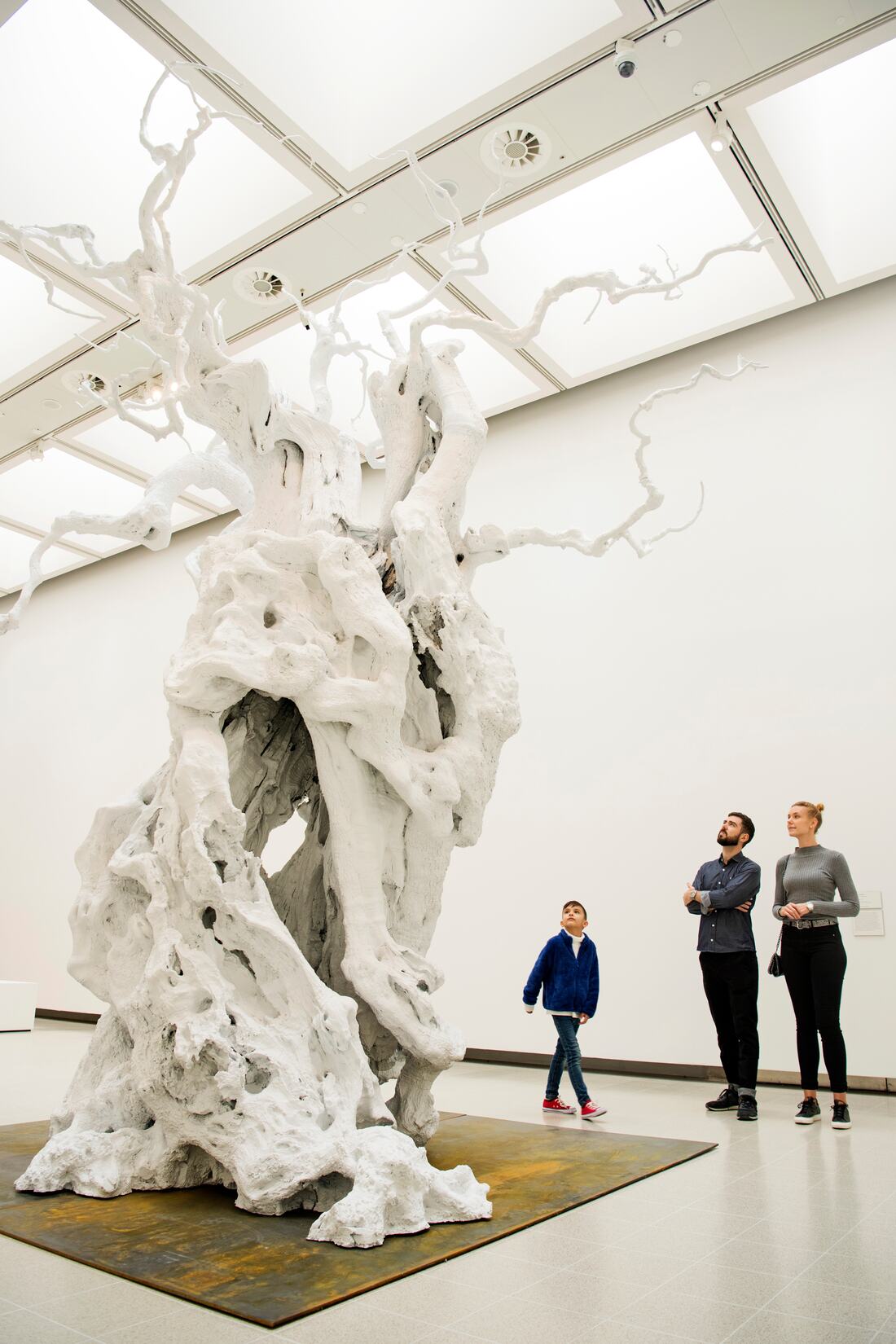
As I’ve written in a previous post, I have already seen the work of Ugo Rondione. This was the sculpture cast from a 2,000-year-old olive tree.

This is how it looks within the gallery setting (taken from the exhibition’s website).

Rondinone Ugo Cold Moon Courtesy of Hayward Gallery Photo Linda Nyland


While

4 MAR – 17 MAY 2020

By turns poetic, adventurous and thought-provoking, this group exhibition explores our relationship with trees and forests.


Alongside sculptures and installations, drawings, paintings and photographs, there are artworks that celebrate the soaring scale of trees. These include a monumental sculpture cast from a 2,000-year-old olive tree by Ugo Rondinone; a cinematic portrait of a 30-metre-high spruce tree by Eija-Liisa Ahtila; and a vast forest of trees constructed entirely from cardboard by Eva Jospin.

At a time when the destruction of the world’s forests is accelerating at a record pace, Among the Trees vividly highlights the indispensable role that trees play in our lives and imaginations.

Featured artists

R

The exhibition is kindly supported by the Swiss Arts Council Pro Helvetia.


https://www.southbankcentre.co.uk/blog/spring-get-know-some-urban-trees

In this short video, Hayward Gallery Curatorial Assistant Marie-Charlotte Carrier explores one of the themes of our Among the Trees exhibition – the way that trees, with lifespans so much longer than our own, challenge the way that we think about time, and put our human lives in perspective.

Trees have this really special way of making us feel small. They make us realise how short lived we are as a species, compared to these giants who have been on this earth for thousands and thousands of years. They create a different sense of time.
MARIE-CHARLOTTE CARRIER, HAYWARD GALLERY CURATORIAL ASSISTANT

https://www.southbankcentre.co.uk/blog/walking-among-giants-lifespan-trees


References:

Southbank Centre. 2020. Among The Trees. [online] Available at: <https://www.southbankcentre.co.uk/whats-on/exhibitions/hayward-gallery-art/among-the-trees&gt; [Accessed 26 April 2020].

Among The Trees – A Virtual Tour. Hayward Gallery 2020. [online] Available at: <https://youtu.be/JrjzLLPDITc&gt; [Accessed 27 April 2020].

Design a site like this with WordPress.com
Get started