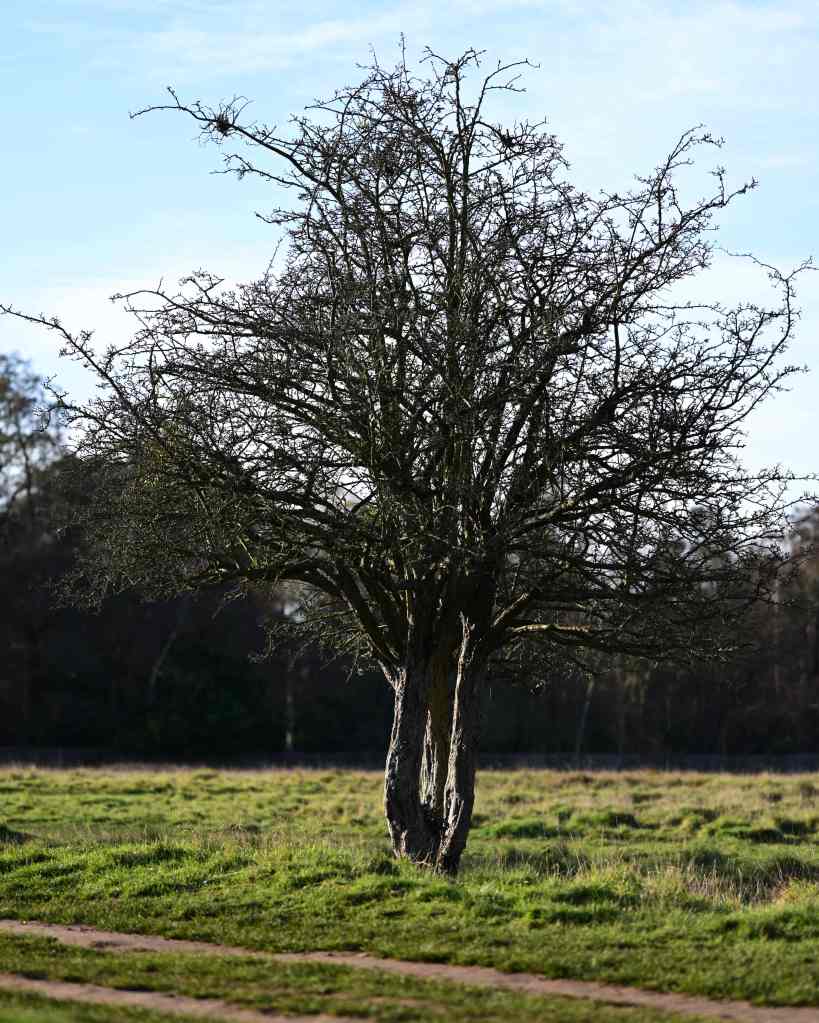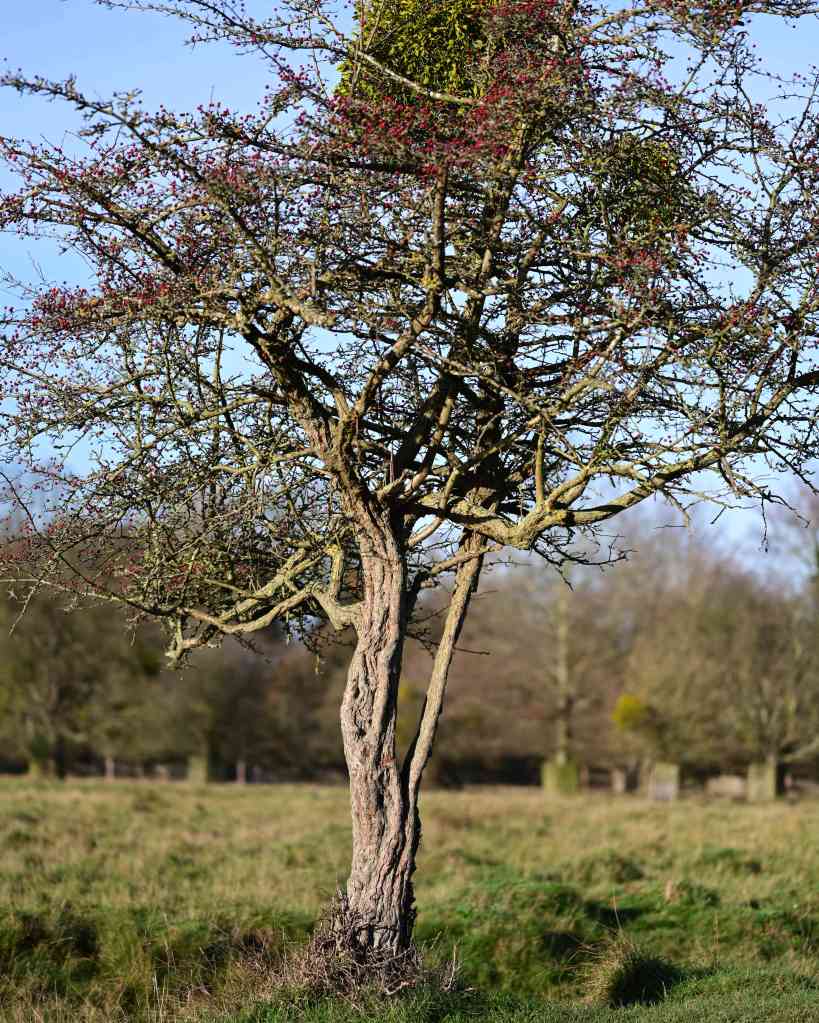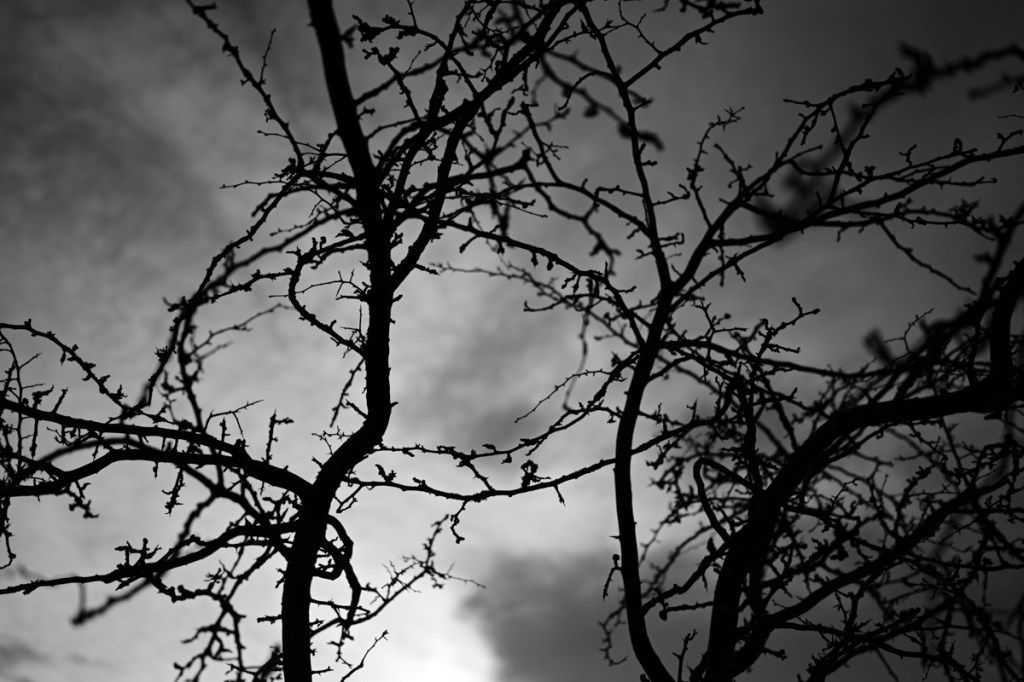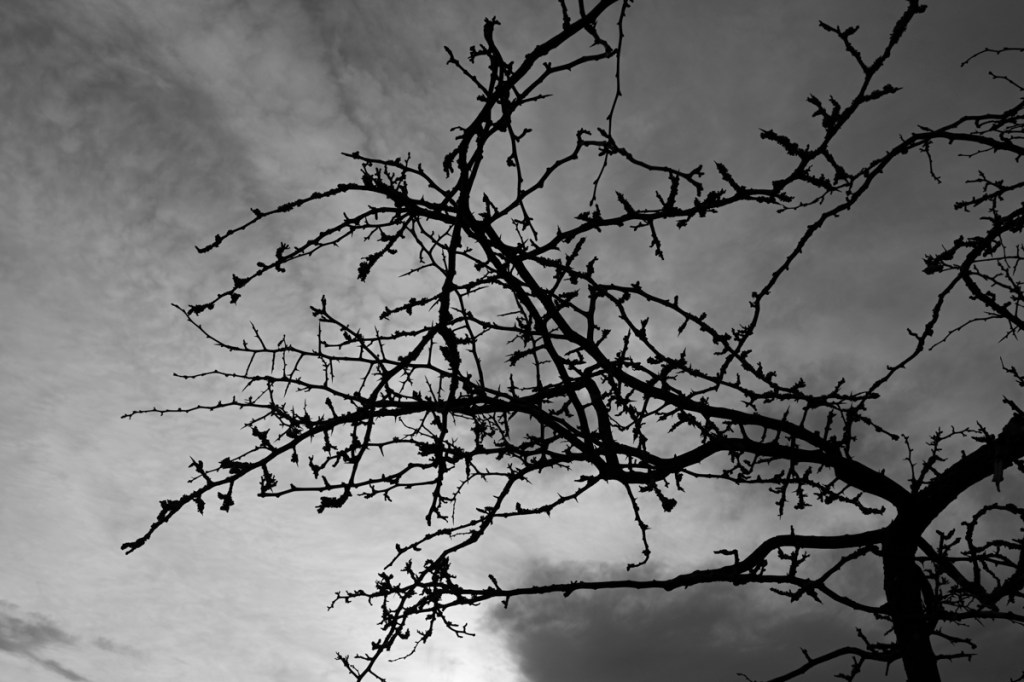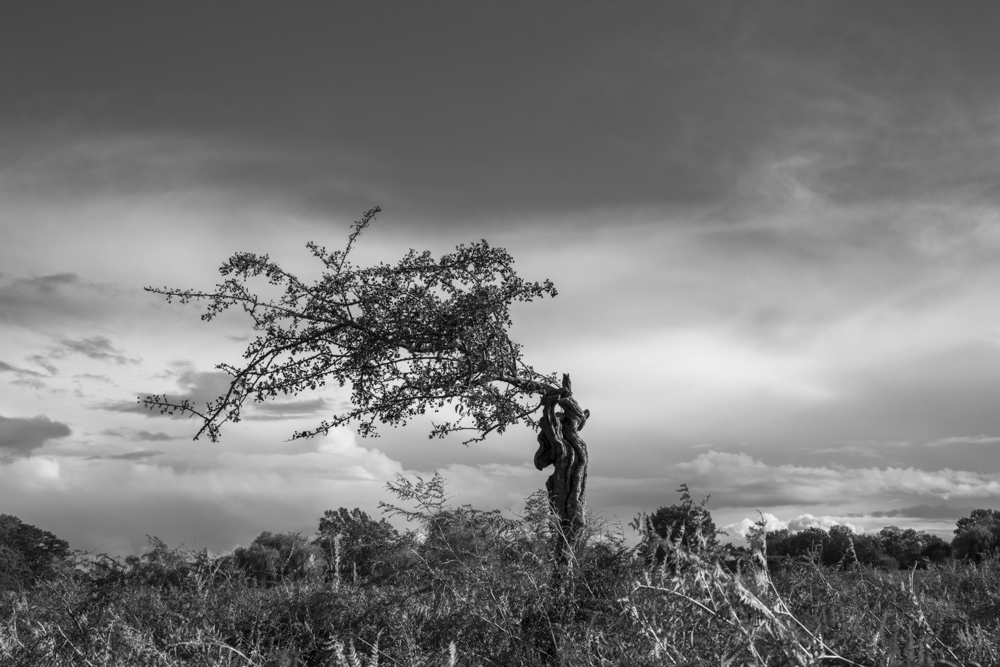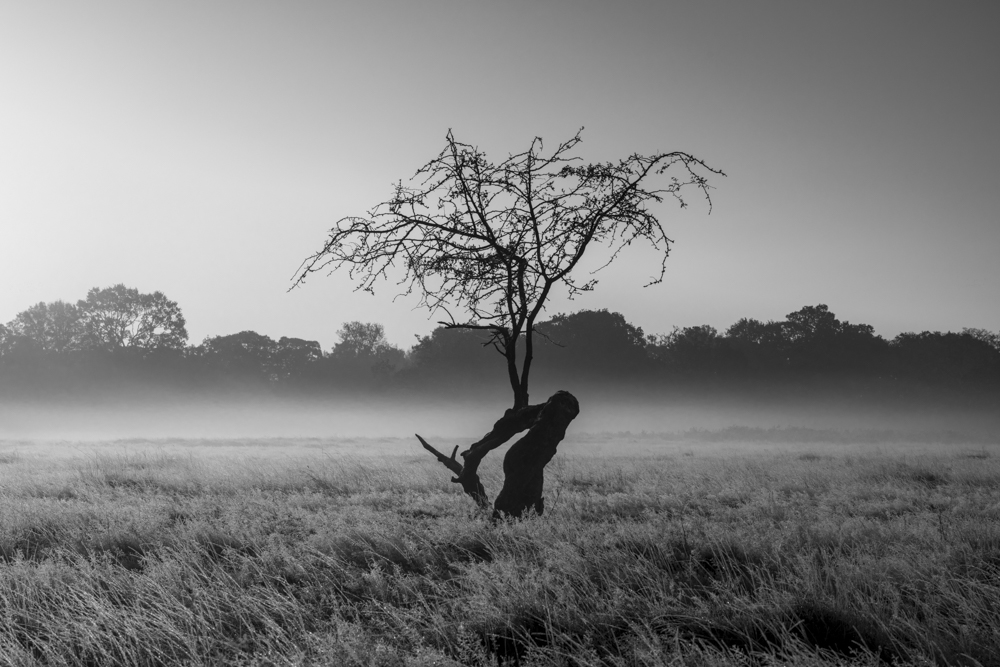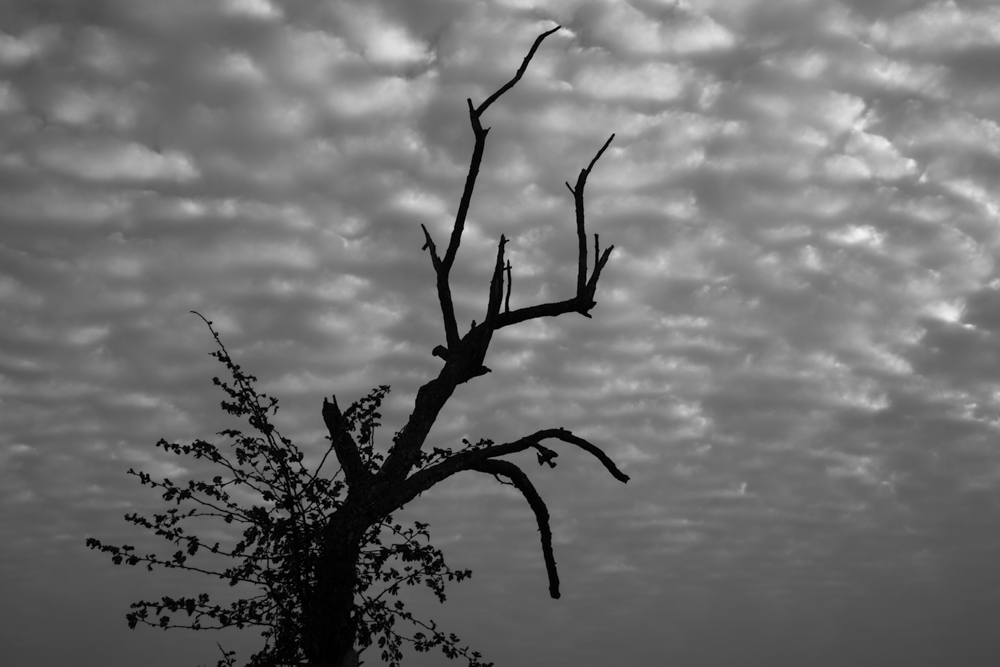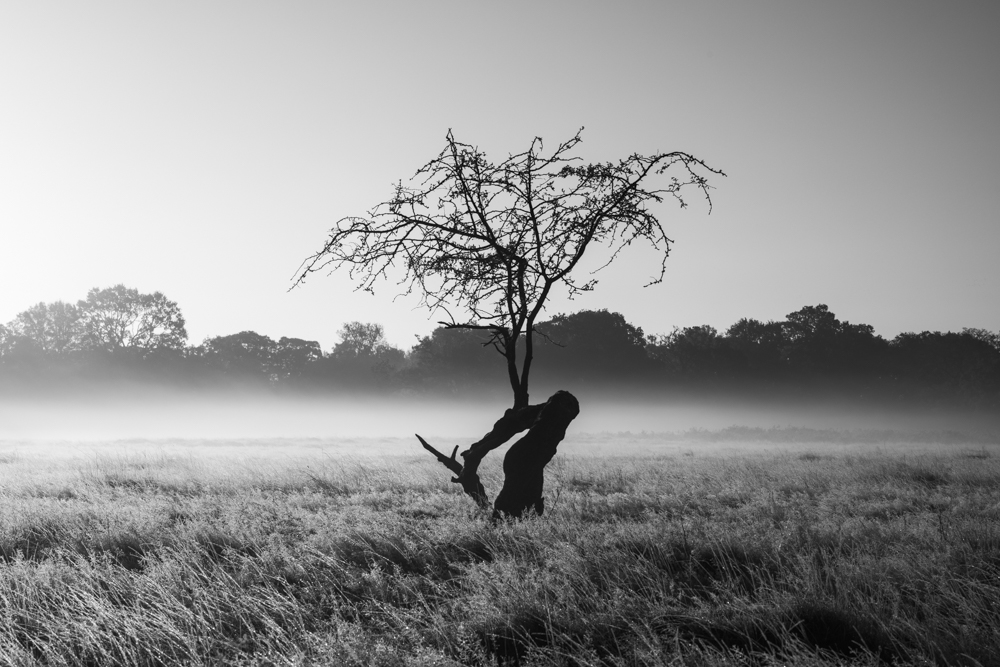
Categories
AGM62 Photography Research Project Stage 1 Posts

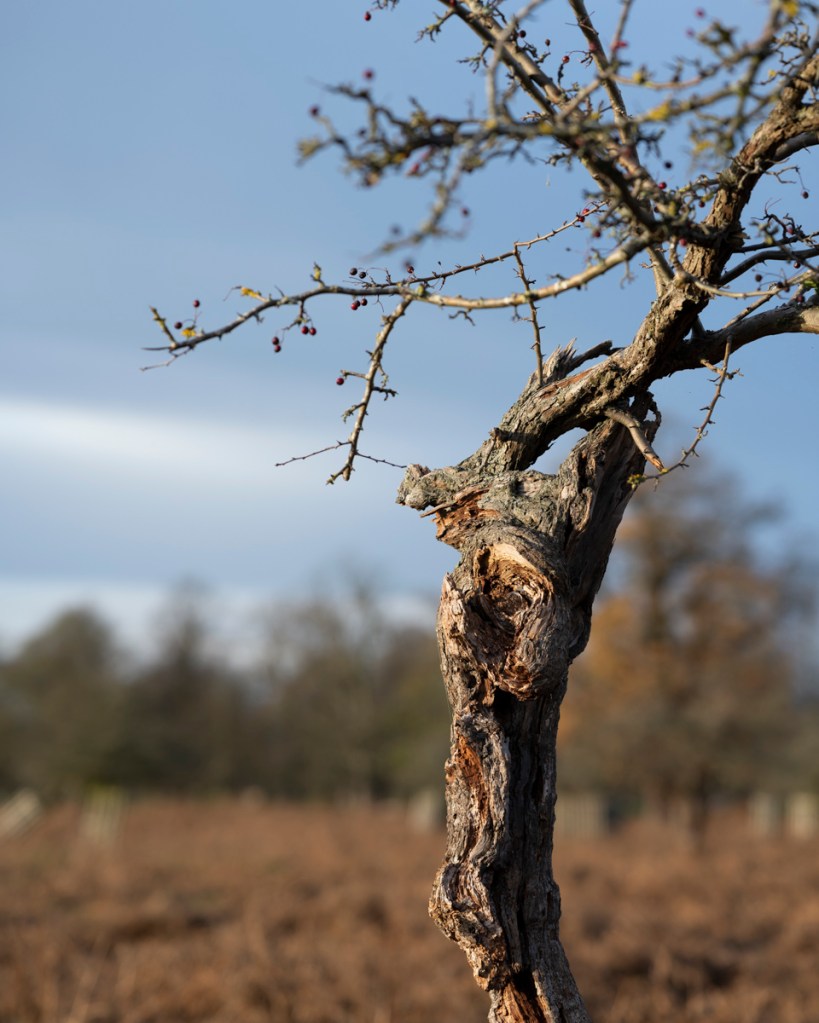
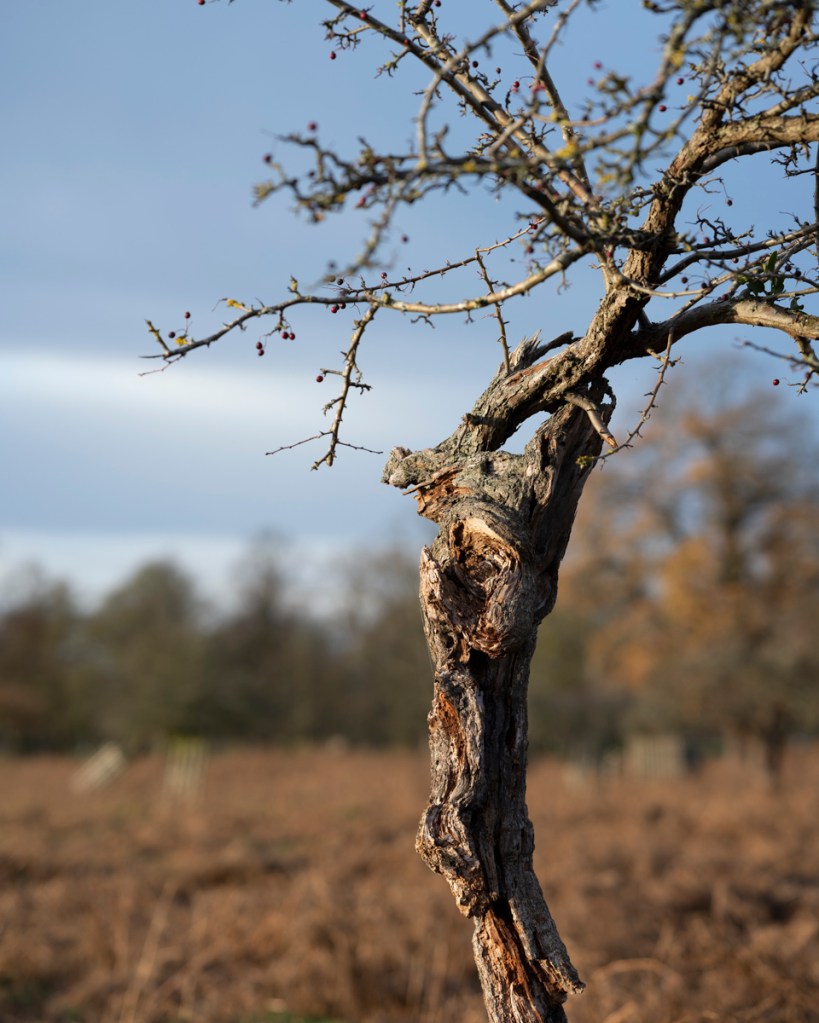
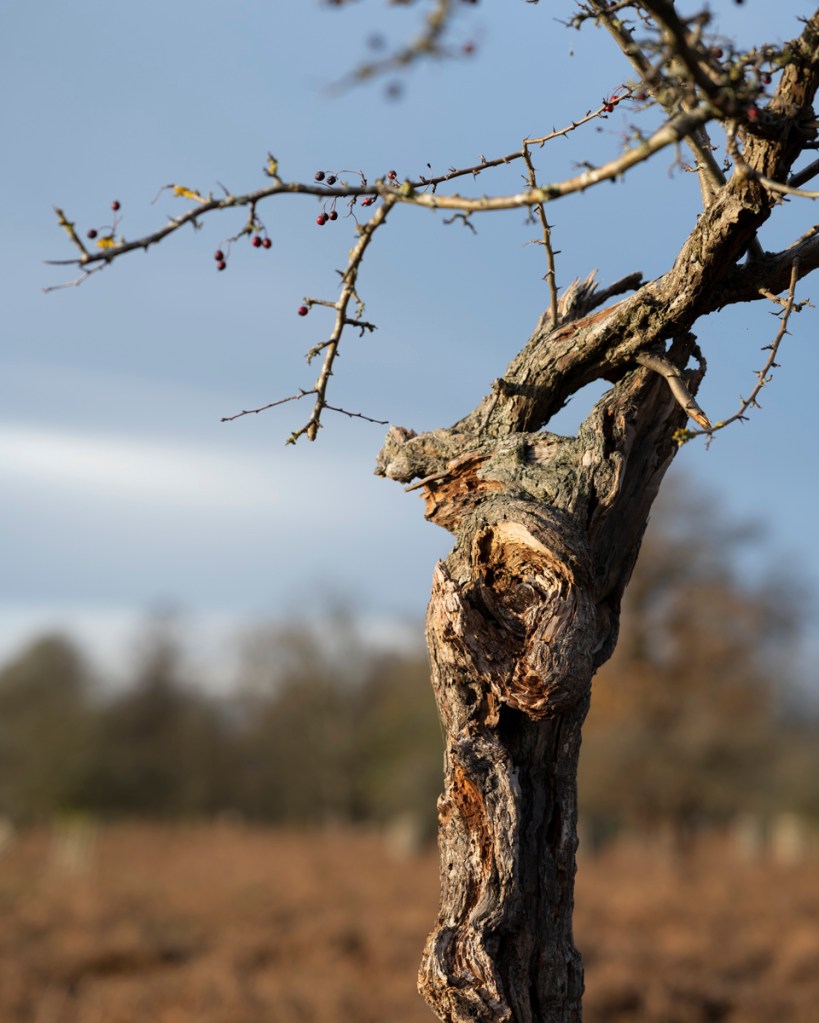
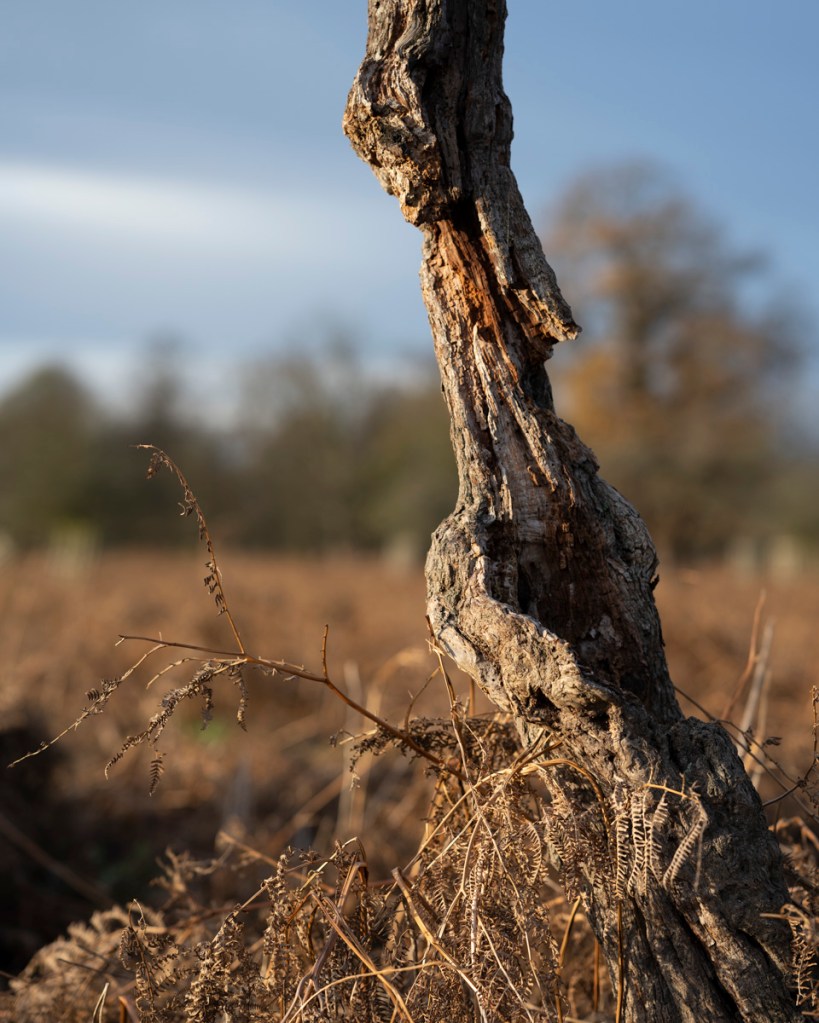
AGM62 Bushy Park Hawthorns 5 December 2020

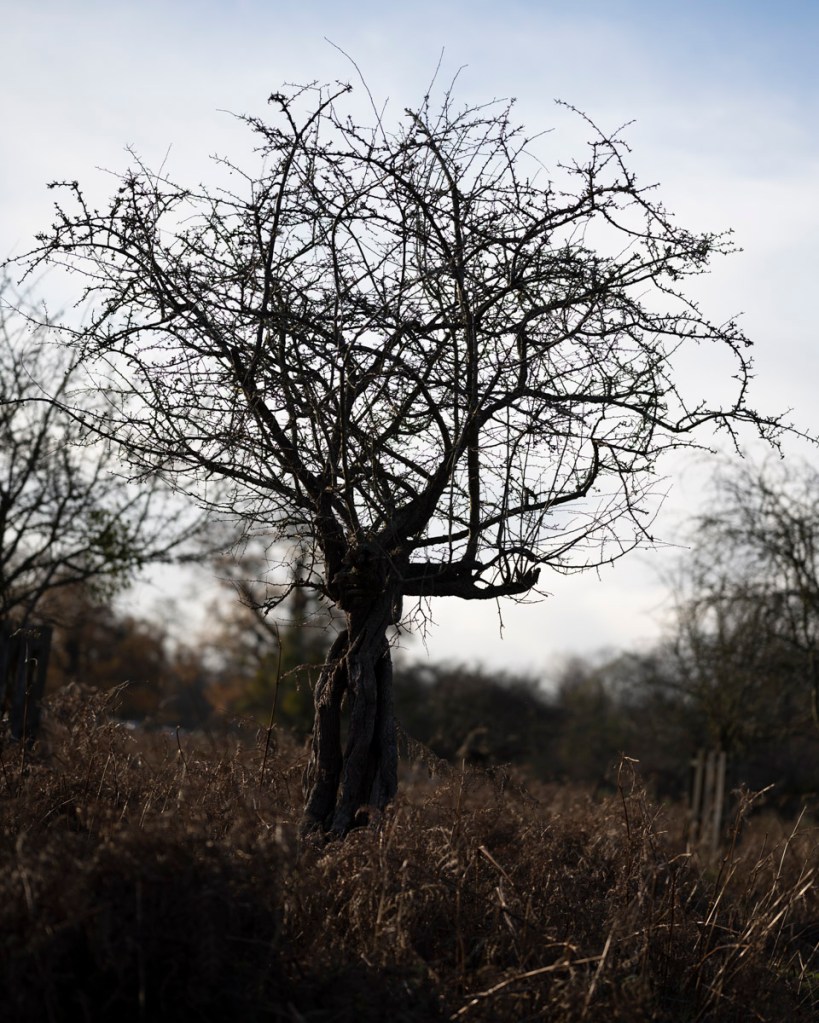
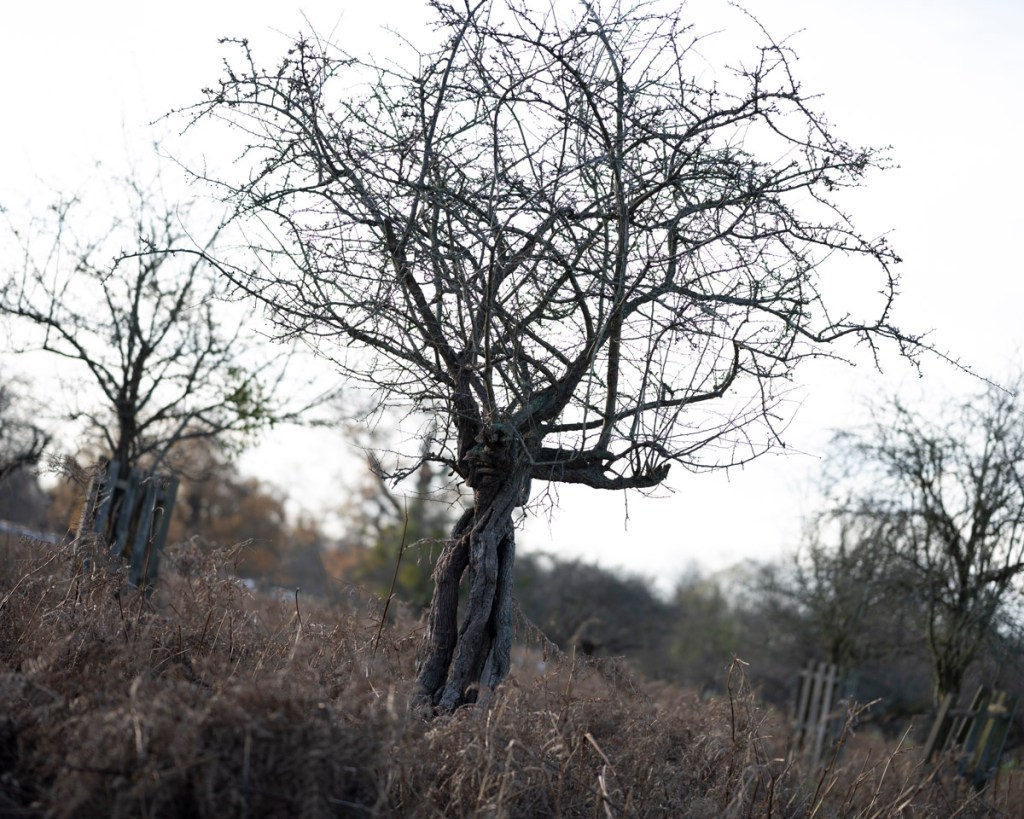
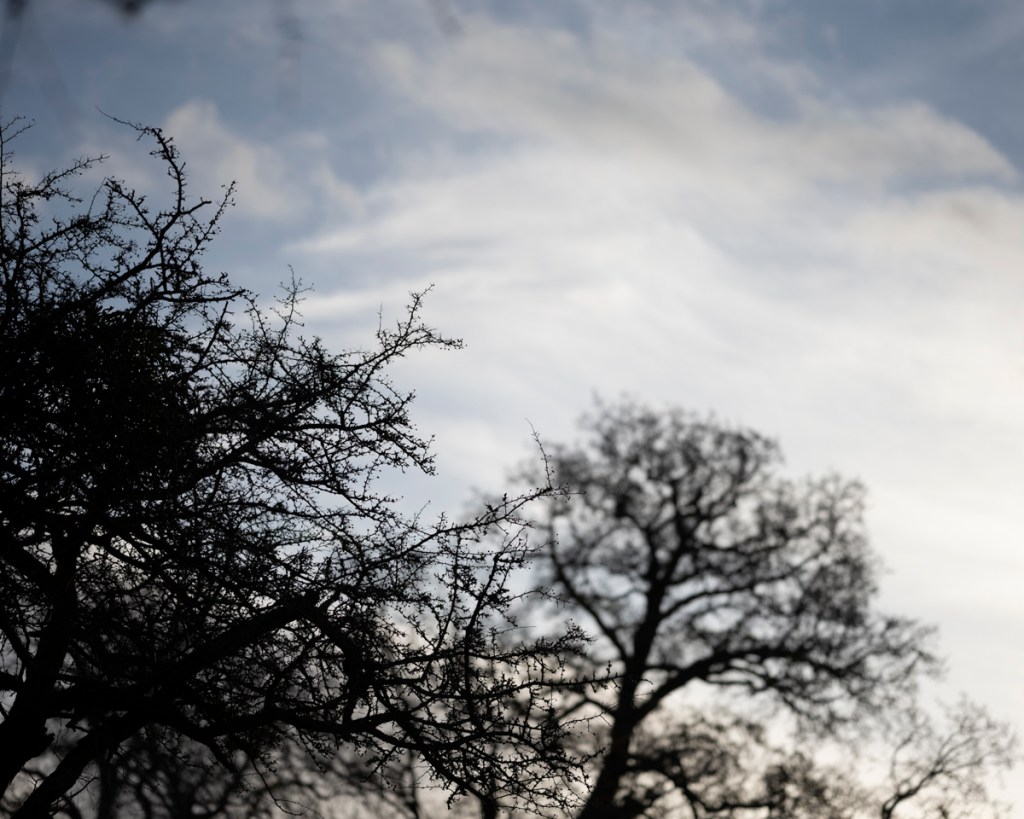
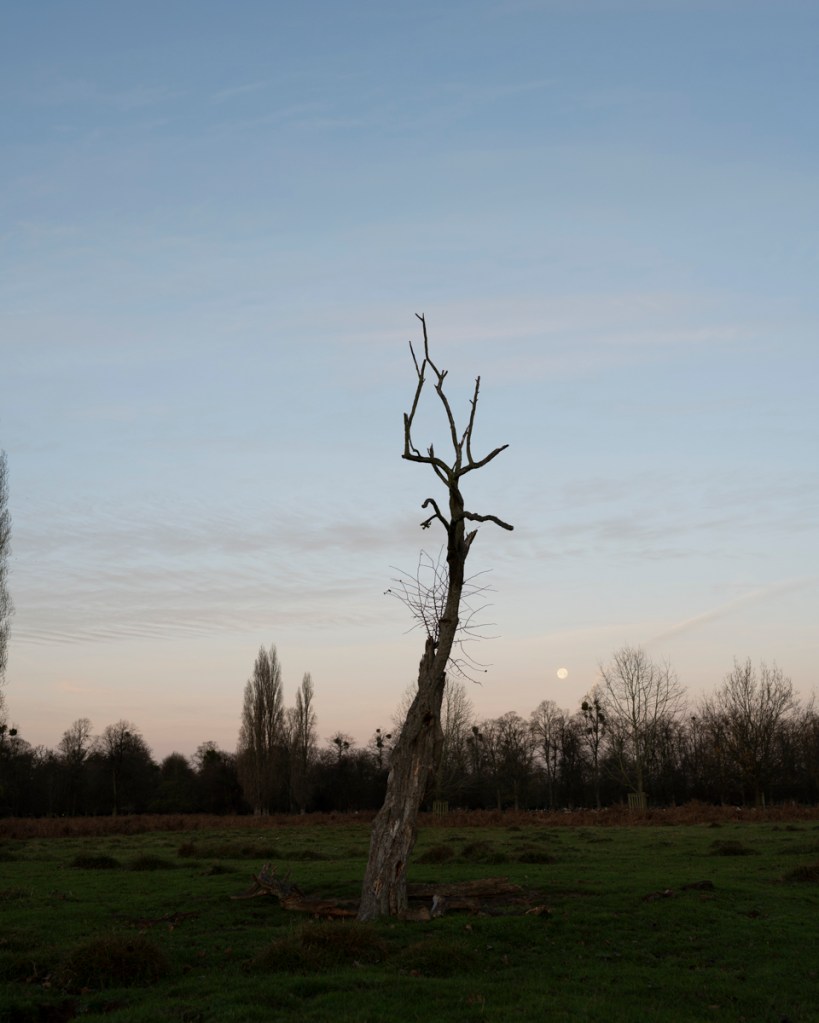
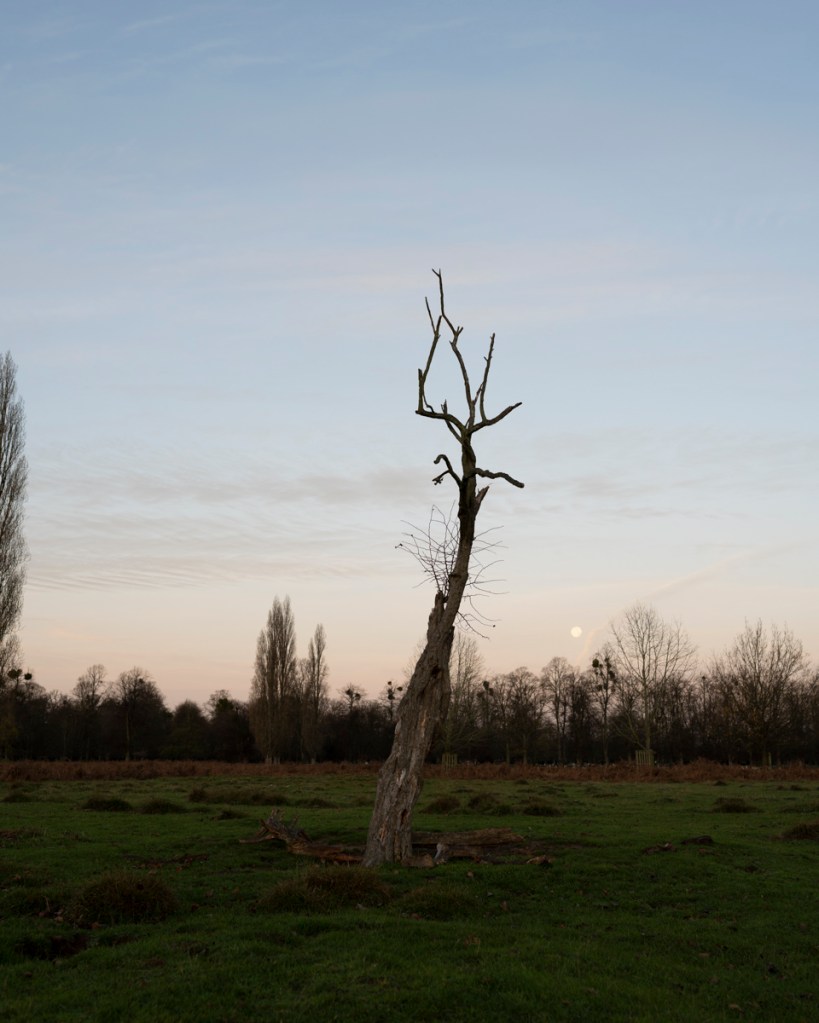
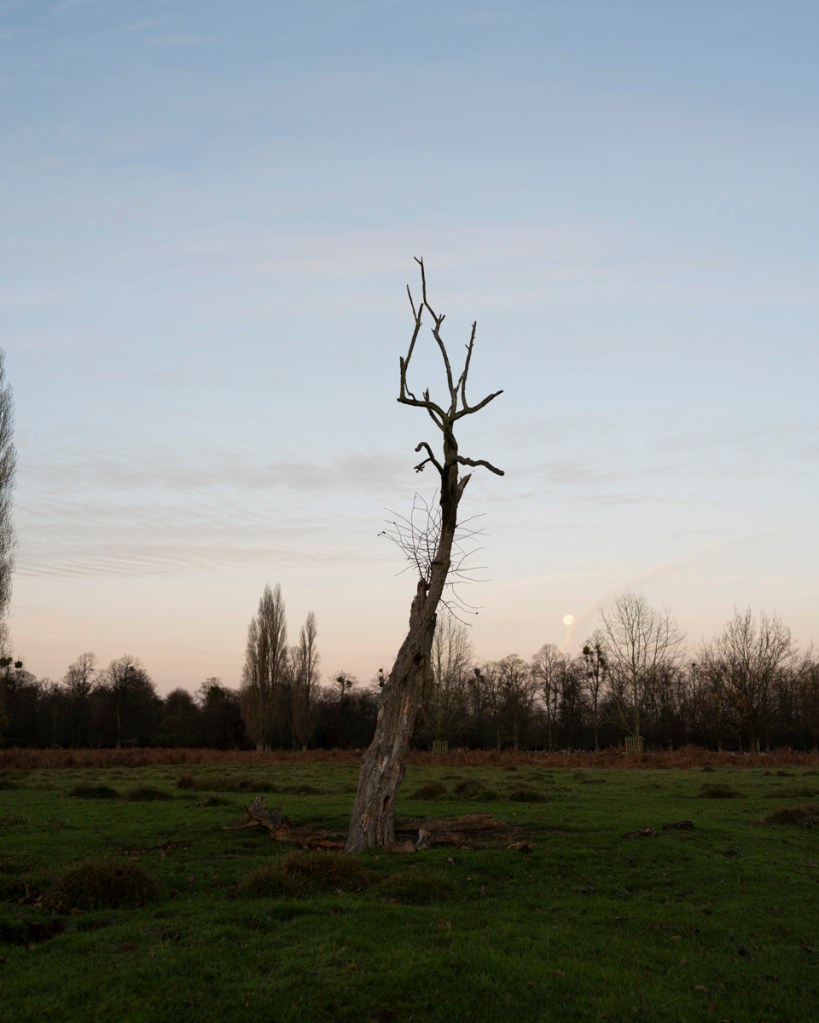
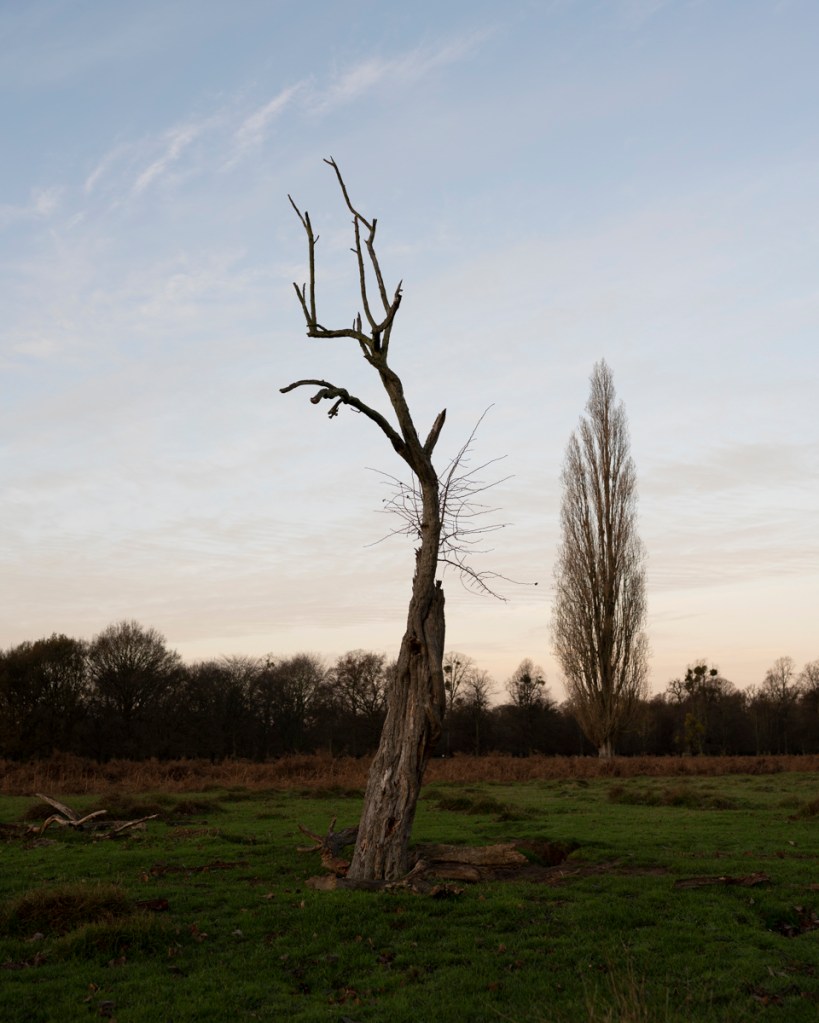
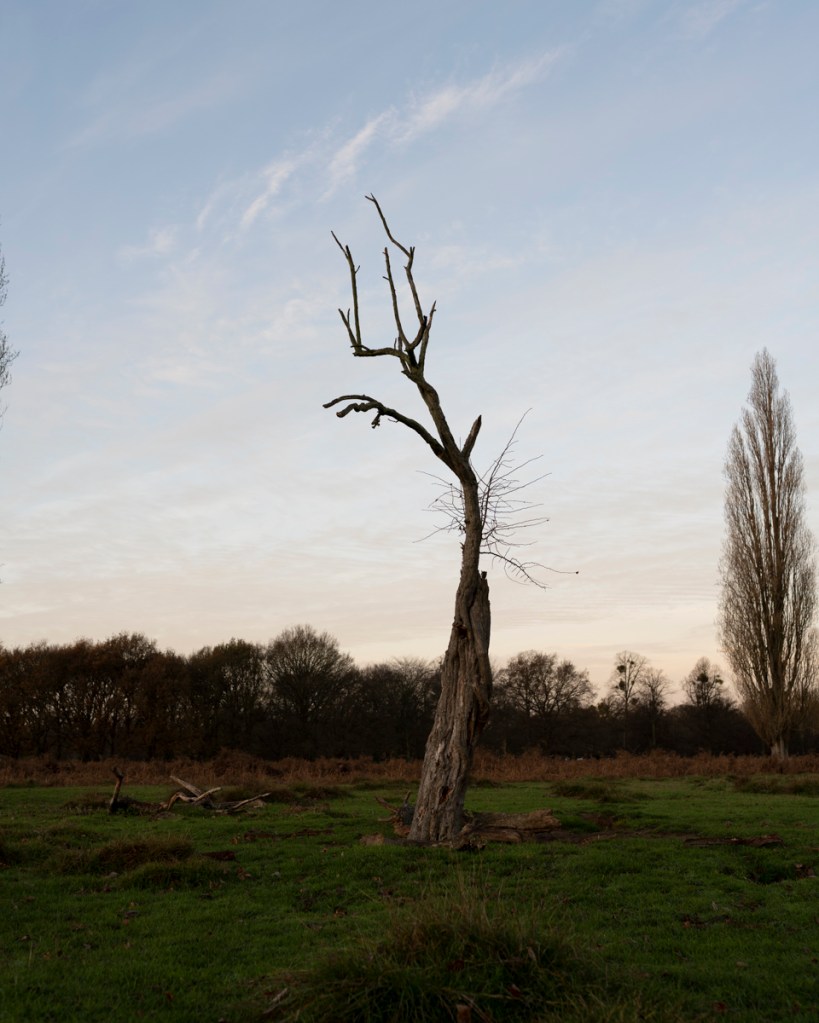
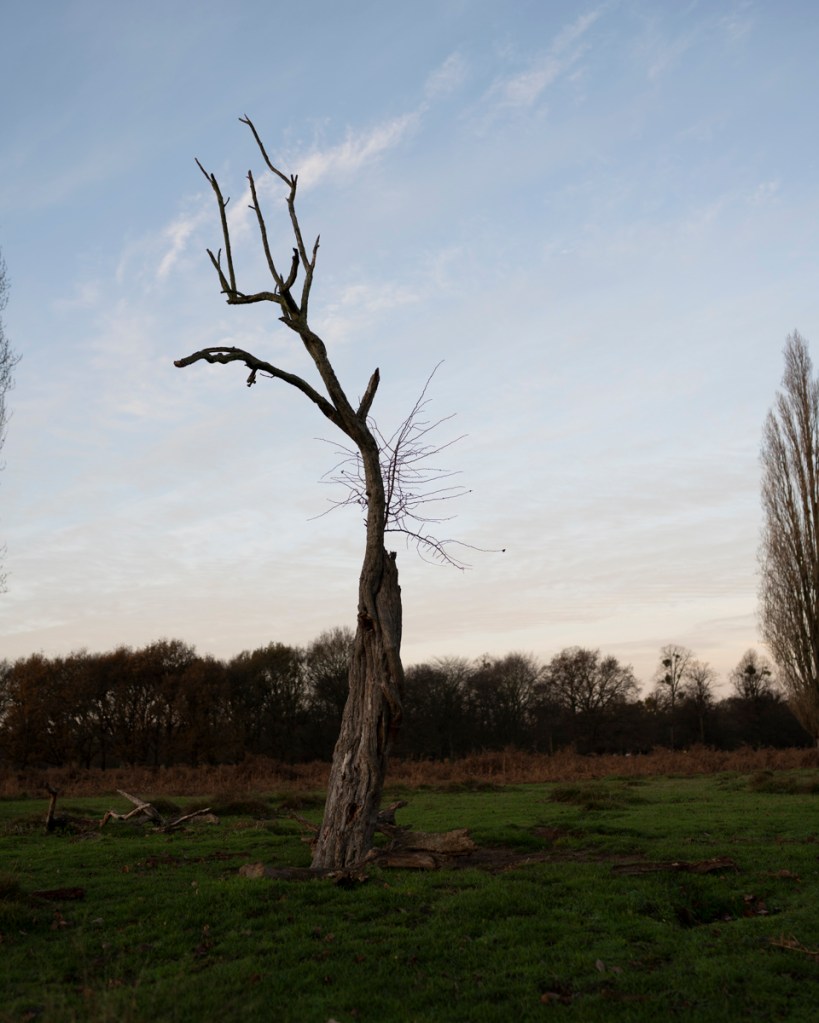
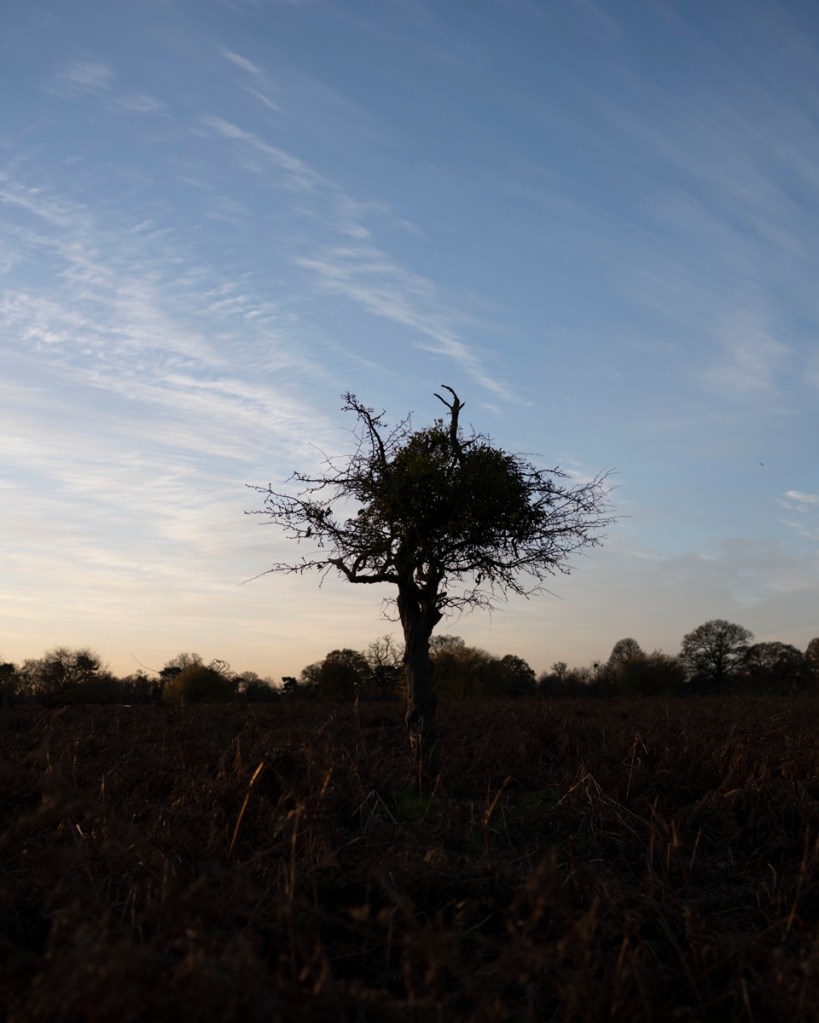
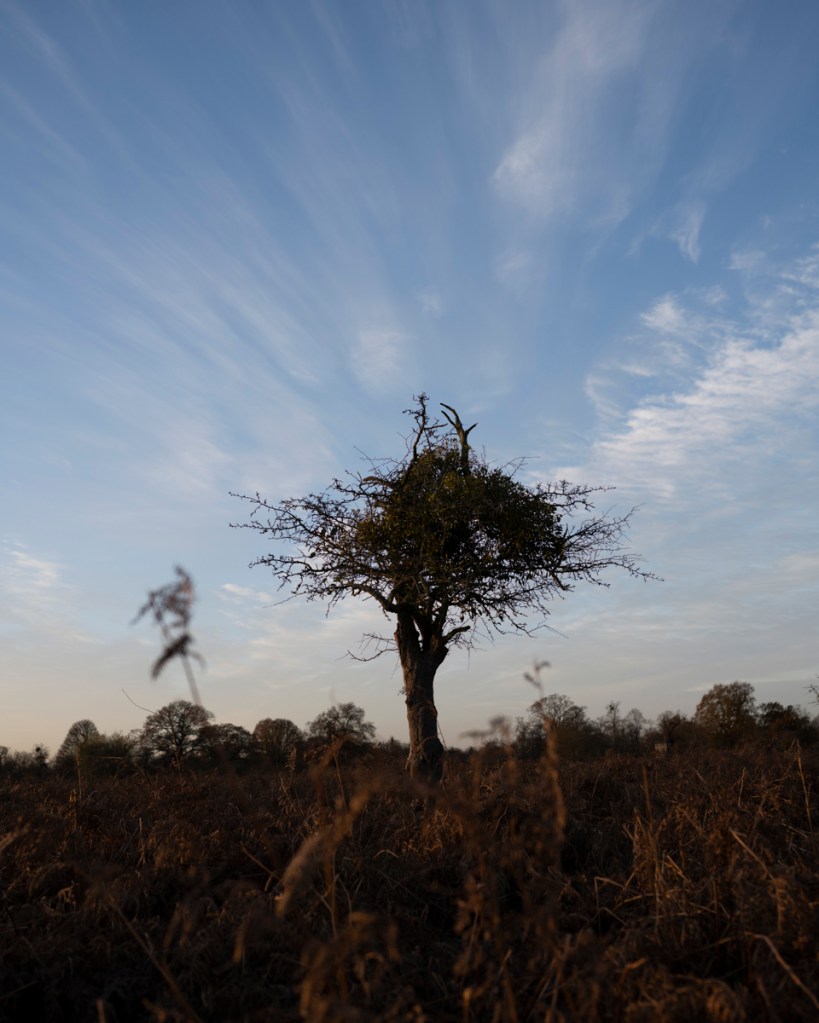
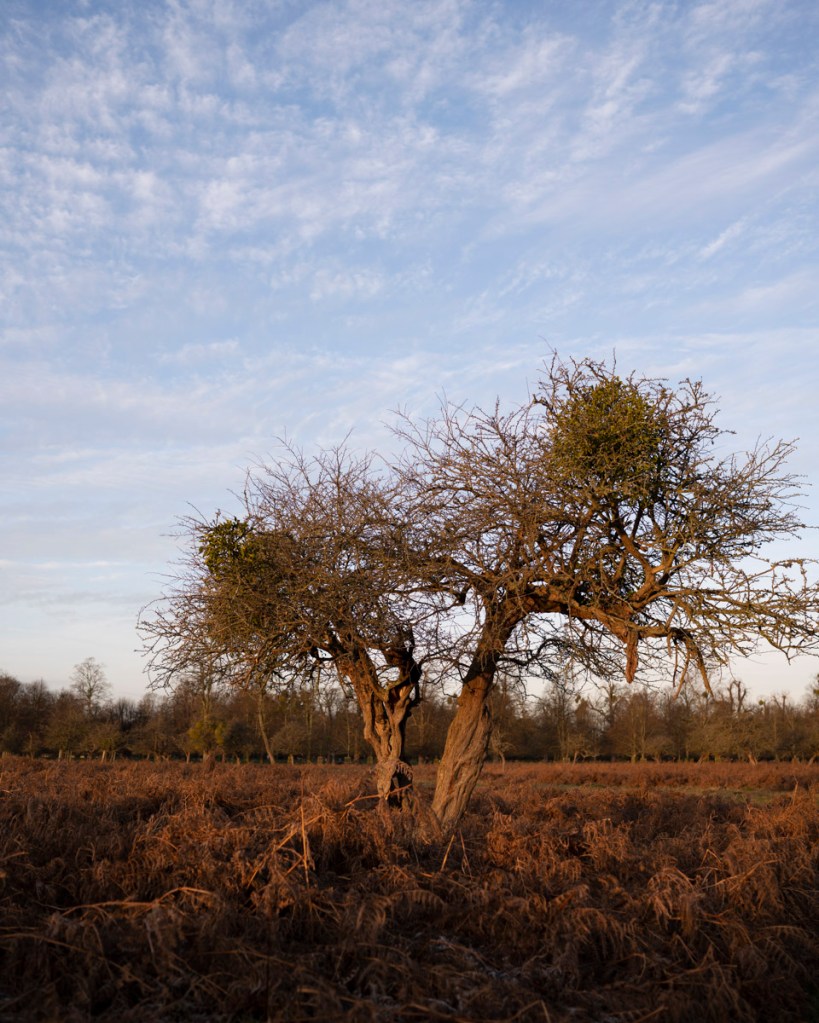
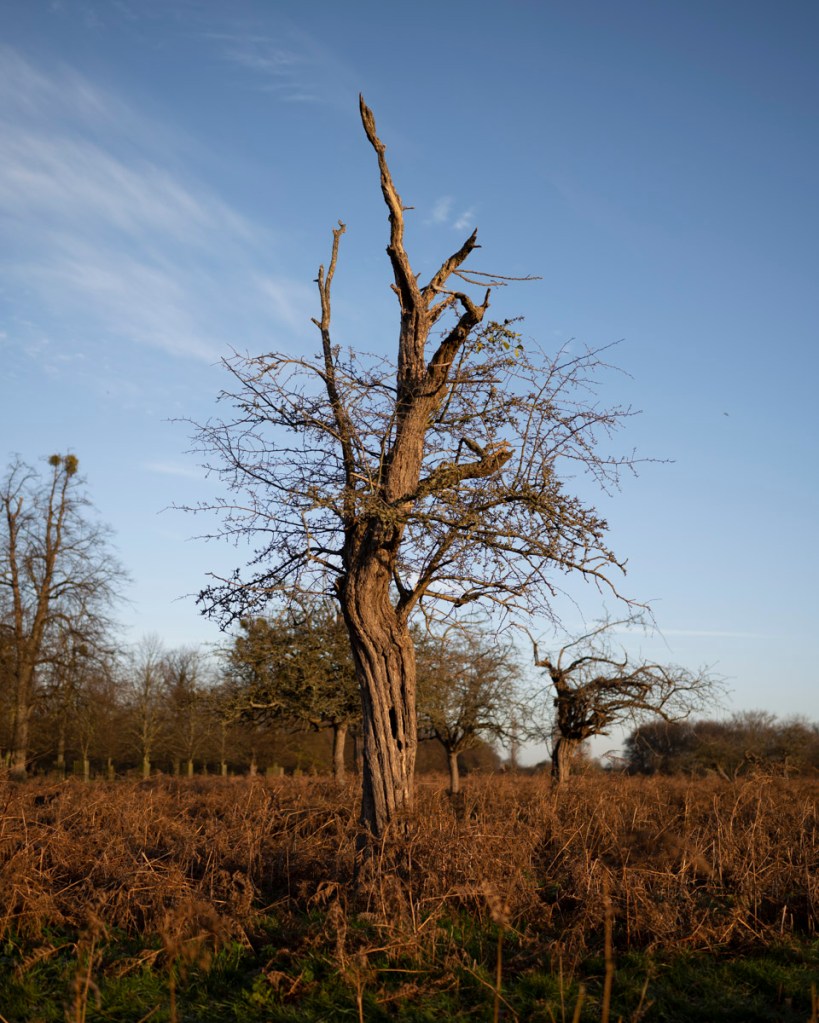
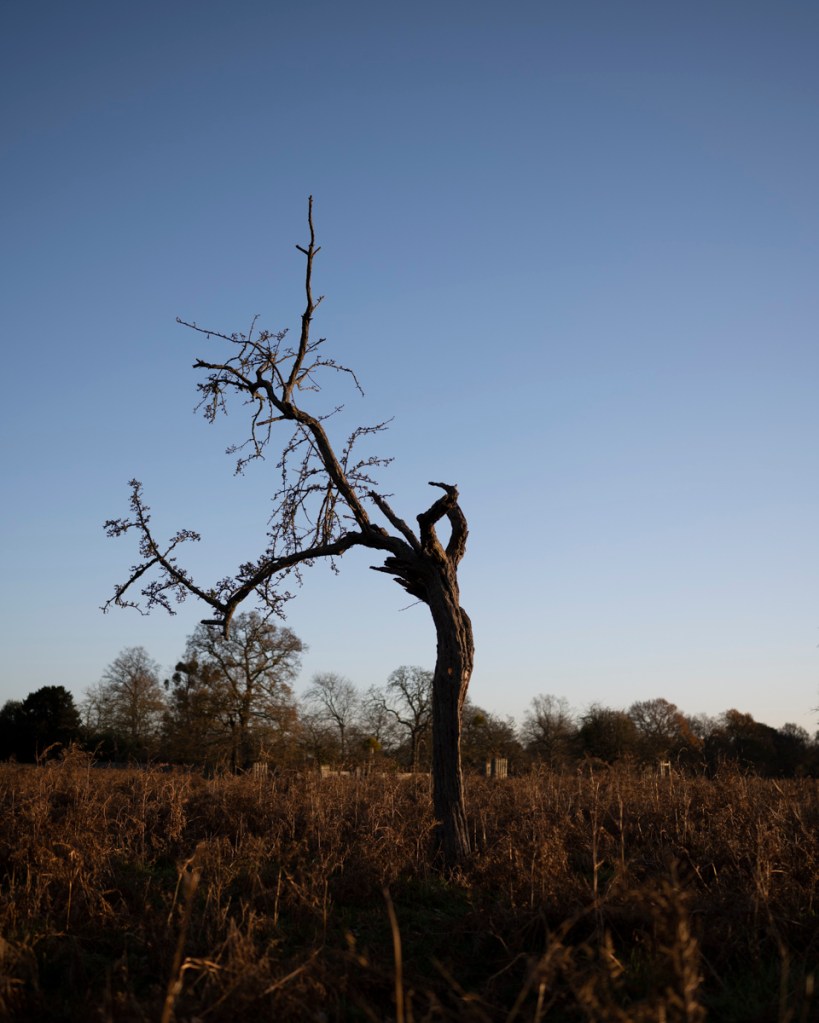
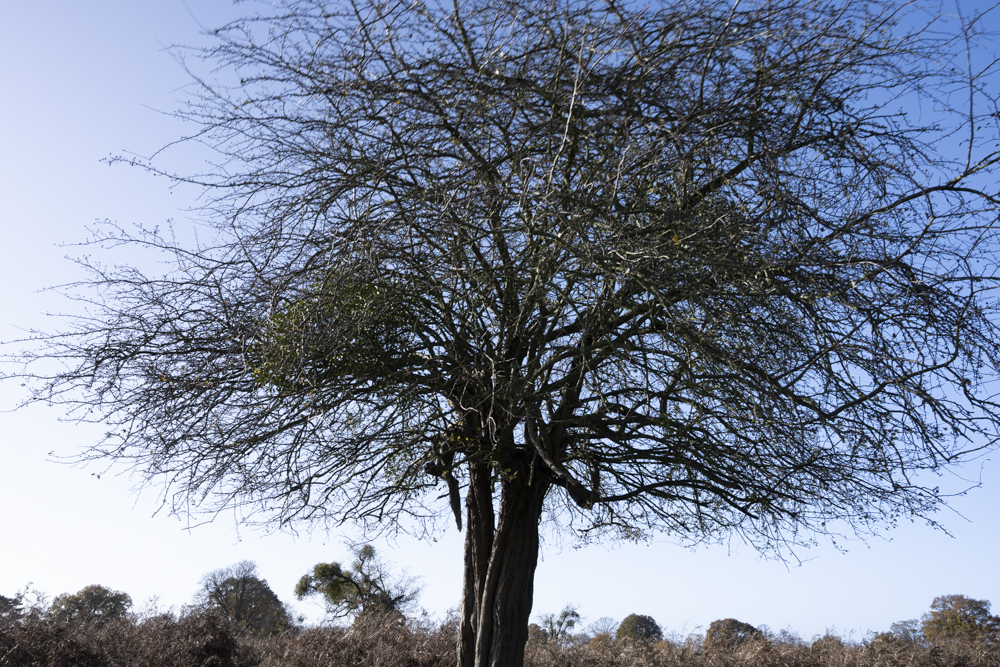
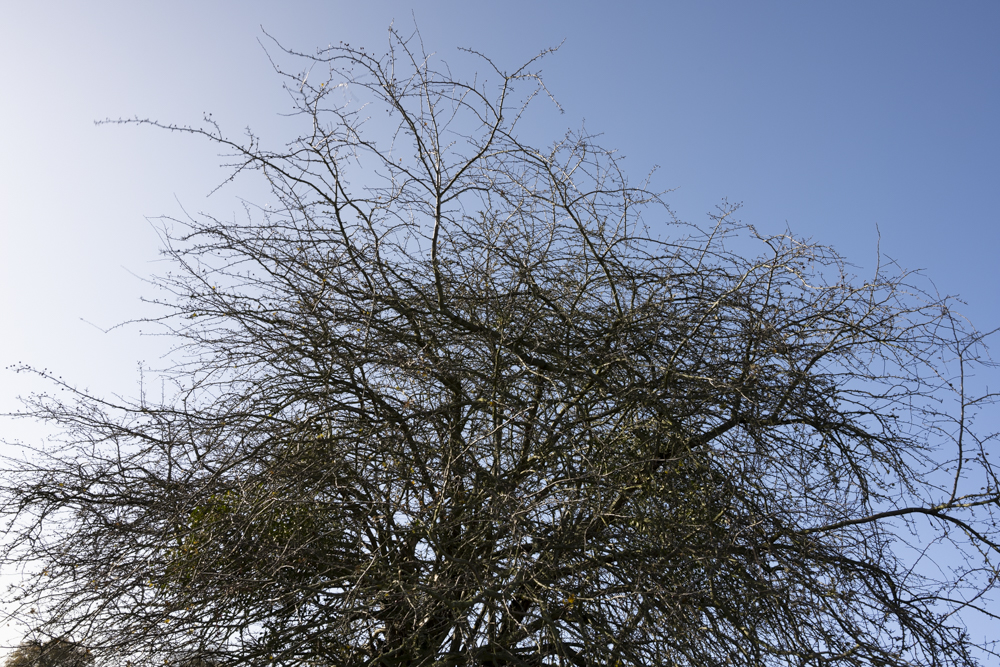
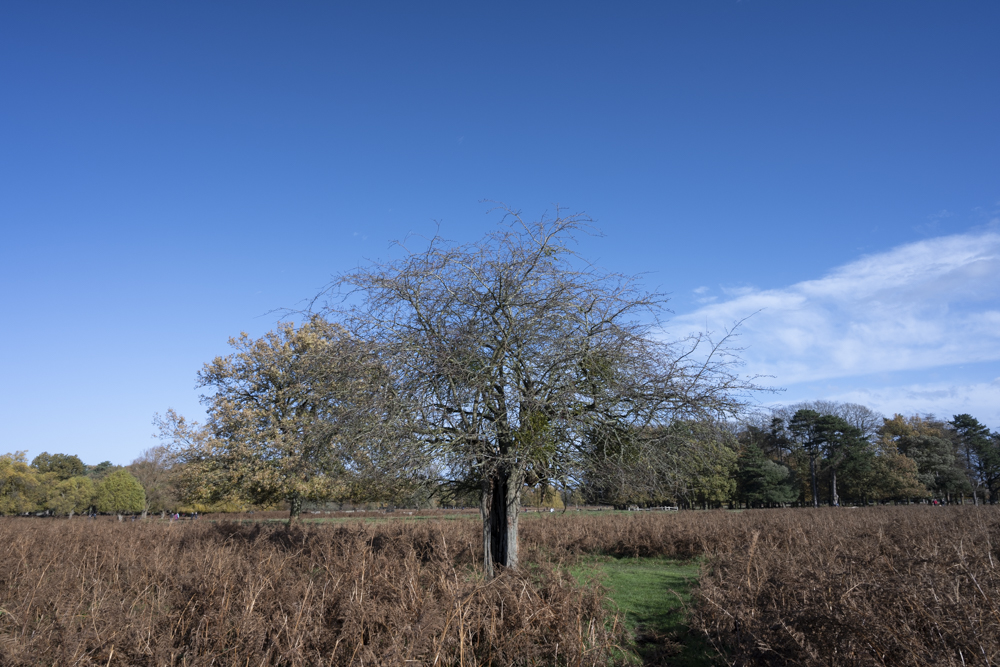
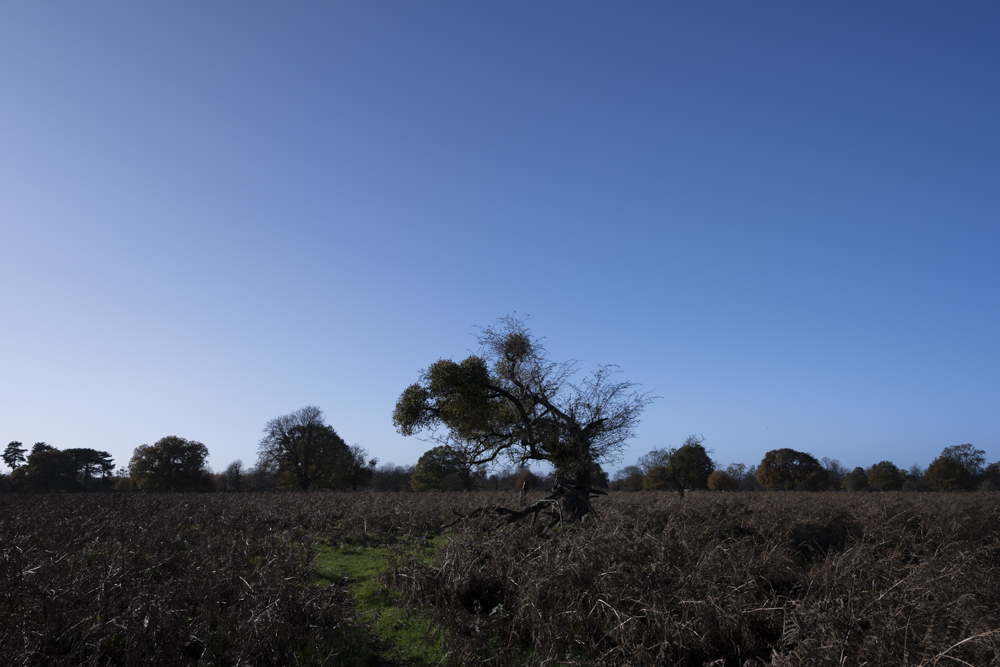
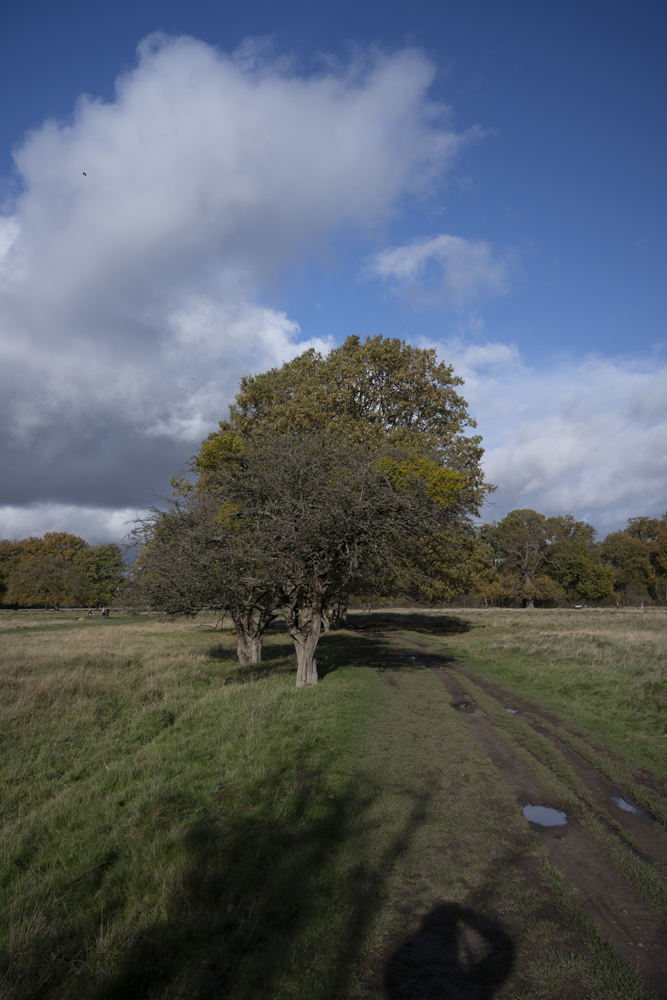
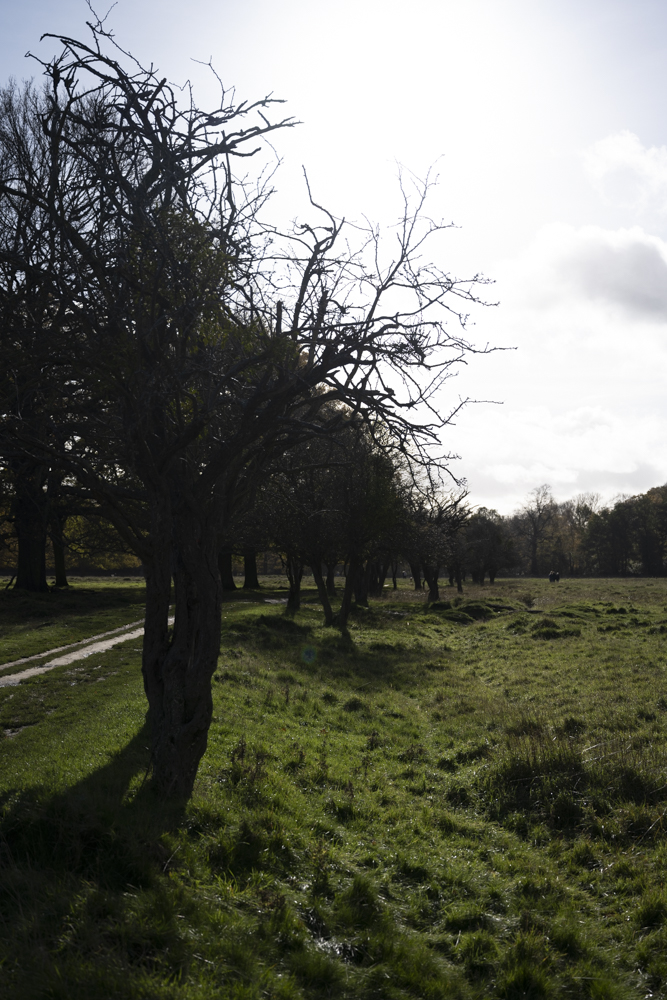
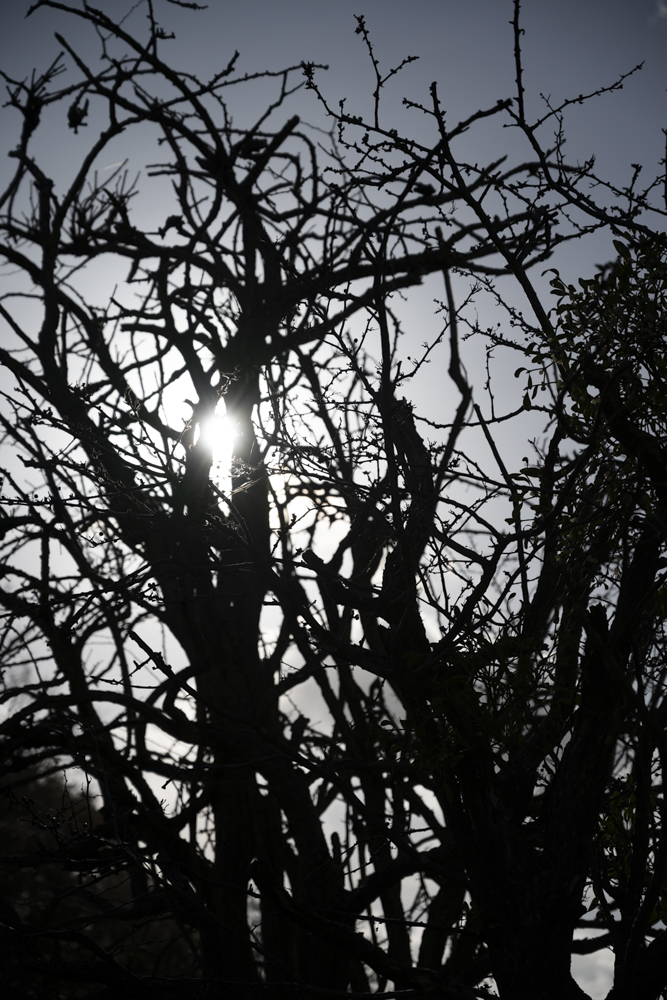
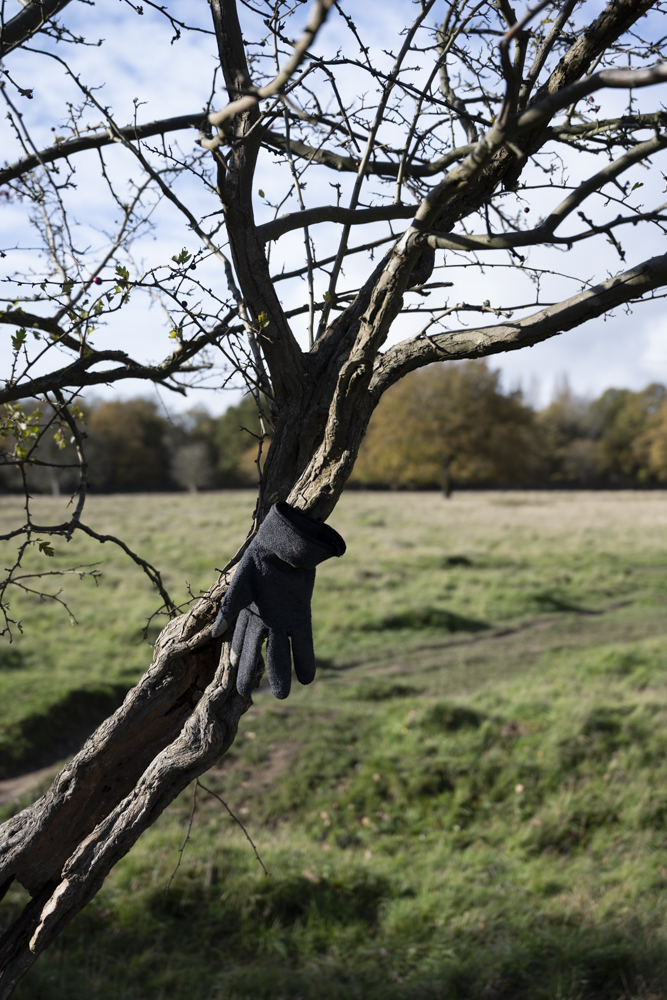
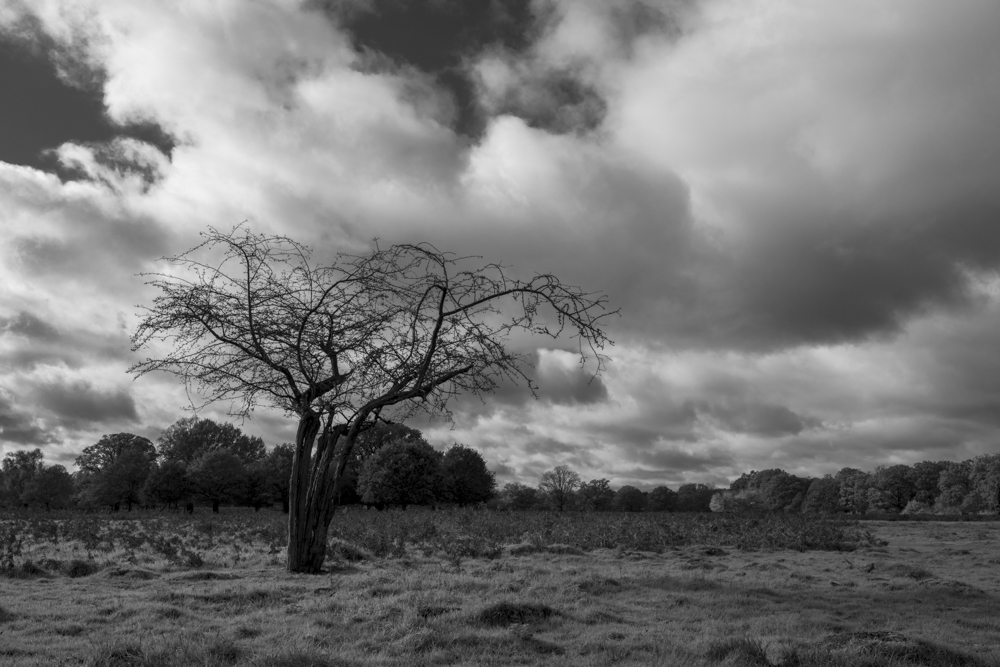
The intention behind today’s shoot was to try out the tripod and different aspect ratios. I also wanted to experiment further with the 85mm lens. The light wasn’t the best, but after three days of being stuck inside, it felt good to get outside.

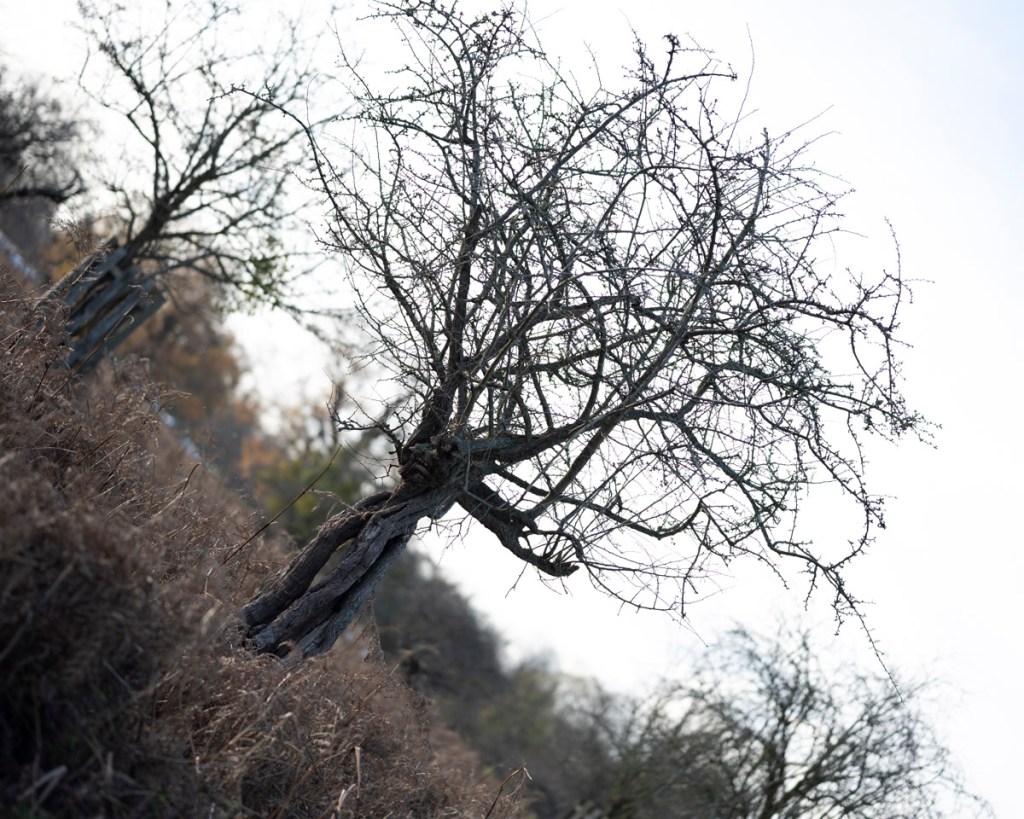
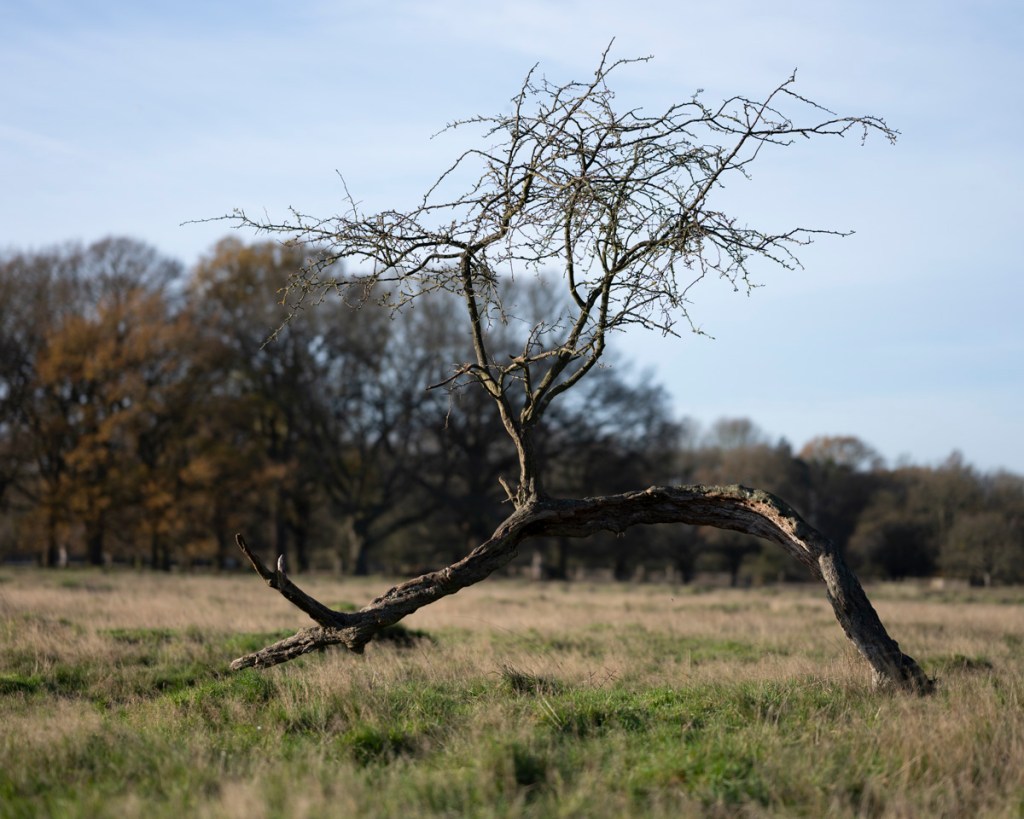
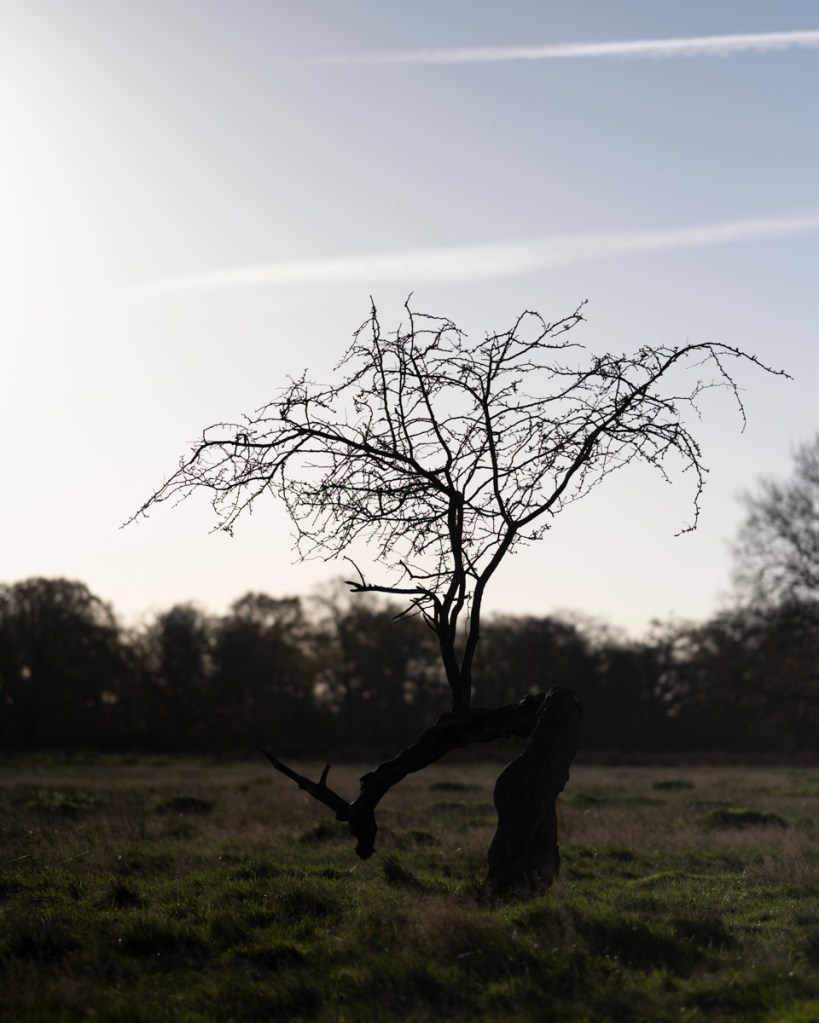
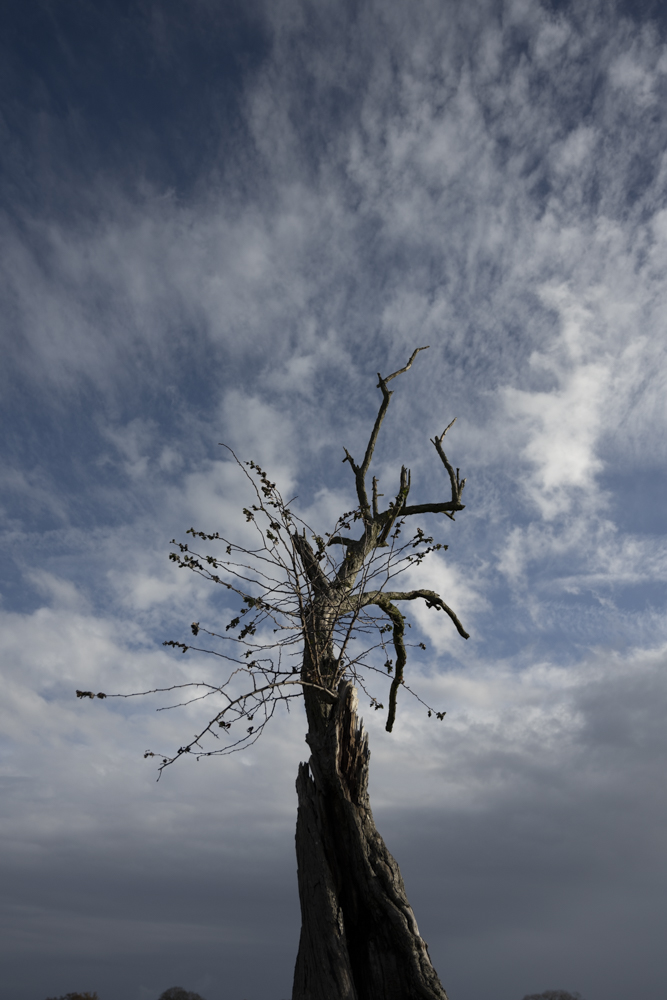
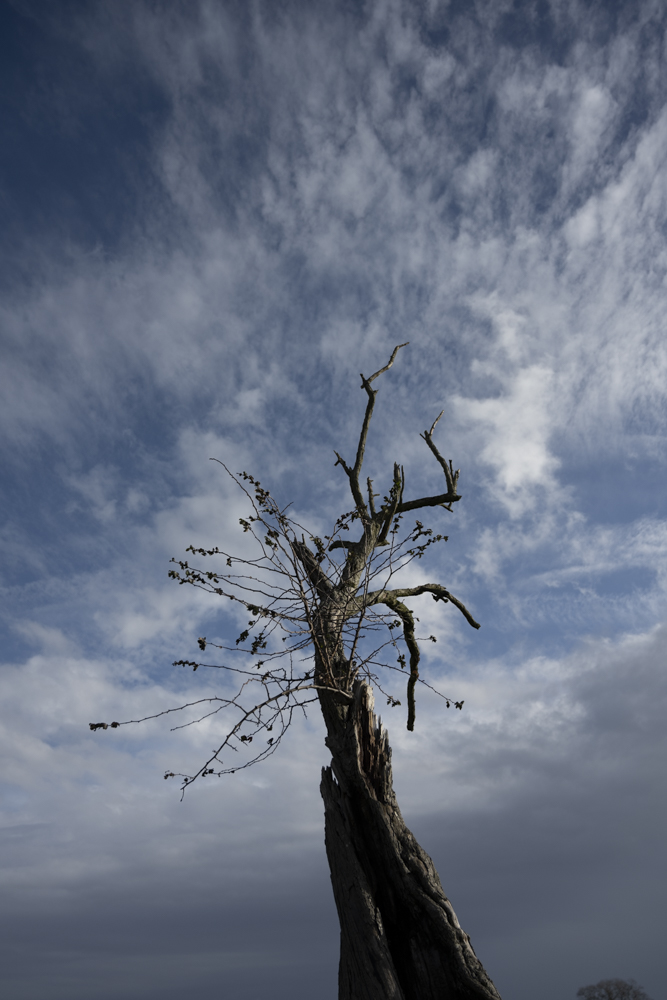
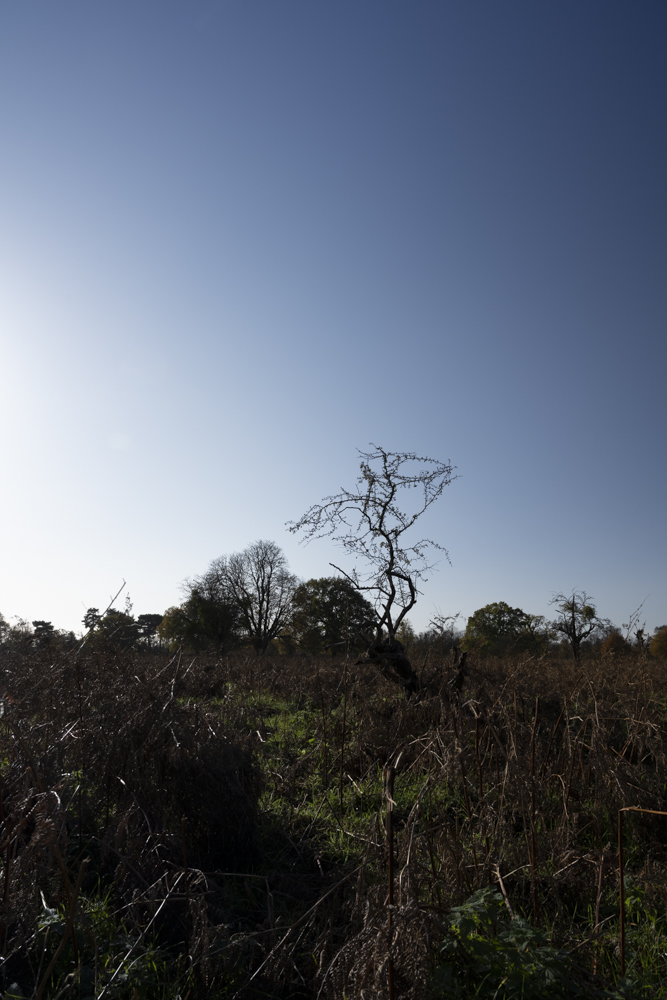
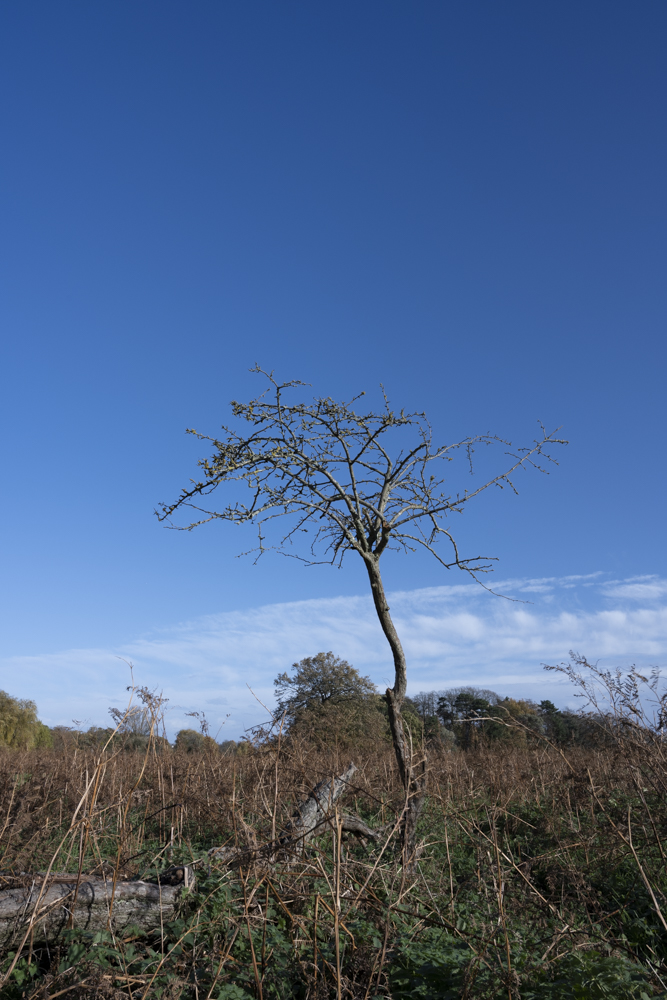
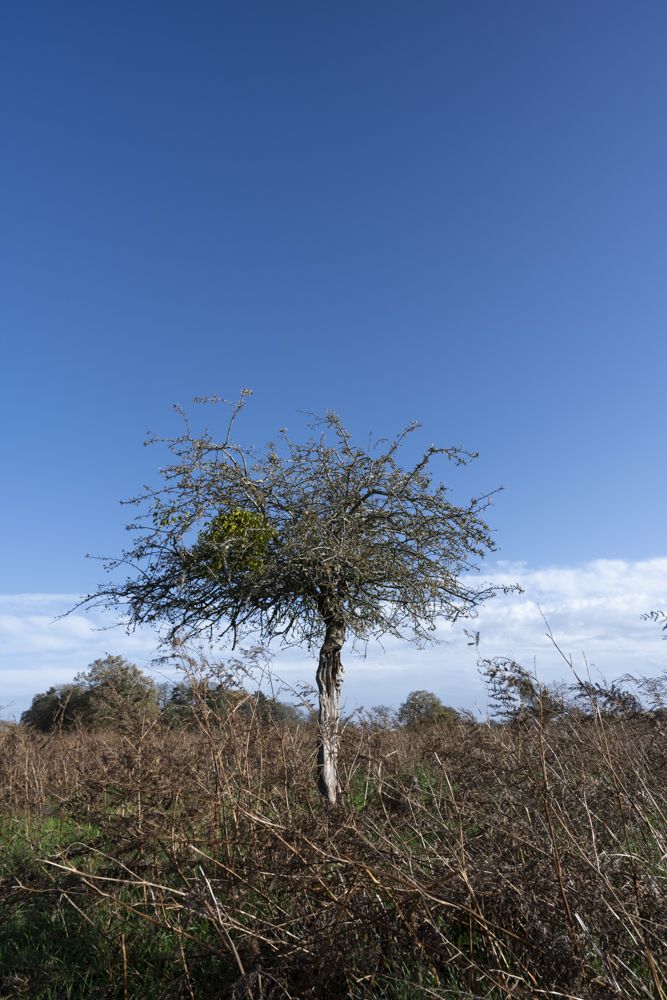
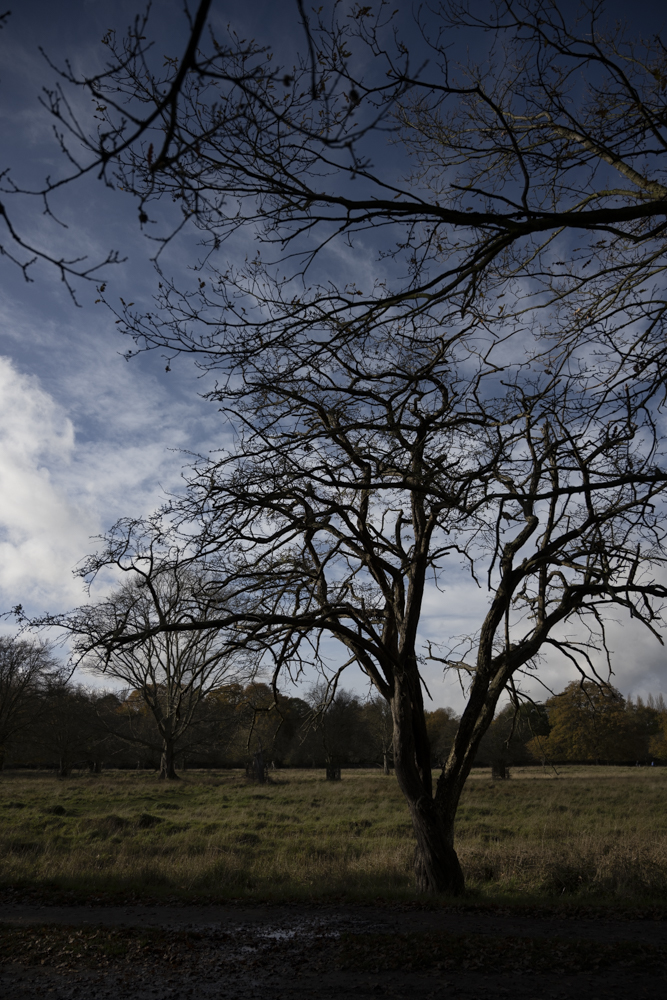
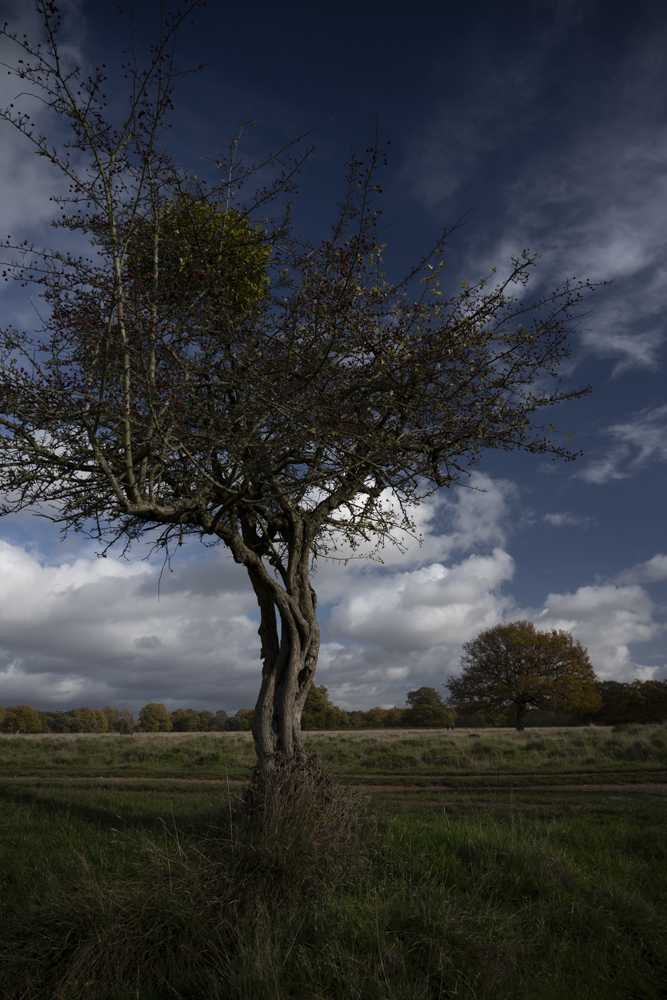
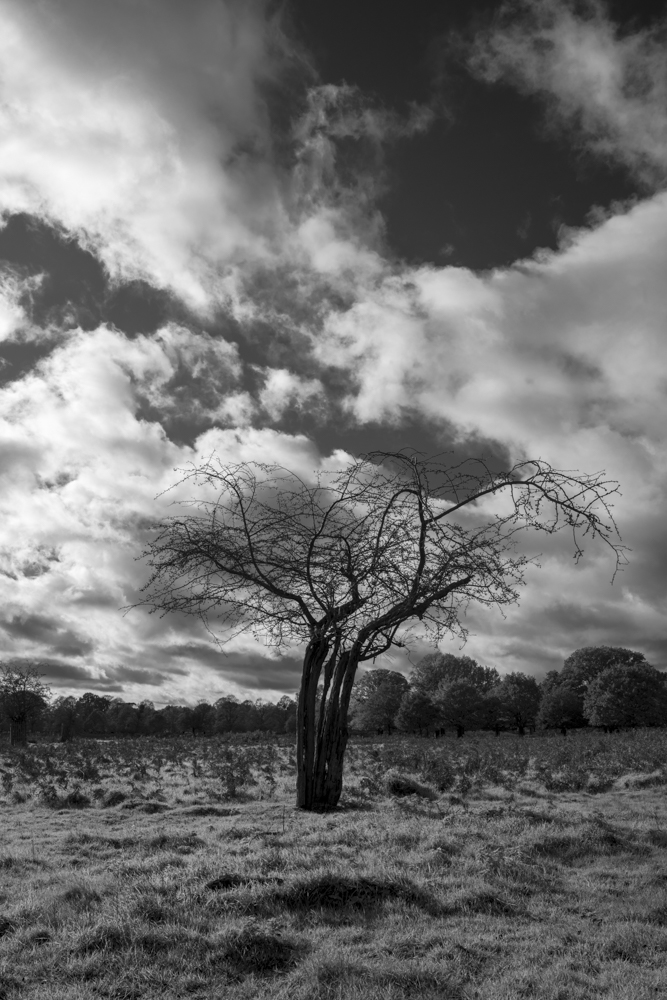
I initially set up the tripod quite low to get the right aspect, but it was proving difficult to the see the screen. When using the camera in portrait, the viewing screen at the back of the camera doesn’t articulate vertically. This means the screen can’t be seen easily at that angle. The aspect ratio for the following is 5:4.
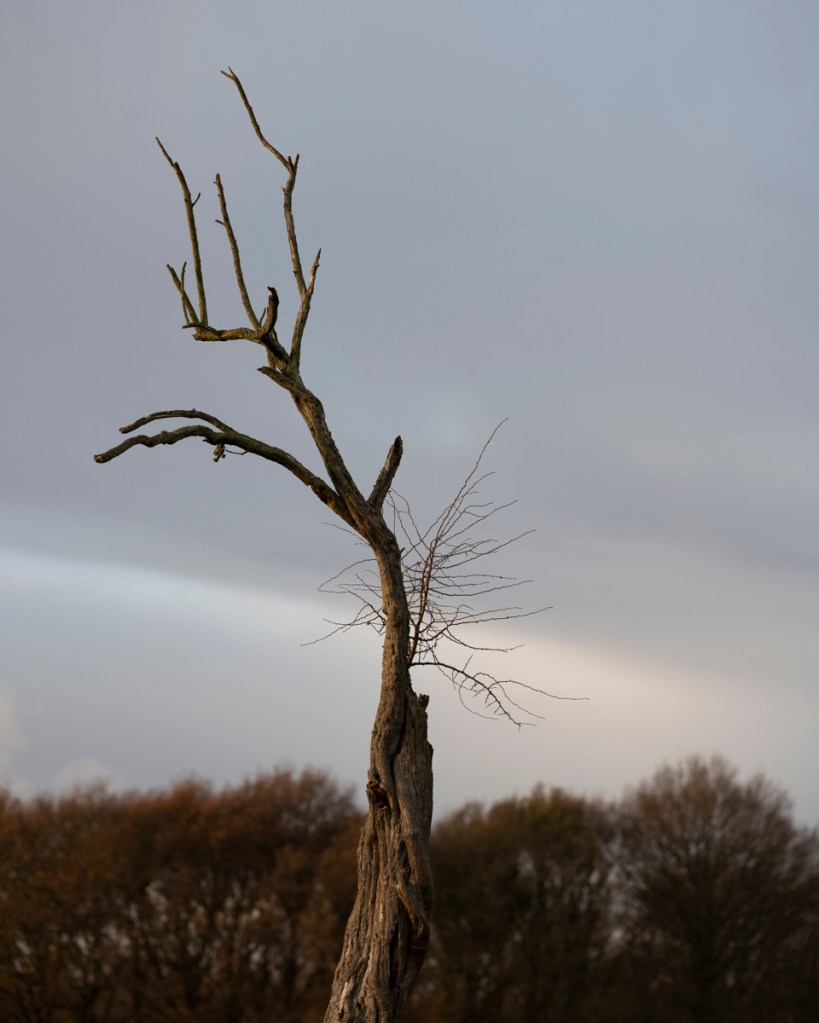
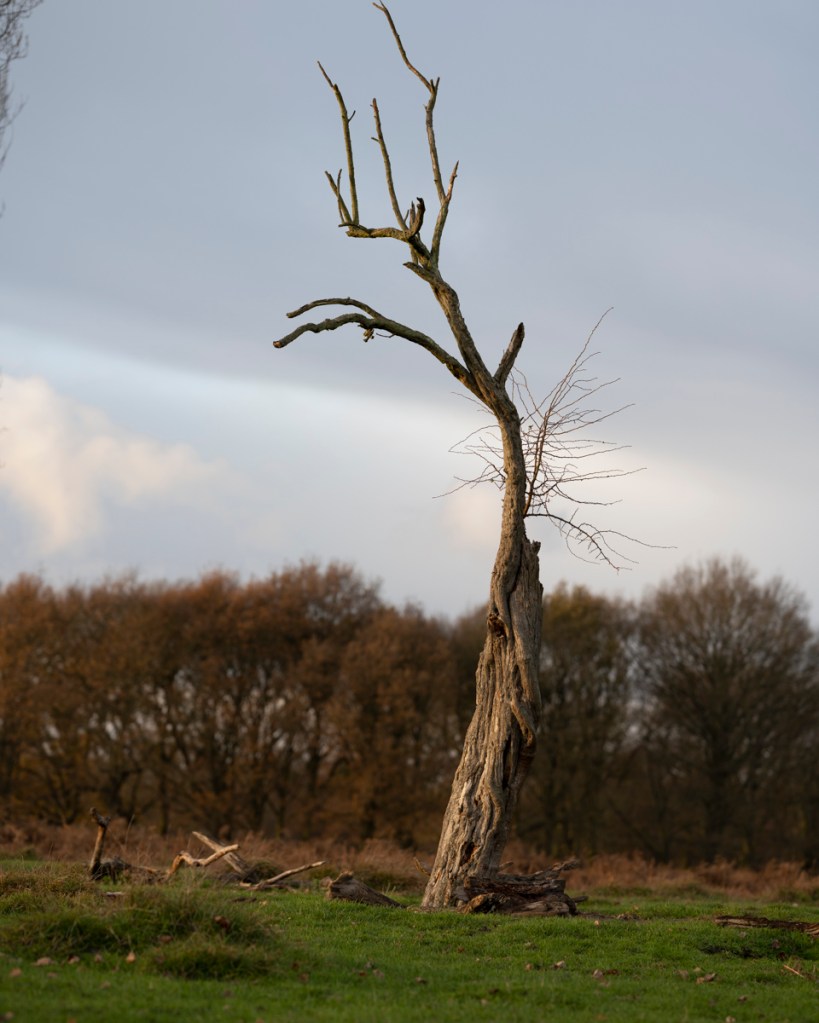
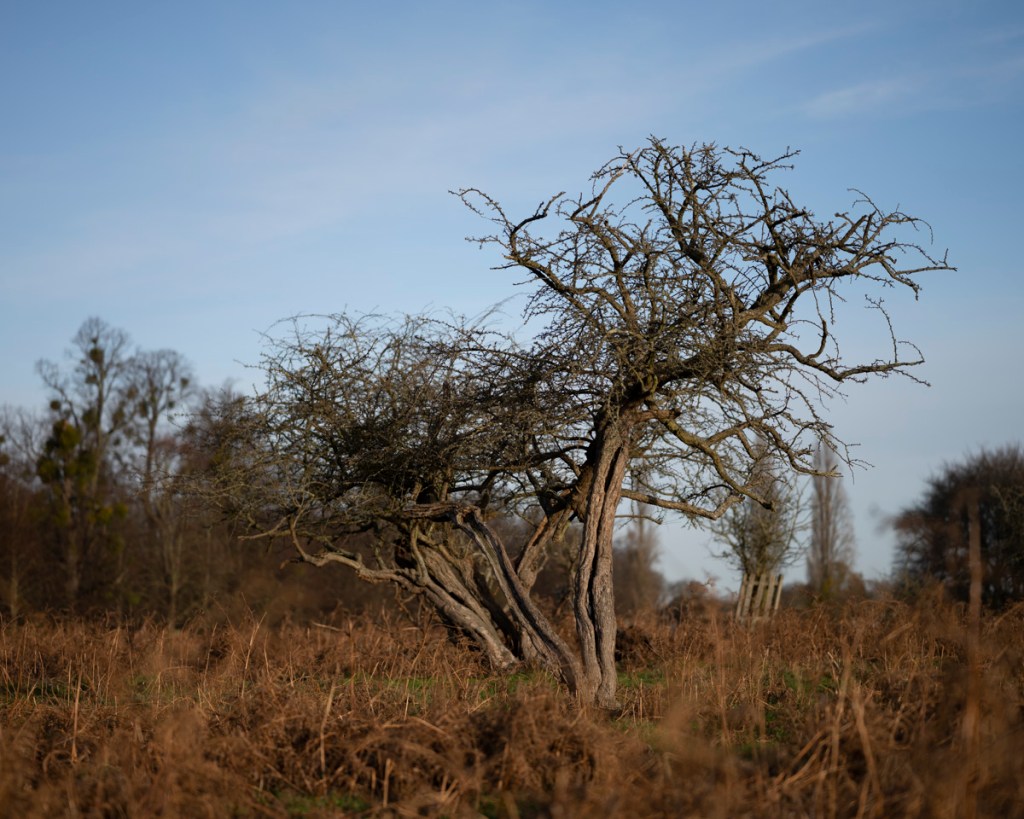
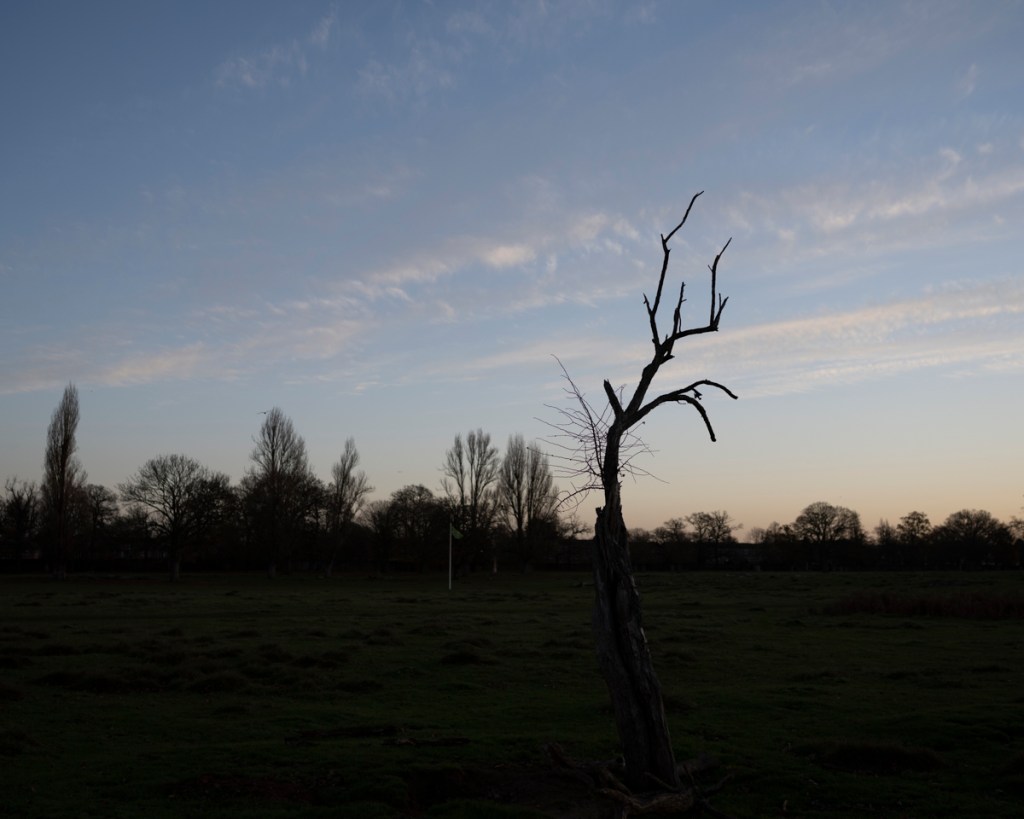
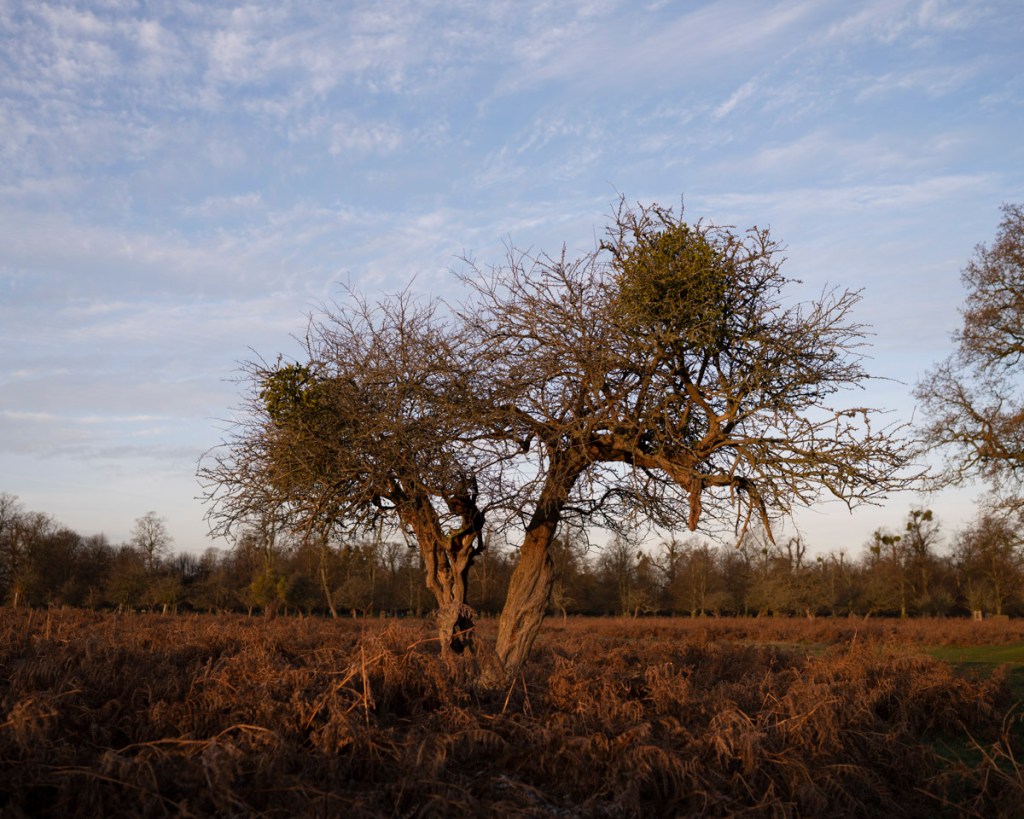
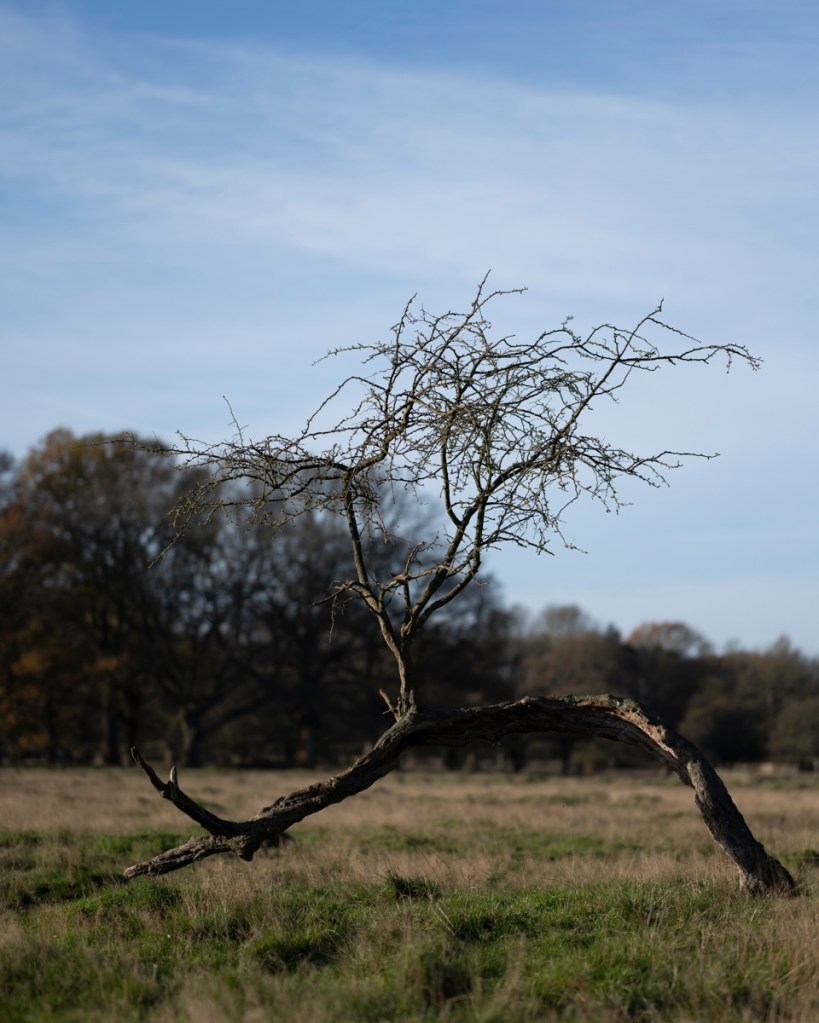
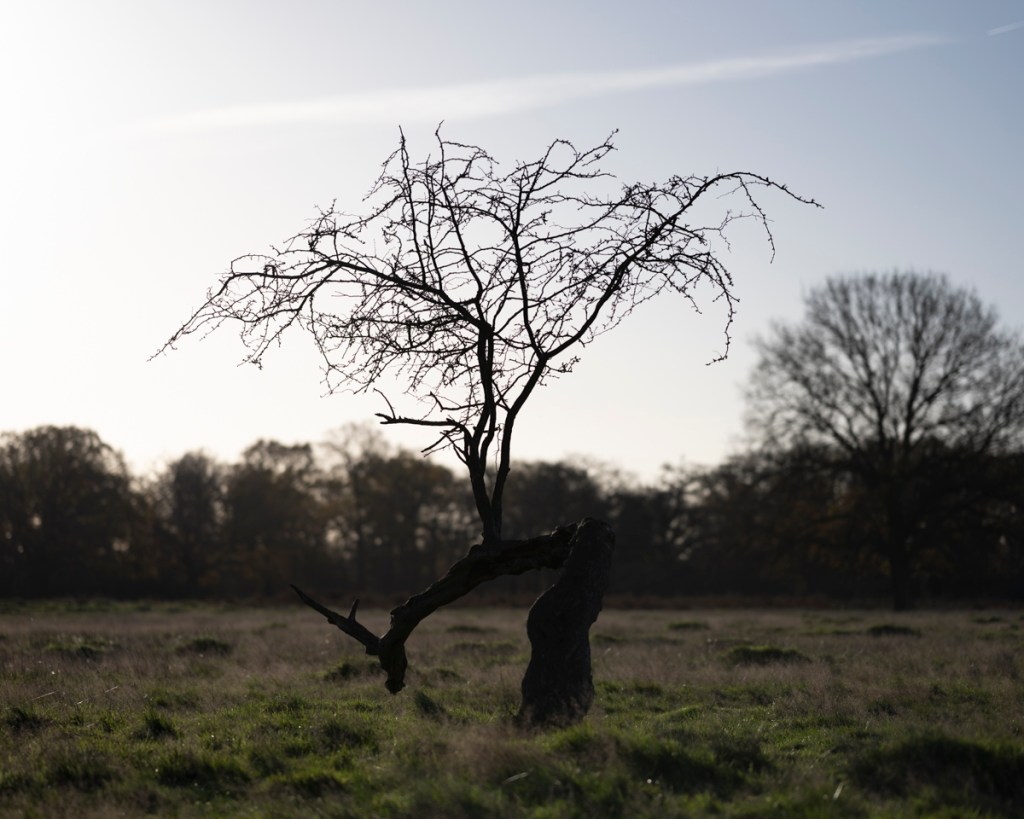
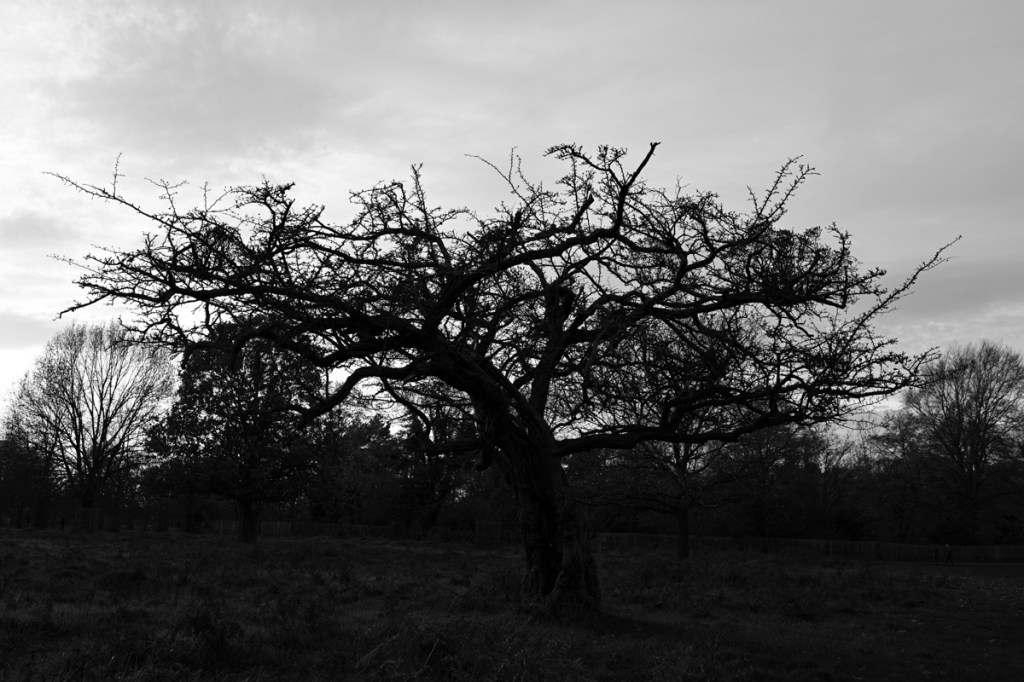
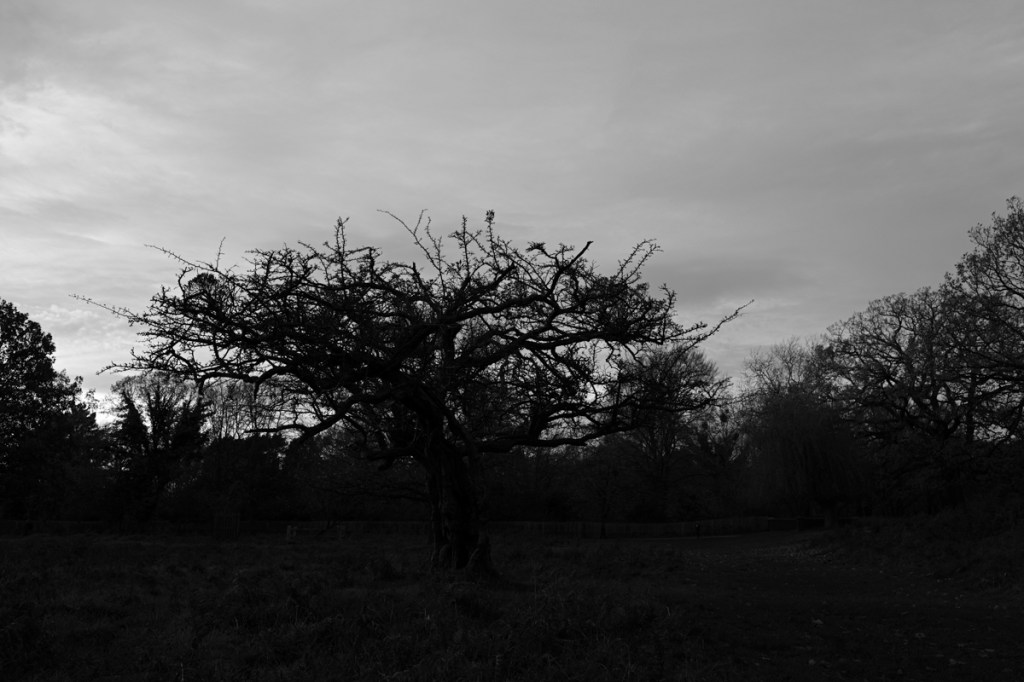
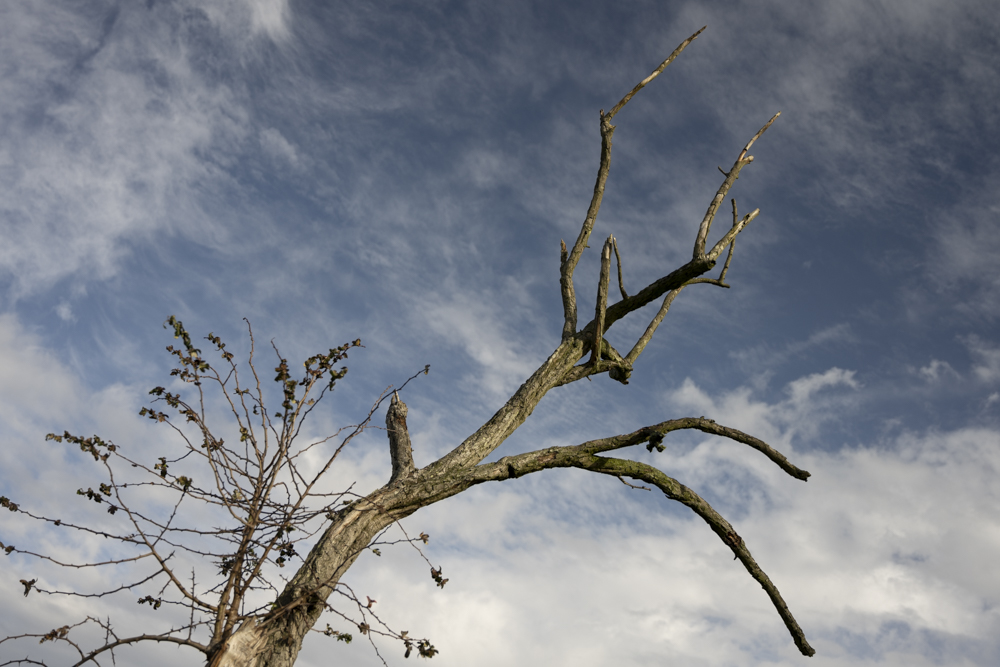
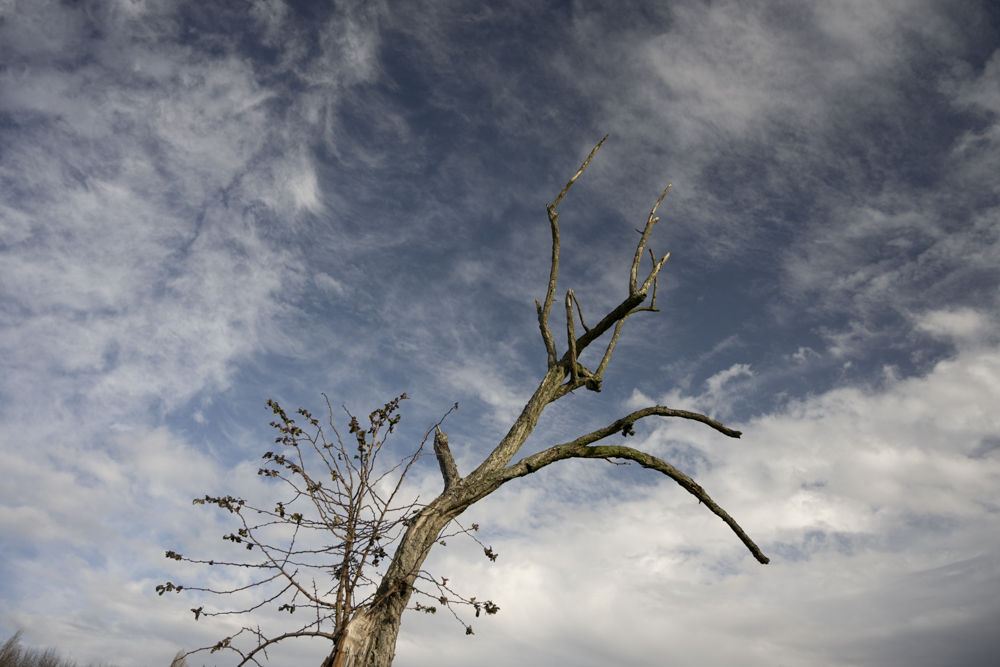
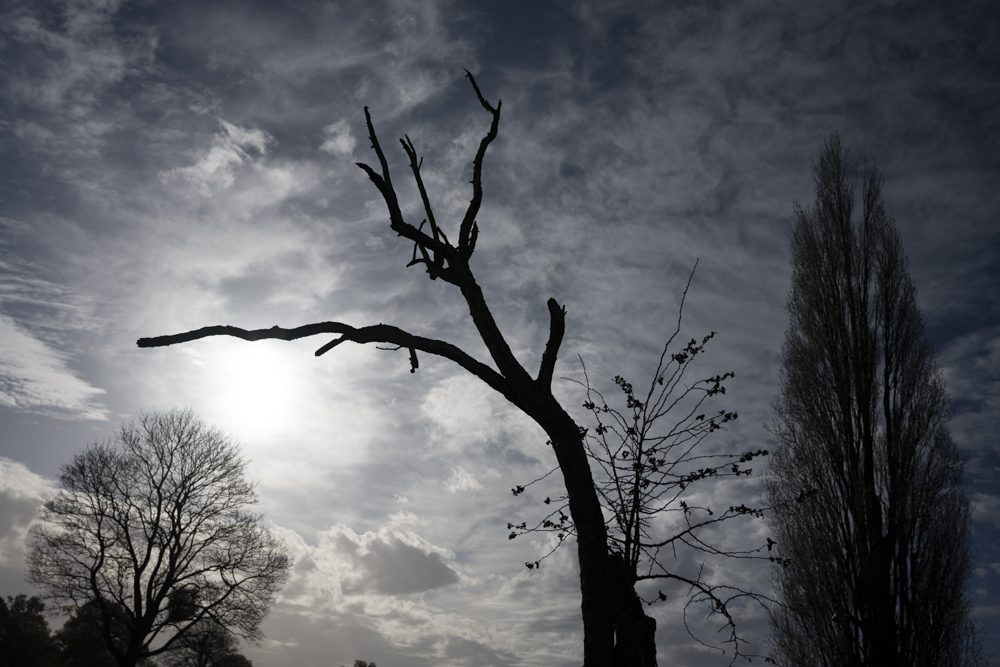
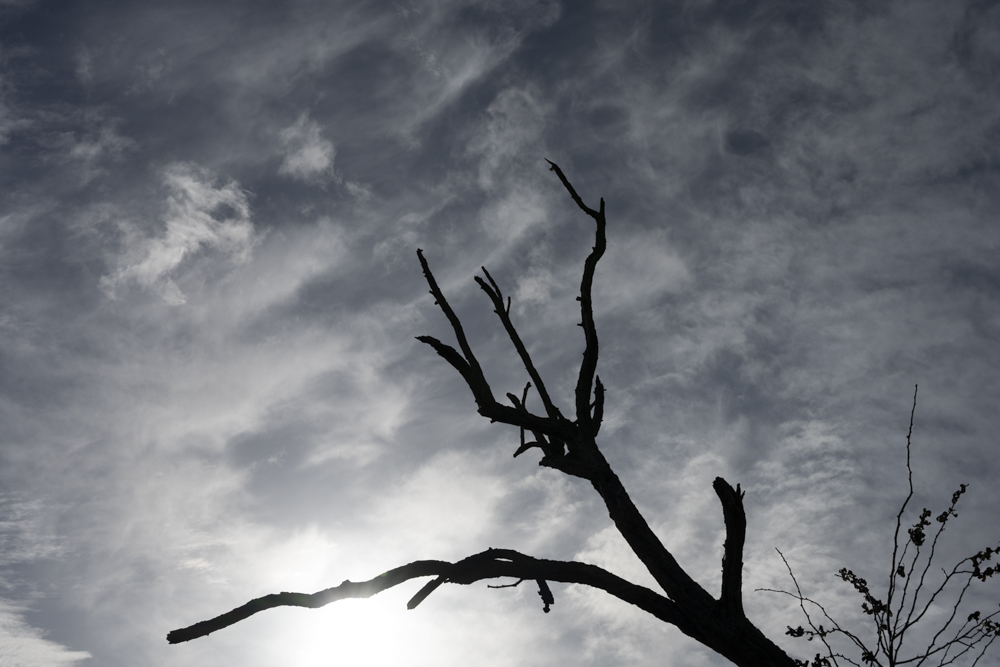
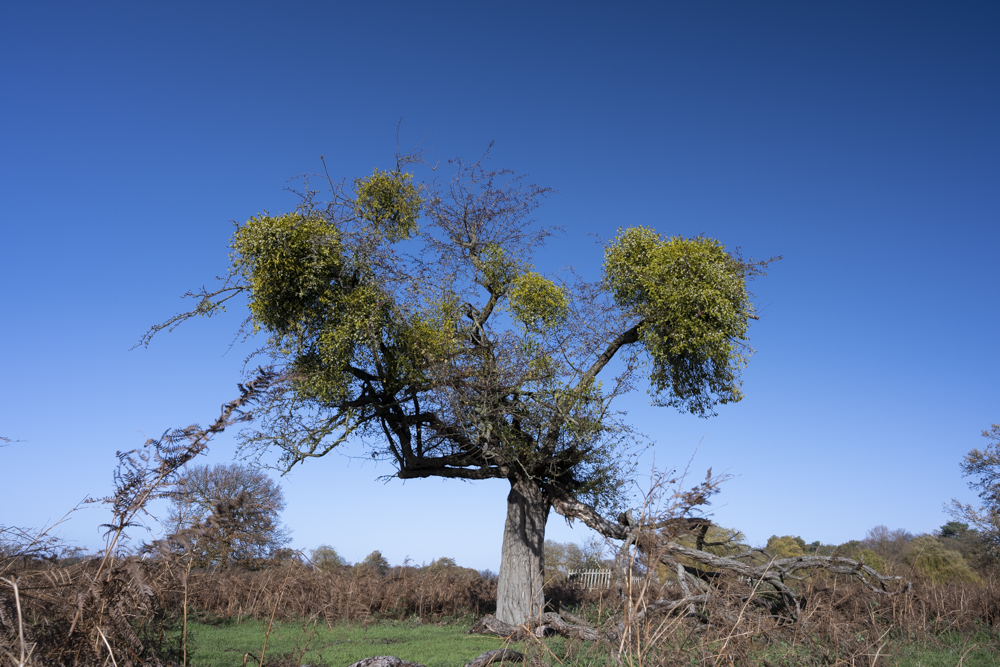
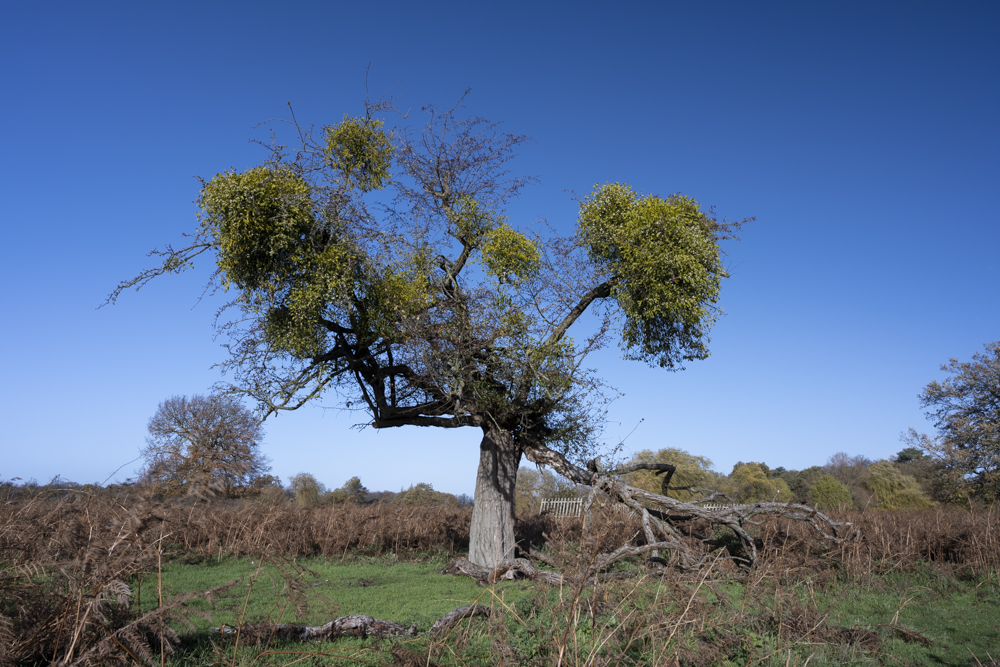
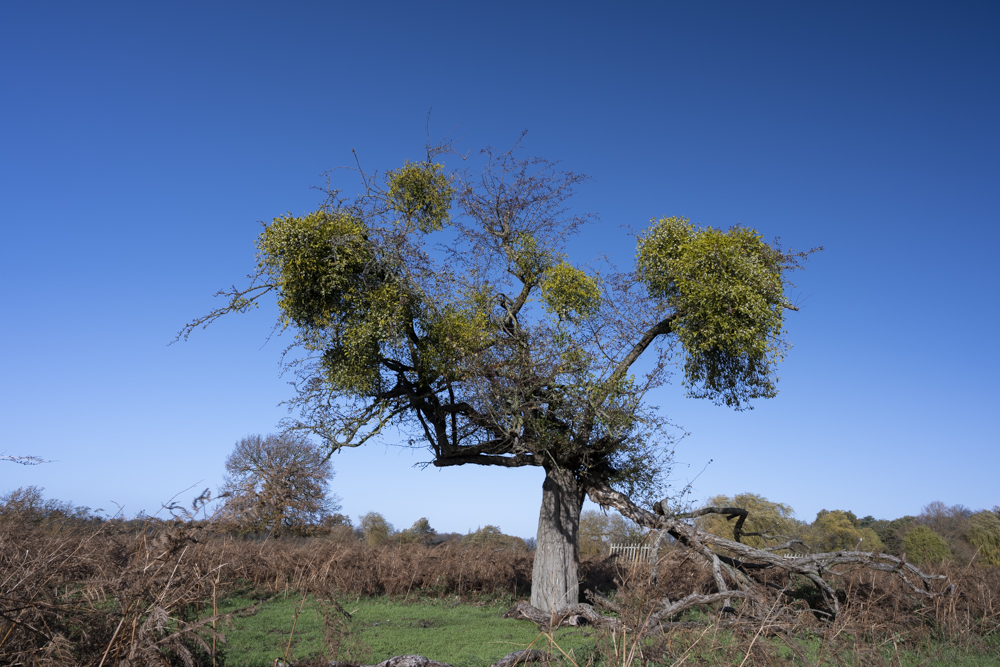
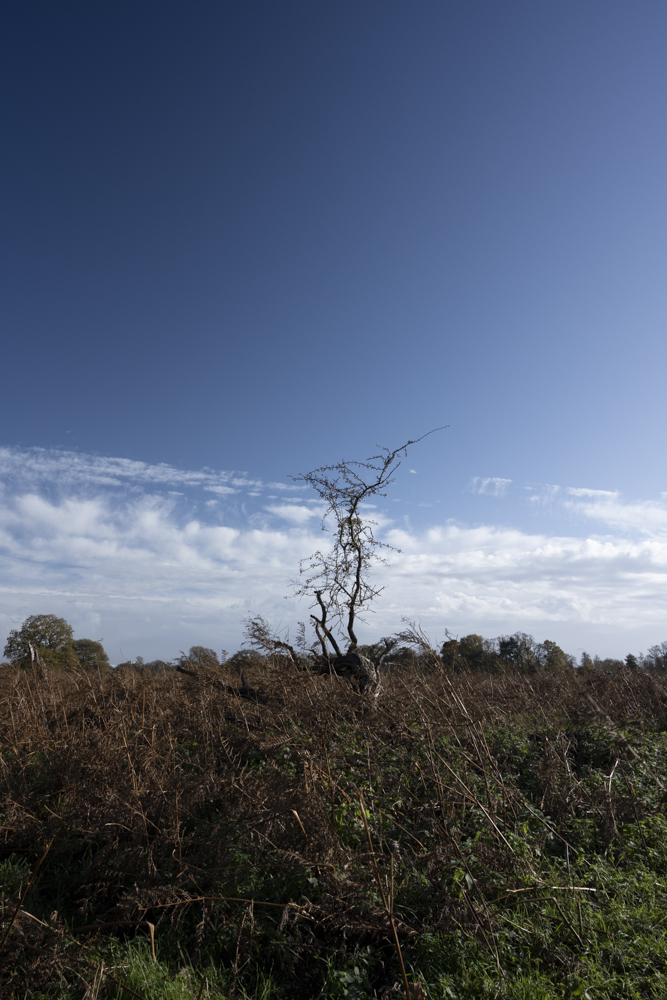
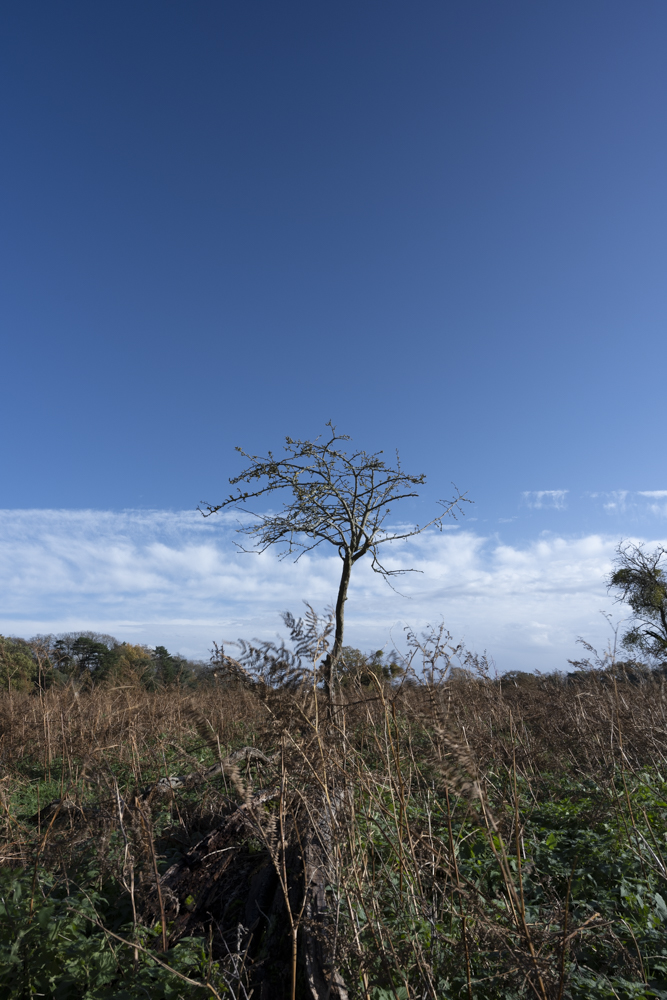
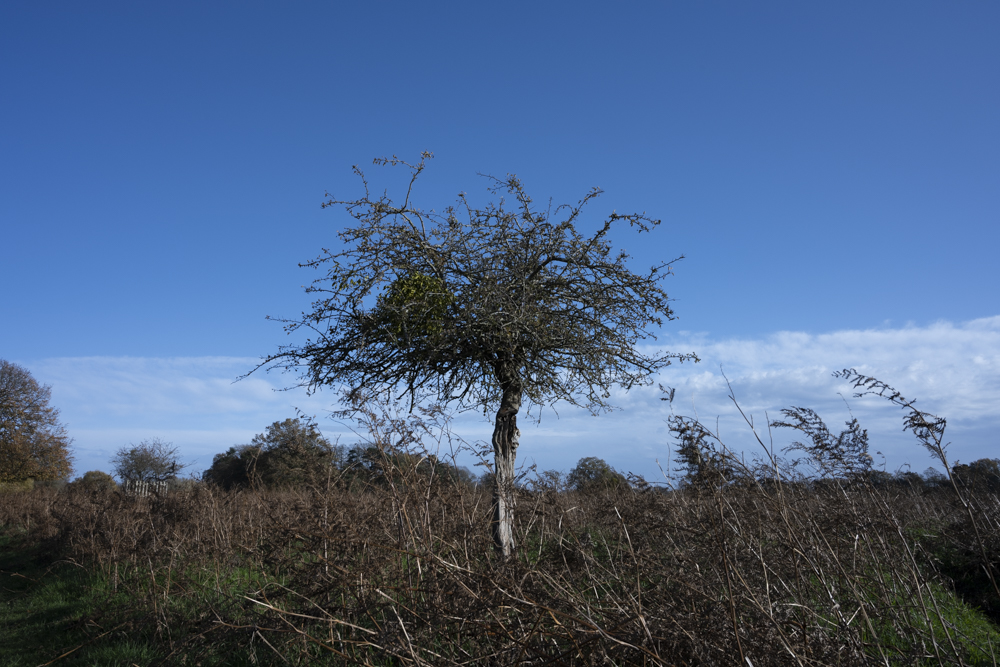
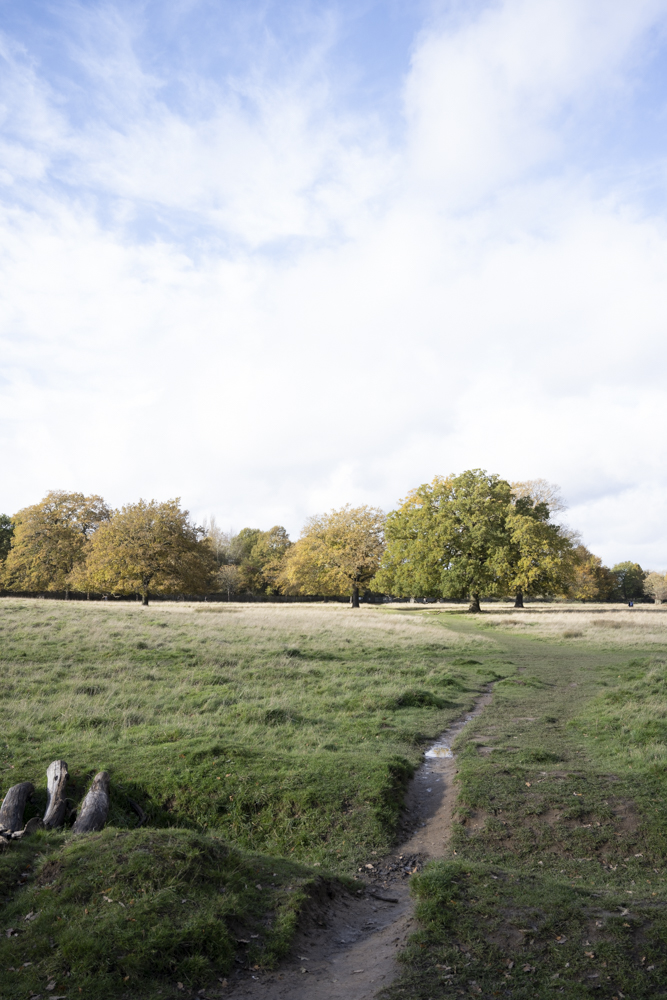
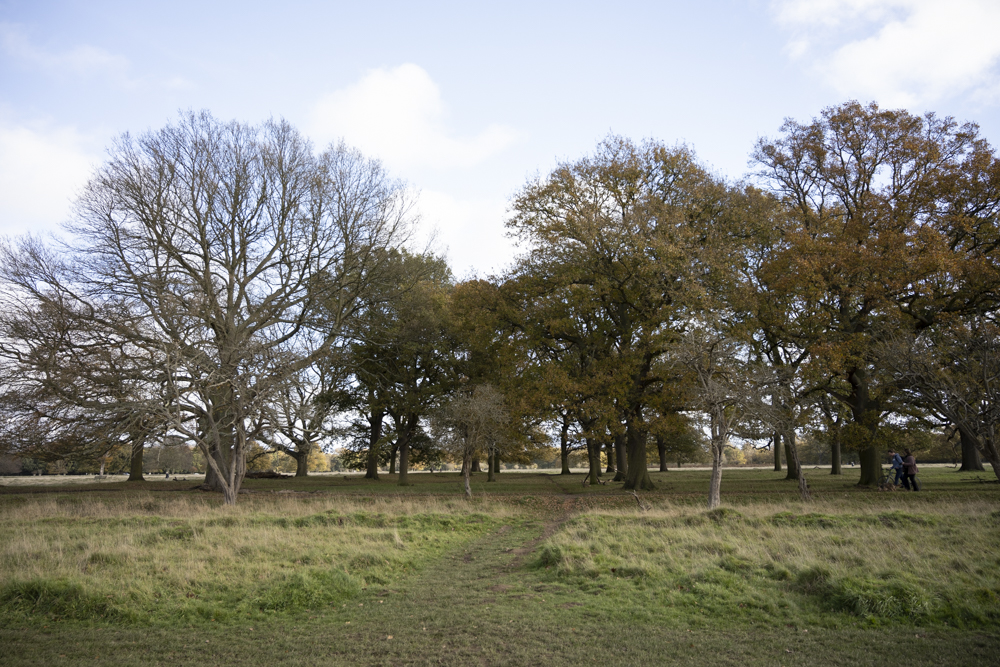
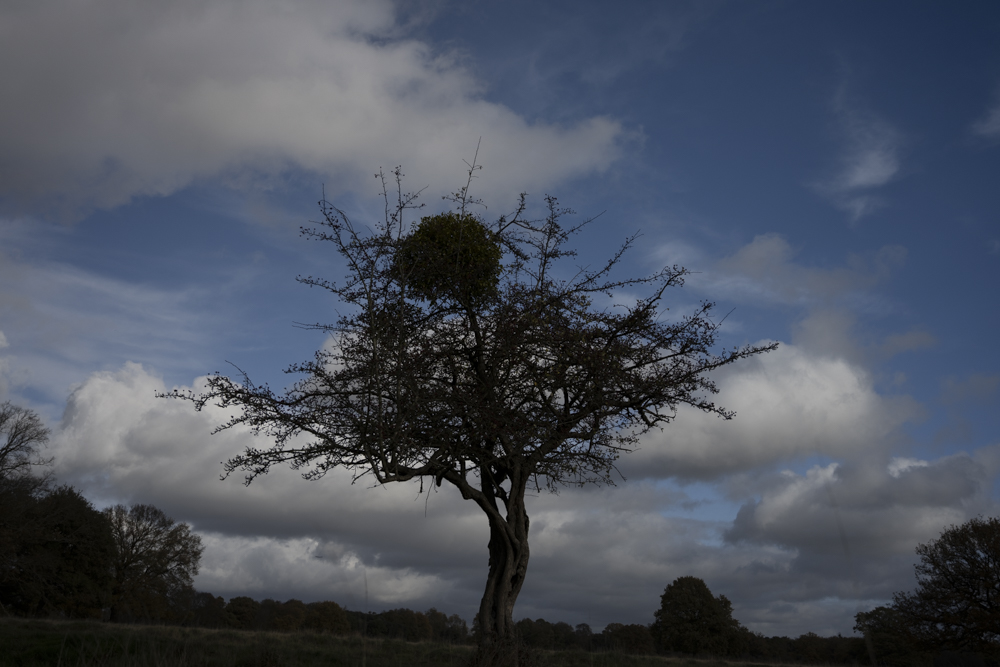
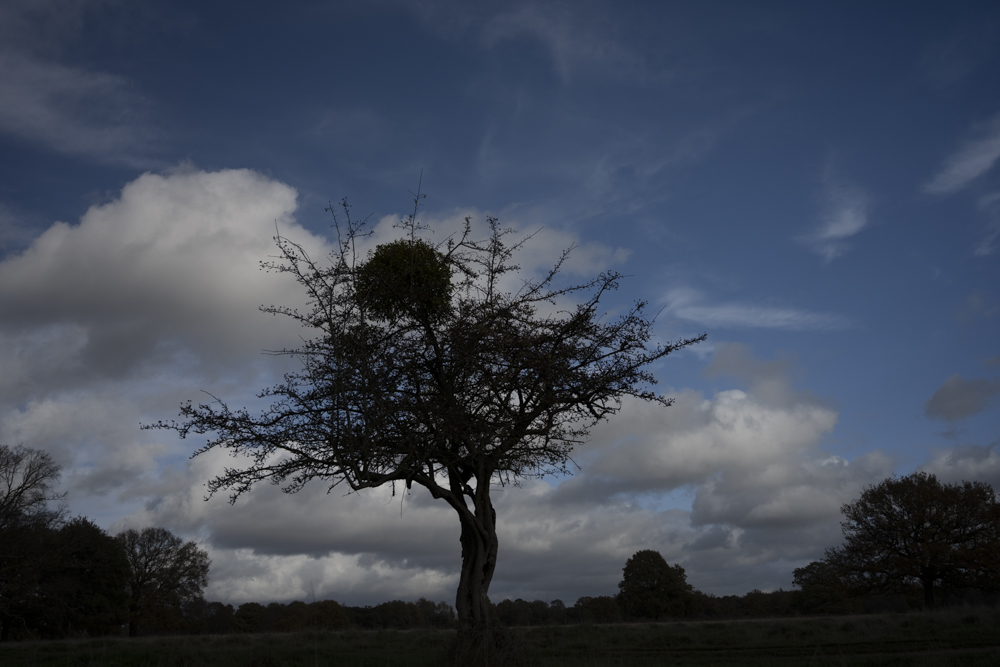
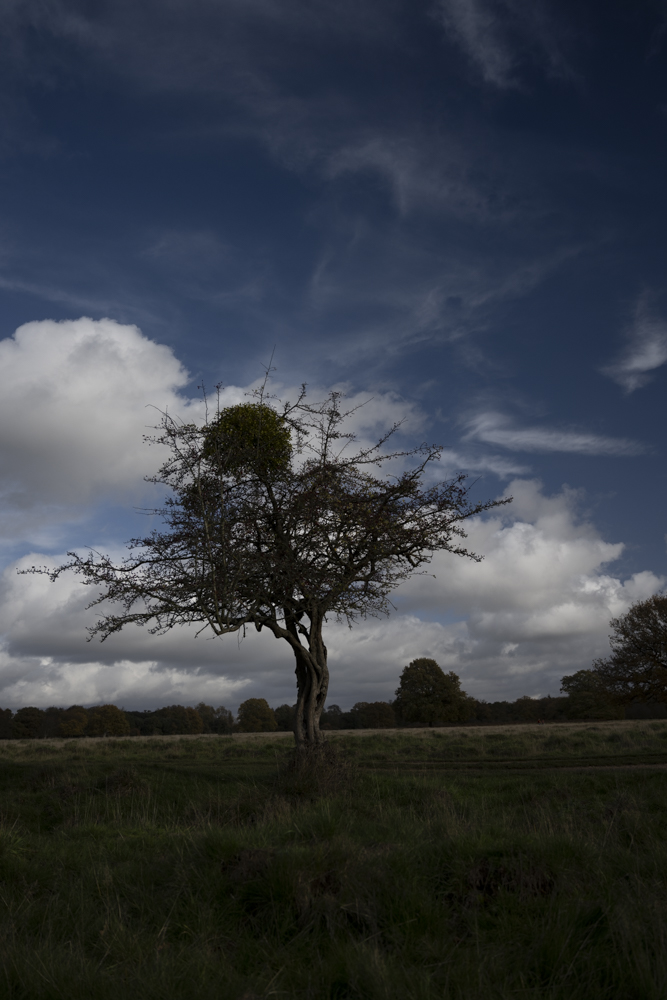
Despite this frustration, I tried the other aspect ratios settings from one position.
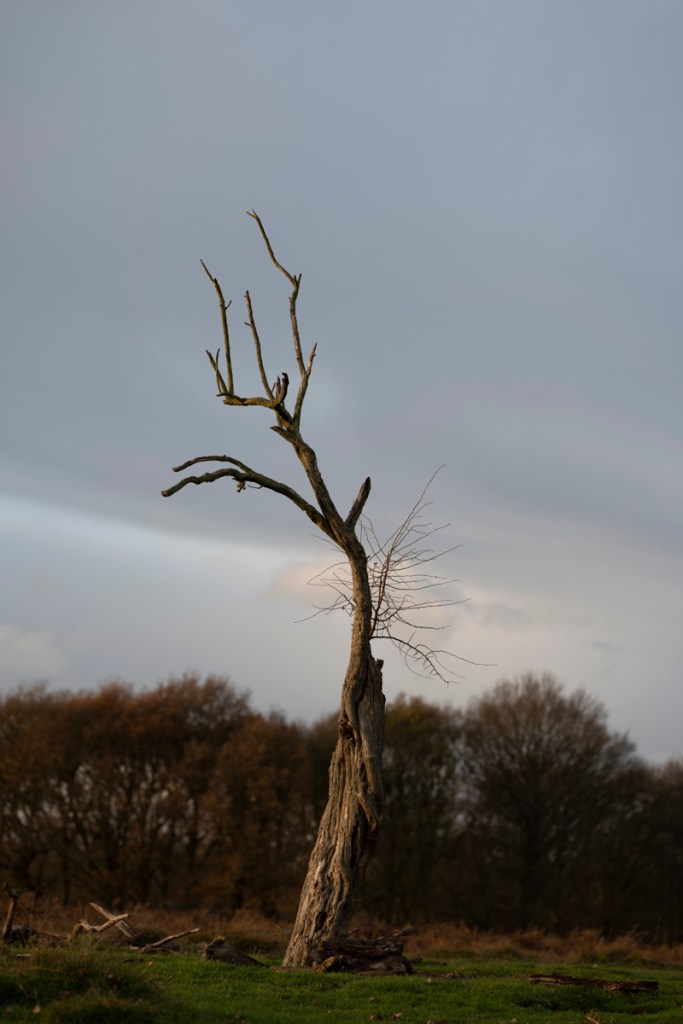
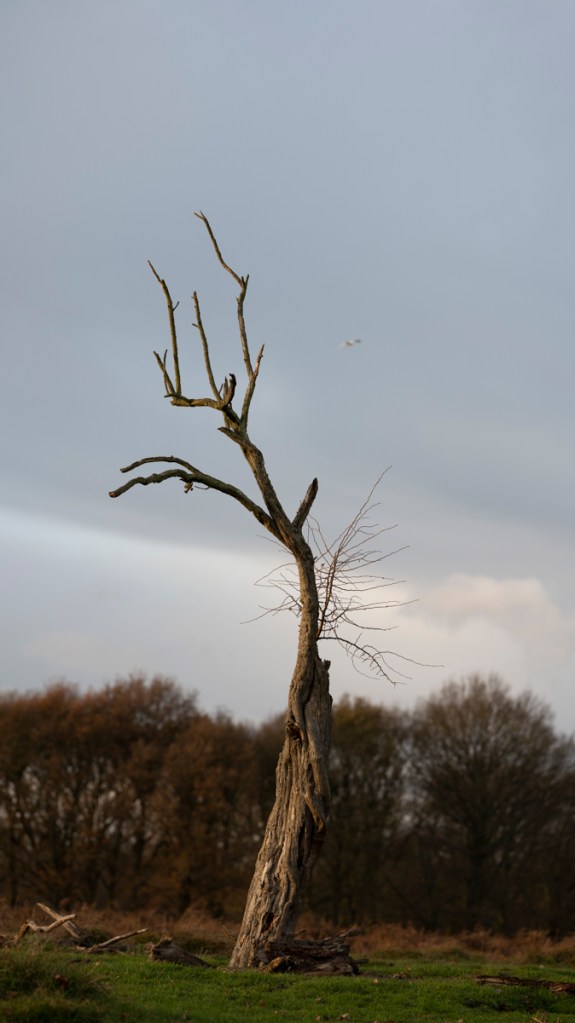
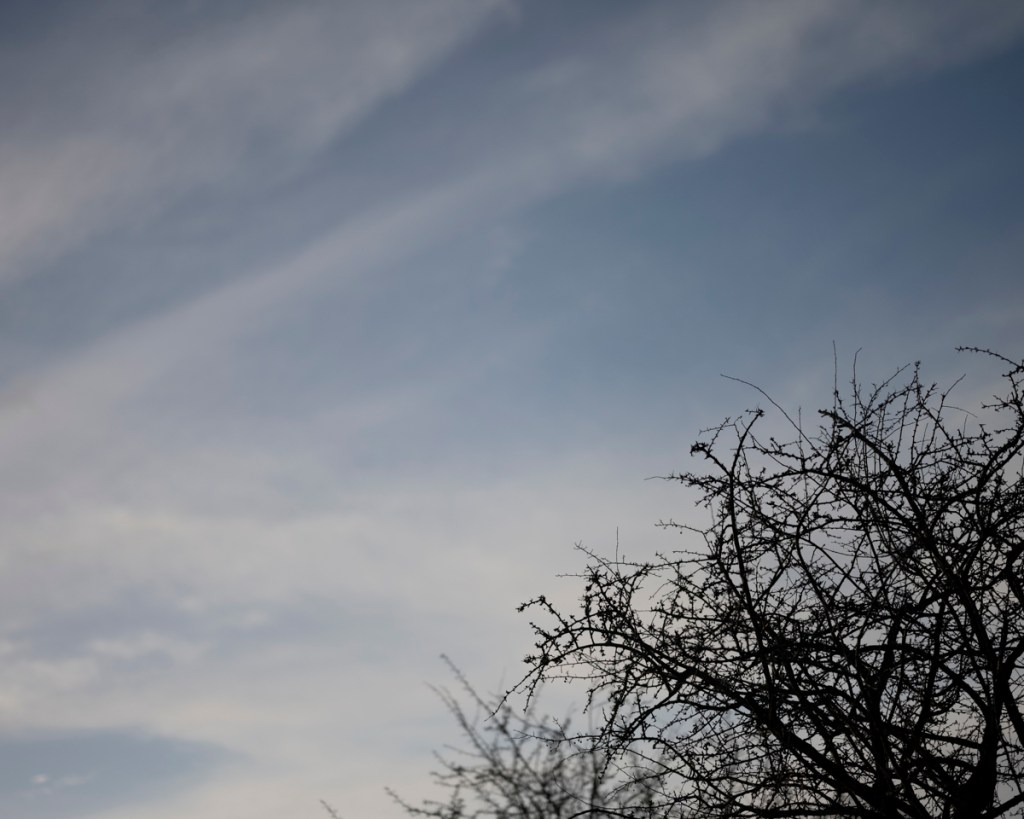
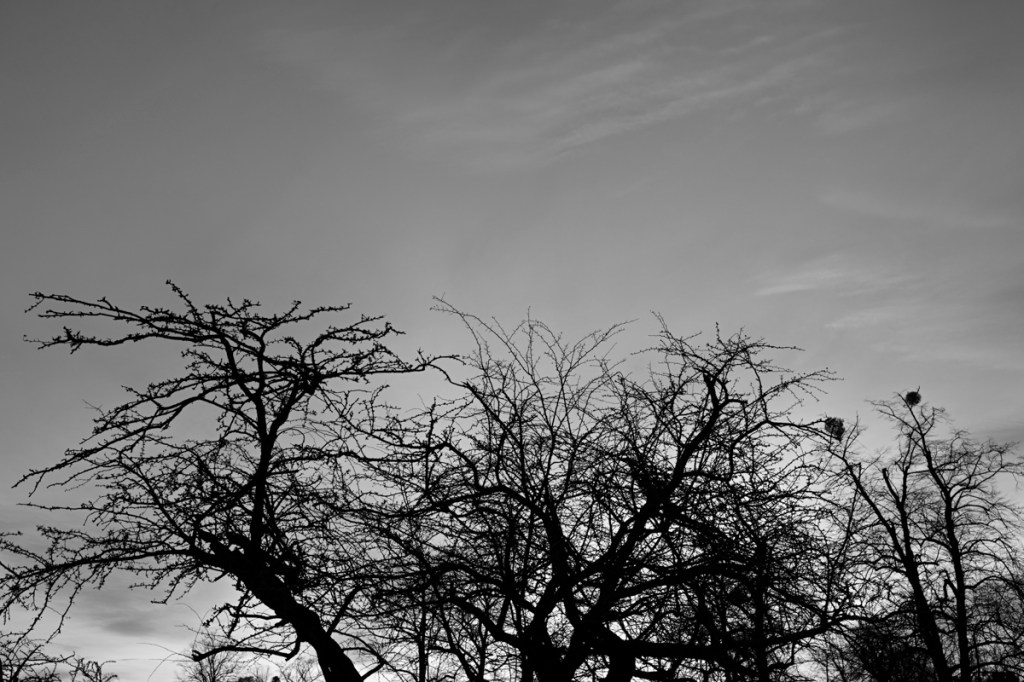
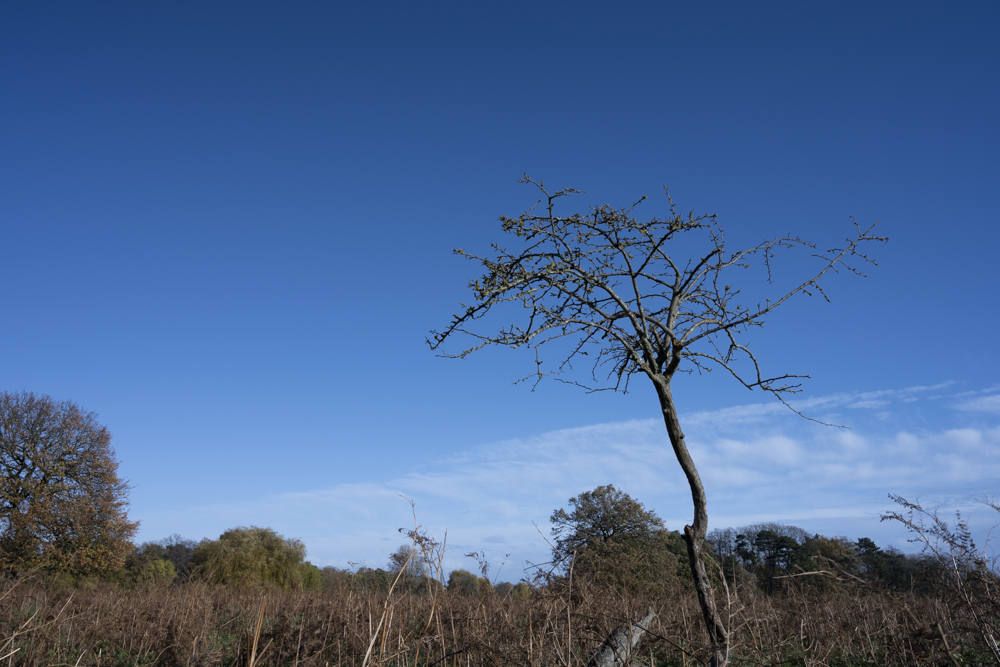
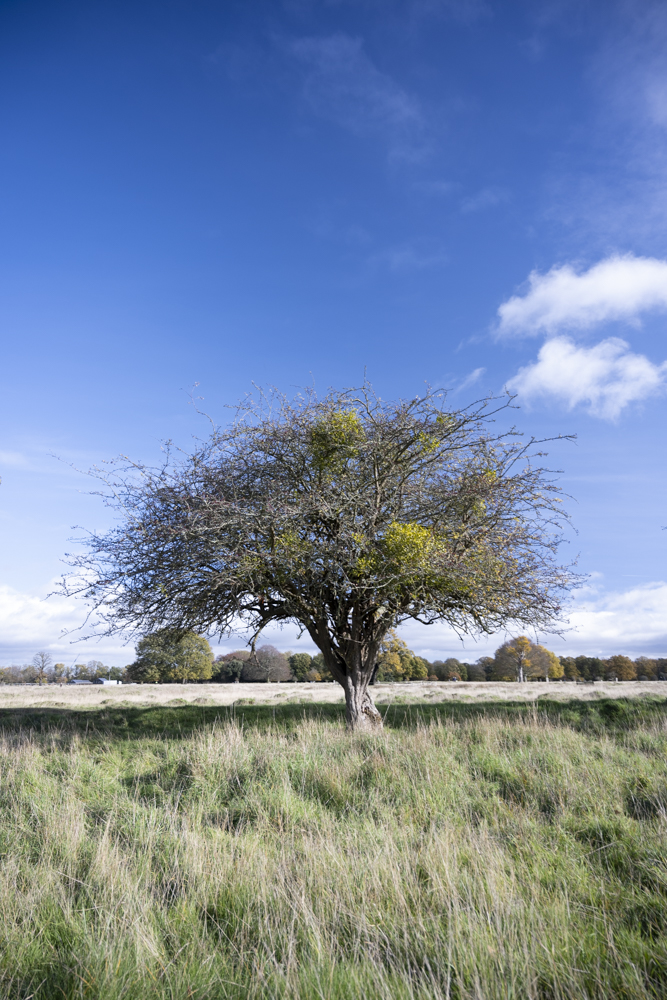
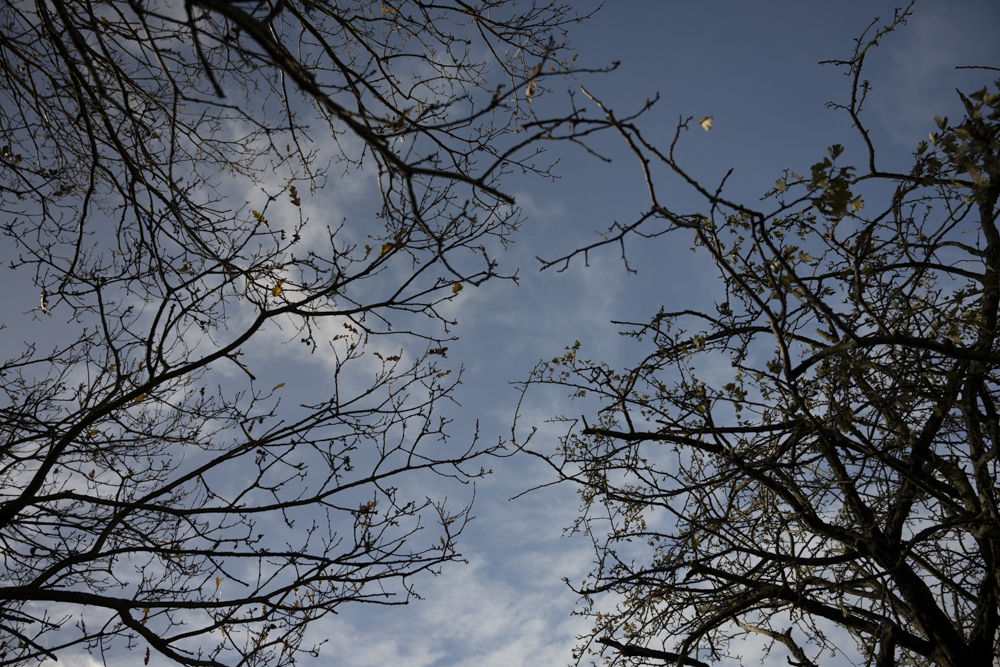
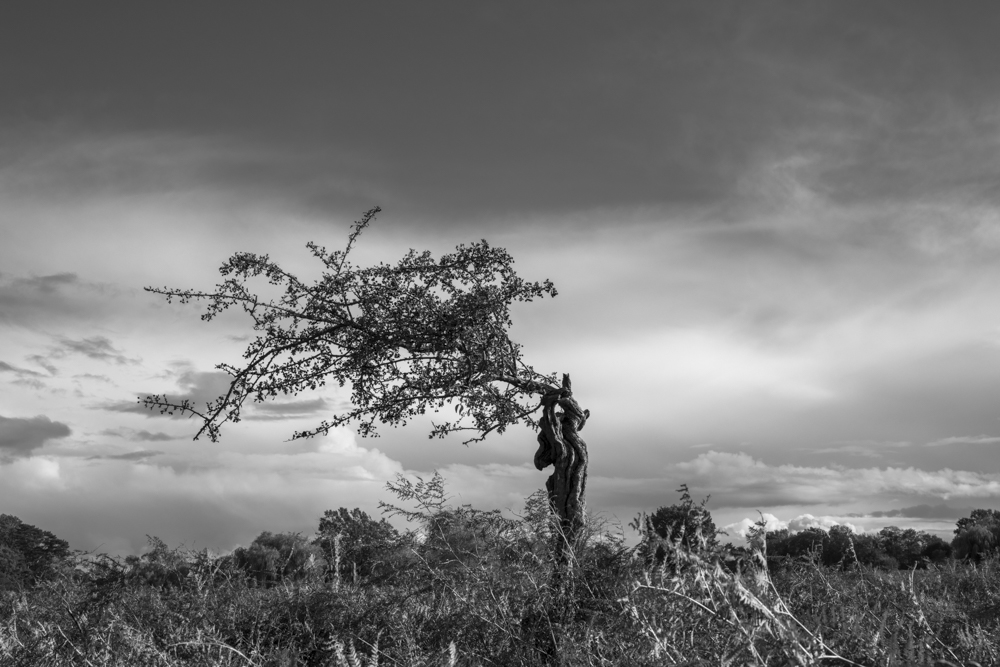
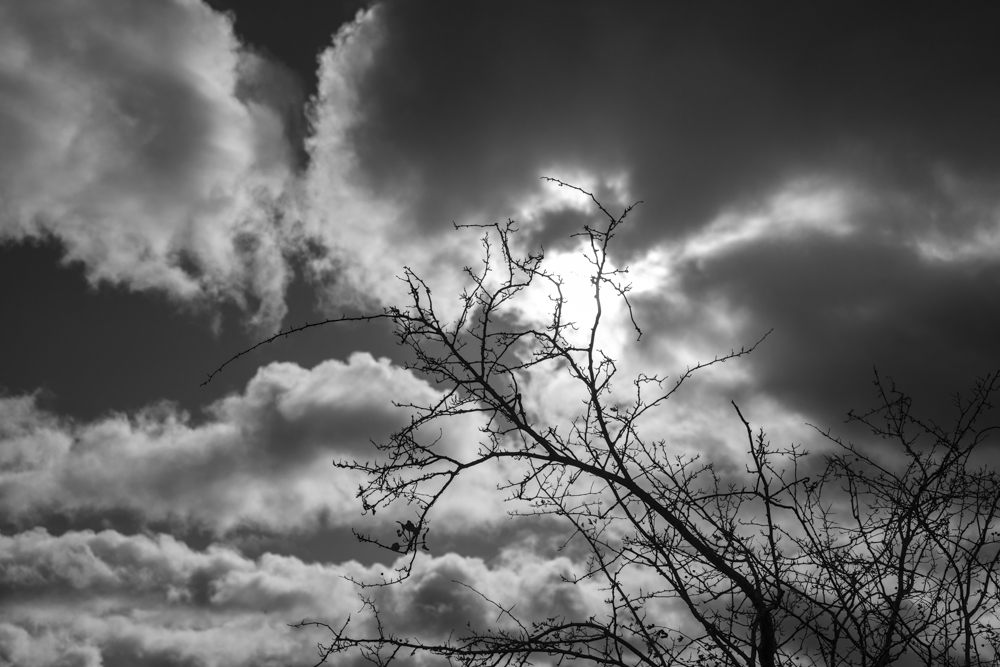
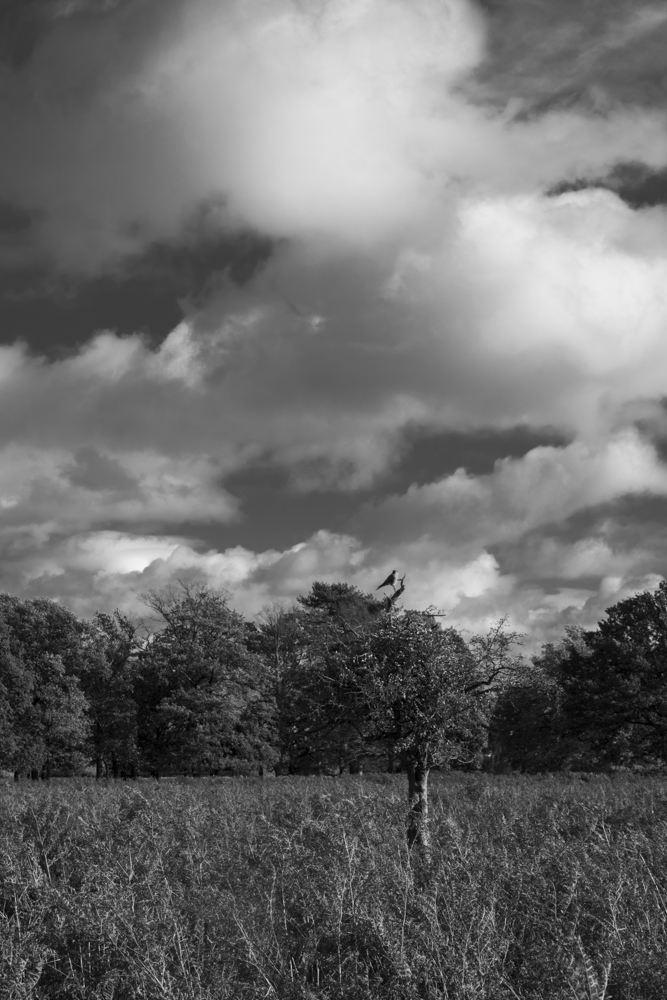
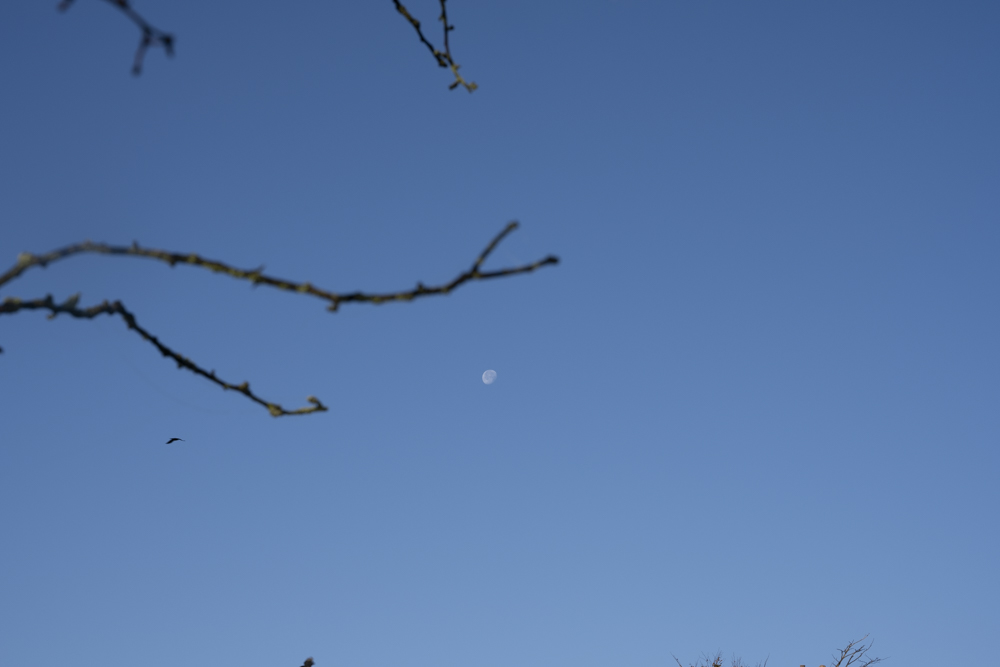
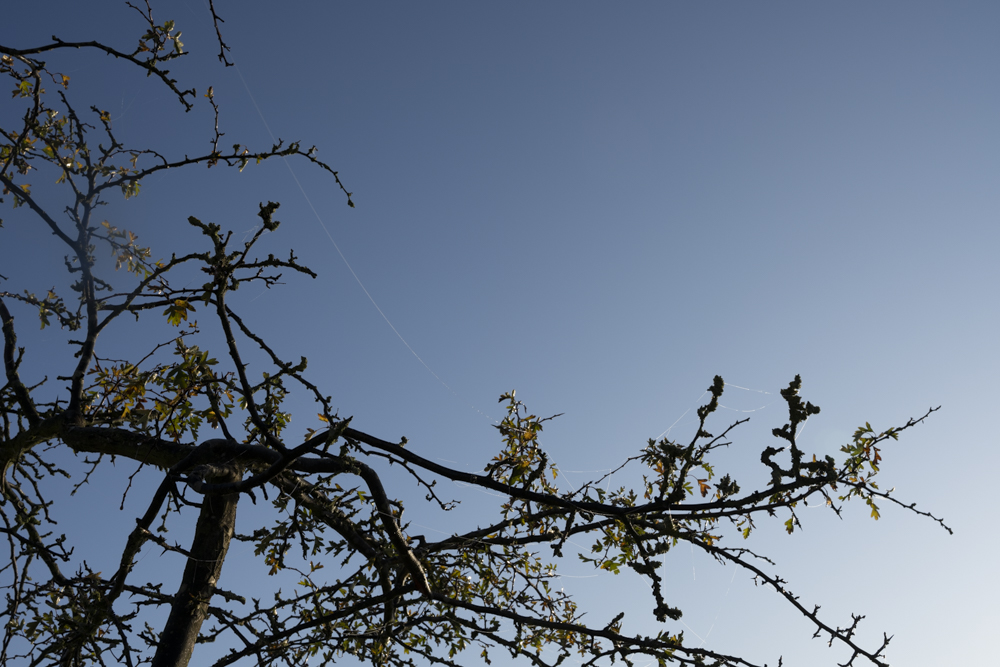
Note to self, if I change aspect ratio, change the camera position and recompose. Also, looking at the 16:9 image, I need to keep an eye out for passing birds and planes in the sky when taking a shot.

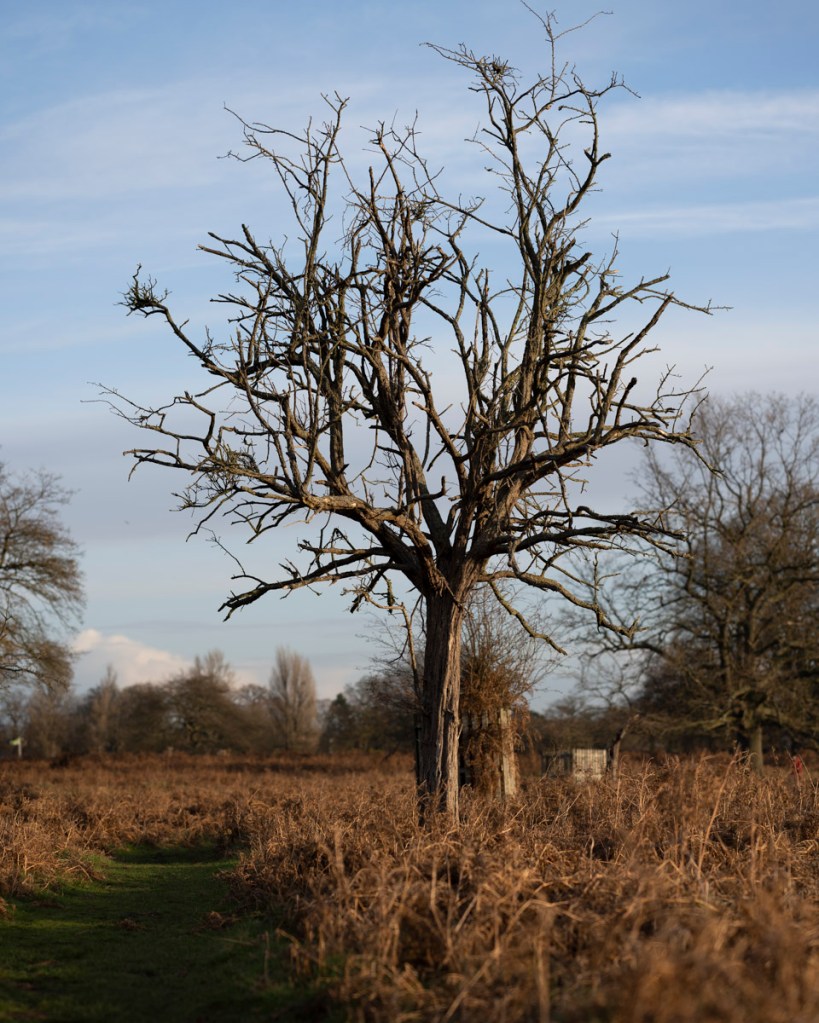
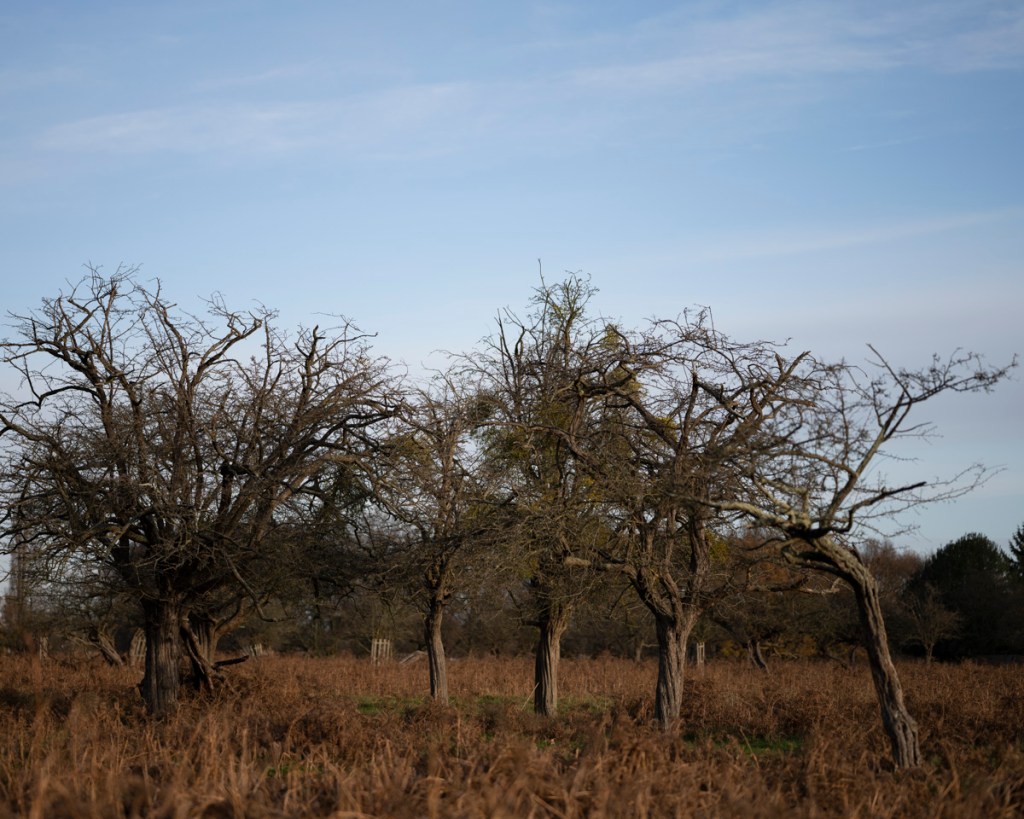
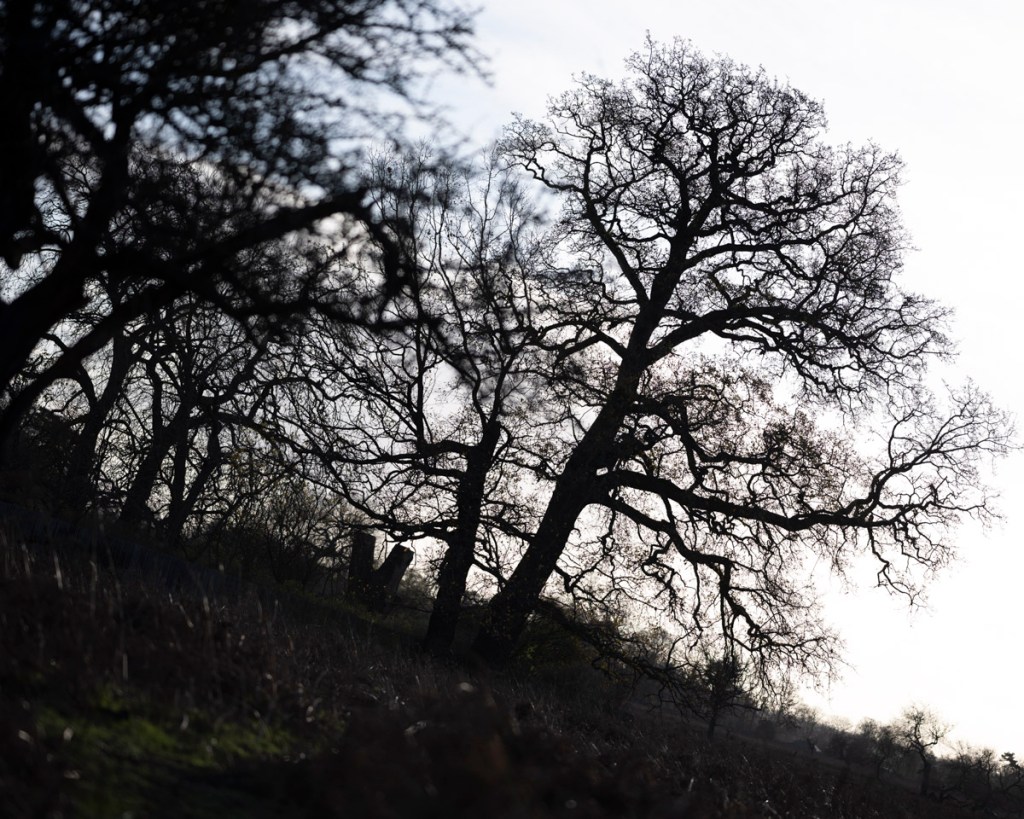
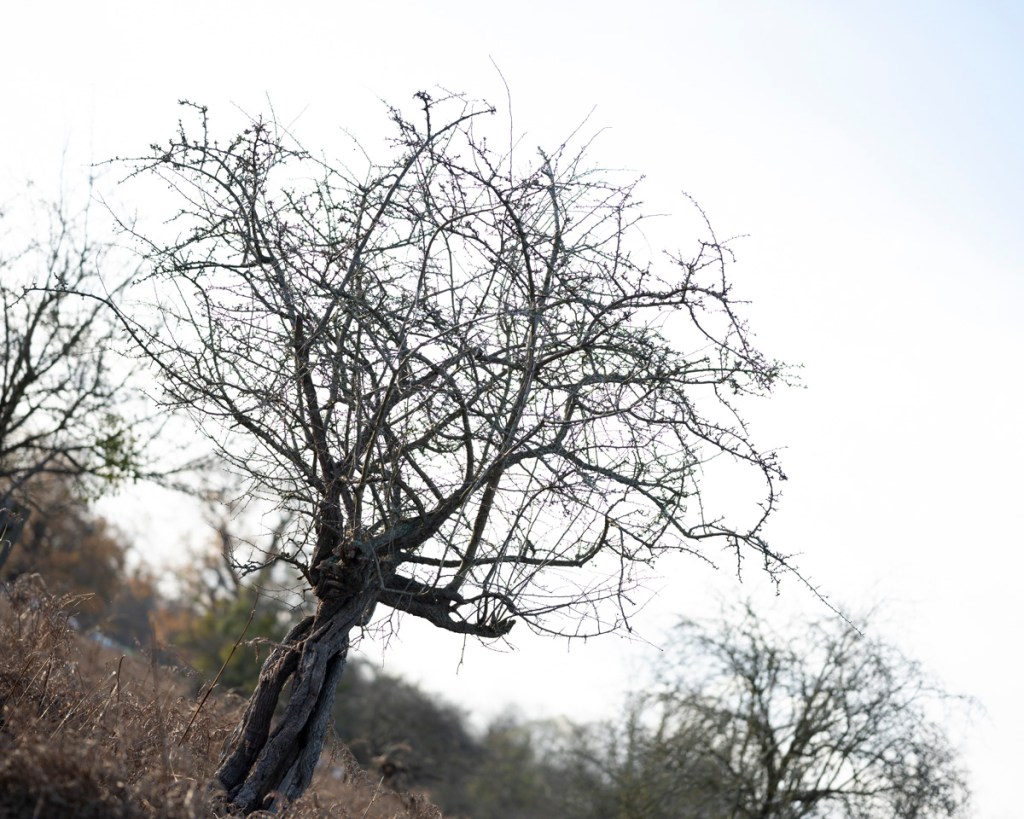
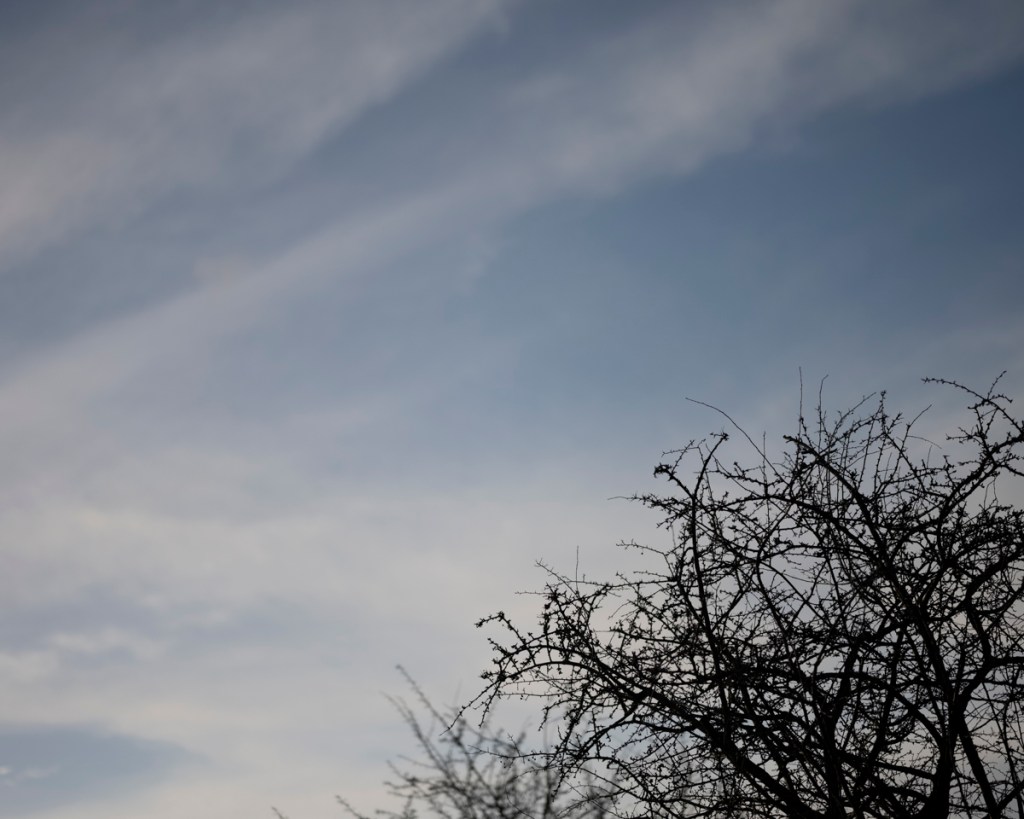
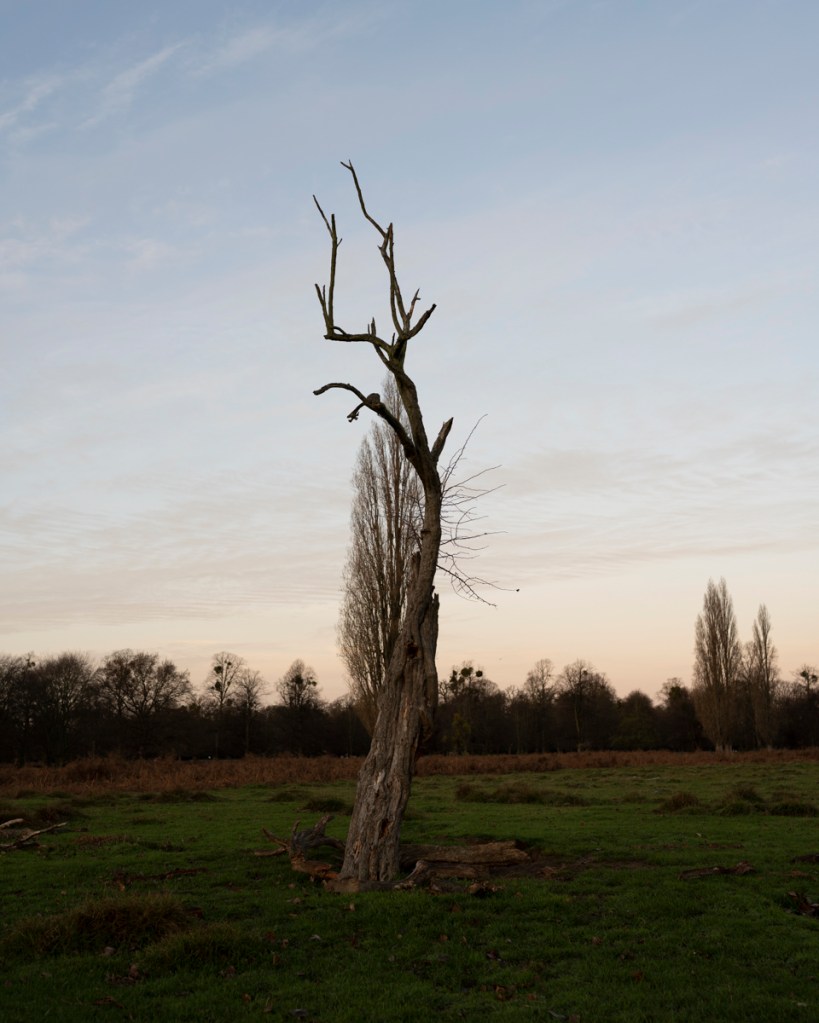
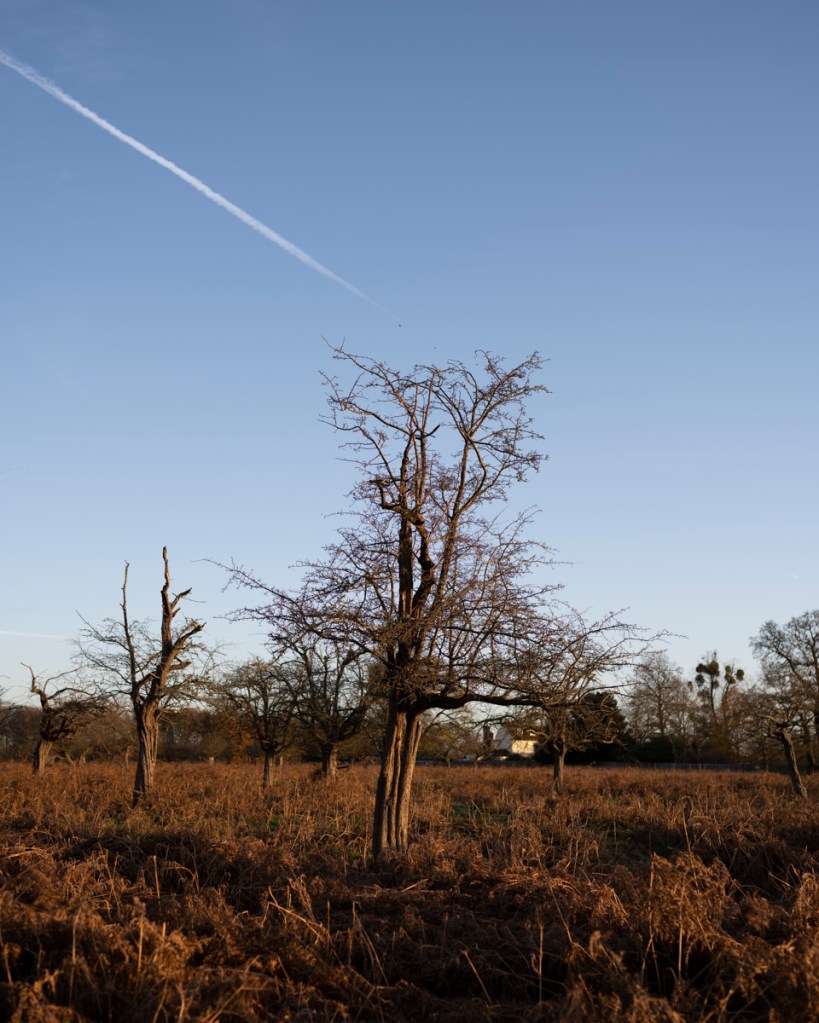
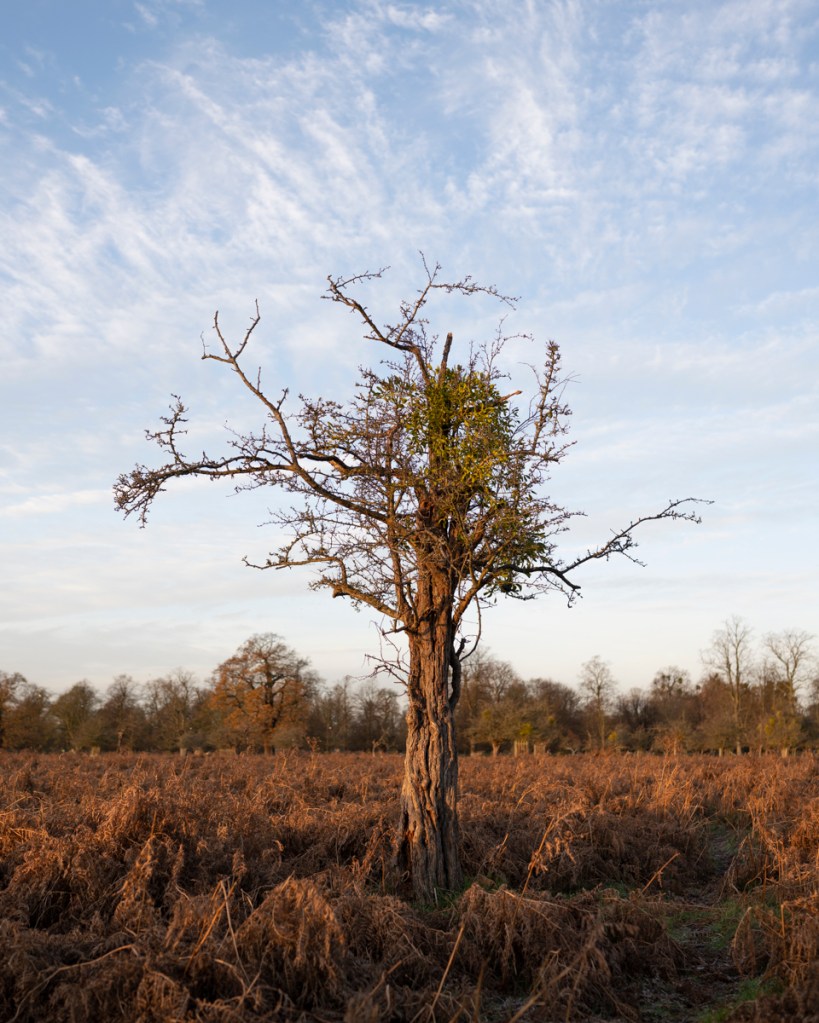
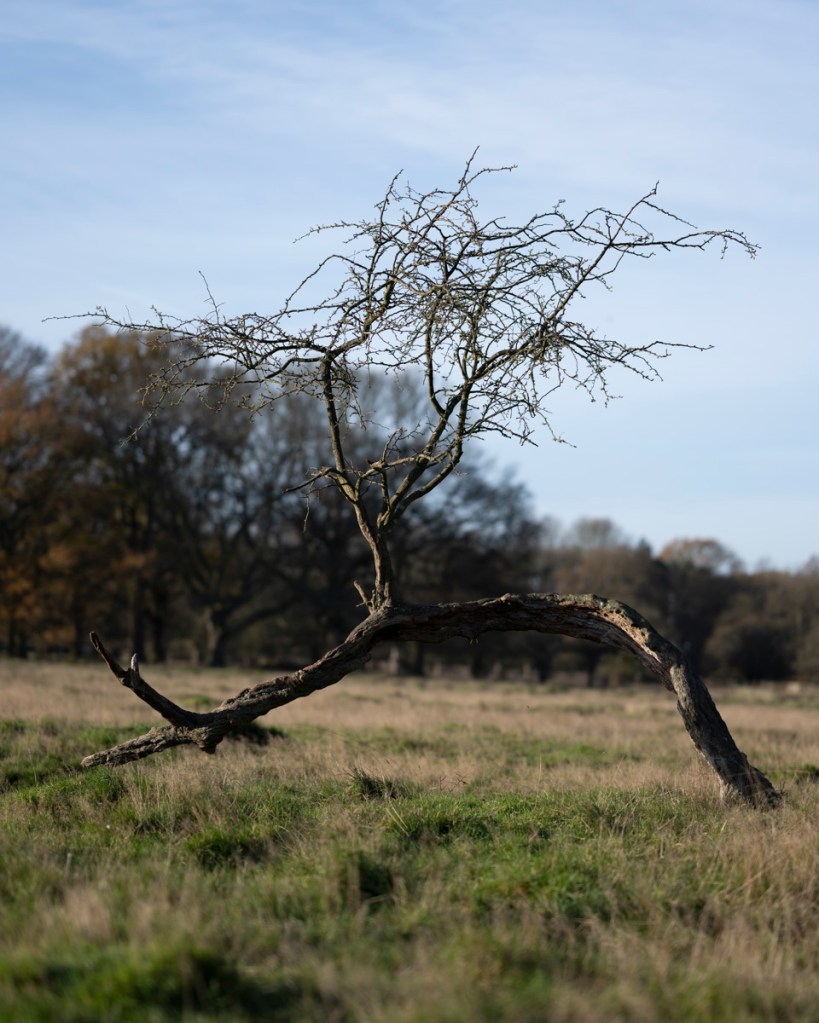
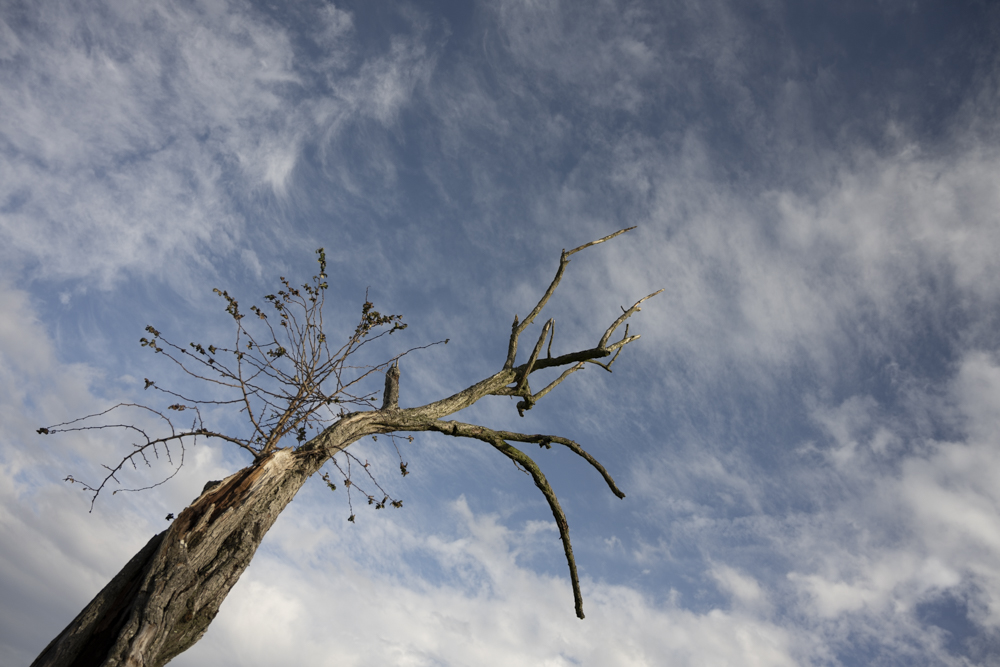
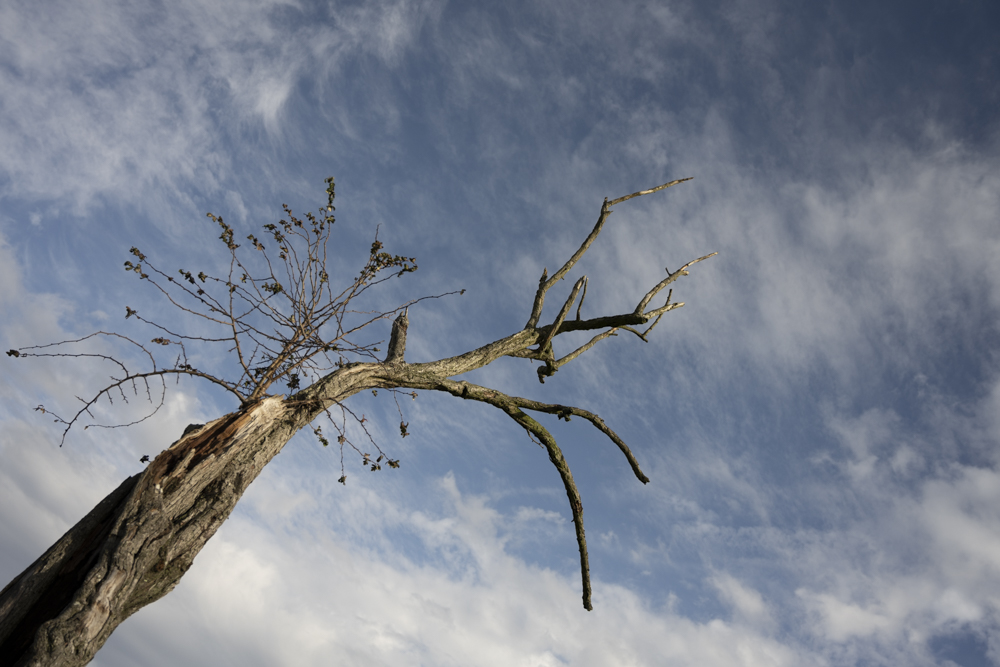
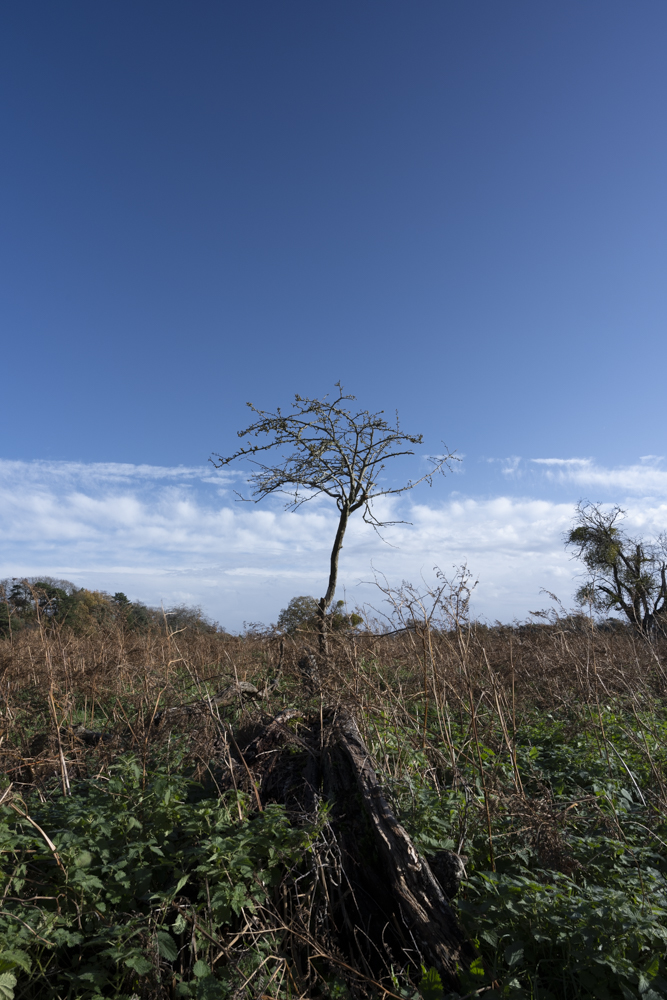
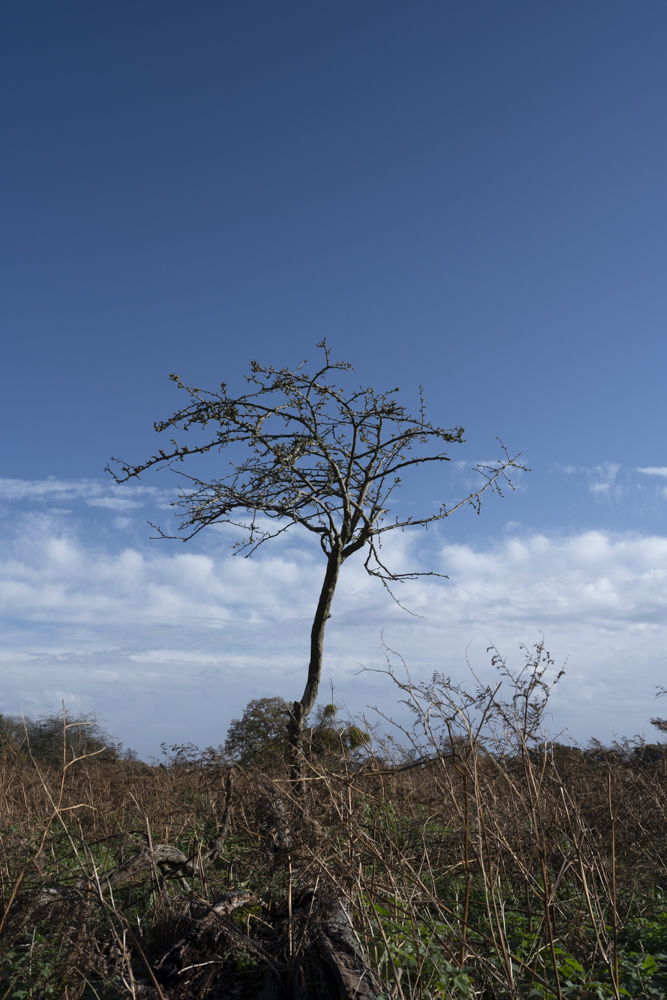
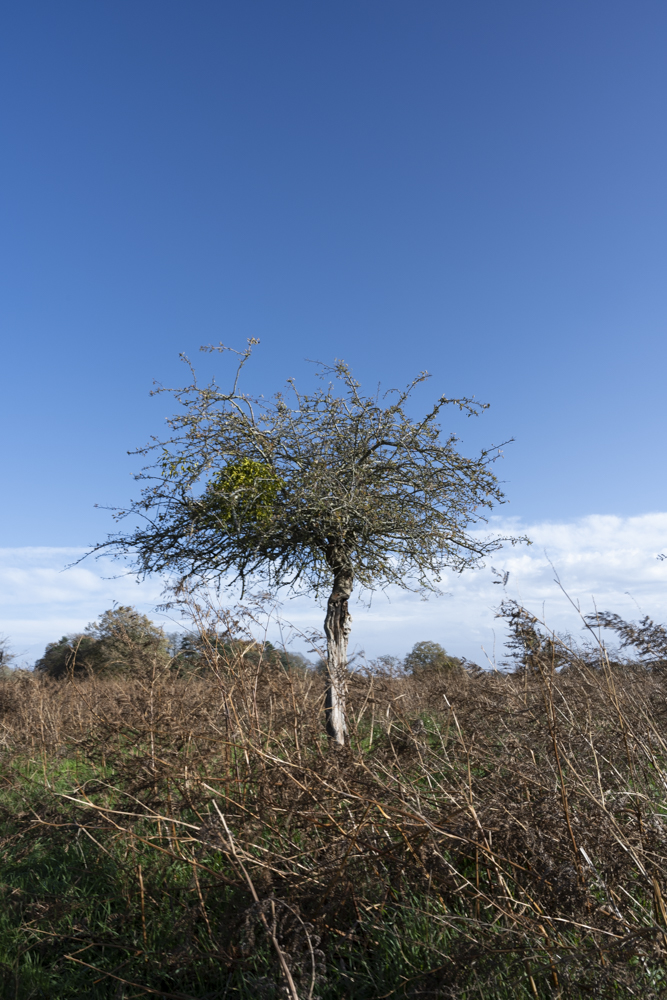
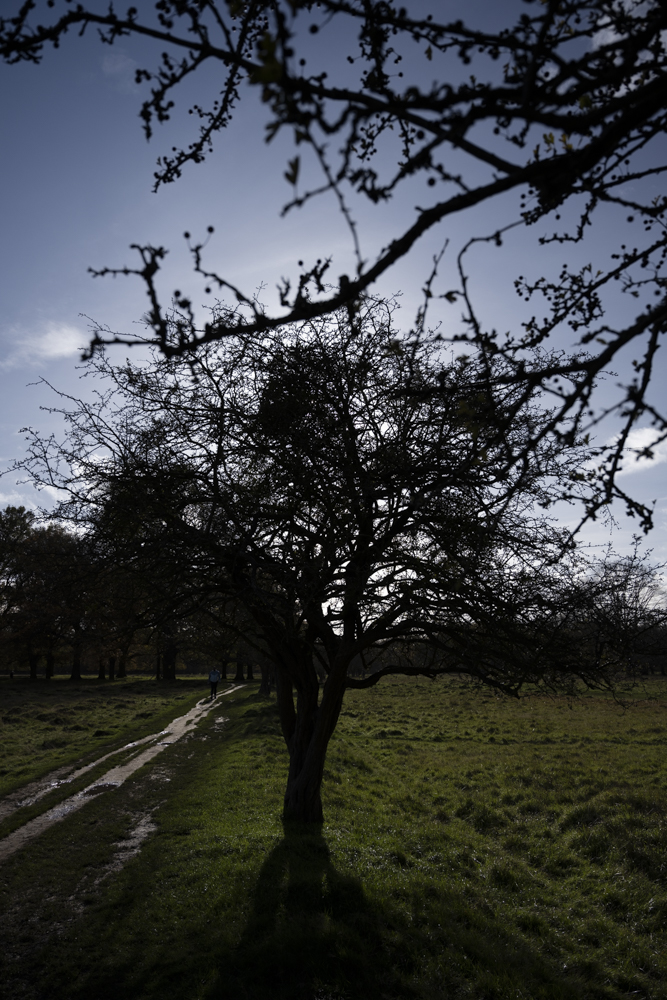
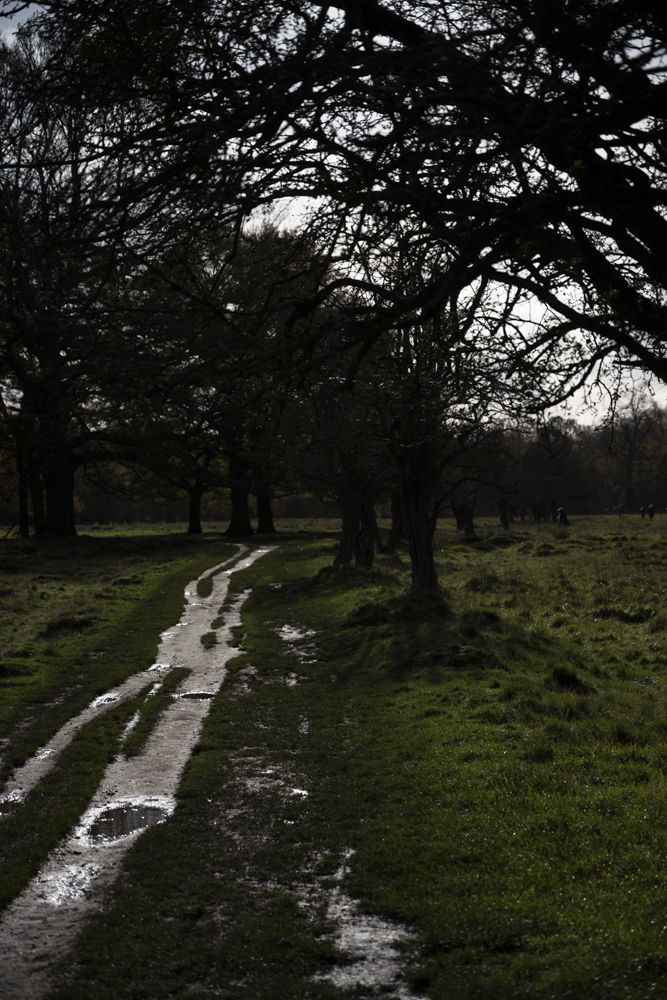
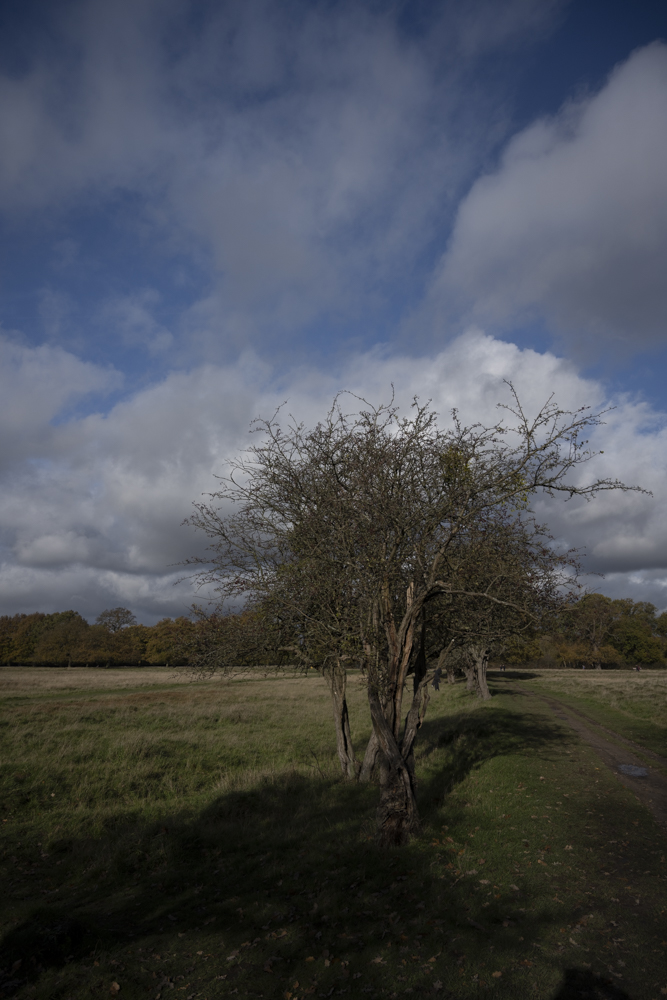
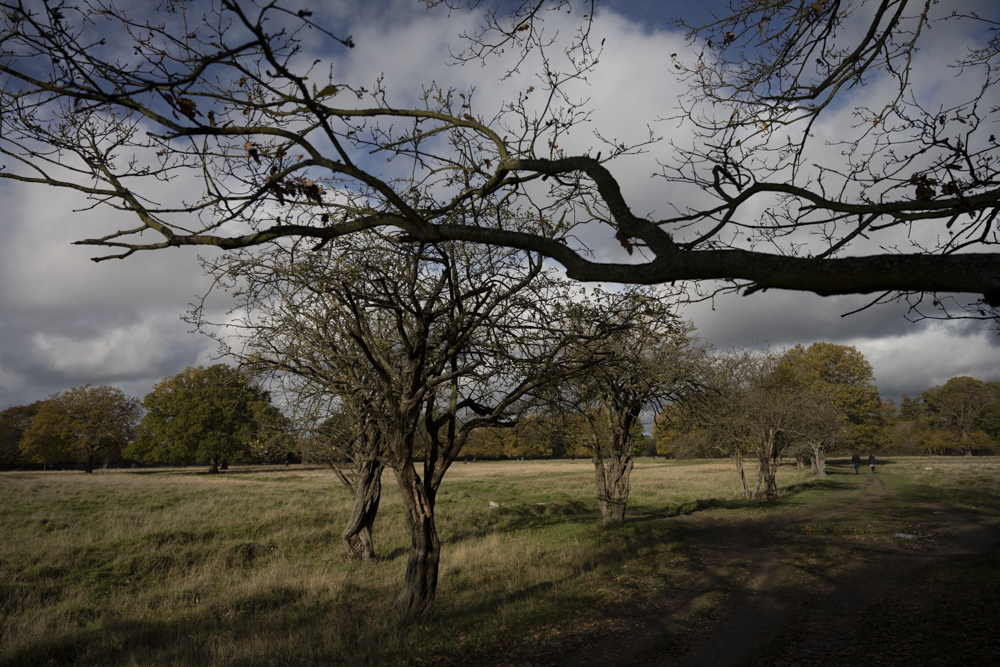
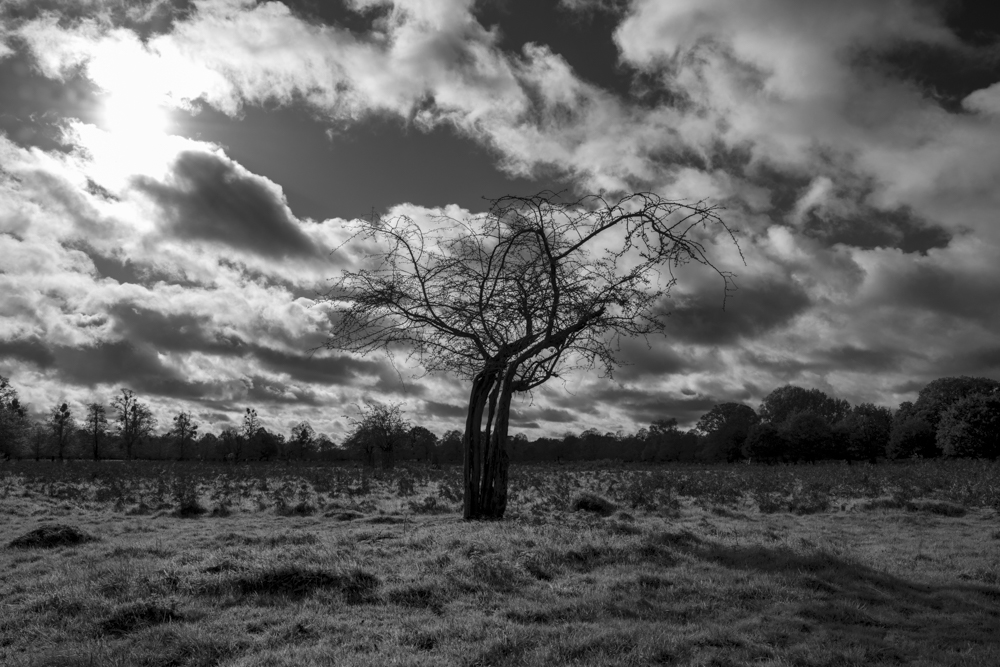
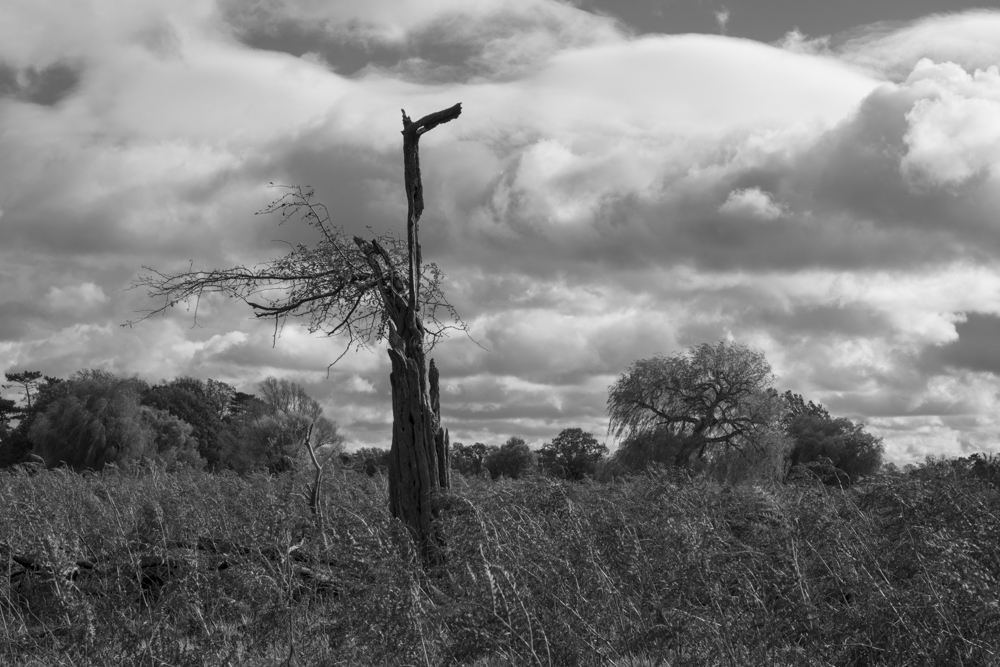
I then set the camera back to 5:4 and took the following using the tripod.
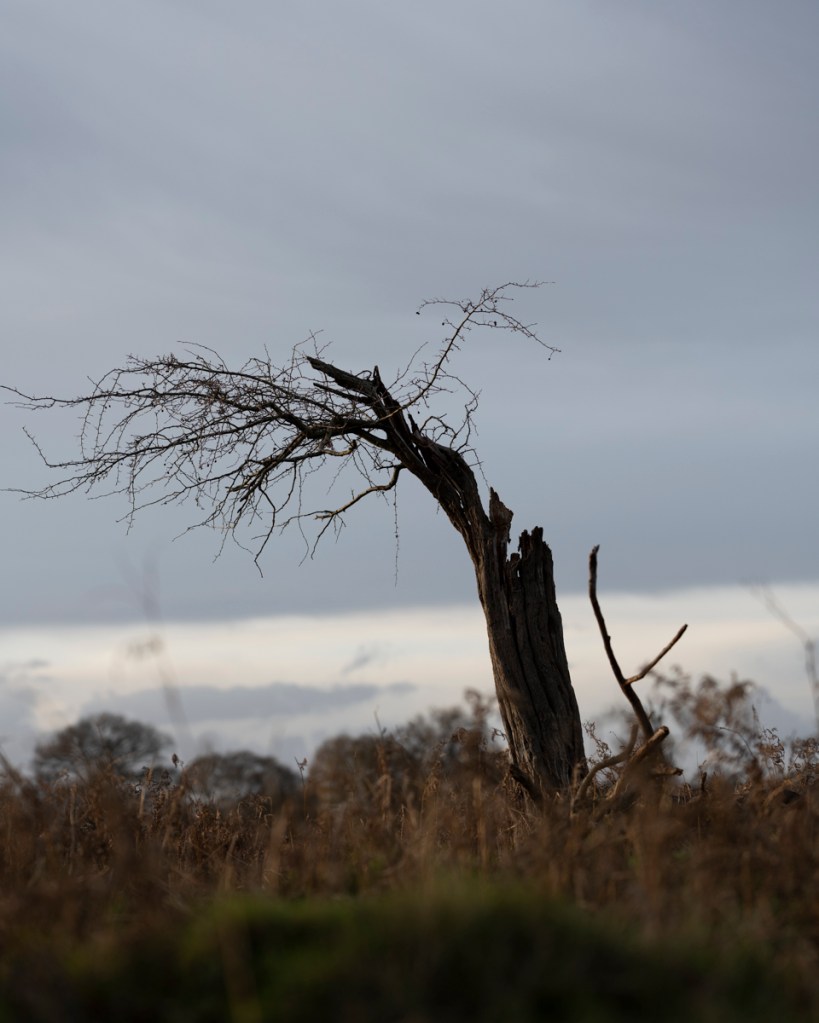
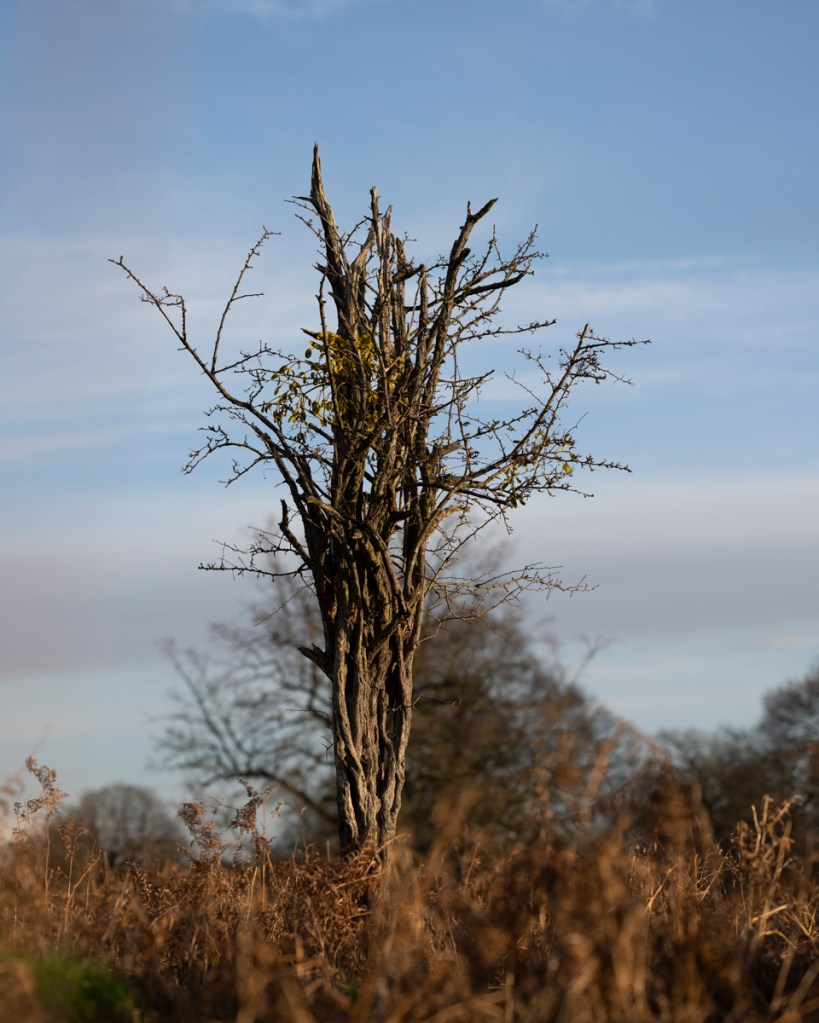
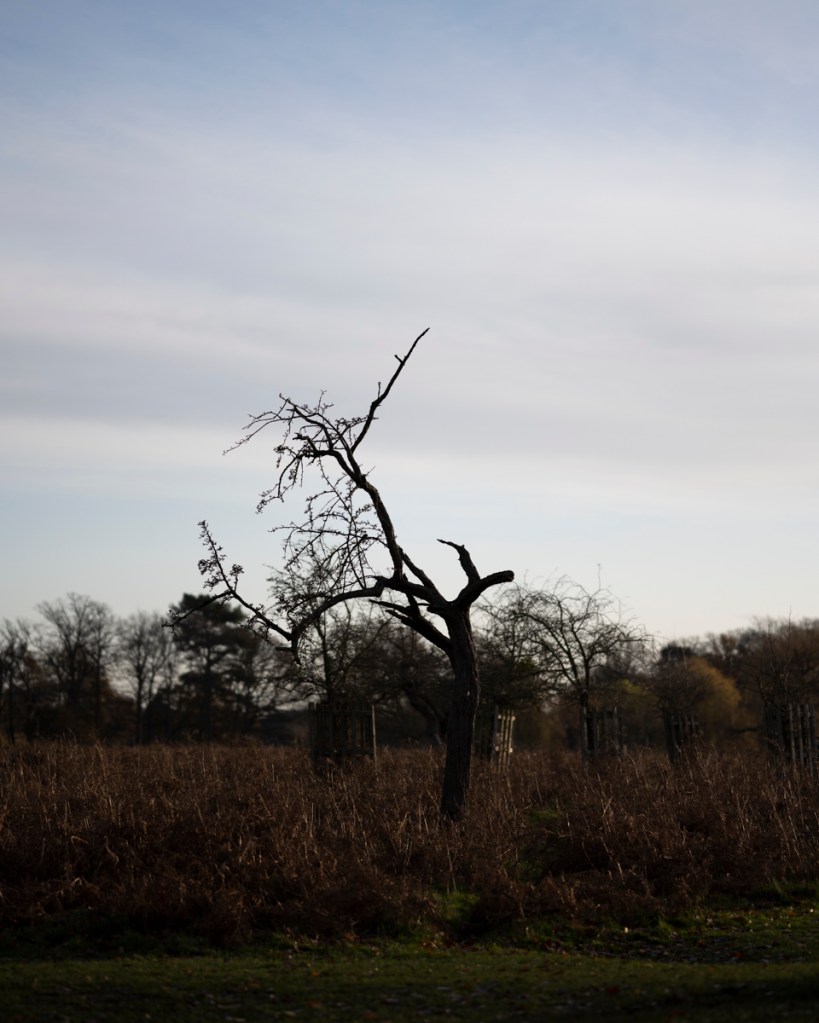
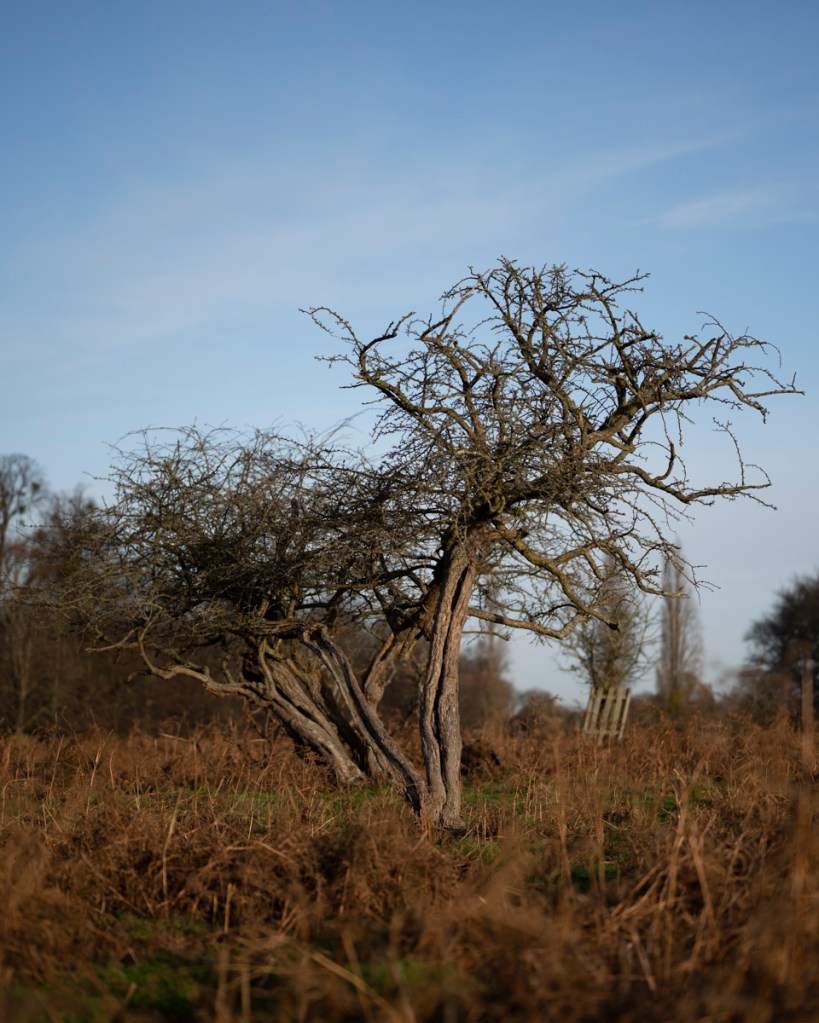
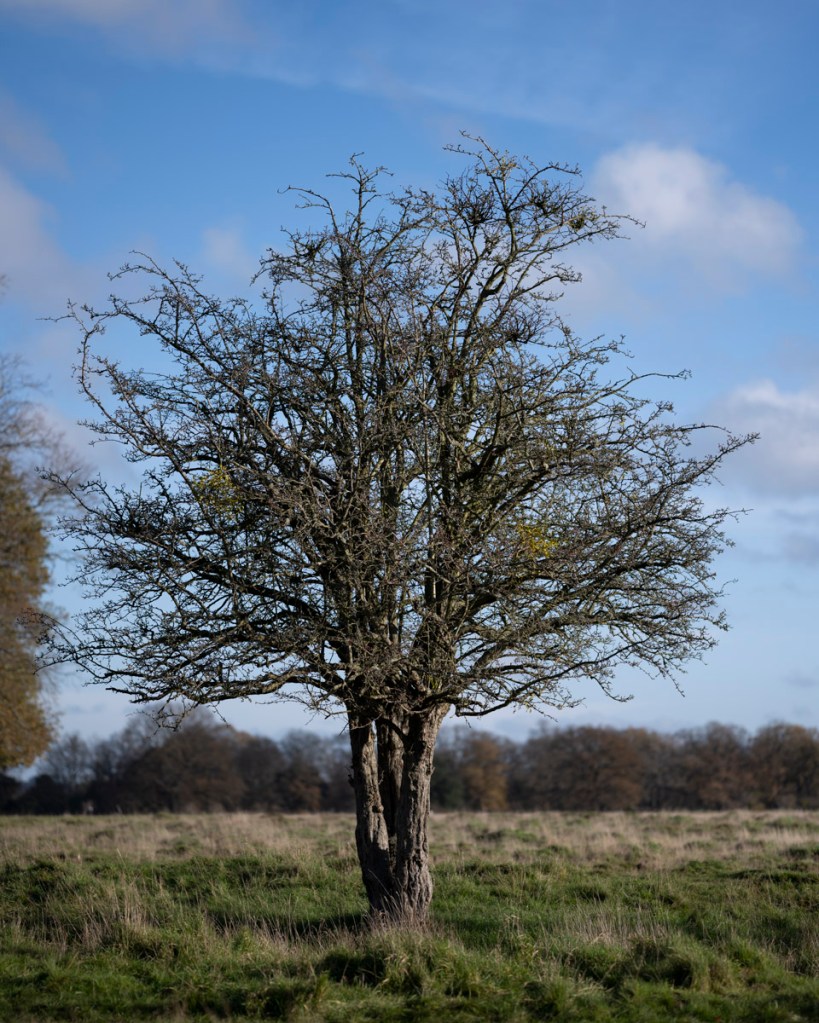
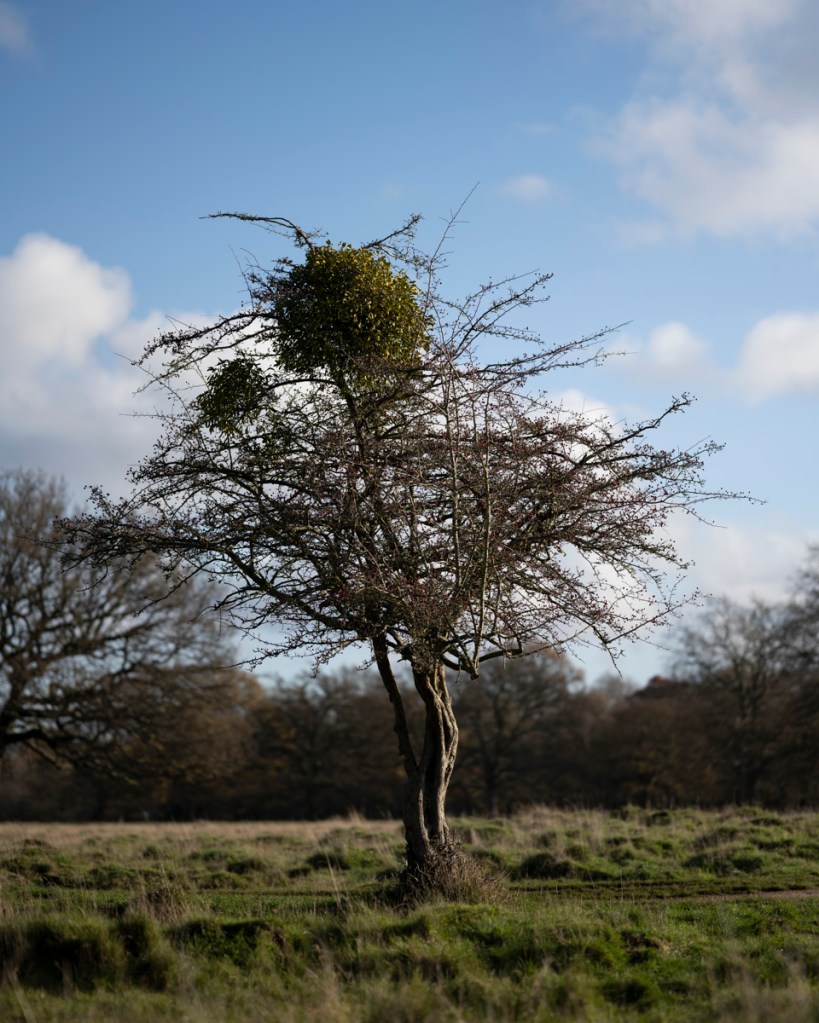
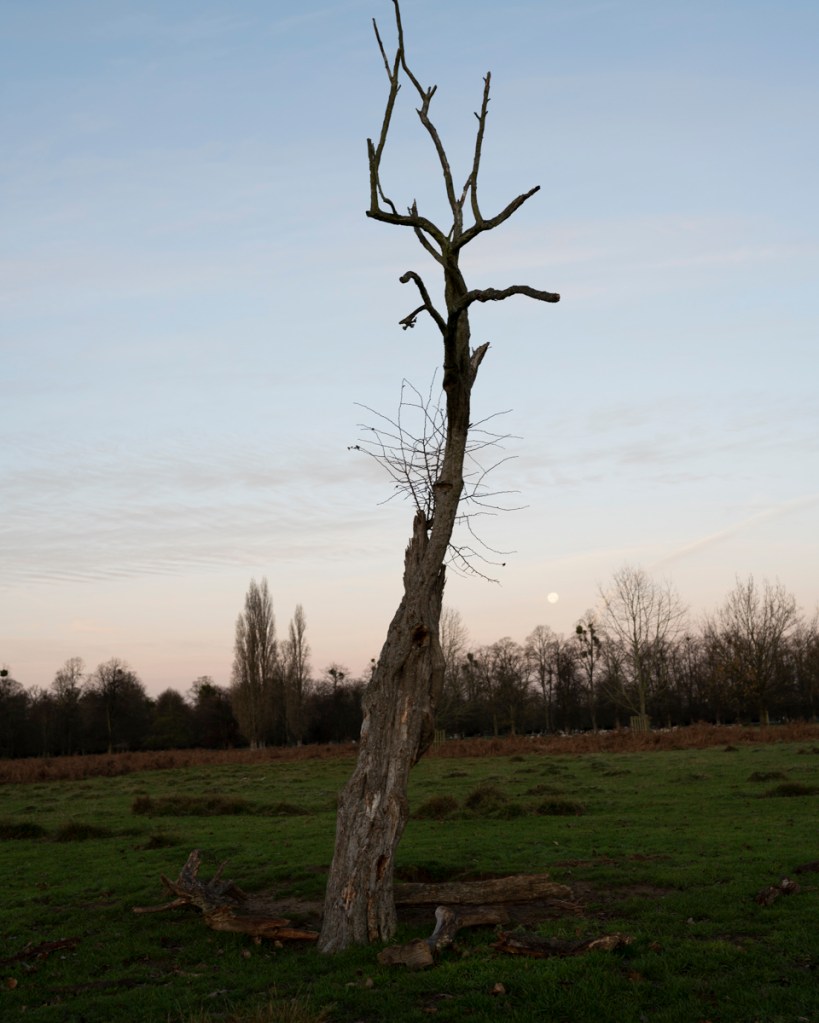
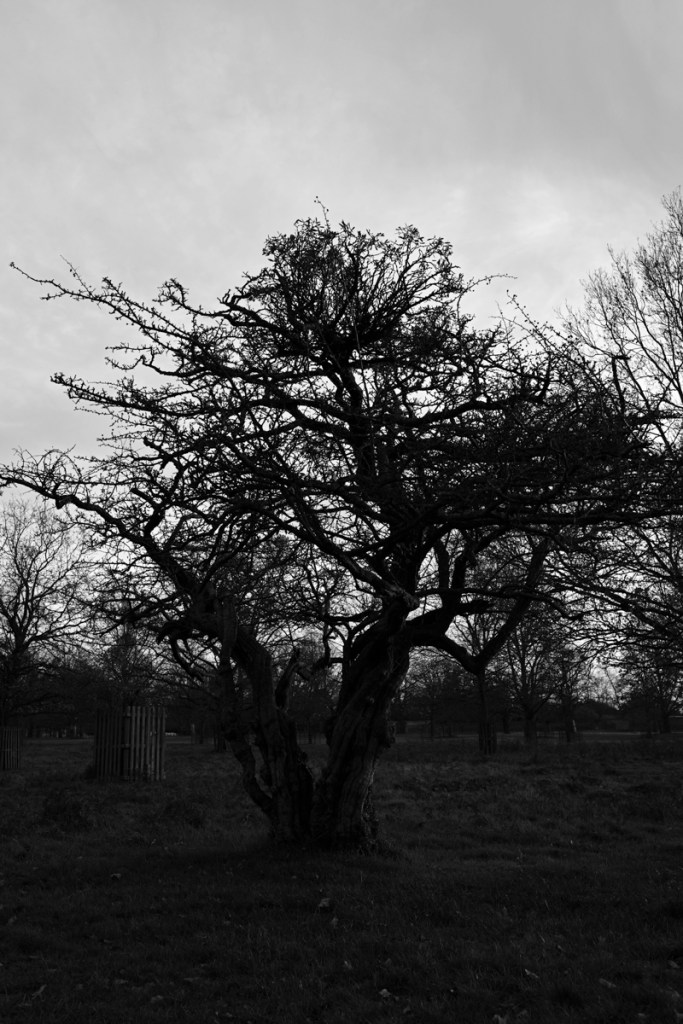
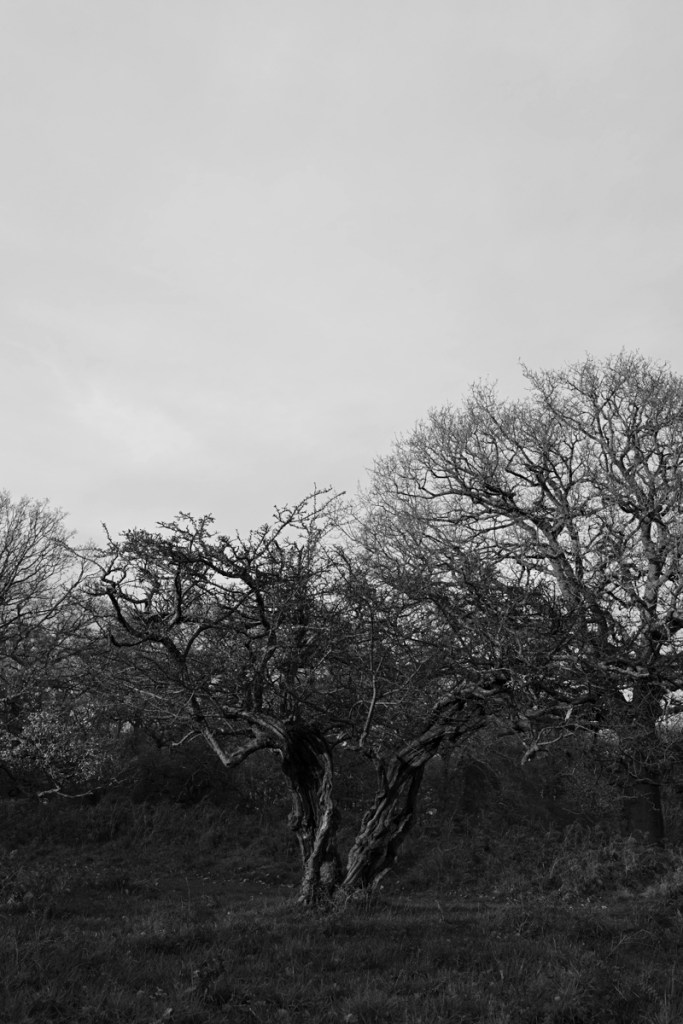
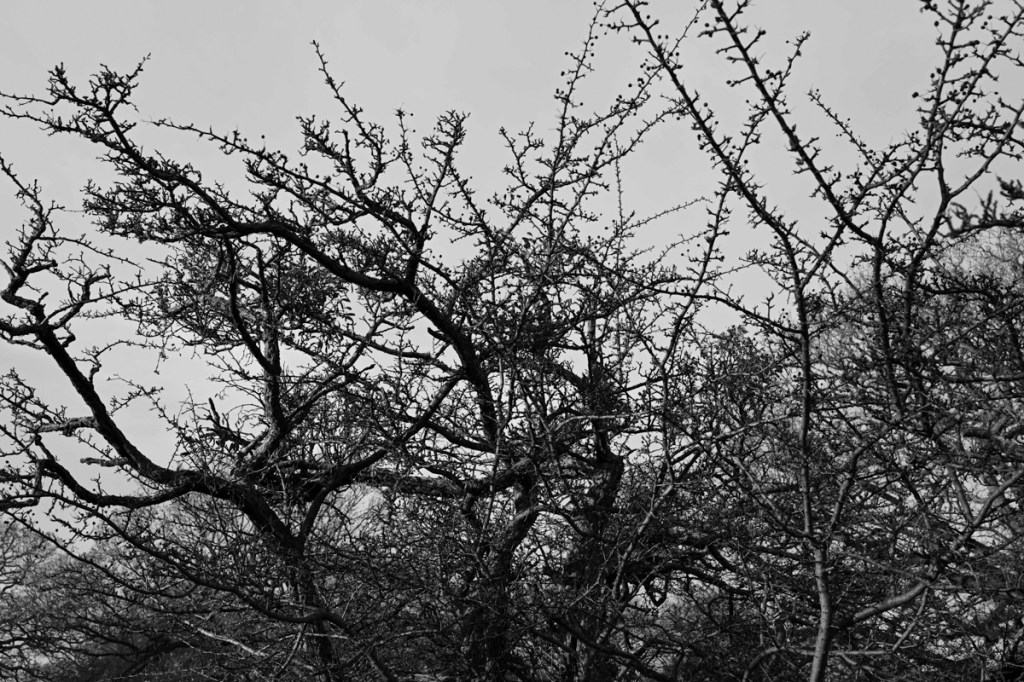
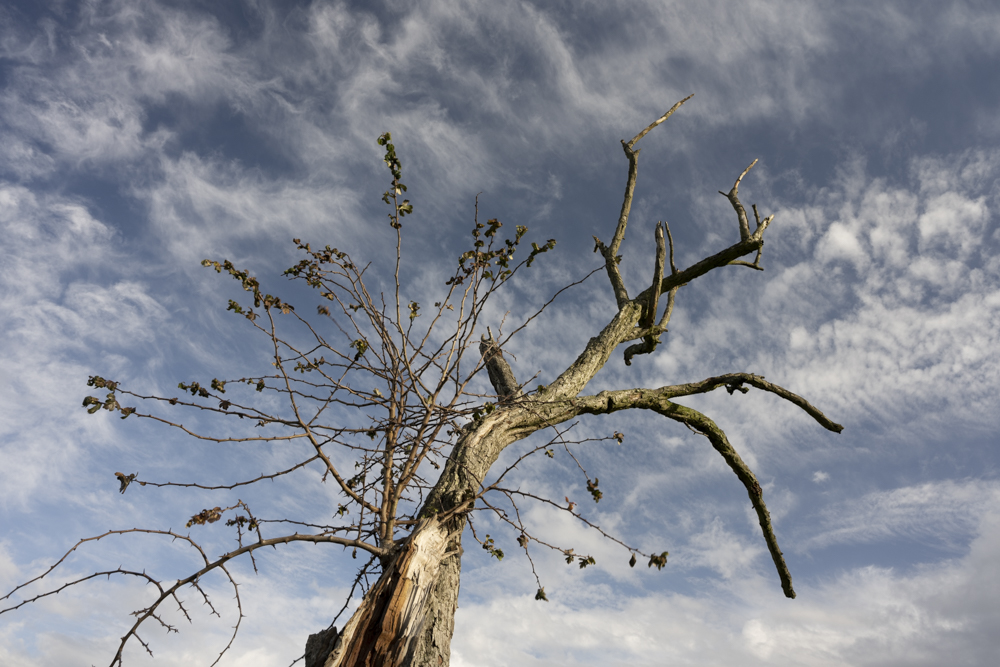
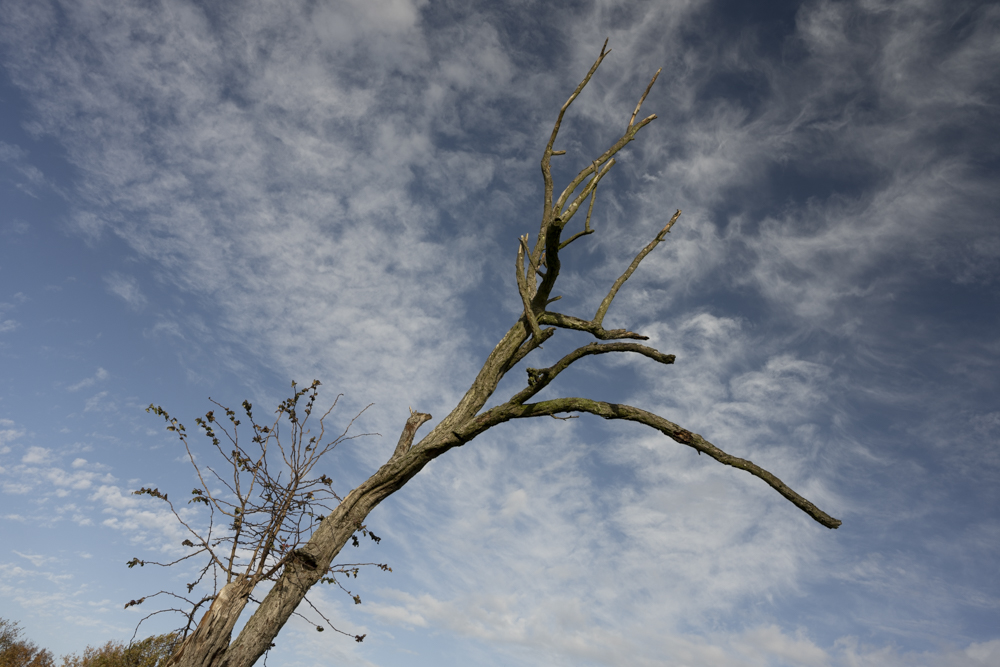
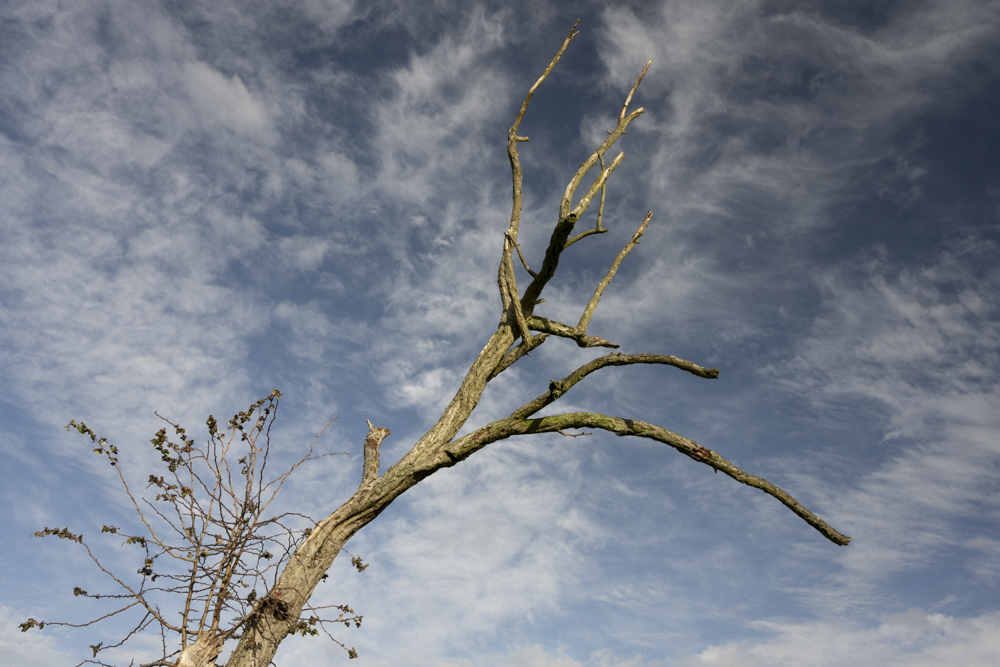
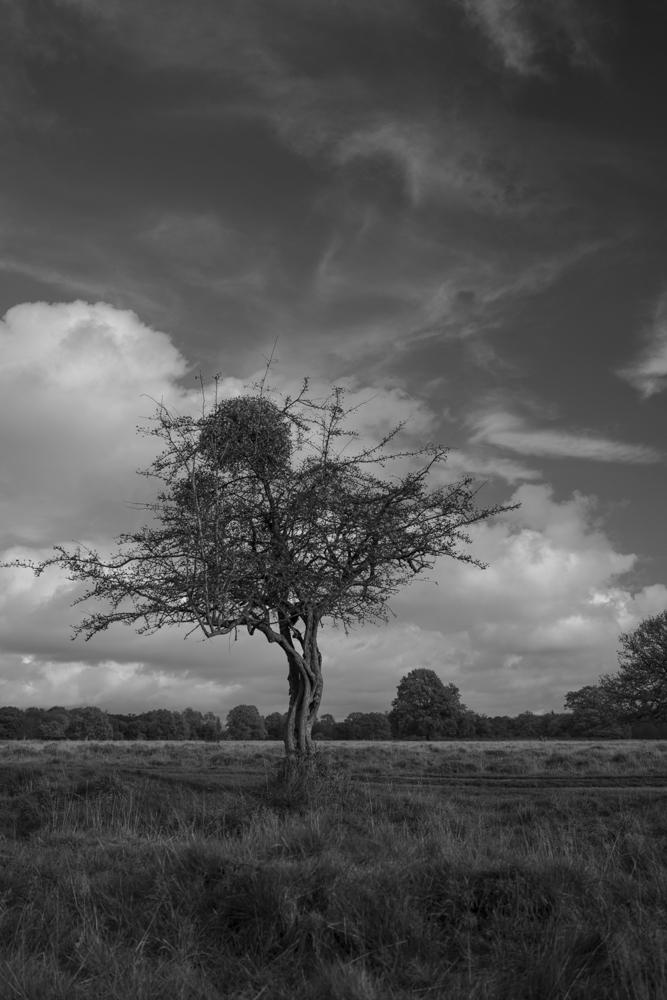
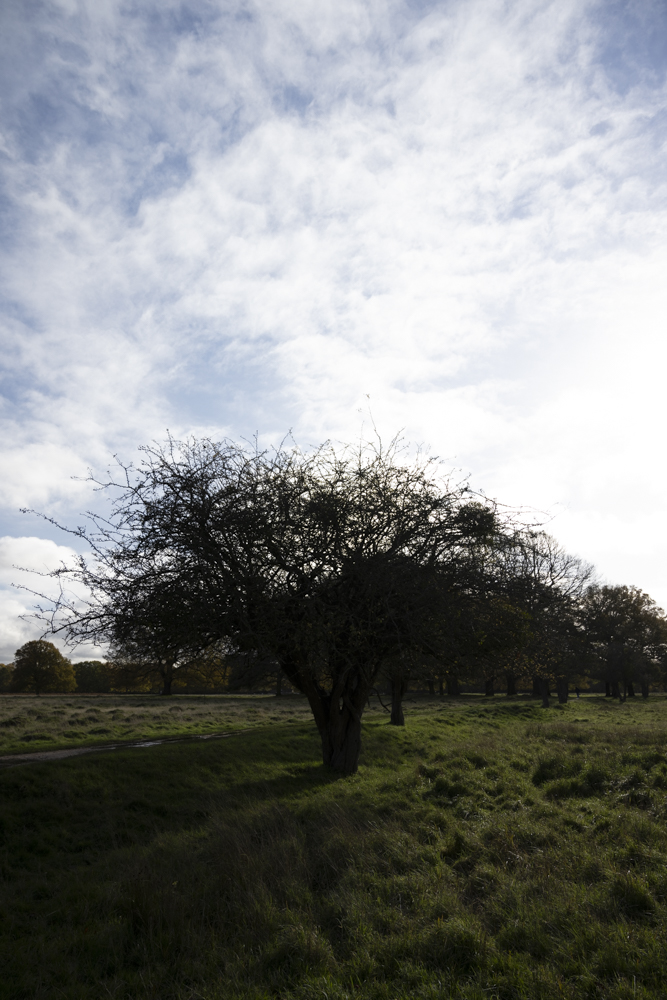
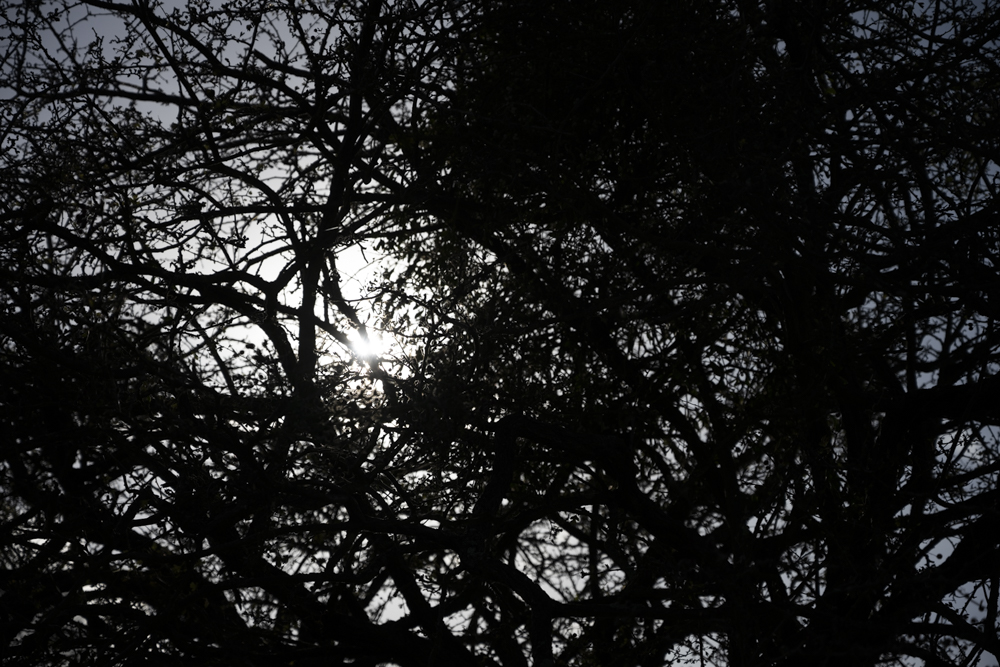
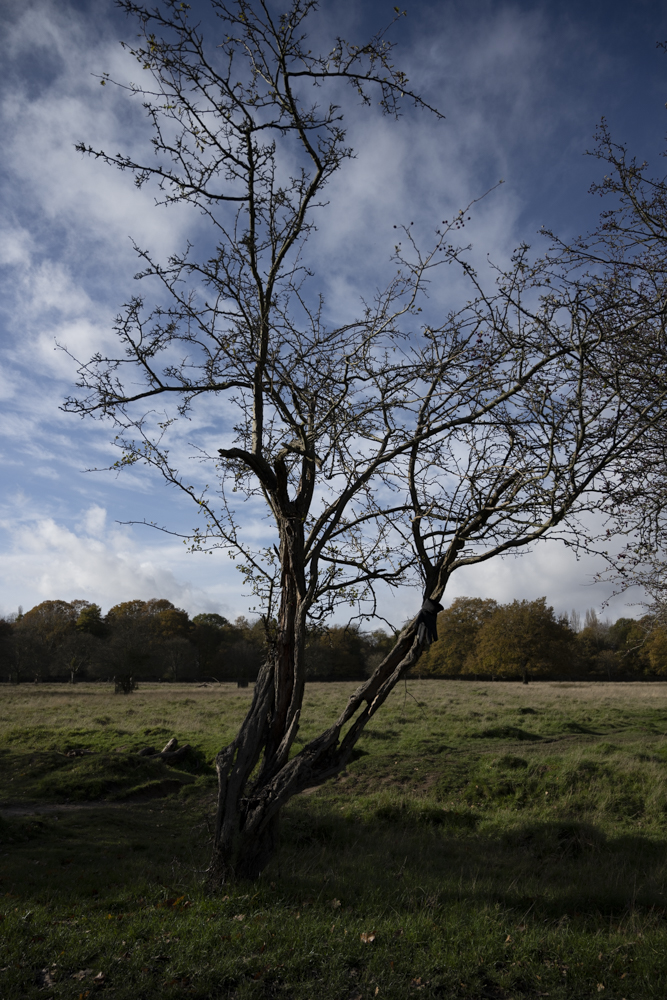
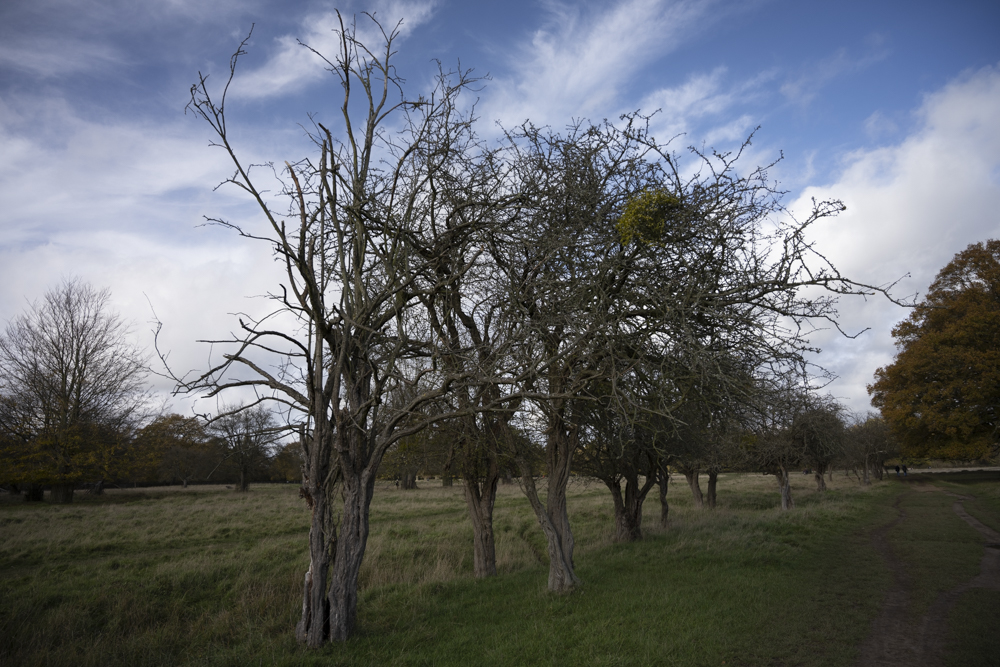
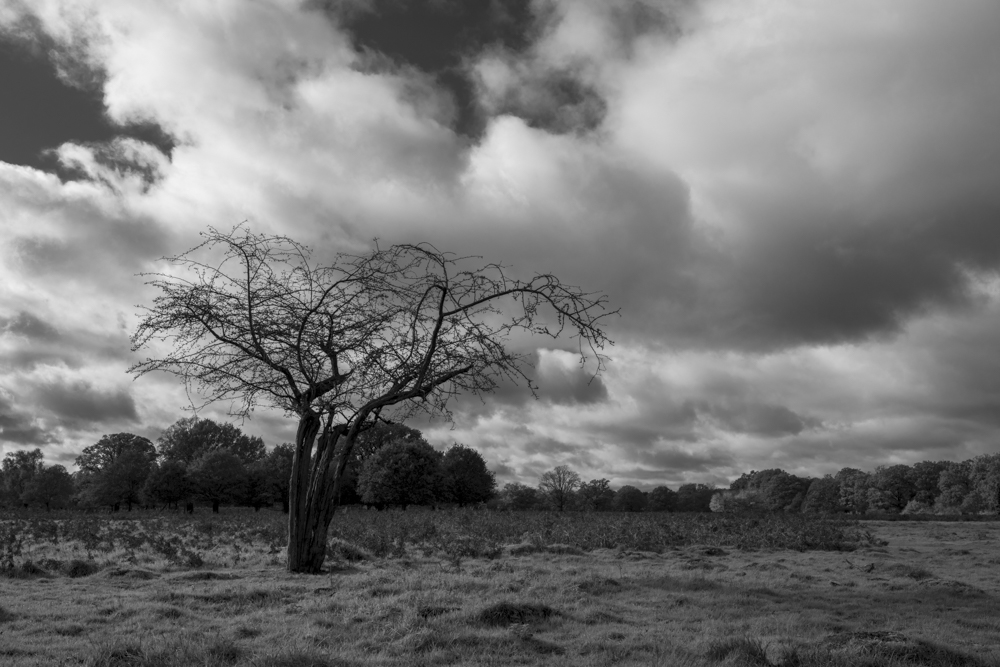
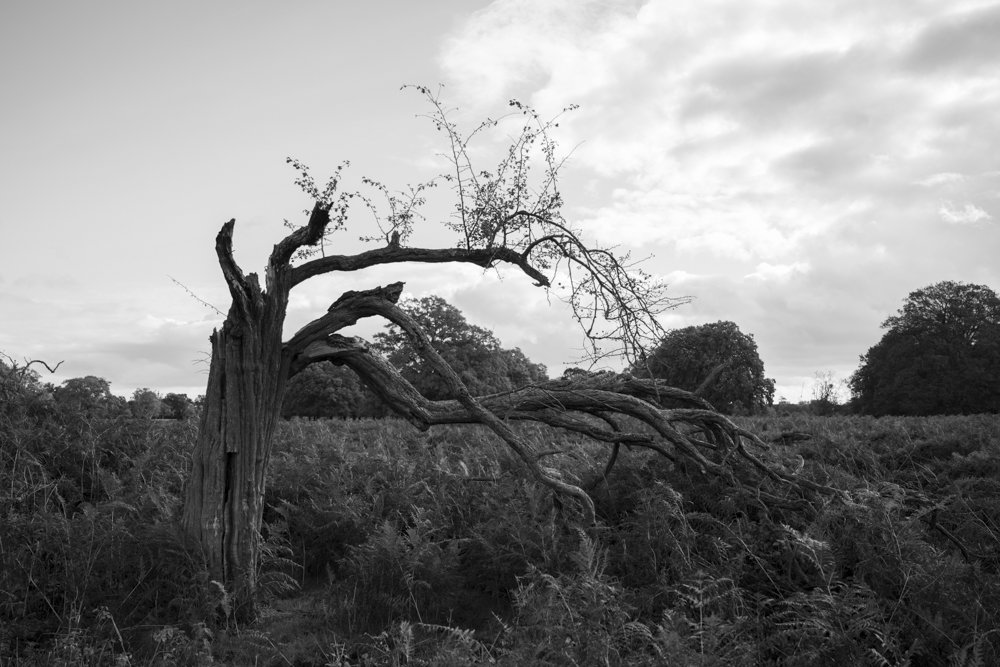
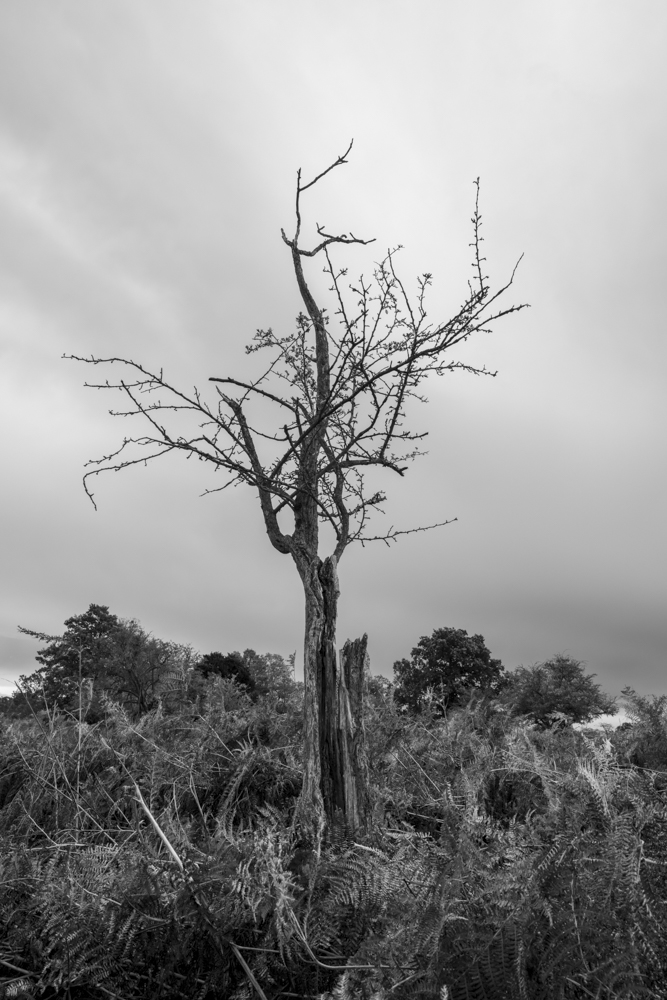
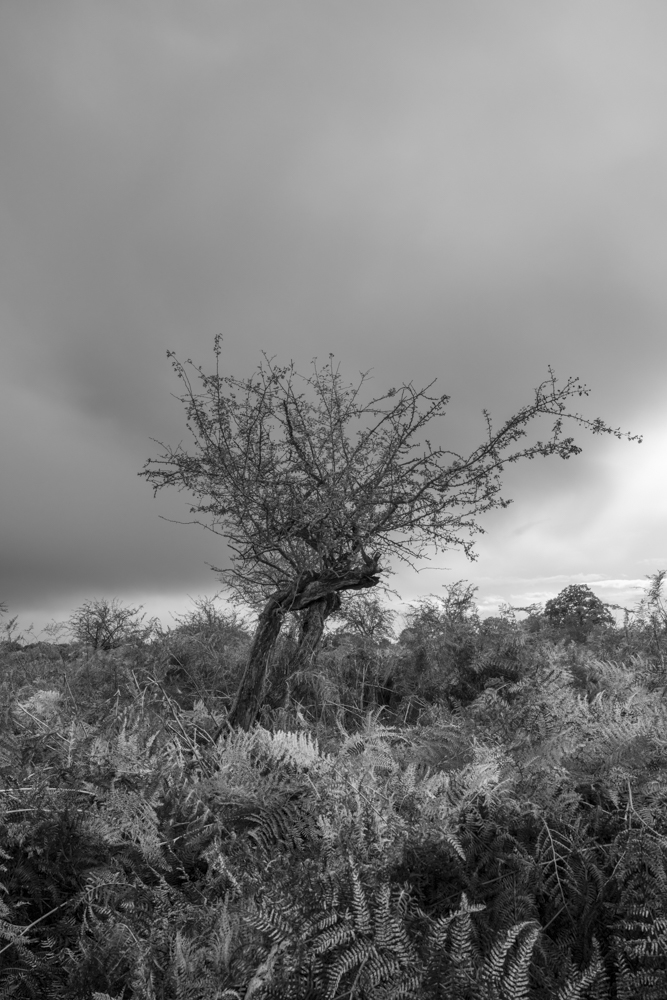
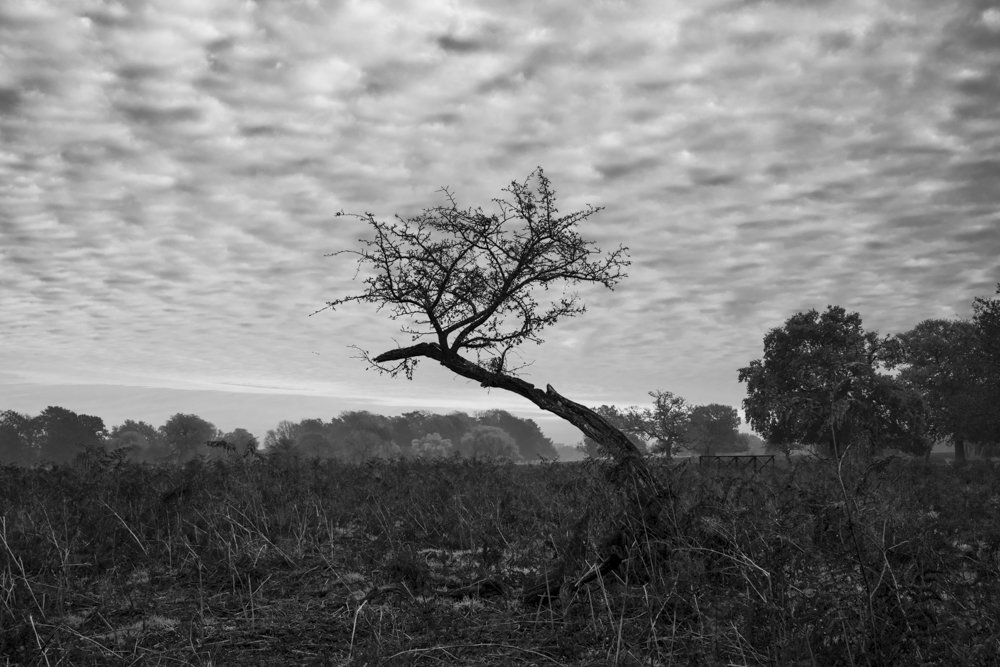
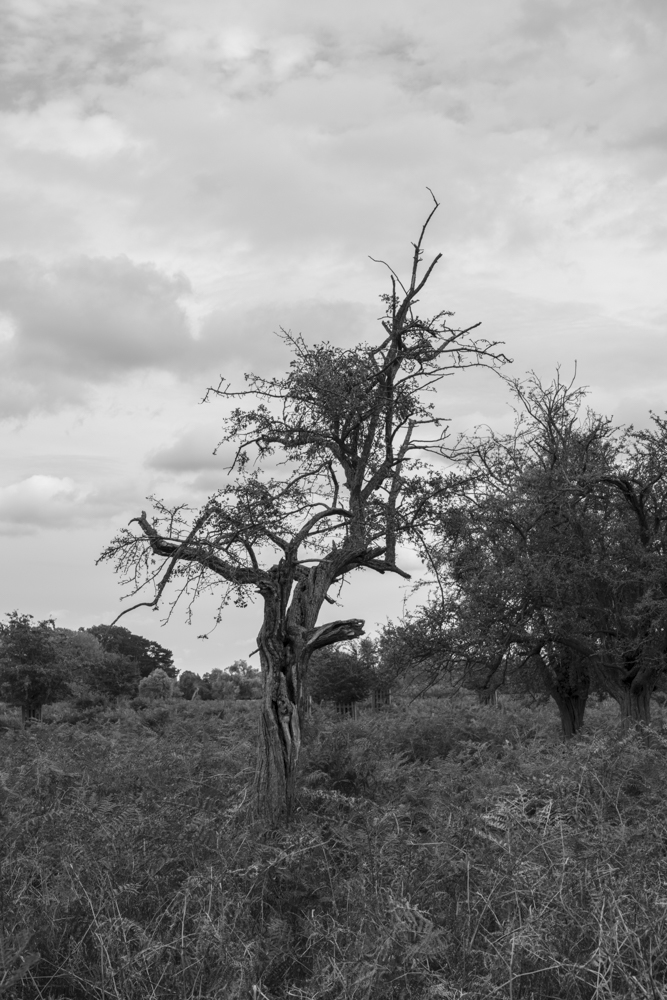
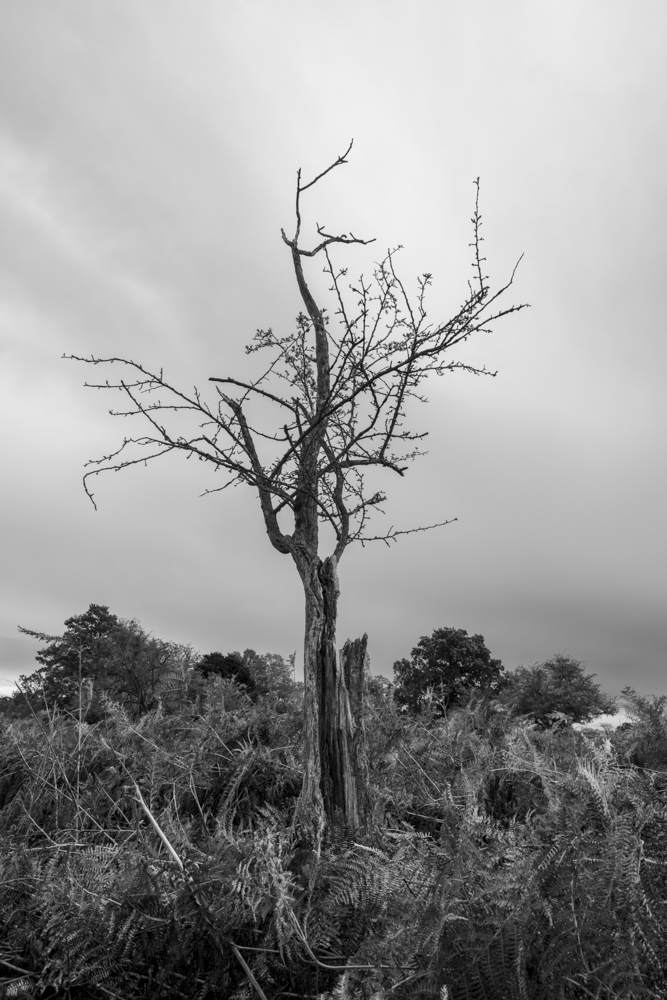
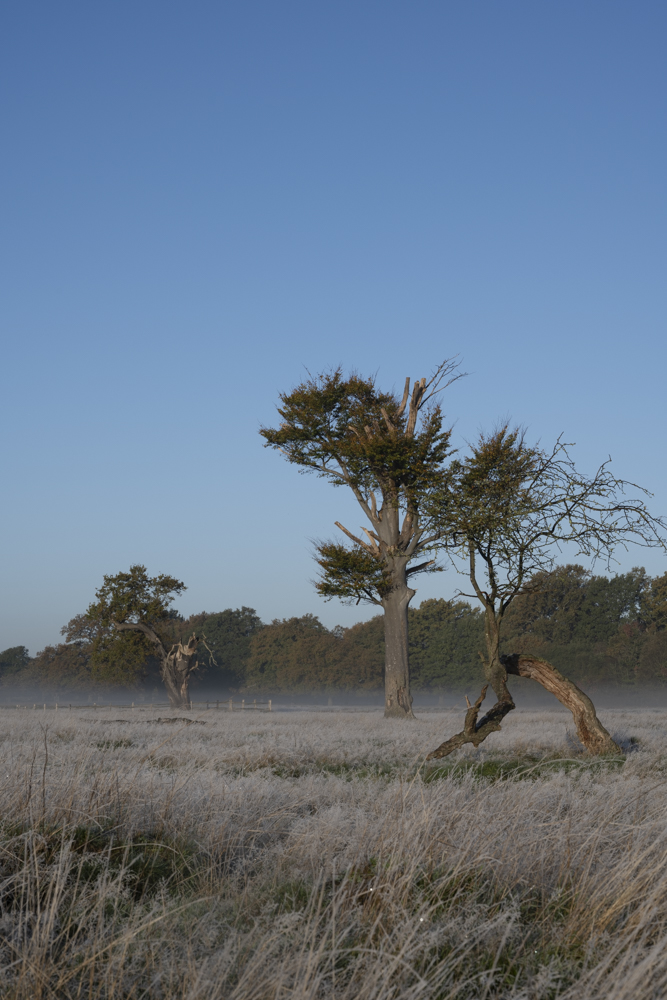
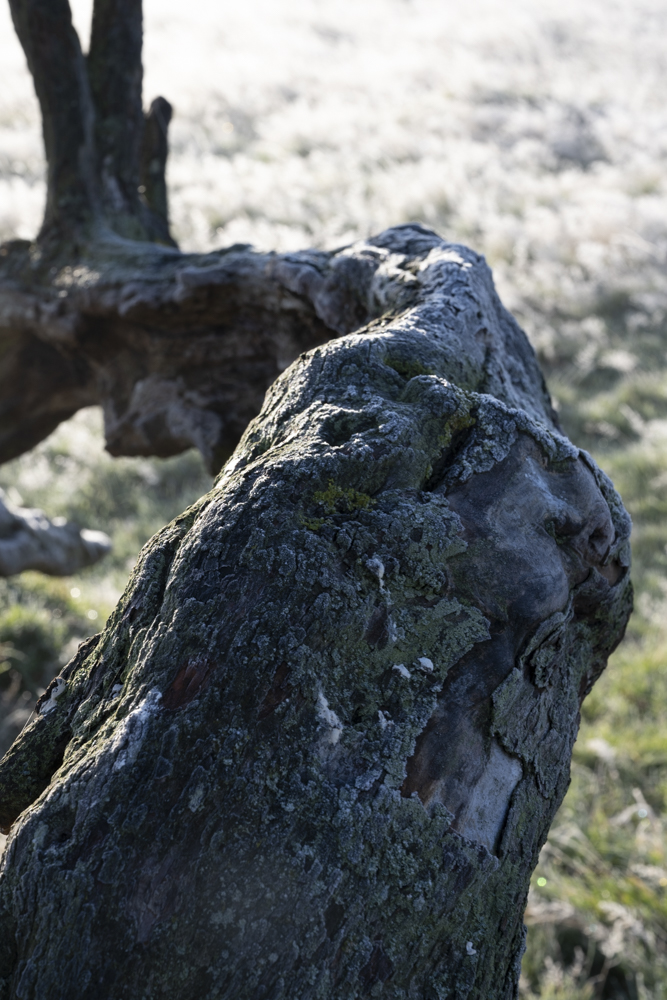
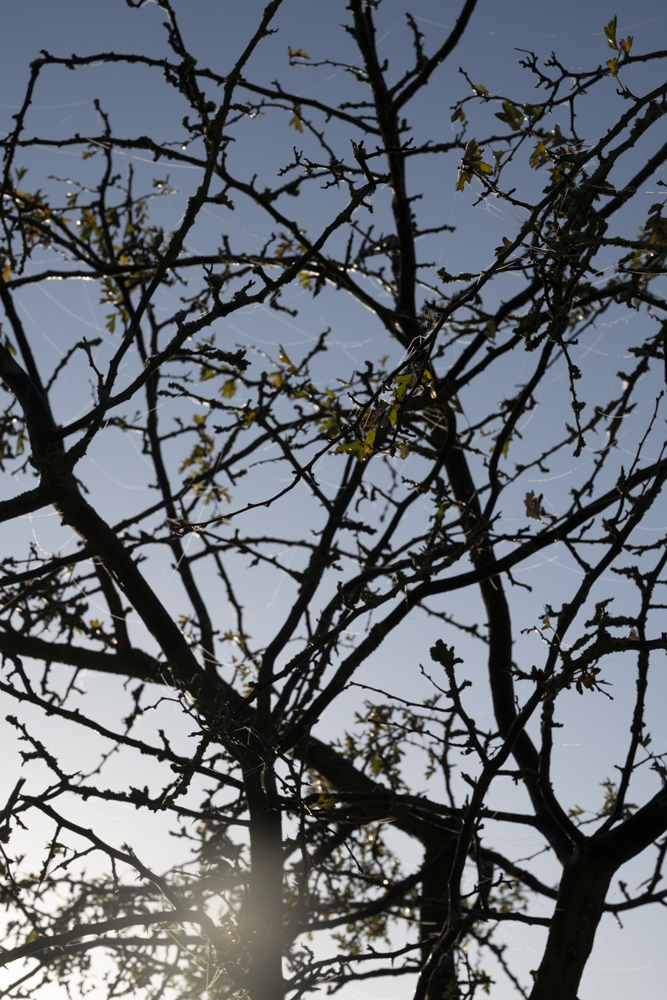
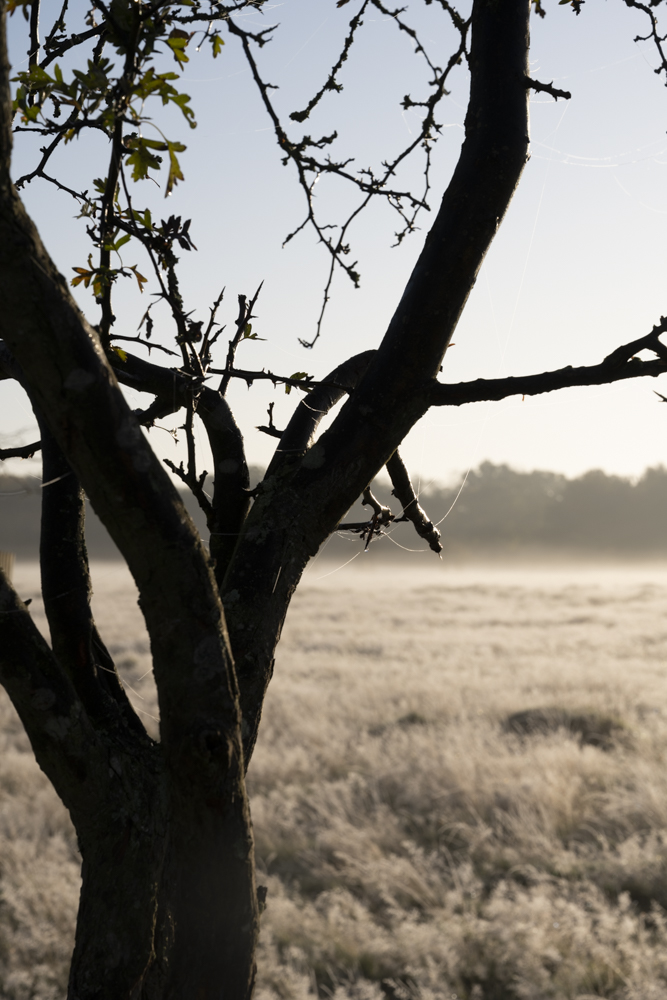
What struck me about these particular trees is the missing branches. In hindsight, what could work is composing the image as if these missing pieces were actually present.

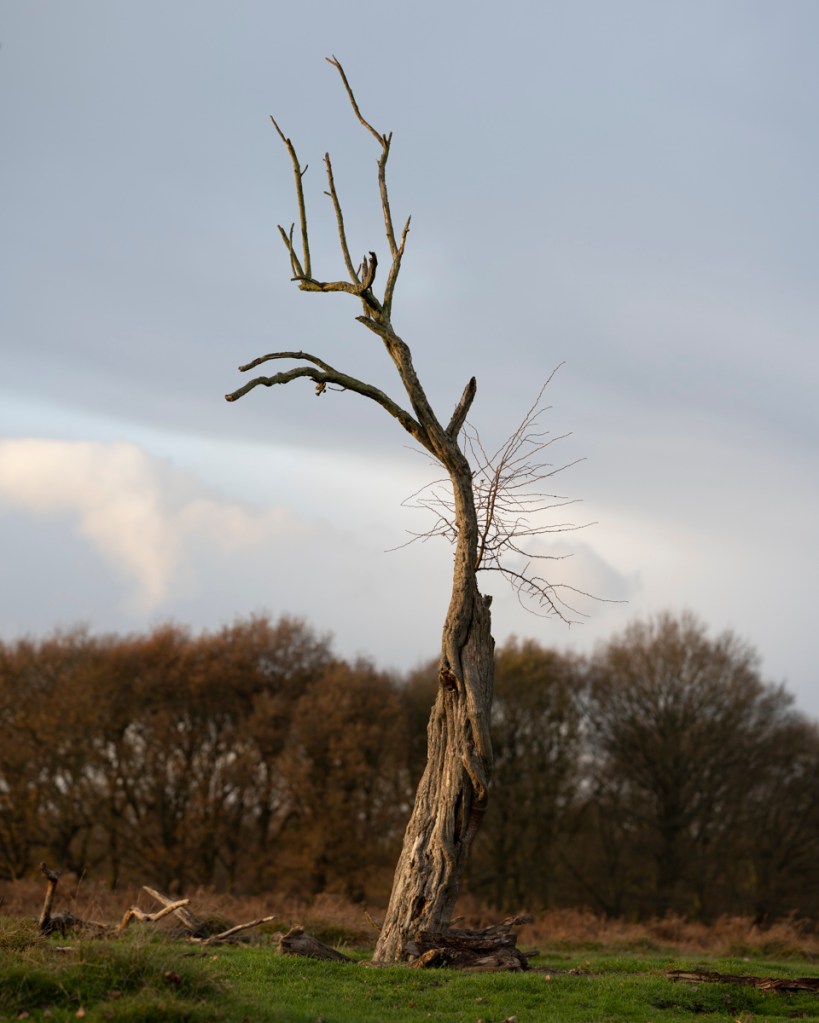
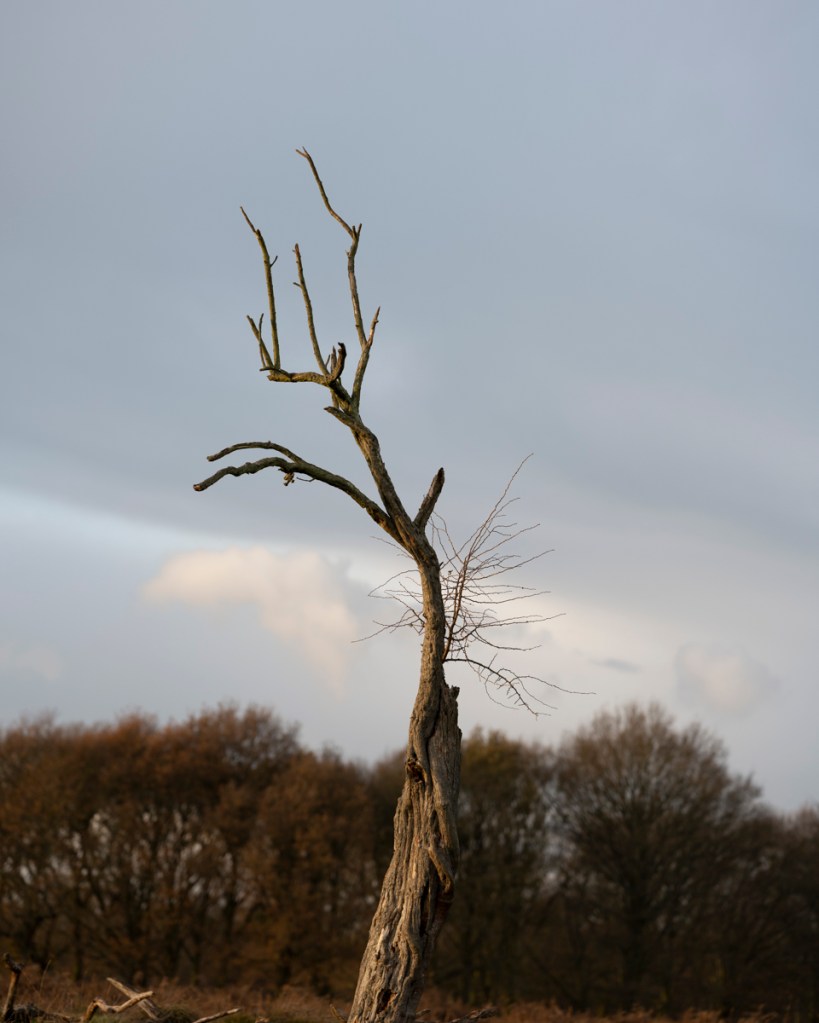
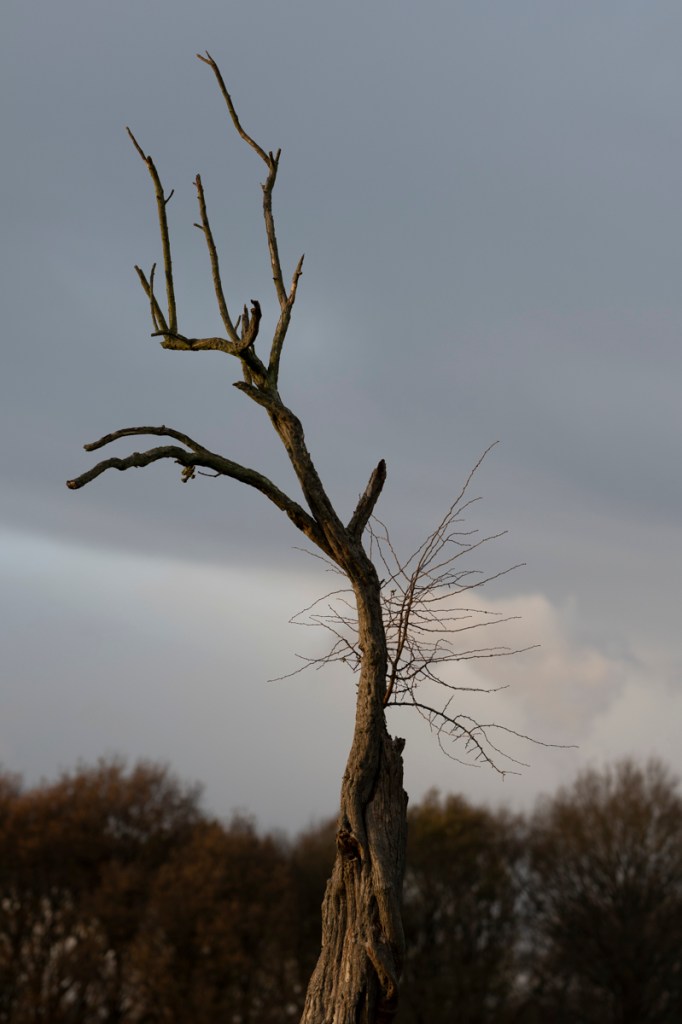
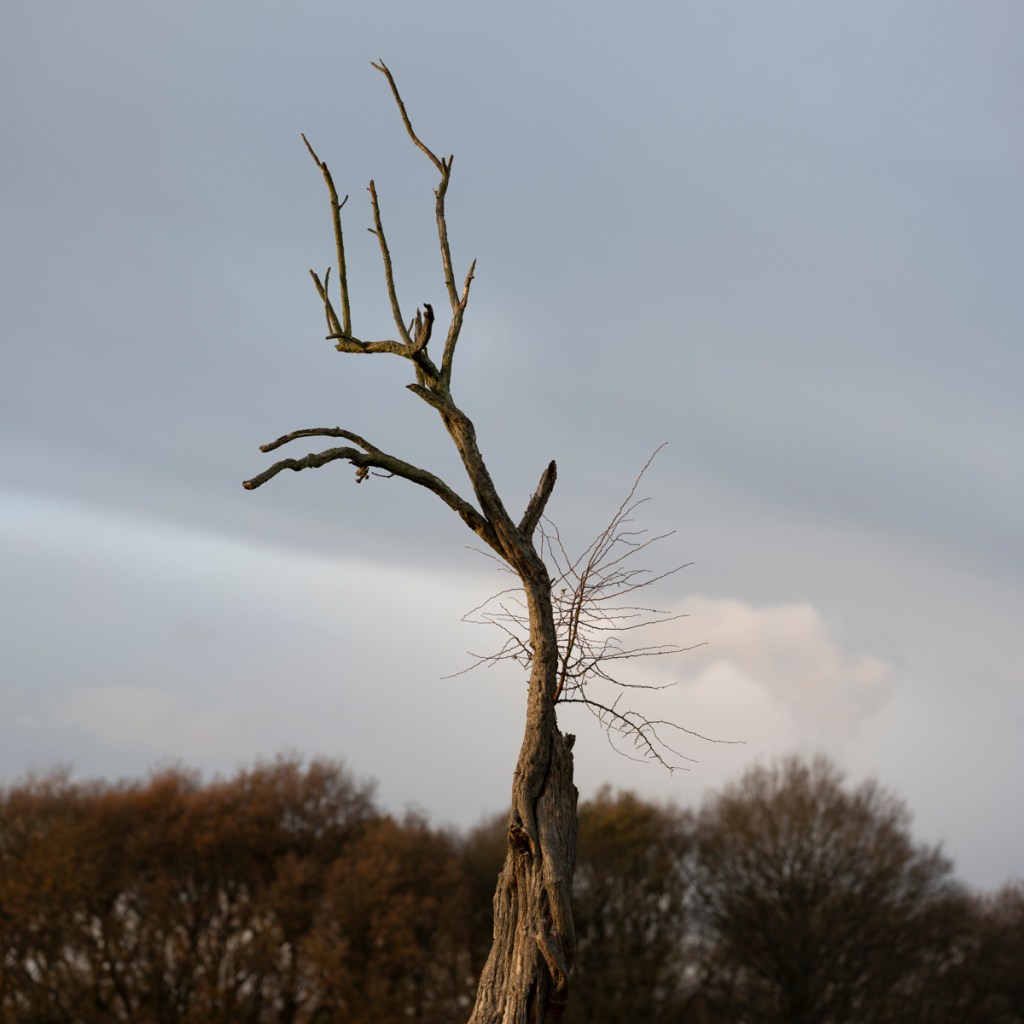
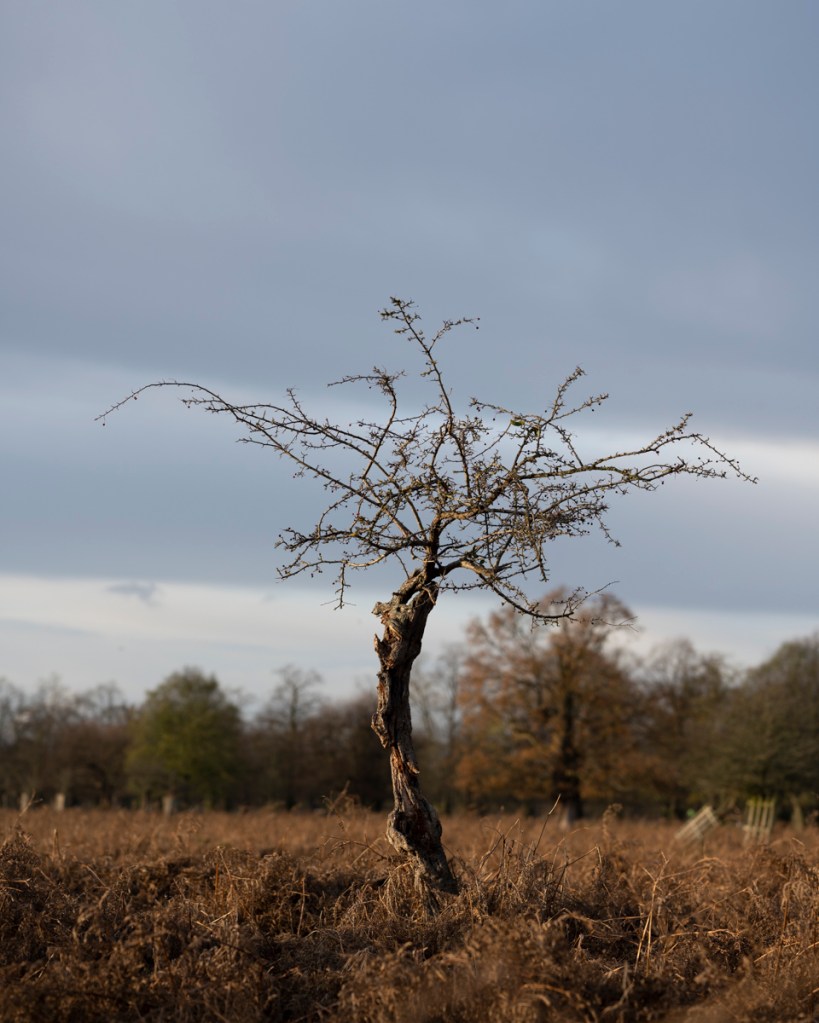
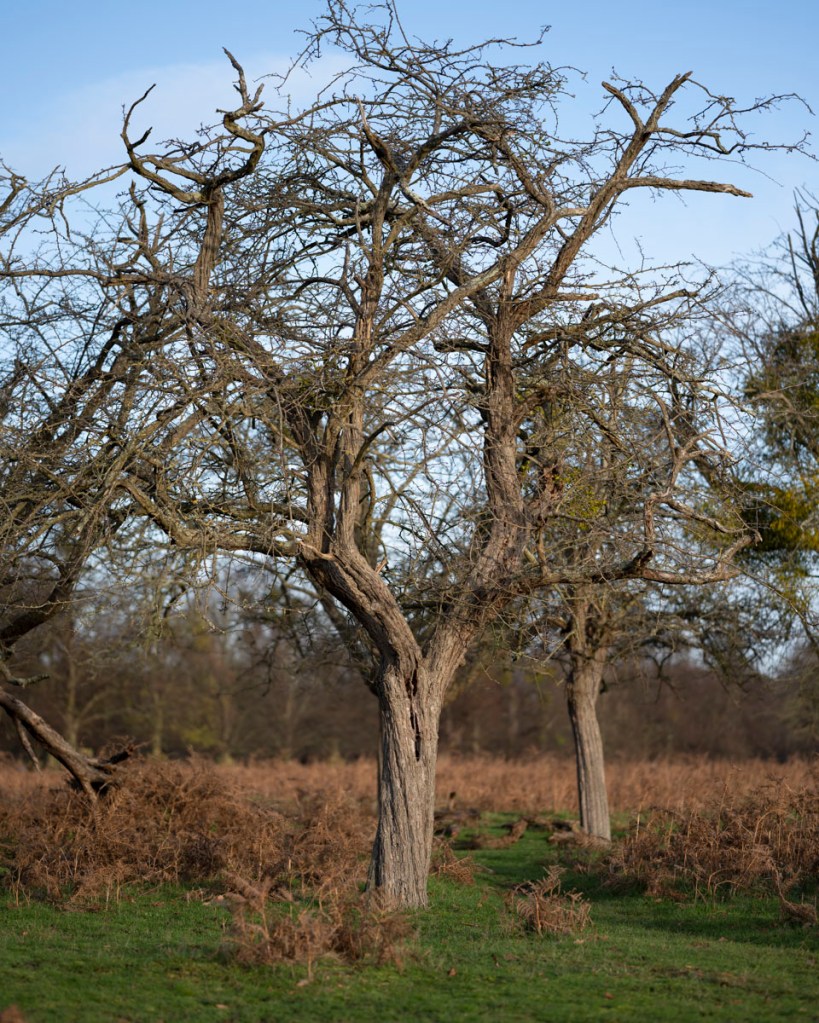
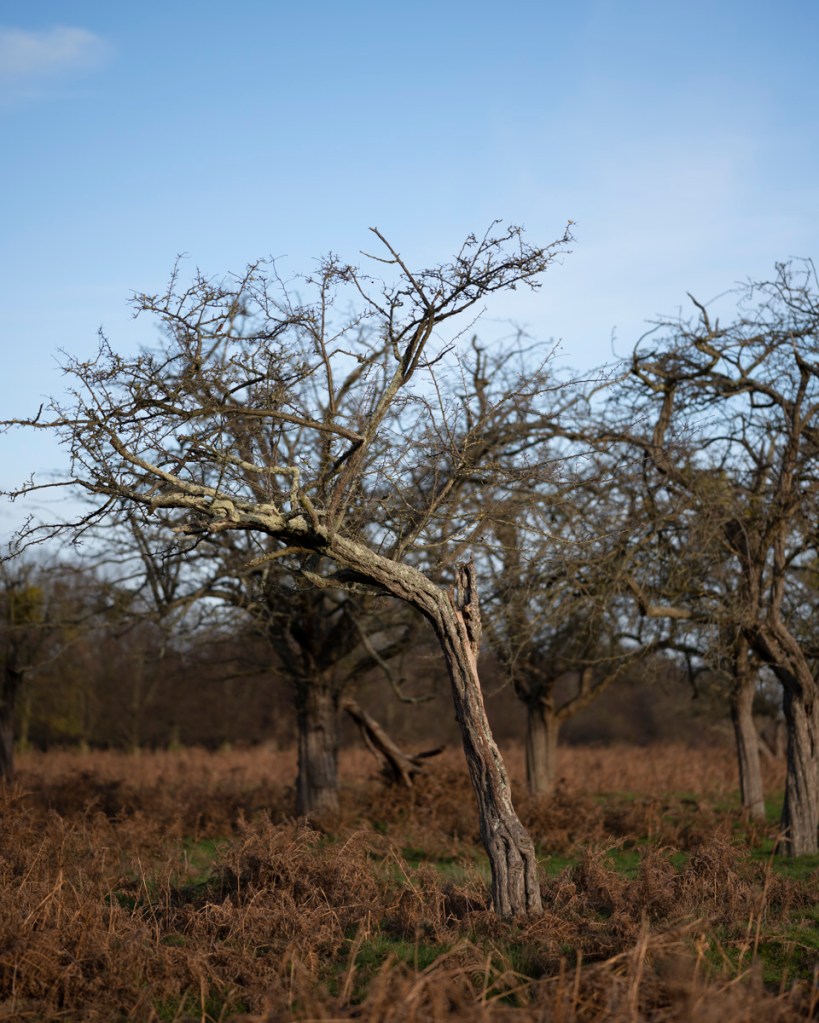
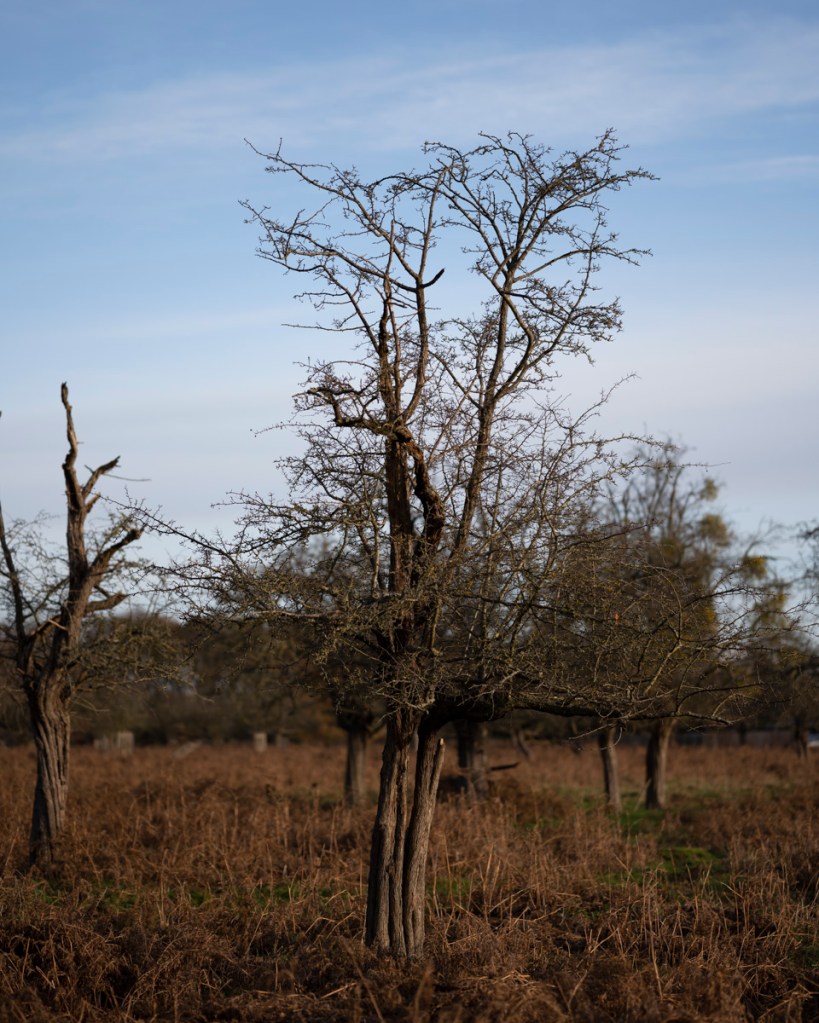
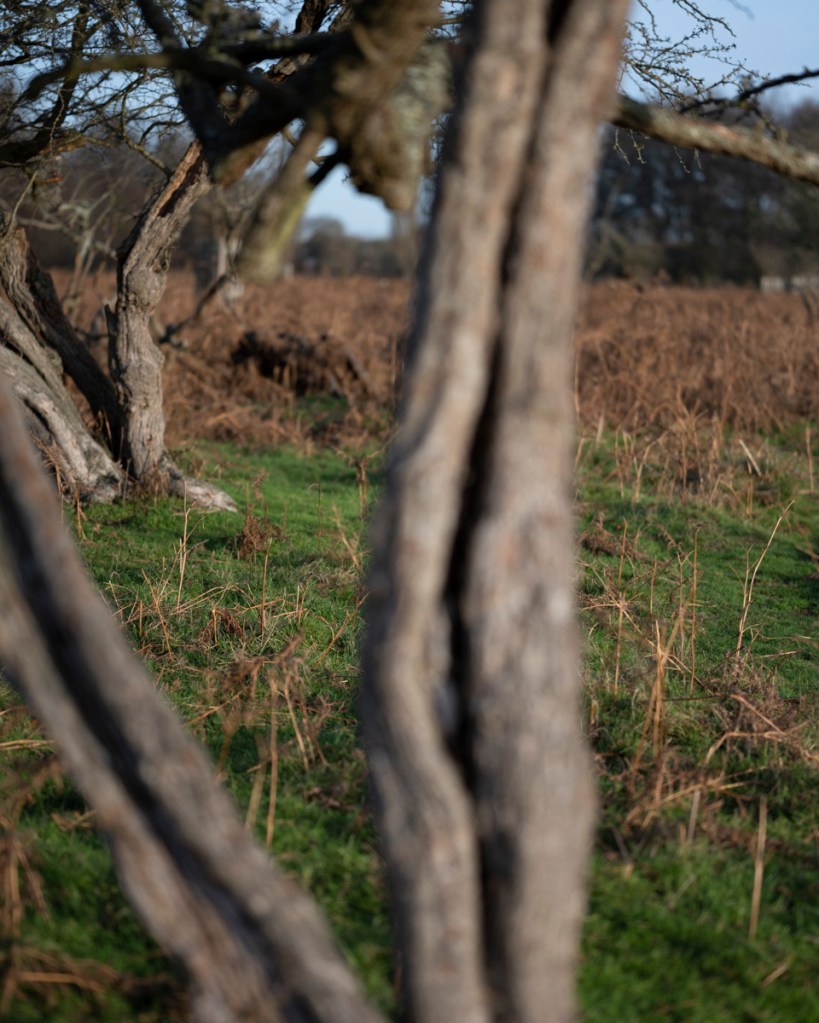
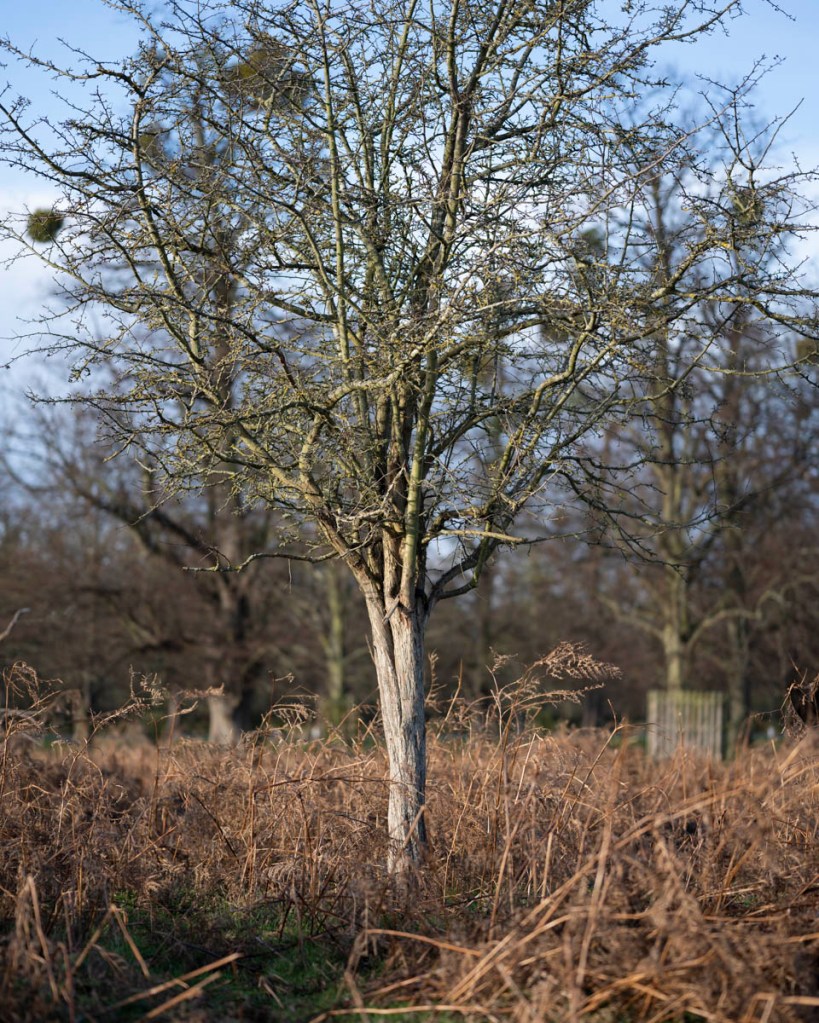
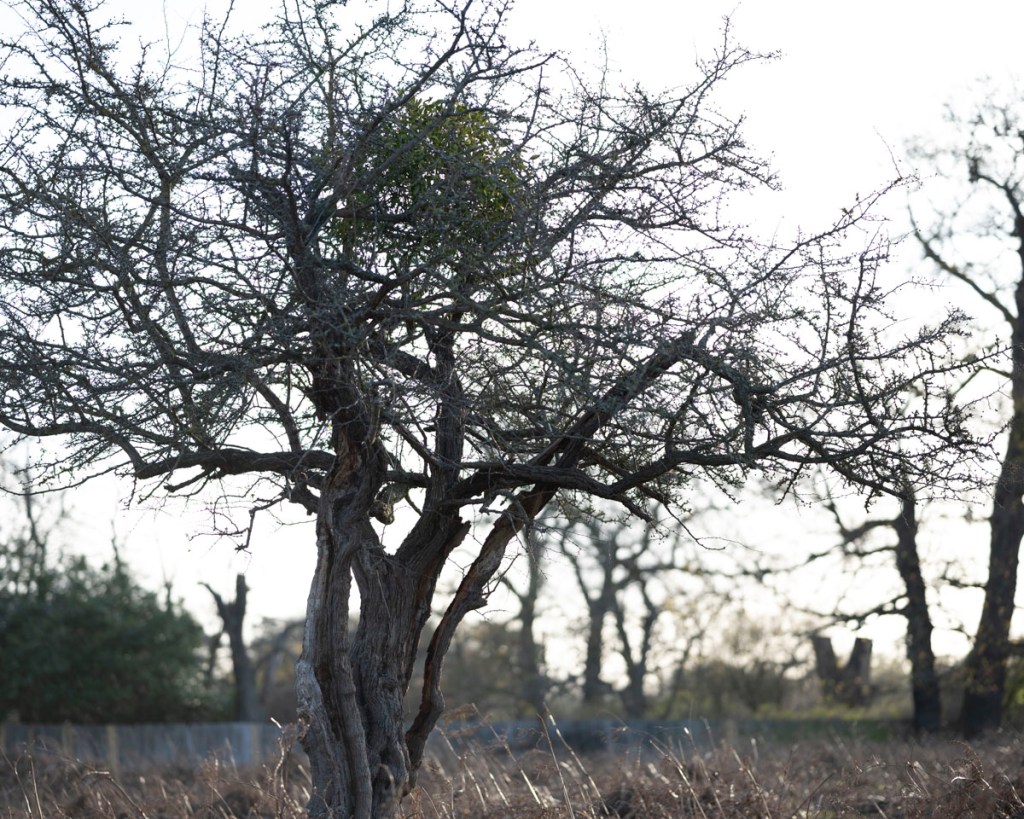
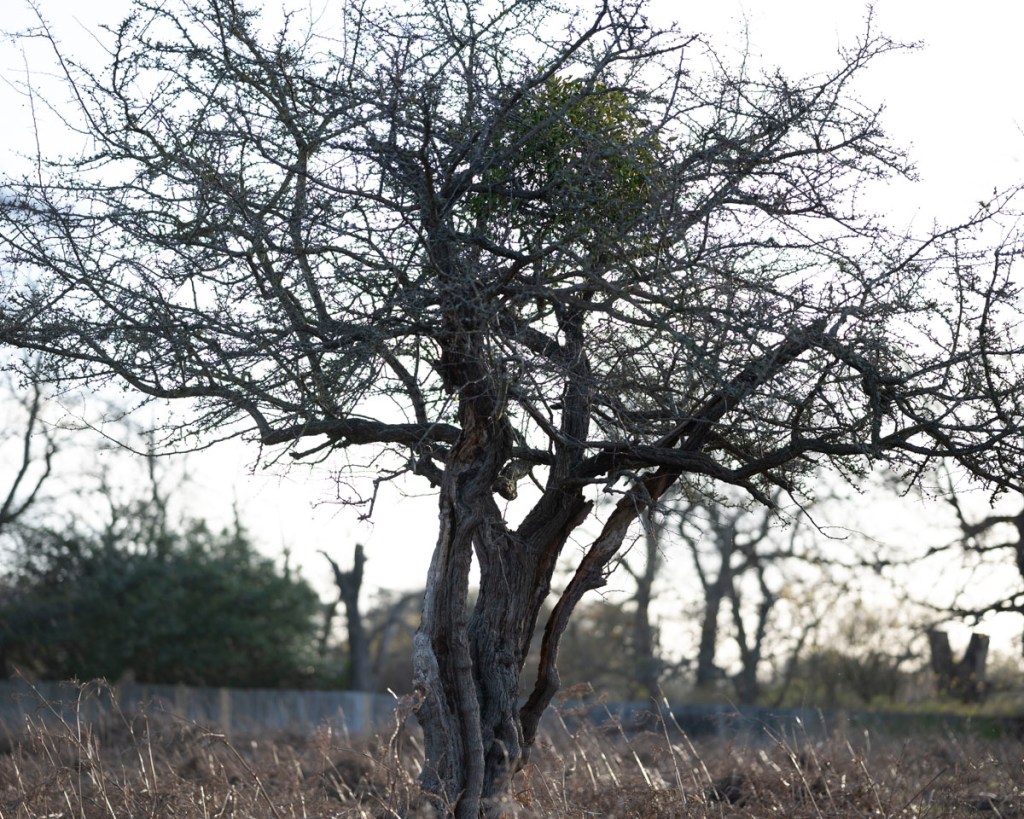
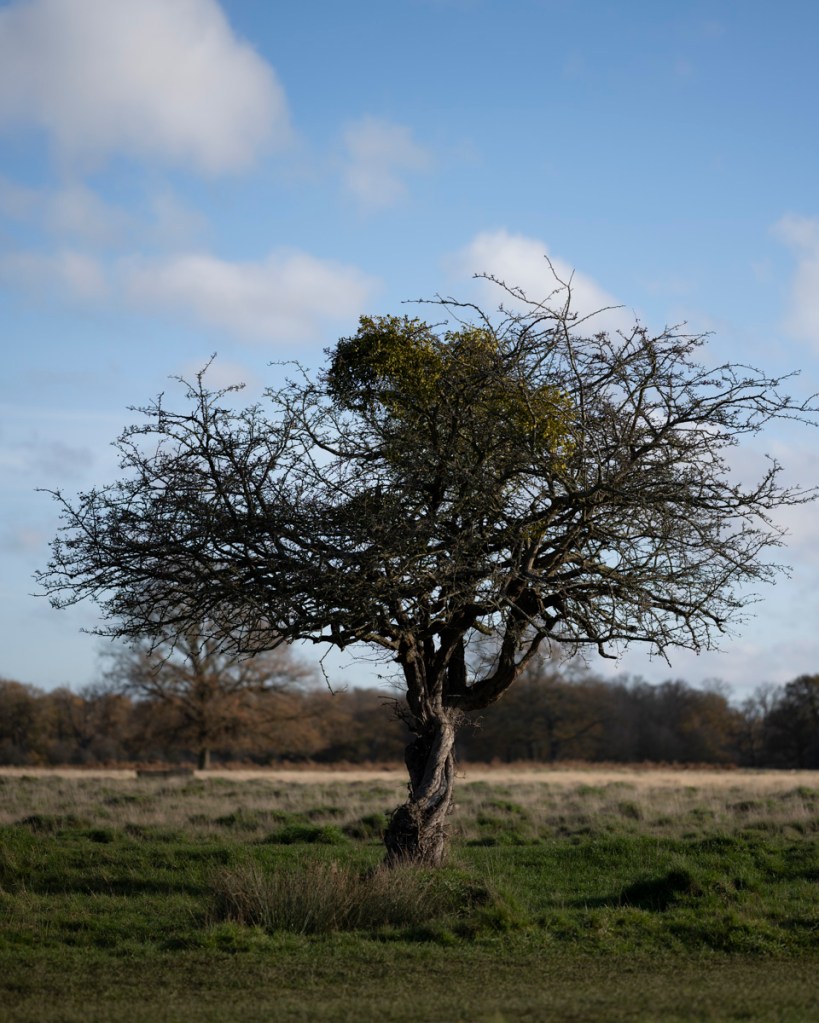
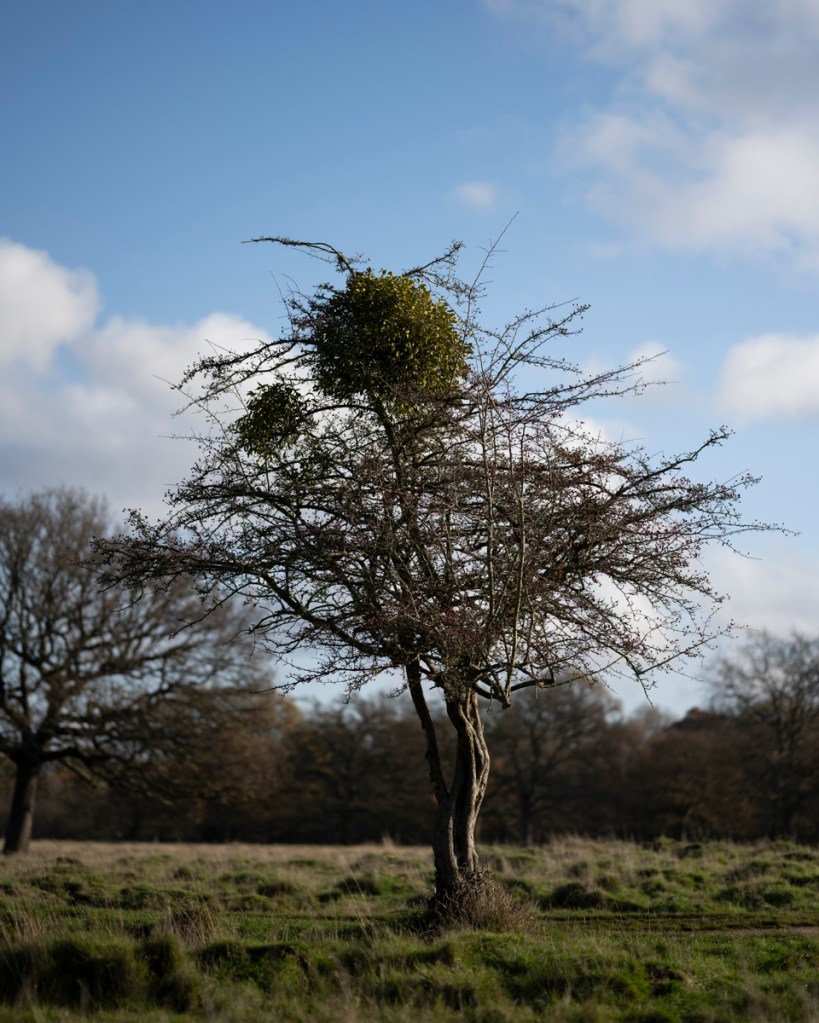
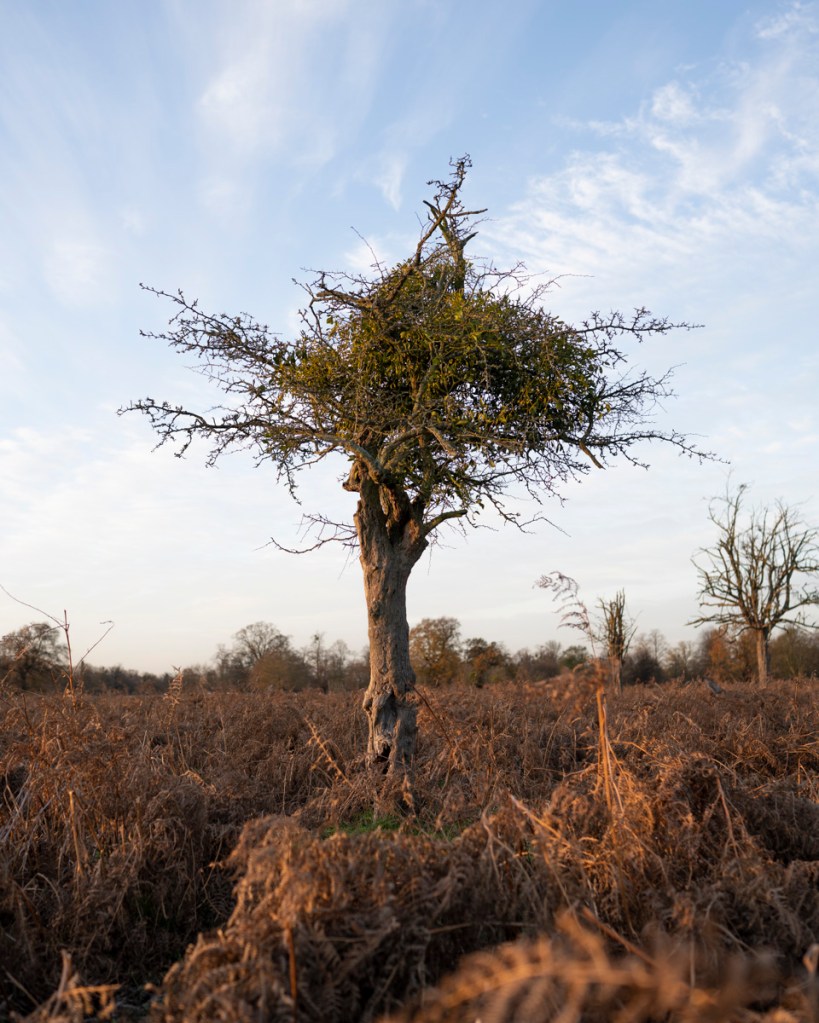
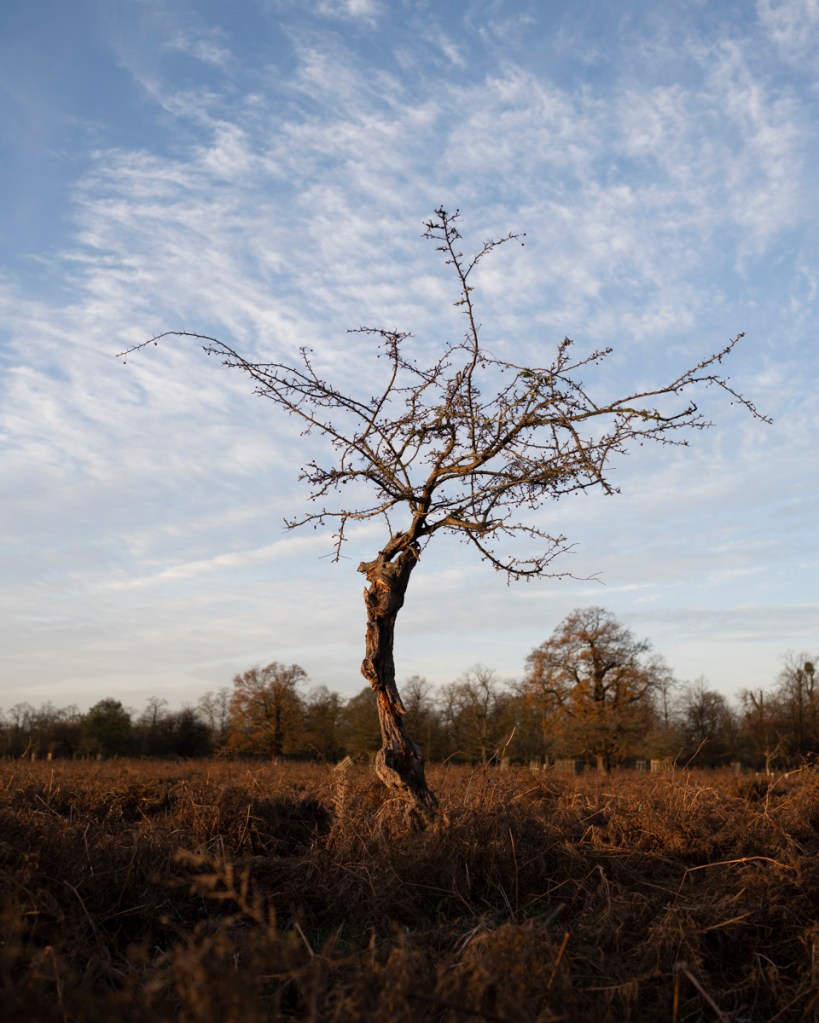
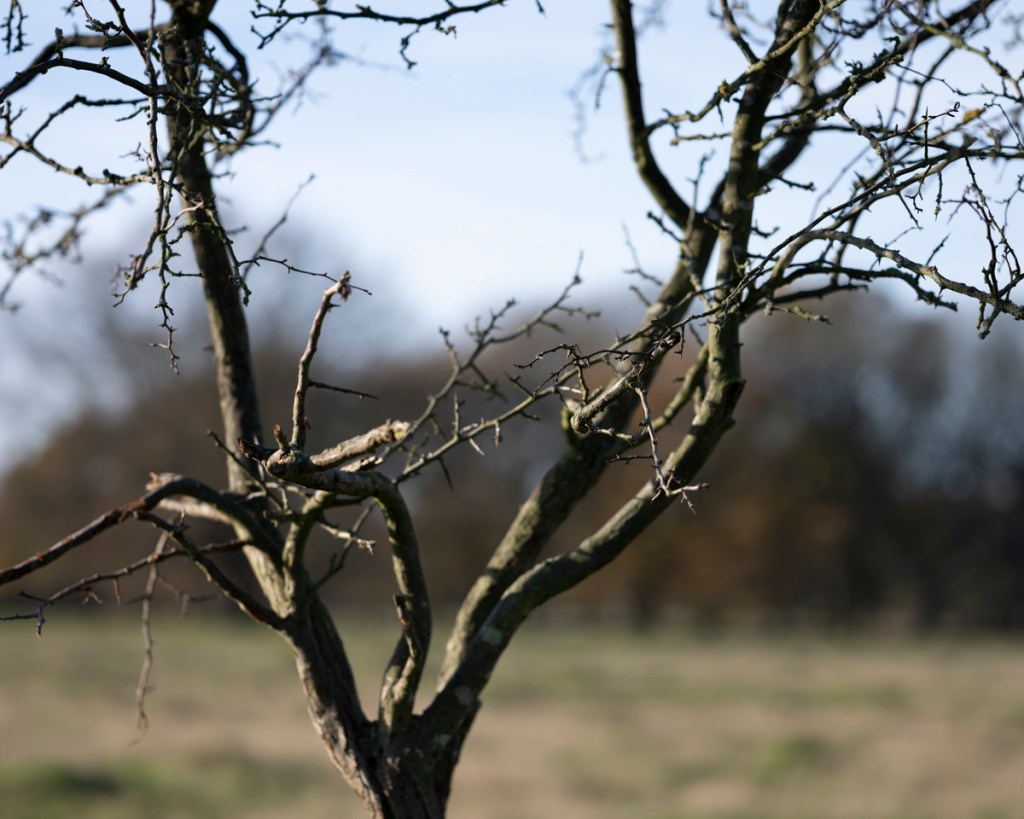
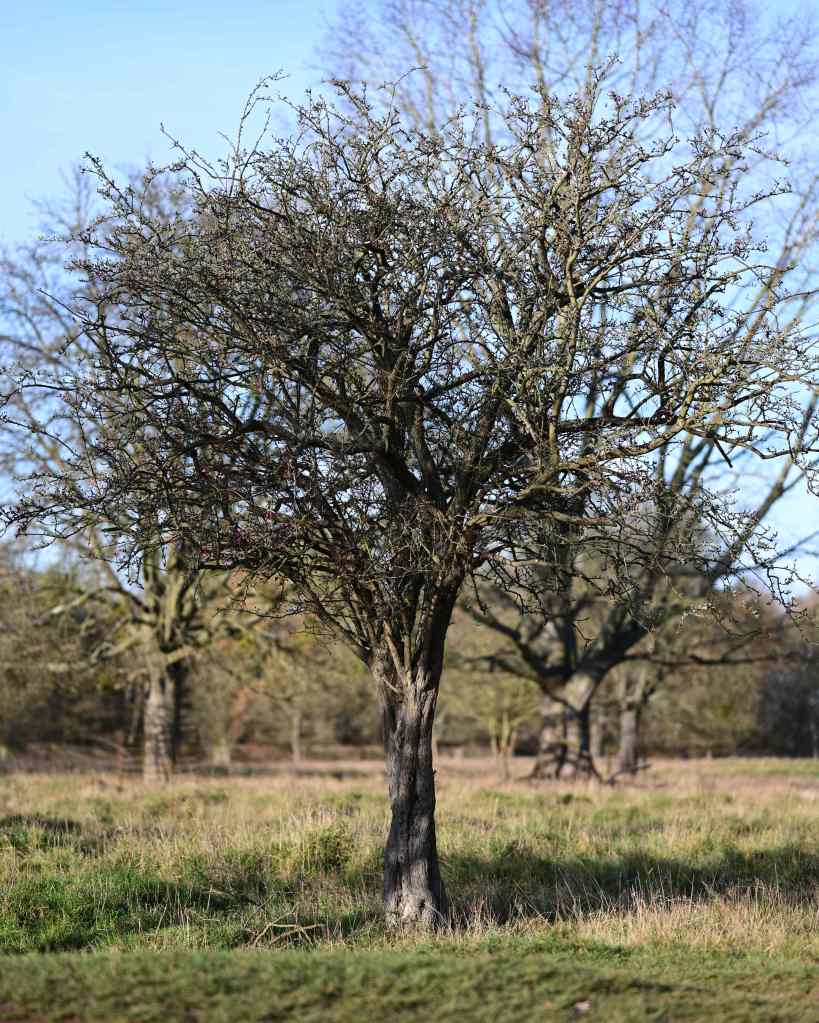
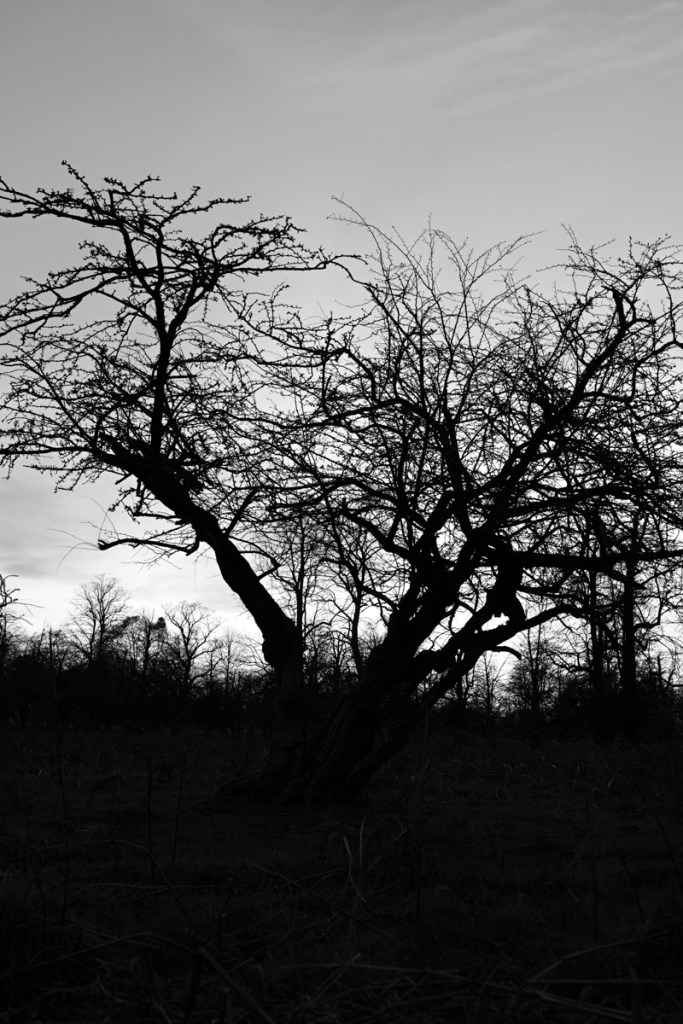
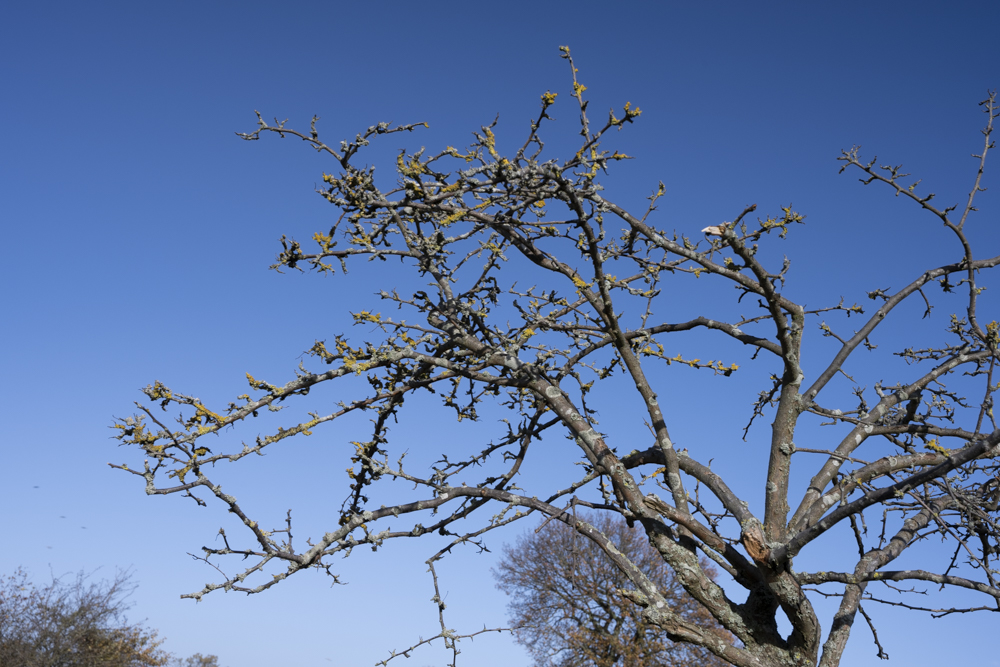
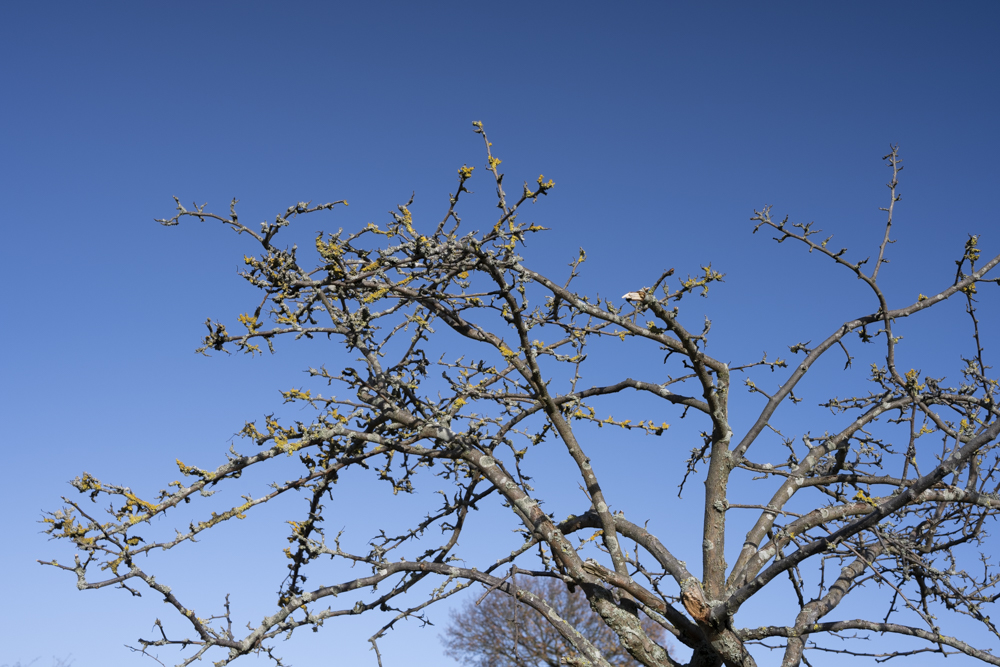
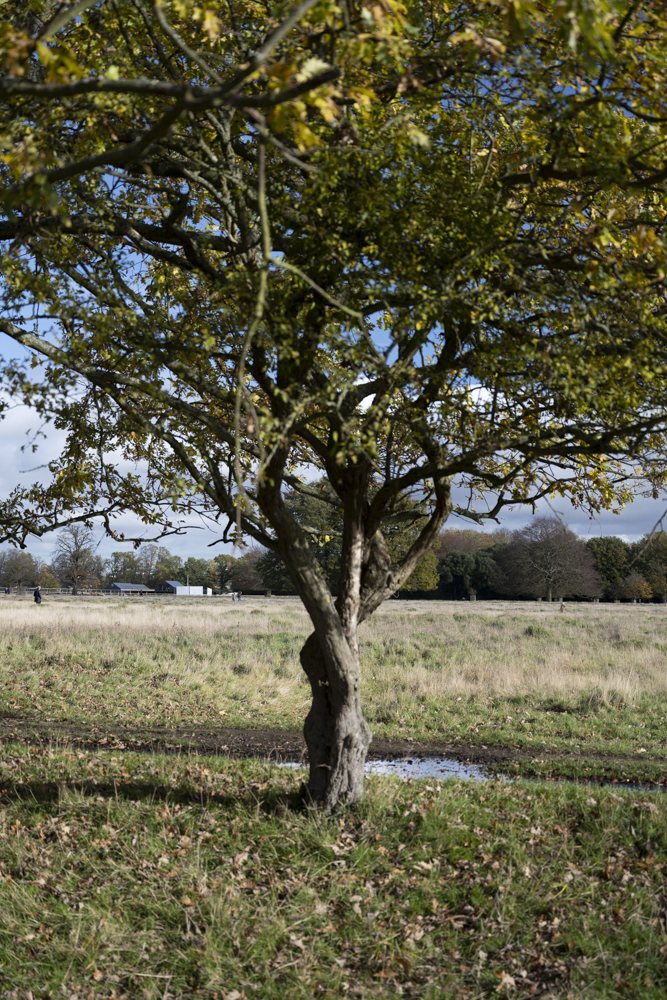
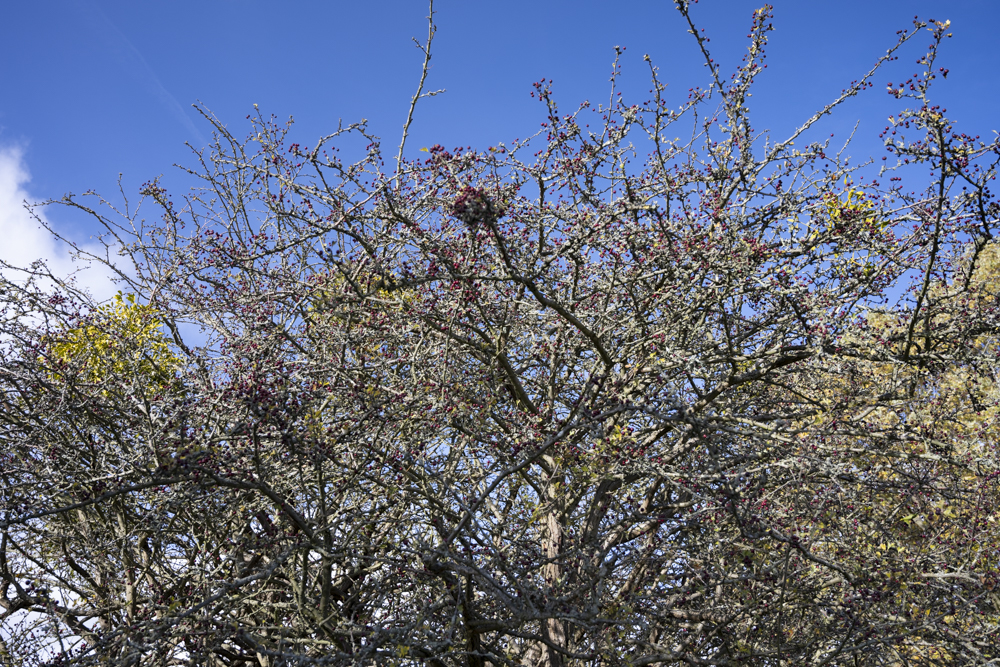
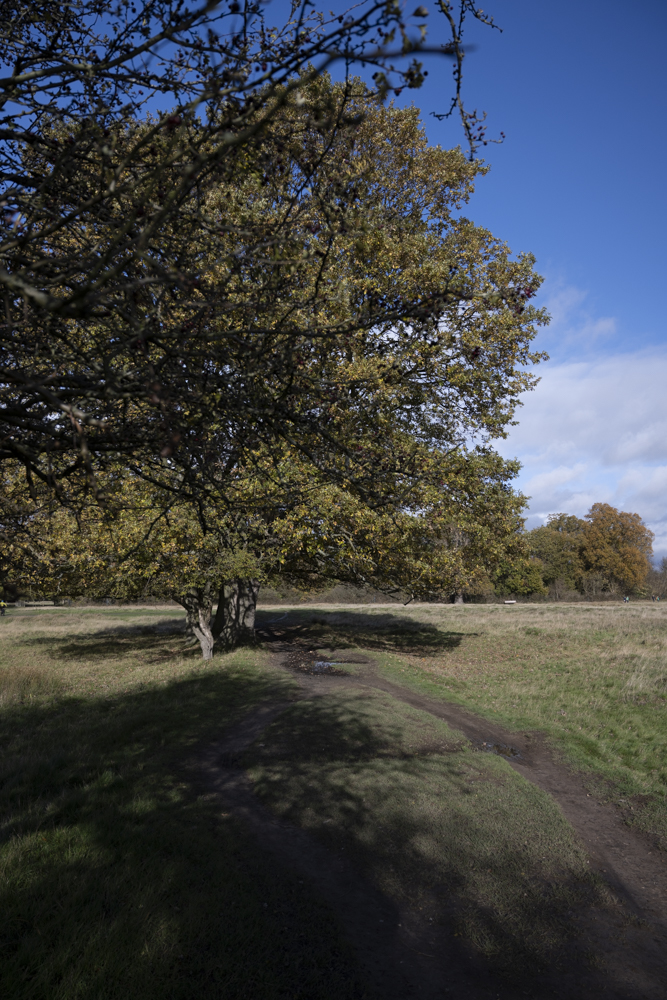
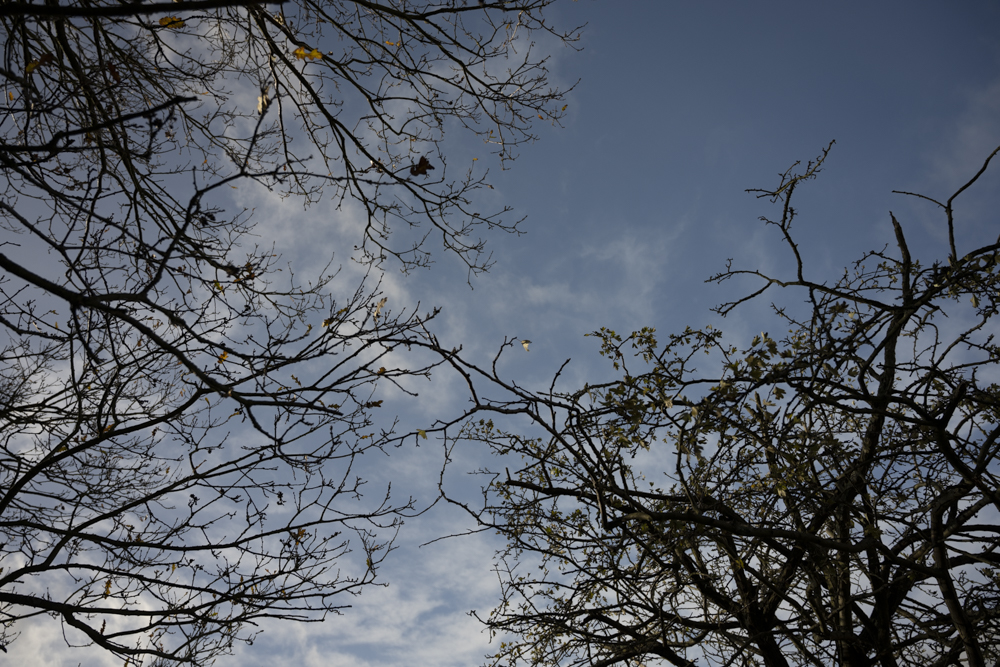
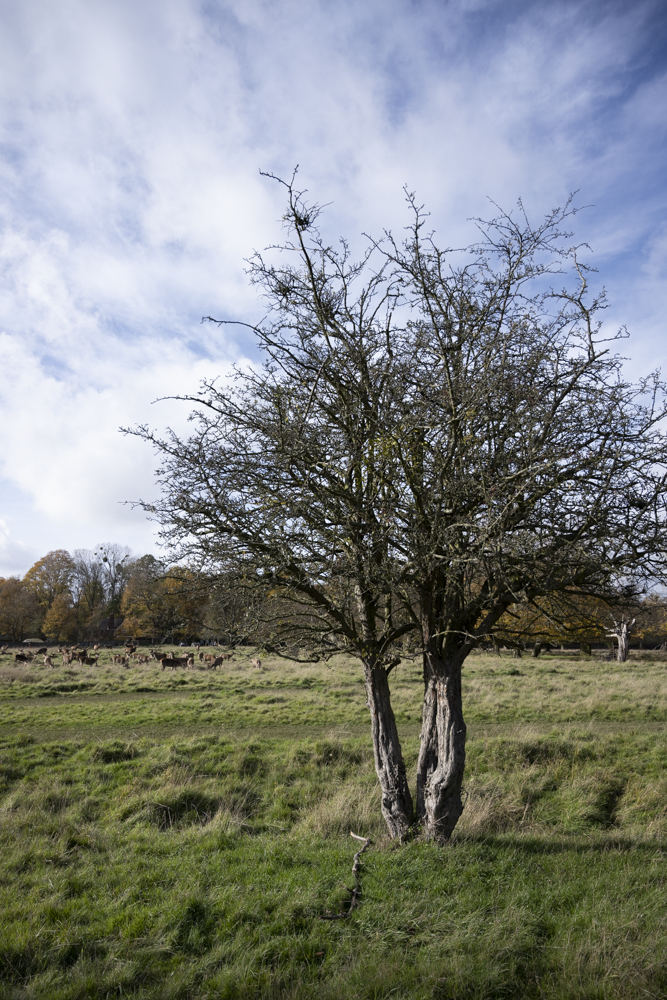
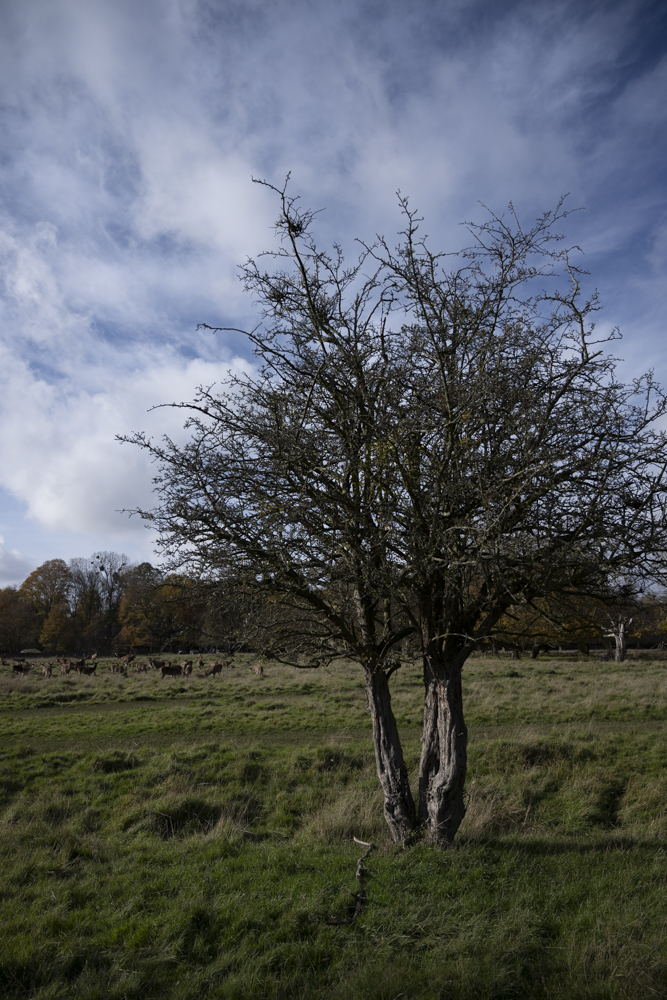
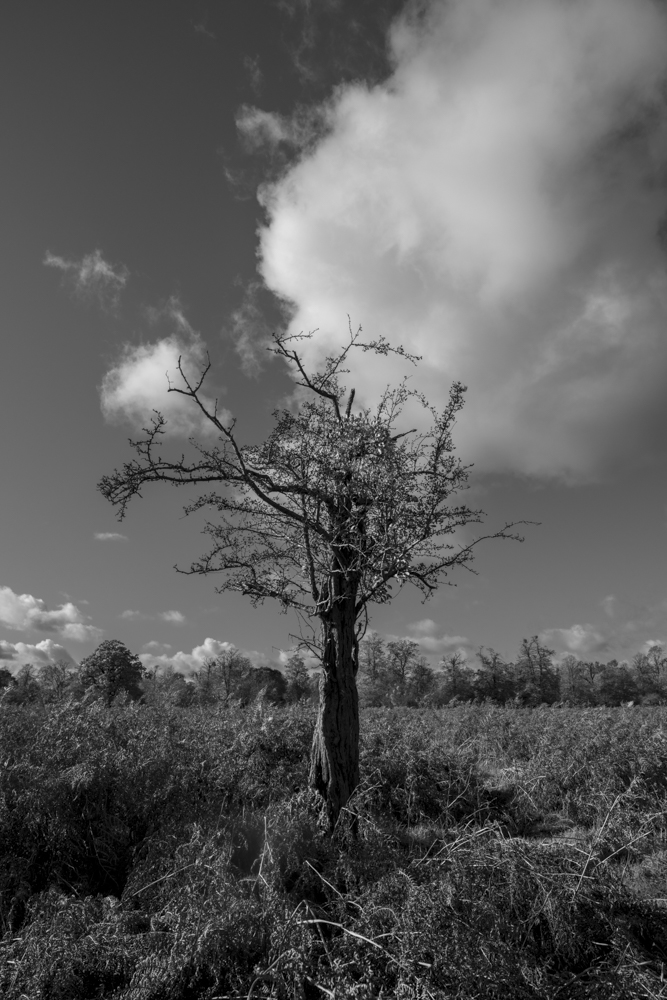
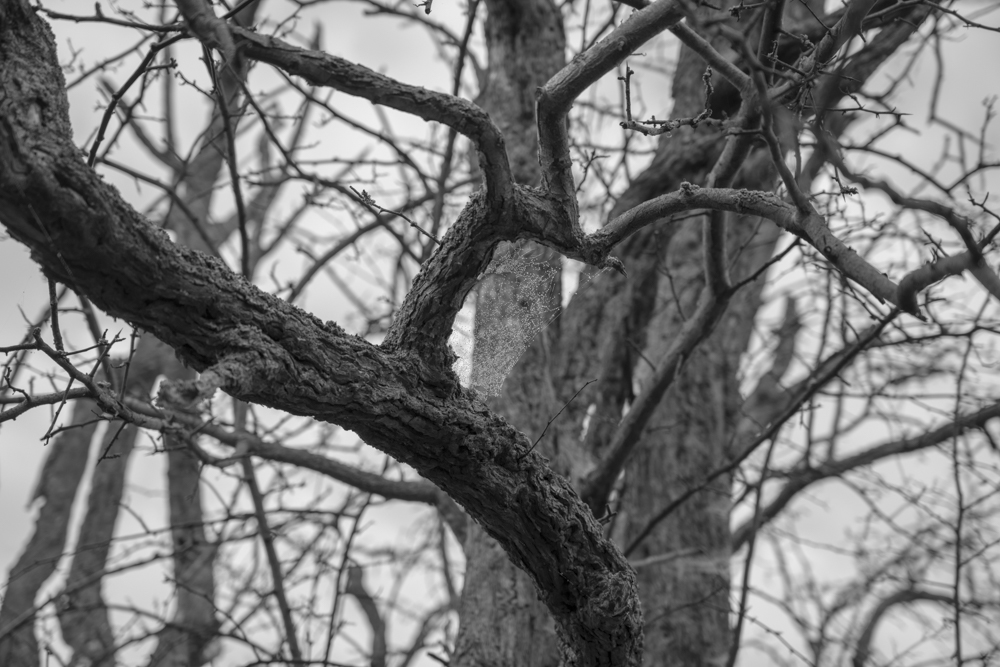
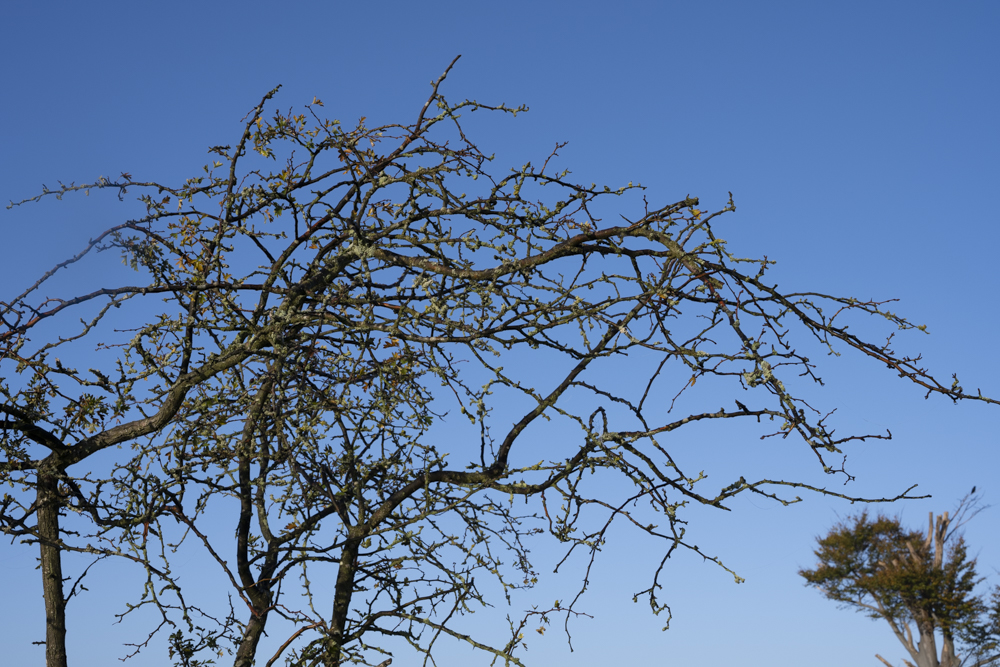
I then focused on one of my favourite hawthorns. This is the first time I used the 85mm lens and tripod capturing this tree. Again, trying to find the right horizon using the tripod at a low angle was getting to be frustrating. As such, I removed the camera off the tripod and took some close up shots.
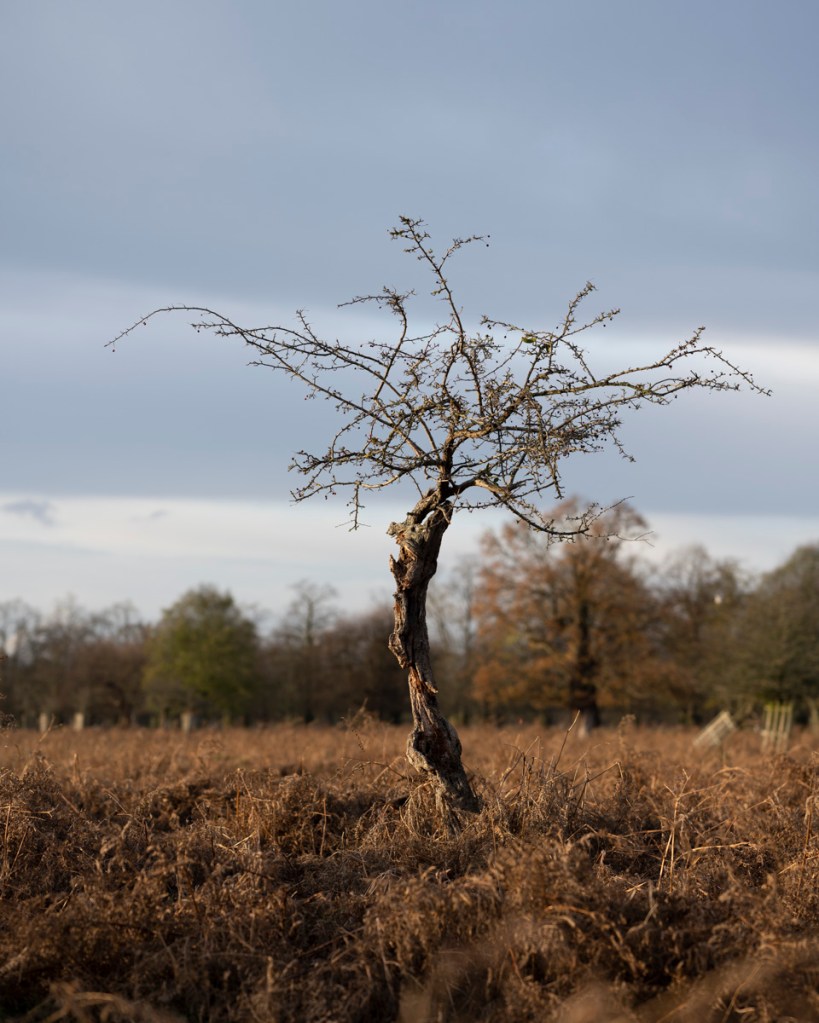
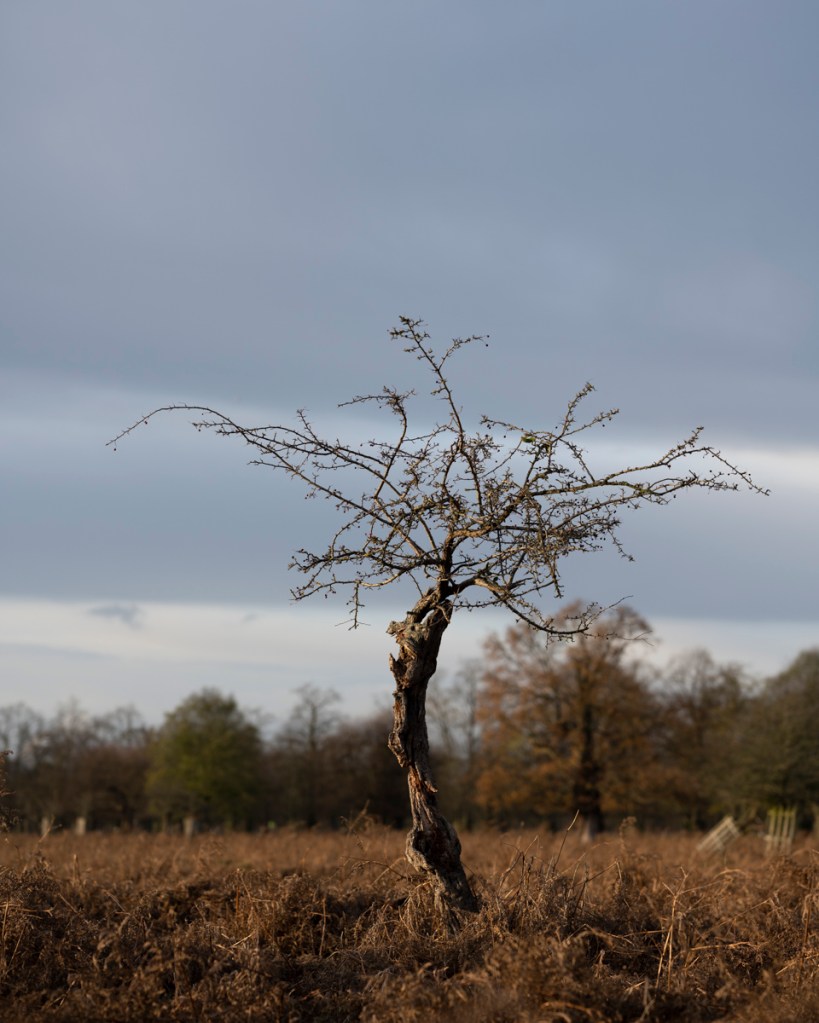
By this time I was starting to get a bit disheartened. I took these shots, but I didn’t feel particularly inspired. What I was starting to realise that there was no spark of ‘Jennie’ in my shots. Nothing that would ‘identify’ these images with me as the photographer. I also wasn’t experiencing that surge of excitement that I get when being creative. Time to stop and have a cup of tea. Only one place to sit…
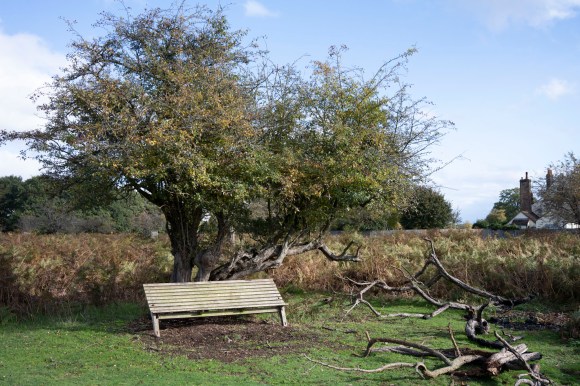
While contemplating what I should do next, I remembered that I had installed the Nikon Snap Bridge app on my smartphone. This enables the camera to be connected to the smartphone via WiFi, so you can see what the camera is viewing. The shot is then taken by pressing the smartphone screen, not the camera button. These are the shots I took while sitting on the bench.
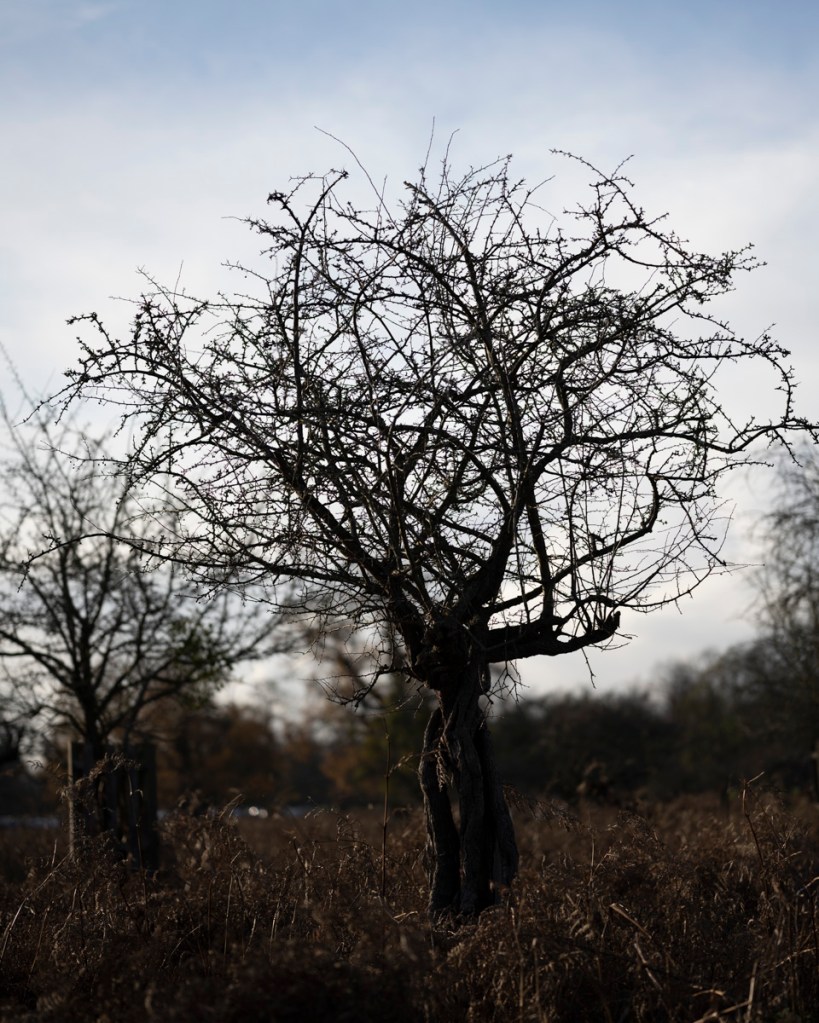
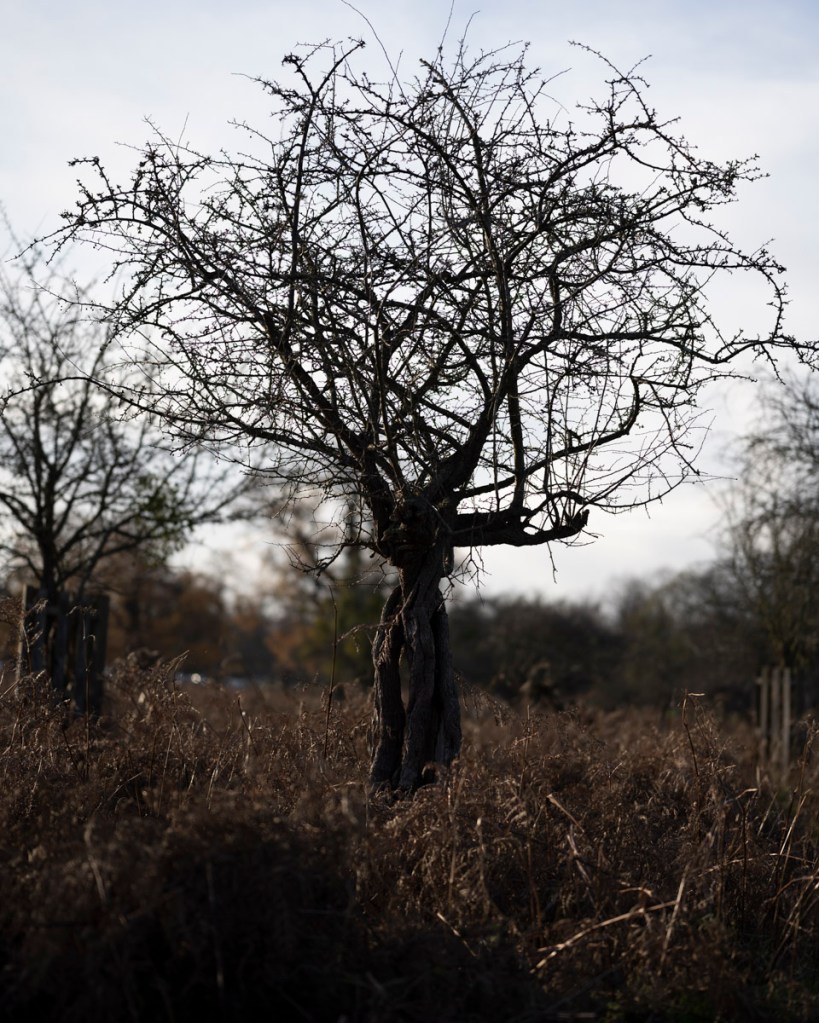
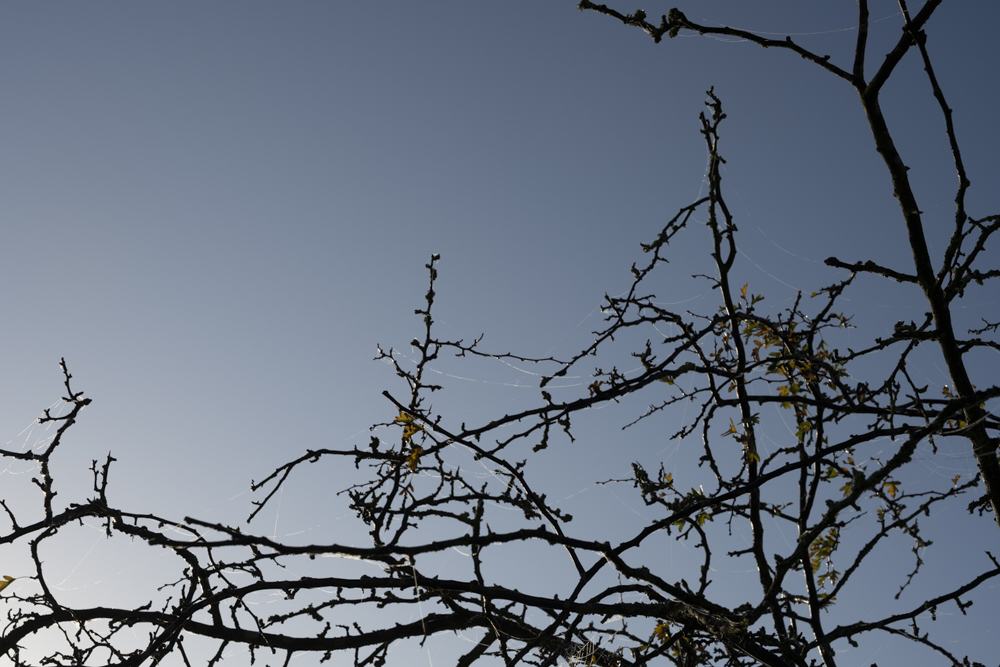
I started with a conventional composition then tried different angles just to see what would be the result. One thing I did notice is that there is a slight delay between moving the camera and this adjustment appearing on the smartphone screen. This does help in slowing down the process.

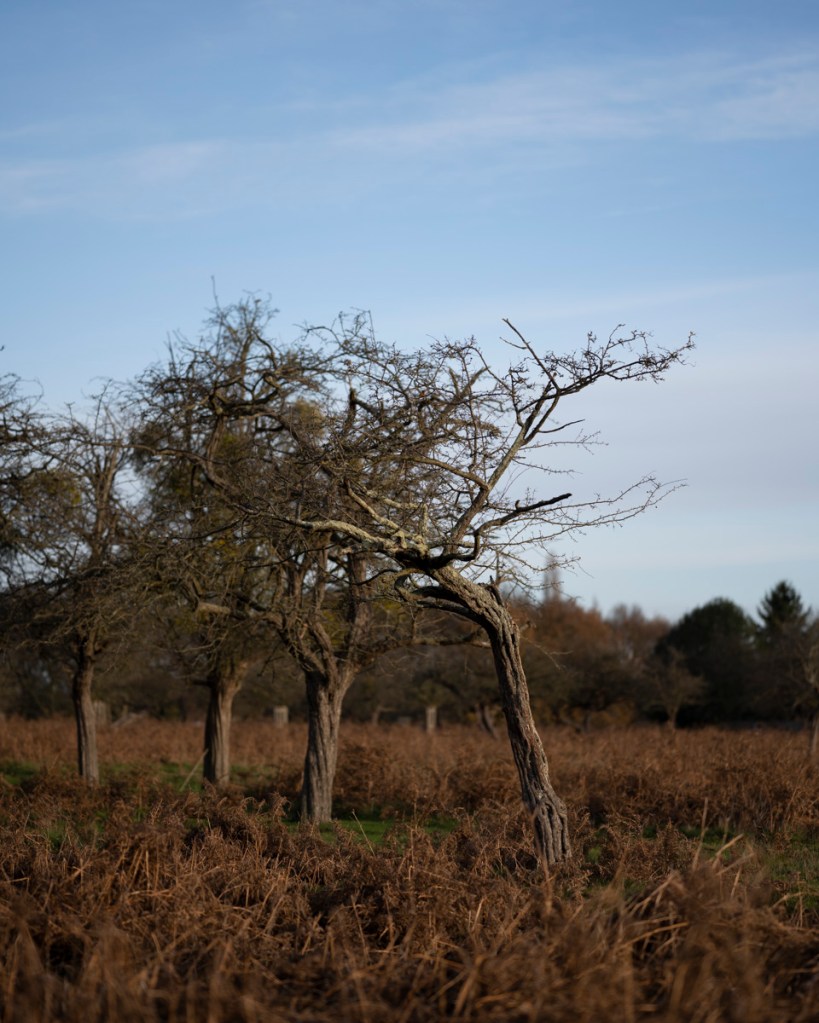
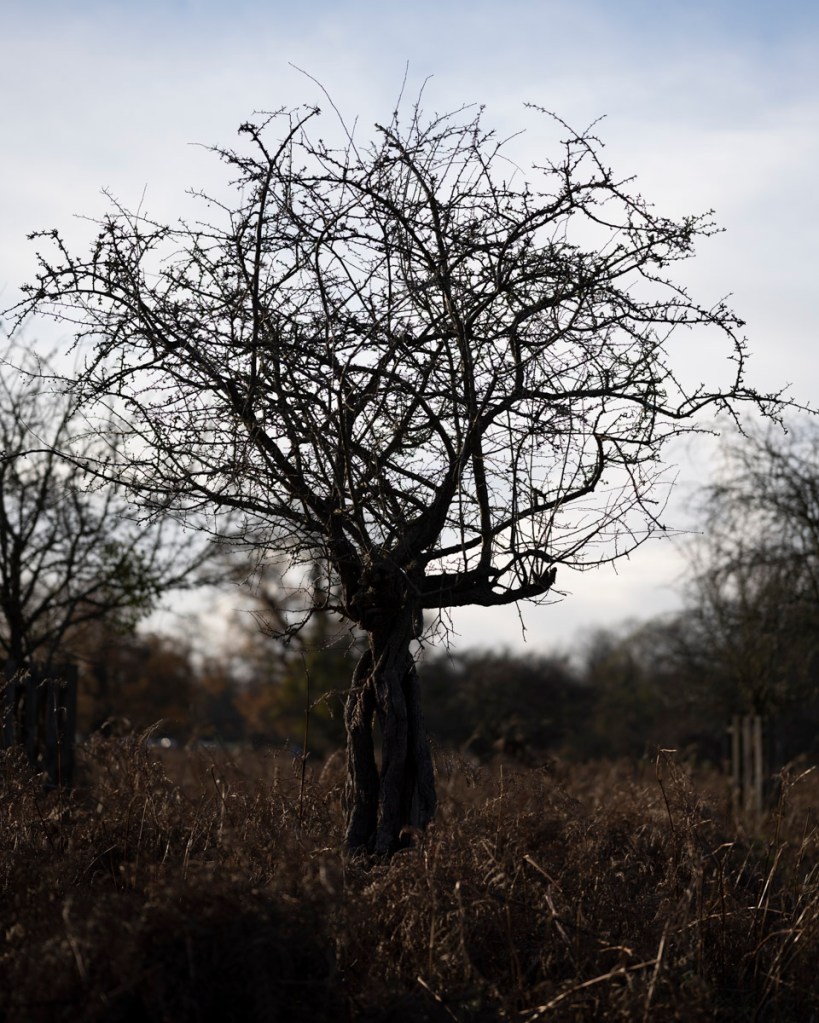
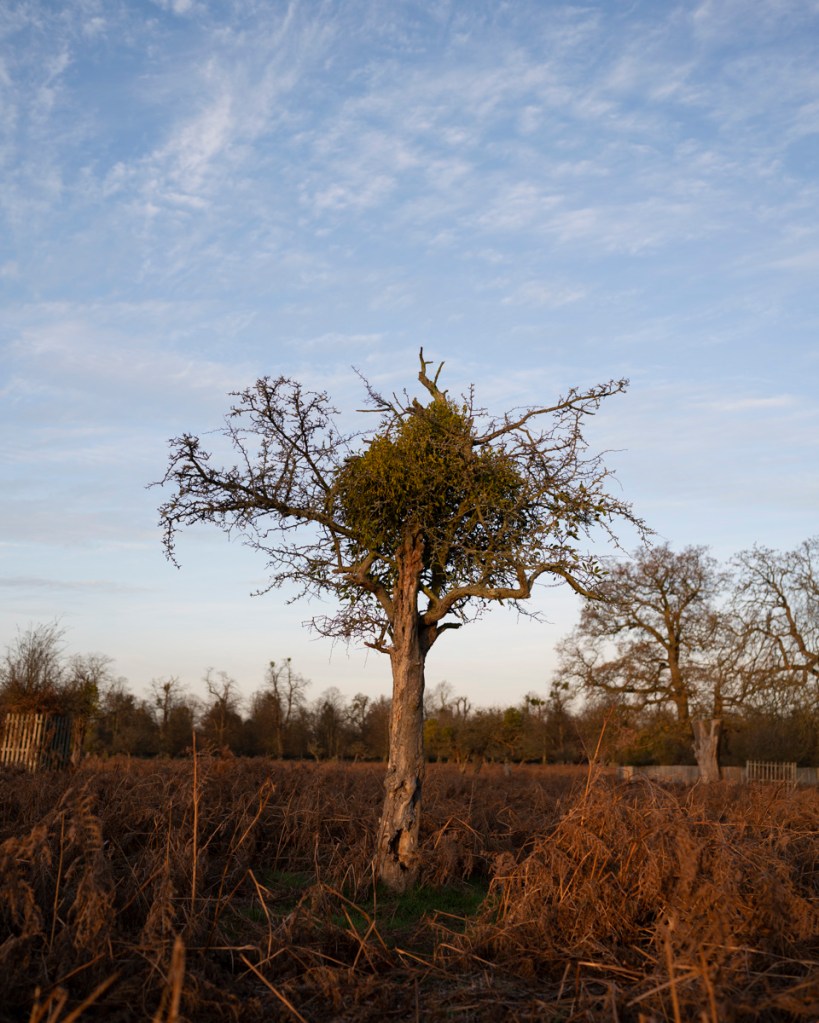
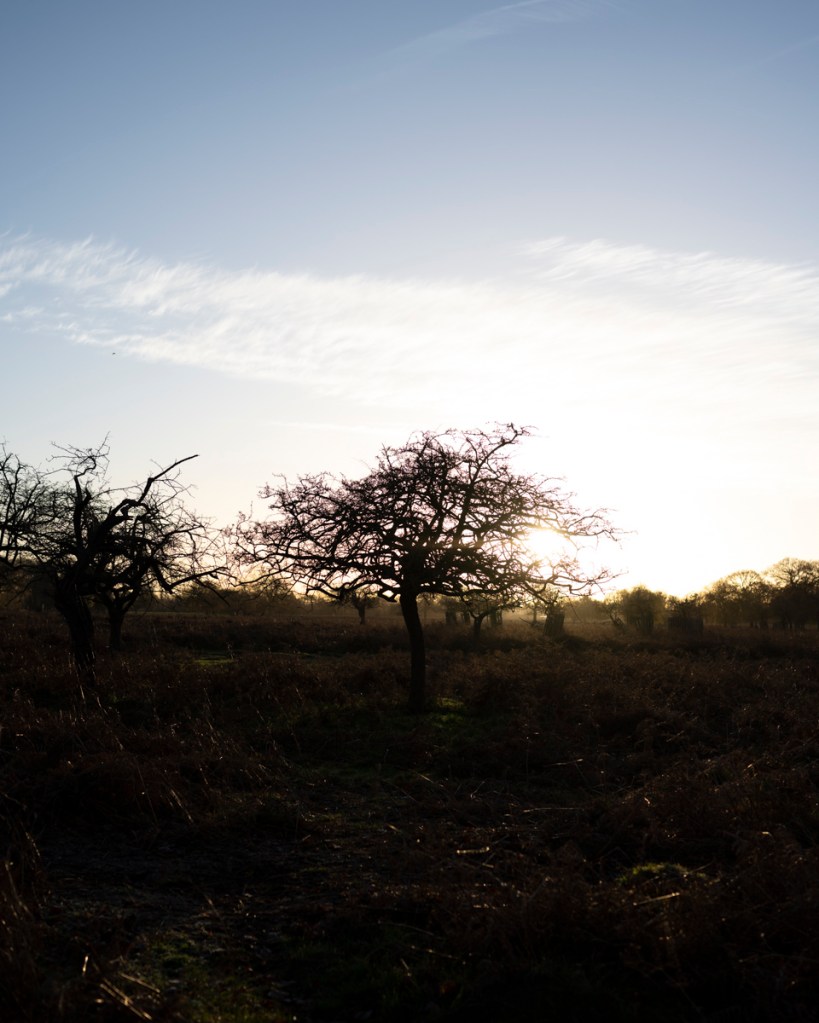
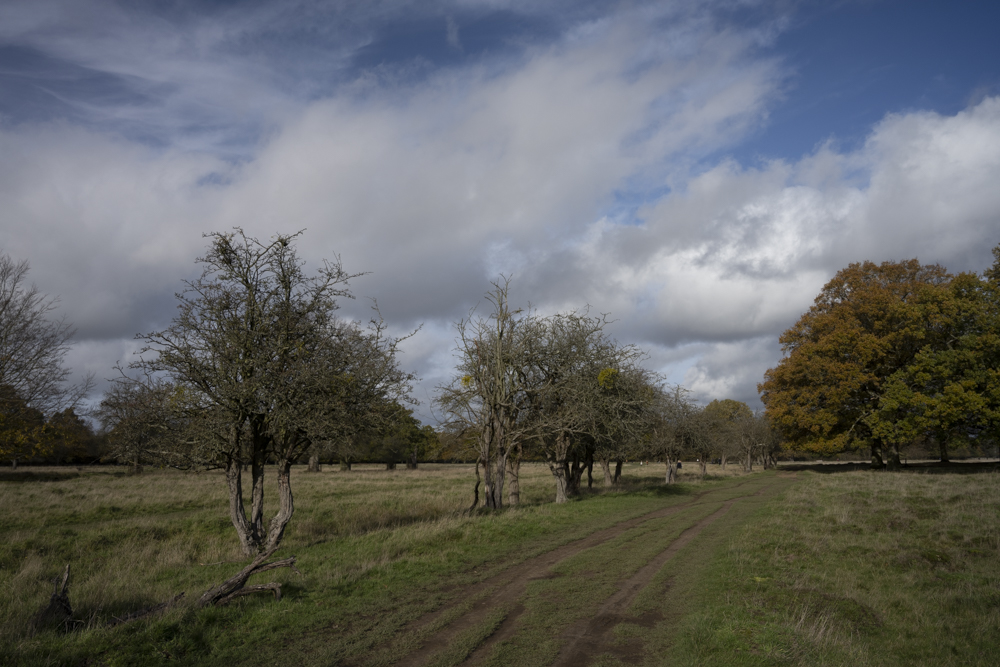
Next, I went for a wander in the Woodland Gardens to finish off my flask of tea with some ginger biscuits. After this break, I went back to the line of hawthorns nearby and took the following shots.
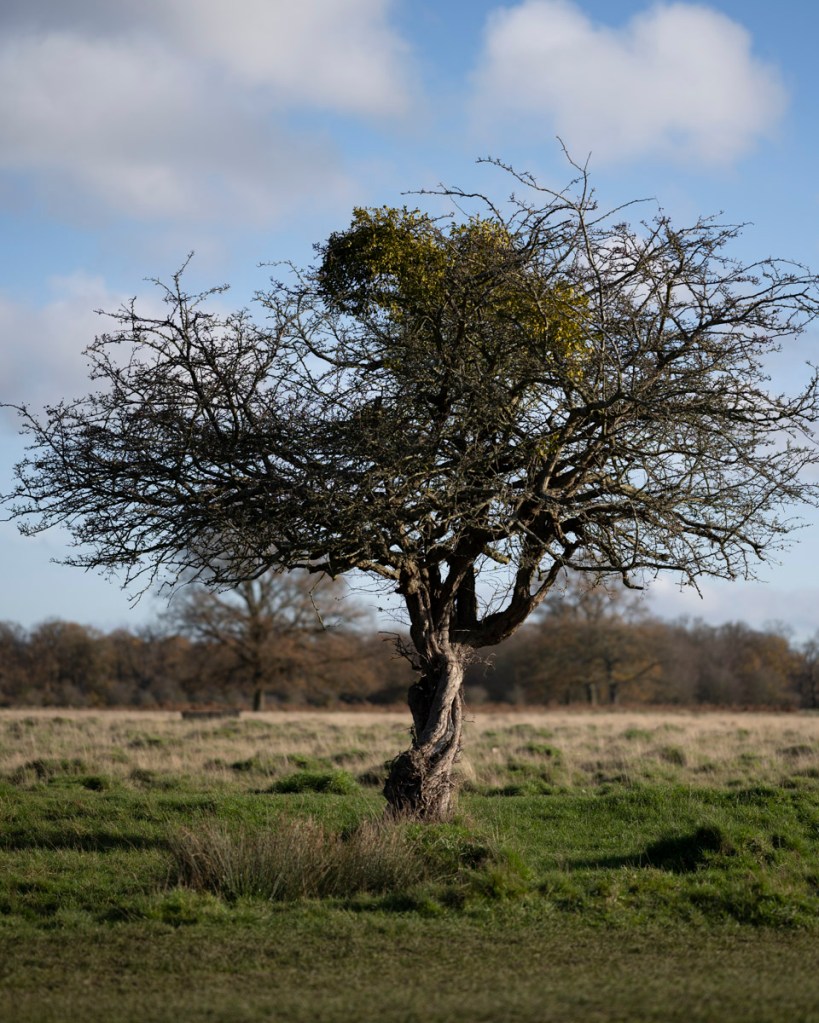
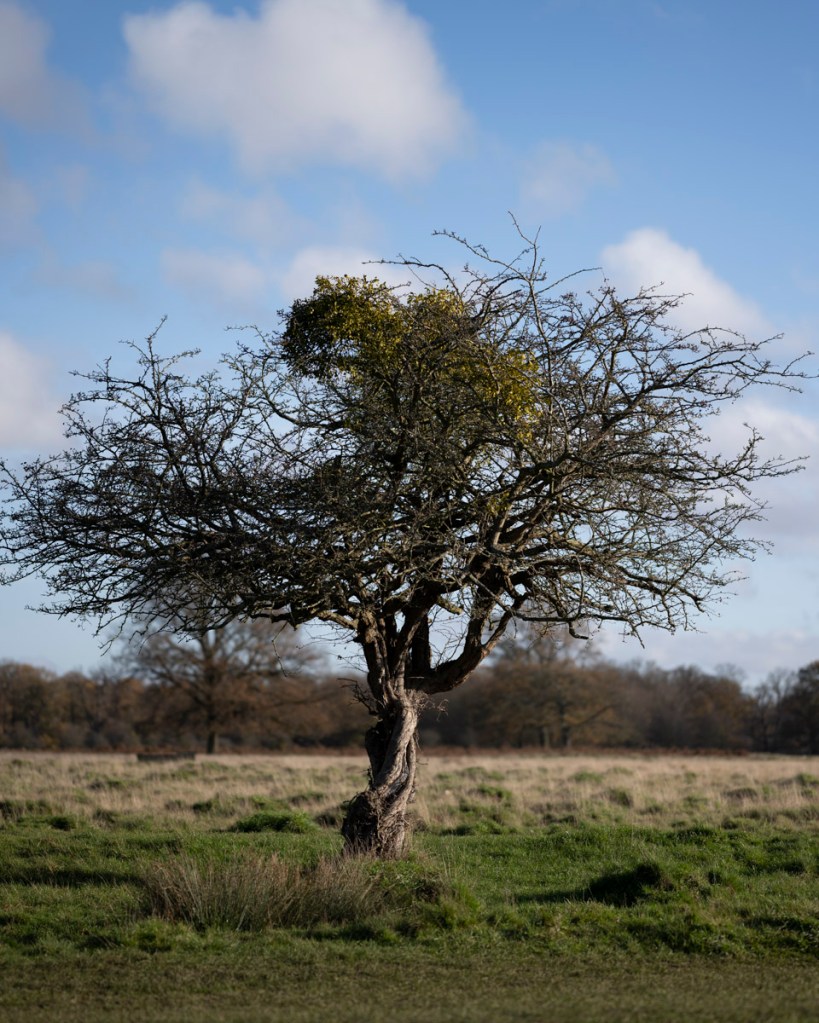
At this stage, I was still trying to work out the best approach. I knew it was probably staring me in the face, I just needed to see it.

Categories
AGM62 Photography Research Project Stage 1 Posts

AGM62 Bushy Park Hawthorns 1 December 2020

With a day of sunshine forecast, this was the time to get up early and catch the light. I also wanted to try out the 5:4 aspect ratio instead of my usual 3:2. My intention was to follow the tips outlined by Tony Sweet, Elliot Hook and Lindsay Silverman.

Sunrise was due at 7.45am, so I got to the park at 7.30am. This enabled me to both see and experience just how slow the light came up. It also made me look for the light’s direction and how it lit up my subjects and the environment.

My intention was to tryout the 85mm lens. I had returned the 105mm lens to its owner who assured me I could achieve a similar effect with the 85mm. However, I had made the mistake of not checking and packing my kit the night before. The camera had the 35mm lens on it. Annoying, but it would take me about 40 minutes to get the other lens and return to the park in time for the light.
I decided to go to Teddington Gate and start with this tree below. The last time I was in the park on 27 November, there was a large herd of deer near to the tree so this could be the time to capture it from a different angle.

35mm Images – 5:4 Aspect Ratio

These images were taken between 7.41am and 7.50am. The light was still caught behind the trees behind me at this time.

Admittedly, I was finding it difficult to get the composition and angle I was looking for. Realising I was in need of a bit of a warm up (photographically and corporeally) I walked to the patch of hawthorns on the left of Hawthorn Lodge.

The sun was gradually coming up and I took the following shots at 8.00am.

My patience was rewarded a minute later when the sun finally showed its glory.

The light was stunning – it gave a coppery glow that lit up the ferns beautifully. Again, I was having difficulty in getting low enough with the camera to get the angle I was looking for and being able to see the display screen.

These are the two images I think work best (both have been rough edited in Camera Raw. What does need work is aligning the horizon line. I was using the 4 x 4 grid that can be shown on the display screen to help with composition. So that there would be uniformity, I aligned the top of the ferns with the bottom third line as a guide. This seems to provide a good ratio of foreground, subject, background and sky.

When I shared these two shots with my classmate, Mark, he made the following comments:

“I like the way the sun is coming from the side. I think the second image works. Also, if you didn’t know, they could have been taken on safari. I would try to keep then looking the same in the frame so it doesn’t give the viewer the feeling of ‘bouncing’ in and out. Great shots!”

Will take these on board!

By this time, I was itching to use the 85mm and the light was beginning to get a bit harsh.

The decision was made to return home the return to the park with the 85mm.

85mm Images 5:4 Aspect Ratio

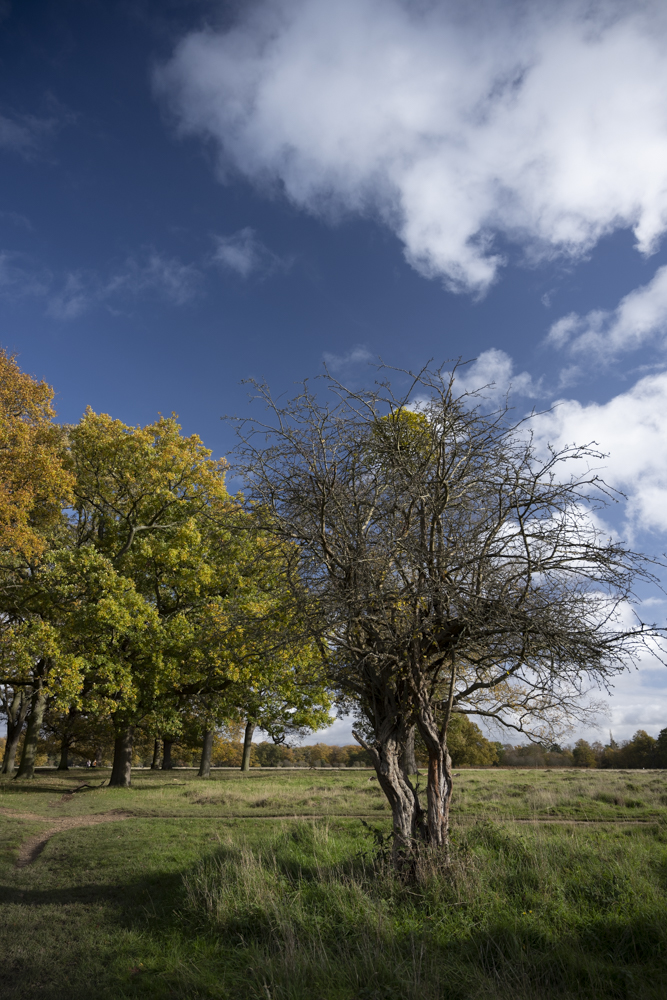
Unfortunately, the light had increased in harshness. Despite this, it was useful trying the 85mm lens with the 5:4 aspect ratio. The first tree I tried was this one (image below taken on 4 November 2020 using the 24mm-70mm zoom lens at 70mm and at 3:2 ratio).

These are the results.

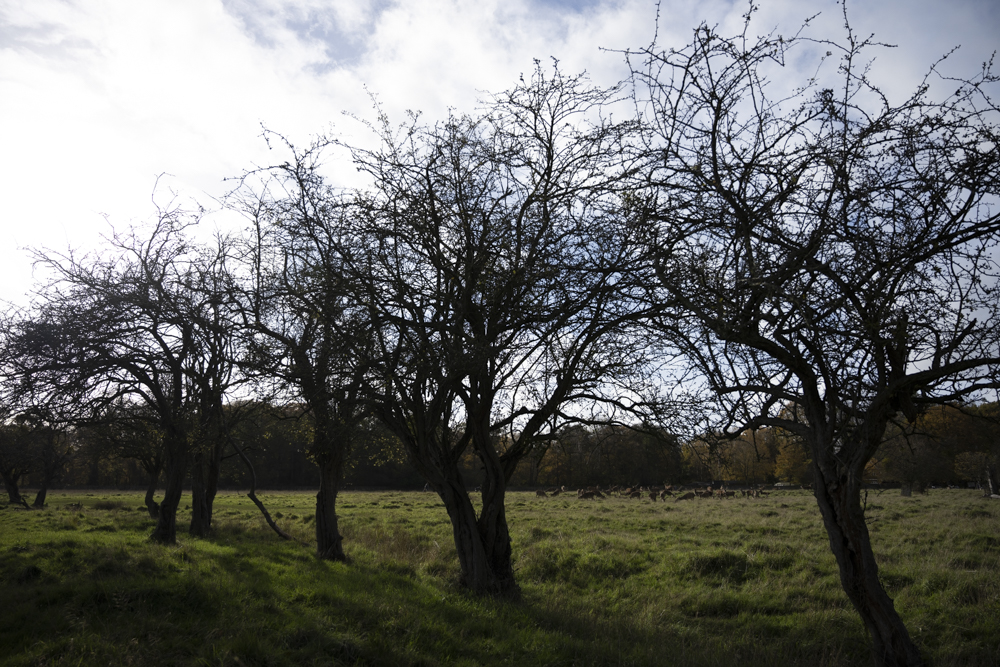
I then walked to the row of hawthorns leading to the gap between the Woodland Gardens plantations.

I did manage to get the effect of blurring the background, which I liked. Again, I wasn’t able to get low enough and see the display at the same time.

My next step is to revisit all aspects of this project in light of the feedback and actions resulting from the Interim Review and previous Group Tutorial.

References

Digital Photography School. 2020. Aspect Ratios In Landscape Photography. [online] Available at: <https://digital-photography-school.com/aspect-ratios-in-landscape-photography/&gt; [Accessed 2 December 2020].

“Landscape”, W., 2020. Want Better Landscape Photos? First Check Your Definition Of “Landscape” | Nikon. [online] Nikonusa.com. Available at: <https://www.nikonusa.com/en/learn-and-explore/a/tips-and-techniques/want-better-landscape-photos-first-check-your-definition-of-landscape.html&gt; [Accessed 2 December 2020].

Modes, P., 2020. Personal Touch: The Art Of Z 7 And Z 6 Crop Modes | Nikon. [online] Nikonusa.com. Available at: <https://www.nikonusa.com/en/learn-and-explore/a/tips-and-techniques/personal-touch-the-art-of-z-7-and-z-6-crop-modes.html&gt; [Accessed 2 December 2020].

Categories
AGM62 Photography Research Project Stage 1 Posts

AGM62 Bushy Park Hawthorns 24 November 2020

After another day in front of the computer, I went for a walk in the park. My intention for this visit was to continue using the mirror-less camera to shoot both a RAW and low-quality JPG and see how this method works in relation to this project.

The afternoon was a bit sunny, but by the time I got to the park at approximately 3.30pm the light had ‘died’. The sunset was at 4pm that day, but I was hoping to catch some golden rays. Despite that lack of light, I thought I would still try to take some shots to see what the results would be. I also wanted to explore with focusing on one tree and take different shots from different angles and distances. For the following shots were taken using the 35mm at ISO64.

Tree One

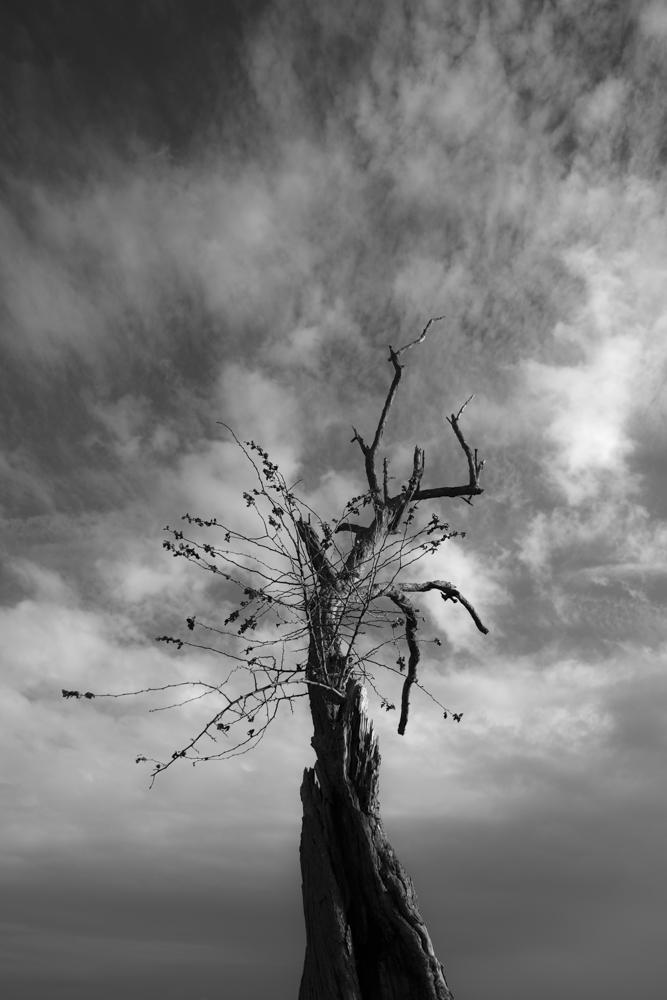
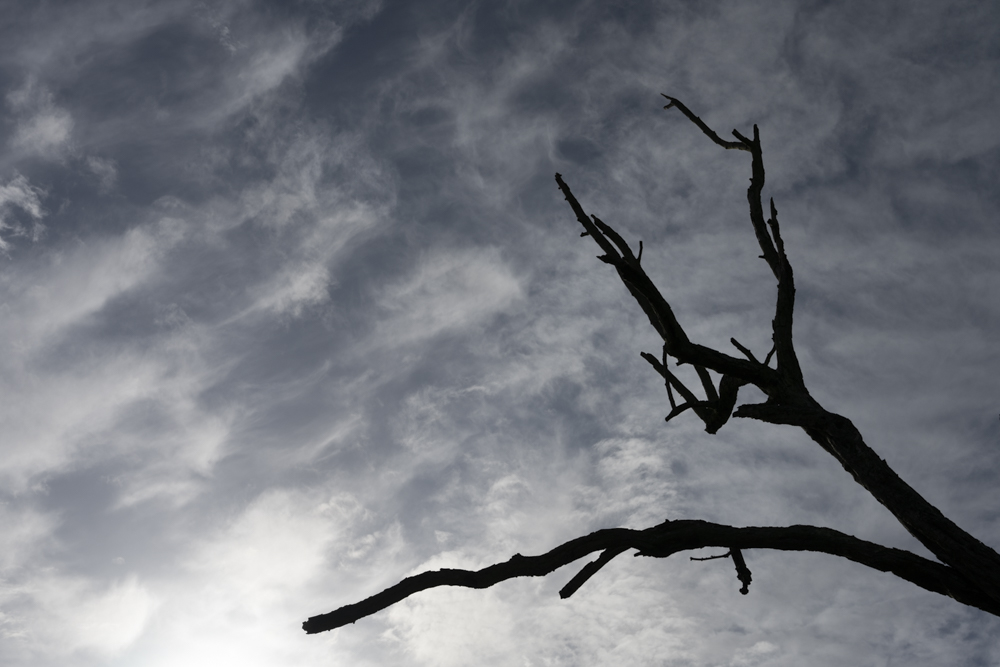
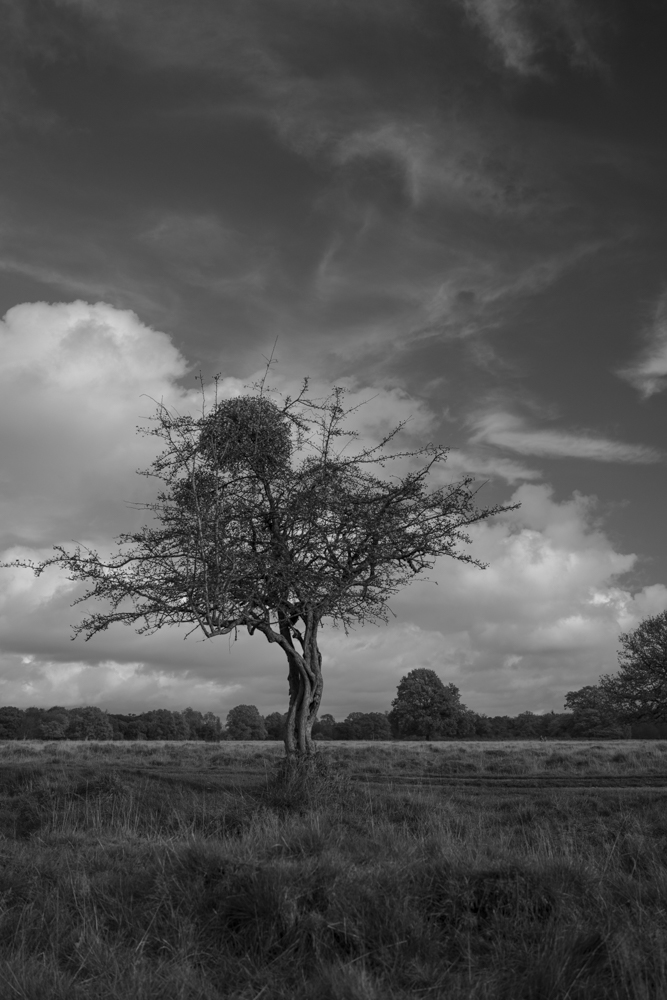
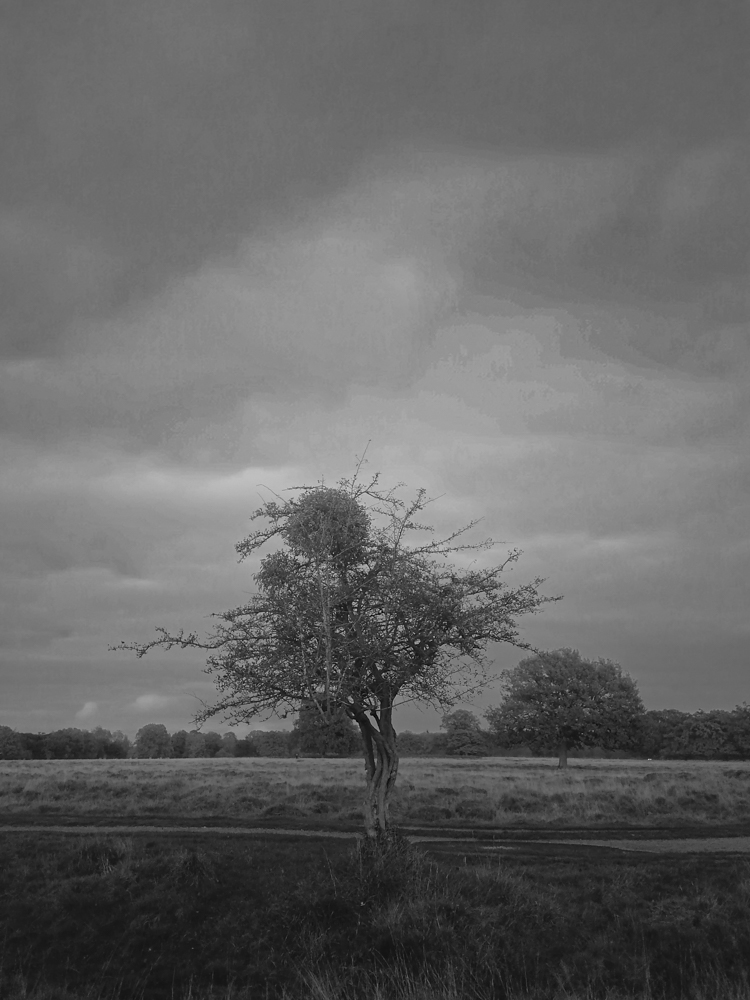
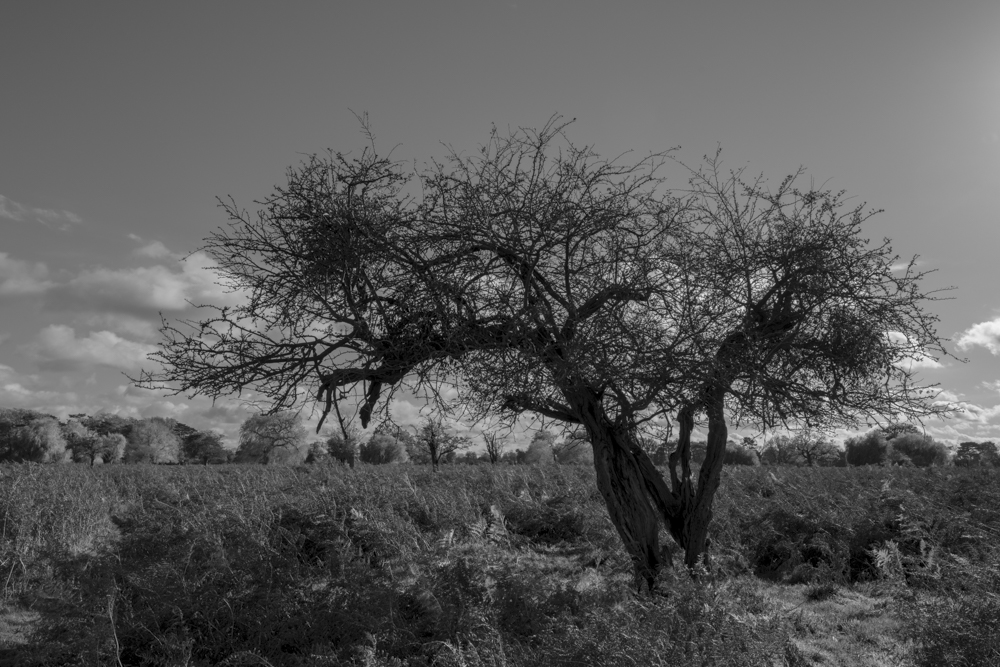
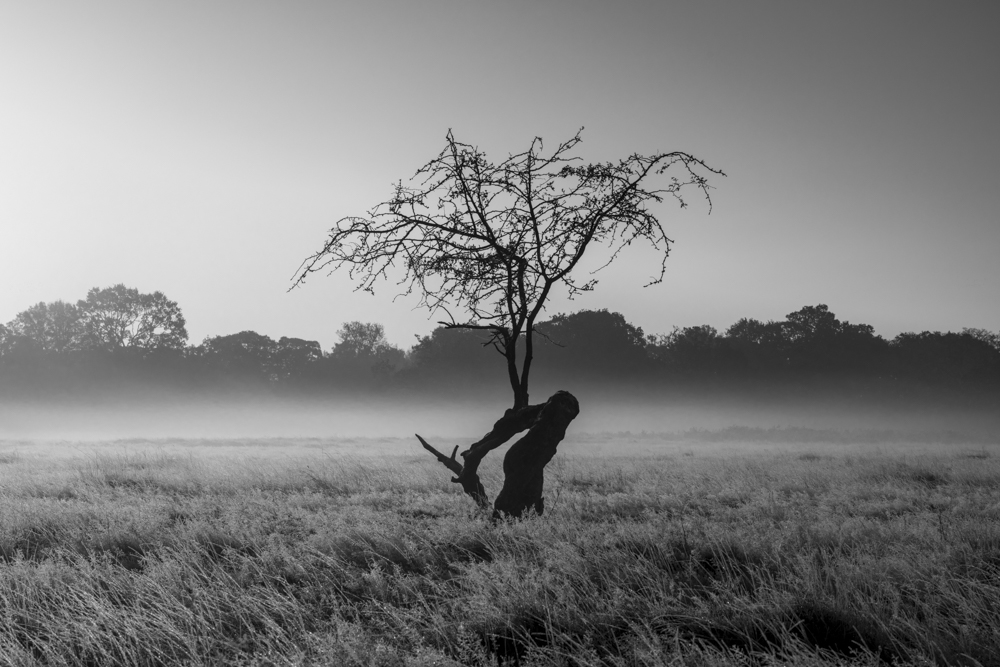
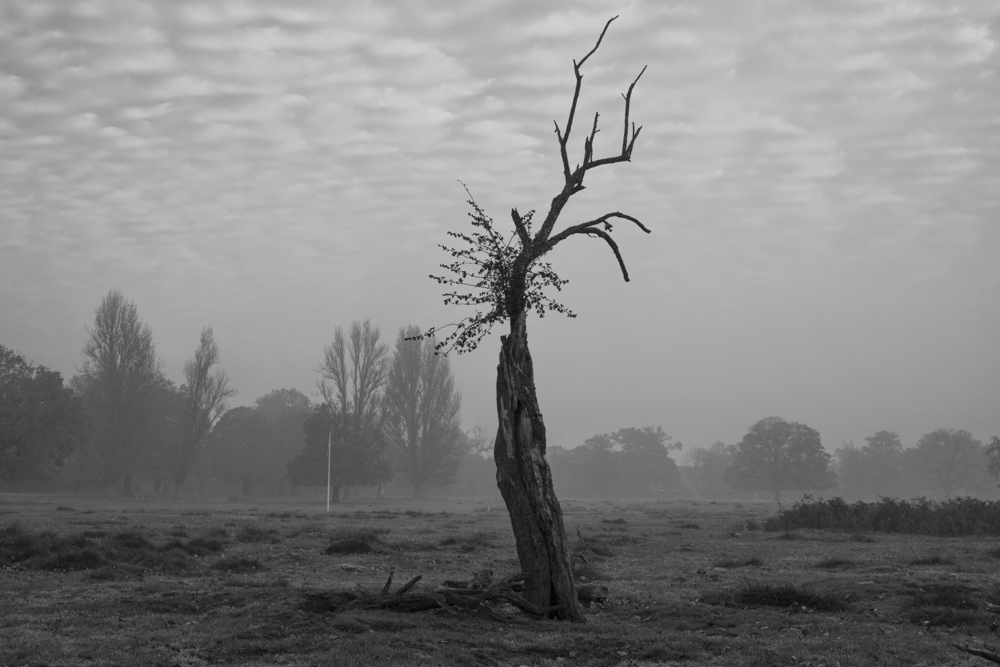
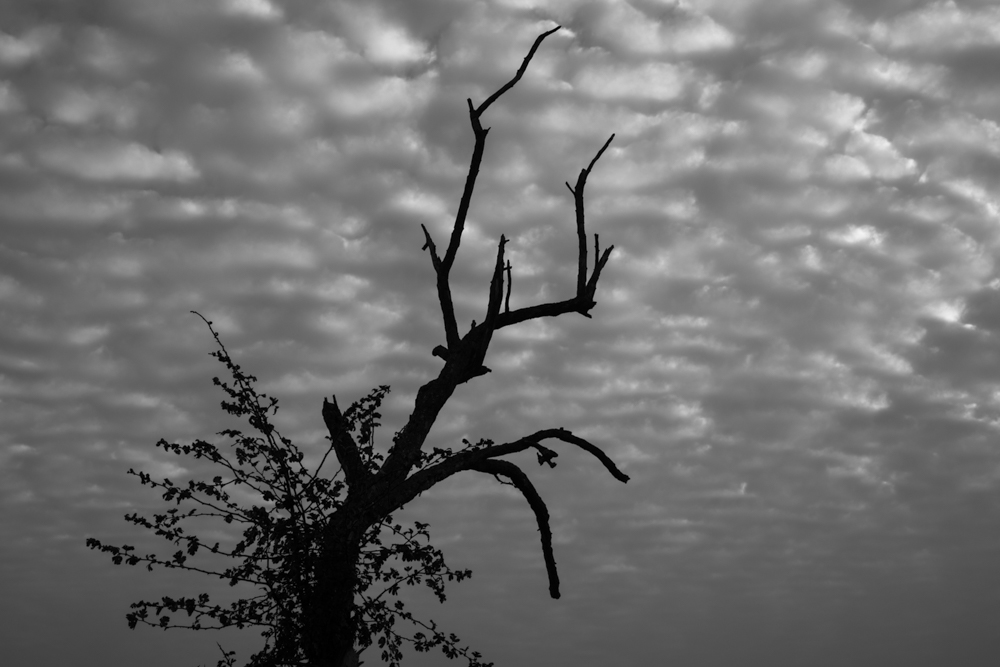
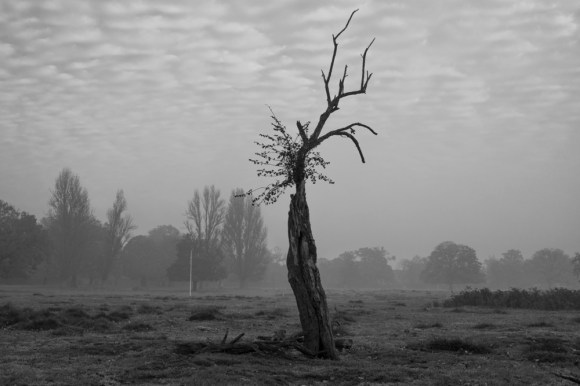
The first hawthorn I photographed was the one I’ve nicknamed The Grim Reaper.

These are the low-quality Black & White conversions created by the camera.

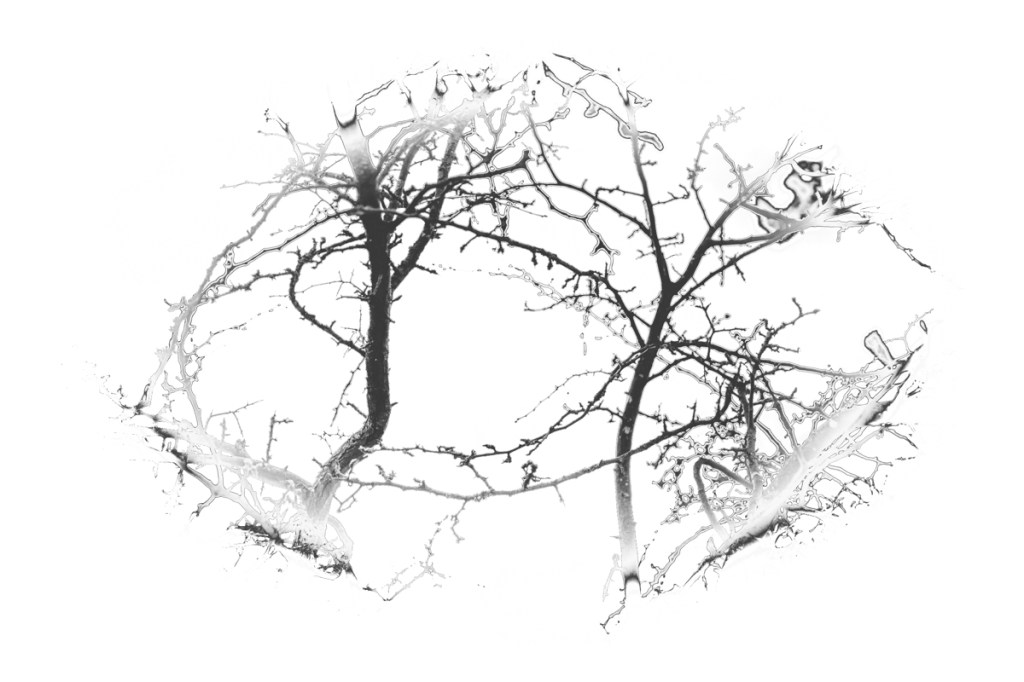
I also took at smartphone shot from a particular angle then combined it with the following images. The ‘abstract’ one has been made from the fourth shot above.

Tree Two

I then walked towards the hawthorn that’s at the end of the row before the gap between the two plantations of the Woodland Gardens. This was taken at F1.8.

The sun was going down towards the left of this tree. What I could do for a more effective shot was to try the speedlight flash a bit earlier in the day to test how this would work.

I then edited this image by bringing up the exposure.

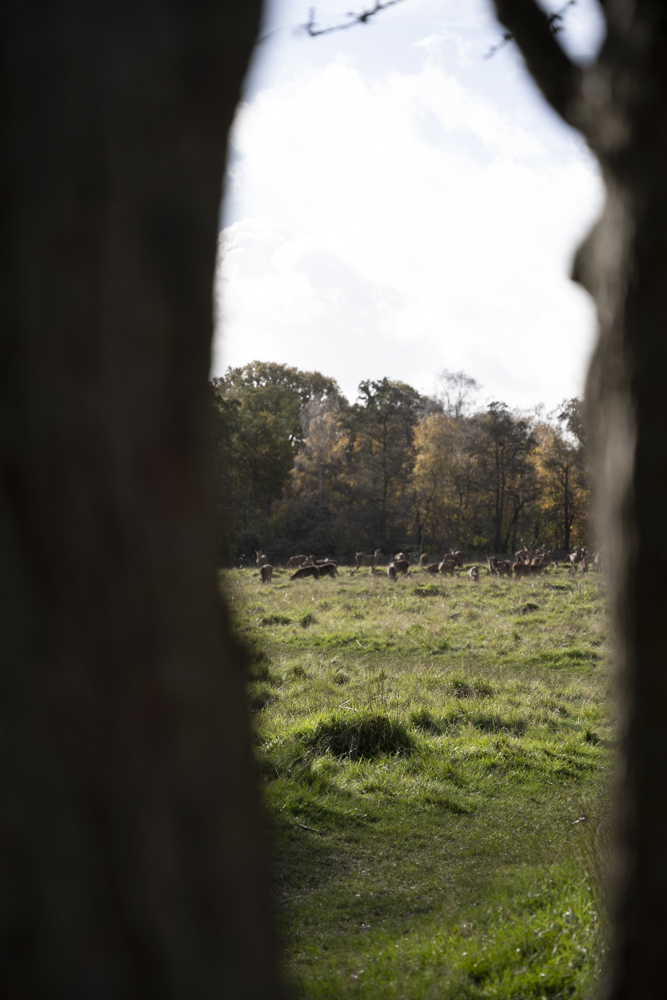
There were two aspects I liked. Firstly the sky showing through the gap. Secondly, the contrast between the in-focus branches and trunk in contrast to the blurred background. This really does make the tree ‘pop’ from the background.

Tree Three

I then walked had a wander through the Waterhouse Plantation then came out at the other end. This brought me to another part of the park I hadn’t explored as yet. At this time the sunlight was lower in the sky and there was a golden glow.

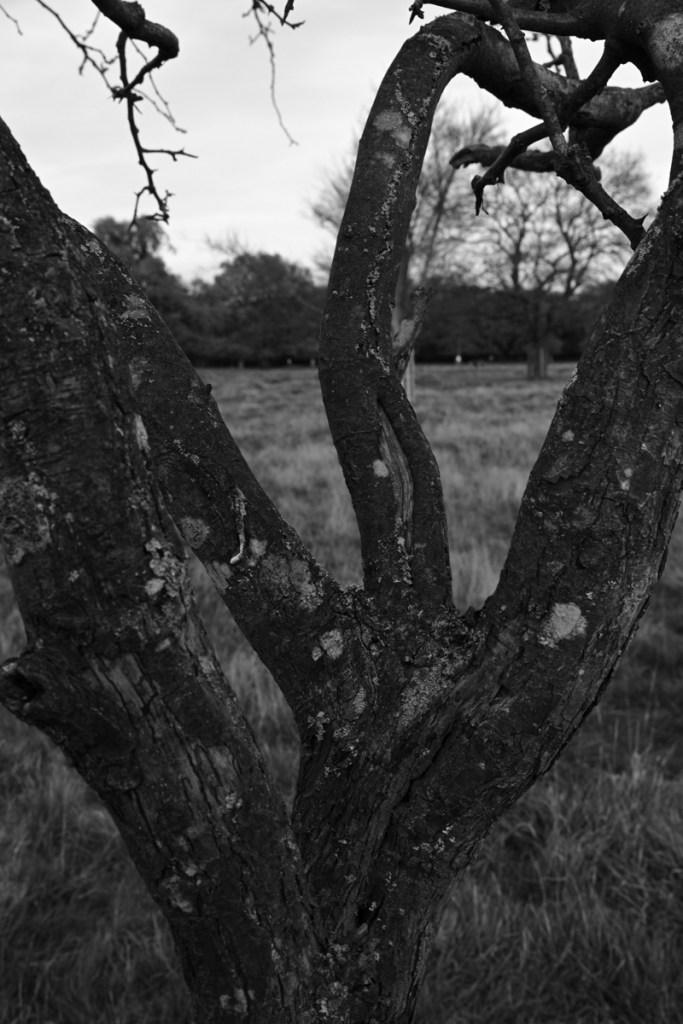
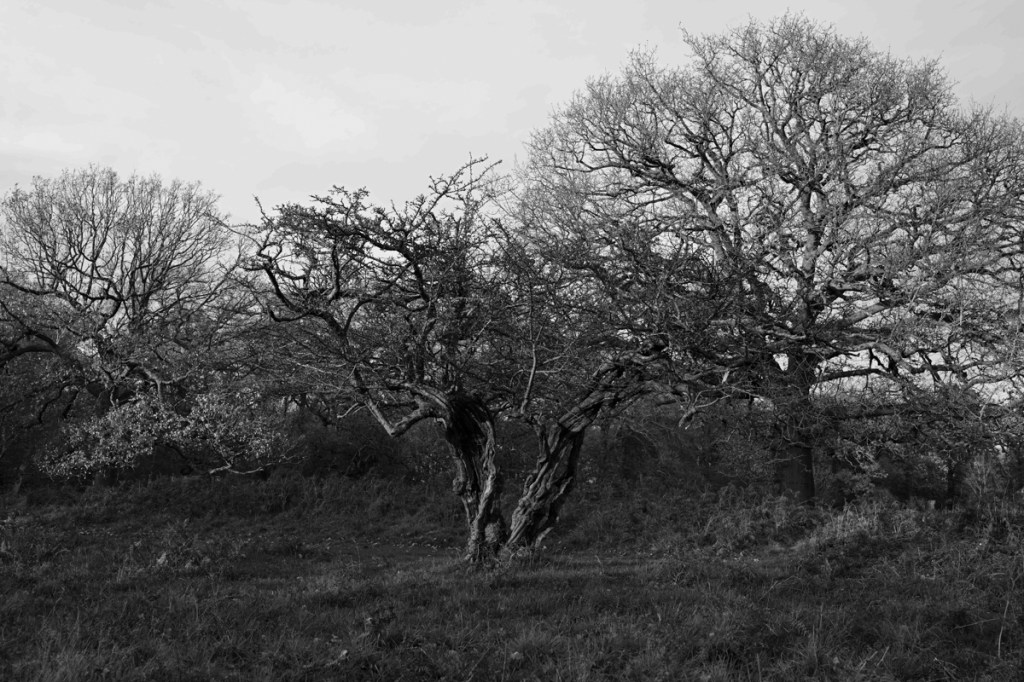
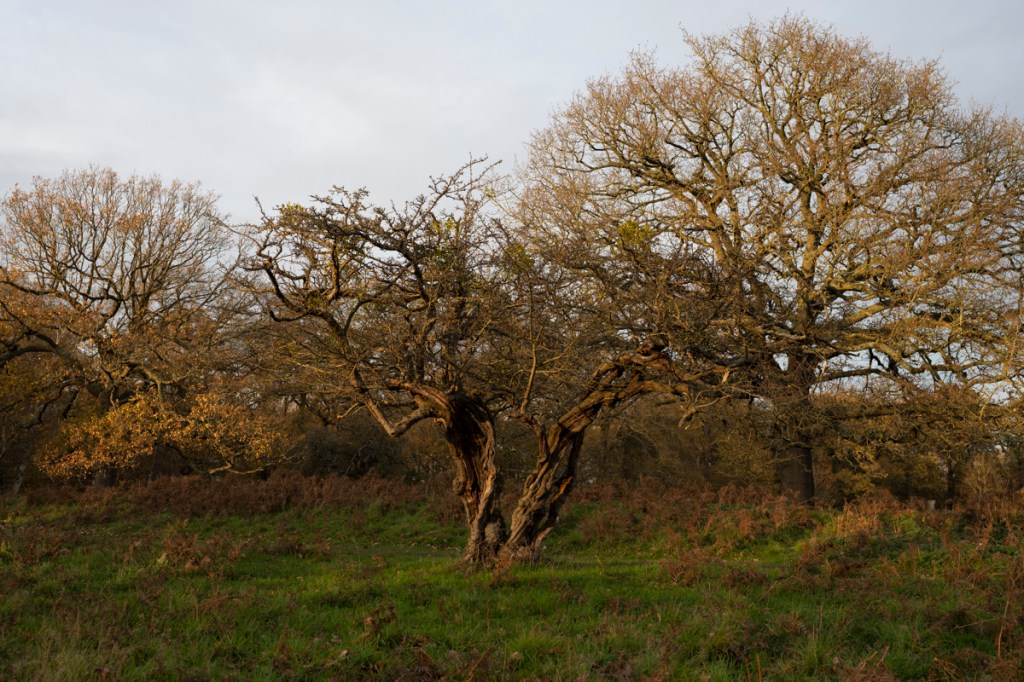
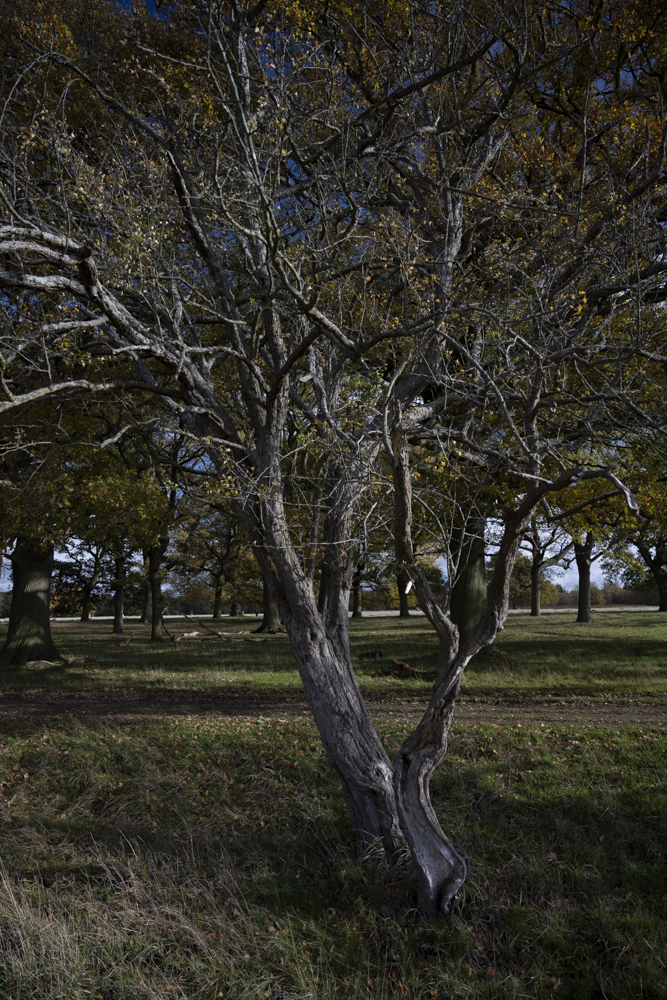
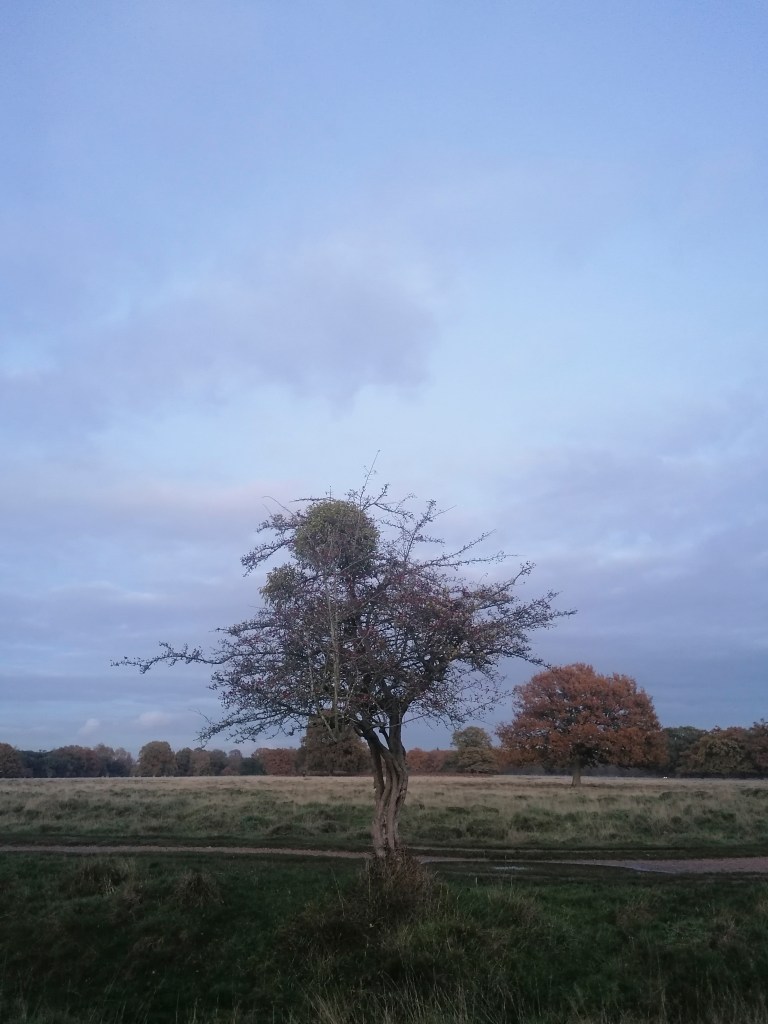
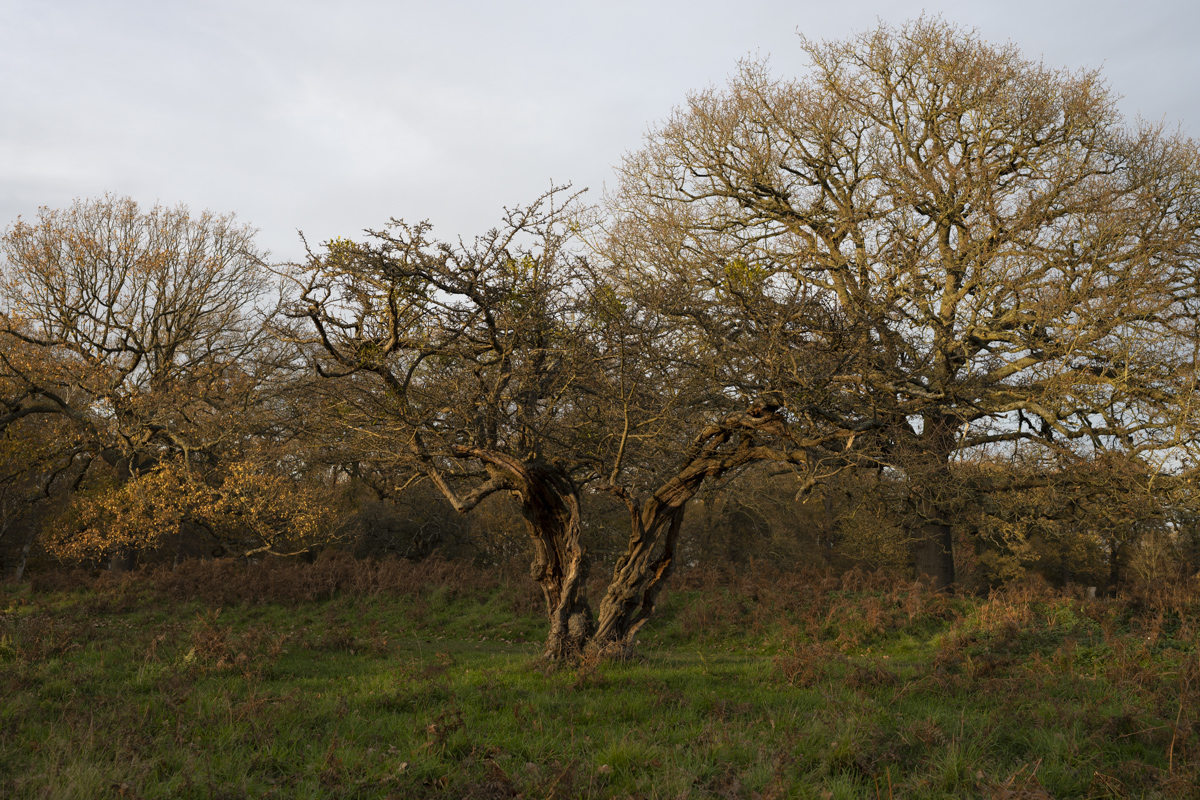
I came across this particular hawthorn. When I looked closer, I realised the trunk was split into multiple trunks.

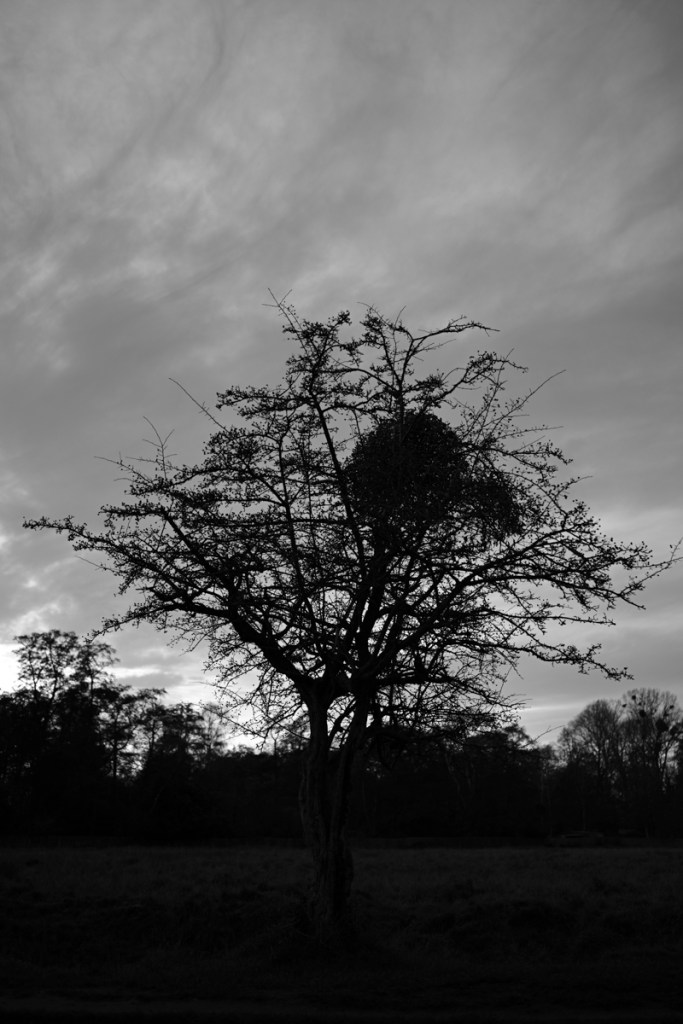
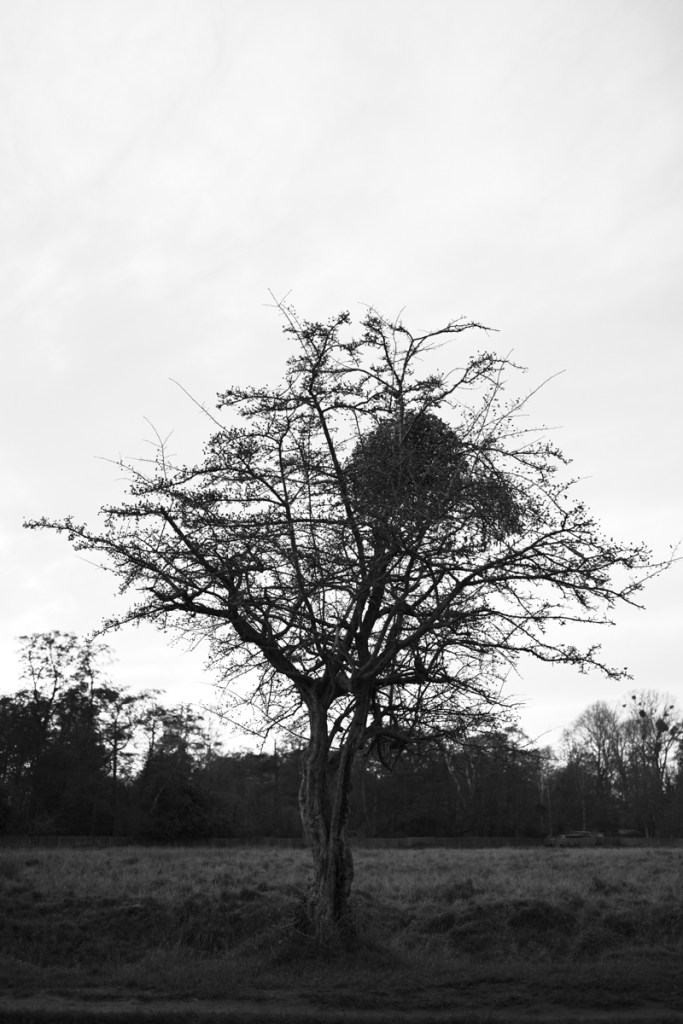
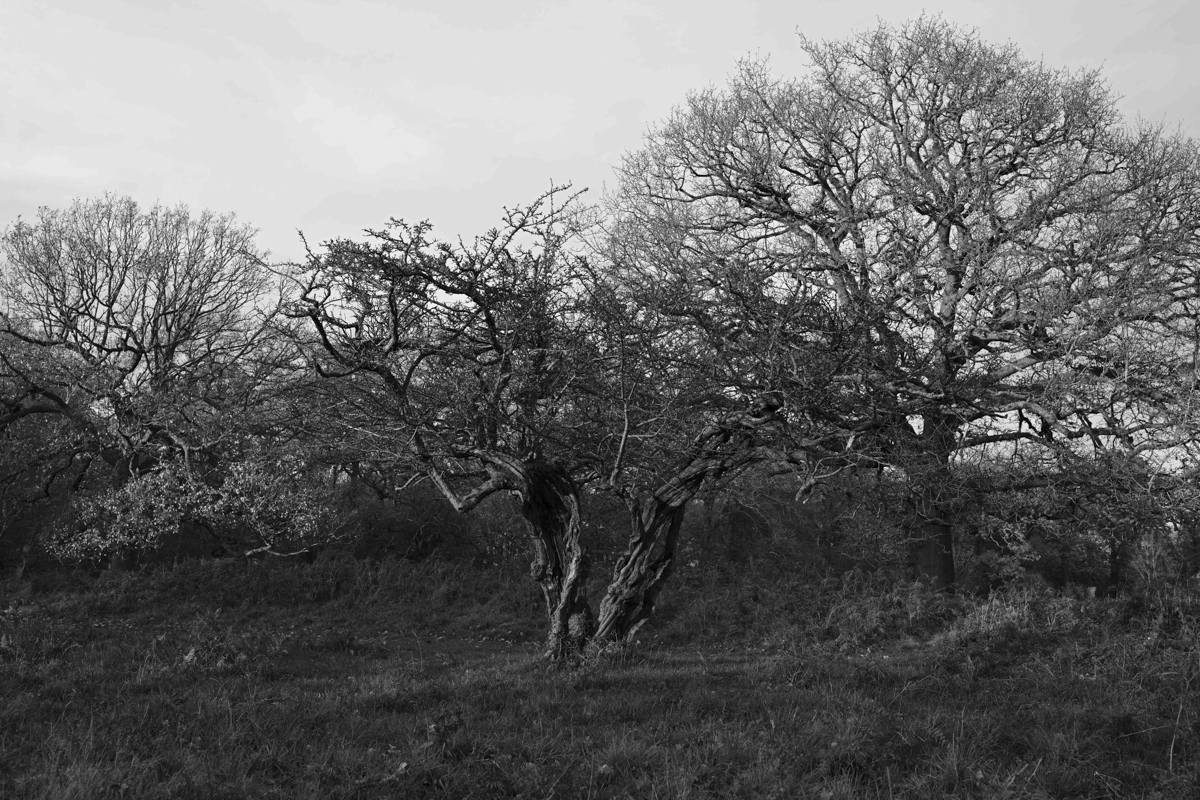
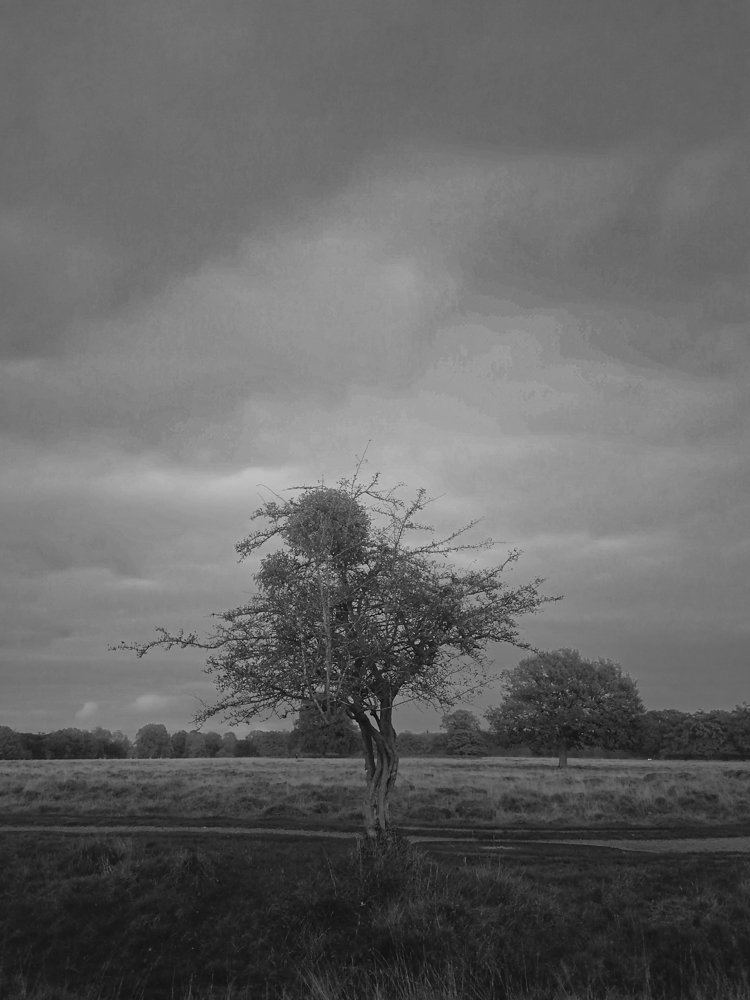
When I arrived home I made my own Black & White conversion to compare with the one created by the camera.

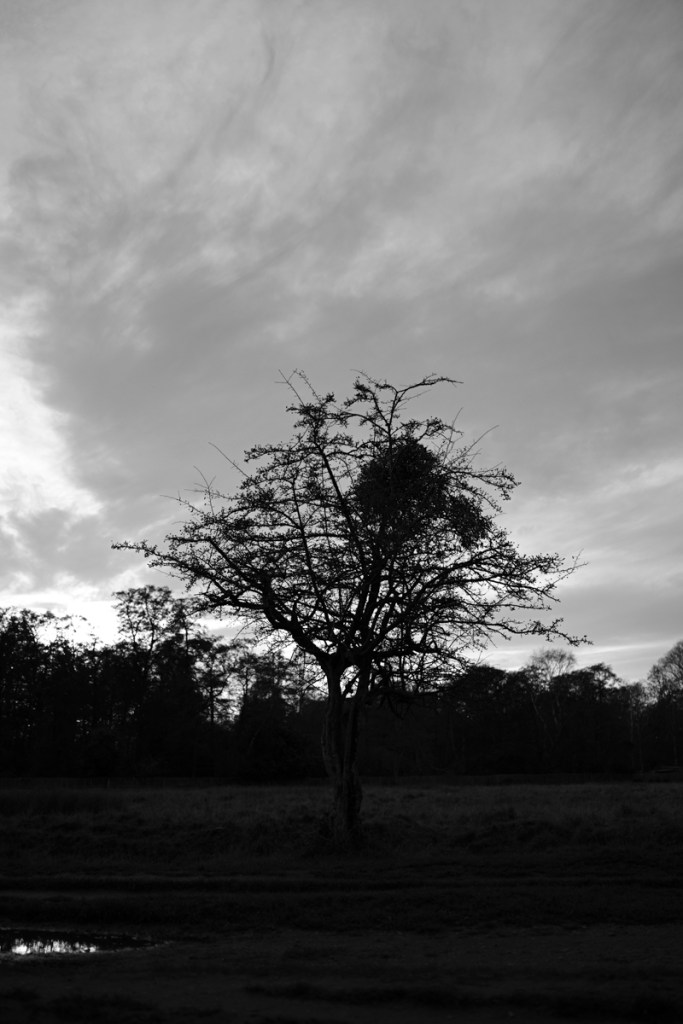
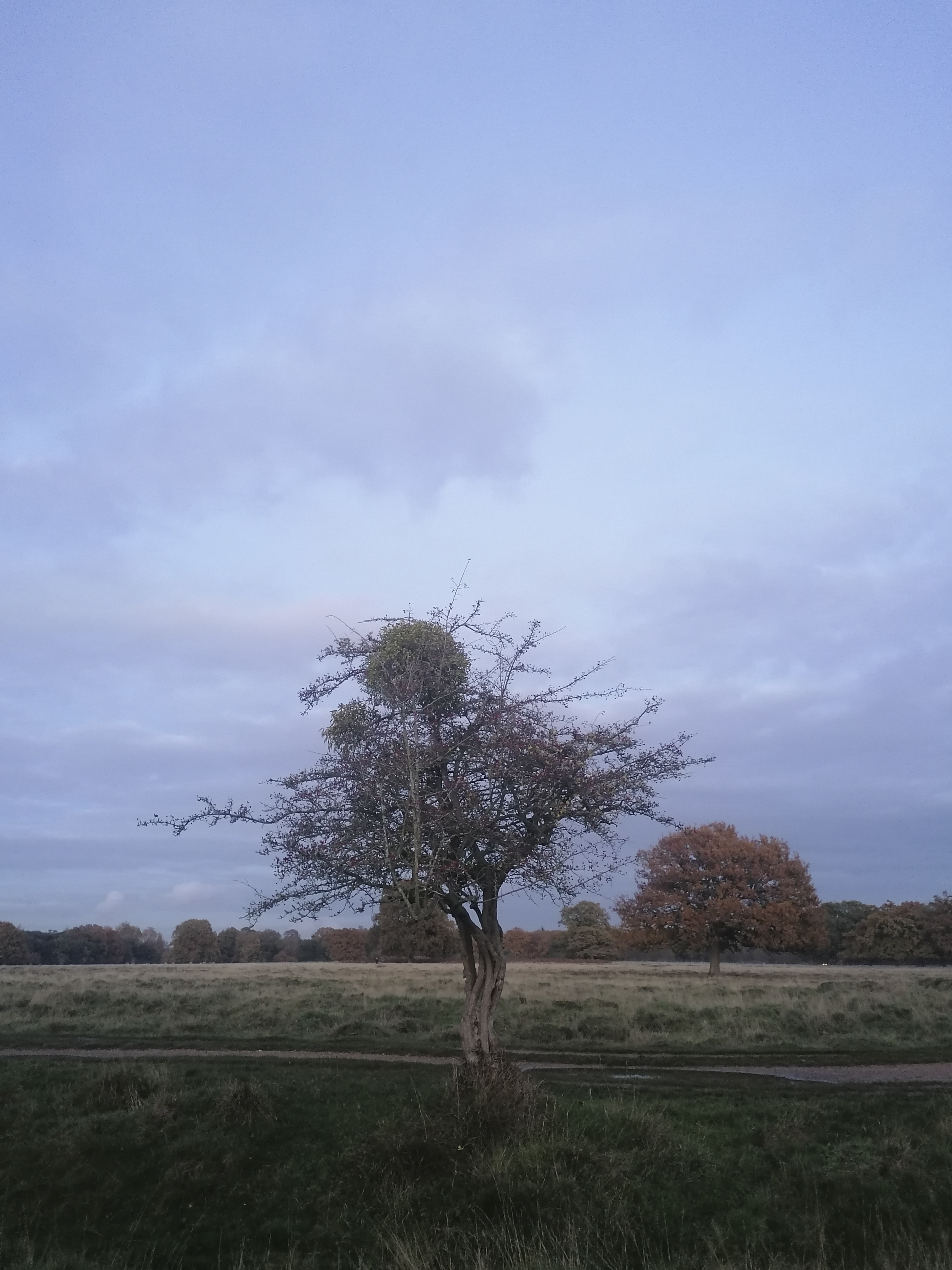
In addition to these Black & White images, this is a low-res JPG saved directly from the original RAW file without additional editing.

Categories
AGM62 Photography Research Project Stage 1 Posts

AGM62 Hawthorn by Bill Vaughn 17 November 2020

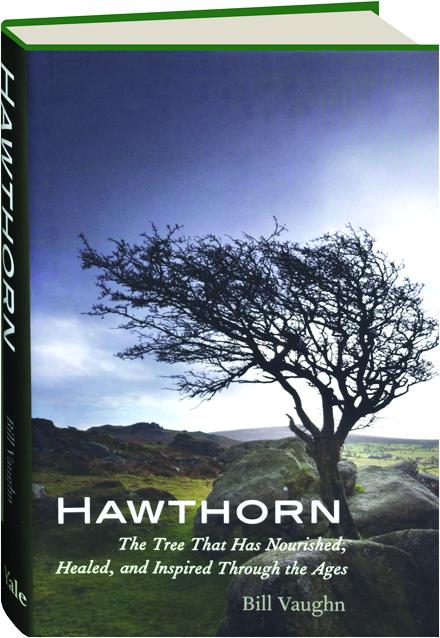
While researching the subject of hawthorns, I initially found reference to these trees in books that covered the subject in general. There were brief mentions in a selection of tomes that gave a taste of the back ground of this tree, but they were quite general. I then discovered an enlightening book by Bill Vaughn titled Hawthorn – The Tree That Has Nourished, Healed and Inspired Through The Ages. Published in 2015, it is a combination of political, religious and natural histories and Vaughn’s own relationship with the hawthorn. The author lives on a large plot of land in North America called Dark Acres that is dominated by the tree. Throughout the book, Vaughn intertwines his experiences on this land, his family history and how the tree has impacted humanity. The book is a wealth of inspiration and information and I will studying it in greater detail over the coming months.

The aspect which is most useful is that Vaughn does not just focus on the hawthorn in relation to Great Britain or the United States. The author looks at the influence of the tree on a global basis and how it interconnects places in the world through invisible and visible means.

The book is divided into twelve chapters that cover a particular aspect in each one. My aim is to extrapolate the berries of relevant information in each chapter then utlise these as starting points of further inquiry and photographic exploration.

Chapter 1: The World’s Busiest Treet

Chapter 2: Under the Hawthorn Tree

Chapter 3: The Celtic Forge

Chapter 4: The Hedge Layers

Chapter 5: The American Thorn

Chapter 6: The Return of the Native

Chapter 7: The Tree of Heroes

Chapter 8: The Medicine Tree

Chapter 9: A Tree for All Seasons

Chapter 10: Essence and Spinessence

Chapter 11: The Crown of Thorns

Chapter 12: The Warrior Queen

One of my critical and important observations of this book is that there are no photographs, apart from the cover.

There are a selection of illustrations by the author, two 19th Century engravings, two maps and photograph of an owl. This is not a criticism, but a pertinent observation. It echoes the words of David Campany in his contemplation of the use of images to identify plants and trees.

‘Being a medium of specifics means photography is not well suited to generalities. A photograph can record the uniqueness of an object but it cannot designate the general category to which it might belong. What makes it useful in compiling an inventory makes it quite useless in defining the group.’

(Campany, D. 2020 pp. 116)

Campany continues with his stance in putting forward the example of images found in books to be used for identifying plants. Campany purports that although photography can record a specimen, but not the species, as each individual specimen is a variation of that species. Campany states that botanical identification is better served by drawing than by photography as:

‘The skill of a botanical illustrator is to look at several specimens and then produce an average. The average does not exist in reality but it is useful to have it.’

(Campany, D, 2020 pp. 116)

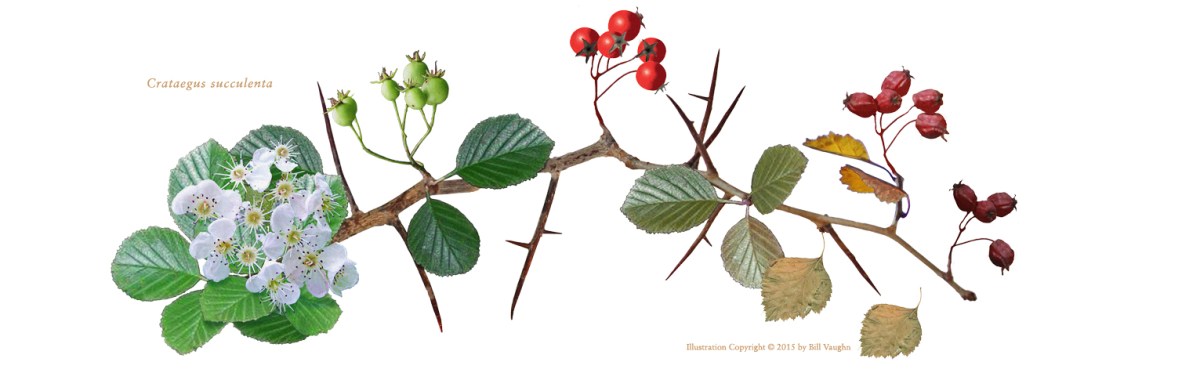
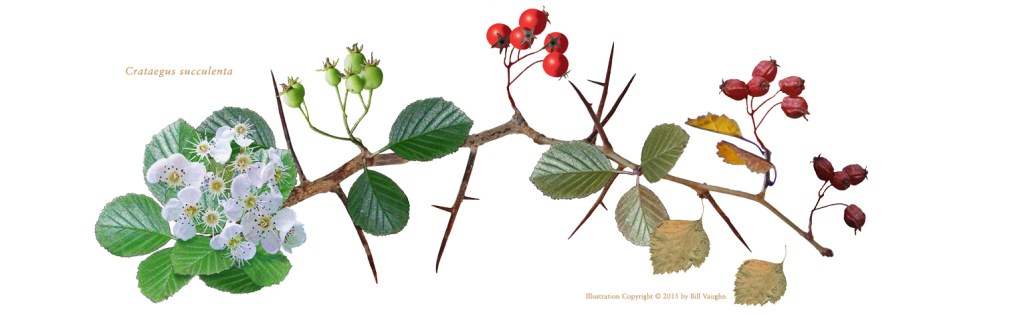
This is highlighted by Vaughn’s own illustration of a hawthorn branch that covers all the seasonal appearances of blossom, leaves and berries.

How this relates to my current project is that I am recording individual hawthorns to highlight their variations, not providing a generalisation of a species. Each tree will have their particular characteristics recorded to show their differences.

References

Campany, D. (2020). On Photographs. London: Thames & Hudson Ltd.

Thehawthorneffect.com. 2020. Hawthorn | Crataegus | Crataegus Succulenta | Bill Vaughn | Crown Of Thorns | Enclosures | World’s Busiest Tree. [online] Available at: <http://www.thehawthorneffect.com/&gt; [Accessed 17 November 2020].

Vaughn, B. 2015. Hawthorn – The Tree That Has Nourished, Healed, And Inspired Through The Ages. New Haven & London: Yale University Press.

Categories
AGM62 Photography Research Project Stage 1 Posts

AGM62 Simon Roberts 17 November 2020

The Weeds And The Wilderness is a series of photographs by British artist-photographer, Simon Roberts (b. 1974).

This evocative series:

‘Seeks out and finds ancient wooded sites that depict a primordial, Edenic state. The approach is inspired by idea of the inscape, a term coined by the Victorian poet Gerard Manley Hopkins to suggest that every living thing has a unique set of characteristics which distinguish it from the next – something akin to a God-given essence. Hopkins argued it was the artist or poet’s responsibility to recognise this ‘inscape’ within nature and convey this to others through their art. All the photographs were taken during the winter months, between November – February, in various ancient woodlands around Britain.’

(The Weeds and the Wilderness – Simon Roberts, 2020)

While carrying out the research for the AG60 Research and Experimentation module, I was recommended to look at the photographic work of Simon Roberts, specifically his images of woodland. Admittedly at the time I couldn’t see the connection between my Moments of Eternity pieces and Roberts’ photographs. However, when I revisited Roberts’ work in light of this new project, the connections became quite clear.

My research involving hawthorn trees has made me realise how much they are part of humanity’s culture and ecology. The following paragraph brought this realisation home:

‘Many Britons no longer have any daily connection with its woods. Mostly we go about our lives sealed from the wild. At the same time, these landscapes touch upon themes such as conservation, ownership, history, magic and myth, climate change, childhood fears, and our current obsession with what is ‘native’ or ‘alien’. They also say something about Britishness and belonging.’

(The Weeds and the Wilderness – Simon Roberts, 2020)

The realisation came from my ‘discovery’ of hawthorns – I had been visiting Bushy Park since 2007 and it was only this year (2020) that I discovered the part these trees play within this environment. Before this, the hawthorns were ‘invisible’ and only an afterthought compared to the other trees in the park. Although Roberts’ images are different in style and composition, the ethos behind the work is similar. It is making the hidden visible, provoking awareness of our natural environment.

Simon Roberts

Simon Roberts’ work deals with our relationship to landscape and notions of identity and belonging. He has published and exhibited widely and his photographs reside in major public and private collections, including the George Eastman House, Deutsche Börse Art Collection and V&A Collection. In 2013 Roberts was made an Honorary Fellow of the Royal Photographic Society.

References

Roberts, S. 2020. The Weeds And The Wilderness – Simon Roberts. [online] Available at: <https://www.simoncroberts.com/work/the-weeds-and-the-wilderness/&gt; [Accessed 17 November 2020].

Categories
AGM62 Photography Research Project Stage 1 Posts

AGM62 Bushy Park Hawthorns 15 November 2020

With a forecast of sun and cloud, it seemed a good day for a walk in Bushy Park. Also, I knew that I would be stuck in front of the PC over the following two days to prepare for the Interim Review so stroll in the fresh air would be good for both body and soul.

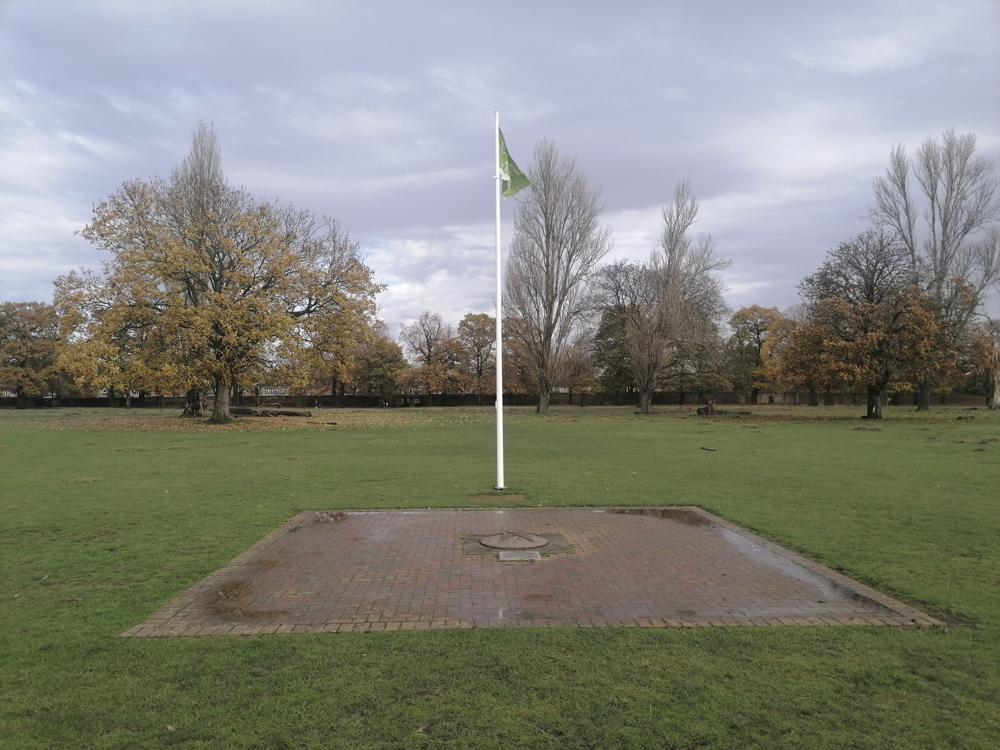
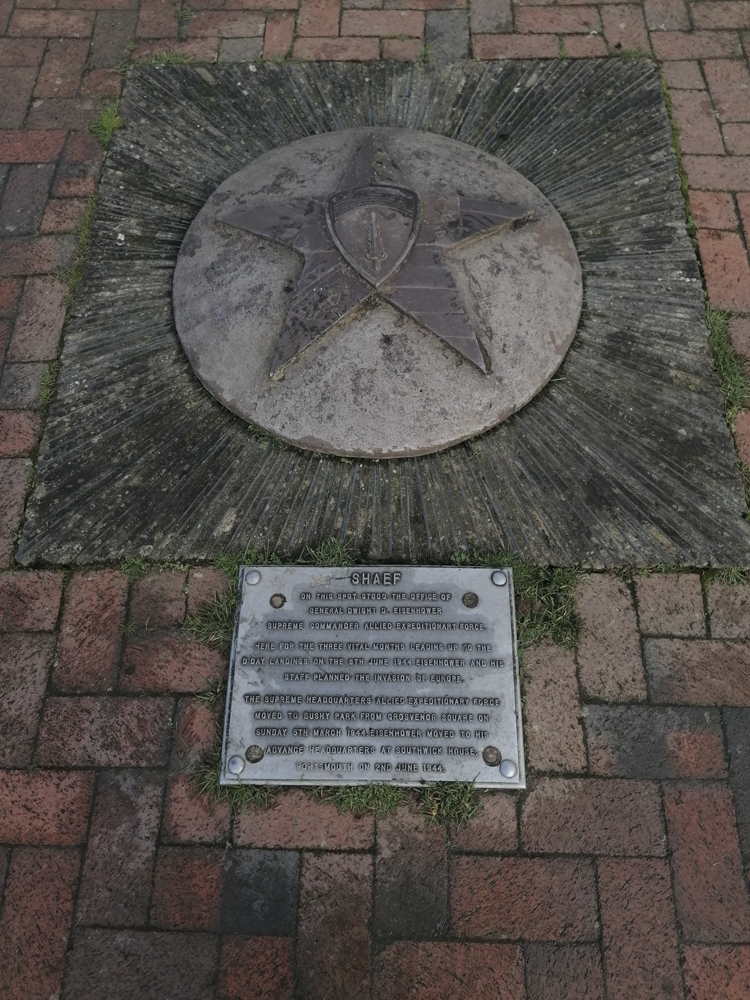
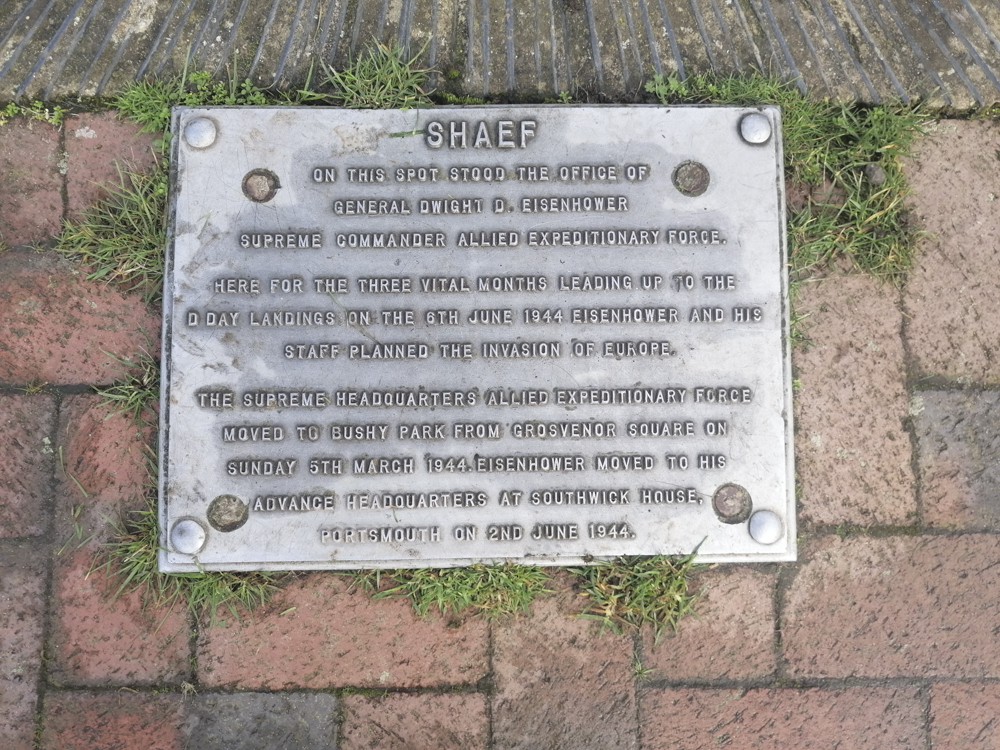
My first stop was to revisit the hawthorn nearest to the Shaef Memorial. The following were taken with the digital camera using the polarising filter.

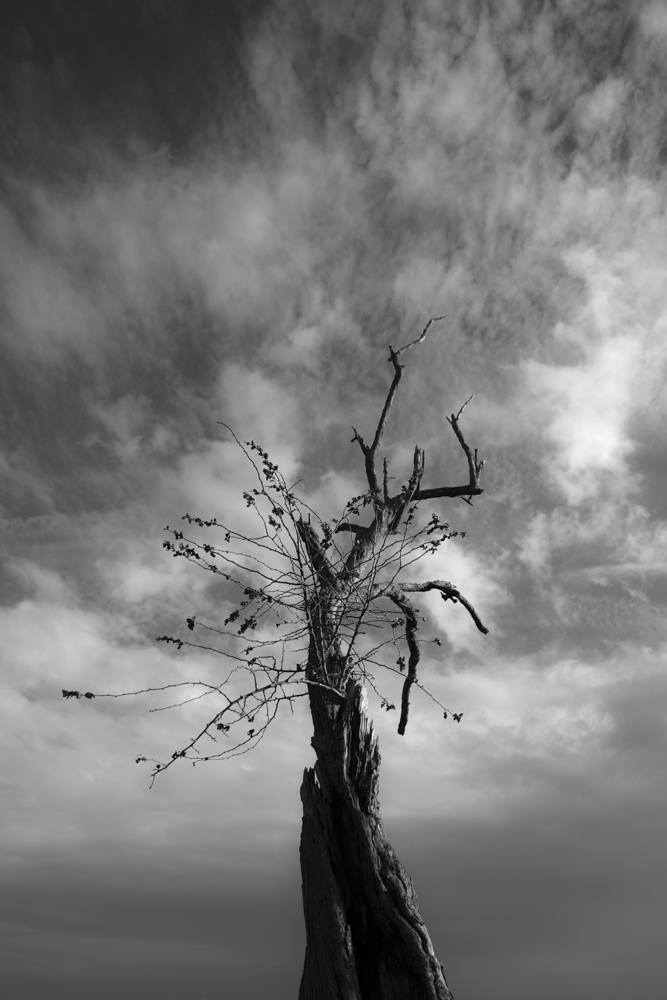
This is a Black & White conversion of this tree that was taken from a very low angle. Very brooding and dramatic.

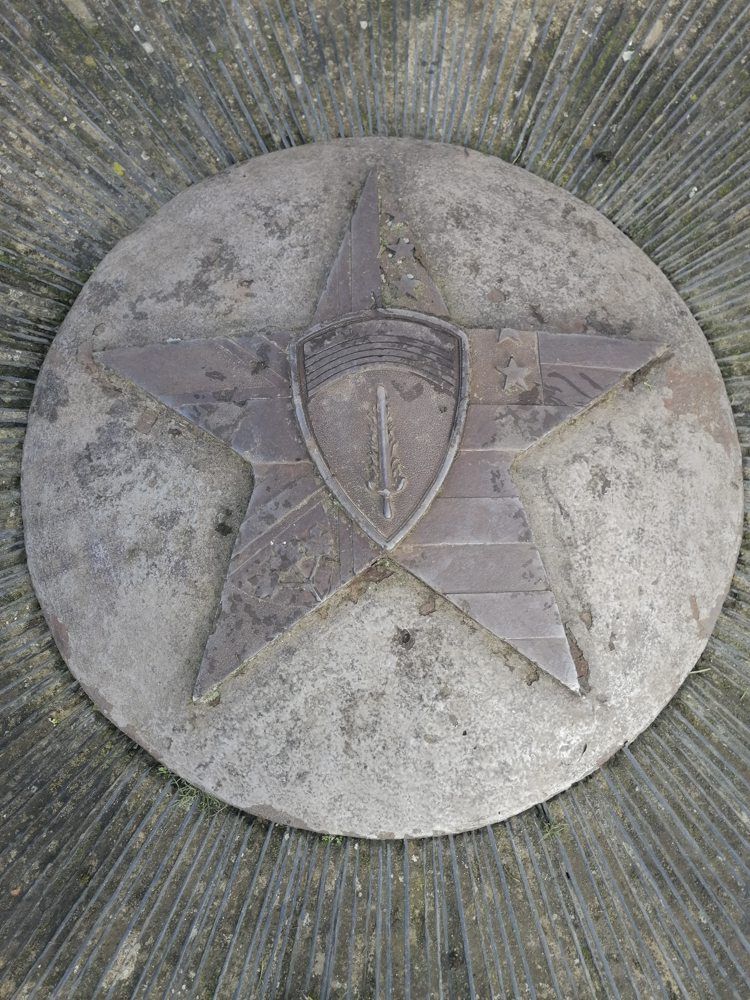
I also took these images of the Shaef Memorial with the smartphone.

While standing one the memoiral, I took these two images which (in theory) would be the same view from Eisenhower’s Bushy Park office.

I continued walking through the park and decided to focus on this section. There are quite a few hawthorns in this patch.

The following are shots of some of the trees that caught my eye. I don’t think these images will make the final cut, but I will need to re-photograph once the ferns have gone and in a different light.

Tree One

Tree Two

When looking back at these trees, I realised that they were planted in a row.

Tree Four

Tree Five

On first glance, this tree looks like a small hawthorn peeking out the ferns. The trunk of the tree is actually lying on the ground the ‘tree’ that can be seen is one of its branches reaching for the sky.

Tree Six

Categories
AGM62 Photography Research Project Stage 1 Posts

AGM62 Bushy Park Hawthorns 12 November 2020

When reflecting on both my subject matter and images so far, I realised that advancement in regards to the technical aspect had been neglected. This revelation came to me when looking at a cloudy sky on 9 November 2020. The sun was trying to break through a bank of clouds and I noticed a ‘sun dog’. Also known as a parhelion, this visual phenomenon is a bright spot in the sky appearing at the side of the sun. Similar to a rainbow, it is formed by refraction of sunlight through ice crystals high in the atmosphere. This was made more defined when looking through my polarised sunglasses. Additionally, the sun looked a like a full moon when looking through these lenses.

This prompted me to dig out my polarising filter and set myself the task of using this on my next Bushy Park visit. On the morning of 12 November, the sky was a mix on sunshine and clouds, so it was the perfect opportunity to try something different. I also wanted to revisit the line of hawthorns I looked at on the 10 November. These trees had sparked a new line of enquiry and I wanted to investigate them further.
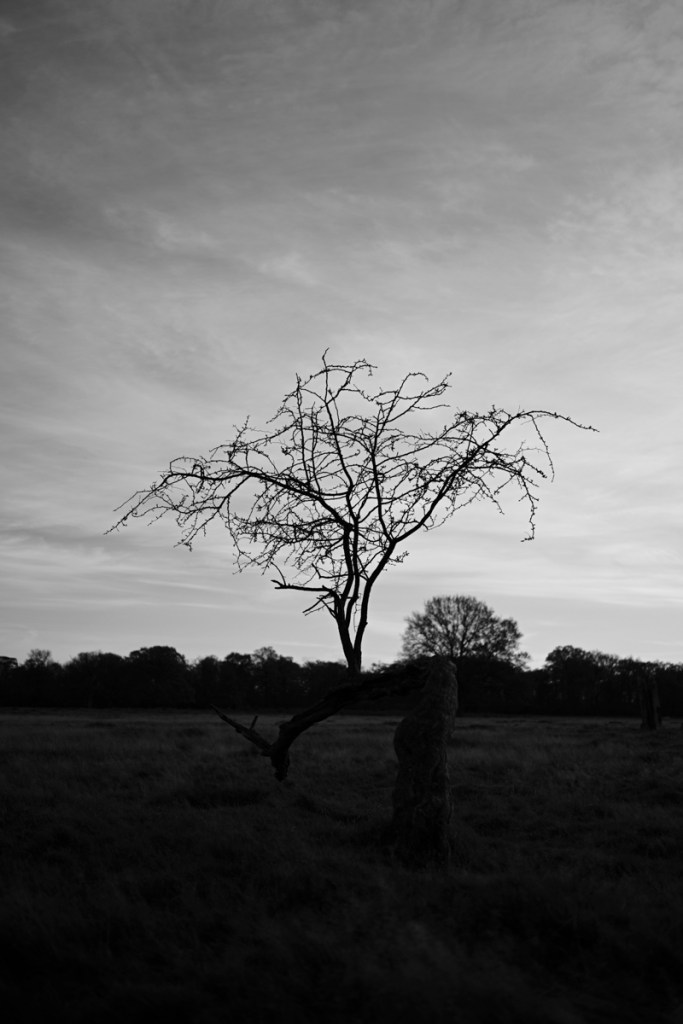
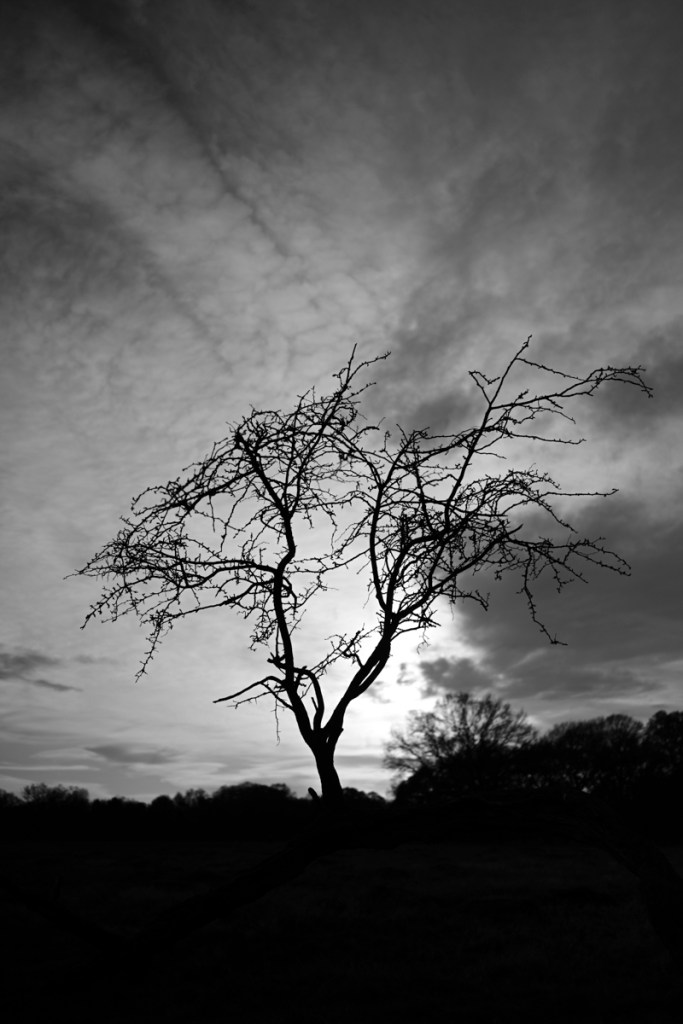
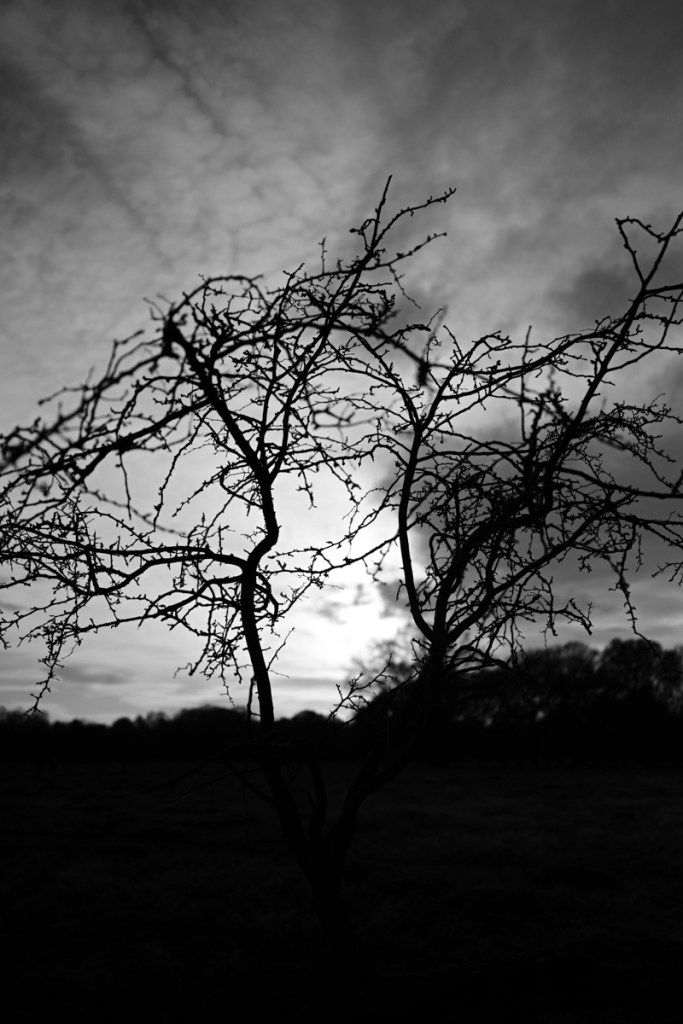
Unfortunately, the light was quite harsh and the park was very busy with people taking their daily exercise, but it was good to try something new. In addition to the polarising filter, I underexposed the majority of these shots so that it would enable them to be edited and not ‘blown out’ in this type of light conditions.

What I did notice that a glove had been placed on one of the hawthorns.

This reminded me of the tradition of the tying of pieces of cloth to trees, including hawthorns as a healing ritual (Clootie/Cloutie Tree). This is one aspect of hawthorn mythology I need to look into closer.

I continued along the line of trees until I came to the last one. What I did find difficult was seeing the viewing screen on the camera. In order to make the tree appear larger than it is, I have to hold the camera quite low down. Also, there is quite a strong reflection from the sunlight.
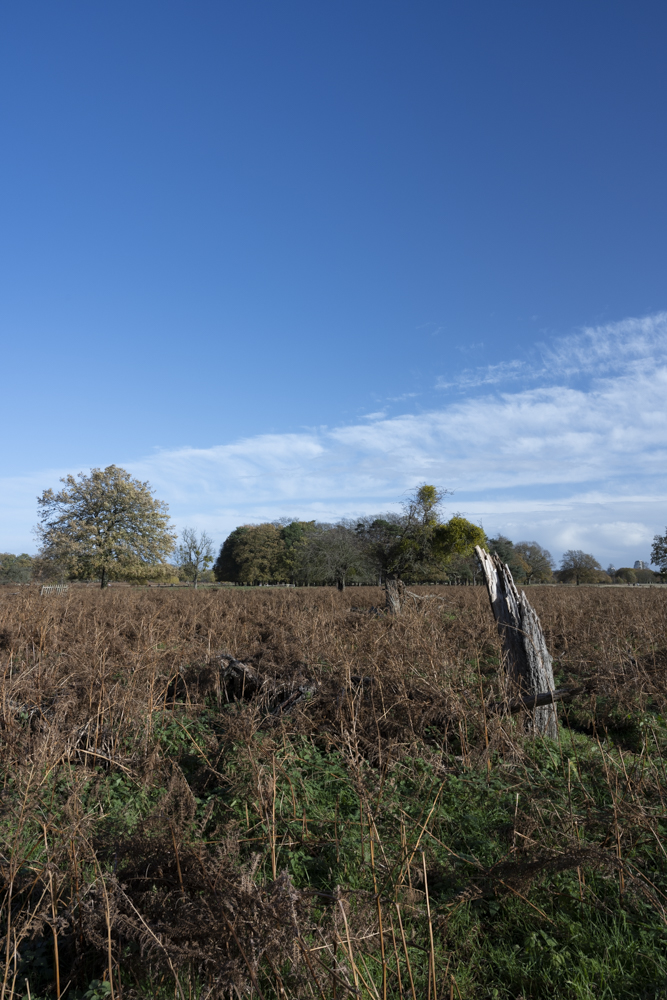
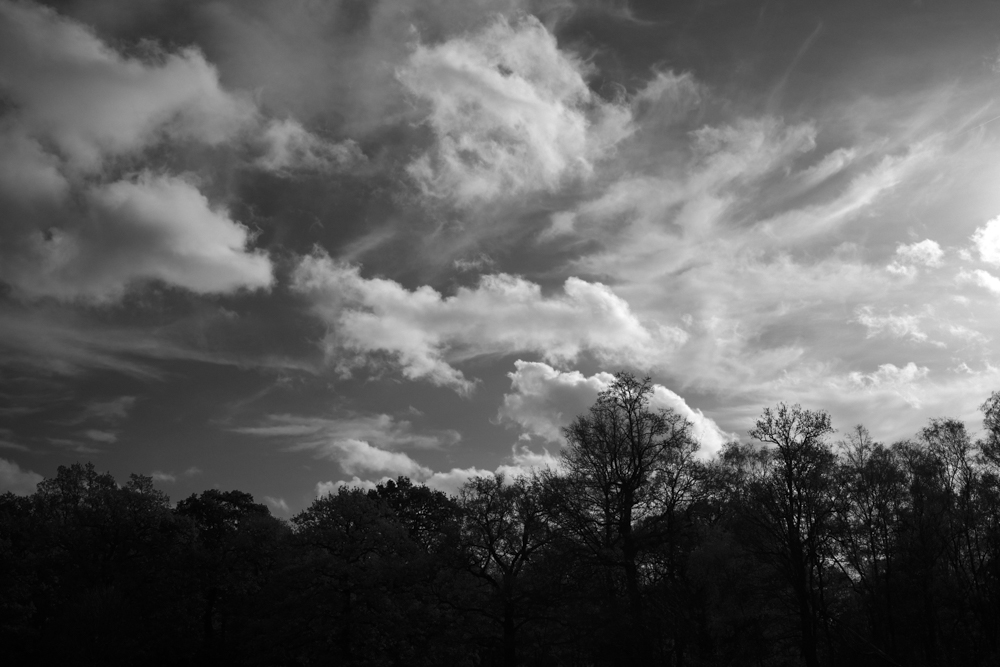
The Black & White conversion.
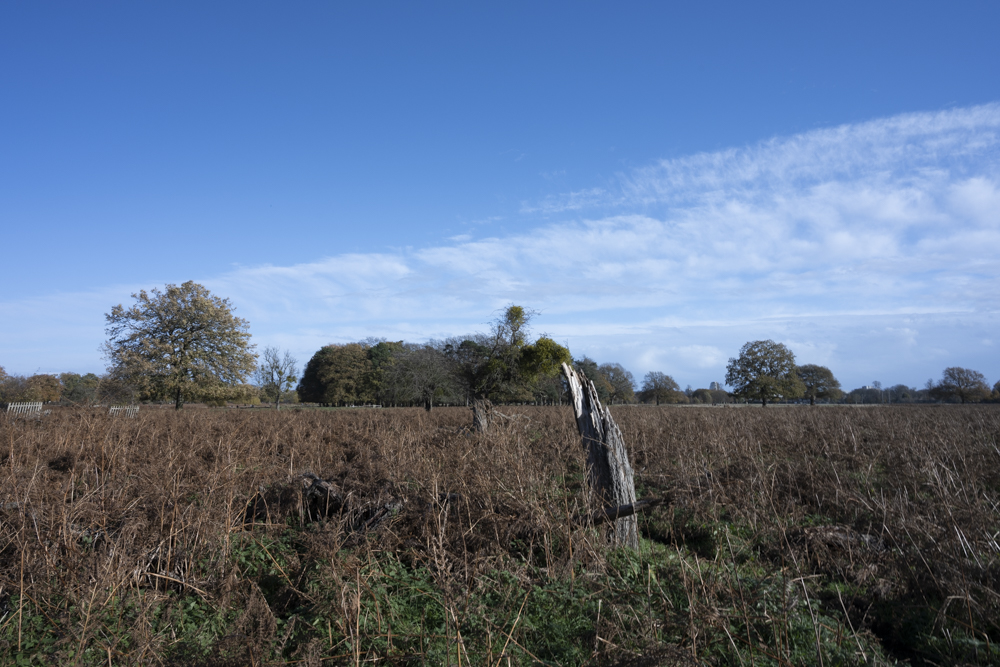
The image on the left is the smartphone image I took on 10 November which can now be compared with the shot above (taken with the digital camera using the polarising filter).

After taking the hawthorn shots, I turned my attention to the dramatic sky.

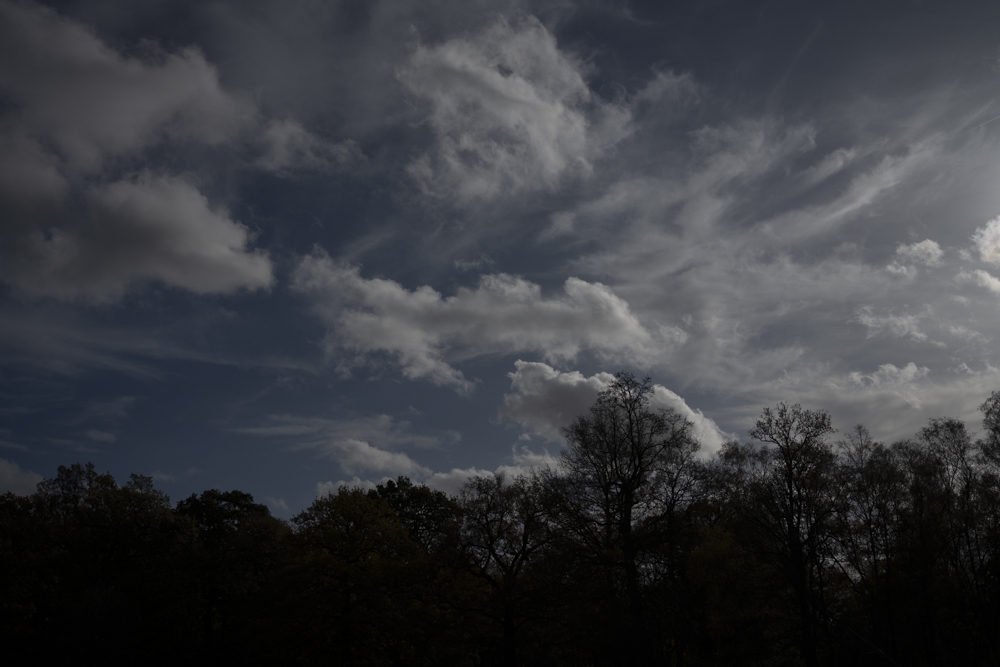
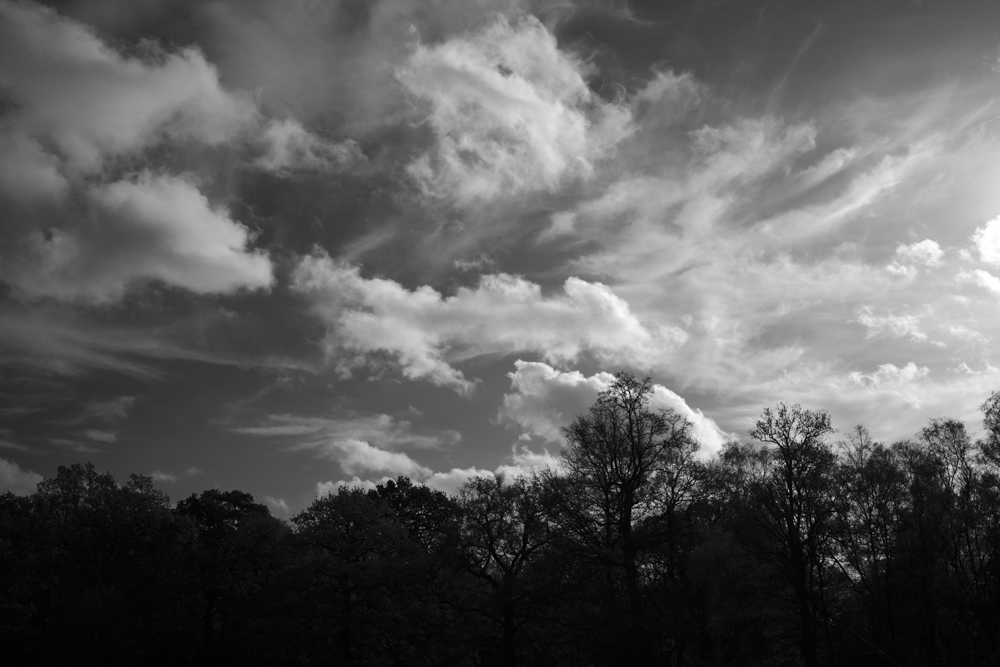
Very dramatic.

The ‘before’ and ‘after’.

After I took the last photos, I noticed one of the many volunteers who maintain the Woodland Gardens in Bushy Park. He was clearing out a water channel that had become blocked. I realised that it was coming from the direction of the ditch that the hawthorns were planted along. When I asked him where the water was coming from, he said there was a spring that flows into the gardens. Would this spring be connected to the line of hawthorns in any way?

While chatting, he also mentioned a book called Bushy Park: Royals, Rangers and Rogues by Kathy White. Apparently, White is/was a local who wrote this book in 1997 about the history of the park. Hopefully, it will give me further insight into the place, especially the history before it became enclosed in the 17th century. I searched for and ordered this book on my return home.

References

Atlas Obscura. 2020. Clootie Wells: Where The Trees Are Weighed Down In Rotting Rags. [online] Available at: <https://www.atlasobscura.com/articles/clootie-wells-where-the-trees-are-weighed-down-in-rotting-rags&gt; [Accessed 15 November 2020].

Categories
AGM62 Photography Research Project Stage 1 Posts

AGM62 Bushy Park Hawthorns 10 November 2020

After a day of being in front of the PC processing images, I had to escape the four walls of home. As usual, Bushy Park was my choice of walk. When I entered the park, the sun was already quite low in the sky. Despite the darkening conditions, the park was still bathed in a dull light and the mist was starting to form.

Part of my route involved walking along the track between Cobbler’s Walk and the gap between the two Woodland Garden plantations. Along this track is a line of hawthorns that I have not photographed or noted yet.

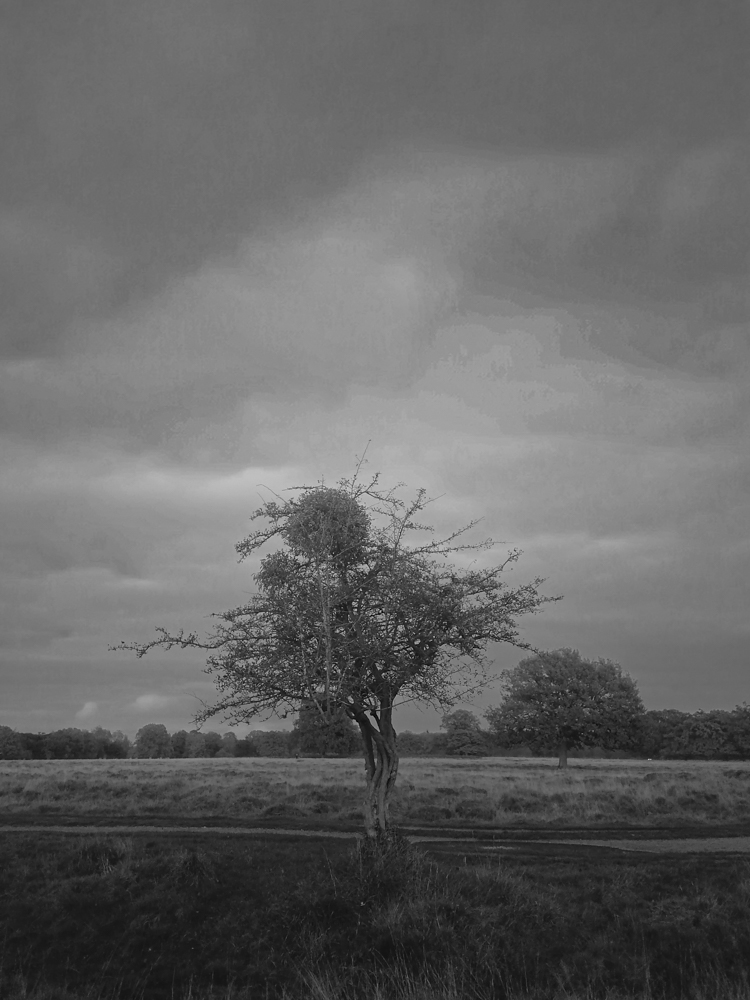
When looking closer at these hawthorns, the majority along this path would fit the criteria of ‘Ancient’. As the light wasn’t great and I was only armed with my smartphone, I only took the one image. This is the last hawthorn at the end of the track.

In order to tie in with the other images, I created the following Black & White conversion.

A quick comparison.

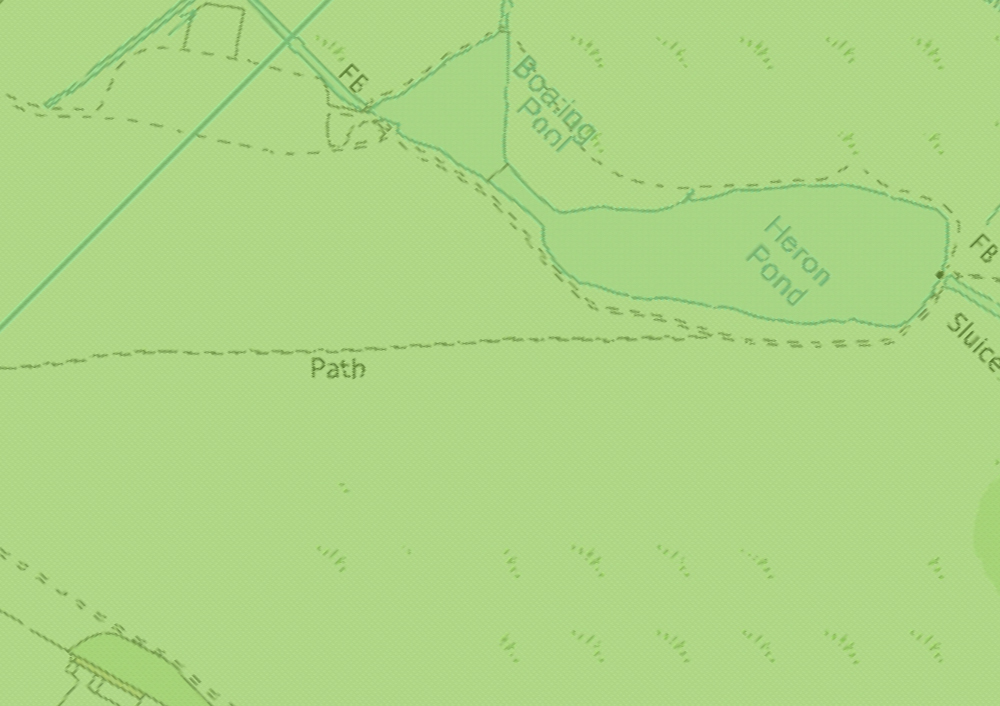
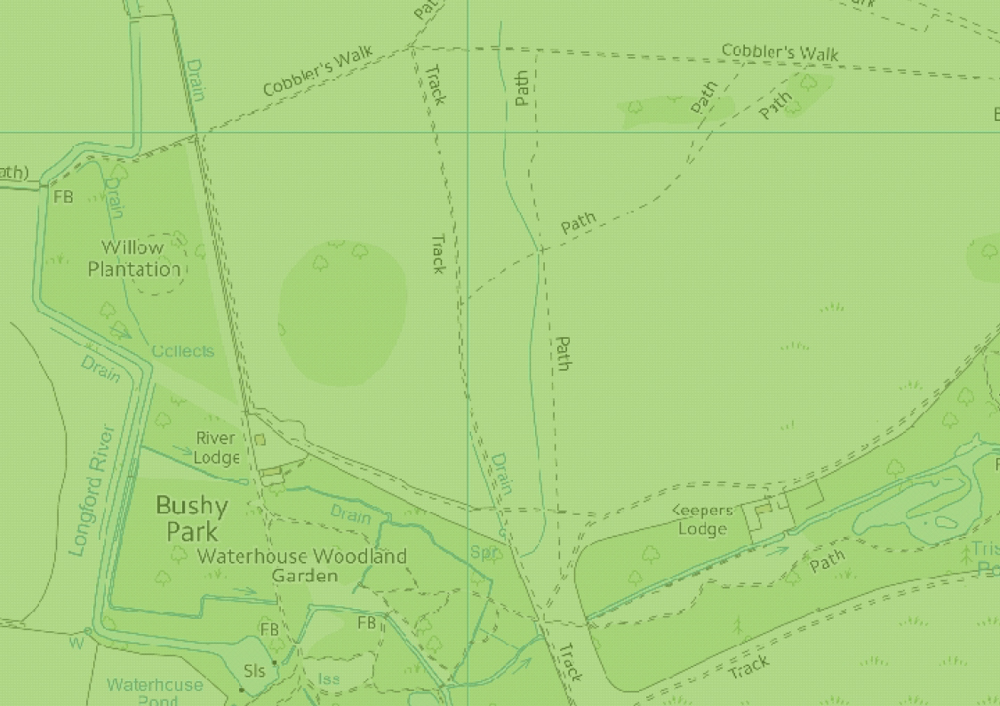
Looking at the map and thinking about this particular row of trees really did pique my interest. This path runs parallel to Macclesfield Walk running along the edge of the Willow Plantation. What was this boundary line planted for and why?

Categories
AGM62 Photography Research Project Stage 1 Posts

AGM62 Printed Images 10 November 2020

In preparation for the Interim Review on 18 November 2020, I wanted to present a selection of images produced so far. At at the time of writing, the review would be going ahead at University of Brighton (in line with Government guidelines). So I could receive the most comprehensible feedback from my tutors and classmates, I would need to print these images. In my experience, there are always differences between what is seen on screen and the printed version, so I knew it be a worthwhile exercise.

These are the 18 images I chose to have printed at 6″ x 9″ (C-Type on lustre paper). I ordered the prints online from DS Colour Labs, who provide great quality with a quick turnaround at an affordable price.

I also ordered the following prints at 12″ x 18″ in order to take a closer look at the details.

It will be quite interesting to see how they look as printed pieces and how they could function as a Body of Work.

Categories
AGM62 Photography Research Project Stage 1 Posts

AGM62 Bushy Park Hawthorns 4 November 2020

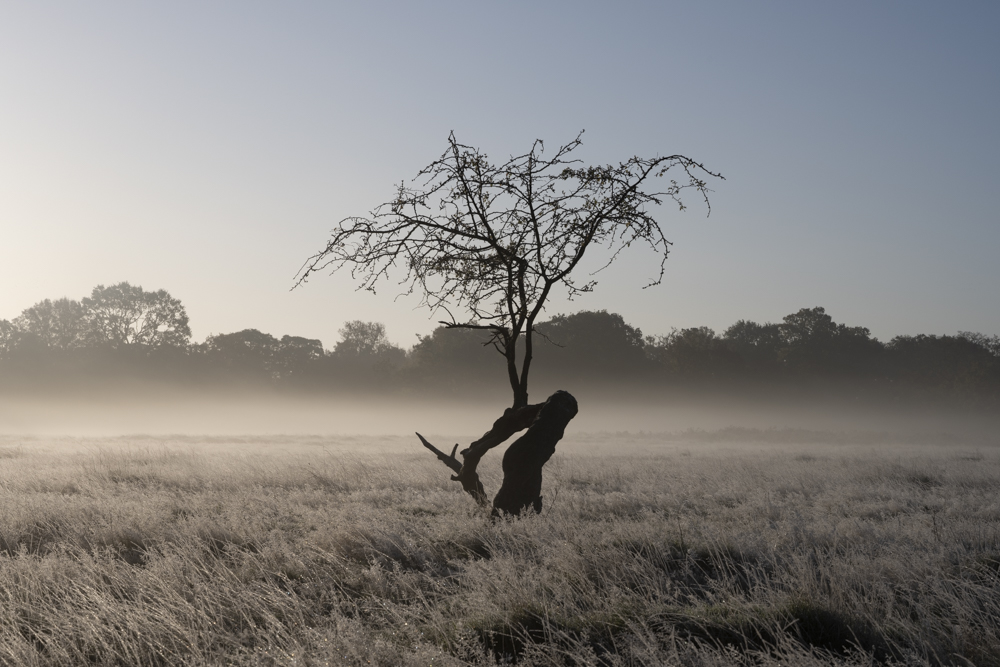
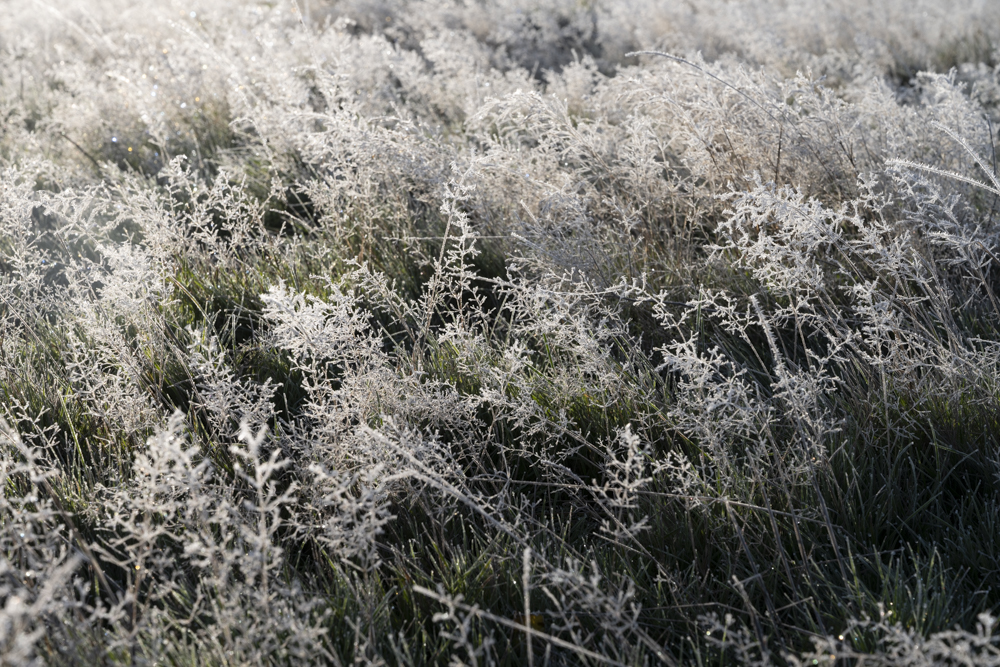
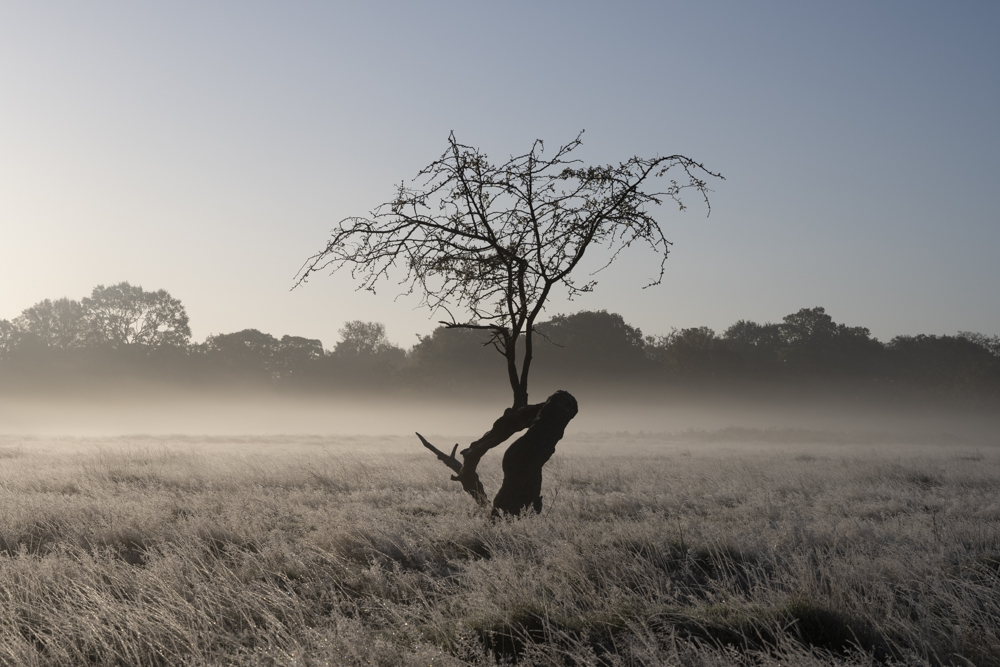
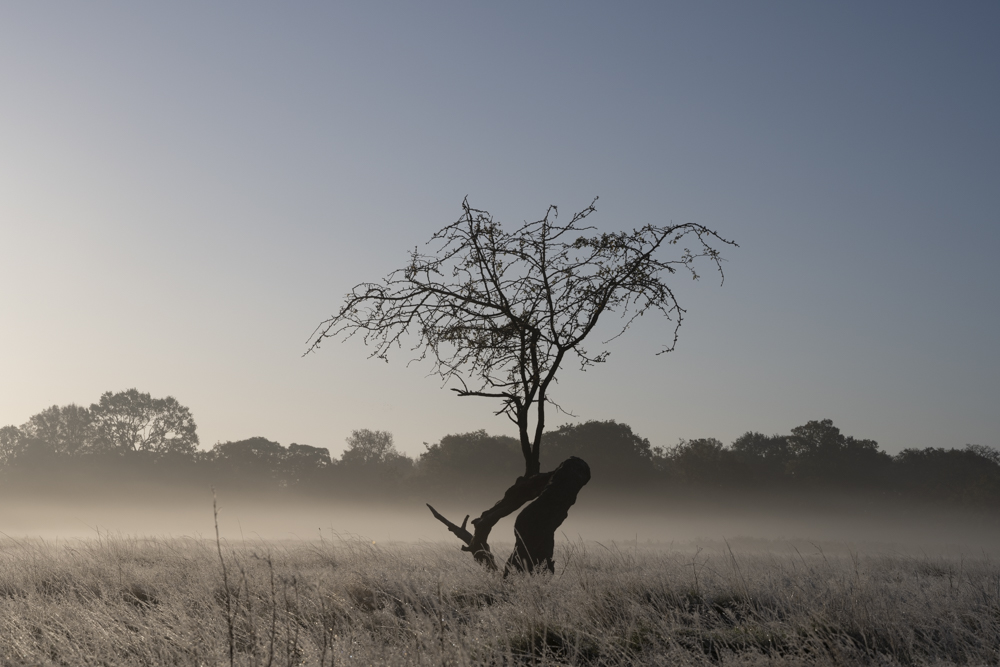
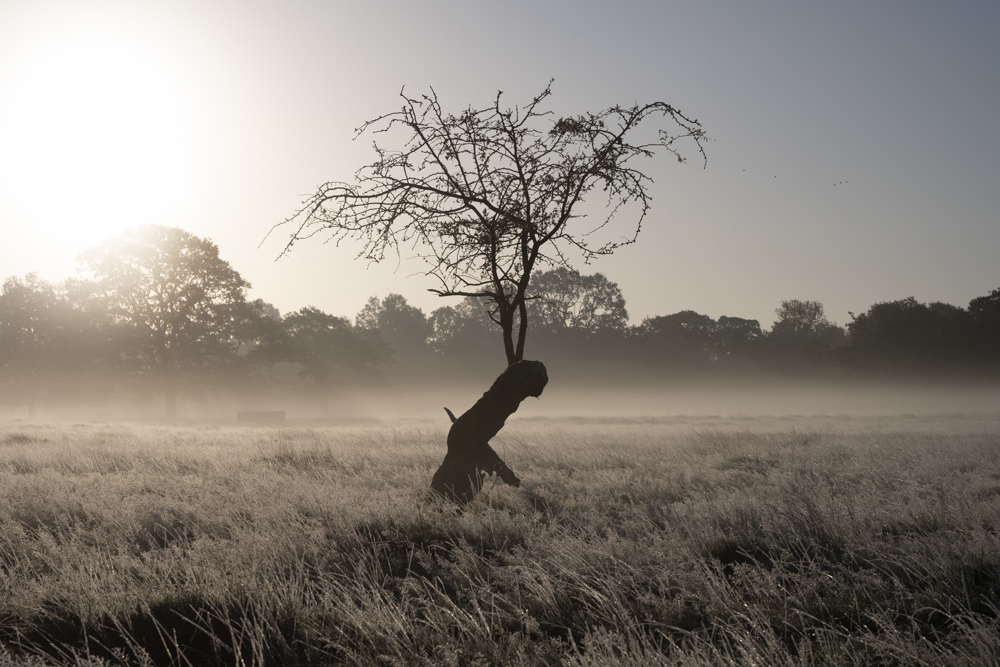
The forecast for the morning of 4 November was sunshine and a chilly temperature of 2 centigrade. After waking up very early and looking out of the bedroom window, this forecast was confirmed by the twinkling cover of frost on the cars parked outside. These have to be my most favourite conditions in which to visit Bushy Park, so there was only one thing to do. Wrap up warm and grab the camera.

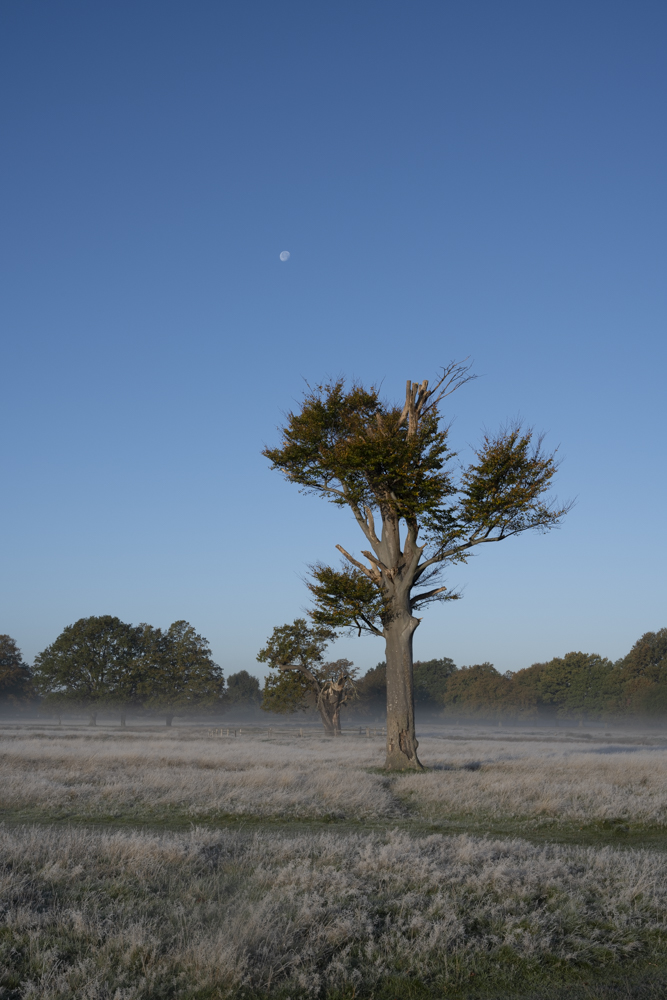
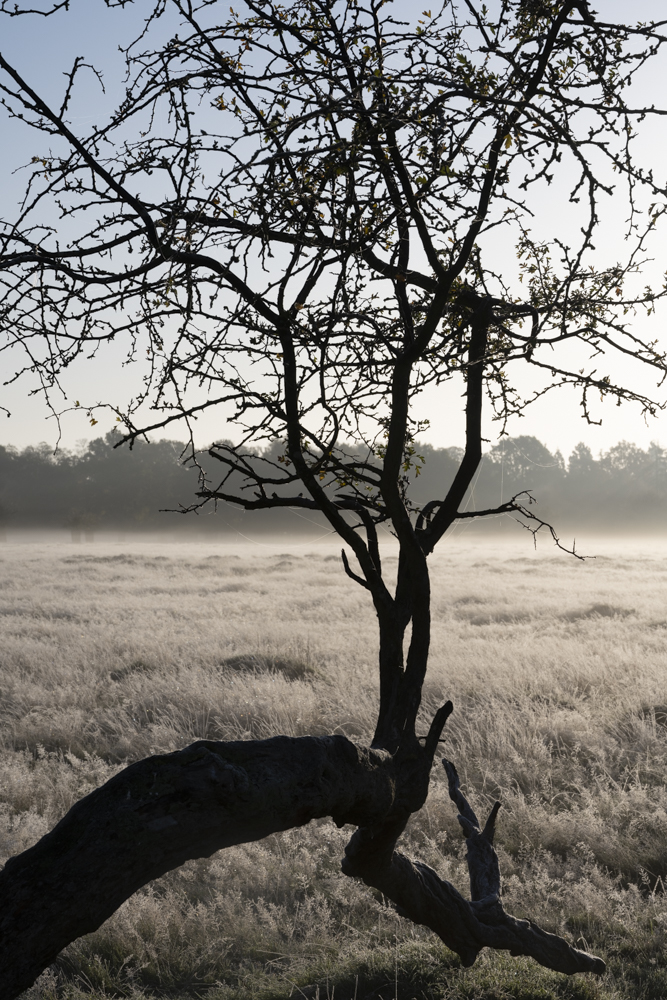
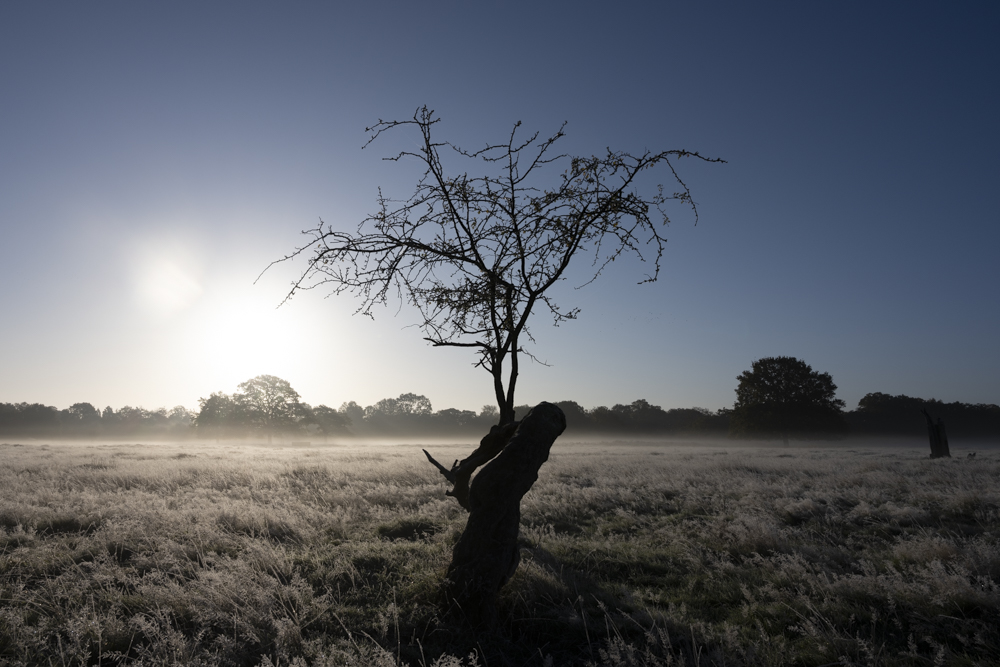
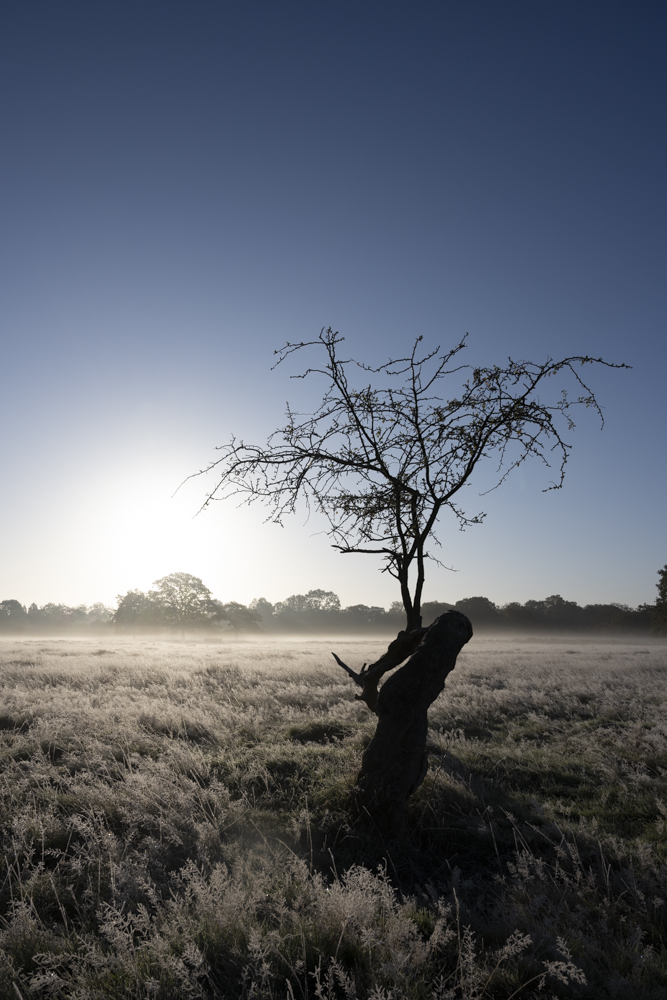
The park looked absolutely magical.

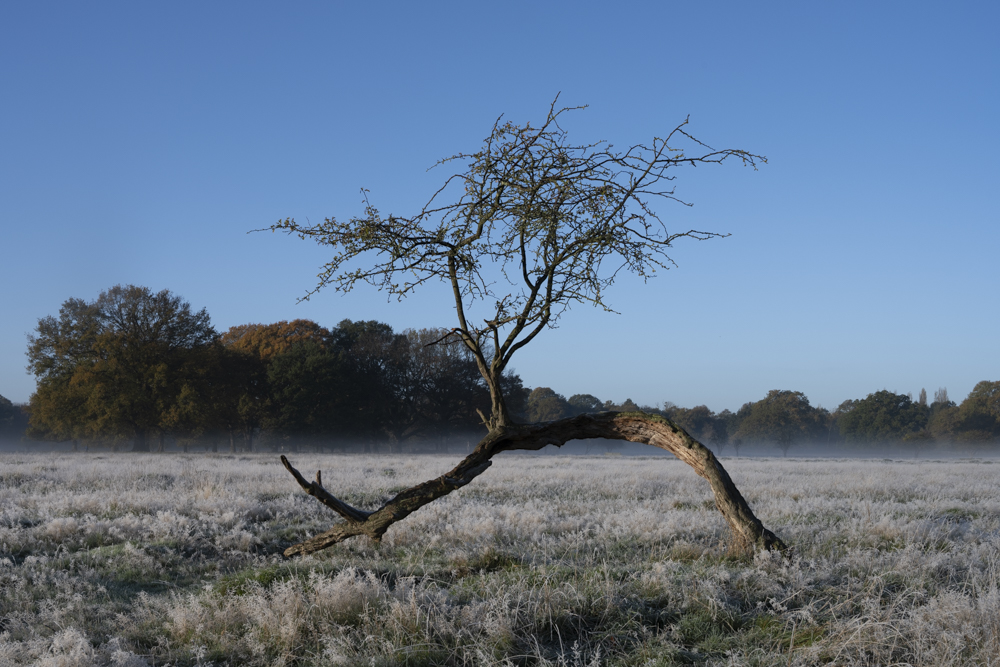
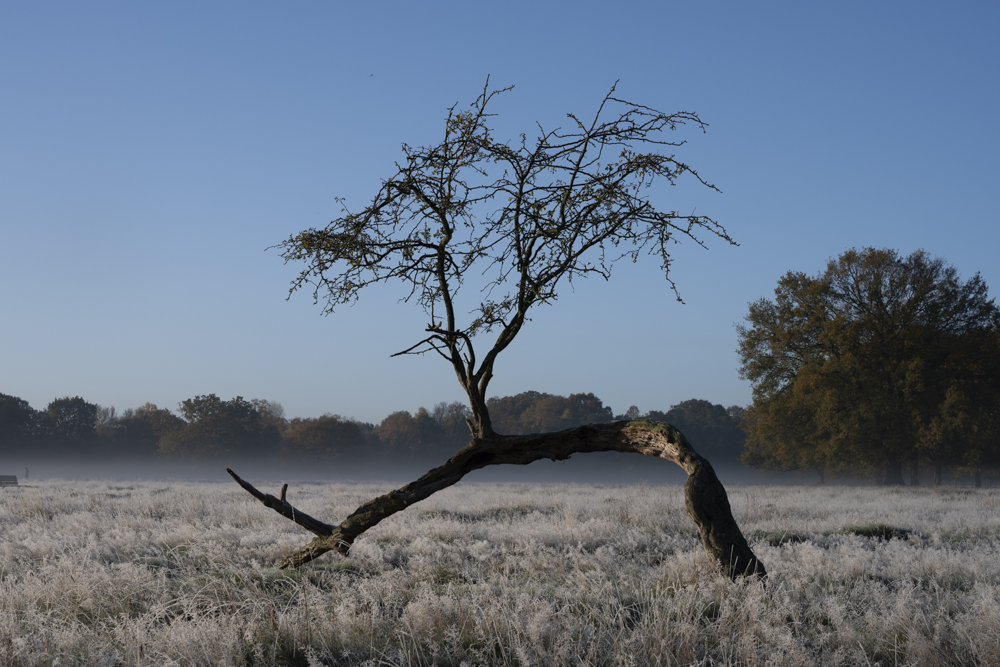
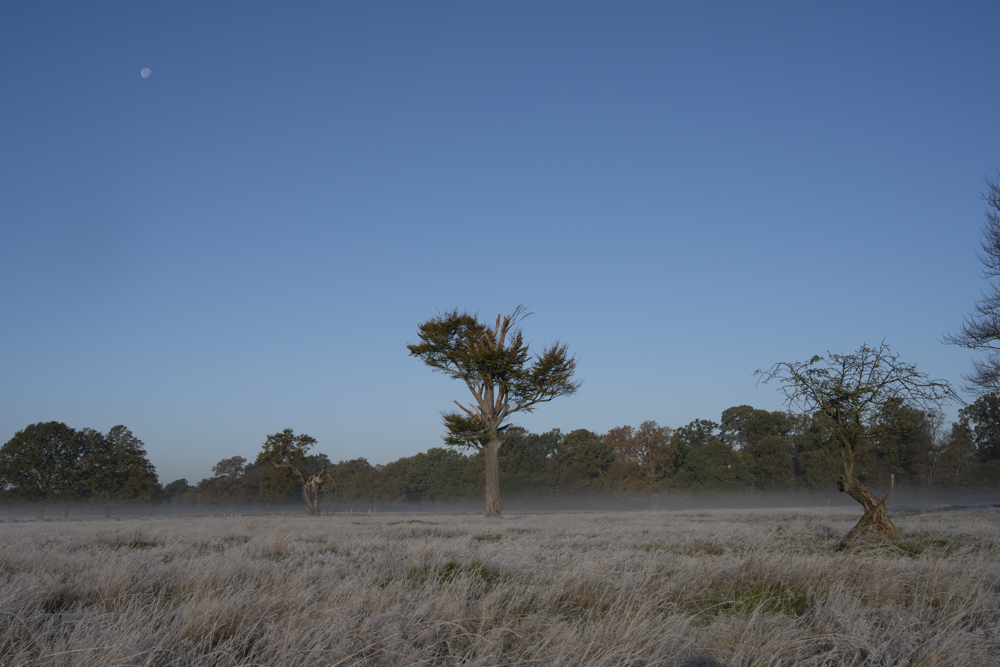
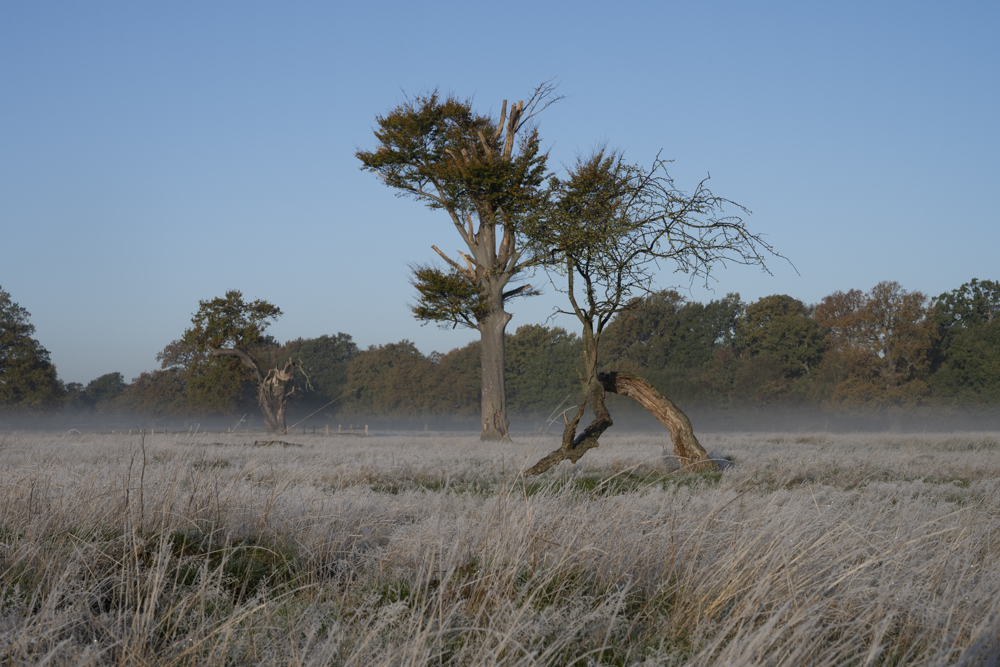
After the previous day’s shoot, I again returned to the first tree I visited. This time, I photographed it on the approach. The sun was much lower in the sky and highlighted the mist.

After returning home, I converted one shot to Black & White.

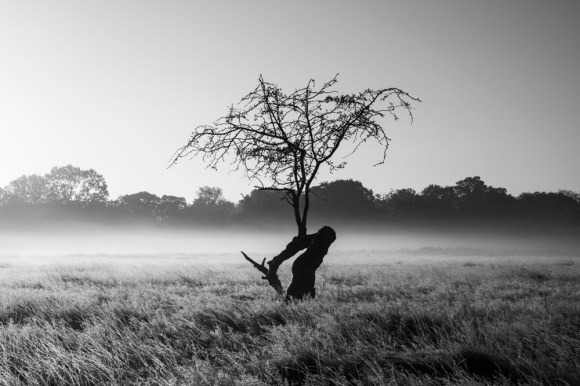
When I first looked at this one in detail, I could see a dragon’s head on the left of the tree. Then, when I showed this image to a friend, the said they could see the Grim Reaper on the right with a scythe on the left. Another person gave the following feedback “Very powerful image… so many ways to read/see it!”

At this stage of the project, certain themes and image similarities were starting to make themselves obvious. It was now time to process what these could be and return to the research aspect.

Design a site like this with WordPress.com
Get started