Categories
Uncategorized

AGM62 An Introduction to Critical Ecology 19 October 2020

Critical Ecology – a phrase I hadn’t encountered before, but what is it? While waiting for a selection of books to arrive, I discovered a video by Dr Paige West that would enlighten me further.

According to the spoken introduction, Dr West ‘traces the history of the theory and how it emerged from the study of isolated communities and their connections to external structures that impact their social lives. Dr West defines political ecology as a critical approach that sees environmental change as caused by both natural and human structures with differential impacts for individuals within those structures. Dr West highlights the role that female academics have played in advancing the theory and methods of political ecology and then focuses on the influence and ideas from Foucault including discourse, power, and discipline. Dr West then draws from examples of her own work in Papua New Guinea to exemplify the ongoing use of the political ecology frame starting with characterising contemporary communities connected to the outside world and continuing to explore copy commodity chains as one form of local global relationships. Dr West ends by discussing updated understandings of Marx’s ideas of accumulation and dispossession and suggests that there are both material and non-material forms of these tendencies in modern global economic structures.’

I’ve made some notes so far for reference and will be revisiting this video to make further ones.

In the video, Dr West highlights a selection of academics writing on the following aspects of Political Ecology:

  • Post Structuralist Political Ecology
    • Arturo Escobar
    • Anna Lowenhaupt Tsing
  • Feminist Political Ecology
    • Dianne Roucheleau
    • Barbara Thomas-Slayter
    • Esther Wangari
    • Kim Tallbear
  • Place-Based Political Ecology
    • Aletta Biersack
      • Reads the above then says ‘this is really interesting, but there’s this new work on the importance of place in anthropology coming out of the 1990s’ and she says people’s attachment to place is one of the most important things in people’s lives; how is people’s socio-cultural attachment and an understanding of place being altered by these kinds of multi-scale-ular interactions? So very specifically, how does someone thinking about a particular place as ‘sacred’ or ‘not-sacred’, how is that affected by these multiple scales of influence?
  • Ethnographic Political Ecology
    • Paige West
    • Molly Doane
    • Nicole Peterson

The one that jumped at me initially was Biersack’s Place-Based Political Ecology and the relevance of people’s attachment to place. Could this be connected to how I feel about Bushy Park and my relationship with this particular ‘place’?

References:

West, P. 2020. An Introduction to Critical Ecology [online] Available at: <https://www.youtube.com/watch?v=SAWfggb1ezw&gt; [Accessed 16 October 2020].

Categories
AGM62 Photography Research Project Stage 1 Posts

AGM62 Myoung Ho Lee 19 October 2020

While reading David Campany’s recently published book, On Photographs, I came across a pertinent section in connection with trees and photography. Using the series entitled ‘Tree’ by the South Korean Photographer Myoung Ho Lee and one of the images as an example, Campany states that the series can be seen as:

‘A meditation upon the artificial terms and conventions by which photographic images can become knowledge.’

(Campany, D. 2020 pp. 116)

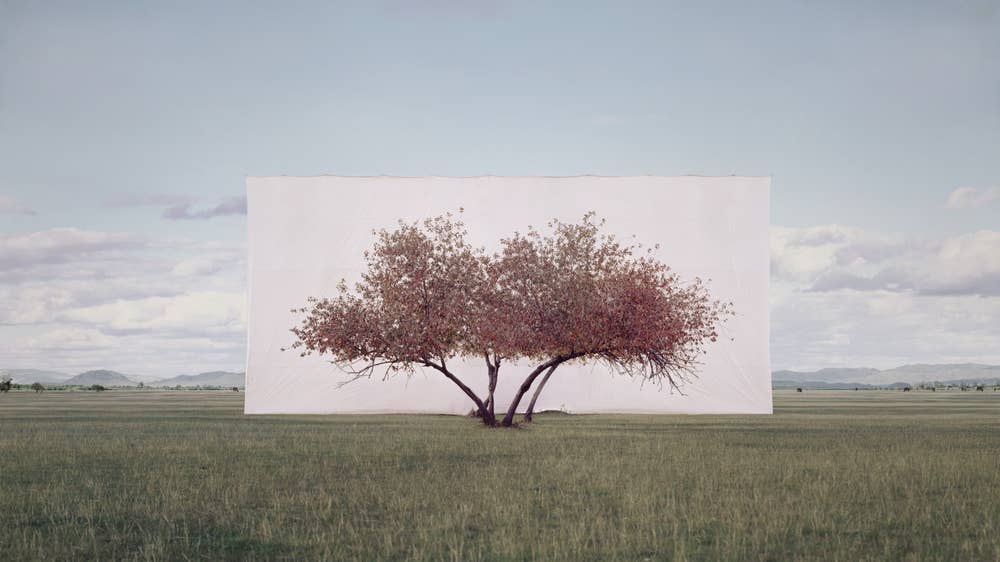
Figure 1: Myoung Ho Lee, Tree #3, 2006 – From The Series ‘Tree’, 2006-2012

Myong Ho Lee erected a giant white backdrop which Campany describes as:

‘Turning space into a stage upon which the tree presents itself (or performs itself ) for the camera. The framing is wide, allowing us to see not just the isolated tree but also the whole drama of its isolation.’

(Campany, D. 2020 pp. 116)

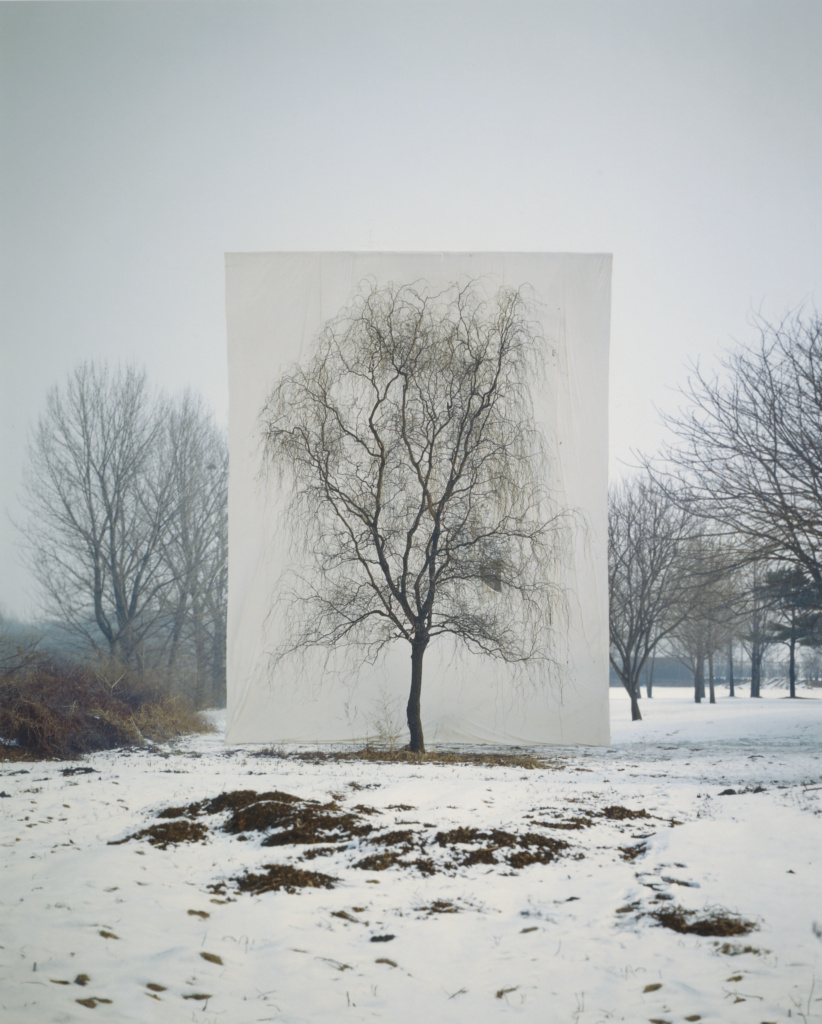
I had also seen another of Myoung Ho Lee’s Tree series at the Among The Trees exhibition when I visited back in September 2020.

Figure 1: Myoung Ho Lee, Tree #2, 2012 – From The Series ‘Tree’, 2006-2012

In the exhibition’s accompanying brochure, Myoung Ho Lee asserts:

‘It’s as if the tree unites all: the ground, the sky and man in between. In East Asian philosophy the universe breaks down into three parts: Chun-Ji-In. Chun means the sky, Ji means the ground and In means human. Since a tree connects all three, I feel very much that a tree is like a universe.’

(Myong Ho Lee. 2020 pp. 106)

The brochure also gave a brief background into Myong Ho Lee’s tree photography, which resonated with my own passion for this subject. As mentioned in his Artist Statement, Myoung Ho Lee:

‘Began photographing trees because they are ‘something you see everyday, but we often overlook them; we forget their value and just pass by.’ Since 2004 he has focused attention on individual trees in the landscape by treating them like studio portraits, dissociating them from their immediate context and spotlighting their true shapes and forms.’

(Rugoff, R, 2020. pp 155)

The statement continues to describe Myoung Ho Lee’s practice motivation:

‘Lee selects his subjects for their personalities and patiently observes them through different seasons and at varying times of the day before deciding how to portray them.’

(Rugoff, R, 2020. pp 155

Next, the method:

‘In a complex performance-like process involving heavy machinery and skilled production crews, he isolates a chosen tree from its background by installing an expanse of white canvas behind it. Though evidence of this elaborate mechanical intervention is removed during retouching, the backdrop retains traces of the hoisting operation.’

(Rugoff, R, 2020. pp 155

The method results with the image of the tree being framed ‘naturally’ by the tree’s actual habitat.

What I found interesting is comparing the way in which Campany uses Lee’s images of trees in relation to photography to Lee’s motivations. Lee is portraying trees in particular way (philosophically, sensually and metaphorically), while Campany is taking a more literal approach.

Campany states that:

‘Being a medium of specifics means photography is not well suited to generalities. A photograph can record the uniqueness of an object but it cannot designate the general category to which it might belong. What makes it useful in compiling an inventory makes it quite useless in defining the group.’

(Campany, D. 2020 pp. 116)

Campany continues with his stance in putting forward the example of images found in books to be used for identifying plants. Campany purports that although photography can record a specimen, but not the species, as each individual specimen is a variation of that species. Campany states that botanical identification is better served by drawing than by photography as:

‘The skill of a botanical illustrator is to look at several specimens and then produce an average. The average does not exist in reality but it is useful to have it.’

(Campany, D, 2020 pp. 116)

Campany takes his observations further by stating that:

‘Photographs of specimens are, of course, extremely useful in their own way. They show not the average or the ideal but the actuality. A photograph of a plant might be able to show an instance of mutation by which a deviation is made from the species average. It might be able to show the specific effects of the environment on that particular specimen.’

(Campany, D, 2020 pp. 116)

The most pertinent comment that Campany makes in relation to choosing Lee’s work is:

‘To ease study, a specimen is best isolated from its surroundings.’

(Campany, D, 2020 pp. 116)

But the point of Lee’s work is not to make study of a particular specimen easier through isolation – it is to make an individual tree ‘visible’ through isolation. It also is make the viewer contemplate and mediate on the concept of ‘tree’ as a single entity and not just part of the landscape.

I also questioned my own motivations for this project when comparing these two viewpoints. I realised that am not looking to create ‘literal’ interpretations of particular individual trees within Bushy Park. Although I have spent the past seven years taking photographs of many of the trees within the park, I’m not seeking the perfect ‘tree’ picture. There is more to consider about the ecology of this managed environment and how the trees are part of it. Also, how trees and their ecology are portrayed artistically within photography.

References

Campany, D. (2020). On Photographs. London: Thames & Hudson Ltd.

Rugoff, R., Among The Trees. (2020). London: Hayward Gallery Publishing.

Design a site like this with WordPress.com
Get started