After another day in front of the computer, I went for a walk in the park. My intention for this visit was to continue using the mirror-less camera to shoot both a RAW and low-quality JPG and see how this method works in relation to this project.
The afternoon was a bit sunny, but by the time I got to the park at approximately 3.30pm the light had ‘died’. The sunset was at 4pm that day, but I was hoping to catch some golden rays. Despite that lack of light, I thought I would still try to take some shots to see what the results would be. I also wanted to explore with focusing on one tree and take different shots from different angles and distances. For the following shots were taken using the 35mm at ISO64.
Tree One
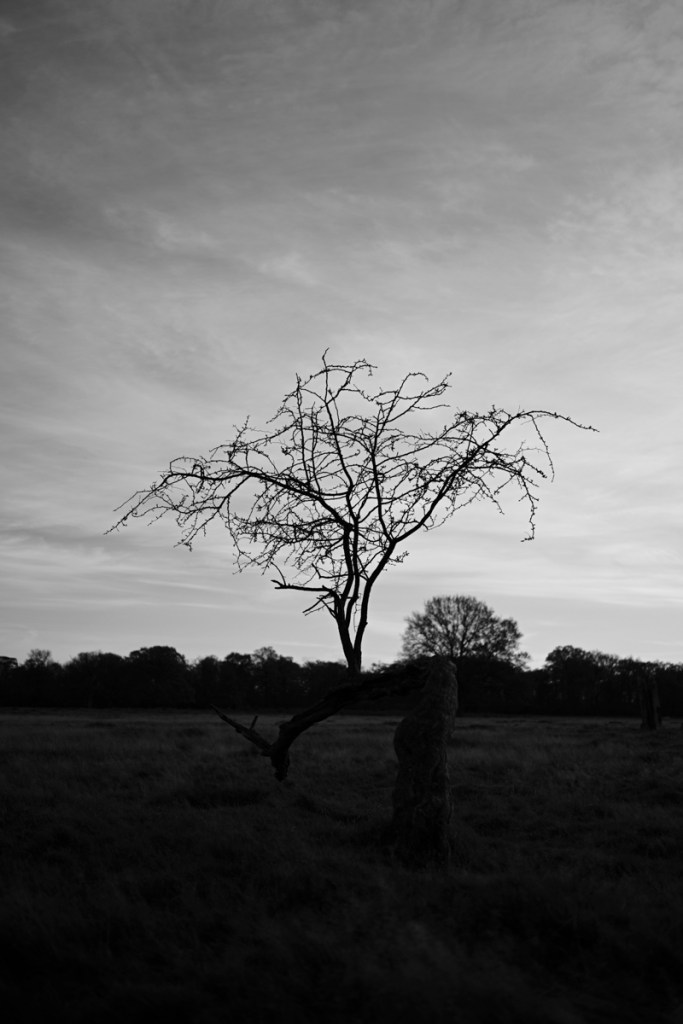
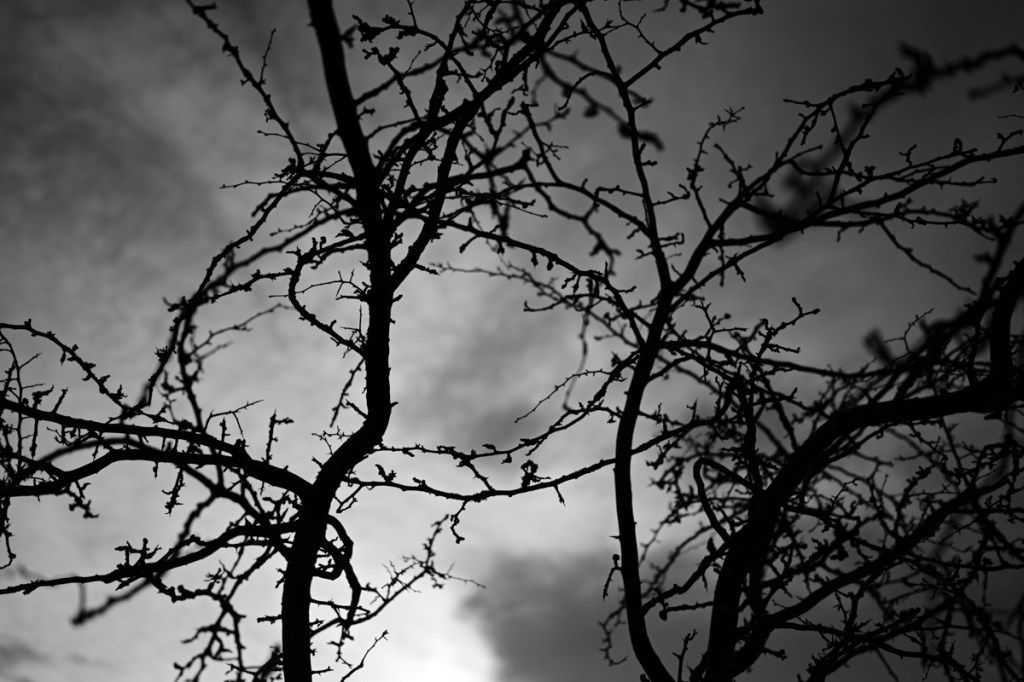
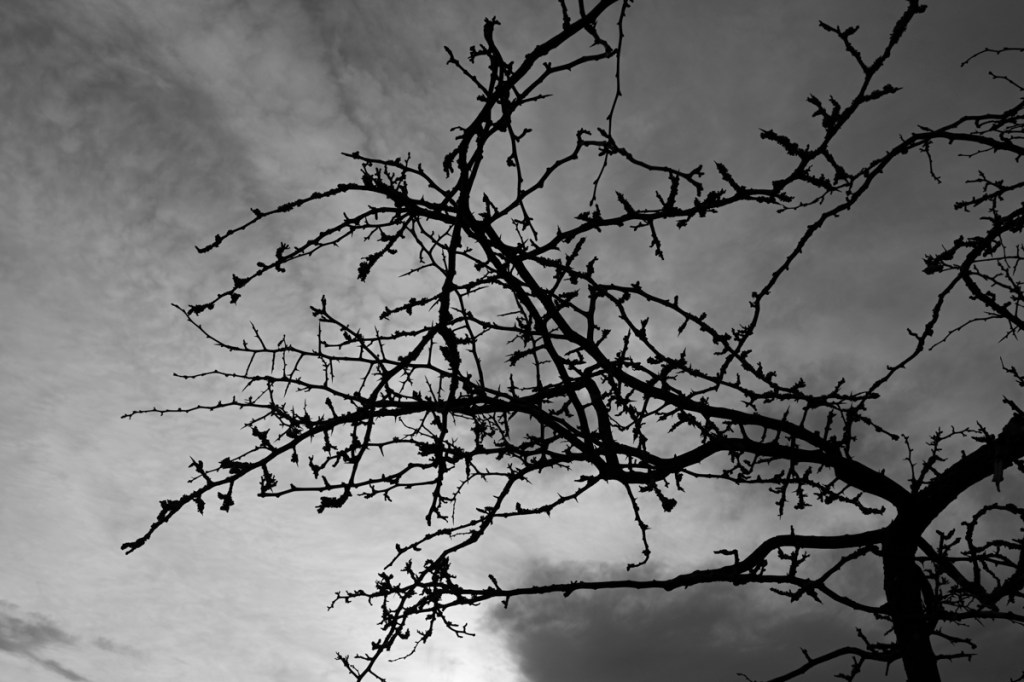
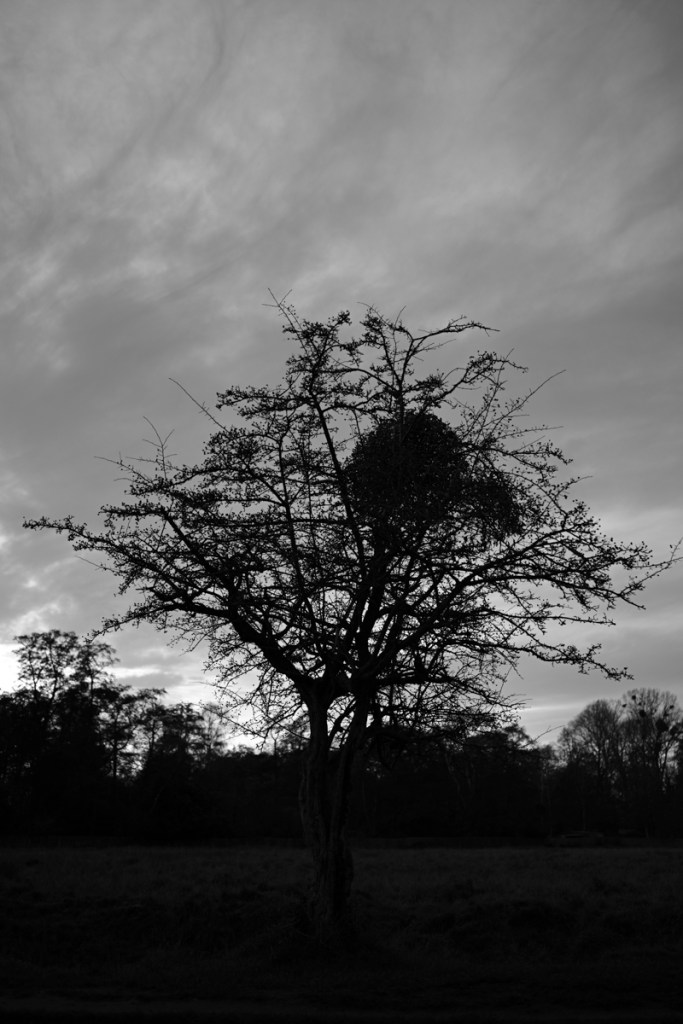
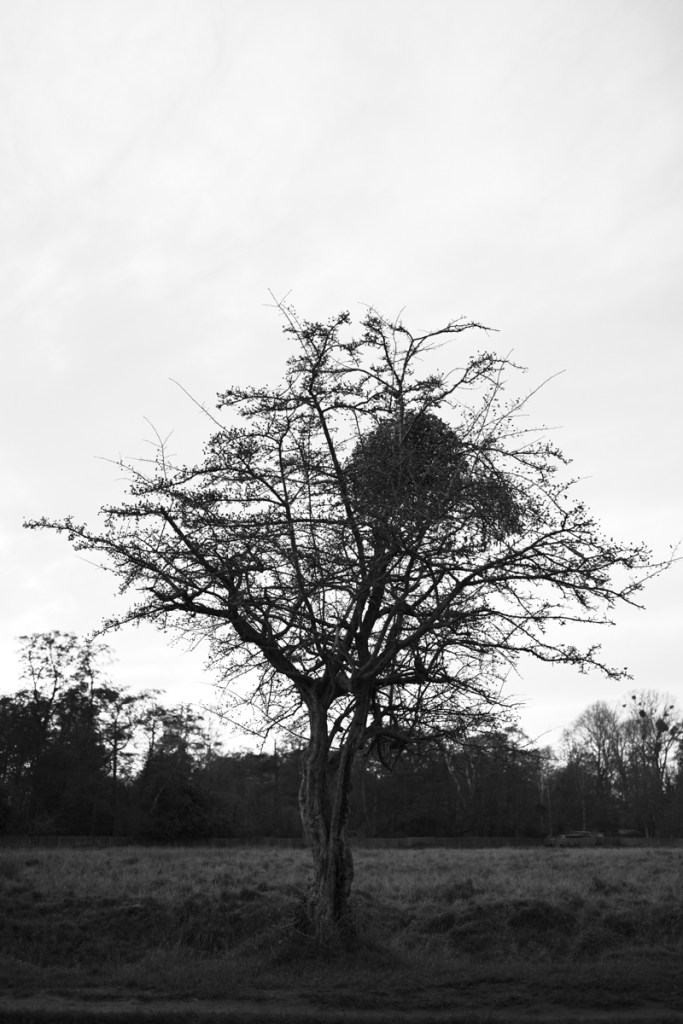
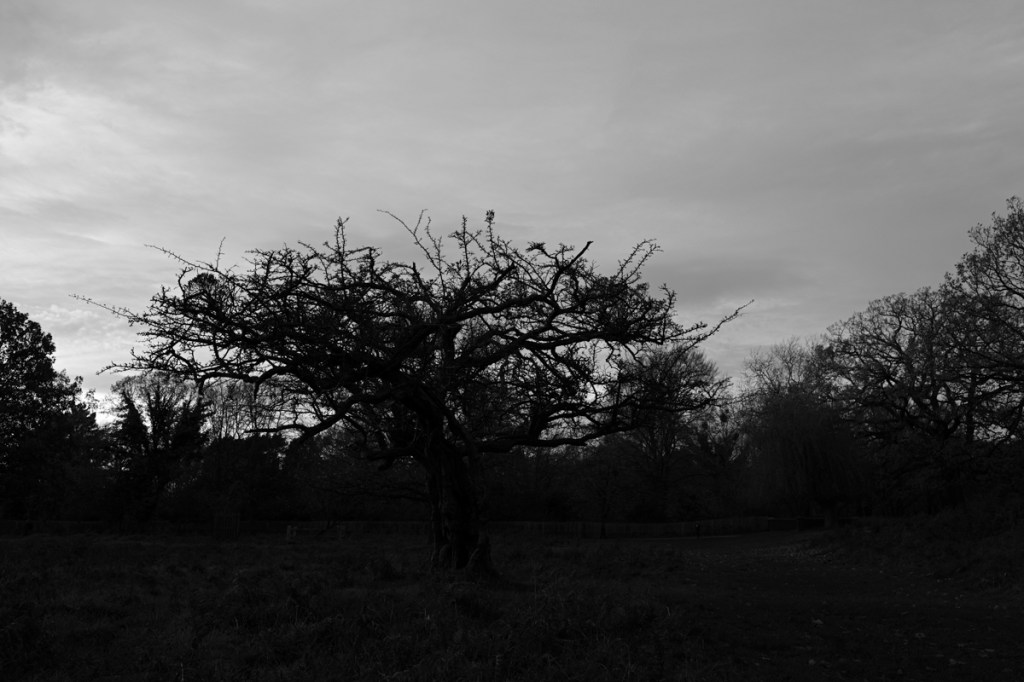
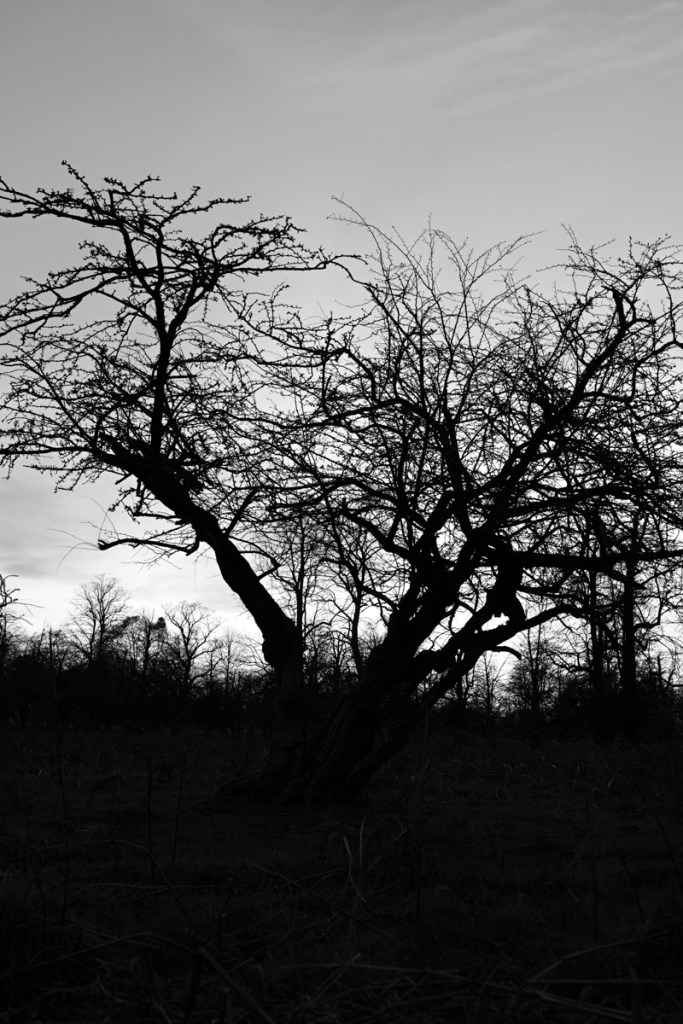
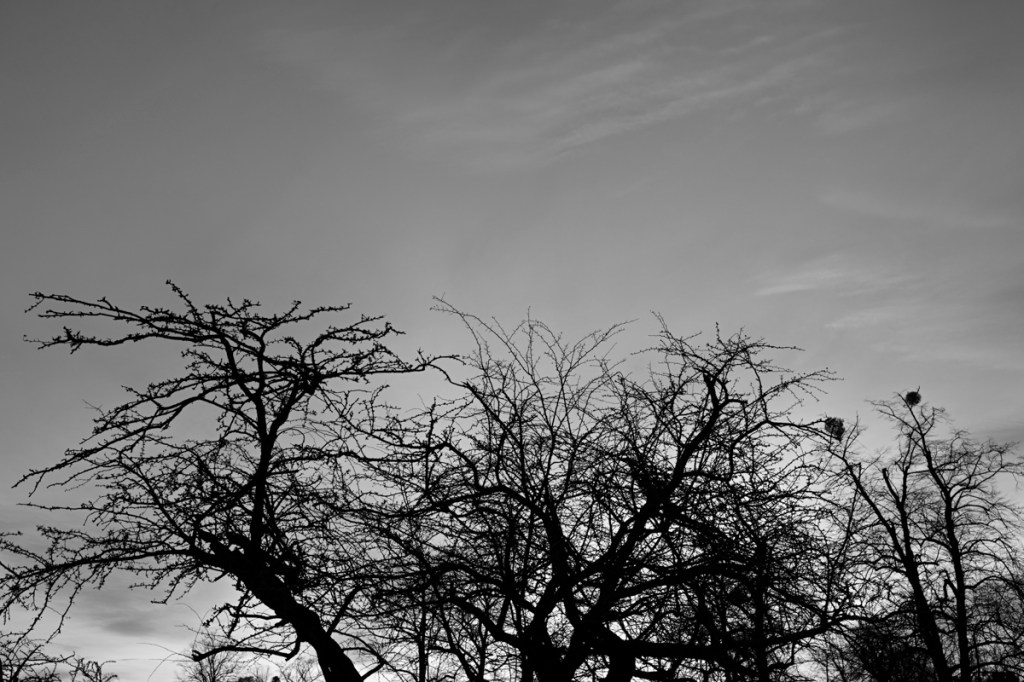
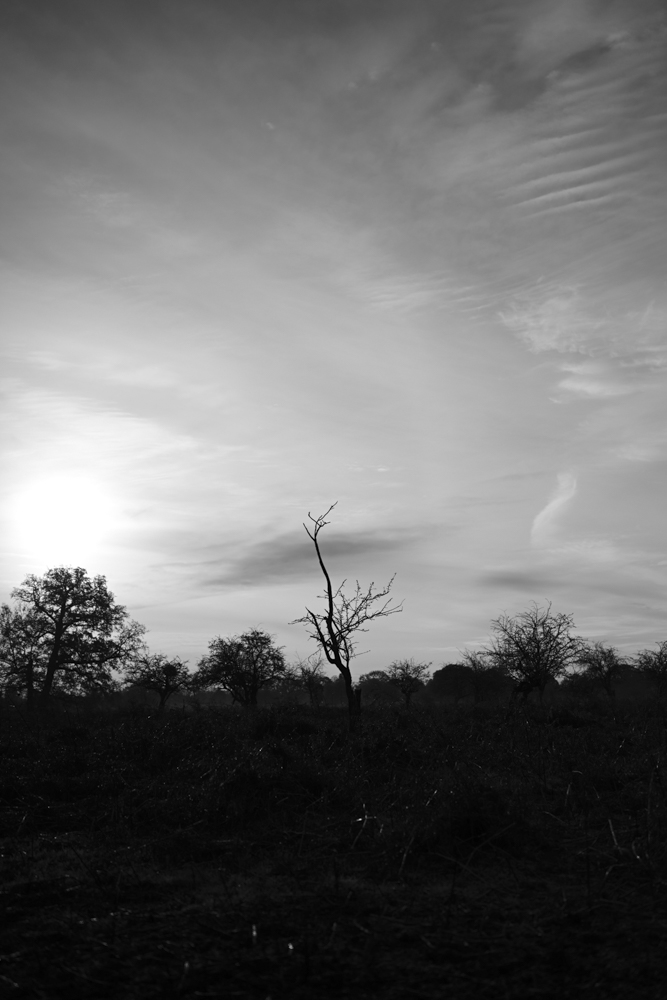
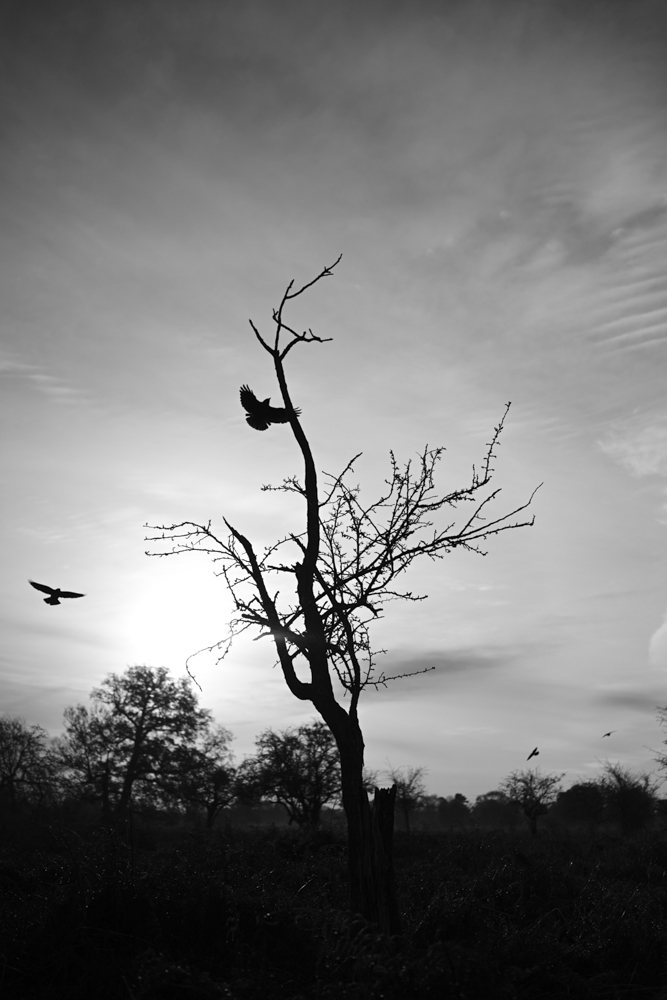
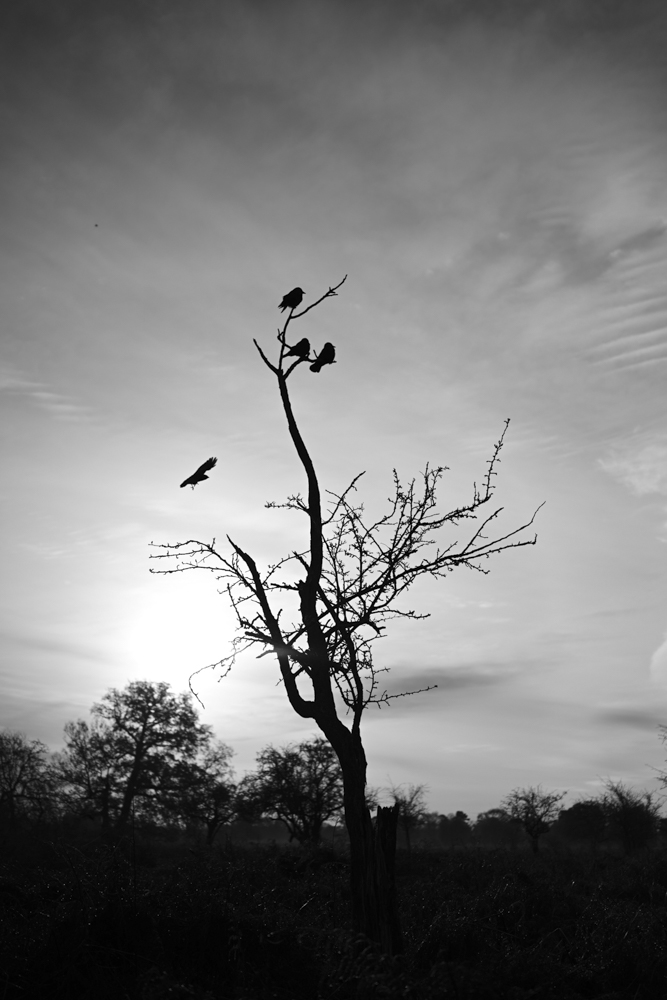
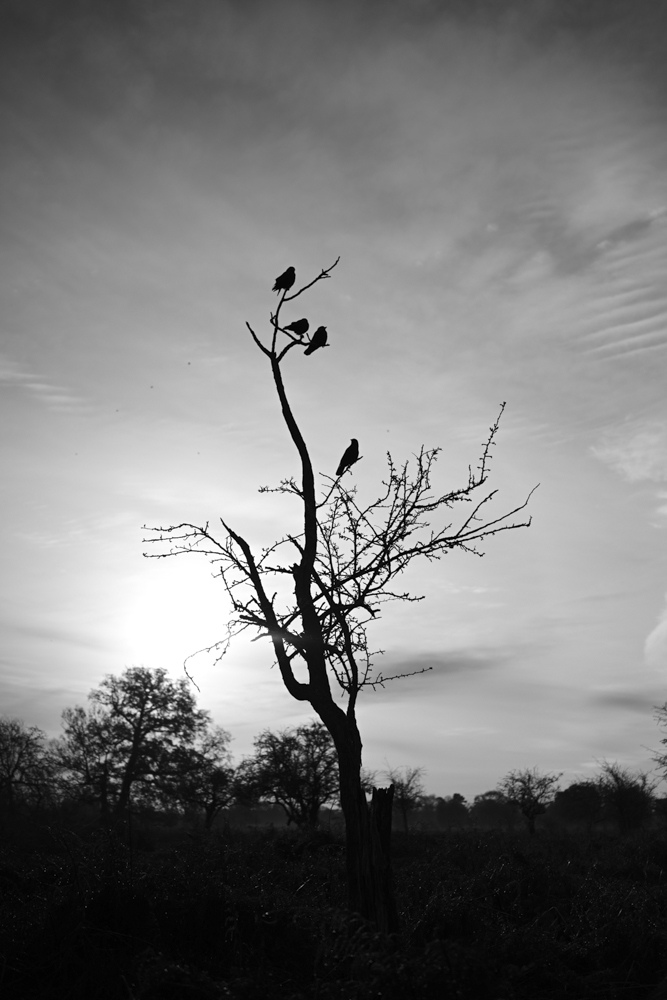
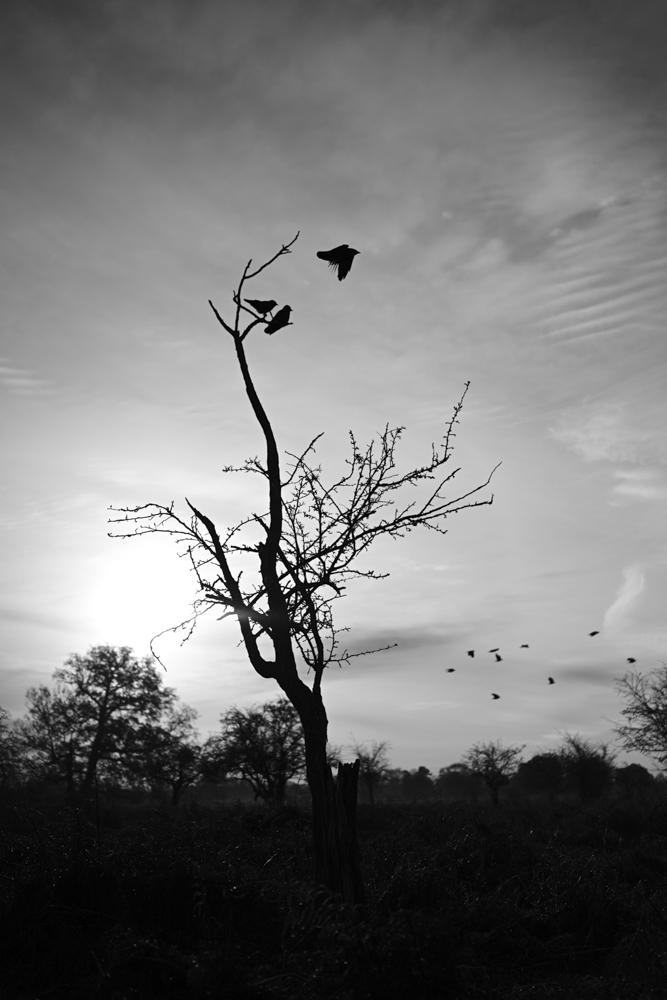
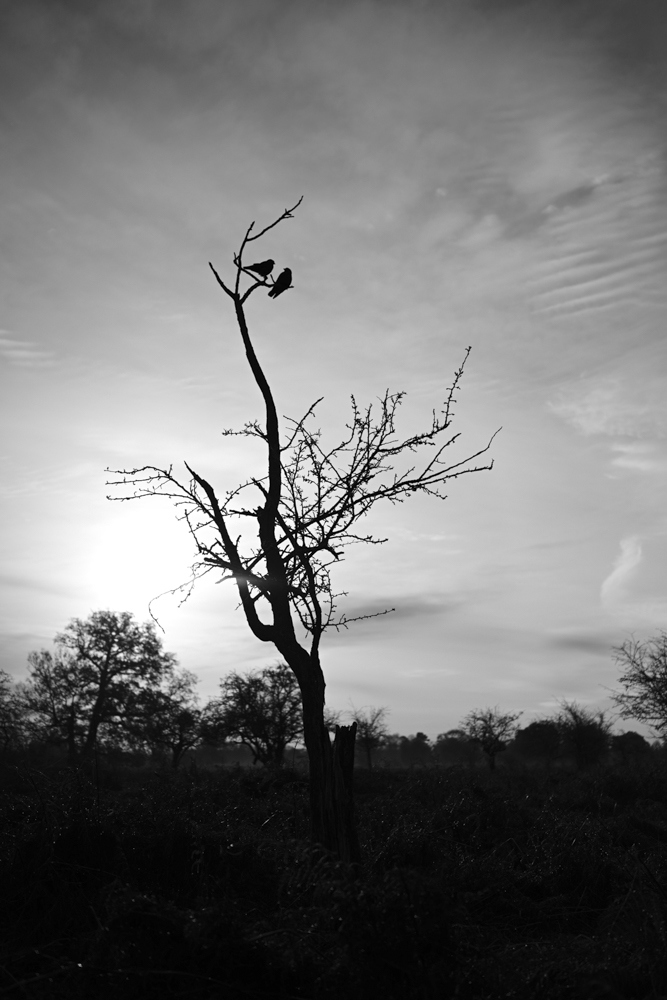
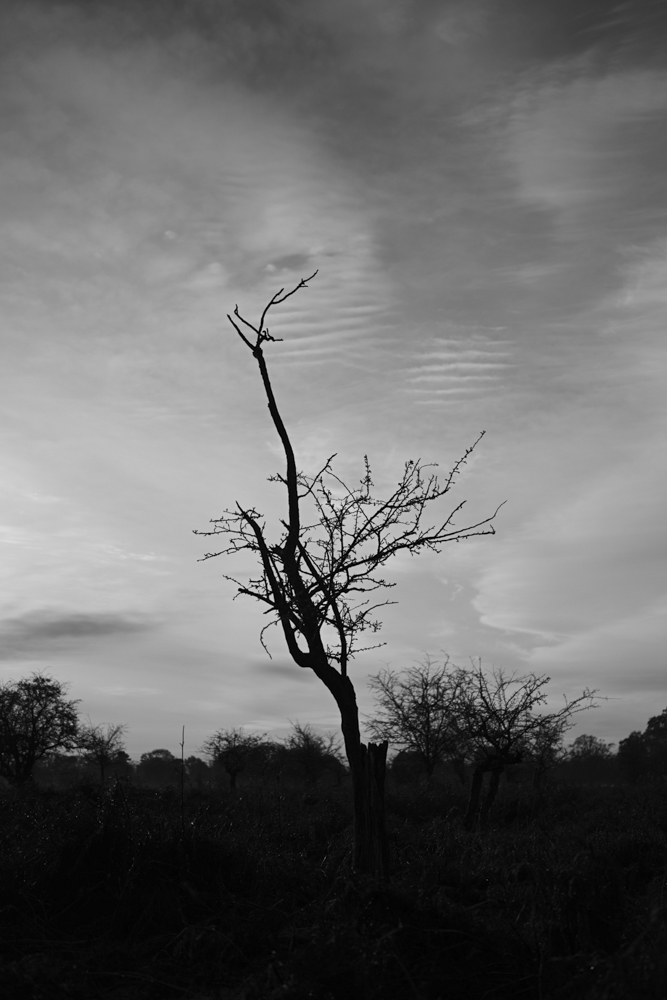
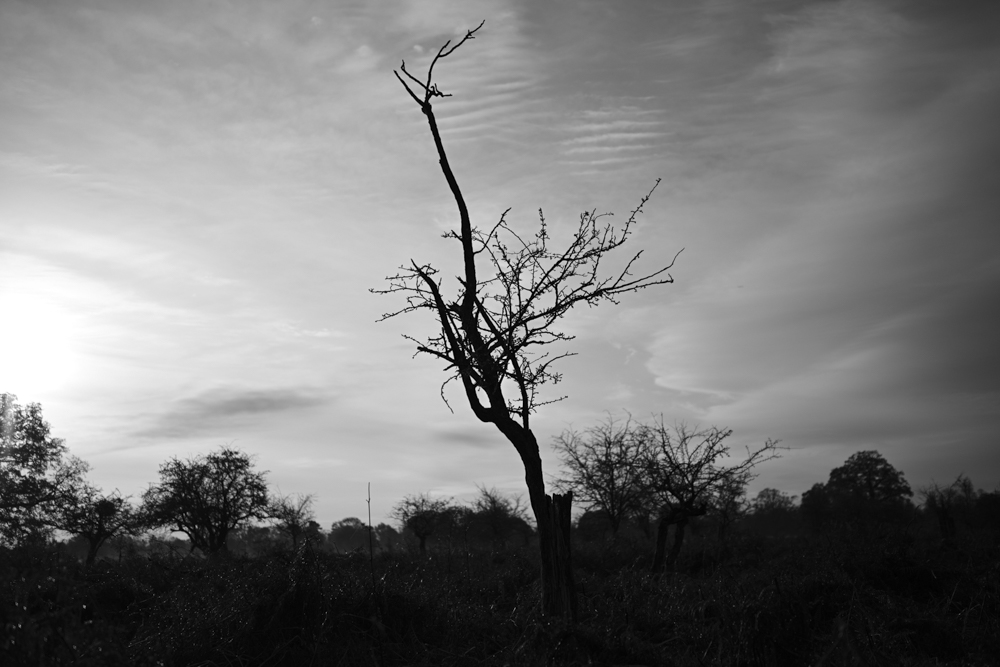
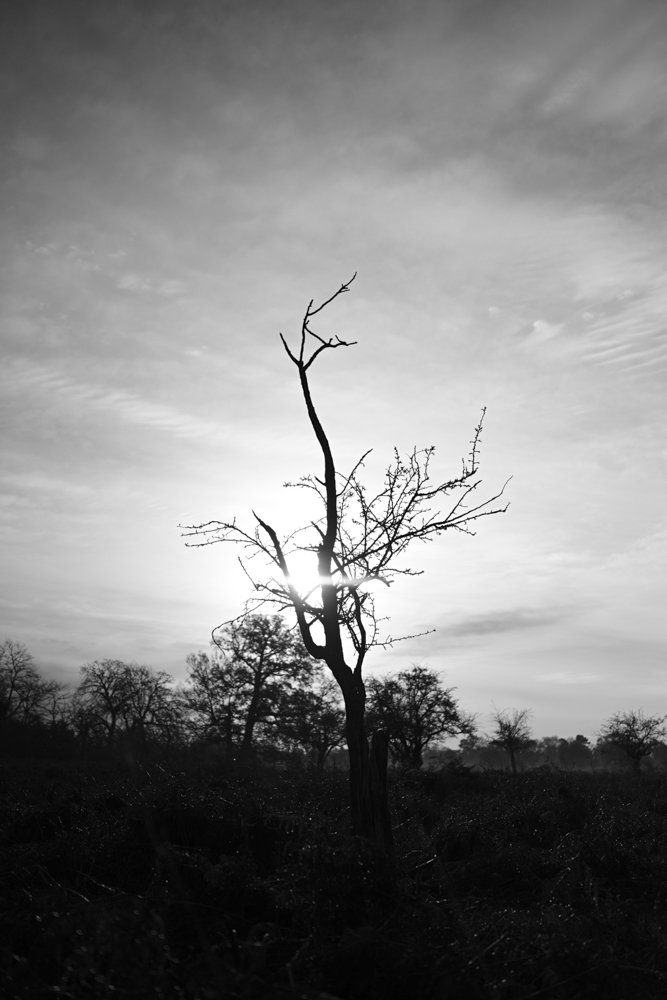
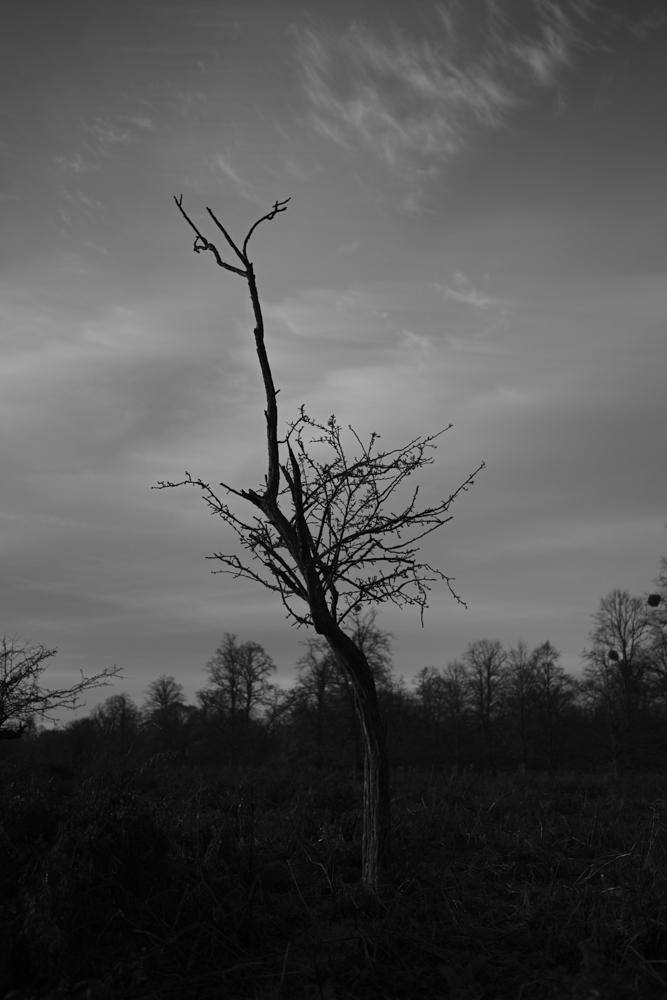
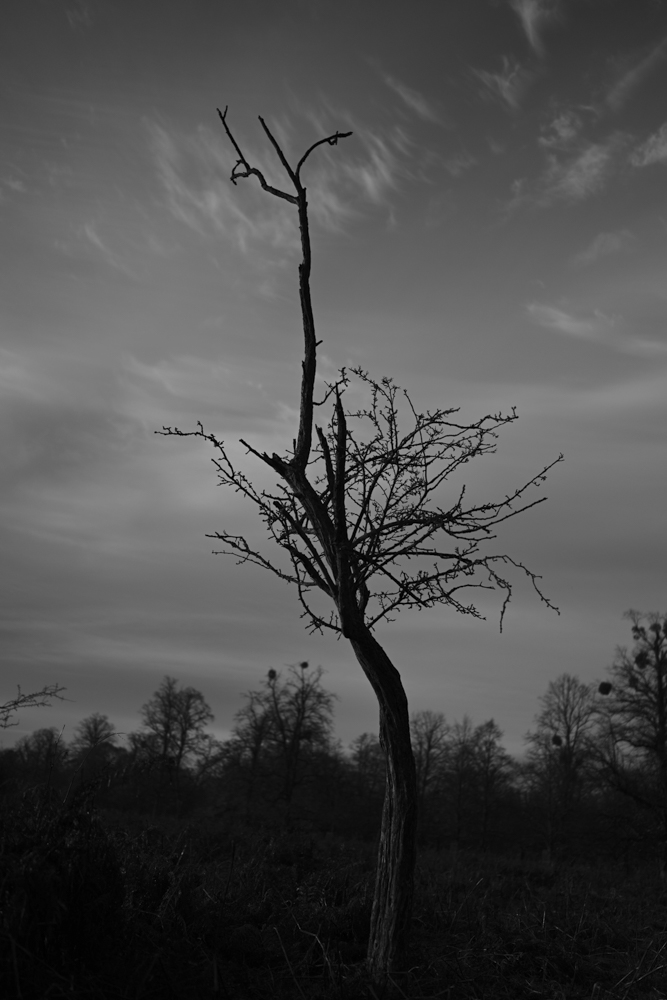
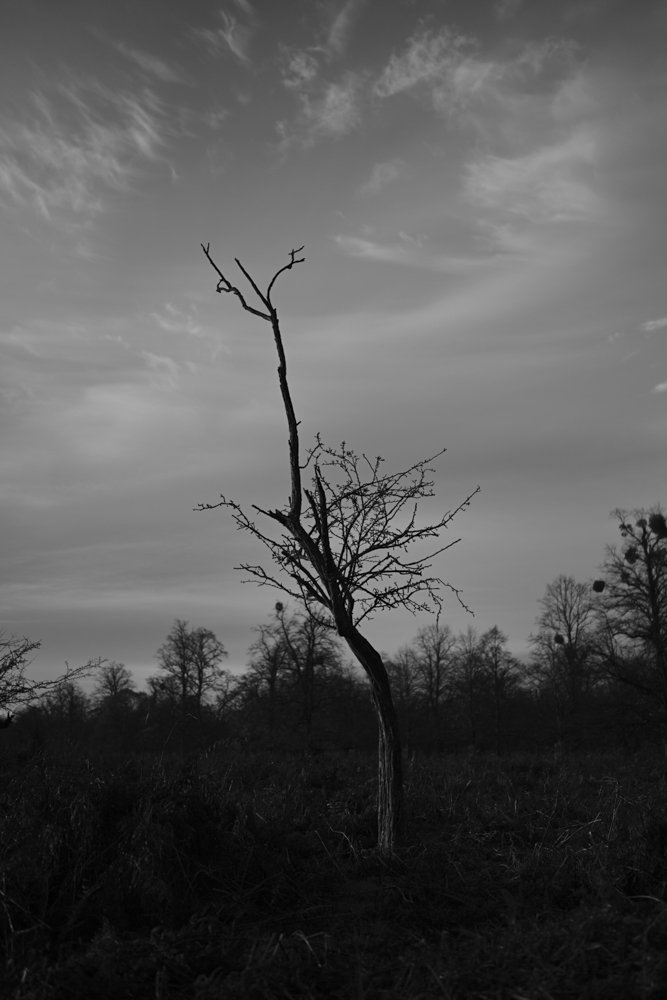
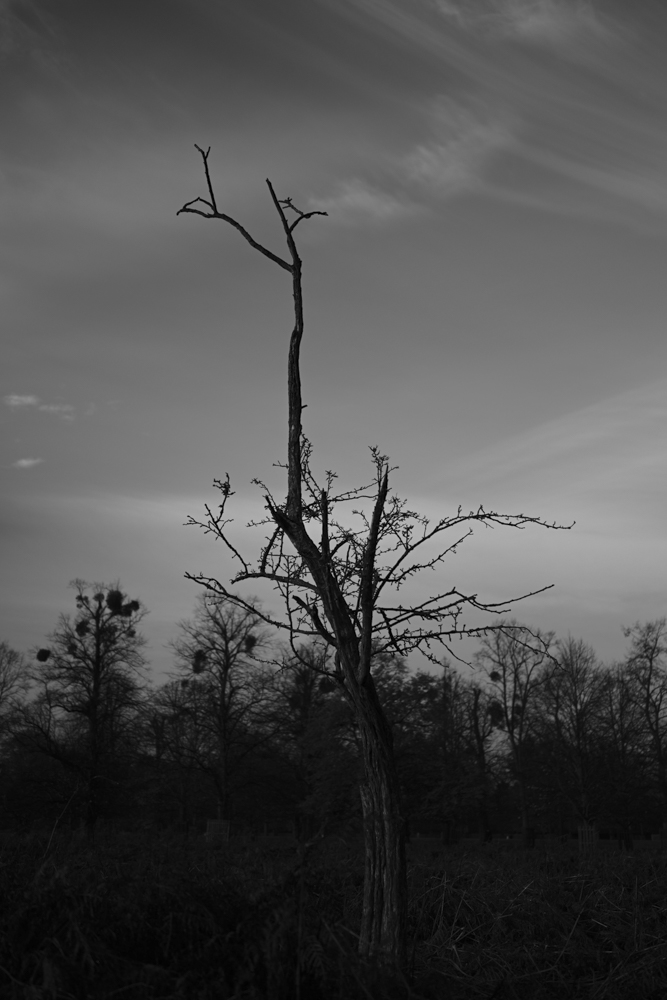
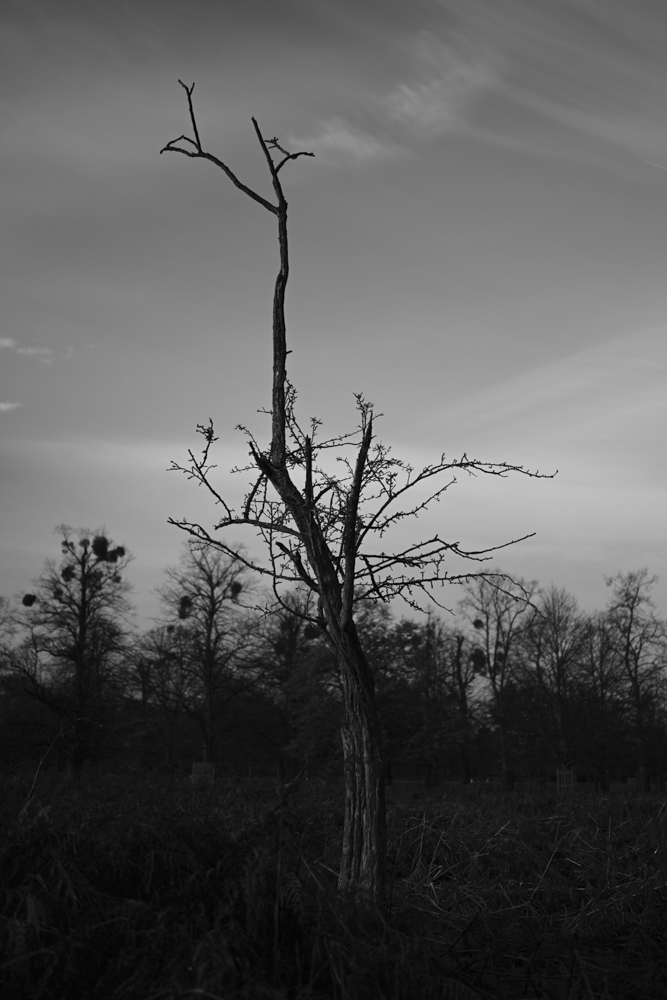
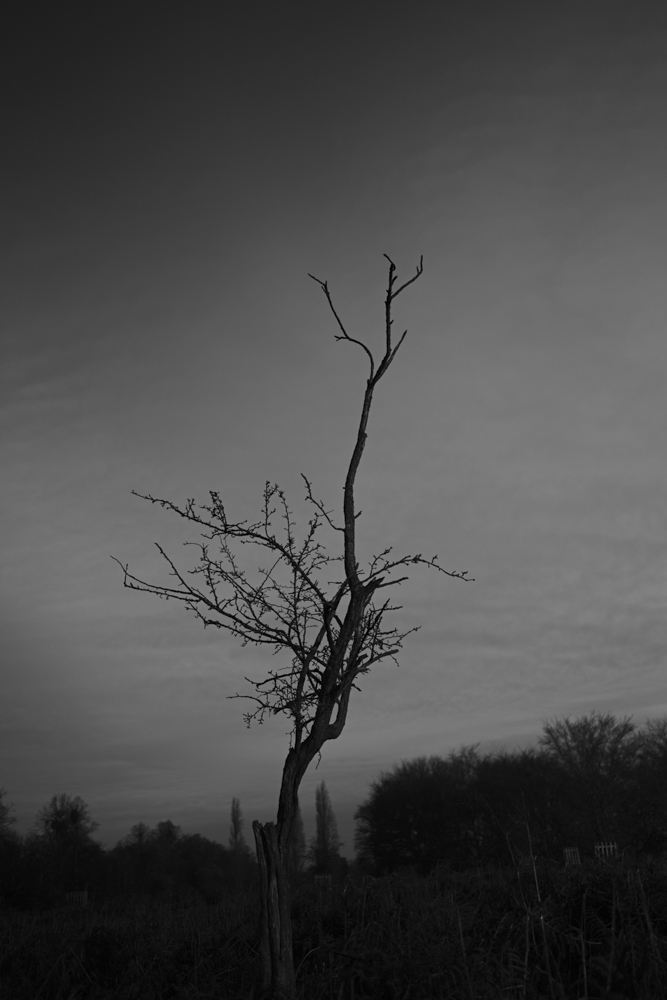
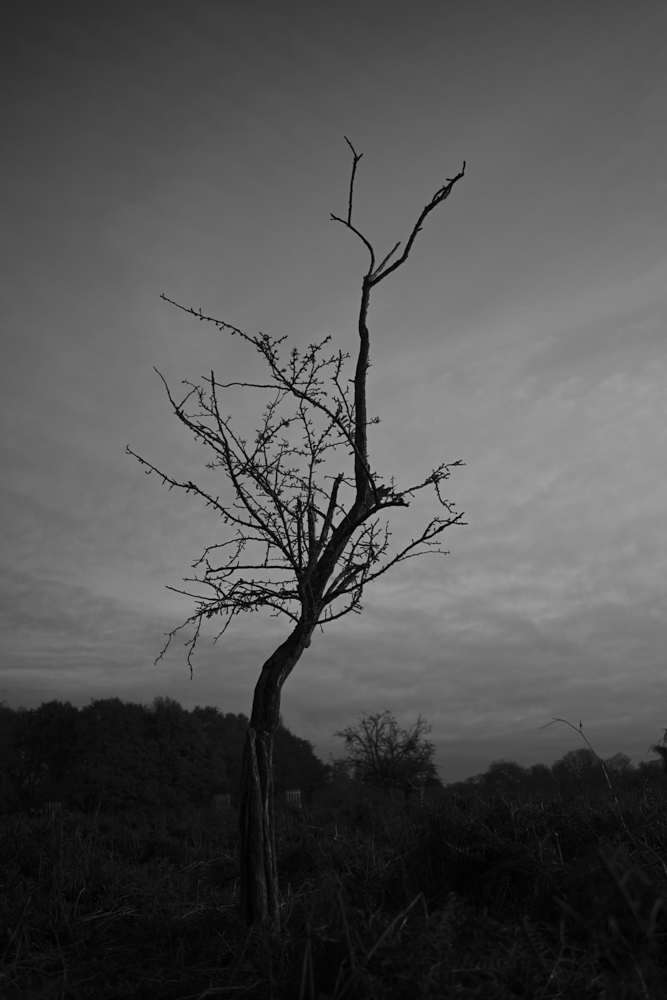
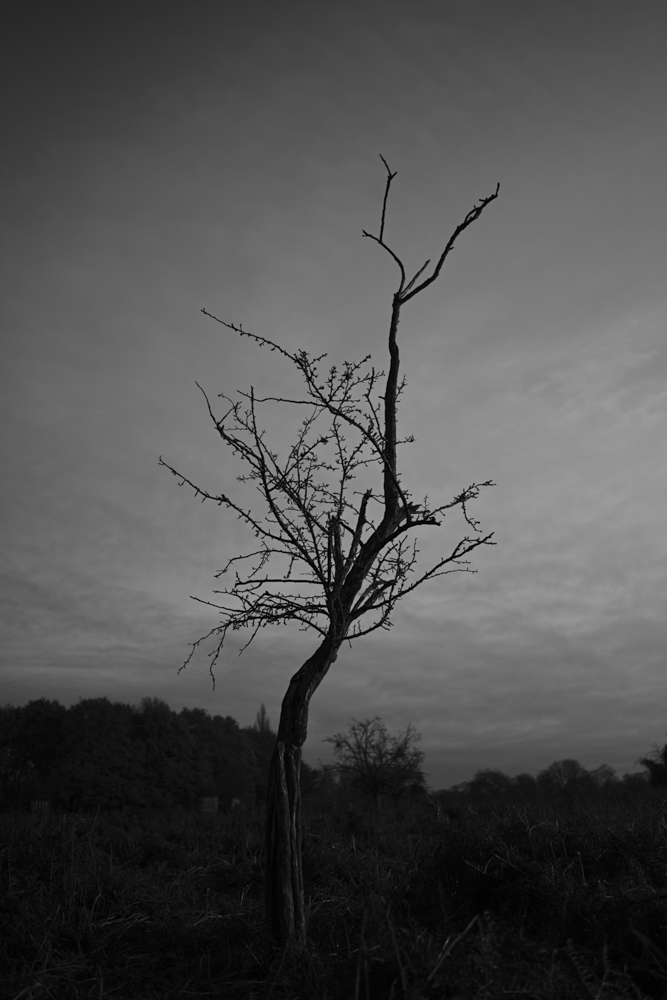
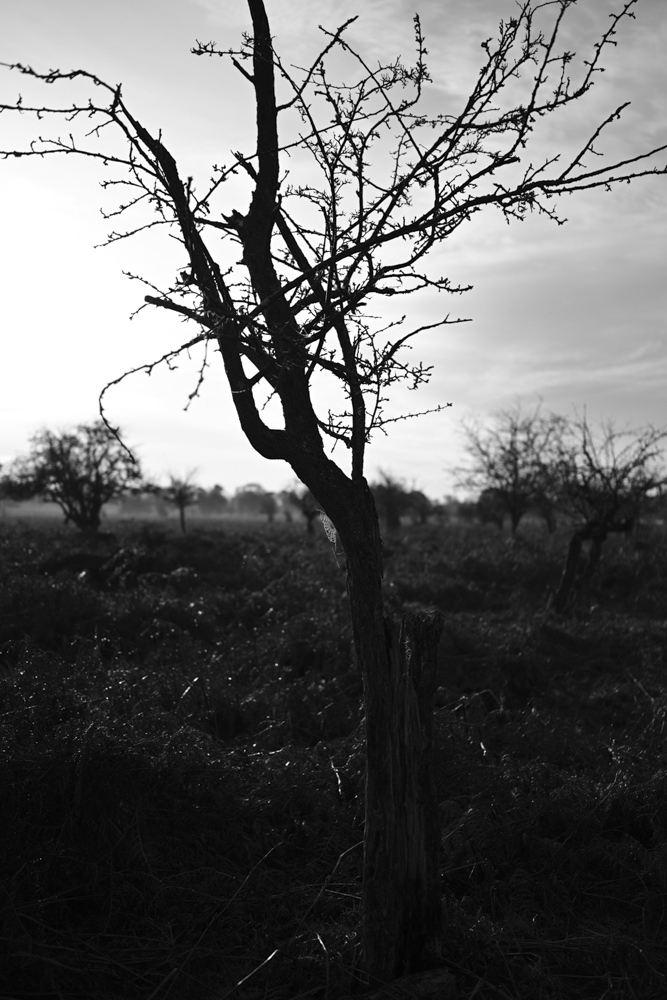
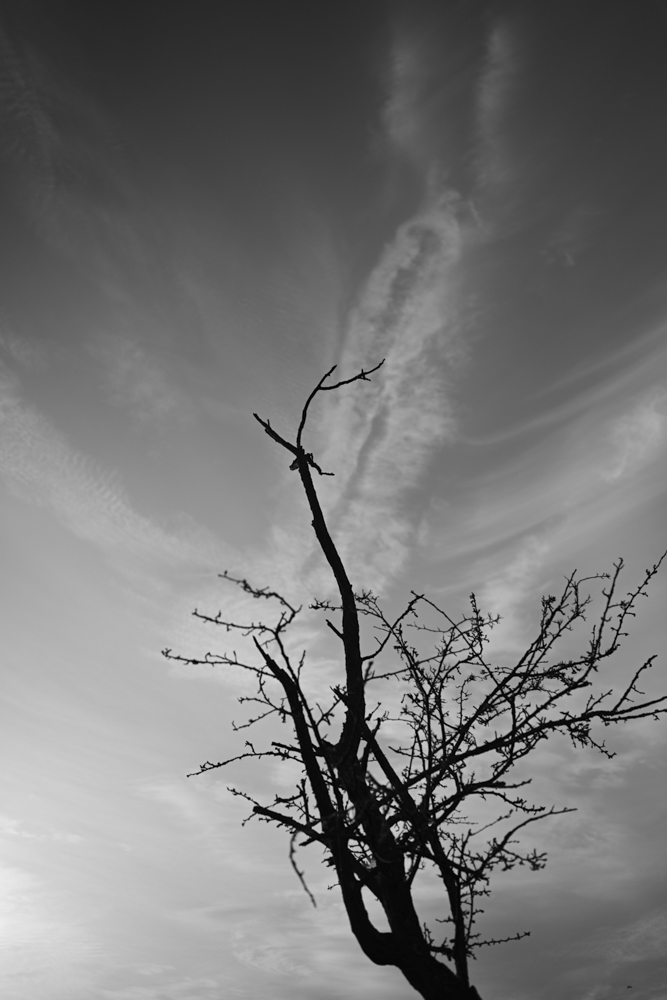
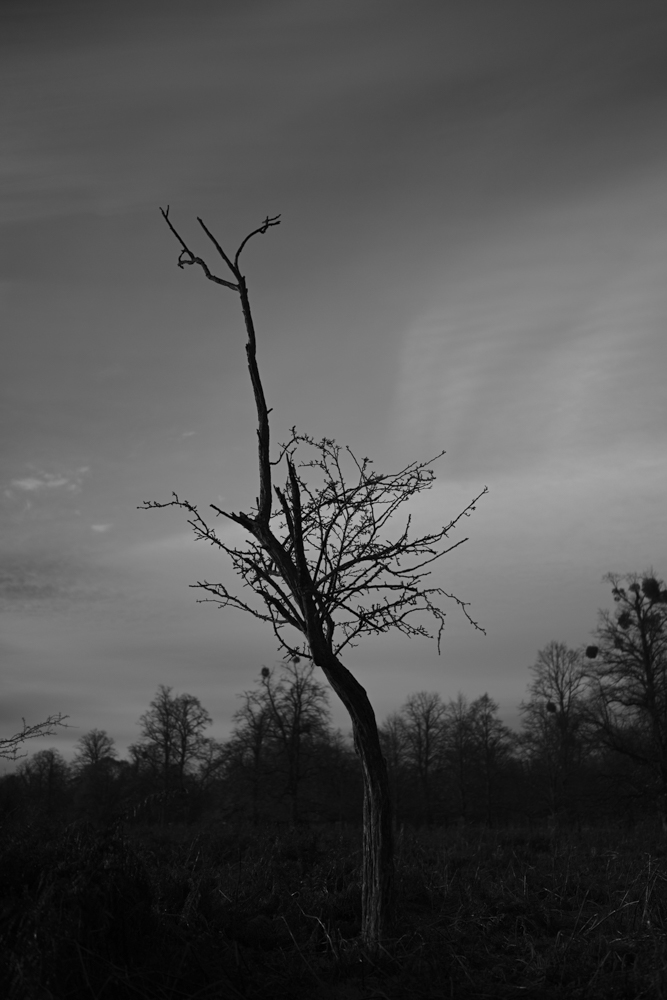
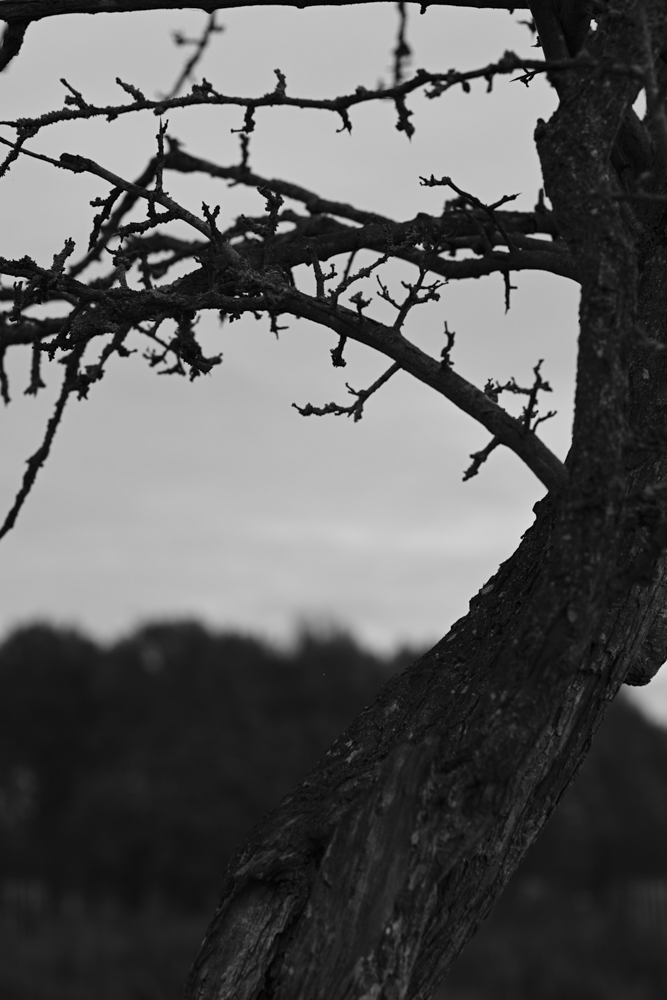
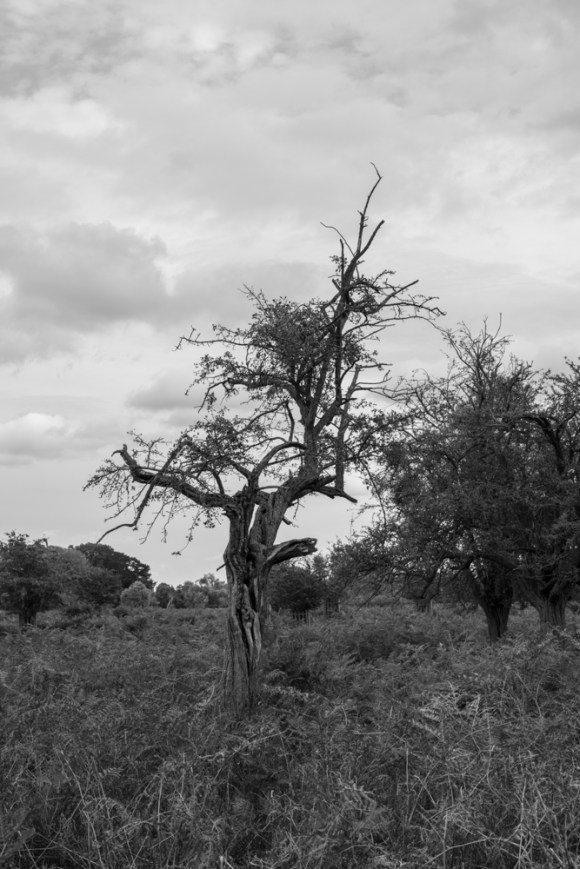
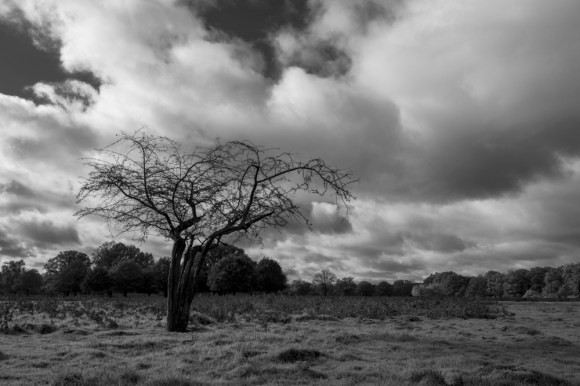
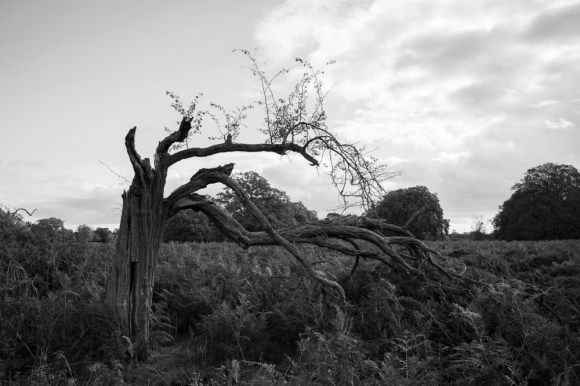
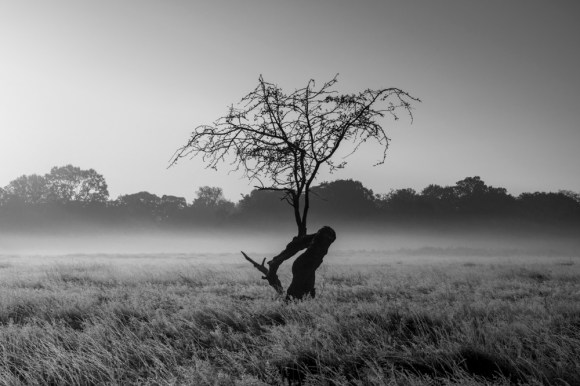
The first hawthorn I photographed was the one I’ve nicknamed The Grim Reaper.
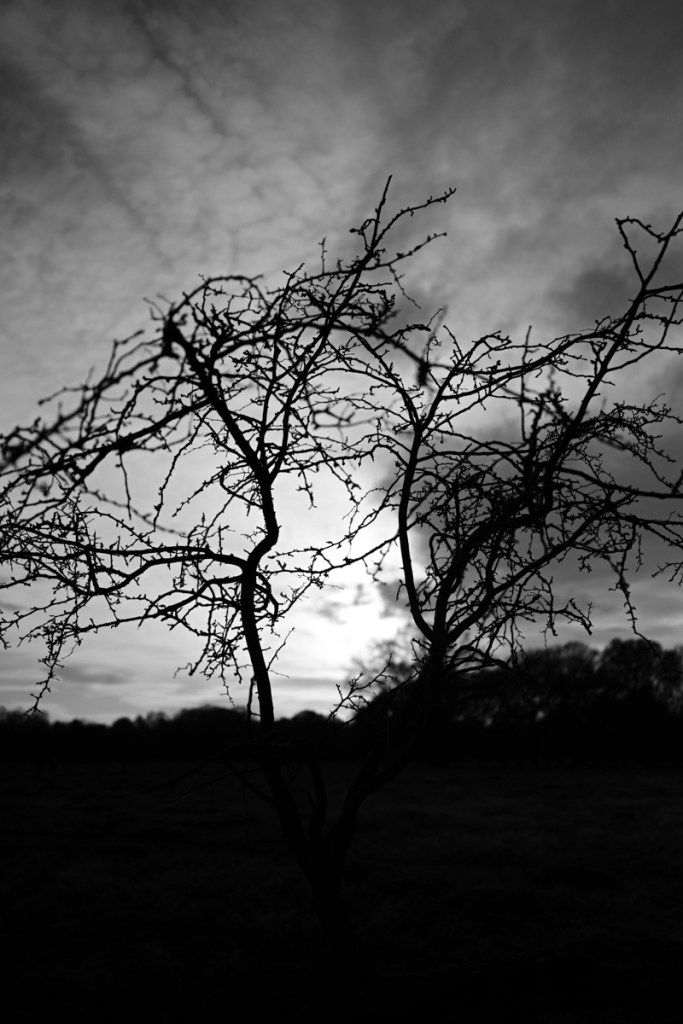
These are the low-quality Black & White conversions created by the camera.
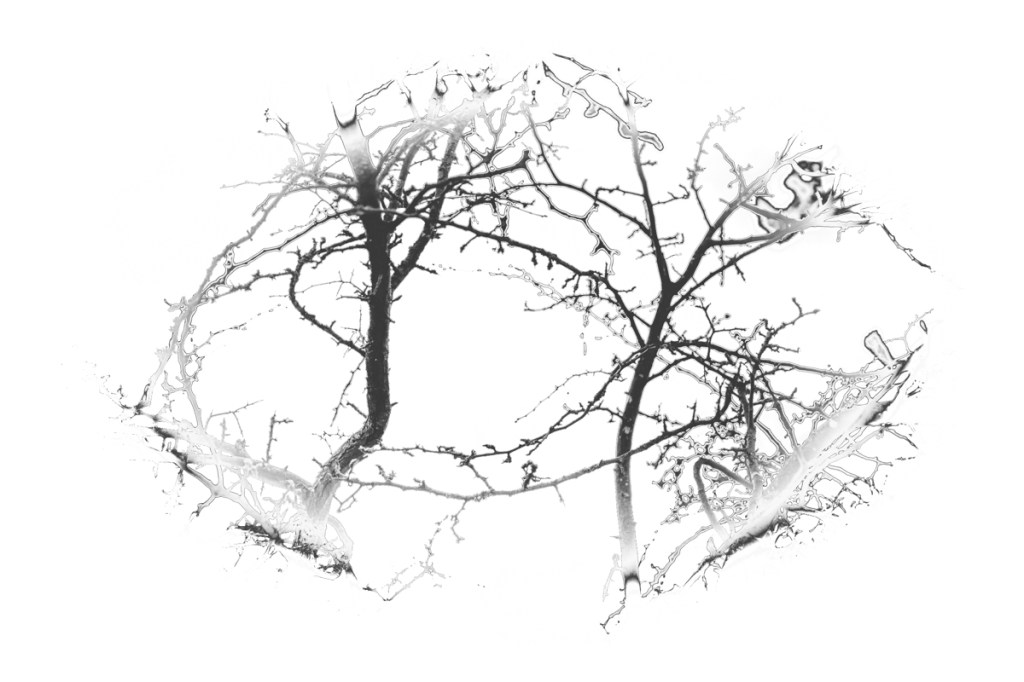
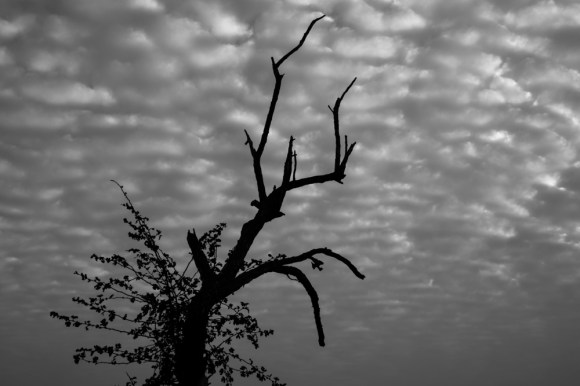
I also took at smartphone shot from a particular angle then combined it with the following images. The ‘abstract’ one has been made from the fourth shot above.
Tree Two
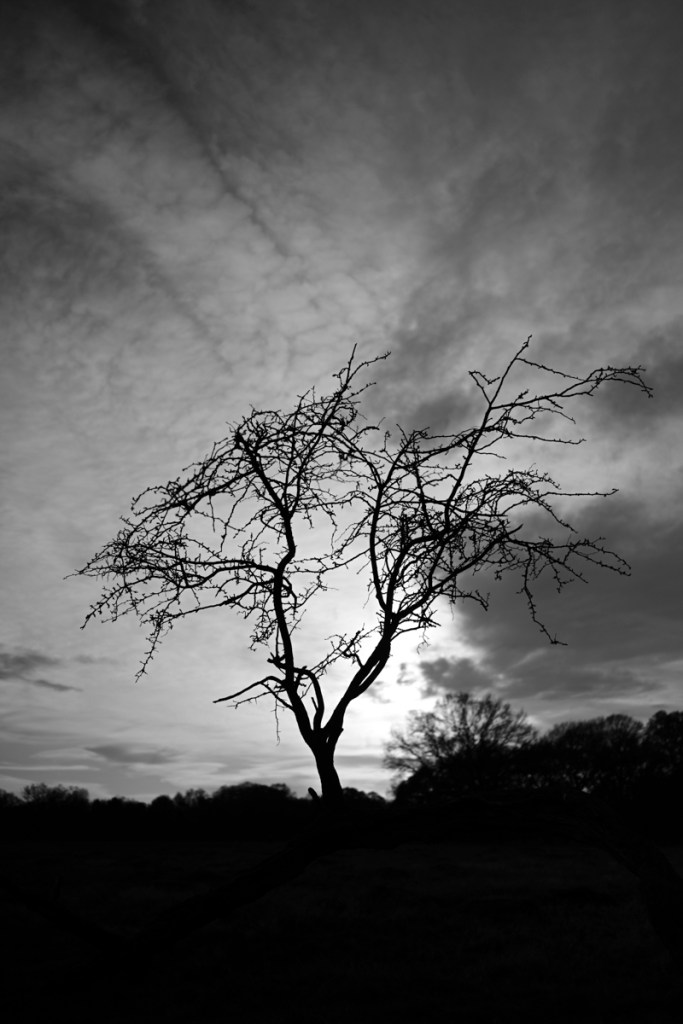
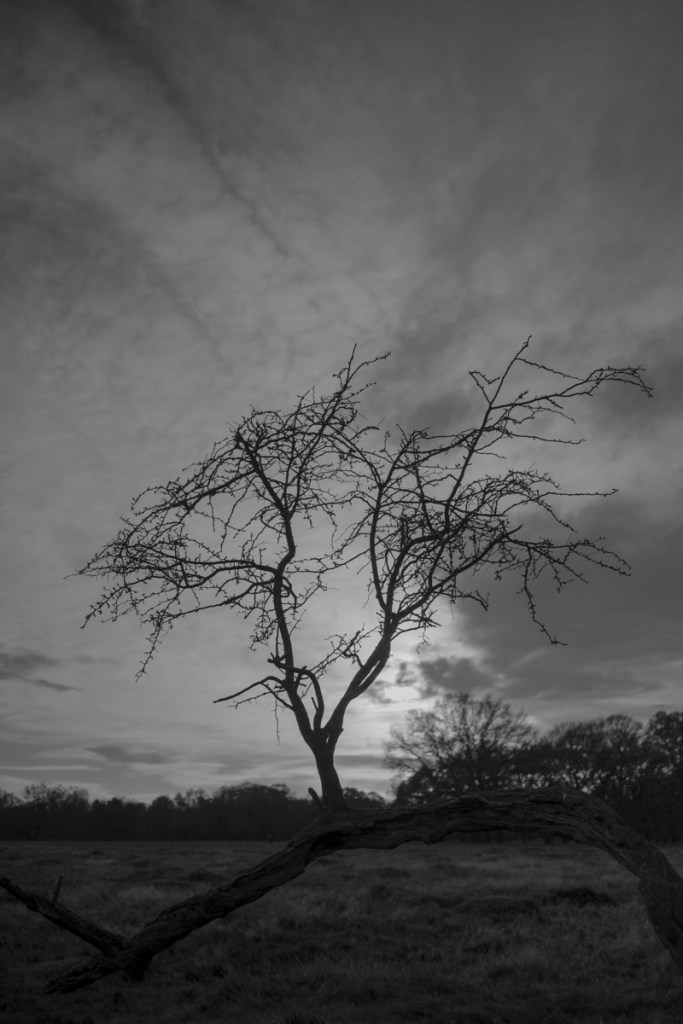
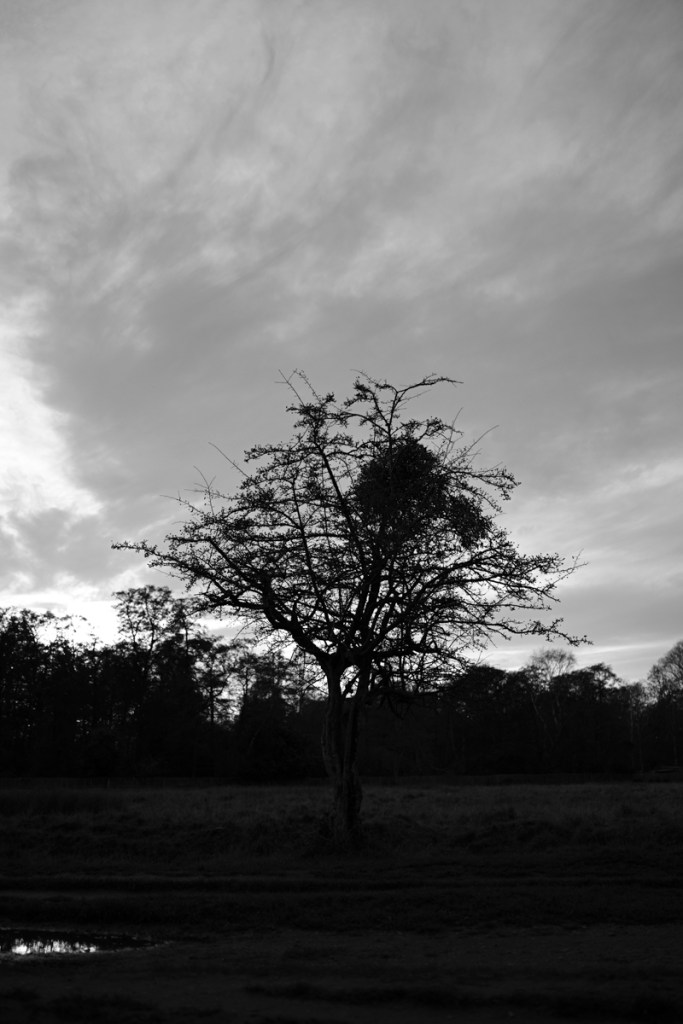
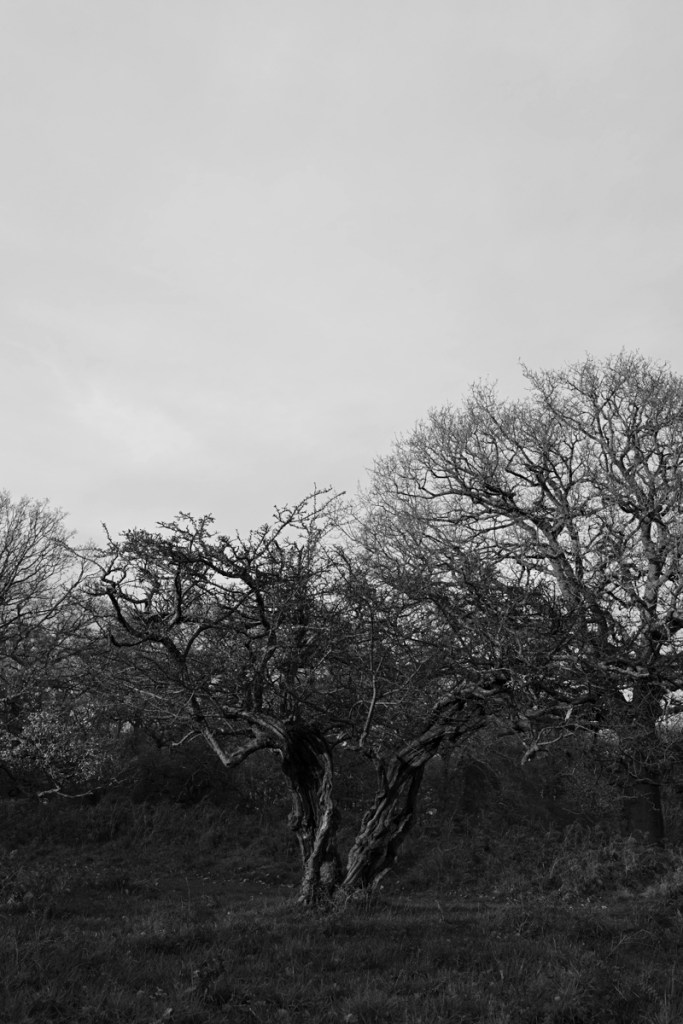
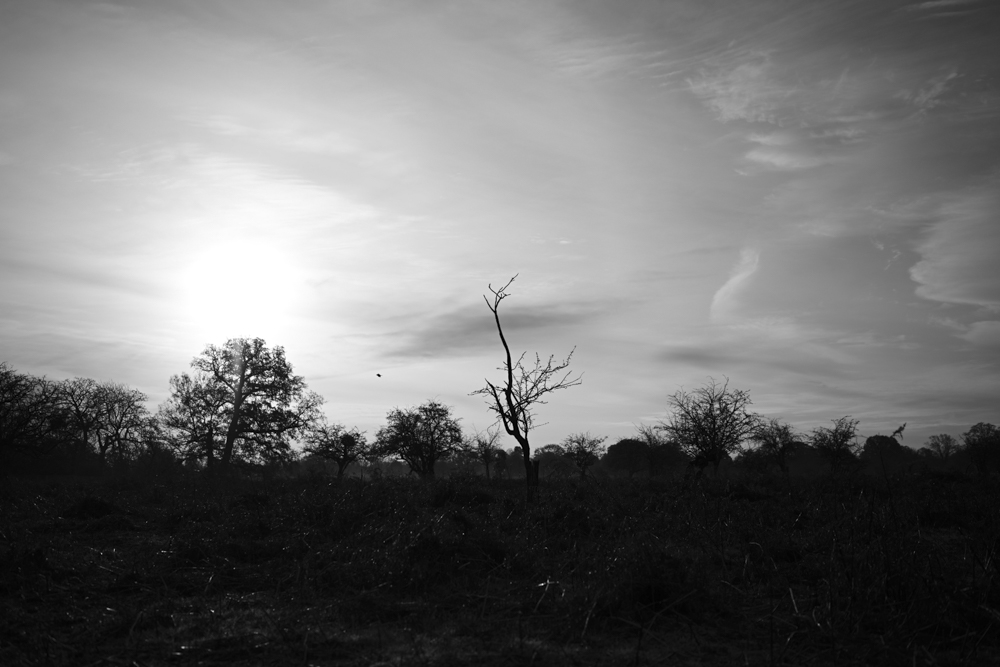
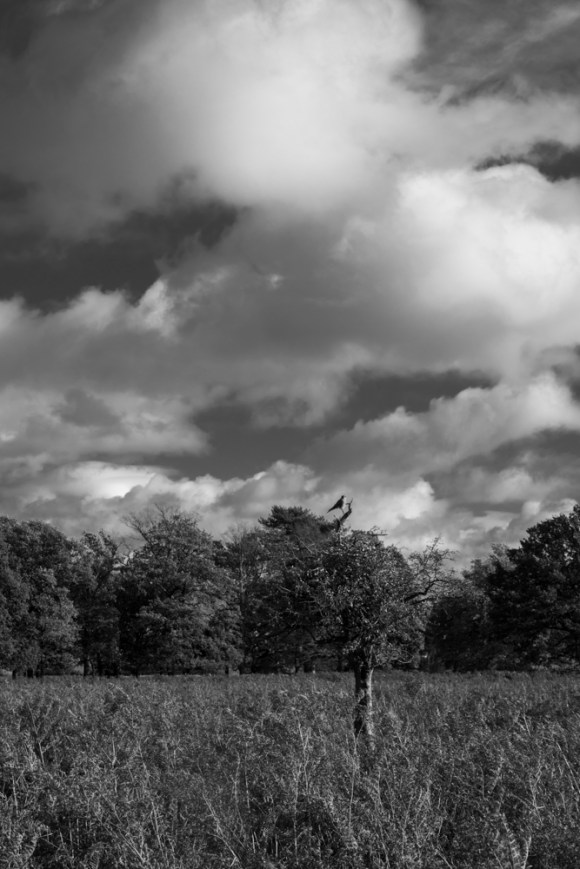
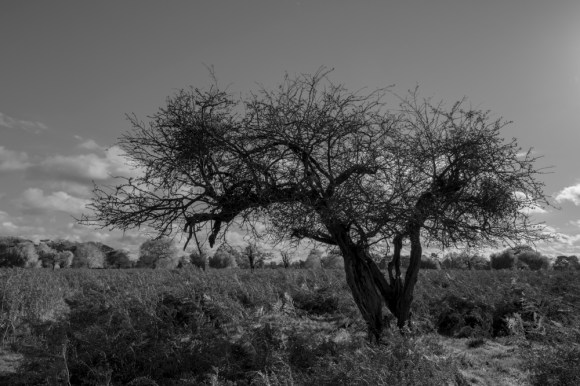
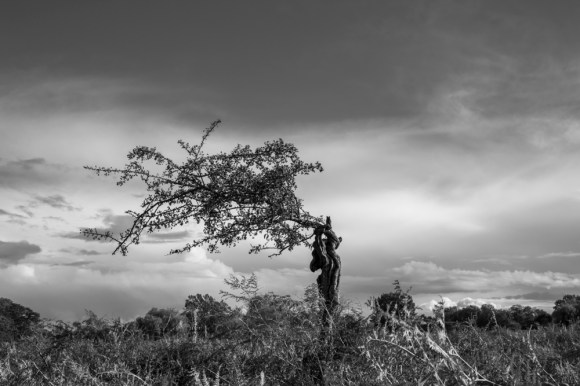
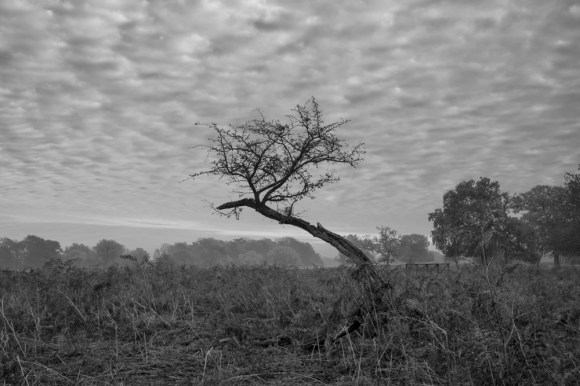
I then walked towards the hawthorn that’s at the end of the row before the gap between the two plantations of the Woodland Gardens. This was taken at F1.8.
The sun was going down towards the left of this tree. What I could do for a more effective shot was to try the speedlight flash a bit earlier in the day to test how this would work.
I then edited this image by bringing up the exposure.
There were two aspects I liked. Firstly the sky showing through the gap. Secondly, the contrast between the in-focus branches and trunk in contrast to the blurred background. This really does make the tree ‘pop’ from the background.
Tree Three
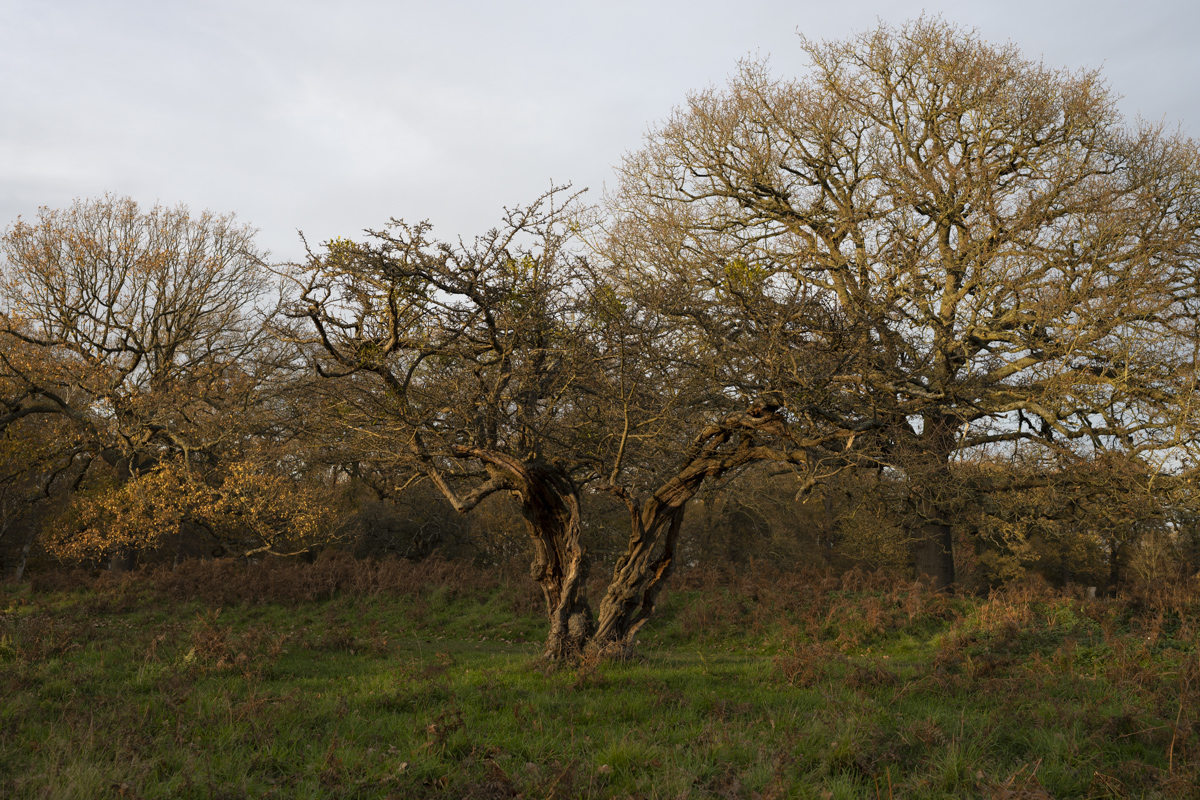
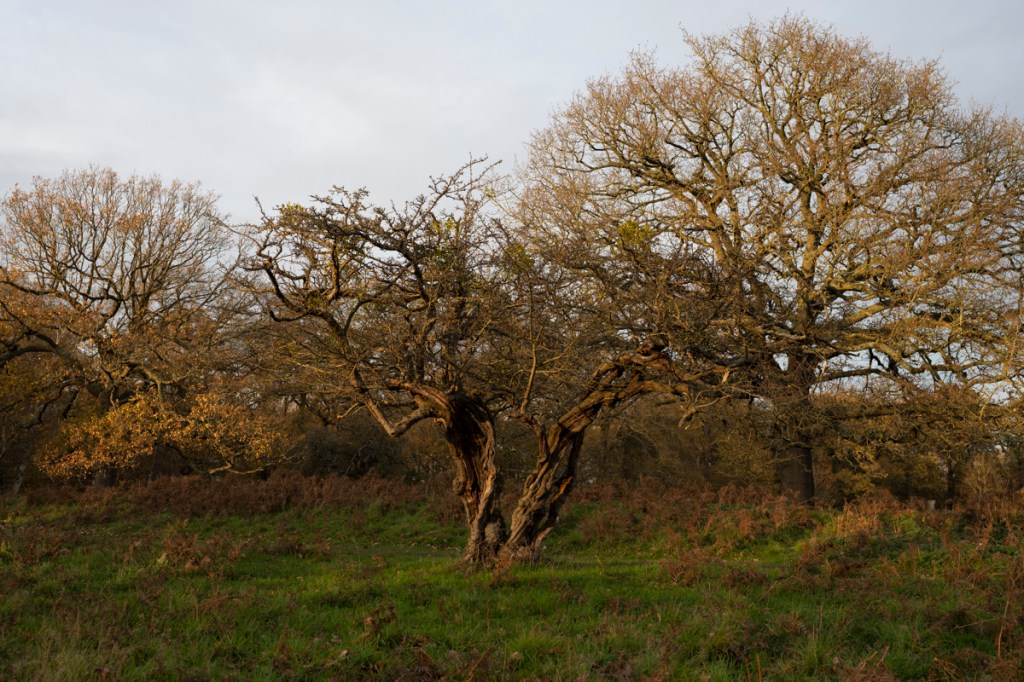
I then walked had a wander through the Waterhouse Plantation then came out at the other end. This brought me to another part of the park I hadn’t explored as yet. At this time the sunlight was lower in the sky and there was a golden glow.
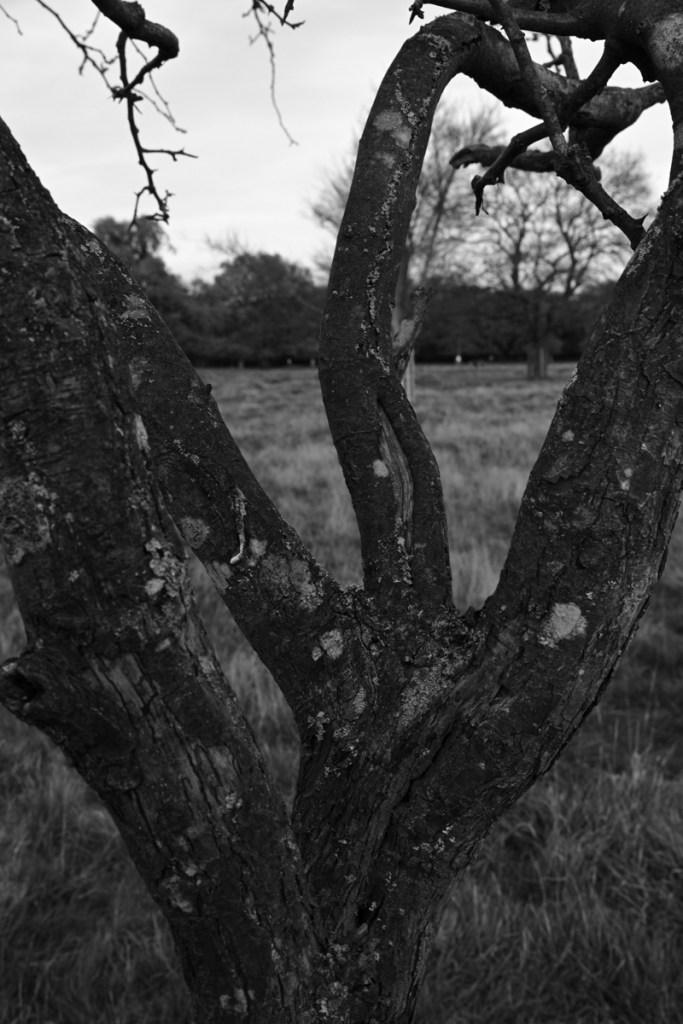
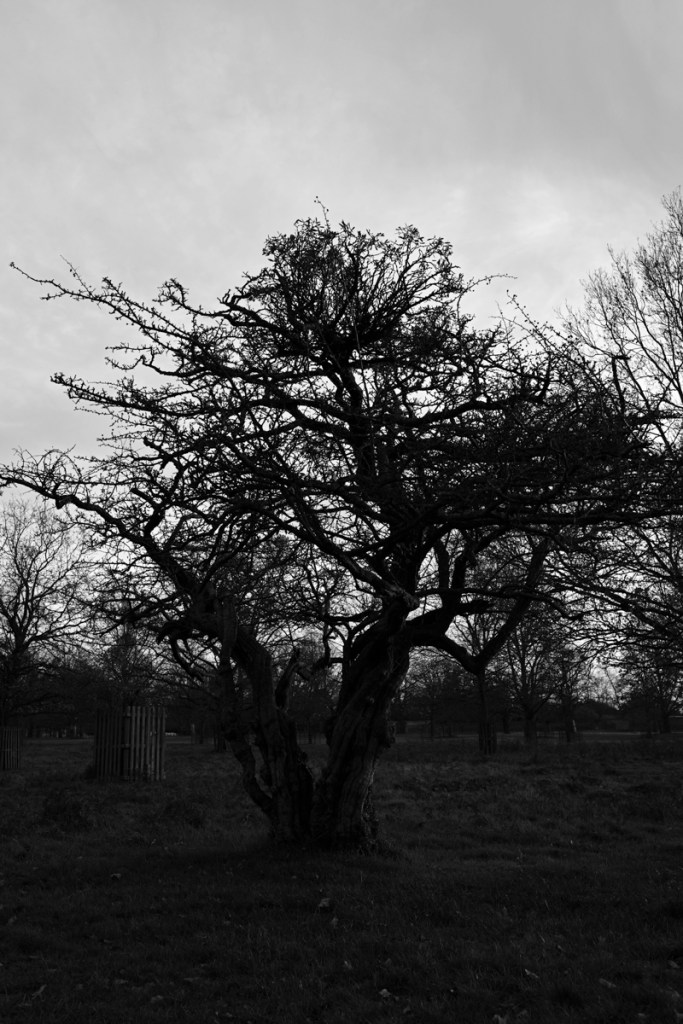
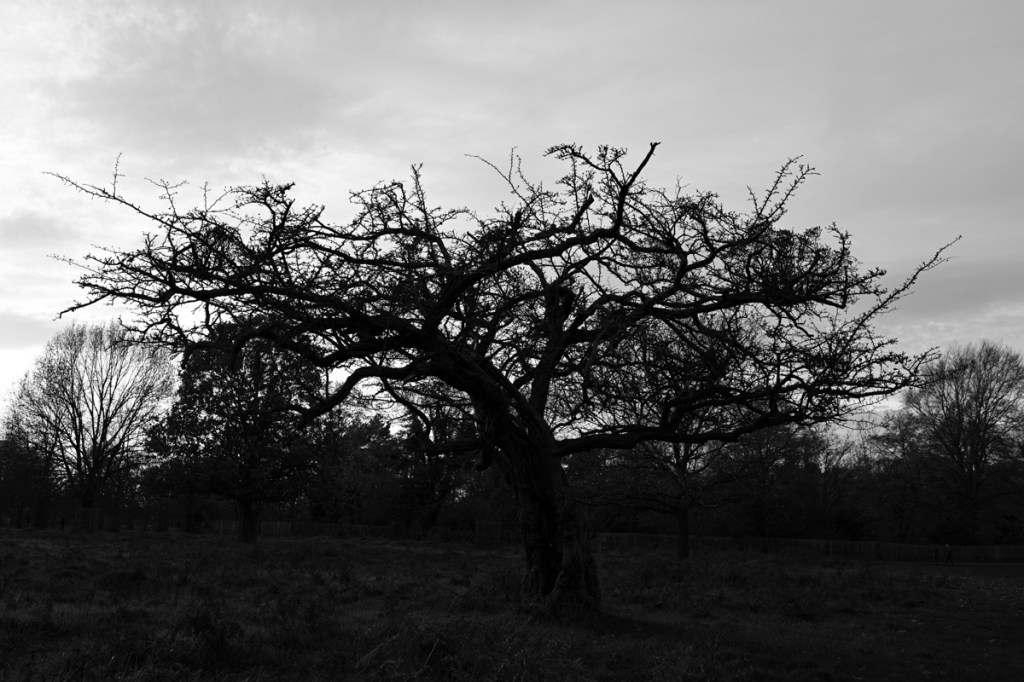
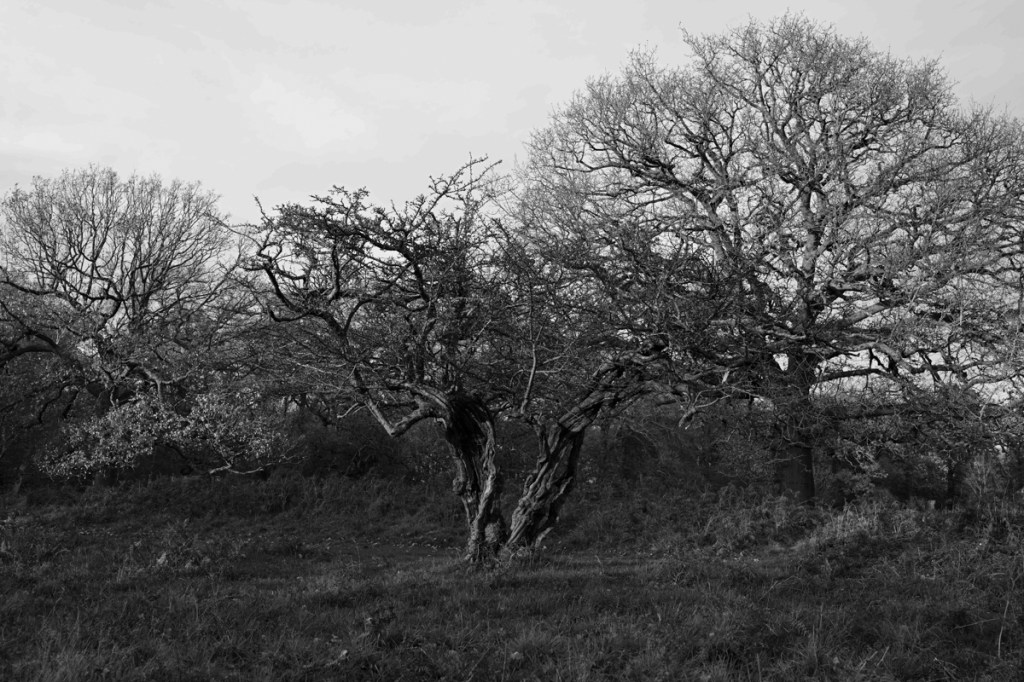
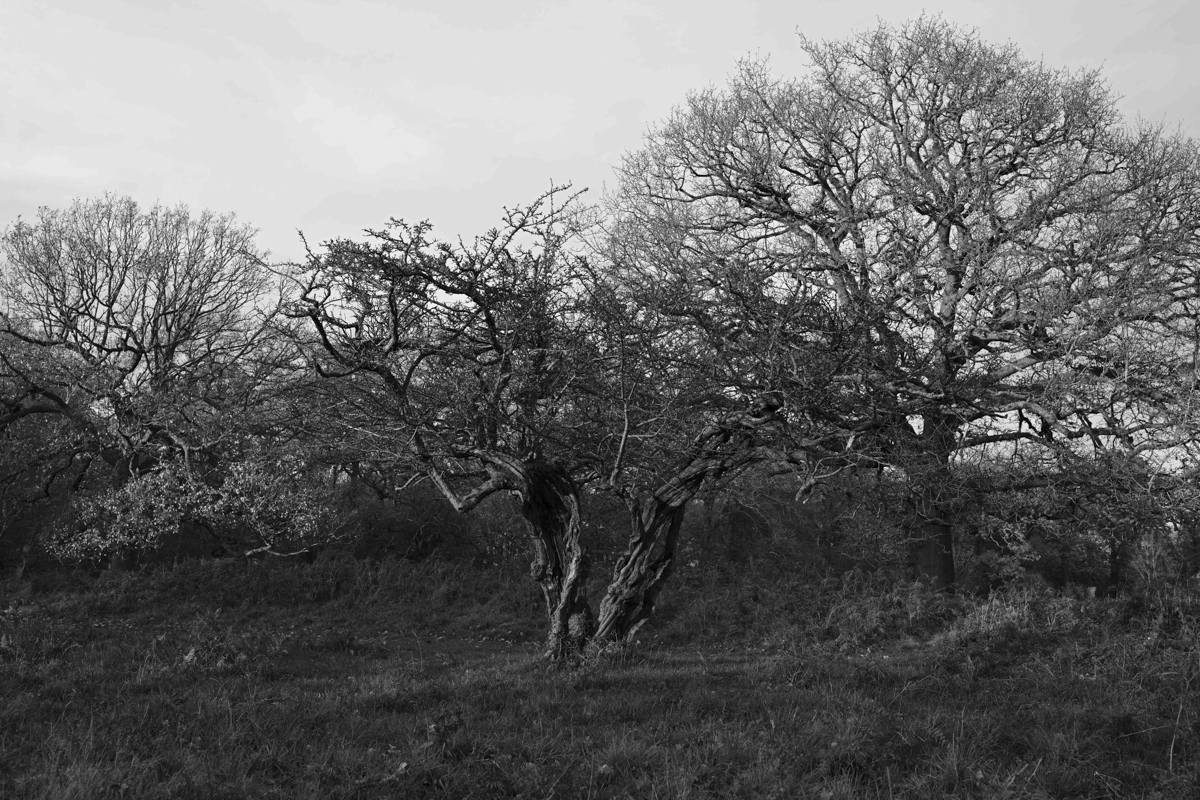
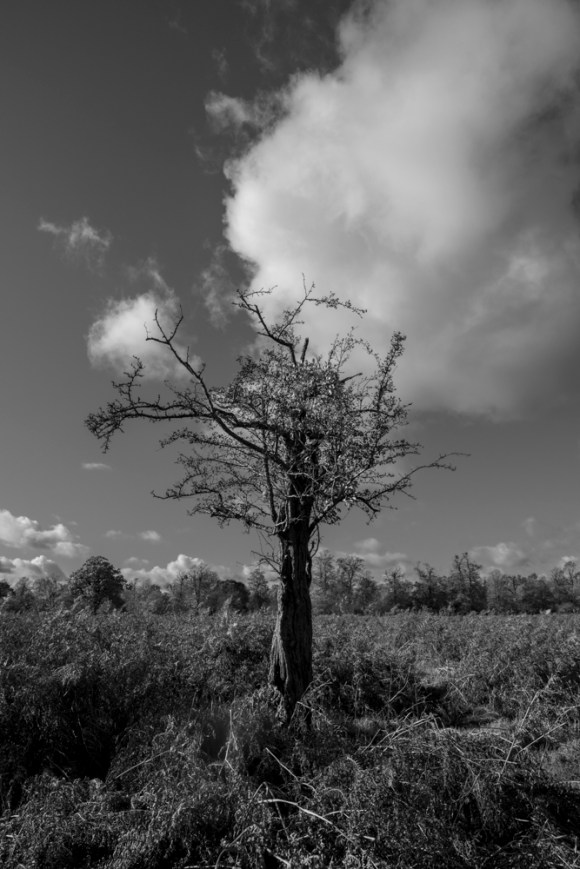
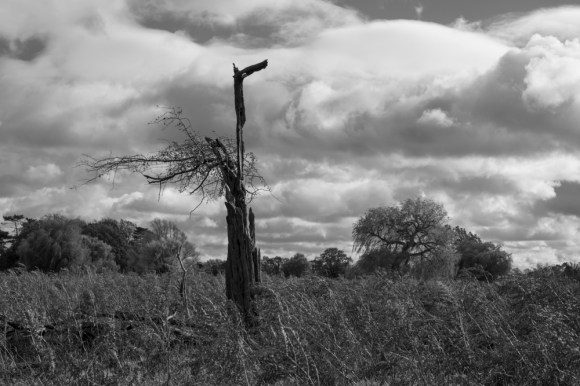
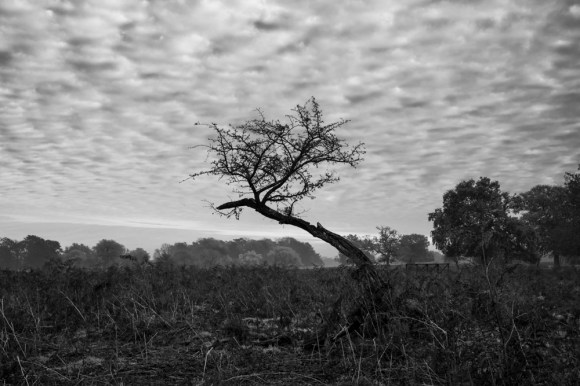
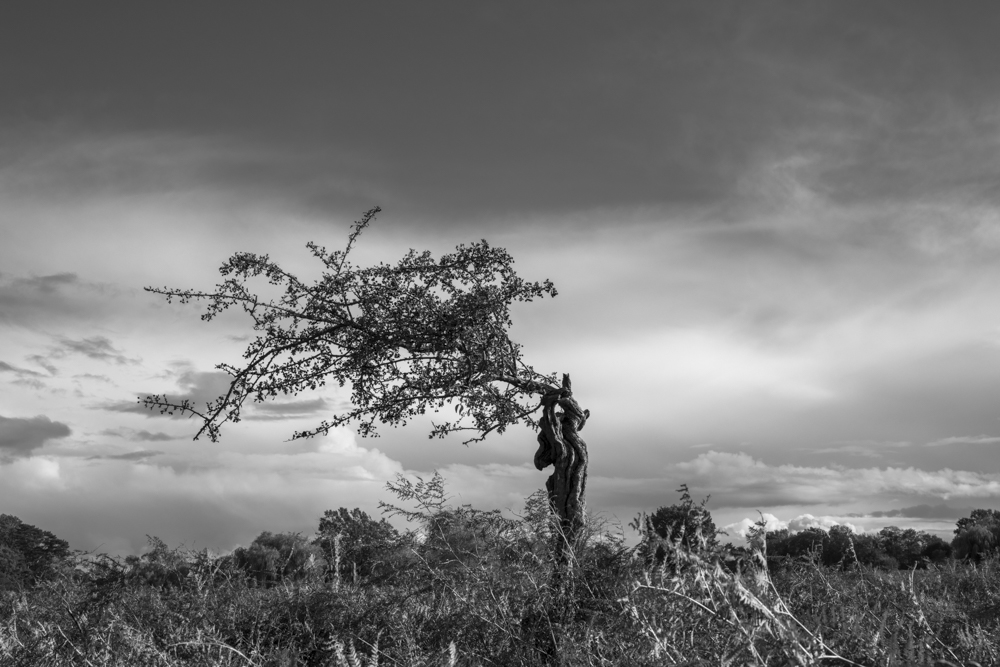
I came across this particular hawthorn. When I looked closer, I realised the trunk was split into multiple trunks.
When I arrived home I made my own Black & White conversion to compare with the one created by the camera.
In addition to these Black & White images, this is a low-res JPG saved directly from the original RAW file without additional editing.
“The definition of insanity is doing the same thing over and over again, but expecting different results.”
Albert Einstein
When stuck in a photographic rut these wise words always come to mind. After the Interim Review, I took the received advice on board and decided to tackle on some key aspects that were mentioned during the session.
The strongest element which I took on board is that is time to focus on producing strong and coherent images. Up until this point I had carried out a high amount of in-depth background research and had produced a range of initial photographs. I now had to take a different tack by refining and improving my technical techniques and narrowing down my subject matter.
With regards to my use of equipment, I had been using my digital mirror-less camera with a 24mm-70mm lens. This was in order to try out different focal lengths to see which distance gave the best results. However, it only goes down to F4, so if I wanted to focus on the tree itself and create a less-obstrusive background by creating a shallower depth of field, I would need to use either my 35mm or 85mm, which goes to F1.8.
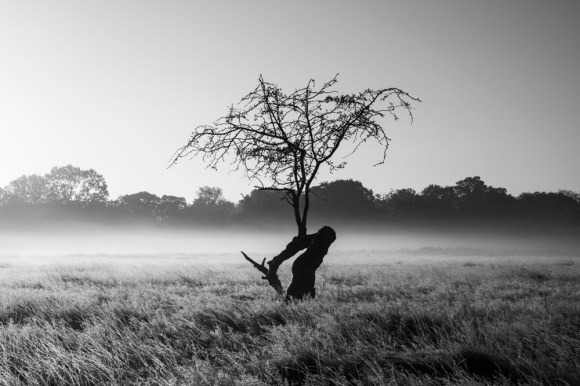
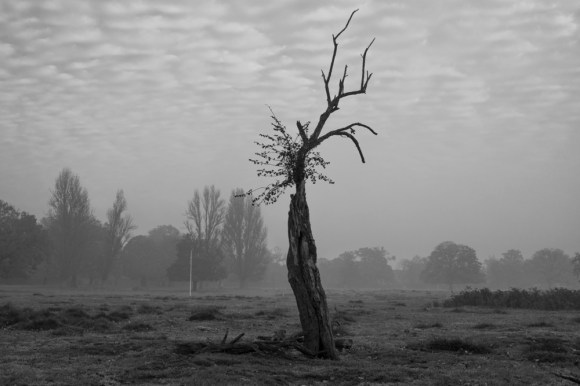
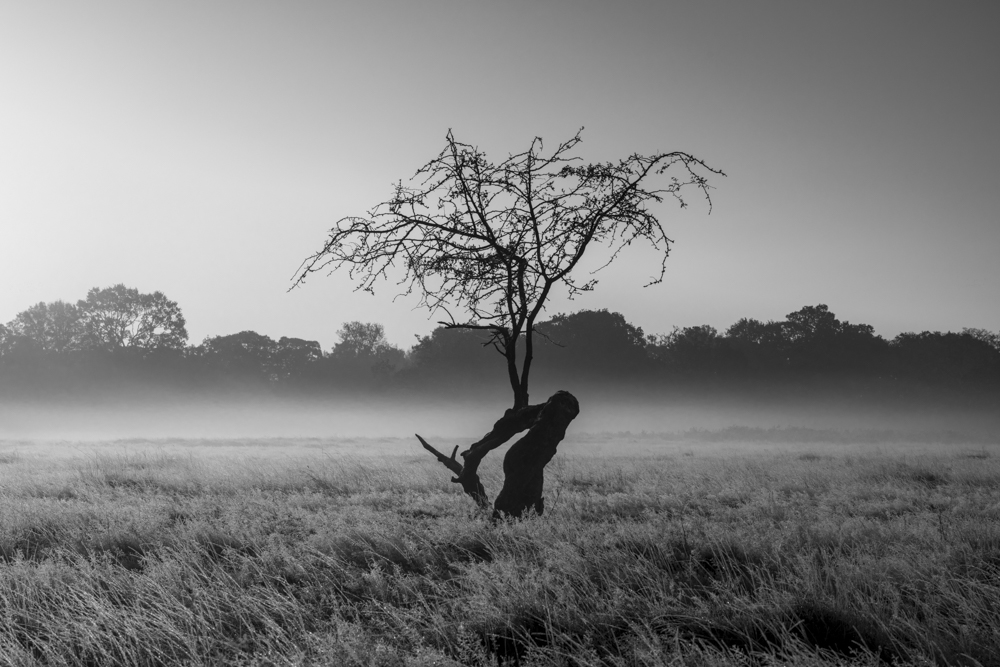
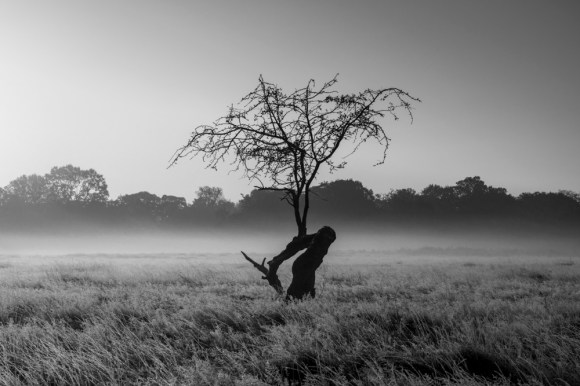
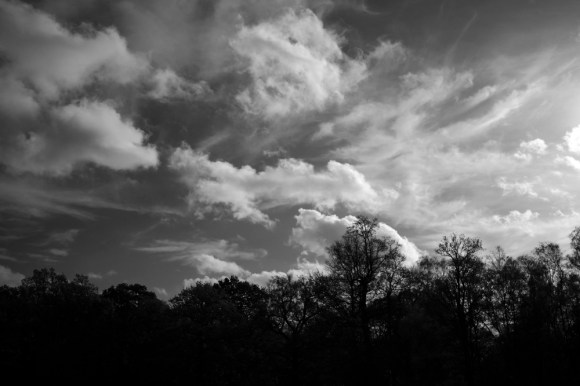
The following image, taken with at 53.21mm at F4, was pointed out as having this effect, which was mainly due to the misty conditions.
The other aspect was the conversion of the original colour images to Black & White. This was sparked by my classmate, Mark, who is also a purely digital photographer. Mark is now focusing on Waverley Abbey for his project and is also carrying out Black & White conversions. While talking about his images, Mark mentioned the Zone method (initially formulated by Ansel Adams). This approach to taking digital images then converting them to Black & White has to be carried out in a different way to analogue – expose for the highlights, not the shadows. When recovering ‘information’ in a digital image, the ‘blown’ highlights (pure white) cannot be restored. The darker areas can be made lighter in order to reveal the details. In analogue, it is the opposite.
While looking online for more information about this aspect, I came across a very useful article by Spencer Cox.
‘The art of black and white photography is surprisingly difficult to master. You can’t just slap a “noir” filter on your images and call it a day!’
(Cox, S. 2020)
Over the past seven years, I have been converting images to Black & White digitally and have certainly developed my particular methods. I am in complete agreement with Cox on his instructions and would never even consider whacking on a filter to create a particular effect. The conversion needs a subtle touch and a keen eye to achieve the best results.
One other recommendation that stood out was using the camera settings to take the shot in Black & White. When shooting in RAW, the file will retain the colour, but the monochrome version will appear on the screen. On that piece of advice, I set my camera to capture a RAW version and a low-quality JPG. This means I have both the original colour file that can be converted to Black & White utilising all of the available information and have a monochrome reference for editing.
Cox’s article is extremely useful and I will be taking his advice on board as this project progresses.
The other aspect was getting to know my camera better. This article by Nasim Mansurov was very informative.
By following Mansurov’s suggestions, I reset my camera to see how it would make a difference.
With this information in mind and the suggested changes made, I visited the park.
Tree One
The first hawthorn I revisited was the one that had elicted the best response.
35mm Shots
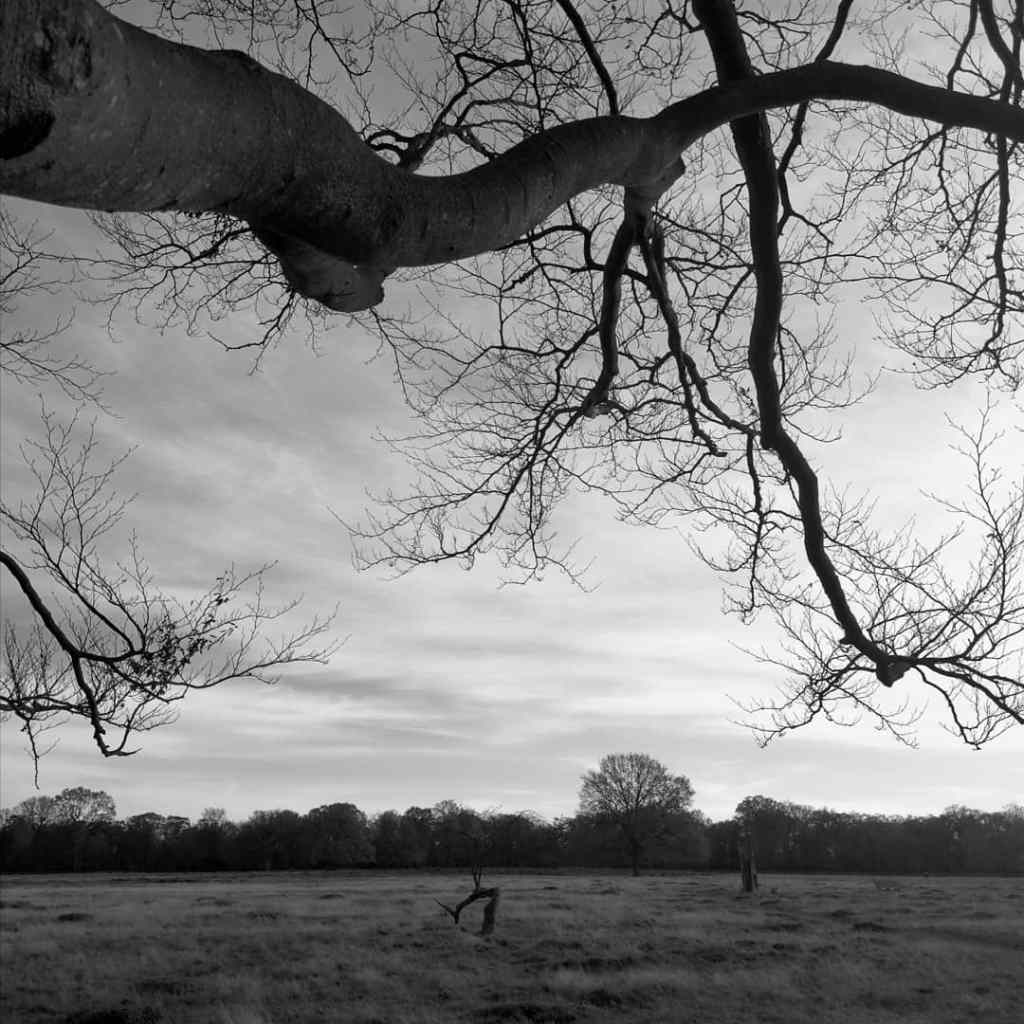
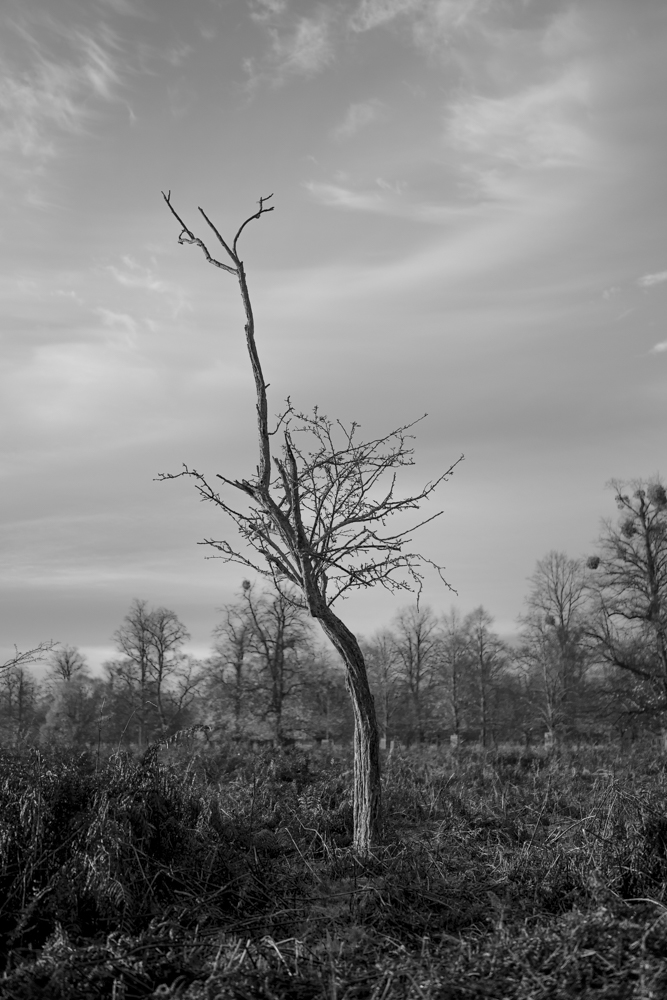
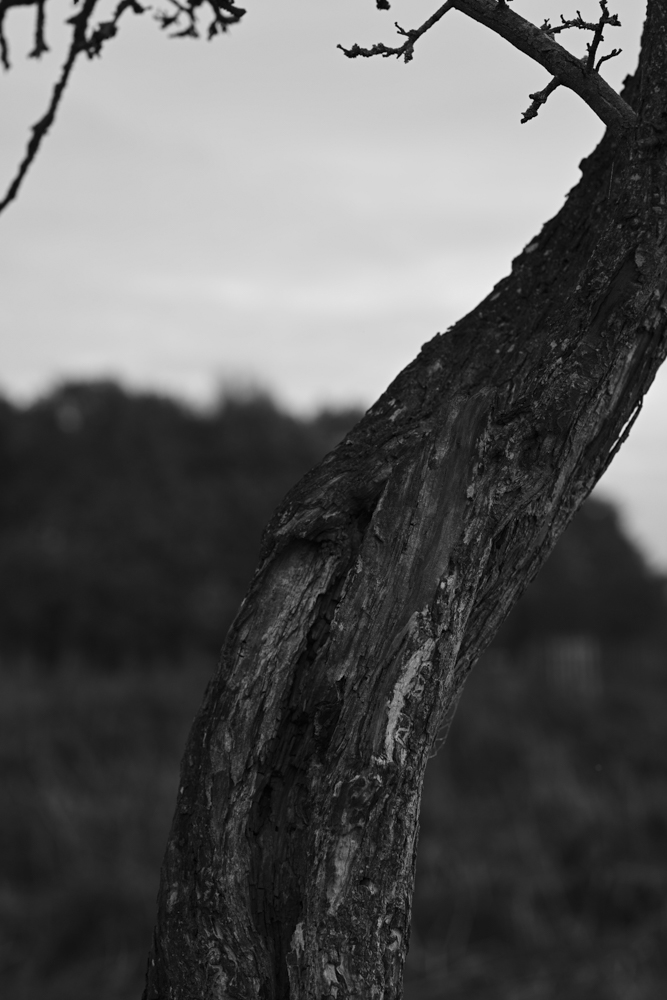
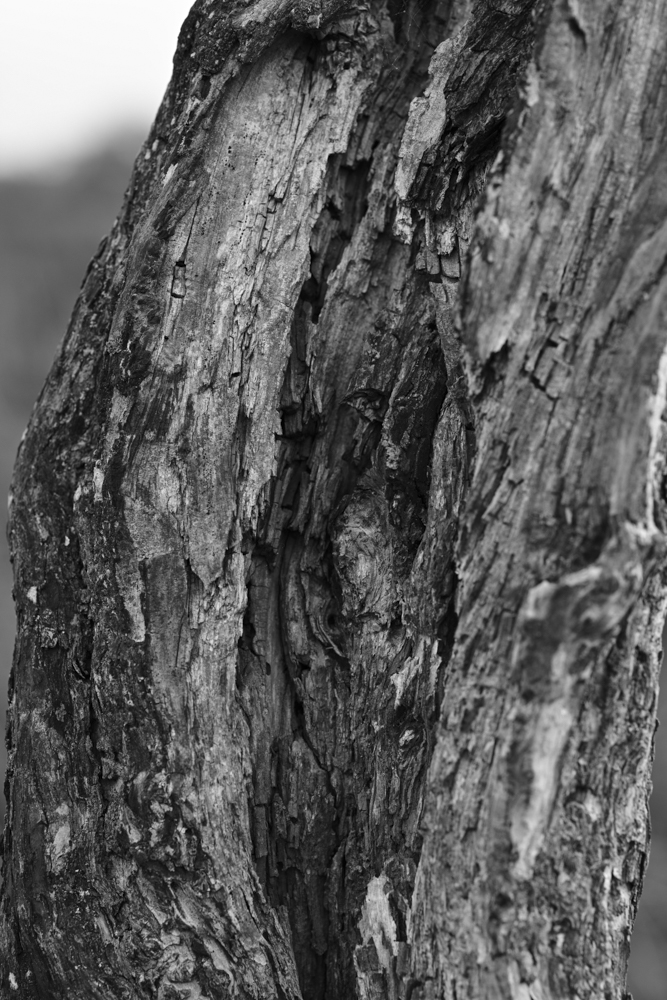
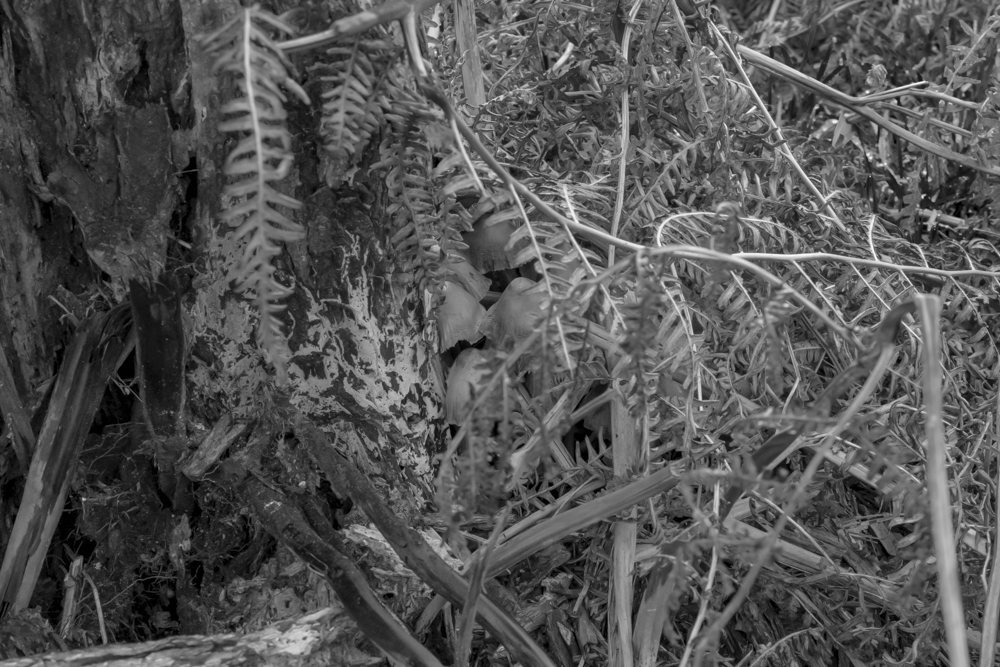
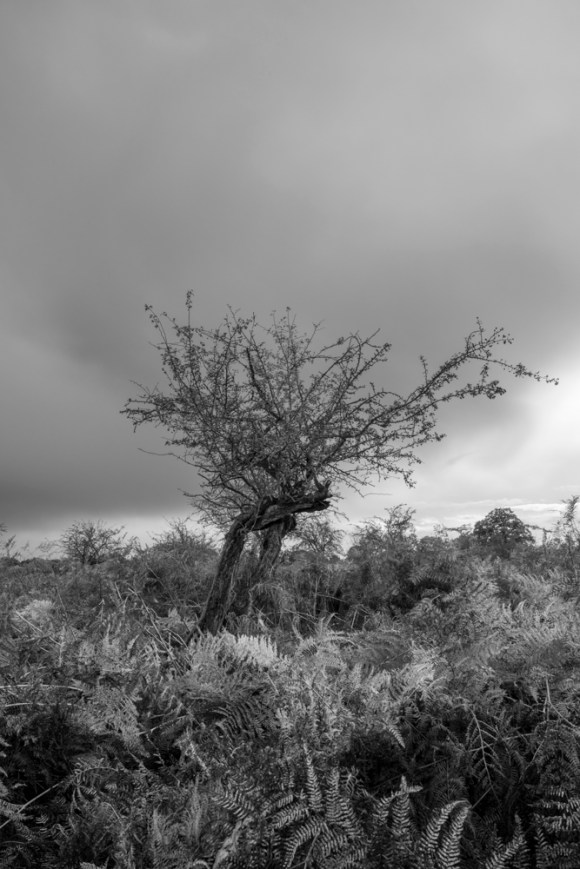
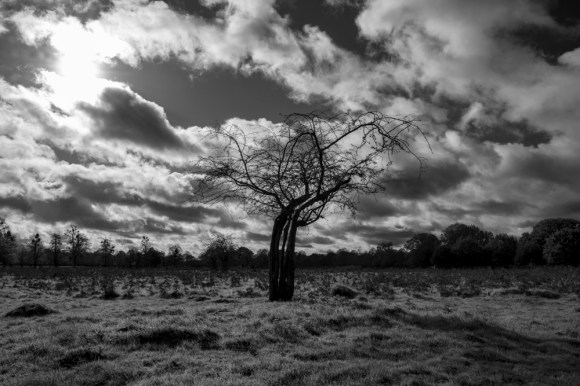
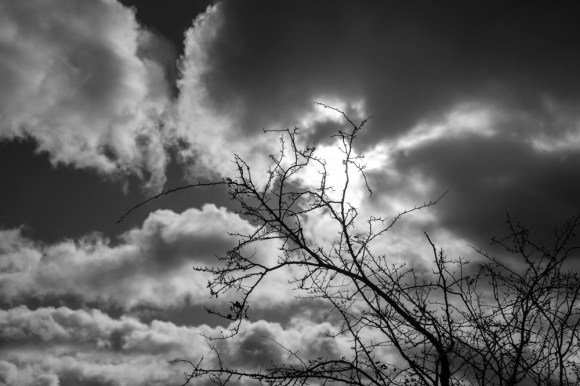
I first tried the 35mm lens. The sunlight was trying to pierce its way through the clouds and I noticed how the light exposed the texture on the side of the hawthorn. The following shots were taken using F1.8 and are the Black & White JPGs converted by the camera. These were shot in Aperture Priority, but with an exposure compensation of -0.67 in order not to blow the highlights.
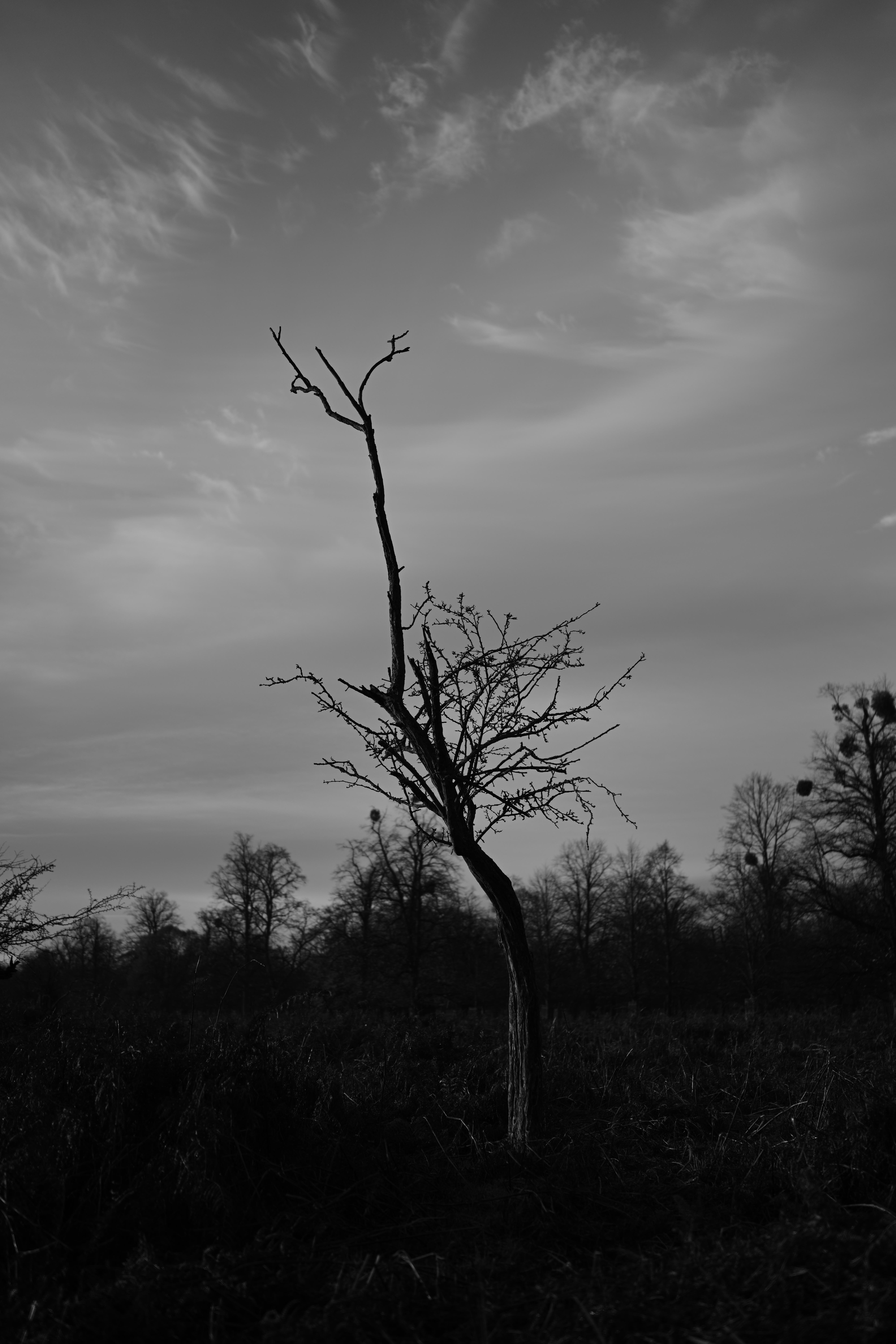
When initially looking at the resulting images, I chose this one to edit using my usual Camera Raw method. When I looked closer at this image, I could see the noticeable difference between the sharpness of the tree and the majority of the foreground in comparison to the out-of-focus background. I was not sure about this effect at this stage. It would have to be investigated further by placing the camera on a tripod then changing the settings. This would enable me to compare results and work out the optimum effect.
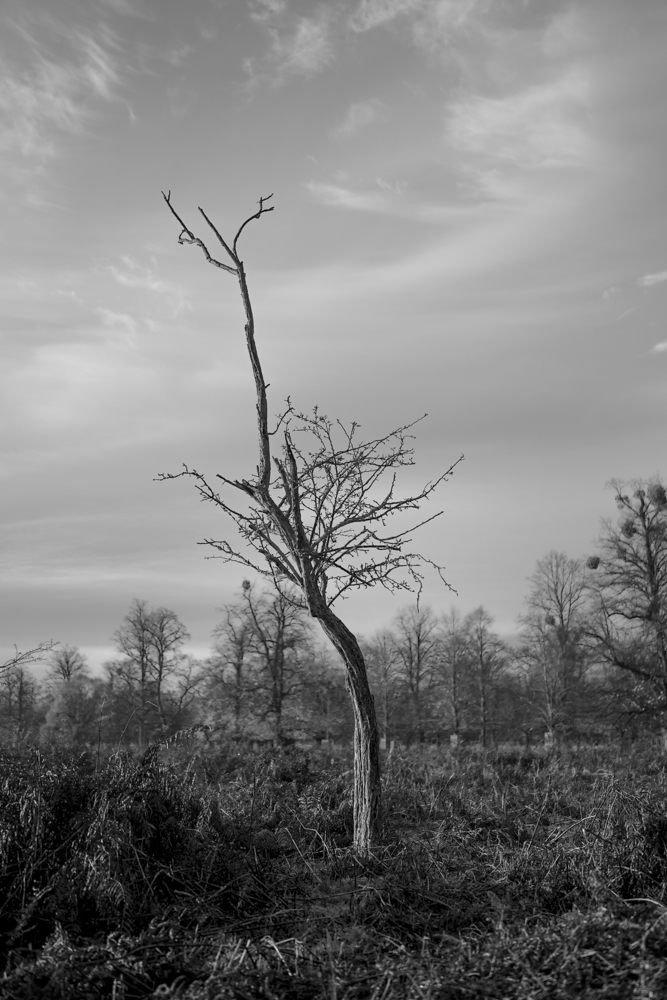
These are the Black & White JPG and converted RAW file images for comparison.
85mm Shots
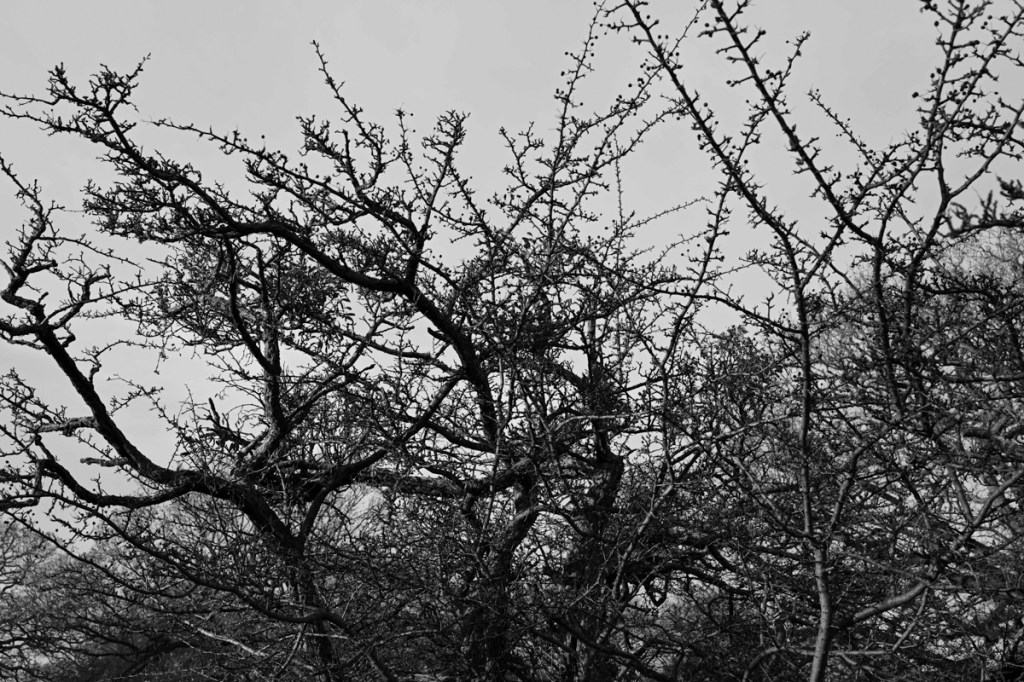
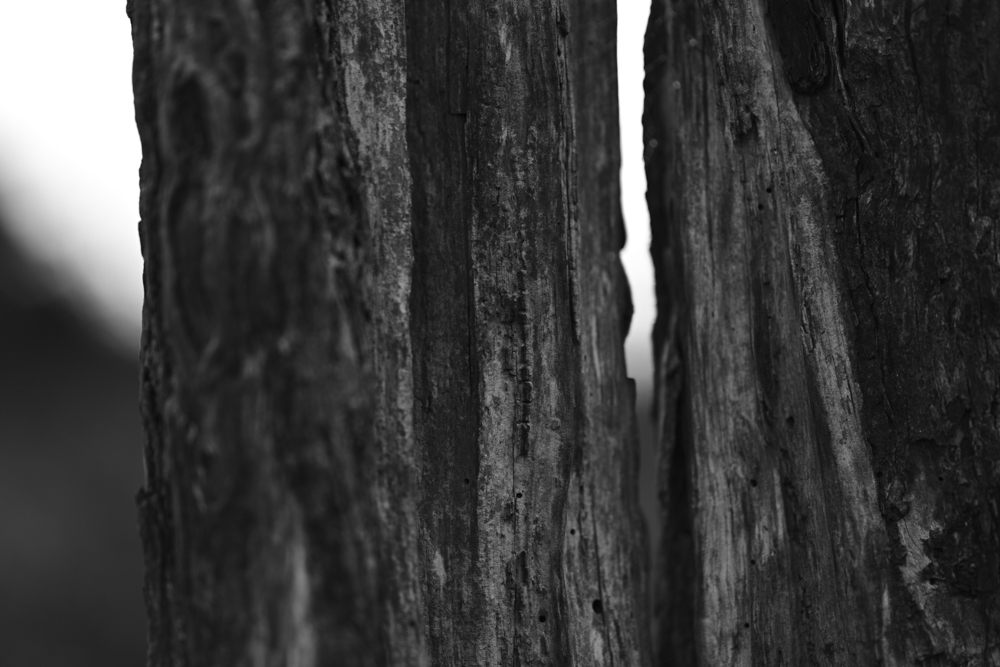
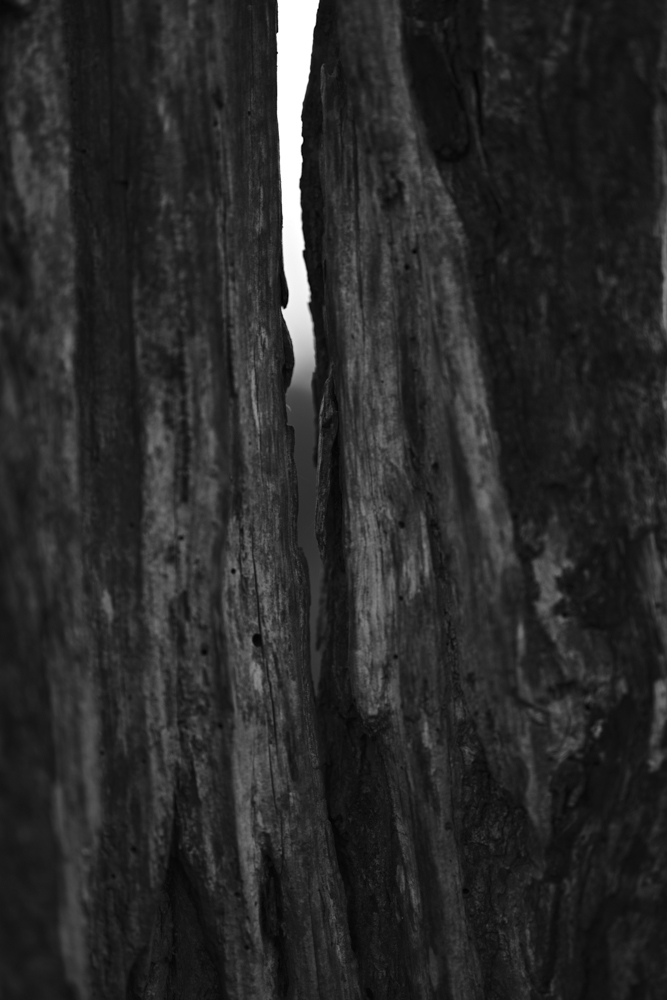
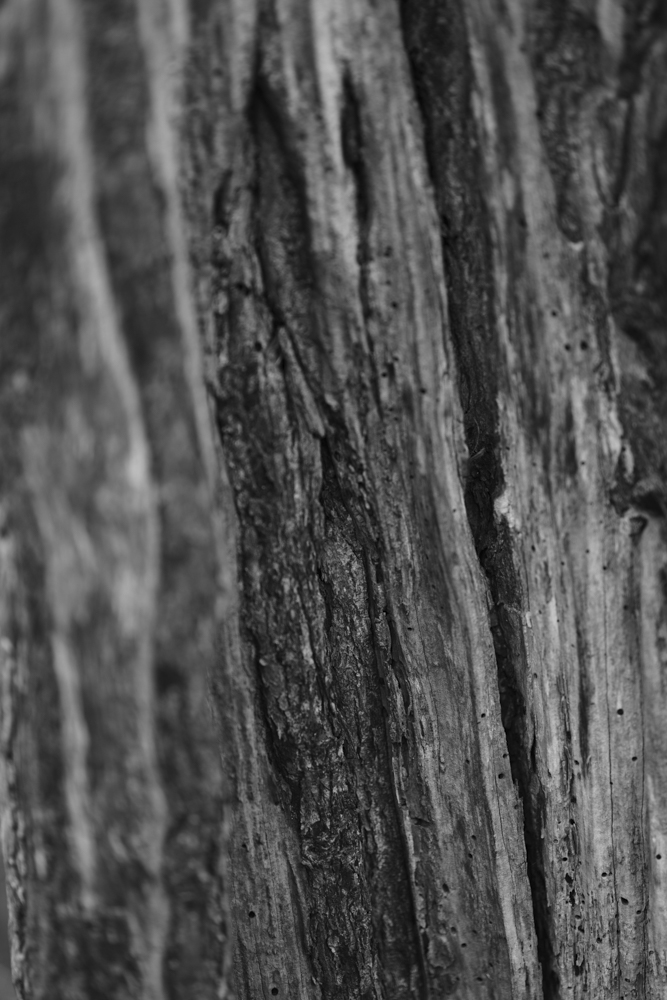
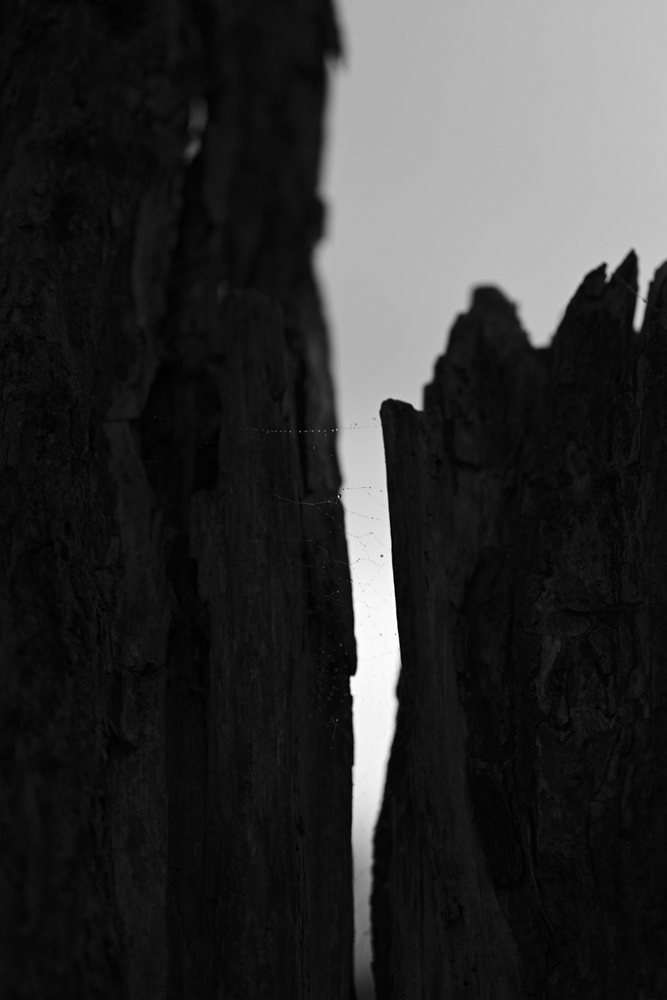
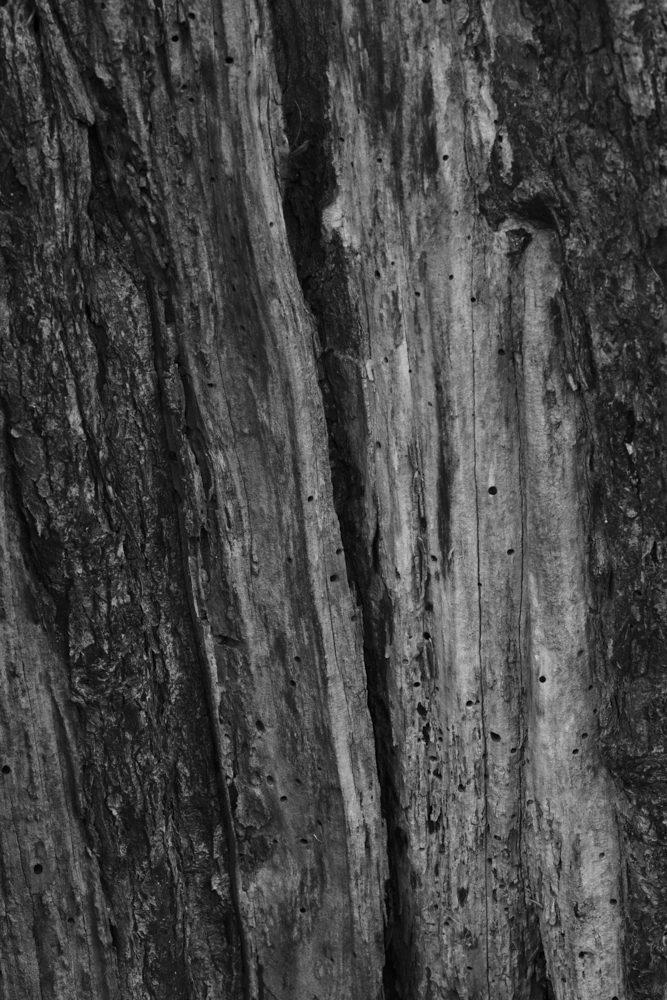
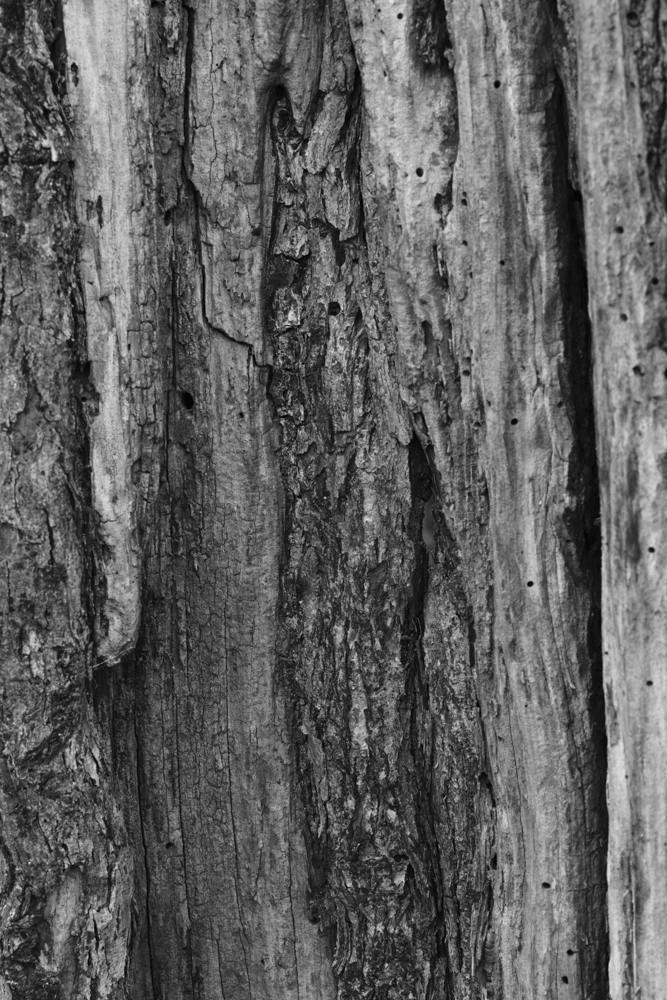
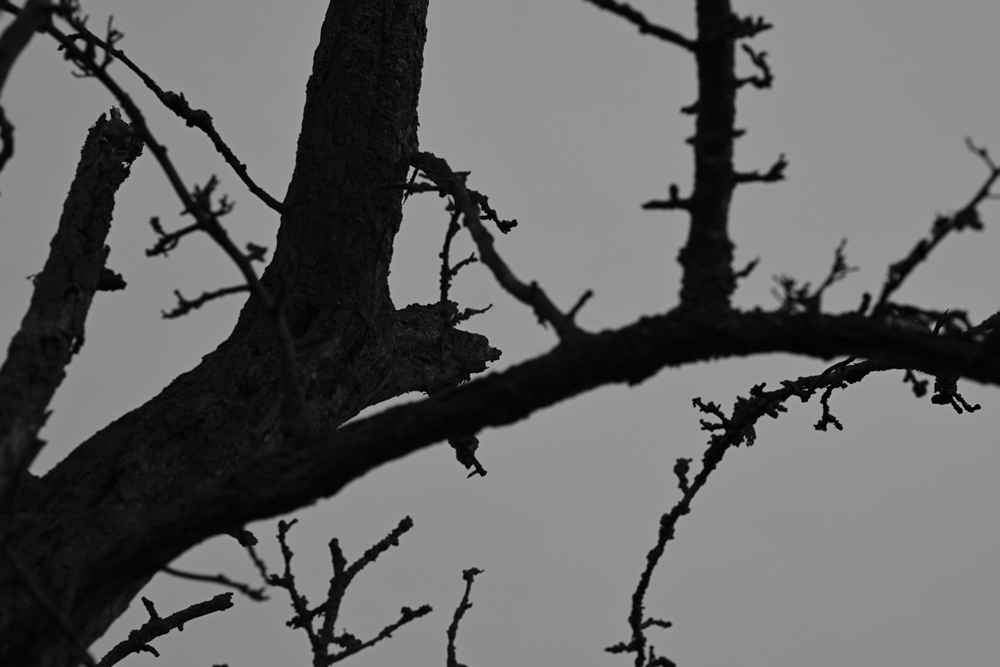
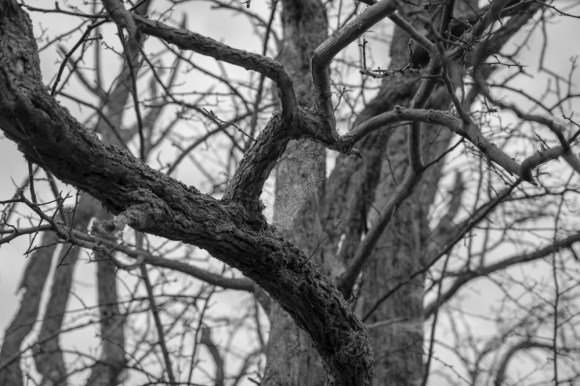
I then tried the 85mm lens. I wanted to get some close-up and abstract images of this tree. The reason behind this is that it was suggested I focus on just one particular hawthorn for this project. I wanted to know how the different angles and proximity of the lens could change the viewer’s perspective of an individual tree. Again, these are the Black & White JPGs created by the camera.
I created the following Black & White conversion to see the results.
Again, these are the Black & White JPG and converted RAW file images for comparison.
In reflection, different results were created by different methods. My aim for this exercise was to try something new and this was certainly achieved.
The day after the Interim Review, I was still processing the verbal feedback. I had spent most of the day looking at ways in which to improve my Black & White conversion technique and getting to know my mirror-less camera better. To clear my head, I took a walk in the park at dusk.
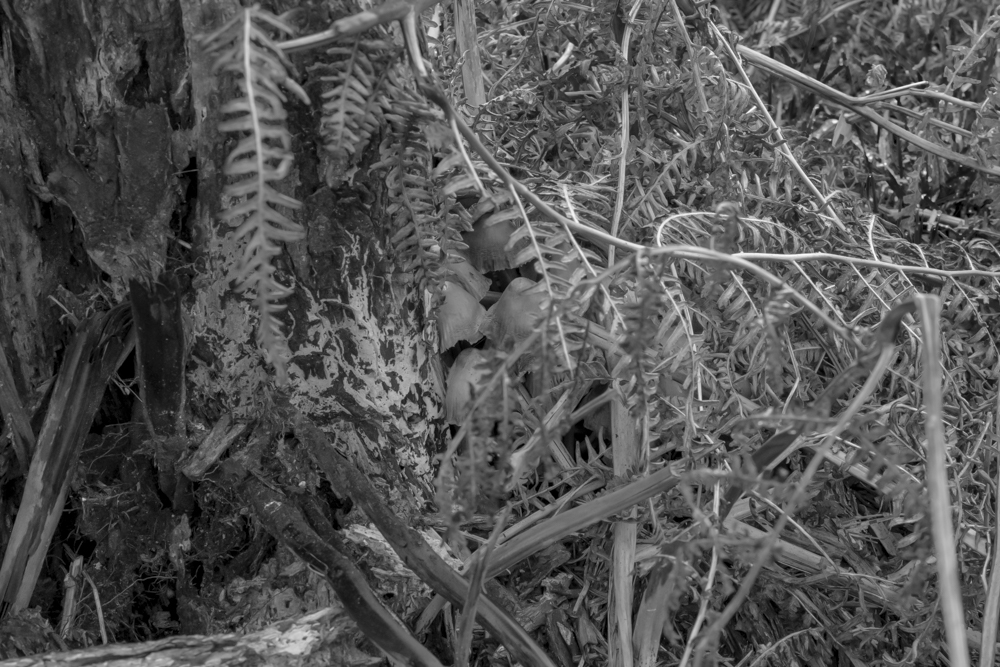
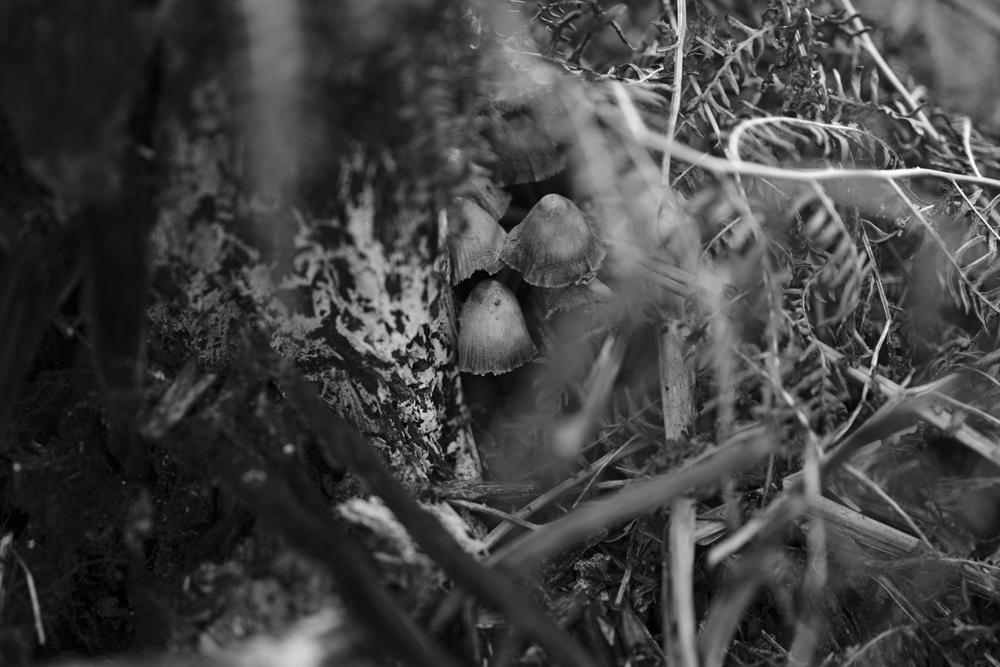
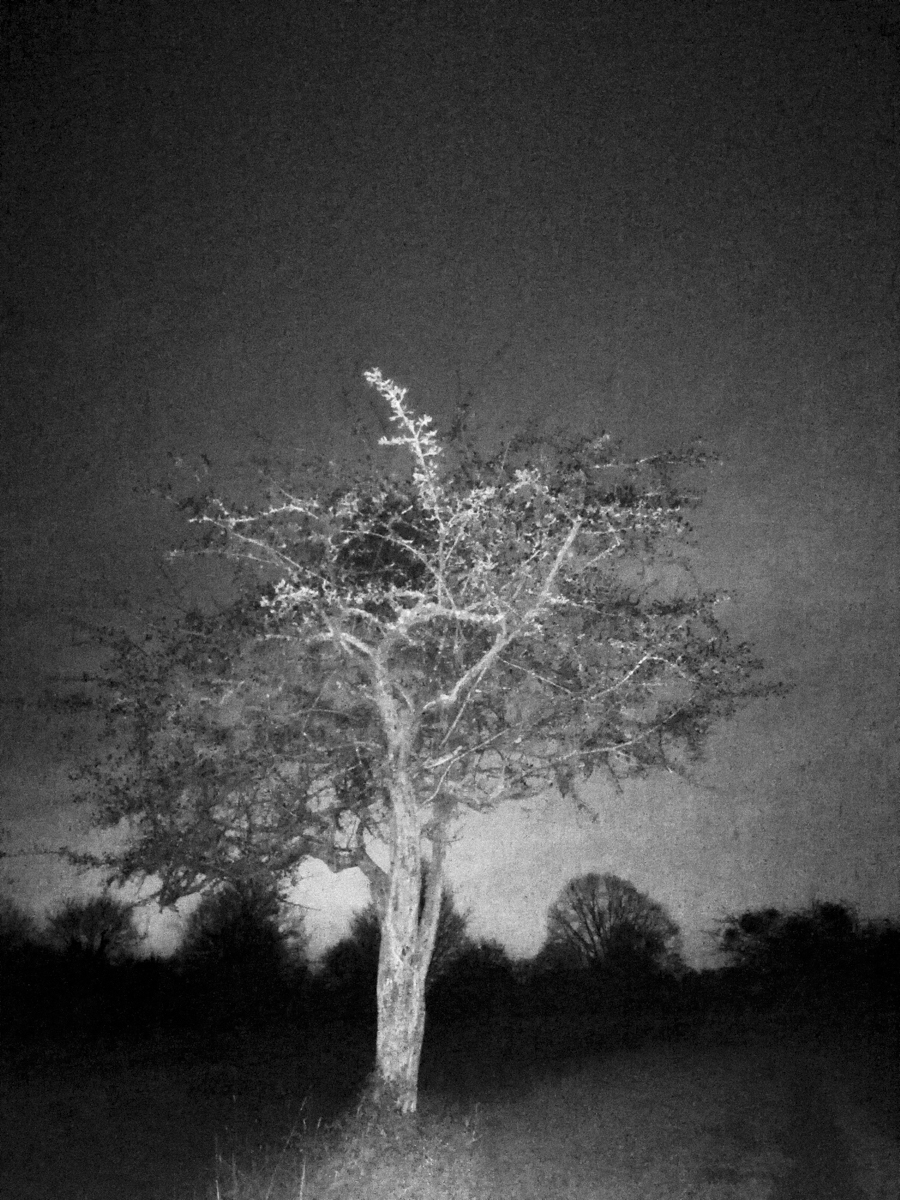
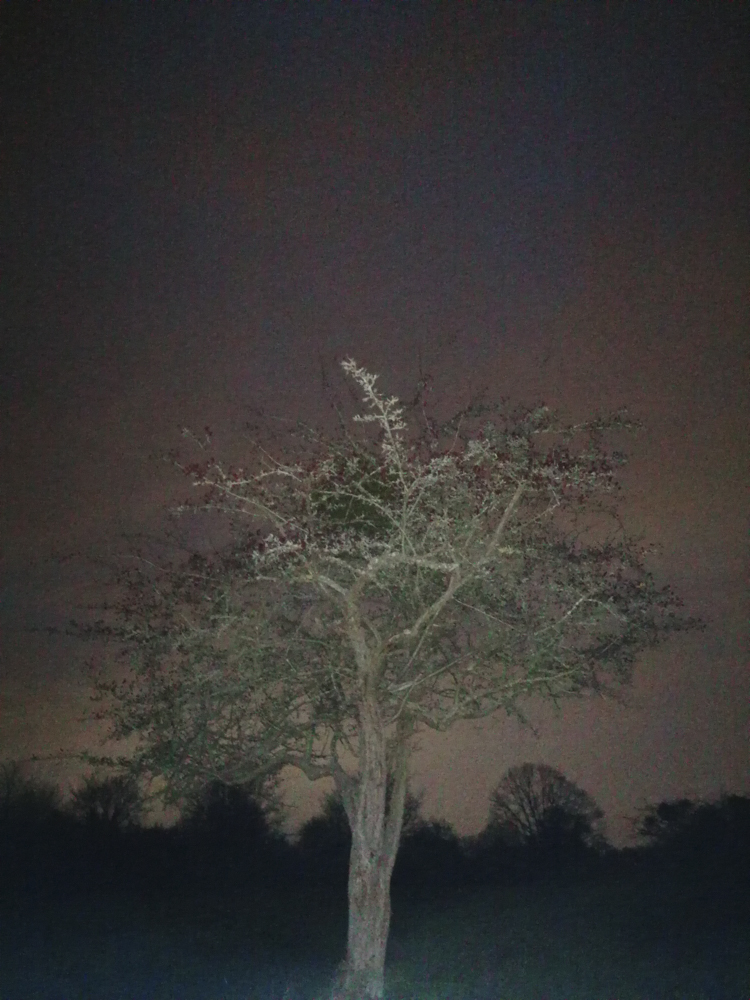
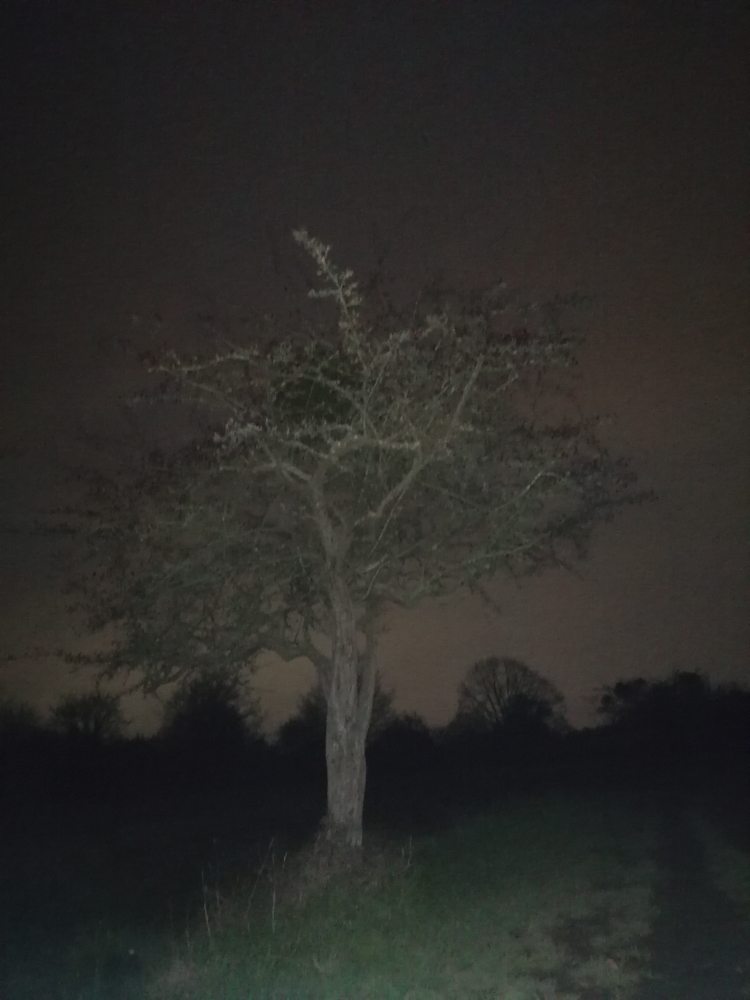
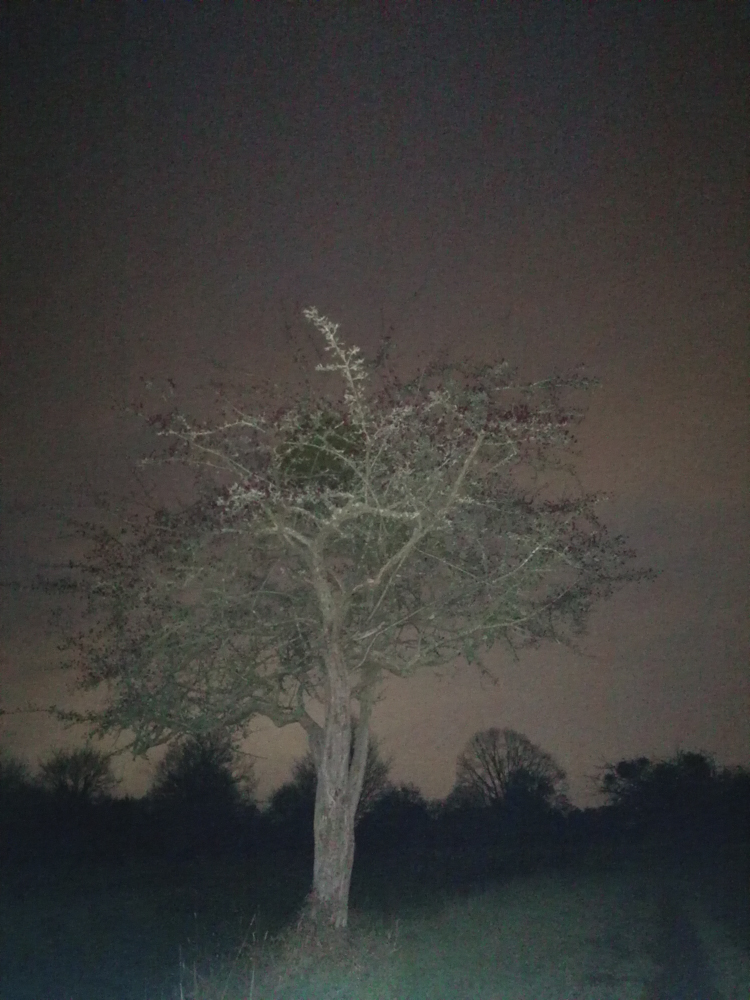
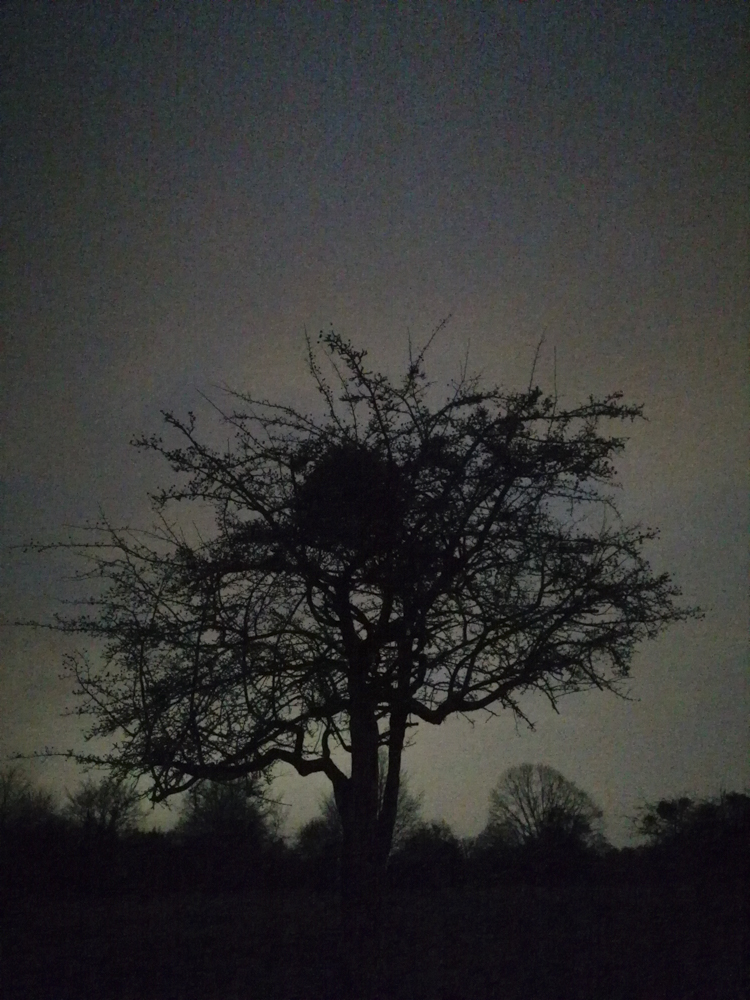
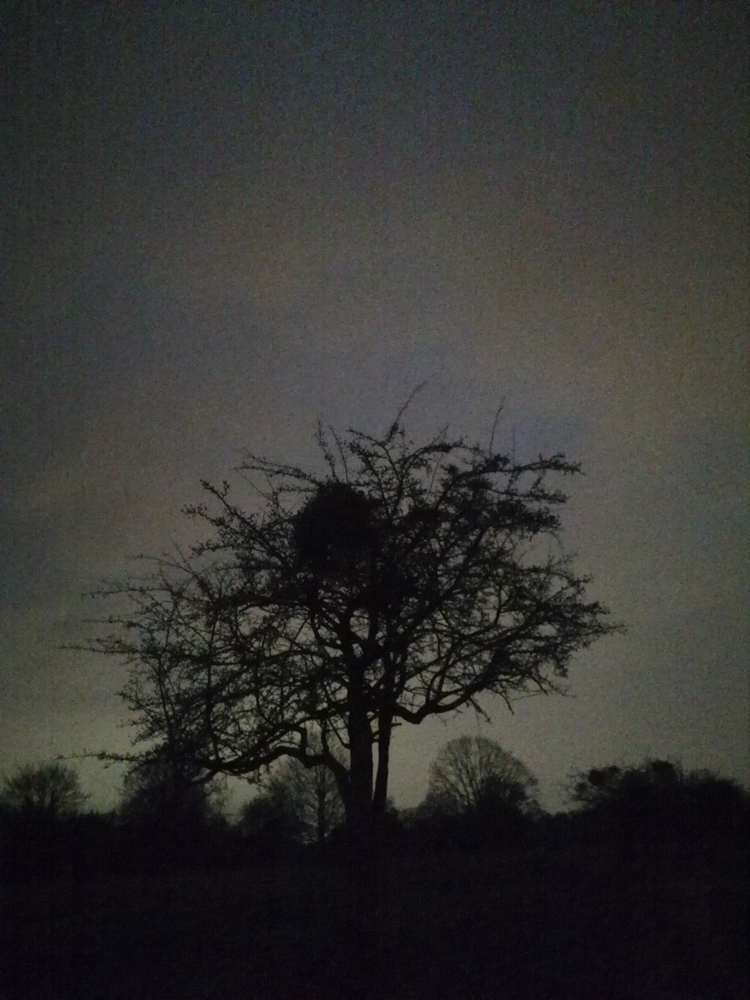
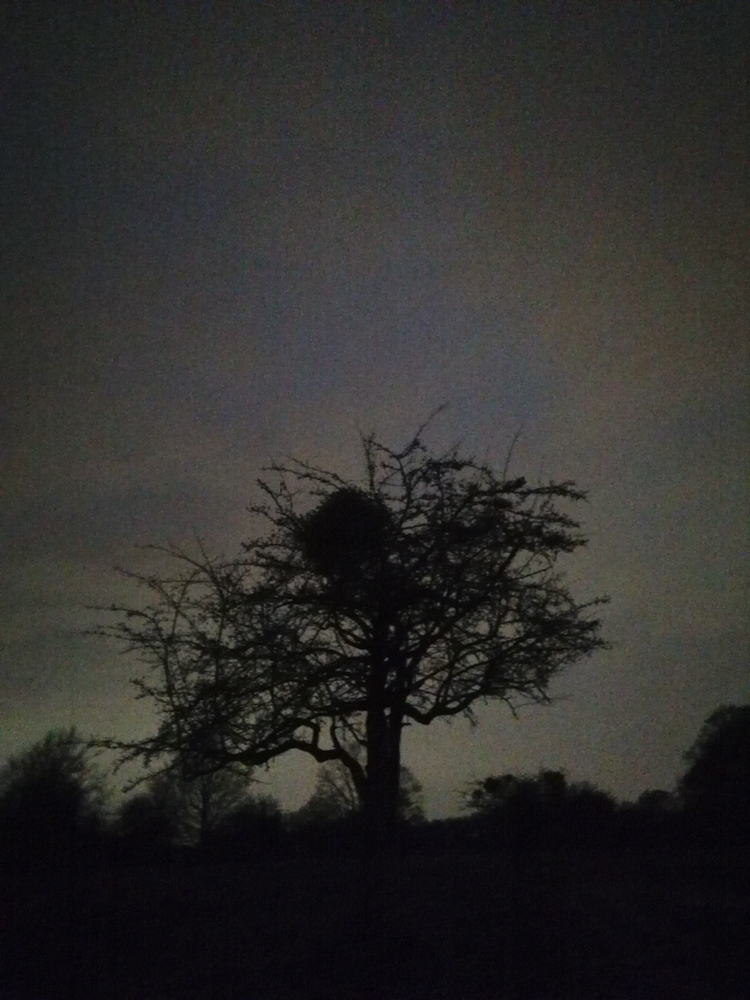
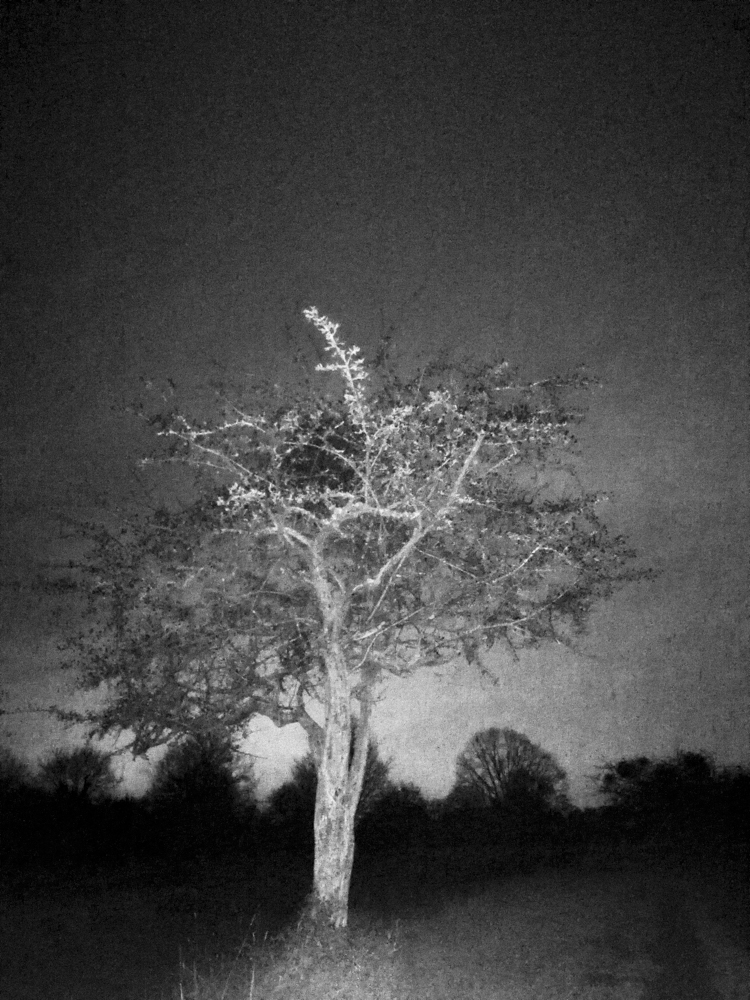
It was interesting seeing some of the hawthorns in darker conditions and I thought I would try something different. I took the following images using my smartphone. The first three are without using the smartphone camera flash and the second three are without.
I later tried the following Black & White conversions. The one on the left has been carried out using Camera Raw, the one on the left using the Instagram editing settings.
The Interim Review went ahead on Wednesday 18 November as scheduled. It was a great opportunity to see my classmates progress so far plus both give and receive feedback.
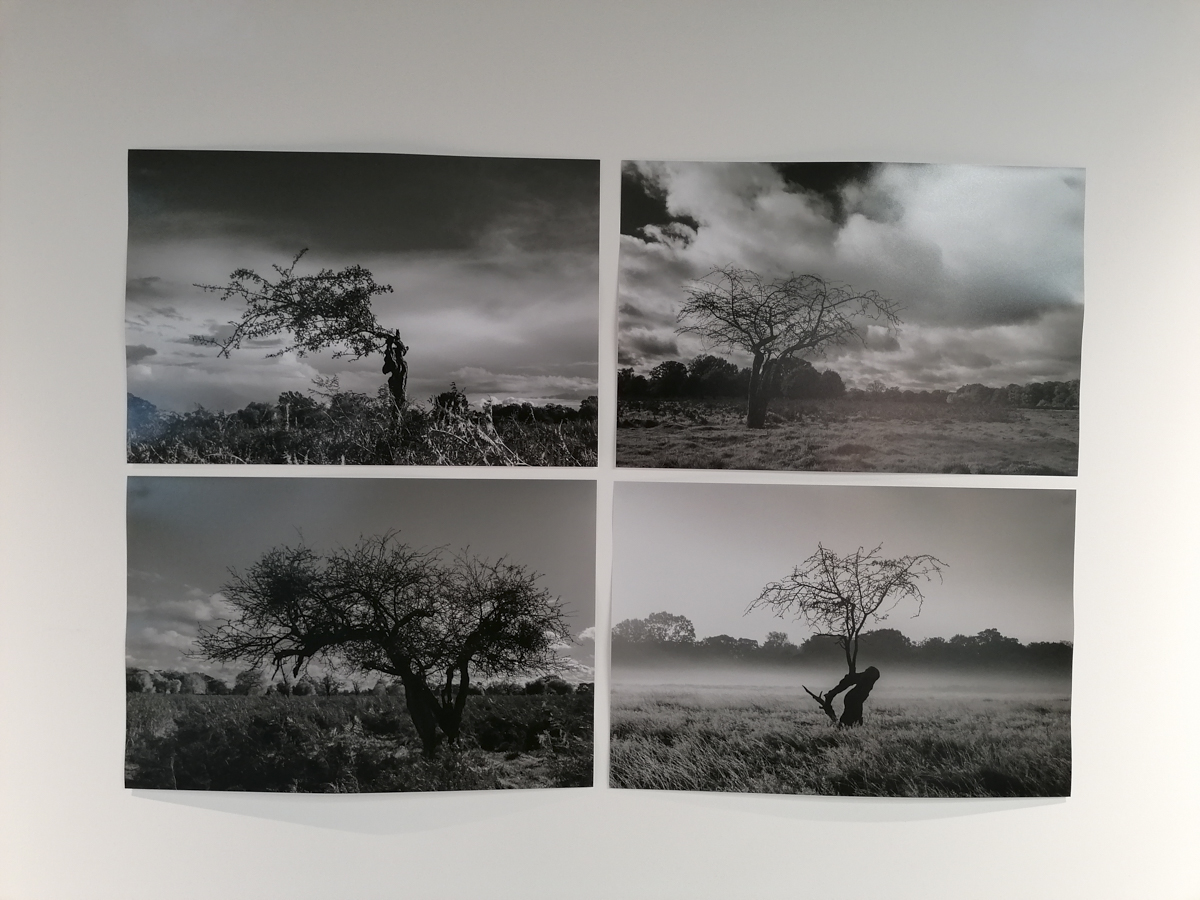
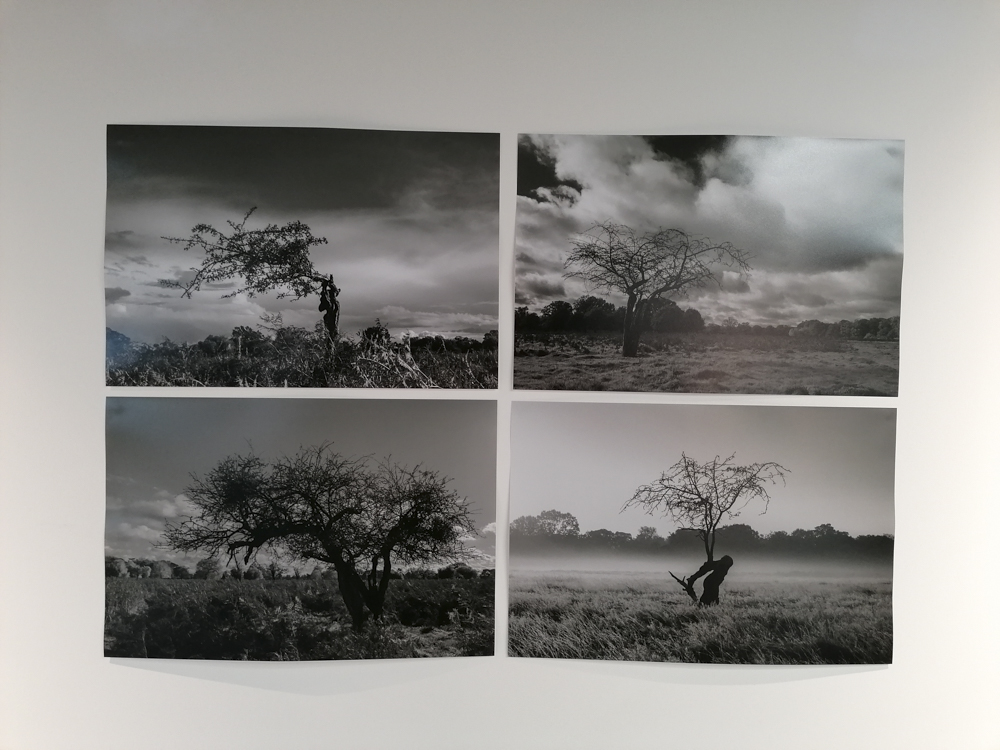
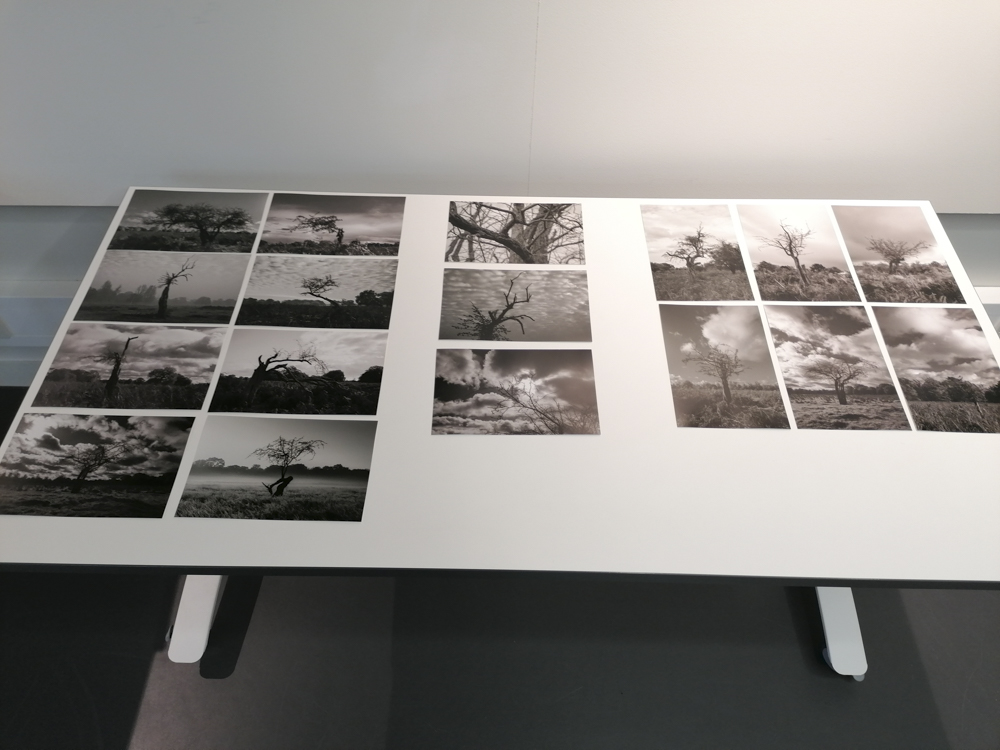
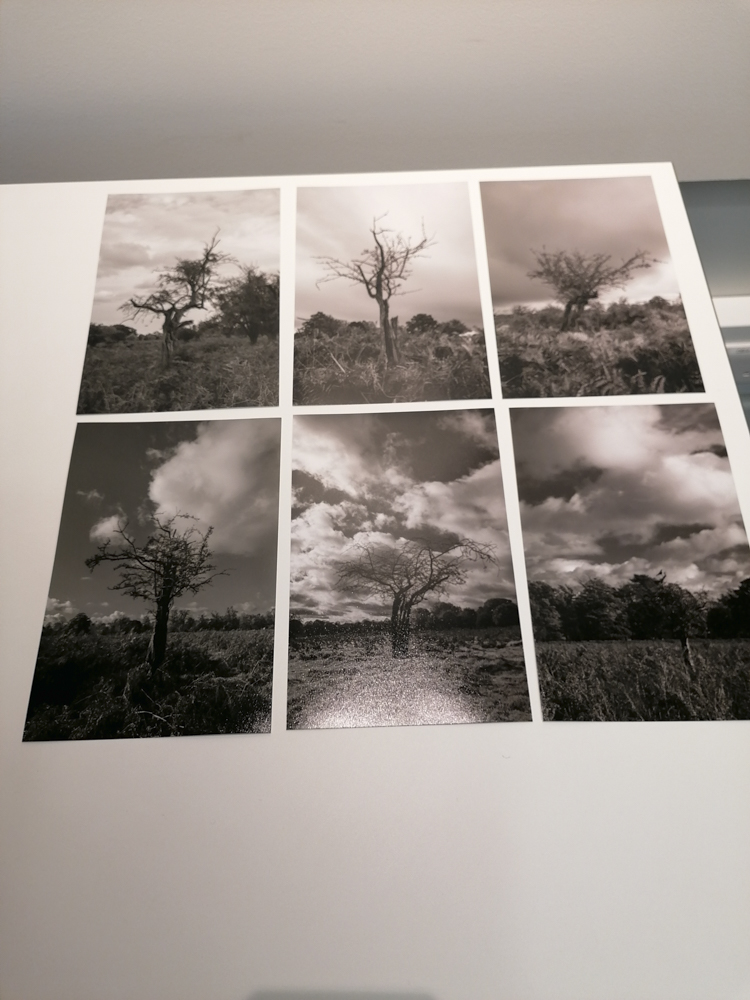
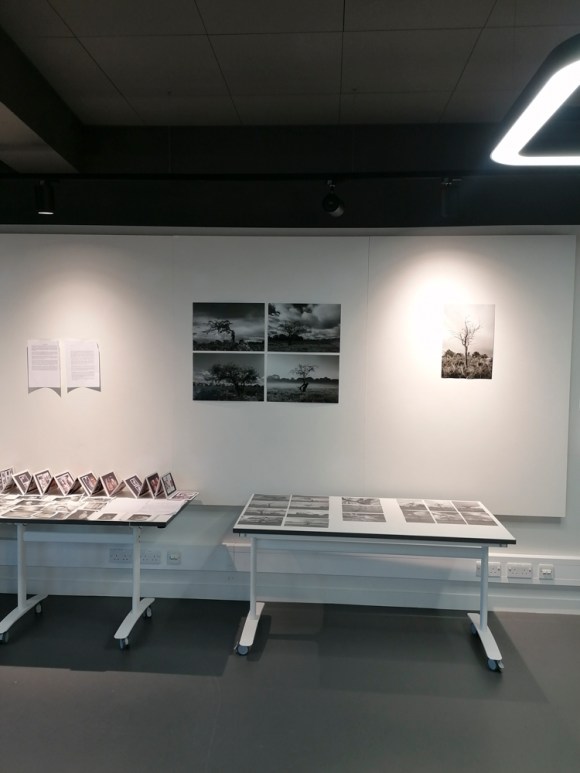
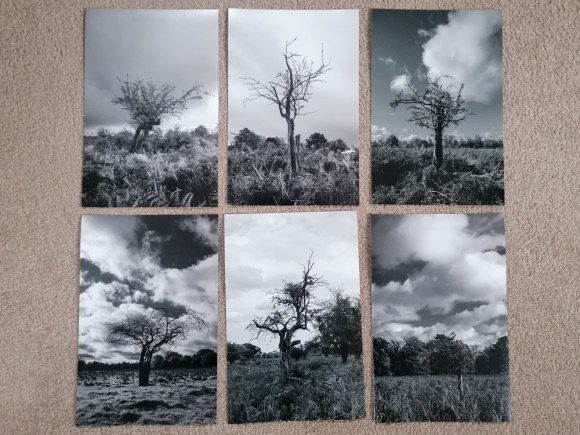
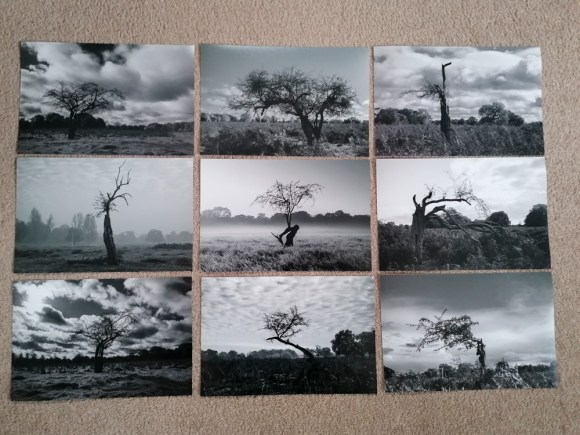
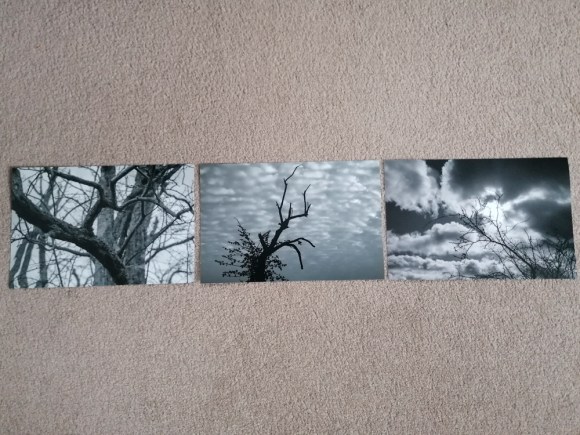
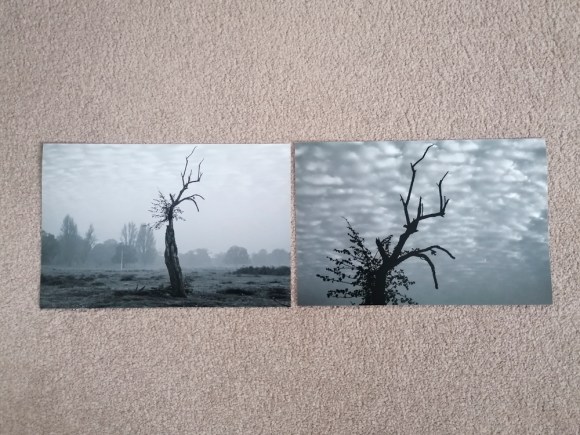
I had printed off a selection of roughly edited images as matt C-Type prints, which would give everyone a chance to see them in ‘reality’.
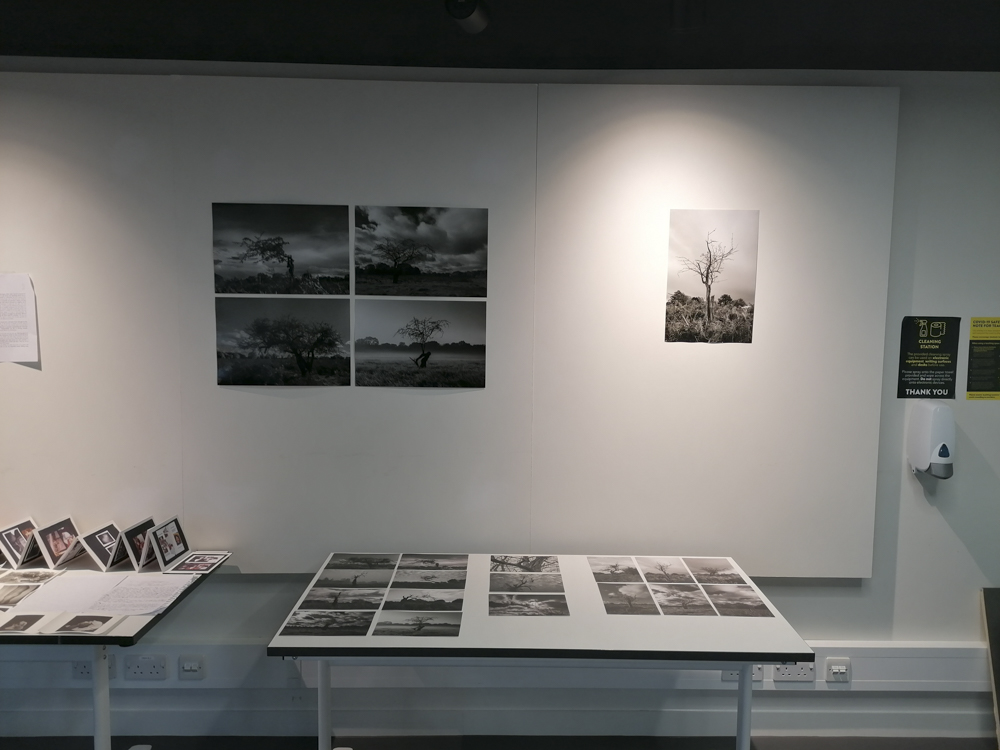
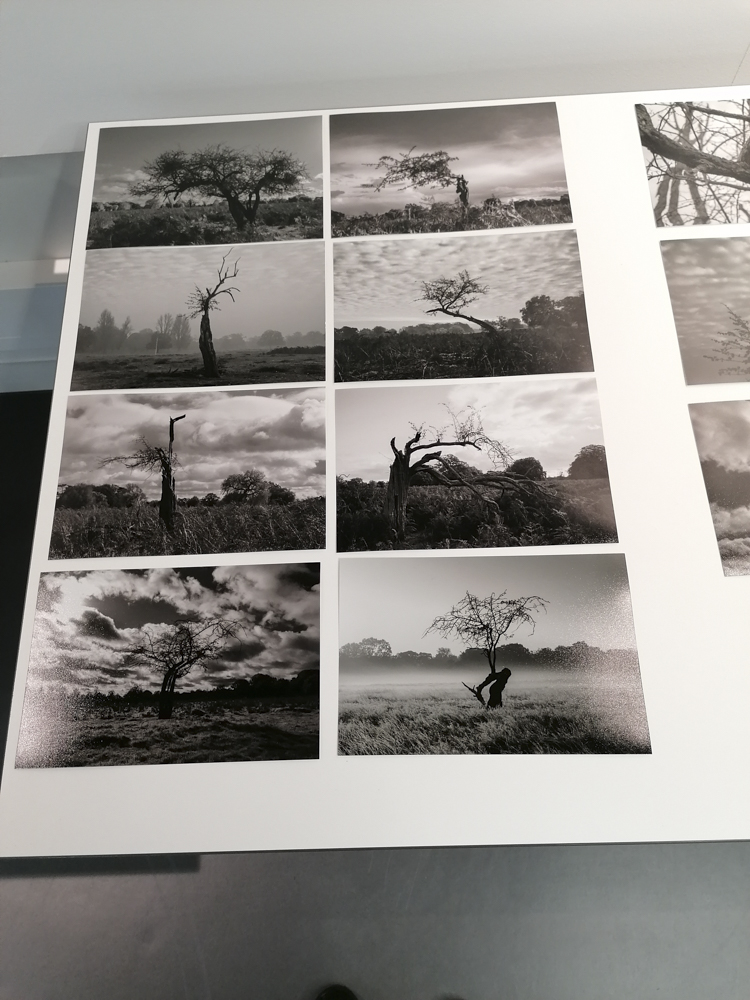
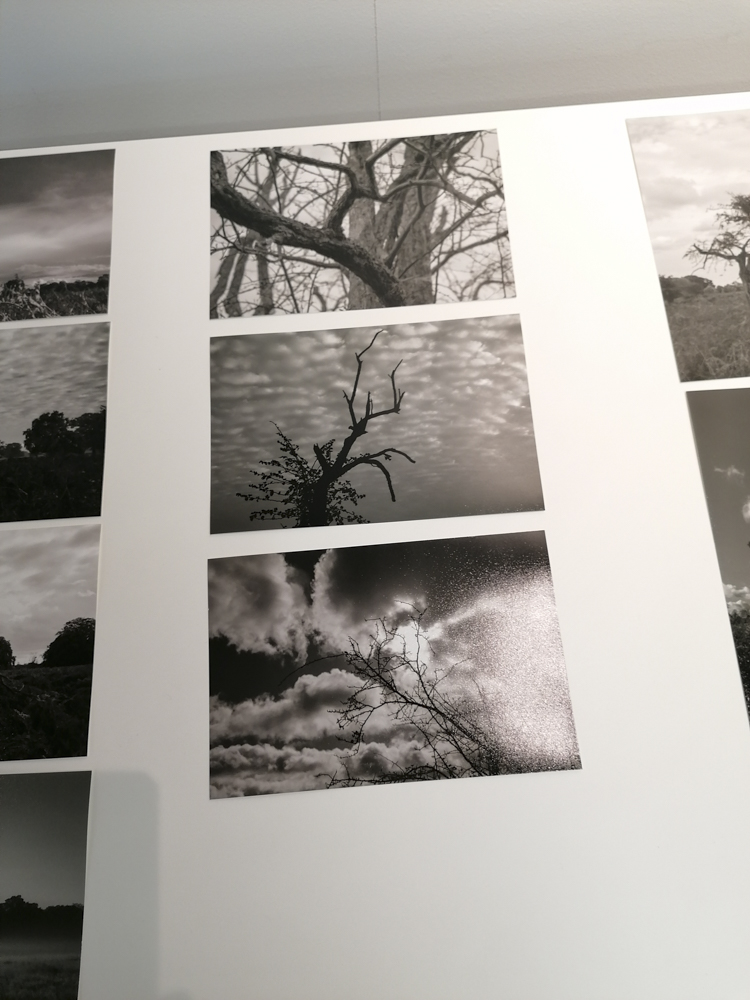
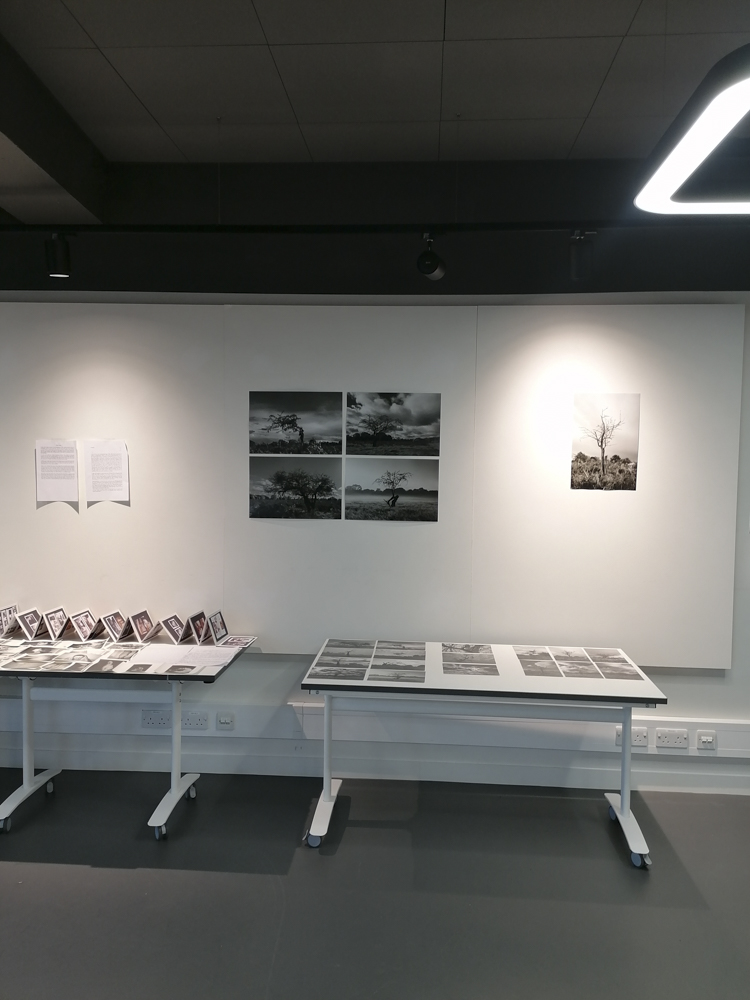
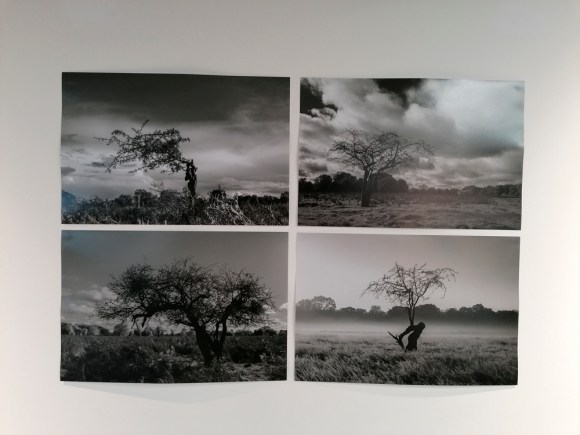
With regards to presentation, I displayed the images as below.
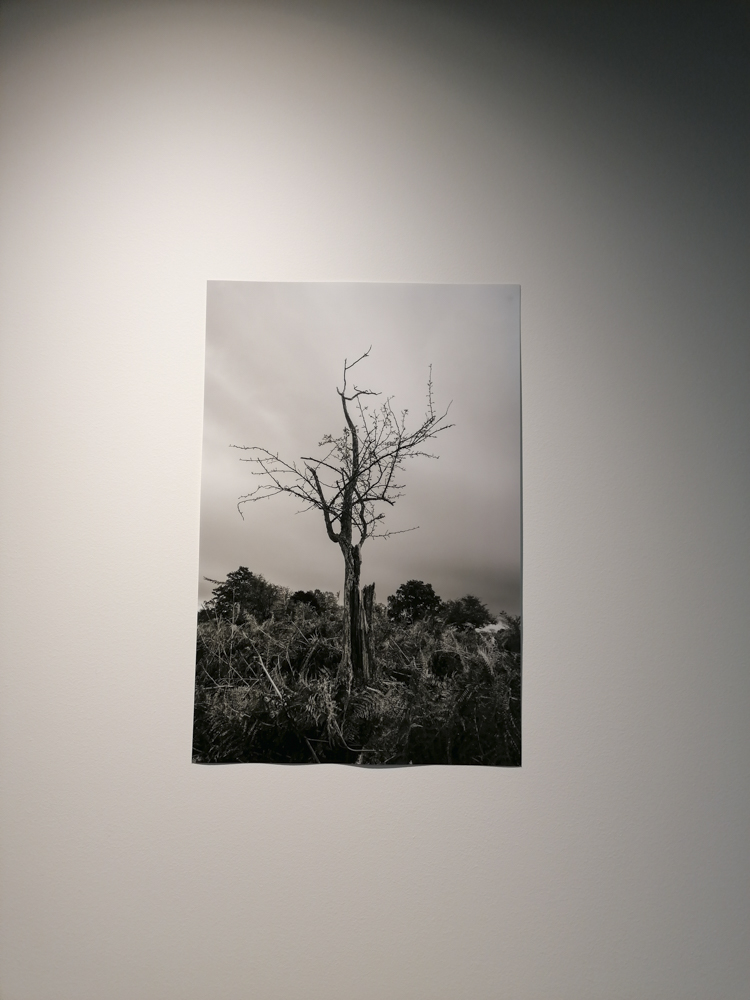
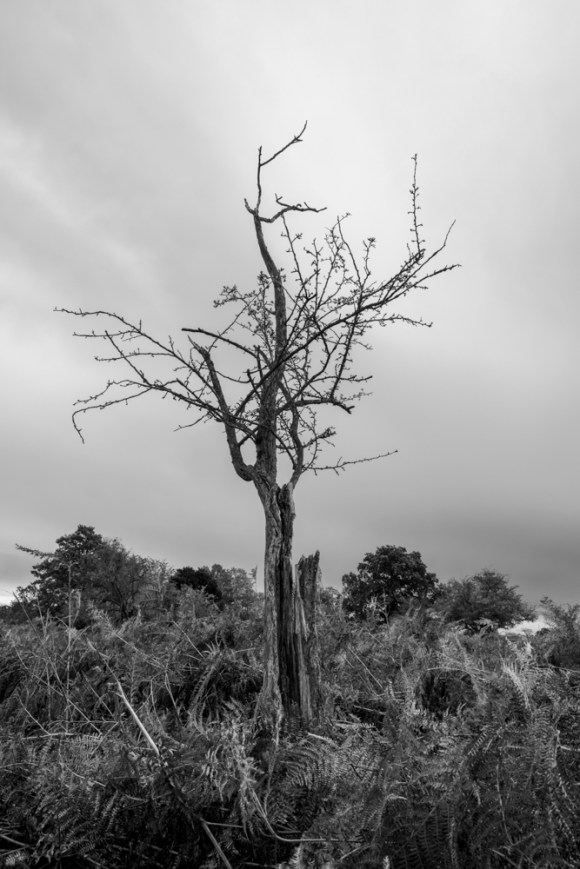
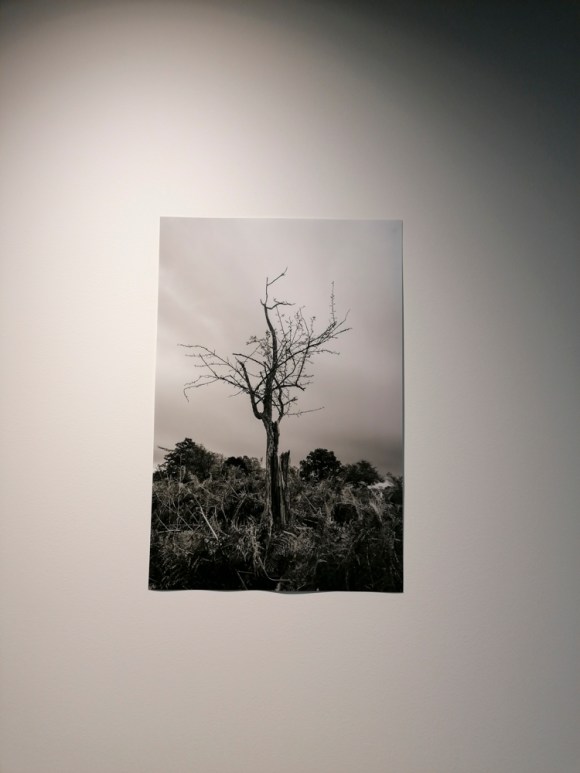
In general, the images were received well. The most positive responses received were from this print.
The elements that were most remarked upon were:
Highlights – accentuated the details of both the tree and the surrounding elements of the environment
The diffused effect of the sky/clouds
Composition was good
What really did help was how the image was presented. This 20″ x 18″ print was by its own on a white board with a dedicated spotlight.
With regards to the other images, I think the presentation could have been much better. One aspect that Fergus remarked on in relation the majority to work shown was to let the individual images have their own ‘space’. When showing images together, the viewer will try to make sense of a sequence rather than looking at the image in front on them.
By showing the ‘landscape’ images in this way, it distracts the viewer. These images were not lit (the bulb had gone in the corresponding spotlight) so were in very dull conditions. These images do need light to bring out the details.
I also realised that seeing the images large on screen would have been a better way to present. My classmate, Mark, had presented his Black & White images of Waverley Abbey during the review and they looked magnificent. There was a key visual difference between tones and highlights, which I need to bring out in future photographs of the hawthorns.
One way in which this could be done is using a speedlight into the sun/day light. As my classmate, Ola, reminded me this will bring out the details of the tree and counteract the direct light when the tree is in shadow.
A further thought is to photograph the tree when the light is on the side of the tree. This would be similar to the Rembrandt lighting setups normally utilised in portrait photography. This lighting plays with chiaroscuro and creates a very dramatic effect.
The most interesting comment from two of my classmates is that hadn’t realised that hawthorns could be this ‘big’. They thought they were just bushes. This is one of the reactions I was hoping for. The whole concept of this project is to reveal the ‘hidden’ hawthorns of the park and change perceptions of these trees.
Overall, what did come through from the feedback on board is now I have to now focus on producing strong and coherent images. This was underlined by my tutor, Åsa, who commented that I should:
Take ownership of my images!
After processing the feedback, I realised that I need to develop and strengthen my technique and skills in relation to my practice-based research.
This involves:
Lighting from different directions (using natural light and speedlight fill-in flash)
Digital version of Black & White ‘Zones’ (Ansell Adams)
In order to showcase what I have researched, collated, and produced so far for the Interim Review, I will have to present:
Work-in-progress: considered rough edits of my project to date. If I feel that including contextualised research would be beneficial, I will bring these materials as well.
A short project statement: I will be asked to succinctly introduce the project’s underpinning concept and reflecting on my decision making so far in terms of production.
The aim of the mid review is to make possible a critical and safe space where project ideas are articulated in relation to the production (techniques, materials etc). Each student will receive formative, verbal, feedback from tutors (Fergus and Åsa). It is important that I show a broader selection of my work, in order to enable a productive discussion with peers and tutors, for example to do with potential edit and sequencing.
There will be walls and tables for me to present prints. There will also be a screen available for me to use if I have work that is not yet printed.
I will present the following:
Project Statement
Invisible Trees: The Hidden Hawthorns of Bushy Park
My project will focus on the hawthorn trees of Bushy Park. Since starting this line of inquiry, I have discovered that the hawthorn is integral to human history, medicine, religion, culture, mythology, and the environment. I have also looked deeper in the history of Bushy Park and how it is strongly connected with the hawthorn. By focusing on a particular tree within a constricted environment, my intention is to photographically reveal the hidden ‘identities’ of the hawthorns in Bushy Park.
There were two main decisions behind choosing this particular location. Firstly, due to the current lock-down restrictions, it is close to my home and can be reached by foot or bike. The nature of this project means I will need to visit and study my subjects on a regular basis and in different weather conditions. I can also combine outdoor exercise with my photography. Secondly, it is an environment that, although I know well, also recognise there is scope to discover it further both through research and photographically.
My initial plan was to map these trees for the purpose of adding them to the Ancient Tree Inventory. The majority of hawthorns in Bushy Park fit the particular criteria of ‘ancient’, ‘veteran’ or ‘important’, as outlined by the Woodland Trust. As far as I am aware, none of these hawthorn have been recorded and my work could help in this endevour.
With regards to production so far, I have used a mirrorless digital camera for this project in combination with a selection of lenses (24mm-70mm, 35mm and 85mm). I have been converting the original colour images to Black & White. The reason for this choice is that it enables the details and shapes of the trees to be seen. I also purposefully chose to not take images that are usually associated with Bushy Park or hawthorn trees.
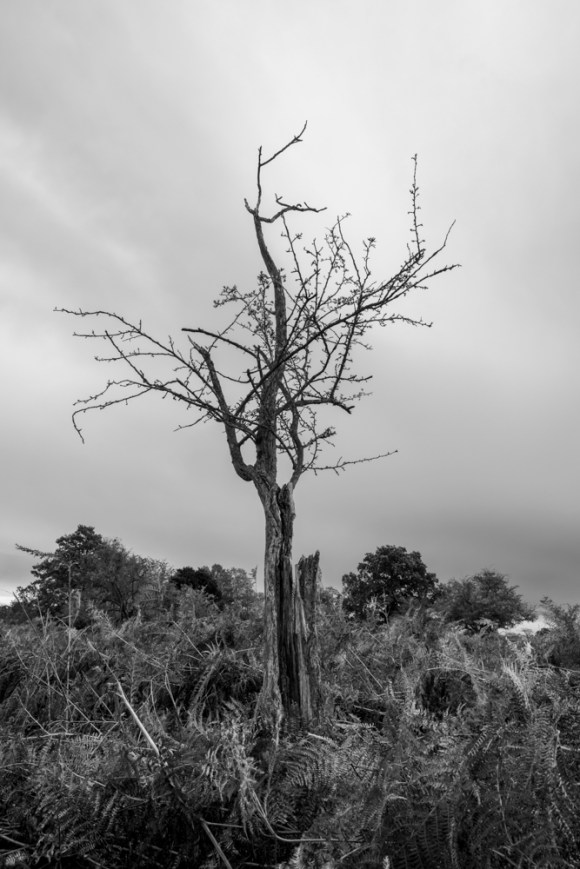
My composition choice is to create a portrait of each tree, abstracting it from its environment. I have taken these following shots from a low angle. By doing so, it makes the tree appear much bigger than in reality.
At this stage of the project, I have printed a selection of rough edits on as C-prints on matt paper. My final substrate will be decided on at a later date.
Work In Progress
Edited and Printed Images
In addition to these ‘objective’ portraits, I have taken subjective shots of the trees.
Print Combinations
Un-Printed Rough Edits
Polarising Filter Results
Typology Test
I will also be able to present other unprinted images on screen, if required, and in context with the review.
Contextualised Research
Photographers/Artists
Tacita Dean
Simon Roberts
Minor White
Bernd and Hilla Becher
Riitta Päiväläinen
Jean-Luc Brouard
Terry Evans
Myoung Ho Lee
Rachel Talibart
Aubrey Beardsley
I will present the relevant blog posts covering the above, if requested.
In addition, I will present and discuss the following books:
Adams, M. (2018). The Wisdom of Trees. London: Head of Zeus Ltd.
Barnes, M., 2019. Into The Woods. London: Thames & Hudson.
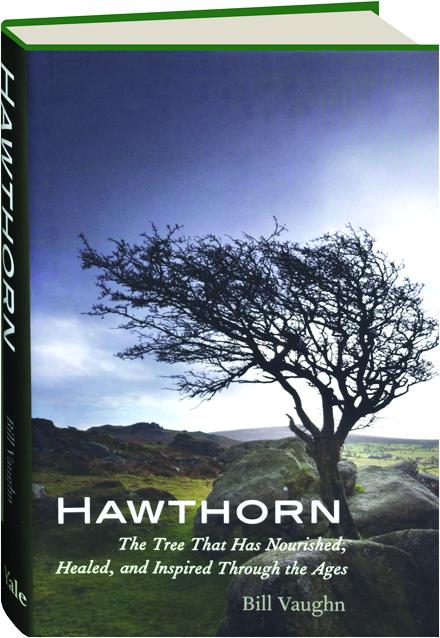
Vaughn, B. (2015). Hawthorn – The Tree That Has Nourished, Healed, And Inspired Through The Ages. New Haven & London: Yale University Press.
While thinking of a title for this body of work, I was inspired by a book called Invisible Cities by Italian author Italo Calvino (1923-1985). The book features Marco Polo recounting the cities visited on his travels to Kubla Khan. Through Polo’s narration, he presents his native Venice as fragments of other places. This book’s scenario highlights how people perceive the same place or object in different ways.
Invisible Cities evokes a ‘sense of place’, referring to both the experience in particular locations and how the distinctiveness or unique character of particular localities and regions can be described in different ways.
It could be said that people develop this ‘sense of place’ through experience knowledge of a particular area. A sense of place emerges through:
knowledge of the history, geography and geology of an area
an area’s flora and fauna
legends of a place
a growing sense of the land and its history after living there for a time
This struck a chord when I was reflecting on my own relationship with Bushy Park and the hawthorns in particular. Each tree tells its own story of ‘being’ a hawthorn. Each has their own identity and features.
Also, before I started my focus on hawthorn, they were (to me and the majority of visitors to Bushy Park) invisible trees – hidden in plain sight. As such, the title for this body of work is:
Invisible Trees: The Hidden Hawthorns of Bushy Park
In addition to this title, I could name each tree after the names of the cities in Calvino’s book, relating it to the particular story. The names in include, Dorothea, Zaira, Anastasia, Tamara & Zora. This concept was sparked by the story of Zobeide, which is:
‘The white city, well exposed to the moon, with streets wound about themselves as in a skein. They saw a woman running at night through an unknown city: she was seen from behind, with long hair, and she was naked.’
(Calvino, I. 1997. pp. 39)
References
Calvino. I. 1997. Invisible Cities London: Vintage.
While researching the subject of hawthorns, I initially found reference to these trees in books that covered the subject in general. There were brief mentions in a selection of tomes that gave a taste of the back ground of this tree, but they were quite general. I then discovered an enlightening book by Bill Vaughn titled Hawthorn – The Tree That Has Nourished, Healed and Inspired Through The Ages. Published in 2015, it is a combination of political, religious and natural histories and Vaughn’s own relationship with the hawthorn. The author lives on a large plot of land in North America called Dark Acres that is dominated by the tree. Throughout the book, Vaughn intertwines his experiences on this land, his family history and how the tree has impacted humanity. The book is a wealth of inspiration and information and I will studying it in greater detail over the coming months.
The aspect which is most useful is that Vaughn does not just focus on the hawthorn in relation to Great Britain or the United States. The author looks at the influence of the tree on a global basis and how it interconnects places in the world through invisible and visible means.
The book is divided into twelve chapters that cover a particular aspect in each one. My aim is to extrapolate the berries of relevant information in each chapter then utlise these as starting points of further inquiry and photographic exploration.
Chapter 1: The World’s Busiest Treet
Chapter 2: Under the Hawthorn Tree
Chapter 3: The Celtic Forge
Chapter 4: The Hedge Layers
Chapter 5: The American Thorn
Chapter 6: The Return of the Native
Chapter 7: The Tree of Heroes
Chapter 8: The Medicine Tree
Chapter 9: A Tree for All Seasons
Chapter 10: Essence and Spinessence
Chapter 11: The Crown of Thorns
Chapter 12: The Warrior Queen
One of my critical and important observations of this book is that there are no photographs, apart from the cover.
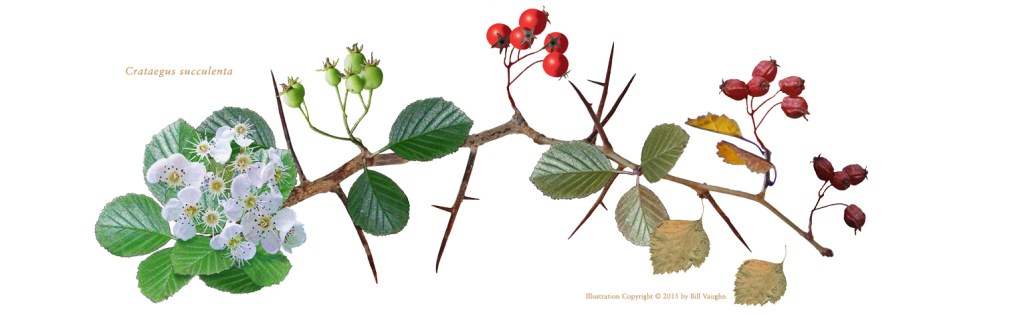
There are a selection of illustrations by the author, two 19th Century engravings, two maps and photograph of an owl. This is not a criticism, but a pertinent observation. It echoes the words of David Campany in his contemplation of the use of images to identify plants and trees.
‘Being a medium of specifics means photography is not well suited to generalities. A photograph can record the uniqueness of an object but it cannot designate the general category to which it might belong. What makes it useful in compiling an inventory makes it quite useless in defining the group.’
(Campany, D. 2020 pp. 116)
Campany continues with his stance in putting forward the example of images found in books to be used for identifying plants. Campany purports that although photography can record a specimen, but not the species, as each individual specimen is a variation of that species. Campany states that botanical identification is better served by drawing than by photography as:
‘The skill of a botanical illustrator is to look at several specimens and then produce an average. The average does not exist in reality but it is useful to have it.’
(Campany, D, 2020 pp. 116)
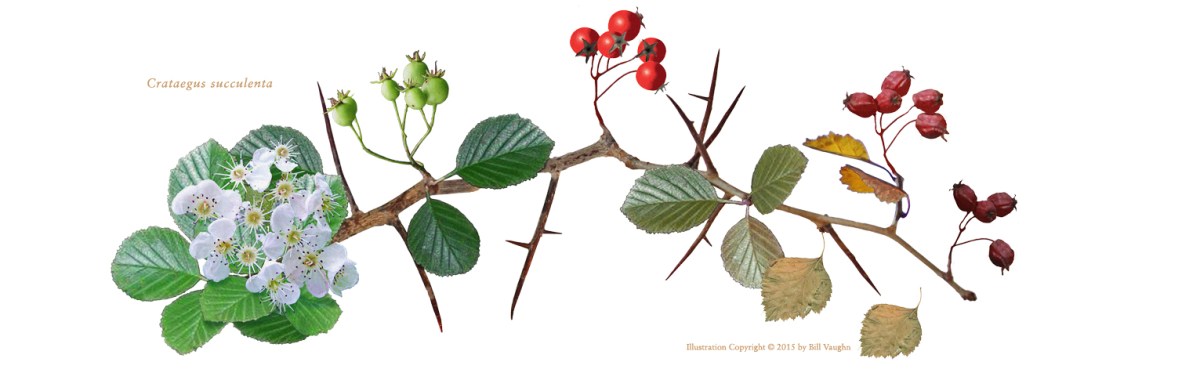
This is highlighted by Vaughn’s own illustration of a hawthorn branch that covers all the seasonal appearances of blossom, leaves and berries.
How this relates to my current project is that I am recording individual hawthorns to highlight their variations, not providing a generalisation of a species. Each tree will have their particular characteristics recorded to show their differences.
References
Campany, D. (2020). On Photographs. London: Thames & Hudson Ltd.
Thehawthorneffect.com. 2020. Hawthorn | Crataegus | Crataegus Succulenta | Bill Vaughn | Crown Of Thorns | Enclosures | World’s Busiest Tree. [online] Available at: <http://www.thehawthorneffect.com/> [Accessed 17 November 2020].
Vaughn, B. 2015. Hawthorn – The Tree That Has Nourished, Healed, And Inspired Through The Ages. New Haven & London: Yale University Press.
The Weeds And The Wilderness is a series of photographs by British artist-photographer, Simon Roberts (b. 1974).
This evocative series:
‘Seeks out and finds ancient wooded sites that depict a primordial, Edenic state. The approach is inspired by idea of the inscape, a term coined by the Victorian poet Gerard Manley Hopkins to suggest that every living thing has a unique set of characteristics which distinguish it from the next – something akin to a God-given essence. Hopkins argued it was the artist or poet’s responsibility to recognise this ‘inscape’ within nature and convey this to others through their art. All the photographs were taken during the winter months, between November – February, in various ancient woodlands around Britain.’
(The Weeds and the Wilderness – Simon Roberts, 2020)
While carrying out the research for the AG60 Research and Experimentation module, I was recommended to look at the photographic work of Simon Roberts, specifically his images of woodland. Admittedly at the time I couldn’t see the connection between my Moments of Eternity pieces and Roberts’ photographs. However, when I revisited Roberts’ work in light of this new project, the connections became quite clear.
My research involving hawthorn trees has made me realise how much they are part of humanity’s culture and ecology. The following paragraph brought this realisation home:
‘Many Britons no longer have any daily connection with its woods. Mostly we go about our lives sealed from the wild. At the same time, these landscapes touch upon themes such as conservation, ownership, history, magic and myth, climate change, childhood fears, and our current obsession with what is ‘native’ or ‘alien’. They also say something about Britishness and belonging.’
(The Weeds and the Wilderness – Simon Roberts, 2020)
The realisation came from my ‘discovery’ of hawthorns – I had been visiting Bushy Park since 2007 and it was only this year (2020) that I discovered the part these trees play within this environment. Before this, the hawthorns were ‘invisible’ and only an afterthought compared to the other trees in the park. Although Roberts’ images are different in style and composition, the ethos behind the work is similar. It is making the hidden visible, provoking awareness of our natural environment.
Simon Roberts
Simon Roberts’ work deals with our relationship to landscape and notions of identity and belonging. He has published and exhibited widely and his photographs reside in major public and private collections, including the George Eastman House, Deutsche Börse Art Collection and V&A Collection. In 2013 Roberts was made an Honorary Fellow of the Royal Photographic Society.
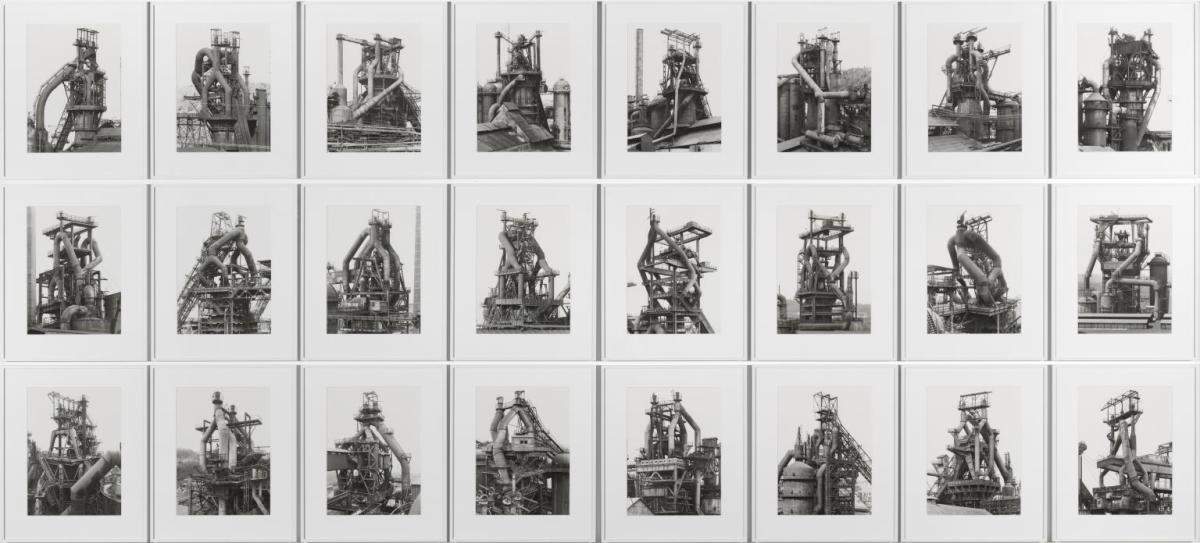
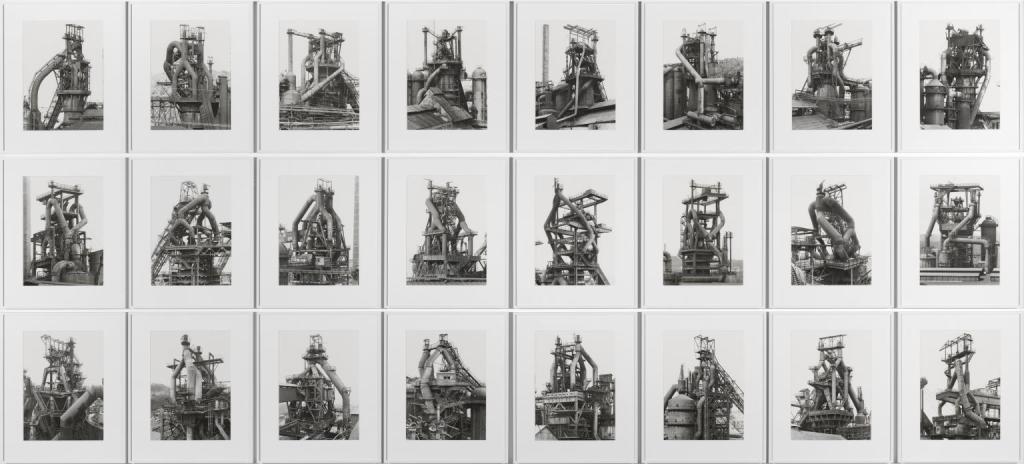
Blast Furnaces 1969?95 Bernd Becher and Hilla Becher 1931-2007, 1934-2015 Purchased with funds provided by Tate International Council, the Photography Acquisitions Committee, Tate Members and Tate Patrons 2015 http://www.tate.org.uk/art/work/P81236
When considering my current project in relation to either an objective or subjective viewpoint, the work of Bernd and Hilla Becher exemplify the former.
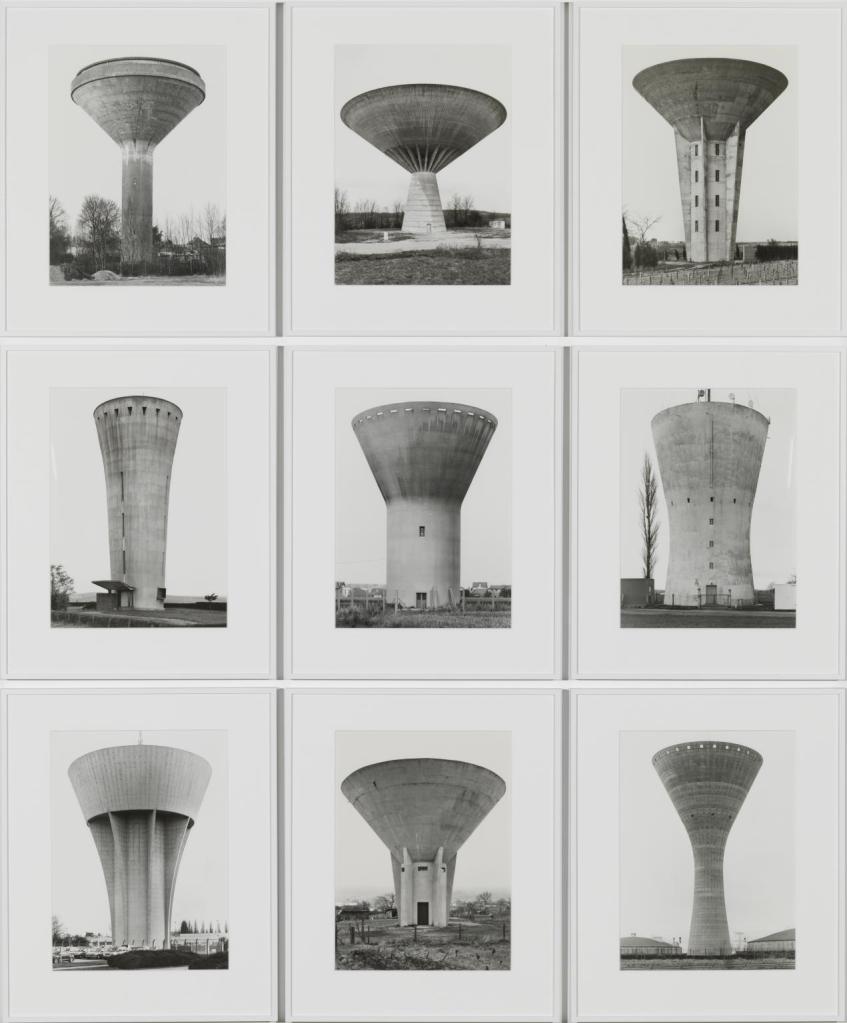
Water Towers 1972-2009 Bernd Becher and Hilla Becher
The particular collection of the Becher’s work is held by the Tate and was purchased with funds provided by Tate International Council, the Photography Acquisitions Committee, Tate Members and Tate Patrons in 2015. These nine gelatin silver print photographs were taken by Bernd and Hilla Becher over a period of more than thirty years and printed in 2013 under the supervision of Hilla Becher.
According to the Tate website, these particular prints are arranged in three rows of three. Although they exist in an edition of five, the grouping and sequencing of the images in this particular work is unique and was determined by Hilla Becher. The photographs are typical of the Bechers’ work and show different examples of a specific type of industrial architecture.
The Becher’s work epitomises the concept of photographic typology, which can be defined as:
‘A single photograph or more commonly a body of photographic work, that shares a high level of consistency. This consistency is usually found within the subjects, environment, photographic process, and presentation or direction of the subject. The creation of a typology is likely to be employed for one of two intentions. To enable objective comparison of subjects that share similar visual characteristics, or to create a relationship between subjects that share no obvious visual relationship.
(Lewis. P. Can the photographic typology be defined?, 2020)
As with Minor White, they had a particularly meticulous approach to their photography.
‘To achieve the ‘perfect chain’ described by the Bechers, each photograph was produced following exactly the same setup, using a large-format camera positioned to capture the form from one of three distinct perspectives (as a detail, in the context of its surroundings, or in its entirety) so as to take up the whole frame of the picture.’
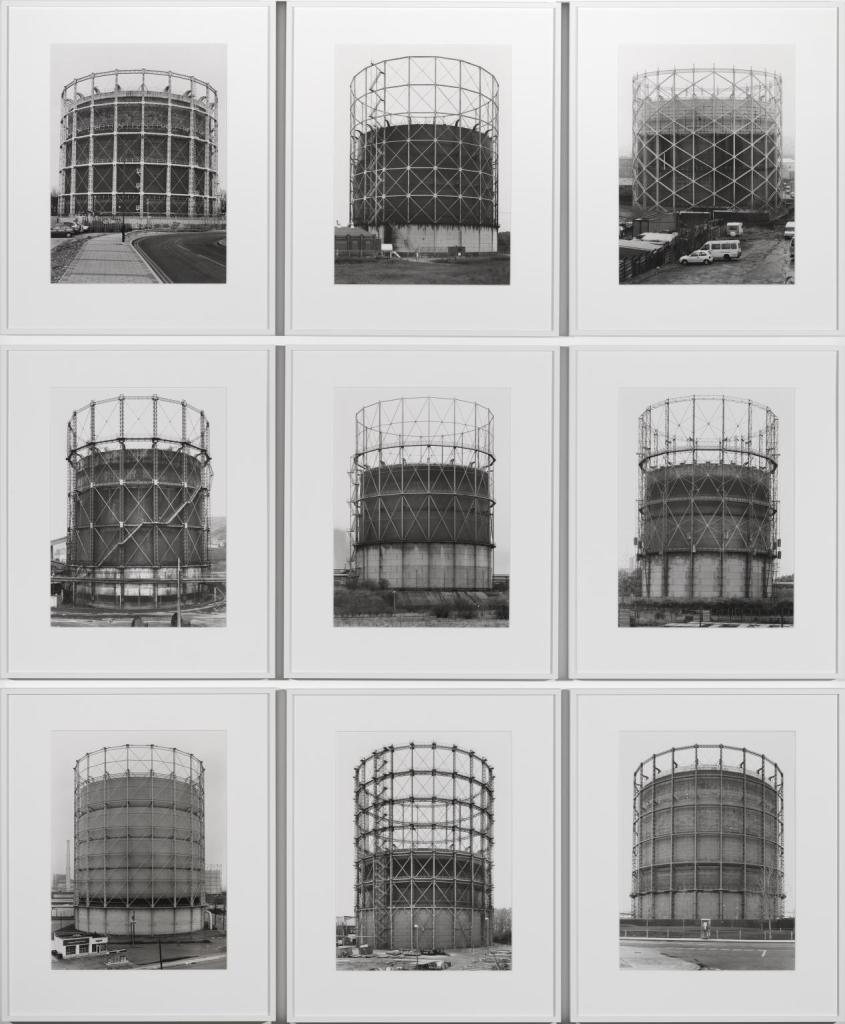
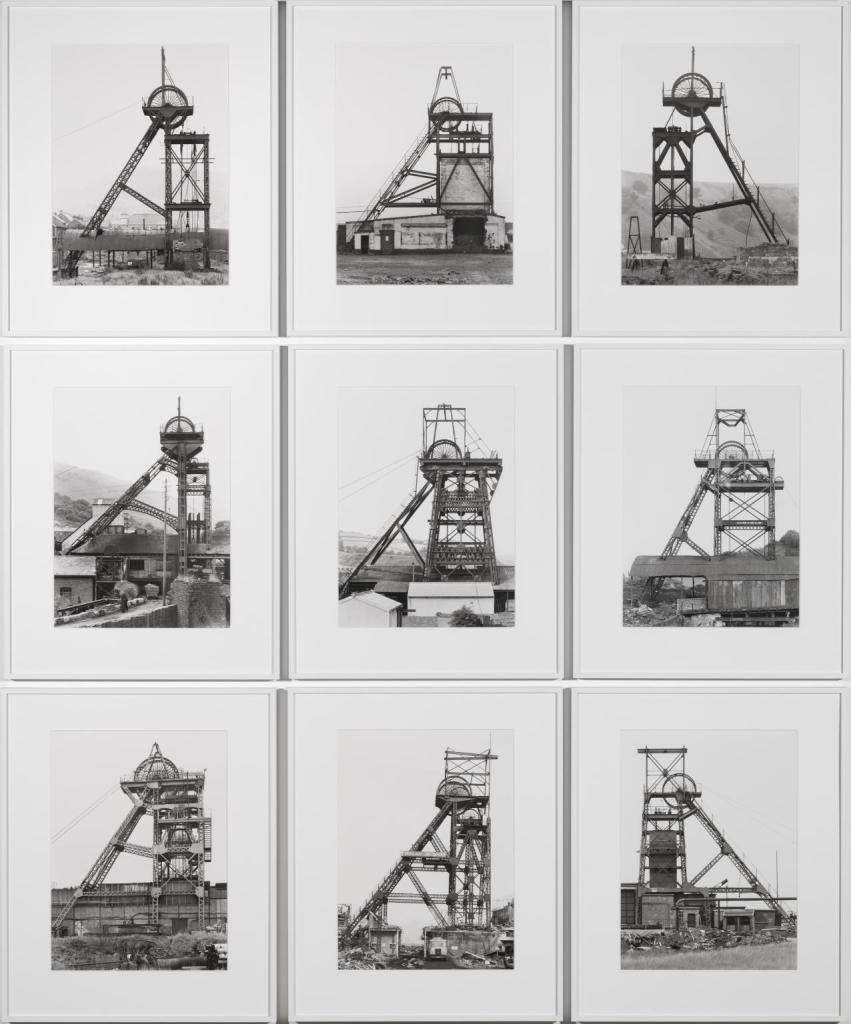
In addition to water towers, the Bechers created a number of similar ‘typologies’ of industrial architecture, including Gas Tanks 1965–2009, Blast Furnaces 1969–95, and Winding Towers (Britain) 1966–97.
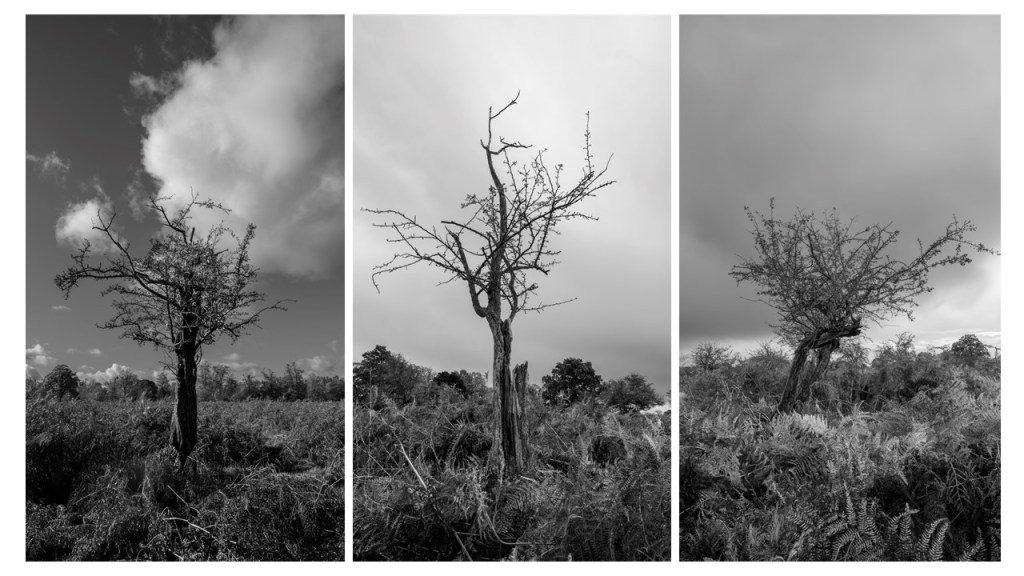
When comparing my methodology with that of the Bechers, I can see a similarity. I am beginning to use a predetermined set of parameters when photographing each hawthorn (both landscape and portrait orientation). This includes composition, the point of view and weather conditions. I am also editing my images so that they look similar in tone and ‘mood’. In retrospect, I am creating a photographic typology of a particular tree in a set environment.
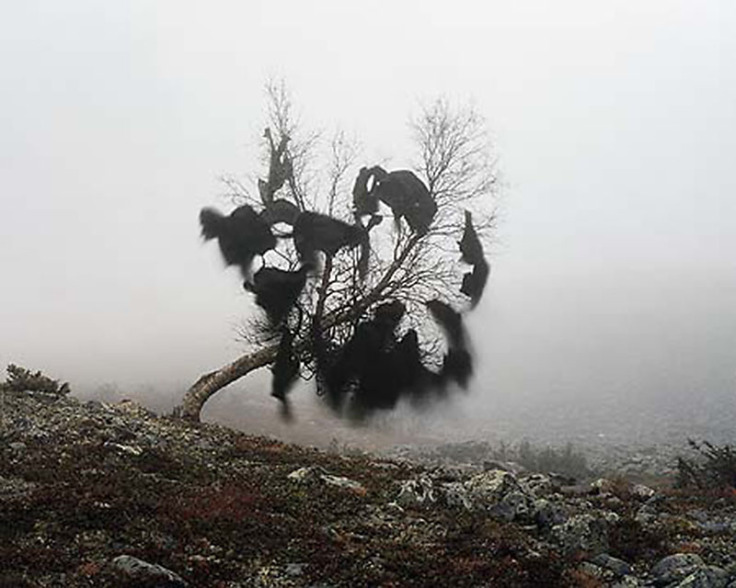
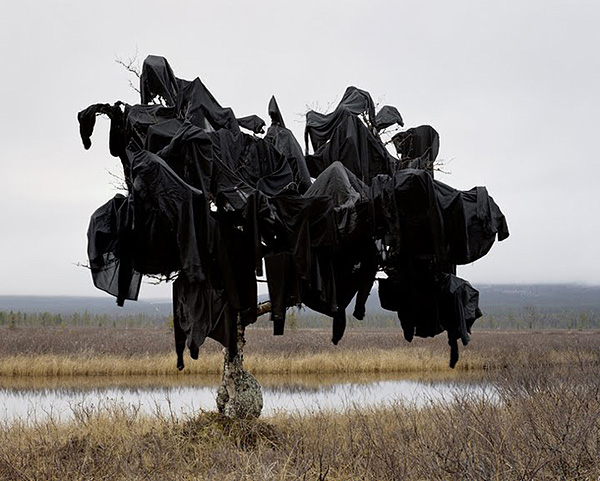
Riitta Päiväläinen is a Finnish photographer who, according to her website:
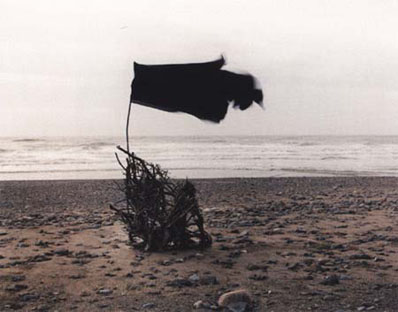
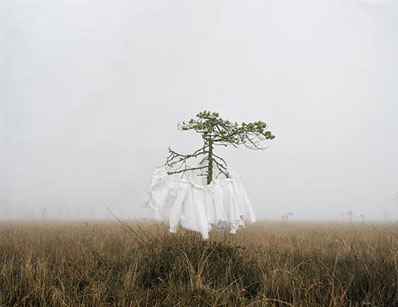
‘Is known for her temporary site-specific installations in nature, consisting of second-hand clothing and flea market fabrics. Her main interest has been “the unwritten history” – the history that you cannot find in library books, official files or archives, but can be felt in the rip of a coat or in the arm worn thin on an armchair.’
I was introduced to Päiväläinen’s photographic work during a 1-1 tutorial with our tutor, Åsa. When I looked at Päiväläinen’s images, I was quite struck by their haunting nature. As I wrote previously, there is a very eerie aspect to her work involving trees and clothing props. I get a similar reaction when I look at my images of hawthorns.
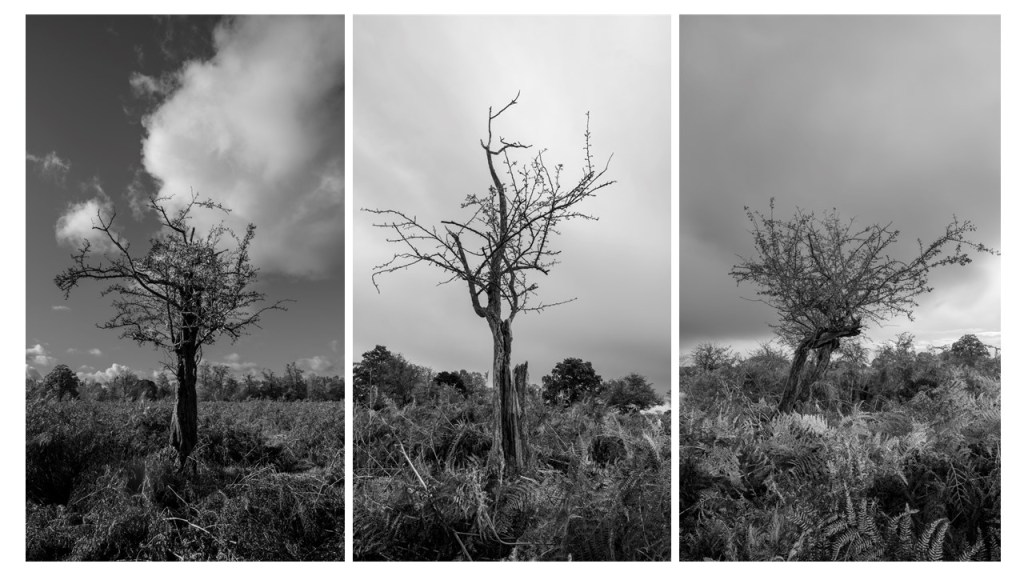
These particular images are visually similar to the ones in which I’ve focused on the three compositional elements:
Sky
Tree
Ground
Päiväläinen’s method is described as follows:
‘She creates site-specific sculptures utilizing second-hand clothing from flea markets and thrift shops as found objects, and then records the fleeting sculptures with suburb color photographs. Her work is similar in emotion content to that of the British sculpture Andy Goldsworthy. In contrast to Goldsworthy’s utilisation of the found natural materials of stone, rock and sticks, Paivalainen introduces a man-made element that speaks both directly and indirectly to the presence of humanity.’
(Stockdale, 2020)
For Päiväläinen:
‘The used clothes are symbols and evidence of the past, unknown people and their stories, memories and dreams. These symbols are installed in the natural landscape, in which there is no other presence of mankind, creating an abstract interplay and dialog between mankind and nature. The clothing is arranged either in familiar shapes or abstract patterns within the landscape, although she will sometime extract these sculptures out of this natural context.’
(Stockdale, 2020)
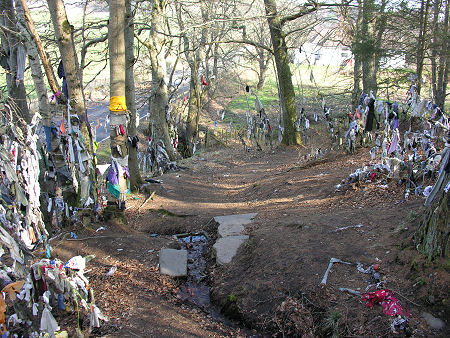
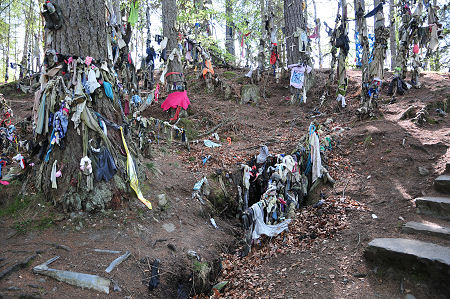
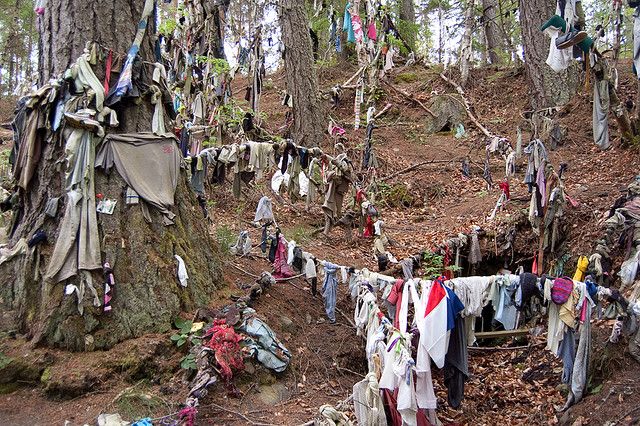
Päiväläinen’s trees also reminds me of the trees near to Clootie/Cloutie wells:
The Clootie Well is a rather weird remnant of an ancient tradition once commonly found in Scotland and Ireland, of holy wells to which pilgrims would come and make offerings, usually in the hope of having an illness cured. The tradition dates far back into pre-Christian times, to the practice of leaving votive offerings to the local spirits or gods in wells and springs. With the arrival of Christianity, the practice was simply adopted to the new circumstances.’
(info@undiscoveredscotland.co.uk, 2020)
When I looked at Päiväläinen’s work in more detail, two things came to mind in relation to my project. Firstly, my particular methodology of photography doesn’t involve physically adding to or changing my subject matter. For me, the tree itself is enough.
Secondly, the mood of the images plus the reactions and emotions they evoke are an exceptionally important element.

 Jennie Meadows MA Photography